Athlete Whippet join the Toy Tonics family! The London/Berlin-based duo make a sound that is based on futuristic breakbeats combined with deep, jazz chord progressions and a kind of funk that sounds more like it was made in 2100 then in a year behind us. Definitely not a retro record the Vesta EP is further proof that the connection between London and Berlin that has been build by several Toy Tonics artists (Cody Currie the latest in the gang) is becoming a strong one. The combination of the Berlin dancefloor sound and the UK jazz fusion soul is changing the scene and creating new moods. Neo soul and house, broken beats and disco.. there are lot of things happening in that new world and Athlete Whippet could be a strong player in that new sound.
The 2 guys already achieved great support by UK radio DJs such as Annie Mac and Jamz Supernova for their their first collaborative EP Touch (with Metronomy’s Olugbenga), followed by their 2020 solo EP 'Your Love Is Lifting Me', an ode to compassion and solidarity, and remixes for labels including Rhythm Section.
‘Vesta’ is not just the title track of the EP but also the name of the South London Road where they shared an apartment, built a studio in their living room, and put together the first ideas for this EP.
Both Robin and Avi come from a live performance background, played in bands since their early teenage years before they met studying music at Goldsmiths in London. You can hear a playful live quality throughout the EP. It’s not your average house productions with the usual formalistic patterns, but a very original, very fresh style - hard to copy (but easy to dance to).
Now based between Berlin and London, they collaborate with their friend, Athens-born, Berlin-based artist Aphty Khéa on Yesterday and Can’t Make My Mind Up.
Avi and Robin their label squareglass and a London-residency inviting guests such as Seb Wildblood, Will Saul, Asquith, Anu and also have a monthly show on Rinse FM.
out of Stock
Last delivered 2 years ago available to reorder, subject to availability
A lecture in 60's psych pop (almost power pop with flashes of hard rock) with consistently solid melodical, up-tempo, organ driven songs, soaring vocal harmonies, anthemic choruses. Psyched, poppy & fun. Not an album that you would listen to regularly, but more like an old friend to go back when you are in that 60s mood.
Ulna’s OEA is a “bar-rock getting sober record.“ The first full length solo record of Ulna, aka Adam Schubert of Cafe Racer, OEA is an ode to reinvention. Along with the release comes a rebranding--formerly Ruins, Schubert’s new pseudonym ULNA is a reference to a pivotal moment in his childhood. At the age of 14, Schubert shattered the bone on the inside of his forearm in a skating accident, and took up the guitar. “That’s what made me serious about playing music,” says Schubert.
This name change also accompanied Schubert’s shift towards sobriety--OEA was created right as Schubert reconfigured his life without drugs or alcohol. With the exception of the final track, “Dead Friends,” the whole album was written while in a recovery program. “You have to reinvent your whole personality, you have to be a different person,” says Schubert.”Who am I if I’m not the crazy drunk dude who’s doing drugs in the bathroom?”
OEA is an intensely personal record, in subject matter but also quite literally--Schubert plays every instrument, though the record feels far from a home-demo, recorded and mastered by Robby Hanes at Strange Magic Recording in Chicago’s Logan Square. Schubert’s songs are ambling and full of picked guitar and retro harmonies, a stylistic sensibility he attributes to a love for the Beatles and “acoustic rock with a weird punk edge,” a-la Big Thief and Kurt Vile. Though instrumentally sunny, his vocals hint at something else - there’s an underlying ache. OEA is an easy listen, but with a depth of emotion that demands listeners’ attention.
OEA explores the range of emotions experienced in the transition to sobriety, from fear to backslide to self doubt. At first listen, “Turn The Record On” feels almost like a love song, with a chorus of “turn the record on/ you’re my favorite song,” but in actuality the song is the story of an empty encounter rather than romance. “It’s kind of about this sad hookup with someone else who is equal in your addiction, you’re just using each other because you don’t want to be alone in your using,” says Schubert. “We both have this problem and we can have fun in it together because we both understand. They know the score.”
While “Turn The Record On” speaks to a moment of shared addiction, other tracks examine what comes after sobriety. “And I took the pill like I should / and I stayed clean just like I said I would,” begins “Last Song,” which Schubert cites as one of the hardest tracks to write. “I got sober and I take medication and - I’m doing all this stuff now but nothing’s changed,” says Schubert. “ I think that’s pretty common in people who get sober. I did all this stuff and now what?”
The penultimate track on the album, “Last Song” fades into a noisy interlude that gives listeners the feeling of motion, like entering a tunnel and emerging into a quieter, lo-fi recording, the closing track “Dead Friends.” The only non-studio track, “Dead Friends” was recorded in Schubert’s home, and carries with it a warm intimacy. “I wanted it to sound like you’re outside somewhere, you're walking, and you step inside somewhere that feels safe,” says Schubert.
This closing track embodies the mood of OEA- warm but with a melancholy edge, like coming in from the cold but still feeling a lingering chill. It’s an album that feels comfortable and cohesive--though individual tracks stand alone, OEA works best when listened through start to finish. It’s a record to put on while cooking dinner and let sink in.
CROWDED HOUSE released their first new music in more than a decade, recorded in Valentine and United Studios in LA and then remotely across the first half of 2020, CROWDED HOUSE’s seventh studio album is titled ‘Dreamers Are Waiting’. With in excess of 12 Million albums sold across six studio albums, two acclaimed Best of collections, over 1.2 Billion streams to date and following Neil Finn’s surprise star turn and an extremely successful world tour with Fleetwood Mac, Neil and Nick Seymour are inspired to begin a new chapter in the CROWDED HOUSE story. A new generation has grown up and connected with their songs and will now get to experience fresh new music alongside legendary anthems from the band’s 35-year career. Released on CD a Blue LP
For its seventh release, Rave Or Die proudly welcomes Irish superstar Sunil Sharpe. Hailing from Dublin, this producer and DJ has gain within a few years a solid reputation of merciless techno purveyor in Europe with uncompromising re-leases on structures such like On The Hoof, Sheworks, Black Sun Records, Trensmat, Mord, Inner Surface Music, Komisch, Bastardo Electrico, and many more.
Half of the Tinfoil duo along with DeFekt offers to the French Rave label a great slab of bastard-heavy material in his typical signature: hard and fast Loose (Burn Down)' supported by metallic sorities and ruff modulations over a pounding bass line in a pure, raw style.
On the flipside, ROD mastermind Umwelt (Boidae, Shipwrec, New Flesh Records) serves up another milestone of a cabalistic anthem dedicated to industrial ware-houses: mechanic Slave To The Rave' signs an ode to the dancefloor thanks to its implacable and hammering beat. Harder, faster, higher seems to be the motto of Rave Or Die seventh chapter! Rush on it.
out of Stock
Last delivered 4 years ago available to reorder, subject to availability
• Showaddywaddy eventually had more UK hits in the 1970s than any other act…including Abba!
• From their winning appearance on an edition of ‘New Faces’, the ‘Britain’s Got Talent’ of the day, to become runners-up in
the series’ ‘All Winners Final’, it took just a matter of months until Showaddywaddy released, ‘Hey Rock And Roll’.
• The single reached #2 in the UK Singles Chart.
• The band are still lauded as one of the hardest working live bands in the UK, usually with more than 250 shows a year.
• This vinyl LP collection, showcases the band’s professionalism, in this no-nonsense 16 track rock ‘n’ roll set.
• The album includes their versions of ‘Sea Cruise’, ‘Blue Moon’, ‘The Girl From New York City’, ‘Multiplication’, ‘Doo Wah
Diddy’ and a blistering performance of the Vanda/Young classic, ‘Good Times’, taken from Showaddywadddy’s 1981 album
of the same name.
• The album is pressed on heavyweight 180g pink colour vinyl.
Returning with their first new music in 8 years, Stubborn Heart have announced their anticipated new album 'Made Of Static'. Luca Santucci and Ben Fitzgerald, who have spent the last few years developing the ten brooding electro-soul tracks that make up the successor to their lauded 2012 self-titled debut, have once again struck a fine balance between ominous synth-soundscapes and introspective songwriting. Balance is the key theme here. With Fitzgerald leading the production and manning the machines, the sound is rawer than on their previous album. Left-field pop with dark, icy edges, it finds a home somewhere in between r&b and cold wave. Santucci brings the heart and with it his aching, obsessive lyrics and a desire for something grittier in its presentation. The duo's talents complement each other perfectly throughout. Santucci has amassed an impressive list of writing and vocal credits in his time, with the likes of XL and Warp signee Leila Arab, Plaid, Riton and Soulwax amongst them. Fitzgerald has also been hard at work at his home studio programming various styles of music for artists and producers from around the world. As Stubborn Heart, they come armed with some serious experience and a wealth of influences. There's an honest simplicity in the way they create, with lyrics written in an immediate, direct fashion with the aim to catch a feeling rather than emulate one. On their first album Stubborn Heart garnered praise from the likes of Pitchfork, NME and the UK broadsheets. It was named album of 2012 at Gilles Peterson's Worldwide Awards and Rough Trade placed it in their top 20 best albums the same year. However, it's now that we're presented with an album they feel better represents their dynamic - an album born from the duos combined creative static - as such, 'Made Of Static' is the first fruit of their reunion, aiming to step on from where they left off, and with the promise of much more to follow.
It’s a given that timing is everything in music – most obviously in terms of composition and production but often just as much in regard to conception and release – the latter two doubly poignantly so in the case of this massive DOOM vs The Sugarcubes mash-up LP from turntablist and producer Krash Slaughta.
Which is why the tale of this project’s gestation is perhaps what should be told about it before anything else.
Begun last August and finished on 25 October, the album started life as an idea born from a casual listen to final Sugarcubes album Stick Around For Joy that Krash had bought a copy of years before in a charity shop. Contemplating the cover art while listening to the LP and the track Hit in particular, it came to him that here might be the musical basis for a concept LP in the grand tradition of the hip-hop mash-up album. Thus the project was born, becoming something of an obsession as lockdown restrictions recommenced through a sanity-testing autumn. As it developed, the provisional title of Stick Around For DOOM morphed into Sugar Coated DOOM and Brighton artists Leigh Pearce and Rob Crespo were roped in to create the artwork. So pleased was Krash with the results that he decided to self-finance the pressing of the LP to vinyl which in turn would allow him to send a copy to DOOM in the most fitting format. On that basis, along with his dad’s advice that if you want something done properly; do it yourself’, he initiated the process for a limited press run as soon as the project wrapped and telephoned his dad (who’d been shielding and who he hadn’t seen for months) to say he’d done precisely that. In a tragic twist, this turned out to be their last ever conversation, for Krash’s dad died suddenly the next day. Two months later of course, while waiting for the Covid-slowed vinyl pressing process to complete, came a further tragic twist as the world received the delayed news that DOOM himself had also passed away back in October – in the event, only five days after Krash’s father. So it’s no understatement to say that Sugar Coated DOOM carries significant emotional resonance for its maker, forever linked as it will be to the deaths of two of his personal heroes.
Which brings us to the content. The album contains seven vocal tracks, with an alternate version of one and instrumental versions of five of the seven across two sides of an album with the music, track names, LP title and cover art mashing up musical, lyrical/ textual and visual elements of The Sugar Cubes’ Stick Around For Joy with DOOM acapellas, track names and references. Listeners won’t need long to appreciate that Krash Slaughta was right to be proud of his creation, almost certainly correct in thinking DOOM would dig it and no doubt The Sugarcubes too. Also, who would have thought The Sugarcubes had so much potential for beat-mining? But then seeing potential in the unexpected was always a vital skill from the golden era of sampling in hip-hop and those who follow in the tradition. The first track proper, for example, swipes Madlib’s lo-fi beat from underneath the vocals for Figaro and replaces it with the looped and beefed-up opening bars of the Cubes’ I’m Hungry. The result is a natural fit. But then the blending of elements in every track on this release provides evidence of the effort and love put into its creation, reinvigorating DOOM’s classic vocals while re-purposing The Sugarcubes in a manner that will delight. Indeed, if you’d didn’t know the work of Bjork’s former band, you’d be unlikely to pin an early 90s alt-rock LP as the sample source. I imagine listeners will have a hard time picking a favourite too. Perhaps Hit It (based on the track which triggered the project idea in the first) which splices the Bond-theme-ish Hit with My Favourite Ladies might prove the most popular, or the monkey’s favourite, Nurse Chong, which blends Happy Nurse with Raedawn (named for Tommy Chong’s daughter) from Viktor Vaughn LP Vaudeville Villain. Whichever one punters pick though, anyone who hears anything off this will know it’s one to rank alongside your other favourite hip-hop mash-up albums. And who knows – perhaps even Mr Daniel Dumile himself might have considered it a not unfitting epitaph.
81355 (pronounced `bless') is a meeting of the minds between three pillars of the Indianapolis music scene; Sirius Blvck, Oreo Jones, and Sedcairn Archives. While the three have worked together in the past, this is their first start-to-finish collaboration, and the result is the stunning and distinctive debut Time I'll Be of Use. Simultaneously mystical and stark, somber and danceable, the project grapples with hard-wired truths and imagines alternate realities with better futures. These lucid wanderings amongst the street fires sound like a cross between the ghost of progressive electronic music of the 70s with its innovative eccentricities, and acrobatic wordplay delivered with sharp resolve. While surrealist in its metaphors and abstraction, it doesn't betray a present awareness. Reflecting on Black struggle in the pandemicridden and democracy faltering landscape of 2020, each member arrived from a synchronistic space, and the recording process ended up being largely intuitive. On "Capstone," the opening track on the album, Sirius Blvck offers a look from inside his space, "This is what we've come to. Generational curses I still can't undo. Just taught my lil girl to tie her shoes now she running to. Holy smokes lungs made of leather like it's comfortable. Climbing up this infinite ladder to get a better view." These three musical vagabonds have met up to find even themselves surprised with the results. Drawing inspiration from the likes of biting poetic commentary of the late Naptown residents, Etheridge Knight and Kurt Vonnegut, OJ summons a golden-era flow and paints a picture of the group's influences, surroundings, and trajectory in one fell swoop in "Thumbs Up." "Alright, in my feelings tonight, Honda Civic overturned as it burns through the night. Bone Thugs in these streets no Surender in sight. I'm writing poems from a jail cell, Etheridge Knight. I throw a fit when I flip it, it's all vintage. A pearl white Bronco like OJ you done did it. The sunshine shatters the rock painted so vivid. Two-hundred fifty pounds of gifted we so lifted_ wassup?" Sirius, with poetry present even in his speaking voice, adds, "It's a way to carve our story in the sky before we're gone. This is us choosing to believe that this time, things will be different. It is an affirmation to the universe. This time I'll see the whole blessing. This time I'll be of use."
After 4 years of re-issuing some of the best house and disco, from hard to find deep-house gems to all times classics, Groovin Recordings are really excited to start releasing new music too, featuring some of the best young producers from the new generation. The first release introduces Groove Boys Project (Lucas Moinet and Alexandre Valard), a talented duo from Paris with a unique sound, a classy mix of fender rhodes, jazz chords, MPC based drum beats, soulful strings and some classic synths.
“Studio 937 cuts” is a two tracks EP that show their skills in the best way.
"Never Give Up" is a sophisticated jazzy-house track, composed with Kamasari and GBSiX who wrote the lyrics and the vocal part too. You’ll never get tired of GBSiX’s vocals !
On the B side "Deep In The Blue" is a Fender Rhodes deep-house ballad from Lucas Moinet, for all the Rhodes lovers out there.
out of Stock
Last delivered 19 days ago available to reorder, subject to availability
Buried amongst the gems on the second Claremont Editions compilation was ‘Oui Non’, a collaborative cut that marked the first label appearance of Jpye (real name Jean-Philippe Altier), a French multi-instrumentalist, DJ and producer best known for his work as part of Twonk alongside Leonidas and percussionist/vocalist/guitarist Renato Tonini.
Here Jpye and Tonini join forces once more for their first single on Claremont 56 – a sensual and seductive slab of slow-motion, sun-soaked synth-pop that features more than a few subtle nods to classic Italian Balearic disco cuts such as Radio Band’s ‘Radio Rap’ and Tullio de Piscopo’s ‘Stop Bajon (Primavera)’.
Built around squelchy synth bass and a shuffling drum machine rhythm, ‘Cosa Ti Va’ is marked out by glistening, jazz-fired guitar solos, vibrant synthesizer squiggles, rich electric piano chords and echoing, dubbed-out electronics. It’s a pin-sharp but effortlessly laidback number that’s as tactile and loved-up as it as lazy and horizontal.
‘Cosa Ti Va’ is presented in two complimentary versions. On the A-side of the vinyl version you’ll find the full vocal, which boasts Tonini rapping in his native tongue in the manner of Italo-disco’s most eccentric and atmospheric vocalists. With his deep, rich tone and fluid flow, it’s hard not to fall in love with Tonini’s previously unheard rapping. Rounding off the single is the pair’s vocal-free instrumental take, in which Jpye’s stunning guitar motifs and tactile, soft-touch production can be savoured in full.
out of Stock
Last delivered 4 years ago available to reorder, subject to availability
“Vax!” – Reminiscent of all the slippery vinyl that glitched under so many sweaty wet fingers in a steamy basement before time – a picture that seems highly illegal in our current antiseptic climate of hopefully germ free adolescents. Vax-inate! Give them the needle! It’s time.
Deti Vechnosti – Pered Rassvetom opens the gates to plug into the socket of our collective deranged consciousness, generating frisky and flamboyant specks to brightening darkness that confines our lives. Offering glimpses of the great unknown we also carry within. The Track introduces Chikiss & Mustelide’s new group “Deti Vechnosti”.
Alexander Arpeggio & OhLandy’s “Der Anruf”, wich originally appeared as a French language version on a previous Sameheads / Diapason tape release tells those tales of hot and hotter heat. Karmic payback for the sweaty and long nights enveloped in the halo of resonating frequencies of silly and high-spirited mischief.
Rouge Mécanique – Down the Line – follows suite in the odyssey that is a demented night out, sitting in front of a club, realising that the leatherjacket you picked up a few streets ago from the ground doesn’t smell like adventure but like spew.
The B-Side opens with Automatenfall – a hardware electronic 3 piece, previously appearing live at Sameheads during a “My Friend calls it K-Jazz” event. A yearning that eventually gets us on a spiritual path and headed toward enlightenment through the meandering melange of chimes, that little sounds that usually overcome us in the weirdest of times.
Das Kinn – the new project from Toben Piel, who’s part of Frankfurt’s MMODEM family, and one half of Les Trucs evokes memories of better days, black leatherpants – think Falco meets DAF – Überpop for the Untergrund.
Stopping for a final coup d’œil is Alessandro Adriani’s – Preserved Data Space. A persuasive case of brutally but lovingly worked machines serenading sawtooth waves of an infinite Weiter, a dissolving timeframe – the longest after hour I’ve been to, it lasts more than a year now already and counting.
Written by Michael Aniser.
out of Stock
Last delivered 2 years ago available to reorder, subject to availability
Excelsior! It’s the hail of yore that one should go ever onward and upward. And so, fittingly Onwards and Downwards is the occultist Swedish band Alastor’s clever call to arms... and also a reflection of our collective dark state of mind these days.
“If our last album Slave to the Grave were about death, this record is more about madness,” says guitarist Hampus Sandell. “You can look at the whole record as one person’s gradual slip into insanity. An ongoing nightmare without end. It also sums up the state of the world around us as this year has clearly shown.”
Alastor is heavy doom rock for the wicked and depraved. Drenched in heavy, distorted darkness and steeped in occult horror that will make your skin crawl and ears cry sweet tears of blood, the band is revitalized in 2021 with meticulously crafted songs and new drummer Jim Nordström bringing a hard-hitting and precise energy.
“It’s a more focused record but at the same time it’s more personal and naked. More raw emotion and pain,” Hampus says. The band recorded the album with the help of Joona Hassinen of Studio Underjord, who has helped with mixing since their ”Blood on Satan’s Claw” EP in 2017. Christoffer Karlsson of The Dahmers also assisted with overdubs and encouraged the band to demo the material early on, aiding in the album’s more deliberate and tighter feel.
From the first note of opener “The Killer In My Skull” the guitars are far thicker and out front than ever, and Nordström pummels the snare and kick like a young Dave Grohl. Bassist/vocalist Robin Arnryd’s chorus-drenched voice soars above it all like a one-man choir, at times harmonizing beautifully with shimmering Hammond organ notes. Nary a moment is wasted on the droning navel-gazing of lesser bands. Particularly, the driving anthem “Death Cult” which sounds like it would fit comfortably on QOTSA’s Songs For The Deaf, though there’s considerably more heft here. The title track pays its due to the Devil’s tritone in a marvelously woven framework of intertwining melodies befitting the album’s theme of descent into madness.
The quartet released its epic 3-song debut album Black Magic in early 2017 via Twin Earth Records, followed by the 2-track “Blood On Satan’s Claw” EP on Halloween the same year. Joining forces with RidingEasy Records in 2018, Alastor summoned the 7-track hateful gospel Slave To The Grave, which was packed with dynamic twists and turns, and funereal girth. It was met with considerable praise, setting the stage for the band’s greatest step onward (and upward... or downward, depending on your preferences.)
Excelsior! It’s the hail of yore that one should go ever onward and upward. And so, fittingly Onwards and Downwards is the occultist Swedish band Alastor’s clever call to arms... and also a reflection of our collective dark state of mind these days.
“If our last album Slave to the Grave were about death, this record is more about madness,” says guitarist Hampus Sandell. “You can look at the whole record as one person’s gradual slip into insanity. An ongoing nightmare without end. It also sums up the state of the world around us as this year has clearly shown.”
Alastor is heavy doom rock for the wicked and depraved. Drenched in heavy, distorted darkness and steeped in occult horror that will make your skin crawl and ears cry sweet tears of blood, the band is revitalized in 2021 with meticulously crafted songs and new drummer Jim Nordström bringing a hard-hitting and precise energy.
“It’s a more focused record but at the same time it’s more personal and naked. More raw emotion and pain,” Hampus says. The band recorded the album with the help of Joona Hassinen of Studio Underjord, who has helped with mixing since their ”Blood on Satan’s Claw” EP in 2017. Christoffer Karlsson of The Dahmers also assisted with overdubs and encouraged the band to demo the material early on, aiding in the album’s more deliberate and tighter feel.
From the first note of opener “The Killer In My Skull” the guitars are far thicker and out front than ever, and Nordström pummels the snare and kick like a young Dave Grohl. Bassist/vocalist Robin Arnryd’s chorus-drenched voice soars above it all like a one-man choir, at times harmonizing beautifully with shimmering Hammond organ notes. Nary a moment is wasted on the droning navel-gazing of lesser bands. Particularly, the driving anthem “Death Cult” which sounds like it would fit comfortably on QOTSA’s Songs For The Deaf, though there’s considerably more heft here. The title track pays its due to the Devil’s tritone in a marvelously woven framework of intertwining melodies befitting the album’s theme of descent into madness.
The quartet released its epic 3-song debut album Black Magic in early 2017 via Twin Earth Records, followed by the 2-track “Blood On Satan’s Claw” EP on Halloween the same year. Joining forces with RidingEasy Records in 2018, Alastor summoned the 7-track hateful gospel Slave To The Grave, which was packed with dynamic twists and turns, and funereal girth. It was met with considerable praise, setting the stage for the band’s greatest step onward (and upward... or downward, depending on your preferences.)
Yo No Se return after a 5-year hiatus since their last album, Soma. Their
new album Terraform continues on from the dystopian world created in
Soma but this time taking the narrative to the stars. Terraform explores
the ideas of making a fresh start on another planet but the same
problems creep in…. Greed, corruption and hate. Exploring more of a
grunge feel along with some hard psych the band recorded with Dom
Mitchison (as well as Alex doing guitars and vocals at home), mixed with
Ali Chant and mastered again with grunge godfather, Jack Endino.
The band have toured across Europe in support of Soma in the last 5
years and gained a reputation for their loud and energetic shows. The
album has 3 drummers under its belt and countless breakdowns on the
road. With the pandemic kicking in just as the band started touring, they
had plenty of time to finally record (and find another drummer).
Terraform is a record 5 years in the making due to sheer bad luck.
Hopefully, their luck will change as the band are already working on their
follow up record.
The first single Black Door approaches the subject of corruption
amongst 'leaders'. The idea comes from Boris Johnson getting Brexit
'done' to forward his own career without thinking about the impact it will
have on peoples lives. We’ve had enough and we're ready to tear down
the establishment. The idea being that these problems we now face will
follow us wherever we go unless we stamp them out, here, on earth.
The artwork for the cover is by renowned sci-fi artist Bruce Pennington.
The trio of fiddle player Erlend Apneseth with guitarist Stephan Meidell and drummer Oyvind Hegg-Lunde follows up their Nordic Prize-nominated album of 2019, ‘Salika, Molika’, with a remarkable suite of tunes inspired by the rhythms and physicality of the human body in motion.
Originally commissioned by FRIKAR Dance Company to accompany the performance of a new work, ‘Skaut’, dealing with the covering of the body in different cultures, the music of ‘Lokk’ takes the trio further than ever before into completely fresh areas of electro-acoustic improvisation.
The sounds of their original instruments are integrated with electronic beats and treated textures to form a kind of enhanced digital-folk style whose influences stretch from traditional south Asian ragas to contemporary dance culture from around the globe.
The result is intense, and intensely rhythmic, music where the normally separate realms of the cerebral and the corporeal can appear to fuse into one irresistible groove.
As the trio rocks on - in a dream of perfect interplay between instruments and players, soloists and ensemble - deep, trembling sub-bass intersects with ethereal ambient soundscapes. Elsewhere, the twittering of birdsong - from both real bird-calls and the uncanny imitation of them by Apneseth’s Hardanger fiddle - meets archival recordings of Norwegian herdswomen.
“Our musical idea for this project was to unite different extremes, connections that felt “forbidden” in one form or another”, says Stephan Meidell. “For example, by using the sampled recording of traditional herd-calling, blended together with aesthetics from more contemporary music styles. This exploration has led us further into a rhythmic and danceable landscape than in previous releases. We also wanted to use this opportunity to deliberately make more dance-related music. As regards the original commission, were pretty free to do what we wanted, but there was one specific dance in mind, ‘Valdresspringar’, for which Erlend wrote the melody. It’s a traditional, asymmetrical dance and has a very particular form. The melody is on the track called ‘Springar’, which we then messed around with.”
This “messing around with” element is key to the sound of ‘Lokk’, whose playful experimentation over the nine separate tracks creates a beguiling, constantly surprising sense of adventure and intrigue that both draws the listener in, and then keeps them on their toes as to where the next stage of the journey will take them. It also becomes inescapably obvious that this is a group of three equals.
The contributions of Stephan Meidell and Oyvind Hegg-Lunde, as musicians, co-composers and producers, appear every bit as important as that of Erlend Apneseth, who performs superbly throughout. “Even though the trio carries Erlend’s name, it’s a band in every sense of the word”, says Stephan Meidell. “We make the music together, where everyone brings their ideas and we build on each other’s input and output. This is not our “coming out” as a band, but the group is sometimes interpreted as having a hierarchical structure, as a soloist and accompaniment.”
As is evident from the trio’s live performances, where each member seamlessly integrates the acoustic and the electronic elements in their respective sounds through constant monitoring and tweaking, Apneseth, Meidell and Hegg-Lunde are also pioneers,
creating real-time effects that in the past were only available through post-production or the intervention of a sympathetic engineer and a truck-load of kit. ‘Lokk’ translates this fleet-footed improvisational approach, and the players’ lightning-speed reaction times, back into the environment of the recording studio, where the music composed for the original FRIKAR dance piece was further embellished and adapted. Played live, it will continue to change again, as improvised music always does.
With a fundamental emphasis on the encouragement of genre hybridization, Evar Records, the Los Angeles-based imprint co-founded by Trickfinger (John Frusciante) and Aura T-09 (Marcia Pinna), continues its momentum with an expansive 9-track collection from Netherlands-based luminary, Limewax.
After making a strong first impression with its 2020 debut offerings, Evar Records has recruited Limewax to carry forward its mission of blurring boundaries and challenging conventions in electronic music. The Ukranian hard drum and bass hero happily obliged, referring to signing with Evar as a breaking point which allowed him, finally, to take full stock of his background in classical and electronic music simultaneously. Although Maxim Anokhin is widely known for his hard-edged breakbeats, releasing on labels such as Tech Itch Recordings, Position Chrome, Freak Recordings, and PRSPCT, the full scope of his artistry shines through on Untitled.
The opening cut, "Porcelaineworm," is a futuristic electro cut recalling IDM classics like AFX's "XMD5A." Of course, the virtuosic drum programming and hectic D&B sound which Limewax has built his reputation upon is here in spades on tracks like "Stay Lackey. Cuts like "Ushio" and "Whay1" are fascinating studies in contrasts—the former balances bludgeoning techno of the Ansome and Perc variety with a resolve that recalls Fennesz's pastoral glitch abstractions. "Whay1," meanwhile, is sub-rattling drum and bass nuanced by cinematic string themes. "Getupa" is an experimental beat track that truly bangs, its layers of texture and field recordings placing Limewax in the company of bleeding-edge acts like SVBKVLT's breakout star Hyph11E. The very next track, "19NB," is a subtle update to the original minimal technical template established by Detroit icons Robert Hood & Jeff Mills.
While most of the album hurtles forward at hard techno and D&B tempos, "Maleisae" is a sensual 70 BPM track mixing ghostly R&B and acid. That spectacular cut heralds Untitled's intricate denouement. The brief "Wernmqbram" effortlessly reconciles a baroque minor-key piano theme with the renegade snares of classic jungle. "Hasan" is a true "closing credits" master stroke, half-time acid giving way to gorgeous IDM-meets-Blade Runner synth leads.
Far from a genre-jumping hodgepodge, Untitled is a remarkably coherent full-length by a virtuosic artist free to explore the entirety of their creative influences. The Tilburg-based artist cites the poets Marina Tsvetaeva and David Whyte as influential on Untitled and also listened to works by 1771-1862 works by organ builders when crafting the album. The end result reveals Limewax as a masterful, diverse artist, capable of any style he pursues. It's a clear indicator of the boundless promise of Evar's core principle—a staunch refusal to put artists in boxes.
out of Stock
Last delivered 26 days ago available to reorder, subject to availability
After a long wait, and restructure of our releases due to The Pandemic, we decided that our next EP had to represent the times that we miss on the dancefloor as well as the glimmer of hope that dance music has given us through these surreal times.
Hardt Antoine steps up for his second independent Reculture release with two originals.
‘Tonight’ is an emotional downtempo track resonating feelings missed from a less bleak time. The track is carried through its 80s style bassline, emotive vocal cuts and cinematic feel. Evolving from a mellow and hypnotic aura and transformed by the tracks drums and percussive elements
‘Are You There’ brings together elements of acid, percussion and a rolling bassline that keeps your feet moving - an ode to the dancefloor. Are You There's liveliness creates an energetic atmosphere guided by melodic colours. The vocals within the track opens a dialogue between the music and the listener that creates a symbiotic relationship between DJ and those on the Dancefloor.
out of Stock
Last delivered 5 years ago available to reorder, subject to availability
Debut solo album by the Red River Dialect songwriter. Recorded at the Hotel2Tango, Montreal, by Howard Bilerman. Featuring Thor Harris (Swans, Thor & Friends, Shearwater) on drums and Thierry Amar (GYBE!, ASMZ) on bass, with guest appearances from Tom Relleen (RIP) (Tomaga, Melos Kalpa), Catrin Vincent (Another Sky) and Coral Rose (The Silver Field, Red River Dialect).
David has written five critically acclaimed collections of songs under the Red River Dialect name. The last two albums (released by Paradise of Bachelors) achieved a glowing Pitchfork review and a Folk Album of the Month award from the Guardian. Selected press below.
“Folk Album of the Month. Alert, anti-colonialist folk. Songwriter David Morris brings alternate seduction and disquiet on this worldly album steeped in the British landscape... a wide-eyed, curious creature, willingly alert to the world.” – 4/5 The Guardian
“Animated with a new intensity, the Cornwall band’s fifth album may be its most ingenious and immersive mix of folk and rock yet. It’s also Morris’ most compelling set of songs. He invests small sensations with outsize power, finding joy in sensory pleasures as well as in the mystical inquests that music allows. Even as the record is steeped in the long history of British folk music, that balance of the tactile and the spiritual anchors these songs in the present moment.” – Pitchfork
“The most underrated folk-rock band in Britain. The idea of them as a Cornish-born, Buddhist-inclined Waterboys is more potent than ever. Their fifth album of elementally-battered, rueful and rousing folk-rock ... is as stirringly anthemic as they've managed thus far.” – MOJO
“A beguilingly atmospheric record… imagine Steve Gunn transplanted to Kernow.” – Clash
“Gorgeous and moving, anchored by the heft of the physical but reaching for more. The epic spareness, the way it manages to be both still and an enveloping swirl, reminds me most of Talk Talk. There’s a prayerful intensity to the quiet bits, a listening, wondering awe, that makes the rock payoffs more powerful. The album works as a restless, searching, gorgeous whole. Morris and his band have never been better.” – Dusted
“It’s not often that a band comes along and over the course of nine songs both plays to the tradition and stands it on its ear. RRD has taken the challenge of playing with reckless abandon to heart, generating an album that stands on the shoulder of giants showing no fear.” Folk Radio
Monastic Love Songs continues the tradition that David has established over the course of five albums with Red River Dialect: using a song cycle to articulate a relationship with inner and outer landscapes, inspired by the Taoist approach of observing the movement of the heavens in order to understand the cosmos within, and vice versa. The joyful closing track Inner Smile was initially written as a poem of thanks to his Tai Chi teacher Hollis and takes its name from a Taoist practice.
The songs were written during the final weeks of a nine-month retreat at Gampo Abbey, a Buddhist monastery in Nova Scotia where David took ordination as Buddhist monk. The album title is sincere, with a little tongue-in-cheek. The songs mostly explore human relationships within the community, with outliers: Gone Beyond shimmers with cosmic devotion, in Rhododendron a reverie grows from the shadow of a flower. Steadfast concerns the love to be found beyond the urge to like and be liked, when you can’t avoid that difficult person. Leonard Cohen, on his six years living in a monastery:
“You know, there’s a Zen saying: ‘Like pebbles in a bag, the monks polish one another.’
David considers this album to be a follow up to 2015’s Tender Gold and Gentle Blue. The cover of that lp featured an image of him on top of Skellig Michael, in the years before the island was made famous as the home of the Jedi. He considers the visit to that abandoned Celtic monastic site to be one of the influences that stirred up his motivation. Skeleton Key speaks of what was given up to go, and what he was giving up to leave, referencing the Tibetan concept of the ‘bardo of becoming’.
The album came about through a series of fortunate encounters. David’s friend Tom Relleen visited him at the Abbey in May 2019, mentioning a postponed plan to visit the Hotel2Tango. A spark was sown: this studio had long figured in David’s imagination. Many of the releases on Constellation Records, which he had become a die-hard fan of in his teens, were recorded there. Tom contributed some Buchla synthesizer to the opener New Safe, which concerns healing in emptiness and light.
In May David was given permission by the senior monastics to acquire a guitar, which was swiftly baptised as “Malibu Barbie”. Having let the identity of being a songwriter loosen up, not playing an instrument in six months, he was unsure what would happen. In the single hour he was permitted to practice each day, songs began to cascade. The first, Purple Gold, concerns a reacquaintance with first love. David wrote to the Hotel2Tango asking if they had any days available in mid-July?
Engineer and studio co-owner Howard Bilerman replied that they did, and a date was set. Did Howard know any local drummers or bass players who might do a session? He did, too many to choose from, what kind of style? David decided to ask for his ideal: did Thierry from Godspeed ever do sessions? Howard sent him the demos. Thierry was up for it. On the day he went deep into the cover of traditional song Rosemary Lane, his double bass singing on this and on Circus Wagon.
David asked if there were any local drummers he would recommend? Thierry said “many, what style?” David tried his luck again, “two of my favourite drummers are Thor Harris and Jim White.” Thierry said let’s invite them. Thor, having met David a decade earlier, flew from Austin to Montreal for that July day in the studio. Nine months of watching thoughts come and go in meditation helped David recognise this as an opportunity to practice enjoying the day without expectations.
He is, however, grateful that this album came out the way it did, channelling some of what it was like to live those nine months in a monastery overlooking the Gulf of St Lawrence, frozen and flowing.
Mixed by Jimmy Robertson at SNAFU, London, mastered by DenisBlackham.
Hella Love, the Hardly Art debut from Marinero, is an album about closing a chapter. It’s Jess Sylvester’s grand farewell, and love letter to his hometown and the place he grew up, The San Francisco Bay Area, before relocating to Los Angeles after finishing his debut release. Using the moniker Marinero (which means “sailor” in Spanish), Jess Sylvester was drawn to this name as a means to honor his parent’s stories -- his father, a sailor, and mother, a Mexican-American who grew up in San Francisco. This record blends many worlds from beginning to end, and as you go deeper it hits harder. It’s his goodbye to The Bay. Pulling sonic influences from classic Latin American groups and international composers from the 60’s & 70’s: Los Terricolas, Ennio Morricone, Esquivel, Carole King and, Serge Gainsbourg Hella Love finds Sylvester fusing classical arrangements with a variety of different genres, evoking a sonic nostalgia blended with other contemporary artists like Chicano Batman, Connan Mockasin, and Chris Cohen. The album was written, played, and produced by Jess Sylvester with help from Bay Area engineer Jason Kick (Mild High Club’s Skiptracing) at Tunnel Vision and Santo Recording in Oakland, California. On the standout single “Nuestra Victoria,” Sylvester shares “It’s my way of talking about gentrification in SF, or specifically the Mission where my mom and family grew up. The song is about a bakery, or panaderia called La Victoria, and was a place where my mother and tias went growing up, a place I also went to that is no longer there.” It was one of the oldest Mexican-American businesses in SF and I wanted to honor it”. “Through the Fog” highlights Sylvester’s exploration of his influences from the Tropicalia movement, weaving bossa rhythms with lush percussion and orchestration. Using SF’s infamous fog as a metaphor for “tough times”, Sylvester expands that it is a dedication to his friends and family who have helped him get through substance abuse issues, heartbreak, and other painful experiences. “There are a few easter eggs in the lyrics for Bay Area folks or people who have followed my music in the past but it’s mostly about getting through something difficult with the love and support from the homies and fam.” The album’s title track, “Hella Love,” summarizes both of his parent’s stories of how they ended up in the bay. The first verse is about his father’s voyage out west as a sailor during the late ’60s while the second verse follows his mother’s experience moving to The Mission District when she was a young girl.
It’s difficult to classify or generalize about Marinero’s music or identity. To him, it’s important to let his music do the talking. “I’m Chicanx, a bay native, biracial, and I’ve luckily gotten to travel and spend time in Mexico and I feel like my personality and specific musical tastes come through on this album. More than these generalizations we often make, I’m just a human who can both fear and love, and I’m just hoping to connect with others to share optimism and experience joy and laughter, even if for a moment.” Lean your ear to the ground because Jess Sylvester has been many things and will continue to share his journey. It is clear this gifted creator has more to say.
-Luz Elena Mendoza
Fiddlehead wasn’t supposed to make a second record. But, if we’re being totally honest, they weren’t supposed to make their first record either. Formed in what singer Pat Flynn describes as “a deeply, deeply, laughably depressing part of my life,” Fiddlehead was born with modest intentions. Flynn and his then-roommate, guitarist Alex Dow, decided to work on some songs, and with Basement having just broken up, guitarist Alex Henery entered the fold. Drummer Shawn Costa and bassist Adam Gonsalves—who has since been replaced by Casey Nealon—linked up with them and, all together, they wrote what would become the Out Of The Bloom EP. Those five songs established what Fiddlehead would be, a band that merged elements of post-hardcore, post-punk, and classic ‘80s emo into something that felt distinctly theirs.
Between The Richness effectively picks up where Springtime & Blind left off, as Flynn dives headfirst into that same subject. But astute listeners will notice a major difference this time: Flynn is singing about himself. “These massive things happened in my life between the first record and this record. It just so happened that I ended up getting married, I had a child, and it was around the 10-year anniversary of my father’s passing. So what if I want to write another record about how I feel about the loss of my father? Will people be like, ‘Pick another topic, dude.’ So, the opening track is called ‘Grief Motif’ because it’s the idea that this is an eternal struggle that will never go away. Take it or leave it, but it will be part of this dude as long as he’s got a pen in the hand.”
Between The Richness explodes with an energy that usurps that of Springtime & Blind. The guitar riffs of Dow and Henery are their most anthemic and combustive yet, making songs like “The Years,” “Get My Mind Right,” and “Down University” not just serve as the backbone for Flynn’s personal ruminations, but empathetic, emotional musical stabs that hit the listener just as hard. Meanwhile, Costa and Nealon give the songs a propulsive heft, allowing a track like “Million Times” to dart into unexpected territories without ever feeling alien
Fiddlehead wasn’t supposed to make a second record. But, if we’re being totally honest, they weren’t supposed to make their first record either. Formed in what singer Pat Flynn describes as “a deeply, deeply, laughably depressing part of my life,” Fiddlehead was born with modest intentions. Flynn and his then-roommate, guitarist Alex Dow, decided to work on some songs, and with Basement having just broken up, guitarist Alex Henery entered the fold. Drummer Shawn Costa and bassist Adam Gonsalves—who has since been replaced by Casey Nealon—linked up with them and, all together, they wrote what would become the Out Of The Bloom EP. Those five songs established what Fiddlehead would be, a band that merged elements of post-hardcore, post-punk, and classic ‘80s emo into something that felt distinctly theirs.
Between The Richness effectively picks up where Springtime & Blind left off, as Flynn dives headfirst into that same subject. But astute listeners will notice a major difference this time: Flynn is singing about himself. “These massive things happened in my life between the first record and this record. It just so happened that I ended up getting married, I had a child, and it was around the 10-year anniversary of my father’s passing. So what if I want to write another record about how I feel about the loss of my father? Will people be like, ‘Pick another topic, dude.’ So, the opening track is called ‘Grief Motif’ because it’s the idea that this is an eternal struggle that will never go away. Take it or leave it, but it will be part of this dude as long as he’s got a pen in the hand.”
Between The Richness explodes with an energy that usurps that of Springtime & Blind. The guitar riffs of Dow and Henery are their most anthemic and combustive yet, making songs like “The Years,” “Get My Mind Right,” and “Down University” not just serve as the backbone for Flynn’s personal ruminations, but empathetic, emotional musical stabs that hit the listener just as hard. Meanwhile, Costa and Nealon give the songs a propulsive heft, allowing a track like “Million Times” to dart into unexpected territories without ever feeling alien
‘Chemz’ is hooky, rushy and loved-up - both an unhinged premonition of unleashed post-pandemic joy, and a demonic flashback to past ecstasies in a hardcore style perfected in the UK. ‘Chemz’ is a 12 minute rave monster that has ingested several tracks and incorporated them into its distended body. At the other end of the Burial bi-polar spectrum, ‘Dolphinz’ is a desolate oceanic love letter to
our underwater friends.
out of Stock
Last delivered 5 years ago available to reorder, subject to availability
Be With is delighted to present Jorge López Ruiz’s El Grito (Suite Para Orquesta De Jazz), eternal Argentinian magic released on CBS in 1967 that must be one of the most sought-after South American jazz LPs.
Living in Buenos Aires in the 60s, driven by creative impulse and rage Jorge López Ruiz used music as his platform to protest the Argentine military dictatorship: “I could never stand dictatorships, to be told how you have to think, what you have to do. Nor did I endure discrimination”.
A young López Ruiz had appeared on a television panel alongside writer, politician and philosopher Arturo Jauretche, criticising the Onganía dictatorship. Jauretche told López Ruiz “Now say it with music”. This was the deep inhale that lead to El Grito, literally “The Scream”. As López Ruiz later explained “Jauretche urged me that my protests should not remain in words and acquire the consistency of a work… but it was not so much what he told me but how he told me, what prompted me to make the work take shape, first in a live concert and then in a recording”.
As the police and military began resorting to kidnapping, torture and summary executions to quiet dissent, with depressing inevitability the artist community and their work were a particular target of the increasingly brutal regime. El Grito was banned not long after it was released and the majority of original copies were unceremoniously destroyed.
The work of a genius artist living under an opressive dictatorship, erased by the government of the time, this is buried treasure in every sense and it’s been a rare record for over 50 years. But it isn’t just being hard to find that has pushed up the prices of those few original copies that survived, this is a foundational record in the development of jazz in South America.
El Grito (Suite Para Orquesta De Jazz) is a showcase for Jorge López Ruiz’s skills as a composer and arranger as he leads a virtuoso orchestra of the likes of Mario Cosentino (alto sax), Baby López Furst (piano), Pichi Mazzei (drums), Gustavo Bergalli (trumpet), Oscar López Ruiz (guitar), Arturo Schneider (flute) and Jorge López Ruiz himself plays double bass on the fourth and fifth movements.
As the album’s sub-title explains, The album is a Jazz orchestra concept suite. Five movements, to be heard as a whole, that end where they begin.
“When I wrote it there was no history of a cyclical work in jazz. But I didn't notice that, I needed to express something and I did it. At that time they told me I was crazy, that such a thing was very difficult to do. But hey, I like challenges”.
Yet this is not challenging jazz. There are certainly avant garde, free jazz flourishes, but the hard bop characteristics make this a very accessible album: easy to listen to without being easy listening. López Ruiz’s love of film brings a definite cinematic feel.
The title movement opens the album in bombastic style. “El Grito” grabs you by the lapels and refuses to let go. Raw then controlled, it’s by turns stabbing then soothing, with rage weaved in and out of the elegant styles. “M.A.B. = Amor” is our favourite here. With a tense introduction and a patient build, a gentle sax sweeps in to lift everything up to meet the serene piano and soft drums. Elegantly paced, it moves back and forth between deep contemplation and a more urgent call and response between strings and horns. A near-eight-minute, slow motion marvel.
The second side eases in with the beautifully-titled “Hasta El Cielo, Sin Nubes, Con Todas Las Estrellas” (“Up To The Sky, No Clouds, With All The Stars”) a relatively brief mid-tempo piece featuring López Ruiz’s insistent bass notes high in the mix, and again blending the sublime with the emotive with its wild horns and tight rhythm section.
It’s followed by “Tendré El Mundo” (“I Will Have The World”) which also leads with hypnotic bass, but this time swifter, driven by crashing drums, rapid horn conversations and effortlessly cool piano flourishes. Rounding out the suite, “De Nuevo El Grito” (something like “The Next Scream” or “The Scream Renewed”) is a stylish closer. Whilst López Ruiz’s bass shifts the track along, the horns and piano are more restrained, yet no less stunning.
This Be With edition of El Grito sounds sensational, if we do say so ourselves. Working with audio from the original analogue tapes, the vinyl mastering chops of Simon Francis are on full show here in what he considers to be some of his best ever work for Be With. Pete Norman’s cutting skills have made sure nothing is lost. The tortured artwork has been restored here at Be With HQ as the finishing touch to helping this revered work find a rightful place in every protest art collection.
out of Stock
Last delivered 5 years ago available to reorder, subject to availability
Lux' is what we use to measure the intensity of light as we perceive it, when it's hitting or passing through a surface.
The first track, that gives the EP its name, embodies exactly that - the fluctuating, ever-changing nature of light; from fragile and fleeting to overwhelming and powerful. 'Lux' kicks off with warm synths creeping in, like rays of sunlight breaking through the clouds. Dreamy crescendos take you for a ride and build up until they melt into a comforting blanket of piano chords, accompanied by a propelling hi-hat pattern that will make you want to move. The track is hopeful, the start of a journey, with compelling break downs, industrial rhythm elements and powerful build-ups such as the one to the final section, dominated entirely by its fusion between techno-beat and dance-feel.
Next up is 'Odyssee'. An unapologetic track that picks up the pace. Kicking off boldly with harmonic tension and enticing drum sounds, it's hard not to surrender to the rich and fast-moving soundscape. Proud drums meet steel sounds and tentative piano figures, all glued together by the driving beat, determined to get to the next stop of this lifelong voyage. Striking accents, in the form of short-lived breaths or staccato bass lines take you through a labyrinth of growing gritty synths. A track that easily leads you through space and time and makes it feel like the most natural thing in the world. We're greeted with standalone bright and sparkly synth movements as 'Phoenix' rises and wraps us in warmth. Gently, like raindrops, a rhythmic pattern starts dripping in. Definition, like in many of his other works, blends rhythmical sounds that couldn't be more different into one, making them sound like they were never meant to exist unless next to each other. The track is a symbiosis of modern and classical sounds, lets us bathe in analogue warmth but always rolls along with digital precision.
'Phoenix' starts softly and ends in roaring flames: in a repetitively enchanting party, fabricated out of dark, pumping beats and gritty synths. 'Raven', the final of the four tracks and the lead single (released alongside the Jonas Ratshman remix just 1 week ago), intrigues with chants and empowerment just as much as with its determination and fragility. Falling from the highest heights, Raven lets you rediscover who you are when you hit the ground. Carried by a throbbing four-on-the-floor kick drum and covered in a synth-haze that is hard to resist, you'll float along, fall and rise with the everlasting wave-like movement of human existence.
out of Stock
Last delivered 3 years ago available to reorder, subject to availability
Originally released as a 12” single in 1982, ‘Every Brother Ain’t A Brother’ was the final record from Brooklyn multi-instrumentalist and producer Freddie Thompson’s Panaché band. Built around a fully cleared sampled bassline from ‘The Message’ by Grandmaster Flash & The Furious Five, ‘Every Brother Ain’t A Brother’ plays out like a summertime stroll through New York in the early 80s. The streets are full of excitement, but as the lyrics, written by vocalist Denise Williams (not to be confused with Deniece Williams of ‘Let’s Hear It For The Boy’ fame) make it clear, they’re dangerous as well.
Thirty-nine years later, Isle of Jura is proud to present the first official 12” reissue of ‘Every Brother Ain’t A Brother’. A cult classic from the disco-rap era, the reissue includes the original vocal and instrumental versions of ‘Every Brother Ain’t A Brother’ plus a Jura Soundsystem special version with additional live percussion.
Originally made up of Freddie, his wife, the singer Debra Thompson and keyboardist Douglas Glover, Panaché formed at the behest of a local disco DJ, Carl Nelson. In the wake of Chic’s early singles, Carl felt a French name would give Freddie a competitive edge. “He explained it to us that it was a French word for style and elegance. Panaché, a step above chic,” Freddie reflects.
Business minded, Freddie formed his own label, Roché Records and joined SIRMA - The Small Independent Music Manufacturers Association. “It was very hard for the independent manufacturers to get airplay and distribution at the time, so we all came together,” he remembers. Through SIRMA, Freddie met Joe and Sylvia Robinson from Sugar Hill Records, who several years later, let him sample ‘The Message’ for ‘Every Brother Ain’t A Brother’.
In 1979, Panaché scored some radioplay when they covered ‘Not On The Outside’ by ‘60s D.C R&B group The Moments. Emboldened, they brought onboard backing vocalists and recorded their only album. This Is Panache saw the band blurring the boundaries between soul, jazz-funk and disco and become a sought after collectible.
By 1982, Debra had stepped back, and one of Panaché’s backing singers was center stage, Denise Williams. “Denise was good with writing poetry,” says Freddie. "She had one called ‘Every Brother Ain’t A Brother’. It was about the unrest that was going on in the city at the time. I thought I could do something with that.”
After releasing ‘Every Brother Ain’t A Brother’ in 1982, Panaché quietly moved from center stage to behind the scenes. Over the last thirty-nine years, Freddie has continued to work in the music industry as a session musician and producer. “As soon as we stopped trying to become stars as Panaché, we became busy working in the industry,” Freddie laughs.
out of Stock
Last delivered 4 years ago available to reorder, subject to availability
It was 2017 when, chilling in the sunny Marseille in Provence, we first listened to this beat in Suif’s Studio. The French producer (Siska / Watcha Clan) had chopped a 70’s Anatolian hit and had turned it into a soul instrumental. We gently moved that diamond onto our hard disk and few months later we sent it to one of the deepest soul voices out there, known by the name of Cw Jones. Incredibly (although it seems a legend it’s actually the truth), Cw Jones connected that much with the vibe that he came up with the lyrics in complete freestyle and yes, the first take was the one! Although we have been listening to this piece for a long time now, every time we play it it’s an instant classic, and we’re so proud to be able to offer this gem to you, pressed on our most appreciated vinyl format, the 7″ inches. Enjoy, we hope you’ll feel the magic as we do <3
out of Stock
Last delivered 5 years ago available to reorder, subject to availability
Canadian bassist/vocalist Neil Merryweather relocated to Los Angeles in the late 1960s and hooked up with the singer, actress and future Penthouse pet, Lynn Carey. They would find greater fame upon forming the band Mama Lion in 1972, but Vacuum Cleaner captures th prototype of the group on this collaboration cut the year before, after RCA signed them as a duo. Merryweather’s bass is a solid anchor and his harmony and musical arrangements help keep everything in place; Canadian keyboardist JJ Velker adds atmosphere, but it is Carey’ powerful voice that really drives this hard rockin’ beast, gleaning comparisons with Janis Joplin. Merryweather & Carey notably appeared in Russ Meyer’s The Seven Minutes too.
Orange and black. Fire and ebony. Fury and pride. Wearing its signature colors proudly and raising its exclamation point high, Impulse! Records was the go-to label for music that harnessed the searching and political stand-taking of the Sixties. Launched in 1961, Impulse grew to become an inherent part of the era’s velocity as well as its volume, pulling jazz into the age of Black Power, Afrocentricity, and Spiritual Expansion. In its balance of tradition and transition, it bridged the golden age of jazz, that brief window from the late Fifties to the Seventies when players representing every jazz era were alive and active—from Louis Armstrong to Albert Ayler, from the legends of lore to a new generation of energy players. Impulse treated all its musicians as innovators, revolutionaries even—from swing and bebop, to free and Afrofuturist. The performances on Impulse Records: Music, Message and the Moment draw their staying power from a wide embrace of styles and sounds, as well as a tight focus on a historic moment when the promise of change was in the air and the message of racial harmony was in the music. Today that music has lost none of its relevance: the promise still deferred, the message still on time.
Backed by members of the David Nance Group, Rosali (Long Hots, Wandering Shade, Monocot) wades through the emotional mire with infectious, earworm melodies led by her luminous voice. With their rich, raw instrumentation, these rock ballads sound like the resilience discovered in facing one’s darkest moments, the assurance of the calm and clarity that comes after the storm. As she sings on the second track, “Bones,” “Through the darkness of the field / I walk through without yielding / To the rest of the feelings / I’m carrying.” With her confident song craft, Rosali illustrates the ability to push through, moving toward something greater without being destroyed by the weight of trauma.
Engineered by James Shroeder and featuring Kevin Donahue (Simon Joyner), James Shroeder (Simon Joyner, DNG, Connor Oberst), David Nance, Noah Sterba, Colin Duckworth, and Daniel Knapp, the album was recorded in ten days and the raw immediacy of the music is palpable across these ten tracks. Added adornment was contributed by Philadelphia's Robbie Bennett (War on Drugs) on organ and keys, and Matt Barrick (The Walkmen, Jonathan Fire Eater, Muzz) makes a percussion cameo on “Whisper,”which was tracked at Philly’s Silent Partner Studio, where No Medium was mixed by Quentin Stoltzfus (Mazarin, Light Heat). The open creative collaboration elevated the songs, resulting in the exciting, vibrant sound of the album.
Rosali wrote the bulk of these songs in January of 2019 while on a self-imposed two week residency in the hills of South Carolina. Alone in an old farmhouse, she experienced supernatural events and faced her own demons in the deepest darkness. Perhaps as a result, there is a boldness that permeates the album, a daring vulnerability in both the lyrical themes and their musical accompaniment. Rosali says, “I approach guitar playing the same intuitive way I sing, which is profoundly spiritual for me. Where words fail, the guitar becomes the conduit for raw feelings, providing a direct connection to them. I’m constantly working on being fearless in my work, which means showing the rough side, the mistakes along with the triumphs.”
While writing No Medium, Rosali was inspired by harmonographs—swinging pendulums that create beautiful illustrations of the mathematics of music—considering how the mind, too, creates images through song. She imagined herself as the swinging pendulum—“a body suspended from a fixed point” (Encyclopedia Britannica), governed by the forces surrounding her. She thought about the pendulum’s relationship to time, movement, and even its use in divination practices. The album’s title, lifted from Charlotte Brontë’s, Jane Eyre, resonated with this vision: “I know no medium: I never in my life have known any medium in my dealings with positive, hard characters, antagonistic to my own, between absolute submission and determined revolt. I have always faithfully observed the one, up to the very moment of bursting, sometimes with volcanic vehemence, into the other.” With the multiple meanings of “medium”—as middle ground, a term for psychics, and as the material of artistic expression—No Medium felt like the appropriate name, describing how the self is shaped by the patterns of life .
The influences for the sound of No Medium reflect this pairing of assured vulnerability, in the stylistic coherence of Bob Dylan’s Desire, the tender delivery in Iain Matthews’ Journey From Gospel Oak, the strut and swagger of Bowie’s Hunky Dory, the ambition and beauty of Gene Clark’s No Other, and the playful catharsis of Harry Nilsson’s Nilsson Schmilsson. The Richard and Linda Thompson-esque album opener “Mouth,” places Rosali within both a physical and emotional space. “East of the river I was travelling on / watch me lie, undone / rest me in a forest, overgrown / until I am free of all that I’ve known,” she sings. There is movement, both within a cityscape, and in her outlook on love. Speaking of her thought process when writing the song, she says, “I imagine confidently walking away from the past, toward a new approach to love and intimacy to achieve a closer relationship with myself.”
In “Pour Over Ice,” Rosali explores her relationship with alcohol and her former reliance upon it as a social lubricant to quell her social anxiety, an energizer to keep moving, a means to cope and self-medicate, and most addictively, to lure out her wild side as a free flowing, good time girl. While drinking helped her through some shitty times, it eventually got the upper hand and became an insatiable hole within. She says, “The ‘you’ in the song is really me, talking to that component of myself struggling with drinking and self-sabotage, caught up in the cycle, and all the bad choices I made.” She sings, “Maybe I didn’t care enough / or can’t remember / chasing small pleasures / making fire from embers.” Rosali wanted her lead guitar on this track to simultaneously sound like a slow motion car crash propelling her through the day, and the sound of a gnawing hunger for something more.
Rosali’s alliance with the Omaha musicians that orbit David Nance Group (including Nance himself) came about while on a Long Hots / DNG tour in the summer of 2019. Great friendships formed and one night after playing in Detroit, Dave suggested they be her backing band. The pairing was effortless and natural, and in November of the same year, they were recording No Medium in a basement in Omaha.
Jess Cornelius first began writing the songs that would comprise Distance after moving from Melbourne, Australia to Los Angeles. At the time, she was excited to start fresh after several years as the primary songwriter in the band Teeth and Tonuge. But the distance she addresses over the album is hardly a geographical one. Instrad, Distance finds a deft songwriter analyzing the space between society’s expectations for her and her own dreams, the illusion of the love and reality of disappointment, and a past she is ready to let go of and a future she could have hardly imagined.
Distance documents a songwriter in the pursuit of living life on her own terms. As Cornelius puts it, “A lot of the rEcord was about me deciding to continue this nomadic lifestyle of being a musician. People would ask ne if I was going to have a family and lot of the songs are about me being ok with no pursuing that path. It was about coming to terms with the choice I had made.. And then two years later, I’m knocked up and married! I couldn’t have imagined that”
Cornelius gave a first taste of Distance with “No Difference,” released last year, which was featured by NPR’s All Songs Considered as well as Paste Magazine, Brooklyn Vegan, Hype Machine and Uproxx, who called it “a striking stateside introduction.”
On new single “Kitchen Floor,” Cornelius maps the space between the bedroom and the front door over a Roy Orbison tinged rave-up, lamenting the coming pain: “This is gonna be a hard one.” Its accompanying video, the first in a series in which she plays a familiar female character trope, was filmed by Cornelius and her partner on an iPhone at 5am in Los Angeles so they wouldn’t encounter any people. “I have a weird fascination with Hollywood Blvd — it’s such a grotesque place most of the time,” says Cornelius. “But I knew we’d have the chance to experience it deserted and empty, and it was like a different place. I’d been watching a lot of ‘last human on earth’ apocalypse-type films. Mostly, the concept behind the clip was to have this character just owning it. There are so many things pregnant women are not ‘supposed' be doing, like having casual sex with strangers. There’s a loneliness, too, that I wanted to get across in the clip, but ultimately she’s in a state of friendliness with herself and the world.”
The arcane enigma from the caucasian mountains that is Natalie Beridze, treats us with a reflective concept album, her 9th solo album, focussing on buried chapters in her own work history.
“I sought after material, piled up on my old hard drives; - various sound debris, recorded and produced in the past. I recycled them beyond recognition and fudged them together into new samples to compose this album.
Mapping Debris is a term used during an investigation of a plane crash. Special agency collects millions of infinite small pieces of shattered metal and wiring from the crash site. They later try to reconstruct an original fuselage of the plane from assembled debris, in order to recreate its story and reveal the reason that lead up to the catastrophe.
Mapping Debris is a manifestation of dematerialization in physical domain and time: shedding skin turning into dust, decaying objects, corrosion, atrophy, rot, nonsense and factual forgetfulness, which mirrors chilling fear of perishing, losing integrity, memory of events, images, smells and sensation of touch of those, who have already perished in their earthly archetype. Yet in the aftermath of realization, one no longer dwells in colossal dead weight of inevitability of the end. The pattern perishing has a golden thread on one end - the one that makes us dwell in ceaseless possibility of rebirth, translation and remembrance. This album is a continuation of series of works I have dedicated to my parents lives, as well as their death...”
It is an intricate poetic net one enters while surrendering to Natalies music. The spiky grit and her heartwarming, harmonic swashes that touch you like a hug, belong inseparably together and spread that multilayerd consolation, manifesting the force of music in its most glistening form. (Thomas Fehlmann/ Natalie Beridze)
Riley Downing (The Deslondes) sat down one day and decided he wanted to record a song or two for a simple 45. The Deslondes had been on a hiatus for a while and Downing had the creative itch to put something down on record. He had been in contact with his bandmate John James Tourville and they decided to work on a split 7” with a friend.
The recording session felt like a breath of fresh air and the communion of talented musicians produced more songs than expected. Downing left the session energized and continued to record and trade demos with Tourville. Downing and Tourville decided that there were enough ideas to make an album. There were not going to be any rules and nothing would be discarded. All notes and lyrics would be considered. ‘Start It Over’ is the result of that creative effort. An album where each song was crafted with a different idea in mind. Some of the songs are more nostalgic than others and some were just written for good oldfashioned fun. There is a romantic quality in each song. One song might help someone get through a hard time while one song might contribute to a good time. One song might bring up memories of a better time or just get you far enough down the road to start over.
LP pressed on Sea Glass & Turquoise coloured vinyl
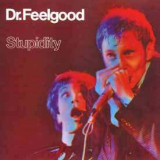
Black heavyweight vinyl pressing The third album / first live album from the British rock band, Dr. Feelgood.
Originally released in 1976, it was the first live album to ever hit number 1 on the UK charts in its first week.
Stupidity captures the relentless, hard-driving energy of Dr. Feelgood at their peak. Comprised of recordings taken from 1975 tours, the music is presented raw and without overdubs, making it clear that the dynamic friction between guitarist Wilko Johnson and vocalist Lee Brilleaux could propel the band toward greatness
Certain Sound Records and Montener the Menace are proud to finally release the first single from his highly anticipated second album "Anyone Home?"
Montener has recruited Wounded Buffalo Beats on production duties who’s looped a fantastically pitched vocal-sample over some hard, head nodding drums to set the scene for the wonderfully enlisted, all-star line-up to go berserk over.
The world-renowned guests include - Wordsworth, Rah Digga, Masta Ace & Fatlip as "High Noon" sees the gang of notorious outlaws trading smoking hot verses, swaggering into your local saloon, oozing with finesse as six-shooters still smolder in their holsters and their Stetsons pulled low.
This is one of the best cross-Atlantic collaborations Hip Hop has seen to date and is a fantastic choice for the initial lead single from the upcoming album.
"High Noon" is out April 2nd via Certain Sound Records and is accompanied by a fantastic Western influenced, animated video by the super-talented animator - Taylor Bowen which can be found below:
The Struggle - the 2nd single taken from his highly anticipated album -
Anyone Home?
Once again Montener enlists a heavy ensemble of guests featuring
Stones Throw alumni, Guilty Simpson, UKHH veteran, Micall Parknsun
& Artifacts emcee, El Da Sensei.
The Struggle sees the four emcees
perform their vocal acrobatics in unrivalled style as their rhymes
reverberate over a smooth, neck-snapping slab of vintage Boom Bap -
eerily reminiscent of the rich, classic sound of the Mid-90’s. JL Beats has
created a timeless beat here with DJ JabbaThaKut providing the world-
class cuts to round the track off in superb style.
“Its gonna make a great impact on the scene, just what we need, when we need it most” - Skinnyman
Mother Freedom Band’s Cutting The Chord is a funky modern soul classic. It’s both a criminally under-appreciated album and a hard-to-find record so we’re delighted to be giving this sweet disco-funk groover the reissue treatment it deserves.
Produced by the great Al Goodman from The Moments and originally released in 1977, Cutting The Chord seems to be one of the lesser known releases on the curious, and often great “All Platinum” label. Other than a 7" of a couple of these tracks, the only thing that the band seem to have released is this album, and what an album it is. Unbeatable soul-funk of the highest quality.
The album bursts open with “Love Will Stay In Your Corner”. It’s a soulful dancer that reliably slays any funk set you care to drop it in. It’s followed by the lithe disco funk “Flick Of The Wrist” that’s all bubbling baselines and elegant horns. The groovy, horn-enhanced sweet soul of “Gotta Get It Back” is equal parts heartbreaker/hip-shaker and the acidic organs on “Mr Brother” are an experiment in synth soul.
Perhaps the group’s best known track, “Beautiful Summer’s Day” might well be worth the price of an original copy alone. It’s pure piano-driven paradise soul. A tropical birdsong intro sets the scene of a warm, perfect sunshine day and the lead vocal soars over the lush, clean production. The tempo oscillates between contemplative and stomping. Essential.
The brilliantly-named “(Assistants Rag) When You’re Hot, You’re Hot” opens side two. Another huge highlight, its title refrain repeated over this laid-back, power-funk workout. It still sounds incredibly modern, like something off the last D’Angelo record, and if Public Enemy and Diamond D both sampled it you know it knocks hard.
The horn-heavy, clav-stabbing-stomper “We Like To Boogie” keeps things fast and funky before the airy, heavenly harmony soul of “Come On Home” mellows us all out. Things pick up again with “Touch Me”, and you might recognise its addictive elements sampled in Jay-Z’s Kanye West-produced “A Star Was Born”. The magical, reggae-tinged, gospel-influenced “Sweet Love” closes out this assured, classy set.
We dare to say that Cutting The Chord is a rare example of a funk-soul LP which is killer from start-to-finish. Sure, there are the stand-out bombs, but the whole thing is a complete and varied album of feel-good vibes held together by its fluid horns, tight, tight rhythm section and beautiful vocals.
Mastered for vinyl from the original analogue tapes by Simon Francis, cut by Pete Norman and artwork restored at Be With HQ, this new edition should hopefully stop this album slipping any further into obscurity. It’s just too good to be forgotten.
out of Stock
Last delivered 4 years ago available to reorder, subject to availability
On 12th Feb 2021, Bugzy Malone releases his fifth full length project, ‘The Resurrection’. This body of work is full of hard-won wisdom and undiluted street delivery on an elevated level that sees Bugzy produce his most accomplished work to date. The tracks weave social commentary and personal experience which produces something complex but powerful.
The album is launched with the single Don’t Cry’ ft. Dermot Kennedy. This is an anthem that journey’s Bugzy’s near fatal accident in March, depicting the mental and physical journey Buzgy went through whilst on the ground following the crash. In true King of the North fashion, Bugzy delivers technically perfect verses and showcases the incredible lyrical ability that everyone has come to love of him. This is balanced by Dermot Kennedy’s powerful and gritty chorus
‘Don’t Cry’ ft. Dermot Kennedy follows on from recent release ‘Doe’d Up’ and M.E.N III, the third instalment of ‘of his legendary M.E.N series which debuted at #18 in the singles chart, giving Bugzy his highest single chart position to date.
Straight Outta Caledonia is the first commercially available “Greatest Hits” of the outsider songwriter Jackie Leven, an artist
who has largely remained in obscurity in his native Scotland despite being one of the greatest wordsmiths – and singers – it ever
produced. A well-travelled musician who began making psychedelic, progressive music in the late 60s before emerging as an
epic storyteller full of pathos, humour and humanity in the 90s, Leven lived and wrote like many of the fragile, gregarious
characters of his songs; large, full of life and empathy. Leven passed away in 2011 after recording 30+ albums under different
guises or with his briefly successful New Wave band Doll by Doll. Straight Outta Caledonia is a compilation collated by Night
School Records on its Archival label School Daze that seeks to introduce Leven’s music to new generations.
In an age of isolation, alienation and loss of visceral experience, Jackie Leven’s music can be massive and welcoming. It feels
connected to some universal humanity and vibrates with vitality. His songs are often full of tragedy and comedy simultaneously,
cutting straight to the heart, often plugging directly into the nervous system of the listener. His lyrics are rich, dense with imagery
that can veer from apocalyptic to the comically banal in a sentence, with a songwriting panache that can be heavy handed to
almost bursting point before skewering the song with a clownish, warm punchline. His productions ranged from Bob Dylan’s
Rolling Thunder Revue style rock band orchestrations with strings and organ as on the epic Ancient Misty Morning or they could
be pared down to the purest form of folk song as on Poortoun: Leven on stage alone with an acoustic guitar, albeit played with a
mastery of the instrument that he often only hinted at. Musically his sound can bend traditional structures or stay completely
confined within them yet still forever push towards an ecstatic release, as on the cinematic Snow In Central Park.
The most exciting, jaw-droppingly effective tool at Leven’s disposal was his voice. A multi-octave instrument that, though
damaged during a savage assault in Fife, he used with flair; he had both a brazen disregard for the rules and a deep humility, all
of which is evidenced with every phrasing. A baritone that could flit up through the register – always touched by his gentle
Kirkcaldy accent – it’s the prime delivery method for his songs. Leven’s voice enabled him to inhabit the characters in his songs to
an uncanny degree, a skill that in turn enables the listener to empathise with them and, subsequently, the singer. It’s most evident
in stand out song The Sexual Loneliness Of Jesus Christ, a breathtaking re-telling of the life of its protagonist, not as a pure,
sinless messiah but as a sexually frustrated, solitary man condemned to an existential loneliness no one else will ever feel. In
many ways the track is the archetypal Jackie Leven song. Produced by Pere Ubu’s David Thomas, what strikes the ear first –
after the samples of unemployed workers in Glasgow following the closing of the Clyde shipyards – is the audacious, rhythmic
tremolo effect Leven employs through the verses before the production opens up to allow Leven’s vocal to lift into a soar, a
freeing glide powered both by the force of the singer’s chutzpah and the inherent, doomed destiny of the protagonist. With any
other singer such subject matter could come across as gauche or worse, pretentiously sonorous, but Jackie Leven’s genius was
such that he could be this cinematic and brazen while touching something elemental and true in the beholder. It’s a skill evident in
every song on Straight Outta Caledonia, the trademark of a songwriter who revelled and excelled in intensity with a lightness of
touch.
In his lifetime, Jackie Leven toured, wrote and recorded at a ferocious rate. He recorded under aliases to avoid record contract
restrictions, played house shows in Europe after or instead of official concerts, events which were often spoken word story telling
masterclasses as well as performances of his often bewilderingly dense songbook. His music has traditionally been catalogued
as “folk” music and has been largely banished to a small, dedicated group of international fans and apostles both private and well
known, like author Ian Rankin or Glenn Matlock. Since his passing in 2011 however, there has been a growing recognition
amongst a newer generation, with artists like James Yorkston or Molly Nilsson publicly stating the influence of the unsung
troubadour on their own craft. Jackie Leven’s fairytales for hard men are often forensic deconstructions of masculinity, sad and
ecstatic, light and shadow, always endlessly rich, a resource as bountiful as Leven himself’s human spirit undoubtedly was.
Two bodies dancing hot in the New York City winter before being pushed inside for the rest of 2020. Two hearts that, in the span of 6 months, faced the loss of both of their mothers, the matriarchs that bore them to this planet full of wonder. They held on tight to the beauty of living, together. With this shared language and the confines of quarantine they lost and loved even harder. Battling packed boxes and lost jobs, the two celebrated their tragic journey with broad shoulders forcing power chords and the harmonized chants of utter release. They huddled together for the future while leaking their hearts into pop melodies that collide effortlessly with both a shared melancholy and simultaneous hope. MAN ON MAN (also M.O.M.) is a new gay lover band made up of Joey Holman (HOLMAN) and Roddy Bottum (Faith No More, Imperial Teen, CRICKETS, Nastie Band). Their upcoming self-titled record, MAN ON MAN, is infused with indie-rock distortion and soaked in gay pop confidence while still maintaining the dry acerbic sense of humor they both share. M.O.M.'s music videos take their magical collaboration to another level with otherworldly cinematographic dimension, and of course, the subversive playfulness of two gay lovers unmistakably flirting with their audience and each other. Upon the release of their debut single, “Daddy”, their video (chock full of the pair dancing seductively in their white briefs) was removed from YouTube for violating their “sex and nudity policy.” At this moment, the band solidified their political visibility as queer artists who are not ok with being silenced or removed from history because of their age or size. Bottum told Rolling Stone, “There’s enough representation in the gay community of young, hairless pretty men." Roddy and Joey’s love for each other and their own bodies, histories, and truths are what make this project so tender and lovable. MAN ON MAN’s music transcends both genre or decade, creating a timeless appeal for so many kinds of listening. The varied influences and textures of the record are a meditation on the myriad of emotions of lockdown, as well as this particular moment in their own lives, collectively and independently. The shoegaze whirlpools of “Stohner” transition into the square wave synths of “1983” with ease, while tracks like “It’s So Fun (To Be Gay)” open us up to a new type of queer anthem for the 2020s.
Part of Ernesto Chahoud’s ‘Middle Eastern Heavens’ album series, BBE Music reissues Lebanese composer Ihsan Al-Munzer’s 1985 masterpiece ‘Sonatina for Maria’. Al-Munzer’s sixth solo release, the first entirely composed of his own original works, ‘Sonatina for Maria’ takes a step away from the sound of his earlier ‘Belly Dance Disco’ album (reissued by BBE in 2020). This innovative library album features eight synth-driven instrumentals that effortlessly flow through psychedelic pop, cinematic soundtracks and disco music. Taking in a range of styles, the album illustrates Al-Munzer’s skill in composition and arrangement that saw him become one of the busiest arrangers of Lebanon’s 1980s pop scene. The record goes deeper into the Western rhythm Al-Munzer explored at the beginning of his career and brought to his Middle Eastern fusion productions, with the synthesizer still taking centre stage, and the electric guitar, bass and drums ever more present. When Al-Munzer entered Copenhagen’s Sun Studio in 1985 to record ‘Sonatina for Maria’, the composer thought it would be his last ever album. Diagnosed with mouth cancer, he had travelled to Denmark for treatment and decided to make one final work while awaiting his operation. The composer wrote the record during a particularly challenging period in Lebanon too – the country was buckling at its knees: destroyed, bankrupt and beaten after 10 years of civil war. “When I made the album, I had a sad feeling because of the war in Lebanon and it was hard for me to be away from my country at that time” reflects Al-Munzer. Hence, the album has a particular originality and energy across its eight tracks, wrapped up in melancholy and nostalgia for a troubled homeland, as well as showing a lust for life. Dedicated to his then five-year old daughter, title track ‘Sonatina for Maria’ is an up-tempo disco instrumental with a classical theme. Several pop ballads feature on the album, as well as trippy 1980s TV-style soundtrack ‘Dindolo’ and Arabic disco instrumental ‘Mishwar’ (Picnic), revolving around a punchy Middle Eastern melody. The album includes the main theme from the 1983 Lebanese film ‘Al Makhtouf’, one of three films for which Al-Munzer wrote the soundtrack. Directed by Clauda Akl, the film starred iconic Lebanese singer and actress Sabah. ‘Streets of Beirut’ captures the atmosphere of the Lebanese capital’s deserted streets in wartime and the album closes on fast-paced Euro-disco instrumental ‘Gipsy Nights’. Al-Munzer’s five releases from the 1970s and 1980s are part of BBE Music’s Middle Eastern Heavens reissue series, a collection of ground-breaking productions from Lebanon, curated by Lebanese DJ, compiler and music researcher Ernesto Chahoud. Notes by Natalie Shooter, edited by Will Sumsuch.