Psychemagik are the renowned duo of Daniel McLewin and Thomas Coveney hailing from the UK, best known for their carefully crafted DJ sets and distinctive edits.
In 2019 they released their long lost LP ‘I Feel How This Night Should Look’ featuring for the most part a collection of unreleased material written and recorded over a decade ago. Two of the tracks had made it out ahead of the album with a life of their own; a self released EP that featured ‘Above the Clouds’ and the 10th Anniversary of Phonica which included ‘Triumph of the Gods’.
Here Psychemagik revisit the latter with brand new remixes from Prins Thomas and Richard Norris. Thomas stays true to form with a percussive, glacial take that vibrates around the existing arrangement composed by Richard Chester at the infamous Air Studios. Whilst Norris ups the psychedelia pulling on Renate Staal Nygard’s stunningly melodic vocal accompaniment.
out of Stock
Last delivered 4 years ago available to reorder, subject to availability
THE KINGS OF JUNGLE aka Jungle pioneer and all-round legend DJ Dextrous, served up some genre defining releases on Suburban Base and just a couple of much demanded pieces of brilliance slipped through the net. Many VIP versions were made of tracks and specials for one time use at particular events, in the tradition of reggae clash events from which jungle took much inspiration.
Two such VIP dubplates feature here brought together for one heavy hitting 12inch release, ‘KING OF JUNGLE VIP’ was made especially as a dubplate for Jungle Fever events, rinsed and rewound repeatedly at these shows and elsewhere, it only appeared just once as an exclusive on the seminal D&B Selection album in ‘94, and we have been asked for DJ friendly copies of this track ever since!
The Junglist anthem ‘JUNGLE THEME VIP’ another rare version only held on dubplate by a select few but became a mainstay of the very best Jungle events through 1994, it graced The Joint LP as an exclusive and never had a single release until now.
Saved from the original master tapes directly from DJ Dextrous studio these have both been carefully and stunningly remastered and are being made available as a 12 inch single DJ friendly format for the first time ever!
Looking absolutely amazing in camo style colouring to the vinyl and in the classic Suburban Base house sleeve to evoke those memories of the gold age of Jungle! Grab yourself a piece of history in the making now!
out of Stock
Last delivered 3 years ago available to reorder, subject to availability
nown for her delicate compositions, soaked in dream-like surrealism, Icelandic musician Sóley has attracted a huge following since launching her solo career back in 2010. Her 2012 single ‘Pretty Face’ went on to generate an enormous amount of buzz, and quickly became a viral sensation. Now, with three solo LPs under her belt, Sóley is preparing to debut a completely new sound via the release of her new concept album, Mother Melancholia, on October 22nd.
Described by the artist as "Nosferatu meets Thelma and Louise in a vampire church under the watchful eye of David Lynch", Mother Melancholia is the soundtrack to the end of the world as we know it. As a self-confessed news addict, Sóley became obsessed with the idea that the world is ending. Having surrounded herself with real-life stories of global warming and patriarchal politics she couldn’t shake the feeling that she was going to die. This feeling was so all encompassing that it sparked the idea for a new project. Could there be a soundtrack for the last days of humans on earth? How would that sound?
“I read books about possible dystopian worlds and started writing poems about irrational and in love characters who live in gray and cold imaginary loneliness. In each other’s burning arms. Walking in circles with no way out” she explains. “After all, the album reflects our life here and now. Our life and reality is a kind of dystopian world.”
Whilst writing the album, which serves as a tongue-in-cheek eulogy to our planet, Sóley began reading about ecofeminism, a branch of feminism which uses the concept of gender to analyse the relationship between humans and the natural world. Ecofeminism emphasizes that both women and nature must be respected but also separated. Since the beginning of time, the natural world has been synonymous with female identity, phrases like Mother Nature are commonplace. “The patriarchy views women as volatile and hysterical. Earth and women are either our saviours or our destroyers,” explains Sóley. “It’s so easy to abuse the earth, like the patriarchy has abused women since the dawn of time, then ask for forgiveness afterwards and promise they´ll never do it again”.
The new album sees Sóley move away from the indie-pop of her previous releases. She began by experimenting with writing songs on the accordion, allowing her a new sense of freedom in her writing. The process allowed her to broaden her horizons even further and experiment with a whole range of new and exciting sounds. “I bought myself a theremin as I was really excited about the unpitched sound and there is no perfect pitch during the end of days,” she laughs. “I also bought a mellotron, my first moog and a cello and taught myself how to play each of them. All of these new instruments are particularly suitable for the kinds of aesthetic inconveniences which I have learned to embrace.”
Album opener ‘Sunrise Skulls’, one of the most cinematic moments on the album, was inspired by the Me Too and SlutWalk movements and tells the story of a group of women who rise up and fight the patriarchy. ‘Blows Up’, a track that would be at home on any horror soundtrack, is a sarcastic love letter from the Earth to humans. Standout track ‘Desert’ is an incredibly moving song dedicated to the next generation. “It’s about the guilt you feel, as a mother, for having children and leaving them on the frontline. My daughter, for example, will take over this inevitable war” explains Sóley.
In true soundtrack style, the album flows through the end of the world in chronological order, closing with the Earth’s final moments. ‘Sundown’ is a dark piano ballad detailing human kind’s final day on Earth. “And everyday, I dig my own grave, and as I dive in you´ll hold my hand” she sings, over twinkling piano and swirling synths. We then hear the world end on ‘XXX’, a dark and swirling soundscape that swells before fading to silence. On ‘Elegía’ the silence then turns to the sound of the ocean, as we hear the Earth, like a woman finally free from a violent relationship, healing on her own.
Mother Melancholia is the mark of an artist confidently striding into more experimental territory. With a lengthy and successful career behind her, Sóley felt compelled to try something new and express the real her. The music might be shrouded in darkness but it’s a move that fills her with joy and freedom. “I hope that people not only enjoy the new sound, but also that Mother Melancholia might raise some questions in people, particularly women,” she says. “I’m under no illusions that this album will change the world but I hope that people can connect with the idea”.
out of Stock
Last delivered 4 years ago available to reorder, subject to availability
Does returning to a place have a sound? Can the ear have a memory? And what if places which we return to are just empty shells? Choreographed rooms which we need to play, fill from scratch each time with fragments from the past and present, layer upon layer, familiar and still somehow always new and differently assembled. Paula Schopf’s Espacios en Soledad are acoustic walks around present day Santiago de Chile, the city where she was born - which she always left, had to leave and to which she always returns - but more than anything also through her own memories which resonate throughout the public places, squares, streets though still in their own way remain strange.
„Every immigrant in the world has a piece like this - a kind of missing link, something which is incomplete. And every time one returns to the home country you are looking for it. For me it was a matter of sound.“ (Paula 2019).
In the mid 70s leaving Santiago was a flight of exile as a child with her family. Leaving in 1990 was an autonomous decision to head for Europe, Berlin, where the wall fell, where the heavens opened up all at once and electronic music became a kind of new home to so many. Paula Schopf belonged there. For her the Ocean Club at Tresor club was a central place where friends and mentors like Gudrun Gut and Thomas Fehlmann made it possible for her to get really into it. Dancing, being and feeling your body, forgetting oneself in the bass and beats, who one is and where one’s from, to becoming the DJ Chica Paula. Chile was very far away during this time, Latin America was more just a code, a musical and habitual cliche to be cautious of. This was especially true for the culture of the Chilean exile, the pathos of the “Canto Nuevo”, the sound and ideologically charged instruments of the „música andina“, for example the Zampoña, Quena or Charango. Techno was the greatest thinkable alternative to this even if or perhaps because so many kids exiled from Chile became key figures in the German and European scene: Ricardo Villalobos, Dandy Jack, Cristian Vogel, Matias Aguayo and many more.
How does returning to a place sound? Does the ear have its own memory? The field recordings which were recorded in Santiago de Chile in 2016 and form the central sonic material for Espacios en Soledad represent the paradox for Schopf’s return to her home country after emigrating: the inevitable drifting apart of her own lived time from that of her former home. Already the Venezuelan and Colombian hawkers are unmistakable signs of the deep change in Chilean society which has happened in recent years due to immigration. Which is in contrast to the old lady who sits on the floor in a pedestrian zone and without break sings the same three songs by Violeta Parra and then keeps falling asleep while doing so. The fragile presence of her voice is joined with a repertoire which is almost mythologically timeless in Chile in a particularly moving way.
By layering, ordering and conjoining such found sounds from modern day Santiago this piece become about the urban sound of Chile’s present. But more than anything by doing this Paula Schopf becomes an arranger of her own sonic memory or sound-triggered memories of returning to this city. Just as techno and Berlin helped her for such a long time to get away from too strong of an identification as a Chilean in exil, now with Espacios en Soledad she has found a way to bring these two seemingly disparate lives and remembered worlds together.
Matthias Pasdzierny
out of Stock
Last delivered 16 months ago available to reorder, subject to availability
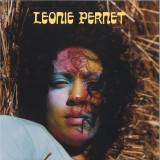
Léonie Pernet's second album Le Cirque de Consolation, to be released November 19th on InFiné & CryBaby, inhabits a world where borders dissolve and everyone makes their own unique and singular utopia. Hereby, the record questions the links between pop music, African cultures and electronic music, neo-classical music or the role of voice, whether human or synthetic. Sophomore albums can be a painful process for an artist - how refreshing it is to hear one so decidedly optimistic.
Textextext - (add your write up)
The sought after whirlwind of French Pop that exploded onto the scene with her debut "Crave", Leonie Pernet, returns with her second album, "Le Circque de Consolation", a sort of double negative of her first. While the yearning that sat at the center of "Crave"might not have been resolved, the young multi-instrumentalist and singer has found a new perspective - a more open and positive outlook on her own life and work. Perhaps telling, then, that the title was the first element of the album to exist: as it is and has always been a journey of personal (and collective) consolation first, a musical confrontation with the self.
"This record parallels my life's journey," confirms Léonie, "it reflects what has happened in my life since 'Crave' came out and how I feel today. There's still a lot of melancholy, but a lot more sunshine and light. In four years, I've become sober, which has saved me; I've worked a lot on my voice, which is a part of a desire to speak, to address my audience more directly, and also a more pronounced pop desire." In line with her new-found "openness", Leonie invites another musician into her creative process for the first time on "Le Cirque de Consolation": Jean Sylvain le Gouic, who lended his coproduction and perspective to her, while Leonie still plays almost all instruments herself with an astounding prowess.
Leonie's voice oozes with a new-found self-confidence and takes center stage amidst eclectic, distinctively fun and open-minded production. Sometimes she sings in English, mostly in French: "I worked a lot on my voice," confirms Léonie, "I didn't dare to sing before, neither live, nor on record, nor in the studio." Surrounding her astounding, intoxicating voice are forays into any direction imaginable: from harsh, experimental electronics to the more sombre, organic and quiet moments - and everywhere, there is the vision of Africa, (also Middle East) it's many sonic gifts and cultures.
Leonie has found a universal utopia that she craves for - a musical, cultural amalgamation that is decidedly non-western, political and poetic, rooted in self-discovery and the connection with other humans: African and oriental percussion, synthesizers, drum-machines; Léonie mixes genres and instruments with ease and precision. The French novelist and philosopher Édouard Glissant - whose work and writing had a big influence on Pernet - coined the term "Creolization ", the "bringing together of several cultures or at least several elements of distinct cultures, in one part of the world, resulting in new data, totally unpredictable in relation to the sum or the simple synthesis of these elements."
From "Hard Billy ", a techno-influenced rebellious anthem, to "Les Chants de Maldoror," a club and dance song propelled forward by feverish derboukas, to the deeply moving "A rebours" and its Afro-electronic rock. Léonie Pernet inhabits a world where borders dissolve and everyone makes their own unique and singular utopia. Hereby, the record questions the links between pop music, African cultures and electronic music (Intérieur Négro), neo-classical music (Le Cirque de consolation, Dandelion), or the place of the voice, whether human or synthetic as in the atmospheric "Vowel". Sophomore albums can be a painful process for an artist - how refreshing it is to hear one so decidedly optimistic.
out of Stock
Last delivered 4 years ago available to reorder, subject to availability
Swallow this: Part 4 of the Running Back various artists series here and as always, there is no long reading needed: 5 tracks by 5 different producers with different backgrounds and experiences. All somehow fit together and paint a bigger picture between remodeled deep house techniques and floor mechanics.
Yungruzt feat Eluize opens the dance with the emo-house poem Starlight. The young man managed to deliver a transcendental masterpiece that is best used for coming up - or down, if you will. A Human Connection is being made next by Baldo. Imagined and made for high times, the Barcelona mainstay applies a tried and tested formula isn’t failing here either: 303 morse codes, break beats and an on going automated voice message do the trick. The man like 9th House goes back to the deep with the yearning and beautifully composed piece Ara, while Tiger & Woods co-author Delphi trades the boogie and disco tropes for heartfelt piano house. Last but not least, new talent Signal Mute pushes it over the finishing line with another tearjerker. Shared joy is double joy!
out of Stock
Last delivered 3 years ago available to reorder, subject to availability
Hot off the heels of double track release 'Safe In My Arms / YourLove' released in July, Logic1000 isn't one to keep us fans waiting. « In The Sweetness Of You » , her 5 new Track Vinyl EP will be released November 19.
Includes the new single 'What You Like' featuring brand new artist yunè pinku, an 18-year-old South London artist/producer. Despite not yet putting any music out, yunè has already seen support from the likes of Joy Orbison who asked her to do a special guest mix on Radio 1, and has been working with the likes of Leon Vynehall. This new single is the first official original vocal performance track from Logic1000 - this year's most exciting underground female electronic and dance music producer.
out of Stock
Last delivered 16 months ago available to reorder, subject to availability
The rarefied music of Ramuntcho Matta returns to Emotional Rescue with the first ever reissue of his album, 24 hrs. Recorded in 1986 - the same year as his influential Ecoute... - the album finds Matta working in a less playful, more experimental framework but with the same ground breaking results.
Again collaborating with a selection of accomplished players, 24 hrs sees Matta (electronics, guitars, marimba, melodica, sanza, vocals) work again with Cacau de Queiroz (flute and saxaphones) and Elie Meideros (vocals), plus Guillermo Fellove (trumpet), Ahmeed Kawa (tablas) and Polo Lombardo (konks) to deserne 6 pieces as part of a performance of Labyrinth by Joan Baixis' (backing vocals) Teatre de la Castra, Barcelona's acclaimed puppetry and visual troupe.
Centred as before, on Matta's guitar, the approach is playful, inventive, a foundation for a texture of musical aphorisms. Against a background of tabla, the elegance of versatility builds, intertwining the players via moods and textures of various traditions in a unique way that is his signature.
An album to be appreciated as one, this archival offered up additional surprises when the Master tapes were examined and so presented here is a longer form, unreleased version of Before Sunrise, as well as the previously unreleased Ramon (Digital only).
out of Stock
Last delivered 4 years ago available to reorder, subject to availability
Back in 2018, previously unheard artist James Infiltrate impressed via a punchy EP of club-focused electro numbers. It later emerged that the mysterious producer was none other than Constant Sound founder Burnski. Here he dons the alias once more for a full-length excursion three years in the making. It's a fine album, too, with the long-serving producer delivering a winning combination of punchy, club-ready beats, sci-fi fired synth sounds, moody Michigan bass and the kind of authentically spacey atmosphere that has long been associated with the greatest electro records. There's also enough subtle variety in terms of tempo and style to guarantee that you'll not get bored of it any time soon. Highly impressive, but did we really expect anything less?
out of Stock
Last delivered 2 years ago available to reorder, subject to availability
Head Front Panel doing some rhythm research right here. 4 slabs of fierce repetitive techno rooted in the best traditions, transferring the controlled energy from machines into human bodies causing either uncontrolled spastic or more flowing body movements, depending on the receiving body.
out of Stock
Last delivered 22 months ago available to reorder, subject to availability
Since her debut onto the techno scene with the 2018 release of her EP 'Post-Traumatic Rave Syndrome' on Paula Temple's "Noise Manifesto" and a string of international festival and club appearances, Femanyst has gained a reputation for militant individuality. Akua Grant sets herself apart from the crowd with her aggressive & unrelenting industrial techno sets tinged with elements of Hardcore and Gabber. She has become known for her rebellious and innovative style in her adopted home of Berlin. Her self-assured approach to gripping and brawling techno tension sees her perform a fast paced and fervent flow on the dance floor. Femanyst continues to bring her unapologetically bold signature sound with her own techno imprint "Dark Carousel" as an extension to her much revered DJ sets of twisted and aggressive, high octane electronic music.
A2 Fluid - Post Industrial Transformation
Fluid is a queer DJ and producer based in Berlin. Supporting FLINTA* DJs, producers and party events are one of his priorities. His first release begun in January 2021 and he is still modelling his sound. His interest in electronic music goes from industrial techno to ebm to trance to hypnotic techno.
Post Industrial Transformation is a track which combines aggressive sounds and a lot of industrial elements. The transformation refers to Fluid's evolving own path. This evolution is similar to the tension that builds up all through the track. This track evokes change, modification, passage from one form to another.
B1 Hybral - Unheard Voices
Hybral is a Berlin-based non-binary DJ and producer drawn to eerie energetic industrial techno. They mix and produce haunting techno, EBM, and noisy-driven experimental sounds. Hybral's productions are made of dark atmospheric patterns linked with pushing percussions and basslines as well as heavily distorted kicks and harsh industrial noises. Mixing DJ sets the track selection is ranging from contemplative ambient to stern and fast techno - connecting vast influences from Hybral's personal experiences of spending days and nights on Berlin's dancefloors. They are founder of the queer label, podcast, and event series 'Subverted' which focuses on a distinct program aiming to lead dance music back to its roots of resistance and diversity.
B2 Marsch - Mrs. Jones
Marsch is a Berlin-based dj and producer from France, who initially began 8 years ago as a music curator and selector. She started to produce when she moved to Berlin, and has mostly been focusing on this for the past few years. She would define her music as a balance between melody, energy and texture, with a blend of minimalistic elements, rhythmic and percussions, and voices and futuristic synths.
DURCH BLN/TLV is a queer collective with a clear vision of solidarity and community building. DURCH operates in Tel Aviv and Berlin trying to bring queer people together, building a culture of inclusion, diversity and tolerance. In the tradition of original raves DURCH organizes solidarity events ranging from parties, to art and community events, with the strong belief that raves are a much needed place for people to come together, celebrate their diversity and learn to respect each other. Musically DURCH is eclectic inspired by hardcore, straight forward techno, ghetto and scouse house and 90s acid.
We proudly announce the release of our first vinyl record "dogged boldness". This is a long held dream by the entire crew. With Femanyst, Hybral, Marsch and Fluid we are happy to showcase four artists that are close and dear to DURCH BLN/TLV. The record is a compilation of four hard-hitting, inciting techno tracks. Rough, bold and aggravating, just the way we like it. We are proud that we are able to continuously work with queer artists and to be a platform to further queer artists visibility.
Disclaimer: The world needs more queer artist, more queer music, more queer techno, more queer perspectives, more queer love and more queer intimacy.
No place for any racist, sexist, trans- or homophobic shit.
Artwork by Rory Midhani
Mastering by Chlar
out of Stock
Last delivered 4 years ago available to reorder, subject to availability
Ltd White vinyl LP w/ printed inner sleeve lyric insert (1000 copies ww)! Emma Ruth Rundle's forthcoming Engine of Hell is stark, intimate, and unflinching. For anyone that's endured trauma and grief, there's a beautiful solace in hearing Rundle articulate and humanize that particular type of pain not only with her words, but with her particular mysterious language of melody and timbre. The album captures a moment where a masterful songwriter strips away all flourishes and embellishments in order to make every note and word hit with maximum impact, leaving little to hide behind. "I really wanted to capture imperfection and the vulnerability of my humanity," Rundle says of the album's sonic approach. "Here are some very personal songs; here are my memories; here is me teetering on the very edge of sanity dipping my toe into the outer reaches of space and I'm taking you with me and it's very fucked up and imperfect.'" Emma Ruth Rundle has always been a multifaceted musician, equally capable of dreamy abstraction (as heard on her album Electric Guitar: One), maximalist textural explorations (see her work in Marriages, Red Sparowes, Nocturnes or collaborations with Chelsea Wolfe and Thou), and the classic singer-songwriter tradition (exemplified by Some Heavy Ocean). But on Engine of Hell, Rundle has opted to forego the full-band arrangements of her previous albums in favor of the austerity of a lone piano or guitar and her voice, which creates a kind of intimacy, as if we're sitting beside Rundle on a bench, or perhaps even playing the songs ourselves. It's an extremely up-close and personal confessional with a focus on the rich subtleties and timbre of Rundle's graceful performances. "For me this album is the end of an era to the end of a decade of making records. Things DO have to change and have changed for me since I finished recording it." In essence, Engine of Hell signifies a major turning point for Rundle as both an artist and as a person. The catharsis of this type of songwriting has effectively served its purpose, and to continue ruminating on the past going forward is less of a healing process and more like picking at a scab and refusing to let it heal. This may help explain why Rundle is less than enthusiastic about divulging the details about her muses, but it doesn't alter the fact that these songs served a purpose in their creation, and that they may continue to bring comfort to others.
The first vinyl LP release from Fluxus pioneer Alison Knowles (b. 1933). Sounds from the Book of Bean is an assemblage of noises and texts related to The Book of Bean (1982), Knowles’ 8-foot tall walk-in book constructed at Franklin Furnace in New York. This recording, the sounds of making the big book, was continually played back inside of the installation. Echoes of Yoshi Wada hammering together the circular spine of the book, other collaborators mixing ink, feeding a horse, the flowing waters of the Hudson Valley... all superimposed with texts and poems read by Knowles and her daughter Jessica Higgins.
On the second side of the album, the piece Essential Divisions features Knowles performing with red, black, and white beans. Recorded in Annea Lockwood’s underground studio, Knowles sounds the beans in glass, ceramics, wood, as well as in her mouth. Further bean histories and sound poems are recited, concluding with “Popular Bean Soup” – an ancient recipe translated by George Brecht.
Knowles’ big books are, as she describes them, transvironments: a transformationally experienced environment. The phenomenological nature of her book is distilled aurally in the case of this record. As Knowles describes the end of her book, “the reader leaves via a ladder or out the window and through a muslin panel printed with contradictory wisdom concerning beans and dreaming… one can begin again either by going on or turning back.”
Originally published as a cassette in 1982 on the New Wilderness Audiographics label, this remastered edition has been transferred from original tapes. An expansive 20-page booklet is included, holding graphics and writings from Alison Knowles, George Quasha, and Charlie Morrow.
Recorded by Alison Knowles, 1980
Produced by Alison Knowles, Sean McCann, & Charlie Morrow
Design by Alison Knowles, cover image courtesy George Quasha
Jessica Higgins adds voice to tracks 1, 3, 4, 5
Muscle Shoals singer-songwriter Dylan LeBlanc releases his new EP,
‘Pastimes’, a self-produced collection of covers of songs from Glen
Campbell, Bob Dylan, the Rolling Stones, Led Zeppelin, Buffalo
Springfield and JJ Cale that inspired him to create his own acclaimed altcountry sound.
‘Pastimes’ is released on orange coloured vinyl.
LeBlanc shared his thoughts about his cover of Led Zeppelin’s ‘Going to
California’: “When I was 15 years old I got my first paying gig at a local
coffee shop called Juri’s,” says LeBlanc. “I remembered this girl that sat
behind me in class and I bonded over Led Zeppelin ‘IV’. I remember I
had gotten a Led Zeppelin box set that year for Christmas, and her
favorite song was ‘Going to California’. I rushed home to learn that song
for her and spent hours in my room at my grandmother’s house where I
lived at the time so I could play it for her and impress her. This song will
always hold a special place in my heart. I love this record and this era of
music that I think will always remain untouchable forever and always.”
Each song was chosen for its deeply personal impact: JJ Cale’s
‘Sensitive Kind’ takes LeBlanc back to the smoky dive bars his father
would bring him along to as a child. Buffalo Springfield’s ‘Expecting to
Fly’ reminds him of teenage joyrides, speeding through the country and
listening to music to escape life’s harsh realities. He learned the art of
storytelling through songs with the Rolling Stones’ haunting ‘Play With
Fire’ and Bob Dylan’s ‘Blind Willie McTell’ - a track that he compares to
reading a Southern Gothic Faulkner novel. And Glen Campbell’s ‘Gentle
on My Mind’ is a song he remembers from his early childhood, when his
grandfather, also a guitarist, would throw parties where friends would
gather to drink and sing and forget their troubles.
‘Pastimes’ was recorded at Fame Recording Studios in Muscle Shoals,
live and with as few takes as possible in order to capture a sense of
authenticity. Says LeBlanc, “I feel like music is nothing more than a
spiritual endeavour to widen the horizons and heighten the senses of the
things inside of everyone that sometimes feel unreachable.”
Dylan LeBlanc has spent the last decade releasing four acclaimed
albums, winning praise for his arresting alt-country style, collaborating
with the likes of Emmylou Harris and Brittany Howard, and sharing
stages with heavyweights like Bruce Springsteen and Lucinda Williams.
“One of modern country’s most interesting voices, in both senses of the
term.” - Uncut
“Sublime voice and evocative songwriting.” - Nashville Scene
1. Some records hit you with an instant impression of timeless brilliance, and Low Life’s Dogging is one of those records, what the wise call “an instant classic”. 2. From Squats to Lots: The Agony and the XTC of Low Life is more like their second album Downer Edn (read Edition), a little more withdrawn, a little more textured. Complex. Rich. Which is to say: you’re going to need some time with it. 3. Some show, some grow. Low Life have done both. This one is a grower. Spend some time with this one. It’s got that nuanced flavour. Don’t guzzle. Sip. Savour. 4. Sip it, and sense the recurring brilliance of Mitch Tolman’s lyrics, exploring the usual territory of gutter life, lad life, punk life, low life. The dirge. Disgust and shame in white Australia. Council housing, bills piled to the neck, substance abuse and rehabilitation, the fallen lads and lasses who stood too close to the flame, loss and loneliness, from squats to lots. Un-Australian gutter symphony. 5. There is a celebration of resilience and that’s a central theme of this record and a time like ours needs a record like Agony & XTC. Low times are coming through, but if you’re low they won’t get to you. 6. Iggy Pop’s Bowie produced studio rock masterpieces ‘The Idiot’ and ‘Lust For Life’ are important reference points to the 3rd album sounds of Low Life. Here comes success! 7. ‘The Agony and Ecstasy’ is a 1985 novel by Irving Stone about the life of Italian Renaissance painter Michelangelo. Stone wrote another novel about the single eared painter Vincent Van Gogh called ‘Lust For Life’. This synchronicity hit me. 8. Iggy and the Stooges are a pretty safe reference for Low Life (and all good rock music). Iggy and the Stooges are a low life’s Michelangelo, but solo Iggy like Lust for Life is a better reference for this particular incarnation of Low Life, which is to say they are studio rock albums. 9. Bowie later referred to this period of his life as profoundly nihilistic. But Iggy looked at it as the period of his life that saved him from an early grave. This confrontation is Low life lore. 10. Let’s stick to this, because there’s something about this era of Bowie that makes sense with Low Life’s new album, particularly Low. One should never miss the Low in our new album from Low Life. Producer and studio boss Mickey Grossman has the ear for the Low, and he has carved out a little statue of David right here. 11. Mickey’s ears are recording, mixing and producing the best of Sydney, most notably the Oily Boys Cro Memory Grin. A great companion record to this one. Use Agony & XTC AFTER Oily Boys. Not on an empty stomach, and don’t try to operate heavy machinery (bobcat, bulldozer etc). 12. The relationship between Low Life and Sydney hardcore should not be understated, but it also shouldn’t guide how to listen to Agony & XTC. This is not austere, disciplined music. 13. Think, like, if Poison Idea were given the kind of studio time and budget as Happy Mondays. You wouldn’t play it to a teenager. It’s not for children. This is a mature flavour, one for the adults who have had to contend with failure and hardship, medical bills and disappointed family members, betrayed lovers and worrisome growths, police brutality and tooth decay, humiliating bowels and collapsed septums, detoxing and drying out, for those who have seen themselves as corrupted and putrid and unloveable, for those who endure all of this and aren’t willing to lie down and cop it sweet: Low Life are still here and they ain’t going nowhere. NOTES ON HOW NOT TO LISTEN TO AGONY AND XTC OF LOW LIFE: 1. Don’t think of shoe-gaze. It suggests a safe passage to 90’s reminiscences, a vogue style of our time, but nothing to do with Low Life style. Low Life style is always of its time. The content changes. Agony & XTC shares weight of records like My Bloody Valentine’s Loveless and Slowdive’s Kebab, records that were laboured on after the songs were recorded, songs that were written as they were recorded. 2. We can call these “studio albums” as opposed to albums built in the heat of live performance. Studio albums from the 90’s are called shoe-gaze by some journalist nerds, but we know better than to use words like this. 3. Studio albums are excessive and, at the same time, so empty. Agony & XTC, Loveless, Kebab, Rumours: excessive! And empty. This is not to suggest this is Low Lite, some throwback, soft. A band like Low Life can make an overproduced studio rock album without having to use the word shoe-gaze. So, don’t think studio albums mean anything especially 90’s. Don’t look back. 4. Let’s lose these distasteful labels, like “shoe-gaze”, “rehab rock”, “stab”, “guitar OD overdrive”, “western Sydney wonder”. They can fade out. A low life was once referred to as a vagabond. Who uses this term today? Nobody. Language can murder. Words can die. Kill ‘em all! - Daniel 'DX' Stewart, Melbourne, 2021.
A true psychedelic masterpiece!
Black vinyl LP in black and white jacket with miniature two color booklet. Limited second pressing.
Blind Owl Wilson was a truly great guitarist and vocalist whose deep well of psychedelic blues songs were buried amongst the catalog of major label rockin’ blues band Canned Heat. Blind Owl served as Canned Heat’s guitarist and would chip in a song here and there as a front man. A couple of those songs became huge hits in the 60’s – “Going Up The Country” and “On The Road Again”.
Blind Owl’s songs for Canned Heat stood in stark contrast to the bands blustery blues rock – his was a gentle and nuanced voice and the themes of his song were all about personal heartbreak, grasp- ing for cosmic understanding, and ecological justice.
Here we have an LP of Blind Owl’s songs from Canned Heat’s records – left to sit alone and take you somewhere unexpected. Blind Owl’s personal vision quest can be heard throughout these songs. “Poor Moon’ tells the tale of Alan’s heartbreak as he watches the moon being misguidedly bombed by man, ‘My time ain’t long’ confronts death, “Parthenogen in 3 Blind Owls’ and ‘Parthenogen childs end’ take you to the psychedelic limits, and oh yes, we have the hit tunes on here too. Co-release with Sutro Park records.
Germany-based metal band OBSCURA launch trilogy concept on stunning new album “A Valediction”. The group’s first (sixth overall) album for Nuclear Blast pivots on many fronts. Advanced, elegant, and yet refreshing, “A Valediction” sums up past endeavors effortlessly as it gazes with purpose and conviction into the future. OBSCURA are fan-renowned and critically acclaimed for challenging and then expanding upon norms. From “Cosmogenesis” (2009) through “Diluvium” (2018), the band flourished and made significant progress in a musical genre unprepared for a creative shot of German invention. “A Valediction” spearheads OBSCURA into a new era of extreme metal.
Guitarist/vocalist Steffen Kummerer founded OBSCURA in 2002. Early on, he set out to improve, redefine, and push forward. Under his self-label creation, the Bavarian released debut album “Retribution” (2006), followed by heavy touring throughout Europe. Word quickly spread that a brand-new band from the south of Germany was on the rise. Buzz lead to a deal with U.S.-based Relapse Records. The first record out was “Cosmogenesis”. In Europe, Metal Hammer Germany awarded the album 6/7 while in the U.S., “Cosmogenesis” hit the Billboard charts at #71. The cross-continental praise and fevered momentum landed OBSCURA on high-profile tours in Europe, North America, and Japan.
When follow-up “Omnivium” arrived in 2011, they upped their chart success (Billboard #11; Media Control #14), received more accolades from publications like Terrorizer, Rock Hard, and Decibel, had another massive round-world tour cycle, while enhancing and making progress on their clever brutality. OBSCURA further developed their sound on “Akróasis” (2016). Moored by jaw-dropping tracks like ‘Sermon of the Seven Suns,’ ‘Ode to the Sun,’ and the title track, “Akróasis” elevated OBSCURA to the highest levels of international renown, having climbed up the Billboard charts (#5) as well as earning top marks in Rock Hard (8.5/10), Metal Hammer Germany (6/7), and Revolver (4/5). The Germans toured the world yet again, playing over 100 shows in support of “Akróasis”.
OBSCURA’s most significant accomplishment was, however, just around the corner. The final part of a tetralogy, “Diluvium” (2018), fiercely pursued OBSCURA’s multi-album transformation into musical innovators and metal powerhouses. Music videos for the title track, ‘Emergent Evolution’ and ‘Mortification of the Vulgar Sun,’ in concert with a substantial interest in virtuosic, forward-thinking metal, posited OBSCURA in the good graces (yet again) of the worldwide press in addition to rocketing up, for the very first time, the official album charts in Germany (#58) and Switzerland (#93). The Germans also topped out at #3 on the Billboard Heatseekers chart with “Diluvium”.
OBSCURA‘s stats have been impressive: Twenty years active; six highly prized albums; over 600 shows on four continents. Worldwide fan and press engagement—the videos for ‘The Anticosmic Overload,’ ‘Akróasis,’ and ‘Diluvium’ have over 4.5 million views—is only getting stronger the longer OBSCURA continue to offer up and interact with (via play-throughs and member/gear spotlights) their very captive audience. This is only the tip of Kummerer’s custom ESP guitar, however. A Valediction finds OBSCURA turning the page to a new chapter in the band’s evolution. A year in the works, the songwriting sessions followed a new approach, where the framework was relaxed, allowing new inspirations, imagining, and opportunities to arise. Songs like the opening epic ‘Forsaken,’ the '80s-tinted ‘When Stars Collide’ (featuring Soilwork/The Night Flight Orchestra frontman Björn Strid), the brutal groove of ‘Devoured Usurper,’ the ethereal artistry of ‘Heritage,’ and the fleet-fingered title track benefitted compositionally (refined structures) and aesthetically (more dynamism) from OBSCURA’s restyled songwriting stratagem.
OBSCURA wrote, recorded, and finalized “A Valediction” during the pandemic. The stipulations of working during this time allowed OBSCURA to work cross-country, tracking each respective part—drums, guitar, and bass—in national studios across The Netherlands, Austria, and Germany. Once the pieces were completed, the recordings were shipped off to award-winning producer Fredrik Nordström and Studio Fredman (In Flames, Architects) in Gothenburg, Sweden, where Kummerer and Münzner completed vocals and acoustic guitars using custom-built ENGL amps. Nordström was also tapped to mix and master. The final result is a deeper, heavier, yet more rounded production.
Lyrically, “A Valediction” is layered in structure and meaning. The word ‘valediction,’ by definition, deals with goodbyes and farewells. In a way, this is auf wiedersehen to the four-part album series while also addressing complex topics of Kummerer’s personal life. Instead of obscuring issues of loss, death, and abandonment in metaphor and allusion, the German laid bare his torment across songs like ‘Forsaken,’ ‘Solaris,’ ‘In Unity,’ ‘The Neuromancer,’ and ‘In Adversity.’ But for every line of desperation, he also offers positivity. Indeed, new beginnings—physical, emotional, or environmental—can provide light in the darkness. Lauded artist Eliran Kantor (Testament, Helloween) was brought on board to visualize the leitmotif. The bronze-themed colourway Kantor used exemplifies OBSCURA’s resistance to individual and sonic corrosion.
In 2021, OBSCURA will lighthouse their musical prowess, thematic complexity, and lyrical ambition on “A Valediction”. The group continue to be a beacon for change. No doubt OBSCURA’s new stats will amaze, but what they’re focused on is the release of “A Valediction” and then taking it on the road. Several high-caliber tours of Europe, North America, and Asia are planned through to 2023, with routes are in the works for the band to visit Australia, South America, and beyond. Truly, there is no band quite like OBSCURA. “A Valediction” proves that persistence, perseverance, and enterprising minds can achieve anything. Welcome to the next level!
LP Black Vinyl, DL card. ‘Until We Fossilize’ is the debut album from Marta Del Grandi, an eclectic singer songwriter from Italy. This is an award-winning jazz vocalist set in new territory, crossing borders of genre and style from West Coast ‘60s to ambient exotica, from plaintive Lynchian etherealism to dramatic Morricone scores. Marta gathers influences from near and far to create a unique genre-splicing style who’s now travelling her own unique and unchartered path. Newly signed to Fire Records, this debut is an unravelling of time and distance; a breathtaking journey from mainland Europe to the Far East and back again, delivered as an eerie, soundtrack by a captivating vocalist. A self-produced gem; filled with lush strings and electronic ambience and an eclectic vocal that transcends boundaries. Lead single ‘Amethyst’ takes inspiration by the myth of Amethyst, filled with Greek mythology, touching the wildest manifestation of imagination, it’s the story of a woman who frees herself from the expectations imposed on her by patriarchy. Composed with Indian drummer Tarun Balani, Marta sounds like Sandy Denny backed by Eno on Gamelan with a nod to Sun Ra. ‘Until We Fossilize’ is a lyrically aware set of dramas littered with life-affirming couplets over gorgeous, dramatic turns. “It’s modern and ancestral at the same time.”
Sorang, the debut album of Yalta native Wulffius, represents his work over the last eight years. The playful creature on the cover, Stone Eater, is based on childhood sketches of producer's father. The name of the album alludes to the first collection of his father's poems, which took its name from a short story by Konstantin Paustovsky, a master of nature writing in Russian prose. Sorang is the name of the south wind that "blows once in centuries", and you can hear its unique warmth in these tracks. There is a sense of wholeness here, and a palpable style and atmosphere that permeates the individual pieces.
Wulffius creates what he himself refers to as "B-sides": something too strange to be danceable, with "complex ease" and rhythmical variety. The music has a charming serenity and beauty thanks to Wulffius' intuitive approach, which is childlike and whimsical in the best possible sense. By the way, Paustovsky wrote Sorang in an hour and a half at a speed writing competition. You can hear a similar spontaneity here, but make no mistake, this is the work of a master and has been crafted over a period of years. It all comes from experience.
out of Stock
Last delivered 4 years ago available to reorder, subject to availability
Mulatu is an Ethiopian born instrumentalist, composer and arranger extraordinaire. Schooled in the UK and then the USA, Mulatu fuses jazz, latin and traditional Ethiopian styles to create a unique sound, most commonly referred to as Ethio-jazz.Over the past decade years he has gained much exposure via the Ethiopiques series, a collaboration project with the Heliocentrics, and through the inclusion of 'Yegelle Tezeta' - featured here - in the soundtrack of Jim Jarmusch's film, 'Broken Flowers', starring Bill Murray.
Shovel Knight began as a modest, yet highly promising Kickstarter project in March 2013. Billed as “a groundbreaking love letter to 8 bits!” by Indie developer Yacht Club Games, this 2D side-scrolling platform game released in June 2014 to universal praise and accolades.
Fans and industry professionals praised Shovel Knight for its charming retro-2D visuals, humorous story, fun characters and strong gameplay design, which all came together to offer a game that is nostalgic yet very modern. The efforts of Yacht Club Games paid off when Shovel Knight was won the prestigious “Best Independent Game” award at The Game Awards 2014. The game’s chiptune soundtrack, composed by Jake Kaufman and Manami Matsumae, is integral to the game’s modern-retro identity and has been similarly praised for its outstanding arrangements, memorable melodies and strong technical composition. This definitive soundtrack contains all music from the original Shovel Knight game released in June 2014, with a vinyl tracklist crafted by Jake Kaufman himself. The package cover and inner-gatefold have been designed exclusively for the soundtrack by Hitoshi Ariga; an interview with co-composer Manami Matsumae; and character artwork from the game.
« Half of Tiger & Woods on a brillant release for SKYLAX RECORDS » If you ever wondered what it might be like to have a 707 or a Sampler instead of a pacemaker, you could always ask Valerio del Prete aka Delphi, who has been setting dancefloors around the world on fire for years. Delphi has displayed his mastery of acidized arpeggios and deep electronic tropes via an EP on Pigna, before linking up with Roman techno don dada Marco Passarani as the discotech duo Tiger & Woods. Several EPs and two albums of stripped back disco on Editainment and Running Back encapsulate their winning approach – reimagined loops from heady discotheques mixed through the axis of Rome, Chicago and Detroit. In 2016 he released the house/Italo/EBM stomper Blue Tuesday on a split 12” on Tiger & Woods own label T&W Records. For this new release, the brilliant producer (half of tiger & woods we repeat) kicks off the show with the very Italo-discoïde "donuts for dinner", nourished throughout by a monstrous kick and soaring synths. He poses as a worthy heir to the Italian masters of 80s pop who often used the B-side of their songs to experiment with their most adventurous ideas. Zequenz immediately made us think of an imaginary orgy between Ron Hardy and the members of Kraftwerk, this sound is incredibly sharp and would not have denoted on the decks of the legendary DJ. Which leads us straight to the most brawling track on the EP, the aptly named "Ron's lesson" and it is indeed a lesson. This crazy track (obviously dedicated to the legendary chicago DJ) seems to have come straight out of an imaginary session, we must remember how much at that time naivety and therefore distortion (!) Reigned over productions, giving an incredibly raw and edgy side on the dancefloor. Again, this song could have been released 30 years ago. And finally, to come full circle, the very graceful overheat joins the aesthetic of the first track in an elegant and dreamy way. Note that on the label's bandcamp, with the purchase of the vinyl, you can get 3 exclusive bonus tracks (Clutch play, Runinng in place, Sucker). The magic is here, CLEARLY.
out of Stock
Last delivered 3 years ago available to reorder, subject to availability
Enterprising composer and musician Eddie Suzuki made his own path throughout his lifetime. Born on October 4, 1929, Suzuki worked as a young shoeshiner in 1940s Honolulu, saving enough money to take piano lessons. In high school, he lead a big band orchestra of 16, and sometimes up to 40 members. By the age of 18, he owned a piano shop that pivoted to become Honolulu’s top guitar store.
For Eddie Suzuki, music always came first. In 1973, after performing and composing songs for many years, Eddie Suzuki and his group, New Hawaii, recorded the now impossibly rare album, High Tide.
The LP is “not a rock-out”, local music journalist Wayne Harada ruminated in a 1973 review. “Rather, it’s one man’s vision — and version — of the now Hawaii.” A seasoned mix of psych, Hawaiian, and pop sensibilities, the music on High Tide gave the listener a look into Eddie’s singular vision celebrating the sights and sounds (and spirit) of Hawaii.
Eddie Suzuki’s New Hawaii:
Laurence Harada, guitar
John Schulmeister, bass
Gary Fittro, drums
Nani Kuaiwa, vocals
Eddie Suzuki, vocals, Hammond organ, Arp synthesizer.
"A beautiful album celebrating Hawaii’s warmth and spirit. The personal story here is that I reached out for a license just 1 week too late — Eddie Suzuki had died the week prior to my initial phone call. It took a couple years until I was able to connect with his son and get his permission to reissue Eddie's music." – Roger Bong, Aloha Got Soul
French electronic producer Chloé teams up with Bulgarian percussionist Vassilena Serafimova for their debut collaborative album "Sequenza". The duo first met in 2017 and then started working together at Xavier Veilhan's Studio Venezia. The result is his dreamlike & harmonious collision between Chloé's electronics & Vassilena's marimba.
Reunited after some fourteen years, following the historic success of their first collaboration Raising Sand (2007), which reached #2 on the UK album chart, generated multi-platinum sales, and earned six Grammy Awards including Album and Record of the Year.
Like its predecessor, Raise The Roof was produced by T Bone Burnett, who worked with Plant and Krauss to expand their collaboration in thrilling new directions, accompanied by drummer Jay Bellerose, guitarists Marc Ribot, David Hidalgo, Bill Frisell, and Buddy Miller, bassists Dennis Crouch and Viktor Krauss, along with pedal steel guitarist Russ Pahl among others.
The album features twelve new recordings of songs by legends and unsung heroes including Merle Haggard, Allen Toussaint, The Everly Brothers, Anne Briggs, Geeshie Wiley, Bert Jansch and more. Other highlights include a Plant-Burnett original, “High and Lonesome,” and the Lucinda Williams classic “Can’t Let Go”.
This year marks 25 years since Oasis’ two iconic record breaking live concerts at Knebworth Park in Hertfordshire on the 10th and 11th August 1996. The shows were both the pinnacle of the band’s success and a landmark gathering for a generation of young people. Released alongside the cinema debut of the feature length documentary film of the event, ‘Oasis Knebworth 1996’ is the definitive live recording featuring a setlist packed with stone cold classics album taken from across both nights of the concert, from the opening salvoes of ‘Columbia’ and ‘Acquiesce’, to ‘Champagne Supernova’, ‘Don’t Look Back In Anger’, ‘Live Forever’, an orchestra backed ‘I Am The Walrus’, and ‘Wonderwall’ the first song from the 1990’s to reach over one billion streams on Spotify and universally loved anthem.
Ajo Sunshine (pronounced “Ahh-Ho”) is heralded by
an alarming horn ensemble, stabbing with the dramatic
urgency of a killer’s theme in a midnight movie. It’s a
jarring but appropriate entry point for this brilliantly blasted
listen, an array of exquisitely sharp edges punctuated by
kaleidoscopic respites of throbbing warmth and surprising
tenderness. J.R.C.G. (Justin R. Cruz Gallego)’s previous
work with Seattle’s excellent Dreamdecay may foreground
the broad strokes here, but he’s pushed things way outward
in terms of his sonic palette. Abutting field recordings
captured from rodeos off Ajo Way, a stretch of highway
that leads one westward out of Tucson Arizona directly into
the sun, both acoustic instruments and gleaming walls
of synthetic noise are framed in dour and dissonant chord
shapes, crackling with overdriven drum mics and seasick
waves of distortion. It’s homage that plays out like a
collage, a dream switching from station to station, a series
of dedications broadcast on late night radio. All pin-hole
size images from scenes never seen whole, strung together
in but one version of complete, all making for a dazzling
listen.
As we continue on our journey here at Futurepast, we are pleased to welcome a trio that, for many years, we felt shared our vision, Frak! From Sweden, Frak have been founding an original hardware-based sound since the 80's, first via their own label Borft before collaborating with other labels over three whole decades.
On their "Formless Obstruction" EP, Frak have provided a window into the sinister twists and turns of their work. On the A-side, you see creeping Detroit stylings of "Scientific Bella" set against "Wrong Owl" with it's EBM underpinnings and industrial inflections.
On the flip, "Concentrated Feed" bubbles next to the razor sharp "Capacity Faun", both are filled with characteristic machine quirks and experimentalism.
out of Stock
Last delivered 4 years ago available to reorder, subject to availability
Third Man Records is proud to announce the 20th anniversary expanded edition of Kelley Stoltz’s defining album Antique Glow, due November 19, 2021. The announcement is heralded by the release of bonus track "Too Beck". Limited-edition "rainy nights" UK exclusive vinyl will be available on release day.
Originally self-released in minuscule vinyl-only quantities in 2001, Antique Glow has served not only as a template for the length of Kelley Stoltz’s twenty-plus year career, but has also served as a compass for other Anglophile, TASCAM 388 home recording acolytes. Original copies featured Stoltz’s clever, wry and fanciful hand-painted adornments overtop reclaimed thrift store LP jackets, Third Man’s release here utilizes some of those original unused images for a die-cut sleeve that ultimately gives the listener six different possible album covers.
The songs are by-and-large masterpieces of bedroom pop magic. From the whispering “Here Comes the Sun”-adjacent acoustic underpinnings of album opener “Perpetual Night” through the fuzz-threaded leads of “Are You Electric?” Stoltz’s inspirations are impeccable and clear. Sixties Davies British Invasion through 80’s British Bunnymen post-punk, with appropriate off-shoots into West Coast American pop-psych, Velvets-indebted hooliganism and Drake/CSNY acoustic attenuations, the end result is pure joy.
On the expanded version, standout tracks previously relegated to an Australian tour-only CD (like the breathlessly cinematic “Old Pictures”) see their first-ever vinyl and digital release while there’s an additional 10 songs from the Antique Glow-era seeing their first ever release in any format. The cutting room floor quality here is second-to-none, Stoltz clearly gifted with the curse of writing too many indelible songs, so the newly released “Too Beck” (originally cast off by Kelley because he thought “it sounded too much like Beck”) and “Umbrella” stand firm as some of the best, most timeless music Stoltz has ever released... a full two decades after he recorded them!
Over the course of the decade, Meatbodies’ Chad Ubovich has been
a perennial candidate for MVP of West Coast’s fertile rock scene. The
LA native could be seen peeling off guitar solos in Mikal Cronin’s
backing band, supplying the Sabbath-sized low end for Ty Segall and
Charlie Moothart as the bassist for Fuzz, and, of course, fronting his
own Meatbodies. Today the recently dormant experimental noise /
freak-rock outfit has announced their return with 333—a corrosive
stew of guitar scuzz, raw acoustic rave-ups, and primitive
electronics that charts Ubovich’s journey from drug-induced darkness
to clear-eyed sobriety. 333 simultaneously reflects on how the world
he re-entered was still pretty messed up—if not more so. “These lyrics
are dark, but I think these are things that a lot of people are feeling
and going through” he says. “Here in America, we’re watching the
fall of U.S. capitalism, and 333 is a cartoonish representation of that
decline.”
In mid to late 2019, the band—Ubovich and drummer Dylan
Fujioka—had a new album in the can, ready to be mixed. But
when COVID hit, like so many other artists, they put their release
on hold as they rode out the pandemic’s first wave. During that idle
time, Ubovich discovered a cache of demos that he and Fujioka had
recorded in a bedroom back in the summer of 2018, and he really liked
what he heard. In contrast to Meatbodies’ typical full-band attack, it
was deliriously disordered. “It sounded gross, like a scary Magical
Mystery Tour,” he recalls proudly. After subjecting them to some
mixing-board freakery, Ubovich fast-tracked the songs into becoming
this third release of theirs, 333. It proves Meatbodies have greatly
expanded their palette, opening new portals to explore. And for an
album that wasn’t supposed to exist, 333 is the ultimate testament to
Meatbodies’ renewed vitality.
Restlessly awakening from the depths of a feverish slumber, doomed heavy metal masters KHEMMIS return to reveal their fourth full length studio album, DECEIVER, arriving via Nuclear Blast Records in November 2021. Six tracks of desolate, soul-awakening heaviness encapsulate a project that has been nearly three years in the making. With a title that reflects the internal struggles that many of us battle in our daily lives, DECEIVER is a ferociously honest and appetizingly raw piece of musical artistry.
The first single LIVING PYRE signifies far more than just the beginning of another musical endeavour for the band; it is a substantial benchmark for emotional struggle and growth. “When it comes to my own mental health, when I’m in a bad place, I can’t access the part of me that creates art. After reaching that understanding of myself, the bulk of this song came out in one sitting. I was feeling stable. I was feeling hopeful–even though so much outside in the world was not exactly inspiring. All of us needed a reason to feel a glimmer of hope,” recounts Hutcherson. With a big, quintessentially KHEMMIS chorus embellished by a swampy sorrow, this song incorporates familiar elements of the band’s sound with a touch of Swedish death metal in its latter half. “The reason that this was the song that came first lyrically was because I was juggling all the things that were happening with the inside and outside world intersecting. All the lyrics for me feel very ‘of the time.’ So much was happening in this world, and they were just my efforts to contend with it,” explains Pendergast. “Like Ben, this was a breakthrough moment for me. Once I got the song out, it allowed me to write other songs for the album. It’s less about the fire metaphor implied by the title than about the fact that in order to escape fire you have to find water. You find the deepest, darkest cavern…you just want to stay there forever. It slowly fills up and you eventually drown.”
HOUSE OF CADMUS was another deeply collaborative writing effort between all three members of KHEMMIS. “I thought the opening riff had this cool almost-swing to it...but evil,” recalls drummer Zach Coleman. “I was drawn to the atmosphere of that first riff, and it felt like it needed to be a song that was dark the whole way through. Ben and I discussed getting some New Orleans-style sounds somewhere on the album, and I think this is where we were able to sneak some in to tie together other aspects of the song.”
“I knew that I wanted the lead guitar line in the second half of the song to tie two very different parts together,” explains Hutcherson, “but the idea was all really abstract until we were in a room together. It wasn't until we jammed out that big funeral/death doom bridge and the slow, sad coda that we found out what we wanted that lead line to be: memorable and emotive. It was a very honest musical moment together.” The writing and recording processes of HOUSE OF CADMUS were so emotionally driven that even producer Dave Otero of Flatline Audio (Cephalic Carnage, Cattle Decapitation, Act Of Defiance) encountered his own deeply personal and intense connection with the song. “With the lyric turn at the end, I was inspired by Dave’s imagery,” says Pendergast. “This idea of a person leaving some important part of themselves behind as they float away and leave the thing they love on the shore. The sound of this song is like a lighthouse beam cutting through the fog in a dark night on the ocean.”
While the lyrical themes of DECEIVER;sorrow, pain, longing for hope, will no doubt be familiar to longtime fans, these six songs display a broader collection of musical influences than on any other KHEMMIS record to date. “It being our 4th album, especially after the transition between the last two albums, it felt really freeing. We felt that we could really do anything on this record,” explains Coleman. “There’s a lot here that we’ve never done before,” adds Pendergast. “In some areas it gets darkly psychedelic. I think we found a cool way to mutate things using transitions that feel really natural. There is a subtle symmetry between the first and last songs which is one of the things that makes listening to the full album a satisfying holistic experience. It builds from almost nothing, becomes very dark, and then you slowly crawl out of that lowest circle of hell.” KHEMMIS’s DECEIVER is a beautiful, musically ambitious journey from beginning to end drenched in impassioned melody and complex, unrestrained variations of sonic savagery adorned with chilling, intensely tragic cover art by frequent collaborator Sam Turner.
Reunited after some fourteen years, following the historic success of their first collaboration Raising Sand (2007), which reached #2 on the UK album chart, generated multi-platinum sales, and earned six Grammy Awards including Album and Record of the Year.
Like its predecessor, Raise The Roof was produced by T Bone Burnett, who worked with Plant and Krauss to expand their collaboration in thrilling new directions, accompanied by drummer Jay Bellerose, guitarists Marc Ribot, David Hidalgo, Bill Frisell, and Buddy Miller, bassists Dennis Crouch and Viktor Krauss, along with pedal steel guitarist Russ Pahl among others.
The album features twelve new recordings of songs by legends and unsung heroes including Merle Haggard, Allen Toussaint, The Everly Brothers, Anne Briggs, Geeshie Wiley, Bert Jansch and more. Other highlights include a Plant-Burnett original, “High and Lonesome,” and the Lucinda Williams classic “Can’t Let Go,”.
Ferocious Dog have been putting lockdown to good use by writing and recording their fifth studio album 'The Hope'. Instantly recognisable as a fusion of folk, punk and ska - but with newer members Ryan and Johnny really putting their stamp on evolving their sound further - the former adding much more bite to the electric guitar, with the latter juxtaposing this aggression with softer folky sounds.
The ever-present traditional cover is here, right on-trend with a sea shanty vibe, the rest of the album flows irresistibly through tales of historical observations to biting commentary on the plights facing the world today. The songs follow a rollercoaster of pace and sentiment which will have you wanting to mosh one moment before having a moment to contemplate, coupled with a surprise collaboration and an overdue catch-up with how Mairi is getting on.
A great follow-up to Fake News and Propaganda - Ferocious Dog seem to have the knack of evolving their sound enough to pique your interest, without losing any of the sound or attitude that made you fall in love with them in the first place. Once they’re allowed out to play again they’ve given themselves a real headache in trying to pick a set list from their now burgeoning back catalogue.
Born in 1999, Charlie Hickey grew up in South Pasadena,
just minutes from Downtown Los Angeles. Raised by two
singer-songwriter parents, Charlie’s second language was
music since day one. As early as grade school, he was
making sense of the world through songwriting, and by
middle school he was writing, recording and performing
songs that attracted a community of collaborators and could
silence a room.
A turning point for Charlie came at around the age of
thirteen, when he covered a song by then up-and-coming
artist Phoebe Bridgers, who was still in high school herself.
The two quickly became friends and collaborators, setting
Charlie on an exciting new musical path. Years later,
Bridgers introduced Charlie to songwriter, drummer, producer
and her bandmate Marshall Vore, who noticed something
special about Charlie. The two began writing and recording
songs together, and soon Charlie dropped out of school to
work on his music full-time.
Charlie Hickey’s first proper single was ‘No Good at Lying’
and it’s the first track on ‘Count The Stairs’. The Marshall
Vore-produced track introduces us to Charlie’s evocative
storytelling and features Phoebe Bridgers on backing vocals.
“I’m no good at lying / on my back or through my teeth / but
I’m good at dreaming / I can do it in my sleep,” he sings over
hushed guitars and a whimsical banjo, searching for truth as
his unconscious mind runs wild and bleeds into reality. It’s a
slow, quiet, and understated peek to the world of Charlie
Hickey, who is barely of legal drinking age, but taps into such
universal themes that showcase a wisdom beyond his years
and exudes promise for what’s to come.