Heavy Metal hat eine lange Geschichte und eine tiefe Verbindung mit Teufelei, Devianz und der dunklen Seite allgemein. Die Rückkehr der Friends Of Hell kann diese Bindung nur stärken. Durchdrungen von reinstem Old-School-Metal und dreckigem Doom ist das neue Album 'God Damned You To Hell' ein rostiger Dorn in den Augen von Ungläubigen. Der lang erwartete Nachfolger des dämonisch spannenden Debüts, hinterlässt verbrannte Erde auf allem, was heilig ist. Noch trotziger altmodisch und düsterer als sein Vorgänger zollt sein primitives Sperrfeuer entsetzlicher Härte den Heavy Metal und Doom-Größen gruseligen Respekt, während es gleichzeitig neue, Dämonen beschwört. Zusammen mit Hellbutcher (Nifelheim) am Mikro und Bassist Beelzeebubth (Mystifier) sind Friends Of Hell nun bereit ein musikalisches Höllenfeuer auf die Metal-Gemeinde loszulassen. Sie tun dies auf Lee Dorrian's (Cathedral) Kult-Label Rise Above mit den drei Formaten CD, LP und Limited Red LP!
The Lovely Eggs will release Nothing/Everything - the lead single from their forthcoming album “Eggsistentialism” on Friday April 26th on Egg Records. Their third collaboration with Grammy Award winning producer Dave Fridmann, “Nothing/Everything” will be released on ltd edition bright yellow 7” vinyl with more out of this world art-work by illustrator Casey Raymond. Nothing/Everything is a wistful, stark, magnificent seven minute psychedelic epic. It’s The Lovely Eggs as you’ve never heard them before. “Nothing/Everything is the Yin/Yang of life,” explains Holly. “There’s hope and despair, patience and frustration, birth and death, the mundane and the extraordinary. It’s the magnificence of “Being” walking hand in hand alongside life’s daily grind. This song is simply what is. It’s not looking forward or back. It’s us now. It’s uplifting and it’s tragic. It is probably the longest and most meaningful song we’ve ever written and recorded. It’s our magnum opus about life.” With the full 7 minute and two second version on the A side, the B gives you the radio edit.
With the buzz around her building, Priddy made her biggest splash with the 2021 release of her debut album, The Eternal Rocks Beneath. The 10 self- penned tracks are delivered with a maturity and depth that belie the fact that this is her first full length release. At times tender, at times carrying a darker edge, the stories she weaves are transporting. Not surprising then that Nick Drake, John Martyn, Tunng and Scott Matthews are amongst her many influences.
The album was recorded over a 2-year period at Rebellious Jukebox studios, a little basement studio hidden beneath inner-city Birmingham and presided over by masterful producer Simon Weaver. The ensemble cast of musicians, including a sweeping string section, occasionally cut through by raw electric guitar and drums, as well as Richard March (Pop Will Eat Itself) on double bass and Mikey Kenny on fiddle, enhance Priddy's command of melody and lyricism and provide the perfect backdrop for the feelings of nostalgia and timelessness that underpin the record. Many of the songs were written during Priddy's teenage years and early twenties and reference themes of childhood and distant memories.
The title, 'Eternal Rocks Beneath' reflects this is Priddy's first album; the culmination of her earlier life experiences and the bedrock for whatever follows next.
There are few Jamaican Artists with such an impressive career as George Dekker. For his brand new studio solo album Right To Be Here George Dekker has teamed up with renowned producers Mafia and
Fluxi. The Heywood Brothers Leroy (Mafia) & Dave (Fluxy) have been producing, remixing and touring for over 35 years now and have worked with a very impressive list of artists over the years ranging from touring with James Brown, Maxi Priest to doing remixes for Janet Jackson, Sting, Gypsy Kings and more.
Leader Brooks Nielsen continues to perform those songs alongside his new material to sold old crowds across the US. Hung at Heart was originally produced by Dan Auerbach but shelved and replace with a hastily recorded album, that included the anthem "One Million Lovers". This new remastering has brought the album forward in a remarkable way making it a brand new listening experience.
Around this time, he watched singer Robert Soeterboek perform live with Bodine, his former early- eighties heavy metal band. "His vocals truly impressed me, a rarity!" Lucassen recalls. "He had the charisma and power of singers like David Coverdale and Robert Plant. Discovering that we really got along personally, we decided to collaborate on some songs, just for fun." "We started writing songs together and found a natural flow, leading to a wealth of ideas," remembers Soeterboek.
"Our friendship grew as we spent more time together, and I remember that there were lots of shenanigans and laughter." The album encapsulates a glorious treasure trove of 11 original songs with a loving 70s and 80s nod. It's a blistering romp through the good time rolling rocker of "Let It Ride", the Beatles- esque "Doctor Robert's Medicine Show," the bluesy groove of "Annie Moore," the chugging glam stomp of "High-Speed Chase" to the 80s metal of "Ice on Fire", whilst "The Preacher" would fit on a number of Arjen's back catalogue records. The bonus disc features all the demos and some more newly recorded tracks.
Sophie Lloyd is one of the most prolific guitarists on the world wide web, a trailblazer who is redefining the concept of a "bedroom" guitarist. A talented composer and accomplished musician, Sophie graduated from the prestigious BIMM in 2018 with a First Class Honours BMus in Popular Music Performance, honing and refining a talent she has nurtured since childhood. Since then, she has amassed the kind of following that even the guitar gods she grew up idolizing would be envious of, with a reach surpassing 3 million followers across her social channels, built through a steady stream of sharing her talent via guitar "shredleys", covers and her own original material. In addition to her own content, Sophie's talent and popularity has led to collaborations with brands such as Amazon Prime, Hard Rock Cafe, LiveNation and Harley Davidson, her own Guitar course on Truefire and a stunning performance at Paris Fashion Week for Redemption Brand Clothing. She has also released her own signature guitar, becoming the first female artist to do so for exclusive Californian Guitar maker KIESEL.
Most recently, Sophie could be seen shredding on stage as guitarist for multi-platinum recording artist Machine Gun Kelly on his recent Mainstream Sellout World Tour, which included sold out shows at legendary venues such Madison Square Garden in New York and Wembley Arena in London.
At 27 Years Old, Sophie Lloyd is just getting started, with the upcoming release of her debut solo album. The first few songs have already been released to rapturous reception, including "Fall Of Man (Feat. Matthew K Heafy)", "Do Or Die (Feat. Nathan James)", "Lost (Feat. Cole Rolland)" and "Runaway (Feat. Michael Starr)" with some more exciting names including Lzzy Hale (Halestorm), Chris Robertson (Black Stone Cherry), Tyler Connolly (Theory Of A Deadman) and Brandon Saller (Atreyu) all appearing.
Zeitlos. Explosiv. Romantisch. Inspirierend. Wie sonst könnte man Blue Electric Light, dass 12. Studioalbum von Lenny Kravitz, charakterisieren? Dass Kravitz den Deep-Soul-Rock'n'Roll meisterhaft beherrscht, ist eine altbekannte Tatsache. Als unermüdliche kreative Kraft - Musiker, Schriftsteller, Produzent, Schauspieler, Autor, Designer - ist er nach wie vor eine globale, dynamische Ikone in Musik, Kunst und Kultur. Blue Electric Light ist eine leidenschaftliche Sammlung von Songs, die diese Bandbreite erweitert und der jüngste Beitrag eines Mannes ist, dessen Musik - ganz zu schweigen von seinem einzigartigen Stil - weiterhin Millionen auf der ganzen Welt inspiriert. Auf dem Album kommen Kravitz' Talente als Autor, Produzent und Multiinstrumentalist zum Tragen, da er die meisten Instrumente selbst geschrieben und gespielt hat, teilweise unterstützt von seinem langjährigen Begleiter, dem Gitarristen Craig Ross. Lenny Kravitz hat vier GRAMMY® Awards gewonnen und weltweit 40 Millionen Alben verkauft. Vor kurzem wurde er vom CFDA mit dem "Fashion Icon Award" ausgezeichnet und 2023 auf den Hollywood Walk of Fame aufgenommen.
Zeitlos. Explosiv. Romantisch. Inspirierend. Wie sonst könnte man Blue Electric Light, dass 12. Studioalbum von Lenny Kravitz, charakterisieren? Dass Kravitz den Deep-Soul-Rock'n'Roll meisterhaft beherrscht, ist eine altbekannte Tatsache. Als unermüdliche kreative Kraft - Musiker, Schriftsteller, Produzent, Schauspieler, Autor, Designer - ist er nach wie vor eine globale, dynamische Ikone in Musik, Kunst und Kultur. Blue Electric Light ist eine leidenschaftliche Sammlung von Songs, die diese Bandbreite erweitert und der jüngste Beitrag eines Mannes ist, dessen Musik - ganz zu schweigen von seinem einzigartigen Stil - weiterhin Millionen auf der ganzen Welt inspiriert. Auf dem Album kommen Kravitz' Talente als Autor, Produzent und Multiinstrumentalist zum Tragen, da er die meisten Instrumente selbst geschrieben und gespielt hat, teilweise unterstützt von seinem langjährigen Begleiter, dem Gitarristen Craig Ross. Lenny Kravitz hat vier GRAMMY® Awards gewonnen und weltweit 40 Millionen Alben verkauft. Vor kurzem wurde er vom CFDA mit dem "Fashion Icon Award" ausgezeichnet und 2023 auf den Hollywood Walk of Fame aufgenommen.
Zeitlos. Explosiv. Romantisch. Inspirierend. Wie sonst könnte man Blue Electric Light, dass 12. Studioalbum von Lenny Kravitz, charakterisieren? Dass Kravitz den Deep-Soul-Rock'n'Roll meisterhaft beherrscht, ist eine altbekannte Tatsache. Als unermüdliche kreative Kraft - Musiker, Schriftsteller, Produzent, Schauspieler, Autor, Designer - ist er nach wie vor eine globale, dynamische Ikone in Musik, Kunst und Kultur. Blue Electric Light ist eine leidenschaftliche Sammlung von Songs, die diese Bandbreite erweitert und der jüngste Beitrag eines Mannes ist, dessen Musik - ganz zu schweigen von seinem einzigartigen Stil - weiterhin Millionen auf der ganzen Welt inspiriert. Auf dem Album kommen Kravitz' Talente als Autor, Produzent und Multiinstrumentalist zum Tragen, da er die meisten Instrumente selbst geschrieben und gespielt hat, teilweise unterstützt von seinem langjährigen Begleiter, dem Gitarristen Craig Ross. Lenny Kravitz hat vier GRAMMY® Awards gewonnen und weltweit 40 Millionen Alben verkauft. Vor kurzem wurde er vom CFDA mit dem "Fashion Icon Award" ausgezeichnet und 2023 auf den Hollywood Walk of Fame aufgenommen.
Active since 2001, Ayyuka was one of the first bands to look back at 70’s Turkish music to find a new voice. Not caught up in the Retromania but reincarnating Turkish Psychedelic within their own style, the band managed to develop an unmistakeable unique sound. Inspirations of Dick Dale, John Frusciante, and local heroes like Erkin Koray, Orhan Gencebay, make their music more guitar oriented but their fascination with film music and improvisation creates unexpected twists within their songs. Right after their eponymous debut in 2007, the band shared stage with Sonic Youth and Jonathan Richman. Heading to a completely instrumental music, their 3rd studio recording “Sömester” had already become a cult album for record collectors. They’ve collaborated with Orlando Julius, Ilhan Ersahin and had guests on almost every album. Their latest full length “Maslak Halayı” was a creative collaboration with Calibro35 genius Tommaso Colliva. The worldwide hype of "Yukadans” will now be followed by their upcoming EP "Zaman Ziyan”, showcasing four brand new instrumental tracks that will transport listeners through a kaleidoscope of musical landscapes, experimenting with techniques of music writing and flirting with genres like afro-beat, funk, dub or arabesque. Save the date for their very first performance of these, live at babylon, as a part of Akbank Jazz Festival.
"Recorded and produced by friend and frequent collaborator Mo Troper, Who’s A Good Boy is equal parts scrappy and starry-eyed in its sonic makeup. Album opener “The Flake” sets the stage with fuzzy guitars crashing in and Ramirez’s relaxed vocals placed front and center, as a result, the track feels like throwing on a warm blanket. And look no further than the album’s charming lead single “We Both Won,” a jangly earworm with the hypnotic refrain of “Don’t worry about me” lingering long after the track ends, serving as further proof that Bory has found the recipe for the perfect pop song and knows how to deliver it in two minutes flat. At every twist and turn of Who’s A Good Boy there’s something new to be discovered, making it one of the most exciting debuts you're likely to hear in a long time.
"Warm but guarded, intricate and muted, reminiscent of the Shins and David Bazan and especially Elliott Smith." -Pitchfork
"Whether it's the pastoral "Feel The Burn" or the splendid, reverb-drenched "Five-Course Meal", Who's A Good Boy debut full-length project shows some major potential for Bory to earn the title of Next Big Thing in the genre." - UPROXX
The last, and previously unreleased, recordings from the legendary and world renowned Swedish psychedelic organist Bo Hansson before he passed away. (Jimi Hendrix was a fan and recorded his song "Tax Free"). Here you can listen to Bosse in fine form together with his lively organ student and keyboardist extraordinary; Eric Malmberg, joined by drummer Niklas Korsell, creating mesmerizing and ethereal space jazz. The music seems to contain information about a deep perspective that questions both time and space and recognize the universe unfolding its abstract process of creation.
Two legendary figures of the Greek and international music scene, Floros Floridis and SavinaYannatou join their breaths in this new release on vinyl by To Pikap Records, entitled Blink. In the album’s seven tracks-movements, the two musicians expand the time it takes for the eye to blink. Avant-garde and improvisation, modernism and tradition seek to describe, but ultimately limit, this melodrama of existence, the libretto of which is written in the langue that may have been first heard in Pangea.
Blink departs from the ground on which records like the Residents’ Eskimo sprouted, but moves on by removing the horizon points and the conventions they carry, in order to board the next Voyager that will travel to the stars. Two experienced breaths that generate sound without rules become -through reeds and mouth- vehicles of the language of newborns deconstructing the conventions of human communication. The fragility of existence becomes -like the birdsong- lullaby and dirge, hymn and incantation. The instinctive manages to express the unspeakable in this abstract and ultimately tender work that does not conclude but remains open to the timeless movement of a prehistoric future.
Nadsvest is a black metal entity based in Serbia, comprised of Serbian native S and New Zealander A. S (Gorgoroth) and A (Barshesketh) crossed paths in 2015, and after a clear musical symbiosis had become evident, formed Nadsvest.
After an EP and a split with Portugal's Necrobode, Nadsvest crafted their definitive debut album. Musically, Nadsvest is a hellish combination of the first, second-wave and bestial black metal scenes, with unhealthy doses of heavy metal and nods to Serbian folk music, yet unmistakenly capturing that old school sound as only forged in Eastern Europe. Lyrical themes deal with the black arts through the lens of the darker aspects of Serbian folklore.
Conceptually, Slovo meseca i krvi is an epic poem exploring the stages in the process of awakening the primal werewolf force in the warrior, the triumph of the spirit and the ultimate sacrifice of the flesh.
Nadsvest is a black metal entity based in Serbia, comprised of Serbian native S and New Zealander A. S (Gorgoroth) and A (Barshesketh) crossed paths in 2015, and after a clear musical symbiosis had become evident, formed Nadsvest.
After an EP and a split with Portugal's Necrobode, Nadsvest crafted their definitive debut album. Musically, Nadsvest is a hellish combination of the first, second-wave and bestial black metal scenes, with unhealthy doses of heavy metal and nods to Serbian folk music, yet unmistakenly capturing that old school sound as only forged in Eastern Europe. Lyrical themes deal with the black arts through the lens of the darker aspects of Serbian folklore.
Conceptually, Slovo meseca i krvi is an epic poem exploring the stages in the process of awakening the primal werewolf force in the warrior, the triumph of the spirit and the ultimate sacrifice of the flesh.
"Keady & Vallins" is an all-too-familiar story of potential left unfulfilled -- glorious pop music shunted by the impetuous thrums of a music industry stricken by decadence and a preference for high turnover and rigorous proprietorship.
A tour with the Bee Gees by Vallins and help from Robert Stigwood resulted in a deal with Polydor .
After a pair of singles produced by a young, upstart (now hugely important head of Universal Music Group) Lucian Grange achieved moderate success in France, an album was next: taped by Keady and Vallins during downtime from other sessions. They pulled world class talent from the studio, from the pub down the street from the studio, while also (temporarily) pilfering instruments from the shop below the studio (price tags still affixed) -- to create a striking blend of sepia-toned soft pop / yacht rock and pop disco-lite.
Created with her accomplice Matthis Pascaud (guitars and production), her new opus Oizel , gives pride of place to her folk and pop influences. With her voice poised, naked and quivering, in subtly kneaded French - her language of sunken hearts, she calls on the inspiring birds, mocking blackbirds or wild geese, funny birds, libertarians and marginal people of all feathers. Between poignant laments and cheeky refrains, it resonates like a vibrant declaration of independence, and gives voice to the gentle yet fierce, tender yet unruly song of an artist and a woman who, more than ever, from the impregnable heights to which her music lifts her, tells us: "No, you're not going to put me in a box like that."
Although both Ella Fitzgerald and Louis Armstrong had met and performed together previously, they wouldn't be heard on record together until January 18, 1946, when they waxed a single 78-rpm disc ("You Won't Be Satisfied) for Decca. They went on to record a few more singles together until in 1956 when producer Norman Granz paired the two together between 1956 and 1957 on three albums that were both critically acclaimed and commercial successes - appealing to audiences in and beyond the confines of jazz per se: Ella & Louis, its sequel Ella & Louis Again, and the selection of songs from George Gershwin's opera Porgy & Bess. While Porgy & Bess was recorded with a big band, the first two albums (featured in this release) were made in small group formats with the great Oscar Peterson Trio plus drummers Buddy Rich or Louie Bellson, resulting in some of the most fascinating jazz and popular music ever produced
Suffering can be a borderline experience, opening doors to the divine. Canadian black-metal-outfit GIVRE has dedicated its fourth album to this concept, well known throughout Christian history: On "Le Cloitre" (engl. "The Cloister") the band continues its exploration of the atoning side of pain and the austere aspects of faith through music that goes all the way from elegiac elegance to disturbing outbursts. Even the band deals with Christianity, through a historic lense, they should not be understood as religious band in any way!
The group was founded back in 2010 in Rouyn-Noranda by David Caron-Proulx (Composition, guitars, keys), Jean-Lou David (research, vocals), and Mathieu Garon (bass) when they were just 16 years old. They self-produced a demo album, then moved away from their hometowns. David is now a composer for film and mixed media and Jean-Lou is a writer and historian. In October 2020, ten years after their first collaborative endeavors, they reunited and recorded two more albums: "Le Pressoir mystique" and "Destin Messianique".
The creation of "Le Cloitre" was a lengthy process. While most recordings were made right after "Destin Messianique" in 2021, extensive work was done over an extended period of time to add layers and perfect the album's concept. Each of the six songs corresponds to a holy woman from Christian history. The lyrics are taken directly from their writings or hagiography (an idealized biography), delving into their connection to the divine through suffering. The words are sometimes rearranged, but they are all direct citations without anything new added to them, from the symbolic poetry of Hildegard Von Bingen (1098-1179) to the disturbing and factual depictions of Marthe Robin (1902-1981).
The compositions vary to reflect these different perspectives: sometimes dark and eerie, other times blissful or sorrowful. Therefore, a crucial addition to the album's atmosphere was the inclusion of female vocal performances. Additionally, samples from the French film "Le dialogue des Carmelites" from 1959 are incorporated. Excerpts of a piece by Hildegard von Bingen are used in the song dedicated to her. The album was recorded in the band members'home studios. Mixing and mastering were done by long-time-collaborator Gael Poisson-Lemay (Gris, Sombre Forets, Miserere Luminis), who also contributed guitars to the song about Marthe Robin. Vinyl mastering was done by Greg Chandler (Esoteric) at Priory Recording Studios.
: League of Legends Worlds is an esports championship like no other — not only prestigious, but gargantuan in scale and chock full of production grandeur. A culmination of each LoL season, Worlds is the place for the very best League of Legends players to come together and compete at the highest level, battling for the Summoner’s Cup, a multi-million dollar prize, and, of course,
eternal glory.
An eminent event like Worlds demands a legendary theme song to match. Each year, Riot Games taps talented superstar musicians to craft a new Worlds Anthem, performed live at the competition and released later with a music video to match. These themes, from incredible artists like Zedd, Lil Nas X, and now, for 2023, NewJeans, have never been collected together on a single vinyl release — until now.
iam8bit and Riot are proud to present League of Legends Worlds Anthems (Vol 1: 2014-2023). It’s a full decade of Worlds Anthems, collected together on two sides of a 1xLP for the very first time. We knew this illustrious release deserved a very special vinyl treatment. That’s why we pressed the record on a Worlds Blue Vinyl. Plus, it wouldn’t be an iam8bit release without fantastic cover
art to adorn your record shelf, so we tapped our pals at Envar Entertainment to craft amazing illustrations celebrating the past, present, and future of the League of Legends Worlds Championship.
Legends never die. Celebrate a decade of Worlds in style with this one-of-a-kind release.
Die schwedisch/norwegische Melodic Power Metal-Band SAINT DEAMON meldet sich gut dreieinhalb Jahre nach ihrem quasi-"Comeback"-Album "Ghost" wieder mit einem neuen Longplayer zurück: "League Of The Serpent". Dass SAINT DEAMON für qualitativ hochwertigen Sound und eine (im Power Metal-Genre oft schwer zu findende) individuelle Note stehen, dürfte sich herumgesprochen haben. Auch "League Of The Serpent" zeigt sich deutlich die große Qualität von Sangeswunder Jan-Thore Grefstad, Gitarrist Toya Johansson und Bassist Nobby Noberg (ex-Dionysus), sowie Neu-Drummer Alfred Fridhagen (Gaia Epicus) auf. Tracks wie die beschwingte erste Single "At Break Of Dawn", das extrem eingängige "Load Your Cannons" oder der ohrenschmeichelnde Melodic Rocker "The Final Fight" sind typische SAINT DEAMON-Kompositionen, dazu verwebt die Band geschickt progressive Anklänge.
Roland Leesker has kept the legendary Get Physical label right at the forefront of the scene in his years at the helm. His music has been a small but vital part of that: he doesn't release often, but when he does it is timeless house music that always makes its mark. As well as a steady stream of singles, he also curated and mixed the crucial 20 x Get Physical compilation back in 2022. He has collaborated with greats of the scene like DJ Pierre, Roland Clark and Terrence Parker and will soon serve up his latest sonic statement with new full-length 'Searching For Peace' which will arrive in August following two more singles after this one.
The brilliant 'Respect' is a spritely and serene deep techno journey. The shimmering chords echo early Detroit techno and the supple drums are packed with warmth and bounce. Together they make for a cut that subtly uplifts as it unfolds in an engaging fashion over seven fantastic minutes.
Remixer Robert Hood is one of the foundational figures of techno. The Motor City innovator works under his own name and as Floorplan and has mastered the art of seductive loops, whether making stripped-back minimal or gospel-laced house. Here, he flips 'Respect' into a thumping and emotionally intense cut with faster drums than the original but just as much machine soul and a little extra texture in the percussion.
out of Stock
Last delivered 68 days ago available to reorder, subject to availability
It was two and a half years ago when a conversation took place between Sal Carmona and Dj Producer Jovonn Armstrong; talks of which planted a seed in Sal Carmona's ear, which years later would manifest what was once a dream into a reality. No stranger, nor a newcomer in the world of dance music, Sal's experience in the club scene goes way back to the days when his sisters, to whom he credits for helping shape the person he is today, took him to Dave Mancuso's The Loft. An experience that he recalls being nothing short of magical. It was a spiritual encounter that immediately took over thus steering him towards the direction of clubs such as The Paradise Garage, Bentley's, Underground, Red Parrot, Latin Quarters, Roseland, Studio 54, just to name a few. Years later, Sal decided to take on the role, of which he became quite successful at, of promoting his own events in New York City; throwing regular parties at venues such as Park Circle & USA roller skating rinks, Red Parrot, The Palladium, The Copacabana and many others, soon becoming one of the premier go to promoters in NYC. Taking a long and well-deserved hiatus from the club scene, in 2012 Sal decided to make his return back to what he loves. It was around this time that he began thinking what it would be like to venture into creating his very own record label. Envisioning his first release being a bona fide House Music Album, one that would include some of his favorite producers. Not one to let dreams drift into the ether, while recollecting on that conversation with Jovan way back, Sal set out to make that vision manifest into a reality and thus emerged this dope compilation titled Banger "Make My Body Shake" "Make the Speakers Shake"
A great idea which brings together an interesting mix that includes highly sought out and respected veteran producers in the scene, such as Timmy Regisford, Ron Trent, Dj Jovonn, and Joe Claussell. Alongside with up and coming DJ producers who are garnering their own adulation of fans, in the likes of Vick Lavender, Mark Francis, Conway Kasey, and DJ Punch. With valuable directional contributions from friend Joe Claussell, this, to say the least, has become far more than just a seriously dope compilation that consists of a unique coming together of serious dance music. More than the aforementioned, Sal Carmona has manifested a dream into a game changing music scripture that is one of a kind, especially in this day and age where it seems where things are thrown together hoping for something to stick. On the contrary, this is well planned and thought out dopeness at A higher level consisting of all new house music that hasn't been brought together like this in a very long time and probably not for a while afterwards.
out of Stock
Last delivered 73 days ago available to reorder, subject to availability
Through his project Lionlimb, New York based singer/songwriter/producer Stewart Bronaugh crafts unfurling soundscapes that feel mysterious and otherworldly, yet timeless and nostalgic at the same time. He presents his most ambitious vision of these inner vistas on his new album, Limbo, arriving May 24th on Bayonet Records. Inspired by a palette of '70s Italian film soundtracks, '60s girl group music, and funk and soul ballads, Bronaugh brings these influences together to invent an immersive sound all his own-with help from close collaborator Joshua Jaeger, whose live drums bring a rawness to Limbo's meticulously layered production. Led by the smoldering single "Dream of You," featuring Angel Olsen, Limbo taps into universal themes of romance, longing, and loss, while still offering a hazy escape from our present reality. Bronaugh penned the songs with "classic" songwriting in mind, transforming his personal struggles with grief and addiction into love songs. Using images inspired by nature (like the sun, moonlight, hurricanes, and deep water), he expresses being overtaken by a force greater than himself, as the psychedelic production evokes a sense of being plunged into this vast landscape. Limbo benefits from its eclectic influences, as Bronaugh overlays sitar-sounding guitar on top of funky basslines, melodramatic string arrangements, and fuzzed out guitar, making for music that could easily belong on Twin Peaks just as much as a Western cowboy film. An album of duets, Limbo features a host of female vocalists-Angel Olsen, Ewa Synowiec, to Bion augil, nderstad ocal periora ne Bill bout vocal sad ate another instrument* he explains. "When we first tried to have someone else sing, I liked it, because I felt more akin to a producer than a songwriter." There's a dreamy quality to how these singers trade off with Bronaugh, both parties expressing his inner emotions. Limbo is a culmination of Bronaugh's years of production experience, as he composed, produced, and mixed the project almost entirely by himself, with additional recording from Robin Eaton. Always inspired to make bold and experimental choices that capture his instincts in the moment, Bronaugh's production style is informed by "wanting to do the weird thing that engineers wouldn't approve of," as he describes it. "My favorite part of making music is the mistakes."
Dexys are back! 11 years since the release of their last album of original music, the acclaimed One Day I'm Going to Soar, the band return with a stunning new record, The Feminine Divine, out July 28th on 100% Records.
The Feminine Divine’s arrival is heralded by today’s release of the glorious first single ‘I’m Going To Get Free’, soaked in horns and with a heavy dance-hall feel. "The character is optimistically breaking free from internalised trauma, depression and guilt," Kevin Rowland said of the track.
The Feminine Divine is Dexys’ fifth album of original material produced once again by Pete Schwier, along with acclaimed session musician and producer Toby Chapman. After taking some time out to refocus his energy, Kevin Rowland came back to music with a fresh perspective and new-found positivity. A personal, if not strictly autobiographical, record portraying a man whose views have evolved over time. Not just on women, but the whole concept of masculinity he had been raised with: an education and an un-learning that is traced across the arc of The Feminine Divine with dizzying effect.
With two tracks on the album with Goddess in the title in ‘My Goddess Is’ and ‘Goddess Rules’, it’s no surprise Kevin chose to use a painting inspired by Pele, the Hawaiian goddess of fire and volcanoes, for the artwork.
Dipping into the archives for a song he’d originally written in 1991, the album’s opener, ‘The One That Loves You’, is a tough-guy feint before he lifts the curtain on “what I really feel”, as announced by a classic bit of Kevin spoken word that leads into the second track, ‘It’s Alright Kevin (Manhood 2023)’.
The record’s first half is full of music hall-esque swagger, much of it written with original Dexys’ trombonist Big Jim Paterson. The second side of the record is like nothing Dexys have done before. A saucy, synth-heavy cabaret, written in collaboration with Sean Read and Mike Timothy. It’s steamy, fizzing and sultry, at times doom-laden and heavy and at other times raunchy and funky. Quite a heady mix.
Today the band is more of an “organic” assemblage – Kevin, Jim (a non-touring band member), Sean Read and Mike Timothy. “It’s always just natural with me,” says Kevin. “The inspiration comes first, I think about what I can do, what songs I’ve got, then approach the band.” He describes their current lineup as “very much the nucleus, these days.”
With over a billion worldwide streams, three top 10 albums in the UK, two number 1 singles, a Brit Award and a multi-platinum selling album with their sophomore release Too-Rye-Ay (as Dexys Midnight Runners), Dexys are as vital and exciting today as ever. With live shows set to be announced shortly in support of the record, The Feminine Divine marks a new chapter in a book that just keeps getting better and better.
“I’ve been doing this a long time,” says Kevin. “But I feel I’ve got to it now.”
Dexys are back! 11 years since the release of their last album of original music, the acclaimed One Day I'm Going to Soar, the band return with a stunning new record, The Feminine Divine, out July 28th on 100% Records.
The Feminine Divine’s arrival is heralded by today’s release of the glorious first single ‘I’m Going To Get Free’, soaked in horns and with a heavy dance-hall feel. "The character is optimistically breaking free from internalised trauma, depression and guilt," Kevin Rowland said of the track.
The Feminine Divine is Dexys’ fifth album of original material produced once again by Pete Schwier, along with acclaimed session musician and producer Toby Chapman. After taking some time out to refocus his energy, Kevin Rowland came back to music with a fresh perspective and new-found positivity. A personal, if not strictly autobiographical, record portraying a man whose views have evolved over time. Not just on women, but the whole concept of masculinity he had been raised with: an education and an un-learning that is traced across the arc of The Feminine Divine with dizzying effect.
With two tracks on the album with Goddess in the title in ‘My Goddess Is’ and ‘Goddess Rules’, it’s no surprise Kevin chose to use a painting inspired by Pele, the Hawaiian goddess of fire and volcanoes, for the artwork.
Dipping into the archives for a song he’d originally written in 1991, the album’s opener, ‘The One That Loves You’, is a tough-guy feint before he lifts the curtain on “what I really feel”, as announced by a classic bit of Kevin spoken word that leads into the second track, ‘It’s Alright Kevin (Manhood 2023)’.
The record’s first half is full of music hall-esque swagger, much of it written with original Dexys’ trombonist Big Jim Paterson. The second side of the record is like nothing Dexys have done before. A saucy, synth-heavy cabaret, written in collaboration with Sean Read and Mike Timothy. It’s steamy, fizzing and sultry, at times doom-laden and heavy and at other times raunchy and funky. Quite a heady mix.
Today the band is more of an “organic” assemblage – Kevin, Jim (a non-touring band member), Sean Read and Mike Timothy. “It’s always just natural with me,” says Kevin. “The inspiration comes first, I think about what I can do, what songs I’ve got, then approach the band.” He describes their current lineup as “very much the nucleus, these days.”
With over a billion worldwide streams, three top 10 albums in the UK, two number 1 singles, a Brit Award and a multi-platinum selling album with their sophomore release Too-Rye-Ay (as Dexys Midnight Runners), Dexys are as vital and exciting today as ever. With live shows set to be announced shortly in support of the record, The Feminine Divine marks a new chapter in a book that just keeps getting better and better.
“I’ve been doing this a long time,” says Kevin. “But I feel I’ve got to it now.”
Bill MacKay and Drag City are delirious with pride to announce the discovery of a new territory: Locust Land, a record which seeks to reflect the nerve-shredding consciousness run amok in our world today - and somehow allay it with sound. Bill"s music is a visceral crackling where it meets the air, and Locust Land can"t help but reflect its era more than any other in his discography. It"s been five years since the release of Fountain Fire - but in the interim, Bill has barely stopped moving, collaborating with artists across the spectrum, including cellist Katinka Kleijn, banjo player Nathan Bowles and keyboardist Cooper Crain. He"s also contributed to recordings by Steve Gunn, Ryley Walker, Bill Callahan & Bonnie Prince Billy (Blind Date Party), and Black Duck (on their self-titled record featuring Douglas McCombs and Charles Rumback). Forget five years - how"d he even get Locust Land squeezed out of his temporal lobes? Bill"s sense of music as art is constantly modulating - lifting off from where it is found and naturally migrating to some other place. Sometimes, that"s elsewhere - others, it"s simply to be found deeper inside the starting point. And so, the action of moving on informs the landscape of Locust Land. This manifests in several different ways. A restless energy and urgency is repeatedly felt - in the driving momentum of "Keeping in Time," "Glow Drift," and "When I Was Here" - while a dogged persistence radiates from the tone colors and percussion of "Oh, Pearl." Mating a dirge-like desolation with sparkling guitars, "Radiator" adds darkness and depth. The sense of searching, displacement and longing in vocal tracks "Keeping in Time," "Half of You," and "When I Was Here" speak literally to the tumult of current vibrations. Within the arrangements, there"s also departure from previous norms - in addition to the brilliant guitar work for which he is known, Bill plays a variety of keyboards, from piano to organ to synth, extending his music with the available voicings, while enriching the sound field without abandoning his signature brevity. For fans of his singing, and following in the recent tradition of Fountain Fire as well as his collaboration with Nathan Bowles, Keys, Locust Land expresses with an increased vocal presence - and heightened engagement, with Bill"s words and melodies drawing us closer. Also different: on his previous solo recordings, Bill played every sound. Here, he has invited other illustrious Chicagoans to join him: Sam Wagster (The Father Costume, Mute Duo) plays bass on three songs, two of which feature the percussion playing of Mikel Patrick Avery (Natural Information Society, Jeff Parker, etc.). Additionally, Janet Beveridge Bean (Eleventh Dream Day, Freakwater) adds otherworldly vocal textures to the elegiac "Neil"s Field." Whether played alone or with companions, this music projects the strength of a universal collective. Even with a piece that might earlier have passed for blissful pastorale, Bill displays some declamatory motives. The reverie which opens the album, "Phantasmic Fairy," embodies both transcendent and desperate moods, with Bill"s ineffable slide guitar playing afloat, with organs and synths, in a dream state suffused with a sense of foreboding - a requiem, perhaps for the days of unencumbered bandwidth? On the other side of the album, the strength to continue to hope appears in the lifting melodicism/exoticism of the album-closing title track, leaving the listener with the sense of having achieved a hard-won space - a place of personal contemplation and dissent, one that everyone on the planet deserves to visit every single day on earth. With cover art also by Bill MacKay (the third of his albums on Drag City to feature his work), Locust Land stands as a thoroughly personal statement from Bill to everyone everywhere.
Bill MacKay and Drag City are delirious with pride to announce the discovery of a new territory: Locust Land, a record which seeks to reflect the nerve-shredding consciousness run amok in our world today - and somehow allay it with sound. Bill"s music is a visceral crackling where it meets the air, and Locust Land can"t help but reflect its era more than any other in his discography. It"s been five years since the release of Fountain Fire - but in the interim, Bill has barely stopped moving, collaborating with artists across the spectrum, including cellist Katinka Kleijn, banjo player Nathan Bowles and keyboardist Cooper Crain. He"s also contributed to recordings by Steve Gunn, Ryley Walker, Bill Callahan & Bonnie Prince Billy (Blind Date Party), and Black Duck (on their self-titled record featuring Douglas McCombs and Charles Rumback). Forget five years - how"d he even get Locust Land squeezed out of his temporal lobes? Bill"s sense of music as art is constantly modulating - lifting off from where it is found and naturally migrating to some other place. Sometimes, that"s elsewhere - others, it"s simply to be found deeper inside the starting point. And so, the action of moving on informs the landscape of Locust Land. This manifests in several different ways. A restless energy and urgency is repeatedly felt - in the driving momentum of "Keeping in Time," "Glow Drift," and "When I Was Here" - while a dogged persistence radiates from the tone colors and percussion of "Oh, Pearl." Mating a dirge-like desolation with sparkling guitars, "Radiator" adds darkness and depth. The sense of searching, displacement and longing in vocal tracks "Keeping in Time," "Half of You," and "When I Was Here" speak literally to the tumult of current vibrations. Within the arrangements, there"s also departure from previous norms - in addition to the brilliant guitar work for which he is known, Bill plays a variety of keyboards, from piano to organ to synth, extending his music with the available voicings, while enriching the sound field without abandoning his signature brevity. For fans of his singing, and following in the recent tradition of Fountain Fire as well as his collaboration with Nathan Bowles, Keys, Locust Land expresses with an increased vocal presence - and heightened engagement, with Bill"s words and melodies drawing us closer. Also different: on his previous solo recordings, Bill played every sound. Here, he has invited other illustrious Chicagoans to join him: Sam Wagster (The Father Costume, Mute Duo) plays bass on three songs, two of which feature the percussion playing of Mikel Patrick Avery (Natural Information Society, Jeff Parker, etc.). Additionally, Janet Beveridge Bean (Eleventh Dream Day, Freakwater) adds otherworldly vocal textures to the elegiac "Neil"s Field." Whether played alone or with companions, this music projects the strength of a universal collective. Even with a piece that might earlier have passed for blissful pastorale, Bill displays some declamatory motives. The reverie which opens the album, "Phantasmic Fairy," embodies both transcendent and desperate moods, with Bill"s ineffable slide guitar playing afloat, with organs and synths, in a dream state suffused with a sense of foreboding - a requiem, perhaps for the days of unencumbered bandwidth? On the other side of the album, the strength to continue to hope appears in the lifting melodicism/exoticism of the album-closing title track, leaving the listener with the sense of having achieved a hard-won space - a place of personal contemplation and dissent, one that everyone on the planet deserves to visit every single day on earth. With cover art also by Bill MacKay (the third of his albums on Drag City to feature his work), Locust Land stands as a thoroughly personal statement from Bill to everyone everywhere.
SIHR: sonic manifesto by a post-anything quartet feat. multi-instrumentalists from the Mediterranean inland Sea. New folklore for a devastated planet, including Frédéric D. Oberland (Oiseaux-Tempête), Grégory Dargent (H), Tony Elieh (Karkhana) & Wassim Halal (Polyphème).
After a few concerts/screenings improvised as a duo in Cairo and Beirut, as well as for the Rencontres d’Arles, the Lille photography center and the Belgian magazine Halogénure, Dargent and Oberland have teamed up with mavericks Elieh and Halal for a puzzling cross-border manifesto. The first sonic moves of this eclectic quartet, made in a bunker studio somewhere between Paris and Berlin, urgently took the form of a quest, that of a neo-folklore for troubled times, a music seeping with many kinds of atavism and experimenting in all directions. A fertile no-man’s-land where trance and contem- plation, jazz and electronica, acoustics and electricity would merge in a stimulating mystical magma.
From the possible emergence of a Babelian language to the shared desire to rediscover music as a ceremonial act, this encounter took place over three days of improvised sound bacchanalia, the phases of which were all recorded by Benoit Bel (Zombie Zombie, Thurston Moore Group, Oi- seaux-Tempête). A hallucinated and generous testimony, SIHR is a synergy of many different worlds and many different possibilities, the sonic vision of a present conjugated in a hybrid tense and exalted by too many tangos danced on the glowing ashes of our days.
Multi-instrumentalist & photographer, Frédéric D. Oberland has been leading the Oiseaux-Tempête collective for over ten years, lying somewhere between avant-rock and free jazz, repetitive music and electronics. Founding member of the bands FOUDRE! and Le Réveil des Tropiques, he’s also perfor- ming solo and composing soundtracks for cinema and installation art. Since 2018, Oberland co-cu- rates the NAHAL Recordings imprint alongside producer Mondkopf.
Electric guitarist, oud player, composer and photographer, Grégory Dargent cultivates his musical schizophrenia and identity through improvised music, trance music, jazz, hijacked maqam, repeti- tive music, pop, electro-acoustic installations and French chanson. From L’Hijâz’Car to Babx, from Berber singer Houria Aïchi to Rachid Taha, from Trio H to Sirventés enragés, from music for images to contemporary choreography, from the most acoustic of ouds to the most nuclear of guitars, he conducts, accompanies, composes, deciphers, questions, delves, makes mistakes, bounces back, ar- ranges, orchestrates and tirelessly shares his creative passions.
Tony Elieh is one of the pioneers of experimental music in Lebanon. A founding member of the first post-rock group of post-war Lebanon, The Scrambled Eggs, he has since developed his unique elec- tric bass skills in various groups and styles of music including collaborating with in groups such as Karkhana, Calamita and Wormholes Electric. Relocated in Berlin in recent years, he has performed a solo set of heavily processed bass generated sounds.
Is Wassim Halal only a darbuka player? Maybe !? But what about his music, compositions, ideas. You can find him with Polyphème playing and co-composing popular-contemporary music with Gamelan Puspawarna, or next to the french bagpiper Erwan Keravec, with the Bey.Ler.Bey trio (w/ Laurent Clouet & Florian Demonsant) working on an improvised-balkan-already-improvised-music, with per- formers and drawers Benjamin Efrati and Diego Verastegui, with Gregory Dargent and Anil Eraslan in H, creating a new pedal generating »Random taksim«, composing his own »Poème Symphonique pour 100 youyou« or composing pieces for ensembles.
Svart Records are proud to release the long-awaited full length album "SÁLA" by Kati Rán in May 2024
If the most profound treasures are often the most deeply buried, the journey to uncover them is vital process of discovery. Five years after the 15-minute single “Blodbylgje” signaled the birth of a new, more primordial, and immersive vision after the dissolution of her band L.E.A.F., Nordic dark folk artist Kati Rán has expanded on its oceanic theme for her long-awaited full-length album, “SÁLA”. Embarking on a far-reaching musical and personal travelogue, it’s a reawakening of both the feminine narratives submerged and fragmented within Norse mythology, and the enduring, healing powers held within.
Named after the Old Norse word for ‘soul’ and ‘sea’, “SÁLA” is an act of ‘soul retrieval’, the shamanic art of trauma recovery, be it illness, death, heartbreak or loss, and the reintegration of a splintered self. Across its 13, wide-ranging, elegantly unfolding tracks, the album is an embodiment of different feminine voices and perspectives – from the Norse nine daughters of the sea, or ‘billow maidens’, through various historical and fictional figures to the late-night voices we hear in our most liminal states – all with tales to tell, riddles to solve, challenges to be accepted and guidance to offer. It’s a multiplicity that, like the ocean itself, belongs to a vast, restless dynamic: a matrix of mysteries, unfathomable depths and ever-shifting currents, accumulating into an elemental, regenerative source of power.
Recorded in a barn in Húsafell, Iceland – home to glacier ice caves and a rare lava stone marimba rediscovered for the track “Stone Pillars” – as well as Finland, Norway and at home in Kati’s native Netherlands, “SÁLA” is as much chronicle of Kati’s own perspective-shifting recording process as it as a pilgrimage through different viewpoints and internal states. That itinerate urge is also reflected in the use of different languages, ranging across Norwegian, Old Norse, Icelandic, and, for the first time, English, her combination of ancient texts, historical reimagining’s and unguarded personal reflection backed up by deep research into the most resonant recesses of Nordic lore.
Spun throughout every thread of “SÁLA” is a sense of communion - with the power of stories to offer moral guidance and the thrill of the unknown; with the element of water, recreated across the album both in field recordings and the agelessly organic nature of the music itself; with the archetypes whose qualities we are called upon to embody at our most critical moments; and with the internal hidden realms forever whispering at us from the far edges of our consciousness.
Appropriately, it’s a collaborative venture too. As well as working closely together with Finnish producer Jaani Peuhu, there are contributions from across the musical spectrum, including extreme metal vocalist extraordinaire Gaahl, the Icelandic female choir Umbra Ensemble, renowned Norwegian jazz musician Karl Seglem, Björk and Brian Eno contrabassist Borgar Magnason, members of pagan folk acts Völuspá, Gealdýr, Heilung and Theodor Bastard and even Napalm Death’s Mitch Harris on vocals.
For all the many sources “SÁLA” draws from, the result is a singular, intimately transformative rite of passage, and a retuning of the heart to the reverent continuity of the sacred. It will take you from the opening title track’s chest-pounding rhythmic pulse emerging from a traditional Norwegian bukkehorn (recorded by Karl Seglem), a galloping horse-rider and Kati’s glacial, velveteen chant, through “Kólga’s” recounting of female persecution through the ages borne on the most gossamer-light yet unbreakable of timbres and “Stone Pillar’s” gently percolating, deep wells of abandonment and incantations to recovery. “SÁLA” closes with the track “Sátta” - Old Norse for ‘peace’ and ‘reconciliation’ – ending the album as it began with the bukkehorn, as it weaves rich drones and experience-stamped poems and prayers, Kati’s vocals the most sensitively tuned of emotional barometers. An album made in dedication, and in thrall to, its own sense of destiny, “SÁLA” is, as all quests must ultimately be, a homecoming.
Svart Records are proud to release the long-awaited full length album "SÁLA" by Kati Rán in May 2024
If the most profound treasures are often the most deeply buried, the journey to uncover them is vital process of discovery. Five years after the 15-minute single “Blodbylgje” signaled the birth of a new, more primordial, and immersive vision after the dissolution of her band L.E.A.F., Nordic dark folk artist Kati Rán has expanded on its oceanic theme for her long-awaited full-length album, “SÁLA”. Embarking on a far-reaching musical and personal travelogue, it’s a reawakening of both the feminine narratives submerged and fragmented within Norse mythology, and the enduring, healing powers held within.
Named after the Old Norse word for ‘soul’ and ‘sea’, “SÁLA” is an act of ‘soul retrieval’, the shamanic art of trauma recovery, be it illness, death, heartbreak or loss, and the reintegration of a splintered self. Across its 13, wide-ranging, elegantly unfolding tracks, the album is an embodiment of different feminine voices and perspectives – from the Norse nine daughters of the sea, or ‘billow maidens’, through various historical and fictional figures to the late-night voices we hear in our most liminal states – all with tales to tell, riddles to solve, challenges to be accepted and guidance to offer. It’s a multiplicity that, like the ocean itself, belongs to a vast, restless dynamic: a matrix of mysteries, unfathomable depths and ever-shifting currents, accumulating into an elemental, regenerative source of power.
Recorded in a barn in Húsafell, Iceland – home to glacier ice caves and a rare lava stone marimba rediscovered for the track “Stone Pillars” – as well as Finland, Norway and at home in Kati’s native Netherlands, “SÁLA” is as much chronicle of Kati’s own perspective-shifting recording process as it as a pilgrimage through different viewpoints and internal states. That itinerate urge is also reflected in the use of different languages, ranging across Norwegian, Old Norse, Icelandic, and, for the first time, English, her combination of ancient texts, historical reimagining’s and unguarded personal reflection backed up by deep research into the most resonant recesses of Nordic lore.
Spun throughout every thread of “SÁLA” is a sense of communion - with the power of stories to offer moral guidance and the thrill of the unknown; with the element of water, recreated across the album both in field recordings and the agelessly organic nature of the music itself; with the archetypes whose qualities we are called upon to embody at our most critical moments; and with the internal hidden realms forever whispering at us from the far edges of our consciousness.
Appropriately, it’s a collaborative venture too. As well as working closely together with Finnish producer Jaani Peuhu, there are contributions from across the musical spectrum, including extreme metal vocalist extraordinaire Gaahl, the Icelandic female choir Umbra Ensemble, renowned Norwegian jazz musician Karl Seglem, Björk and Brian Eno contrabassist Borgar Magnason, members of pagan folk acts Völuspá, Gealdýr, Heilung and Theodor Bastard and even Napalm Death’s Mitch Harris on vocals.
For all the many sources “SÁLA” draws from, the result is a singular, intimately transformative rite of passage, and a retuning of the heart to the reverent continuity of the sacred. It will take you from the opening title track’s chest-pounding rhythmic pulse emerging from a traditional Norwegian bukkehorn (recorded by Karl Seglem), a galloping horse-rider and Kati’s glacial, velveteen chant, through “Kólga’s” recounting of female persecution through the ages borne on the most gossamer-light yet unbreakable of timbres and “Stone Pillar’s” gently percolating, deep wells of abandonment and incantations to recovery. “SÁLA” closes with the track “Sátta” - Old Norse for ‘peace’ and ‘reconciliation’ – ending the album as it began with the bukkehorn, as it weaves rich drones and experience-stamped poems and prayers, Kati’s vocals the most sensitively tuned of emotional barometers. An album made in dedication, and in thrall to, its own sense of destiny, “SÁLA” is, as all quests must ultimately be, a homecoming.
Certainly one of the most obscure and perhaps one of the most fascinating work of the English jazz revolution. Master of ceremonies is cellist Paul Buckmaster, known for his work with the Third Ear Band and for his (later) collaborations with Miles Davis, David Bowie and Elton John. Chitinous is his the only album as leader and it was recorded between 31 March and 13 April 1970, by an orchestra of no less than 51 players, with violins, violas and cellos. In this enormous line-up we find the cream of English musicians involved, starting with trumpeter Ian Carr and ending with drummer John Marshall. The leader is on cello, his main instrument, but also on keyboards, which he shares with the excellent Pete Robinson. The music is organized in suites, with very broad suggestions that draw from classical and contemporary music and then move back into jazz territory.
Seit über 4 Jahrzehnten erforscht Uli John Roth nun die Grenzen des Gitarrenspiels. Bis hin zu seiner legendären Sky-Guitar, ein 6 Oktaven umfassendes Lead-Instrument! Vor seiner Reise in die Sphären von Musik in Verbindung von Philosophie uns Spirit war er aber Lead Gitarrist der Scorpions und hat damit Geschichte geschrieben! Nach all der Zeit hat Uli John Roth einen Blick zurück gewagt, auf eine legendäre Zeit und Alben wie »Fly To The Rainbow«, »In Trance« oder »Virgin KIller«! Er stellte ein Band zusammen, kam nach Hannover und spielte diesen musiklaischen Rückblick in eben der Halle ein, in der die Scorpions in den Jahren 1973 - 1978 probten. So schließt sich ein fulminanter Kreis zu einem elementaren Album!
"I was in a dream, but now I can see that change is the only law." With a credo adapted from science fiction author Octavia E. Butler, an album title from a collection of metaphysical poetry, and an expansion in consciousness brought on by personal crisis, guitarist and songwriter Shana Cleveland learns to embrace a changing world with unconditional love on News of the Universe, the new full-length from California rock band La Luz. News of the Universe is a record born of calamity, a work of dark, beautiful psychedelia reflecting Cleveland's experience of having her world blown apart by a breast cancer diagnosis just two years after the birth of her son. It's also a portrait of a band in flux, marking the first appearance for drummer Audrey Johnson and the final ones from longtime members bassist Lena Simon and keyboardist Alice Sandahl, whose contributions add a bittersweet edge to a record that is both elegy for an old world and cosmic road map to a strange new one. But is there any band in the world more suited to capturing the chaos of change in all its messy beauty than La Luz? Formed by Cleveland in 2012, La Luz is beloved for their ability to balance bedlam and bliss, each new record another fine-tuning of the band's mix of swaggering riffs with angelic vocals borrowed from doo-wop and folk; a band so reliably great that it makes the huge step forward in confidence and sheer musicality that is News of the Universe all the more formidable. Cleveland, also a writer and painter, has developed into a truly original songwriter with her own canon of haunted psychedelia. Yet if Cleveland has spent years writing songs about ghosts, what lurks in the shadows of News of the Universe is nothing less than death itself. "There are moments on this album that sound to me like the last frantic confession before an asteroid destroys the earth," says Cleveland. The powerful sense of openness that permeates News of the Universe is at least partially due to the fact that it is a record made entirely by women-from the performing, writing, and producing all the way through to the recording, engineering, and mastering. Working with producer Maryam Qudos (Spacemoth), the all-female environment allowed Cleveland to feel safe tapping into difficult places and expressing hard emotions women are socialized to suppress. Unashamedly vulnerable, unabashedly feminine, and undeniably triumphant, News of the Universe is another knockout record from a band so reliably great that it has perhaps led people to overlook how pioneering La Luz really are: women of color in indie music forging their own path by following their own artistic star into galaxies beyond current musical trends, always led by an earnest belief in the cosmic power of love and a great riff. Never is that more true than on News of the Universe, which might be La Luz's most brutal record to date but also their most blissful.
The relatively short life of San Francisco's Aluminum has so far yielded a single (Spinning Backwards, 2020) and an EP (Windowpane, 2022), but their debut LP, Fully Beat, overflows with tenured confidence and a singular style that deftly comprises shoegaze, big beat, and jangle pop. With influences ranging from Orbital, to Wipers, to The Avalanches and Sly and the Family Stone, theirs is a multifaceted take on established forms, fed through fuzz and led by honeyed, male-female vocal harmonies from Bay Area post-punk veterans Marc Leyda (of Wild Moth) and Ryann Gonsalves (of Torrey). "Smile" begins with deceptive sparseness, adding neon swirls of stacked tremolo over a mesmerizing lyrical refrain, and hinting at the dynamism to come with understated grace and grit. "Always Here, Never There" is Fully Beat's first pure hit of melodic pop: its liquid bass groove winds beneath a melancholy-sweet synth hook and Leyda's plaintive vocals, while drummer Chris Natividad's deep, pillowy snare and propulsive style maintain a driving pace. Lead single, "Behind My Mouth", shifts gears into a big beat shuffle and howl of overdriven guitars, which relent to Gonsalves' rolling bassline and playful, snarky vocal. Composed across several weeks of experimentation, it is a prime iteration of Aluminum's meticulous world of sound, which nevertheless carries an air of wry nonchalance. Asking, "Do you ever see behind my mouth?", Gonsalves notes that the song "comes from a place of wanting to be understood authentically, and to communicate intentionally." This approach speaks to the album's broader theme of exhaustion amid the demands of the modern grind: working unfulfilling jobs to pay exorbitant rent, feeling society break at the seams, and trying to maintain a meaningful personal life with the remaining scraps of morale. The response, then, must be to find joy. These songs were crafted over a half-dozen months in basements and practice spaces, creating an abundance of authentic passion and catharsis that's as nostalgic and comforting as a cherished, tattered band t-shirt. The closer, "Upside Down", is a full-throttle blare of joyous release - "a straight-up love song," according to Leyda. The deliberate choice to end it with a gradual fade, rather than a dramatic climax, smartly suggests the ambivalence of acceptance - perhaps fitting, when considering the immensity of the album's subject matter. It also hints that there is much more to be said, and as such a rich and compelling debut, Fully Beat shows that Aluminum are only getting started.
Born in Beirut, Lebanon, Rami Gabriel has been a motive force in rock n' roll, jazz, Arabic, and experimental music communities across North America for over twenty years. In that time, he has released numerous projects across genres and under many names. On his debut LP for Sooper Records, Rami trips all the breakers. In his own name and voice for the first time, That's what I been sayin' is not so much a debut as a conflagration in Rami Gabriel's worldly underground. Drawing on Punk, Krautrock, Dub, No Wave, and lo- fi, the territory occupied by That's what I been sayin' is astringent, minimal, and buzzing with the sound of machines dancing in the wind. "I'm used to putting out records based on genre," says Rami of his multiple endeavors. "I was listening to one of the `70s Brian Eno records where he took his experimental work and his songs and put it all together, and I was thinking, `Why don't I try to put all the different ways I've been working for the last couple years onto one record?'" That's what I been sayin' ignites this vision with an album that ranges from the motorik-driven krautrock of "Like a monk" to the unexpected trance-like pairing of "Buzuq synth." That's what I been sayin' is a furnace of Rami's insuppressible impulses, where he undertakes to ask and answer: what is left of punk but making do with what is at hand? At times direct and scorching, at others meditative and wandering, That's what I been sayin' compresses Rami's understanding as a composer, musician, and singer into a restless, 11-track love letter to the underground. For Fans of The Fall, Haruomi Hosono, Brian Eno, and Scientist.
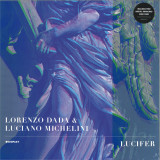
With Lucifer, Kompakt presents an album of rare beauty from two masters of modern music. A family affair, it’s a collaboration between the Italian father-and-son duo of Luciano Michelini and Lorenzo Dada, whose combined histories bring to Lucifer a depth of experience alongside clarity of vision and a finely tuned, neatly developed combined compositional voice. A lovely, beguiling suite of music that combines the electronic and the acoustic, the urban and the pastoral, its gorgeous night-eye vision and tender melancholy sits neatly within the Kompakt universe, while offering the curious listener some rich new perspectives.
There is already plenty to know both artists by. Lorenzo Dada creates across multiple fields – a techno producer and DJ who has already worked with the likes of Jay Haze, Fete, Leo Benassi, and Der, he’s released a small clutch of stylish, smartly designed EPs, and a solo album, Second Life (2018). His complementary background in classical music and composition informs his ensemble project, Tears Of Blue (who appear on Lucifer), where Dada paints with neo-classical tones for a quartet of violin, viola, cello and grand piano, supplemented by electronics for live performance.
Luciano Michelini’s history is yet richer. He may be best known, to many, for his piece “Frolic”, the theme to Larry David’s Curb Your Enthusiasm series; it was also sampled by Snoop Dogg for 2022’s “Crip Ya Enthusiasm”. But there’s much more to Michelini’s story. A successful soundtrack composer, Michelini both studied and taught at the Conservatoro di Santa Cecilia, and worked for RCA from the sixties to the eighties; his soundtracks from this period are gorgeous examples of the form, particularly his work for Il Decamerone Nero (1972), L’Isola Degli Uomini Pesce (1979), and the devastatingly gorgeous Dimensione Donna (1977).
In the eighties, Michelini and his wife Anna Gutling founded the Electronic Music Division studio and academy in Rome, which is where the majority of Lucifer was recorded. Dada reflects on the experience: “We never worked together before, so it was all new for both of us,” with Michelini adding, “I truly love this experience with my son. He’s a talented pianist and composer. I am not very familiar with electronic music nowadays, but we did it fluently.” There’s certainly a familial energy at play through Lucifer, and you can hear how Dada and Michelini, through exploration and experiment, find a shared language, balancing Dada’s tendency toward minimalism, and Michelini’s composerly voice.
Lucifer flows as a suite that interweaves electronic music with acoustic instruments: the lonely sigh of saxophone; Michelini’s lush, verdant piano; the weeping strings of Tears Of Blue (recorded at the studio of Michelini’s friend, the late Maestro, Ennio Morricone). These multiple voices are located within the electronic sighs and swarms from Dada’s kit; there are moments of propulsion, and passages of lambent drift, where the album revels in its tonal sweetness. If it flows so effortlessly, that’s because Lucifer was designed that way, as a suite or a sonata of sorts.
And the title? Dada reflects, “Lucifer was an angel who decided not to be one anymore. The miracle of life is that we can decide what we want to be, even if we are born as angels or vice versa.” This feels somehow apposite: there’s certainly something of the transformative, and the transportive, in Lucifer, a unique family collaboration of rare poetry and sensitivity, where two generations meet in the modern crucible that is the electronic music studio.
out of Stock
Last delivered 21 months ago available to reorder, subject to availability