Obaidlí Records are pleased to announce their second release "Buruka", a detonating 4 tracks EP, delivered by the head of "Disrupt" Hector Moran aka HE MI from Houston TX.
The EP includes 3 original tracks and a top remix by Romanian artist Sublee.
Vinyl only. Limited copies, no re-press.
out of Stock
Last delivered 22 months ago available to reorder, subject to availability
Strut present a definitive vinyl edition of the groundbreaking compilation 'Nigeria 70'. Originally released in 2001, the collection set the benchmark for a new generation of archive labels and releases mining the vaults for rare Afro funk and Afro jazz fusions and helped to paint the wider picture of the 1970s Lagos scene beyond Fela Kuti's catalogue for a legion of soul, funk and dance music enthusiasts. This definitive reissue features the original LP remastered and pressed on 180g triple vinyl in a gatefold sleeve.
Narrated by Wunmi with commentary by the late Nigerian academic "Elder" Steve Rhodes, this one-hour piece is an essential snapshot of the 1970s Lagos scene and the cultural and political context from many of the key players of the time. It includes interviews with Ginger Baker, Fela Kuti, Ebenezer Obey, Segun Bucknor, Joni Haastrup of Monomono and many more.
out of Stock
Last delivered 4 years ago available to reorder, subject to availability
Rick Wade’s Late Night Basix returns in a fresh repress, keeping that raw Detroit deep house spirit alive. Heavy on groove, soulful in feel, and made for late-night sessions.
A must for heads who know the value of a true floor weapon.
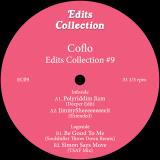
Coflo's editing style fits that ethos particularly well with Edits Collection imprint. His work typically blends deep house, Afro-Latin rhythms, jazz influences, and organic percussion, while preserving the musicality of the original recordings. Across his edit projects, he tends to avoid over-processing and instead focuses on extending grooves, strengthening arrangements, and enhancing dancefloor impact.
At this point, the vast swathes of unreleased Muslimgauze material Bryn Jones left behind when he passed away over 25 years ago are as legendary as any of his work. And sure enough, there's still some being unearthed today.
The fourth entry in a 7" single series is taken from one of Jones' customary completely unlabelled DATs, which he sent to labels seemingly as fast as he finished them.
A new series of singles collecting one of Bryn Jones’ innumerable DAT tapes that would show up at the labels he worked with sans any identifying marks.
Side A layers multiple voices (a background, faraway wail that either is or is akin to a muezzin, and a flatly declaimed two-word phrase that periodically halts proceedings) over his classic, slightly brick-walled hand percussion for a strangely meditative experience, as Jones phases elements in and out, more or less prominently in the mix. Side B however, open in a surprisingly dreamy place for Muslimgauze, with a looped ascending synth pad and beautiful sampled singing only gradually acquiring percussive accompaniment. As with the other side, Jones is content to let these elements interact and swap spaces in the mix for the duration, trusting in the sturdiness of his chosen components to carry the listener through.
Season Two continues with its fifth edition - a shift south this time, from KiF's English hedgerows to the island of Lutruwita, Tasmania, and the work of Soda Lite.
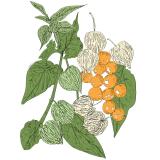
A gooseberry plant took root in the sand between the bricks of Alex's back patio - nutrient-deficient leaves and all - and fruited regardless. That's most of the appeal: "I'm drawn to species that survive in the interstices of human industrialisation." The husk itself carries the same idea, shielding the berry until it's ready to be let go.
Past Soda Lite records - Earthbound, Aqua Solar Cura, Vale & Stone - built outward from field recordings first. Here that flipped: you can't field-record a plant, only the noise around it, so only two tracks (Vibrant Matter and An Sí Gaoithe) carry field sound at all. The rest came from narrowing to a single species instead of the wider non-human world, and "trying to create and replicate sound and energy on the level of the plant and its perceptive world."
Two more things worth knowing. ‘Bryn Celli Ddu’ takes its name from a Neolithic burial chamber in Wales, aligned so the summer solstice sunlight reaches its back wall - the sun turning up again as its own recurring character. And ‘An Sí Gaoithe (Return)’ is a reworking of a Vale & Stone title, old fragments reprocessed into something new - "a bit like composting."
Soda Lite is the recording project of Alex Last, a gardener and composer working from Lutruwita on unceded Palawa land. Their music moves through field recordings gathered directly from the island's own biomes - coastline, forest, alkaline lake bed - alongside slow, warbling synth work, built less as backdrop than as document: proof of a specific place, at a specific time, being listened to closely. Past records have taken their titles and themes from geology and land relationships as often as botany - Aqua Solar Cura, Earthbound, Vale & Stone - so a plant with its own mineral-adjacent etymology (soda, found in dried alkaline lakebeds; lite, from the Greek for stone) suits the pairing.
There’s this feeling that House Music is sometimes diluted into a pleasant, non-offensive and conformist formula. Well, Jackie Gritness - you may have heard of her big bro Gary - is bringin’ all the sweat, the attitude and the filth down - take it or leave it.
Jackie introduces herself from both sides on this well-strapped debut 12” - the slick swingin’ & sangin’
on the bass-heavy A side, and the raw clave trax and cunty snarls of the acid-laced B side.
No trace of over-production or tired sampling here: this is just Jackie, her mic and her lil’ groovebox -
gettin’ raw in the studio just like she does onstage. Only thing added is some wall-shaking mastering by New York OG Dietrich Schoenemann.
This is the kinda House that’s supposed to make regular folks wanna turn it off. This ain’t rated E for Everyone, it’s rated F for Freaks.
It’s music from the underground, for the underground - as it was first revealed on the runway of Glastonbury’s infamous NYC Downlow last summer.
And if that’s more than you can take - it’s alright. It’s not like Jackie will hold it against you.
Jackie Gritness
“Gary’s little sister.” His studio session resume reads like a House music who’s who - from David Morales to Fred P. He’s also been rockin’ clubs with the Playin’ 4 The City and MLIU crews - but she’s also been seen on Gideon’s fierce Homo-Centric Records. See, this bitch’s true feelings about House are stripped-down, bare-bones, and unapologetically sexual. With a radical ‘live’ attitude, she’s serving the realness with an irresistibly acidic zing.
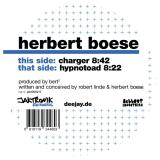
Two decades after its original release, Herbert Boese’s “Charger“ / „Hypnotoad” returns to vinyl.
Originally released as the second record on Jaktronik, the label Herbert Boese ran together with Marc Romboy, the two-tracker captures a very particular moment in German electronic music: stripped back, physical and functional, yet deeply rooted in the sound of Detroit.
At the time Boese was a resident DJ at Düsseldorf’s legendary Harpune club and one of the people shaping the city’s underground electronic music scene. His Jaktronik productions became an extension of that world, music made by a DJ, for the dancefloor.
“Charger” was an immediate standout. Marc Romboy selected the record for his chart at the time, describing its combination of heavy bass and Detroit-influenced strings as a track that made dancefloors scream.
On the flip, “Hypnotoad” goes deeper and more hypnotic: reduced, trippy and relentlessly effective, built around repetition, tension and groove.
Twenty years later, neither track sounds like a museum piece. Quite the opposite. In a time when a new generation is rediscovering the raw, minimal and machine-driven sound of the mid-2000s, “Charger“ / „Hypnotoad” feels remarkably current again.
The original tracks, remastered and finally back on vinyl.
(remastered classic incl DL card) Environ is proud to present the Metro Area 15th Anniversary Edition, Metro Area's eponymous debut album, meticulously remastered using the original source tapes and generously spread across three slabs of vinyl. The12-track triple LP and digital package combines all the songs from both the original US and licensed European releases, and features new commemorative artwork unique to this edition. In the late nineties, the budding producers Morgan Geist and Darshan Jesrani bonded over their shared love of slower tempos and '70s and '80s NYC club culture. Obsessed with record digging and the sounds they heard on late-night "club classics" radio shows—and turned off by current releases they saw as artlessly "updating" sublime disco by sampling, filtering and subjugating them with huge kick drums —the duo set out to discover how their favorite old 12" records were made. They naturally gravitated towards extended dubs of songs—full of strange mistakes and echoing backing tracks—instead of the better-known vocal versions. Lacking the big budgets and gear that made so many of their favorite classic records come together, they were forced to take a guerrilla approach. They reprogrammed their techno-oriented arsenal of secondhand synths and samplers, using novel digital recording technology to capture live instrumentation and prioritizing mood over hooks, and the resulting music was just wrong enough to sound unlike anything else being released at the time.After just four underground 12" releases, the duo—now well-known as Metro Area—released their first and only album, Metro Area, in the fall of 2002. Fifteen years later, it's time to celebrate the culmination of their shared history and inspiration once again. Environ is proud to present the Metro Area 15th Anniversary Edition, Metro Area's eponymous debut album, meticulously remastered using the original source tapes and generously spread across three slabs of vinyl. The 12-track triple LP and digital package combines all the songs from both the original US and licensed European releases, and features new commemorative artwork unique to this edition.
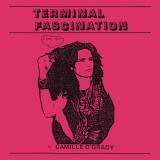
Dark Entries is ecstatic to announce Terminal Fascination, a retrospective release of the music of Camille O’Grady, subversive artist, leather witch, punk poet, and gender saboteur. O’Grady cut her teeth in New York’s burgeoning punk scene at clubs like CBGB’s, where her band Leather Secrets would share the stage with acts like Television. She became one of the few women to be welcomed into the Mineshaft, Wally Wallace’s legendary Manhattan gay BDSM club. Towards the end of the 70s, she would trek west to San Francisco to be with her partner, performance artist and gallerist Robert Opel, who was tragically killed in 1979. O’Grady would pass away from COVID in 2020, with her voluminous works across various media - text, image, and sound - having been unpublished during her lifetime.
Working with O’Grady’s estate, Dark Entries has assembled thirteen of her finest recordings, including instant classics like “James Dean to the Rescue,” “Tourniquet,” and, of course, “Toilet Kiss.” Two songs, “Angel with a Key” and “Love Comes Like a Cutthroat,” were recorded at a studio in Los Angeles for a 7” release that never materialized, while the rest of the material was recorded live in 1979 at The Ambush, a San Francisco leather club. O’Grady’s songs, often written from the perspective of a gay man, explode like a genderfuck version of Patti Smith, like Buffy St. Marie in leather, like the hedonic utopianism of the 1960s dragged (blissfully) through the broken glass of the 1970s. The release of Terminal Fascination coincides with the publication of ‘A Cross-Worlds Angel,’ a 300-page book of O’Grady’s work by Phillip Zimmerman. The record includes an insert featuring liner notes, lyrics, and photographs. Celebrate Camille O’Grady, the artist Jack Fritscher described as an “earth mother, a leather lioness of the arts.”
Folksongs and Ballads by Tia Blake & Her Folk-Group, is more than just a “lost classic”. As clear and honest as can be, Folksongs and Ballads is a magnetic record, a refuge like only Nick Drake, Nico, and a few others have been able to create. A graceful, delicately minimalist approach to classic Appalachian and British folk songs.The perfect balance between melancholy and daydream. Originally released only in France in 1971, Ici Bientôt is very pleased to present the first-ever reissue on vinyl.
When she recorded her only album, Tia Blake was nineteen years old and had just arrived in Paris a year and a half beforehand. She spent most of her time at Disco’Thé, a record shop in the Latin Quarter, a free space, peaceful and inspiring, a hub for students as well as the local artistic community.
There, Tia would occasionally sing—when she managed to overcome her shyness. Two young guitarists who were passionate fans of folk music and regulars at the shop began to accompany her, forming “Her Folk Group.” One year later, they cut 11 tracks at Pierre Barouh’s Studios Saravah.
Folksongs and Ballads is composed of traditional tunes that have been covered many times, but they’re not the best-known folk standards. A collection of stories ranging from the Middle Ages to the 1960s, bringing together sublimely doleful ballads, lamentations for a lost lover, and an unexpected, brilliant version of the road anthem “Plastic Jesus.”
Tia Blake's haunting, unaffected voice captivates and comforts us, wrapping us in its cool embrace. Meanwhile, the tasteful, stripped-down, mellow acoustic arrangements provided by the guitarists, reminiscent of Bert Jansch and John Renbourn, occasionally supported by a kena flute, have created the space Tia Blake needed to reinvent these traditional songs.
Folksongs and Ballads is a timeless record, deep and unique, a longtime companion for repeated listening, in the vein of works by Sibylle Baier, Bridget St. John and Vashti Bunyan.
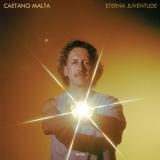
Born in São Paulo, Caetano Malta embodies the vibrant creative energy of one of Latin America's most dynamic cities. A singer, songwriter, and multi-instrumentalist, he has spent more than twenty years crafting a distinctive musical universe shaped by Brazil's rich and diverse traditions. Tropicalia, MPB, Afro-Brazilian rhythms, psychedelic folk, and contemporary pop blend seamlessly in his work with effortless elegance.
Over the years, he has become a highly sought-after collaborator. Since 2004, he has performed with numerous leading Brazilian artists, including Lucas Santtana, Bixiga 70, Karina Buhr, and many others. After two decades of international touring, he eventually settled in Paris, where he became the guitarist for Flavia Coelho, Luiza, Guts, among others. As a songwriter, he has also co-written with artists such as Lucas Santtana, Wado, MOMO, Rubinho Jacobina, and Arto Lindsay.
With Eterna Juventude, his long-awaited debut solo album, due for release in autumn 2026, Caetano Malta reaches a new artistic milestone. The record reveals a radiant songwriting style where harmonic sophistication, organic rhythms, and instantly memorable melodies come together naturally. Filled with joyful energy and deep tenderness, Eterna Juventude celebrates imagination, movement, and childhood's unique ability to reinvent the world. It is a remarkably accomplished debut, showcasing an artist whose singular voice and musical identity are already fully formed.
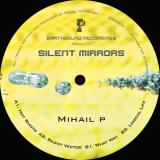
For the third release on Earthbound, Mihail P steps into a slightly different frame of mind with Silent Mirrors — an EP that pulls his atmospheric, emotive sound toward the rougher edges of 90s tech house, breakbeat and electro.
While Mihail P has become known for spacious productions, warm pads and mellow melodic detail, Silent Mirrors is about merging that side of his sound with something more direct and club-focused. There is a clear nod here to the halcyon days of UK tech house and labels and artists such as Primitive Urges and Pure Science, but filtered through Mihail P’s own sensibility rather than treated as an exercise in nostalgia.
Following the success of Denshi Ongaku No Bigaku Vol. 1 and Vol. 2 in 2023, Cosmocities returns in 2026 with two new chapters in its acclaimed compilation series dedicated to the rich heritage and continuing evolution of Japanese electronic music.
Compiled by label owner Matt Soulie, Denshi Ongaku No Bigaku Vol. 4 further explores the depth, sophistication and diversity that have long made Japan's electronic underground one of the world's most inspiring musical landscapes.
Since its inception, the Denshi Ongaku No Bigaku project has celebrated the artists and sounds that have profoundly influenced the Cosmocities vision. Across four volumes, the series has journeyed through ambient soundscapes, deep house, boogie, jazz-infused electronics and forward-thinking club music. Volume 4 shifts the focus firmly towards the deeper end of the dancefloor, bringing together timeless classics, rare gems and sought-after reinterpretations from some of Japan's most respected producers.
Opening proceedings is Kaoru Inoue's remix of Soft's "Art Farmer", a rolling percussive Afro-house excursion rich in hypnotic groove and organic rhythm. XTAL's "Heavenly Overtone" follows with a beautifully cosmic house journey, combining shimmering keys and celestial atmospheres that perfectly capture the compilation's expansive spirit.
On the B-side, Slow Didi's "Follow Me (Hidaway Mix Instrumental)" delivers a deep and hypnotic groove before Tokyo Black Star's "Fantastique Voyage" channels the soulful, sophisticated energy of classic 1990s deep house. The journey continues with Manabu Nagayama and Soichi Terada's "Low Tension", presented here in a sublime instrumental remix by Satoshi Fumi and Yoshi Horino, where warm piano melodies and elegant synth work create a timeless late-night mood.
The final stretch moves into more driving territory. Hiroshi Watanabe's "The Orionids (2025 Revised)" subtly raises the tempo, blending deep house sensibilities with sleek tech-inflected textures. Kaoru Inoue's "Ground Rhythm", reworked by The Backwoods, plunges deeper into hypnotic territory with a heads-down groove designed for intimate basement spaces and low-lit dancefloors.
Closing the compilation is Bitowa and YAMADAtheGIANT's "Forest (Mixtacy Exclusive Version)", a trippy, immersive finale that leaves listeners suspended in a dreamlike state between nature, rhythm and imagination.
A carefully curated collection of deep, cosmic and forward-thinking sounds, Denshi Ongaku No Bigaku Vol. 4 once again showcases the enduring creativity, innovation and global influence of Japanese electronic music.
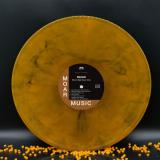
French producer Moar is back with a brand-new, 100 per cent Boom Bap project, surrounded by his trusty old MPCs and SPs, just as he does so well!! An album infused with soulful and jazzy sounds, featuring top-class MCs such as Rasco, J-Live, El da Sensei (Artifacts), Awon, John Robinson, Napoléon da Legend, Dumi Right, Mikal and his Beatmatics colleague DJ Vince on the cuts!!
This record is a real treat for fans of 90s hip-hop, with samples that really pop on a beautifully marbled vinyl!
Already a boom bap classic…
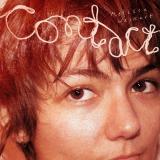
Melissa Weikart and her piano have proceeded through life in step, from her early classical
training to the experimental practice that defines her work today, a blending of sounds and forms that has never been so clear—and so fully realized—as on her new album, Contact. Across twelve shifting and evocative tracks that examine the connective tissue binding us to ourselves and others, the Franco-American musician’s voice and piano navigate personal and emotional terrain with clarity and nuance, forging a rich dialogue between artist and instrument, artist and self, and artist and listener.
Winner of the 2022 Nancy Jazz Pulsations emerging artist award and the instrumentalist prize at the 2023 La Défense National Jazz Competition, Weikart has released two EPs and an album as a solo artist, and one EP and an album—Surprise and Secret—with her electronic duo Beatrice Melissa. A student of jazz and ’70s folk-pop, and a keen lover of improvisation since her time at the New England Conservatory in Boston, Weikart has always conjured the confessional candor of the singer- songwriter in her music, even as she dispenses her lyrics across rich, shifting, dreamlike tableaux.
On Contact, written and arranged entirely by Weikart (aside from “New angles”), she pushes her sound further than ever before. The album is animated by a pressing need for connection, observing what brings us together and what drives us apart, and the life-saving revelations that emerge along the way. The album’s opener, “Crash,” is a dreamy telephone-hour ode, a message in a bottle, to connections new and old. On the wistful “Mesurer le vent,” Weikart conjures Debussy or Ravel, layering contrasting sounds like an Impressionist painting. The title track begins as a showcase of Weikart’s frank lyricism, a splice-reel of missed connections and wasted time, then glides into a hazy, euphoric galaxy of pleas, circling around her thesis—“I wanted to make contact”—that ushers us into “The Intersection,” a song that recalls her the beginning of her career, when it was just Weikart and her keys. “Appétit.e” is built around a sample of her down-the-hall neighbor’s drumming—another subtle, affecting gesture toward proximity and connection—while pulsating synths reminiscent of Air lend the track an unsteady atmosphere. On the Carpenters-inspired “Expectations,” Weikart muses on the relationship patterns, universal and specific, that have always been a hallmark of her songwriting.
The psychedelic “L’amour de construit” is a slow-motion fall down the rabbit hole, as Weikart
considers the way her own emotions are captured and commodified by the confining ways we think about love. The interlude—“L’amour pt. 2”—finds her near the end of that trip, shouting into the void as a last-ditch effort to rescue herself from the fall. The drums near the end of the interlude warn us that there may be no cushion for, until she is saved, again, by the power of revelation, on the confident, resilient “Not Right”—on which a show-stopping, frenetic conversation between singer and piano is gracefully interrupted by a rush of transcendent strings, lifting her back up.
On solid ground anew, “New angles,” featuring Manu Delta, creates a percussion-less groove that relies on experimental synth sounds. The 11-o’clock stunner “Catching up”—composed in a church—meets the singer in a state of ecstatic confession, bringing her to the formative memory that propels “Bicycle,” the album’s closer. Younger, more wide-eyed, she reflects on her move from Boston to Strasbourg, those early days, when Weikart had no other companion than that loyal hunk of scrap metal that took her to the shores of her own soul. She seems to suggest, on “Bicycle,” that a backward-glance is not always troublesome, not always anxiety-producing, but can be grounding: a reminder of where we come from, so that we can keep moving forward.
IRST ALBUM IN 10 YEARS.
TOURING WITH TROPICAL FUCK STORM IN NOVEMBER (DATES BELOW).
PRODUCED BY DAN LUSCOMBE (THE DRONES) WHO IS ALSO PART OF THE LIVE BAND.
PREVIOUS ALBUMS ON HARDLY ART/SUB POP AND REMOTE CONTROL.
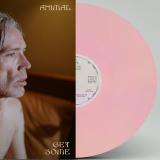
VERY LIMITED BLACK VINYL AND INDIES ONLY PINK VINYL . NON-RETURNABLE.
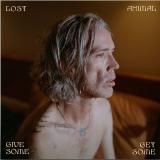
‘Jarrod Quarrell, creator of Lost Animal, is one of the most underrated songwriters in Australia and one of our all-time favourites. He creates poetic expressions. His work is very interesting in a highly original way and richly emotional. The songs reveal themselves more over many listens and always feel fresh. His powerful, beautiful, transformative, and unforgettable songs possess the vast depth of the human spirit.’ - GIMMIE GIMMIE GIMMIE ZINE
‘Quarrell has developed a collaged techne that embodies a heart-on-sleeve attitude. Lush melodic delays wash with an influx of lyrics that pierce with uncanny imagery and diction.’ - VICE
It’s not every day you hear about a new Lost Animal album. In fact, it’s been ten years between drinks. The debut Ex Tropical (Hardly Art/Sub Pop) was released in 2011, and followed by You Yang (Remote Control) in 2016. So what happened, and where’s frontman/mastermind Jarrod Quarrell been for the last ten years?
From the horse's mouth, “I don't give a fuck about productivity”. A humbling reply. It confirms Quarrell's MO: here’s an artist as a non-conformist. And when he does see fit to bless us with his unique vision of what music can sound like, it has the ability to completely charm and disarm. Amongst a sea of rock bands, LA is essentially a solo act. Simply put; LA is JQ. But on the other hand, amongst an ocean of solo acts, LA possesses the grandiosity of a full band, punk in spirit, but without being fast, or heavy.
Armed with keys and synths, timbres align more with what a toucan might listen to, as opposed to what's heard commonly throughout Melbourne's gig economy. Strings are gently plucked and horns are tenderly blown. These are the colourful brush strokes that decorate the upper frequencies. They’re the ticket to a far away land;exotic, and potentially very dangerous. If the crew from Hear My Eyes are reading this, consider Lost Animal performing Give Some Get Some as the soundtrack to the next time you screen The Hangover Part 2. Yeah, the one where shit gets super fried in Thailand.
The album examines the underbelly of what a ten year journey might rub up against. As one may expect, a lot of that action is below the belt. Tracks like Do That Thing, and In
Rewinding, a few things have happened in the past ten years that are worth illuminating. Shags is no longer commandeering the bass full time. Though he does make an appearance on a couple tracks. The main difference from present day to yesteryear LA is Dan Luscombe (The Drones). Luscombe has jumped into the role of producer (and also part of the live band). One could say he’s a producer of the Spector-ilk: playing a hands-on approach and assisting Quarrell's song crafting. He may have suggested to add a chorus or two, but the chord progressions remain distinctly Lost Animal. You'll recognise them easily by their beauty, combined with either fragility or rigidity. Luscombe is arguably the defining force that made this album happen. Perhaps he had Quarrell at gunpoint. Yet to be confirmed. Regardless, thank fuck for Luscombe because it may have been another decade.
But the album's defining feature is arguably Quarrell's lyricism. He may not cross-examine where he's been, but his voice does unmask where he is: absolved and reincarnated. The decade-long journey has resulted in him looking inwards and unlocking himself. The album's many mantras suggest that he may be a bird (I'm a Bird Now), or that he is living on another planet (Never is Forever). Whatever and wherever he may be,
Give Some Get Some invites the listener to reflect on their own journey over the past decade. Because the game's got a price. So ask yourself what have you taken, and what have you given? Life ain't a box of chocolates. It's a bowl of berries. And when fruit symbolizes temptation, get some.
Tokyo-based producer aus debuts on Squama with his new album Mere Meer.
Grounded in the question of how a specific environment can emerge through voice and memory, rather than through recording of an objective reality, the album stands in the tradition of modern Japanese Ambient and Kankyo Ongaku.
aus is the solo project of composer, producer, and curator Yasuhiko Fukuzono. His music is characterized by a precise combination of cinematic strings, acoustic instrumentation, and concrete sound design derived from everyday life.
In recent years, he released music on EM Records, WRWTFWW and his own flau imprint. As a remixer, he put his touch on tracks by Matthew Herbert, Tenniscoats and Craig Armstrong, among others.
His sonic research also extends beyond traditional formats into spatial sound installations and site-specific works, collaborating with experimental figures like Ulla, Li Yilei, and Hinako Omori for institutions such as the Tokyo National Museum.
Much of the album consists of sketches made with synthesizer and voice. Sampled from social media clips, field recordings or a heavily processed version of Fukuzono's own vocals, the voice became a central element of the record. "I have long been interested in the relationship between words and melody.", aus says. In his former work as a speech therapist, he witnessed patients with severe dementia or aphasia, who all of a sudden could recall lyrics when they were sung with familiar melodies. An experience that left a deep impression on him.
During the Covid years, when hearing voices of friends and family sometimes was the only way to feel connected to the outside world, aus began reflecting on the connection between voice and environment. "Every voice represents an encounter with a person, but it's also an encounter with a place."
Unable to travel as freely as before, that limitation became part of his method: rather than just recording actual field material capturing the real world, he would write and perform melodies that simulate a sense of place - an imagined room, an imagined street.
"My interest lies not in the dichotomy between artificial and environmental sounds, but in how they collectively shape a single perceptual field."
By observing and mapping our world, aus creates his own and his new record is a prime example of that process.