Produced by Josh Schroeder (Lorna Shore, Dayseeker), the record captures Varials at their most instinctive and unfiltered. Imperfect takes, emotional performances, and new melodic textures create a sound that's both crushing and alive. Onstage, the lineup ( Skyler Conder , Mike Foley , Sean Rauchut , and Shane Lyons ) continues to prove why Varials remain one of heavy music's most cathartic and commanding live acts
Against all odds, a devout audience has ridden shotgun and grown with them every step of the way. This symbiotic relationship speaks to the band's quiet impact with over 167 million streams in the United States alone, widespread acclaim, and sold-out shows. They loudly carved out their own corner of heavy music with an inimitable hybrid of head-crushing polyrhythmic prog-spiked metal, hardcore spirit, and unbridled attitude.
They have assuredly leveled up over the course of albums such as Via 2011, No Sleep [2014], Different Animals [2017], and Happier? [2021]. Kerrang! hailed the latter as "an album that gives a nod to the band's past while still bringing in new ideas." Meanwhile, the group shared stages on tour with everyone from Ice Nine Kills and Born of Osiris to Dance Gavin Dance and Counterparts.
In 2026, 62 years after the first release, she releases the LP Tomorrow's Yesterday, and it cannot be ruled out that this may be her last physical album. All the songs are recorded in duo or trio format. The musical sounds are excitingly combined with her voice and Rob Luft on guitar, John Surman on saxophone/ bass clarinet on side A. Whilst on side B we hear Karin Krog with Erlend Slettevoll on piano/electric piano and Rob Waring on vibraphone.
LIMITED TO 50 COPIES! Hand Numbered, Edition of 50.
‘Elevation’ is album eleven from High Focus Records founder and 1/4 of The Four Owls Fliptrix.
The latest instalment in a formidable run sees the lyricist further his vision of the world in the hope of elevating the collective mind and spirit of both artist and listener across 19-tracks.
Having worked with Forest DLG in some capacity across all of his records over the past fifteen years, from mixing and mastering, but also collaborating on multiple tracks as rapper / producer, it is surprising that it took so long for the pair to come together on a full-length collaborative project.
‘Elevation’ is that record.
Fliptrix reached out to Forest with a view to creating something completely different from his previous boom bap heavy outing ‘Dragonfly’, he is always looking to advance his craft and take things higher, and after Forest responded with a pack of 70+ instrumentals the direction of travel became crystal clear. The result is an album designed to lift the listener into a higher state of consciousness and trigger conversations about the state of the world, in the hope of enacting positive change during tumultuous times.
Fliptrix’s vision and Forest DLG’s style feel perfectly aligned. The album is truly collaborative; Forest going away and creating the artwork inspired by Fliptrix’s otherworldly experiences with the Shipibo tribe in the rainforests of Peru; from the single covers, to the album cover and merchandise as Fliptrix focussed on writing.
Having worked with all the greats in the UK hip hop scene, Fliptrix actively sought out new energies on ‘Elevation’, especially when it comes to the album features. Jungle forefather General Levy on lead single ‘ENERGY! ENERGY! ENERGY!’ Grime legend Frisco on ‘Visionaries’, Ayah Marar on ‘Transform’, Da Flyy Hooligan, Kamakaze, Coops, and a 19-strong HF posse cut in the shape of ‘Dangerous’ make this album a must-listen for anyone looking to elevate.
Here we find ourselves, among the Canadian miscreants Egregore whereupon they return from whence the wind howls like a damned choir and the Earth knows no master, to chart a broader sonic wilderness via ‘It Echoes In The Wild’. And much as sea-rogues and freebooters sought fortune upon blackened waters, so too does Egregore venture musically into diabolic and ungoverned lands. Presenting something more expansive, elemental and untamed on ‘It Echoes In The Wild’, the early occult Black Death Metal lunacy embraces atmospheric breadth equally alongside primitive force to delve deep into not only geographic wilds, but the psychological, esoteric and spiritual hinterlands at the edges of complete madness. Dark invocations and secret tongues draw forth echoes from forest and fen, cave and cliff, tempting the temporally tethered to receive the curse, all the while driven by a primal, unknowable sardonic menace. Though the voyage be perilous, to succumb to ‘It Echoes In The Wild’ is to become ensconced in a lawless dominion of the soul in service of a higher call. Mirroring nature’s unbridled forces and the hidden echoes that dwell within, Egregore’s second album takes the band’s mystical insanity and magickal perversion to the edge of the abyss and plunges forward.
FUMU christens the promising new label Return To Zero (RTZ) with »Funeral Rites on Planet Saturn«, the surrendering sophomore album from Nigerian artist, self-described »negro-producer«, hedonist, and iconoclast LINTD. With production collaboration from Porter Brook and features from Samrai (Swing Ting), Porter Brook, Sam Scott Francis (GOMID), Rizmi, and Imani Jendai.
LINTD’s work emerges as a call and response between the tender, dynamic sounds of Black music across history and the surreal reality of contemporary, vulnerable Black life – a haunting dialogue. These themes are catalysed in the Black Impossible LP Trilogy, reclaiming Black utopia through sound technologies via »Smooch Soundsystem Live at The White Hotel« for Second Born (Kop-Z, Porter Brook), and »DOGTOOTH. And Other Such Tales of the Macabre« on The White Hotel’s HEAD II outlet.
While earlier works engaged with the mania, joy, and paranoia of this impossible experience, »Funeral Rites on Planet Saturn« arrives at a soulful conclusion, allowing grief to tell a truer story. In the vein of Sun Ra, Alice Coltrane, and Octavia Butler, LINTD introduces the speculative planet Saturn as a site where impossible Black being across the world can come and rest: a site for liberation and emancipation.
»This one is an act of care towards myself, and hopefully others like me. I have proven everything I want to prove this year; this one is my elixir from all the lonely grief, a place of rest.«
'winterswell' threads together raw emotion, playful rhythms, and analog warmth. Following singles on Tresor and Intercept Records, Kat pulls no punches with her first EP. "Manavgat" hurtles you down a dirt road at dusk, brooding and atmospheric, while "Baby I Know What You Want" threads vocals through rolling percussion and a driving bass as the club thrives in unison. Remixes extend the EP's landscape: Mr. G reshapes the material into grainy, coded dub house textures, while Ben Kaczor emphasizes low-end depth and taut, hypnotic tension. 'winterswell' is a vinyl release where intimacy, texture, and rhythm converge with confidence and nuance.
out of Stock
Last delivered 59 days ago available to reorder, subject to availability
The new label opens its first chapter with a collaboration between Elisa Batti (label founder) and Isabel Soto, two artists who have been working together for some time. Their debut release balances precision, atmosphere, and texture, bridging club-ready energy with immersive listening experiences.
Founded in March 2026 in Amsterdam, the label reflects Elisa's musical vision, moving from deep, driving techno to experimental and ambient territories. Each release is carefully curated, emphasizing coherence, attention to detail, and long-term artistic impact.
This first record sets the tone for the label's direction, intentional, focused, and defined by a strong musical identity. It's both a statement and a starting point, marking the beginning of a journey that will explore bold sonic landscapes while maintaining clarity and depth.
Release date: March 20, 2026
Written & produced by: Elisa Batti & Isabel Soto
Mastering by:Conor Dalton at GLowcast Mastering
out of Stock
Last delivered 28 days ago available to reorder, subject to availability
GAEREA ist nichts weniger als ein fantastisches Rätsel, tief verwurzelt in Extremen und leidenschaftlicher Hingabe. In weniger als einem Jahrzehnt hat das maskierte Kollektiv, das in der portugiesischen Stadt Porto gegründet wurde, unzählige dunkle Facetten des Metal getestet und präsentiert nun mit "Loss" sein fünftes Album sowie Debüt bei Century Media Records.
"Wir haben das getan, was wir immer getan haben - wir sind unserem Instinkt gefolgt", sagt der anonyme Sänger von GAEREA. "Doch etwas sagt mir, dass dieses neue Album Elemente hat, die sowohl unsere neuen als auch unsere alten Fans lieben werden - aber es ist nicht gerade genau das, was sie von uns erwarten."
"Loss" definiert GAEREA neu und verquickt Elemente aus ihrer Post-Black-Metal Vergangenheit mit eindringlichen Melodien zu raffinierten Klanglandschaften. Dabei schlüpft die Band aus dem kreativen Kokon, um sich in etwas ebenso Mitreißendes wie Unerwartetes zu verwandeln: Es gibt Klargesang. Es gibt Refrains, die so eingängig und leidenschaftlich sind wie die besten Rock- und Metal-Songs. Und doch ist es unverkennbar GAEREA.
Die maskierte und ritualisierte Bühnenpräsenz der Band ist nicht nur Teil einer Show, sondern ein integraler Bestandteil von GAEREA, der ihre musikalische Extremität auf ein philosophisches, avantgardistisches Level hebt. Ihre Uniformen bieten dabei eine gesichtslose und androgyne Leinwand, die es ihnen erlaubt, sich in vollkommen in ihre Performance zu stürzen, die nicht zuletzt durch eine gewisse Körperlichkeit in ihren Bann zieht. Trotz ihrer dunklen Präsenz versprüht die Band stets einen Hauch von Transzendenz und Positivität. Mit "Loss" verschmelzen GAEREA die Ästhetik des Extreme Metal, die Offenheit des Post-Rock und einen freigelegten, emotionalen Nerv zu einem neuen musikalischen Paradigma.
Das ist GAEREA.
"Loss" ist erhältlich als: Ltd. CD Digipak in O-Card, LP, Digital Album
With two deeply cherished compilations already in the bag, Luke Una steps up for the third volume in his É Soul Cultura series on Mr Bongo. A love letter to the dancefloor and its power to unite people from all corners of society amid growing division and extremist politics. Genre-spanning in nature, the 15 tracks travel between cosmic soul, boogie, proto-house, slo-mo technoid grooves, drum machine afro, astral bass-bugging futurism, jazz funk, dance, and disco. Each having the ability to move the body as much as the heart.
From his formative years in Sheffield to co-founding Manchester’s much-fabled Electric Chair with Justin Crawford, through to helming the iconic LGBTQ institutions of Homoelectric / Homobloc, Luke has spent 40 years immersed in dance music. His latest outlet, É Soul Cultura, has grown from a label to a globe-spanning events series with Luke holding residencies and embarking on tours across the world from Japan and Australia to America and Europe.
“For me, the dancefloor was never about a one-dimensional, thudding, 130 BPM beat only. It's a much more dynamic, broader vision than that. I cut my teeth in an era where a 100 BPM record had as much impact, excitement, and energy as a 134 BPM dancefloor jazz funk or techno record”, Luke mentions. É Soul Cultura Volume 3 is the perfect embodiment of that notion: “It’s about four decades in the trenches playing dance music, the late-night afters, the shebeens, the basements, warehouse parties, the eight-hour journeys in East London, through to festival sets at Houghton and We Out Here. It’s music unconstrained by genre or tempo and more about making your body move”.
But this isn’t simply a collection of disparate dance tracks; they carry meaning and soul. “It’s less about escapism, more about reconnection. My experience of post-covid has been the coming together of all the clans in various clubs and gatherings. A reaction to a very toxic world out there, where the aggro rhythms of division have sought to divide us, and people don't meet as often. The coming back together face-to-face in clubs has encouraged a real love in the air, there's a real togetherness and collective spirit”.
Opening up the compilation is a track that channels that very message, the transcendental, soul-rousing Harris & Orr ‘Spread Love’. Joining the dots from there, to the low-slung deep house closer of Fatdog ‘Remember’, you’ll find electronic drum machine Nigerian funk, sitting side by side with dancefloor Cape Verdean brilliance, a post-punk cover of Fela Kuti, rubbing shoulders with cosmic electro, and an Una-championed, 8-minute, kickless DJ Harvey remix. There’s jazz funk in various guises moving from boogie synth to astral travelling, slo-mo acidic raw techno, and a ‘79 soul stepper, alongside swirling percussive Italo disco and tribal-charged house. All infused with an innate ability to bring people together.
As society becomes increasingly fractured, É Soul Cultura Volume 3’s message is more than movement. It’s about dance music’s power to unify people from all walks of life and break down the barriers that divide us.
out of Stock
Last delivered 30 days ago available to reorder, subject to availability
Detroit's Big Strick for his 7 Days Entertainment label has assembled of collection of Motor City leaning sounds from local and international artists here across four vital sides of wax. Generation Next opens with taught, pinging kicks and tinny melodies on deep house gem 'Senza Via D'Uscita' then Flabaire from Paris brings more bleeping sci-fi synths to a churning and dubbed out low end. Big Strick himself layers in electrically charged, fizzing synths and ticking hi-hats to his raw and gritty 'Bang My Shit' and Ron Cook ups the pace with the blissed out bumps of heady hymn, 'Again And Again.' Pegasvs from London also stands out with his great drum programming on '808 Jazz'.
out of Stock
Last delivered 6 months ago available to reorder, subject to availability
Father Sheed steps up to deliver a saucy meze for M.A.D Records sixteenth outing, following the groove-laden "Pancumbia" for A MAD 5 Years compilation!! The Austin, Texas based producer brings 5-tracks to ignite the discotheque with quirky sampling, punchy drum grooves and immaculate synth-scapes!
Pioneering Swiss trombonist and composer Andreas Tschopp marries contemporary jazz with South African horns and homemade ocarinas, creating a record quite unlike anything you've heard before. "What if We Align Our Breath" disregards the curvature of borders, genre, and time itself - tugging a thread through the history of wind instrumentation with ghostly agility.
At the heart of the record lie spiralling, bonelike kudu (antelope) horns - instruments that have lent their stirring calls to indigenous South African rituals and signalling systems for millennia. These horns are clustered, harmonised and stretched beyond their godly usage by Tschopp - his extended techniques coaxing an array of melancholy, playful voices to canter through the album.
Flourishes of trombone, alpine flutes and a stellar supporting cast on double bass (Shane Cooper), cornet (Ben LaMar Gay), udu drums (Gontse Makhene) and spoken word (Koleka Putuma) bring groove, countermelody and a sense of earthy introspection to the proceedings. This is inconceivable music: a sighing tapestry of brass, clay and bone that hints at some preconscious connectedness, tracing figures that rejoice, exhale and embrace outside of time.
Recommended if you like Francis Bebey, quantum physics, peat bogs.
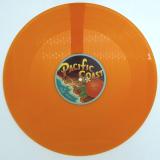
Introducing the 4th instalment of the Pacific Coast House rebirth. We bring back another much sought-after 12” from The Coastal Commission & Jesse Outlaw. “Bring down the Walls” was a nod to Raze’s “Break for Love”, Robert Owens “Bring Down the Walls” and Ritchie Hawtin’s use of the Roland 606 throughout “Sheet One”. Long out of reach and fetching $100+ on Discogs, Atjazz’s freshly remastered editions are finally available .. “Let it Go” was never mastered & only ever cut to dub-plate. It has now been mastered & available in all it’s glory.
Coastal Commission “Bring Down the Walls” “Bring down the Walls” was a nod to Raze’s “Break for Love”, Robert Owens “Bring Down the Walls” and Ritchie Hawtin’s use of the Roland 606 throughout “Sheet One.” We gave the tune a Californian psychedelic twist with conga laden drums, a moody synth, low pulsing 303 patterns + Benjamin Zephaniahs patois call to “Move the Body Rhythmwize!” The first PCH releases had dropped Worldwide to International acclaim from DJ’s far and wide across the Globe with support in London, Paris & New York. However the local scene here in L.A that preached “Love, inclusion & Unity” was anything but that. L.A at that time was very tribal & divided up into 3 camps. If you weren’t affiliated with any of them (aka independent) then you were pretty much locked out of getting any kind of gig support or the Dj’s from those camps actually playing the music. The local feedback from Dj’s was that what we were making wasn’t “house,” but “Techno” which was absurd to me. “Bring Down the Walls” was a mantra to “move the bod”y and in doing so “bring down the walls” of separation not just in L.A but throughout society in general. Thank goodness for support from people like Terry Francis, Eddie Richards, DJ Deep & Philly Stalwart King Britt. After years of copies going for upward of $100+ on Discogs the now freshly remastered copies by At Jazz’s Martin Iveson are finally hitting the platters this Spring.
Jesse Outlaw “Let it Go” I met Jesse at Beatnonstop Records on Melrose Ave with Miguel Placencia in the late 90’s. Miguel (RIP) was a mainstay in the Underground scene and had always been very supportive of my endeavors. He had had success with a huge release on Yellow Orange and was working with Jesse under the moniker “When Worlds Collide.” I signed “Brighter Days” & “Set you Free” from them and released the tracks on my Seductive imprint. They told me that they were making the tracks on a Sony Playstation “Music Now” program and I was like FFS “What.s more Underground than that!?” Later Jesse gave me some of his solo work. The track “Let it Go” was never mastered & only ever cut to Dub-plate and featured on my 1st PCH mix “Pacific Coast House Sounds.” It has now been mastered by Martin Iveson and is available in all it’s glory. The dreamy vocal “You need to let it go” beckons over the top of driving percussive Latin beats and church organ which is a great compliment to the flip side of “Bring down the Walls.” All in all two West Coast stompers now finally available remastered on PCH in Orange vinyl.
out of Stock
Last delivered 2 days ago available to reorder, subject to availability
Igor Tamerlan is a stranger in his own land. Born in 1954 the Hague and spent most formative years in Paris, Igor suddenly had the urge to relocate to Bali in 1986. “I want to settle in Indonesia and marry a local girl,” he told his sister shortly before flying out.
His next journey would be as audacious as his time in the Fifth Republic. Born from a prominent Indonesian expatriate family in Paris with ties to Indonesia’s first prime minister Sutan Sjahrir, Igor earned a degree in architecture at Ecole nationale supe´rieure d’architecture de Paris-La Villette.
He could have been a brilliant architect or a political scientist (he was accepted to Sciences Po), but his passion for music distracted him from his academic works. He was after all named after Russian composer Igor Stravinsky.
During his brief stint at Sciences Po, Igor spent most of times hanging out at recording studios and rub shoulders with the likes of singer-songwriter Jean-Jacques Goldman and Michel Polnaref. He had a brief encounter with The Rolling Stones at the Cha^teau de Thoiry studio in the early 1970s.
But Igor’s musical education and his occidental eyes appeared to be ill-suited for Indonesia. His first record, titled Langkah Pertama (First Step) on the mainstream label Musica was met with a shrug and was a commercial dud. An experimental record blending the influence of Spanish motifs, Francophile production and a whiff of hip hop and ska was seen by critics as being too alien. His sarcasm-laden lyrics and his biting critique of excessive materialism among the upper tier of Indonesia’s nouveau riche in the album was met with confusion from the audience. He was just too far ahead of his time.
He left the label Musica – or may had been dropped – soon after Langkah Pertama and decided to go independent. He then relocated to Bali and set up a state-of-the-art recording studio in Sanur, across the street from Southeast Asia’s first boutique hotel where luminaries like Mick Jagger, David Bowie, Sting, Yoko Ono and Ringo Starr stayed for their holiday.
From the studio, Igor recording everything from the sounds waterfalls, geckos, minibuses to motorized rickshaw and mix them with hip hop, jazz, electronica, dub and Balinese gamelan. A visionary, Igor was the first musician to use MIDI, which started to be available globally in the early 1980s.
On paper, songs like “Bali Vanilli” should not work, a mish mash of disparate elements mentioned above, sung in three languages, Balinese, English and Bahasa Indonesia while tackling the subject of overtourism. The song was also the first to introduce rap to an unsuspecting audience. But for some strange reason “Bali Vanilli” became a sensation and overnight Igor became household name. And in 1987, long before overtourism was an issue, Igor broached the subject to a national audience in Indonesia on the possible destruction of nature and culture from tourism.
Ever an iconoclast, Igor decided to step out of the limelight following the success of “Bali Vanilli” and in early 1990s he relocated to Indonesia’s cultural capital, Yogyakarta. Here, he worked on some more experimental music while juggling as music video director. He passed away in 2018 at the age of 64.
The 10 songs in this compilation, Bali Vanilli: Experimental Pop from Paradise Island (1987-1991), are some of Igor’s best works, music that would have gone into obscurity had it not been for the diligent work of film director Alfred Pasifico Ginting, who managed to track down some of the master tapes while researching on a documentary on the musician.
These recordings have never before been released outside of Indonesia. Igor would have been proud with this reissue project.
The first resonant space Zosha Warpeha played in was the Emanuel Vigeland Museum in Oslo, Norway. Built as a mausoleum, its walls reach up into a gradual archway, creating an environment where sound expands and reverberates for twelve seconds before decaying into silence. Warpeha was greeted only by dim lights when she entered, and it wasn’t until she had spent several minutes listening that she was able to make out the frescoes that covered every inch of the room: graphic depictions of the cycle of life from conception through death. As the sound of her Hardanger d’amore encountered the walls and these slowly emerging scenes, they obscured its point of origin in both time and space, augmenting its own life cycle. The experience sat in the back of her mind over the next several years as she developed her own patient style of composition and performance, one that comes into full bloom on her new album I grow accustomed to the dark.
When Warpeha was selected as an artist in residence at Brooklyn’s ISSUE Project Room in 2025, she saw it as an opportunity to more intentionally explore how her music might fill a room with ample natural reverb. I grow accustomed to the dark documents two single-take solo performances for Hardanger d’amore and voice at IPR, with both pieces composed in a unique tuning system developed to interact with the space itself. Listeners can trace resonance from the contact of the bow on gut strings into the body of the instrument, its five sympathetic strings offering another layer of refraction, before the sound is thrown about the cavity of the room. The echoes emerge like a photographic double exposure, or wisps of smoke that linger in the air, creating ghostly harmonic convergences that blur the line between what is there and not-there. Sound begins to act like light, a synesthetic alchemy that transforms drones into beams and ornamental trills into flickers.
Both side-long compositions, “filament” and “visual purple,” exemplify a duality that animates Warpeha’s music: an expressive, individualistic style that draws on extensive knowledge of her instrument’s history in folk traditions, and an austere, devotional quality maintained by focus and precision. Though very different in character and structure, both pieces evolve slowly through numerous repetitive phrases, passages of stillness, and bursts of intensity. “filament” opens with a cycle of delicate melodic fragments played and sung around a drone before blossoming into an outpouring of swooping arpeggios, harmonics flying from the strings like sparks off a bonfire. The disorienting pulsation of harmonic beating forms the core of “visual purple,” the close-tone dissonance building to a swarm of open strings ringing boldly throughout the space. After the knotty tones reach their climax, the piece collapses into studied quietude, hushed, but without any drop in intensity.
When Warpeha first visited the Vigeland Museum in 2019, she was in Oslo to deepen her relationship to the Hardanger fiddle through the study of Norwegian traditional music, which is primarily passed down aurally. The experience of learning songs by ear, not only internalizing the tune but also absorbing the techniques and tonalities by listening, was a crucial step in her development as a composer. The years since have seen her sharpen those skills as a prolific member of the New York avant-garde and improvised music communities. Warpeha’s music encourages listeners to join her in this journey, to listen closely with each repeated phrase and through each dramatic shift. Like the frescoes on Vigeland’s walls, with time and intention, the depth of I grow accustomed to the dark comes on like a revelation.
out of Stock
Last delivered 6 months ago available to reorder, subject to availability
“Tectonic” is a concise portrait of SIMON BERZ’s geological sound explorations across continents over the last 15 years: drums, electronics, and a set of electronically manipulated basalt stones from Iceland.
SIMON BERZ is a transdisciplinary drummer, sound artist, and music educator based in Switzerland and Berlin. Working at the intersection of improvised music, sound art, and performance, and deliberately crossing boundaries between disciplines, his aesthetics are shaped by a sustained engagement with natural materials, particularly stone, and their sonic transformation through electronic manipulation. Beyond his performance work, BERZ founded BADABUM as an art label and a music school.
For the last 30 years, BERZ has been performing in Japan, China, Russia, the USA, Cuba, Iceland, Turkey, and across Europe. He has collaborated with artists including BILL LASWELL,BABY SOMMER, DAMO SUZUKI (CAN), JAMES TURRELL, JIMI TENOR, JOHN SINGLAIR, JOJO MAYER (NERVE), KONDO TOSHINORI, KIDD JORDAN, LAUREN NEWTON, LEE “SCRATCH“ PERRY, MAURO PAWLOWSKI (dEUS), NILS PETTER MOLVÆR, NIKI GLASPIE, NORBERT MÖSLANG, PAUL LOWENS, PFADFINDEREI, ROB MAZUREK, SKÚLI SVERRISSON, and he was the live drummer for APPARAT. As BERZ understands artistic practice as energy emerging from nature and through dialogue with people, his recorded output is intentionally selective, with one highlight being “Beats versus Breath” with KONDO and LASWELL (2023). Alongside a regular drumkit and electronics, he has developed his own instruments such as the “Lithophon” in which resonating stones are turned into amplified sound through water drops, and “Tectonic”, a set of Icelandic basalt stones shaped through electronic manipulation. These self- built instruments form the material basis for his performances, installations, and sound recordings.
“Tectonic” is also the title of BERZ’s latest work: a summary of his geological sound explorations across continents. From Iceland to Indonesia and Bali, from New Orleans to China, in caves and at shores, BERZ carried his millions-of-years-old basalt stones as both instrument and collaborator. On Java, he met Baron, a builder of stone gamelan instruments. At the Pacitan Tabuhan Cave (Indonesia) he performed with MISBACH BILOK and WUKIR SURYADI (SENYAWA) who work with corals as instruments. BERZ brought these encounters and “field recordings” to the Stöðvarfjörður studio in Iceland, where he recorded with his “Tectonic” set-up, drums, and electronics. The music was later mixed in Berlin by DIRK DRESSELHAUS (SCHNEIDER TM). The resulting album moves from club-driven tracks to ambient passages, from gamelan-inspired textures to HipHop-like beat patterns. It resists easy categorization while staying direct and physical in its impact.
out of Stock
Last delivered 6 months ago available to reorder, subject to availability
Double LP pressed on transparent red vinyl with black marbles. In Dying Light: The Beast, you step back into Kyle Crane's skin, but he's no longer the man he once was. Years of experiments have left him torn between fragile humanity and a monstrous power that he can barely control. Every light, every shadow, every choice feels dangerous. The forests and ruins of Castor Woods don't just set the stage, they breathe, they watch, and they punish the reckless. This is survival stripped to the bone, where horror is not just outside, but inside you. Olivier Deriviere's powerful and capturing score for Dying Light: The Beast doesn't just accompany Crane's journey, it is his voice. Sometimes it whispers in empty rooms, fragile and broken, sometimes it roars with distorted rhythms and pounding drums when the Beast takes over. Between silence and sound, the music pulls you deeper into Kyle's fractured soul, making every step and every heartbeat part of the story. It's not just a soundtrack, it's the echo of a man losing, and maybe finding, himself.
Brendan Eder follows up minimalist 70s-jazz concept with new ambient-classical album, THERAPY. Brendan Eder is a Los Angeles composer and drummer best-known for his eponymous genre-bending ensemble of woodwinds, drumset, and bass; as well as his film scoring work, most notably on four short films for director Ari Aster. On March 3, 2023 Eder released his third album, THERAPY, a collection of meditative woodwind arrangements recorded primarily at Church of the Good Shepherd in Arcadia, California.
The quest for THERAPY came during a period of deep spiritual curiosity. Eder was avidly watching testimonies of near death experience survivors (NDEs), pouring over books of Theosophical artwork and philosophy, and
processing experiences of grief, uncertainty and spirituality.
Eder wanted to explore the threshold between the spiritual and physical dimensions, and create music that could evoke its shape and texture — a theme further illustrated in the original album artwork and single covers by Adam Rabinowitz. Eder felt he must be on to something when, on a whim, he looked up the tempo of a piece he was calling “137 Riddle.” Turned out to be “the most important number in the world” in theoretical physics, as well as a provocative number in Jewish mysticism.
Since 2020, Eder's cover of Aphex Twin's “#20 (Lichen)” has garnered over two million streams. Appropriately, THERAPY delivers two new Aphex Twin arrangements alongside eight original pieces.
Maintaining his track record of recording the best musicians Eder can find, THERAPY features special guests Nailah Hunter (harp), Henry Solomon (saxophone), and Ethan Haman on The Newberry Memorial Organ at Yale University.
out of Stock
Last delivered 6 months ago available to reorder, subject to availability
The definition of the word 'fado' is technically 'fate', though the Portuguese meaning bound up with this term is more complex. The music itself can be fairly closely compared with that of Greek rebetika - also the American blues or the original working-class tango music of Argentina and Uruguay - and similarly takes it's common subject matter from the various cruel realities of the world. Though perhaps what distinguishes fado in character is it's often poised acceptance of the pains of life rather than protestation or resistance - as writer Paul Vernon says "It speaks with a quiet dignity born of the realisation that any mortal desire or plan is at risk of destruction by powers beyond individual control"
Death Is Not The End compile here a spine-tingling collection of fado recordings, taken from records issued in the mid 1910s through to the 1930s. The fado's Lisbon and Coimbra variants are presented here by some of the music's earliest recorded stars - spanning a time period leading up to the emergence of the fado's all-conquering star, Amália Rodrigues.
Preceded, in November 2018, by the monster hit ‘Nothing Breaks Like A Heart’ featuring Miley Cyrus, Mark’s fifth studio album dropped in June 2019 to widespread acclaim as a carefully crafted, cohesive and intimate experience. Outfitted with one of the finest aggregations of so-called ‘sad bangers’ to be found anywhere in pop, including four further singles featuring stellar female vocal performances, Ronson described it as “definitely the best thing” he has produced (as well as the record that he worked hardest on) and it is difficult to disagree. As Clash Music concluded: “Ronson’s ability to tap into each artist’s strengths and dig out their particular prowess allows each voice to shine through and own each individual track. This is what elevates the record to a guaranteed award winner and a truly empowering listen.”
Motown Records: The Supremes, Stevie Wonder, The Miracles, Marvin Gaye, Martha Reeves and The Vandelas and, of course, The Temptations. It is antithetical to mention any of those without the others. The community of artists started as the Sound of Young America, but as history has proven, it became the sound, the look and the inspiration of so much more. And now, little nuggets of Motown's influence can be found the world over. David Ruffin, founding member of Motown superstars The Temptations, went on to become a successful solo artist even after he left the group. In 1969, Ruffin released two fantastic solo records, My Whole World Ended and Feelin' Good. Between 1970 and 1971 he recorded what was to be his third long playing solo record. However, his career was suddenly put on hold when Motown, for reasons unclear, shelved the album that had been dubbed David. The record had even been assigned a catalog number and final artwork. Ruffin returned in 1973 with a brand new LP titled David Ruffin (treated officially as his third LP) and the previously recorded album David sat on the shelves, unheard for decades. This deluxe 2xLP set features the original, rare David LP, plus an LP of bonus tracks and mono single mixes all packaged in a beautiful gatefold jacket, featuring extensive liner notes and striking color photographs of Ruffin. His red and yellow suede suit featured in the interior gatefold LP jacket is an absolute must-see! The record was cut and pressed at Third Man's Detroit HQ, just a couple miles away from the original Motown HQ. For the first time ever on vinyl, Third Man is proud to present the essential, true third LP from the Temptations' mighty David Ruffin.
Calvin Love is a Canadian singer-songwriter, composer, and producer from Edmonton, Alberta, now based between Edmonton and Los Angeles. With a sound that blends noir-tinged folk‑pop, crooning rock ’n’ roll, and cinematic storytelling, Love has become a distinctive voice in the international indie landscape. His music has drawn comparisons to Roy Orbison, Leonard Cohen, and Bryan Ferry, with Aquarium Drunkard describing his work as “a crestfallen soundtrack of near‑escape… like Chris Isaak trapped in a David Lynch film.”
Since his debut New Radar (2012), Love has released a run of acclaimed records including Super Future (Arts & Crafts, 2015), Highway Dancer (2018), Night Songs (2020), and Lavender (2021). Along the way, he has collaborated with renowned producers and artists such as Gus Seyffert (Beck, Roger Waters, Black Keys) and the late Richard Swift (The Shins, Damien Jurado), while earning coverage from outlets including SPIN, The Fader, Interview Magazine, and Stereogum.
A seasoned live performer, Love has toured extensively across North America, Europe, and Asia, appearing at festivals such as SXSW, Pop Montréal, Strawberry Festival (China), Endless Daze (South Africa), and Sled Island. He has shared stages with Morrissey, Mac DeMarco, Courtney Barnett, Jonathan Wilson, The Divine Fits, and Jim James, performing in iconic venues like Carnegie Hall, The Troubadour, and Hollywood Forever Cemetery.
In early February 2026, Love releases his seventh studio album, Throw My Shadow To The Sun — a bold, visceral statement that captures him at a new creative peak. Self‑produced and recorded by Reverend Baron at The Ladder Factory in East Los Angeles, the album channels raw, unfiltered energy into a late‑night rock ’n’ roll atmosphere built on moody grooves, gritty textures, and Love’s unmistakable croon.
The sessions brought together a formidable live band: Josh Da Costa (Drugdealer) on drums, Brent Randall (Vanity Mirror) on bass, Davey Chegwidden (De La Soul, Ghostface Killah, Raekwon, Too Short) on percussion, Jeremy Brian Gill (Curtis Harding) on tenor saxophone and flutes, Daniel E. Garcia (Reverend Baron) on lead guitars, and multi‑instrumentalist Laena Myers (White Fence, Orville Peck, El Mariachi Bronx) on violin.
From the hypnotic sway of “Underneath It All,” to the reverb‑drenched sax of “Forever Feels,” to the heavy sludge‑rock crush of “Setting Sun,” Throw My Shadow To The Sun draws from the lyrical storytelling of Dire Straits, the laid‑back blues of JJ Cale, and the timeless melodic drama of Roy Orbison. The result is a cohesive, lived‑in record that transforms fleeting moments and late‑night impressions into something enduring and cinematic.
LUKE COMBS ist einzigartig - eine seltene Kombination aus Nahbarkeit und außergewöhnlicher Kunstfertigkeit. Bodenständig, authentisch und mühelos echt, ist er ein Künstler, der einem vom ersten Moment an vertraut erscheint, dessen Stimme, Vision und Erfolge jedoch unverkennbar einzigartig sind.
Mit nur 35 Jahren hat Combs bereits die Rekordbücher neu geschrieben: 20 aufeinanderfolgende Nr. 1-Singles, der erste Country-Künstler, der mehrere Nächte im Wembley-Stadion headlined - alle drei Termine sind ausverkauft und aufeinanderfolgend- der erste Country-Künstler, der sowohl beim Bonnaroo als auch beim Lollapalooza headlined, und der erste, der zwei Songs mit über einer Milliarde Streams auf Spotify und vier RIAA-Diamond-zertifizierte Singles vorweisen kann. Selbst inmitten solcher Meilensteine behält Combs sein seltenes Talent, Vertrautes neu erscheinen zu lassen - mit Songs, die mit überraschender Klarheit und emotionaler Ehrlichkeit überzeugen.
The Way I Am, das am 20. März via Sony Nashville erscheint, ist eine Sammlung von 22 Songs, die alles zeigt, was Combs so unverwechselbar macht: von seiner rauen, resonanten Stimme und seiner meisterhaften Erzählkunst bis hin zu Songs, die herzliche Verletzlichkeit mit hymnischer Energie verbinden. Das Album taucht tiefer denn je in das Leben hinter den Kulissen ein und erkundet die Herausforderungen der Vaterschaft und die Balance zwischen Familie und Karriere, Selbstvertrauen, die stillen Kämpfe um die psychische Gesundheit und die Klarheit, die entsteht, wenn man sich daran erinnert, was wirklich wichtig ist. "The Way I Am" zeigt Luke Combs als ein Generationstalent auf dem Höhepunkt seines Schaffens und als eine globale musikalische Kraft, wie sie nur einmal im Leben vorkommt.
On his second album for Bruk, hoyah חיה continues to take an unflinching look at his Jewish identity while confronted with the heinous actions of the Israeli state. Echoing the name of his Refuge Worldwide radio show, he examines the shared histories of the Jewish diaspora across the Middle East and North Africa — from Morocco to Uzbekistan and everywhere in between. Can I Get A Chayah? is an honest attempt to explore what Judaism could become at a time when the culture faces an existential crisis.
The sonic approach hoyah חיה takes on Can I Get A Chayah? is central to the album's theme, as hard-gated processing on every sound creates a disorienting effect aiming for a kind of 'functional transcendentalism'. From the opening strains of preceding single '808s n Trance Gates' the jagged stop-start intensity of the samples sets a head-spinning tone for the album. The source material comes from across the aforementioned Jewish diaspora, challenging the nationalist idea of the single Jewish state.
Balancing beauty and aggression, hoyah חיה also reaches to a strong cast of collaborators to round out his cultural explorations. Principle among these is the late David German, the US-born guitarist and songwriter behind Silver Jews, whose repeated, bewildered mantras on 'Shalom Aleichem' embody hoyah חיה's own struggles with faith in the face of current horrors. Internationally celebrated Turkish-descent German musician Derya Yıldırım graces 'Talmuds' with her haunting vocal — a tribute to ancient Jewish mysticism that gets passed through the album's unrelenting sonic framework. On 'The Lock' Muha tackles African transcendentalism, while Rael pulls no punches with the questions he poses on the barbed 'This Song Has A Different Title But It Can't Be Published Here Because Of "Reasons"'.
With further prayer recitals on 'Lekha Dodi' and 'The Nose' and videos examining the psychedelic nature of reading the talmud and repetitive prayer movement shuckling, hoyah חיה has taken his research deep into the spirituality of his heritage at a time of crisis for Jewish identity. Naturally, Can I Get A Chayah? is not an easy listening experience, but neither is it a bleak one. There is beauty, mystery, complexity and nuance woven within the stark approach — an intentional, considered statement on a culture much deeper and wider than the barbaric acts of an unrepresentative group of twisted ethno-nationalists.
From the cold North of Sweden, NORNA and LEGBITER deliver a six-track document of contrast, convergence, and uncompromising heavy music. Bringing together two distinct voices, the release explores the many shapes heaviness can take_stretching from crushing, slow-moving atmospheres to sharp, volatile bursts of aggression. Formed by musicians with deep roots in the European underground, Norna approach heaviness as a vehicle for emotional gravity. Their sound is expansive and deliberate, built on massive low-end, tectonic rhythms, and an acute sense of restraint. Legbiter approach heavy music as direct, confrontational, and unrelentingly physical. Rooted in hardcore and metal's most ferocious intersections, the band thrives on immediacy and impact. Legbiter compress time, delivering short, explosive bursts that hit with the force of a live wire. Their sound is lean, aggressive, and unapologetically raw. "Even though we sound very different sonically I think we all have a lot of common ground, not only in being parts of the 90's scenes, but also musically in the somewhat dissonant and harsh guitar parts", says Legbiter guitarist (Rickard Nordström. "Personally, I love splits with bands that don't sound exactly the same, but share some common traits and vibes." "Contrast is everything, we have always tried to flow between despair and beauty. Dynamics are important to us. This split will give you that contrast", comments Norna guitarist and vocalist and former Breach vocalist Tomas Liljedahl. FOR FANS OF Handsome * Quicksand * Fireside * Breach * Helmet * Superheaven * Narrowhead * Metz
When Saracen released their debut album ‘Heroes, Saints & Fools’ back in 1981, the UK Rock scene certainly took notice. Their combination of Magnum-like melodies and Uriah Heep intensity and vocal stylings immediately endeared them to fans of the NWOBHM scene, and fans of classic British Rock in general.
All songs and lyrics were written by lead guitarist Rob Bendelow, who left prior to the release of their second album, ‘Change Of Heart’, in 1984. While this sophomore effort still contained a few Bendelow songs, the band had changed direction, moving away from the almost Pomp and NWOBHM of the debut for a more polished and Melodic Rock direction.
Unfortunately, this new direction didn’t resonate with the fans, and the band broke up not long after.
However, Bruce Mee of Now & Then Records had always been a massive Magnum and Saracen fan. Having already convinced Bob Catley to start a solo career in the late 90s, he also had very productive talks with Rob Bendelow. This great friendship resulted in the band reforming and the release of ‘Red Sky’ in 2003. Rob Bendelow and Saracen were back.
Later signing to Escape and releasing several more great albums, Rob Finally retired from the music scene a few years ago, but the band gamely soldiered on, keeping his songs and legacy alive for their many adoring fans.
In an instance of total cosmic kismet, that same Bruce Mee was also co-organiser of the inaugural ‘Tower of Fire’ UK festival, and in 2024 invited Saracen to play the event along with other well recognised names of the scene such as Nitrate, Remedy, Atack, White Skies and Gabrielle de Val. The event was multi-track recorded, and the results of the Saracen set were so good that it was decided to release a very first live album.
The title of the live album is taken from the name of their crushing opening song: ‘Crusader’. And in a further act of unbelievable karma, the magnificent album artwork and design are created by Sebastian Kozak, the very same creative artist responsible for the brilliant artwork on the band’s come-back album ‘Red Sky’ back in 2003.
All but one of the songs that day were from that incredible debut and those 5 songs, along with 3 others previously recorded live by the band, make up this totally amazing live album. For fans of Saracen and NWOBHM, this is a moment we never thought we’d ever see: a brilliant live Saracen album with vocalist Steve Bettney sounding as incredible as he did over 40 years ago.
3 track 7" EP from Bristol emo / folk / punk trio Toodles & The Hectic Pity.
Where the debut Toodles LP was a collection of very intensely personal songs, this record comprises three songs that are closer to short stories than personal writing. All three are from imagined perspectives: the perspective of a cat, someone who may or may not be being abducted by a UFO, and people who live in a hotel respectively. They’re all nighttime songs.
The title 'Every Night is a Beautiful Night' pays homage to the 1950 film Harvey starring Jimmy Stewart, who remarks early on in the film “Why, every day is a beautiful day.”
Recorded at JT Soar, Nottingham in March 2025. It was produced and recorded by Phil Booth and Robin Newman, mixed by Robin Newman and mastered by Ed Hall at All Silk Mastering House. The artwork is by Emily Seffar.
Dorian Concept returns with "Miniatures," a collection of his renowned one-take synthesizer recordings that he’s been known for sharing online since the mid-2000s. “This release was right under my nose” he says. Over the past two decades, Dorian Concept has uploaded videos of himself "fooling around" on various synthesizers and keyboards – long before the rise of short-form content. These signature one- to two-minute performances have sparked countless covers, remixes and reinterpretations by musicians and producers alike. Through this project, Dorian Concept aims to celebrate a long-standing bond with his instruments and honor it in the form of a photo album.
In his own words:
As a kid, every night before bed, I would sit in the same place and draw a comic. I rarely finished them, but I couldn’t go to sleep without having started one. These "Miniatures" and the preceding videos I’ve recorded come from the same place. They’re the expression of a ritual.
Around 2020, I created a compact setup using three devices – a mono synthesizer, an analogue reverb and a looper –which I separated from the rest of the studio. Every day, before I started working, I would improvise on this small setup and at the end of every month, I would record a video and share it with the world. These songs were made in front of you, in a Truman-Show like fashion.
Now they feel like diary-entries that capture the timeline of a deepening relationship, the harvest of limitation and repetition, and the beauty of simplicity.
The cover art is a drawing by the esteemed Austrian artist Leopold Strobl (courtesy of Gallery Gugging), who is known for his distinctive small-format work. The closing track, “An Unopened Letter,” features the genre-defying guitarist and producer Bibio.
Here is the record you have been waiting for! The first ever scratch vinyl by DMC world triple champion Skillz, entitled You Know My Skillz.
The record includes original sounds, phrases, sounds Fx and much more. To celebrate this release like it should be done, the famous artist Grems did the artwork of this beautiful yellow clear record. Turntablists, switch on your turntables!