Поиск:headphone

Стили
Все
Various - As It Approaches

Various

As It Approaches

12inchTELOMERE20.2GREEN
Telomere Plastic
23.10.2023

As we continue the five part journey to say goodbye to the Telomere Plastic series, we as always, are excited to share with you Telomere 020.2.

This second VA, features producers, Anderson, Aspetuck, Bænglund and Watch Patrol.

We begin off the record with ‘Funk Inspector’ from Bænglund. The track name here sums it up pretty well. Full on quirky funk in the airwaves. A delicious cut to keep everyone on there toes!
Next on the A2 we have Aspetuck with his ‘As the Fog Rolls In’, Starting off with a bubbly soundscape the track progresses into a hypnotic acidic journey keeping the mood deep and melancholic. Handle this one with care!

On the B1 we have Anderson who delivers another deep and beautifully crafted soundscape. This is a timeless tune that takes you on a sonic journey from start to finish. This will work wonders on the dance floor and during your introspective moments laying in bed with your headphones bumping.

Lastly, we close out the release with the one and only Watch Patrol who we have all dearly missed. We hope you enjoy this slowed down IDM breakbeat gem!

Very limited black copies as always with a few colored copies available via the Wex bandcamp, be quick!

В наличии на складе

Есть у нас в наличии и готов к отправке

18,70
ZentaSkai - The Architecture Of The Mind LP 3x12"

ZentaSkai unveils stunning, high-concept house album on Mask Records.


ZentaSkai undertook a period of research into the underlying structure and organisation of the human brain before writing ‘The Architecture Of The Mind’. The Berlin-based artist then took what had been learned and kept it in mind when writing the music that marks Mask's first album release. It comes with extensive background notes on each track, and an operational manual of sorts - notes from the artists as to the effects each piece will have on those who hear them.
"The message conveyed by this album is that life itself is filled with music, but our egos often prevent us from being in harmony with this symphony. Inner chaos and silence can be challenging to bear, leading us to seek solace in external noise. We have constructed a barrier between our inner and outer worlds, causing us to lose touch with the rhythm of harmony. However, by embracing the illusion of separation and dancing to good music, we can rediscover harmony with ourselves and our environment. To fully experience the essence of the album, it should be played loudly on a proper sound system or high-quality headphones. By immersing themselves in the music, individuals can engage with its transformative power and potentially find a deeper connection with their own minds and surroundings." - ZentaSkai.

The gorgeous 'Mind Mapping' opens up with deep and dubby drums and lush harmonies that soothe you to your core, '030' then has more raw, heavy drums with many layers of glowing synths, glassy melodies and organic found sounds. 'Fügung' keeps the deep and introspective moods coming before the crisp tech of 'Flow Dreaming' ups the ante with more drive and layers of vocal whispers, hi-hats and smeared dub chords.


Elsewhere the likes of 'Quiet Reflection' lean into the groove with swirling pads and one-word vocal sounds drifting through the air over propulsive drum loops, and 'Boiling Range' suspends you in deft synth loops amongst the stars over a prickly house beat.
The superb synth craft and well-designed grooves continue through the dusty deep house of 'Karl-Marx-Allee' and minimal dub of 'Dynamic System' before the elegant melodic techno of 'Apeiron' and dreamy synthscapes of 'Parallel 30' close the album in a reflective fashion.


This is a deeply evocative album with a fully realised concept that is as thought-provoking as it is immersive.

В наличии на складе

Есть у нас в наличии и готов к отправке

42,44
Oxide Youth - Übungen 89-94 (TAPE)

These recordings weren't intended for release, they aren't even demos, but rather exercises – process tracks in an attempt to mirror the influences of an aspiring artist as they oriented their emerging work. Most of the tracks were constructed in single sittings and recorded to cassette at home in Glasgow through a Philips AW-7694 boombox. That they feel finished, even iconic amid the shortlived confluence between Detroit techno and intelligent dance music, is a testament to what was materialising, but also to our collective nostalgia, revisionism, and thirst to understand how we've arrived here and why. Übungen has that youthful and pre-internet utopian aura, without being tethered to the phony maxed-out optimism ricocheting across the Atlantic in a 4G pollution. That I first came to Dave Clark's earliest work in the anxiety-ripening stage of the pandemic while I was becoming chronically sick – a time when it was all too easy to glide through dystopian nightmares and realities alike – only speaks to the work's presence and its allowance to dream, ahistoricism or splice into the affect of histories, and to dismantle the contemporary, not in an arsy or nihilistic way, but to appreciate (questioningly) the passage of time.

Sitting somewhere between an EP and a full-length, these six pieces predate Dave's other archival release – Sparky's 94Archive2/8 Rubadub, 2015, which also features cassette transfers originally recorded in stereo without overdubs. As a sound archivist myself, it was a welcome experience first listening to Dave's transfers on headphones while walking around the canals of Maryhill rather than handling the digital captures in a studio. I've been enamored with the music ever since and despite the original utilitarian intention, shifting contexts and the chance to listen afresh decades on allows for clearance (dare I say recuperation). It is, for this reason, and the sardonic re-opening of archival material perverted into something on the ground, that's not merely dog shit, that I am very pleased to finally share this collection.

Each of the titles provides the recording year and is initialed by the respective influence: Carl Craig, Aphex Twin (you'll recognise the shimmering hi-hats), Yellow Magic Orchestra, Black Dog, Polygon Window, and Drexycia.

All music was produced by Dave Clark, except "1993CC" produced by Dave Clark & Graeme Slater, and "1992PW" produced by Dave Clark & Roger Elliott.

В наличии на складе

Есть у нас в наличии и готов к отправке

9,03
Chocolate Hills, The Orb - Yarns From The Chocolate Triangle LP

On June 16th momentum continues apace for Alex Paterson’s Orbscure records, with the new album by Chocolate Hills – his duo project with Paul Conboy. Purveying world class melodic ambience and plenty beyond, colours in this high-fidelity-headphone-wonderland range from languid chill, kitsch exotica, library music, space age pop, ye olde folk and even drum and bass – all seasoned with (in)appropriately random plunderphonics from Paterson’s infinite goodie bag. Loosely based around a nautical journey to the Bermuda triangle and back, this is a fantastic voyage, but seas remain calm – more ‘Life Aquatic’ than ‘Moby Dick’. Tracks gently bob and float on bass which is roomy and buoyant like the hull of a ship, whilst luxuriously fluffy clouds meander overhead, before their vessel dives deep below to marvel at aquatic delights, guided by sonar. Paul Conboy’s approach as a member of cult analogue tinkerers Metamono – who use no computers, only old pre-digital gear – has carried over into his new joint venture. Both groups write, record and perform at same time, then later edit for release. For ‘Yarns from the Chocolate Triangle’ Paul set himself and Alex up with assorted gear, including a record deck, synths and drum machines, then the pair recorded the raw version of the album on the fly. These long live jams where then then discreetly augmented, embellished and edited, with a nip and tuck in Logic. As well as releases as A.P.E. on Dorado and Far Out recordings, TV and film scores plus his ongoing membership in Metamono, Conboy recorded three albums as part of Bomb The Bass, with whom he also toured Australia jointly with The Orb. On a boat trip over to Bali, Paul made Paterson pancakes, and their friendship was sealed. Having stayed in contact, many years later the duo began an exploration of ideas with their 2019 debut ‘A Pail Of Air’ on Painted World records (who’ve also released records by Nik Turner from Hawkwind, Youth, Roger Eno and Jaz Coleman). So far the duo have performed a low key gig at Paterson’s unofficial lair The Book And Record Bar, plus a bigger stage at the Roundhouse, alongside Leftfield, GAS, Ulrich Schnauss and System 7. Clearly making a lasting impression on Alex, the duo’s name was first referenced on The Orb’s own ‘Chocolate Hills Of Bohol’ remix of their single ‘Assassin’ in 1992, which was the same year Alex got blown away when visiting the prehistoric geological formations and enchanting jungles of the Bohol province in the Philippines.

В наличии на складе

Есть у нас в наличии и готов к отправке

22,48
Various - Dead Dreams Don't Die Vol. 2

Half Grand Records’ second release makes it more clear that their target is squarely between the dancefloor and headphones. This unpredictable playlist spans genres, from Golden Science’s buzzy boom bap to Jon Doppler’s sub shaking hardcore, with layers of analog goodness that seem to glow with the first days of rave. Electronic music veteran Proswell contributes a real viber, replete with growling basslines and bells. Round it out with a sprawling, spastic workout from Sweden’s A Stantz (Peel MD) and you have a chronicle that would fit perfectly in the collection of fans of early Warp Records, Tobacco, and millennium era Merck Records. Check it out!

В наличии на складе

Есть у нас в наличии и готов к отправке

8,36
Franco Esse - Pelle Di Luna / Peluche

Franco Esse is the moniker of Francesco Semproni, who in the late 60s began working as a music and recording assistant in major recording studios in Rome, Italy. He started out at Dirmaphone (then located in Via Pola) under sound engineer Gianni Fornari, before following him to the Emmequattro studios in Viale Mazzini, which at the time were the headquarters of Edipan, the record label founded by composer and conductor Bruno Nicolai after parting ways with friend and fellow composer Ennio Morricone.

Semproni tried to become a singer-songwriter in the early 80s, when he recorded a number of demos with the session musicians who gravitated around the studios. None of these demos was ever released though, for reasons that are still unclear today – his thorny and stubborn personality may have been a factor, since it apparently made him reluctant to compromise with the major record labels of the time.

The unsuccessful efforts to launch his solo artist career led to a personal crisis, and Franco Esse eventually quit music to go to work as a sales assistant in a toyshop in Rome's Prati neighbourhood.

Today he seems to have vanished without a trace, but after extensive research, we managed to dig some of his demos out of an abandoned archive and miraculously bring back to life two semi-instrumental tracks he recorded in 1983.

Both of them reveal Franco Esse as a refined musician with a reserved personality, an almost minimalist approach to lyric-writing, and a strongly cinematic synth-pop style that is in line with the musical trends of the time and gives a nod to the soundtracks of Fabio Liberatori, falling somewhere in between slow-wave and new-romantic.

These two ballads would have been the perfect soundtrack to cold winter nights in the early 80s, with snowflakes floating down on ski slopes, people clad in puffy down jackets, and music pouring into headphones from walkmans kept in back jean pockets.

В наличии на складе

Есть у нас в наличии и готов к отправке

13,87
GGGG - Gaze LP 2x12"

Gggg

Gaze LP 2x12"

2x12inchFS031
FireScope Records
30.11.2022

Firescope are always on the lookout for new music, searching and sieving with headphones clamped over ears. GGGG, a recent discovery, unveils a stunning debut release. The co-founder of D.Ko Records may be a fresh face when it comes to releasing, but he has a wealth of both experience not to mention talent. His album, Gazé, is testament to this.

A spread of styles and influences coalesce to create GGGG’s unique sound. Ambient. Braindance. Electronica. Techno. All are melted and forged into the new. Processed percussion is the shifting sands from which a swooping melody takes flight, a melody that bends and soars as “K-Robot OG” ascends. Crystalline chords are shaven with fizzing drums in the frenzied elation of “Cas Contact.” And this is what lies at the heart of the collection, a rapturous joy that permeates the entire record. From the complexity and grandeur of “Chien Flûte 5.1” to the considered and subtle “Mudla 2”, the brightness of the audio palette chosen gives tracks an incandescence. This “joi de vivre” glistens and glows in the more playful tones of “Broutine Lamé” and “Cat Intro.” Textures are another area of interest for GGGG. Pieces like “Slowdry” and “Trip 2 Delinc” reshape and ruffle rhythms to bring a counterpoint to form and harmony. Beats are replaced by gentle waves of sound as the twelve-work collection culminates in “Sac Ala Blofel.”

Gazé tracks a course. From the energy and frenetic rhythms of first encounters to the atmospheric embrace of the latter part of the album, there is the sense that GGGG is celebrating the astounding of the ordinary, the amazing that is contained from the routine of dawn to dusk.

В наличии на складе

Есть у нас в наличии и готов к отправке

33,19
BASSLINE FEATURING LORRAINE CHAMBERS - YOU’VE GONE

In the late ‘80s, a wave of British musicians raised on ‘70s UK pop, Caribbean sound system culture, reggae, lovers rock and Motown/Philly soul music fell in love with synthesisers, drum machines and 8-track recorders. The street soul generation had arrived.

Originally released as a white label 12” in 1989, ‘You’ve Gone’ is the sole release from Bassline, the studio project of Southeast London-raised musician Tony Henry, not to be confused with Tony Henry from Manchester jazz-funk/R&B band 52nd Street. Featuring the singer Lorraine Chambers, it’s one of the true jewels of the UK Street Soul scene. As Lorraine’s heartsick soul vocal glides over sunrise synths, dusty drums, elegant electric piano figures and a reggae indebted bassline, ‘You’ve Gone’ captures the optimism and strength of the era perfectly.

‘You’ve Gone’ was championed by Choice FM UK (now Capital XTRA), Kiss FM, and DJ Trevor Nelson. Tony went from selling white labels out the trunk to booking in Live PAs for Lorraine with London sound systems like Rampage and up north in the street soul loving cities of Manchester and Birmingham. “When Lorraine did PAs up there, she went out on stage like she was Beyoncé.”

The son of a Jamaican father and an English mother, Tony grew up around the London sound system scene. He taught himself bass guitar, keyboards, and production, before playing in the reggae band Chakwanza (Swahili for “the first”). In Chakwanza, Tony rubbed shoulders with Aswad, Barry Boom, Steel Pulse, Maxi Priest, Gregory Issacs, Dennis Brown, Ghettotone and Saxon Sound, before focusing on a career in banking over music. “Music was my first love, but it couldn’t have afforded me the sort of level of - let’s be blunt and pragmatic about it - financial success that would have allowed me to support my family.”

Outside of office hours, Tony continued to work on music at home, sometimes serving as a session bassist with local bands. In the late 80s, a work colleague mentioned her sister Lorraine Chambers was a singer. Tony and Lorraine recorded “You’ve Gone” over two sessions. “Lorraine went into the booth, put her headphones on and got into the song. My daughter turned to me and said, ‘Daddy, she can really sing!’”

Despite the success of ‘You’ve Gone’, they never recorded together again. “The world changed, and for me, it changed as well. My younger kids were born, and work started getting more intense. I got a bit more successful and was living a mad, kind of crazy life.”

Thirty-two years on, ‘You’ve Gone’ finally receives an official reissue comprising the lauded original mix, an alternate version and Tony’s Back to Bass-ics remix. Fittingly, in recent months, Tony and Lorraine have re-connected in the studio writing new material.

В наличии на складе

Есть у нас в наличии и готов к отправке

14,08
Rick Wade - Timeless Remixes

Regarded as one of the greats from Detroit, Rick Wade has crafted an incredible discography of tracks blurring the lines somewhere between deep house and techno with a sound and style brilliantly his own. His outstanding 'Timeless EP' from 2017 returns to Elypsia Recordings with an onslaught of remixes delivered by a diverse and unstoppable roster of modern musical mavericks - each respectfully twisting the original magic of Rick's original productions and creating a fresh take in their own style.

The Way I Am' comes in the shape of Tresilo aka Oliver Way (of Detroit Grand Pubahs), Esteban Adame and Ben Long (of Space DJz) and is an absolute belter of a prime-time stormer. Dominated by gigantic synth melodies, the track weaves around percussive alterations with hi-hats, sharp claps and energetic rides paired perfectly with the catchy musical wiggles and kicks. The familiar vocal sample from the original sneaks into play with perfect placement - offering a reminder of Rick Wade's awesome original.

Rick's previously unreleased track, 'Academy' receives the first of two remixes from Seattle house hero Pezzner. The 'CR2' Remix takes the groove into subterranean territories with a heads down bouncer of a track, fully embracing Pezzner's more house-focused approach. A percolating bassline keeps the cut moving ahead while soft, divine pads offer a classy sonic texture suitable for wide-eyed ravers and urban headphone listeners alike.

Detroit's Vintage Future joins the remix roster with his take on 'Planet Deep,' one of the standout cuts from the original EP. The track is absolutely saturated with Detroit soul. Deep, machine driven textures and gorgeous otherworldly melodies rest alongside a truly infectious groove. The famed keyboardist for Model 500's live gig, Vintage Future knows clearly how to craft an incredible groove with his keys, and the sounds from this impeccable remix are tip top.

The second remix of 'Academy' from Pezzner continues his remix focus in a deeper house mindset, with Pezzner delivering even softer sounds, and more intense pad dynamics. This retouch includes the addition of some gorgeous orchestral stabs and organ textures which gives the remix a soulful touch - made to focus on a slightly more melodic approach than the previous Pezzner rework.

В наличии на складе

Есть у нас в наличии и готов к отправке

10,29
Various - Unruhe

Various

Unruhe

12inchGOOILAND27
GOOILAND ELEKTRO
16.06.2017

The Gooiland Elektro compilation 'Unruhe' is a showcase of contemporary acid techno... spacey and trippy in the hands of Zarkoff and distorted and freaked out by Roberto Auser... but also rather industrial when done by FOQL or pushed to the extreme by The Untitled... this is acid as it should sound... edgy and daring tracks for illuminated heads instead of easy and boring sounds suitable for the masses... and as with all Gooiland Elektro releases this one is equally intense on the dance floor as with headphone playback...

Selected press quotes:

Guessing you all fancy a spot of electronic disturbia, in truth sounds like something the late Mr Peel would play before going off on a stroll around Maida Vale only to return to find his audience had gone somewhat hypnotically gaga, no surprise given you can feel your mind evaporating beneath its hypno grooving pulsars, a bit like putting your head in psych techno tumble drier and then switching the settings to bleach. This is heading down the release track via Enfant Terrible, from the Untitled this is the aptly titled 'sleep paralysis' the b-side in fact of a mini-set called 'unruhe' - a humungous mushrooming cosmic mind melter which we suspect many listeners may not necessarily emerge out of the other side with all their faculties in place. We suggest you hike up the volume for maximum damage and guaranteed oblivion. (The Sunday Experience)

В наличии на складе

Есть у нас в наличии и готов к отправке

11,56
Christina Kubisch - TUNING

Christina Kubisch

TUNING

12inchFAIT-41LP
Faitiche
17.04.2026

Faitiche welcomes a new artist: Christina Kubisch belongs to the first generation of sound artists. Her practice ranges from performances, concerts, to works with video and visual art, but she is best known for her sound installations and electro-acoustic compositions.

TUNING brings together three pieces by Christina Kubisch from different periods of her oeuvre. What they have in common is the way they transform sound phenomena originally considered “non-music” into compositions.

Jan Jelinek: Gaming in Silence (2024) is the most recent work on this compilation. It’s a collage of electromagnetic waves, voice, and abstract sound textures. How did this combination come about?

Christina Kubisch: Gaming was commissioned as a fixed-media composition for the Sound Dome at ZKM Karlsruhe. Since Resonances: The Electromagnetic Bodies Project (2005), I’ve been making recordings in the old and new server rooms at the ZKM and in their permanent collection of historical computer games. Computer games like Asteroids (Atari, 1979) and Poly-Play (VEB Polytechnik, 1986) have specially generated analogue electromagnetic waves that interest me in particular on account of their density, rhythms and textures. I originally studied painting and to me the work of composition often feels like painting an abstract picture. I alter my source material as little as possible, layering and overlapping until a distinctive sound space emerges. In recent pieces, I sometimes combine magnetic waves with field recordings or live instruments. In Gaming it’s my recording of a Chinese song about silence.

JJ: Two persons walking through a street in Madrid (2004) is a recording from your Electrical Walks series. Here we should give a brief explanation of one of your best known works: participants in an Electrical Walk move through public spaces wearing prepared headphones that allow them to receive electromagnetic waves from their surroundings – for example from security gates, ATMs or neon signs. They discover a situation that normally is inaudible to the human ear and they can actively shape it by choreographing their movements. I really admire this piece, not least because there’s no clear dividing line between participants and artist. What exactly do we hear in Two persons walking through a street in Madrid (2004)?

CK: With this early work, I wanted to understand what is heard by people participating in an Electrical Walk in the same place but moving in different ways. The Spanish composer Miguel Alvarez-Fernàndez and I set off from opposite ends of a major shopping street in Madrid, met briefly in the middle, and then continued to the end. We both recorded our walks and I then layered them over one another. You might call it a work of electromagnetic conceptualism.

JJ: Diapason (2009 version) is an installation that plays a composition based on sounds from fifteen tuning forks. This setting is audible in the recording: there’s no dramatic arc, no beginning or end – instead, it recalls a piece of aleatoric music focussing on the decay phase. How did you come to make this work and could you tell us something about your compositional method?

CK: Diapason is part of a series of three pieces that deal with “non-instruments” or instruments that no longer exist: electrical mine bells used to send signals to the workers underground; a historical glass harmonica originally used for medicinal purposes; and tuning forks that were used by doctors to test people’s hearing. All of these methods are no longer in use. The sound of the tuning forks, audible only if held close to the ear, was recorded at the electronic studio at Berlin’s Technical University in such a way that even their decay remained audible. The frequencies range between 64 and 2048 Hertz and they can be adjusted at micro-intervals using small movable weights. The sequence and the duration of the pauses are dictated by chance and were not defined in advance. The 2009 version was created for an installation in the historic Holy Cross Church (Korskirken) in Bergen. Visitors could enter and leave the space at any time, deciding for themselves where and for how long they wished to listen to the sounds played back over an array of small loudspeakers placed on the floor of the apse.

Credits:

Gaming in Silence: commission of the ZKM/Hertzlab, Karlsruhe 2023
elektronic sound processing: Tom Thiel
sound engineering and mixing: Eckehard Güther

Diapason: produced at Elektronisches Studio of TU Berlin
rearrangement: Eckehard Güther

Christina Kubisch, published by Edition Christina Kubisch / Random Musick Publishing

image front: Transitionen 2021 by C. Kubisch, sonagrams of electronic waves (courtesy: Galerie Mazzoli Berlin)
image back: Diapason Tuning Fork, property of Folkmar Hein, Photo: Archiv Christina Kubisch

design by Tim Tetzner
mastered by Giuseppe Ielasi
Thanks to Miguel Álvarez-Fernández, Folkmar Hein, Dominik Kautz and Mario Mazzoli

Сделать предзаказ17.04.2026

он должен быть опубликован на 17.04.2026

27,31
Cousin Feo & Dre Mendoza - Provoleta - 5th Anniversary’ LP

BLUE & WHITE COLOUR IN COLOUR VINYL

In the culinary arts, it’s easy to overcomplicate the final product. Theme, presentation, texture…they’re important but should work to complement the raison d'etre of any food. At the end of cooking a dish, it should taste good and feed people. Some dishes, like barbeque or provoleta, resist the tendency towards hollow showmanship. One of their expressions can be more or less aesthetic, but the first purpose is to be simple and tasteful. Argentinian provoleta goes so far as to blur the line between ingredient and dish. It relies on the inherent flavor of provolone being heated at the right speed for the perfect amount of time. You can add garlic or chives or red pepper to the slice, but ultimately they serve to bring out an essence that’s already there.

Los Angeles’ Cousin Feo has developed his rapping acumen in the five years since releasing Provoleta, but returning to the project today shows that he always had the penmanship, grit and delivery that christens an emcee worthy of remembrance. Like the bubbles rising up in the appetizer that is the album’s namesake, Feo showed that true profundity is found in the simple gestures.

Since dropping the project in 2019, Cousin Feo has expanded his vision of a world where hip-hop and football, two proletarian art forms, mingle in creative and compelling ways. He has collaborated across multiple continents, chronicled football histories, aided in canonizing legends, kept the flames high in age-old rivalries and constantly forced his audience to search for the last time they heard bars this hard. In anyone else’s hands it would be too great a task.

The maturity he showed on Provoleta wasn’t nascent, it was an inherent quality forcing itself to the surface. The songs refract his experience as a working class Angeleno through the archetypes of Argentinian football legends. The kernel that unites the two worlds is hustle. When Feo was coming up, missteps had greater consequences than crashing out in the group stage and street deals had the weight of a Boca-River Plate match.

Each track uses slightly different ingredients to let Feo’s underlying talent shine. “Maradona” feels salvific, fitting for a football legend canonized from the Andes to the Alps and a Los Angeles rapper looking to inspire similar hope in the neighborhoods that raised him. On “Di Stefano” Feo massages the instrumental with the same composure of the late forward, until he pierces through the headphones like one of Di Stefano’s arrows. It’s also refreshing to hear a song celebrating Messi before his meme-ification, focusing on the universal truths contained in his footballing talent instead of using number 10 as a stand-in to make a point in a fruitless argument. And he still finds space to show deference to Batistuta, Kempes and other members of the Argentinian pantheon who’ve been erased from the popular imagination by the national team's contemporary success.

Real ones know that true players, true rappers, and true artists will always stand the attacks of time and consensus. In Provoleta’s first verse, Cousin Feo says he moves with the hand of God. Maybe one day he’ll tell the whole truth and let us know how he was able to wrestle the pen away too. Limited edition of 300 hand-numbered copies.

Сделать предзаказ17.04.2026

он должен быть опубликован на 17.04.2026

30,67
RVDS - SWEET ACID LULLABIES (LP 2x12")

During a job in Cologne, I stayed in a room with a loft bed that had no electrical outlets at the top. Every night, I would listen to my TB303, which runs on batteries, through headphones to help me fall asleep. I loved the sequences, it was like meditation. The TB-303 bassline is iconic in acid music, so I created the Acid Lullabies to bring these two elements together. In 2017, the label Doom Chakra Tapes released ten of the Acid Lullabies on tape. Last year, I felt the urge to rework the tracks, so I mixed them again and created some new ones. I also
asked friends to contribute their own versions.

I’m very glad that the following artists contributed the Acid Lullabies: 47IN4 (Pudel Produkte, Doom Chakra Tapes), Museum of No Art (Séance Center, Cosima Pitz), N:in and Philipp Otterbach (Music from Memory, Offen Music). Two violinists from Ensemble Resonanz performed my piece 'Afternoon Lights' for Acid Lullaby 6. Alex Solman designed the cover, which captures the essence of the project perfectly. Have fun with the Acid Lullabies!

нет на складе

Закажите сейчас, и мы закажем товар для вас у нашего поставщика.

27,31

Последний логин: 2 дн. назад
Stephan Eicher - Spielt Noise Boys

2025 Reissue.


Münchenbuchsee, a suburb of Bern, Switzerland. Stephan Eicher is the youngest of three children. His father, a radio and TV repairman, is also a jazz violinist and a sound tinkerer in his spare time. In the family home's converted fallout shelter turned studio, Mr. Eicher experiments with homemade sequencers, tortures handcrafted drum machines, and abuses reel-to-reel tape recorders—all under the fascinated gaze of young Stephan.

The boy quickly develops a musical curiosity, exploring sound through various experiments and wanderings. Alongside his younger brother Martin, Stephan crafts audio plays on a homemade multi-track recorder (essentially several cassette decks hooked together!), which they write, record, add sound effects to, and perform for family and friends. Just a couple of nice kids, really...

Then comes 1972, and Lou Reed's Transformer album changes everything for the Eicher kids. For 13-year-old Stephan, it's a revelation—especially "Vicious", the opening track, which he plays on repeat for months. He convinces his father to buy him an electric guitar. Not stopping there, his father also builds him a tube amp using an old radio.

Then comes adolescence. A rough one. Stephan leaves home at 16 and moves to Zurich. With obvious artistic talent, he persuades his art teacher to help him get into F+F, a radical, alternative art school—despite his young age. Accepted, he starts learning video techniques, determined to become a filmmaker.

At F+F, Stephan organizes Dada-style happenings and concerts with a group of friends known as the Noise Boys. Among them: one of his teachers on bass, Veit Stauffer on drums (who would later found ReR/Recommended Records), his girlfriend Sacha on vocals, and Stephan on guitar. In one of their early performances, they release a remote-controlled mouse covered in dull razor blades into the audience to create panic and chaos. Keeping with this aggressive, confrontational spirit, they once played a concert while wearing headphones blasting Tristan and Isolde, trying to perform their own songs simultaneously—to maximize the cacophony. The goal was always the same: clear the room.

Their “songs,” if you can call them that, followed suit. Take "Hungeriges Afrika", for instance—performed entirely with power drills and some drum feedback.

To make ends meet, Stephan returns to Bern on weekends to work as a waiter at the Spex Club, the city’s main punk venue. On September 16, 1980, during a show by proto-electro group Starter, the police raid the club and arrest everyone. Stephan, who manages to avoid arrest, seizes the opportunity to “borrow” Starter’s gear left behind. He suddenly finds himself in possession of a Roland Promars synth, a Korg MS20, and a gorgeous CR78 drum machine, which he runs through a Big Muff distortion pedal to get that perfect gritty sound.

He then sets out to reinterpret some Noise Boys tracks, reworking them during impromptu sessions recorded on a dictaphone (yes, a dictaphone—now the lo-fi sound makes more sense, doesn’t it?). He ironically titles the resulting cassette "Stephan Eicher spielt Noise Boys" ("Stephan Eicher plays Noise Boys"). This gem features seven tracks, which are the ones reissued here.

Back in Zurich, he visits his friends Andrew Moore and Robert Vogel, who have a DIY cassette duplication setup. They make 25 copies of Stephan Eicher spielt Noise Boys for Stephan and his friends. Robert encourages him to visit Urs Steiger of Off Course Records and play him the tape.

Without much hope, Stephan shows up at Urs’s office. But Urs is instantly hooked and suggests releasing a 7” single. Due to space constraints, they reluctantly drop two of the seven tracks ("Hungeriges Afrika" and "One Second"). As for the musical score featured on the cover—it was randomly chosen and remains a mystery to this day. Calling all music theory nerds!

The 7-inch is pressed in 750 copies and released in the first week of December 1980—a date Stephan remembers well, as it’s the same week John Lennon was killed. Smartly, Urs sends a promo copy to François Murner, Switzerland’s answer to John Peel, who hosts a show on alternative station Sounds. Murner falls in love with the record and starts giving it airtime. To Stephan’s surprise, sales follow—and people actually seem interested in his music.

Even this modest underground success scares Stephan a bit. He stops making music for a year and moves to Bologna, where he works as a programmer at Radio Città, a feminist radio station.

Meanwhile, Stephan’s younger brother Martin, who’s also involved in the punk scene, joins the band Glueams as a singer and guitarist. Glueams, named after the fanzine run by two of its members (drummer Marco Repetto and bassist GT), eventually rebrands as Grauzone. Stephan is invited to their shows to project hacked Super 8 visuals live on stage.

Urs Steiger, now working on a compilation titled Swiss Wave – The Album, asks Grauzone to contribute alongside bands like Liliput, Jack and the Rippers, The Sick, and Ladyshave (Fall 1980).

For the album, Martin tasks Stephan with producing their recording sessions. Under Stephan's artistic direction, two tracks emerge: "Raum" and "Eisbär". During "Eisbär", Martin plays a minimalist bass line borrowed from post-punk band The Feelies (just an open string). Drummer Marco Repetto struggles to keep time. Later that evening, unhappy with the takes, Stephan builds a four-bar drum loop from a ¼-inch tape and uses it instead of the flawed original. He then adds bleepy synths and wind sounds to complete the track’s icy vibe before handing it over to Urs.

The Swiss Wave – The Album compilation is released quietly at first, but things snowball thanks to "Eisbär", which eventually becomes a smash hit—selling over 600,000 singles.

Meanwhile, Stephan plays in a rockabilly band called SMUV (named after Switzerland’s social security agency) and begins producing artists, including the debut album of Starter (1981), which includes a more pop-oriented version of "Minijupe".

By early 1982, Stephan starts spending time with the post-punk girl band Liliput (formerly Kleenex). They’re older than him, and he happily drives them around in his Renault Major, acting as their roadie.

By 1983, Grauzone—signed to the major label EMI, which turned out to be a misstep—is falling apart. Stephan begins to pivot toward a more mainstream pop sound with his debut solo album Les Chansons Bleues.

But that... is already another story.

нет на складе

Закажите сейчас, и мы закажем товар для вас у нашего поставщика.

23,11

Последний логин: 7 дн. назад
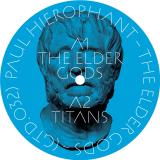
Paul Hierophant - The Elder Gods

Paul Hierophant

The Elder Gods

12inchGTD032
Gated Recordings
03.04.2026out soon

Active in London’s electronic underground since the late 80s, Paul Hierophant has long worked in the space between techno, ambient, and dub, preferring atmosphere, tone, and slow-burn tension to obvious dancefloor tricks.

The Elder Gods finds him further out on the fringes of electro, where the synths loom large and the delay and reverb units are given a proper workout. The result is widescreen, ominous, and immersive.

The title track is a monolithic slab of rhythm where corroded synth pressure and ritualistic percussion feel less like a groove than some ancient machine grinding slowly back into life.

Titans stalks forward on a cavernous half-step pulse, all foggy bass weight and fractured metallic vocal echos, like dub techno that has wandered into darker mythological territory and decided to stay there.

The Hydra coils around a lurching low-end spine, its tentacular FX flickering and mutating while the groove stubbornly regenerates.

Works and Days rounds things off with a standout alien vocal loop drifting through pulsing bass and drums, lending the track a meditative feel that works just as well for late-night headphone sessions as it does in the deeper end of a DJ set.

This is an EP for selectors who like their electro expansive, slightly strange, and built for proper sound systems.

Сделать предзаказ

Этот продукт еще не вышел. Ты можешь сделать предзаказ, как только он появится на складе, продукт будет подготовлен к пересылке.

13,87
Mix-o-rap - Eyes Of A Key

I wrote this album in prison. I went to the music room every week to play on their keyboards. I studied different styles of beat patterns and sound recording to be a recording engineer. I wanted to create this new sound, so I took go-go, hip-hop, house, and drum and bass to blend up a new pattern of beats with a DJ sway. So I rapped on it. I need a perfect mix sound so I used a reverb gate, small room because I was in a small room. I used my moms blankets to trap the sound waves in the room. I use a digital mic from radio shack and was rapping with a blanket over my head to trap the sound waves. I played my keys in F flat to deepen the tone. I put tom toms on it to fill the spaces with handclaps to have that snap. Then I put a reverb gate on every instrument to get the lo-fi audio sound. I mastered it with all knobs on zero. Equalizer on zero. I mastered my own sound by tweeking and listening with cheap headphones. So that's why I call myself Mix-0-Rap because I master my mix and DJ rap style with a touch go-go rapping. Thank you for supporting me and my music, I hope you enjoy this.

нет на складе

Закажите сейчас, и мы закажем товар для вас у нашего поставщика.

12,56

Последний логин: 8 г. назад
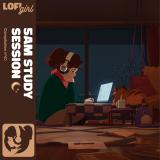
Lofi Girl presents - 5 A.M. Study Session (2x12")
  • A1: Lotus Beats X Notation - Notebooks
  • A2: Takeo - Elevator
  • A3: Xander. - Driving Alone (Flip)
  • A4: Softy X Eehou - Fazed
  • A5: Meadowy - Bumping Gums
  • A6: Sleepermane X Sling Dilly - Saffron
  • A7: Swink - Pathway
  • A8: Chronodrift - Follow
  • B1: Marsquake - Still Learning
  • B2: Aboueb X J'san - Missed Call
  • B3: Yasumu X Dennisivnvc - Lightfall
  • B4: Tosso - Night Shift
  • B5: Aisake X Quist - Faded Memory
  • B6: Saint Rumi X Erwin Do - Brooklyn Sunrise
  • B7: Shopan - Eighty Five
  • B8: Kupla - Reverence
  • B9: Thaehan - Refaire Le Monde
  • C1: Klemsis - Dreaming
  • C2: Aimless X Rook1E - Catching The Sunrise
  • C3: Mondo Loops X Towerz - Dropouts
  • C4: Kanisan X Luqęt - Sleepless Nights
  • C5: Hazy Year - Lonely
  • C6: Phlocalyst X Myríad - Doinit
  • C7: Surfin - All Nighter
  • C8: Hoogway - Kickflip
  • D1: Cxlt. - What A Day
  • D2: Tibeauthetraveler - Fields Of Gray
  • D3: Fnonose X Hm Surf - Amarillo
  • D4: Trxxshed X Lomtre - Aether
  • D5: Lov Sum - Iridiscente
  • D6: No Spirit X Odd Panda - Opal
  • D7: Allem Iversom X Little Blue - To Go
  • D8: Amies - Solution
  • D9: Ødyssee X Ian Ewing - Dusky

It’s 5 AM, the world is still quiet as dawn begins to rise. While most are asleep, a few of us are in the final stretch, finishing last edits or easing into the day, surrounded by scattered notes in the living room with a sleepy cat nearby.

5 AM Study Session is a tribute to the early risers and the night owls. This collection of 34 tracks carries early-morning focus and momentum, guiding you through the quiet and setting the tone for the day ahead. Sunlight slowly peeks in as the melodies play, creating a soundtrack for productivity and peace.

The physical edition captures the warmth of a fresh cup of coffee: pressed on double "Morning Latte" marble vinyl, the swirling beige and brown tones mirror the cozy, studious atmosphere of the artwork. A tangible reminder that the best work often happens when the world is still.

Slip on your headphones, pour a hot drink, and let the sunrise guide your workflow.

Сделать предзаказ

Этот продукт еще не вышел. Ты можешь сделать предзаказ, как только он появится на складе, продукт будет подготовлен к пересылке.

39,08
Vanessa Wagner, Philip Glass - Figures of Glass: Piano Etudes - Edits
  • A1: _Etude No. 1 (Edit) - 04:36
  • A2: _Etude No. 2 (Edit) - 03:37
  • A3: _Etude No. 3 (Edit) - 02:28
  • A4: _Etude No. 5 (Edit) - 05:08
  • A5: _Etude No. 6 (Edit) - 03:27
  • B1: _Etude No. 8 (Edit) - 03:45
  • B2: _Etude No. 10 (Edit) - 03:27
  • B3: _Etude No. 16 (Edit) - 03:41
  • B4: _Etude No. 17 (Edit) - 05:23
  • B5: _Etude No. 18 (Edit) - 03:19

With Figures of Glass (Piano Etudes – Edits), Vanessa Wagner offers a new listening perspective on Philip Glass’s Piano Études, shaping a curated selection of edited versions drawn from her acclaimed recording of the complete cycle. These edits do not alter the substance of the works; rather, they refine their temporal focus, revealing their emotional force with renewed clarity.

Conceived in parallel with Figures of Glass, a hybrid project developed with visual arts collective Scale, the release extends a dialogue between piano and light, sound and space. Between piano and light, Vanessa Wagner interprets Glass’s Études at the heart of a scenographic installation, exploring the visual imagination embedded in the composer’s music. Minimal structures become spatial gestures; repetition opens onto perception, colour, and resonance. Taken together, these edits form a coherent arc through Glass’s language: from tension and propulsion to suspension and introspection, from rhythmic urgency to contemplative stillness. Wagner’s approach is marked by precision, restraint, and a deep attention to resonance, allowing each piece to unfold with an assumed expressive sobriety.

Figures of Glass also exists as a live creation, presented for the first time in Paris at the Théâtre du Châtelet on April 7, 2026. In both recorded and staged forms, the project invites contemporary listening contexts — from focused headphone listening to immersive visual environments — while reaffirming the Piano Études as a major landmark of 21st-century repertoire. Bridging modern classical piano, minimalist writing, and spatial listening formats, Figures of Glass (Piano Etudes – Edits) speaks equally to traditional classical audiences and new listeners discovering Philip Glass through curated, editorial-driven experiences.

Сделать предзаказ13.03.2026

он должен быть опубликован на 13.03.2026

23,11
B. CLOSE - "B. CHAMBER (STRATUM A)"

B. Chamber (Stratum A), by B. Close, is the first full length solo release by Los Angeles-based multi-disciplinary artist Brian Close. The first of two volumes assembled from some thirteen hours of music produced by Close while residing in Connecticut from 2021-2025, B. Chamber (Stratum A) offers a vivid, fractal afterimage of a prolific, specific time and space in the artist’s oeuvre.

After leaving New York City early in the pandemic to a farmhouse in the countryside with dedicated spaces for multiple sound stations, Close developed an intensive daily practice of melding with the machines. The vast, pastoral backdrop of rural CT provided inspiration and contrast for his ongoing investigations into dynamic, poly-rhythmic electronic music. The sounds on B. Chamber (Stratum A) range from the machine-modeling of acoustic instruments and natural environments to the utterly unhuman, spinning on the axis between crystalline, pointillist precision and shifty blown-cone distortion. Close’s atypical interpretations of rhythm, noise and other undefined musics land in a hybrid zone of their own.

Throughout B. Chamber (Stratum A), Close’s productions are in perpetual motion. Foxtrot’s shifting hi-hats and disembodied voices rise like cicadas propelled by glitching machines and tangled rhythms, Many Drive draws momentum from dubby stabs and twinkling atmospherics. Character Community’s nimble, drifting snares and erratic static are uplifted by swelling synths, and Mpan’s modular mining forgoes drums but is no less propulsive for it. Acre Voices’ seasick pads and deft drum patterns tap an energizing nerve, and closer 5D Bow’s ambush of pummeling machine gun fire spirals into the tryptamine palace and emerges completely rinsed and refreshed.

Equally powerful in the club as in the outdoors, in the headphones eyes closed or on the move, B. Chamber (Stratum A) grants an immersive temporary trip on B. Close’s unique wavelength, with Stratum B to complete the picture in the summer of 2026.

RIYL - Mark Fell, muay thai, Vladislav Delay, gaming, Errorsmith, modular synthesizer.

+++++

Brian Close (b. 1979, NYC) uses the cold logic of mathematics to trigger states of total sensory displacement. Close co-founded multiple AV studios to explore the "hypnotic"—a ritualistic practice of motional-graphism and improvisational sound. His work is a study in synesthesia and the architecture of trance, using geometric precision to dissolve the sense of time. It is a digital-visceral experience built on heavy logic, designed for large-scale immersion and timelessness.

Close is one half of Georgia who have released records on Palto Flats, Firecracker Recordings, Meakusma, Youth, OOH-Sounds and EM Records, and have a long-running residency on NTS.

B. Chamber was written, produced and mixed by Brian Close.
Mastered by Rashad Becker.
Artwork by Brian Close.

Сделать предзаказ12.03.2026

он должен быть опубликован на 12.03.2026

22,27
múm - Yesterday Was Dramatic – Today Is OK 3x12"

In 1999, on December 23 to be precise, the electronic music landscape changed forever. On that day, the now legendary Icelandic band múm released their debut album “Yesterday Was Dramatic – Today Is OK”. The thing is though, back in the day, hardly anybody realized. It was Christmas after all, people were busy with potentially more important things and didn’t pay attention to some kids selling records on Reykjavík’s high street. Little did those shoppers know.

Thankfully, those 10 tracks weren’t overlooked for long. On the contrary: the album went on to become one of the most influential building blocks of what back then was called electronica and today is considered an art form playing a crucial and important role in shaping and defining the rich electronic music culture of the 21st century. Now, 20 years after the record dropped onto planet Earth, Morr Music is re-issuing the remastered album with its original artwork, adding newly commissioned re-works: A note-for-note representation of “Smell Memory“ by Kronos Quartet (with additional drums by múm’s Samuli Kosminen), a gentle reinterpretation of “Random Summer” by acclaimed pianist and composer Hauschka and an otherworldly new version of “Ballad Of The Broken String” recorded by label mate Sóley. Additionally, four remixes produced in the early 2000s are made available for the first time ever on vinyl here.

In 1999, electronic music was in full bloom. The dance floors were thriving worldwide.Yet the concept of using electronic sounds in acoustic-based productions (or vice versa) was still in its infancy. Many producers were trying, most of them failed. The results felt often forced, fabricated, unimaginative, random and forgettable. New ideas require new mindsets after all. With “Yesterday Was Dramatic – Today Is OK”, múm established a new approach in music production. Instead of setting a fixed agenda and working with a distinct hierarchy for their sonic palette, Gyða Valtýsdóttir, Kristín Anna Valtýsdóttir, Gunnar Örn Tynes and Örvar Smárason let each instrument and sound source be true to itself, creating an ever-evolving universe of sonic bliss. Listening to the album in 2019 still makes every music lover’s heart jump. Combining Drill-and-Bass-inspired beat-chopping, future-informed DSP-programming, ethereal vocal work, indie rock’s boominess, folk music’s soulful brittleness and a lofty feeling for melody and arrangement, the album is a rare example of musical transcendence and remains impossible to categorize.

Many of the ideas formulated and recorded for the album quickly became an integral part of the canonical self-conception musicians around the world were and still are aspiring to. How these ideas really came about, though, is not known – the dynamics, the struggles, the qualms, the sudden realization of having achieved something which might actually stick. Maybe that is a good thing. Örvar Smárason remembers that most of the album “was recorded in a tiny, sweaty room in the summer of 1999 with carpenters banging nails around us, but sometimes we put on headphones so we couldn’t hear them.” It is a good thing they did. As is often the case with classics, all one can do is listen closely and let the magic sink in – again and again.

нет на складе

Закажите сейчас, и мы закажем товар для вас у нашего поставщика.

31,05

Последний логин: 58 дн. назад
Продуктов на странице:
N/ABPM
Vinyl