Lee Foss and Franky Wah join forces in the ‘Name of Love’ for this hypnotic house track on Club Sweat complete with a bumping Torren Foot Remix. Lee and Franky escape their own sonic boundaries to conjure up a pertinent soundtrack for everyone feeling the need to escape their physical confines after this past year and reconnect with loved ones. Filled with a lush piano melody, crisp drums and blissful vocals of SPNCR the track slowly brings in lush deep-tech undertones to create a euphoric soundscape.
On teaming up with Lee Foss, Franky Wah said, "I’m buzzing about this record because if it wasn’t for Danny Howard and Radio 1 this collaboration would never have even happened. I’d say Lee and I are in different lanes sonically but this track is a perfect example as to why artists should experiment and forget about the boundaries and rules that they set themselves. It’s a record that everyone needs to hear given the year we’ve all had and another one that I hope will resonate with all of us."
out of Stock
Last delivered 8 months ago available to reorder, subject to availability
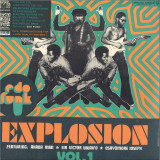
Analog Africa Presents Edo Funk Explosion Vol. 1, available on
2xLP/Gatefold LP with 20-page booklet / CD with 36-page booklet. It was
in Benin City, in the heart of Nigeria, that a new hybrid of intoxicating
highlife music known as Edo Funk was born.
It first emerged in the late 1970s when a group of musicians began to experiment with different ways of integrating elements from their native Edo culture
and fusing them with new sound effects coming from West Africa s night-clubs.
Unlike the rather polished 1980 s Nigerian disco productions coming out of the
international metropolis of Lagos Edo Funk was raw and reduced to its bare
minimum.
Someone was needed to channel this energy into a distinctive sound and Sir
Victor Uwaifo appeared like a mad professor with his Joromi studio. Uwaifo
took the skeletal structure of Edo music and relentless began fusing them with
synthesizers, electric guitars and 80 s effect racks which resulted in some of the
most outstanding Edo recordings ever made. An explosive spiced up brew with
an odd psychedelic note known as Edo Funk.
That’s the sound you’ll be discovering in the first volume of the Edo Funk Explosion series which focusses on the genre’s greatest originators; Osayomore
Joseph, Akaba Man, and Sir Victor Uwaifo: Osayomore Joseph was one of the
first musicians to bring the sound of the flute into the horn-dominated world
of highlife, and his skills as a performer made him a fixture on the Lagos scene.
When he returned to settle in Benin City in the mid 1970s - at the invitation of
the royal family - he devoted himself to the modernisation and electrification
of Edo music, using funk and Afro-beat as the building blocks for songs that
weren’t afraid to call out government corruption or confront the dark legacy of
Nigeria’s colonial past.
Akaba Man was the philosopher king of Edo funk. Less overtly political than Osayomore Joseph and less psychedelic than Victor Uwaifo, he found the perfect
medium for his message in the trance-like grooves of Edo funk. With pulsating
rhythms awash in cosmic synth-fields and lyrics that express a deep personal
vision, he found great success at the dawn of the 1980s as one of Benin City’s
most persuasive ambassadors of funky highlife.
Victor Uwaifo was already a star in Nigeria when he built the legendary Joromi
studios in his hometown of Benin City in 1978. Using his unique guitar style as
the mediating force between West-African highlife and the traditional rhythms
and melodies of Edo music, he had scored several hits in the early seventies,
but once he had his own sixteen-track facility he was able to pursue his obsession with the synesthetic possibilities of pure sound, adding squelchy synths,
swirling organs and studio effects to hypnotic basslines and raw grooves. Between his own records and his production for other musicians, he quickly established himself as the godfather of Edo funk.
What unites these diverse musicians is their ability to strip funk down to its
primal essence and use it as the foundation for their own excursions inward to
the heart of Edo culture and outward to the furthest limits of sonic alchemy.
The twelve tracks on Edo Funk Explosion Volume 1 pulse with raw inspiration,
mixing highlife horns, driving rhythms, day-glo keyboards and tripped-out guitars into a funk experience unlike any other.
out of Stock
Last delivered 5 years ago available to reorder, subject to availability
Following the release of Limewax's Untitled and Speed Dealer Moms' SDM-LA8-441-114-211, Trickfinger and Aura T-09's Evar Records imprint is keeping its foot on the gas, officially introducing the arrival of its sub-label, RAVE4EVAR. Embracing more of an outlaw mindset, RAVE4EVAR was created as a place for rebellion to collide with rave, offering refuge for off-the-cuff releases, special projects and occasional one-off collaborations.
Ushering in the sub-label's inaugural release, RAVE4EVAR is proud to present Chicago-based DJ, producer and new media artist S4M23's debut EP, Angelface. The five-track project, set to arrive on July 2nd via a limited edition cassette and digital download, combines haunting vocals with pounding kicks and rave synths to create a moving take on hardcore. Written and recorded during a weeklong session in April 2020, the creation of Angelface took place during a period of processing grave personal loss juxtaposed with the collective state of chaos, grief and fear brought on by the covid-19 pandemic.
Within that specific period of time, S4M23 channeled intense emotion to reflect how cathartic it can be to honor the connections we build with one another despite how frenetic and heart-wrenching the circumstances of a particular moment or experience can be. Pouring an immense spectrum of emotions into Angelface, these productions eschew simple repetition to create unexpectedly complex rhythms and textures that evoke the sounds of British club music and '90s rave, while simultaneously creating something entirely new.
I first discovered khroniky – Ukranian folk songs – in the Highlands of Scotland. I was watching a screening of Bajka, a mesmerising documentary made by the filmmaker Lucia Nimcová and sound artist Sholto Dobie. I knew nothing about these ballads beforehand, but I was fascinated by these odd, beautiful songs, especially the easy way in which they mixed misery and levity, where gentle melodies blend with tales of dark violence. The folk songs describe hardship, murder, torture, death in gulags, heavy drinking, outsmarting men, love affairs. But they’re often very funny too – many of the songs make fun of marriage, and there’s an amazing subcategory of khroniky songs called potka (vagina) songs.
The khroniky have never been properly documented because they were considered too crude, or contained lyrics that were problematic, politically. When Ukrainian folk songs have been archived in the past, it’s normally a sanitised, more polite version of the ones that Lucia remembers from her childhood. Lucia grew up on the other side of the Ukrainian border in Slovakia. She is part of the Rusyn (Ruthenian) minority ethnic group found in the borderlands of Slovakia, Hungary, Romania, Ukraine and Poland. Rusyn is a centuries-old Slavic language, looked down upon as a poor, uneducated dialect by the neighbouring Ukraine and Slovakia. It was forbidden to talk about Rusyn culture at Nimcova’s primary school, but the khroniky stayed in her memories.
“I remember weddings when I was young,” says Lucia, who now lives in Addis Abeba, Ethiopia. “At the end of the night, when everyone was drunk and the young couple would go around their guests, people would sing in Rusyn. There was singing and dancing, and songs about being in prison or falling in love. I picked up the lyrics and sometimes my mum would make my sister and I sing them for people we met on the train. I was about five or six but the lyrics still come back when I sing to my kids.”
Determined that these rich, nuanced, unique songs shouldn’t be forgotten, she decided to record them. Over two years, Lucia, joined by experimental musician Sholto Dobie, visited Rusyn villages high in the Carpathian mountains to rediscover the songs and make the documentary. It was at the beginning of war breaking out in Ukraine in 2014.
“The Rusyn community is a very closed one,” explains Lucia. “Sometimes we’d have to wait several days to hear someone sing; we had to earn their trust before they shared something very personal to them. We’d stay up ‘til 5am at a wedding, then go straight to a morning baptism, or collect haystacks with the villagers, hoping they’d sing while they were working.”
DILO is named after an important independent Ukrainian daily newspaper that was shut down when the Red Army entered Lviv in 1939. The four long tracks on DILO blur field recordings with song; an unpolished, privileged glimpse into a private world. We hear dogs barking and insects buzzing in the summer heat, then a blast of hurdy gurdy or violin will drift in, or a plaintive song soars softly over the rural background noise, with casually harrowing lyrics about a cuckoo, “lifeless in a world of misery”, as translated in the album’s booklet.
For both Lucia and Sholto, it was important not to tamper too much with what they heard. “When you think about ethnography,” Lucia explains, “you have to have a lot of time, love and respect to document it with sensitivity.”
“The songs all have their own atmosphere and intimacy from the spaces they were recorded in and it was important to maintain these particularities and move with them,” adds Sholto, who now lives in Vilnius, Lithuania. “They guide and sometimes interrupt a journey between interiors – domestic spaces; in kitchens, by the fire – and exteriors; marketplaces, cow sheds. We used contact microphones to record metal bridges and fences, and we spent one afternoon recording a wool processing machine, the details of the rattling and tuning wheels are the ground layer for the third track.”
Lucia took rough notes and diary entries during the recording process, which are now shared in the booklet alongside a selection of lyrics, loosely translated, but revealing the depth and astonishing beauty that sometimes lies in the language of these folk songs.
The feel of the album is intimate, flipping between laughter, where a woman sings about selling her pussy to buy a cow in one track, then shifts to a raw, painful truth; an adult son asks his mother why his dad won’t be back for dinner, as he’s gone to war.
Since Lucia and Sholto began working together in 2014, they have shared the audio recordings on radio and film and shown photos in gallery spaces, making sure these special, smutty, poignant songs don’t get lost. This new record and booklet joins that same continuum, another glorious fruit from the same rare tree.
Discos Transgénero re-issue the Marnie Weber classic first solo LP, “Songs Hurt Me” originally from 1989. This seminal record was an important part of the Los Angeles post-punk performative art rock scene. Brooding synthesizers, heavy bass, strange melodies, and poetic lyrics lead you through an industrial journey. These songs were born from Weber’s earliest performance art characters: a deer, an old woman, a manic courtesan, and a butterfly. Songs Hurt Me was originally co-produced by Phillip Drucker AKA Jackson Del Ray of Savage Republic and 17 Pygmies fame.
Marnie is a pioneer in art rock from the 80’s in Los Angeles. She emerged early in the music scene as the bass player in the Party Boys, a formative and important Los Angeles post-punk downtown art scene band. During this period, the Party Boys performed shows with The Minute Men, Savage Republic, The Red Hot Chili Peppers, Fourwaycross, The Blue Daisies, Perry Farrell’s first band Psi Com, Camper Van Beethoven, and many more. Bruce Licher of Independent Project Records, whom Marnie met in art school, released the first Party Boys record. After performing with the Party Boys, Marnie went on to become a noted solo performative art musician in her own right. She has released five solo records and numerous group album releases.
As a visual artist Marnie created the cover of Sonic Youth’s A Thousand Leaves album – interesting to note Marnie is the hamster girl on the cover. She also designed posters for Sonic Youth and did a co-release of her second album with Thurston Moore on his label Ecstatic Peace. Expanding from her musical roots, Marnie exhibits artwork, films, sculptures, collages, sound installations, and costumes internationally in museums and galleries. She has had two extensive survey exhibitions of her artwork – most recently at the Museum of Contemporary Art in Geneva.
Songs Hurt Me was remastered by Mark Wheaton at Catasonic Studios Los Angeles using the original tapes for an unprecedented restoration of this historic album. Discos Transgénero has thoughtfully designed and pressed the reissued LPs in Germany. This unique edition of Songs Hurt Me is a limited release of 400 copies distributed worldwide.
out of Stock
Last delivered 5 years ago available to reorder, subject to availability
Primal Scream frontman Bobby Gillespie, alongside solo artist and Savages vocalist Jehnny Beth, presents this stunning debut solo project collection - exploring loss, miscommunication and emotional inarticulacy that a married couple experience as they realise that their relationship is breaking down.
‘Utopian Ashes’ draws on the tradition of country soul classics, such as Gram Parsons and Emmylou Harris’s ‘Grievous Angel’ and George Jones and Tammy Wynette’s ‘We Go Together’, to deal with the heavy realities of love turning sour. It’s an album for people who have dealt with the inevitable sadness that comes with age and acknowledged the realities of life. There is no sweetening of the pill, but it does achieve what should be the goal of all good art: to make us feel less alone. And while it’s not autobiographical, it channels heartfelt truth from the songwriters’ own experiences.
In addition to Bobby Gillespie and Jehnny Beth, the album features Johnny Hostile (bass) alongside Primal Scream trio Andrew Innes (guitar), Martin Duffy (piano) and Darrin Mooney (drums).
Up to kick off 2021 in the most adequately frenzied, thoroughly corrosive fashion, DDS04 serves up a quintet of chrome-tanned, hi-velocity beats courtesy of Italian hardware fetishist Anna Funk Damage (previously heard on the likes of Mind Records, Lux Rec, Lazy Tapes and more) and Austrian-Hungarian outfit Dutch Courage - alias Superskin & Új Bála - each of whom step up to the plate to deliver an exquisitely ear-wormy slice of their deranged industrial gospel.
A-side starts off to the sound of AFD's hard bouncin' "48 Hours Death" - a raw-cooked deluge of head-reducing EBM grit, flaring binary signals and Giallo-infused arpeggios out a blood-stained Suspirian tale. Fear for the deadly scalp hunters lurking in the club's darkest nooks, they've just sniffed out your trail.
Brutal churner "Youssef" picks up the torch and pulls out the quake-inducing breaks without further ado, dressed out with languorous Orientalistic melodies and steely distortions tailored to bend mind by the dozens. Forged in the furnace, the full-out punk-minded "I Come From Fire" rounds off the side on a drum and bass-heavy note, drawing as much from 60s psych-garage as it does from 80s deconstructionist tape music.
Flip sides and here's Budapest unit Dutch Courage taking the reins with the off-kilter treat "Hand Of The Sword" - navigating a weird zone of its own, floating astride post-apocalyptic Bristol bass, sliced-and-diced abstraction and overly textured yet equally bone-bruising riddims.
Wrapping up the journey with both force and serenity, "Neo-Soulmates" follows a similar path with its warped synth flexions and raucous machine cries making the rounds from one end of the spectrum to the other effortlessly, merging to give birth to something genetically contrasting from any contemporary. A most fitting finale to an EP that celebrates and encourages sonic bizarro in all its forms and manifestations.
out of Stock
Last delivered 5 years ago available to reorder, subject to availability
• With more than 60 MILLION STREAMS across his catalogue listened to by fans all around the world, ‘…TO BE CONTINUED’
is the best ‘greatest hits’ album that you’ve never heard!
• This 12-track Limited Edition Vinyl LP collection, with a brand new floorfiller, features his most popular tracks and fans’
favourites, and this is his first Physical release album to celebrate, LE FLEX has signed 500 prints for this Limited Edition.
• Although LE FLEX clearly states that “I just make Pop music”, his 6 EPs and 6 Studio albums are nothing short of serious and
brilliantly creative blends of nudisco, poolside vibes and slow-jams but retaining the essence of his familiar ‘80s
synthpop/dance-based infusions. The accompanying videos are purely tongue-in-cheek, with more than a smattering of
self-deprecation, as you will see on his dedicated YouTube channel.
• Judging by the comments from long-established fans and music lovers from South America to Australia, via the UK, through
Europe and the Far East, discovering LE FLEX for the first time, they are quick to state that his vocal inflections share more
than a passing resemblance to George Michael, an icon about whom LE FLEX modestly says, “I’m not fit to shine his shoes”.
• LE FLEX is a renowned Producer with his popularity rising, having worked with Jaki Graham, Lemar and Ben Macklin and
was commissioned to produce new Donna Summer remixes in 2020.
• Released on heavyweight 180g Clear Vinyl, if you fancy summery escapism, there aren’t many better ways than doing so
than with LE FLEX
Blue Vinyl
Lynch protégé and Twin Peaks sound designer Dean Hurley coaxes an incredible puzzlebox of atmospheres and mood pieces on this killer contribution to our Documenting Sound series, now remastered and pressed on vinyl for what is, perhaps unsurprisingly, the most cinematic and neon-lit instalment in the series. Like a
smudged and overdubbed copy of the BoC Maxima tape, with added iridescence.
Across almost 40 minutes we transition from aerosolised synths to romantic chromatics, thru to Nurse WIth Wound-style severed rhythms and fading glimmers of hope, ‘Concrete Feather’ epitomises Dean Hurley’s prized knack for nuanced instrumental story-telling in the finest and most engrossing style we could imagine. Against the backdrop of the Hollywood film industry that has primed us for as long as we can all remember, the music spans a panorama of lush, mirage-like choral pads and starry flickers thru to gloaming
nightmare sequences and screwed drums, while touching on some of the dankest synth tones this side of his ‘Anthology Resource’ volumes or indeed his soundtrack work for Twin Peaks: The Return. It’s full of dread and a slowly unfolding sense of tragedy.
“Having a regular practice of recording is probably the single most important element to my craft. It’s a way of dropping indiscriminate mile markers while constantly moving forward in time without ability to pause.
Over the years, working for David Lynch taught me a great deal about this and the concept and importance of experimentation. I’ve found myself clinging to those lessons during this time and using them as tools for both productivity and balance. His notion of experimentation is a simple one, yet incredibly profound. It was one of the very first words I heard him say during our initial meeting, and I never stopped hearing the term daily over the subsequent 13 years working together. An ‘experiment’ can provide a legitimate mental back-entrance into the act of creation. It can position an approach toward discovery as opposed to effort, and eliminate the thought that one needs to ‘will’ something into existence. It also aids in calming the judgmental
side of a brain from stepping on/interfering with expression…after all, experiments are not about success or failure, they’re simply about learning. In the Lynch school of thought, multiple experiments then become firewood…and with firewood, one can not only build but actually sustain a fire…even turn it into a multipleacre blaze or more.
Dean Hurley
The fourth studio album from Melbourne’s 7-piece heavy groove combo is an abstruse journey into the darker fringes of instrumental music, drifting from funk to spiritual jazz and through to psychedelic fuzz rock.
Inspired by the catastrophic year that was 2020, the bands recording sessions were rescheduled three times due to extended Melbourne lock downs, before finally being recorded in November 2020. The album’s title, The Old World, refers to life before the onset of the pandemic which shattered 21stcentury humanity’s sense of stability and invincibility. Arcing back to the simplicities and blissful ignorance that existed before the grim onset of empty supermarket shelves, deserted streets and a world locked down.
The album begins with psychedelic-soul lament, Death of the Old Gods, before rolling into apocalyptic-dancefloor-fillers Hold Fast to the Void and Abode of the Clouds, then momentarily mellowing out on laid-back number, Never Again. Side 2 opens with Harry Cooper pt II (a tribute to the bands sax player and a follow up to part I from their 2017 album Drinking Water) before launching into brutal and fiery, The Beast, then finally closing with the epic 12 minute spiritual-jazz title-track, The Old World. The astute listener may also hear sprinkled across the album hints of Afrobeat, Free-Jazz and Stoner-Doom (yep, Stoner-Doom), along with plenty of the bands new favourite instrument, the goat bell.
Released on local Melbourne label, Northside Records, the album will be available on limited edition night-sky marbled vinyl and features cover artwork by Australian artist, Daniel Hend.
In Switzerland, the Ellis Mano Band are not unlike the Wrecking Crew or
the Funk Brothers.
They are top-flight studio musicians and elites in the Swiss music scene. Although they spent years making music with other artists, the band members
never got much time to make music of their own until now.
“We chose the album title “Ambedo” because it reflects the state of the process of recording an album,” says guitarist Edis Mano. “Ambedo” refers to the
tendency both to reflect and to absorb. Musicians like us do it all the time,
especially when we compose new songs and create a new album.”
The first single “Keep It Simple” refers to the one subject on the planet that
certainly is not simple at all... love.”
Coming from Oslo, Norway, Bizarrekult is bridging the two identities of it mastermind - philosophical depth
of frozen Siberian steppe and the majestic beauty of Norwegian soil on this debut album. Bizarrekult was
formed back in 2006 as a response to the chaos of the surroundings and already with
a first demo got attention through 2000 copy split CD release. However, following the second studio demo
and then a two track rehearsal demo in Bergen, the project was laid on ice. “Vi Overlevde” (we survived)
speaks to the heart of every post-Black Metal fan that is looking for something different. The tracks
are filled with great riffing and beautiful melodies, tightly connected to the lyrical themes of frustration,
despair, sorrow, forgiveness and finally - hope.
The legendary soundman and record producer, Lloyd Coxsone, began his career in the 1960’s soon after arriving from Jamaica. He was one of the first soundmen to play at West End clubs where a generation of British pop stars like the Beatles and the Rolling Stones first heard music from Jamaica. Sir Coxsone sound then dominated the seventies, when Bob Marley & Dennis Brown were among his greatest allies, as heard on unforgettable dub-plates from that era.
He formed the Tribesman Label and issued King of the Dub Rock before recording the likes of Fredlocks, Willy Stepper & Jimmy Lindsay. King of the Dub Rock 1 & 2 are recognized as reggae classics. They not only feature Lloydie’s own productions but also riddims by Jamaican producer Gussie Clarke and heavyweight dubs by mix master Scientist. On King of the Dub Rock 3, Lloydie teams up with Jahsolid Rock Music, who’s albums with Brinsley Forde, Apple Gabriel and Earl 16 were regularly heard on Sir Coxsone playlists. This album features exclusive dub mixes and vocal tracks from these artists plus brand new tunes by Mutabaruka, Chezidek, Micah Shemaiah, Var & Ras Teo.
King of the Dub Rock 3 is an essential companion for all Coxsone fans wanting to complete the trilogy. It delivers such a high standard of musical quality that it promises to be a modern day classic!
It’s with a heart brimming with pride that Bordello A Parigi welcome Italoconnection back to the family with their latest album: Midnight Confessions Vol.1. The team of Fred Ventura, a legend of Italo Disco, and Paolo Gozzetti, a stalwart of Italian electronics, arrive with eight tracks that shimmer with sun-kissed synths and love-filled lyrics. A strew of like-minded musicians have been called upon to bring their own unique ideas and styles to this album. Sweden’s Tobias Bernstrup offers his vocals in the environmentally minded “Rainbow Warrior,” while the unique and unmistakable voice of French pop icon Etienne Daho sings in the charged “Virus X”. Modern day electro-disco maestros feature with Carino Cat collaborating in the warming rays of “The Year of the Sun.” Newcomers to the scene are also represented, Francesca Diprima’s voice accompanying Fred Ventura’s in the lovelorn lament of “Since You Went Away”. And at the heart of the album are Ventura and Gozzetti; a record that explores classic themes while introducing a wider commentary, a collection of bold brilliance and synthesizer subtilty.
out of Stock
Last delivered 20 months ago available to reorder, subject to availability
Re-mastering by: Ray Staff at Air Mastering, Lyndhurst Hall, London
Morgan was one of the most active artists in the Los Angeles underground jazz scene, and a member of the late great Horace Tapscott‘s artist collective Union of God’s Musicians and Artists Ascension (UGMAA). He performed alongside Tapscott, and other Nimbus recording artists like Jesse Sharps, who he introduced to Tapscott. He also performed with Arthur Blythe, Gary Bartz, Azar Lawrence, as well as soul icons Willie Hutch (notably on the Foxy Brown soundtrack) and Rufus & Chaka Khan. Most recently he contributed to Carlos Niño’s 2016 album Flutes, Echoes, It’s All Happening!, and was a part of Niño and vocalist Dwight Trible’s soul-jazz group Build An Ark (which also featured Tribe’s Phil Ranelin).
Journey Into Nigritia was Morgan’s debut as a leader, and the first of three recordings he released for Nimbus West. The album has a strong post-Coltrane spiritual feel, with some modal-based melodies, and some fiery solos from saxophonist Dadisi Komolafe. The record also features a solid rhythm section featuring bassist Jeff Littleton and drummer Fritz Wise.
Review by T J Gorton
At the dawn of the Reagan years, LA jazz pianist Nate Morgan recorded his first album for Nimbus West. Journey Into Nigritia portrays an artist marked by the icons of his day, and striving for reinvention. Although he came from a solid jazz background, coming up through the Pan Afrikan People's Arkestra, Morgan found more exciting work with pop bands in the seventies, including glory years with Rufus w/Chaka Khan. On Journey into Nigritia, Morgan re-embraces jazz. Included in the band are Jeff Littleton on bass, Fritz Wise on drums, and Dadisi Komolafe on alto sax.
The collection opens with the Trane-ish Mrafu. Komolafe blasts off in short order, and while the modal chording recalls Tyner, Morgan shows flashes of the nimble loquacious gift that define him. While Alice Coltrane incense perfumes "Morning Prayer, Morgan's devotional sincerity and personnel expression triumph.
Suitably complex with yearning minors, Mother features the trio performing a memorable composition. Littleton's deep-note sustain contrasts Wise's shimmering cymbals, while Morgan tells heart-wrenching truth. With a somewhat solemn theme, He Left Us a Song regularly bursts through into straight-ahead fast break sprints up and down the court. The unexpected "Study in C.T. offers an homage to Cecil Taylor and Morgan's musical roots with free improvisations on a dense and spiky theme. The exhilarating result has Morgan exploring his own way, with a winking slinging of jagged bass chords halfway through.
While a quarter century's experience has nurtured Morgan's prodigious gifts beyond this ambitious debut, Journey Into Nigritia offers enjoyable insights into his artistic evolution, while adding another precious title to the discography of one of the most woefully under-recorded greats of our time.
Re-mastering by: Cicely Baston at Alchemy/Air Mastering, Lyndhurst Hall, London
A two-LP set on Theresa, Rejoice features Pharoah Sanders in excellent form in 1981. Sanders sounds much more mellow than he had a decade earlier, often improvising in a style similar to late-'50s John Coltrane, particularly on "When Lights Are Low," "Moments Notice," and "Central Park West." The personnel changes on many of the selections and includes such top players as pianists Joe Bonner and John Hicks, bassist Art Davis, drummers Elvin Jones and Billy Higgins, vibraphonist Bobby Hutcherson, trombonist Steve Turre, trumpeter Danny Moore, a harpist, and (on "Origin" and "Central Park West") five vocalists. The music always holds one's interest, making this one of Sanders' better later recordings. Scott Yanow/AMG
COLTRANE'S classic "Moments Notice" is a complete gas! Sanders like Coltrane, pulls and holds attention with his entrances. Bobby Hutcherson's and Hicks solo's are heated and models of vivid imagination. The three put forth some of the very best solo...'s in the entire album.
Then there's the arresting new talent introduced here -GEORGE V JOHNSON JR., whose marvelous lyrics and vocal work are truly auspicious! He sings with James Moody on occassion and is happily remindful of the insistent giftness of the late EDDIE JEFFERSON. Johnson's three stanzers close with "Relax dig the sounds of Coltrane's Music. Coltrane fills your heart with love and harmony. Trane played with magic. Listen to the melodies and you will see momently. When you here the message of his song!". There's no doubt in my mind that henceforth George V Johnson should and will be sought for his own gift to the music. He sang the song for Sanders at the Village Vanguard, and Sanders "felt that George ought to be heard".Thank you, Pharoah Sanders for Sharing.... by Herb Wong
Re-mastering by: Cicely Baston at Alchemy/Air Mastering, London
Electric blues guitarist Melvin Taylor had been sporadically recording solo albums for 20 years when Dirty Pool arrived — and was somehow just beginning to find fame. Already a hit in Europe, it had taken a steady run of performing in Chicago’s famed blues clubs to slowly earn Taylor a well-deserved reputation as an equal talent among the giants before him, such as Otis Rush, Albert King and Stevie Ray Vaughan.
While early records like Melvin Taylor Plays the Blues For You show off an equally amazing jazz side, Taylor traded away his Wes Montgomery-inspired runs for more Luther Allison/Jimi Hendrix attacks with the formation of the trio Melvin Taylor and the Slack Band in the mid ’90’s.
The title song of the second album by that outfit, “Dirty Pool,” is actually more the balls-to-the-wall, no-compromise, hard-rockin’ electric Texas blues of Vaughan and Johnny Winter than the sweet Chicago soul of Buddy Guy.
Indeed, three tracks on this 1997 release, including “Dirty Pool,” were SRV tunes. Other standards, like “Kansas City” and “Floodin’ in California” also have more of a Lone Star State approach to them. But the Jackson, Miss.-born Taylor’s guitar is cleaner than his forebears and technically, he even surpasses them, yet the anger and sorrow of the blues is readily evident in his playing.
This rare combination of qualities really comes out in a slow blues tune like his solo in “Dirty Pool,” which after repeated listens, still makes me head shake in disbelief when I hear it.
“Too Sorry” is a good example of how well Taylor fares when he treads in Jimi Hendrix territory, whereas his rhythm work is the best I’ve heard from a lead guitarist since Vaughan; listen to “I Ain’t Superstitious,” “Born Under A Bad Sign” and the funky “Telephone Song” for your proof.
It also helps that Taylor’s drummer James Knowles is well in synch with him, while Ethan Farmer completely owns the low end of the sound. Farmer’s peppering bass lines in and “Floodin’ in California” is the textbook way electric blues bass should be. Overall, a tight little band.
Taylor’s vocals certainly won’t draw any comparisons to the Wide-Brimmed–Hatted One but he holds his own just fine until it’s cuttin’ time. This is right at the top of my list of best blues guitar playing on record over the last couple of decades. If you decide to give this one a listen, prepare to be blown away.
Where have you gone, Charles Tolliver? There was such promise in the concept of Music Inc., and in Strata East, but evidently the music world's attention was elsewhere and this tremendous live set was probably heard by only a few hundred sets of ears. On the back of the record sleeve, Tolliver undersigned his mission statement: "Music Inc. was created out of the desire to assemble men able to see the necessity for survival of a heritage and an Art in the hopes that the sacrifices and high level of communication between them will eventually reach every soul." And he isn't kidding. You won't find a much higher level of communication than he, Cecil McBee, Stanley Cowell, and Jimmy Hopps engaged in on May 1, 1970 at Slugs' in New York City. This was much more than an attempt to merely 'preserve acoustic jazz' as in the stilted Marsalis vein. This was an attempt to preserve a measure of authenticity while maintaining the notion of forward-thinking, present-tense improvised music. They deserved a greater response than the lukewarm, sparse applause they received that night, and continue to deserve a far more cognizant audience for their efforts.
Tolliver ('Drought"), McBee ("Felicite"), and Cowell ("Orientale") each contribute a track to the set; though very much distinct, each is equally strong. "Drought" is the kind of dark-hued, well-honed burner which Tolliver routinely produced in his fertile years. "Felicite" is a more contemplative affair, a deeply felt and empathically performed piece; the unit here is in particularly sublime form, merging considerable skill with a staggering depth of emotion. "Orientale" falls somewhere in between the pace of the two, with Cowell's Eastern scales establishing an austere, industrious tone throughout its seventeen-and-a-half-minute length.
Through its duration, the music on Live at Slugs' is often riveting and incessantly compelling. Hopps is a lesser-known entity to me, but the other three players featured here are some of the all-time underrated presences in the jazz pantheon, and they play nothing short of masterfully. Always a presence on his recordings, Tolliver demonstrates tremendous range, flair, and command as a trumpeter and leader. Had he not come along at a time when pure jazz was falling out of favour, I have to believe his name (along with Woody Shaw's) would be every bit as prolific as Freddie Hubbard's or Lee Morgan's; the same holds for the always brilliant and expressive McBee on bass.
I feel saddened that Music Inc. fell so far short of "eventually reaching every soul" - yet fortunate that it eventually reached mine.
This is the very first original soundtrack of our new Japanese Anime Collection!
MEGALOBOX is the tribute animation to the legendary Ashita no Joe, produced by TMS Entertainment and broadcasted worldwide since 2018 with a dazzling success.
MEGALOBOX Original Soundtrack is produced by mabanua (Manabu Yamaguchi) and features several renowned artists such as DJ TAKU, KOMA-CHI or Michael Kaneko. It was acclaimed by the critics for its unforgettable rhythm and melodies, inspired by a broad variety of genres such as hip hop, black music and rap.
This soundtrack is now entirely remastered for the sumptuous vinyl format!
The Megalobox Vinyl Edition features:
- The illustrated gatefold with Joe and Yuri
- 2xLP black color, housed in two illustrated sleeves
- A 12-page booklet with comments from the composer and the team (Yo Moriyama, Keiichirô Miyoshi) and the English translated lyrics from the songs
out of Stock
Last delivered 4 years ago available to reorder, subject to availability
I attended a trade fair in Rio de Janeiro, Brazil. In this show, we met producers, label and festival managers. It is a privileged moment when it is possible to learn about new trends, new musical forms, emerging groups. The timing of the meal is undoubtedly the most important. We take the time to introduce ourselves and discover each other. When my turn arrived, I took out my little map to locate the town of Sète on the map of France. There, an American promoter exclaimed "Yeah! You live in this beautiful city. Where there is this incredible music. ” I admit that at the time I didn’t quite understand what he meant but flattered by his remark I told him yes. Later, I realized that he was talking about gypsy music that made the whole world dream.
When my friend shared this anecdote to me, it resonated deeply with me. Indeed, for us, people of the south of France, this was nothing exceptional. Indeed, every day you could meet in the street a gypsy musician performing a rumba, another declaiming a fandango or another who liked to paraphrase the maestro Django. It is part of our daily environment, but it is indeed a peculiarity of this region. The territory of the Mediterranean arc, from Arles to Perpignan, is indeed the cradle of gypsy music in France. In addition, we must underline the major influence of the Gypsy artists of Catalonia in the development of these different artistic forms. Through weddings and family reunions, the repertoires have shifted to be reinterpreted according to the identities specific to each and the territories of residence.
With this new collection, we wanted to show, to hear all the musical richness of Gypsy and Manouche artists populating the territory. From appropriation to recreation, they never stop bringing this music to life, re-enchanting it and offering it a resolutely modern reading, open to the world. In this first opus, devoted to the guitar, we will take the routes of latin music, flamenco or jazz alongside renowned artists and young talents. With "The sound of guitars", it is a first door open to the gypsy music of the Mediterranean Arc, that we will discover gradually through the "Mediteranean Gypsies roads" collection.
The Miami Maestro is back with a superb slice of moody, mid-tempo Latin Soul. Anyone who has had the pleasure of seeing one of Jason's passionate live performances can attest that he exudes raw energy and emotion on a level seldom seen on today's soul scene - attributes that Jason delftly applies to the pen.
Drawing from personal experience, “Se Acabó” is a bilingual lament about the challenges of navigating mental illness within the context of a romantic relationship. Jason pleads "Her heart was a butterfly flying through the winds of the hurricane of her mind" as he comes to grips with the fact that in spite of his undying love she may never return.
Accompanied by a grooving, unrelenting beat, he distills the pain down to an elixir of high-proof soul sure to requite the lovelorn among us. Yet another Penrose playbox essential by one of the hardest working players in the game.
Biz's Set Me Free EP is an adventurous and personal exploration of techno which is composed for the dance floor but also sparks the heart. The grinding grooves of opener 'Set Me Free' immediately shows a pairing of a tough mentality with a supreme sense of soul. The exquisite 'Don't Stop' builds with an enthralling techno tension that finally lets up and will immerse the listener in liberation. Last but not least 'Autumn Blues', a perfectly melancholic journey through deeper techno that lifts the spirits with optimistic synths.
out of Stock
Last delivered 5 years ago available to reorder, subject to availability
In Post-Heretic Dracula X Chronicles II the Dracula figure functions as a part fictive and part autobiographical metaphor. Dracula mirrors certain systematic (therefore also internal) conditionings and attributes in its whole ambivalent fluctuations. This character represents the complex relationships of a loving/living person in a neo-liberal capitalist system while oscillating between melancholia & rage, facing the preservation or loss of his love and standing in an alienated position towards the ruling order. The eleven featured compositions and their respective song names (both of them are riddled with references) playfully touch on conflicts between love, life and system-critique, without being too upfront about the subject-matter.
Nicola Kazimir (*28.05.1990 in Zürich, Schweiz)
A DJ, producer, musician, artist, space-owner, record label owner and party organizer, Nicola Kazimir works freely across platforms and communities. For Kazimir, these numerous positions are not static, and they can actfluidly and reciprocally as a whole, or as separate entities. His artistic and acoustic productions are mostly based on topics that include the institutionalization of techno, copyright, dividualism and the human perception of repetitive rhythm patterns mixed with aesthetic codes of b-movie horror movies or occultism. He is one of the founders and still part of the labels Les Points/ Gentrified Underground / Infoline and the offspace Mikro Zürich. Other projects include a supporting role in the organization of Zentralwäscherei Zürich and being part of the Clubbüro-team at Rote Fabrik.
out of Stock
Last delivered 5 years ago available to reorder, subject to availability
Cocoon’s unique brand of techno has always been at the heart for the operation and now, these brand new and exclusive tracks confirm that once again. Dark industry when André Galluzzi & Daniel Stefanik link on ‘The Regulator’ and high grade machine soul from Extrawelt.
out of Stock
Last delivered 2 years ago available to reorder, subject to availability
Another top notch Funky Spiritual Jazz release from Paul Murphy's Jazz Room Records. Featuring Strata-East stalwart Shamek Farrah on Saxes and an all star cast including Trumpet Legend Malachi Thompson.
The music is a Funky Spiritual Afro-Latin Soul mix with the Miriam Makeba influenced Cape Township Party title track and the Jazz Soul grooves of "Waiting For Marvin" both highlights..
Get down to the Worldwide Sound with the Latin Jazz grooves of "The White Lady" featuring Sonelius Smith on Piano and "Along Came Ron Rahsaan" with Vivian Chandler singing a wordless Spiritual Jazz Headspace Lullaby.
Totally obscure and his recordings fetching exhorbitant prices (a re-issue Japanese CD is 3 figures) Shamek Farrah ranks with the great unrecorded. Two releases on Strata East in the '70s, a couple for RA, a release in '95. The reissue of this 1978 recording for RA by Jazz Room Records reintroduces a roomful of rarely heard musicians, along with a young Malachi Thompson soon to become an Internationally renowned Jazz Heavyweight.
out of Stock
Last delivered 5 years ago available to reorder, subject to availability
Our second record from Sweden's Sune is a proper full-length. Ten tracks, forty- five minutes—classic LP!
And it's arranged as such, too; it tells a story through tightly-arranged chapters. Early on in the journey, they're bouncy and whimsically animated, pillowy white clouds slowly drifting across an azure sky. As we get more invested, the tempo rises and the warm, squishy house beats feel as though they can't always quite keep up. A delight. To conclude the A-side, Sune brings a twinkly ballad, a late- night Joe Jackson piano serenade with instrumental hip-hop drums keeping everything in place.
The other side only wants to party; it begins with a wiggly bass lick that's got a wicked charm to it, and continues to explore the unusual jazz-club-meets- sweaty-warehouse space that Sune's compositions are so often possessed with. The B concludes as the A did, with a lilting, hopeful, and heartfelt send-off. Everything is fine? Everything is fine.
Everything is fine.
out of Stock
Last delivered 5 years ago available to reorder, subject to availability
RECORD STORE DAY 2021 TITLE!!!
THE MOST SUCCESSFUL DUO OF THE ROCK ERA NOW AVAILABLE ON LIMITED EDITION ULTRA
CLEAR VINYL
INCLUDES THE SMASH HITS... “KISS ON MY LIST”, “YOU MAKE MY DREAMS”, “YOU’VE LOST THAT
LOVIN’ FEELIN’” AND “EVERYTIME YOU GO AWAY”
CUT FROM THE ORIGINAL ANALOG MASTER WITH EMBOSSED ALBUM JACKET AND EXCLUSIVE
INTERVIEW BOOKLET
ONE TIME PRESSING COLLECTOR'S EDITION - STRICTLY LIMITED TO ONLY 3,000 COPIES
WORLWIDE!
out of Stock
Last delivered 5 years ago available to reorder, subject to availability
From their genesis as members of the Venus club in-house band in the early 70s, Hailu Mergia and the Walias Band were at the forefront of the musical revolution during an era where modern instruments and foreign styles superseded the traditional fare to become the staple sound of Ethiopia. No one would argue that the Walias were the trailblazing powerhouse of modern Ethiopian music. They were the first band to form independently without affiliation to a theatre house, a club or a hotel; unprecedented and risky as they had to raise all funding for expenses by themselves including buying equipment. They were the first to release full instrumental albums, considered to be commercially unviable at the time. They opened their own recording studio, with band members Melake Gebre and Mahmoud Aman doubling as technical buffs during sessions. They were also the first independent band to tour abroad. In short, they were the pioneers every band tried to emulate; some more successfully than others.
Odds are, any Ethiopian over the age of 35 who had access to TV or radio by the early 90s, will instantly recognize the sound of Walias. What is not a given is, how many would actually identify the band itself. Barely a day went by without hearing the Walias either in the background on radio or as an accompaniment to various programs on TV.
This Tezeta album, the band’s second recording, released in 1975, is one of those that have been impossible to find for nearly three decades. Sourced by Awesome Tapes From Africa and expertly remastered by Jessica Thompson, its unique and funky renditions of standards and popular songs of the day are so quintessentially Walias, flavorful and evocative. Hailu's melodic organ, unashamedly front and center in every track, makes even the complex pieces accessible.
Profoundly engaging; it's an immersive trip down memory lane for those of us getting reacquainted with it, while also an enthralling and gratifying experience for fresh ears.
Virtually unknown recording outside Ethiopia.
Documents Mergia & Walias legendary early period.
Follow-up to reissue of hugely popular seminal Ethiopian instrumentals LP Tche Belew (ATFA012)
Cassette-only, released in 1975 on the band’s in-house label to fund their record store.
Beautifully-rendered instrumentals of classic Ethiopian standards.
out of Stock
Last delivered 4 years ago available to reorder, subject to availability
Limited edition gold vinyl edition.
Hamburg's funk adventurers at the top of their game with special guests Ice-T, Charlie Funk, Peter Thomas, Gizelle Smith, Lee Fields, JSwiss & the Mocambo Kidz.
Original press release note (2019):
Carrying blistering funk lines in their fingers and worldly influences in their hearts, the unique and distinctive Mocambo sound is not one to be confused with retro bands trying to recapture an era. Eschewing traditional recording methods, this DIY crew are committed to driving forwards, and 2066 sees them at the height of their powers, broadcasting a call for unity.
After reaching new audiences worldwide and earning critical praise for their two long players on Brooklyn's Big Crown Records in their tropical guise as Bacao Rhythm & Steel Band, the band have reassembled and refocused in their original form, the workhorses behind dozens of 45s on the Mocambo label and beyond. Crossing generations, this album introduces some of the world's youngest funk talent to step up and rub shoulders with soul and rap legends, soul sisters, an elder statesman composer/arranger and a brand new emerging artist out of New York.
As with all Mocambo releases, the two sides of the record have been meticulously sequenced by the
band. Side A welcomes us aboard with joyous instrumental stomper Preaching To The Choir, and a call to build bridges from Mocambo chanteuse and percussionist Nichola Richards, duetting with emerging rap talent, New York MC JSwiss. B-girls and b-boys are called to the dancefloor as Superstrada and Concrete Stardust commence, all buzzing synth lines and relentless drums. New Jersey legend and Big Crown associate Mr Lee Fields is guest of honour for Where Do We Go From Here before a horn workout brings us to a close with Macumba. It's time for a breather.
The B side kicks off with the grand return of the Golden Girl of Funk, Gizelle Smith, a sister who's been busy taking on the world. Composer and presenter Peter Thomas narrates a Return To Space to mark the centenary of the debut of his score to sci-fi show Space Patrol, which first broadcast in 1966. We're back down to Earth and the mean streets for the furious drums and car chase workout of Golden Shadow. Today slows down the pace for a reflective ballad with Nichola front and centre - and here's the next generation: the Mocambo Kidz sing along to their parents' instrumentation for Here We Go, a new kids' block party anthem... with no sleep 'til bedtime. The album closer makes it clear that the Mocambos are nowhere near powering down as Ice T and Charlie F unk bring their A-game for an old school attack which, since you're up bouncing anyway, gives you no excuse not to flip the LP and drop the needle right back on to Side A. Onwards!
A summation of their journey so far and a celebration in anticipation of what's to come, the album is set
to take its place in a legacy of open minded, organically recorded music, showering listeners with the crew's maze of tantalising sounds pulled from funk, afro, hip hop with cinematic composition and storytelling.
out of Stock
Last delivered 4 years ago available to reorder, subject to availability
Recorded during the thick of the Covid lockdown, Kevin, Tony, & Eric hunkered down in their studio and turned their energy inward. With all live shows and future tours canceled, Brainstory had no other outlet besides their rehearsal space which had been converted into a makeshift studio. Stepping up to the obstacles of the moment, they recorded and produced an EP of brand new music. They were already highly skilled musicians two years ago, but time in the studio with Leon Michels producing Buck and playing alongside bands like Holy Hive and Chicano Batman had a profound effect on them. Their ears have developed, their ethos and their drive has matured, their musicianship is full-blown; hence the name of the EP, Ripe. Ripe is a seven song journey into who Brainstory are as people and as a band. They are lighthearted and fun but never anything less than dead serious about their artistry. In choosing to record a mostly instrumental record, they have departed from their 2019 debut Buck and are showing more of their Jazz roots. Ripe pulls from Jazz, Hip Hop, 70s Funk, 60s Soul, and life in Southern California in the year 2021. Kev's intro to the EP is a testament to their thing, his goofy and charming "let's go baby_.less go baby" is welcoming and fun and then "Scissors" drops - serious as can be. The first vocal number we hear is "Seasons", a song about maintaining through the challenges of 2020 that would make Roy Ayers proud. "Long Day" and "Rogers" are drenched in reefer and psychedelia and promise a moment away from reality if listened to in headphones. "Bye Bye" is another stone cold ballad from the group that is destined to be a staple in sweet soul sets around the globe. Ripe is a welcome ray of sunshine as we all shake off the darkness of 2020 and will hold fans over while they finish recording their full length sophomore album due out in 2022.
COLORED VINYL IS TRANSPARENT WITH ORANGE & GREEN SPLATTER. Recorded during the thick of the Covid lockdown, Kevin, Tony, & Eric hunkered down in their studio and turned their energy inward. With all live shows and future tours canceled, Brainstory had no other outlet besides their rehearsal space which had been converted into a makeshift studio. Stepping up to the obstacles of the moment, they recorded and produced an EP of brand new music. They were already highly skilled musicians two years ago, but time in the studio with Leon Michels producing Buck and playing alongside bands like Holy Hive and Chicano Batman had a profound effect on them. Their ears have developed, their ethos and their drive has matured, their musicianship is full-blown; hence the name of the EP, Ripe. Ripe is a seven song journey into who Brainstory are as people and as a band. They are lighthearted and fun but never anything less than dead serious about their artistry. In choosing to record a mostly instrumental record, they have departed from their 2019 debut Buck and are showing more of their Jazz roots. Ripe pulls from Jazz, Hip Hop, 70s Funk, 60s Soul, and life in Southern California in the year 2021. Kev's intro to the EP is a testament to their thing, his goofy and charming "let's go baby_.less go baby" is welcoming and fun and then "Scissors" drops--serious as can be. The first vocal number we hear is "Seasons", a song about maintaining through the challenges of 2020 that would make Roy Ayers proud. "Long Day" and "Rogers" are drenched in reefer and psychedelia and promise a moment away from reality if listened to in headphones. "Bye Bye" is another stone cold ballad from the group that is destined to be a staple in sweet soul sets around the globe. Ripe is a welcome ray of sunshine as we all shake off the darkness of 2020 and will hold fans over while they finish recording their full length sophomore album due out in 2022.
Heavy music’s evolution has always been a murky swamp of sub-genres. So, combining Thin Lizzy’s glistening twin guitar harmonies with Melvins- grade sludge and a hearty dose of proto-metal psych probably shouldn’t sound so revolutionary as it does in the hands of L.A. quartet Deathchant. But theirs is a special, transcendent sound.
Waste, the band’s sophomore album and first for RidingEasy Records, is anything but. The 33-minute, 7-song blast flows seamlessly from song to song, aided by droning segues, while simultaneously slithering between genres and moods. Rumbling noise, chiming guitar melodies, bluesy boogie, NWOBHM thrash, COC grunge and punk fury all rear their head at times, sometimes all at once.
Though you wouldn’t be able to tell by the concise structures and well- crafted songs, a lot of Deathchant’s music is improvised, both in the studio and live. That’s not to suggest their songs are jammy — they’re very tightly organized compositions. But the four musicians have that special musical telepathy that allows them to keep the song structures open-ended.
“Improv is a huge things for us and always has been,” singer/guitarist T.J. Lemieux says. “The musical freedom to look at the other dudes in the band and be able to take things wherever we want to go is magical. I like the feel of flying off the hinges.”
Likewise, the band itself is similarly amorphous in its membership. “We run the band with an open door. No lineup is definitive,” Lemieux explains. On Waste, the lineup is: Lemieux, George Camacho on bass, Colin Fahrner on drums, and John Belino on second guitar.
Waste was recorded live in a rented cabin in the mountains of Big Bear, CA. “We packed a big-ass van and set up in the living room and kitchen,” Lemieux says. “Tracked it live, with overdubs after.” The whole album was recorded over two separate weekends, engineered by Steve Schroeder, who also recorded the band’s 2019 self-titled debut album.
“I’d say it has sort of a DIY LA punk aesthetic,” he adds. “Very ironically going hand in hand with a classic metal vibe: Thin Lizzy, Judas Priest, classic Deep Purple, Uriah Heep and other melodic heavy rock bands.”
Heavy music’s evolution has always been a murky swamp of sub-genres. So, combining Thin Lizzy’s glistening twin guitar harmonies with Melvins- grade sludge and a hearty dose of proto-metal psych probably shouldn’t sound so revolutionary as it does in the hands of L.A. quartet Deathchant. But theirs is a special, transcendent sound.
Waste, the band’s sophomore album and first for RidingEasy Records, is anything but. The 33-minute, 7-song blast flows seamlessly from song to song, aided by droning segues, while simultaneously slithering between genres and moods. Rumbling noise, chiming guitar melodies, bluesy boogie, NWOBHM thrash, COC grunge and punk fury all rear their head at times, sometimes all at once.
Though you wouldn’t be able to tell by the concise structures and well- crafted songs, a lot of Deathchant’s music is improvised, both in the studio and live. That’s not to suggest their songs are jammy — they’re very tightly organized compositions. But the four musicians have that special musical telepathy that allows them to keep the song structures open-ended.
“Improv is a huge things for us and always has been,” singer/guitarist T.J. Lemieux says. “The musical freedom to look at the other dudes in the band and be able to take things wherever we want to go is magical. I like the feel of flying off the hinges.”
Likewise, the band itself is similarly amorphous in its membership. “We run the band with an open door. No lineup is definitive,” Lemieux explains. On Waste, the lineup is: Lemieux, George Camacho on bass, Colin Fahrner on drums, and John Belino on second guitar.
Waste was recorded live in a rented cabin in the mountains of Big Bear, CA. “We packed a big-ass van and set up in the living room and kitchen,” Lemieux says. “Tracked it live, with overdubs after.” The whole album was recorded over two separate weekends, engineered by Steve Schroeder, who also recorded the band’s 2019 self-titled debut album.
“I’d say it has sort of a DIY LA punk aesthetic,” he adds. “Very ironically going hand in hand with a classic metal vibe: Thin Lizzy, Judas Priest, classic Deep Purple, Uriah Heep and other melodic heavy rock bands.”
If Black Sabbath had been born and bred in an Ohio mobile home and raised on a steady diet of smoke and acid - the result would sound exactly like Mistreater
In 1981 the group independently recorded and released the “Hell’s Fire” album. Today the album is considered a US metal classic and is considered one of the strongest metal albums ever made by metal aficionados - original copies are hard to find and there’s a hefty price tag if you’re lucky enough to find a copy for sale. Mistreater are from Creston (population 2000) and were far outside everything and everybody associated with the “hip” music scene in Ohio. Mistreater either didn’t know or care about the scene in nearby Cleveland where bands like proto-punk rockers Electric Eels, Rocket From The Tombs and Styrenes made waves. Pere Ubu and Dead Boys sprang from these roots. The Pagans ruled the Cleveland area during the punk days. Earlier, The Choir, Raspberries and The James Gang were pivotal Cleveland bands. As local audiences were receptive, the city was a major stop-off for touring bands. Similarly, radio station WMMS also had open ears. Nowadays, The Rock & Roll Hall Of Fame is located in Cleveland. It goes on – Cleveland and its surroundings were happening. Mistreater was into none of this… Their music was by outsiders for outsiders. More brutal, raw and louder than everyone else. Rough-edged and without gloss, the Mistreater of Hell’s Fire was not aiming for the mainstream. The riffs are stoner hard knock-outs and the guitar leads are psyched out punches rooted in heavy psychedelia. Sweden’s On The Dole Records are proud to present the first ever reissue of “Hell’s Fire”. And in true OTD fashion no expenses were saved. The band was interviewed for the extensive liner notes, rare photos were found, the sound is remastered and carefully restored, and the non album single b-side “Baby Blue” is added as a bonus. This is a US metal / D.I.Y masterpiece that should be heard by everyone into hard, loud music and massive guitar riffs. It’s like Greg Sage of The Wipers had gone metal. It would have been the ultimate soundtrack to Tim Hunter’s “River’s Edge” movie with Dennis Hopper. Mistreater were young and had no contacts or knew ways to reach out with their music back then… Now the time has come for the resurrection of Mistreater. Mistreater is not in the nearby Rock’n’roll Hall Of Fame in Cleveland. But they should be. This OTD reissue goes to prove it.
Classic black LPs housed in gatefold w/ special canvas cardboard stock and silver hot foil! Nordic pop diva KARIN PARK of ÅRABROT adds her ethereal, mournful voice and keys to the primordial sound of legendary electronic pioneer LUSTMORD for this sublime and poignant collaboration. ALTER is a ritual of our times. On the pair's frst collaborative work, the nine tracks that make up ALTER are every bit as heart-wrenching as they are terrifying, mining new sonic territory, it is a fascinating study of light and shade that delves deep into vast uncharted darkness. Their ability to create atmosphere on the album opener "Hiraeth" is second to none, perfectly assembling a harrowing backdrop for Park's lilting sound of longing. From there, Park's vocals add all of the emotional depth and power found in names like Kate Bush, Maynard J Keenan and Elizabeth Frasier, perfectly playing against Lustmord's waves of dark drama and creating a wholly unique record that recalls Dead Can Dance, Massive Attack and Portishead at their greatest. Considering Park's credentials, it might be surprising that a collaboration with Lustmord would ft so seamlessly. Utilizing a sound comprised of elements of industrial, synth pop and more, the celebrated Swedish solo artist and member of Norwegian rock band Årabrot utilizes experimentation in her work, blazing trails and bringing to mind the work of her peers The Knife, Scott Walker, Robyn, Depeche Mode and Burial with her darkly-rich compositions. Multiple winner of Norway's Spellemann award, Park co-wrote the Norwegian entry for the 2013 Eurovision, fnishing fourth overall. But it is the sensibility of the sacred music of her youth that Park adds to ALTER, contributing a powerful vocal that guides the listener through the cavernous, mystical depth of their collaborative work. "Lustmord is the Gustave Doré of music", Karin Park ofers pensively. "Painting magical pictures with a sound that is so vast, it gives space for your own imagination." Brian Williams grew up in North Wales, beginning his musical career as Lustmord in 1980 and becoming a pivotal fgure and pioneer in the early industrial music scene in the UK. A former member of SPK during arguably their most crucial era, Williams went on to work with Throbbing Gristle members Chris & Cosey and appeared on early albums by Current 93 and Nurse With Wound amongst others. After relocating to Los Angeles in 1993, Williams worked on dozens of motion picture soundtracks including The Crow, Underworld and Paul Schrader's First Reformed, as well as on several video game, television scores and solo albums. Williams has also contributed to and collaborated with artists as varied as the Melvins, Clock DVA, Jarboe, John Balance of Coil, Clock DVA, Paul Haslinger (Tangerine Dream), Wes Borland (Limp Bizkit), Puscifer and more, including Grammy Award-winners Tool from their much acclaimed eforts 10,000 Days and Fear Inoculum. FOR FANS OF Lustmord, Årabrot, Dead Can Dance, Hans Zimmer, Sunn O))), Fever Ray, Chelsea Wolfe, Boards of Canada, Heilung, Zola Jesus, Swans.
Limited coloured LPs housed in gatefold w/ special canvas cardboard stock and silver hot foil! Nordic pop diva KARIN PARK of ÅRABROT adds her ethereal, mournful voice and keys to the primordial sound of legendary electronic pioneer LUSTMORD for this sublime and poignant collaboration. ALTER is a ritual of our times. On the pair's frst collaborative work, the nine tracks that make up ALTER are every bit as heart-wrenching as they are terrifying, mining new sonic territory, it is a fascinating study of light and shade that delves deep into vast uncharted darkness. Their ability to create atmosphere on the album opener "Hiraeth" is second to none, perfectly assembling a harrowing backdrop for Park's lilting sound of longing. From there, Park's vocals add all of the emotional depth and power found in names like Kate Bush, Maynard J Keenan and Elizabeth Frasier, perfectly playing against Lustmord's waves of dark drama and creating a wholly unique record that recalls Dead Can Dance, Massive Attack and Portishead at their greatest. Considering Park's credentials, it might be surprising that a collaboration with Lustmord would ft so seamlessly. Utilizing a sound comprised of elements of industrial, synth pop and more, the celebrated Swedish solo artist and member of Norwegian rock band Årabrot utilizes experimentation in her work, blazing trails and bringing to mind the work of her peers The Knife, Scott Walker, Robyn, Depeche Mode and Burial with her darkly-rich compositions. Multiple winner of Norway's Spellemann award, Park co-wrote the Norwegian entry for the 2013 Eurovision, fnishing fourth overall. But it is the sensibility of the sacred music of her youth that Park adds to ALTER, contributing a powerful vocal that guides the listener through the cavernous, mystical depth of their collaborative work. "Lustmord is the Gustave Doré of music", Karin Park ofers pensively. "Painting magical pictures with a sound that is so vast, it gives space for your own imagination." Brian Williams grew up in North Wales, beginning his musical career as Lustmord in 1980 and becoming a pivotal fgure and pioneer in the early industrial music scene in the UK. A former member of SPK during arguably their most crucial era, Williams went on to work with Throbbing Gristle members Chris & Cosey and appeared on early albums by Current 93 and Nurse With Wound amongst others. After relocating to Los Angeles in 1993, Williams worked on dozens of motion picture soundtracks including The Crow, Underworld and Paul Schrader's First Reformed, as well as on several video game, television scores and solo albums. Williams has also contributed to and collaborated with artists as varied as the Melvins, Clock DVA, Jarboe, John Balance of Coil, Clock DVA, Paul Haslinger (Tangerine Dream), Wes Borland (Limp Bizkit), Puscifer and more, including Grammy Award-winners Tool from their much acclaimed eforts 10,000 Days and Fear Inoculum.
Surfdog Records and Brian Setzer have announced that for the first time, Setzer’s classic 2003 album Nitro Burnin’ Funny Daddy will be issued on vinyl. It will be released on limited edition 180 gram, red transparent vinyl on 25th June 2021.
Only Brian Setzer could cut an album with more lyrical honesty and musical diversity than anything he's ever done and then title it Nitro Burnin' Funny Daddy. Not that the name is misleading; Nitro is in fact packed with explosive performances. There's more than enough volatile picking and singing to mark this as a highlight of a catalog already crowded with great albums he's delivered as leader of the history-making Stray Cats and on his own too.
But there's more: street-corner doo-wop, heartbreak balladry, a foot-stomp hoedown, several lyrics that will shock and stun longtime fans, and always, somewhere in the mix, the blues. Every track is distinctive, none sounds like any of the others, yet all of them are pure Setzer. And it's all compressed into a tight trio format -- Setzer and his big band colleagues, standup slap-bass powerhouse Johnny Hatton and rhythm dynamo Bernie Dresel on snare and cymbals -- whose sound evokes Les Paul, Junior Parker, and even Earl Scruggs as much as Louis Prima or Eddie Cochran.
Originally released in 2003, Nitro Burnin’ Funny Daddy was Brian Setzer’s eleventh solo album and when it was released he said it was the most personal record he had ever done. The album followed his big-band release Boogie Woogie Christmas from the previous year and saw him back to his rockabilly best, taking in doo-wop (“To Be Loved”), bluegrass (“When The Bells Don’t Chime”), rootsy-rock (“Don’t Trust A Woman (In A Black Cadillac)”) and going on a cinematic Wild-West romp (“Wild Wind”).