Within the first few seconds of the opening song on Australian troubadour Peter Bibby's latest album, we get an unvarnished look at the man behind the music as he observes the late-night scene of a local watering hole with increasingly bleary eyes:"No one seems to want to talk to me / 'cuz I'm the arsehole, probably." Indeed, that lovable ambivalence is at the heart of Drama King, Bibby's fourth studio album for Spinning Top Records. The project was produced by first-time collaborator Dan Luscombe (The Drones, Amyl and the Sniffers) and mixed by White Denim's Josh Block a frequent collaborator with Leon Bridges. An artist who has been celebrated as inherently working-class and wholeheartedly independent, Bibby comes by this caution honestly, having cut his teeth in the rough-and-tumble underground rock scene centered around Perth's Hyde Park Hotel in Western Australia. Bibby's affable personality has gotten him plenty of mileage as a live act. He's toured the U.S. with Pond and performed at the infamous open mic night at Pappy and Harriet's in the California desert. He's also taken the stage at international festivals such as Laneway, Falls, All Points East, South by Southwest and South Africa's Rocking the Daisies while notching his fair share of rowdy headlining shows.
Buscar:heart 2 heart
Darning Woman is an intentional, beautiful, sometimes confrontational album that shreds expectations of DIY, bedroom music, and feminine themes. There's a lushness and maternal instinct at play, as Coope connects the dots between physicality, ephemera, and the ultrafeminine. "I don't really like to deal that much with themes of personal hardships, or heartache and love," says Anastasia Coope. "Ultimately, I work most honestly with the language of what is happening in a moment and the passage of time around it. That, coupled with my reaction to entering the artistic landscape, and my thoughts about what does and doesn't get representation, comprises most of this album." Darning Woman explores, among other things, the meditative aspect of sewing, patching and embellishment, care and repair, collection not as modern, craven consumption but as a counterpoint to materialism. This sort of collection - the good kind, the gathering of things to make a home - can be, in Coope's words, "A very baby way to critique capitalism. Birds make nests, right? It can be a new life for a thing that was made. What you surround yourself with matters." To that end, Anastasia Coope is also the founder and leader of the Bonzo collective and show series, an exciting new home for the type of expansive, profoundly creative scene that New York has been missing for some time. And while Bonzo may well be the ascent of a new community, Darning Woman is the story of Anastasia Coope, herself. It is the sound of Coope entering the world as an artist, acknowledging the tangle of what changes - the gaze of the world, Coope's art in reaction and community to art in general - and what does not: her ideas and her own self.
“There goes my TARDIS!” Demon Records celebrates David Tennant and Catherine Tate’s partnership as the Doctor and Donna with two audio-exclusive stories, read by the actors themselves. In Pest Control, read by David Tennant, the Doctor and Donna face monstrous insects and a ruthless robot exterminator when the TARDIS is lost in battle on a distant planet. The Doctor sets off in pursuit of his craft, while Donna finds herself accepting a commission in the Pioneer Corps. Something is transforming soldiers into monstrous beetles - and she could be the next victim. In The Forever Trap, read by Catherine Tate, the duo find themselves imprisoned in a complex of luxury apartments in space, and neighbours to a terrifying assortment of aliens. Deadly mobs wage battle in the corridors and on the stairwells, and the travellers must cross their paths as they search for the ultimate authority. Who, or what, lies at the heart of the Edifice? This stunning box set, with an illustrated lift-off lid, features 6 x 140g vinyl LPs - three in Transparent Red and three in Transparent Yellow - each housed in a unique inner sleeve. A four page booklet features sleeve notes by authors Peter Anghelides and Dan Abnett, who reflect on the process of writing for the Tenth Doctor and Donna, and how they regard the stories 17 years later. Now for the first time on vinyl, accompanied by original sound design and Murray Gold’s Series 4 arrangement of the familiar theme music, these two high-octane adventures are a reminder of the excitement, humour and magical wonder of Doctor Who
- 1: To Be Chosen
- 2: Child Of Two Worlds
- 3: Take Flight
- 4: A Warrior’s Heart
- 5: Welcome To Hometree
- 6: The Sarentu Moot
- 7: On The Hunt
- 8: First Strike
- 9: Return Of The Sky People
- 10: Across The Boundless Range
- 11: Glade Of Light
- 12: Forest In The Sky
- 13: The Silk Harvest
- 14: Revelations
- 1: First Flight
- 2: Ash On The Winds
- 3: The Lodge
- 4: End Of The Line
- 5: Wind Flutes Call
- 6: Eywa’s Blessing
- 7: Zakru Never Forget A Friend
- 8: Take The Fight To Them
- 9: We Charge As One
- 10: Shadows Of The Past
- 13: The Woods Grow Still
- 14: Flight Of The Kinglor
- 15: New Beginnings
- 16: Going Home
- 17: They Have Made Us Warriors
- 18: The People’s Cry (Main Theme)
- 11: Wild Sky
- 12: Pandora Will Be Free
2LP Soundtrack for UbiSoft video game in the Avatar series on Translucent Blue & Pink Vinyl Set after the events of the first Avatar film, you’ll embark on a journey across the Western Frontier, a never-before-seen continent of Pandora, as you join other Na’vi clans to protect Pandora from the formidable forces of the RDA. Created in collaboration with Disney and James Cameron’s production company, Lightstorm Entertainment, you will experience a first-person open-world action-adventure game exclusively developed to maximize the power of new-gen consoles and PC. Abducted by the human militaristic corporation known as the RDA, you, a Na’vi, were trained and molded to serve their purpose. Fifteen years later, you are free, but find yourself a stranger in your birthplace. Reconnect with your lost heritage, discover what it truly means to be Na’vi, and join other clans to protect Pandora from the RDA.
THE 1968 ALBUM ON WHICH JOHNNY CASH BECAME A LEGEND: AT FOLSOM PRISON AMONG THE MOST IMPORTANT AND POTENT STATEMENTS OF THE 20TH CENTURY
Johnny Cash already knew his way around Folsom Prison when he and his band stepped inside the institution’s forbidding walls on the morning of January 13, 1968 to record At Folsom Prison. He’d played there two years prior. But this time was different.
Cash took the stage that day for two shows amid a darkening sociopolitical atmosphere and a raging war in Vietnam, as well as the knowledge his career and health hung on by a thread. The Arkansas native shared many of the long odds and abject failures of the inmates for which he performed. The songs he chose, and the conviction with which he delivered them, say as much. The point at which Cash transformed from a country star into a legendary artist, and a bold statement about the American prison state and its commitment to rehabilitation, the triple-platinum At Folsom Prison remains one the most important, potent, and fabled records of the 20th century.
You can hear it echo off the walls of the room; pulse through the itchiness of the Tennessee Three’s acoustic-based boom-chick rhythms; crackle in the announcements conveyed over the intercom; ring in the comedy of the off-cuff remarks and pair of novelty tunes; sense it in palpable energy that wells up within Cash and his audience. And you can experience it like never before via Cash’s knockout singing. The bedrock foundation of all his music, the singer’s baritone resonates with profound degrees of depth, pliability, and passion that underscore how much this appearance meant to him — and the extent he was living the narratives.
Indeed, every song on At Folsom Prison serves a purpose and speaks to the conditions — mental, emotional, physical, geographical, legal, social — the inmates confronted on a daily basis. Beginning with the explicit messages of the opening “Folsom Prison Blues,” Cash makes it clear he understands and shares many of their plights. Not for nothing did the myth of Cash having done hard time persist for decades once this record hit the streets. That’s how real it is, and how dedicated Cash remains to conveying every note with the same truth he invests in the impromptu comments he makes between and amid songs.
Listen to the sorrow, regret, pity, and loneliness of Merle Travis’ “Dark as the Dungeon,” Cash pulling syllables til they threaten to break and inhabiting the mood of bleak phrases such as “pleasures are few” and “the sun never shines.” Witness the isolation, dejection, and sadness punctuating the walking-blues “I Still Miss Someone,” matched in gravity by a solemn reading of “The Long Black Veil” — a traditional dirge that involves murder, cheating, and deception. Cash cuts even deeper on a heartbreaking solo rendition of “Send a Picture of Mother” and plainspoken version of Harlan Howard’s “The Wall,” detailing a suicide disguised as jailbreak through cliched-jaw deliveries that softly curse the impossible situation.
In chronicling temptations, mistakes, mortality, punishment, and life “inside” — for better or worse, the stories of the disenfranchised, forgotten, written-off, and unrepentant — At Folsom Prison also has a blast playing the outlaw role. Cash captures wild-eyed craziness and out-of-control mayhem on a revved-up take of “Cocaine Blues,” taking extra satisfaction in its dastardly tales by way of voice that shifts into character for the sheriff and judge. The gallows humor and racing drama of “25 Minutes to Go”; quicksilver accents and resigned acceptance of “I Got Stripes”; train-whistle blare and twangy locomotion of “Folsom Prison Blues” — all fight the law only to see the law win.
Cash remains deeply committed at every moment, and inseparably connected with the tortured souls removed from the goings-on of the outside world. No wonder all but two songs here stem from the day’s first performance that saw Cash, Luther Perkins, Marshall Grant, and company give everything. As does the Man in Black’s soon-to-be-wife, June Carter. The couple’s fiery duet on “Jackson” scorches; their combination of surrender and fortitude “Give My Love to Rose” puts us in the dying protagonist’s shoes.
And with the closing “Greystone Chapel,” famously penned by convict Glen Sherley, who watched it all happen under the watchful eye of guards, Cash separates the corporeal from the spiritual, relaying lessons about salvation and survival. Heady themes to which he’d return for the remainder of his illustrious career.
Introducing ‘‘Sad Lovers and Giants’’, a captivation debut album that delves into the personal journey of self-discovery and emotional exploration. Each song is a heartfelt expression of Crystal’s experiences, painted with raw honesty and authenticity. With a blend of genres and a focus on evoking emotions, this album showcases the duality, embracing both beauty and darkness.It’s a musical striptease, where she bares her soul, using her raw voice to convey the depth of her emotions. ‘‘Sad Lovers and Giants’’ transcends genres, aiming to touch hearts and connect with listeners on a universal level. It’s an intimate portrayal of the artist’s inner world, inviting you to join on a captivating journey of self-expression and personal growth.
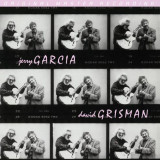
Unadorned with any post-production tricks or overdubs, Garcia/Grisman breathes with naturalism and presence. You will effortlessly detect the full body of the instruments, witness the woody grain textures, and get lost in the surprisingly velvety qualities of Garcia's lullaby-like singing. Our pressing also marks the first time this delightfully joyous affair has been issued in analogue form. You will never hear a better-sounding Americana-styled recording.
Pals since the mid-1960s, Garcia and Grisman bonded over their love for traditional folk and bluegrass. The two teamed up amidst what became a gold rush of top-notch productivity and creativity for Garcia. Partnering with bassist Jim Kerwin and percussionist/fiddler Joe Craven, the pair approaches every passage with innate ease, as if either musician could finish the others sentence. The affable chemistry and soothing interplay wash over a selection of songs as notable for their diversity as the way Garcia and "Dawg" turn them into the equivalent of old friends you haven't seen in years.
Exquisite melodies and jewel-shaped notes decorate the simple, convivial structures of tunes that hop, jump, skip, skitter, and bop. The atmosphere is reminiscent of the legendary gypsy-jazz exchanges between Django Reinhardt and Stephane Grappelli, and equally sharp. Swirling with Middle Eastern modality, the closing 16-minute-plus rendition of Grisman's rippling "Arabia" – complete with a section based on a Cuban fold theme - is alone enough worth the price of admission to this sensational session. But there's so much more.
The quartet delves into Celtic themes ("Two Soldiers"), jazz-grass ("Grateful Dawg"), old-world ballads ("Russian Lullaby"), and Appalachian flavours ("Walkin' Boss") with nonpareil skill and soulfulness. Garcia and Grisman's tandem picking throughout epitomize sublime. And for many listeners, the duo's revised version of the Grateful Dead staple "Friend of the Devil" ranks as the finest-ever recorded, the pace patient, the narrative vocals heartfelt, and the synchronous solos tailor-made for the enveloping progression. Better yet, it's all captured in astonishing fidelity.
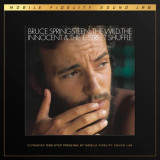
Released only eight months after his exhilarating debut, Bruce Springsteen's The Wild, the Innocent & the E Street Shuffle contains rousing dispatches from the boardwalk, the street, the beach, and the bedroom. It explodes with energy, dares to dream, teases with humour, crackles with tragedy, clings to hope, and overflows with discovery, youthfulness, and personality. It features an unforgettable cast of characters — corner boys, teenage hustlers, doomed lovers, jazz men, junk men, factory girls, fortune tellers, alley cats, pimps, escorts, and more — illuminated by vivid colour, breathtaking detail, and poetic action.
Musically, the heartfelt 1973 record is inhabited by sympathetic vignettes and cinematic arrangements steeped in rock 'n' roll, soul, jazz, and R&B. It finds the New Jersey native looking beyond the parameters of his preceding record and seeking to move on from environments he knows well (and chronicles here) by rushing headlong toward unknown territories, adventures, and people. Underpinned by the singer-guitarist's ambitious poetic enterprise and will to succeed, The Wild, the Innocent & the E Street Shuffle is the album on which Springsteen becomes the Boss.
Mastered on Mobile Fidelity's renowned mastering system, pressed at RTI on MoFi SuperVinyl, and strictly limited to 7,500 numbered copies, Mobile Fidelity's UltraDisc One-Step 180g 33RPM LP set is the definitive-sounding version of Springsteen's sophomore record. Benefitting from SuperVinyl’s nearly non-existent noise floor, superb groove definition, and dead-quiet surfaces, The Wild, the Innocent & the E Street Shuffle plays with a clarity, energy, presence, and openness that complement the expressiveness, dynamics, and scope of the seven restless songs that comprise a work Rolling Stone ranked the 345th Greatest Album of All Time.
Beyond the audiophile sonics that practically place you behind the console at 914 Sound Studios — listen to the separation between the instruments, natural decay of the notes, interplay within the widescreen soundstaging, and nothing-to-lose youthfulness of Springsteen’s voice — this reissue takes seriously this record’s influential merit by presenting it in packaging that underlines its status. Tucked in a beautiful slipcase, the LP is housed in a special foil-stamped jacket with faithful-to-the-original graphics. This reissue is made for listeners who prize sound quality and who want to engage themselves in everything involved with the invigorating set that busted Springsteen loose from the club circuit and landed him on the radio
Determined to liberate anyone within earshot and unafraid to come on strong, The Wild, the Innocent & the E Street Shuffle serves as the debut of the E Street Band — not only heard but seen for the first time by most of the public courtesy of the back-cover photograph. This is where saxophonist Clarence Clemons, organist-accordionist Danny Federici, and pianist David Sancious step out of the shadows — and drummer Vini Lopez and bassist Garry Tallent again stoke a fiery rhythmic engine that helps drive the untamed, reimagined big-band swing of “Kitty’s Back,” breathless R&B thrust of “Rosalita (Come Out Tonight),” and carefree dance steps of the funky “The E Street Shuffle.”
Of course, the main attraction remains a then-24-year-old visionary on the precipice of becoming a sensation and turning a then-bloated rock scene on its head. Recorded over three months while Springsteen and company were busy touring his debut LP, The Wild, the Innocent & the E Street Shuffle reflects the high-octane approach the vocalist embraced onstage and drifts away from the label-dictated acoustic-based frameworks of his debut. The set also witnesses Springsteen deepening his observational skills, with narratives such as the romantically tinged “4th of July, Asbury Park (Sandy)” and redemptive epic “Incident on 57th Street” mirroring changes taking place in the singer’s own life, small towns, and America at large.
A thrilling collision of memories, reflections, and composites — Sandy, Rosalita, and the latter’s parents are all based on actual people Springsteen knew, as is the community depicted in the opening track — the aptly titled The Wild, the Innocent & the E Street Shuffle resonates decades on due to its truths, authenticity, and spirit. Those characteristics — as well as the fact that many of its lengthy songs come on as the equivalent of sweaty, feverish soul revue that won’t stop until you’ve been exhausted — also explain how this now-iconic album triumphed over the reservations of industry “experts” that both demanded Springsteen re-record it and instructed deejays not to play it.
Yet there’d be no stopping a record that saw the past, present, and future, a band whose will would not be denied, and a phenomenon who was born to run. A never-ending invitation to act real cool and stay up all night, The Wild, the Innocent & the E Street Shuffle always feels alright.
Listening to The Softies has always felt like peeking into a diary, with no personal detail spared. Lyrically the band documents a lovelorn heart in every manifestation, and hope is the bright silver lining adorning each song. As the third Softies album, Holiday in Rhode Island KLP119 presents a more accessible view to the humble honesty of their emotive universe. When Holiday in Rhode Island was originally released in Sept. 2000, it had been three and a half years since The Softies previous album Winter Pageant [KLP061]. In that time Jen and Rose's introspective musings are reborn, sparkling with renewed vision, both musically and spiritually. The trademark harmonies between Jen Sbragia (All Girl Summer Fun Band) and Rose Melberg (Tiger Trap, Gaze) simply shimmer, brighter than ever before, benefiting from strong yet simple arrangements and excellent production (at a house on Galiano Island near Victoria, British Columbia) by Dave Carswell and John Collins. The beautiful surroundings and supportive production crew inspired The Softies to extend their minimalist blueprint of two delicately jangling guitars and two crystalline voices to include acoustic guitar embellishment on "Just a Day," "You and Only You;" piano and sparse drums on "Me and the Bees;" a xylophone makes subtle appearances here and there. Holiday in Rhode Island is a stunning artistic accomplishment from these two much heralded pop icons.
Introducing "Azerbaijani Gitara vol. 2" by Rəhman Məmmədli, the eagerly awaited sequel to Bongo Joe’s acclaimed debut featuring Rüstəm Quliyev. Born from the vibrant streets of Baku, Azerbaijani gitara culture has evolved into a mesmerizing fusion of indigenous traditions and global influences. From the oil boom era to Soviet rule, musicians have embraced the electric guitar as a symbol of cultural expression.
Rəhman Məmmədli, a legend in his own right, revolutionized the sound with his innovative techniques and impassioned performances. Drawing inspiration from mugham music, Məmmədli's compositions resonate with soul-stirring melodies and electrifying solos.
Join us as we honor the pioneers of Azerbaijani gitara culture while celebrating the continued evolution of this rich musical tradition. "Azerbaijani Gitara vol. 2" promises to captivate listeners with its depth, diversity, and unbridled passion, inviting you on a journey through the heart and soul of Azerbaijan's musical heritage.
Blue vinyl. Since forming in Western New York in 2016, Feeley and his musical partner Matt Cox have blurred the line between absurdism and existentialism, swirling ‘90s melodicism, new-millennium pop-punk energy, and heartfelt emo into a wry, smirking rock sound. Now, on their third album, Gangster of Love, the duo let their melting pot sonic palette go further than ever, exploring the outer edges of their musical spectrums. Produced by Sam Guaiana (Neck Deep, Bayside), Gangster of Love follows
2021’s SUP and 2018’s Tequila Sunrise and found the duo fleeing Buffalo for Los Angeles, where the push and pull between the two songwriters – the real magic at the heart of Super American – was allowed to flourish and grow in a brand-new environment
SE Records presents "Tongestaltung" by MasCon - an exhilarating dive into the heart of underground techno. With roots tracing back to Berlin's iconic Tresor club, MasCon delivers a pulsating journey reminiscent of those unforgettable nights from the beginning of this century. "Tongestaltung" is a meticulously curated blend of raw energy and hypnotic rhythms, a testament to the essence of true techno. Featuring a dynamic remix by the esteemed Sunil Sharpe, this release promises to captivate aficionados and newcomers alike. Prepare to immerse yourself in the essence of authentic techno with MasCon's "Tongestaltung."
These recordings come from the same sessions that produced 1961's My Favorite Things. This is one of the least well-known Coltrane albums, partly because it is an all blues format and partly because it was released at the end of his association with Atlantic records.
Plays The Blues features the talents of McCoy Tyner, Elvin Jones and Steve Davis. It is the beginning of his work with Tyner and Jones in quartet form. For that alone this recording would be important. Although this album is called Plays The Blues, this is by no means the only blues which Coltrane plays. There are blues elements, moods and feelings in all of his best-known recordings. Listen to "Slowtrane," "Blue Train," "Bessie's Blues" among others and one can't help but hear the blues vibe.
The original six tracks are fantastic and have that same blues vibe. They hit the listener right in the heart and soul and don't let go. All six are superb, but "Blues To Bechet," "Mr. Day," "Mr. Knight" and "Blues To Elvin" are absolute classics.
Cut at 45 RPM. Pressed on 180-gram vinyl at Quality Record Pressings, and housed in tip-on old style gatefold double pocket jackets with film lamination by Stoughton Printing.
An’archives presents the latest album by Japanese free saxophonist and vocalist Harutaka Mochizuki, Doppelgänger ga boku wo. Since the early 2000s, Harutaka has quietly, yet steadily, released a string of solo and collaborative releases that have allowed multiple perspectives on one of the most singular voices in modern music. In collaboration, he seems to prefer the duo format, and digging through his discography, you’ll find releases where he pairs with Tomoyuki Aoki (of Up-Tight), Michel Henritzi, and Hideaki Kondo. But Harutaka’s solo performances, with their lyricism and physicality, are where the magic truly happens.
If earlier albums, like Solo Document 2004 (Bishop, 2005) and Pas (no label, 2014), were raw documentations of solo alto saxophone performances, in recent years, Harutaka’s solo albums have become more complex, more mystifying. Most significantly, they’ve become more personal; there are few musicians extant whose albums feel quite so much like diaristic interventions, and Harutaka’s music now is deeply moving in its intimacy. Developing that thread of revelation, Doppelgänger ga boku wo offers a still richer exploration of many facets of Harutaka’s artistry.
The two double-tracked alto saxophone performances here feel consummate, with Harutaka shadowing himself, exploring the possibilities of the multiple self: Doppelgänger is me, indeed. The playing here is rich with affect, but still exploratory, voiced with rigour and intent. Two short pieces for keyboard and voice (about Giacometti and Genêt, respectively) are fragile miniatures, with clusters of chords, and passing phrases, wrapping around Harutaka’s untutored but lovely singing.
The ‘karaoke’ performance that closes the album, of “Woman ‘W no higeki’ yori”, speaks to the iterative aspects of Harutaka’s music. A cover of the Hiroki Yakushimaru song, the theme to Shinichirō Sawai’s 1984 film W’s Tragedy, he’s returned to this song several times, and here, his delivery perfectly captures the spirit of what Michel Henritzi, in his typically beautiful liner notes, evocatively details as “one of those sad love songs that accompany lonely sake drinkers in smoky night bars, sharing their spleen.”
Gorgeous, human, heartrending - Doppelgänger ga boku wo is Harutaka Mochizuki in element and in spirit.
This album compiles a series of sound pieces produced by the Peruvian artist Teresa Burga (Iquitos, 1933 - Lima, 2021) during the 1970s. It includes works that were part of various artistic projects, mainly sound installations, as well as pieces commissioned to musicians and inspired by her work. This album thus embodies an approach to a sound universe that has accompanied Burga's very personal work, which has transcended the limits of the artistic medium and disciplines. In the last decade, Teresa Burga's work has been present in numerous retrospectives and anthologies, as well as in various critical studies, which has cemented her standing in the art world, both in her home country and internationally. Indeed, she has come to be seen as one of the key figures of Peruvian conceptual and pop art of the 1960s and 1970s. This album includes the sound pieces Estructura Informe Corazón Structure Informe Corazón (1972) and 4 mensajes [4 Messages (1974)], composed of heart sounds and distorted television signals. It also includes the interpretation of the conceptual score Esctructura Propuesta Sonido [Structure Proposal Sound I (1978)], based on the poem "Cruz y Ficción" by Blanca Varela, in versions by the Peruvian Nicolás Wangeman, and by the Argentineans Alma Laprida and Alan Courtis. Also included is the piece Borges (2017), a commission by Burga to the Peruvian composer Jan Diego Malachowski, for the installation of the same name, here presented in a synthesizer version by Laprida and Courtis. Estructura Propuesta Sonido, by Teresa Burga is presented in vinyl format, in a limited edition of 300 copies. The publication includes a booklet with extensive notes by curator and researcher Luis Alvarado, as well as extensive visual documentation. Includes the participation of musicians Nicolás Wangeman, Lama Laprida and Alan Courtis (Reynols).
Having been based in Sussex, Philip moved to an old mill in France and never stopped writing. In 2014 he released his organic and honest solo debut album "I'm Not The Man I Used To Be". This was followed up by the critically acclaimed Mental Home Recordings is upon us. And now Philip Parfitt is set to release Dark light via Chicago/London/Paris based label Tip Top Recordings.
A significant milestone in his long accomplished career, Dark Light features 10 beautifully crafted pieces, including deep cuts 'I know I shouldn't but voices' and 'Dark light' the title track, give ample evidence of Philip's prowess as a wordsmith and musician, but also arranger and producer. Think Nick Drake and Captain Beefheart accidentally bumping into each other at a private viewing of Bright Sta
in Heaven, you won't be too far out of the crease. Philip is accompanied by a merry band of friends and luminaries including Alex Creepy Mojo, Amelie Fish, Lucie Robet (who also wrote title track Dark Light with Philip), Gilda Scouarnec, Rog Mogale (who also mastered the album), and Mark Refoy.
Dark Light is released on digital, CD, limited edition vinyl LP with 200 copies in black and 200 copies in dark purple to match the darkly beautiful artwork by Fernando Ruibal. Sleeve notes come from Matthew Spector within the included booklet with art from Joane Charlotte Senechal, photography by Sarah Baba, and design by Anna Mort.
- Double Exposure - Faaling In Love (5:22)
- Eddie Holman - All My Life (3:16)
- Bunny Sigler - Cry My Eyes Out (7:12)
- The Salsoul Orchestra - Standing And Waiting On Love (3:43)
- Instant Funk - Can You See Where I'm Coming From (4:11)
- True Example - Love Is Finally Coming My Way (6:25)
- Metropolis Ft. The Sweethearts - Here's To You (3:57)
- Loleatta Holloway - That's How Heartaches Are Made (3:04)
- Love Committee - Tired Of Being Your Fool (3:00)
- Flashlight - I Can Be (5:39)
- Moment Of Truth - Come On In (6:06)
- Loleatta Holloway - Two Sides To Every Stroy (4:28)
- First Choice - Sittin Pretty (4:22)
- Doubler Exposure - I Declare War (5:49)
Back In Stock!
a special 2x12" with some funky old school house classics !! limited re-stock !!!!