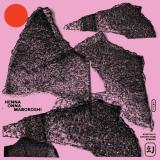
Armenian house, jazz and broken beat fusionist Henna Onna lands on wax for the first time here courtesy of Deeppa Records. Opener 'Shibuya Oiran' uses syncopated drum patterns and modal synth lines that pull from Eastern tonal references within a club framework. Kuniyuki Takahashi's fine remix extends the track with live-feel percussion and sustained chord progressions. 'Enoshima' then focuses on a steady groove with filtered melodic elements while Satoshi Fumi's remix increases rhythmic density with smartly layered drums and bass sequencing. These are sophisticated sounds for serious heads.
In the late 1980s, Klaus Wiese (Popol Vuh) deepened his connection with Tibetan culture. The result is a series of works solely dedicated to the universal purity of the Singing Bowls. Uranus, perhaps the most rigorous of these, is an intense meditation on the trans-personal sphere of the VI chackra. The music becomes like a single harmonic chant, the reflection of a constant flow of divine light, which transforms the psyche and dilates the secret passages of the heart. In the galaxy of pure sound, the accumulated overtones offer the intrepid listener the access to a prismatic, fluoriscence-rich consciousness. The ego thus becomes the sonorous composer of itself, of the vital circle flooded with beneficial acoustic vibrations. In this sense, Uranus, originally published on tape (Aquamarin Verlag/1988), also marks a parallel with the same research by Henry Wolff & Nancy Hennings or Nada Himalaya's Deuter.
US outfit Garth only left behind a small trail of records, but this obscure 1980 7" still carries the peculiar charm of disco's stranger back rooms. Recorded between New York and Los Angeles across the late 70s, 'Special Part Of My Life' opens in warm, soulful territory through Henrietta Pam Garth's soft vocal glide, before J. Albert Garth gradually enters the frame and pushes the track somewhere more feverish and floor-facing. There's a lovely looseness to it all: the groove is slightly frayed at the edges in that very particular pre-digital way. On the flip, 'The Groove' heads somewhere far murkier, featuring wiggling synth effects and huge hovering atmospherics drifting over the top of the beat that gives the whole thing this faintly eerie quality which, honestly, makes it all the better.
Brutkho strikes back on Goldmin Music with his very first vinyl release. A first physical release is always something special and exciting, So of course, it had to be a very personal and deeply touching package of music. Horvath Tamas alias Brutkho is actually one of the artists we feel since the first listen of his music. This hungarian producer has the power to play with the unexpected, to build captivating structures without losing sight of the essential simplicity this music needs."Now & then", his first ep on Goldmin Music and "Magic 32" on the compilation were already authentic demonstrations of this guy's assertive personality and aspirations but he definitely pushed the process further on this record.
Gabriella and Coleman are two massive deep-techno stompers focused on the atmosphere, the texture, the immersion which will play with your senses from the beginning to the end and fool your previous certainties without any doubt.Tel-Aviv based producers Deep'a & Biri who recently joined Derrick May's Transmat agency and who deliver some of the finest dub techno cuts of today catched the original track delicious pianos and dropped them into their sumptuous cinetic industrial groove.French producer Jan Hendez drives it into a pure rhythmic and organic piece of music unbound by usual genre limits. Menacing, very cold yet still deep and sexy remix that reminds both his first releases and his newer strictly atmospheric and mental approach.That's exactly the point with this record. It's a meeting of spontaneous artists who never stop their musical research, who don't mind about fleeting trends and who push boundaries further on every single track they do.
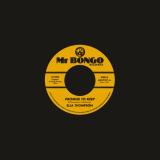
Mr Bongo are thrilled to have one of the leading lights in contemporary soul joining the label. Melbourne-based vocalist, musician, and songwriter Ella Thompson is an artist whose name is being championed by some of the best in the business. She’s been building a reputation as one to watch, with two standout releases on Hopestreet Recordings, Domino EP in 2023 and Ripple On The Wing LP in 2024, alongside a heavy touring schedule and a stacked list of support slots and collaborations.
For this new 7” single, Ella collaborates with a selection of artists at the forefront of Naarm/Melbourne’s soulful DIY community. Featuring members of Surprise Chef and Karate Boogaloo, Liam McGorry from Temporary Blessings (College Of Knowledge) joins Ella as co-writer and co-producer, with go-to Melbourne engineer Henry Jenkins also producing and recording the track.
Bridging the worlds of classic and contemporary soul, Ella’s songwriting is drenched in emotion and personal experience. With a timeless feel that is hard to tie to any particular period, she has crafted a sound that instantly hits deep. It’s warm, tasteful and distinctly Ella. That talent has also seen her tour with Mark Ronson, and support other contemporary greats like Jalen Ngonda, Lee Fields, and Thee Sacred Souls.
‘Promise To Keep’ is the first taste of Ella’s new material on this 7” single. An irrepressible upbeat groover that echoes mid-to-late-sixties vocal groups. That influence though never overpowers Ella’s own unique creative voice or distinct sense of self. She draws from it, but the colour is all her own. The song tells a story of being carried by the current that keeps us moving, giving us courage. A commitment to oneself that speaks to action shaped by vision, and the pull of following what feels correct even when the distance is far.
The flip side finds Ella in a different mood. ‘Change Of Heart’ is a heavy sweet-soul ballad. Rich in drama, Ella’s falsetto vocals build to a stunning climax in the final section, with triumphant horns that signal the release of letting go. The lyrics reflect on temporality and impermanence, and the way moments can be missed or arrive with synchronicity. It’s that bittersweet paradox of triumph and sadness, where everything contains its opposite: absence and presence, innocence and experience. The song is underpinned by a brooding production quality and atmospheric, beat-heavy flavour that Surprise Chef and cinematic soul fans will relish.
Mixed by Wayne Gordon (Daptone, Womack Sisters), ‘Promise to Keep’ and ‘Change of Heart’ are a glimpse of things to come from Ella. Keep an eye open for more new music incoming from this phenomenal artist at the top of her game.
Field Records proudly presents the first complete vinyl edition of Monolake’s seminal excursion into experimental dub techno, Hongkong. Originally released on the now-classic Chain Reaction label in 1997, this collection of early singles by Robert Henke and Gerhard Behles has gone on to become a vital listening experience in its own right - a genre classic alongside the other groundbreaking works from the likes of Porter Ricks and Vladislav Delay.
The tracks which make up Hongkong were made while Henke and Behles studied computer science and immersed themselves in Berlin’s techno scene. Their early forays into computer-based music production were enabled by the use of the Max/MSP programming environment, forming a backdrop to the landmark work they would undertake in developing the Ableton Live DAW. Henke and Behles travelled to Hong Kong in 1996 to attend the annual International Computer Music Conference, and while there recorded extensive field recordings. These recordings became the glue that pieced together their collaborative tracks into a fluid listening experience for a CD-compilation at Chain Reaction’s request.
While absolutely rooted in the embryonic sound of European dub techno, Monolake’s early work possesses a back room, headphone-ready demeanour which lends itself to the album listening experience. In the cascade of rhythms created by precision engineered delays and subliminal, expansive spatial world building occurring throughout Hongkong, the stage is set for a full and thorough immersion. Before the Monolake sound progressed into a more pointillist form of computer music as Henke’s solo project, Hongkong presented a gritty, grainy sonic still tied in some way to the traditional methods of techno production, even as the artists’ ideas were sending the sequencing and arranging in exciting new directions.
Remastered and presented for the first time as a complete double 12” package, this is the definitive edition of an essential work in the evolution of experimental techno. As Henke himself explains, “twenty-five years later, this record still holds immense value to me in many ways.”
Remastered from the original recordings and now presented on a 45rpm 2 LP deluxe audiophile edition, this is first time the complete 7-track album has been available on vinyl. 'In My Own Sweet Way', recorded during a month- long European tour in 1987, captures Woody Shaw in peak form playing with a spirit and a sense of adventure that identify him as a jazz giant. Woody calls the trumpet "the prince of all the horns". Woody is the king of all the trumpet players.
Nobody around plays with such a big, round, ravishing sound - a sound which could easily fool you into thinking that you are listening to a flugelhorn. Woody's musical asociates on this album are Alex Deutsch, a young drummer from Austria who has worked in Europe with many American jazz stars; Neil Swainson, a highly gifted bassist from Toronto who has worked with Pat La Barbera and Peter Leitch but is perhaps best known for his superb collaboration with George Shearing; and Fred Henke , a pianist from Montreal whose credits include backing Clifford Jordan, Steve Grossman and Junior Cook
Five Special were a five-man harmony vocal group all from Detroit, formed during 1975. Founding members Mike Pattillo of ‘The Explosions’ and Steve Harris of the group ‘Trouble’ both unhappy with their then situations decided to unite to form their own group. They were soon to be joined by Zeke Stanley of “Deep Velvet”. As a threesome, the sound they created was fantastic but they all agreed a five-man group with five potential lead singers was the way forward.
It was around this time that Mike Pattillo’s lifelong neighbour Ron Banks (of The Dramatics’) introduced the guys to Charles “Chuck” Underwood. Chuck had been involved in the music business from the early 60’s as a show promotor, one of many acts he promoted was The Dramatics. Chuck had known the group from their earliest days and later became their road manager. After a failed attempt to buy the Dramatics contracts from Groovesville Music, Chuck pressed ahead with his plans to form T.E.A.I Record Corporation (T.E.A.I being an abbreviation for “Tellin’ Everybody About It”) with Ron Banks joining the label in an executive role only. This young and aspiring record company sprung into production during 1974 with initial releases on a local artist’s Renee Williams “Special To Me/Are You My Brother”, followed by ‘The Gaslight’ “Just Because Of You/It’s Just Like Magic” in 1975.
Now under the auspice of Chuck, Mike, Steve and Zeke were introduced to Greg Finley formerly of the ‘Innovations’. Now four, the quest for a fifth member continued. After months of disappointing auditions, Ron Banks decide it was time for his younger brother Bryan to embark on a professional career after initially resisting due to him being a 16-year-old school boy. After many daily rehearsals in each other’s respective basements until Bryan’s graduation the full and dynamic sound of these five young men was finally honed. Still nameless, it was Steve Harris that came up with the group’s name ‘Five Special’ stating that these five young men were “very special and unique entertainers, with each member being a complete show in himself” with Bryan on lead they sometimes sounded like “The Dramatics” with Mike they sometimes sounded like “The Temptations” high comparisons indeed.
Five Special’s first recording for T.E.A.I was the 1976 joyously uplifting dancer “The More I Get To Know You” a Jimmy Roach and Marcella Henderson composition featuring Bryan on lead, released as a part I and part II deemed to be a more disc-jockey friendly practice at the time. The record was popular with radio stations throughout the Detroit metropolis and Chuck went on to precure a deal with Polygram which resulted in a release on their nationally distributed Mercury label. A second Five Special release followed in 1977, the Jimmy Roach penned mellifluous “(Let’s Stop Making) Small Talk” backed with the Ron Banks/Paul Clark penned psychedelic soul styled “Oh, Oh (Look What We’ve Done)” with Greg Finley and Zeke Stanley exchanging tenor and baritone parts throughout.
Through our ongoing working relationship with T.E.A.I we have gained access to some previously unissued material on Five Special. From the tapes we have taken “The More I Get To Know You” in its 5:50 minutes entirety backed with the previously unissued mid-tempo delight “You Got To Be The One That I Love” with interchanging leads from Bryan and Steve. The second b-side track is the psychedelic soul “Oh, Oh (Look What We’ve Done)” with interchanging leads between Greg and Zeke. Three songs, three different styles all of the highest quality, with more to come from Five Special, so watch this space!
Curated by Brian d'Souza (aka Auntie Flo), Plants Can Dance is a forthcoming new compilation bringing together a global community of artists, exploring the creative possibilities of biosonification - transforming signals from plants, ecosystems and the natural world into sound. Out June 26th, the project marks the culmination of several years of d'Souza’s work across music, ecology and technology.
The album arrives at a time when more artists are turning toward nature as both subject and collaborator, such as Brian Eno’s Earth Percent, which formally recognises “Nature” as an artist. Plants Can Dance sits within a wider cultural shift, which is redefining the relationship between sound and the living world.
The project builds on several years of work by d'Souza, whose Plants Can Dance events have taken place across the UK, Europe, India and Africa, appearing in institutions including the V&A, Tate and the Design Museum. What began as a series of intimate gatherings has since evolved into a global platform, reflecting a growing appetite for work that reconnects music with the natural world.
The compilation features contributions from leading practitioners including Modern Biology (Tarun Nayar) in collaboration with saxophonist Zekarias Musele Thompson, OMMA (Olga Maximovam founder of Playtronica), Jason Singh, Dr Helen Anahita Wilson, Justin Wiggan in collaboration with celebrated Norwegian jazz musician Arve Henriksen, Lamine Touré, Bit Marten and Balam, alongside new work from d'Souza himself. Using a range of tools - from commercially available devices to bespoke modular systems - artists translate electrical activity, environmental data and organic processes into musical material.
The processes behind each piece differ - from interpreting plant biodata to translating wind patterns into compositional structures - and the results are as varied as they are compelling. The record spans ambient, jazz, electronica and modern classical, yet all pieces are unified by a shared intent: to reimagine music as a space of collaboration between human and more-than-human worlds.
At the core of Plants Can Dance is a question about how we define music, and how we choose to listen. Traditional musical forms, with their fixed tempos and predictable structures, give way here to something more fluid and less easily controlled. The listener is invited to surrender expectation and engage with sound as an evolving environment rather than a linear narrative. In this context, the compositions function as what d'Souza describes as “acoustic ecologies” - sonic systems shaped by biological, environmental and elemental forces unfolding in real time.
Accompanying the release is a printed zine offering reflections from each artist, and deeper insight into the ideas and debates surrounding this practice. Rather than presenting definitive answers, Plants Can Dance positions itself as an artistic exploration grounded in curiosity, experimentation and critical thought.
Ultimately, Plants Can Dance is less concerned with proving whether plants “make music” than with changing how we listen. By inviting audiences to engage with sound shaped by non-humans, it opens up new ways of perceiving the environments we inhabit - not as passive backdrops, but as active, dynamic participants in a shared ecological network. In doing so, it offers a quietly radical proposition: that by listening differently, we might begin to relate to the natural world differently too.
Continuing its faithful documentation of the early years of Monolake, Field Records proudly present the first-ever vinyl pressing of seminal 1999 album Interstate. In a kaleidoscopic lattice of micro-rhythms and exquisitely dynamic textural work, Robert Henke and Gerhard Behles fully collaborated for the final time on this record — and created an electronica landmark in the process.
Monolake's evolution from their earlier dub-techno-tinted works saw their exploration of Max/MSP go further out. The duo yielded greater complexity in the behaviour of their sound palette to achieve an organismic quality that remains an enduring influence on so many strands of experimental electronic music today. Interstate is a vivid record that builds up eight different ecosystems of sound and subtly threads elegant grooves through their root structures.
There's a house-like undulation to the low-end driving 'Tangent-I' and 'Tangent-II', but the infinitesimally detailed layers of sound on top swoon from techno synth shimmers to trickling waters, snaking delay trails and pin prick percussion. You can hear the unmistakable, snappy rhythmic thrust of drum & bass driving 'Ginza', but here it's used as an engine for the crispest array of designer percussion and dub-soaked synth chirrups. Across every track, Henke and Behles demonstrate a potent combination, both groovily instinctive and eternally fascinating to try and pick apart.
After Interstate, Behles departed to focus entirely on the development of Ableton Live and Henke steered Monolake towards a leaner — but no less pioneering — sound. Every Monolake record has its own unique context and sound, and the circumstances of Interstate could never be repeated. Capturing the leaps in progress that were being made in digital music production at the end of the millennium, it's an information-rich document of a moment in time that still sounds wildly futuristic 27 years later.
New album by FLOCKS, the duo of drone specialist WERNER DURAND and percussionist ULI HOHMANN. Musical landscapes that move between traditional as well as experimental sounds with influences from Krautrock and JON HASSELL's "fourth world" aesthetics.
WERNER DURAND has made himself a name with various projects with Dhrupad singer AMELIA CHRISTIANSEN, DAVID CHRISTER HENNIX, as the co-founder of THE 13th TRIBE, ARMCHAIR TRAVELLER and TONALIENS (with ROBIN HAYWARD and HILARY JEFFERY) plus numerous solo albums, released on labels like Black Truffle, Unseen Worlds or Edition Telemark. Having studied saxophone as well as Indian / Persian flutes, the Berlin based DURAND is a highly reputated protagonist in the drone scene, famous for his self-built wind instruments like buzz-clarinets or his PVC neys & horns.
His partner in FLOCKS (and longtime personal friend) is ULI HOHMANN whose early encounters with music from Asia, India and Africa led to studies with the Ghanaian master drummer MUSTAPHA TETTEY ADDY and later Tombak and Daf with NEMAD DARMAN (Iran). HOHMANN played in a couple of projects that explored the language of classical Persian music, and started building his own stringed instruments (being an educated carpenter). In 2014 he joined DURAND and AMELIA CUNI for the album "Clearing", and 2018 DURAND and HOHMANN decided to con- tinue as a duo: FLOCKS was born.
On “Lagoon”, the duo further explores the aesthetics it has crafted on its selftitled debut (2023, on the now defunct ZEHRA imprint): DURAND and HOHMANN shape drone-y soundscapes based on their self-built wind- & stringed instruments, Persian percussion and subtle electronics, drawing ad- ditional inspiration from Krautrock (listen to the irresistible, hypnotique, ever-changing rhythmic pattern of the title track) as well as JON
BBC and Parliamentary Jazz Awards winner Tony Kofi 's ANOTHER KIND OF SOUL traces the explosive music of Cannonball Adderley from his first session as leader in 1955 through his work with Miles Davis to the soul-jazz of the 1960's. Recorded live at Luton's Bear Club in 2019, it also features Andy Davies on trumpet, pianist Alex Webb, bassist Andrew Cleyndert and Alfonso Vitale on drums. This is the distilled version of two very special nights, immortalised by Paul Riley's recordings. The album is available in limited edition 180 gm vinyl the medium of Adderley's erato best replicate the ambience of this remarkable live recording, and in digital format. The album is not called A Portrait of Cannonball as there is already one bearing that name by the great man himself. It is however, without a doubt,
Another Kind of Soul by Tony Kofi.
Kofi has performed with the World Saxophone Quartet, Clifford Jarvis, Courtney Pine, Donald Byrd, Dr. Lonnie Smith, Eddie Henderson, Jamaaladeen Tacuma and Ornette Coleman. The Guardian has described his improvisational skill as having "an arrestingly raw power".
For his sixth solo album, Ezéchiel Pailhès returns with a new collection of songs infused by a sunny wandering spirit.
Within each of the twelve songs on SOL is a thread of melancholic happiness that has permeated much of Pailhès’ music and songwriting. He addresses love, the passing of time, hope, lost illusions, fleeting moments of grace, the temptation of forgetting, a need to escape, and desire. All this is
insulated by understated orchestrations that blend acoustic and electronic instrumentation with deft confidence.
The Portuguese and Brazilian concept of saudade—a form of melancholic longing and nostalgia— pervades, thanks in part to Pailhès decision to record the album in Rio de Janiero and to reinterpret some of the finest works of Música Popular Brasileira (MPB). In particular, he revisits a handful of
lesser known classics from the mid-century samba and bossa nova era—originally written or performed by talents including Vinícius de Moraes, João Gilberto, Tom Zé, Dorival Caymmi, João Donato, Os Tincoãs, and Ataulfo Alves.
The shift from Brazilian Portuguese to French and the decision to adapt rather than perform a straightforward cover versions, allows Pailhès to invent a form of prosody and euphony (the musicality and harmonious combination of words) that feels vibrant and unlike anything else in today’s French
chanson landscape.
“Some lyrics are simple translations from Portuguese, in what I’d call an expanded version. For others, I started from a single word or a single phrase and embroidered an entirely new text that carried me elsewhere,” explains Pailhès. “I allowed myself great interpretive freedom, while preserving the humanist dimension of the original songs. I’ve always been deeply moved by the way Brazilians transfigure reality through heightened emotion. I love this visceral and spontaneous country, which always seems to live through emotion. And above all, I love its music both popular and unifying,
bringing together all social classes. In that sense, it’s very political music, but even more so utopian, made by the people and for the people.”
On this new album, however, the French artist was keen to avoid cliché. Each song is therefore built around a carefully balanced interplay between Pailhès’ piano and synthesizers, alongside restrained arrangements of percussion, brass, bass, and cavaquinho (a small four-string plucked guitar). These parts were recorded in Rio de Janeiro with two musicians who regularly perform alongside the legendary Caetano Veloso—Kainã Do Jêje and Alberto Continentino—joined by Thomas Harres, Antônio Neves, Eduardo Neves, and Gabriel Loddo.
Since the 1960s, France and Brazil have shared a long-standing cultural and musical relationship. Some Brazilian artists, most famously Gilberto Gil, took refuge in France during the dictatorship years (1964–1985). But above all, French chanson quickly fell in love with the richness and ingenuity of
bossa nova and samba, translating and reinventing them in the language of Molière. Throughout the 1960s and 1970s, albums and hits by Henri Salvador, Georges Moustaki, Pierre Barouh, Pierre Vassiliu, and Claude Nougaro all drew from the MPB repertoire.
Fifty years later, with SOL, Ezéchiel Pailhès reinvents this rich Franco-Brazilian musical legacy, bringing to it a personality and modernity that stand confidently alongside those of his forbears.
DJ Support: &ME, Adam Port, Oliver El-Khatib (OVO Sounds), Moblack, Antdot, Maxi Meraki, Sam Divine, Shimza, Benji B (BBC), SARZ, Kilimanjaro, Boddhi Satva, Jeremiah Asiamah (BBC), The Pete Tong (BBC), Méle, Kid Fonque, Black Coffee, DJEFF, Kitty Amor, Enoo Napa, Fiona Kraft
Sondela Recordings returns with Sondela Selects Vol. 2, a special 12” showcasing four of the label’s most defining moments. From FKA Mash & Sio’s soulful ‘Bumblebee’ to Thakzin’s groundbreaking ‘The Magnificent Dance’, which birthed the global 3Step movement, this package is steeped in history. Henrik Schwarz’s remix of Mike Steva & Stevo Atambire’s ‘Destiny Song’ and Sammi Ferrer & Chaleee’s peak-time cut ‘Champagne’ round off a collection that cements Sondela’s role in shaping Afro-inspired electronic music.
For two decades, Gun Outfit has been a band defined less by genre than by continuity, patience, and a commitment to making music that reflects their lived experience.
Formed in Olympia, Washington in 2006 but long since rooted in Los Angeles, the group has evolved from a raw duo into a quietly formidable five-piece, their sound growing from scrappy post-punk beginnings into something spacious yet intimate, and always underpinned by an experimental edge.
On Process & Reality, Gun Outfit return with their most ambitious and immersive work to-date, a sprawling 80-minute double album shaped by time, environment, and philosophy. Recorded over the course of a single month in the late summer of 2020, on an 80-acre ranch in Pine Flat, California, while a massive forest fire burned less than ten miles away, the seeds of these songs were stark and strange.
Its title, Process & Reality, draws from the central work of philosopher Alfred North Whitehead, whose philosophy places intuition, experience, creativity, and relationality at the center of existence.
The band’s current lineup reflects both longevity and openness. Sharp and Keith remain the band’s primary architects, joined by longtime drummer Daniel Swire, multi-instrumentalist Henry Barnes, and bassist Kayla Cohen. Additional collaborators include Chris Cohen, Warren Lee, and Danny Sasaki all of whom add further depth, leaving subtle fingerprints across the album.
Musically, the album expands the band’s palette without abandoning its core sensibility. Dulcimer, autoharp, sitar, melodica, keyboards, homemade electronics, and a wide range of acoustic and electric textures appear throughout. The sound is mellow yet expansive, songs move between fragility and hefty atmospheric passages.
Influences surface obliquely rather than overtly. Elements of reggae and dub inform the production’s spatial sensibility. Echoes of long-form European jam bands coexist with sharp post-punk. British folk traditions, American country, and classic West Coast songwriting drift in and out of focus; the band is never afraid to lead or follow.
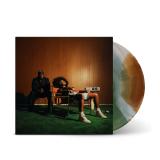
BLK ODYSSY is an Austin-based artist and producer whose boundary-pushing sound blends soul, hip-hop, rock, funk, and pop. Born in Plainfield, New Jersey, and raised in a household steeped in neo-soul, BLK began channeling his voice through music after the unjust killing of his older brother by police at age 12. That life-altering loss and the experience of growing up Black and male in 21st-century America fuels his raw, layered storytelling. His debut album, BLK VINTAGE (2021), written and produced with close collaborators, served as both a celebration and a critique of Black identity in America. It was met with critical acclaim and re-released in 2022 via Empire as BLK VINTAGE: The Reprise, featuring Mereba, Benny the Butcher, George Clinton, and Baby Rose. The project has since amassed over 100 million streams and positioned BLK ODYSSY as a standout voice in modern soul. His 2023 sophomore album, DIAMONDS & FREAKS, continued his ascent, merging surrealism and social commentary with contributions from Rapsody, KIRBY, Bootsy Collins, Cory Henry, and production from The Alchemist. NPR called BLK “a surrealist R&B auteur,” while Pitchfork praised his ability to bend genre into a cinematic sonic experience. In 2024, following a surreal Tiny Desk performance and festival appearances across Europe—including a headline set at North Sea Jazz Festival and Lollapalooza in Chicago—BLK ODYSSY launched a bold new chapter, with his third studio album, 1-800 FANTASY. The first single from the album, “WANT YOU” (co-produced by Tyler Johnson, known for his work with Harry Styles), marked a shift in tone. That was followed by “XXX” featuring Wiz Khalifa, and “STANK ROSE” featuring Joey Bada$$. Now averaging over 1M+ weekly streams, BLK ODYSSY is unleashing his fourth project, MOOD CONTROL, a ten-track album pushing alt-R&B, soul, and funk to new heights. 1xLP, pressed on Green, Brown & White 3 Color A Side B Side Vinyl.
Compiled by Rainer Trüby & Miche, this collection dives deep into the soulful, spiritual, and jazz sound of LA’s Catalyst Records. A PANORAMA special for RSD 2026, The Catalyst Files celebrates the label’s rich history and deep catalog that has been championed by so many DJs including Gilles Peterson and Patrick Forge over the years. Packaged as a 2xLP with gatefold in homage to the original Catalyst releases, liner notes from Andrew Jervis, an insert and an OBI strip. This is an essential for RSD 2026. 2xLP 180g Heavyweight Vinyl, Gatefold Sleeve, Insert, Liner notes from Andrew Jervis.
The Belgian dark wave cult heroes The Arch celebrate their 40th anniversary with this self compiled limited double vinyl album, Noisetalgia 1986–2026.
This special release features a curated selection of tracks from the early albums—many of which have never been available on vinyl and have been requested by fans for years. The band is still very active, touring Europe and releasing new music.
Jess Sah Bi is well-known as half of the legendary duo Jess Sah Bi & Peter One who brought homegrown Country-Americana to the West African masses with their smash debut Our Garden Needs Its Flowers in the mid-1980s. Touring stadiums and reaching listeners worldwide, their music has racked up millions of spins on YouTube and remains imprinted in the hearts of Ivorians of a certain age. ATFA reissued their album in 2018, garnering critical acclaim from publications including Pitchfork and Rolling Stone and reaching a new generation of listeners outside Ivory Coast (Cote d'Ivoire). Sometime in the early 90s, Die Sahbi - or Jesse, as he known to friends-became gravely ill with an unknown ailment and almost died. He visited various doctors and all kinds of religious healers and nothing helped. One day he went down to an Evangelical Christian revival in his neighborhood. They prayed over him and he was delivered. He says, "Their prayers helped chase out whatever demons and unhealthy spirits were inside me. After that my illness went away. When I went to the United States a few months later on an exchange program I wanted to make music to thank God because I was saved." He recorded an album of music praising God in order to honor a promise he made to himself at the depths of his desperation in the hospital. The album Jesus-Christ Ne Deçoit Pas Jesus Christ Does Not Let Us Down came out in 1991 and sold around 3000 cassettes in Ivory Coast. The master tape was lost along the way so the recording has never been on digital platforms until now. Jesse didn't have much time to record while visiting South Carolina, hence the relatively short album, 6 songs including two reprises for filler. A local pastor connected him with a studio and some American musicians (Robert Fortner and Gary Davis) to help. They added acoustic guitar, percussion and keyboard accompaniment to Jesse's soaring French and Gouro vocals, harmonica and finger-picked acoustic. The resulting recording is deeply soothing and contemplative music that perfectly compliments the songs already embraced by millions. But he had to find the rest of the studio expenses-$600 total-which he secured drawing cartoons for UNICEF. Jesse is Ivory Coast's first political cartoonist, a vocation for which he was widely celebrated at the time. It also made him a few enemies which lead to him leaving the country permanently a few years later. Jesus-Christ Ne Deçoit Pas is Jess Sah Bi's first and only gospel album. Fortunately, fans responded with enthusiasm: widespread radio airplay and concerts followed, along with a growing solo profile in the country. The first big gospel artists in Ivory Coast were the duo Mathieu et Constance, who emerged in 1989. There was a bigger gospel music movement in English-speaking counties like Ghana and Nigeria (Christians make up roughly 40% of the population in Ivory Coast, slightly less than Muslims). Jesse didn't have any intention of working in Christian music but he realized, "You don't make music to make money-you want to send a message." In the years since Jesus-Christ's release, gospel music in Ivory Coast has grown to become a key part of music culture in the country. Spiritual music appears in community actives across the public and private spectrum from religious gatherings and parties to television broadcasts and music festivals. And, as it has evolved and indigenized locally, gospel music has picked up elements of traditional Ivorian music, reggae and soul. The album ultimately precipitated the demise of the duo, who were soon separated geographically as Peter One relocated to Nashville. He went on to become a nurse and release a successful solo album on Verve following the ATFA collaboration. Nowadays Jesse lives in the Bay Area and continues to record and perform music wherever and whenever he has the chance. He is publishing a new book of humorous cartoons in 2025 and his most recent album Never Give Up came out in 2020
Hekt's debut album Forever is released 1st May 2026 on Numbers, with the first single "Someday" featuring Valeria Litvakov out now.
Made with his friends Henriette Motzfeldt & Catharina Stoltenberg (solo and together as Smerz), Copenhagen-based composer/producer Fine Glindvad (who records as Fine), and Valeria Litvakov, Forever is built around juxtaposition: pop and bass brushing shoulders with dopamine fueled EDM. The record is a funhouse of mirrors where polystyrene arpeggios skitter underneath uplifting chords.
As Hekt describes the record: "Forever is desire and digital synthesis, car rides and lingering perfume. It’s missing someone who was never really there, holding on to something you didn’t want in the first place. The songs you hear when you’re falling in love on the dancefloor, and the songs you hear when you open your eyes and realize it’s just you alone with the DJ, the last one to leave. Songs to make out and break up to. A party so good you get depressed it can’t last forever."
Forever is a continuation of Hekt's work exploring the emotional core of pop music. "Someday" is the soundtrack to a hundred imagined futures with strangers in the club, as pristine arps and heartswelling chords skitter under Valeria Litvakov's ruminations, both lovestruck and terrified. Smerz add a level of fantastic to the slanted otherworldly pop of "Up in the Air, So" and "Forever." On both tracks, the melodies are squishy and impressionistic, the sound of all those memories we make in dance floors, taxis home, and in the blurry morning sunshine as we adjust to reality.
And while guest vocalists abound on Forever, Hekt also takes a turn at the mic himself. On "Without You" he shakes up a perfectly mixed cocktail of melancholy and beauty. And on "Promise" his voice is turned into another melodic accent against the fragile IDM sound design. Elsewhere he turns up the aggro. Dueting with Catharina Stoltenberg on Boys Noize's secret weapon, "Anytime Anywhere," the two trade bars across a compressed field of static and feedback while little hints of sub and wiry synths circle the edge of the stereo.
Hekt's music has always attempted to redefine what club music can and might be. This reimagining of the very basic building blocks of the dance floor is felt across Forever where he leans into the emotions of 2010s EDM. "What I loved about hardstyle and jumpstyle was the emotional intensity that kind of music can bring if you’re in the right setting. And I think that is what has stuck with me from EDM too. Emotional intensity," he explains. "It’s just been the soundtrack to some of the most fun moments in my life." On "But I Can't Really Show You," he compresses the EDM-era into 3-minutes. Vocal catharsis, dubstep womp, and soaring chords make it sound like the entirety of Tomorrowland being processed through MAX/MSP. This Skrillex-meets-Calvin Harris colossus is designed to destroy every sub woofer as it pulls on every last heart string.
And then there are the straight-up club stompers. "Baby" is UK club music reimagined with the steely lines of Danish modernism - think DJ Q going b2b with Errorsmith. It has a bassline made out of flubber with a vocal chopped beyond recognition as it bounces across chromatic synth lines. Even when he strips things down on the slinky garage-esque "Big Things," there are still unexpected twists and turns. The melody sounds like an Ibiza House compilation played in reverse, alongside drums that swing in and out of psilocybin bleeps and bloops. On other tracks like "Dream" and "You Won't Believe," the tropes of dance musics past, present, and future are dissolved in baths of synthesis and polished sound design.
Forever is a record where club music and Scandinavian EDM seamlessly mixes into avant-garde pop. Hekt has crafted singular and unclassifiable love songs alongside effortless bangers, making an ode to those eternal dance floor moments where time stops and you start hoping for something big.
"Wired" ist ein harter Neustart für Basement. Es markiert das erste Album der britischen Band seit acht Jahren, eine Wiedervereinigung mit ihrem ursprünglichen Label Run For Cover Records und eine Rückkehr zu jener ungebändigten Leidenschaft und kreativen Intuition, die schon immer ihr bestes Material ausgezeichnet hat. Seit ihrer Gründung im Jahr 2009 besteht Basement aus denselben fünf Freunden - Sänger Andrew Fisher, den Gitarristen Alex Henery und Ronan Crix, Bassist Duncan Stewart und Schlagzeuger James Fisher - und derselben alchemischen Verbundenheit. Das Einzige, was sich in den letzten Jahren verändert hat, ist ihr erneuertes Gefühl von Zielstrebigkeit. Und das macht ihr neues Album deutlich hörbar. "Wired" ist das dynamischste, mutigste und inspirierteste Werk, das Basement je geschaffen haben, und bewahrt zugleich die zeitlosen Grundlagen ihres einzigartigen Sounds: grollende Gitarren, mitreißende Refrains und eindringliche emotionale Sprache. Basement sind zurück und laufen auf allen Zylindern, aber sie haben kein Interesse daran, alte Erfolge zu wiederholen. Die gesamte Band war entschlossen, dass "Wired" ihr bisher klarstes künstlerisches Statement werden musste. Der Titelsong ist das drängendste Stück ihrer Karriere - ein sicherer Live-Favorit, getragen von stechenden Gitarren, einem wuchtigen Schlagzeug und einem himmelhohen Hook, bei dem Fishers Stimme in Bestform ist. "Broken By Design" zeigt den gegenteiligen Charakter: düster, zart, bassgeführt, aber dennoch typisch Basement in seiner sofortigen Eingängigkeit und stimmungsvollen Atmosphäre. Nichts auf Wired klingt stagnierend, kein Teil wirkt unausgereift. Die Band ließ sich von einer Vielzahl abenteuerlustiger Vorbilder inspirieren (R.E.M., Interpol, Smashing Pumpkins, um nur einige zu nennen), ohne jemals wie eine dieser Bands zu klingen - und auch nicht wie eine Kopie ihrer selbst. Der Albumtitel fasst all das in einem einzigen Wort zusammen. Die texturalen Konnotationen von "Wired" - metallisch, scharf, zackig - spiegeln die stählernen Klangwelten des Albums wider. Auf konzeptioneller Ebene spricht der Titel für die unerschütterliche Zähigkeit der Band: eine analoge Band, die in einer immer digitaleren Welt erfolgreich bleibt, ohne sich auf nostalgische Bequemlichkeit zu verlassen. Fünf Freunde, die mehrere Trennungen und Neuanfänge überstanden haben und dabei als Menschen und musikalische Einheit gewachsen sind. Basement müssen ihr Schicksal akzeptieren: Sie sind einfach dafür gemacht.
With Black Koyo, Mattias De Craene enters a sound world at once intimate and vast. Born from journeys in Morocco and Brussels, the project traces the rhythms, chants, and spirits of the Gnawa tradition, revealing a quiet resonance that echoes De Craene's own search for depth and presence. Guibri, qraqueb, call-and-response chants, saxophone, loops, and electronics come together in a trance-induced dialogue - ritualistic, elemental, and dreamlike - creating a space where listening becomes immersion, tradition meets imagination, and music unfolds as a shared act of reflection and wonder.
About Mattias De Craene
Mattias De Craene's artistic path is marked by rare coherence. As a central voice in Nordmann and MDC III, he developed a physical, rock-inflected jazz language driven by propulsion, volume, and trance-like collective energy. Over time, a period of personal rupture - burnout, tinnitus, depression - shifted his focus inward. The saxophone became a breathing, textural presence, and in his solo work, he weaves saxophone, electronics, loops, and minimal forms into a cinematic, hushed world where repetition, resonance, and silence slow perception. Rooted in ambient and introspection, his music prizes attention over impact, precision over excess - a quiet intensity recognized with a nomination as Musician for the Music Industry Awards (MIA's).
About Black Koyo
Black Koyo is a Brussels-based ensemble and one of the most compelling voices of the Gnawa tradition outside Morocco. Led by maalem Hicham Bilali, the group brings guibri, qrraqueb, and call-and-response chants to life with trance-like intensity and ritual precision. Their music is both rooted and contemporary, weaving earthbound rhythms and vocal invocations into ecstatic, immersive soundscapes, creating a space where ancestral resonance meets present-day imagination.
About Jan Bang
Jan Bang is a pioneering Norwegian producer and musician, celebrated for his mastery of live sampling and his ability to merge electronics with improvisation, rhythm, and texture in real time. He mixed the album and occasionally joins live performances, bringing his signature approach to sound as co-founder of the influential Punkt Festivaland collaborator with artists such as Jon Hassell, David Sylvian, Arve Henriksen, and ECM Records' roster. As a performer and sound architect, Bang creates immersive, trance-like sonic textures where silence and sound carry equal weight. Within Mattias De Craene ftBlack Koyo, his live sampling becomes an organic instrument, weaving saxophone, electronics, and Gnawa rhythms into hypnotic, physically charged soundscapes.
Line-up & credits
Mattias De Craene - sax, electronics | Hicham Bilali - guibri, vocals, qraqueb |Ismael Akhraz - vocals, qraqueb | Marwan Abantor - vocals, qraqueb
All tracks are original gnawa traditionals played by Black Koyo and arranged by Mattias De Craene.
Album produced & recorded by Mattias De Craene in Essaouira, Morocco and hometown Ghent, Belgium 2025.
Text by Hicham Bilali.
Mixed by Jan Bang at Punkt Studio
Mastered by Lieven Van Pee
Artwork by Marina Sviridova
Design by Benoit Van Geel
Manufactured and distributed by N.E.W.S.
Executive production by W.E.R.F. records
Supported by Flemish Government, Jazzlab, nona, HA Concerts, Aubergine artist Management,
KAAP, La Bestia (Wout Van Putten) & mdcmu.sic vzw.
2026 (c) W.E.R.F. records
Gap Mangione's monumentally influential Diana In The Autumn Wind. AKA BEWITH200LP. And, without question, Be With's White Whale.
They said it could never be done. And with good reason.
We've spent the past 12 years trying to license this legendary 1968 recording from Gap and, after much work, it's finally here. Remarkably, this is the first ever vinyl reissue of Gap Mangione's Diana In The Autumn Wind, produced with the full and extensive participation of Gap. An exceedingly rare album, it's been coveted by funk, soul, jazz and hip-hop sample fiends for decades.
It's unarguably *the* most sought after album for J Dilla / Madlib sample collectors. It has also been brilliantly sampled by A Tribe Called Quest, Large Professor, Ghostface Killah, Kendrick Lamar and Talib Kweli.
But this record is so much more than a sample-spotters curio. It's solid gold throughout. Bursting with killer funky-jazz grooves and tracks adorned with warm electric piano, the release is notable for featuring some extremely significant players at the very outset of their careers; Tony Levin, at 21, whose superb playing on both acoustic and electric bass was the harmonic mainstay of the trio and Steve Gadd, at 23, one of the greatest drummers of his generation.
With acceptable copies of this holy grail changing hands for $400, to call this reissue "much-needed" underplays just how vital it is. Gap's story is told in his words alongside rare photos across a sumptuously designed 2-page insert and, to augment this deluxe edition further, its all wrapped up in a beautiful, no-expense-spared luxury tip-on sleeve, as per the original hens-teeth release. And, while we're talking packaging, just take a look at that cover - a work of art in and of itself.
The tracks are short but complex, with that extraordinary rhythm section backing the beautiful piano, organ and electric piano work of Gap. It's like the best ever library funk breaks record you never heard - but all your favourite golden age rap producers were all over it, long ago. It's a stunning blend of the vibrant, driving music of the Gap Mangione Trio coupled with the sensitive composition and superb orchestration of Gap's legendary brother, Chuck Mangione, who helmed an amalgam of seemingly disparate elements – rock, big band jazz, solo improvisation and "classical" music - into a spectacularly cohesive whole that has aged wonderfully well. As Gap himself notes in the liners, "with this group I was able to explore and add new and exciting elements from rock, Brazilian and then-current pop music."
Opener "Boy With Toys" triumphantly swaggers out the gate, all big band horns, flutes and dextrous organ work. The synthesis of everything going on is nothing short of stunning. When one wise YouTube commentator called this tune "old school superhero music", Gap agreed. Rap luminaries did, too, amongst them Talib Kweli, who rapped over DJ Scratch's chopped up intro for "Shock Body" on his Quality album back in 2002.
You've barely recovered from that incredibly affecting opener when you get hit over the head with the exquisite title-track. And now you see how two of the greatest beats of all time emerged from one single track produced nearly 50 years earlier. Unforgettably utilised by Dilla for Slum Village's heartbreakingly good "Fall In Love" and then Madlib for his "Official" beat for Dilla to rap over, on the Jaylib record. Regardless of the records it went on to spawn, this is just a staggering tune in its own right. Be beguiled by the flutes and the flutter tonguing, the counter-melody from the trombones, the soprano sax solo. All of it. Simply beautiful.
The questing organ and horn workout "Long Hair Soulful" deserves a lot more attention, overshadowed somewhat by the opening two monsters but no less fantastic. It swings, it grooves and Gadd and Levin truly cook. Up next, Gap's wonderfully percussive, mellifluously piano-heavy cover of "Yesterday" by some fellas called The Beatles. It's a subtly arresting gem. "The XIth Commandment" is damn fine, with thick, gorgeous electric piano and snappy drum work underpinning chaotic soundtracky horns. To close out the side, "St. Thomas" showcases the "fourth" member of the Gap Mangione Trio, conga drummer Dhui Mandingo. Having performed with the Trio since 1965, Dhui‘s African-based and jazz-latin-influenced style amazed listeners and its way to hear why.
Opening the B-Side, standard "You're Nobody Till Somebody Loves You" breezes along in the late-night jazz club fashion before things get super deep with the outstanding and - up to now - un-sampled "Pond With Swans". It's simply heavenly, and how its moody, melancholic intro has yet to be pilfered is anybody's guess. It oscillates between gentle, sombre movements and bombastic grooves, equally hypnotic and joyous. The rendition of "You Are My Sunshine" is yet another showcase for Gap's virtuoso playing and Gadd's mastery of the pocket. Indeed Gadd's drumming on "Free Again" is nothing short of neck-SNAPPING! Ghostface took it for not one but two "Iron's Theme" tracks across his seminal Supreme Clientele. It's got that Galt MacDermot "Coffee Cold" feel. Suuuuuper cool. The frantic "Dream On Little Dreamer" hurtles along and must've surely had the whole room absolutely swinging from the chandeliers back in Rochester in the late 60s. The album closes with the magnificent Graduate Medley, featuring memorable renditions of "Scarborough Fair", "The Sounds of Silence" and "Mrs. Robinson". The warm electric piano lines of the former were sampled by The Ummah (Dilla again!) for Tribe's "Pad & Pen" from their reappraised final album, The Love Movement, as well as by Large Professor on his much-loved "The LP (For My People)".
Under the watchful eye - and extremely attentive ears - of Gap Mangione himself, the audio for Diana In The Autumn Wind has been carefully remastered by Be With regular Simon Francis, with a few much needed tweaks here and there, according to the artist's wishes. At the prestigious Abbey Road Studios, Cicely Balston's expert skills have made sure nothing is lost in the cut whilst the records have been pressed to the highest possible standard at the always stellar Record Industry in Holland. The artwork restoration has taken place here at Be With HQ and has that drop-dead gorgeous cover artwork popping like new. Buy on sight!
Tetragon ist das zweite Album des Tenorsaxophon-Virtuosen Joe Henderson beim Label Milestone, auf
dem er seinen Sound im Post-Bop-Bereich weiterentwickelte, bevor er sich später in seiner Karriere weiter
in den Bereich des Spiritual Jazz vorwagte, begleitet von einem Weltklasse-Ensemble mit Ron Carter, Jack
DeJohnette, Kenny Barron, Louis Hayes und Don Friedman.
Diese Jazz Dispensary Top Shelf-Neuauflage von Tetragon wurde von Kevin Gray aus den originalen Analogbändern (AAA) geschnitten, bei Fidelity Record Pressing auf 180-Gramm-Vinyl gepresst und kommt in einer
Gatefold-Tip-On-Hülle.
When Henry Street & Sacred Rhythm Music join forces for a remix outing, it should be obvious the source material and resulting productions are of the utmost caliber. This record proves such a case in point: Johnny "D" DeMairo & Joe Claussell team up for two takes on Candi Staton’s 1979 disco opus 'When You Wake Up Tomorrow.’ The original, whose pedigree could be inferred simply by reading Patrick Adams’ and Jimmy Simpson’s names on the label, is a faultless dance floor cut featuring all the elements you’d expect—lavish horn and string arrangements, sparkling synthesizer accents, and plenty of hand-beat drumming—along with with Staton’s peerless voice. Johnny D’s mix starts carefully, the vocal refrain accented with auxiliary percussion until the rug is pulled out from under us, the ensuing chasm making the following thrust of the track that much more powerful. On the flip.
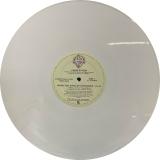
Claussell’s take starts with reinforced four-on-the-floor, along with a studio count-in, perhaps alluding back to his previous ‘It Seems To Hang On’ edit. As the track establishes itself, ample room is afforded for interplay between bass and guitar, with all the interlacing elements aggrandizing the mood with careful shots of delay and expertly-timed pivots in atmosphere. Both sides are proof of what shouldn’t need evidence: two masters of their craft assembling two wholly new mixes that far surpass the banal copy and paste, add and subtract methodology slung by the less blessed. Pressed on white vinyl, with a custom jacket to boot.
"There is a suspicion that no one really knows how to deal with the legacy of the past." — Siarhiej Kraŭčanka
Malenčyk / Lami is a double vinyl release pairing previously unpublished archival recordings of Belarusian fiddler Stanisłaŭ Malenčyk with a response to that archive by Italian sound artist Giovanni Lami.
Stanisłaŭ Malenčyk (1928–2007) was a self-taught fiddler from a small village in Western Biełaruś, born on land that was then Polish territory. He never studied music formally and never worked on a collective farm — he supported his family solely through playing, crafting his own violins and harmonicas by hand. The music he played was made for a community: weddings, christenings, a room full of people, a shared life. As life shifted toward the cities and the village dissolved, that music lost the only place it could exist. By the end of his life, Malenčyk — nearly blind — was playing for whoever happened to be there: at the local bazaar, on district buses, moving through the aisles. He simply couldn’t stay home. He had to play.
These recordings were made by ethnographer Mykoła Kozienka in Ščučyn in 1999 and have not been released until now.
Giovanni Lami approaches this archive from a distance that could hardly be greater — geographical, cultural, temporal.
Credits:
Record 1 (Side A/B) — performed by Stanisłaŭ Malenčyk,
recorded by Mykola Kozenka in Shuchyn, Grodno Region, Belarus in 1999.
Record 2 (Side C/D) — produced by Giovanni Lami.
Mastering by Siarhej Cviki and Anton Aniščanka
Archival research by Alaksej Krukoŭski and Alaksandr Baroŭski
Cover Artworks by Volha Savič
Cover design by Ihar Jukhnievič
Project curation by Anton Aniščanka
Project assistance by Alaksiej Šumakovič
Texts by Siarhei Kraŭčanka (essay, editing, translation),
Alaksej Krukoŭski and Alaksandr Baroŭski (Malenčyk biography),
Giovanni Lami (artist statement)
Die Original Vinyl-LP von 1984 wurde in einer kleinen Auflage neu aufgelegt. Die Songs wurden von Barrington Levy im Channel One Studio eingesungen, mit den Roots Radics als Backing Band, um dann von Soldgie Hamiltion, Scientist und Sylvan Morris im Harry J und Channel One Studio abgemischt zu werden, als Produzent zeichnete Henry "Junjo" Lawes verantwortlich. Das Titelstück "Prison Oval Rock" war als Single bereits 1982 erfolgreich in Jamaika erschienen und ist hier neben dem Original auch in der Dubversion zu hören, und wurde später von Collie Buddz in "Hustle" (2001) und von Mr. Vegas' "Mus Come A Road" (2008) gesampled. Als weitere klassische Reggae Riddims wurden identifiziert "Skylarking" ( Song"Good Loving"), Pressure And Slide (Song "Please Jah Jah") und "Boops" (Song "Rip & Run Off").
“duo,” a collaboration between norwegian jazz heavyweight bugge wesseltoft and german house visionary henrik schwarz, is finally being reissued. it stands as one of the finest albums in the history of club music to so beautifully fuse jazz and electronic music. deep and experimental yet irresistibly melodic, this gem of a record possesses a captivating sensibility that draws in listeners of every kind. newly remastered by kuniyuki, this long-awaited reissue comes pressed on 180g vinyl. the refreshed artwork has been created by emerging japanese artist joji nakamura
happy 15th anniversary!
„Duo“, eine Zusammenarbeit zwischen dem norwegischen Jazz-Schwergewicht Bugge Wesseltoft und dem deutschen House-Visionär Henrik Schwarz, wird endlich neu aufgelegt. Es gilt als eines der besten Alben in der Geschichte der Clubmusik, das Jazz und elektronische Musik so wunderschön miteinander verbindet. Tiefgründig und experimentell, aber dennoch unwiderstehlich melodisch, besitzt dieses Juwel von einem Album eine fesselnde Sensibilität, die Zuhörer aller Art in ihren Bann zieht. Neu gemastert von Kuniyuki, erscheint diese lang erwartete Neuauflage auf 180-Gramm-Vinyl. Das überarbeitete Artwork stammt vom aufstrebenden japanischen Künstler Joji Nakamura.
We’re very happy to announce the vinyl release of kuniyuki’s masterpiece “all these things”.
Originally it’s released on only cd in 2007. it was his 2nd album but it’s substantially his first album because the first album was a col-lection of kuniyuki’s early productions.
The first track “the guitar song” is one of our most favorite song of kuniyuki,it’s like a real good mixture of jazz, fusion, world music and electronic music.
The second track featuring african vocalist and percussionist “omar guaindefall”,we still love amazing henrik schwarz remix.
The third track “you get me” featuring our favorite singer “josee hurlock”,we’ve knew about her from the fantastic album “residue” by hefner in 2000. she is featured to the fourth track “all these things” too. we’re hoping to repress an amazing joe claussell remix.
The fifth track “flying music” featuring our good friend “alex from tokyo” as poetry reading and shuichiro sakaguchi( a popular trumpeter in tokyo) as a trumpeter. this long version was put to single cut release on 12inch.
The sixth track “the session” is a collaboration of song with henrik schwarz. they have met at mule musiq’s party in tokyo and clicked immediately.
The seventh track “touch” sounds very nostalgic african jazz or spanish fusion which is popular these days as balearic music.
The last track “rain of ocean” is a primitive african minimal deep house.this song is put to the single cut from this album(not put to the album) and we almost forgot this song but when we’re compiling the vinyl edition of album, we noticed how this song is beautiful.
Here are the collection of eight timeless and genreless music.
XKatedral Anthology Series II (An Anthology Of Slowly Evolving Timbral Music), featuring exclusive music from Kali Malone, Jessica Ekomane, Mats Erlandsson, Theodor Kentros, Wilma Hultén, and Maria W Horn.
"XKatedral Anthology II is the second instalment in a series of archival releases dedicated to presenting music by composers affiliated with XKatedral working within the realm of slowly evolving harmonic and timbral music. This double-vinyl set contains an array of pieces dating from 2018 - 2020. This collection of pieces focuses on the use of synthetic sound and algorithmic composition languages as tools for precise work within the realm of spectral exploration. In addition to this, the electronic instrumentation in many of the pieces is augmented by acoustic instruments.
The first piece on side A is Kali Malone’s Music for Low Quartet. This piece is an adaptation of the composition “Rose Wreath Crown” originally released on The Sacrificial Code in 2019. In this iteration, the music is scored for two double basses played by Vilhelm Bromander and Zach Rowden, and sine tone electronics performed by Malone herself. The recording of this piece was made at EMS in 2019.
Closing side A is Jessica Ekomane’s ‘First Light’. This computer music piece focuses exclusively on digital sound, layering razor sharp synthetic textures into an otherworldly dynamic weave. The music heard here is a reworked version of a piece originally commissioned by Semibreve in 2020.
Side B contains the work ‘Hands Melt In The Sun’ by Mats Erlandsson. This composition is built from electronically processed tuned zithers and synthetically generated tones arranged in a series of chordal inversions over a sustained fundamental tone. This music, written as a love-letter to the localized drone tradition of Stockholm in the years 2008-2012, was composed and recorded in seven days while in residence at Ställbergs Gruva in Bergslagen, in the summer of 2018.
Opening the second half of the collection is Rough Draft v.7 by Theodor Kentros. Kentros’ compositional practice usually combines acoustic and electronic source material and in this piece he molds the sound of the Buchla 200 and a collection of recorded wind instruments into a molten mass of sound. In its original form, this music was presented as a multichannel immersive work and even in the current stereo configuration it retains some of that enveloping sense of depth.
The second piece on side B, Inertia, is by Wilma Hultén, who makes her debut on record here. An exclusively synthetic piece, Inertia utilizes internal digital feedback in a sealed synthetic system to manifest a harmonic field that swells and abates throughout the length of the piece, interspersed by small gestural elements.
Closing Anthology II is Maria W Horn's work ‘Dies Irae’ for female vocal quartet, pitched glass and synthesis. ‘Dies Irae’ uses a modified form of traditional tonal harmonic language to invoke an uncanny and restless middle ground between the classical western polyphonic vocal tradition and contemporary electronic music. The version heard here is a live recording from Eric Ericssonhallen in Stockholm on May 30th 2020. Performing the piece here are the vocalists Katarina Henryson, Lisa Holmgren, Vilma Ogenblad and Paula Wegmann, as well as Maria herself on glass and electronics."
Following Parnell March’s Back Bar Grooves EP in February and November’s release of the Dust Tears (lead song from Sarah/Shaun’s debut) remixes, Edinburgh’s Hobbes Music label returns with a second EP of dream pop from husband-and-wife duo Sarah/Shaun (pronounced simply Sarah Shaun), alias Sarah and Shaun McLachlan (pronounced McLochlun), who wooed hearts and wowed critics with debut EP ‘It’s True What They Say?’ last year.
‘It’s True What They Say?’ attracted fans across the board: Artist Of The Week in The Scotsman, rapturous reviews from The Skinny and Tokyo's Ban Ban Ton Ton blog, BBC 6Music airplay courtesy of Nemone (Mary Anne Hobbs' Morning Show), more radio play from Radio Scotland's Roddy Hart & Vic Galloway, plus Simone Butler (Primal Scream) and Jim Sclavunos (Bad Seeds) via their respective Soho Radio shows, not forgetting ringing endorsements from the likes of David Holmes, Youth, Kevin Bales (Spiritualized), Brent Rademaker (Beachwood Sparks) and Julian Corrie (Franz Ferdinand).
They played gigs supporting Glasgow's huge Glasvegas, at festivals (Kendall Calling, Dunbar Music, Hidden Door), plus a slew of venues across the Scottish capital, ending the year with a trio of shows supporting Glaswegian 80s pop legends The Bluebells at Aberdeen’s Tunnels, Dunfermline’s PJ Molloys and Edinburgh’s Liquid Rooms, while The List magazine tipped them among their Ones To Watch For 2025, with journalist Fiona Shepherd suggesting they were “blending the starry-eyed pop of Sonny & Cher with the electronic experimentation of Chris & Cosey.”
Very much the companion piece to the debut EP but arriving a full twelve months later, Someone’s Ghost is emblematic of the duo’s desire not to rush things or release anything half-baked.
“I’ve always wanted to create the perfect pop record and I do really feel that we’ve achieved that with this one,” says Shaun. And he’s clearly not the only person who thinks so.
REVIEWS, FEEDBACK ETC:
"I LOVE that! Dreamy dreamy pop." ROY MOLLOY (Marvellous Crane/Alex Cameron) on BLAST RADIO, Sydney
“the Scottish music scene’s cream of the cool... buzzy drum beats, high, distant chimes, and heavenly electronics…. very ethereal.” THE SKINNY
"Listening to Sarah/Shaun is like eavesdropping on a noir dreampop, long-distance phone call between them both, across two separate sonic locations. On this stunning 4-song EP, Sarah’s voice, effortlessly mesmerising, draws you into these big beautiful and haunting passages of perfect dream-pop. All beautifully produced in a multi-layered-scape of low-fi analogue textures, epic cinematic crescendos, intense electro-pulse grooves and warped psycho-pop guitar riffs. Within the songs lurk a sense of unresolved emotions, longing and pathos. There are shades of classic Lee Hazelwood & Nancy Sinatra but also Post-Punk Electronica and Beach House. But what a unique sound they’ve created of their own. I love it" DAVID MCCLUSKEY (The Bluebells)
"Absolutely beautiful" SEAN JOHNSTON (A Love From Outer Space)
"Lovely stuff here! Total quality." MARTYN 'MASH' HENDERSON
"Ooooh. Everything the last record promised is here. Well done" GEORGE T aka George Demure (Accident Machine)
"Vince clark Era Depeche Mode in places" KEVIN BALES (Spiritualized)
"Sounds cool. Well done" PETE KEMBER (Sonic Boom, Spacemen 3)
"Glorious, it (Debbie Harry) grabs hold of you and doesn't let go." IAIN DAWSON aka RAVECHILD (Everyone Wants To Play The Hits Podcast)
SOMEONE’S GHOST
Born out of an incredibly anxious, stressful time, the songwriting process for these recordings has been something of a personal tonic for Shaun…
“There was a period when I was having nightmares,” he reveals. “Apparently I was saying there was someone in the room, I was talking to that person and Sarah was seeing all this while I was still asleep.
So, I was thinking that this was my ghost. I started writing songs because I was going through something and I was dealing with something and writing songs was a comfort. My ghost was a comfort, whether it was real or not. The idea of it was a comfort.”
“I firmly believe that everyone has someone who watches over them but all of the songs are essentially about being there for someone,” he says. “Everybody needs someone but also everyone needs to stay real and keep what you have, keep it close, never let it go. If you don’t have it, continue to tell people you’re there for them. It’s about loving and hoping people will be good to you in return.”
While Shaun took the songwriting lead on Filter Of Love and EP closer The Sound Which Stresses The Sound Of My Ears, Debbie Harry was originally instrumentally conceived by producer Jaguar Eyes, alias Ali Chisholm, later lyrically completed by Shaun, and the EP’s lead track, Anhedonia, and one of its stand-outs (much like Starbed on the debut) was conceived by Sarah, as a result of experiencing a bit of a spiritual epiphany of her own.
“When I first heard the word Anhedonia, I didn't know what it meant but when I found out I thought about it quite a bit. How sad it would be to have no enjoyment in anything,” she explains. “This song is really about my own personal beliefs. When I have been down, that's one of the things that helps me the most. It talks about trying to make amends but realising, for some things, you can't. But I think with any kind of faith comes hope… which is always a good thing.”
A record about hope, truth, honesty, a belief in something bigger than oneself… and all set to a soundtrack that wouldn’t feel out of place in a David Lynch or Eighties feature film. What more could anyone ask for, really?
There’s equally a desire to offer something universal and positive to anyone who tunes in. The labels for the 12” edition reveal the dual mantras “Who just wants to survive?” and “It’s about time to live a little”, with both messages also engraved in each record’s run-out grooves. T-shirts accompanying debut EP It’s True What They Say? bore the slogan “Kill Them With Kindness” - leading caps intentional. Shaun carries the acronym KTWK everywhere he plays, as a reminder: it’s stitched into his guitar strap. And this particular wee pebble has already caused a few ripples: people have been approaching him at gigs to acknowledge their appreciation and respect for it.
"We feel we have made an honest, open, colourful, body of work,” say the duo. “We hope to go out and play the songs with the guys (our band) and then potentially make more records. We are taking things as they come. Everything has been organic so far, after all. We are looking forward to whatever this brings."
Xerrox Vol. 3 is the eighth solo studio album by German electronic artist Alva Noto, released in 2015 as part of the ongoing Xerrox penthalogy, which began with Xerrox Vol. 1 (2007) and Xerrox Vol. 2 (2009).
Inspired by formative influences such as Andrei Tarkovsky's 1971 film Solaris, La Isla Misteriosa y el Capitán Nemo by Juan Antonio Bardem, and Henri Colpi, Carsten Nicolai exchanges austerity for cinematographic lushness in the remarkably widescreen third volume of his Xerrox series.
In line with the series' focus on "using the process of copying as a basis," the eleven compositions of this volume can be heard as copies of memories, exploring emotional data patterns that are reflected as melodic vectors and noise.
This remastered version will be reissued on NOTON in 2026
Tracklisting
---------------------------------------------------------
Medium: 1 // Side: A // Track: 1
Artist: Alva Noto
Title: Xerrox Atmosphere
Playtime: 00:01:22
Explicit Lyrics: No
ISRC: DE1N62500026
(P): 2025 NOTON
Country: Germany
This album brings together some of the finest music ever released on Black Jazz Records which in its short four-year history, between 1971 and 1975, released over 20 superlative albums which all successfully blending spiritual jazz, funk and soul jazz of the highest calibre. Similar to other independent jazz labels at the time, including Strata-East Records and Tribe Records, Black Jazz focussed on a number of key artists, most of whom first established their career during this period, and all of whom are featured here. Featuring The Awakening, Doug Carn, Walter Bishop, Chester Thompson, Kellee Patterson and more. Black Jazz Records was founded in Oakland, California, by pianist Gene Russell and percussionist Dick Schory.
The label released twenty albums between 1971 and 1975. Artists who recorded for Black Jazz Records included Cleveland Eaton (bassist for Ramsey Lewis), keyboardists Doug Carn and Chester Thompson, vocalist Kellee Patterson, saxophonist Rudolph Johnson, bassist Henry Franklin, and spiritual fusion group The Awakening. The label was distributed and financed by Ovation Records, based in Chicago. Schory founded Ovation in 1969, shortly after leaving RCA. Schory was a Grammy-nominated percussionist who was also known for his development of the stereo recording techniques including Dynagroove and RCA Victor’s Stereo Action. Schory also pioneered quadrophonic sound, and a number of Black Jazz Records were in quadrophonic and other formats such as ¼” tape and 8-track.
Black Jazz launched in 1971 with Gene Russell’s ‘New Direction’. Russell was the creative force behind the label, acting as producer, engineer and A&R and focussed on developing new solo artists. The most successful of these was Doug Carn, who released four albums featuring his wife, Jean Carn, as vocalist. She later changed her name to Jean Carne and became a successful soul singer signed to Gamble and Huff’s Philadelphia International empire.
This album brings together key tracks from Doug Carn recorded for Black Jazz Records in the 1970s.
Doug Carn is one of the most-important (and least-recognised) forces in the creation of the canon of 'deep and spiritual jazz music' - full of powerfully emotive intensity, consciously-uplifting lyricism and addictively beautiful melodies.
All of his LPs during this period have since achieved cult classic status including 'Infant Eyes', 'Adam's Apple', 'Spirit of the New Land' and 'Revelation'.
Aside from his songwriting and keyboard skills, many of the tracks here feature the stunning and powerful 5-octave range vocals of Jean Carn (later Carne), his wife at the time.
Musicians featured on this album include Alphonse Mouzon, Charles Tolliver, Henry Franklin, Michael Carvin, Walter Booker, Ronnie Laws and others. Aside from Carn’s compositions there are also striking interpretations of music by Lee Morgan, Miles Davis, John Coltrane, McCoy Tyner, Bobby Hutcherson and Wayne Shorter.
Black Jazz became one of the defining labels of independent and conscious jazz music in the 1970s alongside other important labels such as Strata-East and Tribe Records. As well as this Best of Doug Carn release, Soul Jazz Records are also releasing a Best of Black Jazz Records collection at the same time.
With Le Tact, Joseph Schiano di Lombo delivers a work of rare finesse, conceived as a posthumous conversation with photographer Henri Cartier-Bresson. Through seven meditative pieces - whose evocative titles echo the photographer's words when describing the art of creating an image - this album explores the instinctive and delicate relationship that connects music and photography to our everyday lives.
Presented for the first time on stage during the 20th anniversary of the Henri Cartier-Bresson Foundation, Le Tact draws its inspiration from the photographer’s art: a sensitive and respectful approach, capturing the essence of things without altering them. This spirit of discretion and precision is distilled by Joseph into his music, blending composition and improvisation with intuitive elegance. While Joseph composed and performed the piano, organ, synthesizer, clarinet, and guitar himself, he opened his arrangements for the first time to other musicians. Agnes Wasniewska (oboe), Barbara Misiewicz (cello), and Tomasz Baye Zietek (trumpet) bring their sonic textures, enriching this work, which is both intimate and collaborative. The album was recorded between Paris and Sopot (Poland) during a residency organized by the CNM.
The album’s title perfectly encapsulates its essence: Le Tact. This simple word, evoking both the sense of touch and artistic intuition, reflects the way Joseph composes—with respect, humility, and attention to detail. Each note seems to float lightly, as if to preserve the serenity of the moment. Le Tact transcends genre boundaries. Between ambient music and contemporary art, this album invites listeners to slow down and truly listen. It is a tribute to the beauty of the world, captured with the subtlety of a photographer and the sensitivity of a musician.
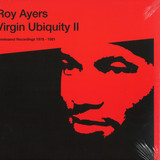
BBE Music announces the first repress of the classic Roy Ayers albums ‘Virgin Ubiquity’ 1 and 2 since 2006, on luxurious 180g vinyl with brand new sleeve notes written by Sean P. The music on 'Virgin Ubiquity' was selected and mixed down from previously unreleased multi-tracks recorded between 1976 & 1981, which Roy had in storage. It's all unmistakably Ayers, but is diverse and fresh enough to be more than a mere adjunct to one of his most productive and popular periods - testament to his and his musicians' creative abilities, as much of most revered Ayers output stems from this time. These discoveries take their place beside some illustrious company in a timeline bookended by 'Everybody Loves The Sunshine' and 'Africa, Center Of The World', several solo and Ubiquity albums, collaborations with Wayne Henderson & Fela Kuti, as well as guesting on LPs by Buster Williams and Herbie Mann. Out of print on vinyl and CD for over a decade now, BBE is delighted to re- present these groundbreaking Roy Ayers titles, neatly coinciding with the 45th anniversary of his classic album ‘Mystic Voyage’ and a UK tour to commemorate it during April 2020.
Four-time GRAMMY Award-nominated global superstar RAYE, is releasing her highly anticipated sophomore album THIS MUSIC MAY CONTAIN HOPE. The album, set in 4 “seasons” with each side of the vinyl being a different season, takes listeners on a sonic journey that begins with darkness and ends with light.
“Music is medicine. I’ve always said that, and I guess I’m in the process of making medicine for myself that I can share with the world. I want us all to say to ourselves that it’s going to be all right, and I’m going to have faith in the seeds that I’ve planted beneath the snow. I wanted to create something that is a hug or bed or soft place for that person who needs it.”
RAYE recently kicked off her massive 51-date sold-out arena tour THIS TOUR MAY CONTAIN NEW MUSIC includes arena dates across Europe and the UK — including six sold-out nights at The O2 — before heading to North America with stops at iconic venues such as Radio City Music Hall (April 15 and 16th) and the Greek Theatre (May 12 and 13th). Additionally, RAYE will be a special guest on Bruno Mars’ The Romantic Tour for 27 stadium shows across the US this summer.
A label long synonymous with raw, off-centre electronics and uncompromising club tools, Bjarki’s bbbbbb recors welcomes a producer whose approach feels cut from the same cloth, London’s Henry Greenleaf. In an era where functionality often outweighs feeling, ‘Brawn’ is a record that doesn’t court approval; it insists on impact. Built for high-pressure systems and low ceilings, it channels force not as spectacle, but as design.
Greenleaf’s catalogue to date, spanning labels such as Par Avion, YUKU, and ARTS, sketches a restless trajectory between precision and collapse. His productions operate where rhythm becomes architecture: kicks land like poured concrete, subs buckle and flex beneath shifting percussive grids, and textures are stretched until they fray at the edges. Sound is treated as a physical material, layered and stress-tested, reshaped until the familiar mutates into something tactile and strange.
Across the EP, that philosophy takes full form. A1 ‘Brawn’ sets the tone with dense, piston-like drums and tightly coiled low-end pressure, balancing brute force with meticulous spatial control. ‘Jump Up To Be’ follows with a more fractured swing, percussive shards ricocheting across a framework that feels perpetually on the verge of rupture. On the flip, ‘Gawk’ strips things back to skeletal components, carving negative space between distorted pulses and menacing, warped rhythmic figures, before ‘UNTUNTUNT’ closes the record in driving fashion, delivering a raw, functional workout that reduces the groove to its bluntest, most hypnotic form.
True to the label’s ethos, ‘Brawn’ doesn’t chase trends or smooth its edges. It folds air and pressure into motion, pares club music down to its working parts, and leaves room for spontaneous chaos to erupt within the grid; moments where structure splinters, energy misbehaves, and control gives way just enough to keep things volatile. Engineered yet unpredictable, utilitarian yet unruly, the EP embodies the tension, unpredictability, and uniqueness that have long defined bbbbbb recors.
DJ Amir takes another deep dive into the back catalogue of Detroit's legendary Strata Records to curate a 2nd volume in his Strata Records – The Sound of Detroit compilations. Whereas volume one took in the soulful edge of the Strata canon this volume, as Amir says, 'leans into the label's groovier, funkier edges whilst still celebrating its bold, avant-garde spirit.' DJ Amir's relationship to the Strata label has resulted in the release of the long lost Charles Mingus live 'Jazz in Detroit' box set released on BBE Music along with re-issues from The Lyman Woodard Organisation and re-imaginings of Strata's genre defying music by Berlin based DJ and producer collective, Jazzanova as well as remixes from Kai Alce, Wajeed, Henrik Schwarz, re.decay and DJ Amir himself and, of course, volume one of The Sound of Detroit. Featuring music from The Soulmates, Fito Foster, Keith Boone & Janice Coombs and The Contemporary Jazz Quintet amongst others, The Sound of Detroit volume 2 absolutely exemplifies the importance of Strata Records in the history of innovative Black music as well as its place in the cultural landscape of Detroit as a powerhouse city for art and music. Released by BBE Music in collaboration with 180 Proof Records as a triple vinyl LP and high res. digital download DJ Amir presents Strata – The Sound of Detroit volume 2 really is a gem of a compilation to grace any serious music head's record collection.