Wir feiern das zehnjährige Jubiläum des legendären Debütalbums des Power-Trios CAMP COPE aus Naarm/Melbourne. Diese neu remasterte High-Fidelity-Doppel-LP erscheint am 27. November über Poison City & Run For Cover, wobei Seite D drei Bonus-Covers von langjährigen Freunden der Band enthält: ANGIE McMAHON, JEFF ROSENSTOCK und BREN LUKENS & MOONMEN (Modern Baseball, Thin Lips). CAMP COPE - Georgia Maq (Songwriterin, Gesang, Klavier, Gitarre), Kelly-Dawn Hellmrich (Lead-Bassgitarre) und Sarah ,Thomo" Thompson (Schlagzeug) - wurden in Melbourne gegründet und waren während ihres zehnjährigen Bestehens als Band eine unaufhaltsame Kraft. Seit ihrer Auflösung im Jahr 2025 hat das Trio ein starkes Vermächtnis des Wandels in der Musikindustrie hinterlassen; es fordert eine gerechtere Vertretung in allen Bereichen der Unterhaltungsindustrie und setzt sich weiterhin für Live-Musik-Locations ein, die für Mitarbeiter, Fans und Musiker auf allen Ebenen internationaler Tourneen sicher vor Belästigung und Missbrauch sind. Camp Copes von der Kritik gefeiertes zweites Album ,How to Socialise & Make Friends" (2018) erhielt unglaublichen internationalen Beifall, unter anderem von NPR (,Jeder ungeschliffene Moment verblüfft mit der Ernsthaftigkeit des Erwachsenwerdens"), ,The New Yorker" (,Die Worte, so roh wie die nervöse Energie, sprudeln hervor, als hätte sie sie schon ewig in sich zurückgehalten") und ,The Guardian" (,In 20 Jahren werden vor allem junge Frauen auf sie zukommen und Camp Cope dafür danken, dass sie sie ermutigt haben, zur Gitarre zu greifen und ihre eigenen Geschichten zu erzählen"). Darauf folgte das vielschichtige Album ,Running with the Hurricane", das auf Platz 11 der ARIA-Charts und auf Platz 1 der ARIA-Vinyl-Charts debütierte und es auf zahlreiche Listen der besten Alben des Jahres schaffte, darunter bei Pitchfork, Rolling Stone und KEXP.
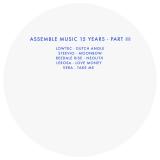
"ASSEMBLE MUSIC 15 YEARS - Part III : Founded in Lisbon in 2011, Assemble Music celebrates its 15th anniversary with a three-part vinyl compilation, bringing together fifteen artists who, in different ways, reflect the label's past, present and future. Released simultaneously in November 2026 and distributed worldwide by Clone Distribution, the three records are less a retrospective than a continuation of what Assemble has been building since the beginning: music with character, made by artists with their own language, away from trends and easy categorisation. Across fifteen years, Assemble has moved freely between house, techno, electro, dub and more experimental forms of electronic music. The catalogue has never been defined by one particular sound, but rather by a certain approach, personal, uncompromising and built to last. Part III brings together another five artists particularly close to Assemble's musical universe. Lowtec has spent decades developing one of the most distinctive languages in European house and techno, both through his own productions and his own label Workshop. His music shares something fundamental with Assemble, restraint, depth and an unwillingness to follow obvious paths and thats exactly what he delivers with "Dutch Angle" exploring the more ambient and abstract side of house. Welsh modular artist Steevio, co-founder of Freerotation, approaches electronic music through improvisation and live interaction with machines. His contribution to the compilation reflects the human, unpredictable side of electronic music that has always fascinated the label. Reedale Rise returns after becoming an important part of Assemble's recent chapter. Moving naturally between electro, techno and house, his music combines precision with an unmistakable melodic and emotional quality. With his track he explores a slightly darker path here, with deeper, more shadowy melodies revealing a different side of his distinctive sound. Lerosa's "Love Money" and Vera's "Take Me" are two very special tracks in our back catalogue, and we felt it was time to bring them back to life for our 15th anniversary. Vera was one of the first artists to collaborate with Assemble, with Lerosa joining not long after. Over the years, both have become an important part of the label's story, through releases, many shared showcases, and above all, a great friendship that has grown along the way."
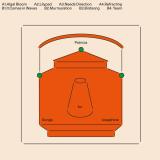
Since his 2013 debut album, Body Issues, Max Ravitz—better known to you and me as Patricia—has been zeroing in on the kernel of an idea. Across seven albums for labels like Opal Tapes, Spectral Sound/Ghostly International, and Acid Test, he’s applied his hand to a lean, focused vision of electronic music, paring away excess to lavish attention on carefully sculpted acid lines, stealthy drum programming, and warmly emotive melodies. For all their restraint, though, his tracks could never be called merely rote or efficient; even at their simplest, they’re steeped in atmosphere and shot through with layers of mystery. Now, on his first record for Balmat, he strips things down even further, revealing the ambient essence of his music.
Across eight tracks, he pours everything he has into the most minimalist music of his career. Many tracks
seem to have been made with just one synthesizer patch and some carefully applied effects—a honing of
his materials that brings the nuances of his music to the fore as never before. Elastic pitches warp and drift; fleeting harmonies bring out new dimensions in his synths’ timbres. “Murmuration” sounds almost like
Baroque music in its lithe, undulating counterpoints. “Birdsong” takes a classic choral pad and stretches it
horizon-wide. And songs like the closing “Yearn” allow the expressive dimension of his music to fill the
frame as never before.
The title Songs for Josephine pays tribute to Max’s wife. For years, she’s told Max she’d like to hear him
make an album without drums; he assembled these songs over time, always with her in mind. “Even with
my beat-driven music, I’ve gotten a lot of comments in the past about the ambient textures tucked into
those tracks, so I feel like people have been drawn to that aspect of my music for a while,” Max says. “It’s
been an interesting change of pace making a record with that side of my sound as the focal point.”
For listeners familiar with Max’s music, the effect may be uncanny: This is Patricia through and through, but heard in a whole new way.
—
Balmat is a label with a cloudy outline. Jointly shepherded by Albert Salinas and Philip Sherburne, two
friends living in Cardedeu, Catalonia, and on the Balearic island of Menorca, Balmat grew out of Lapsus Radio, a weekly show born almost ten years ago. Balmat’s mission is simple: to foster new ideas, expand upon personal obsessions, and put enveloping sounds out into the world. “Balmat” means “empty” or “void” in Catalan. But quite apart from any negative connotations, we prefer to think of it in terms of possibility: a space waiting to be filled.
Hatchback is the alias of Samuel Milton Grawe. Sam creates music that sings of the Cosmos, full of deep resonant tones, glistening arpeggios, lush pads and harmonic motifs. ‘Phaser For The Ocean, Chorus For The Moon’ is his magnum opus, a sprawling masterwork that encompasses ambient, new age and environmental music to wondrous effect. Soaked in Californian consciousness, the album is a balm like no other for these troubled times.
When I first was getting into the creative side of music making in my teens, I was heavily influenced by concept albums like ‘Quadrophenia’ and ‘The Lamb Lies Down on Broadway’, as well as epic pieces that took up an entire side of a record: Pink Floyd’s ‘Echoes’, Yes’ ‘Close To The Edge’, Klaus Schulze’s ‘Nowhere Now Here’, Miles Davis' ‘Shhh/Peaceful’ and ‘He Loved Him Madly’. In the extreme, these ideas coalesced in double albums where each side of each record is occupied by a single title - Yes’ ‘Tales From Topographic Oceans’, and Tangerine Dream’s ‘Zeit’ being primary examples. When I returned to making music after moving back to Northern California in 2020, the first piece I recorded landed around the 20-minute mark, and the idea of creating three other long pieces to realize a full album felt like a natural - if indulgent - goal. From there, each new piece followed sequentially. Four songs. My fourth album. - Sam Grawe
‘Phaser For The Ocean Chorus For The Moon’ is a pure expression, informed by a lifetime of deep listening unbound by algorithms or AI.
These are songs for the sunrise and the sunset - and every colour in between.
a 01. And The Walls Became The World All Around [18:53]
[b] 02. Phaser For The Ocean, Chorus For The Moon [21:48]
[c] 03. Other Desert Cities [20:19]
[d] 04. Friendship Fountain [18.33]
Jnbo ist der Künstlername von Henry Jenkins, einem Komponisten, Produzenten/Toningenieur und Bassisten aus Melbourne/Naarm. Jenkins ist den meisten als Produzent/Toningenieur hinter Surprise Chef, Karate Boogaloo und der für den Grammy nominierten Frollen Music Library bekannt. Als hauseigener Toningenieur für Aufnahmen und Abmischungen bei College In-House-Aufnahme- und Mix-Ingenieur bei Knowledge Records hat Jenkins die klangliche Grundlage für die instrumentale Cinematic-Soul-Bewegung von Melbourne/Naarm geschaffen. Auf ,& Friends" setzt Jenkins seine Fähigkeiten für seine eigenen brillanten Kompositionen ein. Das Album umfasst 12 introspektive Instrumentalstücke - tiefe, cineastische Odysseen, die von Romantik und Aufrichtigkeit durchdrungen sind und jenen unverkennbaren ,Freak Funk Bump" haben. Jenkins erklärt die Konzeption von ,& Friends": ,Ich wollte ein Album schreiben, auf dessen Aufnahme ich mich mit meinen Freunden freuen würde. Die Musik, die ich schrieb, hatte eine Funk-Sensibilität in Bass und Schlagzeug, kontrastiert durch einen eher cineastischen Ansatz in Bezug auf Harmonie und Melodie, mit Gitarren, die sich dazwischen schlängeln und gleiten. Ich habe versucht, diesen Kontrast zum Charakter des Albums zu machen. Ich fand, dass jeder Song die gleiche Instrumentierung und die gleichen Musiker haben sollte. Das wurde zu einer angenehmen kreativen Herausforderung: Wie viel Variation konnte ich im Laufe des Albums aus denselben acht Instrumenten herausholen? Ich wollte innerhalb dieser engen Grenzen so viel Vielfalt wie möglich finden." Jenkins hat diese Prinzipien bei den Aufnahmen zu ,& Friends" angewendet und langjährige Musikpartner wie Hudson Whitlock, Darvid Thor und Callum Riley (Karate Boogaloo), Lachlan Stuckey und Jethro Curtin (Surprise Chef), Lewis Coleman und Lena Douglas (The Cactus Channel) zusammen, um unkonventionelle Arrangements für drei Gitarren, Klavier, Streichersynthesizer, Hammondorgel, Schlagzeug und Bass zu verwirklichen, wobei Jenkins selbst den Bass und die Produktion übernahm. Das Ergebnis ist ein auffallend einzigartiges Album: Mal gibt's malerische Stimmungen, mal funkige Rhythmen, die zum Mitwippen einladen, wobei die drei Gitarren und drei Keyboards genau im Stereofeld angeordnet sind. Das Album zeigt die Einflüsse des Filmkomponisten Bernard Herrmann, des Lounge-Pioniers Les Baxter und Lamont Dozier von Motown, zusammen mit den exzentrischen Eigenheiten von JNBO. Für Fans von Surprise Chef, El Michels Affair, Menahan Street Band, Les Baxter, Bernard Herrmann.
SOLAH steps back onto the scene with her second studio album Forever, set for release on 5th June 2026.
Primarily recognised for her soulful melodies, unmistakable voice and down-to-earth artist persona, Forever holds steady onto these qualities, yet finds freedom in straying from expectations. Atmospheric and all-encompassing, the album's list of collaborators spans beyond the UK to the Netherlands, Tokyo, Sao Paulo and beyond - a reminder of drum & bass' global collective identity, and testament to the musical connections and friends in the industry that she has made over the years, since her first album King. 2x12" Gatefold Vinyl - SOLAH's Forever LP is available on sleek double vinyl packaged in a gatefold sleeve, featuring full album tracklist, lyrics and bespoke imagery.
Carly Simon’s No. 1 smash “You’re So Vain” lingers as one of the most clever and famous songs ever recorded. The subject of mass speculation ever since its release, soon after which it occupied the top spot on multiple Billboard charts for weeks, the anthem kept a captive public guessing at the identity of its smug subject for decades. The question surrounding the protagonist’s identity remained perhaps the only mystery on the otherwise sexually open and autobiographically daring No Secrets, Simon’s commercial breakthrough and ‘70s singer-songwriter staple.
Sourced from the original master tapes, pressed at Fidelity Record Pressing in California, strictly limited to 3,000 numbered copies, and housed in a Stoughton gatefold jacket, Mobile Fidelity’s 180g 45RPM 2LP set affords the platinum-certified 1972 effort the finest sonic treatment it’s received on vinyl. Helmed by Richard Perry and recorded at London’s Trident Studios — where Beatles, David Bowie, and Elton John captured landmark LPs — No Secrets touts exceptional production qualities highlighted by this restorative reissue.
Audiophiles and record collectors, take note: This is the first time No Secrets has been available on 45RPM. The wider grooves and dead-quiet surfaces pay instant dividends. Simple, elegant, and disarming, songs seemingly float amid wide, deep soundstages. Simon’s voice takes on a confident, assertive tenor that emerges with accurate imaging, balanced tonality, and palpable presence. String arrangements and backing vocals come through with similar realism.
Enhanced by an all-star cast — Simon’s then-husband James Taylor, Paul and Linda McCartney, Mick Jagger, Lowell George, Klaus Voorman, Bobby Keys, Jim Keltner, Nicky Hopkins, and Bonnie Bramlett are among the renowned musicians who lend a hand — No Secrets advances Simon’s themes of personal introspectiveness, no-holds-barred reflectiveness, and feminist-inspired boldness. She makes every moment of No Secrets worth savoring. Simon invests her all in the songs, handling beautiful ballads, sassy folk-rock numbers, and bluesy fare with calm, composure, and candor.
While acknowledging her own regrets (“You’re So Vain”) and loss (“The Carter Family”), Simon champions the highs (“The Right Thing to Do”) and pains (“His Friends Are More Than Fond of Robin”) of love in a sincere manner indicative of her maturity as both an artist and singer. The New York native distinguishes “When You Close Your Eyes” with deep-rooted spirituality, recalls childhood joys via charming sentimentality on “It Was So Easy,” and and takes ownership of her persona on a cover of Taylor’s “Night Owl.”
“We have no secrets
/We tell each other everything,” Simon sings at the record’s midpoint, encapsulating both the themes and bravura of an effort that was nominated for four Grammy Awards and saw her write or co-write every song but one. Combined with Perry’s savvy instrumental arrangements, her self-assured performances and forthright lyrics grant No Secrets an edginess and relevance immune to the ravages of time.
Mutual Rytm spawns new sub-label ‘Versus’ with debut EP from longtime techno associates Regent and Chontane. Continuing to expand its creative world, SHDW’s Mutual Rytm imprint now introduces ‘Versus’ - a new sub- label crafted for creative symbiosis between two artists across one shared release. Opening the series with authority, Regent and Chontane man the debut offering - two close friends and native Berliners who have been shaping techno for more than 15 years. Both long-standing members of the Mutual Rytm family, having released multiple times here before, the pair have always created music informed by life immersed in their local scene. Having both mutually influenced one another over the years, here they present their shared interpretation of techno with individual artistic DNA, forming a unified sound that represents the best of both worlds. Regent goes first, leaning towards functional, anthemic, dance-floor-focused techno. ‘Ephemera’ is tight, minimal but forceful; ‘Slow Burn’ has synth tension rising through the dark, next to glitchy percussion; and ‘Afterglow’ lets in more light, bringing otherworldly synths that hang above the groove and consume your focus. Chontane then explores a more musical and unconventional approach. ‘Plaxaric’ is supple, warm, and deep techno that tunnels into an abyss. ‘Grounding Factor’ is just as economical in design, but with introverted funk and evolving layers of sound. ‘Mental Lab’ spins out into complex rhythms inspired equally by IDM, jungle, and techno. It’s a mental workout as well as a physical one. Both artists add a pair of digital bonus tracks. Regent’s ‘Control Room’ and ‘Rarely Enough’ deliver elevated, hypnotic tools, before Chontane’s ‘Escore’ and ‘Outside In’ bring extroverted drum patterns along with contrasting melodic unease
Dub techno runs on ghosts and twins. The ghost is the echo that outlives the hit – the reverb tail, the delay feeding back into empty space. The twin is the dub itself: every sound shadowed by its own double, the original and its darker reflection locked into the same groove. Ghosts & Twins gathers four cuts that work that space.
This is BLACKINSTOCK's Black Gold Dub Techno with both feet on the floor – measured but muscular, weighted, no filler and no drift. The groove stays locked, the low end does the talking, and every echo earns its keep. Music for a dark room and a loud system, not a candle and a beanbag.
Curated by Kirill Matveev, who called in friends and long-time collaborators from across the MixCult circle, the record plays as four takes on one idea. Spectral Model opens with "Distancial" – a new name here, making a first outing on the MixCult family, and a fitting one to raise the ghosts. Djalo follows with "Model Dub," dubbing minimal and techno the way he has across MixCult, Souplex and Apnea: economical, hypnotic, built for the low end. On the flip, Schime – Hungarian producer Sanyi Egyed, working dub techno, deep and minimal since 2013 across Phonoda, Welter and the MixCult ranks – turns in "Phased." Closing the record, The Don Of Dubhouse is the new alias of TM Shuffle, Finnish producer and head of Vuo Records, no stranger to MixCult.
LP,180g, 2027 REISSUE - REMASTERED FROM ORIGINAL TAPES, CAREFULLY REPRODUCED ORIGINAL ART
When Alan Parker recorded the killer library soul-funk LP The Voice of Soul with session vocalist Madeline Bell in 1976, some bright spark at Themes decided to also release all of the backing tracks as a separate, and equally innocuously title LP called The Sound of Soul. Thank goodness for bright sparks.
Released as a collection of unobtrusive musical backings in various rhythmic styles', the LP's original description dryly explains these tracks have been issued without melody and are therefore particularly suitable for use behind commentary. Female vocal versions of these tracks are issued on TIM 1021 The Voice Of Soul and it is possible to edit from vocal version to instrumental version or vica versa where commentary or scene changes occur'.Madeline Bell was backed by The Rhythm Section, who were for all intents and purposes the Themes International Music house band. So what we end up with here is entire album of instrumental work-outs by a band comprised of the formidable talents of Alan Hawkshaw on keyboards, Alan Parker on guitars, Barry Morgan on drums, Les Hurdle on bass guitar and Frank Ricotti on percussion.
Without Bell's vocals these backing tracks are given all the room they need to breathe. Each one more than stands up on its own.
The Sound of Soul is a real diggers' delight and, unsurprisingly, a must-have counterpart to The Voice of Soul.
As with all ten re-issues, the audio for The Sound of Soul comes from the original analogue tapes and has been remastered for vinyl by Be With regular Simon Francis. We've taken the same care with the sleeves, handing the reproduction duties over to Richard Robinson, the current custodian of KPM's brand identity.
Handpicked by MoBlack, here are eight tracks that lended the dynamic vision and artistic stimulation for what is now a bastion of Afro House. Collected from the label's artists, friends and inspirations of past and present, "House of Mo'" comprises musical snapshots from Mimmo Falcone's journey as a DJ, producer and label head. Reverberating rhythms and grooves attached to memories made on and off dancefloors, these sonic wonders are part and parcel of the House the label built, go-to jams that speak of the spirit that binds its growing family.
Common Language is a project of the Community Library label. We started it as a way to reconnect with the ideas that drove ComLib’s inaugural releases back in 2005, uncompromising and eclectic DJ 12’s. We’ll be focused on this imprint for a while, and near-term, putting the emphasis on releases by label cofounders and our closest friends.
On CLANG02, the Middlemarch 12” EP, Solenoid transmutes his signature buoyant syncopated acid, electro, and mutant techno into moodier, reverberant territory. If you previously knew Solenoid for his restless, sophisticated Braindance-adjacent stuff, this EP is totally consistent with his long discography. Here though, he gets into a dreamier, and also bassier zone that is equally rewarding either in the innerspace immersion of headphones or in the warmth of your favorite local underground club’s sound system--lots of detail and atmosphere to sink into.
“Middlemarch” is moody deep techno-- a clatter of distant percussion encircles eerie pads and an extra-bassy, double-filtered TB303 bassline. “Ways and Means” rotates perplexing polyrhythmic patterns driven by bright, elasticchords that keep it moving (reminding me of The Martian’s stuff on Red Planet a bit). “A Winter Walk” offers a skeletal, skittering rhythm that wouldn’t be out of place next to a Livity Sound track; and the closer, “Dvv Waltz” reserves a 3/4-time experiment for the bravest / most inquisitive DJs.
Edition of 300 vinyl copies includes special full- color insert
Mastered by Dietrich Schoenemann
About Solenoid
Solenoid is the primary musical vehicle of David Chandler, a lifer underground producer, musician, and visual artist. As a lone electronic voice in the wilderness of early-90s Portland (which was at the time a grunge-saturated third backwater) he started out releasing adventurous, now- unobtainium tapes on his DIY Pharmacy label. Solenoid then became known internationally at the turn of the millennium as one of Portland’s persistent ambassadors for underground crossover electro and techno, releasing on labels like Outward Music Company, Emanate, Orac, and many others (most recently, on the Paris label Partout). He’s a real legend honestly--doggedly clocking in almost 40 years of uncompromising experimentalism with a signature sound and vision running all the way through.
-- Paul Dickow (Strategy)
Machine Affairs is an expansive dance record informed by classic hardware and deep studio collaboration, with the soulful side of Detroit’s dance music legacy serving as a key inspiration. Crafted by long-time friends Willem Mulder and Grover Duvall over an intensive two-week studio session, the project represents a new generation of artists interpreting dance music heritage with a fresh perspective.
Willem Mulder works from the raw functionality of house and pulls warmth from electronics across eras. With releases on Apron Records and Salon Recordings, he’s steadily been building a name with his soul-infused productions. Grover Duvall is a new name, but not a new story, with years spent deep in the craft of sound. Together, the two bring their distinct worlds into a shared space, united by a love of analogue hardware, dancefloor energy, and the kind of music that lives somewhere between feel and function.
The free folk/jazz sound of modern Los Angeles. Featuring a heavy bunch of musicians and vocalists including Moor Mother.
"Fearlessly Accessing the Divine Spirit From Here on Out" is the vinyl debut from pianist, composer, and producer Diego Gaeta. He has previously released projects as Club Diego and with the trio Human Error Club (whose members Mekala Session and Jesse Justice helped produce this record). He has quickly become a fixture in a number of Los Angeles musical environments, working with Lionmilk, The Pan Afrikan Peoples Arkestra, Carlos Niño, Black Nile among others. This album is a synthesis of these many LA environments, and carries chamber, jazz, ambient, and folk influences, ultimately giving it an uncategorizable feel similar to works by Arthur Verocai or David Axelrod.
Gaeta recorded the initial ideas for the album by himself after experiencing a burst of creativity during the lockdown of 2020, in the aftermath of a season of protests in Los Angeles, on a piano at his home in El Sereno. "I was constantly not in tune with myself, always awaiting outrage and tragedy in a very unstable world. However, hitting the streets in support of various ongoing pandemic community actions felt necessary and it marked a point in time that ushered in large societal changes. The weight of that era made me feel allergic to making art at the time. All of these ideas came after that period, expressing my reflections subconsciously. I remember that the ideas came in a short amount of time, and then they developed."
Once he had created the tracks as Ableton sessions, he realized the gravity and context of how he was processing his ideas so he, as he puts it, "felt like taking them outside the hands of midi and into the hands of friends." Gaeta was able to assemble his dream band, which ended up being a 9-piece ensemble, or a nonet. "I felt that at some point I was channeling the geometrical balance of that nonet...it's almost as if I had a sextet and then the three of the sextet that's not the rhythm section were doubled. It's a really dense sextet, that's how I see it."
The recording process began the following summer in June 2021 as the musicians were all adjusting to the newfound dynamic of getting tested for COVID, waiting a few days, and then meeting up to record. "We were eating Indian food, some of us were smoking, it was a nice memory, but I felt a little stressed, because I was the bandleader, and I felt the emotional weight of my music."
The title track and single, featuring vocals by Jimetta Rose, begins with a speech by Gaeta delivered when playing with Black Nile in 2019 at the Levitt Amphitheatre in MacArthur park. Gaeta provides the following account: "Even though it was in 2019, socio-political tensions and issues were at the forefront for me at that time. I wrote a speech that was intended to be critical of the US but it ended up becoming a collage inspired by different women that had messages of freedom that spoke to me the most. I quoted Nina Simone and Georgia Anne Muldrow, it wasn't something that I read but something that she said "kicking it with consciousness and style" that phrase stuck with me, so I used it in that speech. Although critical, the speech had a positive feeling to it, and it was hopeful. I gave that speech while fireworks were going off."
Moor Mother & Zeroh are found on their respective tracks, Memory Screen & Eccolo - both delivering a distinct, commanding vocal performance. Low Leaf colors the track Soft Spot with harp, a beautiful ballad nestled in the center of the album. Other players include Gregory Uhlmann on guitar, Jon Kaye on violin, Devin Daniels on alto saxophone, Caleb Buchanan on bass, Dante Luna on vibraphone, Patrick Behnke on viola, Bryan Baker on tenor saxophone/flute, and Mekala Session on drums.
"I’d like for us tonight to embody a freedom oriented life. Freedom isn’t just a dream, it’s a place we must all arrive at together, as one by one the people of the Earth help each other to be Free of power, hate, and insecurities. Let’s kick it with consciousness and style. Can y’all dig that? YEAH. I can too. So now we’d like to present to you a spiritual transmission I like to call: 'Fearlessly Accessing the Divine Spirit of Freedom From Here On Out.' YEAH" - Diego Gaeta
LP,180g, 2027 REISSUE - REMASTERED FROM ORIGINAL TAPES, CAREFULLY REPRODUCED ORIGINAL ART
Veteran library musician Alan Parker recorded with session vocalist Madeline Bell for his Themes International Music label and the result was 1976's The Voice of Soul.
The sensational uptempo dancer 'That's What Friends Are For' is probably the most well known track on the record, and is a big hit on the rare groove scene, but it is by no means an anomaly. The Voice of Soul is essentially a perfect, sophisticated soul album with heaps of swagger and sass from beginning to end.
Its once generic-sounding title is now deservedly defnitive.
And the whole LP oozes sex. It oozes sex so much that it could have soundtracked a period porn flm. Indeed, parts of it did. 'Love Is All' and 'You've Got What It Takes' both featured on the infamously banned Pretty Peaches from the same year.
As is usual with library records, The Voice of Soul was hard to get even when it was frst released. It's next to impossible now. So here's your opportunity to own what is in our opinion one of the fnest rare soul LPs of the late 70s, and a superb example of Madeline Bell's superlative vocal talents.
But that's not the whole story. As well as pitching the record as 'a varied selection of modern female vocal features which are equally suitable for background or radio programme usage', the original release notes go on to explain that 'the corresponding backing tracks are issued on TIM 1022 The Sound of Soul. Therefore it is possible to edit from vocal to instrumental version and vica versa where commentary or scene changes occur.'
So yes, all of the backing tracks from The Voice of Soul were released as The Sound of Soul, and we couldn't re-issue one without re-issuing the other.
As with all ten re-issues, the audio for The Voice of Soul comes from the original analogue tapes and has been remastered for vinyl by Be With regular Simon Francis. We've taken the same care with the sleeves, handing the reproduction duties over to Richard Robinson, the current custodian of KPM's brand identity.
Melody As Truth and Future Days Radio present ‘At the Emerald Pool’, an album by Tomo Katsurada and Jonny Nash.
Netherlands-based artists Tomo Katsurada (Ex-Kikagaku Moyo / Future Days Radio) and Jonny Nash (Melody As Truth) combine forces for an exploration into the sonic potential of the guitar duo, rooted in their experiences performing together over the last 12 months.
Friends and admirers of each other’s work for a decade, their musical collaboration began in 2024 with Katsurada asking Nash to contribute guitar to his debut EP ‘Dream Of The Egg’. Sensing the need to explore this further, they spent the following year performing together in different configurations, with Nash joining Katsurada’s trio and Katsurada in turn playing with Nash as a duo, across a wide spectrum of spaces, from churches and temples to concert halls, theatres and outdoor festivals. With new ideas developing organically out of these performances, recording new material became the next logical step. A short period of three days was set aside with a clear goal: to capture the essence of their fluid, intertwining melodies and guitar playing in a way that felt as direct and unfiltered as possible. Working from a handful of pre-existing sketches, they left ample room for experimentation to unfold within the process.
The results are presented on ‘At The Emerald Pool’, a collection of ten pieces that offer the listener a full immersion into the pair’s sound. With guitar as the primary instrument for both artists, it is no surprise that the core of the album lies here, specifically in the fluid interplay between the two players. Layers of gentle, delay-soaked fingerpicking often make it almost impossible to distinguish where one player ends and the other begins. As soloists, both Katsurada and Nash have a gift for crafting melodic lines that feel open and ascending, expressive and hopeful without becoming saccharine. Longer, more abstract pieces are counterbalanced by a series of shorter songs, with five vocal tracks appearing across the album. The decision to share vocal duties lends the record a unique quality and a strong sense of variation, bringing a wide expressive range out of a deliberately focused musical framework.
‘At The Emerald Pool’ represents the first chapter in an ongoing musical dialogue, an attempt to capture a moment of connection, openness and discovery, laying the foundation for what continues to unfold.
First Word Records proudly present ‘One 4 Detroit’; the third single from Above The Clouds (aka kidkanevil & Magic Manfred), complete with a remix by 14KT.
This 7" vinyl release follows on from last Summer's MF DOOM cover 'Arrow Root', which received strong support from the likes of Japan's DJ Koco and Philadelphia's DJ Jazzy Jeff, and their recent cover of ‘Change’ which was originally by Shadez of Brooklyn, most notably appearing on DJ Premier's 1997 mix album 'New York Reality Check 101.
One of the original First Word roster, UK Producer/DJ and all-round laptop music geek kidkanevil has developed a distinctive and progressive sound over the years, gleefully exploring the beats and bleeps of the electronic music universe to international recognition. Leeds born, sound system bred and raised on a (un)healthy diet of video games and anime, his solo work inhabits the curious space between bass frequencies and otaku culture. But as a devoted teenage backpack rap nerd, somewhere in the back of kid's mind was a lingering desire to reconnect with his first love, hip hop.
Not long after moving to Berlin he joined a studio space in graffiti plastered Kreuzberg, where he met multi instrumentalist wizard Magic Manfred; a disciple of all things boogie, disco, funk and soul. Born and raised in Berlin, and currently a touring musician for many an act, Manfred's musical map joins the dots from piano lessons at four, to starting a band with his teenage friends, leading him to his true calling - the bass - via the club vibrations of his hometown, which introduced him to the world of DJing and production, and a stint studying in the explosive London jazz scene to finalise his Jedi training.
Bonding over their mutual love of '90s hip hop, a friendship and musical kinship developed, coupled with a desire to honour past eras but push things forward, Above The Clouds was born; named after their joint favourite Primo beat, with a touch of irony regarding their basement based studio of a windowless variety.
kidkanevil explains that “after we made a bunch of piano joints it felt like time for a switch up, I had these raw drums looped and Manfred started playing this simple synth line on the Prophet - it kind of happened in an instant. This one was really a case of capture a moment and let it be. It had this cold, industrial bounce to it that really felt ‘Detroit’ somehow, so it became something of a tribute to that sound. Obviously there’s a rich musical history there that’s beyond anything we could encapsulate, but I hope the respect comes across. From Berlin to the D with love!
We felt pretty strongly that if we’re gonna nod to Detroit, we needed a remix from someone who reps there directly. I’ve been a fan of 14KT since the early 2000s beat scene, and as he’d previously released music on First Word, it made perfect sense to approach him. We asked and did he oblige!! I’m very comfortable saying we got schooled! He really blessed us with an amazing remix that brought a life and soul to what was originally a pretty stark beat, we’re super honoured to have this as our first ever remix.
‘U3P1’ (named after a synth preset so we didn’t forget!) is on the flip - this also came about pretty fast. I was thinking Ummah-era Tribe with the drums, and Manfred once again put down this super nice riff and it grew from there. It kinda felt like it needed some trumpet and it's always nice to highlight some of the amazing musicianship lurking beyond the club systems here in Berlin, so we called up Berlin based trumpeter and composer Paolo de Jesus, who blessed us with a beautiful performance and arrangement. And that was that; we hope you enjoy!”
‘One 4 Detroit / U3P1’ is released on limited 7" vinyl & digital platforms, June 12th 2026.
It’s a new day for DJ and producer Sami Yenigun, kicking off his solo label with a
Dreamcastmoe collaboration. Like the first Sami.Moe release on 1432 R, Sami.Moe 2.0 forges each artist’s sounds into club heat from club veterans. High-grade tech fuel, muscular bassline bombers, and make-em-cry house music, these four tracks herald new beginnings from old friends. A call from dingy bars, after-hours hangs and sunrise sets towards brighter days ahead.
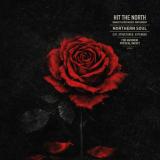
Hit the North is a DJs’ movement
Not a label. Not a revival. A discipline.
Over the years, the collective travelled across multiple states in the US and parts of the UK, digging deep into private collections, basements, garages, storage rooms and forgotten boxes.
They weren’t looking for classics.
They weren’t looking for hits.
They were looking for attempts.
Artists chasing something bigger than themselves.
Trying to sound like Motown.
Trying to sound like Detroit.
Trying to sound like the records that saved them.
Many of them dreamed — at best — of becoming a one hit wonder.
Most never got that far.
Some never crossed a state line.
Some never crossed the street at the end of their block.
Some never played outside their hometown.
Some never played at all.
What they left behind were fragments.
Raw versions.
Unfinished recordings.
Alternate takes.
Rejected mixes.
Test pressings.
Acetates passed quietly from hand to hand.
Sometimes with real credits.
Sometimes with fake ones.
Sometimes with handwritten labels leading nowhere.
Titles that didn’t match the music.
Stories that changed every time you asked.
Often, the trail simply disappeared.
What remained was intention.
Energy.
Urgency.
Hope pressed into sound.
So the collective worked on it.
They edited certain parts.
Extended others.
Cut what didn’t serve the floor.
Not to modernise.
Not to rewrite history.
But to unlock the power that was already there.
The result sounds like Northern Soul pushed to its breaking point.
Fast. Physical. Emotional.
Built for movement.
Some circulated privately.
Others were never pressed at all.
Recorded in personal studios, borrowed studios, friends’ rooms, temporary spaces.
Always outside the system.
This is not nostalgia.
This is unfinished business.
Eliza Rose joins the ‘FABRICLIVE. presents’ series with a release that reflects the breadth of her creative journey in club music culture. A DJ, vocalist and songwriter from London’s vibrant underground, she has become one of the UK’s most compelling voices, equally at home in the DJ booth, on record, and crafting music that resonates across dancefloors and charts alike.
To accompany the release, fabric presents commissioned a bespoke, hand made tapestry depicting Eliza Rose and her friends at Carnival, a celebration of community, heritage and collective joy that runs through her story and the culture she represents. Rich in texture and detail, the piece transforms a living moment into something timeless and craft led. Eliza is pictured alongside the tapestry in an iconic hot pink tracksuit, set within a council estate garden that feels instantly recognisable as a portrait of London life. Surrounded by nostalgic children’s toys, from a rocking unicorn to a plastic slide, the scene captures the everyday intimacy and character of the city’s estates, spaces where music, family and friendship intertwine.
The contrast between the ornate woven artwork and the raw familiarity of the setting creates a striking visual metaphor, bridging past and present, celebration and reality. Together, the imagery reflects the spirit of the release itself: rooted in community, shaped by lived experience and grounded in the environments that continue to inform Eliza’s creative world.
Local Sugar Diggers dive back into their closest friends' shelves for another round of sly re-edits and low-slung reworks that flip old and obscure sides into sharp new tools. Nothing overcooked, just tight surgery and a feel for locked-in grooves. A'Ola!' Is all big brassy horns and Latin-flavoured funk while 'Rio Ritmo' then cuts back with a more sunny, whimsical sound for lazy afternoons daydreaming at the park. LTF very much keeps the heat simmering after his Soviet jazz-funk excursions on BMM Records, USA The Content (L)abel and Rucksack Records with the same crate-digger mania here, all executed with a wink and a steady hand.
"I got to know visual artist, musician, and producer Guido Erfen and sound engineer, acoustic artist, and percussionist Michael Springer as part of a group of five by the name of SHM1. The members of the group organised concerts at Rhenania, a disused grain silo, where I performed with The Absurd in 1988 and 1989. The band was also featured on one of Erfen's tape releases. Erfen and Springer met when they were still at the same secondary school and soon became close friends and musical allies. With the other members of SHM they built an independent network for creating and distributing music beyond the mainstream in Cologne. Rent at Rhenania was incredibly low, allowing a recording studio to be established there.
The first traces of the Ukrainian Underground arrived at Erfen's door via a cassette tape with three bands from Kharkiv and Kyiv, the package including a long essay which detailed the rock scene in the two cities by Sergey Myasoyedow. In 1986, Myasoyedow, together with Sasha Panchenko, had founded the “Novaya Scena“ rock club in Kharkiv, presenting bands inspired by punk, the avant-garde, dadaism, and even medieval melodies. If Erfen hadn't been part of the independent mail-art scene, he wouldn't have had the chance to discover this unorthodox music. It was the summer of 1990, shortly before the Soviet Union collapsed and Ukraine became an independent state the following year.
In 1991, singer and keyboard player Soloveyka from Kharkiv arrived in Cologne and gave Erfen half a dozen cassettes with underground bands from Ukraine and a handful with bands from the Soviet Union. Intrigued by the original music of many of the acts, he visited Ukraine twice, made friends there, compiled a tape with his favourite tracks and finally succeeded in convincing Hamburg label boss Alfred Hilsberg to present underground music from Ukraine on the CD “Novaya Scena“ via his label What's So Funny About (the original home of Einstürzende Neubauten).
The album compiled 20 tracks recorded between 1986 and 1992 by 14 bands out of Kharkiv and Kyiv– music beyond the usual Perestroika records, often with jarring dissonances over grooves that fans of Captain Beefheart or The Fall would certainly enjoy.
On the other hand, there are tracks featuring flute and trumpet that seem inspired by folk, classical music, and punk. Ghostly chamber prog miniatures by Cukor Belaya Smert (lit. Sugar White Death) from Kyiv featuring, among others, the classically trained pianist and singer Svitlana Nianio (née Ochrimenko) and guitarist, visual artist, and spokesman Yewgeny "Yenia" Taran. Nianio sang in her native Ukrainian, as did two more of the bands. Today, this seems more relevant than ever, more culturally and historically significant from a Ukrainian point of view than it was even in 1993. Young Ukrainians were amazed at that time that rock music sung in their native tongue could work!
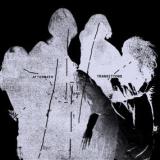
It is in the aftermath of the “Novaya Scena“ album that the music on this LP was created. About a year after the release of the CD in August 1993, Nianio and Taran came to Cologne to work on music for the dance production "Transilvania Smile" by the dance theatre ensemble Pentamonia2.
The seeds for the Traces of Ukrainian Underground in Cologne were sown. Starting in 1994, a series of informal recording sessions took place at Michael Springer’s Phanton Studio and at SHM studio in Rhenania. Together, these sessions formed the basis of the four different incarnations of the Ukraine-Cologne connection heard on STROOMS’s compilation.
Ten years ago, in a sharehouse on Chapel Street, four 20-year-olds with zero expectations wrote and recorded an EP in a single afternoon. Those six blistering minutes of music became Giddy Up. An hour later, Amyl and The Sniffers had a name, a Bandcamp upload, and the beginnings of a legacy.
Following a year of backyard gigs, playing for friends and partying across Melbourne's sticky carpet music scene, the band released their iconic second EP Big Attraction in 2017.
Now, to celebrate a decade of raw power and reckless spirit, Giddy Up/Big Attraction returns in a definitive 10th anniversary 12-inch vinyl edition — fully remastered for maximum punch.
Featuring early classics like “I’m Not A Loser” and “Stole My Pushbike,” plus enduring live favourites “Balaclava Lover Boogie” and “Westgate,” this is the sound of Amyl and The Sniffers before the world caught up — feral, funny, and unstoppable.
The LP is housed in a gatefold sleeve showcasing Chris Sutherland’s iconic 2017 band photo, alongside an exclusive new essay from Amy Taylor and a heap of never-before-seen behind-the-scenes shots from the band’s earliest days by Jamie Wdziekonski. As Amy recalls: “We recorded and wrote over the afternoon… we’d never played together before that day… it’s spontaneous, and fun and achievable in that time because to us it sounded more than good and we weren’t perfectionists and it didn’t matter.”
From DIY house shows in Melbourne to international stages, it all started here.
GALA announce Ten Years of GALA – a compilation marking a decade of independent culture
Ten Years of GALA is both an archive and a horizon: a reflection on where GALA has come from, and a signal of what lies ahead.
Founded in 2016 as a one-day gathering in South London, GALA has grown into a global point of reference for dancers, artists and collectives drawn together by a shared commitment to independence, collaboration and underground music culture. Rather than charting success through scale alone, the festival has consistently prioritised integrity, community and musical curiosity – values that underpin this release.
Spanning fifteen tracks, Ten Years of GALA unfolds as a considered journey. It opens with an intimate spoken contribution from Charlie Dark, grounding the compilation firmly in GALA’s home of Peckham before gradually expanding outward into fuller, club-focused terrain. From there, the record moves between moods and tempos, tracing a path from reflective moments into the physical language of the dancefloor.
The compilation brings together longtime friends of the festival alongside newer voices drawn into its orbit in recent years. Each artist contributes a distinct perspective, but collectively the tracks form a coherent portrait – not of a single sound, but of a shared ethos shaped over ten years of gatherings, collaborations and days spent dancing together.
Rather than a retrospective in the conventional sense, Ten Years of GALA functions as a living document. It captures fragments of past editions, scenes and relationships, while remaining firmly oriented toward the future. These are not museum pieces, but records designed to be played, shared and folded back into the spaces from which they came.
Together, the compilation holds a piece of GALA’s first decade – not as a closed chapter, but as a foundation for what comes next.
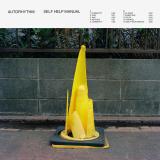
/// First track, Symmetry, debuted on BBC Radio 6 New Music Fix, 10th February: "A beautiful, beautiful album" /// I got my life back. On 17 February 2025, 1024 rays of ultra sound converged at an operation table in Bern, Switzerland, and disconnected a noisy circuit on my brain. 90% of the manifestation ceased – of a disease that I no longer wish to mention by its name. During the same period, I completed my new album: Self Help Manual. I’ve read more current research about the nameless disease than my neurologist, who despite that I didn’t follow his advice on suitable treatment, called me after the successful operation: a brave, brave man. I have composed the music in the same way as in my previous album – Songs for the Nervous System – through layers upon layers of improvisations in dialogue with my synthesizers, most of which are the same age as me. I made the majority of the songs in my studio in the remains of Old Hagalund in Solna. I edited the recordings in my bed during the waking hours of clarity at night. Some songs – NAC, Ketosis, Overkill – were recorded in the basement of my childhood home in Skutskär, in Norduppland, where I’d returned to be nurtured by my retired parents – who during a night when I couldn’t turn over in bed, or pull the blanket over me – made a list of what would happen to my belongings. To my friends who have stood out with me despite my disease, I want to state: you will not inherit me yet. On the new album, the electric bass takes on a leading role. ESG and Liquid Liquid have been important when I reinvented my baselines, limited and liberated by my poor fine motor skills. Plasma is my homage to Summertime Rolls by Jane’s Addiction, that I listened to frequently in my youth. I guess that no one will hear the resemblance. In several songs, the Fender Rhodes plays an important role, a magical instrument that I bought shortly after my diagnosis over a decade ago, and for a long time didn’t dare to touch out of respect for Herbie Hancock and Fela Kuti. A couple of songs draw inspiration from the Horn of Africa – Inner Nile and Delta. At first, subconsciously in the reverb-drenched Inner Nile, then more consciously in Delta. I’m sorry it doesn’t swing the right way, but it was my attempt to return to the cradle of humanity. Longevity is possibly my favourite. The melody is played by an arpeggiator that I controlled by pressing down different keys in an exhilarating sense of freedom. One song in particular, the second track – One – has caused friends to associate freely: one thought it sounded like Patrick Cowley, another like Sly & Robbie meets Kraftwerk, a third like Air – Moonlight Safari. I made one song just before the surgery: opening track Symmetry. It’s the mightiest and most minimal song. I made one song after the surgery: finishing track Self Help Manual. My previous medication pump is heard through the microphone of my Ovation Magnum. It’s the most hopeful song on the album. I took the cover photos with my Hasselblad during walks in Tokyo suburbs of Ōmori and Kamata more than ten years ago. It was something about the faith of the traffic cones that fascinated me – born in the same streamlined form, they had over the years become increasingly individual and lovable. The mixing was finalized by Christoffer Roth in the newly built Studio Dubious in Nacka. Rashad Becker, who in an interview said that he listens as much with his mouth as with his ears, mastered the album at Clunk in Berlin. Right now it feels like anything is possible. My recovery is perhaps a small step for mankind, but a giant leap for me. I hereby leave the music to you. Joakim Forsgren
Unpolished, refined, energetic club "mutations" Rantzen and Spinoglio go way back in time as old friends, and we are reuniting some of their old and recent pieces to forge a strong atmospheric dance LP with a unique flavor. Luen is also contributing strongly through her collaboration with Andy on " Black cloud". Some tracks in this release were made 15 years ago and some others were made in the last 5, but who cares ? Enjoy the music
Genieße jetzt die Musik aus der Emmy-nominierten PBS-Kids-Serie ,Carl The Collector"! ,Sound Spectrum: A Collection of Themes From Carl The Collector" präsentiert die einzigartige Musik von Eraserhood Sound aus Philadelphia. Auf 34 Titeln, darunter der unvergessliche Titelsong der Serie, bekommst du einen Vorgeschmack auf Funk, Soul, Rare Groove, Jazz, Samba, R&B, New Wave und mehr - alles im typischen Synth-&-Soul-Stil von Eraserhood Sound. Die bahnbrechende Serie, die Carl, einen autistischen Waschbären, und seine Freunde begleitet, ist eine der ersten großen Serien, in denen Figuren mit Autismus vorkommen. Serienschöpfer Zachariah OHora wusste, dass er eine einzigartige Musikkomposition brauchte, um das Potenzial der Serie voll auszuschöpfen. Er wandte sich an Eraserhood Sound aufgrund ihres italienischen Library-Music-Albums ,Ribelle Di Mare" und bat um einen ähnlichen Synth-&-Soul-Ansatz. OHora sagt: ,Ich wollte keine typische Kindermusik. Ich wollte nuancierte, emotional reichhaltige Musik, die von und für Plattenliebhaber gemacht wurde." Die Musik, die vollständig von Vincent John und Maxwell Perla komponiert, produziert und eingespielt wurde, fängt die raffinierte Soulfulness von Vince Guaraldis klassischen Peanuts-Soundtracks ein und klingt dabei dennoch absolut frisch und modern. Jeder Song auf dem Album stammt direkt aus Episoden der unvergesslichen ersten Staffel von Carl The Collector. Von funkigen Fuzz-Freakouts bis hin zu düsteren, introspektiven Balladen - genieße einige von Vincents und Maxwells liebsten musikalischen Momenten aus der Serie.
Sgt. Pepper's Lonely Hearts Club Band's 2017 stereo mix as a limited, collectible picture disc vinyl LP. Produced by Giles Martin for this year's universally heralded 'Sgt. Pepper' Anniversary Edition releases, the album's new stereo mix was sourced directly from the original four-track session tapes and guided by the original, Beatles-preferred mono mix produced by Giles' father, George Martin. Praised by fans and music critics around the world, The Beatles' 'Sgt. Pepper' Anniversary Edition is 2017's most celebrated historical music release and an ideal gift for Beatle People here, there, and everywhere.
Celestial Echo returns with a proper UK soul classic — The Cool-Notes “I Forgot How To Love You”, back on 12” and cut loud for the dancefloor.
Hailing from South London, The Cool-Notes were one of the UK’s most consistent soul outfits through the late ’70s and ’80s. While many know them for their chart successes later in the decade, this early period shows the band in a formative state — warm basslines, tight rhythm section, rich harmonies and that unmistakable Britfunk feel.
“I Forgot How To Love You” is one of those records that’s quietly done the rounds for years. A favourite of Frederika’s back in the day, it’s about time it has it’s first ever reissue.
Presented on 12” in a clean company sleeve, this edition gives the record a new lease of life.
Celestial Echo is here to put proper soul records back into circulation — Buy or Cry
"I think I have never met anybody, with the exception of Brazilian guitarists Baden Powell and Toquinho, as connected to his instrument as Agustín Pereyra Lucena" – Vinicius de Moraes
Far Out continues its exploration into the singular catalogue of Argentine guitarist and songwriter Agustin Pereyra Lucena with a special Record Store Day edition of his most celebrated album Ese Dia Va A Llegar.
Agustín Pereyra Lucena was one of South America’s outstanding guitarists. Hailing from Buenos Aires but obsessed with the music of neighbouring Brazil, Agustin abandoned his architecture studies to pursue music full-time, earning friendship and collaborations with Brazilian music's greatest figures including Vinicius de Moraes, Baden Powell, Toquinho, Dorival Caymmi, Maria Bethania and Chico Buarque.
Originally released in 1975, the album has been better known in some parts of the world as Brasiliana – a title repurposed by Agustín's European record label in the 70s to exoticize the sounds of South America for the continental market. It finds Agustin and band—which includes key collaborators Guillermo Reuter on contrabass, and Carlos Carli on drums and percussion— at their most blissfully laid back. The album features idiosyncratic renditions of classics by Antonio Carlos Jobim, Vinicius de Moraes, João Donato and Agustin’s personal hero and friend Baden Powell, alongside Agustín's own works which ooze with captivating mystical wonder.
The analog warmth of the recording is such that it feels like you’re there in mid-seventies Buenos Aires, on a balmy late night session at Estudios Audión, with a group of phenomenally impressive musicians. The heat generated is offset only by the cool temperament of everyone involved. On the handful of vocal tracks on the album, Agustin’s gentle voice is responded to by the liquid smooth vocals of Laura Hatton, Luis Maria Cosenza and Patricia Scheuer.
Agustin’s unique position in the annals of his continent’s musical history has been lovingly maintained by Agustin’s nephew Jose Luis Pereyra Lucena, who has entrusted Far Out Recordings to preserve and re-release Agustin’s works. The music has been professionally remastered at London’s Metropolis Studios, using multiple copies of well kept original vinyl.
Reissued worldwide for the first time under its original title and cover as Agustin originally intended, Ese Dia Va A Llegar will be presented in a limited edition obi-stripped gatefold replica sleeve.
Scruniversal never misses, no matter what he takes aim at, be it disco, jazz, funk or whatever else. Here, label head Scru's friends are assembled to edit and remix a fine pair of jams. The first is a curious one that marries clary 80s electro and hip-hop with a hint of Latin percussion and jungle bird calls, filtered spoken word and a taught bass twang. It's body popping bait at a slow, inviting tempo. Martem & Ferdi Ferreira then step up with 'Chumba Lala,' which has muscular analogue drums and grinding bass, snappy hits and old school house chords that all add up to a colourful wedge of playful, rigid proto-breaks funk.
How do losers dance? According to Helmut, almost weightlessly, with soft feet, warm gestures, sometimes alone, sometimes together. Content Creatures, Helmut's fourth album, evokes the pop archetype of the "beautiful loser", who had almost disappeared from view in so-called late capitalism. In a present in which even suffering is often similarly instrumentalised and tailored to clicks like a competitive sport, this album sets a counterpoint: those who listen to it suddenly want to be enchanting losers again, useless and joyfully messing up, losing something beloved, having their hearts broken, giving up a dream, sinking into beauty.
You don't sink alone. Comforting harmonies envelop you, the voices of friends appear, accompany you for a while and then disappear again. Warm grooves, floating synths and delicate guitar lines characterise an indie sound that remains open and breathes.
Self-produced for the first time in his home studio in Neukölln, 'Content Creatures' sounds thoughtful and light at the same time. The album will be released digitally and on vinyl on 10 April 2026 on Berlin-based label St.Vladimir. There are four songs on one side and four songs on the other. The cover is adorned with an exceptionally pretty guinea pig. Helmut shows the special in the seemingly ordinary: a child's pet, the most ordinary of all, is his cover star and headstrong protagonist.
Wie tanzen Verlierer? Wenn man nach Helmut geht, dann fast schwerelos, mit weichen Füßen, warmen Gesten, manchmal allein, manchmal gemeinsam. Content Creatures, Helmuts viertes Album, evoziert den Pop-Archetypus des "beautiful loser", der im sogenannten Spätkapitalismus fast aus dem Blick geraten war. In einer Gegenwart, in der sogar das Leid oft ähnlich durchinstrumentalisiert und auf Klicks getrimmt ist wie ein Leistungssport, setzt dieses Album einen Kontrapunkt: Wer es hört, möchte auf einmal gern wieder ein bezaubernder Verlierer sein, nutzlos und freudvoll abkacken, etwas Geliebtes verlieren, das Herz gebrochen bekommen, einen Traum aufgeben, in Schönheit versinken.
Man versinkt nicht allein. Tröstende Harmonien legen sich um einen, die Stimmen von Freundinnen tauchen auf, begleiten einen ein Stück weit und verschwinden wieder. Warme Grooves, schwebende Synths und feine Gitarrenlinien prägen einen Indie-Sound, der offen bleibt, atmet. Erstmals in seinem Neuköllner Homestudio selbst produziert, klingt "Content Creatures" bedacht und leicht zugleich.
Das Album erscheint digital und auf Vinyl am 10.04.2026 auf dem Berliner Label St.Vladimir. Es hat vier Songs auf der einen und vier Songs auf der anderen Seite. Das Cover ziert ein außergewöhnlich hübsches Meerschweinchen. Helmut zeigt das Besondere im scheinbar Gewöhnlichen: Ein Kinderhaustier, das normalste von allen, ist bei ihm Coverstar und eigensinnige Protagonistin.
In discotheques and dark rooms across Europe, Boys’ Shorts have earned the trust of the queer and wider clubbing communities as generous stewards of a timeless sound that, like themselves, never stops moving forward. The duo of Vangelis and Tareq initially met at an underground club in their native Greece. Sensing a rare sonic connection, the pair became friends, forming Boys’ Shorts to meet again and again, travelling from their adopted cities of Thessaloniki and London to appear as far afield as Berlin’s Panorama Bar and New York’s Le Bain, as well as supporting Goldfrapp and Hot Chip on tour. Their motivation? In their own words, “we make people dance!”
Following years of gradual, thoughtful studio sessions, and EP releases on tastemaking electronic labels including Phantasy Sound and Live At Robert Johnson, Boys’ Shorts establish their own imprint, ALL SORTS, in order to deliver a fantastically ambitious debut album, ‘What Does It Take To Make These Men Happy?’
The LP opens with the grandiose, cosmic vista of ‘The Space Between Us’, a classic passage of strings and synthesis, before the shared Boys’ Shorts vision falls back to earthier territory with deep groove of ‘Let’s Fall In Love’, mixing universal sentiment with a patient vision of human potential and the voice of Greek electronic pioneer, K.BHTA. ‘Come’ aligns with NYC’s Michael Cignarale, offering an excitable invitation to the mind and body sculpted by the way of a throbbing, warehouse-sized statement of nineties house sensuality. Channeling heroes Lowe and Tennant at their most introspective, ‘Short Life’ maintains the dance, yet dares to ask, “what if the parties aren’t enough anymore… Can you ask for something more?”
Out of the pet shop and straight into the strobe lights, ‘Disco Romantica’ makes true on the promise of its title, a lovelorn monologue giving way and slipping into rave stabs and whirring synthesis that looks forward to a memorable, emotionally-charged night ahead. Underpinning this feeling of anticipation, ‘Going Out Hoping To See You’ introduces the voice of Justin Strauss to Boys’ Shorts' musical world. A certified icon of club culture, spinning from The Mudd Club to modern day DJ booths, Strauss’s generation spanning experience of nightlife leans into the fundamentals of human connection and the pleasure of musical discovery, wrapped in irresistible chug.
Another transformative figure in club music, Fischerspooner’s own Casey Spooner dips into French for the Motorik cyber sleaze of ‘MECANIMAUX’, their own vocals pitching up and down with playful EBM abandon. ‘Montage’ offers a different kind of composition, conjuring an ecstatic club banger that finds inspiration in nineties indie rock motifs alongside the rave scene, while ‘Run’ promises to blow out sound systems before its weighty electro bassline succumbs to waves of glistening synths.
Such bombast into beauty perfectly sets up the record’s blissful conclusion; ‘The Stars Are Out For You’ is electro-pop so delicate as to heal aching feet (and mend broken hearts), while offering the final tender moments of the album as a form of tribute on ‘Untitled (For Mitsi)’. It’s a thoughtful ending to a thrilling trip through a shared passion for electronic and pop music in all its glorious potential. What does it take to make these men happy? It’s a pleasure to find out.
Taeko Onuki will release an album “Peter and Friends” to commemorate the 50th anniversary of her debut.
This album includes Taeko Onuki's concert “Peter and His Friends”, which was planned and held mainly with electronic sound songs from the 1980s
and 1990s, represented by “Peter Rabbit and Me” and “Carnaval” by Taeko Onuki.
Although many fans had been waiting for the electronic style concert, which had been held only a few times in the 80's, it was difficult to reproduce it
in Onuki's satisfactory form, and it had not been performed.
The epoch-making concert “Peter and Friends” was held in Tokyo and Osaka in 2023 and sold out every performance. The epoch-making concert
“Peter and Friends” has been held in Tokyo and Osaka, and all concerts were sold out. This long-awaited work is a live recording of the concert held at
EX Theater Roppongi in Tokyo on July 9, 2024.
Münchenbuchsee, a suburb of Bern, Switzerland. Stephan Eicher is the youngest of three children. His father, a radio and TV repairman, is also a jazz violinist and a sound tinkerer in his spare time. In the family home's converted fallout shelter turned studio, Mr. Eicher experiments with homemade sequencers, tortures handcrafted drum machines, and abuses reel-to-reel tape recorders—all under the fascinated gaze of young Stephan.
The boy quickly develops a musical curiosity, exploring sound through various experiments and wanderings. Alongside his younger brother Martin, Stephan crafts audio plays on a homemade multi-track recorder (essentially several cassette decks hooked together!), which they write, record, add sound effects to, and perform for family and friends. Just a couple of nice kids, really...
Then comes 1972, and Lou Reed's Transformer album changes everything for the Eicher kids. For 13-year-old Stephan, it's a revelation—especially "Vicious", the opening track, which he plays on repeat for months. He convinces his father to buy him an electric guitar. Not stopping there, his father also builds him a tube amp using an old radio.
Then comes adolescence. A rough one. Stephan leaves home at 16 and moves to Zurich. With obvious artistic talent, he persuades his art teacher to help him get into F+F, a radical, alternative art school—despite his young age. Accepted, he starts learning video techniques, determined to become a filmmaker.
At F+F, Stephan organizes Dada-style happenings and concerts with a group of friends known as the Noise Boys. Among them: one of his teachers on bass, Veit Stauffer on drums (who would later found ReR/Recommended Records), his girlfriend Sacha on vocals, and Stephan on guitar. In one of their early performances, they release a remote-controlled mouse covered in dull razor blades into the audience to create panic and chaos. Keeping with this aggressive, confrontational spirit, they once played a concert while wearing headphones blasting Tristan and Isolde, trying to perform their own songs simultaneously—to maximize the cacophony. The goal was always the same: clear the room.
Their “songs,” if you can call them that, followed suit. Take "Hungeriges Afrika", for instance—performed entirely with power drills and some drum feedback.
To make ends meet, Stephan returns to Bern on weekends to work as a waiter at the Spex Club, the city’s main punk venue. On September 16, 1980, during a show by proto-electro group Starter, the police raid the club and arrest everyone. Stephan, who manages to avoid arrest, seizes the opportunity to “borrow” Starter’s gear left behind. He suddenly finds himself in possession of a Roland Promars synth, a Korg MS20, and a gorgeous CR78 drum machine, which he runs through a Big Muff distortion pedal to get that perfect gritty sound.
He then sets out to reinterpret some Noise Boys tracks, reworking them during impromptu sessions recorded on a dictaphone (yes, a dictaphone—now the lo-fi sound makes more sense, doesn’t it?). He ironically titles the resulting cassette "Stephan Eicher spielt Noise Boys" ("Stephan Eicher plays Noise Boys"). This gem features seven tracks, which are the ones reissued here.
Back in Zurich, he visits his friends Andrew Moore and Robert Vogel, who have a DIY cassette duplication setup. They make 25 copies of Stephan Eicher spielt Noise Boys for Stephan and his friends. Robert encourages him to visit Urs Steiger of Off Course Records and play him the tape.
Without much hope, Stephan shows up at Urs’s office. But Urs is instantly hooked and suggests releasing a 7” single. Due to space constraints, they reluctantly drop two of the seven tracks ("Hungeriges Afrika" and "One Second"). As for the musical score featured on the cover—it was randomly chosen and remains a mystery to this day. Calling all music theory nerds!
The 7-inch is pressed in 750 copies and released in the first week of December 1980—a date Stephan remembers well, as it’s the same week John Lennon was killed. Smartly, Urs sends a promo copy to François Murner, Switzerland’s answer to John Peel, who hosts a show on alternative station Sounds. Murner falls in love with the record and starts giving it airtime. To Stephan’s surprise, sales follow—and people actually seem interested in his music.
Even this modest underground success scares Stephan a bit. He stops making music for a year and moves to Bologna, where he works as a programmer at Radio Città, a feminist radio station.
Meanwhile, Stephan’s younger brother Martin, who’s also involved in the punk scene, joins the band Glueams as a singer and guitarist. Glueams, named after the fanzine run by two of its members (drummer Marco Repetto and bassist GT), eventually rebrands as Grauzone. Stephan is invited to their shows to project hacked Super 8 visuals live on stage.
Urs Steiger, now working on a compilation titled Swiss Wave – The Album, asks Grauzone to contribute alongside bands like Liliput, Jack and the Rippers, The Sick, and Ladyshave (Fall 1980).
For the album, Martin tasks Stephan with producing their recording sessions. Under Stephan's artistic direction, two tracks emerge: "Raum" and "Eisbär". During "Eisbär", Martin plays a minimalist bass line borrowed from post-punk band The Feelies (just an open string). Drummer Marco Repetto struggles to keep time. Later that evening, unhappy with the takes, Stephan builds a four-bar drum loop from a ¼-inch tape and uses it instead of the flawed original. He then adds bleepy synths and wind sounds to complete the track’s icy vibe before handing it over to Urs.
The Swiss Wave – The Album compilation is released quietly at first, but things snowball thanks to "Eisbär", which eventually becomes a smash hit—selling over 600,000 singles.
Meanwhile, Stephan plays in a rockabilly band called SMUV (named after Switzerland’s social security agency) and begins producing artists, including the debut album of Starter (1981), which includes a more pop-oriented version of "Minijupe".
By early 1982, Stephan starts spending time with the post-punk girl band Liliput (formerly Kleenex). They’re older than him, and he happily drives them around in his Renault Major, acting as their roadie.
By 1983, Grauzone—signed to the major label EMI, which turned out to be a misstep—is falling apart. Stephan begins to pivot toward a more mainstream pop sound with his debut solo album Les Chansons Bleues.
In the last two years, Barry Can’t Swim has released two albums – When Will We Land? and Loner. The debut was nominated for a Mercury Music Prize, winning 2024’s Best Dance Act on BBC Radio 1 and being nominated for Best Dance Act at the BRIT Awards in the same year. The latest album, 2025’s Loner, hit the top ten in the UK charts and was number one in the dance charts. This summer, Barry Can’t Swim cemented his position as one of the most singular new voices in electronic music with a gangbusting performance as a headliner at All Points East in London’s Victoria Park, building on his back-to-back performance with Bonobo at Coachella in 2024. Barry’s Late Night Tales mix brings together disparate styles and forms them into a coherent narrative. The powerful house tracks, like Lance DeSardi’s ‘Power of Suggestion’ and Daniel Avery’s remix of Factory Floor, intertwine with the abstract grooves of Freddie Da Stupid or Ronald Langestraat’s leftfield reading of Boz Scaggs’ ’70s smash ‘Lowdown’. There are exclusive tracks from Barry Can’t Swim himself (in the form of new single ‘Chala’ and an exclusive edit of Superpitcher’s ‘Yves’) and from friends and contemporaries, like Ninja Tune labelmate O’Flynn. Leaving aside the obvious quality of the mix, with its serpentine twists and dramatic turns, you can tell Josh is a fan of this series by bringing in his own personal poet, the brilliant Seamus, for the spoken word section right at the end. He’s a one-man Late Night Tales programmer.
As Nathan Fake rises from the nocturnal subterranea and rave catharsis of his previous records, on Evaporator, he resurfaces into the domain of daylight, bringing a tangible sense of air rushing against your face, of big skies, and endless landscapes. The idea of pop accessibility that trickled into 2023’s Crystal Vision is refracted here through the prism of sweeping ambient, deep electronica, and trance uplift. Evaporator is Fake’s idea of “airy daytime music”, with each track a different barometer reading across the album’s varying atmospheres, which range from vibrant sunbursts, bracing rainscapes, and fine mists of clement melodics. “It’s not overtly confrontational electronic club music,” states Fake. “It’s quite pleasant, it’s accessible. As I was progressing through making the tracklist, I called it a daytime album. It doesn’t feel like an afterparty album.” For the past decade Fake has been gingerly introducing collaborations with heroes and friends alike into his lone, idiosyncratic working process. Border Community alumni Dextro AKA Ewan Mackenzie transmutes his ferocious drumming for Pigs Pigs Pigs Pigs Pigs Pigs Pigs into the blurred choral thump of ‘Baltasound’. ‘Orbiting Meadows’, meanwhile, is his second collaboration with Clark, an eerily idyllic duet where microtonal 18EDO piano clangs slowly twirl around wailing pads. Evaporator marks the junction point of old technology and ever fresh creativity for Nathan. The trusty “dinosaur” age software, particularly Cubase VST5, that has powered two decades of music is rarely updated. “I used to sort of feel a bit ashamed of using such old software, and then I kind of had an epiphany – that’s just how I work”, comments Fake. “That’s just how I play. I’m very fond of these old tools, and I get the most joy out of them, but now I’ve incorporated new technology too.” When an artist accumulates so much synergy with their instrument, music making becomes instinctual. By Fake’s account, much of Evaporator just fell into place. The album title arrived randomly in his head (“it felt completely perfect. Airy.”), ideas looped and developed until things locked into place and just felt right. ‘The Ice House’ is a fleeting glimpse of the sonic world he taps into in this creative state, its glassy FM synths built around a counterpoint between rough-hewn crystalline arpeggios and sparse yet gravitas-bearing bass. “That riff I just wrote out on the keyboard, I just played it forever and ever and ever. The original track ended up being really short. Here you go, and it’s gone!” These unplanned channellings of sound call forth records from Fake’s past while he looks ahead, perhaps getting at the very essence of his musicianship. The opener ‘Aiwa’ (“the breeziest,” he muses) reminds of the introspection that characterised Providence, excited by the fire and grit of Steam Days’ textural experiments, its chunky slams and clatters surging into a flood of harmonic buzzing as they reach out for old wisdom. ‘Hypercube’ stampedes in a similar chronological confluence, infusing an incessant synth line reminiscent of the golden age of rave with the crackling, ecstatic energy of modern festival anthems. Like the vaporisation of liquid to particles, everything that Evaporator presents has a mutant desire to be amorphous. Sounds rarely settle; the irradiated garage beat of ‘Bialystok’ is pitched downwards to driving, rebounding effect, while ‘You’ll Find a Way’ warps static into shivering energy, cinematic synth strings building anticipation into a gradual gush of chords. This translates into a more expansive stereo field than Fake has explored before. ‘Slow Yamaha’ saves the wildest, most kinetic transformations for last with a cornucopia of crispy melodies and fried drums; a sibilance of cymbals on the left, a susurrus of shakers on the right, and kaleidoscopic lasers pulsing and fizzing all around. Evaporation culminating in pure excited atoms. In a world where music has increasingly become background content, making albums remains lifeblood for Fake: “It makes me realise how long; twenty years is ages! It’s weird to see how much the world has changed. Release day back then you did fuck all, now you spend all day on socials. When I grew up the people who made the electronic music I was into were quite mysterious, and the artwork was very abstract. There was a massive distance between you and that music, and that was a key part of it, really. Now it helps to be an extrovert, and I'm just not, but the album marks the first time my face has graced the cover art. I’ve never wanted to do this before, I'm very shy, and generally I don’t like being seen,” he professes. “But, twenty years in, I supposed I could try something new. I'm very lucky that I'm somehow surviving in this world, where the media world favours extroverts and interesting looking people. It’s not my world but somehow I’m still in it.” Evaporator continues to prove Nathan’s necessary presence, with some of his most engaging, varied, and magical music yet.
The second vinyl release on Platz fur Tanz continues the narrative of techno's past and future. Experienced artists reinterpret the shadowy vibe of dancefloors around the world, giving it new form and depth.
The record opens with a track by Swedish techno futurist Lakej, featuring his signature sound of machinery on a working factory floor. The music immediately transports you into the industrial atmosphere of a rave.
This time, the Italian-born, Berlin-based artist VSK takes us on a journey through the emotional waves of deep techno. A slightly jazzy groove makes this track perfect for peak time dancefloors.
Latvian producer Ksenia Kamikaza stays true to her style, transporting us into a world of visualized melodies and rhythms. The bassline sets the groove, while the unhurried rhythm allows you to fully surrender to the dance.
Liza Aikin brings an uncompromising Berlin vibrations to the release, reminding us how a true rave should sound. Her style is not heavy but persistent. Liza never stops experimenting, and this track will be a highlight of any DJ set.
Another Latvian electronic talent closes the release. Igors Vorobjovs blends the best of electro and techno in his track. Nervous rhythms and loud sounds stir the emotions, while the raw, untamed resonance will leave no true connoisseur of feral techno indifferent.
Ruf Dug flies to Duca with 4 edits showcasing his Ruf Kutz have never been far from the mind.
Rhythm Section, International Feel, Pinchy & Friends, Wolf Music, Music For Dreams and Klasse Wrecks all released the Dug, it’s super honouary to board.
Manchester to Guadalope to Ibiza, his reputation as a DJ, producer and toker is example to all. Here we go. Dug dives in, drum machines ready, mutated across scenes. Street Soul, si! Industriale, buono! Beatdown, no problemo !
Ruffy’s Big Decision is UK Disco meets back alley Boogie, love pains galore over driving funk bass. You Are The One !
Ruffy’s TV Channel is metalica. Heavy beats, unrelenting. Funk to 11. Sherwood. Ciao. Pursuit of trivia. Television, The Drug Of The Nations !
Ruffy Electric Bill. Now we move. Cowbell chiunque? New York ‘81. Smoke stacks. Cars bouncing Downtown. Nobody gets to meet the Duke. Set. It. Off !