96kHz - 48-bit HD Audio with digital booklet including original photography by Christopher Kayfield and liner notes by Shaun Brady.
Pianist Kevin Hays, bassist Ben Street, and drummer Billy Hart reunite for a second, scintillating trio date, BRIDGES, featuring original compositions by Hays and Hart with classics by Wayne Shorter, Bill Frisell, The Beatles, and Milton Nascimento.
Hays Street Hart, the trio of pianist Kevin Hays, bassist Ben Street, and legendary drummer Billy Hart, recorded their acclaimed 2021 debut, ALL THINGS ARE, under less than optimal conditions. The album began life as a performance in honor of Hart’s 80th birthday in December 2020, live-streamed from an empty Smoke Jazz Club in the final weeks of that grueling pandemic year. Despite those adversities, the music they created that night was spectacular enough to convince all involved that it should be released.
Two years later, the trio has reconvened, this time fully cognizant that they were going to record an album at Sear Sound Studios in NYC. The captivating BRIDGES brilliantly spotlights the unique chemistry and shared spirit of exploration that emerged fully formed on that initial impromptu session. The title succinctly hints at some of the reasons why Hays, Street and Hart work so well together: this is a trio that bridges generations, certainly, as well as a wealth of diverse experience and inspiration. But it also sums up a mutual desire to bring people together through music.
“In this world that seems to be crumbling beneath our feet,” Hays explains, “we sense the need to make allies where there might be adversaries. On the most intimate level, interpersonally and inter-psychically we set out to overcome any number of misunderstandings and adversarial situations.”
Not that there was any antagonism to overcome within the trio itself. More than anything, Hays Street Hart is a mutual admiration society of the highest order. The esteem in which the pianist and bassist hold Billy Hart likely goes without saying. The drummer was ordained in 2022 as an NEA Jazz Master, just one of the many honors he has chalked up over a breathtaking career. He began his career with an apprenticeship under the revered vocalist Shirley Horn and went on to make notable music with such luminaries as Miles Davis, McCoy Tyner, Herbie Hancock, Wes Montgomery, Jimmy Smith, Stan Getz, and as part of the quartet Quest featuring David Liebman and Richie Beirach.
But Hart is if anything, even more laudatory toward his younger bandmates. Street has been a member of the drummer’s stellar quartet for two decades, alongside pianist Ethan Iverson and saxophonist Mark Turner, a tenure that speaks for itself. As for Hays, Hart is quick to place the pianist in the exalted company of some of his iconic former collaborators.
“I’ve been lucky enough to have the chance to perform with Herbie Hancock and McCoy Tyner,” says Hart modestly. “Each generation presents their own equivalent, and Kevin is an example of the latest innovations. There was Herbie and McCoy, then it was Chick Corea and Keith Jarrett, and then you have what's coming next. I think Kevin is definitely part of that continuum.”
Though Hays sticks strictly to the piano on BRIDGES, he is also an accomplished singer whose vocal instincts fuel his inventive and lyrical melodicism. Street points to those facets as key to the connection between the pianist and Hart, who has enjoyed several meaningful collaborations with vocalists.
“It always seems to me that Kevin has the capacity to sing in his mind and then accompany himself on the piano,” Street describes. “That makes for such a nice connection with Billy, who has played with and learned from so many singers. I don't even feel like we're playing as a piano trio most of the time; it feels more like a quartet.”
Those qualities are especially clear on Hays’ “Butterfly,” which opens the album. Though it’s performed here as an instrumental, the pianist has composed lyrics for the piece, and its gorgeous, song-like quality shines through. Hays also contributed the breathtaking ballad “Song for Peace,” highlighted by Hart’s gentle, embracing brushwork and Street’s sturdy, stentorian tone. The pianist’s third original, “Row Row Row,” is constructed on a twelve-tone row, but as the playful title suggests, it has none of the more stringent qualities of the serialist composers.
Hart’s stunning “Irah,” originally recorded on his quartet’s self-titled 2006 debut, is dedicated to the composer’s mother and was recorded at Street’s suggestion. The bassist also brought guitarist Bill Frisell’s reflective “Throughout” to the date, imagining Frisell’s Americana influences would resonate with the similarly inclined Hays, who approaches the tune with a harp-like beauty. Hays’ love of pop and rock music is also reflected by the inclusion of The Beatles classic “With a Little Help from My Friends.”
The trio pays tribute to the late, great Wayne Shorter with “Capricorn,” originally released on the composer’s 1969 Blue Note album SUPER NOVA and later included on the Miles Davis Quintet set WATER BABIES. Hart called Shorter one of a kind. I think of the many times I heard him excel – with the Maynard Ferguson Big Band, with Art Blakey's Jazz Messengers, with Weather Report. And in each case, he was innovative.”
BRIDGES closes with the title track, a dazzling piece by the great Brazilian singer and songwriter Milton Nascimento, which Hays calls “one of my favorite compositions ever, by anybody.”
BRIDGES was recorded under ideal studio conditions by a now-established trio with a weeks-long European tour under their belts. Perhaps what’s most remarkable about the album is not that Hays, Street, and Hart play so masterfully together – with three artists of their caliber, who could expect any less? – but that this second outing maintains the bold spirit of inquisitiveness and spontaneity that its predecessor naturally possessed. Credit that to a trio perpetually determined to discover new bridges worth building.
Suche:her friends
Circus of Desire is the much anticipated third studio album from Grammy-nominated folk singer-songwriter Olivia Chaney. Worked up over five eventful years, this collection of lovingly wrought songs was recorded in NYC with long-time collaborator, producer and musician Thomas Bartlett (David Byrne, the Magnetic Fields, Sufjan Stevens, The National, St. Vincent, Father John Misty)
Consisting of ten originals and one cover (a revoicing of Dory Previn’s haunting ballad ‘Lady with the Braid’), this album is Olivia set free. Taking their departure from real life experiences, these songs strain towards the universal. The title track blends the carnivalesque and meditations on ancient wisdom with an anthemic, dancy refrain. ‘Calliope’ is a tribute to Olivia’s daughter, named after the Greek muse of music and epic poetry, picturing this little life as part of the ever-revolving cosmos. ‘To the Lighthouse’ tells the story of her sister who left the capital to live on a remote island. Like ‘Mirror, Mirror’ and ‘Why’, a pair of tracks about erotic love, this song reflects upon our capacity to flee and transcend inherited trauma. ‘Zero Sum’ is a setting of a metaphysical number poem by Olivia’s grandfather, a mathematician and poet. ‘I Wish’ - the album closer, is the ultimate breakup song.
Whilst staying true to her folk roots, Olivia enters new musical territories with Circus of Desire, venturing into the realms of pop and dance. The record features cameos from a number of friends, including string arrangements by Nico Muhly and banjo and guitar from Sam Amidon. The result of this rich blend of musical influences is an album that looks honestly, sometimes despairingly, but primarily hopefully at the carnival that is life - ‘we’re in a dance with death, with fire…we’re all in a circus of desire’.
Circus Of Desire by olivia Chaney, released 22 March 2024, includes the following tracks: "Why", "Galop", "Bogeyman", "Mirror, Mirror" and more.
This version of Circus Of Desire comes as a 1xLP.
'Pussy Plays Again' the follow up album to the original 1969 classic is finally here. The original 'Pussy Plays' album was released in 1969. That album had a psychedelic and freaky, fuzz n' wah-wah guitar with swirling keyboards and a classic '60s production loaded with all the studio effects of the era. Pussy Plays is undoubtedly also one of the most obscure and beautiful psychedelic albums of the 1960s.
So here at last, after 55 years, the follow-up album to that first hugely iconic British Psych album, 'Pussy Plays'. The original Pussy drummer Steve Townsend and ex-Iron Maiden guitarist Bob Sawyer, along with friends Paul Jackson and Rick Cullen, came together for the follow up album 'Pussy Plays Again'. The recording techniques were basic, the sound is lo-fi, and where this is less than puurrrfect, we believe the quality of the music itself and the imagination and creativity shine through.
Ben Webster was considered one of the ‘big three’ of swing tenors along with Coleman Hawkins (his main influence) and Lester Young. ‘Blue Saxophones’ is a studio album recorded in 1957 by Coleman Hawkins and Ben Webster. Accompanied by a rhythm section with Herb Ellis guitar, Alvin Stoller drums and Ray Brown on double bass led by Oscar Peterson. They just blend together beautifully, and with the great Oscar Peterson on piano, the approach is always very tasteful. This encounter shows the two veterans at the peaks of their powers. Most of the album is a relaxed meeting of old friends, though. Coleman and Webster duet beautifully on the heads of “La Rosita” and “It Never Entered My Mind”. Limited Edition on Cool Blue coloured vinyl.
What Do We Do Now is the fifth solo studio LP recorded by J Mascis since 1996. This is obviously not a very aggressive release schedule, but when you figure in the live albums, guest spots, and records done with his various other bands (Dinosaur Jr., The Fog, Heavy Blanket, Witch, Sweet Apple, and so on), well, to paraphrase Lou Reed, "J's week beats your year." What Do We Do Now began to come together during the waning days of the Pandemic. Utilizing his own Bisquiteen Studio, J started working on writing a series of tunes on acoustic with a different dynamic than the stuff he creates for Dino. "When I'm writing for the band," he says, "I'm always trying to think of doing things Lou and Murph would fit into. For myself, I'm thinking more about what I can do with just an acoustic guitar, even for the leads. Of course, this time, I added full drums and electric leads, although the rhythm parts are still all acoustic. Usually, I try to do the solo stuff more simply so I can play it by myself, but I really wanted to add the drums. Once that started, everything else just fell into place. So it ended up sounding a lot more like a band record. I dunno why I did that exactly, but it's just what happened." Two guest musicians are playing this time out; Western Mass local Ken Mauri (of the B52s) plays piano on several tracks. Since J himself has some experience with keys, when asked why he needed a hired gun, he says, "Ken is great, and he plays all the keys. I tried playing some keyboards on the first Fog album, but I'm really only comfortable playing the white notes, so it's kind of limiting. laughs Nowadays, I could just turn the pitch on a mini Mellotron to play different sounds, but black keys just seem hard. For whatever reason, I just like banging on the white ones. Seems like it's harder to figure out how to stretch your fingers around the other ones." Mauri has no such qualms and plays all the keys very damn well. He sounds especially great on "I Can't Find You," where he is Jack Nitzsche to J's Neil Young, creating one of the album's loveliest tunes. The other guest musician, Matthew "Doc" Dunn, is also prominent on this track. Dunn's steel guitar manages to both widen and soften the musical edges of the music, giving it a full classicist profile. Dunn is an Ontario-based polymath who J met through Matt Valentine. After J played on Doc's great 2022 Sub Pop single, "Your Feel," he figured it was time for payback. Both Dunn and Mauri add beautifully to the songs here, helping to transform them from acoustic sketches into full-blown post-core power ballads. What Do We Do Now is the finest set of solo tunes J has yet penned, and the way they're presented is just about perfect. Asked if he would be touring to support the album, J says he'll be doing some weekend dates, but he probably won't be putting a band together. And I'm sure these songs will sound great solo and acoustic, but the arrangements on this album are truly great and put a cool, different spin on Mascis' instantly Recognizable approach to making music. So, what do we do now? Not sure. But apparently, what J does is to make one of his most killer records ever. Hats off to him. - Byron Coley
Violist, violinist and singer-songwriter Marla Hansen returns to Karaoke Kalk with "Salt", her second full-length album to date. Building upon the sonic palette the Berlin-based musician established with her debut "Dust" in 2020, "Salt" takes the delicate mixture of acoustic instruments such as viola, violin, piano and guitar combined with subtle electronics to the next level. The new album is both a remarkable departure and at the same time sheds a new yet reassuring light on Hansen's work and creativity. "Salt" features numerous collaborations with like-minded musicians and friends, e. g. producer and composer Simon Goff, The Notwist's drummer Andi Haberl and the renowned artist DM Stith.
The "Dust" has settled. After having recorded her solo debut of that name, in 2020 the world came to a grinding halt, leaving Marla Hansen left to her own devices in her adopted home of Berlin. For Hansen, who previously had lent her talent to many creative minds such as The National, Sufjan Stevens, The Hidden Cameras, Jay-Z and Ravi Coltrane, the collaborative aspect of writing and producing music had always played a crucial part in finding her own path as a solo artist.
"I started to explore synthesizers and electronic production myself," she remembers of the time when meeting other musicians in person was out of the question. "I am proud that I accomplished many of the electronic elements of the new album by myself, and otherwise laid the groundwork for the final electronic structures through my own experiments. I always wanted to record a 'big' record, one that has a lot of power and sound, and this one is 'bigger' than anything I have done so far."
"Salt" is big, indeed. The opener "Chains" is driven by a gliding bass line, bobbing 808 snares, deep chords and a mesmerizing chorus doubled by luscious strings, marking the beginning of a new chapter in her creative journey. A stark statement, both musically and lyrically. Meanwhile, the title track of the album is an almost abstract sounding ambient miniature, sketch-like, dark and haunting, showcasing Hansen's voice in a shy, brittle and fragile state. If This Mortal Coil/The Hope Blister were ever to record another album, these songs should be high up on the shortlist of tunes to pick. "The One Time" - a duet with Hansen's long-time friend DM Stith - gently meanders between a Philip Glass-inspired piece for chamber orchestra and a vocal ensemble performing on Top Of The Pops. In this range of styles and approaches, Hansen's vision is more present than ever.
For refining and finishing the songs, Hansen turned to Simon Goff, who produced the album and engineered much of the recording, merging Hansen's newly-found songwriting approach with the artistic delicacy which made her debut album an exceptional piece of work. Features include among others: Alice Dixon (Oriel Quartett) on cello, Kyle Resnick (The National, Beirut) on trumpet, Benjamin Lanz (The National, Beirut) on trombone and tuba, and Miles Perkin on bass. And then there is The Notwist's Andi Haberl, who "crafted perfect drum and percussion parts to move the songs wherever they needed to go, either into their driving grooves, slow-build explosions or gentle swells of feeling."
But what are songs actually about? "The themes revolve around a feeling of being trapped. Having to stay inside during the pandemic, with all the silence and stillness coming with it. Simultaneously, I was caught up in a professional situation that was not working for me, yet it required a lot of energy and time. I was thinking a lot about how to break old habits and patterns. Patterns in my life, patterns I saw my friends and loved-ones stuck in. There are a lot of ways that people can be trapped, and breaking out of that requires a lot of courage and energy - on all levels. The title 'Salt' seemed to fit, ocean themes showed up naturally in some of the songs, and I thought often about the quote: 'The cure for anything is salt water: sweat, tears or the sea.' Maybe I was just dreaming of the ocean, since it was inaccessible for the first time! But I wanted a cure for this feeling of being trapped, in a time of uncertainty and anxiety, salt as a remedy seemed to have some truth in it: sweat, tears or the sea."
Perseverance and the urge for freedom prevailed in the end. "Salt" is a bold artistic achievement, with songs as big as the biggest waves imaginable. With melodies as alluring as the most comfortable breezes. Perfect from start to finish.
- Mar Vista - Visions Part 1 Her Eyes Are Closed
- Kennlisch - Kennlisch
- Crystal Eyes - Crystalzed
- Warlus - Girl Like You
- Gerard Alfonsi - Fana Stickle
- Geoffroy - Viking
- Amphyrite - Symphonie Pour 3 Oeufs Brouilles
- Eole - Friendship
- Capucine - Les Elephants
- Rictus - Flashes
- Inscir Transit Express
- Polaris - Polaris
- Joel Boutolleau - Force
- Spotch Forcey - Frustre
- Demon Wizard - Black Witch
- Temple Sun - Voyage Sans Retour
- Chantal Weber - Ballade Aux Chataignes Tombees
- Jean-Claude Zemour - X Kmh
- Rhodes Co - Baoum
- Guidon Edmond Et Clafoutis - Stormy Sunday
"For a long time, I'd come across these discs without really understanding what connected them, apart from a button and that famous logo designed by René Dessirier. Then, with a little more digging, I discovered the "self-production" link. For choirs, schools, folk singers, young pop groups, popular homes and even great composers who engraved unique copies of certain recording sessions...
The French equivalent of the English "Derby Service", the Kiosque d'Orphée, formerly at 7 Rue Grégoire de Tours in the 6th arrondissement, was taken over by Georges Batard in 1967 and moved to 20 Rue des Tournelles in the 4th arrondissement of Paris. The adventure lasted until 1991. Georges Batard was a sound engineer who used a Neumann tube engraver to engrave acetates from the tapes he received, before printing the precious vinyls in the press factories of the day, where he was able to produce very small runs of between 50 and 500 copies.
Of course, there were other structures for releasing his records, such as Voxigrave or, later, FLVM, but none of them had so many records in their catalog. Le Kiosque d'Orphée was neither a label nor a publisher, but a structure that allowed you to press your own vinyl, at a time when it was quite an adventure to get your first 45 rpm or 33 rpm album released!
Georges Batard was described as passionate and conscientious. His son, bassist Didier Batard, wrote of him:
"Georges was passionate about recording and reproducing the stereo sound of his great passion, music. He paid close attention to distortion rates, signal-to-noise ratios, response curves, rise times and other damping factors in audio equipment. He was looking for the exact reproduction of concert hall sound in his living room (with the same sound level, if possible...). In the late '50s/early '60s, he found other sound enthusiasts in AFDERS (Association Française pour le Développement de l'Enregistrement et de la Reproduction Sonores). He became its honorary president. Every Saturday afternoon, its members met to test au- dio equipment. Their opinions were published in the monthly Revue du Son.
All you had to do was send in your tapes and choose the number of record copies you'd like to take home with you, so you could finally share your creations and, in a way, exist. You could opt for a generic sleeve, available in several colors, directly customizable with your name and credits, or you could design your dream sleeve yourself in your living room or at a printer's.
This "Do It Yourself" temple gave birth to some superb pouches. Stencilled, hand-written, illustrated with paintings, drawings, illustrations by friends or girlfriends of the time, photo prints hastily stuck in the middle of a blank, white sleeve, on which the traces of time would leave their imprints, so that collectors and the curious would come and buy them decades later, with the promise of a musical discovery, unfortunately not always fulfilled...
What most of these records have in common is the youth of their songwriters, whether or not they've had a career. Stories of buddies, of getting by and dreams of glory made up this catalog. Most of them were amateur productions, both in terms of the level of the musicians and the quality of the recordings, made on a two-track or, the ultimate luxury, a 4-track in a teenager's bedroom or parents' living room.
It was the beginning of the home studio, thanks to the advent of the Revox portable tape recorder. A bit of a shaky DIY system, but, in return, the luxury of setting no limits: one-sided tracks, no outside censorship, no artistic director, no manager, no Barclay or EMI/Pathé Marconi logos...
When you finally had your own record, you could give it away or sell it to friends, family or after concerts. You could also drop it off at the nearest record shop, with undisguised pride.
It was also a calling card that could be sent to radio stations or music labels, in the hope of launching a career...
Many of the protagonists in this story tried to sign with labels, but in those days, bridges were not so easy to build between one's hometown, or even one's village, and the major or more specialized label that might have released these records. At the time, the advertisements published in the press by the Kiosque d'Orphée opened up the field of possibilities for provincial composers. It was now possible to make their own record, without having to go through the process of signing with a label.
Some of the composers who have gone on to make a career have used this channel to release their first record or parallel projects (Claude Engel, Dominique A, Andy Emler, Michel Deneuve, Claude Mairet, Mick Piellard, Tristan Mu- rail...) and sometimes even single or very limited pressings of work or promotional copies (Bernard Parmegiani, Jef Gilson...).
This album is the conclusion of a long investigation, begun six years ago. It took a long time to find the records, scattered all over the place, in the homes of collectors and sometimes the musicians themselves, and then to listen to them, sometimes painstakingly, to unearth these moments of grace.
From this work, 23 tracks remain, but there are dozens of others that could have been included, so we had to choose, and the choice had to be as universal as possible. This selection is obviously not objective, but I hope you'll like it.
Today's music is raw, touching and powerful. "
Jean-Baptiste Guillot - Born Bad Records
Suffolk-based singer songwriter James Varda’s fourth and final album before his death from a long battle with cancer in 2015, Chance And Time, set for a vinyl only reissue on Unspun Heroes is an astonishing aural document of a creative, forward -thinking musician coming to terms with a life slowly evaporating away. There is hubris, melancholy and an undeniable weight of sadness in these ten songs but, miraculously, there is also a stoic realisation and acceptance from Varda that is both heart-wrenching and deeply affecting. On Chance And Time Varda reconnects the human spirit to the land, a heavy, fearful heart to an optimistic soul, and in a beautiful poetic flourish gives a real tangible sense of loving and hope to his family and friends offering genuine reassurance and even, at times, a green light for celebration.
Carrying a certain air of mystique, that same sense of a ‘other worldliness’ if you will of say a Karen Dalton or a Jeff Buckley, Varda’s delivery and tone carries huge emotional weight here and an unique ability to add an honest perspective and warmth to the starkest of realities. The hard hitting impact of the opening tracks is blunt and sharply defined. There is pain, hardship, and fear wrapped in these tales - ‘The Doctor Spoke, Two Hearts Broke” - made all the more hitting as this is a real life journey in the here and now being catalogued. As we move towards the second half of the record there is something even deeper and truly incredible at play. Varda’s whole demeanor is one of understanding and acceptance - hear the celebratory shamanic vibe of the extraordinary ‘Pass It On’ and the poignantly reflective, chokingly sad finale ‘We Won’t Dream’ - bringing to an end a record that will leave a mark on everyone who hears it. Real art is both timeless and omnipresent, these songs from James Varda will hang in the air forever and be there for those who look to find understanding, joy and a sense of hope. Chance And Time is both an extraordinary record and poignant study of life and living, of death and what comes after.
James Varda released four albums between 1988 and his death in 2015. A fledgling career beginning on the singer-songwriting folk scene where his arrival was met with both curiosity and critical acclaim as was his debut, the John Leckie produced Hunger. Any momentum was lost however as it would be ten years before the next, In The Valley was met with a ruffle of applause. Cancer took hold of the troubadour and for a number of years Varda lived life and wrote songs until The River And The Stars appeared like a phoenix from the flames as he began to wrestle with the realities of his situation. It’s a record that beautifully lays the ground for this his masterpiece that was to follow.
Unspun Heroes, a new label set up by Simon White, has the sole purpose of finding and reissuing albums that he considers both undervalued and seemingly ignored. All releases will be on vinyl only complete with Obi strip and extensive liner notes. Each will be individually numbered and limited.
Before coming to Europe, in 1970, pianist Manuel Villarroel was a vet in his native Chilli. A few years later, as leader of the Machi Oul Big Band, he returned to the animal kingdom. A very specific kind of animal, for sure, the Quetzalcoatl, also known as the Feathered Serpent. What is behind this title (also the name of one of the three original compositions on this album released on the Palm label in 1976), is first and foremost a sort of homecoming...
After discovering the jazz of Herbie Hancock, McCoy Tyner, Miles Davis and John Coltrane, Villarroel was taken by the free jazz which was all the rage at the time in America and Europe, and this would inspire the first version of his Machi-Oul, project. This was a septet, with which the pianist would record, in 1971, the tremendous Terremoto (re-released by Souffle Continu FFL085). After this masterstroke Villarroel was invited to record with Perception (Perception & Friends) and with Baikida Carroll (Orange Fish Tears). While these were notable contributions, Villarroel was already looking into other combinations.
“I had to deal personally with my situation as an expatriate, without disavowing it. I tried not to betray my roots, I tried to translate into my music what was essential to me, to reflect my origins – Latin America, its musical and above all human feelings – while remaining faithful to jazz, which is the mode of expression of the musicians in the group”. This then is the ‘homecoming’ we mentioned, which would incite Manuel Villarroel to compose what he would call “structured free music”. In January 1972 the pianist enlarged his formation to reach the size of a real big band: the Septet became the Machi-Oul Big Band. Three years later in January 1975, with producer Jef Gilson at the helm, fifteen musicians including those from the old Septet (Jef Sicard, François and Jean-Louis Méchali, Gérard Coppéré) worked on a rare form of jazz. From togetherness to dissonance, we danse to it “Bolerito” then shake it up on “Leyendas De Nahuelbuta”. As for the concluding serpent, it is a piece which is impossible to pin down: “Quetzalcoat” is as impressive as it is difficult to grasp. To remind ourselves of this, lets listen to it again.
Randy Rice mixed accoustic singer-songwriter songs with electrifying acid guitar in his marvellous privately pressed double album from 1974.
Offered here in a much needed reissue so you do not have to spend over a grand for an original copy.
Housed in it's original minimalist hand made artwork with the little upgrade twist of silk-screen printing.
· First ever vinyl reissue of ultra rare privately pressed double LP!
· Remastered sound!
· Reproductions of the two original inserts!
· Plus a new one with liner notes by Randy Rice himself sharing his memories of the recording!
I was between the ages of 18 and 20 when I wrote the 22 songs found on To Anyone Who Ever Laughed at Someone Else. They express the thoughts and frustrations, hopes and fears of a young man coming of age in a world that was full of upheaval and transformation. I was a product of that period in America we call the sixties—those years between the assassination of President John F. Kennedy in November 1963 and the resignation of President Richard Nixon in August 1974. In fact, this record was released that same month Nixon resigned. Over the next five years, I toured the country as an acoustic artist performing at clubs, coffeehouses and colleges. During that time, I watched the idealism and social consciousness of the sixties slowly fade away. In its place emerged a cynicism and materialism that still seems to be with us so many years later. More than anything else, I think To Anyone Who Ever Laughed at Someone Else is a time capsule that speaks to us from a past era. A period when, above all other things, we asked questions. We questioned our country, we questioned our faith, we questioned the very purpose of life itself. I am very excited to bring those questions and these songs to a new generation on a new continent. Special thanks to my friends Jordi Segura of Wah Wah Records who took the initiative to release this 50th Anniversary Re-issue of To Anyone Who Ever Laughed at Someone Else and Michel Veenstra Klinkhamer, who introduced us.
A1.Hello
A2. Mr. Dumpty, Before The Fall
A3.The Song
A4.Mrs.Bitch
A5.Students From Marian Catholic High School
A6.Will You Still Love Me When You're Twenty-One
A7.To Anyone Who's Ever Laughed At Someone Else
B1.The Other Day
B2.SPQR Part 1 - I Wish That Fly Would Land So I Could Swat Him
B3.SPQR Part 2 - Sorry
B4.SPQR Part 3 - My Last Question
B5.SPQR Part 4 - Gosh, Darn, Golly Gee, or Those Canadians Can Sure Tell It Like It Is
B6.SPQR Part 5 - All American Girl
B7.SPQR Part 6 - Let Me Grow
C1.For Me, For You
C2.The New Testament, Or A Good Samaritan Will Never Jew You · Matthew: Love Means Never
Having To Say You're Happy
C3.The New Testament, Or A Good Samaritan Will Never Jew You · Mark: Jesus Was A Capricorn, But
Then So Am I
C4.The New Testament, Or A Good Samaritan Will Never Jew You · Luke: Morning Meditation
C5.The New Testament, Or A Good Samaritan Will Never Jew You · John: Mother Mary, Let Me Be
C6.The New Testament, Or A Good Samaritan Will Never Jew You · Fred: Post-Mortem Dirge
D1.Everyday People Revisited
D2.Filler Song
Out Of Here
D5.The Continuing Story Of A Square Peg In A Round Hole Part 3: Footnote To The Preceding Nineteen Songs, And Is It Really Necessary
D6.The Continuing Story Of A Square Peg In A Round Hole Part 4: I Hope I Always See You
Smiling
D7.The Continuing Story Of A Square Peg In A Round Hole Part 5: My Song
D3.The Continuing Story Of A Square Peg In A Round Hole Part 1: The Ballad Of Uthage
D4. The Continuing Story Of A Square Peg In A Round Hole Part 2: I Think It's Time For Me To Get
- A1: Soul Force With Susan Tedeschi
- A2: I Aim To Please With Danielle Nicole
- A3: Stop Drop And Roll With Valerie Tyson
- B1: Do Ladies Get The Blues With Christine Ohlman & Debbie Davies
- B2: An American Hero With Carlene Carter
- B3: Don't You Want A Man Like Me With Rory Block
- C1: Sugar Daddy With Christine Ohlman
- C2: Endless Highway With Randi Fishenfeld
- C3: I Got Wise With Maggie Rose
- D1: Hey Suzy With Sue Foley
- D2: Mama Said With Shemekia Copeland
- D3: Just Like That With Joanne Shaw Taylor
Der legendäre Rock & Roll-Hall-of-Famer Dion liefert ein neues Album ab, das Generationen überschreitet: Girl Friends. Auf seinem neuesten KTBA Records-Release arbeitet er mit einer herausragenden Besetzung weiblicher Künstlerinnen zusammen, darunter die Soul-Lady Susan Tedeschi, Kraftpaket Shemekia Copeland, Ikone Carlene Carter, Virtuosin Joanne Shaw Taylor und die vielseitige Maggie Rose. Dions zeitlose Stimme und die unterschiedlichen Stile dieser gefeierten Künstlerinnen bilden eine Fusion, die das reiche Spektrum amerikanischer Musik feiert.
"All Quiet on the Western Front (Im Westen nichts Neues) is a 2022 German epic anti-war film based on the 1929 novel of the same name by Erich Maria Remarque. All Quiet on the Western Front received positive reviews from critics, with praise directed towards its tone and faithfulness to the source material's anti-war message. Set during World War I, it follows the life of an idealistic young German soldier named Paul Bäumer. After enlisting in the German Army with his friends, Bäumer finds himself exposed to the realities of war, shattering his early hopes of becoming a hero as he does his best to survive. The film adds a parallel storyline not found in the book, which follows the armistice negotiations to end the war. All Quiet on the Western Front received a leading 14 nominations at the 76th British Academy Film Awards (winning seven, including Best Film and Best Original Score) and 9 at the 95th Academy Awards, including Best Picture, Best Adapted Screenplay, and Best International Feature, and Best Original Score. The score of All Quiet on the Western Front is available as a limited edition of 1000 individually numbered copies on flaming coloured vinyl. The package includes a 4-page booklet with movie stills."
All Quiet On The Western Front by Volker Bertelmann, released 8 March 2024, includes the following tracks: "Rain & Night ", "Burried & Found", "Ludwig ", "Search Party" and more.
This version of All Quiet On The Western Front comes as a 1xLP. This release comes with (a) Insert(s).
The vinyl is pressed as a flame red disc.
- A1: Simple Minds - Theme For Great Cities
- A2: Cabaret Voltaire - Silent Command
- A3: Ryuichi Sakamoto - Riot In Lagos
- A4: Grauzone - Eisbar
- B1: The Associates - White Car In Germany
- B2: Patrick Cowley - Nightcrawler
- B3: Isabelle Mayereau - On A Trouve
- B4: Chas Jankel - 3,000,000 Synths
- C1: Peter Gabriel - No Self Control
- C2: The Walker Brothers - Nite Flights
- C3: Thomas Leer - Tight As A Drum
- C4: Daryl Hall - The Farther Away I Am
- C5: Harald Grosskopf - So Weit, So Gut
- D1: Robert Fripp - Exposure
- D2: Areski Belkacem & Brigitte Fontaine - Patriarcat
- D3: Basil Kirchin - Silicon Chip
- D4: Holger Czukay - Ode To Perfume
By the turn of the 80s, the impact of David Bowie’s ground- breaking Berlin recordings – the synths, the alienation, the drily futuristic production – was being felt on music across Europe. What’s more, the records being made were reflecting back and influencing Bowie’s own work – 1979’s Lodger and 1980’s Scary Monsters owed a debt to strands of German kosmische (Holger Czukay), new electronica (Patrick Cowley, Harald Grosskopf), and the latest works from old friends and rivals like Robert Fripp, Peter Gabriel and Scott Walker, all of whom had been re-energised by the fizz of 1977.
Compiled by Saint Etienne’s Bob Stanley and the BFI’s Jason Wood, Fantastic Voyage is the companion album to their hugely successful Café Exil collection, which imagined the soundtrack to David Bowie and Iggy Pop’s trans-European train journeys in the mid-to-late seventies. “Fantastic Voyage” is what happened next.
Bowie’s influences and Bowie’s own influence were rebounding off each other as the 70s ended and the 80s began, notably in the emergent synthpop and new romantic scenes as well as through the music of enigmatic acts like the Associates and post-punk pioneers such as Cabaret Voltaire.
Like Low and Heroes, some of the tracks on Fantastic Voyage are spiked with tension (Grauzone’s ‘Eisbär’) while some share those albums’ sense of travel (Simple Minds’ ‘Theme for Great Cities’, Ryuichi Sakamoto’s ‘Riot in Lagos’) and others find common ground with “Lodger’s” dark, subtle humour (Thomas Leer’s ‘Tight as a Drum’, Fripp’s ‘Exposure’).
This is the thrilling, adventurous sound of European music before the watershed moment when Bowie would abandon art- pop for America and the emerging world of MTV with “Let’s Dance” in 1983. Fantastic Voyage soundtracks the few brief years when the echo chamber of Bowie, his inspirations, and his followers created an exciting, borderless music that was ready to challenge Anglo American influences.
Jesse James returns to the Soul Junction roster with a new 45 that features his own unique interpretation of a classic song that is backed with one of the more popular songs from his 1990 “Looking Back” album now brought to you for the first time as a 45 release.
Beginning with the A-side, “Everybody’s Talking At Me” which is Jesse’s unique cover of the folk rock singer Fred Neil’s penned song “Everybody’s Talkin’”. Which although recorded by Neil originally, was made internationally famous by Harry Nilsson when used as part of the theme score for the acclaimed United Artists 1969 film “Midnight Cowboy”. The song has been much covered in the style of a ballad but Jesse’s version recorded under the production skills of close friend Willie Hoskins (Wilhos Productions and Boola Boola Records) is a great up-tempo piano driven version of the song. “Everybody’s Talking At Me” is yet another find from the unissued tapes from the self- financed sessions that Jesse recorded at the Searra Sound Studios in Berkley C.A during 1971 that also has brought us SJ543 “(The Girl In) Clinton Park” and SJ544 “If A Man Ever Loved A Woman (Baby I Love You)”.
While the b-side, features the much, admired modern soul favourite “You’re More Than A Friend Of Mine” which first gained a release on the 1990 ‘Looking Back’ album (Gunsmoke Records). “You’re More Than A Friend Of Mine” was up to that point a previously unissued mid 70’s recording produced by the late song writer /producer Ron Carson. Carson the original owner of the San Francisco Soul Clock Records label remains highly respected for his work with the hit group, ‘The Whispers’ (both on Soul Clock and some of their later Janus recordings). Carson had produced and co-wrote Jesse’s 1975, 20th Century Records release “If You Want A Love Affair/I Never Meant To Love Her” now regarded worldwide as Jesse’s signature song. Carson had a follow up release in the can, which never came to fruition due to Jesse and 20th Century parting company for the second time. Carson by then had moved on and was heavily involved in the production of the Janus distributed blackploitation album “Black Fist” for Happy Fox records. “Black Fist” was a various artists compilation which also featured the Jesse James composition “The Same Thing Happens (Part1 & 2)”. The shelved, proposed 20th Century follow up release would have been “Your More Than A Friend of Mine/I Don’t Want It To End” recorded during 1976. Carson had pitched the idea of a song in a similar vein to the Jackson Sisters 1973 Prophesy Records release “(Why Can’t We Be) More Than Friends” to the songs original songwriting team William Peele Jr and Warren Sams. They duly obliged, coming up with the aforementioned “Your More Than A Friend Of Mine”. Warren Sams along with his half-sister Christine Adams Tripp and their friend Rachel Sanders were none other than the respected vocal trio “Water & Power” who recorded the acclaimed 1975 album of the same name for Fantasy Records and a solitary 45 “Mr Weatherman/If You Don’t Want Me”.
A cycle of songs about dead dogs. Dealing with loss, grief and loneliness, they recount the tales of lost dogs both real, metaphoric and mythic, and use our relationship with and treatment of dogs as a measure of our humanity.
Collaborating as The Unattached on this record are Joad R Wren, sister Gwenifer Raymond, uncle Neil White, and daughter Celia, along with friends Darren Hayman, Ian Button, John McGrath and Holly Rogers.
Joad notes: "The album was written and recorded during the height of the pandemic. I've no idea why it's taken so long to release it. I do know that it's a great pleasure to work – even at a distance – with such talented musicians, with many amazing albums in their back catalogues."
The final song was a surprise – especially to Joad – as Neil wrote it years ago about a forgotten dog, and it fitted beautifully as a coda here.
The songs are at once lush, sensitive, bleak and unflinching - there's a similar feeling to something like Lou Reed's 'Berlin', or the darker moments of Roy Harper. The LP comes in a numbered, hand-printed linocut sleeve with a 20 page booklet of lyrics and art.
The sleeve is a bit special. The oil-based ink used on this hand-printed sleeve may feel sticky to touch, and can potentially transfer to other surfaces. Please handle and store this record carefully.
It's an edition of 100, and because of the hand-printing process each cover is imperfectly unique and uniquely imperfect (and hand numbered).
My first EP, June McDoom, was hugely inspired by the minimal sound of the 60s and 70s folk era. I wanted to reimagine a couple of those songs more stripped down as a follow up to that first EP. Judee Sill's songwriting and arrangements have impacted me deeply, and so I hoped to honor the music she made by recording a version of her song, "Emerald River Dance" - one of my favorite songs for many years and a song I still sing at most of my shows. The first time I heard "Black is the Color" was Tia Blake's version that she recorded in 1971, and then Nina Simone's performance inspired me to try and record a rendition of mY own. While writing "On My Way" and "The City," I always imagined versions of those songs stripped down with three-part harmonies, which I was finally able to do here with dear friends, Cécile McLorin Salvant and Kate Davis, who have both been big inspirations to me throughout the years. One of my close friends, Sam Weissberg - who I met while studying in jazz school when I first moved to New York City - worked with me and arranged the harp and strings for each song. I produced the songs and tracked the remaining instruments and vocals with Evan Wright at our new studio in Greenpoint, Brooklyn that we share with our friend, Nick Hakim (who also provided backing vocals on "On My Way").
- From Safety To Where
- Auto Suggestion
- Heart And Soul
- N4: Europop (Aka Decades)
- 24: Hours
- Passover
- N4: Europop (Aka Decades)
- Synth Tone
- Hannett's Lift Recording 1
- Joy Division Keyboard Doodles
- Hannett's Lift Recording 2
- Organ Doodles
- The Eternal
- The Eternal
- Curtis Hannett Gretton Chit Chat & Cup Smashing
- Hannett Speaks
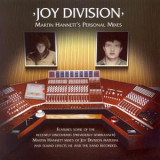
A repress of this long out of print album. 300 only LPs some on Yellow vinyl and some on Green vinyl randomly picked. Gatefold sleeves with 180gm vinyl. Discovered by friends of Martin Hannett and with input from one of his relatives,these recordings give a rare insight into his production ideas for Joy Division and his relationship with the band.,the strange things/ sound effects they recorded in the studio together etc etc. The studio chit chat and interplay between Hannett, Gretton and Joy Division members is all here as Martin left his own tape machine running throughout studio sessions. On this album we have rare alternative mixes of Joy Division that were Martin's personal favourites and he had the forethought to get the band members to give him control of these recordings. A must for all Joy Division fans.
Following her contribution to this Spring’s Gudu & Friends Vol. 1 compilation, Lady Blacktronika steps out with a full EP for Peggy Gou’s Gudu label.
Whether operating as Lady Blacktronika or her Femanyst alias, Akua Grant has built a deserved reputation as one of house and techno’s most daring and unique artists - one that dates back 25 years now, when she first debuted as a vocalist.
“House and techno” can be a cliched catch-all term, but in Grant’s case, she really has explored the extremes of both sides. Her early Lady Blacktronika work, when she earned the nickname The First Lady of Beatdown, saw her produce and narrate a style of deep house that was both sensitive and transgressive, while as Femanyst, she explores some of techno’s darkest corners, all distorted kicks and serrated edges.
Her EP for Gudu kicks off with some serious intent: ‘Baby I Got It’ chops its vocals rough and raw, pairing them with marching drums and the sort of idiosyncratic synth-work that feels like a Blacktronika signature at this point. ‘Sing the Blues’ and ‘Hold My Hand’ take things smoother, but without ever deferring to type — as ever with Grant’s music, she works with such sleight of hand that it’s easy to skip back three minutes previous and wonder how the hell we got here. Her tracks are just that hypnotic and hallucinatory.
Closing the EP, Octo Octa provides a remix of ‘Hold My Hand’ that extends things to a full 12 minutes (note: slightly shorter on the vinyl due to time constraints), taking us out with crushed percs and held pads over some undeniable drum work.
This EP marks the final release of Gudu’s busiest year to date, with music on the label in 2023 coming from Special Request, Matisa, Mogwaa, Hiver, Matrefakt, DMX Krew, Dukwa, Brain de Palma, Lady Blacktronika, Salamanda and Closet Yi.
Unbelievable Friendship is the second solo album by Filip Misek and the first one published under his own name. Unlike on his previous record from more than ten years ago, here Misek is more experimental and candid while still striving for songs that are an // ultimate // end in themselves. Though few of them can be sung, the songs often include vocals and voices courtesy of several guests // heavily processed as they might be. More importantly, Unbelievable Friendship sticks to the idea of a song, so that each of them works both on its own and as a part of a whole.