DJ Support: Support by Kenneth Bager, Colleen "Cosmo" Murphy, Phil Mison, Chris Coco, Erki Pruul, Steve Cobby, Max Essa, DJ Gripper, Phil Cooper, La Guardia De La Luz, Johan Blende, Bill Brewster, Mike Salta, Pete Herbert, DJ Dribbler / For Mankind and many more.
Greek duo Bonnie & Klein serve up an Aegean musical escape with their new Glam Pulse EP on Hell Yeah.
George Fountzoulas and Thanasis Skouzis are lifelong Balearic brothers who offer up their own soul-stirring take on the sound on labels like Music For Dreams and NuNorthern Soul. They are inspired by the sunsets and seas of their homeland and bring great imagination to their melodies as this new outing proves.
'Glam Pulse' sets a gorgeous tone from the off with wavy grooves and a peppering of percussion. As well as some singing guitar riffs, sundown synths and shimmering chords make this a steamy and seductive gem. 'Haleakala' is another perfect soundtrack to lazing on the beach and watching the sun sink into the sea while new age motifs wash over you and carry away your woes. Proggy guitars speak to the soul on 'Horizon Avenue' as woody xylophones and wispy leads ride on dubby bass and 'Sunion' closes with hints of melancholy - a lament for the final dance of a long hot summer with lingering trumpets lodging deep in your heart.
Bonnie & Klein tap into real Balearic magic on this EP and effortlessly transport you to a sandy paradise.
Search:her woes
Sleep Now Forever is the second and final album released by Sorrow, the post-Strawberry Switchblade group fronted by singer Rose McDowall. Originally released in 1999 and long since deleted it is a cornucopia of pastoral, elegiac folk music, swirling atmospherics, hymnal compositions and above it all the alternating towering and fragile vocal performances of McDowall. Recorded in the late 90s with fellow band member and co-songwriter Robert Lee, Sleep Now Forever is the definitive statement by the now defunct group and Rose McDowall’s most complete long-form work to date.
Released through the group’s own Piski Disk Records, Sleep Now Forever was distributed by World Serpent which struggled through the early 2000s with financial woes, eventually folding due to bankruptcy in 2004. Due to the company’s troubles, Sleep Now Forever was never distributed widely and was a victim of the company’s failure. Released on CD only, original copies are now rare and only traded on second hand channels. Remastered by Mikey Young for a limited vinyl release, Sleep Now Forever will be released on April 20th on double vinyl format, with one side an exclusive etching by Glasgow artist Holly Allan.
Despite its rarity, Sleep Now Forever enjoys a firm cult following. The album’s textures are expansive, lush, deliciously detailed and celestial. Recorded in home study Velvet Hole by Rose McDowall and then-husband Robert Lee, the album enlists an array of players from the underground Neo-folk / industrial scene: Nigel McKernaghan (Uilleann pipes, Whistles), Susan Franknel (Bassoon), John Contreras (Cello) and Lawrence Frankel (Oboe, Cor Anglais). The eleven songs here revolve around McDowall’s instantly recognisable voice. Brought up singing in the Catholic Church, McDowall’s vocals are impeccable and angelic, particularly on tracks like Turn Off The Light where her experiences with religion are canted over soaring oboe and guitar backing. By far the most evolved and realised version of Sorrow’s vision, it feels somewhat criminal that music this beautiful could be lost to time until now.
McDowall’s lyrics throughout Sleep Now Forever deal frankly with mental health, depression, altered states, death and redemption. Wave upon wave of harmony drench each song, McDowal’s vocal multi-tracked and imperious. Opener Soldier benefits from Robert Lee’s use of the studio as instrument, summoning forth a lilting group performance of sparkling guitar and percussion that recalls the Velvet Underground. Mikey Love’s master treats the compositions to brand new frequency dynamics and space. Harmonium and string drones form the counter to McDowall’s vocal on Love Dies, a slow, lurching lament that feels transcendent. On Haunting, the arrangement is orchestral and aching, bleeding into Fear Becomes You, with chord and harmony structure that recalls the baroque sixties pop of West Coast Pop Experimental Art Band or the 60s psychedelic folk movement. A towering, beautiful statement, this elegy for times lost and moonlit-illumination is finally resurfacing from the darkness.
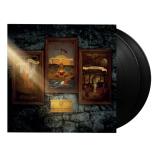
Pale Communion is the eleventh studio album by Swedish progressive metal band Opeth. The album was released in 2014 on Roadrunner Records, and was produced by Mikael Åkerfeldt and mixed by Steven Wilson.
Mikael Åkerfeldt said of the album, "I wanted to do something more melodic with this album, so there's stronger vocal melodies and more melodies overall for this album." Greg Kennelty of Metal Injection said the album does not contain "growls or death metal vocals" and he described the album as "the missing link between Damnation and Ghost Reveries or if Heritage was written directly after Ghost Reveries without Watershed having ever existed".
DJ Support: Luke Una, Darryn Jones, Red Greg Gilles Peterson, Patrick Forge
The Mighty Zaf of LoveVinyl fame and Edinburgh-based, Bristol-born Linkwood team up for the sixth outing in their jointly owned 80s label series, delivering two magnetic edits on 12". The A features a conspicuously reconstructed sample of Watson Beasley's 'Dimensions' set to rightly fastened beats, fostering gratitude and grace in the face of life's woes. 'Love & Care' furthers the verve, with incandescent, basso strings in a low tessitura, lifted from B-H-Y's 'Handle Me With Love & Care'.
- A1: Black River (Introduction)
- A2: Bit’s Our World
- A3: Make It Right
- A4: Through Our Veins
- A5: No Harm (Intermission)
- A6: I Can’t Believe
- A7: Yasiin’s Lament
- A8: No Maybes
- A9: Message From A Creole (Interlude)
- B1: Freedom Song
- B2: Grandmamaland (Interlude)
- B3: Can’t Let Them
- B4: Throw Your Woes Away
- B5: Free Interlude
- B6: Just Keep On
- B7: More Love
- B8: Whole Hearted
- B9: Rivière Noire Decolonise Your Mind
- B10: No Time To Waste
„Rivière Noire“ ist das erste Album von Reginald Omas Mamode IV auf dem Kölner Label Melting Pot Music und sein erstes Solo-Projekt seit 2022.
Reginald Omas Mamode IV ist ein anglo-mauritischer Sänger, Produzent und Multiinstrumentalist. Geboren und aufgewachsen in Großbritannien, pflegt er eine enge Verbindung zur afrikanischen Insel Mauritius, der Heimat seines Vaters. Seine musikalischen Wurzeln reichen von Süd-London bis zu den Maskarenen-Inseln (Réunion, Mauritius und Rodrigues), wo seine Familie einst an den legendären „Electric Sega“-Aufnahmen der 1970er beteiligt war. Musik liegt den Mamodes im Blut: Auch seine Brüder sind als Musiker aktiv.
Reginalds Stil vereint Elemente aus Golden Era Hip-Hop, Jazz, Soul, Afro, Funk sowie den traditionellen mauritischen Stilen Sega und Maloya. Man hört Einflüsse von J Dilla und D’Angelo, aber auch den Spirit von Sly Stone, Shuggie Otis oder Lee Perry. Mit vier Soloalben auf dem Londoner Label Five Easy Pieces sowie zahlreichen Kollaborationen gehört Reginald zu den prägenden Stimmen der britischen Beat- und Jazzszene. Seit 2012 wird er regelmäßig von BBC-Legende Gilles Peterson unterstützt, der seine Musik seither kontinuierlich spielt.
Gemeinsam mit seinen Brüdern Mo Kolours und Jeen Bassa sowie langjährigen Weggefährten wie Al Dobson Jr. und Tenderlonious zählt Reginald zu den Mitbegründern der 22a-Kooperative. Das US-Magazin The FADER beschrieb deren Sound einmal als „ein kaleidoskopisches Patchwork aus Hip-Hop-, House- und Groove-Explorationen – verbunden durch den zeitlosen Glauben an Rhythmus als universelle Sprache.“
„Rivière Noire“ markiert eine künstlerische Weiterentwicklung – fast schon eine Wiedergeburt. Zum ersten Mal verzichtet Reginald vollständig auf Samples. Stattdessen spielt er sämtliche Instrumente und Gesangsspuren selbst ein. In seinem bescheidenen Studio erschafft er organische Grooves aus Live-Drums, Drumcomputern, Perkussion, Gitarre, Fender Rhodes und Synthesizern.
Seine Musik ist Ausdruck einer tiefen Sehnsucht nach universeller Liebe und Mitgefühl. Sie reflektiert globale Herausforderungen ebenso wie persönliche Erfahrungen: wachsende Armut, politische Spannungen, ethnische Spaltungen – aber auch alltägliche Beobachtungen. „Rivière Noire“ ist Reginalds Aufruf an die Menschheit, sich ihrer Verbundenheit bewusst zu werden.
Teri Gender Bender — born Teresa Suárez Cosío — is ready to show you another side of her eccentric artistry. This time, the Mexican-American singer-songwriter and producer who was raised in Denver, Colorado, and Guadalajara, Mexico, is delving into her Mexican roots with a new Spanish-language album called “TGB.” Filled with electronic, psychedelic, and experimental pop-rock, “TGB” is an empathetic auditory vessel Teri created to understand her loved ones on a personal level. Inspired by her close friends’ woes, the singer-songwriter shows sincerity and kindness by purging their most negative feelings and transforming them into sonic masterpieces for them to reflect and heal with
Chris Cohen was always a quiet kid. In fact, this introversion was one reason he began playing music as a toddler-to communicate without speaking, to identify with others without the direct representation of words. It has worked, too, with Cohen's terrific stint in the mighty Deerhoof and his own captivating art-rock act The Curtains, preceding production and session work for the likes of Weyes Blood, Kurt Vile, Le Ren, and Marina Allen. Somewhere along that long way, Cohen started writing lyrics. He found that, though it didn't come naturally, the process offered a new sense of self-discovery and reckoning, a way to see himself and the world from unexpected angles. His three twilit albums of casually complicated pop during the last decade radiated these epiphanies: handling family strife, navigating advancing age, and understanding social woes. But Cohen has never had as much to sing so directly as he does on Paint a Room, his first album in five years and his debut for Hardly Art. If Cohen's meanings have previously lurked inside the tessellated musical layers he built alone, they are newly clear and resonant here, animated and underscored for the first time by a band playing in real time. There is the endless miasma of state violence on the subversively melodious opener "Damage," the existential exhaustion of modernity on the horn-traced jangle "Laughing": this is Cohen communicating with friends not only through his deep understanding of groove, harmony, and hook but also with his listeners through songs that croon of our uneasy little era. On Paint a Room, Cohen's music feels like a warm spring breeze, easy to love and gentle to feel. But it's often carrying something heavy, as if blowing in from some unseen storm cloud. Paint a Room both reckons with reality and conjures an alternate one, where nighttime walks and a neighbor's wind chimes offer endless escapes for the imagination, space for the mind to roam. Sublime and sun-lit, these 10 songs consider dreamy new ways out of old predicaments, clearly stating the problem and dancing and singing their way somewhere new. Paint a Room features Jeff Parker contributing the fluttering horn arrangement on "Damage," and Parker collaborator Josh Johnson (who produced Meshell Ndegeocello's Grammy-Award-winning album The Omnichord Real Book) supplying flute, sax, and clarinet arrangements throughout the record.
With two successful albums and a sold-out world tour under their belt, Paris-based L'Impératrice have matriculated from a good-times instrumental act created by music critic Charles de Boisseguin to a six-piece powerhouse whose sashaying mixes of funk and French Touch, disco and deep house now include the fetching vocals of singer Flore Benguigui. Their new album Pulsar, is a focused but far-reaching record, the jubilant testament of a band with plenty to say and the skills to say it themselves. Across 10 tracks, L'Impératrice move freely and authoritatively among the sounds they love, bridging hip-hop, kosmische, and modern pop with their most unabashed embraces of French Touch and international house ever. Benguigui, meanwhile, boldly sings of self-empowerment by shirking beauty standards, ageism, and drab normalcy, with a little help from an exciting set of new friends. A longtime fan who had seen the band multiple times, Maggie Rogers flew to Paris to lead the svelte and graceful "Any Way," approaching the song with an unabashed vim. They had a similar encounter with Erick the Architect, who was so enthusiastic about the sample- based and panoramic "Sweet & Sublime" that Benguigui scrapped one of her own verses to make more room for him. And Italian singer Fabiana Martone (Nu Genea) crafted the melody for "Danza Marilu" the moment she heard its disco thump. Throughout these 10 songs, L'Impératrice espouses the rare willingness to be real about life and its woes while also sounding like a perfect picture of joy. Pulsar opens like a window being slid open onto an unimagined world. During the title-track finale, where a casual confession of suffering climbs into a mighty climax rooted in redemption, the band intertwines dubstep, turntablism, and symphonic strings to offer a bracing conclusion: however we are is OK.
In one sense, it’s easy for artists—songwriters, specifically—to express their feelings in their work. After all, that’s what the lyrics are for! But it’s much harder to convey emotional energy in how you play, slash at the guitar, and the structure of the music itself. That’s precisely why Girl and Girl’s Sub Pop debut, Call A Doctor, feels like such a vital, electrifying shock to the senses. Not since the early work of Car Seat Headrest or Conor Oberst’s widescreen emotional brutality as Bright Eyes has indie rock managed to come across as this intimate and grandiose, as the Australian quartet led by Kai James lay a lifetime’s worth of woes—mental health, the human race’s planned obsolescence if you’ve been living on this cursed rock you know what we’re getting at—across a canvas of indie rock that feels both timeless and in-the-moment.
An audacious and aggressively tuneful blast of a record, Call A Doctor is an unforgettable first bow from Girl and Girl, whose origins lie in James and guitarist Jayden Williams jamming in his mother’s garage in the afternoon after school. One afternoon, James’ Aunty Liss headed down to their practice space after walking her dog and asked if she could sit in on drums. “It sounded really great,” James recalls. “We begged her to stay, and she said, ‘I’ll stay until you find another drummer.’ We wore her down, and she eventually became a permanent member.”
After bassist Fraser Bell joined to round things out, Girl and Girl hit the road and began to make a name for themselves beyond the Australian bush, eventually signing to Sub Pop off the strength of word of mouth. Call A Doctor came together quickly soon after, largely recorded in marathon sessions in a two-story industrial complex over the course of two weeks. “That added to the intensity of the album,” James says about the frenzied creative process overseen by producer Burke Reid. “I can hear the stress in the record, which is good because that’s what it’s about—being tense, tied up, and in your own head.”
Call A Doctor’s eleven songs—spanning sweeping guitar epics and wry acoustic shuffles to spiky punk maneuvers and the type of raw, adoringly unvarnished indie-pop associated with legendary PacNW label K Records—are literally plucked from James’ personal history, as he reworked older recordings with newer lyrics reflecting his past struggles as well as new anxieties that emerged prior to the album’s recording. “I’ve struggled with mental health for a lot of my life,” he explains, “and I went through a particularly difficult patch when we were making the album; the band had started to get some attention, and I felt an enormous amount of pressure to live up to it.”
Far from the sound of collapsing under pressure, Call A Doctor finds James and Co. stepping up with their entire collective chest. This is a record that’s so out-and-out alive that you nearly feel like you’re in the same room with Girl and Girl as you listen to it; lead single “Hello” practically bursts through the speakers, amplified by Aunty Liss’ unbelievable stickhandling duties. “‘Hello’ is all about romanticizing your own misery. Letting those deep, dark, dirty thoughts take over. Understanding that even if you could pull yourself out, you wouldn’t because the constant stress and worry is far too familiar and comfortable.”
“Mother” pogos on a spiky groove that’s reminiscent of the geographically close New Zealanders who make up the legendary Flying Nun label, while “Oh Boy” draws from the Shins’ own jangly sound, injected with James’ wonderfully nervy vocals. Then there’s Call A Doctor’s sorta-centerpiece “Maple Jean and the Anthropocene,” a five-minute epic offering a new perspective on climate change and the notion of what it means, in a personal sense, to suffer: “I live in the bushland, and I was driving home one night and hit and killed a wallaby with my car,” James recalls while discussing the song’s lyrical inspiration. “My first thought was, ‘What is the universe trying to tell me?’ No remorse, no guilt, just total self-centeredness. Which was like, Woah, you fucking psychopath! This wallaby wasn’t put on this earth to send you a message. That’s what the song is about, our egocentric species - thinking you’re the main character and that everything that happens is somehow about you.”
“This record is about an individual who’s too far in their head, trying to get out,” James continues while discussing Call A Doctor’s overall outlook—specifically the snapshot it offers of its creator. But even though this record deals with uneasy topics we all know well from within ourselves, it’s important to emphasize how teeming with life Girl and Girl’s music is. There’s a brazen, bold sense of humor to this stuff, an undeniable brightness to the darkness that makes it impossible not to be drawn in as a listener. Feeling down never sounded so goddamn good.
In one sense, it's easy for artists-songwriters, specifically-to express their feelings in their work. After all, that's what the lyrics are for! But it's much harder to convey emotional energy in how you play, slash at the guitar, and the structure of the music itself. That's precisely why Girl and Girl's Sub Pop debut, Call A Doctor, feels like such a vital, electrifying shock to the senses. Not since the early work of Car Seat Headrest or Conor Oberst's widescreen emotional brutality as Bright Eyes has indie rock managed to come across as this intimate and grandiose, as the Australian quartet led by Kai James lay a lifetime's worth of woes-mental health, the human race's planned obsolescence if you've been living on this cursed rock you know what we're getting at-across a canvas of indie rock that feels both timeless and in-the-moment. An audacious and aggressively tuneful blast of a record, Call A Doctor is an unforgettable first bow from Girl and Girl, whose origins lie in James and guitarist Jayden Williams jamming in his mother's garage in the afternoon after school. One afternoon, James' Aunty Liss headed down to their practice space after walking her dog and asked if she could sit in on drums. "It sounded really great," James recalls. "We begged her to stay, and she said, 'I'll stay until you find another drummer.' We wore her down, and she eventually became a permanent member." After bassist Fraser Bell joined to round things out, Girl and Girl hit the road and began to make a name for themselves beyond the Australian bush, eventually signing to Sub Pop off the strength of word of mouth. Call A Doctor came together quickly soon after, largely recorded in marathon sessions in a two-story industrial complex over the course of two weeks. "That added to the intensity of the album," James says about the frenzied creative process overseen by producer Burke Reid. "I can hear the stress in the record, which is good because that's what it's about-being tense, tied up, and in your own head." Call A Doctor's eleven songs-spanning sweeping guitar epics and wry acoustic shuffles to spiky punk maneuvers and the type of raw, adoringly unvarnished indie-pop associated with legendary PacNW label K Records-are literally plucked from James' personal history, as he reworked older recordings with newer lyrics reflecting his past struggles as well as new anxieties that emerged prior to the album's recording. "I've struggled with mental health for a lot of my life," he explains, "and I went through a particularly difficult patch when we were making the album; the band had started to get some attention, and I felt an enormous amount of pressure to live up to it." "This record is about an individual who's too far in their head, trying to get out," James continues while discussing Call A Doctor's overall outlook-specifically the snapshot it offers of its creator. But even though this record deals with uneasy topics we all know well from within ourselves, it's important to emphasize how teeming with life Girl and Girl's music is. There's a brazen, bold sense of humor to this stuff, an undeniable brightness to the darkness that makes it impossible not to be drawn in as a listener. Feeling down never sounded so goddamn good.
Der Dark-Ambient-Pionier, die stygische Drone-Legende und das fast schon mythische Wesen LUSTMORD durchstößt mit "Much Unseen Is Also Here" einmal mehr den Schleier - die neueste Solo-Veröffentlichung des Künstlers in einer beeindruckenden, 40-jährigen kreativen Karriere an der Spitze der Industrial-Musik. Auf Drängen von Cosey Fanni Tutti und Chris Carter von Throbbing Gristle, Musik zu machen, die seine unverwechselbare Aura einfängt, übernahm Brian Williams 1980 Lustmord und begann mit Sounds zu arbeiten, weil die Musik, die er hören wollte, einfach nicht existierte. Lustmord veröffentlichte 1989 sein drittes Album "Heresy", das zu einem Meilenstein in der Industrial-Szene wurde und heute allgemein als Ursprung des Dark-Ambient-Genres gilt. 35 Jahre später führt Much Unseen Is Also Here" das Vermächtnis von Heresy" fort und knüpft an dessen fesselnden Erzählbogen an. "Much Unseen Is Also Here" besteht aus drei verschiedenen Teilen und ist dazu gedacht, in einer einzigen, ununterbrochenen Durchgang angehört zu werden; es entführt den Hörer in eine kompromisslose Parallelwelt, die nur in der Musik existiert, bevor es ihn am Ende für immer verändert wieder hinauswirft. Lustmord, der seit 1994 in L.A. lebt, hat auch als Komponist und Sounddesigner an der Musik für ikonische Film- und Fernsehproduktionen mitgewirkt, darunter "The Crow", "Strange Days", "From Dusk Till Dawn", "Underworld" und in jüngerer Zeit die FX-Serien "Fear The Walking Dead" und "First Reformed"von "Taxi Driver"-Autor Paul Schrader aus dem Jahr 2017. Immer noch entschlossen, die Grenzen von Sound, Genre und Medien zu erweitern, hat Lustmord auch zu den Soundlandschaften von Videospielen wie Assassin's Creed, League of Legends und, passenderweise, dem von H.R. Geiger inspirierten Survival-Horror-Spiel Scorn von 2022 beigetragen.
Der Dark-Ambient-Pionier, die stygische Drone-Legende und das fast schon mythische Wesen LUSTMORD durchstößt mit "Much Unseen Is Also Here" einmal mehr den Schleier - die neueste Solo-Veröffentlichung des Künstlers in einer beeindruckenden, 40-jährigen kreativen Karriere an der Spitze der Industrial-Musik. Auf Drängen von Cosey Fanni Tutti und Chris Carter von Throbbing Gristle, Musik zu machen, die seine unverwechselbare Aura einfängt, übernahm Brian Williams 1980 Lustmord und begann mit Sounds zu arbeiten, weil die Musik, die er hören wollte, einfach nicht existierte. Lustmord veröffentlichte 1989 sein drittes Album "Heresy", das zu einem Meilenstein in der Industrial-Szene wurde und heute allgemein als Ursprung des Dark-Ambient-Genres gilt. 35 Jahre später führt Much Unseen Is Also Here" das Vermächtnis von Heresy" fort und knüpft an dessen fesselnden Erzählbogen an. "Much Unseen Is Also Here" besteht aus drei verschiedenen Teilen und ist dazu gedacht, in einer einzigen, ununterbrochenen Durchgang angehört zu werden; es entführt den Hörer in eine kompromisslose Parallelwelt, die nur in der Musik existiert, bevor es ihn am Ende für immer verändert wieder hinauswirft. Lustmord, der seit 1994 in L.A. lebt, hat auch als Komponist und Sounddesigner an der Musik für ikonische Film- und Fernsehproduktionen mitgewirkt, darunter "The Crow", "Strange Days", "From Dusk Till Dawn", "Underworld" und in jüngerer Zeit die FX-Serien "Fear The Walking Dead" und "First Reformed"von "Taxi Driver"-Autor Paul Schrader aus dem Jahr 2017. Immer noch entschlossen, die Grenzen von Sound, Genre und Medien zu erweitern, hat Lustmord auch zu den Soundlandschaften von Videospielen wie Assassin's Creed, League of Legends und, passenderweise, dem von H.R. Geiger inspirierten Survival-Horror-Spiel Scorn von 2022 beigetragen. Other Woes Are Yet To Come Edition (single colored (pink) vinyl, ltd to 220 copies ww)
Ebalunga!!! is thrilled to announce the first official reissue of the self-released, self-produced, and self-titled 1985 LP Scott Seskind. The album is a lo-fi singer-songwriter jewel. Don’t miss it.
“Authentic and personal, at times it reminds this writer of luminaries such as Jackson C. Frank, PF Sloan, Skip Spence, and Phil Orchs while never feeling derivative.
The songs are melodic and haunting, fueled by existential woes, political angst, and good ol’ fashioned love. Scott’s rich voice has an unpretentious gravitas, his simple-yet-effective guitar playing ranging from delicate fingerpicking to angry bashing.
Created at home on a Tascam 4-Track Portastudio, the recording features few frills and is all the better for it. Unlike most mid-80s records it sounds like it could have come from any time since the late ’60s onwards. As a testament to its greatness, and despite the late recording date, it even gets a nod on Patrick Lundborg’s “Acid Archives” compilation website, Lysergiawhere it’s described thus: “Late phase downer-loner folk and singer-songwriter trip, mostly acoustic, some tracks with a small band.” – Andrew Ure for Ugly
Things.Read a long story about the album in the upcoming Shindig! issue: Story about Scott Seskind in Shiding Mag.
The reissue is available on vinyl with a lyric insert.
Mastering (as always) by Jessica Thompson.
Feedbacks and reviews:
“Almost totally inheralded singer-songwriter Scott Seskind gets the reissue treatment, and I couldn’t be happier. About a year ago I pulled Seskind’s sole vinyl release out of the used bin of a Boulder record store, and with its almost Wallace Berman-esque cover art, could immediately suspect it was something special. The first listen didn’t dispel that notion one bit; here was an impressively captivating and moving collection of four-tracked bedroom folk of the highest order, with an out-of-time vibe that didn’t really snyc with its 1984 recording date. Definitely on the loner-ish end of the folk spectrum, with some aspects of the album harkening back to Skip Spence’s iconic Oar, while other moments revealed the urgency of the ’80s lo-fi revolution. But most importantly, the songs were just really, really great and managed to remain haunting long past their leaving.
Here, I thought, is an album that needs to be heard by more people, NOW. I asked around amongst some record collecting friends and discovered it was pretty highly rated by a small circle of people in the know, and that it had even managed to garner a mention in the Acid Archives despite its late recording date, and most excitingly that there was talk that the digital reissue label Yoga had managed to track Seskind down and secure the rights to his LP. (…) So here we have it, the best songs from Seskind’s eponymous LP. (…) I really hope this release continues to garner the listeners that it deserves.” – Michael Klausman
“The one that struck us the most this year was the almost totally unheralded work of singer-songwriter Scott Seskind, who recorded an impressively captivating and moving collection of four-tracked bedroom folk of the highest order, with an out-of-time vibe that doesn’t really sync with its original 1984 release date. Definitely on the loner-ish end of the folk spectrum, with songs that are really, really great and which manage to remain haunting long past their leaving. Truly an album that deserves to be heard by more people immediately. ” – Other Music
Red vinyl LP. Lars Finberg, confirmed genius guy and poet laureate of sunken 21st century Rock, acts as manager in perpetuity of THE INTELLIGENCE, primary vehicle for his prolific creative swirl and a project that has taken on new shapes across myriad trials and shifts. The project began in his Seattle bedroom – a lad and his Tascam cassette 8 track – with the classic Boredom & Terror and has now landed in his Los Angeles studio apartment – an urchin and his Tascam digital 12 track – with Lil’ Peril, a new album that finds Finberg 1000% back at the controls. Over the course of 11 albums (!), The Intelligence has established a backbone that boogies through revolutions, allowing each jam-crammed dispatch to feel and sound admirably unique. The angular sharp shocks heard in earlier years have steadily evolved into the ballooning grooves heard on more recent releases (including Finberg’s recent solo work). Lil’ Peril is a dreamy gamble that captures this current bubbling penchant in The Intelligence’s inaugural homemade mode. With inspirational templates as far-flung as LES PAUL, THE SPECIALS, LEE PERRY and MARY FORD, Lil’ Peril pulls off the absurd shift “from ‘No-Wave SANTANA’ to ‘SCREAMERS recorded by JON BRION’”. Playing shoulder parrot to studio engineers has no doubt informed Finberg’s approach to home recording, specifically in how much further he can go without wincing budget-minded eyes staring him down. This is immediately sensed on the opener “Maudlin Agency,” which begins with canned minimal bleep and closes with a full recreation of the “Brass Monkey” hook. These surprise-attack conclusions are a running current throughout the Lil’ Peril’s program and demonstrates that the main lesson Finberg has learned in The Intelligence is to never reel it in. Centerpiece banger “My Work Here Is Dumb” ranks among the finest Intelligence moments existent and an apex in Finberg’s songcraft, boasting a bonkers arrangement and a thematic gnaw that is both brutal and playful. The collection closes with the epic “Soundguys,” a suite cut-up that fuses CAN and STEELY DAN into one of the most dastardly tunes available for consumption in the plague age. As Finberg himself states, “They may say this is ‘lo-fi’, but I say it’s ‘no-CGI’”. “The band disintegrated, so it devolved back to the core idea: if I do every aspect, it’s indestructible.” 20 years on and Finberg has finally let everyone know what The Intelligence actually means! All those wily experiments and warm flubs have come back full circle and the shit’s pure goddamn gold. Proof positive that there is always some sort of cute trouble, farcical tragedy and Lil’ Peril at play with The Intelligence. - Mitch Cardwell, 2022. Tracklisting: 01 Maudlin Agency 02 70's 03 Keyed Beamers 04 Purification 05 My Work Here Is Dumb 06 Lil Peril 07 Frog Prints In Preset City 08 Portfolio Woes 09 Soundguys
For Fans Of Garage Punk, Power Pop, Cheap Trick, Dollyrots, Suzi Moon, Pretenders, Blondie, The Muffs, 5.6.7.8’s. One part pop, one part poison, all “poolside glitter punk,” Hayley and the Crushers offer up a tsunami of bad girl power. Anointed “the naked embodiment of power pop punk” by New Wave icon Josie Cotton (who signed the band to her Kitten Robot Records in 2021), Modern Adult Kicks is their most ambitious and self-possessed album to date. Produced by legendary LA punk producer and ex-Screamer Paul Roessler (TSOL, Josie Cotton, Richie Ramone), the album conjures up the electricity of first-car freedom, the woes of suburban isolation and the lurid pleasures of Y2K chat rooms all wrapped in the warm glow of a late-night infomercial. While the content is no doubt “adult,” there’s no shortage of kicks to be had. The California-to-Detroit transplants have injected even the most bummer of subjects (addiction, heartbreak) with a potent venom of caffeine and heart. Sure, BUST Magazine once likened the band to a bag of Sour Patch Kids, but this new album reveals fresh depths of flavor. Crafted in a post-Covid world, Modern Adult Kicks is exactly what it advertises to be: a more put-together, wiser “big sister” to the band’s sunny 2020 release, Vintage Millennial. Like finally being old enough to party with the babysitter, Kicks is a shining example of how growing up can actually rule. In the Crushers’ world, growing jaded isn’t an option and there’s never a good reason to stop dancing. Tracks 1 Taboo 2 Cul de Sac 3 She Drives 4 Broken Window 5 I Fall 6 Click and 7 Act Now 8 Lost Cause 9 California 10 Sober 11 No Substitutes 12 Overexposed
As three souls plunge down from the heavens, death and destruction can be felt hanging in the air like a foul stench. Red clouds swirl around a black sun that never sets and an erratic clock ticks off-tempo, moving faster and slower before rewinding and starting anew.
“Let me paint you a picture…” vocalist Mikey Arthur sings, welcoming listeners with a dramatic opening scene. It takes a skillful guide to navigate the darkest depths of hell. And, as The Gloom In The Corner depict in their second full-length album Trinity, death is merely the beginning of the series of chilling adventures
Purposefully aligning their song count with unlucky number thirteen – a reoccurring symbol in the ever-unfolding Gloom Cinematic Universe or GCU – it comes as little surprise to longtime fans that each of the Australian quartet’s enticing tracks intertwine to form an interlocking tale; this time centered around the appropriately labeled unholy trinity.
Comprised of previously deceased characters Rachel Barker, Ethan Hardy, and Clara Carne, the group’s bloody battle is woven throughout the album as the anti-heroes determinedly claw their way back to Earth from the Rabbit Hole dimension, slashing, shooting, and extinguishing anyone who dares to oppose their quest. Yet, for the Girl of Glass, Ronin, and Queen of Misanthropy, there is clearly more to the story than what can be contained within a single package.
Projecting a wide and complex web of lore, plot twists, and tongue and cheek humor, frontman Mikey Arthur, guitarist Matt Stevens, bassist Paul Musolino, and drummer Nic Haberle, have been producing highly detailed concept releases since their formation. And, consistently filling in more missing pieces of the puzzle with every body of work, the band equate each new record to a fresh season of The Umbrella Academy dropping on the streaming service of your choice. Because, just as a great TV series captivates viewers with its music and storytelling, the quartet’s work provides a complete experience designed to allow fans to check in with their favorite characters, all the while enjoying a cinematic new soundtrack.
For those just joining the GCU, as well as those looking for a quick refresh, 2016 debut album Fear Me introduced listeners to main protagonists Julian “Jay” Hardy, a Section 13 agent consumed by anger over his girlfriend Rachel’s death, and Jay’s gloom (later known as Sherlock Adaliah Bones), a demonic entity who at times takes over Jay’s body as a host vessel. 2017 EP Homecoming tells the tale of Jay’s brother Ethan, a war veteran suffering from PTSD, who upon discovering his brother’s struggle, kills himself as part of a Dante-style rescue mission to bring Rachel back to life. In 2019 EP Flesh and Bones, we’re introduced to Clara Carne, a past witness to one of Jay and Sherlock’s crimes, who instead of taking revenge, began a twisted love story with Sherlock, only to be murdered by his forced hand. And 2020’s Ultima Pluvia EP where we finally learn of Sherlock’s past as an ancient warlord under the tyrannical King Baphicho, and see Sherlock and Jay’s deaths ushered in by Section 13 opponent and New Order leader Elias DeGraver and his gloom Atticus Encey.
After 2016’s Fear Me, the band admit that their original intention was to jump straight into the events of Trinity before pivoting to create Homecoming, Flesh and Bones, and Ultima Pluvia. However, upon reflection, primary storywriter Mikey Arthur believes that pushing the timeline back actually provided greater opportunity for the group to properly flesh out the songs and plotlines for their sophomore studio record.
Indeed, while Trinity re-introduces the three central “heroes” of this new arc, it’s important to understand that while familiar, the characters are not carbon copies of who they were earlier in the story. And neither is the band who brought them to life.
Fully embracing the weird and whacky has never been a struggle for The Gloom In The Corner. Rather, it’s together with this attitude that the group come away with special moments such as the fascinating old and new dynamic between neighboring tracks “Red Clouds” – a song whose initial version predates the formation of The Gloom In The Corner as an official band – and “Gravity” in which a demo intended for future material was adjusted to fit the sonic drop.
Mirroring this evolution in the band’s musical approach, a sense of growth can also be seen projected in the characters and story that the quartet chronicle across the thirteen tracks.
Classifying their individual sound as an intricate form of “cinema or theater-core” due to the depth and breadth of their musical approach, features, samples, symphonic elements, and conceptual nature, The Gloom In The Corner continue to prove that they’re more than just a simple concept band.
In fact, similar to character theme music in movies and video games, the group seamlessly play off their diverse sonic story in a variety of ways. Continuing to breathe new life into older staples from their catalog, the quartet reworked their infamous “Oxymøron” breakdown from Fear Me into an impactful moment in Trinity’s “Nor Hell A Fury” and sprinkled audio easter eggs of this sort all throughout their new music for fans to discover.
Listeners are also brought further into the world of the GCU with the help of what The Gloom In The Corner call their “casting process.” Like picking actors for a musical, the band meticulously selected eleven different vocal features and several additional voice actors to bring the album and characters to life. Described as a 50/50 split between notable talents such as Ryo Kinoshita (Crystal Lake), Joe Badolato (Fit For An Autopsy), and Lauren Babic (Red Handed Denial), as well as talented friends and family like Elijah Witt (Cane Hill) and Mikey’s sister Amelia Duffield, each featured artist brought their own touch and realistic spark to the characters they portrayed.
For in the end, as much as Trinity and it’s cast live within the confines of their own supernatural worlds, themes such as falling out of love (Gatekeeper), battling depression (Obliteration Imminent), and standing behind women’s empowerment (Nor Hell A Fury), are ones that many can relate to or understand. And, while most individuals may avoid drowning their woes by way of transforming into full-on egotistical murderers like the Queen and King of Misanthropy and the gang, The Gloom In The Corner have illustrated that time and time again, life’s a little more fun when you can crack a smile. Taking a page from the trinity’s playbook: try to avoid the end of the world. But if you can’t…at least spend it with a killer soundtrack.
New edition on Opaque Cream Vinyl, (CLMN12044LPC3) is for Indies only. For Fans of: Menahan Street Band, The Budos Band, Antibalas, El Michels Affair. The Sure Fire Soul Ensemble are definitely on a roll coming off of their third LP, Build Bridges, which debuted at #1 on Billboard's Contemporary Jazz Chart. Their new and fourth LP, Step Down, is a direct reflection of the heavy times they were written and recorded in. Covid-19, two Presidential impeachment trials, the George Floyd murder and resulting social unrest, a seditious attempt to subvert the democratic process at The Capitol… With titles like Step Down, The Other Side, Time To Rebuild, Omnificent, Love Age, and In Common, SFSE uses their music to beautifully paint a picture of societal woes, but also points toward the solution and a better world. Heavy Cinematic Soul, spiritual Jazz-Funk, upbeat Afro-Funk, and deeply introspective rare-groove cuts lace this ten-track transmission vessel. SFSE is deeply defined by the sum of their influences, but always have their eye focused beyond the horizon as well. We think this album will capture your heart immediately, but also provide the depth for discovery upon repeated listens. SFSE have made a true statement here, and we are very proud to present Step Down to the world.
“BLEU” is a deep, witty, and contemplative scroll through frustration and love. As journalist Jasmyne Keimig explains in her liner notes, the album is an optimistic look at “the money woes, the creeping loneliness, and the isolation of modern living.” This ten-song vinyl debut from choir kid-turned-rapper Dave B is introspective, intimate, and intensely personal, framed against lush production from a collaborative team of producers, including Papi, Sango, Wax Roof, Vitamin D, Daoud, Esta, and U. Moore. The single “CPU LUV” arrived with a music video that parodies a classic Microsoft commercial, and explores our smartphone obsessions, describing a romantic liaison where the couple choses scrolling on their phones over intimacy. Described as “one of Seattle’s brightest hip-hop talents” by local and national media, Dave B has received praise from Pigeons & Planes, Complex, HotNewHipHop, Okayplayer, Pitchfork, XXL, Essence, and NPR. He’s appeared on The Tonight Show and performed in arenas across America, Europe, and Australia.
- A1: Have Yourself A Merry Little Christmas
- A2: Mon Beau Sapin
- A3: Holly Jolly Christmas
- A4: Il Est Né Le Divin Enfant
- A5: O Holy Night
- A6: Petit Papa Noël
- B1: Let It Snow! Let It Snow! Let It Snow!
- B2: The First Noel
- B3: Ave Maria (Charles Gounod)
- B4: Santa Claus Is Coming To Town
- B5: Winter Wonderland
- B6: Silent Night
- B7: Jingle Bells
- B8: It’s Beginning To Look A Lot Like Christmas
- C1: Hark! The Herald Angels Sing
- C2: I'll Be Home For Christmas
- C3: White Christmas
- C4: Ave Maria
- C5: All I Want For Christmas Is You
- C6: Shubho Lhaw Qolo
- C7: What A Wonderful World
- D1: Light A Candle In The Chapel
- D2: Adeste Fideles
- D3: God Rest Ye Merry, Gentlemen
- D6: Christmas 2009
- D7: The Last Christmas Eve
- D4: We Wish You A Merry Christmas Bonus Tracks
- D5: Noel For Nael
"First Noel is a Christmas album including 25 of the greatest classics as well as three exclusive new tracks I composed especially for the very first Christmas of my son, and in honor of my grandma Odette's last one, past year. The Christmas memories I have are full of wonderful moments, so I insisted on recording this album staying true to the magic of these instants.
First thing, I surrounded myself with 3 great friends of mine and long-time collaborators: François Delporte (guitar), Frank Woeste (piano) and Sofi Jeannin (choirmaster). Sofi has selected 8 singers with celestial, sublime voices. We recorded in two magical places: the studio of my friend Armand Amar - where I had the chance to work on my first albums (Babel Studios in Montreuil) - and the Church of Saint-Julien-le-Pauvre. The latter being the most ancient church in Paris - only a few meters away from the Notre-Dame Cathedral - has always been at the center of significant moments in our family history in France. My father was a sacristan there in the '60s. It is in the sacristy that he elaborated and worked on his trumpeter career. My aunt Hind - whom I loved - also a pianist, and my beloved grandmother, Odette, both had their funeral in this church. It is also in this same church that I got engaged and married… So many milestones.
After recording many albums, I felt it was the right time for me to share my versions of those great Christmas classics, by giving them a much less childish dimension and a more musical, also spiritual one, but still preserving their subtle and necessary fragility, specific of children's music or of those great classics renowned and sang all over the world. I was hoping that First Noel would not be yet "another" Christmas album, with Frank Sinatra-like crooners and Hollywood-style arrangements. Instead, a simple, humble, instrumental album, in the original meaning, without lyrics, allowing the melody to be at the center of it all. Soothing music to dream, to reunite us, regardless of our mother tongue, our age, our culture and more importantly regardless of our religion.
That is how Odette viewed things, and this is also the way I wish Nael and Lily, my children, would listen to the world."
New York City 4-piece deliver a modern blues rock masterclass on their feisty debut album.
“A timeless classic rock sound that revels in lean riffs and raw emotion.” – Afropunk
In an age where artistic merit is awarded to those who shout the loudest, Dakota Jones pride themselves on an unwavering ability to leave a lasting impression. Spearheaded by Tristan Carter-Jones fierce and unashamedly uncensored songwriting, the band’s fast-growing reputation as formidable live act has stamped Dakota Jones with the hell-hath-no-fury power of Chaka Khan, the wild spontaneity of Janis Joplin, and the honey-dripping sensuality of Marvin Gaye. Their debut album’s message of proud black heritage and triumphant queerness manifests itself in Carter-Jones’ ability to challenge norms of adulthood and femininity as she takes a deep dive into some of life’s most visceral emotions.
Tristan Carter-Jones: “I’m a black, queer woman expressing myself through love and music. Some folks still find that to be a transgressive act in and of itself. I work to fight that idea. I write a lot about my
Continued over…
sexuality and the ways in which I express it. Songs about sex and love bounce back and forth between songs about heartache, hangovers and self-medication, and the pleasure and pain of truly finding yourself. I don’t think we get to hear these things from a woman’s mouth as often as we should.”
Serving as an instant tone setter, the album opens with the line "Stretch marks from growing pains" with Carter-Jones lamenting the woes of adjusting to adulthood on lead single ‘Did It To Myself’ - her husky and commanding vocal instantly asserting its place in the spotlight. The atmosphere soon turns steamy on the flirtatious title track ‘Blacklight,’ whilst fantasising over a modern-day Bonnie & Clyde love affair the funk-laden ‘We Playin Bad Games’ packs a punch with its tale of free spirits entwined in a haze of late-night revelry.
Elsewhere, stories of caustic heartache twist the knife into wounded blues guitar riffs on ‘Like That’ and ‘Black Magic (That Power)’, in which Carter-Jones’s stoical voice never once faulters as she mourns the memories of a previous flame. Personal prayer ‘Lord Please’ recites empowered words of reassurance, and solidarity in the face of injustice erupts into a rallying cry for change on the classic sounding ‘Noise’ – written as a reaction to the 2016 US election. “I woke up after the election feeling pure panic and fear in my body,” remembers Tristan. “I wanted people in a place of privilege to stand up for what I was feeling, stand up for injustice, stand up for all of the things we need to change as a country. I wanted their rage, and I wanted their noise.”
Finally, the band’s tender tropes of togetherness eventually boil into gritty, guitar-slung balladry on hidden bonus track, ‘California,’ where, knees buckling under the weight of past trials and tribulations, Carter-Jones sets out on one final journey of self-discovery, hastily pulling out from reality and leaving only a dust cloud in her wake.
Production comes courtesy of the Grammy-winning John Wooler, ex Virgin Records A+R and founder of the Blues label Pointblank who has worked with everyone from John Lee Hooker and John Hammond to Isaac Hayes and Van Morrison. The album also features a wealth of hugely talented and accomplished musicians, including backing vocalist Kudisan Kai, former backing vocalist for the likes of Elton John, Chaka Khan, Anita Baker, Natalie Cole, Beck, Sting, Mary J. Blige and Jill Scott. Also present; Grammy winning keyboardist Jon Gilutin, who has spent years working with some of the industry’s most respected and iconic artists including Linda Ronstadt, James Taylor, Lady Gaga, Willie Nelson, Aretha Franklin, Diana Ross, Jackson Browne, Celine Dion, Bonnie Rait and Carole King. You’ll also hear the talents of acclaimed guitarist Michael Toles. Most well-known for being a part of the Stax Records group The Bar Kays, and for his contributions on famous records by Issac Hayes, Al Green, BB King, Johnny Taylor, Rufus Thomas, Albert King to name just a few.
Dakota Jones are a rising funk, soul and blues rock band from Brooklyn, New York City. Comprising of Tristan Carter-Jones (vocals), Scott Kramp (bass) Steve Ross (drums), and acclaimed musician Randy Jacobs (guitar) - former member of Was(Not Was) who has recorded for Seal, Bonnie Raitt, Tears for Fears, Elton John and many others. Though Carter-Jones and Ross first met in 1999 whilst at primary school, the band formed years later following a series of home jam sessions in 2016. The band’s collective alias originates from Carter-Jones’s middle name, ‘Dakota’. Dakota Jones have since released a string of acclaimed singles and EPs as well as received international attention for their track, ‘Have Mercy’ after it featured on Netflix’s 2019 film, Always Be My Maybe starring Ali Wong and Randall Park – and now after years of hard work and determination, the band are finally set to reveal their long awaited debut album. “We’d been regularly releasing EPs, waiting for our chance to come, and wondering what that would look like,” says Carter-Jones. “We didn’t realise until we started making this record that we needed to stop waiting for some break to come along, and just do it ourselves, independently.”
“Black Light really dives into a place of funk soul and everything that comes with it. There’s joy and dancing, sleek guitar licks and funky bass slaps. There’s pain and longing, and there’s the feeling of relief when you come out of that place and find your joy and purpose again. Black Light is my story.”