
8
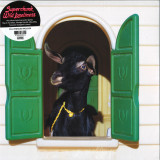
Like every record Superchunk has made over the last thirty-some years, Wild Loneliness is unskippably excellent and infectious. It’s a blend of stripped-down and lush, electric and acoustic, highs and lows, and I love it all. On Wild Loneliness I hear echoes of Come Pick Me Up, Here’s to Shutting Up, and Majesty Shredding. After the (ahem, completely justifiable) anger of What a Time to Be Alive, this new record is less about what we’ve lost in these harrowing times and more about what we have to be thankful for. (I know something about gratitude.
I’ve been a huge Superchunk fan since the 1990s, around the same time I first found my way to poetry, so the fact that I’m writing these words feels like a minor miracle.) On Wild Loneliness, it feels like the band is refocusing on possibility, and possibility is built into the songs themselves, in the sweet surprises tucked inside them. I say all the time that what makes a good poem the “secret ingredient” is surprise. Perhaps the same is
true of songs. Like when the sax comes in on the title track, played by Wye Oak’s Andy Stack, adding a completely new texture to the song. Or when Owen Pallett’s strings come in on “This Night.” But my favorite surprise on Wild Loneliness is when the harmonies of Norman Blake and Raymond McGinley of Teenage Fanclub kick in on “Endless Summer.”
It’s as perfect a pop song as you’ll ever hear sweet, bright, flat-out gorgeous and yet it grapples with the depressing reality of climate change: “Is this the year the leaves don’t lose their color / and hummingbirds, they don’t come back to hover / I don’t mean to be a giant bummer but / I’m not ready / for an endless summer, no / I’m not ready for an endless summer.” I love how the music acts as a kind of counterweight to the lyrics.
Because of COVID, Mac, Laura, Jim, and Jon each recorded separately, but a silver lining is that this method made other long-distance contributions possible, from R.E.M.’s Mike Mills, Sharon Van Etten, Franklin Bruno, and Tracyanne Campbell of Camera Obscura, among others. Some of the songs for the record were written before the pandemic hit, but others, like “Wild Loneliness,” were written from and about isolation.
I’ve been thinking of songs as memory machines. Every time we play a record, we remember when we heard it before, and where we were, and who we were. Music crystallizes memories so well: listening to “Detroit Has a Skyline,” suddenly I’m shout1singing along with it at a show in Detroit twenty years ago; listening to Overflows,” I’m transported back to whisper-singing a slowed-down version of it to my young son, that year it was his most-requested lullaby.
Wild Loneliness is becoming part of my life, part of my memories, too. And it will be part of yours. I can picture people in 20, 50, or 100 years listening to this record and marveling at what these artists created together beauty, possibility, surprise during this alarming (and alarmingly isolated) time. But why wait? Let’s marvel now. - Maggie Smith
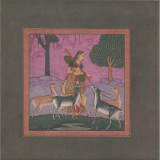
Matir Gaan is a collaboration between young Bengali migrant, Mohammed After Hussain and Italian electronic artist, Andrea Rusconi (aka Paq). The resulting album delightfully combines the ancient folk songs of Md After's homeland with Paq's cosmic synth exotica.
Mohammed After Hussain escaped Bangladesh in 2015 and arrived in Italy in 2017 after a long and dangerous journey across the Mediterranean from the violence he found in Libya. In Italy he found safety and hospitality as an asylum seeker in Rimini's Associazione Ardea, where Andrea is involved with 'Ardea Recordings' - a project aiming to create an archive of songs, stories and sounds by some of the people who spent some time with Ardea's refugee programme.
Md After was invited to sing and play the folk and village songs he knew on the harmonium and pakhawaj (two headed drum) while Andrea immersed himself in the songs providing a bed of warm Crumar synth and Veena drones to create a finished album of totally uniquela renditions of the mystic Baul folk songs known so well by people across the Bangla speaking regions of India.
The Bauls are a famous group of wandering minstrels from the region of Bengal whose culture is derived from the teachings of the early Sufi mystics and Hindu Fakhirs. The Baul devotees are considered to be mad, or possessed, with the love of God. While transcending religion the Baul compositions celebrate celestial and earthly love and expound the key philosophy of “Deha tatta” or truth in the body, epitomised by the aphorism “whatever is in the universe is in the body”. They reach for divinity here in this world and they seek to access it through music and dance. They seek spirituality in the music, they live fo r the music, wandering from village to village offering ecstatic sound waves in exchange for sustenance. Their presence remains an important part of village life in Bangladesh, and this is why Md After knows the songs despite the fact he would not consider himself part of the Baul ascetic tradition.
We hope you'll enjoy this wonderfully psychedelic album, with its unique interpretations of these ancient mystic songs from the earth.
Comes with a printed inner sleeve featuring sleeve notes and lyric translations by Brian P. Heilman

Petter Eldh's explosive ensemble Koma Saxo continues their adventures with a new album "Koma West", out on We Jazz Records, 18 March 2022. The album sees Koma Saxo expand on their previous sound with the addition of vocalist Sofia Jernberg and a strong cast of featured artists, including cellist Lucy Railton, violinist Maria Reich, pianist Kit Downes and accordionist Kiki Eldh (Petter's mom!). The hard-hitting key quintet remains, including Eldh on bass and assorted instruments, Christian Lillinger on drums, plus saxophonists Otis Sandsjö (of Y-OTIS), Jonas Kullhammar and Mikko Innanen bringing the SAXO to the KOMA operation.
At 14 tracks, "Koma West" is a full menu of monumental compositional ideas that could spawn entire albums. True to his chop & go production style, Eldh relies on continuous movement while presenting another all killer no filler program taking Koma Saxo on a sonic outing not quite like anything that had previously appeared under the band's name. That being said, there's very much the Petter Eldh touch here, one which might be hard to pinpoint and verbalise, but nevertheless a recognisable style of composing, producing and arranging.
Thematically, the album is rooted in the West Coast of Sweden, where Eldh grew up – he's from a tiny town called Lysekil. There's a thread of Swedish folk song tradition that has been part of the Koma Saxo DNA from the get-go and you can hear that here as well, especially on cuts such as "Närhet", beautifully sung by Sofia Jernberg.
Petter Eldh says:
"In a way, it's a concept album and a celebration of the Swedish West Coast. The first single is called 'Koma Kaprifol', and kaprifol is the landscape flower of Bohuslän on the West coast, where I grew up. I'm not too wild about attaching strong narratives to my music but there's no way around it this time. The oysters, a common snack around the coast, are a strong conceptual presence here. Anyway, they seem to pop up here and there quite often already thus far in the Koma Saxo narrative, even though it's not always so obvious. Koma Vocals! Koma Strings! I love the presence of Sofia Jernberg here and I love writing string arrangements, too, although I never thought I would do it for Koma, but of course, Koma should have some strings, why not?. Koma Saxo should and can become anything."
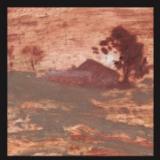
What's the point of the howl of string to speaker, the hammering of stick-on skin? Is it transcendence, elevating the human spirit by catharsis in sound? Or is it summoning chaos, a purgatory in which to bask in all that’s unclean, the better to feel alive?
Why not both? Because that’s what’s on offer on Diet Of Worms, the second Rocket release by The Shits, Leeds via Newcastle’s titans of disgust and deliverance. This is a feast for the senses in the worst way possible - primal rock boiled down to its essence and flung full in your face. Using repetition, tortured vocal invective and heads-down intensity as blunt instruments, these eight tracks are an unprecedented torrent of acidic salvation. Whilst lurking somewhere on the decadence-destruction axis between the nihilism of prime Stooges and the bloody blackout of Braimbombs, Diet Of Worms is possessed of a legitimately uncompromising hostility that both elevates and debases it to co-ordinates unknown.
There are revelations here in the riffage and the rancour, even if they are the kind that occur in the bleary miasma of the lock-in, or witnessing the streetlight blur of the subsequent stagger home. Even more single-minded and remorseless than the band’s Rocket debut ‘You’re A Mess’, this is a record that demands full immersion. Whether it’s ‘Then You’re Dead’ hammering on a pulverising garage-stinking riff until it begs for mercy, or ‘Change My Ways’, whose Creedence-In-Hell swagger and lurch is that of abjection transmuted into joy, this is psychedelia forcibly removed from its comfort zone of pastiche, and thrust into a bad-trip realm of the vivid and nightmarish.
But rarely has the process of making beauty and horror indivisible seemed like so much fun. If Werner Herzog was right, and the only harmony in the universe is that of overwhelming and collective murder, then The Shits are the true music of the spheres.

Solo 500 delivers another irresistible donut that takes the form of this 2-sided celebration of afro-latin & jazz-funk classics. GSC dusts off 2 deep catalog selections here — & part of the appeal is that neither side is a played-out sample cliché. This one is for heads who already burned through the obvious joints.
Side A digs into Manu Dibango beyond the endlessly flipped “Soul Makossa” universe. “The Panther”, from the 1973 album “Africadelic”, isn’t one of his commonly sampled tracks — & that’s exactly why it hits so hard. Low-slung Afro-funk, stalking bass & suspense-building horns that feel like a break record even if they haven’t been rinsed by every golden-era producer. Selectors who chase texture over recognition will understand the power here immediately. It’s the kind of cut hip-hop heads love not because they’ve heard it before — but because they haven’t.
Side B moves into Latin jazz-funk royalty. Ray Barretto is one of the most sampled percussionists of all time, but “Together” (from the 1969 album of the same name) sits slightly off the obvious break-beat path. Instead of a clean, isolated drum loop, you get rolling congas, warm keys & a communal groove that’s been DJ-tested far more than it’s been sampled. This is the type of Barretto cut that crate-diggers pull when they want rhythm to breathe — bridging jazz floors, disco-leaning sets & hip-hop selectors who think like musicians, not beat miners.
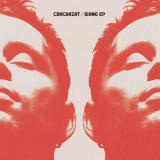
Crackazat returns to Freerange for his latest EP entitled Shine, and sees the artist in his finest form to date! An absolute anthem in the making the title track appears here in Club Mix and Mana’s Dub form, plus an amazing flip of Crouching Tiger from Baltimore legend Karizma Shine is a soulful, jazz-inflicted epic which will have any dance floor worth it’s salt fully locked in. Crackazat’s own vocals bring hints of Jamiroquai whilst his production calls golden era MAW and Blaze to mind. Add an incredible arrangement, live horns, bass and drums to this already heady concoction and you get an idea of why we’re so excited about this release. These kind of club tracks are few and far between these days! Next up we have one of Crackazat’s own Mana’s Dubs of Shine.
A chance for Ben to strip things back, loop things up and dub things out. Keeping the funk intact, we’re treated to a feelgood party-starting house track which has a classic sound that can’t fail to warm the cockles! Flip over for a proper curve-ball from everyone’s favourite Baltimore house hero Karizma who turns Crouching Tiger into the kind of twisted, rolling, jazzy and leftfield workout we love him for. A driving force of the city’s underground, he always comes with the raw energy and fearless creativity. A staple of the dance floor and a leader beyond it, Karizma represents the past, present, and future of Baltimore House and once again proves why he’s such a don.
Drop this one and run for cover whilst the dancers throw crazy shapes! Closing out the EP we have Crackazat’s Mana’s Dub take on previous single Watchu Say. Looping up the killer piano hook and his live bass line, Ben manages to craft the kind of warm, uplifting slice of house music which simply works. And for those who love a big drop, this one should fit the bill with a trademark Mana’s Dub seratonin-boosting build that hits all the right buttons.

Somewhere between revelation and delusion, Euphoria Bound maps a familiar trajectory: the irresistible pull towards dissolution, the gradual erasure of memory, the self rendered irretrievable. It moves between states of consciousness where such distinctions of enlightenment or self-deception are erased.
Across ten tracks, the album constructs a spectrum of sound that is both ambitious and Uncompromising. The approach here is more direct than recent releases, with textures that accumulate and disintegrate with renewed urgency.

Clear Vinyl[23,32 €]
Bonnie 'Prince`Billy kehrt am 6. März 2026 mit dem Album 'We Are Together Again' zurück. Das Album ist warm und persönlich und außerdem so angelegt, dass es mit denselben Worten beginnt und endet: 'Why is the lion still here, outside?'
Thematisch ist das Album tief in Louisville, der Heimatstadt von Bonnie „Prince“ Billy, verwurzelt. Es feiert die Kraft von Freundschaft, lokaler Gemeinschaft und gemeinsamem künstlerischem Schaffen. Damit setzt es bewusst einen Kontrapunkt zur Globalisierung und plädiert stattdessen für Lokalismus. Aufgenommen wurde es live im Studio End of an Ear mit lokalen Musiker:innen, Freund:innen und Familienmitgliedern. Jeder Ton ist direkt und unverfälscht – was im Raum passiert, hört man auch auf der Aufnahme. „We Are Together Again“ nimmt die Ängste einer sich verändernden Welt nicht weg, sondern begegnet ihnen mit Harmonie. Das Album erzählt von Zusammenhalt, von der Freude am Miteinander und davon, wie das gemeinsame Fragen selbst zur Quelle von Hoffnung wird."

Bonnie 'Prince`Billy kehrt am 6. März 2026 mit dem Album 'We Are Together Again' zurück. Das Album ist warm und persönlich und außerdem so angelegt, dass es mit denselben Worten beginnt und endet: 'Why is the lion still here, outside?'
Thematisch ist das Album tief in Louisville, der Heimatstadt von Bonnie „Prince“ Billy, verwurzelt. Es feiert die Kraft von Freundschaft, lokaler Gemeinschaft und gemeinsamem künstlerischem Schaffen. Damit setzt es bewusst einen Kontrapunkt zur Globalisierung und plädiert stattdessen für Lokalismus. Aufgenommen wurde es live im Studio End of an Ear mit lokalen Musiker:innen, Freund:innen und Familienmitgliedern. Jeder Ton ist direkt und unverfälscht – was im Raum passiert, hört man auch auf der Aufnahme. „We Are Together Again“ nimmt die Ängste einer sich verändernden Welt nicht weg, sondern begegnet ihnen mit Harmonie. Das Album erzählt von Zusammenhalt, von der Freude am Miteinander und davon, wie das gemeinsame Fragen selbst zur Quelle von Hoffnung wird."

My Days of 58 is the eighth Bill Callahan album, his first since 2022. The twelve tunes here open uncanny depths of expression as Bill continues to blaze one of the most original songwriting-and-performance trails out there. Applying the living, breathing energies of his concerts to this album production, he sharpens his slice-of-life portraiture to cut deeper, releasing a stream of singalong consciousness: poetic, cinematic, novelistic, comedic - and above all - musical.

My Days of 58 is the eighth Bill Callahan album, his first since 2022. The twelve tunes here open uncanny depths of expression as Bill continues to blaze one of the most original songwriting-and-performance trails out there. Applying the living, breathing energies of his concerts to this album production, he sharpens his slice-of-life portraiture to cut deeper, releasing a stream of singalong consciousness: poetic, cinematic, novelistic, comedic - and above all - musical.


When you listen to birds, they usually talk about food, sex/family, or anxiety. If they knew about the true nature of humanity's cruel and exploitative relationship with birds, they would be discussing rebellion. Humanity's current trajectory about birds is to cause the extinction of one-third of all bird species by the end of this century.
This record crystallises the borders between memory, beauty, and anxiety. At the core is an amalgam of all the birds we have met and heard, their sounds synthesised from a blend of memories. Esthetically it simulates the qualities of bird sounds, hitting similar frequential sweet spots. There is a great variety of birds captured here, from high to low frequencies, from solo voices to groups, from birds standing on their own to complex world-building, where the bird voices are part of an ecosystem, becoming one of the instruments.
You could stop there, enjoying this record on a musical level, but it invites us to do one step further, to consider reconfiguring our relationship with the Earth and its inhabitants. To question our impact, and to ask why we need synthetic bird music. Is it just a visionary endeavour or is it because we are failing at fostering a world in which organic birds and other creatures can thrive?
32 artists from the whole world, including our favourite artists from Eastern Europe, have contributed to this compilation both with new and previously released music. Their music is ordered from dawn to dusk and into the night. For many of the artists it's their first time on mappa, but some have previously released an album with us.

Als Blackwater Holylight vor drei Jahren ihre Heimatstadt Portland, Oregon, verließen, war es ihr Ziel, der Tristesse des pazifischen Nordwestens und dem beruhigenden Komfort des Vertrauten zu entfliehen. Mit dem Ziel, das sonnigere Klima von Los Angeles zu genießen, fand sich die Band nicht nur in einer wärmeren Umgebung wieder, sondern auch in einer völlig neuen Landschaft - einer ohne Arbeitsplätze, langjährige Freundeskreise und die bequeme Zuflucht alter Gewohnheiten. Und genau hier, unbelastet von der Zufriedenheit der Sicherheit, begann Blackwater Holylight fleißig an ihrem vierten Album ,Not Here Not Gone" zu arbeiten. Wie schon ihre früheren Werke beschäftigt sich ,Not Here Not Gone" mit der Dualität von Licht und Dunkelheit - bedrohliche Riffs bilden das Fundament für betörende Melodien, dichte Wände aus Shoegaze-Gitarren paaren sich mit luftig-leichten Synthesizern, und schwere Themen werden durch sirenenhafte Gesänge vermittelt. Im Laufe des Albums verspürt der Zuhörer mal ein Gefühl der Stärke, mal ein Gefühl der Verletzlichkeit. Wie Schlagzeugerin Eliese Dorsay es beschreibt: ,In einigen Songs sind wir die Raubtiere, in anderen die Beute." Die Gegenüberstellung von Selbstvertrauen und Unsicherheit ist nirgendwo so deutlich zu spüren wie bei einer lebensverändernden Entscheidung, was vielleicht erklärt, warum der Umzug der Band ihr Studium der Kontraste auf ,Not Here Not Gone" zu neuen Höhenflügen intensiviert hat . ,Not Here Not Gone" wurde im Sonic Ranch außerhalb von El Paso, Texas, von Sonny Diperri (Narrow Head, DIIV, Emma Ruth Rundle) aufgenommen, wodurch die Band erneut ihre Komfortzone verlassen und sich an einem Ort isolieren konnte, an dem sie sich ausschließlich auf ihre Kunst konzentrieren konnte. Das Ergebnis ist das Kronjuwel von Blackwater Holylights Diskografie - eine reichhaltige und eindringliche Studie in tonalen Hell-Dunkel-Kontrasten, in der das Licht seinen Weg aus den Schatten findet.

Andrew Lloyd Webber’s The Phantom of the Opera is one of the most celebrated musicals of all time, and this original London cast recording from 1986 remains the definitive recording. Michael Crawford’s Tony Award-winning performance as The Phantom and Sarah Brightman’s portrayal of Christine Daaé helped make this the best-selling cast recording in history. Re-issued for the first time in decades, this classic album brings the unforgettable score to a new generation of listeners. From the title song to “The Music of the Night” and “All I Ask of You,” every track reflects the power and beauty that continue to make The Phantom of the Opera a global phenomenon nearly forty years after its debut. Since its premiere, The Phantom of the Opera has been seen by more than 160 million people in 195 cities and has received over 70 major theatre awards. It holds the record as the longest-running show in Broadway history and was the first British musical to debut at number one on the music charts. The recording has been certified Platinum in six countries.

Before he turned 20, Lô Borges released one of the most captivating albums to come out of Brazil's rich musical landscape - a record that somehow flew under the radar at the time but has since become a cult favorite for listeners around the world. Recorded in the same whirlwind year as the legendary "Clube da Esquina" - the groundbreaking collaboration with Milton Nascimento and Beto Guedes - this self-titled solo debut finds Lô Borges in full creative flight. Pressured by Odeon Records to deliver a solo project, Borges responded with a burst of youthful brilliance, sometimes writing a song in the morning and laying it down in the studio that very night. The result? An album that's spontaneous, heartfelt, and sonically stunning. From the shimmering guitars of 'Você Fica Melhor Assim' to the dreamy melodies of 'Cançao Postal' and the jazz-infused groove of 'Calibre,' the album blends Brazilian popular music with rock, soul, and subtle psychedelic touches. It's got the intimate spirit of a bedroom recording, but with the musical sophistication of legends - with collaborators like Toninho Horta, Tenorio Jr., Nelson Angelo, and of course, Beto Guedes helping bring Borges' vision to life. Fans of Caetano Veloso, Gilberto Gil, or early Nascimento will feel right at home here - but Lô Borges brings his own voice, at once tender and electrifying, to every track. The guitars are fuzzy, the harmonies rich, and the songwriting nothing short of magical. Though it didn't make a splash in 1972, "Lô Borges" has only grown in stature over the years. It's the kind of album you discover once, then return to again and again - a timeless treasure from a young artist who helped redefine Brazilian music from the ground up. If you're into warm, soulful songwriting with a touch of experimental edge, this record is waiting for you. Give it a listen - and see why "Lô Borges" is considered one of Brazil's most underrated masterpieces. Reissue on 180g vinyl.

Zeitkratzer director Reinhold Friedl and his ensemble present new compositions, grounded on Domenico Scarlatti's piano sonata F-minor K.466. Commissioned by the dance company Rubato and dedicated to Mario Bertoncini (1932-2019).
Little is known about Domenico Scarlatti (1685-1757). His music is, so to speak, left to its own devices: free, cheeky, playful, sonorous, surprising. Harmonically strolling again and again into unforeseen regions, the ear leads, not the theory; and also the fingers get their right: playful and haptic it goes. Scarlatti explained, "since nature has given me ten fingers and my instrument provides employment for all, I see no reason why I should not use all ten of them."
Freedom, friction and listening pleasure instead of convention: "He knew quite well that he had disregarded all the rules of composition in his piano pieces, but asked whether his deviation from the rules offended the ear? He believes there is almost no other rule than that of not offending the only sense whose object is music - the ear."
Reinhold Friedl applied this principle and composed the music for a choreography by dance company Rubato. Dance music drawn from Scarlatti, who was so inspired by dance music. The material of the piano sonata F-minor K.466 is twisted anew in all its richness, shifted back and forth, declined, frozen, noisified, sound structures extracted, floating. Those who know the sonata, will more than smell it’s shadows. Dedicated to Mario Bertoncini (Gruppo di Improvvisazione Nuova Consonanza) who was particularly fond of K.466, on which all the music presented here is grounded.
"Wild flowers", Barbara Zubers had once called Scarlatti's music. Let them bloom.

Rancid is without question one of the most successful and influential punk bands ever, not to mention being among the most prolific. Their nonstop songwriting and marathon studio sessions often result in far too many songs to fit onto their albums. True Rancid fans know that in addition to their classic long players, many of their finest tracks have been released as single B-sides, bonus tracks, on compilations, or in some cases have remained in the band's vault. That is why B sides and C sides is no mere throwaway record, but an essential part of this classic band's catalog. The songs collected here represent a cross section of everything that has made this band so beloved worldwide, including their creative genre hopping from blazing punk rock to danceable ska, to reggae, rockabilly, and more, all executed with some of the most impressive playing in the history of underground music. The songs range from fan-favorites like "I Wanna Riot" to obscure hidden gems from rare or hard-to-find compilations, and a handful of studio recordings that were completely unreleased before this album, several coming from the fertile recording sessions for the band's sprawling 1998 masterpiece Life Won't Wait. Originally released on CD in 2007, most of the tracks range from the band's early days through their sixth album, Indestructible, although the 2012 track "Fuck You," from the Pirates Press Records compilation Oi! This is Streetpunk! Volume 2 was added to place a definitive final word on the collection when it was pressed on vinyl. With the album being out of print and hard to find in its own right for the past ten years, Pirates Press Records is thrilled to partner with our friends in Rancid to remedy that situation and make this essential piece of punk rock history available to their many fans across the globe - this time as an incredible double 12" with super deluxe coloured vinyl and matching sleeve art!

Le Corbeau, the brainchild of Oystein Sandsdalen (Serena Maneesh), has become a formidable collective. here with a trilogy of albums spanning eight years. Why such a productive group choses to release twenty-seven songs simultaneously may be a greater reflection on the myopic nature of record labels -The mystic deities of noir have returned. "The band"s sound bows to the vestiges of V.U., Sonic Youth, and Lynchian glamour- but each of the three albums show ambition to go beyond, by player freedom and improv, exploring textural layers, and nuancing each groove. Many songs remind us what we loved in 2009`s Evening Chill / Montreal of the Mind - surrealistic, seductive, draped in velvet. Some circle to the familiar with punk fuzz and playful themes, like "1000 eyed behemoth": about leaving Oslo"s night life behind. Other times, they are creators of their own classics. Opening track to VI: Sun Creeps Up the Wall, "Blossom with an Evil Light" recorded between 2017-2018, illuminates a a new path of change. The long anticipation is over- come enter the murky and magical waters of Le Corbeau." -Ann Sung-an Lee
