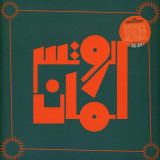
After this pair of Leeds residents made waves last November with their first EP for Pilot, Bobby O'Donnell and Reeshy return to lay down four new tracks that definitely stray towards the electro end of the breaks/electro spectrum. There's a sense of continuity, as the first EP's tracks - labelled 1-4, are followed by tracks 5-8, as well as being executed with a proper human touch that not all such machinefunk can boast. '6' is full of spiralling Drexciyan mystery, before being pared down to an LFO-style bass prod. '8' also echoes the former legends of Leeds with its dreamy pads and acid backdrop - something in the local water supply. Definitely funky enough to keep the breaks DJs onside, but with a thorough knowledge of love of 40 years of electronic music heritage at its disposal too, this is one release you should make sure you not miss.
Cerca:heritage
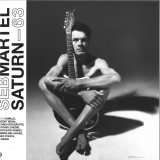
If the name Seb Martel is still unknown to you, the guitarist appears on the credits of classic albums from Tony Allen, Femi Kuti, Morcheeba or Blackalicious. Saturn 63, his new album on InFiné is dedicated to the exploration of the electric guitar in all its nuances. This new opus made from a selection of 9 guitars from the Musée de la Musique (a branch of the Philharmonie de Paris), and only enriched with the voices of his close collaborators (Camille, Sabrina Bellaouel...), unfolds on fourteen tracks a musical fresco faithful to the historical and geographical heritage of his instrument. The album includes fascinating reworks of Carl Perkins, Benjamin Britten, Chavela Vargas or Vincent Segal in addition to his own compositions. However, adopting a dogmatic approach, and dressing his compositions with sounds and effects collected during the recordings, Martel offers an abstract and experimental edge to Saturm 63, which transports the listener into an out of time experience. Two famous names of the French Chanson, -M- and Mathieu Boogaerts joined Martel to close the album with the snapshot of a speechless improvised session.
"My debut album "Leidenzwang" is the consequence of boundless obsession" apostrophizes Kenji Araki with stoic calm. An obsession in the most positive as well as in the most negative of all senses, involving a wide variety of media. Kenji, in his early 20s, is known to be a digital and interdisciplinary artist from Austria with roots in Japan whose work is primarily influenced by the deconstruction of music and contemporary art.
"Leidenzwang" (in English: Suffering compulsion) is confrontation. Confrontation with the world. Confrontation with oneself. A confrontation that can be productive and cathartic. However, until Kenji Araki was able to get into this pattern of thinking, it was necessary in the process of creation to leave his very own sanctuary which he cultivated over the years. Escapism in the rear-view mirror of the past. "Leidenzwang" as a natural hybrid of passion (probably the most beautiful feeling a creatively active person can experience) and dangerous self-flagellation plus constant unrest. The result and musical core of Kenji Araki's debut album is an experimental, emotional post-club exploration with pop sensibility that deliberately ignores genre boundaries.
12 tracks spread over 50 minutes in fast forward: It starts with the adequate intro "Avant" - a primal scream. Next with "Matter" where Kenji collaborates with Thomas Mertlseder and constructs the sound world of a dark fashion film. Emotional highlights for the vividly vibrating club floor as well as for the digital terminals of Planet Earth delivers "Nabelschnurtanz" with its amalgamation of human sound waves. Followed by "Gel & Gewalt" - a combination of 90s Grunge, IDM and exponential rhythms - the fierce "SINEW" with its distorted double bass recordings and "Monomythz" which is Kenji's interpretation of a club banger with a combination of 2000s Eurodance aesthetic and hypermodern off kilter beats.
A moment to take a breath is offered by the spherical track "Milieu" which was written during an emotional low and thus naturally has a dark note. At position 8 is "lluviácida" - inspired by the "rave scene" observed from afar. Closely followed by the album's title number "Leidenzwang" with its granularized piano melodies while nature sounds can be heard in the background.
The album finale is formed by the polyrhythmic fireworks "Deathless Mess", the piece "Isan 世襲" (in Japanese heritage) which symbolizes the own inner turmoil and at the same time acoustically illustrates the relationship to his origin. And the conclusion is marked by the heartbreaking "Au-Dèla" as the epitome of a closer. Kenji Araki: The time is now.
After the 2021 Re-Release of “Schwingungen” (MG.ART612) and together with “Seven Up” (MG.ART613) we proudly announce “JOIN INN” as Part3 of the authorised 50th Anniversary “A.R.T.” Re-Edition Series.
“JOIN INN” is the fourth album by Ash Ra Tempel. It was recorded at Studio Dierks and originally released on LP by Ohr Musik-Produktion, catalogue number OMM 556032. Each side of the LP comprises one long track.
In 1972 ASH RA TEMPEL teamed up again with Klaus Schulze during the recording of Walter Wegmüller's Tarot album, and after one of the recording sessions, ASH RA TEMPEL members: Enke, Göttsching and Rosi, together with Klaus decided to "play it again" in a late night session. This recording led to the birth of the “JOIN INN” album, as well as two legendary last concerts in February 1973 in Paris and Cologne.
Manuel Göttsching recalls Hartmut Enke on bass and Klaus Schulze on drums being a dream-team rhythm section for him to play his guitar, especially here to hear on “Freak'n' Roll”, that was ingenious and not to replace ever since.
It was the last recording ever where Klaus Schulze (who sadly passed away this Year) played the Drums and also Hartmut (the Hawk) Enke soon after quit the Bass and music forever.
Join Inn marks the end of the collaboration with Klaus Schulze.
However, together with Ash Ra Tempel, their eponymous first album, which will be released in 2023 as the final edition of our Series, it is considered a highlight of the Krautrock movement.
As for the music itself we again refer to Julian Cope´s review from his book “Krautrocksampler” (published by Head Heritage, 1st ed. 1995):
""Freak’n’roll” fades in like it never started - just was always there from the beginning of time, a dry wah-guitar freerock riff-out unlike any of the other Ash Ra Tempel LPs, and not much like any other music. Yes, there are bluesy riff but none of them have a blues context. Manuel Gottsching’s guitar is so confident that he sometimes drops down to a simple major chord groove, whilst the Hawk pushes that round woody bass into strange overlapping rumbling melody. And ... it’s the return of Klaus Schulze on drums which propels “Freak’n’roll” to its height. No-one but Klaus has the ability to
transcend rock’n’roll in such an on-the-beat non-groove-y way and still send sparks of light into the cosmos as he does it.
-> continued on page 2“Freak’n’roll” is so egoless that it even works at a quiet volume as meditational music. Themes rise from the high tempo pulse beat, then are carried along the muscles of the song into the main area where the riff actually becomes real and expressionist for just long enough before slipping back into the musical fabric of the song.
As usual with Ash Ra Tempel, the other side is an enormous drift piece called “Jenseits (The Next World)”, a beautiful Klaus Schultze meditation of haunting synthesizer chords over which Rosi Muller tells the story of the Cosmic Couriers’ meeting with Timothy Leary. Gradually, the pulsing guitar becomes increasingly intense and turbulent, but Rosi never sounds less than freaked out. Essentially, “Jenseits” is a precursor to Klaus Schulze’s later spacey minor-key grooves.
Unfortunately, this was the last Ash Ra Tempel album in its particular ‘series.
(…) After “JOIN INN”, Manuel Gottsching took over the Ash Ra Tempel mantle alone.”
After the 2021 Re-Release of “Schwingungen” (MG.ART612) we proudly announce “Seven Up” as Part 2 of the authorised 50th Anniversary “A.R.T.” Re-Edition Series.
“Seven Up” is the third studio album by Ash Ra Tempel and their only album recorded in collaboration with American Ph.D. in psychology, Dr. Timothy Leary. The Coverart for “Seven Up” was designed by famous Swiss Artist Walter Wegmüller. Recorded in August 1972 at Sinus Studio in Berne, Switzerland, remixed September 1972 at Dierks Studios in Stommeln, Germany. First release in spring 1973 by OHR Musik - the first release on the new sub-label "Kosmische Kuriere", Kat-Nr. KK 58001.
We release “Seven Up” in a Re-Cut carefully overseen by Manuel Göttsching himself, on September 9th 2022, also being Manuel Göttsching´s 70th Birthday. Our Edition features the full original text for the “7 levels of consciousness” by Timothy Leary in English, i.e. “Instruction Manual for Pleasure Panel” plus a previously unreleased glimpse view of the original scripts incl. notes and mark ups as well as partly unreleased photos from the recording session. ->continued on page 2->continued on page 2 As for the music itself we again refer to Julian Cope´s review and remarks from his book "Krautrocksampler” (published by Head Heritage, 1st ed. 1995):
“When the Leary Mob met the Kaiser Gang, the sparks flew ever Up-wards... 7up is a stone classic in every way. Yes, it is unlikely to find Timothy Leary singing lead vocal in a cosmic group, but even weirder that he chose to sing a wild yelping freaked out blues !
Manuel Göttsching and Hartmut Enke had begun their careers in The Steeple Chase Blues Band back in the mid-'60ies, and they quickly felt their way through what Barritt and Leary were aiming for. They reconciled it all as a kind of West Coast chordless psychedelia, where blues riffs sparkle out of nowhere and the sheer weight of synthesizers renders everything with an unreal Pere Ubu/early Roxy Music quality.
The greatness of Ash Ra Tempel burned so brightly on 7Up that there is really nothing else like it. Hartmut Enke and Manuel Gottsching here returned to their riffy roots. It can hardly be called a retro act, though, as the context of music is everything. And with Dierks at the controls, even the New Kids on the Block would have sounded psychedelic.
7Up is like a late night radio show glimpsed through a shattered tuner where all but the most truly dangerous sounds have been allowed to stay, to drift and to dance around the performers.
The result is an extreme gem, a flash of hysterical white lightning, and a pre-punk Technicolour yawn in the grandest of traditions.
In typical Ash Ra Tempel style, the record is divided into two pieces, “Space” and "Time”. Within this, though,
Timothy Leary’s ideas are allowed to free-flow and the two sides are therefore divided into mini-songs all segued together. The highlight of Side 1 is “Power Drive”, a West Coast burn-up that transcends any W.
Coast music I ever did hear. Leary and Barritt present the greatest twin-vocal of all time, coming on like Jagger and Morrison but too caught up in their own maelstrom to be anything less than Heralds of the Punkfuture still five years away.
In chaos it was conceived and in chaos it was recorded. Yet Dieter Dierks, the great Aural Architect of the Cosmic Couriers, turned 7Up into a personal triumph and a Kosmische dream.”
Ash Ra Tempel – “Seven Up”
TIMOTHY LEARY - voice
BRIAN BARRITT - voice
MICKY DUWE - voice & flute
LIZ ELLIOTT - voice
BETTINA HOHLS - voice
PORTIA NKOMO - voice
HARTMUT "HAWK" ENKE - bass, guitar & electronics
MANUEL GÖTTSCHING - guitar & electronics
STEVE A. - organ & electronics
DIETMAR BURMEISTER - drums
TOMMY ENGEL - drums
DIETER DIERKS - synthesizer & Radio Downtown
Born of chance meetings in Accra, the band brings together a Burundian producer and vocalist, Betina Quest; with a Ghanaian singer-songwriter, Eli A Free; and a German percussionist and multiinstrumentalist, Ma.ttic. Nyamekye Junction take their name from a bustling junction in the Ghanaian capital, where a number of major roads merge, embodying the musical approach of the band: a singular sound at the junction of their cultural heritages.
In Eli’s words, ‘Dasein’ (from the German for ‘existence’, ‘being there’), captures “the need to live in this moment here and now with a heart full of gratitude” while exploring a number of interlinked themes, including the importance of one's environment – cultural and political, as well as physical - in situating, shaping and explaining each individual’s identity.
The band adeptly channel a wide range of influences, from the Ghanaian legends Ebo Taylor and Osibisa through to US mainstays such as Nina Simone and Erykah Badu; with equal regard given to UK innovators like Benjamin Clementine and Mala. The resulting debut EP ‘Dasein’ is a stunning collage which showcases the band’s impressive range and evolving sound by traversing a diverse range of moods, rhythms and textures.
The lead single ‘GMT’ (short for ‘Ghana Man Time’) is a dancefloor-ready track that carries a deft political message. Driven by a weighty bassline alongside punching drums and percussion, for a rhythm section that would be at home in any broken-beat set, the song explores and emphasises differing conceptions of time between the West and Africa with a playful irony.
Sababa 5 sharpens their euphoric Middle Eastern psych sound into an infectious four-track EP, featuring vocal revelation Shiran Tzfira, recorded here for the very first time. Together they reinterpret the traditional Yemenite songs of Shiran’s childhood into modern and irresistible blends of disco, funk, boogie, pop, and rock.
Tel Aviv based four-piece Sababa 5 is a supergroup of musicians from the local scene, steeped in psych rock, funk, the traditional Yemenite music that gave birth to popular Mizrahi Israeli music, and traditions from across the Mediterranean and the Middle East that have long blended into one another. Between them, they have played with everyone from the Hoodna Orchestra, Tigris, and Kutiman Orchestra to widely known vocalists such as Gili Yalo, Ester Rada, and Liraz Charhi.
Sababa 5’s catchy instrumentals and popular songs such as “Tokyo Midnight” have gained attention from the likes of BBC 6 Radio Music’s Gilles Peterson, Cerys Mathews, and Gideon Coe, Rashad “Ringo” Smith, and France’s leading purveyor of alternative sounds, Radio Nova.
Growing up in a traditional Yemenite Jewish household, Shiran Tzfira was heavily influenced by both the Jewish and Arabic traditional songs that play a major role in Yemenite culture. But her soulful, soft, yet powerful voice betrays a love of not only singers of Yemenite heritage, such as Ofra Haza and Balqees but also Western artists such as Stevie Wonder and Erykah Badu. Subsequently, Shiran has gained many fans in the Arab world, especially in Yemen, where she has been dubbed the Israeli Balqees”.
Cool Hand Flex was an original Suburban Base artist since 1993 and published with Subbase Music ever since, with influential releases on both Subbase and his own labels run together with his brothers out of De Underground Records Store in London’s East End.
Such was its influence on the evolution of Jungle and DnB, introducing to the world the talent that is DJ Randall and releasing seminal works such as We Are i.e. that the location of that store now carries a heritage plaque. Flex now brings you De Underground EP as an incredible collectible picture disc, carrying the iconic first-generation logo, it is a must have for all vinyl collectors and those that love and respect the origins of this music.
This is much more than a piece of memorabilia though, with 4 slamming tracks to trouble your speaker system. Starting off with two brand new slices of Flex awesomeness on the Future Flex side – ‘The Bass’ and ‘Let The Music’ distinctively Cool Hand Flex production with deep subs and crashing breaks which still seem to roll into smooth yet hard DnB.
Then on De Underground side you find two highly collectible tracks ‘Ralph’ and ‘Jungle’, that have never received a repress since their initial pressing run back in 1993 despite being in high demand. Expertly remastered and sounding as fresh as ever all packaged on a beautiful 12” vinyl picture disc.
Once again this is an extremely limited pressing & we can only advise you to grab them now before they disappear. Buy now and treasure forever!!
The ever masterful London based DJ/Producer Shy One is back with a new 5 track EP titled From The Floor To The Booth. Following on from the fuzzy, acidic haze of the vinyl only Crumb Trail 7 inch the new EP encompasses futher rich and eclectic sounds of Shy's musical heritage, London leaning from Broken Beat to Soul, Garage to Grime. The record journeys through and abstracts a variety of styles, tipping its cap to the archtectics of Londons musical underground from Soul II Soul and 4Hero to Loose Ends and Roll Deep. A notion every bit apparent in Shy's eclectic bass heavy, hi-energy club selections. The record is Shy One's most in-depth and ambitious release to date. The artwork is created by Herald Essuman of Artbox London. An incredible London based charity that supports artists with Autism and learning disabilities.
Radio Diaspora works on the concept of cultural identity, which is flexible and dynamic. This provocation is generated by referring to all African ancestry moved by the diaspora and its sonorous, vocal, polyrhythmic, and polyphonic codes - all the ancestral heritage that has spread throughout the world following expropriations, genocide, and slavery - sampling and amplifying references that become triggers of energetic approaches. A heavy core of representations and senses aims to exorcize through noise and strangeness all secular violence against people of the African diaspora. In the title song of this album, 'Negro Humor', the respected Brazilian actor Grande Otelo highlights the contradiction of the clown, which awakens joy in everyone but is a sorrowful, lonely figure, ridiculing himself and putting himself in the most embarrassing situations. Relieved, loud laughter echoes in the audience because it is not the target of ridicule. In 'Despacho', Radio Diaspora explores the dichotomy of society by introducing a speech by Brazilian lawyer Hédio Silva Júnior specialised in Afro-Brazilian religion. He questions a rule under discussion in Brazil's Congress that would prohibit the use of chickens in Candomblé and Umbanda rituals. Silva Júnior points out that everyone takes a stand to protect the rights of animals, but the same cannot be said of the defense of young black people and outlying societies. The track 'Meia-Noite' evokes a celebrated point of Umbanda, an Afro-Brazilian religious syncretic cult, permeated by free jazz and electronic atmospheres developed by the duo. The other songs on the album are divided into two parts. They feature the voices of North American icons of the black struggle for civil rights: The tracks 'A.H.M. Al-Shabazz 1 and 2', amid sonic dissonances, use extracts from speeches by the American leader Malcolm X, and in 'Muhammad Ali 1 and 2' we hear quotes from famous interviews given by the boxer and activist. Ali ironizes the questions he asked his mother as a child, why all good and positive things are associated with white. "Mother, how come is everything white? Why is Jesus white with blonde hair and blue eyes? Angels are white, the Pope, Mary, and even the angels. When we die, will we go to heaven? She said naturally we go to heaven. So, I said, what happened to all the black angels they took from the pictures." His Inquiry, however, is seen as a joke by the white audience present at the TV show, which laughs off Ali's scathing criticism. Radio Diaspora uses art as an instinctive force to reject submission to traditions and culture as taming. Music is the weapon. "The (album) sound means to exorcise racism out of our minds and make us ready to act". - Rômulo Alexis
The third release from Night Dreamer’s essential “Direct-to-Disc” sessions sees an incredible meeting between legendary US saxophonist Gary Bartz and leading UK spiritual jazz ensemble, Maisha, featuring two Bartz classics and three brand new joint songs written by both Bartz & Maisha in close collaboration.
Having cut his teeth playing with the likes of Charles Mingus, Max Roach, Art Blakey and finally in 1970, Miles Davis at the peak of his electric period, Gary Bartz became a leading figure of the early-to-mid 70s spiritual jazz movement, releasing a string of ground-breaking albums on legendary NYC jazz label Prestige Records with his NTU Troop, featuring classics such as “Celestial Blues”, “Uhuru Dance” and “I’ve Known Rivers”, before collaborating on Blue Note Records with the Mizell Brothers on the anthemic jazz funk of “Music Is My Sanctuary”. An oeuvre much loved by soul jazzers and hip hop fans alike.
Led by drummer Jake Long, Maisha have been central to the UK’s jazz explosion, and have fast become the UK’s most exciting and in-demand young spiritual jazz ensemble, from steller shows at Jazz re:freshed, Total Refreshment Centre & Church of Sound and supporting the Sun Ra Arkestra, to releasing their critically acclaimed debut LP, “There Is A Place” on Gilles Peterson’s Brownswood Recordings in 2018. Theirs is an organic & explosive sound that blends influences from afrobeat and broken beat to Persian music, with a deep love and understanding of jazz, particularly the heritage of spiritual jazz led by titans such as Pharoah Sanders, Alice Coltrane and of course, Gary Bartz.
Which makes this collaboration even more special. Bartz was first invited to share a stage with Maisha by Gilles Peterson to headline the inaugural We Out Here festival. Their chemistry was rich and instantaneous, certainly a two-way street, with the young musicians reinvigorating the legend’s performance and wowing the intergenerational festival audience. A European tour followed, including a London Jazz Festival highlight at the Royal Festival Hall, celebrating the 50th anniversary of his album “Another Earth”, originally featuring fellow legends, Pharoah Sanders, Charles Tolliver, Stanley Cowell, and John Coltrane’s own bassist, Reggie Workman.
Now the relationship has evolved into a special straight-to-disc recording for Night Dreamer Records, that captures the vitality of their collaboration. Whilst Bartz and Maisha reinvent classic Bartz compositions “Uhuru Sasa” and “Dr Follows Dance”, extending the pieces into long piece improvised grooves, their recording session gave birth to three brand new joint compositions, written the very same day. These include the propulsive “Leta’s Dance” that magically combines the Bartz’ soulful musical lyricism with Maisha’s African-jazz influences, and the organic jazz
funk of “Harlem to Haarlem”, featuring a hot solo from guest trumpeter Axel Kaner-Lidstrom of Cykada & Levitation Orchestra fame.
Like previous Night Dreamer efforts from afrobeat star Seun Kuti & Egypt 80, and the beautiful collaboration between Brazilian stars Seu Jorge & Rogê, the album was recorded in Haarlem’s Artone Studio, a stones throw from Amsterdam, in just one-take, straight-to-disc, avoiding post-production embellishments and retaining the purity of the performance lost in modern recording techniques.
This record really is an event, in and of itself, a meeting of talents, minds, generations and zeitgeist moments, captured in a unique and pure manner. The music does not disappoint, as Maisha have been inspired to reach new heights whilst we find Bartz truly reinvigorated, and both artists in tune to the spirit of the other.
Recorded direct-to-disc @ Artone Studio, Haarlem, The Netherlands on Tuesday 29th Wednesday 30th October 2019
The latest release on Livity Sound features an extensive insight into the work of Seb Uncles, aka Eusebeia. Uncles has been releasing his work prolifically over the past six years, from self-released tapes on Rebellion Electronics through to reams of 12”s and LPs for labels like Earthtrax, Western Lore, Rupture London and re:st. While his sound has often tilted towards drum & bass and jungle, he places atmosphere and composition ahead of genre boundaries and tempo restrictions.
Cosmos EP finds Uncles stretching out over eight varied tracks for a broader experience compared to the usual Livity EP. Glacial ambience and richly layered synthesis guides the record overall, at times leaving drums behind altogether, but even at its mellowest you can sense the overbearing bias towards soundsystem music. The melancholic electronica of ‘Becoming’ gets underpinned by dread bass, and ‘Solace’ places a haunting steppas-esque refrain in the midst of heavily dubbed downtempo. When he does turn to full-tilt drumfunk edits on the likes of ‘Hopes & Dreams’ and ‘Love + Light’, he approaches them with subtlety and finesse, matching rhythmic flair with melodic progressions which lend themselves to introspective listening as much as full dancefloor immersion.
Livity Sound is a label set up by Peverelist in 2011 as a vehicle for a raw and exploratory strain of UK techno, rooted in the heritage of UK dance music and sound system culture. It has since become one of the UK's foremost protagonists for cutting edge underground electronic music.
The city of Bristol has undoubtedly a rich reggae heritage. The criminally neglected Talisman finally benefits of a long overdue release, collecting their first efforts plus a series of extra tracks. You’ll get their first two singles released on Recreational Records - Run Come Girl/Wicked Dem and Dole Age/Free Speech, both released in 1981 – plus a selection of five long lost contribution.
Originally formed in 1977 as Revelation Rockers, a name they soon changed, Talisman were considered the top reggae act in town alongside local contemporaries Black Roots. The band – popular for their intense live shows – opened for such glorious and diverse acts as Burning Spear, The Clash and The Rolling Stones ! This proper release on vinyl allows a new generation of fans to catch with their original style. Talisman certainly shows a different side of the UK reggae flourishing scene – think about Aswad, Steel Pulse and Misty In Roots – putting Bristol back on the map!
For Fans Of… Dr. John, Allen Toussaint, The Faces, Joe Cocker, Leon Russell, Buddy Miles, The Meters, Father John Misty. "I just wanted to be honest about everything, from my musical influences to my story," muses Neal Francis. After years of dishonest living - consumed by drugs, alcohol, and addiction - such sincerity is jarring from the 30-year-old Chicago-based musician. Liberated from a self-destructive past and born anew in sobriety, Francis has captured an inspired collection of songs steeped in New Orleans rhythms, Chicago blues, and early 70s rock n' roll. There is a deep connection between Francis's childhood - his obsession with boogie woogie piano, his father's gift of a dusty Dr. John LP - and the songs he's created. The result is an astonishing collection of material without parallel in the contemporary funk and soul scene. The influences are unmistakable: the vocal stylings of Allen Toussaint and Leon Russell; the second line rhythms of The Meters and Dr. John; the barroom rock 'n' roll of The Rolling Stones; the gospel soul of Billy Preston; the roots music of The Band. Francis pays tribute to the masters but has his own story to tell: "It's the life I've lived so far." After playing his first live show in November 2018, Francis was signed by veteran agents Joshua Knight and Phil Egenthal of Paradigm Talent Agency. 2019 brought a North American tour supporting Australian band The Cat Empire as well as radio play on KEXP, KCRW's The Morning Becomes Eclectic, and BBC Radio 6. Francis and his four-piece band performed at festivals such as Summer Camp and the New Orleans Jazz & Heritage Festival and shared the stage with The Meters and Lee Fields & The Expressions. Francis continues to tour relentlessly to promote his own music. "I'm doing this to fulfill a drive within myself, but also to pay tribute to the gifts I've been given. And it comes from a place of immense gratitude. I've been given so much in my life, especially in the last two years, that this feels like a bonus." Also Available From Neal Francis: These Are The Days 7”.
Following a debut appearance on the reverse label in 2020, Bristol-based artist Ido Plumes is back on Livity Sound with four tracks of experimental dance music for soundsystems. Plumes established his sound with pointillist drums and echo chamber atmospherics the first time around, and now he builds on that premise with a more dense and dramatic approach.
Plumes’ layered tracks follow non-linear narratives, switching lanes and exploring unusual, evocative landscapes while retaining a fundamental physicality. Longer form tracks like ‘Afloat’ cover a lot of ground across their run time, while the likes of ‘Been Here’ revel in audacious plot twists to create strikingly confident and original variations on the UK dance music tradition.
Livity Sound is a label set up by Peverelist in 2011 as a vehicle for a raw and exploratory strain of UK techno, rooted in the heritage of UK dance music and sound system culture. It has since become one of the UK's foremost protagonists for cutting edge underground electronic music.
Jonathan Kusuma is no stranger to club music. He has played, produced and re-edited multiple works. This is what he excels at. But on Dream Bot, he wants his audience to discover a more introspective side of his. Raised in Indonesia, where rhythms are abound, be it from a folk song sung in a ceremony, a machine in a soul-crushing factory or a Boombox on the back of a bicycle, Jonathan’s ears are destined for a career absorbed in rhythm and sound.
With 5 tracks of kaleidoscopic rhythms and introspective moods on Dream Bot, he is paying homage to his rich musical education and heritage. Layered percussive samples come to mind as well as the intricate interplay of gamelans and moody arpeggios. They both evoke their distinct mournful tunings. Dream Bot is a reminder of his roots and the beauty of the sounds on the Indonesian streets that have left many ears in awe.
"This is the sound of a band empowered. Nothing - not our traumas and losses, not those who have underestimated or undermined us - can stop us. Those who seek to oppose us; your sins will catch up to you. We know who we are. We are united and you will fear us." Ithaca - They Fear Us ---------------- Formed in 2012 out of a mutual love of metallic hardcore but despair at its lack of ambition, Ithaca exist to challenge everything you thought about what a band that makes heavy music should look and sound like. A glitter-covered nailbomb, Ithaca seamlessly blend the brutality of Relapse Records metalcore with blackgaze, 90s industrial metal, 70s prog and even tinges of 80s power pop. Their influences stretch beyond the musical - this album comes with a clear vision and aesthetic: drawing from members’ different ancestral heritage, queer/non-conforming identities and iconic figures in avant-garde, new wave and post punk culture. Their upcoming second album ‘They Fear Us’ is the sound of a band healing from trauma - standing in their own, unapologetic voice. Furious and wildly inventive while also being more coherent and accessible, this album will introduce Ithaca to a wider audience than they’ve ever had before. To quote the band - ‘those who oppose us; your sins will catch up to you. You will fear us’. Ithaca's 2019 lauded debut ‘The Language of Injury’ was followed by their early 2020 tour with Grammy-nominated indie rock band Big Thief, starting at London’s Hammersmith Apollo. Press support from Pitchfork, BBC R1, Metal Hammer, Kerrang!, Rock Sound, Revolver, Decibel, BrooklynVegan, and performances with Bleeding Through, Jamie Lenman, Anaal Nathrakh, The Number Twelve Looks Like You, at Boomtown Fair and ArcTanGent Festival mark Ithaca as one of the most exciting and vital new voices in UK heavy music currently. Ithaca have also appeared on Ed Gamble’s Spotify podcast ‘Lifers’, Sky News and BBC3.
»1976 Kaleidoscope of Rainbows« in unmistakably a trait d’union between the british (orchestral) jazz-rock heritage and a more confident way of writing. Heading clearly to different directions, the album showcase the talent of the main composer with the singular talent of trumpet player Ian Carr (Nucleus), cello player Paul Buckmaster (otherwise known for his collaboration with David Bowie and Miles Davis) and clarinet player Tony Coe.
This is the final part of an Ardley trilogy, preceded by »Greek Variations« (1969) and »A Symphony of Amaranths« (1971). Here, Ardley uses Balinese scales – the pelog, a Gamelan scale comprising seven notes, and the slendro, an older, more commonly used Gamelan scale. They are used in a variety of note patterns, each unique combination the basis of a series of »Rainbow« compositions, from »Rainbow 1« to »Rainbow 7«. This brand new concept is fitting, showing different strategies and a more exotic feel with a certain minimalist counterpoint. A new beginning to a certain degree, with the spacey 1979 masterpiece »Harmony Of The Spheres« soon to come
- 1: Into The Light (Edit Version)
- 2: Saiyidi Dub
- 3: Tribal Dervish Union Of Souls
- 4: Arab Quarter
- 5: Arid Land
- 6: Mother Of Nature
- 7: Tribute To Hasni
- 8: Ancient Vibrations
- 9: Spirit Of The Nile
- 10: Canaanite Call
- 11: Serengeti
Deluxe double 12'' vinyl housed in a 2 pantone sleeve Including insert with liner notes Akuphone is pleased to present the first compilation dedicated to musician John Bolloten, aka The Rootsman. As a precocious punk, he formed his first band, State Oppression, in his teens. Yet he is best known for his dub music, a genre that gave him international recognition. Largely influenced by the rhythms of North Africa and the Middle East, he built his musical identity around samples from these regional repertoires. His encounter with Bryn Jones - better known as Muslimgauze - further defined his artistic path. This selection offers an overview of his work from 1996 to 1998, a prolific period when Into The Light, 52 Days To Timbuktu, Union Of Souls (with Celtarabia) and Distant Voices (with Pachakuti) were released. A visionary production that predicted today's growing international predilection for the musical heritage of the MENA regions. The compilation is enriched with an explanatory preface by Mabrouk Hosni Ibn Aleya and illustrated with rare archival photos- all of which are contained in a superb jacket designed by the artist Ghiya Haydar.
A masterpiece of the schooner rock variety, Black and White Raven is an album that emerged from Archie James Cavanaugh’s youthful dream of recording his own music while stuck in the Alaskan wilderness. With a freewheeling cast culled from Archie’s travels around the Pacific Northwest, including Redbone's Tony Bellamy and Pete DePoe, Black and White Raven was set down as the ’70s crested. Traces of disco, AM gold, gospel, and yacht mixed freely with his Tlingit heritage, creating a breezy and optimistic portrait of life in the 49th state.