The debut release from Detroit native DJ Holographic and Detroit transplant Alex Wilcox, Parallel Shiftingstrives to changeour thoughts so that we can breakfree fromnegative psychological programming. This feel-good EP aimsto reprogram the mind to be fresh and new. You may experience dimensionalshifts in your mind and reality as you defy space and time. Side effects of this may includereduced mental chatter and a better future selfand society.
A powerful and lofty goal such as this deserves a strong beat, and A-side “Parallel Shifting” delivers this in spades. Featured in DJ Holographic’s 2020 Mixmag Lab set, Holographic and Alex found themselves inspired by Thomos and Derrick Carter when crafting the track. “Parallel Shifting” is about shifting the gears in our minds and hearts, and allowing ourselves to be open to changes in how we perceive reality.
With “My Feels,” Holographic expresses her current attitude towards the connections between all of us. “Our feelings control our surroundings and reality more than we give them credit for. When we feel abundant, abundant things happen to us. However, if you feel empty, then you bring about empty situations. As a DJ, I do my best to be mindful of the feelings I project into a room, while also being mindful of everyone in the room with me. Everyone is coming in with different experiences, but when I play I want people to feel high vibrations.”
“Because Of Detroit” taps into the rich history of Detroit, which has informed Holographic and Alex’s own musical DNA. The seeds that we are all given in life are a product of our heritage. In order to bloom properly, it's important to know your full story and what kind of seed you are in this world’s vast garden. If you know how to properly nurture your seed, then you can take care of yourself and others. Knowing their roots helps both producers to grow stronger than their ancestors.
Hitchhiker is an independent record label out of Detroit that delivers a diverse range of sounds, and strings them together into a story that reflects where the artist has been, is presently, and where the future is taking them.
Поиск:heritage
Все
New album of one of the biggest Reggae/Dub french soundsystem starring MacGyver, Rooty Step & Pupajim (who worked with Alpha Steppa, Biga Ranx, High Tone, Mungo's Hi-Fi ...).
Available as super limited edition including 60x60cm Poster !
Since their inception at start of the 2000s, Stand High Patrol have rocked sound systems to their own riddim, assimilating and re-purposing the codes of the genre in their own unique style. From tiny bars in Brittany to huge festival stages, on independent radio or across national airwaves, the crew have quietly trod their own path, never compromising their core value of independence. Connoisseurs have long recognised Stand High’s credentials both as a dub group and a leading sound system, but they stand out from the crowd because of their ability to deliver the unexpected, whether live or on record. Their ability to draw such a diverse audience is testament to this atypical approach to making music.
In 2020, almost 20 years since their humble beginnings, the collective presents their fifth album, “Our Own Way”. As with their first two albums “Midnight Walkers” and “Matter Of Scale”, now considered as classics in their genre, this new opus asserts itself as the latest representation of the crew’s versatile approach to crafting sound. Their music, a blend of its own known as “Dubadub”, has always borrowed influences from multiple sources, and over the course of their career their roots in dub and reggae have intertwined with hip-hop, jazz, new wave, trip-hop and numerous other genres. The ‘Dubadub Musketeers’ have never ceased experimenting, forever seeking to increase the sonic territory they cover, day after day. Both live and recorded, they’ve made it a point of honour to never offer up the same thing twice. Any resemblance that “Our Own Way” might bear to those first two albums is a consequence of this obvious creative continuity, rather than of going “back to basics”.
In contrast to the last two Stand High Patrol records, the hip-hop inspired “The Shift”, or the Bristol indebted “Summer On Mars”, “Our Own Way” doesn’t have a unifying concept or theme. Rather than being limited to a single aesthetic, the LP pays respect to the entire canon of Jamaican music, all unified under Stand High’s inimitable production values. With the wealth of experience gained during the recording of their last two records, the collective decided to aim for a freer project, letting themselves be guided by their own music and their own instincts. The end result is a musical portrait of what Stand High Patrol is in the present moment.
The tracks that make up the new LP burst out of the studio, each born out of unbridled, impulsive creativity. Previously unheard compositions and specially re-tooled dub plates have been assembled into a tracklist that shifts and moves like a classic Dubadub Musketeer live set. Each step of the process has been refined by years of practice : composition, effects, and the final mix. Throughout “On Our Way”, the brutal dub stepper, though still a favourite for sound system sessions, is noticeable by its absence. Instead, it’s the full weight of the crew’s reggae heritage that’s expressed in the mix. It's not just the depth and weight of each tune that strikes the listener, but also the spaces heard between the notes that grab and hold their attention.. The sense of a trip, whether musical, internal or geographic, is omnipresent throughout the LP, linking each track to those before and after. “Our Own Way” finds Stand High Patrol exploring as usual, yet also narrating their journey as they’ve rarely done before
- A1: Name Tag (Premier & The Guru) (Premier & The Guru)
- A2: Step In The Arena
- A3: Form Of Intellect
- A4: Execution Of A Chump (No More Mr Nice Guy Pt 2) (No More Mr Nice Guy Pt 2)
- A5: Who's Gonna Take The Weight?
- B1: Beyond Comprehension
- B2: Check The Technique
- B3: Love Sick
- B4: Here Today, Gone Tomorrow
- B5: Game Plan
- C1: Take A Rest
- C2: What You Want This Time??
- C3: Street Ministry
- C4: Just To Get A Rep
- C5: Say Your Prayers
- D1: As I Read My S-A
- D2: Precisely The Right Rhymes
- D3: The Meaning Of The Name
- D4: Credit Is Due
- D5: Check The Technique (Remix)
Step in the Arena is the second studio album by hip hop duo Gang Starr, printed as a 1990 release and commercially released on January 15, 1991. The album received critical acclaim and was also included in the book 1001 Albums You Must Hear Before You Die. The Source magazine stated: “Step in the Arena stands alone on a musical level, yet it also remains true to hip-hop’s underground heritage.” In 1998, the album was selected as one of The Source’s 100 Best Hip Hop Albums. Urban Legends/UMC will reissue Step In The Arena on 2LP 180 gram black vinyl on 28th June, 2019.
Post lockdown does not mean we need to fall back into the same patterns like we did before. This EP contains a smooth transition to a new reality. ULTRATERRENO is TAGLIABUE`s (@josephtagliabue) newest EP on the Berlin and Zurich based micro Label Lustpoderosa.
The celestial sounds from the italian producer Tagliabue is a healing process of well tempered analog synthesizers. The cure is in the mix of pre dancefoor and ambient tracks inlcuding a slow trancy chug from well known and apreciated selector @AnatolianWeapons.
Tagliabue is not just inspired by the afro cosmic heritage of Beppe Loda and Daniele Baldelli, but also from post-folk, rock, prog and kraut infuences of 70’s and early 80’s, passing through New Wave and Synth Pop ofGaznevada or The Stupid Set and not to forget italians rave culture of the 90s with Franceso Farfa and MarcoDionigi just to mention a few.
This very intimate EP is a meditative and transcendental journey to another world. Literally
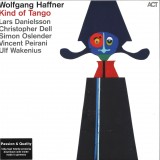
‘Kind of Tango’ is a kaleidoscope of shifting emotions. Wolfgang Haffner’s conception of tango has drama and propulsion in it but also melancholy and longing, with room for frenetic outbursts too. All this is unified by his inimitable groove and feel that commentators have called “an absolute dream,” “magical” and “profoundly relaxed.” Alongside trusted co-protagonists Christopher Dell and Lars Danielsson, he has two guests with him who defy all the clichés associated with tango: guitarist Ulf Wakenius cut his teeth musically in Oscar Peterson’s band and his Swedish heritage always shines through in his playing; Vincent Peirani is one of the leading innovators on the accordion and he finds new ways to define the instrument’s role in the tango. Also, young pianist Simon Oslender makes a first appearance with the band. Jazz and tango find a natural yet constantly shifting equilibrium - to be heard particularly effectively on ‘Close Your Eyes And Listen’ by Astor Piazzolla. In addition to compositions by Haffner himself and by his band members, pieces by the celebrated Argentinian bandoneon player and composer are the focal point of the album. Piazzolla’s innovations with the tango, such as bringing jazz into it, date from around 1955. Haffner and the tango
seem perfectly matched to each other. Tango is no longer a fixed style nowadays, it is above all an attitude to playing and an attitude to life. Wolfgang Haffner’s approach to tango is both authentic and new. It is his and his alone and it is irresistible.
Moroccan-French power quartet, Bab L’ Bluz, reclaim the blues for North Africa. Fronted by an African-Moroccan woman in a traditionally male role, Bab L’ Bluz are devoted to a revolution in attitude which dovetails with Morocco’s ‘nayda’ youth movement – a new wave of artists and musicians taking their cues from local heritage, singing words of freedom in the Moroccan-Arabic dialect of darija.
Sought-after eponymous Indonesian album by the Yanti Bersaudara (which means the Yanti sisters: Yani, Tina & Lin Hardjakusumah), released in 1971 and reissued for the first time. It is a very spiritual and magical Sunda album with haunting vibes based on a unique,
creative and strong Sundanese cultural heritage.
Active only for less than a decade (from the 1960s until the early 1970s), the three sisters originally from Bandung (West Java) sang traditional Sundanese songs with beautiful voices & harmonies, creating a trippy oriental exotic psychedelic sound.
Hailed by none other than Seun Kuti as "one of the best things to come out of Lagos", Nigerian trumpeter, composer and bandleader Etuk Ubong has developed an original style he calls "Earth Music". Weaving together a unique combination of not only afrobeat, highlife and jazz, but also the ritualistic drumming of Ekombi, the result is urgent and highly energetic, yet spiritual; his compositions reflecting his heritage and life philosophy of goodwill, peace and love for humanity. Ubong's music is so vibrant and propulsive that one can easily make comparisons with leading lights of the UK scene, such as the Shabaka Hutchings-led Sons of Kemet, but at the same time it is distinctly Nigerian.
The latest project by belgo-moroccan producer Reda Senhaji, alias Cheb Runner, focuses on breeding a new style of music between electronics and Gnawa. Taking inspiration from New Beat to Techno, Acid House and Gabber, the grooves are relentless, stiff and club oriented, relying heavily on analog synths and drum-machines. The sound is darker, more experimental and mature than his previous Gan Gah project.
Cheb Runner digs into the acoustic sounds of his youth, for an organic feeling of warmth and celebration. The syncopation of the classic Gnawa percussions, the “Tagnawit”, its groove is undeniable. Featuring two traditional Gnawa singers based in Brussels, Mâalem Driss and Mâalem Hicham, the EP is a reunion for the belgian Gnawa scene, keeping the vibe alive.
In a world of dematerialized culture, we tend to forget where we come from : by putting Gnawa music at the center of his production, Cheb Runner creates a bridge with the past. The young producer is a son of Gnawa himself, this is the music he grew up with and played as a kid.
Now he brings it to the club scene; Cheb Runner’s first EP is experimental, brutal, innovative. Getting past definitions and genres, it opens new horizons for North-African producers, showing them how to use their roots to make new beats. It encourages both tradition and modernity in Music. In 2019, Gnawa music, dance and culture was added to the UNESCO Intangible Cultural
Heritage list, demonstrating both the relevance of the genre and the necessity to preserve it.
of the genre and the necessity to preserve it.
Cheb, the Arabic word for “young boy”, is traditionally used to describe the young generation of Raï singers – like Cheb Hasni, Cheb Mami or Cheb Khaled. It means the new generation is here, to create something new with something old. The reference to the Ridley Scott movie Blade Runner is just that: while the Cheb comes from the bled, a moroccan village in the Agadir region, the beats come from the club scene of an industrial city, like Berlin, Detroit or Molenbeek/Brussels.
Cheb Runner takes you on a trip through space and time, as well as to pass on ancient rhythms to inspire the next generations.
The Berlin based label Sonar Kollektiv has been waiting for it anxiously: Key Elements' debut album leads Jazz music into the new decade down-the-line. The music Key Elements create is fresh, merciless and ruthless and has always the finger on the pulse of the time. The album's eight tracks are all far away from Broken Beat nostalgia or Beatmaking nedism, they breathe inspiration from the young, thriving British jazz scene. Key Element's initiator, DJ and producer Marian Tone, built up a reputation in the Berlin hiphop, soul and jazz scene over the years (also as a co-founder of Beatkollektiv). With all of his compositions you always feel this heritage and his love and passion for hiphop. But the other two allys within ëKey Elementsû, drummer Waldi and the keyboard or bass player Jim Dunloop made their contribution with compositions and ideas as well. An album which was initially designed to be a mere solo project became an effort of a trio over the years being inherently consistent.
Fantastic first album of Tunisian producer Azu Tiwaline, melting psychedelic dub, industrial and hypnotic techno deeply rooted in her berber culture, supported by Lena Willikens, Nicola Cruz, Toma Kami and Violet, to name a few!
Azu Tiwaline is a new name for a new spirit: one of a producer inspired by the need to explore her origins, rooted in the Tunisian Sahara. The Call to a different sound, organic and raw, vibrating in the great spaces of the African desert where trance music resonates... Ecstatic ritual.
Her first album, Draw Me A Silence, conceived as a diptych, reveals the multiple facets of her identity. Uniting the bonds that connect Berber music, dub culture and techno hypnosis, Azu Tiwaline invites us to refocus on our senses and our Nature. She knows how to use contrasts between light and the invisible, exploring the complexity of our emotions and the mystery that emanates from them, in a polyrhythmic chiaroscuro that runs through each one of her tracks, and of which we discover, as we go along, all the outlines.
Draw Me A Silence Part. I (to be released in February 2020), delivers the most hypnotic variant of her music, centered on dark percussive rhythms and a skillful use of repetition; each of the 5 tracks ineluctably carrying the listener into a trance. Two major tunes particularly illustrate the artist's imagination: "Itrik" and "Berbeka", perfectly synthesizing the heritage of Berber trance music and her techniques derived from minimalist and repetitive electronic music.
The continuation, Draw Me A Silence Part. II (to be released in April 2020), gives prominence to a deep heritage drawn from the dub culture and its numerous bass music filiations. This second part thus gives a new breath in the use of sound space, exploited in a much broader way, leaving all their space to complex syncopated percussive lines, supported by massive basslines dedicated to the best sound-systems. Omok, the first of the five tracks of this Part II is the perfect demonstration of this, playing here the essential role of a bridge to the darker waters of this album's end.
Each of these two parts exist as an Entity, and it is only when they are united that they will reveal their full meaning. Thus, in May, Draw Me A Silence will find its final form in a double-vinyl unifying them. Listening to this album in its entirety offers us a wide panorama of the sound landscapes visited by Azu Tiwaline, who seems to breathe primitive sounds of a faraway desert into a music with modern tones - and vice versa. A resolutely hybrid sound and a singular experience, playing with contrasts and nuances to catch the listener in vast and so far unexplored territories.
The third release from Night Dreamer’s essential “Direct-to-Disc” sessions sees an incredible meeting between legendary US saxophonist Gary Bartz and leading UK spiritual jazz ensemble, Maisha, featuring two Bartz classics and three brand new joint songs written by both Bartz & Maisha in close collaboration. Having cut his teeth playing with the likes of Charles Mingus, Max Roach, Art Blakey and finally in 1970, Miles Davis at the peak of his electric period, Gary Bartz became a leading figure of the early-to-mid 70s spiritual jazz movement, releasing a string of ground-breaking albums on legendary NYC jazz label Prestige Records with his NTU Troop, featuring classics such as “Celestial Blues”, “Uhuru Dance” and “I’ve Known Rivers”, before collaborating on Blue Note Records with the Mizell Brothers on the anthemic jazz funk of “Music Is My Sanctuary”. An oeuvre much loved by soul jazzers and hip hop fans alike. Led by drummer Jake Long, Maisha have been central to the UK’s jazz explosion, and have fast become the UK’s most exciting and in-demand young spiritual jazz ensemble, from steller shows at Jazz re:freshed, Total Refreshment Centre & Church of Sound and supporting the Sun Ra Arkestra, to releasing their critically acclaimed debut LP, “There Is A Place” on Gilles Peterson’s Brownswood Recordings in 2018. Theirs is an organic & explosive sound that blends influences from afrobeat and broken beat to Persian music, with a deep love and understanding of jazz, particularly the heritage of spiritual jazz led by titans such as Pharoah Sanders, Alice Coltrane and of course, Gary Bartz. Which makes this collaboration even more special. Bartz was first invited to share a stage with Maisha by Gilles Peterson to headline the inaugural We Out Here festival. Their chemistry was rich and instantaneous, certainly a two-way street, with the young musicians reinvigorating the legend’s performance and wowing the intergenerational festival audience. A European tour followed, including a London Jazz Festival highlight at the Royal Festival Hall, celebrating the 50th anniversary of his album “Another Earth”, originally featuring fellow legends, Pharoah Sanders, Charles Tolliver, Stanley Cowell, and John Coltrane’s own bassist, Reggie Workman. Now the relationship has evolved into a special straight-to-disc recording for Night Dreamer Records, that captures the vitality of their collaboration. Whilst Bartz and Maisha reinvent classic Bartz compositions “Uhuru Sasa” and “Dr Follows Dance”, extending the pieces into long piece improvised grooves, their recording session gave birth to three brand new joint compositions, written the very same day. These include the propulsive “Leta’s Dance” that magically combines the Bartz’ soulful musical lyricism with Maisha’s African-jazz influences, and the organic jazz funk of “Harlem to Haarlem”, featuring a hot solo from guest trumpeter Axel Kaner-Lidstrom of Cykada & Levitation Orchestra fame. Like previous Night Dreamer efforts from afrobeat star Seun Kuti & Egypt 80, and the beautiful
collaboration between Brazilian stars Seu Jorge & Rogê, the album was recorded in Haarlem’s Artone Studio, a stones throw from Amsterdam, in just one-take, straight-to-disc, avoiding postproduction embellishments and retaining the purity of the performance lost in modern recording techniques. This record really is an event, in and of itself, a meeting of talents, minds, generations and zeitgeist moments, captured in a unique and pure manner. The music does not disappoint, as Maisha have been inspired to reach new heights whilst we find Bartz truly reinvigorated, and both artists in tune to the spirit of the other.
- A1: Shika 5' 04
- A2: Korin 6' 16
- A3: Ratanka 8' 13
- A4: 4 Gen Ga Nai 5' 07
- A5: Furura 3' 58
- B1: Mochi 3' 10
- B2: Shonen 4' 51
- B3: Tsuchi No Ue 6' 01
- B4: Biton 5' 36
- B5: Heritage 2' 25
- 1: Kyoku Wa Mirai 8' 25
- 2: Trampoline 5' 06
- 3: Toki No Uta 4' 59
- 4: Umiuta ' 50
- 5: New New Penopion 3' 26
- 6: Furo 3' 58
- 7: Yuki Yu 3' 25
- 8: Nana Hongi 4' 52
- 9: Saihate 8' 53
- 1: Iso (Phase) 7' 34
- 2: Music Exists 6' 41
- 3: Monki 5' 06
- 4: Papa 6
- 5: Yoru Wa Nagame ' 13
- A4: Riku No Hate, Mizu No Shiro 7' 03
- B1: Sanma 7' 21
- B2: Nitamono Doushi 3' 23
- B3: Wataridori 7' 28
- B1: Onjuku 4' 13
- 1: Budo No Arika 3' 43
- 2: Choe 4' 1
- 3: Korin (Instrumental) 6' 16
- 4: Jingreel 6' 17
- 5: Kick Out The Ass! 3' 01
- 6: Fururano 1 3' 58
- 7: Guitar 3' 41
- 8: Ten To Ten 7' 03
- 6: Nanja Nronja 4' 08
- 7: Tomas Azarahi 2' 4
- 8: Doble Andreas 3' 25
- 9: Johan No Gohan 3' 20
- 10: Sukkarakaan 5' 33
- A1: Eyes 6' 30
- A2: Ende 3' 22
- A3: Tsuki No Oto 7' 29
Now finally, the great "Music Exists"-series by Tokyo-based duo the Tenniscoats is completed. Apart from the regular 4 volumes, there is a heavy cardboard box, beautifully screenprinted and hand-numbered by senorburns, in 12 different color-combinations. Inside you'll find an extra-LP of bonus-tracks and alternative versions, "Music Exists disc 5", which only comes exclusively with this box. Like on the other LPs, you’ll hear heartbreaking songs, beautifully arranged with acoustic guitar, melodica, psychedelic keyboards and soundexperiments. Also included is a A3-Poster with a drawing by Ueno not used within the previous album-artworks.
Limited one-time pressing of only 500 copies worldwide. There is a small amount of full boxes with all 5 LPs and Poster available, for those, who don‘t have any of the albums so far.
Tenniscoats have devoted followers allover the world, but their releases were always hard to find outside of Japan. Except for their album "Tokinouta", which saw a very limited run on vinyl, and the seminal "Two Sunsets", their collaboration with the Pastels (and a small handfull of 7"s), there were never any vinyl-releases, and also the CDs were hard to get for any-one, who doesn't speak or read japanese.
So, this is the chance to dive deep into the beautiful, unique world of the Tenniscoats and their opus magnum "music exists".
"It may even be their greatest ever music, essential plus" Monorail Music, Glasgow
"Whatever's ailing you, Tokyo's Tenniscoats have got something for that" Boomkat, Manchester
Manchester's Lack lands on Livity Sound with the 'Inside' EP following on from recent releases with UK labels Cong Burn and Blank Mind,
This new record distills the Lack aesthetic across four tracks. The title track's pulsating drift channels Chain Reaction and vintage Kode 9; 'Machine Club' brings a thumping deep techno sprawl; whilst the grit laden 'Rrrush and 'Shifter' build and innovate on UK rhythm styles. The 'Inside' EP is a window in to the world of Lack and a major statement of intent from one of the UK's most promising rising producers.
Livity Sound is a label set up by Peverelist in 2011 as a vehicle for a raw and exploratory strain of UK techno, rooted in the heritage of UK dance music and sound system culture. It has since become one of the UK's foremost protagonists for cutting edge underground music.
Now finally, the great "Music Exists"-series by Tokyo-based duo the Tenniscoats is completed. Apart from the regular 4 volumes, there is a heavy cardboard box, beautifully screenprinted and hand-numbered by senorburns, in 12 different color-combinations. Inside you'll find an extra-LP of bonus-tracks and alternative versions, "Music Exists disc 5", which only comes exclusively with this box. Like on the other LPs, you’ll hear heartbreaking songs, beautifully arranged with acoustic guitar, melodica, psychedelic keyboards and soundexperiments. Also included is a A3-Poster with a drawing by Ueno not used within the previous album-artworks.
Limited one-time pressing of only 500 copies worldwide. There is a small amount of full boxes with all 5 LPs and Poster available, for those, who don‘t have any of the albums so far.
Tenniscoats have devoted followers allover the world, but their releases were always hard to find outside of Japan. Except for their album "Tokinouta", which saw a very limited run on vinyl, and the seminal "Two Sunsets", their collaboration with the Pastels (and a small handfull of 7"s), there were never any vinyl-releases, and also the CDs were hard to get for any-one, who doesn't speak or read japanese.
So, this is the chance to dive deep into the beautiful, unique world of the Tenniscoats and their opus magnum "music exists".
"It may even be their greatest ever music, essential plus" Monorail Music, Glasgow
"Whatever's ailing you, Tokyo's Tenniscoats have got something for that" Boomkat, Manchester
- A1: Un Amour Si Grand Qu'il Nie Son Objet Moise Contre Les Idoles/Le Vent Do Large Souffle Sur Paris/Tempete A Nagazaki/Moralite
- A2: La Vie Et La Mort Legendaire Du Spermatozoide Humuch Lardy
- A3: La Berlue Je T'aime
- A4: Casimodo Tango
- A5: Reviens
- B1: La Fin Du Prologue
- B2: Ouverture Fragile
- B3: Rien Qu'au Soleil
- B4: Mourir Un Peu
- B5: Rien N'est Assez Fort Pour Dire
- B6: Une Voix S'en Va
Originally recorded in 1977, following a limited release in 1979, Ghédalia Tazartès debut album, Diasporas, introduced listeners to the surreal, mysterious and truly unclassifiable statement of Tazartès and his out-of-time place in the French avant-garde canon. Born in Paris in 1947 to Judaeo-Spanish parents of Greek descent, Tazartès spent his early career as an autodidact utilizing his knowledge of repetition and collage, coupled with his Ladino linguistic heritage, to create some of the most unique recordings of the late 20th century. Interest in the works of Tazartès truly sparked when artist Steve Stapleton included his follow up album, Tazartès' Transports, in his famed "Nurse With Wound List," thus adding endless curiosity to the folklore behind Tazartès and his mystical entrée.
From the onset of Diasporas, looping incantations seemingly pile up at the behest of Tazartès. In almost a prayer-like decree, Tazartès chants to the gods in an undefined whail that is both haunting and spiritually divine. Tazartès unique use of tape loops to capture the disappearing traditions of his family's past creates an atmospheric texture that unexpectedly complements his cut-up, manipulated vocal experiments. While contemporaries within the French avant-garde maneuvered academic theory and rigid tradition, Diasporas strays away from these boundaries, working in Tazartès' invented practice of 'impromuz', a method in which he endlessly records for hours and edits only the moments that display any sense of spontaneous enlightenment. Further emboldening the obtuse nature of Diasporas are the seemingly random recitation of poet Stéphane Mallarmé and the traditional 'Parisian-style' piano accompaniment of experimental composer Michel Chion.
Since its initial release over 40 years ago, both Dais Records and Alga Marghen have released reissues of Diasporas in various formats, all of which quickly fell out of print. Dais Records presents an official reissue, newly remastered by Josh Bonati, utilizing the original artwork of Diasporas in its sole album form, for the first time in over four decades.
Bristol's Ido Plumes debuts for Livity Sound's Reverse series with a stunning three track EP of aquatic textures and UK style grooves.
The 'Away From The Reign' EP is the first glimpse into the sonic world of Ido Plumes, ranging from the nimble dub mechanics of 'Noise Water' to the 2002 schooled Sub-low echoes of 'Which Way is Up'.
Livity Sound is a label set up by Peverelist in 2011 as a vehicle for a raw and exploratory strain of UK techno, rooted in the heritage of UK dance music and sound system culture. It has since become one of the UK's foremost protagonists for cutting edge underground music.
"BRUK" is a new platform for fresh variations on the soundsystem ethic, in particular where high-end sound design intersects with formidable bassweight. It's an artist-focused endeavour geared towards producers with range, depth and ingenuity in their sound.
The first transmission comes from "FFT", the latest alias from accomplished producer Josh Thompson. Thompson established the Super Hexagon label with long time friends J. Wiltshire and Arthur Scott-Geddes and he's also released on heritage label R&S (as Alma Construct) and the excellent offbeat techno upstarts Power Vacuum, and more recently developed the FFT moniker via essential drops on The Trilogy Tapes as well as Super Hexagon.Thompson helps launch BRUK with a two-pronged attack that shows off the breadth of his artistic scope.
The lead 12" is a dynamic club release that pivots between razor-sharp drum programming, hyphy synth acrobatics, breakbeat science and dub-loaded atmospheres. If there's one constant that runs through all Thompson's work, it's a resounding confidence with melody, and that comes through even in the rowdy chops of "Month" – a track that exudes hope even in its gnarliest bars. From the dreadweight minimalism of "Fask" to the expansive electronica shock out of "Sacrifice (The Truth Mix)", this is a head-twisting release that feeds into the vital new energyreverberating around the 150+ axis.
Accompanying that 12" is a cassette album which provides that polar opposite side to FFT – a collection of compelling beatless ruminations under the banner of Total Self-Fulfilment. Gliding from low frequency industrial textures to expressive synth modulation, this is far from static music, even as it moves without the aid of a traditional rhythm section.
It's a strong first chapter for BRUK, with future releases lined up from artists similarly poking at the fabric of contemporary club music to find their own unique spaces for expression.
Frustrated with UK club music's current fixation with tempo, London based artist Kouslin's '2020 Vision' EP delivers four cutting edge, high energy clubs tracks that hover around the 100bpm mark. Drawing on both dancehall influences and the productions of artists such as Harmonic 313 / Mark Pritchard and The Bug, Kouslin carves his own vision for a new decade in UK club music where fine tuned low frequencies and a slower pace can deliver maximum impact.
When he's not working at London's Phonica Records, Kouslin runs the Le Chatroom record label and has a regular slot on London's Balamii radio.
This 12” vinyl release comes with full colour artwork reverse board sleeve with artwork from Tess Redburn.
Livity Sound is a label set up by Peverelist in 2011 as a vehicle for a raw and exploratory strain of UK techno, rooted in the heritage of UK dance music and sound system culture. It has since become one of the UK's foremost protagonists for cutting edge underground music.
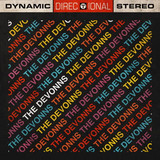
The Devonns dust off the golden age of 70's Chicago Soul with their self-titled debut album on Record Kicks. Straight from the streets of Chicago, Illinois, The Devonns (pronounced "De vaughns") are the brand new soul outfit and the latest addition of the Record Kicks' family, whose self-titled debut album that drops April 03, is an assortment of influences taking us back to the heyday of soul.
Drawing influences from bands such as The Dramatics, The Isley Brothers and Leroy Hutson, yet bringing in their own unique modern twist, influenced by artists such as Jamie Lidell and Raphael Saadiq; singer Mat Ajjarapu explains how unintentionally, the rich heritage of Chicago's history with soul music influenced him.
"The city was at the epicentre of a lot of good music back in the 50's all the way to the 80's, a lot of the labels specialising in soul were based in the Chicago and we even had our own sound known as "Chicago soul". Through several years of crate digging it surprised me how many songs I loved were recorded in this city, for example one of my favourites is this great little song by The Natural Four, produced by Leroy Hutson 'Can This Be Real', and released via Curtom Records."
The band started in 2016 after multi-instrumentalist and songwriter Mathew Ajjarapu dropped out of med school and found himself unemployed and drifting. Listening to music constantly at the time, he found inspired to put a band together and create his own music. Pairing up with some of the best musicians Chicago has to offer, he founded The Devonns: the rhythm duty is entrusted to Khalyle Hagood (bass), Ari Lindo (guitar) and Khori Wilson (drums).
Originally he wanted to focus on 50s style doo-wop, similar to The Flamingos; rich in reverb and vocal harmonies, but in the first initial practise they had it was evident the band clicked on their love of soul music from the 70s, so their music took a natural turn towards that sound, with tracks such as the Wilson Pickett-esque single 'Tell Me'.
The release took almost two years to complete as Mat explains "I am a perfectionist, I had a very specific vision in my head about how it should sound and I wasn't going to rest until I achieved it."
"This is a definitely a throwback soul record, as well as being drawn to lush and intricate arrangements of Motown, I was also inspired by the more lo-fi works of smaller labels such as Chess and Capsoul, and I wanted to capture the magic they had in those recordings in our record, as everything feels too precise nowadays" clarifies Mat.
It was thanks to his engineer Mike Hagler, who introduced him to Paul Von Mertons (Mavis Staples, Paul McCartney, Elton John) who arranges and conducts for Brian Wilson's live touring show and after a 45 minute phone conversation about what Mat wasn't keen on, on the album, he realised Paul totally understood where he was coming from.
After a few months wait for Paul to get back from touring they entered the studio with "Paul's players" and as soon as they hit record, Mat explains "I was getting chills up my neck, it was one of the happiest days of my life, and finally we had nailed it!"
Tracks such as 'Come Back; which Mat wrote in ten minutes on a $300 Daneelectro Singlecut guitar initially, came to life, with Paul's rich string arrangements and features guitarist and percussionist Ken Stringfellow (R.E.M.).
It still took a few months to get the recording process finished but finally after a torturous nineteen months they album was finally finished.
The result is an album filled with lavish arrangements and catchy melodies which take us on a nostalgic musical journey inspired by chic 70s soul, yet the band don't hesitate to add their own unique and elegant contemporary stamp to the record.
Originally recorded in 1977, following a limited release in 1979, Ghédalia Tazartès debut album, Diasporas, introduced listeners to the surreal, mysterious and truly unclassifiable statement of Tazartès and his out-of-time place in the French avant-garde canon. Born in Paris in 1947 to Judaeo-Spanish parents of Greek descent, Tazartès spent his early career as an autodidact utilizing his knowledge of repetition and collage, coupled with his Ladino linguistic heritage, to create some of the most unique recordings of the late 20th century. Interest in the works of Tazartès truly sparked when artist Steve Stapleton included his follow up album, Tazartès' Transports, in his famed "Nurse With Wound List," thus adding endless curiosity to the folklore behind Tazartès and his mystical entrée.
From the onset of Diasporas, looping incantations seemingly pile up at the behest of Tazartès. In almost a prayer-like decree, Tazartès chants to the gods in an undefined whail that is both haunting and spiritually divine. Tazartès unique use of tape loops to capture the disappearing traditions of his family's past creates an atmospheric texture that unexpectedly complements his cut-up, manipulated vocal experiments. While contemporaries within the French avant-garde maneuvered academic theory and rigid tradition, Diasporas strays away from these boundaries, working in Tazartès' invented practice of 'impromuz', a method in which he endlessly records for hours and edits only the moments that display any sense of spontaneous enlightenment. Further emboldening the obtuse nature of Diasporas are the seemingly random recitation of poet Stéphane Mallarmé and the traditional 'Parisian-style' piano accompaniment of experimental composer Michel Chion.
Since its initial release over 40 years ago, both Dais Records and Alga Marghen have released reissues of Diasporas in various formats, all of which quickly fell out of print. Dais Records presents an official reissue, newly remastered by Josh Bonati, utilizing the original artwork of Diasporas in its sole album form, for the first time in over four decades.
(180g LP) On his debut album Travesseiro Feliz (Happy Pillow) Rio de Janeiro based dreamer and new Far Out Recordings signing Ricardo Richaid melds his tropical heritage with his love for psychedelic music, jazz and rock.He also takes inspiration from the many Brazilian greats - Caetano Veloso, Arthur Verocai, Hermeto Pascoal, and Azymuth (to name a few) - who he has worked with as an engineer, assistant and producer, in Rio's former RCA studio, Cia dos Tecnicos.
buffering juju, the title of dumama + kechou's debut album, relates to the process of "excavating spiritually charged content from within". The duo's textural sound, driven by cyclical song structures and chant making, not only captures the angst of the modern world but mines this state of affairs for regenerative potential.
dumama (vocalist and uhadi player) + kechou (multiinstrumentalist with a focus on indigenous African instruments and handmade instruments) met in Cape Town in 2017. There was an instinctive pulse to the initial clutch of shows they played together, blowing open vast sonic and conceptual possibilities. "I guess we were in similar places with our music processes in trying to push healing music to the edges and be more experimental with it," says dumama. The narrative of the album unravels as a piece of magical realism informed by South African folklore and reality, detailing a woman's liberation story where the characters shift shape and traverse multiple realms, deploying various iterations of their power or lack thereof. "It has an organic, natural, cyber and modern kind of energy - all rooted in African aesthetics of sound and storytelling," says kechou. All of this sits on a bed of the duo's unique musical language, one that, although applied electronically in the form of looping and soundscaping, is founded on approaches to string, vocal and percussion tones that reflect a merger between Northern and Southern African heritage.
Recorded primarily in Cape Town and Johannesburg over the first quarter of 2019, buffering juju is a conduit to a past we were not necessarily present for, and a future where threatened indigenous technologies thrive in an increasingly digitised world.
Skalpel, internationally recognised ambassadors of Polish music, reissue their classic and best-selling album Highlight on limited purple vinyl.
For over two decades, Marcin Cichy and Igor Pudło have fused traditional Polish jazz with forward-thinking electronica. Their distinctive sound caught the attention of Ninja Tune, resulting in two critically acclaimed albums - Skalpel and Konfusion – followed by a Gilles Peterson Worldwide Award nomination, extensive international touring, and praise from NME, The Wire, DJ Mag and beyond.
While Transit marked a shift from sample-based production to virtual instrumentation, Highlight sees Skalpel at their most expansive and refined. Drawing on Miles Davis’ electric era, minimalism, and the legacy of Warp and Ninja Tune, the album balances deep jazz heritage with contemporary electronic textures.
A defining title in the band’s catalogue, Highlight remains both timeless and forward-looking - now available in a special purple vinyl edition.
The Devonns dust off the golden age of Chicago Soul.
Straight from the streets of Chicago, Illinois, The Devonns (pronounced "De vaughns") are the brand new soul outfit and the latest addition of the Record Kicks' family, whose self-titled debut album that drops April 06, is an assortment of influences taking us back to the heyday of soul. "Tell Me" is the 1st single from their anticipated full length and sees the lights on limited edition 45 on March 06 and digital. Drawing influences from bands such as The Dramatics, The Isley Brothers and Leroy Hutson, yet bringing in their own unique modern twist, influenced by artists such as Jamie Lidell and Raphael Saadiq; singer Mat Ajjarapu explains how unintentionally, the rich heritage of Chicago's history with soul music influenced him. "The city was at the epicentre of a lot of good music back in the 50's all the way to the 80's, a lot of the labels specialising in soul were based in the Chicago and we even had our own sound known as "Chicago soul". Through several years of crate digging it surprised me how many songs I loved were recorded in this city, for example one of my favourites is this great little song by The Natural Four, produced by Leroy Hutson 'Can This Be Real', and released via Curtom Records." The band started in 2016 after multi-instrumentalist and songwriter Mathew Ajjarapu dropped out of med school and found himself unemployed and drifting. Listening to music constantly at the time, he found inspired to put a band together and create his own music. Pairing up with some of the best musicians Chicago has to offer, he founded The Devonns: the rhythm duty is entrusted to Khalyle Hagood (bass), Ari Lindo (guitar) and Khori Wilson (drums).
Originally he wanted to focus on 50s style doo-wop, similar to The Flamingos; rich in reverb and vocal harmonies, but in the first initial practise they had it was evident the band clicked on their love of soul music from the 70s, so their music took a natural turn towards that sound, with tracks such as the Wilson Pickett-esque single 'Tell Me'.
The release took almost two years to complete as Mat explains "I am a perfectionist, I had a very specific vision in my head about how it should sound and I wasn't going to rest until I achieved it." "This is a definitely a throwback soul record, as well as being drawn to lush and intricate arrangements of Motown, I was also inspired by the more lo-fi works of smaller labels such as Chess and Capsoul, and I wanted to capture the magic they had in those recordings in our record, as everything feels too precise nowadays" clarifies Mat. It was thanks to his engineer Mike Hagler, who introduced him to Paul Von Mertons (Mavis Staples, Paul McCartney, Elton John) who arranges and conducts for Brian Wilson's live touring show and after a 45 minute phone conversation about what Mat wasn't keen on, on the album, he realised Paul totally understood where he was coming from. After a few months wait for Paul to get back from touring they entered the studio with "Paul's players" and as soon as they hit record, Mat explains "I was getting chills up my neck, it was one of the happiest days of my life, and finally we had nailed it!"
First released on digital formats back in 2016, and here now given a richly deserved full vinyl release, 'Holy Science', the debut outing from Amirtha Kidambi and her New York based quartet The Elder Ones, is a work of dazzling singularity. Delicately yet unashamedly divulging its complex network of influences at every turn, 'Holy Science' simultaneously disperses of boundary and limitation, emerging as an album steeped in tradition yet located firmly in the futuristic present.
Amirtha Kidambi, the Elder Ones' leader, composer and vocalist, was a child of South Indian heritage, and she grew up immersed in the tradition of devotional singing, joining in with free-form, improvised Bhajans on regular Sundays. She began simultaneously accompanying her voice with the harmonium from the age of three.
These formative experiences continued to instruct and merge with her ongoing musical explorations as she went on to study Classical music, all the while ingesting the Punk, R&B and Rap that surrounded her. A particularly significant discovery was that of free and avant jazz, and in particular the music of Alice and John Coltrane, in whom Kidambi found clear echoes and parallels with those Bhajans and Ragas of her earliest musical awakenings.
All these influences collide on 'Holy Science', at times as explosive blasts of sky-opening thunder, at others as moments of soothing, meditative bliss. These holy bursts are enacted by Kidambi's assembled musicians and are given permission to explore the science of spiritual alchemy, plundering their individual and collective soul for the sake of musical expression, and all of the unpredictable and profound revelations such an approach might yield.
'Holy Science' is a work underpinned by traditions, be they the Bhajan spirituals, or the Jazz and Classical avant gardes, that are in their own manner, archetypal. But perhaps most importantly, all of these forms contain an inbuilt capacity for discovery and progression.
Amirtha Kidambi's musical pathway has been defined by a studied determination to occupy this specific space, the unbounded realm of improvisation and exploration, summoning the acquired instruments of experience, knowledge, culture and tradition to unlock secrets of the past, present and future. The most cherished music is often remarked upon as having a timeless quality – ancient, modern and futuristic, all at once. And so it is with 'Holy Science'.
- A1: Africa Negra - Mino Bô Bé Quacueda
- A2: Africa Negra - Zimbabwe
- A3: Sangazuza - Sun Malé
- A4: Os Úntuès - Chi Bô Sá Migu Di Védê
- A5: Sum Alvarinho - M'konvètá Dédo
- B1: Conjunto Equador - Mad?
- B2: Tiny Das Neves - Cladênço Padê Cluço
- B3: Conjunto Mindelo - Taji Océdo
- B4: Africa Negra - Aninha
- C1: Pedro Lima - Nga Ba Compensadora
- C2: Sangazuza - Cortição
- C3: Os Úntuès - Piquina Piquina
- C4: Conjunto Equador - Meu Di Plôc?
- D1: Sum Alvarinho - Tólá Muandgi
- D2: Pedro Lima E Conjunto Os Leonenses - Esatela Licu
- D3: Agrupamento Da Ilha - Bô Gosa So Txi
"The two Portuguese-speaking African islands of Sao Tomé & Principe, located in the Gulf of Guinea, created an unique music called Puxa : a refined mixture of various musical components from both sides of the Atlantic Ocean. A blend of Semba, Merengue, Kompas, Soukouss, Coladeira patterns, often pushing forward with a voodoo-like energy, solid bass lines, delicate melodies and backing harmonies of the rich Sao Tomean melodic traditions. Very first compilation focusing on the golden age of these island’s sounds, the 16 tracks selected will surely set fire on all dance floors !
Léve-Léve is the first ever compilation devoted to music from São Tome and Principe, two small islands situated off the coast of Gabon in central Africa. The album unravels a story of liberation where the music of Africa, Europe and the Americas unify with a carefree spirit personified by a phrase the islanders use all the time: “léve, léve” (“take it easy”). With echoes of Angolan semba and merengue, of Brazilian afoxê, of coladeira from Cape Verde and dance music from the Caribbean, it is a sound fiercely proud of its island heritage, sung in local dialects and using distinctive local rhythms.
On this record you can hear the cultural and social history of São Tome and Principe, and how live music represented its beating heart. Once known as the “Chocolate Islands” (remarkably, these two tiny islands were the largest cocoa producers in the world, though now this title acts as a reminder of its colonial past), through the years leading up to independence from Portugal, music would be a fundamental voice of liberation and conviviality. Os Úntués were one of the first groups to make an impression, releasing a couple of 7 inches in Angola – the litmus test of success for any of the islands’ groups. They united unique rhythms and dances like socopé, puita and dança-congo – borne from the islands’ largely slave-descendant population – with the sound of pop music beamed in on the radio from Europe, even adding in a little bit of soukous and Brazilian instrumentation. Their main rivals were Conjunto Mindelo, who fused São Toméan rhythms with rebita, an Angolan style, to create high energy puxa, a truly original island rhythm.
From the mid-1970s, coinciding with independence from Portugal in 1975, the islands’ groups featured an even stronger African influence and nowhere was that more apparent than with Africa Negra. They would listen to the latest records from Gabon, Zaire and Cameroon, taking inspiration and trying out phrasing from the greats of Central African guitar playing, developing a devoted fan base off the islands, as well as on. A score of other bands would follow a similar musical path, with a few getting their dues overseas in Angola, Cape Verde, Portugal and across Africa.
Os Leonenses (led by the iconic Pedro Lima), Conjunto Sangazuza, Sum Alvarinho and Conjunto Ecuador were just some of the other bands that formed a lively home-grown music scene that lit up the islands’ bars and open-air shows from the 1950s through to the mid-90s. Regardless of class or age, they were responsible for keeping the population entertained come the weekend, with Sunday matinee shows the highlight of the week, the music not stopping from midday until midnight.
As a Portuguese island colony that was for many years populated with slaves brought from Africa, São Tome and Principe has much in common with other Lusophone countries and boasts a richly complex and idiosyncratic musical DNA. Whilst the musical tapestries of Angola and Cape Verde are well known, São Tome and Principe’s secrets were assigned to the islanders themselves. Until now."
Shcuro is the alias of João Ervedosa a DJ, producer and graphic designer based in Lisbon. He also runs the record labels Sombra and Paraíso, makes music as Jose Acid and hosts a show on Rádio Quântica. His first contact with a DJ setup happened at age 15, and that’s when Shcuro decided to buy his own turntables and mixer; and started producing his own beats, too. He’s since released music on Basal, Circus Maximus, Obscuur Techno, Golden Mist Records and his most recent collaboration with Photonz for Future Déjà Vu.
‘Particle of Memory’ is a hypnotic 6-track EP that explores new territories in contemporary dance music. Sonically Shcuro paints his sounds blending moody techno with industrial noises alongside fast, apocalyptic electro and breakbeat. He is influenced by Portuguese rave culture that was born in the mid-90s at Lisbon clubs Alcântara-Mar and Kremlin and the country’s first electronic label Kaos Records. Shcuro continues to expand and morph this rich dance heritage to create something entirely different. The bouncy, lead track “Afterlife” features vocals and lyrics by London's ELLES followed by a Decadent Dub rework. All songs have been mastered by George Horn at Fantasy Studios. Housed in a die-cut jacket designed by Eloise Leigh reminiscent of ‘90s escape/sci-fi films with futuristic bright pink pop flourishes
7"
Kalakuta Soul Records is back and starts the year with a new collaboration with one of the most inspiring record stores and well of fortune for all music lovers, especially for those who enjoy carribean music and the profound musical heritage of Jamaica - the infamous Bahlo Records.
For this first release, both have created a new imprint that brings both labels together and goes by the name KABA that stands for (well…) Kalakuta Soul Bahlo Records.
For their first collaborative release, they were able to license two songs originally released on a private pressed LP by the mighty "Golden Sunshine Steel Band" in 1980 that will definitely wave you through day and night, whether you're listening to it at home, on the road or in a furious set on a mind-blowing sound system.
More releases will follow through 2020!!
REVE is a new label from Paris. Dedicated to artists from all around the world, genres & areas, respecting the 12' history, its heritage and available as digital too.
This new label brings its first issue with PAUL JOHNSON's cover aka THE P.J. PROJECT of one of considered best LARRY HEARD & ROBERT OWENS track : 'bring down the walls'.
Originally released in 1986 on Trax Records, Paul does the whole track with the last gear generation, 'the best ear of Chicago' goes back to the house roots.
On the other side, one of the few Ron Hardy's protégé : K ALEXI SHELBY interpretation of GLENN UNDERGROUND 'Indians & Bagpipes'. K refreshes this anthem with the highest Chicago Edit level you can aim. Deeply thinked structure. Doubling the bagpipes adding subliminal frequencies, colors wish is refreshing the track. He follows his rules and put his style in it. After playing it for years. It is both "handbanging" as we say here & subtile. Hit.
To conclude this extended play, PROFESSOR INC brings a remix focusing on the filters moves & trackey part of GLENN UNDERGROUND, big sound, infrabass & fatness underground dj tool.
This is how it is, 12' at its best, legit and godness. Mastering by Mathieu Berthet.
You may want to stock up on this one because who know when the pressings may stop.
For it’s second-release, Planisphere returns once more to the Berlin studio of Swiss-Turkish producer Mehmet Aslan, who has fast become one of the most fiercely individual and increasingly prolific emerging artists in some time.
This three-track EP is arguably Aslan’s most-refined work to date, aiming squarely at heads-down dancefloors, riding on sophisticated and hypnotic grooves. On ‘Comme II Faut’, a minimal beat unravels Aslan’s textural, traditional samples, delivering a woozy and intoxicating atmosphere.
Meanwhile, ‘Lobster Is Coincidence’ christens the EP with its title and a stop-start slice of unpredictable, cut-up psychedelia, utilizing obscure samples to generate esoteric funk. On the contrary, Aslan executes a tapestry of tightly-wound and no less entrancing rhythms on ‘Kakusui’, which evolves intriguingly with a subtle half-step and further echoes of Aslan’s unique musical heritage.
Jay Clarke's masterful BLACKAXON imprint returns with a shapeshifting EP from Davide Piras.
What began as a sonic sketchbook for Clarke to express his expansive view of electronic music, is evolving. The label is opening up to artists who hold a shared passion for creating dynamic and interesting techno compositions, with a few surprises here and there. Following last October's superb contribution from rising talent Yant, experimental techno artist David Piras drops a quadruplet of cuts to join the BLACKAXON fold.
His BLACKAXON debut, "Beyond Our Reach", is a true all-rounder. It leads with the dusty slow bass monster "Radiation Belt", before the gritty electro noodlings of "Multipolar" enter the fore. The analogue-infused rave cut "System Cartesian" takes the EP into otherworldly realms, before atmosphere-heavy "Pangaea Heritage" closes out the work, evoking a hazy afterhours vibe.
"Davide's productions hold an air of Convextion about them, he's one of my favourite artists. I locked into that right away and knew I wanted to release his music. When I listen to Davide's tracks I feel as though I'm in the middle of a sci-fi movie, they're funky and futuristic tales from the deep. Amazing!" - Jay Clarke
After the major success of Part 1, Cosmo Vitelli & Malka Tuti are presenting Holiday in Panikstrasse Part 2, the 2nd and final part of Cosmo’s 2XLP on the label.
After collaborating with Fantastic Twins on Part 1, the amazing Julienne Dessagne’s vocals are back on Part 2 as well for the opening track Fragments of Reality. Another collaboration on the record is with Croatian singer and vocalist Tanja Vezic, whom we’ve already seen collaborating with Cosmo on his Les Disque De La Mort release, and who gives a cinematic sort of feeling to the track Party old boy.
With “He just wanted to hang out with the DJs” Cosmo creates a slow burning dark banger that will not go unnoticed.
The final track Irritable is the perfect mixture between German Krautrock heritage and the French disco-synth touch of the 80s - emotional, growing and cathartic, one cannot stay indifferent to it.
When acclaimed South African musician Guy Buttery first sought out Dr. Kanada Narahari in late 2016, it was as his patient.
“It was a dark time.” Buttery recalls, “I had been bedridden for months and had been suffering from debilitating bouts of fatigue which no diagnosis or medication could help me get to the bottom of. When I first met Kanada, I was at the stage where even picking up my guitar to make music had become a joyless and taxing exercise.”
As Buttery’s searched for a cure, a family member recommended he see Kanada an Ayurvedic doctor who had relocated to South Africa from India and set up a practice in Durban. It was during this consultation, that the musician first experienced how Narahari infused the healing properties of Indian Classical music into his practice. Rather than treating him with a smorgasbord of pharmaceuticals, Narahari played his sitar and set Buttery on a strict daily diet of Raga’s to fast track his recovery.
Buttery was not only struck by his doctor’s musical talents but by the powerful healing properties inherent in his sitar compositions. When he left Narahari’s doctors room that afternoon, he asserts he was feeling decidedly clearer, lighter and stronger.
“Diving into Kanada’s music was definitely one of the reasons I'm still here today.” he admits. “The consistent tonal centre at the heart of Indian Classical Music, literally became my support pillar over this period. A central core of sorts in which to fall back on, strengthen and discover.”
Narahari as it turned out, was not only a prominent music therapist (and one of the only Ayurvedic doctors practicing in South Africa) but like Buttery, a highly accomplished musician with a devoted following back in his homeland.
Born in a small village along the Western Ghats in Karnataka, India, Narahari, at the age of nine, had enrolled to study Carnatic classical vocal and developed an interest in Hindustani Classical music with a particular passion for the sitar. While Buttery had secured his reputation as one of South Africa’s musical treasures, a multi-instrumentalist who commands sold-out performances both locally and internationally and more recently had been awarded the prestigious 2018 Standard Bank Young Artist for Music.
From this consultation, a friendship developed between the two musicians with Buttery soon inviting Narahari to join him in his studio. But it wasn’t all plain sailing in the beginning. While Buttery and Narahari’s sensibilities were very much aligned, there were a range of cultural and musical influences, nuances and inflections that first needed to be navigated and understood.
“I suppose we had to find a common ground.” Buttery says, before adding, “Which in the end turned out to be pretty "uncommon ground" for the both of us.”
It was after a few intensive sessions together that something exhilarating began to emerge. What began as a few idle improvisations soon evolved into feverish and lengthier jams. Whenever time permitted, the musicians would meet, descending deeper into the emerging sounds, while reimagining the realms that existed between their African and Indian heritages.
Over the next few months, the duo would rack up over fifteen hours of recordings in studio, and it was up to Buttery to shape the material into an album which they collectively titled Nāḍī, which Narahari translates from the Sanskrit as "The Channel" or "An Internal River".
During this period, Narahari bestowed upon Buttery, the moniker Guruji while Guy would refer to him, in affectionate return, as Panditji. Each time the musicians would meet, the studio space would be cleared by an impromptu ritual, with Guruji burning African Imphepho while Panditji would chant a Sanskrit mantra dusting Indian Agarbatti clouds over their instruments.
Once the room had been made hazy with this aromatic alchemy (with the ancestors welcomed in) the musicians would pick up their instruments and plunge into shimmering tides of sound. Reflecting on these sessions, Narahari recalls the immense creative freedom he felt throughout: “Guy and I tried to wander as much as possible, without any speculative, preoccupied ideologies or limitations. Love remained at the forefront of our journey together.”
“Those evenings we spent together in the studio” adds Buttery, “felt incredibly rich with purpose and a profound sense of freedom. While improvising, anything could happen and mostly did.”
On a first listen, the tracks on Nāḍī emerge as salty, humid invocations to the inscrutable depths and misty myths of the Indian ocean-- that vast body of water that stretches between, and laps the shorelines, of the artists’ respective homelands.
When asked to describe the sound him and Narahari refined, Buttery prefers to relay a series of evocative images.
“For me” he explains, “Nāḍī is a lighthouse, a beacon that resides at the bottom of the ocean.” As Buttery envisions it, “what once offered light to guide ships to safety, has been submerged and re-purposed by marine life as a coral-reef temple. Similarly, this sunken lighthouse exists as a concealed cenotaph, memorializing the ancient sea-routes and passages that once connected the two distant lands.”
On paper this may sound obscure but listening to the songs, it serves as an apt metaphor.
Across each meditative movement, listeners are able to relive the journey, immersing themselves in a series of incantations, replete with high dynamics, delicate African-Indian inflections and virtuoso string playing of an entirely new order. Further complimenting the fusion of musical dialects are a range of guest artists including Shane Cooper on bass, Thandi Ntuli on vocals, Chris Letcher on organ, Ronan Skillen on tabla and percussion and Julian Redpath on guitar, synth and backing vocals.
Now like the submerged lighthouse, the recordings stand as a monument, a marker and snapshot of this fortuitous meeting, a tribute to the healing gifts of Guruji and Panditji in performance. It’s a process that already, both musicians look back on with reverence and nostalgia.
Buttery ruminates in closing, that when he first met Kanada his illness correlated with the biggest drought South Africa had experienced in many years “…for whatever reason, whenever we would connect and make music together, the sky would tend to open. Even if it was just a few drops. This went on for months, until finally the drought dissipated and my health had been restored.”
By the time the heavens did open across the East Coast, a deep friendship had been forged and with it abundant musical offerings poured down. A treasured sample of which we able to share in every time we press play and immerse ourselves in the sacrosanct musical universe that is Nāḍī.
The modern, avant synth/dance-pop frolics of ‘Moi’ catch Steven Warwick (Heatsick) at his impish but droll best for PAN. Returning to PAN six years after his standout Re-Engineering album,
Warwick returns to similar zones of enquiry as 2016’s ‘Nadir’ - the first release under his birth name. With ‘Moi’ (which we definitely hear enunciated with a playful pucker), Warwick further emphasises the personal, playful nature of his work with 10 melodic, danceable and pop-tart arrangements accompanied by a range of vocal personas; from his naturally droll singing voice to more alien and leaned-out styles, plus a guest platitude by Turner Prize nominee, Jo Pryde.
Bubbling up with the pickled 2-step and Lolina-esque lilt of ‘Open Fire Hydrant’, Warwick clearly draws upon a UK dance music heritage - and its Afro-Caribbean and US inspirations - with the
freshest, exceptional style that percolates throughout the album, strongly informing its biggest dancefloor highlights such as the warped trancehall bumps of ‘Salvation’ and the crooked crankshaft of ‘Kaleidoscope’, along with the the brittle boned shimmy of ‘Rush’ and the hard but elegant drive of ’Silhouette.’
But they’re only half the story, which really comes together with contrasts in the fizzy downstroke of ‘Kind of Blue’, on the Black Zone Myth Chant-like psychedelic daze and blunted vocals in
‘Consolatio’, and the album’s standout ‘Danke’, which revolves around Jo Pryde’s gentle utterance of the title weft into ominous ambient clag, connoting a sort of humility that knowingly becomes
both less and more meaningful with each reiteration
Gyedu-Blay Ambolley was born on the 11th Street in Sekondi, Ghana 72 years ago. On the cover photo you can see on the right side the house of his birth which was also his parental home. The Ghanian legend’s latest release shows off a pride of heritage, and his honed talent for mixing highlife with other genres like rap, Afro-funk and Disco Ghanaian highlife. Gyedu-Blay Ambolley returns with 11th Street, Sekondi, his 31st album since his debut in 1973. The charismatic stage personality, no stranger to mixing humour into his music and who has performed alongside Afrobeat legend Fela Kuti and highlife bandleader Ebo Taylor, has been a record collector’s staple since his appearance on the seminal Ghana Soundz compilation on Soundway in 2002, which re-introduced the world to his trademark ‘Simigwa’ style. Highlife, which started in Sierra Leone and Liberia, took hold in Ghana in the 1940s as a coming together of the musicians fed up with the foxtrot and quickstep parties originally hosted by English colonists. It began with big band horns and happy lyrics, popularised by artists such as E.T Mensah, before opening up in the ‘50s and ‘60s with a wave of guitardriven, socially conscious and more danceable Afro-funk hits -- a product of the easy movement of people between Nigeria and Ghana. It was then that Ambolley’s trademark baritone vocals burst onto the scene, under the tutelage of close personal friend Ebo Taylor.
Ambolley’s latest album, 11th Street, Sekondi, named after the area of West Ghana in which he grew up, is a look back at the area and musical styles that shaped the musician’s life. Black Woman is a funky number that opens the album with Ambolley on a tenor sax solo, while tracks like Little Small Girl showcase his renowned James Brown-influenced vocal flourishes. Soul, jazz, blues and comedy are present -- in keeping with his fervent belief that music must always be entertaining for the listener. The album is the second of his to be released on German label Agogo records, after acclaimed 2017 hit, Ketan. It also stays true to highlife's social ambitions, with reflections on the misguided pursuit of European ideals ahead of African values. Ambolley's career has been filled with accolades, including a Lifetime Achievement Award from the Charles R Drew University in Los Angeles, and formal recognition from the Ghana Embassy in Washington DC for producing the first ever commercially recorded rap album.
Back with a vengeance, Cimm returns to the imprint with a highly anticipated succession to his Sentry debut from last year, stamped on a irresistible 2 x 12" vinyl release. Infernal halftime beats and top-notch Dubstep shells, firmly entrenched at the frontier of sound system music and its invaluable heritage. The London-based producer and DJ rose to swift and significant acclaim in the last few years with releases on institutions like Tempa, J:Kenzo's Artikal and Wheel & Deal as well as notable residencies at Rinse FM and the renowned Fabric night club, among other recent achievements. Now coming to a turntable near you, Cimm delivers four bespoke cuts, primed for the dance and your enjoyment, battle-tested by the scene's foremost tastemakers.
Diving into unidentified transmissions, 'Unknown Caller!!' sets the pace with eerie reverberations and filtered resonance. Amid the faint hiss of machinery, larger-than-life drums set up shop alongside subterranean pressure emissions. Hefty breaks, hold tight! Retro synth melodies keep us on track within the monstrous switch-ups and unquestionably meticulous arrangement, sure to shut down any dance in style. Cutting no corners with the B-Side, Cimm teams up with veteran vocalist Rider Shafique for a dystopian sub-bass onslaught, swaggering militant chants and the apocalyptic ambience to go with it. Steaming low-frequency oscillations bubble and hurl their weight, stripped of all restraints, coveted in freezing harmonies and ethereal atmosphere. Vibrating in a more uplifting spirit, the dedication to the Jamaican roots of sound system culture unfolds in the Londoner's signature style - dubbed out soundscapes ahead. 'Tosh Dub' keeps it a laid back, with vintage instrumentation, scattered skanks and swirling organ chimes. Taking an ultimate trip through unremitted grit and off-kilter grooves, 'I Am Jack Travis' lures us in with rainy undertones and hypnotic foley sampling. Promptly revealing its true nature with plenty of pressure and scrupulous syncopation, a ghostly heavyweight ensues and closes the deal.
Nuova Musica Ostinata is the new Ep by Nordic/Mediterranean duo N.M.O.
This new Ep follows the N.M.O. heritage of merging acoustic drums with synthetic sounds in their self-called Military Space Music, as heard on past releases on labels such as Diagonal,The Death Of Rave and Anòmia, exploring fresh and undiscovered territories.
All three tracks are a lysergic caleidoscope of sound collage, dancehall, militaristic marches and kuduro, in a playful superimposition of patterns at 160 bpm and 128 bpm at the same time.
Nuova Musica Ostinata does exactly what it promises in its title, going head down into new directions, where white galleries and dark sweaty dancefloors coincide.
Livity Sound's final transmission of 2019 comes from the esteemed Freerotation resident and UntilMyHeartStops co-founder, Leif.
Quietly earning himself a well-deserved reputation for his outer-worldly production stance and forward-thinking approach to Dj-ing, Leif has spent the last decade refining his musical palette with a slew of releases including highly acclaimed LPs for Whities and UntilMyHeartStops. In 2017 he launched the TIO-Series label as a vehicle to showcase the more off-kilter rhythmical side of his own productions releasing contemporary anthems such as July V and Bluebird.
This new EP for Livity Sound continues in the exploratory TIO-series vein finding Leif in percussion mode, combining nimble rhythms, deep bass and hazy synths in his idiosyncratic style to dazzling effect.
This 12” vinyl release comes with brand new art direction from Tess Redburn in a full colour artwork reverse board sleeve.
Livity Sound is a label set up by Peverelist in 2011 as a vehicle for a raw and exploratory strain of UK techno, rooted in the heritage of UK dance music and sound system culture. It has since become one of the UK's foremost protagonists for cutting edge underground music.
In the 1960s and ‘70s, unbeknownst to most, Saigon (today named “Ho Chi Minh City”) had become a fertile environment for a flourishing music industry which produced countless recordings of beautifully crafted songs.
Ho Chi Minh City based band, Saigon Soul Revival has been bringing alternative pre 1975 music from Saigon back to the stage since 2016 with their live performances. Honoring the original composers, singers and the golden era from which this music (Nhạc Vàng) came, while applying new arrangements and interpretations of old Vietnamese songs. With tight grooves, psychedelic textures and a powerful unique sound, SSR has performed countless shows at a variety of venues across Vietnam, and accompanied live the two release tours to the Saigon Supersound Compilation releases.
While spending the last three years studying and playing this music, Saigon Soul Revival teamed up with producer Jan Hagenkötter (Saigon Supersound / INFRACom!) and finally in January 2019, they started to create own compositions in the same vein for their debut album Họa Âm Xưa. The album was recorded in Vietnam with additional guests during one week in May this year.
The album focuses on compositions that fuse Vietnamese lyrics and sounds with influences of western rock, soul, bolero, tango and other popular genres of this time period, most of which was banned after the war. This project strives to revive this beautiful musical heritage of Vietnam which represents an important cultural bridge between east and west.
Before an upcoming album in 2020 on Heavenly Sweetness, Mama is the first single. A track in which the balafon’s woody resonance, the meditative flute and the female choruses return to the Creole roots of David, recall the memory of his Caribbean grandfather exiled to New York but, above all, a title dedicated to his grandmother, who after the last soaring electro-disco, she comes to declaim the text on the ultimate measures. David Walters will have thought of it, conceived and realized in close collaboration with Patchworks. Then, in the wake of the single Mama released in the month of each of them took the title, isolated himself in the studio with instruments and machines to come out only with a total reinterpretation, but especially personal, of the title. Hammering bass drum and snare drum bursts, David has entrusted the direction of operations to the rhythmic, and it is one after the other that digital elements were invited to transform the original maternal softness into a boiling soundsystem. Synths their strings on the hum of the bass, the hypnotic power of the riddim remains.
Two remixes, two atmospheres. The Patchworks scene is set in a jazz-funk setting, an heritage from Roy Ayers and Lonnie Liston Smith. Powerful drum, enrobing bass, the Fender Rhodes becomes a soloist, motivated by this irrepressible groove, first become a soloist. And that the meshes leave the hands of the balafon player to pass in those of the vibraphonist.
Transcendent Yemenite interpretations of Bollywood soundtracks from 1982. An ultra-rare album by Jacky Mckayten who combines his own Yemeni heritage together with popular Indian music from film. A deep journey amidst tablas, sitars, and electric guitars, through heartbreaking songs of love and betrayal. McKayten was a highly influential musical figure in Israel yet remained largely underrated until his recent untimely death. This is his most powerful work, reissued for the first time, from the original master tapes, excavated by Fortuna Records.
Sarah Benabdallah and Alexis Lebon are a very 21st century musical coupling, absorbing their metropolitan surroundings while tapping into a rich cultural heritage, not unlike fellow countrymen PNL or the Dutch band Altin Gün. A Paris-based duo set for greatness they might be, but it’s fair to say Mauvais Oeil are operating under a misnomer: while their name means “evil eye” in French, you’ll only experience enlightenment when you lay eyes (and ears) upon them. Mauvais Oeil are set to release their debut EP Nuits de velours, a magical melting pot of musical shibboleths and contemporary grooves. On opener “Mes nuits de velours”, we’re transported in the land of 1001 Arabian Nights, with the music every bit as smooth and alluring as the subject matter. “Afrita” is a trance-inflected musical acclamation evoking all
the madness and gayety of a midsummer souk. Sung entirely in Arabic with delightful blasts of strings, it’s a North African-influenced banger with a delicate wistfulness. “Asha” meanwhile is in a reference to Asha Vahishta, the middle-eastern concept of truth
according to the ancient religion of Zoroastrianism. Sung again in Arabic, it features catchy Phrygian guitar manoeuvres played over ambient analogue keyboard strokes. The E.P. is completed by “Constantine”, a song of longing, dedicated to the home of Sarah’s forebears. Having met in the arty northern faubourgs of Paris, Sarah and Alexis soon developed a musical telepathy and a shared sonic agenda, mining their own histories for the profound
cultural roots that underscore Mauvais Oeil, while absorbing the ubiquitous sounds of the suburbs, where Turkish, Armenian and Ethiopian music ring out. The band’s moving and melancholic chansons are delivered with a delightful French pop sensibility, making Mauvais Oeil one of the most exciting and musically diverse prospects in 2019.
Hand stamped 10” white label from a new collaborative project between Paul Purgas (Emptyset) & artist and musician Imran Perretta. Working with South Asian sound archives AMRA explores diasporic echoes, archival disruption and Indian musical heritage, addressing themes of mythology, futurity and the trauma of partition.
Athens of the North is very pleased to introduce part two of our nod to the world of library. This time round Greg Foat journeys into the world of synthesis with good friend James Thorpe. This new LP was recorded in the old Bees Studio on the Isle of Wight earlier this year,a special, different piece of work which I was delighted to receive on ¼ inch tape without warning. Greg's output continues to be prolific without ever tiring, he never plays it safe and is always looking forward whilst having an ear for our musical heritage.
- A1: A Strong Move For Truth (Feat Nadine Charles)
- A2: Good Morning (Feat Samii)
- A3: Remini Dream (Feat Ivana Santilli)
- A4: I Don't Wanna Know (Feat Obenewa)
- B1: Unknown Faults
- B2: Life Can Be Unreal (Feat Sarina Leah)
- B3: Too Much (Feat Sharlene Hector)
- B4: You Are Virgo
- C1: Come Of Age
- C2: Just Leave It (Feat Lady Alma)
- C3: Ogawa Okasan Said Just Play
- D1: A Where Pringle Deh
- D2: My Standards Are (Not) Too High
After a steady stream of releases from the 2000 Black label which serve as a first course, Dego returns with his third album ; A full length LP of his contemporary adventures in modern sound. This album combines Dego's consistent forward looking musical explorations with a host of instrumental and vocal collaborators introducing us to new talents and reminding us of those we may have heard before. Dego continues to find new perspectives within the musical landscape.
Collaborating with singers and songwriters all expressing a distinct sense of where, collectively, we are now. There can be no doubt that this is a time of questions in every way, changes in the world and industry that will affect us all. How and what role music plays in this journey is explored as with any artist in a personal and pensive way from a tear to a smile. There is no preaching here, only statements and explorations. Individuality and sonic diversity combine and reflect the many inspirations and evolutions of style. Cooking up a strong and distinct genre-defying mix of soul, two step, funk, jazz, boogie and R&B, all dance music's that focus on heritage and natural rhythms.
Listening to the music is a relief and delight for lovers of groove and song-craft. It's a 21st century statement accessible and raw, whilst highly advanced in sound design and production. Holistic in breadth and deep in vision, it provides a way into this music for many, and challenges the cultural conversation about jazz without compromising or pandering. Music that utilizes a raw and sincere true openness narrative.
- A1: Why Am I A Rastaman
- A2: Revolution
- A3: Going Home
- A4: Rolling Stone
- A5: Humble African
- A6: Where Is The Love Feat. Marcia Griffiths
- A7: Poverty
- B1: Too Much Ginals
- B2: Never Give Up
- B3: Weeping
- B4: It's Hard To Live
- B5: Fishes & Fry
- B6: Home Grown Feat. Morgan Heritage
- B7: Poor People Hungry Feat. Tony Rebel
Wiederveröffentlichung des Albums aus dem Jahr 2000! - "Humble African" ist für viele Experten der beste Longplayer, den Roots-Ikone Culture aka Joseph Hill in den 90er & Nuller Jahren veröffentlicht hat. Mit den Gästen Marcia Griffiths, Morgan Heritage und Tony Rebel sowie einer starken Besetzung an Musikern als Rhythmusgruppe mit kompletten Bläsersatz von Dean Fraser (Saxophon), Chico Chin (Trompete) und Nambo Robinson (Posaune). Am Mischpult saßen bei der Aufnahme die Toningenieure Errol Brown und Shane Brown, den finalen Mix übernahm Stephen Stanley unter der Federführung des Produzentenduos Lynford "Fatta" Marshall & Collin "Bulby" York aka Fat Eyes Team.
Where Future Unfolds is a new work spirited by Chicago-based sound & visual artist Damon Locks. Starting as a solo sound collage piece (where Locks pulled samples from Civil Rights era speeches and recordings to create an improvisational pallet for performance on his drum machine), over 4 years the project has blossomed into his 15-piece Black Monument Ensemble - featuring musicians (including Angel Bat Dawid on clarinets and Dana Hall on drums), singers (alumni of the Chicago Children"s Choir), and dancers (members of Chicago youth dance company Move Me Soul). Where Future Unfolds is a live capture of the ensemble"s epic debut at the Garfield Park Botanical Conservatory on the West Side of Chicago. Recalling the spirits of Phil Cohran"s Artistic Heritage Ensemble, Eddie Gale"s Black Rhythm Happening, Archie Shepp"s Attica Blues, and Public Enemy"s It Takes a Nation of Millions to Hold Us Back, the album presents an inspired, innovative & immediate intersection of gospel, jazz, activism & 808 breaks.
Jimpster: 4/5 - “So much to love on here! Loca is a mind-bending workout for dark sweaty basements. Hey Life is hypnotic, life-affirming warmth to make the soul soar. Proper job Santiago!”
Gerd: 4/5 - “dope collection of trax by santiago salazar. well executed as always. amazing.”
Dom (Sub Club): 5/5 - “love Santiago .top stuff as always”
Cosmin TRG: 5/5 - “Excellent material Santiago! Congratulations”
Photonz: 5/5 - “Loads of killer tracks in here!”
Deetron: 5/5 - “Love this LP!”
Norman Nodge: 4/5 - “Yes, right up my alley! This has soul and a strong drive!”
Following Santiago's debut album Chicanismo released on Love What You Feel in 2015, The Night Owl doubles down on the artist's balancing act between techno and house. The blend of LA roots, Chicano heritage, Underground Resistance training, and love of house music is represented as an eight track album worthy of any music fan's collection or DJ's set. Released on May 17th, 2019 as an eight track digital album accompanied by a four track 12" vinyl EP.
- A1: Alpha Blondy / Whole Lotta Love (Originally Performed By Led Zeppelin)
- A2: Gregory Isaacs / House Of The Rising Sun (Made Famous By The Animals)
- A3: Sly & Robbie / Inner City Blues (Originally Performed By Marvin Gaye)
- A4: Dennis Brown / (Sittin\\' On) The Dock Of The Bay (Originally Performed By Otis Reddng)
- A5: Ambelique / (I Can\\'T Get No) Satisfaction (Originally Performed By The Rolling Stones)
- A6: Marcia Griffiths / Fever 3’46 (Made Famous By Peggy Lee)
- B1: Horace Andy / Ain\\'T No Sunshine (Originally Performed By Bill Withers)
- B2: The Pioneers / Papa Was A Rolling Stone (Originally Performed By The Temptations)
- B3: Freddie Mcgregor / Guantanamera (Made Famous By Celia Cruz)
- B4: Jimmy Riley / Sexual Healing (Originally Performed By Marvin Gaye)
- B5: Yami Bolo / Is It Because I\\'M Black (Originally Performed By Syl Johnson)
- B6: Kotch / Wonderful Tonight (Originally Performed By Eric Claptone)
- B1: Inna De Yardfeat. Kiddus I / If You Love Me O(Riginally Performed By Edith Piaf)
- C2: Moonraisers / Hotel California (Originally Performed By The Eagles)
- C3: Don Campbell / Rise (Originally Performed By Bob Dylan)
- C4: Nato / Crazy (Originally Performed By Gnarls Barclay)
- C5: Nostalgia 77 Feat. Alice Russell / Seven Nation Army(Grant Phabao Remix) (Originally Performed By The White Stripes)
- C6: La Grimafeat. Jimetta Rose / Lithium (Originally Performed By Nirvana)
- D1: Morgan Heritage / Girl Is Mine (Originally Performed By Michael Jackson)
- D2: Booost Another / Brick In The Wall, Pt 2 (Originally Performed By Pink Floyd)
- D3: Third World / De Do Do Do, De Da Da Da (Originally Performed By The Police )
- D4: Norris Wear / You\\'Re The First My Last My Everything (Originally Performed By Barry White)
- D5: Alton Ellis / It\\'S A Shame (Originally Performed By The Spinners)
- D6: Ken Boothe / You Keep Me Hanging On (Originally Performed By The Supremes)
Featuring Sly & Robbie, Alpha Blondy, Marcia Griffiths, Horace Andy, Morgan Heritage, Gregory Isaacs, Inna De Yard, Alton Ellis, Ken Boothe, Jimmy Riley, and many more.
- A1: Afrodite Se Quiser - Fora De Mim
- A2: Lilith - Todo Amor E Bom (Remix)
- A3: Fabio Fonseca - Ladroes De Bagda Feat.marina Lima
- A4: Fernanda Abreu - Hello Baby
- A5: Luna E Dj Cri - Acabou Como Comecou
- B1: Junior - Vim Te Buscar
- B2: Thaide & Dj Hum_Coisas Do Amor (Trepanado Edit)
- B3: As Damas Do Rap - Um Sonho Real
- B4: Mc D' Eddy - Jeito Do Se Menina (Inst)
- B5: Sharylaine_Saudade
I grew up fascinated with the music played late at night on the radio.
As a kid, when times were tough and I couldn't get myself to sleep, I would tune the radio to my favourite FM station and dream on.
This was back in the late 80's and lasted until the mid 90's, a time when I was getting hooked by Hall & Oates, Loose Ends, Maze, S.O.S. Band, Soul II Soul, and other artists that used to rule the dial in the wee hours.
So this music didn't only comfort and nurture me at the time, it also shaped my music personality.
When Renata approached me in order to work on the first ever compilation for Hello Sailor, I knew the selection would end up reflecting this side of me. It had to come from the heart.
It also had to bring to the table something different than what's already associated with Brazilian music, and exploring our own take on the street soul genre sounded good.
It was never done before and it's also faithful to Brazil's musical heritage.
Back in the 80's and into the 90's, it was very common at parties to have a slow dance moment in between the more uptempo sections. A timeout from all the frantic dancing, when people could cool off and flirt in a more romantic way. (It does sound like a great idea to have this intimate just-the-two-of-us moment in the middle of a party; maybe it explains the number of marriages at that time.)
This is a tradition that goes back to the black music balls in the late 70's, which helps to explain why the majority of the early rap acts from Brazil used to have a couple of romantic songs in their albums. When you add to this recipe the power of the mellow pop acts during the aforementioned period, one can realise why it extended its tentacles to deeper depths of pop music in Brazil.
This compilation features some of my favourite music ever, songs that I've crossed paths with in different moments of my life.
Fernanda Abreu, for instance, is a longtime crush - I have been in love with her music since the mid 80's when she used to sing in a band called Blitz, which my mom loved.
Afrodite Se Quiser, on the other hand, created some buzz while the group was active with the minor hit "O Que Que Ela Tem Que Eu Nao Tenho", from their first album (1987), but I didn't know about "Fora de Mim" until 2015. My point is: even if it took me 25 years to find this track, I had a reserved spot in my brain for it and it laid there perfectly as if it innately belonged there.
It's a built memory, and I love playing with this idea when presenting music to people.
Street Soul Brasil is part mellow pop, part R&B, part rap.
One can surely feel a lot of street energy from the B Side. The music reflects the influence of international pop at the time, but it also shows how Brazilians are talented in making any sound their own!
This compilation is supposed to be a mixed collection of songs, something that might trigger the feeling of flipping through an old photo book full of tender memories. These are songs that should speak straight to the heart, music to comfort and heal, music that deals with joy and pain, feelings that I always liked being transmitted through music.
It's among the best forms of therapy. It worked for me and I hope it works for you...
The Soulpop Continuum – by Arno Raffeiner
Six songs, one sound signature, one vision. Supreme Beats Series by Drei Farben House is an album
that firmly stands in the tradition of the big records of the disco era: a vinyl disc full of kicks and licks,
just as much as two sides in amazing sound quality can hold.
The album is the latest work of Michael Siegle, the Berlin-based producer and owner of Tenderpark
Records. 13 years after Drei Farben House's first full-length on the acclaimed Force Tracks label, it
features contributions by singer and songwriter Mavin and none other than Robert Owens who's voice
shaped house music forever. The trademark sonic elegance of Drei Farben House blends perfectly
with the timbre of the man behind Fingers Inc.'s Mysteries Of Love. Siegle's work as a producer is not
so much about turning this rich heritage upside down, but about refining it and creating a space within
that realm that's very much his own.
The title of the opening song with Owens states it: I’m Remaining Here. And Supreme Beats Series
invites you to come over and stay there, too, in a refuge of class and funkiness. The record offers
dense layers of rhythm, vintage keyboard sounds, chucking guitar, and vocal samples that indulge in a
many-voiced conversation. Not to forget the prominent, singing rather than walking bass lines
performed by the hands of Michael Siegle himself with his bass guitar.
New Release Information
You could think of Supreme Beats Series as a cross-section in time and space. It allows you to take a
closer look at the here and now of a much bigger picture, both aesthetically and socially. Siegle uses
the vocabulary of house music in a way that transcends its conception as merely a genre and speaks
of the historic evolution and the profound roots of this music as a movement. His record takes
inspiration from 60s Motown hits as well as the blue eyed soul of the 80s, you can discover influences
ranging from Philly's pre-disco craze to new jack swing and on to the heyday when house-pop divas
stormed the charts. By drawing these lines, Siegle deliberately opens up the space of a visionary
Soulpop Continuum.
In the 1950s, the American issue of Vogue magazine had their say about Coco Chanel's work and its
ever-lasting impression on fashion and design. They claimed it was all about “infinite variety within
narrow limits,“ and meant that as a compliment, of course. Michael Siegle likes to think about Drei
Farben House in a similar way. And you should, too.
Info about the artwork:
As far as the cover artwork of 'Supreme Beats Series‘ is concerned, the release of Drei Farben
House’s new album shows the second part of an image series which has been started with TDPR
release # 021 and which revolves around architectural photos taken by Achim Valbracht. Tenderpark
art director Till Sperrle and photographer Achim Valbracht like these pictures of various commercial
buildings erected in Berlin in the 1990s to be seen as a critique of investor-driven architecture which
has been dominating Berlin for several decades now.
The fascination of these pictures lies in their ambivalence of staging a normalised and globally
standardised kind of beauty, but at the same time revealing a strong sense of isolation - noticeable not
only but also in the absence of human beings. This new series of images is to some extent a
continuation of art director Till Sperrle's and label manager Michael Siegle’s interest in architectural
photography. However, at the same time the photo series also embodies a new angle on the subject
since all previous picture series on Tenderpark had been an affirmation of socially progressive
architecture which expressed a longing for socio-cultural utopia.
The Belgian duo San Soda and Red D entered the world of recorded music some 12 years ago with the inception of Red D’s label We Play House Recordings. A few years later their collaboration continued in the studio with the start of the FCL project, leading to original and remixed club hits.
In the meantime both have gained considerable mileage and reputation as adventurous DJ’s who are not afraid to take risks and with a ‘no boundaries’-approach to playing music. Being Belgian they continue to find inspiration in Belgium’s rich music and clubbing history, which led to the ‘Our Beat Is Still New’ compilation in 2013 on We Play House Recordings. Both San Soda and Red D contributed some tracks and thus the aliases Nick Berlin and Max Erotic were born.
Fast forward to today and Club Belgique, a concept Red D has been brooding on for quite some time. A true tribute to Belgium’s club (music) heritage which consists of club nights and also a new label for fresh material by himself and San Soda in his Nick Berlin guise. This release brings you that new material in the form of two tracks situated between new beat, synth pop and italo disco. Long live Belgium!
Hailing from the heartland of British techno, Sheffield’s John Shima is one of the leading lights of UK electronics. His beautifully crafted sounds have graced a host of imprints including Distant Worlds, Exalt Records and, of course, FireScope. It is to the latter that Shima returns with his long awaiting debut album, The Lonely Machine.
John Shima is a master melody weaver, with this first LP attesting to his deftness of touch. Celestial chords and star gazing synthwork permeate this ten track odyssey. The musical heritage of Shima’s hometown, the elegance, majesty and subtlety of British electronics, is invoked from the needle drop. A range of influences come to the fore in this 2LP. Skirting around the edges of astral ambience and tonal texture are nods to industrial history, the rasp and resonance of rhythms in “Empires”, with the inspiration of Detroit surfacing in the future funk of “Phase Distortion” and “Linear.” Dreamscapes are painted in delicate hues, the fragile movements of “Accepting”, with brooding works adopting thicker basslines and ruffled notes as with “Distrust.” Nevertheless, it is the incandescent brightness of Lonely Machine that truly shines. Radiant pieces of elating electronics, complex and joyful compositions that chime with unbridled hope and open-hearted optimism.
- A1: Frequency Guide
- A2: Just Like A Melody
- A3: In Every Way
- A4: A Brand New Day (Feat Asm & Balkan Bump)
- A5: Can\'T Love You More
- A6: Walking Through A Sunlit Forest
- A7: Solace
- B1: Lessons About Life
- B2: Ghetto Child (Feat Awon & Eme)
- B3: Darts Is Not A Sport
- B4: When It\'S Gone
- B5: No Need To Worry
- B6: Melatonin
With more than 220 million cumulated streams in 2013, Poldoore is far to be unknown from international future-beat and hip-hop scenes. His new record, Mosaïc, comes back confirming to be the spearhead of a booming music genre, where beatmakers emerge from the shadows to the light, to assert themselves as artists in their own rights. Coming from Belgium, more precisely Louvain near Bruxelles, Thomas Schillebeeckx began to explore his parents record collection at age 5, when the family moved to the US. Since, the will to combine this musical heritage to his more modern surrounding sounds never left. Because Poldoore music has a credo: assembly the era with sampling, mixing the genres to create a new musical touch.
Since his beginning in 2013, with the album The Days Off, the young musician talents gave him the opportunity to perform for an international tour with famous venues such as Gilles Peterson's Worldwide Festival, Dour Festival, or the giant Tomorrowland. Everything you need to create a huge fanbase, one that never let you down through your musical evolutions. At this stage, Poldoore is already ahead of his time, playing a music focused on the future, making his place among lasting artists by getting to the top sales on Beatport. Six years after, he's still here, more than ever.
The following of his career brings him to Bulgaria, Spain, Turkey, Germany, Greece, and developing remixes for international artists such as Selah Sue, Wax Tailor, Declaime or Talib Kweli.
He is also nominated at the Red Bull Elektropedia Awards in Belgium, for both Album of the Year and Best Newcomer of the year, mostly thanks to the hit: the remix of the classic Fugees song, Fu-Gee-La. Everything to set the stage for his second album, The Days Off in 2016. The natural identity of Poldoore music rings out more than ever, and allows him to sign several projects and EPs on prestigious labels: Chinese Man Records, Nowadays, Cold Busted or Darker Than Wax.
His forthcoming album Mosaïc is a pure exploration of genres. The offbeat hip-hop, beautifully embodied by the track Lessons About Life, the electro-funk with Darts Is Not A Sport, his beloved jamaïcan sounds on A Brand New Day (featuring ASM and Balkan Bump), or the break-electronic on Solace. But it's mainly his unusual ability to give a second groove to 70s soul samples and epic strings, that makes this record truly essential. The whole tracklist is haunted, whether on the excellent Walking Through A Sunlit Forest or on Melatonin, last of the 13 tracks. Always seeking to marry different musical periods, always linking the past and the future. With Mosaïc, Poldoore is not only showing us his talent, but takes the listener through out Time. And isn't it what the music is supposed to do
smog’s music has been on a steady path towards monumentalism since emerging out of the recesses of Berlin in 2015.
Originally from Paris, growing up cutting his chops in the capital’s hip hop undergrowth, the young producer makes music that is as challenging as it is evocative. On “sequel’70” – his debut album – bass, techno, electroacoustic music and jungle are rung through his singular take on the hardcore continuum. The production is powerful, dynamic and geared to bulldoze the dance. It’s clear why the likes of Resident Advisor have tipped smog as an “important artist to watch” and why his tracks have been appearing in sets from artists of the calibre and creative range of Objekt, Donato Dozzy, Samuel Kerridge or Go Hiyama.
With his debut album, smog lays bare a world of start and stop mechanics. Tracks twist and turn through stuttering panoramas of crashing beats, majestic peaks and post-rave intensity. On its most moving moments the gorgeously burnt out cinematic pads of “Mécanique Oblique” are a particular highlight – “sequel’70” feels like coming up in the middle of an industrial wasteland. It’s almost as if the end of the world wasn’t such a terrible prospect after all.
Jungle architectures are pulled apart and reconstructed on “Gelid”, “Dazzle” and the phenomenal “Abschluss SCAN”. Souvenirs of gabber echo through heavy handed kicks and speaker defying noise blasts. IDM inflexions creep their way in opportunistically, but even at its most abstract – album midpoint “Straightforward” sounds like a geiger counter being set off – it all sounds more like the possibilities offered by the future of rave rather than an attempt at paying homage to the genre’s heritage.
There’s a special energy and irreverence to smog’s music and there’s deep reflection in how he connects the dots of the subfamilies of rave. His attention to sound design would almost be worth the trip alone, but the album remains superb even at its most disorderly.
Hailing from Palermo, Smuggler Brothers deliver a unique sound, deeply rooted in the diverse and rich heritage of their island - Funk-prog flavoured Mediterranean library music with Arab and North Afrika influences. Produced by Massimo Martellotta (Calibro 35). Brilliant and relentless from start to finish!
Cochemea Gastelum is coming home to connect with his roots. After nearly 15 years of touring the world with Sharon Jones and The Dap-Kings, the saxophonist offers a deeply personal album of jazz and indigenous-influenced rhythms. All My Relations¸ out February 22 on Daptone Records, is 10 tracks of mesmerizing and spiritually ascendant instrumentation. The first single 'All My Relations' is available now.
'All My Relations is a way for me to explore my roots through music. Some of it is a memory that is imagined from a time and place I've never been ('Sonora') or a musical impression of ritual ('Mitote'),' Cochemea says. 'I felt compelled to add the way I feel when I go to ceremony, when I feel connected with my ancestors, to the musical narrative.'
A California native with Yaqui and Mescalero Apache Indian ancestry, Cochemea grew up surrounded by music but without knowing much about his heritage. Both his parents were musicians, and they gave their son a heavy name meaning 'they were all killed asleep.' Cochemea has spent much of his diverse musical career - as a soloist, musical director, composer and ensemble player - exploring and iterating on roots music, and All My Relations is a capstone meditation on his own ancestry.
Originally conceived during Sharon Jones and The Dap-Kings' final year of touring, Cochemea and Daptone's Gabe Roth cast a varied but familial set of New York musicians to bring All My Relations to life. A large portion of the album was created through improvisation and collective writing, where its 10 musicians created a melodic, percussive conversation. 'It was a beautiful experience - people would start playing and we'd work up these arrangements on the spot, then record it.'
'In a sense, this record is a prayer for unity, love and the recognition that we are all part of a web, and everything we do effects everything else,' Cochemea says. 'These days there's so many lines being drawn, I wanted to focus on what unites us.'
Cochemea has a long history of uniting multiple genres with his powerful polyrhythmic sensibilities. His roots in jazz, Latin, funk and rock led to multiple tours with funk-jazz organist Robert Walter's 20th Congress, and connected him with Sharon Jones & the Dap-Kings for their 2005 Naturally tour. Cochemea also played tenor sax with The Budos Band and Antibalas, and Baritone sax on the Amy Winehouse sessions, before becoming a full-time Dap-King in 2009.
In between marathon tours, Cochemea recorded a critically acclaimed solo album of soul, funk, and afro-Latin jazz, The Electric Sound of Johnny Arrow, all while doing session work for the likes of Mark Ronson, Rick Rubin and Quincy Jones. He's performed alongside Archie Shepp, Beck, David Byrne, Public Enemy and The Roots. Cochemea was also a featured soloist in the award-winning Broadway play Fela!, which led to historic performances in Lagos, Nigeria.
CTHI Records is back again after a little pause given by the development of the Jaxx Madicine project started initially by the label founder Parker Madicine and Turbojazz. Through out this time the label has productively been joined by Veezo, italian pianist and producer, for the making of their Distant Classic album and various EP’s and remixes published on many different international labels as Local Talk, Visions Rec, Dirt Crew and Eureka. CTHI is now ready , after the recent Japanese tour as Jaxx Madicine Trio, to be again the front stream for the debut EP of Veezo ‘Monolith’. An 8 tracks EP playing the essential “manifesto" and inspiring heritage of the artist. Raw and dirty grooves made in 12bit res, tape delays and acid Ms20 arps on top of which you’ll appreciate afro elements, warm rhodes and pad chords allowing you to perceive the whole Veezo musical ambient creativity. Two singing tracks - unique featurings by David Shorty and the Technoir Duo - are providing deep house/boogie atmospheres and jazzy spiritual moods. There are various musicians participating into this project leading through bass, flutes and drums that will surely provide you the feeling of an orchestral setting guided and directed by a solo person inducting all those elements through an Akai taperecorder. The result: close to a mid 90’s forbidden cartoon enriched by the cover of the Japanese artist Tokio Aoyama.
Following their hotly tipped 2018 debut album 'On' - Altin Gün returns with an exhilarating second album. 'Gece' firmly establishes the band as essential interpreters of the Anatolian rock and folk legacy and as a leading voice in the emergent global psych-rock scene. Explosive, funky and transcendent.
Some words from the label:
The world is rarely what it seems. A quick glance doesn't always reveal the full truth. To find that, you need to burrow deeper. Listen to Altin Gün, for example: they sound utterly Turkish, but only one of the Netherlands based band's six members was actually born there. And while their new album, Gece, is absolutely electric, filled with funk-like grooves and explosive psychedelic textures, what they play - by their own estimation - is folk music.
'It really is,' insists band founder and bass player Jasper Verhulst. 'The songs come out of a long tradition. This is music that tries to be a voice for a lot of other people.'
While most of the material here has been a familiar part of Turkish life for many years - some of it associated with the late national icon Neset Ertas - it's definitely never been heard like this before. This music is electric Turkish history, shot through with a heady buzz of 21st century intensity.
Pumping, flowing, a new and leading voice in the emergent global psych scene.
'We do have a weak spot for the music of the late '60s and '70s,' Verhulst admits. 'With all the instruments and effects that arrived then, it was an exciting time. Everything was new, and it still feels fresh. We're not trying to copy it, but these are the sounds we like and we're trying to make them our own.'
And what they create really is theirs. Altin Gün radically reimagine an entire tradition. The electric saz (a three-string Turkish lute) and voice of Erdinç Ecevit (who has Turkish roots) is urgent and immediately distinctive, while keyboards, guitar, bass, drums, and percussion power the surging rhythms and Merve Dasdemir (born and raised in Istanbul) sings with the mesmerizing power of a young Grace Slick. This isn't music that seduces the listener: it demands attention.
Altin Gün - the name translates as 'golden day' - are focused, relentless and absolutely assured in what they do. What is remarkable is the band has only existed for two years and didn't play in public until November 2017; now they have almost 200 shows under their belt. It all grew from Verhulst's obsession with Turkish music. He'd been aware of it for some time but a trip to Istanbul while playing in another band gave him the chance to discover so much more. But Verhulst wasn't content to just listen, he had a vision for what the music could be. And Altin Gün was born.
'For me, finding out about this music is crate digging,' he admits. 'None of it is widely available in the Netherlands. Of course, since our singers are Turkish, they know many of these pieces. All this is part of the country's musical past, their heritage, like 'House of The Rising Sun' is in America.'
As Verhulst delves deeper and deeper into old Turkish music, he's constantly seeking out things that grab his ear.
'I'm listening for something we can change and make into our own. You have to understand that most of these songs have had hundreds of different interpretations over the years. We need something that will make people stop and listen, as if it's the first time they've heard it.'
It's a testament to Altin Gün's work and vision that everything on Gece sounds so cohesive. They bring together music from many different Anatolian sources (the only original is the improvised piece 'Soför Bey') so that it bristles with the power and tightness of a rock band; echoing new textures and radiating a spectrum of vibrant color (ironic, as gece means 'night' in Turkish). It's the sound of a band both committed to its sources and excitedly transforming them. It's the sound of Altin Gün. Incandescent and sweltering.
Creating the band's sound is very much a collaborative process, Verhulst explains.
'Sometimes me or the singer will come in with a demo of our ideas. Sometimes an idea will just come up and we'll work on it together at rehearsals. However we start, it's always finished by the whole band. We can feel very quickly if it's going to work, if this is really our song.'
Just how Altin Gün can collectively spark and burn is evident in the YouTube concert video they made for the legendary Seattle radio station KEXP. In just under 20 minutes they set out their irresistible manifesto for an electrified, contemporary Turkish folk rock. It's utterly compelling. And with around 800,000 views, it has helped make them known around the world.
'It certainly got us a lot of attention,' Verhulst agrees. 'I think a lot of that interest originally came from Turkey, plenty of people there shared it.'
That might be how it began, but it's not the whole tale. The waves have spread far beyond the Bosphorus. What started out as a deep passion for Turkish folk and psychedelia has taken on a resonance that now travels widely. The band has played all over Europe, has ventured to Turkey and Australia and will soon bring their music to North America for the first time.
'Not a lot of other bands are doing what we do,' he says, 'playing songs in that style and seeing folk music in the same way.'
Propriété Privée is the pinnacle of Congolese musician Sammy Massamba’s style: a successful fusion of African and American music heritage, halfway between Franco and Otis Redding, Fela and Wilson Picket, King Sunny Ade and Aretha Franklin.
Home made in Paris, self-released in 1987, with only 1000 copies hand
distributed, the 4 tracks EP features the nastiest funk, boogie, soukous, rumba and electro pop soundclash the Eighties could offer.
Carefully restored, remastered and repackaged in total respect with its original release. The vinyl lacquer reissue was even made by its original author, the legendary André ‘Dédé’ Perriat. Sammy Massamba’s life story is printed together with photos and liner notes on the inner sleeve of the 12". He still
lives in France and is available for interviews, showcases, live shows and any
sign of the gratitude he deserves
As a musical act, Xeno & Oaklander (Sean McBride and Liz Wendelbo) conflate a rich love of analog synths, melody, and mythology with eloquent nuance and a nod to the heritage they draw from. While that construct is the duo's immediate kiss and crush, there's a deeper importance to their collaboration which began in 2004. As evidenced in their debut Vigils (2004), McBride and Wendelbo's artistic dynamic is more than just a mutual love for electronics but a contrast between architectural precision and painterly expression. From the film scores to the traditional albums they've recorded in their Brooklyn studio, they've both spurred and fostered the global synth wave revival through a commitment to analog-only production and performance as well as a strident respect for the medium.
On their latest album Hypnos and first for the Dais imprint, the duo leveraged the talents of visual artist and live sound engineer Egan Frantz to mix the album. It's a touch that adds both punch and balance, allowing their inherent conceptual voices to converge into a collage with defined edges and warm, synapses of frequency and beat.
'Musically, Hypnos is a return to polyphony after several years of using strictly monophonic synthesizers,' McBride says about the album's ethos. 'This has brought dense harmonies and a more complex counterpoint to the composition. Staying with the same equipment and processes without the inveterate compulsion to update and refashion allows for a clearly perceivable genealogy with our previous work.'
'I felt the desire to tell mythical stories, I also wanted my voice to sit strongly in the mix,' Wendelbo explains. 'I channeled the spirits of 60s French Pop chanteuse Françoise Hardy and 80s New Wave New York icon Tina Weymouth.' Her intentions are best evidenced on the tracks 'Angelique,'and 'Insomnia,' the former a spry track sung in French, against a springy rhythm. Laden with expanding and contrasting frequency and a penchant for strategic rhythm, Hypnos juxtaposes dance with distance, creating an immersive oeuvre that exudes contrast and control.
d
"The New Sicilian Sound"
Hailing from Palermo, Smuggler Brothers deliver a unique sound, deeply rooted in the diverse and rich heritage of their island - Funk-prog flavoured Mediterranean library music with Arab and North Afrika influences. Produced by Massimo Martellotta (Calibro 35). This 45rpm anticipates the band's full-length album with two non-LP new tracks, exclusive to this release!
An exploration of traditional Chadian music with an electronic twist...
Chad is in many ways a blind spot on the map of today's global musical conversation. Overlooked, misunderstood and misrepresented, outside observers rarely concede the country an autonomous voice over its past, present and future. N'Djamena, the dusty capital of Chad with its well-kept stories of boundary-breaking musical collaborations and thirst for experimentation is a city that reflects the country's diversity: the arid North, bordering the Sahara, where nomadic tribes revere the endless desert with their handcrafted instruments. The lush tropical South, where the frenetic drumming of local initiation ceremonies blends with sounds of neighboring Congo and Cameroon. Right in the middle: N'Djamena, a forgotten melting pot of cultures and peoples bursting with unrecorded stories of life at the margins of the world's attention.
Tackling this view is precisely one of the aims of Pulo NDJ. In May 2018, Nickodemus accepted an invitation from Hape Collective to travel to N'Djamena to teach a group of young adults DJ'ing and electronic music production, which resulted in the encounter between and a group of talented artists from Cameroon, Chad, Congo and Togo. After a weeklong series of listening to original songs & demos, the recordings continued in a pop-up studio created by DJ Buosis & Nickodemus which culimated in Desert To Douala, an album featuring 11 songs, all originally written and recorded in N'Djamena.
The project found its inspiration in the city's un-narrated diversity and seeks to explore the possibilities offered by technology to demonstrate how the country's rich heritage connects with existing musical conversations. It strives to create bridges in a world of walls. It has been a yearlong creative process that built friendships and fostered understanding among people united by a passion for music and creation.
With the help of the Orchestre Regional de la Réunion, Labelle opens a new chapter in the merging of classical and electronic music, and the heritage of Europe and the Indian Ocean. This third LP, composed especially for the Orchestre univers, was recorded live over the course of four concerts, performed at the four corners of the Réunion, in the island's most beautiful concert halls. A sequence of breathless trancelike moments, Post-maloya and technological experiments, the album floats between tradition and modernity, like a sonic odyssey that is only the beginning of an ongoing saga...
This was Charles Tolliver's first album as a leader. The setting is unique only because his second Freedom-Black Lion album 'The Ringer' and all of his subsequent albums on Strata-East featured his quartet Music Inc. with pianist Stanley Cowell. Here he is surrounded in quartet and quintet formats with a truly stellar cast of the leading players on the New York jazz scene.
Charles plays the role of leader, composer and trumpeter. But it is surely that last role that deserves the most attention. The trumpet is a brass instrument that leans toward a hard sound and staccato phrasing. Yet Tolliver is the quintessence of fluidity. While it may be undeniable that he has learned from his musical heritage and past trumpet masters, a trumpeter of such flow, tone, control, lyricism and creativity is, by definition, a major musician.
Charles Tolliver first came to the professional jazz scene in the mid-sixties, when he first met Jackie McLean. Under McLean's leadership, he played on a number of Blue Note record sessions, some of which have yet to be released. He contributed original tunes to many of those sessions.
Within a couple of years, Tolliver was a well known figure in New York circles, playing and/or recording with Booker Ervin, Archie Shepp, Andrew Hill, Roy Ayers, Art Blakey, Sonny Rollins, Willie Bobo, Gerald Wilson, McCoy Tyner, Hank Mobley, and many others. His compositions were getting recorded by many artists. He gained his greatest recognition during a two year stint with the Max Roach quintet that also included Gary Bartz and Stanley Cowell.
There is also a previously unreleased bonus track of the song, "Repetition", recorded by Charles for this LP which will be included on this new release of the album. This song was originally made famous by Charlie Parker's LP With Strings.
This album is certainly an important and lasting document in light of the musicians involved and in light of its unique context for Charles Tolliver. But basically, it is just a great album to listen to. Michael Cuscuna
In September 2016 Chouk Bwa met the Brussels-based duo The Ångstromers. A traditional Haitian Mizik Rasin — roots music — band, Chouk Bwa, formerly Chouk Bwa Libète, realizes the source of a drum and dance style using percussion and call-and-response vocals that are infused with Haitian Vodou.
'Chouk Bwa' means 'Root' in Haitian Creole. Three percussionists and two dancers are led by composer Jean Claude 'Sambaton' Dorvil on vocals and the fer, an iron bar/bell that announces different rhythms employed to call up the spirits, assisted by Gomez 'Djopipi' Henris.
Chouk Bwa display the deep African heritage of Haiti, torn from Africa and secretly re-planted in a new land. The band members speak for Haiti, a nation that has seen the hardest of times and maintains a relentless spirit and strength through its culture.
The two tracks were selected from the first meeting with the Ångstromers at Café Central, Brussels, recorded live in September 2016. Modular synths and other vintage electronic instruments bring another dimension to Chouk Bwa's music.
96 Back, aka Evan Majumdar-Swift, returns to CPU with his debut album 'Excitable, Girl'. Bringing his thoroughbred Sheffield electronic heritage back into the spotlight, this album raises the bar in terms of quality and diversity. DJs and discerning home listeners will find plenty of favourites on this long player with dance floor igniters jostling alongside ambitious ambient moments. Lush Plaid-like melodies throughout will keep you hooked.
Evan firmly established himself in 2018 and is one of the hardest working artists on the scene, this album will only strengthen his presence on the electro grid.
- A1: Jacob Mafuleni & Gary Gritness - Zvichapera
- A2: Elias Agogo - Some Music (Exclusive)
- A3: The Healing Force Project- Nyctophobia
- B1: Blay Ambolley - Walk For Ground (Aldubb Remix) (Exclusive)
- B2: Tiliboo - Dekondorr (Exclusive)
- B3: Trio Toffa - Titon To
- C1: The Sorcerers - The Horror
- C2: Onom Agemo - I Don´t Like It I Don´t Hate It (Exclusive)
- C3: Selma Uamusse - Mozambique (Exclusive)
- C4: David Hanke - Impala Roundabout
- D1: Raoul K - Just In A Moment To Find A Way To Sun Day
- D2: Andrea Benini - Jawa
Part two[22,06 €]
European music culture has never been closed, on the contrary - it has always integrated influences from all other parts of the world. Two Tribes makes an effort to give insight in how musicians living in Europe today incorporate and transfer musical traditions particularly from the African continent into their own oeuvre.
Featured on Two Tribes are a broad range of constellations, ranging from musicians with roots in African countries who reside in Europe to collaborations between European and African artists. Musically our compilation tries to capture at least a part of the enormous diversity that contemporary music from Europe of this kind has to offer. The spectrum ranges from classical - songs' using traditional instruments from both continents to electronic productions that combine musical heritage with current club culture. Our selection can only be a musical snapshot since there is so much movement in this genre at the moment.
As you can hopefully see and hear, the leitmotif while compiling Two Tribes was to keep an eye on the ease of handling different cultural influences amongst the featured artists. It was important to us that the included music doesn´t just copy African music styles one to one but has an own handwriting and builds a bridge between the musical legacy of both continents. With all the track included, we have found a number of great examples and decided to showcase twelve of them on this first volume. The music included refers to the musical traditions of Senegal, Kenya, Nigeria, Ivory Coast, Ethiopia, Morocco, Zimbabwe and South Africa amongst others. The involved musicians are spread all over Europe, from Finland to Great Britain, Italy, England, France and Portugal to Germany.
Be it organic or electronic music, we think that all of the tracks really deserve your ear! Tobi Kirsch & Ubbo Gronewold, June 2018
When the past and the future collide, unexpected things can happen. And when we have music at the core and such talent providing the raw materials being the vector for this encounter is a privilege we like to gloat. Carioca avant-gardiste Guerrinha's Repetentes 2008 is a project that is close to our hearts and minds through its rare ability to convey deep nostalgia in a playful futuristic way, renovating a tradition that is the quintessence of their hometown's musical heritage with a zest for jest. Exactly what the offer here in two irresistible grooves that, while maintaining the clarity of references they lie upon, refresh them in a joyful way: 'Missão Misturebar' and 'Judas Preist'. The flipside 'Gelo Geronimo' takes us across a similar path, but intensifies the emotional element and desnifies the rhythmic components to deliver the kind of track that only a master of French alchemy such as Gilb'r could transmutate by subverting its principles in a somewhat darker take. How about that for science
Cin Cin opens it's 2019 account with the inspired pairing of Joe Goddard and Kiwi.
A production 'tour de force' over the last decade, Joe Goddard has had his fingers in many pies (Hot Chip, The 2 Bears, Greco-Roman Soundsystem to name but a few) but it's on this Cin Cin debut that he bares his solo chops and delivers something for the floor. The darker roots of acid house are channelled on 'Jack Come Back', with a rubbery bassline and churning keys loaded over the vintage drum machine rhythms as the deviant vocal calls out the track title. 'Moebius Trip' takes a headier journey through wave upon wave of melodic modular synthesis and crumpled beats, with a nod to Detroit's techno-soul heritage, whilst packing a punch with the energy levels.
- A1: Tiene Sabor, Tiene Sazón
- A2: Punkero Sonidero
- A3: Libya
- A4: Suena
- B1: Locomotora Borracha
- B2: Remando
- B3: Ska Fuentes
- B4: 3 Reyes De La Terapia
- C1: Gaita Trópica
- C2: I Ron Man
- C3: Dos Lucecitas
- C4: Cumbia Espacial
- C5: Swing De Gillian
- D1: Bomba Trópica
- D2: Linda Mañana
- D3: El Caimán Y El Gallinazo
- D4: Mambo Loco Especial
- E1: Papi Shingaling
- E2: Mi Negra
- E3: Traigan La Batea
- E4: Donde Suena El Bombo
- F1: Curro Fuentes
- F2: Descarga Trópica
- F3: Cien Años
- F4: Rap-Maya
- G1: Pig Bag
- H1: Homenaje A Landero
Colombian musician, Mario Galeano, the force behind the band Frente Cumbiero, and English producer Will Holland a.k.a. Quantic, joined forces in 2012 to create the celebrated Ondatropica project.
Recorded at Discos Fuentes in Medellin, Ondatropica exists to explore and expand the tropical sound of Colombia in its rawest form and to marry it with contemporary influences from around the world. The concept brings together an iconic group of top Colombian musicians representing both the classic and more modern styles of la musica Colombiana. Artists such as Fruko, Anibal Velasquez, Michi Sarmiento, Alfredito Linares, Pedro Ramaya Beltran, Markitos Mikolta and Wilson Viveros joined a group of younger Colombian musicians, members of both Mario's band Frente Cumbeiro and Quantic's Combo Barbaro, to (re)generate the excitement that positioned Colombian music as one of the most influential in South America.
Ondatropica's eponymously titled double album fuses traditional Colombian styles such as cumbia, gaita, champeta with boogaloo, ska, beat-box, MCs, ska, dub, funk and creates a progressive collection of 26 tracks that re-interpret the tropical musical heritage of Colombia with new approaches in composition, arrangement and production.
To throw a CANDELA is a popular expression for hosting an impromptu encounter revolving around tobacco, fire and music. CANDELA and fire are used as metaphors of passion, warmth and love, and this is what CANDELEROS transmit in their live performances, delivering their very own unique Afro-Caribbean vibes with a strong identity: folklore and psychedelia given a modern twist in a ritual of catchy drums, surf guitar riffs and South American percussions.
Infusing punk energy into their remarkable interpretation of traditions, the six-piece band embarks on a journey through the vibrant and immensely rich musical culture of the Caribbean, fusing merengue, champeta, salsa, and son, with bullerengue and cumbia; constantly reinventing themselves.
William, Fernando, Urko, Sergio, Alex and Andrés, come from different regions of Colombia and Venezuela. Their paths crossed in Madrid, Spain, where the Latin American family comes together through art and culture, gathering in diverse groups that focus on bringing their common cultural heritage to the world.
Their passion for endless musical improvisation, always crossing the thin line between genres, can be felt in these two tracks selected by Galletas Calientes Records .
A-Side 'La Cumbia Del Chinche' is an experimental, mind-bending cumbia, driven by a heavy mix of electronic and acoustic drums, hissing guacharacas and hallucinogenic guitars.
B-side 'El Boleta' is a totally freaked-out, uptempo merengue; a clever blend of subtle electronic drums, organic and hard-hitting percussions, psychedelic guitars and keys with the iconic ghostly tremolo and trippy reverb of seventies Peruvian cumbia.
Having remained continuously active since 1971, the Yoruba Singers are the longest-running musical group in Guyana. Emerging from a music scene mostly dominated by slick, commercial entertainment, the Yoruba Singers brought a new dimension to Guyana popular music, cooking up a potent stew of afrocentric vibes, steeped in a committed invocation of the country's African heritage. The Yoruba Singers released several recordings during their imperial period in the nineteen seventies and eighties, but what is broadly regarded as the group's magnum opus is the 1981 album Fighting for Survival. The album sums up the group's first decade of operation, serving up a heavy mix of calypso, jazzy funk, reggae and afrobeat. Initially released on the short-lived Interculture label and later reissued on a Guyana-only compact disk, the album has long been more talked about than actually heard. But thanks to Cultures of Soul a new edition is now available in wide release, and with it comes the opportunity to experience some of the deepest grooves the Caribbean has to offer!
Loya is a new project by French producer Sébastien Lejeune, which allows him to research his
own cultural heritage, as a native of La Réunion.
For the past five years, Loya has been exploring the musical environment of the sister islands of the
Mascarenes (Indian Ocean), breaking down the boundaries between electronic music and
traditional music in a globalized world. Growing up in the great melting pot of La Reunion, Loya was
exposed to a number of cultures and rhythms that fueled his curiosity.
Settling in metropolitan France in the mid-90s, Loya's first encounter with electronic music
happened upon discovering acts such as Autechre, Plaid and Boards of Canada. Soon, Loya was
drawing from Intelligent Dance Music and bleep techno to build complex rhythm arrangements and
ethereal melodies. Throughout this research, Loya gradually managed to tame the erratic nature of
his machines to summon states of trance that reminded him of the music he grew up listening to as
native of the Mascarene.
From this route through the meanders of contemporary electronic music, Loya developed a
trademark sound based on triple time beats, pointillist sound design and a taste for experimentation.
Such distinctive features can already be heard on his first self-produced album Eruption, released
in 2014 and the EP Indian Ocean, released in 2016 on Mawimbi Records, although Corail is his
most accomplished work and a testament of his clear talent.
Exploring the blue depths of the Indian Ocean with the fluency of a native, the ten compositions of
Corail unfold like an archipelago. Showcasing the talents of traditional musicians such as Mauritius
ravanne icon Menwar and Madagascan accordion master Régis Gizavo, Corail finds a fine balance
between the soft, velvety ripples of modular synthesizers and the rawness of frantic percussion
motifs and local field recordings.
Neville Watson returns to DBA with The Midnight Orchard, his first full-length in five years. Watson is a key figure on the electronic music scene at large and has made regular appearances on Don't Be Afraid, as well as on celebrated imprints such as Crème Organization, Clone and Rush Hour, where he released some of his best-known work alongside Kink.
In a crowded landscape of factory-line jack trax and synthesis for the sake-of-it, it's little surprise that Watson's physical, arresting takes on house and techno have been such a staple in the record bags of the world's leading DJs for the past twenty years. Throughout The Midnight Orchard, Watson seamlessly bridges his futurist leanings gleaned from a lifelong commitment to electronic music with the anarchic spirit of his acid-house heritage.
The record still finds catharsis in the relentless pulse that has defined Watson's life since his early residencies where he peddled ecstatic escapism to towns on the commuter belts of London, notably via his involvement in seminal Reading party Checkpoint Charlie. However, there's a more somber, arguably introspective and perhaps even somewhat wistful tone at play throughout. This might surprise those who've invested their feet and hearts in tracks with titles like Night Of The Inflatable Muscleheads and Everything I Know About House (I Learned on Facebook).
In a move away from his previous musical leanings, The Midnight Orchard embraces a distinctly more UK sound, unapologetically chronicling the paranoia that can be found skirting the euphoria of rave. And while Watson has avoided the eyebrow-arching pitfalls of the self-serious DJ full-length, it must be noted that the rhythms here are more skittering, the atmosphere less jubilant and the signature lo-fi hiss, fully popularised and bastardised since Watson's last album, has taken on a more fore-boding tone.
Meanwhile, the atmosphere elsewhere harks to a more idealistic world, particularly on the cascading and subdued Eine Kleine Emusik, and the euphoric We Own The Night. Twin Tub and Reet Dux provide dubby, sensual moments of escapism. There's uncompromising, hard-nosed rhythms on Dee Sides, and cosmic electro throughout 4am in the Trees. The album then concludes in a bold fashion with Displays of Brotherly Love and the resolutely hopeful atmosphere of Phosphorescent.
Reflecting decades of immersion in club culture and taking inspiration from wider-found sounds, The Midnight Orchard is loaded with thrilling parallels and a sense of genuine unpredictability. Tracks like Come On In and Anarcho Midnight are layered with unease, utilising pitch dark arpeggios and skittish, growling electronics to devastating effect.
Having dedicated the last eighteen months of his life to the studio, Watson has rec-orded what is undeniably the most unexpected music of his career. Amid the dark-ness, The Midnight Orchard has borne fruit.
In 1990, raising their voices over the sound of Neuropolitique's 'Mind you don't trip' Sebastian S. and Mike DMA (Direct Memory Access) met, breaking the ice by swapping opinions on LFO and 808 State. They later went on to create the first live configuration of BWP Experiments (Bad Woofer Posse Experiments, for more info see basicmoves), and produced dozens of tracks together which, for the most part, were live takes and remain unreleased. Only
a few made it out into the world, and to this day have stayed well under the (discogs) radar:
Our Techno Theory' was put out on an 8-tracker cassette by Research and Development,
while only two productions 'Escape' and 'Pay your taxes' were pressed on vinyl for the same
imprint. Now Sebastian S. (aka Caustic 14) returns to the label with two previously unreleased tracks
found in his personal archive. 'Excalibur' was produced in tandem with Mike during the last
session the pair ever did in Sebastian's studio (Z'ha'dum) in 1996. It's a vibrant hommage to
their common passion outside of music: Sci-fi. This track refers specifically to the series Babylon
5 , which was a revolution in the genre, and the first tv series to outdo Star Trek (the intergalactic
reference since the early 1960's). The idea of being 'united against darkness' was key to the
series, and the motto remained essential for Sebastian, Mike and Deg's music productions,
collaborations, live shows and dj sets. The influence of what had been a passion since
childhood can be felt in their sound: unconsciously they had dreamt up the soundtrack to their
own space journey. The second track 'Cliffhanger', a solo production by Sebastian S., is a dig from several years
earlier (1994). The Detroit influence is strong here, yet the signature Caustic 14 "space opera"
melodies hold their ground and shine out.
We are very proud to propel this Belgian electronic music heritage out into the world.
In memory of Matt Cogger.
walrus & islas , September 2018.
Boofy hails from Bristol's fine heritage of progressive bass music producers. Having made a name for himself as part of the Bandulu crew and his own Sector 7 Sounds imprint, as well as dropping killer releases on Innamind Recordings and No Corner.
Lucky for us, he's saved some of his deepest, heaviest hitting cuts for Tectonic! This 4 track EP is a masterclass in minimal effectiveness, with rhythms ready to set the dancefloor off that reveal ever deeper subtitles on repeated listens.
'Back In The Box' sets the pace with swinging hats, thumping kicks and a bass line that will sound like an earthquake on the right system! Follow up for 'Herbie' which takes things in dissonant direction, before dropping hard and with authority.
Flip then for the EP title track, an exploration around the paranoid edges of a creative mind, stretched to capacity. Finally the EP closes up with 'Perfunktion', a rolling rhythm with a lighter mood, somewhat reminiscent of Mala circa 2006. Quality stuff from an excellent producer who is going from strength to strength right now.
DJ Support from: Kahn & Neek, Mala, Tubby, RSD, Joker & many more
Roman Flügel needs no introduction, so lets not hammer on about his lengthy history as a kingpin of contemporary German dance music, his essential contributions to the musical evolution of Darmstadt and Frankfurt, his achievements as a virtuosic multi-instrumentalist traversing genres with remarkable grace, his sense of dynamism and urgency in the construction of big-room anthems or the meticulously woven textures of melancholy found throughout his minimalist work, his ability to pay homage to pioneers of his musical heritage without diverting to pastiche, his fearless combination of familiar melody with synthesized aberration and imperfection, his approach to instrumentation as Haiku poetry where the ordinary is made profound through simple isolation, his rejection of stylistic pretense and acceptance of comforts found in the constructs of folk and pop, his contrast of cold efficiency with a warm naivete´, his yearning to return down previously-forged paths with a new accumulation of experience, the confidence to paint the room blue when it was meant to be black, his belief that a beautifully executed idea will always transcend the need for incessant polishing, the way in which he leads arrangements to the edge and only implies a resolve, his framing of musical narratives as sketches, outlines, or skeletons where the listener's perception compliments the whole, or his notion that sometimes stories might not need a clear articulation but might only come through in hints of mood, pace, and color, a language which doesn't rely on words to communicate but which paints for us in Themes. Yes, rather than hearing our attempt to elaborate on Roman's Flu¨gel's debut album with the ESP Institute, lets just simply listen.
Those of you who have followed Lucky Brown's tireless efforts since joining the Tramp family in 2007 can hear without a doubt the progress he and his various ensembles have made in almost every musical aspect. His songwriting skills amazed us right from the start of our relationship. What deserves much more respect is that during the past years he has proved to be probably one of the most authentic and steady but at the same time most innovative creative minds on the contemporary funk scene. Sure, many of today's funk bands are able to deliver a two-and-a-half minute funk killer, what distinguishes Lucky Brown, however, is his ability to create compositions which also employ the idiom as a means to deliver an artistic message, a hard-to describe feeling, or a conscious concept, just like James Brown and Fela Kuti mastered in the 1970s. Furthermore, Lucky has developed his own trademark production and sound whose depth and honesty form a basis from which his work will ever remain timeless.
But that's nothing new as you can hear on both of his first two albums for Tamp ("Lucky Brown's Space Dream, 2011 and "Mystery Road", 2015) On "Mesquite Suite" he is forging new paths by soaking up musical styles from all over the world to infuse with his own totally unique way of producing. Perfect examples are the Mulatu Astatke-ish tracks "Pauraque" and "Mother Corn Stalk" with its distinctive New Orleans Swamp-Jazz flavor. Fans of the Menahan Street Band or El Michels Affair may see in "Taterbug" and "Estrellas De La Tierra" their favourite tracks. But it's the entirety which makes this album standout.
It has been Lucky Brown's aim to paint for the world a picture of the vernacular jazz that America's neighborhoods once crafted as their own homegrown cultural heritage. Lucky Brown's music is a rejection of the elitism, classism, and status of the music industrial complex and is an antitoxin to it's resultant homogeneity. He wants with his heart and his art to transmit an everyday people's sound, made by everyday people, dedicated to the upliftment of all people.
Tobias Kirmayer, August 2018
key-selling points:
- limited to 500 hand-numbered copies
- incl. full album download code
- double vinyl LP with deluxe gatefold cover
Here at Death & Leisure we are on a continuing mission to surprise and experiment, and so with our new release we present something very special, Blackmoon1348 and The Tibetan Monks of The Tashi Lhunpo Monastary. This project sounds like nothing else, it fuses heavy drone guitar sounds with traditional tibetan throat singing and live instrumentation.
BlackMoon1348 in collaboration with the Tibetan Monks of the Tashi Lhunpo Monastery (Tibet/ India). 2017 BlackMoon1348 embarked on a cultural experimentation of cultural diversity in the arts, forming a collaboration of ancient Tibetan ceremonial practises and instrumentation with sub-harmonic drones and industrial soundscapes. The music amalgamates sacred mantras that date back to the early teachings of Tibetan Buddhism practised in the Tashi Lhunpo Monastery, with heavy detuned western instruments, synths, and electronic music for the first time in recorded history. The Tashi Lhunpo monastery was once home to the Panchen Lama who subsequently 'disappeared' under the oppressive Chinese rule of Tibet. A handful of the Tashi Lhunpo monks were fortunate to escape into exile and have since re-built the monastery in Mysore, South India - now flourishing with over 400 monks practising within the monastery. Tibetan Buddhism is an outlawed ancient tradition within Tibet - monks, nuns, and Tibetans cannot openly practise their heritage and traditions, forcing Tibetans to inhabitable plateaus, with such areas are now under 'Chinese Re-development', the land being stripped of natural resources for China's ever growing economy and totalitarian rule. Tibetans face persecution for as little as owning a Tibetan flag, or picture of the Dali Lama, with such actions landing you in jail, tortured, poised, and/or being released just before the point of death. It is important for us to remember and celebrate the traditions of the Himalayas and its sacred, peaceful practises.
The music was recorded live in one take at Flesh and Bone studio in Hackney for NTS Radio's Black Impulse show. Engineered, mixed, and mastered by Oliver and Owen at Flesh and Bone, capturing the raw, ethereal essence of the collaboration and ceremonial sounds buried deep within the Himalayas. This was the first time in history for such collaboration of tradition, ideology from Adeline Rozario and orchestrated by David Kerry of BlackMoon1348 who created this music to diversify and bring together ceremonial instruments, diversifying the metaphysics of transcendence through ceremonial Tibetan practises.
It is important to understand that BlackMoon1348 are not attempting to change the fundamental meaning or belief of the Tashi Lhunpo Monks, or assume to have a deep-rooted understanding of the ancient traditions of Tibetan Buddhism, This is our understanding of Tibetan culture and practices as truly and honestly as we see and feel it, and our attempt to spread this beautiful, sacred, culture, and keep it alive within today's society.
Liberation through hearing.
- A1: Emad Youssef - Al Bareedo Ana (The One I Love)
- A2: Abdel El Aziz Al Mubarak - Ma Kunta Aarif Yarait (I Wish I Had Known)
- B1: Kamal Tarbas - Min Ozzalna Seebak Seeb (Forget Those That Divide Us)
- B2: Madjzoub Ounsa - Arraid Arraid Ya Ahal (Love, Love Family)
- B3: Khojali Osman - Malo Law Safeetna Inta (What If You Resolve What's Between Us)
- C1: Zaidan Ibrahim - Ma Hammak Azabna (You Don't Care About My Suffering) (Live)
- C2: Saied Khalifa - Igd Allooli (The Pearl Necklace)
- C3: Taj Makki - Ma Aarfeen Nagool Shino! (We Don't Know What To Say!)
- D1: Hanan Bulu Bulu - Alamy Wa Shagiya (My Pain And Suffering) (Live)
- D2: Abdelmoniem Ekhaldi - Droob A Shoag (Paths To Love)
- D3: Samira Dunia - Galbi La Tahwa Tani (My Heart, Don't Fall In Love Again)
- E1: Mohammed Wardi - Al Sourah (The Photo)
- E2: Abdullah Abdelkader - Al Zaman Zamanak (It's Your Time)
- F1: Mustafa Modawi & Ibrahim El Hassan - Al Wilaid Al Daif (The Youth Who Came As A Guest)
- F2: Ibrahim El Kashif - Elhabeeb Wain (Where Is My Sweetheart)
- F3: Mohammed Wardi - Al Mursal (The Messenger)
In Sudan, the political and cultural are inseparable. In 1989, a coup brought a hardline religious government to power. Music was violently condemned. Many musicians and artists were persecuted, tortured, forced to flee into exile — and even murdered, ending one of the most beloved music eras in all of Africa and largely denying Sudan's gifted instrumentalists, singers, and poets, from strutting their creative heritage on the global stage.
What came before in a special era that protected and promoted the arts was one of the richest music scenes anywhere in the world. Although Sudanese styles are endlessly diverse, this compilation celebrates the golden sound of the capital, Khartoum. Each chapter of the cosmopolitan city's tumultuous musical story is covered through 16 tracks: from the hypnotic violin and accordion-driven orchestral music of the 1970s that captured the ears and hearts of Africa and the Arabic-speaking world, to the synthesizer and drum machine music of the 1980s, and the music produced in exile in the 1990s. The deep kicks of tum tum and Nubian rhythms keep the sound infectious.
Sudan of old had music everywhere: roving sound systems and ubiquitous bands and orchestras kept Khartoum's sharply dressed youth on their feet. Live music was integral to cultural life, producing a catalog of concert recordings. In small arenas and large outdoor venues, musical royalty of the day built Khartoum's reputation as ground zero for innovation and technique that inspired a continent.
Musicians in Ethiopia and Somalia frequently point to Sudan's biggest golden era stars as idols. Mention Mohammed Wardi — a legendary Sudanese singer and activist akin to Fela Kuti in stature and impact in his music and politics — and they often look to the heavens. A popular story is of one man from Mali who walked for three months across the Sahel to Sudan because the father of the woman he wanted to marry would only allow it if he got him a signed cassette from Wardi himself. Saied Khalifa is said to be the one of the few singers to make Ethiopian emperor Haile Selassie smile.
Such is the stature of Sudanese singers and the reputation of Sudanese music, particularly in the "Sudanic Belt," a cultural zone that stretches from Djibouti all the way west to Mauritania, covering much of the Sahara and the Sahel, lands where Sudanese artists are household names and Sudanese poems are regularly used as lyrics until today to produce the latest hits. Sudanese cassettes often sold more in Cameroon and Nigeria than at home.
But years of anti-music sentiment have made recordings in Sudan difficult to source. Ostinato's team traveled to Ethiopia, Somalia, Djibouti, and Egypt in search of the timeless cultural artifacts that hold the story of one of Africa's most mesmerizing cultures. That these cassette tape and vinyl recordings were mainly found in Sudan's neighbors is a testament to Sudanese music's widespread appeal.
With our Sudanese partner and co-compiler Tamador Sheikh Eldin Gibreel, a once famous poet and actress in '70s Khartoum, Ostinato's fifth album, following our Grammy-nominated "Sweet As Broken Dates," revives the enchanting harmonies, haunting melodies, and relentless rhythms of Sudan's brightest years, fully restored, remastered and packaged luxuriously in a triple LP gatefold and double CD bookcase to match the regal repute of Sudanese music.
A 20,000-word liner note booklet gives voice to the singers silenced by an oppressive regime.
Take a sail down the Blue and White Nile as they pass through Khartoum, carrying with them an ancient history and a never-ending stream of poems and songs. It takes two Niles to sing a melody.
Unusual Colour And Complex Microtonality Found In The Classical Music Of Iran / Blurts Of Noise, Sour Tones, And A Vaguely Technoid Or Dubwise Impression Expose The Inner Rhythm And Counterpoint Embedded In This Strummed Music / Emotional, Mathematical And Polyrhythmic Principles Underpinning Persian Music, The Record Reveals A Dramatic Blend Of Acoustic Persian Instrumentation And Contemporary Electronics. Sote Aims To Devise An Idealised Fusion Of The Musical Heritage And Tradition Of Iran With The Forward-thinking Vision Which Has Propelled His Storied Career Producing Techno, Hardcore And Computer Music For Labels Like Warp, Ge-stell, Morphine And Repitch. Now Living In Tehran, His Music Has Frequently Grappled With The Strict Cultural Restrictions Imposed In His Country Over The Past Few Decades, Finding A Space And Setting To Nurture New Developments In Experimental Sound And Performance. Working With Arash Bolouri Who Plays The Santour (persian Hammered Dulcimer), And Behrouz Pashaei On The Long-necked, Four-string Setar, Sote Frames And Responds To Their Traditional Artistry. On Occasions He Directly Manipulates The Music Emanating From Their Ancient Instruments, Cultivating And Thickening Up A Surreal And Beautiful Tonality Plucked From Their Strings With A Series Of Processing Techniques, But Mostly Each Track Is A Peaceful Arrangement And Partnership, Sote Electro-acoustically Augmenting Their Movements Within His Own Cybernetic Framework.
Banoffee Pies Records drop their third Beats release 'Samba Del Sol' with Clifford Brown & Jeen Bassa Ft. Ella Mae Sueref - The album is influenced by Carnival and Latin sounds with Hip Hop drums and Soul roots - meeting in middle ground as an expression of the production duos upbringing, John's heritage in Mauritius and Cliffords childhood in South America. Partnered with Ellas Spanish language fluency and soft Badhu acclaimed voice as previously heard on the single 'Stop Rewind' credited by the like of Gilles Peterson and Mr. Scruff.
The tracks were recorded on Garageband by Clifford Brown and Jeen Bassa with 2 Karaoke Microphones, mixed in Bath and later buried on a hard drive for over 6 years never to be heard again. Sliding into the forgotten darkness of lost tracks and rediscovered in 2017. The production, originally just an instrumental, was then found and reignited, revamped with a vocal insert from the wonderful Ella Mae Sueref.
The 10 track album demonstrates a flurry of drums, latin inspired sampling, and mesmerizing vocals from start to finish. For the music and the lovers. Living room jams made in smoke. Banoffee xx
In Loving memory of Anna Sueref.
"The art of the future, therefore, will not be poorer, but infinitely richer in subject-matter. And the form of the art of the future will also not be inferior to the present forms of art, but infinitely superior to them. Superior, not in the sense of having a refined and complex technique, but in the sense of the capacity briefly, simply, and clearly to transmit, without any superfluities, the feeling which the artist has experienced and wishes to transmit." - Leo Tolstoy, "What is Art"
This statement can be made of Lucky Brown's attempt to "briefly, simply, and clearly" capture the feeling of the sound, soul, smoke and soil of the Texas Hill Country with his upcoming album "Mesquite Suite".
A little more than one year after the release of his firebrand "Mesquite Beat/Justice" single on imprint "Tramp Tapes" (TR-1040) Lucky Brown offers us here another glimpse into the sound and concept of the Mesquite Suite.
Saints & Beggars is a rustic pentatonic horn-led 6/8 anthem that builds upon a simple primitive melody assembled from two opposing figures set against two repeating figures. Brown conceived the motif while in meditation in a yoga-turned-composition studio in San Marcos, Texas. He later delicately draped the parts around it like woodsmoke. The overall effect of the composition is one of economy and restraint - nothing could be added or taken away. The horns, guitar and vintage electric combo organ begin in unison and then the figure brazenly explodes like a flock of white winged doves from a pecan tree in humid dusk. Here are featured extemporizations from Jason Cressey - trombone, Peter Daniel - saxophone, Colin Higgins - guitar, and drummer Ollie Klomp, with an exposition of open horns in the climax. The tune is drenched in shitty reverb which engenders a mysterious dimension begging the record diggers' favorite questions: "...when is this from", "...where is this from".
'Bout To Blow, remaining uncompiled in the upcoming "Mesquite Suite" (exclusively released on this single only), is a specimen of the generic Deep Funk on 45 that lit a fire in Lucky's heart more than 20 years ago. The use of the word generic here is not meant to be derogatory. Rather, it is to transmit the sense that this tune falls squarely within the confines of the so-called Deep Funk canon. 'Bout to Blow offers classic dancefloor essentials: driving bassline, hard drum beat, chanky guitar, and outrageously distorted horns fiercely executing a devastatingly primitive horn line. Also, for devout followers of Lucky Brown's recorded work, there is hidden in the bridge an easter egg in the form of a self-referential quote: the bridge of 'Bout To Blow is also the head of T.D. & The Jimmy James 3's "Jalapeño Pep" (TR-1025)!
It has been Lucky Brown's aim to paint for the world a picture of the vernacular jazz that America's neighborhoods once crafted as their own homegrown cultural heritage. Lucky Brown's music is a rejection of the elitism, classism, and status of the music industrial complex and is an antitoxin to it's resultant homogeneity. He wants with his heart and his art to transmit an everyday people's sound, made by everyday people, dedicated to the upliftment of all people. Could this be the "art of the future" that Tolstoy wrote of in 1904
Key-selling points:
- "Bout To Blow" is available on this 7" release only
- "Saints & Beggars" is taken from the forthcoming album "Mesquite Suite" (out september 2018)
Following 2017's 'Path of Ruin', DJ Richard returns to Dial with his much-anticipated sophomore LP, 'Dies Iræ Xerox'. Undoubtedly one of the most distinctive and fully-formed electronic producers in recent memory, DJ Richard imprinted the sound of a bubbling US underground with his label, White Material, founded in 2012 alongside Young Male. His first solo LP for Dial, 2015's 'Grind', found DJ Richard delicately establishing a discipline between his East Coast noise heritage and a physical, emotive tradition of house music, mastered during an extended stay in Berlin. Now firmly settled once more in his hometown of Providence, 'Dies Iræ Xerox' is a personal and uncompromising journey that finds the Rhode Island native in reflective form, journeying without compromise into both his creative influences and personal psyche. In part adapting its title from the Latin hymn 'Dies irae', otherwise known as 'Day of Wrath', 'Dies Iræ Xerox' melds the physical and psychological aspects of DJ Richard's production ethos in sharper, more widescreen vision than before; the oceanic swells of ambience yet more powerful, and the rigid basslines sharper still. With the chaos of the Berlin club scene an increasingly distant memory, the album is enriched with a contemplative, even brittle tone, as informed by film soundtracks and literature as the pulse of city living. Still, this is new material from DJ Richard, a touring DJ as distinctive as any other to be found behind the decks at some of the world's finest clubs and festivals. On 'Dies Iræ Xerox', the artist finds the space to write 'the records I really want to play', and each suggests a template for genuine dancefloor transcendence, beginning with the electrifying 'Vanguard' . The sludgy yet sophisticated crawl of 'Tunnel Stalker' sets the tone for the menacing yet somehow melancholy EBM of 'In Broad Daylight', while the record draws to a breathless close with the affecting, drum machine lethargy of 'Gate of Roses'. Drawing little distinction between his more physically rousing material and searching soundscapes, 'Dies Iræ Xerox' instead finds a passage of catharsis throughout both. 'Dissolving World', the album's breathtaking centerpiece, is a choral feature hypnotically overwhelmed by walls of electronic feedback, forging a dramatic link between old ways and new. On the bold and near-beatless 'Ancestral Helm' and 'Final Mercy', DJ Richard seems to grant both music and raw emotion the ability to simply float in the air, brilliantly, poignantly unresolved. If 'Grind,' inspired by the weathered coastlines of Rhode Island, was a record concerning "the border between civilization and the ocean," then 'Dies Iræ Xerox' is an unapologetic follow-up concerning that between macabre obsessions and fear of death. Produced during a murky, transitional period, DJ Richard found himself particularly drawn to Medieval European art and mysticism, fascinated by depictions and philosophies of the antichrist and end-times. Greatly influencing the uncompromising, apocalyptic tone of the album, these investigations have created an engaging and personal vision of the 'Day of Wrath.'
- A1: A Min We Vo Nou We - Les Sympathics De Porto Novo
- A2: Asaw Fofor - Ignace De Souza & The Melody Aces
- A3: Dja Dja Dja - Stanislas Tohon
- B1: L´enfance - Elias Akadiri & Sunny Black´s Band
- B2: Mé Adomina - Picoby Band D´abomey
- B3: Nounignon Ma Klon Midji - Antoine Dougbé
- B4: Moulon Devia - Orch. Poly-Rythmo De Cotonou
- C1: Paulina - Black Santiago
- C2: Glenon Ho Akue - Lokonon André Et Les Volcans
- C3: Sadé - Sebastien Pynasco And L´orchestre Black Santiago
- C4: Baba L´oke Ba´wagbe - Super Borgou De Parakou
- D1: Gangnidodo - Cornaire Salifou Michel Et L´orchestre El Rego & Ses Commandos
- D2: How Much Love Naturally Cost - Gnonnas Pedro And His Dadjes Band
- D3: Idavi - Orchestre Poly-Rythmo De Cotonou
African Scream Contest 2
A great compilation can open the gate to another world. Who knew that some of the most exciting Afro-funk records of all time were actually made in the small West African country of Benin Once Analog Africa released the first African Scream Contest in 2008, the proof was there for all to hear, gut-busting yelps, lethally well- drilled horn sections and irresistibly insistent rhythms added up to a record that took you into its own space with the same electrifying sureness as any favourite blues or soul or funk or punk sampler you might care to mention.
Ten years on, intrepid crate-digger Samy Ben Redjeb unveils a new treasure- trove of Vodoun-inspired Afrobeat heavy funk crossover greatness. Right from the laceratingly raw guitar fanfare which kicks o Les Sympathics' pile-driving opener, it's clear that African Scream Contest II is going to be every bit as joyous a voyage of discovery as its predecessor. And just as you're trying to get o the canvas after this one-punch knock out, an irresistible Afro-ska romp with a more than subliminal echo of the Batman theme puts you right back there. Ignace De Souza and the Melody Aces' Asaw Fofor" would've been a killer instrumental but once you've factored in the improbably-rich-to-the-point-of-being-Nat-King-Cole-influenced lead vocal, it's a total revelation.
The screaming does not stop there, in fact it's only just beginning. But the
strange thing about African Scream Contest II's celebration of unfettered Beninese creativity is that it would not have been possible without the assistance of a musician who had been trained by the Russian secret services to "search and destroy" enemies of the country's (then) Marxist-Leninist president Mathieu Kerekou.
Already familiar to fans of the first African Scream Contest as a mainstay of ruthlessly disciplined military band Les Volcans de la Capitale, Lokonon André vanished in a cloud of dust at Ben Redjeb's behest with a list of names and some petrol money, only to return a few days later having miraculously tracked down every single name he'd been given. The source of this Afrobeat bounty-hunter's impressive people-finding skills - his training with the KGB - highlights the tension between encroaching authoritarian politics and fearless expressions of personal creative freedom which is the back-story of so much great African music of the 60s and 70s. Happily, in this instance, Lokonon was tracking the artists down to oer them licensing deals, rather than to arrest them.
Where some purveyors of vintage African sounds seem to be strip-mining the
continent's musical heritage with no less rapacious intent than the mining companies and colonial authorities who previously extracted its mineral wealth, Samy Ben Redjeb's determination to track this amazing music to its human sources pays huge karmic dividends.
Like every other Analog Africa release, African Scream Contest II is illuminated by meticulously researched text and eortlessly fashion-forward photography supplied by the artists themselves. Looming large - alongside Lokonon André - in the cast of biopic-worthy characters to emerge from this seductive tropical miasma is visionary space-nerd Bernard Dohounso, who laid the foundations for Benin's vinyl predominance by importing and assembling the turntables that would play the products of his Bond villain-acronymed pressing plant SATEL, a factory that would revolutionise the music industry in the whole region.
The scene documented here couldn't have been born anywhere else but in the Benin Republic , and the prime reason for that is Vodoun. It's one of the world's most complex religions, involving the worship of some 250 divinities, where each divinity has its own specific set of rhythms, and the bands introduced on the African Scream Contest series and other compilations from that country were no less diverse than that army of dierent Gods. At once restless pioneers and masters of the art of modernising their own folklore, the mystic sound of Vodoun was their prime source of inspiration.
One especially irascible Vodoun-adept was Antoine Dougbe, who styled himself The devil's prime minister' while turning ancestral rhythms into satanically alluring modern beats. As Orchestre Poly-Rythmo songwriter Pynasco has observed sagely, Evil is not elsewhere, evil extends into the house'. And African Scream Contest II is a gloriously cinematic road-trip through an undiscovered realm of music lore whose familiarity is every bit as thrilling as its otherness.
Written by Ben Thomson, March 2018
Osaka based producer 7FO. Having previously released a cassette on RVNG International, and a 7'' single on Bokeh Versions in 2017, this is the Japanese producer's debut full length vinyl release. The tracks, recorded between 2012 and 2017, have been tweaked, remastered and recorded to vinyl for the first time.
.
The mysterious figure recorded the tracks at home, processing guitar sounds, using a sampler, synthesizer and junk equipment. Following in the footsteps of the ambient giants of his native lands, 7FO's music continues this illustrious heritage whilst offering something fresh, modern and beautifully rendered. He describes his own sound as 'gorgeous sustained tones and dreamlike oscillations that drift through the inorganic/electronic world reverberating through our subconscious creating sonic fables in our minds'.
The 12'' comes with artwork designed by label head & visual artist Jack Hardwicke. To accompany the release Greek filmmaker George Kountouras, who also collaborated on the artwork, has directed a gorgeous video for the title track 'Moment'.
'Jamal Moss has cultivated an unmistakable sonic vocabulary. Genre signifiers are contorted into perplexing polyrhythms of perpetual dynamism and velocity. The chirps and squelches of acid heritage are subverted and lunged into new zones without sacrificing spirit. This is another essential statement from an impossibly unique and uncompromising talent.' Tadd Mullinix (JTC/Dabyre), November 2017 ... Jamal Moss's Acid Attacks tape on a 2LP with an exclusive vinyl only track.
- A1: Gee Gee Shinn & Boogie Kings - Fever
- A2: Connie Kaye Trio - I'm A Woman
- A3: Bus Brown - Mr. L.b.j
- A4: Earl Demus Band - Her Spare
- A5: Chuck Finney Combo - I Want A Man Like You
- B1: Chick Willis - Sometimes Soon
- B2: Australia - Wide Awake
- B3: J.r. - Any Time Now
- B4: Joe Akens - Nice
- C1: Hummingbird 4 - Cho Cho San
- C2: Evangeline Made - Burnt Flesh
- C3: Dario & The Inferno - Brother, Where Are You
- C4: Swoop - Upside Down
- D1: You - You Got It
- D2: Hot Cakes - Harlem Shuffle Theme
- D3: Reunion - When The Well Runs Dry
- D4: The Counts - Get Up, Get Dancin
2x LP + 7"[22,65 €]
IT'S TIME TO PAAAARTY! Why The Universe knows that Tramp is celebrating their 40th trip around the sun in 2018. And what about planet Earth Well... it is as blind as it is in so many other situations. Therefore, it is time to shine the light on Tramp for all of its unremitting efforts. As musical diversity is vanishing, especially in the field of African American music from the 1960s/70s, it is our duty to stop the extinction of threatened species of music in the same way an animal welfare activist would do anything to save a gorilla's life. Tramp Records keeps this beautiful heritage alive, every single day, again and again and again. So we are here wondering why Earth people and especially to those from our beloved home country, why why are you just sitting there, going about your life unaware of this historic event What a pity!
The announcement is especially striking when it comes to the prestigious "Movements" series. Like all its predecessors, this ninth volume contains Rare Groove nuggets recorded between the early 1960s and the late 1970s. The fact that only one of the songs appear anywhere else is a jaw-dropping phenomenon! The chronological track listing starts with two amazing cover versions: "Fever" by Gee Gee Shinn & the Boogie Kings and "I'm A Woman" by Connie Kaye Trio. Bus Brown, Earl Demus and Chuck Finney remain in the same direction although their contributions are slightly jazzier. Chick Willis' gut-wrenching "Sometime Soon" easily rivals James Brown's "It's A Man's World" and the recordings by Australia, J.R. and Joe Akens are beautiful examples of privately produced soul from the 1970s. The latin-soul of "Cho Cho San" by Hummingbird 4 heads the sound in another direction for the next three tunes, highlighted by one more stunning cover version, Oscar Brown Jr.'s "Brother, Where Are You". The album closes with some pre-disco tracks from The Counts, Reunion and Hot Cakes' dance floor bomb cover of "Harlem Shuffle".
Over a hundred great unknown songs have been re-released on the first eight volumes in the "Movements" series, the majority of which can not be found elsewhere, and Vol. 9 is no exception. The work of Germany's tiniest but grooviest record label is still incomprehensibly underestimated. We know you diggers, collectors, mavens, aficionados, fanatics, completists, enthusiasts, and just plain record geeks know what's up and we heartily salute you! Without your support there would be no Tramp Records. But now it's time for a broader cultural shift for good music and a sweeping move to uphold the legacy of the unsung heroes of funk and soul. Therefore, we humbly petition you: in 2018, Don't keep all this glory to yourself! Turn your friends and neighbors on! Thank you!
- the double vinyl LP comes with a full album download code
- deluxe double-gatefold LP with detailed liner notes, label scans & unseen photographs
- all but one song appear on vinyl-LP for the very first-time
Arandel 'Turbatrix' (Computer Club)
'Turbatrix', the eighth release on Sheffield's Computer Club imprint, is provided by mysterious French artist Arandel. No newcomer to the musical spectrum, Arandel has long been associated with the French label InFiné, alongside global names such as Carl Craig and Apparat.
'Locus I' surprises as analogue rasps and pings spar with lush synths and a driving 4/4 rhythmic code. Key track 'Locus II' is a siren to the ghosts of Sheffield's electronic musical heritage, with relentless bleeps and a concrete sub-bass.
'Locus III' is a midnight romp through a neon-tinged city where only the holograms know your name. The fourth and final track, a blissed-out ambient piece soaked in celestial sounds, is a meditative end to a thrilling journey of invention and musical mastery.
The Empire strikes back! Phi has dug deep into the Slovenian electronica heritage only to return with the 4th chapter containing three mid 90's unreleased tracks by the cult duo Random Logic. Once the pioneers of adventurous acid and techno sounds having released on labels such as Thee Blak Label and having played in legendary places like the old Ostgut Ton, Random Logic are no strangers in playlists by the braver big shots such as Nina Kraviz. Their signature acid melancholy and drive hasn't aged and syncs perfectly with Phi's growing sci-fi catalogue.
Vol.9[22,14 €]
Vol.1[23,49 €]
Vol.13 PT2[23,40 €]
Vol.13 PT1[23,49 €]
Vol.15[26,47 €]
Vol.16[26,01 €]
Our latest examination of Esoteric, Modal & Progressive Jazz of the 20th Century has taken us to Japan. The liberating force of jazz has been created and felt all around the world, but few nations on earth embraced the jazz message with the passion and intensity of Japan. From the dawn of the jazz age to the present day, Japanese audiences have been renowned tastemakers, enthusiasts and champions of the music - in the 1980s, Japan was the biggest per capita market in the world for jazz records, and it has even been said that Japanese jazz fans kept the jazz record industry alive through the lean years of the 1970s, when the music fell from commercial favour in the land of its birth.
But while the jazz aficionados of Japan are celebrated as sophisticated fans and consumers of the music, comparatively little is known outside Japan of the remarkable and abundant music produced by generations of Japanese jazz musicians. Numerous Japanese jazzers have found enormous success on the international stage - Toshiko Akiyoshi, Sadao Watanabe, Teramasu Hino, and many others are household names among jazz listeners all over the world, and with good reason. But if such global figures are put aside, the stunning heritage of Japanese jazz remains poorly understood outside Japan. As a result, the work of many celebrated Japanese jazumen has remained largely unknown to international audiences, and the extraordinary scope and depth of Japanese jazz has not been widely recognised.
Compiled for the Spiritual Jazz series in collaboration with the celebrated collector and DJ Yusuke Ogawa (Deep Jazz Reality, Tokyo), this 2CD/twin set of double LPs aims to correct that omission by uncovering the uniquely deep sound of esoteric, modal and progressive jazz from Japan - music of the heart, soul and Japanese spirit!
Each 2LP set comes complete with OBI strip and thick, textured sleeve. Our extensive liner notes extend onto printed inners, and are in both Japanese and English.
Hackney Vandal Patrol is a brand new project from long time friends and neighbours Scott Fraser & Richard Sen. Focusing on their joint love of that deep Miami/ New York house sound, Vol I is the first edition in a series of LTD 12s. Heading back to Richard's heritage of being a highly respected graffiti artist, each one is hand tagged by Richard in his own unique style and numbered with an insert by Scott. The first release, ""Bound By Faith"" is a straight up and direct for the dance floor Miami style deep house cut, complete with Reverend Jesse Jackson speech on the vocal version. For the DJ crews there is a deeper ""Redemption Dub"" stripped back ""Bass Hit"" with added percussion and a re-programmed instrumental of the original....The Hackney Vandal Patrol were once despatched to patrol the streets around the mighty London Borough of Hackney.
Each 12"" is individual and collectable... strictly limited!
- A1: Gee Gee Shinn & Boogie Kings - Fever
- A2: Connie Kaye Trio - I'm A Woman
- A3: Bus Brown - Mr. L.b.j
- A4: Earl Demus Band - Her Spare
- A5: Chuck Finney Combo - I Want A Man Like You
- B1: Chick Willis - Sometimes Soon
- B2: Australia - Wide Awake
- B3: J.r. - Any Time Now
- B4: Joe Akens - Nice
- C1: Hummingbird 4 - Cho Cho San
- C2: Evangeline Made - Burnt Flesh
- C3: Dario & The Inferno - Brother, Where Are You
- C4: Swoop - Upside Down
- D1: You - You Got It
- D2: Hot Cakes - Harlem Shuffle Theme
- D3: Reunion - When The Well Runs Dry
- D4: The Counts - Get Up, Get Dancin
2x LP[17,61 €]
**INITIAL 400 LPs CONTAIN A BONUS 7" BY MEL-O-MADNEZZ**
IT'S TIME TO PAAAARTY! Why The Universe knows that Tramp is celebrating their 40th trip around the sun in 2018. And what about planet Earth Well... it is as blind as it is in so many other situations. Therefore, it is time to shine the light on Tramp for all of its unremitting efforts. As musical diversity is vanishing, especially in the field of African American music from the 1960s/70s, it is our duty to stop the extinction of threatened species of music in the same way an animal welfare activist would do anything to save a gorilla's life. Tramp Records keeps this beautiful heritage alive, every single day, again and again and again. So we are here wondering why Earth people and especially to those from our beloved home country, why why are you just sitting there, going about your life unaware of this historic event What a pity!
The announcement is especially striking when it comes to the prestigious "Movements" series. Like all its predecessors, this ninth volume contains Rare Groove nuggets recorded between the early 1960s and the late 1970s. The fact that only one of the songs appear anywhere else is a jaw-dropping phenomenon! The chronological track listing starts with two amazing cover versions: "Fever" by Gee Gee Shinn & the Boogie Kings and "I'm A Woman" by Connie Kaye Trio. Bus Brown, Earl Demus and Chuck Finney remain in the same direction although their contributions are slightly jazzier. Chick Willis' gut-wrenching "Sometime Soon" easily rivals James Brown's "It's A Man's World" and the recordings by Australia, J.R. and Joe Akens are beautiful examples of privately produced soul from the 1970s. The latin-soul of "Cho Cho San" by Hummingbird 4 heads the sound in another direction for the next three tunes, highlighted by one more stunning cover version, Oscar Brown Jr.'s "Brother, Where Are You". The album closes with some pre-disco tracks from the mid-to-late 1970s. Funk 7" collectors will freak out to finally get a chance to listen to Mel-O-Madnezz' superheavy "What You Getting High On" but will certainly also enjoy The Counts, Reunion and Hot Cakes' dance floor bomb cover of "Harlem Shuffle".
Over a hundred great unknown songs have been re-released on the first eight volumes in the "Movements" series, the majority of which can not be found elsewhere, and Vol. 9 is no exception. The work of Germany's tiniest but grooviest record label is still incomprehensibly underestimated. We know you diggers, collectors, mavens, aficionados, fanatics, completists, enthusiasts, and just plain record geeks know what's up and we heartily salute you! Without your support there would be no Tramp Records. But now it's time for a broader cultural shift for good music and a sweeping move to uphold the legacy of the unsung heroes of funk and soul. Therefore, we humbly petition you: in 2018, Don't keep all this glory to yourself! Turn your friends and neighbors on! Thank you!
- initial 400 LPs contain a bonus 7" by Mel-O-Madnezz ("What You Getting High On")
- the double vinyl LP comes with a full album download code
- deluxe double-gatefold LP with detailed liner notes, label scans & unseen photographs
- all but one song appear on vinyl-LP for the very first-time
With their second album Kin Sonic, Jupiter and Okwess transcend the Congo's unexplored musical heritage and dive into a pool of modernity. We're invited to savour his latest recipe, the Okwess ('food' in the Kibunda language) which is the fruit of all the encounters and influences he has absorbed during his many journeys around the world. It's a recipe based on perfect alchemy.
Following the release of Synkro AKA Joe McBride collection of his formative early works earlier this year, Apollo Recordings is proud to present a brand new EP that draws on the rich heritage of library music. Despite having come up during the dubstep era McBride's music has always resisted easy classification - 'Hand In Hand' sees him shift his musical focus in a yet more cinematic direction. McBride explains : "The record was inspired and influenced by my love of electronic 80's UK library records like the Chappell AV series, Bruton, Soundstage & De Wolfe Music library. There's a lot of synth work that carries on from my album using my trusted Juno-6 / SH101 / JX8P combo with the addition of drum samples via an old akai S2800 I purchased recently. Most sounds I've made from scratch on hardware based on sounds used in the library records I mentioned above along with a few cheeky samples." Synkro's signature expansive atmospherics are still very much present, but now they have been burnished by soaring synth pads and pulsing drum tracks that call to mind the haunted melancholy of John Carpenter or contemporary such as Legowelt or Andy Stott. Rhythmically 'Hand In Hand' sees McBride moving somewhat away from his usual off kilter programming inspired by 2-step and garage, embracing the steady pulse of 4:4 which turns out to be an effortless fit.
Aketi Ray are an all-acoustic dub-jazz group, playing original compositions grounded in the instrumental music of post-independence Jamaica -ska, rocksteady, reggae, rockers, dub -but drawing inspiration and influence from Ethiopian and US jazz, west African percussion traditions, all with the mind set of UK steppas. An outernational sound: Kingston to Chicago to Addis Ababa to Dakar to London.The sound of "From Ever Since" draws on the vibes and heritage of pre-electr(on)ic music, but gives that traditional sound new power through the use of dub techniques of reverb, delay and EQ manipulation.The Aketi Ray sound Band leader 'Mikus' Gorecki explains: At the time I was listening to a lot of tuff digital dub tunes, and much as I love that sound still, I thought there was a lack of dubwise music getting made that had that live feel of the 60s and 70s. At the same time I didn't want to just rehash the past - the best you can do is come close to replicating that sound, you definitely won't beat it. So I decided to try something different, and bring in other connected jazz and African influences to the mix. 'Sometimes when people fuse different music traditions it can sound a bit of a collage, the elements are all there but they don't actually fuse together. I think we have our own sound, and it's greater than the sum of its parts.The compositions are forward-looking, form-pushing, and although there are no vocals, they are message-driven, concerned with conditions of modern life, spirituality and politics. Mikus says The music definitely has a message. Each track has a very clear subject in mind when writing it, but it's down to the listener to tune in to that and take from that what they will. I find you can say more with the abstract language of music than you can in words.'
What attracts us to Chilean-born artist Ricardo Tobar is the notion of intersection, and although fusion is nothing new, as a concept it will always pull our heartstrings. Applying influence is amateur, we see this over and over again as we endure trend-driven appropriation of cultures the world over, but the epiphany when an artist finds true synergy between heritage and influence is a pivotal moment that the inspired will seek, even though it may take the length of one's career to behold. As pretentious as that may sound, it is precisely the hybrid born from that place of intersection that
excites us at the ESP Institute, the 'A plus B that equals 3'. We hear this in Ricardo's music — the Latin American instinct in his drums and percussion, sometimes tightly aligned with body movements and other times hauntingly mis-aligned and chaotic, intersects with his rock influence of ethereal (micro) melodies that slowly layer and layer until we're climbing a glorious (macro) wall of sound — but most importantly we hear where these different parts of his life come together to further create one unique voice. On both sides of his ESP Institute debut Liturgia, Tobar couples one pulsing dance-driven track with another atmospheric and immersive track, requiring we educate ourselves in the polarity of this language he's building, one that will expand to tell a broader story later this year with his debut album. We welcome Ricardo Tobar, another forward-thinking artist, to the ESP Institute, and are proud to support any direction his compass points from here, as we believe he'll never follow but will always lead.
The wait is finally over. The greatest living female voice in African music, Oumou Sangare releases a new album "Mogoya" (meaning "people today") on a new record label with an all-new production team and a wonderful new set of songs.
The power of Oumou's voice and the potency of her message remain as strong as ever and, while her sound is rooted deep in the continuity of Malian tradition, Mogoya has a strong new sound. Co-produced by Andreas Unge in Stockholm and by the French production collective A.l.b.e.r.t. (who have worked with among others Air, Tony Allen, Charlotte Gainsbourg, Beck, Franz Ferdinand) in Paris, it draws on a rich musical heritage whilst also looking to the future.
"We wanted to emphasise the raw power of Oumou's voice and songs. We wanted to find a new modernity" says co-producer Ludovic Bruni, one of the three members of A.l.b.e.r.t. with Vincent Taurelle and Vincent Taeger.
On the album, traditional African instruments - the kamele n'goni (harp), karignan (metal scraper) and calabash percussion - are augmented by electric guitar, bass, keyboards and synths with Tony Allen on drums. As Oumou puts it, "This time round I wanted to go for more of a modern sound, to satisfy young people in Mali but being careful, all the while, to respect my culture and tradition".
The songs describe what Oumou knows best human relationships. She addresses difficult topics with incredible frankness - jealousy, ingratitude and betrayal never afraid to sing about the day-to-day problems faced by African society, particularly women.
Oumou has a high international profile, touring all over the world, collaborating with artists such as Alicia Keys, Tracy Chapman, Bela Fleck and Dee Dee Bridgewater and featuring on the soundtrack of Toni Morrison's Beloved. She is a Goodwill Ambassador for the United Nations Food and Agricultural Organisation and has three businesses in Mali a range of SUVs called 'Oum-Sang', a hotel in Bamako and 'Oumou Sangare 769, Rice', grown in her own fields.
She has released six albums on the World Circuit label: Moussolou, meaning "women"(1990), Ko Sira (1993), Worotan (1996), Oumou (2003), Seya (2009) and Kounadi (2012).
Music is at the absolute centre of Oumou's life: "without it I'm nothing and nothing can take it from me" and Mogoya represents an exciting new chapter in her career, something which she approaches with a mixture of boldness, humility and confidence."It was new for me because my music has never had this kind of arrangement and sound before. I've been totally in the tradition for years now so to get out of that and have a look around elsewhere was a total pleasure," Oumou Sangare.
First Word Records are very proud to present an EP by Manchester's finest Hip Hop and Soul exports, Children of Zeus. This is 'The Story So Far...'
Konny Kon & Tyler Daley met back in 2005, after both performing a show near Paris in their respective crews, Broke'N'£nglish and Body Roq. The duo met up back home in Manchester, spurred on initially by a mutual admiration of each others music, and produced their first track together, aptly entitled 'Coming Home To You'.
A few years later, Tyler approached Konny about producing a full EP together. These sessions included the creation of a track called 'Still Standing', which ultimately saw the light of day last Summer on First Word. Still a highlight in their live sets, the Lenzman rub won "Best Remix" at the 2016 Drum & Bass Awards. The original has become somewhat of a British Soul anthem since its release, with people that missed it first time round still clamouring for it on wax. So we've included it on this EP.
As they've grown within the family of Manchester's music scene, they've provided a tonic to the city's bass-orientated club scene, breathing Soul back into the city, whilst maintaining their heritage of Hip Hop swagger. As an MC, Konny takes no prisoners, whilst Tyler (a prolific MC in his own right) has gained a rep as one of the UK's strongest Soul voices. Both artists have been blessed with the talent of beat-making. A combined craftsmanship upon the boards and in the booth.
From building a grassroots following of fans, they've since travelled the globe, sharing stages with giants and catching the ear of peers far and wide, from Pete Rock to Zed Bias. As well as hosting their own monthly radio show on NTS, they've collaborated with numerous Hip Hop acts, both sides of the Atlantic, as well as Soul royalty in the form of Caron Wheeler and Drum'n'Bass legends, such as Goldie (Tyler featuring heavily across his latest album).
Children of Zeus have finally begun the process of crafting together their debut album. This EP is a compilation of the creations the duo have produced themselves over the past decade, put together to appease their loyal followers thus far, and as an introduction to those yet to discover their talents. A snapshot of what has been, and a mere taster of what's to come. It features brand new tracks such as 'Smoke With Me' and (vinyl-only cut) 'Tonight', the anthemic 'Crown' (featured on First Word's 'Two Syllables' compilation previously) and fan favourites such as 'No Sunshine Tomorrow' and 'Push On'. A collection of raw, gritty, Hip Hop Soul music.
The debut album will drop in 2018.
This collection signals the end of the first chapter. A prologue even.
Get on board now. The time is right. This is the story so far...
- A1: Prince Fatty - The Model
- A2: The Hempolics - Love To Sing (Mungo's Hi Fi Ft Solo Banton Remix)
- A3: Danny T & Tradesman Ft Dark Angel - Follow Me
- A4: Viktorious Ft Parly B - What A Ting
- A5: Disrupt Ft Zeb & Scotty - Jah Run Tings
- A6: Led Piperz Ft Solo Banton - Dub Invasion (Subactive Remix)
- B1: Mungo's Hi Fi Ft Sugar Minott & Daddy Freddy - Raggamuffin Rock
- B2: Stalawa Ft Delroy Melody - Buss Shot
- B3: Naram Ft Tenor Youthman - Golden Rule
- B4: Mungo's Hi Fi Ft Mr Williamz - Give Thanks To Jah
- B5: Bim One Ft Macka B - Don't Stop The Sound
- B6: Obf Ft Charlie P - Dub Controller (Future Mix)
Here at Scotch Bonnet Records we love Reggae music's rich heritage. Not only is it is as strong today as it ever has been, soundsystem culture has now spread to every corner of the world. To celebrate this we have compiled a few musically important releases from some of the key musicians and producers that have influenced and nourished Scotch Bonnet records since the start. Some have appeared on single, some are dubs that Mungo's Hi Fi couldn't stop playing on the Soundsystem, and there are some brand new pieces to keep it crispy fresh. The end result is Puffers Choice.
On Arise , Zara McFarlane returns to a buoyant UK jazz scene with a head-turning third album. Exploring the musical possibilities of British-Jamaican identity, it's a cultural exchange that's born of London's current musical climate. Released on Gilles Peterson's Brownswood Recordings, it sees her working with much-feted drummer and producer Moses Boyd. Both rose through London's Tomorrow's Warriors programme, a finishing school for many young vanguards of the live, ascendant jazz scene springing up across the UK capital. Sharing Caribbean family heritages, it's a product of their joint exploration of the meeting points between jazz and the rhythms of Jamaica, reggae, Kumina, calypso and nyabinghi, shaded with hints of the psychedelic.
Zara's breakthrough 2012 track, a jazz cover of Junior Murvin's 'Police and Thieves', provided a jumping off point to further explore the blurred, colourful territory in between jazz and roots-reggae. Covering Nora Dean's 'Peace Begins Within', she breathes a syncopated groove into a soulful, reggae classic. A beautifully poised version of the Congos' Fisherman teases out the poignant lyrical content of the 1977 classic. Meanwhile new, original compositions from Zara, like 'Fussin' and Fightin'' and 'Freedom Chain', combine a deep, reverberating bass with a steady-stepping roots rhythm. Album opener 'Ode To Kumina' touches on the kumina tradition brought to Jamaica by indentured labourers from The Congo in the later part of the 19th Century. Part of Zara's deeper research into her Caribbean heritage, it alludes to a deep-rooted culture encompassing music, dance and religion.
Similarly, 'Silhouette' arose from that same research, in this case, however, it was about how records and documents often get lost in Jamaica. It kind of came out of the idea of black history and blackness and feeling like you're trying to find yourself,' she explains. Trying to be proud of your history and who you are. And never forgetting the things that brought you to where you are.' Alongside drummer Moses Boyd on production, the album features a stellar line up of some of the key players on the London scene Binker Golding on tenor sax, Peter Edwards on piano, Shirley Tetteh on guitar, Nathaniel Cross on Trombone and an unusually restrained turn on Clarinet from Shabaka Hutchings.
Shared between all of them is a tendency to find the common points between different musical ilks: from US hard bop jazz, to dub and London-rooted hybrids and permutations, the band on Arise reflect the musical diversity of their home. Boosted by new platforms, like East London showcase Church of Sound and a newly-refreshed Jazz Café, the record surfs the momentum currently propelling jazz-influenced music in the UK.
For Zara, Jamaica's musical legacy is deeply intertwined with her sense of the place itself. Spending whole summers in the hills of Jamaica, it's the sounds and smells which she most vividly associates with her stays there. In particular the local sound systems which were an everyday feature of the local area, be it in shops or bars, each of the small local shacks would have a sound system where they'd play music through the day and evening.
From where my nan used to live, in Cauldwell there's a sound system almost opposite her house,' she says. So you feel this boom of the bass, and then all the smells of the hills and the greenery of Hanover. When you land in Jamaica and you go to walk off of the plane, the heat and the smells hit you and it feels like home away from home for me. When I hear Jamaican music, these are the senses that come.'
This second half of 2017 Quintessentials will offer a lot of south american music. Like from our long time friend and regular guest Soul of Hex! Hailing from Tijuana, Soul Of Hex (also know as Sebastien Vorhaus) has a rich, nuanced and grainy style with an authenticity that's closer in sound to vintage Detroit or New York pastures, despite his Mexican heritage. Busy DJing, producing and running his own label Vicario LTD, Soul of Hex is a driving force in the Mexican scene. His new Helipop EP offers different styles like a downbeat intro, a deep bassy rough house cut (Helipop) plus 2 back to oldschool rave/warehouse tunes not afraid using some uplifting pianos, catchy vocals and deep basslines. House music all night long!
After a short break, Caduceus Records returns with a weighty techno 12" by long-time friend Pascal Hetzel. The Berlin-based producer delivers four storming tracks that cleverly translate the 90s techno heritage into the present. On "Motion Blur" a hypnotic bleep sequence gives way for majestic pad sweeps just in time for your serotonine rush. "Stutter" is more restrained, with a modulating chord sequence and sturdy drums, while "Timelapse" catapults into darker territory filled with industrial shrapnel and an extra bit of high-octane paranoia. "Strobe" is the fittingly titled closer of the ep. A pummeling piece of monochrome techno hypnosis with a massive kickdrum drenched in reverb and icy atmosphere.
D b2 | Strope
Mini Album with very high quality packaging. printed clear pvc sleeve over printed outer wich creates a stunning grafic effect when pulled out!
shadowy multidisciplinary artist & videographer denial.of.service returns to FILM for an extended EP of wrought iron electronics, channeling the spirit of classic electro, Industrial & Noise. the artist, active since the 1980's producing video work for a host of high profile names - including not least david bowie, currently transmits sporadically from an undisclosed location, though contemporary work has appeared on the creators project, as well as making the vimeo staff picks on an almost regular basis. recently, video commissions for minimal wave & jealous god affiliate In aeternam vale have ap-peared online, showcasing the artist's trademark crushed, hallucinatory visual aesthetic. If 2015's sensou EP communicated a more brooding, emotive side to denial.of.service - then contour & shape works in stark contrast. the palette remains relatively unchanged, with the 808 providing the back-bone for most of the compositions, paired with the same warped vox and heady synth leads - but this time around the production aesthetic is harsh and abrasive and there's a powerful, burning immediacy to the work. gone are the delicate, introspective leads & gently saturated drums, and in their place bursts of caustic, high energy noise and twisted drum machine strikes - and though much of the more tentatively dance floor material sticks to a stepping half time rhythm, 4x4 moments make a welcome appearance. contour & shape is bold and direct - a thunderous, high-energy salvo from a true creative with a rich and unique electronic music heritage.
avorite Recordings proudly presents Natureza, first album of Joao Selva. The story of Natureza is made of the meeting between two passionate artists who are Jonathan "Matuto" Da Silva and Bruno "Patchworks" Hovart.Born and raised in Ipanema and son of a pastor, Jonathan Da Silva grew up in a community of ex-prisoners and converted artists. He made his first guitar notes before his 10th birthday, under the watchful eye of Wanda Sa (muse of the bossa nova), and influenced by a father who in addition to his work, was also a true music lover with a collection, where black music, rock and classical meet. From the age of 18, Jonathan began a life of entertainer, traveling the world to offer shows for disadvantaged children and intensively practicing the Brazilian traditional music arts (Capoeira Angola, Maracatu, Samba de Roda, Coco de Roda...). It was later in France and in Lyon that he put down his instruments. There he formed the trio Forro de Rebeca in 2008, touring the all country and winning many praise in media. The trio recently joined forces with American producer Maga Bo on the project Sociedade Recreativa, whose album was released in 2016 on The Jarring Effects label.Bruno Hovart is a recognized producer, multi-instrumentalist, and remixer. After passing through Angers, Birmingham and London, he's based in Lyon since 2001. Bassist and guitarist for various bands, he switched to production in the mid-90s. Passionate about music and tireless creator, Bruno has practiced in almost every imaginable style, when it comes to groove music, collecting many aliases and projects for more than 10 years: Patchworks, Voilaaa, Uptown Funk Empire, Mr President, Taggy Matcher, Mr. Day, Hawa, John Milk, Lightnin 3, The Dynamics or Metropolitan Jazz Affair ... Nothing resists and escapes his talent and production skills. Thus, when he discovered and met Jonathan and his music, Bruno saw an immediate opportunity to broaden the spectrum of his discography a little more, by looking at Brazil. Beyond its traditional heritage, Brazil has always been a land of extremely varied music, influenced by the international scene. Soul, Jazz and American Pop did inspire many local stars such as Chico Buarque, Carlos Jobim, Gilberto Gil, Tom Zé, or Erasmo Carlos. Both fervent lovers of this movement and these names, it's with the idea to pay them a faithful tribute, that Jonathan and Bruno began the Joao Selva adventure. Together they gave birth to Natureza and embark us for a trip into the heart of the Tropicalist Pop influences of Jorge Ben and Caetano Veloso, the intoxicating Funk of Tim Maia, and the social poetry of Vinicius de Moraes.
When it comes to the music of Miajica, there is always a variety of influences, shameless sampling and me- lodic patterns involved that touches our hearts. His love for records is a never ending story and this makes him a fantastic DJ and selector. Miajica's passion for the extraordinary is what made us at Light of Other Days fall in love with his music when we first met him several years ago.
Miajica might mostly be known for his work with Alma Negra but he is a prolific producer of his own and had some amazing releases in recent months. He also just launched the label Fleeting Wax with Mehmet Aslan - which is already getting some great attention in the balearic scene all over the world.
Miajica's first EP on Light of Other Days «Drive Down» was created from some of his recent and most striking influences: «Breathing Again» indicates the feeling after he stopped smoking and discovered this whole new world of intense emotions and sensual experiences. «L'Ae´roport» was created in one of those lost moments when you're overtired at the airport and have to wait to board another delayed flight to your next destination while the third track «Mediterraneo» is an uplifting homage to his heritage and roots in Spain.
With half a century of existence, Beninese band Poly-Rythmo can easily be considerate as legends of the African music alongside Sela Kuti and Tinariwen. Drawing their name from the extensive mix of influences that forged their sound (American soul and funk, Nigerian afrobeat, French chanson, Congolese rumba, etc.), they are known to be impressively productive as they released from 1969 to 1980 hundreds of EPs and dozens of albums. In 2014, orchestra conductor Florent Mazzoleni visited the band and decided to produce this new album recorded in the legendary African studio Satel. With its warm tone and mastery of rhythm variations, 'Madjafalao' ("watch out") will instantaneously become a classic of afrobeat and Poly-Rythmo will share their warm joie de vivre with thousands of people during their European tour starting in late October.
The sixth release on Deep'a & Biri's Black Crow label welcomes another new name into the fold: Nico Campanella has been quietly building a stellar reputations for himself over the past few years, working under a variety of aliases to explore a sound that much like Deep'a & Biri draws deeply from techno's Detroit heritage as well as the propulsive dub techno of Basic Channel. With releases for several high quality under-the-radar European techno labels, including Construct Re-form, CLFT, Monnom Black and his own label Subosc, Campanelli's Kaelan and 2030 projects in particular have won him some ardent admirers & plenty of tips as a talent to keep an eye on. It's as 2030 that he joins Black Crow, for the Timeworm EP, which is completed by remixes from FXHE's Luke Hess and the label's Tel Aviv-based founders. The EP's original track are a pair of lushly-produced classic Detroit-influenced excursions, redolent of the cascading ambient textures and string melodies found within the work of the city's first wave pioneers. A1 cut 'In aeternum' could easily be mistaken for a lost early 90s classic in the best possible sense, while the title track also draws on a similarly timeless quality. With the original track ensuring the EP package will win other home listeners, it's the remixers who shape them for the dancefloor. Luke Hess's 'In aeturnum' remix is powerful dancefloor workout that retains a softer edge, recalling the producer's recent collaboration with OB Ignitt. On the B side, Deep'a & Biri offer two of their own interpretations of the title track, pulling the track across the dub techno galaxy with their trademark dexterity. Completing a truly exceptional package is beautiful hand drawn artwork by Israeli artist Avraham Guy Barchil.
Pomalo, means 'take it easy' in Croatian Dalmatia region's slang, is the latest addition to the Burek/Barba family.
A 12" by CL Dawkins titled 'Affirmation Of Love' comes as a wonderful postcard from Detroit. Written and produced by Alex Israel, remixed by Amp Fiddler, and with a vocal contribution by Lavell Williams, the record features three different generations of Detroit artists.
Alex Israel, here debuting his CL Dawkins moniker, is a mechanical engineer and synth aficionado with a deep respect for soul music.
Since 2011, Alex has released a string of successful releases under his real name on labels such as Creme Organization, Stilove4music, Night Gallery and W.T. Records.
In tune with the mood and title of the label, Alex delivers two mid-tempo jams which are hard to ignore. 'Affirmation Of Love' is a soulful tune that works equally as the last song of the night, in your living room, or at a boat party.
Mr. Williams, whose vocals envelop the song, is vice president of the Detroit Sound Conservancy, an organisation deeply involved with Detroit's musical heritage education.
CL's second tune on the record is 'Blue Falconry', an instrumental with a subtle synth line reminiscent of Alex's previous work threading through the whole length.
Finally, Amp Fiddler contributes his take on the vocal cut. Fiddler's career connects the worlds of George Clinton, Sly and Robbie, Prince, and Brand New Heavies to artists like Moodymann, J Dilla, Theo Parrish, and A Tribe Called Quest.
A one-man musical hub, and an artist whose impressive biography would take up more space than we have here, spins the title with a dancefloor edge while retaining all the things we love about the original, a soulful Detroit house take that leaves a lasting impression...
Dutch power duo Doms & Deykers a.k.a Steffi and Martyn step up to the plate with a brand new action packed offering. Following up their "Fonts for the People EP" and their track "Whirling" on Ostgut Ton's Zehn LP, the two take their continuous collaboration to a new level. The three tracks on "Dedicated to those who feel" see Steffi and Martyn recognizing their respective strengths, combining their 90s heritage with a vision of the future, modern techno soul with all its flaws and bright euphoric moments. "Dedicated to those who feel" serves as the introduction to a full length Doms & Deykers LP, scheduled for later this year.
Words Unspoken, Acts Undone. The passing of time, what has been spoken, now unspoken. All that has been, has been undone.
CW/A present their remarkable debut album, Words Unspoken, Acts Undone. Since their inception CW/A have forged a path through the murky world of electronic music, with a number of releases on Vakant, M_REC and their own Parachute Records. Previously accomplished musicians in their own right, Thomas and Francesco joined forces in 2013 to begin a live project that took the act of performance into the club. Shying away from typical setups so prevalent nowadays, CW/A bring to the club a level of live performance which they've now translated into their first full-length.
Weighing in at 11 tracks the album demonstrates the duos musical heritage of early Warp style bass but also UK Jungle and Downwards-
influenced dub Techno. This isn't an album that looks back with any misty-eyed nostalgia, it respectfully brings its nineties influences straight into 2015, seamlessly weaving from genre to genre with an up-to-date element to the production.
If you're expecting an album of rave breaks or straight up 4/4, you won't find it here, but if you're ready to leave behind that which you've heard already, Words Unspoken, Acts Undone will reward you from the moment you drop the needle.
Words Unspoken, Acts Undone is released on CD and 2x12' on Parachute Records.
- A1: Abayomy - Obatala (Pd)
- A2: Zebrabeat_Zebrabeat Afro - Amazônia Orquestra (Zebrabeat)
- A3: Burro Morto - Lúcifer Colômbia (Daniel Jesi/Burro Morto)
- A4: Ive Seixas - Cervejas Populares (Ive Seixas)
- B1: Iconili - O Rei De Tupanga (Iconili)
- B2: Zulumbi - Zulumbi (Rodrigo Brandão / Lúcio Maia / Pg / Dengue)
- B3: Passo Torto - Faria Lima Pra Cá (Kiko Dinucci / Rodrigo Campos)
- B4: André Sampaio E Os Afromandinga - Ecos De Niafunke (André Sampaio)
- B5: Fabrício - Feito Tamborim, Pará Céu (Fabrício.)
Over the past few decades, there has been a seismic shift in Brazil's musical landscape. A plethora of varying musical undergrounds has developed across the nation. While Rio and São Paulo have been overwhelmed with networks of talented musicians for a long time, creative life is now bursting all over the country. Amplificador exists to document and propagate the wonderfully diverse music currently blossoming from Brazil's vivacious and geographically varied musical undergrounds. Presenting an up-to date insight into Brazilian music, this compilation draws together some of the components of 'Novíssima Música Brasileira' (brand new Brazilian music), ranging from afro-grooves to rock, to modern samba and MPB. The music reaches back across Brazil's incredibly rich musical and cultural traditions, while also taking in influence from other movements around the globe.
Having begun life in 2012 as a Brazilian music blog run by Marcelo Monteiro, Eduardo Rodrigues, Mateus Campos, and Ricardo Calazans, the aim of Amplificador is to document and propel to wider audiences, Brazilian music of the '00s and '10s generation. This is a task made more significant by obvious changes in the way music is consumed. 'People are no longer obliged to listen to what the radio and TV are presenting. There is a whole new generation that wants to listen to new bands and new sounds and we try to connect those bands with other bands, producers, fans and even the mainstream.' These changes in technology and the way music is discovered and shared have developed parallel to the proliferation of these emerging scenes. The ostensible decentralization of the music industry means the promoting and filtering work of journalists and blogs, like Amplificador, have become increasingly important, as people try to keep up with the tsunami of new music and media flooding the country on a daily basis.
Marcelo uses the example of the Mangue Beat movement to explain a trend in contemporary Brazilian music that looks both inwards, to Brazil's own musical traditions and outwards, to movements around the world to create a novel, localised identity: 'The 90's Pernambuco art-social movement was inspired by Coco, Maracatu and Forró all mixed with modern riffs and grooves. The mythical
revolutionary Chico Science, his Nação Zumbi, Mundo Livre, Siba, and many others do this blend perfectly. There are also the references to the older generations and masters - Gil, Caetano, Luiz Gonzaga, João Gilberto, Tim Maia, Jorge Benjor - as a constant inspiration for all bands.' This is very much the case for the Brazilian artists of today.
Music is unquestionably informed by place. Brazil has always been famed for its regional differences in this sense. Indeed there are still pronounced variations between the scenes of Rio, Sao Paulo, Natal, Goiânia, Belo Horizonte and Belém for example, there are also great divergences within cities and while technology has brought changes to the way musical influences are shared, there are cultural differences, rooted in folkloric traditions, that aren't going away. Expressing his appreciation for this fact, while highlighting the potential of Brazil's spread of musical flavours, Marcelo explains that 'what we have now is new ingredients to make an even better mixture.'
This compilation heavily features music from a scene in Brazil's current musical make-up, which draws inspiration from African music, particularly Afro-beat music. Abayomy Afrobeat Orchestra from Rio formed because of their shared love of the music of Fela Kuti, uniting initially in 2009 for a jam session in his honour. But what sets Abayomy apart from other groups of a similar nature, is the fact that their sound also brings with it the songs and rhythms of candomblé. In this sense, Abayomy was the first band of its kind. The thirteen members of the orchestra have a palpable current of Rio's musical heritage - its rhythms and culture - running through them. So while their sound is distinctly African, it is also inherently Brazilian. Similarly, Zebrabeat Afro-Amazônia Orquestra draw upon traditional guitarradas and carimbos from the state of Pará and fuse these with the poly-rhythms of Afrobeat to create another regional hybrid, which stays true to both its Amazonian and African roots, yet which results in a very fresh, Brazilian sound. From Belo Horizonte (capital of Minas Gerais), Iconilli are another key band on Brazil's Afro-groove scene. With influences as varied as funk, jazz and psychedelic rock, congado, mining harmonies, maracatu, coco, ijexá, carimbó, Iconilli somehow manage to balance all of these sounds in such a way that makes it impossible to pin them down. From the Northeastern city of Joao Pessao, Parayba, Burro Morto's pshychadelic afro sound leans more towards rock and funk influences, with hint of regional Brazilian rhythms such as frevo and forro. They add another flavour to the Brazilian afro-groove scene: just one of the many exciting facets of Novíssima Música Brasileira.
While African-inspired music features heavily on the compilation, it is just one of the many styles within. Ive Seixas has a fresh approach to MPB, based on traditional rhythms and instrumentation, punctuated by a pop sensibility, coupled with a powerful female vocal. As an artist she is a product of a 'Do It Yourself' outlook to creativity, taken from her love of rock growing up. In 2013 she embarked on a project of street performance: wandering, like a lonely troubadour with just her guitar. Ive and her project began to gain notoriety and shortly after, her first EP was recorded, featuring some important names of South Rio's underground scene. 'Cervejas Populares' taken from the EP, is a beautiful, sombre piece of modern Brazilian pop, with a traditional samba rhythm. Another artist of the new MPB scene is Fabricio, from the city of Vitoria, who's 'Feito Tamborim' melds rock and funk and is also clearly reminiscent of the old Brazilian masters. It's an appreciation for the national musical heritage, alongside a keen ear for melody and an acceptance of foreign influences that results in these promising new sounds of Brazilian MPB.
Sao Paulo's super group of the underground 'Passo Torto' have been at the helm of an emerging scene in the city: an innovative approach to samba which draws in and experiments with afro grooves, jazz melodies and rock structures. Their sound is naturally very Brazilian, but the nylon twang of Faira Lima Pra Ca, interspersed with ominous strings and light rolling percussion, seems reminiscent of Captain Beefheart or Tom Waits, as the band lament their frustrations with their native city through their music.
The Future of Novíssima Música Brasileira looks very bright. The main challenge (and purpose of this album) is to get the music beyond Brazil's underground and into view of international audiences. In the last 10 years this goal has become somewhat more attainable, as the Brazilian government has begun to see the internationalisation of the nation's culture as a strategic objective, with public projects gaining increased investment and backing. The continuing project of Amplificador is to reinforce this international bridge by writing, filtering and promoting the scene as a whole. There is a wealth of great music currently blooming in Brazil and using new media tools, Marcelo and the team, alongside many others, will passionately continue to get the voices of Brazil's underground heard.
This 5th release consists of three tracks made by the twin duo Manic Brothers, one edited by Petter B. They have during their relativity short career proven themselves as worthy keepers of the Swedish techno heritage with big releases on Drumcode a.o. What they bring to Bond on this release is their signature big room sound but with a much more simplified approach than previously heard. On the a-side there are two great tool tracks with lots of space for creative interpretation for a DJ. On the flip there are a long and epic track with a massive vocal breakdown. Groove based but yet with a big and strong hook.
The label Bond is the brainchild of Swedish techno DJ and producer Petter B. The concept of the label is 'music by DJs for DJs'. The label focuses on releasing tracks that enable the DJ, rather than the producer, to be creative. It is based on that special bond which is created every time a DJ combines tracks, loops and sounds live into something new and unique.
'Second release of the Gost Zvuk label, strictly focused on the contemporary Russian electronic scene. This joint was made by AEM 'Rhythm-Cascade' also known as Dada Ques and many other monikers. Locked in his studio in St. Pete he built his path from a beatmaker to a fundamental composer exploring the acoustics, sound synthesis and sampling techniques. It is hard to relate this music to a certain genre, but you can definitely hear the quality and deepness, spiced with the original slavic touch. Simple and raw these multilayered symphonies bring out the new breed of Russian composers backed up by their prolific heritage.'
Back in stock!
Some friends think that Shihab the man owes the balance of his soul to his beautiful Danish wife. They may be right; for Eros is the very essence of what Shihab plays.Yet Eros is a god with many a face. A tale of tender mournings Shihab's flute is telling in MAUVE - a piece that translates its title into delicately changing colors of sound. In UMA FITA DE TRES CORES he has his instrument wooing with the proud self-reliance of Latin grandezza. Calmly, softly, almost blandishly Shihab blows the solo flute in the Jimmy Woode composition MY KINDA WORLD. Serene and somewhat playful his own title ANOTHER SAMBA comes along - a most uncommon composition by the way: lasting for sixty bars as if growing independent out of itself, with solos that appear to be additional spinnings rather than improvised choruses; and yet; a perfect, self sustaining melody no element of which is superfluous. In the last of the pieces for flute, in Klook Clarke's THE WILD MAN, which is based on a flourish of trumpets, Shihab for the first time reminds of the sombre, the demon-like face of God Eros. He contrasts flawlessly intoned passages with challenging phrases, phrases raucously sung into the flute - really, he is a 'wild man' who is playing like that. This raucous challenging sound prevails throughout the four baritone-titles ('Shihab never withholds long to caress', Campi says). Shihab blows the instrument the same way he speaks: without any delay, directly coming to the point. And he treats it like a voice, not aiming at an artificially homogeneous sound in all the registers, but at their different modes of expression. In the high pitches the horn gains a brilliant tenor-like quality - for instance in PETER'S WALTZ, dedicated to Shihab's son Peter, and in Kenny Clarke's simple drum fills comprising theme JAY-JAY. In the deep register Shihab produces snotty sounds filling lady's ears with horrors like Pan - thus in JAY-JAY and in the boppy blues SET UP . Shihab's sense of a scurrilous humor breaks through in SEEDS (which reminds of the West-African heritage of jazz with its multiple rhythms and its renunciation of harmonious development - only the eight bars of the bridge base on a progression of chords): not only does he omit the notorious bombastic chord by the ensemble after his own final cadenza, he even ends with a minor second above the keynote. Seems as if Shihab now unrestrictedly conveys to his music all the experiences and emotions he formerly did not deal with in a musical way. Shihab the man need not be disturbed so that Shihab the musician may improvise passionate choruses. It would be unjust, however, to forget the choruses of the four other musicians for those by the 'born leader'. Francy Boland, taciturn and always introverted: he plays an extrovert, a masculine piano. Even with spare single note lines he produces a piercing and ringing sound that hitherto nobody except him has discovered, a bluesy sound bespeaking the very element of frustration that lies within the title of the trio number WHO'LL BUY MY DREAM. The unfailing feeling for rhythm the musicians of the CBBB praise with the arranger Boland, becomes manifest in the piano solo on SET UP. Francy's improvisation is rhythmically styled in a Monk-like manner, and yet no accent could be set differently. Maybe this is the secret of the Shihab-Combo. 'Rhythm is our business', this credo of Jimmy Lunceford could be the one of the five musicians as well. Sadi hits his vibes as dryly as if wanting to bring its ancestors to memory, the wooden chimes of West Africa's coastal tribes. To reach the fullest poignancy possible, he intentionally calms down even the resonance in MY KINDA WORLD. In UMA FITA DE TRES CORES Jimmy Woode bears out the crispy jazz beat against Sadi's Bongos and Klook's Latin-American percussion all by himself. Moreover - and that, too, is connected with the school of the Duke who was the first in the history of jazz to discover the instrument's potential as a melody instrument - Woode rips a marvelous counterpoint to the inventions of the other melody instruments, take for example PETER'S WALTZ. And then there is Kenny Clarke. Klook. On the entire record he only uses his brushes. Means by which different drummers only know to bring forward impressionistically blending noises: He drums a vigorous beat with them, fanciful fills, a solo, melodious and at once skillfully playing with cross rhythms in JAY-JAY. The 'born leader', the 'outstanding baritone saxophonist of modern jazz' (Joachim-Ernst Berendt), he could not wish himself different sidemen for this record overdue since some years.
RAWAX IS PROUD TO WELCOME MR. K-ALEXI SHELBY TO THE FAMILY!
Mr. K Alexi Shelby
Like a moth drawn to a flame, there is something utterly infectious about the music of Mr.K Alexi Shelby, better known as K-Alexi one of the founding fathers of house music direct from his home city of Chicago. Since the late 1980s, he has pioneered the true house sound, leading to a DH and production career spanning over 20 years, including collaborations with artists ranging from The Pet Shop Boys to Derrick May and from Larry Heard and Felix da Housecat to Will Smith, as well as gigs across the globe.
An impressionable young teenager, Mr.K Alexi Shelby developed friendships with Frankie Knuckles and Ron Hardy whilst attending seminal venues like The Warehouse and The Music Box in the mid 1980s. Being here at this embryonic stage of dance music culture, there were no rules or precedents, so K Alexi drew on a rich musical heritage that had seen him grow up in the 70s and 80s listening to Stevie Wonder, Prince, Curtis Mayfield and David Huff. Those roots continue to influence his music to this day.
It was under the moniker Risque III that Essence Of A Dream was released in 1987, firmly establishing the name of Mr.K Alexi Shelby amongst the most prominent of all house producers at the time. Moreover, those early tracks are still recognized to be the quintessential Chicago house sound. The rumbling and dark bass, smooth strings, incredible percussion and the spoken word poetic and erotic lyrical flow became the trademark for classic Chicago house and the template for everything else that followed. To reiterate, there was no template before this. This was the beginning.
This initial success has lead to Mr.K Alexi Shelby working with the leading names across the electronic music world and beyond. Collaborations and remixes for Chicago peers like Mike Dunn, Mr. Lee and Marshall Jefferson merely served as the springboard for Alexi to work with the best in the electronic scene, from Derrick May to Paul Johnson ,Ron Trent Dave Angel to Felix ad House Kat. Furthermore, his talents have also lead to him working with The Pet Shop Boys and Will Smith.
On top of this, his tracks have appeared on compilations by artists varying from Laurent Garnier to DJ Hell, who used It's Me 2010 contribution to the Body Language series for Get Physical Music. Produced under the Club M.C.M. moniker, the 1991 EP It's Me/Club M.C.M. has been a frequent selection for compilations for 20 years and is rightly regarded as a true underground techno classic.
5 KING'S "Love & Then Sum" : 5 KING'S is five motherfuckers and this one from Chicago shows once again his very natural heritage/memory of Ron Hardy. Taking you into a more than 11 minutes deep house classic blend, classy, spiritual and dj friendly. Once again, core and essence of house music in its purest form ; continuity of & by the pioneers.
Tracklisting: