Inimitable post-rock outsiders A Burial At Sea return with `Close To Home', a soaring sonic love letter to the places and people that shaped them, the collective's first new music since the eponymous debut full-length in 2020, `Close To Home' is a breathtaking evolution of their unique, brass-led blend of shoegaze, math-metal and blissed out afro-jazz that draws inspiration, influence and insight from the rich Gaelic cultural heritage of their Irish homeland. First making waves in 2018 with unbridled bombastic creativity of `_And The Sum Of Its Parts' EP, A Burial At Sea turned the traditionally austere post-rock frown upside down. Quickly catching the attention of like-minded, international genre-benders And So I Watch You From Afar (ASIWYFA), This Will Destroy You ,Caspian and Some Become Hollow Tubes (Godspeed You! Black Emperor), the band subsequently spent months on tour in support, honing their incendiary craft and gaining a loyal fan base across Europe in the process. Despite being landlocked by forces outside of their control, A Burial At Sea continued their adventure by looking inwards to produce `Close To Home': a staggering refinement of the band's already singular instrumental sound. The confidence, experience and sheer musical assuredness behind this album renders any generic labels of post rock immediately obsolete. `Close To Home' proves without a doubt that A Burial At Sea are indeed more than the sum of their parts; positioning the band on the crest of a truly progressive wave of uplifting, anthemic post-rock. Everything you are NOT edition (single coloured vinyl)!
Cerca:heritage
"Days Gone By," the latest creation from Manuel Gonzales (MGUN), showcases his remarkable versatility inside of the contemporary musical landscape. This 9-track EP, released for 100 LIMOUSINES, is a vibrant mosaic of raw, gritty sounds that capture the quintessence of Detroit's musical heritage.
Each track on the album is an immersive experience that echoes the feel of street techno, rhythmic and driving. MGUN's ingenious use of the studio as an instrument is striking, as he shapes tracks that embody the essence of bedroom production. The album vibrates with deep sub-bass frequencies, eerie highs, and peculiar artifacts of found sound.
Gonzales, a name synonymous with raw and unadulterated music, brings his signature touch to the 100 LIMOUSINES catalog, a label rapidly gaining recognition for its bold defiance of genre constraints. "Days Gone By" is more than a mere collection of tracks; it's a deep dive into Gonzales' daily sonic experiments, a testament to his relentless pursuit of pushing the boundaries of techno music.
This album is an essential listen for those who value the fusion of Detroit's robust underground legacy with innovative, avant-garde electronic music. It's a journey designed for those who revel in the unrefined authenticity of analog production and the boundless potential of cross-genre exploration. "Days Gone By”, an absolute experimental body of music, a unique auditory adventure that defies convention.
For Listeners Who Enjoy: Rob Hood, A Guy Called Gerald, RZA, Autechre, UR
New Zealand’s jazz luminaries have assembled to form an allstar cluster: The Circling Sun.
Originally formed in mid 2000s, the New Zealand based jazz
collective, are set to release their debut LP Spirits, an eight
track collection that channels the greats of spiritual and
modal jazz and their own unique South Pacific spirit and
sensibility.
The group pay homage to Afro-American genre pioneers
such as Alice Coltrane, Yusef Lateef and Pharoah Sanders,
whilst incorporating a whole lot of love and appreciation
for a myriad of Afro, Latin and contemporary musical forms.
The choir used for the recording is made up of mostly
Pacific Island and Maori singers and artists, an important
acknowledgement of and reflection on their countries own
culture and heritage that seeps into all their work.
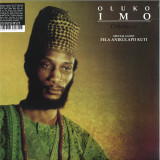
Reissue of the 80s 12” single from Trinidadian musician Oluko Imo (Black Truth Rhythm Band), featuring Fela Kuti and Femi Kuti. Recorded between Lagos and New York in 1988, the tracks sit at the fault line of the Trinidad-Yoruba connection, blending calypso heritage with the Afrobeat and jazz of Nigeria.
Der zweifach Grammy-nominierte sowie gefeierte Komponist und Perkussionist Manu Delago kollaboriert für sein neues außergewöhnliches Album "Snow from Yesterday" (One Little Independent Records) mit dem Vokalensemble Mad About Lemon. Das neue Album ist dynamisch, facettenreich und kraftvoll. Manu Delagos Handpan-Virtuosität ist die rhythmische Lebenskraft von Snow From Yesterday und erzeugt gefühlvolle Klänge, über die sich der verwobene Gesang von Mad About Lemon ausbreiten kann. Es werden Gletschergebirge, Flüsse bis hin zu kleinste Wassertropfen besungen und über Reisen und Stationen des Lebens erzählt, die uns mit Orten und Menschen verbinden und nachhaltig verändern können. "Viele meiner letzten Projekte waren sehr abenteuerlich, konzeptionell und umweltorientiert. Mit "Snow from Yesterday" wollte ich die Musik wieder in den Vordergrund stellen und eine berührende Klangwelt erschaffen, die mir dank der Magie der drei Sängerinnen Anna, Mimi und Heidi wirklich gelungen ist." Der Tiroler Musiker arbeitet regelmäßig mit verschiedenen artists wie Björk, Anoushka Shankar, The Cinematic Orchestra und Olafur Arnalds zusammen und ist als Solist ua mit dem London Symphony Orchestra und dem Metropole Orkest aufgetreten. Snow From Yesterday reist über endlose ozeanische Weiten und Jahrtausende hinweg und erzählt Geschichten, die uns Menschen als Teil eines größeren Ganzen zu sehen. Schließlich münden alle Flüsse ins Meer.
In a union of drum and bass talent at its most authentic, MAKO and SEBA have joined forces to deliver a long-awaited and highly anticipated collaborative single titled "Brotherhood" and "Stockholm Syndrome." These tracks were initially started when SEBA visited MAKO in 2019 and showcase the synergy and creative prowess of both artists.
"Brotherhood" sets the tone for this momentous release as MAKO and SEBA combine their unique styles and sonic signatures to create a track that embodies the essence of Drum & Bass in its purest form. Crushing amen breaks over dystopian themes and chilling Rhodes hooks, this track is constantly moving with its fusion of commanding rhythms, complex arrangement quirks, and grudge-bearing bass work, resulting in a captivating sonic journey that is sure to shatter any jungle sound-system. Topped off with the inspiring mantra of “What is love? One name for it is knowledge."
On the flip side, "Stockholm Syndrome" pays homage to SEBA's cherished hometown. The track captures a minimal yet visceral spirit, a catchy hook that's rare for a track with such a haunting theme is backed with stepping beats and macabre break edits, topped with intricate percussion. This track clearly identifies both MAKO and SEBA's signatures and instantly lets the listener know they're hearing both in fusion, and the heart and soul of both producers' heritage.
MAKO and SEBA's collaborative single is a testament to their individual artistry and the magic that unfolds when they unite. Their ability to seamlessly blend their distinct styles and push the boundaries of the drum and bass genre, while remaining true to its core values, is evident in every note and beat.
This is a brotherhood we're delighted to witness taking shape.
"A true heiress of the rich musical history of her native New Orleans, Britti is an arresting new voice in her triumphant debut, titled straightforwardly, Hello, I’m Britti. Inspired by musical luminaries from Diana Ross to Dolly Parton, and influenced by contemporary legends from Beyoncé to Sade, the album is one of immense gravity and a personal love letter to the place she calls home. Co-written and produced by Dan Auerbach, who flexes his signature ability to uplift genuine raw artistry, the album is a heartfelt confession that frames a window into Britti's soul, revealing her true spirit: fresh and wondrous, with a levee-like hold on her own heritage.
Similar Artists & Influences: Sade, Jill Scott, Solange, Corrine Bailey Rae, Erykah Badu, Beyoncé, Diana Ross, Valerie June, Norah Jones, Lauren Hill, Biig Piig, Orion Sun
“Britti's lush debut is an invitation to a stoned soul picnic somewhere between New Orleans and Nashville, a porch hang on a hazy summer afternoon, and a late-night slow dance party, all at once. Recommended if you dig: Diana in ’71, Dolly in ’78, Sade in ’86, Erykah in ’97” - Dan Auerbach, Producer "
NIJI (AKA Niji Adeleye) makes a triumphant return with his new EP ‘Somewhere in the Middle’.
The first release on his own label, AERONXUTICS, this five-track offering, delves into his deep love of Jazz and his Nigerian roots, creating an engaging and absorbing sonic journey.
In NIJI’s own words : “Somewhere in the Middle represents so many things for me personally. I’m born to Nigerian parents but raised in East London, there’s a duality of influences. I’m a middle child – I’ve always done my own thing and had a unique perspective as a middle child. I’m split between London and New York – two places I love.
London shaped me growing up, New York is where I became an adult and truly myself, and settled in who I am. Not to mention all the musical influences my heritage, London-life & music career has enabled me to have. Today, NIJI, is somewhere in the middle of all of this. Very present force but can’t be placed in a box. This EP represents that blend, somewhere in the middle.”
The Bronx in the 1970s, marked by the presence of notorious gangs, presented a complex and challenging urban landscape. Amidst the crumbling infrastructure and economic decline, neighbourhoods bore the scars of disinvestment, reflected in abandoned buildings and neglected public spaces. The prevalence of street gangs, such as the Ghetto Brothers, contributed to an atmosphere of heightened tension and occasional violence. Graffiti adorned subway cars and buildings, expressing both social unrest and the vibrant creativity of the community. Despite the challenges, there was a resilient spirit among residents, evidenced by grassroots efforts to address social issues. The Bronx during this era was a dynamic yet tumultuous mix of cultural expression, social struggle, and the determined spirit of a community facing adversity. The Ghetto Brothers, originating from the Melendez family who moved from Puerto Rico to the South Bronx in the 1950s, faced challenges involving violence and crime. Despite this, Benjy, a key figure, directed the group towards community improvement. The Ghetto Brothers embraced music, crafting a potent, NYC-flavored musical fusion that caught the attention of record mogul Ismael Maisonave (Salsa Records). Their collaboration resulted in the recording of eight tracks in a single electrifying day at Manhattan's Fine Tone Studios, skillfully produced by Latin studio maestro Bobby Marin (Harvey Averne, La Lupe, Brooklyn Sounds…). This musical odyssey showcases the band's ability to seamlessly blend genres, creating a NYC-flavored stew that captivates listeners with its authenticity. The hypnotic rhythms, infectious guitar riffs, and impassioned vocals reflect the Ghetto Brothers' commitment to expressing their unique experiences and uplifting their community through the universal language of music. "Power-Fuerza" is not just an album; it's a sonic testament to the Ghetto Brothers' fusion of resilience, cultural richness, and musical innovation. Each track is a vibrant tapestry, weaving together the
raw energy of the South Bronx streets and the soulful melodies born from the trio's Puerto Rican heritage. Embrace the timeless resonance of the Ghetto Brothers’ “Power-Fuerza”, one of the best Latin funk albums ever recorded…
NIJI (AKA Niji Adeleye) makes a triumphant return with his new EP ‘Somewhere in the Middle’.
The first release on his own label, AERONXUTICS, this five-track offering, delves into his deep love of Jazz and his Nigerian roots, creating an engaging and absorbing sonic journey.
In NIJI’s own words : “Somewhere in the Middle represents so many things for me personally. I’m born to Nigerian parents but raised in East London, there’s a duality of influences. I’m a middle child – I’ve always done my own thing and had a unique perspective as a middle child. I’m split between London and New York – two places I love.
London shaped me growing up, New York is where I became an adult and truly myself, and settled in who I am. Not to mention all the musical influences my heritage, London-life & music career has enabled me to have. Today, NIJI, is somewhere in the middle of all of this. Very present force but can’t be placed in a box. This EP represents that blend, somewhere in the middle.”
- A1: Dance With Me & Let Me Drink - Women From Cherkessk
- A2: My Beloved One - Women From Cherkessk
- A3: I Miss You - Women From Cherkessk
- A4: My Yura - Women From Cherkessk
- A5: I Swear I Won't Drink - Men From Ulyap
- B1: Vodka Is A Bitter Water - Yura Nagoev & Elena Dokshokova
- B2: Vodka Is A Bitter Water - Men From Ulyap
- B3: Aminat - Men From Ulyap
- B4: Aminat - Damir Guagov
- B5: Circissian Dancing Tunes - Damir Guagov
- C1: Siii Babe - Misha Sultan
- C2: Au Dela Du Vent - Emmanuelle Parennin & Colin Johnco
- C3: Ease - Simone Aubert
- C4: Evergrowing Tree - Valentina Goncharova
- D1: Aminat - Minami Deutsch
- D2: Aminat - G.a.m.s & Vatannar
- D3: Si Aminat - Jrjpej & Ben Wheeler
- D4: My Darling - Zongamin
2x12" + book[51,89 €]
Flee new issue tries to document a Caucasian musical phenomenon mixing criminal songs, Adygean culture & post-soviet society; and features original recordings of traditional songs, and contemporary reinterpretations by a selected line-up of electronic-esque producers: Emmanuelle Parrenin & Colin Johnco, Misha Sultan, Zongamin, Minami Deutsch, Valentina Goncharova, Simone Aubert, Ben Wheeler...
Ulyap is a village in the Caucasus, where one can find an enormous number of accordion and harmonica players. "Ulyap Songs: Beyond Circassian Tradition" represents an attempt to document ancient bards' chants and their entanglement with popular rural heritage as well as post-Soviet culture during modern times, through a critical prism.
This publication reflects on a music phenomenon involving talented female and male musicians, performing in lively (and sometimes festive) social dynamics. It does so by revealing important songs of the repertoire on the one hand, inviting original artists to experiment with Ulyap songs on the other.
Built around an important work of documentation on this genre mixing criminal songs, Adygean culture and lyrics related to post-Soviet society, the book and record (available separately or as part of a bundle) include essays, archive and contemporary photographs as well as three art commissions questioning this original phenomenon from various point of views. Written in English and Russian, the book encompasses a dozen contributions.
Musically, the double LP conists of rare and unpublished archives as well as recordings made by FLEE, Ored recordings and Nikita Rasskazov over the last years in various locations of the Caucasus. These original celebration and drinking songs performed by group of professional and amateur musicians alike have been used as a creative fabric by sonic sound artists and musicians.
- A1: Dance With Me & Let Me Drink - Women From Cherkessk
- A2: My Beloved One - Women From Cherkessk
- A3: I Miss You - Women From Cherkessk
- A4: My Yura - Women From Cherkessk
- A5: I Swear I Won't Drink - Men From Ulyap
- B1: Vodka Is A Bitter Water - Yura Nagoev & Elena Dokshokova
- B2: Vodka Is A Bitter Water - Men From Ulyap
- B3: Aminat - Men From Ulyap
- B4: Aminat - Damir Guagov
- B5: Circissian Dancing Tunes - Damir Guagov
- C1: Siii Babe - Misha Sultan
- C2: Au Dela Du Vent - Emmanuelle Parennin & Colin Johnco
- C3: Ease - Simone Aubert
- C4: Evergrowing Tree - Valentina Goncharova
- D1: Aminat - Minami Deutsch
- D2: Aminat - G.a.m.s & Vatannar
- D3: Si Aminat - Jrjpej & Ben Wheeler
- D4: My Darling - Zongamin
2x12"[30,04 €]
Flee new issue tries to document a Caucasian musical phenomenon mixing criminal songs, Adygean culture & post-soviet society; and features original recordings of traditional songs, and contemporary reinterpretations by a selected line-up of electronic-esque producers: Emmanuelle Parrenin & Colin Johnco, Misha Sultan, Zongamin, Minami Deutsch, Valentina Goncharova, Simone Aubert, Ben Wheeler...
Ulyap is a village in the Caucasus, where one can find an enormous number of accordion and harmonica players. "Ulyap Songs: Beyond Circassian Tradition" represents an attempt to document ancient bards' chants and their entanglement with popular rural heritage as well as post-Soviet culture during modern times, through a critical prism.
This publication reflects on a music phenomenon involving talented female and male musicians, performing in lively (and sometimes festive) social dynamics. It does so by revealing important songs of the repertoire on the one hand, inviting original artists to experiment with Ulyap songs on the other.
Built around an important work of documentation on this genre mixing criminal songs, Adygean culture and lyrics related to post-Soviet society, the book and record (available separately or as part of a bundle) include essays, archive and contemporary photographs as well as three art commissions questioning this original phenomenon from various point of views. Written in English and Russian, the book encompasses a dozen contributions.
Musically, the double LP conists of rare and unpublished archives as well as recordings made by FLEE, Ored recordings and Nikita Rasskazov over the last years in various locations of the Caucasus. These original celebration and drinking songs performed by group of professional and amateur musicians alike have been used as a creative fabric by sonic sound artists and musicians.
With their profound take on electronic music, Animistic Beliefs have steadily solidified their spot in the global underground. Influenced by cultural concepts such as ancestry, animism and mythology, as well as the languages of political techno, punk, bubbling and IDM, Linh Luu and Marvin Lalihatu consistently translate their visions into sensitive productions as well as high-octane live performances. On MERDEKA, the artists explore and embrace their cultural heritage in all of its pride, pain and complexity. It symbolizes Animistic Beliefs' breaking free, coming to terms with their changing selves and letting go of external expectations. The record rethinks childhood memories, confronts the generational trauma left by (post-)colonialism, and re-connects Linh and Marvin â?? respectively of Vietnamese-Chinese and Dutch-Moluccan descent â?? with their formative cultures. MERDEKA marks their first step in an overall departure from western club music. For its layered sound, Animistic Beliefs once again draw from the past, present and future of global club music, creating a sonic space where fast techno, warped breakbeats and ambient soundscapes make way for the augmented influence of (Southeast Asian) tribal music. The record incorporates Indonesian scales and recordings of the Tahuri (a wind instrument made out of a conch shell), Totobuang (Gamelan-like gongs) and Tifa drums, known as â??the Moluccan heartbeatâ??. In true Animistic Beliefs fashion, MERDEKA will set fire to sweltering clubs and (sleepless) dreams. Yet, for the artists, it is essential to amplify the stories that spark that flame and keep it burning. The release of MERDEKA follows CACHE/SPIRIT, their ongoing collaboration with visual artist Jeisson Drenth, which extensively explores the artistsâ?? intersectional identities. As such, the latest album is the next step within a bigger, introspective investigation. More unapologetic than ever, MERDEKA embodies a turning point on Animistic Beliefsâ?? ongoing journey towards self-acceptance â?? fuelled by the sound of urgency.
BADBADNOTGOOD is a young supremely talented trio of musicians made up of Matthew Tavares on keys, Chester Hansen on bass, and Alex Sowinski on drums. Since their inception at Humber College’s Music Performance program in 2011, the three have challenged the rule book on improvised instrumental music and taken jazz tradition into the future.
With early champions including acclaimed BBC broadcaster Gilles Peterson and Tyler The Creator who helped fuel their discovery with a series of live jams that instantly went viral and dubbed them the “Odd Trio”, the band released their first EP BBNG in June 2011 to wide praise. The marriage of jazz virtuosity and hip hop source material offered a fresh take on the traditional “standard” applied to hip hop classics by taking on choice cuts from the golden era rap cannon and writing inspired arrangements for them instead of one-dimensional covers.
The band hit a landmark by introducing original material into their composi- tions with BBNG2 in 2012. New songs like “Rotten Decay”, “Vices” or “UWM” carried on the proud heritage of musical juxtaposition by bringing together jazz, hip hop, punk, and dance music into vigorous balance. Since then, they’ve won praise from the four corners of the globe and collaborated with Frank Ocean, Earl Sweatshirt, MF Doom, Pharaoh Monch and RZA among many. Their no- torious live performances have brought fans across the whole musical spectrum together, taking the band around the world from Coachella to Glastonbury.
Now, the inseparable friends are prepping to release their biggest project to date III on prodigious young label Innovative Leisure, a highly-anticipated project ushering in the group’s newest explorations which are proving to be limitless.
Repress!
10 years since the consumerist musings of Tesco, Matthew Herbert reanimates his Wishmountain project and heads deep underground to find the source material for Stonework: 1000 metres down.
Like many of Herbert’s projects, Wishmountain releases revolve around specific, material sound palettes, and for this latest album he’s drawn from a sample library created as a commission for the Stone Techno festival, which took place at the UNESCO World Heritage Zollverein mine in Essen, Germany. Working with sound recordist Lorenzo Dal Ri, Herbert and Dan Pollard captured a varied and wide variety of hits, tones, textures and one-shots from the frozen-in-time remnants of the Ruhr region’s coal-mining industry and from specific materials in the nearby Ruhr Museum and Mineralien-Museum. A sample library created by Matthew and Dan of the recordings was also used for the Stone Techno series, from which tracks have been commissioned by the likes of Luke Slater, Megan Leber, Ben Sims and KiNK drawing from the same sounds heard on this album.
These stone-cast sounds lend themselves to the Wishmountain framework – skeletal, quasi-industrial techno with an angular impulse and a subtle swing. Much like the breakthrough hit, 1996’s ‘Radio’ (made using samples of a broken radio), the limitations on the source material sharpen the focus of the music. What started out as a practical hardware restriction in the early 90s became a purposeful way of working for Herbert – one which carried through the 1999 album Wishmountainisdead to 2012’s Tesco with its sampling of the British supermarket chain’s 10 most popular products.
Musically, Stonework is consistent terrain for Wishmountain – austere and forbidding in one sense, playful and irreverent in another. But from a club music perspective, which Wishmountain absolutely is, it offers DJs a variety of rhythmic formations within the tool-like minimalism of the arrangements, opening up intriguing possibilities for mixing into, out of, or somewhere in between. For every 4/4 thrust and jerk there is a fractured, snaking meditation pivoting around other time signatures.
Crystal clear in its creative intention and simultaneously successful as surface-level club music, Stonework: 1000 Metres Down is a natural continuation for one of Herbert’s most celebrated, albeit intermittent, aliases.
Celebrating a year of Hagan’s critically acclaimed debut, Python Syndicate releases a limited double vinyl edition of Textures - Textures is an homage to global sounds and influences, an expression of his journey of self-discovery and reflection on his British-Ghanaian heritage, and showcases his keen love for collaboration. Recorded between London and Accra, the project draws out a range of Afro-influenced sounds while listing the collaboration of emerging talents across the vibrant landscape of contemporary African music, Aymos, Bryte, Meron T, Ayeisha Raquel, Griffit Vigo and more. Speaking on the album, Hagan says, “Making this album has taken me on a journey of mixed feelings. I’ve spotted areas of development in my production process but also fine-tuned my strengths to produce a well-rounded Hagan sound. The development of the album opened my mind to previously untapped styles and pushed me out of my comfort zones. At its core, the ‘Textures’ LP is about being proud of retaining heritage and culture through music but also exploring dual identities through fusing sounds. Embracing the power of rhythm and collaboration, ‘Textures’ is a fine benchmark for the next.” With support from DJ Mag, Crack, TRENCH, Trippin, Mixmag, GRM Daily, Pan African Music, Rinse FM, BBC 6Music and around previous singles ‘My Love’, ‘Pray For Me’ and ‘Sise Ntweni’, Textures demonstrates exactly why Hagan is widely celebrated and renowned as a fusionist - perfectly blending elements of Amapiano, Afro-house, UK Funky, Jazz, Neo-Soul, Broken beat and all that's in between with ease on the record.
Tape
Vestigios, Aeondelit’s second full length record after recently releasing an EP of shifting club music influenced by postmodern philosopher Leotard on Tel Aviv’s Sadan records, tells a lucid, captivating story of heritage, transformation, vulnerability and healing. It will be released via Berlin-based art platform and record label Unguarded as a digital and tape release with an artwork created by Petra Hermanova, and will be accompanied by limited textile pieces by Diane Esnault. Aeondelit’s music is strongly influenced by the rocky surrounding of his hometown Manizales and fuses electronic sensibilities, ambient streams and avant-percussive rhythms that build his sound identity. Aeondelit's evocative music has previously been released via the Insurgentes imprint, Vienna-based Ashida Park and was recently featured on the 'Unguarded 2 – Entangled' compilation. Cortés describes the meaning of Vestigios as such: “The memories of past generations: the lives that burn within me, are the pillars of who I am. They constitute longings and traps, sin and strength, the temple that breaks down and rebuilds. The different dimensions of consciousness converge in the mind, which constantly tells us who we are, synthesizing and projecting our contradictions. The pain that comes with getting in touch with our vulnerabilities opens the doors to healing through confrontation. This lays the foundation for a more honest relationship with our past, present and future. 'Vestigios' is the bridge between the temporal and the eternal, the crystallized remnant of pain caused by transformation and recognition of the convulsive underworld of our psyche.” Aeondelit, birth name Sergio Cortés, is a Colombian music producer who explores themes related to technology and human condition in sound. He focuses on the creative use of sample manipulation techniques and digital sound synthesis to deepen the idea of a dialogue between computer and human, and how both influence each other. Deep in Colombia's Andes, surrounded by big mountains and the sacred Nevado del Ruiz, Aeondelit has been forging his own sound identity, exploring the intersection points between sparkly experimental club music and melodic ambient electronic. His first release Editing Destiny on the Colombian label Insurgentes was well received by the public and DJs, named one of the best albums of 2020 on Mixmag. His last release on Sadan Records, Anima Minima, was reviewed and premiered on platforms like DJ Mag, THE BRVTALIST and Orb Mag. He is also the co-founder of the independent record label Nvrclose, where his debut album as Æon Series: Dualidad, was released. About Unguarded: Unguarded is a Berlin based experimental electronic music label and art platform. In 2020 long-term collaborators Tim Roth aka Sin Maldita aka 1k Flowers and Phillipp Hülsenbeck founded Unguarded to foster forward thinking artists with a focus on exploring cross-disciplinary collaboration and embarking on sonic adventures. Unguarded was founded in a time of turmoil and uncertainty for artists and music, trying to keep personal connections alive through shared personal and collective experiences between doom and destruction and glistening hope. Amongst their own contributions, Hülsenbeck and Roth gather a collection of genre-defying works by longtime collaborators as well as artists they bonded with in recent years. Their releases constantly escape from definition but through entangling their unique artistic marks, this diversity remains absorbing and compelling throughout their sprawling sonic miasmas. Combining earth-shattering club cuts, equally elegant and bouncy, Unguarded contributes to and connects the experimental music scene in and outside of Berlin. We invite the curious to a deep, tense but rewarding experience.
Fourth studio album by the British metalcore band Bring Me the Horizon. The album features three singles, 'Shadow Moses', 'Sleepwalking' and 'And the Snakes Start to Sing'. The x11 trk album, the title of which means 'everlasting life', entered the UK Albums Chart at #3. To mark the decade of an album with a heritage and sonic veracity still firmly intact, a special 10th anniversary vinyl pressing has been carefully fashioned to emphasise the music and underline the enigmatic artwork still steeped in symbology and mystique. A picture disc edition hosts the album's opulent and iconic flower of life design, with a colour inversion of the album's original palette further accentuating the ornate beauty of this album. Stock is limited & will be allocated. Promo & marketing activity across all media outlets.
“F(r)icciones is a complicated piece of miscellaneous works. A set of experiments in preparation for a gig at a noise convention in Orozco that never happened, an 18 women choir piece composed for a soundtrack to a documentary that doesn’t have a release date yet or trying to create a drone piece by accumulating guitar noise. The result? Burnt psychedelic blues with electronics ”
Partly an official soundtrack to “Durangas”, a documentary focusing on women and heritage, discussing civil war, education, sex or violence in the town of Durango, Basque Country. And partly a non musical accompaniment to an imaginary movie, F(r)icciones is the new album by A. Maiah.
Self described as Guitarist / Composer / Improviser of Idiomatic Noise / Microtonal Blues Ist or Psychedelic Populist, Asier has been self-releasing albums for nearly a decade now, focusing mostly on prepared guitar or improvised noise
Durangas was composed by Asier, arranged/conducted by Garazi Navas, performed by an 18 women choir from Durango and recorded live at San Agustin Cultural Centre. All of the other tracks were recorded between 2021-2022 in between portable recorders in Burgos or at Estudios Nomadas.
ME LOST ME led by Newcastle-based artist Jayne Dent announces a new album RPG via Upset The Rhythm on 7th July, and is touring across the UK including support dates with Pigs x7. RPG (recorded in Blank Studios with Sam Grant of Pigs x7) is ME LOST ME’s fourth outing as a collective, having transitioned from an ambitious solo project in 2017, Jayne now regularly collaborating with acclaimed North-East jazz musicians Faye MacCalman and John Pope.
ME LOST ME delights in experimenting with songwriting and storytelling, creating a beguiling mix of soaring vocals and atmospheric electronics that playfully weave together disparate genres, drawing influence from folk, art pop, noise, ambient and improvised music. Hauntological in part, RPG is concerned with tales and with time - are we running out of it? Does insomnia cause a time loop? Do the pressures of masculinity prevent progress? Jayne Dent asks these questions and more on RPG, her homage to worldbuilding and the story as an artform, calling back to those oral traditions around a campfire, as well as modern day video games - bringing folk music into the present day as she does so.
ME LOST ME presents sound reaching in opposite directions, straddling time towards the archaic and timeless traditions of folktales, and towards the possible and potential futures of pastoral Britain and the world at large. Part speculation, part reminiscence, what results on the new album RPG is music that sounds ultimately displaced and yet omnipresent, adjacent to a hapless Vonnegut hero whose life is scattered throughout time and history, but full of wonder and curiosity rather than fear.
On track “The Oldest Trees Hold The Earth”, we see time stretched out between the branches of impossibly old beings in the woods. This track was co-written in Aarhus, Denmark with fellow Newcastle folk musician (with Danish heritage) Ditte Elly. The pair wordlessly passed a sheet of paper between each other to write the lyrics, inspired by Højbjerg and Mosegård, the woods they were sitting in. “How long should I wait/Before the moss grows?/On my skin, on my outstretched arms,” the lyrics are sung in a round, the close harmonies delicate and detailed.
A central thesis of this album is the joy of creation, something which is paid homage to in the album’s final track, “Science And Art” (Not because we need it to last/just because we needed to make it - so we invented the words/this language). It is also reflected in the definition that Jayne gives for “folk” itself. She comments, “To me, folk is quite an expansive idea. I think of it as creative work that's often made ad-hoc, with things that are at hand and more often than not it's born of a DIY ethos. It is songs and stories of the people, as in the traditional sense, but also creative coding, game design etc. Whatever outlet someone has for their creative expression could be described as folk. It's the things we make because humans need to make things, and the stories we tell about ourselves and the world around us.”
Crucially, on latest album RPG, Dent expands her songwriting and looks towards the unreal locations of worldbuilding in video games for inspiration. She comments, “I think the main similarity is the importance of a song's setting/environment to inform its narrative and textures, I'm often most inspired when out walking in the natural landscape, in cities and travelling to places I've never been before - the environment I'm in really impacts the work I make. While writing this album, however, I found myself inspired by imaginary landscapes, those in video games, paintings, etc. I was writing stories into these unreal locations instead. Even the songs inspired by real places, like The Oldest Trees Hold the Earth, have a very surreal quality to them in the songs, like they're being warped and turned into something not of this world. I think that's the main difference for me in terms of the thematic content and inspiration behind this album - I've been getting more and more interested in balancing surreal and fantastical environmental elements with ordinary and everyday settings.”
RPG upends the concept of the eternal return - we may be in the midst of inevitable repetition, but we tell stories whilst awaiting the passage of time.
"Being familiar with, and a fan of Jayne's earlier work, it was great to get the opportunity to work with her on the production of her new record. I had in mind a sense of what the record might be, but what came of the sessions, led by the vision Jayne had for the record, totally exceeded my expectations. As far as albums go, it has a breadth of writing and a sonic depth that made it a truly brilliant record. Having Jayne join us on a leg of the Pigs x7 tour in April is going to be ace. The creative nature, the sincerity and bold strokes of ME LOST ME put it in that space outside of any genre pigeonholes, and between our two sets I imagine the audience is going to have a proper sonic bath..."
Sam Grant, Pigs Pigs Pigs Pigs Pigs Pigs Pigs, 2023
“The music of Me Lost Me is beguiling, idiosyncratic and cinematic - or should that be video-game-omatic? This suite of songscapes often hits the sweet spot between ancient and modern with its masterful blend of stark folk, neon electronic burbling and unusual arrangements. Jayne's singing is refreshingly straightforward and nuanced - it's exquisite! - and perfectly punctures the nebulae of synths and brass which billow around the old wooden frames of the songs. Whilst listening I had images in my mind of what Northumberland might look like through the eyes of Simon Stalenhag - foggy moors, a robot looking across the sea to Lindisfarne, twinkling lights on metal towers.... that sort of thing. It's a really great album.”
Richard Dawson, 2023
Endlich ein neues Studioalbum zum 10-jährigen Jubiläum der norwegischen Hardrock-Helden. Seitdem die Band mit der Aufnahme von Twin Guitars für 'Spidergawd IV' begonnen hat, ist das Ziel primär die Suche nach immer besseren Songs. Spidergawd sind zuversichtlicher denn je, endlich das richtige Rezept gefunden zu haben. Eine Formation aus fünf gleichberechtigten Mitgliedern, alle Vollzeitmusiker, und welche die vor allem in diversen Genres unterwegs sind. Aber auch die Essenz dessen, was die Band sein sollte, ist jetzt auf den letzten vier Alben (einschließlich Nr. 'VII') zu finden. Auch wenn die neuen Songs vielleicht eingängiger/poppiger sind als je zuvor, orientiert sich der Sound des neuen Albums wieder an 'Spidergawd IV' und 'V'. Album Nr. 'VI' war eine inspirierende und interessante Reise darüber, wie direkt und aufgeräumt ihr Sound sein kann. Musikalisch zuletzt von Bands wie Thin Lizzy und 80er-Jahre-Hardrock geprägt, klingt neue Album deutlich sumpfiger, chaotischer und größer. Alles, was den Zuhörer näher an das heranführt, was bei einem Live-Auftritt von Spidergawd auf der Bühne passiert. Tracks wie 'Sands Of Time', 'The Tower', 'Your Heritage' oder 'Dinosaurier' beweisen, dass die Band on fire ist wie nie zuvor - und vielen Pseudo-Rockern mal wieder zeigt, wo der Barthel den Most holt! Die beiden limitierten Erstversionen kommen inkl. CD, 7inch Single (inkl. Etching auf einer Seite) sowie Poster!
Enigma is the first studio album by the space age, glass-harp powered, tropicalia quartet Os Barbapapas. Understandably, those adjectives could invoke images of kitschiness in one’s mind; that concept is smashed by the ice cold shot of Brazilian jazz riffing in the album’s opener and first single, “Se Liga Na Sequência”.
Os Barbapapas trapeze the vast richness of Brazilian/South American music heritage and beyond, as a collective with members who have variously travelled to Morocco to master Gnawa; played in circuses, or were born in the heartland of samba – these experiences and much more inform the complex yet breezy instrumentals of Enigma.
It’s a joy to pick through the notable influences that resound over Enigma. Ethiopian Jazz bursts from "Caminho para Itiwawa", backed by an Afro-Latin swing, fostered by drummer Barbara Mucciollo. There’s tonalities from North African artists such as Omar Khorshidor West African artists such as Tinriwen and Ali Farka Touré, as well as rhythmic influence from Afro-Cuban and Afro-Brazilian music. The dynamite track “(L)Atitude(S)” contains the explorative excitement of Brazilian 60s luminaries like Pedro Santos, however none are as special as layered percussion of “Gaba Gaba”, connected to the very specific rhythms of Northeast Brazil. It's evident from listening to Enigma that Os Barbapapas are an exceptional live band. They have their sights set on Europe soon, with the Glass Harp packed away safely. Until then please enjoy this electrifying album of their work so far, understanding: this is an extremely exciting project, still in its auspicious infant years
Enigma is the first studio album by the space age, glass-harp powered, tropicalia quartet Os Barbapapas. Understandably, those adjectives could invoke images of kitschiness in one’s mind; that concept is smashed by the ice cold shot of Brazilian jazz riffing in the album’s opener and first single, “Se Liga Na Sequência”.
Os Barbapapas trapeze the vast richness of Brazilian/South American music heritage and beyond, as a collective with members who have variously travelled to Morocco to master Gnawa; played in circuses, or were born in the heartland of samba – these experiences and much more inform the complex yet breezy instrumentals of Enigma.
It’s a joy to pick through the notable influences that resound over Enigma. Ethiopian Jazz bursts from "Caminho para Itiwawa", backed by an Afro-Latin swing, fostered by drummer Barbara Mucciollo. There’s tonalities from North African artists such as Omar Khorshidor West African artists such as Tinriwen and Ali Farka Touré, as well as rhythmic influence from Afro-Cuban and Afro-Brazilian music. The dynamite track “(L)Atitude(S)” contains the explorative excitement of Brazilian 60s luminaries like Pedro Santos, however none are as special as layered percussion of “Gaba Gaba”, connected to the very specific rhythms of Northeast Brazil. It's evident from listening to Enigma that Os Barbapapas are an exceptional live band. They have their sights set on Europe soon, with the Glass Harp packed away safely. Until then please enjoy this electrifying album of their work so far, understanding: this is an extremely exciting project, still in its auspicious infant years
BLUEM is the recording project of Chiara Floris, a London-based singer/songwriter and producer from Sardinia, Italy. With "NOTTE" the London singer-songwriter crafts comforting, yet off-kilter, alternative pop fleshed out with elements of folk and soul. Her work is grounded in a deep understanding of, and appreciation for, Sardinia’s unique heritage and folklore. Her projects invariably allude to ancient Sardinian stories both in the music and in the portfolio of visual art that accompanies each release.
It might be his debut album, yet Peacey’s “Play It By Ear” is a body of work crafted as though by a scholar. And where better for this work to emerge from than Derby, UK’s Atjazz Record Company, a label with a rich heritage and many strings to its bow?
This eclectic sonic journal catalogues the evolution of Peacey, documenting his interactions with, and influences from, some of dance music’s notable players. It’s an album that will attract discerning ears and open minds; minds attuned to a multitude of genres as it visits Hip Hop, R&B, House, Garage and Fusion.
'Culture Bandit' is the 2nd single taken from this colossal album, and gives us a great understanding that Peacey really knows where to hit it! It’s a deep banger of course, with a hint of tech-house, deep-house and even the more percussive side of afro-latin house, but with the electrifying vocals of Vanessa Hidary atop, this will go down in history as “One of those tunes”. To say this song has life is an understatement. So we’ve covered that, did we mention that Osunlade & Atjazz have also remixed this killer slice? Ah, well they have, and they join Peacey on this pristine release to give alternative angles on this wild, spoken and edgy outing.
Marjaa: The Battle of the Hotels” is a concept album born of the idea of merging singer & songwriter Mayssa Jallad’s two vocations: music and urban research/architectural history. Written in collaboration with producer Fadi Tabbal, the music builds upon Tabbal’s spatial approach to sound and Jallad’s research on Beirut’s Hotel District. The album is a reference to Jallad’s Historic Preservation master's thesis, in which she detailed the history of the “Battle of the Hotels”, a 5-months battle that took place in Beirut at the beginning of the Lebanese Civil War, from October 22nd, 1975 to March 29th, 1976. Jallad saw architecture as a main protagonist of the battle, as she discovered it was the first high rise urban battle in the world. The close of the battle resulted in the 15-year Green Line, an urban rift which split Beirut into “East and West”, restricting movement and communication and creating a violent divide that still resonates today. The album comprises two parts. Part A: Dahaliz, is a stroll in the city, where Jallad tries (and fails) to follow an old map. Musician Youmna Saba is a companion in this journey of remembering the once winding corridors (“Dahaliz”) of the city, destroyed by new developments since the 1960s. Empty skyscrapers propel her onto a past filled with the violence of snipers, and a present filled with the glamorous injustice of empty luxury real estate endorsed by powerful warlords-turned-politicians. In Part B: Maaraka, Jallad inhabits the building of the Battle of the Hotels, as its events unfold. She calls the fighting militias the Blues and Reds, respectively the Lebanese Front (Christian Nationalists) and the Lebanese National Movement (Pro-Palestinian leftists), leveling the playing field, and drawing a map of the battle through songwriting. Sary Moussa produces the conclusion of the battle in “Holiday Inn (March 21 to 29)”, which ends with the ultimate severance of the city of Beirut. The music caters to post-war youth who have never been taught this difficult history. Once we consider the “Battle of the Hotels” as our common heritage, it provides an opportunity to teach the value of civil peace. It is also a call to protest for the renewal, rather than the recycling of the political class that has once destroyed the country and holds us, to this day, hostage of its violence. Limited edition of 300 copies. 140gsm vinyl pressed at Microforum (Canada).
Repress!
Veteran Drum & Bass producer Zero T returns to The North Quarter as he teams up with blind jazz pianist Andre Louis (PKA Onj) on their conceptual album Kilburn.
Having fortuitously discovered that they are neighbours in autumn 2021, Zero T & Onj began writing music together almost immediately. The duo's chemistry was undeniable as Kilburn was written over the course of just three months. With Kilburn being historically known for its large Caribbean and Irish communities, and Zero T being Irish and Onj of Caribbean heritage, it felt undeniable to dedicate the album after the London area it was written in.
The result is a rich, versatile collection of tracks, showing off intricate rhythms along with smooth chord progressions, perfectly marrying the worlds of both artists and their Jazz, R&B and Jungle influences. The darker, heavy side of Zero T’s sound is present on 'Some Type of Way' and 'We Juggle Different', both featuring Neo Soul singer Terrell King. More delicate, soulful tracks include “Everyday Struggles” featuring Jordan Max, “Rodeo Drive” featuring Mercy's Cartel and “Darkness” featuring Steo. Other featured vocalists are the iconic Ursula Rucker, Manchester's T-Man and Ms Nayé. The album also includes a collaboration with Nu Jazz duo Unitsouled, who previously appeared on Zero T’s debut release on The North Quarter Baby Grand.
Jacques Renault draws inspiration from the rich heritage of Latin Underground music, Renault embraces the vibrant rhythms, soulful melodies, and irresistible beats to create a captivating soundscape that bridges the gap between eras. He weaves together a collection of handpicked Latin Underground Classics, each chosen for its historical significance and cultural impact. With great respect for the original compositions, Renault breathes new life into these hidden gems, preserving their authenticity while crafting alluring edits that speak to contemporary audience
- A1: Drift On
- A2: Piñata 02 50
- A3: Gunz
- A4: First Among Misfits (Ft The Narrator) 04 28
- B1: La Vacanza (Ft Kidä)
- B2: Sublime
- B3: Exit To Cisco
- B4: Lady (Ft Bbymutha) 03 44
- C1: O Vampiro
- C2: Bonehead Behavior
- C3: Vicious Chambers
- D1: Ultra Scuro
- D2: And There Goes The Challenger
- D3: Less Burners Bigger Hearts (Ft The Narrator, Azekel)
Multidisciplinary artist GAIKA returns with a new track titled “LADY” featuring bbymutha from his forthcoming album, Drift out on September 8th.
Thrashing drums and droned out guitars take immediate effect on “LADY” but it’s the two mavericks' electrifying chemistry that is the driving force of this track. Enlisting KIDÄ (Yves Tumor) on production with additional contributions from Azekel (Gorillaz) and Max Winter, alternative rock and audacious rap come crashing together as GAIKA and bbymutha flex their lyrical prowess, unapologetically expressing their devotion to their lovers on this twisted, feverish affair.
Newly signed to Big Dada Recordings, home to Roots Manuva, Yaya Bey, Kae Tempest, Brian Nasty and more, GAIKA jumps back into music with new invigoration after delving into work as a composer to unveil Drift - his most expansive work to date. The visionary invites listeners on a high-speed journey where love, pain, brutality and beauty collide to produce a vivid and provocative cinematic masterpiece. The sonic universe of Drift is the most stylistically accurate representation of GAIKA’s personal tastes to date, stitching musical influences past and present such as Prince, Wu Tang Clan, Massive Attack, John Coltrane, Pink Siifu and A$AP Rocky to land on a gritty, distorted sound pulsating with an unwavering, formidable energy that’s disruptive yet timeless.
Drift is 14 tracks of nostalgic escapism, a shape-shifting body of work with hip hop and club music cultures at its core, as those simply run through the veins of GAIKA. Analogue and retro in feeling, Drift’s psychedelic feel is formed by incorporating 90s grunge, dark wave, post-punk and alt-rock into its tapestry. It’s a representation of his heritage and environment, featuring calypso steel pans to gospel vocals, reverberating dub to frenetic rap and elements of sound design taken from recordings of the real world. GAIKA’s music transcends borders and his nomadic nature means he simultaneously belongs and doesn’t, his music cannot be confined to just one genre and this unique new record further cements him as one of the most progressive artists of our time, telling the tale of modern day renaissance man driving away from the economic hierarchy he doesn't believe in.
GAIKA endeavoured to create a waking dream by constant participation in communal art making, removing the separation between art and life, his imagination and community and breaking the boundary between real life and any spectacular representation of it. He set up a number of situational arts facilities in the heart of London including shows at ICA, 180 the Strand, Now Gallery and as the world reopened, created pop up galleries, studios, exhibitions and raves with the intention to enhance the experience of real life by dreaming. To achieve this coherently and authentically the process became akin to a form of psychological examination of memories made before music “mattered” to GAIKA - before becoming commodified, individualised and his name capitalised.
Drift became the term used to describe the creative happenings in these spaces and the name for the collective of people who made this record. GAIKA is the central writer and composer working closely with KIDÄ on production and a group of classically trained musicians with contributions from Azekel, Charlie Stacey, Brbko and The Narrator over an extended period of time where they recorded music late into the night, night after night.
The second of four vinyl release from DJ 3000’s “Mezë’ album continues to shine with ‘Pitë EP’. ’Pite’ as close to classic House as DJ 3000 gets, a testament to his versatility on this new release. 'Red & Black' is a heartfelt homage to Franki Juncaj's Albanian heritage, evident not only in its title, which echoes the national colors, but also in the seamless integration of traditional Balkan instruments. 'Ishalla' hints at the influence and inspiration drawn from Middle Eastern and Balkan musical traditions. Bringing this EP to a poignant close is 'Dua' a title derived from Albanian, signifying "I want," adding a meaningful linguistic layer to this captivating musical journey.
Introducing Elli Acula's latest pounder "BFF"! Packed with high-octane energy, vibrant contrasts, and explosive changes - this track got heavily road tested and sets dance floors ablaze. Kicking off with a hard-hitting and relentless kick drum that lays the groundwork for what's to come. As you delve deeper, you'll meet mesmerizing glitchy vocal cuts that add an ethereal dimension to it. But it doesn't end here - a nasty synth line with shuffling stabs and a captivating melody keep you hooked. The sheer contrast and dynamic shifts offer some serious shakes and a heavy dose of breakbeats in the B-part. Get your slice! Welcome to "Vape Nation" by trans-disciplinary artist Claus, a track referencing the rich heritage of big room and minimal techno. This peak time tool is based on a screaming lead melody and a subtle acid baseline, creating thrilling tension and discharge on point. The lead phrase radiates an ecstatic bitter sweetness and deploys the minimalist power of hypnosis to its full extent. "Vape Nation" seems to mediate the utopian moments of techno futures through their endless repetition - time for some contemplations on the dance floors! "Tek Tek Tek"by FJAAK is a rhythmic 4-stepper that explores dynamic beat changes and percussion-driven elements. At its core, it features a heavy, punchy kick drum that sets the tone to make a warehouse shake. The track's smacking synth line adds a unique texture, while short vocal snippets follow the song's title, creating a sense of intrigue and anticipation. "Tek Tek Tek" invites listeners to immerse themselves in its minimal & groovy world, where the rhythmic focus meets the dance floor.
The Debut album from Finnish band Graven Sin is a modern classic of godly, Doom-laden Heavy Metal. Veil of The Gods is etched in granite via Svart Records on November 2023 Pristine new Finnish band Graven Sin stomp proudly on the shoulders of giants with their ravishing debut album, Veil of The Gods. Immaculate Heavy Metal, expertly delivered with stunning finesse and elegant Doom perfection, Veil of The Gods is a classic in the making. Rarely has a new band sounded so timeless, serving up a godly platter of first-class Heavy Metal, that Graven Sin seem chiselled in granite to sit side by side at a table with the greats from the very get go. From the galloping charge of opening barn-stormer Morrigan, with jaw dropping solo guitars courtesy of riff master Ville Pystynen, the epic and anthemic She Who Rules Niflheim with soaring vocals from Greek vocalist Nicholas Leptos to the formidable double bass canter of Ville Markkanen’s drums on songs like Beyond Mesopotamia, Graven Sin knows the true riddle of steel. Throughout Veil of The Gods’ eleven cast-iron tracks, we can trace veins of recent Finnish greats such as Sentenced, Amorphis, Reverend Bizarre or their nordic counterparts Grand Magus from Sweden, but there is much more at play here. Graven Sin offers up heavy, doom laden orthodox Heavy Metal in the true, chugging, monumental sense of the term. The knowledge and prowess of Heavy Metal craft on display in Veil of The Gods is second to none, from the Maidenesque command of melody to the swarthy Manowar rhythms, herculean Deep Purple keys and Messiah like Candlemass-rich voice of astonishing vocalist Leptos, these are songs to be inscribed into stone tablets. Where pitch dark mythical themes and occult leanings of the lyrics bring to mind the Heavy Metal running through Black Metal bands like Dissection, the song arrangements swing from gallop to thundering, head-banging mid-sections with such magnificence, you would think you were in the hands of a band with decades of heritage behind their backs. A “where have you been all my life moment” awaits Heavy Metal fans of all shades when Graven Sin hits the speakers, delivering a sound that cuts glass and steel. A refreshing tour–de-force through everything Heavy Metal is loved for, not shrinking from the dark but embracing it with gusto and fierce bravado. Veil of The Gods shows us that real metal lives forever, if crafted with true spirit and belief. Hear the cry of the seer of doom, by heeding Morrigan’s call now: Ville Pystynen - guitar, bass Nicholas Leptos - vocals Ville Markkanen - drums
- 1: Bob Marley & The Wailers - Sun Is Shining
- 1: 2 Wayne Smith - Under Me Sleng Teng
- 1: 3 Clint Eastwood - Another One Bites The Dust
- 1: 4 Marcia Aitken - I'm Still In Love With You
- 1: 5 Max Romeo - Material Man
- 1: 6 Alborosie - No Cocaine
- 1: 7 Alpha Blondy - Sweet Fanta Diallo
- 1: 8 John Holt - Police In Helicopter
- 1: 9 Horace Andy - Ain't No Sunshine
- 1: 0 Lee "Scratch" Perry & The Upsetters - Throw Some Water
- 1: Culture - Two Sevens Clash
- 1: 2 Biga*Ranx - 7 Days (Feat. Atili)
- 2: 1 Chaka Demus & Pliers - Murder She Wrote
- 2: Sister Nancy - Bam Bam
- 2: 3 Winston Mcanuff & Fixi - Garden Of Love
- 2: 4 The Heptones - Take Me Darling
- 2: 5 Black Uhuru - Sinsemilla
- 2: 6 Gregory Isaacs - Babylon Too Rough
- 2: 7 Freddy Mcgregor - Big Ship
- 2: 8 Althea & Donna - Uptown Top Ranking
- 2: 9 Alton Ellis - It's A Shame
- 2: 10 Inna De Yard Feat. Cedric Myton - Youthman
- 2: 11 Dillinger - Cool Operator
- 2: 1 Dennis Brown - Revolution
- 3: Don Carlos - Rivers Of Babylon
- 3: 4 Johnny Osbourne - Buddy Bye Bye
- 3: 5 Eek-A-Mouse - Ganja Smuggling
- 3: 6 Ini Kamoze - World A Music
- 3: 7 Yellowman - Zungguzungguguzungguzeng
- 3: 8 Tenor Saw - Ring The Alarm
- 3: 9 Soom T - Free As A Bird (Tom Fire Version)
- 3: 10 Beres Hammond & Zap Pow - Last War
- 3: 11 The Abyssinians - Satta Amassa Gana Dub
- 3: 12 Morgan Heritage - Down By The River
- 3: 1 The Wailers - I Shot The Sheriff (Dub)
- 3: 2 The Congos - La La Bam-Bam
There’s a connection between the musical history of the Mediterranean that can’t be explained through academia alone. It’s an expression of simultaneous grief and celebration that trespasses cultures and generations; and demands to be felt, or even better, danced, to be understood. The same spirit weaves Rebetiko from the ashes of the Ottoman empire to the heavy Hafla soundtracks on the Koliphone label in ‘70s Jaffa, or rebellious Turkish psychedelic music to the first generation of surf guitarist migrants in America. It's an infectious feeling that travelled and evolved wherever it was called, and that passion is embodied in “Back to the Taverna”, the new album by Berlin based bouzouki quintet, Cherry Bandora.
On the milestone of their third release, original members Liad Vanounou (Bouzouki) and Lorena Atrakci (Vocals) have bolstered their sound with longtime friends and collaborators Moshe ‘Moosh’ Lahav on Keyboards and flute, Tamir ‘Hassan’ Chen on Bass and Nimrod Lieberman on Drums to create an album celebrating the ecstasy of being able to drink and perform together again, freed from the anathema of the last years. The band has evolved considerably since their beginnings ten years ago as an Agean-influenced part of the local Balkan Swing scene; the most significant addition being the deployment of “The Hardest Working Man in Tropical Music” Alex Figueira as musical director for this album. His scorched fingerprints are unmissable throughout the extended psychedelic breakdowns and percussive overdubs that make “Back to the Taverna” such a dynamic offering.
Cherry Bandora have always been a very personal band; collecting songs from nearby cultures and history and blending them into their own experience by developing new arrangements or lyrics, just as musicians from those times would have. Lorena delights in expressing herself away from her mother tongue or providing modern lyrics for an updated feeling, as she does to the beloved Turkish standard, “Rampi Rampi”. In this interpretation she uses her native Hebrew in a saucy lockdown-delivery-guy romance... This track also features Baris Öner from local Turkish rock band Kara Delik on his signature flanging Saz.
Singing in Greek, English, Turkish and Hebrew was also a natural choice on the album, representing the “multikulti” area of Berlin that the band lives and records in. These languages would all be heard on the street as they walked to record in the analog Studio Wong in Kreuzberg.
“As descendants of Mizrahi Jews (Jewish migrants from non-European countries), growing up listening both to Beatles and Umm Kulthum, playing in jazz music departments in high school, and now living in Kruezkölln, we basically pay tribute and revive this shared heritage in the context of the global music scene of today” says Lorena.
The opening track, The Sound Of Baglama, is an interpretation of the anthemic Tsitsanis homage to the tavernas and sweethearts of Thessaloniki. It lays the ground for what to expect from Cherry Bandora’s exceptional live performances, featuring effortless switch-ups between surf rock choruses and laid-back verses dipping into Persian disco funk. This song will be accompanied by a tour-collage “found footage” style film clip in production at this
time.
Cherry Bandoras show their dedication to the bit with a rousing English version of the canonical rembetiko tune Dimitroula Mou. This amour song, popular with generations of female singers, is accompanied by real studio plate smashing, a ritual which sealed their final session for the album. 2 bonus tracks are included on the digital release, both a little more raw from the band’s home studio: the reeling dervish Rubi Rubi (which will be released as a second single with a video clip) and the emotionally dense and hypnotic slow burner Esý.
The album will be released digitally and on vinyl as a collaboration between Rebel Up Records (Belgium) and Rumi Sounds (Berlin) on Friday 3 november 2023 and is a prime example of what a raunchy, open minded and tireless bouzouki band can do as they hit their prime.
An extensive highlighted review will appear in Songlines magazine #135 December issue and the track ‘Benimde Canim Var’ will be featured on their free compilation. Also radioplay on Radio Campus France playlist (allover) during November and December.
Wolastoqiyik Lintuwakonawa is the debut album by Canadian composer and tenor, Jeremy Dutcher – which involves post-classical rearrangement of his Wolastoq First Nation traditional music. Granted access to the Canadian Museum of History, Jeremy discovered wax cylinders from 1907 of his ancestors singing forgotten songs and stories that had been taken from the Wolastoqiyik Nation generations ago. The album is Jeremy’s contribution to his heritage and community in attempts to revitalize the Wolastoq language to the world, which has less than 100 speakers alive today. This collection of ground breaking post-classical arrangements is truly one of a kind and recalls the mood of Rufus Wainwright's operatic performance or the haunting pop of Anthony & The Johnsons.
Teakup is Lauri Reponen, the Columbus, Ohio DJ, producer and torch-bearer for the city’s proud Techno heritage. Following in the footsteps of Columbus originators, Titonton Duvanté, Archetype and Todd Sines, Teakup has spent the past decade forging a sound of his own via a genre alchemy that embraces genres past and present. Hardcore’s staccato samples and chopped breakbeats, UKG’s crunchy triplet hi hats and mellifluous House melodies combine in novel forms. Titonton’s wonky Tech House takes, Todd Sines’ stripped minimalism and Archetype’s broken rhythmic exploration are more key ingredients in the Teakup stew. This recipe has cooked up a massive cache of unreleased tunes as well as previous 12”s on is / was, Residual, Shut Off Notice and Lauri’s recently-minted TKP imprint.
Compiled from over 200 demos, Signal 23 has Lauri flexing a new level of genre-mastery. The title track explores Spiral Tribe’s ripping, psychedelic Freetekno. ‘Valve’ is cutting-edge rhythm hypnotism. ‘Felopzd’ loops into ecstatic trippy crescendo and ‘Pad Thai Mystic’ takes you on the spiritual voyage of late-night food delivery in middle America. Four modes, four hitters – to warm floors, open hearts or split psyches.
- 1: Ache Adani Ya Ma (What Got Into Me)
- 2: Mahlali Noum (Insomnia)
- 3: Gouli Ache Ka Tabrini (Tell Me Why You Love Me)
- 4: Ha Hbibi Ha Mimouni (My Love My Fate)
- 5: Adi Wella Khali (Take It Or Leave It)
- 6: Rabi Ikhalesse (God Will Bless You)
- 7: Ana Walah Nachak Fik (I Swear I Love You)
- 8: Lajabni Achkak (Your Love Brought Me Back)
- 9: Wa Alache Ana Nachek (Why Do I Love You)
- 10: Dabazte Omri (Lover’s Quarrel)
Fadela is an internationally renowned artist from Oran (Algeria) who began her musical career in the 1980s alongside Boutaiba S'ghir, Khaled and avant-garde producer Rachid Baba Ahmed. With her powerful, haunting voice, Fadela has brought a new dimension to raï music, skilfully blending traditional sounds with modern influences. Her songs are infused with emotion and passion, telling stories of love, pain and resilience. Over the years, she has released several successful albums, reaching millions of people around the world and making her an icon of raï music. Today, Fadéla continues to perform, enchanting audiences with her unique voice and infectious energy. Her exceptional career and musical heritage make her one of the greatest raï artists of all time. Elmir is delighted to present the first vinyl edition of the album Mahlali Noum, originally released in 2006.
Jaheim H. Hoagland, known professionally just as Jaheim, is best described as an R&B singer, but as all his releases are post millennium, the term has a different usage now to the style of the 50s/60s/70s that once used the genre. A resident of Hillsborough Township, New Jersey, and the grandson of 1960s soul singer Hoagy Lands which gives him Cuban, African and Native American blood, plus a fine musical heritage.
His recording career started with Divine Mill Records (a division of Warner Bros. Records) and his debut album “Ghetto Love” was released in 2001 to great acclaim. His follow-up album “Still Ghetto” (2002) spawned two hit singles, “Put That Woman First” and “Fabulous”, that both went platinum, and his third album “Ghetto Classics” (2006) topped the US Billboard chart selling over 153,000 copies in its first week. He then was signed to Atlantic Records in 2007 and his success continued with another three albums, and his final album to date, “Struggle Love” (2016) was released through BMG on his own label Julie’s Dream. To date he has received three Grammy nominations and sold over 5 million records worldwide.
The tracks selected for their 7” debuts are “Just In Case”, which was from the 20-track album “Ghetto Love” and did actually get released on a 12” being a massive favourite at the more progressive soul events, and “Diamond In Da Ruff” from “Still Ghetto”, which was also released on 12” vinyl.
DJ 3000, Presents 'Mezë EP’ – A Fusion of Music, Culture, and Life
Franki Juncaj, globally recognized as DJ 3000, is set to launch his fifth album, 'Mezë.' This release marks the culmination of an extraordinary artistic journey, inviting everyone to revel in the beauty of music, culture, and life while breaking down boundaries and uniting people through its masterfully crafted tracks.
Renowned for his ability to infuse Detroit's musical vibrancy with his Albanian heritage, DJ 3000 embarks on a fearless exploration of his roots. 'Mezë EP' harnesses the power of food as a metaphorical "glue" that harmoniously binds the realms of life and music.
The title track, 'Mezë,' transcends mere genre classification; it is an artistic masterpiece that captures the heart-pounding communal essence of a party while reflecting the vibrancy of sharing a meal together. 'Humble Quest' delves into the depths of Detroit's musical heritage, while 'Tanbur' is a global celebration, gracefully incorporating ethnic stringed instrument samples that ride atop a steady drumbeat. 'Snake Eyes' ventures into the realms of Electro, underscoring Franki's mastery across diverse electronic dance music genres.
'Mezë EP’ is a testament to the power of music, culture, and the universal joy of life. Join DJ 3000 on this extraordinary journey, where boundaries disappear, and we are brought together through music, food, and family.
'Last January, Benjamin Biolay gave a concert event in his hometown, with the orchestra National de Lyon and in the incredible room which is the Auditorium of Lyon. This timeless concert is now available in CD book and double vinyl. You will re-discover his greatest titles such as "La Superbe", "Comment est ta peine?", "Ton Héritage", or "Lyon presqu'île" in the new symphonic version.Reviews and Ads – R2, Mojo and London Macadam
- A1: Intro (Ghetto Kumbé Remix) 05 00
- A2: Sola (Les Enfants Sauvages Remix) 07 37
- B1: Vamo A Dale Duro (Uproot Andy Remix) 05 24
- B2: Djabe (Monte Remix) 05 42
- B3: Pila Pila (Trooko Remix) 02 44
- C1: Cara A Cara (Dj Firmeza Remix) 03 54
- C2: Tambó (Nickodemus Remix) 04 21
- C3: Está Pillao (Studio Bros Remix) 05 39
- D1: Pide Mas (Montoya Remix) 04 02
- D2: Lengua Ri Suto (Cero39 Remix) 03 50
- D3: Bomba Feat Walshy Fire & Sky Monroe
Purple[23,49 €]
For this album Ghetto Kumbé has enlisted an all-star roster of artists from four different continents, they’ve put together a fresh version of their debut album that’s been specifically geared to the world’s diverse slate of dancefloors, whether at home or in the club, this double 12” 45 RPM is the perfect format to experience this music. There's no denying the power of the drum. It's primal, it cuts across borders and most importantly, it makes you want to move. Ghetto Kumbé don't just understand that they celebrate it, and it's why the tambor was at the heart of the Bogotá-based trio's 2020 self-titled debut album. Rooted in mysticism and the Afro-Caribbean rhythms they'd grown up with all their lives, the critically acclaimed LP thrillingly updated the traditional Latin template, folding in elements of modern hip-hop, house and bass music while also delivering a transportive Afro-futurist vision. On Clubbing Remixes, that vision has been further amplified, as Ghetto Kumbé who were already one of Colombia's most prominent alternative acts have now gone fully global; enlisting an all-star roster of artists from four different continents, they've put together a fresh version of their debut album that's been specifically geared to the world's diverse slate of dancefloors. As the title implies, the new LP is meant for the club, which is why Ghetto Kumbé have turned to Latin music heavyweights like Trooka a multiple Grammy winner whose resume includes work with Lin-Manuel Miranda and Residente and Monte (a.k.a. Bomba Estéreo founder Simón Mejía), along with top-shelf DJs like Nickodemus and Uproot Andy, two NYC artists who've spent decades championing Afro-Latin rhythms. True to the LP's global spirit, the record also includes reworks from batida maestro DJ Firmeza, fellow Afro-Portuguese outfit Studio Bros and Parisian house groovers Les Enfants Sauvages, plus genre-blurring remixes from sonically adventurous Colombians Montoya (himself another ZZK artist) and Cero39. Even the artwork on Clubbing Remixes is a remix, as Ghetto Kumbé have tapped Uganda's Denzel Muhumuza to transform the cover of their debut album into a new, explicitly Afro-futuristic illustration. Depicting a strong Black face and glowing neon fauna beneath a sparkling moonlit sky, the fantastical image speaks to both the ritual magic and Afro-indebted heritage of Ghetto Kumbé's music, and thanks to Clubbing Remixes, the group's passionate, drum-fueled sounds will soon be blasting out of soundsystems around the globe.a
If the name of this collection of traxxx offends you, move on — there’s no hope for you here. If, on the other hand, Toribio’s salacious fun-pun cracked your cool exterior, here’s an introduction to a set of bangers that helps exemplify New York’s increasingly exuberant dancefloor, and what producer/DJ Cesar Toribio brings to it. His is a ribald, rhythmic take on dance music, neither for the weak of musical character (purists need not apply) nor for the weak of ass (-shaking). In fact, the proof is right there, in Toribio’s label’s and monthly party’s name: Bring Dat Ass. This command is not optional, but *the* key ingredient for a good time.
The five songs Toribio has created for “Tongue In Cheeks,” BDA’s first release, comprise a horny melting pot of tribal house and Linn-drum plug-ins, minimalist synth textures and basslines, hi-hats reminiscent of electro and freestyle classics, some of which are infused with New York’s Latin club history and futures. The lead-off track, “No Pare,” is based on the producer’s 808-driven reinvention of the call-and-response hook from Proyecto Uno’s 1993 merengue-house smash “El Tiburón,” marking the first time the group has ever cleared a sample of this Nuyodominican classic. We predict that “No Pare” will be a Fall 2023 monster.
Guest vocal appearances by The Illustrious Blacks and Maluca, cornerstones of different dance-floor scenes in a city currently hitting peak-energy levels, show the breadth of Toribio’s regard for community: There is a lot of crossover to how the punky Dominicana MC from Washington Heights chooses to slang-tastically “Werk It Out,” and how the Neo-Afro-Futuristic-Psychedelic-Surrealistic-Hippys Monstah Black and Manchildblack infuse a dollop of booty into “Work Dat Shit.” And the two different metallic beats point at seemingly separate parts of Toribio’s musical heritage uniting. There’s no formula, but if there was, it would be: Make it sexy. Make it (consensually) grindy. Make it funny to the point of ridiculous but so funky that the laughter becomes more fuel to the joyous momentum propelling the movement. Then make it home — or try to.
Cesar Toribio’s home is, originally Tampa — and the DR, where he’d spend summers with family. He was a drum-corps prodigy who went to Berklee to become a jazz drummer and be like Gil Evans. He idolized Miles’ orchestral arranger’s work as much as Dilla’s beats, but then discovered house music, so it was a wrap. The 2021 band album Toribio made under the name Conclave — which included his sister Sharin and musicians from such great projects as Standing On the Corner, No Regular Play and Irreversible Entanglements — unearthed the work of a singer-songwriter-arranger-producer of immeasurably nuanced, soulful jazz-house music. But when Toribio started DJing more and more, he decided to listen to the devil on his shoulder who told him to Bring Dat Ass. As Cesar damn-well knows, it’s the devil who has the better jokes and holds the better parties, so his ears perked up. “Tongue in Cheeks” is the music Toribio says he made to play at these parties, because he can’t find it anywhere else. It’s hard to disagree.
Miss Tiny is a brand-new musical project featuring acclaimed record producer and Speedy Wunderground label founder Dan Carey (Wet Leg, Slowthai, Fontaines D.C.) alongside Ben Romans-Hopcraft of Warmduscher / Insecure Men / Childhood fame.
A spiritually, and methodically united front, Miss Tiny’s universe is a thoroughly explored romance between heritage, rebellion, and years old friendship; a triptych of variables all gravitating towards one signalled output, with no real sense of time, or external pressures. Having spent the best part of a decade orchestrating haphazard jam-sessions, Carey and Romans-Hopcraft would eventually go on to discover a fundamental principle of their own. One which would come to define Miss Tiny, throughout her various forms and guises.
“We called it anti-recording,” continues Carey. “Only doing it for the pleasure of doing it”. When fully committing to this practice, the music meticulously follows two courses; refine, or degrade. Perfect the moment, or let it go; never to be heard, or re-lived ever again for fear that the action of pressing record, would inevitably take ownership of the occasion and lead the experimentation into a downward spiral towards something all-together tangible.
The irony of a seminal producer and critically revered musician banding together out of mutual distaste for recording, is not one that’s gone amiss. In fact, they’ll be the first to proudly call it into question- and yet still, Miss Tiny holds her own despite all peripheral associations, and would eventually go on to be documented. These aren’t ‘sit-down-and-write-a-song’ kinda songs. These spurts of spontaneity which would, in time, ultimately form the duo's debut EP ‘DEN7’, are years’ worth of trial and error. Trial and elation. A process in which strong technique and melodic-manipulation are the sole foundations required to reinvent the meaning of memory; be it guitar and drums, or flesh and blood.
Produced and recorded at Carey’s ‘Speedy Wunderground’ studio in Streatham, ‘DEN7’ is a masterful introduction to a group whose members need none. Through chopping, editing, and re-defining their improvised segments into songs which they could eventually go on to learn, Carey and Romans-Hopcraft by chance, stumbled upon gold-dust. Like Alice and her looking glass, our two protagonists effortlessly pass through all notions of engineered logic in order to see beyond the expected. The bigger picture perhaps. Or the magic in the small things that matter most.
What comprises a dream?
An astral plane of our own making where thoughts, love, and desires of the inner mind abound with irreverence - ripe with connection & perspective beyond constraints of time, set, and setting.
Azu Tiwaline exists within the wonders of these interstitial worlds, diving deeper towards inner sanctums of mystic imagination, sublime intrigue, & profound understanding on her second full length LP “The Fifth Dream”.
Released again through her beloved partnership with I.O.T Records, “The Fifth Dream” finds Azu painting an expansive vision towards unified multitudes, mercurial realities, & abundant inner sanctums.
Where her first album “Draw Me a Silence” was a loving ode to her family & upbringing in the form of an elegant diptych, “The Fifth Dream" is the enactment of actualizing her roots into new routes, taking her multifaceted identity into new means of communication towards herself, the world, & the cosmic unknowns that surround her.
Throughout The Fifth Dream’s 54-minute runtime, we hear all elements of the uniquely transcendental sound that Azu is beloved for worldwide. “Antennae Opening”, “Blowing Flow”, & “Amen Dub” embody her talents for tectonic, dubwise soundscapes that channel the innately maternal elements of bassweight into bold & abstracted pulsations, indebted to the most psychedelic & body activating ends of dubstep.
Still attuned to the spatial awareness of dub sonics but giving way to the hypnotic syncopation & synaptic frequencies of techno, “Reptilian Waves”, “Long Hypnosis”, & “Mei Long” bring forth her spectacular expertise for entheogenic rave rhythms - guiding us warmly towards trance-inducing hyper states of dance & delight. Fluctuating between an adventurous velocity and enveloping stasis, the expansive abyssal planes of “Golden Dawn”, “Night in Palm Tree”, & “Canope Imaginaire” conjures a wondrously invigorating rhythmic enlightenment & celestial comprehension - simultaneously moving us forward, inwards, & outwards through Azu’s uniquely omnidirectional & kaleidoscopic musical visions.
Adorned with sampled field recordings of her deeply inspiring home in the desert of El Djerid in South Tunisia, Azu opens a portal into the synergistic inner sanctums of being, self, and the world around us that’s essential to her work as an artist - from the macro levels of humanity’s naturally intimate connection to the Earth we share, down to each of our own micro levels of culture, ancestry, and belonging. All of this is alchemized through a combination of timeless Saharan knowledge & modern cybernetic tools, creating new dimensions of bewitching, euphonious sonic energy. This is music that gives back as much as the listener wants to give themselves unto it - detailed and layered, orbiting a steady core as ethereal swirls and intonations of the natural world embrace us warmly within a spellbinding journey.
8 of the album’s 9 tracks feature a deep level of collaboration from innovative Franco-Iranian percussionist Cinna Peyghamy. Cinna’s use of Tombak, the principle drum of Iranian music throughout time, is beautifully sonorous - channeling the passion of centuries of Southwest Asian rhythm & expression into his own personalized flourishes, with Azu adding her own electrifying frequencies & undiluted artistic freedom to their shared interplay. This profoundly communicative diasporic essence is transmuted between Azu & Cinna, their expression, & the listener. Both are music lovers, intimately connected to their respected Iranian and Tunisian cultures - concurrently acknowledging the wisdom of their resonant pasts, while proudly bringing the sounds of their heritage into the present & future.
“The Fifth Dream” embodies a cosmic anodyne for those feeling caught in between life’s abyssal inbetweens, whilst aiming for a consonant awareness of where our home truly lies in the swells of life’s spiritual maelstrom. This dream belongs at once to none & to many, that of a common language unified in concentric depth - finding beauty in all aspects of our world, and ultimately, within oneself.
Chuwanaga proudly presents Jasual Cazz's inaugural album "Memory Guard". Delving into the heart of jazz fusion, the French trio bridges the nostalgia of bygone years and the avant-garde essence of tomorrow.
Memory Guard surely brings some flavours of the seventies and eighties era with their vintage synthesizers. "Better Before", the joyful "Double Comète" or even "Tell Tale" re-enact this legacy while keeping it always groovy and thoughtful.
But, as if plucked from the ethereal realm of dreams, "Tell Tale", "Mèches" or "Libellule" sound like hidden places, mysterious pieces of music and time where the memory moves forwards.
In the meantime, "Temple", "Jungle Meat" or "L'Arche" venture into modern sonic realms, embracing post-jungle influences that propel jazz into uncharted territories. Body and mind can now synchronize.
Painting an auditory landscape that unfolds in a myriad of hues and forms, Memory Guard really follows the inventiveness of the actual jazz scene but with the emotional intelligence of the French jazz-funk heritage.
Jasual Cazz is the brainchild of Theo Boero on bass, Pierre-Louis Vanier on keys, and Japhet Boristhene on drums, hailing from the vibrant city of Lyon, France.
'On 29th September 2023, Claddagh Records will publish Real to Reel: Garech Browne & Claddagh Records by James Morrissey – a new large-format hardback book together with a vinyl box set celebrating the life of Guinness heir Garech Browne and his quest to preserve Ireland’s musical and spoken-word heritage with Claddagh Records. With contributions from President Michael D. Higgins, Bono, Garech’s housekeeper Margaret Traynor, his librarian Mary Hayes, friends Anthony Palliser, Tara MacGowran and Mary Finnegan, among others, this incredible book provides unprecedented insight into the life of one of Ireland’s most intriguing figures.
- A1: High Energy (Extended Version)-Evelyn Thomas-1984-7.51
- A2: In The Evening (Original 12" Version)-Sheryl Lee Ralph-1984-6.16
- A3: Another Night (Dance Mix)-Aretha Franklin-1985-6.40
- B1: Body Rock (Dance Mix)-Maria Vidal-1984-6.30
- B2: Tell It To My Heart (Club Mix)-Taylor Dayne-1987-6.46
- B3: Love Will Save The Day (Extended Remix)-Whitney Houston-1988-7.59
- C1: Passion (Full Length Album Version)-The Flirts-1982-5.04
- C2: So Many Men So Little Time (Extended Version)-Miquel Brown-1983-8.14
- C3: Can't Take My Eyes Off You (12” Version)-Boys Town Gang-1981-9.31
- D1: The Male Stripper (Original Extended U.s. Remix)-Man 2 Man Meet Man Parrish-1987-7.51
- D2: Love Reaction (12" Version)-Divine-1983-5.34
- D3: Rocket To Your Heart (Remix)-Lisa-1983-9.35
- E1: Why? (12” Version)-Bronski Beat-1984-7.48
- E2: You Spin Me Round (Like A Record) (Murder Mix)-Dead Or Alive-1984-8.01
- E3: Theme From S ‘Express (12" Version)-S ‘Express-1988-5.58
- F1: No G.d.m. (Dedicated To Quentin Crisp) (12" Version)-Gina X Performance-1981-5.55
- F2: Relax (New York Mix)-Frankie Goes To Hollywood-1983-7.26
- F3: Don't Drop Bombs (Extended Remix)- Liza Minnelli-1989-5.57
- G1: Oh L'amour (The Extra Beat Boys 12” Mix) -Dollar-1987-6.53
- G2: Fascinated (Club Mix)-Company B-1986-7.33
- G3: Love In The First Degree (Jailers Mix)-Bananarama-1987-6.02
- H1: You Came (The Shep Pettibone Mix)-Kim Wilde-1988-7.36
- H2: Call Me (Viva Mix)- Spagna-1987-5.40
- H3: In Private (12” Version)-Dusty Springfield-1989-7.16
Box 2[78,19 €]
The influence that 80s gay nightlife had on electronic music, pop music in general and the evolution of clubbing for
subsequent generations is pretty much incalculable. In spite of the shadow of AIDs and reactionary political and media
forces both at home and in the USA, the period 1980 – 1990 bore witness to a dazzling explosion of dance music that
artfully drew a line from the peak of late-70s disco to the emergence of house and its 90s glory days. The art of the
12” single, the thrill of the remix, the rise of the superclub, the electronic spark of chart pop, the challenging of gender
barriers… all had their origin in the gay clubs. It’s not unreasonable to make the claim that by the end of the 80s,
virtually ALL chart pop music sounded like it had its origins on the dancefloors of Heaven nightclub!
Over 4LPs and 24 tracks, ‘Box Of Sin’ strives to tell the story of that decade, and to tease apart the strands of 80s gay
clubbing to show a period of unrivalled creativity and disco diversity. Via the box’s themed discs it shows how highenergy became house, how gender-bending synth bands took over the pop charts, how pop stars the whole world
over found a route to fame via the gay clubs, and how the era’s biggest producers aimed their masterworks purely at
the dancefloor. High energy, deep house, Eurobeat, synthpop, divas, acid house… all combine to paint a picture of a
rich and vibrant lifestyle. Along the way, ‘Box Of Sin’ unearths some overlooked gems rarely compiled today:
meanwhile some of the decade’s biggest names in club music gather to get into the picture – from Whitney Houston
to Dead Or Alive, Bananarama to Bronski Beat, Aretha Franklin to Inner City.
Based on the actual club charts at the time and with a stunning design package inspired by the small ads section of
80s gay press, ‘ Box Of Sin’ comes fully annotated and with an introduction by renowned gay author Paul Burston.
Throughout, it’s illustrated with photography documenting 80s gay clubbers in action, provided for Demon by The
Bishopsgate Institute, the UK’s LGBTQ+ archive. The project also resurrects the much-loved brand ‘Disco Discharge’, a
recognisable hallmark of quality among collectors and aficionados of club music heritage.
- John Fitch & Associates - Romantic Attitude
- Charles Johnson - Good Good Lovin
- Cortex - Pauvre Star
- Carlo Maria Cordio & Franco Vinciguerra - Quips And Cra
- Calvin Davis - Train Ride To Nowhere
- Ultrafunk - Sting Your Jaws Part.1
- Maxayn - Gimme Shelter
- Barbara Mason - You Better Stop It
- The Heads Of Family - Ninety-Nine And One Half
- Mr Percolator - I Got A Thing For You Baby
- Almon Memela - The Things We Do In Soweto
- Prazsky Big Band Milana Svobody - Pockej Na Mne
Some are looking for gold or oil and others are passionately looking for forgotten treasures of music! Those who can be described as "sound gold diggers" criss cross record shops or confidential places to unearth musical nuggets previously kept in the dark. This practice began with sampling in the 80s and has now become a way of safeguarding the world"s musical heritage. With "Diggin" Collection" we invite you to discover Soul, Funk or Disco gems from the 70s and the 80s available in four volumes for your pleasure. Following the success of previous volumes of the Diggin" collection, discover groovy gems with Groove Diggin" : Barbara Mason, Cortex, Maxayn...
Le Magnifique is a cult film. Many a viewer has memorized the lines of this character, whose role was tailor-made for Jean-Paul Belmondo. In the year of our Lord 1973, Belmondo reunited with director Philippe de Broca, a pair who, decades before the Jean Dujardin version of OSS 117, were unknowingly making meta cinema. The film's soundtrack, by Claude Bolling, successfully navigates between the first and second degree, without ever sinking into the clumsiness of "fantasy music". For the record, Claude Bolling is none other than the chief composer of the all-female group Les Parisiennes and of some 100 film scores, including Borsalino, which is certainly the best-known. Above all, he is a genius of French jazz, whose talent makes his music sound relaxed and familiar, even when you're listening to it for the first Tme. From the very first track on the album, "TaQana", postcard images of Mexico spring to mind. Claude Bolling plays with the codes of film music without ever losing a certain communicaTve jubilaTon. With the soundtrack to Le Magnifique, Claude Bolling equals the Anglo-Saxon masters of the easy-jazz pop genre, such as Henri Mancini. Fans of jerks to dance to at the ambassador's parTes will be delighted by the composiTon "Pop Mod". Even today, those who invented the term "lounge core" would go out of their way to own an original Claude Bolling vinyl. Thanks to Claude Bolling and his original French Touch, before thedays of Dimitri From Paris and Bob Sinclar who, if they hadn't been able to take advantage of this musical and cinema to graphic heritage, wouldn't have had anything to sample.
- A1: I Told Them Feat Gza
- A2: Normal
- A3: On Form
- A4: Sittin On Top Of The World By Burna Boy & 21 Savage
- A5: Tested, Approved & Trusted
- A6: Virgil
- A7: Cheat On Me Feat Dave
- B1: Big 7
- B2: Dey Play
- B3: City Boys
- B4: Jewels Feat Rza
- B5: If I'm Lying
- B6: Thanks Feat J. Cole
- B7: Talibans Ii By Burna Boy & Byron Messia
On the 25th August, Burna Boy will release his brand-new album ‘I Told Them…’. It will be available to stream everywhere as well as on CD & Vinyl. The Pre-order will go live alongside the album announce on the 28th July. ‘I Told Them…’ features Burna’s newest hit singles ‘Sittin’ On Top Of The World (feat. 21 Savage)’, ‘Talibans II’ & ‘Big 7’ as well as a whole host of album features.
Burna Boy was born Damini Ogulu in Port Harcourt, Rivers State, Nigeria, in 1991 and began making music at just ten years old. As a teenager he honed his craft on Nigeria’s southern coast, delving into dancehall, reggae and Afrobeat’s. In the early 2010s Burna Boy emerged as one of Nigeria’s fastest-rising stars, combining influences from his Nigerian heritage with hook-filled pop stylings to create unforgettable tracks. His 2012 single ‘Like to Party’ broke into the global mainstream and paved the way for his full-length debut L.I.F.E, a year later.
Over the next five years, Burna Boy released two more albums and collaborated with a long list of high-profile artists including J Hus, Skales, Fall Out Boy and Lily Allen. African Giant was released in 2019 followed by his fifth album Twice as Tall in 2020 (which featured collabs with Chris Martin and Youssou N'Dour), both charted in several countries across the globe andgarnered worldwide acclamation, with the latter winning a Grammy Award for ‘Best Global Music Album’. Breaking cultural boundaries, he became the first Nigerian to headline a show at New York’s Madison Square Garden, he released his sixth album, Love, Damini, last year (featuring collabs with the likes of Ed Sheeran and Khalid). It deservedly became the highest-charting Nigerian album in history and currently holds the record for the only African artist to earn a no. 1 on iTunes in 16 countries worldwide.
Very special material found in the legacy archive of a Ukrainian rock'n'roll star from the '90s, the frontman of the Braty Hadiukiny band. After a long pause in his musical career and a life-changing period abroad, he unexpectedly switched to electronic music production.
He passed away in 2009 without releasing these tracks, and only a very limited number of people ever heard them in his studio. His productions include eclectic house, progressive trance, and downtempo tracks we discovered thanks to his former wife, who kept Serhii’s artistic heritage throughout the years.
Repress!
Britney Spears gets the reggae treatment. Brand new cut of her massive hit 'Toxic' recorded at The Arch, Tottenham by the Horus All Stars.
Vocal from Aphrodite Delacruz. She is an ex top line / vocal writer who lived and worked in the USA, involved closely on projects with many of the biggest artists of the 2000s (Beyonce, Kylie Minogue, Rihanna etc). At the end of the decade she extricated herself to Freetown Christiania, changing her name to Aphrodite Delacruz.
Now with very little involvement in the music industry she agreed to do this recording as it felt right paying homage to her Jamaican heritage and her history with commercial music.
- A1: Maroon Commandos - Bi Sophia N°1 (El Sofia)
- A2: Issa Juma & Waanyka - Ateka (El Corín Tellado)
- B1: Orchestre Shika-Shika - Diabanza (La Gallina Java)
- B2: Viva Makale - Safari (La Mecedora)
- B3: Les Mangelepa - El Trouble Pt 1 (El Trouble)
- C1: Nairobi Matata Jazz - Dada Mwajuma (La Pistola)
- C2: Les Volcano - Hakuna Dawa Ya Mapenzi (La Guitarra Sónica)
- D1: Lawi Somona - Safi (El Mapache)
- D2: Les Kilimambogo - Wakumbuke Wazazi (El Coyote)
- D3: Les Mangelepa - El Trouble Pt 2
This compilation takes us on a journey to the Colombian coast where the passion for African music burns bright.It's impossible to understand this love affair without first looking to San Basilio de Palenque - the first free town in colonial Latin America, established in 1691 as a place of refuge and autonomy for black slaves. It's a place where pride in African heritage and culture could be kept alive, just 50 km away from Cartagena de Indias.
The Afro Caribbeans' connection to their roots gave rise to the "picós" - artisanal, high-powered sound systems akin to those found in Jamaica. These music aficionados have a keen ear for African melodies, leading to a vibrant collector's scene that brought Afro sounds to the streets of Barranquilla, Cartagena, and Santa Marta. This compilation showcases the best of Kenyan Benga music - a unique style with a distinct guitar-picking method that draws from traditional instruments like the nyatiti and orutu. Learn everything about the history and stories behind these African tracks, from the carefully guarded "exclusives" to the piconema - the practice of renaming songs in Spanish based on their lyrics or the reaction of the dancefloor.
The project has been led by Spanish vinyl collector Joan Pujol aka Golfo De Guinea surrounded by a team of passionate music lovers including Don Alirio, a musicologist from Barranquilla who offered a coastal perspective, and George Ouma, a Kenyan DJ, collector, and Benga advocate who helped with track selection and securing rights. The result is a compilation that captures the joy and energy of sub-Saharan polyrhythm, bringing together a vibrant mix of genres that are sure to move your feet. So sit back, turn up the volume, and let yourself be transported to the vibrant streets of the Colombian coast and the shores of Lake Victoria.
Third Man Records is delighted to present Michael Kiwanuka's contribution to the TMR Blue Series of releases. Kiwanuka, a 25 year-old UK native of Ugandan heritage, was raised in north London where he split his time between session work and local gigs. Along the way, having found footing as a solo artist, he was signed to Communion Records, then Polydor, and has since performed throughout Europe and North America too—touring in direct support of Adele. He made his way through Nashville this past summer with just enough pause and aplomb to commit these morsels to tape. The A-side "You've Got Nothing to Lose" is an original composition, featuring The Buzzards' Dominic Davis on upright bass and Cory Younts on piano, joined also by fellow balladeer Lillie Mae Rische on fiddle. Their contributions transform his work into a stone-cold groove with almost orchestral underpinnings, making it a fitting extension of their previous Blue Series. PRODUCED by Jack White (not collaborated with, so please fight your every urge to put "collaborator" in your headline!), the single also features a chilling rendition of Townes Van Zandt's infamous "Waitin' 'Round to Die" on the B-side, the perfect compliment to the timbre and mood of the A-side.
Toshiko Mariano Quartet is the 1961 album from fourteen time Grammy
Nominated pianist and composer Toshiko Akiyoshi - then known as
Toshiko Mariano
Women have long been denied the credit they deserve in jazz. It must be noted
that as a Japanese women in jazz, Akiyoshi had to battle for acceptance on many
fronts. Jazz has been a patriarchy community from the beginning, and even
critical praise of her playing could not help but take note of her gender. Leonard
Feather, for example, writing at the time in the Encyclopedia of Jazz called out
Akiyoshi's playing as "fiery, powerfully articulated and exceptionally fluent," but
added that there was "nothing delicately feminine." Even today it is still hard for
people to see Jazz in any other way. We are pleased to be a part of shifting the
narrative and shine a spotlight on this talented artist and this wonderful album.
While she was later to compose using themes, harmonies, and instruments
connected to her Japanese heritage, this album captures the pianist early in her
career playing a straight ahead, harp bop style. This was already her 7th album as
a band leader, and it is a shining example of her confidence and mastery of her
instrument and as a band leader. Recorded at the Nola Penthouse Studios in New
Your City in December of 1960, the LP includes extraordinary liner notes by
Candid A&R man and producer Nat Hentoff giving a context and insight that adds
to the experience of hearing these extraordinary performances
Raised on Colombia's Caribbean coast and united by its capital, Bogota, Ghetto Kumbé combines the rich musical heritage of their home, to invoke the spirit of digital rumba in audiences all over the world. The secret behind their irresistible electronic ritual lies in their powerful percussion base; Caribbean house beats and traditional afro-Colombian rhythms inherited from West Africa. The album's co-producer, The Busy Twist, adds all the legacy of UK's Bass scene to the Afrofuturistic sounds of the 3 Colombians. Inspired by the different revolutionary movements emerging all over the world, Ghetto Kumbé will release their first full-length album in July 2020 on pioneering Latin Ameri-can electronic label ZZK. Their self-titled debut is visceral, committed, and rebellious, denouncing through frantic rhythms the inequalities and abuses imposed by corrupt governments, while simultaneously enticing listeners to join in the fight. Dance mingles with awareness to create a global community, where family, friends, and strangers come together through our shared love of music and activate change amongst themselves. Using musical motifs from Africa and Colombia's Caribbean coast such as the gaita, call-and-response vocals, and an array of hand drums and rhythms, coupled with the elegant electronic production of Tech/House, Ghetto Kumbé creates an Afro-futurist soundscape with lyrics to motivate, elevate, and inspire. Their first single to come out, `Vamo a Dale Duro', is a fluorescent criticism of the unjust divide between the poor and the rich, the rising prominence of dirty politicians, and the ethics of the capitalist sys-tem while encouraging people to stand up and fight for a dignified existence. The al-bum's tone fluctuates fluidly between tracks that include ancestral chants, voices both deep and resounding, and anthems to uplift and inspire, as well as features by up-and-coming Réunion island artist Melanie and the Palenque-based folk/hip-hop band Kombilesa Mi. In the Americas, Ghetto Kumbé has become one of the most important alternative groups to come out of Colombia. They've played Barranquilla's world famous Carnival, Bogotá's recent Boiler Room, and have even opened for Radiohead. The ancient yet modern sound of the three powerful musicians has made them a legitimate representative of the new Afrohouse scene burgeoning all over the world.
- A1: James Brown - Hundred Mile High City (Ocean Colour Scene)
- A2: Skanga - It's A Deal, It's A Steal (Tom, Nick & Ed)
- A3: Junior Murvin - The Boss
- A4: Lewis Taylor/Carleen Anderson - Truly, Madly, Deeply
- A5: Dusty Springfield - "Hortif**Kinculturist" (Winston)
- A6: John Murphy/David Hughes - Police & Thieves
- B1: Robbie Williams - 18 With A Bullet
- B2: E Z Rollers - Spooky
- B3: The Stooges - The Game
- B4: The Castaways - "Muppets" (Harry, Berry & Gary)
- B5: Stretch - Man Machine
- B6: Evil Superstars - Walk This Land
- C1: John Murphy & David Hughes - "Blaspheming Barry" (Barry)
- C2: John Murphy & David Hughes - I Wanna Be Your Dog
- C3: John Murphy & David Hughes - It's Kosher (Tom & Nick)
- C4: James Brown - Liar Liar
- C5: The Stone Roses - "I've Been Shot" (Plank & Dog)
- C6: Pete Wingfield - Why Did You Do It
- C7: Guns 4 Show Knives 4 A Pro" (Ed & Soap)
- C8: Oh Girl
- C9: If The Milk Turns Sour (With Rory)
- C10: Zorba The Greek
- D1: I'll Kill Ya (With Rory)
- D2: The Payback
- D3: Fools Gold
- D4: It's Been Emotional (Big Chris)
- D5: 18 With A Bullet
Originally released on Island Records in September 1998, the soundtrack to the box-office smash film, written and directed by Guy Ritchie, quickly became a must-own album, and is frequently cited as one of the best movie soundtracks of all time.
Lock, Stock and Two Smoking Barrels redefined the British gangster film and established Guy Ritchie as one of the greatest directing and writing talents of his generation. Using a frenetic mixture of filmic styles, humour, violence, breakdown of the fourth wall, narration, and vast amounts of swearing, it is hard to imagine a time when this film and its influence was not around. It made a star of the-then unknown Jason Statham, and, amazingly, hard man footballer Vinnie Jones, who as Big Chris, had several scene-stealing moments. Taking his cue from Quentin Tarantino, who had been meticulously curating his film soundtracks since the early 90s, Ritchie made the music to his film tell its own story, complete with memorable snatches of dialogue between many of the tracks.
It offers a beautifully eclectic selection of songs from the preceding three decades, plus then-current artists providing some of their best material, such as Hundred Mile High City by Ocean Colour Scene or E-Z Rollers' drum'n'bass masterpiece Walk This Land. Of the heritage tracks, Dusty Springfield sings her sultry take on Spooky; James Brown appears twice with The Boss and The Payback; The Stooges with I Wanna Be Your Dog, and two versions of Pete Wingfield's masterful one-hit-wonder 18 With A Bullet; in its 1975 original and a contemporary cover by Lewis Taylor and Carleen Anderson. And this is only half of it.
- A1: Introduçào
- A2: From The Foundation - Ft Dub Judah
- A3: City Walls - Ft Ras Addis
- A4: More Jah Songs - Ft Tena Stelin
- B1: Moses - Ft Ras B
- B2: Strictly Ital - Ft Ras Addis
- B3: Babylon Ambush
- B4: There's A Love - Ft Christine Miller
- C1: Respek I-Spek - Ft Levi Roots
- C2: Touch I Heart - Ft Afrikan Simba
- C3: Rua Joào Vieira 106
- C4: Sangue Brasileiro (Brazilian Blood)
- C5: Nyah Keith
- D1: Transformai - Ft Ras Bernardo & Jeru Banto
- D2: Zulu Dawn
- D3: Hail Jah - Ft Ras Addis
- D4: Foundational Dub
When Transform-I was released in 2009, Bristol’s Dubkasm were unmistakably prominent on the reggae scene but it is this LP - their tenth release - that put them on the map and cemented their status as outernational roots innovators and one of the most creative outfits in reggae. By 2006, Jah Shaka had been rinsing their percussive vocoder smash ‘Zulu Dawn’ (track 15) at the end of every dance for close to three years. Dubplates from the LP became firm favourites on some of the greatest soundsystems in the world, including Aba Shanti-I, Iration Steppas, and Channel One.
DJ Stryda and producer Digistep’s reputation grew still further when the pair managed to get an extremely rare vocal from the legendary Dub Judah, who at the time had not voiced a tune for many years. The resulting 7”, ‘From the Foundation’ (track 2) was the first tune to be released from Transform-I, an album which took the music world by storm with its singular blend of a deep, conscious roots reggae sound with instrumentation that drew on Digistep’s Brazilian heritage.
As the great DJ and journalist Steve Barker said in his rave Wire magazine review of the initial release, ‘Like many innovations heard for the first time, you wonder why this has not been done before’. Indeed, the LP’s blend of percussion instruments like zabumba, cavaquinho, and cuica with an absolutely stellar cast of vocalists including Tenastelin, Christine Miller, and Ras B, with a pre-Reggae Reggae Sauce fame Levi Roots recording from his living room, became timeless the moment it was released. Barker praised the album for being ‘more orthodox than expected’, by which I think he meant that the album is a completely authentic roots record, rather than an attempt to mix musical flavours to conceal a lack of ideas. Instead, ideas flew back and forth across the Atlantic, as basic tracks were laid in the Dubkasm Studio (then in Brazil, now in England) and overdubs and vocals were recorded in London, Nottingham, Bristol and Norway, with the final mixes being done at the Daddy Roots studio in Bristol. The combination is seamless both because Digistep grew up with Brazilian music, courtesy of his father, and because Dubkasm have lived and breathed reggae since their formation in 1994 – just go and listen to early releases like ‘Chemical Reaction Dub’ (1996) or ‘Hornsman Trod’ (2003) and you’ll hear heavyweight productions with a Rasta ethos immersed in U.K. soundsystem culture.
Since the album’s release, Dubkasm have gone from strength to strength and collaborated with a dazzling array of artists. Transform-I was remixed by some of Bristol’s best electronica producers in 2010, and 2013’s 12” ‘Victory’ became a huge soundsystem hit around the world, before being voiced by two of the greatest singers of all time, Luciano and Turbulence, and being remixed the following year by one of the world’s finest dubstep producers, Mala (who in 2016 released his own project fusing Latin music with electronic bass – the excellent Mala in Cuba).
The first project of its kind, beautifully reissued in its original format by Dubquake (the outfit behind France’s incredible OBF Soundsystem), Transform-I is the LP that launched Dubkasm on their current trajectory and has truly lived up to its name.
- A1: Disconnection - More & More
- A2: Mystic - Disco Love Affair
- A3: Universal Love - Moon Ride
- B1: Bruce Johnston - Pipeline
- B2: Gabor Szabo - Keep Smiling
- B3: Silvetti - Voyage Of No Return
- C1: Decimo - Theme From Shaft
- C2: Leb Harmony - Feeling Love
- C3: The Bear Brothers - Love Is
- D1: The Hearts Of Stone - Losing You
- D2: The Hamilton Affair - How Can I Keep In Touch With You
- D3: Maryann Farra & Satin Soul - Never Gonna Leave You
After the white cover of the first volume and the silver one of the second volume, the third new chapter was to be dressed in the golden one.
This brand new "golden edition" double LP includes only rarities and '77/'78 Baia’s heritage hymns.
In the inner case we can find the iconic comics of the "antibaia", made entirely by Andrew Joseph Corsaletti, Andrea for friends. These comics were a regular appointment for all fans of "The Baia's Time", the Baia degli Angeli’s newspaper.
Five years after the release of ‘Luyando’, Zimbabwe’s most celebrated music export returns with their long-awaited follow-up album ‘Tusona: Tracings in the Sand’. The six musicians from Victoria Falls are refining their unique sound: infectious Afro grooves deeply connected to Zimbabwe’s cultural DNA. ‘Tusana’ is their most danceable album to date, a DIY production recorded in Zimbabwe. It features horns by Ghanaian highlife outfit Santrofi.
Every Sunday, there is a gathering in the sweltering heat on grounds of an old local beer hall in the Chinotimba township in Mosi-o-Tunya (Victoria Falls). Entertainment is provided by various traditional groups including the Luvale Makisi masquerade. It is a day full of singing, drumming, dancing and storytelling. Mokoomba’s lead vocalist Mathias Muzaza can often be found here singing with a voice both soaring and vulnerable. In the course of the afternoon the other band members - guitarist Trustworth Samende, bass player Abundance Mutori, keyboard player Phathisani Moyo, percussionist Miti Mugande and drummer Ndaba Coster Moyo - often join in with singing. The drum driven song “Bakalubale” featured on their new album invites you to this gathering.
Mokoomba recorded ‘Tusona: Tracings in the Sand’, the follow-up album to ‘Luyando’ (2017, Outhere), in Zimbabwe during the pandemic. Instead of working with outside producers like Manou Gallo or Steve Dyer as they have in the past, this album was entirely recorded in a DIY fashion by Mokoomba. The collective from Zimbabwe put in all the experiences made over the previous years and have forged their music into a unique Zimbabwean sound. On popular demand from their fans in Zimbabwe they have even re-recorded three songs from their last more acoustic album ‘Luyando’ turning them into dancehall bangers (featured on the CD and digital versions of the album). In short, this album is more Mokoomba than any of the ones before.
On the album Mokoomba are singing about love, loss, courage in a changing society. The first single “Nzara Hapana” means “no money” in Shona. The song talks about a man who wants to ensure the future of his wife and family and is trying to protect them against the greed of his relatives. The danceable up-tempo song “Nyansola” praises the goddess of harvest and asks her for rain. “Makisi” is sung in Luvale. It celebrates the beauty of the initiation ceremony for which the whole community comes together. “Manina” is a song about losing a loved one. It was written during the pandemic and features the young singer Ulethu from Harare. Mokoomba sing in many different local languages. Their songs are in Tonga, Luvale, Shona, Nyanja and even Lingala used in “Makolo” when they team up with Congolese singer Desolo B. (The album also features horns by Nobert Wonkyi Arthur (trumpet), Bernard Gyamfi (trombone) and Emmanuel Arthur (sax) from Ghanaian highlife outfit Santrofi.)
The title of the album is a nod towards their immense respect for tradition. ‘Tusona’ refers to an ancient system of signs and symbols, drawn in the sand and used for instruction during initiation ceremonies by the Luvale in Southern Africa. Another important part of the Mukanda initiation ceremony is the incredible Makisi masquerade. Since 2008 the Makisi dances are on the UNESCO list of intangible heritage. The Makisi are masked characters, representing the spirit of deceased ancestors. During the yearly initiation ceremony the Makisi return to the living world to teach the young children to become responsible adults among the Lubale people of Southern Africa. In the last decade the interest - especially among the young people – has faded and the Makisi dances have nearly died out.
“Our inspiration comes from these gatherings”, Trustworth Samende explains, “from listening to and playing pure traditional music with everyone in the township. We then add influences from music that we listened to in our homes growing up and the sounds we experience travelling around the world.” It is the connection with the cultures around them that gives Mokoomba’s music its spiritual power. When you hear Mathias Muzaza singing and you watch closely, you will see the music carrying him away to a different sphere, a place where he is singing with the ancestors. Only a split second later though Trust Samende’s sparkling guitar riffs kick in, blending Congolese influences from neighbouring Kasai with Zamrock and Mbira inspired Chimurenga music, making you want to hit the dancefloor. It is this unique blend of local musical styles with contemporary dance music that is at the heart of Mokoomba’s music. The strong reference to tradition is also reflected in the cover illustration by young Zimbabwean visual artist Lomedy Mhako.
It has been nearly 10 years since this young energetic band from Zimbabwe has exploded onto the international music scene. Since then they have shared their music with fans all over the world: Mokoomba have performed in over 40 countries, rocking audiences in places like Roskilde festival (Denmark), WOMAD festival (UK), Sziget festival (Hungary), SXSW (USA), Apollo Theatre (New York) to name but a few.
Like anywhere in the world Africa’s musical output has become more and more producer based. Mokoomba are the living proof that Africa’s great guitar band heritage is well alive and ready to set any dancefloor on fire. Most important though is that deep below the surface of Mokoomba’s sound - flowing like the Zambezi River - you can still hear the heartbeat and the rhythm of a community connected by its music. Like ‘Tusona’, it is a source of rejuvenation, resilience and strength in these changing times. May the tracings in the sand not fade.
Renowned Italian spiritual jazz master, DJ, producer, guitarist, and bandleader Nicola Conte proudly presents his new album Umoja via London based label Far Out Recordings.
A joyous exultation across ten tracks, Umoja taps into the abundant well of knowledge Conte has amassed over his career as connoisseuring compiler and archivist of deep jazz, latin, afrofuturist, bossa-nova and soul music from around the world. Expressing unity, oneness and harmony in Swahili, Umoja coalesces universal feelings through the multifaceted global music Conte has spent his life studying and researching.
Having released music with Blue Note, Impulse! and Schema records, Nicola Conte’s relationship with Far Out began over a shared love of hard-edged bossa-nova and swinging samba-jazz. Between 2009-2013 Nicola Conte compiled five volumes of forgotten 60s Brazilian music for his Viagem series. He then released his critically acclaimed Natural album: a collaboration with vocalist Steffania Dippiero, featuring jazz standards alongside covers of lesser known Brazilian gems.
The music of Umoja draws on the deep-dug 70's independent spiritual and free jazz sounds, private-press soul records, and African and Afro Caribbean rhythms in Conte’s collection. But he equally recognises his debt to many of the decade’s more celebrated musical icons, such as North American cosmic jazz masters Lonnie Liston Smith and Gary Bartz, and Afrobeat originators Fela Kuti and Tony Allen.
Since founding the Bari-based bohemian cultural movement and club night Fez at the dawn of the nineties, Conte has proven to be a pillar of the contemporary, international soul-jazz scene. Composed alongside his long time friend, guitarist Alberto Parmegiani, Conte brings together a dazzling host of guests from around the world, including award winning British vocalist Zara Mcfarlane, acclaimed Finnish saxophonist Timo Lassy, french vibes player Simon Mullier, US vocalist Myles Sanko, rising South African drummer Fernando Damon, former Roy Hargrove bassist Ameen Saleem and Serbian flute sensation Milena Jancuric.
Proudly revivalist, Umoja was recorded direct to analog tape, with just two takes for each track. “Searching for an unadulterated, spontaneous, almost improvised feeling”, Nicola made sure that the few overdubs were also transferred to tape in order to retain the colour and warmth of the analog sound. “Very little post production or editing has been added, so what you hear is largely what happened in those magical live sessions”.
ME LOST ME led by Newcastle-based artist Jayne Dent announces a new album RPG via Upset The Rhythm on 7th July, and is touring across the UK including support dates with Pigs x7. RPG (recorded in Blank Studios with Sam Grant of Pigs x7) is ME LOST ME’s fourth outing as a collective, having transitioned from an ambitious solo project in 2017, Jayne now regularly collaborating with acclaimed North-East jazz musicians Faye MacCalman and John Pope.
ME LOST ME delights in experimenting with songwriting and storytelling, creating a beguiling mix of soaring vocals and atmospheric electronics that playfully weave together disparate genres, drawing influence from folk, art pop, noise, ambient and improvised music. Hauntological in part, RPG is concerned with tales and with time - are we running out of it? Does insomnia cause a time loop? Do the pressures of masculinity prevent progress? Jayne Dent asks these questions and more on RPG, her homage to worldbuilding and the story as an artform, calling back to those oral traditions around a campfire, as well as modern day video games - bringing folk music into the present day as she does so.
ME LOST ME presents sound reaching in opposite directions, straddling time towards the archaic and timeless traditions of folktales, and towards the possible and potential futures of pastoral Britain and the world at large. Part speculation, part reminiscence, what results on the new album RPG is music that sounds ultimately displaced and yet omnipresent, adjacent to a hapless Vonnegut hero whose life is scattered throughout time and history, but full of wonder and curiosity rather than fear.
On track “The Oldest Trees Hold The Earth”, we see time stretched out between the branches of impossibly old beings in the woods. This track was co-written in Aarhus, Denmark with fellow Newcastle folk musician (with Danish heritage) Ditte Elly. The pair wordlessly passed a sheet of paper between each other to write the lyrics, inspired by Højbjerg and Mosegård, the woods they were sitting in. “How long should I wait/Before the moss grows?/On my skin, on my outstretched arms,” the lyrics are sung in a round, the close harmonies delicate and detailed.
A central thesis of this album is the joy of creation, something which is paid homage to in the album’s final track, “Science And Art” (Not because we need it to last/just because we needed to make it - so we invented the words/this language). It is also reflected in the definition that Jayne gives for “folk” itself. She comments, “To me, folk is quite an expansive idea. I think of it as creative work that's often made ad-hoc, with things that are at hand and more often than not it's born of a DIY ethos. It is songs and stories of the people, as in the traditional sense, but also creative coding, game design etc. Whatever outlet someone has for their creative expression could be described as folk. It's the things we make because humans need to make things, and the stories we tell about ourselves and the world around us.”
Crucially, on latest album RPG, Dent expands her songwriting and looks towards the unreal locations of worldbuilding in video games for inspiration. She comments, “I think the main similarity is the importance of a song's setting/environment to inform its narrative and textures, I'm often most inspired when out walking in the natural landscape, in cities and travelling to places I've never been before - the environment I'm in really impacts the work I make. While writing this album, however, I found myself inspired by imaginary landscapes, those in video games, paintings, etc. I was writing stories into these unreal locations instead. Even the songs inspired by real places, like The Oldest Trees Hold the Earth, have a very surreal quality to them in the songs, like they're being warped and turned into something not of this world. I think that's the main difference for me in terms of the thematic content and inspiration behind this album - I've been getting more and more interested in balancing surreal and fantastical environmental elements with ordinary and everyday settings.”
RPG upends the concept of the eternal return - we may be in the midst of inevitable repetition, but we tell stories whilst awaiting the passage of time.
"Being familiar with, and a fan of Jayne's earlier work, it was great to get the opportunity to work with her on the production of her new record. I had in mind a sense of what the record might be, but what came of the sessions, led by the vision Jayne had for the record, totally exceeded my expectations. As far as albums go, it has a breadth of writing and a sonic depth that made it a truly brilliant record. Having Jayne join us on a leg of the Pigs x7 tour in April is going to be ace. The creative nature, the sincerity and bold strokes of ME LOST ME put it in that space outside of any genre pigeonholes, and between our two sets I imagine the audience is going to have a proper sonic bath..."
Sam Grant, Pigs Pigs Pigs Pigs Pigs Pigs Pigs, 2023
“The music of Me Lost Me is beguiling, idiosyncratic and cinematic - or should that be video-game-omatic? This suite of songscapes often hits the sweet spot between ancient and modern with its masterful blend of stark folk, neon electronic burbling and unusual arrangements. Jayne's singing is refreshingly straightforward and nuanced - it's exquisite! - and perfectly punctures the nebulae of synths and brass which billow around the old wooden frames of the songs. Whilst listening I had images in my mind of what Northumberland might look like through the eyes of Simon Stalenhag - foggy moors, a robot looking across the sea to Lindisfarne, twinkling lights on metal towers.... that sort of thing. It's a really great album.”
Richard Dawson, 2023
Official re-release, retrieved from original cassette tape (1988). First time on vinyl! Includes Turkish musicians like jazz & percussion star Okay Temiz.
Brought to you by the compiler of the Saz Beat series as well as the Bosporus Bridges series.
A Danish-Lebanese Afro-American who has learned Turkish and knows how to play the saz? Who entered the Anatolian Pop scene in Istanbul right in the heyday, the early 1970s? And who got so much musical credit that the renowned Turkish producer Nazmi Senel released a solo album with him in 1988, recorded in Istanbul and including musicians like Turkish percussion star Okay Temiz? Sounds pretty unlikely. Sometimes miracles happen and highly improbable music gets released. A person with a diverse heritage as Nyofu Tyson can be seen as a 'melting pot', as a 'synthesis'. Yet, he can be also seen as someone who is able to step out for new paths.
This is the case for TÜRK LOKUMU - TURKISH DELITE. Like nobody before, Tyson connects and opens up Anadolu Pop towards a whole range of styles: Synth-Pop, New Wave, Reggae, Hip Hop/Break, Latin, Disco Boogie… He shows us how vital, compatible and versatile one could think Anadolu Pop at the end of the 1980s. The compositions are basically all Türkü-s, traditional Anatolian folk songs, yet updated with a poly-cultural music practice, which involved a lot of the then current musical trends. So, this is Turkish folk music and it has at the same time all what you like about the late 1980s pop music: cold electronic drum sounds, crisp-flashy synths, crunchy bass - all in contrast with warm distorted saz tones, wooden Turkish wind instruments, and a disco-soul proven female choir. This is crazy music. This is a miracle. This is Anatolian-Synth.
Egyptian-Australian DJ/producer moktar announces his second boundary-pushing five track EP, ‘Immigrant’. An expressive and considered journey that combines his Middle Eastern heritage and influential club sounds in one.
‘Immigrant’ sees moktar continue to bring traditional Arabic instrumentation into the club by weaving samples like polyrhythmic drumming and the Arabic Oud into experimental club music which has captured the attention of many tastemakers. Giant Swan, Anz, Tash LC, Raji Rags, Jamie XX, Bonobo, Groove Armada, Hudson Mohawke, Mary Anne Hobbs and Jamz Supernova all championed his highly favoured self-titled EP in 2021, which topped the Australian community radio charts as a number #1 most played alongside the global support it received. The release represented re-learning the value of his Egyptian heritage following racism and stereotyping growing up. ‘Immigrant’ expands on the story.
Debut single ‘Immigrant’ was released in September and served as a backdrop for moktar to air the stories of many as well as his own, told through a chopped vocal sample of Arsenal Football Club’s host and hype man, Frimpon. ‘North Africa’ and ‘Al-Duqqi’ are a homage to moktar’s roots. ‘Crossroads’ represents his need to push himself and grow in life and music, and ‘Send it’ (a term in Australia that means you're about to do something wild) also aims to represent Middle Eastern communities in Bankstown, Sydney.
moktar explains - “Through Immigrant I wanted to highlight the struggle many people all over the world go through to be accepted, while representing the community in Egypt, North Africa and Australia. Fusing Middle Eastern sounds into sounds into my music has been a big part of helping me become proud of who I am. I feel passionate about bringing these sounds to a wider audience in the hope it helps others in the identity struggle feel a sense of pride too”
The EP falls just as moktar’s highly anticipated debut EU tour comes to a close, playing b2b with DJ Plead at Phonox for Yung Singh, Adaptations Festival, Repercussions Festival, Werkhaus Festival, b2b with Mr Scruff at Field Day, Lost Village, Amsterdam for ADE with Kode 9, Rex Club in Paris, and Takseer festival Berlin.
Raveena Aurora’s debut album was released on EMPIRE in 2019. As she wrote on social media the evening of its release, “What a dream to be able to give u this piece of my soul.”
The album features 12 songs exploring themes of sexuality, womanhood, and her Indian heritage. Raveena cites Sade, Corinne Bailey Rae, Minnie Riperton, and Indian singer, Asha Puthli, as inspirations.
„Phyktoria“ is the first album of Stavros Tilkeridis aka Second Tension. Very few projects have managed to develop such an unmistakable signature sound as it is laid out on this album and the two previous EP’s on Persephonic Sirens. Hailing from Central Macedonia, Second Tension influences of Greek cultural and mythological heritage are obvious while the music acquires transcendence through relentless loops of maximal euphoria and hypnotism. Effortlessly Stavros conducts crispy noise experiments without ever sounding academic or nihilistic. Literally uncompromising.
Naarm alchemists Sleep D's revelatory new synthetic 'Electronic Arts' is ready for circulation.
Having released 4 EPs of mind-altering club tackle since 2019's 'Rebel Force', the duo overcome second album syndrome, boiling down their chaos with a more developed sense of songwriting. Never banging one drum, 'Electronic Arts' mirrors the anything goes mania of their DJ sets, tactfully shifting through different sounds and styles. Tempos intensify and decelerate, at times pushing the threshold to 150 bpm from docile canine dreamscapes to full tilt Space Invaders in AR mind games.
Largely built on road tested material from their live performances, the album is a tangible Butter Sessions gathering, busting out the gate with Martian rave initiation Planet Waves, Outdoor System's polyrhythmic beatdown and the Orb-like hero dose affirmations of Sunrise In The Crater (I Exist). While 'Electronic Arts' is otherwise a self-dependent effort, Punch Drunk is brewed ever more potent by the hypnagogic vocals and lucid trumpet cycles of former futsal team member YL Hooi. Their unified energy incidentally manifests a profound matrix of ambient techno, motorik, Don Cherry and Everything But the Girl.
Also touching on apocalyptic doof and minimal, the album is not exclusively peak time with Maryos Syawish and Corey Kikos' specialty curveballs also playing their part. From Village To Empire finds the duo rooting down in Syawish's heritage with a tapestry of purposefully deployed Iraqi and Syrian ethnographic samples and field recordings, dubbed within range of Muslimgauze and On-U Sound. As minimal techno finale Textile trails off into footsteps wandering back to base camp with a satisfied exhale, one wonders where Sleep D's existential pathfinding could possibly take us next?
You heard them first on Brown Acid “The Thirteenth Trip”. We are very excited to present to you the full unreleased recordings from this amazing band from Detroit. Master Danse was formed in late 1973 in Detroit, Michigan when drummer Tom Riss and bassist Cary Fletcher, formerly of the Detroit band Licking Stick, went looking for a new guitarist/lead vocalist and jammed with John Giaier, who had most recently played in the band Crawdad. The three musicians hit it off immediately, and a new power hard rock trio was born. In 1973, Detroit was clearly “Rock City”, featuring such local icons as Bob Seger, Alice Cooper, Grand Funk Railroad, Ted Nugent, and Mitch Ryder, and the high energy punch of Master Danse reflected this proud heritage. Unfortunately, this union would only last one year, and by the end of 1974 the power rock trio known as Master Danse had disbanded. What was left for posterity were only two live reel to reel recordings and one promo 45 single. Some forty-seven years later, the 45 found its way onto the internet and a small cult following of audiophiles was born, people who appreciate the raw power and high energy of early ‘70s rock. Bands like Master Danse and others from this era were riding the wave of transition from the pop rock sound of the ‘60s to an edgier sound that would eventually lead to metal and punk music. With the help of modern-day tape restoration techniques, the two live recordings were restored, and together with the 45, the best versions of the eight songs that have survived the decades are featured on this album. Although recorded live forty-eight years ago on a two-track stereo tape recorder, you can still feel the power of Giaier’s Marshall stack, Fletcher’s twin Acoustic 360 amps, and the relentless attack of Riss’ Ludwig drums. So, sit back and enjoy. Rock on!
Siamese Twins Records presents Temple Rat, known offstage as Mei Yuxin, and her highly anticipated debut EP, "The Composition of Air." This album signifies her first solo release with Siamese Twins, following her contribution to the Kāthā V.A. (ST-๐๐ห้า), which Higher Intelligence Agency later reworked on ST-๐๐๘. Each track gracefully transitions, creating a harmonious blend of ethereal haze yet grounded echogenic brushstrokes. Despite the otherworldly ambiance, the EP remains deeply rooted in an ancient mystique, which Mei has skillfully crafted.
Hailing from Chengdu, Mei is a master of the traditional Chinese Erhu, a two-stringed folk instrument made of wood and snakeskin. The soulful resonance of this time-honored instrument intertwines with Mei's productions and live performances.
The opening track, "Dreaming of Electric Sheep," immerses listeners in a dystopian sci-fi atmosphere, masterfully merging rustic ambiance with hissing field recordings and IDM-inspired elements. Hypnotic rhythms envelop and wash over meditative alchemy.
"Rooted in the Soil of Your Heritage" features a captivating collaboration with Portuguese vocalist Meta_, taking on a contemporary darkwave approach. This track spirals into the horizon, offering solace through interlacing oscillations, and perfectly illustrates Mei's ability to facilitate interethnic dialogue with her distinct and enthralling Erhu sound.
The true story unfolds in the title track, "The Composition of Air," as Mei expertly employs organic synths to create absorbing arpeggios and sequences.
The final piece, "东风," feels familiar and otherworldly, as drums pirouette beneath melodies that balance delicately, culminating in an intriguing and welcoming soundscape—the ideal conclusion to a captivating EP.
'Malombo music is an indigenous kind of music. If you listen to it, you can feel that it can heal you, if you’ve got something wrong. It’s healing music.'
Lucky Ranku
"Lucas ‘Lucky’ Madumetja Ranku (1941-2016) was one of the greatest African guitarists of his generation. He first made his name with the Malombo Jazz Makers – the successor group to the legendary Malombo Jazzmen, formed in Mamelodi township by guitarist Philip Tabane, drummer Julian Bahula and flautist Abbey Cindi. When Tabane left the Jazzmen in 1965, Bahula and Cindi called on Lucky to replace him, and the Malombo Jazz Makers were born. Building on the popularity and success of the original Malombo Jazzmen, the Malombo Jazz Makers become immensely popular, touring widely, winning numerous jazz competitions, and recording two successful albums for the Gallo label.
The deep and hypnotic Down Lucky’s Way was their third album. Recorded in 1969, it was the first Malombo Jazz Makers album to feature additional instruments, and the first to feature Abbey Cindi on soprano saxophone as well as flute. But more than anything else, Down Lucky’s Way is a transfixing showcase for Lucky Ranku’s sui generis guitar virtuosity. Quite different from their previous recordings, the album shifted the Jazz Makers’ sound toward hypnotic, extended compositions, layered by organ bass and guitar overdubs. Of all the Malombo Jazz Makers recordings, Down Lucky’s Way is the deepest of mood, and the richest of vision.
However, through one of the erasures that are ubiquitous in South African musical history under apartheid, it seems that the record may not ever have been properly issued. Original copies are outrageously rare – only a few are known among collectors. When we asked Lucky about the album, he was unaware it had ever been released, and had never seen a copy. Perhaps it was pulled; perhaps it was pulped; perhaps Gallo simply took their eye off the ball. Nobody knows, but it is not impossible that the apartheid authorities were involved, for by 1969, the Malombo Jazz Makers were well known to them.
Julian Bahula’s introduction of malopo drums to the music of the original Malombo Jazzmen was a moment of crucial political and cultural radicalism for South African jazz. Traditionally used by BaPedi people for healing, the malopo drums of Malombo music re-centered jazz
around indigenous sounds and culture, and over the next decade, the Malombo Jazz Makers became deeply involved in political opposition to apartheid. Their recovery of indigenous sounds made them the musical standard bearer for the Black Consciousness movement, and they toured South Africa clandestinely with the writer and anti-apartheid activist Steve Biko. They also broke apartheid laws by playing with the white rock group Freedom’s Children, sometimes appearing on stage in masks or made up with UV paint to avoid detection by the authorities; they appeared regularly at the rule-bending Free People’s Concerts organized by David Marks, where Marks’ clever exploitation of a loophole – mixed audiences were prohibited from attending ticketed concerts where anyone was being paid, but the law said nothing about private functions played by artists for free – meant people could come together in defiance of apartheid laws. The notorious Special Branch would raid their concerts; Lucky remembered police storming an auditorium, throwing smoke bombs.
Eventually the political situation became too dangerous, and the band were being actively sought by the police. Though Abbey Cindi remained in South Africa, both Julian Bahula and Lucky Ranku went into political exile in the UK, where Bahula founded the group Jabula with Lucky and former members of Cymande, Steve Scipio and Michael ‘Bami’ Rose. With Jabula, Julian and Lucky worked tirelessly for the anti-apartheid movement, raising funds and awareness all over Europe and in the US. They played with Dudu Pukwana’s Spear in the joint formation Jabula-Spear, and worked together in Bahula’s Jazz Afrika formation, and Bahula organized the first Concert for Mandela in 1984 (it was Jabula that supplied the chorus for The Special A.K.A.’s hit single ‘Nelson Mandela’). Lucky also played and recorded with Chris McGregor’s South African Exiles Thunderbolt group. After the fall of apartheid, they both remained living and working in the UK. In 2012 the South African government awarded Julian Bahula the Gold Order of Ikhamanga for his cultural work during the struggle against apartheid.
Until his death in 2016, Lucky continued to play with countless groups and musicians. putting together the band Township Express with Pinise Saul, and leading his own African Jazz Allstars. The influence of his playing on the international perception of South African township music was immense, and he was held in the highest regard by his peers – ‘Lucky was a guitarist who could bring any house down’, said Michael ‘Bami’ Rose.
But despite his continuous presence on the UK live circuit over four decades, Lucky Ranku never recorded an album as leader. And so as well as restoring an important lost piece of South African musical heritage, Down Lucky’s Way is a precious opportunity to hear one of Africa’s foremost guitarists stretching out, in focus and in his element."
First issue since 1969 of the Malombo Jazz Maker’s unknown third album.
Liner notes featuring interviews with Julian Bahula and Lucky Ranku.
Fully licensed from Julian Bahula.
Nusantara Beat, the six-piece band hailing from Amsterdam, is quickly becoming a must-see act. With a deep connection to their Indonesian roots and a passion for honoring their cultural heritage, Nusantara Beat brings a fresh and modern take on traditional Indonesian music.
Nusantara Beat creates a unique sound that blends traditional Indonesian songs from the 20th century with their own style and creativity. The result is a mesmerising mix of tropical and mystical sounds that take the audience on a journey to the land of their ancestors.
But Nusantara Beat isn't just about honoring tradition. They also strive to showcase the rich diversity of Indonesian music and take it into the future. With their music, they pay tribute to traditional sounds while bringing their own innovative twists to the mix.
Bedouin aka Tamer Malki and Rami Abousabe are to release their long awaited and adventurous debut album Temple of Dreams on their own label Human By Default this Spring.
Over the course of the pandemic, Malki and Abousabe spent a great amount of time finalizing songs created in the past 7 years, composing, song writing, singing, and working on numerous projects including collaborations and new originals. Temple of Dreams was shaped from these sessions and captures the enigmatic sound of the versatile, forward-thinking group.
Malki explains that the album looks to “experiment and push the boundaries.” It differs from their previous work, as the album is intended to be a deep listening experience for the fans, rather than a slew of club cuts. The multi-talented artists sought to create a timeless sound in Temple of Dreams. Malki outlines that the album lies between “what we play on stages around the world and what we’re capable of writing and producing as musicians and producers. We wanted to exceed expectations and present something that you might think or feel you’ve heard before, yet it's something completely new and not what might be expected from us.”
It starts with the enchanting sounds and candle lit grooves of Rise And Fall then journeys far and wide through the Eastern string sounds of Coldman featuring Nathan Daisy, darkly alluring vocals and mystic rhythms of Voices In My Head and the hypnotic melodic leads of Crazy feat. Iveta Mukuchyan. Elsewhere the richness of Bedouin's sound makes for spellbinding listening on tracks like Hokema Feat. Delaram and Flore Chico feat. Chico Castillo with its alluring Spanish vocals. Love And Hate is a more dynamic and punchier house cut while Fill The Space is an intriguing mix of melodic magic, authentic instrumentation and smooth rolling grooves.
The musicians, singer-songwriters, and producers in Bedouin have spent the better part of a decade fine-tuning their sound, which draws as much from their Middle Eastern heritage as it does their world travels as DJs playing iconic venues across the globe. They have pioneered a distinctive and timeless sound on some of the world’s most notable labels such as Crosstown Rebels, Get Physical, All Day I Dream, and recently their own imprint—Human By Default.
Select major label releases include remixes for Black Coffee and Virgil Abloh on Ultra and Sony/Universal and as well as calling Burning Man home they have their own iconic Ibiza party, Saga, at Pacha each week of summer, and play major events such as Coachella, Tomorrowland, and Art Basel and venues like Ushuaïa, Wynn Las Vegas as well as a ground-breaking Cercle set filmed in Petra, Jordan.
This much anticipated debut album shows yet another side and the artistic development for this influential pair.
Power, Pain, Privilege is Specimens fourth album & most personal work to date, it follows up on his collaboration album ‘Intersections’ with Peter Broderick, Benoît Pioulard, Midori Hirano & Emilie Levienaise-Farrouch.
Power, Pain, Privilege is a commissioned piece by London’s Southbank Centre and is an abstract sonic exploration of biracial identity, in its historicity as well as through the lens of Ives’ own personal experience of being British-Jamaican. The album is a departure from his largely ambient work and explores haunted and twisted dancehall rhythms, industrial drones, and spoken word pieces that track a course through painful incidents of imposter syndrome, shame, privilege & racism.
The album opens with a computerised robotic voice reading excerpts of the 1930s Fletcher Report: “an Investigation into the Colour Problem in Liverpool and other ports” a report which heavily stigmatises children and mixed heritage families of African and European origin. It could be deemed the official outset in defining Liverpool's ‘half castes’ as a problem and blight to the “British way of life”. Ives’ states “this track sets the tone to the album, the cold analytical and dehumanising approach to reports like this, whilst over 80 years old set the standard for viewing biracial families and to have used a Human voice to recite these pieces of text would have been to give it too much life”
The album is accompanied by a film directed by the photographer & director Lucie Rox which was live scored at The Southbank Centre in London and in Paris at 3537.
Edmony Krater grew up on the side of Morne Rouge in Sainte-Rose, north of Guadeloupe. His mother sang in church, but Edmony was drawn to the sound of Gwo Ka, which was frowned upon but very present in ceremonies or funeral vigils.
As both a fashion designer for the theater and a musician (percussion, trumpet, vocals) in the group Gwakasonné, formed by Robert Oumaou and Georges Troupé, Edmony left Guadeloupe in 1983 to settle in mainland France just after recording their first album.
Upon his arrival in Paris, with the desire to give his own version of Gwo Ka, he founded the group Zepiss with Eddy Lebouin, Freddy Tisseur, Philippe Augusty, and Rico Toto and immediately recorded a first album, Natibel.
In a singular way, Natibel perpetuates Gwo Ka Modèn, a movement initiated by the iconic jazz guitarist Gérard Lockel, who was the first to theorize and politicize this music previously transmitted only orally. In just six tracks, Natibel combines the sophistication and roughness of its root music, as Gwo Ka combines an intense rhythmic section with intoxicating melodies.
In the tradition of other Gwo Ka musicians who took the music further such as Guy Conquet, Fabriano Fuzion, Gwakasonné, Erick Cosaque, and above all legendary drummer Marcel Lollia aka Vélo, Edmony Krater and his group Zepiss have contributed to preserving its heritage and bringing an obvious touch of modernity.
Les Disques Bongo Joe return to the scorching Kabyle rock of Abranis, the pioneering Algerian band that blended traditional Berber music with western rock, folk, disco, and funk, all the while proudly celebrating their Kabyle heritage. Amazigh Freedom Rock is a comprehensive look into their discography, from the garage-rock experimentations of their early days to their lushly orchestrated North African fusion masterpieces of the 1980s.
The Abranis story begins in the mid-sixties, when Shamy El Baz and Karim Abdenou crossed paths in one of Paris' bohemian neighborhoods. Both were Kabyle, the Berber
people from Algeria’s northern regions, both loved rock music, and both were passionate about fostering a modern Algerian sound, as inspired by Kabyle rhythms and melodies as it was by western rock. The two musicians founded Les Abranis in 1967.
Together they experimented by mixing Kabyle vocals and melodies with garage and psych-rock but as the '70s progressed they increasingly moved away from the garage and psychedelia of their early days and began to interpret their Kabyle repertoire in more open and creative ways melting prog rock, jazz and some early electronic influences.
Over 11 electrifying tracks, Amazigh Freedom Rock 1973-1983 highlights their legacy as the underground kings of Kabyle rock.
- A1: Snatcher – Feat. Oliver Howlett
- A2: – Downfall – Part.1
- A3: – Not Our War
- A4: – Heritage
- B1: – Bright Future
- B2: – The Iron Lady
- B3: – Master Plan – Feat. Oliver Howlett
- B4: – Don’t Be A Traitor Feat. Oliver Howlett
- B5: – Fuzzy Thatcher
- B6: – She Had To Be Believed
- B7: – War
- C1: – Broken Dreams – Feat. Oliver Howlett
- C2: – Num Confrontation
- C3: – Chaos
- C4: – Business As Usual
- C5: – Revolting
- D1: – Tears Don’t Lie
- D2: – Way Of Her Cross
- D3: Ambiguous Memories
- D4: – Downfall Part.b
Exclusive Record Store Day Double Gatefold LP. 100 % New original songs done by the psychedelic french garage duo The Liminanas & german-french music composer David Menke for the forthcoming Arte documentary "Thatcher's Not Dead" dedicated to Margaret Thatcher. The only physical edition done is the this Double LP for the Record Store day.
An onslaught of determined rhythms interlace in a glorious cacophony for the dance floor on Kim Dürbeck's latest. The Norwegian/Vietnamese artist unleashes a formidable din of percussion across six new pieces for Lek records.
A club record that takes furtive glances at the experimental, Lek003 is hardly an exercise in restraint as it carves its way through jungle and drum n bass to find its place on today's impetuous DJ booth where a new youthful energy has seen tempos reach heady heights.
As ever Dürbeck's Vietnamese heritage is strong as he weaves esoteric textures through the tapestry of monstrous kick drums and snares. The record eschews the conformity of a four to the floor, for something more assertive. From the familiar Amen constructions of a track like "Phu Yen Flow" to the more extreme outer edges of IDM with a track like "Wipeout", each track utilises the break beat in different adaptations throughout.
At the other end of the spectrum, Patås tames of "Nuoc Mam is my holy water" for a more tempered version and lets our head up for air, before Dürbeck brings the ruckus with his army of irreverent drum machines. There is no quarter given with perfunctory designs on the dance floor and the club context.
- A1: Petit A Petit (Feat Agnès Hélène) 4 20
- A2: Man Bo Diak (Feat Amatah Keo) 5 06
- A3: Femme Qui Danse (Feat Pat Kalla) 4 11
- A4: Bas Les Masques (Feat Charly Sanga) 4 14
- A5: Oh Ma Cherie (Petit À Petit Part 2) (Feat Agnès Hélène & Charly Sanga) 3 39
- B1: Love Is Jokin (Feat Pat Kalla) 4 35
- B2: Metissage (Feat Sana Bob) 4 24
- B3: Kinkeliba (Feat Jy Cooly) 3 33
- B4: Electro Highlife (Instrumental) 5 10
- B5: T’es Haut (Instrumental) 4 18
After Joao Selva, Dowdelin, The Bongo Hop, Underdog Records continue their exploration of the Black Atlantic with IREKE.Ecstatic brass, 70’s keyboards, elastic guitars, round bass and world percussion: from this sonic heritage, Ireke makes a unique fusion, enhanced by the audacious contribution of his dub science, and a few electronic touches
IREKE
Ireke? Sugar cane in Yoruba. Like her, the duo loves tropical climates and intoxicating rhythms, quick to liberate the bodies gathered on a dancefloor. Afrobeat urgency, funk suppleness, dub alchemy, highlife jubilation: with Tropikadelic, Ireke summons the heritage of the masters and the audacity of machines to give life to new sonic territories. At the crossroads. For the love of groove.
From the West, with their ears to the Black Atlantic, Julien Gervaix and Damien Tes- son are both children of the collective and of improvisation, playgrounds for these complete multi-instrumentalists.
The first one puts his talents of arranger-saxophonist at the service of the Nantes collective Soulshine and of numerous formations - in turn funk or rhythm’n blues - where swinging is the rule.This is notably the case of the afrobeat group Walko, in which Julien Gervaix had the honour of sharing the stage and the studio for several years with Kiala Nzavotunga, guitarist extraordinaire for Fela Kuti and Egypt 80. Meanwhile, Damien Tesson was being trained as a dubmaster-guitarist-arranger at the reggae roots school with the digital option of the Vendée collective Shi Fu Mi Temple.This initiation led Damien Tesson to join, among others, the Nantes-based group BIBA (Bingy Band) and then to collaborate with Jideh High Elements, a key figure on the international dub scene, Roberto Sanchez and the team of his Lone Ark Studio, as well as Sana Bob, a famous reggae singer from Burkina Faso.And then, life being well done, the paths of Julien Gervaix and Damien Tesson ended up crossing within the jazz-funk combo Playtime, before meeting again in the Vendée a few years later.
With an obvious tropism for Afro-Latin grooves, tropical colours, electronic tricks and furious swaying, the two musicians create Ireke like a glass of well arranged rum. Here’s to us, here’s to you! As if guided by the spirit of the plant, Ireke toasts the immense richness of these danceable rhythms, true generators of life, connection and energy.
Like Legba, the Yoruba orisha of intersections and crossroads, Ireke thrives in the between worlds.Aware of the lineage of goldsmiths who preceded them, Ireke
knows his classics and humbly draws inspiration for Tropikadelic from the musical genius of Pat Thomas, Poly-rythmo Orchestra, King Tubby,Tony Allen, Fela Kuti, Maître Gazonga, Ernesto Djédjé or the Vikings of Guadeloupe. Ecstatic brass, 70’s keyboards, elastic guitars, round bass and world percussion: from this sonic heritage, Ireke makes a unique fusion, enhanced by the audacious contribution of his dub science, and a few electronic touches patiently flushed out in the studio - which the duo considers as an instrument in its own right.
Finally, to give voice to his compositions, on Tropikadelic, Ireke calls upon an army of serious enthusiasts, each member of which has come up with his or her own lyrics. Thus, alongside Ireke, we find the groove griot Pat Kalla (“Femme qui Danse”,“Love Is Jokin”), the Franco-Laotian reggaeman Amatah Keo (“Man Bo Diak”), the Vendée- based Agnès Hélène (“Petit à Petit”,“Oh Ma Chérie”) and Charly Sanga (“Bas Les Masques”,“Oh Ma Chérie”), the Burkinabè lion Sana Bob (“Métissage”) as well as the Nantes soulman Jy Cooly (“Kinkeliba”).
For the duo, music is above all a collective practice, an active liberation, a rhythmic approach to letting go, a source of communicative joy... In short, groove is the weap- on! And Ireke knows how to use it.
‘’Ace Todmorden label makes a significant discovery on its own doorstep: a superb cache of ‘loner folk’ songs recorded in the early-70s by Hebden Bridge’s answer to Nick Drake’’ UNCUT PLAYLIST
"This is music that can confidently hold its own with pioneers such as Davey Graham, Michael Chapman, Bert Jansch and Jackson C Frank, as influenced by jazz, blues and steel guitar as any of the old songbook classics from ancient Albion.” Benjamin Myers
"Defiantly Northern and out of this world" Folk Radio
Anti-counter culture loner folk from a teenage attic in the heart of rural Northern hippiedom.
Today the valley town of Hebden Bridge in West Yorkshire is world-renowned as something of a bohemian backwater. It wasn’t like this back in the late 1960s and the early 1970s, when a disparate selection of radicals, drop-outs, heads, musicians, artists and writers started to be attracted to the Calder Valley. Local lad and future poet laureate Ted Hughes called the area “the fouled nest of industrialisation”.
Over time, those seeds of radicalism and collectivism ensured Hebden Bridge evolved into a place where people could be themselves and all shades of individual oddness not only tolerated but actively encouraged. But back at the turn of the dreary 1970s it remained a monochrome world defined by its unforgiving surrounding landscapes, where the old gritstone over-dwellings were stained with soot and rain lashed down for weeks.
It was here that Trevor Beales, who was born in 1953, grew up, and from where he drew musical and lyrical inspiration.
Perhaps it was this dual nationality heritage, unusual in the valley’s largely white working class population at the time, that gave the teenager Trevor Beale’s music an outsider’s perspective. The discovery of Bob Dylan, Django Reinhardt, The Byrds and James Taylor at a young age, lead to him picking up a guitar at the age of ten, and he was soon writing his own originals and performing them at local (though often remote) folk clubs and pubs.
Recorded in the attic of the family home at Ivy Bank in Charlestown on the verdant wooded slopes at the edge of Hebden Bridge between 1971 and 1974, these early recordings are collected here for the first time and mark Trevor Beales long-overdue solo debut.
In these songs is a suffer-no-fools sense of realism that is defiantly Northern, yet also expresses a worldliness that belies Beales’ young years, whilst also showcasing an inherent storyteller’s ear for narrative. Here is a postcard from the past at that crucial musical period of transition, when the idealistic exponents of the 1960s emerged into an austere new decade that was to be shaped by strikes, rising unemployment and economic upheaval.
Two aspects of this music make it remarkable: Beales’ natural ability showcases a sophisticated guitar-picking style that was leagues ahead of many of his (older, more recognised) contemporaries. This is music that can confidently hold its own with pioneers such as Davey Graham, Michael Chapman, Dave Evans, Bert Jansch and Jackson C Frank, as influenced by jazz, blues and steel guitar as any of the old songbook classics from ancient Albion.
Secondly, his lyrics are a far cry from either the naïve bedroom scribblings of a teenager who has barely left his upland home, nor do they fall foul of the type of lazy cliches and sub-Tolkien imagery that was still in abundance in the early 1970s. Most remarkably the earliest songs here were laid down less than a year after he left school (an unearthed report written by his headteacher on July 3rd 1970 noted he had “a considerable ability and interest in music”, though his education ended abruptly when he simply walked out of a science lesson one sunny day while at sixth form, never to return).
Trevor’s music is grounded in reality – his reality. ‘Then I’ll Take You Home’, for example, considers the Guru Marajai, who encouraged his acolytes to give over their worldly possessions, yet who drove a Rolls Royce and lived like a playboy. Unsurprisingly, this latest in a long line of spiritual charlatans found several followers in Hebden Bridge, and Beales casts a disdainful eye over the growing popularity for such false prophets.
With its ancient narratives and propensity for myth-making, folk has certainly produced it’s fair share of cult figures who have enjoyed rediscovery or career resurgence and with this debut compilation of home recordings, rescued from cassette tapes, Trevor Beales might just be the latest addition. Certainly he was the real deal.
Crucially, Beales' music is never jaded or cynical, but instead possesses a poet’s ear, a strong sense of self and some sound critical faculties. And much of it recorded at an age when he could neither vote nor order a pint of heavy.
Trevor Beales died suddenly and unexpectedly on March 29th 1987, aged 33. He left behind Christine and their young child Lydia.
Five years since his last solo outing, Pev makes a very welcome return on his own label for Livity Sound's 60th release.
Having focused on expanding the innovative scope of Livity through a prolific release schedule, frequent label nights and the 10th anniversary Molten Mirrors compilation, on the 'Pulse E.P.', Pev delivers on his reputation for inventive, sharply-focused club music with four lean, focused club tracks across the tempo range.
From the crooked formation and pointillist bleeps of ‘Pulse I’ through the light-footed percussion and airy melodies of ‘Pulse II’ to ‘Pulse III’s strafing techno synths and ‘Pulse IV’s surefooted, bass-loaded house jack, it’s an EP of variation and consistency in equal measure. From the infectious, alien melodic lines to the elegant angles of the drums, not to mention the weighty subs, it’s all strikingly fresh and unmistakably Pev.
Livity Sound is a label set up by Peverelist in 2011 as a vehicle for a raw and exploratory strain of UK techno, rooted in the heritage of UK dance music and sound system culture. It has since become one of the UK's foremost protagonists for cutting edge underground electronic music.
Hell Yeah heads to Brazil and the cultured sounds of Pedro Bertho for a hot new 12" that features Mariana Gehring and remixes from Romain FX and My Friend Dario. The digital version includes two bonus cuts while the vinyl is the first to have all-new artwork by FJD.
Now based in France, inclusive party promoter Pedro Bertho’s music is a melting pot of sound that draws on his own personal heritage and a life spent digging for records. That means that afro rhythms, Italo melodies, rolling reggae, deep house, and plenty more all get mixed up into something new.
They have come on the likes of Cracki Records and always search out innovative ways to bring euphoria to the dance floor.
For the first tune, he works with Mariana Gehring, a Sao Paulo-based singer and composer influenced by new MPB and other signature Brazilian sounds like Forro, Maracatu and Samba.
Their excellent 'Tornei' is a mix of full-fat bass and sensuous vocals. Fizzing synths, percussion and FX bring the energy while Gehring arrives in the breakdowns to bring the spine-tingling soul. Romain FX is a scene mainstay, label head at fauve, boiler room veteran and has released on the likes of Kalahari oyster cult and many more.
His version is a retro workout with lush cosmic melodies and slinky grown-up grooves sure to get the floor full.
Next is 'Elephants au 5eme', a busy mix of analogue drums and hits, wild elephant trumpets and fleshy synths that bring unusual tropical heat to any party. The same track is remixed by label regular and new school Balearic boss my Friend Dario.
He plays with the vocals, layers in shimmering chords, and keeps things dubby to make for another of his signature grooves.
Pressing Info: 180g translucent pink vinyl, limited to 250 copies, download card included. Five years on from their 2018 debut album 'Great Vowel Shift', Lviv, Ukraine-based krautrock outfit Sherpa The Tiger are now returning with their second album, 'Ithkuil, via Fuzz Club Records - with 100% of the profits from the release going to the band to help support them during the war. Where their previous work was centred around vintage synths, minimal ambient and neon-lit kraut-disco grooves, 'Ithkuil' sees Sherpa The Tiger explore more expansive and layered structures and compositions - incorporating intricate guitars, flute, arpeggiators and jazzy piano references, alongside an array of other elements that originate from a broad spectrum of past and present music genres. "This album bears the name of 'Ithkuil' for a reason", the band state: "Like the language we borrowed the title from, the sound of the record has a lot of levels, layers, and orchestral nuances. We consider this album and its pieces a single journey. Every track of the LP works as a mandatory stop for contemplation and reflection that happens on the route of the listener." Sherpa The Tiger began working on the new material in 2019 during their EU live shows in support of 'Great Vowel Shift' and chalk the more textured and cinematic results down to a more collaborative approach. "We wanted to rethink the Krautrock heritage explored on our last album and made a clear stylistic shift that was determined by a totally different approach to our music-making. The tunes on 'Great Vowel Shift' were cooked in a sort of live-looping mode with two musicians jamming. This time, with 'Ithkuil', the process of creation was shared among 4 musicians, and that approach had a great impact on the final result." Several years in the making and now released against a backdrop of war and invasion in their home country, 'Sherpa The Tiger' say that 'Ithkuil' acts as a snapshot of pre-war times: "Since the war caught us in the middle of planning the release as opposed to creating the music itself, the album can be perceived as a wistful reminder of the pre-war life that doesn't seem to be coming back. The life we actually experienced but lost any recollection of and which we are desperately trying to bring back through the music created by the other us now dwelling in an absolutely different reality."
Born in Milan to a Cameroonese father and a Polish/Lithuanian mother, Nathan Dawidowicz moved at the age of 6 to Jerusalem. He was spending his childhood in a Jewish ultra-orthodox environment playing the piano and dreaming of being a Fashion designer and musician. After waking up from the reality he was raised in, he moved to Venice and started to explore the "outside world" of the mental barriers of religion. Music and fashion were his medicine, and he quickly became addicted to musical textures and vinyl. His love for music brought him quickly to Berlin, where he currently lives and loves.
Sanctuary Of Ideas is a very personal and optimistic journey by Nathan Dawidowicz. His first solo album is a spiritual path, as cosmic and adventurous as Nathan`s trajectory, with beautiful twists and psychedelic twirls into Dawidowicz personal rabbit hole. A record full of memories and positive affirmations, filled with Jazzy yet psychedelic Cosmic and Krautrock elements. A fusion of inspiration - and a perfect reflection of Dawidowicz heritage.
Idea`s Eve is a stargate to our ancestral power. The source of our inspiration is connected to our past - to the spirits of our ancient memories. Dawidowicz leaves a lot of space to breathe in this magical opener. Enchanting melodies and bubbling sounds surround the listener while his voice keeps repeating a mantra of an ancient love spell. A track where you feel your DNA spiraling up the ladder of evolution. Yet so natural and healing.
Full Moon Dance is the spiritual continuation of the first track. A swirl of magical melodies, yet jazzy but truly cosmic walking up the ladder to another dimension, where warm moon rays and fluffy clouds surround love. The synth lines represent the playful and smooth moon rays reflected on a rhythmical heart-beating ground where tears can be joyfully spent to honor the emotions we usually oppress.
To close the EP, Nathan Dawidowicz worked a half a year to finalize the last track in full detail. 23 Minutes and 18 Seconds long is the Capricorn Rising Over Jerusalemite Temple. This story is where the listener is brought to a higher level of consciousness. Against the rules of our consumerist world, Nathan Dawidowicz focuses on a dramaturgy full of patience for our own lifetime. Acidic lines come and go, powerful synth solos trigger unknown brain parts, and an epic melody accompanies the listener and lets dark emotions melt in a brass-filled part where a voice tells us that time is on our side. The song ends with an epic twist and promises a new start, where our most lovely memories stay in a vortex of light. Beam me up Nathan.
- 1: Intro (Ghetto Kumbé Remix)
- 2: Sola (Les Enfants Sauvages Remix)
- 3: Vamo A Dale Duro (Uproot Andy Remix)
- 4: Djabe (Monte Remix)
- 5: Pila Pila (Trooko Remix)
- 6: Cara A Cara (Dj Firmeza Remix
- 7: Tambo (Nickodemus Remix)
- 8: Esta' Pillao (Studio Bros Remix)
- 9: Pide Mas (Montoya Remix)
- 10: Lengua Ri Suto (Cero39 Remix
- 11: Bomba Feat. Walshy Fire (Sky Monroe Remix)
There's no denying the power of the drum. It's primal, it cuts across borders and most importantly, it makes you want to move. Ghetto Kumbé don't just understand that_they celebrate it, and it's why the tambor was at the heart of the Bogotá-based trio's 2020 self-titled debut album. Rooted in mysticism and the Afro-Caribbean rhythms they'd grown up with all their lives, the critically acclaimed LP thrillingly updated the traditional Latin template, folding in elements of modern hip-hop, house and bass music while also delivering a transportive Afro-futurist vision. On Clubbing Remixes, that vision has been further amplified, as Ghetto Kumbé_who were already one of Colombia's most prominent alternative acts_have now gone fully global; enlisting an all-star roster of artists from four different continents, they've put together a fresh version of their debut album that's been specifically geared to the world's diverse slate of dancefloors. As the title implies, the new LP is meant for the club, which is why Ghetto Kumbé have turned to Latin music heavyweights like Trooko_a multiple Grammy winner whose resume includes work with Lin-Manuel Miranda and Residente_and Monte (a.k.a. Bomba Estéreo founder Simón Mejía), along with top-shelf DJs like Nickodemus and Uproot Andy, two NYC artists who've spent decades championing Afro-Latin rhythms. True to the LP's global spirit, the record also includes reworks from batida maestro DJ Firmeza, fellow Afro-Portuguese outfit Studio Bros and Parisian house groovers Les Enfants Sauvages, plus genre-blurring remixes from sonically adventurous Colombians Montoya (himself another ZZK artist) and Cero39. Even the artwork on Clubbing Remixes is a remix, as Ghetto Kumbé have tapped Uganda's Denzel Muhumuza to transform the cover of their debut album into a new, explicitly Afro-futuristic illustration. Depicting a strong Black face and glowing neon fauna beneath a sparkling moonlit sky, the fantastical image speaks to both the ritual magic and Afro-indebted heritage of Ghetto Kumbé's music, and thanks to Clubbing Remixes, the group's passionate, drum-fueled sounds will soon be blasting out of sound systems around the globe.
- A1: Sam And Delilah
- A2: But Not For Me
- A3: My One And Only
- A4: Let's Call The Whole Thing Off
- A5: (I've Got) Beginner's Luck
- B1: Oh, Lady Be Good!
- B2: Nice Work If You Can Get It
- B3: Things Are
- B4: Just Another Rhumba
- B5: How Long Has This Been Going On?
- C1: S'wonderful
- C2: The Man I Love
- C3: That Certain Feeling
- C4: By Strauss
- C5: Someone To Watch Over Me
- C6: The Real American Folk Song
- D1: Who Cares?
- D2: Looking For A Boy
- D3: They All Laughed
- D4: My Cousin In Milwaukee
- D5: Somebody From Somewhere
- E1: A Foggy Day
- E2: Clap Yo' Hands
- E3: For You, For Me, For Evermore
- E4: Stiff Upper Lip
- E5: Boy Wanted
- E6: Strike Up The Band
- F1: Soon
- F2: I've Got A Crush On You
- F3: Bidin' My Time
- F4: Aren't You Kind Of Glad We Did?
- F5: Of Thee I Sing (Baby)
- G1: The Half Of It, Dearie" Blues
- G2: I Was Doing All Right
- G3: He Loves And She Loves
- G4: Love Is Sweeping The Country
- G5: Treat Me Rough
- H1: Love Is Here To Stay
- H2: Slap That Bass
- H3: Isn't It A Pity?
- H4: Shall We Dance
- H5: Love Walked In
- H6: You've Got What Gets Me
- I1: They Can't Take That Away From Me
- I2: Embraceable You
- I3: I Can't Be Bothered Now
- I4: Boy! What Love Has Done To Me!
- I5: Fascinatin' Rhythm
- J1: Funny Face
- J2: Lorelei
- J3: Oh, So Nice
- J4: Let's Kiss And Make Up
- J5: I Got Rhythm
When Ella Fitzgerald began recording her series of albums devoted to the work of
America’s greatest song writers, she elevated the art of Jazz singing into a new
dimension while celebrating a unique musical heritage bequeathed to the world of
popular music. Norman Granz encouraged the bold decision to record five albums all
featuring the extraordinary output of songs composed by the brothers George and Ira
Gershwin during the Golden Age of popular song. Gershwin show tunes had long been
a staple diet for bandleaders, pop-vocalists and star-instrumentalists eager to perform
such exhilarating material as Strike Up The Band, Oh, Lady Be Good!, S’Wonderful and
I Got Rhythm. But there was also a gamut of ballads and romantic dance themes
needing to be interpreted with greater sensitivity. Ella was more than capable of
focusing on lyrics and caressing melodies of songs like Someone To Watch Over Me, A
Foggy Day and Embraceable You. They are among the 53 Gershwin classics she
recorded over an eight month period in 1959 and now featured in this superb collection.
Magna Pia, a.k.a seasoned producer, DJ, and composer Hüseyin Evirgen, announces his second full-length album, ‘QUT’, arriving on Inland’s Counterchange label in March on double vinyl.
After 2 steamrolling EPs of club tracks on the label - now entering its tenth year of action - Magna Pia presents his most complete and advanced body of work to date, weaving a dense narrative of drone, figurative synthesis, bass-heavy electronica, and abstract techno.
Over eight tracks each referencing his rich cultural and musical background, we are treated to a unique overview of a producer at the crest of his art. The word ‘Qut’ is an ancient positive affirmation, in one short word encompassing all that is scared, pure and good. The Old Turkic term meaning not only ‘good fortune’ and ‘joy’, but in shamanic circles, the ‘wonder of the heavens’, permeates the roots of Evirgen’s multi-heritage history.
That Evirgen expresses his interpretation of this central theme through the marriage of bewitching melodies with atonal, experimental and rumbling electronics is a conscious comment on the distortions and mutations of our Modern Era. We now exist in the digital age of the Technosphere for better or worse, and must seek beauty where-ever possible.
The opening ‘Prologue’ invites the listener into a futuristic yet organic sound world, where lush stereo processing goes hand in hand with rumbling bass and subtly detuned drone languages. From the echoes of traditional Uyghur folk music, translated via synthesizers into a glistening slow-diving opus (‘Qizil’), to churning dub-techno adorned with a symphony of evolving sine-waves (‘Venus M’), Evirgen then deploys ‘X’ - a haunting experimental piece composed predominantly with his voice and electronic processing.
The interweaving synth lines of ‘Gudanna’ pierce the fog with a radiant and transcendent club-techno bounce before the ode to the ancient Bronze Age goddess ‘Astarte’ unfolds its snare-driven broken-beat formations. The title track ‘Qut’ embodies by far the heaviest club track of the album, in a deadly, stripped-back moment of future-techno hypnotism. Dancing flames of purple-tongued synthesis are held (just) in line by a wonderfully tough throb of drums.
With his ‘Epilogue’, Magna Pia allows the spectral ideas and concepts laid out across the LP to connect and travel full circle, confirming our suspicions that this could be one of the most coherent and exciting works to emerge in the brave new field of introspective, and sensitive techno-electronic language.
Bongo Joe Records is pleased to announce the release of Yalla Miku's debut album. It is a new way of combining African, European, electronic, acoustic and electric music and cultures. The project was launched by Cyril Cyril duo, then joined by Simone Aubert and Vincent Bertholet from Hyperculte and three musicians with migrant backgrounds: the Moroccan Anouar Baouna, the Eritrean Samuel Ades and the Algerian Ali Bouchaki.
For its initiators, the idea was not to appropriate a non-European heritage and to interpret it in the company of musicians from these countries. They opted for a more radical approach: to propose a base of compositions on which the migrant musicians then worked with their instruments, which range from the derbouka to the guembri via the krar, the Eritrean lyre.
The album, nourished by these stage performances, was recorded in autumn 2021. The result is full of vibrations, unusual sounds and life experiences. Sung in Arabic, Tigrigna and French, the lyrics glide over throbbing rhythms, borrowing from gnawa, krautrock and electro trance. Their eponymous debut album sounds like a call to travel beyond the barriers of sound, a call to a horizon without a visa.
First things first - you don't need me to tell you about the significance of Australia in the history of punk. I mean, what am I, Jon Savage? Google it yourself, FFS. Instead, let's just agree that the speedy, feral racket thrown together by the likes of The Saints, Radio Birdman and The Scientists in the mid-late '70s is AT LEAST as deliriously entertaining as anything concocted by their UK/US counterparts, sowing the seeds for seemingly endless garage-inflected noisemakers in the land down under. No one likes using words like 'tradition' or 'heritage' here - the punk rock clusterbomb is far too messy for any of that business - but also emerging from Australian rock's primordial soup is the addictive sneer of Stiff Richards. Like their predecessors, the band are a gleefully wracked mess of full throttle energy and barrelling power chords, with songs like 'Kids Out On The Grass' and 'Point of You' proving at least the equal of '(I'm) Stranded' or 'Aloha Steve And Danno'. Nine tracks in less than 30 minutes, all winners and all determined to leave you flipping over couches and smashing your TV set. And let's face it, you may as well; there's nothing good on. It all builds towards frantic closer 'Fill In The Blanks', which rattles around your speakers like the UK Subs trying to play Ed Kuepper riffs at the centre of an earthquake, before grinding to a halt as a voice says, "That's the one." Does it sound self-satisfied? Hey, it's got good reason to - this is the best no-frills garage rock party since Gino & The Goons' 'Do The Get Around', and the only appropriate response is to declare yourself betrothed to Stiff Richards because you can't imagine your life without 'em. Don't believe me? Sort out your ears and get 'State Of Mind' in 'em. Rock'n'roll as it's supposed to be played. Will Fitzpatrick.
Released by Lisbon’s Welt Discos, Rafiki’s debut EP release The Source takes three decades of UK rave heritage — hardcore, breaks, house, garage and bass music — and throws it into the pot with the producer’s own Indian heritage, then gives it a healthy stir. Rafiki is the alter ego of Sohail Arora — a pioneering figure in the Indian music industry, who significantly shapes club culture as the founder of Krunk and Krunk Kulture.
DEBUT RELEASE FROM SEB JAY. A TRIBUTE TO ADELAIDE’S RICH CLUB HERITAGE. THE LABEL IS A PRODUCT OF THE CITY’S RAW DO-IT-YOURSELF ENERGY.
THIS IS OUR LITTLE CONTRIBUTION TO THE ADELAIDE HOUSE SOUND WITH CLUB-READY DANCEFLOOR MUSIC FOR THE WORLD. PROUD OF OUR CITY’S HERITAGE, GRATEFUL FOR OUR CURRENT OPPORTUNITY TO SHARE MUSIC & EXCITED ABOUT THE FUTURE WHILE BEING ONE PART OF SOMETHING MUCH BIGGER.
This one takes us back! We originally reissued Waltel Branco's 'Meu Balanço' in 1995, it was one of the first releases to come out on Mr Bongo. It is a much-requested title with original copies becoming ever more-scarce and the price tag increasingly rising, so it feels fitting to present this stunning record once again for all to enjoy.
Waltel Branco was born in Paranaguá, Brazil in 1929 and died in Rio de Janeiro in 2018. During his triumphant career he accumulated an impressive musical portfolio. A true maestro who from the 1950s onwards appeared on productions as a guitarist, writer, conductor, composer, and arranger. He worked with some of the greats of Brazilian music including Elis Regina, Dom Um Romao, Bossa Três, Marcos Valle and Tony Bizarro to name just a few.
'Meu Balanço' was originally released on CBS Records Brazil in 1975. It is Brazilian big band, orchestrated jazz-funk at its finest. Echoing the library and film productions created in Europe and the USA at the time, it also displays the hallmarks of Waltel’s heritage with distinct threads of Brazilian flavour running throughout. The musicians on the record include under-the-radar players that were the backbone of the Brazilian music industry in the 1970s including Luizão Maia on bass, Edmundo Maciel on trombone and Paulinho Braga on drums.
The album flirts between jazz-funk, cinematic library excursions, breaks and beats, easy-listening, and 70s cop show instrumentals. It is a breezy ride into Waltel's world, wonderfully nostalgic and of another time and place, yet snippets of the production echo the beats of contemporary hip-hop iconic artists such as Madlib, knxwledge and The Alchemist.
Mikal Asher hails from the legendary reggae group Morgan Heritage and he was behind plenty of top musical moments. His vocal work here comes on top of original off stems from disco don Gary Davis, but served up with all-new fire in the form of two mixes by DJ and producer Knoe1 and Warehouse Preservation Society. Knoe1 goes first and flips the OG into boogie-laced funky stepper with squelchy bass and lush melodies. Warehouse Preservation Society then go for a more heavy, percussive and dubbed-out house cut that has tropical sound effects and humid grooves to make you move. All this comes on a mega limited 7" that is sure to vanish in quick time.
Gondwana Records announces 'Goodbyes' the debut album from Estonian pianist and composer, Hanakiv, a deeply beautiful, meditative piano album featuring special guest Alabaster dePlume
"This is an album about healing. It is about saying your goodbyes to everything that doesn't serve you anymore. Each of these songs has a little goodbye in it. So, these are very beautiful and necessary goodbyes".
Hanakiv is a young composer and musician from Estonia (now based in London) who creates meditative piano-based ambient music with elements from classical and electronic music. 'Goodbyes' is her debut recording and draws on influences as diverse as Tim Hecker, Björk "Vespertine", Kara-Lis Coverdale, Arvo Pärt, Erkki-Sven Tüür and Aphex Twin as well as her own cultural heritage. Music has an important part in Estonian culture, especially choir music and its traditions, but Hanakiv also draws on her love of nature – the beautiful Estonian seaside and forests - and on her time in Iceland. However, it was moving to London that gave her the freedom to make her own music: "London gave me the freedom and courage to really be who I am (as a person and musically)" and her heritage and her new home both offer inspiration to Goodbyes, as Hanakiv moves between these two opposite places, a bustling metropolis and a small country full of nature, drawing inspiration from both as she sculpts her own voice.
Hanakiv had an unconventional music education – she started studying music at a school for handbells when she was nine and was part of a handbell ensemble for eight years. Starting on piano at the same time she went on to study composition at high school, and later at the Estonian Academy of Music. Eventually switching to electroacoustic composition, she studied in Reykjavik, and did internships in Malmö, and again Reykjavik before moving to London. She grew up in a musical family and her grandmother was a piano teacher and choir conductor.
"I would always ask her to take me to her choir rehearsals. I remember sitting under the grand piano, listening to the choir and just being mesmerised by the sounds. She also teaches in a local music school in the south of Estonia with about ten pianos, and I'd spend a lot of time there as well. I believe this was the starting point for me to get to where I am now. The last two pieces on the album (Home II and Home I) are composed in this same music school, so it feels like a full circle.
An early influence was Regina Spektor "the first artist who made me really want to play piano" alongside dream pop and Sigur Rós' as well as Estonian contemporary composers such as Erkki-Sven Tüür and Arvo Pärt. Later her studies took her to Reykjavík: "There is this amazing record shop called 12 Tónar in Reykjavik where you can drink espressos and listen to all their vinyls. I spent quite a lot of time there. There is something about Icelandic music that really excited me (the mixture of contemporary electronic sounds with melancholy, emotionality). This is when I started getting more into electronic music, and experimenting outside of classical music". Following a year long break from studying and inspired by making an electroacoustic soundtrack for a friend's abstract video, she was inspired to complete a masters in electroacoustic composition, diving fully into the worlds of sound recording and mixing and focusing on surround sound and how to position and move sounds in space, eventually doing an internship with composer Kent Olofson in Malmö, who works with multi-speaker systems for theatre productions. "I learnt a lot from him and he introduced me to some of my favourite plugins I've used a lot on this album as well."
Hanakiv moved to London just as the pandemic hit and found herself trapped, in a big new city, without any network or family and so just concentrated on making music. "I stayed in my room with my basic equipment - keyboard, Korg minilogue, SM 58 and Rode nt1-a microphones, laptop and speakers. I was reading about mixing, and trying out different things and listening to a lot of music to get the sense of the mixes and production and finishing a commission piece for 5.1 multi speaker system at that time so I set up four speakers for quadrophonic surround sound in my room!". She also found her way back to piano - my instrument – and started practicing again, playing the pieces she used to play, but also just improvising, and this was the beginning of what would become her debut album, 'Goodbyes'.
"I started appreciating everything about music again (even melody!), and everything just came together naturally, and I arrived to a point where I finally found my voice, and I had something that I wanted to say and share. I composed "Meditation I" first and started with "Goodbye", and all the other pieces are derived from that. Without "Meditation I" there wouldn't be this album. If you listen closely, "Meditation I" starts where "Goodbye" ends; "Meditation II" is born from "Meditation I".
But it was meeting Fi Roberts, a sound engineer based at the legendary Strongrom Studios in Shoreditch, London in December 2020 that really brought the album into focus. The pair bonded over an interest in prepared piano and a similar approach to production ideas (a balance of not overdoing it, and letting the songs speak for themselves, but being open to explore) and Fi became a friend but also a confidant and eventually co-producer
"Fi has a big impact on this record but I don't know how to really explain that properly. Of course, this album is sonically stunning thanks to her amazing mixes and recording skills, but she also believed in this music so much and it created something very special - that's difficult to measure with words. She just works with heart, and I really appreciate that"
This then is 'Goodbyes', the first offering from a major new voice, who offers us a meditative work full of space and tranquillity but also life and friendship and meaning. And we are very proud to welcome her to the Gondwana family.
Next up on Toolroom’s 4-track vinyl sampler series is a tasty collab from label founder, Mark Knight and dance music royalty, Armand van Helden, a fresh new edit of a revered club weapon from Julio Navas, Gustavo Bravetti and David Amo, Kiss FM regular, majestic and Sydney-native Alex Preston.
Up first label boss, Mark Knight enlists Grammy nominated Armand van Helden for their debut collaboration, 'The Music Began To Play'. Kicking off with a hard-hitting house groove and electrified bassline that drives the record, before dropping into the track's golden moment and sampling the 1979 classic disco cut 'I Don't Need No Music' by T.J.M; a gem of a record that encapsulates both Mark and Armand’s love for classic cuts.
Next up, a record that became a cult hit of the underground and one that defines the true sound of Toolroom's heritage, Julio Navas, Gustavo Bravetti and David Amo’s 'Raw'. Refreshed for 2022, we see one of France's hottest exports, Tony Romera, deliver a high energy, club focused remix of 'Raw', bringing the classic club record back to dancefloors and sound systems across the globe!
Up next is another heater from Majestic, who debuts on Toolroom with ‘Annie’. Recapping one of the hottest summers on record, Majestic embodies the Balearic, Ibizan heat, sampling Kid Creole & the Coconuts 1982 hit, 'Annie I’m Not Your Daddy', turning a slice of calypso / disco, into a club ready record for the dancefloor. From the brass melody to the hooky guitar riff, majestic lays down his signature style with a Groove Armada-esque vibe throughout.
Rounding things off is label favourite, Alex Preston with his unique blend of 4 to the floor dance music and live funk guitar riffs that have swept through clubs, moving feet, and bringing those feel-good vibes. Ticking all the right boxes on this one, 'Hunching' kicks off with its infectious groove and bassline, throwing in some lush strings, guitar flits and an 80's inspired saxophone break that adds some serious flavour to the record.
On Al Hadr, Sabrina Bellaouel taps into myriad influences: from spirituality, astrology to club culture, romance, the body and self-love. Creating a balance between places, identities and sounds is a huge part of the charm of Al Hadr. As a true Libra, she’s finding a balance between honoring her roots and carving out her future.
Following two solo EPs, also on InFiné — 2020’s We Don’t Need To Be Enemies and 2021’s Libra — the French-Algerian producer and vocalist’s unique style of electronic R&B blossoms with Al Hadr, a 13-track album featuring collaborations with dance producer Basile3, experimental club DJ and writer Crystallmess, jazz musician Monomite and pop singer Bonnie Banane, among others.
Born, raised and based in Bagneux, outside the southern périphérique of Paris, Bellaouel lives between worlds. At home, her Algerian heritage and Muslim faith have fused tight familial bonds and a keen sense of history and culture; as “Berbers”, she speaks French and Arabic. In her headphones, she finds comfort in the sparse experimentalism of Radiohead and romantic tales of Jill Scott. On the hot club dance floors of Paris, driving house beats connect her to her body.
In swirling these private and public passions together on Al Hadr — which translates from Arabic as “the present time” — Bellaouel is the most vulnerable she’s ever been on record. Classic neo-soul and silken R&B blend with club electronics. Tender harmonies are sung and rhymes are spoken in English, French and Arabic, exploring love, faith and identity. Samples of drum machines are the backbone for wisps of woodwind, strings, keys and environmental ‘found sounds’, including Bellaouel’s own live recordings.
Creating a balance between places, identities and sounds is a huge part of the charm of Al Hadr. As a true Libra, she’s finding a balance between honoring her roots and carving out her future.
In this new chapter of Lab, the two minds behind the label collaborate on a record that represents the two souls of the label. The break-techno-ish dance-oriented Slak vision, and Datafive introspective sonic adventures. The ep has two tracks from each producer and one collaboration by them. On one side, we can see the evolution of the Slak sound where he evolves from a dubby and lightful identity from the first ep to a new darker and solid sound. Pressure and Under Control, two dark and groovy UK break-techno missiles. Dark atmosphere and powerful drums ready for the dancefloor. Flipping the record, we find two eclectic tracks by Datafive. Plenty of influences here: electronic, glitch, IDM, hip-hop, dubstep, to name a few. The first track of the side is Outsiders, a journey into the artist’s feelings. Mysterious pads, mid-tempo syncopated drums, warm basses, dreamy chopped vocals, and more. The Hive instead explores the territories of the classic UK-step heritage. Vibrant sub-bass, ethereal textures, and solid stepper beats. The last track is Patience, a collaboration between Datafive and Slak. Meditative, yet powerful cyber trip-hop. We have dark-dub pads and stabs with sharp broken beats which portray a desolating landscape of a lost future.
- A1: Gimme Love (Feat K O G)
- A2: No One (Captain Planet Disco Edit)
- A3: Jodia
- B1: Toxic Tropic (Feat Anthony Joseph/La Reyna)
- B2: Light
- B3: Di Yo (Feat Flavia Coelho)
- C1: Vanse Carnival
- C2: La Vi A Bel
- C3: An Lot Soley (Feat Ballake Sissoko/Vincent Segal)
- D1: Soul Tropical
- D2: Don't U
- D3: Night In Madinina
- D4: Kle (Feat Ballake Sissoko/Vincent Segal)
David Walters's new album Soul Tropical on French label Heavenly Sweetness is perfectly titled. It is a lush collection of soul so tropical you feel as if you're dancing deep in a steamy jungle as the music uplifts and truly nourishes. It draws on his family heritage in the West Indies and finds David once again singing about this famous string of sun-kissed islands across 13 joyful cuts. These are tracks with rich arrangements and plenty of world instruments making a fusion of disco, zouk, Caribbean, Afrobeat and funk that make a lasting impression. An essential album as summer approaches.
LEMON YELLOW VINYL
As mui zyu, Hong Kong British artist Eva Liu navigates the tricky territory of ever-changing identity, merging fantasy and folklore to create a stage for self-acceptance and deliverance. On her debut full-length Rotten Bun for an Eggless Century, Liu utilizes chopped-up sound- scapes, delicate industrial ambience and sweet pop melodies to introduce a character--a guide--who can be stretched across worlds to offer the catharsis of patience, perseverance and understanding. This isn't a character formed from a desire to escape or flee the real world, but rather a way to submerge even deeper into ourselves. Rotten Bun for an Eggless Century is a reflection of everyone, and everything, that made us who we are. On her 2021 a wonderful thing vomits, Liu was praised for her seamless integration of darkened, often ominous instrumentation and pillowy-soft vocals. As the front person of UK indie-rock trio Dama Scout, Liu effortlessly navigates a disorientating genre-bending sonic landscape with a playful, gentle dexterity. Now, with the help of Dama Scout bandmate Luciano Rossi as co-producer, Liu's first solo full-length builds upon these previous worlds to form a blossoming, more upbeat patchwork of lo-fi percussion, poignant lyricism and oddly alluring arrangements. The writing process of Rotten Bun for an Eggless Century prompted Liu to explore more of her Hong Kong heritage, allowing a space for acceptance and celebration. "I am Chinese and I am owning it," she explains. "Before, I would resent it. I tried doing things that would make me like less Chinese somehow." As the album began to take shape, Liu read the traditional Chinese folklore writings of Pu Songling and joined local East and Southeast Asian groups. It opened a portal into a new self, where Liu could blend her love of video games and film scores with traditional Chinese instruments.
Kouslin returns to Livity Sound with a second collection of slippery club tracks after the 2020 Vision E.P. With an emphasis on head-twisting sound design and a detailed line in percussive programming, the London-based producer continues to reach into intriguing new areas without forsaking soundsystem-ready physicality.
The tracks which make up the Patterns E.P. stemmed from a period of personal experimentation, where Kouslin returned to making music for its therapeutic benefits rather than a fixed purpose. The loops and sketches he returned to and expanded upon for this EP bristle with originality at every turn.
There is a continued exploration of dancehall rhythms on ‘King’, while ‘Five Four’ toys with time signatures for a jagged, fast-paced abstraction of techno. ‘Why Don’t You Don’t’ is harder to pin down thanks to its knotty beat and mutant synthesis, and ‘Michael’ flips the script further with an unexpected swerve into pearlescent melodic lead lines – the perfect demonstration of the honest and instinctive approach Kouslin took when making these tracks.
Livity Sound is a label set up by Peverelist in 2011 as a vehicle for a raw and exploratory strain of UK techno, rooted in the heritage of UK dance music and sound system culture. It has since become one of the UK's foremost protagonists for cutting edge underground electronic music.
BASSIST/COMPOSER PETROS KLAMPANIS LOOKS TO PAST AND FUTURE AS HE TRANSFORMS TRADITIONAL GREEK MUSIC WITH TORA COLLECTIVE
Unique instrumentation bridges Greek folkloric and modern jazz worlds, with Klampanis (bass, artistic direction), Areti Ketime (vocals), Thomas Konstantinou (oud, laouto), Giorgos Kotsinis (clarinet), Kristjan Randalu (piano), Ziv Ravitz (drums, electronics, co-production) and more.
Following up his acclaimed recent outings Rooftop Stories and Irrationalities, bassist and composer Petros Klampanis creates one of his most inventive musical settings to date with Tora Collective, his sixth album as a leader. For Klampanis, who grew up in Athens, Greece
surrounded by the confluence of Mediterranean and Balkan folk cultures, making music has always meant navigating cultural crossroads. With Tora Collective (“Tora”=“Now”) he puts traditional Greek music at the centre, even as he presents it from a bold new angle.
In addition to the two new originals “Disoriented” and “South By Southeast,” Klampanis and his compact hybrid jazz/Greek folk ensemble interpret popular Greek songs such as “Xehorismata,” “Sybethera,” “Hariklaki” and “Menexedes ke Zoumboulia.” These songs, Klampanis asserts, are “not just part of Greek cultural heritage or a fragment of the past, but also as part of the future: they live into the present, breathe into the ‘here and now,’ while constantly evolving in a dynamic state and in dialogue with contemporary music.”
“For me it’s a personal thing,” he says. “I want to reflect on what Greek music and culture offer the world. How can music from the Aegean to Epirus and from the Ionian Islands to Crete, meet and speak to the hearts and minds of musicians and audiences from different parts of the world, different traditions and backgrounds?”
To that end, Tora Collective draws on regional characteristics, as Klampanis explains: “Every region has a strong identity. In Epirus the clarinet is more prominent and the music has this slow, groovy, meditative vibe. The islands are lighter sounding, Macedonia is groovier, faster tempos and energetic dances. Music from Asia Minor or Istanbul is more sophisticated. Greeks often refer to Istanbul as ‘Poli,’ from Constantinopoli, so the songs from there are called ‘Politika.’”
There is magic in the clear and consistent voice of Areti Ketime throughout Tora Collective, as can also be said for the supremely voice-like articulation of Giorgos Kotsinis on clarinet. Ziv Ravitz, on drums and electronics, also plays a pivotal role as coproducer: “He added so much in the orchestration,” says Klampanis. “His knowledge of electronics, all these non-acoustic sounds and keyboards, treatments of the acoustic instruments, it’s all because of Ziv. He brought a new perspective on the whole thing.”
The string element in Tora Collective is also strong: in addition to Klampanis’ bass there is Thomas Konstantinou on oud and the traditional Greek laouto, as well as Kristjan Randalu (the pianist in Klampanis’ Irrationalities trio) providing an anchor and bringing Klampanis’ inventive arrangements into harmonic focus. Additional guests appear: Alexandros Arkadopoulos on clarinet for “Disoriented,” Laura Robles on percussion for “South by Southeast” and trumpeters Sebastian Studnitzky and Andreas Polyzogopoulos on “Milo Mou ke Mandarini” and “Hariklaki,” respectively. (“Milo Mou” is slated as a post-release bonus track.)
Using traditional Greek music to discover a common new voice, the project aims to build dialogue, spark creativity, cultivate respect for the past, pave a path forward, discover a new musical storytelling powerful enough to reach and touch audiences in many countries. This is an experiment that bridges worlds: the east and the west, the traditional and the modern, the nostalgic and the forward-looking, using the power of music and improvisation.
V.I.V.E.K announces his second release on the self-named VIVEK label. Known for his cult label, SYSTEM MUSIC, this label focuses more on eclectic 140 bpm outside the realm of the dance floor.
The 4 track EP explores broken beat, ambience, melody and rhythm at 140, something that has been missing over the last few years within the genre. Colours is not only the EP title, but a reflection of the diversity of the tracks. Musicality sits at the heart of this with a nod to easy listening.
“The main focus of this release was to take me out of my musical comfort zone. I wanted to work with other musicians as well as push myself to inhabit new creative ideas.” - V.I.V.E.K
Whether it’s as an artist, label owner, a deep-drawing world-touring selector or system-building soundman behind some of London’s most important dances, V.I.V.E.K has an inherent drive to push things forward and contribute to the craft of music with serious attention to detail. A life-long frequency student dedicated to soundsystem culture, he has total respect for the heritage, value and rich variety of true music, an ability to totally arrest your full attention and imagination with his music... And has done so since he emerged in the early 2000s.
Musically pressed and blessed on key imprints such as his own System Music, Deep Medi, Tectonic and iconic reggae imprint Greensleeves, V.I.V.E.K’s creations are a crucial brew of bass styles encompassing everything from heavyweight bass hypnosis to flighty, steppy garage hybrids via sweet dub soul and all-out low-end pressure. His self-built custom soundsystem, SYSTEM, meanwhile, is a unique force of nature in UK bass music culture; the most prominent modern system to be established this decade, it’s a whole new chapter in the UK’s longstanding and illustrious history of barrier-breaking soundsystem communities. As such, it attracts committed fans from around the globe and selectors from across the system spectrum.
His label System Music has the same treasured, trusted status; not only as a source of legit never-to-be-repressed artefacts that prize the real value of music, but also as a key platform for encouraging forward-thinking, powerful system music from across the OG – freshmen continuum. Karma to Kromestar, Sleeper to SP:MC, LAS to Egoless: System Music’s celebration of bass music’s sonic scope and nurturing of talent and craft ensures its consistent buy-on-sight ranking.
Most importantly it’s as a selector that V.I.V.E.K’s position is the most vital. The selective tailor of rich, immersive and eclectic sessions, few DJs dig as deep, join the dots or draw for dubs quite like this West London operator. Accentuating his influence as a producer, engineer, dubsmith, label curator and system builder; his creative excursions as a DJ, both on the dancefloor and the airwaves as a broadcaster on the likes of Rinse FM, galvanise his status as one of the most respected, influential and singular artists who is driven by nothing but craftsmanship, unity and the sense of culture that UK bass music needs to thrive and inspire.
Hoshina Anniversary hails from the westside of Tokyo and a place called Hachioj. His musical inspirations though come from an otherworldly place of rhythm, hyper-real melody and off-grid rhythm. This HakkyouShisou album on the mighty US label Constellation Tatsu is a fluid experiment which draws on experimental dance, jazz fusion, electronica and Japanese heritage. The sound design throughout is shiny and futuristic, particularly on the busy melodic patterns and loopy synth madness of 'Karoushi' which sounds like a computer left to its own devices after too much sugar. 'Dakuten' is a tripped out dub with sequenced progressions and lumpy drums, and 'Dareka No Rettoukan Wo Nomikomu' sounds like a house cut from Detroit's Omar S.
- A1: Follow Your Dreams (Feat Chilani)
- A2: Stimulation Dub (Feat Paul Powell)
- A3: Piel A Piel (Feat Jacob Gurevitsch & Charlotte C)
- B1: Bridge To Oran (Feat Reinhard Vanbergen)
- B2: Twilight (Feat Clarita De Quiroz)
- B3: Suenos (Padilla's Tribute)
- C1: Art Of Sax (Feat Bruno Soares)
- C2: Jaleo (Feat Rodrigo Sha)
- C3: Space Cruiser (Feat Roberto Lodola)
- D1: Mudo (Feat Rodrigo Sha)
- D2: Turn The Tide (Into Love) (Into Love)
- D3: Volver (Feat Paco Fernandez)
Music For Dreams signal the summer with the debut LP from Ibizan royalty DJ Pippi & Willie Graff, released digitally on May 27th with the physical version following on the 8th July. The latest bounty from the Danish label’s long and fruitful relationship with the White Isle, Follow Your Dreams is a twelve plate tapas packed with the assorted styles and flavours of the Balearic sound - a complex blend delivered with a warmth, feeling and tone which bring it all together as a whole.
Collaborating on and off over the past fifteen years, with resulting singles gracing the likes of Compost, Leng and Archipelago, DJ Pippi and Willie Graff posses a unique combination of Balearic heritage; one an Italian export who helped originate the sound and style of the genre through his legendary DJ sets at the likes of Pacha and KU in the eighties, the other a trailblazing talent born on the island, who started his residency at Pacha in summer 2000 at the tender age of 17. Their intergenerational entente speaks to Pippi’s unyielding passion for sonic progression and the musical maturity of Graff, as well as a shared love of the soulful side.
Repress !
The long-awaited reissue of the best ever album of rare Eastern and psychedelic Jazz music by this famous Hungarian guitarist
Gabor Szabo, originally released in 1968. For the first time as extended edition with 2 bonus tracks: radio versions of Fire Dance
/ Ferris Wheel from the 1969 7” single 7”. Deluxe 8-sided Digipak CD and Gatefold Vinyl come with long, exclusively written
inner notes by the famous researcher and biographer Douglas Payne. Remastered by Martin Bowes at Cage Studios (UK).
Gabor Szabo was one of the most original guitarists to emerge in the 1960s, mixing his Hungarian folk music heritage with a deep
love of jazz and crafting a distinctive, largely self-taught sound. Born in Budapest, on March 8, 1936, Szabo was inspired by a Roy
Rogers cowboy movie to begin playing guitar when he was 14 and often played in dinner clubs and covert jam sessions while still
living in his hometown. He escaped from his country at age 20 on the eve of the Communist uprising and eventually made his way
to America, settling with his family in California.
He attended Berklee College (1958-1960) and in 1961 joined Chico Hamilton's innovative quintet featuring Charles Lloyd. Urged
by Hamilton, Szabo crafted a most distinctive sound; as agile on intricate, nearly-free runs as he was able to sound inspired during
melodic passages. Szabo left the Hamilton group in 1965 to leave his mark on the pop-jazz of the Gary McFarland quintet and the
energy music of Charles Lloyd's fiery and underrated quartet featuring Ron Carter and Tony Williams.
Szabo initiated a solo career in 1966, recording the exceptional album, Spellbinder, which yielded many inspired moments and
"Gypsy Queen," the song Santana turned into a huge hit in 1970. Szabo formed an innovative quintet (1967-1969) featuring the
brilliant, classically trained guitarist Jimmy Stewart and recorded many notable albums during the late '60s. The emergence of
rock music (especially George Harrison, Eric Clapton, and Jimi Hendrix) found Szabo experimenting with feedback and more
commercially oriented forms of jazz.
During the '70s, Szabo regularly performed along the West Coast, hypnotizing audiences with his enchanting, spellbinding style.
From 1970, he locked into a commercial groove, even though records like Mizrab occasionally revealed his seamless jazz, pop,
Gypsy, Indian, and Asian fusions. Szabo had revisited his homeland several times during the '70s, finding opportunities to perform
brilliantly with native talents. He was hospitalized during his final visit and died in 1982, just short of his 46th birthday.
Dublin-based producer Moving Still further blends both his Saudi Arabian and Irish heritage on 'Kalam Hub', a triumphant new EP that marks the fifth release on CWPT/Cooking With Palms Trax. Following a series of 12” edits and original productions that have put his sounds in the record bags of DJs including Hunee, Nabihah Iqbal and Esa Williams, 'Kalam Hub' presents an ambitious expansion of the Moving Still sound, delving into his identity and background to open up imaginative, universal new corners for club culture.
This potent musicality is immediately evident from the first notes of 'Kunafa King'. Taking its title from a traditional Arabic dessert, analogue midi sounds deliver a skewed take on the traditional Saudi rhythms of the artist's youth, before expanding into a wistful diversion for any self-respecting dance floor. It's a trick Moving Still pulls off again on the pulsing 'Hayati 89', which transforms from a traditional aesthetic into a blistering, neon-tinted Italo banger, the kind of track designed to compliment an accelerated spin in the car gracing the eye-catching cover of ‘Kalam Hub’, a collaboration with the artist alongside Manchester-based graphic design studio, Dr. Me.
Concluding the record's A-side, the rhythms take a trippier turn for the duration of 'La Titasil Feeya'. Translating to “don't call me!” and making sonic reference to teenage years immersed in rock, metal and general angst, it unfolds as something akin to Middle East-tinted techno with a formidable kick drum, before exploding in colourful, organic breakbeats. Immediately on the flip, the sense of wonder returns in a sonic mirage for 'My Bosa Is For You', weightless rhythms blending with an electric organ and charming, lightly psychedelic breakdowns.
Further sonic tricks fall from Moving Still's delicately-tailored sleeves on 'Haram Odyssey', where an almost impossibly tight bass line provides the function for contrasting synthesis and unpredictable percussion, drawing parallels between the sometimes confusing aspects of the artist's dual-cultural life as a child, through to the music he makes as an adult. Fittingly, the record concludes with ‘Kalam Hub', a triumph of minimalist percussion and traditional instrumentation that pays tender tribute to the Moving Still's grandmother, translating simply to “Love Talk”.
Repress !
The long-awaited reissue of the best ever album of rare Eastern and psychedelic Jazz music by this famous Hungarian guitarist
Gabor Szabo, originally released in 1968. For the first time as extended edition with 2 bonus tracks: radio versions of Fire Dance
/ Ferris Wheel from the 1969 7” single 7”. Deluxe 8-sided Digipak CD and Gatefold Vinyl come with long, exclusively written
inner notes by the famous researcher and biographer Douglas Payne. Remastered by Martin Bowes at Cage Studios (UK).
Gabor Szabo was one of the most original guitarists to emerge in the 1960s, mixing his Hungarian folk music heritage with a deep
love of jazz and crafting a distinctive, largely self-taught sound. Born in Budapest, on March 8, 1936, Szabo was inspired by a Roy
Rogers cowboy movie to begin playing guitar when he was 14 and often played in dinner clubs and covert jam sessions while still
living in his hometown. He escaped from his country at age 20 on the eve of the Communist uprising and eventually made his way
to America, settling with his family in California.
He attended Berklee College (1958-1960) and in 1961 joined Chico Hamilton's innovative quintet featuring Charles Lloyd. Urged
by Hamilton, Szabo crafted a most distinctive sound; as agile on intricate, nearly-free runs as he was able to sound inspired during
melodic passages. Szabo left the Hamilton group in 1965 to leave his mark on the pop-jazz of the Gary McFarland quintet and the
energy music of Charles Lloyd's fiery and underrated quartet featuring Ron Carter and Tony Williams.
Szabo initiated a solo career in 1966, recording the exceptional album, Spellbinder, which yielded many inspired moments and
"Gypsy Queen," the song Santana turned into a huge hit in 1970. Szabo formed an innovative quintet (1967-1969) featuring the
brilliant, classically trained guitarist Jimmy Stewart and recorded many notable albums during the late '60s. The emergence of
rock music (especially George Harrison, Eric Clapton, and Jimi Hendrix) found Szabo experimenting with feedback and more
commercially oriented forms of jazz.
During the '70s, Szabo regularly performed along the West Coast, hypnotizing audiences with his enchanting, spellbinding style.
From 1970, he locked into a commercial groove, even though records like Mizrab occasionally revealed his seamless jazz, pop,
Gypsy, Indian, and Asian fusions. Szabo had revisited his homeland several times during the '70s, finding opportunities to perform
brilliantly with native talents. He was hospitalized during his final visit and died in 1982, just short of his 46th birthday.
ZEHRA is proud to present the debut album ISTEHLAL by the MOHAMAD ZATARI TRIO, consisting of musicians from Syria, Iran & India. The trio merges traditional Middle Eastern sounds with contemporary vibes incl. interpretations of Hossein Alizadeh & Riad Al-Sunbati classics.
In a contemporary globalised world where music has lost its borders and is fighting a constant – yet particular – stream of Western commodification, the Mohamad Zatari Trio stands out as an original cultural artefact, aiming at transcending the boundaries between different music worlds.
Founded in 2019 the ensemble had its first public appearance in 2020 at the Outernational Virtual Festival. Comprising the performers Sara Eslami (Iran) on tar, Avadhut Kasinadhuni (India / Romania) on tabla and Mohamad Zatari (Syria) on oud.
Their debut ISTEHLAL plunges into its own aesthetics, politics and sound intricacies and represents the combined efforts of three musicians hailing from different, yet deeply rooted cultures. Over the course of eleven songs, the album transcends stylistic, ideologic and
geographic boundaries and reflects on the human condition in an interconnected and interrelated technological world. The repertoire includes not only original compositions in different stylistics
but also rearranged traditional pieces by influential composers Riad Al Sunbati (Egypt) and Hossein Alizadeh (Iran).
The Mohamad Zatari Trio introduces itself as a strong new voice within a new generation of young musicians that carry the musical heritage of great masters like Ravi Shankar, Nusrat Fateh Ali Khan or Zakir Hussain with a fresh and contemporary approach.
Mohamad Zatari is a composer and oud player from Aleppo, Syria, currently based in Bucharest, Romania. His artistic effort is devoted to deconstructing stereotypes and blending various musical genres. He has been taught traditional and regional music by Tarek Al-Sayed,
and has a Bachelor in classical composition at the National University of Music Bucharest (2021). His compositions were used for short films as well as educational courses. He performed in various ensembles and groups, in countries such as Syria, Romania, Hungary, Germany, Italy
and Austria.
Sara Eslami is an Iranian composer, tar and setar instrumentalist and improviser. She has a bachelor's in musical Performing at the Tehran University of Arts (2011).
Romanian/Indian Avadhut Kasinadhuni has a Master in Musical Performing / Violin at the National University of Music Bucharest (2022) and started studying tabla intermittently in India with Prof. Kamal Kant (2008) and Prof. Durjay Bhaumik (2017).
Credits:
Recorded by Alexandru Zaharencu at Avanpost media, Bucharest, Romania
on 29th & 30th January 2022
Mixed by Dirk Dresselhaus at ZONE, Berlin, Feb. 2022.
Mastering & lacquer cut by Anne Taegert at D&M.
"In the late 1960's, Decca was playing to its strengths – mass marketing classical and easy-listening recordings just as it had been doing since the late 1920's. In April of 1968, Decca entered into a venture that would see its repertoire prominently displayed by non-specialist retailers, and after much resistance, it moved into the world of budget releases, with the beginning of its much loved ‘The World Of’ series in 1968.
The first album set out the series’ stall perfectly, focusing on one of the label’s biggest-selling artists. Its whole raison d’être was to drive sales of the artist’s repertoire: inviting consumers to dip in here and discover more, while the rear sleeve clearly offered the catalogue numbers of the parent albums.
Later, the World Of ’s would also become treasure troves for rarities and one-offs.nitially, the series stayed in the ‘Easy’ territory and by the end of ’69, 54 titles were available. Unsurprisingly, given the label’s heritage, classical repertoire would also become a mainstay.
The first classical LP was one of the early issues:
The World of Johann Strauss. The series treated classical music much like pop: compiling the most popular pieces and presenting them across two sides.
• 180 GRAM HEAVYWEIGHT VINYL • CUT AT ABBEY ROAD STUDIOS
• NEWLY-COMPILED SELECTIONS FROM DECCA’S ILLUSTRIOUS CATALOGUE • Please note: The World of Nothern Soul - previous orders still stand.
For the past 20 years Nostalgia 77 has become a catch all for the musical life of Ben Lamdin. His schizophrenic offerings range from songwriting sessions, soundtracks, excursions into Soul and in this case Jazz. The Loneliest Flower in the Village is an album that sees Lamdin reunited with longtime collaborator and arranger Riaan Vosloo and experienced veterans from a host of Nostalgia 77 projects.
'It had been a long time since we'd gigged or recorded so the idea was as much a little reunion in the studio as any grand plan to record an album' says Lamdin. 'The idea wasn't to do anything new (the material is both a few originals and a few covers), more just hear these players and their easy familiarity with each other after the disruption of Covid'.
Playing a clutch of originals by Riaan Vosloo and James Allsopp and covers by long term influences from South Africa such as Chris MacGregor and Abdullah Ibrahim, the emphasis is on strong melodies and open reaches for the soloists. The title track draws upon the song written by South African bassist Johnny Dyani and the result is spectacular; British jazz at heart but awash with references to South Africa and its strong jazz heritage.
'I'm pleased to say that I think this record is the best account of how the band (playing in this lineup since about 2010 ) sounds live. Full of energy and ranging from serene to firing on all cylinders.'
If naming is a form of claiming, of being claimed, how is one tethered to both the physical landscape that surrounds us, as well as our own internal emotional landscape at times calm, at times turbulent, and ever changing? H.C. McEntire’s new album Every Acre grapples with those themes that encompass grief, loss, and links to land and loved ones. And naming claiming land, claiming self, being claimed by ancestry and heritage permeates the hauntingly beautiful landscape that is this poignant collection of songs. The songs straddle the line between music and poetry. In “New View,” McEntire cites poets “Day, Ada, and Laux, Berry, and Olds” fixtures in the world of writing, whose works are beacons of light over bleak horizons. The beginning of the song is backed by soft guitar plucks that fall on the downbeat and spangle like stars, and, throughout, guitar, bass, and drums swell together gently, mimicking ebbing and flowing tides under the moon. McEntire’s voice (at once tender and fierce) intones the truth of both giving and taking, releasing and claiming: “Bend me, break me, split me right in two. Mend me, make me I’ll take more of you.” Permeated by heartbeat-like drums, “Shadows” develops quiet ruminations on surrender and loss reminiscing, moving on. This ponderous, dreamlike song asks the question of how “to make room.” How does one make room, for self and for renewal and surrender, when it is so difficult to leave what you know behind? Playing with slivers of descending chromatics, along with the occasional downward-stepping bass, here McEntire yearns for home, and for nesting. Perhaps one of the more grief-stricken songs, “Rows of Clover” is a lamentation, one that touches on the loss of a “steadfast hound.” The lone piano in the beginning of the song is rhythmically hymn-like. The stark verse arrangement gradually leads to a chorus that reads like a moody exhale, swollen with lush guitar strums and a Bill Withers–esque understated soul groove. But what stands out the most is an image of being “down on your knees, clawing at the garden” the only explicit mention of a person in the song. “It ain’t the easy kind of healing,” sings McEntire, seemingly from further and further away as her voice echoes; and healing takes time, time takes time truths that linger painfully. “Dovetail” is a song that tells of various women. The song moves back and forth between solo piano and the addition of bass and drums under vocals. McEntire’s gentle, trembling vibrato harmonized in thirds in a celebratory manner calls to mind a rejoicing psalm and shines through these images, leaving the listener cuttingly fraught with emotions such as wonder, sadness, nostalgia that can only arise with these juxtapositions. Gracious (and graceful) with its lilting melodies and lush harmonies, Every Acre explores the acres of our physical and emotional homes. These songs are reaching for the kind of home that we all seek: one where we can rest and lay down (or tuck away) our burdens of loss. And maybe, moving through every acre of a world that often tries to tear our sense of identity and heritage down, McEntire sheds light on what it is to be human in this life both stingy and gracious, both hurtful and kind.
An EP whose purpose denounces our society’s thirst for technological progress, essentially fed with analogical instruments and sounds evoking the beginnings of techno in the late 80s and early 90s. However, if the timeless sounds of the EP evoke the past, the music of Cuften alchemizes a contemporary, inventive sound and an anti-commercial approach. A nostalgic music that deconstructs the rave heritage towards futuristic sounds, with the help of his old analogical synthesizers. A rather raw and rave first approach where the groove is however omnipresent, making Cuften's music a resolutely accessible and federative whole with its combination of D.I.Y aesthetics and vocals, mixed with an ingenious and inventive technique on the machines.
The EP opens with Animal Suicide, a melancholic and analogical melody, dark and luminous, progressively settling towards a rave rhythmic with a powerful kick. A vaporous and vintage electro with a futuristic look with its vocoded voice and its cinematographic touches.
No More Sunday Regrets is more experimental and brutal at first before giving way to a synthetic and psychedelic melody with singular rhythms and organic synths.
Unibios captivates with its luminous melody before a bewitching acid line which snakes gradually settles, accompanied by a heavy bassline.
Heart Particles calls out with a sharp contrast, with its soft voice and melody, as if the shuffle mode had landed us on an ambient record. The tempo increases progressively with an acid line and a slow and powerful rhythms, between the psychedelia of The Orb and Warp’s reveries of the 90's.
Final track is a remix by Dutch pioneer Legowelt, master of synthesizers and underground electro who has always been a great source of inspiration for Cuften.
- A1: Adiel - Adihell
- A2: Ahmet Sisman & Vnnn - Inorganic Transformation
- B1: Ben Sims - Stone Cold
- B2: D Dan - Nightshade
- C1: James Ruskin - Hanging Wall
- C2: Julia Govor - Standing Alone
- D1: Kink - Pots And Pans
- D2: Lady Starlight - 1X1
- E1: Lokier - Surface
- E2: Luke Slater - Grooving In A Cave
- F1: Megan Leber - Luster
- F2: Out Of Place Artefacts - Staublunge
- G1: Perc - Metamorphic
- G2: Setaoc Mass - Survival
- H1: Sterac - Noise Mechanics
- H2: Tommy Four Seven - Quarz
box-set clear / vinyl / 180 gr
The Stone Techno Series returns with another exciting compilation. This time alongside a new festival that celebrates forward thinking artists from 9th to 10th of July at Europe's biggest coal mine complex under the UNESCO World Heritage Zollverein. The project is exceptional at its core, bringing back excitement and inventiveness to the genre.
The project functions as a multidisciplinary ever-evolving experiment that brings different aspects together. Sampling, creating and releasing music made out of million years old inorganic materials which shaped and defined the Ruhr Area like nothing else. "Auf Kohle geboren - born on coal" stands for this region and the so-called "German Wirtschaftswunder".
The Stone Techno project wants to embrace the history of "the Ruhrpott" while looking into the future as well. Techno Music stands for upheaval and modernity, while coal is the symbol of the Ruhr Area. This unique project will lend audibility to the ongoing process of transformation in the cultural and natural history of this region. Science and museums crossing paths with contemporary electronic music culture.
The Stone Techno project is not shy of its obvious significance. World-famous Ruhr Museum and The Third Room collective mark a first of its kind of long-lasting collaborations between a techno brand and a cultural institution.
This time the project is conceptually going one step further: Before the final backfilling of the mine at Zeche Zollverein, the acoustic atmos
If naming is a form of claiming, of being claimed, how is one tethered to both the physical landscape that surrounds us, as well as our own internal emotional landscape_at times calm, at times turbulent, and ever changing? H.C. McEntire's new album Every Acre grapples with those themes_themes that encompass grief, loss, and links to land and loved ones. And naming_claiming land, claiming self, being claimed by ancestry and heritage_permeates the hauntingly beautiful landscape that is this poignant collection of songs. The songs straddle the line between music and poetry. In "New View," McEntire cites poets "Day, Ada, and Laux, Berry, and Olds"_fixtures in the world of writing, whose works are beacons of light over bleak horizons. The beginning of the song is backed by soft guitar plucks that fall on the downbeat and spangle like stars, and, throughout, guitar, bass, and drums swell together gently, mimicking ebbing and flowing tides under the moon. McEntire's voice (at once tender and fierce) intones the truth of both giving and taking, releasing and claiming: "Bend me, break me, split me right in two. Mend me, make me_I'll take more of you." Permeated by heartbeat-like drums, "Shadows" develops quiet ruminations on surrender and loss_reminiscing, moving on. This ponderous, dreamlike song asks the question of how "to make room." How does one make room, for self and for renewal and surrender, when it is so difficult to leave what you know behind? Playing with slivers of descending chromatics, along with the occasional downward-stepping bass, here McEntire yearns for home, and for nesting. Perhaps one of the more grief-stricken songs, "Rows of Clover" is a lamentation, one that touches on the loss of a "steadfast hound." The lone piano in the beginning of the song is rhythmically hymn-like. The stark verse arrangement gradually leads to a chorus that reads like a moody exhale, swollen with lush guitar strums and a Bill Withers-esque understated soul groove. But what stands out the most is an image of being "down on your knees, clawing at the garden"_the only explicit mention of a person in the song. "It ain't the easy kind of healing," sings McEntire, seemingly from further and further away as her voice echoes; and healing ta;kes time, time takes time_truths that linger painfully. "Dovetail" is a song that tells of various women. The song moves back and forth between solo piano and the addition of bass and drums under vocals. McEntire's gentle, trembling vibrato_harmonized in thirds in a celebratory manner_calls to mind a rejoicing psalm and shines through these images, leaving the listener cuttingly fraught with emotions_such as wonder, sadness, nostalgia_that can only arise with these juxtapositions. Gracious (and graceful) with its lilting melodies and lush harmonies, Every Acre ex - plores the acres of our physical and emotional homes. These songs are reaching for the kind of home that we all seek: one where we can rest and lay down (or tuck away) our burdens of loss. And maybe, moving through every acre of a world that often tries to tear our sense of identity and heritage down, McEntire sheds light on what it is to be human in this life_both stingy and gracious, both hurtful and kind.
Orange Viny
If naming is a form of claiming, of being claimed, how is one tethered to both the physical landscape that surrounds us, as well as our own internal emotional landscape_at times calm, at times turbulent, and ever changing? H.C. McEntire's new album Every Acre grapples with those themes_themes that encompass grief, loss, and links to land and loved ones. And naming_claiming land, claiming self, being claimed by ancestry and heritage_permeates the hauntingly beautiful landscape that is this poignant collection of songs. The songs straddle the line between music and poetry. In "New View," McEntire cites poets "Day, Ada, and Laux, Berry, and Olds"_fixtures in the world of writing, whose works are beacons of light over bleak horizons. The beginning of the song is backed by soft guitar plucks that fall on the downbeat and spangle like stars, and, throughout, guitar, bass, and drums swell together gently, mimicking ebbing and flowing tides under the moon. McEntire's voice (at once tender and fierce) intones the truth of both giving and taking, releasing and claiming: "Bend me, break me, split me right in two. Mend me, make me_I'll take more of you." Permeated by heartbeat-like drums, "Shadows" develops quiet ruminations on surrender and loss_reminiscing, moving on. This ponderous, dreamlike song asks the question of how "to make room." How does one make room, for self and for renewal and surrender, when it is so difficult to leave what you know behind? Playing with slivers of descending chromatics, along with the occasional downward-stepping bass, here McEntire yearns for home, and for nesting. Perhaps one of the more grief-stricken songs, "Rows of Clover" is a lamentation, one that touches on the loss of a "steadfast hound." The lone piano in the beginning of the song is rhythmically hymn-like. The stark verse arrangement gradually leads to a chorus that reads like a moody exhale, swollen with lush guitar strums and a Bill Withers-esque understated soul groove. But what stands out the most is an image of being "down on your knees, clawing at the garden"_the only explicit mention of a person in the song. "It ain't the easy kind of healing," sings McEntire, seemingly from further and further away as her voice echoes; and healing ta;kes time, time takes time_truths that linger painfully. "Dovetail" is a song that tells of various women. The song moves back and forth between solo piano and the addition of bass and drums under vocals. McEntire's gentle, trembling vibrato_harmonized in thirds in a celebratory manner_calls to mind a rejoicing psalm and shines through these images, leaving the listener cuttingly fraught with emotions_such as wonder, sadness, nostalgia_that can only arise with these juxtapositions. Gracious (and graceful) with its lilting melodies and lush harmonies, Every Acre ex - plores the acres of our physical and emotional homes. These songs are reaching for the kind of home that we all seek: one where we can rest and lay down (or tuck away) our burdens of loss. And maybe, moving through every acre of a world that often tries to tear our sense of identity and heritage down, McEntire sheds light on what it is to be human in this life_both stingy and gracious, both hurtful and kind.
NO(w) Beauty is a jazz quartet in its most traditional form.
In the perfect continuity of the history of this music, these four young musicians have gathered in Paris, where Hermon Mehari, trumpeter of American origin, has settled, like many of his peers before him. There, in the detours of the jazz clubs, a dialogue was created, then a friendship, thanks to the common language of music. Their personalities and influences mingle and define their sound. Jazz standards, blues, French and European classical music, soul, hip-hop, but also modern jazz and the avant-garde. A traditional quartet, but one that wants to be in tune with the times, and that looks ahead.
The three Frenchmen, in addition to having studied jazz, are largely rooted in French popular and learned music and their influences range from improvised music to Olivier Messiaen via Claude Nougaro... Enzo Carniel and Damien Varaillon both studied at the CNSM in Paris, renowned for its excellence and its very "European" aesthetic. Stéphane Adsuar studied at the Berklee School of Music in Boston, the leading school in the United States. Hermon Mehari, originally from Kansas City, Missouri, brings his unique heritage to the table, while innovating in the tradition of the great American trumpeters.
Together they create a space where all these influences intermingle, without nationality, without borders.
SunDub is a Brooklyn-based five piece who expertly mixes classic reggae
alongside soul and blues
The band is a testament to the power of inclusion, diversity, and unity - core
values that were showcased on SunDub's debut album, Burden of Love (2019).
That album racked up millions of streams and brought the band to the attention
of their hometown reggae label, Easy Star Records, who picked up the band and
has been working with them on this sophomore effort. This release is even
stronger than the debut, with Sidney Mills (of Steel Pulse) working closely with
the band to co-produce and co-write much of the material. The album features
collaborations with Jamaican superstar Lutan Fyah as well as Peetah Morgan
from the GRAMMY-winning Morgan Heritage.
In an age where most contemporary bluesmen strive to mimic the past and pattern their music after the greats, Keb' Mo' is content to be himself. Original, charismatic, and immensely gifted, the guitarist/vocalist (born Kevin Moore) brings country blues in the late 20th century on his stunning self-titled Epic debut, which quickly climbed the charts and turned the former backing instrumentalist into a household name. Replete with gritty textures, close-up vocals, and resplendent acoustics, Mobile Fidelity's scintillating version of this 1994 set finally possesses the fidelity that brings Mo's Delta strains out of the backwoods and onto a lively back porch.
Half-speed mastered from the original tapes, this numbered edition 180g LP represents the very first time that Mo's watershed album has been given a much-needed sonic facelift. Gone are the hazes that obscured his singing, artificial ceilings that blunted the highs, and digital fog that interfered with the multitude of illuminating tones, details, and notes. What's revealed is startling intimacy and soothing emotion, Mo's gorgeous vocal timbres and inflections given equal space with his guitar, harmonica, and pace. Finally, a great-sounding contemporary blues record that doesn't resort to derivative recycling and bland revivalism.
The son of Southern parents, Mo' channels his heritage via a batch of superb folksy songs that relax, refresh, and regale. While he's since traveled in a more commercialized pop-oriented direction, Mo's initial salvo is nothing but raw, pure blues played with unbridled passion, tremendous conviction, and what is best deemed the essence of heart and soul. Keb' Mo' engages with a compelling mix of tradition and modernity, the headliner refraining from any attempt at assuming an artificial personality and instead basing his reputation on quality songs. As such, Mo's material resonates with deep, mellow vibes and extraordinary National steel guitar work, which complements his fluid, acoustic finger-picking and soulful strumming.
Mo' occasionally teams with an ensemble. But this record is mostly all about the basics: guitar, voice, and harmonica. Tunes such as "Victims of Comfort" and "Angelina" testify on behalf of his phenomenal country-blues songwriting; his covers of Robert Johnson's "Come On In My Kitchen" and "Kindhearted Woman Blues" speak to his reverence for the past. Shuffles, ballads, dance songs – Mo nails them all.
Keb' Mo' remains one of the finest blues albums made in the post-Stevie Ray Vaughan era. Don't miss this American gem that so many have since tried to copy.
If, among the Afro-Peruvian music groups that have emerged in recent years, there is one that has dared to take the sound to new dimensions, it is Perkutao. Heirs to the best Afro-Peruvian tradition, they have been able to integrate Afro-Cuban elements and various contemporary popular styles, which they play with amazing with speed and precision. "Mis ancestros", is their debut album for Buh Records. Perkutao is an Afro-Peruvian percussion ensemble founded in 2005, directed by Percy Chinchilla, musician, percussionist, zapateador and teacher of young generations of percussionists. "Mis Ancestros" (My ancestors) is their first record under the production of Manongo Mujica and is the fourth title of the collection "Perspectivas de la Música Afroperuana" (Perspectives on Afro-Peruvian Music). Chinchilla shares the artistic direction of Perkutao with William Nicasio 'Makarito', another outstanding percussionist. Both grew up in the famous Callejón del Buque, in the district of La Victoria, a spot preferred by bohemians and known by local music partying -jaranas criollas. Both were also formed in Perú Negro, an emblematic Afro-Peruvian ensemble, and both carry in their blood the cult of percussion and Afro tradition. Chinchilla comes from a family of Afro-Peruvian musicians including Caitro Soto and Ronaldo Campos. And Makarito is the son of Macario Nicasio and grandson of El Niño, legendary Cuban percussionist in charge of introducing congas and bongo to Afro-Peruvian rhythms. Perkutao arose precisely from the merging of these traditions, Afro-Peruvian, Afro-Cuban and Caribbean music, and have become one of the most sought-after percussion ensembles due to the intensity of their sound and their powerful performances that include stage movements and surprising acrobatic skills. In addition to Chinchilla and Makarito, the ensemble is completed by Edu Campos, Andree Liendo and Víctor Sánchez Pitín. "I follow in the footsteps of my ancestors, to the beat of the cajita, the quijada and the cajón, to the rhythm of a zamacueca, a festejo and a good landó". This is an excerpt of the lyrics of "Poema", the opening track of the album, the rhythmic base accompanies Chinchilla's voice and then increases in a crescendo that announces the paths to be explored by Perkutao. "Azañero Colorao", "Trucutum Kiti Pa" and "Cancha con Sabor", composed based on minor percussion (cajita, quijada), zapateo and cajón, respectively, are compositions that serve as an introduction, a tribute to the essential instruments of the Afro-Peruvian tradition. The last one in particular already defines Perkutao's style: a trepidant and orgiastic rhythm, hypnotic and hard hitting, Dionysian and cathartic. With "Madre Africa" and "Al Tayta Bukense", for djembes and congas, respectively, we find Perkutao retaking the Afro-Cuban heritage embedded to the Afro-Peruvian sounds, abakuá and festejo. "Lloraré", a version of a famous Cuban song, mirror the ensemble's fascination with Caribbean music (salsa is another genre cultivated by its members). "Mis ancestros" is an album about a tradition, but it is also a renewal. Perkutao opens a new direction for Afro-Peruvian music, its sound is an evocation and the here and now, it is deep-rooted but freely flowing percussion. Perkutao are Percy Chinchilla, William Nicasio "Makarito", Edu Campos, Andree Liendo y Víctor Sánchez Pitín. Produced by Manongo Mujica y Daniel Mujica. Recorded and mixed by Juan José Salazar at La Encía del Leopardo Estudio, Chorrillos, Lima, Perú. Mastered by Mario Breuer en Sensei Mastering, Córdoba, Argentina. Cover and Design by Yerko Zlatar.
Continuing his journey, the former member of Egypt 80 and last trumpeter of the Black President Fela Kuti releases his second album: APP (Accumulation of Profit & Power). Muyiwa Kunnuji and his band Osemako, which has been extensively recasted since Moju Ba O - which had already laid the foundations of his afroclassicbeat - have had quite an evolution, and are eager to share a recipe that has been
patiently elaborated and stewed, both on stage and in the studio.
A complex mix of deep musical and cultural heritages as well as a claimed and combative Pan-African culture, APP sets the bar still one step higher in the message, but also and especially in terms of composition and polyrhythms. Inspired by Western African highlife as well as the purest afrobeat of the Afrika 70 era, and even incorporating elements of South African marabi or Central African soukous, the whole does not sound less perfectly personal, tailored, with a natural and disconcerting ease.
But this easiness is only an apparent as Muyiwa devoted himself body and soul to the composition and harmony during the gestation of these tunes so widely inspired and yet intensely personal.
APP will thus delight fans of African music in the broad sense as well as connoisseurs, and just as much fans of funk grooves or jazzy solos; it is a deeply plural album. Multi-influenced, multicultural, multilingual, a slice of life as much as an initiatory journey, on which hovers the spectre of Covid, which has also largely inspired this second ‘effort’. Standing against absurd sanitary rules or the accumulation of profits by the powerful of this world and other
pseudo-philanthropists, APP, again, reminds us of the great Fela, as much by the use of an acronym to entitle the album as by the themes addressed or the mixing of genres. A warrior album, filled and full of revendications, but also of calls for open-mindedness. An intensely human, sincere, combative album, and however radically enthusiastic and optimistic.
Needwant Records arrive with the latest in their ever-evolving roster showcasing the sounds of underground city life, proudly presenting label newcomer NATE08's kaleidoscopic debut LP, 'Furaha'.
London-based label Needwant Records have been tirelessly advancing dance music's esoteric fringes for well over a decade, with their immaculately curated catalogue routinely moving dancers and garnering respect and plays from the industry's most revered tastemakers. Here, the newest recruit to the label's glittering line-up, Mumbai-based musician, producer, and DJ, NATE08 brings forth his breathtaking inaugural album.
Equally adept as a producer, session bass player, and genre-spanning selector, Nathan Thomas has become an irrepressible force in India’s blossoming underground music scene. The Mumbai-based musician’s solo project, NATE08, treads the groove-oriented territories of funk, r&b, and house – with his elegantly spun productions firmly rooted in dance music's glorious heritage while imbued with a future-facing production gloss.
Title track 'Furaha' blissfully sets the tone for what's to follow, with dextrous Latin guitar gliding over intricate percussive waves as heavenly chords fill the sun-kissed panorama. Upping the energy just a touch, Azamaan Hoyvoy's honeyed vocal enlivens the summer haze of 'Trigger Fool', arriving over evocative chords and laser tight four/four rhythms to create a stunning slice of low-slung future house deepness.
The funk-flecked bump of 'Bunker' sees Nathan's bass mastery arrive in full force, with spirited slaps propelling misty chords and sublime guitar licks across a loose-limbed beat. Continuing the horizontal sensations, the captivating chord progressions of 'Hold Up' soar over thick, rolling bass notes and shimmering synth swells.
Lead single 'Sunrise Sundown' is a stunning example of NATE08's organically spun deep house prowess, with Jitwam's soul-drenched vocals cascading over succulent chords and dancing synth melodies as smokey beats and pulsating bass cement the heads-down groove. Next, hypnotic fusion guitar refrains soar over lively percussion and gentle pads for a life-affirming Balearic voyage, maintaining the carefree spirit while enlivening the senses as the arrangement heads for the horizon.
The 'Let's Go To Ibar' interlude makes way for the mesmerising deep house flex of 'Want You', where Megan Murray's yearning vocal provides the seductive hook as acidic bass notes bounce over glistening chords and propulsive beats. A prime example of NATE08's futurist intentions arrives in the form of r&b-meets-house hybrid 'Feel It', with Lojal's striking performance flitting between searing soul and street-ready swagger powers over an intoxicating, organ-infused bed.
The forward-thinking two-step rhythm of 'Cold Muse' sees broken drums drive emotion-heavy chords and bewitching guitar licks over sensual bass, before closing track 'Primrose' sees the album home with a fitting flourish. Here, Naisha's heartfelt vocals sail across an ocean of glassy chords and staccato synths, with kinetically charged congas enlivening the groove as the magnetic bass adds body to the celestial instrumentation.
- A1: D*A*N*G*E*R*O*U*S
- A2: Fancy
- A3: Fantasy (Feat Maesu & Ckay)
- A4: Leave Me Alone
- A5: Jumping Ship (Feat Kojey Radical & Cruel Santino)
- A6: Feel A Way (Feat Moliy & Melissa)
- A7: Trust Fund Baby
- A8: Hellz Angel
- B1: Celine (Feat Kyu Steed & 6)
- B2: Dazed & Abused In Beverly
- B3: Sad, U Broke My Heart
- B4: 3Am
- B5: Sad Girlz Luv Money
- B6: Party Sad Face/Crazy Wurld Oujtro (Feat Kz Osunsi (The Engine)
140g LP, High UV Gloss Gatefold Jacket and 60cm double-sided fold-out poster.. it's a big release! TIP!
Raised across multiple cities, Amaarae’s music reflects a life split between New Jersey, Atlanta and Accra. As indebted to raw Southern rap as it is dancehall, her work also holds echoes of glossy mall rock and bubblegum pop. Embraced and endorsed by the Nigerian Alté scene as it was exploding into action several years ago, THE ANGEL YOU DON’T KNOW is an exuberant opening statement from Amaarae, anchoring her sound in her heritage and myriad influences, channelled through female empowerment. Whilst working on the record, Amaarae’s
reference points ranged from Paul Wall to Meat Puppets, reflected in the kaleidoscopic vision of the album, effortlessly jumping from the country trap of FANCY to an Afro-house comedown in 3AM. The vinyl release of TAYDK is packaged in a UV gloss gatefold sleeve with double- sided poster insert. It features an exclusive remix of FANCY, featuring London rap royalty Bree Runway.
Press:
"The future of Afro-pop” New Yorker “An instant classic” The Guardian
“One of the most compelling new acts on any continent” Pitchfork
Vector Lovers has remained a firm favourite of the underground electronic music scene cognoscenti and holds a coveted place among the most hallowed of record shelves, and with good reason. Since the early 2000s Martin Wheeler has explored a sparse audio wasteland in order to develop a new sonic palette that looks outward to electro, IDM and ambient.
After self-releasing a handful of his own productions on the Iwari label, Wheeler’s career defining album was signed by British label Soma in 2005, leading to the first great revival of 90s IDM. Capsule for One' was an unrivalled masterpiece that perfectly synthesised the heritage of the Hardcore Continuum with renewed airs and degree of clarity that ushered in a new millennia and sound. It arrived as a worthy successor to the venerated Warp artists of the time, while embracing new panoramas and technologies.
Capsule for One' is a melancholic album, with an almost cosmic spirituality that provokes daydreaming. From its opening track 'City Lights From a Train' it welcomes the listener onto an infinite journey at the speed of light, connecting the past, present and future, folding time and space and painting neon cities populated by cyborgs. The album reaches its zenith with 'Melodies and Memory', featuring Wheeler’s very own voice, which has arguably become one of this century’s greatest electronic ballads to date. In fact, the impact of 'Capsule for One' was such that Tracey Thorn commissioned him to produce her song 'Easy', from the album 'Out of the Woods' Virgin, 2007.
For its forthcoming release on Lapsus Records, Martin Wheeler has remixed each and every song on 'Capsule for One', as well as adding two previously unreleased tracks 'A Simulation' and 'Perfect Score', both produced around the same epoch. This extra special release, with artwork redesigned by Josep Basora, features a double marbled vinyl and a limited edition insert print.
After previously releasing stand-out music on labels such as VEX, DPR, Rhythm N Vibe, Obstacle Records and on his own imprint Moodwing, DJ Perception has decided the time is right to truly express himself via the album format. As the standard bearer of modern UKG and after 1.5 years in the making Timehri is extremely proud to finally unveil DJ Perception's debut album, Journey To The Star. A 2x12" LP built for millennia in the future, retrieved during Perception’s deep exploration through space, guided by a faint starlight in the outer reaches and beamed back to earth for your listening pleasure.
As a forward thinking bridge between UK Garage and House music, Timehri Records has established itself as a fiercely independent, leading contributor to the underground scene in the UK and overseas since its inception. Three records deep, production guest mixes via cassette and events for the sonic purist provide the output for this label, who’s emphasis on heritage and the afrofuturistic ideas that underpin it, hold huge importance.
Repress!
Epitomising the very best of their hometown’s unparalleled musical heritage, Detroit’s Dames Brown are the vocal trio you may not yet know by name but are sure to know by voice. Lending their exquisite range to a number of modern house essentials, including Sophie Lloyd’s ‘Calling Out’, The Vision featuring Andreya Triana ‘Heaven’ and David Penn’s ‘Nobody’ in recent years, Athena Johnson, Teresa Marbury and LaRae Starr now release ‘What Would You Do?’ on a limited 7” package. Produced by long-time collaborator of the group and fellow Motor City native Amp Fiddler and Mahogani Music regular Andrés, this slick, funk-filled and typically soulful vinyl release features the exceptional original version as well as Lyon house superstar Folamour’s remix, with his signature groove a perfect match for the Dames mesmerising vocal.
On their third album, »Rideau«, Swedish trio Tape made their great leap forward. Released in 2005 on Häpna, following two albums of pastoral folk meets electronica, »Rideau« saw the trio of Andreas and Johan Berthling, and Tomas Hallonsten, working with an outside producer, Marcus Schmickler (best known for his post-rock outfit Pluramon). On »Rideau«, Tape’s music opened out considerably, embracing traditional minimalism, and luscious melodicism. Now, seventeen years later, »Rideau« has a new home with Morr Music, who are reissuing the album on vinyl, marking its first appearance on the format, including an extra track.
It’s only logical that »Rideau« should reappear via Morr Music. Like Tape themselves, Morr Music was a significant part of the worldwide gang busy reconciling electronica, pop, and acoustic, group- oriented sound across the 2000s, and »Rideau« sits neatly alongside other releases of similar heritage. And yet, »Rideau« feels contemporary, suggesting the creative discoveries made by the trio have ongoing resonance; their elliptical poetry echoes through recent music from the likes of Tara Clerkin Trio, and Tape’s sometime collaborators, Tenniscoats.
Asked about the album, Johan Berthling recalls, “»Rideau« was a special album for us to make”. While they had previously recorded their albums in rural Sweden, for »Rideau«, the trio decamped to Schmickler’s Piethopraxis Studio in Cologne. The creative space that Schmickler carved out for the group allowed them to explore this new material to its fullest. For his part, Schmickler found himself drawn to Tape’s music –“Their focus was a combination of seemingly timeless folk influences with noisy electronics and field recordings,” he explains. You can hear Schmickler’s influence at an almost molecular level – Tape had never sounded quite so graceful and assured with their compositions. “Marcus really shaped the music, working architecturally to build the form of the pieces,” Berthling recalls.
»Rideau« represents a collective exhalation for Tape, with the trio exploring more involved, longer pieces, which situates them in yet broader musical contexts. There are clear connections with the history of minimalism, for example, via the repeating organ phrase of »Sunrefrain«, and the insistent piano arpeggio of »A Spire«, which builds into a Reich-ian dream song, with sensuous electronics and glinting vibraphone dappling abstract shapes across the song’s stretched canvas.
Reflecting on Tape’s essence, Schmickler isolates their “uncompromised ethos, caring about small details.” This echoes most radically through the twilight environment of »Long Lost Engine«, which sets the listener adrift on impossibly radiant drones, while a gentle, almost Feldman-esque melody plays out over the song’s surface. It’s followed by the reissue’s extra track, Japanese electronica quartet Minamo’s remix of »Roulette«, a connection that would lead to a Minamo/Tape collaborative album, »Birds Of A Feather« (2007).
For now, though, here is the gorgeous, penumbral abstraction of »Rideau«, an album of whispers and clues, quiet moments and grand gestures, reintroduced to a welcoming world.
Baiser Mortel is the soundtrack of a performance commissioned by the Bourse de Commerce - Pinault Collection, performed in Paris in October 2021. PAN presents Baiser Mortel, the original soundtrack to the acclaimed theatrical performance of the same name. Staged at the Bourse de Commerce - Pinault Collection over four days last October, the original production - collaboratively realized by composer and director Low Jack, composer and rapper Lala &ce, choreographer Cecilia Bengolea with costumes designed by Marine Serre and Oriana Bekka as creative director and co- director of the performance - merged ballet and urban folklore; sound art and soap opera. A modern-day danse macabre, Baiser Mortel (trans. "The Kiss of Death") cast Lala &ce in the title role. Unfolding over thirteen songs, the musical narrative follows Death as she navigates the realm of the living, and the encounters - desire, romance, spiritual awakening, and adventure - which validate the human experience. "I brought in people who are close to me personally and musically in order to tell a story that speaks to humanity," Lala &ce says in a video uploaded to Bourse de Commerce - Pinault Collection's YouTube channel. Performers Jäde, Rad Cartier, BabySolo33, and Le Diouck joined Lala &ce on stage and in the booth at La Place - Centre Culturel Hip Hop in Paris, where the official soundtrack was recorded. A sonic representation of the musical's themes, Baiser Mortel the album - produced by Low Jack and written by Lala &ce with artwork by Pierre Debusschere - moves through the distorted strings of its opening track, "Goûter" and gathers sonic and lyrical intensity on each successive song. "Lune," the melancholically autotuned midpoint of the album, marks the beginning of the musical's second act and sets the tone for its tragic resolution. Mechanical sounds mix with sonic influences spanning the Global South throughout the album, honoring both Low Jack and Lala &ce's musical heritage and influences, while developing a new musical lexicon that defies comparison. As a theatrical production, Baiser Mortel represents a departure for both artists. A veteran of Parisian subculture, Low Jack's collaboration with Lala &ce represents a new model of artistic mentorship based not on age but on experience, with each artist leaving a distinct signature on the work.
Afro-Finnish band Maajo return with their third album, "Water of Life," a fluid celebration of various influences. Supported by two preceding singles, "Better Days" and "Unelmissani," the album is the group's first release with the Brooklyn, NY-based tastemaker label Wonderwheel Recordings. Maajo's signature Afro-Balearic sound meets late eighties new age and fusion, with touches of modern soul. The addition of two band members, Waina and Gilbert K, as well as featuring artists Issiaka Dembele and Ismaila Sané, has rooted the album's stories in a diverse range of backgrounds, featuring vocals in no less than six different languages.
Gilbert K's drum grooves pay tribute to the late Tony Allen's legendary heritage and the percussion experiments on a more melodic and atmospheric tip. Cold synth pads and 303 squeaks blend with warm guitars, fretless bass, and Issiaka Dembele's sublime kora harps and balafon mallets. "Water of Life" shows a band at its maturation point, reaching the cross-cultural coalescence of Finnish-African sound that's ready for the dancefloor or home-listening.
The three vocalists take centre-stage on the album: Waina hails from Zambia and sings in Nyanja, English and Finnish; a renowned musician in Zambia for over two decades who now calls Finland home, Waina wrote a song that reached the finals of the 2020 Afrimusic contest. Gilbert K primarily sings in his native Mauritian Creole while comprising part of the percussion line. He made his way to Finland by way of South Africa and China, eventually winning the Voice of Finland show. Gilbert K has played with such legends as Tony Allen, Andy Summers, Diana King, and Suzanne Vega. Ismaila Sané is from the Casamance region of Southern Senegal and sings in Wolof (a widely-spoken language in West Africa) on "Ndekete," and in Jola (a smaller language in Casamance) on "Èwàn".
Maajo is a sonic, linguistic, and cultural melting pot that has come together in Tampere, Finland, like a tropical breeze from the cold north. Their musical explorations lead from equatorial soundscapes to the woods and moods of their native Scandinavia. African influences, electronic beats and organic rhythms, ethereality and the sounds of nature all make up the patchwork sound of Maajo.
Not only is Maajo's music a way of travelling to faraway places, the songs themselves have travelled all over the globe. Maajo has evolved from a sample-based electronic music project to a full-sized band, including African vocalists and musicians. The group has put out two full-length albums and three EP's on Queen Nanny records, in addition to a release on German label Permanent Vacation. Maajo has received the remix treatment from artists such as Luke Vibert and Call Super, and has toured festivals and clubs internationally. The band has built a dedicated international following having been championed by the likes of Gilles Peterson (Worldwide FM), Tom Ravenscroft (BBC Radio 6), and Tim Sweeney (Beats In Space), while they've been featured by KEXP (Song of the Day), Resident Advisor, Ransom Note, and Pan-African Music.
"Water of Life" is out on Wonderwheel Recordings October 14th, 2022, both digitally and as an exclusive, limited-run 2xLP.
d 04: Better Days (Kumba) feat. Waina & Gilbert K
- A1: Carol Williams - Love Is You
- A2: Stevo - Pay The Price
- A3: Ultra Funk - Gotham City Boogie
- A4: Eastside Connection & Shane Salcido - You're So Right F
- A5: Instant Funk - I Got My Mind Made Up (You Can Get It Gi
- B1: Fire - You Don't Know
- B2: Tina Charles - Disco Love
- B3: Eddie Horan - The Dancer
- B4: Eli's Second Coming - Foxfire
- B5: King Tutt - Keep On
Some are looking for gold or oil and others are passionately looking for forgotten music treasures! Those who can be described as "sound gold diggers" criss cross record shops or confidential places to unearth musical nuggets previously kept in the dark. This practice began with sampling in the 80s and has now become a way of safeguarding the world's musical heritage. With our new "Diggin' Collection", we invite you to discover soul, funk or disco gems from the 70s and the 80s available on three nice vinyls for your pleasure.
Jazzrausch Bigband has more or less invented a new art form,
techno jazz, and has become well-known for performances of it. But
the band also has another, different story to tell. It has invented its
own tradition of hitting the road and touring at the end of each year
with a programme consisting of Christmas music, and has been doing
this ever since the band first emerged eight years ago. Bandleader
and founder Roman Sladek explains: “Whereas our regular projects -
the most recent album, ‘Emergenz’, is a good example - are all about
working through a specific theme and finding new ways to reinvent
ourselves, our Christmas thing is something we do for one reason
alone: to have fun. It was our very first programme, we still love it, and
we’re still nurturing, developing and growing it. Being able to devote
one month a year entirely to the big band tradition is something we’re
all really passionate about.”
Some bands might have been tempted just to throw together an
album of Christmas chestnuts any old how, but the Jazzrausch way of
doing things is not like that at all. Unlike any other album by the band,
for the first time we hear purely instrumental music. Furthermore,
Kuhn has taken ten classic Christmas songs - each one of them
rarely heard in jazz, and tunes which can often come across as a bit
staid in their original settings - from ‘Tochter Zion, freue dich# to
‘Adeste fideles’ or ‘Ihr Kinderlein, kommet’. The title track, ‘Alle Jahre
wieder!’ (based on the 1830s carol to music by Silcher which is very
familiar to children and adults in the German-speaking world) appears
here in completely new orchestral garb.
Sometimes the listener will recognise the kind of swing typical of
Glenn Miller. At other moments it is the incomparable big band
elegance of, say, Artie Shaw. ‘Es wird scho glei dumpa’ (an Austrian
carol) is given the full extra high pressure Tijuana brass treatment.
‘Maria durch ein’ Dornwald ging’ gets the touch of the Thad Jones /
Mel Lewis Orchestra after a Henry Mancini-like intro, and ‘Ich steh’ an
deiner Krippe hier’ recalls more of the great swing heritage.
Once again Jazzrausch Bigband has succeeded in a way that only
very few in the jazz field can, notwithstanding the openness of the
genre: they have brought young and old together, tradition and
revolution, the familiar and the new. Which is why it feels so
completely natural and right that they should continue to do this
‘again every year’, as the album title tells them: ‘Alle Jahre wieder’.
A slice of Norwegian cultural history in album form – a unique
interpretation of traditional Norwegian Travellers' songs.Elias Akselsen,
Ola Kvernberg and Stian Carstensen take us on a journey through
Norwegian music history
The album's title, "Horta", means "authentic" in the language of the Travellers,
Romani. Elias Akselsen (74) is a member of the oldest generation who knew and
can remember the "authentic" life of the Travellers, and is today one of the
foremost representatives of the musical heritage of the Norwegian Travellers/
Roma. He was born on the road and learned to play and sing the traditional songs
while gathered around the bonfire with his relatives. He has a deep and inborn
appreciation of these songs. Musician/producer Stian Carstensen and musician/
arranger Ola Kvernberg join him in raising these old songs to a new level. With the
addition of guest artists Anita Kleppe and Sara Wilhelmsen, three voices from
three generations of Travellers meet one another. Together they have recorded
their unique interpretations of nine Travellers' songs, some known and some
unfamiliar, with the aim of preserving and carrying on the rich, but partly hidden,
cultural heritage of the Travellers, and of making it more widely accessible.
The musical tradition of the Travellers is vivid and complex, featuring elements
from a variety of countries and cultures – from broadside ballads and folk songs
to Russian folk tunes and Balkan rhythms. In many ways this music bears
witness to the way the Travellers drew musical inspiration from their travels. In
addition to the treasure trove of songs the Travellers have kept alive, they have
also had a strong influence on Norwegian folk music. Many traditional fiddle
tunes that are well known today can be traced back to the Traveller fiddler FantKarl, and one of Norway's most famous fiddlers, Myllarguten, often learned tunes
from Travellers passing by.
This is the Norwegian equivalent of blues and soul, and has at least as much
authenticity as the American genres we know so well. But it belongs to us
Norwegians, and to the Norwegian landscape, nature and people. Today Akselsen
is the leading practitioner of the musical heritage of the Norwegian Travellers/
Roma. He was born on the road, with genuine Travellers on both sides of his
family; he was the great-grandchild of the "Traveller king" Stor-Johan on one side,
and of "sea vagabonds" in Bergen on the other. Today he is the last remaining
representative of the original song tradition, and also practises traditional
handicrafts, making knives and whisks.
The album was produced by Skøyerstaten Teater, a voluntary organisation that
works to present the cultural treasure trove of the Travellers/Roma in an artistic
form
Second Editions presents a new collaborative work by Marja Ahti and Judith Hamann.
After their distinguished duet ‘Portals’ for Cafe Oto's Takuroku label, ‘A coincidence is perfect, intimate attunement’ is a wonderful sophomore collaborative work pieced together over two years of changing seasons, ideas, moods, and feelings. The release is formed from a shifting field of sound correspondence that pivots on moments of coincidence, of a tuning in.
What are we opening ourselves to when we tune in to sound? How can one be truly open to a sound? How can the activity of recording move beyond notions of capture and release into more generative frames? Rather than a tool purposed for preservation or ‘conservation’ of memory, of time and place, can recording sound instead form new vibrant or vibratory spaces of attunement?
‘A coincidence..’ is an LP length composition of multiple interlocking parts, created through exchange, alignment, unpredictability: the title borrowed from poet Fanny Howe falling right into place, a flock of birds in flight, pitches matched and moved across different geographies and temporal frames. Marja & Judith have created an intuitive, lyrical longform piece that considers the idea of attunement itself as, in some sense, the smallest form of measure or denominator connecting their respective practices: across field recording, just intonation, electronic sonorities and instrumental bodies. ‘A coincidence..’ reflects a sense of a willingness to tune in to impulses given, or gifted to the other, a position that embraces an intimate synchronicity.
Recordings & correspondances between 2020-2022. Mixed by Marja Ahti & Judith Hamann. Mastered and cut by Anne Taegert at Dubplates & Mastering in Berlin, 2022. Title quotation from Night Philosophy by Fanny Howe, Divided Publishing, 2020. Photogrpahy by Joshua Bonnetta. Thanks to Nino Bulling, Niko-Matti Ahti and leo. The work was supported by Kone Foundation, Akademie Schloss Solitude and NEUSTART KULTUR.
Marja Ahti (b. 1981) is a Swedish-Finnish composer and sound artist based in Turku, Finland. Ahti works with field recordings and other acoustic sound material combined with synthesizers and electronic feedback in order to find the space where these sounds start to communicate. She makes music that rides on waves of slowly warping harmonies and mutating textures – rough edged, yet precise compositions, rich in detail. Ahti has presented her music in many different contexts around Europe, in Japan and the United States. She is currently active in the duo Ahti & Ahti with her partner Niko-Matti Ahti and in the artist/organizer collective Himera.
Judith Hamann is a cellist and performer/composer from Narrm/Melbourne in so-called Australia, currently based in Berlin. Their work encompasses performance, improvisation, electro-acoustic composition, field recording, electronics, site specific generative work, and micro-tonal systems in a deeply considered process based approach to creative practice. Currently Judith’s work is focused on an examination of expressions and manifestations of 'shaking’ in solo performance practice, a collection of works for cello and humming, as well as ongoing research surrounding ‘collapse’ as a generative imaginary surface, and the ‘de-mastering’ of bodies (human and non-human) in European settler-colonial heritage instrumental practice and pedagogy. Judith likes working with and thinking-with other artists which sometimes includes people like Joshua Bonnetta, Dennis Cooper, Charles Curtis, Golden Fur (with James Rushford and Sam Dunscombe), Lori Goldston, the Harmonic Space Orchestra, Sarah Hennies, Yvette Janine Jackson, and Anike Joyce Sadiq.
For Dizzy everything starts and ends with laughter. In the meantime, all paths are possible. That of melancholy, of dance or of political commitment... Dizzy is everywhere at once, always elusive, he is this explorer who, after having been one of the founders of Bebop in the 40's, will never stop experimenting, surprising and pushing back the borders. Proud of his Afro-American heritage, he knew like no other how to confront it with other cultural horizons such as Latin America or Cuba. On 25 August 1973 Dizzy Gillespie came to the Dutch public in Laren. True to form, he introduced his musicians in a mischievous and generous mood and then launched thunderously into a Caribbean tempo that lasted 19 minutes! Then, in a deep voice, Dizzy evokes his friend Martin Luther King. He dedicates "Brother K" to him, a tender ballad punctuated by flashes of storm and anger. As a conclusion Dizzy invokes his roots: "The Blues", where he abandons his trumpet to unleash the full force and warmth of his voice. The musicians withdraw to a surprisingly light theme. We leave as we arrive, on tiptoe. However, we leave with a certainty: "Yes Dizzy, you made it".
Dizzie Gillespie, Trumpet and Vocals
Mike Longo, Piano
Alexander Gafa, Guitar
Earl May, Bass
Mickey Roker, Drums
Guest Artist : Jon Faddis, Trumpet on tracks 9 and 10
Recorded at the Singer Concert Hall
Laren Jazz Festival, 25.VIII.1973
STEREO ℗ 1973 VARA
Remastered by ℗ & © 2017 FONDAMENTA
Made and printed in Germany
Whilst most of the North swung to the right in the 2019 General UK Election, the North West held onto their hope and long standing heritage of voting for what imagines itself to still be the ‘Left’. It’s 2022 and there are no political choices left, but to rise up and revolt to Stop the Rot. T.S. Warspite channel their message through a unique musical recipe that answers the question no one asked: What if Bad Religion grew up in Manchester in the 2000s? Made up of some long standing and productive members of the local scene, this sounds like friendship and experience, and some refreshing as fuck hardcore. Singer Marco Abbatiello weaves expertly through scenes of pulp reality where everything is fleeting and only some things stick. What’s left is a farcical montage of things that have rushed past you with no real sense of direction. Personally and politically, it’s all the same wretched soup of societal collapse and the rise of the technocracies. Do yourself a favour, and play this through your Tesla microchip whilst throwing a molotov at No.10. Members of Violent Reaction, Payday, Firearm, Arms Race, Rated X. T.S. Warspite is Paul Morgan, Tom Howard, Marco Abbatiello, Tom Pimlott and Miles Livingstone-Todd. Recorded and Mixed by James ‘Atko’ Atkinson at The Stationhouse. Mastered by Will Killingsworth at Dead Air Studios. Art by Chio. Photos by Meline Gharibyan
Cyphon Recordings continue their deep dive into the rich heritage of UK and Detroit electronic sounds with their second label release, this time from Danny Was A Drag King label boss DJ Rocca.
Active since the 90s, the Italian producer is a dedicated explorer of the Italo Disco-inspired sounds native to his home. He’s been plotting his sonic journey for decades, making pit stops at labels across Europe including Rekids,Toy Tonics, Slow Motion, Rotten City Records and Roam Recordings. On top of his solo outings, collaboration has played a big role in his production journey to date. He’s worked with artists like Howie B, Jazzanova and Zed Bias, as well as joining forces on ongoing projects with fellow Italian stalwart Daniele Baldelli and Dimitri From Paris, the latter under the name Erodiscotique.
Now back on his solo pursuits for Cyphon, Rocca proves he’s still very much at the top of his game. The four cuts on ‘Code 041’ explore all shades of electro, from raw, old school machine funk to futuristic cosmic sounds. It’s electro done the Rocca way.
The title track sets the tone. An eerie bass line crawls along, providing a bed for reflective pads to glide and mysterious synth sounds and echoing vocal samples to ricochet above. ‘No Gym’ greets us next, bringing that Italo flair Rocca’s mastered so well. It’s the most vibrant track on the release, matching colourful pinging synths and tropical-tinged melodies with a signature driving acid bass line.
On the flip, ‘The Bigger Lake’ takes the EP in a different direction, on a trip through dark glistening pads, tittering percussion and sub aquatic bass before the dusty breaks and moody, jazzy keys of ‘Omega’ bring the release to a close. Mirroring Cyphon’s label ethos, Rocca showcases the best of the past and present of a timeless sound.
Hailing from Bristol and based in London, Ashley Thomas routinely passes the storied music heritage of both cities through his own singular, prismatic filter. As Otik he produces brilliant and complex hues, forming compositions from weightless neon-tinged trails, richly layered melodic webs and inky, subaqueous bass lines.
The prolific artist recently created his own imprint, Solar Body, to accommodate the expanse and volume of his unfettered productions; now with his !K7 Record debut, Otik deepens his sonic explorations for the label he credits as a crucial discovery portal.
“CRYSTAL CLEAR” is inspired by a personal epiphany, and it shines through with sparkling clarity. With the unmistakable signifiers of dancehall in its bassline and drum programming, Thomas turns these references outwards and upwards, finding a new expression with glistening drops of cosmic colour, gauzy pads, and soft crescendos of cymbals.
Despite coming in hard and fast with a bruising 130BPM bass rhythm “RAINBOW RHYTHM'' evokes a positively disorienting kaleidoscope for Thomas, courtesy of its sugary, euphoric synth sounds. It is a balance of hard and soft, leading heavily with drums throughout, contrasted with the track’s delicate and sweetly warped melody.
Heralding the release of Memoirs of Hi-Tech Jazz, the forthcoming album by Detroit-born-and-based artist, Waajeed, the 12” features further examinations of the track’s motifs by the vaunted Detroit collective, Underground Resistance, Zambian producer SHE Spells Doom, and a special reimagining by Waajeed himself featuring live drums.
Alongside the LP version the three remixes further explore the links between Techno and Jazz, styles both founded on African traditions that make commentary on the present but are always oriented to potential hereafter.
On the People Mover Remix, Waajeed enlists the talents of Zo!, Tall Black Guy, Michele Manzo, and more to explore one extreme of the track’s musical heritage. Syncopated drums, driven by a full and bright snare drum, firmly place this version in the sphere of contemporary Jazz emanating from Detroit and cities across the US.
Coming from an album inspired by revolutionary efforts against oppression in Detroit and in Black locales around the world it is entirely fitting that Underground Resistance should provide their take on Motor City Madness. UR’s Mike Banks follows the lead of the original’s melange of genres. By thickening the bassline, peppering the mix with extra brass from the Mad Brass Horn Section, and adding strings courtesy of Six Mile Strings, UR further explore the dynamic intersection of music, history, and geography.
SHE Spells Doom closes the remix package with his second release on Tresor after his contribution to 2021’s Tresor30 compilation. The Zambian artist trims Motor City Madness down to the bones of the brass section and infuses them with a gqom beat, simultaneously referring to Jazz and Techno’s deepest roots in Africa, as well as suggesting where they might be headed in the future.
PUBLISHED: 6TH OCTOBER 2022
- A1: Raymond Guiot - Quintett Flash
- A2: Herve Roy - Repetition Echo
- A3: Raymond Guiot - Primitive Spirit
- A4: Jean-Pierre Martin - Jelly Roll Dance
- A5: Pierre Dutour - Savage Trumpet
- A6: Pierre-Alain Dahan & Slim Pezin - Slim Bertha
- B1: Jean-Pierre Martin - Sesame
- B2: Sauveur Mallia - All The Bass
- B3: Michel Gonet - Cuica-Racas
- B4: Pierre-Alain Dahan & Mat Camison - Baby Rider
- B5: Pierre Bachelet & Mat Camison - Miami Blues
- B6: Guy Pedersen - Bass Session
- C1: Andre Arpino & Maurice Plessac - Pop Drums
- C2: Guy Pedersen - Indian Pop Bass
- C3: Michel Gonet - Nuclear Tension
- C4: Michel Gonet - Red Sunset
- C5: Pierre-Alain Dahan & Mat Camison - Rythmiques No. 10
- C6: Pierre-Alan Dahan & Slim Pezin - Soul Car
- C7: Pierre-Alain Dahan - Slowrama
- D1: Sauveur Mallia - Double Polygone
- D2: Pierre-Alain Dahan & Mat Camison - Long Time Playing
- D3: Michel Gonet - Devil Dance (Version B)
TELE MUSIC is a label of Éditions Musicales Sforzando now owned by BMG Production Music. It is entirely devoted to the music library, that is to say, music for sound illustration used in audiovisual productions. Created in 1966 by Roger Tokarz,
just before advertising was allowed on French television, Editions Sforzando specialized from the outset in sound illustration for radio and television.
This collection, soberly entitled “Volume 2”, is the sequel to “Volume 1”, produced with equal care, passion and fervour by Lord Funk & DJ L.C. In the mid-90s, Tele Music vinyl was sold at ridiculously low prices. Often disparaged by collectors and record shops, considered by some as lift music or vulgarly called “music by the meter”, the music store was only of interest to fans of instrumental music! But in the 2000's, it had a second life and saw its prices soar on Discogs, thanks to sampling and digging in Hip-Hop mainly. This advent of the library is an era that Lord Funk, curator of this compilation, experienced when he brought several music library collections to New York City (NYC) to his A1 Records stronghold in 1997.
In this 2nd volume, Lord Funk & DJ L.C. have chosen a range of music from 1969 to 1983, from psychedelic jazz to electro funk via rnb, soul and jazz-funk. Most of the titles in this collection were recorded in the magic place that was the famous CBE recording studio set up by Georges Chatelain, Janine Bisson and Bernard Estardy. Bernard, nicknamed the giant, was a sound genius and a mixing perfectionist. Georges Chatelain was an electronic engineer. Together, they brought a sound,
a colour, a trademark. Bernard Estardy was also considered as one of the greatest French sound engineers and an energetic organist for Nino Ferrer or Nancy Holloway. We warmly thank Julie Estardy for her total and unreserved involvement in these reissue and compilation projects.
The combination of all these prodigies has given TELE MUSIC a phenomenal and unique sound colour in the service of a sound repertoire that is now part of the French heritage.
The ECM New Series debut of Evgueni Galperin is one of the most
strikingly original and evocative albums of the year
A composer of Russian and Ukrainian heritage, currently based in France,
Galperin is working with sound, texture and dynamics in new and powerfully
expressive ways. As he explains, the sound world of Theory of Becoming
represents an "augmented reality of acoustic instruments, created from
recordings made with real and virtual instruments. The numerous
transformations the instruments undergo allow me to capture their acoustic
nature while also adding techniques and colours impossible to produce in
reality..."
Galperin's compositions address wide ranging subjects: from the resilience of
hope in the face of destruction to meditations on the journey of the soul, as well
as travels through space and through the magical forests of Max Ernst's
paintings.
Theory of Becoming was recorded and mixed 2020-21 in Paris, at Studio EPG and
Studios de la Seine and was produced by Manfred Eicher.
Evgueni Galperine: composition
Maria Vasyukova: voice
Sergei Nakariakov: trumpet
Sebastien Hurtaud: cello
The 6th release in the 'Foundations' series of classic House curated by DJ Spinna and Kai Alce, Sandee's 1988 masterpiece Notice Me joins seminal tunes from Ralph Rosario, Dreamer G, Cajmere, Chip E & K-Joy and Tyree Cooper to complement this amazing selection of hugely significant and killer heritage tracks. Written by Robert Clivilles and co-produced with David Cole (C+C Music Factory), the pedigree of Notice Me is seriously enhanced by the vocals of Latina singer and original member of the vocal group Exposè, Sandeé (Sandra Casañas) and the sound editing of long time Clivilles & Coles collaborator, the producer and percussionist Luis Rivera. Bass heavy and featuring a drum break that inspired so many great House cuts Notice Me was picked up by DJs of the calibre of Frankie Knuckles and Roman Ricardo on release in 1988. Notice Me became a dancefloor favourite at legendary clubs such as Tunnel and Palladium in New York City and the Riviera in Chicago , subsequently reaching number 9 in the Billboard Dance Charts in 1989. Tragically both Sandeé and David Cole died at far too early ages (46 and 32 respectively) but their places in the pantheon of House music history are assured as the vocalist and the co-producer of Notice Me. Indeed it is an era defining track and definitely a must have in your vinyl collection. A word about the Foundation Series from its curators: Kai:“Well my interest in 7”s is new. I have been a collector of 12”s all my life, House & Disco. Being inspired by JRocc after playing one of Discogs’ Crate Diggers events, my initial focus was on finding House 7”s which proved to be harder than I thought… Most were not available in 7” format & the popular ones that existed were quite rare. So now me and Spinna are trying to fill some of those empty spaces.” Spinna:“45 DJing has become a new excitement among vinyl DJs, but although endlessly repressed on other formats, a few classic house titles have simply never been pressed on 7” vinyl. We ran our ’45 wish list past BBE and the rest is history. When creating the edits we tried to imagine we worked for the original record label and were cutting the ‘radio edit’. The aim: to keep the heart of the track intact while reducing the length to fit the format.”
ATL via NYC producer Xiorro follows up his killer release on Brooklyn based label Sorry Records with four slabs of ravey industrial concrete on 1O PILLS MATE. Co-founding ALKHEMY - a collective whose genesis is dedicated to spreading diversity within techno and making space for marginalised, people of colour and women to play - their The Black Hole parties have helped to re-shape the NYC soundscape.
Xiorro's moniker is a reference to his Puerto Rican heritage and to African revolutionary Marcus Xiorro. Touted as one to watch by DJ Mag and Magnetic Mag, he has played Tresor;s New Faces and Berlin party Staub, co-hosting nights with Discwoman and ARTS on both sides of the atlantic. 'Zemi Of A Riot' begins with a surprisingly familiar sample before diving straight into a bass-driven, unrelenting groove. An instant curve-ball designed to delight and startle, it's an off-road space jam hurtling through a multi-verse of dark clubs and asteroid fields. 'Pa' Que Brinquen' turns the space rocks to goo with its frantic, melting analog patterns and hardcore aeshetic, striking a perfect balance between otherworldly and organic.
'Tooth and Nail' is an evocative cut of heads-down energy; a total surrender to the mundane that exists outside the walls of right now, hypnotic, groove-focused techno that's as bassy as it is heavy. Belgium based French producer Julian Muller caps the release off with a punchy remix of 'Pa' Que Brinquen', pushing the tempo slightly higher with a piece of trance-licked techno.
Reissue of the oud / viola virtuoso SIMON SHAHEEN's interpretations of pieces by one of the Middle East's most important 20th Century composers, MOHAMED ABDEL WAHAB. Produced by BILL LASWELL, remastered for vinyl at D&M Berlin.
MOHAMED ABDEL WAHAB (1902-1991) was "a giant in the world of Middle Eastern entertainment" (Al Jadid Magazine) - as singer, actor and composer – and is commonly considered "the father of modern Egyptian song". After a visit to Paris, he revolutionized the film industry by introducing the genre "musical film" to the Arabic world, the movie "The White Rose" in which he starred broke all records and to this day is frequently presented in Cairo's cinemas. But in 1950, WAHAB left the film industry to focus on singing and composing – he wrote over 1800 songs (among others for Umm Kalthoum, an iconic artist in the Arabic music in her own right) that were deeply rooted in classical Arabic music but also laid the foundation for a new era of Egyptian music as WAHAB was open to Western elements such as waltz rhythms or even rock'n'roll in Abdel Halim Hafez's song "Ya Albi Ya Khali". He also composed several national anthems (Tunisia, Oman, Libya, United Arabic Emirates) and re-composed the Egyptian national anthem "Belady Belady Belady", based on the original by Sayed Darwish. WAHAB received several decorations of Arabic states, and at his death in 1991, Egypt honored its famous son with a huge military funeral at the Rabia al-Adawiya Mosque in Cairo, the six-horse carriage procession carrying his coffin was actually led by the prime and foreign ministers, followed by the ministers of defense, interior and culture!
SIMON SHAHEEN (born 1955) is the perfect choice for WAHAB's compositions. Born into a family of gifted musicians, he learned playing the oud at the age of 5 and the violin shortly thereafter. He earned degrees in Arabic literature and music performance at the Tel Aviv University, and later pursued further studies at Hebrew University of Jerusalem and after his emigration to the USA (in 1980) at the Manhattan School of Music and Columbia University. SHAHEEN lives in New York where he founded the Near Eastern Music Ensemble and Qantara, a formation that blends traditional Arabic Music with elements of Jazz and classical music, and he also has been organizing the Annual Arab Festival of Arts called Mahrajan al-Fan since 1994. The same year he received a National Heritage Fellowship from the National Endowment for the Arts at the White House. Solo albums like Saltanah (Water Lily Acoustics), Turath (CMP) or Taqasim (Lyrichord) underline his importance as one of the most significant Arab musicians, performers, and composers of his generation. His work incorporates and reflects a legacy of Arabic music, while it forges ahead to new frontiers, embracing many different styles in the process. SHAHEEN has participated in many cross-cultural musical projects with artists as diverse as Henry Threadgill, Vishwa Mohan Bhatt, or the Jewish klezmer ensemble The Klezmatics, contributed to the soundtracks for The Sheltering Sky and Malcolm X and composed the entire score for the United Nations sponsored documentary, For Everyone Everywhere, celebrating the 50th anniversary of the United Nations Human Rights Charter. SHAHEENS biggest success was the Qantara album Blue Flame (2001) which has been nominated for eleven Grammy Awards.
Besides all his activities as performer, he dedicates a good part of his time to working with schools and universities, including Julliard, Columbia, Cornell, Princeton, Brown, Harvard, Yale, University of California in San Diego, University of Michigan in Ann Arbor and many others.
The Music Of Mohamed Abdel Wahab was originally released in 1990 on Axiom, the record label curated by iconic producer and bass player Bill Laswell, and has been carefully remastered for this vinyl reissue at D&M, Berlin.
Press quotes:
"Master oud player and composer Simon Shaheen finds the perfect mix on this collection of Mohammed Abdel Wahab's pieces … seven wonderful interpretations sparkling with oud and strings interplay." Stephen Cook / AllMusic
"Shaheen's violin soars over a slicing string section and a bed of percolating percussion, while accordion, oud, finger cymbals and a chorus of singers weave in and out. Produced with sparkling clarity by Bill Laswell … this record opens a new world of harmonic and melodic possibilities to ears accustomed to Western pop." Greg Kot / Chicago Tribune
Musicians:
Simon Shaheen: Oud, Violin, Viola
Najib Shaheen: Oud
Sheikh Taha: Accordion
Anton Hajjar: Ney
Paula Bing: Flute
Ramzi Bisharat: Tabla
Hanna Mirhige: Mizhar
Michael Baklouk: Daff
Bobby Farah: Sagat
Ibrahim Salman: Quanoun
Artemis Theodos, Gabriel Palka, Nessim Dakwar, Kamil Shajrawi: Violin
Mike Richmond: Double Bass
Michael Finkel, Vladimir Greenberg: Cello
Laura Shaheen, Louise Salman, Maurice Chedid, Nermine Rawi,
Simon Shaheen, Youssef Kassab: Chorus
A+ record ... My first reaction was "since when is Tamil making dance music, what can't he bloody do", I'm so here for it. ‘Robert Street’ and ‘Burning So Hot’ are simply future classics IMO.’ - CC:DISCO!
Born in the heartland of Melbourne suburb Fitzroy, Steady Weather (comprised of scene stalwarts Ben Grayson and Tamil Rogeon) bring to light organic dance music from Melbourne’s rich neo-soul and jazz community. With a lineage that leads directly to the founding of groups like Australian funk royalty The Bamboos and orchestral beat music pioneers The Raah Project, Rogeon and Grayson not only bring that heritage to their music, they bring a philosophy of raw emotion and soulfulness to their productions. Tamil also plays strings for Harvey Sutherland’s Bermuda, with the group’s musical DNA echoing in Steady Weather’s productions.
Two years since his Going For It EP, Livity Sound is pleased to welcome back Sydney’s DJ Plead for a second round of versatile, psychedelic club variations. Since debuting around 2018 Plead has forged a distinctive sound which focuses on inventive use of percussion and elegant melodic hooks that draw lines between global dance music cultures without adhering to any fixed formula.
From the carnival futurism of lead track ‘Come Quick’ to the infectious reggaeton lilt and understated trance synths of ‘El Es’, Plead presents a sound as playful as it is serious, predominantly exploring the 100 bpm tempo range. Shaped out by acutely angled rhythms, shifting time signatures and bold licks, Quick EP further establishes him as a vital, individual talent with the kind of flexible club tracks that bend between scenes and inject vibrant energy into the dance.
Livity Sound is a label set up by Peverelist in 2011 as a vehicle for a raw and exploratory strain of UK techno, rooted in the heritage of UK dance music and sound system culture. It has since become one of the UK's foremost protagonists for cutting edge underground electronic music.
Following the reissue of the self-titled debut by Tülay German & François Rabbath in 2021, we're presenting the 2nd and final part of our Tülay German reissues: "Homage to Nazım Hikmet" (1982). Once again in a duo setting with François Rabbath, Tülay German pays tribute to one of Turkey's greatest poets of the 20th century: Nazım
Hikmet (1902-1963).
Recorded in the early 80s this two-album workcycle refers heavily on turkish poets and the tradition of aşıks (singer-poets and wandering bards) and consists of unique and modern interpretations of turkish folk songs unmatched to this day.
Back in the 60s Tülay German (*1935 in Istanbul, Turkey) shook the turkish music landscape with several 7" records. Most notably her first 7" record Burçak Tarlası (1964) is now considered
the cornerstone of what was to become the Anadolu Rock/ Pop movement and underlines her rebellious nature and sense of justice. But due to increasing repression Tülay German and her
lifelong partner and intellectual impetus Erdem Buri decided to leave Turkey a few years later.
In France Tülay German signs a major contract with Philips resulting in many 7" releases sung in french under her french moniker Toulaϊ. In the long run Tülay German doesn't feel quite comfortable with this major deal. And thus, despite the success and recognition she had gained, she decides to quit the contract with Philips!
Later on she signs to independent world-music label Arion to pursue her actual artistic goals more in line with her origin and temperament. Back to her mother tongue, Tülay German records above mentioned albums for Arion under full artistic freedom, the only full-lenghths in
her 20+ years career. Alongside with double-bass virtuoso and turkophil François Rabbath (*1931 in Aleppo, Syria) the albums consist of aşık traditionals and intonated poems mainly by
Nazım Hikmet. Her passionate voice and the restrained arrangements of François Rabbath turn these centuries old melodies and poems into glowing manifestos for love and justice. The fruitful collaboration of these artists-in-exile adds significantly to the rich heritage of turkish folk music.
Nazım Hikmet (1902-1963) is considered as one of Turkey's greatest poets of the 20th century, though during his lifetime his works were banned in Turkey for decades and he spent most of his life in prison or in exile. He is up to this day a huge reference for turkish writers,
musicians and intellectuals.
Tülay German ended her musical career in 1987. In 2021 Tülay German was awarded with the Lifetime Achievement Award by the Istanbul Foundation for Culture and Arts, Turkey.
SPLASH RECORDINGS DROP 4 UNRELEASED GEMS ON A BEAUTIFUL PICTURE DISC!
The recent popularity of the Undercover Agent compilation released via Suburban Base proved that there is incredible demand from jungle connoisseurs in the ground-breaking music from the Juice Records & Splash Recordings labels.
To celebrate this heritage, a special limited edition picture disc has been pressed to showcase 4 tracks that represent the labels historic discography, including some in demand unreleased exclusives.
Back in 1994 Splash Recordings released its debut single Barracuda b/w Rougher Pt 3. The A side of this picture disc see’s these 2 pioneering tracks remixed and remastered.
Rougher gets a 2022 update from X Nation, who adeptly keeps the spirit of the original which bringing a fresh twist on this classic cut. Track 2 see’s the high value Barracuda getting a full phat remaster from the original studio DAT recording.
The flip side see’s two previously unreleased versions of SPLASH005, one of the labels most sought-after singles, with these versions finally seeing the light of day. This unreleased version of Liquidizer has been hidden in archives for 27 years now. Originally recorded for DAZ & DJ’s who supported the label to test on acetate dub plates back in the day.
The Identity (DAZ VIP Version), again was created strictly for the artist to play in his sets so has also never seen an official release until now.
The artwork for this picture disc is styled around the labels original artwork, created to look like an expanded oversized version of one of the centre labels pressed onto vinyl. A great addition to any junglists record collection, will look stunning framed on your wall or spinning on your 1210’s!!
Party-starter Chrissy joins the Shall Not Fade family with a 4-track serotonin hit which draws on influences from his San Franciscan heritage, as well as those closer to home in the UK.
'You Don't Have To Worry' encompasses this fusion, with anthemic piano chords and uplifting vocals that enliven a swung breaks instrumental. 'Assure Us There's A Heaven' and 'If I Could' also come with plenty of swing, borrowing tropes from UK Funky to show house at its most danceable, whilst 'All These Dreams' is a modern take on old school vocal house.
The sun, kissing the forehead through half-closed blinds; the night, coming uninvited through a windowpane like a damp, sticky shroud. Light and darkness, solid foundations and elusive glimpses of parallel realities. Armies of digital insects - taken aback by warmth of one brave heart, 90s chillout rooms updated for todays vast and desolated space full of fragile souls desperate in their look for any kind of communion; “artificial intelligence” after three decades of wandering, trying to finally find a helping hand, solace and peace. Shimmer and shine. Welcome to “Pristine”, a new recording from the mind of Jacek Sienkiewicz.
For the past years Jacek has been escaping his image of relentless producer and performer of driving, multi-layered club music. His most recent works include deep ambient records, abstract electro-acoustic experiments, and super smart, stripped-down yet incredibly complex contemporary electronica. The last few records, mostly on his own label Recognition include albums with Max Loderbauer and Atom™, reinterpretations of works by Bogdan Mazurek of the legendary Polish Radio Experimental Studio, scores for radio plays and last year’s massively overlooked “Krasz”, music for theatrical performance of Ballard’s/Cronenberg’s “Crash”.
“Pristine”, a labour of love, is at times abstract and atonal, at times breathtakingly beautiful and tender.
8 tracks written and performed in Jacek’s unmistakable, singular style, and covering many grounds - abstract, electronic forms, neo-classical wonders, super tight compositions and freeform, jazz-like improvisations and stripped-down rhythms. Different moods, machine-translated and reverseengineered in a variety of recording locations, make up this exceptional record.
Shimmer and shine, immerse and enjoy.
Co-Financed By The Minister Of Culture And National Heritage of Poland.
The project has been implemented in co-production with Recognition Records and the National Centre for Culture of Poland
At the crossroads of ritual, industrial, and electronic music, there exists a niche where many experimenters are blurring the lines between genres. Among them are the three members of Nze Nze (UVB76 and Sacred Lodge). Summoning sequenced machines, digital samplers, and multi-effects, they make instrumentals collide with guttural vocals and warrior tales from Fangs mythologies (the vernacular language of Central Africa), arranging it all to create hybrid, unclassifiable, and disorienting pieces.
The fundamentals of radical electronic music are there, but the production is on the level of the great free-jazz records, allowing it to claim a heritage far beyond modern-day offerings.
Repressed !
Raised on Colombia’s Caribbean coast and united by it’s capital, Bogota, Ghetto Kumbé combine the rich musical heritage of their home, to invoke the spirit of digital rumba in audiences all over the world. The secret behind their irresistible electronic sound lies in their powerful percussion base; Caribbean house beats and traditional afro-Colombian rhythms inherited from West Africa. The album’s co-producer, The Busy Twist, adds all the legacy of the UK’s Bass scene to the Afrofuturistic sounds of the 3 Colombians.
Inspired by the different revolutionary movements emerging all over the world, their self-titled debut is visceral, committed, and rebellious, denouncing through frantic rhythms the inequalities and abuses imposed by corrupt governments, while simultaneously enticing listeners to join in the fight. Dance mingles with awareness to create a global community, where family, friends, and strangers come together through our shared love of music and activate change amongst themselves.
Using musical motifs from Africa and Colombia’s Caribbean coast such as the gaita, call-and-response vocals, and an array of hand drums and rhythms, coupled with the elegant electronic production of Techno and House, Ghetto Kumbé creates an Afro-futurist soundscape with lyrics to motivate, elevate, and inspire. This has not gone unnoticed and they’ve played Barranquilla’s world-famous Carnival, Boiler Room, and have even opened for Radiohead.
Quality over quantity. That’s what characterises Shamek Farrah and Norman Person’s recorded output. They may have a small discography between them but it’s a stable of recordings that centrally locate them in the development of the black jazz of America. BBE Music is delighted to present a new edition of a rare, relatively unknown, and unheard gem. Recorded between 1988 and 1991 across a series of concerts, ‘Live’ was released in 1991 and was only available for sale at their gigs. Issued on audio cassette on Farrah’s private Heritage Industries label, ‘Live’ is a raw, uncompromising selection of deep, conscious jazz featuring three original compositions and two covers: ‘Aisha’, written by Person, was inspired by Person’s daughter and is a majestic joyous groove that extends out into a percussive jam; ‘Negative Forces’ is a fiercely paced hard bopper worthy of the Jazz Messengers. Written by Person, he tells how “it had to be like a torpedo, man. It had to come out strong and fight against those negative forces”. The one Farrah/Person co-write on the album is ‘Timeless Beings’, a short freeform improvisation that creates a distinct moment of space and light in an otherwise intensely focussed, yet highly accessible album. The two covers on the album reflect the instruments of the co-leaders: sax and trumpet. ‘Footprints’, the classic written by the Newark Flash himself, Wayne Shorter, and first heard on ‘Miles Smiles’ in 1967 is delivered deftly by Farrah and co. Here, the band pays a respectful yet adventurous rendition, with some superbly colourful piano from Sonelius Smith. The second cover is a tribute to the great trumpeter Clifford Brown, who died in a car accident in 1956, aged just 25. ‘I Remember Clifford’ written by Benny Golson, is handled with suitably delicate reverence. “I still listen to Clifford Brown today,” says Person. “He’s still my teacher.” On ‘Live’, saxophonist Farrah and trumpeter Person - friends for decades - capture an energy and vibration that is infused with the spirit of their youth – whether drawing on the hard bop of the late 50s and early 60s or the Afrocentric spiritual jazz of the early 70s, of which Farrah is intimately linked via his albums on Strata East, ‘Live’ is a document of two masters at work. ‘Live’ has flown under the radar to many a fan of prime black conscious and spiritual jazz but now BBE brings back this astonishing set by two giant talents accompanied by a group of musicians who shine with brilliance and verve. Available for the first time on CD, digital, and double vinyl set cut at 45rpm by the Grammy-nominated The Carvery mastering studio, ‘Live’ also comes with an extended interview with Shamek Farrah and Norman Person by Tony Higgins.
Hoshina Anniversary offers a new LP of fluid, alchemical dance music in the shape of Hisyochi, on Impatience. Moving well beyond the initial influence of jazz fusion, electronica and his Japanese heritage, Hoshina Anniversary continues to carve deeper into his own cosm, and Hisyochi arguably represents this prolific producer at his most singular, refined and potent yet.
With nowhere to go and little to do, Hoshina was making music at a seemingly unstoppable torrent throughout the pandemic, sometimes sketching close to 100 tracks in any given month. Opening up a session from a previous track, he would erase all but one element, using it as a starting point for a completely new experiment, lending the body of work a subtle yet tangible coherence. Hisyochi was pieced together from a swathe of productions that came out of a particularly fertile period in the first half of 2021, which also birthed his recent release on Patience, Hyakunin Isshu.
Roughly translating to “somewhere cool to relax during a hot summer” according to Hoshina, Hisyochi transcends seasons but undoubtedly runs hot. Drum patterns are crisp, varied and invariably body-moving, basslines ascend at vertigo-inducing velocity, and dimly-lit jazz-bar piano is often the only element anchoring the sound to terra firma.
Following the plaintive, palette cleansing introduction of Rakka, Irahu plots the course with a light arpeggiator over a chugging rhythm before a warbly piano line to creeps in the back door. Misebayana is a jolt of gyrating mutant dance, part video game suspense and part footwork for drums and koto, while Kokoro no Heisei (Peace Of Mind) sees Hoshina deliver a salvo to stillness over a meandering, dubby spacewalk. Roman is an invigorating cut of warped dancehall tango, while the closing title track perfectly encapsulates the essence of the record and Hoshina Anniversary in 2022 in one elegant, acidic rinse.
Hoshina Anniversary is Yoshinobu Hoshina, from Hachioji, outside of Tokyo. He’s released records as Hoshina Anniversary on ESP Institute, Alien Jams and Youth, under his Suemori moniker for Osare! Editions and as Shifting Gears for Toucan Sounds, amongst others.
Hisyochi was written, produced and mixed by Hoshina Anniversary. It was mastered by Josh Bonati in NYC, and artwork is by Luca Schenardi.
- A1: Another Sketch
- A2: Be Cool (Feat Little Dragon)
- A3: Vera (Judah Speaks) (Judah Speaks)
- A4: Leave It (Feat Charlotte Day Wilson)
- A5: September
- A6: To The Floor (Feat Badbadnotgood)
- B1: Backwards (Feat Sampha)
- B2: What If? (Feat Skiifall)
- B3: Colours
- B4: About Us (Feat Elmiene)
- B5: Still (Feat Sampha & Ghetts)
- B6: Ends Now (Feat Serpentwithfeet)
One of the UK’s most consistently inventive production minds of recent times, Lil Silva has perhaps one of the most varied resumes in the world. Causing a seismic effect on the world of club music with smashes such as ‘Seasons’ and releases with the likes of Night Slugs, production credits for a diverse range of artists such as Adele, BANKS, Mark Ronson and serpentwithfeet, and a collaborative project with George FitzGerald as OTHERLiiNE even before factoring stellar solo releases under the Lil Silva moniker using his own vocal, he has continuously combined a broad range of influences to create a transformative, varied discography. After the release of ‘Backwards’ last month alongside Sampha, today Lil Silva announces his long awaited debut album, Yesterday Is Heavy.
Over 10 years in the making, ‘Yesterday Is Heavy’ is a cumulative product of an already remarkable career filled with highlights. An album about stepping out: outside of a comfort zone, and, for Lil Silva, outside of himself. It’s a debut album of heft and heart, but most of all hope – and trusting the process. Buoyed on by the encouragement of long-time collaborators like Jamie Woon and Sampha early in his career (they both implored him to commit his own voice to record), and bolstered by incomparable session experience working with Mark Ronson, Adele and more, the Lil Silva story that started aged 10 in Bedford is beginning full circle. Created primarily in the town he grew up in (and continues to live now), the pervading solace of home courses through the project, while providing the thrilling moments of sleight of hand that Silva has always been capable of.
As he so often does, Lil Silva shares the spotlight with an astonishing international cast of guests. He fuses well-versed modern legends in the shape of Sampha, Ghetts, and Little Dragon with rising stars serpentwithfeet, Charlotte Day Wilson and Skiifall to thrilling effect, the whole time never allowing his deftly dynamic yet considered touch to be outshone throughout. The album has also been created with musical direction from Louis Vuitton musical director and BBC Radio 1 tastemaker Benji B, as well as creative direction from award winning visual artist BAFIC. It’s with the opening track ‘Another Sketch’ however, where his singular talent introduces itself.
With a visual directed by UKMVA Award winner Fenn O’Meally, ‘Another Sketch’ is a prime example of the vast array of talents that Lil Silva possesses. A video that transcends generations of Black Britons (featuring Lil Silva’s own family as well as Sampha), ‘Another Sketch’ focuses on the subject of time. Looking at generations of black britons as monuments, the visual centres on the idea that despite time being able to wear down your appearance, what’s inside of you can never depreciate. The main centrepiece of this is heritage, with archive and newly recorded footage showing Silva’s family and friends enjoying the same activities they did generations ago, spliced with footage and voice notes from one of the lands of his dual heritage, Jamaica. The track itself focuses on a central theme of actions, their consequences and changing our inevitable future, with Lil Silva’s stunning falsetto shining alongside background vocals from serpentwithfeet and an instrumental that initially opens minimalistically before gradually unfurling to unveil elements of his electronic beginnings; a thumping hip hop infused beat and swelling melodic embellishments.
With ‘Yesterday Is Heavy’, Lil Silva reaps the rewards of over a decade of influence to create the debut album he’s always imagined. Simultaneously riding the line between pertinent storytelling and virtuosic production, ‘Yesterday Is Heavy’ charts the story of one of UK music’s unsung heroes taking his time to build something that is truly timeless. Yesterday Is Heavy, but tomorrow is forever.
- A1: Patrice Rushen - Hang It Up
- A2: Clarence Reid - Till I Get My Share
- A3: Mad Dog Fire Department - Cosmic Funk
- A4: Tommy Stewart - Bump And Hustle Music
- A5: Asha Puthli - Flying Fish
- B1: Margaret Singana - Why Did You Do It?
- B2: The Sylvers - Handle It
- B3: Beginning Of The End - Come On Baby (Come Down Baby)
- B4: Freddie & The Kinfolk - Mashed Potato, Popcorn
- B5: Blowfly - Nobody's Butt But Yours, Babe
- B6: Wizdom - I'm So In Love With You
Some are looking for gold or oil and others are passionately looking for forgotten music treasures! Those who can be described as "sound gold diggers" criss cross record shops or confidential places to unearth musical nuggets previously kept in the dark. This practice began with sampling in the 80s and has now become a way of safeguarding the world's musical heritage. With our new "Diggin' Collection", we invite you to discover soul, funk or disco gems from the 70s and the 80s available on three nice vinyls for your pleasure.
- 1: Millie Jackson - I Cry
- 2: Gloria Ann Taylor - How Can You Say It
- 3: The New Establishment - Ridin' High
- 4: Ruby Andrews - Casanova 70
- 5: Tommy Youngblood - Tobacco Road
- 6: O.v. Wright - A Fool Can't See The Light
- 7: Dee Edwards - (I Can) Deal With That
- 8: Jean Plum - Here I Go Again
- 9: Richard Coombs - Tammie
- 10: Foster Sylvers - Misdemeanor
- 11: Alice Taylor - Sounds Ridiculous
- 12: Carolynn Porter - Away With You
- 13: Little Beaver - I Love The Way You Love
Some are looking for gold or oil and others are passionately looking for forgotten music treasures! Those who can be described as "sound gold diggers" criss cross record shops or confidential places to unearth musical nuggets previously kept in the dark. This practice began with sampling in the 80s and has now become a way of safeguarding the world's musical heritage. With our new "Diggin' Collection", we invite you to discover soul, funk or disco gems from the 70s and the 80s available on three nice vinyls for your pleasure.
- A1: Pepe Velasquez Y Su Arpa Paraguaya - Santo Domingo
- A2: Pedro Salcedo Y Su Orquesta - La Pollera Colora
- A3: Pedro Laza Y Sus Pelayeros - La Compatible
- A4: Los Alegres Diablos - La Magdalena
- A5: Juan Pina Y Sus Muchachos - Zapatico Viejo
- A6: Pello Torres Y Sus Diablos Del Ritmo - El Lunatico
- A7: Los Satlites - Pa La Playa
- B1: Julio Erazo Y Su Conjunto - El Indio Chimila
- B2: Ariza Y Su Combo - Ariza En Descarga
- B3: Pedro Jairo Garces Y Su Guitarra Estereofonica - Fajardos Charanga
- B4: Los Claves - El Dulcerito
- B5: Los Super Star De Colombia - El Toro Pusnaix
- B6: Peregoyo Y Su Combo Vacana - Salsa Pa Ti
- B7: La Carnaval Swing - Descarga Colombiana
- C1: El Sexteto Miramar - Cumbia De Serenata
- C2: Tono Y Su Combo - Con El Tambor
- C3: Los Corraleros De Majagual - Amaneci Tomando
- C4: Juancho Vargas Al Organo - La Murga Panamea
- C5: El Super Combo Los Diamantes - Salsa Sabrosa
- C6: Csar Pompeyo Y Su Sonora - Marcela
- D1: La Integracion - Wah Wah
- D2: Dimension Caribe De Pedro Conde - Atruku Truku Ta
- D3: Michi Y Sus Bravos - Corazon De Arana Negra
- D4: The Latin Brothers - La Noche
- D5: Wganda Kenya - El 77
- D6: Afrosound - Zaire Pop
Third volume in our series of Afro-Latin sounds from the golden period of the seminal Discos Fuentes label in Colombia. An outstanding selection of 26 hard-to find-tracks, many reissued for the first time, covering a wide array of Afro-rooted genres, with an stronger focus on the music's folkloric origins than in previous volumes, comprising recordings by the likes of Michi Sarmiento, Wganda Kenya, The Latin Brothers, Los Corraleros De Majagual, Peregoyo_ It's been a few years, but Vampisoul is back with the next installment of Colombian tropical bangers from the deep vaults of Discos Fuentes. The term Afrosound denotes an always exciting, sometimes surprising soundtrack chronicling the embrace, development, dissemination, and commercialization of the country's rich Afro-Coastal musical heritage over more than four decades. It is the proud sound of African-rooted culture translated, transformed, and transmitted through the commercial enterprise of Discos Fuentes, and this third collection offers an even more diverse and chronologically wide-ranging array of tracks than the previous two volumes, with an even stronger focus on the music's folkloric origins. The unifying factor this time is the same: African roots or influences and the period of experimentation, self-expression, upheaval, rebellion, and rebirth in the industry, nurtured by the label and its stable of musicians, song-writers, producers, and engineers. Although this volume does not list Fruko Y Sus Tesos in the track-by-track credits, the presence of Julio Ernesto Estrada Rincón can be felt throughout, with the first half setting the stage for his artistic birth, schooling and eventual emergence at the label, and the second half featuring bands that he was an integral part of or had a hand in creating, producing, and composing for. And with that said, we dedicate this collection to Fruko: long may he reign as The King of Afrosound. This incredible stream of black gold adorned and enriched the public airways of Cali, Buenaventura, Cartagena, Baranquilla, to become a symbol of pride and part of Colombia's collective identity. It includes an extended booklet with notes by compiler Pablo Yglesias aka DJ Bongohead.
Taken from Dilla's 2001 BBE Music debut solo album Welcome 2 Detroit, 'Big Booty Express' gets the remix treatment from German duo Âme, Parisian Pépé Bradock and London's Coda Deep. Alongside the OG version these new productions add up to a six track exploration of Dilla's tribute to Detroit's melding of the Motor City's Black music heritage with Kraftwerk's experimental Euroelectro. Contributing two mixes to the EP, Parisian producer Pépé Bradock AKA Julien Auger first forays into music were after learning guitar as a 14 year old and playing with various Jazz-Funk bands. At this time he also started DJing with Hip-Hop bands and turning his hand to producing their tracks. As the 90s progressed he also discovered Techno and House music. His musical influences range from Jazz to Dub Reggae and he has remixed for Blaze, Cassius and Alex Gopher among others. Also providing a remix of Big Booty Express is the German production duo of Frank Wiedemann and Kristian Beyer who work together under the name of Âme. After first meeting in Kristian's record shop in their home town of Karlsruhe and bonding over a shared love of Chicago House and Detroit Techno the pair started working together and producing records for Sonar Kollektiv in 2003. The final two remixes on the Big Booty Express EP and only included on the digital package come from the Londoner Coda Deep. Influenced by avant-garde Electronica, Nu Wave and African Tribal sounds, he is a DJ and producer playing deep and melodic Tech and Techno and will also be known to music fans for his 2019 BBE release 'The Running of the Bulls'. This EP of remixes sits very well alongside the catalogue of J Dilla releases on BBE Music and adds to the rich heritage of innovative beat making and music production that we can associate with Dilla and those he worked with.
Leaving Records presents Under the Lilac Sky, the debut LP by Arushi Jain, an India-born, US-residing composer, modular synthesist, vocalist, technologist, and engineer. At six songs spanning 48 minutes of ambient synth ragas intended to be heard during the sunset hours, Under the Lilac Sky invites the listener to transport themselves through intentional listening. Jain states, “You know that moment when the sun is bidding farewell to the sky, and the colors turn into beautiful hues of purple and pink and everything in between? That is the moment that this album will shine the most. The deeper you listen, the more shades you’ll see.”
Jain’s work focuses on reinterpreting traditional Indian classical music through the lens of electronic instrumentation. She re-contextualizes ancient sounds in a modern framework, carrying the torch of electronic luminaries such as Suzanne Ciani and Terry Riley while pursuing personal explorations of her musical heritage and upbringing. Under the Lilac Sky is a cinematic statement of intent, an album that reverently nods to Jain’s musical history while presenting a bold sonic point of view. Jain states, “This album is the coming together of two distinct cultures of Hindustani classical and modular synthesizers representing the two parts of me that evolved into one whole in between my time in India and California”
Voice is emphasized as an essential element of the album, not just for the lyrics or the melodies but also as a source of texture. It is most recognizable when Jain sings aalaaps or sargam of the different ragas the songs are composed in, however her voice is deeply embedded in other, sometimes quieter layers of the record. Jain, who spent her childhood studying indian classical as a vocalist says, “At any given point, there is at least one layer in the record that carries my voice. The human voice is powerful and unique to every individual. My voice is unique to me, so I decided it should be present at all times even if it’s unrecognizable.”
Another core theme of Under the Lilac Sky is the time of day, and the role it plays in influencing how one interacts with the music. “Intrinsic to Indian classical music is the concept of Time and Seasonality. For each raga, there is a specific time of the day when it is meant to be heard for it to shine in it’s authenticity. It harkens to the question of when the environment around you is most in tune with your own sound and breath, and how it supports you in realizing your vision of the moment. This album is meant to be an ode to those timely rituals, and is best heard while you take a moment to do what you love.”
Jain’s exploratory musical ethos finds a like-minded home within Leaving Records’ “All Genre” philosophy. Jain is acutely aware of her role as a composer and modular synthesist reinterpreting a historical art form. “For Indian classical music, this is atypical. The music I compose is inspired by a centuries old tradition, yet aestheticized in a novel way, using the tools and technical innovations of analog synth movements. My art is crafted using machines that I’ve slowly fallen in love with and made my own.”