New on Sublease is label boss Steve Bug teaming up with Herve Solar, an emerging talent from Geneva whose debut was featured on Poker Flats Under One Roof series previously. The two artists first crossed paths at the Mixmasters retreat in Ibiza, where Herve participated as a student under the guidance of Steve Bug. Impressed by Herves material, Steve Bug saw potential for collaboration. Upon returning to Geneva, Herve sent Steve a few unfinished tracks, sparking the idea for a joint EP. The creative process involved each artist sending a track for the other to complete, with Steve Bug adding the final touches in his Berlin studio.
No Faith, No Dreams highlights a slinky, sexy sound that will instanty win over other DJs and crowds, and is also shared here via a remix courtesy of Jürgen Kirsch. His rework is a little tougher, stripping the sound down to ist essentials before bringing up the energy with a dubby bassline and intricate percussion. Swamp Frog is the 3rd track of the release, a grooving bassline providing the anchor for the rhythm and detuned chords that lend the whole thing a wonky, loose feel for the heads.
Over the years, Faust has become many things, distinct as fingers, yet united as the hand that forms the fist. This series of new LPs on Bureau B sees each living member of the legendary 1971-1974 line up present their own interpretation of the Faustian myth, working alone or with collaborators to create new material that reflects their contemporary vision of what Faust can be.
Over the years, Faust has become many things, distinct as fingers, yet united as the hand that forms the fist. This series of new LPs on Bureau B sees each living member of the legendary 1971-1974 line up present their own interpretation of the Faustian myth, working alone or with collaborators to create new material that reflects their contemporary vision of what Faust can be.
David Norland is an Emmy-nominated English composer, known for his scores for drama and documentary, alongside his experimental choral and electronic music. Bringing stories to life through sound, he received critical acclaim for his debut solo album ‘Glam Tear Stain’ (2019) and is set to release follow-up album ‘La Source’ in June 2026 via Denovali Records.
Relocated back to his London home after many years in Los Angeles, and free from years of drug and alcohol problems, recent commissions for two choral works allowed Norland to return to the innocent origin of his musical world, and his experience as a parent prompted a lot of outward reflection. What kind of world are we leaving to our children?
Inspired by his score to the forthcoming silent black and white film ‘Carousel’ (2026), Norland found other music emerging that refused to be ignored. The film’s director opened the door to an entirely free scoring process – no temp music, no expectation, no guidelines, just pure intuitive expression. ‘La Source’ draws on this experience, alongside his childhood as a touring chorister, the honkytonk upright piano in the north-east London bedroom of his early 20s, his early recording experiments with a TASCAM 4-track cassette recorder, and his intense preoccupation with bells, flutes, stone architecture, and mysticism.
From the haunting, choral beauty of ‘E-Car Soul’ to the breezy album title track, Norland blends minimalist classical structures with electronics. A unified tapestry of blended voices, harmonies and textures, ‘La Source’ is a deeply emotional and melancholic journey for Norland. “In the end, I’m looking to find meaning through the music, like when I was a kid singing in choirs. But I get the most sense of meaning through transcendent experiences, rather than anything intellectual or dogmatic. I have to feel it, not think it. I’m trying to make work that’s luminous, wondrous, shimmering and strange, so I can keep having those experiences,” says Norland.
On his inspiration for the album, Norland adds, “I love making patterns in things and finding patterns. That’s why minimalism was so enticing to me, the patterns are so explicit. I love word play and anagrams. The big sadness coming through as I was making the record is this clarity over the future of my kids. Everything else is a complete distraction. This incredible nurturing planet and its ecosystem are being rapidly destroyed, and the forces destroying it are relentless and punitive. And they seem to be fine with consigning our children to live in an ever-more-hostile wasteland. You can’t pretend that’s not coming, if you do I think you’re lying to yourself. And perhaps eventually it will be the fact that people love their kids that will stir wider fear and action. It’s hard to think of anything more connected to the idea of spirit.” The result is the reflective, ecstatic, mystical and sad world of ‘La Source.’
Norland’s screen work includes the award-winning documentary Anvil! The Story Of Anvil (2008), directed by Sacha Gervasi, and since 2010, he has composed much of the music for US broadcasting giant ABC’s primetime news documentaries. His work for ABC is broadcast in the US and around the world on a daily basis.
In 2012, he was the music supervisor for Hitchcock (2012) featuring Anthony Hopkins, Helen Mirren & Scarlett Johansson and in 2017, he teamed up once again with Gervasi for the score to November Criminals starring Chloe Moretz and Ansel Elgort. The following year, he composed the score for the Emmy-nominated HBO film My Dinner With Herve, starring Peter Dinklage and Jamie Dornan.
Norland will be performing the score of Carousel later this year, and the score itself will be a forthcoming release on Denovali. 2026 will also see the release of documentary All Permits Secured, a valentine to the history of EDM, featuring Norland’s score.
Mit "Adonia" erscheint ein außergewöhnliches Werk zwischen elektronischer Avantgarde, Progressive Rock und kosmischer Klangforschung. Entstanden 1978 in Paris, vereint das Projekt um Hervé Picart musikalische Vision, literarischen Anspruch und technische Innovation zu einem beeindruckenden Gesamtkonzept. Gemeinsam mit Richard Pinhas (Heldon) und Schlagzeuger François Auger entwickelt Ose einen Sound, der sich zwischen Berlin School, Kraut-Elektronik und klassischem Prog bewegt. Analoge Synthesizer wie das Moog-System treffen auf dynamische Gitarren und präzise Rhythmik. Inhaltlich verbindet das Album Mythologie und Science-Fiction: Der imaginäre Planet "Adonia" wird zur Projektionsfläche für eine Klangwelt zwischen organischer Wärme und elektronischer Weite. Erstmals 1978 veröffentlicht und bis 1979 international auf Vinyl erschienen, blieb das Album über Jahrzehnte hinweg ohne offizielle CD-Veröffentlichung zugänglich. Adonia entwickelte sich so zu einem faszinierenden Dokument einer kreativen Übergangsphase - visionär, atmosphärisch und stilistisch einzigartig.
Since 2020, 12 Inch Lovers have been releasing new samplers every year, eagerly anticipated by collectors. These samplers have now become a staple and are easily added to vinyl collections across Europe. They offer timeless classics and rare tracks that are often hard to find elsewhere.
With Samplers 11 & 12, they surprise again with a mix of modern classics and tracks that have never been released on vinyl or are difficult to find. By adding unique and exclusive tracks, the 12 Inch Lovers samplers remain innovative and high-quality. They are a must-have for DJs, collectors, and fans of contemporary classics!
SAMPLER 12
A1) Borai & Denham Audio - Make Me (original release 2023)
Released in 2023 on the British label Room Two Records (catalogue R212001) on twelve inch vinyl, Make Me combines breakbeat, house and speed garage with high energy, featuring clear use of Amen breaks, rumbling sub bass and sharp rave sounds. At the heart of the track lies an instantly recognisable vocal hook from the mid eighties, a sample taken from Donna Allen - Serious (1986). The result feels like a long forgotten rave anthem from the nineties wrapped in a modern sound.
The original twelve inch pressing quickly became a highly sought after collector's item and received a limited pink vinyl repress in 2025. This track, first issued only on orange vinyl in 2023, was officially re released once all samples were cleared. It has every ingredient of a future classic, a true underground anthem for fans of modern UK rave and jungle energy.
A2) Smoke City - Mr. Gorgeous (and Miss Curvaceous) (Mood II Swing Vocal Mix) (original release 1997)
Originally released in 1997 on the album Flying Away by Smoke City. The Mood II Swing Remix, produced by New York house duo John Ciafone and Lem Springsteen (also the producers behind Ultra Naté - Free), takes the song straight to the dance floor with a smooth groove, soulful vocals and a deep, hypnotic flow.
The iconic line "Cool and calm, Mr Gorgeous..." remains untouched, while the remix enriches the original Latin and trip hop influences of the band with that distinctive late nineties house atmosphere. The result is a timeless club favourite, almost nine minutes of pure vibe (the Mood II Swing Vocal Mix runs 9minutes and 20 seconds), adored by DJs who like to bring a touch of soul to their house sets.
Released on Jive Records, the track received great praise. Music Week highlighted its "tight ay ay ay hook" and noted that the Mood II Swing and Hyperspace mixes made it a real standout. The original version reached number one in Italy in 1997, and the Mood II Swing Remix has since gained cult status in the Belgian club scene and beyond as the perfect marriage between soul and dance floor energy.
B1) Chris Raven - I Know You Love Me Too (Bruce Norris Remix) (original release 1997)
Christian Raabe, better known as Chris Raven, is a German producer who made his name in the late nineties progressive trance scene.
The Bruce Norris Remix of I Know You Love Me Too (Additive Records, catalogue 12AD 027) first appeared in late 1997 and was officially released in early 1998. The remix builds an euphoric atmosphere witha beautiful melody, dreamy pads and powerful drums, all typical of the progressive trance sound of that period.
The track gained extra attention when it appeared on Northern Exposure 3: Expeditions by Sasha and John Digweed in 1999. Many fans first discovered it there (especially the Van Bellen Remix version), helping to cement the cult status of I Know You Love Me Too within the progressive and trance community.
B2) Grooveyard - Mary Go Wild (original release 1996)
One of the most recognisable and iconic club tracks in Belgian and Dutch underground house history is without a doubt Mary Go Wild, released in 1996 on EC Records. The track quickly became the defining anthem of the rave scene in the Low Countries.
With a raw groove around 133 BPM, pumping four to the floor drums and the hypnotic vocal sample "Mary... go wild!", the record set dance floors ablaze in the nineties. Producer Jeroen Verheij, also known as Secret Cinema (from the classic Timeless Attitude), perfectly captured the raw energy of the European house movement of that era.
To this day Mary Go Wild stands as a symbol of pure rave power, a timeless anthem that, as one Discogs collector put it, "still works on any dance floor." Original twelve inch pressings on EC Records and later issues on Blanco Y Negro are highly sought after, and the track remains a staple in retro house and classic DJ sets.
C1) Dave Swayze - Last Flight To Paris (original release 2000)
Dave Swayze, best known for his classic Goldwave, has several hidden gems to his name, and Last Flight To Paris is certainly one of them. Released in November 2000 on the Belgian label Yeti Records, the track is a subtle blend of trance and progressive house. It is known for its emotional melody, dreamy build up and strong percussion, built on the foundation of progressive trance but with thewarmth and groove of house.
At the time, Last Flight To Paris was frequently played by progressive trance DJs and soon became a cult favourite among vinyl collectors within the genre. Original pressings on Yeti Records are now extremely rare and much sought after. The mix of emotion, euphoria and timeless club energy makes Last Flight To Paris a hidden treasure from the late trance era of 1999 and 2000.
C2) Joe Goddard - Music Is The Answer (Hot Since 82 Remix) (original release 2017)
This remix by Hot Since 82 (Daley Padley, from Barnsley in the north of England) for Music Is The Answer by Joe Goddard is partly based on the original classic Celeda - Music Is The Answer (in the Danny Tenaglia Remix). It was released in February 2017 as a digital exclusive through Domino Records.
Hot Since 82 reworked the original, a vocal house track by Hot Chip member Joe Goddard, into a deep, grooving house track with a warm rolling bass line. The soulful vocals of Joe Goddard (featuring SLO) take on a subtle melancholic tone in his remix, creating a modern house classic filled with emotion and drive.
The remix became a major club favourite in 2017 and 2018, supported by leading names in the tech house scene and heard at festivals around the world. Interestingly, this popular version had never been released on vinyl, which only increased its cult status among collectors. Music Is The Answer (Hot Since 82 Remix) remained a digital classic for years, until now, finally available in this long awaited vinyl edition.
D1) Just A Man - I'm Sorry (Original Club Mix) (original release early 2000s)
The French project Just A Man consists of brothers Hervé and Nicolas Subrechicot. Their track I'm Sorry is an emotionally charged house record that perfectly captures the early 2000s club atmosphere.
Released in 2003, the song combines soulful male vocals with a warm, rhythmic production that blends UK garage and classic club house influences. The Original Club Mix (6 minutes and 14 seconds) builds gradually towards a powerful, uplifting climax, carried by rich chords and an irresistible groove.
Although I'm Sorry stayed somewhat under the radar at the time, it is regarded by connoisseurs as a hidden gem, a perfect balance of melody and groove. The twelve inch vinyl release (on RKG / Motor Music, 2003) is now hard to find and highly prized among vinyl and house collectors, which only adds to its appeal.
I'm Sorry embodies the pure sound of early 2000s vocal house: sincere, funky and danceable, with that unmistakable UK garage touch, even more evident in the G Box Garage Club Remix on the same EP. An unfairly overlooked track that has always remained a true timeless classic since the very beginning of 12 Inch Lovers.
D2) Teddy Pendergrass -Life Is A Song Worth Singing (Jamie Jones Remix) (original release 2019)
In 2019 Jamie Jones breathed new life into the classic soul song by Teddy Pendergrass with a contemporary house rework. The remix was released in March 2019 as part of the digital EP Mixmag Presents: Teddy Pendergrass - The Remixes, issued in honour of the documentary If You Don't Know Me, a film about the rise of Teddy Pendergrass, the first African American male artist to achieve five consecutive platinum albums in the United States during the seventies.
Jamie Jones stayed true to the feel good essence of the 1978 original but wrapped it in a modern club sound, with pulsing synths, a warm rolling groove and a tight four to the floor beat providing the perfect base for Teddy's powerful and instantly recognisable voice.
The result is a captivating, soulful house track that effortlessly bridges past and present without losing the emotional power of Pendergrass's vocal delivery.
Despite its widespread popularity in the international club scene, where it became a favourite among DJs who love to blend soul with house, this remix never had a physical vinyl release. Until now, with its long awaited appearance on 12 Inch Lovers Sampler 12.
“I've collaborated with Polychrome for quite some time. I performed at their one-year anniversary at Sexyland and, along with Eversines, played at their ADE 2022 party. Additionally, I contributed to their recent "Reflection EP." Throughout this collaboration, we became friends. Hervé, one of the core members of the group, asked me numerous times to create an EP together. It wasn't until his wedding that I finally said yes (how fitting!).
The first track of the EP is "Laak," a tune I created the day after playing at the club in Den Haag. I thoroughly enjoyed DJing at this venue with its impressive sound system. It inspired me to work on the low reese-bass that forms the core foundation of the track. Hervé and I decided to dedicate the entire A-side to this tune, as we had discussed how nice it would be to have a 45-side on this EP.
The second side focuses more on the emotional aspects we appreciate. "Underwater (Dream Mix)" opens this side with an uptempo techno-ish foundation and trancy melodies, fitting the label's aesthetic perfectly. The track's name stems from my unintentional creation of very "underwater" sounding pads during the recording session (note to self: next time double-check if the mix is alright). The EP concludes with "Reassociate," a tune heavily inspired by the early 2000s IDM gems we adore.”
In 2021, we welcomed Endrik Schroeder to the Bordello family with his Second Breath 12”. The memorable hooks and attention to detail that characterised his first appearance run deep in his latest. The Hope sees the French producer accompanied by a true legend of electronics, Caroline Hervé aka Kittin. Hervé’s penchant for combining brighter tones with darker shades is evident from the needle. Industrial hiss pierces swirling vocals. Clean claps, warm bass and crystalline chords give way to woe-streaked lyrics, lyrics that ascend into an arc of pulsating synthwave pain. Schroeder takes the reins on the flip. A beam of light is cast over throbbing arpeggios and a slicing snare, notes drifting ever higher as “The Dogs” takes hold. Strings swim as a spread of sounds grow, a palpable energy building under Schroeder’s watchful ear and hand in this seven minute plus odyssey into his
Sounds Of The Universe | The 12" Singles, a deluxe collector's
edition box set, contains seven 12" vinyl discs presenting
singles--including Wrong, Peace, the double A-side Fragile
Tension/Hole To Feed--alongside B-sides, remixes, dub
versions and other recordings contemporaneous to Depeche
Mode's 12th studio album, Sounds Of The Universe, originally
released by Mute Records in April 2009.
Sounds Of The Universe | The 12" Singles offers a full range of
ear-grabbing mixes--radio, club, dub and more--of Depeche
Mode originals with three discs (Discs Two, Four and Seven)
newly compiled for this collection, bringing together B-sides
and mixes first released across CD and maxi-singles
contemporaneous to the album's release.
When it came time to record the Sounds Of The Universe
album, DM's classic core (Dave Gahan, Martin Gore, Andrew
Fletcher) returned to the studio to make their second album
with producer Ben Hillier, whose intuitive contributions to
their previous studio album, 2005's Playing The Angel, had
created new sonic possibilities for the band expanding
Depeche Mode's vision and repertoire while continuing their
tradition of issuing monumental 12“ singles.
Father Hervé and son Louis return as FRONTMASCHINE with “Rühren”, their most accomplished and refined work to date. United by a shared passion for the rawest and most uncompromising forms of EBM, the duo continues to explore the essence of body music while pushing their sound to a new level of maturity.
On “Rühren”, cold, almost chilling polyphonic synthesizer melodies intertwine with their classic relentless drum programming that sits somewhere between the militant precision of DAF and the mechanical drive of the “Commando days” of Front 242. Every track is built around pure functionality: no unnecessary ornamentation, no concessions—just stripped-down, commanding rhythms designed to move bodies.
This is an exceptionally DJ-friendly record. Each cut is crafted for maximum impact on the dancefloor, making “Rühren” an essential tool and a true secret weapon for any DJ devoted to uncompromising body music. Martial, hypnotic and brutally effective, FRONTMASCHINE once again prove that the most direct approach is often the most powerful.
The re-launch of mars assault records last year brings the possibility to re-issue its back-catalog: the tunes that were released during the first run of the label (1998-2003).
here we have 4 tracks from "Arach", from the studio concept "centiped sound system", ( a duo of composers, also including Peter Pan), which were originally released on two records ( mars assault 3.65b, mars assault 3.7r1) in the years 2000/2001: very sharply produced hard-tekno, very original also (the "sound of centiped" is like no other hardtechno), and yet 100% as relevant on the dancefloor nowadays as it was at the time.
Another mars assault record equality good to play in a party as to listen to at home.
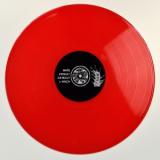
2025 cut with Hervé at dK Mastering /Paris (cut in 33/45rpm for optimum sound quality); 300 copies limited re-press, 180g pressing; a very sober object on the outside, but translucide red within.
Dj Ultramars hasn't released many tracks altogether, and since 2024 he is again too busy to release everybody else's music on his label to find the time to compose more music, but many of his previous tracks are still relevant today, still pleasing party audiences in as much as when first released, and it's been too many years that those tunes have been proposed new on vinyl, so time for a recut & repress.
Here we have:
A1: Cab Carlco, the biggest hit of Dj Utramars, originally released on Mars Picture 1 (1999) as well as Toolbox Killerz 25 (2015), so 11 years since its last (limited) release !
Very uplifiting / very "in your face" kind of track, always & eversince so efficient on the dancefloor.
A2: Ennui (voicemix), originally released on Mars Picture 2 (2003), 23 years ago! (what a round number...). A track that will hypnotize you with its female vocals playing with the echo, yet runnin steady on a heavy deep bass & enough arrangements to not get bored of it: every Mars Assault is designed as a record to DJ as much as a record to listen to.
This track is cut in 45rpm to keep optimal quality until the end of the side.
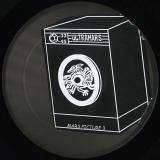
We had to put some of the best two tracks of Dj Ultramars on the music side since the flip side is a laser etched side ! After we had released the two first picture discs, our current pressing partner was giving the possibility for a laser etched record, so here is the Mars Picture 3 ! See the picture of B-side above.
200 copies limited in this laser etched pressing.
Cut with Hervé @ dK mastering
out of Stock
Last delivered 38 days ago available to reorder, subject to availability
Latin Grammy-Winning Producer Pupillo Unites Global
Artists on his new album
Co-produced by Mario Caldato Jr. (Beastie Boys), featuring collaborations with Rodrigo
Amarante, Carminho, Adrian Younge, Gaslamp Killer, Cut Chemist, Hervé Salters, and more
Drummer, percussionist and producer Pupillo, one of the most influential figures in Brazilian
music and a four-time Latin Grammy winner, releases his first original album through the Los
Angeles–based label Amor in Sound. The record brings together an impressive and diverse
group of collaborators from Brazil and abroad. Amor in Sound is run by Samantha Caldato,
the project’s executive producer and creative director, and Mario Caldato Jr. (Beastie Boys),
who co-produced the album alongside Pupillo. The project was developed in a free,
experimental environment, allowing the artist to explore the many rhythmic and sonic
territories that have shaped his career — from Northeastern Brazilian traditions to jazz, hip
hop, and cinematic soundscapes. Listen here.
The album features special appearances by Brazilian artists such as Céu, Rodrigo Amarante,
Agnes Nunes, Amaro Freitas, Davi Moraes, Alberto Continentino and Pedro Martins,
alongside a strong roster of international collaborators, including Carminho, Gaslamp Killer,
Loren Oden, Adrian Younge, Cut Chemist and Hervé Salters (known for his work with
General Elektriks). The album’s 12 tracks were further enriched by contributions from
Jeremy Gustin, Roberto Schilling, and other musicians who make Amor in Sound Studios in
Los Angeles a place of creative exchange.
Beyond his work as the drummer of Nação Zumbi, Pupillo has built a prolific career as a
producer and collaborator with some of the most important names in Brazilian music,
including Gal Costa, Nando Reis, Erasmo Carlos, Céu, and Otto, helping to shape the sound
of multiple generations. This trajectory has earned him four Latin Grammy Awards.
From Pernambuco, Pupillo is also an acclaimed composer for cinema, having written
soundtracks for films such as Arido Movie and Blue Blood (directed by Lirio Ferreira), The
Assailant (directed by João Daniel Tikhomiroff), among others. This cinematic sensibility
permeates the album, which unfolds like a film, moving through richly textured soundscapes
that cross continents and musical traditions.
out of Stock
Last delivered 59 days ago available to reorder, subject to availability
Since the label resumed activity last year, this is already the fourth release on Mars Assault Limited, the sub-label of Mars Assault dedicated to faster and/or more industrial music.
This time we have tracks from Pardonax, (remixed by Matt Green) and Biscanna, as well as an extra "secret track" from an undisclosed artist, for a total of 4 tracks, all in the Hardcore-Techno style, and yet all different from each other.
Cut in 33/45 rpm for optimal sound quality by the legendary Hervé @ DK Mastering, who managed to fit all tracks on a 10" vinyl for extra cuteness.
Final release to be pressed on "winter gold" vinyl colour, with a smaller 85mm label to fit more music on each side.
300 copies limited.
out of Stock
Last delivered 38 days ago available to reorder, subject to availability
The journey through French-speaking pop archives continues with this fifth volume, packed with fuzz, gimmicks, and dissent. Far from the charts, the selected tracks display a great creative freedom, often backed by corrosive humor. Welcome to the surprising, kaleidoscopic, and colorful world of the late sixties and early seventies, Wizzz!
Born in Montauban, Robert Pico stumbled into music by chance when he met René Vaneste, then artistic director at Pathé-Marconi. René brought him to Paris to record his first 45 RPM EP in 1964. A year later, Pierre Perret introduced him to Vogue, where he recorded his second album with Claude Nougaro’s orchestra. Sylvie Vartan then introduced him to RCA, where he recorded four singles, including the astonishing "Chien Fidèle," a track backed by a hair-rising fuzz guitar. Alongside his solo career, he also composed for other artists like Alain Delon (the song was recorded but remains unreleased), Magali Noël, Bourvil, and Georges Guétary. In the Paris of the sixties, he mingled with Mireille Darc, Elsa Martinelli, Marie Laforêt, France Gall, Françoise Hardy, Petula Clark, Régine, Dani, Serge Gainsbourg, Joe Dassin, Franck Fernandel, Charles Level, and Roland Vincent. Despite his efforts and winning a Grand Prix Sacem for his final record, Robert Pico didn’t achieve the expected success in show business and decided to leave Paris and return to the Southwest, where he devoted himself to writing. He is the author of 23 books (including Delon et Compagnie, Jean-Marc Savary Editions 2025, a memoir about his youth and his many encounters). Today, he is relieved to never have become a celebrity and devotes himself to his work with passion.
In 1969, the Franco-Italian movie Erotissimo was released, directed by Gérard Pirès (who later directed Taxi in 1998, written and produced by Luc Besson). This pop comedy features Annie Girardot, Jean Yanne, Francis Blanche, Serge Gainsbourg, Nicole Croisille, Jacques Martin, and Patrick Topaloff. The soundtrack was written by Michel Polnareff and William Sheller, with lyrics by Jean-Lou Dabadie. "La Femme Faux-cils," performed by Annie Girardot. It recounts the feelings of a rich CEO's wife who seeks to develop her sex appeal under the influence of advertisement and magazines. Groovy, sparkling and light, this track, with ITS lush arrangements humorously critiques consumer society and feminine beauty standards.
“Je suis l’Etat” (1967) is the flagship track of the first EP by singer-songwriter Spauv Georges, aka Georges Larriaga, better known as Jim Larriaga (1941-2022). Born into a family of bakers, the young man was initially planning to become a hairdresser when he discovered English-speaking music through Elvis Presley and the Beatles. After this revelation, he decided he would become a songwriter and gave himself five years to succeed. He recorded his first two EP’s independently for RCA under the pseudonym Spauv Georges; meaning “that poor George”, a nickname given to him by the mother of her friend Jean-Pierre Prévotat (future drummer of the Players, Triangle, or Johnny Hallyday). Portraying a depressed and eccentric young man, Spauv Georges created corrosive and amusing songs that didn’t reach a wide audience, despite a TV appearance with Jean-Christophe Averty.
Supported by his loyal friend and fellow songwriter Jean-Max Rivière, Georges Larriaga met the future singer Carlos in the early '70s, then Sylvie Vartan’s assistant. He wrote songs for Carlos, including the popular "La vie est belle," "Y’a des indiens partout," and "La cantine", which went onto become a huge hit in 1972. He also composed for Claude François (“Anne-Marie”, 1971), Charlotte Julian (“Fleur de province”, 1972), helped launch child singer Roméo (who sold 4 million records), and later wrote the hit "Pas besoin d’éducation sexuelle" (1975) for the young Julie Bataille. In 1971, Jim recorded an album for Disc'Az: “L’univers étrange et fou de Jim Larriaga”, which featured pop gems like “La maison de mon père”.
The story of the song "Zoé" began when Pierre Dorsay, artistic director at Vogue Records, asked Swiss singer and musician Pierre Alain to write a song for a new female singer. The inspiration came when he realized that Zoé (the artist's name) was also the name of France's first atomic battery, created in 1948, which consisted of uranium oxide immersed in heavy water! The lyrics reflect a bubbling energy that must be handled with caution, while the instrumentation echoes this atomic theme, notably with the use of a theremin.
Zoé’s career lasted only as long as a single 45 RPM, but it seems Christine Fontane was the vocalist behind this pseudonym, who is known for several EPs, a good "popcorn" album in 1964, and a handful of children’s singles in the '70s. Regardless, the photograph on the cover is of a different girl entirely.
Later, Pierre Alain continued his career, writing songs for himself, Marie Laforêt, Danièle Licari, Alice Dona, Arlette Zola (3rd place in Eurovision 1982), and achieving multiple gold and platinum records in Canada. Also an inventor with several patents, president of the Romande Academy, and head of the French Alliance in Geneva, he now composes atonal music, books, and poetry. Moreover, he is also the host of "Les Mardis de Pierre Alain" at "Le P'tit Music'Hohl" in Geneva.
Filled with oriental choruses and fuzz guitar, "Fou" is from Jacques Da Sylva's only EP released by Vogue in 1967. Despite the quality of this recording, all traces of this singer disappear after this first effort.
Valentin is a baroque pop singer born in Belgium. He is the songwriter and composer of most of the tracks on his three singles released in the late 60s in Canada. A legend says that he reincarnated himself as Jacky Valentin during the 1970s for a rock'n'roll revival career in Belgium, but his older brother sadly debunked this story. Valentin's first two singles were arranged by Claude Rogen, a Parisian session pianist who had come to Canada to promote the song “Mister A Gogo”, a cover of David Bowie’s “Laughing Gnome”, adapted by singer Delphine, his wife at the time. Far from his usual network, Claude Rogen arranged music for Polydor, including the arrangements for “Je suis un vagabond” in 1969, a jerk tune with string arrangements and a furious optimism.
Jacques Malia wrote, composed, and recorded his only 45 EP for Festival in 1966. “Histoire de gitan” is an incredible beat track with bohemian scat that tells the story of a gypsy musician who came to Paris to make it in the Music-Hall, to no avail. The hero of the song and its author probably shared a similar fate, as Jacques Malia faded into anonymity after this remarkable attempt.
Bernard Jamet recorded two EPs for Barclay in the late sixties and co-wrote several songs with Christine Pilzer, Pascal Danel, and prolific songwriters Michel Delancray and Mya Simile. The track “Raison Légale” (1968), his masterpiece, immerses the listener in a courtroom right when a murderer is being judged, with jerk rhythm and free arrangements. A unique, paranoid, judicial, and psychedelic oddity.
Jean-Pierre Lebrot-Millers started his career in show business in 1967 as a singer and songwriter for the Philips label. After three singles, he wrote several songs of a new kind with his friend Pierre Halioche, in the midst of the sexual liberation movement and the democratization of drugs. With provocative lyrics, “Les filles du hasard” and “Barbara au Chapeau Rose” were released on a Philips singles in 1968. The character of Barbara was inspired by a queen of Parisian nightlife during the psychedelic years: model Charlotte Martin, who dated Eric Clapton from 1965 to 1968, then Jimmy Page from 1970 to 1983. Jean-Claude Petit’s arrangements, with a table-filled intro, soul brass, and Hendrixian guitar, emphasize the flamboyance of a hedonistic and sexy character, whose dog is named Junkie because “Junkie est un nom exquis”! The track was recorded live in three takes with a full orchestra.
Upon its release, the record was censored by Europe 1 and RTL due to its references to drug use. Jean-Pierre Lebrot was then banned from the airwaves and later dismissed by his record label. He changed his artist name to Jean-Pierre Millers, while his companion Pierre Halioche became D. Dolby for a new dreamy composition, “Chilla”, which Jean-Pierre produced himself with arrangements by Jean Musy. Once again, the song was immediately censored everywhere. After this setback, he decided to stop singing and started taking on odd jobs to support his Swedish wife and their son until the day he met Jean-Pierre Martin, then production manager at Decca, who had worked with Manu Dibango. Martin offered Jean-Pierre Lebrot-Millers, then employed at Rank Xerox, the position of artistic director at Decca. He accepted and became, a year later, promotion director (radio, press, TV). He worked on Julio Iglesias’s first album for Decca, which became a massive hit and allowed him to meet Claude Carrère. The latter asked him to write new songs and find their performers, much like a “talent scout.” It’s through him that Jean-Pierre discovered Julie Pietri and Corinne Hermès. He composed “Ma Pompadour” for Ringo, Sheila’s husband, and took the microphone again for the syncope hit “Rendez-Vous” in 1982.
That same year, Jean-Pierre Lebrot-Millers tried to release a track for which he had heavily gone into debt: “Si la vie est un cadeau”. Having recorded it in London, he presented it to numerous professionals, all of whom refused to get involved. The same thing happened with Antenne 2 and the Sacem when he proposed the song as France’s entry for Eurovision. He then met Haïm Saban, who was producing cartoon soundtracks and had just launched the Goldorak theme song. Saban, having listened to the song, declared it had the potential to become a hit. He sent Jean-Pierre and Corinne Hermès to meet the CEO of the Luxembourg radio and television network. The latter received them, asked to hear a verse and chorus a cappella in his office, and immediately hired them to represent Luxembourg at Eurovision 1983. They reworked the arrangements and recorded a new version with Haïm Saban as co-producer. The song ended up winning Eurovision 1983, a great comeback for our hero. He continued producing and hung out with the band Nacash in Belgium when a couple came to introduce their daughter for an impromptu audition in a hotel room. The girl sang “Les démons de minuit” while dancing to a radio cassette. Impressed, he had her take singing lessons for a year and composed a song for her (for which he had the melody and title, but no lyrics). This required him to go on the hunt for a lyricist, who ended up being Guy Carlier. They recorded the song, which was initially a ballad, at Bernard Estardy’s CBE studio, and gave the singer a new name: Melody. They showed the song around their industry network without success. Later, Estardy called Jean-Pierre to suggest changing the rhythm and making it pop-rock. Orlando, Dalida’s brother, liked the result and decided to co-produce the track. “Y’a pas que les grands qui rêvent » became a classic hit. The song has since been covered by Juliette Armanet (as a ballad, like the original) and Valentina.
Born into an aristocratic Breton family, Hervé Mettais-Cartier worked as a DJ at Queen Kiss, a nightclub in Poitiers, where he formed the band Les Concentrés with Michel (an actor) and Christian (a radio technician). Together, they created a repertoire of whimsical songs (“Ma bique est morte”, “J’suis un salaud”, “Fils de dégénéré”...) that they performed on stage dressed in white (in homage to “concentrated milk”). They performed at Bliboquet and Olympia in 1968 for the 10th edition of the “Relais de la chanson Française” organized by L’Humanité-Dimanche and Nous les Garçons et les Filles, sponsored by Pepsi Cola. Winners in the author-composer category, alongside Danish singer Dorte, their visibility allowed them to record a 45, and appear on television in Jean-Christophe Averty’s show. The A-side of the disc features Bruno le ravageur, a casatchok dedicated to Bruno Caquatrix, the director of Olympia, nicknamed in the song “Coq Atroce” or “croque-actrices”. The B-side is dedicated to “Fils de dégénéré”, a quirky tribute to Hervé's aristocratic roots, mixing absurdity with sophisticated vocal harmonies.
After Les Concentrés, Hervé Mettais-Cartier formed the duo La Paire et sa Bêtise with his friend Olivier Robert. They performed in Parisian cabarets and toured with Pierre Vassiliu. In the late 1970s, Hervé began a solo career. He recorded two albums for the Motors label in 1978 and 1979, which did not achieve their anticipated success due to lack of promotion. In 1980, he met Bernadette, with whom he started a family and created a “Chansons à voir” (songs to see) show that he performed until his death at the end of 2024.
Publicité comes from the final EP by the Missiles (Ducretet Thomson, 1966), a disc that also includes “La (nouvelle) guerre de cent ans”, featured on Volume 4 of our Wizzz! series. Please refer to the booklet for the story of the band.
“He’s 1.82 meters tall, 28 years old, weighs 135 kg, is black and Belgian”: this is the description of singer Hegesippe on the back of his sole single (Decca, 1967). He appears on the album cover wearing a Greek toga, like a hippie gag – we are at the end of the year 1967. In “Le crédo d’Hegesippe”, this former bodyguard of Antoine and the Charlots plays the delightful card of the thick brute converted to Flower-Power and non-violence, with arrangements by Jean-Daniel Mercier, aka Paul Mille.
“Ethéro-disco” was released on a promotional record for clients of the Maréchal company (Liège, Belgium) for the New Year 1979. Over a funky rhythm, celebrity impersonations (Brigitte Bardot, Jacques Dutronc, Fernandel…) deliver an enigmatic text about pharmaceutical products like ether, bismuth, and aspartate. The track was composed by Dan Sarravah (responsible for Joanna's “Hold-up inusité” featured on Wizzz! Volume 3) and Tony Talado, who was also a singer (one 45 in 1967), songwriter (with over a dozen credits between 1964 and 1985 in various styles from surf music to disco), author (Devenez Végétarien, Dricot Editions, 1985), ad designer, and psychologist.
Décollez-les is on the A-side of Mamlouk's only single, a pseudonym for Marsel Hurten, who is known for his work on several EPs in the late sixties, as well as composing music for Hervé Vilard’s “Capri, c’est fini”, Claude Channes' “La Haine”, Annie Philippe’s “On m’a toujours dit”, and Nancy Holloway’s “Panne de Cœur”.
This strange song, with Afrobeat horns and absurd dialogues between a chef and his kitchen staff, is the result of a collaboration between Marsel Hurten and one of his neighbors, a photographer from Pavillon-sous-Bois (93), where the musician settled after returning from the Algerian War. A music video was shot to promote the record.
Marsel Hurten was born in Tourcoing (59) into a musical family. At a young age, he joined the brass band founded by his grandfather, playing the piston before studying trumpet at the conservatory, as well as teaching himself how to play the guitar. As an orchestra musician, he toured in France, Belgium, Germany, and England. He released a series of solo 45’s between 1965 and 1968 for the DMF and Az labels before stopping recording to focus on working for other artists (Gilles Olivier, Noëlle Cordier…).
“L’amour nu” (Vogue, 1971) is the work of the short-lived Belgian band Mozaïque. The track, written by singer Jacques Albin, closely resembles another of his compositions, “Carré Blanc”, which he recorded in 1969 for Disc’AZ.
Represented by the Lumi Son micro-label based in Marignane (Côte d'Azur), Jean-Marc Garrigues released two 45 RPMs in the late sixties, defending the French jerk sound. The song “Je dis Non” is a short, joyful ode to youth, pop music, and rebellion.
Songwriter and performer Jacques Penuel released three singles. The first one, “Astronef 328” (Fontana, 1969), features a dizzying series of chords punctuated by sound effects, a sci-fi story, and arrangements by Jean-Claude Vannier.
We would like to sincerely thank Pierre Alain, Moon Blaha, Marsel Hurten, Bastien Larriaga, Jean-Pierre Lebrot-Millers, Bernadette Mettais-Cartier, Robert Pico, Olivier Robert, Claude Rogen, Micky Segura.
out of Stock
Last delivered 8 months ago available to reorder, subject to availability
Here are 4/5 of the early work of Dj Ultramars, before he created his own label, Mars Assault Records.
Dj Ultramars drew inspiration from records from the begining of Hard Techno; from some work of the Spiral Tribe, but also just from the musical impression he had after attending his my first free parties.
Those tracks corresponds to a certain moment in the history of the free party movement, so a release on Toolbox Killerz was logical.
The tracks have been edited so that the arrangements would be more relevant to nowadays standards, and to alow a better sound quality on vinyl. Back in 1997, we didn't know better about vinyl cutting & premastering, so we went to a legacy cutting studio that had made all the cuts for Rock & Pop for decades, and they didn't understand the specifics of such Tekno music. Therefore on their first release, those tracks didn't make much sense without the highest frequencies... This time we have their ultimate cuts, the way they should always have been cut on vinyl, thanks to the legendary Hervé @ DK mastering studio.
For more than thirty years, Arnaud Fournier has been shaping the landscape of the French expe-rimental scene. First within the duo HINT, a singular fusion of experimental, noise and indie music, he released three studio albums in the late 1990s and has continued to perform regularly ever since, including a live album with EZ3kiel in 2009. With La Phaze (1999), Dead Hippies (2013) and later Atonalist (2017), he has always instinctively sought to cross genres and stage dialogues bet-ween extremes. In 2025, with 100% Black Puzzle, he delivers his very first album under his own name, a work where saturated guitars, saxophones, trumpet, hypnotic loops and vast layers of drone meet. Mixed and mastered by Olivier "Cali" Fournier at Studioscope in Angers, 100% Black Puzzle gathers familiar faces around it. Its title resonates as an intentional echo, directly referencing 100% White Puzzle, HINT's debut album. Thirty years on, Arnaud Fournier rediscovers the same spirit of absolute freedom across these five tracks: no format constraints, no compromise on length. The title track, an eight-minute instrumental, sets the tone - a raw, urgent gesture, cap-tured in the moment. In his own words, it was about "finding myself once more in that first-song state of mind, without any confinement." With 100% Black Puzzle, Arnaud Fournier fully embraces signing the work under his own name. No pseudonym, no mask, but an unveiling: a profoundly intimate record, steeped in family and friendship, where noise and beauty constantly collide and entwine. Thirty years after shaking up the French indie scene with HINT, he delivers a body of work that is at once retrospective and forward-looking - a black puzzle that resounds like a rebirth. And what better way to "close the circle" than by heading back on tour?
First full EP for DJ Rhose... for a solid Hardcore for the Mars Assault record vinyl label !!!
One of the oldschool 1997 producer now lives in the Netherlands and met many artists... giving him the envy to press vinyl again !!
Ths music goes early Hardcore, in a Gabba way... No concessions and a huge fat kick !
Cut at DK Mastering by Hervé, Yann Dub Brother, with SKILLZ and LOVE !
out of Stock
Last delivered 2 years ago available to reorder, subject to availability
Spectral Bounce returns with a groovy and moody set of tracks by Uruguayan tastemaker Molen. 'Future is Gone' explores dark yet glistening corners of minimal tech house, blending distorted basslines, resonant synth leads, and muffled vocals to create a cinematic aesthetic.
Spectral Bounce’s third release continues to solidify the label’s sonic identity while opening avenues for artists to present their unique interpretations and perspectives, and Molen delivers on that promise.
Art by Susanne Janssen
Words by Hervé Kacou
out of Stock
Last delivered 10 months ago available to reorder, subject to availability
In 2007, Céu debuted her self-titled album, becoming one of the select Brazilian artistsnominated for an American Grammy in the World Music category and is widely regarded as one of the most in_¼éuential Brazilian artists of her generation. With now six albums to her credit, Céu has transcended borders, captivating audiences on five continents at prestigious festivals such as the Montreal Jazz Festival, Coachella, Roskilde, Rock in Rio and Lollapalooza. She is renownedfor her collaborations with both Brazilian and international artists like Duran Duran, Herbie Hancock, Jorge Ben Jor, Gilberto Gil and Emicida. Recorded in the USA, the album features musical production by Céu as well as Brazilian musician and producer Pupillo (drummer of Naçao Zumbi) and American multi- instrumentalist and arranger Adrian Younge (co-founder of Jazz Is Dead). Recorded at Linear Labs Studio in Los Angeles, Novela is Céu"s sixth studio album. It was captured live on tape, in a dynamic moment that demands total presence. A number of artists feature on the record: American MC and songwriter LadyBug Mecca, Franco-Senegalese singer and songwriter anaiis, American singers Loren Oden and Jensine Benitez, American DJ and producer Frankie Reyes, French artist Hervé Salters (General Elektriks) and Brazilian national treasure Marcos Valle. In Novela, ancient technologies, healing, creaminess, bolero, polished stars, echoes of soul music, things of the earth, rap, and whispers to guides emerge. Throughout the record, there is a reaffirmation of the author"sfearlessness, committed to her time, in the complexity and beauty of creative work. Always keeping the diversity of Brazilian music on the horizon.
After playing with Mingus, Coltrane, Lady Day and Abbey Lincoln, inventive jazz pianist Mal Waldron moved to Europe and first reached Japan in 1970, where he met Idahoborn double-bassist Gary Peacock, who had played with Art Pepper, Bud Shank, Bill Evans and free-jazz giant, Albert Ayler before moving to Japan to study zen buddhism. First Encounter, recorded in Tokyo in 1971 for French producer Herve Bergerat, shows that the intense pairing was quite natural, the harmonic dissonance of Waldron’s “She Walks In Beauty” contrasted by the up-tempo groove of Peacock’s “What’s That”; future Native Son founder Hiroshi Murakami makes important contribution on drums.
Bas Punkt hardware music is recorded Live... His electro acid sound is defenitely from the Nederlands.
Here you will hear 3 tunes, last one is depitched in order to be played at 45RPM.
And ends with a locked groove...
First side is a trippy 165 BPM round kick swinger.
The flip opens with a 174 BPM pumpin minimal after-parties weapon...
...and continues with a 135 BPM bleepy-spiky jumper... trapped because actually it's depitched : so B2 shall be played at 45 RPM !
... and its infinite outro : the locked groove.
HJirok is a mythical figure, conceived as a fictional character by Iranian-born Kurdish singer and artist Hani Mojahedy. Together with versatile music producer And Toma of Mouse On Mars, she combined a variety of sounds collected during their joint travels to Iraqi Kurdistan and elsewhere with heavily processed recordings of Sufi drum rhythms and setar melodies. The result is a driving, dubbed-out, and deeply intricate soundscape that perfectly sets the stage for Mojahedy's extended, unconventional vocal techniques and polyglot lyrics. Both informed by tradition and rigorously forward-looking, »Hjirok« (with a lowercase J) is at once a profoundly personal album and a universal utopian promise. As a ghost from the past, HJirok draws on Mojtahedy's memories to mould a new future out of them.
The foundation for »Hjirok« was laid in the city of Erbil in the Kurdish part of Iraq. During one of their stays in the region, Mojahedy and Toma recorded the three percussionists Hadi Alizadeh, Jawad Salkhordeh and Serdar Saydan as well as setar player Ali Choolaei from Motahedy's backing band while they were playingthe rhythms and notes that she had grown up with in the house of her grandfather in the Iranian city of Sanandaj. Her memories of that place revolve around hypnotic Sufi music, dervishes in deep trance, and ecstatic singing. Much like this music seemed to open a portal to other dimensions, the inhabitants of the house lived in a sort of alternative reality: It provided them with a hideaway from political circumstances. Following the Iranian revolution in 1979, a Kurdish rebellion ensued but was met with the utmost brutality by the new regime, which resulted in the death of thousands.
It is no coincidence that the music on »Hirok« would draw on rhythmic patterns that were passed on from one generation to the next for hundreds of years. »The project is rooted in the figures of the Sufi dervishes and thus a culture that precedes today's political, social, cultural, and religious systems,« explains Mohtahedy. »The Sufi sound travelled around the entire world. I like to think of it as a dialogue between peoples-one based on the rhythms of the drums and the sound of their voices.« Toma adds that by electronically transforming the recordings and enriching them with field recordings from both rural and urban spaces, they were able to use the stories told by the drums and the setar to create an entirely new narrative.
The story told by these eight pieces is hence a deeply personal, but also inherently political one. Moitahedy herself left Iran in 2004 and relocated to Berlin in 2010. Having continued to use her art as a platform to tirelessly advocate for the rights of the Kurdish people and women under oppressive regimes, she has not been allowed to return to her country of origin ever since. »Hani is singing for equality and there are people who are afraid of that-her femininity, her strength.« Toma says. Much like earlier Hirok sound installations addressed human-made climate change and other systemic ills, also »Hjirok« can hardly be disconnected from far-reaching struggles for liberation and equality.
This is also true on a thematic and even linguistic level. »The lyrics are about a promise,« Mojahedy says, citing Kurdish writer Ebdulla Pesêw as an inspiration. »At their core, these are about that day on which violence and fear become a thing of the past; what they tell you is ot not give up, to keep hoping,« she adds. The promise embedded in them is an emancipatory one. These contents are mirrored on a linguistic level: The lyrics were written in both Kurdish and Farsi, blurring the lines between the two languages and thus, Kurdish and Persian cultures.
Mojahedy, or rather HJirok, conveys these philosophical themes with elegance. Herversatile vocal performance is only loosely basedo n established styles. »Of course everything started with traditional rhythms, but we kept pushing things further and further, so Idid the same with my voice,« Mojahedy explains. »There were no boundaries.« The same can be said of the field recordings that she and Toma used. Whether it's conversations between members of the Pesmerge, the Kurdish armed forces, having a chat in meadow full of bunnies or the humming and buzzing of metropolises like Tehran: »Hirok« paints a sonic picture that is quite literally autopian one; that of a non-place in which different soundscapes, cultures and ways of life coexist peacefully.
What the album conjures up from Mojahedy's memory is not only a very specific place during a unique time in history as experienced by a single person. It is also ametaphorical home open to anyone who wishes to enter - promise of a better, more egalitarian future for everyone. Hence, HJirok will bring it on tour, presenting the material as an audio-visual live show that makes use of the photo and video material that Mojahedy and Toma have collected during their travels through Kurdistan.ja
out of Stock
Last delivered 2 years ago available to reorder, subject to availability
"Cross My Heart" is a tribute to the harmonica player and singer James Cotton, one of Boney Fields" heroes and companions on the road, is certainly the most representative track of this thrilling groove mood that authentic blues musicians know how to infuse. Boney Fields possesses that almost funk tone matured enough to tickle our ears and make us tap our feet. By revitalizing, for example, "The Thrill Is Gone" in the spirit of its original author (Roy Hawkins), Boney Fields perpetuates the tradition of spirited orchestras of yesteryears without compromising the modernity of its irresistible tempo. Much more personal than all his previous albums, "Just Give Me Some Mo" is also the expression of introspection, that of a man who remembers without drowning in dark nostalgia. He thinks of the courage of his mother bravely facing obstacles in an unequal America. "Back in the Day" is not a sad song. It makes one stronger and nurtures faith in the future. This melody is certainly the most touching of the six compositions written by Boney Fields. From "Control of you" to "Something" holding me" or "I know yes I Know" he invites us into his intimate biography, the story of a large family shaken by inevitable upheavals that must be faced, the destiny of a combative musician who resists adversity. Boney Fields chose to let his soul speak. This effort of truth had to be supported by the artistic direction of a master. By enlisting Sebastian Danchin for the production of this album, Boney Fields turns to a historian of African-American culture whose keen ear has already won over Little Milton, Mighty Mo Rodgers, Toni Green, and Jean-Jacques Milteau, among others... Their exchanges uncovered a perfect understanding of "Chicago Blues" the brassy vigor of which they experienced firsthand 40 years ago. Surrounding oneself with the right people is quite a challenge. Fortunately, Boney Fields knows how to spot true talents. He was convinced that the Senegalese guitarist Hervé Samb would also be a good musical director. Hadn"t he been the first to highlight the expressive power of this luminous composer and arranger? The enduring vitality of the blues, when narrated with precision and insight, always manages to find its legitimacy. The months of reflection, of questioning, will not have been in vain. They have given substance and depth to this thrilling record which, we wager, will be a milestone. Boney Fields has waited long enough. Does he want more? We will give him more! "Just Give Me Some Mo" will now be a shared leitmotif, that of an insatiable conductor and that of enlightened admirers.
The official new edition from this rare and great Afrobeat & Soukous masterpiece from Nigeria !
"Vibro Success Intercontinental Orchestra was an extraordinary group from the Central African Republic, founded by the sax player Rodolphe 'Beckers' Bekpa, also known as Master Békers, in the late 60's. The band achieved surprising domestic success after Beckers introduced the first drums to the Congolese Rumba rhythm. His innovation proved to be wildly popular so they were hired as the resident band of “ciel d’Afrique au Km5”, a night club in Bangui. The club was renowned as the temple of the Olympic Réal football team's fans and that visibility propelled them into becoming the official national orchestra.
1970 marked beginning of the band's international fame . Their fame spread beyond national borders until they became so popular that invitations began to arrive from nearby countries like Cameroon and Chad, the former of which the band would then tour that same year. The success of their performances prompted a further tour in 1972. According to Rodolphe Bépka, the audience enthusiasm Vibro encountered was bewildering. "We filled the old military stadium in Yaoundé in 1970, in 1972 the new Amadou Haïdjo stadium ... We are running with great success in the cities.” Their popularity was also growing in Chad, where they would tour several times through the early and mid 70's.
Towards the end of 1976, Vibro Success decided to take their music global and introduce Central African music to listeners worldwide. It worked. The turning point came in Nigeria. There the group achieved extraordinary success, with live performances followed by contracts with local labels like Scottie and Ben/Clover resulting in hit releases. Most of their LP's were originally released on this later label, Ben Limited, owned by Ben Okonkwo.
Ben, also known as Clover Sounds, brought a great number of the biggest bands from the country to market, bands like The Apostles, Akwassa,The Doves, Aktion, The Visitors, Mansion, Folk 77 and many others. Nearly all those groups started their recording careers in the label's studios based in the commercial heart of Aba, Abia State, one of Southeastern Nigeria’s largest cities. Aba at that time was a flourishing city, an important crossroads of people and culture with an intensive and active and cutting edge live music and nightlife.
But after that golden era the group began to lose its popularity. In the 1980's they returned to Bangui and resumed their old-time gigs in dance halls there - only to realize that their music didn't have the appeal it used to. Making matters worse, the domestic economic downturn accelerated, forcing the orchestra to slowly end its activities . Vibro Succès Intercontinental Orchestra disappeared at the end of the 80s and most of its members died in the 90s.
We discovered this LP during our first trip to Nigeria in 2016. While traveling in the east to meet up with a musician, we stopped for a night in a village. As often happens in Nigeria, information has a way of traveling fast. The news that a couple of white guys looking for records had arrived in the village the day before spread like light. When we awoke, we found a couple of elderly music lovers in the hall of our hotel with a little pile of records for sale. The nice cover of the “Drunkard” album was right on top!
At first we thought it was just another really good soukous album made by Vibro Success but after we heard “Drunkard” - we knew we had stumbled onto something very special. That was the “easy” part. Soon after, we had the idea of reissuing this LP and that was a bit harder. There were no credits on the cover and not much information about Vibro Succès. We started to ask to our friends to ask around, see if somebody knew them or the producer. That's when sadly we discovered that Ben Okonkwo had passed. So with no leads to follow and seemingly without any possibility of making progress on the matter, we "gave up" and returned to Italy.
A couple years later, in the summer of 2019, we found ourselves again in Aba. This time we had the chance to meet Nnamdi Okonkwo, the eldest son of the late Ben Okonkwo. After Nnamdi's mother and family agreed, he was glad to cooperate with us for the re-release of this special album."
The Strangers brings together Hervé Salters AKA General Elektriks and two exceptional rappers: Frenchman Leeroy (ex-Saïan Supa Crew) and American Lateef The Truthspeaker (Blackalicious) in a new project. Evolving in the year 2222, "The Strangers" is a testament from the future in the form of hip hop with a strong funk undertone, a timeless and playful sound where the languages of Shakespeare and Molière combine and clash to describe a world of tomorrow in 2023 that no one has yet heard of: requiring the earthlings of the future to travel from an early age, society abolishes the fear of the unknown. Lateef, Leeroy and General Elektriks have therefore chosen to set their narrative in the future to better speak of today"s world. The environment, individual freedom, police violence and communitarianism are all subjects that permeate the record. But the 3 Strangers inject a healthy dose of humour and energy into their music. This album is a sonic road movie of anticipation, zig-zagging between athletic and poetic flows soulful choruses, and darker downtempos. The sound developed is fluorescent and infectious, speaking to the hips as much as the head.
Welcome to the third part of the TELE MUSIC saga, the label founded by Roger Tokarz. He deeply marked the era with his audacity and his vision of music on film. This irresistible new selection tells the story from 1968 to 1985 of a prolific label that sometimes produced ten albums a year, and which delighted many French and foreign film directors who, to 'flavour' their films, drew on this sumptuous catalogue.
In this volume 3 TELE MUSIC, we have highlighted legendary artists who have left an indelible mark on the history of the music bookshop and on the history of music in general:
• Janko Nilovic (also known as Yanko Nilovic, Anady Loore, E. Orti or Alan Blackwell),
• Jean-Jacques Debout with his irresistible “Mitsuko” released in 1967 and re-released in 1969 on “Music Bazaar”, • Bernard Lubat, the impressive percussionist, vibraphonist, multi-instrumentalist and very good “scator” (Bernard played in the Doubles Six with Quincy Jones and Eddy Louiss),
• Gabriel Yared, the man with a hundred film scores. Arranger and composer for Johnny Hallyday and Charles Aznavour, among others!
• Hervé Roy conductor and writer for Nancy Holloway,
• George Chatelain, pianist, guitarist, clarinettist, founder of the famous studio “CBE” created in 1966 with his sister Janine Bisson and his high school friend Bernard Estardy.
All these composers were renowned for their acute sense of composition, arrangement, conducting and inter- pretation, and in their own way left their mark on many sound recordings of musical illustration "made in France!
CBE, the Chatelain, Bisson and Estardy studio is located in the 18th arrondissement of Paris. Still in operation and run by Julie Estardy, it has been receiving major artists for over half a century. It is a place of reference. At the time: Johnny Hallyday, Claude François, Sheila, Carlos, Françoise Hardy, Nino Ferrer recorded their hits there.
Now it's the turn of Sebastien Tellier, Bertrand Burgalat, Keziah Jones, Tony Allen, Jeff Miles to name but a few. CBE and its giant Bernard Estardy put TELE MUSIC in the best conditions to produce an atypical and powerful sound.
Bernard Estardy had a custom- built mixing console built by his German friend Gunther Loof, offering the perfect tool for recording 4 and then 32-track Arp 2000, Moog, Korg, Prophet synthesizers and all acoustic instruments. The field of experi- mentation was limitless.
Until now, the titles of this collection were only available in vinyl format, via rare and expensive prints that collectors sell for a high price on dedicated websites. This volume 3 gives you access to the "crème de la crème" of the legendary repertoire made in France!
out of Stock
Last delivered 3 years ago available to reorder, subject to availability
2023 re-issue, 140g vinyl, reproduction of the classic Tele Music sleeve, full colour insert with liner notes and archive photographs
Wow! Tonio Rubio's Rhythms is a stone-cold killer, a heavyweight library breaks LP and the inaugural release in Be With's new partnership with legendary French library label Tele Music. Yes, you lucky people, there's lots to come. For this extremely special 50 year anniversary re-issue, we've reproduced the classic Tele Music sleeve with a full colour insert featuring rare photographs, fresh liner notes and personal memories of Tonio from the likes of Jean-Claude Vannier, Jean-Claude Petit and Janko Nilovic.
Sumptuous opener “Latin Leitmotiv” is all funky phasing effects and a killer montuno, with what sounds like piano and bass in tandem, stoking straight up Latin fire. The gritty hard funk of blaxploitation groove "Red Medium" is dripping in wah-wah attitude and head-nod oddness. The atmospheric, exotica-tinged "Dead Slow" emulates the languid, sensual afro groove of Quincy Jones’ wild masterpiece “Gula Matari” whilst the proggy, electric jazz fusion epic "Rock 73" is 9+ minutes of moody, rolling menace.
But the *real* highlight of this cult classic - and why it has long been *so* desirable - is the devastating, deep, hypnotic minimalist groove of "Bass In Action N°1". Very much in conversation with Quincy's rendition of "Hummin'", the loping, rumbling bassline and sweet electric piano over clean, crisp drums making it one of those tracks that sounds like a hip-hop beat 20 years ahead of time. Sensational. “Bass In Action N°2“ features Tonio's own vocal scat performance. Remarkable.
Antonio "Tonio" Rubio Garcia got his start playing the double bass in jazz clubs. In 1962, Tonio joined the Golden Stars, the first backing band of France’s teenage idol Johnny Hallyday. A genius musician with a unique guitar sound, he played on standards of French chanson including Serge Gainsbourg and Brigitte Bardot’s "Bonnie and Clyde", Françoise Hardy’s "Tous les Garçons et les Filles", Gainsbourg and Jane Birkin’s "Je T’aime, Moi Non Plus" and Serge and Charlotte Gainsbourg’s infamous "Lemon Incest". Tonio also lent his brilliance to such legendary figures as Janko Nilovic, Jean-Claude Petit, Hervé Roy, and Jean-Claude Vannier. The latter remembers Tonio as “a secretive, mysterious man, with an endearing personality, albeit difficult to reach out to. His virtuosity as a bass player allowed me to write very innovative basslines, because he was able to play any of my eccentricities!”
The audio for Rhythms has been remastered by Be With regular Simon Francis whilst Christopher Stevenson has brought the original and iconic Tele Music sleeve back to life in all its striking glory as the finishing touch to this long overdue re-issue.
out of Stock
Last delivered 3 years ago available to reorder, subject to availability
Die Reihe "... Live at Clouds Hill" gibt es nun schon seit
einigen Jahren. Alles begann 2011 mit einer
improvisierten "Krautrock"-Performance der Extraklasse.
Faust & Omar Rodriguez-Lopez. Jean-Hervé Perón
stürzte mit einer laufenden Kettensäge rückwärts und
schlitzte Rodriguez-Lopez' Jeans auf und nur mit Glück
nicht das Bein auf. Seitdem waren große Bands wie Le
Butcherettes (US), Nissennenmondai (JP), Bosnian
Rainbows (US), Wargirl (US), Dillon (D), Kolars (US) oder
Peter Doherty (UK) zu Gast und beehrten die heiligen
Hallen der Clouds Hill Studios mit grandiosen
Live-Auftritten. Diese Auftritte vor Fans und Freunden
werden auf Band aufgenommen und live abgemischt. Mit
dem letzten gespielten Ton ist die Aufnahme beendet und
kann auf Vinyl geschnitten werden. Unvollkommenheit als
Konzept. Als Träger von Emotionen. Und genau so einen
magischen Abend konnten Fans und Freunde mit Gewalt
am 28. Oktober in den Clouds Hill Studios erleben.
TELE MUSIC is a label of Éditions Musicales Sforzando now owned by BMG Production Music. It is entirely devoted to the music library, that is to say, music for sound illustration used in audiovisual productions. Created in 1966 by Roger Tokarz,
just before advertising was allowed on French television, Editions Sforzando specialized from the outset in sound illustration for radio and television.
This collection, soberly entitled “Volume 2”, is the sequel to “Volume 1”, produced with equal care, passion and fervour by Lord Funk & DJ L.C. In the mid-90s, Tele Music vinyl was sold at ridiculously low prices. Often disparaged by collectors and record shops, considered by some as lift music or vulgarly called “music by the meter”, the music store was only of interest to fans of instrumental music! But in the 2000's, it had a second life and saw its prices soar on Discogs, thanks to sampling and digging in Hip-Hop mainly. This advent of the library is an era that Lord Funk, curator of this compilation, experienced when he brought several music library collections to New York City (NYC) to his A1 Records stronghold in 1997.
In this 2nd volume, Lord Funk & DJ L.C. have chosen a range of music from 1969 to 1983, from psychedelic jazz to electro funk via rnb, soul and jazz-funk. Most of the titles in this collection were recorded in the magic place that was the famous CBE recording studio set up by Georges Chatelain, Janine Bisson and Bernard Estardy. Bernard, nicknamed the giant, was a sound genius and a mixing perfectionist. Georges Chatelain was an electronic engineer. Together, they brought a sound,
a colour, a trademark. Bernard Estardy was also considered as one of the greatest French sound engineers and an energetic organist for Nino Ferrer or Nancy Holloway. We warmly thank Julie Estardy for her total and unreserved involvement in these reissue and compilation projects.
The combination of all these prodigies has given TELE MUSIC a phenomenal and unique sound colour in the service of a sound repertoire that is now part of the French heritage.
The new EXOTICA sensation has a Name : The ROUNDELLS, This talented French trio+1 is exploring the world and its crazy rhythms on this amazing debut album. All the cuts were recorded and mixed at the ELECTROPHONIC studio, down in Lyon, France, by the wizard of the place Hervé Bessenay. With a handfull of vacuum equipment and vintage effects, Hervé"s got it ! The mid century Lounge Exotica sound that was in vogue from Miami to Malibu in the 50"s... full analogical recording rules ! So get your Bamboo skirt and Limbo barefoot in the sand !
To celebrate the 60 years of the greatest Rock Band, rediscover
their song played by the Jazz scene. A selection of the finest
covres, from " Satisfaction " to " Paint it Black ", by Sharon
Jones, Luther Allison, Ann Peebles, Shemekia Copeland ...
wieder auf Lager Die Hamburger Band Faust gehört zu den großen Namen, die der Krautrock der 1970er-Jahre hervorgebracht hat. Als Jean-Hervé Péron und Zappi Diermaier 1971 ihr Debütalbum vorlegten, wollte das in Deutschland niemand hören, im Ausland jedoch verkauften sich "The Faust Tapes" über 100.000-mal. "There is no group more mythical than Faust", schwärmte der englische Musiker und Krautrock-Kenner Julian Cope Jahrzehnte später. Mit "Just Us" setzen Faust ihren musikalischen Weg fort. Während Diermaier seinem Handwerk - Schlagzeug und Perkussion - treu bleibt, integriert Peron allerhand unübliche Klangquellen in sein Bassspiel, verschiedene Streichinstrumente, Klavier und sogar eine Nähmaschine als Metronom. Tracks wie "Nur nous" und "Ich bin ein Pavian" zeigen, dass Faust nichts von ihrer Vorliebe für Avantgarde und Dadaismus verloren haben. Ausflüge ins folkloristische Gefilde ("Cavaqui-ho", "Gammes") runden das wahrhaft faustische Überraschungspaket ab.
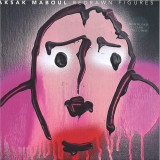
Im Mai 2020 erschien das Doppelalbum Figures der legendären belgischen Band Aksak Maboul. Nun folgen gleich zwei Alben mit Remixen, Coverversionen und neuen Versionen von fünfzehn ganz unterschiedlichen Musiker*innen auf Vinyl (jeweils streng auf 500 Exemplare limitiert). Betitelt sind sie Redrawn Figures 1 und Redrawn Figures 2. Mit von der Partie sind u.a. The Notwist, Cate Le Bon, Felix Kubin, Tolouse Low Trax und Matias Aguayo. Zu ihren Versionen kommen vier weitere von Aksak Maboul-Gründer Marc Hollander selbst. Wie im Albumtitel bereits anklingt, bat Aksak Maboul die Musiker*innen, sich nicht nur die Musik, sondern auch das von Véronique Vincent gestaltete Artwork von Figures vorzunehmen. Die daraus resultierenden sechzehn Bearbeitungen zieren das Cover von Redrawn Figures 1. Das Cover von Redrawn Figures 2 wiederum stammt vom französischen Maler Hervé Di Rosa, einem der Mitbegründer der "Figuration Libre"-Bewegung.
out of Stock
Last delivered 4 years ago available to reorder, subject to availability
Doris Willingham ‘You Can’t Do That’ - A big Northern floorfiller from a renowned soul backing singer who cut her own material later as Doris Duke.
Her only release under the Willingham name, originally out on the super cool UK Jay Boy imprint in 1968 (the label’s debut release - BOY1).
Produced by Bernard Purdie (Funky Donkey label) who was at the controls for a number of super rare Northern sides.
An early gem from the artist who ended up working with the legendary Swamp Dogg (Jerry Williams) charting with the ballad ‘To the Other Woman (I’m The Other Woman)’.
Pat Hervey With The Tiaras ‘ICan’t Get You Out Of My Mind’ - An anthemic, handclap-friendly gem that goes for anywhere between £50 to £100. Released on the UK President label from 1966.
Blue-eyed Canadian soul backed by black Canadian harmony group The Tiaras (not to be confused with the LA harmony outfit).
A slow burner that ramps up the horns and strings behind some funky guitar chops and Hervey’s euphoric vocal, her one-off stab at the soul charts guaranteeing obscurity and legendary status.
Back in 2018, Lumière Noire celebrated its first anniversary with a compilation featuring thirteen exclusive tracks by an eclectic group of electronic musicians – a family portrait of sorts. A few months later, a second volume of From Above, compiled by the label's artistic director (and DJ) Chloé, once more brings thirteen established acts together with promising upstarts. The first compilation was the embodiment of the label policy advocating for both artistic excellence and a widening of electronic aesthetics – bopping from deviant house music to adventurous IDM and to the rigor of dancefloor techno, among other electronic explorations. Some of the artists featured are now closely associated with Lumière Noire, while others were more established performers such as Benedikt Frey, Lauer, Jonathan Fitoussi, Il Est Vilaine, Dave e Brun (half of Swayzak) and Frank Agrario, as well as upcoming artists such as C O N T R A (a side project by none other than Iñigo Vontier), Sutja Gutierrez, Théo Muller, Markus Gibb, Bajram Bili, and a sprinkling of UFOs circling the genre (Suuns' Ben Shemie, Drvg Cvltvre, and electro-acoustic combo Lumi). This group photo laid down a number of paths for a label in perpetual evolution.
Since then, the Parisian entity has continued to grow within the international electronic scene, releasing Local Suicide's Leopard Gum EP, Iñigo Vontier's first LP, and planning another slew of releases for 2020. The lineup for this second volume of From Above is once again equally intriguing, offering a crescendo-like track listing over a double LP format, which is a feat of sorts for a "Various Artists" compilation.
Marc Mélias' fascinating, unsettling Permanent Waves gets the proceedings going with a contemplative track that provides a serene opening to the odyssey on which From Above will be taking the listener. Pletnev continues on with the playful, hooky Marco O’Polo, a fundamentally techno track built over a seductive 90s-inspired breakbeat. Douglas Greed (whom Chloé remixed on BPitch a few years back, and had himself remixed track from her album Endless Revisions featuring Ben Shemie’s vocals), supplies Vancouver, a slice of ambiance à la Boards of Canada, supported by a gripping breakbeat. The rhythmic arpeggio of Israeli producer's Middle Sky Bloom makes his contribution a hypnotic, disconcerting slice of dark disco. Thomass Jackson, a safe bet in the new wave of the Latin-American electronic music blowing its sometimes hot, sometimes cold wind, proposes Mithra, a dancefloor incantation to the Antiquity's bull god. With Bells, Goldmoon delivers a track that is both melodic and nostalgic, tinged with rhythmic samples, Moog basses and solar backgrounds. Longtime friend of Chloé, Krikor, who has released two albums on L.I.E.S. Records (Pacific Alley and Saudi), offers a moment of respite with Sally Hardesty (a nod to fans of horror movies), a heavenly and bewitching track that, paradoxically, hints at the highly energetic second half of the compilation. Discovered with Confidences EP released on Lumière Noire, the young French producer Morgan Blanc asserts himself here with Werde Der Du Bist ("Become who you are"), a song with luminous chords and midtempo rhythms to start the second half of the compilation by raising the tension. Galician producer, DJ and designer Cora Novoa continues the rollercoaster's ascent with her Virtual Aesthetics, which once again brings those acid tones – this time without the vertigo. Equally corrosive, but tenser and more percussive, the uncategorizable NSDOS' AL-G attempts to give order to a chaotic electronic world full of violence and danger. Rebeka Warrior (half of the duo Kompromat alongside compatriot Vitalic), takes on a more nostalgic vibe with Ich Komme Zurück, a French/German techno chant evoking a secret dream of a track from a bygone era. Three years after the release by Lumière Noire of Moderna and Theus Mago's stroboscopic Dog Is Calling You, Theus Mago makes a solo comeback with Idealistic Stone, a most acid of club tracks, rattled by the modulations of the inevitable TB 303. French electro-rock saltwarth Yan Wagner's dancefloor alter ego The Populists' Prehistoric Lemurs gives an almost Orientalizing twist to Kraftwerk's techno-pop. To close things off, the collection's last track, the appropriately-named Instant Track by impromptu encounter between Hervé Carvalho (Acid Arab), Jacques Bon (Smallville) and Demian (Kompakt) Acid Love Triangle, releases the pressure with a long, bittersweet reverie that leaves the listener, at the end of these thirteen musical adventures, to rest languorously on an artificial and welcoming shore.
out of Stock
Last delivered 6 years ago available to reorder, subject to availability
Miss Kittin & The Hacker are the Electro duo of Caroline Hervé and Michel Amato from Grenoble, France. The pair met during the early 90s at a rave and soon after bought turntables and began DJing. In 1996, they started writing music heavily influenced by 1980s synthpop and post-punk bands like Fad Gadget, DAF, Liaisons Dangeuresues, and Yazoo, as well as Italo Disco. Bored by the techno scene at the time, they set out out to lighten the serious tone and bring a campy sexiness to the dour musical landscape. Upon hearing their demos DJ Hell signed them to his Munich-based International DJ Gigolo label and released their first 2 EPs in 1998 and 1999. Their debut album 'First Album" was released in 2001 followed by . in .
Lost Tracks Vol. 2' contains 4 previously unreleased demos recorded between 1997 and 1999. The duo fused 80's European New Wave/Italo Disco with 90's Detroit Electro acts like Le Car and Dopplereffekt. By utilizing verse-chorus structures, they playfully shook up the loop based hard techno and electro that was popular at the time. Their studio set up at the time was a Korg MS-20, Roland SH-101, TR-606, TR-808, Siel DK80, and Boss DR-660 drum machine. The songs are direct, spontaneous, seemingly improvised in places. Miss Kittin sings about falling in love in the new millennium, snuff movies and controlling the unknown trip to death, all in her cheekily derisive French accent.
All songs have been transferred from the original DAT tapes by the band and remastered for vinyl by George Horn at Fantasy Studios. The vinyl comes housed in a glossy jacket featuring a black and white photo of the duo taken in 1996. Each LP includes a postcard with liner notes from Miss Kittin and The Hacker designed by Eloise Leigh. As Miss Kittin says of these demos, We were naive, innocent, adventurous and we didn't expect anything in return'