Svaneborg Kardyb are Nikolaj Svaneborg – Wurlitzer, Juno, piano and Jonas Kardyb – drums, percussion a multi award winning duo from Denmark, with a fast-rising international reputation and with an NPR Tiny Desk concert – number one on many artist’s wish lists - in the bag before even the release of their Gondwana Records debut album Over Tage last November.
Their beautiful, exquisite compositions draw on Danish folk music and Scandinavian jazz influences, resulting in a joyful melding of beautiful melodies, delicate minimalism, catchy grooves, subtle electronica vibes, Nordic atmospheres and organic interplay. All of this and more shines through on their NPR session, first broadcast in May 2022 on YouTube. But of course, not everyone watches YouTube and so here, remastered for vinyl and download, is a strictly limited to 1500 vinyl, four tracker - At Home (An NPR Tiny Desk Concert) featuring bespoke artwork from Gondwana Records’ Daniel Halsall.
Here is what Kara Frame had to say for NPR, “Svaneborg Kardyb's Tiny Desk (home) concert was recorded in the countryside of Djursland, Denmark. "You have to drive for a while on a gravel road, and then you come to a lovely old house surrounded by hills and a stream on one side and a very flat landscape on the other, where you can see 10 miles away," the band wrote to us, describing the location of the shoot. It's this place that inspired Svaneborg Kardyb's second album, Haven (or "garden" in English). "Haven celebrates places we like to be," the duo said.
The Danish jazz duo is composed of Nikolaj Svaneborg on the Wurlitzer, synthesizer and piano, and Jonas Kardyb on drums and percussion. Their instrumentation set-up is untraditional, with the drums and keys facing each other, a position that they play in on stage just as they do in Kardyb's kitchen and living room here. They open up their set with the title track from Haven, which begins with a quiet melody over an effervescent loop. The sound mimics the shimmy of leaves in the breeze.”
Following their contribution to the 2022 International Women’s Day compilation, and a co-production credit on “Dreaming is Essential” by Byron Yeates, Eoin DJ drops their first release on Radiant Records, Total Body. The 4-track EP is replete with mind-bending, lustrous tracks waiting to be spun out to sweatbox dancefloors.
“Total Body” invites movement from its first seconds. Layers and layers of snares, shakers and rhythmic synth stabs build tension before the pulse of a rolling bassline cements the elements into a cohesive hard house groove. Fragments and chops of sensx’s vocals wrap in and around the sonic field, leaving wisps of reverb and echo in their wake before repeating the track’s Total Body mantra in the breakdown. The result is a lushly-scored density of sound, with a relentless stomp that never feels overcrowded or too heavy.
Angel D’lite’s remix takes a more skeletal approach to “Total Body”: a snare and clap march beneath chiming vocal stabs, rumbling low end and rolling breakbeats, flipping the original into a modern bass-heavy hybrid number. The rhythmic synth from the original, reversed and efex’d, ushers us in, and then out of the track, around extra bass stabs and pitch shifted “Total Body” chops.
On the B side, “Ultra Soft” lifts off with a firm kick and a rolling 3-note bassline. Despite the title, the track hits harder than “Total Body” and sings with Eoin DJ signatures: swirling funnels of processed vocals, rich, ear-itching textures, stripped back percussion and rave-ready samples are sprinkled with 303s, to create a track that sits comfortably with both classic trance and techno and contemporary “Progressive” dance music.
The EP’s closer, a remix of “Ultra Soft” by Byron Yeates, compresses the astrally-inclined scale of the original track into shining slices of sound. A playful, chiming melody starts off the track alongside the kick, working through precise grooves, knife-sharp snares, a throbbing bass and chopped-up, smokey vocals. The result: 6 minutes of total embodiment from the Radiant Records boss.
out of Stock
Last delivered 16 months ago available to reorder, subject to availability
Die Post-Punk Sensation SPRINTS aus Dublin mit ihrem Debut-Album bei City Slang! Das Album enthält den 2022 Hit 'Literary Mind' und neue Singles wie 'Up And Comer' und 'Adore Adore Adore'!
Die Post-Punk Sensation SPRINTS aus Dublin, bestehend aus Karla Chubb (Gesang/Gitarre), Gitarrist Colm O'Reilly, Schlagzeuger Jack Callan und Bassist Sam McCann, reiste in 2023 ins französische Loire-Tal, um das Album in zwölf Tagen mit Daniel Fox von der Gilla Band aufzunehmen. Das Ergebnis ist ein umwerfend kraftvolles Album mit der Botschaft für mehr Selbstakzeptanz.
After a short break Samosa Records explodes back on the scene with ‘Earth Wind & Funk’, a deadly four-tracker EP that is sure to get the juices flowing and body moving.
A1 sees New Zealander producer ‘Strange’ make a most welcome return, spinning the funk loom with the ‘Hard Working’ (De Gama Re-Drums). A truly addictive and distinctive bassline sets the pace, tone and feel for this gorgeously constructed track. It has it all; sumptuous vocal, high-end brass and an acid squelch to die for. Dig it, you will.
A2 lands with Frank Virgilio’s ‘Love Is Positivity’ – a melting pot of twisted disco, feel-good scatty rhythm and lifting vocals. The melody is literally dripping with positivity, but also has an almost transcendental vibe secretly going on. The last drops of summer are right here. Enjoy them.
On the B-side, Mosaik Kollektive raise the temperature with the De Gama Re-Drums applied ‘Keep’. A tough, perfectly cooked groove that gets right in your face and makes no apologies for screaming at you. The bass on this unstoppable monster is all-consuming. Rhythm guitar licks blend with soaring strings and that’s the full basket. Sublime meaty goodness.
Closing matters for this incredible EP at B2 is the effervescent Monsieur Van Pratt and Funk De Ibiza. MVP stretches his funky legs to the full here, laying down a solid beat, arpeggio and a bass so tough you could train it to box. Expertly blended with J-pop-esque vocal and shrill church organ. Drop this at midnight and watch the carnage unfold and hands in the air.
Earth, Wind and Funk is the exposure to the elements you absolutely want. A more perfect slice of wax you couldn’t find and one that’s sure to find its way into the record boxes of those who know.
out of Stock
Last delivered 10 days ago available to reorder, subject to availability
Two highly sought after tracks from Jackie Mittoo's legendary 'Showcase' album, originally released on Studio One in 1980.
Hypnotic, blissed-out funky reggae from Jamaica's finest – Bagga Walker on bass, Leroy 'Horsemouth' Wallace on drums, Ernest Ranglin on guitar and, of course, the inimitable Jackie Mittoo on keyboards.
Cut super loud on a 12" single, it’s literally impossible to find a copy of this album, and if you did it would set you back hundreds of £s.
Housed in a heavyweight card Studio One sleeve these won't be around for long! Very Limited edition 1000 copies worldwide 12” pressing.
out of Stock
Last delivered 3 years ago available to reorder, subject to availability
Van Halen did more than announce to the world the earthshaking arrival of a revolutionary guitarist. Performed by an enterprising California quartet that took its name from two of its principal members, the 1978 debut ripped headlines away from punk, injected fresh energy into a then-moribund rock 'n' roll scene, reimagined how heavy music and throwback pop could coexist, and invited everyone to experience the top-down pleasures of a beach-front Saturday night every day of the week no matter where they lived. Painstakingly restored by Mobile Fidelity Sound Lab, and the first of a multi-album series in an exciting partnership between the famous reissue label and Van Halen, Van Halen delivers feel-good thrills and hormonally charged desires like never before.
Limited to 12,000 numbered copies, pressed on dead-quiet MoFi SuperVinyl at RTI, and mastered from the original analogue master tapes, Mobile Fidelity's ultra-hi-fi UltraDisc One-Step 180g 45RPM 2LP collector's edition pays tribute to the record's merit and allows fans to experience Van Halen's original blend of raw power, Hollywood flair, and vaudeville fun for generations to come. Playing with reference-setting sonics that elevate a 10-times-platinum landmark whose importance cannot be quantitatively measured, this definitive version provides a clear, clean, transparent, balanced, and turn-the-volume-up-to-11 view of an album that birthed entirely new styles. Since MoFi's unique SuperVinyl compound allows you to crank the decibels to your wildest desires without risking noise-floor interference, prepare to not only hear but feel Van Halen in your chest, no fifth-row concert seat necessary.
The premium packaging and gorgeous presentation of the UD1S Van Halen pressing befit its extremely select status. Housed in a deluxe box, it features special foil-stamped jackets and faithful-to-the-original graphics that illuminate the splendor of the recording. No expense has been spared. Aurally and visually, this UD1S reissue exists as a curatorial artefact meant to be preserved, touched, and examined. It is made for discerning listeners that prize sound quality and production, and who desire to fully immerse themselves in the art – and everything involved with the album, from the iconic cover art to the meticulous finishes and, yes, of course, Eddie Van Halen's pioneering fretwork and his brother Alex's double-bass percussion.
Indeed, could a piece of music that transformed how countless guitarists approached their instrument be more fittingly named than "Eruption"? Likely not, and in just 102 seconds, Eddie Van Halen rewrote, reimagined, and reconfigured a vocabulary last significantly updated a decade earlier by fellow six-string wizard Jimi Hendrix. Akin to the Washington State legend, Eddie Van Halen developed his own techniques and tones all the while making his seismic accomplishments seem effortless. Devoid of the pretence, ego, and showiness that infected many of his imitators, the Dutch native sticks to a straightforward approach that underlines the authority, prowess, and visionary scope of his playing and then-unheard-of finger-tapping skills. Throughout Van Halen, he establishes himself as an instant idol – a savant whose otherworldly combination of breadth, poise, feel, speed, force, and melody seems beamed in from another galaxy.
As does nearly every song on the record, whose cohesiveness and dynamic put into perspective the advanced chemistry and one-for-all spirit the youthful band had out of the gates. Having paid its dues for years in bars and clubs – going as far as recording a 24-track demo for Kiss bassist Gene Simmons at Village Recorders only to be spurned by management companies that felt its music wouldn't go anywhere – Van Halen finally got a deserved break when Warner Bros. executives signed the group in 1977. The subsequent recording sessions further testify on behalf of the band's synergy and alignment. Completed in just a few weeks with producer Ted Templeman, Van Halen was primarily cut live in the studio with minimal overdubs and edits. The explosiveness, energy, and electricity remain definitive, and as heard on this UD1S set, put the group on a private stage – humming amplifiers, Frankenstrat guitar, bright spotlights, sweaty headbands, and then some.
Van Halen yielded just one hit in the form of a Top 40 single (a breathless cover of the Kinks' "You Really Got Me") but practically every song on the revered LP has become a staple. Named the 202nd Greatest Album of All Time by Rolling Stone and considered by countless experts as one of the best debuts in history, the record displays what can happen with four distinct talents gel and strive for the same purposes. In Van Halen's case, the latter almost always involved partying, freedom, sex, and, in the immortal words of singer David Lee Roth, living "life like there's no tomorrow." The celebration manifests from the opening notes of the strutting "Runnin' with the Devil" – announced with the blare of droning car horns, Michael Anthony's robust bass line, and Alex Van Halen's thumping drumming – and continues through the conclusion of the white-hot "On Fire," goosed by Eddie Van Halen's race-track-ready lines, Roth's flamboyant deliveries, and the rhythm section's cat-like pounce.
Picking out individual highlights on Van Halen is akin to trying to count all the stars in a clear nighttime desert sky: There are far too many to identify, once you see one you notice another dozen you didn't spot before, and the cluster is best enjoyed as a whole. What's evident over repeat listens is the sheer diversity, a fact that's often overlooked: The high harmonies and background funk of "Jamie's Cryin'"; the insistent cane-and-a-tophat shuffle and doo-wop shoo-bop vocal break on "I'm the One"; the throwback acoustic blues that spreads into fast-paced, single-entendre wildfire on the Roth-led standout interpretation of John Brim's "Ice Cream Man." Like the man says, on Van Halen, all the flavours are guaranteed to satisfy.
More About Mobile Fidelity UltraDisc One-Step and Why It Is Superior
Instead of utilizing the industry-standard three-step lacquer process, Mobile Fidelity Sound Lab's new UltraDisc One-Step (UD1S) uses only one step, bypassing two processes of generational loss. While three-step processing is designed for optimum yield and efficiency, UD1S is created for the ultimate in sound quality. Just as Mobile Fidelity pioneered the UHQR (Ultra High-Quality Record) with JVC in the 1980s, UD1S again represents another state-of-the-art advance in the record-manufacturing process. MFSL engineers begin with the original master recordings, painstakingly transfer them to DSD 256, and meticulously cut a set of lacquers. These lacquers are used to create a very fragile, pristine UD1S stamper called a "convert." Delicate "converts" are then formed into the actual record stampers, producing a final product that literally and figuratively brings you closer to the music. By skipping the additional steps of pulling another positive and an additional negative, as done in the three-step process used in standard pressings, UD1S produces a final LP with the lowest noise floor possible today. The removal of the additional two steps of generational loss in the plating process reveals tremendous amounts of extra musical detail and dynamics, which are otherwise lost due to the standard copying process. Every conceivable aspect of vinyl production is optimized to produce the most perfect record album available today.
MoFi SuperVinyl
Developed by NEOTECH and RTI, MoFi SuperVinyl is the most exacting-to-specification vinyl compound ever devised. Analogue lovers have never seen (or heard) anything like it. Extraordinarily expensive and extremely painstaking to produce, the special proprietary compound addresses two specific areas of improvement: noise floor reduction and enhanced groove definition. The vinyl composition features a new carbonless dye (hold the disc up to the light and see) and produces the world's quietest surfaces. This high-definition formula also allows for the creation of cleaner grooves that are indistinguishable from the original lacquer. MoFi SuperVinyl provides the closest approximation of what the label's engineers hear in the mastering lab.
It would be difficult to find a band that is more self-aware than longtime touring band Lucero. Since forming in Memphis in the late 90's, Lucero’s base musical hallmarks have remained similar to the band’s initial sound established with their first record The Attic Tapes. In the history of their expansive discography, Lucero has evolved and embraced everything from southern rock to Stax-inspired Memphis soul, whilst simultaneously maintaining their distinctive sonic foundations. Years later, dedicated fans of the group still flock to hear the band's punchy driving rhythms, punk-rooted guitar licks, and Iyrics that evoke the whiskey drenched sentimentality of Americana singer-songwriters. For their twelfth record, Should've Learned by Now, Lucero drew on a lot of work from their past. Literally. By adapting songs and guitar parts that had been left over from the group’s previous two albums, Lucero was able to construct one of its most comprehensive works to date. “I had a particular sound | was looking for on each record and there was no room for any goofy tock & roll or cute witticisms or even simply upbeat songs.” Said primary lyricist and frontman, Ben Nichols. “But now finally, it was time to revisit all of that stuff and get it out in the world, That's how we got to the appropriately for-us titled album Should've Learned by Now. The album is basically about how we know we are fuckups and I guess we are ok with that.” Produced by Grammy Award-winning engineer, Matt Ross-Spang, the album is a punchy, rock and roll record that utilizes the more mature production stylings the group developed over time, and combines it with the first-person introspectiveness that the band is known and loved for. From its original Ben Nichols-designed cover art to its credits, the album is a reflection of a band that knows itself, Should've Learned by Now bridges the gap musically between “old Lucero” and “new Lucero” in a manner which affixes the band’s position as the perfect intersection of punk initiative with hard-earned artistry. It's an album that recognizes the past in its sound and content, but leaves the door wide open to the future and for the lessons still in store
On 22nd October, the Nottingham-raised and highly-praised musician/DJ/producer Matt Cutler, AKA Lone, presents his 8th album – and first in 5 years – ‘Always Inside Your Head’. It marks two major changes, with both a new label and new approach – featuring vocalists for the first time.
This deeply textural and ethereal artwork is situated high above the clouds, amidst the heavens, occupying a stratospheric state where swathes of synthesized vapour and azure rays sound like a literal breath of fresh air.
A varied selection of music influenced the record, but two main influences were Cocteau Twins and My Bloody Valentine. “I wanted to approach a range of different styles, but attack them from their angle in a way, so for example on 'Inlove2' I tried to imagine what a Balearic / acid house tune might sound like if it were produced by Kevin Shields”, comments Lone.
Another key example of Cutler’s strange but successful combination of elements is the halcyon bliss of ‘Echo Paths’, where his trademark fat drums and love for hip hop meet double-time pan pipes, dub effects and dream pop, mixed into a wonderfully lysergic concoction.
This rarefied auditory stratus was previously evident in tracks like ‘Alpha Wheel 4 (Ambient Mix)’ from ‘DJ Kicks’, ‘Under Cherry Blossoms (Minds Eye Reprise)’ from ‘Ambivert Tools, Vol. 2’, ‘Pulsar’ (from ‘Ambivert 4’), and ‘How Can You Tell’ (from ‘Abraxas’), but is now more fully-fledged, broader in scope and even more celestial.
In addition to the above, the LP exists somewhere between trip hop on Mo' Wax, 90s Warp, intelligent drum & bass and ambient house. There are heavier forays too, like ‘Mouth Of God’, where darker clouds emerge, but are pierced like acid lightning with fierce, tearing tech-step bass.
Although still firmly rooted in club culture – here Lone shows a definite leaning towards a song-based sound, with several tracks edging towards the same crossover space as the nineties hits which also inspired him – particularly William Orbit’s production on Madonna's 'Frozen', and Olive's 'You're Not Alone'. This is especially evident on the bright, spacious brilliance of 'Hidden By Horizons', where vocals and synths swirl around one another, with crisp breakbeats and reggae rolls pushing purposefully through the ether.
Despite initially seeming almost entirely sunny of disposition, upon deeper immersion there’s lot more beneath the album’s surface, both in its deep pools of immiscible layered elements, and also thematically. When recording Cutler kept in mind a loose narrative based on birth, death, and our existence in-between.
He then extended this idea to reach what may happen after death, which is reflected in the sequencing: By penultimate track ‘Undaunted’ the life reflected in this longplayer has come to an end, which is then followed by 'Coming In To Being And Passing Away' – an afterlife epilogue, which evokes a transition from this world to the next.
out of Stock
Last delivered 5 months ago available to reorder, subject to availability
After releasing his seventh - arguably best and most popular album - The Odd Shower, The Bitter Springs' singer / songwriter Simon Rivers reinvented himself as Poor Performer, whose own debut, Like Yer Wounds Too, followed the same winning formula, widened somewhat by the inclusion of songs with a greater fragile beauty and introspection . . . though rarely without a degree of self-effacing humour and a rather stylish wit. Decades of self-releasing compact disc-only albums from the far southwestern suburbs of London, with scant regard for promotion or the normal machinations of showbiz - touring, for instance - did little to spread the word about Rivers' unique and prestigious talents. A conversational singer with a delightfully warm and convivial stone, Rivers' sense of the absurd and willingness to portray aspects of life generally unrecognised by pop music, one supposes it's not entirely unfair to have expect Top of The Pops to come calling. Yet the relative absence of cult of Simon Rivers fans is somewhat perplexing, for his lyrics, ideas and tunes all do merit it. There's little affectation in the sense of stage persona, but heaps of personality and intriguing, occasional perverse idea. It's hard to listen to anything he's down without a degree of sheer enjoyment. It's real, without affectation. The very real bumps heads with the slightly mental, just like in life! So what does this new guise - Oldfield Youth Club - have to offer? It's partially a revival of Rivers' first 'real' band, Last Party, and it displays hallmarks of that band's youthful energy. There's a bit of teen glam in Good News I'm Afraid and (Theme From Oldfield Youth Club, even while lead track We're The OYC and When Bob Grant Ruled The World add a dollop of an energetic ruefulness to the mix. A Kind Of Loving In A Loveless Town is an immediate classic, a song one could hear dozens of times before really reaching the core of its magic and majesty. Lest this sound like the work of a solo artist, it does feel like a band - a rather clever one, in fact. Including members Kim Rivers and Neil Palmer (both from Last Party), as well as trumpeter / vocalist Alison Targett, Oldfield Youth Club is a band with an obvious musical kinship. There's a connection to the literal style of Vic Godard's Subway Sect (and members have been shared between both acts) or early Go-Betweens . . . there's an alchemical sensibility shared by all three acts wherein their words and tunes inform each other in a deceptively casual but arresting manner. It's hard not to love, a rare work that earns immediate affection and just grows better from there.
Señor Sapo is a character created based on the Mesoamerican deity Quetzalcoatl:
while capturing Sr. Sapo atop The Pyramid of the Sun at Teotihuacan
in The Valley of Mexico; dawn…
Augie Robles (the photographer) spotted an elementary school class of around 25 children with two teachers suddenly appear scaling the momentous stair case behind our subject!
They shouted;
“Sr. Sapo! Sr. Sapo!”
the name has stuck! they wanted to have their pictures taken with Sr. Sapo? however; they did not want to touch him as they thought his skin might be “viscoso” or “slimy”?
“Q’uq’umatz” (as it is known amongst the K’iche’ Maya) goes back to the Olmec culture and represents the duality of flight to reach the skies; whereas the reptilian (in most cases a snake) represents the ability to mingle amongst other creatures of the Earth;
Among the Aztecs he was related to the gods of wind; of the dawn; of merchants and arts; crafts; knowledge and the planet Venus: as well as their patron god of the priesthood…
THE FUTURE S0UND 0f YESTERDAY is as well a construct of the imagination; a fictitious “orchestra” with many imaginary characters; KENT CHESTERFiElD; LEE NAilZ; PHATTITUDE; EPiPHANY TALEUR; ThE ClARKETTES (they actually exist in the “real” world)…
The titles:
“0de to A Tree”;
is the culmination of a night out in Berlin; “…met a young man in a bar close to the “atelier”; he said he wanted to play something on a piano; we go to the place and he plays this melody over a rhythm though not in rhythm?
…basically edited none of it; then used a series of tone generators and filters to change the sound into all the soundscapes you hear in the final piece; the title was simply a tribute to the trees…” Eric D. Clark
“is it good for Ya’?”;
is a slow pumping House song with a message in the form of a question; “is it good for you?” as in “I could do it; however; should I? you know; look in a mirror and ask the question”…
the Music came about as an experiment at NADEL EiNS Studio in Berlin; Heavy bass at around 116bpm plus Erix’s cheeky vocal stylings weaving in & out of frame (as well key) deliver a unique aural experience!
the final track:
“Elsewhere playback”
is literally the playback of a track Eric did under the guise of KENT CHESTERFIELD for a party series he did in Sacramento CA with AJ Sachs…
it’s really just a tool; the good thing is you can drop -8 (or -16 assuming your tables are tuned) to bring it to a tempo one could easily rap over OR push it up to +8 and have a dry Tech number? Either way it BANGS! Dub Plates & Mastering did a swell job!!
overall a must for any Dance Music aficionado’s collection out on October 10th on SHADDOCK RECORDS !
out of Stock
Last delivered 2 years ago available to reorder, subject to availability
Renowned Berlin-based music discovery platform COLORSxSTUDIOS will release their new vinyl compilation album, ‘MOVE:FEEL1’, just in time for the holidays.
The limited-edition double disc gatefold vinyl will feature 16 beloved A COLORS SHOW tracks, both recent and from the archive, including London-based rapper Kwengface’s ‘Freedom’ that was released earlier this year, critically-acclaimed Malian artist Fatoumata Diawara’s ‘Nterini’ from 2019, and Dominican-Italian star YEИDRY’s breakout 2020 hit ‘Nena’.
The album is truly international—it will feature songs sung in six different languages (including English, Swedish, German, Bambara, French, Vietnamese, and Spanish) and represent artists from 15 different countries across the world.
‘MOVE:FEEL1’ reflects and celebrates the launch of COLORS’ new ‘MOVE’ and ‘FEEL’ playlists that are now available across all DSPs. Updated monthly, these playlists will curate COLORS’ genre fluid output into cohesive listening experiences that cater for varying emotional states.
The songs on the ‘MOVE’ playlist—and hence on the ‘MOVE’ sides of the vinyl—are uptempo, bold, sexy and energetic, and aim to set the tone for daring and unapologetic enjoyment. In contrast, the tracks on the ‘FEEL’ playlist and discs are downtempo and emotive. They are for relaxation, and to help listeners contemplate their internal and external environments
Designed by COLORS’ in-house creative team, the vinyl cover is mirrored, meaning its appearance adapts depending on the light and colors it reflects. This was an important decision to ensure the cover represents all of the featured artists, who all performed their A COLORS SHOWS against different colored backdrops. The mirrored material also enables the audience to literally (and hopefully metaphorically) see themselves in the album.
Each side of the mirrored cover is adorned differently: while the “MOVE” side features embossed lines, stripes and slashes indicative of motion, the more introverted “FEEL” side is debossed with goosebump-like grooves. Even with their eyes closed, people will be able to feel which side of the album is which, adding an extra sensory layer to the listening experience.
MOVE:FEEL1’s design also prioritizes sustainability, using no single-use plastics for its packaging.
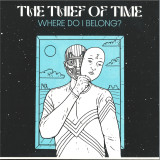
The first album release on Sprechen is a trip across the astral planes of electronica and through the neon soaked streets of South Manchester, where genres cross & styles meet on the creative peripherals away from the dance floor.
A life lived through clubs, comic books, cult movies, cosmic adventures & electronic musical endeavours have all played a role in the creation of 'Where Do I Belong?', the debut long player by The Thief Of Time, a new studio project from Sprechen founder Chris Massey.
What started as just very loose ideas and half started projects during lockdown resulted in a semi autobiographical collection of songs that draw on a lifetime love of electronic artists & synth heavy movie scores.
Nods are given, toes are dipped & caps are doffed in various sonic directions whilst still treading a truly unique path of its own making.
As Chris says: "it started really with me being in a headspace I've never really had in the studio. There was no pre-conceived ideas or agenda of what I wanted to achieve other than just going with what felt right and pursuing sounds & style I favour away from a smokey basement of ravers. Being a child of the 80's gave me a wealth of ever-evolving influences of sounds, styles, imagery, fashion, literature & art which all somehow seemed to direct this project.
It's the first time I've ever created something that contains personal reflections of my own life. Good & bad alongside the high & low points have all driven this creative process which reflects my own headspace will hopefully speak to everyone on some sort of level".
The album also features a host of Manchester artists including A Certain Ratio, Bay Bryan, Psychederek, NIIX & Love Letters From Space as well as Allison Rae from Causeway (Italians Do It Better) who were all instrumental in realising Chris' vision and bringing this exciting project into existence.
out of Stock
Last delivered 2 years ago available to reorder, subject to availability
Satoshi Suzuki (鈴木慧) described his musical practice perfectly on the OBI strip of his 1987 privately pressed LP - Tokyo Contemporary! consisting of 40% Jazz, 30% Soul, 20% Brazil, and 10% Kayokyoku - a musical mixture not too far off from what is now referred to as City Pop.
However, this archival compilation of Satoshi Suzuki's works presents a perspective of the City Pop sound not from affluent 1980s Japanese bubble economy-era studios and highly paid studio musicians, but from a one-person band making the most of the instruments in their home studio, inspired by musical traditions from around the world.
With notes of city pop, AOR, jazz, soul, bossa, and kayōkyoku - Satoshi Suzuki's intimately recorded pop songs are charming and full of wit, with a seasonal and poetic approach to these musical forms using only a drum machine and an array of digital synthesizers. Sounding a little like Pacific Breeze played on a Casio keyboard and drum machine, Uku Kuut soundtracking a SEGA video game, or the wonderful lo-fi works of Suzuki’s lo-fi homemade pop & jazz contemporaries Ronald Langestraat, Lewis, and Joe Tossini — though most of all, SUZUKI's works show a new and singular perspective of the bubble-era city pop of the Showa period.
Distant Travel Companion (遠い旅の同行者) introduces Suzuki's musical works to a wide audience for the first time, featuring remastered songs originally released over three privately pressed LPs from the 1980s, as well as a previously unheard CD from 1993. The original works were released in an impossibly limited edition of 100 copies each - printed and assembled on printing equipment at Suzuki’s company office and scarcely distributed, recording these songs at his home studio in his free time. The compilation's design and accompanying OBI and liner notes are a direct homage to the original releases.
Satoshi SUZUKI is a Japanese keyboardist, singer, songwriter, and music arranger. He is also an author of literature and winner of the "Shin-nihon-bungaku" (New Japanese Literature) Award. He was born in 1958 in Tokyo, Japan.
out of Stock
Last delivered 2 years ago available to reorder, subject to availability
re:discovery records proudly presents the first vinyl issuing of Off the Sky 'Gently Down the Stream'. Originally released in 2006 on the cult ambient label Databloem, it has grown over the past 15 years as one of the seminal releases in their discography. Fans of glitch styled rhythm based ambient like Shuttle 358, Mille Plateaux, Thinner, 12k records and later Force Inc to minimal and dub fans of the Cologne style should really be taken by this beautiful sounding album. Like the title suggests, expect to drift off to a desert island to this beautiful serenade. Off the Sky (Jason Corder) is a veteran of the ambiant scene. With over 25+ albums to his credits, come listen to one of hisearliest in his discography. A magical album to chill-out to. Bring back the chill-out rooms!
out of Stock
Last delivered 2 years ago available to reorder, subject to availability
As well as having many literal and metaphoric messages running throughout the record - a theme that Jonny wanted to emphasise is learning to realise what you have rather than do not. On this note, the music was written and recorded with many close friends of his and is a celebration of what can be achieved through collaboration. Some of the wonderful names on the record include Jamie Lawson, Tom Bright, Eve Lesedi, Bailey Tzuke, Holly Carter (AMA UK Instrumentalist of the year), Joe Coombs, Roisin Mcneil, Liam Bauman & Taylor Raynor. Available as a vinyl LP and digital formats
To celebrate the 10th Anniversary of Major Arcana, Speedy Ortiz will release a remastered edition, on Carpark Records.
On their debut full-length, Western Massachusetts' Speedy Ortiz manages a bit of magic by conjuring the spirits of classic American indie rock, while twisting those ghosts into new shapes. It's easy to hear the influences of Helium, Jawbox, and Chavez on this album, as well as nods to their contemporaries including Grass is Green, Pile, and Roomrunner. Sweet vocal harmonies run up against gnarly distortion, aided by basic, chunky bass parts and heavy, fill-laden drums.
The album was recorded in a few days in November at Justin Pizzoferrato's (Dinosaur Jr., Chelsea Light Moving) studio, Sonelab, a huge space in an old factory in Easthampton, Mass. The sessions went from very early in the day until very late at night, with the band taking its time to experiment. Pizzoferrato's collection of old distortion pedals were utilized on both the record's guitars and vocals.
The theme of the occult and the supernatural runs deep through Major Arcana, inspired by singer-guitarist Sadie Dupuis' reading on black magic. Dupuis' sometimes knotty and abstract lyrics bring to mind fellow wordsmith Stephen Malkmus, while referencing horror film tropes, chemistry, and neuroscience. Major Arcana's literal translation is 'major mysteries,' a phrase from tarot cards. 'I don't write in a narrative way and am more concerned with use of language than meaning,' Dupuis says, 'so I like the open-endedness of the title and the way it invites interpretation.'
After too much time freelance writing and watching re-runs in a windowless Brooklyn basement, guitarist and songwriter Sadie Dupuis left New York City for the wilds of Northampton, MA in order to pursue a master's degree in poetry. In doing so, she began Speedy Ortiz, a self-recorded lo-fi project named after a minor character from the Love and Rockets comic series. Speedy Ortiz soon became something else entirely as bassist Darl Ferm, guitarist Matt Robidoux, and drummer Mike Falcone teamed up to form a full band, balancing abrasive noise with infectious earworms. The newly minted Speedy Ortiz quickly found an audience in the Boston DIY scene, playing frequently with their friends Pile, Grass is Green, Fat History Month, Sneeze, Krill, and Arvid Noe.
Almost immediately, the band recorded a two-song single, 'Taylor Swift' and 'Swim Fan,' with Paul Q. Kolderie (Pixies, Hole) and Justin Pizzoferrato (Chelsea Light Moving, Dinosaur Jr.), and self-released it in March of 2012. Shortly thereafter they spent a few weekends at the dingy yet atmospheric Sex Dungeon Studios in Philadelphia recording the Sports EP, a five-track, loosely conceptual 10' released that June on Exploding in Sound Records.
The creation of Major Arcana, their full-length debut, marks the evolution of Speedy Ortiz into a wholly collaborative effort. Darl leans toward basic, chunky parts, while Mike, a talented songwriter in his own right, helped arrange while also providing aggressive, boisterous drums. And Matt is a classically trained guitarist, but his experience in noise and experimental music comes through in his anti-melodic guitar solos, which counterbalance Sadie's angular, scalar guitar riffs and poppy vocals.
The end result is a band able to distill their influences and creative impulses into something at once dissonant and melodic, noisy yet undeniably pop.
What if you have Brian Wilson and Bruce Springsteen rolled into one? And what if he came of age as an poor buskers in in Surabaya, Indonesia, but then summoned enough strength to record six albums that flew in the face of everyone in the country’s rock scene back in the early 1980s?
Genius, be they Brian Wilson or Soedjarwoto “Soemarsono” Gombloh, don’t conform to rules written for us mere mortals. They have their own way of doing things and in the case of Gombloh, writing music, conducting recording session and spending cash from his music, must be conducted on his own terms and his terms only. Studio time was expensive back in the early 1980s, yet Gombloh could be three-hour late for his session, and while engineers, session musicians and producers were jittery about the prospect of another botched session, Gombloh took his time for a nap before the recording begun.
Yet, some of his greatest works came into being in the wake of this napping session. Recording session for Sekar Mayang is no exception, despite the fact there’s foreboding sense of doom with Gombloh being unsure about the possibility of selling enough units to help his label break even. This is, after all, this is his last record with his band Lemon Tree’s. No one knew that Gombloh was operating with all his cylinders running and what came out of this Indra Record session, in the waning days of 1980, were some of the best compositions ever committed to magnetic tapes (to wax, if now you’re holding this on vinyl).
This is Gombloh at the peak of his creative genius. You can argue that his debut album Nadia & Atmospheer (what’s with the spelling mistake?) is the most sprawling and complex album (both sonically and thematically), but Sekar Mayang certainly had the best songs and I can make the argument that this album’s 10 songs are strong contenders for biggest hits in blues, country, psychedelic rock charts. “Prahoro & Prahoro” is one of those impossible song which appears to have sprung from a bottomless well of inspiration, encompassing King Crimson’s sprawling epic, Deep Purple’s deepest blues and Genesis’ most progressive tendencies. Or “Sekaring Jagat”, which begins as Lennon-McCartney lullaby before launching a thousand ships traveling to the end of the rainbow with children choir singing heavenly melodies backed by droning harpsichord and synclavier, while a buzzing Hammond B3 tightly locks with Gombloh’s guitar strumming.
For many of his fans, Gombloh is known as generous man of the people. A Robin Hood type if you please. He spent his royalty checks to buy foods for beggars and buskers and dish out some more to buy undergarments for Surabaya’s prostitutes. In Sekar Mayang, Gombloh went full Springsteen mode in “Mitra Becakan,” a social commentary that cut so deep you can end up with tears in your eyes and lump in your throat (even if you don’t understand any of its Javanese language lyrics). This is one the most devastating social commentary ever recorded for a pop song, and even if you discount the greatness of its musical composition, you chalk this up as a great social-realism poetry. His years of hanging out with pedicab drivers, street vendors and street-bound prostitutes certainly gave him enough insight into their (in)human condition.
Yet, a record this stellar was largely forgotten. First, this record was a flop upon its release in 1981. Indra Records reportedly only did one pressing on cassette tape and be done with it. For those who were lucky enough to have come across one of songs from this album on the radio were likely growing up in East Java, where Gombloh had a massive cult following early in the 1980s. Nothing was heard from this record again.
There were only a handful of cassette tapes from the first pressing found on second-hand market and I recently stumbled upon one online with a price tag of Rp 50 million (US$3,500). It’s no longer available now.
In Sekar Mayang, Gombloh harbours an obsession for a long-lost utopia, Java’s distant past, where farmers have their barn full of rice and corn, where blacksmith working around the clock making tools and children singing and dancing in their seminaries. Or the fact that he opens the song with stanza from Serat Weddhatama, arguably the most monumental poem in neo-classic Javanese literature, could be his pledge of allegiance. The question for him is should a modern-day Indonesia, rife with poverty, corruption and environmental degradation not be an anathema to that utopia?
In the end, you don’t need to be someone fluent in Javanese to enjoy this majestic record. And if this record turns out to be the last in Elevation Records catalogue and we shut down this label tomorrow, we will be very happy. Mission accomplished!
After two years, Carl and Andreas present their second album, and once again, it opens up a wide associative space for us. What strikes us initially is the uncommon instrumentation: a church organ, harpsichord, glass tubes, and more. Like their first album (The Aporias of Futurism), it is mysterious and dark. But it also carries a strong touch of rebellion and adrenaline, sometimes quite pointedly. The pieces are now shorter and feature intricate yet irresistible rhythms. The impact is immediate, yet it maintains a sense of solemnity and ceremony. The Apollonian complexity of the rhythms and subtle melodic interweavings is transformed into a Dionysian, ecstatic, hypnotic, and at times tribal context. "Music for Unknown Rituals" oscillates between primitive instincts and avant-garde intrigues.
The process began in Döblitz, a small village on the Saale river in Germany, inside an old church that houses an organ built in 1886 by Johann Adolph Ibach. Carl and Andreas gained access and secluded themselves there for a few days, accompanied by the organ, an instrument made of glass tubes, and a set of modular synthesizers. After recording the basic tracks in Döblitz, the work continued in Munich and Berlin. Carl played electric guitars, harpsichord, bass, metallophone, xylophone, Indian harmonium, and various percussive instruments. Andreas added layers of electronic sounds, noises, and atmospheric drones. He also created percussive structures extracted and derived from recorded material of technical and industrial noises, which contrasted with the acoustic drums played by Carl. The antithetical approach continues with the dichotomous arrangement of the instruments, often panned hard left and right in the stereo field, creating an antiphonic communication. Some parts, especially the use of the electric guitar, evoke memories of the psychedelic sixties. However, this is anything but a nostalgic album—these musical references are merely remnants, set pieces, and fragments used from a contemporary, post-modern, post-youth-cultural, and post-romantic perspective.
Although Andreas and Carl continue on their chosen path of composing music with an almost literary narrative structure, this album is conceptually and formally completely different from their first effort. If “The Aporias of Futurism” was a revolutionary manifesto (in a pataphysical sense), "Music for Unknown Rituals" is more like the implementation in action; it is the practical application of the previous statement. To put it another way, if "The Aporias of Futurism” was the conceptual manifesto of a dark utopia of modernity, "Music for Unknown Rituals" is the staging of free will surrendering to the myths and catharsis of a Greek tragedy. And in response to this, the artwork features a leitmotif of histrionics with hands, the hands being the first and intuitive part of the body to express something: a ritual, a prayer, a defeat...
— Andreas Gerth is one half of Driftmachine, and Carl Osterhelt is part of F.S.K and collaborates with Hans-Joachim Irmler of Faust. Both became connected through their participation in the Tied & Tickled Trio.
Twentysomething Dwight Yoakam was literally the new kid in country music when he stepped onto the Austin City Limits stage in October 1988. But even then, as he has ever since, he was doing things his own way. Dwight was born in a small Kentucky town and grew up listening to mountain and bluegrass music, and unlike most of the mainstream country-pop crooners of the eighties, he almost single-handedly revived the rockabilly / honky tonk / hillbilly sound that was one of the cornerstones of country music’s formative years. Early on he discovered the fabled “Bakersfield” sound of the 60’s and adopted it as his own, in the tradition of country legends Merle Haggard and Buck Owens. Buck, in fact, became his hero and friend. When Dwight was playing a fair in Bakersfield, he stopped by Buck’s office and coaxed him into playing a few songs with him onstage that night. The result was a lasting friendship and their historic duet, “Streets Of Bakersfield.” Much like his heroes, Dwight has been true to his roots and breaking new ground for almost 20 years. - Terry Lickona (Producer Austin City Limits)
SOARS is the solo project of Kristian Karlsson, synth player in CULT OF LUNA and bass player/vocalist in PG.LOST - and yes, `Repeater', a truly epic instrumental rock album bustling with delay-drenched drama and joyful yet melancholic melodies will make every PG.LOST fan very, very happy. Why is it not a PG.LOST album then? "I got tired of discarding ideas I've written that didn't ft PG.LOST, but at the same time were too good for my ears to throw away. PG.LOST as a collective works at a relatively slow pace, while I by default write music all the time_ so eventually it became clear to me that I needed a new outlet for all those ideas". Karlsson released his debut solo album `Enfold' under the Soars moniker in 2021. Recorded and released all by the artist himself, `Enfold' made waves in the post rock world and the vinyl pressing sold out quickly. Repeater connects seamlessly with the debut album: propelled by the powerful drumming of Christian Augustin (Stiu Nu Stiu, live drummer of Cult of Luna) and Karlsson's charismatic synths melodies, these eight tracks share a distinct reference to the cinematic works of artists like Vangelis and Jean-Michelle Jarre, as well as post rock acts like God is An Astronaut, Caspian and Mogwai. "Soars is a personal journey and expression of a sound that has been developed over the years," explains Karlsson. And this long-term development of his artistry ensures that while painting with a familiar palette of tones and textures as the aforementioned artists, Karlsson always paints a picture that is very much his own. Title track «Repeater» comes saturated with orchestral grandeur and melancholy, and yet somehow exudes a sense of hopefulness which lingers throughout the album. Driven by layers of processed vocals and glorious melodies, «Uprise» literally gives rise to waves of exalted joy, while tracks like «The Waiting» or «Grow» demonstrate that Repeater shines through sheer strength of composition. Wrapping his retro synth sounds into a fat modern production, Repeater is stuffed with stunning dynamic arcs, catchy melodies and atmospheric density. The recording and mix are fawless and, in a sense, timeless. "The recording process was pretty simple," explains Karlsson matter-of-factly. "A lot of the ideas was formed at home in my kitchen and took its fnal form in the studio." With Soars, Karlsson is proving his innate ability to convert his blithe spirit into sound waves. Repeater is a manifestation of a man who lives and breathes music - an album that grabs you and carries you away.
After a hiatus of quite some time, the Belgian duo composed by the world renowned model Kim Peers and post-metal band Amenra’s guitarist Mathieu Vandekerckhove, is finally back with a new full-length album.
Four years have passed since their debut Benevolence. Meanwhile Skemer took the time to let all sides of their personality grow and eventually explode. You remember their minimalist cold wave deconstructions equally made of brutal and erotic components. A duality deeply rooted in the band’s music as well as in their line-up and obviously their live shows, where romantic and ethereal atmospheres collide with the gothic side of electronic and techno music. This is even more present on their new LP Toasts & Sentiments.
Eleven new cuts where every side of Skemer’s nature gets its own share of expression only to leave you wrapped in one pitch black cloak. A few episodes in the duo’s native language Dutch, add even more mystery to the occult receipt.
Get in the introspective, tranche insistent riff on the opening track Eyelashes and get catapulted, quite literally, on the dark side of the moon. Keep on wandering the alien surface with Seen and its solemn gait. Pick up your pace with the pounding drums of Easy To Embrace and Kiss Me Kill Me. Go down the stairs to the dungeon of the club culture with lead singles Overgave and Out Of Favor claustrophobic electro. Remain bogged down in the darkness with New Born Babe, get slapped by Apocalypse’s industrial trance crescendo. Rest and collapse with the final track’s texture of ambient synths and reverberating guitars.
It may have taken four years for Skemer to present their new creation but it was definitely worth the wait. Walk the night with us.
out of Stock
Last delivered 2 years ago available to reorder, subject to availability
TVAM announces ‘Costasol’, his new EP for Invada Records. The 10” EP is pressed on translucent blue vinyl, and housed in a reverse board, spined sleeve. TVAM returns to the sun lounger to deliver a horizontal view from the pool of self-reflection. Joe Oxley, aka TVAM, offers, “‘Costasol’ began life as two atmospheric interludes that I wrote for my last album, ‘High Art Lite’. Over time these ideas took on a life of their own and demanded that I take another look at them. I slowly began putting the pieces together and ended up with a track which became much more than the sum of its parts.” The resultant ‘Costasol’ is a song about longing, loss and regret wrapped-up in heatwave bass and shimmering guitars, all perfectly enhanced by Mona’s dreamlike vocal. TVAM self-released his much-acclaimed debut, ‘Psychic Data’, in the Autumn of 2018. Something of a cult-classic, the album joined the dots between Suicide’s deconstructed rock ’n’ roll, Boards of Canada’s irresistible nostalgia and My Bloody Valentine’s infinite noise. ‘High Art Lite’, released in October 2022, took a different tilt to its predecessor by emphasising the immediate and the personal. The colours were blown-out and the brightness was cranked up. It’s in this world where TVAM’s new ‘Costasol’ EP exists. Full of colour and noise, with a vibrant, distorted palette. Though the title track may find a home at some poolside retreat, the subsequent tracks return to TVAM’s claustrophobic realm. ‘Ephemerol’ evokes its own mutant groove, part ‘Midnite Vultures’ Beck, part ‘Pretty Hate Machine’ Nine Inch Nails, with ‘Heart Attack’ and ‘VHF’ rounding off this bold, bright, brief encounter. Radio - BBC 6 Music Lauren Laverne, New Music Fix, Emily Pilbeam, Amazing Radio B-List. Tourdates - October 22 SWN Festival Cardiff, November 11 Hebden Bridge Trades Club, 18 What Music? Liverpool.
London based multidisciplinary artist and DAYTIMERS internal team member Zar (Arun) is returning once again in 2023, this time on The Tabula Rasa Record Company, to release his second EP: “Unfurl”.
It is the next expression of progression in sound for Zar, a movement further into, above and beyond the foundations laid down from his debut EP “Practice Makes Miracles” - which was listed on Bandcamps’ “Best Electronic Music of March 2023” and described by DJ Mag as “a striking solo debut that sets Zar out as an exciting prospect in the sphere of electronic composition.”
Sitting at that murky midpoint between UK Garage, Tech-House & Bass, the songs literally bloom outwardly, wrapping around the listener leaving trails of familiarity, and feature the tendrils of earworm worthy melodies that strike a balance between serene, uplifting, dense and thoughtful, all whilst resting upon deep thumping drums, clever vocal sampling and unconventional song structures. As a follow up to an already ambitious debut EP, Unfurl is an incredibly full-filling listen.
Berlin-based Swedish bassist and producer Petter Eldh returns with a new Koma Saxo album Post Koma, out on We Jazz Records, 10 November. The title Post Koma aptly describes the vibe of this one: The Koma Saxo sound continues its evolution, morphing into a holistic vision of jazz now and soon, where live instrumentation and repurposed sampling lose their boundaries.
Over the course of its three iterations (self-titled debut in 2019, LIVE in 2020, Koma West in 2022) Koma Saxo has sounded at times "liquid" and postproduced, at times raw and direct, at times acoustic and at other times oddly electronic (even while still being made with acoustic instruments). Post Koma is a culmination of this sonic study by Eldh, resulting in a music vision that never second-guesses throwing tasty hooks and everlasting melodies out the window after a mere bite of them. But fear not: there are even more new ideas just around the corner.
Eldh's compositions and ideas merge together in a way that just flows. There are quality musicians in the mix, including Koma Saxo live band members Sofia Jernberg, Jonas Kullhammar, Otis Sandsjö, Mikko Innanen, Maciej Obara and Christian Lillinger, but that's like saying that a cake includes flour and sugar. This music is not about playing, it's essentially about how the music is and how it takes its shape, so you quickly lose track of who did what, and that's all in the benefit of encountering this music as an entity that is constantly challenging itself while moving forward. The musicians are valued contributors, and an integral part of what's here, but this is far from traditional jazz playing where a band sits in a room playing takes after takes of compositions on sheet.
That being said, this is jazz to the fullest. That is, music that understands its past but always moves forward, and is never afraid of taking risks. Petter Eldh uses jazz as a starting point, not the end goal. This gives his music edge and mobility beyond what can be contained on one album. In a way, an album, then, becomes a snapshot of a creative process in constant flux and evolution.
Opening track "Koma" is literally drum & bass. It only consists of those two elements, yet what comes out of it is an open invite, a way of clearing your palette. It would be useless to describe individual tracks beyond that, but there's a strong sense of deliverance to the set. It feels like an ending, and also like a new beginning.
Berlin-based Swedish bassist and producer Petter Eldh returns with a new Koma Saxo album Post Koma, out on We Jazz Records, 10 November. The title Post Koma aptly describes the vibe of this one: The Koma Saxo sound continues its evolution, morphing into a holistic vision of jazz now and soon, where live instrumentation and repurposed sampling lose their boundaries.
Over the course of its three iterations (self-titled debut in 2019, LIVE in 2020, Koma West in 2022) Koma Saxo has sounded at times "liquid" and postproduced, at times raw and direct, at times acoustic and at other times oddly electronic (even while still being made with acoustic instruments). Post Koma is a culmination of this sonic study by Eldh, resulting in a music vision that never second-guesses throwing tasty hooks and everlasting melodies out the window after a mere bite of them. But fear not: there are even more new ideas just around the corner.
Eldh's compositions and ideas merge together in a way that just flows. There are quality musicians in the mix, including Koma Saxo live band members Sofia Jernberg, Jonas Kullhammar, Otis Sandsjö, Mikko Innanen, Maciej Obara and Christian Lillinger, but that's like saying that a cake includes flour and sugar. This music is not about playing, it's essentially about how the music is and how it takes its shape, so you quickly lose track of who did what, and that's all in the benefit of encountering this music as an entity that is constantly challenging itself while moving forward. The musicians are valued contributors, and an integral part of what's here, but this is far from traditional jazz playing where a band sits in a room playing takes after takes of compositions on sheet.
That being said, this is jazz to the fullest. That is, music that understands its past but always moves forward, and is never afraid of taking risks. Petter Eldh uses jazz as a starting point, not the end goal. This gives his music edge and mobility beyond what can be contained on one album. In a way, an album, then, becomes a snapshot of a creative process in constant flux and evolution.
Opening track "Koma" is literally drum & bass. It only consists of those two elements, yet what comes out of it is an open invite, a way of clearing your palette. It would be useless to describe individual tracks beyond that, but there's a strong sense of deliverance to the set. It feels like an ending, and also like a new beginning.
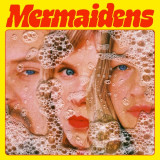
New Zealand indie trifecta Mermaidens, are set to make a resounding splash in the music scene yet again with the announcement of their fourth self-titled album and release of the project's first single ‘I like to be alone’. The trio, comprising of Gussie Larkin (guitar/vocals), Lily West (bass/vocals), and Abe Hollingsworth (drums), has been on an impressive journey of musical excellence, boasting three critically acclaimed albums, international tours, and a slew of accolades to their name. With a sound that is both bold and adventurous, Mermaidens' music is a testament to their unwavering creativity and relentless work ethic. Their upcoming self-titled album, a product of the band's tireless efforts between 2019 - 2022, promises to be a captivating sonic journey, delving into themes of self-awareness, introspection, long-term love, and even channelling political anger and frustration. Recorded mainly at Surgery Studios in Wellington, with the engineering prowess of Lee Prebble and produced by Samuel Flynn-Scott of The Phoenix Foundation fame, the album also saw the band stepping up their production game with Gussie and Lily working their magic with Protools in their DIY home studios, showcasing their growth and versatility as artists. “Working with Sam has really been a round-trip in our creativity,” as Lily explains, “we grew up listening to Sam’s early records and here we are getting the inside scoop on how to make that kind of magic. Listening to Pegasus today still transports me to a time when I listened to music on a Walkman. In the best possible way - sometimes it felt like we’d added an evil genius to the mix, we’d be working on a song and he’d come in like a mad scientist with fresh ideas to try.” To give fans a taste of the upcoming album's brilliance, Mermaidens have released new single 'I like to be alone.' The song has been part of the band's live repertoire for a while and explores the fulfilling contentment of being alone and the struggle to convey this sentiment to a partner. Its relatable lyrics capture the essence of cherishing solitude while navigating the complexities of human connections. Gussie's candid and honest approach to self-discovery is complemented by the song's, Michel Gondry inspired video, as Gussie explains: “The giant jean pocket and denim world were created by Hannah Webster, a textile designer and illustrator based in Wellington. Hannah took all the wild ideas for props and made them come true! I’m still in awe of how she managed to sew a 6x6 metre backdrop for the denim world out of whatever scraps she could find. The video captures our playfulness and sense of humour, and is a hint of what’s to come for the rest of the music videos. I love the way the story wraps up with the three of us together, literally playing “in the pocket”. Mermaidens' self-titled album will be released on Friday 3 November 2023 and is available for pre-order now. UK listeners will be able to pick up an exclusive Rough Trade vinyl pressing in transparent red, along with an A3 poster and jumbo bumper sticker. Having released their last two albums through iconic local label Flying Nun, Mermaidens will be released independently. Creative control is an important pillar for the band, who are hands on in every facet of their projects. Mermaidens gather their community close via their hugely popular multi-city boutique festival Mermgrown, hosting peers including Womb, Hans Pucket, Vera Ellen (Girl Friday) and Kōtiro from 2021 onwards. They've been invited to share the stage with Death Cab For Cutie, Sleater-Kinney, Gang of Four, Parquet Courts, Lorde and The Veils, and have toured extensively in Europe, the UK, and Australia.
Erster Erzählband des Duos Schreng Schreng & La La Die Welt - oder besser: die getreue Schreng-Schreng-&- La-La-Gemeinde - wartet seit Jahren zitternd auf die Erscheinung dieses Werkes: Jörkk Mechenbier und Lasse Paulus legen mit "Deck mich zu, wenn du fertig bist" nun endlich ihr literarisches Debüt vor - übervoll mit all den Dingen, mit denen man sich ebenso befasst, wenn man befreundet ist und ein gemeinsames Bandprojekt am Laufen hat ... Als Duo Schreng Schreng & La La reisen diese beiden unwahrscheinlichen Helden nun bereits seit zig Jahren quer durchs Land und erleben Geschichte um Geschichte, von denen eine absurder als die nächste ist. Aber dabei sind es nicht nur die Backstage-Beichten zwischen Bühnenschnäpsen, Musik und Irrsinn, die dieses Duo und ihr gemeinsames Schaffen interessant machen; es geht zuvorderst um die oft nicht leichte Beziehung der beiden zutiefst konträren Charaktere zueinander. Die Stories in "Deck mich zu, wenn du fertig bist" zeigen, wie sehr man sich unterscheiden und dennoch lieben und respektieren kann. Hier wird also herzerwärmend und nachgerade therapeutisch vom gemeinsamen Brückenschlagen und Händereichen erzählt - und nicht zuletzt auch davon, wie man mit einem AfD-Wahlplakat einen 70 Zentimeter langen Joint baut. Halten Sie sich also bereit. Lasse Paulus und Jörkk Mechenbier fanden sich irgendwann zwischen 2006 und 2007 in der gemeinsamen Wohnung ihrer Freundinnen. Der eine schön, hochgewachsen und mit einem richtigen Schulabschluss, der andere ein zertrümmerter Polytoxiker mit romantischer Seele. Sie gründeten die "deutschen Johnny Cash" und nannten sich Schreng Schreng & La La. Während Mechenbier danach eine erfolgreiche Karriere als Indie-Musiker bei den Bands Love A und Trixsi einschlug, erträgt Paulus seit Jahren einen klassischen 9-to-5-Job. 152 Seiten
Run-D.M.C.'s Raising Hell remains the turning point at which hip-hop crashed through mainstream barriers and never left. Anchored by the crossover smash "Walk This Way," the 1986 blockbuster still sounds like a revolution unfolding in real time. It has everything – hard-rock riffs, turntable scratching, itchy rhythms, hit singles – not the least of which are the trio's invigorating raps and inseparable chemistry. And now it's the first rap record afforded audiophile treatment, courtesy of Mobile Fidelity.
Sourced from the original master tapes and pressed on MoFi SuperVinyl, the reissue label's numbered-edition 180g 33RPM SuperVinyl LP elevates Raising Hell to sonic heights on par with its musical and cultural significance. Ranked the 123rd Greatest Album of All Time by Rolling Stone, 43rd on Pitchfork's Greatest Albums of the 1980s, one of the Top 100 Albums of All Time by TIME – and included on "Best of" lists by Spin, Paste, XXL, Entertainment Weekly, and basically every other significant media outlet – the triple-platinum effort rocks the house.
Benefitting from the ultra-low noise floor and groove definition of SuperVinyl, Raising Hell unleashes a torrent of massive dynamics and tsunami of frequency-plumbing details underlined by Rick Rubin's taut, crisp, albeit raw and streetwise production. Just as the Queens-based group both defined what hip-hop could represent – and displayed just how big it could get – Rubin's work melded ear-worm hooks, savvy drum loops, metal-leaning guitars, and, of course, Run and D.M.C.'s cross-fire lyrical interplay into watertight frameworks bursting with ideas, tones, samples, and beats. Heard anew on Mobile Fidelity vinyl, Raising Hell is in every regard the aural equivalent of a direct-to-console 1970s classic. And it sounds as fresh as hell.
As for the music, it ranks among the most influential, inventive, and invigorating ever released – rap or otherwise. Vanguard artists such as Ice-T, Eminem, Jay-Z, and Public Enemy's Chuck D – who declared it his all-time favorite and "the first record that made me realize this was an album-oriented genre" – have testified on behalf of its brilliance. And never mind the presence of the Top 5 single "Walk This Way," whose power helped make Aerosmith's Steven Tyler and Joe Perry relevant for the first time in nearly a decade – and literally put Run-D.M.C. in bedrooms ranging from the Bronx to Bartlett to Bad Axe.
Look instead to the rest of the entirely filler-free set, be it the corkscrew turns, slippery wordplay, and "My Sharona"-meets-"Mickey" mixology of the boisterous "It's Tricky," the fat-but-minimized bass grooves and warped turntable wobble of the hysterical "You Be Illin'," chimes-accented inertia and boombox-on- shoulder thunder of the now-iconic "Peter Piper," or voice-as-percussion attack of the funky "Is It Live." With Raising Hell, the answer to the question is always affirmative – a sensation bolstered by the fact the group always had something to say.
The definition of Golden Age Hip-Hop in every way, Run-D.M.C. avoids the negativity and misogyny that later plagued the style, spinning assertive tales about identity (the biographical and culture-changing "My Adidas"), work ethics ("Perfection"), and, most notably, pride (the Harriet Tubman- and Malcom X.-referencing "Proud to Be Black"). Pavement-packed inner cities, tree-lined suburbs, and cornfield-rimmed rural areas would never again be the same. And rocking a rhyme that's right on time would become trickier than ever.
Following on from the Primal Scream frontman’s brilliantly-received previous release for Ace, ‘Sunday Mornin’ Comin’ Down’ (accolades included being short-listed for Rough Trade’s compilation of the year), Bobby Gillespie brings us another slice of the music that soundtracks his life. And in this case, it’s his touring life. Drawing on the experience of ‘the way that the noise and clamour of the road can tire you out, wear you down and frazzle your nerves to shattered fragments of jangled exhaustion’, these are the records Bobby turns to for solace, for comfort, for empathy and for resourcefulness.
The compilation features an introduction from the man himself, talking us through his personal choices as though he’s sitting cross-legged on the carpet going through records with you in his lounge. Also long-time cohort of the band, Kris Needs has written extensive liner-notes, serving up an intensive track by track insight and analysis.
Titled after and kicking off with the Willie Nelson track of the same name, ‘I Still Can’t Believe You’re Gone’ leads us through a darker and deeper exploration than its predecessor, featuring Nick Cave’s funereal version of ‘By The Time I Get To Phoenix’ and Ry Cooder’s sparse and beautiful reworking of ‘Dark End Of The Street’. And we get there via such greats as Bob Dylan, JJ Cale, Donnie Fritts, Crazy Horse, Lee Hazlewood, Al Green, Thin Lizzy and so many more.
In Bobby’s own words: ‘These songs are soul savers to soothe frayed and battered nerves and to ease and settle the heart. They work on me like medicine every time. I would like to share this wonderful music that has given me strength, joy and inspiration over the years with you the listener, so that you too might get the same feelings of protection and inspiration that I do whenever I listen to these songs. We're all travellers on some kind of road through this life, and we all need respite from time-to-time - the music on this compilation is soul food of the highest order - I hope you enjoy it.’.
For 14 years Throat have been the sonic equivalent of forcing a square peg into a round hole; often abrasive, causing utmost irritation at times and on a rare occasion a feverishly pleasant dose of brooding darkness in one's otherwise dull existence. The peg now fits. We Must Leave You sees Throat dropping pegs of all shape and size through the same hole. The last confines of musical genres are behind them, resulting in an album which can be regarded as the easiest listening Throat has ever presented or simultaneously their most difficult and puzzling work to date. Thematically what we have here is a breakup album. Never ones for thinking small, Throat breaks up with the world. Enough is enough. Bring back lockdown. No need for petty social commentary on how the world is burning. Let it burn. Throat is already walking away and it remains to be seen where they end up next. If anywhere. Breakups always require dramatic music and We Must Leave You more than fits the purpose. Throat have already hinted at new directions and new sounds on their previous two albums, but here it all breaks loose. Rooted in the same heavy, dark rock sound as always, but a touch of gothic drama from the 80s has been injected to the band's sonic palette which obviously means a few deeper shades of black. The noise and dissonance remains, but this time it all has been dipped in honey and black grease paint. We Must Leave You was written over a few years time and finally recorded in 2023 at Tonehaven Recording Studio with Tom Brooke and the band's own Amplified Human Audio. Once again, Andrew Schneider mixed the album at Acre Audio and Carl Saff handled mastering duties at Saff Mastering. Photography by Dorota Brzezicka and design by Stefan Alt of Ant-Zen.
Two visionary maestros, Pierre Bastien and Michel Banabila, unite in their first collaborative album, Baba Soirée. The veterans of electronic music bring their unique expertise to the table, resulting in a captivating fusion of experimental styles. Bastien’s mechanical loops and experimental instrumental setups merge seamlessly with Banabila's sound design and impeccable skills of sampling collages. It's not a dance party, nor is it an avant-garde intervention. It's a soirée: a cultivated evening of sonic alchemy hosted by these two charismatic gentlemen.
Pierre Bastien is a composer and multi-instrumentalist with a background in French literature. He has spent decades crafting an idiosyncratic world of experimental sound with his self-built mechanical orchestra Mecanium. It was most notably showcased in audiovisual releases on Aphex Twin's Rephlex label. Bastien's creations are a mesmerizing combination of traditional instruments (he has a vast collection) and mechanical automatons. The violin in the track Rotomotor, for example, is physically played by one of his machines. In Baba Soirée, Bastien also plays a prepared cornet (Slow Dance, Banbas Aura), infusing the recordings with a breathy, dreamy dimension.
Michel Banabila, a sound artist, composer and producer, possesses an eclectic musical repertoire that defies genres. His seamless blend of minimal electronica, tribal ambient, and neo- classical influences has earned him a prominent place in the world of experimental music, and an impressive discography (Knekelhuis, Bureau B, Séance Center, a.o.). Banabila serves as the creative sampling editor for Baba Soirée, expertly weaving together the recordings to craft an evocative sonic tapestry.
The two share a curiosity for traditional instruments from various cultures. The instruments used in the recordings are shown in the cover artwork. A mutual admiration for each other's work paved the way for this fruitful artistic partnership of the Rotterdam-based artists: Collaborating on a single as a fundraiser for Yemen in 2022 set the stage for the creation of Baba Soirée.
For Pierre Bastien, Dada, Fluxus and International Situationism have played a significant role in shaping his artistic vision. The title Baba Soirée is an homage to Kurt Schwitters and Theo van Doesburg's "Kleine Dada Soirée" collaboration which took place exactly a century ago. There's an unmistakable stoicism and an anarchic not-giving-a-f*** attitude in these recordings by Bastien & Banabila, which resonates in the light of this Dada reference.
out of Stock
Last delivered 2 years ago available to reorder, subject to availability
25th Anniversary Edition auf Limited Silver Vinyl!
Mit Ashley Campbell und Kieran Naughton verfügt die Band über zwei unverwechselbare und abwechslungsreiche Stimmen und die Fähigkeit, sowohl aus einer breiten, bunten Palette von Stilen
zu wählen als auch bei Bedarf einen beeindruckenden, donnernden Krach zu machen. Es ist auch ziemlich klar, dass Edinburgh School for the Deaf sich nicht zu sehr von der modernen Genrepolitik
einschränken lassen und gerne mit der Idee spielen, dass laut, chaotisch und lärmend neben zarteren, literarischen und durchdachten Arbeiten Platz haben kann.
"New Youth Bible" ist ein prägnantes, zielgerichtetes Album, das Edinburgh School For The Deaf als eine der spannendsten Bands etablierte. Es ist ein intelligentes, breit gefächertes und ehrgeiziges
Hörerlebnis, das die Band ganz nach ihren eigenen Vorstellungen gestaltet. Ein brillantes Werk, das sich manchmal hinter den Wänden aus Rückkopplungen und schön undurchdringlichem Lärm versteckt, durch die man beim Erforschen stolpern wird. Die Reise ist definitiv die Mühe wert.
“Praying to god whether or not I believe there is one” - PH
Petra Hermanova and Unguarded announce In Death’s Eyes (UGD-009), the debut solo LP under the artist’s own name. This LP features nine tracks utilizing folk and sacred musical technique and instrumentation which drift between song and heavy distorted drones. In a disciplined display of beauty, pain, and astute musicianship, Hermanova brings forth a notable accomplishment of an album. In Death’s Eyes confronts death from start to finish with a rare fervor that leaves one feeling it was utterly necessary for Hermanova to produce - to survive. The transcendent impulse, or the influence of religious music, bears heavily on Hermanova’s compositions in her choir arrangements, but is most apparent in her use of pipe organ, opening the record on Black Glass. Having written organ parts for a significant portion of the record, she sought out the renowned organist Denny Wilke to record with her in the Merseburg Cathedral. Captivated by Wilke's profound skill as a player and knowledge of the Ladegast organ, Hermanova invited him to collaborate on Two Deaths where he delivers an impressive improvisation. While religious music offers spiritual solace from grief, folk speaks to the human and earthly as told by the individual, be they songs of suffering or joy, sin or salvation. To Hermanova, the clean promise of liturgical music is not enough to alleviate the blunt pain of grief. Contrasting the spiritual is the voice of the individual sufferer - the folk musician. For Hermanova, the autoharp embodies this contrast. The autoharp, a familiar sound in Appalachian folk music since its mass production in the late 1800’s, is an affordable instrument designed for the unskilled player. It is the antithesis of the organ which is costly, gargantuan, reserved for skilled players, and quite literally a part of the church. Through In Death’s Eyes the sounds of transcendence blend with the worldly, the tension between them poignantly expressing Hermanova’s struggle for spiritual resolution against the reality of death and loss. Like Hermanova’s lyrics, the artwork, conceptualized by Enes Güç and Evelyn Bencicova, is riddled with symbolism and allusion. We find Hermanova on the cover, digitally rendered. Reclining like an anatomical Venus, her vital organs are exposed, suggesting she is denied a transcendent death and is instead immaculately human. Bearing a sickle, her legs are metallic like armor, both symbols of protection. We see here in this image, as we hear in the nine tracks of IDE, the metaphoric state of someone ravaged by loss, choosing to tear herself open in an attempt to heal. - Reece Cox Petra Hermanova is a musician and visual artist based in Berlin. In 2018, Hermanova began working with the autoharp, which has since become the central pillar of her musical practice. Drawing inspiration from folk, medieval drone, and contemporary textural expressions, as well as Appalachian autoharp music, she creates emotionally driven arrangements accompanied by vocals. In her lyrics, she speaks to the fragility and tenderness of the human condition, religious conceptions of death, and introspective landscapes through narrative and symbolism. Hermanova debuted live at the Berliner Festspiele event The Sun Machine is Coming Down, performed at Trauma Bar und Kino accompanied with her choir, and recently took part in Sorour Darabi’s durational performance From the Throat to the Dawn. Her debut solo album, In Death’s Eyes, is set for release in 2023 on the art platform and label Unguarded. The album, where she wrote for the autoharp, pipe organ, solo voice and choir, features the acclaimed organist Denny Wilke playing the 19th century Ladegast organ of the Merseburg Cathedral. She has toured internationally with previous projects, including extensive sound and visual collaborations with Jon Eirik Boska (Hydropsyche) as well as with her award-winning band Fiordmoss. She was recently announced as a SHAPE+ platform artist.
out of Stock
Last delivered 2 years ago available to reorder, subject to availability
GRAMMY Nominated R&B singer & songwriter Eric Bellinger kicked off 2023 much like he kicked off 2021, with a hit album. For the first time ever, 1-800-HIT-EAZY Line 1 & 2 will be available on vinyl as a double album release. Executive produced by a literal hit maker in Hitmaka, both albums feature Eric's signature crooning voice over rich & silky R&B production. At 14 tracks per album, standout singles from 1-800-HIT-EAZY Line 1 include "Hit Eazy," & "Only You," while 1-800-HIT-EAZY Line 2 includes infectious songs such as "Curious (feat. Cordae & Fabolous)," "Decide," "Obsession (feat, Muni Long) - Remix," & "Sum 2 See (feat. Blxst)." Features across the two albums include Tink, Muni Long, Blxst, Cordae, Fabolous, Rahkay, Kalan.FrFr & Chrishan. Pressed on Aqua & Orchid Smash Vinyl
out of Stock
Last delivered 2 years ago available to reorder, subject to availability
Not many heroes of indie folk have won an Oscar or created the basis of a successful stage musical, but Glen Hansard is an artist who can wear both of those feathers in his cap. As a member of the Frames and the Swell Season, Hansard won acclaim for his literate, intelligent, and passionate songwriting and his nuanced vocals, and he"s gone on to win similar accolades as a solo artist. Hansard first gained an audience for the limber but emphatic indie rock he created as a member of The Frames, then gained international fame with fellow singer and songwriter Markéta Irglová in the duo The Swell Season, whose emotionally open, primarily acoustic indie folk became the centerpiece of the award-winning independent romantic drama Once. After going out on his own with his 2012 solo debut, Rhythm and Repose, Hansard has shown a stylistic diversity as he embraced the sound of "70s singer/songwriters on 2015"s Didn"t He Ramble, vintage soul on 2018"s Between Two Shores, and an eclectic swing between subtle folk and noisy indie rock on 2019"s This Wild Willing. Glen Hansard now presents All That Was East Is West Of Me Now, his first solo album in 5 years. The album demonstrates the Oscar-winning singer-songwriter"s unique ability to blend Irish folk with modern rock & the punch of his storied live shows.
Not many heroes of indie folk have won an Oscar or created the basis of a successful stage musical, but Glen Hansard is an artist who can wear both of those feathers in his cap. As a member of the Frames and the Swell Season, Hansard won acclaim for his literate, intelligent, and passionate songwriting and his nuanced vocals, and he"s gone on to win similar accolades as a solo artist. Hansard first gained an audience for the limber but emphatic indie rock he created as a member of The Frames, then gained international fame with fellow singer and songwriter Markéta Irglová in the duo The Swell Season, whose emotionally open, primarily acoustic indie folk became the centerpiece of the award-winning independent romantic drama Once. After going out on his own with his 2012 solo debut, Rhythm and Repose, Hansard has shown a stylistic diversity as he embraced the sound of "70s singer/songwriters on 2015"s Didn"t He Ramble, vintage soul on 2018"s Between Two Shores, and an eclectic swing between subtle folk and noisy indie rock on 2019"s This Wild Willing. Glen Hansard now presents All That Was East Is West Of Me Now, his first solo album in 5 years. The album demonstrates the Oscar-winning singer-songwriter"s unique ability to blend Irish folk with modern rock & the punch of his storied live shows.
The follow-up to his acclaimed Constellation debut Third Album released in lockdown spring 2020, Markus Floats returns with Fourth Album, pushing the Montréal-based artist's distinct abstract electronic compositions into newly evocative terrain (while preserving his record-titling literalism). Faced with another couple of years spent unexpectedly, though not unfamiliarly, secluded and studio-bound, working on both paintings and music, Floats emerged by the end of 2022 with a set of tracks "about 60% finished" and a determined desire to throw off the shackles of distancing and isolation. "I had always thought about Markus Floats as a solo project but I am wrong about that. Fourth Album is about asking for help, inviting in, and making a home. It's about trust, exploration, and the effort of letting go."Sharing his in-progress recordings with a trio of close friends and collaborators from the powerhouse free music ensemble Egyptian Cotton Arkestra, each of these players then spent a day improvising to the tracks at Montréal's Hotel2Tango studio. With violin by Ari Swan, saxophone and mbira by James Goddard, and guitar and drums by Lucas Huang, Floats stitched their extemporized instruments back into his compositional process. The result is a fluid, lustrous, dynamic expansion of his sound and structure that continues to strike the ineffable balance of abstraction and soulfulness rightly highlighted and celebrated in the critical response to Third Album. Fourth Album sustains much of that previous work's enchanting equanimity, while inviting a bit more restlessness, accident and grit, with the incorporation of acoustic instruments and improvisation melding Floats' own background in Electroacoustic Studies and Jazz Performance more than ever before.Signature avant-electronic explorations of arpeggiated and timbral transformation, subtle shifts in harmonic consonance and dissonance, and a through-composed praxis that draws coterminously upon free jazz, musique concrète and modern Minimalism, all continue to shape Fourth Album to great effect. But an additional palette of sonic and gestural raw material is now also decidedly "out-of-the-box", charting a wider range of gestures, textures and temporalities. Fourth Album complexifies and intensifies across its 12 tracks, thematizing dualities and introducing new elements of play and accident, even a sort of looseness here and there, as it conjures communal expressivity within shorter, still scrupulous formal structures. Fourth Album also for the first time includes spoken word as a recorded element, previously only (and always) a feature of Markus Floats live performances. The album's final track samples the poet and activist Fred Moten, closing with these words: "What we've been trying to figure out how to get to is how we are when we get together to try to figure it out." This koan of socially-engaged process and creation/advancement of meaning through praxis and immanence reflects the unique fusion of intangible materiality and affective sensibility at work in Markus Floats music, unfolding in new depths and currents with Fourth Album.
Seit mittlerweile über 40 Jahren arbeitet Christian Pfluger an einem faszinierenden Universum aus Zeichnungen, Texten und Liedern, in dessen Mittelpunkt das imaginäre Trio Die Welttraumforscher steht. Während Pflugers musikalische Kollegen Sun Ra und Karlheinz Stockhausen mit ihren Ausflügen zu den Sternen den Weltraum als utopischen Sehnsuchtsort bereits prominent und vom Feuilleton gefeiert durchmessen haben, warten Die Welttraumforscher noch auf entsprechende irdische Würdigung. Einen weiteren Schritt in Richtung Ruhm und Erfolg hienieden machen jedoch die 16 Geschichten in Pflugers literarischem Debüt. Hier geben die Held:innen aus dem vielgestaltigen musikalischen und künstlerischen Repertoire der Welttraumforschung ihre ganz eigenen Geheimisse preis - und entführen mit leichter Hand die Leser:innen in ein kindlich-surreales Paralleluniversum, das in seiner liebevollen Ausgestaltung wohl einzigartig ist. Mit 16 Abbildungen aus dem Welttraumforscher-Kosmos versehen. "Sehr schön mal wieder, was der Ventil Verlag da drucken lässt, ich bin jetzt schon total überfordert: Die Welttraumforscher, die seit 40 Jahren Musik für die geschmackvollsten Wesen des Universums machen, erobern das Reich der Literatur. Und treffen dort alle ihre alten Freunde wieder: Leguan Rätselmann, Kip Eulenmeister, die Muschelmänner und was da sonst noch so lebt im Welttraum. Man braucht zehn, nein, sagen wir: sieben Minuten Lektüre, bis man sich wünscht, man wäre auch solch ein Strichzeichnungsgeschöpf, irgendwo da draussen im All. Wunderbare Geschichten sind das, wie LSD, nur aus Buchstaben." (Philipp Theisohn, Autor von "Einführung in die außerirdische Literatur" "Alle, die 4-Spur-Homerecording und Audiokassetten lieben, werden irgendwann den Welttraumforschern verfallen. Sie sind die ultimativen Kassettentäter. Täter? Nein, Träumer. Wann immer der Blick in der Ferne verlorengeht, sind Träumer am Werk. Sie sind die letzten Utopisten." (Felix Kubin, Musiker) Hardcover 224 Seiten
A unique encounter between Bantu lullabies from the Congo, electronic music
and hip-hop. A hybrid project that gives pride of place to dance and highlights the
daily life of Congolese women in a bold and above all contemporary way.
2023 will see the grand return of Les Mamans du Congo & Rrobin, with "Ya
Mizole" (which literally means "second album") due for release in autumn 2023.
The album was teased by the 4-track EP "Kikento" in spring 2023.
Their music has become a veritable laboratory, with Rrobin bringing his grime,
drill and boom bap riffs and layers to bear on the various rhythms of the Congo.
Electronizing percussion, rapping about everyday life in Brazzaville, preserving
Les Mamans du Congo & Rrobin perpetuate memories and bring a new
dimension to African music.
New label Justracks kicks off with a literally and metaphorically heavyweight new disco 12" on 180g vinyl. As far as we know it's the first release from the mysterious A Thin Man but the beats are fat. 'Doogie Bown' gets you doing just that with a mix of chatty synth funk and hip-swinging disco grooves. 'W(h)ats On' is an old school funk and soul dancefloor heater then class oozes from the breezy and free-flowing grooves of 'Catch The Strings' which pair bustling beats with rich strings. Last of all is the tightly woven disco and persuasive funk of 'Bees'n'Flowers' with cosmic lines and heartfelt female coos. A fine debut.
out of Stock
Last delivered 17 months ago available to reorder, subject to availability