UK-based Grammy-winning producer and composer Tourist (William Phillips) returns with his new album 'Everyday' scheduled to be released early 2019. The album delivers outwardly facing chill-electronic tracks that connect with a listener and convey a human story through samples, sounds and melody. Tourist remarks on his new music, "I'm interested in exploring human themes through sound. Family, mental health, loss, love." 'Everyday' is a follow up to his 2016 debut album 'U' and 2017 Wash EP which earned him critical acclaim and a legion of tastemaker fans around the world. 'U' garnered support from outlets like NPR, Vice, Billboard and Rolling Stone Australia. The single 'Run' landed #1 on BBC Radio 1 Dance Chart. Soon followed by sold out shows across the UK, US and Australia including major festival plays at Glastonbury, Coachella and Bestival. The new album introduces Tourist in a new space and demonstrates his wide scope of artistry.
out of Stock
Last delivered 3 years ago available to reorder, subject to availability
After Joao Selva, Dowdelin, The Bongo Hop, Underdog Records continue their exploration of the Black Atlantic with IREKE.Ecstatic brass, 70’s keyboards, elastic guitars, round bass and world percussion: from this sonic heritage, Ireke makes a unique fusion, enhanced by the audacious contribution of his dub science, and a few electronic touches
IREKE
Ireke? Sugar cane in Yoruba. Like her, the duo loves tropical climates and intoxicating rhythms, quick to liberate the bodies gathered on a dancefloor. Afrobeat urgency, funk suppleness, dub alchemy, highlife jubilation: with Tropikadelic, Ireke summons the heritage of the masters and the audacity of machines to give life to new sonic territories. At the crossroads. For the love of groove.
From the West, with their ears to the Black Atlantic, Julien Gervaix and Damien Tes- son are both children of the collective and of improvisation, playgrounds for these complete multi-instrumentalists.
The first one puts his talents of arranger-saxophonist at the service of the Nantes collective Soulshine and of numerous formations - in turn funk or rhythm’n blues - where swinging is the rule.This is notably the case of the afrobeat group Walko, in which Julien Gervaix had the honour of sharing the stage and the studio for several years with Kiala Nzavotunga, guitarist extraordinaire for Fela Kuti and Egypt 80. Meanwhile, Damien Tesson was being trained as a dubmaster-guitarist-arranger at the reggae roots school with the digital option of the Vendée collective Shi Fu Mi Temple.This initiation led Damien Tesson to join, among others, the Nantes-based group BIBA (Bingy Band) and then to collaborate with Jideh High Elements, a key figure on the international dub scene, Roberto Sanchez and the team of his Lone Ark Studio, as well as Sana Bob, a famous reggae singer from Burkina Faso.And then, life being well done, the paths of Julien Gervaix and Damien Tesson ended up crossing within the jazz-funk combo Playtime, before meeting again in the Vendée a few years later.
With an obvious tropism for Afro-Latin grooves, tropical colours, electronic tricks and furious swaying, the two musicians create Ireke like a glass of well arranged rum. Here’s to us, here’s to you! As if guided by the spirit of the plant, Ireke toasts the immense richness of these danceable rhythms, true generators of life, connection and energy.
Like Legba, the Yoruba orisha of intersections and crossroads, Ireke thrives in the between worlds.Aware of the lineage of goldsmiths who preceded them, Ireke
knows his classics and humbly draws inspiration for Tropikadelic from the musical genius of Pat Thomas, Poly-rythmo Orchestra, King Tubby,Tony Allen, Fela Kuti, Maître Gazonga, Ernesto Djédjé or the Vikings of Guadeloupe. Ecstatic brass, 70’s keyboards, elastic guitars, round bass and world percussion: from this sonic heritage, Ireke makes a unique fusion, enhanced by the audacious contribution of his dub science, and a few electronic touches patiently flushed out in the studio - which the duo considers as an instrument in its own right.
Finally, to give voice to his compositions, on Tropikadelic, Ireke calls upon an army of serious enthusiasts, each member of which has come up with his or her own lyrics. Thus, alongside Ireke, we find the groove griot Pat Kalla (“Femme qui Danse”,“Love Is Jokin”), the Franco-Laotian reggaeman Amatah Keo (“Man Bo Diak”), the Vendée- based Agnès Hélène (“Petit à Petit”,“Oh Ma Chérie”) and Charly Sanga (“Bas Les Masques”,“Oh Ma Chérie”), the Burkinabè lion Sana Bob (“Métissage”) as well as the Nantes soulman Jy Cooly (“Kinkeliba”).
For the duo, music is above all a collective practice, an active liberation, a rhythmic approach to letting go, a source of communicative joy... In short, groove is the weap- on! And Ireke knows how to use it.
out of Stock
Last delivered 3 years ago available to reorder, subject to availability
Beloved Rio de Janeiro veteran producer and live act, Fabio Santanna, brings his heady take on the tropical flavors of modern Brazil on Onda Boa’s second release, a pulsating double-sider that serves as a loving tribute to two giants of Brazilian boogie, Marcos Valle and Lincoln Olivetti. “Ao Som De Marcos Valle" kicks things off with a mix of organic elements layered alongside synths and Rhodes that Master Marcos himself would approve of, with lyrics that slyly reference some of Valle’s most iconic moments from his 80s boogie period. Razor N Tape’s Jkriv turns up the heat even further on his remix, bringing a touch of that NYC fire to the already sultry beaches of Rio.
“Chega Mais Lincoln” on the flip applies the lessons learned from “O Mago do Pop”, Lincoln Olivetti, utilizing sophisticated synth arrangements over a delicious mid-tempo groove and a vocoder calling out in praise… "Lincoln!”. Joutro Mundo’s remix takes things into dubbyer territory with his trademark approach to dance music that carefully balances tropical bliss with swirling, synth-thetic psychedelia, capping off an epic sophomore 12” for the label that manages to occupy the spaces in-between cosmic disco, tropical balearica and modern boogie… and always with that unmistakable Brazilian swing.
out of Stock
Last delivered 18 months ago available to reorder, subject to availability
I was lucky enough to release Godflesh 'Love is a dog from Hell' on my old label Pathological many moons ago. I was equally lucky to drop JK Flesh 'In Your Pit' on my new label PRESSURE three years ago, and then follow that up with the G36 vs JK Flesh sound clash 'Disintegration Dubs' last year. Justin has consistently handed me pure audio gold, and actually gifted me some of my favourite releases from him full stop, in an incredible career of riches which he has tirelessly. produced since Napalm Death til today. So again, I’m now totally psyched to drop 'Sewer Bait' on my label PRESSURE. The sixth album from JK Flesh, this album is a Slo-mo, Slo-fi, Sewer tech journey into utter gutter level filth. Overdriven, corroded, corrupted and absolutely blasted, it contains so many essential elements of clubland low life, but yet manages to remain beautifully original whilst pushing all levels deep into the red until it hurts in the best possible way. Anyone hooked on Andy Stott's dirtiest works, Porter Ricks deepest explorations or Techno Animal's speaker punishing grooves will find addictive nourishment within these relentlessly distorted heavyweight grooves.... Not so much hard as completely f-ckin brutal, the master stroke from Justin Broadrick however, is takin his raw materials and feeding them militantly into the dub chamber. This is like a wholesale destruction of Techno, 4/4 for people too wasted and strung out to give a f-ck about dancefloors, yet compelling enough and magnetic enough to completely insist upon fully body hypnotism in an undersized room with an oversized rig. The album's title track sounds like Drum & Bass don Digital or the peak of the Metalheadz label dragged down into hell for the ultimate bad rave trip, whilst 'Crawler' could be Killing Joke, jammin with Regis and his aggro allies from Birmingham Techno's underappreciated discography, deep in a warehouse warzone. You don’t have to dig techno to dig this dirt, you just have to enjoy having your head taken off and your body physically punished. If Jeff Mills output had been chopped, screwed and then painfully, slowly crushed, it may resemble the monolithic, psychedelic, crawl of 'Sewer Bait'.” – Kevin Martin
out of Stock
Last delivered 3 years ago available to reorder, subject to availability
GRAMMY® Award-winning, RIAA platinum-certified international icon Tiësto will release his highly anticipated album ‘DRIVE’ on the 21st April, with pre-order set to go live on the 6th March. The album is more than just an “album,” it’s an experience that showcases Tiësto’s unique style. “DRIVE” will take you on the ride of your life; featuring previously released Don’t Be Shy, The Motto, The Business, Hot in It & 10:35, which have all accumulated over 3.5B streams leading into its release.
Tiësto is a GRAMMY® Award-winning, RIAA platinum-certified, international icon. The DJ and producer is the only artist to ever hold the titles of “The Greatest DJ of All Time” courtesy of Mixmag, and “#1 DJ” according to Rolling Stone. From his underground dance floor bangers to his high profile Las Vegas residency and worldwide crossover success, Tiësto created the blueprint that defines what it means to be a superstar in today’s dance music world. With over 36 million albums sold, 10+ billion cumulative streams, and a social platform with an audience now exceeding 30 million fans around the globe, he continues to revolutionize the dance music landscape.
Tiësto’s first single upon signing with Atlantic Records, 2020’s “The Business,” has dominated airplay and charts worldwide since its September 2020 release, hitting #1 at US Dance radio while also garnering over 1.6 billion worldwide streams to date. A top 10 hit in 10 countries, as well as a Top 50 success on Spotify in 31 countries, “The Business” was honored with “Best Dance/Electronic Recording” nomination at the 64th Annual GRAMMY® Awards as well as 15 platinum certifications and eight gold certifications in countries around the world. “Don’t Be Shy” with Karol G followed in 2021, marking Karol G’s first-ever English language song and the first Latin Artist collaboration for Tiësto.
The historic track currently boasts over 867 million streams, over 1.2 million TikTok creates, and video views exceeding 290 million. The third single from Tiësto’s upcoming album on Atlantic Records, “The Motto” with Ava Max, proved another blockbuster, reaching the top 5 on Billboard’s “Dance/Electronic Songs” chart while earning more than 929 million worldwide streams to date. This summer saw “Hot In It” with Charli XCX reach the top 10 on Billboard’s “Hot Dance/Electronic Song” chart, fueled in part by over 200 million views across TikTok and IG Reels, and over 122 million streams to date.
out of Stock
Last delivered 2 years ago available to reorder, subject to availability
Artesian Sounds welcomes Cicada Ensemble to the label with his debut EP 'Murmuration Clip', featuring a remix from London-based producer Otik.
The title track is light and nimble, swelling with shimmering arps, weighty subs and no kick drum in sight. 'Kepler' layers intricate sound design with head-spinning breaks and an aggressive bassline. 'Buchla & C7' is a five minute epic, patiently building to its climax for almost half of the runtime - a true exercise in tension and restraint. Last but not least, Otik's remix of Kepler slows the original, combining dub infused atmosphere with driving percussion.
out of Stock
Last delivered 3 years ago available to reorder, subject to availability
Eliott Litrowski and Voiski’s could have done so 15 years ago, after a first meeting in Paris on the Island of Swans, during a ‘Free Party’ event shut down by the police. But it didn’t. Each one followed his own way, and if their paths crossed many times, they only began collaborating in 2021.
Cracki Records’s 10th anniversary Compilation was the trigger: the two artists locked themselves in the studio to create what has become since their signature sound: The Friendship Spacecake, a perfect alliance, driven by their common love for analogic synthesizers, between Eliott Litrowski’s hybrid electro and Voiski’s post-trance.
Neither of them wanted to stop at this stage. One is living in Copenhagen, the other in Paris, yetcreating an album together quickly became the next obvious step.
This common desire led to the beginning of the suitably called Superski duo: a great name that encapsulates both artists’ committed live performances, their unusual musical language, between electro, trance and Italo, and their vision of an uncompromising, colorful and positive club culture.
Oberheim 6, Jupiter 8, TR808, Roland JX8P, Microwave XT and FutureRetro XS, all synthesizers are limitlessly pushed to their last breath, creating an almost retro-futuristic decor for the artiststo evolve in.
Their debut album “Mondo Moderno” will be out March 31st
out of Stock
Last delivered 3 years ago available to reorder, subject to availability
In his South London flat, James Howard gestures apologetically at the mess of books, lined A4 paper and stationary at his desk. “I butcher poetry for a living,” he explains, “It isn’t a pretty job, but someone has to do it.” This being 2022, every emerging musician needs a side-hustle to keep the house warm. In the daytime, our host writes study guides to help teachers teach poetry to pupils who would rather be elsewhere. “I make sure the poems are clinically dead by the time they reach the schools.”
An explanation punctuated by a mildly contrite shrug makes you want to lean forward and remind Howard about some of the stuff other people are doing for a living. And, more to the point, aren’t doing. Which brings us to the real matter at hand. For Howard, foregrounding his own songs hasn’t always come naturally. An enthusiastic collaborator, he made two well-received albums with his previous band Blue House and played with the likes of Rozi Plain, Alabaster dePlume and his wife Dana Gavanski, as well as running his own music night with Sam Tyler in London, Incredible Society. It’s important to mention these creative hook-ups because Howard feels that, in one way or another, they all helped to give form and shape to the lilting lunar lullabies that would ultimately comprise his ravishing solo debut Peek-A-Boo.
Time to resound the trumpet as Australian blackened sludge veterans Lo! return with another grand infernal vision, captured in capital riffs and gargantuan grooves! After the universal acclaim of the band's 2017 studio endeavour Vestigial the Australian interstate quartet show no intention of slowing down with The Gleaners_a soul-ripping hell-ride across nine visceral anthems; an affair of raw violence with a touch of sophisticated madness. Lo! herald the end of the existing order of things, executing crushing judgement upon those tyrants who put the poor to powder. On The Gleaners Lo! firmly continue in the vein of their much-lauded third album, setting an over-arching storyline with multiple characters to a symphony of sonic death and destruction. "Vestigial opened up the writing arena for Lo! in many ways," explains guitarist and main-songwriter Carl Whitbread about the predecessor of The Gleaners. "We created an album of anthems without losing the groove or viciousness of performing live, using defined characters and themes that are revisited and interwoven across the record, while also experimenting with atmospheric and cinematic samples to breathe life into the recording." Above all, this record is nothing but a firm rattling of your cage - and who could expect something else from the minds of this Australian quartet who have been churning out nothing but stellar sludgy blackened hardcore over the past twelve years? Like a Hieronymus Bosch painting, the storyline of The Gleaners has little of a focal point, the characters crawl all over the place - its chaos is complete - but somehow its impact is phenomenal. Lo! have gone and done it again, creating a terrifying vision of the infernal madness of our reality that shakes you to your core! FFO Converge, Baptists, Black Breath, Mastodon, Trap Them, LLNN Ltd red single coloured vinyl w/ poster!
Juan Pablo Torres was one of the best trombone players in the Latin-jazz community of the second half of the 20th century.
He was the director of Algo Nuevo and a member of Irakere, two of the leading exponents of Afro-Cuban jazz in the 1970s and 1980s. He has also directed various Cuban supergroups such as Estrellas de Areito and Cuban Masters.
Almost all of his albums were made for Areito de La Habana, Cuba.
‘Cuba Disco’ was the only album released in his name in Europe; recorded in Milan in 1984 and produced by Aldo Pagani. In Italy in the same year he participated in two records by Pino Daniele and one by Astor Piazzolla.
Accompanied by his faithful Gruppo Algo Nuevo, with the addition of some guests such as the Italian jazz guitarist Angelo Arienti, his traditional Afro-Cuban vein is contaminated by disco and balearic moments; as in the case of the magnificent ‘Bermuda Triangle’ which anticipates the current atmosphere of Nu Genea.
Limited edition. Released from the transfer of the original master tape.
out of Stock
Last delivered 15 months ago available to reorder, subject to availability
There's something intangible about Celeste, the Soundcarriers’ second album, originally released in 2010. It has a light, lucid quality, almost like driving exhausted through a strange city at night. Freeflowing yet tethered, dreamy yet attacking, the band continue the fight to reconcile competing impulses. Various threads just about keep the shimmering tapestry from tearing. Haunting folk melodies underpinned by rhythmic static and the physicality of the totally analogue recording and mixing, baroque keyboard counterpoints and sweeping arrangements. The opener “Last Broadcast” seems to encapsulate this but it's almost as if the album gets the angst out of its system with this track and is free to explore the quieter, less crowded back streets. After the smoke of “Last Broadcast” has cleared, the twisting road takes in the soft introspection of “Hideaway” and “Morning Haze”, both tracks morphing into heavy psyche grooves or the eastern tinged psyche funk of “Signals” and “Rise And Fall”. Or takes another turn with the tightly arranged opening segment of “Long Highway”. Somehow it still manages to fit in ‘60s pop gems like “There Only Once”. An album to really lose yourself in, yet more concise than the sprawling Harmonium and more relaxed and freeflowing than the nervy rush of Entropicalia, Celeste could be arguably their most indispensable album and not to damn it with faint praise, their most listenable.
When Leon Michels and El Michels Affair released their rst record, Sounding Out The City, in 2005, it was hard to guess what was next for Michels and his then-introduced, now-patented "cinematic soul" sound. Now, four EMA studio albums and scores of tribute and remix projects later - all while producing for some of the biggest names in the industry - Michels has trademarked his sound, with each project taking audiences somewhere new and pushing the boundaries of what he is known for. The man is a river, not a lake and this time he takes his golden touch into the realm of hip-hop laying down a musical bed for one of the greatest to ever rhyme into a microphone: Black Thought of The Roots crew. Releasing on Big Crown Records, the LP is called Glorious Game and it is a remarkable debut partnership in more ways than one. Michels provides his bottom-heavy, soul-tinged production for Black Thought who gives us some of the more personal and transparent verses we've ever heard from him. Michels and Black Thought have been in each other's orbit for a while now. The two first met in the 2000s when Thought was first getting familiar with the contemporary soul scene. "Out of that whole world, Menahan Street Band was probably my favorite," recalling the funk and soul group Michels was a founding member of back in 2007. Fast forward a few years and musicians from that collective - Dave Guy on trumpet and Ian Hendrickson-Smith on sax - are now full time players with The Roots. This connection eventually led Leon and Thought to doing a few fundraising events around NYC and Philly together. "Before long, Black Thought was coming around the studio and would jam with us from time to time," Michels explains. "Then, fast forward to 2020 and COVID lockdowns, he just hit me up out of the blue, wanting me to send him stuff to write to. We both were looking to stay busy" Being that Black Thought is the co-founder and emcee for, hands down, the best live-band group in hip-hop. Michels took a decidedly different approach to this project and instead of sending recorded tracks of live compositions, he pulled out the sampler and sampled himself and some records from his collection. "I'm a big fan of soul music," as if Michels has to remind us. "And part of hip-hop's appeal to me has always been the sample-based production" For Glorious Game, Michels would make wholly composed and recorded soul songs in his studio, sample himself, then chop and/or loop up his sounds and create instrumentals for Black Thought. On some tracks he took a more traditional hip-hop approach, starting from samples of other people's music but then adding live instrumentation on top. But for the most part, it's him reinterpreting his own compositions into something new. The result is an organic feel of loop-based tracks that breathe and uctuate enough for Black Thought to ex on. "What I write about is determined by the equation of the producer's energy and my energy," Black Thought says. "It's about where we meet." So armed with Michels sampled and re-sampled soul cinematics, Black Thought rhymes through personal memories.
out of Stock
Last delivered 3 years ago available to reorder, subject to availability
Students of Decay presents "Kaivajaiset" by Finnish composer Niko-Matti Ahti. Best known for his work alongside his partner Marja as Ahti & Ahti, Niko-Matti has been an active participant in the Finnish underground since the late 1990s. "Kaivajaiset" is his first solo recording and was originally conceived of as an installation. Part horspiel, part musique concrete, it is a piece of music that draws comparisons to the work of pioneering avant-garde composers such as Henning Christiansen, Annea Lockwood, Luc Ferrari, and Pierre Mariétan. Ahti weaves vivid foley and domestic recordings together with oration and classical instrumentation (violin, clarinet, bass clarinet, and flute) to arrive at an expansive, narrative, and at times thrilling composition. “Kaivajaiset" was exhibited in two Finnish galleries: B-Galleria in Turku (2019) and 3H+K in Pori (2020). The installation drew inspiration from The Diggers' 1649 pamphlet and Michel Foucault's extension of Friedrich Nietzsche’s concept of genealogy, and consisted of sounds, opinion pieces, a print copy of the pamphlet, and four cardboard collages. This record is a summary of the sounds of the installation.
Five years since his last solo outing, Pev makes a very welcome return on his own label for Livity Sound's 60th release.
Having focused on expanding the innovative scope of Livity through a prolific release schedule, frequent label nights and the 10th anniversary Molten Mirrors compilation, on the 'Pulse E.P.', Pev delivers on his reputation for inventive, sharply-focused club music with four lean, focused club tracks across the tempo range.
From the crooked formation and pointillist bleeps of ‘Pulse I’ through the light-footed percussion and airy melodies of ‘Pulse II’ to ‘Pulse III’s strafing techno synths and ‘Pulse IV’s surefooted, bass-loaded house jack, it’s an EP of variation and consistency in equal measure. From the infectious, alien melodic lines to the elegant angles of the drums, not to mention the weighty subs, it’s all strikingly fresh and unmistakably Pev.
Livity Sound is a label set up by Peverelist in 2011 as a vehicle for a raw and exploratory strain of UK techno, rooted in the heritage of UK dance music and sound system culture. It has since become one of the UK's foremost protagonists for cutting edge underground electronic music.
out of Stock
Last delivered 18 months ago available to reorder, subject to availability
With the verve of the early onset of a love affair, Julian Muller’s and MRD’s first release on NALI isn’t shy of evoking deep feelings on the backdrop scattered bass lines. The four-track EP draws from transcendental soundscapes and blends them with well-crafted solid techno. Hopeful, revolutionary and yet club driven, the vocals are pop-leaning with a hint of the aesthetics of popularized club culture that came up in the late 90ies. A promising kick-start for the freshly conceived label and its musical agenda.
out of Stock
Last delivered 3 years ago available to reorder, subject to availability
More in tune now with the rhythm of the sun and moon, Xylouris White (Dirty Jim White and George Xylouris) speak to each other across great distances with the intuition and fellowship that can only be found over years in each other"s company. With fewer distractions, appreciative of the freedom to play with new sounds and spaces, they carve The Forest In Me from unbelievably thin air. Once you set the needle down on the record and hear for yourself, the intimacies and impressionism, abstraction and unfiltered emotion found in The Forest In Me, you may wonder what was the mood of the room in which this music came to be. George, Jim and long-time producer (and secret third member) Guy Picciotto share their thoughts: Guy Picciotto: "In late 2019, we had begun taking steps to working on new material. In a haphazard fashion, Jim and I started tracking drums in my basement, cutting them up into shapes with no set landing in mind. Some of it we sent to Giorgos in Crete - he responded with his lyra and his lute. Without intention we had initiated a process that would soon become more ruthlessly mandated by the world events that separated and isolated us to three corners of the globe in the following year." Giorgos Xylouris: "While we were recording, I noticed that the music had a certain solitude about it, both from the title and from inside. That led us to find more music from within that we had not yet discovered." Jim White: "The idea emerged, naturally nourished and nourishing a record with none of our usual angles and themes, no verbal language, no angst nor sudden dynamics, a more subtle structure. And we found The Forest In Me." The first revelation from The Forest In Me is "Latin White", in which Jim"s jaunty pattern sets the stage for George"s Cretan lyra and lute figurations, giving this short dance piece the feel of a welcome hoedown around the campfire, warding off the encroaching darkness of an emptied world. The repetitions, gathered to induce joy, have a glassy-eyed mechanical drive to them; their dervish-istic seeking betrays any suggestion of balm.
With the programmatic title “Strictly Hits”, Strictly Strictly pushes forward with their first Various Artists EP, a 6 tracker of characteristic Electro Breaks.
Karawai is whipping you into Side A with his sweaty Trance sunriser ‘Cyberythm’ while High Fidelity’s viciously banging ‘Catching the Case’ already leaves nothing but steam when DJ Purpur catches up with his mystical but no less driving ‘Spooky’ rounds out the experience in perfect style.
Flip to Side B and space out with Not Even Noticed’s intoxicated belter ‘Loko’, followed by Strictly’s very own Klex calling for hands up with ‘Blue Figurine’ before Generali Minerali takes you on a mind-bending journey with ‘Reverse Time’ to finish off the trip.
Brace yourself before Strictly Hits.
out of Stock
Last delivered 21 months ago available to reorder, subject to availability
Der ursprüngliche King of Reggae, Desmond Dekker, brachte den Sound Jamaikas durch eine Reihe internationaler Hits in die ganze Welt, wobei seine Musik zwischen 1967 und 1975 nicht weniger als sieben Mal die britischen Pop-Charts zierte. Zu dieser unglaublichen
Reihe von Hits gehörten '007', 'It Mek', 'Pickney Gal', You Can Get It If You Really Want", Sing A Little Song" und die erste in Jamaika produzierte Aufnahme, die die britische 7"-Single-Liste anführte, Israelites".
Alle diese unverzichtbaren Aufnahmen sind auf der "The Essential
Artist Collection" enthalten, die auch das Beste aus seinem übrigen Schaffen umfasst, wobei fast jeder Titel ein großer jamaikanischer Bestseller ist.
Die Sammlung ist sowohl als Doppel-Vinyl-LP mit 28 Titeln als auch als 2CD-Set mit 50 Titeln erhältlich. Die Sammlung ist die neueste in Trojan Records' neuer, stilvoll gestalteter "Essential Artist"-Serie, die die populärsten und einflussreichsten Aufnahmen von von einigen der berühmtesten jamaikanischen Interpreten enthält. Und wie diese hervorragende Zusammenstellung beweist, waren nur wenige Reggae-Künstler waren einflussreicher und gefeierter als der legendäre Desmond Dekker.
High Roller Records, ULTIMATE EDITION, 2nd pressing, black vinyl, ltd 250, 425gsm heavy cardboard cover, lyric insert, poster, black vinyl bonus 7" in picture sleeve, restored & mastered by Patrick W. Engel at Temple of Disharmony, Cutting by SST
High Roller Records, ULTIMATE EDITION, 2nd pressing, black vinyl, ltd 250, 425gsm heavy cardboard cover, lyric insert, poster, black vinyl bonus 7" in picture sleeve, restored & mastered by Patrick W. Engel at Temple of Disharmony, Cutting by SST
One of the main figures in Alabama’s music scene, Frederick Knight arrived at Stax in 1972 and hit with the country soul of "I've Been Lonely For So Long", making number 8 on the R&B chart, and the subsequent album was a real milestone in his career.
Prior to this he played a significant part as a producer/writer at Neil Hemphill's Sound of Birmingham Studios where the Stax album was cut. Later that decade Knight would again achieve commercial success with his own record label, Juana, and the recordings of The Controllers and, most notably, Anita Ward.
These early 70s tracks have never surfaced on vinyl before, both of which were also recorded in Birmingham. The plaintive ballad "You've Never Really Lived" with its subtle tempo will have you hooked from the off, while "How, When Or Where" is a mid-tempo opus that will please the dancers out there.
‘’Ace Todmorden label makes a significant discovery on its own doorstep: a superb cache of ‘loner folk’ songs recorded in the early-70s by Hebden Bridge’s answer to Nick Drake’’ UNCUT PLAYLIST
"This is music that can confidently hold its own with pioneers such as Davey Graham, Michael Chapman, Bert Jansch and Jackson C Frank, as influenced by jazz, blues and steel guitar as any of the old songbook classics from ancient Albion.” Benjamin Myers
"Defiantly Northern and out of this world" Folk Radio
Anti-counter culture loner folk from a teenage attic in the heart of rural Northern hippiedom.
Today the valley town of Hebden Bridge in West Yorkshire is world-renowned as something of a bohemian backwater. It wasn’t like this back in the late 1960s and the early 1970s, when a disparate selection of radicals, drop-outs, heads, musicians, artists and writers started to be attracted to the Calder Valley. Local lad and future poet laureate Ted Hughes called the area “the fouled nest of industrialisation”.
Over time, those seeds of radicalism and collectivism ensured Hebden Bridge evolved into a place where people could be themselves and all shades of individual oddness not only tolerated but actively encouraged. But back at the turn of the dreary 1970s it remained a monochrome world defined by its unforgiving surrounding landscapes, where the old gritstone over-dwellings were stained with soot and rain lashed down for weeks.
It was here that Trevor Beales, who was born in 1953, grew up, and from where he drew musical and lyrical inspiration.
Perhaps it was this dual nationality heritage, unusual in the valley’s largely white working class population at the time, that gave the teenager Trevor Beale’s music an outsider’s perspective. The discovery of Bob Dylan, Django Reinhardt, The Byrds and James Taylor at a young age, lead to him picking up a guitar at the age of ten, and he was soon writing his own originals and performing them at local (though often remote) folk clubs and pubs.
Recorded in the attic of the family home at Ivy Bank in Charlestown on the verdant wooded slopes at the edge of Hebden Bridge between 1971 and 1974, these early recordings are collected here for the first time and mark Trevor Beales long-overdue solo debut.
In these songs is a suffer-no-fools sense of realism that is defiantly Northern, yet also expresses a worldliness that belies Beales’ young years, whilst also showcasing an inherent storyteller’s ear for narrative. Here is a postcard from the past at that crucial musical period of transition, when the idealistic exponents of the 1960s emerged into an austere new decade that was to be shaped by strikes, rising unemployment and economic upheaval.
Two aspects of this music make it remarkable: Beales’ natural ability showcases a sophisticated guitar-picking style that was leagues ahead of many of his (older, more recognised) contemporaries. This is music that can confidently hold its own with pioneers such as Davey Graham, Michael Chapman, Dave Evans, Bert Jansch and Jackson C Frank, as influenced by jazz, blues and steel guitar as any of the old songbook classics from ancient Albion.
Secondly, his lyrics are a far cry from either the naïve bedroom scribblings of a teenager who has barely left his upland home, nor do they fall foul of the type of lazy cliches and sub-Tolkien imagery that was still in abundance in the early 1970s. Most remarkably the earliest songs here were laid down less than a year after he left school (an unearthed report written by his headteacher on July 3rd 1970 noted he had “a considerable ability and interest in music”, though his education ended abruptly when he simply walked out of a science lesson one sunny day while at sixth form, never to return).
Trevor’s music is grounded in reality – his reality. ‘Then I’ll Take You Home’, for example, considers the Guru Marajai, who encouraged his acolytes to give over their worldly possessions, yet who drove a Rolls Royce and lived like a playboy. Unsurprisingly, this latest in a long line of spiritual charlatans found several followers in Hebden Bridge, and Beales casts a disdainful eye over the growing popularity for such false prophets.
With its ancient narratives and propensity for myth-making, folk has certainly produced it’s fair share of cult figures who have enjoyed rediscovery or career resurgence and with this debut compilation of home recordings, rescued from cassette tapes, Trevor Beales might just be the latest addition. Certainly he was the real deal.
Crucially, Beales' music is never jaded or cynical, but instead possesses a poet’s ear, a strong sense of self and some sound critical faculties. And much of it recorded at an age when he could neither vote nor order a pint of heavy.
Trevor Beales died suddenly and unexpectedly on March 29th 1987, aged 33. He left behind Christine and their young child Lydia.
For the 7th installment of their split-series, Dalmata Daniel welcomes both Roberto Auser for his sophomore contribution to the label, as well as a fresh addition to the catalogue: Cestrian, aka. Ali Renault, the tireless Margate-based DJ and producer, well known for his frantic, dazzling and rough releases at labels like Bunker, Cyber Dance Records or Mechatronica.
Massive, thumping kickdrums and hypnotic whispers introduce the first tunes of side A, that is 'Awakening' - Auser's take on slow, EBM-esque industrial vibrations as an eerie, industrial waltz. 'Selvage' drives effortlessly to disco- and retrofuturistic territories, arriving at the closing track of Auser's side, 'Long Night' This third cut is his longest one, steadily building up harmonic layers of dark, intertwining melodies with the devoted beats of a minimalistic drum machine, full of echoes and shimmering high-ends.
Side B starts with the energetic, rolling bassline of 'Satan'. Ideal title for such a fiery, blazing electro hit: if you ever find yourself in any sort of Inferno-situation trying to Shazam that heated banger you hear, it is likely that it's one of Cestrian's intense tracks from this 12". 'Zoltan' delivers a gentle rumbling of a dusty bass-synth. An atmospheric, chill sequence dominates the split's penultimate track, with dreamy chords and smooth twists on a chaotic noise-source. Finishing off the split, Cestrian hits us with 'Lids' - an excited and raw vision of electro, full of hazy sparks and detuned, tense oscillations. The bass cuts into our minds like blades from a giallo-opus, leaving behind nothing but the unsolved mystery of ineffable horrors.
out of Stock
Last delivered 2 years ago available to reorder, subject to availability
Kristian Matsson has never remained in one place for very long. Having spent much of the last decade touring around the world as The Tallest Man on Earth, Matsson has captivated audiences using, as The New York Times describes, “every inch of his long guitar cord to
roam the stage: darting around, crouching, stretching, hip-twitching, perching briefly and jittering away…Mr. Matsson is a guitar-slinger rooted in folk, and his songs are troubadour ballads at heart.”
Now, Matsson returns as The Tallest Man on Earth with Henry St., his sixth studio album following 2012’s There’s No Leaving Now, full of “vivid imagery, clever turns-of-phrase, and devastating, world-weary observations” (Under The Radar) and 2015’s Dark Bird Is A
Home, his “most personal record… surreal and dreamlike” (Pitchfork). Henry St. notably marks the first time he recorded an album in a band setting. “My entire career I’ve been a DIY person––mostly fueled by the feeling that I didn’t know what I was doing, so I’d just do everything myself.”
But now, longing for the energy that’s only released when creating
together with others, Matsson invited his friends to come and play.
Nick Sanborn (of Sylvan Esso) produced Henry St., which includes contributions from Ryan Gustafson (of The Dead Tongues) on guitar, lap steel and ukulele, TJ Maiani on drums, CJ Camerieri (of Bon Iver) on trumpet and French horn, Phil Cook on piano and organ, Rob
Moose (of Bon Iver, yMusic) on strings and Adam Schatz on saxophone.
Following the success of Holo's groove-driven debut Atlas EP, he's back with another dreamy 3-tracker on Lost Palms.
Drawing from pop, classic rock, acid and 90's hip hop, he has managed to hone a truly idiosyncratic sound which at once is recognisable and takes you by surprise. The aptly-named Technicolour EP demonstrates the Melbourne producer's prowess in creating rich, warm, chromatic soundscapes which are downtempo but pack plenty of body. Following the shuffly house number 'Juniper', reverberating chords and MPC claps define 'Shosa' before the balearic-tinged 'Try' leaves a sweet taste in our mouths via acid melodies and airy pads.
out of Stock
Last delivered 16 months ago available to reorder, subject to availability
Known as ‘Mr. Guitar’, Chet was one of the greatest and most influential musicians in Country
Music. He was an RCA Nashville Producer from the late '50s through to the mid-70's,
masterminding sessions for Dolly Parton, Charley Pride, Waylon Jennings and Jim Reeves. Chet
moved to Nashville and became a session man, playing on records by the Everly Brothers, Elvis
Presley and others, while also performing as a solo artist on the Grand Ole Opry. An in-demand
figure at this point, Chet commenced his own recording career with an instrumental version of
Indian Love Call. Followed by Yankee Doodle Dixie, a showcase arrangement on which Chet
played the Bass strings and Treble strings simultaneously! An architect of the Nashville Sound, he
recorded an instrumental version of the Chordettes' hit Mr. Sandman, which provided him with his
first Country Music chart entry. His records began to cross over into Pop and he enjoyed Hot 100
success with the percussive Boo Boo Stick Beat, Teensville, One Mint Julep, Sleep Walk and Oh
Lonesome Me
After co-writing a top five song for Kitty Wells, Mommy For A Day, Buck ended
1959 with a hit of his own, Under Your Spell Again. The next six years brought
many more; Foolin' Around, Under The Influence Of Love and Heartaches By
The Number. However, Owens’ popularity had peaked by the late 1960s. So,
in 1969 he embraced the small screen and became co-host of Country Music
TV programme, Hee-Haw. The arrival on the scene of Country-Rock pioneers
the Flying Burrito Brothers in the late 1960s gave Buck Owens another share
of reflected glory. They loved the raw Hillbilly feel of his music, developed to
compete with the string-laden ‘Countrypolitan’ sound so popular in the early
1960s in the hands of Eddy Arnold, Jim Reeves and Patsy Cline.
We’re still harvesting the fruits of those past days in seclusion, the cabin fever induced creative outbursts, ideas that would probably have never surfaced without these enforced trips to our inner minds. Lockdown transcendence.
“Don’t Cry” by Italo-Brazilian DJ producer Stephan Barnem and Futuristant is another impressive testament of those days. Secluded in Stephan’s studio in Northern Italy, the duo subconsciously conjured the spirits of one of their mutual favorite bands, Depeche Mode and created a fierce, boombappy Neo New Wave smasher contrived to send rays of hope into the darkest corners of this mad world. We had to add a gratuitous beatless version to the EP that amplifies the cinematic depth and healing potency of this song.
If “Don’t Cry” echoes the dark brooding euphoria of Depeche Mode’s “Music For The Masses” era, the flipside cut “Elysium” harks back to the synthwave happy days of their debut “Speak & Spell”. It’s a wonderfully careless track that’s bringing a dearly needed breeze of fresh air to today’s discerning dancefloors.
Boys don’t cry for me Argentina. Save your tears for another day.
Wir ernten immer noch die Früchte jener vergangenen Tage in Abgeschiedenheit, der vom Lagerkoller verursachten kreativen Ausbrüche, Ideen, die ohne diese erzwungenen Reisen in unser Inneres wahrscheinlich nie entstanden wären. Lockdown-Transzendenz.
„Don’t Cry“ des italo-brasilianischen DJ-Produzenten Stephan Barnem und Futuristant ist ein weiteres beeindruckendes Zeugnis jener Tage. In der Abgeschiedenheit von Stephans Studio in Norditalien, beschwor das Duo unbewusst die Geister einer ihrer gemeinsamen Lieblingsbands, Depeche Mode, herauf und schuf einen wilden, boombappigen Neo-New-Wave-Smasher, der Licht in die dunkelsten Ecken dieser verrückten Welt senden wird. Wir mussten der EP eine Beatless-Version von “Don’t Cry” hinzufügen, die die filmische Tiefe und heilende Kraft dieses Songs noch verstärkt.
Wenn „Don’t Cry“ die dunkle, grüblerische Euphorie von Depeche Modes „Music For The Masses“-Ära widerspiegelt, erinnert der Flipside-Cut „Elysium“ an die Happy Synthwave-Tage ihres Debüts „Speak & Spell“. Es ist ein wunderbar sorgloser Track, der den dringend benötigten frischen Wind auf die anspruchsvollen Tanzflächen von heute bringt.
Boys don’t cry for me Argentina. Save your tears for another day.
out of Stock
Last delivered 2 years ago available to reorder, subject to availability
Spawning from the Manchester music scene in 2008 and now sucking in members from all over the UK, the Riot Jazz Brass Band is a nine-piece genre-mashing, foot stomping party behemoth bringing the love buzz to ears and feet all over the world
New album RIOT JAZZ MAKES PEOPLE HAPPY is the culmination of a 15- year mission to spread joy and get people moving. With three trumpets, three trombones, sousaphone and drums bringing the noise and MC Chunky conducting the chaos, the result is a gleeful cacophony encompassing jazz,hip hop, drum 'n' bass, trap, grime and more.
The intoxicating sound and spirit of the Riot Jazz Brass Band, as well as its deep commitment to exploring all sorts of musical genre, has seen it tapped to collaborate with a variety of top artists and play at festivals across Europe.
One of the most established festival bands on the circuit with appearances at Glastonbury (West Holt Stage), Womad (Big Top), Jazz Sous Les Pommier (France) to Soundwave (Croatia) and everything in between. Recent UK tour last April/May all across the country.
Eurovison Collected compiles many winners of the Eurovision Song Contest, an annual competition organized by member countries of the European Union. The double album contains the #1 hit songs from earlier winners such as France Gall “Poupée De Cire, Poupée De Son” (France, 1965), Sandie Shaw “Puppet On A String” (United Kingdom,
1967), Sandra Kim “J’aime La Vie” (Belgium, 1986), Johnny Logan “Hold Me Now” (Ireland, 1987), Katrina & The Waves “Love Shine A Light (United Kingdom, 1997), Lordi “Hard Rock Hallelujah” (Finland,
2006), Loreen “Euphoria” (Sweden, 2012), Duncan Laurence “Arcade” (The Netherlands, 2019) and recent winners Måneskin “Zitti e Buoni” (Italy, 2021) and Kalush Orchestra “Stefania” (Ukraine, 2022).
Welcome vinyl reissue of the rare and in-demand boogie classic 'Summer Groove' by The Joneses. Originally released in 1981 on tiny US label Good Records, the 12' features the full eight and a half minute long 'Moving On' version of this magnificent soulful disco burner. Big on the UK's jazz-funk scene at the time as well as in the US, this super-cool grooving track still fills floors today with its soaring strings and vocals, hi-voltage guitars and pumping heavy bass. Essential summer party jam - don't miss!
out of Stock
Last delivered 2 years ago available to reorder, subject to availability
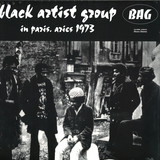
Outstanding free jazz session recorded in 1973 in Paris by Chicago outfit BAG.
It was Lester Bowie, trumpeter with the Art Ensemble of Chicago, who suggested that the Black Artists' Group (BAG) should head for Paris. In 1972 several members of BAG took his advice and flew to France for an extended stay. The following year a concert featuring saxophonist Oliver Lake, trumpeters Baikida Carroll and Floyd LeFlore, drummer Charles Bobo Shaw and trombonist Joseph Bowie (Lester's younger brother) was recorded and subsequently issued as In Paris, Aries 1973, a strictly limited edition LP on the group's own label.
Since the formation of Black Artists' Group in 1968, the home of this multidisciplinary arts collective had been St Louis, Missouri, the city where the Bowie brothers had grown up. It was there that Lester Bowie had started to investigate the expanding horizons of jazz before moving, in 1966, to Chicago where he joined the recently established Association for the Advancement of Creative Musicians (AACM). His close friend Oliver Lake visited Bowie, attended AACM concerts and meetings and was inspired not only by their artistic vision and integrity but also by their efficient organisation. In Chicago musicians were making things happen for themselves, taking control of their own destinies and giving shape to their lives as creative artists.
In June 1969, the Art Ensemble of Chicago had taken their music to France. During the preceding decade Paris had established a reputation for audiences that were unusually well-informed and open-minded, receptive to the uncompromising music of black American innovators such as Cecil Taylor, Ornette Coleman, Albert Ayler and Sun Ra. The city that had nurtured not only Cubism and Surrealism, but also Jean-Luc Godard and contemporary cinema's Nouvelle Vague was well prepared for the sonic collage forms and stylistic dislocations of the Art Ensemble. During that same month violinist Leroy Jenkins, trumpeter Leo Smith and saxophonist Anthony Braxton also arrived in Paris, three further emissaries from the AACM.
The adventure of collective improvisation resonated with the Parisian zeitgeist. Enthusiastic audiences attended their concerts and coverage in the media. In Paris, Aries 1973 offers an isolated and fascinating glimpse into that phase of the group's existence. The album is dedicated to the memory of Kada Kayan, a bassist who had hoped to make the trip from St Louis to France but, tragically, had grown ill and died. His absence adds special poignancy to the sound of the bass when it appears on this recording, played by Baikida Carroll. Listeners keen to hear Kayan himself in the company of Lake, Bowie, Shaw, LeFlore and Carroll should seek out Red, Black and Green by the 10-piece Solidarity Unit, Inc. That album, recorded on 18th September 1970 and dedicated to Jimi Hendrix, who died on that day, features an earlier version of Shaw's composition 'Something to Play On.'
In Paris, Aries 1973 reveals BAG's musical affinities with the Art Ensemble of Chicago. Both groups preserved an independently minded approach to the notion of free jazz and a carefully filtered awareness of pan-African musical practices, while their creative interest in space, mobile structure, chance occurrences and simultaneity also suggests parallels with the concerns of leading experimental composers working at that time. These performances in Paris of Shaw's 'Something to Play On' and Lake's 'Re-Cre-A-Tion,' plus two collective compositions/improvisations, display the dedication to structural fluency and sensitivity to coloration that accompanied BAG's unorthodox group dynamics and their unconventional instrumental combinations. In this case the musicians embrace congas, log drums, marimbas, woodblocks, cowbells and gongs. This is not a showcase for solos, but a shape-shifting and multi-centred statement of togetherness, quest and discovery. Removed from BAG's original multidisciplinary context the music still exudes an exhilarating spirit of collaborative exploration and shared excitement.
After releasing "Precipice Fantasy Part I" in October 2022, Koudlam delivers the second part of his album.
The first part is a salvo of meteorites where the artist uses, as usual, standardised pop motifs to better disrupt them, and always without deviating from the ultimate melody, chanted to trance.
The second part is an instrumental and contemplative record, a kind of music for an uncomfortable yoga session, that of a tourist who dreamed of climbing Everest but who no longer has the strength to get out of Kathmandu's underworld.
Koudlam thus delivers the soundtrack of summits and precipices. Or rather the path between the two, sinuous, vertiginous, always on the edge of the blade.
ALADDIN SANE erscheint als limitierte 50th Anniversary Edition im Half Speed Mastering. Diese neue Pressung wurde auf einer speziell angefertigten Neumann VMS80-Drehmaschine mit rundumerneuerter Elektronik aus den restaurierten 192kHz-Mastern der Original-Masterbänder der Trident Studios von John Webber in den AIR Studios geschnitten, ohne zusätzliche Bearbeitung bei der Übertragung. Nicht nur das Album, auch sein Cover hat einen festen Platz in der Geschichte der Rockmusik inne. Es zeigt Bowie in seinem heute längst ikonischen Make-up mit dem rot-blauen Blitz im Gesicht – ein Bild, das sich weltweit unauslöschlich ins kulturelle Gedächtnis eingeprägt hat (bis hin zum offiziellen Emoji). Das Coverfoto wurde von Brian Duffy geschossen, der auch die Cover von LODGER (1979) und SCARY MONSTERS (AND SUPER CREEPS) (1980) fotografierte.
ALADDIN SANE erscheint als limitierte 50th Anniversary Edition als Picture Disc LP. Diese neue Pressung wurde auf einer speziell angefertigten Neumann VMS80-Drehmaschine mit rundumerneuerter Elektronik aus den restaurierten 192kHz-Mastern der Original-Masterbänder der Trident Studios geschnitten, ohne zusätzliche Bearbeitung bei der Übertragung. Nicht nur das Album, auch sein Cover hat einen festen Platz in der Geschichte der Rockmusik inne. Es zeigt Bowie in seinem heute längst ikonischen Make-up mit dem rot-blauen Blitz im Gesicht – ein Bild, das sich weltweit unauslöschlich ins kulturelle Gedächtnis eingeprägt hat (bis hin zum offiziellen Emoji). Das Coverfoto wurde von Brian Duffy geschossen, der auch die Cover von LODGER (1979) und SCARY MONSTERS (AND SUPER CREEPS) (1980) fotografierte.
When Leon Michels and El Michels Affair released their rst record, Sounding Out The City, in 2005, it was hard to guess what was next for Michels and his then-introduced, now-patented "cinematic soul" sound. Now, four EMA studio albums and scores of tribute and remix projects later - all while producing for some of the biggest names in the industry - Michels has trademarked his sound, with each project taking audiences somewhere new and pushing the boundaries of what he is known for. The man is a river, not a lake and this time he takes his golden touch into the realm of hip-hop laying down a musical bed for one of the greatest to ever rhyme into a microphone: Black Thought of The Roots crew. Releasing on Big Crown Records, the LP is called Glorious Game and it is a remarkable debut partnership in more ways than one. Michels provides his bottom-heavy, soul-tinged production for Black Thought who gives us some of the more personal and transparent verses we've ever heard from him. Michels and Black Thought have been in each other's orbit for a while now. The two first met in the 2000s when Thought was first getting familiar with the contemporary soul scene. "Out of that whole world, Menahan Street Band was probably my favorite," recalling the funk and soul group Michels was a founding member of back in 2007. Fast forward a few years and musicians from that collective - Dave Guy on trumpet and Ian Hendrickson-Smith on sax - are now full time players with The Roots. This connection eventually led Leon and Thought to doing a few fundraising events around NYC and Philly together. "Before long, Black Thought was coming around the studio and would jam with us from time to time," Michels explains. "Then, fast forward to 2020 and COVID lockdowns, he just hit me up out of the blue, wanting me to send him stuff to write to. We both were looking to stay busy" Being that Black Thought is the co-founder and emcee for, hands down, the best live-band group in hip-hop. Michels took a decidedly different approach to this project and instead of sending recorded tracks of live compositions, he pulled out the sampler and sampled himself and some records from his collection. "I'm a big fan of soul music," as if Michels has to remind us. "And part of hip-hop's appeal to me has always been the sample-based production" For Glorious Game, Michels would make wholly composed and recorded soul songs in his studio, sample himself, then chop and/or loop up his sounds and create instrumentals for Black Thought. On some tracks he took a more traditional hip-hop approach, starting from samples of other people's music but then adding live instrumentation on top. But for the most part, it's him reinterpreting his own compositions into something new. The result is an organic feel of loop-based tracks that breathe and uctuate enough for Black Thought to ex on. "What I write about is determined by the equation of the producer's energy and my energy," Black Thought says. "It's about where we meet." So armed with Michels sampled and re-sampled soul cinematics, Black Thought rhymes through personal memories.
out of Stock
Last delivered 3 years ago available to reorder, subject to availability
A Wednesday song is a quilt. A short story collection, a half-memory, a patchwork of portraits of the American south, disparate moments that somehow make sense as a whole. Karly Hartzman, the songwriter/ vocalist/guitarist at the helm of the project, is a story collector as much as she is a storyteller: a scholar of people and one-liners. Rat Saw God, the Asheville quintet's new and best record, is ekphrastic but autobiographical and above all, deeply empathetic. Across the album's ten tracks Hartzman, guitarist MJ Lenderman, bassist Margo Shultz, drummer Alan Miller, and lap/pedal steel player Xandy Chelmis build a shrine to minutiae. Half-funny, half-tragic dispatches from North Carolina unfurling somewhere between the wailing skuzz of Nineties shoegaze and classic country twang, that distorted lap steel and Hartzman's voice slicing through the din. Rat Saw God is an album about riding a bike down a suburban stretch in Greensboro while listening to My Bloody Valentine for the first time on an iPod Nano, past a creek that runs through the neighborhood riddled with broken glass bottles and condoms, a front yard filled with broken and rusted car parts, a lonely and dilapidated house reclaimed by kudzu. Four Lokos and rodeo clowns and a kid who burns down a corn field. Roadside monuments, church marquees, poppers and vodka in a plastic water bottle, the shit you get away with at Jewish summer camp, strange sentimental family heirlooms at the thrift stores. The way the South hums alive all night in the summers and into fall, the sound of high school football games, the halo effect from the lights polluting the darkness. It's not really bright enough to see in front of you, but in that stretch of inky void - somehow - you see everything. The songs on Rat Saw God don't recount epics, just the everyday. They're true, they're real life, blurry and chaotic and strange - which is in-line with Hartzman's own ethos: "Everyone's story is worthy," she says, plainly. "Literally every life story is worth writing down, because people are so fascinating." But the thing about Rat Saw God - and about any Wednesday song, really - is you don't necessarily even need all the references to get it, the weirdly specific elation of a song that really hits. Yeah, it's all in the details - how fucked up you got or get, how you break a heart, how you fall in love, how you make yourself and others feel seen - but it's mostly the way those tiny moments add up into a song or album or a person.
out of Stock
Last delivered 3 years ago available to reorder, subject to availability
Eric D. Johnson rarely lingers at one location too long. As a kid growing up in the Midwest, Johnson's family moved around a lot, but it wasn't until he became a touring musician years later that motion became a central part of his identity. That transient lifestyle stoked an enduring reverence for the world he watched pass by through a van window. A sense of place is a unifying theme he's revisited with Fruit Bats throughout its many lives. From the project's origins in the late '90s as a vehicle for Johnson's lo-fi tinkering to the more sonically ambitious work of recent years, Fruit Bats has often showcased love songs where people and locations meld into one. It's a loose song structure that navigates what he calls "the geography of the heart." "The songs exist in a world that you can sort of travel from one to another," says Johnson. "There are roads and rivers between these songs." Those pathways extend straight through the newest Fruit Bats album, aptly titled A River Running to Your Heart . Self-produced by Johnson_a first for Fruit Bats_with Jeremy Harris at Panoramic House just north of San Francisco, it's Fruit Bats' tenth full-length release and one that finds the project in the middle of a creative resurgence. After two decades of making music, hard-earned emotional maturity has seeped into Johnson's songs, resulting in a more complex sound that's connected with audiences like no other previous version of Fruit Bats. A River Running to Your Heart represents the fullest realization of that creative vision to date. It's a sonically diverse effort that largely explores the importance of what it means to be home, both physically and spiritually. And while that might seem like a peculiar focus for an artist who's constantly in motion, for Fruit Bats, home can take many forms_from the obvious to the obscure. Lead single "Rushin' River Valley" is a self-propelled love song written about Johnson's wife that clings to the borrowed imagery of the place where she grew up in northern California. Then, there's the gentle and unfussy acoustic ballad "We Used to Live Here," which looks back to a time of youthful promise and cheap rent. But the wistful "It All Comes Back" is perhaps the most stunning and surprising track on the album, Johnson's production skills on full display. Built upon intricate layers of synths, keyboards, and guitars, it's a pitch-perfect blend of tone and lyricism that taps into our shared apprehensions and hopes for a post-pandemic life. "We lost some time / But we can make it back / Let's take it easy on ourselves, okay?" sings a world-weary but ultimately reassuring Johnson in the song's opening lines. It's the kind of performance that makes you hope Fruit Bats stays in this one place, at least for a little while longer.
Eric D. Johnson rarely lingers at one location too long. As a kid growing up in the Midwest, Johnson's family moved around a lot, but it wasn't until he became a touring musician years later that motion became a central part of his identity. That transient lifestyle stoked an enduring reverence for the world he watched pass by through a van window. A sense of place is a unifying theme he's revisited with Fruit Bats throughout its many lives. From the project's origins in the late '90s as a vehicle for Johnson's lo-fi tinkering to the more sonically ambitious work of recent years, Fruit Bats has often showcased love songs where people and locations meld into one. It's a loose song structure that navigates what he calls "the geography of the heart." "The songs exist in a world that you can sort of travel from one to another," says Johnson. "There are roads and rivers between these songs." Those pathways extend straight through the newest Fruit Bats album, aptly titled A River Running to Your Heart . Self-produced by Johnson_a first for Fruit Bats_with Jeremy Harris at Panoramic House just north of San Francisco, it's Fruit Bats' tenth full-length release and one that finds the project in the middle of a creative resurgence. After two decades of making music, hard-earned emotional maturity has seeped into Johnson's songs, resulting in a more complex sound that's connected with audiences like no other previous version of Fruit Bats. A River Running to Your Heart represents the fullest realization of that creative vision to date. It's a sonically diverse effort that largely explores the importance of what it means to be home, both physically and spiritually. And while that might seem like a peculiar focus for an artist who's constantly in motion, for Fruit Bats, home can take many forms_from the obvious to the obscure. Lead single "Rushin' River Valley" is a self-propelled love song written about Johnson's wife that clings to the borrowed imagery of the place where she grew up in northern California. Then, there's the gentle and unfussy acoustic ballad "We Used to Live Here," which looks back to a time of youthful promise and cheap rent. But the wistful "It All Comes Back" is perhaps the most stunning and surprising track on the album, Johnson's production skills on full display. Built upon intricate layers of synths, keyboards, and guitars, it's a pitch-perfect blend of tone and lyricism that taps into our shared apprehensions and hopes for a post-pandemic life. "We lost some time / But we can make it back / Let's take it easy on ourselves, okay?" sings a world-weary but ultimately reassuring Johnson in the song's opening lines. It's the kind of performance that makes you hope Fruit Bats stays in this one place, at least for a little while longer.
out of Stock
Last delivered 3 years ago available to reorder, subject to availability
The third EP from cult producer M.O.O.N finally gets a vinyl release rounding off a triple-release month alongside the represses of the eponymous debut EP and Particles EP.
A more brooding offering finds M.O.O.N exploring a deep house avenue with three tracks themed around ideas of driving through the city at twilight.
All tracks have been remastered by Brendan Zacharias aka Assembler Code giving the EP a new level of punch in the club and on home hi-fi.
out of Stock
Last delivered 7 months ago available to reorder, subject to availability