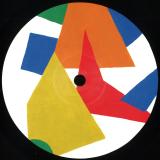
“Everytime I try” by DJ Chus & Cevin Fisher was one of the biggest worldwide club hits in Summer 2023. That catchy acid-inspired synth line, along with Chus’ signature driving percussion and Cevin’s iconic voice preaching such an inspired message was a peak hour favorite immediately upon release.
And now comes the well-deserved and much anticipated remix treatment. Wheats adds some minimal leaning deep tech flavor with an appealingly mutated effect added to the vocal; Audio Junkies retains the acid based synth line but strips it down and then builds it back up with some new melodic elements that will open up the track to a dancefloor community that looks for more eclectic house music sounds; and finally the 12” includes the Viot remix where this emerging Brazilian producer adds building hypnotic rhythmic elements that give the track an early morning feel to go along with its already established peak hour energy. Rounding out the 12” is the original DJ Chus extended mix, released on vinyl now for the first time as part of this remix package.
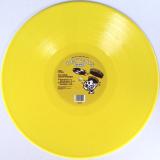
This release comes in special yellow colored vinyl.
Cerca:hi rhythm
At this point the vast swathes of unreleased Muslimgauze material Bryn Jones left behind when he passed away over 25 years ago is as legendary as any of his work. And sure enough, there's still some being unearthed today. The new »Single #One« is the first in a series of four (three 7"s and one 12") taken from one of Jones' customary completely unlabelled DATs he sent to labels seemingly as fast as he finished them. Both sides here indicate that, even on what might have been throwaway efforts for other artists, Jones was constantly chasing his muse around new corners.
Side A begins with the kind of tough percussion loop often found on Muslimgauze releases, but even as foreboding synths start to swell in the background, Jones introduces a rhythmic, peppy little keyboard riff far jauntier than most things he created. Side B, meanwhile, takes Jones' looped hand percussion in a dubbier direction, but unlike other times he explored that space there are some elements (phased zaps, a slightly skanking rhythm) that, while not reggae exactly, makes this feel more like a traditional dub than Jones tended to make. Both sides stand in testament to a creator who never stayed in one place for very long.
Lela Amparo's debut album for Past Inside The Present is a smooth fusion of ambient guitar, IDM, trip-hop rhythms, orchestral arrangements and poetic vocals that draw from her American Southwest roots, international travels, and life in Gothenburg, Sweden. Amparo crafts a raw, worldly sound from these inspirations and mixes cinematic grandeur with tender grace, gorgeous melodies and head-nodding drum programming. Highlights include 'Space Us Out' with its emotional beat and piano loop, and 'You Say You Love' which combines harp and choral voices. 'Rose & Honey' reflects on isolation in Tokyo, while 'Wrong Thing' offers a Burial-style rhythm. Keep Your Soul Young is all about finding home within yourself.
FOLLOW UP TO THE CRITICALLY ACCLAIMED 2023 ALBUM ‘RPB’ (UTR151):
- #4 MOJO FOLK ALBUMS OF THE YEAR+ FOLK ALBUM OF THE MONTH:
“ IT MELTS TRAD TECHNIQUES AND MINECRAFT BURBLE INTO ‘A MASSIVE, MULTI-PLAYER ONLINE DREAM’ . INCOMPREHENSIBLE/IRRESISTIBLE’
‘ME LOST ME’S RPG (UPSET THE RHYTHM) IS AN EXCITING, IMAGINATIVE ALBUM EXPLORING THE LINKS BETWEEN TRADITIONAL INFLUENCES AND ELECTRONICS IN FERTILE WAYS.’ THE GUARDIAN - FOLK ALBUMS OF THE MONTH.
'FROM NEWCASTLE, VIA UPSET THE RHYTHM, JAYNE DENT EXPLORES FOLK ART AND FUTURISM TO SPELLBINDING EFFECT' THE QUIETUS
FULL PAGE REVIEW IN WIRE MAGAZINE:"ME LOST ME'S NEW ALBUM RPG IS FILLED WITH STORIES OF ADVENTURE AND SELF-DISCOVERY IN VERDANT NATURAL LANDSCAPES, SUNG WITH FEELING AND CLARITY"
Me Lost Me - the project of Newcastle-based artist Jayne Dent - delights in experimenting with songwriting, creating a beguiling mix of soaring vocals and atmospheric electronics that playfully push the boundaries of genre.
On Me Lost Me’s fourth full-length, This Material Moment - arriving on Upset the Rhythm on 27th June - she has created an “emotionally raw” album, her most honest and vulnerable yet.
Concerned with physicality, interpretations, and, yes, materiality, This Material Moment is an album akin to rummaging through a box of long-forgotten trinkets. With each song, Me Lost Me extracts something from the box and asks us to consider it from every angle. "This is an album which uses words as a material, a playful tool for experimentation, full of metaphor, abstraction and analogies.” Jayne says, “it has softness and anger, humour, hope and despair, intensity of feeling in all directions expressed as textures, objects, places."
With the release of This Material Moment Me Lost Me puts into practice the automatic writing techniques she developed during a workshop with Julia Holter, and in the process has spun her music in different directions that draws on poetry, psalms and using mesostic poems and phonetic translations to generate words. “Despite the chance-based writing strategies throughout, it feels like the most emotionally raw album I've ever made,” she says, likening the process to a Rorschah test which revealed things to her she wasn’t expecting to express. “I wanted to hide in stories, but I saw things plainly when I tried to write.” Having finished the writing process, Jayne realised that she had an unexpectedly personal album on her hands, into which her feelings of burnout and overwhelm had crept unconsciously. “Several of the songs for me express a kind of inner conflict, where you’re trying to keep hope and desire and beauty and art near to your heart, to live a meaningful life, but finding that increasingly hard to hold onto in a world that’s so fucked up.”
Whilst Jayne Dent’s music as Me Lost Me has previously presented time stretching back and forwards in opposition (noticeably on 2023’s album RPG), on This Material Moment she does away with linearity altogether, evoking rather than narrating, and presenting feelings, happenings and moods with no clear beginning or end point - “like experiencing a vista, trying to capture a moment that is unfolding all at once”. Instead, each track on This Material Moment exists entirely in media res, adjacent to past and future, and instead sprawling across the endless now.
This Material Moment was written and arranged solo, but played with a core band of John Pope on electric/double bass, Faye MacCalman on clarinet, and now with the addition of Ewan Mackenzie (Dextro/Pigs x7) on drums - bringing in live drums and electric bass for the first time. The album was recorded by Sam Grant at Blank Studios in Newcastle, who also worked on RPG.
Posatronix, a prominent figure from Detroit, is well-known for his contributions to the electronic music scene and is a vital part of the AUX88 universe. His track "Shake It" has become a classic and a staple on dance floors both locally and globally. The song features infectious beats that perfectly capture the essence of Detroit's techno heritage while infusing it with Posatronix's unique flair. With its driving rhythm and catchy hooks, "Shake It" invites listeners to lose themselves on the dance floor, making it an enduring anthem for party-goers around the world. This track showcases Posatronix's exceptional production skills and solidifies his status as a key player in shaping the sound of modern electronic music.
Motel d'amour - A Lost Electro-Funk Gem from the NDW Era Resurfaces
When we first collaborated with Collage member Markus Kammann on the EP project "Mit den Puppen tanzen" at the end of last year, we never imagined what would follow: Kammann approached us with a completely unreleased full-length album by his former band. Upon receiving the first three preview tracks, we were floored. One of them was "Nachtcafé" - a track that kicks off with a funky bassline layered over the punchy rhythm of a Roland TR-808. Add shimmering synths and Katrin A. Kunze's sharp, distinctive vocals, and we instantly knew we were hearing something special.
For a label dedicated to rediscovering lost treasures, this was exactly what we'd been searching for. The next two tracks - "Rendezvous" and "Casanova" - were just as compelling. When Kammann sent us the full album, we realized we were holding an electro-funk grail from the late golden days of the German Neue Deutsche Welle (NDW). We were listening to "Motel d'amour".
"Motel d'amour" is a concept album, offering a sharp, vibrant perspective from a confident, intelligent, and radiant young woman eager to experience nightlife, love, and music. Kunze's lyrics paint vivid scenes of flirtation ("Nachtcafé", "Rendezvous"), encounters with men ("Casanova"), the pulse of nightlife ("Die Nacht ist noch jung"), love ("Rotes Licht für rote Liebe"), one-night stands ("Motel d'amour"), and more. Rarely has a German album from that era captured emotional nuance and social dynamics so insightfully. Without veering into the overly personal, Kunze's direct, daring lyrical style was groundbreaking at the time - and remains refreshingly bold today.
While German listeners will fully appreciate the lyrical depth, the music speaks volumes on its own. Kunze's words are masterfully complemented by the production of Markus Kammann and Jürgen Grah. As heard on the in-demand "Mit den Puppen tanzen", their creativity seemed boundless. Each track is tightly composed, catchy, and full of character. While many German bands at the time leaned into rock, Kammann drew from the deep grooves of Earth, Wind & Fire, The Isley Brothers, Brothers Johnson, The Commodores, and the electro-futurism of Afrika Bambaataa's "Planet Rock" and "Looking for the Perfect Beat". The result: tracks with unmistakable electro-funk flair, powered by the classic 808 drum sound.
Though primarily rooted in funk and electro, the album retains flashes of NDW aesthetics - "Wir haben getanzt heut' Nacht" being a prime example. The instrumentation is a dream list for vintage gear lovers: Yamaha keyboards, Roland Juno-60, vocoder, Micromoog, Hohner D6 Clavinet, Fender bass, and a Telecaster guitar all feature prominently.
Recorded in 1985 at the high-profile Delta Studio by Richard Rossbach, the album attracted interest from Polydor. However, the label proposed using the compositions for a solo project with singer Inga Humpe (of Neonbabies), who was already signed to their roster. This would have required replacing Kunze as the vocalist, an idea the group firmly rejected. As a result, "Motel d'amour" was shelved, and Kammann, Grah, and Kunze moved on to form Cold End.
The album cover features a rare archival photo of Katrin A. Kunze - rediscovered by Kammann and now finally seeing the light of day, 40 years later.
We believe Motel d'amour deserves recognition alongside cult German classics like P!OFF?, 1. Futurologischer Congress' "Wer spricht?", Ami Marie's "Verrückt nach Glück", the funkier cuts of Cosa Rosa, or Piet Klocke's groove classic "Heute ist nicht sonst". It's a record that fits into adventurous DJ sets but also rewards a full, start-to-finish listen.
A note on audio quality: Sadly, the original master tapes were lost. The tracks were restored from a vintage TDK cassette. Thanks to modern digital tools, we were able to remaster them to a high standard - but in some songs light distortions remain. We appreciate your understanding and hope you enjoy this lost and undiscovered gem.
Motel d'amour - A Lost Electro-Funk Gem from the NDW Era Resurfaces
When we first collaborated with Collage member Markus Kammann on the EP project "Mit den Puppen tanzen" at the end of last year, we never imagined what would follow: Kammann approached us with a completely unreleased full-length album by his former band. Upon receiving the first three preview tracks, we were floored. One of them was "Nachtcafé" - a track that kicks off with a funky bassline layered over the punchy rhythm of a Roland TR-808. Add shimmering synths and Katrin A. Kunze's sharp, distinctive vocals, and we instantly knew we were hearing something special.
For a label dedicated to rediscovering lost treasures, this was exactly what we'd been searching for. The next two tracks - "Rendezvous" and "Casanova" - were just as compelling. When Kammann sent us the full album, we realized we were holding an electro-funk grail from the late golden days of the German Neue Deutsche Welle (NDW). We were listening to "Motel d'amour".
"Motel d'amour" is a concept album, offering a sharp, vibrant perspective from a confident, intelligent, and radiant young woman eager to experience nightlife, love, and music. Kunze's lyrics paint vivid scenes of flirtation ("Nachtcafé", "Rendezvous"), encounters with men ("Casanova"), the pulse of nightlife ("Die Nacht ist noch jung"), love ("Rotes Licht für rote Liebe"), one-night stands ("Motel d'amour"), and more. Rarely has a German album from that era captured emotional nuance and social dynamics so insightfully. Without veering into the overly personal, Kunze's direct, daring lyrical style was groundbreaking at the time - and remains refreshingly bold today.
While German listeners will fully appreciate the lyrical depth, the music speaks volumes on its own. Kunze's words are masterfully complemented by the production of Markus Kammann and Jürgen Grah. As heard on the in-demand "Mit den Puppen tanzen", their creativity seemed boundless. Each track is tightly composed, catchy, and full of character. While many German bands at the time leaned into rock, Kammann drew from the deep grooves of Earth, Wind & Fire, The Isley Brothers, Brothers Johnson, The Commodores, and the electro-futurism of Afrika Bambaataa's "Planet Rock" and "Looking for the Perfect Beat". The result: tracks with unmistakable electro-funk flair, powered by the classic 808 drum sound.
Though primarily rooted in funk and electro, the album retains flashes of NDW aesthetics - "Wir haben getanzt heut' Nacht" being a prime example. The instrumentation is a dream list for vintage gear lovers: Yamaha keyboards, Roland Juno-60, vocoder, Micromoog, Hohner D6 Clavinet, Fender bass, and a Telecaster guitar all feature prominently.
Recorded in 1985 at the high-profile Delta Studio by Richard Rossbach, the album attracted interest from Polydor. However, the label proposed using the compositions for a solo project with singer Inga Humpe (of Neonbabies), who was already signed to their roster. This would have required replacing Kunze as the vocalist, an idea the group firmly rejected. As a result, "Motel d'amour" was shelved, and Kammann, Grah, and Kunze moved on to form Cold End.
The album cover features a rare archival photo of Katrin A. Kunze - rediscovered by Kammann and now finally seeing the light of day, 40 years later.
We believe Motel d'amour deserves recognition alongside cult German classics like P!OFF?, 1. Futurologischer Congress' "Wer spricht?", Ami Marie's "Verrückt nach Glück", the funkier cuts of Cosa Rosa, or Piet Klocke's groove classic "Heute ist nicht sonst". It's a record that fits into adventurous DJ sets but also rewards a full, start-to-finish listen.
A note on audio quality: Sadly, the original master tapes were lost. The tracks were restored from a vintage TDK cassette. Thanks to modern digital tools, we were able to remaster them to a high standard - but in some songs light distortions remain. We appreciate your understanding and hope you enjoy this lost and undiscovered gem.
2025 Repress
Forest Drive West returns to Livity Sound with the 'Dualism' EP, a tour de force of stripped dub aesthetics and swirling psychedelic rhythms.
One of the finest breakthrough UK producers of recent years, in a short space of time Forest Drive West has created an enviable catalogue across labels such as Livity Sound, Rupture, Echocord, Whities and Mantis. This new EP marks some of his best work to date.
The final track on the EP, 'Scorpion', features Melbourne based percussionist Lucky Pereira whose frenetic but tightly locked drums add a fizzing energy to Forest Drive West's deep atmospheric rhythm track.
Livity Sound is a label set up by Peverelist in 2011 as a vehicle for a raw and exploratory strain of UK techno, rooted in the heritage of UK dance music and sound system culture. It has since become one of the UK's foremost protagonists for cutting edge underground electronic music.
“Electric Park” by Mathias is a five-track tech-house project that blends history, whimsy, and Detroit’s rich musical legacy. Inspired by the vibrant past of Electric Park, an iconic Detroit amusement park, the music captures the joyful energy of rides and attractions while offering a modern sonic twist. Upbeat and whimsical, the tracks reflect the birthplace of Techno and celebrate the city’s innovative spirit. Mathias invites listeners to both revel in the present and connect to the past through pulsating beats and playful rhythms, highlighting how music bridges history and culture in meaningful, electrifying ways.
Domenique Dumont’s fourth album, Deux Paradis, arrives like the three that came before it – with an air of mystery and wonder. This is dance music for inner worlds – rituals, revelations and reveries.
Deux Paradis is a ten-track song cycle that leads the listener through the rhythm of a day, the bloom and fade of a relationship, or even the stages of a life.
It begins with a song about waking up – the candy-striped dub of “Enchantia” – and traces the sun’s arc with the pixelated reggae of “La Vie Va” and the sensuous rush of “Amants Ennemis”. As night falls, the songs take on a twilight quality in the
shimmering pop of “The Order of Invisible Things” and the seductive pulse of “Visages Visages” (a subtle nod to the Desireless classic). There’s also the baroque swoon of “Deux Paradis” and the soft exotica of “Visiteur de la Nuit”. Bolder and richer than before, it’s vintage Domenique Dumont – timeless and romantic, yet laced with an unplaceable sense of longing, like in an Éric Rohmer film. After the instrumental film score People On Sunday (Leaf, 2020) – composed solo by Arturs Liepins – singer Anete Stuce returns to Domenique Dumont, bringing her inimitable joie de vivre. Deux Paradis completes a trilogy of releases alongside Comme Ça (2015) and Miniatures De Auto Rhythm (2018) on the Antinote label.
Deux Paradis was composed, arranged and between 2022 and the end of 2024 in studios in Riga and Paris, and on the Estonian island of Hiiumaa.
Recorded live in one session at age 18, this album helped launch Tania Maria's career as an acclaimed Brazilian jazz artist, celebrated for her virtuoso combination of piano and vocals. Produced by Romeo Nunes (Meirelles e Os Copa 5, Rio 65 Trio, Elis Regina, Elza Soares), the album features the pioneering Edison Machado, who transformed samba and was instrumental in the development of Bossa Nova through his groundbreaking "samba no prato" (samba on the cymbals) technique. His work helped shape the sounds of Jobim, Getz, and Milton Nascimento. On guitar is the legendary Neco, who played on over 500 albums. Initially self-taught, he later studied under maestros Guerra Peixe and Moacir Santos. He collaborated with icons like Elis Regina and Chico Buarque, and was a member of Os Ipanemas, Os Catedráticos, and Os Gatos. His solo work includes Velvet Bossa Nova (1966), which became an acid jazz favorite. The album features compositions by Caetano Veloso and Marcos Valle,alongside early samba classics.
Blending Brazilian rhythms with elements of samba, bossanova, and jazz fusion,it captures the early development of Tania Maria's signature style. Born in São Luís, Brazil in 1948,Tania Maria began playing piano at age seven. She learned samba, jazz, and chorinho through her father's weekend jam sessions. Leading her own band by age13, she performed across the region while collecting records from influential artists. Though she earned a law degree and started a family,her passion for musicu ltimately won out—she left law to pursue music full-time.
- A1: Os Ancestrais
- A2: Nao Podemos O Amor Parar
- A3: Debaixo Da Ponte
- A4: As Estacoes
- B1: Musica Faz Parte De Mim
- B2: Minha Melanina
- B3: Safira
Red Vinyl[31,05 €]
Dom Salvador, the unassuming godfather of Brazilian soul music, has left an indelible mark through his unique fusion of jazz, soul, funk, samba, and Brazilian rhythms. His legacy continues with Dom Salvador JID024, produced by Adrian Younge and Ali Shaheed Muhammad. The album honors Salvador’s pioneering sound, continuing the vibrant dialogue between Brazilian and American music and inviting listeners to experience his rich, groundbreaking style.
The legendary jazz bassist Isao Suzuki, revered worldwide for his extraordinary talent, recorded this vibrant session in 1981 alongside his longtime collaborator Tsuyoshi Yamamoto. Now, this rare gem returns on analog vinyl!
Infused throughout with the infectious rhythms of Brazilian music, the album captures a festive spirit brought to life by an all-star lineup including Takayuki Kato, Ichiro Doi, and Donald Bailey.
The debut album from Addy Weitzman, ‘Light Months Will Fly Over Us’ explores new-wave, romantic pop and art rock with elegance and ambition, drawing from Weitzman’s scattered network of collaborators, as well as a “frighteningly vast” personal archive of compositions. Sequenced by Seth Troxler and released on his Slacker 85 label, it represents a pivot in musical direction for the imprint, and a showcase for the songwriting craft Weitzman honed as a member of cult electro duo Footprintz, and Montreal synth-pop projects The Beat Escape and Dawn to Dawn.
The title Light Months Will Fly Over Us is derived from a line in a poem by the Russian writer Anna Ahkmatova. Weitzman was immediately struck by its “hopefulness, its mystery… it gives the feeling of being suspended, hanging in a dream-like state”. This interpretation has been translated to the album, rich in memorable songwriting that nonetheless invites the listener to lean in further. Delicately mixed by engineer Pierre Guerineau, known for his work alongside Marie Davidson, each of the eight tracks gently interrogates life’s greater mysteries; fear, love and salvation, each defining and revealing the human soul.
Opener ‘End of The Line’ invites us into an immediately lush space of lounge lizard existentialism, soft brass and piano helping Weitzman introduce “where the journey begins and the fantasy dies”. Across orchestral arrangements arranged by Adam Wilcox, whose sensitive, ambitious compositions are weaved throughout the album, ‘Beyond The Speed of Life’ brings to mind the laments of Scott Walker. Navigating vulnerability via grandeur, Weitzman’s earnest vocals flourish in wide-eyed call-and-response with the object of a transcendent love affair.
Alongside collaborator, Richard Lamb, the next chapter of the LP plunges into contrasting machine-driven moods; the wry, bubbling ‘Entertainment Is All I Wanted (And I Found It)’ is imbued with the playfulness and experimentation of 80s electronic pioneers such as Fad Gadget, while the tougher, icier ‘Stranger To Your Kind’ shifts in a more instrumental direction, recalling Weitzman’s dancefloor experience, as well as contemporaries such as Matthew Dear.
Album centerpiece and striking first single ‘Running & Returning’ is the first of a suite of three tracks in collaboration with Weitzman’s The Beat Escape and Dawn to Dawn bandmate, Patrick Boivin. Blending lush saxophones and angular guitars with a wistful melodic touch and lyrics, its irresistible art-rock rhythm provides the foundation for one of Weitzman’s most involving vocal performances.
It’s followed by an anthem for existential absurdity: ‘Ice Cream Candle’ provides a driving acceptance that “the more and more you learn, the less you understand”; Weitzman submits to this uncertainty with equal grace on ‘No Man’s Land’, as baroque invocations of “words swept through the fields” and meeting “where the water lilies grow” give way to a blistering guitar solo, humbly riding hypnotic percussion.
For the compassionate finale of Light Months Will Fly Over Us, Weitzman narrates the experience of ‘Gabrielle’, a woman slipping between rooms between shuttered blinds in the towering city, “where cigarettes and roses fill the air.”
As lyrically delicate as it is musically ambitious, Light Months Will Fly Over Us is a sublime debut album, enriched with care, love and much-needed enchantment.
2025 Repress
Yes! Tommy Guerrero’s much-loved 4th LP – the smooth West Coast classic From The Soil To The Soul - gets its first ever vinyl release. As the follow up to his revered Soul Food Taqueria, this album was originally released by Quannum Records 2006 but only on CD. Working with Tommy directly, the LP has been fully remastered, cut on to heavyweight wax, and comes with artwork freshly reworked by the man himself.
From The Soil To The Soul represents a continuation of Tommy’s blissful guitar-soul whilst demonstrating increasingly complex chops and a slightly darker side to his distinctive sound. His spare, effortless funk is blended here with elements of Americana, heavy psych, lo-fi fuzz and intoxicating Latin rhythms. Combined with his typically breezy, laid-back San Franciscan style, it’s a vibe from start to finish.
Recorded primarily in his home studio, Tommy wrote, arranged and played nearly all the instruments, including bass, guitar, keyboards, percussion and kalimba. Renowned street artist Barry McGee, aka Twist, designed the cover art which Tommy has now recast in a deep, deep red for the vinyl version.
As ever with Tommy, the highlights are many and memorable. From twinkling, sun-drenched opener “Hello Again” to the penultimate, punk-rocking track “Let Me In Let Me Out” (featuring the melodic yet fearsome rapping of Lyrics Born), the variety across the LP is relentless, but satisfying, and without once losing focus.
We’re treated to the gorgeous hip-hop blues of “The Under Dog”, Meters-style Hammond B-3 jams like “War No More” and “No Guns More Glory” and Balearic bangers like Bing Ji Ling’s star-turn on the sleazy “Don’t Fake It.”
Curumin’s soulful guest vocal elevates the already-great Brazilian lounge feels of “Salve” to hitherto unscaled heights and the heavy, driving basslines - funky and warm on “Badder Than Bullets”, sombre and intense in “Tomorrow’s Goodbye” and “Molotov Telegram” – never fail to move both body and soul.
But our favourite track is the beautiful breezy pop of “Just Ain’t Me”. A bittersweet, skipping ballad which boasts an incredibly rare instance of Tommy singing. “What you want from me, I can never give” he repeats throughout, lending the already-melancholic atmosphere greater poignancy. It would’ve been number 1 across the planet in a parallel universe.
Das Debütalbum von Leroi Conroy, das zu gleichen Teilen von der Sensibilität des goldenen Hip-Hop-Zeitalters und verlorenen Filmszenen aus den 60er und 70er Jahren geprägt ist, wiegt schwer und hat Jahre der Entwicklung hinter sich. Die ersten beiden Tracks des Albums wurden 2017 als 45er veröffentlicht und in den folgenden Jahren von DJ Premier, Raekwon, Ghostface Killah, Macklemore, Phantogram und vielen anderen gesampelt. Aber nach der Veröffentlichung verbrachte Terry Cole alias Leroi Conroy einen Großteil seiner Zeit damit, sein Indie-Soul-Label Colemine Records zu vergrößern und Platten für andere zu produzieren (Okonski, Parlor Greens, Wesley Bright, BlackMarket Brass, Kendra Morris, Rudy De Anda, Delvon Lamarr Organ Trio, Andrew Gabbard), anstatt seine eigenen zu machen. Jetzt, acht Jahre nachdem viele der Rhythmustracks auf dem bewährten Tascam 388 aufgenommen wurden, erscheint Leroi Conroys Debüt-LP, "A Tiger's Tale". Das Album ist als hypothetischer Soundtrack zu einer alternativen Erzählung von Rudyard Kiplings The Jungle Book konzipiert. Die Erzählung ist das Bestreben des Menschen, die Natur zu zähmen und sie seinem Willen zu unterwerfen... und die Antwort der Natur. Das Album ist eine Mischung aus triumphalen Instrumentalpartituren und absolut düsteren, dunklen und manchmal dissonanten Moodytracks. Das zugrundeliegende Element der Hip-Hop-Sample-Kultur ist durchweg offensichtlich, und es besteht kein Zweifel, dass viele dieser Tracks in den kommenden Jahren geflippt werden. Klanglich reiht sich die Platte nahtlos in die Reihe vieler anderer Colemine Instrumentalisten ein: dreckige Lo-Fi-Drums, schmetternde Bläser, Wah-Gitarre, Hammond-Orgel und jede Menge cineastische Einsprengsel wie Flöte, Nylongitarre und Vibraphon. Das Schlagzeug stammt von Coles langjährigem Mitarbeiter Rob Houk und ist das Rückgrat des Albums. Und mit einigen Beiträgen der Colemine-Künstler Kelly Finnigan und Jimmy James ist die Platte wirklich eine Familienangelegenheit. File Under: To Be Sampled.
Dom Salvador, der unscheinbare Pate der brasilianischen Soulmusik, hat mit seiner einzigartigen Fusion aus Jazz, Soul, Funk, Samba und brasilianischen Rhythmen unauslöschliche Spuren hinterlassen. Sein Vermächtnis wird mit Dom Salvador JIDO24 fortgesetzt, das von Adrian Younge und Ali Shaheed Muhammad produziert wurde. Das Album ehrt Salvadors bahnbrechenden Sound, setzt den lebendigen Dialog zwischen brasilianischer und amerikanischer Musik fort und lädt die Hörer ein, seinen reichen, bahnbrechenden Stil zu erleben.
- L Ron Hubbard Was Way Cool
- Long Distance Conjoined Twins
- Sewn Together From The Membrane Of The Great Sea Cucumber
- The Scienti_Ic Classi_Ication Of Stingrays
- Assisted Harakiri
- The Old Country
"I Became Birds feels like emo once again flipping the switch on its eternal energy source." - PITCHFORK // "One of the most arresting and interesting rock albums in recent memory." - SPIN // "Composed of self-deprecating wails, crashing guitar riffs, and a flicker of lyrical hope that almost feels naive _ in other words, the perfect foundation for classic emo catharsis." - STEREOGUM //// With I Became Birds, Florida's Home Is Where push their unique blend of whirlwind hardcore aggression and warm, open-hearted folksy melancholy to even further heights. Frontperson Brandon MacDonald's Dylan-esque eccentricities are on full display here, from the occasional blast of harmonica (like on early standout "Long Distance Conjoined Twins" or the disaffected, despondency-soaked closer "The Old Country") to their knack for abstractly evocative neurosis-as-poetry. But far from being a copycat act, Home Is Where's wearily raw-throated aesthetic and dynamically vivid compositions feel idiosyncratic and vital. The bittersweet folk melodies seep deeply into the band's DNA, adding an element of accessibility and immediate nostalgia to otherwise churning and angular song structures and sonic assaults. Vocals range from an intimate, gentle, and disarming croon to a full-bodied expectoration of the soul, oftentimes in the same song (like "Sewn Together from the Membrane of the Great Sea Cucumber," which splits the difference between mournful, gothic post-punk and staccato-heeled screamo with aplomb). A devastating rhythm section and nimble, versatile, yet powerful guitar work assist with the record's genre-bending, which ranges from maniacal chemical mixtures to gymnastic flips, twists, and turns. And yet, even amid the din, Home Is Where find ample time for hooks-- the oddball effervescence of lead single "Scientific Classification of Stingrays" and the shimmering, propulsive, delightfully off-kilter late-album stunner "Assisted Harakiri" are more than proof of that. Ultimately, I Became Birds shows Home Is Where hitting an early high-water mark. A brisk record-- six songs in roughly 17 minutes-- it never takes a dip in enthusiasm and inventiveness. Home Is Where's inexhaustible creativity and restless energy is bound to serve them well, and I Became Birds is all the proof anyone needs.
- 1: The Hard Way
- 2: He Thinks He Ll Keep Her
- 3: Rhythm Of The Blues
- 4: I Feel Lucky
- 5: The Bug
- 6: Not Too Much To Ask (With Joe Diffie)
- 7: Passionate Kisses
- 8: Only A Dream
- 9: I Am A Town
- 10: Walking Through Fire
- 11: I Take My Chances
- 12: Come On Come On
Come On Come On isn’t just Mary Chapin Carpenter’s most popular album, with sales of 3 million copies. It’s also a contemporary country landmark. No less than seven of its songs became country hits: “I Feel Lucky,” “I Take My Chances,” “Not Too Much to Ask,” “The Hard Way,” “He Thinks He’ll Keep Her,” and two inspired covers, of Dire Straits’ “The Bug” and Lucinda Williams’ “Passionate Kisses.” More importantly, though, this 1992 release pointed the way towards what country music would become in the 21st century with its savvy seasoning of pop and soft-rock sounds into a more personal style of country songwriting from a female point of view. If you’re thinking that sounds familiar, you’re not wrong; Come On Come On’s prodigious commercial prowess isn’t the only thing this record has in common with the early work of Taylor Swift. But, it also crossed over into the rock realm in a way that, arguably, Swift’s records have not; the flourishing Americana and alt-country audiences of the early ‘90s ate this album up, and guest stars like Rosanne Cash, The Indigo Girls, and Shawn Colvin just upped its street cred. Somehow, this classic record has never (come on!) made it to vinyl; we’re making up for a whole lot of lost time with a grape vinyl pressing housed inside a color inner sleeve with lyrics. Essential!
After a five-year hiatus, Times Are Ruff is back, recharged and inspired. This return marks a renewed commitment to the underground, bringing that ruff sound.
The label returns to the wax with the sound they are known for, defined by dusty grooves, ruff rhythms and soulful moods.
This record is for the heads. A proper blend of funk, acid, late-night vibes and early morning moods, that keep the floor moving and the soul intact. Pure, stripped-back house music for those who know.
Times Are Ruff—back in the game, staying true to the craft, and ready to deliver more underground cuts.