"Delivering his first solo EP in over two years, Blue Hour releases Origins, the 21st release on Blue Hour Music. Following a succession of remixes, V/A contributions and an EP under his Tracing Xircles alias earlier this year, the Berlin-based producer and DJ shares four tracks diving deeper into his UK roots. Channelling breakbeat, techno and trance with the hallmarks of 90’s rave, Origins builds upon the foundations created from his EP ‘Devotion’ in 2020.
In this eclectic EP, Blue Hour explores several sonic palettes. The title track blends celestial chords with urgent drums and acid basslines, while uplifting vocals and subtle melodies wind through the track. ‘True’ dips more heavily into breakbeat territory with evolving and immersive pads, soaring strings and a twinkling synth-line. A dynamic fusion of fast-paced energy and soft touches.
On the flip, ‘Emergence’ dances a delicate line between melancholia and elation, as dystopian chords pool with a squelchy acid sequence and a classic house vocal. ‘Searching’ closes on an ambient tip with spell-binding pads and an angelic melody, conveying a bright side to Blue Hour’s aesthetic, akin to Origins as a whole."
Cerca:hi tech root
Welcome to Dazion’s Grooveboxxx – a maxi-sized love letter to The Hague’s 80s and 90s club scene crafted with minimal tools and loaded with vibe. It’s no coincidence it arrives on Dekmantel, a label with its own roots in the same Dutch city’s electronic music culture.
Dazion is The Hague’s Cris Kuhlen, previously spotted releasing on Second Circle, Safe Trip and Animals Dancing. He cut his teeth clubbing and working at long-since closed clubs like Eau, described in Kuhlen’s own words as, “clubs with blocks to dance on, lazers, decorations, crazy extravert sic parties.”
In capturing the spirit of Eau and the other formative parties of his youth, Kuhlen limited himself to just one machine to make his longest work to date – the Roland MC-303 Groovebox. While these entry level units from the mid-90s had stripped down functionality in the wider spectrum of studio gear, they contained all the iconic Roland sounds in a Rompler style, giving the user access to everything necessary to make raw, immediate club tracks without requiring an entire studio’s worth of hardware.
The brash gear of choice set the tone for a record of rough, ready and playful jams which end up more sophisticated than you’d expect from such limited means. ‘La DS’ jacks with a freaky, bleep techno intensity, while ‘Kimberly & Nance Backstage Rehearsal’ rides an angular groove tooled to inspire the weirdest dance moves of the night. Every track is named in reference to a particular nightspot, a hazy memory or moment from Kuhlen’s formative raving years.
This is the sound of Dazion having the time of his life. You might well hear a nod to the odd rock totem being given a re-version in irreverent new beat style or some gnarly US acid breaks vibes riding underneath helium rap licks. But for all the cheekiness, the tracks stand up both as nods to halcyon days and relevant workouts for the sweatiest parties in the here and now. As MC Paul T says in dramatic style heralding the intro of Grooveboxxx, “This movement will live on forever.”
SAISEI founder Junki Inoue continues his vital archival work uncovering the riches of Japan’s distinctive electronic music scene and bringing them to new audiences around the world. The Sounds Of Transonic compiles six tracks recorded in Tokyo between 1991 and 1995 and released by the pioneering Transonic label, founded in 1994 by Kazunao Nagata and active until 2004.
Transonic’s catalogue is a glittering roll call of the scene’s major players, whose inventive and genre-blending work established forward-thinking house and techno in Japan in a way that would shape the country’s electronic sound for years to come. Transonic was instrumental in giving exposure to the work of these artists with its emblematic series of CD compilations, released over a short couple of years in the mid 90s. Beginning with 970-1450km/h, Feedback and Range, the series also included The Roots Of Transonic, featuring music from parent label Trigger. Alongside these compilations came much sought-after solo albums each packaged with striking cover art that makes the discs a visual treat for collectors to this day.
The Sounds Of Transonic brings together six tracks from the catalogue into one breath-taking package. The influence of hi-tech jazz and machine funk from Detroit is undeniable in ‘Dream Trance’ (Mind Design) and ‘Blasting Soul’ (Interferon), while ‘Under The Ground’ (Palomatic) and ‘Chelsea’ (Suzukiski) are permeated by the artificial intelligence and trip hop emanating from the UK at the time. The compilation is bookended by two tracks by Nagata himself (as Organization): ‘Space Ball’, a Model 500-worthy chase through the cosmos, and ‘Call’, an eerie echo of Kraftwerk’s telephone, transmitting expectantly out into the void and, finally, receiving its celestial answer.
With The Sounds Of Transonic these formative pieces of music will now be available internationally and, for the first time, on vinyl.
SAISEI is a Japanese word which translates to ‘reproduction’ and ‘to play’ (as in playing records). Japanese culture is widely known for its traditional nature just as much as it is for being forward into the future and this label’s concept does justice to exactly that. Having started digging for records as early as 16 years old, Inoue delved into productions from 1990s Japan to uncover these native gems. SAISEI’s core concept is to recapture and reintroduce unique pieces of Japanese electronic music onto vinyl, to an audience it never reached before as most of this music was only released in Japan.
- A1: Ekonda Musicians - Généalogie De La Walé (Rumba Rules Edit)
- A2: Brigade Sarbati - Rando
- A3: Lumumba Ya Muana - Tozozela Ba Ancêtres
- A4: Brigade Sarbati - Edenda
- A5: Église La Résurrection - Nzambi Ya Babo
- A6: Werrason - Block Cadenas
- B1: Brigade Sarbati (Choeur) - Ma Descendance
- B2: Brigade Sarbati - Tshouna Baby
- B3: Papa Wemba - Excuse Me (Live Au New Morning, 2006, Rumba Rules Edit)
- B4: Franco Et Le Tout Puissant O K. Jazz - Kinshasa Makambo (Live From Télé Zaïre, 1982, 2022 Remaster)
- B5: Lumumba Ya Muana - La Vie Est Belle
The official soundtrack of the 2021 'Rumba Rules, New genealogies' documentary movie by Congolese artist Sammy Baloji and Quebec filmmaker David Nadeau-Bernatchez. A deep dive into Kinshasa’s vibrant Rumba scene, including remastered classics by Brigade Sarbati, Werrason, Papa Wemba, Franco & le Tout Puissant O.K. Jazz
Rumba Rules, New genealogies is about contemporary rumba in Kinshasa, but this music has deep historical roots nevertheless. Born in the interstices of the colonial world and thriving during the three decades of the Mobutu era in Zaïre, Congolese rumba has been iconic and popular all over Africa for decades. The roots of Rumba are even deeper, and the many paths it evokes trigger the imagination. The story goes that this music came with the migration of the ‘Kumba’ drum and dance in previous centuries, African slaves having carried it all around the Americas and giving birth to Cuban ’Rumba’, Colombian ‘Kumbia’ and many others. With its varied rhythms, guitars and horns, through LPs and radio stations, Rumba came back to (re)conquer Africa throughout the 20th century, paving the way for new practices. One could say this music is a sort of palimpsest, a memory in itself of Atlantic migrations and histories.
Rumba is nowadays discussed all around the world, igniting many debates among the Congolese diaspora. Being the constant talk of the town sometimes overloads public debate, and many people get tired of this broken record. Thus, over the last decade, enterprising producers have worked hard to promote Kinshasa’s musical diversity and tried to emulate new sounds to reach worldwide attention. But Kin’ locals and urban dwellers will not be fooled : new shoots cannot hide the forest. Despite some difficulties to innovate, despite the pastoralist sermons and the diaspora fighters pushing for concert cancelations, rumba is still at the core of the Congo today. Talented artists such as Fally Ipupa, Ferré Gola, Brigade Sarbati and others are leading the fifth generation, and the religious world has also proven to be a nurturing environment for the cultural and economic dynamism of this music.
Focusing on the music of Brigade Sarbati and his Orchestra, this record offers a deep dive into Kinshasa’s rumba scene. Halfway between professional studios and Zoom H4 field recordings, the rumba herein is about today’s youth: dense, full of energy and breakdowns, insights and name-dropping. The cavacha rhythm, the solo and bass guitar’s playing style, the singing style and numerous dedications all resonate with the history of Rumba. In an era where digital sound is taking over, it is interesting to highlight the instrumental and live performance compositions of this music. Digital technology is indeed used during the recording and mixing phases, but Congolese rumba still relies strongly on instrumental playing. There is all that but also, many other things to hear on this record… It’s time to let it be. A big thanks to Étienne Tron for making it possible: it is on his initiative and through his patience that this album is in your hands today. (David Nadeau-Bernatchez, december 2021)
Detroit's deep techno master, Deepchord, makes a more than welcome return to Soma after 5 years. With a brand new album dropping, Rod Modell delves deep into his ethereal sonic world to bring you 'Functional Extraits 1'. The first single to be taken from the forthcoming album. Built in a way that only Deepchord can, he transports you to different realms with lush soundscapes and perfectly processed electro-acoustics giving you an insight to the mind of the unique artist.
Shale glides across a field of electo-static noise, guided gently by cisps, fleeting percussion and gently warping synths. Lateral begins awash with waves of sound and glistening dub stabs while rolling beats acts as the heart beat of the track with a building intensity adding a sense of urgency. The uplifting yet dystopian sounds of Mapping spiral into existence urging you down the rabbit hole as more classic techno percussion manoeuvres this track on it's journey. Modell seeking out his roots as yet more traditional dub techno prevails via the final track, Ricochet. Pumping kicks and sub set to a perfect pace and ambience is a perfect, contemporary nod to the time honoured Deepchord sound.
- A1: Cha´kwaina (Marcel Dettmann Remix)
- A2: Beauty Begins With Us (Μ-Ziq Remix)
- B1: Clouds Over Clifden (Dauwd Remix)
- B2: Sun (Placid Angles Bonus Track)
- C1: Our Love Is The Place (Baltra Remix)
- C2: Natsukashii (Plaid Remix)
- D1: Deep Blue (Cassy Remix)
- D2: Touch The Earth (Feel The Rain) (Jakojako Remix)
- D3: When The Sun Shines Through (John Beltran Remix)
One year after its original release, the Placid Angles album Touch The Earth is being remixed by an impressive array of artists from the extended Figure family. With John Beltran being a distinct voice within the electronic music scene for over thirty years now, Figure is thrilled to reveal a whole LP’s worth of reinterpretations, including two works by the original artist himself.
Opening up is Marcel Dettmann, who seamlessly has integrated the lush soundscapes of the original album into a beat-driven but equally serene journey. Picking up on the LP’s underlying dark garage tropes, Planet Mu headmaster M-ziq infuses his rework with even more rolling drums and ethereal vocal chops. The also inherent IDM roots of Touch The Earth have been kept close by Warp-veterans Plaid who deliver a shuffling flurry full of horns, synths and syncopated rhythms. More straightforward interpretations include Dauwd’s dazzling piece of feathery, fast, atmospheric techno; a gorgeous melodic house remix by Baltra and Cassy who turns in a rigid UK stomper.
Amidst all the reworks, John Beltran himself makes two appearances across the record. As Placid Angles he adds another heads-down percussive/ambient swirl, which represents exactly what the producer has been hailed for since more than three decades now. His own remix finishes the record on an epic note, with an organic drum track that celebrates life and the necessity for communal gathering in order to dance.
Beltran’s own additions to this LP are like the essential glue that makes it all bind together, forging the old and the new into something equally exciting as already intimately familar.
This is the 4th release on Zimp Recordings, an independent techno label based in Scotland.
Edinburgh based DJ and producer Filthy Rich, label boss at Zimp Recordings, is a deliciously slippery artist with an engorged techno sack who’s always at the ready to spurt his computer generated juicy tit bits all over your proverbial techno flaps.
There’s five tracks full of sub-bass madness, as well as a plethora of dizzying scratch samples, on this release of intense experiences where beauty meets anger. Pulling influences from dubstep, roots and disciples, the tracks on this next instalment from Zimp Recordings dive deep into ska based warehouse techno, swelling basslines and utterly focused dance floor mayhem, all with the added bonus of feeling like you’ve been punched in the face by a massive bag of skunk. Along-with the three original tracks there’s a destructive hi-energy dancefloor banger of a remix by Edinburgh legend Morphamish and an industrially relentless, experimental, neuro-bass tonal pounder of a remix from Tokyo’s Yu Ikemoto.
With the two-part EP Mediterranean Dreams, Perugia producer and composer Feel Fly revisits his musical roots and pays tribute to the sounds and ‘sun-kissed nostalgia’ that informed his style.
Mediterranean Dreams Part 1 collected four tracks, and added that Feel Fly touch of emotive chord progressions and layered production onto cosmic disco grooves to powerful dancefloor effect. Now with Mediterranean Dream Part 2, Feel Fly switches the tempo both up and down, to fully demonstrate his affinity for club moments of all shapes and sizes.
Nebula flies out the gate with full intent, recalling classic Detroit techno while pushing the vibe even more wide-screen - it’s driving, melodic dance music that delivers on the fine details as much as it does on the life-affirming, big picture sentiment.
Optical Bells opens in meditative style, not unlike a new dawn in a Tibetan monastery, before each element of the track slowly reveals itself and assumes its place. It’s an arrangement technique that Feel Fly employs masterfully, and gives the impression of a camera lens moving into focus, or a storyteller setting the scene. The revolving chord changes pull you in and while whisking you away, you’re compelled to engage with the moment - like being asked to dance by a mysterious stranger.
The B side kicks off with Luce Eterna Ai Sognatori, still keeping the tempo high while cherry-picking disco house drum patterns and piano synths with a slight Italo flavor to create an irresistible slice of dancefloor dessert. This is a soundtrack for Sognatori, in whose dreams anything is possible.
The EP finishes up with a superb cut of echoey balearic dub in the form of Templum Dub. Putting the drums through its mixing desk paces, Feel Fly reanimates the drum kit with delays, phasers and flangers, and wraps it up in hazy drifting pads that could accompany any moment of contemplation - from that morning espresso to a midnight phone call.
Mediterranean Dreams Part 2 acts as the perfect compliment to its prequel Part 1, and shows a producer at the height of his powers, reimagining his musical roots and composing a love letter to the sounds and stories of his youth.
Since he started producing music, Berlin-based American sound artist Jake Muir has been obsessed with sampling. His 2018 album "Lady's Mantle" was based on manipulated chunks of vintage Californian surf rock, and its follow-up, 2020's midnight symphony "The Hum Of Your Veiled Voice" was sourced from a wide variety of old records, and inspired by the work of experimental turntablists like Marina Rosenfeld, Janek Schaefer and Philip Jeck.
On "Mana", Muir looks back to a misunderstood musical movement. Around 1995, a group of New York producers and DJs - including DJ Olive, DJ Spooky and Spectre - pioneered a genre-dissolving sound by unifying hip-hop techniques with ideas pulled from dub, jungle, ambient music and industrial noise. Badged "illbient", it was a short-lived genre that felt like a high-minded psychedelic cousin of the UK's trip-hop.
Muir uses illbient as the springboard for "Mana", utilizing a selection of samples to inform his frothy drones and foreboding atmospheres. He ushers the material into 2021 by diverting it through his own contemporary worldview, attempting to recreate the hyperreal fantasy histories of Japanese RPGs (think "Dark Souls" and "Final Fantasy") and nod to sensual, tactile soundscapes of European industrial labels Staalplaat and Soleilmoon. The result is a magickal, sensory journey that's as physical as it is representational.
If the illbient producers were encouraging a burgeoning experimental music landscape to emphasize the tactile feeling of turntablism and sample manipulation, Muir is doing the same with "Mana". Each track heaves and breathes not just with his cultural reference points, but with layered, complicated emotions. We can hear joy, sadness, desire and anguish, obscured by disintegrating noise, hallucinogenic harmonies and sub-aquatic bass. It's electronic music that's rooted not in technology, but in touch.
Charlotte de Witte continues her fantastic year with brand new EP, Asura, on her KNTXT label. All three of the tracks on this release will be exclusively included in her BBC Radio 1 Essential Mix, which is scheduled to be broadcasted on 18th of September.
As well as being back on the road and serving up her high-intensity DJ sets at the world's best clubs and festivals, Charlotte has also been busy in other areas. She has forged a new alliance with Apple Music and is now curating multiple exclusive mix series including a monthly KNTXT Residency Mix and KNTXT Active, which sees the Belgian artist and her label further investigate the connections between high-performance music, sports and BPMs. She has recently remixed the hugely influential trance classic 'The Age Of Love' by Age Of Love' alongside Enrico Sangiuliano and continues to A&R essential new tunes for the label.
Says Charlotte of this EP, "with Asura EP I’m trying to give you a little insight into my musical influences by going back to my roots. We’re speaking about a young Charlotte who, about 12 / 13 years ago, got indulged in the world of electronic music by going to her first underground clubs and raves. From electro and techno to acid core and hardcore to psytrance. This EP flirts with the soundscapes of the latter."
This EP finds Charlotte delve deep into her own past in electronic music with plenty of psychedelic influences. Opener Asura is a brightly lit techno track with big chords that bring the colour. They are sleek and metallic and sure to get hands in the air, with acid sounds and rumbling bass all adding extra weight and depth to this fantastic opener. 'Soma' is another dramatic and psychedelic track with hard-edged drums pounding away beneath celestial chords. They are mysterious and emotive and bring colour to the darkness. Last of all comes another big, psytrance-tinged and emotional roller coaster in 'Stigma' with its all-consuming techno groove and bass that sounds like it's fired from a machine gun. After an acidic breakdown, the drums roll again and even the biggest festival crowd is sure to be swept away.
Charlotte de Witte leads from the front once more with her standout new Asura EP.
KOKOROKO return with this exclusive Double A Side vinyl of 'Baba Ayoola' and 'Carry Me Home' released via Brownswood Recordings on 25th June 2021. Both singles achieved huge support upon digital release by BBC Radio, BBC 6 Music, 1Xtra, Afropunk, Clash, Rolling Stone France & NPR. 'Baba Ayoola' was written as a tribute to the grandfather of the band's alto saxophonist Cassie Kinoshi and is 'an invitation to celebrate life'. Whilst 'Carry Me Home' was inspired by conversations with the masterful Dele Sosimi, whose technical ability in bridging the gap between the West African afrobeat sound of his roots, and the London energy of his upbringing, has directly informed the ever-impressive capabilities demonstrated by London's eight-piece collective, KOKOROKO.
(gatefold 2LP with spot gloss finishing) Regal's debut album! His staunch productions have garnered support from techno's well-established vanguard, including noted collaborations, projects and remixes with Amelie Lens, Hadone, Nina Kraviz, Ellen Allien, Emmanuel Top and Len Faki. "Remember Why You Started is meant to be a message for everyone, including myself, to look back to your roots -where anything you do is influenced by nothing but passion" -Regal
Repress
Techno Letfield legend. Peder Mannerfelt returns, this time in original format, with the second version of a track called The B. The first version probably never existed. As you will hope that this one never existed too while your brain is melting in a Swedish oven spiced with hoovers and sub bass.
Hard to deny the back and forward energy between the Copenhagen scene and KAOS. Repro is back in the show. The moment of impact is a heavy trip on high energy mode. Please wear your helmets.
Dirty Rocking Bassline is most probably one of my (and SPFDJ) top 3 most played tracks ever. That would be a reason to be more than excited to welcome directly from Devon (UK) to Darc Marc. But you wanted more: Running With The Devil has been another sure hit in your TRACK ID?? requests in the last months. Free-party rooted, hyperdrive, sexy, dark, fast... And now you believe.
The hardcore-IDMish dystopia from Uncrat closes poetically this new issue, giving more meaning than ever to that mighty quote that once a wise friend of mine said at an after and that I take now as life motto.
#TOOMUCHISTHEMINIMUM
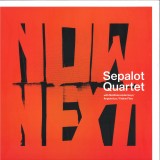
NOWNEXT is a voyage from the past to the future, from now to then, from what's behind us to what's waiting for us just around the next corner. In musical terms these are the gaps that appear when you drift between genres and take risks. Strolling far from the well travelled Zeitgeist path. The second album by the Sepalot Quartet floats through this timeless space and fills those cracks with a relaxed fusion of Jazz meets Indie meets Electronica, not once denying Sepalots hip hop roots.
This freedom of expression can also be considered a sign of our times, with a generation coming of age without rivalling youth phenomena. Where a jazz show is held in a techno club with no further explaination needed.
With their first release the Quartet still relied on remakes from the established Sepalot dicography, with their current work they laid the foundation for a truly solid form of musical self discovery.
NOWNEXT is enlivened by this spirit and offers a fascinating and confindent blend of varied sounds spanning time and space.
With all this being said, NOWNEXT is truly an up to date album of international format, feeding from the rich experience of its diverse members (Sepalot, Angela Aux, Fabian Füss, Matthias Lindermayr). Memories, associations and a well carved vision are melted into a masterpiece.
NOWNEXT is the latest offering by SEPALOT and his QUARTET and needs to experienced with all senses.
2022 Repress
In future times, culture historians will refer to Gabor Schablitzki aka Robag Wruhme as a creator of a singular techno sound, a rock in the murky sea of arbitrary musical dullness that befell mankind in the early 21st century.
Furthermore, a lesser known quality of Schablitzki will be praised and explored: He was a relentless wordsmith, a deeply passionate inventor of elegant idioms that enriched German language. Take ‘Freggelswuff’ or ‘Wemmel’ as shining examples.
It’s within this context that a certain cultural artefact released on a Cologne based record label called KOMPAKT (which towards the end of the 21st century made a hardly publicised turn to manufacturing CO2-neutral wall plug systems) that went by the sonorous title ‘Topinambur’ has to be mentioned. Legend has it that Schablitzki claimed to have created the word ‘Topinambur’, unknowingly that local farmers have been marketing a root tuber under the same name since it got imported from America in 1610 AD. The following tenacious copyright lawsuit between Schablitzki and a large agricultural consortium lasted for many years. It isn’t considered as a highpoint in Schablitzki’s turbulent life but it still serves a staircase wit that is passed on from generation to generation amongst Black Forest moonshiners.
Kulturhistoriker künftiger Generationen werden Gabor Schablitzki alias Robag Wruhme als Schöpfer eines singulären Techno-Sounds preisen, als einen Fels in der Brandung der im frühen 21. Jahrhundert vorherrschenden Beliebigkeit. Als DJ und Produzent war ein Meister des deepen Abrisses, werden sie weiterhin formulieren, obschon es weitere 136 Jahre dauern wird, bis die subkulturelle Bedeutung des Wortes 'Abriss' zweifelsfrei geklärt werden konnte.
Es wird aber auch eine weitere einzigartige Qualität Gabor Schablitzkis hervorgehoben werden: Er war ein unermüdlicher Wortschöpfer, der die deutsche Sprache um elegante Idiome wie Freggelswuff oder Wemmel bereicherte. In diesem Zusammenhang findet meist eine Veröffentlichung des Kölner Labels KOMPAKT (welches im ausklingenden 21. Jahrhundert einen wenig bemerkenswerten Wandel zum Hersteller von CO2-neutralen Dämmstoffdübeln vollzog) Erwähnung. Diese Veröffentlichung erschien unter dem klangvollen Namen "Topinambur" und die Legende besagt, dass Schablitzki behauptete auch hier der Nachwelt eine neue Wortschöpfung hinterlassen zu haben, nicht wissend, dass europäische Landwirte bereits seit 1610 A.D. unter diesem Namen ein aus Amerika importiertes Knollengewächs vermarkteten. Der sich daran anschliessende Copyright-Streit zwischen Schablitzki und einem mächtigen Agrarkonzern, zählte nicht zu den rühmlichen Episoden seines bewegten Lebens, sorgt aber seit Generationen als Treppenwitz unter Schwarzwälder Schnapsbrennern für viel Geschmunzel.
DJ Deep's Deeply Rooted label once again spotlights rising French talent Marina Trench for the second instalment of 'Signature featuring remixes from the boss and Hugo LX. Arriving on Deeply Rooted in March with the slick sounding 'Signature EP1', since then Trench has debuted at Rex Club where she played alongside Kerri Chandler, further bolstering her rising reputation as one of the Parisian scene's most exciting names. She now returns to Deeply Rooted bringing another instalment of classy House music - perfectly suited to the respected label's aesthetic. She shows off her knack for jazzy keys on the lively, raw-edged 'Thema Urbain' which oozes late night soul and effortlessly intimate house vibes. The equally excellent 'Ahead' is a surging house cut with well-crafted synth stabs fleshing out an off balance groove while a twanging bass riffs props things up from below. It's perfectly propulsive but has a real sense of heart. The third sublime original is 'Navigo', a bottomless track with splashy hi hats and suggestive string stabs up top. A rasping bassline brings texture to the smooth grooves as they keep rushing over you to make this another fresh and original offering from Trench. Remixing 'Ahead' is Hugo LX, who cruises from downtempo beats to soulful electronic sounds on the likes of Balance and NDATL Muzik. His classy version is a dubbed out classic with a musical bassline tumbling down the scales as you're sunk ever deeper into his pillowy pads. Deep himself then steps up to flip 'Navigo' into a driving deep techno number that surges on soaring synth smears and prickly percussion. This EP is set to take Trench to the next level and confirms she is one of 2019's brightest new stars.
We are proud to present Christian Nielsen's debut release on Noir
Music. Noir and Christian has been friends for many years and
therefore we have been following the Danish talent closely and
waited for the perfect time and the perfect tracks to create his first
release on the label. So....here it is.....
Over and Over' sits right in between tech and techno with those
irresistible vocals that's become Christian's signature. On Speeding'
Mr. Nielsen digs a little deeper and the result is a fantastic techno-
groover which roots back to early Detroit underground. We
recommend you give in and play both.
A hypnotic melodica-led instrumental from singer, composer and
multi-instrumentalist G.T. Moore who first recorded the track at Harry J's Studio in
Jamaica in 1980. This later cut was originally released under G.T's `The
Outsider' guise for Rej Forte's Jah Works label back in 1991 appearing on the
long-deleted album 'The Outsider Meets The Hi-Tech Roots Dynamics at Channel One UK'.
*Now appearing on 45 for the first time backed with a dub version from the deepest vaults..
José González has delivered a new album, Against the Dying of the Light, a companion and further meditation on the themes of his critically acclaimed album, Local Valley. Where Local Valley turned inward toward place, language, and personal reflection, this new record widens its gaze, becoming an urgent call to preserve the light of humanity with all its flaws, at a moment when, technology increasingly shapes how we think, feel, and relate to one another.
While José has always embraced technological advancement, he questions the assumption that every new possibility must be pursued to its maximum potential, especially when progress comes at the expense of human flourishing, attention, and empathy.
Keeping in the tradition of folk music as protest, José’s new single — sharing its title with the forthcoming album — urges listeners to resist systems that dehumanize and divide: “Disconnect from every algorithm, every perverse incentive that drags you down. Let’s rebel against the replicators, against the dying of the light. Kill the codes that feed the hate, keep the codes that make you thrive, celebrate the **king fact that we’re alive.”
Across the album, González works within a deliberately minimal framework, pushing his familiar palette to new heights through subtle variation, restraint, and detail. Each song unfolds with its own distinct character, proving how much emotional and musical range can be achieved within self - imposed limitations. Written in English, Swedish, and Spanish, the record reflects his Swedish - Argentine roots and frames its humanist message as a global one rather than a purely personal or political statement.
José González is one of the most quietly influential artists of our generation. The Swedish - Argentine artist has built a singular musical world from hypnotic, minimal guitar work and his unmistakably gentle voice — a sound that has become deeply personal to millions of listeners worldwide. With billions of streams across platforms and hundreds of thousands of physical records sold, González’s songs often act as emotional landmarks. Ask almost anyone, and they can name at least one of his tracks tied to a defining moment in their lives.
- A1: Let It Hurt – 2:24
- A2: Dub, It Hurt – 0:54
- A3: My Moon – 3:05
- A4: Hang On Feat. Benji. – 3:32
- A5: Call Me Back Feat. Sadboi And Kabusa Oriental Choir – 2:56
- A6: Let Go – 3:02
- A7: Interlude 1 – 0:28
- B1: I Am What I Am What I Am – 2:39
- B2: I Dream, I Rush – 2:21
- B3: Interlude 2 – 0:53
- B4: Room333 Feat. Zacari – 3:01
- B5: Sodom And Gomorrah Feat. 36Birds – 3:34
* Edition of 500 colored vinyl (transparent purple)
* Artwork developed in collaboration with Paris-based visual artist Caroline Ventura
* Including download code
i got a song, it’s gonna make us millions is the highly anticipated new album by Sirens Of Lesbos, led by sisters Jasmina and Nabyla Serag. The dynamic release is a vibrant showcase of the group's expansive musical range, blending R’n’B/Soul, Afrobeats, electronic music, and lo-fi indie pop into a rich, genre-defying experience. With its eclectic sound and captivating melodies, the album solidifies Sirens Of Lesbos as a standout force in modern music.
Featuring on the album are the singles “Room 333” feat. Kendrick-Lamar-collaborator Zacari, a futuristic R’n’B song with progressive club beats; the epic “Call Me Back” (feat. Drake-co-signed rapper SadBoi and the Kabusa Oriental Choir); and dub-infused reggae song “Let It Hurt”, plus new song “My Moon”, which draws inspiration from artists like Bruce Hornsby, Justin Vernon, and Jai Paul. Sirens Of Lesbos have earned widespread acclaim from outlets like CLASH, COLORS, Dork, Tsugi and Earmilk, with BBC 1Xtra’s CassKidd calling the collective “magical.”
As Black women living in the diaspora, Jasmina and Nabyla navigate the intersection of their parents’ collectivist North-East African culture and the Western emphasis on individuality. Questions of identity have always been central to their journey. While society often demands clear-cut definitions, the sisters have come to embrace their multifaceted identities: “We have always been many things.”
Both artists are deeply rooted in the technical and philosophical dimensions of sound. Jasmina recently completed her Sound Arts degree, and Nabyla is now finishing hers. Their academic pursuits have included creating abstract sound installations in exhibition spaces. However, their focus for the foreseeable future is on elevating the Sirens Of Lesbos project, writing and producing standout indie pop tracks, performing live, and delivering unforgettable experiences for their audiences.
—
The vinyl version of i got a song, it’s gonna make us millions is published by Präsens Editionen, a Switzerland-based publishing house and music label. Founded in 2011 in the process of launching zweikommasieben Magazin, Präsens Editionen has since released music on vinyl, cassette, CD, and digital formats—alongside magazines, books, and other printed matter. Recent audio releases include works by Martina Lussi, spalarnia, Magda Drozd, Anom Vitruv, Belia Winnewisser, and Red On, among others.
Ashley Tindall, AKA Skeptical, returns in peak form with Blimp EP — the fourth release on his Rubi Records imprint — delivering four meticulously crafted cuts of uncompromising drum & bass.
Opening with the title track, Blimp sets the tone with a deep, steppy wobbler that nods subtly to the title track from his second Rubi Records release, Capsize EP. All the signature Skeptical hallmarks are here: hypnotic, pared-back metronomic drums and shimmy-inducing, undulating subs that demand movement. Yet this time there's a noticeable shift — warm, underlying melodic pads bring an unexpected emotional depth. It's not dreamy, but it is more introspective than we're used to, showing another layer to his sonic palette.
So Good flips the script entirely. A dark, cinematic growler, it leans into ghosted vocal fragments and a futuristic film-noir aesthetic. Tense, claustrophobic rhythms and sinister textures create an unsettling atmosphere — tailor-made for those lights-out, pressure-heavy dancefloor moments.
Third comes the undeniable monster of the EP, Technology. Trademark "stink-face" Skeppiness is in full effect from the first bar. Disjointed sci-fi stabs and eerie pads collide with clinical, almost militaristic drum programming, all anchored by a devastatingly weighty bassline. Movement isn't optional — this is pure Skeptical, uncompromising and lethal.
Closing the EP is Bad Generation, a sound system–influenced weapon that finds Skeptical operating at his dubwise best. Fusing minimal D&B with heavyweight, roots-inspired rhythms is no easy task, but here it's executed with effortless authority. It's equally suited to shelling down a rave or getting lost in a deep, eyes-closed session.
Four tracks. Four distinct moods. 100% Skeptical.
Blimp EP confirms once again that his sound continues to evolve — sharper, deeper, and more refined with every release.
Support: Ben UFO, Joy Orbison, Gilles Peterson, dBridge, Break, DLR, Doc Scott, Mefjus, Kasra, Kings of the Rollers, Alix Perez, Jubei, Dub Phizix, Flight, Tasha, Loxy, Lens.
- A1: Bwi-Bwi - Nu Sides
- A2: Ayo B - Impact
- A3: Nico Belic - La Discoteca
- B1: Joziciu - Teknik
- B2: Prince De Takicardie - Free Love (Take Off 1 Mix)
- B3: Tibahuult - Alone With Me
- C1: Lamalice - Fiction
- C2: Dynasty Of Dreams - Syunik Horizons
- D1: Man/Ipulate - Voidance
- D2: Curtis Od - Electrical Energy
- D3: Djon Bull - Tidal Wave
11 artists. 11 tracks. 1 city.
From the heart of the most vibrant French city, Marseille, comes a project that redefines the enthusiasm, energy and growing talents around the underground music scene.
Consisting of eleven djs/producers bound to the Phocaean city, this 2x12LP is not just an ordinary album: It is a cultural marker in a city deeply rooted in urban music, reasserting its young and strongly emerging electronic landscape. It is a celebration of Marseille’s musical identity through house, techno and electro.
Originally a record shop, Mindtrip has been promoting and advocating for the electronic movement for 4 years. Olivier aka HI.lo now invites you to deep dive into Marseille’s sonic uproar with his new born label, an extension of the music he has been playing and representing through his shop, putting marseille on the map with an essential first release gathering the city’s finest: MAN/IPULATE, TIBAHUULT, LAMALICE, PRINCE DE TAKICARDIE, JO’Z, CURTIS OD, DJONN BULL, BWI-BWI, DYNASTY OF DREAMS, NICO BELIC & AYO’B.
- A1: Ismistik - Cassis
- A2: Acid Junkies Feat The Doctor - Telephone Terror
- B1: China White - No Sell Out
- B2: Greyhawk - Epidemic Future
- B3: Storm - Takaru
- C1: Hexagone Burning - Trash Floor
- C2: Phase Phorce - Complications
- D1: Mike Dearborn - Raw Acid
- D2: Mike Dearborn - Outer Limits (Trance Mixx)
- D2: Planet Gong - Eight Miles High
- E1: Group X - Tranze X
- E2: Edge Of Motion - La Orilla
- F1: Random Xs - Aftermath V1 2
- F2: Miss Djax - Killer Train
Delsin is pleased to announce an extensive compilation series combing through the catalogue of landmark Dutch techno label Djax-Up-Beats. The series, curated by Rush Hour co-founder Christiaan Macdonald, launches with a look at the label's legacy in the development of acid music through the 90s. In total, this first entry in the Djax-Up-Beats 1990-2005 series comprises 20 tracks, presented as a main triple-vinyl album plus two additional 12" EPs. The compilation also features all-new illustrations from Alan Oldham, the Detroit-rooted visual artist who gave Djax-Up-Beats a distinctive visual identity from very early on, and design by Lost Communication. Each volume of the series also features liner notes from music journalist Oli Warwick. Crucially, every track featured on the series has been carefully mastered by Johanz Westerman, bringing the best out of tracks that often had very little post-production treatment before they were originally pressed to wax. Volume 1 - The Acid Trip focuses on an area the label is best known for - acid house and techno. After the pioneering breakthroughs Chicago-based producers made with the Roland TB-303 in the late 1980s, acid music creation was starting to become more widespread when Djax-Up started in late 1990. The rebellious, rave-ready sound was an instant draw for label founder Miss Djax, and so her label ended up reflecting the development of acid as it spread from the Chicago roots across the world. Volume 1 - The Acid Trip looks at the diverse approaches to acid taken by artists on Djax-Up. Tracks on the compilation include an early outing from Ludovic 'St Germain' Navarre and Bjorn Torske's Ismistik alias, as well as Dutch pioneers such as Edge Of Motion, Spasms, Random XS and Acid Junkies, and Chicago heavyweights Mike Dearborn and Gene Hunt. With five more, equally extensive, volumes to come in this series, Djax-Up-Beats 1990-2005 is a thorough exploration of a true totem of techno culture - a renegade label that operated on its own terms and carried surprises and slammers in equal measure.
- A1: Chris Liebing - Unfold
- A2: Chris Liebing, Charlotte De Witte - Symphonie Des Seins
- A3: Chris Liebing, The Advent - Subjective Immortality
- B1: Chris Liebing - Roy Batty
- B2: Chris Liebing - Evolver
- B3: Chris Liebing - John Connor
- B4: Chris Liebing, Luke Slater - Double Split
- C1: Chris Liebing, The Alte Stuben Modular Ensemble - Entangled Circuits
- C2: Chris Liebing - Higher Things
- C3: Chris Liebing, Speedy J - Shaping Frequencies
- D1: Chris Liebing - Brooks Ave
- D2: Chris Liebing - Eye C
- D3: Chris Liebing - Endtrack
Chris Liebing's first full solo techno LP, 'Evolver' is released on 27th March 2026, via his own CLR imprint. The German techno don's LP features a host of collaborators across music, images, and artwork. Luke Slater, Charlotte De Witte, Speedy J, The Advent, Terence Fixmer, Pascal Gabriel, Daniel Miller contribute to the music, while long-time collaborators Studio Bergfors deliver design, and legendary photographer Anton Corbijn shot Liebing for the project.
The Evolver LP is the sum total of Chris Liebing's three decades at the beating heart of techno. It's the record only someone whose first break as a techno DJ was playing five hours at Sven Väth's infamous Omen in Frankfurt - and who has ridden out every twist and turn of life and subcultures since, while remaining rooted in the true school, dark, sweaty techno sweat pits of the world - could have made. It's the result of deep introspection, but it's about utter immediacy. It's the sound of someone previously driven along by compulsion and happenstance at last finding the confidence to be utterly intentional about their practice, allowing them to take the most classic, familiar, proven elements from the past and render them completely new.
Evolver is also Liebing's first completely solo album. There are collaborations, yes: with old friends from the OG techno generation, Luke Slater, Speedy J, and The Advent, all on uncompromising form, and with new generation figurehead Charlotte De Witte, who provides a thrilling narration of total surrender to the moment on acid clarion call "Symphonie des Seins". But unlike all Liebing's albums to date, there's no co-pilot. Every structure, every mixdown, every choice serves his singular vision of how his untold immersion in the surging currents of the world's greatest clubs should sound. The elements are all those forged in the white heat of Omen and Tresor in the mid 90s - brutal repetition, titanium kick drums, industrial atmospherics, but also dark rave euphoria, ever present surging acid lines just on the cusp of trance, and just enough human voices to remind you of bodies on the dance floor - but rendered with all the extraordinary accumulated skill and technological developments since then.
It's Chris's vision entirely, his musings on sound, technology, and life birthing tracks like "Roy Batty." Inspired by thoughts of AI becoming sentient and hungering for more life like Rutger Hauer's titular Blade Runner character, it was one of the first tracks to emerge and a foundation stone for the album. And in pursuit of that vision, it's built like a "proper album". The anticipation and menace of intro "Unfold" tip over into the glowing hot high drama psychedelia of "Symphonie…" then the breathless headlong rush of The Advent collab and on through an unfolding narrative that goes deep, goes dark, opens out into grand vistas, takes strange turns before finally landing on the alien landscape of… well… "Endtrack".
Not everything is pummelling on Evolver - the dazzling title track feels like you've been welcomed into the courtly dance of a higher dimension civilisation, and the audacious Speedy J collab "Shaping Frequencies" is a beatless flow that tests the boundaries between signal and noise. But for all its complexity, conceptualism, and stylistic branching out, every last part unmistakably powered by that dark techno-cavern energy above all else. All of it positively radiates the qualities of Liebing's greatest work and sets to date - but somehow even more so than before. Whether you're listening for aesthetic inspiration, cerebral stimulation or just that raw physical power, this album will sweep you up into its momentum and won't let go of you until it's done.
From his roots in House, Alex Finkin is a renowned producer and creative director. Working in his Paris studio he has developed numerous projects, notably his own (Roseaux), as well as commissions for radio and television. Meanwhile, with 30 years of production and DJing under his belt, Rocco Rodamaal belongs to the elite circle of House innovators who continue to influence the scene. He's played alongside some of the best in the industry showcasing his versatility and deep understanding of the genre, and remixed artists including Marshall Jefferson, Kerri Chandler, Louie Vega & Moodymann, Todd Terry, Barbara Tucker and Robert Owens to name just a few. Alex Finkin befriended Rocco Rodamaal, who he met via the soulful Parisian club Djoon, where Alex was resident from 2006 to 2014. They have since collaborated on a number of projects together, including "In Da Hood" released on COD3 QR in 2023. Kenny Dope's "O'Gutta" remixes are a series of house and club-focused reworks characterized by raw, gritty and often stripped-back percussion, which he now brings to "In Da Hood".
Ross McMillan, known professionally as Carlos Nilmmns, is a Scottish electronic music producer, DJ and composer originally from Glasgow. Over the years he has collaborated with a range of notable artists, including Grammy-nominated and Grammy-winning figures, including Kenny Dope, Carl Craig, Kevin Saunderson and Davina Bussey, plus respected artists like Niko Marks, Rolando, Laurent Garnier, Santiago Salazar, Hardrock Striker, Karl The Voice, Zadig, Ben Sims, Andrés (who worked with Jay Dilla and Moodymann), and YouANDme. His music has been released on Planet E, Trax, Cocoon, Ornaments, Circus, Virgin, Skylax/Universal Music France and more. His style draws from house, techno and jazz influences, often combining analogue and digital production methods. A returning regular and COD3 QR favourite, he's back with another stunner in "Latin Quarter".
K' Alexi Shelby is a prominent figure in electronic music and with a career spanning decades, he's established a significant influence on House and Techno. Throughout his career he's worked with many well-known artists and remixed tracks that are now key pieces. The cultivation of his massive musical catalogue has overflowed into albums and the three labels he heads. It's also led to legendary collaborations with artists such as The Pet Shop Boys, Robert Owens, Kenny Dixon, Roy Davis Jr., Maurice Joshua, Terry Hunter, Joe Smooth, Steve Silke Hurley, Tyree Cooper, Ron Trent, Glenn Underground, Larry Heard, DJ Pierre, Carl Craig, Felix da Housecat, Marshall Jefferson, Will Smith and countless others. Already respected around the world as a true underground House legend, he delivered "Flame" in 2025 for COD3 QR. Now he's back with "When I", another deep and sexy cut.
Benny Rodrigues a.k.a. ROD unveiled his new moniker, The Lost Souldancer when he dropped "No More Voices" for COD3 QR last year. In his own words, Benny says: "The Lost Souldancer is about coping with the loss of what once was. Finding comfort in the invisible rather than what can be seen. Disconnect to connect in order to be loved rather than liked." He continues this ethos with the delicate and melodic closing track "Life and Death".
- A1: Last Of A Dying Breed (Feat. Jigsaw)
- A2: Scared Money (Feat. General Vee)
- A3: Never Be (Feat. Royal Flush,Vado & Folkland Los)
- A4: Fly Til I Die (Feat. Big Daddy Kane)
- A5: Critical (Feat. Nems)
- B1: Born Hustler (Feat. 38 Spesh, Az & General Vee)
- B2: Official
- B3: Donald Goines
- B4: Million Reasons (Feat. Al Skratch)
- B5: Winning Hand (Feat. Lil Dee & Alicia Renee A.k.a Blue Eyes)
- B6: Born N Raised (Feat. Grandmaster Caz, Marley Marl & Dj Doo Wop)
Hip Hop’s golden era constituent, Queens’ native, the godfather of Mafioso rap, legendary and influential emcee, Kool G Rap, broke out in the late 80s and early 90s as one half of the duo with DJ Polo. Together, Kool G Rap and DJ Polo released three undisputed classic albums; beginning with their debut album, Road To The Riches (1989), Wanted: Dead or Alive (1990) and Live and Let Die (1992).
Simultaneously, G Rap and DJ Polo gained notoriety as members of the Juice Crew, whose noteworthy membership includes DJ Marley Marl, Big Daddy Kane, Masta Ace and Roxanne Shante At the height of hip-hop’s golden age, The Juice Crew was the definition of innovative and not only influenced the culture as a whole (style, lyricism, creativity), but also impressed the importance of style, substance and technique upon the next wave of street ambassadors.
After a successful run with DJ Polo and the Juice Crew, G Rap embarked on a solo-career, with his solo debut, 4, 5, 6, (1995), which was preceded by Roots of Evil (1998) and The Giancana Story (2002). Since then, we’ve only been intermittingly blessed by bodies of work from the Kool Genius Of Rap; Half a Klip (2008), Riches, Royalty, Respect (2011), Return Of The Don (2017) and Son Of G Rap with 38 Spesh (2018).
Now, the recent National Hip-Hop Museum inductee returns with his first solo-album in
five-years with Last Of A Dying Breed, entirely produced by Domingo, which features collaborations with AZ, NEMS, Vado, 38 Spesh, Royal Flush and Big Daddy Kane; with production supplied by Domingo. Kool G Rap’s "Last Of A Dying Breed" is now available on limited edition vinyl, digipack CD and cassette.
Formed in Taipei in 2013, Scattered Purgatory (破地獄) has occupied a liminal space between drone, ambient, psychedelic folk and ritualistic kosmiche experimentation. Their early work, including ‘Lost Ethnography of the Miscanthus Ocean’ (2014) and ‘God of Silver Grass’ (2016), blended dense instrumental drones, improvisational guitar, and ambient textures rooted in the heat, humidity, and urban pulse of Taiwan. Over the years, the duo-turned-band has drawn on Krautrock, minimalist electronic music, and heavy drone traditions while remaining firmly grounded in Taiwanese geography and culture.
‘Post Purgatory’ emerges after a three-year hiatus following the pandemic, a period the band describes as pivotal to the album’s conception. “The feeling of loss and uncertainty has later become the inspiration of this record, and ‘time’ is the main theme – it can heal or it can destroy,” they explain. Musically and lyrically, the record traverses Taiwanese, traditional Chinese, and English, reflecting the multilingual fabric of Taipei life. While there isn’t a linear storyline, metaphor and poetry imbue the lyrics with reflections on love, loss, and the human experience, interlaced with influences of Hokkien and Mando pop and traces of trip-hop.
Recorded half in their home and half at the studio where they composed their first album, ‘Post Purgatory' integrates precision, clarity, and digital production techniques. Guest contributions—from White Wu’s dynamic drumming to Minyen Hsieh’s tenor saxophone and dotzio’s sci-fi-infused vocals—expand the band’s sonic palette, creating a doom metal record shaped by electronic sensibilities.
‘Post Purgatory’ is a statement of loss and re-empowerment, a bridge between their past and present. Through it, Scattered Purgatory reclaim their distinctive voice, presenting a sound that is at once rooted in Taiwan, informed by global musical traditions, and unflinchingly forward-looking.
credits
- 01: Maanitus &Amp; Tšiižik
- 02: Markka
- 03: Melkutus
- 04: Letška
- 05: Kuuen Parin Hoirola
- 06: Brišatka
- 07: Tšiižik
- 08: Kirkonkellot
- 09: Kirkonkellot Korkea
- 10: Hoirola, 3 Parin
- 11: Lippa
- 12: Kyngäkiža
- 13: Ristakondra
- 14: Vanha Polkka
- 15: Viistoista
- 16: Vanha Valssi
- 17: Kiberä
- 18: Maanitus Kuokan Kanteleella
- 19: Tuuti Lasta Nukkumahe
Vinyl[22,65 €]
Death Is Not The End present a further volume of Arja Kastinen's eerie amalgamations of 110 year old wax cylinders with her own meticulously transcribed takes, this time focussing in on Armas Otto Väisänen's field recordings of kantele player Iivana Mišukka (b. 1861 d.1919).
"Ivana Mišukka (1861–1919) was one of the Karelian kantele players recorded by the folk music researcher Armas Otto Väisänen on wax cylinders in 1916 and 1917. In the early 20th century, the remote areas of Border Karelia were undergoing the final phase of a transformation in musical culture, with the ancient runo song tradition giving way to newer forms of music. This transition is reflected in Mišukka's repertoire and choice of instrument. The ancient small kantele, hollowed out of a single piece of wood, was already rare at the turn of the century. Mišukka's kantele was a new type of instrument with 26 strings, constructed of several parts, but he played it using the traditional plucking technique. Like other Border Karelian kantele players, his repertoire consisted of music rooted in runosong culture, as well as newer dances and songs from the east and west. Most of the recorded material falls into the latter category.
Ivan Bogdanov Mišukka was born out of wedlock in Suursara village, Suistamo, on 1 May 1861. He began playing the kantele at the age of five or six, quickly mastering the instrument. In adulthood, he was considered one of the area's best master players. Mišukka was landless for most of his life and lived in different parts of the Suistamo parish. His first wife, Tekla Markintytär, died in 1897 at the age of 40, and his second wife, Jevdokia Filipintytär Jeminen, died in 1907 at the age of 50. Seven children were born from the first marriage, two of whom died young. The third wife, Maria Ignatintytär Gurnan (Kuurnanen), was a well-known master of lamentations. Together with Maria, Iivana Mišukka worked as a tenant farmer in the village of Suursara. Mišukka suffered from rheumatism, which prevented him from participating in physical work like Maria. This was apparently partly the reason why Iivana Mišukka went to earn extra money by playing the kantele on gig trips. He often had other traditional artists from Suistamo as his travelling companions, such as the runosingers Konstantin Kuokka and Iivana Onoila. Iivana Mišukka died in Leppäsyrjä village, Suistamo, on 18 May 1919 at the age of 58, and his kantele was donated to Teppana Jänis.
Mišukka only used 14 of the 26 strings on his kantele, playing the same tunes either a fourth higher or lower. He tuned his kantele to the major scale using fifths, except for a low seventh scale degree on the upper strings, but not below the fundamental. Since he did not use the seventh note of the scale on the upper strings at all, he could use the major scale both lower and a fourth higher with this tuning. According to Mišukka, the sound of higher, or 'finer', strings is 'more beautiful', while that of lower ones is 'greater'. Among runosingers, the size of the thirds varied, ranging from major to minor to neutral. A similar phenomenon can be observed in kantele tunings, where the third, sixth and seventh scale degrees vary in a comparable way.
During a meeting, Väisänen suggested that Mišukka play the smaller kantele belonging to Konstantin Kuokka. The idea was to bring it closer to the horn to improve the recording quality. However, the kantele was completely out of tune, and now Mišukka tuned it to the Lydian scale (track 18).
Using the old plucking technique, Mišukka placed his right middle finger on the fundamental tone, his right index finger on the second scale degree, his left middle finger on the third scale degree and his left index finger on the fourth scale degree, and his right thumb on the fifth. The thumb also played the notes above the fifth note of the scale. As Mišukka remarked to Väisänen: 'Peigaloll' tuloo enemb ruadoa' (the thumb has to do more work). However, he did not use the seventh note of the scale on the upper strings at all. Below the fundamental note, he played the seventh and sixth notes of the scale with his right middle finger of and the fifth note of the scale with his right ring finger. This fifth scale degree below the fundamental is almost always used as a drone. Sometimes, when the melody required it, Mišukka, like other players, also varied the fingering. He would also occasionally strike the same string with the side of his fingernail after plucking it.
The wax cylinder recordings of Karelian kantele players are kept in the archives of the Finnish Literature Society in Helsinki, Finland. Copies were made of them onto reel-to-reel tapes in both the 1960s and 1980s. The 1960s copies are mono and the 1980s copies are stereo. However, not all kantele recordings from these decades have survived.
The sound of the kantele is difficult to hear in wax cylinder recordings due to its low volume, and it occasionally becomes completely obscured by noise. During the copying process, the cylinder sometimes rotates unevenly, resulting in breaks or jumps in the music. Additionally, the rotation speed of the cylinder in the copies does not correspond to the performance speed of the original music, which alters the pitch. However, since Väisänen's precise notes are available in the archive, it is possible to deduce the melodies, their speed, and the tuning level of the kantele in the recordings. Of the copies of the original recordings from the 1960s and 1980s, I have selected the one that best met the requirements of this publication and adjusted the speed of the recording to align with Väisänen's notes. To enhance the listening experience, I have replayed the songs, which now partly overlap the old recordings on this release."
— Arja Kastinen
- 01: Maanitus &Amp; Tšiižik
- 02: Markka
- 03: Melkutus
- 04: Letška
- 05: Kuuen Parin Hoirola
- 06: Brišatka
- 07: Tšiižik
- 08: Kirkonkellot
- 09: Kirkonkellot Korkea
- 10: Hoirola, 3 Parin
- 11: Lippa
- 12: Kyngäkiža
- 13: Ristakondra
- 14: Vanha Polkka
- 15: Viistoista
- 16: Vanha Valssi
- 17: Kiberä
- 18: Maanitus Kuokan Kanteleella
- 19: Tuuti Lasta Nukkumahe
Tape[16,39 €]
Death Is Not The End present a further volume of Arja Kastinen's eerie amalgamations of 110 year old wax cylinders with her own meticulously transcribed takes, this time focussing in on Armas Otto Väisänen's field recordings of kantele player Iivana Mišukka (b. 1861 d.1919).
"Ivana Mišukka (1861–1919) was one of the Karelian kantele players recorded by the folk music researcher Armas Otto Väisänen on wax cylinders in 1916 and 1917. In the early 20th century, the remote areas of Border Karelia were undergoing the final phase of a transformation in musical culture, with the ancient runo song tradition giving way to newer forms of music. This transition is reflected in Mišukka's repertoire and choice of instrument. The ancient small kantele, hollowed out of a single piece of wood, was already rare at the turn of the century. Mišukka's kantele was a new type of instrument with 26 strings, constructed of several parts, but he played it using the traditional plucking technique. Like other Border Karelian kantele players, his repertoire consisted of music rooted in runosong culture, as well as newer dances and songs from the east and west. Most of the recorded material falls into the latter category.
Ivan Bogdanov Mišukka was born out of wedlock in Suursara village, Suistamo, on 1 May 1861. He began playing the kantele at the age of five or six, quickly mastering the instrument. In adulthood, he was considered one of the area's best master players. Mišukka was landless for most of his life and lived in different parts of the Suistamo parish. His first wife, Tekla Markintytär, died in 1897 at the age of 40, and his second wife, Jevdokia Filipintytär Jeminen, died in 1907 at the age of 50. Seven children were born from the first marriage, two of whom died young. The third wife, Maria Ignatintytär Gurnan (Kuurnanen), was a well-known master of lamentations. Together with Maria, Iivana Mišukka worked as a tenant farmer in the village of Suursara. Mišukka suffered from rheumatism, which prevented him from participating in physical work like Maria. This was apparently partly the reason why Iivana Mišukka went to earn extra money by playing the kantele on gig trips. He often had other traditional artists from Suistamo as his travelling companions, such as the runosingers Konstantin Kuokka and Iivana Onoila. Iivana Mišukka died in Leppäsyrjä village, Suistamo, on 18 May 1919 at the age of 58, and his kantele was donated to Teppana Jänis.
Mišukka only used 14 of the 26 strings on his kantele, playing the same tunes either a fourth higher or lower. He tuned his kantele to the major scale using fifths, except for a low seventh scale degree on the upper strings, but not below the fundamental. Since he did not use the seventh note of the scale on the upper strings at all, he could use the major scale both lower and a fourth higher with this tuning. According to Mišukka, the sound of higher, or 'finer', strings is 'more beautiful', while that of lower ones is 'greater'. Among runosingers, the size of the thirds varied, ranging from major to minor to neutral. A similar phenomenon can be observed in kantele tunings, where the third, sixth and seventh scale degrees vary in a comparable way.
During a meeting, Väisänen suggested that Mišukka play the smaller kantele belonging to Konstantin Kuokka. The idea was to bring it closer to the horn to improve the recording quality. However, the kantele was completely out of tune, and now Mišukka tuned it to the Lydian scale (track 18).
Using the old plucking technique, Mišukka placed his right middle finger on the fundamental tone, his right index finger on the second scale degree, his left middle finger on the third scale degree and his left index finger on the fourth scale degree, and his right thumb on the fifth. The thumb also played the notes above the fifth note of the scale. As Mišukka remarked to Väisänen: 'Peigaloll' tuloo enemb ruadoa' (the thumb has to do more work). However, he did not use the seventh note of the scale on the upper strings at all. Below the fundamental note, he played the seventh and sixth notes of the scale with his right middle finger of and the fifth note of the scale with his right ring finger. This fifth scale degree below the fundamental is almost always used as a drone. Sometimes, when the melody required it, Mišukka, like other players, also varied the fingering. He would also occasionally strike the same string with the side of his fingernail after plucking it.
The wax cylinder recordings of Karelian kantele players are kept in the archives of the Finnish Literature Society in Helsinki, Finland. Copies were made of them onto reel-to-reel tapes in both the 1960s and 1980s. The 1960s copies are mono and the 1980s copies are stereo. However, not all kantele recordings from these decades have survived.
The sound of the kantele is difficult to hear in wax cylinder recordings due to its low volume, and it occasionally becomes completely obscured by noise. During the copying process, the cylinder sometimes rotates unevenly, resulting in breaks or jumps in the music. Additionally, the rotation speed of the cylinder in the copies does not correspond to the performance speed of the original music, which alters the pitch. However, since Väisänen's precise notes are available in the archive, it is possible to deduce the melodies, their speed, and the tuning level of the kantele in the recordings. Of the copies of the original recordings from the 1960s and 1980s, I have selected the one that best met the requirements of this publication and adjusted the speed of the recording to align with Väisänen's notes. To enhance the listening experience, I have replayed the songs, which now partly overlap the old recordings on this release."
— Arja Kastinen
- A1: A Perfect Storm
- A2: Etyd
- A3: Against The Dying Of The Light
- A4: For Every Dusk
- A5: Sheet
- A6: Pajarito
- A7: Losing Game (Sick)
- B8: Ay Querida
- B9: U / Rawls Slöja
- B10: Gymnasten
- B11: Just A Rock
- B12: You & We
- B13: Joy (Can’t Help But Sing)
White Vinyl[28,99 €]
José González has delivered a new album, Against the Dying of the Light, a companion and further meditation on the themes of his critically acclaimed album, Local Valley. Where Local Valley turned inward toward place, language, and personal reflection, this new record widens its gaze, becoming an urgent call to preserve the light of humanity with all its flaws, at a moment when, technology increasingly shapes how we think, feel, and relate to one another.
While José has always embraced technological advancement, he questions the assumption that every new possibility must be pursued to its maximum potential, especially when progress comes at the expense of human flourishing, attention, and empathy.
Keeping in the tradition of folk music as protest, José’s new single — sharing its title with the forthcoming album — urges listeners to resist systems that dehumanize and divide: “Disconnect from every algorithm, every perverse incentive that drags you down. Let’s rebel against the replicators, against the dying of the light. Kill the codes that feed the hate, keep the codes that make you thrive, celebrate the **king fact that we’re alive.”
Across the album, González works within a deliberately minimal framework, pushing his familiar palette to new heights through subtle variation, restraint, and detail. Each song unfolds with its own distinct character, proving how much emotional and musical range can be achieved within self - imposed limitations. Written in English, Swedish, and Spanish, the record reflects his Swedish - Argentine roots and frames its humanist message as a global one rather than a purely personal or political statement.
José González is one of the most quietly influential artists of our generation. The Swedish - Argentine artist has built a singular musical world from hypnotic, minimal guitar work and his unmistakably gentle voice — a sound that has become deeply personal to millions of listeners worldwide. With billions of streams across platforms and hundreds of thousands of physical records sold, González’s songs often act as emotional landmarks. Ask almost anyone, and they can name at least one of his tracks tied to a defining moment in their lives.
For our first EP and 12", we're joined by Italian sound artist and long-time Goodness friend Yraki for 5 tracks of sonic hypnosis on a bass-heavy theme: ‘Tendril’ is meditative future-techno meticulously constructed through an experimental, high-poly lens.
Detailed, tactile sound design with deep, hypnotic momentum, it shapeshifts between stripped-back bass pressure and elastic, experimental flow in one costant, evolving, unravelling thread.
--
The shadowed interstice between root and circuit, Tendrils creep through soil and signal alike, tracing patterns unseen, carrying memory and mutation. Time folds in layers of sediment and data; decay becomes growth, fracture becomes connection.
Tendrils are the pulse of the unseen, a meditation on growth, entropy, and the uncanny geometry of becoming.
Meticulously assembled from a good 15 years' worth of source material, Cong Burn boss John Howes' second Paperclip Minimiser transmission proliferates its predecessor's network of turn-of-the-millennium aesthetics and concepts, bringing us closer to the lost future promised by the mid-digital age. If the debut album rooted itself in 2006, using an era-specific rig to activate its vintage Winamp-ready sound, 'II' pushes the clock forward just a little, recycling an unreleased album that Howes engineered in various locations across the north of England, starting way back in 2011. Working quickly and methodically with his homebrewed "DIY DAW" system, Howes improvised live using the record's bank of sounds, transforming the skittering bio-electronic rhythms, bitcrushed modem whines and inclement Lancs soundscapes into a suite of sleek, bass heavy steppers.
Howes has refined his setup and process over the years to function as an antithesis of contemporary production logic, a system that he can use easily to retreat from the excessive layering, overdubbing and editing that plagues modern electronic music. With only limited separate channels in each track, 'II' sounds both archaic and strangely novel. Showing respect to the early days of techno, when stone-cold classics were jammed out live using just a drum machine, a sampler and a couple of synths, Howes simultaneously acknowledges the promise of the transition to a digital future, as nascent algorithmic technology began to rehydrate stale rhythmic and melodic patterns. Fabricating its wrinkled cyberpunk landscape from shovelware blips and whines, spacious environmental echoes and lustrous, plasticky FM hits, 'II' is dense but never congested. It's a reminder that bass music thrives when it's given the room it needs to breathe.
Driveline Records launches its catalog with a focused four-track vinyl EP built for the dancefloor, presenting four distinct yet cohesive techno cuts driven by groove, atmosphere and functionality.
The A-side opens with Invexis - "Roots", a hypnotic builder that slowly unfolds into a funky-driven rhythm. Tight hi-hats and rolling basslines carry the track forward, culminating in a subtle yet engaging melodic progression that lifts the energy without losing tension.
Next, Pylot - "Observation" delivers a highly functional club tool based on steady loops and an aquatic sound design. Aggressive low-end and raw basslines support an atmospheric and hypnotic flow, making it a solid choice for mid-set pressure and long blends.
On the B-side, Berlin-based duo Disguised contribute "Gitty (Dub Mix)", a dub-influenced and dreamy track designed to keep the dancefloor moving while creating a floating, immersive mood. Deep grooves and spacey textures balance rhythm and emotion.
Closing the EP, Shadow Hrym - "Delia" explores more melancholic territory, combining tribal and funky rhythms with emotive soundscapes, offering a powerful and memorable ending to the record.
A strong debut statement that defines Driveline Records' sonic vision: DJ-oriented techno with depth, groove and atmosphere, pressed on vinyl for dedicated selectors.
2026 Repress
French DJ/producer Mathys Lenne's artistic vision is rooted in his deep connection to rhythm. Telling stories with his sounds while drawing inspiration from poetry and cinema and blending hypnotic textures with raw intensity, his music is widely supported across the scene via labels like Mord, Hayes and more. Across five vinyl cuts and three digital bonuses, the four-deck wizard keeps it deeply atmospheric with his label debut on SHDW's Mutual Rytm imprint, combining elements of psychedelic rock, unique voice samples and saturated synths to create a sound that feels immersive and unrestrained in contrast to the fast-paced, visceral techno he has become known for.
'Detlev' opens up with hefty kicks that demand you quicken your step, while industrial effects and creepy design brings the detail that makes the track pop. The classy 'Natural Born Killers' rides on firm kicks with loopy percussive details tightly coiled, ensuring you are forever on edge as the drums march on. 'Choose Your Pill' is a stripped-back and pulsing deep techno cut with deft synths that peel off the groove, before 'Untidy Echo' delivers a cavernous sound with sparse hits and low-end rumbles that place you in the centre of an underground cavern. 'Enfer ou Ciel' featuring D.E.S brings a sense of melancholy in the occasional string sounds and watery droplets that float over more frictionless, meditative beats - while the trio of digital bonus cuts brings moody subterranean rollers ranging
from snaking and dubby to more drum-led and eerie tones.
Tartelet is pleased to kick off 2026 with a display of warm-hearted tech funk from Italian house maestro Paffetti. Having made his name with a strong run of sample-rooted deep house as Black Loops, Riccardo Paffetti unveils a new alias to explore a more club-focused, trippy sound.
Even with the shift in sonic focus, Paffetti maintains a razor-sharp instinct for low-downgrooving deep house dynamics that course through every inch of the UTOPIA EP. It's plain to hear in the rolling bassline and shuffling drums that mark out 'B.Y.M. ' and the disco-licked strut of 'Escucha Me'. The difference is the decoration on top, where mind-massaging zips and pings and artful samples add a subtle touch of psychedelia to the sophisticated house music blend.
Across five cuts, UTOPIA unfolds with a strong sense of momentum and melodic intent, marking a confident new phase in Paffetti’s ongoing exploration of deep, hypnotic club sounds.
Swiss DJ and producer Audrey Danza returns with Next Stop, her first self-released vinyl EP on her own imprint, Proxima. The four-track release sharpens her sound into a direct, club-focused statement rooted in acid techno.
Each track is carefully engineered for the dancefloor. Driving acidic basslines and distinctive percussion interlock with warped, spacey textures to form forward-moving, high-pressure grooves. Processed vocal fragments punctuate the tracks, heightening tension and momentum. The EP moves through trippy, mental territory, balancing functional DJ tools with off-kilter details and strange sonic flourishes.
Built for movement and momentum, Next Stop works equally well in late-night warehouse settings and peak-time club moments.
Splatter Vinyl[20,97 €]
Fifteen years after it first surfaced on the short-lived Lithuanian netlabel Dumblys, Sraunus – Out Of The City returns remastered, recontextualized, and ready for a new wave of deep listeners. What once felt like a hidden gem now reads as a quiet cornerstone, a record whose significance only grew clearer with time.
Behind Sraunus is Paulius Markutis, one of Lithuanias earliest deep-dub explorers. His moniker translates to “flowing” or “fluid,” and that spirit runs through the entire album: the music breathes, circulates, and drifts with calm inevitability, revealing fresh details on every pass. Rooted in the classic Berlin-born dub tradition yet unmistakably shaped by Markutis own sense of space, mood, and narrative, the result feels beautifully suspended in time, warm in its chords, patient in its arrangements, and guided by a subtle emotional current. This is dub techno at its most enduring: fluid, deep, and endlessly replayable.
The reissue, part of Greyscales Archive Series, arrives on superbly pressed double vinyl, with artwork chosen with intent: Marija Marcelionytė-Paliukės “High Tide and Low Tide,” an image of perpetual motion that perfectly mirrors the albums flowing spirit.
French modular tribalist Sindh launches the Komudo Origins Series on his own label with a fierce first chapter built for deep physical immersion. Still rooted in rythmic ritualism, these four tracks push further into shadowy, shape-shifting techno. 'Sauros' is the beatless opener, all hovering, menacing atmospheres and sonically refracted voices. 'Arbhar' glides along with a sleek, understated techno framework that feels like it's made of pure air. 'Mystic Sun' begins to edge towards the pumping, firing echoes and low level spoken words across a progressive-style builder, before 'Denali' closes things off via thumping, late-night techno charge. Subtle darkness, alien textures and body-focused grooves define this potent new series.
Black Vinyl[20,97 €]
Fifteen years after it first surfaced on the short-lived Lithuanian netlabel Dumblys, Sraunus – Out Of The City returns remastered, recontextualized, and ready for a new wave of deep listeners. What once felt like a hidden gem now reads as a quiet cornerstone, a record whose significance only grew clearer with time.
Behind Sraunus is Paulius Markutis, one of Lithuanias earliest deep-dub explorers. His moniker translates to “flowing” or “fluid,” and that spirit runs through the entire album: the music breathes, circulates, and drifts with calm inevitability, revealing fresh details on every pass. Rooted in the classic Berlin-born dub tradition yet unmistakably shaped by Markutis own sense of space, mood, and narrative, the result feels beautifully suspended in time, warm in its chords, patient in its arrangements, and guided by a subtle emotional current. This is dub techno at its most enduring: fluid, deep, and endlessly replayable.
The reissue, part of Greyscales Archive Series, arrives on superbly pressed double vinyl, with artwork chosen with intent: Marija Marcelionytė-Paliukės “High Tide and Low Tide,” an image of perpetual motion that perfectly mirrors the albums flowing spirit.
**Cassette release
SELN Recordings is proud to present DJ Gonz’s first solo outing on the label.
The label’s co-founder explores dissonant terrain over seven
tracks, all rooted within his own brand of techno.
From the pumping frontrunner “Who Do You Ride For?” to the
neo-noise industrial blackout title track “Magical Negro
Overdrive”, the EP lays out DJ Gonz’s talents in compact style.


![VARIOUS - [QR]V.093.STTP!.26](https://www.deejay.de/images/l/8/2/1218782.jpg)