After 25 years of living his dream as one of hip hop’s most respected producers, Hi-Tek is digging back into his roots with a brand new trio of instrumental vinyl LPs. “Werk Road (1997 MPC 60)” is the third volume of the series, each featuring a selection of restored and remastered beats, carefully chosen from an archive of DAT tapes. These LPs manage to both provide a window into Tek’s development and to shine light on the work of an already enormously talented musician whose beats would’ve sounded right at home on classic releases from the mid-1990s.
1997 is when the name Hi-Tek began to develop a global buzz, largely due to the combustible indie-rap scene. He’d moved on from the now-shuttered Beatbox Studios in his hometown of Cincinnati and began building his first proper home studio in his new apartment on Werk Road. With a borrowed Akai MPC 60 drum machine as the foundation, he began churning out beats at a more prolific rate than ever.
In addition to placements on debut LPs by Mood and Royal Flush, Tek would make his name in 1997 as one-half of the duo Reflection Eternal with Brooklyn MC Talib Kweli. Their Rawkus Records debut 12” “Fortified Live” was an instant smash, and it quickly placed him at the top of the class of up-and-coming beatmakers. His unique balance of bassline-driven grooves behind soulful samples would eventually lead him to be in high demand for artists across the spectrum of the genre, and in short time he was producing for Common, Snoop Dogg, Raphael Saadiq, Dr. Dre, 50 Cent, and others from all over the country.
The work featured on “Werk Road (1997 MPC 60)” reveals an artist who would not only become one of the most respected producers in rap, but one of the cultural ambassadors of his home city of Cincinnati for over 25 years. In 2022, Hi-Tek was inducted into the Cincinnati Black Music Walk of Fame alongside luminaries like The Isley Brothers, Bootsy Collins and Midnight Star, and remains the most successful hip hop artist that the city has ever produced.
Cerca:hi tek
Building on the styles showcased on the first “Beatbox Studios” LP, Hi-Tek was clearly developing his own personal style on the studio’s in-house Akai MPC 60II sampler. The drums were swinging more; the grooves were deeper; the bass thumped harder. Even when choosing familiar samples, he was chopping them in fresh and unexpected ways, which would eventually help shape his signature sound.
As his reputation was becoming cemented in the local Cincinnati scene, his relationship with the rap group Mood was helping to catalyze more regular visits to New York City. The beats collected for “Beatbox Studios 2” were the ones that would stick in the auto-reverse tape deck for those road trips, as were the demo tapes he crafted with Mood, which would eventually earn them a record deal with Blunt Records in 1996—the same label and year where he would land his first major placement on Royal Flush’s “Ghetto Millionaire” album. It was also on one of those 1996 journeys to NYC that he would meet a young Brooklyn emcee named Talib Kweli—with whom he would form one of the most iconic duos of the indie-rap boom of the late-nineties.
“Beatbox Studios 2 (1996 MPC 60II)” showcases Hi-Tek as a hungry young talent on the rise, and his continued elevation would lead him to a career as one of the few producers who can claim to have worked with such a broad range of legendary artists; from superstars like Dr. Dre, Snoop Dogg, 50 Cent, and Anderson .Paak, to underground heroes like Mos Def, Common, and J Dilla.
After 25 years of living his dream as one of hip hop’s most respected producers, Hi-Tek is digging back into his roots with a brand new trio of instrumental vinyl LPs in 2023. “Beatbox Studios (1995 MPC 60II)” is the first of the series, each featuring a selection of restored and remastered beats, carefully chosen from an archive of DAT tapes. These LPs manage to both provide a window into Tek’s development and to shine light on the work of an already enormously-talented musician whose beats would’ve sounded right at home on classic releases from the mid-1990s.
Having learned to make beats off of borrowed equipment as a teenager, the aspiring DJ/producer born as Tony Cottrell achieved a break of sorts when he was hired in 1995 to manage one of the rooms at Beatbox Studios, a sprawling complex in the Clifton neighborhood in Cincinnati. It became the go-to-spot in town for emerging talent, giving him a chance to learn about the intricacies of recording and to sharpen his communication skills with artists to maximize their performance The gig also gave Tek plenty of down time to practice on and to master the studio’s Akai MPC 60II while making his own music. It was around this time he began to collaborate with the top rap talent in Cincinnati, and he started regularly visiting New York City to plant seeds for new relationships in the industry.
Though his work eventually evolved far beyond the styles present on “Beatbox Studios,” here you’ll find many signature elements of that era’s contemporary New York sound: some snappy drums reminiscent of A Tribe Called Quest or Easy Mo Bee, plenty of horn stabs a la Pete Rock or Lord Finesse, and the kind of dark pianos and filtered bass lines that producers like the Beatminerz were steadily employing. These were his biggest influences at the time, and that was the sound of 1995. As it turns out, that classic sound remains in demand today, and while Hi-Tek was not a well-known name in hip hop circles at that time, the calibre of beats on “Beatbox Studios” prove that he was a talent to be reckoned with, even then.
- 01: Maanitus &Amp; Tšiižik
- 02: Markka
- 03: Melkutus
- 04: Letška
- 05: Kuuen Parin Hoirola
- 06: Brišatka
- 07: Tšiižik
- 08: Kirkonkellot
- 09: Kirkonkellot Korkea
- 10: Hoirola, 3 Parin
- 11: Lippa
- 12: Kyngäkiža
- 13: Ristakondra
- 14: Vanha Polkka
- 15: Viistoista
- 16: Vanha Valssi
- 17: Kiberä
- 18: Maanitus Kuokan Kanteleella
- 19: Tuuti Lasta Nukkumahe
Vinyl[22,65 €]
Death Is Not The End present a further volume of Arja Kastinen's eerie amalgamations of 110 year old wax cylinders with her own meticulously transcribed takes, this time focussing in on Armas Otto Väisänen's field recordings of kantele player Iivana Mišukka (b. 1861 d.1919).
"Ivana Mišukka (1861–1919) was one of the Karelian kantele players recorded by the folk music researcher Armas Otto Väisänen on wax cylinders in 1916 and 1917. In the early 20th century, the remote areas of Border Karelia were undergoing the final phase of a transformation in musical culture, with the ancient runo song tradition giving way to newer forms of music. This transition is reflected in Mišukka's repertoire and choice of instrument. The ancient small kantele, hollowed out of a single piece of wood, was already rare at the turn of the century. Mišukka's kantele was a new type of instrument with 26 strings, constructed of several parts, but he played it using the traditional plucking technique. Like other Border Karelian kantele players, his repertoire consisted of music rooted in runosong culture, as well as newer dances and songs from the east and west. Most of the recorded material falls into the latter category.
Ivan Bogdanov Mišukka was born out of wedlock in Suursara village, Suistamo, on 1 May 1861. He began playing the kantele at the age of five or six, quickly mastering the instrument. In adulthood, he was considered one of the area's best master players. Mišukka was landless for most of his life and lived in different parts of the Suistamo parish. His first wife, Tekla Markintytär, died in 1897 at the age of 40, and his second wife, Jevdokia Filipintytär Jeminen, died in 1907 at the age of 50. Seven children were born from the first marriage, two of whom died young. The third wife, Maria Ignatintytär Gurnan (Kuurnanen), was a well-known master of lamentations. Together with Maria, Iivana Mišukka worked as a tenant farmer in the village of Suursara. Mišukka suffered from rheumatism, which prevented him from participating in physical work like Maria. This was apparently partly the reason why Iivana Mišukka went to earn extra money by playing the kantele on gig trips. He often had other traditional artists from Suistamo as his travelling companions, such as the runosingers Konstantin Kuokka and Iivana Onoila. Iivana Mišukka died in Leppäsyrjä village, Suistamo, on 18 May 1919 at the age of 58, and his kantele was donated to Teppana Jänis.
Mišukka only used 14 of the 26 strings on his kantele, playing the same tunes either a fourth higher or lower. He tuned his kantele to the major scale using fifths, except for a low seventh scale degree on the upper strings, but not below the fundamental. Since he did not use the seventh note of the scale on the upper strings at all, he could use the major scale both lower and a fourth higher with this tuning. According to Mišukka, the sound of higher, or 'finer', strings is 'more beautiful', while that of lower ones is 'greater'. Among runosingers, the size of the thirds varied, ranging from major to minor to neutral. A similar phenomenon can be observed in kantele tunings, where the third, sixth and seventh scale degrees vary in a comparable way.
During a meeting, Väisänen suggested that Mišukka play the smaller kantele belonging to Konstantin Kuokka. The idea was to bring it closer to the horn to improve the recording quality. However, the kantele was completely out of tune, and now Mišukka tuned it to the Lydian scale (track 18).
Using the old plucking technique, Mišukka placed his right middle finger on the fundamental tone, his right index finger on the second scale degree, his left middle finger on the third scale degree and his left index finger on the fourth scale degree, and his right thumb on the fifth. The thumb also played the notes above the fifth note of the scale. As Mišukka remarked to Väisänen: 'Peigaloll' tuloo enemb ruadoa' (the thumb has to do more work). However, he did not use the seventh note of the scale on the upper strings at all. Below the fundamental note, he played the seventh and sixth notes of the scale with his right middle finger of and the fifth note of the scale with his right ring finger. This fifth scale degree below the fundamental is almost always used as a drone. Sometimes, when the melody required it, Mišukka, like other players, also varied the fingering. He would also occasionally strike the same string with the side of his fingernail after plucking it.
The wax cylinder recordings of Karelian kantele players are kept in the archives of the Finnish Literature Society in Helsinki, Finland. Copies were made of them onto reel-to-reel tapes in both the 1960s and 1980s. The 1960s copies are mono and the 1980s copies are stereo. However, not all kantele recordings from these decades have survived.
The sound of the kantele is difficult to hear in wax cylinder recordings due to its low volume, and it occasionally becomes completely obscured by noise. During the copying process, the cylinder sometimes rotates unevenly, resulting in breaks or jumps in the music. Additionally, the rotation speed of the cylinder in the copies does not correspond to the performance speed of the original music, which alters the pitch. However, since Väisänen's precise notes are available in the archive, it is possible to deduce the melodies, their speed, and the tuning level of the kantele in the recordings. Of the copies of the original recordings from the 1960s and 1980s, I have selected the one that best met the requirements of this publication and adjusted the speed of the recording to align with Väisänen's notes. To enhance the listening experience, I have replayed the songs, which now partly overlap the old recordings on this release."
— Arja Kastinen
- 01: Maanitus &Amp; Tšiižik
- 02: Markka
- 03: Melkutus
- 04: Letška
- 05: Kuuen Parin Hoirola
- 06: Brišatka
- 07: Tšiižik
- 08: Kirkonkellot
- 09: Kirkonkellot Korkea
- 10: Hoirola, 3 Parin
- 11: Lippa
- 12: Kyngäkiža
- 13: Ristakondra
- 14: Vanha Polkka
- 15: Viistoista
- 16: Vanha Valssi
- 17: Kiberä
- 18: Maanitus Kuokan Kanteleella
- 19: Tuuti Lasta Nukkumahe
Tape[16,39 €]
Death Is Not The End present a further volume of Arja Kastinen's eerie amalgamations of 110 year old wax cylinders with her own meticulously transcribed takes, this time focussing in on Armas Otto Väisänen's field recordings of kantele player Iivana Mišukka (b. 1861 d.1919).
"Ivana Mišukka (1861–1919) was one of the Karelian kantele players recorded by the folk music researcher Armas Otto Väisänen on wax cylinders in 1916 and 1917. In the early 20th century, the remote areas of Border Karelia were undergoing the final phase of a transformation in musical culture, with the ancient runo song tradition giving way to newer forms of music. This transition is reflected in Mišukka's repertoire and choice of instrument. The ancient small kantele, hollowed out of a single piece of wood, was already rare at the turn of the century. Mišukka's kantele was a new type of instrument with 26 strings, constructed of several parts, but he played it using the traditional plucking technique. Like other Border Karelian kantele players, his repertoire consisted of music rooted in runosong culture, as well as newer dances and songs from the east and west. Most of the recorded material falls into the latter category.
Ivan Bogdanov Mišukka was born out of wedlock in Suursara village, Suistamo, on 1 May 1861. He began playing the kantele at the age of five or six, quickly mastering the instrument. In adulthood, he was considered one of the area's best master players. Mišukka was landless for most of his life and lived in different parts of the Suistamo parish. His first wife, Tekla Markintytär, died in 1897 at the age of 40, and his second wife, Jevdokia Filipintytär Jeminen, died in 1907 at the age of 50. Seven children were born from the first marriage, two of whom died young. The third wife, Maria Ignatintytär Gurnan (Kuurnanen), was a well-known master of lamentations. Together with Maria, Iivana Mišukka worked as a tenant farmer in the village of Suursara. Mišukka suffered from rheumatism, which prevented him from participating in physical work like Maria. This was apparently partly the reason why Iivana Mišukka went to earn extra money by playing the kantele on gig trips. He often had other traditional artists from Suistamo as his travelling companions, such as the runosingers Konstantin Kuokka and Iivana Onoila. Iivana Mišukka died in Leppäsyrjä village, Suistamo, on 18 May 1919 at the age of 58, and his kantele was donated to Teppana Jänis.
Mišukka only used 14 of the 26 strings on his kantele, playing the same tunes either a fourth higher or lower. He tuned his kantele to the major scale using fifths, except for a low seventh scale degree on the upper strings, but not below the fundamental. Since he did not use the seventh note of the scale on the upper strings at all, he could use the major scale both lower and a fourth higher with this tuning. According to Mišukka, the sound of higher, or 'finer', strings is 'more beautiful', while that of lower ones is 'greater'. Among runosingers, the size of the thirds varied, ranging from major to minor to neutral. A similar phenomenon can be observed in kantele tunings, where the third, sixth and seventh scale degrees vary in a comparable way.
During a meeting, Väisänen suggested that Mišukka play the smaller kantele belonging to Konstantin Kuokka. The idea was to bring it closer to the horn to improve the recording quality. However, the kantele was completely out of tune, and now Mišukka tuned it to the Lydian scale (track 18).
Using the old plucking technique, Mišukka placed his right middle finger on the fundamental tone, his right index finger on the second scale degree, his left middle finger on the third scale degree and his left index finger on the fourth scale degree, and his right thumb on the fifth. The thumb also played the notes above the fifth note of the scale. As Mišukka remarked to Väisänen: 'Peigaloll' tuloo enemb ruadoa' (the thumb has to do more work). However, he did not use the seventh note of the scale on the upper strings at all. Below the fundamental note, he played the seventh and sixth notes of the scale with his right middle finger of and the fifth note of the scale with his right ring finger. This fifth scale degree below the fundamental is almost always used as a drone. Sometimes, when the melody required it, Mišukka, like other players, also varied the fingering. He would also occasionally strike the same string with the side of his fingernail after plucking it.
The wax cylinder recordings of Karelian kantele players are kept in the archives of the Finnish Literature Society in Helsinki, Finland. Copies were made of them onto reel-to-reel tapes in both the 1960s and 1980s. The 1960s copies are mono and the 1980s copies are stereo. However, not all kantele recordings from these decades have survived.
The sound of the kantele is difficult to hear in wax cylinder recordings due to its low volume, and it occasionally becomes completely obscured by noise. During the copying process, the cylinder sometimes rotates unevenly, resulting in breaks or jumps in the music. Additionally, the rotation speed of the cylinder in the copies does not correspond to the performance speed of the original music, which alters the pitch. However, since Väisänen's precise notes are available in the archive, it is possible to deduce the melodies, their speed, and the tuning level of the kantele in the recordings. Of the copies of the original recordings from the 1960s and 1980s, I have selected the one that best met the requirements of this publication and adjusted the speed of the recording to align with Väisänen's notes. To enhance the listening experience, I have replayed the songs, which now partly overlap the old recordings on this release."
— Arja Kastinen
Yellow Vinyl[19,29 €]
Hey ! Uzi specialist start the record with his Tribe du sud killa !
Dismatik, phase neuralizer pure jus teknoidal.
John start the B side with an original ragga bomba, fire !
Trizia Close, a very good mental sound from another time, the file is closed
TRIBE DU SUD !
Poster & sticker
- A1: Bwi-Bwi - Nu Sides
- A2: Ayo B - Impact
- A3: Nico Belic - La Discoteca
- B1: Joziciu - Teknik
- B2: Prince De Takicardie - Free Love (Take Off 1 Mix)
- B3: Tibahuult - Alone With Me
- C1: Lamalice - Fiction
- C2: Dynasty Of Dreams - Syunik Horizons
- D1: Man/Ipulate - Voidance
- D2: Curtis Od - Electrical Energy
- D3: Djon Bull - Tidal Wave
11 artists. 11 tracks. 1 city.
From the heart of the most vibrant French city, Marseille, comes a project that redefines the enthusiasm, energy and growing talents around the underground music scene.
Consisting of eleven djs/producers bound to the Phocaean city, this 2x12LP is not just an ordinary album: It is a cultural marker in a city deeply rooted in urban music, reasserting its young and strongly emerging electronic landscape. It is a celebration of Marseille’s musical identity through house, techno and electro.
Originally a record shop, Mindtrip has been promoting and advocating for the electronic movement for 4 years. Olivier aka HI.lo now invites you to deep dive into Marseille’s sonic uproar with his new born label, an extension of the music he has been playing and representing through his shop, putting marseille on the map with an essential first release gathering the city’s finest: MAN/IPULATE, TIBAHUULT, LAMALICE, PRINCE DE TAKICARDIE, JO’Z, CURTIS OD, DJONN BULL, BWI-BWI, DYNASTY OF DREAMS, NICO BELIC & AYO’B.
- A1: The Bird
- A2: Heart Don't Stand A Chance
- A3: The Waters (Feat. Bj The Chicago Kid)
- A4: The Season / Carry Me
- B1: Put Me Thru
- B2: Am I Wrong (Feat. Schoolboy Q)
- B3: Without You (Feat. Rapsody)
- B4: Parking Lot
- C1: Lite Weight (Feat. The Free Nationals United Fellowship Choir)
- C2: Room In Here (Feat. The Game & Sonyae Elise)
- C3: Water Fall (Interlude)
- C4: Your Prime
- D1: Come Down
- D2: Silicon Valley
- D3: Celebrate
- D4: The Dreamer (Feat. Talib Kweli & Timan Family Choir)
Ten years ago, Anderson .Paak didn't just release an album; he staged a full-scale takeover of the soul and hip-hop landscape. Released on January 15, 2016, Malibu served as the definitive arrival of an artist who had spent years grinding in the underground before a star-making turn on Dr. Dre’s Compton. While his previous work hinted at his potential, Malibu was the moment the world met the "Cheeky Andy" persona in full—a virtuosic drummer, a raspy-voiced crooner, and a sharp-witted rapper all rolled into one. The album is a sprawling, sun-drenched journey through the Southern California coast, blending 1970s funk, church-reared gospel, and gritty boom-bap into something that feels both nostalgic and entirely futuristic. With a heavyweight production lineup including 9th Wonder, Madlib, Kaytranada, and Hi-Tek, the record maintains a warm, analog texture that was a breath of fresh air in an increasingly digital era. It’s an album that breathes, full of intentional imperfections and the kind of "in-the-pocket" groove that can only come from a seasoned live performer. Beyond the infectious, dance-floor-ready energy of tracks like "Am I Wrong" and "Come Down," the album is a deeply autobiographical masterwork. .Paak uses the 65-minute runtime to unpack his life story with startling clarity, touching on his mother’s gambling addiction, his father’s incarceration, and his own brushes with homelessness with a sense of resilience that never feels heavy-handed. He weaves these heavy themes through a lens of triumph, grounded by vintage surfing documentary samples that give the project its cinematic, coastal atmosphere. It’s a celebratory record born out of struggle, anchored by his impeccable technicality on the drums and a guest list—featuring ScHoolboy Q, Rapsody, and The Game—that feels hand-picked to complement his specific brand of West Coast swagger. A decade later, Malibu stands as a modern classic and the blueprint for the soulful revivalism that would eventually lead .Paak to global superstardom and Grammy-winning heights. It remains a testament to the idea that the most profound music often comes from the most personal places, proving ten years on that the best way to move forward is to stay rooted in the groove.
- A1: The Bird
- A2: Heart Don't Stand A Chance
- A3: The Waters (Feat. Bj The Chicago Kid)
- A4: The Season / Carry Me
- B1: Put Me Thru
- B2: Am I Wrong (Feat. Schoolboy Q)
- B3: Without You (Feat. Rapsody)
- B4: Parking Lot
- C1: Lite Weight (Feat. The Free Nationals United Fellowship Choir)
- C2: Room In Here (Feat. The Game & Sonyae Elise)
- C3: Water Fall (Interlude)
- C4: Your Prime
- D1: Come Down
- D2: Silicon Valley
- D3: Celebrate
- D4: The Dreamer (Feat. Talib Kweli & Timan Family Choir)
Ten years ago, Anderson .Paak didn't just release an album; he staged a full-scale takeover of the soul and hip-hop landscape. Released on January 15, 2016, Malibu served as the definitive arrival of an artist who had spent years grinding in the underground before a star-making turn on Dr. Dre’s Compton. While his previous work hinted at his potential, Malibu was the moment the world met the "Cheeky Andy" persona in full—a virtuosic drummer, a raspy-voiced crooner, and a sharp-witted rapper all rolled into one. The album is a sprawling, sun-drenched journey through the Southern California coast, blending 1970s funk, church-reared gospel, and gritty boom-bap into something that feels both nostalgic and entirely futuristic. With a heavyweight production lineup including 9th Wonder, Madlib, Kaytranada, and Hi-Tek, the record maintains a warm, analog texture that was a breath of fresh air in an increasingly digital era. It’s an album that breathes, full of intentional imperfections and the kind of "in-the-pocket" groove that can only come from a seasoned live performer. Beyond the infectious, dance-floor-ready energy of tracks like "Am I Wrong" and "Come Down," the album is a deeply autobiographical masterwork. .Paak uses the 65-minute runtime to unpack his life story with startling clarity, touching on his mother’s gambling addiction, his father’s incarceration, and his own brushes with homelessness with a sense of resilience that never feels heavy-handed. He weaves these heavy themes through a lens of triumph, grounded by vintage surfing documentary samples that give the project its cinematic, coastal atmosphere. It’s a celebratory record born out of struggle, anchored by his impeccable technicality on the drums and a guest list—featuring ScHoolboy Q, Rapsody, and The Game—that feels hand-picked to complement his specific brand of West Coast swagger. A decade later, Malibu stands as a modern classic and the blueprint for the soulful revivalism that would eventually lead .Paak to global superstardom and Grammy-winning heights. It remains a testament to the idea that the most profound music often comes from the most personal places, proving ten years on that the best way to move forward is to stay rooted in the groove.
- A1: The Bird
- A2: Heart Don't Stand A Chance
- A3: The Waters (Feat. Bj The Chicago Kid)
- A4: The Season / Carry Me
- B1: Put Me Thru
- B2: Am I Wrong (Feat. Schoolboy Q)
- B3: Without You (Feat. Rapsody)
- B4: Parking Lot
- C1: Lite Weight (Feat. The Free Nationals United Fellowship Choir)
- C2: Room In Here (Feat. The Game & Sonyae Elise)
- C3: Water Fall (Interlude)
- C4: Your Prime
- D1: Come Down
- D2: Silicon Valley
- D3: Celebrate
- D4: The Dreamer (Feat. Talib Kweli & Timan Family Choir)
Ten years ago, Anderson .Paak didn't just release an album; he staged a full-scale takeover of the soul and hip-hop landscape. Released on January 15, 2016, Malibu served as the definitive arrival of an artist who had spent years grinding in the underground before a star-making turn on Dr. Dre’s Compton. While his previous work hinted at his potential, Malibu was the moment the world met the "Cheeky Andy" persona in full—a virtuosic drummer, a raspy-voiced crooner, and a sharp-witted rapper all rolled into one. The album is a sprawling, sun-drenched journey through the Southern California coast, blending 1970s funk, church-reared gospel, and gritty boom-bap into something that feels both nostalgic and entirely futuristic. With a heavyweight production lineup including 9th Wonder, Madlib, Kaytranada, and Hi-Tek, the record maintains a warm, analog texture that was a breath of fresh air in an increasingly digital era. It’s an album that breathes, full of intentional imperfections and the kind of "in-the-pocket" groove that can only come from a seasoned live performer. Beyond the infectious, dance-floor-ready energy of tracks like "Am I Wrong" and "Come Down," the album is a deeply autobiographical masterwork. .Paak uses the 65-minute runtime to unpack his life story with startling clarity, touching on his mother’s gambling addiction, his father’s incarceration, and his own brushes with homelessness with a sense of resilience that never feels heavy-handed. He weaves these heavy themes through a lens of triumph, grounded by vintage surfing documentary samples that give the project its cinematic, coastal atmosphere. It’s a celebratory record born out of struggle, anchored by his impeccable technicality on the drums and a guest list—featuring ScHoolboy Q, Rapsody, and The Game—that feels hand-picked to complement his specific brand of West Coast swagger. A decade later, Malibu stands as a modern classic and the blueprint for the soulful revivalism that would eventually lead .Paak to global superstardom and Grammy-winning heights. It remains a testament to the idea that the most profound music often comes from the most personal places, proving ten years on that the best way to move forward is to stay rooted in the groove.
- A1: The Bird
- A2: Heart Don't Stand A Chance
- A3: The Waters (Feat. Bj The Chicago Kid)
- A4: The Season / Carry Me
- B1: Put Me Thru
- B2: Am I Wrong (Feat. Schoolboy Q)
- B3: Without You (Feat. Rapsody)
- B4: Parking Lot
- C1: Lite Weight (Feat. The Free Nationals United Fellowship Choir)
- C2: Room In Here (Feat. The Game & Sonyae Elise)
- C3: Water Fall (Interlude)
- C4: Your Prime
- D1: Come Down
- D2: Silicon Valley
- D3: Celebrate
- D4: The Dreamer (Feat. Talib Kweli & Timan Family Choir)
Ten years ago, Anderson .Paak didn't just release an album; he staged a full-scale takeover of the soul and hip-hop landscape. Released on January 15, 2016, Malibu served as the definitive arrival of an artist who had spent years grinding in the underground before a star-making turn on Dr. Dre’s Compton. While his previous work hinted at his potential, Malibu was the moment the world met the "Cheeky Andy" persona in full—a virtuosic drummer, a raspy-voiced crooner, and a sharp-witted rapper all rolled into one. The album is a sprawling, sun-drenched journey through the Southern California coast, blending 1970s funk, church-reared gospel, and gritty boom-bap into something that feels both nostalgic and entirely futuristic. With a heavyweight production lineup including 9th Wonder, Madlib, Kaytranada, and Hi-Tek, the record maintains a warm, analog texture that was a breath of fresh air in an increasingly digital era. It’s an album that breathes, full of intentional imperfections and the kind of "in-the-pocket" groove that can only come from a seasoned live performer. Beyond the infectious, dance-floor-ready energy of tracks like "Am I Wrong" and "Come Down," the album is a deeply autobiographical masterwork. .Paak uses the 65-minute runtime to unpack his life story with startling clarity, touching on his mother’s gambling addiction, his father’s incarceration, and his own brushes with homelessness with a sense of resilience that never feels heavy-handed. He weaves these heavy themes through a lens of triumph, grounded by vintage surfing documentary samples that give the project its cinematic, coastal atmosphere. It’s a celebratory record born out of struggle, anchored by his impeccable technicality on the drums and a guest list—featuring ScHoolboy Q, Rapsody, and The Game—that feels hand-picked to complement his specific brand of West Coast swagger. A decade later, Malibu stands as a modern classic and the blueprint for the soulful revivalism that would eventually lead .Paak to global superstardom and Grammy-winning heights. It remains a testament to the idea that the most profound music often comes from the most personal places, proving ten years on that the best way to move forward is to stay rooted in the groove.
Stepping up for Punctuality number 8 is the dynamic duo of Ciel and Matthis Ruffing. Needing little introduction, both artists are prolific producers and collaborators across tempos and genres. Toronto-based Ciel has released music on labels like NAFF, Peach Discs, and !K7, while Berliner Matthis Ruffing’s work can be found on International Chrome, Infinite Drift, and Strictly Strictly, to name just a few.
Bonding over a shared love for the techno stylings of Claude Young and early 2000s tech/prog house from labels like Future Groove and Slide, the duo’s collaboration began with a spontaneous jam in Ruffing’s Berlin studio during the summer of 2022. With an organic studio chemistry, the pair continued to jam over the following years. Hot Squid is the result of these studio experiments: five tracks of sleek, muscular, contemporary tech house that fluidly distill the creative visions of both artists—slick, shimmering grooves, heavily weighted for the dancefloor.
The title track, Hot Squid, weaves dubbed-out waves of FX and low-end sonics around metallic, staccato drum bursts, sci-fi pads, stuttered vocals, and syncopated snares that flit and flicker around a rolling bassline reminiscent of golden-era UK tech house from the late ’90s. Roza Terenzi’s remix flips the original into a modern, low-stepping tek roller—a mind-bending re-fix that puts more focus on the snaking vocal groove and a sparser percussion arrangement, filled out with lustrous textures and razor-precise sound design.
On Little Voice, glossy synths and spiraling atmospherics cascade around a mesmeric vocal line, while tightly wound, minimal drum loops give way to a swaggering bassline that barely relents throughout the track. The result is a satisfyingly boshy, groove-driven roller, fit for the dancefloor at any time of day.
Late Summer maintains the EP’s high-grade production standard in the form of a dreamy, electro-leaning tech house number, resplendent with deep, pummeling kick drums, woozy low-end, and organic sonics. Its plucked melody and introspective pads nod to halcyon-era IDM and the Detroit techno that inspired the duo in creating Hot Squid.
The release culminates in Bong Bong—a meditative dancefloor tool suffused with ASMR-like nature documentary samples that lend the track a psychedelic intimacy. Careening percussion lines and swooning chord stabs anchor the rhythm, while the title’s “Bong Bong” mantra hums beneath the surface, carried along by barely perceptible sub fills and ultra-processed percussion. A cohesive, unique, and enduring take on seminal tech house and Detroit techno from Ciel and Matthis Ruffing.
It is time for the guitar riffs and the basslines deeper than the Mariana Trench and therefore who can do it better than the Uruguayan born & raised mastermind that stands behind this next next edition - Matole. Hearing the music from this man leaves a great positive feel wanting to dance, live and love life. By perfecting his sound over the years, as soon as it touches the ear canals you can tell that it’s him and can only be him behind the wheel.
By his young age with utmost will to create, the man is leaving disc artefacts all over the globe working with different labels and promo teams. Now the time has come to synergize with XRD and the feeling is absolutely blissful. As the wise people say the algorithm is not going to fight itself, very important to get into battle stance and show these ones and zeros who is the boss around here.
Foundations Records brings you their hotly anticipated third release from Sonar's Ghost on Rinse Out EP - a bold four-tracker of breakbeat jungle, atmospheric jungle and jungle-tekno.
Sonar's Ghost
Starting out DJing in the peak hardcore era of 1992, Dominic Stanton rose as a post-hip-hop and ragga kid, cutting his teeth at free parties across the Shires. Drawn into the new directions of hardcore and jungle, he earned early gigs at the legendary Sanctuary, Milton Keynes, performing as Dom-unique.
Learning the art of beat-chopping on the Amiga 500, Dom landed his first release on Reinforced Records in 1995 and continued releasing into the 2000s as Static Imprints and Sonar Circle. Inspired by Dego and the evolving trajectory of 4hero, Dom began moving into more unexplored territory, producing eclectic, soulful beats under the name Domu.
After a brief hiatus, Sonar's Ghost was born - an outlet to explore the years Sonar Circle missed, from 1991 to 1995. Creating alternate journeys through that era, Sonar's Ghost reimagines the original sound palette using original sources, new blends of beats, and a lifetime of musical influence. For Dom, Sonar's Ghost is his happy place.
The Foundations release blends the eras and directions Dom loves most - from '93 bouncy darkside through to '03 drum funk - with authentic drums and samples integral to the vibe.
Here's the support on radio:
- Makossa (Radio FM4 Vienna)
- Distant Planet (Infrared FM)
- Sun People (Sub FM)
- Alex Ruder (KEXP Seattle)
- Haus of Beats (Txapa Irratia)
- Tom Ravenscroft (Rinse FM)
- Jon1st (Subtle Radio)
- Martha (NTS / BBC R1)
- Harper (Czworka Polskie Radio)
- Gremlinz (89.5FM Toronto)
- N-Type (Rinse FM)
- Michelle (NTS)
- Mathieu Schreyer (KCRW, LA)
- Darkerthanwax (The Lot Radio)
- Bevin Campbell (PBSFM Aus)
- Errol Anderson (NTS)
- Ian (94.9 CHRW)
- OPR8 (Sub FM)
- Tramma (Noods)
- Carlos Contreras (Tilos Radio Budapest)
- Jay Scarlett (BR Puls Munich)
- DJ Tuco (91.90FM Prague)
- Ed2000 (Cashmere / The Face)
- Vinyl Junkie (Eruption Radio)
- Klaus Fiehe (1WDR)
- Benji B (BBC 1Xtra)
After a series of successful outings alongside sidekicks Ofofo and Zongamin, studio wizard MYTRON turns in his debut solo full-length for Multi Culti World Records. With contributions on Invisible Inc, Calypso, Bongo Joe, Kalahari Oyster Cult, LYO, Codek Records and Earthly Measures, Mytron has carved out a name for himself in a carefully-curated left-field quadrant of the indie-dance galaxy. Tuning his oscillators to myriad sounds — from dub and disco to krautrock — the London-based producer perhaps most notably channels the pristine compositional style of Kraftwerk. While most apparent in the use of vocoder, there’s a consistent efficiency of arrangement that recalls the man-machine in effervescent, idealistic fashion. Mytron manages to keep it simple, funky and musical — whimsical tunes that bop along with analog grit, wilderness, and wonk. There’s a warmth and wit that shine through every synth line, an understated confidence that speaks of years spent tangled in wires and waveforms, with an inclusive sonic eclecticism that flattens hierarchies between genres, geographies, and generations. Each influence is invited to the table, treated not as pastiche but invited to dine and dance in a space where kosmische dub disco and Afro rhythms can coexist without borders. The sleeve design echoes this philosophy: video-feedback patterns hinting at our modern screens, both portals and filters — coloured, distorted intermediaries through which we perceive the world. In the trippiest sense, the record is both reflection and refraction — a sonic mirror held up to an interconnected, glitchy reality. Tailored equally for DJ use and home-listening head trip, the album is meticulous, mischievous and merry.
BanBanTonTon review:
On Mytron’s debut long-player for Multi Culti groovy 21st Century leftfield house gear collides with Daniele Baldelli and Beppe Loda’s hugely influential `80s afro / cosmic. The 9 tracks are chunky, chugging and full of funky, funny noises. Old school B-lines mixing with eccentric electronics. Spinning, spiralling sounds.
Sugar is an electro-pop, vocoder confection, cut from the same sonic cloth as cult classics like Codek’s Tam Tam. Created from tough trap drums, splashing effects and a mutant Giorgio Moroder bass arpeggio. The title track, Propellor, pits Kraftwerk-esque hardware harmonised vocals against a bongo loop and a whistling hook. Playground has simian shrieks surround tumbling tom-toms. Highway Maintenance adds kosmische synths to a dance of woodblocks and buzzing bottom end. Keep On Dubbing is an organ-led, clip clopping percussive canter.
Tracks such as Speaker Can Talk, shot through with disco lasers blasts and recalling Curt Cress’ Dschung Tek, also lift the tempo up, but the bulk of the music here is a mid-tempo, techno drum circle. Squelchy sequences gurgling in and out of programmed percussion. On Quasar, spiky acid edges in and slowly takes over.
Key references that come to mind are Baldelli’s own turn-of-the-2000s Cosmic Sound Project productions, and Wolf Müller’s scene shaking sides on Themes For Great Cites, from around a decade later.
- A1: Bluebell
- A2: Japan Greatly (Feat. Reek0 And S.i)
- A3: Turn Me On
- A4: Dinero (Feat. P Wavey)
- A5: Down 4 (Feat. Osquello)
- A6: Strike A Pose (Feat. Camille Munn)
- B1: Longest Road (Feat. Pk)
- B2: Komodo
- B3: Somebody Jump (Feat. Reek0)
- B4: Wonderluv
- B5: Tek Control (Feat. Liam Bailey)
- B6: Guiding Star (Feat. Reek0)
East London producer and DJ IZCO announces his debut solo studio album ‘POWERSCROFT’, set for release on 1st May via Brownswood Recordings. The album’s first single, ‘Strike a Pose’ featuring the vocals of Camille Munn offers an early glimpse into the project. To celebrate the release, he will go on a run of UK dates from March to May, culminating at London’s Jazz Cafe.
Named after the road where he grew up, ‘POWERSCROFT’ marks a defining new chapter for an artist who has spent the past decade shaping the sound of UK dance music. Drawing from jungle, broken beat, grime, garage, soul and dub, the album channels the energy of the dancefloor while remaining deeply rooted in memory, instinct and identity. It captures what it feels like to be inside IZCO’s world, where thoughts, memories and influences collide.
Hailing from East London, IZCO is a producer and DJ spearheading a new generation that is bringing soul back to the dancefloor. Shaped by the rich musical heritage of his hometown, he has developed a sound that feels familiar yet forward-looking, diverse yet distinctly his own. That sound has taken him across the globe, from New York to Tokyo, alongside standout sets at We Out Here, Outlook and Glastonbury.
IZCO began his journey making grime beats for local rappers including Capo Lee, Novelist and Reek0, before becoming a key figure in the UK’s evolving garage and dance music landscape. In 2018, he launched his long-running Rinse FM show and released his debut EP Tek 5, earning early underground acclaim. His production credits include PinkPantheress’ breakout track ‘Passion’, created alongside Jkarri, as well as collaborations and remixes for artists such as Katy B and Greentea Peng.
Beyond his solo work, IZCO is a label head, promoter and co-founder of the Brighter Days Family, a collective built on community, craft and cooperation. With ‘POWERSCROFT’, he steps fully into the spotlight, presenting his most personal and fully realised body of work to date. “This album is about channeling my true musical personality and character,” he says. “I’m marking a new chapter by paying tribute to my foundations.”
The ENSOULED EDITS series begins by showcasing the work of Cee Alassad, a Moroccan producer famed for his previously digital-only reworks of historic cuts from his native country. It's these reworks Alassad offers up on his first vinyl outing for the freshly minted series. He begins with 'Tekere', a lightly house-style revision of a simply sublime workout - all bouncy, layered percussion, glistening guitars, righteous horns, heady vocals and chunky kick-drums. Over on side B, he tackles another cut from the same artist, joining the dots between 21st century Afro-house, synth-laden Afro-disco and far-sighted, tech-tinged grooves.
- A1: Aether - N59
- A2: Pole Position - Take Me Home
- A3: Argia - Silo
- A4: Max Menaged, Matteomie, Adassiya - Stop !
- B1: Alphadog - This Is How I Feel
- B2: Marc Gonen, Island Hill - Running Into You
- B3: Aikon - Mama
- C1: Lexer - Noctara Sun
- C2: Stil & Bense - Data Dreams
- C3: Khainz, Zen├©N - Proxima
- D1: Agustin Giri, Gespona - Cruisin
- D2: Deniz Tekin, Aliot, Tolu - Cause Happen
- D3: Jordan Lev, Nael - Soiree
- D4: Convolute - Close
ICONYC presents the third installment of a compilation series in perpetual bloom, Florilegia III. This new compendium of previously unreleased cuts balances vigor and depth, with unbridled passion and refined elegance for a captivating garland, featuring the sounds of AE:THER; Pole Position; Argia; Max Menaged, matteomie, & Adassiya; ALPHADOG; Marc Gonen & Island Hill; AIKON; Lexer; Still & Bense; Khainz & ZENON; Agustin Giri & Gespona; Deniz Tekin, Aliot & Tolu; Jordan Lev & Nael; and Convolute.
After the seminal Musica da Discoteca trilogy, l’oggetto continues his exploration of electronic music subcultures with DANCE. This new series expands his research into the mutual connections between Italian and American sound cultures that gave birth to house music in the ’90s, while venturing into more introspective territories between Balearic beats, deep house, and techno.
The new 12” EP, DANCE vol.2, unfolds across four tracks that capture the night’s shifting moods and tempos, balancing collective euphoria with moments of personal transcendence. Seksy Tango opens with staccato synths and rounded basslines, channeling Mediterranean swagger and the faded glow of a summer night on the Italian Riviera. Smoothismi’s percussive groove and jazz-infused Rhodes warm bodies and souls, while analog-filtered pads sweep through the after-hours. In Tek, sharp stabs reverberate through the concrete pillars of an abandoned warehouse, as digital flutes shimmer like dawn breaking over an illegal rave. The EP closes with Enigmatico, a downtempo drift into the liminal space of the chillout room, reconnecting dancers to their surroundings and themselves.
l’oggetto is the musical side of NY-based Italian multidisciplinary artist Marco Scozzaro. With roots in ’90s subcultures, he DJs and produces underground house music, blending jazz/funk grooves, electronic transcendence, and a distinctly Italian vibe. Together with Pietro Di, and true to a shared DIY ethos, he co-founded MKDF Records to release and distribute his uncompromising sound.
The sixth Subetasch release comes from long-time friends and collaborators TakaTuka and vaZdaZ.
Side A opens with Stamina, a hard-hitting tekno track by TakaTuka, the result of his first deep dive into the DFAM synth he’d just gotten his hands on. Track two, Olga by vaZdaZ, hits just as hard - driven by the screams of a free smartphone synth, it sounds like it’s been tearing up proper parties for the past decade.
On Side B, TakaTuka and vaZdaZ join forces on both tracks, diving into their shared love for breaks, ambient and IDM. The first, Teenage Carcrash, is driven by the tiny drum sampler “PO-12,” which also inspired its (hopefully not too controversial) title. But don´t worry, your Car´s Hifi-System isn´t broken, it´s just gritty distortion and a pulsating bass, sweetened with a catchy tune.
The final track, Unknown Food Can, originated in a circuit-bending session with a trashy old electric piano. Starting out calm and melodic, it slowly unfolds - this food can was found in Kamyshovo, who knows what's hiding inside?
9th release from the Madrid-based label Kunda Records.
This time, it features the participation of “El-y”, aka Techno, and the well-known French artist AcidUPDub (co-founder of Dune Records, 2008).
On the A-side, we’re treated to two heavy-hitting tracks:
- “Andromeda”, a dancefloor destroyer with an intriguing rhythmic progression that builds into a climax of sinister melody, leaving a repeating echo resonating in our heads.
- “Torpedo”, a projectile of pure hypnotic techno.
On the B-side, we find two aliases behind which stands the same person: José María Moreno Vega (Granada, Spain):
- C-system, presenting “темный век” (Dark Ages), a pure Tekno track with pounding kicks and a martial rhythm.
- And Spectrums Data Forces, bringing us “Revenant” and “Space Crucifix”. Both tracks will take us on a spacey, robotic journey full of electro rhythms and broken beats.
Straight-up bombs!
After their first outing on Future Retro London, the trio return with Sage EP for FABRICLIVE. Across four tracks they balance toughness and detail: breaks cut sharp, basslines hit heavy, but the space in the mix leaves room for atmosphere.
Charades layers wistful vocals over warm pads and low end weight. Sage drifts between dreamlike textures and hammering drums, flipping between amens and four-to-the-floor momentum - a bridge between classic jungle and jungle tekno. Magpie pushes the intensity higher - fast, tense, built for peak time systems. Golden Hour winds things down with airy pads and organic detail, easing the pace without losing presence.
Sage EP distills jungle’s grit, beauty, and power - moving both body and mind.
- A1: Sigmund Und Seine Freu(N)De - Erdbeermund (French Kiss Mix)
- A2: Bruce & Bongo - Geil (Geilomatick Mix 1986)
- A3: O K. - Okay (Maxi Version)
- A4: Trio - Da Da Da Ich Lieb Dich Nicht Du Liebst Mich Nicht (Lange Version)
- B1: Rheingold - Dreiklangsdimensionen (Maxi Version)
- B2: U-Tek - Zahlentänzer
- B3: The Increadible T H. Scratchers Starring Freddy Love - Hip Hop Bommi Bop Bop
- B4: Off - Electrica Salsa (Maxi Version)
Nach dem großen Erfolg der CD-Ausgabe erscheint nun die exklusive Vinyl Edition mit acht sorgfältig ausgewählten Tracks.
Diese streng limitierte Ausgabe bringt die Energie und den Sound der deutschen Electro- und New-Wave-Szene der 80er und frühen 90er direkt auf den Plattenteller – authentisch, druckvoll und in bester Klangqualität.
Mit dabei sind u. a.:
Trio – Minimal-Pop mit Kultstatus
Rheingold – Pioniere der Düsseldorfer Szene
OFF – Electro-Hitprojekt von Sven Väth
U-Tek – Clubsound aus den frühen 90ern
Die German Electro Tracks – Vinyl Edition ist ein Muss für Vinyl-Sammler, DJs und Liebhaber elektronischer Klassiker.
Die Zusammenstellung vereint stilbildende Künstler, die den einzigartigen Sound „Made in Germany“ prägten – von avantgardistisch bis clubtauglich
Forgotten Paradise is a new vinyl series from Western Lore, focussed on exploring the full breakbeat hardcore &
Jungle Tekno tempo range through a collection of 12” singles & EPs
After an under the radar, vinyl only bootleg 12” kicked off the series in 2024 (and flew out so rapidly on Bandcamp, none of the ltd run of copies made it to retail), L own, the producer behind the record returns to the series for the first of a two part long player showcasing the depths of his sound.
Deep, musical, textural & blissed out jungle tekno wizardry across a range of tempos.
Hi girls! Don't tell your boyfriend you need this record. It's so dirty! He can't compete.
With his second release, "Wrong Friends Keep Colouring My Days EP," Easy comes through with an audacious two-tracker on the Doublecross XX imprint. And you thought he would change his style? Think again. Side A is a gritty breakbeat track influenced by Rotterdam gabber and early breakcore. The B-side is a tribute to the raw teknival sound of the '90s, combined with 2020s-style hardcore footwork.
After the first, extremely successful "Motor City Days Vol.1" release from 2002/04 with all those then-and-now enduring tracks by Jeff Mills, Tronic Pulse, Drivetrain and St. Andy, the "Motor City Days Vol.2" follow-up comes along now as another ambitious showcase of the continous work of that other electronic music axis Detroit-Cologne in full effect!
The extra limited MLP-Vinyl offers 6 more, typical Planet Detroit tracks on the cutting edge of Techno, House, and Electro by Teknobrat (Bunkerbliss, Ottawa), Claus Bachor (remixed by the D's own Lockstep, Soire Rec. Int.), Ferndale Parking Attendants (House Gallery Detroit), Thomas Barnett (Visillusion Rec.), Eno Justin (BangTech 12/ DTM), and Jason Garcia (Cryovac Rec. / House Gallery).
They all pay attention to the innovations that have come before them. And this is where some experiments in the Motor City's E-Funk fusion show a high fondness for the past while sacrificing none of the production tricks of the modern day. Brimming with full spirit and box-energy.
Finally, this is one of those records that when you hear the DJ play it, you'll leave your drink behind and run out to the dancefloor. While all these trainspotters ran up to ask what was playing? So "Motor City Days Vol. 2" is definitely on fire!
Pic Cover[14,92 €]
Born and raised in Sicily but now based in Berlin, SLV is known for his innovative approach to techno and its various shades. He has released on revered labels like Soma and received support from key industry players who respect his ability to blend old-school vibes with modern production techniques. Away from the club, he also produces music for film soundtracks, adding a sense of cinematic edge to his techno cuts and is a master of both analog and digital technologies - a true audio engineer who crafts unique, compelling sounds. Having previously featured on the labels Federation of Rytm III compilation, he returns to SHDWs Mutual Rytm imprint with his Night Echoes EP to open up October.
Graustufen opens with punch drum programming and scintillating percussion that dances atop the groove as booming bass brings serious weight down low. The superb Grand Cayman is another potent techno weapon, this time with icy synth atmospheres and eerie moods pervading the tightly programmed drums and bass to deliver an unstoppable force. Voids brings urgent funk with its hunched-over, closely stacked kicks and suspensory pads, which never let up and keep you locked in the moment, while Elastik Pho echoes a classic Detroit sound with its soul-drenched beats and serene, uplifting, beautiful hi-tek style. Last but not least, That Night shows SLVs extraordinary range as it brings some soulful vocal loops and optimistic chords over thunderous drums, which are sure to power dance floors through to euphoria. The EP includes two digital bonus cuts: Basic Uno, which is a raw, percussive and heads-down banger, and Persistence Of Memory, which is stripped-back, glitchy and dubby techno for strobe-lit warehouses.
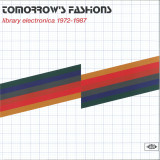
- A1: Coaster - Simon Park
- A2: Rippling Reeds - Wozo
- A3: Leaving - Sam Spence
- A4: Northern Lights 1 - John Cameron
- A5: Spaghetti Junction - Peter Reno
- A6: Space Walk - Rubba
- A7: Prospect - Paul Hart
- B1: Tomorrow's Fashions - Geoff Bastow
- B2: Blue Movies - Brian Wade
- B3: Videodisc - Trevor Bastow
- B4: Interface - Astral Sounds
- B5: Starways - Brian Chatton
- B6: Optics - Unit 9
- B7: Atomic Station - Wozo
- C1: Future Prospect - Adrian Baker
- C2: Planned Production - Warren Bennett
- C3: Future Perspectives - Anthony Hobson Aka Tektron
- C4: Waterfall - Chameleon
- C5: Telecom - James Asher
- C6: Eagle - Simon Park Aka Soul City Orchestra
- C7: Astral Plain - Alan Hawkshaw
- D1: Drifting In Time - Paul Williams
- D2: Earth Born - Brian Bennett
- D3: Soft Waves - Harry Forbes
- D6: Infinity - John Cameron
- D7: Morning Dew - Andy Grossart & Paul Williams
- D4: Topaz - Astral Sounds
- D5: Eternity - Alan Hawkshaw
Nothing said new or modern or futuristic quite like a synthesiser in the 70s and 80s. If you were shooting an advert and you wanted your product or your company to appear forward-thinking and ahead of the game, then you would want something electronic, something out of the ordinary. When TV producers and advertising directors started searching for music that sounded like “Tubular Bells” – and then Tomita, and later Jean Michel Jarre – music libraries such De Wolfe, Bruton, Parry and Chappell had to have the tracks readily available.
Compiled by Bob Stanley, “Tomorrow’s Fashions” varies from advertising jingles and TV themes to space exploration and gorgeous, beatless ambience. Though it’s 40-to-50 years old there’s a real freshness to this music. Older jazz players Brian Bennett, John Cameron, Alan Hawkshaw and others seized the chance to operate a synth; younger pups including John Saunders and Monica Beale were simply intrigued by the new technology being wheeled into the studios. There’s a tangible sense of adventure.
“Tomorrow’s Fashions’” brand of electronica anticipated new age and ambient music. It also had both a direct and indirect influence on pop – the early Human League and the future sounds of Warp Records are all over this collection. Electronic library tracks have been sampled by everyone from MF Doom to Kendrick Lamar.
One person’s primitive and experimental is another person’s space-age lullaby. This was music made in the shadows – in Soho’s secretive music library studios – that has now become desirable and influential. The chances are chunks of it will be sampled and used on hit records that have yet to be written. If the musicians’ aim was to soundtrack tomorrow’s fashions, they couldn’t have got it more right.
DUVEL & GIT HYPER - De Rode Draad
Duvel is een pionier binnen de Nederlandse Rap-scene. Met z'n herkenbare stijl en vooruitstrevende visie heeft hij menig artiest geinspireerd en is zijn naam in steen gehouwen. Dit geldt eveneens voor DJ en producer Git Hyper, wiens naam sinds de 'golden era' van de Rap niet is weggeweest. De samenwerking van Duvel & Git Hyper vormt dan ook een nieuwe HipHop mijlpaal. De solide productie ligt in handen van Duvel en Git Hyper en vormt de fundatie voor de scherpe teksten van Duvel, ondersteund door klinkende namen als $keer&Boo$, Faberyayo, Nosa en Maximilli. Het album wordt uitgebracht door Redrum Recordz, het underground label wat Duvel ooit z'n eerste wapenfeiten bracht. Tezamen met de geschiedenis die hij met Git Hyper heeft, is de muziek het kloppende hart en HipHop 'De Rode Draad'.
When SW. AKA, Stefan Wust, first established SUED in 2011, their compelling, cosmic and anonymous material struck a rare chord, emanating far beyond the freeform Berlin underground in which it was written. Unknowingly, Los Angelean Oliver Bristow had
established a parallel musical universe, founding the hyper-specific label Acid Test, inviting pioneering artists such as Donato Dozzy, Tin Man and Pepe Bradock to indulge in glorious interpretations of 303 control. Without compromise, these were records that quietly
reinvigorated electronic music.
Some years later, a new label, SWOB, unites Wust and Bristow in a very different landscape. And while it would be easy to transform the purity and integrity of this special alchemy into something like nostalgia, yearning for an alternative culture before
influencers and against algorithms, SWOB endeavours to find inspiration in arguably tougher truths.
“By the mid-90s, the techno scene had already reached a breaking point”, recalls Wust.
“Today, the scene is so highly professionalized that it barely resembles what was once called the "underground. But "underground" was never more than the simple reality that music circulated on cassettes among friends or that dubplates were played at illegal
parties... The consequence of today’s professionalization is the death of the original movement.”
Still, no one can kill an idea. Here, inspired by the “Outside Tekno” or “Outkast Techno” that emerged to subvert even back in the day, SWOB are proud to introduce the tekkNOthing trilogy, a new project from SW. beginning on cassette and culminating later
on vinyl. Some years in development, tekkNOthing first began to take shape during the 2020 global pandemic, when ‘the underground’ quickly began to mean something radically different once again.
“I noticed how everything was accelerating while simultaneously spinning in circles – existing in a kind of creative limbo on a global scale”, recalls Wust. “And that’s where true freedom lies: for artists – in any sense – to consciously engage with this necessity. In
other words, irrationality or nonsense can eventually generate meaning.” While hardly capitulating to the contemporary hammering of techno’s most recent developments, tekkNOthing’s first chapter quickly establishes a frenetic pace; tracks like ‘nuclearFALLoutX’ and ‘paslolESmess’ interlock and unfold at a tempo removed from that typically associated with SW. while ‘euroBSS’ and ‘viscousHEAT’ successfully experiment with a more guttural palette, veering far into a rejuvenating and previously uncharted leftfield.
A resolutely human endeavour, the music of SW. is nonetheless written and recorded in the looming shadow of AI, whose free-form adoption of pop culture, hip-hop and techno reminds Wust of “when photography emerged in the 19th century... painting was no
longer bound to naturalism. Similarly, music today is no longer bound to fixed standards – through AI, it can become truly free.”
If not in competition, than taking inspiration from this landscape of new opportunity, tekkNOthing diversifies further with eight unpredictable tracks across part II, taking in stuttering machine-funk on ‘crAMPDUNK’, a freeform organ jam via ‘sonicENdo’ and the
inexplicable piston-percussive, post-punk exotica heard on ‘poorTENOOR#a#01’ DJs with dual cassette decks skills might even find function in the more overtly floor-focused ‘DU ¨NEhowSE#1takeÄ’ or ‘lookLOOK’.
The times may have changed, but the promise remains simple; more music, more freedom.
- A1: Gilb'r - Reaching
- A2: Goldie, Ulterior Motive & Natalie Williams - I Adore Yo
- A3: Aquarian - Death, Taxes & Hanger
- B1: Roni Size - Forget Me Knots (Bailey Remix)
- B2: Special Request - Spectral Frequency
- B3: Tek 9 - Slow Down (Nookie Remix)
- C1: Jonny L - Piper
- C2: Rockwell - Noir (Ulterior Motive Remix)
- C3: Phume - So Many Times
- D1: Lu2K - Prema
- D2: Breakbeat Era - Breakbeat Era
- D3: Hidden Orchestra - Vorka (Dc Breaks Remix)
Listen to all the pearls of Electronic Music withe the releases dedicated to House, Techno & Drum"n"Bass, sélected by the REXCLUB in a doble vinyl collection ! DISCOVER THE NEW VOLUME OF THE REX CLUB COLLECTION : THE DOUBLE VINYL DRUM"N"BASS With : Roni Size * DJ Gilb"r * Phume * Goldie * Tek 9 * Special Request * Rockwall * Aquarian * LU2K * ...
Returning to his roots in live production, OTON shares the 4-track EP Aurora on his imprint Alliance Club. Following his previous neo-rave stylings on the label, Aurora is the product of hours spent in OTON’s Brussels-based studio, where he worked with a DAW-less setup and a newly acquired tangle of gear. Such tools remained instrumental in crafting the sonically rich textures of Aurora and OTON’s forthcoming album, New Forms Of Silence, drawing from a palette of mental techno, hypnotic tribe, and psy tek. Two tracks from the album—due for release in spring 2025—feature on Aurora, comprising the title track and ‘Voltage Controls’.
This 12" contains the first sounds from EDM Z album, which will complete Jodey's 'Electric Dance Music' series. Very limited strictly no repress handstamped piece of Braindance. In the realms of imagination and creativity, there exists a man whose life is as diverse and eclectic as the beats he now produces. Born in the picturesque landscapes of Cornwall in 1953, Jodey Kendrick's journey began with the wind-swept cliffs as his backdrop and the crashing waves as his symphony. As a young lad, Jodey was drawn to the world of cinema. Inspired by the likes of Bruce Lee and Jackie Chan, he found solace in the art of martial arts and action-packed storytelling. With determination in his heart and a fire in his eyes, Jodey ventured into the realm of acting, honing his skills on the stages of local theaters before making his mark in the bustling streets of Hong Kong. It was in the neon-lit alleys of Hong Kong that Jodey Kendrick found his true calling. Embracing the vibrant energy of the city, he immersed himself in the world of Hong Kong action films, earning acclaim for his daring stunts and charismatic performances. With each role, he etched his name deeper into the annals of cinematic history, becoming a beloved figure in the hearts of moviegoers across the globe. But as the years passed and the reels of film kept spinning, Jodey felt the stirrings of a new passion within him. Beyond the glitz and glamour of the silver screen, there lay a world of pulsating rhythms and electronic melodies, waiting to be explored. Intrigued by the allure of electronic music, Jodey embarked on a new chapter in his life, one that would see him swap his martial arts moves for the dancefloor beats of Jungle Tekno and Drum and Bass. In the bustling metropolis of Hong Kong, Jodey found himself amidst a thriving music scene, where the streets throbbed with the rhythms of the underground. Fuelled by his love for music and driven by a desire to create, he immersed himself in the world of music production, crafting beats that reverberated through the city's concrete jungle. Today, Jodey Kendrick stands as a testament to the power of reinvention and the boundless possibilities of passion. From the silver screen to the dancefloor, his journey has been one of constant evolution and exploration. With each beat he creates, he pays homage to the winding path that brought him here, a path that weaves together the worlds of cinema and music into a tapestry of creativity and inspiration.
- A1: Cousin - Manta
- A2: Vision Of 1994 - Warm Night
- A3: Vision Of 1994 - November
- A4: Vision Of 1994 - Ravers Insomnia
- A5: Nice Girl - Unacknowledged Star Nose
- A6: Molez - ÜVeges Tekintetek
- A7: Cosinevi - Lambda
- A8: Gyu - Very Joyful
- B1: Dubtribe Sound System - Sunshine's Theme (Sunshine's Remix)
- B2: Vtl One - Oil Thing
- B3: 99Hp - Sola
- B4: Angus Mills - Herbert St
- B5: Vtl One - Language Machine
Embarking on a 50 minutes journey through the ethereal, TRANSCEND by Moonglade Sound is a meticulously curated double-sided compilation, mixed and compiled by Kirill Matveev, that unveils a realm of sonic exploration.
Featuring a diverse lineup of artists—such as Cousin, Dub Tribe Sound System, Vision of 1994, Nice Girl, Molez, CosineVi, Gyu, VTL One, 99HP, and Angus Mills—the album highlights the allure of the rare and the extraordinary.
Each track radiates a subtle, enigmatic charm, intricately blending avant-garde nuances with deeply resonant soundscapes. The selections are masterfully restrained, yet rich in emotional depth, offering serene moments of reflection alongside vibrant, soul-stirring beats. TRANSCEND delivers an immersive listening experience, bridging the tangible and the transcendent.
This release transcends the boundaries of a traditional compilation; it stands as a musical gem, crafted for discerning collectors who value the exceptional. A true treasure for those looking to elevate their record collection, it serves as a timeless homage to the art of sound.
DJ support: Chris Stussy, M-High, Prunk, Cinthie, Michel de Hey, Locklead, Dennis Quin
When Souls Collide - A soulful fusion of sound and spirit, this track invites listeners to experience a harmonious clash where emotions and rhythms intertwine.
Shy Time - Inspired by the vibrant energy of Chicago, this deep house gem brings a raw, underground vibe that captivates and moves the dance floor.
Feel Free - A high-octane heavy house anthem, 'Feel Free' is designed to electrify any dance floor with its cutting-edge beats and infectious energy. Prepare for some real damage!
Dexed Tek- The perfect B-side to complete the EP, 'Dexed Tek' features dubby chords layered over a powerful beat, creating a deep, immersive soundscape that resonates long after the last note fades.
For its eighth release, Phonotheque Records presents Juan Dairecshion, co-founder of MER and SOEN, and director of Osmosis Records. This double 2x12" vinyl features 11 tracks spanning a wide variety of styles: house, techno, tech house.
The album is marked by its powerful basslines and dystopian vocals, offering a diverse journey that showcases the Uruguayan producer’s broad creative range. From melodic club-ready rhythms to darker and more experimental moments, this selection captures the essence of his versatile style.
Perfect for DJ sets seeking both dynamism and depth in the mix.
Time Ghost Technologies - Ghost One - E-Control “Evasional Feelings” Mini Lp.
A Childhood Intelligence Project.
Our newest record label was born from the urge to represent electro music through our Childhood Intelligence Universe. “Time Ghost Teknologies” is an entity dedicated to timeless and futuristic electro—one of the genres with the deepest roots in the age of technology, which has established itself into the 21st century and beyond. Tales of sci-fi endeavors, forgotten technologies, UFOs and outer world civilizations, yokai and spirits — electro has united mysticism and magic as one of the ancient pillars in electronic history.