Der Multi-Instrumentalist Nate Mercereau hat sein neues Album Excellent Traveler auf Third Man Records angekündigt. Das phantasievolle Album
besteht aus einer Vielzahl von Sounds, die Mercereau auf seinen Reisen, in seinem Alltag und bei seinen Studiosessions mit Künstlern wie André
3000, Shabaka Hutchings, Kamasi Washington, Carlos Niño und anderen aufgenommen hat.
Als kreativer Künstler an der Spitze des modernen Klangs setzt Mercereau gitarrengesteuerte Samples und Synthesizer ein, um eindringliche,
multidimensionale Landschaften zu schaffen, und lädt den Hörer ein, unendliche Räume der Möglichkeiten zu erkunden.
‘Leon’ is the highly anticipated fourth album from Grammy Award-winning recording artist, songwriter, and producer Leon Bridges. With 13 tracks featuring Leon’s signature storytelling and a unique blend of organic genre alchemy, ‘Leon’ is his most poignant, powerful, and personal work to date. He takes fans on a trip through the heart of Ft. Worth he knows best, the things he holds dear, and the people and places that shaped him. Featuring production by Ian Fitchuk (Beyonce, Noah Kahan), Daniel Tashian (Kacey Musgraves), and Tyler Johnson (Harry Styles, Miley Cyrus), Leon describes the album as “somewhat of a self-portrait… I’m excited to share these stories about my home, about nostalgia, about my upbringing, about where I’m from, with all of you. I hope this music brings you back to your roots and your journey.”
Quote from Leon:
“‘Leon’ has been a long-time coming. I started writing pieces of it as far back as ‘Gold-Diggers Sound.’ They didn’t fit what I was trying to do with that album and I tried moving on. But I couldn’t shake them because they’re part of me. And, if I’m honest, also because I think this is some of my most excellent work yet.In many ways, Leon has been in the works since my childhood. This record is about simpler days. It’s about time spent in my beloved Fort Worth and the experiences that made me the man I am today. It’s soulful music in the truest sense - it’s imbued with my soul.I’m excited to share these stories about my home, about nostalgia, about my upbringing, about where I’m from, with all of you. I hope this music brings you back to your roots and your journey.”
Written over the last two years - in Somerset, Los Angeles, and London; hotel rooms and tour vans; good places and rough patches - Welcome The Night is a mutant document of Sad Night Dynamite’s mission and scale. Deliberately chaotic, their grab-bag approach to sound creates an album ranging from dark club bangers, trippy folk, hip-hop and bugged-out storytelling. An ‘anything goes’ space that offers total creative freedom through absurdism.
The unconscious and unknown must be really nice places. In any case, if you take the second album of Menelaos Tomasides under his given name as travelogue. A trip into dreamlike territory, yet concrete enough, a journey without target yet looking forward and looking back into familiar places, „dreamhike“ both continues and departs from the style Menelaos has found earlier, in “When the Moon Comes Through”, or his more conceptual-intentional “31 Minuten” works. As the album title - which roughly translates to “dream hiking” but also hints on “walkabout” and “songlines” – suggests, we are rambling between the real and the imaginary. From the bucolic border triangle of Belgium, Germany, and the Netherlands to the buzzing streets of the capital of Cyprus, where Menelaos has lived for many years, the tracks are about real places, about real experiences and emotions yet interwoven with a dreamlike fabric. Something that is just not tangible, yet substantial and palpable. Something concrete that manifests in the genuine and special sound design of this records - basically all of Menelaos’ works - his really special treatment of dynamics and loudness. It is one of the very few records where the established language of music making, specifically Techno, House, Dub, and early 2000’ Electronica, the clicks, thumps and plops from an earlier age of electronic music, transmogrify into slow movements of something new. Something that is gentle and truly personal, looking inwards. There are four-to-the-floor beats, there is wobbly bass, and dubby chords, even sublimated clarion calls. There is an immense energy in these tracks, the sheer materiality of low frequencies of a massive sound system manifested in a tiny room. Yet it is without any aggression, stripped bare of sonic pressure. It is quiet music no matter how high you turn up the volume. A rare treat, that requires exceptional skills and exceptional restraint and control on the technical side of music making. Probably it is a result of Menelaos specific combination of instinctual, intuitive approach to making music, which meets a genuine love for sound in seemingly endless loops of refinement that can lead to such a result as „dreamhike“. The elegant floating balance of control and playful experimentation manifests for example in a track that continues the ongoing collaboration with seasoned Cologne improviser Achim Fink on bass trumpet. Not only in this respect, the album can be described as a product of openness. It comes from a lot of taking in the world, of travel, of places and people met, of friendship and conversation (not necessarily with words). The deep trip of “dreamhike” further manifests Menelaos as one of the truly independent voices of electronic Cologne and beyond. Somewhat alike in character and attitude probably to what late Pete Namlook has established for Frankfurt with his label Fax +49-69/450464 (though ultimately warmer and much less uncanny) Menelaos has found his very own sound and vision. Music that answers to no one but speaks to everyone. Uncompromising yet gentle to the core: kind sounds from a kind spirit, arguably the most extraordinary and valuable quality music can have these days.
out of Stock
Last delivered 2 years ago available to reorder, subject to availability
Formed in 2007, The Boxmasters have recorded an impressive and diverse catalogue of music that touches on their love of a wide array of influences, but most importantly, the rock and roll of the 1960’s. Love & Hate In Desperate Places is their 17th album and the ten songs evince a wry perspective on human nature and love. The lively melodic rock cloaks the wry wit of the lyrics. The album was produced by The Boxmasters, Billy Bob Thornton and J.D. Andrew, who also wrote every song. Listening to The Boxmasters, one can hear obvious odes to the Beatles, Byrds and Beach Boys, but also important to The Boxmasters are The Mothers of Invention, Kris Kristofferson, John Prine and Big Star. Since forming The Boxmasters, several long-time friends have contributed to the sound of the band, but the core of The Boxmasters has always been Andrew and Thornton. As primary songwriters, the sound of the Boxmasters has been an evolution as the duo constantly strive to find new inspiration, new sounds and new ways of expressing what is in their hearts and on their minds. But at the core, there is a backbeat, a lyric with meaning and music played with emotion. As a touring band, The Boxmasters have cultivated a rabid cult fanbase across the United States and Canada. Opening for the likes of ZZ Top, Steve Miller, George Thorogood and Kid Rock The Boxmasters have proven to win over large audiences. As a headliner, frequent stops in Kansas City at “Knuckleheads”, Springfield, Illinois at “Boondocks” and “Merrimack Hall” in Huntsville, Alabama have shown dedicated yet still growing audiences. Two appearances at Levon Helm’s “Midnight Ramble” in Woodstock, New York were highlight performances for the band, as well as the “Ramble at The Ryman” that Levon hosted in 2008. The Boxmasters performed on “The Grand Ole Opry” in 2015, another in a growing resume of must-play venues.
LP+7" (Clear Vinyl). When the Ramones lost it, the Zero Boys found it; Adding a slam brigade fist to the Blitzkrieg Beat. The Zero Boys managed to come with one of the best early 80's punk records, or one of the best records ever, period. From 1979 to 1983, the Indianapolis-based Zero Boys were the finest hardcore blitz in the Midwest if not all the lower 48 states. Compiled and released as a post-mortem following the band's breakup, History Of_ is the proof, if more was needed, that their take of American hardcore wasn't all white bread numbers. Yeah, they played shows with Minor Threat, Dead Kennedys, Subhumans, and others but in Terry "Hollywood" Howe's guitar there was harmonious terror and unstoppable cadence. Terry's licks and chops _ a leap beyond two or three chord punk _ offered a zone and measured count for drummer Mark Cutsinger and bassist David "Tufty" Clough, a rhythm unit in par with the Minutemen if not The Meters, to run lines like quicksilver. Meanwhile, frontman, Paul "Z" Mahern provides a constant wash from beginning to end. Originally released in 1984 with a limited-edition reissue in 2009, this 40th anniversary edition includes the original LP of `History Of...' and a 7" featuring four live recordings never previously pressed to vinyl and recorded at iconic hardcore/punk venue Crazy Al's in 1980: "Livin' In The 80's", "Stick To Your Guns", "Commies", and "I'm Absent".
Vinyl Packaging: Full color jacket featuring original artwork by Callum Rooney. Can I Communicate With the Unknown? is the new album from Go By Ocean, moniker of Northern California based singer / songwriter / producer Ryan McCaffrey. Co-produced alongside Tim Bluhm (The Mother Hips) and David Glasebrook, the album features contributions from a wide cast of characters, ranging from the tight knit community of Phil Lesh’s much loved Terrapin Crossroads to the wider West Coast indie-rock scene, including members of The Mother Hips, Sugar Candy Mountain, ALO, Tea Leaf Green, and more. Building upon McCaffrey’s catalog of songs, the new album finds inspiration in the down-to-earth music of 1970’s Marin County, when songwriters like Michael Hurley and Jesse Colin Young lived out in Olema and Point Reyes, the kind of places where songs blow in on the breeze from the Pacific Ocean. Lyrically, the album traces a hero’s journey as the narrator struggles with addiction, eventually finding peace and freedom in a tumultuous world, wrestling with metaphysical and spiritual ideas along the way. Highly anticipated new album from Go By Ocean, co-produced by Tim Bluhm of The Mother Hips. Press coverage includes reviews and features in Austin Town Hall, Glide Magazine, Psychedelic Baby Magazine, and more. UK/EU Publicity handled by Chris Carr & Mal Smith. “...washed with breezy beachy vibes…” - Glide Magazine // “...marries the bright guitar arrangement of The Byrds with an updated indie appeal.” - The Wild Is Calling // “...you can almost feel the hope over the hills waiting for you with open arms.” - Austin Town Hall // “‘...satisfyingly artful and I would venture to guess you’ve never heard anything quite like it.” - Ear To the Ground Music // “We will be spinning the hell out of this record for the rest of the summer.” - Up To Hear Music // “...it’s not hard to imagine some of these songs floating in on the coastal fog, ascending ghosts indeed.” - Psychedelic Baby Magazine
'A Handful Of Memories' is the result of an appreciation upon reflection of Adam's
past experiences, trips with his family, his touring families and friends in some
places that hold special memories for him.
To reflect the personal, minimalist nature of the tracks, no effort was made to
remove any of the pedal noises or enhance the tracks in any way, as Adam
wanted them as exposed and natural as they can be.
The pandemic had a hand in Adam's return to modern classical piano after 25
years. As a highly sought- after touring pianist, Adam played extensively with
Black Sabbath, Ozzy Osbourne, Travis and many others. When the pandemic
started, and the music world paused, he was halfway through a South American
tour with Martin Barre on his 50th Anniversary Tour of Jethro Tull. Forced to leave
his gear in Peru and hurry home before the airports closed, a period of reflection
had started and this album is a result of that.
Following a ten-year hiatus, multi-instrumentalists Rafael Anton Irisarri and Benoît Pioulard return with »How to Color a Thousand Mistakes«, their third LP together as Orcas. Building on the electronic minimalism of »Orcas« (2012) and the Twin Peaks-inspired haze of »Yearling« (2014), the duo have expanded their sound and vision into a full-spectrum ensemble.
In the time since their last major collaboration, Irisarri and Pioulard have done plenty on their own, while also traversing significant life changes: relocation from Seattle to New York, separation and divorce, illness, hospitalizations, and the loss of siblings, parents, and friends. Yet from these tribulations, they gleaned inspiration to reconstruct their lives, creating music with new collaborators and partners. Recorded in a variety of studios and cities including Brooklyn, Cambridge, Oxford, Seattle, and upstate New York, the resulting album, under the tutelage of UK producer James Brown (Arctic Monkeys, Kevin Shields, Nine Inch Nails), is a patiently-crafted beast, equally inspired by impressionism, British new wave, and dream pop.
With Irisarri’s guidance and Brown’s encouragement, Pioulard brings his velvety voice to its harmonized peak on songs like »Wrong Way to Fall« and the Durutti Column-indebted »Fare«. Where his most recent solo albums for Morr Music (»Sylva« and »Eidetic«) navigated foggy forests of ambient pop and stacked tape loops, here his characteristic blur shifts into focus with a unique degree of clarity and confidence. »How fare against balance do I / Navigate my errors?«, Pioulard sings in a heartbreaking tenor, echoing the album’s broader themes of introspection, grief, loss, trial and trauma.
Lead single, »Riptide«, is a summary of Pioulard’s life changes and personal upheavals in the past decade, »flitting eastward toward a yen deep in the past« and learning to glide through the tumult of ocean waves, as a metaphor for the punches one takes in pursuit of grace. Its towering, key-changing midsection arrives with the monumental drumming of Slowdive’s Simon Scott, a long-time friend and cohort who appears on most songs in the set. Scott’s quintessentially English, jazzier approach offers a balance of force and restraint as the backdrop for Irisarri’s majestic guitars, analog synth lines, and Martin Heyne’s Fender Rhodes counterpoints.
Second single, »Next Life«, began as a sketch by Scott, and reached its final form in the hands of Pioulard and Irisarri, at a point that each had endured major concurrent losses, finding a commonality in the need to gaze over the horizon while acknowledging the unavoidable bittersweetness of letting go – not only of people, but of routines, places, and expectations. It’s one of Orcas’ most nuanced pieces, with a mid-tempo, sunset glow that unfolds into a sparkling, slide-guitar finale as it disappears in the rear view.
On third-act highlight, »Bruise«, Scott is doubled on the drum kit by MONO’s Dahm Majuri Cipolla, whose Liebezeit-influenced metronomy anchors a nimble bass groove from Andrew Tasselmyer (of Hotel Neon), and some of the album's most syncopated, spaced-out interplay, courtesy of Puerto Rican guitar player Orlando Méndez (a childhood friend of Irisarri’s). Originally a droney, fingerpicked guitar demo, »Bruise« is the most storied composition here, having gone through almost a dozen versions and lyrical edits, with Brown distilling hours of improvised performances into the final arrangement.
Throughout »How to Color a Thousand Mistakes«, Irisarri uses his deep well of production experience to paint the stereo field with meticulously designed textures, exemplified on the slow burn of »Heaven’s Despite« and the heady rush of »Swells«. As a mixing and mastering engineer with Black Knoll, he has built a client list that reads as a who’s-who of modern, forward-thinking composition, including Temporary Residence, All Saints Records, and Ghostly International, among many others.
As with previous collaborations, Irisarri and Pioulard bring disparate styles and specialties to the table, but with an interpersonal dynamic that transcends friendship into brotherhood, their open-minded workflow and mutual respect are evident at every turn. »How to Color a Thousand Mistakes« brims with tight, complex art rock songwriting, masterful production, and sonic versatility, informed by a plethora of genres and tonal hues. The title might promise answers, but the gravitational center of the album is the dawning realization that, as you reckon with the infinite whims of the cosmos, there could be none.
The American psych pop quintet Paper Garden had established a solid reputation performing to university students in their native New York and in surrounding states in 1967-68 before being commissioned to cut a debut LP with British producer Geoff Turner for Musicor, the resultant sessions yielding a self-contained concept album of totally new work. With sitars and tabla on some songs trading places with baroque elements and orchestrated interludes, the breezy psych pop gets pulled in all manner of directions and often sounds closer to the British psychedelic sound than anything Stateside. A rare and rich listening experience!
After briefly replacing Eric Clapton in John Mayall’s Bluesbreakers, guitarist/bassist Geoff Krivit formed Doctor K’s Blue Band with pianist Richard Kay and singer/harmonica player Mick Hasse, the lineup completed by bassist Harold Vickers, slide guitarist Roger Rolt and future Steve Hillage drummer Eric Peachey. Their self-titled debut had top-notch renditions of blues classics such as ‘I Can’t Lose,’ ‘Key To The Highway’ and ‘Pet Cream Man,’ as well as spirited originals such as ‘Strobe Lemming’s Lament’ and the piano stomp ‘Crippled Clarence,’ but the album failed to break through. Grab a copy of this rarity to be blown away!
Hard-rocking Brooklyn trio Sir Lord Baltimore’s highly sought-after debut album is a legendary precursor of the heavy metal genre, a 1971 Creem review of the disc perhaps the first to ever use the term. The group benefited from the songwriting and production team of Mike Appel and Jim Cretecos, Appel the future manger of Bruce Springsteen and Cretecos already heady from success with The Partridge Family; recorded at Vantone Studios in New Jersey, it
was mixed to fine effect by Eddie Kramer at Electric Ladyland, fresh from his work with Jimi Hendrix. Guitarist Louis Dambra co- arranged the material with Appel and Cretecos; he had earlier played in garage band The Koala as Louis Caine, and here his screeching guitar
is a major draw, backed by plodding bass from Gary Justin, as front man John Garner shrieks his vocals while pounding furious drumbeats. Aside from a tough cover of Ray Charles’ “I Got A Woman” and a track inspired by Yeats’ poem “Lake Isle Of Innersfree,” the album features heavily-stoned acid rock originals, delivered the Sir Lord Baltimore way.
The daughter of a Brazilian mother and German father, Astrud Gilberto achieved international prominence with “The Girl From Ipanema,” an inauspicious debut
recorded for the landmark album her husband, Joao Gilberto, created with Stan Getz in 1963. Moving to the USA, where she was subsequently based,
she continued her solo career and also toured with Getz, with whom she later began a relationship. Over-the-top classic That Girl From Ipanema allowed
her to revisit the hit in the sweeping high-fidelity full-spectrum setting of a disco big-band,
the album overseen by MFSB and Salsoul mainstay, Vince Montana.
Along with individual takes of Cole Porter’s “Love For Sale” and Harry Nilsson’s “The Puppy Song,”
original “Far Away” benefits from the understated trumpet of Chet Baker, but the album ultimately revels in all things disco,
the Brazilian element coming courtesy of percussionist
Dom Um Romao on select tracks. Crank up the volume and tune in to the brass, piano and percussion that percolates under Astrud’s characteristically soft
and sultry vocals to fully experience this underrated gem.
out of Stock
Last delivered 6 years ago available to reorder, subject to availability
Dando Shaft’s self-titled sophomore set continued to build on the reputation established by their excellent debut, and now the arrival of female singer Polly Bolton added another textural dimension, as heard most clearly on the soaring ‘Riverboat,’ the absence of drums throughout allowing us to fully appreciate the players’ excellent musicianship, with Martin Jenkins’ masterful mandolin, flute and fiddle drawing the sound to higher realms. As it was issued on RCA’s prog sub-label Neon, which folded soon after its release, the LP is as rare as it is excellent—another must-have for fans of progressive folk and psychedelic folk rock.
Experimental prog act East Of Eden’s daring debut album Mercator Projected was released by Deram in 1969. Former Graham Bond Organisation bassist Steve York and drummer Dave Dufort supply the tough rhythmic backbone on which frontman Geoff Nicholson weaves his edgy guitar, with Dave Arbus’s electric violin supplanting what would normally be played on rhythm guitar, Adrian Martins’ sax and flute completing the picture with central European melodies. Hard rocking, melodically meandering, and including a one-off take of ‘Eight Miles High,’ this is prog with a bold difference. A killer set from start to finish!
Jaqee – is rhythm and life ”Places becoming journeys in themselves… Different places where I have lived and learned, places that have made my heart beat, the emotional realms that I have experienced. This is where it all starts, every time. Where I am is where it happens, because I am, there. Here.” She sings. She laughs! And she cries, too. Jaqee cannot tell when music and singing became her life, it has ”just always been there, in my head” she says. Now with the fourth album she has taken a closer look at herself, from every possible angle. No hiding. Different phases, different sides of her personality and musical creativity are all there. All as one. ”I am a diaspora kid, I fell in love with all kinds of music, I let myself embrace it all, because good music, is good music. All the way from Uganda at age 13 to the new home and culture in Sweden, then leaving Sweden as an adult for Berlin – has made me the Jaqee that I am”, says the Ugandan /Swedish artist who also received a Swedish Grammy nomination for her past work. Being on the move is without a doubt an important part of her life. “For me travelling is about being exposed to different perceptions, situations, cultures and extreme emotions, it has always made me grow. How many times have I not thought that: I wouldn’t have experienced this or that, if hadn’t been here. I love that feeling!” Jaqee’s music reflects this constant movement and progress. The album is inspired by places like Berlin, South Africa and Jamaica. The trip to Jamaica resulted in the only collaboration track on “Yes I am” recorded in Kingston with reggae artist Anthony B. Teka, the “Kokoo Girl” and “Yes I am” Producer says: ”This time around, like on the last album, we have worked with our colleagues in different countries. Musicians we love and musicians that are inspiring like Martin Hederos (The Soundtrack of our lives) who arranged the strings on the album. We also had New York drummer Daru Jones of Rusic Records play on some tracks. All these talents enhance the idea and expression that we wanted for “Yes I am”. With the album done, it is again time to hit the road and tour for Jaqee. “Getting out there and meeting the crowd is a high. We laugh, we dance and we get loud together. This is the best part of working with music – having a good time together. Music is a universal language.” On composing music, she admits that this time, more than ever, the words matter. Newly found motherhood has made this album in particular a significant legacy. Every song has a life punctuation of its own she has not limited herself by thinking in genres. Making the tone very straightforward. “The melodies and lyrics are closely intertwined, how I sing a word makes all the difference. Even though I love word play, it has to be very clear. Since I am not educated in reading music, I instead visualize and hear it, it seems to be the way my system works. It is all about rhythm and life, it is “YES I AM“.
Octave One continues to visit some classic Never On Sunday tracks with a second installment of their Messages From The Mothership series. This latest 12" finds the pair release two different Mothership mixes of 'The Bearer' and 'Contemplate'.
The pioneering Detroit brothers have shown a different side to their sound with the Never On Sunday project, both back when it was devised in the early nineties, and more recently when they have looked back over some of the project's key tracks and added a contemporary spin to them. Already this year the Burden Brothers have offered up new takes on 'Price We Pay' and 'A Better Tomorrow' as well as dropping brand new cut 'Mirror Image' and now their fine form continues on this latest release on their own 430 West label.
The A-side features a new Mothership Remix of 'Contemplate' from 2022 that unfolds over an epic 11 minutes of enthralling deep techno. The synths bring classic Detroit soul and the impassioned vocals layer in emotion to the sleek, compelling drums. The Instruments Version strips out the vocals and places more focus on the sublime rhythm and drums.
On the B-side, ' The Bearer' from the 2023 album Never On Sunday gets a fresh Mothership Dub. It is another masterful and almost 12-minute journey that rides on compelling drums and is lit up with a majestic vocal that soars up high while the warm, dubby undercurrents keep things moving in dynamic fashion and smeared cosmic synths bring a great sense of scale. A Mothership Instrumentals version closes out the package.
These are for more fresh perspectives on timeless house and techno fusions from the ever-innovative Octave One.
out of Stock
Last delivered 20 months ago available to reorder, subject to availability
U.S. Cinematic outfit Whatitdo Archive Group returns to explore the worlds of Mid-Century Exotica and Library Music with "Palace Of A Thousand Sounds," out on May 5th.
From the instrumental cinematic-soul outfit behind 2021's critically acclaimed The Black Stone Affair comes Whatitdo Archive Group's most recent foray into the realms of the esoteric and arcane, and their most adventurous album to date: Palace Of A Thousand Sounds, available May 5th, 2023 on Record Kicks on limited edition LP, CD and digital platforms.
After The Black Stone Affair enthralled record collectors by traversing the cinematic landscape of an imagined 1970s Spaghetti Western, Palace Of A Thousand Sounds finds Whatitdo Archive Group entrenched deeper in the worlds of mid-century exotica and library music—from the Tropicalia-steeped Amazon to the minor key tonalities of the far-out Near East.
When the dust finally settled from their debut album, composer and tireless sound scientist Alexander Korostinsky set out to discover the band's new direction, with the ultimate goal to breathe new life into the mid-century era sound with the compass of modernity as his guide.
From its conception in 2021, Palace has sought to carry on a legacy set in motion by the likes of Martin Denny, Les Baxter and Juan García Esquivel. Korostinsky, guitarist Mark Sexton, and drummer Aaron Chiazza recorded the album in marathon sessions from Korostinsky's Studio "A," in Reno, Nevada—a mysterious sonic laboratory where the year 1970 has yet to happen, and vintage analog equipment interfaces with modern musical perspectives and experimental recording techniques to produce era-defining sounds.
Not content to appeal to the sensibilities of armchair anthropologists, Palace Of A Thousand Sounds finds the band interrogating the genre itself while making studious tributes to the real places and times it draws from. It's in this tension between here and there, fantasy and reality, that Whatitdo Archive Group find their groove.
Drawing from a century of pop and folk sounds from around the world the way only 21st-century crate-diggers can, Palace is rooted in an undercurrent of heavy funk that is decidedly here and now. Whatitdo Archive Group showcase the breadth of their influences with disarming confidence, equally at home behind sweeping harp, loungey vibraphone or Turkish bağlama saz. A lush seventeen-piece orchestra commanded by award-winning composer Louis King (Janelle Monáe, Monophonics) completes the instrumental mélange, enticing listeners to imagine a borderless planet unified by melody and rhythm.
The album is unafraid to explore the strange and uncomfortable in pursuit of an authentic musical identity, subverting expectations in pursuit of forwarding the genre while paying homage to its past. Fans will appreciate the architectural complexity of the record accessible only through multiple listens—each visit to the palace yielding new details to marvel at, curiosities to ponder, grand mysteries to explore.
Once the needle drops, W.A.G carefully guides you from room to room, sound to sound within the walls of the album's sonic palace. Listening becomes an aural journey providing glimpses into different worlds both real and imagined; you are everywhere and nowhere all at once—a guest in the grand halls and hanging gardens of time and sound.
Steeped in obscurity, a cult following of crate-diggers and musical oddity collectors has been brewing over the mysterious releases of the Whatitdo Archive Group. Surfacing in 2009 from the high deserts of Reno, NV USA, this three-piece recording collective(Alexander Korostinsky, Mark Sexton and Aaron Chiazza) focuses solely on curating, performing and preserving esoteric soundtrack, library and deep-groove collections. As an onlooker, it's hard to tell whether the music they are procuring is actually archival, music of their own creation, or both. Their debut LP The Black Stone Affair, the formerly lost soundtrack music of a once-shelved Italian cinematic masterpiece, was released in 2021 and received praise from the likes of Wall Street Journal, Mojo Magazine, Uncut, Shindig, Blues & Soul Magazine, BBC 6, FIP Radio (FR), KCRW (US), JazzFM (UK) and more. Two years later, the Whatitdo Archive Group is back. Get ready for an exotic adventure with their sophomore full-length effort: Palace of a Thousand Sounds.
out of Stock
Last delivered 2 years ago available to reorder, subject to availability
On Pedro The Lion’s new album Santa Cruz, critically acclaimed musician David Bazan returns with a new chapter in his ambitious and ongoing recording project - 5 albums devoted to places he lived in throughout his life. Santa Cruz is Bazan’s third album in the series and follows up where 2022’s Havasu and 2019’s Phoenix left off. Tracks like "Modesto" and "Little Help" foreshadow Bazan's exposure and ultimate love of classic rock n' roll records, while songs like "It'll All Work Out" showcase his unique approach to synthesizers, something he introduced with the 2005 self-titled Headphones album. The stories on Santa Cruz highlight Bazan’s teenage years and solidifies what he sees as an exposition in a traditional three-act structure. After 25 years refining and building what he calls his “garden of songs,” David Bazan has sold hundreds of thousands of albums, performed in sold-out venues and living rooms around the globe, and played high-profile live sessions with the likes of NPR’s Tiny Desk, KEXP, WNYC’s Soundcheck, WXPN’s World Cafe and many others. His music has been featured in outlets such as The New York Times, Pitchfork, Rolling Stone, SPIN, Vox, Paste, Aquarium Drunkard and others.
About 10 years ago I tried to contact Dutch artist and scientist Felix Hess, when he was still alive, but never got a reply. Years later, in 2022, I was talking to Frans de Waard, who told me he was administering the sound archive of the late Hess together with Mark Poysden. Together we started working on an album to celebrate his life and many accomplishments. It includes selections from all the highly collectible Frogs releases from the 80's and 90's, while the artwork is sourced from his Zenga collection, unifying his two greatest passions.
While in Australia conducting research for his PhD thesis on the aerodynamics and motion of returning boomerangs in 1975, Felix Hess heard frog choruses for the first time. The hills, close to Adelaide, generating amazing natural rhythms and waves of spatial sounds. He started traveling to the outback to record similar frog choruses, camping in quit places to enjoy these wonderful nightly concerts.
Mystified by how the waves and rhythms of frog choruses could emerge without a conductor or a score and by the physics of this method of communication, he started to research the phenomenon in 1982 by designing and building small electronic sound creatures that could respond to each other in a similar way. These creatures and his various other installations earned him international acclaim.
During the 1990s, Hess was invited to Japan many times to present his work and he became interested in Zen Buddhism. One summer evening in 2001 he visited a museum in Berlin and saw actual Zen art for the first time. Overwhelmed by the extraordinary power radiating from this and similar artworks he became addicted to Zenga and gradually built up one of the world's most representative collections of hanging Zen scrolls. A collection he named Kaeru-An (Frog Hut) to honor his original teachers, the frogs
If you can judge an artist's quality by the company they keep, then FaltyDL is up there with the best of them. The label history of the producer known to his friends as Drew Lustman reads like a "who's who" of 21st century electronic music imprints - Ninja Tune, Unknown to the Unknown, Planet Mu, Studio Barnhus, the list goes on.
WithIn the Wake of Wolves, we can now add Central Processing Unit to this illustrious roster. The Sheffield label joins the party at a notable juncture - while FaltyDL has kept up an impressive clip of releases throughout his career,In the Wake of Wolvesis both the NYC-based producer's first LP for two years and his first full-length release away from his own Blueberry Records for almost a decade.
In the Wake of Wolvesproves to be both a great match for CPU and also further evidence of the label's burgeoning sonic palette. While CPU has built its reputation on top quality electro joints, recent releases have delivered adventurous electronica experiments (Proswell'sPeople Are Giving And Receiving Thanks At Incredible Speeds), hard-wired breakbeat techno (Baby T'sI Against I) and golden-age synth explorations (twenty-fifth anniversary reissues of Bochum Welt'sDesktop RoboticsandFeelings on a Screen, both of which first emerged via the legendary Rephlex Records).In the Wake of Wolvestakes things further still - this is a brilliantly genre-voracious record, one which marries the rhythmic cut-and-thrust that we have long known FaltyDL for with all manner of adventurous stylistic choices.
Those familiar with the FaltyDL experience will recognise the trademark blend of synthetic grit and harmonious softness in album opener 'I Need You'. This could pass for Four Tet or even Hannah Diamond at points, the steady build of pulsing synths and looped vocals recalling a more mysterious version of the PC Music sound. 'I Need You' stands shoulder-to-shoulder with any of FaltyDL's other great atmospheric album openers - no small feat given the competition. 'Further', the following number, is yin to 'I Need You's yang. This is a pulsating track which gleefully skitters between machine-funk, tubing darkside bass and breakcore-adjacent drum programming, all of which is peppered with some genuinely beautiful work in the higher synths.
'Further' sets the scene for several of the more club-facing cuts here. 'Minds Protection' similarly features all manner of strange percussive sounds to surprise the ear, and it also boasts a thrilling mid-section in which the bottom falls out the track to incorporate a short snippet of blown-out junglism. With its tunnelling low-end and clattering drums, 'Full Spectrum' kicks off a delightful run of grime-influenced joints which take cues from Mr. Mitch, Logos and many of those other producers who took the Eski sound to exciting new places in the 2010s. 'Forget Me Not', the album's longest track which is placed three spots from the end, feels like the record's climactic point - a pitter-patter post-house joint that has a hint of Caribou in its DNA, it'll take the clubs by storm.
But as much as FaltyDL may consistently bring the heat in terms of the beat programming, the thing which has long marked Lustman out as a special talent is the musicality of his compositions. No matter how much drums clatter or bass bangs, FaltyDL always hooks the ear back in with a sonorous synth or pleasing nugget of melody. Nowhere is this more apparent than onIn the Wake of Wolves' more weightless numbers, each startling in their prettiness. 'Half Spectrum' is a new-era beat track packed full of ear candy; the keening keys of 'GasGas' are potent with feeling; and on the album's closer, the evocatively-titled 'Mila Stans In A Meadow For The First Time Eating Strawberries', we get a gorgeous synth vignette that joins the dots between the modern mastery of Yung Sherman and the most emotionally affecting moments of Aphex's Twin's catalogue.
At once wistful and hopeful, archival and futuristic, FaltyDL's brilliantly unpredictableIn the Wake of Wolvesis a feather in the cap for both this seasoned producer and the Central Processing Unit label.
RIYL: AFX, Bochum Welt, Mark Fell, Mrs Jynx, Boards of Canada
out of Stock
Last delivered 16 months ago available to reorder, subject to availability
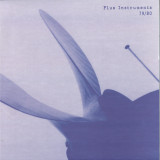
While she was still a member of Nasmak, one of the leading bands of the Dutch ultra-movement, Truus de Groot started Plus Instruments in 1978 with herself as the sole member. When the project evolved, she found a wide range of rotating collaborators like Michel Waisvisz, Lee Ranaldo and James Sclavunos. Plus Instruments was about freedom and the live performances were largely improvised. The sound minimal but captivating. The music always came from within, but De Groot was also triggered by bands like Red Crayola, Suicide, DAF, Wire, Per Ubu, Devo and the No Wave scene in NY. She was always experimenting with primitive multi-track recording and whatever crappy gadgets she could find. Always looking for a gritty, dirty sound and bizarre overtones.
At a young age she travelled to New York and began to immerse herself in the nightlife of the city that never sleeps. Here she found true creativity, passion and expression. The club scene was alive but highly competitive, so this fearless Dutch girl would just knock on promoter’s doors to get gigs booked at places like CBGB’s, Peppermint Lounge, Underground and the Pyramid. De Groot eventually settled in the United States and never stopped experimenting with sound. In recent years she reinvented Plus Instruments and led the group into new territory.
The recordings for this LP were made by De Groot at home and the music is experimental, minimal, industrial but also playful, sounding nothing like most of the later material. 14 tracks in total of which 7 are taken from the elusive and impossible to find self-released debut cassette as ‘Truss Plus Instruments’ which was sparingly distributed by Nigel Jacklin and his legendary Alien Brains fanzine in 1980. The remaining 7 tracks are from the same period (1979-1980) and were carefully selected from the vast archive of De Groot. We are glad to present this anthology that serves as a long overdue testimony to the formative phase of a unique female pioneer of electronic music.
out of Stock
Last delivered 3 years ago available to reorder, subject to availability
Chelsea Wolfe has always been a conduit for a powerful energy, and while she has demonstrated a capacity to channel that somber beauty into a variety of forms, her gift as a songwriter is never more apparent than when she strips her songs down to a few key components. As a result, her solemn majesty and ominous elegance are more potent than ever on Birth of Violence.
There is a core element to Chelsea Wolfe’s music—a kind of urgent spin on America’s desolation blues—that’s existed throughout the entirety of her career. At the center, there has always been Wolfe’s woeful longing and beguiling gravity, though the framework for compositions has continuously evolved based on whatever resources were available. Her austere beginnings were gradually bolstered by electronics and filled out with full-band arrangements. The music became increasingly dense and more centered around live performances. Her latest album, Birth of Violence, is a return to the reclusive nature of her earlier recordings
“I’ve been in a state of constant motion for the past eight years or so; touring, moving, playing new stages, exploring new places and meeting new people—an incredible time of learning and growing as a musician and performer,” Wolfe says of the era leading up to Birth of Violence. “But after awhile, I was beginning to lose a part of myself. I needed to take some time away from the road to get my head straight, to learn to take better care of myself, and to write and record as much as I can while I have ‘Mercury in my hands,’ as a wise friend put it.“ Birth of Violence is the result of this step out of the limelight. The songs stem from humble beginnings—little more than Wolfe’s voice and her Taylor acoustic guitar. Her longtime musical collaborator Ben Chisholm recorded the songs on a makeshift studio and helped fill them out with his modern production treatments and the occasional auxiliary flourish from ongoing contributors Jess Gowrie (drums) and Ezra Buchla (viola).
The album opens with “The Mother Road,” a harrowing ode to Route 66 that immediately addresses Wolfe’s metaphoric white line fever. It explains the nature of the record—the impact of countless miles and perpetual exhaustion—and the desire to find the road back home, back to one’s roots. Songs like “Deranged for Rock & Roll” and “Highway” offers parallel examinations on the trials and tribulations of her journeys while the ghostly “When Anger Turns to Honey” serves as a rebuttal to self-appointed judges.
While the record touches upon tradition, it also exists in the present, addressing modern tragedies such as school shootings in the minor-key lullaby “Little Grave” and the poisoning of the planet on the dark wind-swept ballad “Erde.” But the record is at its most poignant when Wolfe withdraws into her own world of enigmatic and elusive autobiography. Much like Alan Ginsberg’s hallucinatory long-form poem Howl, the tracks “Dirt Universe” and “Birth of Violence” weave together specific references from her past into an esoteric overview of the state of mankind. Though the lyrical minutiae remain secret, the overall power of the language and delivery is bound to haunt the listener with both its grace and tension.
“These songs came to me in a whirlwind and I knew I needed to record them soon, and also really needed a break from the road,” Wolfe says. “I’ve spent the past few years looking for the feeling of home; looking for places that felt like home. The result of that humble approach yields Wolfe’s most devastating work to date.
European Headline tour confirming now for 2020. UK/EU Publicity handled by Lauren Barley at Rarely Unable. Immense support from Press, including coverage with NPR, Pitchfork, FADER, Vice, Revolver, Decibel, Under The Radar.
Audionaut sound adventurer Neil Stringfellow (aka Audio Obscura) makes a welcome return to Subexotic with his many-splendoured mixed media project Acid Field Recordings In Dub. Following years of avid field recording, Neil explains how it came about through a series of epiphanies: "It sort of started after I did a field recording introduction weekend workshop with the legend that is Chris Watson (the BBC wildlife team and ex-Cabaret Voltaire), just in terms of it being very inspirational and meeting like minded people. I've been sound recording for about 12 years now and have a good archive of sounds, and simply enjoy just listening and capturing the world. Since then over the years I've learned to really listen to the everyday soundscapes and as such I no longer walk down the street listening to a personal stereo anymore, the world can often be more exciting than music. A few memories of listening stick out which really helped form this album. I was walking up a hill in Norwich and a street cleaner was coming down pushing his cart, the broom attached to the cart but one end was bouncing up and down in the exact way a snare drum in a Dub reggae record might sound with the dub echo effect.. for a few seconds it was amazing and I stopped and stood still and just savoured the moment but of course did not have a microphone with me. Another time recording the dawn chorus in Lowestoft the chirping birds sounded intense coming from different trees and walking between the trees seemed to make the classic 303 acid squelch sound. part of this is in the middle section of the Babyloniacid track. Another time I was recording in a forest after a storm sitting under thick trees trying to keep the mics dry and the wind blowing the tops of the trees was like a swooshing synth line. I always liked the moments when the soundscapes felt like music and over time had a desire to marry music and field sounds together. Things really came together though when in summer 2022 I had a minor operation and was resting in bed after the operation, high on painkillers feeling quite spaced out. It was in the middle of a heat wave and the nurses had opened the ward windows, it was evening and I could see pink clouds but the sunset was out of view. I'd been listening to the Eno / Harmonia album and after that ended, I put on some Burial. I just lay there watching the clouds and the title Acid Field Recordings In Dub just came into my head... I could hear how the concept should be: made with field recordings, manipulating them and creating ambient soundscapes... dubby beats fractured in places and snatches of the acid 303. This is more or less what I wrote down that day and a few weeks later I started to create it... the process came easy and at first, I thought I'd need to spend some time making new extra field recordings but, to be honest, I has such an archive I pulled most of the sounds from that." Music, electronics & field recording by Neil Stringfellow. Design & mastering by Dan Seville. Test siren on 'Through Nuclear Skies' recorded by Marc Weidenbaum. Melodica on 'Hollowlands' played by Simon McCorry
Mammoth Penguins are a 3-piece indie powerhouse, showcasing the songwriting and vocal talents of Emma Kupa (Standard Fare) backed up by the noisiest rhythm section in indie pop. May 2024 sees the release of their fourth album Here on Fika Recordings. After 2019’s big, bold and confident There’s No Fight We Can’t Both Win, and the initial shock of the global pandemic cancelling a trip to SXSW in 2020, the band returned to the studio in the summer of 2021 to start recording. The new record leans into a raw pop-punk power-trio sound more than ever, with a deep growl in layered guitars and bursts of percussion and harmony. The songs and artwork explore themes about finding a place for yourself and familiarity with people and places. Although it turns back towards a classic three-piece sound, the band weren’t restricted by that palette, adding finishing touches of percussion, extra guitars and backing vocals in short bursts in a garden shed, and also bringing in gorgeous strings to sweeten the title track. The sound builds on the band’s first album, Hide and Seek, which was released with the much-loved and sorely missed Fortuna POP! in 2015. The follow-up LP John Doe in 2017 was an ambitious concept album, exploring the feelings of loss and anger at a man who fakes his own death only to return years later, expanding well beyond the 3-piece rock‘n’roll template, with washes of strings, synths and samples. The ‘Penguins have been smashing it at some high-profile support slots in the lead up to this album release, including at Allo Darlin’s joyous reunion at Islington Assembly Hall (Oct 2023) and Muncie Girls last ever London show (Dec 2023). They play the Leicester Indiepop all-dayer and Wales Goes Pop in March, before heading out on tour in support of the new album in May. Those big singalong choruses need your voice shouting back from the crowd with joy and defiance. Mammoth Penguins are Emma Kupa (guitar, vocals), Mark Boxall (bass, vocals) and Tom Barden (drums, vocals). Reminiscent of the pop melodies of The Beths, the indie dissonance of Land of Talk, and the guitar forward slacker rock of Weezer, Mammoth Penguins marry heart-ache indiepop with spiky guitars and Emma’s frank confessional songwriting. “wonderfully awkward indie pop with a literate flair, sounding a lot like a Weezer record or even a more feminine Wedding Present” Clash // “eminently relatable earworms” Brooklyn Vegan // “one of the finest examples of simple and true indie rock around” All Music // “her characterful voice still carrying masses of charm and the messier, grungey approach bringing a strength all of its own, aided by a clutch of cheerful hooks and riffs that contrast nicely with lyrics dealing mostly with heartbreak and misery” Drowned In Sound
Pull the Rope, the new record by Ibibio Sound Machine, casts the Eno Williams and Max Grunhard-led outfit in a new light. The hope, joy, and sexiness of their music remain, but, further honing the edge of their acclaimed 2022 album Electricity, the connection they aim to foster has shifted venues from the sunny buoyancy of a sunlit festival to a sweat-soaked, all-night dance club. Williams and Grunhard attribute this shift to a matter of collaborators, recording Pull the Rope with Sheffield-based producer Ross Orton (Arctic Monkeys, M.I.A.) over the course of two weeks. The way the pair wrote songs changed significantly_rather than Eno penning lyrics to music generated by Max and company's jamming, Orton started with Eno and Max writing together before adding the band. With less time in the studio and a new way of considering how they built songs, the duo found making decisions about Pull the Rope's sound quicker and more instinctual than before. "Ross is from Sheffield, which has an edgier, more industrial vibe than London," Grunhard explains. "He hears things differently than us, is more grounded in rave and grungier sounds, and knew when to add drums or push the instrumentation more. It was very different for us, but it lends itself to where Ibibio Sound Machine is going." In melding their songwriting process, Grunhard and Williams have, impossibly, pulled the trick of making Ibibio Sound Machine a tighter band than ever before, building out from their core in a way that highlights the electrifying group of musicians they play with. Rather than recording with the full band in the room, Pull the Rope was sculpted, elements added and shaped by Grunhard, Williams, and Orton along the way. As a result, Pull the Rope is a nimble, sleek machine that's thrilling from the first note of the opening title track, Eno's otherworldly voice and PK Ambrose's throbbing bass driving through a kaleidoscopic array of house, post-punk, funk, Afrobeat and disco, bangers and ballads, making an argument for unity that begins on the dancefloor. "We are the places we grew up, the places we've been, and the people we've met along the way," Williams says. "Hopping around the globe, we've found that people are fundamentally the same_they're people. Opposing sides push and pull, but there is an alternative to war, violence, and suffering." Lead single "Got to Be Who U Are" literally globetrots, name checking locales across the world that would feel disparate were it not for how well-traveled they are. Eno growing up in the musical melting pot of the Ibibio region of Nigeria and Max being a conservatory-trained musician from Australia, one could call their meeting in London and formation of Ibibio Sound Machine predestined. "Mama Say" and "Let My Yes Be Yes" touch themes of female empowerment. They're indicative of the band's depth as they push further into the electronic; "Mama Say" hits notes of electropop while "Let My Yes Be Yes" fuses electro to Afrobeat. Ibibio Sound Machine have always imbued their music with political consciousness, and the light that shines through in Williams' vocals and voice has never felt more necessary. The sound of Pull the Rope, then, is hope in darkness, bliss in spite of bleakness. Once again, Ibibio Sound Machine are here to provide the soundtrack to the best night of your life, and the better world to come.
Pull the Rope, the new record by Ibibio Sound Machine, casts the Eno Williams and Max Grunhard-led outfit in a new light. The hope, joy, and sexiness of their music remain, but, further honing the edge of their acclaimed 2022 album Electricity, the connection they aim to foster has shifted venues from the sunny buoyancy of a sunlit festival to a sweat-soaked, all-night dance club. Williams and Grunhard attribute this shift to a matter of collaborators, recording Pull the Rope with Sheffield-based producer Ross Orton (Arctic Monkeys, M.I.A.) over the course of two weeks. The way the pair wrote songs changed significantly_rather than Eno penning lyrics to music generated by Max and company's jamming, Orton started with Eno and Max writing together before adding the band. With less time in the studio and a new way of considering how they built songs, the duo found making decisions about Pull the Rope's sound quicker and more instinctual than before. "Ross is from Sheffield, which has an edgier, more industrial vibe than London," Grunhard explains. "He hears things differently than us, is more grounded in rave and grungier sounds, and knew when to add drums or push the instrumentation more. It was very different for us, but it lends itself to where Ibibio Sound Machine is going." In melding their songwriting process, Grunhard and Williams have, impossibly, pulled the trick of making Ibibio Sound Machine a tighter band than ever before, building out from their core in a way that highlights the electrifying group of musicians they play with. Rather than recording with the full band in the room, Pull the Rope was sculpted, elements added and shaped by Grunhard, Williams, and Orton along the way. As a result, Pull the Rope is a nimble, sleek machine that's thrilling from the first note of the opening title track, Eno's otherworldly voice and PK Ambrose's throbbing bass driving through a kaleidoscopic array of house, post-punk, funk, Afrobeat and disco, bangers and ballads, making an argument for unity that begins on the dancefloor. "We are the places we grew up, the places we've been, and the people we've met along the way," Williams says. "Hopping around the globe, we've found that people are fundamentally the same_they're people. Opposing sides push and pull, but there is an alternative to war, violence, and suffering." Lead single "Got to Be Who U Are" literally globetrots, name checking locales across the world that would feel disparate were it not for how well-traveled they are. Eno growing up in the musical melting pot of the Ibibio region of Nigeria and Max being a conservatory-trained musician from Australia, one could call their meeting in London and formation of Ibibio Sound Machine predestined. "Mama Say" and "Let My Yes Be Yes" touch themes of female empowerment. They're indicative of the band's depth as they push further into the electronic; "Mama Say" hits notes of electropop while "Let My Yes Be Yes" fuses electro to Afrobeat. Ibibio Sound Machine have always imbued their music with political consciousness, and the light that shines through in Williams' vocals and voice has never felt more necessary. The sound of Pull the Rope, then, is hope in darkness, bliss in spite of bleakness. Once again, Ibibio Sound Machine are here to provide the soundtrack to the best night of your life, and the better world to come.
out of Stock
Last delivered 2 years ago available to reorder, subject to availability
The artist Mau Mau has a body of work which stretches back to the 1990s. His street art has chronicled the evolving nature of UK counter-culture and larger world themes which have impacted it. Aside from walls, barns, boats and an array of other interesting places to paint, his work has appeared on prints, canvases, magazines, clothing and record covers and in exhibition spaces for over 25 years.
Talking Out of My Art is a chronological journey through Mau Mau’s artwork and features high-quality, full-colour photos of his most iconic artworks and an in-depth exploration of his life, influences, and artistic journey. Scroll down the page for an eight page preview.
The book is 245mm x 245mm, and the 240 pages are printed and bound on heavyweight 150gsm paper with a hardback cover
As a professional sound engineer by day, Colin Dunkerley aka Lapsed Pacifist, spends much of his time traveling and rarely gets to focus on producing his own music. Despite high praise from those who have become familiar with his work over the years, Colin’s previous productions have mainly consisted of shares with friends and DJs in smaller circles through his ‘Negative Neutron’ alias.
Colin envisaged a more pronounced and darker ambient style to emerge one day, but struggled to dedicate the time. ‘Hypatia’ came to life over an extended and fragmented period, with field recordings and loops of audio created on the go, later processed through his modular setup. In the autumn of 2022, Colin spent time collating and listening to these many fragments and field recordings, making notes in a book as he wandered around cold, unfamiliar places with headphones on, trying to shape disparate starting points into something thematically connected.
The title of Lapsed Pacifist’s debut album, ‘Hypatia’ is a reference to one of the many fantastical descriptions of imaginary places by Marco Polo in the book, Invisible Cities. Written as a dialogue between Mongol emperor Kublai Khan and Marco Polo, the book became the inspiration and a clear parallel for how Hypatia came to be and what it means to Colin today.
Attaching music to a place and time can become a very powerful and long-lasting memory. Across its eight tracks, Hypatia depicts fragmented glimpses of color and textures –a scrapbook of senses– traversing the optimistic first steps; the first smell of cold air; cityscapes burnt into your head; and the many emotions from exploring new places that stick with you longer than any photograph ever could.
“The experience of moving between places so frequently can be fascinating but also dislocating and often quite lonely. I have so many small stories about places I’ve been, but I often think they aren’t necessarily real reflections of anywhere, no more real than anything Invisible Cities author Calvino dreamt up”. - Lapsed Pacifist.
Hypatia is available on Transparent Copper smoke 12” + digital, mastered by Rafael Anton Irisarri and featuring artwork by Noah M / Keep Adding.
out of Stock
Last delivered 2 years ago available to reorder, subject to availability
Mancunians Aerial Salad describe their cross-genre sound as “Madchester Punk,” a nod to their heroes in Happy Mondays, XTC, and Carter USM, spiced with the current furore spearheaded by burgeoning Brit-wave bands like Yard Act, Shame, and High Vis. Their second album ‘R.O.I’ leans on these influences, driven forward by pure rock’n’roll swagger while conjuring a late stage, capitalist hell scape through brutalist lyrical narratives. To put it mildly, Aerial Salad is the band you want to see play the breakdown of establishment’s after party, and you already know you’re gonna love it! This is an album that moves seamlessly from pulsing post-punk beats to unstoppable stadium rock anthems. ‘The Same 24 Hours (As Beyoncé)’ is Britpop rallying against the fake facade of influencer culture, ‘All Yer Dreamin’ is Mark E Smith at the Hacienda, ‘Chances’ is Oasis taking on Talking Heads. Aerial Salad find space to explore new genres without losing the sense that this is a band born out of the hard touring, DIY punk scene, a community that continues to be close to their heart. The northern three piece want us to know they’re as authentic as it gets. Injecting that raw chaos and violent charm from the stage straight into their recordings. Their goal is to make themselves known to everyone and anyone, from rave heads to indie kids, poets to rockers. ‘R.O.I’ is fantastical while acutely bedded in modern post-Brexit, Un-united Kingdom canon. We’re all trying to find our places in this new world, let Aerial Salad be the soundtrack.
When Bob Vylan won the first MOBO award for Best Alternative Music Act in 2022, the punk-grime duo took to the stage and used the platform to speak about how they managed to achieve the impossible as independent artists in a genre-defying space. “We released an album this year that we produced entirely, mixed entirely, recorded entirely, all from my bedroom…so everybody that’s here, bigging up Atlantic and bigging up Warner, fuck that, us man did it ourselves”.
It was an acceptance speech that rattled the room and built anticipation for their next projects.
Humble as the Sun, the forthcoming album from Bob Vylan continues with much of the rage and urgency that they have come to be known and loved for, but this latest project shows that they are now stronger and wiser, bolstered by the wins and learnings that they have fought hard for along the way. The resulting tracklist aims to leave the listener feeling power alongside their anger, and brings a fresh and compelling blend of punk, rock, grime and rap together in an experimental way.
Following on from the last album, Bob Vylan Presents the Price of Life, the message woven throughout Humble as the Sun remains dark in places but is high-energy, defiant and unapologetic in its critique of a broken social and political system that so many have fallen victim to, but feel powerless against.
This album is for the underdogs, the ones who come out swinging and those who refuse to be defeated in the face of injustice, and aims to remind listeners that anger is a fire that can be harnessed and put to use. The album creation started from a conversation with the sun, which is, after all, a big ball of fire that sustains life.
From masculinity to myths about the G Spot, the themes and topics explored on Humble As The Sun make for an often humorously empowering celebration of the peoples ability to endure, overcome and bring about change.
The lyricism on this album is even more layered than their previous projects, still darkly humorous, anti-establishment and unforgiving but at times pauses to deliver much-needed words of afrmation to listeners, “You are loved. You are not alone. You are going through hell but keep going.” Bobby assures the listener, ofering an antidote to the state of the world, aiming to give some power and agency to those who hear it. At a time when so little trust or faith exists between the people and the powers that be, Bob Vylan ofers out a hand in the despondent darkness that has overwhelmed so many in the shadow of a burning planet. They guides the listener to a place where they can see some light and feel empowered to do something, to fight back, to continue pushing forwards despite the challenges faced along the way.
Mixing all of the best quintessentially British - and Jamaican - musical elements from punk to drum and bass, grime and rock, Bob Vylan creates a sound that reflects the state of the nation, at once voicing the frustrations that normal people have, while also highlighting one’s ability to persevere, overcome hardship and to change.
Bringing to life intensely personal memories of her native County Derry and the
people, places, and customs she holds closest to her heart, Cara reveals a new
found freedom to express herself within the tiniest of details and life's larger
mysteries, leaving a profound impression.
Originally written for entirely personal reasons and without an intention to be
shared publicly, Cara's collection of poetry didn't resist the pull to be set to music
for very long. However, allowing the process of writing and recording to unfold
unconstrained by time and pressure has resulted in the finished album exceeding
expectations.
Comprising ten tracks, "Coming Home" was produced and recorded under the
expert guidance of long time musical partner Sam Lakeman and its sonic
character was brought to life with mixing by multi- Grammy winning producer/
engineer Kevin Killen, known for his work with music legends such as Kate Bush,
David Bowie, U2 and Peter Gabriel. The album marks a return to the singersongwriter style she and Sam first explored on her first solo recordings over 23
years ago, sitting within an original and contemporary soundscape. Significantly,
this is also the first of Cara's releases comprised entirely of original material.
Hailing from an exceptionally strong cultural background in the North of Ireland
and with a profound connection to her home- place and people, Cara's "Coming
Home" succeeds in distilling her reflections and feelings into compelling and
highly emotive pieces.
* Press/Publicity/Highlights:
Nils Økland is interested in the journeys and dialogues of music across time and space, a music without national and traditional borders. At the same time, he is also very inspired by local music from many places and often prefers old fiddlers and singers who have a unique personal playing style. The first concert with Nils Økland Band took place in 2014, and since then, they have released the Norwegian Grammy nominated "Kjølvatn" on ECM and "Lysning" on Hubro, which won the award. It has been seven years since their last release. On March 1st, the highly anticipated album "Gjenskinn" (Gleam) is set to be released. The band has been working on the album for a long time, resulting in a genre-defying, cohesive work inspired by influences from around the world. Nils Økland, known for his innovative playing style on the Hardanger fiddle, violin, and viola d'amore, comes from the folk music tradition and is internationally recognized. He has collaborated with major orchestras, composed music for various mediums, and played on albums with notable musicians. Additionally, he is a member of the rock trio Lumen Drones (ECM), their latest release (Umbra) was released on Hubro, and he was a member of the improvisation band 1982 (Hubro), bridging folk, classical, and improvisational music. The Nils Økland Band consists of several of the foremost musicians in Norway: Rolf-Erik Nystrøm (saxophone), Sigbjørn Apeland (organ), Håkon Mørch Stene (percussion), Mats Eilertsen (double bass). These are musicians who, individually, have collaborated with Økland for a long time, but many of them had not played together before Økland formed the band. Rolf Erik Nystrøm has played in the genre-crossing contemporary music trio Poing for several decades, in addition to being a soloist with large orchestras, playing with world and folk musicians, and in various jazz bands. Sigbjørn Apeland has a long history of collaboration with Økland. They play a lot as a duo and have also played in the band 1982 for ten years, along with drummer Øyvind Skarbø. Percussionist Håkon Mørch Stene plays in the contemporary ensemble Asamisimasa and has also released critically acclaimed albums featuring music by Laurence Crane, Gavin Bryars, and Michael Pisaro on Hubro. Mats Eilertsen is the leading jazz bassist of his generation. He has played with a number of prominent jazz musicians such as Tord Gustavsen, Trygve Seim, Bendik Hofseth, and has released several albums under his own name on both Hubro and ECM. The Band - Nils Økland: Hardangerfiddles and violin, Rolf-Erik Nystrøm: Alto and baritone saxophones, Sigbjørn Apeland: Harmonium and Fender Rhodes, Håkon Mørch Stene: Percussion, vibraphone and electronics, Mats Eilertsen: Double bass.
Philip Sayce's highly anticipated new album, 'The Wolves Are Coming', is more powerful, unique, and brash than anything he has written or recorded to date
"These songs and stories came into focus during my darkest times.
'The Wolves Are Coming' represents a bridge -- a connection between despair and hope -- that invites broken spirits to be transformed and healed," - Philip Sayce.
Songs like "Oh! That Bitches Brew" and "Backstabber" hit like hurricanes, while, "Lady Love Divine" explores the light in contrast to darkness with an uplifting, foot-stomping, funk groove that delivers hooks in all the right places. Ballads like "It's Over Now" and the magical instrumental "Intuition" round out Sayce's signature fuzz tones and sledgehammer mountain- sized drum grooves with delicate, intimate, and dynamic performances.
Returned to us from early 90s Japan are the holy holy sounds of Ghost. Their collective, clearly inspired by various forms of transcendental music throughout history, created a new syncretic psychedelia with these albums, mixing the texture and vibe of multinational forms of traditional music, with strummed antique stringed instruments and the haunting wail of a recorder on top of their heavy beats and guitars. The considerable depth of this approach was explored through 2014 over another five Ghost LPs, as well as the further explorations to the present day of leader Masaki Batoh, as a solo artist and with The Silence, Damon & Naomi, Helena Espvall and most recently, nehan. These first three Ghost titles were originally released by P.S.F. on CD in 1990, 1992 and 1994, respectively, radiating enigma and energy in palpable waves with their original sound. After the acclaim that greeted Drag City"s 1996 US release of Lama Rabi Rabi, we quickly reissued all three on vinyl - and they quickly went out of print! At which point, Ghost had Snuffbox Immanence and Free Tibet ready to go. And then, Hypnotic Underworld. And then, and then . . . . Now, it"s been 25 years since they were last offered on vinyl. In the twenty-year sweep of Ghost history, these first three releases qualify as primitive early Ghost - sort of like a German Os Mutantes (or perhaps a Brazilian Amon Düül). The subterranean presence of a diversity of progressive/avant classic rock influences (Pink Floyd, Incredible String Band, Captain Beefheart, Scott Walker, Led Zeppelin, Popol Vuh, Third Ear Band, to name but a few) provokes further synthesis, making for an entirely new meditation on the traditional order of psychedelic music. The first two studio albums, each one an iteration of Ghost"s unique lysergic folk music, were followed by the monolithic "live in various places" happening of Temple Stone, which raised the trippiness levels considerably. But this was only the end of the beginning . . .
Blue Lake is the musical moniker of American born, Copenhagen based multidisciplinary artist and musician Jason Dungan, who signs to the Tonal Union imprint for the release of his new longform album ‘Sun Arcs’. It follows 2022’s release ‘Stikling’, earning a nomination for ‘Album of the Year’ at the Danish Music Awards plus warm praise from The Hum blog and musicians and DJs alike including Jack Rollo (Time is Away/NTS) and Carla dal Forno. A self taught player, Dungan began freely experimenting with self-built multi-string instruments, preferring to build his own hybrid 48-string zither and working in the realms of left-field ambient music, off kilter folk and improvised acoustic minimalism.
The starting point of ‘Sun Arcs’ saw Jason travel for a week alone to Andersabo, a cabin set in the idyllic Swedish woods just outside of Unnaryd, known also as the music project, festival and residency space which has been run by Dungan since 2016, hosting artists like Sofie Birch, Johan Carøe and Ellen Arkbro. Whilst writing 1-2 pieces per day, a conscious decision was made to leave behind everyday distractions and shut out the outside world to instead focus on the natural passage of time as Dungan recalls: “My only sense of time came from these daily walks out in the woods with my dog, and an awareness of the sun’s path as it moved across the sky each day.”
The album’s immersive world unfolds with the opener ‘Dallas’, an ode to his home state and a musical synthesis of these two disparate spaces (Texas and Denmark), the touchstones of Dungan’s life. A folk-esque single acoustic builds to a flowing arrangement of clarinets, organ and cello drones coupled with percussion. ‘Green-Yellow Field’ chimes in as the first of two solo oriented zither recordings twinned with the dreamlike title track ‘Sun Arcs’, both densely rich as cascading and overlapping harmonic tones resound. ‘Bloom’ emerges with a krautrock psyche before an eruption of cello drones, slide guitar and free-ranging zither playing, ushering in the anticipation of spring. With half of the recordings conceived in Andersabo, Jason returned to Copenhagen to form the album's centre piece ‘Rain Cycle’ which features a tempered Roland drum machine alongside shifting zither improvisations. ‘Writing’ explores the shimmering harp-like qualities of sweeping playing figurations with Dungan mapping out adjusted tuning “zones” on the zither for unconventional but creatively liberating effects. ‘Fur’ captures the feeling of openness and the momentum of time, seeing Dungan perform waves of solo clarinet, often in one takes and embellished with textural drones, a zither solo, and layers of guitar. ‘Wavelength’ the album's closer is fondly inspired by the film works of Michael Snow and Don Cherry’s seminal live album ‘Blue Lake’ (1974), as it builds out from a drone-generated zither chord and features an alto recorder solo. Dungan found a deep connection to Cherry’s stripped back performance ethos, focusing on the core beauty of minimal instrumentation creating a genre-less meeting between folk and jazz. A dialogue is formed between the solo and the bandlike performances, interlinked in a geographical duality with all finding a sense of commonplace as musical sketches of visited landscapes. The bountiful instrumentation ebbs and flows as further layers emerge with Dungan constructing his material much like an artist would, recording and reviewing, adding and subtracting.
Musically it portrays a form of double life led by an American-identifying person living in Scandinavia, and a new found presence in Denmark, seeking out underdeveloped marshlands and barren stretches of beach adrift from other rhythms and distractions. Highlighting their individual and potent importance Dungan concludes: “Both places feel like “me”, I think on some level the music is always some kind of self-portrait.” ‘Sun Arcs’ depicts the intricate balance of nature’s cycles and the paths outlined by the seasons, from a winter dormancy to a warm sun drenched scene. The album scales new glorying heights and further defines Dungan’s musical narrative, inhabiting a unique space in left-field, improvised and experimental music, borning his most accomplished compositions to date. A singular and visionary expression, drawing on an array of instruments and sound worlds with a renewed sense of joy and discovery.
The album's rich tapestry was mixed by Jeff Zeigler (Laraaji, Mary Lattimore, Kurt Vile /Steve Gunn) and mastered by Stephan Mathieu (Kali Malone, KMRU, Félicia Atkinson).
Roberto Agosta, or just Agosta as he likes to be called, is a Sicilian DJ and producer from Catania active all along the eastern coast of Sicily, a place that proved to be a soulful place and a training ground for a long career, making him an excellent music selector and a reference point in the spread of alternative music.
A soundtrack music enthusiast since he was a child, now a vinyl "serial gathere", Agosta has always put his vast knowledge at the service of a very personal sound that sums many different music styles and contaminations, simple and profound but straightforward and direct at the same time.
Agosta’s eponymous album, released on LP, CD and digital formats, was conceived during the Covid-19 lockdown, thanks to the precious collaboration of friend DJ and producer Massimo Napoli aka Galathea, with whom Roberto has already started another project called AN-AN that will produce a new record for Space Echo at the end of 2022.
This record highlights a typical chill-out aesthetic, thanks to its trip-hop and ambient rhythms and atmospheres, while a deeper exploration reveals the psychedelic essence of the entire work, a daring and exciting journey in the most primitive Sicily, and the energy that sustains all of its ten tracks.
Much of their author and his lifestyle - mainly based on meditation, the search for spiritual elevation, the relationship with nature and the regaining of contact with those particular places and with the people who live there - is revealed by those tracks that constitute a soundtrack for this spiritual but also extremely physical journey.
The song titles are, in fact, intrinsically linked to Roberto’s real life: the Gorna and Ilice mountains at the foot of Etna, the Carricante vineyard and its excellent wine, Unna, Three Chestnuts, Varanni, Don Alfio, Lady G. Each of them represents a pleasant and dreamlike narration and the escape from the complex dynamics of a city like Catania, among echoes of the most dreamy Pink Floyd, the softer side of ’70s krautrock, but also the Massive Attack and Tricky’s Bristol scene.
There’s also an excellent choice of synthesizers and overdubbed guitars, thanks to the talent of the multifaceted musician and producer Salvo Bruno Dub, and of Manuela Amalfitano, Loredana Poidomani and Deran Obika’s voices.
Agosta is an introspective, deep work with a cinematic vocation, perfectly rooted in the territory where it took shape, among sunny landscapes, lush with vegetation but also deserted and arid lands. From Sicily to the cosmos... enjoy!
out of Stock
Last delivered 2 years ago available to reorder, subject to availability
With her captivating voice and richly detailed songwriting, Sarah Jarosz has emerged as one of the most compelling musicians of her generation. A four-time Grammy Award-winner and ten-time nominee at the age of 30, the Texas native started singing as a young girl and became an accomplished multi-instrumentalist by her early teens. After releasing her full-length debut Song Up in Her Headat 18-years-old, she went on to deliver such critically lauded albums as Follow Me Down, Build Me Up From Bones, and Undercurrent, in addition to joining forces with Sara Watkins and Aoife O’Donovan to form the acclaimed folk trio I’m With Her. Her fifth studio album, World On The Ground, produced by John Leventhal, went on to win the Grammy award for Best Americana Album. In 2021 Jarosz released the Grammy-nominated Blue Heron Suite, a much-anticipated song cycle which she composed after being the recipient of the FreshGrass Composition Commission.
The seventh album from Sarah Jarosz finds the highly decorated songwriter at the apex of change. A Texas native, she’s spent most of her adult life living in New York City, but shortly before writing the album Jarosz left her adopted home to join her soon-to-be husband in Nashville, TN. The geographic shake-up led to a sonic one as well for Polaroid Lovers. For the first time in her career she opened herself up to collaborators, leading to writing sessions with Daniel Tashian, Ruston Kelly and Natalie Hemby. The creative reorganization of her writing process evolved to include a much richer and more electric sound in the studio and being in Nashville meant access to a world of hot shot players. She tapped guitarist Rob McNelley (Miranda Lambert, Carrie Underwood), Tom Bukovac (Tom Petty, Vince Gill) on guitar and organ, her husband- bassist Jeff Picker (Nickel Creek), and drummer Fred Eltringham (Sheryl Crow, Lucinda Williams) for the album recording. Tashian took the helm as producer and the whole album was laid down at the legendary Sound Emporium.
As it goes with all change, Jarosz’s major life events had her feeling contemplative. While sitting on the precipice of adulthood, Polaroid Lovers finds her reflecting on past loves, childhood dreams, the places she lived in and all the versions of herself that she’s been. Although the listener experiences the sonic shift forward, the album’s subject matter is a photo album of the past. Jarosz has never sounded more assured. Polaroid Lovers is filled with the kind of confidence that comes from hard won life experiences and the conviction of someone who truly knows herself.
An autumnal treasure, East Village’s Drop Out has spent the past thirty years finding new ears to bewitch and new hearts to melt. The only album from this British four-piece, recorded and released in the early nineties, it’s long been considered one of the hidden jewels of its time, and is talked of with hushed reverence by people who know. Bob Stanley of Saint Etienne once called it “an elegy for a particular brand of eighties guitar music, sweet minor chords and Dylanesque lyrics”, which captures what makes it so special; in summarising its era, though, it also effortlessly transcends it.
Like all great guitar gangs, East Village fell together as a four-piece; having relocated from High Wycombe to London in mid ‘80s, brothers Martin and Paul Kelly on bass and guitar, set on forming a group together, were joined by John Wood (guitar) and Spencer Smith (drums). Wood and the Kellys shared writing and vocal duties; it was an ideal combination, and one of the many charms of East Village is their various song writing voices, a tip of the hat, seemingly, to the 60s folk-rock groups who influenced them.
Originally influenced by garage-rock and freakbeat, the band eventually came through via the same scene as groups like Felt, The Go-Betweens, The Weather Prophets, and Primal Scream. They’d formed as Episode Four, releasing an EP, Strike Up Matches, in 1986, which has gone on to become one of most sought after releases of the C86 era. Their first two singles as East Village, ‘Cubans In The Bluefields’ (1987) and ‘Back Between Places’ (1988), were released on Jeff Barrett’s Sub Aqua label.
When it came time to record Drop Out, East Village found a supporter in Bob Stanley, who bankrolled the album sessions until Barrett re-signed the band to his new imprint Heavenly Recordings in 1990. The album that took shape is dusky, heartfelt, lamplit, full of chiming minor chords, close harmonies, rattling organs, all buoyed by a rhythm section that moves as one, steady and elegant. There’s melancholy here, certainly, on songs like ‘What Kind Of Friend Is This’, but also pleasure and freedom, on ‘When I Wake Tomorrow’ and ‘Silver Train’. The group were obsessed with Dylan’s Eat The Document at the time, and the album’s rich with references to the film; Drop Out’s character is also somehow close to the thin wild mercury sound of Blonde On Blonde, and the lambent light of the Byrds’ Notorious Byrd Brothers.
In one of life’s gentler surprises, ‘Silver Train’ became an unexpected radio hit in Australia when released there as a single in 1993. The story of East Village seems marked by such unexpected turns and surprising events. None was more surprising for their fans at the time, though, than their onstage split in 1991, leaving an unreleased album in the can. Encouraged by Jeff Barrett the band revisited the tapes two years on and while mixing the album for its posthumous release in 1993 invited Debsey Wykes (Dolly Mixture, Coming Up Roses, Saint Etienne, Birdie) to sing the quietly devastating album closer, “Everybody Knows”, a perfect, sad-eyed sign-off.
Listening now to Drop Out, its timelessness is clear. It could have been recorded by young folk-pop hopefuls in the late sixties, taking their shot at the big time; but it could just as easily have been recorded yesterday, by a group that’s both reverent to music’s past, but forward looking in spirit and temperament. It’s that kind of album. Drop Out’s pop poetry is fully formed, with a singular charm that takes in wistfulness, romance, and good times, and a clutch of deeply moving songs that are overflowing with melody and gracefulness. It’s pretty much everything you’d want from a guitar pop record.
It's also an album that’s slowly accrued its own legend. From its stunning cover art, photographed by Juergen Teller originally for a Katherine Hammett campaign, to the ten perfectly formed songs within, Drop Out’s significance in the scheme of things is such that, a decade ago, it was given a rare 10/10 rating in Uncut magazine, who called the album “the lost classic of its era”. Drop Out comes round every decade or so, each edition introducing new fans to its understated beauty, and this latest reissue is its most elegant and deluxe yet.
The 30th anniversary edition of Drop Out lands in two formats: an LP with tip-on style jacket and four-page insert, designed to partner with the 2019 vinyl reissue of their singles and rarities compilation, Hot Rod Hotel; and a double CD, featuring an extra disc compiling the group’s early singles and alternative versions. This CD edition previously has only been available in Japan, though it now features a new, superior mix of their second single, ‘Back Between Places’. Both feature new, typically eloquent liner notes from writer Jon Savage.
The members of East Village have all gone on to do inspired things: Martin Kelly joined Jeff Barrett at Heavenly and has managed label mainstays Saint Etienne since 1993; Paul Kelly formed Birdie with Debsey Wykes, and is now a renowned film director and graphic designer; both Paul and Spencer Smith played in Saint Etienne’s live band; John Wood moved to China to teach, and released a lovely, understated folk album, Quiet Storm, in Japan in 2006. But with the hazy perfection of Drop Out, they’ve all already etched their names in the firmament.
#40 ON ROLLING STONE'S 500 GREATEST ALBUMS OF ALL TIME: ANTICIPATES LATE 1960S TURBULENCE VIA PROPHETIC SONGS AND DARK THEMES
1/4" / 15 IPS analogue master to DSD 256 to analogue console to lathe
Any discussion about the finest psychedelic rock record ever recorded is incomplete if it doesn't grant consideration to Love's Forever Changes. Ranked by Rolling Stone as the 40th greatest album ever made, and named by Mojo the second-greatest psychedelic set in history, the effort is an internationally recognized seminal work of art. Transcending language and convention, its magnitude and magnificence need to be heard again and again. For here is an effort whose mind-boggling acoustic complexities and kaleidoscopic nuances are tailored for high-fidelity playback.
Nearly unlimited headroom, vast instrumental separation, transparent clarity, artifact-free atmospherics, and faithful balances appear out of jet-black backgrounds. Turn it up as loud as you want; the sole limitation will be your system's potential.
Commercially ignored upon release in November 1967, Forever Changes confronts the alienation, paranoia, violence, and strife that would soon plague the countercultural movement and send the Summer of Love into a tailspin. Apart from its lyrical themes and prescient malaise, the record's enduring nature equally owes to intertwined arrangements sewn together with Latin guitar-picked lines, finessed folk harmonies, mariachi-inspired horn charts, and subdued strings.
The seemingly opposing combination – ominous, dark reflections situated amidst lush, light melodic beds – affords Forever Changes a distinguished tension of claustrophobia and openness, dourness and ecstasy, ugliness and elegance enjoyed by no other record in the rock canon. Much of the contrast owes to leader Arthur Lee's mental state and pertinent observations. Lee, whose suppressed romanticism often surfaces even amidst the blackest shadows and most cynical moments, believed he would soon die, and hence channeled everything from lasting hopes to acid-addled decay to the chilling testimony of a Vietnam veteran in his narratives.
Alternatively sad and beautiful, the album-opening and flamenco-inspired "Alone Again Or" establishes the mood for what follows. Vocals overlap and soar; tempos rise and fall; surrealism trades places with reality.Forever Changes thrives both because of and in spite of a surfeit of labyrinthine chords and difficult notes that never repeat. Its ambitious construction almost forced the already fractured band to cede responsibilities to session musicians, which appear on two tracks. The quintet's resolve to not only complete the album, but to do so with such poignancy and curiosity, further enhances Forever Changes' standing.
No wonder that, in the twilight of his troubled career, Lee performed the record in its entirely during concerts met with overwhelming critical acclaim. It was, and will always be, a personal manifesto of timeless relevance and appeal.
I see lucid blue flames moving before my eyes.
I hear voices melting. Voices somewhere from within.
Speaking words I do not know but feel connected to, almost as if I have known the meaning once..
Noises that obscures the multiple pictures hidden in these digital compositions.
Iku Sakan have created a set of five tracks that takes the listener on a
trip deep into the human psyché. Emotional flickering movements that twists and turns. The albums have a darker, much more intense feel than some of Ikus earlier magical and often hypnotic music. A myriad of different voices creates pulsing patterns and constantly morphing pictures for my inner eye. It's an album that might work as a hack to our lingual structures, pushing limits, pushing possibilities of meaning.
A pool of over-saturated information boils and out of the vapor new contours take form.
The magical and hypnotic is not gone, I still recognise the softer aspects of Ikus highly detailed hybrid sound design. But I no longer see where it takes me. It excites me. It feels like the world is expanding again, breathing. The sounds on the album asks us questions and points in several directions at once. In the shadows, weeds of lucid dreams grow deeper roots, reaching for my inner ear.
The faint sounds on the track Nature Morte reminds me of expeditions to the local witch house ruins as a child. Something almost not there, something felt. History, Memories and the connection between the two seems to have played a part in these compositions. Emotional reactions that plant reactions in other people, all around creating soft movements on the face of our planet.
Whether our collective psyché is an open field or an impenetrable dark forest, is of less concern with a key like Omnitopoeia, that works like an enhanced mirror, reflecting the dreams of the words we speak everyday, reflecting the emotional charges of significant places. Unrecognisable but still remembered.
Provocative percussion from the jazz trio Zen Widow!
Recorded live to 2-track analogue tape at Capitol Studios (CAP A)
Produced by Tone Poet's Joe Harley, recorded by Mike Ross
100% analogue mastering* by Kevin Gray at Cohearent Audio
Pressed on 180-gram ultra-quiet vinyl at RTI
Deluxe Old Style Tip-On single pocket gatefold jacket by Stoughton Printing
*Track 8 finished from high-resolution digital for vocal track
Intervention Records presents a special collaborative distribution effort with Italian objet-a records, Zen Widow IV – (from one dark age to another). This AAA 180G vinyl release is the fourth recording of Zen Widow, and it places an emphasis on highly melodic, spacious, and engaging treatments of medieval compositions ranging from Gesualdo Da Venosa, the Burana and Chantilly Codex, Welsh Gower folk melodies and texts, as well as the Bach Cello suites. These rich compositions are then reimagined through the lens of a highly accomplished and adventuresome jazz-improvised music trio.
Zen Widow is an international improvisational music-jazz super group. They have recorded and performed in clubs and festivals throughout the United States and Europe for that last 20 years. The trio consists of Gianni Gebbia (Bb soprano saxophone – cornettophone ) from Sicily, Italy, Matthew Goodheart (grand piano – transducer-actuated gong) from New York, Garth Powell (drums, percussion, and gongs) from Los Angeles, and is joined by special guest Dwight Trible (vocals) for this recording. Their previous release featured trumpet and jazz master Wadada Leo Smith, and like this recording was produced by Joe Harley (Blue Note – Tone Poet Series, Charles Lloyd, and Music Matters Jazz).
Garth Powell is also an audio industry legend, and AudioQuest’s Sr. Director of Engineering. Garth is the driving force behind the company’s multi award-winning line of Niagara series power conditioners and its Mythical Creatures ultra high-performance cables.
As powerful as these performances are, the sonic results created by this production/engineering team is equally stunning – a truly reference quality analogue experience.
This recording is captured live-to-two-track analogue, 30ips tape at Capitol Studios (studio “A”) by Mike Ross and Steve Genewick. 7 of the 8 tracks are AAA, while the last track alone is finished high-res digital to accommodate the vocal track. Mastering and lacquers cut by Kevin Gray at CoHEARent Audio, with 180-gram pressings by RTI (Camarillo, California).
The single-gatefold jacket is a deluxe Old Style “tip-on” from Stoughton, designed by Intervention’s longtime Art Director Tom Vadakan.
Unseen Worlds presents new recordings of solo piano pieces by Ethiopian composer Girma Yifrashewa, the first release of Yifrashewa's music outside of Africa. Born in Addis Ababa in 1967, Girma Yifrashewa is a worthy new torchbearer of African pianism. His highly personalized approach to the piano likens him to Ethiopian composer Emahoy Tsege Mariam, while his use of Ethiopian pentatonic scale within the Western Art Music format places his compositions in conversation with more academically minded work. Traditionally Ethiopian in melody, cinematic in vision, and deep in beauty, his compositions occupy a lyrical middle ground between classical and jazz that is supremely listenable yet defies easy classification.
Hey Colossus's mammoth, nearly album-length cover of 'You Laugh At My Face' from Catholic by Patrick Cowley and Jorge Socarras, was initially commissioned by The Quietus for Sound + Vision subscribers before being released as part of state51's ongoing Singularity series. Here it's presented in marbled red vinyl with a stunning Bass Clef remix on side B.
"I think the mixing and the choice of sounds in anything that Patrick Cowley did is flawless," says Chris Summerlin of Hey Colossus. "Especially the instrumentals on School Daze – you can imagine the places they're in, the planets they're on, and I think that's a good approach to mixing any type of music."
The result is the group's latest high-water mark. Over its almost 22-minute runtime, Hey Colossus make the song their own by utilising an expansive arsenal of dub-like tactics. Excepting a rough-and-ready surprise near the track's conclusion, their 'You Laugh At My Face' is a genuinely gorgeous, psychedelic exploration of the Cowley and Socarras original.
You've always been able to hear the West Coast in Monocoastal, but it's particularly present when you shut your eyes after 12 months of lockdown stopping you from visiting the region. Less active L.A., and more observing in Oregon, Fischer's career didn't end with this in 2011 and the multi-disciplinary artist has produced great things since, but the album is certainly one of turning points in terms of reputation and note.
The idea of slowly watching time unfold in un-rushed places is also highly appropriate. Among the washes of tape and the waves of refrain that make up this beautiful, meditative outing, you'll hear takes and half-harmonies from found instruments including a piano and xylophone. Overall, it feels like a place removed from linearity. A liminal masterpiece, if you are that way inclined.
Originally released in Canada in 2006, and worldwide by 2007, Patrick Watson's breakthrough album has sold over 100,000 copies. Wooden Arms is Patrick Watson's highly anticipated follow-up to the critically acclaimed Close to Paradise, which vaulted the man and his band to international stardom in 2007. The Montreal band toured non-stop for two years following initial Canadian release of Close to Paradise in 2006, and in many ways Wooden Arms is the story and sound of a band waking up in strange places all around the world.
Whether it's the bicycle-city sound of Beijing,' or the warmth of a hole in the wall' in sweet New Orleans' on Big Bird in a Small Cage,' or the haunting European waltz of the title track, you can't help but feel in listening to Wooden Arms like you're on the road with the band. Sometimes it's dirty, sometimes it's wild, but it's never, ever boring.
Close to Paradise won Canada's prestigious Polaris Prize in 2007, turning more than a few heads in beating out offerings from Arcade Fire and Feist, among others. By the time it saw release in the United States, Europe and Japan, the band was flying all over the world, garnering rave reviews for the album and their blistering live show alike.
Five groups, one mythical studio - documenting the emergence of a generation!
The initial postulate was simple: five groups, one emblematic studio and 24 hours for each to imagine and record two unreleased tracks with one objective - the will to document a French jazz scene in the midst of renewal.
In these last few years, several innovative currents have shaken up the world of jazz and attracted new fans. They have bubbled up from Los Angeles, impregnated with hip-hop culture (Kamasi Washington, Terrace Martin, Thundercat), or from London, tinged with African rhythms (Nubya Garcia, Kokoroko, Ezra Collective). Meanwhile, in France, a new scene is emerging, carrying with it more of a dancefloor-oriented sound influenced by electronic music - an obvious kinship with the French Touch explosion of the late 90s.
Historically, every movement has been assimilated to a certain neighbourhood, to specific clubs where late at night, young guns stayed up to imagine the jazz of tomorrow - the Cotton Club for the jazz of the 20s, Minton’s Playhouse in Harlem for Be-Bop, the Black Hawk in San Francisco for West Coast jazz, Birdland in New York for Hard-Bop or a lot more recently, the Total Refreshment Centre which has been the playing field for the new London scene.
In Paris too, this new sound is associated with actual venues, places which have allowed these groups to form, create a repertoire and forge an aesthetic - Le Baiser Salé for Monsieur Mâlâ, La Gare/Le Gore for Photon, La Pêche in Montreuil for Ishkero, La Petite Halle for Underground Canopy and also le Duc des Lombards and le 38 Riv’ for Alex Monfort; it’s in a live context that this music will always continue to evolve.
Keeping this “live” spirit, with all its spontaneity, was actually the guiding line for the elaboration of this Studio Pigalle compilation. Each take was recorded in the most organic way possible, bringing all the musicians together in the same room to limit post-production alterations before the final cut was assembled, in just one day, by studio in-house sound engineer, Felix Rémy.
A feeling of urgency permeates a record guided by an artistic production taking care to crystalise the essence of this artistically free-range generation whose childhoods were rocked just as much by Bill Evans and Roy Hargrove as by J Dilla and Jeff Mills. One of the two tracks recorded is geared towards the dancefloor, and the other, more cosmic/ambient gives freer rein to individual interpretation.
There were therefore many possible ways of interpreting these guidelines for the five formations which number among the most distinctive on the current French musical landscape, and the occasion, for some, to rummage through their archives! With Transe (Mbappé) and Da Verdere (Vella), Monsieur
Mâlâ present us with two unreleased tracks issued from the very first rehearsals of the quintet reworked especially for this compilation. “Seen the aesthetic range of this group, it all worked out very naturally in the studio”, recounts keyboardist Nicholas Vella “Recording like they did in the sixties with all the channels live and working with small imperfections was a very interesting task, even when it came to the mix, we had to make do with the takes we had... “
“Our group is very recent, and with this session, in just two tracks, we had the opportunity to present the entirety of our musical universe,” says Photons pianist Gauthier Toux. “All too often, we assimilate this fusion between jazz and dance music to computers and post-production modifications. For “Dessine”, we kept the first take, and we must have recorded just three or four for the other track with more of a techno bent. In one day, we understood that we could play our entire repertoire live, from A to Z”.
“When the Komos label offered me this project, it immediately spoke to me”, remembers Alex Monfort “Straight away, I thought of “Since I Met You”, a track with a nine/four time signature which really is reminiscent of a new- soul groove, but with this extra cosmic vibe! I wrote the words to the chorus and Nina Tonji placed her voice on the track, adding her own verses. For “Tonight”, the up-tempo track, I wanted to head off in more of a hybrid direction inspired by Kaytranada or the Black Radio series by Robert Glasper. A cross-over between jazz and hip-hop which really does represent my world, and I also tried to place vocals centre stage (Emcee Agora)”.
“We truly resonated with the way Antoine Rajon imagined this compilation and the recording session”, confide Warren Dongué and Jérémy Tallon from Underground Canopy. “When arriving in this studio we felt as if we had gone backtothe70s! Inkeepingwiththespiritofthisera,heknewhowtoletus keep our spontaneity, without recording in too many takes, and that’s how we like to work”.
“We managed to adhere to the themes of the compilation without changing our instrumentation, we wanted to remain faithful to the sound of Ishkero on these new compositions and take them somewhere else” – says drummer TaoEhrlich -“Withoutaddinganyelectronics.Thesessionwassupervisedin a truly subtle and benevolent manner. From a human perspective, it was also a wonderful experience”.
Whether turned towards hip-hop, ethnic or electronic music, the artists featured on this Studio Pigalle compilation represent the eclecticism of a new generation in the process of writing the first chapters of its history. Open to experimentation, these artists continue to hold high an immutable love for improvisation and creation in the moment... another definition of the word Jazz!
With a familiar 1, 2, 3…Elliott BROOD count in a new album cycle, Town & Country, that explores the people and places that shape our lives, wherever we call home. On part one, Town, Elliott BROOD rumble and rock over a map of the towns and cities that populate their experiences and imaginations. With their brand of nitty gritty city folk mixed with retro nods, be it classic country or 60s surf, Elliott BROOD take us on a highly entertaining trip. Who better to write an ode to Windsor, ON (“Rose City”) than the band that has become the city’s unofficial ambassadors. Over bridges and into barrooms, lose your way to find yourself in Elliott BROOD’s "Town".
Techno House Connoisseurs are back with another storming EP of various artists for dance floors worldwide. This V/A features some big hitters in Phoreski and Felix Dickinson as well as San Diego's Terry Jasinto, Seattle's Lock and Hammer and LA's Praus. Lots of ground covered here with unusual and unique stylings in the realm of acid and cosmic.
Phoreski's Kyoto Dawn leads the way with it's deep and euphoric vibe floating along leaning deep and etherial in all the right places.
Felix Dickinson follows up with his remix of Phoreski's track bringing the 303/acid into the forefront building it into a monster chugger complete with droning synths and 808 accents. Look for a sweaty frenzy at the climax of the track!
San Diego's Terry Jasinto makes his THC label debut with a tech house gem that pumps and weaves with it's dynamic drums and synth stabs. With several nice subtle layers of acid throughout, it is perfect for a high energy dancefloor.
LA's Praus continues to produce deep and complex tracks for THC records showing he has an ear for unique programming. His release, "Heedful" quickly gets your attention delivering haunting synths and beautiful acid lines in the cosmic fashion only Praus can deliver.
Seattle's own Lock and Hammer rounds out the EP with an unusual and quirky burner that intrigues and delights in a wealth of analog glory. Built for a warehouse, the artist has let loose a track that will glimmer on any loud system doing a number on your head/psyche in the early hours.
out of Stock
Last delivered 2 years ago available to reorder, subject to availability
Label head honchos Angioma and BLANKA are back on Room Trax's newest vinyl release, providing two original pulsing cuts. And for the occasion, the imprint's runners are accompanied by two high-caliber remixers: none other than Matrixxman and Adriana Lopez.
With "Nightmare", Angioma proposes a piece that is destined to keep the dancefloor lively with stylish fashion. On remix duties, Matrixxman places his touch on the original, adding cinematic and futuristic soundscapes which are perfectly built for big rooms.
On the B-side, BLANKA's "Speechless" offers more introspectiveness and her signature deep seductive groove. Meanwhile, Adriana Lopez reshapes the original's refinement into a driving, prime-time track to round off this "Night Speech" EP.
out of Stock
Last delivered 7 months ago available to reorder, subject to availability
A live recording from 1977! First time on vinyl! Previously only available on CD as part of the Past & Future Landslide 3CD box set! LIVE AT THE QUEENS HOTEL MARGATE 1977 It was 1977 and things were progressing extremely well. We had signed to Beggars Banquet and our first single ‘Shadow’ b/w ‘Love Story’ had been released. John Peel had been playing both sides of the single most nights on his radio show, so we were getting heard by a lot of people. But we didn’t yet have a "proper" tour bus, so we all piled into a transit for the trip down to Margate with our tour manager Mike Stone in the driving seat. The Queens Hotel turned out to be a pretty good venue. There was a nice high stage which we much preferred over the low-slung platforms of some of the places we played. It meant that the crowd wasn’t totally swamping us the whole time, although there would still be a constant stream of people jumping on and off stage, bumping us, knocking equipment over and so forth. We weren’t sure if many people would turn up on a cold and windy night so close to Christmas, but it was a good turnout, and they were out for a good time too. There was none of the aggro stuff which would become a problem later on at our shows. The actual gig was typical of a Lurkers show at that time, being fairly chaotic with a lot of crowd "interaction". There is a recklessly fast version of ‘Pills’ on the recording, and I think we were playing ‘It’s Quiet Here’ for the first time live. Howard was on good form too; it would be his birthday on Christmas Day. My favourite quip from him is towards the end of the show when he says "eat your heart out Hank Marvin" after one of my more eccentric Shadows guitar intros. PETE STRIDE 2022
Paradise And Back Again (Ltd. Orange Vinyl) is an album by Anouk, released in 2022. Paradise And Back Again (Ltd. Orange Vinyl) includes a.o. the following tracks: “ Cold Blackhearted Golddigger”, “ Daddy”, “ Breathe”, “ Smile & Shine” and more. The album is a Coloured Vinyl, High Quality, Insert pop LP.
KAU (previously KAU trio.) is an instrumental trio based in Brussels. Representing various European backgrounds, the Belgian capital and melting pot proves to be a never ending source of inspiration for the band. Taking influences from jazz, groove and dance music, their aim is simple but straightforward: to make your heads bob. The formula they use to do so has been the same since their early days: improvisation, never ending jam sessions and an open-mindedness towards various genres and styles. This gives their music an organic and vibrant feel. Furthermore, the three boys' long-lasting friendship is at the heart of it all, always relying on what brings them together: their love for music. The KAU cycle is bound to repeat itself and to birth something new - over and over again.
"The Cycle Repeats" is KAU's debut album, due on September 22 on SDBAN Ultra, the home of ECHT!, Black Flower, Glass Museum, STUFF. and more. It represents a milestone in the band's musical journey: it's their firm decision to present a strong and unified trio playing music that stands out through the combination of 80's synths, acoustic drums and electric bass. Moreover, the album succeeds in capturing the energy of their infectious and legendary live shows.
Highlights are album opener "Kampala", which has a throbbing bassline, jazzy synths and heavily modified arpeggiators at its core. The album's first single "Little Steps" starts with a strong hip hop groove, morphing into Herbie Hancock-style chords. "Amulet" is inspired by breakbeats, fast paced grooves and pentatonic bass lines. Both "Kautokeino" and "Alaska" are an invitation to travel to the utmost remote places of this earth, using intense sequencing and suffocating subbasses into an epic finish, probably demonstrating the trio in its most sincere form.
In short: with André Breidlid on drums, Matteo Genovese on bass and Jan Janzen on synths, KAU are a trio of childhood friends with a pan-European identity, whose music reflects the city they grew up in: unapologetic, richly diverse and with a spontaneous groove underlining it all. With their new album "The Cycle Repeats" they directly aim for your dancing shoes and souls.
Fortunea Records continues its release schedule of 2023 with the 4th edition of their VA-series ‚Fortunea Cookies‘ to highlight the status quo in Austrian house music.
A band that is generating buzz in this country right now is Spitting Ibex. Their music is a mixture of funk and heavy rock, in the style of Red Hot Chili Peppers, Prince and Rage Against The Machine. Currently they are touring with their brand-new album ‚E.G.O.‘ through Europe and Peletronic had the honor to remix the title-track of their
previous record ‚Love Hate Fear Fate‘. In this ‚Disko Miks’ he transforms the song into a driving house weapon.
In 2021 Nick Hanzo released his ‚Candy Places‘ EP. And on this record was a memorable abstract lo-fi house track called ‚Saturn Nate’ that gets on FC4 a treatment by Klaus Benedek. In this new version he accelerates the speed and focuses even more on the aspect of space travel with the addition of sound fx, pads, pianos and a Italo disco-inspired baseline.
Of course this release has not only remixes of previous tracks, but also 2 originals!
The B-side features Dzc. again with her ‚Expressions‘ of night culture. Caution! This will catapult the crowd up to new heights. An energetic peak-time tune that delves deep into 90s house and trance sonic images.
And finally Markus Quittner returns from Linz and brought his ‚Game‘ to the table. A board full of bouncing dices, strong drum patterns and funky orchestrations. A pleasure for the ears.
Fortunea Cookies Vol. 4 will come out this summer on white limited vinyl. Don’t sleep on this!
out of Stock
Last delivered 18 months ago available to reorder, subject to availability
Made when mono was still king, Bob Dylan's self-titled 1962 debut is as understated of an entrance as any significant musician as ever made. Already well-versed in American roots music, Dylan simultaneously pays homage to tradition and extends it by putting his own stamp on classic material that metaphorically functions as the soil of our contemporary songs and styles. Free of ego, and performed with masterful conviction, Bob Dylan ranks with the debut efforts of similar artistic giants Elvis Presley and the Rolling Stones.
Mastered from the original master tapes, pressed at RTI, and limited to 3,000 copies, Mobile Fidelity's restored 180g mono 45RPM 2LP version brings the contents of this seminal release as closest as they've ever come to master tape-quality in the original mono configuration. Transparent to the source, the simple sounds of Dylan's voice, acoustic guitar, and harmonica take on lifelike perspective and directness – the "husk and bark" to which Robert Shelton referred in his now-legendary New York Times review of a Dylan appearance at Gerde's Folk City. MoFi has made possible an inexpensive time-traveling trip back to the Greenwich Village coffeehouses and folk clubs in which Dylan cut his teeth, albeit in much better fidelity and without any annoying background chatter. Wider grooves mean more information reaches your ears.
As the preferred mix at the time of the recording, the mono version presents Dylan as he and his producers originally intended. Since the separation of the stereo versions isn't as sharp, the mono edition places Dylan's vocals in the heart of the musical action and as one with the accompaniment. It paints listeners an incredibly accurate portrait of the attention-getting, concrete mass of sound that features no artificial panning and straight-ahead immersion into the music. This is how almost everyone first heard this timeless album – making the mono mix all the more historically valuable and truthful.
Much has been made of the commercial indifference that greeted the album upon its low-key release. Yet focusing on sales figures and the reaction of a public not yet hip to Dylan's name or music is to miss the forest for the trees. Distinguished from the era's other folk efforts by way of the determination, brazenness, and lived-through-this worldliness Dylan approaches the material and sings the songs, Dylan lays the groundwork for the path he'd soon trailblaze and everyone else would follow.
By nodding to Woody Guthrie at the same time he completely re-imagines a sobering tune such as Blind Lemon Jefferson's "See That My Grave Is Kept Clean," Dylan straddles the past and future. He also displays, with challenging authority and savant-like expertise, the ability to handle weighty topics such as death, sorrow, and lamentation with the vaudeville flair, bluesy mannerisms, and poignant command of an artist three times his age.
As Dylan scholar and pop-culture critic Greil Marcus observed in 2010, "Everybody knew Joan Baez and the Kingston Trio; if you knew Bob Dylan, you knew something other people didn't, something that soon enough everybody had to know. Within a year, an album could put an adjective in front of the singer's name as if it were already common coin." It all starts here.
Stephen Steinbrink discovered a short YouTube video of a street magician who approaches a highschooler walking home in Barstow, California. “Here, let me show you my idea,” he says, as he places a quarter on the kid’s hand. The magician performs some relaxed flourishes, and the coin vanishes. In silence, the kid stares at his hand at the nothing where there once, indisputably, was something, until his wonder finds a single word: “Cool.” The title of Disappearing Coin, the new album from Oakland songwriter Stephen Steinbrink, comes from this short clip. “When I look at it now,” he says, “I relate to the kid, who’s obviously uneasy in his body, and going through the experience of being a teenager in the early 2000s growing up in a bleak desert town like I did. I also relate to the coin, an inanimate disc of possibility. And I relate to the magician, an absurd facilitator of sending what is tactile and concrete into the wispy conceptual realm.” “I’ve watched it probably a hundred times,” he says. “It cracked me up but also blew my mind open the feeling of wonder I experienced watching this video became a guide as I navigated new ways of staying in the realm of what’s both real and magical.” Following the 2018 release of Utopia Teased, Steinbrink completed an apprenticeship in the nearly-lost art of Stained Glass, becoming a glazier at a studio that over three years, fully restored the enormous 90-year-old windows in San Francisco’s Grace Cathedral. He committed to his Buddhist study, beginning lay monastic training before the process was thwarted by the pandemic. He dove deeper into music production for other artists, engineering two albums by Boy Scouts released on Anti- Records in 2018 and 2021. Steinbrink delighted in the way these pursuits pulled at the thread of ego’s tapestry and decentralized him from his craft, allowing him to embody a new role as a creative caretaker engaging in practices that felt communal and restorative. “As I slowly began writing for myself again, I tried to imbue my new songs with this sense of playfulness and wonder I felt while exploring these other interests.” He says. Feeling unlocked from the pressures of perfection that he often felt in his earlier work, creating Disappearing Coin felt buoyant and healing. “The album feels like an integration of all of my past musical selves zeroing in on the present,” Steinbrink explains, “I felt free to explore new ways of writing, through different perspectives, experimenting with fictional songwriting, visual archetypal language, and total collaboration.” This “total collaboration” was a joyous new venture after years of solo performing and recording. The album can be seen as a 42 minute session of show and tell, the manifestation of Steinbrink repeating the mantra of “Here, let me show you my idea” to himself over and over. Disappearing Coin is at once a welcome return for the veteran Steinbrink and the debut of a totally new artist, one who has found a new path to himself with new goals of openness, curiosity, and self-acceptance. “Recalls the magic pop purity of Arthur Russell...its minimalism manages to feel enlightened and transformative.” PITCHFORK // “Melodic and self-assured. Steinbrink delivers his knotted lyricism with a smooth lilt.
"When the call came from WDR Rockpalast, we were thrilled - And the joy
grew from day to day," says Peter Bursch, head of the German Krautrock
legend Broselmaschine, founded in 1968 by "Germany's most famous
guitar teacher".Back in 1968, the Heinrich-Robert coalmine in Hamm was
still in its full bloom
Coal had been mined there since 1901, the year in which the Heinrich and Robert
shafts - as they are called in miners' jargon - were "abgeteuft", followed by the
Franz shaft in 1923. On November 10, 1997, the colliery closed its doors forever.
In the colliery's former wage hall, where the miners used to receive their
envelopes with their weekly wages, Broselmaschine rolled out carpets, plugged in
cables and set up their instruments on April 20, 2021. The high-ceilinged rooms
not only provided a matchless scenery, but also the basis for a unique ambient
sound. The perfect setting for Broselmaschine. But Corona had almost
completely paralyzed public life at this point; the pandemic was taking its toll on
the entire cultural scene. Spectators were not allowed to the events. The artists
and bands gave concerts anyway, sometimes from their flats, rehearsal rooms or
in small, empty clubs, and then came to the fans' homes via live stream. This also
applied for the WDR's Rockpalast with its "Offstage" series. The makers of
Rockpalast organized concerts with performances by artists in special places
that were deserted during the lockdown. That had its own charm and was
something very special.
This was also the case with Broselmaschine. The band played almost exclusively
songs from their latest studio album "Elegy" from 2019, as well as the title track
of the previous album "Indian Camel" and as a finale the Marc Bolan cover of
"Children Of The Revolution". Broselmaschine put on a great performance, no one
missed the audience that was not physically present. But it was there, this
audience. And it was in the hearts of the musicians. You can feel this with every
note this outstanding band was playing. Never were Broselmaschine more
musically valuable than on that special occasion.But judge for yourself.
Unique Rockpalast concert OFFSTAGE from the Corona era, recorded on April 20,
2021 at Heinrich-Robert colliery in Hamm, Germany - also available on vinyl
Pressed On Clear Vinyl! 'We are the planters of the weeds or roses in our garden. Take the plunge within yourself to find The Main Ingredient.' So reads CL Smooth's album dedication in the liners to Pete Rock & CL's underrated, soulful and deeply grooving sophomore album. For fans, it was bittersweet, as it would be their last as a duo. By 1994, Pete and CL were darlings of both fans and critics, still on a high after 1992's Mecca & The Soul Brother and the album's emotional smash single 'They Reminisce Over You (T.R.O.Y.).' Two years later, they had grown even more as men and artists. Gone was some of the righteous striving of their earlier work, replaced by mature - yet still righteous - wisdom. And a lot more love as well, bringing a larger female constituency into their fanbase. They were adults now, reveling in the plateau they had reached. The duo's '90s swan song is a powerful double album that still resonates with Golden Era hip-hop fans: 16 cuts deep and full of intelligence, fire and warmth. Beats-per-minute-wise, the album mostly clocks at a comfortable strutting pace, bolstered by Pete Rock's pioneering use of filtered basslines and a recently-hatched obsession with Rhodes piano. The new tracks filled speakers and headphones with soul, as CL continued to assert his lyrical prowess all throughout. The lead single, 'I Got A Love,' is a perfect example of the group's '94 steez: a super-catchy and respectful, but far-from-soft love track, suitable for any rap fan's romantic needs. 'Take You There' and 'Carmel City' cover similar ground. Considering CL Smooth's top-level brag rapper status, cuts like 'I Get Physical,' 'Get On The Mic' and 'Check It Out' effectively reminded competitors not to test him. Pete also gets in the game on the mic several times on the album, acquitting himself nicely (and solo) on the cloudy day soul of 'Escape,' alongside other cuts. Add more pensive lyrical forays like 'All The Places,' 'Searching,' and - perhaps the album's sleeper cut - 'It's On You' and you have one of the more complete rap full-lengths of the mid-1990s. This isn't surprising, considering the wonder twins-esque skills of Pete and CL. But it does make fans wonder what would have happened if they had stayed together longer.
'The Devil, The Heart & The Fight' is Skinny Lister's third studio album and is repressed here on yellow vinyl. The band are currently supporting Flogging Molly across the US, have summer festivals confirmed and will be touring across UK and Europe by the end of the year. 'The Devil, The Heart & The Fight' was recorded over five weeks in Newcastle Under Lyme’s Silk Mill Studio in May 2016 with producer Tristan Ivemy (Frank Turner, The Holloways), it is Skinny Lister’s most far-reaching, exciting and accomplished album yet. It’s a full-on rock record that splashes even more punk vigour and eighties pop elements across their fervent folk canvas, taking in hints of Adam Ant and The Clash. It also brings the folk storytelling tradition bang up to date with its brutally honest and close to the knuckle lyrics of real-life stories (‘Geordie Lad’, ‘Charlie’) and on-the-road mayhem, the Pogue-ish ‘Hamburg Drunk’. A mature, vibrant and varied record, it mingles classic Skinny folk romances (‘Grace’, ‘Reunion’) with epic rock takes on rafter-rattling shanties (‘Beat It From The Chest’) and hearty Dexys-style tributes to the fans they meet on the road (‘Fair Winds & Following Seas’), plus a hitherto unseen darker side. Take the deceptively upbeat ‘Injuries’, Dan’s ode on the bruising nature of life, or ‘Devil In Me’, in which Lorna comes on like a particularly melodic Glenn Close in Fatal Attraction. • The Devil, The Heart & The Fight hit the UK Top 40 in the two independent album charts (#38 ‘Breakers’ chart, and #11 Independent Album Chart). • Has received over 2.5million streams on Spotify and the videos have reached over 400K views on YouTube. • Global radio support from 6Music, Radio X in UK Radio Eins, Flux FM, Star FM in Germany and WBSD, WRFL, WYCE, KSJS, WAWL, KPNT, WRIF, KXRN, Indie.FM, WVMO, and WCSF in USA. PRESS QUOTES: “…considerably upped their game.” 4/5 Q Magazine album review “…a deafening and visceral experience.” 5/5 Independent live review from London Garage. "This album has a wholesome kind of dirtiness woven deep into the tapestry of each of the songs." Subba Cultcha "The Devil, The Heart & The Fight’ sees them break their own mould, in places amplifying the popular influences on their sound yet retaining their fundamental roots." Punktastic “(a) kaleidoscope of high octane folk punk via Dexy’s and The Pogues” Louder Than War
Irish DJ and producer, Ben Prophet, has caught the attention of some of the electronic scene’s most influential names in recent years. Currently residing in the underground music hub of Newcastle, his dark and exhilarating tracks have proven to captivate dancefloors. Now the artist is set to embark on his most monumental release to date, with the four track EP ‘From Dusk’. Staying distinctly true to himself, the EP channels Prophet’s love for bassline, electronica, and techno, whilst placing a key focus on mechanical vocals that add a mind-bending element that listeners can get lost in. ‘From Dusk’ will be released to the world via HAAi and Alice Pelly’s Radical New Theory label, a proven base for projecting emerging talent.
‘From Dusk’ is an EP that serves as a bold declaration. Prophet was determined to take listeners on a journey across the four tracks. Never resting on his laurels, the artist ventured into many corners of the dance world, whilst maintaining a core signature sound. Opener ‘Telepathy’ Sees Prophet build an emphatic, heavy hitting techno track, centring around a manipulated spoken-word vocal. It’s a sound that holds nothing back and is showcased again on ‘Down The Rabbit Hole’. Equally dark in its design, Prophet once more places distorted vocals at the forefront, this time displaying an industrial take on breakbeat. On the flip side, we see ‘Ocarina’ and title track ‘From Dusk’ turn the dark energy on its head with a distinctly melodic approach which adds a touch of psychedelia and high emotion to the EP. What’s clear is there’s something on ‘From Dusk’ for anyone that loves club music.
Speaking on the release, Prophet states:“HAAi has been one of the biggest inspirations for my sound, so to have become friends and to release my music on her label Radical New Theory is a massive moment for me. I’ve taken a different approach on each track, but each has my signature sound and is ready for the dance floor.”
HAAi also offers an insight into why she wanted to release ‘From Dusk’ on Radical New Theory: “Ben Prophet’s tracks have such a driving force and a dark energy to them, which is so powerful in the club. I’m extremely excited to get this record out in the world.”
Prophet’s previous releases ‘Hyper Funk EP’ and ‘King Of Rock’ on Chapeau music and Happy Wax Records respectively reached dancefloors across the world with regular plays from the likes of Mall Grab, Skream and VTSS. His gritty and energetic productions are born for the peak-time dance floor where its power creates intoxicating effects. No longer a hidden gem of the North East, the artist's music has gathered serious momentum and ‘From Dusk’ might well be the record that makes Ben Prophet a household name.
‘From Dusk’ is the third release on Radical New Theory, a label created in 2020 by HAAi and Alice Pelly which aims to shine a light on unique emerging talent, and the inevitable stars of tomorrow. Last year the label released LUXE’s debut ‘Belonging EP’ which was championed by MaryAnn Hobbs on BBC 6Music, and the artist has since gone on to tour across Europe. Whilst Ozzy, who released the labels first record ‘Een’, has since released on Barnt’s Schalen imprint. Radical New Theory was born out of a love for the craft of dance music and the careful consideration of what they release ensures the highest standards. A safe space for emerging talent, be sure to keep your eyes out for what comes next from the label
out of Stock
Last delivered 3 years ago available to reorder, subject to availability
Covet is fronted by Yvette Young who is revered by guitarists around the world for her mastery of the innovative two-handed tapping technique. Yvette says of the album - "I'd like to be honest - this album process was one of the most challenging ever, and none of the reasons for that was related to the actual music. There was a moment where it felt like it might not come out ever...but I think having patience and faith does pay off. I named this record "catharsis" because the word to me feels like a triumphant exodus. No matter the dire circumstances, music is one of those things that I’ve always needed to create to survive (in all senses of the word), and time and time again, I turn to guitar and songwriting as my outlet to uplift and feel like I have control over something in this chaotic universe. The overall theme of the album is escapism and fantasy, which also feels fitting because in a lot of ways, we use music and art to escape our anxiety, our pain, and our sometimes oppressive realities...to travel to universes that we so badly wished existed. Music is so powerful for this reason because it can be so transformative- it uplifts and empathizes with you without needing to say a single word. With this music, I wanted to tell a concise but dense story that goes many places- not necessarily all joyful. I have been working on it down to the last minute, and in less than 30 minutes, I'd like to take you to all the magical places I’ve been and show you all the highs and lows that I've had the privilege of experiencing during the last 2 years of creating this body of work."
Five years after the release of ‘Luyando’, Zimbabwe’s most celebrated music export returns with their long-awaited follow-up album ‘Tusona: Tracings in the Sand’. The six musicians from Victoria Falls are refining their unique sound: infectious Afro grooves deeply connected to Zimbabwe’s cultural DNA. ‘Tusana’ is their most danceable album to date, a DIY production recorded in Zimbabwe. It features horns by Ghanaian highlife outfit Santrofi.
Every Sunday, there is a gathering in the sweltering heat on grounds of an old local beer hall in the Chinotimba township in Mosi-o-Tunya (Victoria Falls). Entertainment is provided by various traditional groups including the Luvale Makisi masquerade. It is a day full of singing, drumming, dancing and storytelling. Mokoomba’s lead vocalist Mathias Muzaza can often be found here singing with a voice both soaring and vulnerable. In the course of the afternoon the other band members - guitarist Trustworth Samende, bass player Abundance Mutori, keyboard player Phathisani Moyo, percussionist Miti Mugande and drummer Ndaba Coster Moyo - often join in with singing. The drum driven song “Bakalubale” featured on their new album invites you to this gathering.
Mokoomba recorded ‘Tusona: Tracings in the Sand’, the follow-up album to ‘Luyando’ (2017, Outhere), in Zimbabwe during the pandemic. Instead of working with outside producers like Manou Gallo or Steve Dyer as they have in the past, this album was entirely recorded in a DIY fashion by Mokoomba. The collective from Zimbabwe put in all the experiences made over the previous years and have forged their music into a unique Zimbabwean sound. On popular demand from their fans in Zimbabwe they have even re-recorded three songs from their last more acoustic album ‘Luyando’ turning them into dancehall bangers (featured on the CD and digital versions of the album). In short, this album is more Mokoomba than any of the ones before.
On the album Mokoomba are singing about love, loss, courage in a changing society. The first single “Nzara Hapana” means “no money” in Shona. The song talks about a man who wants to ensure the future of his wife and family and is trying to protect them against the greed of his relatives. The danceable up-tempo song “Nyansola” praises the goddess of harvest and asks her for rain. “Makisi” is sung in Luvale. It celebrates the beauty of the initiation ceremony for which the whole community comes together. “Manina” is a song about losing a loved one. It was written during the pandemic and features the young singer Ulethu from Harare. Mokoomba sing in many different local languages. Their songs are in Tonga, Luvale, Shona, Nyanja and even Lingala used in “Makolo” when they team up with Congolese singer Desolo B. (The album also features horns by Nobert Wonkyi Arthur (trumpet), Bernard Gyamfi (trombone) and Emmanuel Arthur (sax) from Ghanaian highlife outfit Santrofi.)
The title of the album is a nod towards their immense respect for tradition. ‘Tusona’ refers to an ancient system of signs and symbols, drawn in the sand and used for instruction during initiation ceremonies by the Luvale in Southern Africa. Another important part of the Mukanda initiation ceremony is the incredible Makisi masquerade. Since 2008 the Makisi dances are on the UNESCO list of intangible heritage. The Makisi are masked characters, representing the spirit of deceased ancestors. During the yearly initiation ceremony the Makisi return to the living world to teach the young children to become responsible adults among the Lubale people of Southern Africa. In the last decade the interest - especially among the young people – has faded and the Makisi dances have nearly died out.
“Our inspiration comes from these gatherings”, Trustworth Samende explains, “from listening to and playing pure traditional music with everyone in the township. We then add influences from music that we listened to in our homes growing up and the sounds we experience travelling around the world.” It is the connection with the cultures around them that gives Mokoomba’s music its spiritual power. When you hear Mathias Muzaza singing and you watch closely, you will see the music carrying him away to a different sphere, a place where he is singing with the ancestors. Only a split second later though Trust Samende’s sparkling guitar riffs kick in, blending Congolese influences from neighbouring Kasai with Zamrock and Mbira inspired Chimurenga music, making you want to hit the dancefloor. It is this unique blend of local musical styles with contemporary dance music that is at the heart of Mokoomba’s music. The strong reference to tradition is also reflected in the cover illustration by young Zimbabwean visual artist Lomedy Mhako.
It has been nearly 10 years since this young energetic band from Zimbabwe has exploded onto the international music scene. Since then they have shared their music with fans all over the world: Mokoomba have performed in over 40 countries, rocking audiences in places like Roskilde festival (Denmark), WOMAD festival (UK), Sziget festival (Hungary), SXSW (USA), Apollo Theatre (New York) to name but a few.
Like anywhere in the world Africa’s musical output has become more and more producer based. Mokoomba are the living proof that Africa’s great guitar band heritage is well alive and ready to set any dancefloor on fire. Most important though is that deep below the surface of Mokoomba’s sound - flowing like the Zambezi River - you can still hear the heartbeat and the rhythm of a community connected by its music. Like ‘Tusona’, it is a source of rejuvenation, resilience and strength in these changing times. May the tracings in the sand not fade.
Lendas is the Brazilian guitarist Fabiano do Nascimento’s fifth album for Now-Again Records. Like his previous albums Prelúdio and Ykytu, Lendas features do Nascimento’s compositions, this time with orchestral arrangements by Vittor Santos and also special participation by Arthur Verocai. Vittor Santos is a composer, arranger, trombonist and music producer from Rio de Janeiro, who has worked in Brazilian music for over thirty years. Do Nascimento and Santos met in Rio in 2017 during the recording of Do Nascimento’s hero, and 70s and 80s Brasilian guitar catalyst Carioca Freitas album Aquarelas. The two bonded over a mutual appreciation for Do Nascimento’s uncle Lúcio and the Bossa Nova star Leny Andrade, both of whom largely influenced Do Nascimento’s musical foundation. In Santos, Do Nascimento found an arranger who was sensitive enough in his orchestrations that he could create an orchestral dialogue between stacks of strings and Do Nascimento’s plaintive plucking. It was only natural to invite the highest regarded, now legendary, 1970s Brasilian arranger, Arthur Verocai, to contribute. Verocai, who had worked with Do Nascimento on his forays in Los Angeles, was pleased to participate. In this way, the circle of old and new, so crucial in Do Nascimento’s work, comes together and flows outwards. “Lendas” translates from Portuguese as "legends,” but the literal translation itself doesn’t describe this album. With Lendas, Do Nascimento recalls memories from places that no longer exist; from fever dreams in the Amazon; from parts of the world we might never see or engage, but can imagine through music. Fabiano Do Nascimento’s Brazilian guitar meets a full orchestra arranged by Vittor Santos and with special participation by Arthur Verocai and his string quartet. Lush yet lively, standing alongside Jorge Ben’s work with Verocai, and Tom Jobim and Baden Powell’s work with Vinicius de Moraes..
out of Stock
Last delivered 3 years ago available to reorder, subject to availability
In anticipation of Kerri Chandler’s forthcoming album Spaces and Places, his first in 14 years, that sees the New Jersey legend celebrating club and soundsystem culture by recording, writing and performing a track in twenty-two of the worlds most distinguished nightclubs, Kaoz Theory drop the fourth in a series of vinyl album samplers.
Sampler 4, another stunning gatefold, double 12 inch package sees Kerri place himself front and centre in six more of the best clubs the world has to offer. Setting up shop in the dancefloor meccas that are Ministry of Sound, Rex, Razzmatazz, De Martkantine and Watergate, Kerri bottles up the atmosphere, euphoria and vibe that each hallowed spot nurtures, in a way that only he knows how. Trademark precision, packed with soul and delivered with a weighty bottom end, this is Kerri Chandler of the highest order.
out of Stock
Last delivered 14 days ago available to reorder, subject to availability
From Alehouse to Playhouse Bjarte Eike and his barnstorming Barokksolistene capture the vital spark of Restoration London’s entertainment scene with a captivating new recording for Rubicon Classics! The Playhouse Sessions will be released on 23 September 2022 to coincide with Barokksolistene’s concert double-bill at London’s Southbank Centre.
‘A smattering of Purcell, dances from Playford’s Dancing Master, shanties, reels and ballads succumb to a nine-piece ensemble drawing on Baroque, jazz and folk styles for a no holds barred hooley of riotous improvisatory give and take,’ (BBC Music Magazine review of The Alehouse Sessions, August 2019)
London’s musicians, pushed in the 1650s, to the margins of society by order of Oliver Cromwell, found room for new forms of entertainment in city-centre taverns and alehouses. They remained there long after the restoration of the monarchy, performing sets of dances, theatre songs and bawdy ballads to audiences glad to be free from Puritan constraints on pleasure.
Norwegian violinist Bjarte Eike and his Barokksolistene have restored the spirit and substance of those long-forgotten performances with their Alehouse Sessions, hailed by The Times as ‘irresistible’ and ‘fabulously unrestrained’ by The Guardian. Five years ago the Norwegian violinist and his band scored a best-selling album with The Alehouse Sessions on Rubicon Classics. They return to the label with another compelling collection of music and words of the kind on offer more than three centuries ago at Henry Purcell’s favourite Westminster watering holes. The Playhouse Sessions, set for release on Rubicon Classics on 23 September 2022, reflects the uplifting energy and engaging emotional contrasts of Barokksolistene’s Alehouse performances.
“The album contains a sort of inner narrative that runs through the recording,” says Bjarte Eike. “It has become like a play in its own right, with each track being a small tale within a larger story.” The recording’s tracklist includes Eike’s beguiling arrangements of music from Purcell’s semi-opera The Fairy Queen and his own original compositions on words from the play on which it is based, Shakespeare’s A Midsummer Night’s Dream; popular songs and ballads such as ‘The Irish Washerwoman’, ‘I often for my Jenny strove’ and ‘The Three Ravens’; tunes from Purcell’s welcome odes and stage shows, Come ye sons of art and Dido and Aeneas among them; the ‘Willow Song’ from Shakespeare’s Othello; Eike’s own voice in Puck’s monologue from Act 5 of A Midsummer Night’s Dream; and John Dowland’s sublime air ‘Can she excuse my wrongs’.
London’s theatres were closed at the start of the English Civil War in 1642 and remained shut until the Restoration. Alehouses offered redundant musicians, actors and dancers a place to scrape a precarious living and soon became their creative refuge. “Although a few surviving theatres reopened in 1660 with the return of Charles II, there was little money around to rebuild those that had been demolished,” observes Bjarte Eike. “And a generation of musicians had already found an audience in places like the Black Horse in Aldersgate Street. So popular were their alehouse sessions that Cromwell tried to abolish them! But they outlived him and became part of Restoration musical life.” The form of a Barokksolistene Alehouse, he adds, is like a creative room. “Within its framework I can frequently refurbish the show with new contents. The Playhouse project is likewise an extension of the ever-evolving Alehouse Sessions. Together they tell the story of music and theatre in London during Cromwell’s time and after the Restoration. Of course there’s an historical context to what we do. But there’s also the practical context – which is even more important to me – of connecting with a contemporary twenty-first century audience. An Alehouse / Playhouse performance is not something for the museum; it's about music made in the present moment, just as it was in the London alehouses of Purcell’s day -- with their playhouses annexed to the rear of the beer-drinking saloons. The encounter of musicians onstage and the audience in the hall is the real magic of it. We have to fuse the audience into the action of our performance!”
The Playhouse Sessions will be launched on Friday 23 September with a late-night concert at the Purcell Room and a post-concert Alehouse Session in the foyer of the Queen Elizabeth Hall. Soprano Mary Bevan is set to join Eike and his Alehouse Boys for the first half of their Southbank Centre double-bill, offering unique interpretations of songs from Purcell shows and other hits from the late seventeenth-century London stage. “The Southbank Centre is a direct descendant of concerts given in the 1650s in the alehouses of London,” notes Eike. “These alehouses after all staged some of the world’s first public concerts. Later, after the Restoration, it became common for promoters to advertise alehouse concerts in the press and offer subscription tickets. Purcell and his fellow musicians were thus just as at home performing there as they were in the chambers of the royal court or in London’s new theatres.”
Bjarte Eike launched his Alehouse Sessions in company with like-minded musicians 15 years ago. The ensemble comprises a core of regular performers, all of whom have committed to memory a huge setlist of up to four hours of music. Typically they meet a day or so before a concert tour to share a meal and make music together; then next day, re-grouping thirty minutes before the show, they discover Eike’s select-menu for the evening. “That ensures that every show is fresh,” he notes. “I make sure we never repeat the same programme twice. It’s therefore essential to work with people who share my outlook and dare to adventure. We’re into a high-risk sport, with lots of traps and places where the unexpected appears - for good or for ill. And so the audience knows we’re vulnerable. But our skill is seen in how we re-act on the hoof to the unpredictable. That’s authenticity and honesty - and above all it’s a performance that’s genuine.”
Armed with a classical training and a background in folk music and improvisation, Bjarte Eike was drawn naturally to Early Music in all its stylistic variety. “I never really felt at home with only one genre,” he recalls. “Early Music allowed me to study profound, complicated compositions, but performing it has also opened up the chance of rebellion and uproar! Early music offers wide, multi-faceted areas of musical exploration for me. You find, for instance, links to different types of music wherever you look in seventeenth-century English repertoire. And I am fascinated by all these connections. They offer a foundation for the Alehouse Sessions and for all Barokksolistene performance more generally. Every member of the group plays, sings, dances and improvises without limitation. We’re all interested in the many different fields of being a stage performer and pushing hard at the ‘normal’ boundaries of what it means to be a classical musician.”
Blue Lake is the musical moniker of American born, Copenhagen based multidisciplinary artist and musician Jason Dungan, who signs to the Tonal Union imprint for the release of his new longform album ‘Sun Arcs’. It follows 2022’s release ‘Stikling’, earning a nomination for ‘Album of the Year’ at the Danish Music Awards plus warm praise from The Hum blog and musicians and DJs alike including Jack Rollo (Time is Away/NTS) and Carla dal Forno. A self taught player, Dungan began freely experimenting with self-built multi-string instruments, preferring to build his own hybrid 48-string zither and working in the realms of left-field ambient music, off kilter folk and improvised acoustic minimalism.
The starting point of ‘Sun Arcs’ saw Jason travel for a week alone to Andersabo, a cabin set in the idyllic Swedish woods just outside of Unnaryd, known also as the music project, festival and residency space which has been run by Dungan since 2016, hosting artists like Sofie Birch, Johan Carøe and Ellen Arkbro. Whilst writing 1-2 pieces per day, a conscious decision was made to leave behind everyday distractions and shut out the outside world to instead focus on the natural passage of time as Dungan recalls: “My only sense of time came from these daily walks out in the woods with my dog, and an awareness of the sun’s path as it moved across the sky each day.”
The album’s immersive world unfolds with the opener ‘Dallas’, an ode to his home state and a musical synthesis of these two disparate spaces (Texas and Denmark), the touchstones of Dungan’s life. A folk-esque single acoustic builds to a flowing arrangement of clarinets, organ and cello drones coupled with percussion. ‘Green-Yellow Field’ chimes in as the first of two solo oriented zither recordings twinned with the dreamlike title track ‘Sun Arcs’, both densely rich as cascading and overlapping harmonic tones resound. ‘Bloom’ emerges with a krautrock psyche before an eruption of cello drones, slide guitar and free-ranging zither playing, ushering in the anticipation of spring. With half of the recordings conceived in Andersabo, Jason returned to Copenhagen to form the album's centre piece ‘Rain Cycle’ which features a tempered Roland drum machine alongside shifting zither improvisations. ‘Writing’ explores the shimmering harp-like qualities of sweeping playing figurations with Dungan mapping out adjusted tuning “zones” on the zither for unconventional but creatively liberating effects. ‘Fur’ captures the feeling of openness and the momentum of time, seeing Dungan perform waves of solo clarinet, often in one takes and embellished with textural drones, a zither solo, and layers of guitar. ‘Wavelength’ the album's closer is fondly inspired by the film works of Michael Snow and Don Cherry’s seminal live album ‘Blue Lake’ (1974), as it builds out from a drone-generated zither chord and features an alto recorder solo. Dungan found a deep connection to Cherry’s stripped back performance ethos, focusing on the core beauty of minimal instrumentation creating a genre-less meeting between folk and jazz. A dialogue is formed between the solo and the bandlike performances, interlinked in a geographical duality with all finding a sense of commonplace as musical sketches of visited landscapes. The bountiful instrumentation ebbs and flows as further layers emerge with Dungan constructing his material much like an artist would, recording and reviewing, adding and subtracting.
Musically it portrays a form of double life led by an American-identifying person living in Scandinavia, and a new found presence in Denmark, seeking out underdeveloped marshlands and barren stretches of beach adrift from other rhythms and distractions. Highlighting their individual and potent importance Dungan concludes: “Both places feel like “me”, I think on some level the music is always some kind of self-portrait.” ‘Sun Arcs’ depicts the intricate balance of nature’s cycles and the paths outlined by the seasons, from a winter dormancy to a warm sun drenched scene. The album scales new glorying heights and further defines Dungan’s musical narrative, inhabiting a unique space in left-field, improvised and experimental music, borning his most accomplished compositions to date. A singular and visionary expression, drawing on an array of instruments and sound worlds with a renewed sense of joy and discovery.
The album's rich tapestry was mixed by Jeff Zeigler (Laraaji, Mary Lattimore, Kurt Vile /Steve Gunn) and mastered by Stephan Mathieu (Kali Malone, KMRU, Félicia Atkinson).
out of Stock
Last delivered 3 years ago available to reorder, subject to availability
Twenty-five years later, Little Plastic Castle feels like a greatest hits collection. Her highest charting release on Billboard (peaking at #22) and containing her third Grammy nomination for Best Rock Performance - Female (“Glass House”), Ani DiFranco’s ninth studio album shows the Little Folksinger grappling with her independent career bubbling up into the mainstream — dissection of her fashion choices, a new expanded listenership encroaching on the die-hards, examination of what it means to sell out — encapsulated in singalongs so indelible that they’re staples of her live set decades later. This 25th Anniversary Edition sees a new remaster by Heba Kadry, the addition of three bonus tracks mixed by Tchad Blake, and a new CD package and first-time release on vinyl (2 LP). To make Little Plastic Castle, Ani returned to one of her favorite places to record in that era—the live-in studio the Congress House in Austin, Texas. In this relaxed setting she commented, "This album seemed to happen more organically than earlier studio releases." Ani is joined by drummer Andy Stochansky and bassist Jason Mercer who played with her on her 1997 tours, as well as bassist Sara Lee who toured with Ani in 1996. LPC also prominently features outside musicians including drummer Jerry Marotta (Peter Gabriel, Indigo Girls), a horn section composed of three Austin session musicians who add flavor to "Little Plastic Castle" and "Deep Dish," and trumpeter Jon Hassell (Brian Eno, Talking Heads) providing the sustained subtle solo on the 14-minute final track "Pulse." The three bonus tracks are recordings of Ani playing with the rhythm section of Sara Lee and Jerry Marotta, a trio that never reassembled after their single day of tracking. Though Ani described it as “the most light-hearted album I’ve made in a long time,” this record covers a wide range of topics — the impermanence of existence ("Fuel"), mutual respect ("Pixie"), forgiveness ("As Is"), drugs (“Two Little Girls”) — and emotions.
Twenty-five years later, Little Plastic Castle feels like a greatest hits collection. Her highest charting release on Billboard (peaking at #22) and containing her third Grammy nomination for Best Rock Performance - Female (“Glass House”), Ani DiFranco’s ninth studio album shows the Little Folksinger grappling with her independent career bubbling up into the mainstream — dissection of her fashion choices, a new expanded listenership encroaching on the die-hards, examination of what it means to sell out — encapsulated in singalongs so indelible that they’re staples of her live set decades later. This 25th Anniversary Edition sees a new remaster by Heba Kadry, the addition of three bonus tracks mixed by Tchad Blake, and a new CD package and first-time release on vinyl (2 LP). To make Little Plastic Castle, Ani returned to one of her favorite places to record in that era—the live-in studio the Congress House in Austin, Texas. In this relaxed setting she commented, "This album seemed to happen more organically than earlier studio releases." Ani is joined by drummer Andy Stochansky and bassist Jason Mercer who played with her on her 1997 tours, as well as bassist Sara Lee who toured with Ani in 1996. LPC also prominently features outside musicians including drummer Jerry Marotta (Peter Gabriel, Indigo Girls), a horn section composed of three Austin session musicians who add flavor to "Little Plastic Castle" and "Deep Dish," and trumpeter Jon Hassell (Brian Eno, Talking Heads) providing the sustained subtle solo on the 14-minute final track "Pulse." The three bonus tracks are recordings of Ani playing with the rhythm section of Sara Lee and Jerry Marotta, a trio that never reassembled after their single day of tracking. Though Ani described it as “the most light-hearted album I’ve made in a long time,” this record covers a wide range of topics — the impermanence of existence ("Fuel"), mutual respect ("Pixie"), forgiveness ("As Is"), drugs (“Two Little Girls”) — and emotions.
Lost soul phenomenon Lewis Taylor's Numb finally arrives on double vinyl! One of UK soul’s most fascinating artists, most enigmatic figures and most under-appreciated talents, Andrew Lewis Taylor is a prodigious multi-instrumentalist and eclectic polymath. He enjoys a fiercely loyal following which, over the years, has included celebrity champions like Bowie, Elton and D'Angelo. Numb is Taylor's sixth album, initially released on his own label Slow Reality (an anagram of his name) and licensed to Be With for this long-awaited physical edition. It captures Taylor's wholly unique, intoxicating take on lush, late-night psychedelic soul music.
Lewis wrote and recorded these 10 brand new tracks after a 17 year break from making music, although the album came together over a two-year period. The years away have done nothing to dull Taylor's unique musical vision. He still astounds. The lyrical themes, however, have shifted. Understandably, more than a decade and a half of soul searching and unflinching self-examination cannot fail to influence this most honest of songwriters, and boy does it show. Numb marks a return to the darker, more mysterious side of his output: "Brian Wilson-channels-Smokey Robinson atmospheres", as Mojo put it recently.
After playing a rapturously received gig at the Bowery Ballroom in NYC in 2006, Lewis unceremoniously walked away from music and disappeared completely. An interview in 2016 shed light on some of the reasons for Taylor’s withdrawal from the business, but there was no hint of a return anytime soon. Then in June 2021, news emerged out of the blue that he was readying new music alongside Sabina Smyth with whom he had worked first time around.
On Numb, Lewis deftly balances stark, soul-bearing lyrics with moody mid-tempo pop-soul sheen. He deals candidly with depression, mental turmoil, even thoughts of suicide - clearly more personal than Taylor's earlier songs. The music is rich, warm and layered, with infectious melodies and hooks that stick with you. A true grower of an LP, it really does reward repeated listens. As Jim Irvin in Mojo reflected, "despite the depths these plumb, it's a curiously uplifting experience, unfurling like a concept album about life's challenges with an optimistic beauty at its heart."
Triumphant dubwise horns ring out yet, almost instantly, “Final Hour” takes on a dark, downbeat vibe. With lyrics that confront (and, seemingly, confound) death head-on, Lewis ensures the groove is still there, the beats still swing and your head still nods, strings glissade. Woven around delicate yet insistent piano and subtle strings over a killer bassline, the title track “Numb” is a good example of the lyrical themes throughout the album. As Taylor reflects, "So removed I feel no pain / And for all I know I could be having the time of my life" with a coda that feels very much in conversation with Brian Wilson's finest harmonies. "Feels So Good" is sophisticated 90s-sounding soul of the highest order. The music and vocals feel simultaneously optimistic and despondent. Downlifting. A neat trick, and one Lewis has been so adept at over the years. "Apathy" is a mini-epic, a symphonic-soul gem which builds and glides and, eventually, soars. “Worried Mind" is another slow-builder, creeping out the gate in a sketchy, discordant fashion before climbing to half-crescendo but never quite breaking free of its disorientating restraint.
The brighter "Please" presents a more hopeful mood, with the refrain "I still believe" ringing out as Lewis harmonises with himself. "Brave Heart" quietly struts from step one, as Lewis's falsetto swaggers over a downtempo backdrop with ace echoey drums, beautiful strings and serene electric guitar. Closing out Side C, "Is It Cool" answers its own (non-) question with a spellbinding five and a half minutes of swoonsome deep soul that oscillates between a restrained, barely-there backdrop and a lushly full musical accompaniment of acoustic and electric guitar and organ over bass and slick drums. The penultimate track "Nearer" is a magical, soul-stirring ballad in which Lewis sings of reaching a sweet salvation and achieving a peace of mind. If the hairs on the back of your neck aren't standing up by the midway point, you might need to check your pulse. Album closer and true tear-jerker "Being Broken" places Lewis's gorgeous voice high in the mix and the wordless falsetto and melodies invite you to ponder what Pet Sounds might sound like if it were refashioned as a dubby 21st Century electronic soul album. Astonishing.
Simon Francis’s vinyl mastering spreads out the ten tracks over a double LP so, as ever, nothing is compromised. And as usual, the records have been cut by Cicely Balston at Air Studios and pressed at Record Industry. Turn it up and let the Lewis Taylor sound envelop you.
out of Stock
Last delivered 3 years ago available to reorder, subject to availability
The album Symposium Musicum is developed from field recordings, interviews, and observations collected in the villages of Podolínec, Lomnička, Levočské Vrchy, and Kolačkov - all areas of the eastern and north-eastern Slovakia with significant Romani enclaves. The pieces resulting from these interactions encourage the listener to tune in for a delicate negotiation of language, (audible) gesture, and storytelling.
The collaboration with the local participants appears lighthearted and whimsical on the records, but this seeming easiness is clearly a result of devoted fieldwork planning and committed post-production. The curated compositions represent and emphasize not only performative aspects of the acoustic activities but also point attention to seemingly non-productive aspects of creation, such as silence, hesitation, observation, perception, or waiting.
Sound experiment and preservation is not the only goal of the project. Some of the records capturing acoustic activities in peculiar places but also carry an element of social novelty that accompanied their making - according to the locals in Lomnička, the recording visitors were the first non-Romani persons who spent the night in the village.
In many instances, these recordings explore liminal spaces that have lost their original function (a church ruin or an out-of-business grocery store) and became a lively territory for acoustic exploration and playful reciprocity. For instance, in track 7, "Kavka", local children used crackling leaves as percussion devices.
Such moments betray a high level of engagement in the subtle details of the recorded spaces and their social ecologies. According to the creators, their creative processes involve "a social sound practice" as an attitude towards exploring sound in its social setting.
Symposium Musicum leaves behind many aesthetic conventions of sound capture and what is considered "musical", including the usual notions of a linguistic unit, narrative, memoir, and play. Instead, it engages in a self-reflective questioning of the way we listen to the world around us.
This project invites us to experience places outside the divided sociolinguistic provinces, resulting from multigenerational displacement and neglect of the Romani communities from the explored areas. The result is in many ways revelatory and poetically impactful.
out of Stock
Last delivered 3 years ago available to reorder, subject to availability
How does one properly introduce an epochal record? Perhaps by unequivocally stating that it is the best-selling jazz album in history. Or by affirming that, every year, it sells tens of thousands of copies more than five decades after its original release. There's also the matter of its status as the most-referenced, and arguably, most important, jazz recording of all-time. And the Dream Team line-up of Miles Davis, Cannonball Adderley, John Coltrane, Bill Evans, Wynton Kelly, Paul Chambers, and Jimmy Cobb. Yes, Kind of Blue is utterly inimitable.
In its three-decade-plus history, Mobile Fidelity has never been prouder to have the honour of handling efforts as important as Davis' key recordings. It's why the our engineers took every available measure to transport listeners to the March and April 1959 sessions that parlayed modal jazz into mainstream language. The blueprint for melodic improvisation and vamping, Kind of Blue simplifies tonal organization and chordal progression into an eminently beautiful, introspective tapestry stitched with swinging poetry, mellifluous soloing, compositional lyricism, transcendental harmonies, and group interplay of the highest calibre.
While no one has ever completely identified the magic behind the record's allure – the otherworldly nature is part of its inherent charm – much of the success lies with the band members. Davis intentionally hand-picked these musicians to comprise this particular cast, with everyone from former foil Evans to blues maestro Kelly to percussive genius Cobb interacting and reacting with peerless skill.
An audiophile favourite from the day it was issued, Kind of Blue takes on nirvanic sonic proportions via Mobile Fidelity's reissue. The expressive warmth, imaging clarity, frequency extension, and window-on-the-world breadth afforded by this new edition places music lovers right in the studio with the sextet. Close your eyes and, no matter how many times you may have heard it before, your experience will parallel that of the players that recorded these gems. Everyone shares in the excitement of not knowing what will happen and, as the music begins to lie out in front of you, you'll feel as if you've been whisked away to a jazz holy land. Quintessential.
After the release of 'Right Here' in Summer 22, Fava returns with his debut LP "Lifetracks". With plenty of releases and memorable performances under his belt, Fava is taking the next step with this 16 track album.
Fava is a true SUNANDBASS veteran and family member; always one to bring positive energy and raw entertainment to his sets.
Each of the 16 tracks on "Lifetracks" tells its own story, inspired by Fava's life, the pandemic, politics, nature, and the daily emotional rollercoaster that is life. The album features collaborations with top DJs and producers, offering a musical snapshot of significant moments, places, and relationships that have shaped Fava's journey
out of Stock
Last delivered 23 months ago available to reorder, subject to availability
Kundan Lal is a highly understated artist. Little is known about his background, though some refer to him as Kunsaf Halil, his personal life remains largely a mystery.
Gathering a cult following amongst people like Den Sorte Skole or DJ Marcelle with his previous releases, he is now set to sail new shores. There is a sense of wanderlust as he opens his box of field recordings, collected on his many travels. From the buzzing streets of Alexandria, early sunday markets in Tafraoute or a crackling bonfire down by the banks of the river Ganges. Each track takes you places.
Kundan's second album is a captivating blend of dubby beats, collages, and exotic instrumentation. Drawing from classic tools like the Roland 808, SC7 and the famous Space Echo, Kundan has created a unique and minimalistic sound that is sure to captivate listeners. At once nostalgic and experimental, "Power of Ra" is a must-listen for both electronic music purists and fans of adventurous soundscapes.
Compelled to work from home on his computer during lockdown, Kundan dusted his pawnshop e-piano, downloaded some orchestral soundkits and started to digitize almost forgotten field recordings. The "Power of Ra“ came to him.
“Illgrimage” is a good example of his approach. Combining atmospheric soundscapes with swirling strings, trombones and pianos. Echoes of birds and children playing in the streets. A small town filled with life and a theremin leading the way while you hear the faint yet powerful words of Greta Thunberg saying: "Imagine...“
“Raqaqa,” a powerful orchestral journey with a hip-hop edge. Tinkling chimes add a groovy vibe, while lush layers of wind instruments weave a masterful soundscape. It’s the slow-burning intensity of this track that pulls you in.
"Nasi Chip" is a signature song that exemplifies Kundan Lal’s musical prowess. An engaging beat coupled with chopped up vocals, 8-bit synth melodies and an arpeggiated piano provide an energetic atmosphere that is both cunning and unique.
”Cen" lures you into the egyptian realm. A Harmonium slithers serpent like around a pounding beat.Horns gently swaying to the rhythm of the desert.
It is hard to put your finger on his style or genre. You can feel Kundan Lal‘s DIY spirit in his production, carving his own ethnic genre. For enthusiasts of Roberto Musci or Muslimgauze, this avant-garde album is one for your collection. Keep your senses open and let the Power of Ra pass you to another world.
out of Stock
Last delivered 15 months ago available to reorder, subject to availability
French producer, musician and DJ, Thomas Arroyo aka Laroye has over the last couple of years been dropping musical releases in all the right places, Atjazz Record Company, Vision Recordings and Freerange Records to name a few, Local Talk are extremely proud to present 'Let It Go' to the world.
From his studio in Brighton where he resides nowadays, Laroye has produced four highly musical compositions that will appeal to a wide audience of house heads as well as the jazz, soul, and funk communities.
The EP offers everything from vocal soul /boogie jams like 'Beauty in motion' and 'Grateful' to the deep vocal house of 'Let it go' and the jazz-funk with a strong rare groove feel on 'People out there'.
Just 100% quality all the way.
out of Stock
Last delivered 3 years ago available to reorder, subject to availability
Rising from the dark streets of Cairo we proudly present you the first release of the new label from the land of the pyramids: THE MAGIC MOVEMENT.
On the "In Between Reality E.P." Noema invites you to an unheard psychedelic trip: Like through a reverse prism, he melts down Kraut Rock, Afro-American House drums and cosmic Jazz into forbidden sounds of frenzied dancefloor rituals. Outside traditional paths, these driving grooves and polyphonic structures take the adventure seeking dancer to Dionysian highs and places never been before.
out of Stock
Last delivered 3 years ago available to reorder, subject to availability
Already a multi award-winning and established artist, with a growing global reputation, South African artist Bokani Dyer presents his newest record ‘Radio Secheba’ - due for release on digital, CD & LP vinyl formats on 12th May 2023 via Brownswood Recordings.
This 15-track album continues Dyer’s creative journey of making rich and immersive music which places him amongst the new wave of South African jazz artists, including the likes of Siya Makuzeni and Nduduzo Makhathini.
‘Radio Sechaba’ provides an intimate view into South Africa’s multifaceted people - and an opportunity for global connection through music. The meaning behind ‘Sechaba’ in the album title is nation. The record hones into the related topics of nation-building and unity and this is no ordinary topic for Dyer, who was born into a Botswanan community in exile from apartheid. The title of this thought-provoking album echoes that of “Radio Freedom” - the voice in exile of the African National Congress.
Dyer’s career highlights include acclaim as a solo artist (including being named the Standard Bank Young Artist Award winner for Jazz in 2011) and with his trio (the Bokani Dyer trio’s Neo Native won the South African Music Award for Best Jazz Album in 2019). Bokani features on the opening track of the critically acclaimed Johannesburg scene jazz compilation, ‘Indaba Is’ - released in early 2021. Bokani played at the 2022 North Sea Jazz Festival in Rotterdam, Netherlands, was a part of the South African Songbook (2019) at the Lincoln Centre USA, London Jazz Festival (2015), headlined the Cape Town International Jazz Festival (2015) and held an artistic residency at the Bird’s Eye jazz club in Basel, Switzerland (2014).
Satan Takes A Holiday gingen zusammen mit Johan Gustafson (The Hives, Randy) und Alexander Idfalk ins Studio, um das Feuer hinter ihrer Mischung aus Rock'n'Roll, 60er Garage und zeitgenössischem Dark-Pop neu zu entfachen. 'Satanismus' ist das bislang dringlichste Album der schwedischen Alternative-Rocker, die sich in ihrer reinsten Form präsentieren und einen verdammt guten Soundtrack abliefern, bei dem Künstler wie Emmon, (Patrik) Von Arfve, Andreas Hourdakis und David Park kräftig mitmischen.
- Formate: Digipack CD / Limitierte LP-Auflage auf phosphorierendem Vinyl im Gatefold
Introducing a brand new artist on Skep Wax Records, MARLODY releases debut album I’m Not Sure At All. Limited edition white vinyl LP plus digital DL and signed postcard. Marlody’s first album I’m Not Sure At All takes anxiety, weakness, fear - and turns them into strength: powerful melodies, the sweetest harmonies you ever heard, and lyrics that insist on the possibility of hope, without losing sight of the possibility of despair.
Dominated by her extraordinary keyboard playing, Marlody’s songs are illuminated - and sometimes made sinister by occasional bursts of programmed percussion, submarine bass and distant, chiming digital bells. These are deep, darkly beautiful pop songs. When she was a girl, Marlody was one of the higher-achieving classical pianists of her generation, winning competitions and destined for greatness.
She hated it, and threw it all away. In the intervening years, putting more and more distance between herself and her classical origins, she listened to Yo La Tengo and Shellac and a hundred other things that took music to new, untutored extremes. I’m Not Sure At All is the outcome. Marlody’s painful personal journey is not glossed over in the lyrics: Words is about the debilitating effect of psychiatric medication; Malevolence is about the horrible urge to commit inexcusable violence;
Friends in Low Places is a remarkable hymn of solidarity with all those people who’ve contemplated taking their own lives. But the songs are strangely uplifting: they offer up their truths so calmly and are so generously wrapped in harmonies that they feel like gifts. There are great stories here too: Summer takes a child’s point of view, describing the beginnings of new life after the loss of a parent.
Wrong relates the history of an adulterous affair, with a piercing sympathy for the emotional state of the adulterer. There are musical echoes: the infectiousness and daring of some of the vocal melodies might remind you of Kate Bush, the intimacy might remind you of Cate Le Bon, the stabs of anger and pain might remind you of Liz Phair. The keyboard is sometimes as smooth as Fleetwood Mac; other times it’s as raucous and distorted as Quasi. The harmonies are from another place again – you could imagine hearing them in an Unthanks recording. I’m Not Sure At All will be released by Skep Wax on limited edition white vinyl and all digital services.
It"s 2023, and even the turn of century seems a long time ago now - but oddly, Purling Hiss"s guitar-band ethos feels ever more timeless. The Hiss aren"t just a simple part of the tradition going back 50-odd years Their DNA, pulsing in waves of punk and classic radio rock, grunge and slacker, is ineffably, re-singably music - but their signature crushed guitar harmonics, fused with deep soulfulness, meld into something that cuts us with fresh heartbreak, an eternal recurrence that seems to be happening right now today, as it pours off the turntable and runs down the street. Drag On Girard, the first Purling Hiss album in six years, cruises through these states of mind and places in time. As before, but with new twists, Mike Polizze and his gang let loose with the chaos and noise implied by their name, applying high-end splatter and slow-rolling low end to eight vehicles, running the gamut from gleaming pop gems to head-cleaning epic jams before they"re done. One of the unique qualities of Drag On Girard is a specific lead-rhythm arrangement of the guitars, emitting the expected formidable roar while setting a certain type of rhythmic strut for the band. The two guitars style also trips power-pop impulses in the tunes, with sung-along harmony vocals that evoke classic collective magic and burnish the tunes one by one. Once this vibe"s established, side two turns around and stretches out with the molten flow of Purling Hiss at their very most epic; couched within loose improvisatory structures, the title track and "Shining Gilded Boulevard" play further with the yin/yang of nostalgia and truth as they trade places looking meditatively back to them old days and all their harshness and beauty.
Gondwana Records announces 'Goodbyes' the debut album from Estonian pianist and composer, Hanakiv, a deeply beautiful, meditative piano album featuring special guest Alabaster dePlume
"This is an album about healing. It is about saying your goodbyes to everything that doesn't serve you anymore. Each of these songs has a little goodbye in it. So, these are very beautiful and necessary goodbyes".
Hanakiv is a young composer and musician from Estonia (now based in London) who creates meditative piano-based ambient music with elements from classical and electronic music. 'Goodbyes' is her debut recording and draws on influences as diverse as Tim Hecker, Björk "Vespertine", Kara-Lis Coverdale, Arvo Pärt, Erkki-Sven Tüür and Aphex Twin as well as her own cultural heritage. Music has an important part in Estonian culture, especially choir music and its traditions, but Hanakiv also draws on her love of nature – the beautiful Estonian seaside and forests - and on her time in Iceland. However, it was moving to London that gave her the freedom to make her own music: "London gave me the freedom and courage to really be who I am (as a person and musically)" and her heritage and her new home both offer inspiration to Goodbyes, as Hanakiv moves between these two opposite places, a bustling metropolis and a small country full of nature, drawing inspiration from both as she sculpts her own voice.
Hanakiv had an unconventional music education – she started studying music at a school for handbells when she was nine and was part of a handbell ensemble for eight years. Starting on piano at the same time she went on to study composition at high school, and later at the Estonian Academy of Music. Eventually switching to electroacoustic composition, she studied in Reykjavik, and did internships in Malmö, and again Reykjavik before moving to London. She grew up in a musical family and her grandmother was a piano teacher and choir conductor.
"I would always ask her to take me to her choir rehearsals. I remember sitting under the grand piano, listening to the choir and just being mesmerised by the sounds. She also teaches in a local music school in the south of Estonia with about ten pianos, and I'd spend a lot of time there as well. I believe this was the starting point for me to get to where I am now. The last two pieces on the album (Home II and Home I) are composed in this same music school, so it feels like a full circle.
An early influence was Regina Spektor "the first artist who made me really want to play piano" alongside dream pop and Sigur Rós' as well as Estonian contemporary composers such as Erkki-Sven Tüür and Arvo Pärt. Later her studies took her to Reykjavík: "There is this amazing record shop called 12 Tónar in Reykjavik where you can drink espressos and listen to all their vinyls. I spent quite a lot of time there. There is something about Icelandic music that really excited me (the mixture of contemporary electronic sounds with melancholy, emotionality). This is when I started getting more into electronic music, and experimenting outside of classical music". Following a year long break from studying and inspired by making an electroacoustic soundtrack for a friend's abstract video, she was inspired to complete a masters in electroacoustic composition, diving fully into the worlds of sound recording and mixing and focusing on surround sound and how to position and move sounds in space, eventually doing an internship with composer Kent Olofson in Malmö, who works with multi-speaker systems for theatre productions. "I learnt a lot from him and he introduced me to some of my favourite plugins I've used a lot on this album as well."
Hanakiv moved to London just as the pandemic hit and found herself trapped, in a big new city, without any network or family and so just concentrated on making music. "I stayed in my room with my basic equipment - keyboard, Korg minilogue, SM 58 and Rode nt1-a microphones, laptop and speakers. I was reading about mixing, and trying out different things and listening to a lot of music to get the sense of the mixes and production and finishing a commission piece for 5.1 multi speaker system at that time so I set up four speakers for quadrophonic surround sound in my room!". She also found her way back to piano - my instrument – and started practicing again, playing the pieces she used to play, but also just improvising, and this was the beginning of what would become her debut album, 'Goodbyes'.
"I started appreciating everything about music again (even melody!), and everything just came together naturally, and I arrived to a point where I finally found my voice, and I had something that I wanted to say and share. I composed "Meditation I" first and started with "Goodbye", and all the other pieces are derived from that. Without "Meditation I" there wouldn't be this album. If you listen closely, "Meditation I" starts where "Goodbye" ends; "Meditation II" is born from "Meditation I".
But it was meeting Fi Roberts, a sound engineer based at the legendary Strongrom Studios in Shoreditch, London in December 2020 that really brought the album into focus. The pair bonded over an interest in prepared piano and a similar approach to production ideas (a balance of not overdoing it, and letting the songs speak for themselves, but being open to explore) and Fi became a friend but also a confidant and eventually co-producer
"Fi has a big impact on this record but I don't know how to really explain that properly. Of course, this album is sonically stunning thanks to her amazing mixes and recording skills, but she also believed in this music so much and it created something very special - that's difficult to measure with words. She just works with heart, and I really appreciate that"
This then is 'Goodbyes', the first offering from a major new voice, who offers us a meditative work full of space and tranquillity but also life and friendship and meaning. And we are very proud to welcome her to the Gondwana family.
out of Stock
Last delivered 3 years ago available to reorder, subject to availability
Kate NV's WOW offers listeners a prismatic shift in perspective and scale, a parallel dimension in which the mundane becomes funny, unfamiliar, and altogether sensational. Turning the contents of her 2020 album Room for the Moon upside down and spilling them across a floor checkered with intrigue and surprise, Kate places sound, object, and ritual under the microscope to magnify the delight hidden in plain sight of everyday life. WOW is Kate Shilonosova's fourth full-length release as Kate NV in six years, and third for RVNG Intl. Her prolific musical output aligns with a highly attuned aesthetic and a deep commitment to visual world building. WOW is one of many of these worlds in which music is fully saturated with color, deeply tactile and textural. Shiny, sproingy, plastic. Where Room for the Moon embraced structure (abstractly speaking) and veered pop, WOW happily abandons conventional song shapes, parsing the experience of musical time into ecstatic fragments. It's difficult to imagine a more fitting album title: pure exclamation, an organic pitch of delight leaving the mouth, with no clear etymological links. On Room for the Moon, Shilonosova's voice was layered and lyrical, with sweeping and urgent melodies. WOW finds her as a peripheral purveyor of high jinks, peeking out from the corners, commenting on her surroundings in non-verbal, and arguably non-human, utterances. Instead of employing lyricism, Shilonosova steps outside of language, and rewards us with a gum ball machine of textures: soda fizz and wind-up teeth and scraps of bubble wrap become comically huge, as if heard from an insect's perspective. Words are tasty plosives, onomatopoeias, percussive chirps and one-liners, and singing serves as another form of what Shilonosova refers to as "funny tiny sounds." WOW skews and skitters, trips over its own feet and laughs about it, plays out of tune on purpose, tilts and leans like a top-heavy flower. Shilonosova is a longtime user of Found Sound Nation's Broken Orchestra sample pack, a sound catalog of over one thousand dilapidated instruments sourced from Philadelphia public schools. These perfectly imperfect instruments are tightly spliced into WOW's patchwork of synthesizer and reworked snippets of Shilonosova's friends playing clarinet, flute, and marimba. It's central to the record's internal logic: a disregard for what is, and isn't, broken, what is, and isn't, a sentence or a song. A commingling of subject and object, with a firmly new wave sensibility. Shilonosova has long had an unusual relationship with inanimate objects (citing her bicycle as her best friend), as if the joys they evoke for her are personality traits of the objects themselves. On WOW, she evinces a kind of inverted anthropomorphism: she shrinks her voice and becomes an object among multitudes, toylike in size and perspective, cohabitating with sedentary, indifferent roommates. This pursuit of childlike perspectives is a thread that runs through much of her catalog, and places her work on a plane with that of her personal hero Nobukazu Takemura, who for decades has treated his music as a portal to childlike curiosity, both in subject matter and tone. With an invitation to pursue this curiosity, WOW further confirms Kate NV's deeply inventive, fluid and technically dizzying artistry. By refusing constraints and rules, Shilonosova embodies a profound freedom, allowing objects, sounds, and processes to unfold organically; or, as she puts it, a commitment to "accepting randomness." She succeeds terrifically at a breed of auditory defamiliarization that is all her own, and the rewards for listeners are many: through her lens, the small becomes monstrous, the abstract becomes sensorial, and the old becomes new. Kate NV's WOW will be released on February 10, 2023 on vinyl and digital formats. On behalf of Kate NV and RVNG, a portion of the proceeds from this release will benefit War Child, an organization that supports children and their families impacted by conflict, and working to build sustainable peace for generations to come.
out of Stock
Last delivered 3 years ago available to reorder, subject to availability
Kate NV's WOW offers listeners a prismatic shift in perspective and scale, a parallel dimension in which the mundane becomes funny, unfamiliar, and altogether sensational. Turning the contents of her 2020 album Room for the Moon upside down and spilling them across a floor checkered with intrigue and surprise, Kate places sound, object, and ritual under the microscope to magnify the delight hidden in plain sight of everyday life. WOW is Kate Shilonosova's fourth full-length release as Kate NV in six years, and third for RVNG Intl. Her prolific musical output aligns with a highly attuned aesthetic and a deep commitment to visual world building. WOW is one of many of these worlds in which music is fully saturated with color, deeply tactile and textural. Shiny, sproingy, plastic. Where Room for the Moon embraced structure (abstractly speaking) and veered pop, WOW happily abandons conventional song shapes, parsing the experience of musical time into ecstatic fragments. It's difficult to imagine a more fitting album title: pure exclamation, an organic pitch of delight leaving the mouth, with no clear etymological links. On Room for the Moon, Shilonosova's voice was layered and lyrical, with sweeping and urgent melodies. WOW finds her as a peripheral purveyor of high jinks, peeking out from the corners, commenting on her surroundings in non-verbal, and arguably non-human, utterances. Instead of employing lyricism, Shilonosova steps outside of language, and rewards us with a gum ball machine of textures: soda fizz and wind-up teeth and scraps of bubble wrap become comically huge, as if heard from an insect's perspective. Words are tasty plosives, onomatopoeias, percussive chirps and one-liners, and singing serves as another form of what Shilonosova refers to as "funny tiny sounds." WOW skews and skitters, trips over its own feet and laughs about it, plays out of tune on purpose, tilts and leans like a top-heavy flower. Shilonosova is a longtime user of Found Sound Nation's Broken Orchestra sample pack, a sound catalog of over one thousand dilapidated instruments sourced from Philadelphia public schools. These perfectly imperfect instruments are tightly spliced into WOW's patchwork of synthesizer and reworked snippets of Shilonosova's friends playing clarinet, flute, and marimba. It's central to the record's internal logic: a disregard for what is, and isn't, broken, what is, and isn't, a sentence or a song. A commingling of subject and object, with a firmly new wave sensibility. Shilonosova has long had an unusual relationship with inanimate objects (citing her bicycle as her best friend), as if the joys they evoke for her are personality traits of the objects themselves. On WOW, she evinces a kind of inverted anthropomorphism: she shrinks her voice and becomes an object among multitudes, toylike in size and perspective, cohabitating with sedentary, indifferent roommates. This pursuit of childlike perspectives is a thread that runs through much of her catalog, and places her work on a plane with that of her personal hero Nobukazu Takemura, who for decades has treated his music as a portal to childlike curiosity, both in subject matter and tone. With an invitation to pursue this curiosity, WOW further confirms Kate NV's deeply inventive, fluid and technically dizzying artistry. By refusing constraints and rules, Shilonosova embodies a profound freedom, allowing objects, sounds, and processes to unfold organically; or, as she puts it, a commitment to "accepting randomness." She succeeds terrifically at a breed of auditory defamiliarization that is all her own, and the rewards for listeners are many: through her lens, the small becomes monstrous, the abstract becomes sensorial, and the old becomes new. Kate NV's WOW will be released on February 10, 2023 on vinyl and digital formats. On behalf of Kate NV and RVNG, a portion of the proceeds from this release will benefit War Child, an organization that supports children and their families impacted by conflict, and working to build sustainable peace for generations to come.
out of Stock
Last delivered 14 months ago available to reorder, subject to availability
Debut release on the newly-launched MSCTY label, the first in a series of highly collectible, very limited and lovingly designed physical releases.
This is a state-of-the-art double cassette boxset complete with 12-page booklet and limted to only 100 copies.
It features a host of brilliant compositions, each exclusive to the label from a wide cross-section of some of the world's foremost emerging electronic artists, including Hannah Peel, Loraine James, Bill Fontana, Chisara Agor and many more.
Each piece represents the artist's response to work by the World's leading architects, unbuilt futuristic buildings and spaces created for London Design Festival 2020.
MSCTY_EDN future releases will continue follow the theme of music created for places and spaces around the World, exclusive material specially commissioned musical artists across the globe, from the likes of Ryuchi Sakamoto, Midori Takada, Terry Riley, Moses Boyd, Scanner, Jon Hopkins, Erland Cooper, Craig Richards and any more.
Back in 2010 Caribou's Dan Snaith hosted a remix competition for his track 'Sun' from his then-new album Swim. The winner was an unknown producer called altrice.
Hailing from Tucson, Arizona of Iranian/Mexican descent, altrice took the bright euphoric highs of the original and crumbled them into rumbling lows, the crystalline edges becoming rough and undefined. Along with a bursting goody-bag of prizes, Snaith also provided altrice with the stems for the rest of Swim and the offer to remix the whole album track-by-track, creating 'stem'. Aside from a further dream-come-true remix of Radiohead, this is largely the last we heard from altrice in the past 12 years.
A year and a half ago though, having kept up correspondence with Snaith over the years, altrice began sending new material. With encouragement from Snaith he eventually wound up with an EP which has since become essential DJ material for Snaith and the cohort of friends he's shared it with, as well as appearing in Leon Vynehall's Radio 1 Residency, KH (Four Tet)'s recent Essential Mix and more.
With three tracks already released from the EP receiving further DJ support from Avalon Emerson, Floating Points, Yu Su, Sofia Kourtesis, Mano Le Tough and more, today the EP is released in full officially via Snaith's own Jiaolong label. compciter is a collection of music that for the first time is entirely altrice's own sound, alluring and off-kilter, a wealth of sounds and styles that are tied together by an irresistible warmth.
Speaking of the EP, altrice says:
"This EP is the result of allowing my stylistic boundaries to be nudged in a new direction, putting away a self-inflicted notion that I’m only fluent in certain subgenres of electronic music. I made some production choices that, for better or worse, will make this project stand out. I’ve been overwhelmed by the reactions in clubs and at festivals, and individuals reaching out with kind words about the music. It’s surreal."
From the huddled and obscured yet comforting vocal samples - described by Pitchfork as "a beacon of light in an uncertain landscape" - of 'bda creature' to the swinging 90s eurodance drums of 'places faces' and the way the welcoming guitar melody and soulful vocals of 'eyes' gives way to a full on bass pummel, the tracks that have been released so far from the EP are already causing a stir both on and off the dancefloor. Today, the chopped up vocals and vast roomy sound of 'yoni' along with '1609km' - which would almost be straightforward house if it didn't pull the rug out to make way for delicate piano and harmonica flourishes - complete a set that fulfils a promise 12 years in the making..
out of Stock
Last delivered 2 years ago available to reorder, subject to availability
Carolina’ is the Brazilian virtuoso Seu Jorge's debut full-length album from 2002. Originally released under the title ‘Samba Esporte Fino’, its release and subsequent international acclaim dovetailed with Seu Jorge’s ascent into movie stardom. He is probably best known outside of Brazil for his work on Wes Anderson’s 2004 film 'The Life Aquatic with Steve Zissou’, in which he played a starring role and his Portuguese covers of David Bowie records were a highlight of the soundtrack. Having initially found fame thanks to his standout performance as Knockout Ned in the revered movie ‘City of God’. ‘Carolina’ would cement his global fame and launch an illustrious musical career that has earnt him a Grammy nomination.
Co-produced by Mario Caldatto of Beastie Boys and Planet Hemp fame, the album presented a vibrant, contemporary combination of samba and funk, backed by guitar, bass, drums, percussion, and horns. It kicks off with one of Seu's most loved tracks 'Carolina', an anthemic feel-good classic with timeless energy, ending in a sing-along crescendo. Other highlights included the Brazilian-Funk of 'Mangueira' reminiscent in places of Tim Maia with its 80s inspired vibe, and the catchy jazzy-samba of 'Tu Queria' which always ignites the dance floor.
Mystery Circles is busy at the moment with a great series of tapes, albums and 7"s all dropping in relatively quick succession. This one is a nice heavy 180-gram vinyl long player with only 100 copies pressed. It's Brooklyn's Tyler Gilmore, aka BlankFor.ms, at his best, if you ask us. His highly textured ambient uses gorgeous spinet piano, dusty and degraded tapes and analog synthesisers to make for something that evokes deep memories and transports you to places you had long forgotten. It is a touching record that leaves an indelible mark.
Mystery Circles is busy at the moment with a great series of tapes, albums and 7"s all dropping in relatively quick succession. This one is a nice heavy 180-gram vinyl long player with only 100 copies pressed. It's Brooklyn's Tyler Gilmore, aka BlankFor.ms, at his best, if you ask us. His highly textured ambient uses gorgeous spinet piano, dusty and degraded tapes and analog synthesisers to make for something that evokes deep memories and transports you to places you had long forgotten. It is a touching record that leaves an indelible mark.
Welcome to the Parish. Come, gather round dear lambs, as today’s sermon is about to begin. Crypt of the Wizard proudly presents the highly anticipated debut LP from pastoral proto-metal power trio Parish, available to pre-order on vinyl now. The two years since the release of their EP God's Right Hand have proved to be no fallow period for the band, who used the time to write and hone the 10 songs laid out on their self-titled debut. They returned to the majestic Holy Mountain to record the album. Making use of the studio's bumper crop of vintage equipment, Parish were able to unearth a sound that draws on the roots of heavy metal. The band's lyrics continue to revel in notions of the pastoral. Themes concerning the works of witches and the changing of the seasons are explored with economic and elegant storytelling. Songs of villagers besieged by strange travellers and poor wretches locked away in gaol conjure up a feeling of uncanny dread. Elsewhere, other songs suggest a sacerdotal attitude towards the earth and those who walk it. Parish stir up sweet memories of those subtle moments of perfection found deep in the discographies of heavy metal’s historic luminaries. Their sound reaches into places previously ventured by the likes of Wishbone Ash, Pagan Altar and Budgie, as well as folk revivalists Fairport Convention - a less obvious resource for heaviness, but a fine repository for musical depth. With any luck, Parish will in time join the aforementioned bands whose records will be played on repeat, locked in the unchangeable hearts of those unbothered by novelty and changes in musical fashions. Now our sermon has come to a close, peace be with you, and go forth in glory.
The Belgian minimal synth band's three releases – a cassette and two vinyl EPs – were all titled »Against The Dark Trees Beyond«. This compilation collects the songs from these records.
"They were interesting times, the early eighties. Against a backdrop of cold war and economic crises, the DIY attitude of the earlier punk movement had spawned near countless new genres where artists and bands broke the three-chord guitar mould and experimented with new content matter, singular song structures and – in many cases – new instruments. Synthesizers became affordable and were no longer the sole privilege of rock millionaires. All around the globe, musical creativity boomed as never before, and Belgium was no exception: Digital Dance, Snowy Red, The Names, Pseudocode, Marine, 1000 Ohm, De Kommeniste, M.Bryo & D.M.T., De Brassers, Struggler, Siglo XX are but a few legendary names of bands and artists who started making a name for themselves.
In Leuven, things were happening as well. Until then, the music scene in this rather provincial town had been dominated by straightforward rock and blues acts. Not for much longer, though: in places like Arno'z and (later) The Gladhouse, where young budding artists met with kindred spirits, bands were often formed on the spot and, more importantly, started to make ripples.
Ludo Camberlin and Karel 'Bam' Saelemaekers already had a certain track record in Leuven's burgeoning music microcosm. But what they shared would become the cornerstone of A Blaze Colour (Against The Dark Trees Beyond): a fascination for new forms and instruments, a penchant for sonic adventure and a profound love for gripping songs. The full band name, by the way, was inspired by a phrase from the Irish-American novelist J.P. Donleavy, a writer who belongs in the definitely-worth-checking-out section.
After appearing on the first No Big Business LP (1981) with the instrumental 'Fisk', A Blaze Colour's first proper release, as was so often the case in those days, was a self-produced cassette. The music – which would later be dubbed 'minimal' – was characterized by the use of basic rhythm machines (Boss Dr. 55, mainly) and analog synthesizers (for the synth geeks: Korg Delta and MS20, Roland SH-2 and Jupiter IV, and the infamous Casio VL-1). Camberlin’s vocals, meanwhile, displayed an aloofness totally in sync with the zeitgeist. Equally important, though: all five tracks on this cassette were bona fide songs with a clear sense of structure, aided by a sonic mastery that demonstrated a high level of experience: 'Means To An End' started out as a proto-industrial track before bursting out into a moroderesque finale. The remix of 'Fisk' was as sprightly as the next river salmon, while 'Or Lie Again' proved the perfect soundtrack to a nightly walk through wet deserted streets. On the other hand, 'Through With Life', rife with disturbing sound effects countered by a slow portamento, could have been a prize track on a post punk 'Lamb Lies Down On Broadway'. And in true dramatic fashion, 'Follow The Signs' was the perfect ending of this five-song cycle: a driving sequencer and gripping chord progression coupled with a simple but powerful vocal line. Considering the limited technical means the duo was working with, this was no less than a triumph.
A few months later, the band released a seven-inch single on its own ABLACO label. 'Dark Trees Beyond', a quirky pop song, was coupled with 'Addict Of Time', a dark and brooding spoken word piece. Not the kind of single to storm hit parades, but it didn't go unnoticed. The Minny Pops' Wally van Middendorp, who had founded the Plurex label in 1978, invited A Blaze Colour to his studio in the Netherlands, to record an EP. It would prove to be a massive step forward: recording in a semi-professional studio offered great possibilities, the recently acquired TR-808 drum machine allowed for a broader rhythm palette, and the three new tracks (next to the re-recording of 'Through With Life') showed a band on the top of their game: 'The New Ones' was a wry and haunting song built around a live drum loop and an ominous bass pattern, while 'Nowhere Else' was a near-pop track with very un-minimal vocal harmonies. And it's a mystery why 'Altitude' – another instrumental – was never used in a stylized, high-profile detective soundtrack.
Another song from these sessions, the revved-up 'Cold As Ever' turned up on the high-profile Plurex "Hours" compilation, where it shone brightly, next to songs of a.o. X-Mal Deutschland, Nasmak, Minny Pops and Section XXV.
Meanwhile, Camberlin had already carved out a bit of a reputation for himself as a producer, while Saelemaekers was a respected graphic designer. It remains uncertain if this played a big part in the end of A Blaze Colour, but the fact remains: as studio recordings go, 'The Ultimate Fight' on the "No Big Business 2" compilation, was to be their swan song. What a way to go, though: maybe their best song ever, this was a synthetic bastard funk groove, complete with shout-out chorus and punch-drunk middle-eight. It shut a door, for sure, but it did so with a resounding bang.
So there it is and there it was. Short, sweet, visionary, pioneering and highly influential. And as anybody listening to this first ever compilation will be able to assess probably one of the most colourful electronic acts of its time.
On a more a personal note, A Blaze Colour proved to be instrumental in my own coming of age as a lyric writer, when Ludo and Bam graciously adopted some of my earlier writings, warts and all. To hear them translated into songs was no less than magic, and it certainly gave me the confidence to start our own band a bit later. And the magic continued when Ludo became our producer and Bam designed our record sleeves. But that’s another story, obviously. Because this is the place and the time to dive back into the wondrous world of A Blaze Colour!"
Bart Azijn (Aimless Device)
out of Stock
Last delivered 3 years ago available to reorder, subject to availability
With both sides as vibrant and colourful as a hot and sweaty street party, this latest 45 is the perfect afrobeat soundtrack to end your summer.
A side, Blue G. opens explosively and delivers all that it promises in the opening bars: beautifully orchestrated twists and turn that chug along instrumentally for half the track. South African singer Nongoma unexpectedly adds a vocal spin in English and Xhosa, and with the catchy lyrics of "all the children need love, peace and harmony", it's a delight to be swept up in this swirling, festive, solar energy.
The B side, That Good Thing, follows on at exactly the same tempo, weaving horns, guitars, keys and numerous percussions in and out of an equally infectious groove. A highly polished track, full of rises and falls in all the right places.
The Konkolo Orchestra is, for now, a Zürich studio project led by multi-instrumentalist Alexis Malefakis, but let's hope that changes soon because it feels rather criminal not to have these rich sounds live and in your face. Dexterous musicianship meets fine production and execution.
out of Stock
Last delivered 3 years ago available to reorder, subject to availability
WEȽ∝KER's 'ENHANCER' offers a high dive into the soggy hands and lands of Dujat & Beedles.
Having planted their flag firmly at the forefront of modern computer music, WEȽ∝KER return with 'ENHANCER', an astonishingly dynamic display of technique and form. This isn't sound for sound's sake; the duo's playful approach to composition ties many discrete events together to weave a warm-bath narrative. A tug at the skittering top layer reveals something so rare: there's real musicality under there, aching chords snaking through the crunchy boot-up sequence of "Gator" and underpinning the pneumatic drift of "Ohmbase".
ENHANCER's tracks unfurl with an instinctive flow, pulling/pushing in all the right places and guiding the listener through aural aqueducts. WEȽ∝KER are just truly properly at it again. Dive in, isn't it?
ENHANCER's artwork is the result of an all-Mancunian collaboration with sculptural artist and dead-powder virtuoso Nicola Ellis. Photographed by Glen Cutwerk and Bazz Patel, shot in the spleen of Salford's The White Hotel. Drippy, oily notes with a hint of flesh.
---
Mastered by Giuseppe Ielasi.
Available on pad-printed solid white cassette housed in a clear double case w/ exclusive gloss laminated cover-art. Pro dubbed by Headlesstapes Includes free download code Limited Edition of 50.
out of Stock
Last delivered 3 years ago available to reorder, subject to availability
Emerging from the forced exile of 2020-2021, Barton found himself with a large number of songs. Taking inspiration from the line of English singer-songwriters that runs from Nick Drake through Lloyd Cole to Pete Doherty and beyond, he chose 10 that lent themselves to an indie-folk aesthetic and began work on the new album, “Manchester Sun”.
Ever the storyteller, Barton weaves tales of first kisses, of soldiers trying in vain to remember their hometown, of missed opportunities and unreliable childhood memories. He casts Orson Wells as a modern day dictator, perched on high in a carousel, and tells the story of the spray-painted marriage proposal that appeared overnight on a motorway bridge 50 miles from London.
Manchester Sun was recorded in England with Barton playing most of the instruments himself, moving through guitar, bass, drums, percussion and Hammond organ during an intensive week-long session in the peaceful, rural setting of Echo Studios. The album places Barton and his acoustic guitar centrestage, with additional contributions from long time collaborators
Shelter Press extend a quietly cine-poetic invitation to visit the Outer Hebrides via immersive sounds - field recordings of psalm singing and local dialect - collected and arranged by interdisciplinary artist Joshua Bonnetta, going hand-in-hand with Shelter Press’ core interests in the fading light of its 10th year in operation. A beautiful artefact - complete with 60 page photobook.
Accompanied by an evocative photo study and access to an accompanying film and essay, Bonetta’s second release for Shelter Press following 2016’s ‘Lago’ imparts a real feel for the archipelago, off the north west coast of Scotland, where he was stationed during an artist’s residency during 2017-2019. Stitched together from observant field recordings and interviews with residents on the islands of Barra, Berneray, Harris, Lewis & North Uist, the work elicits a sense of timelessness in its slow drift between shores, hills, standing stones and the intimacy of its voices, including Gaelic spoken word, folk song and whistling. Save for the appearance of a plane overhead, the sounds of car and boat motors, plus a little bit of electronic disturbance that pull you into the modern era; the results practically imagine what it would have been like to visit the islands with a recording device at any point since the last ice age.
For Bonetta, who hails from rural Canada, the similarities between his formative landscapes and those of Scotland must have appeared familiar, perhaps a subconscious recall/reminder that the two places shared a landmass, albeit 425 million years ago. His sound sensitive subtlety and cinematic ear in arranging his collected sounds serves to highlight the way the modern world only just infringes on Innse Gall’s ancient landscapes and only relatively modern tongues (if we’re thinking in geologic terms of scale). We hear the sounds of its avian population seamlessly eliding its humans in the whistling of Alick Macauley, and the natural cadence of of its mild oceanic climate mirrored in lilting Gaelic folksong, here performed by Calum McDonald, Joey Morrison, and Maggie Smith, and more generally practiced by only a tiny percentage of Scotland’s population (some 1%) but still surely alive in its meridian isles where time moves much more slowly.
With the nuance and poetry expected of a Shelter Press title, ‘Innes Gall’ reflects on the area’s anglicised name, meaning “islands of the strangers”, with calming, soberly documentarian results as heartwarming and fascinating as a visit to the area, just without the effort of travel, and from the comfort of your own living space. Bonnetta is incapable of ignoring the cinematic frame, and intersperses each shot with enough poetry to keep you entranced.
Das ikonische belgische DJ-Duo 2ManyDJs, bestehend aus den Brüder Stephen und David Dewaele, feiert das 20-jährige Jubiläum ihres Albums 'As Heard on Radio Soulwax Pt. 2' mit einer besonderen Re-Issue. 2002 erschien es ursprünglich nach einer Reihe von Radioshows der beiden Brüder, damals vor allem bekannt als die Köpfe hinter der Electronic/Indie-Rock Band Soulwax. Die Re-Issue erscheint mit dem Foto von Richard Young auf dem Cover, das ursprünglich als Cover vorgesehen, aber nach Rechtsstreitigkeiten mit Tipp-Ex verfremdet wurde.
out of Stock
Last delivered 10 months ago available to reorder, subject to availability
Dressed in a powder blue suit with the frilly shirt to match, DJ Yoda invites you to be his +1 for ‘Prom Nite’, his new album promising retro Americana full of daydreaming reverie, international megastar guests, trip hop acknowledging the likes of Morcheeba and Nightmares on Wax, and the turntable extraordinaire’s bread and butter of cuts, beats and rhymes.
Certainly no stranger to retro sounds having famously peppered his DJ and AV sets with the unexpected the world over, and his ‘How to Cut n Paste’ mix series going all the way back to the 30s, Yoda’s harp-laden puppy love vibe spreads from the sweet and mellow sound of 2019’s ‘Home Cooking’, an album described as ‘boundary-breaking’ by Mojo upon slotting nicely into the UK’s blooming jazz canon. Think deliciously harmonised doo-wop murmuring ‘Goodnight Sweetheart’ with an eye for dreamboats en route to Makeout Point – on ‘My Energy’, Eva Lazarus takes the form of an earth angel, with Yoda on jukebox cut-ups, taking it back to starry-eyed, clean cut days of wonder (or more recently, Little Mix’s ‘Love Me Like You’).
Beginning enigmatically with the assistance of Hollywood A-lister (and former next-door neighbour) Lily James, ‘Breathe’ demonstrate Yoda’s continued evolution as a musician (not to mention shrewd decision maker), with James’ vocal confidence - a little Lana del Rey to her breathiness - returning on the velvet-smooth ‘Airplane Mode’. It’s a smartly executed soundclash accentuated by LA rapper Choosey, the star of the album’s straightest hip-hop shooter ‘Harder I Rock’. Homeboy Sandman adds some kick to the prom punch with typical wordplay sent down ‘Coconut Grove’, and Liam Bailey is perfectly cast for the darkly cinematic sway of ‘Don’t Even Try It’.
On an album of many talking points, the LP’s crowning glory is opening single ‘Feel Like Home’: featuring the vocal comforts of the House Gospel Choir, it’s your go–to pick-me-up when the chips are down, targeting the hairs on the backs of necks like a softer focus version of Jamie xx’s ‘Loud Places’. Extended into an alternative, equally uplifting form by Beardyman’s ‘Don’t Mean Thing’, summer festival season already has its homecoming anthem.
With tongues wagging, the twists and turns step away from Heartbreak Ridge when O Love tucks into the mouthwatering shopping list funk of ‘Way Home’; and ‘Lesson 1956’, featuring Jamie Cullum and DJ Woody, jauntily pays homage to classic Cut Chemist alchemy, Yoda’s celebrated turntable tomfoolery back in full effect and extending the flavours found in ‘Home Cooking’.
Again maximising the experience and enjoyment gained from recording live instruments and prioritising songs over beats, Yoda continues to progress with a mixture of risk-taking, elite musicianship, nostalgia brought bang up to date, and ultimately, good clean fun capable of stirring your soul, making ‘Prom Nite’ a date to remember.
Magpie artwork supplied by London’s ENDLESS, whose signature style has tagged Liberty and Lagerfeld as but two high profile clients, Yoda again maximises the experience and enjoyment gained from recording live instruments and prioritising songs over beats. His continued progress mixes risk-taking, elite musicianship, nostalgia brought bang up to date, and ultimately, good clean fun capable of stirring your soul, making ‘Prom Nite’ a date to remember.
Featured 7” Vinyl singles:
Feel Like Home (feat. The House Gospel Choir)/ Don’t Mean A Thing (feat. Beardyman)
My Energy (feat. Eva Lazarus)/Lesson 1956 (feat. Jamie Cullum & DJ Woody)
out of Stock
Last delivered 3 years ago available to reorder, subject to availability
Einstürzende Neubauten producer Boris Wilsdorf, Karl O’Connor aka Regis and MY DISCO's Liam Andrews assemble as EROS, bottling no-wave/industrial lightning with a tight set of pulverized, widescreen torched-songs that rasp, grate and throb somewhere between This Heat, The Cure, Cabaret Voltaire, Alva Noto x Pan Sonic.
An industrial fantasy of flesh and steel, ‘A Southern Code’ is the stunning continuation of the trio’s work at Wilsdorf’s pivotal Anderesbaustelle studio on Regis’ watershed album, ‘Hidden In This Is The Light That You Miss’. Rejoined by another key muse, Anni Hogan, and Einstürzende Neubauten’s Jochen Arbeit, they effectively galvanised a new band, EROS, during long days and nights in the studio across 2020 and into 2021. The sound they make is fiercely lean, shaped by Wilsdorf’s manacled mixing and anchored in the frankly sexy as f#ck swerve of Regis vocals and his snake-hipped rhythm section.
The first songs issued from those sessions form a lustrous new high point of contemporary industrial and dance music, one porous to Kurdish dabke as much as archetypal goth, pulsing with a metallic bloodlust and spatialized by Wilsdorf’s genre-forming tekkerz in a way that seriously rewards with proper amplification. Judged on its immediate merits, it’s the sort of record that could have feasibly come out at any point between the ‘80s and now, but closer inspection reveals a discreet framework of sculpted subbass and sleekly rolling traction that betrays the modernity of minimalist D&B physics and up-to-the-second sound design that places ‘A Southern Code’ in a timeless echelon.
Registering the venomous drums and over-the-shoulder whispers of its title track, plus the incendiary middle eastern horns of ‘The Crawling Man’ - a real parallel dimension take on The Cure’s ‘The Top’ - to the post-apocalyptic lounge lizard styles of ‘In This Place’, and the unheimlich creep to ‘Nature Unborn (From Sun to Sun)’, the band’s first album plants a vital stake in the ground for industrial musick at the crest of a new decade.
out of Stock
Last delivered 3 years ago available to reorder, subject to availability
We may already be this screwed, the Builders and the Butchers seem to
be suggesting throughout Dead Reckoning
High time we started shouting about it. The Builders and Butchers combine
folksy Americana with a hybrid of Celtic and Southern gothic traditions, creating a
sound that doesn 't evoke one specific location as much as a patchwork of longforgotten places. The guys keep things loose on their third album, Dead
Reckoning, whose 12 songs were recorded in a series of live takes with few
overdubs. The result isn't as lushly textured as Salvation Is a Deep Dark Well,
which found the Builders beefing up their old-time folk songs with 21st century
production, but it 's far more representative of their live show. Apart from guest
performers Amanda Lawrence and Zy Orange Lynn, both of whom add string
parts to the album, Dead Reckoning is a stripped- down effort, with acoustic
instruments taking precedence over their electric counterparts and a sense of
raw, off-the-cuff energy reigning supreme. Pressed on Turquoise Color vinyl.
Abandoning doo-wop for hard funk through Funkadelic and related act Parliament, George Clinton became the cosmic funk warrior extolling sex, drugs, and funk ‘n’ roll, using bubbling bass, rock-star guitars, full horn sections and powerful choruses to venture into funk’s deep space. The P-Funk Power cherry-pics some fine live concert moments from Clinton and his P-Funk All Stars, the highlights including a riveting rendition of ‘Let’s Take It To The Stage,’ and super-extended takes of crowd-pleasers ‘Cosmic Slop’ and ‘Atomic Dog,’ culminating in the excessive funk space trip of ‘Funkentelechy (Where’d You Get That Funk From),’ the man and his band on peak form from start to finish. All killer, no filler!
The third and most seasoned Drugdealer album, Hiding In Plain Sight, almost didn't happen at all. Frustrated and insecure with his own singing voice prior to the pandemic, Drugdealer founder and primary songwriter Michael Collins was nearly ready to throw in the towel. Due to a frequent impulse to hand over the microphone to friends and collaborators like Weyes Blood, Jackson MacIntosh, and his trusty musical companion Sasha Winn, Collins became increasingly unsure of himself as a singer. While attending Mexican Summer's annual Marfa Myths festival, a chance encounter with artist and composer Annette Peacock changed his outlook. Collins says, "I was so inspired by Annette. But similarly to all these other vocalists I'd worked with, I didn't feel like I had it in me." he recalls. "I told her my plight, then I played her a song, and she told me I wasn't singing high enough for my speaking voice. When I returned to LA, I started coming up with new progressions, which I'd modulate up three half steps. It forced me to find a new way to sing." "Madison," is the first song Collins wrote singing in this suggested range. His newfound confidence as a yarn-spinning vocalist in the gruff tenor tradition of Nick Lowe, or even Van Morrison, is readily apparent, with Conor "Catfish" Gallaher's pedal steel adding a dusting of cosmic country to Collins' down-hard love song. When Collins wrote the would-be AM Gold hit, he was summoning an imaginary vision of a love that had eluded him in reality. Tim Presley sings on the second song, "Baby," and Collins had a clear role in mind for the California avant-rock mainstay. "I love White Fence so much, but I also wanted to hear Presley sing a song that sounded like an early '60s sock hop band who had never tried drugs in their life." Meanwhile, Kate Bollinger floats an effervescent lead vocal over the Rhodes-driven groove in “Pictures of You.”. Taking inspiration from a canon of gruff but soulful rock vocalists like Phil Lynott, Collins looks back on his nocturnal meanderings through LA's warrens of bars and clubs ("New Fascination"). He’s right up front in the mix, detailing a search for love in all the wrong places.
With both sides as vibrant and colourful as a hot and sweaty street party, this latest 45 is the perfect afrobeat soundtrack to end your summer.
A side, Blue G. opens explosively and delivers all that it promises in the opening bars: beautifully orchestrated twists and turn that chug along instrumentally for half the track. South African singer Nongoma unexpectedly adds a vocal spin in English and Xhosa, and with the catchy lyrics of "all the children need love, peace and harmony", it's a delight to be swept up in this swirling, festive, solar energy.
The B side, That Good Thing, follows on at exactly the same tempo, weaving horns, guitars, keys and numerous percussions in and out of an equally infectious groove. A highly polished track, full of rises and falls in all the right places.
The Konkolo Orchestra is, for now, a Zürich studio project led by multi-instrumentalist Alexis Malefakis, but let's hope that changes soon because it feels rather criminal not to have these rich sounds live and in your face. Dexterous musicianship meets fine production and execution.
out of Stock
Last delivered 3 years ago available to reorder, subject to availability
'Razen is the collective consciousness of core members Brecht Ameel and Kim Delcour, who since 2010 have realized themselves through virtuoistic and highly expressive improvisations with lesser-heard instruments. Experimenting with repetition of tones through controlled breathing and phrasing, Razen arrive at a synesthetic playground of auditory textures and colorful imagery.
The ensemble is carefully orchestrated for every occasion with the intent and desire to escape to environments unbeknownst to them, taking shelter in the fleeting ego-dissolving moments that arise, whether divine or disturbing. While the formula of instrumentation and like-minded peers may appear mundane on paper, it’s Brecht and Kim’s outlook and imagination beyond musical references that’s the immeasurable catalyst to their peculiar pursuits. Conversations about paintings, books, or films ultimately manifest themselves into live performances or album recordings - with the philosophy of embracing playfulness and exploration through the lens of a child’s eye.
Only six collaborators have been invited to their inner circle to date. This is mainly attributed to the rarity of finding spiritual counterparts that are seeking freedom outside the confines of written musical scores. Trading notes and rhythms for strokes and color, the band embodies emotive and meditative drones that demand a deep listening state. Joined by Will Guthrie and Paul Garriau, Razen venture into their vision of Arcadia through Regression, proudly presented by Marionette. On this album, Brecht Ameel turns to his trusty prepared harmonium and celesta, while Kim Delcour controls air and breath on various wind and reed instruments. Featuring Will Guthrie on tuned and melodic percussion (timpani, glockenspiel, marimba, vibraphone), the recordings have a distinct flow and fluid movement when compared to some of Razen’s previous works where rhythm is taking a backseat. Hurdy-gurdy specialist, Paul Garriau, plays accompanying melodies and drones on Moon, Aether and Nebula.
The album's earthly elements deal with survival, timelessness, and simplicity; such as the life affirming rewards of finding refuge and the wonders of observing the interstellar. The unearthly elements pitch this narrative into the realm of mythology and superstition, in the hopes of trying to understand our primeval universe and thrive in the unknown. Regression also addresses Razen’s fascination with inhospitable places and how to adapt to the sorrows that come with this sort of brutalism. The resulting destination is a mind and time bending zone - one that can be reached by riding sound waves that transcend the past, future, and present.'
out of Stock
Last delivered 3 years ago available to reorder, subject to availability
Following on from last year’s acclaimed Sylva Sylvarum, the epic double LP from Ora Clementi (her collaborative project with James Rushford), crys cole returns to Black Truffle with Other Meetings. Originally commissioned and released on cassette by Boomkat Editions in 2021, Other Meetings is a major addition to the body of carefully hewn solo work cole has released over the last decade, offering up two side-long suites of her radically intimate approach to sound. After many years dominated by touring and travel, cole found herself in lockdown in her Berlin apartment, working in a limited space with minimal equipment. Digging through archives of recordings taken overseas and exploring the sonic potential hidden in the objects surrounding her (including a coffee pot and a vase of dying flowers), she crafted what in her liner notes she calls ‘an internal dérive, a journey that drifted through many places without a defining compass’. Totalling over 50 minutes, the two pieces unfold at an unhurried pace, each containing four individually titled subsections. Beginning with a sequence of the highly amplified small sounds characteristic of much of cole’s work, the opening moments of ‘The time between two durations of sleep’ are underpinned by a gentle rocking motion, weaving together contact mic crunch, metallic resonance, glimpses of bird song, and isolated drum machine hits, the sonic space expanding and contracting as focus moves between elements. Briefly side-lined by a tactile but unplaceable sizzling, this complex weave of voices then returns in a kind of dubbed-out ‘version’, the percussive accents echoing around the stereo space. In one of the record’s most beautiful and unexpected moments, these sounds are joined by a sparse melodic line performed on a broken 1980s digital synth, the vaguely New Age timbres being taken on a long, tonally ambiguous wander. Cole’s immersion in memories of travel comes to the fore in the final section of the first side, titled ‘Wat Paknam’ after a royal temple in Bangkok, where snatches of voices, ringing bells and distant waves of chanting blur together with synth tones into an increasingly abstracted wave of sound. The second side, ‘Slices of cake’, opens in a similarly hallucinatory outdoor space of echoing bird song and liquified traffic before abruptly zooming in on a microscopic world of subtly processed and highly amplified objects, explored with a starkness and quiet insistence that calls to mind the fringe not-quite-concrète of outsiders like Paul A.R. Timmermans or Knud Viktor, whose obsessive interrogation of dripping water might also serve as a point of reference for the following sub-section, the aptly titled ‘magischer Abfluss’ (magic drain).
While Other Meetings develops many aspects of cole’s previous work – the hyper-magnification of small gestures, the unsettling edits and fades partly inspired by hypnagogic states, the location recordings smeared into oneiric haze – it is almost as if these pieces are somehow songs, the remnants of an evaporated music of which nothing remains except isolated hits from a synthetic drum, a handful of notes, or simply a duration of emptied atmosphere. Radically reductive yet deeply musical, Other Meetings is a major work from an artist driven by an uncompromising and idiosyncratic vision.
Presented with an inner sleeve with photos and liner notes from the composer and remastered audio.
out of Stock
Last delivered 4 years ago available to reorder, subject to availability
Anthology introducing the first of a series of albums based on the concept of Aquapelago.
‘’ Since the earliest days of the planet there has been a rhythm of tides that creates coastal interzones where humans have foraged and pursued various livelihoods. Developing boats to fish from and technologies that enabled them to immerse themselves deep underwater, the aquatic realm has been one explored, experienced and imagined in various ways. In an effort to express the vitality and richness of this environment I coined the term aquapelago in 2012. The wordplay was deliberate. The neologism was designed to distinguish the liquid inbetweenness of this space from the dry, scattered, lands of archipelagos.
The concept of the aquapelago coalesced around themes taken from various places. Epeli Hau’ofa’s idea of an Oceanic “sea of islands’” was formative but a number of songs were also inspirational. Torres Strait islander Seaman Dan captivated me with his experiences of pearl diving in the Darnley Deeps in his song ‘Forty Fathoms’ and Norfolk Islander singer Kath King imaged how sea-turtles might have experienced ecological change in her song ‘Tech me how fer lew’. Other reflections on watery realms also appealed. Debussy’s solo piano piece ‘La cathédrale engloutie’ soundtracked me as I researched myths of lost Lyonesse while Mike Cooper’s Kiribati, an ambient exoticist album about the imperilled archipelago (recently re-released on Discrepant), caused me to reflect on the social and cultural impact of sea level rise before that topic became a high-profile concern.
This compilation album takes the concept of the aquapelago into new depths and breaches it on fresh shores. The tracks are soaked with the aquatic. Bassy sonorities boom as if heard deep underwater. Bubbly textures breach the surface, water drips and seabirds soar high above waves. Sugai Kei samples fragments of text concerning the Ningen, a fantastic humanoid/whale that reflects the ‘aquapelagic imaginary’ of modern Japan and its preoccupation with industrial whaling. Andrew Pekler continues the orientation of his Phantom Islands project - a sonic atlas of imaginary places - with a soundscape as if heard by a swimmer just offshore, mixing sounds of the island and the sea together. Mike Cooper’s sonic reflection on Hong Kong’s Lamma Island is similar, combining the island’s ubiquitous barking dogs with the slurp of waves on rocky shores, conjuring a languorous time before Chinese crackdowns on the territory.
Taking another tack, the Dead Mauriacs gleefully water-ski through collage of tropical island exoticisms, replete with glitchy orientalism, while Babau combines skittering idiophone melodies with resonant glissandi. Vica Pacheco moves between dense and airy sounds, as if crossing between surf lines and the space above. Yannkick Dauby’s track is also imbued with in-betweenness, evoking ambient sounds heard through a ship’s hull. Sculpture’s ‘Froth Surfer’ realises its title, with bubbling sounds and rhythms that evoke Hawaiian surfing filtered through layers of time and distance. Reminding us of the shore necessary for aquapelagic spaces, Franceso Cavaliere and Tomoko Sauvage’s composition anchors the album, centred around shaken rhythms and resonant ringing tones and drones.
Taken together, the album sketches the contours of the aquapelago as it might be imagined and conjured in sound – an endless oceanic realm that laps on to beaches and crashes against cliffs. The performers navigate this space under alternately starry and cloudy skies, orientating themselves with sounds, textures and sonic samples of their terrestrial homes while we float with them. ‘’
Philip Hayward December 2021
out of Stock
Last delivered 3 years ago available to reorder, subject to availability
"“The New Backwards” was conceived by Peter “Sleazy” Christopherson in 2007, revisiting stray tracks which hadn’t seemed to gel with the material he had chosen for the more somber “Ape of Naples” from 2005, COIL’s initial posthumous release, a sort of requiem and a kiss-goodbye to his then recently deceased partner John Balance.
Significantly different to its sister release, this album collects the brilliantly chaotic and outrageously rhythmic material from the original sessions for the album that was begun as early as 1993 and had originally been conceptualised as the follow-up to “Love’s Secret Domain”. These songs are as diverse and wild as the places they originated from, partly infamously spawned in Sharon Tate’s former home in the Hollywood Hills, the Nine Inch Nails home base in New Orleans and London’s Swanyard, remixed and restructured with the help of long-term friend Danny Hyde in Thailand, this collection has its own unique flow and an atmosphere not found on any other COIL release.
Both “AYOR” and “Backwards” had by the time the album was first released already become favourites in COIL’s manic live performances. Some of the other tracks had only leaked in demo versions and are here presented updated and polished as Christopherson and Hyde intended them to be heard. It is interesting to consider Balance’s vocal contributions, too. Whilst on the albums COIL did release at the time this material was first put aside (“Black Light District” and “ElpH”) his voice is all but absent, his vocal performances and his lyric writing here are arguably more closely indebted to the previous “Love’s Secret Domain” era, especially the epic “Copacaballa” is noteworthy in that respect.
The New Backwards” effectively became the final official COIL studio release of all new material whilst Peter was still alive and is here presented for the first time fully supervised by Danny Hyde, its co-creator.
The stunning cover uses a detail from artist Ian Johnstone’s “Cubic Raven” painting, licensed from the estate of IJ..
It is high time to rediscover this timeless album with the Infinite Fog release boasting eight further tracks of previously unheard material from the same sessions, rough working stages and surprising remixes which will surely delight the dedicated COIL archaeologists, as they shine yet another light on the creative process and on what could have been.
Recorded at Swanyard, London and at Nothing Studios, New Orleans, 1996.
Thanks to everyone there, especially Trent Reznor who made it all possible.
Written & Produced by Coil & Danny Hyde.
Remixed by Peter Christopherson & Danny Hyde, Bangkok 2007.
For that session Coil were: Peter Christopherson, Jhonn Balance & Drew McDowall.
Mastered by Jessica Thompson.
Front artwork by Ian Johnstone.
Artwork licensed from The Estate of Ian Johnstone.
Layout Cold Graves and Oleg Galay."
Some are looking for gold or oil and others are passionately looking for forgotten music treasures! Those who can be described as "sound gold diggers" criss cross record shops or confidential places to unearth musical nuggets previously kept in the dark. This practice began with sampling in the 80s and has now become a way of safeguarding the world's musical heritage. With our new "Diggin' Collection", we invite you to discover soul, funk or disco gems from the 70s and the 80s available on three nice vinyls for your pleasure.
Ali Farka Touré trekked the world, bringing his beloved Malian music to the masses. Dubbed "the African John Lee Hooker," one could hear strong connections between the two; both employed a bluesy style of play with gritty textures that elicit calm and fury in equal measure. While the influence of Black blues music prevailed, Touré created a West African blend of 'desert blues' that garnered Grammy awards and widespread reverence. Though he transcended in 2006, Ali's musical legacy lives on through his son, Vieux aka "the Hendrix of the Sahara," an accomplished guitarist and champion of Malian music in his own right. On Ali, his collaborative album with Khruangbin, Vieux pays homage to his father by recreating some of his most resonant work, putting new twists on it while maintaining the original's integrity. The result is a rightful ode to a legend. Ali isn't just a greatest hits compilation. It's a lullaby, a remembrance of Ali's life through known highlights and B-sides from his catalog. It is a testament to what happens when creativity is approached through open arms and open hearts. "To me, music is magic, it is spontaneous, it is the energy between people," Vieux says. "I think Khruangbin understands this very well." The genesis of the album dates back to 2019, when Khruangbin, coming off their breakthrough album Con Todo el Mundo, was beginning to playto bigger crowds. The record was finished in 2021, as a global pandemic shuttered businesses and forced us to take stock of what Earth was becoming. Indirectly, Ali captures this as a moment of peace within a raging storm, a conversation between past and present without allegiance to suffering. Now, given Khruangbin's reach as a unit with legions of fans (including the likes of Jay-Z and Paul McCartney), they're poised to bring Malian music to broader groups of listeners. Ali is a masterful work in which the love surrounding it is just as vital as the music itself, driving it to unforeseen places; Vieux and Khruangbin are spreading the good word to a completely new generation. "I hope it takes them somewhere new, or puts them in a place they haven't felt or heard," Lee says. "It is about the love of new friendship and making something beautiful together," Vieux continues. "It is about pouring your love into something old to make it new again. In the end and in a word it is love, that's all."
out of Stock
Last delivered 14 months ago available to reorder, subject to availability
Ali Farka Touré trekked the world, bringing his beloved Malian music to the masses. Dubbed "the African John Lee Hooker," one could hear strong connections between the two; both employed a bluesy style of play with gritty textures that elicit calm and fury in equal measure. While the influence of Black blues music prevailed, Touré created a West African blend of 'desert blues' that garnered Grammy awards and widespread reverence. Though he transcended in 2006, Ali's musical legacy lives on through his son, Vieux aka "the Hendrix of the Sahara," an accomplished guitarist and champion of Malian music in his own right. On Ali, his collaborative album with Khruangbin, Vieux pays homage to his father by recreating some of his most resonant work, putting new twists on it while maintaining the original's integrity. The result is a rightful ode to a legend. Ali isn't just a greatest hits compilation. It's a lullaby, a remembrance of Ali's life through known highlights and B-sides from his catalog. It is a testament to what happens when creativity is approached through open arms and open hearts. "To me, music is magic, it is spontaneous, it is the energy between people," Vieux says. "I think Khruangbin understands this very well." The genesis of the album dates back to 2019, when Khruangbin, coming off their breakthrough album Con Todo el Mundo, was beginning to playto bigger crowds. The record was finished in 2021, as a global pandemic shuttered businesses and forced us to take stock of what Earth was becoming. Indirectly, Ali captures this as a moment of peace within a raging storm, a conversation between past and present without allegiance to suffering. Now, given Khruangbin's reach as a unit with legions of fans (including the likes of Jay-Z and Paul McCartney), they're poised to bring Malian music to broader groups of listeners. Ali is a masterful work in which the love surrounding it is just as vital as the music itself, driving it to unforeseen places; Vieux and Khruangbin are spreading the good word to a completely new generation. "I hope it takes them somewhere new, or puts them in a place they haven't felt or heard," Lee says. "It is about the love of new friendship and making something beautiful together," Vieux continues. "It is about pouring your love into something old to make it new again. In the end and in a word it is love, that's all."
out of Stock
Last delivered 2 years ago available to reorder, subject to availability
A multi-layered kaleidoscopic musical ride that will take you to places no other soundtrack has ever taken you before. Uplifting latin funk, melancholic chanson, dark synth drone, biguine punk, acid techno and a few absolutely indescribable hybrids, the songs created by Figueira to back the images of the film where he also plays the main character, are very impactful and cover an impressive array of influences and musical languages, put together in exquisite cinematic fashion.
After 5 highly acclaimed singles under his own name, the unpredictable, “out there” song writing and production style of Figueira is displayed here from a new perspective. Composing expressively for specific moments of the film, he has allowed yet new elements arise in his already extensive palette of sounds.
Relying once again exclusively on himself to get the job done, he has assembled a collection of songs that portrait many different emotions. Happiness, awe, fear, paranoia, helplessness, disappointment, excitement… are all evoked, reflecting all key twists and turns of the short-film directed by Mateo Fava and Dave Postma.
Limited cassette release (99 copies) with exclusive dialogue excerpts from the film (not included in the digital version). Hand-numbered, beautiful risographed foldable inlay, drawn by Kevin Mancera.
"“The New Backwards” was conceived by Peter “Sleazy” Christopherson in 2007, revisiting stray tracks which hadn’t seemed to gel with the material he had chosen for the more somber “Ape of Naples” from 2005, COIL’s initial posthumous release, a sort of requiem and a kiss-goodbye to his then recently deceased partner John Balance.
Significantly different to its sister release, this album collects the brilliantly chaotic and outrageously rhythmic material from the original sessions for the album that was begun as early as 1993 and had originally been conceptualised as the follow-up to “Love’s Secret Domain”. These songs are as diverse and wild as the places they originated from, partly infamously spawned in Sharon Tate’s former home in the Hollywood Hills, the Nine Inch Nails home base in New Orleans and London’s Swanyard, remixed and restructured with the help of long-term friend Danny Hyde in Thailand, this collection has its own unique flow and an atmosphere not found on any other COIL release.
Both “AYOR” and “Backwards” had by the time the album was first released already become favourites in COIL’s manic live performances. Some of the other tracks had only leaked in demo versions and are here presented updated and polished as Christopherson and Hyde intended them to be heard. It is interesting to consider Balance’s vocal contributions, too. Whilst on the albums COIL did release at the time this material was first put aside (“Black Light District” and “ElpH”) his voice is all but absent, his vocal performances and his lyric writing here are arguably more closely indebted to the previous “Love’s Secret Domain” era, especially the epic “Copacaballa” is noteworthy in that respect.
The New Backwards” effectively became the final official COIL studio release of all new material whilst Peter was still alive and is here presented for the first time fully supervised by Danny Hyde, its co-creator.
The stunning cover uses a detail from artist Ian Johnstone’s “Cubic Raven” painting, licensed from the estate of IJ..
It is high time to rediscover this timeless album with the Infinite Fog release boasting eight further tracks of previously unheard material from the same sessions, rough working stages and surprising remixes which will surely delight the dedicated COIL archaeologists, as they shine yet another light on the creative process and on what could have been.
Recorded at Swanyard, London and at Nothing Studios, New Orleans, 1996.
Thanks to everyone there, especially Trent Reznor who made it all possible.
Written & Produced by Coil & Danny Hyde.
Remixed by Peter Christopherson & Danny Hyde, Bangkok 2007.
For that session Coil were: Peter Christopherson, Jhonn Balance & Drew McDowall.
Mastered by Jessica Thompson.
Front artwork by Ian Johnstone.
Artwork licensed from The Estate of Ian Johnstone.
Layout Cold Graves and Oleg Galay."
out of Stock
Last delivered 4 years ago available to reorder, subject to availability
In 1971 the group called WEB changed its name to Samurai and started working on their eponymous studio album released on the obscure Greenwich Gramophone label. “Samurai” is a great gem of early British progressive rock, and although it was clearly influenced by legendary groups such as King Crimson, and Gentle Giant, it represented a unicum in the music panorama. Unfortunately, the group disbanded shortly after the release, partly compromising its highly deserved recognition.
“Rob wanted the world of The Northman to feel harsh and uncomfortable, and for everything to feel like it was caked in mud and dry blood, so it was crucial for the score to mirror that.” Composers Robin Carolan (Tri-Angle Records) and Sebastian Gainsborough (Vessel) were given a task of epic proportions when director Rob Eggers (The VVitch, The Lighthouse) asked them to create the score for his ambitious and highly anticipated new film The Northman, releasing on April 22nd. They needed to make a score that both honored the immense research that had gone into the authenticity of this Viking era period piece and complimented the cinematic maximalism of the film for a modern audience. The artists stretched themselves to the depths of their creativity and the resulting album is a gorgeous sonic tableaux that places the listener right in the center of the film.
While arranging the score the composers consulted musician and ethnographer Poul Høxbro for inspiration and insight into the history of Viking music. Having backgrounds in left field electronic music, Robin and Sebastian felt liberated by the constraint of using a small selection of musical tools for this piece. “Electronic music has almost limitless potential when it comes to making sounds and that’s obviously an incredible thing, but you can also go down the wormhole and get lost in it sometimes. There’s no risk of that happening when you only have a few primary instruments to draw upon.” Robin remarked.
They utilized traditional instruments such as the tagelharpa, langspil, kravik lyre, and säckpip to build the cinematic world of The Northman but they also took creative freedoms in adding instruments likes drums, which some academics believe wouldn’t have played a big part in Viking musical culture, simply due to the lack of archaeological evidence of actual drums. “One of the pieces we wrote was intended to emulate the sound of a bullroarer; an ancient instrument used in sacred rituals or in battle to intimidate enemies. It makes a really disorienting roaring vibrato sound and low frequencies capable of traveling insane distances.” Robin says when asked about one of the more unique aspects of the score. Everyone involved put so much effort into both their research and their creativity and this richness is evident in every track. The album as a whole is a cinematic masterpiece of sound and ambiance, both gorgeous and disturbing, like the film it so beautifully accompanies.
“Rob wanted the world of The Northman to feel harsh and uncomfortable, and for everything to feel like it was caked in mud and dry blood, so it was crucial for the score to mirror that.” Composers Robin Carolan (Tri-Angle Records) and Sebastian Gainsborough (Vessel) were given a task of epic proportions when director Rob Eggers (The VVitch, The Lighthouse) asked them to create the score for his ambitious and highly anticipated new film The Northman, releasing on April 22nd. They needed to make a score that both honored the immense research that had gone into the authenticity of this Viking era period piece and complimented the cinematic maximalism of the film for a modern audience. The artists stretched themselves to the depths of their creativity and the resulting album is a gorgeous sonic tableaux that places the listener right in the center of the film.
While arranging the score the composers consulted musician and ethnographer Poul Høxbro for inspiration and insight into the history of Viking music. Having backgrounds in left field electronic music, Robin and Sebastian felt liberated by the constraint of using a small selection of musical tools for this piece. “Electronic music has almost limitless potential when it comes to making sounds and that’s obviously an incredible thing, but you can also go down the wormhole and get lost in it sometimes. There’s no risk of that happening when you only have a few primary instruments to draw upon.” Robin remarked.
They utilized traditional instruments such as the tagelharpa, langspil, kravik lyre, and säckpip to build the cinematic world of The Northman but they also took creative freedoms in adding instruments likes drums, which some academics believe wouldn’t have played a big part in Viking musical culture, simply due to the lack of archaeological evidence of actual drums. “One of the pieces we wrote was intended to emulate the sound of a bullroarer; an ancient instrument used in sacred rituals or in battle to intimidate enemies. It makes a really disorienting roaring vibrato sound and low frequencies capable of traveling insane distances.” Robin says when asked about one of the more unique aspects of the score. Everyone involved put so much effort into both their research and their creativity and this richness is evident in every track. The album as a whole is a cinematic masterpiece of sound and ambiance, both gorgeous and disturbing, like the film it so beautifully accompanies.
As lockdown approached in 2020, Chicago-based singer Lili Trifilio was
wrapping up a tour in support of Beach Bunny's debut album, Honeymoon
- Suddenly, she found herself back at her parents' house, coping with her
new reality - To deal, she retreated into sci-fi stories and her alwaysactive imagination
She envisioned new places to travel in her mind, thus dreaming up big, bombastic
pop sounds to construct Beach Bunny's highly anticipated sophomore album,
Emotional Creature. Simultaneously about personal growth, Emotional Creature is
a collection of highly relatable songs that capture the highs and lows of new
relationships, the joys and vulnerabilities of letting someone in, the gut-wrenching
realities of experiencing anxiety, leaving toxic relationships, and seeing yourself
through the eyes of the one you love. These complex feelings are expertly
contrasted with ultra-poppy melodies, anthemic choruses, and a slight punk edge.
'The songs have grown with me over time,' Trifilio explains. 'Some of them were
written in various stages of life, and I think as we go through different
experiences and hardships, you come out stronger. I've grown as a person, so the
songwriting reflects that.' With its openhearted, vulnerable themes and
progressive, hook-filled take on pop rock and pop punk, Emotional Creature only
further cements Beach Bunny and Trifilio's well- earned reputation as a leading
voice of their generation.
Cheri Knight's music emerges from the outskirts of late seventies / early eighties Olympia, Washington, offering sound that is both performative and meditative, electronic and organic, collaborative and self-contained, and richly rewarding. Nestled in the nascent milieu of Evergreen State College, where Cheri studied music composition, her practice developed between campus studios and expeditions to San Francisco and Mt. Temper, New York, where she apprenticed and collaborated with Pauline Oliveros and Linda Montano; always adapting to the musical and philosophical timbre of those times and places. American Rituals captures an artist's environmental emergence, unearthing a unique compositional voice and spotlighting regional sonic ethos. The seven works collected here, largely from various DIY cassette and vinyl compilations, range from polyvocal chants, pensive instrumental works, spoken-word collages, primal post-punk excursions, and hymn-like incantations. All are bound by a performative energy, expressing a Cage-ian commitment to the present moment, but also harboring a meditative interior. Marrying the seeing and hearing senses, Cheri's early work primarily plays with words-spoken, sung, recited, incanted, chanted, instructed, whispered - expressing the ritualized patternings of everyday material turned beautiful and strange, musical and hummable, conceptual and devotional. Freedom to Spend excavates this verdant period of experimentation, meeting Cheri at a moment of elemental evolution. Restored and remastered from original tape sources by Josh Bonati, the vinyl edition includes comprehensive liner notes by Steve Peters, a high quality, multi-format digital download, and a future world of past possibilities.
Nightlands is the solo project of The War on Drugs’ bassist and multi-instrumentalist Dave Hartley. Amid massive global paradigm shifts Dave Hartley (aka Nightlands) became a father twice over and left his native Philadelphia for Asheville, where the pace of daily life is slower and it's easier to maintain a zoomed-out perspective on modern life. From the newfound refuge of a studio he built using the bones of a barn attached to his hundred-something-year-old house in the mountains, Hartley has tailored a collection of well-crafted pop rock, pointedly titled Moonshine. Guided by some of the harmonic sensibilities that have helped make The War on Drugs a force in modern music, Moonshine combines immaculate-yet-dense vocal stacks and billowy clouds of effected keyboards with classic songcraft, revealing previously unseen acreage in the unfurling dreamscape that is Nightlands. The surrealistic album art by Austin-based illustrator Jaime Zuverza depicts an archway opening to the stars over the surface of an idyllic sea flanked by both moon and sun. Similarly, Moonshine reveals portals within portals leading to ever deeper places in Hartley's vocal-centered labyrinth. Throughout the album, there are plenty of buoyant high moods where the pitter-patter of drum machine and humming digital organ hints at Hartley's low-key tropicalia streak, but the lyrics anchor the dreaminess in real-world sorrow and resignation. Nowhere are these sentiments more apparent than on the title track, a nearly acapella recitation of "America the Beautiful" that poignantly hovers over a mirage of soft keyboards before dovetailing into Hartley's own words about the hypocrisy of the American dream. "This was never intended to be an overtly political record" he admits. "I have so many friends who are able to process the frustration of current events gracefully or with wisdom or in a nuanced way, but I often find myself just consumed with anger about it all. I decided to just let that come out, and it manifested itself lyrically." Moonshine's wide-eyed, utopian instrumental backdrops provide sharp contrast to Hartley's lyrics, which sting even harder within the sweetness. Even in light of the album's vocal emphasis, Hartley's history as a bassist brilliantly beams through Moonshine, giving effortless and sprightly movement to songs like "Down Here," which also features an extended section of saxophone lent by his Western Vinyl labelmate, Joseph Shabason. In addition to Shabason, the album hosts a short list of remote collaborators including four of Hartley's bandmates from The War on Drugs, Robbie Bennet, Anthony Lamarca, Eliza Hardy Jones, and Charlie Hall, as well as exotica virtuoso Frank Locrasto (Cass McCombs, Fruit Bats), and producer Adam McDaniel (Avey Tare, Angel Olsen). Hartley was forced to keep the guest list small out of the necessity of pandemic isolation, coupled with his move to a smaller city, all of which challenged him to do most of the album's heavy lifting right down to the mixing duties, resulting in the most independent effort of his career. By that measure, Moonshine is also the clearest image yet of Dave Hartley as a person and creator.
Swedish progg is not to be confused with "prog" as in progressive rock music. When we are talking about progg, we are referring to the Swedish music movement influenced by the political climate of the late 60's, to some extent the hippie movement and in many cases also Swedish folk music. Music highly driven by a political agenda. Blod's Knutna Nävar, originally released in an edition of 150 copies on Förlag För Fri Musik in 2018 and later a small cassette run, is pretty much a lost progg classic from the 70's. This is not a case of copying a certain sound though, far from it, neither are ideas really rehashed nor does the album feel nostalgic in that sense. Rather it feels like if someone has read about the progg movement and all the records but never actually heard it, yet decided to do an album and somehow managed to succeed big time. Further developing the sound palette and ambience initiated with parts of the Leendet Från Helvetet recording, the music feels slightly louder and more in your face. It's like it's more of everything. The melodies are immediate and it's quite impossible to resist the brash catchiness of it all. Albeit mentioning progg music and its importance for this recording, the actual musical side of Knutna Nävar has in reality more in common with soundtrack/library music and Swedish composers like the late Björn Isfält when you attempt to break it down. The crude DIY approach and anything-goes mentality just adds an extra dimension to it all and ultimately places the music somewhere else. There's a rather blunt use of samples throughout the record (sources probably best to leave out, though you don't have to be a Einstein to figure these out), but then again this is made by the same guy that gave the world the ABBA album. Those samples has managed to become an integral part of the music through the few years that has passed and though well familiar with the records those snippets are now to me genuinely Blod and nothing else. It seems like everyone has their own favourite but Knutna Nävar is the Blod album I have returned to the most. It has that extra something that sets it apart and if I would have to pick up a few records that sums up why Gothenburg has been a pretty damn awesome place to be in the last 10 years or so, this would definitely be one of the top picks.
Two years after his Debut EP Bloodline OTN 01, Umo returns to OpenTheNext with another 5 #neodancefloor killer tracks.
The sound of Umo is the result of almost two decades of studying frequencies, vibrations, sequences of movements, plants and ascetic substances, seeking to recover the Music & Dance´s sacred and transcendental vision to ascend and sustain higher states of consciousness.
His new EP is a slow motion rework of the Raves in the 90s´ original sounds & vibrations. Traveling to a time when the dancefloors were true places of healing , authentic liturgies where people danced in community for days with eyes closed – before the internet, smartphones and globalization would corrupt everything.
#slowravers is a sonic journey that encourages conscious breathing and movement, and allows you to empty, dilute and connect in perfect resonance with the void that binds everything together.
out of Stock
Last delivered 3 years ago available to reorder, subject to availability
'Hallival' is the long awaited debut album from Leeds based folk singer
and songwriter Iona Lane, Having found herself fascinated by folklore
and folk stories from across the UK 'Hallival' is inspired by natural
landscapes, scientific discoveries, equality, human relationships and the
supernatural, all tied together by a strong sense of place and a love for
being in wild places - creating something truly special.The name 'Hallival'
is taken after one of the mountains on the Isle of Rum, which inspired the
writing for the opening track 'Western Tidal Swell'
Karine Polwart and Julie Fowlis, amongst others, selected 'Western Tidal Swell' to
win Feis Rois'/NatureScots' In Tune With Nature competition in 2020.With Andy
Bell on production, Iona and her band ventured to Watercolour Music (Ardgour,
Highlands) for a week of recording in April 2020. The studio was chosen due to
it's stunning location - every day the team woke up to herds of deers guarding the
studio, ever changing weather and phenomenal views over to Ben Nevis 'Hallival'.
The lead single from the album 'Humankind', featuring Jenny Sturgeon on
backing vocals, was written from the depths of the Lake District in Wasdale just
before the first lockdown. Being the closing track on the album, it reflects on how
important humans are to each other and the kindness that we can bring
particularly whilst feeling isolated, a feeling that we all know too well after the
past couple of years.
'Schiehallion' was written after discovering the Schiehallion Experiment that was
carried out in 1774. During the experiment scientists from the Royal Society used
the shape and location of Schiehallion to calculate the mass of the Earth for the
first time. After a summer of calculations on the hill, the scientists and locals had
a party in a nearby bothy. The fiddler got so drunk that they burnt their violin and
the bothy to the ground. 'Schiehallion' features Lauren MacColl on fiddle and
Rachel Newton on harp.
Stemmed from being read 'Stone Girl Bone Girl, The Life of Mary Anning' by
Laurence Ann Holt as a child, Iona's song 'Mary Anning' focuses on the life of the
groundbreaking paleontologist who lived and worked in Lyme Regis in the 1800s.
Mary made vast contributions to the scientific world, however, due to her being a
woman she was unable to present her findings and would often end up selling
them to her male colleagues. Up until very recently Mary Anning has had little
credit for her work.
Having studied under the tuition of Nancy Kerr, Jim Moray and Stuart McCallum,
Iona has been praised throughout the scene for her delicate yet powerful vocals,
which have captivated audiences up and down the country.
Iona was chosen by Karine Polwart to receive the Taran Guitars Young Players
Bursary 2020. Since receiving the bursary luthier Rory Dowling, of Taran Guitars,
has designed and built a bespoke instrument for Iona's music.
Far Out Recordings proudly presents Milton Nascimento's Maria Maria. Recorded in 1974 and unreleased until almost thirty years later, the album was written as the soundtrack to a ballet which dealt with the legacy of slavery in Brazil. Raw, atmospheric and emotionally charged, Maria Maria reveals one of Brazil's greatest ever songwriters at his creative peak. Featuring an all-star cast of fellow Brazilian legends including Nana Vasconcelos, Joao Donato, Paulinho Jobim, and members of Som Imaginario, Maria Maria holds what Milton considers to be the definitive versions of some of his classic songs, including 'Os Escravos De Jó' and 'Maria Maria'.
Originally released in 2003 as a double CD package, with Milton Nascimento's 1984 follow up ballet soundtrack Ultimo Trem, Maria Maria will be available on vinyl for the very first time from December 2019, with Ultimo Trem set for vinyl release early 2020.
Milton Nascimento possesses one of the most immediately recognizable voices in Brazilian music: high and sweet and as breathtakingly sublime as that of any soul singer. It was this voice that the legendary Brazilian singer Elis Regina fell in love with back in 1964, having heard Milton perform his song 'Canção do Sal (Sultry Song)' at a private party in Sao Paulo. Ellis went on to record the song in 1967 -giving Milton his first hit in Brazil and beginning a career that has spanned over 50 years.
Born in Rio on the 26th October 1942, Milton moved with his adoptive parents at the age of 18 months to Tres Pontas, a rural town in the state of Minas Gerais, 500 miles north of Rio. He began his musical career as a young teenager, singing in a crooner style he learnt from listening to Brazilian singers and US groups such as The Platters on the radio. Hungry for more opportunities to perform, Milton moved to Belo Horizonte, the capital of Minas Gerais, at the age of twenty. By the beginning of the 60s Milton had made a name for himself both as an accomplished singer and guitarist.
Milton became part of a local network of musicians, film makers, dancers, theatre directors and writers that included the journalist and song writer Fernando Brant as well as lyricist Marcio Borges and his younger brother Lo Borges. Together these four wrote and produced what would become Milton's milestone album, 'Clube da Esquina (Club on the Corner)'. The originality of 'Club da Esquina' shaped the local scene, and it reflects the essence of 'the Nascimento Sound'. Milton's religious upbringing as an Afro-Brazilian Catholic saw him exposed to church choral music from an early age. His love of this genre of music is apparent in both his celestial falsetto and vocal choral arrangements. This collection also displays his early fascination with evocative, non-verbal, scat-style singing, spare, harmonic guitar work and local folk music, jazz and rock.
In 1976, Milton and Fernando Brant teamed up with a new contemporary dance company called Grupo Corpo, whose Argentinian choreographer Oscar Araiz, would become a collaborator with the two musicians. Together, they conceived a show based on the composite life story of the daughter of a black slave called Maria. Nascimento wrote music to Brant's lyrics and "Maria Maria" was premiered in the main theatre of the Belo Horizonte Palacio das Artes that year. "Fernando wrote the lyrics for the ballet, but there were originally no lyrics for the theme song, "Maria Maria'". Milton and Fernando worked on the lyrics together, basing them on folk stories about black women of the countryside. Adds Milton "These memories are mostly things that we witnessed – Fernando and I – rather than what we experienced ourselves.
Milton's music is impressionistic, emotional and romantic. Relying on songs without lyrics as well as evocative vocalizing and choruses, Milton experimented heavily with Afro-Brazilian percussion and taped jungle sounds. His composing method for these recordings was highly unconventional: "I wrote the music for 'Maria Maria' in a tiny Rio apartment with friends and their kids running around and having fun! I love to be in noisy places, surrounded by people", he says.
The music on 'Maria Maria' was performed by an impressive group of young musicians who are today household names in Brazilian music, including Naná Vasconcelos (percussion and effects), Toninho Horta (guitars) and Paulo Moura (sax). Several vocalist including Naná Caymmi, Fafá de Belém, Beto Guedes, and Milton himself, had hits in years to come with reworkings of these songs.
Milton says his compositions follow his visions "like a movie", and he believes that reflects his long love affair with cinema. "I only began composing because of enjoying the movies so much," he says. "I wrote my first song "Peace for the Coming Love" after seeing 'Jules et Jim' (the cult 60s French film directed by François Truffaut), with my friend Marcio Borges. We went early in the morning and watched it four or five times in a row, then went to Márcio's home and wrote the song."
The songs also include solo spoken passages set to music, clearly influenced by this style of French art cinema. On the title track, Maria's story is narrated and translated to music through the use of African Percussion, drums and metal signifying the field slave tools of the day. 'Trabalhos (Works)' runs to work rhythms and whipcracks: no words, just pain. 'Lília' documents the beating of the slave woman. After 'A Chamada (The call)' and the triumphant 'Era Rei e Sou Escravo (I was a king now I am a slave' things begin to turn and Milton employs tropical jungle cries to symbolize freedom. 'Santos Catholicos x Candomble (Catholic Saints vs Candomble)' represents the battle between African and European religions through the music of both sides. Milton's heavenly falsetto pours into 'Francisco' and 'Pai Grande (Great Father)' and the outstanding 'Eu Sou Uma Preta Velha Aqui Sentada no Sol (I'm an old black lady, sitting under the sun)' conjures images of an old woman sitting deep in the forest, her memories painted in drums, piano and voices.
out of Stock
Last delivered 6 years ago available to reorder, subject to availability