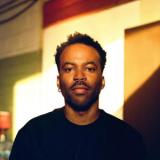
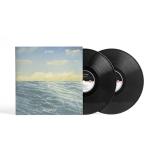
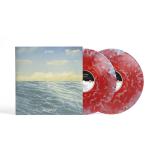
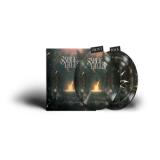
Animative is new work by composer, producer, saxophonist and synthesist Josh Johnson (SML, Jeff Parker ETA IVtet, Flea and The Honora Band), his third album under his own name, and his first for International Anthem/Nonesuch. The album further advances Johnson deep into a territory he has been exploring for years: live-processed electro-acoustic takes on deconstructed rhythmic jazz. The ten track album - co-produced by Johnson and Paul Bryan, featuring contributions from Meshell Ndegeocello, Macie Stewart, Marquis Hill, Ben Lumsdaine, and more - is a marvel of electro-acoustic innovation that combines compositional brilliance and technological ambition into a mesmerizing blend of skeletal soul-jazz, post-bop, electronic minimalism, and dreamy ambience.
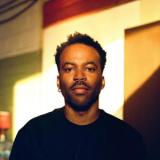
Animative is new work by composer, producer, saxophonist and synthesist Josh Johnson (SML, Jeff Parker ETA IVtet, Flea and The Honora Band), his third album under his own name, and his first for International Anthem/Nonesuch. The album further advances Johnson deep into a territory he has been exploring for years: live-processed electro-acoustic takes on deconstructed rhythmic jazz. The ten track album - co-produced by Johnson and Paul Bryan, featuring contributions from Meshell Ndegeocello, Macie Stewart, Marquis Hill, Ben Lumsdaine, and more - is a marvel of electro-acoustic innovation that combines compositional brilliance and technological ambition into a mesmerizing blend of skeletal soul-jazz, post-bop, electronic minimalism, and dreamy ambience.
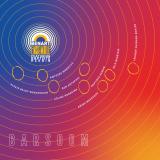
Strut proudly presents the first release in almost a decade from the legendary Senegalese group Orchestra Baobab with Made In Senegal. Few groups embody the spirit of African music like Orchestra Baobab. Formed over 50 years ago as the resident band of the Baobab Club in Dakar, their timeless fusion of Afro-Cuban rhythms, Wolof griot traditions, mbalax, Congolese rumba and jazz continues to resonate across generations and continents. Now, the celebrated big band marks a new chapter in their illustrious history with Made in Senegal, their first new studio album since Tribute To Ndiouga Dieng in 2017 for World Circuit. Released on respected imprint Strut Records in conjunction with Madoky Music, the new album celebrates home, heritage, love and resilience and was recorded entirely in Dakar. On Made In Senegal new songs sit effortlessly beside re-imagined classics. Lead single "Togne Bakhoul", composed by late Baobab vocalist Rudy Gomis is a poignant ode to his wife and "Tioro Bye Samba" reprises a classic Thione Seck song while "Casamance" celebrates the culturally rich Southern Senegalese region, homeland of several Baobab members. "Baobab 50 Ans" marks the 50-year anniversary of this indomitable group. Made In Senegal is another modern Baobab classic combining a fresh approach with roots fixed firmly in Senegal"s rich traditions. It is the perfect time for a new generation to discover the elegant, hypnotic sound of one of Africa"s greatest ever big bands.
No Home is the new album by Lane Hartley, releasing October 23rd 2026 on Royal Oakie Records. Produced in collaboration with David Hartley of The War On Drugs & Adam McDaniel (Animal Collective, Angel Olsen, Geologist), the album was recorded at Drop of Sun Studios in Asheville and features contributions from North Carolina’s tight knit music community–including Mary Lattimore, Seth Kaufman of Floating Action & Dream Sitch, David Hartley, Jack Victor Johnson, and more.
After recording his debut album Naming Horses, Lane left Los Angeles and returned home to the Carolinas, eventually landing in Asheville. It wasn’t too long until the songs started flowing and Lane found himself reaching out to Adam McDaniel at Drop of Sun Studios–a vaunted space that’s been at the heart of indie-rock the past few years, bringing to life recent albums from MJ Lenderman, Wednesday, Fust, and more. McDaniel introduced Lane to David Hartley, and what originally started with discussions to record one song quickly turned into a plan to track a whole album live with a six piece band. Once in the studio, co-producer McDaniel encouraged the group to lean on intuition–“All of the players on this record really brought it to life in such a cosmic way. They instilled so much childlike wonder and fun into the making of the album. It inspired me to keep going” says Lane.
Lyrically the album is a collection of vignettes about people who’ve become alienated from their deepest desires of connection, belonging, intimacy, and autonomy–inspired both by Lane’s own life and the lives of people he’s loved. The unique character of the album emerged when Lane made the decision to pair the dark lyrical content with bright & lush arrangements, inspired by Gene Clark’s No Other, Neil Young’s After the Gold Rush, and Amen Dunes’ Love. In Lane’s words, “The content of the songs got way darker, and my reaction was to make the songs catchier, and to lean harder into the music that influenced me. I wanted each song to feel like a room in a haunted house, with a beautiful garden growing outside”.
Album opener “I Am Not Ashamed” was inspired by the anti-memoir of actress Barbara Peyton, a 1950’s Hollywood starlet who met an untimely end; “It’s about knowing that whatever you’ve done to survive, you still deserve love” says Lane. “Mother” pairs lyrics about ancestral trauma with the sunshine-pop influence of Colin Blunstone, featuring backing vocals from Lane’s sister Barrett Hartley. “It's about coming to terms with the fact that the people meant to protect us are dealing with their own trauma…”
Meanwhile, “All Of This Is Yours” and “Tone Poem” form the spiritual center of the album, an attempt to transmute anger & pain to bittersweet acceptance in the wake of a breakup. “I feel like on the surface this is essentially a breakup album, a lot of these songs are about mourning the end of a relationship and reflecting on what went down. I was falling in love and getting my heart broken, then waking up and driving across the country and doing it all over again.” “Love Is Not A Song” was inspired by Margo Guryan’s Love Songs, pairing bright piano with playful lyrics about an old man who’s been beaten down by life but still believes his greatest love is yet to come. Last but not least, title track “No Home” sums up the album’s key theme of alienation, “It all goes back to this feeling of wanting to belong to someone or somewhere, wanting to belong in your own body.”
Naarm/Melbourne-based artist Now Always Fades returns with Coalesce, the follow-up to his widely acclaimed 2025 album Into The Doldrums. The project of Xavier Bacash, Coalesce sees the musician evolving his modernised approach to downtempo and trip-hop, genres in which he has been heralded as a leading new voice amid their growing popularity. Across the record, NAF's musical and thematic universe expands with the return and addition of a series of new vocal collaborators, speaking to the versatility of a voice as a contextual instrument. In doing so, throughout 'Coalesce', he continues to develop a kind of sonic consistency that focuses on shared emotion above all else. In pursuing those feelings, Now Always Fades finds himself alongside a series of strong and soulful voices: Alia Seror-O'Neill, otherwise known as Alias Error; Lili Hall; and Olive Kimoto, NTS Radio host and singer behind influential 90s band Locust. Throughout the record, each vocalist finds themselves on tracks entirely for them, and in doing so, the NAF project provides everyone involved, and the listener, with something sonically new but emotionally familiar at every turn.
Compilation of lost Dutch synthesizer and wave music from 1982 to 1987. All collected and compiled by Rutger Nijkamp, who inherited many tapes from his musician-mother Veronique (Verque on the compilation). This led to the collection of more cassettes, found in second hand shops and through connections from his mother. Comes with a beautifully risograph-printed zine featuring the stories and photographs of the acts and bands included on the compilation.
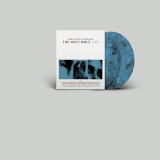
In 2014, to mark 20-years since the release of their landmark album The Holy Bible, Manic Street Preachers embarked on a sold-out tour playing the record in full. More than a decade later, The Holy Bible Live captures an unforgettable show at London’s Roundhouse, documenting a band revisiting a defining chapter of their history. Out on 23rd October, this deluxe edition features the complete live show on CD and 2LP Blue Marble vinyl, including a special Side D etching, as well as the Director's Cut of Kieran Evans' acclaimed live concert film Be Pure – Be Vigilant – Behave on Blu-Ray. The package also includes a brand-new Steven Wilson mix of the original album on CD, an exclusive 16-page book and a Pennie Smith photo print; making it an essential addition to any Manics collection. Pre-order yours now.
In 2014, to mark 20-years since the release of their landmark album The Holy Bible, Manic Street Preachers embarked on a sold-out tour playing the record in full. More than a decade later, The Holy Bible Live captures an unforgettable show at London’s Roundhouse, documenting a band revisiting a defining chapter of their history. Out on 23rd October, this deluxe edition features the complete live show on CD and 2LP Blue Marble vinyl, including a special Side D etching, as well as the Director's Cut of Kieran Evans' acclaimed live concert film Be Pure – Be Vigilant – Behave on Blu-Ray. The package also includes a brand-new Steven Wilson mix of the original album on CD, an exclusive 16-page book and a Pennie Smith photo print; making it an essential addition to any Manics collection. Pre-order yours now.
Dich lieb ich, Erde! trauerst du doch mit mir! Und unsre Trauer wandelt wie Kinderschmerz In Schlummer sich und wie die Winde Flattern und flüstern im Saitenspiele
The third stanza of Friedrich Hölderlin’s poem ‘Dem sonnengott’ evokes a narrator who is tortured by Spleen until slumber makes his childlike gloom disappear with music. Although today’s readers might judge these nineteenth century musings of the Imagination as mere stylistic platitudes, they also still speak beyond the grave as universal truths. A mere two hundred years later similar anxieties and hopes are still channeled through various art forms, with changing success and reverberation. Brannten Schnüre are one of those neo-romantic music experimentalists who add to a long tradition of celebrating folk tale and exoticism. Their meticulously crafted loops, hesitant melodies and heavily nostalgic lyricism could easily be translated to what the late philosopher and music critic Mark Fisher called ‘hauntology’, a postmodern longing for a lost future. To describe the beauty of ‘Geträumt hab’ ich vom Martinszug’, however, the term seems somewhat dissatisfying. Romanticism is a hard nut to crack in the Anthropocene, and Brannten Schnüre’s realms of the cerebral are too deeply ingrained in a German tradition of story telling to define them within popular paradigm.
‘Geträumt hab’ ich vom Martinszug’ was recorded in 2014 in Würzburg and functions as the autumn part of the band’s seasonal cycle quadrilogy (the other segments being ‘Aprilnacht’ (SicSic), ‘Sommer im Pfirsichhain’ (Aguirre) and ‘Durch unser zugedecktes Tal’ (Youdonthavetocallitmusic)). It deals with the Saint Martin’s parade, a mostly European tradition to celebrate the medieval spirit of Saint Martin of Tours, friend of children and patron of the poor. Around 11 November children come out on the streets with lanterns and sing ancient songs in exchange for sweets. It’s a period of snugness and expectation, of yearning and dreaming, and therefore a consummate subject for the duo to scrutinize.
To the adult’s ear the dream of the Saint Martin’s parade isn’t all that consolatory. The dark and slow loops of Christian Schoppik rather sound like motifs for a welcome paralysis. Sometimes as a gentle backdrop for vocals by Katie Rich and Schoppik himself, the repetitive structures serve as tricksters that trade innocence for the uncanny. The dream becomes a fever dream which quickly absorbs the listener into a vacuum, an eternal post-panic attack semi-relief. Maybe that’s the amazing paradox of Brannten Schnüre. The space they occupy is never comforting – as if being locked up inside a Carl Grossberg painting – but it’s also a subliminal aural zone you do not want to leave. It’s music as being, as a stream, devoid of climax or catharsis. And because it is flux and being, and exists to be taken, it speaks in art’s purest form. ‘In place of a hermeneutics we need an erotics of art’ Susan Sontag famously concluded her essay ‘Against Interpretation’ with. Well, look no further …
Mit „Tranquilo II“ schlagen In Extremo ein neues Kapitel ihrer beeindruckenden Erfolgsgeschichte auf. Am
23. Oktober 2026 erscheint das außergewöhnliche Akustikalbum mit 17 Songs, die mehr als drei Jahrzehnte
Bandgeschichte in überraschend neuem Klang präsentieren.
Statt ihre Klassiker lediglich leiser zu spielen, haben In Extremo Stücke wie „Spielmannsfluch“, „Frei
zu sein“, „Störtebeker“, „Liam“ und „Feine Seele“ komplett neu arrangiert. Swing, Rockabilly, Ska, Reggae und osteuropäische Einflüsse treffen auf historische Instrumente und den unverwechselbaren Sound der
erfolgreichsten Mittelalter-Rockband der Welt. Eingespielt wurde das Album in einem kleinen Studio in
Dornbirn – live, unmittelbar und mit viel Raum für spontane musikalische Ideen.
Unterstützt werden In Extremo von hochkarätigen Gästen: Metal-Ikone Doro Pesch verleiht „Feine Seele“
besondere Intensität, Jan „Monchi“ Gorkow und Max Bobzin von Feine Sahne Fischfilet sorgen bei „Störtebeker“ für eine ebenso ungewöhnliche wie mitreißende Begegnung, während Faun-Sängerin Laura Fella
den Klassiker „Liam“ bereichert. Mit „Heute wird der Himmel brennen“ enthält das Album außerdem einen
brandneuen Song.
Ein besonderes Highlight für Fans ist die exklusive Bonus-EP „Sternhagelvoller“, die der Deluxe-CD sowie
dem streng limitierten Vinyl-Bundle beiliegt. Das Herzstück bildet eine sechsminütige XXL-Version des
Partyklassikers „Sternhagelvoll“, aufgenommen mit zahlreichen Weggefährten aus der Mittelalter-Rock- Szene – darunter Mitglieder von Feuerschwanz, d’Artagnan, Faun, Tanzwut, Subway to Sally, Versengold,
Fiddler’s Green und Corvus Corax. Ergänzt wird die EP durch den exklusiven neuen Song „Amontillado“
und eine besondere Version von „Ave Maria“ mit der kroatischen Vokalformation Metaklapa.
Im November und Dezember bringen In Extremo „Tranquilo II“ auf große Akustiktour. In ausgewählten
Spielstätten wie dem Berliner Admiralspalast, der Hamburger Laeiszhalle, der Alten Oper Frankfurt und
dem Circus Krone in München stehen Nähe, Atmosphäre und musikalische Feinheiten im Mittelpunkt.
„Tranquilo II“ ist weit mehr als eine Reise durch die Vergangenheit: Es ist ein mutiges, vielseitiges und
überraschendes Album, das bekannte Hymnen neu entdecken lässt und zugleich eindrucksvoll zeigt, warum
In Extremo auch nach mehr als drei Jahrzehnten musikalisch unberechenbar bleiben.
This compilation containing both super limited and sold out EPs "Naehe & Flackern" and "Es laesst nicht los, mich jedoch laengst" on one 12" Vinyl. The band Nidare presents their EP "Naehe und Flackern", a collection of three powerful songs that thematically deal with the feeling of hate. The singer's lyrics paint a vivid picture of hate in different facets: the hate towards society, the hate the singer faces in his life and the hate the singer himself carries outward. "Naehe und Flackern" is an EP that takes listeners on an emotional journey while also being a profound emotional exploration. Nidare manages to channel the darkness in her lyrics and music. The EP is an expression of pain, anger and despair, but also a call for self-reflection and understanding of the complex nature of human emotions. "Es laesst nicht los, ich jedoch laengst" is a visceral, unapologetic journey through the emotional landscape of a fractured world. Built around themes of political disillusionment, mental health struggles, and the crushing weight of existential dread, this EP serves as both a cry for help and a reflection of the suffocating atmosphere of modern life.
Nu Vision is the latest project of Duke Cooper, band leader and label boss of Nation, Kode and DirtyBlends. There are three humans who make up Nu Vision, and they all have their own stories and discographies, records released on labels you might know, gigs played in Chicago or Berlin or someone’s loft, lives lived, friends made, sleep lost - fighting for theirart, standing by truths, defending voices, honoring progenitors, whilst pushing a new paradigm. Time is both fleeting and heavy for us all, but it is not without receipts.
Nu Vision is a band in the classic do-you-believe-in-alchemy sense - equal parts rhythm, damage, and deep feeling. Drenched in nostalgia and futurism, The Seed is a singularity of sound + vision; as if heavily rotated by VJ Dave Kendall on MTV’s 120 Minutes but materialized via today’s technology.
The Seed 10 inch provides additional music inspired significant icons Section 25, Liaisons Dangeruses and Adrian Sherwood having paved the way with their prior successes..- this package of The Seed is no freshman effort; but rather, a masterclass in continuing sonic education, delivering a unified experience from beginning to end. A NU VISION.
The Seed 10 inch provides additional music inspired significant icon band: Section 25 from the period of 1981-1984 with a more electronic-dance direction, process which culminated in the album ' From the Hip ' and remix single "Looking From A Hilltop", both released in 1984 as "Insecure Man is about being true to manhood with Robert Lane leading the charge with his vocabulary message of the current state of society.
Insecure Dub focuses on the period of 1981-1984 with an alternative electronic-dance direction process as an inspired blueprint from Nu Vision inspired from Adrian Sherwood having paved the way with his individual success.
Inspired from electrifying songs produced by Chrislo Haas (DAF) and Beate Bartel (Mania D. / Matador) reinforced by Krishna Goineau’s French and Spanish Speech-Attack-Lyrics Liaisons Dangereuses created a unique style anything other than a Berlin or Düsseldorf ‘thing’ – that was propelled to an international underground phenomenon of fame.
Nu VIsion was inspired to create a blueprint from the period of their productions of 1981-1982 with an electronic-dance direction paying homage with passionate craftsmanship utilizing what equipment was possible in the studio at the time of this recording featuring new members; Zoe Murphy & Fletch The Stranger on vocals and James Chazz on Saxaphone with a Ring Modulator.
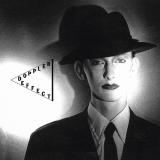
Doppler Effect is the brainchild of singer and songwriter James Straight. Formed in Boston in 1981, the band explores what Straight describes as the “encyclopedia of electronic music”. Since its inception, the project has explored and incorporated almost every style of electronica, from Ambient and Industrial to Techno, Synth-pop, EBM, House, Darkwave, Acid and Disco, with touches of Punk and Funk around the edges. It all depends on the song, as Straight sees his work as a series of mini-films he is directing, a sort of “seeing with your ears”. Utilizing the entire palette to achieve the desired effect, his only rule is that it must work for the song.
“Genesis: Studio Recordings” compiles a selection of recordings made between 1981 and 1985, including numerous previously unreleased songs and early versions ranging from synth-punk and new wave to minimal wave and synth-pop. Limited run of 300 copies on black vinyl with insert.
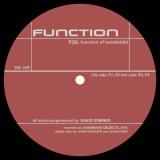
Function has long since cemented his legacy in the underground world but it's always worth reminding yourself where an artist's story began. In David Summer's case, that's with this EP, which dropped on Damon Wild's Synewave, who now reissue it in full, 30 years on. It's an impressively fully-formed sound for a debut: 'F1' is a jacked-up techno rhythm with a fat bassline and frazzled synths that bring it to life. 'F2' is a more experimental and beatless piece with modular pulses, echoing frequencies and decaying sine waves then 'F3 rides a dreamy dub rhythm that undulates gently amid some gorgeous sustained pads that recall Thebes of Detroit. 'F4' comes with more Millsian-style minimal that fires up your brain.
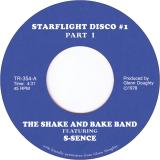
Tramp Records International proudly presents: The 1975 Baltimore Colts Glenn Doughty and his All-Pro Shake & Bake Band! In 1975 Glenn "Shake & Bake" Doughty Wide Receiver for the Baltimore Colts formed the Shake & Bake Band. Glenn Doughty and his Baltimore Colts Shake and Bake Band of the 70's is the first musical group consisting of former NFL All-Pro players that Tramp Records has partnered with in its history!
Doughty is a Detroit 'Motown' native and All-American from the University of Michigan, that was recently crowned national champion and the winningest college football program in NCAA History. Doughty and his four world-class athletic teammates formed the heart of the band. The Shake & Bake Band in the mid 70s played live at Baltimore's hottest Clubs with teammates in attendance on Monday nights after Shakin' & Bakin' their opponents on Sunday at Memorial Stadium. Doughty's sports hero was Muhammad Ali. He originated the popular Shake & Bake athletic movement scoring touchdowns. He recited Shake & Bake poetry like Ali to make predictions after games on local and national TV to celebrate Colts victories. His lyrics in his music were used to fire up thousands of his Colts fans and his teammates. Many fans felt the group sounded like WAR the popular funk group from California. Members of the Shake & Bake Band were: Glenn "Dr. Shake" Doughty #7, All-Time Colts leading Wide Receiver, producer, lead singer, congas and lyrics, Ray "RC Cola" Chester, All-Pro Tight End, Super Bowl Champion, Bass, Baltimore, Maryland, David "DT" White, Wide Receiver Lead Guitar, producer, sound technician. Buffalo N.Y., Lloyd "The Bullet" Mumford, Defensive Back Harmonica, Miami Florida, Freddie "Bones" Scott, All-Pro Wide Receiver on percussion, Grady Arkansas, and Bruce "Turn it Loose" Barnett, Drummer and shoe salesman. Randallstown, Maryland. This group of talented stars lead the Colts to its first ever three consecutive Eastern Division Championships.
Additionally to this 45 RPM single release, "Starflight Disco #1 Pt.1&2" has been featured on the "Can You Feel It Vol.5" compilation album.
MALEDICTUS is a Portuguese metal band formed in Lisbon. Bringing together experienced musicians with a shared vision, the band creates dark, powerful and atmospheric heavy music. With a foundation of aggressive riffs, haunting melodies and emotional vocals, the band blends modern heavy metal with darker, more melodic influences.
The group was formed by musicians seeking to explore a heavier and more expressive sound, combining technical musicianship with compelling songwriting and a cinematic atmosphere. Their music strikes a balance between intensity and melody, moving between crushing guitar passages, dynamic rhythms, and dramatic vocal performances. ""Our music reflects who we are and how we process life and our own emotions. Music is life manifested through an artist's soul. We all process life with a sense of dark melancholy”, comments guitarist Ben Stockwell. As history has taught us, Portuguese metal bands are known for their melancholic sound, which reflects their cultural identity.
Since their formation, MALEDICTUS has been focused on creating music that reflects the darker and more emotional aspects of the metal genre. Drawing inspiration from classic and contemporary metal acts, the band aims to create a sound that feels familiar yet distinct, appealing to fans of powerful, atmospheric metal.
Boasting a line-up of seasoned performers and a clear artistic vision, MALEDICTUS is developing new material and establishing its presence in the Portuguese metal scene and beyond. Their debut album, „Lazarvs“, is set to be released on Friday 13th of November. The album title draws heavily on the biblical story of Lazarus in the Gospel of John, in which Jesus performs the great miracle of raising his deceased friend Lazarus from the dead after he had been in the tomb for four days.
With Rez on vocals, the band has an exceptional singer with a distinctive, powerful voice. „He is undoubtedly one of the best out there having power, soul, range and timbre. Everything fits perfectly with our sound. We couldn't have asked for a better voice or frontman"", says the guitarist. Rez’s lyrics are another perfect addition to the band's dark, epic and partly progressive sound. The lyrical themes focus on life's darkest moments. „Death brings an opportunity for renewal, as do our most difficult struggles, which require part of us to die in order to be overcome.
Finnish-American guitarist Raoul Björkenheim and Norwegian drummer Paal Nilssen-Love join forces on their new album PING, released by We Jazz Records on 30th October on LP, CD and digital formats. Recorded in Helsinki, the album finds the seasoned duo firing on all cylinders and delivering a remarkable set of contemporary free music.
PING brings together nine excursions beyond “guitar + drums” and way beyond “free jazz”. That being said, those are still good touching points for the music that is wild, imaginative, raw, yet also at times delicate and introspective. Friends and collaborators for decades in groups such as the lauded Scorch Trio, Raoul and Paal have the history and the trust to create memorable and original improvised music that stuns and moves the curious listener.
Raoul Björkenheim (b. 1956) is a Finnish-American guitarist and composer who has been creating original music for the past four decades living in New York City and Helsinki, where he is presently based. Describing his on-going work as investigative guitarism, he is best known for an expressionistic and lyrical guitar style. Björkenheim’s eclectic discography numbers 50+ albums, ranging from ambient soundscapes to visceral free jazz, from duo to big band. His large-scale works for symphony orchestra have yet to be recorded, and he has also composed scores for over ten films and dance productions. Björkenheim has collaborated musically with Bill Laswell, Toshinori Kondo, William Parker, Mats Gustafsson, Hamid Drake, Ingebrigt Håker Flaten, Gerald Cleaver, Henry Kaiser, Lukas Ligeti, Morgan Ågren, Paul Schütze, Edward Vesala and Juhani Aaltonen, for the labels ECM, Rune Grammofon, Cuneiform, Tum Records and Long Song records. Björkenheim has been awarded various prizes including the Emma prize for best jazz recording of the year, and been nominated three times for the Nordic Music Award.
Paal Nilssen-Love (b. 1974) is a Norwegian drummer, composer, bandleader, and producer known for his central role in Scandinavian free jazz and improvised music. Since the mid- 1990s, he has appeared on more than 280 albums, including 70 released through his label, PNL Records. He has performed with influential groups including Atomic, The Thing, Peter Brötzmann’s Chicago Tentet, Scorch Trio, and Frode Gjerstad Trio, and collaborates regularly with artists such as, Ken Vandermark, Akira Sakata, Otomo Yoshihide, David Murray, Arto Lindsay and more. Paal Nilssen-Love’s fascination with traditional and experimental music has taken him around the world. Since his first visit to Ethiopia in 2009, he has built strong connections with musicians and artists in Addis Ababa, leading to collaborations, performances, teaching, and artist exchanges with Norway. Since his first trip to Brazil in 2013, he has returned regularly, developing collaborations with artists and musicians across the country. His musical explorations have also brought him to Tsugaru and Aomori in northern Japan, where he has developed an interest in the region’s traditional music. Nilssen-Love is also an active organizer and educator. He started both Oslo’s all-Ears festival, the Blow Out festival and FRAM Kunstfest, and has led workshops internationally and in Norway.
There's a tendency in metal to mistake aggression for honesty, volume for depth. To confuse the performance of darkness with its actual weight. Hidden Fires Burn Hottest, the new album from San Francisco-based post-black metal band Bosse-de-Nage, sidesteps this entirely. It’s the group’s most fully realized work yet, precisely because it refuses to be pinned down.
Bosse-de-Nage have been working with The Flenser for over fifteen years. They were one of the first bands the label ever partnered with and have the longest active relationship in the label's history. But unlike most bands who build momentum through constant touring and visibility, Bosse-de-Nage has largely existed apart from the music world's usual machinery. They've evolved on their own terms, in relative isolation, allowing the work to develop without outside pressure or influence. What began rooted in black metal anonymity has mutated into something that actively defies categorization. The aggression is still there, but it's no longer the point. Hidden Fires Burn Hottest finds the band treating emotions like physical objects, feelings with spatial properties. “No Such Place"" describes a space that can't exist but does anyway, somewhere between thought and location. ""Immortality Project"" examines infinite possibility not as promise but as problem, endless options collapsing under their own weight. These songs don't use metaphor to describe emotion. They make emotion into something you could theoretically touch.
Tracked by Jack Shirley (Deafheaven, Oathbreaker) at Atomic Garden East and mixed and mastered by Richard Chowenhill of Agriculture, Hidden Fires Burn Hottest was years in development, with some tracks beginning in 2018.
The long writing process offered time that most records don't get. Time to live with ideas, revise endlessly, to let structures settle. For the first time, lyricist Bryan Manning wrote everything in advance, creating a surplus to pull from rather than working under deadline pressure. The difference shows.
Coming off Further Still, an album built on constraint and economy, Bosse-de-Nage sought the opposite: sprawl, strangeness, fewer rules. Space for ideas to develop without rushing them. Dynamics that move through quiet as much as noise. Presence earned through atmosphere instead of volume. The record even includes ""Mementos,"" which might be considered the first love song the band has ever written.
Nothing here coheres into a theme. These are pieces pulled from low moments and private feelings made public through sound. The band has never been interested in positivity, in music that resolves cleanly or offers comfort. But bleakness doesn't mean humorlessness. There's something darkly funny running through much of it, even when it shouldn't be.
Hidden Fires Burn Hottest doesn't explain itself. It just insists: what you feel is as real as what you can see."
It’s that time of year again! Are your copies of “Now! That’s What I Ca l Christmas” and “A Motown Christmas” finaly feeling worn out? Strut has the ideal antidote this year, as we dive into the world of festive records made by African artists spanning the late 1960s to the 1980s with our new Krismasi: Christmas Sounds From Africa compilation.
Taking in music from across the continent from Nigeria and Ghana to South Africa and Zimbabwe, Krismasi draws from a wide range of sounds from fun novelty records and spur-of-the-moment jams to spiritual and gospel favourites. Featured artists include Ghanian great Kwadwo Donkoh with a meditative highlife praise song from his much-loved Christmas Africana album. Elsewhere, pop star turned pastor, Jerry Boifraind, has some fun with a song celebrating seeing friends at Christmas and Nigerian pop favourite Martha Ulaeto features with the lilting lead track from her own Christmas Africana release. We pick out some choice Central and East African sounds with Kakai Kilonzo’s bri liant Kilimambogo Brothers Band and Congolese legend Baba Gaston’s Orchestra Baba National capturing the joy of the festive season. We stop off in Zim for a rare Dorothy Masuka acoustic piece and one of the country’s great musicians post-independence, Paul “Dr. Love” Matavire with ‘Christmas Yaswedera’ (‘Christmas Is Near’). Township jazz star Reggie Msomi appears with a joyous township instrumental and, fina ly, we couldn’t release a Christmas co lection without some carols. Here we include here a great version of ‘Mary’s Boy Child’ by UK-based Nigerian highlife musician Flash Dominci and a hi-octane funky medley of favourite festive hymns by Ghana’s Oscar Suley.
The compilation is the first in-depth co lection of rare African Christmas recordings, uncovering a rich and often overlooked chapter of the continent's musical history. Krismasi is available on Red & White Inkplosion Vinyl LP and CD. Vinyl restoration is by Colin Young at See Why Audio, mastering is by Frank Merritt at The Carvery, and the album features striking new artwork by Liam Large.
Yr Knives is a Chicago instrumental quartet built around two very different guitar voices. The band came together sideways: composer Paul Karner wanted guitarists Andrew Trim and Brian Sulpizio to play disparate parts on a recording of his own, and when the two finally rehearsed together, a band fell into focus. Trim leads the groups Hanami and Retroreflector; Sulpizio is the constant behind Health and Beauty. Anchoring them are two Chicago mainstays, bassist Douglas McCombs (Tortoise, Eleventh Dream Day) and drummer Quin Kirchner. Two of them come up as rock and roll players, two as jazz players, and the music lives in how closely they listen across those languages.
Their debut, Begin Yr Singing, centers on two overdriven guitars merging into something neither could produce alone, over a rhythm section that can lock a groove or let it drift. The result is exploratory but grounded, "a searching music," in Trim's words, that asks questions it doesn't always answer and shifts from one performance to the next. Recorded live in a single room at Chicago's Palisade studio with Nick Broste engineering and mixed by Cooper Crain with Sulpizio, the six tracks draw on Sonny Sharrock, Neil Young and Crazy Horse, Albert Ayler, Erik Satie, and Television. The band has toured supporting The Messthetics.
Das zweite Album von Sleepytime Gorilla Museum entstand zwischen 2002 und 2004 und spiegelt die politisch und gesellschaftlich aufgewühlte Zeit nach der Jahrtausendwende wider. Die Band verarbeitete diese Eindrücke in ihrem charakteristischen Mix aus Avant-Rock, experimenteller Komposition und theatralischer Intensität. Während der Entstehung stieß Schlagzeuger Matthias Bossi zur Band und prägte den Sound maßgeblich mit. Ein Höhepunkt des Albums ist der Song ,Phthisis", der in einem Studio in den Hollywood Hills aufgenommen wurde und zu den bekanntesten Stücken der Band zählt. Die nun erstmals in den USA auf Vinyl erhältliche Neuauflage wurde von Bassist und Produzent Dan Rathbun remastert und unterstreicht den Stellenwert des Albums als eines der zentralen Werke im Katalog von Sleepytime Gorilla Museum.
Trondheim's progressive flagship Arabs in Aspic delivers yet another long-awaited release on the renowned label Karisma Records, marking their strong partnership with the brand-new studio album "Sorgens kapittel". This will be a highly special and emotional release for the band. The album is being released on what would have been the 50th birthday of the band's longtime organist and vocalist, Stig Arve Kvam-Jorgensen, who passed away suddenly in 2025. The album title "Sorgens kapittel" sets a deep and personal frame around the band's newest work, serving both as a processing of the loss and a tribute to his musical legacy.
Ian Pooley's 'Roller Skate Disco EP' Returns with Digital Debut and Vinyl Repress
Definitive Recordings brings back one of the label's early house gems with a remastered reissue of Ian Pooley's 'Roller Skate Disco EP'. Originally released in 1994, the EP returns for the first time as a digital release while also receiving a new vinyl repress. Alongside the original material, the reissue expands the package with the previously unreleased track 'Unity' and the Bandcamp-exclusive 'Never Give Up'.
For more than three decades, Ian Pooley has been one of house music's most respected producers and DJs. Emerging from Mainz, Germany, with a deep love for the sounds of Chicago and Detroit, he has built a career defined by subtle artistry, impeccable groove, and timeless musicality. His acclaimed albums 'Meridian' and 'Since Then', remixes for artists including Daft Punk and Jovonn, and releases on labels such as Plus 8, Innervisions, Rekids, and his own Pooledmusic have established him as one of the true masters of deep and soulful house music.
The title track, 'Roller Skate Disco', immediately captures the uplifting spirit of classic 90s house. Built around an infectious disco-inspired sample, funky guitar loops, and a warm, rolling house bassline, the track is complemented by a looping female vocal that gives it an unmistakable feel-good energy. 'Sure!' follows with a groove driven by crisp TR-909 drums, deep synth chords, and a playful TB-303 sequence, while a repeated female vocal ties the arrangement together into a hypnotic club workout.
'The Brückenkopf at 7 AM', named after the legendary club in Pooley's hometown of Mainz, moves into deeper territory. Dreamlike synth textures, a memorable deep house piano motif, and another signature 303 sequence combine to create one of the EP's most atmospheric moments. The previously unreleased 'Unity' continues this journey with a hypnotic groove, deep house aesthetics, and another beautifully woven acid line, making it a natural addition to the original release. Completing the digital edition, 'Never Give Up' arrives as a Bandcamp exclusive, pairing playful M1 organ sounds with a rolling 303 sequence and an effortlessly flowing house groove.
More than thirty years after its original release, 'Roller Skate Disco EP' remains a perfect snapshot of Ian Pooley's early sound and a testament to the timeless appeal of classic house music. This expanded edition celebrates one of Definitive Recordings' defining releases while introducing it to a new generation of listeners.
Ghanaian producer, songwriter, and cultural innovator Delasi has earned international recognition for his forward-thinking blend of traditional Ewe rhythms, soul, jazz, hip-hop, and electronic music, with recent releases on Gilles Peterson's Brownswood Recordings and support from outlets including Bandcamp Daily, CLASH, CRACK, COLORS, and BBC Radio 6 Music. His music has also appeared in the indie feature Dreams in Nightmares and the UK Premier League. Joining him are Tokyo's acclaimed experimental pop outfit TAMTAM, whose distinctive fusion of reggae, dub, jazz, soul, exotica, and electronic music has drawn praise from Gilles Peterson, Bandcamp, NTS, Mr. Bongo, and Rolling Stone Japan, alongside performances at Fuji Rock and international tours across Canada, Australia, and South Korea.
This limited 7" brings the two artists together across two richly textured collaborations. A-side "Guardian of The Green" blends alternative soul, downtempo electronica, trip-hop, and cinematic post-rock into a lush, organic soundscape where futuristic electronics meet live instrumentation. On the flip, "Celestial Bodies" explores dream pop, ambient electronica, and jazz-inflected soul, pairing hypnotic rhythms with shimmering synths, expressive guitars, and warm lo-fi grooves. Together, the release showcases a cinematic, globally minded approach to contemporary electronic music that will appeal to fans of Bonobo, Khruangbin, Little Dragon, and Cinematic Orchestra.
Jack Hamill concludes his trilogy of space saga albums with The World Overhead landing on Tiraquon Recordings on October 30, 2026, with a special limited transparent blue edition issued exclusively via Bandcamp from October 16, 2026.
Introducing the science fiction realm of Mikrosector-50 and Mr. 8040 on breakthrough electro funk 12-inch, The Love Quadrant (2009), Hamill signed to R&S Records with the double 12-inch "prequel", The Pathway to Tiraquon6 (2011), setting the stage for debut-album proper Welcome to Mikrosector-50 (2013), where Prince-inspired funk and sleek '80s synth-pop soundtracked Mr. 8040's hazardous journey home via heartbreak and drugs. By Love Beyond the Intersect (2019), Hamill's vocoded opus turned introspective, pairing gentle krautrock influences with themes of love, redemption and self-discovery, mirroring Hamill's personal life, sobriety and creative renewal. Through lockdown Hamill retreated to the countryside around Belfast to reacquaint himself with his machines, experimenting with driving acid and trance, and playing guitar, culminating in a fuzzy shoegaze meets banging IDM sound. Relocating to Amsterdam in 2024 and setting up a new studio, Hamill wrote the third installment of Mr. 8040’s saga, bringing the storyline – and himself – back to earth.
Presenting under the new moniker, Jack Tiraquon, and releasing via his own label, Tiraquon Recordings, The World Overhead is the sound of Hamill removing the guise of Space Dimension Controller and concluding the space-themed concept to move forward as the cinematic hardware musician he's always been at the core.
The seminal psych-rock classic The Evil One by Roky Erickson And The Aliens is reissued by Fire Records in a deluxe 15-track edition, restoring the original front cover from San Francisco’s 415 Records release for the first time since 1981. Presented across two LPs cut at 45 rpm for maximum sonic depth and clarity, the release brings together the complete recordings from the legendary 1978 and 1979 sessions. The package includes a collector’s booklet with liner notes by acclaimed Austin music journalist Joe Nick Patoski, who attended a recording session for The Evil One in 1979. Alongside rare photographs and archival images from the collection of Roky’s then manager, Craig Luckin.
Following his release from Rusk State Hospital in 1974, Erickson formed The Aliens and channelled his experiences and fascination with horror and science fiction into a singular new sound. Moving beyond the psychedelic garage blues of the 13th Floor Elevators, the band created harder, more ferocious rock built around jagged guitars, strange melodies and a propulsive rhythm section.
Produced by Creedence Clearwater Revival bassist Stu Cook, The Evil One includes some of Erickson’s most celebrated recordings, including ‘Two Headed Dog’, ‘I Walked With A Zombie’ and ‘It’s A Cold Night For Alligators’. Erickson’s unmistakable voice and surreal lyrics, populated by zombies, demons, vampires and atomic monsters, gave the album a character unlike anything else in rock. Both the LP and CD editions feature rare photographs and images from the archive of Erickson’s then manager and the sessions’ executive producer, Craig Luckin.
The Evil One has since become a landmark of cult rock, with its songs covered by generations of artists and its influence extending across punk, alternative and psychedelic music. As Craig Luckin recalls, “Roky considers The Evil One to be his favourite album that he ever recorded. He really loves that album.”
Austin music journalist Joe Nick Patoski, who attended one of the album’s 1979 sessions, contributes a new essay to the LP and CD packaging, exploring Erickson’s extraordinary career, enduring influence and place in Texas rock history.
More than a standalone reissue, this deluxe edition of The Evil One opens an exciting new series honouring Roky Erickson’s extraordinary body of work, with Gremlins Have Pictures and Don’t Slander Me to follow in 2027.
The seminal psych-rock classic The Evil One by Roky Erickson And The Aliens is reissued by Fire Records in a deluxe 15-track edition, restoring the original front cover from San Francisco’s 415 Records release for the first time since 1981. Presented across two LPs cut at 45 rpm for maximum sonic depth and clarity, the release brings together the complete recordings from the legendary 1978 and 1979 sessions. The package includes a collector’s booklet with liner notes by acclaimed Austin music journalist Joe Nick Patoski, who attended a recording session for The Evil One in 1979. Alongside rare photographs and archival images from the collection of Roky’s then manager, Craig Luckin.
Following his release from Rusk State Hospital in 1974, Erickson formed The Aliens and channelled his experiences and fascination with horror and science fiction into a singular new sound. Moving beyond the psychedelic garage blues of the 13th Floor Elevators, the band created harder, more ferocious rock built around jagged guitars, strange melodies and a propulsive rhythm section.
Produced by Creedence Clearwater Revival bassist Stu Cook, The Evil One includes some of Erickson’s most celebrated recordings, including ‘Two Headed Dog’, ‘I Walked With A Zombie’ and ‘It’s A Cold Night For Alligators’. Erickson’s unmistakable voice and surreal lyrics, populated by zombies, demons, vampires and atomic monsters, gave the album a character unlike anything else in rock. Both the LP and CD editions feature rare photographs and images from the archive of Erickson’s then manager and the sessions’ executive producer, Craig Luckin.
The Evil One has since become a landmark of cult rock, with its songs covered by generations of artists and its influence extending across punk, alternative and psychedelic music. As Craig Luckin recalls, “Roky considers The Evil One to be his favourite album that he ever recorded. He really loves that album.”
Austin music journalist Joe Nick Patoski, who attended one of the album’s 1979 sessions, contributes a new essay to the LP and CD packaging, exploring Erickson’s extraordinary career, enduring influence and place in Texas rock history.
More than a standalone reissue, this deluxe edition of The Evil One opens an exciting new series honouring Roky Erickson’s extraordinary body of work, with Gremlins Have Pictures and Don’t Slander Me to follow in 2027.
Bo Harwood (1946–2022) was one of those behind-the-scenes figures of American independent cinema: a self-taught musician, composer, sound editor, sound mixer and songwriter.
Harwood started out as the lead singer and guitarist of a Southern California rock band before a chance meeting with John Cassavetes changed the course of his career. He scored his first feature, The Bach Train, in 1969, and later joined Husbands as an inexperienced assistant in the editing room. He gradually became Cassavetes’s sound editor, music supervisor, composer and sound mixer, eventually working across six of his films, from Husbands and A Woman Under the Influence through The Killing of a Chinese Bookie, Opening Night and Love Streams.Harwood’s music is inseparable from the peculiar emotional universe of those films: strange, romantic, funny and often devastating.
Harwood and Cassavetes worked closely and instinctively together, developing music in the process of making the films. The surviving master tapes reveal something of this exchange: alongside finished pieces are improvisations, experiments and conversations, capturing the two of them working through ideas in real time. Harwood’s compositions were often recorded as rough “scratch tracks”, with Cassavetes preferring their immediacy and vulnerability to more polished arrangements.
This nine-track LP brings together some of that work. There is something wonderfully intimate about hearing these recordings outside the films: the songs stand on their own, while retaining the rawness and emotional charge that made Harwood’s collaboration with Cassavetes so distinctive.
A small document of a remarkable and largely overlooked body of work.
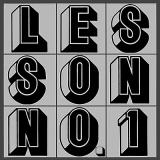
After cutting his teeth in the late '70s No Wave scene with bands Theoretical Girls and The Static, Glenn Branca made his first solo statement, Lesson No. 1, in 1980. The inaugural release on legendary post-punk / dance label 99 Records, Lesson No. 1 unveils Branca's visionary guitar concepts with two monstrous, side-long compositions that helped forge NYC's downtown art-punk sound and acted as a massive influence on countless young groups, including Sonic Youth and Swans.
The title track is easily Branca's most-accessible moment; its driving beat and interlocking patterns resemble German pioneers Neu! playing Philip Glass. Never before (or since) has minimalism sounded so euphoric. "Dissonance" is the A-side's polar opposite. Dark, skittish and unhinged, Branca leads his band (guitar, keyboard, bass, drums and sledgehammer) through block after block of industrial terror, leaving listeners drained in the process.
It’s a rare occurrence for a band to continue making music into their fifth decade, even fewer top off that achievement with one of their most recent albums being named one of “2023’s Best Albums” by a venerable magazine like SPIN. But The Church did just that with The Hypnogogue, an album so adored by critics and fans alike that it ushered in an entirely new era for the Australian band.
Now armed with their 28th album Lacuna, the psychedelic dreampop legends continue to evolve and transform, remaining not only relevant but consistently delivering music that is innovative yet true to their signature sound. “Intense, forlorn, and exultant,” is how bassist/vocalist/founder Steve Kilbey describes the album.
With a measured command of melody and instrumentation that only comes with experience and age, it’s an album rife with indelible musical clasps that fasten hold of your attention and refuses easy surrender. It’s a steadfast talent that Kilbey hosts close to his chest that’s been ever-present in the 27 albums that preceded it (best evidenced by the jubilant, nearly sold out 2025-2026 Singles Tour legs across Australia and North America, featuring night after night of incredible three-hour sets).
Starting in 1980, The Church continued expanding their highly cinematic and atmospheric blend of indie rock, shimmering post-punk, icy dreampop and psychedelic post-rock without retreading their steps. Beginning with classic early albums Of Skins and Heart, The Blurred Crusade, and Heyday which built a sturdy foundation, 1988’s Starfish broke into the mainstream and gave The Church the international hit “Under the Milky Way.” The hit single has been regarded as one of the most influential and recognizable Australian rock anthems of all time.
Zweite Auflage 2026 -Ein PUNK-ROCK-MEISTERWERK neu aufgelegt - mit, aus aktuellem Anlass, aktualisiertem 2026 Cover-Artwork, Vinylfarbe Starlight Yellow! Das erste Studioalbum von NOFX auf Fat! Die Band behandelte ernste Themen (Punk-Kultur und Politik) mit ihrem typischen Witz und Sarkasmus und zielte auf George W. Bush. Nun ist ein neuer Clown am Start! Damals (2003) schaffte es das Album sowohl in Großbritannien als auch in den USA in die Top 50 und war auch auf dem europäischen Festland erfolgreich, wo es in der Schweiz und in Deutschland die Top 30 erreichte, in Österreich die Top 50 und in Frankreich die Top 100. "Musically, NOFX fuses its political cynicism with criticism of punk rock itself and suggests that the best thing for all the kids and the bands might be to close ranks and start their own little hardcore community. 'Irrationality of Rationality' and 'Franco Un-American'_two of the album's most melodic, catchy songs_are also two of War on Errorism's most biting commentaries. The first personalizes the trickle-down effect of corporate decision-making over a lockstep hardcore rhythm; the second gets all-new wavy as Fat Mike reasons out his own world view, and somehow rhymes "apathy" with "Noam Chomsky.'" - NOFX hat sich zwar aufgelöst, aber das Vermächtnis lebt weiter. Die Band ist derzeit Gegenstand ihrer ersten umfassenden Ausstellung im Punk Rock Museum in Las Vegas. Die Dokumentation "40 Years of Fuckin Upmakes" feiert beim SXSW 2026 Premiere und ist ab April umfassend zu sehen (Score & Original Soundtrack mit neuer Musik von NOFX folgen in Kürze). Der zweite Teil der A-Z-Raritäten-Trilogie "I to Q" soll Ende 2026 erscheinen. Und behaltet Fat Mike im Auge, denn Gerüchten zufolge hat er eine eigene Meinung zur aktuellen Weltlage. Warning: owning this record might piss off (more than ever) your army recruiter, grizzled grampa, or those wacky flag-wavin' nationalist buddies of yours.
History has shown that the greatest bands–bands with that certain, ever elusive quality called lasting power–neither conform to nor buck the trends of their time, but rather force the times to catch up to them. Sheer Mag has such lasting power in droves. After almost a decade spent carving out a career that has already become the stuff of modern underground legend, the band’s new stand-alone single, “All Lined Up,” comes alongside the announcement of their signing to Third Man Records–their first partnership with a larger independent label–who will also be physically and digitally re-releasing the entirety of Sheer Mag’s back-catalogue, including their cult-beloved early EPs I (2014), II (2015), and III (2016), as well as their first two breakthrough LPs, Need To Feel Your Love (2017) and A Distant Call (2019). Sheer Mag’s sensibility, as fervently beloved by baseball-tee clad garage rockers and tattoo-less indie kids as it is by leather-and-stud-loyal punks, finds its strength in an unconventional mixture of refined complexity and straight-forward pop prowess. Seamlessly trading between head-turning guitar heroics and a charmingly timeless blend of disco, hard rock, and garage inflected hooks, Sheer Mag’s oft-referenced, never-replicated sound has played an undeniably large role in stoking the current resurgence of interest power-pop forward rock music. While quickly adopted as a fan-favorite amongst the sweat-caked crowds of the early 2010’s underground, time has attested to Sheer Mag’s singular cultural mutability: though never straying too far from their home-town Philadelphian origins
Punk Rock in Großbritannien: In John Robbs ultimativer Oral History erzählen die prägenden Protagonisten der ersten Stunde, wie es wirklich war. Robb, Autor mehrerer Bestseller und selbst von Beginn an mit seiner Band The Membranes Teil der Szene, hat sie alle vors Mikrofon geholt: John Lydon, Lemmy, Ari Up, Mark E. Smith, Poly Styrene, Malcolm McLaren, Siouxsie Sioux ... you name it. Sie erzählen, was sie zum Punk brachte und welche Musik sie inspirierte, lassen legendäre Gigs Revue passieren, sprechen über bahnbrechende Platten und die obskursten Ereignisse hinter den Kulissen.
Das Buch ergründet die viel diskutierten Wurzeln des Punk, vermittelt die ganze Intensität der Anfangstage und widmet sich der Post-Punk-Periode ebenso wie dem anhaltenden Einfluss auf heutige Bands. 'Punk Rock - Die ganze Geschichte' ist ein pulsierendes Stück Zeitgeschichte, das die Bewegung in ihrer ganzen Breite beleuchtet: von Mode über Politik bis zur Musik!
Zum 50. Punk-Jubiläum erscheint Robbs lange vergriffener Klassiker der Punk-Geschichtsschreibung, übersetzt von Martin Büsser und Chris Wilpert, endlich in einer überarbeiteten Neuauflage mit einem Vorwort von Glen Matlock (Sex Pistols).
Vier Jahre brodelte es im Berliner Untergrund: Nach zwei DIY-Tape-Releases durchbrechen SEK die Flanke und präsentieren mit Wallensteins Garage ihr erstes Album auf Vinyl ein Debüt, das gleichermaßen Geschichtserzählung, Konzeptalbum und ausufernde Jam-Session ist. SEK benannt nach den Anfangsbuchstaben der Nachnamen ihrer Mitglieder - Paul-Willy Stoyan (Gavial, Jacke Schwarz), Georg Edert (Elder, Gaffa Ghandi) und Lucas Kazzer (Gaffa Ghandi, Borders Down) - vereint drei Musiker, die seit Jahren in der Berliner Underground-Szene aktiv sind. Ihre gemeinsame Sprache findet sich zwischen Improvisation, historischer Erzählung und druckvollem Rock. Was die drei verbindet, ist weniger ein gemeinsamer Stil als die Lust am Ausprobieren: ausufernde Proben, lange Improvisationen und die Suche nach Klanglandschaften, die ebenso sperrig wie eingängig sein können. Was 2022 während des pandemiebedingten Lockdowns mit stundenlangen Jams begann, entwickelte sich in den vergangenen vier Jahren zu einer eigenwilligen Mischung aus Psychedelic Rock, Krautrock und einer Prise Prog. Die Band selbst nennt diesen Sound augenzwinkernd HOR Historian Oriented Rock: Musik, die historische Stoffe nicht illustriert, sondern in Klang übersetzt. Die Inspiration für die Songs stammt aus dem Dreißigjährigen Krieg (16181648), insbesondere aus dem Leben des böhmischen Feldherrn Albrecht Wenzel Eusebius von Wallenstein und den Ereignissen rund um die Schlacht bei Lützen (1632). Das musikalische Arsenal ist ebenso vielseitig wie die erzählte Geschichte: verfuzzte Gitarren mit wabernden Delays treffen auf einen galoppierenden Bass und treibende Drums, getragen von träumerischen Keyboards. Immer wieder öffnen sich freie, fast chaotische Passagen, in denen Harmonie und Rhythmus auseinanderbrechen wie Schlachtordnungen, die im brutalen Nahkampf ihre Form verlieren. An anderer Stelle schaffen sanfte Mandolinenklänge Momente der Ruhe, bevor sie sich in schwere, schmerzvolle Trauermusik verwandeln, inspiriert von Doom und Drone Metal. Zwischen hypnotischen Grooves, improvisatorischer Freiheit und cineastischer Dramaturgie erschaffen SEK einen Sound, der Vergangenheit nicht nachstellt, sondern neu erfahrbar macht. Die Platte erscheint auf Exile On Mainstream als schwarzes Vinyl mit beigelegter CD. Genre: Krautrock, Psychedelic, Alternative Für Fans von: Elder, Gentle Giant, Amon Düül, Zahn.
Norwegian Paris- based producer and multi-instrumentalist Sprutbass (Eivind Henjum) returns to on the European music stage with his latest EP RALLY SKANDINAVIA EP(Musique Large 2026) This album is a high-octane, hard-hitting sonic journey deeply rooted in the rich heritage of Scandinavian electronic music, fusing the historic legacy of Norwegian space-disco with a glittering and funky cosmic futurism.
The EP is co-produced and mixed by the legendary norwegian dj and producer Prins Thomas and features contributions from innovative trombonist Rick Parker (Mingus Big Band, Wu-Tang Clan) and avant-garde drummer/percussionist Håkon Berre (Peter Brötzman, Otomo Yoshihide).
Josh Ludlow - one half of MAKE A DANCE - one of London’s most beloved duos - steps out on his own for a rare solo outing on legendary London imprint Rhythm Section International.
A late contender for EP of the year - the record meanders menacingly across four tracks of mind-altering, dissociative Brain Music, precision engineered to transport a listener and hypnotise a crowd without losing any dancefloor impact.
Interestingly, Bradley Zero (RS label boss) and Mr. Ludlow have a connection dating back to the late 2000s, when they were both drummers in rock and roll bands...almost 20 years later - a shared love of experimental electronic music has brought them back together, resulting in this spellbinding EP.
Channelling a much darker, heads down, aggressive sound than the uplifting house M.A.D have become known for, the record begins with 'Brain Music’, which serves as a Detroit techno-inspired wormhole of a track, guiding us into a parallel, inner dimension.
Time Upside Down is next up and it becomes apparent we have entered another realm entirely. The introductory bars of the song feel like a long journey down a dark tunnel. The sound design and acoustic backdrop are so evocative you can almost see it. Obnoxious bass notes reverberate through the space created by the track, slowly giving way to flurries of high-pitched, resonant acid lines - the sum of which escape easy classification. It would be lazy to call it house music, misleading to call it techno - but it’s definitely not tech house. Elements of disco, electro, post-punk, balearic and Weatherall-esque chug are all in the mix but essentially, this is its own thing - this is Brain Music.
The record continues to the penultimate track “The Kettle”, which starts off in more familiar upbeat, bongo-house territory before the calm is betrayed by a hovering intensity which grows out of nowhere before making space for a humungous bass synth melody - so big in fact that it has never once failed to elicit club-wide bass-face; which for a mid-tempo track is no mean feat. We round things off with ‘Mean Mother’, the most playful of the bunch: a Chicago house-indebted workout reminiscent of Paranoid London at their most visceral. The track feels familiar and almost safe until the synth-work is cranked up to 11, creating a cacophonous SH-101 build-up into a disco-esque drop that would get even the most reluctant raver jumping up and down for more.
Besides all the theatrics and acoustic world building, the evocative sound design and the insatiable, no-nonsense grooves - the thing that makes these tracks stand out is the attention to detail. No two fills are alike, every embellishment is EQ’d and polished to perfection - yet no immediacy is lost. The tracks feel alive, intentional and constantly evolving. Hyperbole aside - we have a serious, generational talent on our hands whose mastery of the equipment, understanding of the dynamics of the dance and unabashed
playfulness is being harnessed into something that stands out head and shoulders above the crowd.
Shape of the Unknown’ is kind of a double LP that fully embraces the idea of exploration. It is CHLOÉ’s most expansive and immersive work to date. ‘Shape of the Unknown’ is CHLOÉ’s fourth proper studio album. Its predecessor, ‘Endless Revisions’, was released in 2017. Nine years have passed. Nine years during which CHLOÉ has continued digging for music, DJing at internationally renowned clubs and festivals including Rex Club, Robert Johnson, Panorama Bar, Nuits Sonores, Glastonbury and many more, releasing EPs and remixes, while also allowing herself the time to explore entirely new creative paths.
The challenge is to capture the unknown, make it her own, endlessly reshape its textures, and ultimately preserve its mystery.
The first single ‘Drifter’, released back in June, already offered a striking glimpse of the sonic territories the album would venture into, driven by its hypnotically contoured basslines. The album's two other singles offer different windows into her world. 'Shapeshifter' captures CHLOÉ at her most hypnotic, balancing stripped-back techno and melodic house through deep rolling grooves, expansive bass chords and subtle rhythmic shifts that constantly reshape the listener's perception without ever disrupting the flow. Later, 'Repeating The Obvious' takes a more leftfield route, pairing staggered rhythms with retro-inspired harmonics and an understated indie dance pulse that feels simultaneously familiar and unpredictable.
CHLOÉ has ventured into live performance through new formats, notably alongside percussionist Vassilena Serafimova; immersed herself in film scoring with soundtracks for Paris la Blanche, Arthur Rambo, The Mountain, Blanquita, Guru and Unsubmissives; and developed compelling collaborations, from High Season, her project with Ben Shemie of Canadian band Suuns (which resulted in the album The Call), to her own organic, experimental audiovisual performances under the name Slo/Mo AV.
Throughout Shape of the Unknown, CHLOÉ blurs the boundaries between deep house, hypnotic techno, electronica and cinematic sound design with remarkable fluidity. The album unfolds as a continuous narrative rather than a sequence of tracks, moving effortlessly between beatless ambient passages, rolling analogue grooves and emotionally charged club music. Organic percussion, sweeping bass movements, melancholic harmonies and richly textured synthesisers create a body of work that constantly evolves, where no section feels static and every transition reveals another layer of depth. There is an unmistakable warmth running through the record, with grainy analogue textures and spacious production giving even its most driving moments an intimate, almost tactile quality.
The album’s title is no coincidence. It evokes a form that has yet to be named, something language itself struggles to grasp. CHLOÉ approaches it through an organic creative process. Each piece must first be performed in the studio, almost as if it were being played live. The album will be followed by a series of live performances and DJ sets, including a show at the Olympia on March 18, 2027.
She is joined by a handful of steadfast collaborators. Jazz trumpeter David Enhco appears on two tracks, ‘Undertow’ and ‘Inner Bass’. But above all, there are the voices: Ben Shemie lends his unmistakable presence to the radiant ‘More Than Just a Feeling’. Olivia Merilahti, singer, songwriter and one half of The Dø, appears on the otherworldly ‘TWYR’. Working with Olivia’s already hypnotic voice, CHLOÉ has approached it like a sculptor, enhancing its strangeness and dreamlike quality.
And finally, impossible to miss is the instantly recognizable voice of Kittin. A longtime accomplice, she lends her distinctive phrasing to CHLOÉ’s music here for the very first time. The strongest collaborations are often those that take their time, arriving only when the moment is right. Same kind, same bass, same vibe, same pride.
The result is an enigmatic, nocturnal record, drifting between introspective listening and dancefloor functionality, revealing an artist who remains far more interested in atmosphere, movement and emotional storytelling than conventional club structures. It is an album that invites us to dream more deeply and to dance again, both within ourselves and out in the open.
This is the sound of dream Texas, the cinematic Texas conjured in film and 20th century literary and art myth… big dark blueing horizons swallowing the infinite distance, a lonely poetry of sound, but also a stock taker of the iconoclastic, psychedelic, art rebel side of Texas… the cracked rock music side of Texas, the avant-garde in concrete cracks, the recklessly used, mind expanding drugs Texas, the dripping eastern swamps, the Houston house parties with the sounds of records blasting down the block and becoming musique concrète in the hot summer night.
Chrome Chasm’s debut album Interpreter is ambient, minimal in feel, maximal in texture, beautifully disorienting, vastly spacious— until it isn’t. It's a naturalistic shapeshifter, taking majestic form in the aforementioned elements and then dissolving back to raw genetic material to form anew. Spiritual jazz overtones, pedal steel moans and buzzing, noisy ambient visions are upended by grey-folded psychedelic unveilings. Interpreter’s three expansive tracks present a most detailed performance by its three deft musicians and the outcome often feels like a gorgeous collage in real-time.
Chrome Chasm was formed in 2024 by three of Houston’s brightest underground stars: Mlee Marie (Hearts Of Animals) on alto saxophone, flute and voice (whose long-form experimental sax performances helped inspire the formation of the band), Will Adams (Lower Dens/ Ka-Nives) on pedal steel, synth, percussion and voice, and Tom Carter on guitar. Carter has been casting a long shadow over Texas psychedelia and American underground music for over 3 decades, most notably with the Houston based Charalambides, a powerful creative force of the pre-new weird America era of experimental and avant psychedelic music, and most notably since with his solo guitar magnum opus Long Time Underground (which was deemed among the best experimental albums of 2015 by Pitchfork).
Interpreter’s opening track “The Star,” recorded almost completely live in one room and one take, is a 16-minute manifesto on ‘Dream Noir.’ An astute scholar of cross-genre connectivity and the through-lines of kosmische and spiritual-leaning sonic realms can hear echoes of Cluster, the skronk and beauty of Rahsaan Roland Kirk, and the architectural ambient flow of Harold Budd and Philip Glass in the tidal lapping of distorted guitar, mantra-like saxophone and pedal steel flow. From its deconstructed, pastoral opening moments to its proto-electronic center that crests into a bombastic polytonal climax, Chrome Chasm never neglect narrative arc for experimentation and avant technique. In fact, as a group, they effortlessly control, open, fill and contract space in abeyance to emotional vibration. “The Star,” and indeed the album as a whole, feels more like a communion or extended poem, in direct communication with the listener, than it does a ‘captured experience.’
Across the three longform tracks of Interpreter, Chrome Chasm conducts a masterclass in fusing real time performance energy with an abstract, cut-up master’s reimagining of the literal. They demand the listener meet their music with dream logic and then, like the best dream peddlers, they present a labyrinth to fall into and experience, a place where explanation and conclusion become obsolete, and engagement and immersion become sublime.
With one foot in the Mexican underground rock scene and the other one in the global tape trading circuit, Las Ánimas del Cuarto Obscuro found themselves in the middle of a crossroad after their first LP. México wasn´t the same country as when the band first started. Even though access to non-commercial music still was a difficult task in the late eighties, the fringes of culture had way more resources thanks to the stubbornness of certain anonymous heroes: dwellers of El Tianguis Cultural del Chopo, niche record stores, illegal underground parties and hosts of late night Mexican public radio shows.
Ubiquitous social unrest expressed itself in every way possible. The aftermaths of the 1985 earthquake weren’t the only matters on the table. Protests erupted after a rigged presidential election and a student strike hit Mexico’s biggest public university. This was just the tip of the iceberg of issues PRI’s perfect dictatorship was or wasn’t addressing. The clash of the authoritarian regime against new and fresh ideas.
If the first record was about the loneliness of self-destructive youth and it’s urban phantasmagories, LACO’s second LP dealt with change as the axis of human existence. Las Ánimas is just the beginning of the sonic metamorphosis Toño Sánchez went through until this very moment.
The departure of former bandmembers set a different approach towards more experimental and atmospheric sounds. As the project’s only member, Toño Sanchez took an alchemical trip aiming for more mysterious horizons.
Despite the fact that we can still find conventional dark pop and catchy songwriting, the record rests on sound landscapes closer to Jorge Reyes or Tuxedomoon and This Heat than the orthodox ways of so called post-punk, seasoned of course with the lack of music gear and the economic reality prevalent in Mexico of those convulsed times.
Las Ánimas is a goodbye letter to underground but not because the next move is the mainstream. Far away from it, it’s a farewell to traditional rock and a the first steps down into the depths. From now on, Toño Sánchez will dedicate his musical efforts to weirder sounds and scarcer audiences in the search of the arcane, possessed by a mania of constant change that infects the soul after crossing the black door’s threshold.
Eine historische Begegnung zwischen zwei der größten und legendärsten Bands des ehemaligen Jugoslawiens: LAIBACH - international anerkannt für ihre kompromisslose Auseinandersetzung mit Ideologie, Ästhetik und Macht - präsentieren "Die Kanone". Dabei handelt es sich um eine Neuinterpretation von "Top", der ersten, 1974 veröffentlichten Single von BIJELO DUGME, den Pionieren der jugoslawischen Rockkultur, gegründet von Goran Bregovic. Gemeinsam verwandeln sie einen historischen Song in ein neues Statement über die Zyklen der Geschichte und die Mechanismen, die die Gegenwart prägen - ein Werk, das tief in der Kulturlandschaft des ehemaligen Jugoslawiens verwurzelt ist, aber ebenso deutlich darüber hinausweist. Die Version von Laibach, unter Mitwirkung von Bijelo Dugme und insbesondere Goran Bregovic an der Gitarre, erschien 2025 digital, sowohl in deutscher als auch in slowenischer Sprache. Nun zusätzlich von DIE KRUPPS, THE LINCOLNSHIRE POACHER, BLACK DOT und dem RTV Slovenia Symphony Orchestra neu gemischt und interpretiert, um die allererste physische Veröffentlichung auf 12"-Vinyl und CD zu vervollständigen. Mehr als fünfzig Jahre nachdem das Debüt von Bijelo Dugme ein neues Kapitel in der Geschichte des Balkan-Rock aufschlug, greifen Laibach dieses ikonische Material auf und interpretieren es in ihrer eigenen, monumentalen Klangsprache neu. Das Ergebnis ist ein Dialog zwischen zwei Epochen, zwei künstlerischen Visionen und zwei Herangehensweisen an die Symbole, durch die sich Gesellschaften selbst definieren. "Die Kanone" ist nicht bloß eine Neuinterpretation eines historischen Songs - es ist ein zeitgenössischer Kommentar zum sich wandelnden Verhältnis zwischen Industrie, Technologie und Militarisierung. Der Titel evoziert den Wandel der industriellen Produktion und die beunruhigende Neuausrichtung etablierter Fertigungstraditionen hin zur Herstellung von Waffen und Kriegssystemen. Durch das Aufeinandertreffen der ursprünglichen Rock-Mythologie von Bijelo Dugme und dem Industrial-Ritualismus von Laibach untersucht der Song, wie wirtschaftliche Macht, technologischer Fortschritt und militärische Ambitionen miteinander verflochten sind. Das Stück reflektiert eine Welt, in der die Sprache der Produktion zunehmend mit der Sprache des Konflikts verschmilzt. "Die Kanone" und die slowenische Version "S topom te bom ciljal moja mala" erscheinen erstmals physisch, mit Remixen der deutschen Industrial/EBM-Legenden DIE KRUPPS (die eine episch-wuchtige Version beisteuern, welche ein Hit in ganz eigener Sache ist), des britischen Produzenten The Lincolnshire Poacher sowie des slowenisch-kroatischen Elektronik-Duos Black Dot. Der sechste Titel der 12"-Vinylversion ist eine Live-Aufnahme aus der Oper von Ljubljana, eingespielt mit dem RTV Slovenia Symphony Orchestra. Erhältlich ist klassisch schwarzes oder limitiertes farbiges Vinyl sowie CD mit zwei Bonustracks (iTurks Symphonic Mix der slowenischen Version und eine Instrumental-/Karaoke-Version). Beide Formate mit Obi-Banderole.
For two decades, The Oscillation has occupied its own space within the psychedelic underground, continually reshaping a sound built as much from texture, repetition and atmosphere as it is from conventional songcraft. On 'Interference', released October 30th 2026 via Fuzz Club, Demian Castellanos pushes that approach further than ever, creating what he describes as "a painting of sound rather than music”. It’s an album where noise and melody constantly collide, dissolve and reform into something strangely beautiful: “I wanted it to be accessible but also quite extreme, a sort of beautiful noise. I did my best to push out the parameters whilst trying not to allow it to disintegrate into something with no meaning or focus.” Chasing an elusive balance between accessibility and abstraction, the result is a record that feels simultaneously immediate and disorientating: dense layers of drones, feedback and motorik rhythms give way to unexpected moments of warmth, colour and even uplifting euphoria. Across its runtime, chaos never overwhelms; instead it becomes another instrument, carefully sculpted into hypnotic, immersive compositions. Much of the album emerged through instinct rather than intention. Fragments originally conceived as intros, outros or abandoned ideas gradually eclipsed the songs they belonged to, with tracks revealing themselves organically through a process Castellanos likens to "playing Chinese whispers with musical instruments." Elsewhere, two long-forgotten compositions – ‘Stasis’ and ‘When You Close Your Eyes’ – finally found their place after lying unfinished for almost twenty years. Recorded and mixed by Castellanos at his home studio in the Czech Republic, ‘Interference’ also benefits from a key collaboration with Lorena Quintanilla of Mexican band Lorelle Meets The Obsolete, who provides a transformative presence. Her haunting vocal on ‘La Alusion’ (which she also wrote the lyrics and melody for) became the breakthrough moment that crystallised the album, turning an instrumental sketch into a dreamlike centrepiece and helping shape the final sequence. She also lends her voice to ‘Isolation Freeway’, adding another layer of mystery to an album that continually blurs the line between structure and dissolution. Perhaps most remarkably, ‘Interference’ was created during a period in which Castellanos had largely stopped listening to music altogether: “My hi-fi broke a couple of years ago so I kind of wanted to see what would happen if I didn’t listen to too much music.” Instead of consciously absorbing outside influences, he trusted instinct, memory and experimentation to guide the process. The result is one of The Oscillation's most adventurous and emotionally resonant records to date: a vivid collision of hypnotic repetition, spectral beauty and controlled sonic disruption that confirms Castellanos remains one of modern psychedelia's most singular voices.
It all started with a small party in 2006. Peter Invasion simply wanted to create a home for his band. That small party grew into something bigger, and eventually Riotvan became a record label in 2012 — a home for many different people, all brought together by a shared love for music and art. When Panthera Krause joined the journey in 2017, Riotvan evolved once again, adding a new perspective and another creative force to what it had become. The journey began 240 months ago — or, for those too lazy to do the math, 20 years. A lot has happened since then, but one thing has never changed: the passion. People have come, gone, and stayed. And here we are, celebrating 240 months of Riotvan with our friends, our loved ones, and ourselves. To mark the occasion, we're hitting the road on tour and have put together an extended edition of our Familiar Faces series. It's a colorful collection of music that brings together everything we love and everything that makes sense to us. It couldn't represent the Riotvan spirit any better. We'll definitely see each other somewhere along the way. Here's to the next 240 months.
Some recordings herald the future in ways that are impossible to see in real time. Teodros Makonnen With His Organ (ቴዎድሮስ መኮንን ከኦርጋኑ ጋር), by the artist Teodros Makonnen, also known as Teddy Mak, is one of those. Today, electronic sounds, synthesizers, and digital production are taken for granted in Ethiopian music, but in the early 1980s, they were novelties that polarized opinion. Even to this day, the story of Teodros Makonnen’s legacy has never been properly told. He played a decisive role in defining the sound of the digital era of Ethiopian music that emerged in the 1980s and beyond, both as a keyboard player and as a producer, songwriter, performer, and sound designer.
Ethiopian music was at a crossroads in the early 1980s. Much like music in the rest of the world, technology and automation heralded either a quantum leap in musical development or the annihilation of musicianship, depending on who you’d ask. The changes were incremental nonetheless, but with the benefit of hindsight one can clearly see that the changes meant different things in different contexts. Drum machines and electric organs came to replace many hotel bands because, all of a sudden, one musician could control drums, melody, and accompaniment. Teodros was one of the first musicians in Ethiopia to explore the possibilities this opened up.
Teodros’ father, Captain Makonnen Beri, was a chief pilot at Ethiopian Airlines and a music enthusiast at that. This would prove important to his development, as Makonnen brought back a piano from Germany, which would lead to the first steps in Teodros’ long musical career. Captain Makonnen’s work as Head of Flight Operations and as a pilot exposed him to the wider world that was far from commonplace for most Ethiopians. In a house where music captivated the whole family, the piano gave Teodros’ talent an outlet. Not only was a piano at home rare in Ethiopian households, his father also brought an Indian teacher to their home to teach Teodros and his brother, Captain Samuel Makonnen, music theory (solfeggio or ear training) and piano. Teodros and his youngest brother, the late great Dereje, a member of both the legendary Ibex Band and the Ethiopian reggae group Dallol, took up music from that point onward, with Teodros beginning to develop his proficiency at the age of eight. His father encouraged him to practice tirelessly at home, and Teodros later received musical schooling at the German School in Addis Ababa. His obvious talent led to studies and formal education at the Yared School of Music, followed by continued studies in American jazz at Northern Virginia Community College in Virginia. Teodros cut his teeth professionally in his mid-teens, not only as a keyboardist, but also as an arranger for the Wabi Shebelle and Dahlak bands in the 1970s. He mastered electronic sequencing early, rising to prominence through the midnight recording sessions held during the military curfew. The pressures imposed by the curfew required precise and disciplined recordings, and Teodros delivered just that. This, in turn, led to collaborations with iconic artists such as Mulatu Astatke, Aster Aweke, Menelik Wossenachew, Tilahun Gessesse, Mahmoud Ahmed, and Alemayehu Eshete. In those days, he sat in as a keyboardist with the Dahlak Band when Dawit Yifru took a hiatus to study in Russia, and also with the Ethiostar Band. He secured a residency at the Wabi Shebelle Hotel with the Shebele Band, together with Zelalem Tadese (drums), later succeeded by Elias Bekele, Mulugeta Hailu (bass), Teferi ‘Bibisha’ Mengesha (guitar), Kumelachew G/Selassie (trumpet), and Teshome Deneke (saxophone). A friendly competition developed between the bands associated with the Ras Hotel (the Ibex Band), Ghion Hotel (the Dahlak Band), and Wabi Shebelle Hotel (the Shebele Band). The music scene at Wabi Shebelle saw teenagers commanding the spotlight in an industry otherwise dominated by musicians of an older generation. At the Wabi Shebelle Hotel, Teodros met a diplomat from Saudi Arabia and later visited him at his home in Addis Ababa, a meeting that had unexpected musical consequences. The man owned a Yamaha double-deck keyboard. That evening, they recorded Teodros Makonnen With His Organ (ቴዎድሮስ መኮንን ከኦርጋኑ ጋር) in one take. This recording, a cornerstone in the early digital sound of Ethiopian music, came about almost by chance, simply because Teodros got the opportunity. Traditional Ethiopian songs were cast in a wholly electronic style. Once freed from backing duties, Teodros’ keyboards could explore dreamlike soundscapes that took Ethiopian music in new directions. Even though the cassette contained well-known Ethiopian songs, they were given highly original arrangements, performed on an electric organ with drum machine backing and rhythm patterns that left the listener with suggestive, lingering sounds. “Libesh Kabashen” (also known as “Anchi Bale Game”) and “Odu Gol Golesa” wrap you in the very stuff that dreams are made of. Originally released on cassette only, this recording exudes a mystique that surpasses even some of the most obscure Ethiopian recordings of the day. It remained more or less unknown outside of Ethiopia until now. Some of the tracks, like “Addis Fikir,” are permeated with an almost naive buoyancy, free-floating sounds that lost contact with the ground the moment they were conceived. Others, like “Meche New Hageren Yemayew” and “Lelitu Alnega Alegn,” carry a moodier, quirkier timbre, with pulsating rhythms in the background. Yet even the darker pieces contain an unmistakable wave, something essentially Ethiopian. If most recordings of Teodros’s contemporaries at the time were teeming with atmosphere, his songs seem instead at home in the stratosphere, almost ethereal. Some of the music here could be filed under “lullabies,” were it not for the recurring, almost brooding feeling that engulfs the listener on the aforementioned tracks. You could easily be forgiven for drifting into a blissful haze as the music washes over you.
Up to the advent of electronic music production, Ethiopia was totally dominated by big bands on the one hand, and small groups on the other. The former were tied to large institutions such as the military, the latter emerged from the entertainment industry, in hotel bars and nightclubs. These groups were commercially driven, and bands ultimately had to foster a mercenary approach to employment, albeit not to the passion for music. In the light of this, Teodros’ musical legacy can be seen in two ways. On the one hand, he is a key player in Ethiopian music from the 1970s onwards, leaving an indelible mark through hundreds of compositions and arrangements, including soundtracks for numerous documentary films and advertisements for different companies. On the other hand, the way he and others employed electronics brought Ethiopian music onto a fork in the road.
The replacement of traditional instruments with electronic equipment was seen as impending doom by some. Others, like Teodros, saw new avenues for performance, production, and creativity. Just as later producers like Abegasu Shiota of Admas, Teodros was a trailblazer who opened paths that it took Ethiopian music as a whole more than a decade to rush into. The hotel scene had already been pushed toward electronic music by financial necessity and cost-cutting. Today’s revived global interest in Ethiopian music from the seventies and eighties, alongside a broader resurgence, has changed the reasons for using digital means of music production. They have become tools for musical dreaming. This is where the dreaming began.
Deluxe LP features 140g virgin vinyl; heavy-duty board jacket, artwork by Art Rosenbaum + DL. RIYL: Bob Dylan, John Prine, Townes Van Zandt, Ry Cooder, Michael Chapman, Michael Hurley, The Youngbloods & Bonnie “Prince” Billy. Jake Xerxes Fussell’s 4th album finds the acclaimed folksong interpreter, guitarist, and singer navigating fresh sonic and compositional landscapes on the most conceptually focused, breathtakingly rendered, and enigmatically poignant record of his wondrous catalog. Produced by James Elkington and featuring formidable players both familiar (Casey Toll, Libby Rodenbough) and new (Joe Westerlund, Bonnie “Prince” Billy), it includes Jake’s first original compositions; atmospheric arrangements with pedal steel, horns, and strings. One of the most striking and strangely moving moments on Jake Xerxes Fussell’s gorgeous Good and Green Again an album, his fourth and most recent, replete with such dazzling moments arrives at its very end, with the brief words to the final song “Washington.” “General Washington/Noblest of men/His house, his horse, his cherry tree, and him,” Fussell sings, after a hushed introductory passage in which his trademark percussively fingerpicked Telecaster converses lacily with James Elkington’s parlor piano. That’s the entire lyrical content of the song, which proceeds to float away on orchestral clouds of French horn, trumpet, and strings, until it simply stops, suddenly evaporating, vanishing with no fade or trace, no resolution to its sorrowful minor-key chord progression, just silence and stillness and stark presidential absence. It feels like the end of a film, or the cold departure of a ghost, and is unlike anything else Jake has recorded. In all his work Jake humanizes his material with his own profound curatorial and interpretive gifts, unmooring stories and melodies from their specific eras and origins and setting them adrift in our own waterways. The robust burr of his voice, which periodically melts and catches at a particularly tender turn of phrase, and the swung rhythmic undertow of exquisite, seemingly effortless guitar-playing here he plays more acoustic than ever before pull new valences of meaning from ostensibly antique songs and subjects. On Good and Green Again, Jake not only ventures beyond his established mastery of songcatching and songmaking into songwriting, but likewise navigates fresh sonic and compositional landscapes, going green with lusher, more atmospheric and ambitious arrangements. The result is the most conceptually focused, breathtakingly rendered, and enigmatically poignant record of his wondrous catalog. It’s also his most deliberately premeditated album, representing his fruitful return to a producer partnership after two self-produced projects, What in the Natural World (2017) and Out of Sight (2019) (William Tyler produced his friend’s self-titled 2015 debut.) This time James Elkington produced and played a panoply of instruments, bringing to Jake’s arcane song choices his own peerless sense of harmony and orchestration, balance and dramatic tension. The pair enlisted a group of formidable players including regular bandmembers Casey Toll (Mt. Moriah, Nathan Bowles) on upright bass, Libby Rodenbough (Mipso) on strings, and Nathan Golub on pedal steel. They were joined by welcome newcomers Joe Westerlund (Megafaun, Califone) on drums, Joseph Decosimo on fiddle, Anna Jacobson on brass, and veteran collaborator and avowed Fussell fan Bonnie “Prince” Billy, who contributes additional vocals. Album opener “Love Farewell” (featuring some beautiful singing by Bonnie “Prince” Billy), an elliptical tale of the folly of war, set to the world’s most heartbreaking goodbye march for a lover left behind. “Carriebelle” and “Breast of Glass” each similarly concerns, in its own way, romantic love and leavings. All three songs highlight Jacobson’s diaphanous, understated brass parts, tying them together in a true lover’s knot. “Rolling Mills Are Burning Down,” with its distant keening strings and capacious sense of space, observes and mourns the loss of work and community in the wake of elemental disaster. Nine-minute tour de force “The Golden Willow Tree,” the sole explicitly narrative song herein, is a hypnotic, minimalist rendering of a tragic maritime ballad about scuttling an enemy ship in exchange for wealth and glory and a captain’s inevitable betrayal. “Fussell is creating his own legacy within the long lineage of traditional folk musicians and storytellers that have come before him.” The New York Times // “So elegant … It’s relaxing in the way that pondering a Zen koan is relaxing, and sweet in the way that the wounded, honey-voiced blues of Mississippi John Hurt are sweet.” Pitchfork // “Music that resides at the seams of Appalachia and the cosmos.”
You'd be hard pressed to name a song with the driving, emotional intensity and raw energy of the Hamilton Movement's anthemic ode to heartbreak, "She's Gone." Issued as the B-Side of the band's 1976 single "We're Gonna Party," and distributed in and around Indianapolis, there is no evidence the song garnered significant attention upon release—yet over the past fifty years it has amased a cult of devotees across the globe. But while interest in the group's music remains strong, little information has surfaced about the Hamilton Movement's history, and until now, there have been no official reissues of their work. This collection presents the band's discography, alongside previously unreleased music discovered on tape; it is the Indianapolis soul album that should-have-been.
The keys to the Hamilton Movement's mystery can be found in central Indiana, where promoter Dick Melvin has lived the past few decades, in a rural suburb of Indianapolis, amidst forests and cornfields. Melvin served as the group's manager throughout their entire existence, but his involvement extended far beyond typical managerial duties. He co-wrote and co-arranged the band's music; he produced and released their recordings on his Look Out label. Dick is also the band's archivist. His home is filled with boxes of demo sessions, live tapes, contracts, posters, and promotional photos documenting his work with the Hamilton Movement. He entrusted his archive to Now-Again's care and they've assembled this album under his watch. Dick's story, and the story of his band, are presented in an extensive, oversized booklet with Dick's rarely-seen photos and ephemera and words by Now-Again's Egon and Naptown historian Kylie Long.
Jonah Ellis came to the Drifters as a guitarist but was soon singing with the group and acting as their musical director.
This multitalented musician/ songwriter hailed from DC where he was born on 25 August 1947 and grew up to graduate from Springarn, Senior High in Washington.
He went on to study further at Morris Town Junior College in Morris Town, Tennessee.
Then he received a BA degree in Music from Knoxville College in Knoxville, Tennessee, and a Master of Arts in Music from Michigan State University in East Lansing, Michigan.
His first move into recording came with his group Jonah and the Whales and ‘Savannah Sun’ which sold well locally by didn’t chart nationally.
Jonah’s second single ‘I Get Hot/ Popcorn Cellar’ on Viking Records in 1970 had similar results but he was writing great songs and creating a lot of interest. In addition to penning Yarbrough and Peoples big hit ‘Don’t Stop The Music’ in 1980 which hit platinum.
Jonah was writer/ producer at Total Experience Records where he found time to cut a single under his own name ‘Christmas Won’t Be Christmas Without My Baby’ and also wrote hits for the Gap Band the biggest hit being ‘Desire’. Jonah only stayed a Drifter for about a year between 1986-87.
A short time later he joined the Temptations as their lead guitarist but didn’t stop writing songs for other artists (sometimes in his pen name Lonnie Simmons) like Alicia Keys ‘Gangsta Lovin’, Puff Daddy ‘Soul Food’, Evelyn ‘Champagne’ King ‘Shame’, Billy Paul ‘Fire In Her Love’and so many more including Aretha and sister Carolyn Franklin, Esther Phillips, Rose Royce and Burt Bacharach.
Jonah continued to write and perform internationally until his untimely death from a stroke on 22 February 2010.
Or Kantor returns with his sophomore album Snake Island, a vivid and cinematic journey through imagined landscapes and lost love, for fans of Eden Ahbez and other seekers of sound and spirit.
Following the critical success of his 2024 debut Sarda Sarda, praised by BBC Radio 6 Music, FIP Radio, RRR Australia, WYEP, KCRW, and Songlines Magazine, Kantor continues to refine his distinctive sonic identity, grounded in instrumental storytelling.
With Snake Island, Kantor ventures deeper into what he calls Subterranean Music, an atmospheric fusion of Mediterranean ballads, desert blues, spiritual jazz, and psychedelic textures. Drawing inspiration from artists such as Gábor Szabó, Omar Khorshid, The Budos Band, Dorothy Ashby, and Tommy Guerrero, he crafts instrumentals that feel both timeless and cinematic.
"Snake Island was written as a soundtrack to a fictional film that disappeared from the world, one that most likely no one has ever seen," says Kantor. "It began as a tragic love story, imagined during my time on a remote island in the Cyclades. Every landscape felt like a scene waiting for music. Eventually, the story gave way to sound."
A respected tattoo artist and founder of the Love Light Studio, Kantor's musical path began after a chance encounter with Johnny Sharoni (Garden City Movement, A&R at Anova Records). During a tattoo session, Sharoni heard Kantor's demos and was immediately struck by their raw beauty.
Kantor now steps confidently into the next chapter of his creative journey. Snake Island is more than an album. It is a mythic, imagined soundtrack to a film that only exists in memory, rendered in tones that shimmer like heat on stone.
Mysticisms’ explores the previously unknown Dub House, Digidub and electronic Street Soul of Manchester émigré Andrew Fitzgerald aka Atone on a 6 track EP, shape shifting from dark basements to summer fields, the music is wide-screen dreams, mixing psychedelic temperaments with ecstatic memories.
Dub Dats is a compendium of a life around or making music, beats, dubs; menageries of sound that encompass a love of reggae mixed with the influences of youth. Growing up in Thatcher’s then declining Manchester housing estates, Fitzgerald found escape first as a young roadie, just aged 15, sorting ‘cigarettes and alcohol’ for visiting bands. Rubbing shoulders with the likes of The Buzzcocks, Ian Dury and The Slits, was a great way to learn the ropes, while avoiding becoming another juvenile delinquent.
A love of Bowie, Kraftwerk, Motown, film scores and the emerging electronic and industrial bands like Throbbing Gristle led to a first studio, featuring the unique and faithful DR-55 Dr. Rhythm, soon followed by Sequential Circuits Pro One, Juno 60, Roland 303 (x 2), Roland 808 and Space Echo.
Working on music solidly, a release finally appearing on Robs Records, before losing all the equipment in a robbery. Manchester was shifting, gangs and “Gunchester” meant it was time to move on and when ‘an out’ appeared, Fitzgerald was landing in Sydney and settling into a new life.
Hooking up with Ali Omar, who he’d met while doing a stint in Brixton, London; the two worked solidly on music, gigging continuously, hanging with the likes Severed Heads and living a good life of that post acid-house party era. The loss of Ali to cancer, still young, hit hard and period “quite liked the madness” ensued. Rehab and starting again, Atone has been gaining some interest.
With 2 EPs of early works recently released on Tonal Oceans, Dub Dats looks deeper, with the dubbed house grooves of title cut, Dats and, the intriguingly named, Somewhere In France With Eric Random. Complimented by the electronic dub of Keep On, the soulful, slow breaks torch song, I Be There, the sample heavy Sound Of Soul and closing, trippy Unlike You, this is a multi-genre producer of considerable capability and talents.
Finally getting his due, Dub Dats perfectly fits the Dubplate Series, broadening its soundscape, while also standing out as its own, sonic release.
After the sell-out sensation of the album 'Soul Drums’, the Steve White Trio return with a special 7” single, as they take on Deep Purple’s ‘Mandrake Root’. A fitting tribute to Jon Lord, with a Hammond-heavy groove, White shows his range and power from behind the kit. It is backed by the original ‘Sunburn’, written by Joel White and Chris Hague, who complete the brilliant Trio.
’Soul Drums’ was the inaugural release in the new Acid Jazz Jazz Sessions series earlier this year and, remarkably, the first album bearing the name Steve White. After a storied session career and long association with Paul Weller, as a member of the Style Council and as the heartbeat of Weller’s solo band on ‘Wildwood', 'Stanley Road', 'Heavy Soul’ and ‘As Is Now’, the Trio sees Steve return to his jazz and filmic influences, with a true modernist touch.
The 7” release coincides with a special appearance at the 100 Club on 17 September.
Berlin-based edit specialist Voodoocuts knows exactly how to tease out the best bits of any of the source tunes he works with. He's been doing it for years now on labels like Juice on Wax and Uluru, and now heads to Ritmo for his latest 7" bomb. 'Riddim Freak' gets this one going with a reggaeton rework of a Missy Elliott classic. It's an inspired pairing that has elastic bass and trampoline-like kicks with rave horns, fat-assed brass band energy and plenty of that original Missy attitude. 'Work This' takes another of the rap queens' most welcome jams and flips and reverses it into an early electro and hip-hop blend with old school drums and many magnificent samples all bringing it to life in full colour.
Forty years of cassette releases, pressed for the first time on vinyl
First of two instalments exploring the previously unreleased sonic archives of one of Poland’s most enigmatic
living artists - with its first volume focused on his deep listening practice and spiritual reverie (recorded 1990–2013)
The last time Andrzej Dudek-Dürer took a banknote bearing the face of the Polish anarchist Jarosław Dąbrowski from his pocket to trade it for a pair of shoes was in 1969. He bought them for 120zł - the equivalent of 100€ today - and never replaced them since then. Only rebuilt them, year after year, drawing a needle and thread through the leather each time it split, closing one wound before the next one opened. It became a ritual of precision, stitching a record of another year into their soles.
That same year, in Wrocław, he arrived at a conclusion that would recalibrate everything that followed. Convinced he was the reincarnation of Albrecht Dürer, he adopted the surname Dudek-Dürer, stopped cutting his hair and began wearing the same garments every day. It was the first ritual of many, though he wouldn't have called it that yet. Look closely enough, over the decades, and it is always the same gesture, returning in different material: hair growing in a single unbroken strand, a needle drawing thread through leather, sitar strings pulled taut across a neck he built with his own hands and magnetic tape spooling forward inside the cassette boxes stacked against his walls.
None of this began in a vacuum. Dudek-Dürer emerged from the Wrocław neo-avant-garde, in a Polish art world where an exhibition could be cancelled overnight by the stroke of a censor's pen. In 1973, his exhibition Auto-crucifixion was shut down by the state, and for a time he found himself blocked from exhibiting his own art at all - the one force in his life that ever came close to cutting the thread.
He seemed to experience it differently. In 1974, after long, patient research into sitar craftsmanship, he built his first prototype with his brother, a knowledgeable luthier. In 1978, in a smoked-out jazz club, he took his first steps into sound recording with the unreleased album Jazz From Underground with his first band. By 1979, recognition started to travel further than he could.
Turning toward Far-Eastern philosophy, meditation and the idea of reincarnation was another language of freedom for him. It was a way of claiming an inner territory the state could not reach, a border it could not close. Mail Art served a parallel function, reaching further out: in a country that restricted travel and expression, sending and receiving art through the postal system became an act of quiet rebellion.
The body, in his understanding, is only an envelope readied for constant transformation. From this came Metaphysical Telepathy: during the years he could not leave Poland, he treated that confinement as a rehearsal room, sending his mind out ahead on the same thread his body would later follow. Living Sculpture grew from the same root with performances of stillness beside static art objects, until the boundary between the object and the man beside it simply dissolved. Camera Meditation extended the same instinct into photography: a shutter click flattening three dimensions into two so that a single instant could be held forever. Inspired by the pioneers of self-portrait photography like Robert Cornelius, he used it to document time itself, and kept explaining to me: "You know. This is not about vanity. This is about observing time passing.”
The isolation did not end suddenly. It ended the way his own philosophy had already predicted it would, from the inside first. Mail Art quietly solved the problem politics couldn't. Correspondence built during years of confinement slowly worked its way through doors the state itself had kept locked. Contacts made through folded paper and stamps became invitations. Ultimately, invitations became passports.
In 1983 he made his first trip outside Poland, to Germany, in search of the audio technology he couldn’t get his hands on before. In 1985, he was invited by the Indian embassy in Poland to give a sitar concert on an instrument he had spent a decade patiently stringing together - half sitar, half tanpura, built from patience and determination. After the collapse of the People's Republic of Poland, the travels kept unspooling: South Korea, then Mexico, then Australia, Canada, New Zealand, Singapore, Japan and the United States - each stop leaving behind its own small knot of tape, tied off and carried home.
In the decades since, recognition arrived at the same unhurried pace: he conducted workshops at UC Berkeley, served as vice-president for artistic affairs of the Union of Polish Art Photographers and the Union of Polish Visual Artists between 2010 and 2014 and received the Bronze Medal for Merit to Culture - Gloria Artis. His visual work gradually entered collections including the National Museums of Warsaw, the Stedelijk Museum, Tate Modern, MoMA and the Venice Biennale. His musical practice, by contrast, never found that kind of room - left to circulate quietly, sharing his cassette tapes directly, waiting for someone willing to follow it further.
It took months before I could find a way to reach Andrzej Dudek-Dürer - his presence online is very close to nonexistent. Surprisingly, LinkedIn turned out to be the only door still open, a faintly absurd irony given everything else about him. I packed the strict minimum for a three-day trip and an empty notebook and made my way to Wrocław. His headquarters sits in the neighbourhood of Grabyszyn: a two-storey pre-war house that has belonged to his family for generations. The man who opened the door was long-haired, long-bearded, in his trademark leather shoes and patched jeans. We sat in his living room, in front of a computer where decades of recordings sat organised in cryptically named files, surrounded by books and objects that had arrived one layer at a time, leaving room for only two chairs in the middle. His shoes sat by the door, rebuilt so many times they had become their own quiet sculpture. Cassette tapes filled boxes against the walls, almost unlabelled, each one a spool of thread holding decades of sound that had never once been asked for, until now.
I listened for hours: meditating in front of strangers on the porch of a Seoul temple until the tourists stopped taking photos and simply waited with him; a stand-off with border guards at the US–Mexico crossing over an instrument they couldn't identify and didn't trust; a session with the Stockhausen family that he still, decades later, describes like it happened last week. All of it interrupted, occasionally, by the smell of soup boiling and fresh bread warming on the ceramic stove. After two days, it felt like being handed the end of a very long thread and asked, gently, to keep following it. I left with a USB drive holding his full discography, signed with his unmistakable signature.
Astral Meditations From A Living Statue is a length of that thread, drawn out from the boxes stacked against his walls - recordings gathered from different rooms, different countries, different decades. This first record breathes slowly: incense-thick, meditative, built for stillness. A cutting-edge séance in outer space where machines learn how to dream.
It begins with the neo-classical improvisations of Andrzej, space-delayed, recorded at Klub Muzyki i Literatury in Wrocław in 2002. 'When..So' opens the curtains with a deep-rooted meditation accompanied by slow-decaying piano figures illuminated by a candle-lit spirit gathering.
Los Angeles, 1990: a dormant villa, a grand piano, the voice of Bonnie Barnett. 'Exception' is captured in a single room, in a single afternoon - voice and keys circling each other, neither one leading, until the silence between the notes starts to feel like the instrument.
'The Meta...' and 'Tired Of...', recorded at Studio Morandi in Ponte Nossa, Italy, in 1992, settle into a sitar drone built entirely from patience - overtones stacking and beating against each other, strung by a man who never once set foot in India. 'Mastery Of...' follows, recorded the same year at Studio Suski in Łomianki, pushing that same hum further still, until pitch dissolves into a spectral reverie. 'Transcendental Sound', from 2000, closes the first record in a slow bath of celestial frequency - better heard beside the shores of the Odra river.
More than fifty years after deciding that a life could become an artwork, Andrzej Dudek-Dürer continues to inhabit that decision. His shoes keep wearing thin against the earth's crust. His hair keeps growing, one strand at a time. His cassette tapes keep spooling in the dark of their boxes.
Now the thread finds its last shape: a single unbroken groove, spiralling inward from the outer edge to the label at the centre. Never cut - the way nothing else in his life ever was. Drop the needle and it will find that groove and follow it, the same way a needle once followed leather, once followed a border it couldn't cross, once followed string into an instrument that didn't exist until he built it. This record is the other end of a thread that has been travelling for fifty years. For the length of both sides, it rests here, in your hands. This is a timeless proof that the Lord of the New Age was never lost."
This 1981 album marks the debut of the most revered and iconic figure in Peruvian chicha: Chacalón. His music combines fuzz- and wah-wah-drenched distorted electric guitars with tropical percussion and even elements of huayno. This passion for electric guitars also fueled his admiration for the British band Cream -- and, of course, Eric Clapton -- which ultimately inspired the name of his band: La Nueva Crema.
His songs speak to the working classes who migrated from rural areas to the major cities in search of better employment opportunities and portray the hardships they faced. The lyrics tell stories of heartbreak, drunken nights amid everyday struggles, and marginalization -- common experiences in the poorer communities of Peru. Chacalón became a cult figure among the most disadvantaged sectors of Peruvian society, a devotion that remains strong years after his death. The album is essential listening for anyone interested in psychedelic cumbia and the roots of Peruvian chicha. This reissue preserves the album's original artwork as it appeared on Discos Horóscopo and includes liner notes by genre expert Víctor Zela (La cumbia de mis viejos).
Futurismo are proud to present DEVO’s NITROUS NIGHTMARE, Halloween Live ‘75. Never before released, or heard in it’s entirety, this legendary live performance is presented here in it’s full chaotic glory on limited edition 2xLP and 2xCD. The live release all hardcore Devo fans have been waiting for, Nitrous Nightmare demonstrates a band harnessing their artistic greatness in the purest of forms. This mythic performance captures Devo perfecting some of their most iconic concepts in the raw. Expertly restored, this live recording makes for a thrilling experience, it also captures Devo as a lightening rod for hostility. On Halloween 1975, Devo took the stage at the WHK Auditorium in Cleveland, in a supporting capacity for jazz legend Sun Ra, to perform for a raucous crowd dressed in the finest of Halloween cliché. Already riding high on Nitrous Oxide and booze supplied by the sponsoring radio station, this unaware horde was expecting to see a slick cover band churning out renditions of Bad Company hits, only to be subjected to an act of subversive performance art that would send the growingly aggravated crowd into eventual meltdown. Physical threats ensued, but Devo played on. Acting as a live companion release to Futurismo’s much lauded Art Devo, the tracklist featured here showcases the origins of de-evolution theory in a live setting. These songs would become some of their most famous material, with this recording believed to be the very first time ‘Jocko Homo’ was performed in front of a live audience; the full 12 minute version documented here is sure to please fans, even if it displeased the urban hippies and horror masked onlookers that evening. Whilst Devo may have felt they were trapped inside a negative energy vortex during that era, it is clear in retrospect that the band was using this energy to carve out the genesis of a sonic and visual art that has truly stood the test of time. The music performed that evening would mutate culture for decades to come, long after the denizens of the auditorium packed away their cheap vampire costumes and returned to their day jobs. Spanning 2xLP’s of unreleased live material, most of which has never been heard before, this wondrous performance draws purely from that integral early history. Mixed and mastered directly from recordings kept in the bands personal vaults, this live collection showcases why Devo was, and still is, one of the most important bands in American history. De-evolution is real. The art of DEVO is real. Here is the evidence. This 2xLP is housed in a gloss laminated wide spined sleeve. It has a tracklist that has been sourced directly from the archives, and contains colour inner sleeves and a fold-out containing archival imagery and liner notes by Gerald V Casale.
*Originally pressed in 2021 - this is a brand new master and cut.**
In partnership with Analogue Foundation, Oshu Records is proud to present the exclusive vinyl repress of "Laroyê" in a thick cardboard tip-on gatefold jacket on 2x 180g vinyl.
Acclaimed Hungarian, Berlin-based producer, composer and pianist Àbáse (AKA Szabolcs Bognár) returns, sharing a special, 5 anniversary remaster of his breakthrough project 'Laroyê'. Releasing on Friday 1 May via Bridge The Gap & Oshu Records, this sensitive exploration of Afro-Brazilian culture originally began as an audio diary, documenting Szabolcs’ travels and collaborations in Brazil through a collection of voice memos, fragmented beats, sketches and field recordings. As his journey progressed, and his collaborations and research deepened, the music project started to take on its own life:
"Laroyê evolved through weeks and months of research and collaborations into the album that it is now. That means that all the sessions were done in different apartments, small studios, often with borrowed equipment, which all adds to the character, but makes the creation of a coherent sound a challenge. Benjamin Tierney, Erik Breuer and Analogue Foundation did an incredible job with the mixes and with this new remaster. I truly believe that we are able to hear the tracks in a new light, with even more depth and clarity."
Coming from the West African Yoruban language, Àbáse stands for "collaboration" – a key element of the music perfectly encapsulated on 'Laroyê'. Recorded in Rio de Janeiro and Salvador, Àbáse spent five months working with diverse artists, from young talents to veterans of the Brazilian scene including Letieres Leite, Luciane Dom, Dofono d'Omolu, Afrojazz and more. The album explores the rich heritage of afro-brasilian culture through samba, MPB and Candomblé, mixing these with broken beat, hip hop and afrobeat, creating a contemporary homage to the classic Brazilian sound. Szabolcs shares:
"Despite already leading and managing musical projects that are close to my hearth, I always felt that one day I would like to start a solo project, where I could take full responsibility for the artistic direction and the music would reflect a truly personal vision. In 2017, I decided to take five months to fulfil a childhood dream and travel to Brazil to expand my creative horizon and expose myself to new influences."
An album standout is the bass-heavy, afro-brazilian ‘Agangatolú, which Àbáse describes as "best exemplifying the story and concept of Laroye as a collaborative effort - a research project exploring the rich heritage of Afro Brazilian culture through my own lens." The track features singers and percussion players Jadson Xabla and Gabriel Santana - two artists based out of one of the oldest terreiros (houses of worship) in Bahia, whilst drummer Jorge Dubman is an integral part of one of the most famous afrobeat bands from Salvador IFA. The contributions of one of Szabolcsoldest collaborators - Hungarian flautist Fanni Zahar - also made the track a full-circle moment.
On a quest for cosmic grooves of unity, Àbáses music pulls from an eclectic blend of global reference points, including modal jazz, Hungarian folk, West African, Brazilian, hiphop and underground electronic music. His work has drawn widespread critical acclaim from the likes of MOJO, Songlines, Soulection and The Guardian, and been supported by key tastemakers including Gilles Peterson, Jamz Supernova and BAMBII. As a keyboard player, Szabolcs has also collaborated with the likes of Wayne Snow, Dele Sosimi, Patti Smith, Emmanuel Wilkins, Gulty Simpson and Zeitgeist Freedom Energy Exchange.
'Laroyê' (2026 Remaster) will release on Friday 1st May via Bridge The Gap & Oshu Records.
If Sylvie’s New Season were a movie, Ben Schwab would be the auteur, screenwriting and directing the vision, articulating his story through a cast of actors. In truth, New Season is a record of the freewheeling country-rock variety, Sylvie’s first with Ghostly International, and it finds the Los Angeles-based artist at the helm of a rotating ensemble, arriving at pure, joyous expression and renewed faith in the face of hardship. It’s a rare and refined kind of musical gesture, both intimate and all-embracing, self-produced, penned singularly, delivered collectively. An invitation to find beauty in life's trials and to trust that even the longest winters can give way to a new season. Like Sylvie’s self-titled effort, New Season still rings of the sunny, lighthearted, and smooth 1960s and ’70s pop, rock, and country sonics that have become the project’s signature. While Schwab constructed that 2021 project mainly with friends in his orbit, stemming from his time playing in Drugdealer’s band and other peripheral projects, he has broadened the scope tenfold for his full-length debut, New Season. The shapeshifting collective executes on an alluring mix of nostalgic and modern sensibilities, recalling the free-spiritedness of Laurel Canyon and bohemian-era Nashville with a contemporary sheen.
Hailed as one of the greatest guitarists of all time, Stevie Ray Vaughan's second album with his band Double Trouble did everything a second album should do. Couldn't Stand The Weather confirmed that Vaughan was no fluke and cemented his status as one of the modern blues giants.
This double album release of Couldn't Stand the Weather also includes original takes, outtakes and alternate takes of songs from the posthumously released The Sky Is Crying. In 1995, Q-Music wrote of the late Texan bluesman: 'Vaughan's post-Hendrix Stratocasting still sparkles... a reminder of the wit that often informed his phrasing and his willingness to torch the boundaries'.
Couldn't Stand The Weather is a limited edition of 3000 individually numbered copies on yellow marble vinyl.
Workers Playtime is the fourth album by Billy Bragg, originally released in September 1988. This long overdue vinyl reissue comes in a gatefold sleeve and was remastered by John Webber at Air Studios using high-resolution transfers made from master tapes in Billy's archives. There will also be a limited edition run of coloured vinyl albums.
Helmed by legendary producer Joe Boyd (Nick Drake, Fairport Convention et al) and his former Riff Raff bandmate Wiggy, Workers Playtime saw Bragg deliver his most tender and empathetic collection. The band featured the legendary Danny Thompson on double bass, BJ Cole on pedal steel, Bruce Thomas (Elvis Costello & The Attractions) on bass and Micky Waller on drums. Licking his wounds after another victory for Margaret Thatcher at the ’87 general election, he wrote ‘Waiting For The Great Leap Forwards’, one of his most enduring songs, while the stunning a capella ‘Tender Comrade’ confronts the ugly prejudice of the moral majority. Melancholy and disillusionment are part and parcel of Bragg’s songwriting, but always with a healthy dash of optimism.
Over 10 years ago, Leon Michels released his first full length record, Sounding Out The City. It was Michels' first full length record under the moniker El Michels Affair. At the time, the budding retro soul scene consisted of mostly organ quartets a la The Meters and of course, Sharon Jones & The Dap Kings were in the early days of their ascent to world domination. Leon Michels, who was 18 when recording Sounding Out The City began, had just released Thunder Chicken, the first record by his high school band The Mighty Imperials. At the time of SOTC, Michels was just discovering early rocksteady, afrobeat, and 60's garage rock, which inevitably crept its way into the songwriting. He purchased a Tascam 388, an 80's 1/4" reel to reel 8 track intended for home recordings, and began recording music in a 10x10 box with no windows that also doubled as his childhood bedroom. Along with fellow Mighty Imperials Nick Movshon, Homer Steinweiss, and Sean Solomon, and Michael Leonhart, Thomas Brenneck, and some of the musicians from The Dap Kings, Michels recorded the LP over a two year period. Upon it's release, it received some rave reviews and the small deep funk community ate it up, but due to the lack luster promotion and distribution the rest of the world was slow to catch on to the instrumental gems featured on SOTC, which Michels appropriately labelled as "cinematic soul". However, in 2005 it found it's way into the hands of the people who were organizing a series of concerts for Scion that paired bands with MC's. El Michels Affair was contacted about playing one show with Raekwon The Chef of Wu Tang Clan fame. The show was such a success it led to a tour, and then to another set of concerts that featured multiple members of the Wu-Tang Clan. This eventually led to the release of El Michels Affair's second record, "Enter the 37th Chamber" which introduced them to a much larger audience and has been their most successful release to date. Michels has since gone on to produce and co-produce numerous records for powerhouse soul artists like Lee Fields. He shares songwriting credits with Adele, Jay-Z, Ghostface Killah, Aloe Blacc, and has played on records by Ray LaMontagne, Lana Del Rey, The Black Keys and Dr. John.
Talking with the Taxman About Poetry is the third album by Billy Bragg, originally released in September 1986.
This long overdue vinyl reissue comes in a gatefold sleeve and was remastered by John Webber at Air Studios using high-resolution transfers made from master tapes in Billy's archives. There will also be a limited edition run of coloured vinyl albums.
For Talking with the Taxman About Poetry, Bragg embraced a more fully realised band sound with the help of special guests Kirsty MacColl and Johnny Marr and production courtesy of John Porter (Roxy Music, The Smiths) and Kenny Jones. ‘Taxman…’ was his first top ten album and gave the world some of his most enduring songs in ‘Greetings To The New Brunette’ (his first top 40 hit), live favourite “Levi Stubbs’ Tears” about a victim of domestic abuse taking comfort in the music of the Four Tops, and classic workers’ anthem “There Is Power in a Union”.
Immersive, roots-infused dub-reggae power from Jamaica meets heavyweight instrumentation from Denmark on a landmark collaborative album out now via Recall Reality.
Rooted in the rich traditions of classic Jamaican sound yet pulsing with a hypnotic, contemporary organic weight, Signs of the Time brings together the evocative vocal artistry of rising roots talent Azizzi Romeo and the master craftsmanship of Denmark's formidable instrumental 11 piece band Guiding Star Orchestra. Built for sound systems and vinyl purists alike, featuring lush tape saturation, spring reverbs, and spacious dub mixes.
Released on Recall Reality, the album is a masterclass in modern roots reggae and deep dub dynamics. Rather than relying on rigid digital presets, Signs of the Time champions warm analogue textures, sprawling horn arrangements, and rolling basslines that echo the golden age of Studio One, Joe Gibbs, Bunny Lee and Channel One while carving out an entirely fresh, meditative space for the listener.
Azizzi Romeo carries forward a legendary musical lineage as the son of the late roots icon Max Romeo, bringing a captivating blend of spiritual urgency, conscious lyricism, and soulful conviction to the microphone. His delivery cuts straight through the mix, offering profound reflections on modern society, unity, and resilience in a changing world.
Backing him are the Guiding Star Orchestra, renowned for their authentic analog production ethos, deep-crate sensibilities, and musicianship that treats the mixing board as an instrument in its own right. The result is a seamless symbiotic project where every bubbling organ skank, hypnotic drum drop, and reverberating tape delay serves the song's core message.
To bring the record home, producer CHLLNGR spent a week in the spring working alongside UK dub maestro in his London studio - Prince Fatty, who mixed the entire album. Fatty invited legendary drummer Winston "Horseman” Williams into the sessions, and Horseman percussion added the final glue to the record.
Track highlights:
"Signs of the Time": Azizzi is joined by his late father, the legendary Max Romeo, on a prophetic warning of what awaits the world if we don't soon unite in peace and love.
"Thanks and Praises": An anthem of gratitude for everything life brings, and of rising up even when others want to see us fail.
"Jah Jah Disciples": A meditation on following Jah, and the strength that faith gives in the midst of adversity.
Signs of the Time is available now on Vinyl LP and Digital streaming platforms via Recall Reality.
“I am not sure which of us it is that's writing this page” - Jorge Luis Borges. There are places where a river runs through the story even when you cannot see it. Austin Cash grew up in the Arkansas Delta, and Nathan Smerage in the Chicago suburbs, their paths crossing years later in Fayetteville, Arkansas, where both became members of the Ozark Free Music Society, a loose congregation of musicians who made free and experimental music in non-traditional venues across the city. ‘River Season’ began as an impulsive text sent to Smerage in the summer of 2024, Cash suggesting they should make an album of guitar duets. Calling his bluff, Smerage returned a folder of recordings within a week. Cash had a handful of pieces of his own, originally written for an unreleased film about an Ozarks ceramicist. The songs began traveling back and forth between them by email, however, after opening for the Magic Tuber String Band and playing the compositions live for the first time together, realised the decision to record them live was the only true option. For four days, in the basement apartment where Cash lived, they recorded River Season live. The result is a meticulously composed collection of steel-string guitar music: part folk record, part road map.
Fahey and Ackerman are somewhere in the distance, alongside Bert Jansch, Nick Drake, Marisa Anderson, Nathan Salsburg, Loren Connors, and others. But River Season belongs to neither Arkansas nor Chicago entirely. Cash grew up in Arkansas before moving to Chicago, whereas Smerage grew up in Illinois before moving to Arkansas. River Season catches the two musicians at an intersection in their paths; it belongs to the stretches of road and rivers between them, real and imagined. "This new collaboration between Austin and Nathan is intimate and tonally diverse. Many of the tracks see Austin playing acoustic and Nathan on electric. The statements are succinct (all but two clock in under four minutes) and idiosyncratic. "Bell Harp" and "Painting Friend" are two stand out examples for me in which the textures of the electric/acoustic pairing play off each other in a way that I can't say I have encountered before." -Evan Morgan (Magic Tuber Stringband)
With “Rides Again Again And Again” US born and London resident singer, songwriter, producer, arranger und multi-instrumentalist extraordinaire Shawn Lee releases the third part in a series of very personal albums.
“Returning to my ‘Rides Again’ project feels like a home coming of sorts-familiar yet completely different from how I remembered it,” Shawn Lee says. “This time out it felt really fresh and freewheeling. Discovering things which were already there but somehow had remained hidden just out of sight. The genius of JJ Cale provided a lot of inspiration for this album. I had to pay tribute with the song ‘JJ’ in his honour. I also wrote a song for my dad called ‘Helluva Way’ who sadly passed while I was finishing the album. Multiple US tours last year with Young Gun Silver Fox informed lyrics on several tunes particularly ‘Hot Food’ and ‘Plastic Forks and Paper Plates’. The latter features a motley cast of characters on the ‘hell yeahs and the outro sing -a-long. My wife Kiren, Andy ‘Young Gun’ Platts, his wife Jodie and daughter Frankie plus all the live members of YGSF band, Ederlezi, as well as Smith & Liddle and our tour manager Claire Darling all contributed to the cause on ‘Plastic Forks’. Songs about Evel Knievel, my dog Carla, Tacos and Abilene Kansas round out the album as-well as a few instrumentals to boot. Three albums into the ‘Rides Again’ trilogy and I feel like I’m just getting started. So saddle up partners and join me on this musical ride!”
Kings of Leon return with 10th album, ‘O My Beloved’.
For this release, the four-time Grammy-winning family band draws from their own history and builds on their storied legacy to deliver their most personal effort to date.
Frontman Caleb Followill describes this—their first self-produced studio album—as “emotional" and a “love letter to family” that explores themes of "gratitude and appreciation."
Available on 2LP and CD, featuring packaging adorned with vintage family photos.
Kings of Leon return with 10th album, ‘O My Beloved’.
For this release, the four-time Grammy-winning family band draws from their own history and builds on their storied legacy to deliver their most personal effort to date.
Frontman Caleb Followill describes this—their first self-produced studio album—as “emotional" and a “love letter to family” that explores themes of "gratitude and appreciation."
Available on 2LP and CD, featuring packaging adorned with vintage family photos.
Physically tethered to this reality, yet creatively unmoored from any earthly restraints, Holy Fawn freely slip in and out of metal, shoegaze, electronic, alternative, and rock as if inhabiting multiple states of sonic existence all at once. Blazing new trails both seen and unseen as well as heard and unheard (but always felt), the Arizona quartet—Ryan Osterman, Evan Phelps, Alexander Rieth, and Austin Reinholz—continue to cover uncharted territory on their second full-length offering, Dimensional Bleed.
The group emerged in 2018 as a critical and fan favorite with their debut LP, Death Spells. Stereogum said the music is “all so beautiful,” while Heavy Blog Is Heavy went as far as to christen it “a landmark.” Thrice and Deafheaven each invited the band on tour, and Lamb of God’s Randy Blythe was effusive in his praise.
In 2020, Holy Fawn shared The Black Moon EP, which the Phoenix New Times hailed as “a ferocious slab of twilight guitar crunch.” In the midst of the Global Pandemic, Holy Fawn carefully assembled what would become Dimensional Bleed. Due to the closure of their practice space and de facto headquarters, the bulk of creation and recording happened remotely. Ryan performed vocals and electronics at home, while Austin and Evan tracked and mixed out of Evan’s studio. This time around, they enlisted Mike Watts The Dillinger Escape Plan, Glassjaw, The Dear Hunter for mixing and additional production and Mike Kalajian for mastering.
Planet Trip Records presents Sydney underground heroes Hugh B & Setwun’s first album, 2020’s Yeah Definitely, and its long-awaited follow-up, 2026’s Nah Maybe, as a deluxe vinyl LP package. Underpinned by the low-end heft of dub and soundsystem culture, their albums draw deeply from an expansive array of sensibilities: tones, textures and patterns shaped by post-punk and ambient music dovetail with abstract, sampledelic hip-hop drum loops. Meanwhile, Setwun’s mysterious neo-soul/modern R&B vocals glide on the beat. Punctuated by dialogue snippets, these songs feel like exploring the multiverse with an interdimensional boombox.
Yeah Definitely began as a batch of instrumentals. Having previously worked with an MPC, drum machines, instruments and Logic Audio, Hugh used a borrowed PC and Renoise, a tracker DAW associated with 21st-century jungle/drum & bass production. Afterwards, he sent them over to Setwun, who sketched vocals on top with ease.
If Yeah Definitely came together quickly, Nah Maybe was a longer process. Still inspired, Hugh B knocked out a second folder of beats with neon-lit city-pop references, slow-jam grooves, and elegant guitar figures. This time, however, something wasn’t clicking for Setwun. The only cure here would be the passage of time.
Over the next six years, Hugh and Setwun continued to collaborate while pursuing solo projects. Hugh released jungle, ambient house, dub and post-punk records through Planet Trip Records, Not Not Fun, and his OTIS Records label, while performing live, DJ, and leading the Modern Pop Ensemble. Similarly, Setwun, also a multi-instrumentalist, producer, and DJ, released a series of records that explore jazz, soul, house, and broken-beat electronica, forming a loose constellation for Mandarin Dreams and Extra Soul Perception. Alongside these efforts, he played shows and began performing with his backing band, The Soulstranauts.
Early in 2026, something clicked, and Setwun drafted vocals for the second batch of beats over an evening. Not long after, he invited Hugh to mix Nah Maybe, every bit as special as Yeah Definitely. By waiting for the right moment and putting themselves outside of their comfort zone, Hugh B and Setwun have bottled lightning twice. We’re very pleased to be able to share Yeah Definitely and Nah Maybe with you.
Bonobo alias Simon Green returns with "Distance In Static", his new album, which will be released on September 11, 2026, by Ninja Tune.
On "Distance In Static", Bonobo collaborates with a characteristically impressive lineup of artists, including Arooj Aftab, Joy Crookes, Nilüfer Yanya, Ichiko Aoba, Nicole Miglis (Hundred Waters), and Aanya Martin. The lyrics are written in English, Urdu, and Japanese, while historical Iranian samples and guzheng recordings stand alongside Bonobo's carefully crafted instrumental sounds. These were created during recording sessions in Los Angeles, Tokyo, London, and beyond: a significant part of the album was completed at Neil Young's legendary Broken Arrow Ranch in California, where he had retreated for several weeks earlier this year.
The album's title - "Distance In Static" - aptly describes Bonobo's current situation: it evokes images of distorted transmissions and fleeting frequencies, memory fragments and glimmers of meaning that echo through more than two decades at the forefront of electronic music. He sees the traces of his work reflected in a younger generation rediscovering trip-hop, downtempo, and experimental electronic music of the 1990s from a contemporary perspective. "I think the beginning of my work is relevant to younger people today," he says. "I liked the idea of listening for a distant signal - finding something in the noise," he continues. The entire album conveys the feeling of a search for transcendence: music that hovers between intimacy and vastness, the familiar and the unknown.
Within the universe of "Distance In Static", there is also a sense that this album marks something truly monumental. It is a moment of transition, a celebration of Bonobo's 25th anniversary, but perhaps also his last album in the traditional sense: with numerous guest contributions and a multi-year world tour with a full live band.
Whatever comes next, one thing is certain: "Distance In Static" is arguably Bonobo's best album to date; as ambitious and forward-thinking as ever and a reminder of why he has influenced so many people so strongly for so long.
Mohammad Syfkhan is back with his second album for Nyahh Records. This collection of new recordings marks a hug milestone in Mohammad’s career as it’s the first album that features all original compositions. And with a full band! We had the great help of Syrian Cellist and composer Naseem Alatrash to help with the string arrangements. The resulting record is a beautiful journey into a timeless Middle Eastern and North African sound akin to the likes of Fairuz or Umm Kulthum with a fast Kurdish Dabke tempo.
I Love You Ireland is an incredibly personal album for Mohammad. The title alone, much like his debut ‘I Am Kurdish’ is as personal as it it’s political. To express such love for a place in music is saying, thank you for making me and family feel safe. Thank you for taking us in. A stand out track titled ‘Ah Yu Donia’ is Mohammad’s first real public moment of grieving for the loss of his son at the murderous hands of Isis. In this song he asks God why he was taken. Trying to figure the sense in the actions of fundamentalists. The strings sections are sad, but not morbid. Acting like a release or companion to the horrific reality of losing a child.
‘Al Huriya’ is Mohammad’s first attempt at using an Irish rhythm known as a Reel, as appose to his usual Middle Eastern rhythms. Again, this is a beautiful way for Mohammad to give thanks to all the musicians and supportive people his has met in Ireland since 2011.
WHO IS MOHAMMAD SYFKHAN
Mohammad Syfkhan is a Kurdish/Syrian Singer and Bouzouki player. He began
playing music in 1980 while he was in college studying nursing. When he got
his degree in 1983, Mohammad moved to the city of Raqqa, Syria where he
began working as a professional singer and started his own band, The Al-Rabie
Band which played concerts, parties, weddings and festivals all over Syria. The
Al-Rabie Band were a much sought-after group. Their live sets included Kurdish, Arabic, Turkish and some Western songs as well as Mohammad’s own original material.
Mohammad continued to play with his band while also working as a surgical
nurse until the war broke out in 2011. This unfortunately brought tragedy to
Mohammad’s family when one of his sons was killed by Isis thus threatening
the lives of the rest of his family. His family had no choice but to leave their
home and seek safety in Europe. Three of Mohammad’s sons were resettled in
Germany while Mohammad, his young daughter and wife were taken in by
Ireland. Mohammad has spoken at length of his confusion and despair with
fundamentalists and how their message is a far cry from the teachings of love
and understanding that he considers the true message of Islam.
Tony Reed is undoubtedly one of those artists whom fans of “heavy music” have, at least unknowingly, encountered on stage or on their turntables at some point. Bands like Pentagram, Mos Generator, Hot Spring Water, and the so-called supergroup Big Scenic Nowhere are just a small part of his discography, which he continues to expand as a producer and mixer.
CONSTANCE TOMB was Tony Reed’s first band, which he founded at age 19 and which was heavily influenced by the gothic movement of the early ’80s. There are recordings online from when they made “boombox recordings” or, later, when he recorded everything “hi-fi” on his own in the garage with just a microphone, preserving it all for posterity on cassettes. You can also find several solo cover versions released under the band’s name. It was a labor of love that Tony Reed never let go of, but there was never a real band that toured or released an album—until now!
Now Tony has breathed new life into his childhood love, CONSTANCE TOMB, and fused his fondness for dark ’80s bands with his heavy metal past. Bands like Southern Cult, Bauhaus, The Cure, Bowie, as well as Black Sabbath and Thin Lizzy have shaped his musical tastes. Now, a mix of old and new songs is being infused with fresh energy, reviving a solo project that had taken on a slightly artificial feel.
With Bo McConaghie on bass and Christian Roney on drums, the band has already played its first concerts in the northwestern United States to find their sound as a group. Joint rehe
Twenty years after forming in Tommy Brenneck’s Bushwick apartment, Menahan Street Band returns with Illusions, their fourth full-length album on Brenneck’s Diamond West Records. The band— Tommy Brenneck, Dave Guy, Nick Movshon, Leon Michels and Homer Steinweiss—have each pursued an array of projects in the years since. Brenneck has produced for Baby Rose, Rogê and Kirby, toured with The Budos Band and runs Diamond West Records and Studio. Guy plays trumpet with The Roots and The Tonight Show Starring Jimmy Fallon and has released his own solo album; Steinweiss has made his own solo record and, with Movshon, has worked across multiple platinum album projects; and Michels continues as El Michels Affair, runs Big Crown Records and has produced Grammy-winning and nominated albums for Clairo and Norah Jones.
Despite their many individual ventures, the group reunited with an energy Brenneck says felt like “the first time.” Recorded quickly and instinctively, Illusions blends Menahan’s signature guitar, horns and drums with arrangements by Brazilian legend Arthur Verocai, taking listeners on an instrumental travelogue that lets the mind wander. Artist Ariana Papademetropoulos contributes original artwork to the album’s otherworldly collection of music.
With “Homura”, Sable Hills take everything they have built over the years and push it into new territory.
Since winning the Metal Battle at Wacken Open Air in 2022 as the first Japanese band in the competition’s history to claim the grand prize, Sable Hills have continued to make their mark on the international metal scene. The victory led to a deal with Germany’s renowned label Arising Empire, followed by their global debut with their third album “Odyssey” in 2024. In 2025, their single “Namu”, incorporating traditional Buddhist chanting, became a global viral hit, surpassing 3 million streams on Spotify and 5.4 million views on YouTube, while live clips posted to Instagram and TikTok collectively exceeded 30 million views.
Rooted in the band’s signature blend of metalcore and melodic death metal, “Homura” expands that foundation with distinctly Japanese elements, from traditional instruments and melodies to the use of Japanese language and Buddhist chants. The result is an album that feels both unmistakably Sable Hills and unlike anything they have created before.
The title “Homura” comes from an old Japanese word meaning “flame.” It represents the intensity and aggression at the heart of metal, reimagined through a distinctly Japanese aesthetic. Throughout the album, heaviness and melody collide with the atmosphere and beauty of traditional Japan, creating a sound that is both fierce and deeply rooted in the band’s identity.
With its fusion of crushing riffs, melodic death metal intensity, traditional Japanese instrumentation, and powerful vocal performances, “Homura” marks a new chapter for Sable Hills, embracing their roots, building on their international rise, and setting the band on a path they have never taken before.
With “Homura”, Sable Hills take everything they have built over the years and push it into new territory.
Since winning the Metal Battle at Wacken Open Air in 2022 as the first Japanese band in the competition’s history to claim the grand prize, Sable Hills have continued to make their mark on the international metal scene. The victory led to a deal with Germany’s renowned label Arising Empire, followed by their global debut with their third album “Odyssey” in 2024. In 2025, their single “Namu”, incorporating traditional Buddhist chanting, became a global viral hit, surpassing 3 million streams on Spotify and 5.4 million views on YouTube, while live clips posted to Instagram and TikTok collectively exceeded 30 million views.
Rooted in the band’s signature blend of metalcore and melodic death metal, “Homura” expands that foundation with distinctly Japanese elements, from traditional instruments and melodies to the use of Japanese language and Buddhist chants. The result is an album that feels both unmistakably Sable Hills and unlike anything they have created before.
The title “Homura” comes from an old Japanese word meaning “flame.” It represents the intensity and aggression at the heart of metal, reimagined through a distinctly Japanese aesthetic. Throughout the album, heaviness and melody collide with the atmosphere and beauty of traditional Japan, creating a sound that is both fierce and deeply rooted in the band’s identity.
With its fusion of crushing riffs, melodic death metal intensity, traditional Japanese instrumentation, and powerful vocal performances, “Homura” marks a new chapter for Sable Hills, embracing their roots, building on their international rise, and setting the band on a path they have never taken before.
With »The Future Is Futuristic«, the fifth album for Haleiwa (and third with Morr Music), Stockholm’s Mikko Singh draws from a deep well of nostalgic feeling, while making music that feels razor-sharp, on point, and full of hazy dream-pop pleasure. After 2019’s »Cloud Formations« and 2022’s »Hallway Waverider«, which imagined psychedelic post-shoegaze and mantric pop songs into being, »The Future Is Futuristic« feels like both consolidation and magnification; the noise-drenched songs feel thicker, heftier; the electronic interludes playful and kinetic; the rhythms boundless. It’s as though Singh has truly found his metier, his voice, a place from which he’s comfortable to indulge in the kind of home-recorded worldmaking that has always marked Haleiwa out as something special.
»The Future Is Futuristic« passes by in a rush of whiteout tones and scurrilous energy; the whole thing is over within half an hour, Singh ensuring his songs say exactly what they need to say – no more, no less – before bustling through into the next ecstatic pop moment, pushing the music further into the zone. While his music often has a similar, drenched quality to shoegaze, on »The Future Is Futuristic«, Singh seems to be settling in alongside other spirits – there are touches of the experimentation of both A.R. Kane and Flying Saucer Attack here; the more motoric tunes recall New Zealand’s Snapper; the glitchtronics have a City Centre Offices sensibility, while the sparkling folksiness of the melodies can recall Bristol bands like Light or AMP.
But it’s ultimately not about influence, beyond perhaps Haleiwa nestling alongside some like-minded souls in perceptive listeners’ minds. Instead, thrill to the rush of rhythms that float between jungle and punk on »Flourishing« and »96«, the latter a reference, from Singh, to moments of early revelation – »it’s about being thankful for having found punk rock and skateboarding at a young age, in 1996.« There’s also the hypnotic dream-rush of the opening »Smoke Will Rise«, the beautiful Cure-esque guitars swimming through »Sunset Street« and »Strange Notes«, the tumbling rhythms and heady, elated chord changes that grant lift-off to »Wave Chaos«… A real panoply of pleasures, in fact.
»The Future Is Futuristic« was recorded solely by Singh on four- and eight-track in his home studio, with a quick trip to Telefonstudion to record drums. Recording at home grants a certain intimacy to »The Future Is Futuristic«, even as the songs, at times, bliss their way off into the skies; there’s something both expansive and intimate about the music here, as though Singh is grappling immensities into intimacies. It also feels deeply personal for Singh, a summation of much of what he’s done over the years; as he says, simply and clearly, »The album is in my interpretation a mix between punk, electronic music, and dream pop.« The threads that connect these creative phenomena? Energy, texture, melody, tone, sensuality; pure pop pleasure.
**BenArt Ensemble ft. Baptiste Herbin** unveil a distinctive debut album at the crossroads of jazz, world music and groove. Led by bassist and producer Ben Artuphel, this eight-piece ensemble brings together musicians from diverse backgrounds and with a wide range of influences: Baptiste Herbin (saxophones), Amina Mezaache (flute), Céline Bonacina (baritone saxophone), Ben Artuphel (bass), Antoine Banville (drums), Alexis Bajot-Nercessian (keyboards), Laurent Avenard-Kohler (guitar) and Nils Wekstein (percussion).
Born from a musical encounter in 2023, the band has developed a unique sound in which intricate bop-inspired writing meets 1970s funk, Afro and Creole rhythms, and the vibrant energy of samba. The album features 13 original compositions, the result of a deeply collaborative process and an exceptional musical chemistry between the eight musicians.
At the heart of the project, saxophonist **Baptiste Herbin** brings his virtuosic playing and extensive international experience. Nominated for the Victoires du Jazz in 2013 for his debut album *Brother Stoon*, he went on to receive the Django Reinhardt Prize and was named Musician of the Year by the Académie du Jazz in 2019. He has released four albums under his own name and has appeared on around fifty recordings alongside some of the leading figures in jazz.
With its finely crafted arrangements, rich melodies and irresistibly groove-driven rhythm section, **BenArt Ensemble ft. Baptiste Herbin** delivers a vibrant and generous take on jazz, where each musician's individual voice shines through while serving the collective. Balancing heritage and modernity, this album is an invitation to dance, dream and travel.
ORUMA is a trio formed by Ola Rzepka (drums, zither, percussion), Artur Rumiński (electric guitar) and Mat Barski (electric guitar). At its foundation is the musical dialogue previously developed by Rumiński and Barski as a guitar duo and documented on the albums “On the Margin” and “At the Junction”. Their encounter with Ola Rzepka during Kraków’s Kakofonie series opened this music to a new sense of dynamics, pulse and
collective form.
ORUMA’s music exists at the intersection of free improvisation, noise, experimental postrock and post-kraut repetition. It avoids the conventional division between soloist and accompaniment. Instead, two electric guitars and drums gradually abandon their individual roles to form a single, constantly shifting sound organism — moving from silence, open space and isolated gestures towards dense masses of sound.
The trio’s debut album consists of five pieces: “Satellites”, “Stranger”, “This Mountain Is Alive”, “A Rough Plan For Nostalgia” and “Hyperborea”. Together, they form a coherent journey: from distant signals and the first moment of contact, through friction and increasing physical intensity, to an expansive fourteen-minute finale.
Ola Rzepka
Drummer, pianist, composer and performer. She graduated from the Karol Szymanowski Academy of Music in Katowice, where she studied at the Faculty of Composition, Interpretation, Education and Jazz. She was also a scholarship student at the Rhythmic Music Conservatory in Copenhagen, studying piano and percussion. She teaches piano improvisation at the Wojciech Kilar State Music School Complex in Katowice and runs her own music lessons and workshops. As a composer, she collaborates with acclaimed theatre directors in Poland, Germany and Switzerland. Her musical collaborators have included Raphael Rogiński and Antoni “Ziut” Gralak. She has performed her original music at numerous avant-garde, popular, jazz, improvised and contemporary music festivals across Poland and Europe. In Jazz Forum magazine’s 2024 Jazz Top critics’ poll, she was named among Poland’s leading drummers.
Artur Rumiński
Guitarist and member of bands including Furia, Thaw and ARRM. He also composes and improvises under his own name and performs in the experimental duo Marmur, which he co-founded with Macio Moretti. He has released several solo albums on labels including Antenna Non Grata, Gusstaff Records, Zoharum and Szara Reneta.
Mat Barski
Guitarist associated with the Kraków and Tricity music scenes. His projects include the duo Ekotonika, the Rumiński / Barski duo. He has released albums through Gusstaff Records and Antenna Non Grata. Alongside music, he works in motion design and visual postproduction. He is a member of the Kraków-based Skład Solny Association, where he coorganises concerts and exhibitions.
On March 1 2025, Kim Deal hosted a once-in-a-lifetime sold-out performance at London’s historic Barbican, playing special orchestrated renditions of songs from her acclaimed debut solo album Nobody Loves You More, followed by tracks from The Breeders’ back catalog and earlier solo work. The evening, culminating with a heartfelt standing ovation, was documented in full, to be released as a live record entitled Live at the Barbican on November 13 — arriving almost two years after Nobody Loves You More’s initial release (on November 22, 2024) and rounding out its celebrations.
Live at the Barbican finds Deal backed by a 25-piece ensemble, marking the first time in a decades-long career, that she has played with an orchestra. The idea for the performance came to Deal while mixing her solo album in Hackney: “I invited myself! That’s how I came to play ‘Nobody Loves You More’ at the Barbican. Years ago, I had worked with Chris Sharp at the 4AD label and I knew he was currently at The Barbican. So, I reached out to Chris and said I have orchestration on this record. I would love to be able to perform these songs with an actual orchestra. And Chris said yes, we’d love to have you.”
Alongside the orchestra and Shards choir, Deal was also joined by a band composed of Mando Lopez (The Breeders), Susan Voelz (Poi Dog Pondering), Lindsay Glover, Nick White (Phoebe Bridgers), and Rob Bochnik (The Frames), as well as special guest Raymond McGinley (Teenage Fanclub). The live record was mixed at Studio Black Box and mastered by Heba Kadry.
DJ, model, artist and selector Yuka Mizuhara steps forward with her standout 12-inch release 'Moon Dust' on Rush Hour. For her debut release, she joins forces with producers Benedek and Mickey de Grand IV (Psychic Mirrors), delivering a vibrant boogie and city pop-influenced transmission that bridges contemporary rhythm with classic, sun-drenched grooves.
Having spent formative years immersed in the underground music scene in Tokyo, with extended stays in Los Angeles and London, Mizuhara channels a rich blend of influences into her work. Known widely for her encyclopedic all-vinyl DJ sets, her residency on NTS Radio (Wave Flower), and high-profile collaborations with legends like Haruomi Hosono, Yukihiro Takahashi and Towa Tei, her musical output reflects a deep appreciation for groove, melody, and rhythm, carrying the torch of foundational Japanese techno-pop, experimental, and dance music forward.
On Moon Dust, Benedek returns fully to his signature West Coast boogie roots, laying down rolling, intricate synth basslines and melty chord progressions that form the heavy-grooving backbone of the record. Around this foundation, Mickey de Grand IV and Yuka Mizuhara write and weave extraordinarily catchy, endearing vocal melodies and hook-laden arrangements. Across its three distinct mixes, the track radiates Yuka's cute spirit—evoking a bubbly, high-spirited aesthetic reminiscent of classic 80’s RAH Band productions while blending sophisticated electronic arrangement with warm, organic dance floor vitality.
Fully stepping into her own as a recording artist following recent debut performances at major festivals like RDC and Rally, Yuka Mizuhara invites listeners into a romantic, synth-laden world built on pure groove and creative freedom.
10th anniversary, limited Edition pressing of 1000 worldwide, expanded to 2xLP w/ nine demos & live tracks, sleeve jacket art updated with foil elements! Released in 2016, Trophy Eyes' sophomore album, Chemical Miracle, is celebrated as a modern masterpiece for its seamless blend of hardcore grit and pop-punk melody. The record marked a massive evolution for the Australian band, driven by frontman John Floreani's dynamic vocal shifts between raw, gravel -throated screams and soaring clean melodies. The instrumentation perfectly matches this energy, swinging effortlessly from manic, punk-rock aggression to softer, atmospheric alt-rock moments. The album's defining characteristic is its deeply confessional and gut-wrenching lyricism, which offered a mature contrast to a genre typically dominated by simpler themes of heartbreak. Floreani tackles the darkest corners of his life with unflinching honesty, exploring survivor's guilt, suicidal ideation, addiction, and profound loneliness. This emotional weight is best exemplified in the opening track, "Chlorine," which pairs bouncy, energetic instrumentation with the devastating true story of Floreani processing the suicide of the man who saved him from drowning as a child. Culturally, Chemical Miracle elevated the mid-2010s pop-punk scene by proving that catchy music could effectively tackle heavy, complex human experiences. By addressing severe mental health struggles frankly and without glorification, the album fostered a profound connection with fans and provided a vital, relatable outlet for listeners. Furthermore, its massive critical and commercial success helped propel the thriving Australian alternative music scene onto the global stage, cementing Trophy Eyes' legacy in the genre.
The upcoming debut solo album, Lee Richards And Friends, marks an ambitious milestone for American musician, songwriter, and producer Lee Richards. Best known as an original guitarist for Godsmack and a core songwriter for Dropbox and Another Animal, Richards wrote, performed, and produced the entire record himself.
Joining him on this project is a powerhouse lineup of seasoned rock veterans: late drummer Justin Pacy (Digital Summer), legendary guitarist Billy Loosigian (The Boom Boom Band, The Joneses), and bassist/vocalist Sean Corcoran (RA, Fight or Flight).
Combining decades of high-caliber hard rock heritage and exceptional craftsmanship, Lee Richards And Friends delivers a captivating fusion of hard-hitting riffs, rich melodies, and pristine production. Reflecting Richards' extensive musical journey—from touring with international legends to writing alongside rock icons—the album stands as a compelling testament to his enduring artistic vision.
Cooper Saver joins the Dream Space family for his first solo EP in 6 years, which was well worth the wait.
Born in LA and now residing in Squamish BC, Cooper ran the infamous Far Away parties in his home city through the mid-to-late 2010’s. Over the past decade, he has released exceptional music and remixes on labels such as Hivern Discs, Permanent Vacation, Internasjonal, DFA and more.
Working often as a collaborator, his recent projects alongside Chris Macintyre as Inner Flight and Night Cycle, and as part of hardcore punk band Self Arrest, all hold up to the same high quality output.
After being in contact with each other for years, it feels like a full circle moment to be working with Cooper and sharing more of his music with the world.
Across all four tracks he dives deeper into the new progression of his sound. From the peak time energy of Depths Of Reality and cosmic radiance of Be Alive, to the understated and shimmering B side of Glider / Running In Circles, this one’s an essential.