‘Teenage Gizzard’ is a newly unearthed collection
of some of the very first material ever recorded by
King Gizzard and The Lizard Wizard between 2010
and 2011.
It includes three early singles, two B-sides, four
tracks from the band’s first non-official EP
‘Angelsea’ and one track considered to be long lost
- until now.
‘Teenage Gizzard’ is a glimpse into the past of one
of the most prolific bands in rock history.
LP pressed on magenta and yellow vinyl with
yellow splatter in a die-cut jacket with front window,
rainbow foil inner sleeve and exclusive back cover
t by Ahmad Ok
Cerca:his band
Rock ‘n’ roll is often hard to define, or even to find, in these
fractured musical times. But to paraphrase an old saying,
you know it when you hear it. And you always hear it with
The Wallflowers. For the past 30 years, the Jakob Dylanled act has stood as one of rock’s most dynamic and
purposeful bands - a unit dedicated to and continually
honing a sound that meshes timeless songwriting and
storytelling with a hard-hitting and decidedly modern
musical attack.
That signature style has been present through the
decades, baked into the grooves of smash hits like 1996’s
‘Bringing Down the Horse’ as well as more recent and
exploratory fare like 2012’s ‘Glad All Over’.
But while it’s been nine long years since we’ve heard from
the group with whom he first made his mark, The
Wallflowers are silent no more. And Dylan always knew
they’d return. “The Wallflowers is much of my life’s work,”
he says simply. That life’s work continues with ‘Exit
Wounds’, the brand-new Wallflowers studio offering. The
collection marks the first new Wallflowers material since
‘Glad All Over’.
‘Exit Wounds’ is an ode to people - individual and
collective - that have, to put it mildly, been through some
stuff. “I think everybody - no matter what side of the aisle
you’re on - wherever we’re going to next, we’re all taking a
lot of exit wounds with us,” Dylan says. “Nobody is the
same as they were four years ago. That, to me, is what
‘Exit Wounds’ signifies. And it’s not meant to be negative at
all. It just means that wherever you’re headed, even if it’s
to a better place, you leave people and things behind, and
you think about those people and those things and you
carry them with you. Those are your exit wounds. And right
now, we’re all swimming in them.”
Mit "I May Never See You Again" veröffentlicht der iranische Komponist, Musiker und Virtuose der Kamanche-Geige, Saba Alizadeh am 08. Juli 2021 sein erstes Album auf dem neu gegründeten Hamburger Label 30M. Wie schon auf seinem Debütalbum "Scattered Memories" aus dem Jahr 2019 vermischt der 37-jährige Saba Alizadeh seine instrumentale Virtuosität mit sphärischer Elektronik, Samples persischer Musikinstrumente und Feldaufnahmen aus seiner Heimatstadt Teheran. Geboren 1983 in Teheran als Sohn des weltberühmten Tar- und Setar-Virtuosen Hossein Alizadeh, studierte Saba die iranische Kamanche-Geige mit Saeed Farajpoury und Keyhan Kalhor sowie Fotografie und später experimentelle Klangkunst mit Mark Trayle am California Institute of the Arts, Los Angeles. Geprägt von den konzeptuellen Herangehensweisen, wie sie dort gelehrt wurden, basiert Saba Alizadeh seine Musik auf iranischen Traditionen und Skalen, um sie im nächsten Schritt zu dekonstruieren und zu abstrahieren. Im Ergebnis begeistern die neun meist instrumentalen Tracks auf "I May Never See You Again" als klanglich ausdifferenzierte Meditationen über das Thema Erinnerung - einerseits wird die Glaubwürdigkeit und Belastbarkeit der eigenen Erinnerung musikalisch seziert, andererseits geht Saba Alizadeh z.B. in dem Track "Silences Inbetween" durchaus auch konzeptuell vor, wenn er die Atempausen der Stille in Reden von Diktatoren aus vergangenen Zeiten in akustischen Hallräumen so sehr verstärkt, dass diese Stille als Distortion hörbar wird. "Wie", fragt Saba Alizadeh, "hätte sich die Weltgeschichte verändert, wenn das Publikum in diesen Atempausen nicht andächtig geschwiegen, sondern aufbegehrt hätte?" Das Schweigen der Massen, davon berichtet "Silences Inbetween", ist also keineswegs bloß neutraler Klang oder Geräusch, sondern es besteht aus hochgradig aufgeladenen Schwingungen, die, an historischen Orten bis zur Unkenntlichkeit amplifiziert, von einer (nicht eingetretenen) Utopie berichten, einem anderen Verlauf der Weltgeschichte. Es ist in diesem Sinne vermutlich eine Fügung des Schicksals, dass sich Saba Alizadeh 2016 in Berlin mit Andreas Spechtl, dem Sänger der Band Ja, Panik anfreundete, kurz bevor Spechtl im Rahmen einer Artist Residency für ein einige Monate nach Teheran zog. Andreas Spechtl wurde im deutschsprachigen Raum vor allem dank seiner Songtexte berühmt, in denen er die Wörter ähnlich abstrakt dekonstruiert wie Saba Alizadeh die Musik. Auf "I May Never See You Again" kollaborieren Spechtl und Alizadeh auf den beiden Tracks "Phasing Shadows" und "Touch". Saba Alizadeh kollaborierte zudem noch mit der elektroakustischen Soundkünstlerin Rojin Sharafi, einer gebürtigen Iranerin, die mittlerweile in Wien lebt. Mit ihr komponierte Saba den Track "Hybrid". Nicht zuletzt wegen der anhaltenden Pandemie arbeiteten die beiden virtuell zusammen, indem sie sich Tonspuren über das Internet austauschten - auch daher der Titel "Hybrid". Mit seinen handverlesenen Kollaborationen und vor allem dank seines ausdifferenzierten Klangraums ist "If I Ever See You Again" bereits jetzt eines der herausragenden elektroakustischen Alben des Jahres. Beeinflusst von iranischer Harmonik, Musique concrète und ausgefeilter, zukunftsweisender Beat Science stehen die insgesamt neun Songs von Saba Alizadeh für einen unfassbar spannenden Akt gegenseitiger Inspiration - wenn sich iranische Skalen und westliches elektroakustisches Verständnis kraftvoll vereinigen.
Binding a deep social and political conscious with rigorous musical experimentation, the Brussels based, Italian pianist, performer, composer, Giovanni Di Domenico, delivers Downtown Ethnic Music, the 4th instalment of Die Schachtel’s Decay Music series, focused on inspired contemporary experimental efforts in the ambient, ethereal, and emotively abstract music.
Over the last decade or so, Giovanni Di Domenico has carved a deep path through a diverse number of discrete fields within experimental music, working in various ensembles - Abschattungen, AufHeben, Bonjintan, Cement Shoes, Delivery Health, Going, etc. - as well as producing a discography of critically heralded solo efforts, and intimate collaborations with Jim O'Rourke, Tatsuhisa Yamamoto, Akira Sakata, Arve Henriksen, Tatsuhisa Yamamoto, Alexandra Grimal, Nate Wooley, Chris Corsano, and others.
Downtown Ethnic Music encounters Di Domenico reimagining the future of urban music, pluming the mysterious and emotive depths of self, to arrive at vision of sonorous utopia, radically divergent from those of the past. Hybridizing numerous forms of musical practice, while making a conceptual nod to Jon Hassell’s notion of the "fourth world”, as well as the cross-temporal transnationalism of Roberto Musci, Aktuala, Futuro Antico, and the Third Ear Band, Di Domenico’s vision of democracy - rendered through the creative metaphors of sound - is a true to life, bristling conflict, as open-ended as it is ordered, and as dramatic and tense as it is beautiful, playful, and refined.
A colorful tapestry of ideas, experiences, histories, and reference points, woven from a pallet of electronics, synthesis, and various acoustic sources - the intervening rhythms of drummer João Lobo, vocals by Pak Yan Lau and Patshiva CIE women choir, the horns of Ananta Roosens and Jordi Grognard etc. - across the length of Downtown Ethnic Music, the boundaries between idiom, expressive concept, collective, and individual blur, giving way to a visionary, forward-thinking rendering of electroacoustic music, that subtly reminds us of the social and political potential of art.
Seamlessly incorporating bubbling electronic abstraction, sprawling ambience and long tones, throbbing kosmische, acoustic free improvisation, and the human voice, Giovanni Di Domenico’s Downtown Ethnic Music represents a high-water mark in an already astounding career. Issued by Die Schachtel in a one-time edition of 250 copies, pressed to 180g marble vinyl and housed in a pro-printed inner sleeve and jacket, contained in a silk-screen PVC sleeve.
Originally conceived as a medium for Chicago-based multi-media artist/activist Damon Locks's sample-based sound collage work, Black Monument Ensemble (BME) has evolved from a solo mission into a vibrant collective of artists, musicians, singers, and dancers making work with common goals of joy, compassion, and intention. A genuinely multi-generational collective, ages of BME members range from 9 to 52 years old; members include instrumentalists and fellow IARC recording artists Angel Bat Dawid and Ben LaMar Gay. Their debut album Where Future Unfolds was released in 2019 by International Anthem glowing praise; landing at #3 on Bandcamp's "Best Albums of the Year," #25 on WIRE Magazine's "Best Albums of 2019," and being repeatedly dubbed "The Best Album of 2019" by BBC/Worldwide radio titan Gilles Peterson. Locks & BME's new album NOW was created in the final throes of Summer 2020, following months of pandemic-induced fear & isolation, the explosion of social unrest, struggle & violence in the streets, and as the certain presence of a new reality had fully settled in. Set up safely in the garden behind Chicago's Experimental Sound Studio, the music was recorded in only a few takes, capturing the first times members of BME had ever played or sang the tunes. For Locks, the impetus was more about getting together to commune and make art than it was about producing an album. In his words: "It was about offering a new thought. It was about resisting the darkness. It was about expressing possibility. It was about asking the question, 'Since the future has unfolded and taken a new and dangerous shape... what happens NOW?'"
CRIMSON/BLACK COLORED
Indie Retail Exclusive Crimson & Black color vinyl Originally conceived as a medium for Chicago-based multi-media artist/activist Damon Locks's sample-based sound collage work, Black Monument Ensemble (BME) has evolved from a solo mission into a vibrant collective of artists, musicians, singers, and dancers making work with common goals of joy, compassion, and intention. A genuinely multi-generational collective, ages of BME members range from 9 to 52 years old; members include instrumentalists and fellow IARC recording artists Angel Bat Dawid and Ben LaMar Gay. Their debut album Where Future Unfolds was released in 2019 by International Anthem glowing praise; landing at #3 on Bandcamp's "Best Albums of the Year," #25 on WIRE Magazine's "Best Albums of 2019," and being repeatedly dubbed "The Best Album of 2019" by BBC/Worldwide radio titan Gilles Peterson. Locks & BME's new album NOW was created in the final throes of Summer 2020, following months of pandemic-induced fear & isolation, the explosion of social unrest, struggle & violence in the streets, and as the certain presence of a new reality had fully settled in. Set up safely in the garden behind Chicago's Experimental Sound Studio, the music was recorded in only a few takes, capturing the first times members of BME had ever played or sang the tunes. For Locks, the impetus was more about getting together to commune and make art than it was about producing an album. In his words: "It was about offering a new thought. It was about resisting the darkness. It was about expressing possibility. It was about asking the question, 'Since the future has unfolded and taken a new and dangerous shape... what happens NOW?'"
2021 Repress
Rone is a stalwart of the French electronic scene and returns with his fourth album, 'Mirapolis', a synesthetic journey with features from Bryce Dessner (The National), Baxter Dury, John Stanier (Battles) and Saul Williams. The artwork was created by the critically acclaimed director Michel Gondry.
Stepping into Rone's music is like sleepwalking through a vividly colourful dream, eventually stumbling across a strange, scintillating Megapolis of saturated light and colours: 'Mirapolis'. Its twelve tracks / districts, each with their own specific planning, pulsate as though animated by their musical mastermind.
The project was an opportunity to get reacquainted with long- time stage and studio partners John Stanier, Gaspar Claus and the Vacarme band and Bryce Dessner (guitarist for The National,) while bringing in new collaborators (and thus, new interpretation of Rone's dreams). We find American slam-poet Saul Williams, who happened to be in Paris for a moment and contributes a searing anti-Trump screed, Baxter Dury, who brings an irresistible East London touch to 'Switches', a kind of fan fic that reimagines the Beatles' Sergeant Pepper lounging pensive in a club chair, Israeli electronic music muse Noga Erez, who inspired 'Waves' which, despite being recorded remotely, betrays a euphoric partnership, and finally, Kazu Makino, Blonde Redhead's bewitching singer and multi- instrumentalist, who contributes to the album's closer, the gauzy 'Down For The Cause'.
Rone remains a producer of grand instrumental pieces, which cannot be easily categorized in the architectural canon of our electronic music galaxy. Hypnotic, cinematic opening track 'I Philip' is an offshoot from the score for the first French virtual reality fiction, built around Philip K Dick - the perfect gate into a city that then opens up myriad temporal perspectives.
A must for all Thin Lizzy fans out there, "Selected BBC Peel Sessions" digs into the vast vault of the band's Peel Sessions to present the best of the best, and you know that's a lot when talking about Phil Lynott and his bandmates, known for being one of the best live bands (in and out of the studio) ever. 10 mind blowing tracks of pure Lizzy bliss ranging from 1973 to 1977, with amazing sound and beautiful art, what are you waiting for?
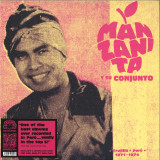
Following the 70s Peruvian cumbia compilation by Ranil last year, Analog Africa returns to Latin America to highlight the work of one of Perú’s undisputed masters of the electric guitar: Manzanita. This 13th release in the Limited Dance Edition Series includes 14 mostly instrumental compositions of electrifying Peruvian cumbia and guaracha. Manzanita's unique guitar lines rest on confident foundations that shifts gears effortlessly. Limited Edition LP in Gatefold Cover pressed on 180g high quality virgin vinyl
"I was in Lima, hanging out with collector-extraordinaire Victor Zela, who had spent the previous few years pouring his passion for Peruvian Cumbia into the blog „la cumbia de mis viejos“, a trove of incredible music. But after the birth of his first child, his priorities shifted and he decided to part with some of his rarest LPs. I was one of the lucky few given an early chance to examine his treasures, and when I picked up the album Manzaneando com Manzanita, Victor said: “Take it! its one of the best LPs ever recorded in Perú … easily in the top five”. That was all the encouragement I needed … two years later many of the songs from that masterpiece have made it onto Manzanita y su Conjunto, a compilation of electrifying Cumbia sides from Manzanita’s golden era.
Berardo Hernández – better known as Manzanita – first surfaced during the psychedelic Cumbia craze. At the head of the scene were the magnificent Los Destellos, whose leader, Enrique Delgado, was such a six-string wizard that other guitarists found it impossible to escape his shadow. But when Manzanita arrived, his electric criollo style sent shockwaves through Lima’s music scene and posed a serious threat to Delgado’s dominance as king of the Peruvian guitar.
Manzanita had come to Lima from the coastal city of Trujillo, five hundred miles up the coast – a place where Spanish, African and indigenous populations had been living and making music together for centuries – and came of age at a time when the first wave of psychedelic rock from the US and UK was starting to sweep the airwaves. But the sounds of Cream and Hendrix disappeared from the radio just as quickly in 1968 when Juan Velasco seized control of the country in a military coup. The new regime, which favoured local traditions over cultural ‘imports’ from the north, was a blessing in disguise for the Peruvian music scene.
Record labels flourished as new bands, raised on a hybrid diet of electric guitars and Cuban rhythms, rushed in to fill the vacuum created by the lack of imported rock. A new genre, known as Peruvian cumbia, was born and Manzanita quickly became one of its most original voices.
Starting in 1969, Manzanita y su Conjunto released a steady stream of singles that used Cuban guaracha rhythms as the foundation for dazzling electric guitar lines. After countless 45s and several years on the touring circuit, the band signed to Virrey, an important Peruvian label, and recorded two LPs acknowledged as masterpieces among aficionados of tropical music. Most of the songs on Analog Africa’s new compilation Manzanita y su Conjunto are drawn from those legendary sessions of 1973 and 74.
Although he scored a few more hits in the later 70s, his dissatisfaction with the music industry caused him to withdraw from the scene for several years; and when he finally retired for good, the golden age of Peruvian cumbia was a distant memory. But when Manzanita was at the top of his game he had few equals. Victor Zela was right: this is some of the best music ever recorded in Perú."
Discos Transgénero re-issue the Marnie Weber classic first solo LP, “Songs Hurt Me” originally from 1989. This seminal record was an important part of the Los Angeles post-punk performative art rock scene. Brooding synthesizers, heavy bass, strange melodies, and poetic lyrics lead you through an industrial journey. These songs were born from Weber’s earliest performance art characters: a deer, an old woman, a manic courtesan, and a butterfly. Songs Hurt Me was originally co-produced by Phillip Drucker AKA Jackson Del Ray of Savage Republic and 17 Pygmies fame.
Marnie is a pioneer in art rock from the 80’s in Los Angeles. She emerged early in the music scene as the bass player in the Party Boys, a formative and important Los Angeles post-punk downtown art scene band. During this period, the Party Boys performed shows with The Minute Men, Savage Republic, The Red Hot Chili Peppers, Fourwaycross, The Blue Daisies, Perry Farrell’s first band Psi Com, Camper Van Beethoven, and many more. Bruce Licher of Independent Project Records, whom Marnie met in art school, released the first Party Boys record. After performing with the Party Boys, Marnie went on to become a noted solo performative art musician in her own right. She has released five solo records and numerous group album releases.
As a visual artist Marnie created the cover of Sonic Youth’s A Thousand Leaves album – interesting to note Marnie is the hamster girl on the cover. She also designed posters for Sonic Youth and did a co-release of her second album with Thurston Moore on his label Ecstatic Peace. Expanding from her musical roots, Marnie exhibits artwork, films, sculptures, collages, sound installations, and costumes internationally in museums and galleries. She has had two extensive survey exhibitions of her artwork – most recently at the Museum of Contemporary Art in Geneva.
Songs Hurt Me was remastered by Mark Wheaton at Catasonic Studios Los Angeles using the original tapes for an unprecedented restoration of this historic album. Discos Transgénero has thoughtfully designed and pressed the reissued LPs in Germany. This unique edition of Songs Hurt Me is a limited release of 400 copies distributed worldwide.
Dauw welcomes Taylor Deupree to the label with his new record 'Mur'. With this release Dauw also introduces Jelle Martens, a Belgian graphic designer and painter, for the artwork of this release.
Deupree describes the album title “as if there’s always something about my music that’s like a murmur”, resulting in a murmuring effect when pronouncing the names of each track. Mur is a personal journey through the challenging year that 2020 has been. The fifth and last track on the album, Mar, contributes as a catharsis to this turbulent period in Deupree’s personal life, which is defined by the interaction between the loud sounds and the soft keys of the piano. As if the storm has died down and the waters have found their peace.
Taylor Deupree is an American musician and mastering engineer based just outside of New York. As a former member of the American electronic band Prototype 909, Deupree has had numerous collaborations with artists such as Ryuichi Sakamoto, Stephen Vitiello, Alva Noto and Marcus Fischer. Curating 12k, a New-York based music label, is another aspect of Deupree’s career and brought together over one hundred releases since its beginnings in 1997. Having some similar artists in our catalog (Federico Durand, Will Samson and Steinbüchel for example), it’s safe to say that Deupree’s new release through Dauw will be in good company.
Leng Records has long had close ties with the underground music scene in San Francisco, with low-slung dub disco and psychedelic disco outfit 40 Thieves releasing their acclaimed album The Sky Is Yours on the imprint way back in 2014. Now Leng has turned to another stalwart of the Bay Area scene, Cole Odin, on a single that’s every bit as trippy and engrossing as you’d expect from one of San Francisco’s most frequently overlooked talents. Cole made his Leng debut earlier in the year, contributing the electro-influenced track ‘Numbers Game’ to the label’s 10th anniversary compilation. On ‘Little Boxes’, he’s joined by good friend Eddie C, a much-loved disco and house producer from Canada best known for his releases on Endless Flight and Red Motorbike. The pair recorded the track while Eddie was staying with Cole in San Francisco last year.
In keeping with the low-slung, hallucinatory sound that has always been a big feature of the San Franciscan scene, ‘Little Boxes’ is a trippy, mind-altering affair in which waves of sitar sounds, cosmic synths, effects-laden guitars and kaleidoscopic electronics rise above a weighty punk-funk bassline and crunchy, snare-heavy beats. It has serious dancefloor chops but is also atmospheric and immersive: perfect 5am music for Bay Area beach parties and mushrooms-fuelled forest raves.
Fittingly, it’s 40 Thieves who provide the accompanying remix, a 10-minute epic created with the assistance of Adonis and Rodney from the psych rock band ‘Guavatron’ for additional synths and the guitars. Beginning with tabla-style percussion, swirling chords, psychedelic guitar licks and mystical sitar sounds, the remix builds in waves, with looser drums and even weightier bass propelling the track forwards at a metronomic and hypnotic pace. By the time the eyes-closed guitar solos drop two thirds of the way through, you’ll be tripping hard and reaching for the lasers. It’s a genuinely stunning remix of a genuinely intoxicating, mind-mangling track.
Re-mastering by: Cicely Baston at Alchemy/Air Mastering, London
Electric blues guitarist Melvin Taylor had been sporadically recording solo albums for 20 years when Dirty Pool arrived — and was somehow just beginning to find fame. Already a hit in Europe, it had taken a steady run of performing in Chicago’s famed blues clubs to slowly earn Taylor a well-deserved reputation as an equal talent among the giants before him, such as Otis Rush, Albert King and Stevie Ray Vaughan.
While early records like Melvin Taylor Plays the Blues For You show off an equally amazing jazz side, Taylor traded away his Wes Montgomery-inspired runs for more Luther Allison/Jimi Hendrix attacks with the formation of the trio Melvin Taylor and the Slack Band in the mid ’90’s.
The title song of the second album by that outfit, “Dirty Pool,” is actually more the balls-to-the-wall, no-compromise, hard-rockin’ electric Texas blues of Vaughan and Johnny Winter than the sweet Chicago soul of Buddy Guy.
Indeed, three tracks on this 1997 release, including “Dirty Pool,” were SRV tunes. Other standards, like “Kansas City” and “Floodin’ in California” also have more of a Lone Star State approach to them. But the Jackson, Miss.-born Taylor’s guitar is cleaner than his forebears and technically, he even surpasses them, yet the anger and sorrow of the blues is readily evident in his playing.
This rare combination of qualities really comes out in a slow blues tune like his solo in “Dirty Pool,” which after repeated listens, still makes me head shake in disbelief when I hear it.
“Too Sorry” is a good example of how well Taylor fares when he treads in Jimi Hendrix territory, whereas his rhythm work is the best I’ve heard from a lead guitarist since Vaughan; listen to “I Ain’t Superstitious,” “Born Under A Bad Sign” and the funky “Telephone Song” for your proof.
It also helps that Taylor’s drummer James Knowles is well in synch with him, while Ethan Farmer completely owns the low end of the sound. Farmer’s peppering bass lines in and “Floodin’ in California” is the textbook way electric blues bass should be. Overall, a tight little band.
Taylor’s vocals certainly won’t draw any comparisons to the Wide-Brimmed–Hatted One but he holds his own just fine until it’s cuttin’ time. This is right at the top of my list of best blues guitar playing on record over the last couple of decades. If you decide to give this one a listen, prepare to be blown away.
Limited coloured marbled vinyl edition of this album
Sam Cooke is considered one of the „fathers“ of soul. Already as a child he performs together with his
siblings. His first successes came with the band The Soul Stirrers. His first hit was as a solo artist with You
Send Me. Cook wrote his own songs and founded his own label, which signed musicians such as Bobby
Womack and Johnnie Taylor. He himself celebrates his greatest successes at RCA with world hits such as
Cupid, Bring It On Home To Me and Wonderful World. The last proves to be an evergreen until today;
whether in the jeans advertising of Levi‘s or through successful cover versions of Herman‘s Hermits, Bryan
Ferry or Otis Redding.
At the age of only 33, Sam Cooke dies. The motel manager Bertha Franklin shoots him in the Hacienda
Motel in Los Angeles and later claims self-defense. The exact circumstances of his death remain unclear
to this day. Posthumously, Sam Cooke receives all the major awards. A small excerpt: He is part of the
Rock and Roll and the Songwriters Hall of Fame, he was also awarded the Grammy Lifetime Achievement
Award. Rolling Stone magazine lists him 16th among the 100 greatest musicians of all time and fourth
among the best singers of all time. What A Wonderful World...
678 records are proud to present an historical concert recording of the legendary ethnic kraut-jazz formation Pork Pie. It is difficult to define the music of Pork Pie. It ranges from rhythmic Jazz-rock and meditative Indian sounds to Brazilian songs, and from acoustic improvisations to electric “space” sounds. Paris, December 1973: Pork Pie was founded by piano player Jasper van 't Hof (then 27 years old) and guitarist Philip Catherine (then 31 years old). They had met up with Charlie Mariano, who was 51 years old then, and whom they knew from his playing with Charles Mingus in the fifties and sixties. He had left America, lived in India for some years and founded his new home in Europe. Jasper and Philip were nervous to ask him if he would like to start a band with them but he immediately accepted the invitation. After some concerts in Holland, Germany and France the group recorded their debut album Transitory in May 1974 in the studio of the legendary engineer Conny Plank for MPS-BASF. It became an immediate success and Pork Pie were subsequently booked for many European jazz festivals. Their legendary concert on the first of November 1974 in the Berliner Philharmonie during the Berliner Jazztage was a milestone in the bands existence. The concert hall was packed to the rafters with 2500 over enthusiastic people who were totally overwhelmed by the amazing live sound of Pork Pie in which each of the five individual musicians took his own part, but never once lost the unique togetherness.
In the past 44 years Jasper van 't Hof always retained fond memories about this special concert. Fortunately, in his personal archive (which was for a while stored under a tarpaulin in his garden!) a master tape was discovered & had survived intact. P-Dog & Zembie (a.k.a. Sander Huibers & Frank Jochemsen) dug it up, played it on a tape machine, were totally blown away by the music and initiated this limited vinyl only release. It comes in a hand silkscreened cover designed by Piet Schreuders.
line up
Re-mastering by: Ray Staff at Air Mastering, Lyndhurst Hall, London
Morgan was one of the most active artists in the Los Angeles underground jazz scene, and a member of the late great Horace Tapscott‘s artist collective Union of God’s Musicians and Artists Ascension (UGMAA). He performed alongside Tapscott, and other Nimbus recording artists like Jesse Sharps, who he introduced to Tapscott. He also performed with Arthur Blythe, Gary Bartz, Azar Lawrence, as well as soul icons Willie Hutch (notably on the Foxy Brown soundtrack) and Rufus & Chaka Khan. Most recently he contributed to Carlos Niño’s 2016 album Flutes, Echoes, It’s All Happening!, and was a part of Niño and vocalist Dwight Trible’s soul-jazz group Build An Ark (which also featured Tribe’s Phil Ranelin).
Journey Into Nigritia was Morgan’s debut as a leader, and the first of three recordings he released for Nimbus West. The album has a strong post-Coltrane spiritual feel, with some modal-based melodies, and some fiery solos from saxophonist Dadisi Komolafe. The record also features a solid rhythm section featuring bassist Jeff Littleton and drummer Fritz Wise.
Review by T J Gorton
At the dawn of the Reagan years, LA jazz pianist Nate Morgan recorded his first album for Nimbus West. Journey Into Nigritia portrays an artist marked by the icons of his day, and striving for reinvention. Although he came from a solid jazz background, coming up through the Pan Afrikan People's Arkestra, Morgan found more exciting work with pop bands in the seventies, including glory years with Rufus w/Chaka Khan. On Journey into Nigritia, Morgan re-embraces jazz. Included in the band are Jeff Littleton on bass, Fritz Wise on drums, and Dadisi Komolafe on alto sax.
The collection opens with the Trane-ish Mrafu. Komolafe blasts off in short order, and while the modal chording recalls Tyner, Morgan shows flashes of the nimble loquacious gift that define him. While Alice Coltrane incense perfumes "Morning Prayer, Morgan's devotional sincerity and personnel expression triumph.
Suitably complex with yearning minors, Mother features the trio performing a memorable composition. Littleton's deep-note sustain contrasts Wise's shimmering cymbals, while Morgan tells heart-wrenching truth. With a somewhat solemn theme, He Left Us a Song regularly bursts through into straight-ahead fast break sprints up and down the court. The unexpected "Study in C.T. offers an homage to Cecil Taylor and Morgan's musical roots with free improvisations on a dense and spiky theme. The exhilarating result has Morgan exploring his own way, with a winking slinging of jagged bass chords halfway through.
While a quarter century's experience has nurtured Morgan's prodigious gifts beyond this ambitious debut, Journey Into Nigritia offers enjoyable insights into his artistic evolution, while adding another precious title to the discography of one of the most woefully under-recorded greats of our time.
- A1: Love-In (December) 2:18
- A2: Freaky (January) 2:23
- A3: Flashes (February) 2:23
- A4: Kaleidoscope (March) 2:20
- A5: Hallucinations (April) 2:23
- A6: Flower Society (May) 2:27
- B1: Trippin' Out (June) 2:36
- B2: Tune In-Turn On (July) 2:14
- B3: Vibrations (August) 2:15
- B4: Soulful (September) 2:21
- B5: Inner-Space (October) 2:18
- B6: Wiggy (November) 2:12
Psychedelic Percussion definitely sticks to his title. With the help from Paul Beaver of Beaver & Krause (famous keyboard wizard and sound engineer for the likes of Stevie Wonder), vibe master Emil Richards (check is two fantastic album on Impulse! with The Microtonal Blues Band featuring Joe Porcaro, father of the famed Toto brothers) and Gary Coleman (percussionist in the famous Wrecking Crew), Blaine goes wild in the studio with drums, gong, xylophone, organ, bongos, congas and timpani. Unusual textures and tones lead the way to 12 instrumental exotic numbers similar in a way to Raymond Scott most visionary experiments. This is pure madness, a record full of breaks and still unsurpassed in many ways. Blaine was an American drummer and session musician, estimated to be among the most recorded studio drummers in the history of the music industry, claiming over 35,000 sessions and 6,000 singles. His drumming is featured on 150 US top 10 hits, 40 of which went to number one, as well as many film and television soundtracks. He became one of the regular players in Phil Spector's de facto house band, which Blaine nicknamed "the Wrecking Crew". Some of the records Blaine played on include the Ronettes' single "Be My Baby" (1963), which contained a drum beat that became widely imitated, as well as works by popular artists such as Frank Sinatra, Elvis Presley, the Beach Boys, Simon & Garfunkel, the Carpenters, Neil Diamond and the Byrds.
Hereby a classic japanese acid folk tale, also credited by the wizard master Julian Cope in his ‘Japrocksampler’ top 50 list. Tokedashita Garasu Bako, or Melting Glass Box, was a studio-only project of Nishiokai Takashi (Itsutsu No Akai Fusen), “Singing Philosopher” Tetsuo Saito and Takasuke Kida (of influential psychedelic freaks Jacks). Guest musicians included Kazuhiko Kato (Folk Crusaders, Sadistic Mika Band), Kazuo Takeda (Blues Creation) and mastermind Haruomi Hosono (Apryl Fool, Happy End, YMO).
Their sole release licensed in 1970 on URC (Japanese independent record label specializing in folk, co-founded in February 1969 by Hayakawa Yoshio, guitarist for the psychedelic band Jacks) became soon after a cult record leading the way for the eastern psychedelic renaissance. An authentic lysergic trip filled with mind-blowing electric guitar leads and many studio tricks thrown in! Get lost, now or never !
Limited coloured marbled vinyl edition of this album
Spencer Davis was born in Wales in 1939. He studied languages and spoke fluent German, French and
Spanish. This was one of the reasons why he was later called „Professor“ in music circles. While studying
in Birmingham, he began performing as a musician and was together with Christine Perfect, who later
became a world star with Fleetwood Mac. Together with Steve and Muff Winwood and Pete York, he
formed his first Spencer Davis Group, with which he had numerous hits in Europe and the United States.
At the end of the 1960s, the four musical geniuses parted ways and each went his own way. Spencer
Davis continued as a solo artist, founded several new bands, including other Spencer Davis Groups with
different lineups, reworked old and new songs and released numerous other records. In the meantime, he
taught at the University of California. He also hosted a talk show and was in the management of Island
Records. He collaborated with Bob Marley, Robert Palmer and Eddie and the Hot Rods, and also
promoted the solo career of former Spencer Davis Group member Steve Winwood. On October 19, 2020,
Spencer Davis died of pneumonia in Los Angeles at the age of 81.
Cosmic traveller Herman ‘Sonny’ Blount became Sun Ra after an alien abduction, proclaiming that he came from Saturn and using music to point to human failure on earth, offering space as ethereal alternative. Supersonic Jazz was released in 1957 on Ra’s Saturn label and regularly reissued, even making it onto Impulse in 1974, its blend of bop, avant-garde and galactic well ahead of its time. More melodic and cohesive than many subsequent titles, ‘Advice To Medics’ is a troubling Ra piano diversion, and ‘Super Blonde’ a big-band stomp; ‘Soft Talk,’ by trombonist Julian Priester, is one of the vehicles for John Gilmore’s tenor sax and ‘Kingdom Of Not’ has uncommon swing. A must for all Sun Ra scholars!