Two years in the making, Future Ruins, TOM And His Computer’s debut album, will be released on Trentemøller’s In My Room label in October 20th. As a 20 year veteran of the Copenhagen music scene, Thomas Bertelsen has been releasing music under the sobriquet of TOM And His Computer for five years, merging the newest technologies with the old, while squeezing fresh sounds out of equipment that’s not only obsolete, sometimes it’s barely functioning at all. “I switch back and forth between the digital and the analog worlds. I’ll utilize old guitar pedals as well as the newest software,” says Thomas Bertelsen, producer behind TOM And His Computer. “It’s never about the gear, though, but rather finding that one little sound that can trigger an idea for an entire track.” Future Ruins was also co-produced and mixed by Trentemøller. While previous offerings have taken listeners to the outer boundaries of what can be considered “electronic music,” including nods to dark wave, dream pop, krautrock and modern psych rock, Future Ruins presents those influences in a new way and represents a great leap forward for the Copenhagen based producer.
The result is a genre-less collection of songs showcasing TOM’s obsession with propelling sounds of the past into the present, and future, combining noise and edginess with his “commitment to fresh ideas with a clear sense of melodies,” according to Clash Magazine. “My tastes are eclectic and I like to flirt with many different sub genres,” says TOM. “The aim was to combine various styles while trying to maintain a common denominator,” which committing to a full-length offered as an opportunity.
quête:his computer
TOM And His Computer is the newest alias for Copenhagen favourite Thomas Bertelsen. He started out as a teenager by looping and creating beats on his 4 track tape-recorder. Since then the very talented producer and DJ has been around the block. He produced two albums (with Lulu Rouge) and a number of songs, edits and remixes. He has also been DJing alongside Trentemøller every now and then since the early days and most recently TOM And His Computer performed live on the opening slot of Trentemøller's latest live tour and lately at Sonar Copenhagen 2015. Now we are happy and proud to present 'Small Disasters', TOM And His Computer's debut EP on Anders Trentemøller's label In My Room! Mixing elements as disparate as electronica, lo-fi guitars, driving beats, vocals and cinematic soundscape, this EP is a perfect example of why TOM And His Computer is tipped for big things in 2016. What maybe can be described as 'alternative electronic music' unfolds in different nuances. The lead track 'Organ' rides along on a crunchy rhythm track while throwing in psychedelic organs and howling electronics. Fizzing guitars weave in and project a paranoid undertone. Next up is 'Girl A Go Go' and its raw driving beat and bass hits in without any warning, before an agressive, hypnotising surf like guitar-riff comes in. Layers and layers of dirty distortion build a colapsing, overdriving climax. 'Tectonic' keeps the dark energy flowing, but packs it into a slow crawling creepy setting, drenched in reverb and noisy layers. Fraser McGuinness contributes the otherwordly vocals. Is he moaning Or conjuring Or proclaiming The song evolves from a fragile, fleeting feel into a massive, 'tectonic' pressure and all the way back. 'La Fountaine' completes the EP with another cut that perfectly fuses diverse elements from across the musical spectrum
Analog Fingerprints Vol. 0 is a compilation bringing together the early 2000s works of Marco Passarani under his Analog Fingerprints alias, collecting key tracks originally released on Rome’s Plasmek and Pigna labels.
For Numbers, the story starts long before the label itself. In their formative years, digging in Glasgow’s Rubadub, Passarani’s records felt like dispatches from a future city. Releases on his own Nature Records and on labels such as Generator and Interr-Ference Communications were mind blowing: rooted in Detroit techno, Chicago house and electro, yet pushing somewhere new. Much like fellow travellers Autechre, who would remix him in 2001, Passarani’s music balanced machine funk with restless experimentation.
Information was scarce, and you would hear these records first on the dancefloor or at listening stations in shops like Rubadub. Print fanzines like Ear and early web outposts such as Forcefield offered only fragments. But there was a palpable axis forming between Detroit techno and a new European wave of record labels including Skam, Rephlex, Clone, Viewlexx and Nature itself. It was the sound that defined Saturday nights at Rubadub’s ‘69’ parties in Paisley, just outside of Glasgow.
Passarani’s records, in particular, were instrumental in bringing together the future Numbers co-founders. Richard had already booked him pre-Numbers; meanwhile Calum (Spencer) and Jack (Jackmaster), then 16/17 year olds working alternate Saturdays in Rubadub, were so enamoured with the Roman sound that they travelled to Rome for the Bitz Festival in 2003 to seek out Passarani and Lory D at their source.
The first Analog Fingerprints release landed as a 12” on Plasmek in 2001, following the fractured, IDM-leaning 6 Katun material. For Passarani, the project marked a recalibration. A DJ first and foremost, he had moved into production via early computer setups, from a Commodore Amiga through primitive PC audio, Cubase and Logic, later experimenting with Ableton. The IDM scene had offered a playground for trial and error, but there was always a tension between abstraction and the dancefloor. Analog Fingerprints became the bridge: still intelligent, but with more dance than distance. After years of broken beats and complex arrangements, he wanted directness without surrendering identity.
Working closely with Francesco de Bellis and Mario Pierro in the Pigneto district, the trio formed Pigna as a vehicle for reclaiming a more accessible dance sound, deliberately steering away from the minimal wave beginning to dominate Europe. Sessions were fast, instinctive, often stretching late into the night with friends dropping by. It was a studio as social space, production as collective energy.
“In that constant search for balance, Analog Fingerprints was my way of expressing something closer to the classic dance floor. The track 'Tribute' - a tribute to my favourite early Detroit techno track of all time, 'First Bass' by Separate Minds - came after I realised I had almost lost my connection with the dance floor. The simplest step was to take inspiration from early Chicago and Detroit and twist it in our Roman ‘Pigna’ way. My goal was to create more accessible dancefloor tracks by mixing my unconscious Italo roots with my teenage love for that early US sound, ensuring the result was as far as possible from the minimal sound that was starting to dominate everywhere.” - Marco Passarani
Technically, the Analog Fingerprints tracks span a transitional era: Roland TR-909, SH-101 and Alpha Juno hardware met early software experiments. A Novation Drumstation rack stood in for the unattainable TR-808, syncing with TB-303 and TR-606. Yet the true secret weapon was Jeskola Buzz, a tracker-style modular environment that allowed step-by-step parameter control and strange melodic constructions, later exported into the audio sequencer. Even the lead on ‘Tribute’ came from an early PPG Wave-style plugin. It was hybrid thinking at a moment when digital tools still felt unstable but full of possibility for technologists like Passarani.
Behind the music sat Finalfrontier, a loose Roman collective orbiting Nature and Plasmek. Distribution and production were intertwined; importing obscure records into Italy built connections with like-minded outsiders across Europe and the US. Expensive phone bills and fax machines forged an “electronix network” that linked Rome to Clone, Viewlexx, Skam, Rephlex, Rubadub and Detroit’s Underground Resistance. There was a shared sense of survival and resistance, of operating against commercial systems.
Passarani recalls “The first time I found a sheet of paper inside an Underground Resistance 12” with info about upcoming releases... and a huge picture of Spock on the back. Imagine that: you love the music, you love Star Trek, and there’s someone on the other side of the ocean sharing those same values and sounds. It was the perfect match. We even gave our original company the suffix ‘Finalfrontier’: that says it all.”
Feedback in that era arrived physically: distributor faxes, conversations with visiting DJs, the experience of playing abroad and meeting kids who had connected with the records. Glasgow became a key node in a scattered outlier network. Passarani personally brought the first two Nature releases to Fat Cat in London, playing them in-store. Shortly after, a fax arrived from Rubadub in Glasgow requesting copies.
“I still remember that phone buzz and the fax paper slowly sliding out, with someone I didn’t know saying they wanted 75 copies of Nature 001. Or like the time we got a fax from the Rephlex crew just saying, “Hello Nature Records, Keep up the good work.” That was how we knew the message was getting through. It was a fantastic feeling; just one piece of thermal fax paper as an analog notification - the mood for the entire week would change.” - Passarani
The connection to Glasgow has since stretched across generations. As Passarani reflects, links often fracture as scenes renew themselves, but in Glasgow something different happened. New and old mixed seamlessly. There was a visible trust in what came before, and a willingness to carry it forward rather than discard it. Observed from Rome, it was deeply encouraging.
Analog Fingerprints Vol. 0 captures that moment of exchange: Rome to Glasgow, Detroit to Europe, experiment to dancefloor. It documents an artist recalibrating his sound and a network of scenes discovering one another in real time, connected by vinyl, faxes and shared intent.
Rob Clouth returns to Mesh with Cicada, a follow-up to his EP earlier this year and a continuation of his ever-curious approach to the outer limits of electronic music.
An artist who has spent much of his career committed to a dialogue between scientific phenomena and music built for big soundsystems, Bichillo signalled a segue into a more free-running idea of creativity - one that didn’t pander to unrealistic expectations and, essentially, brought the fun back to Rob’s production process. A theme also explored in a link-up with long-time collaborator and label boss Max Cooper on their recent joint EP 8 Billion Realities, out now on Mesh.
Cicada, he continues to expand on this universe, prioritising experimentation over concept, and arriving at some of the funnest music he’s ever made.
Like a field of insects, ‘Cicada’ opens with cross-rhythmic layers of animated glitches, soon joined by huge bass swells that gradually build into a maximal tranced out build-up and a swarm of vocal chops. ‘Core’ builds a quietly dramatic symphony of machinist built sound - a soothing polyphony of computers singing. Leaning into an off-kilter 2-step, ‘Gummy Clusters’ swirls into a hazy blur of distorted voices and acoustic rhythms. Closing things off, ‘Grefuser’ puts pedal to the metal with a high BPM storm of pointillist drums and melancholic leads.
Cicada is music that twitches and mutates, but most importantly, breathes fun into the circuitry.
‘Cicada’ lands Friday 20th March via Mesh.
When you notice the cheerful mystery playing with the synths, the edges of this small world start to look slightly distorted. In any era, someone is always creating mysterious music on their own. (7FO)
----------------------------
Music in DNA is an album recorded in the early 1980s in New York City by Yasuhito Ohno, a young Japanese man breaking free from the constraints of his homeland. The album is a naive burst of outsider DIY enthusiasm, inspired by the multiple avant-garde movements of the era, in music, painting and performance, as well as the native energy of 80s NYC. Ohno channeled his youthful "edge" and zeal into open-minded lo-fi musical explorations using a mere two machines: the then-new technological glories of a four-track cassette recorder and that polyphonic synthesizer masterpiece, the Roland Juno-60; on several pieces he vocalizes. These seven tracks have a zestful, innocent, anything-goes charm, free from preciousness and self-consciousness: a raw and youthful human spirit at play in a new world. Ohno was also inspired by the humanistic promise of the general technological developments of the day, including DNA research, personal computing, and early computer graphics, an example of which can be found on the cover. Ohno later returned to Japan, becoming a renowned composer/producer. In an era of jaded cynicism, Music in DNA is a welcome taste of big-hearted innocence, a revival of a raw self. Available on CD/LP/Digital, with E/J liner notes.
Specs: Wrapped in shrink, DL code, insert with liner notes
"Music in DNA" is an album recorded in the early 1980s in New York City by Yasuhito Ohno, a young Japanese man breaking free from the constraints of his homeland. The album is a naive burst of outsider DIY enthusiasm, inspired by the multiple avant-garde movements of the era, in music, painting and performance, as well as the native energy of 80s NYC. Ohno channeled his youthful “edge” and zeal into open-minded lo-fi musical explorations using a mere two machines: the then-new technological glories of a four-track cassette recorder and that polyphonic synthesizer masterpiece, the Roland Juno-60; on several pieces he vocalizes. These seven tracks have a zestful, innocent, anything-goes charm, free from preciousness and self-consciousness: a raw and youthful human spirit at play in a new world. Ohno was also inspired by the humanistic promise of the general technological developments of the day, including DNA research, personal computing, and early computer graphics, an example of which can be found on the cover. Ohno later returned to Japan, becoming a renowned composer/producer. In an era of jaded cynicism, "Music in DNA" is a welcome taste of big-hearted innocence, a revival of a raw self. Available on CD/LP/Digital, with E/J liner notes.
The latest in Field Records' run of essential vinyl pressings revisits Stephen Hitchell's 2009 masterpiece under his Variant alias, The Setting Sun. As part of Echospace and also celebrated for his productions as Intrusion and Soultek, Hitchell is considered a leading light in dub techno, with the versatility in his sound to range from rhythmic, physical pulses to purely tonal, abyssal drone. His work as Variant, which debuted with The Setting Sun, capitalises on this scope to deliver a compelling ambient-with-teeth set richly deserving of a proper vinyl pressing.
The Setting Sun first emerged on Echospace as a download-only release. Hitchell was at pains to map out the tools that went into the sound on the album — field recordings of storms in Berlin, Germany and train rides in Narita, Japan, outboard synths and samplers. Crucially, he declared no computers were used, and it shows. When The Setting Sun was recorded, in-the-box production was largely dominating electronic music and the technology had yet to replicate the warmth and character of analogue equipment. Hitchell's looming chords come baked with harmonic overtones, surface noise becomes another essential layer and fragments of distortion add to the narrative of these glacial, monumental pieces.
Hitchell threads his dub techno tendencies in subtle ways, from the kick pattering underneath 'As Time Stood Still' to the quintessential metallic delay ripples that define 'A Silent Storm'. 'Someplace Else' has a defined, albeit delicate, rhythm section guiding its lighter shades of pads and chords. However, drums are never a dominant aspect of the music, simply another layer in an intentionally coagulated whole. At times, flickering tones hint at space where percussion once stood, since muted to leave the wet signal setting a new course for the sound, somewhere far beyond drum duties. The hushed ceremony of tracks like 'Adrift' are the perfect scenario in which to absorb these microfibres of detail, where the genius of Hitchell can truly be savoured.
In line with the limitations of record pressing and Hitchell's proclivity for long-form tracks, 'The Setting Sun' is reserved for the digital edition of this reissue. It's a logical move, as the sound palette widens to encompass tangible, organic instrumentation evolving over the best part of half an hour. The presence of piano keys feels stark in the Variant sound world, but Hitchell ably folds these coded elements into his process bathed in the same curious luminosity that lingers around all his work. Evolving at a painstaking pace, the plaintive humanity in the cascading keys and plucked guitar strings renders one of the most personal expressions in Hitchell's considerable canon — a unique piece that holds its own space comfortably, while also adding to the overall weight of The Setting Sun as a profound benchmark in a stellar discography.
Green Sleeve 2026 Repress
The earliest musical memories of young Prince Istari are of his mother beautifying the home with her piano playing. She would repeatedly play the tranquil pieces of Erik Satie. Skipping school and sitting in the sun, young Prince would listen to these catchy, calm compositions.
In the first week of 2024, the older Prince Istari rediscovered himself and found a box containing his mother's old sheet music. He transferred them to his computer and began spinning dub versions from them. It became a tapestry. As his mother used to say: "To weave a net, one must first spin." The form of the pieces dictated the direction each would take. The heavy dub transforms here into a light weightiness until it dissolves into a pure piano piece accompanied by a synthesizer. However, the last piece is much older, from the time when Prince was still known as Istari Lasterfahrer. The ending includes a distorted recording of Huberta, Prince's mother, playing a Gnossienne by Satie. At the end, she turns the sheet music, and the record can be turned back to the beginning.
In the essence of its material, this record rejects the Loudness War. The originality of the compositions guided the dub within their tracks, thereby imparting to each a form descriptive of its essence.
- 1: Dreamt Person V3
- 2: Everything About You Is Special
- 3: Slightly Bent Fork Tong V2
- 4: Magnificent Stumble V2
- 5: Decembers
- 6: Can't Vote For Yourself V1
- 1: You And Shayna V
- 2: Goose And Gary V
- 3: Anxattack Boss Level19 V
- 4: She Married A Chess Computer In The End
- 5: Health Card10
- 6: Paganism Ratchets
- 1: Everything About You Is Ambient
- 2: You And Shayna Slow Funk V
- 3: Your Bounce V1
- 4: Magnificent Stumble V1
- 5: Can't Vote For Yourself Video Version
- 6: Goose And Gary V1
- 7: Slightly Bent Fork Tong V1
- 8: You And Shayna Video Version
- 9: Terrazen 1012Nc
- 10: Resting Tongue
The tenth anniversary edition of Venetian Snares' Traditional Synthesizer Music adds ten more tracks and alternative versions previously available only on a limited edition compact disc from the artist's Bandcamp.Traditional Synthesizer Music is a collection of songs created and performed live exclusively on the modular synthesizer by Aaron Funk. Each sound contained within was created purely with the modular synthesizer. No overdubbing or editing techniques were utilized in the recordings on Traditional Synthesizer Music. Each song was approached from the ground up and dismantled upon the completion of its recording. The goal was to develop songs with interchangeable structures and substructures, yet musically pleasing motifs. Many techniques were incorporated to "humanize" or vary the rhythmic results within these sub structures. An exercise in constructing surprises, patches interrupting each other to create unforeseen progressions. Multiple takes were recorded for each song resulting in vastly different versions of each piece, a number of which are released for the first time on vinyl and digital for this updated version of the album. BIO Aaron Funk, mainly known artistically as Venetian Snares, is a Canadian electronic musician based in Winnipeg, Manitoba who's been working since the mid nineties. He is widely known for innovating and popularising the breakcore genre being something of its breakout star. His signature style features complex drums and unusual time signatures and a knack for making ultra-vivid music that takes listeners into unusual places, from the aggressive and extreme, to the surreal, comic and sometimes plain beautiful. His musical explorations extend out in many different ways, from the complex Hungarian, classical-inspired Rossz Csillag Alatt Született, to acid explorations as Last Step, to innovations with modular synths on Traditional Synthesiser Music. As a collaborator, he's made music using intimate recordings as musical elements with the artist Hecate as Nymphomatriarch, as Poemss with Joanne Pollock, where they both sing over strange delicate pop. He's recorded an album of rich, edited improvisations with producer and guitarist Daniel Lanois and he's also part of the sometime duo Speed Dealer Moms with John Frusciante. Most recently he features on Rosalia's album Lux on the song Reliquia, providing drum programming and production input.
2026 REPRESS
Pure, Distilled Dub. Upholding Jamaica's Legacy As Well As Germany's Unequivocally Influential Dub Techno Spirit, Moonshine Recordings Proudly Welcomes Their Next Addition To The Roster. On The Controls For The 9th Full-length Album Release, A True-to-the-roots, All-analogue Musician: Another Channel. Having Put Himself On The Map With Releases On Soukah's Blacksoil Records, Bristol's Transient Audio As Well As On Australian Imprint Modern Hypnosis, It's Now Time For The Album Release, We've All Been Waiting For. No Computer Involved As Impeccable Arrangements And Analogue Reverberations Unfold. Live And Direct In The Original Dub Mixing Fashion, The Augsburg-based Artist Uniquely Transports The Sonic Characteristics Of Rhythm & Sound Into The Present Time.
Subtle Vinyl Crackles Gently Introducing Meditative Beats, 'run Dub' Sets The Pace. Keen Listeners Find Themselves Embedded In Lively Echoes And Reverbs, Left To Bask In Smooth, Sonic Contemplation. Engineered To Soothe The Soul, Timeless Foundation Sound. Intensified Groove Meets Low-frequency Pressure In 'amir Dub' Among Haunting Melodica Fragments. '(yes!) Badness' Unsheathes Its Off-kilter Swing, Vocal And Foley Samples Musing In The Distance - Further Showcasing Another Channel's Technical Prowess. Heavy Chord Stabs And Delicate Overdrive Counterpoint The Immense Scope Of Conjured Space In 'ael Na Dub', Concluding A Beautiful A-side.
Lush Chords Lure Us To The Flip-side - 'solid' Kicks Off With A Staccato Bass-line In The Midst Of Lavish White Noise Surges And Minimal Drums. Rooted In Endless Feedback Trails, Steadily Kept In Check. Previously Teased, The Mighty 'ethiopian Dub' Steps Through In Full Glory, Carried By Militant Drum Motion And Forceful Low-end. On A More Spacious Excursion, 'uranus' Takes A Brightly Lit Stroll Through The Analogue Dub Universe, Led On By Another Channel's Signature Groove Propulsion. Pointing Back Towards A-side, Prolific Dub Proponent Babe Roots Presents His Musical Qualities In A Monumental Remix Of 'run'.
Faitiche welcomes a new artist: Christina Kubisch belongs to the first generation of sound artists. Her practice ranges from performances, concerts, to works with video and visual art, but she is best known for her sound installations and electro-acoustic compositions.
TUNING brings together three pieces by Christina Kubisch from different periods of her oeuvre. What they have in common is the way they transform sound phenomena originally considered “non-music” into compositions.
Jan Jelinek: Gaming in Silence (2024) is the most recent work on this compilation. It’s a collage of electromagnetic waves, voice, and abstract sound textures. How did this combination come about?
Christina Kubisch: Gaming was commissioned as a fixed-media composition for the Sound Dome at ZKM Karlsruhe. Since Resonances: The Electromagnetic Bodies Project (2005), I’ve been making recordings in the old and new server rooms at the ZKM and in their permanent collection of historical computer games. Computer games like Asteroids (Atari, 1979) and Poly-Play (VEB Polytechnik, 1986) have specially generated analogue electromagnetic waves that interest me in particular on account of their density, rhythms and textures. I originally studied painting and to me the work of composition often feels like painting an abstract picture. I alter my source material as little as possible, layering and overlapping until a distinctive sound space emerges. In recent pieces, I sometimes combine magnetic waves with field recordings or live instruments. In Gaming it’s my recording of a Chinese song about silence.
JJ: Two persons walking through a street in Madrid (2004) is a recording from your Electrical Walks series. Here we should give a brief explanation of one of your best known works: participants in an Electrical Walk move through public spaces wearing prepared headphones that allow them to receive electromagnetic waves from their surroundings – for example from security gates, ATMs or neon signs. They discover a situation that normally is inaudible to the human ear and they can actively shape it by choreographing their movements. I really admire this piece, not least because there’s no clear dividing line between participants and artist. What exactly do we hear in Two persons walking through a street in Madrid (2004)?
CK: With this early work, I wanted to understand what is heard by people participating in an Electrical Walk in the same place but moving in different ways. The Spanish composer Miguel Alvarez-Fernàndez and I set off from opposite ends of a major shopping street in Madrid, met briefly in the middle, and then continued to the end. We both recorded our walks and I then layered them over one another. You might call it a work of electromagnetic conceptualism.
JJ: Diapason (2009 version) is an installation that plays a composition based on sounds from fifteen tuning forks. This setting is audible in the recording: there’s no dramatic arc, no beginning or end – instead, it recalls a piece of aleatoric music focussing on the decay phase. How did you come to make this work and could you tell us something about your compositional method?
CK: Diapason is part of a series of three pieces that deal with “non-instruments” or instruments that no longer exist: electrical mine bells used to send signals to the workers underground; a historical glass harmonica originally used for medicinal purposes; and tuning forks that were used by doctors to test people’s hearing. All of these methods are no longer in use. The sound of the tuning forks, audible only if held close to the ear, was recorded at the electronic studio at Berlin’s Technical University in such a way that even their decay remained audible. The frequencies range between 64 and 2048 Hertz and they can be adjusted at micro-intervals using small movable weights. The sequence and the duration of the pauses are dictated by chance and were not defined in advance. The 2009 version was created for an installation in the historic Holy Cross Church (Korskirken) in Bergen. Visitors could enter and leave the space at any time, deciding for themselves where and for how long they wished to listen to the sounds played back over an array of small loudspeakers placed on the floor of the apse.
Credits:
Gaming in Silence: commission of the ZKM/Hertzlab, Karlsruhe 2023
elektronic sound processing: Tom Thiel
sound engineering and mixing: Eckehard Güther
Diapason: produced at Elektronisches Studio of TU Berlin
rearrangement: Eckehard Güther
Christina Kubisch, published by Edition Christina Kubisch / Random Musick Publishing
image front: Transitionen 2021 by C. Kubisch, sonagrams of electronic waves (courtesy: Galerie Mazzoli Berlin)
image back: Diapason Tuning Fork, property of Folkmar Hein, Photo: Archiv Christina Kubisch
design by Tim Tetzner
mastered by Giuseppe Ielasi
Thanks to Miguel Álvarez-Fernández, Folkmar Hein, Dominik Kautz and Mario Mazzoli
Dream Select is the sequel to Pizza Hotline’s 2022 genre-defining album Level Select, continuing his signature blend of nostalgic, video game-inspired drum & bass with a melodic and uplifting edge.
The album continues the UK based producer's journey into the fusion of Y2K video game aesthetics with modern breakbeat music. As the name suggests, DREAM SELECT is a collection of dreamy, hypnotic, and emotionally-charged tracks — built to feel like they’re from a forgotten 2000s video game that never existed. It draws heavily on the sound and spirit of the PS1, PS2, Dreamcast, and N64 eras and games such as Wipeout and Ape Escape.
Pizza Hotline wrote and produced the album throughout 2024 in his North London studio, with just a computer and a few 90s outboard synths and samplers. The sound relies on obscure and dated 90s sample CDs, as well as hunting through ROMplers and digital synths of the era to find crystalline, artificial, and precise sounds that have come to define Pizza hotline's sound. The result is a focused, minimalistic, and deeply nostalgic record — one that balances texture, emotion, and groove in equal measure.
Water can retain or wash away memory; flowing or freezing. It gives life and shapes earth, while frozen imprints of an ancient past are waiting to melt – back into sound or fluid motion, or simply to dissipate and disappear. For their split release, Yoichi Kamimura and Olli Aarni offer two distinct reinterpretations of a performance recorded live at the Temppeliaukio Kirkko – a church in Helsinki built directly into solid rock and bathed in natural light – meditating on glacial landscapes and water cycles, using shared field recordings that bifurcate into two sonic visions of “ice journey”.
Yoichi Kamimura’s extensive recordings formed the bedrock of the original performance, notably from time spent on Suomenlinna Island just outside Helsinki in 2021, aiming to capture the remnants of the glacial movements that formed the area’s geology. Elsewhere, the voices of ringed seals, underground waterways of Kyoto, and icy rivers in Lapland from Kamimura’s library float in as well. “The small, charming, and gentle islands floating in the Baltic Sea—some with little cottages and restaurants—reminded me of the drifting ice in the Sea of Okhotsk between Japan and Russia,” describes Kamimura. Fragments of a Christmas choir creep in too, recorded at the church on Suomenlinna Island. Titled Kōri no ryokō , Kaimimura’s reinterpretation of the performance emphasises a shared future across all icy sea regions of the world: thawing ancient memories and the threat of disappearing entirely.
On Jäämatkailu, Olli Aarni presents his own expansive reworking of the same source material, heavily processed alongside his own field recordings from Vantaanjoki river and Suontee lake in Finland. “I was thinking about the processes of erosion, water carving rock, the prehistoric glaciers over the landscape in my own environment,” explains Aarni. The soundscape hums with both intimate details and macrocosmic flow, and a submersible bass rumble hinting at an iceberg far below the tip, morphing at time scales beyond human comprehension.
Side A is composed by Yoichi Kamimura using field recordings of drift ice (Shiretoko, Hokkaido, 2019–2022), the Lake Biwa Canal (Kyoto, 2020), the Therme Vals baths (Vals, 2017), spring water (a fountain next to Saint Benedict Chapel, 2017), a Christmas choir (Suomenlinna Church, Helsinki, 2021), ice in the Juutuanjoki River (Inari, 2021), and recordings from Yoichi’s and Olli’s concert (Temppeliaukion kirkko, Helsinki, 2021), KORG iPolysix, and KORG minilogue xd.
Side B is composed by Olli Aarni using the aforementioned sounds + field recordings of the river Vantaanjoki and the lake Suontee, sampled sounds, and a computer.
- A1: Design - Premonition
- A2: Vision - Lucifer’s Friend
- A3: Richard Bone - Alien Girl
- A4: John Howard - I Tune Into You
- A5: Ian North - We’re Not Lonely
- A6: Selwin Image - The Unknown
- B1: Harry Kakoulli - I’m On A Rocket
- B2: Rich Wilde - The Lady Wants To Be Alone
- B3: Billy London - Woman
- B4: Alan Burnham - Science Fiction
- B5: The Microbes - Computer
- B6: The Goo-Q - I’m A Computer
- C1: Gerry & The Holograms - Gerry & The Holograms
- C2: The Warlord - The Ultimate Warlord
- C3: Die Marinas - Fred From Jupiter
- C4: Dee Jay Bert & Eagle - I Am Your Master
- C5: Peta Lily & Michael Process - I Am A Time Bomb
- C6: Sole Sister - It’s Not What You Are But How
- D1: Alasdair Riddell - Do You Read Me?
- D2: Karel Fialka - Armband (The Mystery Song)
- D3: John Springate - My Life
- D4: Idncandescent Luminaire - Famous Names
- D5: Disco Volante - No Motion
- D6: Dream Unit - A Drop In The Ocean
2025 REPRESS ON TRANSPARENT GREEN VINYL
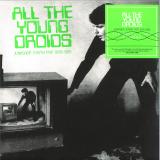
Compiled by Philip King “And then came the rise of synth pop : blokes with dodgy haircuts hunched over keyboard-operated machines stuffed with wires and do-it-yourself tone oscillators making sounds like a brood of geese passing gas in a wind tunnel. Whoopee! This is the way the ‘70s ended : not with a blood-curdling bang bang but with a cheap, synthesized, emasculating whimper.” NICK KENT, NME. All The Young Droids: Junkshop Synth Pop 1978-1985 is a new compilation that charts the underbelly of the epoch-defining sound of the synthesiser in 80s popular music. Compiled by Philip King (previously seen compiling All The Young Droogs, Glitterbest and Boobs - The Junkshop Glam Discotheque), the music here connects the dots between DIY synth enthusiasts grappling with new, cheap synthesisers at the tail-end of punk and wannabe, jobbing songwriters enthral to the new music pioneered by Gary Numan, Depeche Mode and Daniel Miller’s Mute Records. Featuring rare tracks of auto-didactic progressive pop music, proto-techno punk, shoot-for-the-stars-land-in-the-gutter chart flops and heralded, underground synth classics, School Daze paints a picture of beautiful failure. Complete with extensive sleeve notes written by King and never before seen imagery, all 24 tracks were remastered by RPM in-house engineer Simon Murphy, many from vinyl copies due to lost master tapes. The story told on All The Young Droids is one of the dawning opportunity presented by both the emergence to the market of cheaper analog synthesisers and the distribution networks plus indie labels that exploded with the advent of punk music in 1976. While the music that sprouted out all over the globe in the wake of these factors was decried as fake, plastic, a refutation of punk’s guitar-led revolution, it’s telling that much of the music on All The Young Droids.. was created in bedrooms, ramshackle studios and home-made set ups with often borrowed equipment. In the era of record labels jumping to capitalise on the success of The Sex Pistols, The Clash (both on major labels, of course) these artists struggled to stand out from a new gold-rush with next to no budget or PR team. With radio and labels desperate for the new Yazoo, what resulted was a testament to necessity being the mother of invention. At the time, the synthesiser was the music of the future, a shiny new machine that could paint like an orchestra with a single finger and a 4-track. In the hands of Manchester avant-pranksters Gerry & The Holograms it’s a pulsing, sardonic weapon.. the only instrument on the Messthetics classic lampooning of New Wave fashion. In Hamburg, a 16 year old Andreas Dorau used it to write and record (with his female classmates on vocals) a global smash in Fred Vom Jupiter (later licensed to Mute Records). The hard-to-find English version (Fred From Jupiter, natch) is included here. Many artists with alreadystoried careers caught the bug and recorded synthesiser-fuelled peons to space, computers, the future and, of course, love-interests. Harry Kakoulli, late of Squeeze, recorded a solo album in 1979 that included the incredible power-synth-pop smash-that-never-smashed I’m On A Rocket. Similarly, Ian North of Neo and American Power Pop stalwarts Milk ’n’ Cookies bought a Korg MS20 and used a tape machine to record We’re Not Lonely, an absolute lost-classic of minimal synth pop. We’re Not Lonely also features on the Junkshop Synth Pop sampler 7” twinned with John Howard unreleased track You Will See, released April 12th 2025. There are plenty of compilation debuts in evidence. Sole Sister were a mysterious trio who were featured on the Scaling Triangles compilation of female-fronted, queer-adjacent post-punk / underground music that also featured The Petticoats. Selwin Image were from San Francisco and featured members of the recently defunct power pop/punk group The Pushups. Their stupidly catchy The Unknown fizzes with New Wave energy - think XTC to Sparks but remains unreleased until now. Dream Unit’s A Drop In The Ocean is an early synth wave cut, positively teaming with Joy Division instrumentation, previously only released on a long-forgotten and super rare, self-released EP. Incandescent Luminaire’s Famous Names belies an archetypal struggle of a small-town trying to make it in a cruel industry but is a thrilling New Romantic-Synth Wave cross over with a OMD gloominess that’s a joy to hear. Feminist Minimal Wave track I Am A Time Bomb by performance artist Peta Lilly and Michael Chance is a revelation destined for new found cult status. It was released on 7” and lost until now. The flipside to the subterranean, never-made-it synth pop mentioned above are the ambitious, even fruity attempts at success that have a perennial elegance to their confidence. New Jersey-ite Billy London (real name Ed Barth) tried to cash in on the synth boom with Woman, released by a major label, a lurching new wave track built on the Louie Louie rhythm and a wonderfully camp Lou Reedstyle sleazy vocal before exploding in the synthesised chorus. The song bombed but with a chorus like this, you have to wonder why? Ex-Glitter Band member John Springate’s My Life is truly epic, with doomed chord progressions and massive sounding drums turning into at least 3 different songs in the course of the track. Before you wonder what’s going on the song resolves with a glorious return to the main refrain. The dry-ice-dressed dance floor is well catered for too. Design’s Premonition and Vision’s Lucifer’s Friend are stone-cold minimal synth bangers, well loved but given a new lease of life here. The Warlord’s The Ultimate Warlord was released in 1978, a homespun proto Hi NRG banger that was later re-recorded by The Immortals in Canada who had a club hit with it. One-man- band Disco Volante’s No Motion was re-issued by Synth wave label Medical in 2012 but makes its first vinyl compilation appearance here. Close your eyes and you can imagine what Lawrence of Felt would have sounded like with some cheap Korgs a little earlier in his career. Gibraltar-based trio The Microbes imagined a computer programming people to dance - how prescient - and ended up with a propulsive, robo-funk track with splendid rubbery bass playing over a tectonic drum machine. Previously picked up by Belgian label Stroom TV, Dee Jay Bert & Eagle’s heavily Euro-accented I Am Your Master demands the listener to “come to paradise!” In a frankly terrifying manner. All The Young Droids is the first compilation to peel away from the narrative that dour, Minimal Synth and Cold Wave were the only musical children of the first rush of synth pop. Philip King and School Daze Records describe a much more complicated world: along with the austere, Brutalist children of Daniel Miller (who produced Alan Burnham’s Bowie-Low-influenced Science Fiction here) was a plethora of desperate cash-ins, accidental mainstream hits, ambitious pop dramas and major label punts that went nowhere. Crucially, the compilation blurs the line between junk and treasure. What if the two things are interchangeable. What if it’s all science fiction?
Das Beste Aus Hagen Redux is an icy transmission from the early circuitry of European minimalism. A revives the pulse of proto-electro with surgical precision—pure voltage, no excess. Cold synth lines snake through monochrome rhythms, delivering drama without decadence. It’s music for neon-lit silence and synthetic nostalgia, built from tape hiss, static tension, and analog dreams. Minimal synth stripped to the bone—resistant, elegant, and eternal. Presented in ONE- OFF truly limited edition of 300 copies lacquered pressed on 180 gr. high quality solid WHITE vinyl. All tracks have been specially remastered for vinyl by Daniel Hallhuber at Young and Cold Studios (Germany).
It's rare to hear a debut 12' single that really blows you away. That's hardly a controversial statement; in truth, most producers take time to find their feet, developing a distinct style over a period of years, rather than months.
Magnesii, then, is something special. Currently based in Amsterdam. The previously unheard of producer has delivered a stunning debut 12' for Tom Trago's Voyage
Direct label. R Raw, fuzzy and in turns melancholic, spellbinding and intense, its' three tracks bubble and hiss to the distinct sound of vintage analogue hardware.
You see, the young Dutch producer tends to avoid modern computers. 'I often feel like those screens suck my soul away,' he says. Instead, he jams out tunes on a tasteful selection of analogue gear, sequencing with either the Alesis MMT-8 or the Akai MPC2000 - a favourite toy of many of the Netherlands' best electronic producers - and adding basslines, beats, acid lines and melodies on obscure synths and drumcomputers'. His creations are then bounced down straight to 1/4" tape or cassette.
Some of these resultant jams, as showcased on this impressive debut, are nothing less than inspired. Acid lines rise and fall, machine drums rattle, and distinctive synth
lines weave in and out of the mix. These are raw tracks for the dancefloor blessed with all the colour and warmth associated with vintage hardware.
'RZTB Tantra' sets the tone, layering bubbling acid lines and dreamy chords over a relentlessly nagging bassline and punchy, scattergun drum machine percussion. 'Lava Jam' is decidedly deeper, with woozy, emotive melodies and alien electronics tumbling over a dusty rhythm pattern and tactile acid bass.
Magnesii completes a sterling debut with 'Van Dyke Island Jam', whose squidgy bassline and long, drawn-out M1 chords work in complete harmony with the crispy rhythm track and densely building percussion hits. Like its' predecessor, it too seems to be tinged with sadness, as if Magnesii's machines are shedding a tear for glories past.
Clearly, Magnesii is a name to look out for in future. For the time being, we'll have to make do with one of the most impressive debut 12' singles of 2014 to date.
- A1: Scratch Pad 1
- A2: Messij Received
- A3: God's Gift
- A4: Tentative
- B1: Canada 2048
- B2: Wiped Out
- B3: Body In Motion (Body Plus Mix)
- B4: Onyx (Dark Side Of The Moon)
- C1: Messij Received (Wstwgbe Mix)
- C2: Canada (Drunken Auslander Mix)
- C3: Tentative (Woffenfum Mix)
- D1: Messij (Bobbing Boat Mix)
- D2: Body In Motion (Timeless Techno Mix)
- D3: Doh-T (Am / Fm Mix)
- E1: 95 Future Echoes
- E2: Turbine
- E3: Pencil Neck
- E4: Messij 2005 (New Science Mix)
- F1: Canada (Tim Reaper Remix)
- F2: Messij (Sherelle's Messij In A Bottle Hardcore Remix)
- F3: Doh-T (Mantra Remix)
- F4: Canada (Niknak Remix)
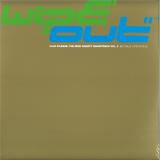
The legacy of wipE′out′′ has transcended time and cemented itself as a true transgenerational phenomenon. Launched in 1995, it didn’t just revolutionise the gaming industry, it created a bridge between the gaming ecosystem and the raver community. Its futuristic aesthetics and forward-thinking sound left a mark not only on mainstream audiences but also on the most demanding corners of the underground.
Decades later, the game’s impact is still alive. The release in 2023 of The Zero Gravity Soundtrack on Lapsus Records proved once again that wipE′out′′’s accompanying audio will go down in history as much more than just an anti-gravity racing game soundtrack.
This is why we decided to go deeper into the slipstream and build the second volume you’re now holding in your hands. Drawn from the original archives of Tim Wright, aka CoLD SToRAGE, this new collection surfaces unreleased cuts, pieces that couldn’t fit on the first edition, and a suite of self-authored ambient reworks that translate pure velocity into wide-screen atmospherics engineered for the long straights, the drone of airbrakes, the blue hour between checkpoints. It also reconnects the circuit, gathering selections and variants tied to later chapters of the saga — wipE′out′′ HD and wipE′out′′ Pure — plus alternative mixes that, until now, only existed in the Sega Saturn dimension of the franchise.
Finally, the material takes a leap into the future in the hands of four remixers especially chosen for this release: Tim Reaper, SHERELLE, Mantra, and NikNak, who collectively forge links between CoLD SToRAGE’s pioneering musical vision, the sound world of the game, and the contemporary breakbeats and drum & bass vanguard.
Expect the DNA you remember — accelerated breaks, trance-vector synths, jungle influences, sub-bass rumbling neatly beneath the craft’s hull, and at times even echoes of classic hardstyle — now revealed with new angles and air. The previously unheard material carries the same aerodynamic design sense that made these tracks feel faster than the track map itself, while the ambient versions open the field of view with melodies hovering at the lip of overdrive. Without a doubt, here you’ll find a strong sense of nostalgia. But this isn’t just nostalgia; it’s also proof that this sound world continues to evolve when you ease off the throttle.
For the faithful — crate-digging ravers, speed-run obsessives, and design nerds — this is an essential expansion pack: compiling rarities, restoring context, and reframing the emotional core of wipE′out′′ for late nights and early mornings alike. Bridging memory and momentum, club and console, rush and afterglow. Strap in.
Detailed tracklist, with annotations by Tim Wright aka CoLD SToRAGE
· Scratch Pad 1: “This track was composed using incomplete tracks that were developed around the time of the first wipE′out′′. It’s so long because it was used for a marathon-length Psygnosis promotional video.”
· Messij Received: “Messij was a firm favourite with wipE′out′′ fans, so it made sense that there’d be more where that came from — this was one of those re-workings.”
· God’s Gift: “I was always very fond of Erasure’s track Love to Hate You with the canned crowd FX sounds. God’s Gift was a tongue-in-cheek reference to how some musicians think they are just that. This was way before I even played live as CoLD SToRAGE.”
· Tentative: “I wasn’t sure about introducing some wacky beats and distorted sounds into one of the tracks, because it was kinda heading away from the other tracks, hence Tentative — but it turned out OK.”
· Canada 2048: “When wipE′out′′ 2048 was launched I decided to re-make Canada as a kind of tribute, but in a slightly new-tech, laid-back way, using Propellerhead Reason and all software synths.”
· Wiped Out: “Based on a few riffs from a MIDI file unused at the time of the original wipE′out′′ game compositions, this featured on my debut album MELT.”
· Body in Motion (Body Plus Mix): “A more trippy interpretation of Body in Motion that featured on non PlayStation versions of the game e.g. Sega Saturn.”
· Onyx (“Dark Side of the Moon”): “Onyx was my sole contribution to wipE′out′′ Pure on the Sony PSP handheld gaming console. This version was something I developed in a darker style, that eventually erupts into a crescendo.”
· Messij Received (WSTWGBE Mix): “Like I say, Messij was a hit with most wipE′out′′ fans, so when I was asked to compose more music for non-PlayStation versions, I adapted this tune into a parallel-universe version for PC and Sega Saturn. By the way, WSTWGBE refers to Who Said This Was Going To Be Easy?”
· Canada (Drunken Ausländer Mix): “In early 2018 I released a fresh album called Ch'illout′′, a re-working of many of my wipE′out′′ tracks in an ambient, Sunday-morning vibe style — it was a few years’ work, here and there.”
· Tentative (Woffenfum Mix): “Another chilled re-working of one of my wipE′out′′ tracks, the mix named with a nod to a good friend of mine, Carl Woffenden — someone who I've worked with for many years in the games industry.”
· Messij (Bobbing Boat Mix): “A nice cheesy computer blip-blop start belies its deep and upbeat chilled-out melodic finale.”
· Body in Motion (Timeless Techno Mix): “Another classic track given the chilled-out vibe mix, as featured originally on my Ch'illout′′ album. This one’s a really trippy, deep-space take on the original.”
· DOH-T (AM / FM Mix): “The idea with this chilled-out mix was to imagine all the melodic parts of this varied track being broadcast on terrestrial radio, so each theme drifts in and out through the radio static.”
· ’95 Future Echoes: “Originally developed as a companion album for wipE′out′′ HD, this track actually has its roots in a tiny loop of a song that never progressed to anything special back in the mid-’90s when I was composing for the original game.”
· Turbine: “Also from my wipE′out′′ HD album, it leans heavily into the upbeat, uplifting tunes from the original game, but also steals a bit of vibe and energy from The Prodigy, with those distorted flute sounds.”
· Pencil Neck: “This excerpt from my wipE′out′′ HD album features lots of sounds centre-stage and forward from Propellerhead Reason’s Subtractor virtual synth. I learned to love this more than my JD-800!”
· Messij 2005 (New Science Mix): “Yet another take on the track that still raises a smile, this time through a mix of samples from the original and Propellerhead Reason — the ‘new science’ when compared to an Amiga 1200 running Bars and Pipes.”
Welcome to the first release on Acid Lamour
A sub label for Lamour Records started in 2018 with a focus on techno and acid dedicated DJs. Releases are limited to 303 vinyls, no re-press.
Anders Ilar and John H are no newcomers to the electronic music scene.
Born in 1973, Anders Ilar began his explorations of electronic music in the mid 80s. Growing up in the small town of Ludvika in Sweden, Ilar spent all of his spare time playing with synthesizers, drum machines, keyboards and sequencers, learning the ins and outs of analogue and digital sound and music creation. Inspired by the early industrial and EBM wave he formed several bands with friends, started playing live shows
at smaller local parties, and released several demo tapes in very limited quantities. In the 90's he gradually shifted his creative influences towards ambient techno and acid and also started to DJ. He started using computer software to produce his music around 1999 and his first vinyl EP was released in 2001 on the german label Plong!, soon to be followed by
many more releases on labels such as Shitkatapult, Audio.nl and Echocord.
Developing his own flavor of deep minimal dub techno and ambient he gained critical acclaim with his album Nightwidth (2006) for Narita Records in the USA. Followed by highly appraised album Sworn on the german label Level Records in 2008. Ilar has also made remixes for celebrated artists such as Apparat, Mikkel Metal and Ripperton and has
appeared on numerous compilations and DJ-mixes. He's performed live on stage through-out most European countries and Japan, as well as doing a small tour with Notch Festival in China in 2008.
Up to 2018 Anders Ilar has produced 13 albums and 25 vinyl EP's and performed in over 15 countries.
Born in 1984 and based in Gothenburg. John H has been DJing, as well as producing tracks, since the late 90s, with Anders as his mentor and teacher, giving John early musical influences spanning across a wide range of genres, from Swedish techno to IDM, Cologne acid craziness and
the sound of Chicago house tracks. The musical output of his DJ-sets usually varies between techno, house, acid, electro and everything in between, depending on the time and location. John has performed on several locations all around Sweden, but also done appreciated gigs in other European countries at clubs like Tresor and Culture Box, and his music has been featured in sets by DJs such as Sven Väth, Adam Beyer,
Joris Voorn, Dense & Pika, Cari Lekebusch, Alan Fitzpatrick, Karotte,
Gregor Tresher, The Hacker and many more.
Coming For Your Tongue EP is Anders and John's 4th collab release, after
acclaimed releases on Flight Recorder and New York Haunted, recorded
during a jam session at John's studio in Bergsjön outside of Gothenburg,
Sweden, using a small setup of analogue synths and drum machines such as
the Roland TR-606, TR-808, a Devil Fish modified TB-303, Minimoog Voyager
and the Arturia Microbrute. After recording Anders spiced things up by
cutting and puzzling loops as well as adding extra effects and drums.
Limited edition of 303, no repress. Vinyl exklusive for 3 months
Diggers Society Records announces its fourth release by Giuseppe Angeloro. Giuseppe has quickly made his mark for his ability to move effortlessly between house and techno, enriching each track with trance-tinged textures, complemented by subtle minimalist and hermetic influences. Created entirely on analog machines — with no computers or digital sound — the EP emerged from spontaneous jam sessions, allowing him to follow the flow and draw inspiration directly from his synthesizers. The mix was also carried out on an analog console, a deliberate choice to preserve the pure, raw character of the machines’ sound. Using a Yamaha DX7, Yamaha TG500, Jomox Xbase 999, Alesis SR16, Roland JU06A, Behringer Crave, and Behringer TD-3, along with a Mackie 32.8 mixer, Alesis 3630 compressor, Lexicon MX200 effects unit, and RME Fireface 800 interface, Giuseppe shaped a sonic palette that feels both timeless and forward-thinking.
- A1: Kraftwerk - Numbers/Computer World 2
- A2: A Split Second - Flesh
- A3: Ims (International Music System) - Nonline
- B1: Soft Cell - Tainted Love / Where Did Our Love Go? (Extended Version)
- B2: Zwischenfall - Flucht ‚84 (English Version)
- B3: Front 242 - Quite Unusual
- C1: Heaven 17 - Let Me Go! (12“ Extended Version)
- C2: Moskwa Tv - Generator 7/8
- C3: Telex - Moskow Diskow (2021 Remaster)
- D1: Yello - Lost Again (Extended Dance Version)
- D2: Tears For Fears - Shout (Extended)
- D3: Anne Clark - Our Darkness
40 Years Techno Club – The 80s Vinyl Edition (Limited Coloured Double Vinyl) Following the huge success of the 4-CD compilation 40 Years Techno Club, which thrilled countless fans with over 60 club hits, the eagerly awaited vinyl edition is finally here: ‘The 80s Vinyl Edition’ – a strictly limited, coloured double vinyl for lovers of electronic music.
This special edition pays tribute to the beginnings of the legendary techno club with iconic 80s tracks by Kraftwerk, Yello, Soft Cell, Tears For Fears, Front 242 and other artists who shaped the electronic sound and influenced an entire generation. The exclusive collage cover, accompanying band
poster and high-quality coloured vinyl pressing make this release a unique collector‘s item for connoisseurs and music lovers.
‘40 Years Techno Club – The 80s Vinyl Edition’ – vinyl that makes history – right on your turntable.
In 2018, Rian Treanor left his home in Rotherham, UK, and headed to Kampala for a residency at Nyege Nyege's villa studio. The mind-expanding experience inspired his critically acclaimed 2020 full-length "File Under UK Metaplasm", but that wasn't the end of the story. Treanor also spent time working alongside Acholi fiddle player Ocen James, developing an improvisation-heavy collaboration that would push both musicians' idiosyncrasies into completely new places. Treanor wanted this collaboration to be as tactile and reactive as a live performance with traditional instruments, so he set about working on a digital process that would synchronize with James' approach. Using physical modeling techniques, Treanor created an instrument that explored the tunings and sounds of the a'dungu, an arched harp, and the nah or nag. With Ocen playing his rigi rigi, a single string violin, they intuitively experimented with the spectral properties of sound, using texture and acoustic contours as their structural framework. They were able to develop a sound together that was unconventionally rooted in traditional Ugandan culture, but shuttled into different dimensions of noise, computer music and radical UK rave. "Saccades" is the buffer between two vastly different sonic universes, united in respect and sprightly curiosity. Treanor's hyperactive computer-controlled rhythms are immediately identifiable on opening track 'Bunga Bule', but the sound palette is distinct: it's more flexible and less digital. James' expressionistic fiddle strokes are a revelation, contorted into hoarse squeals and rough vibrations that rub and flex off Treanor's tin can shuffle.
This exciting new collaboration between Cara Tolmie and Rian Treanor is a highly kinetic and playful endeavour. Body-centric vocal explorations merge with intricate rhythmic systems forming a deliciously disorientating, hypersurreal space of semantic modulations, concrete poetry, cut-up beats and mimicked samples. Their sound is singular and tactile: dissociative dance music that reassembles contorting vocal lines and knotting biomechanics in an explorative network of unstable forms. It's a blur of bodily fragility and ecstatic disruption, where swells of meaning rise and fall through clouds of synthetic buzz, fleeting breath, and stream-of-consciousness imagery.The duo first performed together when Counterflows Festival paired them for a new commission at the historic Arches venue in 2023. Glasgow-born, Stockholm-based vocalist and performance artist Cara Tolmie brought her hypnotic vocal technique, Internal Singing _ an intimate practice using breath, movement, and touch that explores the subtle binds between voice and body in an unsettling, engrossing sonic space. Treanor's richly innovative work provided a compounding counterpart: radical, rave-infused structures that bent and contorted around Tolmie's incantation.Growing out of a series of charged, improvisational performances, Body Lapse was recorded between Stockholm and Rotherham in 2024. Echoes of their live energy run throughout _ a voice shaking through the body, responding to touch and physical modulation, translating performance into something tactile and immediate. Body Lapse marks their debut release together, it conjures a sound of unsettling beauty and frictional intensity _ a playful, physical mesh of computer music, voice, and speculative storytelling. In this gnawing, dreamlike space, breath and body become sites of both connection and disruption, sparking thrilling encounters with the unexpected, the playful, and the decisively weird
Back in 1999, nestled in a cramped box room in his parents’ house in Cambridge, George Aretakis, one half of the newly-formed “I Like It” label (ili records) was on a sonic mission. Fresh from releasing their debut 12" All Alone by Hal, he dove headfirst into the world of self-engineering — no acoustic treatment, a sketchy Yamaha sound card, and a PC with a mind of its own.
What came out of that chaos is a collection of raw, imaginative tracks that blend hardware glitches with human quirks. Computer Rage was born from a technical meltdown — literal computer voices, warped vocals, coughing, and all. Its sibling, the Silicon Circus Mix, takes that same glitchy DNA and pushes it even further into bizarro territory.
Then there's Space You Know — a groovy slow-burner driven by a sticky bassline and the haunting vocal of Katie Jeans (courtesy of friends at Tummy Touch), chopped and recontextualized into something beautifully strange.
Rounding it out is Environ Mental, a moment of playful spontaneity made in a single night. Early morning birdsong, passing cars, and absurd vocalizations collide in a whimsical microcosm of lo-fi joy.
This release is a love letter to the unfiltered creativity of early bedroom production — messy, noisy, and bursting with heart. A must-have artifact for fans of DIY electronica and late '90s experimental house.
While some guys will tell you now it’s all computers, at Turbo we know in our hearts that everything in life can be understood as a funhouse mirror. Sascha Funke’s massive 2017 hit “MZ” is one of the most iconic house records ever released on our label, and thus deserving of the ultimate honour: a remix pack reflecting each of the manifold facets of a modern dancefloor classic from the most prestigious and respected angles imaginable.
As studious Turbo watchers have no doubt clocked*, we have paid access to the halls of European power, where you get to make backroom deals with Emmanuel Macron and British Seinfeld as Opus’ “Live is Life” blares over a gigantic bluetooth speaker. And, yeah, you’ll probably run into the most celebrated European producers of our time. Pional, Axel Boman, Mano Le Tough, and Roman Flügel — these are the kinds of names you only see once you’ve reached the highest levels of success, be it in dance music production or purchasing the hottest tickets in town on your favorite mobile device. We called each on these titans to anoint “MZ” into the modern pantheon of club anthems, and you can bet your last eurobond that they delivered. But we also wanted some new blood, so we turned to rising Lithuanian superstar DJ JM. JM is now a deep part of the Turbo family, and he’s made the theoretical space between bad-boy cousin and beloved nephew fully his own with what we hope Rolling Stone Magazine will call “a distinctively modern edge."
*Clocking is a cool way of noticing things. Try it sometime!
- A1: Design - Premonition
- A2: Vision - Lucifer’s Friend
- A3: Richard Bone - Alien Girl
- A4: John Howard - I Tune Into You
- A5: Ian North - We’re Not Lonely
- A6: Selwin Image - The Unknown
- B1: Harry Kakoulli - I’m On A Rocket
- B2: Rich Wilde - The Lady Wants To Be Alone
- B3: Billy London - Woman
- B4: Alan Burnham - Science Fiction
- B5: The Microbes - Computer
- B6: The Goo-Q - I’m A Computer
- C1: Gerry & The Holograms - Gerry & The Holograms
- C2: The Warlord - The Ultimate Warlord
- C3: Die Marinas - Fred From Jupiter
- C4: Dee Jay Bert & Eagle - I Am Your Master
- C5: Peta Lily & Michael Process - I Am A Time Bomb
- C6: Sole Sister - It’s Not What You Are But How
- D1: Alasdair Riddell - Do You Read Me?
- D2: Karel Fialka - Armband (The Mystery Song)
- D3: John Springate - My Life
- D4: Incandescent Luminaire - Famous Names
- D5: Disco Volante - No Motion
- D6: Dream Unit - A Drop In The Ocean
MB Crystal Vinyl[32,73 €]
LTD Trans Pink Vinyl[32,82 €]
LTD Trans Pink Vinyl[27,69 €]
Compiled by Philip King
“And then came the rise of synth pop : blokes with dodgy haircuts hunched over keyboard-operated
machines stuffed with wires and do-it-yourself tone oscillators making sounds like a brood of geese
passing gas in a wind tunnel. Whoopee! This is the way the ‘70s ended : not with a blood-curdling bang
bang but with a cheap, synthesized, emasculating whimper.”
NICK KENT, NME.
All The Young Droids: Junkshop Synth Pop 1978-1985 is a new compilation that charts the
underbelly of the epoch-defining sound of the synthesiser in 80s popular music. Compiled by Philip
King (previously seen compiling All The Young Droogs, Glitterbest and Boobs - The Junkshop
Glam Discotheque), the music here connects the dots between DIY synth enthusiasts grappling with
new, cheap synthesisers at the tail-end of punk and wannabe, jobbing songwriters enthral to the new
music pioneered by Gary Numan, Depeche Mode and Daniel Miller’s Mute Records. Featuring rare
tracks of auto-didactic progressive pop music, proto-techno punk, shoot-for-the-stars-land-in-the-gutter
chart flops and heralded, underground synth classics, School Daze paints a picture of beautiful failure.
Complete with extensive sleeve notes written by King and never before seen imagery, all 24 tracks
were remastered by RPM in-house engineer Simon Murphy, many from vinyl copies due to lost master
tapes. The story told on All The Young Droids is one of the dawning opportunity presented by both the
emergence to the market of cheaper analog synthesisers and the distribution networks plus indie labels
that exploded with the advent of punk music in 1976. While the music that sprouted out all over the
globe in the wake of these factors was decried as fake, plastic, a refutation of punk’s guitar-led
revolution, it’s telling that much of the music on All The Young Droids.. was created in bedrooms,
ramshackle studios and home-made set ups with often borrowed equipment. In the era of record labels
jumping to capitalise on the success of The Sex Pistols, The Clash (both on major labels, of course)
these artists struggled to stand out from a new gold-rush with next to no budget or PR team. With radio
and labels desperate for the new Yazoo, what resulted was a testament to necessity being the mother
of invention.
At the time, the synthesiser was the music of the future, a shiny new machine that could paint like an
orchestra with a single finger and a 4-track. In the hands of Manchester avant-pranksters Gerry & The
Holograms it’s a pulsing, sardonic weapon.. the only instrument on the Messthetics classic lampooning
of New Wave fashion. In Hamburg, a 16 year old Andreas Dorau used it to write and record (with his
female classmates on vocals) a global smash in Fred Vom Jupiter (later licensed to Mute Records).
The hard-to-find English version (Fred From Jupiter, natch) is included here. Many artists with alreadystoried careers caught the bug and recorded synthesiser-fuelled peons to space, computers, the future
and, of course, love-interests. Harry Kakoulli, late of Squeeze, recorded a solo album in 1979 that
included the incredible power-synth-pop smash-that-never-smashed I’m On A Rocket. Similarly, Ian
North of Neo and American Power Pop stalwarts Milk ’n’ Cookies bought a Korg MS20 and used a
tape machine to record We’re Not Lonely, an absolute lost-classic of minimal synth pop. We’re Not
Lonely also features on the Junkshop Synth Pop sampler 7” twinned with John Howard unreleased
track You Will See, released April 12th 2025.
There are plenty of compilation debuts in evidence. Sole Sister were a mysterious trio who were
featured on the Scaling Triangles compilation of female-fronted, queer-adjacent post-punk /
underground music that also featured The Petticoats. Selwin Image were from San Francisco and
featured members of the recently defunct power pop/punk group The Pushups. Their stupidly catchy
The Unknown fizzes with New Wave energy - think XTC to Sparks but remains unreleased until now.
Dream Unit’s A Drop In The Ocean is an early synth wave cut, positively teaming with Joy Division
instrumentation, previously only released on a long-forgotten and super rare, self-released EP.
Incandescent Luminaire’s Famous Names belies an archetypal struggle of a small-town trying to
make it in a cruel industry but is a thrilling New Romantic-Synth Wave cross over with a OMD
gloominess that’s a joy to hear. Feminist Minimal Wave track I Am A Time Bomb by performance artist
Peta Lilly and Michael Chance is a revelation destined for new found cult status. It was released on 7”
and lost until now.
The flipside to the subterranean, never-made-it synth pop mentioned above are the ambitious, even
fruity attempts at success that have a perennial elegance to their confidence. New Jersey-ite Billy
London (real name Ed Barth) tried to cash in on the synth boom with Woman, released by a major
label, a lurching new wave track built on the Louie Louie rhythm and a wonderfully camp Lou Reedstyle sleazy vocal before exploding in the synthesised chorus. The song bombed but with a chorus like
this, you have to wonder why? Ex-Glitter Band member John Springate’s My Life is truly epic, with
doomed chord progressions and massive sounding drums turning into at least 3 different songs in the
course of the track. Before you wonder what’s going on the song resolves with a glorious return to the
main refrain.
The dry-ice-dressed dance floor is well catered for too. Design’s Premonition and Vision’s Lucifer’s
Friend are stone-cold minimal synth bangers, well loved but given a new lease of life here. The
Warlord’s The Ultimate Warlord was released in 1978, a homespun proto Hi NRG banger that was
later re-recorded by The Immortals in Canada who had a club hit with it. One-man- band Disco
Volante’s No Motion was re-issued by Synth wave label Medical in 2012 but makes its first vinyl
compilation appearance here. Close your eyes and you can imagine what Lawrence of Felt would have
sounded like with some cheap Korgs a little earlier in his career. Gibraltar-based trio The Microbes
imagined a computer programming people to dance - how prescient - and ended up with a propulsive,
robo-funk track with splendid rubbery bass playing over a tectonic drum machine. Previously picked up
by Belgian label Stroom TV, Dee Jay Bert & Eagle’s heavily Euro-accented I Am Your Master
demands the listener to “come to paradise!” In a frankly terrifying manner.
All The Young Droids is the first compilation to peel away from the narrative that dour, Minimal Synth
and Cold Wave were the only musical children of the first rush of synth pop. Philip King and School
Daze Records describe a much more complicated world: along with the austere, Brutalist children of
Daniel Miller (who produced Alan Burnham’s Bowie-Low-influenced Science Fiction here) was a
plethora of desperate cash-ins, accidental mainstream hits, ambitious pop dramas and major label
punts that went nowhere. Crucially, the compilation blurs the line between junk and treasure. What if the
two things are interchangeable. What if it’s all science fiction?
Back to the future and northern velkommens to bro Morken. EPs for Prins 'Blud' Thomas' Full Pupp show early production chops, but it's his residency as part of Oslo's Jaeger crew where the range of styles is truly showcased.
Appearances on Trushmix series and his recent Road Trippin' cassette for L.I.E.S last year show depth(charge) DJ on a roll, but it's setting up the Moonlighting label where vibes came alive via some electro bass tribal sub bass wonder. Jungle dialects!
All and more over these 5 cuts >>> afro-bump-shuffle-rat-tat-hats-acid-stab-meets-storyville-dark-tom-toms-pads-relentless-hypnotic-down-down-electro-italo-endings-and-bass! Strange Thank f***.
Extremely Limited Black Screen-Printed Jacket / Glow in the Dark Ink / Red Insert Printed Sleeve 7Inch Black Vinyl
Hidden Revealed is one of Joaquin Joe Claussell Aliases which features a more Experimental Cosmic Jazz Side of Joaquin garnering just as many music supporters as his other aliases.
Sold out on our Bandcamp in only a few days; we are now offering copies of this highly sought-after record to our distribution partners. This is an Extremely Limited Specially Packaged 7" Black Screen-Printed Jacket using Glow in the Dark Ink. The record itself is housed in a special Red Insert Sleeve which is also printed. Musically Speaking this concept showcases the cosmic Jazz side of Joaquin Joe Claussell. All human musicians, no computers. Joaquin has been featuring these compositions in his DJ sets for quite some time now garnering inspiring crowd response.
- A1: Korogi ‘73 - Fushigi Song
- A2: Yas-Kaz - Hei (Theme Of Shikioni)
- A3: Yoichiro Yoshikawa - Tassili N'ajjer
- A4: Norihiro Tsuru - Farsighted Person
- B1: Geinoh Yamashirogumi - Theme Of Kaneda
- B2: Yoichiro Yoshikawa - Fiesta Del Fuego
- B3: Columbia Orchestra - Heart Beats / Theme For Andrew Glesgow
- B4: Kan Ogasawara - Gishin Anki
LP vinyl only release + 4 page liner notes (comes with hype sticker)
The percussive new age soundtracks of '80s and early '90s Japanese TV, anime and manga built alternative worlds and pushed boundaries in the process.
When Japanese composer Yas-Kaz left Tokyo for Bali in the mid 1970s he had little idea of how influential his trip would become. In studying the storied art of gamelan, the jazz and avant-garde percussionist opened a door to a world of sound and rhythm left behind by the West. The music he and his contemporaries made would become known as new age. It also happened to soundtrack the golden era of anime.
Awash with money and with the prerogative to entertain the burgeoning middle classes, anime in the 1980s experienced a creative and commercial boom. Not constricted by generic expectations, production houses such as the now renowned Studio Ghibli were able to experiment liberally with both form and content. And with it came the space for composers to be similarly adventurous.
TV, Anime & Manga New Age Soundtracks 1984-1993 charts this moment across eight tracks spanning classics of the genre and previously unknown rarities. The collection brings together music that found kinship in electronic and acoustic instrumentation, often combining spiritual or environmental themes with percussive, varied and highly refined syncopations of non-Western musical traditions.
Among them is ‘Kaneda’ by Geinoh Yamashirogumi, the shape-shifting group of self-styled musicians, anthropologists and computer scientists that masterminded the soundtrack to game-changing dystopian anime Akira - and with whom the sound, tuning and breakneck speed of Balinese gamelan has become indelibly entwined.
Reflecting the desires of the era to reach beyond Japan’s borders, many of the soundtracks featured were commissioned for narratives set in distant lands or alternative worlds. There’s violinist and composer Norihiro Tsuru’s ‘Farsighted Person’, written for The Heroic Legend of Arslān, set in ancient Persia; Yas-Kaz’s own ‘Hei (Theme of Shikioni)’, for period sci-fi manga & anime series Peacock King - Spirit Warrior; and two tracks - Tassili N’Ajjer and Fiesta Del Fuego - from Yoichiro Yoshikawa’s soundtrack to NHK’s proto-Planet Earth series The Miracle Planet.
Such was the variety and quality of the music produced, if there is a guiding principle to the tracks collected here it is a sense of escapism and adventure that came with the confluence of modern electronic instruments and a fascination with percussive traditions.
Elsewhere, pioneering children’s TV composer Chumei Watanabe’s ‘Fushigi Song’ (performed by a vocal group Korogi ‘72) offers a trippy and infectious groove with sonic similarities to Don Cherry’s ‘Brown Rice’; little-known jazz-funk library group Columbia Orchestra showcase the best of Tokyo’s session musicians on ‘Hearts Beats - Theme for Andrew Glasgow’; before lawyer-turned-composer Kan Ogasawara closes out the compilation with a dramatic flourish on ‘Gishin Anki’.
Following on from Time Capsule’s acclaimed deep-dive into the world of manga & anime synth-pop in 2022, this vinyl only collection is set to broaden and diversify an understanding of how soundtracks shaped the sound of new age music in Japan for a generation.
Curators: Kay Suzuki, Rintaro Sekizuka (Vinyl Delivery Service)
Artwork: Tu-yang
*all original recordings from mid 90s Estonian released cassettes. Fascinating interpretations of the UK breakbeat and Jungle sounds recorded when the world felt like a much bigger place.
Since hearing the first breakbeats via the Finnish radio nightly shows introducing the burgeoning UK scene, Virko Veskoja, later head figure of Lu:k, was completely swept away by this new technological language that sounded like machines trying to initiate contact with people. The fluttering rhythm patterns, strings and vocal lines haunting the pathways of the infinite network. Like hip hop taken over by Skynet.
Reimagining it all in mid-90’s Estonia, a fresh and dirt-poor republic newly welcomed to the family of sovereign states on the outskirts of Eastern Europe, was challenging, to say the least. Finally, with the help of entry level music programs, custom-made soundcards and self-built computers by the other Lu:k-head Tõnis Valk, Lu:k took the first tentative steps in the history of Estonian jungle.
Eight Lu:k cuts have been compiled into a handy selection, a true sign of the times when uncertainty came with certain hope and optimism – new territories to chart, new frontiers to conquer. A time of innocence captured so sublimely in Lu:k’s music.
The compilation starts with menacing orchestration that sounds like the birth of a civilization, like in „2001: A Space Odyssey“, or the arrival of Godzilla, only to give way to sweeeet strings and the inimitable Minnie Riperton in “Lovin U”, combining all the essential elements of Lu:k in a track that has remained uncorroded by time since its inception in 1994.
The following “Demo 3” is its antithesis – fast and nervous, a harbinger of the darker days of neurofunk and techstep ahead. More in line with the social realities of the time, when something (or someone) could materialise out of thin air and attack you just as violently as those beats here.
“La:v” was Lu:k’s signature track throughout their brief career that went on only for a few years, 1994-1997. Lifted to heaven’s by Petula Clarks’s wonderful vocals, it perfectly captures the pure essence of creation. “I made it in my bedroom. Something like that just came out. Sorry”, says Virko apologetically.
From the themes of love we are led towards darker scenarios again with “Drunk-Drive”, a more vengeful cut reminiscent of early Ram Records’ nocturnal dangers, skylines shaped by basslines. Previously only available on the uber-rare “Raadiomaja valvelauas” CD compilation from 2005.
“In the Limelight” is lifted from their second album “Dreams in Drums” from 1996 (only released on cassette), and if it’s meant to address their new-found underground celebrity status in Estonia, there is surprisingly little elation here – the track rather consists of introspective strings and beats that sound almost melancholic.
Out of the remaining three tracks, “Proov2mix” and “Kadunud leitud” are the result of a treasure hunt amongst the old, obsolete harddrives – little nuggets that were condemned to obscurity until now. Between them, another vocal-led cut “010”, a non-album track only featured on two comps until now, is a strong reminder of Lu:k’s prodigious ability to handle vocal lines and morph them together with their own weaving synthetic melodies, strong pads and commanding beats.
Lu:k’s music has been largely unavailable for the better part of this century, with original tapes and CD’s changing hands for a small fortune. This vinyl release couldn’t come at a better time, bringing a seminal chapter of Estonian dance music’s mythical history to light again, both for the old-school acolytes and new converts.
All music by Virko Veskoja
“To Model Phenomena” is a scientific concept that describes a computer’s ability to emulate, regardless of whether the emulated phenomenon exists outside its circuits or is purely imaginary.
Modeling communication platforms enables us to interact with each other or with computers. Modeling behavior patterns, nuclear fusion, or, as in the case of scientists from the Human Brain Project, a virtual human brain, allows us to simulate cognitive processes such as perception, memory, and decision-making, providing insight into the nature of human thought.
In this record, the phenomena modeled are those moments when the mind leaps into the void, confronting new paradigms. For instance, when science, art, or mass media introduces new information, propelling us into a transformed reality.
From this starting point, European musician Shifting Heigo maps a path between realities, evolving his narrative as his music unfolds. This work draws inspiration from Curtis Roads (vice chair of Media Arts and Technology at the UCSB) and his studies on granular synthesis and time scales, where each track on To Model Phenomena evokes a sense of movement, where nothing begins or ends in quite the same way.
A musician with strong ties to new technologies, Shifting Heigo has collaborated with the University of Málaga (Spain) in its PH Degree Program in video game design, composing interactive music, while also singing as part of the tenor section in the Qatar Concert Choir, affiliated with the Qatar Philharmonic Orchestra.
Currently based in Abu Dhabi, he is now part of a circle of electronic musicians surrounding the New York University Abu Dhabi, an institution that supports electronic and experimental music across the Middle East.
To Model Phenomena is the result of his search for a unique voice as a musician, where ternary rhythms, noise, and silence shape the narrative. This is a discourse from a musician’s perspective on the changes that science, technology, art, and the rapid flow of information demand of us. A direct gaze into the fear of change.
Bordello A Parigi welcome the prolific Kirill Junolainen into the fold. He debuts under his Konerytmi alias with four tracks that join the dots of disco, italo, synth pop and wave.
The title piece, “Super Ekstaasi”, is an analogue rollercoaster of emotive lyrics and sparkling synthlines shot through with distant melancholy. The frosty “Klassikkoelokuva” follows. Contrasting its predecessor, this glacial work of electro cuts crystalline chords with crisp claps and bending basslines. Temperatures rise on the flip. Slow and sci-fi inspired, the thoughtful “Hirvijarvi” explores the cosmos through searching synthlines and probing percussion. The gamut of Konerytmic is on display with the finale being no exception. “Uusiaalto” is both brittle and bold. Refracted computer chirps are draped in soaring strings, pinpricks of drum piercing the stern samples that break the delicacy of the track’s composition. Super Ekstaasi through and through.
Liner Notes by Martyn Pepperell
A collection of ten hypnotic guitar renditions that dive deeply into the traditional compositional musicality that underpins Harakami’s hallucinatory beatscapes before reconsidering them under a fresh, innovative and engaging new light. River: The Timbre of Guitar #2 Rei Harakami signals a new level of awareness and understanding of both Rei Harakami’s significance and Ayane Shino’s undeniable talent.
VITAL SALES POINTS:
In 1996 Tokyo-based label Sublime Records received a cassette demo from Rei Harakami, a 26-year-old Japanese experimental filmmaker, and musician. Within one year Harakami’s debut LP ‘Unrest’ was released. As the 21st century dawned, Harakami was becoming a critically acclaimed figure, and there was a feeling in Japan that Harakami would be an inevitable successor to such luminaries as Haruomi Hosono and Ryuichi Sakamoto. Sadly Harakami passed away at age 40 in 2011, leaving behind a musical legacy that seemed to deserve more recognition. A fitting tribute now comes from the incredibly gifted classical guitarist Ayane Shino. Continuing her album series ‘The Timbre of Guitar’ (the inaugural release of which was ‘Sakura’ - a cover album of Susumu Yokota's seminal album, released through the Swiss label, Mental Groove Records in 2021), she now presents ‘River ???? : The Timbre of Guitar #2 Rei Harakami’. Ayane has reworked some of Harakami’s standout tracks into an album of tranquil yet complex compositions helping to build a new level of awareness and understanding of Rei Harakami’s significance. A collection of ten hypnotic guitar renditions that dive deeply into the traditional compositional musicality that underpins Harakami’s hallucinatory beatscapes before reconsidering them under a fresh, innovative and engaging new light.
In the years that followed Harakami’s untimely passing, Sublime Records continued to sign and support new artists emerging from Japan’s rich and fertile electronic music scene. This eventually led to a meeting with gifted classical guitarist Ayane Shino in 2020. Although a new name within electronica, Shino’s classical resume is impeccable. She has performed with a range of prestigious orchestras in concert halls and at music festivals across Japan, Europe, and South America while playing classical guitar for numerous animations, movies and television commercials and holding various educational roles. These days, she also hosts the Tokyo Harmonics radio show, which is syndicated through Hyogo prefecture’s Ashiya Radio and TJS Radio in Los Angeles.
During her time completing a masters at Tokyo’s University of the Arts, Shino became fascinated by Brian Eno, Aphex Twin, Oneohtrix Point Never, Steve Reich, and, closer to home, Harakami and Susumu Yokota. ”I found myself in an environment where I was surrounded by fellow students who produced computer music, live electronics, and installations,” she explains. Following her meeting with Sublime, Hideoki Amano, the producer and owner of Musicmine, the parent company of the label, asked Shino if she would be open to transcribing and recording an album of covers of the late, great composer, producer and DJ Susumu Yokota’s music in incorporate into then-upcoming events commemorating the 5th anniversary of his death and reissues of his past works. “Yokota made music with the Roland TB-303 bass synthesizer and samplers, not in a way like a conventional instrumentalist, so I was aware it might be more of a challenge for her,” Amano explains. Fittingly, Shino was up for his suggestion, leading to ‘Sakura: The Timbre Of Guitars #1 Susumu Yokota’. Song by song, Sakura highlighted Shino’s free-flowing playing and prowess at translating electronic music into classical guitar shapes.
After considering Harakami’s background as an instrumentalist, Amano felt revisiting his catalogue should be the next step for Shino. Well-versed in how often classical versions of electronic music tend to fall flat, he asked her to examine Harakami’s songs closely, select the musical phrases suitable for guitar and create arrangements that would sound interesting to music listeners with a deep engagement with ambient, techno and electronica. In Harakami’s discography, Shino discovered “a sense of simplicity, warmth, moisture and a floating sensation.” “I was gripped by his songs, which had an array of sounds that gave me a sense of mystery but also coexisted with a sense of familiarity,” she explained. Moving beyond his official releases, Shino began digging through YouTube to find live recordings, radio appearances and obscure outtakes. Within her mind’s eye, imagining playing his songs on guitar was effortless. On her approach to the album, Ayane explains: “For this album, I succeeded in spinning some exquisite, silk thread like delicate tones, interwoven with human warmth, gentleness and simplicity. And I was also able to rework Rei Harakami's distinctive sound with a floating feel to it and transform it into a very classical guitar sound. I hope many people will be able to receive this group of sounds that I created in this album that I played with all my heart.” A record of limitless innate beauty, ‘River ???? : The Timbre of Guitar #2 Rei Harakami’ is a delicate and thoughtful body of work. A true masterclass in deconstruction and subsequent rebuilding, and an eternal lesson in how the art that we leave behind can outlive us all.
At the start of the 1980’s X-Plode’s dad had a second-hand colour TV business in Bolton, Lancashire where he would buy, sell, repair and trade TVs. He would come back home with all kinds of things he had traded for a TV but the most memorable, to a 10 year old kid at that time, were the keyboards. He use to watch his dad play songs from the 1960’s on these keyboards and when his dad had gone out, Lee X-Plode would sneak on them and start messing about, experimenting with the drum programs and fiddling with the buttons, trying out ideas. He had to move fast though because these keyboards didn’t stay in the house for long as his dad would trade them again for something else; one time that was an old analogue echo chamber, which Lee also messed about with when his dad was out. That echo chamber was a revelation to Lee and opened up the possibilities of what was possible with sound. So by the time Lee was 16, he decided he wanted his own keyboard and started saving. When his 17th birthday came around he had saved up £200 and visited his local Argos where he bought himself a Yamaha PSS 680, an FM synthesizer with memory banks and a basic drum machine incorporated. ‘It was shit quality like, but I didn’t mind. I just wanted it for the programmable drum machine, the synth and the memory banks that came with it” Lee recalls. The year was 1987 and by this time in Lee’s life he was into reggae and hip hop, the latter he first embraced in 1983 by the way of breakdancing and listening to electro, so all he wanted to do when he got his gear was make reggae and electro sounding beats. Recalling his youth and the fun he had with the echo chamber, the next edition to his home set up was to acquire one of those, which he did via a mate of his. But by the time he got his minimal set up sorted in 1988, his musical tastes had changed. House music had landed here in UK and this was Lee’s new passion, so from that point on wards he started experimenting, trying to nail a decent house groove. ‘I wanted 808 sounds, but I didn’t know what one was!’ Lee explains.
Around late 1990 or early 1991, Lee started to improve upon his set up, purchasing an Atari STE, a Cheetah MS6 , a 6 voice polyphonic/multi-timbre analogue rack mounted synth that linked up to his Yamaha – “It wasn’t a great bit of kit, I kept getting electric shocks from it. Eventually it just blew up!” Lee had acquired a cracked copy of Cubase on floppy disk from his local computer game shop but struggled with it. “It was so complicated to understand and took me ages to get used to it. I was stoned a lot back then and I just couldn’t concentrate on anything for long” Lee laughs, continuing “I also picked up a 4 channel sampler/sequencer which plugged into the side of the Atari and that’s when I first started sampling, I think this would have been late 1991. I had the Simon Harris ‘Breaks, Beats and Scratches’ vinyl that he put out on Music for Life which were a godsend back then. I was also sampling a lot from cassette tapes, especially reggae. I would also record the Stu Allan show on Key 103FM, one of the main stations broadcasting out of Manchester. He would do a 3 hour show with hip hop and house, and then hardcore house came along. Eventually he dropped the hip hop altogether and it was just house and hardcore. I recorded the shows onto cassette most weeks and started to learn more about how house and hardcore was put together by listening to those shows.”
Valerio Vaudano joins the roster of Cinthie’s 803 Crystal Grooves sub-label Collective Cuts with his ‘Lose My Mind’ EP.
Valerio Vaudano ‘: ’I'm a fan of Cinthie and feel honoured to release these tracks on 803 Crystal Grooves! This is the kind of sound I mostly love to play and produce at this time: house sound that blend energy, groove and 90s nostalgic melodies with Detroit, Chicago and Italo flavours. this new EP represents me best and explains better than words. The entire EP was produced using a 90s sampler without using a computer, I'm very proud of
the result! I hope you enjoy it!’’ Title-cut ‘Lose My Mind’ leads, laying down crisp saturated drums, crunchy stab sequences, choppy vocal hooks and bright strings all dynamically evolving throughout for ultimate dance floor impact. ‘Sunday Remedy’ follows with bumpy breaks, a weighty kick
and amalgamation of vocal samples in combination with gritty bass stabs and classic piano chords to perfectly encapsulate the essence of house.
Opening the flip-side is ‘Down The Street’, diving deeper with airy chords, breathy vocal chants and bouncy bass stabs intertwined with a more raw, reduced rhythm section. The aptly titled ‘Smooth As Butter’ then rounds out the release with a nod to the Detroit House sound, fusing shimmering keys with jazzy drums, twinkling chime melodies and lowpitched vocals across its near five minute duration.
Nearly two decades after it was first released, Norken’s sleek cult classic album ‘Our Memories Of Winter’ is being reissued on vinyl via Hydrogen Dukebox on 6th December 2024.
With its unique sonic blueprint of early 2000s electronica, ‘Our Memories Of Winter’ is a record that is at once both deeply reminiscent of a particular era and place, yet remains a timeless invocation of Norken’s idiosyncratic palette of minimal, techno, house and British IDM.
This vinyl reissue presents all 12 tracks from the original release, with the inclusion of 'Df23' and 'Flirt' making this the first time that ‘Our Memories Of Winter’ is available on vinyl with the complete album tracklisting.
Norken is one of the many pseudonyms of Lee Norris, a producer who is considered by those in the know as one of the unsung heroes of UK electronica. With a slew of releases throughout the years as Man-Q-Neon, Nacht Plank, Norken, Tone Language and Metamatics, this reissue shines a light on his soulful, immersive output under the Norken name.
As Norris explains, “The release of ‘Our Memories Of Winter’ has a nostalgic, warm feeling for me. I made his album in a garden shed with a wood burner, an Atari computer and a few synths in the depths of an English winter. I still had the thought process of making emotional style techno that would warm any soul on a cold day.”
First released in 2005, ‘Our Memories Of Winter’ carries the echoes of electronic luminaries such as the Detroit ambient techno of John Beltran, through to the immersive atmospherics of Biosphere and the innovative IDM of fellow British outfits Autechre and The Black Dog. Yet as Norken, Norris retains a distinctive musical voice that has continued to deepen in stature over the years since the album’s initial release.
Opening with the brief intro cut ‘Fern 2’, the album slides into the dreamlike groove of ‘Memories’, where rich, resonant chords wrap around cool, galactic-sounding synths and a compelling bass undertow.
On ‘It Might Have Been Rain’, that signature bass texture again propels a luxuriant mid-tempo rhythm, while Norken layers in hypnotic washes of string-like synths, gentle electronic pulses and the brief murmur of a vocal, across seven-plus immersive minutes.
Vocal textures, often subtly looped and distorted, also add a distinctive depth and personality to tracks like ‘Eastern Soul’ and ‘Here’. Throughout the album, there’s a feeling of intricate microcosms unfurling, as Norken coaxes a myriad of contemplative moods and emotions from his machines.
Whether shaping the smooth, lulling ambient gauze of ‘Ty Canol’, or letting the kaleidoscopic, dancefloor-leaning drive of ‘Audic Strable’ loose like a coiled spring, ‘Our Memories Of Winter’ presents the singular voice of an artist whose innovative contribution to UK electronic music has only become heightened with the passing of time.
DJ Support: Chris Stussy, Enzo Siragusa, Dr Banana, Rossi., Voigtmann
HOME//GRXWN ends the summer with a captivating EP from Dutch talent Milion… Showcasing his electroside, the EP consists of dynamic blends and high-energy beats, cementing Milion's influence of garage and electro to create high energy tracks that amplify the dancefloor. On the A side, ‘Adventure Time’ demonstrates a euphoric and genre bending take on Electro .‘DALIA’ naturally become a club favourite to many including, Dungeon Meat, Rossi., Enzo Siragusa and many more. On the B Side ‘Machines Breathe’ is an exposition of emotions that machines and computers can evoke when infused with soul… Rounding off the EP with a Voigtmann special remix of ‘Machines Breathe’ with the use of his signature sound where groove and funk are ever present.
Since its founding back in 2014, Blume has carved a unique place in cultural landscape, issuing free-standing works, spanning the historical and contemporary, that represent singular gestures of creativity within the field of experimental sound. Joining their broad efforts in building networks of context and understanding that already includes the works by Werner Durand, Sarah Hennies, Bruce Nauman, John Butcher, Jocy de Oliveira, Mary Jane Leach, Valentina Magaletti, Alvin Curran, Julius Eastman, Alvin Lucier, and others, Blume return with the first ever vinyl release to attend to James Tenney’s legendary “Postal Pieces”, Marking the first ever appearance of five of the suite’s works - “Maximusic, for Max Neuhaus” (1965), “Having Never Written a Note for Percussion, for John Bergamo” (1971), “FFor Percussion Perhaps, or... Night, for Harold Budd” (1971), “Cellogram, for Joel Krosnick” (1971), and “Beast, for Buell Neidlinger” (1971) - on vinyl, drawing upon recordings made in 2003, by the Amsterdam based ensemble, The Barton Workshop, under the direction of James Fulkerson. Among the most important and highly regarded efforts in Tenney’s canon of compositions, as well as within the history of 20th Century music, these five pieces represent a crucial bridge between Fluxus-oriented conceptualism, minimalism, and the microtonal complexities that would emerge in their wakes. Issued in a highly limited vinyl edition of 300 copies, it includes exact replicas of the original postcard graphic scores, and features newly commissioned liner notes by Bradford Bailey, Blume’s brand new edition takes great steps to centring Tenney at the eye the storm during some of experimental music’s most important years.
A student of composition under Carl Ruggles, John Cage, Harry Partch, and Edgard Varèse - remaining close to all of them, and later performing in both Cage and Partch’s ensembles - as well as acoustics, information theory, and tape music composition under Lejaren Hiller, James Tenney carved a wide path within the contexts of experimental and avant-garde music during the second half of the 20th Century. Not only was he a tangible bridge between the generations of composer’s who laid much of the groundwork and the later movements of Fluxus, Minimalism, and the broader practices of experimental music, but Tenney is credited as having contributed one of the earliest applications of gestalt theory and cognitive science to music in 1961, before helping to pioneer the field of computer music at Bell Labs, during the following years.
Over the course of his career, Tenney produced music of such complexity and sophistication - paying little mind to the seductions of taste or dominant tropes of its own moment - that his work and legacy have largely remained under-recognised by the broader publics that have attended to most of his peers. Perhaps more pertinently, the body of work he produced can be perceived as too varied and complex to fit neatly within standard creative histories or critical frameworks, comprising harmonically complex works for acoustic instrumentation, musique concrète, the groundbreaking 1961 “plunderphonic” composition, “Collage No.1 (Blue Suede) (for tape)” - sampling and manipulating a recording of Elvis Presley - as well as algorithmic and computer synthesized music. Even here, within this single decade, a clear image of Tenney’s endeavours remains elusive. In addition to penning important theoretical texts, he collaborated and / or played with Max Neuhaus, La Monte Young, Steve Reich, Philip Glass, Michael Snow, Terry Riley, and numerous others; was an active member of Fluxus; starred in and composed music for Stan Brackage’s films; regularly worked with the Judson Dance Theater; co-founded and played in the ensemble, Tone Roads, with Malcolm Goldstein and Philip Corner; was a vocal advocate of the works of Conlon Nancarrow and Charles Ives, playing a significant part in the revival of both of their legacies; and regularly collaborated as a composer, musician, and actor with his then-partner, the artist Carolee Schneemann, notably co-starring in her film, “Fuses” (1965) and her legendary 1964 performance, “Meat Joy”, as well as creating sound collages for her films “Viet Flakes” (1965) and “Snows” (1970). Curiously, for a relatively absent figure in the historical and critical narratives, Tenney seems to have been the thread that bound multiple generations and disciplines of avant-garde practice in New York during this period.
Tenney was deeply invested in the quality and perception of sound. By 1970, this led him back to composing exclusively for acoustic instrumentation (though sometimes processed with tape delay) - in most cases utilising non-well tempered tuning systems to explore harmonic perception - a practice that he would remain steadfast to for the remainder of his life. This development roughly corresponded with his relocation to California, at the outset of the 1970s, following an invitation to teach at the newly founded music department at California Institute of the Arts (CalArts) in Valencia. Finding himself in regular contact with the harpist Susan Allen and the artist Allison Knowles, as well as at a great distance from many of his friends, in 1971 he completed (with the assistance of Knowles and Marie McRoy) “The Postal Pieces”, a project he had begun in 1965.
A suite of eleven compositions, “The Postal Pieces”, stands among Tenney’s well known and celebrated compositions, and illuminates the dualities embraced by the composer, notably his use of sound to develop consciousness in and of others, and his willingness to draw on elements and observations of everyday life; citing his strong dislike of writing letters as being the primary inspiration for their inception. In lieu, he conceived to send his friends - John Bergamo, Allison Knowles, Pauline Oliveros, La Monte Young, Harold Budd, Philip Corner, Joel Krosnick, Buell Neidlinger, Susan Allen, Max Neuhaus, and Malcolm Goldstein - short scores on the back of postcards. The suite is composed around three themes: Tenney’s concept of swell form (utilizing repetition and progressing through a structurally symmetrical arch), intonation, and the desire to produce “meditative perceptual states”.
A hugely important addition to Blume’s ever expanding efforts in context building and networks of creative practice, James Tenney’s “Post Pieces” is issued in a highly limited vinyl edition of 300 copies, which includes a exact replicas of the original postcard graphic scores, and features newly commissioned liner notes by Bradford Bailey.
A sonic portal to a parallel universe where neon-soaked dreamscapes transform the stark realities of a post-pandemic world. Music for a forgotten future, where echoes of the 80s cast long, enigmatic shadows through a rich tapestry of emotion that charts a journey from isolation and fear towards healing and hope. This is the journey of Season One and Season Two, the debut companion albums for the solo project of Italian composer Battaglia, both out this fall on Four Flies Records.
In 2020, as the world retreated onto itself due to the COVID-19 pandemic, Battaglia entered the recording studio. Driven by a desire for experimentation, she decided to focus on the classic synths that have made history to create a sonic and emotional alchemy that reimagines the 80s to resonate with our current experiences and sensibilities.
Drawing inspiration from the cinematic magic of iconic early-80s films, and especially the haunting soundtracks of Tangerine Dream and John Carpenter, she crafted a soundscape that goes beyond nostalgia to capture the spirit of a generation navigating uncertain times.
Season One and Season Two explore the complexities of a world grappling with lethal pandemics, climate catastrophes, and nuclear disasters through themes such as longing, fear, and hope, set against a scenario that blends elements of dystopian and post-apocalyptic science fiction and, at times, horror.
Season One delves deeper into the darker aspects of this new reality, evoking a sense of unease and uncertainty, occasionally interspersed with soothing flashes of light. In Season Two, while darkness still lingers, the sonic landscape is infused with a sense of optimism and determination, offering glimpses of a possible salvation.
With Battaglia's signature blend of dark wave, synth-pop, suspenseful electronica, and cinematic vibes, Season One and Season Two create a sonic world that is at once hauntingly familiar and utterly captivating -- the perfect soundtrack, one is tempted to say, for the countless sci-fi/horror-fantasy series that have been flooding streaming platforms in the last decade.
The covers of both albums were designed by Eric Adrian Lee, who conceived them as two sides of the same image, two versions of a world in crisis but whose ruins contain the potential for rebirth.
Battaglia's Season One and Season Two will be available on black vinyl LP starting from October 25th. Digital versions of both albums will also be released on the same date, featuring five bonus tracks (two on Season One and three on Season Two).
DJ Support: Liquid earth, Aladdin, Julian Anthony, Will & Batty, Ray Mono, Venard
Lungo makes his return to Groove Arcade this time with a 4 track solo EP. He’s created a beautiful all rounder with something for everyone but every track is still oozing with GA flair.
The A side brings us ‘La Gente’ and ‘Romantic’. The former being the party starter with a vocal that’s guaranteed to get the crowd excited, while the latter brings the tempo down with lush synths and a driving bassline.
The B side starts off with ‘I Understand Perfectly’, a silky smooth groove with an electro inspired bass line and a killer piano hook. The EP is then complete with ‘I Forgot The Password’, full of nostalgic melodies, computerised sounds and 8 bit vocal samples perfect for winding down at the end of the night.