Search:his famous orchestra

Styles
All
UNKNOWN MORTAL ORCHESTRA - II (10TH ANNIVERSARY EDITION)  (2x12")

Unknown Mortal Orchestra came to life in basements and bedrooms, the musical vision of Portlander-via-New Zealand Ruban Nielson that fused guitar-god riffs, choppy percussion, soul and funk. II, the sophomore album from UMO, emerged in an era rampant hedonism and isolationism and became the blueprint for everything Nielson has become renowned for. It was, and is, the solidification of Unknown Mortal Orchestra as an endlessly intriguing, brave and addictive band. Ten years on, it's back with an expanded edition. Written during a punishing, debauched touring schedule during which Nielson feared for both his sanity and health, II illustrates the emotional turmoil of life on the road, painting surrealist, cartoonish portraits of loneliness, love and despair. These conflicting themes are evident immediately; on the album's sleeve is an unnerving image of Janet Farrar, the famous British witch, Wiccan, author and teacher of witchcraft. The chilling refrain of opener "Into The Sun" sees Nielson deliver the line "Isolation can put a gun in your hand," softly, his words starkly intelligible above a warm, slow-burning melody that quickly brands itself onto your brain. His playful imagery ("I'm so lonely I've gotta eat my popcorn all alone") mirrors the melody, before a solo that borders on psychotropic ends II`s introduction. UMO is unafraid to dig deeper than the rest, their intoxicating, opiate groove bringing rock'n'roll's exaggerated myths to life. And as it unfolds, II does find Nielson reenergized. "One At A Time" and "Faded In The Morning" boast dizzying choruses and instrumentals; these crusty hunks could have been excavated from a lost 1960s treasure trove. "Monki" unravels over seven minutes like the yarn from a stoner's cardigan with an eye-frying pattern. "Dawn" is a minute of disconcerting noise that stands out between the nooks and crannies of the choruses, guitar solos, groove-heavy bass and drums that were recorded live by newly-recruited drummer Greg Rogove and Kody Nielson in a move away from the electronic percussion employed on album one. II closes with "Secret Xtians," a tender observational puzzle that fizzes to a satisfied end. In celebration of the album's 10th anniversary Nielson's complete collection from the II era is finally available in one compilation, and features the five acoustic tracks from the Blue EP as well as two additional B-sides. Unknown Mortal Orchestra was once Nielson's closeted concern. With an album that uses his singular musical imagination and extraordinary talent to parade his emotions with unyielding honesty, it is now a fully realized band operating at the peak of its powers ten years on.

pre-order now17.11.2023

expected to be published on 17.11.2023

37,19 €
Serenity - Nemesis A.D

Serenity

Nemesis A.D

12inch3571357
Napalm Records
28.10.2023

Symphonic metal powerhouse SERENITY unleash their new studio album, Nemesis AD! The successor to their previous full length, The Last Knight (2020), which landed #25 on the German album charts, is out on October 27, 2023 via Napalm Records and is the first record with Marco Pastorino (Temperance) as additional guitarist and backing vocalist. Known for their thematic albums inspired by historic characters and stories of the past, on Nemesis AD, SERENITY draw inspiration from the life and highly influential art of painter Albrecht Dürer of the German renaissance. Grandiose intro track “Memoriae Alberti Dureri” sets the scene for the album, before legendary singer Roy Khan (Conception, ex-Kamelot) lends his impressive vocals on the mighty “The Fall of Man”. ""Ritter, Tod und Teufel (Knightfall)” (named after Dürer’s famous artwork) features lyrics sung partially in German, for the first time in the band’s history spanning over more than two decades. The powerful track showcases SERENITY’s signature blend of orchestral arrangements, heavy guitar riffs, and soaring vocals. Heart-wrenchingly emotional yet empowering “Reflections (of AD)” mesmerizes the listener with its awe-inspiring instrumentation, multifaceted vocals and brilliant changes throughout the gripping eight-minute track. Theatrical “Sun of Justice” leads the listener to a faraway fantasy world while the vocal performance of skilled singer Georg Neuhauser ultimately unlocks the track's hit potential. “The End of Babylon” represents one of the darker, heavier tracks on Nemesis AD - climactic arrangements carry the dramatic storyline. Monumental orchestral version of “The Fall of Man” closes the album on a thrilling note that is sure to send a chill up your spine. With Nemesis AD, SERENITY add yet another bombastic symphonic metal masterpiece to their notable discography - there is no doubt that the talented unit’s standing in the scene is well deserved. BLURB "The Fall of Man" - Single No 2 Symphonic metal unit SERENITY unleash “The Fall of Man”, a mighty single off of the band’s new album Nemesis AD! With vocal support from legendary singer Roy Khan (Conception, ex-Kamelot), the song is a sure future hit with fans old and new. SERENITY’s previous studio album, The Last Knight (2020), hit #25 on the German album charts, and the band has gained millions of Spotify streams and YouTube views with their earlier efforts.

pre-order now28.10.2023

expected to be published on 28.10.2023

25,17 €
Kid Francescoli - Sunset Blue

Kid Francescoli

Sunset Blue

12inchAK137
ALTER K
03.10.2023

KID FRANCESCOLI, leader of the French Riviera Touch is back with the stellar album SUNSET BLUE out Sept 22nd 2023.

After a first sold-out world tour (over 200 concerts in Europe, USA, Asia...), and successful hits such as Nopalitos, Blow Up or Moon (now certified diamond, with more than 200 millions streams), the Marseille-based producer, crooner and multi-instrumentalist, Mathieu Hocine, is eager to share his most accomplished LP ever. This fine collection of soulful songs honor his Mediterranean roots, with elegant and pop melodies. His most recent success and the creation of his first original soundtrack with AZURO, installed him as one of the best French songwriters of his generation, with a unique signature sound.

"I live in Marseille, I spent my childhood in Corsica, I have Algerian origins, my first vacations with friends were in Barcelona, vacations with my first girlfriend in Roma,... Then, I had the chance to perform in Morocco, Greece, Turkey and Egypt: each time I spent time in the Mediterranean region, the people I met there made me feel like I was part of the same country. This shared multiculturalism is really comforting, it has its own poetry and strength, bringing uniqueness and empathy to the people. It is essential for me. I love my city: it’s the perfect place to feel good with sun, sea, family, friendships, love... It gets me emotional, bringing tears with a smile".

With his new musical gem, Mathieu Hocine unveils 11 elegant tunes of his finest craft: sunbathed French Touch (Run Run, 1986), romantic chillwave (Corsica), uplifting synthpop (You Are Everywhere, Like Magic), electronic-soul (Casino Soul), cinematic disco (Solaris), cosmic R&B (Sweet and Sour, Take Time), … Everything is in this record.

For the first time ever, Kid Francescoli paid tribute to his mixed origins with his collaboration with world-renowned lute and mandolin player Hakim Hamadouche (Rachid Taha, Patti Smith, Brian Eno, Tricky...), whom added Algerian patterns to the introspectives songs Drift in Blue and The Morning After.

"My ambition is to create pictures in people's heads with music, to transport them instantly into a movie"

SUNSET BLUE is an instant-crush album: crystal-clear, strong, personal but universal at the same time.

It's an ecstatic soundtrack for this moment when time is suspended, the golden hour when everything seems possible. It feels like Love is in the air, you're living your best life and you're at the right place at the right time. This album embodies this magic moment where we would like to last forever… Like an epiphany, Kid Francescoli's new album is a moment of pure pleasure, a soothing way to escape reality.

"I see myself as a melodist.I would like my music to feel like velvet. There's something cinematic, classy about it, and yet comforting. It's very simple, popular and synonym of love and passion"

His friend French 79 co-produced the album, while the american rapper Bamby H2O brought his NYC swag (on Sweet & Sour), Stan Neff (Polo & Pan, Kungs, Christine and the Queens...) took care of the mix and Alex Gopher (Daft Punk, The Blaze, Bon Entendeur...) added a final touch of magic when mastering. Nicolas Despis (known for his work with Etienne Daho, Hoshi, Juliette Armanet... and many famous French rappers) later joined this dream-team to craft custom-made artworks. SUNSET BLUE is a deeply personal quest, a human adventure for Mathieu Hocine (whom explores his maghrebian origins, his feminine side, his subconscious space, ...). It's a male's work, but don't get it wrong, this LP would be nothing without women’s touch : Julietta (on Run Run and Take Time), Sarah Gaugler from Turbo Goth (on You Are Everywhere and Like Magic), and iOni (on Drift in Blue).

“Music has this magical power to broaden your vision of the world. It's fascinating because, like dreams, it's the kind of irrational things science can't explain and that makes life exciting."

Planets aligned perfectly on this project and thanks to this five-star cast of collaborators, Kid Francescoli achieved his personal holy grail : he orchestrated a great 21st century pop-music album.SUNSET BLUE is a new turning point between organic and electronic, both a mediterranean travel and a Californian dream, a bridge between Ennio Morriconne and modern electronic music.

Also, while it might be called SUNSET BLUE in honor of the sea and the Portuguese / Brazilian concept called “saudade”, but it is a really optimistic album, whose true colors would rather be "yellow-orange-red" in nod to the sun.

Created in the midst of the world tour, SUNSET BLUE is a direct result of the lives’ energy and fans’ joyful vibes: going back in the studio after smiling, singing and dancing with people all around the world inevitably gave Kid Francescoli the desire to retranscribe this ecstatic feeling in music. This album is a sensitive experience, from sunrise to sunset, from first track to last one. It’s an exploration of an everlasting summer, reaching its climax in the very final seconds of the track Corsica, making us want to press play and dive into this jewel all over again.

A beautiful cosmic trip, whether you like to stay in bed cocooning, to travel far, far away or to dance ‘till dawn, to catch the first rays of light.

Make sure to catch Kid Francescoli on his next world tour to have a good time.

pre-order now03.10.2023

expected to be published on 03.10.2023

25,00 €
MELCOCHITA Y SU CONJUNTO - DEJEN BAILAR AL LOCO LP

Despite his popularity in Peru as a famous comedian, Melcochita devoted himself to music for many years and worked as in-house studio musician for the label Discos MAG, taking part in countless sessions. This album was recorded between 1967 and 1968, accompanied by the orchestras of Betico Salas, Joe di Roma, Nilo Espinoza, Carlos Muñoz and Tito Chicoma. The album comprises amazing guarachas, mainly international hits, and the hilarious bolero 'Cobardía' where Melcochita brings in his comedian talent. First time reissue! - Back in 1968, the year "Dejen bailar al loco" was released, Pablo was still known as Pacocha (the name of a popular brand of soap) and worked during the day as a session musician for the MAG label. At night, from eight to six in the morning, he used to play percussion in clubs. Then, at the weekends, he performed on the popular variety show La Peña Ferrando, which featured "Quality acting; very funny, simple sketches", impersonations and musical performancs. Most of the guarachas on the album are international hits, such as 'El limoncito' and 'Pa' gozá candela'. The track, 'Quiero casarme contigo' has Mexican origins, and it has been adapted to guaracha style by Betico Salas' orchestra. The humorous 'No es un gato' hails from Colombia, while 'Ahorita va a llové' and 'Carta de mamita' come from Cuba. 'Dejen bailar al loco' and 'Libre de pecado' are also from the Caribbean Island. 'Cobardía' and 'Dos almas' are classic boleros, which were already part of the repertoire of most singers back then and were also included on this album. The only way to perform them to the demanding audience at La Peña without being booed was to put a new spin on the songs, deconstruct them and reinvent the structure, as the Tito Chicoma and Joe di Roma orchestras did, and above all Melcochita, who sang them in a supernatural voice and a created Creole scat that must have wowed the audience, who would then burst into applause and laughter, going home happy after a great night out.

out of Stock

Order now and we will order the item for you at our supplier.

Last In: 15 months ago
22,27 €
Ryuichi Sakamoto - Hidari Ude No Yume LP 2x12"

RYUICHI SAKAMOTO'S LANDMARK 1981 ALBUM REISSUED FOR THE FIRST TIME IN DECADES OUTSIDE OF JAPAN. THE ALBUM WILL BE REISSUED IN ITS RARE JAPANESE EDITION TOGETHER WITH A 2-LP LIMITED EDITION FEATURING THE ALBUM PLUS A 2ND LP FEATURING ITS NEVER-RELEASED FULL INSTRUMENTAL MIX, ALL REMASTERED BY BERNIE GRUNDMAN.

Wewantsounds is proud to announce the reissue of Ryuichi Sakamoto's third solo album "Hidari Ude No Yume" (Left Handed Dream), originally released in 1981 on the Alfa label. Save for a small-scale Dutch vinyl release in 1981, it is the first time the album's original Japanese edition is released outside of Japan (the European release on Epic Records included significantly different tracks and mixes). Newly remastered from the original tapes by renowned engineer Bernie Grundman, this LP edition comes with original artwork featuring a striking cover shot by famous photographer Masayoshi Sukita (sourced from the original negative), OBI strip and 4-page insert with new introduction by journalist Anton Spice. The album will also be released as a 2-LP limited edition gatefold including the album's full instrumental mix.
Ryuichi Sakamoto's third album, "Hidari Ude No Yume" was recorded at the legendary Alfa Studio 'A' in Tokyo during the Summer of 1981. it came after "B-2 Unit" in 1980 and his debut album "Thousand Knives Of" in 1978, the very year Sakamoto was invited by Haruomi Hosono to join Yellow Magic Orchestra alongside Yukihiro Takahashi. In the process, they became global stars as the group rewrote the rules of electronic pop and toured around the world, yet Sakamoto was keen to remain active as a solo artist.
?In 1981, the musician decided to record an album rooted in Pop, following "B-2 Unit" which had a more of an experimental edge and his landmark electro debut from 1978. For this new album entitled "Hidari Ude No Yume," Sakamoto invited British producer Robin Scott, who had had huge hit with 'Pop Muzik,' to co-produce. They entered the Alfa studio in July 1981, accompanied by a handful of musicians. These included his fellow YMO musicians Haruomi Hosono and Yukihiro Takahashi, keyboard programmer extraordinaire Hideki Matsutake who'd been on Sakamoto's first two albums and became YMO's unofficial fourth member, violinist Kaoru Sato, saxophonist Satoshi Nakamura and American guitarist Adrian Belew who'd played with David Bowie, The Talking Heads' "Remain In Light" and more recently, Tom Tom Club’s debut (co-writing 'Genius Of Love').
?Together, they created a fascinating mix of pop, ambient and electronic music with elements of avant garde and traditional Japanese music, the whole firmly rooted in a solid groove. Sakamoto wanted to give the album a spontaneous feel and decided to let ideas flow and evolve organically during the sessions as musicians would develop them together. From the funk of 'Relâché' to the new wave feel of 'Venezia' and the ambient minimalism of 'Slat Dance,' the album is remarkably consistent while displaying a wealth of global influences as shown by the diversity of instruments featured on the credits: Marimba, didgeridu, traditional Japanese instruments such as the Sho and Hichiriki flutes.
?The album was released in Japan in 1981 and Epic Records picked it up for Europe a year later but decided to release it in a significantly altered version. The sequencing was completely reshuffled and two tracks, 'Saru No Ie' and 'Living In The Dark' were completely dropped while three others, ‘Relâché’, ‘Tell 'em To Me’, ‘Venezia’ were heavily remodelled with english lyrics and became 'Just About Enough', 'Once In A Lifetime' and 'The Left Bank'. Last but not least, a new English-sung track, 'The Arrangement,' was added, making the album nine tracks instead of ten for the Japanese edition.
Altogether this International version called "Left-Handed Dream" was a very different album from the Japanese one and although both were successful at the time and further established Ryuichi Sakamoto as a global solo artist, the Japanese edition of "Hidari Ude No Yume" remains largely unknown to international ears.
Wewantsounds is now delighted to release this original Japanese edition for the first time in decades as a single LP together with a 2-LP limited-edition set adding, as a bonus, its fascinating instrumental mix, discovered in the label's vaults a few years ago (Note that 'The Garden Of Poppies', 'Slat Dance' and 'Saru No Ie' are instrumentals but for the consistency of the album we kept them on the Instrumental Mix). "Hidari Ude No Yume" is an essential album in Ryuichi Sakamoto's rich discography. It is now available in its purest original Japanese form.

out of Stock

Order now and we will order the item for you at our supplier.

Last In: 4 years ago
36,09 €
Ryuichi Sakamoto - Hidari Ude No Yume

RYUICHI SAKAMOTO'S LANDMARK 1981 ALBUM REISSUED FOR THE FIRST TIME IN DECADES OUTSIDE OF JAPAN. THE ALBUM WILL BE REISSUED IN ITS RARE JAPANESE EDITION TOGETHER WITH A 2-LP LIMITED EDITION FEATURING THE ALBUM PLUS A 2ND LP FEATURING ITS NEVER-RELEASED FULL INSTRUMENTAL MIX, ALL REMASTERED BY BERNIE GRUNDMAN.

Wewantsounds is proud to announce the reissue of Ryuichi Sakamoto's third solo album "Hidari Ude No Yume" (Left Handed Dream), originally released in 1981 on the Alfa label. Save for a small-scale Dutch vinyl release in 1981, it is the first time the album's original Japanese edition is released outside of Japan (the European release on Epic Records included significantly different tracks and mixes). Newly remastered from the original tapes by renowned engineer Bernie Grundman, this LP edition comes with original artwork featuring a striking cover shot by famous photographer Masayoshi Sukita (sourced from the original negative), OBI strip and 4-page insert with new introduction by journalist Anton Spice. The album will also be released as a 2-LP limited edition gatefold including the album's full instrumental mix.
Ryuichi Sakamoto's third album, "Hidari Ude No Yume" was recorded at the legendary Alfa Studio 'A' in Tokyo during the Summer of 1981. it came after "B-2 Unit" in 1980 and his debut album "Thousand Knives Of" in 1978, the very year Sakamoto was invited by Haruomi Hosono to join Yellow Magic Orchestra alongside Yukihiro Takahashi. In the process, they became global stars as the group rewrote the rules of electronic pop and toured around the world, yet Sakamoto was keen to remain active as a solo artist.
?In 1981, the musician decided to record an album rooted in Pop, following "B-2 Unit" which had a more of an experimental edge and his landmark electro debut from 1978. For this new album entitled "Hidari Ude No Yume," Sakamoto invited British producer Robin Scott, who had had huge hit with 'Pop Muzik,' to co-produce. They entered the Alfa studio in July 1981, accompanied by a handful of musicians. These included his fellow YMO musicians Haruomi Hosono and Yukihiro Takahashi, keyboard programmer extraordinaire Hideki Matsutake who'd been on Sakamoto's first two albums and became YMO's unofficial fourth member, violinist Kaoru Sato, saxophonist Satoshi Nakamura and American guitarist Adrian Belew who'd played with David Bowie, The Talking Heads' "Remain In Light" and more recently, Tom Tom Club’s debut (co-writing 'Genius Of Love').
?Together, they created a fascinating mix of pop, ambient and electronic music with elements of avant garde and traditional Japanese music, the whole firmly rooted in a solid groove. Sakamoto wanted to give the album a spontaneous feel and decided to let ideas flow and evolve organically during the sessions as musicians would develop them together. From the funk of 'Relâché' to the new wave feel of 'Venezia' and the ambient minimalism of 'Slat Dance,' the album is remarkably consistent while displaying a wealth of global influences as shown by the diversity of instruments featured on the credits: Marimba, didgeridu, traditional Japanese instruments such as the Sho and Hichiriki flutes.
?The album was released in Japan in 1981 and Epic Records picked it up for Europe a year later but decided to release it in a significantly altered version. The sequencing was completely reshuffled and two tracks, 'Saru No Ie' and 'Living In The Dark' were completely dropped while three others, ‘Relâché’, ‘Tell 'em To Me’, ‘Venezia’ were heavily remodelled with english lyrics and became 'Just About Enough', 'Once In A Lifetime' and 'The Left Bank'. Last but not least, a new English-sung track, 'The Arrangement,' was added, making the album nine tracks instead of ten for the Japanese edition.
Altogether this International version called "Left-Handed Dream" was a very different album from the Japanese one and although both were successful at the time and further established Ryuichi Sakamoto as a global solo artist, the Japanese edition of "Hidari Ude No Yume" remains largely unknown to international ears.
Wewantsounds is now delighted to release this original Japanese edition for the first time in decades as a single LP together with a 2-LP limited-edition set adding, as a bonus, its fascinating instrumental mix, discovered in the label's vaults a few years ago (Note that 'The Garden Of Poppies', 'Slat Dance' and 'Saru No Ie' are instrumentals but for the consistency of the album we kept them on the Instrumental Mix). "Hidari Ude No Yume" is an essential album in Ryuichi Sakamoto's rich discography. It is now available in its purest original Japanese form.

out of Stock

Order now and we will order the item for you at our supplier.

Last In: 5 years ago
23,91 €
Gibraltar Drakus - Hommage A Zanzibar LP

No shortage of colorful characters emerged from Cameroon’s bikutsi scene in the 1980’s and early 90’s. Gibraltar Drakus is one of the most enduring and enigmatic of the artists who helped transform bikutsi into a beautifully endless fabric of triplet rhythms that eventually reached ears around the world.

Following the advent of Cameroon Radio Television in 1987, bikutsi began to supplant makossa and soukous for domination of the local airwaves and the attention of cosmopolitan, thrill-seeking residents of Cameroon’s capital Yaoundé and beyond. Biktusi perfectly fused Beti traditional music and increasingly electronic, highly rhythmic guitarbased bikutsi. Mimicking the sound of village-based xylophone music by rigging a mute to electric guitar strings, bikutsi artists provided a relentlessly energetic dance format for those with a taste for music steeped in their hometown sensibility (countering the popular makossa that many felt sounded less indigenous).

By the early 1990’s, Les Tetes Brûlées were indisputably the most famous and influential artists in bikutsi, due in part to the innovations of their incendiary guitarist Théodore Zanzibar Epeme. Following their first European tour in 1987, the band blew up internationally but Zanzibar tragically, and mysteriously, passed away, which nearly brought an end to the band completely. In hindsight, the consensus among most Cameroonians is Zanzibar’s contributions to biktusi were transformational and immeasurable.

“Zanzibar is the one who taught me how to compose a song, and I learned a lot from Zanzibar musically. We spent whole nights working on methods and other approaches to compose beautiful songs. I owe half of everything I have today to Zanzibar!”

Swept up in all this was Gibraltar Drakus, who was the youngest member of Les Têtes Brûlées and was also the protégé of his biggest supporter, Zanzibar. So it was fitting that he dedicate his 1989 debut to their groundbreaking late guitarist who had meant so much to him. Drakus literally exploded from his first album Hommage A Zanzibar (1989), which sold over 100,000 copies despite rampant piracy. For the recording, Drakus made sure he engaged prolific producer Mystic Jim to record and mix the album. The innovation musically rests both within the guitar interplay and the discipline in the orchestration, which result in a mind-bending clockwork of cross-rhythmic harmony.

pre-order now11.08.2023

expected to be published on 11.08.2023

27,69 €
Eric Clapton - 24 Nights: Orchestral LP 3x12"

In 1990, Eric Clapton performed 18 nights at one of his favorite venues - the famous Royal Albert Hall in London. During the 18 run of shows Clapton performed with three different line-ups: a rock band, a blues band, and an orchestra. Eric returned to the same venue in 1991 with the same three line -ups and played a further 24 shows. The huge undertaking of rehearsing for performances of three distinctly different genres was made even more challenging by the line-up for the rock shows varying from 4, 9 or 13 band members.

Clapton has always played with superlative musicians, and these shows were no exception. The bands included Johnnie Johnson, Jimmie Vaughan, Chuck Leavell, Nathan East, Greg Phillinganes, Steve Ferrone, Ray Cooper, and Jerry Portnoy. Additionally, legendary special guests joined Clapton on stage: Phil Collins in the rock ensemble; Robert Cray, Buddy Guy and Albert Collins for the blues shows.

The Orchestral performances were arranged and conducted by Michael Kamen the highly regarded and successful composer who had worked with Clapton previously (Lethal Weapon, Edge Of Darkness). The set list included the epic 30 minute ‘Concerto For Guitar’ that Kamen composed especially for Clapton - released now for the first time.

Many of the performances in both years were filmed and recorded. The huge volume of audio and film material from the archive has been painstakingly restored and upgraded by Clapton’s team of Simon Climie (audio production and mixing), producer Peter Worsley (Slowhand at 70 and The Lady In The Balcony), and director David Barnard (The Lady In The Balcony).

This remarkable series of shows will finally be given the release that they deserve. A full concert of each genre (Rock, Blues, Orchestral) has been assembled from the hours of material available and will be released on audio (CD, LP, digital) and with an accompanying film on Blu-ray and DVD.

Orchestral show features a stunning version of ‘ Layla’, plus stand-out highlights of ‘Bell Bottom Blues’, ‘Edge Of Darkness’ and ‘Sunshine of Your Love’. Great covers of ‘Cocaine’, ‘I Shot the Sheriff’ and ‘Knockin’ on Heaven’s Door’ also feature.

pre-order now23.06.2023

expected to be published on 23.06.2023

58,19 €
Eric Clapton - 24 Nights: Rock LP 3x12"

In 1990, Eric Clapton performed 18 nights at one of his favorite venues - the famous Royal Albert Hall in London. During the 18 run of shows Clapton performed with three different line-ups: a rock band, a blues band, and an orchestra. Eric returned to the same venue in 1991 with the same three line -ups and played a further 24 shows. The huge undertaking of rehearsing for performances of three distinctly different genres was made even more challenging by the line-up for the rock shows varying from 4, 9 or 13 band members.

Clapton has always played with superlative musicians, and these shows were no exception. The bands included Johnnie Johnson, Jimmie Vaughan, Chuck Leavell, Nathan East, Greg Phillinganes, Steve Ferrone, Ray Cooper, and Jerry Portnoy. Additionally, legendary special guests joined Clapton on stage: Phil Collins in the rock ensemble; Robert Cray, Buddy Guy and Albert Collins for the blues shows.

Many of the performances in both years were filmed and recorded. The huge volume of audio and film material from the archive has been painstakingly restored and upgraded by Clapton’s team of Simon Climie (audio production and mixing), producer Peter Worsley (Slowhand at 70 and The Lady In The Balcony), and director David Barnard (The Lady In The Balcony).

This remarkable series of shows will finally be given the release that they deserve. A full concert of each genre (Rock, Blues, Orchestral) has been assembled from the hours of material available and will be released on audio (CD, LP, digital) and with an accompanying film on Blu-ray and DVD.

The Clapton classics performed with the rock band include ‘White Room’, ‘Lay Down Sally’, ‘Wonderful Tonight’, ‘Pretending’ and ‘Layla’

pre-order now23.06.2023

expected to be published on 23.06.2023

58,19 €
Eric Clapton - The Definitive 24 Nights LP 8x12"
 
52
also available

Blues[44,12 €]

Orchestral[58,19 €]

Rock[58,19 €]


In 1990, Eric Clapton performed 18 nights at one of his favorite venues - the famous Royal Albert Hall in London. During the 18 run of shows Clapton performed with three different line-ups: a rock band, a blues band, and an orchestra. Eric returned to the same venue in 1991 with the same three line -ups and played a further 24 shows. The huge undertaking of rehearsing for performances of three distinctly different genres was made even more challenging by the line-up for the rock shows varying from 4, 9 or 13 band members.

Clapton has always played with superlative musicians, and these shows were no exception. The bands included Johnnie Johnson, Jimmie Vaughan, Chuck Leavell, Nathan East, Greg Phillinganes, Steve Ferrone, Ray Cooper, and Jerry Portnoy. Additionally, legendary special guests joined Clapton on stage: Phil Collins in the rock ensemble; Robert Cray, Buddy Guy and Albert Collins for the blues shows.

The Orchestral performances were arranged and conducted by Michael Kamen the highly regarded and successful composer who had worked with Clapton previously (Lethal Weapon, Edge Of Darkness). The set list included the epic 30 minute ‘Concerto For Guitar’ that Kamen composed especially for Clapton - released now for the first time.

Many of the performances in both years were filmed and recorded. The huge volume of audio and film material from the archive has been painstakingly restored and upgraded by Clapton’s team of Simon Climie (audio production and mixing), producer Peter Worsley (Slowhand at 70 and The Lady In The Balcony), and director David Barnard (The Lady In The Balcony).

This remarkable series of shows will finally be given the release that they deserve. A full concert of each genre (Rock, Blues, Orchestral) has been assembled from the hours of material available and will be released on audio (CD, LP, digital) and with an accompanying film on Blu-ray and DVD.

The Clapton classics performed with the rock band include ‘White Room’, ‘Lay Down Sally’, ‘Wonderful Tonight’, ‘Pretending’ and ‘Layla’. The Orchestral show features a stunning version of ‘ Layla’, plus stand-out highlights of ‘Bell Bottom Blues’, ‘Edge Of Darkness’ and ‘Sunshine of Your Love’. Great covers of ‘Cocaine’, ‘I Shot the Sheriff’ and ‘Knockin’ on Heaven’s Door’ also feature. The 14-song Blues set includes standards such as ‘Sweet Home Chicago, ‘Have You Ever Loved A Woman’, and ‘Key To The Highway’.

The limited-edition ‘Definitive 24 Nights’ deluxe box sets include 47 songs and almost 6 hours of music on 6 CDs or 8 LPs and 3 Blu-ray’s.

pre-order now23.06.2023

expected to be published on 23.06.2023

344,53 €
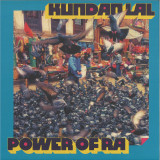
Kundan Lal - Power of Ra LP

Kundan Lal

Power of Ra LP

12inchYNFND026
YNFND
26.05.2023

Kundan Lal is a highly understated artist. Little is known about his background, though some refer to him as Kunsaf Halil, his personal life remains largely a mystery.

Gathering a cult following amongst people like Den Sorte Skole or DJ Marcelle with his previous releases, he is now set to sail new shores. There is a sense of wanderlust as he opens his box of field recordings, collected on his many travels. From the buzzing streets of Alexandria, early sunday markets in Tafraoute or a crackling bonfire down by the banks of the river Ganges. Each track takes you places.

Kundan's second album is a captivating blend of dubby beats, collages, and exotic instrumentation. Drawing from classic tools like the Roland 808, SC7 and the famous Space Echo, Kundan has created a unique and minimalistic sound that is sure to captivate listeners. At once nostalgic and experimental, "Power of Ra" is a must-listen for both electronic music purists and fans of adventurous soundscapes.

Compelled to work from home on his computer during lockdown, Kundan dusted his pawnshop e-piano, downloaded some orchestral soundkits and started to digitize almost forgotten field recordings. The "Power of Ra“ came to him.

“Illgrimage” is a good example of his approach. Combining atmospheric soundscapes with swirling strings, trombones and pianos. Echoes of birds and children playing in the streets. A small town filled with life and a theremin leading the way while you hear the faint yet powerful words of Greta Thunberg saying: "Imagine...“

“Raqaqa,” a powerful orchestral journey with a hip-hop edge. Tinkling chimes add a groovy vibe, while lush layers of wind instruments weave a masterful soundscape. It’s the slow-burning intensity of this track that pulls you in.

"Nasi Chip" is a signature song that exemplifies Kundan Lal’s musical prowess. An engaging beat coupled with chopped up vocals, 8-bit synth melodies and an arpeggiated piano provide an energetic atmosphere that is both cunning and unique.

”Cen" lures you into the egyptian realm. A Harmonium slithers serpent like around a pounding beat.Horns gently swaying to the rhythm of the desert.

It is hard to put your finger on his style or genre. You can feel Kundan Lal‘s DIY spirit in his production, carving his own ethnic genre. For enthusiasts of Roberto Musci or Muslimgauze, this avant-garde album is one for your collection. Keep your senses open and let the Power of Ra pass you to another world.

out of Stock

Order now and we will order the item for you at our supplier.

Last In: 15 months ago
16,43 €
Jon Lord - Live 2x12"

Jon Lord

Live 2x12"

2x12inch0214068EMU
earMUSIC
26.05.2023

Recorded in Bucharest, Romania, on November 5th, 2009, “Live” features one-of-a-kind performances from Jon Lord’s solo albums “Sarabande”, “Pictured Within” & “Beyond The Notes” as well as three Deep Purple classics, rearranged by Jon Lord for full symphony orchestra. Next to Jon Lord playing his famous Hammond organ and piano, “Live” features Steve Balsamo & Kasia Laska (vocals), Darin Vasilev (guitar), Ivaylo Zvezdomirov (bass), and Venko Poromanski (drums) along with The Rousse Philharmonic Orchestra conducted by Nayden Todorov. Originally released in 2011, the impressive live recording will finally become available in retail stores worldwide. Along with a CD Digipak Edition, “Live” will be released on vinyl for the very first time.

pre-order now26.05.2023

expected to be published on 26.05.2023

35,08 €
Ireke - Tropikadelic

Ireke

Tropikadelic

12inchUR840881
Underdog record
17.04.2023

After Joao Selva, Dowdelin, The Bongo Hop, Underdog Records continue their exploration of the Black Atlantic with IREKE.Ecstatic brass, 70’s keyboards, elastic guitars, round bass and world percussion: from this sonic heritage, Ireke makes a unique fusion, enhanced by the audacious contribution of his dub science, and a few electronic touches

IREKE

Ireke? Sugar cane in Yoruba. Like her, the duo loves tropical climates and intoxicating rhythms, quick to liberate the bodies gathered on a dancefloor. Afrobeat urgency, funk suppleness, dub alchemy, highlife jubilation: with Tropikadelic, Ireke summons the heritage of the masters and the audacity of machines to give life to new sonic territories. At the crossroads. For the love of groove.

From the West, with their ears to the Black Atlantic, Julien Gervaix and Damien Tes- son are both children of the collective and of improvisation, playgrounds for these complete multi-instrumentalists.

The first one puts his talents of arranger-saxophonist at the service of the Nantes collective Soulshine and of numerous formations - in turn funk or rhythm’n blues - where swinging is the rule.This is notably the case of the afrobeat group Walko, in which Julien Gervaix had the honour of sharing the stage and the studio for several years with Kiala Nzavotunga, guitarist extraordinaire for Fela Kuti and Egypt 80. Meanwhile, Damien Tesson was being trained as a dubmaster-guitarist-arranger at the reggae roots school with the digital option of the Vendée collective Shi Fu Mi Temple.This initiation led Damien Tesson to join, among others, the Nantes-based group BIBA (Bingy Band) and then to collaborate with Jideh High Elements, a key figure on the international dub scene, Roberto Sanchez and the team of his Lone Ark Studio, as well as Sana Bob, a famous reggae singer from Burkina Faso.And then, life being well done, the paths of Julien Gervaix and Damien Tesson ended up crossing within the jazz-funk combo Playtime, before meeting again in the Vendée a few years later.

With an obvious tropism for Afro-Latin grooves, tropical colours, electronic tricks and furious swaying, the two musicians create Ireke like a glass of well arranged rum. Here’s to us, here’s to you! As if guided by the spirit of the plant, Ireke toasts the immense richness of these danceable rhythms, true generators of life, connection and energy.

Like Legba, the Yoruba orisha of intersections and crossroads, Ireke thrives in the between worlds.Aware of the lineage of goldsmiths who preceded them, Ireke

knows his classics and humbly draws inspiration for Tropikadelic from the musical genius of Pat Thomas, Poly-rythmo Orchestra, King Tubby,Tony Allen, Fela Kuti, Maître Gazonga, Ernesto Djédjé or the Vikings of Guadeloupe. Ecstatic brass, 70’s keyboards, elastic guitars, round bass and world percussion: from this sonic heritage, Ireke makes a unique fusion, enhanced by the audacious contribution of his dub science, and a few electronic touches patiently flushed out in the studio - which the duo considers as an instrument in its own right.

Finally, to give voice to his compositions, on Tropikadelic, Ireke calls upon an army of serious enthusiasts, each member of which has come up with his or her own lyrics. Thus, alongside Ireke, we find the groove griot Pat Kalla (“Femme qui Danse”,“Love Is Jokin”), the Franco-Laotian reggaeman Amatah Keo (“Man Bo Diak”), the Vendée- based Agnès Hélène (“Petit à Petit”,“Oh Ma Chérie”) and Charly Sanga (“Bas Les Masques”,“Oh Ma Chérie”), the Burkinabè lion Sana Bob (“Métissage”) as well as the Nantes soulman Jy Cooly (“Kinkeliba”).

For the duo, music is above all a collective practice, an active liberation, a rhythmic approach to letting go, a source of communicative joy... In short, groove is the weap- on! And Ireke knows how to use it.

out of Stock

Order now and we will order the item for you at our supplier.

Last In: 3 years ago
19,79 €
Eden Ahbez - Wild Boy: The Lost Songs Of Eden Ahbez LP

“Wild Boy …” is a reissue of the well-known 2016 release curated by Brian Chidester, renowned researcher and biographer of Eden Ahbez. Especially for this album, Brian wrote an interesting text about Abi’s life, which definitely became the decoration of the release.
With the new 2020 re-release, we went a little further and kept what is commonly referred to as studio cuts. It’s a few more minutes in the studio with ahbez himself, full of emotion and life. In addition, to the delight of fans, the edition includes an additional composition Nature Boy (Mantovani Orchestra).
Especially, it is worth noting the outstanding mastering prepared from practically decomposed tapes by the Grammy-nominated Jessica Thompson, which guarantees the deepest and warmth possible sound. Jessica a huge ahbez fan and we’re highly appreciated for what she has done to save his music for the future.
Eden Ahbez is definitely at the origin of psychedelic music and this release can be taken as further proof. Over the past twenty years, the iconic figure of the world’s first hippie Eden ahbez has become famous primarily for his 1948 song “Nature Boy”, praising universal love, and his amazingly solo album from the 1960s called “Eden’s Island” – one from the first concept albums in the history of music and probably the first psychedelic music album. “Wild Boy: The Lost Songs Of Eden Ahbez” deepens understanding of the origins of the psychedelic movement in the 1950s.
The disc contains a musical selection of works by Eden ahbez himself, written by him in the period after Nature Boy. The inclusion of songs such as “Palm Springs” – Ray Anthony Orchestra and “Hey Jacques” by Erta Kitt gives the listener the chance to discover for the first time the little-known recordings of world-famous artists composed by Eden ahbez. Through “Wild Boy” and “Surfer John” you can hear the author’s handling of absurd rock and exotic experimentation, as well as sweet psychedelic pop like Monterey (with Paul Horn on flute). Overall, Wild Boy: The Lost Songs Of Eden Ahbez offers an overview of the lost works of 1949-1971 with seven unpublished recordings and eight rare singles.
If in 2020 you are missing the hallucinogenic content in Eden Ahbez, it amazingly makes up for that deficiency with simple chords, expansive arrangements, and lyrics about travel, relaxation, free love, and spirituality. Thus creating the standard of psychedelic music. Eden Ahbez’s songs weren’t only fantasy and his personal philosophy was the real thing that he lived.

reviews:

“This carefully and extensively researched compilation culls covers by top notch mainstream artists juxtaposed with unreleased Eden recordings. What might sound like a mixed bag is actually more like a chronological, musical non-fiction novel about Eden Ahbez. While Eden was writing hundreds of songs and performing live and making recordings in various styles, his songs were also being picked up by popular artists like Nat King Cole and Eartha Kitt who recorded with a more polished mainstream style. There are also some early rock n roll style recordings here. Eden’s professionally recordings often end up as Novelty Pop records such as “Child of Nature” and “The Clam Man” but if you read between the lines and listen to the lyrics it is pretty eye-opening that he is singing about Eastern-religion-style and pre-hippie philosophies about being at one with the planet Earth.
All of this is explained in the lengthy liner notes inside the lp along with a few choice photos that establish Eden as a founding father of Southern California mystic/psychedelic music.” – Tiki_News
“Eden Ahbez’s life philosophy was summed up in the lyrics of his most famous song, “Nature Boy,” a 1948 hit for Nat King Cole: the song describes a “strange enchanted boy” who wanders the world in search of truth. “The greatest thing you’ll ever learn,” he concludes, “is to love and be loved in return.” Ahbez was a pre-cursor of California’s beatniks and hippies, and an exalted icon of ex-otica via his rare 1960 album Eden’s Island. Beyond “Nature Boy” and Eden’s Island, though, there were nu-merous lesser-known Ahbez record-ings. Ahbez biographer Brian Chidester has been doing an exemplary job of archiving and documenting that catalog of work. The Exotic World of Eden Ahbez (reviewed in UT#38) appeared a few years ago, gathering together 14 Ahbez-related rarities” – Ugly Things

pre-order now31.03.2023

expected to be published on 31.03.2023

26,85 €
VARIOUS - 60'S GREATEST HITS 2x12"
pre-order now24.02.2023

expected to be published on 24.02.2023

22,65 €
Paul Murphy - The Jazz Room (2x12")

Paul Murphy

The Jazz Room (2x12")

2x12inchBBE465CLP
BBE
27.01.2023

UK jazz dance hero Paul Murphy teams up with BBE Music to deliver his first compilation on the label: a blazing selection of up-tempo jazz titled ‘The Jazz Room’.
Lauded by none other than Gilles Peterson as “the original messenger of jazz who found almost every dancefloor classic”, Paul began DJing in 1970s London. His passion and unique playing style placed him at the epicentre of an emerging jazz-dance scene in the city, popping off in spots like The Horseshoe (aka Jaffas), The Wag, The 100 Club, The Blue Note and The Electric Ballroom, where he founded the now famous ‘Jazz Room’, after which this album is named.

pre-order now27.01.2023

expected to be published on 27.01.2023

34,24 €
Art Blakey & The Jazz Messengers - Olympia Concert LP 2x12"

2 LPs-set (3 sides)
Recorded in Paris, November 22 and December 17, 1958.
Original issues: LP Fontana 680.202 ML & EP Fontana 460.642 MR.


”I’ve never played for such an audience” declared Art Blakey in tears. lt was November 22nd, 1958, and he’d just come offstage after one of the “Jazz Wednesdays” concerts at the Paris Olympia. For a first appearance by the “Jazz Messengers”, they’d made quite an impression. Not content with pulling a huge crowd off the Boulevard des Capucines (the demand was so great that a second concert had to be staged on December 17th), they’d converted everybody to the “Hard Bop” religion in two sets where, united in a kind of exultant communion, jazzmen, jazzophiles and curious bystanders alike had been crushed together in high spirits, paying no attention to the presence of Brigitte Bardot escorted by Sacha Distel. That night Blues March had almost replaced the Marseillaise anthem (and Moanin’ the Oignons). Yet none of the Messengers had ever been to Paris. They’d get to that later, and then some, but for the moment they were perfect strangers. Not only strangers to the public, but unknown even to a sizeable group of jazz fans : the next issue of “Jazz Hot” magazine (most of it devoted to them) arrived like an invasion by the carabimeri… the blaze lit at the Olympia had gone out, of course, and Blakey had moved into the “Club St. Germain” to light others; there, each of his gigs could have been a remake of the famous cabin scene in the Marx Brothers’ “A Night At The Opera”…

Among the Messengers’ “greatest hits”, only Moanin’ came close to Blues March. Constructed in the manner of a gospel, with the piano in the role of the preacher, and the orchestra that of the congregation, punctuating the sermon with shouts of approval, the theme was by pianist Bobby Timmons, whose fiery spirit can be explained by his educayion: “… the fact I played rhythm ‘n’ blues had a great influence on my style, and for me, it’s the foundation of jazz.” Moanin’ had sent the Olympia fans Into transports of delight, and even excited the curiosity of Hugues Panassié, who chanced to be passing by (“Bop”, in any form, being hardly his cup of tea) : he was prompted to go backstage and ask what it was he’d heard… Decidedly, in 1958, the Jazz Messengers were miracle-workers!

pre-order now27.01.2023

expected to be published on 27.01.2023

41,60 €
The Alan Parsons Project - I Robot (33RPM)

Most audiophiles know Alan Parsons Project's I Robot by heart. Engineered by Parsons after he performed the same duties on Pink Floyd's Dark Side of the Moon, the 1977 record reigns as a disc whose taut bass, crisp highs, clean production, and seemingly limitless dynamic range are matched only by the sensational prog-rock fare helmed by the keyboardist and his creative partner, Eric Woolfson. Not surprisingly, it's been issued myriad times. Can it be improved? Relish Mobile Fidelity's stupendous UltraDisc One-Step 180g 33RPM box set and the question becomes moot.


Mastered from the original master tapes and pressed at RTI on MoFi SuperVinyl, I Robot comes to life with reference-setting realism on this numbered, limited-edition reissue. Boasting immaculate highs and lows, generous spaciousness, and see-through transparency that takes you into the studio with Parsons and Woolfson at Abbey Road, this definitive edition is designed to demonstrate the full-range capabilities of the world's best stereo systems while offering listeners the convenience of having all the music on one LP.

Featuring a nearly inaudible noise floor, this transcendent UD1S edition functions as a repeat invitation to savor reference-grade soundstages, immersive smoothness, sought-after instrumental separation, three-dimensional imaging, and consummate tonal balances. Able to be played back at high volumes without compromise or fatigue, it is a demonstration record for the ages – the likes of which are no longer being made. This is the very reason you own and invest in high-end audio gear.

The special characteristics of this UD1S version extend to the premium packaging. Housed in an elegant slipcase, the reissue features special foil-stamped jackets and faithful-to-the-original graphics. Aurally and visually, it is made for discerning listeners who prize sound quality and production, and who desire to fully immerse themselves in everything about this conceptual landmark. The Alan Parsons Project's most famous record deserves nothing less.

Inspired by and loosely based around the Isaac Asimov stories of the same name, I Robot delves into themes of artificial intelligence and technological dominance that make the record extremely relevant in the 21st century. Indeed, Parsons and Woolfson's pinnacle creation dovetailed with the ascendency of Star Wars, which itself is experiencing a rebirth in an age of self-driving cars, smart devices, and mindless automation. Lyrically, songs such as "The Voice" call into question human behavior – and their relationship to increasing robotic supremacy – in everyday life. Parsons and Woolfson reflect the associated paranoia, dichotomy, and transformation via shifting sci-fi arrangements steeped in drama and moodiness.

The absorbing tunes on I Robot also continue to fascinate due to their perfectionism and innovation. Borrowing from Pink Floyd's strategies, Parsons and Woolfson utilize a looped sequence on the title track to create new downbeats. "Some Other Time" employs two different lead vocalists and yet gives the illusion that only one is involved. Captivating strings, a piccolo trumpet, and bona fide pipe organ grace "Don't Let It Show." The origins of "Nucleus" stem from a unique analog keyboard concoction dubbed "the Projectron," devised by Parsons and electronic engineer Keith Johnson. Andrew Powell's orchestral and choral arrangements top it all off, with "Total Eclipse" arriving as a frightening track that presages the climactic "Genesis Ch. 1 V. 32."

Does man or machine win in the end? Decide as you get lost in Mobile Fidelity's UltraDisc 180g 33RPM LP pressing. Secure your numbered copy today!

More About Mobile Fidelity UltraDisc One-Step and Why It Is Superior
Mobile Fidelity Sound Lab's UltraDisc One-Step (UD1S) technique bypasses generational losses inherent to the traditional three-step plating process by removing two steps: the production of father and mother plates, which are created to yield numerous stampers from each lacquer that is cut. For UD1S plating, stampers (also called "converts") are made directly from the lacquers. Since each lacquer yields only one stamper, multiple lacquers need to be cut. Mobile Fidelity's UD1S process produces a final LP with the lowest-possible noise floor. The removal of two steps of the plating process also reveals musical details and dynamics that would otherwise be lost due to the standard multi-step process. With UD1S, every aspect of vinyl production is optimized to produce the best-sounding vinyl album available today.

MoFi SuperVinyl

Developed by NEOTECH and RTI, MoFi SuperVinyl is the most exacting-to-specification vinyl compound ever devised. Analogue lovers have never seen (or heard) anything like it. Extraordinarily expensive and extremely painstaking to produce, the special proprietary compound addresses two specific areas of improvement: noise floor reduction and enhanced groove definition. The vinyl composition features a new carbonless dye (hold the disc up to the light and see) and produces the world's quietest surfaces. This high-definition formula also allows for the creation of cleaner grooves that are indistinguishable from the original lacquer. MoFi SuperVinyl provides the closest approximation of what the label's engineers hear in the mastering lab.

pre-order now

This item has not yet been released. You can pre-order the product now.

163,82 €
LUIS DAVID AGUILAR - AYAHUASCA: SICA PARA CINE (1978-1983)

Ayahuasca: Music for Film, by Luis David Aguilar (1978-1983) compiles works by Luis David Aguilar, one of the most prolific composers of film scores in Peru. It shows the great versatility and avant-garde style that has distinguished his work. Luis David Aguilar (Arequipa, 1950) occupies a fundamental place in the history of film music in Peru, not only because of the prolific nature of his work (which also includes music for television and advertising), but because of the singular, experimental style found in many of his scores. Aguilar's music blends modern academic composition with the use of native instruments, synthesizers, sound collages and a diversity of resources, which identify him as a key figure to understand a period of Peruvian music marked by the imprint of the avant-garde and the use of native sounds, which developed during the late 70's and the early 80's. Aguilar belongs to the so called "Generation of the 70's", along with Peruvian composers such as Walter Casas, Seiji Asato and Aurelio Tello, who were then immersed in the languages of contemporary classical music. But he also shares the spirit of renewal of a generation of musicians who came from the world of jazz and electronic experimentation such as Manongo Mujica and Arturo Ruiz del Pozo. Ayahuasca is an album that collects pieces from 1978 to 1983 and offers an overview of the different musical paths that Aguilar followed during his career as a soundtrack composer. The album opens with music from the film El viento del ayahuasca The Wind of Ayahuasca (1983), by director Nora de Izcue, performed by the National Symphony Orchestra and Choir of Cuba under the baton of Luis David Aguilar, with Chucho Valdés on piano. Recorded at the ICAIC studios (Cuba), it is an ambitious orchestral and vocal composition, in which you can hear the beginning of the famous melody of "Mujer Hilandera" [Female Weaver], popularized by the Amazonian cumbia group Juaneco y su Combo, which serves as an introduction to the sound world of the jungle, a dense and hypnotic atmosphere that, without a doubt, places this work as one of the most important compositions of the author's repertoire. The next track is the music for the documentary Anónimo cotidiano [Anonymous Everyday] (1979), by director Jorge Rey, a unique experimental piece for synthesizers (played by Aguilar), drums and percussion (played by Manongo Mujica), with the addition of various Andean instruments (panpipes, charango, among others). It is a clear example of fusion of sound experimentation and timbres from the Andean world. And finally Los constructores [The Builders] (1978), by director José Carlos Huayhuaca, a salsa which incorporates unusual sounds of tubular bells and prepared pianos. Ayahuasca: Music for Film by Luis David Aguilar (1978-1983) is the second album by Aguilar released by Buh Records, following the celebrated Hombres de Viento/Venas de la Tierra (1978-1982), appeared in 2015. The album is published in vinyl format, in a limited edition of 300 copies, as part of the Essentials Sounds collection. It includes a booklet with notes by Luis David Aguilar. The audio has been remastered from the original reel tapes by Aldo Montalvo. The artwork and design is by About Studio.

pre-order now23.12.2022

expected to be published on 23.12.2022

33,82 €
Camilo Azuquita & Panama Brass - Borombon | Con La Mano En La Biblia

"Matasuna Records" musical journey takes the listener this time to "Panama" - a country in Central America, which offers a rich and breath-taking variety of musical treasures. In a first reissue, two songs from the legendary "Loyola Records" label were selected, both released in 1969: one by "Camilo Azuquita" and one by the group "Panama Brass". Two super-rare tunes that fetch crazy prices, if you're lucky enough to find a copy at all. Available for the first time as an official remastered reissue on 7inch vinyl - the song by Panama Brass even makes its 7inch premiere. Don't sleep on it!

The A-side features the killer boogaloo tune "Borombon" by "Camilo Azuquita". Its take of the song composed by "Javier Vasquez" is undoubtedly the best version of this song. The striking piano, driving bass and rich horns are fueled by percussive accompaniment and especially by Azuquita's powerful voice. A terrific song that has also recently gained new notoriety in movies and series - such as "Better Call Saul".

The B-side features the instrumental Latin Jazz/Guaracha tune "Con La Mano En La Biblia" by "Panama Brass" - an orchestra led by the excellent organist "Cristobal Munoz Jr." and consisting of Panama's best musicians. A no less energetic and furious song composed by "G. Garcias". The musicians of the orchestra combine a great musicality and diversity in the song, delivering a special delicacy.

"Camilo Luis Argumédez" is a singer and composer born in "Colon (Panama)" on February 18th 1945. He became world famous under his stage name Camilo Azuquita. He began his career at a young age, when he participated in various competitions organized by local radio stations. He left Panama for the first time for an engagement in "Lima (Peru)" - the prelude tocountlesstrips.

After returning to Panama, another engagement in 1966 took him to "Puerto Rico", where he also recorded music. Due to a tour he was involved in, he ended up in "New York City" where he made new & fruitful acquaintances with other artists that resulted in some more recordings.

In 1968 he returned again to Puerto Rico, where he joined a band to record an album. In the following years, tours and concerts followed, as well as an engagement in a club where he musically accompanied many stars of Latin American music.

Between 1972 and 1976 he spent four years in "Los Angeles", where he performed in night clubs, recorded two albums and toured California with his own band "Melao". In LA, through a brother of the "Fania" boss, he got a contract with "Vaya Records", a subsidiary of the Fania label, which brought him back to New York City in 1976. There he joined the band "Tipica'73" and their two following albums brought him much success.

A tour led him to "Paris", where he met the journalist "Pierre Goldman". A proposed project became reality two years later: Azuquita opened the first Parisian Salsa Club. As this became a complete success and the audience filled the club on each of the evenings, a first engagement of one month was extended to several years. In France, he performed at the world-famous "Olympia Theater "or played at the "Old Bourget airport", opening for a live concert by reggae legend "Bob Marley" in front of 75,000 people. From France, he traveled throughout Europe, where the performances in front of European audiences brought him enormous prestige.

From 1985 to 1987, "Azuquita y su Melao" toured extensively in "California", where he signed a 1-year contract at "Club Candilejas" in "Hollywood" in 1988. In the following decades, he recorded many more albums - in NYC, Cali (Colombia), France or Havana (Cuba), among others. In addition, he was still very active on tours, festivals and concerts around the globe. An extremely remarkable artist, whose activity has brought him to the top.

---

"Panama Brass" was an orchestra directed and orchestrated by the excellent organist "Cristobal Munoz Jr." The orchestra consisted of one of the best musicians of Panama at that time. Munoz was an exclusive artist of "Loyola Records" at the time and was considered a promising or up-and-coming conductor. That this album could be realized at all had only been possible thanks to Hubert J. Pretto. Pretto, then Assistant Vice President & General Manager of "Coca Cola Panama" arranged the funds necessary for the realization of this album and supported the campaign to promote music culture in Panama. This album would remain the only one released by this group.

out of Stock

Order now and we will order the item for you at our supplier.

Last In: 3 years ago
11,35 €
ABDEL HALIM HAFEZ - MAWOOD

Abdel Halim Hafez

MAWOOD

12inchWWSLP65
WeWantSounds
02.12.2022

Wewantsounds is delighted to reissue "Mawood" one of the cornerstones of Egyptian music, recorded in 1971 by legendary Arabic singer Abdel Halim Hafez. Famously sampled by Jay-Z on "Big Pimpin"" for one of his 60s tracks, Hafez is captured here live with his full orchestra including Omar Khorshid on guitar. the album mixes traditional Arabic music with modern instrumentation and shades of 70s groove. "Mawood" is one of Hafez"s all-time classics, written by the legendary composer Baligh Hamdi. This release has been newly remastered for vinyl and features the original LP artwork with a 2 page insert featuring a new liner notes (English/French) by Mario Choueiry (IMA, Paris) who curates Wewantsounds" Arabic series of reissues.

pre-order now02.12.2022

expected to be published on 02.12.2022

31,30 €
The LATIN BROTHERS - EL PICOTERO

Heavy-duty Colombian salsa group The Latin Brothers were formed in 1974 by the Discos Fuentes A&R team as a sibling band of Fruko Y Sus Tesos in order to provide the local market with a trombone-heavy ensemble in the mode of the popular Nuyorican Willie Colón orchestra. The band was led by Julio "Fruko" Estrada on bass, featuring basically the same musicians as Los Tesos, minus the trumpets and highlighting the cutthroat trombone work of Gustavo "La Pantera" García. At the time Fruko's Tesos were going through a transition and his talented former lead vocalist, Píper Pimienta, left to sing lead in The Latin Brothers while Joe Arroyo and Wilson "Saoko" Manyoma took over vocal duties in Los Tesos. "El Picotero" was The Latin Brothers' debut album and remains to this day a favorite of salsa dura fans the world over. The album established The Latin Brothers as a bona fide contender in the crowded field of trombone-centric salsa bands taking over the airwaves and dance floors around Latin America. With this bold and brassy record The Latin Brothers would inspire future Colombian salsa orchestras as well as helping establish Medellín as a center of salsa almost as famous as Cali.

pre-order now10.11.2022

expected to be published on 10.11.2022

25,63 €
Iannis Xenakis - La Légende D'Eer

When IANNIS XENAKIS (1922-2001), who had fought against the occupation as part of the communist Resistance, moved to Paris in 1947 it was the start of a highly creative and impressive career. XENAKIS not only studied composition with MESSIAEN and became one of the most innovative composers of the 20thcentury, he also worked as assistant to LE CORBUSIER and realized a.o. the Philips Pavilion for the World Exhibition in Brussels 1958. His compositions often are based on mathematical principles (in 1966 he founded the CEMAMu - Centre d'Etudes de Mathematique et Automatique Musicales), which give his music an unprecedented aesthetic and "shocking otherness" (The Guardian). The most famous works of XENAKIS, who won the Polar Music Prize (considered the unofficial Nobel Prize for music) in 1999, are his compositions for orchestra Metastasis, Pithoprakta and Terretektorh (where the 88 musicians are spread within the audience) and the electroacoustic compositions Persepolis (to be re-released later on as part of the PERIHEL series), Concret PH, Bohor and La Legende d'Eer where XENAKIS integrated his stochastic synthesis sounds for the first time. As legendary as this piece itself is the impenetrable thicket of versions and stories around La Legende d'Eer - it exists in different releases, wrong sample rates, digitized backwards ..., this now is a new version, using the 8-track-version that XENAKIS himself presented at Darmstädter Ferienkurse in august 1978. As the automatic spatialization is lost, this became the only original version of this composition and is presented here (mixed down to stereo by MARTIN WURMNEST who tried to preserve the spatial movements as perceptible as possible - mastered by RASHAD BECKER at D&M) for the very first time. La Legende d'Eer not only became a milestone of electroacoustic music but is also an important reference for noise and industrial musicians up to the present day!

out of Stock

Order now and we will order the item for you at our supplier.

Last In: 3 years ago
22,65 €
Ezéchiel Pailhès - Mélopée

On his fourth solo album, much as in Oh! (2020), the French composer, pianist and vocalist follows his ongoing exploration of the crossroads between poetry and songs, piano and synth, old-time verses and contemporary sounds. Inspired by the rhythms, effects and speech patterns of urban music, he also delivers, with a warm and moving voice, the texts of three poetesses from the past.
Since 2013, Ezéchiel Pailhès has been crafting a unique French synth pop. On his first three albums, he switched between songs inspired by poetry, instrumental ballads and electronica with hummed
choruses. This latest record is a collection of eleven new songs, two of which he wrote: "Opaline" and "Ni toi, ni moi" (neither you nor me). The others are adaptations of poems written in the 16th, 18th and
19th centuries by French poetesses Louise Labé (1524-1566), Marceline Desbordes-Valmore (1786- 1859) and Renée Vivien (1877-1909).
Poetesses from the past...
From classical music to songs, poetry adaptation is an old French tradition. "My universe has always embraced the musicality of this literary genre," the artist recalls. He actually started this project in 2017 with poems and sonnets by William Shakespeare, Pablo Neruda, Victor Hugo and above all Marceline Desbordes-Valmore, who can be heard again on songs such as "Dors-tu?" (Are you sleeping?),
"Élégie" or "L'attente" (The wait). A figure of romanticism, the author left her mark on the early 19th century through the quality of her texts and her formal inventions, particularly praised by Balzac, and
apparently a decisive influence on Verlaine and Baudelaire. "Marceline's poetry is very musical," says Ezéchiel admiringly. "Her use of rhythm and repetition sounds great and takes on a new perspective when set to music. In fact, she wrote some of her texts with singing in mind.”
“Ces longs secrets dont l'amour nous accuse, Viens-tu les rompre en songe à mes genoux ? Dors-tu, ma vie ! ou rêves-tu de moi ?”
“These long secrets for which love accuses us, Do you come to my knees to break them in a dream?
Are you sleeping, my life! or do you dream of me” (“Dors-tu ?”, after “Les pleurs” (the tears), 1833)
Besides her, we find the more famous, and rebellious, Renée Vivien, whose texts inspired three songs, "Regard en arrière" (Looking backwards), "Mélopée" (Melopoeia) and "La fille de la nuit" (The
night girl). Sometimes nicknamed "Sapho 1900", this figure of lesbian culture and, more broadly, of female genius, combined in her work the themes of desire, dreams, melancholy and the relationship with nature.
“Ta forme est un éclair
Ton sourire est l’instant Tu fuis, lorsque l’appel
T’implore, ô mon Désir !”
"Your shape is a spark of lightning
Your smile, the very moment
You flee, when the calling
Begs you, O my Desire!"
(After “Parle-moi, de ta voix pareille à l’eau courante” (Speak to me, with a voice like flowing waters) and “Ta forme est un éclair” (Your shape is a spark of lightning), Renée Vivien, 1901)
Lastly, with "Tant que mes yeux" (As long as my eyes), Ezéchiel was inspired by a 1555 poem by Renaissance poet Louise Labé, whose main topic explored female love, physical and spiritual desire,
and the torments and pains they generate.
" At the start of the project ", Ezéchiel continues, " I was interested in many poets, men and women, past and present, before my selection was narrowed down to these three female authors. Their works,
often written in difficult or secret conditions, express a raging romanticism, a passionate soul, fuelled by desperate and tormented love. I found it interesting, as a man coming from another world and time, to face this otherness, to trade viewpoints. Obviously, I could loudly claim that the album was the result of a concept, that it reflects today's world, and that it allows me to explore the notion of gender,
giving visibility to the work of a few women, while at the same time pairing these ancient texts with a more modern and rhythmic music, and obviously, there is some truth in that. But more than anything, I
wanted to serve the text itself, to express the emotion and connection I felt with these works.”
Today's rhythms and prosody...
Ezéchiel Pailhès combines texts from French literature with electronic music, its effects and rhythms, as well as a form of scansion that echoes rap, R&B or the current fusion between hip hop and pop,
which is part of our musical background and that of younger generations. "I wanted to cross-reference texts from the beginning of the century with this type of music. I wanted to use today’s techniques to tell the tale of different daily lives and experiences.
The album is thus marked by contemporary electronic orchestrations, in which he drops his favourite instrument, the piano, and his digital collage technique to use more extensive synth melodies, enhanced by drum machines, bringing a gentle and bright vibe to the romantic texts. Lastly, we can hear slight digital tones of Auto-Tune, which Ezéchiel uses sparingly and inventively.

Beyond its sophistication, the term "melopoeia" means a "sung declamation", a "recitative song", sometimes interpreted in a monotonous way. On this album, it could also refer to a sense of phrasing, which does not come from rap, but rather from jazz, Ezéchiel's first love. " In the past, I tried to hide my jazz culture, but it naturally came back on this new album, as can be heard, for instance, in Regard en arrière.” With its verses anchored in our literary memory, the following track "Mélopée", perfectly illustrates the album's vision. It manages to transcend eras, mixing past romanticism with a modern
prosody, fuelled by the nonchalance of hip hop and the warm chords of jazz.
“Qu’un hasard guide enfin mon désespoir tranquille
Vers l’eau d’une oasis ou les berges d’une île,
Où je puisse dormir, mon voyage accompli,
Dans la sécurité profonde de l’oubli”
"May chance guide my quiet sorrow, at last
To the water of an oasis, the shores of an island,
Where I may sleep, having traveled my way,
In the safe depths of oblivion".
(After “Sillages” (Trails), René Vivien, 1908)

out of Stock

Order now and we will order the item for you at our supplier.

Last In: 3 years ago
19,96 €
Rishin Singh with Martin Sturm - Mewl Infans

Deep-listening organ piece from Malaysia-born, Berlin-based composer Rishin Singh, performed by Martin Sturm on the Lizst organ in Thuringia, Germany. RIYL: Kali Malone, Anna von-Hausswolff - "An endless and captivating exploration of one organ's timbres and tones. Both whispered and shouted, large and small, close and far, Singh's work is both unsettling and a balm, and has invited me to reconsider pitch, consonance, dissonance, tension and release." – Clarice Jensen, artistic director of the American Contemporary Music Ensemble (ACME) In the 1850s the influential composer Franz Liszt, who was living in Weimar, Germany at the time, carried out, with the famous cantor Alexander Wilhelm Gottschalg, a series of “ländlichen Orgelexperimente” (rural organ experiments) in Thuringia – investigating various instruments and their capabilities for contemporary music. They eventually settled on the organ in Denstedt because of its high quality. Many years later, award-winning organist Martin Sturm would invite the Berlin-based composer Rishin Singh to repeat these “ländlichen Orgelexperimente” with him and they again chose the organ at Denstedt, now named in honour of Liszt, as the best instrument – the most flexible and expressive – to perform and record Singh's music for organ. mewl infans is a contemporary classical piece that invites modern listeners to ponder the enduring pull of an instrument that was first conceived more than 2,000 years ago and has, in recent years, been rediscovered by a new generation of composers and listeners. Throughout the larger architecture of the four movements, melodic motifs return over and over, fractured by noise, fragmented by carefully calibrated alternate tunings, dissolving into thin air, and generating drones which then transform into new melodic variations. Over the 44 minutes of the piece the organist at times attempts to exert complete control over the instrument, and at other times relinquishes all control entirely. Conceptually rigorous and emotionally charged, mewl infans rewards deep listening and patience. At times conjuring a sense of doom, at other times suspense, pastoral drift, or aquatic submersion, the album is a universe of tiny details comprised of noise and air, of the journey each tone takes from birth to expiration. HIGHLIGHTS: – Singh has been commissioned by the GRAMMY-nominated JACK Quartet. Premiere in NYC Spring 2023 – Collaborations between Singh and Sturm are ongoing: Sturm will premiere Singh’s concerto for organ, timpani, and string orchestra later this year – Sturm is the youngest professor of organ in German history – The debut album from Singh‘s ensemble Leider, A Fog Like Liars Loving, was released by Beacon Sound in May of 2021 Bios: Martin Sturm, born 1992 in South Germany, in an International award-winning organist (ION, Schwäbisch Gmünd, Festival St Albans, Haarlem, Bavarian Culture Prize, and Keck-Köppe Foundation). He performs regularly as an interpreter and organ improviser at festivals, churches, and concert halls around the world. In 2019 he was appointed Professor for Organ and Organ Improvisation at the University of Music “Franz Liszt” in Weimar (Germany), after teaching at the Universities of Music in Würzburg and Leipzig. Rishin Singh (b. Kuala Lumpur, Malaysia) is a composer and trombonist living in Berlin. He has been commissioned to compose for the JACK Quartet (US), Piano+ (US), Claire Edwardes (AUS), DNK Ensemble (NL), Prof. Martin Sturm (DE), the Amsterdam Wandelweiser Festival (NL), Quiet Music Ensemble (IE), and others. Upcoming premieres include “every day” a concerto for organ, timpani, and string orchestra (Martin Sturm, Thuringia, 2022), and “melancholy objects” a string quartet (the JACK Quartet, New York, Spring 2023). He is currently working on his first chamber opera and is the composer and lyricist for the art song ensemble Leider.

pre-order now16.09.2022

expected to be published on 16.09.2022

27,31 €
Various - JAZZ A VIENNE : PAST & FUTURE LP

Not every day do you celebrate a 40th birthday. That’s why, the most famous French Jazz Festival, “Jazz at Vienne” is marking the four-decade – emerald – anniversary of France’s signature jazz and blues event not once, but twice. After a truncated 2021 edition, the festival’s storied history, dating back to 1981, is being celebrated with a full concert schedule this year, alongside a compilation album, Past & Future in collaboration with Heavenly Sweetness. The album - an amalgam of stories, emotion and resonant echoes – captures the festival’s essence. Listen in closely, then once again.

PAST
Listen to the best moments of live music in Vienne Antic Theater. With prestigious names of jazz : McCoy Tyner, trio Romano / Sclavis / Texier, Hank Jones, Milt Jackson, Lalo Schiffrin, Roy Hargrove and world music Gilberto Gil, Banda de Santiago de Cuba.

FUTURE
A selection of the best young artists of the French jazz scene, chosen following a call for candidates of several months ! 7 unreleased tracks specially recorded for this album. The young talents who will hopefully be part of the festival in the coming

out of Stock

Order now and we will order the item for you at our supplier.

Last In: 4 years ago
21,64 €
Various - Boogie Beats Vol. 3

Boogie Angst is proud to announce Boogie Beats Volume 3; the third installment in their critically acclaimed,club-orientatedcompilation series. Known for showcasing fresh new talent as well as industry titans, Boogie Beats has become a well-lovedshowcasefor both dance floors and home playlists alike.

Kraak & Smaak - Fittipaldi

Opening track Fittipaldi is the previously released Euro heater by label heads Kraak & Smaak. Magnificent Clavinet parts sway hand-in-hand against the diced wall of electronic goodness. Classic sounds brought into the present-day. Named after the famous Brazilian 70s F1 driver, Fittipaldi is a nostalgic, nu-disco groover ready to bridge the classic-to-modern gap in any club this summer.

Steven Kimber - I Wanna Be The One (Drop Out Orchestra Remix)

Next up is a Steven Kimber song, by way of a gorgeous Drop Out Orchestra remix. Drop Out Orchestra are the reigning edit kings of the soulful disco scene. Taking on the Birmingham-based vocalist and producer Steven Kimber's I Wanna Be The One,they managed to turn it into a brilliant yacht-house infused bouncer. Beach-proof from the get go, we wouldn't be surprised to hear this one tear up some island clubs this summer.

King Mutapa - Gimme That Funk

Third in line for Boogie Beats Volume 3 is South-African producer King Mutapa with the ever so shiny Gimme That Funk. Heavily influenced by 70s Disco, Funk and Boom Bap, King Mutapa expertly sprinkles funk chops over the shiniest groove we've heard in ages. Moving through several parts of the song, it's clear to hear that Mutapa's the King of bounce and will steadily continue this trajectory into his fresh career.

Pontchartrain - Cheap Plants

Detroit-based producer Pontchartrain (of Kolours LTD., Delusions of Grandeur, Whiskey Disco, Toy-Tonics and Razor-n-Tape fame a.o.) rain steps up to the plate with Cheap Plants; a bouncy and classy house number which could only have come out of the Motor City. Exuberating percussion parts sway ear-to-ear, whilst the mesmerizing piano stabs stay ever present, providing a steady backbone for the menagerie of lively synth swirls.

FUTVRST - The Feeling

New, mysterious Californian indie-vibed and post-disco duo FUTVRST light up the night with The Feeling. Swirling disco chops under laid with an infectious bassline, all dancing around an irresistible arpeggio sequence. FUTVRST takes us back to the blog house days with this one, and we can't wait to hear what's next for them.

The five songs are rounded off with the longer, original mix of Fittipaldi, plus an extended version of the I Wanna Be The One remix—all set to suit your DJ needs.

Listening through the featured tracks it's clear to hear that the compilations are always a brilliant indicator of the label's variety and broad scope in the electronic music scene, whilst always being undeniably funky and danceable. With exciting times ahead for the Netherlands-based label, the Boogie Beats series always feel like a little homecoming.

'Various Artists – Boogie Beats Vol. 3' is out via Boogie Angst on all digital platforms on April 8, with a limited edition vinyl 12" coming soon after.

out of Stock

Order now and we will order the item for you at our supplier.

Last In: 2 years ago
10,63 €
MATTHIEU BORÉ - TILL THE MORNING LIGHT LP

French pianist, jazz vocalist and songwriter Matthieu Boré grew up surrounded by music and the arts. While his great-grandfather loved to give impromptu renditions of famous opera arias, his father's tastes were more modern and Matthieu's childhood was punctuated by the sounds of Eric Clapton, Bob Marley and the Stray Cats. At age 7, Matthieu began taking piano lessons, focussing predominantly on classical repertoire. In the 1990s he took his first steps into the music profession, singing in various punk and trip hop outfits, before pursuing his love of 1930s and 40s jazz. In early 2000, the young singer-pianist began playing the Parisian jazz club circuit and a year later, released an entire album of Fats Domino covers. In keeping with his fascination of 1950s R&B music, he issued Doo Wop in 2003. Sometimes on My Own (2007) is inspired by his idols Irvin Berlin, Hoagy Carmichael and Gershwin. 2009 saw the release of FriZZante!!, an album featuring a blend of covers and his own originals, with full orchestra. Matthieu Boré has performed at festivals and concert venues in both France and around the world, including the Montreal Festival, the Jarasum Festival (Korea), the New Morning and the Olympia. In 2011, he released a live album recorded at Paris's iconic Duc des Lombards. Roots (2012) was a surprising cocktail - a strong dose of New Orleans funk, from with Matthieu draws his own nonchalant style, combined with a predilection for acoustic sounds and syncopated grooves. In 2015, grammy-nominated Leo Sidran produced Naked Songs which explores the idea of pearing back songs to their defining elements. In Gumbo Kings (2019), Matthieu pays tribute to Allen Toussaint and The Meters through twelve original songs whilst his most recent release Till The Morning Light(2022) combines Jamaican ska and 60's garage rock influences.

pre-order now05.08.2022

expected to be published on 05.08.2022

20,55 €
Charles Mingus - Mingus Mingus Mingus Mingus Mingus 2x12"

"The album features the two sides of Mingus' compositional genius: the beautiful balladry that I always feel has a bit of a film-noir feel to it, alongside those joyous upbeat numbers that are filled with an organized chaos that categorizes much of the bassist's best work. ... Throw in the fact that it also features Jaki Byard (who is just phenomenal on this recording and remains criminally underrated), Booker Ervin, Dannie Richmond and Eric Dolphy and you have some of Mingus' finest sidemen driving his compositions to the fantastical places they seemed preordained to go. ... Mingus, Mingus, Mingus, Mingus, Mingus is a record that has more than stood the test of time and is an everlasting testament to the talents of Mingus and the players who had the ability to follow his musical vision." — The Jazz Record

Mingus, Mingus, Mingus, Mingus, Mingus was Charles Mingus' last major studio recording of the 1960s (the solo Mingus Plays Piano would also be released the same year in 1964) and it's a real treasure in the great jazz bassist's discography

Two of the tracks ("Celia" and "I X Love") were recorded at the sessions for The Black Saint And The Sinner Lady, while the rest were laid down eight months later with a group that included Booker Ervin, Eric Dolphy and Jaki Byard (Byard also played on the two earlier tracks). Both sessions featured groups of 11 players, all of whom were in top form in performing Mingus' notoriously complex compositions, writes jazzrecord.

All but two tracks on Mingus, Mingus, Mingus, Mingus, Mingus were re-interpretations of songs from the bassist's earlier catalogue, only "Celia" rates as a new original number, and "Mood Indigo" is a cover of the famous tune by Mingus's hero Duke Ellington. If you happen to have lost your Mingus decoder ring, the remaining tracks correlate to their past counterparts as such:


For Mingus, Mingus, Mingus, Mingus, Mingus Mingus collaborated with arranger/orchestrator Bob Hammer to score the music for the large ensemble of brass and saxophones. Recorded January 20 and September 20, 1963 in New York City.

pre-order now27.06.2022

expected to be published on 27.06.2022

91,39 €
Papé Nziengui et son Groupe - Kadi Yombo LP

Kadi Yombo, published in 1989, is the most successful album in the quest for a fusion between tradition and modernity in Bwiti harp music of the Tsogho people of Gabon. Combining beating rattles with a layer of synthesizers, Papé Nziengui blends in a contrapuntal dialogue characteristic of harp playing: male song in appeal and female choir in response, male voice of the musical arc and rhythms of female worship. But above all it’s Tsogho ritual music and modern studio orchestration. The result is an initiatory itinerary of 10 musical pieces which are all milestones likely to be simultaneously listened to, danced, meditated on, and soon acclaimed. In the years since, Nziengui has traveled he world from Lagos to Paris, from Tokyo to Cordoba, from Brussels to Mexico City to become a true icon, the emblem of Gabonese music.

Like Bob Dylan, "electrifying" folk and Bob Marley mixing rock with reggae, some purists have criticized Nziengui for having distorted the music of harp by imposing a cross with modern instruments. They even went so far as to claim that Nziengui was just an average harpist covering his shortcomings with stunts that were only good for impressing neophytes; like playing a harp placed upside down behind his back or playing two or three harps simultaneously. Sincere convictions or venomous defamations, in any case, Nziengui never gave in to such attacks, imposing himself on the contrary to pay homage to the elders (Yves Mouenga, Jean Honoré Miabé, Vickoss Ekondo) while instructing the maximum of young people. He is thus the promoter of many young talents, the most prominent of which is certainly his nephew Jean Pierre Mingongué. In a conservative society where the sacred is confused with secrecy, exposing the mysteries of Bwiti in broad daylight can be punished by exclusion or even execution.

Papé Nziengui has always claimed that he faces such risks because he never felt enslaved to a community that governs his life, that regulates his conduct, that has a right of censorship over his activities. Like Ravi Shankar, the famous sitarist, Papé Nziengui is a man of rupture but also of openness, a transmitter of culture. As proof, he has established himself in Libreville, Gabo’s capital, as the main harpist for sessions and concerts, accompanying the greatest national artists (Akendengué, Rompavè, Annie-Flore Batchiellilys, Les Champs sur la Lowé, etc.) as well as foreign artists (Papa Wemba, Manu Dibango, Kassav', Toups Bebey, etc.). In 1988, he was the first harpist to release an album in the form of a cassette produced by the French Cultural Center (Papé Nziengui, Chants et Musiques Tsogho). At the same time, he created his own group (Bovenga), combining traditional music instruments (musical bow, drums, various percussion instruments, etc.) in the framework of a true national orchestra, which gave the first concert and the first tours of a traditional music that was both modern and dynamic, thus "democratizing" the harp, to the dismay of certain purists.

On the other hand, in modern music, dominated by the logic of profit or even commercialism, artistic creation must often be adjusted for a specific audience based on reason rather than heart. But instead of allowing himself to be distorted, Papé Nziengui has always tried to produce music that is not a caricature, worthy in its expression as in its content, of the sacredness and transcendence of the music of the Origins. This is what makes Nziengui not only the musician, but the man someone whose age hasn’t altered any of his freshness or authenticity

pre-order now08.04.2022

expected to be published on 08.04.2022

32,73 €
Papé Nziengui et son Groupe - Kadi Yombo LP 2x12"

Kadi Yombo, published in 1989, is the most successful album in the quest for a fusion between tradition and modernity in Bwiti harp music of the Tsogho people of Gabon. Combining beating rattles with a layer of synthesizers, Papé Nziengui blends in a contrapuntal dialogue characteristic of harp playing: male song in appeal and female choir in response, male voice of the musical arc and rhythms of female worship. But above all it’s Tsogho ritual music and modern studio orchestration. The result is an initiatory itinerary of 10 musical pieces which are all milestones likely to be simultaneously listened to, danced, meditated on, and soon acclaimed. In the years since, Nziengui has traveled he world from Lagos to Paris, from Tokyo to Cordoba, from Brussels to Mexico City to become a true icon, the emblem of Gabonese music.

Like Bob Dylan, "electrifying" folk and Bob Marley mixing rock with reggae, some purists have criticized Nziengui for having distorted the music of harp by imposing a cross with modern instruments. They even went so far as to claim that Nziengui was just an average harpist covering his shortcomings with stunts that were only good for impressing neophytes; like playing a harp placed upside down behind his back or playing two or three harps simultaneously. Sincere convictions or venomous defamations, in any case, Nziengui never gave in to such attacks, imposing himself on the contrary to pay homage to the elders (Yves Mouenga, Jean Honoré Miabé, Vickoss Ekondo) while instructing the maximum of young people. He is thus the promoter of many young talents, the most prominent of which is certainly his nephew Jean Pierre Mingongué. In a conservative society where the sacred is confused with secrecy, exposing the mysteries of Bwiti in broad daylight can be punished by exclusion or even execution.

Papé Nziengui has always claimed that he faces such risks because he never felt enslaved to a community that governs his life, that regulates his conduct, that has a right of censorship over his activities. Like Ravi Shankar, the famous sitarist, Papé Nziengui is a man of rupture but also of openness, a transmitter of culture. As proof, he has established himself in Libreville, Gabo’s capital, as the main harpist for sessions and concerts, accompanying the greatest national artists (Akendengué, Rompavè, Annie-Flore Batchiellilys, Les Champs sur la Lowé, etc.) as well as foreign artists (Papa Wemba, Manu Dibango, Kassav', Toups Bebey, etc.). In 1988, he was the first harpist to release an album in the form of a cassette produced by the French Cultural Center (Papé Nziengui, Chants et Musiques Tsogho). At the same time, he created his own group (Bovenga), combining traditional music instruments (musical bow, drums, various percussion instruments, etc.) in the framework of a true national orchestra, which gave the first concert and the first tours of a traditional music that was both modern and dynamic, thus "democratizing" the harp, to the dismay of certain purists.

On the other hand, in modern music, dominated by the logic of profit or even commercialism, artistic creation must often be adjusted for a specific audience based on reason rather than heart. But instead of allowing himself to be distorted, Papé Nziengui has always tried to produce music that is not a caricature, worthy in its expression as in its content, of the sacredness and transcendence of the music of the Origins. This is what makes Nziengui not only the musician, but the man someone whose age hasn’t altered any of his freshness or authenticity

pre-order now08.04.2022

expected to be published on 08.04.2022

32,73 €
Papé Nziengui et son Groupe - Kadi Yombo LP

Kadi Yombo, published in 1989, is the most successful album in the quest for a fusion between tradition and modernity in Bwiti harp music of the Tsogho people of Gabon. Combining beating rattles with a layer of synthesizers, Papé Nziengui blends in a contrapuntal dialogue characteristic of harp playing: male song in appeal and female choir in response, male voice of the musical arc and rhythms of female worship. But above all it’s Tsogho ritual music and modern studio orchestration. The result is an initiatory itinerary of 10 musical pieces which are all milestones likely to be simultaneously listened to, danced, meditated on, and soon acclaimed. In the years since, Nziengui has traveled he world from Lagos to Paris, from Tokyo to Cordoba, from Brussels to Mexico City to become a true icon, the emblem of Gabonese music.

Like Bob Dylan, "electrifying" folk and Bob Marley mixing rock with reggae, some purists have criticized Nziengui for having distorted the music of harp by imposing a cross with modern instruments. They even went so far as to claim that Nziengui was just an average harpist covering his shortcomings with stunts that were only good for impressing neophytes; like playing a harp placed upside down behind his back or playing two or three harps simultaneously. Sincere convictions or venomous defamations, in any case, Nziengui never gave in to such attacks, imposing himself on the contrary to pay homage to the elders (Yves Mouenga, Jean Honoré Miabé, Vickoss Ekondo) while instructing the maximum of young people. He is thus the promoter of many young talents, the most prominent of which is certainly his nephew Jean Pierre Mingongué. In a conservative society where the sacred is confused with secrecy, exposing the mysteries of Bwiti in broad daylight can be punished by exclusion or even execution.

Papé Nziengui has always claimed that he faces such risks because he never felt enslaved to a community that governs his life, that regulates his conduct, that has a right of censorship over his activities. Like Ravi Shankar, the famous sitarist, Papé Nziengui is a man of rupture but also of openness, a transmitter of culture. As proof, he has established himself in Libreville, Gabo’s capital, as the main harpist for sessions and concerts, accompanying the greatest national artists (Akendengué, Rompavè, Annie-Flore Batchiellilys, Les Champs sur la Lowé, etc.) as well as foreign artists (Papa Wemba, Manu Dibango, Kassav', Toups Bebey, etc.). In 1988, he was the first harpist to release an album in the form of a cassette produced by the French Cultural Center (Papé Nziengui, Chants et Musiques Tsogho). At the same time, he created his own group (Bovenga), combining traditional music instruments (musical bow, drums, various percussion instruments, etc.) in the framework of a true national orchestra, which gave the first concert and the first tours of a traditional music that was both modern and dynamic, thus "democratizing" the harp, to the dismay of certain purists.

On the other hand, in modern music, dominated by the logic of profit or even commercialism, artistic creation must often be adjusted for a specific audience based on reason rather than heart. But instead of allowing himself to be distorted, Papé Nziengui has always tried to produce music that is not a caricature, worthy in its expression as in its content, of the sacredness and transcendence of the music of the Origins. This is what makes Nziengui not only the musician, but the man someone whose age hasn’t altered any of his freshness or authenticity

pre-order now08.04.2022

expected to be published on 08.04.2022

10,29 €
Beatconductor - Reworks Volume One

Beatconductor

Reworks Volume One

12inchREWORKSLPVOL1
22.03.2022

BEATCONDUCTOR "and his famous All-Star Orchestra" drop 7 remixes/reworks of "chart topping hits from the day!". Some killer new wave and classic rock tunes reworked & re-edited by the prolific Swede to marvelous effect. None of these re-edits have been released on vinyl before. Full pic sleeve. Limited One-Time Only pressing.

out of Stock

Order now and we will order the item for you at our supplier.

Last In: 3 years ago
19,96 €
MR K - Edits By Mr K: Magic's In The Air

It was certainly unpredictable that a legendary jazz drummer would record one of spiritual disco's most revered songs twenty-three years into his career, but that's exactly what happened when Idris Muhammad laid down the epic "Could Heaven Ever Be Like This" in 1977. Hailing from New Orleans, Muhammad always had more than a touch of funk to his rhythms, and by the late '70s his collaborations with master engineer Rudy Van Gelder on recordings for the CTI and Kudu labels had gelled perfectly with the reigning jazz-funk sound of the day. Arranger Dave Matthews (famously part of the James Brown stable) collaborated with lyricist and former Long Island record store clerk Tony Sarafino on writing the song, which on the original recording unfolds over a nearly 9-minute build. Appearing at the crest of the disco movement, "Could Heaven Ever Be Like This" was an immediate hit with David Mancuso and the attendees of his loft parties, quickly spreading to other venues and even making a small climb up the Billboard R&B charts. For this new issue on Most Excellent Unlimited, Danny Krivit, whose own career as a dancefloor orchestrator from the DJ booth has paralleled the timeframe of the song's existence, has replaced the original loose introduction with a mix-friendly steady groove that maintains the unstoppable pulse of the song while maintaining the cathartic mid-song break and giving the track potential for even more momentum.

Another percussionist is responsible for our flip side track, "Magic's in the Air." Vince Montana was not only an in-house arranger and producer for Philadelphia International and other Philly soul labels, but was an accomplished vibraphone player. His talents are on display and doubly emphasized by Mr. K in this overlooked cut from Ronnie Walker, a falsetto singer who draws a rather strong comparison to the best songs of fellow Philadelphians Blue Magic with this uptempo, subtly synthy 1975 track. Never having appeared on a 12-inch, and indeed never having appeared even on a full-length album, Krivit's edit is the first extended mix of "Magic's in the Air" to date. Alongside "Could Heaven Ever Be Like This," itself notoriously difficult to find in 12-inch form, this latest from MEU's long running series with Mr. K is a bonafide must-have for the discerning DJ.

out of Stock

Order now and we will order the item for you at our supplier.

Last In: 3 months ago
11,72 €
LA SONORA MAG - EL NEGRO BEMBON LP

This album comprises hits from the repertoire of the most famous Cuban and Boriquen orchestras in the late '50s, performed by young Peruvian percussionist Ñiko Estrada and his sonora. However, due to contractual restrictions, the album was released under the fictitious Sonora MAG name.
Fascinated by the music of the Cuban orchestras broadcast on the radio and the colourful and flamboyant outfits they sported when played Lima, Ñiko Estrada named his first band Los chicos de Cuba (The Cuban Boys). In 1958 he put together his own group, sonora, signing to the local label Smith and recording a number of hits. At the same time, he also agreed to anonymously record more music for MAG, the Peruvian company owned by Manuel Guerrero. An imaginary Sonora MAG was born…

"El Negro Bembón con la Sonora MAG" includes, with the only exception of the instrumental track 'Té Para Dos', mostly vocal songs -guarachas and boleros- by the likes of Manolo Castro, Rafael "Chivirico" Dávila, and Vicky Zamora, being her take on 'Pepito' the biggest hit of the album.
This album is currently almost impossible to find in its original edition, so we are now happy to present the first ever reissue of "El Negro Bembón con la Sonora MAG" in its original artwork and 180g vinyl pressing.

out of Stock

Order now and we will order the item for you at our supplier.

Last In: 4 years ago
25,63 €
Capon - Maté - Morris - Rahoerson - Capon - Maté - Morris - Rahoerson

In November 1976, Jef Gilson’s phone rang. What a surprise! It was Serge Rahoerson, one of the musicians he had met in Madagascar at the end of the 60s and who had played on his first album “Malagasy”. Rahoerson announced that he was in Paris for a few days.

Immediately, Jef wanted to organise a recording session, starting the next day. He thought of a trio including Serge, Eddy Louiss on organ and cellist Jean-Charles Capon, who had also been on one of the trips to Tananarive and so had also known Rahoerson there. Unfortunately, Eddy Louiss –who had already played with Gilson and Capon on the album “Bill Coleman Sings And Plays 12 Negro Spirituals” in 1968- had to drop out at the last minute: he was delayed by a session with Claude Nougaro. Jean-Charles Capon had also become a sought-after studio musician since his trip to Madagascar in 1969. He appeared on several key albums on the Saravah label including the now famous “Comme À La Radio” by Brigitte Fontaine, “Un Beau Matin” by Areski and “Chorus” by Michel Roques, without mentioning the album by his own Baroque Jazz Trio. He was also to be found with Jef Gilson for his album on Vogue with the ex-drummer from Miles Davis’ first great quintet, Philly Joe Jones, or also in the orchestra led by Jean-Claude Vannier for the album “Nino Ferrer & Leggs”. He also played regularly on albums by Georges Moustaki.

Jean-Charles Capon and Serge Rahoerson found themselves thus in the studio, with Jef at the controls. He had decided to record the rhythmic structure right away. He would find the soloists later, that didn’t worry him. Serge Rahoerson was on drums. Though a saxophonist by training, Jef remembered that Serge was also capable of great things behind a drum kit: he was the improvised drummer on their cover of “The Creator Has A Master Plan” on the album “Malagasy”... The great memories came flooding back (the nod on the title “Orly - Ivato”), and the old magic worked again.

Brought in momentarily from Europamerica, Gilson’s new big band, in which JC Capon also played, the saxophonists Philippe Maté, from France (another Saravah stablemate) and the American Butch Morris (soon to be a key member of David Murray’s band) were invited to record their parts later and Gilson mixed it all as if it had been one single session (as he had already done on other albums, with the tracks by Christian Vander recorded before the creation and success of Magma).

The album would not appear until 1977, on Palm, Jef’s own label, and was dedicated to the memory of Georges Rahoerson, Serge’s father, who had also played on the album “Malagasy” and who had died prematurely at the age of 51 in 1974.
“I only received my own copy of the album in 1981 when I came to live in France definitively”, a still-moved Serge Rahoerson told us in 2013. “I was playing in a club one night and Jef turned up by surprise with a copy of the album for me, I was so pleased to see him again. When I arrived in France, I told everyone that I had played with Jef Gilson a few years previously, and I was surprised to learn that so few people knew of him. For us, he was of one of the great jazz visionaries.” (Jérôme "Kalcha" Simonneau)

pre-order now26.11.2021

expected to be published on 26.11.2021

23,49 €
Various - Visitors From The Galaxy Revisited (Original Motion Picture Soundtrack By Tomislav Simovic Remixed)

Limited Edition 2 x LP vinyl with 13 remixes and more than 78 minutes of music, comes in gatefold double colour sleeve with exclusive photographs from the film, extensive liner notes and japanese style OBI strip. The score for a film by Oscar winning director Dusan Vukotic 'Visitors From The Galaxy' from 1981 (FOX001LP) was remixed by 11 artists from 9 countries. All original tracks from Visitors From The Galaxy (alternative titles: Gosti Iz Galaksije; Monstrum Z Galaxie Arkana; Gaeste Aus Der Galaxis; I Visitatori Della Galassia Arcana; Goscie Z Galaktyki Arkana; Los Visitantes De La Galaxia) are arranged, composed, conducted and produced by Tomislav Simovic. This compilation includes additional screen sounds from the unpublished tapes of composer Tomislav Simovic also featured in Dusan Vukotic film. With courtesy of Tomislav Simovic estate artists were given complete creative freedom to remix, reinvent and re-imagine the futuristic soundscape of first science-fiction film in Yugoslavia that was scored in analog, abstract, electronic and synthesised music. Alen & Nenad Sinkauz, Ali Renault, Anatolian Weapons, Credit 00, Drvg Cvltvre, Goran Vejvoda, Heinrich Dressel, Repeated Viewing, Security DJ, Tapan and Timothy Fife got the sounds from Tomislav Simovic score and embarked on a musical journey that had no rule or predetermined direction or genre; it was only their creativity inspired by Visitors From The Galaxy sound that led them to a new pieces, more or less experimental, abstract or dance floor friendly. The diversity of music goes wide and deep, it is modern and made by the stars of today paying homage to a composer who always retreated in being a star. As the remix projects of this kind are still very rare and include famous names like Ennio Morricone, Steve Reich or Peter Thomas Orchestra, Tomislav Simovic is now finally, one might say, at home.

out of Stock

Order now and we will order the item for you at our supplier.

Last In: 4 years ago
27,52 €
Ravel - Les Chefs D'Œuvres De Ravel

Maurice Ravel is a French composer born March 7, 1875 in Ciboure and died December 28, 1937 in Paris. The greatest French composer during his lifetime after the death of Claude Debussy, he was one of the main representatives of Impressionist music at the start of the 20th century. Known worldwide for his Bolero, his most famous works also include the ballet Daphnis and Chloé, the Concerto pour la main gauche or even the orchestration of Pictures at an exhibition by Modeste Moussorgsky.

pre-order now11.06.2021

expected to be published on 11.06.2021

15,08 €
Original Soundtrack - Enola Holmes

England, 1884 - a world on the brink of change. On the morning of her 16th birthday, Enola Holmes (Millie Bobby Brown) wakes to find that her mother (Helena Bonham Carter) has disappeared, leaving behind an odd assortment of gifts but no apparent clue as to where she’s gone or why. After a free-spirited childhood, Enola suddenly finds herself under the care of her brothers Sherlock (Henry Cavill) and Mycroft (Sam Claflin), both set on sending her away to a finishing school for “proper” young ladies. Refusing to follow their wishes, Enola escapes to search for her mother in London. But when her journey finds her entangled in a mystery surrounding a young runaway Lord (Louis Partridge), Enola becomes a super-sleuth in her own right, outwitting her famous brother as she unravels a conspiracy that threatens to set back the course of history.

Enola Holmes was released on September 23, 2020. The film received positive reviews from critics, who praised Brown’s performance. Daniel Pemberton composed the film’s score. Pemberton described it as “unashamedly melodic and emotional orchestral music” with some “messy quirky oddness thrown in as well”.


RELEASE: 4-6-2021


• 180 GRAM AUDIOPHILE VINYL
• PVC PROTECTIVE SLEEVE
• CRITICALLY ACCLAIMED 2020 MOVIE ABOUT THE TEENAGE SISTER OF THE ALREADY-FAMOUS SHERLOCK HOLMES
• STARRING MILLIE BOBBY BROWN (STRANGER THINGS “ELEVEN”), HENRY CAVILL, SAM CLAFLIN & HELENA BONHAM CARTER
• MUSIC BY DANIEL PEMBERTON
• INCLUDES INSERT WITH PICTURES AND LINER NOTES BY DIRECTOR HARRY BRADBEER (KILLING EVE)
• LIMITED EDITION OF 500 INDIVIDUALLY NUMBERED COPIES ON SOLID TURQUOISE VINYL

This is a limited edition contains of 500 individually numbered copies on solid turquoise vinyl. The package includes an insert with pictures and liner notes by director Harry Bradbeer (Killing Eve).

pre-order now04.06.2021

expected to be published on 04.06.2021

37,77 €
FRANCISCO MORA CATLETT - MORA! II

Far Out Recordings is delighted to present Mora!, and for the first time ever on vinyl Mora! II. Mexican-American percussionist and former member of the Sun Ra Arkestra, Francisco Mora Catlett originally recorded and released his debut solo LP as a private press in 1987, but the sequel he recorded over the course of the next few years with an expanded Detroit jazz brass section was shelved for decades to follow. A pan-American melting pot of hypnotic afro-cuban rhythms, frenetic batucadas and fiery sambas, Mora I & II are holy grails of latin jazz, masterminded by an unsung hero of the genre.

Born in Washington DC, 1947, Francisco Mora Jr is the eldest child of two highly prominent Mexican artists, Francisco Mora Sr and Elizabeth Catlett, to whom this project was dedicated. Being born into a mixed heritage bohemian family provided Mora Jr with what he called a “creative, progressive, and healthy arts environment”, building the foundations for a fascinating career journey ahead. Mora grew up in Mexico City where he began working as a session musician for Capitol Records in 1968, before moving to study at Berklee Music College in Boston, MA in 1970. Once he’d completed his studies in 1973, he very briefly returned to Mexico City with the best intentions of cultivating an avant-garde movement in the city, but when the Sun Ra Arkestra came to perform, Mora ended up leaving with the band to tour the world for the next seven years, a decent innings within a group famous for its constantly evolving line up.

Settling in Detroit after his years with the Arkestra, Francisco set to work on his self-titled debut, gathering an ensemble of musicians that included keyboardist Kenny Cox, founder of the legendary Strata Records, esteemed bassist Rodney Whitaker of the Roy Hargrove Quintet and percussionists Jerome Le Duff, Alberto Nacif, and Emile Borde. The album openly embraces and unites the broad spectrum of improvisation, rhythm, and jazz that has thrived throughout the American continents for centuries. In Mora’s own words the album intended to “manifest the African heritage presence in the American continent.” Epitomising this outlook, album opener ‘Afra Jum’ deploys a melody based on Haitian, African and Native American motifs, which is expanded upon by the soulful excellence of the Detroit veterans Cox and Whitaker, amidst a backdrop of afro-cuban inspired percussion.

The sequel Mora II was recorded shortly after with an expanded line up that included trumpet legend Marcus Belgrave, famed for his work with Ray Charles, Charles Mingus, Hank Crawford, Eddie Russ and Wendell Harrison. Continuing the concept of the first album, the follow up moves deeper into South America with the samba jazz dance belter ‘Amazona’, led by the rich vocals of Francisco’s wife Teresa Mora. The ‘Afra Jum’ concept is further explored, with the original motifs beefed up by the additional horns, and interspersions of Sun Ra inspired rumbling free improvisations. This follow up album remained shelved until 2005, when Mora put it out as a now obscure CD titled River Drum, but only now has it been given the high quality vinyl treatment it so deserves, presented as the sequel to Mora! as originally intended.

Through the 90s and into the the 21st century Mora would continue his Pan-American explorations, moving toward a more electronic afro-futurist direction as part of Detroit techno pioneer Carl Craig’s Innerzone Orchestra. Mora also worked with Carl Craig, moog synth wizard Craig Taborn, and his former Arkestra colleague, the legendary Marshall Allen, to form the Innerzone Orchestra spin-off Outerzone, released in 2007 on Premier Cru Records. Mora I & II will be out as two vinyl LPs, CD and digitally 16th April 2021.

out of Stock

Order now and we will order the item for you at our supplier.

Last In: 5 years ago
20,80 €
Items per Page:

Language