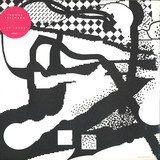
For this third release on Dais, Drew McDowall reaches into concept, ritual, and immersion, in an exercise of unravelling the DNA of hallucination. The Third Helix is McDowall's product of deconstructive exploration, twisting the fibers of being into new structure, shape, pattern, and pulse, without reconstituting its inscribed template.
The result is a true third act,in McDowall's career, that has seen him peregrinate from the late-70s art-punk of the trio Poems to his work with Psychic TV and Coil throughout the 80s and 90s, into his current home of New York City, where he has composed with CSD, Compound Eye, as well his solo work. That triangulation is central to The Third Helix, as it begins with his dive into the existence of a sensory toolkit unique to McDowall before twisting faculties and reconfiguring consciousness by honoring inherent power, cognizant of memory yet agnostic of context.
With the tenet that journey is rarely linear, but rather an omnipresent oscillation of matter, sound is stripped to salient and primal, propelled by McDowall's boring into the core of memory and impulse, suturing together the silent awareness of excogitating experience.
Featuring eight new tracks of McDowall's dark, experimental electronics, including the opener "Rhizome", The Third Helix is a churning descent into emotion, provoking thought and reflection while carving out haunting space only to fill it with baffling and wondrous structures of layered sound. McDowall solidifies himself as an architect who transforms otherworldly materials into something fascinating and challenging in the process.
Unnerving, trancelike anthems for nervous meditation and anxious relaxation, fans of Coil will immediately connect and immerse, while the complex compositions welcome listen for drone and ambient enthusiasts.
Search:his trio
Recorded live at The Village Vanguard in New York on June 25, 1961, this was the fourth album by the Bill Evans Trio, composed of pianist Bill Evans, bassist Scott LaFaro, and drummer Paul Motian. Scott LaFaro was one of the supreme jazz bassists, a virtuoso player whose playing changed the very conception of his instrument. This album unfortunately also represents one of LaFaro's last performances, recorded just days before his tragic death at the age of 25 by automobile accident. Interestingly the album also contains tracks that Evans had recorded prior to working with LaFaro, so that this recording provides a very accurate index of the bassist's great contribution to the trio.
Numbered first pressing limited to 500 copies.
The new album from Danish electronic trio System is a special kind of collaborative effort with piano magician Nils Frahm. His purpose-built improvisations on synth, organ and piano served as source material for the members of System (Thomas Knak, Anders Remmer & Jesper Skaaning), who merged his warm acoustic tones with their minimalist digitalism and set out to translate their distinctive clicks 'n' cuts electronics into vivid soundscapes. Over two years in the making, the resulting nine tracks are as sonically intriguing as they are touching. Ranging from the mellow bliss of the title track to echoes of 90's and 2000's electronica and ambient sequences frequented by mesmerizing movements and sounds. The blending of piano and digital tones and noises into emotive pieces might instantly recall the work of Alva Noto and Ryuichi Sakamoto, though System and Frahm come to quite different results.
Thomas Knak met Nils Frahm at one of his concerts in Copenhagen. They stayed in touch, exchanging thoughts and ideas. Two years later, Anders Remmer was also introduced to Nils. From then serious ideas for a collaboration formed. As Nils was a fan of System's self-titled debut album (released in 2002 via Pole's Scape label) their talks centred around Dub and minimalism, elements that constitute most of System's music as well as their side and solo projects. This in mind, System began producing sketches and brought them to Nils´ Durton Studio in Berlin in December 2015, where they recorded ten hours of him playing keys and effects to their drafts. Back in Copenhagen, they decided to change direction. - As Nils had told us about his fascination with our debut album, we tried to rediscover this minimal clicks 'n' cuts era. But hearing Nils playing to our rhythmic beds, we felt the need to scrap those beats and instead head in a more cinematic direction.'
So they started building new pieces from the Durton recordings, maintaining some of the minimal and static quality while new layers of synth sounds and noises created a richer and more organic quality compared to older System albums. The solo projects of Thomas (Opiate), Anders (Dub Tractor) and Jesper (Acustic) always relied on steady beats or rhythmic material, so the productions of 'Plus' with their focus on acoustic and melodic elements, ambient layers and cinematic moods, sees them pushing forward into new areas.
This way, the trio avoided copying what they had already done years ago, when they built a reputation as Denmark's prime originators within electronic music in the 90's and 2000's. 'Plus' is a triumphant example of collaborative experimentation and may be the dawn of a new era for System: - For us it was really satisfying to focus more on actual sound rather than rhythmic aspects. There is a lot of potential in this field, so it would only be natural for us to pursue this, maybe as a series of collaborations with other people who's music we admire.'
In the sweltering North-Eastern Brazilian state of Pernambuco lies the coastal city of Recife, where Amaro Freitas is pioneering the new sound of Brazilian jazz. For the prodigious young pianist, the spirit of his hometown runs deep. From the Afro-Brazilian maracatu born on the sugar plantations of slavery, to the high intensity carnival rhythms of frevo and baião, Amaro's heavily percussive approach to jazz is as indebted to these Pernambuco traditions as it is to Coltrane, Parker and Monk.
As with many of the greats before him, Amaro began playing piano in church aged 12, under the instruction of his father, leader of the church band. As his natural talents became obvious, the young prodigy quickly outgrew his father's instruction. He won a place at the prestigious Conservatório Pernambucano de Música but had to drop out as his family could not spare the money for the bus fare. Undeterred, Amaro gigged in bands at weddings and worked in a call centre to fund his tuition. The transformative moment came at age 15 when Amaro stumbled across a DVD of Chick Corea concert, 'he completely blew my mind, I'd never seen anything like it but I knew that's what I wanted to do with a piano'.
Despite not actually owning a piano, Amaro devoted himself to studying day and night - he would practice on imaginary keys in his bedroom, until eventually striking a deal with a local restaurant to practice before opening hours. By the age of 22 Amaro was one of the most sought-after musicians in Recife and resident pianist at the legendary jazz bar Mingus. It was during this time he met and begun collaborating with bassist Jean Elton and the pair went in search of a drummer. 'We kept hearing about this crazy kid who was playing in 7/8 or 6/4, we knew we had to meet him'. Hugo Medeiros joined, and the Amaro Freitas Trio was born.
'I want to show the simplicity of music, to break the stigma that the piano is for a particular social class. Yes, it's a difficult instrument, which many people do not have access to, but with it you can express everything.'
Following his critically acclaimed debut album Sangue Negro (black blood), the title of his sophomore release Rasif is a colloquial spelling of Amaro's home town. A love letter to his native northeast, Amaro explores its traditional rhythms through the jazz idiom, employing complex mathematical patterns reminiscent of some of the most challenging works by fellow Brazilian masters Hermeto Pascoal, Egberto Gismonti and Moacir Santos.
Preferring to see the piano as a though it were a drum with 88 unique tones, Amaro's intelligence and emotion intertwine on every track, from album opener 'Dona Eni': a scorching reconstruction of the baião rhythmic structure, played in seven measures instead of two, to the serene homage to the coastal reef and its ecosystems on the title track 'Rasif'. 'Aurora' is a suite of three parts, representing the sun's journey from the light and soft of the rise, to the aggressive dissonance at its midday zenith and descending chromatic cadences as the sun sets.
Due for an Autumn release on Far Out Recordings, Rasif sees Amaro Freitas take a deserved step onto the world stage. Having already made a name for himself in Brazil, Amaro and his phenomenal band will embark on their first European tour later this year.
Amaro Freitas - Piano
Hugo Medeiros - Drums & Percussion
Jean Elton - Double Bass
Henrique Albino - Baritone Sax, Flutes & Clarinet
All compositions by Amaro Freitas
Produced by Amaro Freitas
Recorded by Bruno Giorgi @ Carranca Studio, Recife, Brazil
Mixed and mastered by Bruno Giorgi @ Quarto Studio, Rio de Janeiro, Brazil
Executive producer and management: Laercio Costa
Standard Edition, Mastered at half speed, 140g vinyl, Sticker We Release Jazz (WRWTFWW Records' new sister-label) is thrilled to present the official reissue of criminally overlooked Japanese jazz gem Mellow Dream (1977) by Hokkaido pianist wunderkind Ryo Fukui, released in conjunction with the its legendary predecessor Scenery, sourced from the original masters and mastered at half speed. Firmly standing on the foundation he laid down with Scenery, Ryo Fukui continues his exploration of modal, bop and cool jazz sounds with meticulous grace and absolute mastery. As its title suggests, Mellow Dream ventures into slightly mellower, more soulful, and sometimes more contemplative territories (the Bill Evans-reminiscent 'Mellow Dream' and 'My Foolish Heart") while still packing the commanding punch Fukui's work is loved for, as heard on the amazingly bombastic 'Baron Potato Blues' or the gigantic McCoy Tyner/John Coltrane-influenced 'Horizon' which sees each member of the trio (Satoshi Denpo is on bass and Yoshinori Fukui is on drums) demonstrating their virtuosity for 9 exhilarating minutes. With his sophomore album, Ryo Fukui swings from melancholy to vibrant joy with ease, reminding us that jazz is best served with a pinch of blues, and displays an immensely rare combination of pure talent, unique personal approach and focused discipline. The man undeniably deserves a spot in the pantheon of all-time great jazz pianists. After releasing the outstanding Scenery and Mellow Dream back to back, Ryo Fukui worked on developing his live skills, often performing at Sapporo's Slowboat Jazz Club (which he co-founded with his wife Yasuko Fukui), and even releasing 2 live albums. He sadly passed away in March 2016, leaving behind a legacy of works that all jazz lovers should explore.
In 1975, the prolific and multi-talented Brazilian comedians Chico Anysio and Arnaud Rodrigues recorded an album based on the protagonist of one of their most celebrated TV series. Sporting a dodgy moustache and an equally troubling haircut, Carioca conman Paulo Maurício Azambuja (played by Anysio) would flog his own mother's leg if he could, and his ever-ridiculous scams are inevitably always destined to fail. This soundtrack/musical re-imagining of the series combines jazz-funk with samba soul and MPB, with the help of cult Brazilian trio Azymuth. Keyboard maestro Jose Roberto Bertrami, who arranged the album alongside renowned conductor and composer Jose Menezes, elevates the groovy odd-ball sound to another dimension, with his set up including Fender Rhodes, Arp Strings, Arp Omni, Clavinet and Hammond organ. Remaining Azymuth members Ivan Conti (drums) and Alex Malheiros (bass) provide the signature Azymuth foundation, and saxophone prodigy Victor Assis Brasil and legendary multi-instrumentalist producer Durval Ferreira also feature.As well as its distinctly comedic character, what makes the music so special is the coming together of traditional samba roots, and Azymuth's ahead-of-its-time psychedelic funk influence. Each side ends with a comedy monologue, complete with live audience laughter, but before that you get seven tracks of weird and wonderfully emotive Brazilian groove music.
After a short hiatus the ever-dependable Mark E returns to his own Merc label with three new tracks in his own inimitable style
Displaying a depth and flair for aural innovation like no other, Mark plots a course through a heady trio of beautifully constructed machine-funk jams. 'Twilight Fade' leads us seductively into a slowly unfurling Sound Signature style voyage through the soulful circuits. 'Quarttz' is a super deep, all enveloping synth-led workout, while 'First Thing' on the B, stretches a few simple ingredients into a sonic banquet of heady dancefloor bliss.
This one's super limited folks, so we encourage panic buying !
Thomas Fehlmann steps away as co-member of The Orb following two acclaimed full lengths on Kompakt (COW - 2016, Moonbuilding 2703 AD - 2015) and embarks back on his solo career with a career defining album 'Los Lagos' - from Detroit to Schaffel techno he conducts a broad spectrum of electronic music into a seamless flow.
Thomas Fehlmann has been active since the late 1970's from Palais Schaumburg, the Tresor defnining trio 3MB (with Moritz von Oswald and Juan Atkins), Ocean Club (together with Gudrun Gut) and of course The Orb.
Artwork direction and design by DESIGNERS REPUBLIC.
'Los Lagos' is Thomas Fehlmann's seventh solo full-length, his 4th for Kompakt following his Berlin inspired 2010 full length 'Gute Luft'. in the musician's own words it's about "checking the juice".
Establishing a picture of his current artistic condition, as suggested by the title - los lagos / die lage / the situation (literally translating to 'the lakes' but taking the meaning of 'wassup' in the context of a relaxed discussion between friends), the album refers to Fehlmann's "musical motivation, dreams and wishes" through the language of music exclusively: a way to "allow myself to techno" he says, "to techno as a means to deconstruct and rebuild again. Set up an area of tension, loose it in the flow of the grooves. Magnifying some detail out of proportion, regroup around that and slowly knit a texture. Expand."
"It was time to take a bend and head where the sun rises or sets, wherever my heart drives me." This is pretty much the kind of decision Thomas Fehlmann has made. 61 and shining, longstanding member of The Orb, multi-talented composer and boundless experimentalist, had to make in the twilight of his collaboration with Alex Paterson, eager to taste the flavours of the unknown on his own again. "It was the moment when felxibility would have become compromise'. Far from being the demise of their joint dream, this was bound to split it in two distinct, parallel fantasies - rich of their own singularity.
As goes with that essential love of his for the free-flowing nature of electronic music, a fascination born out of its "lack of borders", capable of "inventing, changing the emphasis, experimenting with an unpredictable outcome", 'Los Lagos' "freely connects disparate extremes. Art, disco, minimalism, schmalz, jazz and funk". As he likes to say, Fehlmann's head functions as a sampler, capturing elements and re-assembling them under his own embracing perspective ; not afraid to leap from a deep, dubbed-out hypnotism ('Window', 'Morrislouis', 'Freiluft') to the playfulness of '90s-style bleepy schaffel ('Tempelhof' featuring Max Loderbauer), through out-there, muscle-flexing dancefloor cuts ('Triggerism') onto the calmness of ambient ('Geworden').
In need to keep his inner balance in check, Fehlmann committed himself to "switch off the control" and follow his intuition, which isn't so much of an easy process as he also wanted to incorporate the side disturbances experienced: "it's a complex process of search and destroy to bring out a new beauty trying to expand my vocabulary". With 'Los Lagos', Fehlmann looked at finding "the structure that's surprising, disturbing and rewarding". The artwork for the record, courtesy of contemporary artist and friend Albert Oehlen whom he shares lots of artistic ambitions with, echoes the producer's "funky use of shape and space, sludge and clarity" like a second skin. A search for light and harmony that Fehlmann sums up eloquently: "Does your inner musical voice respond", that is the question. Then "doors open up in unexpected corners, rays of light appear; you follow through and you're in - in your oasis."
Southern Lord Is Excited To Bring Forth The Debut Album By Los Angeles-based Rock Trio, The Primals, Founded By Current And Former Members Of Darkest Hour, The Explosion, Dead To Fall, And More.
All Love Is True Love, The Primals' Debut Album, Features Ten Infectious Tracks Produced By John Reis (rocket From The Crypt, Drive Like Jehu, Hot Snakes) And Completed With Cover Art By Laura K. Giron.
Fans Of Wand, Ty Segall, Nirvana, And The Pixies Are Especially Recommended To Tune In.
he band's first full-length, All Love Is True Love, will see release on September 7th, the label this week sharing the first single, 'Fortune & Sons.' 'Fortune & Sons' Now Streaming
About the track the band note, ''Fortune & Sons' is one of the heaviest songs on the record. Though the album offers a plentiful dose of dynamic variety, we wanted to kick you off with a ripper.'
The Primals is comprised of vocalist/guitarist John Henry (vocalist for Darkest Hour), bassist Chad Fjerstad (formerly of Dead To Fall), and drummer Andrew Black (formerly of The Explosion). The band's fuzzy execution is equal slabs ripping guitar heaviness and infectious pop sensibility. Concocted by a seasoned group of thrashers with a historical backbone in D.C. punk community. The disintegrated spirit of grunge rises from the ashes, revitalized in a new light.
Francis Harris' exceptional run of releases for his own labels Scissors & Thread and Kingdoms now extends to this perfectly formed EP for hafendisko, which sees him rework some of hfn music's finest moments of the last two years. Harris, the Brooklynite whose feel for subtlety and space seems to infuse all his work, takes on three of the Hamburg label's cannon - kicked off with Kasper Bjørke's 'Cloud 9', featuring Urdur. Here Harris deconstructs the original and reforms it into a some quite removed from its origins - shuffling drum machines bring about a Kraftwerkesque feel, before beautiful tones and atmospheres reveal themselves. The track seems to develop along two paths simultaneously, somehow creating a truly affecting piece of leftfield electronica.
Null + Void's huge Dave Gahan-featuring-track 'Where I Wait' has been heavily remixed over the past months, but also gets the Harris treatment. Completely flipped form the original, this is a haunting remix with tough and funky underbelly, utilizing Gahan's vocals only sparingly.
Danish alt-pop trio ticktock have their single 'Hatefuck' refixed also, and Harris zones in on the glitchy vibe and adds layers of claustrophobic depth to the production.
The Song Says - Bruno Pronsato´s label restarts after 4 years of hiatus with a Vinyl Version of his seminal "Lovers Do"
It's been fours years since the original release of Lovers Do. For the first time now finally released on vinyl. In the meantime he's kept very busy--primarily with side projects. First there was Others, his experimental house outfit with Daze Maxim. Then came Public Lover, his duo with the French artist Ninca Leece that debuted last year on thesongsays (Bruno's label). He's continued to join forces with Sammy Dee as Half Hawaii, playing live shows around Europe and putting out tracks on Perlon and Diamonds & Pearls. As half of the duo Ndf, he coproduced Since We Last Met, a single that marked his debut on DFA and landed in Pitchfork's top tracks of the year. But while he was juggling all these different projects, one piece of music was slowly taking shape: his third and most immersive album, Lovers Do. Like much of Bruno's work to date, Lovers Do is experimental without being snobby--or to use his own term, accidentally avantgarde'-- but this one takes it further than the others. It has a looseness that's truly rare in techno, scrapping formulaic verses and breaks, it winds along like an abstract sketch, guided by intuition instead of logic. Some songs are fraught with nervous tension, others are soothing and rich with detail, from dappling rhodes to orchestral swells, jazzy drum fills and wet hand claps. Human voices swirl in and out of the mix, serving only to make things more surreal. Many of the tracks stretch well beyond ten minutes, one bows out after less than three. The album overall is delicate and subtle, but it also features Bruno's best club tune in years, the eerie and delirious Feel Right.' Brian Eno once described his own
Brooklyn trio Forma's latest LP continues their mission to 'broaden the idea of what an electronic music ensemble can sound like.' Semblance emerged from exploratory sessions at The Schoolhouse, the Bushwick loft where members Mark Dwinell and John Also Bennett live, then was tracked at Gary's Electric studios, where their previous album Physicalist was also recorded.
Inspired by polyrhythmic composition, the human voice, and conceptual improvisation strategies, the songs are striking in their textural detail and emotional nuance, alternately synthetic and sentient, futuristic and intuitive. Incorporating flute, piano, guitar, saxophone, acoustic drums and cymbals alongside an array of synthesizers, the record persuasively demonstrates the group's unique playing abilities and fluid chemistry - attributes they credit to 'techniques we've developed to trick our electronic machines into mimicking the spontaneous character of live instruments.'
Members George and John Also Bennett also cite as an influence their recent stint in minimalist composer Jon Gibson's ensemble, performing his 1973 proto-ambient masterwork Visitations. The long- form modal piece requires restraint and deep listening to execute, qualities especially apparent in the more muted moments of Semblance, such as 'Rebreather' and 'New City.'
The group states the intent of the new album as 'to be more direct and exacting', which it is. Over half a decade spent writing and recording together has distilled Forma's hybrid electro-acoustic interplay into an attuned and astounding language, capable of articulating impossible symmetries and reflective states.
The stunning visuals of the artwork are by frequent collaborator of the group Peter Burr.
Cong Burn go deep on their third record with Freerotation affiliate Duckett making his first appearance on the label and Chekov following up his recent contribution to Timedance. The heady A-side opens with Chekov's 'Spring' which has spent the last few years popping up in sets from Lena Willikens, Call Super and the Hessle Trio. Duckett's 'Lost In Israel' rolls through its first half carried by complex arpeggios before its layers are broken down and evaporated. On the B side Lack provides a extended and dubbed out DJ tool sounding like if Kowton released on Workshop. Haddon's 'Anabiosis' ties this batch together having first appeared on Cong Burn's debut CDR back in 2015 - since then it has become a go-to opener, closer and after party ender.
Sun Yellow Vinyl[19,29 €]
Helsinki's We Jazz Records Presents "y-otis", The Debut Lp From Berlin-based Swedish Saxophonist/composer Otis Sandsjö, Joining Forces With Keyboardist Elias Stemeseder, Bassist Petter Eldh And Drummer Tilo Weber. The Album Is A Forward-reaching, Multilayered Collection Of Eight Originals Penned By Sandsjö And Produced By Sandsjö And Eldh. What You Get Is A Form Of "liquid Jazz", Born In An Era Where The Understanding Of Jazz As A Musical Language Has Evolved Way Beyond The Concept Of The Previous "modern". Informed By Hiphop And Electronic Music, "y-otis" Is Pure Jazz In That The Quartet Stays True To Its Constant Mission Of Creating A New Form Of Musical Communication. Sandjö's Circular Sax Riffs, The Album's Rich Production Touch, And The Chopped-up Jazz Form Creates A Musical Concept Which Stays Melodic And Beat-laden While Being "free" Right To The Edge Of Avantgarde. It's As If The Music Is Sampling Itself, Constantly Keeping Ahead Of The Curve In The Musical Lineage Of Jazz.
Otis Sandsjö (b. 1987) Hails From Gothenburg, Sweden. He Is Known Previously For Example For His Inspired Work On Singer Lucia Cadotsch's Globe-trotting Trio Formation "speak Low", Also Featuring "y-otis" Co-producer And Bassist Petter Eldh. Elias Stemeseder Was Dubbed One Of The Top 15 Young European Musicians To Watch By All About Jazz In 2017. Tilo Weber Ranks Among The Most Creative Young Drummers In The Scene. Stemeseder Is Currently Based In New York, While The Remaining Three Musicians Here Live In Berlin. Live On Stage, The Band Performing The Material On The New Release Is Called Y-otis.
After bursting onto the scene in late 2017, Hyperloop makes his Drumcode debut with Green Velvet in toe.His 'Mentalizm' EP is a classy example of his versatility, a trio of original works, accompanied by two DJ tools. Beginning on a menacing tip, 'In Your Mind (Reflections)' is a low-end brew of industrial stabs, eerie melodies and subterranean vocals.
'S-Sound' is his collaboration with Chicago legend Green Velvet and is a percussive masterstroke of loops and drum riffs which drive the eight-minute track with all the puffing ferocity of a steam train. 'Spring on the Battlefield' is the perfect contrasting accompaniment, as a warm rush of strings covers a bed of intricate analogue effects and stomping kicks.
Monday Off is a vinyl only record label from Brooklyn, New York, founded by Mary Yuzovskaya. Its ethos is to showcase artists that explore techno's hypnotic side; specifically where trippy and dark music goes deep yet dynamic. For the third release, NYC/Berlin/Washington DC transplant Arthur Kimskii dives in with a heady trio of his productions. Title track 'Verbal Variance' slowly unfurls with a myriad of textures and sounds to both confuse and delight the senses, while 'Swan An Ocean For You' takes on similar terrain albeit kicked up a notch and warmer in tone. 'Basement Moves' is an emotive and partially beat-less affair steeped in layers of noise, and MOFF favorite Stephanie Sykes strips the A-side down for a sinister and chugging remix.
Cassette[10,29 €]
Helsinki's We Jazz Records presents "Y-OTIS", the debut LP from Berlin-based Swedish saxophonist/composer Otis Sandsjö, joining forces with keyboardist Elias Stemeseder, bassist Petter Eldh and drummer Tilo Weber. The album is a forward-reaching, multilayered collection of eight originals penned by Sandsjö and produced by Sandsjö and Eldh. What you get is a form of "liquid jazz", born in an era where the understanding of jazz as a musical language has evolved way beyond the concept of the previous "modern". Informed by hiphop and electronic music, "Y-OTIS" is pure jazz in that the quartet stays true to its constant mission of creating a new form of musical communication. Sandjö's circular sax riffs, the album's rich production touch, and the chopped-up jazz form creates a musical concept which stays melodic and beat-laden while being "free" right to the edge of avantgarde. It's as if the music is sampling itself, constantly keeping ahead of the curve in the musical lineage of jazz.
Otis Sandsjö (b. 1987) hails from Gothenburg, Sweden. He is known previously for example for his inspired work on singer Lucia Cadotsch's globe-trotting trio formation "Speak Low", also featuring "Y-OTIS" co-producer and bassist Petter Eldh. Elias Stemeseder was dubbed one of the top 15 young European musicians to watch by All About Jazz in 2017. Tilo Weber ranks among the most creative young drummers in the scene. Stemeseder is currently based in New York, while the remaining three musicians here live in Berlin. Live on stage, the band performing the material on the new release is called Y-OTIS.
Sun yellow vinyl, comes with download.
Airplay: Worldwide FM
Colin Potter Is A Sound Engineer And Musician Currently Based In London. He Has Worked Within The Fields Of Electronic And Experimental Music For Over 35 Years, Collaborating With The Likes Of Current 93, The Hafler Trio, Organum, Andrew Chalk, And Most Notably As A Key Part Of Nurse With Wound Alongside Steven Stapleton. He Started The Esteemed Icr (integrated Circuit Recordings) Label In 1981 Releasing A Clutch Of Wonderful Home Recordings Of His Own, Over Half A Dozen Small Run Cassette Only Releases.'the Where House' Was Recorded In 1981 At Ic Studio, A Converted Wash House In Sutton On The Forest In North Yorkshire. The Album Was Self-released On Cassette That Same Year Via Icr. This Expanded Double Lp Edition Features All 13 Tracks From The Original Tape On Vinyl For The First Time Plus 4 Bonus Tracks. 'the Where House' Is A Prime Example Of Early Uk Post-punk/industrial Electronic Music. combining Dub, Electro, And Krautrock Rhythms With Psychedelic, Kosmische Noise In Multiple Mutations Ranging From Almost Pop-wise Songcraft To Horizon-scanning Motorik Flights,' Says Boomkat. Most Of The Damage Was Done By Colin Using Guitars, Synths, Sequencers, Drum Machines, Percussion, And Modified Toy Keyboards With Fairly Primitive 4-track Recording Equipment. He Was Assisted On Some Of The Tracks By Stephan Jadd-parry (guitar, Percussions), Jon Caffery (guitar, Bass, E-bow, Percussion) And Nick Jackson (synth). All Songs Have Been Remastered For Vinyl By George Horn At Fantasy Studios In Berkeley. The Record Is Sleeved In A Replica Of The Original Cassette Artwork By Jonathan Coleclough. Every Copy Includes A Double Sided Postcard Insert With Notes From Colin.
Dynamic composer Neil Cowley is set to release 'Spacebound Tapes' a four track EP featuring remixes of his Trio's 'Spacebound Apes' album ("A miss- this-at-your-peril release" Drowned In Sound 9/10) by Rival Consoles, Throwing Snow, Christian Löffler and Vessels
'Spacebound Apes' was written by Cowley for his trio and long-time bandmates drummer Evan Jenkins and bassist Rex Horan, with contributions from Brian Eno collaborator Leo Abrahams on guitars and FX. A bold exercise in atmosphere and emotion, the album was woven together with some of the most breathtaking, impassioned music that Neil has created. Originally inspired by Arthur C Clarke's 1956 sci-fi book 'The City and the Stars' the album was recorded at Cooper Hall, a studio and cinema set deep in the Somerset countryside with Stanley Kubrick's '2001 A Space Odyssey' running on permanent rotation.
The sci-fi aesthetic is firmly grasped by the four remixers, echoing the theme in their own reinterpretations. The reimagined tracks retain the inventiveness of the originals while exploring progressive but considerate paths. In his version of 'Weightless', Erased Tapes signed Rival Consoles feeds off of the electronic songwriter's critically lauded humanised techno, while rising German musician Christian Löffler brings new dimensions of space and scale to 'Death To Amygdala'. Houndstooth's Throwing Snow delights in deconstructing 'Duty To The Last' with pulsing energy and Vessels' take on 'Echo Nebula' applies machinic facets to the delicate sounds of the original.
Max Loderbauer, who has so far made consistently engaging contributions to the Arjunamusic family, is back to lend his unique interpretive skills to the master recordings for the Brightbird album by João Paulo Esteves da Silva, Mário Franco and Samuel Rohrer. Loderbauer has set himself up for a chal- lenge, since the original album's completely improvised flow of small-ensemble, conversational jazz feels complete enough without outside intervention. However, Loderbauer's role as electronics operator in the similarly attuned Ambiq trio has already shown that, through his mastery of tone color, he has a talent for teasing out the additional hidden details within an apparently 'complete' sonic environment. It's a task he mana- ges to accomplish without ever overriding or contradicting the cohesive message provided by his collaborators.
Adding to the challenge here, Loderbauer chooses to re- mix using only sounds from the original recordings. By doing so, it might seem he is willfully denying himself the chance to use his own signature tools and turn Brightbird's source materi- al into stunningly new electro-acoustic hybrid blooms. Yet Loderbauer succeeds here by becoming something more like a translator than an augmenter - he finds a way to make mea- ningful syntactical changes to the trio's rich and versatile vo- cabulary, and once again unveils a verdant world of hidden details in the process.
The A-side 'Trusting Heart/Cosmos' has an anxious tone introduced by a set of Doppler-effected piano notes that seem to melt in the sun, and is soon complemented by a va- riegated, chattering rhythm line. Here Loderbauer builds up a tactile tension between rhythmic certainty and sharp-angled, de-tuned, and occasionally scrambled instrumentation, framing a disorienting (yet engaging) virtual space where ob- jects' bright hues rapidly change as they contract and expand along multiple dimensions. For the b-side 'Noontide', Lo- derbauer switches to a more focused and streamlined idiom with an uncanny ease, riding along steady waves of sequencer patterning and silvery, resonant shiverings. Reverberating, ho- lographic piano again provides the tonal center here, and the notes ring with a forward-thinking optimism not far removed from classics of the 'Krautrock' era.
Current supporters of all the artists involved will find this to be an invigorating synopsis of their work to date, while newcomers will be treated to a soundworld where skillful fu- sion (the act itself, rather than the music genre with the same name) is constantly on display.