More underground 90s rap bangers from Boom Bap Classics as they line up this supreme neck snapper from west coast lyricist Rasco. "Unassisted" is loved by backpackers and turntablists alike, whilst "Take It Back Home" features fellow Californian vocalist Planet Asia for more of the same.
Buscar:hom
Once upon a time, DJ’s were like soaring eagles, they would spread their musical wings and fly high to wherever they wanted to go musically. It wasn’t uncommon to hear hip house and go go played alongside disco and funk, or techno being dropped on either side of something a lil’ mo’ soulful. Then the DJ’s wings were clipped and clubs became musical cages for the more adventurous DJ’s, clubs evolved into one-dimensional musical prisons and beats bubbles. Unconventionally, Marcus McGowan hails from South Carolina, and it would be fair to argue that South Carolina is a bit of a house music wasteland? Perhaps it’s this simple geographical blip that has nurtured McGowan into creating a sound that can’t be affiliated to any particular city, cities such as Detroit that is generally associated with techno, Washington is the undisputed town of go go, or Chicago, which is renowned for acid house, hip house, and jackin’ house, and of course, New Jersey is the spiritual home of soulful house. What McGowan has created is a fresh, new vibe that appears to be crossing many musical boundaries and the test pressing mailout appears to have united music lovers from numerous genres of house music AND techno alike, with its deep, techy, jazzy, soulful, sweet and melliferous flavoured vibe. Luke Una boasted that “it’s the record of the year so far”, MFSB’s Yogi Haughton called it a “classic in the making”, but all said and done, the test pressing feedback from the handful that were passed out to music lovers around the U.K. is unanimous, it’s jus’ a frikin’ solid double hitter that can’t be pigeon-holed. This is a record for majestic, soaring DJ’s and music lovers, not scabby, common or garden Columbidae garbage foragers. It’s a slice of intellectual music that will perch McGowan very high up in the producer pecking order!
The Talented Italian Producer, Known for His Enigmatic Project Hill and Recognized for His Previous Ep Collaboration With the Detroit Legend Javonntte on Skylax Records, Is Making a Much-Anticipated Return Under His Real Name, Alessio Collina. an Ardent Aficionado of Authentic House Music, Collina, Hailing From Italy, Gifts Us a Remarkable Lesson in His Latest Offering, the "Pieces of Life Ep." Collina's Dedication to the Origins of House Music Is Evident Throughout This Ep, and It's a Refreshing Reminder of the Genre's Timeless Roots. Italy, a Country With a Deep Appreciation for House Music, Once Again Serves as the Source of Inspiration for This Artist. the "Pieces of Life Ep" Pays a Heartfelt Tribute to the High-Energy and Groove-Laden House Tunes of the 90s, Echoing the Sounds of Iconic Figures Like Dj Duke, Marshall Jefferson, and Labels Like Strictly Rhythm. With Each Track, Collina Effortlessly Transports Us Back to That Golden Era, Capturing the Very Essence and Spirit of That Unforgettable Time. the Ep Kicks Off With the Electrifying "All of That," an Absolute Masterstroke That Sets the Tone for What Follows. Its Pulsating Beats and Infectious Melodies Are Reminiscent of the Fervent Dance Floors of Yesteryears, Evoking a Sense of Nostalgia While Remaining Incredibly Fresh and Contemporary. the Ep's Three Other Titles, "Humble Groove," "Lost World," and "Mid Season," Continue to Captivate and Immerse Listeners in Collina's World of Evocative, Groove-Filled House Music. Each Track Showcases His Meticulous Attention to Detail and His Ability to Create an Authentic Atmosphere That's True to the Genre's Roots. Collina's "Pieces of Life Ep" Is More Than Just a Musical Collection; It's a Genuine Homage to the Spirited House Music of the 90s. His Dedication to Preserving the Essence of the Genre While Infusing It With His Unique Creativity Shines Through in Every Beat and melody.
This Ep Not Only Reinforces Italy's Profound Connection to the House Music Legacy but Also Solidifies Alessio Collina's Place Among Contemporary Artists Who Honor the Past While Paving the Way for the Future. as Skylax Records Prepares to Release This Exceptional 12-Inch, It's Clear That "Pieces of Life" Is a Treasure Trove for Any House Music Enthusiast, Inviting Them to Rediscover the Magic of the 90s With a Fresh Perspective....
The bleak and foreboding landscape surrounding Keeley's North Yorkshire home seems to inhabit her third LP, 'The Hollow'. The moors, visible from her studio window, impact upon a music that feels made of these places: windswept, rain-soaked and blinking through the low-lit landscape. The album's title derives from discovering a long-abandoned mining shaft whilst out walking - the past lurking within and haunting the present we now occupy. A connection to time that places us within it, facing what is gone and what may come. But also, perhaps that time has no concern as to whether we're here or not.
Keeley's unique elemental voice again sits centrally within this world-building. Her cathartic reflections are exorcisms in song. We hear an artist making sense of her life, willing to expose vulnerability without ever appearing weak. Working again with producer Ross Downes, the LP features Matthew Bourne and Colin Stetson, Forsyth sought to expand both her voice and music. Taking aspects of sacred music, minimalist post-classical, dark ambient, film and theatre soundtracks, she layers her vocals into chamber choirs, applies pitch shifts and other digital processing, moves from clear articulate intention to mumbled numb utterances.
Composer Mihály Vig's score to Bela Tarr’s film 'The Turin Horse' is reimagined as a pressurised outpouring, recasting the everyday within a mythical light of survival and hope. On ‘A Shift’, Mal Finch's protest song ‘We Are Women, We Are Strong ‘, originally sung by wives and daughters in support of the '80s miner’s strikes, is recontextualised in solidarity for an experience of creative labour.
- A1: Intro Mother
- A2: If Love Is A Skill (Feat. Sofi Tukker)
- A3: Can’t Let You Go (Feat. Little Jet)
- A4: All I Need (Interlude)
- A5: All I Need
- A6: Another Life (Feat. Caroline Byrne)
- A7: Georgia A8. Follow The Loop (Feat. Le Chev)
- B1: Feels Just Like It (Feat. Caroline Byrne)
- B2: Body Breathe (Feat. Monogem)
- B3: All In A Dream (Feat. Dj Tennis And Joseph Ashworth)
- B4: All My Life (Feat. Sofi Tukker)
- B5: Outro Not Fade Awa
Blue Vinyl
Die Produzentin, DJ, Pianistin und Aktivistin LP Giobbi veröffentlicht ihr mit Spannung erwartetes Debütalbum, „Light Places“ auf Counter Records. Musikalisch ist LP Giobbi, eins der populärsten aufstrebenden Talente der elektronischen Musik, irgendwo zwischen ODESZA, Bonobo, Bicep und TSHA einzuordnen.
„Light Places“ entstand zu einem großen Teil zwischen den Wolken, in Flugzeugen hoch über der Realität und anderen Ablenkungen, wo LP Giobbi Ideen und Melodien locker niederschreiben konnte, bevor sie im Studio umgesetzt wurden. Der Aufnahmeprozess des Albums war eine Reise an sich, die sie auf neue Weise herausforderte und ihre künstlerischen Fähigkeiten über die Grenzen einzelner Singles hinaus erweiterte. Es erlaubte ihr, außerhalb der Tanzfläche zu experimentieren und zu erforschen, mit einer Verbindung zu ihren improvisierten Jazz- und Jam-Band-Grundlagen, womit alles einst begann. Auf „Light Places“ sind zudem beeindruckende Features zu Gast, wie bspw. SOFI TUKKER, Little Jet, Caroline Byrne, Monogem, DJ Tennis und Joseph Ashworth zu hören. LP Giobbi zelebriert die Freuden der Zusammenarbeit, der Improvisation und der Erschaffung von Musik durch Freundschaft - eine Hommage an die Menschen und die Musik, die sie als Künstlerin geprägt haben.
Over the past decade Tuccillo has steadily honed his craft as a producer and is now widely known and beloved for his contemporary twist on raw groove driven House music which has found a home on the likes of Nu Groove, Kwench, Melodeum, Holic Trax his own Unblock label and of course Kaoz Theory where he returns here following 2023’s ‘The Waves’ EP.
Title-cut ‘Sundown’ leads the release on a deep house tip with a swinging drum groove, airy chord sequences, intricate filtered vocals and a funk-infused bass line. ‘Holding On’ then shifts gears into Chicago House territory via a bouncy bassline and dubbed out vocal chops, intertwined with a playful organ melody, tension building strings and skippy percussion.
‘Whatever’ then opens the b-side with a more stripped-back feel, laying focus on crisp, low-slung drums, hypnotic atmospherics, choppy dub stabs and an amalgamation of vocal murmurs. ‘Velvet City’ then concludes the EP, encapsulating the core aesthetic of deep house with wandering jazzy keys, ethereal pads, organic drums and rumbling subs all silkily ebbing and flowing amongst one another.
Wewantsounds is delighted to reissue Harold Land's 1971 Mainstream Records LP 'Choma (Burn),' recorded in Los Angeles with Bobby Hutcherson and featuring Reggie Johnson on bass, Ndugu and Woody Theus on drums, Bill Henderson & Harold Land Jr. on piano/Fender Rhodes. Together the musicians create a superb spiritual mix of funky and modal Jazz that was the trademark of the Harold Land-Bobby Hutcherson quintet between 1968 and 72. Choma (Burn) is reissued here in its original gatefold artwork with all the photos scanned from first generation negatives recently found in the Mainstream Records vaults, and comes with newly remastered audio and a 2-page insert including new liner notes by Kevin Le Gendre
Elusive Italo duo Maurizio e Dandolo return with Demin, a dreamy disco dancer celebrating the iconography of 1980s Italian summer and the heydays of Italo Disco.
Unfolding over an equally suave and hard-hitting tapestry of synths and drum machine, Demin plays with the authors’ nostalgia for the hazy and sun-drenched summers on the Italian eastern coast of their hometown of Pescara.
In the unmistakable and unmatched tradition of Italo Disco, Demin strikes a balance between the irrepressible desire to let loose on the dancefloor and the touching nostalgia for a past that, perhaps, was never lived but only dreamed of. That of the halcyon days of Italian design cars blasting synthy bangers from the radios, beach establishments with their candy-striped umbrellas, neon-lit discotheques and dancers in outrageous designer shirts, teenage flirts, and denim bracelets, the true icons of that era which Maurizio e Dandolo tribute in the song title.
Demin is set to become one of the ultimate dancers of the summer of 2024, an anthem for cheeky disco riviera flirts and boogies.
After being originally released on digital platforms, Demin is now finally out on 7” vinyl format too, accompanied on the B-side by an unreleased scratch version: a dub mix by Rome DJ and establishment Francisco.
- 1: Different Type Time (Prod. Quelle Chris & Cavalier)
- 2: Custard Spoon (Prod. Quelle Chris)
- 3: Can’t Leave It Alone Feat. Eric Jaye (Prod. Glassc!Ty)
- 4: Come Proper (Prod. Jacob Rochester)
- 5: Touchtones (Prod. Aummaah)
- 6: Déjà Vu / Tydro ‘97 (Prod. Messiah Muzik / Quelle Chris)
- 7: Doodoo Damien (Prod. Quelle Chris)
- 8: Baby I’m Home (Prod. Wino Willy)
- 9: Yeah Boiii (Prod. Quelle Chris)
- 10: All Things Considered (Prod. Wino Willy)
- 11: Pears (Prod. Malik Abdul-Rahmaan)
- 12: Told You (Prod. Fushou)
- 13: Badvice (Prod. Low Key)
- 14: Think About It Feat. Billzegypt (Prod. Obliv)
- 15: Up From Here / 7Th Ward Spyboy (Prod. Ahwlee / Quelle Chris)
- 16: Manigaults / I Miss Them (Prod. Ruffiankick)
- 17: Lazaroos (Prod. Vinny Cuzns)
- 18: Bespoke Feat. Dominic Minix (Prod. Hann_11)
- 19: 50 Bags Feat. Lord Chilla (Prod. Child Actor)
- 20: Axiom / My Gawd (Prod. Glassc!Ty / Quelle Chris)
- 21: Flourish (Prod. Quelle Chris)
"It seemed that if I didn’t somehow repeat the process of greatness, and do so immediately, multiple times away to satisfy playlist and binge watch culture, then I “wasn’t shit”. After a while I was like “nah this doesn’t feel good,… I don’t know if I am finding joy in this”. I would record songs and not release them, obsess over sessions recorded in my home with 30 takes of vocals and wake up only to delete them. When it began to feel right I found solace in an epiphany that I was not obligated to operate at any other wavelength. I am moving on a different type of time, and that doesn’t expire." -Cavalier
For heads of a certain time period of NYC hip-hop, Brooklyn born, New Orleans-based rapper and songwriter, Cavalier was the one that got away. The outrageously talented artist whose name and reputation preceded him everywhere you went in the scene. The rapper who everyone knew was so dope that he had to blow, but who never seemed concerned with any of that. The pretty boy draped in Polo who stole every live show with a feather in his hair and a mouth full of gold fronts. The cat so dedicated to his own independence that even indie labels stopped trying to sign him and projects came when they came, but when they came they were undeniable.
Cavalier was THAT guy for a lot of us; a silver-tongued philosopher with an eye for the poignant details of black life and a delivery as effortless as a young Ken Griffey’s swing. All that said, it never really felt like Cav had that moment in the spotlight that we always assumed was coming. After chiseling away through headier cult corners of the NYC hip-hop scene Cavalier was recognized for his memorable co-pilot to Quelle Chris’ 2013 Mello Music debut, Niggas Is Men. The critically acclaimed LP helped propel Quelle Chris into the forefront of indie hip-hop (and also happened to be the first production credits for Messiah Muzik). Cav followed up with his first full length, Chief, which sports a notable Raekwon feature but also early work from producers like Ohbliv and Tall Black Guy. A relocation to New Orleans and partnership with producer/vocalist Iman Omari yielded two more projects: 2015’s Lemonade EP and Private Stock in 2018. Great records all; eagerly sought by collectors and signal boosted by influential media like OkayPlayer, Solange’s Saint Heron, and Pitchfork. Cavalier’s bonafides have never been in question, but his new album Different Type Time feels like a revelation—a sonic suspension bridge between his rich history and the artform’s future.
Different Type Time doesn’t sound like the future though, its vibrations are somewhere all their own. It sounds like jazz, like a conversation overheard in roti shop, or a pool hall, or the foyer of your old building on a fall day, front door propped open with a brick. The blues is in there too, and the south—the American South, and theGlobal South, and South Brooklyn. It’s not that it sounds like the past, but you can hear everything that came before in the thick of the basslines and the yearning of the keys. Different Type Time also doesn’t sound like now, it sounds like RIGHT NOW; the bounce of the lyrics like the staccato of basketball in the park, carried on a spring breeze.
Although he doesn’t rap on DTT, Quelle Chris plays a pivotal role; producing eight songs and serving as associate producer/consigliere to Cav throughout the creative process. “There is no time wasted in explaining things when I collaborate with Quelle. He understands the universe I am in and the realities I want to create. He’s in them. And I don’t think I can envision one without him,” Cavalier explains. Messiah Muzik, Wino Willy, Ohbliv, Ahwlee, Child Actor, Fushou and several other producers round out the credits, all lending their talents to the album’s spaciously soulful sound. At the center of all these alchemies is Cavalier, nimbly dancing in and out of pockets like a sidewalk game of jumprope. Different Type Time is a masterclass in this thing we call hip-hop; daring and original, yet always standing deeply rooted in the culture.
- Vigahugr - Lust For Battle
- Dagar Eru Taldir - Days Are
- Numbered
- Drenglynda Skáldið - The
- Steadfast Skald (Skaldic
- Version)
- Lof Hins Gjafmilda
- Honour To The Generous
- Helreið Oðins - Odin’s
- Ride To Hel
- Til Vinskapar - To
- Friendship (Skaldic
- Version)
- Hrafnsmál - The Words Of
- The Raven
- Hausbrjótr - Skullcrusher
- Rúnar Skaltu Kunna
- Those Runes You Must
- Know
- Vegurinn Til Valhallar - The
- Way To Valhöll
‘Assassin’s Creed Valhalla’ takes place toward the
end of the Ninth Century, a time when Norse tribes
were leaving their homes in Scandinavia and
sailing to the collection of fractured kingdoms
known as Anglo-Saxon England. It’s here, during
this age of transition, that you’ll take on the role of
Eivor and lead your people to a new land in the
search for a new home. As you embark on
Valhalla’s epic Viking journey you’ll lead deadly
raiding parties, fight in massive battles and build
up a prosperous settlement, all within the historical
backdrop of Ninth Century England.
‘Assassin’s Creed Valhalla’ went Gold weeks
before the launch.
Songs by Norwegian black metal drummer Einar
Selvik (Vikings, Gorgoroth, Wardruna), also known
by his stage name Kvitrafn (white raven).
Lyrics are sung in Old Norse and they mainly
consist of excerpts and edited Old Norse Skaldic
and Eddic poetry, except for the song ‘When Horns
Resound’, which was written by Einar.
Pressed on opaque white vinyl with printed inner
sleeve.
- Out Of The North
- Leofirth's Honor
- The Bounteous Earth
- Kingdom Of Wessex
- Son Of Fjord
- Absence Of Light
- Leaving Valhalla
- Kingdom Of East Anglia
- Shadow - Walker
- Valhalla Nights
- Silent Ambush
- Animus Anomaly
- Ezio's Family - Ascending To
- Valhalla (Featuring Einar Selvik)
- The First Departure
- The Swarming
- The Fate Of East Mercia
- Asgard Hall Of The Aesir (Feat. Einar
- Selvik)
- Blood Red Sails
- Frozen Lands
- Wave Walker
- The Sceptred Isle
- The Bearded Axe (Feat. Einar Selvik)
- Father Of Gods
- Rivers And Fjords
- Fury Of The Northmen
- To The Next World
- The Tree Of Life
- Trust The Currents
2024 Reissue
‘Assassin’s Creed Valhalla’ takes place toward the
end of the Ninth Century, a time when Norse tribes
were leaving their homes in Scandinavia and
sailing to the collection of fractured kingdoms
known as Anglo-Saxon England. It’s here, during
this age of transition, that you’ll take on the role of
Eivor and lead your people to a new land in the
search for a new home. As you embark on
Valhalla’s epic Viking journey you’ll lead deadly
raiding parties, fight in massive battles and build
up a prosperous settlement, all within the historical
backdrop of Ninth Century England.
‘Assassin’s Creed Valhalla’ went Gold weeks
before the launch.
Score by Danish composer Jesper Kid (‘Assassin’s
Creed 2’, ‘Borderlands 3’, ‘State of Decay 2’,
‘Warhammer: Vermintide 2’) and American
composer Sarah Schachner (‘Assassin’s Creed:
Origins’, ‘Call of Duty: Modern Warfare’, ‘Anthem’).
“‘Valhalla’ marks the first time the two of them
Sarah & Jesper have worked together, and the
sheer size and scale of the Viking-themed
soundtrack is all the better for it.” - spin
Double LP with Red with Yellow Splatter (LP1) and
Teal with Black Smoke (LP2) coloured vinyl in a
gatefold sleeve with printed inners.
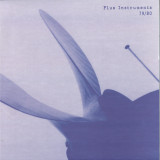
While she was still a member of Nasmak, one of the leading bands of the Dutch ultra-movement, Truus de Groot started Plus Instruments in 1978 with herself as the sole member. When the project evolved, she found a wide range of rotating collaborators like Michel Waisvisz, Lee Ranaldo and James Sclavunos. Plus Instruments was about freedom and the live performances were largely improvised. The sound minimal but captivating. The music always came from within, but De Groot was also triggered by bands like Red Crayola, Suicide, DAF, Wire, Per Ubu, Devo and the No Wave scene in NY. She was always experimenting with primitive multi-track recording and whatever crappy gadgets she could find. Always looking for a gritty, dirty sound and bizarre overtones.
At a young age she travelled to New York and began to immerse herself in the nightlife of the city that never sleeps. Here she found true creativity, passion and expression. The club scene was alive but highly competitive, so this fearless Dutch girl would just knock on promoter’s doors to get gigs booked at places like CBGB’s, Peppermint Lounge, Underground and the Pyramid. De Groot eventually settled in the United States and never stopped experimenting with sound. In recent years she reinvented Plus Instruments and led the group into new territory.
The recordings for this LP were made by De Groot at home and the music is experimental, minimal, industrial but also playful, sounding nothing like most of the later material. 14 tracks in total of which 7 are taken from the elusive and impossible to find self-released debut cassette as ‘Truss Plus Instruments’ which was sparingly distributed by Nigel Jacklin and his legendary Alien Brains fanzine in 1980. The remaining 7 tracks are from the same period (1979-1980) and were carefully selected from the vast archive of De Groot. We are glad to present this anthology that serves as a long overdue testimony to the formative phase of a unique female pioneer of electronic music.
Forest Law's debut album, "Zero," is a vibrant journey blending Balearic funk with urban Tropicalia, showcasing his adept guitar playing, old-school sampling, and UK- styled beats alongside his mellow yet sombre vocals. Recorded across eclectic locations from Icelandic fish net factories to a garden shed in Romford, this innovative release marks a new chapter for the multi-instrumentalist producer.
Released in collaboration with the UK home for jazz and electronic sounds, Total Refreshment Centre, Zero is Forest Law’s first release since his debut EP on Brownswood Recordings four years ago, marking a new and exciting chapter for the up-and-coming talent.
Crafted over seven years, "Zero" is deeply influenced by Law's experiences, from immersive stays in Porto where he delved into Portuguese music to an artist residency in a remote Icelandic fishing village. The album was finished, and recorded in his garden shed in Romford, East London. It’s a beautiful juxtaposition about a boy from Essex, who fell in love with international music, discovered the world, and then produced a musical treatise about his adventures from his shed.
Bank NYC is very excited to present the definitive statement of Collector, "No Prospects". Collector is the solo guise of Jason Campbell, resident of Newcastle, Australia. Since 2014, Campbell has been channelling the industrial malaise of his hometown through his unique take on heavy electronics. After a series of releases on global-spanning labels such Steel City Dance Discs (UK), Nice Music (AUS), Clan Destine (SCO) & Night People (US), the debut long-player for Bank NYC finds Collector embracing true album form for the first time in his discography. Across eight pieces, Collector delivers a bleak sonic narrative via a hardware-only approach to production: Analog drum machine patterns are intricately intertwined with menacing synth lines, and driving bass is met with the unrelenting clatter of tightly-sequenced field recordings taken straight from the heart of local industry.
Thematically, "No Prospects" navigates the downfall of Newcastle's BHP Steelworks at the end of the 20th century. Acknowledged widely as the largest de-industrialisation event in Australian history, the closure of the Steelworks in 1999 marked a dramatic cultural shift where blue-collar vocations were vanquished due to an economic slump, and were consumed by the trending cosmopolitanism seen in adjacent cities. "No Prospects" draws on Campbell's family lineage in the Newcastle's steelworks, providing a rich, personal context to an industry that both gives and takes away. The sharp intensity of the album is sustained by dramatic shifts in pace: the devestating slow burners of 'Two From Five' and 'Ricochet' are instinctually offset by the frenetic 'CFT' and 'Workers Club Collapse', which showcase Campbell's no-nonsense approach to shaping an almost club-ready breed of modern industrial techno. Although diverse across both sides, cohesion is found in Campbell's toolkit of samples that are unmistakably Collector. The album's eponymous track, 'No Prospects', serves as an introspective centrepoint - a largely arrhythmic excursion shrouded in familiar brooding, textural drones, and underpinned by the chug of machinery on the brink of collapse.
Although forever indebted to the spirit of local electronic outcasts, Bloody Fist Records, Collector's "No Prospects" is a remarkably distinct statement straight from the heart of Australia's Steel City. The complexity of arrangements speak to Campbell's long association in experimental music communities, whilst the persistent feeling of dread conveys a uniquely regional story of decay and futility. Pure Novocastrian industrial electronics.
Home brewed avand garde-ism from Amsterdam
Darning Woman is an intentional, beautiful, sometimes confrontational album that shreds expectations of DIY, bedroom music, and feminine themes. There's a lushness and maternal instinct at play, as Coope connects the dots between physicality, ephemera, and the ultrafeminine. "I don't really like to deal that much with themes of personal hardships, or heartache and love," says Anastasia Coope. "Ultimately, I work most honestly with the language of what is happening in a moment and the passage of time around it. That, coupled with my reaction to entering the artistic landscape, and my thoughts about what does and doesn't get representation, comprises most of this album." Darning Woman explores, among other things, the meditative aspect of sewing, patching and embellishment, care and repair, collection not as modern, craven consumption but as a counterpoint to materialism. This sort of collection - the good kind, the gathering of things to make a home - can be, in Coope's words, "A very baby way to critique capitalism. Birds make nests, right? It can be a new life for a thing that was made. What you surround yourself with matters." To that end, Anastasia Coope is also the founder and leader of the Bonzo collective and show series, an exciting new home for the type of expansive, profoundly creative scene that New York has been missing for some time. And while Bonzo may well be the ascent of a new community, Darning Woman is the story of Anastasia Coope, herself. It is the sound of Coope entering the world as an artist, acknowledging the tangle of what changes - the gaze of the world, Coope's art in reaction and community to art in general - and what does not: her ideas and her own self.
A Human Home“ wurde während des Einschlusses in Lucys Zimmer in Berlin geschrieben.
Es ist eine intime und ausdrucksstarke Sammlung von musikalischen Skizzen, die erforschen, was es bedeutet, ein Zuhause zu finden und sich zu Hause zu fühlen.
Mit einer Reihe von zufälligen und absichtlichen Kollaborationen aus der Ferne dokumentiert es einen spezifischen, persönlichen und universell geteilten Moment in der Zeit.
Die Entstehung des Albums war ein bewusster Versuch, den Einfluss von anderen auf ihren kreativen und persönlichen Prozess zu fördern.
Sie erkennt an, wie viel Heimat nicht nur an einem Ort liegt, sondern auch an den Menschen, die wir lieben.
Das Artwork des Albums wurde von Julia Schimautz von Don't Try Anything New gestaltet, die Fotografie stammt von Francis Broek und das Styling von Lenny-Dee Doucha.
Eine Platte zu machen ist beides: Musik, die als Momentaufnahme festgehalten wird, und gleichzeitig eine Dokumentation des Zeitraums, in dem die Lieder entstanden sind. Wenn man dieser Dokumentation und dem Zeitrahmen einen Namen geben möchte (wie einem Albumtitel), stellt sich die Frage: Was ist seit der letzten Aufnahme passiert - auf persönlicher, sozialer und vielen anderen Ebenen? Was hat sich verändert? Oder ging es einfach nur um "mehr" vom Gleichen: in immer kürzerer Zeit zig Dinge parallel erledigen, optimieren, wiederholen? Entwickeln sich diese Dinge in die Richtungen, in die sie sich entwickeln sollten? Schreitet der Fortschritt überhaupt voran? Oder geht es einfach nur darum, das zu tun, was wir schon vorher getan haben - nur schneller, effizienter? Der Ausdruck "L'inertie polaire" (fast 35 Jahre alt) erklärt nicht alles, was in der Welt vor sich geht, aber eine, ziemlich unangenehme, Menge_ 3 Jahre nach Extract.Transform.Debase veröffentlichen The Antikaroshi ihr 6. Album, das inhaltlich direkt an den Vorgänger anknüpft. Das Trio setzt genau dort an, wo es aufgehört hat: Lieder, die sich Zeit nehmen, die atmen um dann im nächsten Moment hektisch zu lärmen! Die Lautstärke ist immer ein Mittel zum Zweck und das Spiel mit ihr ein Markenzeichen von The Antikaroshi. Während Drums und Bass die Grundlage bilden, aber trotzdem immer wieder bekannte Muster durchbrechen, ist die Gitarre hypnotisch und forschend. Die Vocals wechseln zwischen rezitativem und melodiösem Ausdruck und geben der Musik genügend Raum. So bilden The Antikaroshi die Welt ab, die sie umgibt: Hektik und Stillstand schließen einander nicht aus, sondern sind kulturelle Pole zwischen denen sich Gesellschaft entfaltet. Und so wird ihre Musik politisch: Während eine Handvoll superreicher Menschen bereits Abschied von diesem Planeten nimmt (Lost In Compassion), läuft die Medienmaschine geölt wie ein Uhrwerk und hat gelernt, schlechte Nachrichten als gute zu verkaufen (Shiny White Teeth). Kriege werden zu Friedensmissionen (Authority) und das Ergebnis rechtfertigt allzu oft die Mittel (Gravity), wenn es darum geht, der eigenen Schwerkraft zu trotzen. Sogar Seen stehen inzwischen zum Verkauf (Thousand Lakes) und alle verfügbaren Mittel werden genutzt (Sticky Hands). Die Menschen schwanken zwischen gegensätzlichen Sichtweisen, handeln gegen ihren Verstand und viel zu oft auch gegen ihr Herz (Doxa). Was lässt sich dem entgegensetzen? Solidarität und metaphorisch die Wölfe zu vertreiben (Homohominilupus). Und natürlich der kollektive Protest (Tang Ping).
red LP[26,85 €]
The Dream Of Delphi is an ode to motherhood created in LA, Natasha’s second home, during the Covid-19 pandemic. It’s a sonic archive of a time when Natasha birthed her daughter Delphi earth side. The record weaves together ten song poems, documenting the polarity of navigating both an exterior world that was seemingly turning upside down, whilst also experiencing theprofoundly personal and transformational early moments of mothering Delphi, named after the Greek Oracle, the ancient future teller. The music became Natasha’s sanctuary, born out of stolen trips to the studio, where each track was improvised and completed in a few hours and chronologises her diary like offerings over a period of two years; from “The Midwives Have Left”; to writing a “Letter To My Daughter”; and all the way through to “Waking up”, as well as a cover of her daughter’s favourite song, “Home”.While the storytelling behind Bat For Lashes’ previous albums have traditionally used otherworldly narratives and female lead characters (e.g. ‘Laura’, ‘Daniel’ and ‘The Bride’), for the first ti me, The Dream Of Delphi is about Natasha’s personal experience of the magical and sometimes melancholy intimacy of early motherhood. This record creates a more private form of mythology around the music than her previous work. The Dream Of Delphi touches on more of an instrumental “Bat For Lashes” world, and shows Natasha to be both a confident composer and craftswoman of intimate landscapes. While the music creates a more womb-like, ambient space for the listener, it still leaves ample room for her signature dream pop songwriting to vibrate through. Natasha has worked with Brad Oberhofer, Mary Lattimore and Jack Falby on this record.