Поиск:house of house

Стили
Все
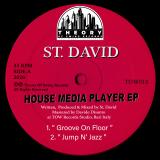
St. David - House Media Player EP

St. David drops another set of club-ready tools coming back on his imprint, Theory of Swing for the 15th release. House Media Player EP hits the floor hard with NY jacking house grooves, bouncing basslines, and that unmistakable TOW swing that locks dancers into the rhythm.

This is pure club gear, four cuts engineered for peak-time momentumt, and the kind of shuffle that defined the Strictly Rhythm, Narcotic or TNT era.

Another timeless entry in the Theory of Swing catalogue — pure hardware heat, made for real floors and real DJs.

Written, Mixed and Produced by St. David

Сделать предзаказ

Этот продукт еще не вышел. Ты можешь сделать предзаказ, как только он появится на складе, продукт будет подготовлен к пересылке.

11,72
Club Of Jacks - Always EP

The fledgling Jackpot Recordings label is back with a second serving up club-ready goodness with Club of Jacks at the helm. There is a healthy dose of classic elements to these tunes - 90s vocals, deepness, soul - not least the opener 'Always' with its diva wails and balmy pads draped over nice silky drums with a majestic piano breakdown. 'Gorgon Dub' is a fat bottom house cut with mid-tempo drums and rigid percussion atop a dark bassline throb. 'Think Of You' is a warm and breezy one with loved-up pads and r&b vocal chops and 'Soundboy' gets more naughty with some garage-inspired drums and bass primed to pump the party.

В наличии на складе

Есть у нас в наличии и готов к отправке

13,40
Centric House / Micky More & Andy Tee / Don Carlos - Alright Alright / The Music Of Your Mind

DJ Support: David Morales, David Penn, Kevin Yost, Mark Knight, Michael Gray, CJ Mckintosh, Hector Romero, Marc Cotterell, DJ Meme, Melvo Baptist, Seamus Haji, Dr. Packer, Dj Romain, Angelo Ferreri and many others.

From 1990 to 1994 Irma Records Italy was on a top level with house music. 'Alright Alright' by Centric House was one of the main successful projects of that years. 30 years later Groove Culture bosses Micky More & Andy Tee pay tribute to the pioneers, restoring this amazing track in a modern way but keeping the main beautiful ingredients. On The Flip We have A super team-work made by MM & AT, Don Carlos and Chaka Khan’s Sister Taka Boom, who provides a new version of 'The Music Of Your Mind', here vibes are more disco-house with epic piano chords and fire bass notes, everything melt and arranged smoothly around the powerful vocals of Taka Boom.

В наличии на складе

Есть у нас в наличии и готов к отправке

13,87
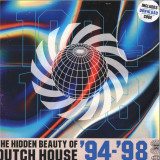
Various - The Hidden Beauty Of Dutch House '94-'98

Chicago? Absolutely! Detroit? Definitely! For many, however, a significant chapter in the coming-of-age story of House music was also written in The Netherlands.

This 8-track compilation is the result of a nationwide search for lost Digital Audio Tapes (DAT’s), dusty home-studio recordings, and other relics from those early days. The distinctive "House" sound eventually evolved into a rainbow of local styles and grooves. Back then, DJ’s played their heart out and didn’t limit themselves to any particular musical genre. Following that spirit, this compilation contains everything that makes the Dutch sound so special, from energetic Breaks to atmospheric Deep House.

These are not your usual suspects, not even the most revered diggers have this collection at their fingertips. It's raw, pure material from the time when house parties were fresh and dirty at the same time. Back when the only dress code was a wide smile from ear to ear. Four sides with two tracks each, ensuring maximum DJ enjoyment. Now get out there and spread the Dutch 90's House vibes!

В наличии на складе

Есть у нас в наличии и готов к отправке

25,17
VARIOUS - HOUSE CLASSICS THE SOUND OF 90’S Vol.1 (2x12")

In the world of Dance, the 90s were characterized by the worldwide explosiion of House Music. Among the protagonists many were artists and producers of Italian origin and this sub-genre was called Italo House. This double vinyl collection contains 12 classic songs
from that magical period, all in the original 'full version', by:
Don Carlos, Soft House Company, Double Dee, Tameka Starr, Key Tronics Ensemble, Omniverse, Jestofunk, Riviera Traxx, Kipper, Aritmya, Be Noir e Bossa Nostra.

В наличии на складе

Есть у нас в наличии и готов к отправке

27,10
ATFC / Gene Farris - Spirit Of House EP

Spirit Of House’ is a jackin' 90’s Chicago inspired groove. It’s an uplifting, dance floor ready track from two of House music's finest. Those unmissable vocals from the legendary Gene Farris add a stamp of old authenticity – he’s a bonafide Chicago legend, who’s contributions to the House music scene are undebatable. He’s been pushing musical boundaries for close to three decades, working with world-leading labels and artists such as Relief, Dirtybird, ViVa Music and Defected.

ATFC is a longstanding label favourite and household name in the scene. He has 3 UK top 40 hits under his belt and has remixed tracks for the likes of P Diddy, Missy Elliot, Simply Red, Faithless and Dido. He’s entered Pete Tong’s Essential Mix hall of fame - and the BBC Radio 1 tastemaker himself described ATFC’s productions as ‘verging on genius’. This collaboration is a match made in heaven.

‘Spirit Of House’ is a deeply playable, feel-good House record from two of the most established producers in the scene.

‘R U’ features a catchy piano hook, tough drums and that deep, powerful vocal from Gene Farris himself. It’s a stripped back, gritty house cut and we're proud to be giving it a home on Toolroom.

Whilst sampling can be a sticky subject in dance music, 'Tech House Kinda Thing' is a fine example of how digging deep and being creative can be hugely rewarding. The vocal sample on this record is from another house titan; Harry Romero. This was taken from an event promo video that Harry recorded himself and posted on his Instagram page. Being the creative soul he is, ATFC heard it, sampled it, brought the idea to a Toolroom writing camp last November, and voila, this record was born! The record itself is an energetic club workout, produced with the detail and finesse you'd expect from such a legendary producer such as ATFC. With driving rhythms, off beat quirky stabs and that unique, spoken vocal, this really is a special record!

‘Not Enough’ is an uplifting, funky, feel-good tune. It oozes that ATFC warmth and the vocals from Mia Mendez add some serious sunshine vibes! Her voice is super powerful and within seconds of hitting play on this record you're whisked away to a sun drenched terrace!

В наличии на складе

Есть у нас в наличии и готов к отправке

13,03
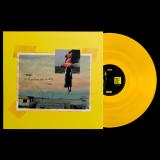
VOWWS - I’LL FILL YOUR HOUSE WITH AN ARMY LP

"Nachpressung als limitiertes gelbes Vinyl! Das in Australien gegründete und in LA ansässige Duo VOWWS meldet sich mit „I'll Fill Your House With an Army“ zurück, ihrem bisher ehrgeizigsten und am besten umgesetzten Album.

„I'll Fill Your House With an Army“ (2025) ist der Höhepunkt der kühnsten Ideen der Band und zeigt, wie VOWWS, bestehend aus Rizz und Matt James, ihre charakteristische „Death-Pop“-Ästhetik vertiefen: eine genreübergreifende Mischung aus industrieller Elektronik, alternativem Rock, cineastischer Nostalgie und melancholischer Pop-Sensibilität. Co-produziert von Billy Howerdel (A Perfect Circle) und mit Gastauftritten von Josh Freese (A Perfect Circle, NIN, Devo) und James „Munky“ Shaffer (KORN), ist das Album eine Reise durch Sehnsucht, Entfremdung und die surreale Schönheit des Chaos.

Dieses Album zeigt perfekt die dynamische Bandbreite des Duos: von verzerrter Intimität bis hin zu gewaltigen Klangattacken reflektieren VOWWS ein zerbrochenes Spiegelbild des modernen Zustands - romantisch, aber desillusioniert, viszeral und doch seltsam erhebend.

Nachdem sie sich durch Touren mit den Deftones, Twin Temple und Poppy bereits eine kultige Fangemeinde erspielt haben und gerade einen bahnbrechenden Live-Auftritt im Golden Gate Park neben System of a Down und The Mars Volta absolviert haben, sind VOWWS bereit, ihr Vermächtnis mit dieser Veröffentlichung zu zementieren. Ihr künstlerisches Ethos, unbeugsam in einer Ära der Wegwerfbarkeit, hat sie auch in die Welt der High Fashion geführt, wo sie mit Comme des Garçons, Givenchy und Byredo zusammenarbeiten.

Сделать предзаказ27.03.2026

он должен быть опубликован на 27.03.2026

22,65
Sascha Dive - My Definition of House Music vol. 2

Raw deep house pressure from Sascha Dive, four cuts blending soul, groove, and late-night mood, with Roland Clark blessing the mic. Limited green vinyl for those who still move to the real sound.

DJ Feedbacks :


Laurent Garnier : Cool tracks
Josh Wink (Ovum) : Liking 'Im Inspired' the best here.
C-Rock : Those Nights for me, nice NYC dub House touch!
Radio Slave (Rekids) : I've always been such a big fan of Sasha's productions and "There Is No Tomorrow" hits the spot.
Fleur Shore (Undergrowth / Cuttin' Headz) : im inspired, beautiful track
Reboot (Cecille / Cadenza) : schöne tracks ️
Satoshi Tomiie (Abstract Architecture) : Solid release!
Alinka (Twirl, Classic, Crosstown Rebels, Batty Bass) : Nice one
PBR Streetgang : Invocation and Im Inspired are great
D'Julz (Bass Culture) : those night is the one for me here
Damian Lazarus (Crosstown Rebels) : Thanks for sending. Xx
Ben Sims : Now downloading... will check asap!
Archie Hamilton (Microhertz / FUSE) : Nice thanks
Eddie Fowlkes (Detroit Wax, Rekids, Classic Music Company) : thanks
Tim Sweeney (Beats In Space) : Lovely
Doc Martin (Sublevel) : Sascha on a good one,with the voice of house music Roland Clark no less!!!
Terry Farley : THOSE NIGHTS WORKS FOR ME
Chloe Caillet (Smile Records) : love this!
Oliver $ (Classic Music Company / Play It Down) : Sooo gooood!
Ame (Innervisions) : thanks
Danny Tenaglia : Downloading for Danny Tenaglia, thanks!
Robert Owens (Trax / Musical Directions) : Cool tracks
Kai Alce (Real Soon) : Nice deep tracks from Sascha
Mark Farina : dig them.
Lea Lisa (Phonica Records / Folklor Club) : Really good definition of House
Alexkid (Rawax / FUSE / NG Trax) : Phonogramme (and Sascha Dive) on fire at the moment...
Harri (Sub Club) : lovely stuff, will play and support

нет на складе

Закажите сейчас, и мы закажем товар для вас у нашего поставщика.

14,71

Последний логин: 4 дн. назад
Vowws - I'll fill your house with an army

Das in Australien gegründete und in LA ansässige Duo VOWWS meldet sich mit I'll Fill Your House With an Army zurück, ihrem bisher ehrgeizigsten und am besten umgesetzten Album.

I'll Fill Your House With an Army ist der Höhepunkt der kühnsten Ideen der Band und zeigt, wie VOWWS, bestehend aus Rizz und Matt James, ihre charakteristische „Death-Pop“-Ästhetik vertiefen: eine genreübergreifende Mischung aus industrieller Elektronik, alternativem Rock, cineastischer Nostalgie und melancholischer Pop-Sensibilität. Co-produziert von Billy Howerdel (A Perfect Circle) und mit Gastauftritten von Josh Freese (A Perfect Circle, NIN, Devo) und James „Munky“ Shaffer (KORN), ist das Album eine Reise durch Sehnsucht, Entfremdung und die surreale Schönheit des Chaos.

Dieses Album zeigt perfekt die dynamische Bandbreite des Duos: von verzerrter Intimität bis hin zu gewaltigen Klangattacken reflektieren VOWWS ein zerbrochenes Spiegelbild des modernen Zustands - romantisch, aber desillusioniert, viszeral und doch seltsam erhebend.

Nachdem sie sich durch Touren mit den Deftones, Twin Temple und Poppy bereits eine kultige Fangemeinde erspielt haben und gerade einen bahnbrechenden Live-Auftritt im Golden Gate Park neben System of a Down und The Mars Volta absolviert haben, sind VOWWS bereit, ihr Vermächtnis mit dieser Veröffentlichung zu zementieren. Ihr künstlerisches Ethos, unbeugsam in einer Ära der Wegwerfbarkeit, hat sie auch in die Welt der High Fashion geführt, wo sie mit Comme des Garçons, Givenchy und Byredo zusammenarbeiten.

нет на складе

Закажите сейчас, и мы закажем товар для вас у нашего поставщика.

22,65

Последний логин: 5 мес. назад
Various - Thee Church Of Acid House Remixes)

With their EP triptych "Thee Church Ov Acid House Volume 1–3," Oliver Bradford and Jörn Elling Wuttke created a holy trinity of diverse dancefloor variations, a self-contained circle of rave history.

In itself already a heavyweight statement, which they now crowned with “Bells & Whistles - Thee Remixes”. So to speak the quadrature of the circle And as with their original material, this release also reveals a profound knowledge of dance history in the selection of remixers - combined with the best of the here and now.

A1:
The trip begins with Jamie Hodges' ( Born Under A Rhyming Planet ) version of “Acid House Planet”. Hodge was responsible for a number of legendary EPs on Richie Hawtin's Plus 8 label in the early 90s, which explored the deep poetry of techno music. In this sense his remix is also a delicate affair of rarely heard beauty.

A2:
There's Thee Church Ov Acid House themselves, who stretch the swinging groove of Tyson's “G Phunk”, far too short in the original, to almost six minutes. A groove that won't stop.

B1:
And that brings us to the next two legends, this time from the local area. D-Man and Move-D have had a significant influence on dancefloor culture between Heidelberg and Mannheim since its inception. Their lysergic “Theme” remix, with Terrence McKenna vocals and acid twist in the middle, is an epic open air classic to come.

B2:
Lennard Poschmann's aka O-Wells' version of “Rave Mantra”, on the other hand, is deep, digging bass techno for the darkest moments of the night.

Vinyl EP2 featuring remixes of Man Power, As One ( Kirk Degiorgio ), HRDVSION ( Nathan Jonson ), Cosmic Cars ( Pudel Produkte, Smallville, Bureau B )

нет на складе

Закажите сейчас, и мы закажем товар для вас у нашего поставщика.

12,82

Последний логин: 4 мес. назад
DJ Slugo - King Of Ghetto House

Brand new 6 track album of "ghetto" house music from Chicago's DJ SLUGO. If Miami bass and Chicago's hip house had a child it might sound like this. The lead track "PUMP" sets the mood with a fast paced beat and heavy bass. Full pic sleeve.

нет на складе

Закажите сейчас, и мы закажем товар для вас у нашего поставщика.

23,49

Последний логин: 5 мес. назад
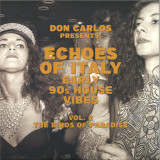
Various - ECHOES OF ITALY – THE BIRDS OF PARADISE – EARLY 90S HOUSE VIBES VOL.2 (2x12")

Googling “paradise house”, the first results to pop up are an endless list of European b&b’s with whitewashed lime façades, all of them promising “…an unmatched travel experience a few steps from the sea”. Next, a little further down, are the institutional websites of a few select semi-luxury retirement homes (no photos shown, but lots of stock images of smiling nurses with reassuring looks). To find the “paradise house” we’re after, we have to scroll even further down. Much further down.

It feels like yesterday, and at the same time it seems like a million years ago. The Eighties had just ended, and it was still unclear what to expect from the Nineties. Mobile phones that were not the size of a briefcase and did not cost as much as a car? A frightening economic crisis? The guitar-rock revival?! Certainly, the best place to observe that moment of transition was the dancefloor. Truly epochal transformations were happening there. From America, within a short distance one from the other, two revolutionary new musical styles had arrived: the first one sounded a bit like an “on a budget” version of the best Seventies disco-music – Philly sound made with a set of piano-bar keyboards! – the other was even more sparse, futuristic and extraterrestrial. It was a music with a quite distinct “physical” component, which at the same time, to be fully grasped, seemed to call for the knotty theories of certain French post-modern philosophers: Gilles Deleuze, Félix Guattari, Paul Virilio... Both those genres – we would learn shortly after – were born in the black communities of Chicago and Detroit, although listening to those vinyl 12” (often wrapped in generic white covers, and with little indication in the label) you could not easily guess whether behind them there was a black boy from somewhere in the Usa, or a girl from Berlin, or a pale kid from a Cornish coastal town.

Quickly, similar sounds began to show up from all corners of Europe. A thousand variations of the same intuition: leaner, less lean, happier, slightly less intoxicated, more broken, slower, faster, much faster... Boom! From the dancefloors – the London ones at least, whose chronicles we eagerly read every month in the pages of The Face and i-D – came tales of a new generation of clubbers who had completely stopped “dressing up” to go dancing; of hot tempered hooligans bursting into tears and hugging everyone under the strobe lights as the notes of Strings of Life rose up through the fumes of dry ice (certain “smiling” pills were also involved, sure). At this point, however, we must move on to Switzerland.

In Switzerland, in the quiet and diligent town of Lugano, between the 1980s and 1990s there was a club called “Morandi”. Its hot night was on Wednesdays, when the audience also came from Milan, Como, Varese and Zurich. Legend goes that, one night, none less than Prince and Sheila E were spotted hiding among the sofas, on a day-off of the Italian dates of the Nude Tour… The Wednesday resident and superstar was an Italian dj with an exotic name: Don Carlos. The soundtrack he devised was a mixture of Chicago, Detroit, the most progressive R&B and certain forgotten classics of old disco music: practically, what the Paradise Garage in New York might have sounded like had it not closed in 1987. In between, Don Carlos also managed to squeeze in some tracks he had worked on in his studio on Lago Maggiore. One in particular: a track that was rather slow compared to the BPM in fashion at the time, but which was a perfect bridge between house and R&B. The title was Alone: Don Carlos would explain years later that it had to be intended both in the English meaning of “by itself” and like the Italian word meaning “halo”. That wasn’t the only double entendre about the song, anyway. Its own very deep nature was, indeed, double. On the one hand, Alone was built around an angelic keyboard pattern and a romantic piano riff that took you straight to heaven; on the other, it showcased enough electronic squelches (plus a sax part that sounded like it had been dissolved by acid rain) to pigeonhole the tune into the “junk modernity” section, aka the hallmark of all the most innovative sounds of the time: music that sounded like it was hand-crafted from the scraps of glittering overground pop.

No one knows who was the first to call it “paradise house”, nor when it happened. Alternative definitions on the same topic one happened to hear included “ambient house”, “dream house”, “Mediterranean progressive”… but of course none were as good (and alluring) as “paradise house”. What is certain is that such inclination for sounds that were in equal measure angelic and neurotic, romantic and unaffective, quickly became the trademark of the second generation of Italian house. Music that seemed shyly equidistant from all the rhythmic and electronic revolutions that had happened up to that moment (“Music perfectly adept at going nowhere slowly” as noted by English journalist Craig McLean in a legendary field report for Blah Blah Blah magazine). Music that to a inattentive ear might have sounded as anonymous as a snapshot of a random group of passers-by at 10AM in the centre of any major city, but perfectly described the (slow) awakening in the real world after the universal love binge of the so-called Second Summer of Love.

For a brief but unforgettable season, in Italy “paradise house” was the official soundtrack of interminable weekends spent inside the car, darting from one club to another, cutting the peninsula from North to centre, from East to West coast in pursuit of the latest after-hours disco, trading kilometres per hour with beats per minute: practically, a new New Year’s Eve every Friday and Saturday night. This too was no small transformation, as well as a shock for an adult Italy that was encountering for the first time – thanks to its sons and daughters – the wild side of industrial modernity. The clubbers of the so-called “fuoriorario” scene were the balls gone mad in the pinball machine most feared by newspapers, magazines and TV pundits. What they did each and every weekend, apart from going crazy to the sound of the current white labels, was linking distant geographical points and non-places (thank you Marc Augé!) – old dance halls, farmhouses and business centres – transformed for one night into house music heaven. As Marco D’Eramo wrote in his 1995 essay on Chicago, Il maiale e il grattacielo: “Four-wheeled capitalism distorts our age-old image of the city, it allows the suburbs to be connected to each other, whereas before they were connected only by the centre (…) It makes possible a metropolitan area without a metropolis, without a city centre, without downtown. The periphery is no longer a periphery of any centre, but is self-centred”.

“Paradise house” perfectly understood all of this and turned it into a sort of cyber-blues that didn’t even need words, and unexpectedly brought back a drop of melancholic (post?)-humanity within a world that by then – as we would wholly realise in the decades to come – was fully inhuman and heartless. A world where we were all alone, and surrounded by a sinister yellowish halo, like a neon at the end of its life cycle. But, for one night at least, happy."
нет на складе

Закажите сейчас, и мы закажем товар для вас у нашего поставщика.

28,99

Последний логин: 6 мес. назад
Various - ECHOES OF ITALY - ARTISTS IN WONDERLAND – EARLY 90S HOUSE VIBES VOL.1 LP 2x12"

Volume 1 of this expertly curated project of 90s Italian House - put together by Don Carlos.

If Paradise was half as nice… by Fabio De Luca.

Googling “paradise house”, the first results to pop up are an endless list of European b&b’s with whitewashed lime façades, all of them promising “…an unmatched travel experience a few steps from the sea”. Next, a little further down, are the institutional websites of a few select semi-luxury retirement homes (no photos shown, but lots of stock images of smiling nurses with reassuring looks). To find the “paradise house” we’re after, we have to scroll even further down. Much further down.

It feels like yesterday, and at the same time it seems like a million years ago. The Eighties had just ended, and it was still unclear what to expect from the Nineties. Mobile phones that were not the size of a briefcase and did not cost as much as a car? A frightening economic crisis? The guitar-rock revival?! Certainly, the best place to observe that moment of transition was the dancefloor. Truly epochal transformations were happening there. From America, within a short distance one from the other, two revolutionary new musical styles had arrived: the first one sounded a bit like an “on a budget” version of the best Seventies disco-music – Philly sound made with a set of piano-bar keyboards! – the other was even more sparse, futuristic and extraterrestrial. It was a music with a quite distinct “physical” component, which at the same time, to be fully grasped, seemed to call for the knotty theories of certain French post-modern philosophers: Gilles Deleuze, Félix Guattari, Paul Virilio... Both those genres – we would learn shortly after – were born in the black communities of Chicago and Detroit, although listening to those vinyl 12” (often wrapped in generic white covers, and with little indication in the label) you could not easily guess whether behind them there was a black boy from somewhere in the Usa, or a girl from Berlin, or a pale kid from a Cornish coastal town.

Quickly, similar sounds began to show up from all corners of Europe. A thousand variations of the same intuition: leaner, less lean, happier, slightly less intoxicated, more broken, slower, faster, much faster... Boom! From the dancefloors – the London ones at least, whose chronicles we eagerly read every month in the pages of The Face and i-D – came tales of a new generation of clubbers who had completely stopped “dressing up” to go dancing; of hot tempered hooligans bursting into tears and hugging everyone under the strobe lights as the notes of Strings of Life rose up through the fumes of dry ice (certain “smiling” pills were also involved, sure). At this point, however, we must move on to Switzerland.

In Switzerland, in the quiet and diligent town of Lugano, between the 1980s and 1990s there was a club called “Morandi”. Its hot night was on Wednesdays, when the audience also came from Milan, Como, Varese and Zurich. Legend goes that, one night, none less than Prince and Sheila E were spotted hiding among the sofas, on a day-off of the Italian dates of the Nude Tour… The Wednesday resident and superstar was an Italian dj with an exotic name: Don Carlos. The soundtrack he devised was a mixture of Chicago, Detroit, the most progressive R&B and certain forgotten classics of old disco music: practically, what the Paradise Garage in New York might have sounded like had it not closed in 1987. In between, Don Carlos also managed to squeeze in some tracks he had worked on in his studio on Lago Maggiore. One in particular: a track that was rather slow compared to the BPM in fashion at the time, but which was a perfect bridge between house and R&B. The title was Alone: Don Carlos would explain years later that it had to be intended both in the English meaning of “by itself” and like the Italian word meaning “halo”. That wasn’t the only double entendre about the song, anyway. Its own very deep nature was, indeed, double. On the one hand, Alone was built around an angelic keyboard pattern and a romantic piano riff that took you straight to heaven; on the other, it showcased enough electronic squelches (plus a sax part that sounded like it had been dissolved by acid rain) to pigeonhole the tune into the “junk modernity” section, aka the hallmark of all the most innovative sounds of the time: music that sounded like it was hand-crafted from the scraps of glittering overground pop.

No one knows who was the first to call it “paradise house”, nor when it happened. Alternative definitions on the same topic one happened to hear included “ambient house”, “dream house”, “Mediterranean progressive”… but of course none were as good (and alluring) as “paradise house”. What is certain is that such inclination for sounds that were in equal measure angelic and neurotic, romantic and unaffective, quickly became the trademark of the second generation of Italian house. Music that seemed shyly equidistant from all the rhythmic and electronic revolutions that had happened up to that moment (“Music perfectly adept at going nowhere slowly” as noted by English journalist Craig McLean in a legendary field report for Blah Blah Blah magazine). Music that to a inattentive ear might have sounded as anonymous as a snapshot of a random group of passers-by at 10AM in the centre of any major city, but perfectly described the (slow) awakening in the real world after the universal love binge of the so-called Second Summer of Love.

For a brief but unforgettable season, in Italy “paradise house” was the official soundtrack of interminable weekends spent inside the car, darting from one club to another, cutting the peninsula from North to centre, from East to West coast in pursuit of the latest after-hours disco, trading kilometres per hour with beats per minute: practically, a new New Year’s Eve every Friday and Saturday night. This too was no small transformation, as well as a shock for an adult Italy that was encountering for the first time – thanks to its sons and daughters – the wild side of industrial modernity. The clubbers of the so-called “fuoriorario” scene were the balls gone mad in the pinball machine most feared by newspapers, magazines and TV pundits. What they did each and every weekend, apart from going crazy to the sound of the current white labels, was linking distant geographical points and non-places (thank you Marc Augé!) – old dance halls, farmhouses and business centres – transformed for one night into house music heaven. As Marco D’Eramo wrote in his 1995 essay on Chicago, Il maiale e il grattacielo: “Four-wheeled capitalism distorts our age-old image of the city, it allows the suburbs to be connected to each other, whereas before they were connected only by the centre (…) It makes possible a metropolitan area without a metropolis, without a city centre, without downtown. The periphery is no longer a periphery of any centre, but is self-centred”.

“Paradise house” perfectly understood all of this and turned it into a sort of cyber-blues that didn’t even need words, and unexpectedly brought back a drop of melancholic (post?)-humanity within a world that by then – as we would wholly realise in the decades to come – was fully inhuman and heartless. A world where we were all alone, and surrounded by a sinister yellowish halo, like a neon at the end of its life cycle. But, for one night at least, happy.

нет на складе

Закажите сейчас, и мы закажем товар для вас у нашего поставщика.

28,99

Последний логин: 6 мес. назад
Продуктов на странице:
N/ABPM
Vinyl