Giom's Supremus Records has been dropping digital heat for more than a decade and now, in collaboration with us, they are making their vinyl debut with the Giom Classics series featuring tried and tested gems that have been fully remastered. 'The Message' is first up and back in 2015 when it originally dropped quickly became a favourite of the don Bill Brewster. It's patient, low-slung and slow burning with an irresistibly hypnotic effect. 'People' then gets more party with chopped vocals and disco samples all bristling with energy and big drums carrying it onwards and upwards. 'Last Dance' closes out with more warm, soul-infused and patient house depths with musical chords and another well-chosen and expertly deployed vocal that adds just the right amount of fire to amp up the energy.
Suche:house of house
- 1: My Ouija Board Spelt S-C-A-M
- 2: Dreams Of A Dead Dreamer
- 3: Malignantly Useless
- 4: We Sleep In The Self
- 5: Serpent House
- 6: Paramasturbatory Delusions
- 7: The Cosmic Vulva Vs The Post-Enlightened Tongue
- 8: Nothin' Wounded Goes Uphill
- 9: Blu-Ray Séances And Weather App Prophesies
- 10: My Little Pony Apocalypse Diorama Playset
Originally released on vinyl in 2012, H2DAIZZO quickly became one of the NYC duo’s most sought-after records, with original copies fetching over $100 on Discogs. Now widely considered a timeless club essential, this deep, minimal house cut returns via a long-awaited repress on Defected Records.
The release is further elevated by three standout remixes, each bringing a distinct perspective: Peggy Gou delivers a signature 2017 rework, slicing and reshaping the groove with her unmistakable flair; Butch injects his 2018 remix with driving, dancefloor-focused energy; and Josh Baker offers a fresh, contemporary take, rounding out the package with a modern club sensibility.
Promised Land is the long-awaited debut album from contemporary showstopper Vintage Culture. Enlisting the help of peers NomBe, Maverick Sabre, The Temper Trap, and Elderbrook, the album marks the producer and DJ's seguing from progressive house to electro, evincing a globetrotting, jetsetting sound that hardly ever fails to hold back on emotion. Including prior single 'Come Come' alongside newer, angelic progressive cuts like 'Weak' with Sabre, this is a stark debut from the Brazilian creative force.
In the early 1980's GALLIFRE aka BRETT WILCOTS & FRANKIE KNUCKLES were burning up dance floors with their special remixes. Here we have a highly sought-after original & official reissue that hasn't seen the light of day since 1987 with unreleased instrumentals. Full printed sleeve. 100% legit!
A dynamic DJ and producer, the Galway-born, Berlin-based artist is driven by mood not genre, gleefully scribbling outside the lines to craft rhythmic, high-vibration dancefloor cuts that make them a delicious match for the Chunkers. Just reference their pin-sharp releases on Radiant, Punctuality, Planet Euphorique and their own World of Worlds imprint. While anyone who’s caught their throwdowns at Draaimolen’s legendary forest stage, Horst Festival or London’s infamous queer party Club Are already knows what’s up.
Their contribution to the BSC catalogue is bang on. Lead cut ‘Track Like’ is a straight-up Chunker. Beginning life as an instrumental, it’s a pumping house cut marked by a grooving bassline, tight drums and a contained ravey energy, before Eoin DJ added that vocal that took the production into peak-time party territory.
A producer who requires no introduction – Jennifer Loveless join the Chunkers fold with a full-bodied remix of ‘Track Like’. Lock in for a funky maximal re-rub with the attitude turned up to 11. Back in Eoin DJ’s corner, the crisp ‘n’ punchy ‘Pure U’ is driven by fat kick drums, euphoric chords and a chunky rolling bassline. Exquisite stuff. A tight Dub version is included in the pack. The EP rounds out with the perky ‘Feel Deeper’, which channels ‘90s New York house and circuit sounds and is built around a hooky vocal line and rhythmic drums.
Eoin DJ follows BELLA, Eliza Rose, Papa Nugs, Paperkraft and remixes Peach and CARISTA in joining the Big Saldo’s Chunkers family as Sally C delights in growing the label via a carefully curated roster of artists.
“I loved the label already, so I was super stoked when Sally asked me to do a release. Chunkers is always
so on-point and consistent with its output. All of the releases are certified party starters – fat basslines, catchy vocals, full of energy and tuned to perfection to hit on the soundsystem. I used that as a jumping off point when making the EP. You could say it’s Chunkers – Eoin DJ style.” – Eoin DJ
“I was hooked on Eoin’s sound since they released ‘Ode to Beachball’ in 2024 on Punctuality Records. I love their ability to weave emotion and groove so seamlessly. It’s been a pleasure working on this EP – I’ve been endlessly rinsing all of the tracks. Such a great producer!” – Sally C
- 1: Slip Inside This House (Mono Version)
- 2: Slide Machine (Mono Version)
- 3: She Lives (In A Time Of Her Own)
- 4: Nobody To Love (Mono Version)
- 5: (It's All Over Now) Baby Blue (Mono Version)
- 6: Earthquake (Mono Version)
- 7: Dust (Mono Version)
- 8: Levitation (Mono Version)
- 9: I Had To Tell You (Mono Version)
- 10: Postures (Leave Your Body Behind) (Mono Version)
- 1: Slip Inside This House (Stereo Version)
- 2: Slide Machine (Stereo Version)
- 3: She Lives (In A Time Of Her Own) (Stereo Version)
- 4: Nobody To Love (Stereo Version)
- 5: (It's All Over Now) Baby Blue (Stereo Version)
- 6: Earthquake (Stereo Version)
- 7: Dust (Stereo Version)
- 8: Levitation (Stereo Version)
- 9: I Had To Tell You (Stereo Version)
- 10: Postures (Leave Your Body Behind)
For its third release, Honey Trap turns toward the instinctual. Ritmo Animal is a record driven by body memory, where rhythm becomes language and movement becomes communion. Vancouver- and Colombian-rooted duo Dosis weave club music with lived histories, drawing from punk ethics, soundsystem culture, and a deep commitment to collaboration.
Formed by Daniel Rincon and Zachary Treble, Dosis operates in the space between structure and looseness, where grooves feel hand-built and edges remain intentionally rough. Across five tracks, Ritmo Animal resists clean categorization. House mutates into dub-soaked psychedelia, vocals surface and dissolve, and percussion swings between discipline and abandon.
The A-side opens with “I Want To Be Your Dog”, a low-slung, hypnotic burner featuring Alien D, setting the tone through repetition and restraint. The title track, “Ritmo Animal,” anchors the record in motion, with saxophone lines from Dave Biddle threading through percussive momentum and grounding the track in something tactile and human.
On the flip, “Malibu” offers a softer pull, with Hannah Acton’s vocals drifting through warm, unhurried rhythm. “Humo,” featuring Hashman Deejay, leans deeper into smoke and sway, while closer “Sancocho” stretches time entirely, favoring communal simmer over destination.
Ritmo Animal is music made for shared space. It is not concerned with polish or purity, but with connection, between scenes, cities, and bodies on a floor. Another chapter in Honey Trap’s ongoing exploration of intimacy, pleasure, and rhythm as refuge.
2026 Repress
Baby Ford is back being reissued again and we couldn't be happier about it. Few have ever matched the matter levels he achieved when it comes to deep minimal and tech house fusions. This latest on his own Trelik takes the form of three classic cuts from two much sought-after EPs - Built In and All That Nothing. The title cut is a shimmering and sublime fusion of rubbing low ends and icy hi-hats. 'All That Nothing' then picks up the pace with more dub influences and swaying drums and 'Plaza' has a tech house edge that makes for more driving grooves.
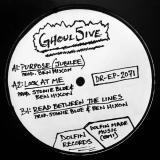
Texas-raised, NYC-based Ben Hixon continues to be one of deep house's most essential new voices. His dusty, lo-fi take on the genre feels instinctive and raw but always carries serious emotion under the surface. After a fine outing announced already on NDTAL this month, he's back on his own Dolfin with another crucial three tracker. 'Purpouse (Jubilee)' is a swinging sound with classic Midwestern vibes, 'Look At Me' spins out into high-paced juke and footwork drum patterns with eerie pads and 'Read Between The Lines' is a low-lit, low-key basement house groove with conscious mutterings adding serious depth. Another doozy from Hixon.
Naya Beat is excited to announce 'PAWA!', a soaring disco-funk anthem celebrating feminism and the power (pawa) of togetherness. It is a mouthwatering collaboration between legendary jazz vocalist and disco pioneer Asha Puthli and NYC’s punk-chic, discodelic stars Say She She.
A fortuitous and fleeting window between touring schedules allowed Puthli and Say She She’s Nya Gazelle Brown, Sabrina Cunningham, and Piya Malik to write and record Pawa! with members of the cult funk band Orgone in the English countryside at Mike Oldfield’s (Tubular Bells) studio. Pawa! is a tribute to female fortitude and an anthemic call to action for unity and collective action. PAWA TO THE PEOPLE! Asha’s spoken word bursts into a soaring falsetto while Say She She’s celestial three-part harmonies make for a sublime call and response between the fabled mentor and her gifted disciples. Throw in a stellar bassline and one of tightest rhythm sections around, and you have an instant classic. And if that wasn’t enough, four remixes bring Pawa to the dancefloor! The UK’s legendary Crazy P deliver not one, but three future classics – an epic house take with a stomping bassline, a stripped-down vocal dub, and a sunshine-ready disco dub. Not to be outdone, Greece’s favourite dance duo Boys’ Shorts add magical disco touches and reimagine the original as an eight-minute balearic opus.
Featuring beautiful artwork and a premium poly-lined inner sleeve, the 12" has been cut to vinyl for the discerning DJ and listener by Grammy-nominated Frank Merritt from The Carvery, London.
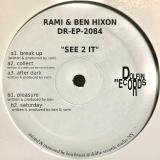
Ben Hixon heads up the Dolfin label, but it operates more as a collective of musicians with him at the centre orchestrating sessions, mixing, mastering and producing both solo and in collaboration with pals. For this one he has again linked with Rami for an immersive EP that traverses various tempos and rhythms. There's whimsical downtempo on 'Break Up', sparse soundscaping on 'Collect' and hurried deep house on 'After Dark' that burns with real late night intensity. 'Pleasure' gets more playful and extroverted in its rugged swing and 'Saturday' is a laidback soother. Another timeless EP.
Infinity EP is Devilish Affair at its core: deep house music crafted with elegance, a soundtrack for late-night minds and uncertain times. Devilish Affair returns with its sixth vinyl chapter: Infinity EP, a deeply personal and elegant statement from Alex V.
Born in Barcelona and shaped by the late-90s deep house spirit, Alex has spent decades refining a sound that feels both timeless and intimate, music built on warmth, subtle swing, and an unmistakable sense of romance.
glob deejay enters with ‘glob’. Presented on NAFF as a suite of naive club and dancefloor cuts engineered to take you to the otro lado.
glob deejay is the new club form from Stone Burletson, who has adopted the moniker after previous downtempo dealings under his government name. A globular shape now takes hold as a vehicle for Stone’s love of minimal house and ambient techno.
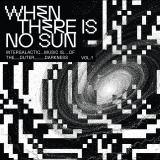
- A1: Underground Resistance - When Angels Speak Featuring Saul Williams
- A2: She Spells Doom - Portrait Of The Living Sky/Sun Ra Arkestra (She Spells Doom Remix)
- A3: Chez Damier & Ben Vedren- The Three Dimensions Of Air Featuring Anthony Joseph (H2H Kora Mix)
- A4: A Guy Called Gerald - Message To Black Youth Featuring Mahogany L Browne (Gerald Rework)
- B1: Ricardo Villalobos - I Have Forgotten Featuring Tara Middleton (Ricardo Villalobos Earlier Than Late Remix 1)
- B2: Calibre - Chopin Featuring Sun Ra Arkestra (Calibre Ambient Remix)
From Detroit’s techno resistance to Berlin’s elastic minimalism, Lusaka’s ancestral futurism to Chicago’s house communion, When There Is No Sun is a recording project, uniting visionary electronic music producers to reimagine the universe of Sun Ra. One of the most radical musical pioneers of the 20th century, Sun Ra used jazz, electronics, poetry, and performance to expand the possibilities of sound, identity, and imagination. Commissioned by Omni Sound and curated by Ricardo Villalobos, the series brings together Underground Resistance, Chez Damier & Ben Vedren, Calibre, A Guy Called Gerald, She Spells Doom, Barış K, and Ricardo Villalobos himself. Drawing from Omni Sound’s recordings of Living Sky by the Sun Ra Arkestra and My Words Are Music of Sun Ra’s poetry, the producers pull fragments of sound and text into their own creative orbits, passing through the portal that Sun Ra opened into a realm where the impossible is possible. Saul Williams, Tunde Adebimpe, Mahogany L. Browne, Abiodun Oyewole, Anthony Joseph and Tara Middleton are the featured voices that turn rhyme into rhythm and revelation into resistance Rooted in deep reverence for Sun Ra’s legacy, yet reaching forward as a living, generative force, When There Is No Sun is not a tribute but a continuum, balancing the pulse of electronic music with the spirit of experimentation, embodying Sun Ra’s promise that ‘there are other worlds’ if you are willing to see them.
Introducing the near-mythical Boyd Jarvis/Danny Krivit remix of Sade’s 1992 (LP-only) downtempo masterpiece ‘Couldn’t Love You More.’ Originally making the rounds in 2008, this release finally sees the light of day in a completely remastered and sonically optimized 12" version for RSD 2026. Mr. K combines the irresistibly flawless qualities of the original with Jarvis’s epic keyboard jam, extending it into a magnificently evolving fourteen-minute dancefloor classic. Crucially, for those who were able to get their hands on the first issue of this rare gem, the sonic faults that marred that pressing have been completely eliminated, and we can finally hear this rework as it was intended by Mr. K and the late, great house legend Jarvis himself. With a lengthy instrumental on the flip side, this twelve-inch single is fully primed for warm ups, late nights, balearic beach sets or anywhere you want to just want to bask in the warm chords and lush arrangement of a true modern RnB classic.
- A1: Sweet Potato Gravy Maurice Simon & Pie Men
- A2: Mmm Mmm Mmm Dave Lewis
- A3: Sorry ‘Bout That Harold Johnson Sextet
- A4: Sophisticated Funk John Roberts
- A5: Chittlin' Salad The Soul Runners
- A6: Hijack Jackie Hairston
- A7: Whip You Little Charles Whitworth
- A8: The Shing-A-Ling Thing The Naked Truth
- B1: I Can't Afford To Lose Him Sound Stage House Band
- B2: Sunny Jerome Richardson
- B3: Bucket O Grease Les Mccann
- B4: Cornbread And Buttermilk Leon Haywood
- B5: Dead The Mark Ii
- B6: The Skrooch Little Eddie
- B7: Flunky Flunky The Soul Set
- B8: Mother Blues Gene Ludwig
- A1: Les Masques - Il Faut Tenir (1969)
- A2: Isabelle Aubret - Casa Forte (1971)
- A3: Christianne Legrand - Hlm Et Ciné Roman (1972)
- A4: Jean Constantin - Pas Tant D'chichi Ponpon (1972)
- A5: Billy Nencioli & Baden Powell - Si Rien Ne Va (1969)
- B1-: Marpessa Dawn - Le Petit Cuica (1963)
- B2: Jean-Pierre Sabar - Vai Vai (1974)
- B3: Sophia Loren - De Jour En Jour (1963)
- B4: Isabelle - Jusqu’à La Tombée Du Jour (1969)
- B5: Sylvia Fels - Corto Maltesse (1974)
- C1: Frank Gérard - Comme Une Samba (1972)
- C2: Ann Sorel - La Poupée Des Favellas (1971)
- C3: Charles Level - Un Enfant Café Au Lait (1971)
- C4: Andrea Parisy - Les Mains Qui Font Du Bien (1970)
- C5: Audrey Arno - Quand Jean-Paul Rentrera (1969)
- C6: Aldo Frank - T’as Vu Ce Printemps (1970)
- D1: Christianne Legrand - Cent Mille Poissons Dans Ton Filet (1972)
- D2: Clarinha - Lemenja (1970)
- D3: Hit Parade Des Enfants - Aquarela (1976)
- D4: Jean-Pierre Lang - Tendresse (1965)
- D5: Magalie Noël - Une Énorme Samba (1970)
- D6: Françoise Legrand - La Lune
Ever since the late 1950s bossa-nova revolution, Brazil’s influence on French music has been undeniable. Pierre Barouh, Georges Moustaki and a vast array of lesser known artists, all made the Musica Popular Brasileira (MPB) an axis of promotion at the service of a cool and metaphysical, modern and mixed Brazilian lifestyle. Some were seduced by the poetic languors of the bossa, some were looking for fun, and others just loved the American hybridization of jazz-bossa, jazz-samba.
What is bossa nova? One of its creators, Joao Gilberto said: "Its style, cadence, everything is samba. At the very start, we didn't call it bossa nova, we sang a little samba made up of a single note - Samba de uma nota so .... The discussion around the origins of bossa nova is therefore useless”. It is nevertheless useful to remember that these magnificent Brazilian songs, which the guitarist describes as samba, were shifted and balanced around improbable chords. "I like things that lean, the in-betweens that limp with grace," said Pierre Barrouh, quoting Jean Cocteau.
With emotion, arrangements for violin and supple guitar licks, bossa nova rapidly changed. A transformation that can be heard in the Tchic, tchic, French Bossa Nova 1963-1974 compilation, the result of a cultural reappropriation, which traveled through the United States and supplemented itself in France.
A musical revolution that has remained significant, bossa nova was born in Rio. From 1956 to 1961, Brazil lived through its golden years. In five years, the country had invented its modernist style. Elected president in 1956, Juscelino Kubitschek de Oliveira, an elegant man with a broad forehead, brandished a promising slogan: "Fifty years of progress in five years". He quickly got to work. Not worried about increasing debt, he launched the project for a new federal capital, Brasilia, designed by the communist architect Oscar Niemeyer. Volkswagen opened state-of-the-art factories and created the “fusquinha”, the Beetle. In Rio, the Vespa made its first appearance. The Arpoador Surf Club crew run into the “girl” from Ipanema, Helô Pinheiro - the tanned garota ("chick"), between a flower and mermaid, who at 17 walked by the Veloso bar, where the fiery author and composer, Tom Jobim and Vinicius de Moraes, were getting drunk on whiskey. From then on, bossa symbolized cool.
In 1958, Joao Gilberto recorded Chega de Saudade, which the directors of Philips denied, calling it "music for fagots". The marketing director, who believed in it, secretly pressed 3000 78-inch vinyls and distributed them at schools around Rio, creating a tidal wave.
American jazzmen then took over. In particular, trumpeter Dizzy Gillespie and guitarist Charlie Byrd. In November 1962, the Brazilian Ministry of Foreign Affairs funded a "Bossa-Nova" concert at Carnegie Hall in New York, inviting the genre’s pioneers. Unprepared, the show soon turned to disaster. But the troupe was invited to the White House by Jackie Kennedy. The first lady loved "the new beat" and in particular Maria Ninguem, a song by Carlos Lyra, later covered by Brigitte Bardot.
In Brazil, the 1964 military coup quickly ended this euphoria. The destructive atmosphere that ensued pushed many Brazilian musicians to leave, if not to exile. Thus, Tom Jobim, Sergio Mendes and Joao Gilberto arrived to the United States. In New York, Joao Gilberto met saxophonist Stan Getz. At the time, he was married to the Bahianese Astrud Weinert Gilberto, who had a German father. She had never sung before, but she knew how to speak English. Getz therefore asked her to replace her husband on The Girl From Ipanema. The Getz/Gilberto record with Tom Jobim on piano, was released in March 1964. Phil Ramone, the "pope of pop" was in charge of sound.
Bossa nova arrived in Paris through the classic “guitar-voice” channel (Pierre Barouh, Baden Powell, Moustaki…) But France loved jazz and Paris had already welcomed its American contributors. All these good people were to pass through Saint-Germain-des-Prés. The cabaret l'Escale became the Mecca of Latin American sound where one could find Pierre Barrouh and his friends, such as the Camara Trio, samba-jazz aces, whose only record was published by the Saravah label. With a band strangely called Les Masques (a band that included Nicole Croisille and Pierre Vassiliu, among others), the Camara Trio recorded an interesting Brazilian Sound, including the track Il faut tenir which is present on this tasty compilation of rarities.
Other enlightened musicians can also be found on the compilation, such as Jean-Pierre Sabar (songwriter for Hardy, Auffray, Leforestier ...) and the French pop rock organist Balthazar. In 1975, Sabar recorded Aurinkoinen Musiikkimatka on a Finnish label, which featured the crazy Vai, Vai, included on this record. We are now following the footsteps of Brazilian electronic musicians such as Sergio Mendes, Eumir Deodato or Marcos Valle who created funk and disco sounds on their keyboards and synthesizers. A style that influenced Véronique Sanson when she wrote Jusqu’à la Tombée de la nuit in 1969 for Isabelle de Funès, the niece of Louis and a great friend of Michel Berger - Sanson did end up singing this track on her 1992 Sans Regret record.
The pinnacle of exoticism and travel, Sylvia Fels’ Corto Maltese includes bongos, sea mist and ocean sounds. The title was taken from Jacky Chalard’s concept album written in 1974, Je suis vivant, mais j’ai peur (I am alive, but I am scared), based on Gilbert Deflez’s science fiction novel.
However, bossa nova extended the scope of popularity. "In the 1970s, I was a fan of Sergio Mendes, Getz / Gilberto. I fell in love with this music that I knew because I had been an orchestral singer, " explained Isabelle Aubret, who in 1971 delivered a composite record of covers by the very funky Jorge Ben, Orfeu Negro, Tom Jobim, Vinicius de Morais and Jean Ferrat. "I recorded this album for Meys Records in Paris, far from Brazil, with wonderful musicians, François Raubert, Roland Vincent, Alain Goraguer...". The latter wrote the arrangements for Casa Forte, a very percussive title borrowed from Edu Lobo, one of the initiators of the bossa who spent time in California. "Jazz and bossa came together and produced very rhythmic music. I love singing, it allows me to dream, to have fun, to feel a high on stage, and these songs brought me joy, made me swing, my singing felt like a dance.”
The world tours of French singers and their desire for the tropics, often brought them to Rio with its hills, forests, caipirinhas and tanned bodies. There are surprises though, like this Iemenja (Iemenja is the goddess of the sea in the Afro-Brazilian candomblé religion). Not unlike the composer and musician Jean-Pierre Lang, based in Sao Paulo, Claire Chevalier taught Brazil to Brazil. In 1970, the singer and painter published a 45-inch vinyl, Mon mari et mes amants (My husband and my lovers), under the improbable pseudonym of Clarinha (little Claire). She was then living in Rio, with her husband, Joël Leibovitz, who founded a band called Azimuth, and who owned a record label specialized in "sambas enredos" songs for samba school parades.
For its B side, she asked Pierre Perret to come up with lyrics for a song composed by Carlos Imperial: "Oh goddess of the sea, o goddess Iemenja, I bring a white rose to adorn your long hair ..." . "Perret came to see us, and we had fun, remembers Joël Leibovitz. We wrote Lemenja for fun, we recorded it at the Havaí studio, behind the Central do Brasil the central station. Erlon Chaves, the arranger who worked with Elis Regina, joined us" adding his share of Afro-Brazilian percussions and funky brass to the mix.
There is a common misunderstanding in Franco-Brazilian history: that bossa, admittedly hedonistic, is perceived as funny, even though the poets who wrote the texts are often philosophizing on the human condition. Its French interpreters pull it towards a carnival inspired universe, far removed from its fundamental essence. Thus, Jean Constantin covered the famous Samba da minha terra, an ode to the art of samba written by the classic Bahian composer Dorival Caymmi, renaming it with the enticing title of Pas tant de tchi tchi pompon: "On your pier there is no tchi tchi / when you arch your back, you know everything is alright ”(lyrics by Gérard Calvi). This expedited bossa aims for the absurd, but retains a certain elegance.
Indeed, Jean Constantin was not an idiot, the rather large man had a huge mustache and liked fantasy, (Les pantoufles à papa, Le pacha, inspired by cha-cha-cha-cha, salsa and jazz) but he was also the lyricist of Mon manège à moi interpreted by Edith Piaf, the composer of Mon Truc en plume by Zizi Jeanmaire and the soundtrack of François Truffaut’s 400 Blows. Le Poulpe, published in 1970, from which this bossa is extract, was arranged by Jean-Claude Vannier, an accomplice of Serge Gainsbourg’s Melody Nelson. In short: "There is enough of samba / By looking at the parasol / Because my poor cabeza / Is going to die in the sun".
Even the American actress Marpessa Down, who was at the heart of the bossa nova revolution with her role as Euridyce in Marcel Camus’ film Orfeu Negro, winner of the 1959 Cannes Palme d'or, fed the clichée with Je voudrais parler au petit cuica - "Tell me how you manage to always make people want to dance / It's true, I must admit that I cannot resist your magic" - in consequence, once can hear the cuica, a little drum inherited from the Bantu.
But bossa nova had many angles. Societal, of course, pushing actresses who were symbols of women's liberation like Brigitte Bardot, Jeanne Moreau, or Sophia Loren to engage in the exercise of accelerated bossa. In February of 1963, Sophia Loren made a record in French in Rome, Je ne t'aime plus, featuring the song De jour en jour, a bossa written by two Italians, Armando Trovajoli and Tino Fornai, which was released a little later by Barclay. Bossa accompanied the 1960s, a decade of moral liberation. Ann Sorel, who interpreted La Poupée des favellas, caused a sensation with L’amour à plusieurs, a provocative song written by Frédéric Bottom and Jean-Claude Vannier. As for the actress Andrea Parisy, she displayed her bourgeois cheekiness in Marcel Carné's Les Tricheurs before interpreting Les mains qui font du bien. And Magalie Noël, the friend of Boris Vian, who sung Johnny fais-moi mal, was hired to sing Une énorme Samba, composed by Alain Goraguer (arranger to Gainsbourg, Bobby Lapointe and Jean Ferrat) with lyrics by Frédéric Botton.
But in the end, of what wood is bossa nova made of? The answer is given by Christianne Legrand, daughter of Raymond the conductor, and sister to Michel the composer: "With me, with jà" - jà means "immediately" in Portuguese. In 1972, the singer, an expert in vocal jazz and a member of the Double Six, published Le Brésil de Christianne Legrand. Two songs included on the Tchic Tchic compilation that demonstrate how bossa, jazz, funk, rock, etc. work like a swiss army knife: the music is used to denounce broken systems, or miracles, HLM et ciné roman, Cent mille poissons dans ton filet, two songs from the O Cafona soundtrack, a successful telenovela broadcast, at the time in black and white, on TV Globo. The first was adapted in French by the fighter and friend of the Legrand tribe, Agnès Varda. The second is content with a play on words, jostling them into a summer fun.
Véronique Mortaigne
Krystian Shek & Milly James return with Never Ending on Cinta Gara, and it feels like a natural next step after the beautiful impact they made with their standout Greyscale release, a record that firmly positioned them in the deeper, more immersive corner of dub-driven electronic music. With Never Ending, the duo continue to refine that signature feeling: warm, hypnotic, deeply musical, and full of emotion. This is music that moves with patience and confidence, rooted in dub house, but carried by a timeless house sensibility that makes it equally powerful at home, in the club, or in those early-morning moments when everything locks in.