Truly nuts and really kind of essential... the Starship Commander had his whole approach to the Synthesiser Voice technique. B-Boys/Girls delight. Check the instrumental cut, Mastership - a head nod synth voyage of the highest order. Limited copies. TIP!
.
'How are you doing, Earthling' That's how Omer Coleman, Jr. addressed his public in the 80s, driving around Kansas City, Missouri in the electric space-car built especially for his alter ego Starship Commander Wooooo Wooooo.
Left Ear Records went back to Coleman's original master tapes for their vinyl reissue of the Commander's 1981 private press album Mastership, a lost electronic funk classic. Coleman performs in an alien voice that comes not from electronic filtering but from his own natural vocal distortions. This visitor from Mars wants people to be happy and, like his song goes, 'Laugh and Dance.' It's an endearing and very personal space-age funk that blends George Clinton and Kraftwerk in a vision of a better and happier world.
Born and raised in Kansas City, Coleman was musically inclined from an early age. His parents couldn't afford to buy him a real drum for orchestra, so he took up electrical wiring and wood shop instead, which fed his muse in a different direction. Omer built enormous speaker cabinets. In the late '70s he was a DJ, and ran a Mobile Disco business that took him across the country, hosting parties. After a trip to California, he came back to Kansas City inspired to dress up as Commander Wooooo Wooooo.
The future commander began working at the Armco Steel Mill in Kansas City when he was 18. He was inspired by older machinists who demanded perfection in their work and in their character. It was while he was working at the steel mill that Coleman came up with Starship Commander Wooooo Wooooo. One day coworker John Manley came up to Coleman with a vision of an electric car, and built it. His coworkers built all of his equipment, from lighting and fog machines to big steel eyeglasses. Coleman's sister, a seamstress, created his outfits.
Coleman started his own label in 1985 but took some time off from music to raise his children, and when they came of age his son recorded with Coleman as a gospel vocalist. When his son was killed in an auto accident in 2004, it took something out of him, and he stopped making music. But he's starting to get the feeling again.
Now 62, he's currently enjoying his retirement from a long stint with the IRS. The former Commander is in the middle of a house project where he's using metal ceiling tiles to line his walls. It's starting to look like a spaceship. Coleman promises, 'There is a real good possibility that we have not seen the last of Starship Commander Wooooo Wooooo!
Pat Padua'
Search:house of people
Javonntte Detroit native producer is delivering here 4 tracks of house music for Attias brothers label. The a side contains 2 versions of a killer soulful vocal track « Searching « with his typical voice and repeating technique to get to a certain soul mantra in your head and certainly your legs ! On the flipside you have 2 rough and funky instrumental house nuggets . 2 tunes to make people dance . 2 rolling house numbers in the tradition of dirty Detroit underground dance tracks. I hope you'll enjoy as much as we do , its aimed to the dancefloor. Stay tuned we will also soon release a collaboration between Alex Attias and Javonntte
Vinyl edition of Stars of the Lid 2nd album in print for the first time in over 20 years.
The release of Music for Nitrous Oxide, the 1995 debut album by Stars of the Lid, heralded a new strain of the american underground music scene, one borne of the heat and humidity, boredom, and the insular, constipated, rockist music scene of Austin, Texas, the home of the duo of Brian McBride and Adam Wiltzie. It was a muffled lashing out against surrounding musical conventions, a small middle finger to the local dominant americana' scene, but one that nobody could see outside the shack of a house in which they recorded or at their occasional sparsely populated live performances. It was as punk a move as anyone could make at that place and in that time. But in a surprise to the two members of SotL, people took notice, as related rumblings and grumblings were taking place simultaneously in other parts of the american landscape.
Coming quickly on the heels of that release was our current subject, Gravitational Pull vs. the Desire for an Aquatic Life, released one year later. This is a transitional release that travels from the scruffiness of the debut's ambiance to more extended and subtle undulating tides of assembled sound, yet still dominated by processed guitars as the primary sound source. It also serves as an omen to the mini-orchestral works to come beginning with the Avec Laudenum album a few years later. Gravitational Pull... is a small masterpiece.
Limited Edition Clear Vinyl
Includes 12' Vinyl and Deluxe CD album, 30 page hard back book
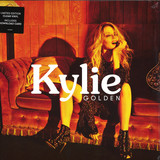
Now that I've been to Nashville,' Kylie Minogue says with audible affection, I understand. It's like some sort of musical ley-line...'
Golden, Kylie's fourteenth studio album, is the result of an intensive working trip to the home of Country music, a city whose influence lingered on long after the pop legend and her team returned to London to finish the record: We definitely brought a bit of Nashville back with us,' she states. The album is a vibrant hybrid, blending Kylie's familiar pop-dance sound with an unmistakeable Tennessee twang. It was Jamie Nelson, Kylie's long-serving A&R man, who first came up with the concept of incorporating a Country element' into Kylie's tried-and-trusted style. That idea sat there for a little while, with Minogue and her team initially unsure about how to bring it to life. Then, when Grammy-winning songwriter Amy Wadge's publisher suggested Kylie should come over to collaborate in Nashville, a city Kylie had previously never visited, something clicked. You know when you're so excited about something,' she recalls, that you repeat it an octave higher and double the decibels I was like that. 'Nashville! Yes! Of course I would!'. I hoped it would help the album to reveal itself. I thought 'If I don't get it in Nashville, I'm not going to get it anywhere.''
Kylie's Nashville trip involved working alongside two key writers, both with homes in the city. One was British-born songwriter Steve McEwan (whose credits include huge Country hits for Keith Urban, Kenny Chesney and Carrie Underwood), and the other was the aforementioned Amy Wadge, another Brit (best known for her mega-selling work with Ed Sheeran). It was then a truly international project: Golden was mainly created with African-German producer Sky Adams and a list of contributors including Jesse Frasure, Eg White, Jon Green, Biff Stannard, Samuel Dixon, Danny Shah and Lindsay Rimes, and there's a duet with English singer Jack Savoretti.
However, the album's agenda-setting lead single Dancing was, significantly, first demoed with Nathan Chapman, the man who guided Taylor Swift's transition from Country starlet to Pop megastar. If anyone knows how to mix those two genres, Chapman does. Nathan was the only actual Nashvillean I worked with. He's got a huge studio in his house, which is probably due to his success with Taylor... there's plenty of platinum discs of her, and others on his walls.' There's something of the spirit of Peggy Lee's Is That All There Is, of Dylan Thomas' Do Not Go Gentle Into That Good Night, even of Liza Minnelli's Cabaret about Dancing, a song which not only opens the album but sets out its stall, providing a microcosm of what is to come. You've got the lyrical edge, that Country feel, mixed with some sampling of the voice and electronic elements, so it does what it says on the label. And I love that it's called 'Dancing', it's immediately accessible and seemingly so obvious, but there's depth within the song.'
The experience of simply being in Nashville was an overwhelming one, before Kylie had even arrived. Once I knew I was going to Nashville, people talked about the place with such enthusiasm. They said without doubt I would love it and, I would come back with songs. They were sending lists of restaurants, coffee shops and bars. It really was a beautiful and genuine response and it felt like I was about to have a life changing experience and in a way, I did.' The reality came as something of a surprise, when she found a far more modern metropolis than the vintage one she'd envisaged. I thought it would be like New Orleans: little houses and bars, with music spilling out onto the street. It reminded me more of Melbourne: apartment blocks going up everywhere! The main strip, Broadway, where the honky tonk bars are, that's where the street was filled with music and it was just amazing.' Mainly, Minogue remembers the heat and humidity. It was 100 degrees. It was like it was raining with no rain.' She also relished the chance to wander around unrecognised, visit a few venerable music bars and soak in the atmosphere. I didn't get to the Grand Ole Opry or the music museums but I managed to go to a couple of the institutions there like The Bluebird Cafe and The Listening Room, and just by being there, through some kind of osmosis, you get this rejuvenated respect for The Song, and the writing of The Song. There's no hoo-hah around it. There's a singer-songwriter there, talking about the song and singing the song, to an audience who are there to listen. Although, I have to confess I was guilty of starting to clap too soon during a long pause at the end of one of the songs. The guy made a bit of a joke out of it and got a laugh from it, but I thought 'Of all people in the audience, no...''
It's probably no coincidence, therefore, that every track on Golden is a Kylie co-write, making it arguably her most personal album to date. The end of 2016 was not a good time for me,' she says, referring to well-documented personal upheavals, so when I started working on the album in 2017, it was, in many ways, a great escape. Making this album was a kind of saviour. I'd been through some turmoil and was quite fragile when I started work on it, but being able to express myself in the studio made quick work of regaining my sense of self. Writing about various aspects of my life, the highs and lows, with a real sense of knowing and of truth. And irony. And joy!'
The songwriting process allowed Kylie to get a few things out of her system. Initially, she admits, it was cathartic, but it also wasn't very good. I think I was writing too literally. But I reached a point where I was writing about the bigger-picture, and that was a breakthrough. It made way for songs like Stop Me From Falling and One Last Kiss. It also meant I had enough distance to write an autobiographical song, like A Lifetime To Repair, with a certain amount of humour. The countdown in that song: 'Six-five-four-three, too many times...'. I don't know if that will be a single, but I can just imagine a girl with framed pictures of past boyfriends, and kind of going 'Oh god, when am I going to get this right'' When she listens back to Golden, Kylie can vividly hear the Nashville in it. It is, she'll agree, probably the first time that a Kylie album has sounded like the place it was made. You wouldn't normally relate my songs to the cities. Can't Get You Out Of My Head sounds more like Outer Space than London. But Shelby '68, for example, was written in London but it was done with Nashville in mind. It's about my Dad's car, and my brother recorded Dad driving it! I don't think I'd have written a number of the songs, including Shelby '68 and Radio On without having had that Nashville experience.'
The latter, she says, is about music being the one to save you.' Throwing herself into the making of the record, she says, crystallised that idea. If there's one love that will always be there for you, it's music. Well, it is for me, anyway.' That song, in particular, carries nostalgic echoes of the golden age of Country, as heard through Medium Wave transistors and tinny home stereos in the distant past. Like any child of the Seventies, Kylie had a basic grounding in Country music, mainly absorbed from older family members. My Step-Grandfather was born in Kentucky and though he lived most of his adult life in Australia, he never stopped listening to his beloved Country artists.' If there's any classic Country singer whose imprint can be heard on Golden, it's Dolly Parton.
Kylie saw Dolly live for the first time at the end of 2016, at the Hollywood Bowl. It was like seeing the light,' she beams. It was incredible. Everyone, whether they know it or not, is a Dolly Parton fan. When I was in Nashville, I did pick up a T-shirt that said 'What Would Dolly Do' Maybe that should be my mantra.' And, whether consciously or otherwise, there's a timbre and trill to Kylie's vocals on Radio On that is distinctly Parton-esque. My delivery is quite different on this album,' she says. A lot of things are 'sung' less. The first time I did that was with Where The Wild Roses Grow. On the day I met Nick Cave, when I recorded my vocals, he said 'Just sing it less. Talk it through, tell the story.' This album wasn't quite to that extreme, but a lot of the songs were done in fewer takes, to just capture the moment and keep imperfections that add to the song. I remember on my last album, a lot of producers were trying to take out literally every vibrato they heard. And that's not natural to my voice. I mean, I can make myself sound like a robot, but it's nice to sound like a human!' Working within the Country genre also gave Kylie permission to write in the Nashville vernacular. Because we were going there, I wasn't afraid to have lines like 'When he's fallen off the wagon we'd still dance to our favourite slow song', 'Ten sheets to the wind, I was all confused', 'I'll take the ride if it's your rodeo'. The challenge of bringing a Country element to the album made the process feel very fresh to me, kind of like starting over. I started to look at writing a different way, singing a different way.'
If ever Kylie lost confidence in the Country-Pop concept, and found herself pondering This is great, but back in the real world - my real world - how will this work', Jamie Nelson was there to badger her into sticking to the path. We found a way to make it a hybrid with what we'll call my 'usual' sound. It had to stay 'pop' enough to stay authentic to me, but country enough to be a new sound for this album. The closer we zoomed in, and the more we honed it, I knew Jamie was right. We sacrificed good songs that weren't right for this album, because we wanted it to be as cohesive as possible. The songs that were hitting the mark were these ones, so we decided to be strong, and that's how we wrapped up the album. What he said, that stuck with me, was that 'I'd hate to get to the end of this and really wish we'd gone for it.'' Having worked with Kylie for so long, Nelson was able to put this latest shift of direction into perspective. He said 'You've traditionally done it throughout your career. You had your PWL time, then you did a complete turn when you went to deConstruction, then another complete turn with Spinning Around, and R&B dance-pop, and then another turn with Can't Get You Out Of My Head, icy synth-pop, and this is another one.' He was right. It felt like the right time to have a change sonically. New label, new stories to tell, and a new decade almost upon me.'
Kylie Minogue will, it's scarcely believable, turn 50 this year. This looming milestone is partly behind the album's title, and title track. I had this line that I wanted to use: 'We're not young, we're not old, we're golden' because I'm asked so often about being my age in this industry. This year, I'll be 50. And I get it, I get the interest, but I don't know how to answer it. And that line, for my personal satisfaction, says it as succinctly as possible. We can't be anyone else, we can't be younger or older than we are, we can only be ourselves. We're golden. And the album title, Golden, reflects all of this. I liked the idea of everyone being golden, shining in their own way. The sun shines in daylight, the moon shines in darkness. Wherever we are in life, we are still golden.' One of the album's shiniest moments is Raining Glitter, an exuberant banger which ventures closest to Kylie's traditional dance-pop comfort zone. Eg White, who is one of the producers and writers and a great character, was talking about disco one day. I said 'I love disco, but you know the brief.' We needed to be going down the Country lane, so to speak. But we managed to bring them both together. When I wrote it, I was thinking about the Jacksons video for Can You Feel It where they're sprinkling glitter over everyone. And I think there's a Donna Summer record that's got that feel to it. I think that's my job: I basically leave a trail of glitter after every show I do anyway.'
Kylie is looking forward to the challenge of incorporating the Golden material into her live shows. Mixing these songs in with my existing catalogue is going to be fun. And it could be fun to do some of those songs with just a guitar. It'll make my acoustic set interesting...'Her incredibly loyal fans - to whom one Golden song, Sincerely Yours, is intended as a love letter' - will, she believes, have no problem with her latest stylistic shift. My audience have been with me on the journey, so I shouldn't be afraid that they won't come with me on this part. I've had fun with it, and I'm sure they will too.'
The time spent making Golden has, Kylie says, been a time of creative and personal renewal. I've met some amazing people, truly inspiring writers and musicians. My passion for music has never gone away, but it's got bigger and stronger.' And if there's an overriding theme to the record, it is one of acceptance. We're all human and it's OK to make mistakes, get it wrong, to want to run, to want to belong, to love, to dream. To be ourselves.'
I was able to both lose and find myself whilst making this album.'
It was chance that brought about the release of One/Three, Dabrye's debut album. Early demos were tucked on the B side of a cassette Tadd Mullinix passed to Sam Valenti in 2000 while working at the Dubplate Pressure record shop in Ann Arbor. Mullinix had spent the late '90s producing jungle, techno, house, hip-hop and more using the All Sound Tracker software as a primary instrument. Each style pulled from a similar sound palette as Mullinix used limitations to define the contours of di-erent musical personalities. Dabrye was his hip-hop wildstyle, a captivating collage of sparse instrumentals inspired by the laid back vibes of midwestern hip-hop and east coast boom bap, the futuristic funk of Umma-era Jay Dee, and the calculated subtlety of Detroit dance music. Released in 2001 as the first in an intended trilogy, One/Three announced Dabrye's arrival with an unavoidable contribution to Detroit hip-hop. Ghostly International is reissuing the album in 2017 for the first time, including a long overdue vinyl edition.
On its release One/Three was the rare album that appealed to both fans of Slum Village's smooth yet rugged hip-hop and enthusiasts of the distinct American IDM released by labels like Schematic. Over the following decade, the inadvertent demo submission turned into a body of work that placed Dabrye alongside innovators such as Prefuse 73 amid the cannon of a new generation of producers. Today, One/Three remains a concise and intriguing study in instrumental hip-hop that helps join the dots between J Dilla and Flying Lotus.
One/Three is a record that says much with little. There are no obvious hip-hop tropes. Instead Mullinix captures the ingenious minimalism of '90s hip-hop instrumentals to build tracks both supple and hard, joyous and melancholy, full of sharply angled rhythms and warm rubbery basslines: 'The Lish' throws a sickly sweet saxophone against digitally fragmented melodies, 'How Many Times (with this)' draws you in with an irresistible, clipped guitar groove, the rhythmic stutter of 'Smoking The Edge' makes your head spin with pleasure. Playing with his inspirations, Mullinix injects omitted downbeats for imagined rhymes and repurposes the intricacy of ragga jungle for breakdowns.
But what really defines One/Three is the rhythmic sensibility and metric modulation of Detroit's school of hip-hop production, which Mullinix was a fervent student of. The beats feel like they're constantly escaping a rigid tempo grid even though they are, in fact, pretty tight. A lot of it is nuance,' Mullinix explains. I've been known to say that I'm not impressed by spectacle. I think that nuance is what really captivates people.'
If you like your beats with a dash of class, do not miss this. An essential purchase of the highest order.' -BBC
- First time all tracks from the original 2001 release appear on vinyl.
- Remastered by Daddy Kev
- Standard weight black vinyl is inserted in to 3.5mm matte finish vinyl jacket.
- Download card includes free download of the Payback EP
Alex Kolodziej was born in Poland and raised in Cologne, Germany. Since he moved to Vienna in 2008 for a degree course in psychology, he immediately checked out the austrian capitols nightlife and got involved with several people from the scene. During the 2010s he was one of the most booked djs for techno and house events in the city, and was also a staple of the cult venue Ochsenfrosch. Although he produces electronic music since 14 years, only a few tracks came out officially via various digital labels. Partygoers heard the majority of his unreleased work only at his rare live performances. After a long hiatus and several harddisk crashes, it is a pleasure for us to announce that he finally makes his comeback on forTunea with his first vinyl release!
Tech House is a genre that has been spoilt over the last 10 years. While most of them follow the cookie-cutter-aproach, Alex' - Workaholic dives in psychedelic sounding rhythm collages, that captures the hectic daily routine in modern society. - Slacker Attitude might be a slow-paced tune, but it's extraordinary drum patting and trippy atmosphere lets you forget that it's only 112 bpm fast. Last but not least, Peletronic contributes a late night dub treatment of the latter. Coming soon in a record store near you!
LIMITED TO 300 COPIES -- Mastering by Patrick Pulsinger
Alien Ensemble's trombone man Mathias Goetz caused quite a splash when he released his eponymous debut LP under his Le Millipede moniker back in 2015: The multi-instrumentalist's initial offering was clearly something else, impossible to grasp, a musical vessel beyond genre, beyond style or era, seemingly beyond space and time even, a vessel that carried an almost cosmic kind of song-craft - music with no fixed stamp of origin, though it did somehow feel like an Alien Transistor release. Followed by remix album Mirror Mirror, which comprised reworks by 1115, Protein, LeRoy, Olaf Opal, and Saroos, to name a few, it's now time for album #2: The Sun Has No Money.Let's face it: There's nothing as majestic as the sun. At least not in our world. If it runs out of juice one day, it's game over: The End. Light's out. For everyone. At that point, it wouldn't even matter if you're rich or poor. We're all equal under the sun. Same level. And yeah, this might not be major news, but then again... we're talking about the sun. The sun! Guess it's about time to acknowledge its power and superiority, right In fact, you can feel it on your bicycle: pedaling at night, when it's on duty in other hemispheres, and you're working hard at the dynamo, sweating, you can actually feel how powerful it is. In the end you get off the bike all recharged, a tune on your lips - and somehow feeling like a miniature version of the sun yourself. And whenever you feel like that, that's exactly the right moment to grab a melodica and get to work.Following an initial warm-up round sans electricity, this new album soon begins to glow: Mathias Goetz aka Le Millipede doesn't need pedals, he boosts circulation by single-handedly* playing tons and tons of different instruments - it actually feels like thousands, easily. And thus begins a show that has countless levels to it: There are various sonic illusions... and yet Le Millipede doesn't hide anything: He's also willing to show the inner workings, the actual recording process and everything else. In short: he goes meta. Makes songs about making songs. That's right: why not use all these beautiful means to address the issue of money It's not the sun that casts shadows, all it does is recharge, fuel: growth & thriving, that's the sun's area of responsibility. And yet there came a man whose plan was simple: steal the fruit from your garden, only to sell it right back to you, for money. We can hear the sea gulls crying in the distance, as somebody is throwing breadcrumbs up into the wind that carries their voices...It's not the sun that casts shadows - all it does is radiate light. And yet there came a time when someone blocked those rays of light. Now if you're some kind of Diogenes, you'll simply say, Move at least a little out of the sun.' But if you're a teacher, you'll maybe light up your pipe and use that to lighten up. What matters is that the percussion parts, in this case, resemble some serious musique concréte. The sun doesn't know shadows - all it knows, is itself. And yet somebody entered the picture and built an entire city. A city full of streets, so that houses can cast shadows into these avenues. Plus, there's music in the streets, music originally written inside the walls of said houses.One of those streets is known as the Tin Pan Alley: a place that got its name from a music writer who compared the sound of so many pianos to the banging of tin pans. That sound: that's one side of the road that is this album. Some of these melodies appear to be shadows of earlier tunes, dating back to, say, 1898 or even before that, melodies that were first registered in the Tin Pan Alley publishers' offices back in 1912 or 1917. We actually get to see this Alley at that point in time. We see the ropes, the workings. How things come together, the actual act of creation. Suddenly, we can hear the shadows!
Okay, so one side of this street is America. The US of A. The opposite side: Russia. And smack dab in the middle: Europe. A pothole in the center. All the back-and-forth that occurs between these two poles ultimately depends on the movement of the sun. Night and day, taking turns, commuting in and out of sight. We get to meet Prokofiew's and Scriabin's ghost, among other spirits, reframed and published by Le Millipede's own imaginary label imprint on the historic Tin Pan Alley. Indeed there are moments on this album when Le Millipede seems to be playing Scriabin's clavier a` lumie`res (tastiera per luce), when his performance seems to be based on synesthesia, a wild cross-pollination of colors and sounds. In case you didn't know this: In the States, Prokofiew goes by the name Brian Wilson, and Scriabin's also known as Sun Ra - yet another guy who's usually broke, but gets to spend a lot of time out in the sun. Together, these assorted protagonists ask the people of the Antilles for Mutabor dance-tokens and send postcards to Moondog in Germany, right back into the darkness. On the postcards you can see people dancing the Biguine...Firing foreign fossil fuels from all pipes (Brennelementsteuer!), Le Millipede controls the very center of this hustle and bustle: going as far as to employ some southern Chopped & Screwed styles, he's 100% current and zeitgeisty! Houston, we've got a problem: there's some kind of myriapod, centi- or millipede on the loose! Well, give me another sip of lean, sizzurp, dirty Sprite, and on goes the journey in the Pullman coach. Let's follow the sun! Keep on moving, keep things motorik! Here comes the Trans-Eureka-Express. Cherish the backpacking days! A piercing rhapsody of sound (bohrende Rhapsodie), we'll remember them fondly! And thus things move on, the sun, the days, the earth: rise, set, action, round and round... onwards eternally. The sun: the biggest loop known to mankind. As if it was some kind of sonic Rube Goldberg contraption, time seems to be stretching out while listening to that hmmm. After all: time is a lot (a lot!) more than just money. And yeah, the sun is the real big shot on (or rather: above) Planet Earth. Le Millipede's live line-up also includes Markus & Micha Acher (The Notwist etc.), Nico Sierig (Joasihno), and Manuela Rzytki (G. Rag & die Landlergschwister, Kamerakino etc.).
*sole exception: Evi Keglmaier (Zwirbeldirn, Hochzeitskapelle) plays the viola. Words/sun worship: Pico Be
People Places & Things is the single project of Manchester born & London based Mike Checuti. Mike grew listening to a heavy mixture of horror & film soundtracks an equal dose of the early electro via the legendary Spin Inn records & then the hedonistic sounds of The Hacienda & the more underground Thunderdome nightclub.
Mike was encouraged to press ahead with the project after a visit to Los Angeles & spending time in the studio with Atticus Ross (Gone Girl & The Social Network soundtrack composer).
Treating Patient A is the first in a trilogy of releases by People Places & Things each pulling from the above mentioned influences but each EP having it's own variation whilst keeping the references points clearly audible along with People Places & Things own take of these sounds at the forefront.
People Places & Things along with Gabe Guernsey of Factory Floor have recently just composed the soundtrack for the latest film for the forthcoming Adidas Spezial range which commemorates 30 years of Acid house.
Artwork for each 12" is designed by Andrew Jackson & each sleeve is individually hand printed thus having its own unique imprint and limited to only 200 copies.
The press & publicity for the release and project as while will be handled by 'The Rest is Noise'
It's the big 5! Berlin - Frankfurt based label House Is OK is celebrating its five-year long presence and has decided to mark that period with something special Label's story started with a sticker Homeboy printed in his former hometown, Zagreb, saying House Is OK'. Catchy, right It became an underground slogan of the local scene. It didn't take long for people to embrace the idea stating that it's OK to be into melodic, fresh, groovy yet, at times, a bit awkward dance music.
Just around the same time Homeboy's Frankfurt based bro's Oliver Achatz and Janis played with the idea of starting a record label. Guess what the logical choice for the name was
Ten records, dozens of original songs and remixes later House is OK continues to grow.
Literally. What was once a platform for the original three founders is now an international family affair supporting the talented artists from Frankfurt, Stockholm, Alexandria and Orlando. Nurturing the friendly approach this musical family continues to grow.
Looking back at the first five years, not only at the music that connected them all but at the bonds that deepened through the production process, House is OK crew wanted to take
create a proper reminder and thank the ones supporting them throughout the years. A double 12' pack titled Gemišt' seemed like a proper way to do that.
- Gemišt will be released as two separate EPs featuring the original music from Kornél Kovacs, Roman Flügel, Gavri & McQueen, TCB, House Of Life and the label makers themselves. Oliver and Janis deliver tracks under their known names, while Homeboy
introduces his new project with fellow Wilde Renate resident The Swift, called Longhair.
Croatian artist Ugruv Smek marks his yearlong collaboration with the label delivering yet another smashing artwork.
Mark the upcoming February when Gemišt part I' is to be released and while you're at it, move on to March just so you don't miss the Gemišt part II' release. And yeah, in case you're wondering - of course it's both 12' EP release and in digital format. House is OK's got you covered.
Label boss Nachtbraker is finally making his solo debut on Quartet Series after a successful EP last year on Heist Recordings. Widely known for exploring different sounds and angles with his productions, this record is the most club-orientated to date. Intricate ghetto house with a slight French touch to straight up 4x4 with a pinch of jacking flavour would be an accurate description of this release. The use of 90's hip hop samples within this auditory concoction successfully highlights Nachtbraker's excellent ear for detail and penchant for exciting, eclectic and downright weird changeovers. The main hitter taking over the full A side is the title track 'Small Towel People". An uplifting bass line accompanied by heated 909 percussion and a hypnotic thriving arp to seal the deal. On the flipside, you'll find 'Kippendijen' on the B1. A heavyweight in the house category, some glimpses of early days jacking house and a little French touch on the filter. Throw in a breakdown even Houdini wouldn't be able to handle and you'll find yourself putting this track on repeat. Then when the needle hits the B2 groove, 'Zomaar' kicks off with an energetic mpc style breakbeat before morphing into a deep jam of lush chords and a thrusting 4x4 beat. The track closes after switching back to the first part of the record and ends in a sublimely deep and dubby breakbeat.
It's the big 5! Berlin - Frankfurt based label House Is OK is celebrating its five-year long presence and has decided to mark that period with something special Label's story started with a sticker Homeboy printed in his former hometown, Zagreb, saying 'House Is OK'. Catchy, right It became an underground slogan of the local scene. It didn't take long for people to embrace the idea stating that it's OK to be into melodic, fresh, groovy yet, at times, a bit awkward dance music. Just around the same time Homeboy's Frankfurt based bro's Oliver Achatz and Janis played with the idea of starting a record label. Guess what the logical choice for the name was Ten records, dozens of original songs and remixes later House is OK continues to grow. Literally. What was once a platform for the original three founders is now an international family affair supporting the talented artists from Frankfurt, Stockholm, Alexandria and Orlando. Nurturing the friendly approach this musical family continues to grow. Looking back at the first five years, not only at the music that connected them all but at the bonds that deepened through the production process, House is OK crew wanted to take create a proper reminder and thank the ones supporting them throughout the years. A double 12' pack titled 'Gemišt' seemed like a proper way to do that. - Gemišt' will be released as two separate EPs featuring the original music from Kornél Kovacs, Roman Flügel, Gavri & McQueen, TCB, House Of Life and the label makers themselves. Oliver and Janis deliver tracks under their known names, while Homeboy introduces his new project with fellow Wilde Renate resident The Swift, called Longhair. Croatian artist Ugruv Smek marks his yearlong collaboration with the label delivering yet another smashing artwork.
T-Coy's 'Cariño' - An all-time UK acid house classic from 1987. Fusing the industrial clicking and whirring of the UK's post-industrial landscape with the lush, melodic, balearic inspired piano lines of the white isle and sucking us all in in the process. A true masterpiece courtesy of Mancunians Mike Pickering, Simon Topping and the late Ritchie Close who's combined projects included Quando Quango, M-People, Annette, A Certain Ratio and more. It's truly hard to believe this record is 30 years old. It can easily stand shoulder to shoulder with anything being released today. The B-side 'Regret' is also an amazing, minimal slice of punk-funky 808 driven niceness. Super stripped back and with an innocent charm and poppy vibe it is the perfect foil to the latino house chaos of 'Cariño' on the other side. One could argue that the A-side will take you up, and the B-side will bring you down (In the best possible way!). This classic has been legally reissued by Above Board distribution in conjunction with the legal rights holders - Sony Music Entertainment. This high quality repress features original 1987 Deconstruction Records label artwork and has been remastered from Sony's original sources by Optimum Mastering, Bristol UK.
- A1: Coldcut Feat. Lisa Stansfield - People Hold On (Radio Edit)
- A2: Coldcut - Fat (Party & Bullshit)
- A3: Coldcut Feat. Mark E Smith - (I'm) In Deep
- A4: Coldcut Feat. Lisa Stansfield - My Telephone
- A5: Coldcut - Theme From "Reportage
- A6: Coldcut - Which Doctor
- B1: Coldcut Feat. Junior Reid - Stop This Crazy Thing
- B2: Coldcut - No Connection
- B3: Coldcut - Smoke 1
- B4: Coldcut Feat. Yazz - Doctorin' The House (Say R Mix)
- B5: Coldcut - What's That Noise
Spin your ears back to 1989 and enjoy the debut album of Coldcut once again! The bouncy good-time cut-up party people got started with What's That Noise, a particularly lively swirl of breaks, acid house and hip-hop. The guest vocalists on the album includes Lisa Stansfield, Queen Latifah and Mark E. Smith. Reissued by Sony.
11 track album on standard black vinyl with download code insert
- A1: Love Love Love
- A2: Carnival (Feat. Shermar)
- A3: Work It Out (Feat. Fritz Helder)
- B1: Morse Code
- B2: Painting By Numbers (Feat. Uhahuh)
- B3: The Huggers
- C1: Porcelain (Feat. Iwona Skwarek)
- C2: Open House (Feat. Tee Flowers)
- C3: Daydream (Feat. Da Chick)
- D1: Hidden Affection (Feat. Best Youth)
- D2: Like A Man (Feat. Marta Ren)
- D3: Say It Slow (Feat. Georgia Anne Muldrow)
- D4: My Ladybug
Moullinex is back with his finest album up to date, HYPERSEX, a collective love letter to club culture and its celebration of difference, freedom and love. In his third length, Moullinex reached out to several guest singers: Fritz Helder (Azari & III), Georgia Anne Muldrow (Flying Lotus, Mos Def), Iwona Skwarek (Rebeka), Best Youth, Marta Ren, Da Chick, UhAhUh and Tee Flowers, crafting a uniquely fresh piece that combines many of his musical influences, from the funk, groove and sunshine of his debut "Flora" to the psychedelia and tropicalia of 'Elsewhere'. Moullinex is the alter ego of the Portuguese producer and multiinstrumentalist Luis Clara Gomes. He's established himself as one of the leading artists in the modern disco scene, with several singles such as 'Take My Pain Away' and 'Maniac' ft. Peaches, and remixes of acts like Røyksopp, Cut Copy, Two Door Cinema Club and Grammyawarded artist RAC. The road to HYPERSEX has been paved by various singles and videos in 2017, expanding the spirit of collaboration to directors and visual artists, and gathered wide support from international tastemakers across the globe, including Vice, NPR, KCRW, Triple J, Majestic Casual, Les Inrockuptibles and Tsugi Mag. HYPERSEX is like Hypertext between humans, a system designed to multiply ideas and connections between people. The dance floor is the perfect medium.
Durban's 23 year-old producer Emo Kid has announced he is to release eight-track debut EP, 'Gqomtera', through Gqom Oh! on September 22nd. Although titled 'Gqomtera', which Emo Kid explains is a slang term he and others use for the music, the record actually explores Sgubhu — another strain of South African dance music that shares many stylistic parallels with Gqom, though is always written with a 4x4 beat. Like DJ Lag before him, an artist widely considered the king of Gqom, Emo Kid is also considered a pioneer in Durban; 'Some people call me the Sgubhu king, but I'm just happy they're enjoying my music', he says. Based in Inanda, in the Etafuleni area township in Durban, Emo Kid's house looks out over an area called Isandlwana — the spot where the Zulu army famously defeated the British Army in the Battle Of Isandlwana in 1879. It is from this backdrop that he has written the majority of his music over the last few years, including new record 'Gqomtera'. At eight tracks long, 'Gqomtera' provides a comprehensive overview of the Sgubhu sound, with the aim of taking the listener on their own 'Durban Journey'. 'I wanted to show the uniqueness of my own style which I would describe as more musical', Emo Kid explains, 'you can feel the music when you listen but it still hits hard with that Gqom flavour.' That Gqom flavour, powered by hard, fast, uncompromising drums, provides a solid core from which everything else functions. Bright, shimmering trance synths feature on 'Futuristic Gqom', while on 'Enkwarini' — 'another word for a party or fantastic get together' — vocalist Fawell skips over light, playful Sgubhu rhythms. There's also space for harder, deeper cuts like 'Ground Shaker', cut with a twinkling melody line, the charging pace and power of 'Insimbi Yase Dubane' and the anthemic 'Asbambeki' featuring local crew TLC Fam, translating loosely to being unstoppable; 'It means you can't catch us basically', Emo Kid says proudly, 'On the dance floor, you can't touch us, we're on fire.' Capturing the raw, street sounds of his city, Emo Kid is the latest Durban artist to take the music global and with 'Gqomtera', put Sgubhu firmly on the map.
'Girlfriends and other machines' is another distinctive work by mostly undiscovered berlin based artist rhytch displaying his unique dirty and soulful sound. The 6 track EP varies from edgy deep house to weirdo krautrock reminding one of the genreroots, while sounding like a legit fresh reinterpretation. The artists voice being revealed on most of the tracks is giving the listener a glimpse of who he is and adds some character traits to infamous rhytch. The EP gets completed by an outstanding Marbod Remix, which is going to make people snap with its flickering distorted 909 hats woven into one of his typical psychedelic housepads creating an irresistible groove and atmosphere. The EP being released on berlin underground imprint lofile records is a nice prospect of what is to expect of further releases and obviously a wise choice for label and artist which share the same hobbies - drinking and smoking.
Professor Rhythm is the production moniker of South African music man Thami Mdluli. Throughout the 1980's, Mdluli was member of chart-topping groups Taboo and CJB, playing bubblegum pop to stadiums. Mdluli became an in-demand producer for influential artists (like Sox and Sensations, among many others) and in-house producer for important record companies like Eric Frisch and Tusk. During the early '80s, Mdluli projects usually featured an instrumental dance track. These hot instrumentals became rather popular. Fans demanded to hear more of these backing tracks without vocals, he says, so Mdluli began to make solo instrumental albums in 1985 as Professor Rhythm. He got the name before the recordings began, from fans, and positive momentum from audiences and other musicians drove him to invest himself in a full-on solo project. It was the era just before the end of apartheid and house music hadn't taken over yet. There wasn't instrumental electronic music yet in South Afric a. As the '80s came to a close, that was about to change. Professor Rhythm productions mirror the evolution of dance music in South Africa. They grew out of the bubblegum mold - which itself stems from band's channeling influences like Kool & the Gang and the Commodores - into something based on music for the club. His early instrumental recordings First Time Around and Professor 3 mostly distilled R&B, mbaqanga and bubblegum grooves into vocal-less pieces for the dance floor. Musically, these were a success and commercially the albums all went gold. There were countless bubblegum albums flooding the marketplace, with nearly disposable vocalists backed by mostly similar-sounding rhythm tracks. Most of the lyrical content was light and apolitical. But the keyboards used formed the musical basis for what would come next. By the time Professor 4 and this recording Bafana Bafana - the name references South Africa's national soccer team - were released in the mid-1990s, k waito had fully emerged. Access to instruments and freedom of expression helped its rise in influence among youth. According to Mdluli, "Once Mandela was released from prison and people felt more free to express themselves and move around town, kwaito was becoming the thing." Lyrically, kwaito championed the local township lingo while adapting "international music," house music, into the local context. "International Music," as house music and early kwaito were interchangeably known, in many ways reflects the sounds coming from America. But South Africans made it their own. Today, the largest part of the music industry is occupied by house music and its relatives.
For his third release, VERTV returns by presenting the first EP of the new Icône serie that focus on showcasing local talents and friends from the label's circle, the songs are put together in order to create a coherent yet versatile DJ friendly EPs that can be as much appreciated as a whole than separately.Built as a crescendo, Icône 1 is a great summary of the label interests from Jazz (Rafiki's La Fourche), urban melancolia (Monomite's City Life), deep funkyness (label's cofounder Neue Grafik & Lieu Saint are making their first appearance on VERTV here with Moutons Electriques and Sale Paradis) to spontaneous straighter-to-the-face lo-fiesque house killers (Mad Rey's Travail de Porc).Icone #1 is a great panomara of what you could expect from the people from VERTV.