Germany’s Tilman inaugurates his new imprint Pleasant
Systems this June with the ‘Adventures’ EP, featuring
collaborations with Will Buck and Rhode & Brown. Mainz,
Germany based producer and DJ Tilman has been dropping
his twist on contemporary house over the past decade on
labels such as Shall Not Fade, Life Is For Living and Quality
Vibes as well as his own Fine imprint, run in collaboration
with Johannes Albert. Here though, Tilman marks a new
beginning with the launch of Pleasant Systems, a new
imprint designed to shine a light on vintage inspired house
sounds from both himself and friends. Up ¦rst is ‘What’s
Mine Is Mine’, a collaboration with Brooklyn’s Will Buck which
lays down an amalgamation of airy synth pads, choppy bass
stabs, bright piano lines and enchanting §ute like melodies
atop a swinging drum groove. ‘Strawberry Fields’ follows,
stripping things back to shu©ed percussion, billowing
ethereal textures and wandering sub bass tones while
§uttering brass tones and resonant leads ebb and §ow
within. ‘Velvet Park’ opens the §ip side, this time joining
forces with Rhode & Brown, embracing a classic sound with
raw crunchy drums, delayed piano chords, bumpy bass
stabs, cinematic strings and brass hooks throughout. ‘Lovin'’
then rounds out the release, dropping the tempo, featuring
the voice of Tilman himself and laying focus on off-kilter
organic percussion, twinkling resonant tones, eighties tinged
Поиск:house sounds
Все
Music for animation cyber-noir film “Battlefield” (based on same-titled book by Stephen King)
Animated films soundtrack is one of the most substantial aspects of Bystryakov's career. He masterfully balances between being a composer and a sound designer. A cartoon thriller for Stephen King's original story was created at the Kyivnaukfilm studio in 1986. The work itself reached the Soviet reader in 1981 for the first time and was King's first publication in the USSR, as well as "Battleground" was the first and only film adaptation.
"Battlefield" is a work that belongs entirely to its time. This soundtrack is a semi-conscious journey through the night TV network: from Italian horror movies and detectives to the movie Blade Runner on the last working channel well past midnight.
Actually, in such a sequence, the fabric of the work is revealed. The atmosphere in the style of Goblin (Untitled I), thus echoing the work of Enno Morricone (Title theme, Theme of the boss). In addition to melodic fragments, he boldly creates minimalist pieces that undoubtedly sound like an early acid house (Untitled II), because the sounds of Roland TB-303 and TR-606 are instantly recognisable.
Bystryakov's approach did not involve the use of many tools or effects. He worked with one Roland Juno-106 synthesiser, using the full palette of its sound. His new tool is a counterpoint. This is how the final theme (End Theme) is constructed, where a piercing solo on a saxophone changes the atmosphere to nostalgia.
- A1: The O'jays - Back Stabbers
- A2: Harold Melvin & The Blue Notes - The Love I Lost (Part 1)
- A3: Billy Paul - Me & Mrs Jones
- A4: The Three Degrees - When Will I See You Again
- A5: Lou Rawls - You'll Never Find Another Love Like Mine
- A6: Mfsb - Tsop (The Sound Of Philadelphia) (The Sound Of Philadelphia)
- B1: Mcfadden & Whitehead - Ain't No Stoppin' Us Now
- B2: Harold Melvin & The Blue Notes - If You Don't Know Me By Now
- B3: The Intruders - I'll Always Love My Mama (Part 1)
- B4: The O'jays - Love Train
- B5: Teddy Pendergrass - Close The Door
- B6: Patti Labelle - If Only You Knew
50th anniversary of the legendary Philadelphia International Records label founded in 1971 by innovative and prolific songwriters/producers Kenneth Gamble and Leon Huff. This superb compilation showcases the sophisticated sound associated with the label also known as 'The Sound of Philadelphia'. Featuring the legendary roster of music stars who helped bring these chart topping disco, R&B, soul and funk sounds to life including The O’Jays Patti LaBelle, Harold Melvin & The Blue Notes, Billy Paul, Teddy Pendergrass, Lou Rawls, McFadden Whitehead, The Three Degrees, Phyllis Hyman, The Intruders and the ultimate 'house band' MFSB. A 12 song album pressed on a standrad single black vinyl. Marketing.
Let's be honest. A record collection is hardly complete without a Soulphiction release, right?>
Michel Baumann's second release on 18437 is using his Soulphiction moniker and while 2021 is still young, he manages to pull off the one of the best house tracks so far with the opening track Ballin'
The phrase 'top-shelf material' springs to mind for sure.
Up next is 'What What ??!', an expertly constructed shuffling rhythm workout that fits neatly among a seriously funky bassline and piano hooks.
This is as close as you get sounding like a band doing their version of a Soulphiction track, from a one man band.
Finally 'Midi Funk' sounds like a dubbed out tribute to Shep Pettibone...enough said.
How deep can you go?
This definitive rare groove was first released in 1978 but the unique US 7” version from 1980 has not been reissued for over 40 years and has been impossible to find. It sounds how It was originally pressed and is coupled with an extended version of the ultra-rare ‘RED 3’ mix released in the UK on Grapevine, the Richard Searling/John Anderson label that preceded Expansion “Give Me The Sunshine” was composed by Johnny Simone at the time he was working with Stevie Wonder at Motown. Others in the group were Kenny Stover and Alvin Few, all three of them born under the ‘Leo’ star sign. Kenny worked as a songwriter at Motown and lived in the same house as Marvin Gaye at the time “What’s Going On” became an idea. He co-wrote “Inner City Blues” but was only credited much later. The original “I’m Back For More” included here has equal standing in the soul world too, the song later reaching new heights when covered by Al Johnson featuring Jean Carn. Both songs come from the album “We Need Each Other”, long associated with Expansion Records. The two songs featured here first appeared on Expansion 12” in 1986, the launch year of the label which in 2021 celebrates it’s 35th Anniversary.
MADVILLA steps out on FUSE’s LOCUS imprint for the first time as he reveals his four-track ‘Old Flame’ EP.
London-based, American-born DJ and producer MADVILLA is a name making serious waves within house music at present, with his driving and slick take on the genre via the likes of ANOTR’s No Art, Seb Zito’s Seven Dials and his own Hot Wings imprint welcoming supporters in Jamie Jones, Stacey Pullen and FUSE head-honcho Enzo Siragusa to name just a few. Up next, the surging talent steps out on FUSE sister imprint LOCUS for the very first time, following his recent appearance at their London home of 93 Feet East, as he delivers his four-track ‘Old Flame’ EP this May.
Lead cut ‘So Bad’ kicks things off as crisp drums meet resonant stabs, sweeping melodies and infectious vocal coos, before introducing the spacey soundscapes and hypnotic pads of title track ‘Old Flame’, accented by Shyam P’s tripped-out vocals throughout. Next, ‘Orbit’ takes things up a gear as skipping percussion arrangements go to work beneath spiralling lasers and jacking hats, whilst closing track ‘Takeout’ dives into the afters as rubbery bass licks, hazy synths and rumbling low-ends take listeners on a warping UK-tinged journey through entrancing sounds.
Simoncino is back on the iconic label that launched his career: SKYLAX RECORDS. In the meantime, he has become a benchmark artist in particular for his passion, his extreme mastery of analog material and his ability to craft dream like soundscapes and mystical house atmospheres; who has seen him collaborate in recent years with the biggest names in house: Larry Heard, Boyd Jarvis, Tevo Howard and Robert Owens on excellent labels such as Lies, Vibraphone, Crème organization, Hotmix or Mathematics. For this new release, the fruit of a maturation of several months in his studio, the made in Perugia prodigy has once again surrounded himself with the master of chicago house, the legendary Merwyn Sanders of Virgo Four (who already appeared as a remixer on the Warrior Dance part 4 in 2012 on SKYLAX) on vocals. Its inimitable style is a clever mix of chicago house tinged with the most classy techno touches, “on the dance floor” will delight both fans of the purest house but also those who are also followers of the original techno made in detroit. A mix brilliantly revealed by the golden voice of Merwyn Sanders. On the B-side, the pair reward us with a high-end remix signed by the brilliant and bulimic producer from La Hague, the furious madman Danny Wolfers aka Legowelt. To conclude, the title In Viaggio reminds us how much Simoncino is also able of creating real house bombs that send us straight into the stratosphere. ON THE DANCEFLOOR we tell you.
Premieres from Data Transmission and Bolting Bits. Early support from Hospital, Huey Morgan, Rupture, Fanu, Rob Luis, Anthony Kasper (Fokuz), Red Rack'em, Bandcamp Weekly, etc.
150 copies pressed on 180 gram vinyl. Picture shows the HF021VFELT edition which comes with 'Nuthin' But a Jungle Thang' die-cut felt sleeve insert (in assorted colours), with Heard and Felt embroidered fabric tag. HF021V edition is the same 180g vinyl without the felt sleeve insert.
With music from Jonny Faith's recent Night Lights EP appearing in Grand Theft Auto and best of 2020 lists including Gilles Peterson's, you might think Jonny would continue to mine his take on hip hop and broken beat. Well, all in good time. He's been ready to enter the jungle for 20 years, and he's not waiting any longer.
Now based in Melbourne, Jonny first got involved in music in Edinburgh as a DJ and turntablist in the 90s, getting hooked on jungle, drum & bass, hip hop and the hybrids of these championed by the Mo'Wax label. Formative experiences included hearing DJ Hype spinning in Newcastle, seeing the Roni Size/Reprazent live show with two drummers and hanging out at cult Edinburgh club night Manga, where residents G-Mac and DJ Kid hosted the likes of Marky, Grooverider and J Majik.
Jonny was keen to start making his own sounds, signing up for an electronic music production course. But it wasn't quite what he was after.
'The course turned out to be more house-oriented,' Jonny recalls. 'Sampling wasn't on the curriculum, and the students weren't allowed to touch the Akai S900, the sampler used in lots of the early jungle classics.'
When Jonny did start releasing his own productions a few years later, he was starting to explore the experimental beat scene around the time Flying Lotus and Hudson Mohawke (another Scottish turntablist) were starting to make their mark.
Jonny continued to widen his sonic palette, adding elements of dub, jazz, funk, electronica and broken beat, and picking up fans like Radio Nova Paris, KCRW, Vice and Clash Magazine along the way. But he's never been more than one degree of separation from his jungle/D&B roots. He continued to buy and play the music, did the odd D&B remix and snuck sonic elements and techniques into his tracks at various tempos. Over the years his releases have shared labels with the likes of Peshay, Om Unit, Drumagick, Reso, Kid Drama and Danny Scrilla.
Now, more than 20 years after those early experiences in Edinburgh, Jonny unveils his first jungle/D&B EP, On Lock. And it sounds like he's been making this music the whole time. In a way, he has.
The single 'Open My Eyes' bursts out the gate, chopping not only the breaks and the soul for a tune that sounds like Amerie's '1 Thing', or some Just Blaze chipmunk soul, reimagined for the 174 BPM crew. Jonny started this one as a hip hop beat for a live routine on his MPC, but it only really came together when he reframed the groove around a D&B rhythm. Next up, Jonny tries a similar trick on his own boom bap tune 'Stay in Your Lane' from the 'Night Lights' EP. His new Step Off Mix totally recontextualises US MC Lady K's slinky soulful rap and hooks with a tough and funky junglist groove. One for fans of the old Roni Size/Bahamadia collab. 'Create' then spaces things out just a touch, with atmospheric but propulsive drumfunk. Vinyl bonus track 'Nuthin' But a Jungle Thang' layers cascading amen breaks, timestretched vocals and a massive double bass-line over the wah guitars and synth whistling of a G-funk era classic.
With early support for Jonny Faith's take on jungle/D&B coming from Hospital Records, Rupture (Rinse FM) and Fanu (Metalheadz), Jonny is ready to be welcomed (back) into the scene.
b A2: Stay in Your Lane (Jonny Faith Step Off Mix) feat. Lady K
Everything has its right moment in space and time. And Rhode & Brown’s debut album “Everything in Motion” is no exception to this rule.
But first things first:
Hailing from Munich, Germany, Friedrich Trede and Stephan Braun are the DJ and producer duo Rhode & Brown. Growing up in two neighbouring villages near Munich both of them had been music enthusiasts since their early childhood. Friedrich played drums in punk bands at school and recorded rap songs in his bedroom, while Stephan, as childhood friend of Harold Faltermeyer's son, had the chance to experiment in the impressive studio of the legendary Donna Summer producer in his early teens.
By the late 2000s older friends started supplying them with DJ mixtapes and helped them sneak into clubs they weren’t allowed to visit, yet – cultivating their love for electronic music and club culture. And, of course, the Internet was their go-to source for finding the latest blog house tunes back then, too.
It wasn’t until October 2009 that their paths would cross for the very first (but almost last) time when introduced by a mutual friend: Back then Stephan was selling his old CDJ-player and Friedrich, who wanted to hone his DJ skills, ended up buying it: „When I got home and unpacked the player I realized that it was the wrong model. I thought Stephan was trying to rip me off - so I called him in a rage and demanded my money back.“ Friedrich laughs. To cut a long story short, the two met again the same evening, money and CD-players were exchanged, but luckily so was their passion for house and disco music. It was at that very moment that Rhode & Brown was born.
A lot has happened since the two played their first gigs together and made baby steps in music production. In the past 10 years they established themselves as one of the most reliable house producers around with rock solid releases on Toy Tonics, Shall Not Fade, Public Possession or their own Slam City Jams imprint. As well as becoming a household name in the DJ world, sharing the booth with the likes of Palms Trax, Dam Swindle, Jamie Tiller or Octo Octa - spreading their infectious "Dancing Deejays" vibes around the globe.
Following the great reception of last years „Aku Aku“ EP, June 2021 will see the release of Rhode & Brown’s debut album on Permanent Vacation. A record that showcases their open minded approach to making music and a passion for the nuances between genres - „We found inspiration for this album in all corners of our record collection. That means we are as much influenced by disco or 80s synth-pop as by house and techno of the last decades or the latest viral trap hit on Spotify“, the guys say.
On "Everything In Motion" you'll hear piano house / Italo disco hybrids alongside dreamy Balearic soundscapes and '90s-infused acid breakbeats flawlessly accompanying '80s synth pop anthems. Always infused with that signature Rhode & Brown magic. The album also finds them collaborating with some of the finest vocalists of the moment: Peaking Lights' own Indra Dunis is lending her voice to the title track for this special laid back California vibe, while Berlin's hottest export DJ City evokes a neon light romance affair on "Memory Palace", with a longing poem that makes you wander the rainy streets at night with your walkman on.
At a time when suddenly everything seems to be standing still, Rhode & Brown undeterred moving forward... true to their LP’s title.
Athlete Whippet join the Toy Tonics family! The London/Berlin-based duo make a sound that is based on futuristic breakbeats combined with deep, jazz chord progressions and a kind of funk that sounds more like it was made in 2100 then in a year behind us. Definitely not a retro record the Vesta EP is further proof that the connection between London and Berlin that has been build by several Toy Tonics artists (Cody Currie the latest in the gang) is becoming a strong one. The combination of the Berlin dancefloor sound and the UK jazz fusion soul is changing the scene and creating new moods. Neo soul and house, broken beats and disco.. there are lot of things happening in that new world and Athlete Whippet could be a strong player in that new sound.
The 2 guys already achieved great support by UK radio DJs such as Annie Mac and Jamz Supernova for their their first collaborative EP Touch (with Metronomy’s Olugbenga), followed by their 2020 solo EP 'Your Love Is Lifting Me', an ode to compassion and solidarity, and remixes for labels including Rhythm Section.
‘Vesta’ is not just the title track of the EP but also the name of the South London Road where they shared an apartment, built a studio in their living room, and put together the first ideas for this EP.
Both Robin and Avi come from a live performance background, played in bands since their early teenage years before they met studying music at Goldsmiths in London. You can hear a playful live quality throughout the EP. It’s not your average house productions with the usual formalistic patterns, but a very original, very fresh style - hard to copy (but easy to dance to).
Now based between Berlin and London, they collaborate with their friend, Athens-born, Berlin-based artist Aphty Khéa on Yesterday and Can’t Make My Mind Up.
Avi and Robin their label squareglass and a London-residency inviting guests such as Seb Wildblood, Will Saul, Asquith, Anu and also have a monthly show on Rinse FM.
For fans of AMON DÜÜL, CAN, FAUST, NEUBAUTEN, BRIAN ENO, CLUSTER, CULT OF LUNA, NINE INCH NAILS, MASSIVE ATTACK OR - Norwegian for "dizzy, confusing" - is the third album from Italian avant-rock trio OSLO TAPES, and the album keeps what the word promises: a dizzying ride through a feverish dreamscape of imaginary Norwegian highlands painted in cubistic shapes. Hypnotic basslines, repetitive drum patterns, new wave synths and psychedelic guitar textures covering the full width of the stereo room, all seamlessly woven into a gloomy Kraut - tapestry which sounds refreshingly_ modern, while paying tribute to the aged genre. Marco Campitelli, born and raised in Lanciano on the Southern Adriatic coast of Italy, founded OSLO TAPES in the early 2010s after a trip to the Norwegian Capital left him deeply impressed. Under the influence of this infatuation, he composed and produced OSLO TAPES' first record "OT (un cuore in pasto a pesci con teste di cane)" within a week in 2013. Supervised and supported by friend Amaury Cambuzat (faUSt / Ulan Bator), Campitelli's first attempt to capture the mystical vibe of Norway was released on DeAmbula Records (Ulan Bator, The Marigold, 7C). In 2015 he was joined by Mauro Spada and Federico Sergente (Zippo) and together they recorded OSLO TAPES' sophomore album "Tango Kalashnikov", also released on DeAmbula Records. "OR" is a much more collaborative effort for OSLO TAPES than the first two records. Next to Campitelli, the album was co-produced by Amaury Cambuzat (Ulan Bator) and James Aparicio (house engineer for Mute Records and mixing and mastering engineer for Depeche Mode, Mogwai, Nick Cave). During production, Campitelli became friends with Emil Nikolaisen of Serena Maneesh w h o guided him "through the Norwegian imagination". As a result, the record's title is also courtesy of Nikolaisen. During this journey spanning over eight songs, OSLO TAPES, completed by Mauro Spada (bass) and Davide Di Virgilio (drums and percussions) construct a dense and ever so dark atmosphere that is captivating, brooding and imaginative. After a spiraling takeoff with "Space is the place", we find ourselves floating weightlessly above the nocturnal Norwegian highlands through "Zenith" and "Kosmik Feels", an airy circulation of jazzy drums, pulsating bass lines and shimmering guitar clouds. We saddle up, gallop across the sky on "Bodo Dakar" and drift back into the night on "Cosmonaut". The trifecta of "Norwegian Dream", "Exotic Dreams" and "Obession Is The Mother of All" conclude this agitated fever dream journey. There is a sense of solitude in OSLO TAPES' compositions which makes it easy to imagine them as interstellar jam sessions between cosmonauts, each in their own isolated space capsule. Every spin of "OR" brings new discoveries: sometimes it is a noise that we did not notice before, sometimes a slight change in the drum groove, sometimes just a piece of the lyrics, meandering through our mental space. "OR" is a vertiginious journey to be remembered - and repeated. "The focus of Oslo Tapes is to harmonize the noise" says Marco Campitelli.
Bounding on from the Door to the Cosmos, the label'sexpansive triple vinyl compilation, OnTheCorner has paired up new artists in this series of cosmically twinned EPs. Twinning EPs on a single piece of wax reduces the impact on the environment and wallet friendly. Each brace of cosmically twinned OnTheCorner artists interstellar balearic for the deepspace bound. Each 12" will be split taking over a whole side of black wax. Party wax loaded with Stardust. Get your fix of tomorrow's sound, tonight! Side A is UFFE's 'Not All the Stars EP' - an underground emissary channeling dark bass weight through a prism of jazz-house - dub-tech hitters. A singular talent leading the charge into new frontiers with OnTheCorner. Not All The Stars EP is aprelude to his first LP on the label and follows on from City's Dead and that featured on Door to the Cosmos in 2020. Petwo Evans' 'Bootstrap EP' on the flip side is made of soundsystem-primed, innovative club tracks. Welsh Futurism, celestial electrics and objects of space-junk percussion. CERN loops, cyber kinetic grooves, machine pulses and chugging house kicks converse in the orbit of 'Gyroscope'. Petwo Evansfeeds the tracks compulsion with heady layers awash with dreamy vocal stabs, synths and hazy harmonics.
Leo Ceccanti should be a familiar name to all followers of the Claremont 56 label. Alongside sometime studio partner Gianluca Salvadori, he was responsible for two delightfully distinctive Almunia albums released on the label, 2011’s New Moon and 2013’s Pulsar. Both sets were filled with golden, sun-kissed sounds, psychedelic grooves and immersive, life-affirming soundscapes.
Now he’s decided to go it alone as Leo Almunia, delivering a debut album for Claremont 56 that’s every bit as alluring, wide-eyed and evocative as those he made with Salvadori. In keeping with his previous work, the album blends layered acoustic and electric guitars with toasty bass, dreamy synthesizers and grooves that variously touch on hypnotic house, chugging mid-tempo disco, sunset-ready Balearic beats and, on the glistening, life-affirming album highlight ‘Wishing Star’, loose-limbed jazz breaks.
What’s most significant about Ceccanti’s personal musical style is not the blend of stylistic influences he draws on – think psychedelic rock, progressive rock, jazz-rock, new age ambient and slow-motion disco – but rather the way he uses it to paint vivid aural images that genuinely linger long in the memory.
After opening with the duelling guitars and chunky dub disco grooves of ‘Sinking Fields’, Ceccanti sashays between magical moments of rush-inducing positivity, heart-tugging poignance and heady nostalgia.
Along the way, you’ll find numerous sonic highlights. On the intoxicating 21st century psychedelia of ‘Panerea’, jangling chords and eyes-closed psych-rock guitar solos ride a chugging, thickset electronic bassline, while ‘Il Cormorano’ is a metronomic, flash-fried workout rich in fuzz-tone guitar motifs, bluesy riffs and echoing instrumental touches.
He cannily joins the dots between Mid-West Americana and throbbing, psychedelic disco-chug on ‘Loveblind’, while ‘Minor Circle’ sits somewhere between Santana, the Pat Metheny Band and sunrise-ready Balearic blues. Arguably even better is the saucer-eyed brilliance of ‘Brillo De Luna’, where a dubbed-out electronic beat becomes enveloped in life-affirming acoustic guitar chords, exotic slide guitar motifs and string-bending solos. If John Lennon had ingested MDMA rather than LSD before writing ‘Across The Universe’, it would probably sound like this.
Then there’s the album’s crowning moment, closer ‘Can’t Hold a Lover’. A heart-aching, largely ambient instrumental that channels the loneliness and anguish felt by many of those separated from their nearest and dearest during the pandemic, it sees Ceccanti brilliantly wrap a variety of sun-bright guitar textures and solos around some of the loveliest synthesizer chords you’re every likely to hear. On an album packed with effervescent, mood-enhancing musical highs, it’s a rare moment of bittersweet bliss.
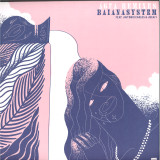
Razor-N-Tape Reserve presents a very special new package of remixes of the band BaianaSystem, bringing together one of Brazil’s most exciting contemporary sounds with modern dancefloor-minded production.
The standout track of their 2018 LP 'O Futura Não Demora', Água is a lyrical poem to the people of their native Bahia, featuring the legendary Antonio Carlos & Jocafi, with orchestral melodies, an incendiary vocal chant, and traditional organic Brazilian rhythmic approach.
On the A side, Freerange boss Jimpster delivers two exceptional takes on the song, augmenting percussion and adding synth layers to create deep and hypnotic tribal house textures within a sublime sonic soundscape.
On the flip side Brazilian producer Diogo Strausz joins forces with RNT boss JKriv to highlight the symphonic and melodic elements with their vocal mix, and then go into dark and driving percussive electronic territory on their fiery dub. With stunning visual art realized by Costa Rican designer The Myno, this package is as essential and smooth as water!
The venerable composer and keyboardist Stale Storlokken follows up his previous Hubro release (and solo debut recording), The Haze of
Sleeplessness, with a second solo album performed entirely on pipe organ and recorded at Steinkjer Church by Stian Westerhus.
He describes the album as “a cavernous cathedral of sound”. While the Norwegian Grammy-nominated ‘The Haze of Sleeplessness’ used a whole keyboardmuseum’s worth of antique synths and contemporary digital software to create
its vast array of sounds, everything on ‘Ghost Caravan’ is the product of one organ’s pedals, pipes and sonic plumbing.
“There’s not so much of a relationship to ‘Haze’, says Stale Storlokken of the new album. “That album was more based on improvised ideas that were tweaked and arranged , while this one is all improvised with almost no editing at all. Everything you hear is from the church organ, with no additional instruments.
The basic concept of the record, and the arrangement of the titles and pieces, is done in such a way that they alternate between a fluent, “on the move”, abstract mood and a more recognisable, concrete and grounded mood. At the same time it should be so open that listeners will hopefully have their own unique experience. The organ at Steinkjer is not a big organ but it has some really nice sounds, with a number of quirks and mechanical eccentricities that suit my music.”
The organ is partly a reconstruction based on a Wagner organ in Nidarosdomen built originally in 1741, the organ is housed in the strikingly modernistic Steinkjer kirke, designed by Olav S. Platou in 1965, and featuring glass panels by the artist Annar Millidahl. What Ghost Caravan does share with its predecessor is a seemingly limitless acoustic space for the listener’s imagination to roam in, with Storlokken creating a cavernous cathedral of sound.
The audio dynamics span an enormous range, capable of stretching from the quietest breathy whisper to a basso profundo squawk or scream, sometimes within seconds of each other. Similarly, the incredible variety of sounds that Storlokken coaxes from the organ can defy rational analysis, with the resolutely analogue instrument appearing to echo the industrial, found-sounds of clanking machinery or buzzing electronics that one might expect to encounter through digital sampling or the tape-based experiments of musique concrete.
Over ten separate improvised pieces which connect into an informal suite through the repetition of key elements and sequential titles (with four ‘Spheres’ and four ‘Cloudlands’, plus ‘Ghost Caravan’ and ‘Drifting on Wasteland Ocean’), Storlokken has made a strikingly unified, self-referential aesthetic world that can stand as a true work of art.
Celebrating a determined and ambitious 15 year tenure as Yorkshire’s chief bastion of deep house music, Hudd Traxx enlist a who’s who from their gilded halls to contribute tunes for a special anniversary release. Split across two vinyl parts and an expansive digital release, it’s a pretty prestigious occasion featuring dance music legends Nightmares On Wax & Jovonn, long term label stalwarts Iron Curtis & JT Donaldson, a guest appearance from Mark Hawkins (FKA Marquis Hawkes) and a track from label head Eddie Leader. Adding to the already weighty credentials are Agnès (releasing his first material since 2013), Berlin-via-Italy producer Black Loops.
On Part Two longstanding Hudd Traxx veteran JT Donaldson drops “What I Got” - twisting and contorting throughout its duration, a serpentine roller rich with block party flavour and the very essence of deep house coursing through its veins.
Dixon Avenue Basement Jams’ Mark Hawkins does some moonlighting under his newly deed-polled alias with the epically beautifully “Chasing Paper”. No royalty credits heading north of the border here, just swathes of satisfied revellers and euphoric dancefloors guaranteed upon delivery.
Meanwhile, another Hudd Traxx regular, Iron Curtis, pays tribute to one of the scene’s greatest on “Kerri On (Chandelier Dub)”. A red-lit nocturnal jam that Mr. Chandler himself has rubber stamped, its ever-growing bassline, soaring strings and delicately placed keys taking us towards a seriously blissful conclusion.
Concluding part 2 is a track by Agnès - founder of Sthlmaudio Recordings. The stylish Swiss keeps true to his remit – deep, dubby, transcendent grooves that sway lushly with the midnight air. “Embryonic Connections” taking us right back to the roots of that tribal beat and a fitting end to this mammoth release and a perfect lead up to his forthcoming Hudd EP.
4 tracks which perfectly instil why Hudd started this label of love 15 years ago; to showcase fierce, uncompromising dancefloor workouts in as sincere and stylish manner as possible. The artists and tracks chosen show the adventurous routes and development the label keep as their main point of focus – to unearth the tantalizing new and exciting sounds of house music’s continuous evolution.
This release is dedicated to Richi Larkin & Yuriano x
White Vinyl
The record opens out with clamouring field recordings taken on Vernon's travels in Japan; the cacophony melts effortlessly into the muted beauty of "Amber Fade", its cold synths and sombre chords striking a perfect emotional balance. "Tilted" similarly plays with ambient elements, lush pads easing their way out of the sounds of a waterfall but the natural sounds are contrasted by a touch of acidic 303. This hint of the club is forefronted in "Late Nights", which dials up the energy with chunky big room drum loops, a stirring piano section showing Vernon can turn up the heat without losing the emotional side.
On the B-side, "This Moment (I Feel)" toys with a muzak sound palette and dazed poolside beats. "Disappear" lean heavily on an electro beat; but for a hazy elongated drop it's a heady dancefloor number, before easing off again into the closing track. "Start Again" is full of texture and character, cleverly arpeggiated synths cascading over a soft house jam.
There's no denying the hype surrounding Anton 'ScruScru' Bogomolov is fuelled by a string of celebrated singles, demonstrating an extraordinary prolific prowess all throughout 2020.
His ability to blend jazz-funk classics with the sweet sounds of disco-powered house grooves is always on point.
It's music that blurs the boundaries between the serious yet playful and takes the listener on a truly unique-sounding ride
ScruScru's appearance on Omena is one of his finest so far. These six tracks makes a fine mini-album called 'South Wind, Clear Sky'.
There's jazz, disco, big warm rhodes chords and sparkling synth sounds of course, the bustling grooves takes you as far as outer space and back.
It's a wild ride and you should not be afraid to take it twice.
"Vermintide 2 is a critically lauded first-person co-op action game that sees players smash, bash, and slice their way through the Chaos army and Skaven rat-men. Jesper Kyd (Assassin’s Creed, Borderlands, Hitman) amassed a broad palette of violent percussive sounds in creating his propulsive score. The music leans more towards this hypnotic array of scrapes, cracks, and thumps than it does the orchestral elements traditionally associated with dark fantasy — and is all the more distinct a score for it.
38 tracks (including seven bonus tracks not found on the digital release) have been specially mastered for vinyl, and will be pressed to audiophile-quality, heavyweight 180g discs in ‘Chaos Red’ and ‘Skaven Green’. These will be housed in a deluxe gatefold sleeve, with artwork designed by Fatshark Games, including ‘The Ubersreik Five’ front cover. "
Davide disanto is an amazing Italian producer born in bari, after multiple releases on excellent labels such as Let's play house, Politics of dancing or even Theory of swing, he delivers us a fabulous 12 inch which borrows as much from the heyday of the purest New-York City 90s deep house as well as the purest techno made in detroit. The 1st track from this EP seems to have come straight from an imaginary collaboration between Boo williams & Ron trent, the violence of the rhythm is counterbalanced by some airy & ultra deep pads, the aptly named Atmosfear. A banger as we rarely hear today. C'Mon, Let Me See on A2 sounds like a modern take on the awesome Jerzzey boy. On the B side, Da Love Feeling (Main Mix) & le (4am Underground Dub) revisits the 90s once again for our greatest pleasure, particularly the latter seems to have come straight out of a lost mix of the great danny tenaglia. And to end this ep in style, davide allows himself the luxury of summoning the spirit of MBG and all the best Italian deep house from the early 90s on the superb Lungomare (Ambient Reprise). ESSENTIAL ITEM !
SKYLAX RECORDS 4 EVER
Jazzanova released their 3rd album “The Pool” on Sonar Kollektiv in 2018. It evolved from various loose jam sessions, mixing up synthesised sounds, samples and real instrumentation. Many singers where involved incl. Edward Vanzet from Australia, who was also asked to provide lyrics. Which he did creating the song “I’m Still Here” giving the tune a Yacht-rock west coast feeling. I always felt the song was one of the strongest of the whole album so I asked some peeps to do remixes for my label Best’s Friends. German A-List remixer Larse gives the whole thing a pop feeling with an Italo-disco touch in his both versions. While Winnie & Somow from Berlin go for a more organic approach looking for that sun-rise House tune on a beach-rave or wherever. I think this remix package has something for every one in it -
Pioneers of the British music scene, ‘Blackest Blue’ will be the band's 10th studio album in a discography that spans three decades. 2020 saw Morcheeba unable to tour or perform live, which gave Skye Edwards & Ross Godfrey “time to write songs and really get to hone them,” as Godfrey puts it. “There weren’t so many pressures so we could really take our time getting the songs right,” adds Edwards.
The result of this time is a refined 10 track album that fuses previous incarnations and sound of the band - such as downbeat, chill, electro-pop & soul - into one cohesive record that dives deep into the soul of the band’s genre-mashing musical heritage. As usual, the band didn’t approach the album with any pre-conceptions, and instead created an organic journey that represents everything great about Morcheeba.
Edwards’ lyrics are primarily focused on positivity and overcoming personal adversity that lies within. ‘Sounds Of Blue’, is a stunning cut that puts Skye Edward's sultry vocals to the forefront, floating high above an ethereal backdrop.
The album includes features with Duke Garwood (known for his work with Mark Lanegan, amongst others) and Brad Barr (The Slip, The Barr Brothers). “
Morcheeba’s global reach is impressive, taking them to every corner of the world . Their signature chilled electronic/organic sound has been border-hopping ever since the London-based band emerged as a household name. The past year has been one of introspection for the duo, as they take stock of their renewed global fan base and look forward to being able to play the new album live in the not too distant future. “This was the first time since I was a teenager that I’d spent a year off the road and I enjoyed the tranquility, although I missed playing my guitar in far off lands,” says Godfrey.
Advanced Nature is the second offering from Chicago’s indy electronic label Tres Dias. Completed during a global pandemic this project for Michael Fabiano and Juanne had been a long time coming. The two artists had spoken about wanting to release a record together after years of working side by side in Chicago’s underground music scene. So with the time available during the wildest year in modern history they succeeded in creating a life during wartime record. With hints of industrial, ebm, acid and techno fueling the record. The two aimed to thrust back a bold tapestry of sounds. From sonic visions of a dystopian future to shamenistic prayer infused house. The two managed to flush out a record that has a raw juxtaposition that's grounded in a solid foundation. Chicago based producer Michael Fabiano debuts with the slinking, somber industrial sounds of Aesthetic Existence. Plastic Process wades into warehouse territory with its swirling, hypnotic synth lines and brooding bassline. Juanne continues with Before Midnight, a static charged minimal acid track that stabs and reaches out for more. Finally Juanne ends with Design Your Drugs, a strictly dark room magic piece that unleashes ritualistic vocals and a raging bassline that doesn't hold back.
Belgian underground DJ/producer Red D continues his solo Red Basics quest with the second release in this series in which he explores a variety of sounds that make him tick, always drawing inspiration from his favourite city: Detroit. The A-side travels to the heartland of classic Detroit deep house, taking in deep chords, a pitched-down vocal sample and the subbest of bass antics making for a groove that can be enjoyed both on and off the dancefloor. On the B-side the melancholy of the continued longing for better days prevails, delivering a cut to make you think and sway at the same time. Electronic music for your mind, heart, body and soul.
Ibadan announces the release of volume 4 in the Leads & Bites series, presenting an exciting selection of soon-to-be timeless dance floor favorites. Up first is house DJ and producer Massiande, one of the most captivating talents from South America and notable Housewax alumnus. “Mainline” comes on strong, delivering punchy synth lines and fat beats with an undeniable Chicago spirit. Sharing the A-side is “Lens House” by The Prince of Dance aka Elbee Bad, an edgy sleeper track with eclectic rhythms and a perfect balance of all the classic elements. Kicking off the B-side are heroes of the hour S.A.T. - Sydenham, AYBEE, and Trent - with “Yaphet,” a low-key offering that gradually unfolds into the trio’s signature blissed-out, energetic vibe. MLiR and Arnau Obiols wrap it up with “Calanda,” a genre-defying foray into organic vocals and experimental sounds - nervy, mysterious, and with hints of downtempo electronica.
Next up for Shall Not Fade's new Killer Cuts series is London-based DJ and label boss Tom Frankel. The up-and-coming producer has gained attention and respect for his slick techy house cuts that take from a range of classic house and UKG sound palettes. He makes his debut on Shall Not Fade with Milestones EP, six tracks of skippy house that reminisces early 90s raves.
The record meshes modern sounds with nostalgia; "Better Perspective" is a pulsing laid back house track but with a swerving bassline that gives it edge. Frankel experiments with the sounds of a warehouse rave in a nod to dancefloor romance, "Mandy Cuddles" - melding the classic M1 house piano with searing jungle vocals that cut through the melody like a laser.
Showing the cheekier side of his production, "Slippery Nipple" pays homage to filter house, a skippy garage bassline bringing it up to date. The funkiness of this one is unavoidable, making even the most static hips move; onto "Peak District", a throbbing 90s style roller to keep the pace going.
The two final tracks dabble in the darker end of Frankel's sound palette; "Tapas" adds heavy bass and percussive organ stabs to a clean house sound while "Cuckoo Land" is a deep, sweeping club track that formed a spaced out end to an otherwise high-intensity EP.
- 01: Transcievers
- 02: A Mould Beyond Perception
- 03: False Fusion
- 04: The Bird Of Paradise
- 05: Everything Is Bleeding
- 06: Self-Mutilation
- 07: Phantasies From The Schema
- 08: Scope
- 09: Hallucinatory Violence
- 10: Grotesque. Empty. Spaces
- 11: Open As A Glade Unfolding
- 12: Emersion
- 13: Intramuscular Administration
- 14: Locked Within Herself
Dalhous end the 5-year silence with the long awaited follow up to 2016's House Number 44, presenting the second volume of The Composite Moods Collection. "Point Blank Range" reinterprets the established narrative with an inverse look at the proceedings. Taking the “point of view of the disease", the perspective is now turned inside out, revealing an alternate account from the eyes of the photographed subject of House Number 44. If Vol.1 was a documented presentation of another person's condition, Vol.2 takes the listener behind the facade.
From the outset, the album offers a narratively uncooperative stance, weaving together layers of anxiety and painful specificity that often overtly manifests the psychotic protagonist's stormy interior state. A clearly subjective assault, which is made evident right from opening track 'Transceivers' through to the imploding nature of 'Intramuscular Administration’, to the vulnerable, psychedelic mania of 'Open As A Glade Unfolding'. Continuing to work within the framework of a soundtrack-like structure, Dalhous ramps things up to provide the aural equivalent of sound and picture, manifesting an almost quasi-visual experience.
The entire record can be listened to as a continuous piece, each track seamlessly linked together as though part of an interconnecting nervous system. Where House Number 44 offered airy, widescreen soundscapes of detached detail, Point Blank Range presents an altogether different form. Creating airtight vacuums of agitated twitching feeling, tracks are pulled to the forefront of the stereo field, continually mutating their densely painted neurochemical hallucinations with a breadth of sound previously unheard on previous releases.
Listeners will be able to decipher nods to long standing soundtrack influences from composers such as Fabio Frizzi, with his use of strikingly bold and haunting melodies, to Tangerine Dream’s distinctively foggy atmospheres of The Keep. There are moments that evoke the nihilistic drones of Brian Gascoigne’s soundtrack to Phase IV, and the more horrific passages of metal clanging ambience from the likes of Chu Ishikawa with his scores for Shinya Tsukamoto.
After their former record label Blackest Ever Black disbanded, Dalhous found themselves out on a limb. It took 5 years to find a new home with Denovali. Given the unusually extended period between records, Dalhous had the time to dive deeper into the material, rendering a level of experimentation previously unavailable to them. Over 4 hours of material was created, a total of 1TB of data. Countless revisions to the track listing ensued with some of the unused material being reutilised in the making of the final chapter in the trilogy to form a direct companion piece.
Scottish DJ Ewan McVicar is tipped for big things, having found support in the likes of Annie Mac and Fatboy Slim. After a stellar year crowned with a release on the hallowed Nervous Records, he makes his debut on Shall Not Fade's "Basement Tracks" series with five explosive earworms.
Amnocairn EP collects the most classic sounds from the dancefloor and melts them together, styles blending throughout songs to keep listeners on their toes and dancing. The title track is a sweeping marriage of insistent house piano and washy dub techno synths, leading into the sugary, hardcore "1001 Freestyle" that calls back to early Lone tracks. Then one for the after hours crew, "Ha Mez", a syncopated 303 techno roller.
McVicar keeps the party atmosphere close across the B-side, flexing laser-cut synth arps with a dark, big-room edge on "Stu Boy", before crowning the EP with a gorgeous sun soaked party number "See U Thru My Eyes", jazzy inflected house with a 90s aesthetic. This EP has something for everyone, bringing together eclectic influences into a smooth festival-ready record.
In many ways, DJ Black Low's debut album, Uwami, shows the signs of an artist's first offering in any musical genre. Showcasing fluency in a broad range of styles and stuffing a number of ideas to the record's brim is the 20 year-old producer's attempt to both introduce himself to a wide listenership and stamp a recognizable sound in their minds. In other ways, somewhat out of the young South African producer's control, Uwami goes against the grain. The album comes at a time when South African electronic music is being fundamentally disrupted. Amapiano, the electronic music movement which first gained popularity with a small, core group of followers, now dominates the mainstream. Well-known and pervasive, amapiano borrows from a diverse palette of musical styles which are popular in South Africa's largely Black townshipsjazz, kwaito, dibacardi, deep and afro house among them. Instead of pandering to the seemingly insatiable local appetite and growing global penchant for amapiano though, on Uwami DJ Black Low seeks out the limits of the sound du jour and tries to stretch them. On his solo productions, he uses the samples and compositional norms that make amapiano hits the bedrock on which to experiment and improvise. With collaborators, DJ Black Low improvises within the boundaries of listener-friendly grooves. The sound he creates has foundations of what could easily have progressed into captivating amapiano songs on their own. But he uses improvised but structured electronic percussion and distortion sounds to drive the tracks in a particular direction. What remains is something like a deconstructed amapiano. For a young producer living in the townships of the greater Pitori area of South Africa's Gauteng province, there were few avenues available for Radebe to pursue a career in music. His trajectory shows the vulnerability of this pursuit. "I had started producing in 2013 and it so happened that I lost my equipment in 2014. I couldn't afford to buy equipment. In 2017, a friend of mine who had been making music found a job and decided to quit music. He gave me his equipment and I was able to start producing again. That's when I started getting back to it. I tried to pick up where I had left off, with hip hop and commercial house but I found that amapiano was the popular music. I liked it, so I started producing it."
It is with extreme pleasure that we, Basement Boys Records proudly announce our 100th single release and 30th year in the music business as an active recording label!
Holding down our 100th release is the legendary multi-faceted singer/songwriter/producer Byron Stingily. As one third of the Chicago-bred, world renown trio, Ten City and as its primary lead vocalist, Byron’s velvety falsetto graced such House Music staples as “Devotion”, “That’s the Way Love Is”, “My Piece of Heaven” along with scores of other classic House music favourites. As a solo artist, Byron went on to create such memorable House jewels as “Get Up” & “It’s Over” a classic collaboration with the Basement Boys for his project on Nervous Records.
“We Belong Together” contains four mixes. The Monday Night Vocal Dub and Instrumental are up first, with percolating congas and swinging violins that accentuate the well-paced drums and percussion of this delectable mix. The brassy horns sing in tandem with Byron as he tugs on the heartstrings with his romantic, chromatic vocal adlibs and signature riffs. The sugar-laden strings and sparkling pianos brings to mind the 90's Ten City production of Marshall Jefferson.
DJ/songwriter/musician/producer, Maurice Fulton is one of House music’s true originals, back where he started. Maurice had the first release on Basement Boys Records with Sticky People "Kong". A man with a mind-blowing complexity behind all that is deep, dark and funky.
Fulton’s mix takes a more soulful tech approach employing a host of electro sounds. A fervent polyrhythmic vortex of percussive wind chime effects, married with classic snares, tom toms & hi-hats, deep sub bass and a meaty kick all define this masterful alignment of electro and acoustic elements. At the midway point, Maurice turns the suspense-filled symphonic intro from the previous mixes into this electro breakdown groove fest sure to drive dancers into a frenzy complete with Byron’s heartfelt lyric.
Closing it out the Main Mix in all its glory, hi-powered, dense bottoms and percussive elements, sweet R&B “boogie” style chords, neatly placed horn accents with Byron slaying the lyric as he always does in his exquisite, soulful pleading falsetto telling the object of his affection, “We Belong Together”.
Clear Vinyl
Rumors is the hotly anticipated new label from Guy Gerber. This first release is from Guy in collaboration with the legendary Dixon. The fantastic new single comes with a magic remix from Lake People.
Guy Geber has never been busier than in the last year or so, shaping up Pacha in Ibiza with his Wisdom of the Glove night. As well as that, he continues to DJ around the world and steer his Supplemental Facts label through the freshest house and techno sounds around. Dixon, meanwhile, is famed for his deep and classy house sound as a DJ and as part of the influential Innervisions crew. His productions are met with a great response, as was evidenced by his recent remix of Mathew Jonson’s ‘Level 7’ on Crosstown Rebels.
‘No Distance’ is a deep and moody bit of house that builds slowly and surely in expertly crafted layers. With harmonic bell-like melodies, jangling, loose percussion and a killer bass guitar line, it’s perfectly poised for the labewls’ debut release and sure to make a big impact. Bearing the hallmarks of both producers, this is a serene and seductively musical track that will be the perfect pinnacle of any DJ set.
Lake People have remixed the likes of Chymera and Kollektiv Turmstrasse and have released on labels like Permanent Vacation and Connaisseur before now. Their remix reworks the track into something a little darker and more direct. A muddle of rubbery beats underpins trippy melodies and forlorn pads as gorgeous synth lines bring plenty of late night emotion to the track.
This is a stunning first release on Rumors that is sure to spread like wild fire.
The Bright Lights of America is the seventh album released by American punk rock band Anti-Flag. Released in 2008, the album marked a change in the band’s sound: although still very much punk, the album is their first to feature a string section and child choirs. Two singles were released from the album: both the title track and “The Modern Rome Burning”. Other popular songs from this album are “Good And Ready”, “Spit In The Face” and “Vices”. The song “Wake Up The Town” features guest vocals by Billy Talent-songer Benjamin Kowalewicz. Produced by Tony Visconti, Anti-Flag sounds fiery and angry as ever on this album. This is a limited edition of 500 individually numbered copies on solid red vinyl. The lp’s are housed in a gatefold sleeve with a deluxe leather laminate finish, and contains a double-sided poster with lyrics and liner notes.
- A1: The Killers - Mr Brightside
- A2: Franz Ferdinand - Take Me Out
- A3: The Fratellis - Chelsea Dagger
- A4: The Bravery - An Honest Mistake
- A5: Mgmt - Kids
- A6: Yeah Yeah Yeahs - Maps
- A7: The Libertines - You're My Waterloo
- B1: Kasabian - Club Foot
- B2: The Dandy Warhols - Bohemian Like You
- B3: The Vines - Get Free
- B4: The Hives - Walk Idiot Walk
- B5: Black Rebel Motorcycle Club - Whatever Happened To My Rock 'N' Roll (Punk Song) (Punk Song)
- B6: The Rapture - House Of Jealous Lovers
- B7: Razorlight - Rock 'N' Roll Lies
Exclusively on vinyl - 14 defining tracks from the most glamorous indie rock & roll legends.
Kicking off with The Killers ‘Mr Brightside’ and Franz Ferdinand’s ’Take Me Out’ - both huge anthems from the post-punk revival of the early 2000’s - a genre that took inspiration from the distorted rock scene of the late ’60s alongside the guitar & synth driven new wave of the early ’80s and produced some of the most creative and bruised tracks of the past twenty years. Some acts found mainstream appeal and delivered huge radio and chart friendly pop - The Bravery, Razorlight and Kasabian (represented here with ‘Club Foot’ which sounds as fresh today as it did when it was released).
The scene gave rise to bands whose growing fanbases could easily identify with them, not only for the music, but also the look and attitude. From New York, Yeah Yeah Yeahs and The Rapture are included here and from the West Coast, Dandy Warhols hit big with ‘Bohemian Like You’ and Black Rebel Motorcycle Club who scored a Top 5 album with their debut release. With particular emphasis on captivating live shows and an alignment to grittier rock aesthetics, The Vines, The Hives, The Libertines and The Fratellis all represented different elements of Indie Glam, while MGMT delivered one of the greatest debut albums of the period by melding Indie Pop with synth-driven psychedelia which included the incredible cut ‘Kids’, also featured here.
14 Essential Tracks on one vinyl album - ‘Glamorous Indie Rock And Roll’
- A1: Feelin (Rashad Ft Spinn & Taso)
- A2: Show U How (Spinn & Rashad)
- A3: Pass That Shit (Rashad Ft Spinn & Taso)
- A4: She A Go (Rashad Ft Spinn & Taso)
- B1: Only One (Rashad Ft Spinn & Taso)
- B2: Everyday Of My Life (Rashad & Dj Phil)
- B3: I Don't Give A Fuck (Rashad)
- B4: Double Cup (Rashad Ft Spinn)
- C1: Drank, Kush, Barz (Rashad Ft Spinn)
- C2: Reggie (Rashad)
- C3: Acid Bit (Rashad & Addison Groove)
- D1: Leavin (Rashad & Manny)
- D2: Let U No (Rashad Ft Spinn)
- D3: I'm Too Hi (Rashad Ft Earl)
Die Footwork Legende aus Chicago, DJ RASHAD, beschließt ein erfolgreiches Jahr auf Hyperdub mit seinem ersten Album für das Label und baut damit auf zwei EPs auf, die deutlich demonstriert haben, wie sich der Sound von ihm und seinen mannigfaltigen Teklife Kollaborateuren im Jahr 2013 entwickelt hatte. Benannt nach dem Freizeitcocktail aus Sprite und Kodein treffen auf ,Double Cup" traditionelle 808 Footwork Ausbrüche auf die neuesten Mutationen des Sounds und zeigen so die Vielseitigkeit und Kraft der Chicago Szene im Jahr 2013. Das Album wirft Hip Hop, R&B, Acid, House, Techno und Jungle in seinen Footwork Shredder und spuckt diese auf der anderen Seite als zusammengeklebte Fragmente wieder aus, zusammengehalten durch schnurrende 808 Subtriplets und kantige Polyrhythmen. Das Album wärmt sich langsam mit einem G-Funk Swing auf, der typisch ist für RASHAD und SPINNs Kollaborationen mit TASO aus San Francisco. Diven mit Schluckauf räkeln sich auf den Rhythmen von ,Show U How", ,Only One" und ,Everyday Of My Life" mit Raps von der Crew auf ,Pass That Shit", ,She A Go" und ,Kush, Drank, Barz". Das bereits veröffentlichte "I Don't Give A Fuck" markiert den düsteren Dreh- und Angelpunkt des Albums; das Tempo zieht in der zweiten Hälfte an mit dem treibenden Viervierteltakt des Titeltracks ,Double Cup", dem donnernd gepressten ,Acid Bit" und dem Chicago House von ,Reggie" und ,Leavin. Den Höhepunkt markiert die Breakbeat Wissenschaft von ,Let U No" und ,I'm Too Hi". ,Double Cup" ist vorausschauende Musik für die Tanzfläche und unterstreicht, dass Footwork an der Macht ist.
Lothian Buses’ is an EP of genre collisions with Proc Fiskal amalgamating his twinkling, caffeinated grime sound with the rhythms and sounds of other genres, without ever overthinking it. To kick off, ‘Thurs Jung Yout’ is a kind of shoegaze drill with strings and gentle tones swelling and dissipating against busy drill beats. ‘Baguettes’ is a more classic Proc sound, a galloping rhythm against a sparse melody that was a quick fix up for a show that turned out well. ‘Choco Frito (Calamari)’ was influenced by the good life, DJing in Portugal in the sunshine and hearing Kuduro played out. The latticing drum patterns nod to the style, dropping into a sunny accordion chorus with a plucked guitar line. ‘Scarab Aloph’ is Proc's style compressed, full of micro-glitches, tight drum fills and incidental drop-outs across a pretty melody, while ‘HopeTak2’ is his percussive, breezy take on funky house with smiley melodic stabs. Finally, ‘Mullit Madollock’ takes the sonics of airy Bukem-style atmospheric jungle, an instantly recognisable inspiration that's not been as foregrounded in Proc’s work before, refitted and updated with grime-inspired melodic bass kicks.
Hell Yeah welcomes the Italian musical collective Aura Safari for a debut EP on the label.
The band, who are at the forefront of a new Italian fusion sound that blends jazz-funk, electronic and world sounds, is made up of acclaimed house devotee Nicholas Iammatteo, plus Alessandro Deledda, Lorenzo Lavoratori, Daniele Melloni and Andrea Moretti. They contributed a standout track to the Buena Onda - Balearic Beats compilation last year as well as releasing a full length LP on UK label Church to critical acclaim.
Opener 'Dreams of Music' is a lush, new age groove with rich musicality, wind instruments and live drums all glowing warmly as you roll into sundown. 'Oasis' then sinks into a reflective mood, with lazy drums and sensuous late night chords sounding like Roy Ayers all loved up and super stoned. The noodling keys really melt your heart before the excellent 'Slow Divers' pairs more majestic bass riffs with wet claps and splashing cymbals as a wandering lead drifts up to the heavens. It has a dubby swagger to it that is superbly subtle.
Closing out the EP 'Libra', is a heartwarming, slow motion, jazz-funk fusion packed with detail and life affirming synth playing.
These are gloriously heartfelt tracks that showcase this collective's supreme musical ability as well as their unquestionable understanding of jazz, funk and soul, past, present and future.
The Black Bones story is born out of a shared obsession for crate digging, collecting, and the playing of weird and wonderful music. Their releases so far have manifested in a highly-sought series of seven psychedelic disco 12"s - picking up numerous Record of the Week plaudits on the way. This considered curation and skill for pulling together far-flung sounds fully informs their first original material. These four bold and adventurous club cuts are a thrilling mix of straight-up house sounds, new beat, industrial, dub, sleaze and all the other good shit that comes with low-lighting and a heavy sound system. Kicking off with the full throttle 120 bpm of 'ABTS' - the duo take you straight to the 'floor with one of the wildest rides we've heard in some time. 'Denied' pulls us in to darker territory - chest pummelling bass, ominous high-pitched warnings and a chuggy acid throw-down finding us once again lost in that 5am dance floor fog. Over on the flip and 'Punghi' combines a hypnotic groove, dubbed out FX, percussion and a tripped-out Eastern breakdown. One for the more adventurous DJs and dance floor! The EP is closed by 'Gabi' which sounds like minimal gone maximal with an insane industrial switch-up. Enough words! As always, Black Bones let the music do the talking and this ambitious debut can quickly find itself shelved alongside the records that have fuelled their lifelong obsession.
There’s something new under the sun. If you look at it closely,
something new is only (and always) created at crossroads –
when different and signi¦cant traditions are connected and
combined. On their own, these traditions have often existed
for a while. However, in this new form they have never
appeared together. The latest manifestation of something
new can now be found on the album “No Future Dubs”, the
interpretations of “No Future Days” – the most recent album
by German band Messer – by Finnish producer and old
friend of the group Kimmo Saastamoinen aka Toto Belmont.
The intentional traditions that merge on this grand and
digni¦ed album are post-punk, dub and techno. A new
chapter in the culturally constant narrative of dub is written
here. Through their past and parallel activities in hardcore
and post-punk bands, Messer drummer Philipp Wulf met and
befriended Kimmo, originally a drummer too. In their
continuous dialogue discussing their musical journey, Philipp
and Kimmo over the years more and more immersed
themselves in the aesthetic possibilities of dub and reggae.
Indeed, lots of musicians do not listen to the type of music at
home that they write and play in their respective projects
(Take me as an example: House is the music that I produce
and put on as a DJ. On my own, I listen to various stuff,
music by Monk and Messer for example). The same applies
to the protagonists involved here. By discussing dub und
through Toto Belmont’s steadily increasing producingexpertise, the idea of creating dub versions of selected
Messer tracks was born. The Messer album “No Future
Days”, released in 2020, proved to contain the perfect raw
material as the songs on this album are already produced in
a much more transparent way than on previous LPs – and
are hence more suitable for dub. Still, it’s a giant leap from
the originals to the dubs. These add a third dimension to the
described character of the post-punk/dub amalgam: techno.
The result is a sound that hasn’t existed before, especially
not with German lyrics (which scarcely, however, carry
meaning or messages here. Hendrik Otremba’s voice is used
more like an instrument, as if he was the ghostly ¦gure which
he often sings about and which now §oats and screams
through the sound space). The history of mutual contact and
in§uence of (post-)punk and dub (reggae), which Messer
have kept on writing, is glorious and reaches back far in
musical history. Still, it has always been a rather marginal
chapter not only in punk but also in dub history. But already
in the beginnings of punk (the British version, less the
American one), the presence and in§uence of reggae was
obvious in many places as both are united in their resolute
attitude as rebel music. This is how the two genres
recognized each other – especially the punks regarded
reggae as rebellious. As is known, already Johnny Rotten
mainly listened to dub in private. By using the name John
Lydon, he then – together with bass player Jah Wobble –
established the group PiL as one of the most exemplary
bands at the crossroads of dub and punk. The Slits, Pop
Group, Killing Joke, The Ruts and last but not least The Clash
along with the Mick Jones offshoot Big Audio Dynamite –
the thriving British music scene in the early 80s was full of
dub-in§uenced acts. The echoes meandered everywhere. In
the USA, it took longer until the in§uence of dub became
noticeable and it has never been as distinctive as in the UK.
The history of US hardcore, however, cannot be told without
bands like Bad Brains from Washington D.C. who on their
albums occasionally inserted conscious reggae and dub
tracks between breakneck hardcore tracks. Another
important group is Blind Idiot God who similarly included
dub tracks on their LPs – the contrast between densely
droning rock tunes and widely breathing dub versions can be
experienced very vividly here. In the 90s, dub’s in§uence on
post-punk decreased while turning up even more distinctively
somewhere else: Techno was in many respects susceptible
to dub, to say nothing of the music from the so-called British
hardcore continuum (jungle, drum & bass etc.), which directlydeveloped from dub and reggae. But also “pure” techno –
meaning techno without breakbeats – discovered its a¨nity
for the possibilities of dub at an early stage, in England for
instance in projects like Left¦eld or The Orb. In addition, the
project Rhythm & Sound was established in Berlin with close
ties to the Hardwax record store. With regard to this project,
you can’t really say where dub ends and where techno begins
(or vice versa) because of the interconnection of the two
genres here – everything is based on the steppers pulse
which links the two styles like a common DNA. With dub
techno a new genre was created. Until the present day, there
are producers who don’t produce anything else and DJs who
don’t put on any other music. The Messer dubs are
characterized by a grand majestic manner and force that
presumably someone like Mad Professor is able to produce
and that is also inherent in many Scandinavian productions
of the last 15 years; a crystal-clear aesthetic which locates
itself far away from Kingston or Brixton, but features a pulse
referring clearly to Berlin and Helsinki. The songs appear in a
completely new and deconstructed form, the instruments are
exclusively used as particles and raw material, not as riffs;
merely glaring guitar textures ¦ll the wide dub space. There
are many new elements that were added by Toto Belmont,
especially synthesizer sounds and drums. The ¦nal result
creates an enormous aesthetic power and dignity, and an
atmosphere you don’t want to leave anymore. “No Future” is
a well-chosen title as a reference to the protagonists’ punk
association; as a main thrust of the album, however, a
comma between these two words is imaginable as well.
Reuben Sawyer is nothing if not prolific. He's also a man of many talents - his various projects have included the coldwave sounds of The Column, Hollow Sunshine's blown-out psych-noise, Anytime Cowboy's take on countrified weirdo-pop, and even ambient house courtesy of Rose. Oh, and he's a visual artist too, of course. Pfft, who needs an attention span anyway? One thing he's also dabbled in, however, is post-punk. Human Trophy is firmly in line with that tradition, but pulling from multiple directions at once - one minute this album rattles along like Big Black with the tempo down and the textures dialled up, the next we're firmly in Christian Death territory. The twisting guitar lines and pummelling bass of 'Forming Horrors' even call to mind his blackened punk project Dry Insides, but with less velocity and a helluva lot more menace. Is 'Corpse Dream' a goth record? Possibly. Whether goth is a lifestyle choice for Sawyer or not, he's certainly adept at immersing himself in sounds and making them feel like a comfortable fit. As with all his projects, it feels like another effortless facet of Reuben Sawyer - and in keeping with the rest of his output, it's absolutely packed with songs you'll wanna play again and again. Penultimate track 'The Roads' is built on a none-more gloomy pile-up of darkly portentous rhythms and a firm sense of disquiet, but once you're locked into its circular riffage you'll feel an urge to keep the loop going endlessly. Then there's the closer 'Blood Apex', a dual-vocal nightmare set to music which draws you back in even as it attempts to push you away. Yeah, it's pretty great.
Hailing from Medellin, Colombia, Killabeatmaker is a Global Bass DJ / Producer, audio engineer, singer and songwriter; a multi-faceted artist you'll be hearing a lot about in the near future. Drawing his inspiration from his Afro-Colombian and Indigenous roots, Killabeatmaker efficiently mixes traditional sounds and rhythms with urban beats and raw club music. His EP "Matiela Suto" is an homage to the diversity of Colombia's people and cultures, packed with progressive house buildups, Nigerian club music influences and enchanting female voices.
10Questions is a record label by Dam Swindle's Lars Dales and graphic designer Bas Koopmans. The first release promises a lot for the coming series with signing the first EP with Demi Requisimo. Demi is one of the rising stars in dance music due to his energetic tracks and signature style, combining italo and electro with chopped up disco samples from around the globe.
The EP starts of with it's namesake track. 'Dictionary of fools' is a great example of Demi's knack for creating dancefloor bombs. The razor sharp bassline cuts through the track like a knife through butter but it's the female vocal that covers the track like a warm blanket. This track will get anyone's blood pumping and makes you wish you heard it first on a sunny festival.
'Noisey Cricket' ventures more into the 80's proto-house territory with it's distinctive drum programming and italo style bassline. The pads and vocal chops elevate the track to another level and underscore Demi's nose for finding just the right balance between electronic sounds and samples.
The final track of the EP, 'Atomic' is one of those tracks that sneak up on you. Demi takes a ballsy approach and let's you wait a full 3 minutes before the bassline comes in but lord it has never sounded sweeter. This is a party starter if you ever heard one and a beautiful example of how well Demi understands crafting a deceptively simple track with maximum impact. A master of his craft.
10Questions is a label build on the concept that the record and record sleeve are an integral part of the full experience of an EP. The artist is given a questionnaire and depending on his/her answers the artwork is made. This way the music and art co-exist in the same creative universe, that of the artist and the label alike.
Bad Colours is the moniker of London-born, Maryland-raised, Brooklyn-based DJ and producer Ibe Soliman. With influences of garage from both sides of the Atlantic as well as funk, post-disco, proto-house and rap samples; his debut album 'PINK' is set for release by Bastard Jazz on 26th February 2021.
The drive to record an album came about while isolating at home in Flatbush during the COVID-19 pandemic. Inspired by some rough ideas and samples that friends sent him, Ibe focussed his attention on making music. From time well spent soaking up and storing sounds from clubs around the world, Ibe found, now with the time to dedicate towards it, the tracks flooding out. Taking cues from early Trax records and Larry Heard, the UKG musicality of MJ Cole, Todd Edwards' vocal sampling techniques, the brashness of Bmore, and an encyclopedia of disco, funk and soul knowledge; Ibe got to work and quickly compiled more than enough tracks for a full-length release.
Flowing from the album intro 'PINK!', first single 'Cookin' vibes over a Chris Faust sample and saxophone from south California virtuoso Carras Paton. 'Feelin' Like' was originally built around a short vocal sample by Jarv Dee, but grew to include additional lyrics on black power from the Seattle rapper after he heard it: "Dancey stuff with a message" says Ibe.
Slow jam 'Heyyy', with its preemptive lyrical synths, bridges to the album's next single 'Get You Off'. Ibe had been listening to a lot of Marvin Gaye - particularly 'I Want You' - during lockdown, getting into the production and vocals. After writing the "I just wanna get you off" hooks, he handed the track over to talented singer, actor and playwright Marcus Harmon who wrote the verses and provided the stunning vocal performance.
Keeping the sensual vibe, 'Skin To Skin' samples vocals from 'Private Play' by Wash 'N' Set, also produced by Ibe, with the Chris Isaak-esque guitar lines by Lex from Foreign Tapes. Made late at night, CMYK reminded Ibe of driving at night in the rain in NYC, where the colors bleed together on the wet road while 'Boss', the first track made for the album, is based around a Sunny Jones sample. The closing track 'Feel' was made at the peak of Black Lives Matter protests. "I just wanted something hard sounding," says Ibe.
Known for his residencies at some of New York's top venues, Ibe has been rocking crowds as a DJ for over a decade, and has shared the decks with the likes of James Murphy, Mark Ronson, and Q-Tip. He's performed alongside Wiz Khalifa, Snoop Dogg, Pusha T, and Young Thug, to name a few. In high demand as a private party curator, he's helped set the tone for Jeff Koons, FKA Twigs, Justin Timberlake, Travis Scott, and Usher. When Ibe's not behind the decks, he's in the lab, where he's produced for Kendrick Lamar, Faith Evans, Keyshia Cole, and Rick Ross, among others.
A plethora of different dancefloor flavours from Frankfurt's Chris Geschwidner, across four tracks, that take in the warmth and soul of house and the cold steel beauty of techno and bound them up into something fresh and altogether new. 'Corroded' has the colliding drum machines and handclaps of vintage techno or even electro, but welded to a skippy, playful beat that is a definite mood lifter, while dreamy synths seductively cut a swathe around the metronomic hypnotism. 'Pass Over' is smoother, sleeker and combines a bleep techno approach to the soundscape with a bed of comforting Detroit-style synths and strings. 'Viktrak' has more classic Motor City influences but a more classic garage-slanted beat regime - imagine Derrick May's 'Nude Photo' overhauled by Roy Davis Jr. 'The Free' ends the set off with simple but effective electro funk flourishes and a sense of sunny optimism, bringing this lively, accessible but deep affair to a close.
- A1: The Principle (O Principio) (O Principio)
- A2: Bulubulu
- A3: Falta Muito? (Feat Spoek Mathambo)
- A4: Pele
- A5: The Medium (O Meio) (O Meio)
- B1: Vai De C@N@! (Feat Octa Push)
- B2: Outra Cidade (Another Town) (Another Town)
- B3: Makumba
- B4: The End (Kamicasio) (Kamicasio)
- B5: Quarentena
- B6: The Infinite (O Infinito) (O Infinito)
IKOQWE (pronounced ee-kok-weh) is a new project by Batida (aka Pedro Coquen o, the Angola-born, Lisbon-raised artist who ranks among the leading exponents of the new wave of African electronic music), and Luaty Beir o, aka Ikonoklasta, the Angolan rapper turned iconic activist.
IKOQWE’s inspiration comes from old school Hip Hop as much as from traditional Angolan music. The album (entitled ‘The Beginning, the Medium, the End and the Infinite’) includes drum machines, vocals in Angolan slang, Umbundu, Portuguese & English, discussions about neocolonialism, iniquities and falsified history, radio sounds, utopian solutions, and much more.
The album will be preceded by a 3-track digital single, ‘Pele’ (‘Skin’), containing the album version, and remixes by afro house legend Bodhi Sattva and by UK ‘disco noir’ band MADMADMAD. Also check out the music video for ‘Pele’, including some footage from IKOQWE’s first live performance.
Pale Spring wrote and recorded CYGNUS in Baltimore, whose fertile music scene has seen acts like Lower Dens, Ami Dang and Beach House build rich, self-contained worlds of sound.
CYGNUS expands on this foundation, with stately, smooth pop songs incorporating layered harmonies, glitches, and, on “Old Sounds” dog barks. Music runs in Harper Scott’s family: a classically trained musician herself, her grandfather studied at Juilliard under his uncle, who played for the New York Philharmonic.
Scott’s grandfather sang doo wop, and his influence paved the way for Scott to explore music; eventually, he taught himself how to sample. His accompaniment provides an underpinning for Harper Scott’s vocals and instrumentals.
Critics noticed CYGNUS when it first came out last year, with glowing reviews in Bandcamp, Tiny Mix Tapes and DAZED.
American Dreams Records’ vinyl reissues of CYGNUS and DUSK mark the first time they’ve been made widely available as physical media.
Little do we know about Moondance, in fact when these tracks just showed up in the inbox one day, we said "Moon who?".
All we got was a link to a dropbox folder with three tracks signed Moondance.
One thing is for sure though, the music peaks volumes and that is why we didn't hesitate to sign all three of them.
The title track, 'Never Found Love' comes in two different shapes. While the original is a colourful, rich, and jazzy piano driven house track with a vocal to tie it all together, the Amen Mix is an off-kilter dub inspired version, it sounds like something straight out of a Innerzone Orchestra jam session
Moondance's own theme, 'The Moon Dance (2020)' sounds like the perfect blend between house and techno, carefully dipped into a pot with equal parts of forward thinking Detroit style and organic house.
- A1: Sterling Moss & No Comment! - Apocalypse
- A2: No Comment! - Music Washes Away From The Soul
- B1: Geezer & No Comment! - A Common Enemy
- B2: No Comment! - Fuk No
- C1: Secret Hero & No Comment! - Not Very Sensible
- C2: Cv Junkies - You Got It!
- D1: No Comment! & Strait-Jackit & Rats On Acid - Work That Body Baby
- D2: No Comment! - My House Is Small
Lingering at the remains of a campfire before dawn, with the politics of the personal burnt into ash, running his stick through what’s left, Wand singer/guitarist Cory Hanson is reflecting on a series of moments in which he steps farther into himself, finding the ultimate big sky country on the inside of his skull. It’s a combination of songs and sounds that journey
through bleak and broken territory and places of sweet, lush remove and it adds up to the best record he’s been involved in yet: his second solo album, ‘Pale Horse Rider’.
Cory’s first solo, ‘The Unborn Capitalist From Limbo’, was an intense affair, a grand experiment that produced inspiring,
nconventional music - but this time around, he wanted to breathe a bit easier, to feel that breath in the music as well. So he and his band drove out to the desert to record in a lowstress environment: Brian Harris’ Cactopia, a house surrounded by 6ft tall sculptural psychotropic cacti. They built a studio inside and then they made music and lived off pots of coffee and chili and cases of Miller High Life as they played guitars, bass, keyboards and drums in what seemed increasingly like a living biomech, their tech made out of fungal networks and cacti needles.
It was loose and flowed onto tape well. Recorded by Robbie Cody and Zac Hernandez (who assisted on Wand’s ‘Laughing Matter’), the sounds were great from the get-go. First takes were mostly best takes. Fuelled with DNA lifted from country-rock cut with native psych and prog strands, Cory guided his craft toward the cosmic side of the highway, a benevolent alien in ambient fields hazy with heat and synths, early morning fog and space echo spreading the harmonies wide.
‘Pale Horse Rider’’s got a lot to get out of its mind, looking around and seeing that, on the surface, things don’t always look like much. A lifelong Californian, Cory’s naturally found himself standing to the left of most of the
country. The west may be only what you make it; these days, the roadside view looks exceptionally sunbleached and left behind. ‘Pale Horse Rider’ eyes the city, the country and the fragile environment that holds them both in its hands - a record as much about Los Angeles as it can be with its back to the town and the sun in its eyes; as much about
ostalgia as new music can be with the apocalypse over the next rise.
On ‘Pale Horse Rider’, Cory Hanson moves ceaselessly forward. The old myths weave and waft, the shadows of tombstones flickering in the mirages and the light that lies dead ahead.
Lingering at the remains of a campfire before dawn, with the politics of the personal burnt into ash, running his stick through what’s left, Wand singer/guitarist Cory Hanson is reflecting on a series of moments in which he steps farther into himself, finding the ultimate big sky country on the inside of his skull. It’s a combination of songs and sounds that journey
through bleak and broken territory and places of sweet, lush remove and it adds up to the best record he’s been involved in yet: his second solo album, ‘Pale Horse Rider’.
Cory’s first solo, ‘The Unborn Capitalist From Limbo’, was an intense affair, a grand experiment that produced inspiring,
nconventional music - but this time around, he wanted to breathe a bit easier, to feel that breath in the music as well. So he and his band drove out to the desert to record in a lowstress environment: Brian Harris’ Cactopia, a house surrounded by 6ft tall sculptural psychotropic cacti. They built a studio inside and then they made music and lived off pots of coffee and chili and cases of Miller High Life as they played guitars, bass, keyboards and drums in what seemed increasingly like a living biomech, their tech made out of fungal networks and cacti needles.
It was loose and flowed onto tape well. Recorded by Robbie Cody and Zac Hernandez (who assisted on Wand’s ‘Laughing Matter’), the sounds were great from the get-go. First takes were mostly best takes. Fuelled with DNA lifted from country-rock cut with native psych and prog strands, Cory guided his craft toward the cosmic side of the highway, a benevolent alien in ambient fields hazy with heat and synths, early morning fog and space echo spreading the harmonies wide.
‘Pale Horse Rider’’s got a lot to get out of its mind, looking around and seeing that, on the surface, things don’t always look like much. A lifelong Californian, Cory’s naturally found himself standing to the left of most of the
country. The west may be only what you make it; these days, the roadside view looks exceptionally sunbleached and left behind. ‘Pale Horse Rider’ eyes the city, the country and the fragile environment that holds them both in its hands - a record as much about Los Angeles as it can be with its back to the town and the sun in its eyes; as much about
ostalgia as new music can be with the apocalypse over the next rise.
On ‘Pale Horse Rider’, Cory Hanson moves ceaselessly forward. The old myths weave and waft, the shadows of tombstones flickering in the mirages and the light that lies dead ahead.
- A1: Paradise (Stay Forever)
- A2: Go!Go!Style
- A3: Lady Blue
- A4: Midori Eyes
- A5: Breeze With U
- A6: The Lemegton Bop
- A7: Knife & Crystal
- A8: Ego 24-7
- A9: Last Dance Xx
- A10: Sunset Song
- A11: To The Heart
- A12 17: 00 Under Red Skies
- B1: House Of Bliss
- B2: Headlights On The Shore
- B3 8: Th Street Rose
- B4: Leaving
- B5: End Of The World
- B6: Welcome
- B7: The Plateau
- B8: The Sarcophagus
- B9: Temple Of Tears
- B10: Idle Lands
- B11: Transit (Empyrean)
- B12: Transit (Perdition)
In Zusammenarbeit mit dem britischen Entwickler-Studio Kaizen Game Works veröffentlicht das Kölner Soundtrack-Label Black Screen Records im Frühjahr 2021 Barry "Epoch" Toppings funkigen "City-Pop meets Vaporwave"-Soundtrack zu dem von der internationalen Gaming-Presse gefeierten Open World Adventure Game Paradise Killer auf Vinyl. Barrys Toppings Soundtrack erscheint auf limitiertem 180g Curacao & Pink Doppel-Vinyl und kommt in einem von 80er Animes & City Pop-Alben inspirierten Artwork der deutschen Designerin Mizucat. Zudem enthält das Vinyl ein gefaltetes A2 Poster und einen Download Code. Die Sounds des Paradieses. Die Musik eines kosmischen Traums. Tracks einer anderen Realität. Das Tempo eines Verbrechens, dass alle Verbrechen beendet. Der Beat von lange verlorenen außerirdischen Göttern. Die Playlist des "Investigation Freaks". Lass dich von der Musik ins Paradies führen. Fühle die glühend heiße Sonne auf deiner Haut. Rieche unerträglich heißen Beton. Genieße den süßen Geschmack von Verbrechen, begangen, auf einer tropischen Insel in einer alternativen Realität. Erinnerst du dich daran, wie wir am Strand getanzt haben? Neben den paradiesischen Straßen? Du hast mir dieses Mix-Tape auf dem Dach deines Apartments gemacht. Wir haben den Mond angestarrt. Du sagtest, du würdest den Mond töten. Ich glaubte dir nicht. Wie falsch ich doch lag.
WRWTFWW Records is beaucoup happy to announce the official reissue of Pierre Barouh's hard-to-describe-but-easy-to-enjoy French flair meets Japanese avant-garde lost treasure of experimental-electronic-chanson-pop with a new-wave-minimal-bossa touch, Le Pollen. Originally recorded July 1982 at Nippon Columbia Studio in Tokyo and composed, arranged, and played by a who's who of Japan's most groundbreaking musicians of the 80s, the album comes as a LP with bonus 7inch, housed in a heavy sleeve displaying two immaculate photos of Barouh and holding a printed lyrics insert.
A free-spirited world traveler with an incredible ear for music, Paris-born singer and activist Pierre Barouh introduced the sounds of Brazil (and more) to Europe and pushed the envelope with his pio-neering label Saravah, home of adventurous innovators Brigitte Fontaine, Areski, Jacques Higelin, Naná Vasconcelos, and Roland Bocquet's Catharsis among many others. His bohemian border-free vision of modern chanson, blending musical tradition from various parts of the globe with forward-looking artistry, resonated particularly well in Japan, where the scene spearheaded by Yellow Magic Orchestra fell in love with everything Barouh.
And so one day in 1981, Pierre Barouh received an invitation from a Japanese label to come record an album in Tokyo. Not one to turn down an escapade around the world, the French visionary jumped on a plane and landed in a studio surrounded with a dream line-up of musicians: Yukihiro Takahashi (who had named his solo debut Saravah! after Barouh's imprint) and Ryuichi Sakamoto of YMO, Yasuaki Shimizu and his Mariah bandmates Masanori Sasaji and Hideo Yamaki, members of the Moonriders, Motohiko Hamase, Mitsuru Sawamura of Interior, Kazuhiko Katoh and the list goes on. Also participating in the making of the album were longtime collaborator Francis Laï and the mys-terious and beautiful David Sylvian.
The result is Le Pollen, a sincere and affectionate mix of nouveau chanson, techno-pop, post-punk, jazz, bossa, ambient, and minimalism. And probably something else entirely. Honestly impossible to classify in a particular genre, Pierre Barouh's fascinating cosmopolitan music melting pot is, above all, a reassuring ode to humanity, where friendship, exchange, and collaborative creativity breeze freely. Making music together. It's all love.
Pierre Barouh sadly passed away in December 2016, leaving behind a monumental legacy of music and art for us to cherish, and a life philosophy that's well worth considering:
La vie, qu'elle soit longue ou brève
Moi, tous mes rêves
Je les prends toujours au sérieux
Quand l'utopie brise les chaînes
C'est l'oxygène,
De ceux qui sont restés curieux
Life, be it long or brief
Me, all my dreams
I always take them seriously
When utopia breaks the chains
It's the oxygen,
Of those who've remained curious
From the song "L'Autre Rive" on Le Pollen.
Corvair is what happens when you trap two Scorpio songwriters in a house together. Comprised of a Portland-based husband / wife duo of two seasoned musicians (Brian Naubert and Heather Larimer), Corvair’s debut album charts a starcrossed love story over three decades, five cities, and six continents. Spanning from atmospheric pop to jangly confessional, 70s AM to 90s FM, this work is laden with stunning turns of phrase and prodigious melodies, two voices leaping to meet in the ether. Corvair’s debut album was largely created during the COVID pandemic shut-down of Spring 2020. It includes work with drummer Eric Eagle (Jesse Sykes, Wayne Horvitz) and Engineer Martin Feveyear (Brandi Carlile, Mark Lanegan, Mudhoney), who also mixed the record. Larimer explains, “Being stuck in a house together with very little outside influence made us more emotionally raw, definitely weirder, and also more patient and intricate in developing the songs. And because we were in a bubble, cooking dinners from paranoidly-disinfected groceries and listening to old records, really disparate references from some of our favorite music ended up colliding in odd ways--an emotional Judas Priest bridge, an anthemic Pixies outro, a spacey keyboard sound from Steve Miller, Jeff Lynne's acoustic guitar tone, a Carpenters-style lush harmony. I think it's a wonderfully weird record, but also very in-your-face pop because what else are you going to do when the world feels like it's ending?" Separately, Naubert and Larimer have created or appeared on more than 20 records. Heather’s musical mainstay was the garage pop band Eux Autres, broadly hailed as a “veritable cult classic” band, radio-debuted by the legendary John Peel, and featured in many shows, movies and commercials. Brian is a longtime fixture of the Northwest rock community, having played in vital bands such as Tube Top, Pop Sickle, and the critically-lauded Ruston Mire, since 1993. More recently, Brian released his first solo record, Hoffabus and a record with the NW Supergroup, The Service Providers. Naubert and Larimer’s decades of separate music making have finally combined, culminating in this tour de force from two formidable songwriters. Corvair sounds like nothing you’ve ever heard and everything you’ve always loved.
Press quotes: “Smart, infectious, jangly pop.” Everett True // “An irresistible set of bouncy indie-pop tinged with surf music and ‘60s girl groups, contrasted with the band’s often-biting lyrics.” KEXP.org // “One of the more exciting independent releases of the year...a veritable cult classic.” Under The Radar // “Three chord garage pop that hangs on a raunchy guitar line and crisp production from Janet Weiss (Sleater-Kinney, Quasi).” MAGNET Magazine // Brian Naubert - vocals, guitars, bass, keyboards, percussion. Heather Larimer - vocals, keyboards, percussion.
Horse Time is the first release from Phonopsia's new label - Horse Category. As a statement of intent for the sounds to come, this debut record shows the breadth of Phonopsia's craft in the studio looking to not be limited by genre or tempo. Across the EP he delivers a slow techno track with housey leanings, a room shaking minimal techno track, up-tempo electro wigged out with oddball elements, and a down-tempo finale that abuses time. Phonopsia has been making and playing music for a good number of years and was Sud Electronic resident from 2007-2009 and regular guest for Bleep43 from 2002-2010.
Kënnlisch, one of the rarest haunting psychedelic acid folk LPs from France, was the work of brothers Philippe and Jean-François Macherey.
Originally released in 1976 on the mega collectable label Le Kiosque d'Orphée, it contains some of the most beautiful sounds to come out of the 1970s alternative music scene.
An instrumental album, it opens with a burst of sunshine vibes and takes them into the experimental scene of French alternative folk avantgarde with a strong Cosmische influence. Beauty is the word, grown over acoustic guitar parts harmonised with the most elegant Moog Satellite lines you'll ever hear to create atmospheres of sound that make this is the perfect record for your mind to float away on a peaceful Sunday morning under a clear blue sky - it does have that therapeutic quality that we miss so much in modern music.
Wah Wah presents the very first official reissue of this mega rare LP, housed in it's original minimalist hand made artwork with the little upgrade twist of silk-screen printing and including a 4-page colour booklet with photos and text provided by the Macherey brothers themselves.
500 copies only!
With North Star, Viking Metal pioneers EINHERJER release their eighth studio album on February 26, 2021, proving their status as the pioneers of blending Nordic Black Metal and Folk Metal genres once again. The album marks the band’s return to Napalm Records after 25 years, and their release of the legendary Dragons Of The North album (1996). The Norwegian metal outfit remains musically true to themselves and reinforces their exceptional position. North Star was recorded in the wake of the Covid-19 pandemic at the in-house Studio Borealis, owned by founding member and mastermind Frode Glesnes. The raw production ties in seamlessly with its predecessor Norrøne Spor and makes North Star probably the most powerful EINHERJER album to date! North Star is EINHERJER's musical mission towards something bigger - the search for guidance by the North Star in a constantly changing world that is searching for stability. The album’s opener, "The Blood And The Iron", peppered with uncompromising double-bass thunderstorms, pulls the listener in from the very first second, while "Stars" stomps through atmospheric soundscapes with dark chords. "West Coast Groove" underlines EINHERJER's technical songwriting sophistication with finest guitar solos. North Star will be available in black, blue/white inkspot and limited gold vinyl editions (gold limited to 300 copies). Founded in Norway in 1993, the band has significantly influenced the way of Viking Metal in the following years with Dragons Of The North - 25 years later, EINHERJER are stronger than ever and are bursting with energy on North Star! 1. SINGLE - EN Stomping drums and gloomy guitar chords, paired with ice-cold vocals by singer and guitarist Frode Glesnes - "Stars" draws the listener into the icy, dark world of EINHERJER! 2. SINGLE - EN With powerful double bass grooves, a catchy chorus and technically skilled guitar solos, EINHERJER are more uncompromising and harder than ever on "The Blood And The Iron"! 3. SINGLE - EN Old school vibes meet dark Viking Metal atmosphere in "West Coast Groove" - EINHERJER are in top form and still prove their status as genre pioneers after more than 25 years!
Hailing from Medellin, Colombia, Killabeatmaker is a Global Bass DJ / Producer, audio engineer, singer and songwriter; a multi-faceted artist you'll be hearing a lot about in the near future. Drawing his inspiration from his Afro-Colombian and Indigenous roots, Killabeatmaker efficiently mixes traditional sounds and rhythms with urban beats and raw club music. His EP "Matiela Suto" is an homage to the diversity of Colombia's people and cultures, packed with progressive house buildups, Nigerian club music influences and enchanting female voices.
- A1: Mickey Lee Lane – Hey Sah-Lo-Ney First Record Played In Mr M’s (By Dj Alan Cain)
- A2: The Human Beinz – Nobody But Me
- A3: Chubby Checker – You Just Don’t Know (What You Do To Me)
- A4: The Dalton Boys – I’ve Been Cheated
- A5: The Dells – Run For Cover
- A6: Jackie Trent – You Baby
- A7: Bobby Sheen – Dr Love
- A8: The Showmen – Our Love Will Grow
- B1: Edwin Starr – Time
- B2: The First Choice – This Is The House (Where Love Died)
- B3: The Majestics – (I Love Her So Much) It Hurts Me
- B4: Earl Van Dyke And The Motown Brass – 6 By 6
- B5: Bobby Hebb – Love, Love, Love
- B6: Marlena Shaw – Let’s Wade In The Water
- B7: Marie Knight – You Lie So Well
- B8: Frankie Valli And The Four Seasons – The Night Last Record Played In Mr M’s (By Dj Steve Whittle)
The “nighters” at Wigan Casino initially ran from 2am-8am every Saturday night/Sunday morning. From midnight onwards, crowds would gather outside and spill over onto the road blocking the local traffic. As attendances grew the crowds became a problem, particularly to the local constabulary, and on the eve of the Casino’s 1st Anniversary – with a genuine threat of closure looming – a momentous decision was made. Gerry Marshall, the Casino’s owner, somewhat reluctantly decided to open the club’s adjoining cabaret lounge, known as “Mr M’s” (named after the man himself).
That night Northern Soul history was made. It was the start of an era, the birth of the “club within a club” and, as it proved to be, a temple to fans of Northern Soul “oldies”. Eventually at 3am the black double doors – which separated Mr M’s from the upstairs balcony of the main ballroom – burst open, and a sea of soulies hit the dancefloor for the very first time to the banging sound of “Hey Sah-Lo-Ney” by Mickey Lee Lane, spun by DJ Alan Cain and featured here in all of its remastered glory (side 1, trk 1).
Such was the incredible response to that first night in Mr M’s in 1974 that a petition did the rounds gaining over a thousand signatures demanding that it should continue every week! What had intended to be an emergency one-off event had unintentionally ended up being the longest, most popular “temporary” oldies venue EVER!
M’s, as it was more affectionately known, soon became the No.1 oldies venue in the 70s. It was unashamedly “100%” oldies and “100mph” dance tunes!!! It was like an engine room churning out vinyl memories week in, week out and the atmosphere and sounds are captured here!
Montreal-based producer & DJ Slick Shoota brings us Function, his debut LP and first solo release on the Teklife imprint. A native of Norway known for his renowned Oslo club night Ball Em Up, he's been a member of the elite crew since 2015, contributing tracks to the label's compilations such as On Life Vol. 2 and VIP Trax. Using a unique palate that combines both traditional footwork drums and eclectic otherworld sonics, this album expands on the signature sound he's been brewing during the course of his career, celebrating his longtime love of the Chicago soundscape, with a healthy helping of UK rave, jungle, and vibes from other fast paced club realms. Slick starts the record off with Hovercraft, a big burly mutant rap beat riding a glowing titanic wave of jungle subbass, with vicious hi-hats stabbing through the mix. Desire Path follows with hysterical horns cruising along a stampede of erratic Chicago percussion. A glitchy, malfunctioning computer meets drumline stomps on See Me Flex, resulting in a psychotic, yet psychedelic sci-fi soundscape. Ultra-distorted hardcore kicks open up Jellyneck, dropping straight into a dungeon of ghostly vocals and headlong toms. Warehouse 2K opens up the B-side with R&B chops and lasers floating on a charming cloud of pulsating pads. Mad doppler sirens loop around your head on Delahaze, as distant clangs and crashes fight an impatient, throbbing bassline. Classic rave atmospheres are met with Slick's elegant sound design on MTL Hardcore, his ode to his adoptive city. The album closes off with Special Tek, channeling the signature quirky drum sounds of the late DJ Rashad over a pounding, fast paced house beat, a wonderful nod to the Windy City and its influential sonic culture. Carving out his own sound from the legacies of Chicago, the UK, and other underground club hotspots, Slick Shoota has found his own recognizable voice within these realms of dance music, and this LP serves as documentation of that solidified voice. Years of studying the masters and immersing himself with their work has clearly paid off, and he's respectfully taking these sounds he loves in exciting new directions. Bridging gaps both historical and geographical, Function marks a pivotal point in his career, and is clear evidence that Slick Shoota is vital member of the legendary Teklife family.
Kompakt welcomes 2021 with a new member that many of you will recognise. For over 3 decades, Orlando Voorn has been a force in dance music like few others. One of the first Dutch producers to establish a connection between Detroit and Amsterdam (check “Game One” his collaboration with Juan Atkins for Metroplex). He has recorded under a trove of alias that include Fix, Frequency, Format to name a few.
Orlando Voorn brings his extensive knowledge of Techno and House to the forefront for his Kompakt debut “Internal Destination”. We offer up the title track ahead of the 3 track EP’s February 19 release date. Spacial sounds connect perfectly together – the playfulness of the track feels like each moment is caught in mid-air but the beat keeps it all moving forward without hesitation. “Ride The Wave” rounds out this EP – an electro loop is serenaded by a funked up synth melody that jams to the drum in the most soulful of ways.
Kompakt begrüßt das neue Jahr mit einem neuen Familienmitglied, das dem ein oder anderen geläufig sein dürfte. Schon seit über 3 Jahrzehnten prägt Orlando Voorn die elektronische Tanzmusik wie wenige andere. Als erster holländischer Produzent werkelte er schon sehr früh an der Detroit - Amsterdam Achse (siehe "Game One" mit Juan Atkins oder die legendären Ghetto Brothers Releases mit Blake Baxter). Er hat unter unzähligen Pseudonymen wie Fix, Format oder Frequency Platten veröffentlicht, die heute Kultstatus haben.
Mit seinem Kompakt Debut "Internal Destination" zeigt er, dass seine Musik auch im Jahre 2021 tiefes Wissen verströmt und nichts an Relevanz eingebüßt hat. Der Titeltrack "Internal Destination" ist Groove pur. Räumliche Klänge verbinden sich perfekt miteinander - die Verspieltheit des Tracks fühlt sich an, als wäre jeder Moment in der Luft gefangen, aber der Beat hält alles ohne Zögern in Bewegung."Ride The Wave" rundet diese EP ab - ein Elektro-Loop wird von einer funkigen Synthie-Melodie begleitet, die auf gefühlvolle Art und Weise mit den Drums jammt.
Presenting the long sought after, groundbreaking and classic 1990 UK long-player finally remastered and reissued for 2018. London's Warriors Dance label was a unique operation and a pioneering London label during the late 80's acid house phenomena. Home to an assortment of DJs, MCs and soundmen, they went on to make their own original and indelible mark on the rave scene from the infamous 'Addis Ababa' studio on Harrow Road on the North-West side of the city.
A former reggae and soul studio that was instrumental to the output of influential artists like Soul II Soul and more, a steady diet of reggae, bass, hip-hop, house and techno kept their edgy, and die hard UK sound and style right at the cutting edge of the dance music underground across the globe with the top DJs and producers of the day celebrating the label.
The studio, helmed by label owner Tony 'Addis', acted as an incubator for artists whose names would go down in the history books - No Smoke, Bang The Party, The Addis Posse, Melancholy Man, Hollywood Beyond, The Housemaids and more all featured heavily on the label and contributed to its legendary output. The attitude and approach to the music was utterly and unapologetically a London thing, with heavy African and Caribbean influences also drawing on the sounds emanating from Chicago, Detroit and further afield.
Years later, and with the advent of the internet, Discogs, Youtube and any other digital platform you'd care to mention, Warriors Dance continues to be discovered and rediscovered again by curious diggers and music heads with a thirst for heavyweight tracks to play in their DJ sets. This saw the WD mythology rise again, making their records much sought after by fans from all over the world.
When 'International Smoke Signal' landed in 1990 there was nothing else quite like it in the musical landscape, the perfect sonic example of the Warriors Dance ethos and style incorporating all of the influences and grooves that made the label's output so unique, a sound heavily inspired by the preceding period in London and the UK where hip-hop, soul, reggae, rare groove and acid house were played side by side in the warehouses and empty spaces of former industrial areas. Throughout the late 1980's these often drab and dangerous places were transformed by local DJ crews like Soul II Soul and Shake 'N' Fingerpop with more to offer those looking for an open-minded party scene new places to explore, in turn switching people on to broader styles of music.
It's all in here, the heavy breakbeat driven B-boy house flavour of the album version of the classic 'Koro Koro', the Manu Dibango featuring tribal acid groove of 'International Smoke Signal' to the percussive and ultra-deep stylings of 'Oh Yes (Freedom)' the LP encapsulate a time and place yet continue to capture the imagination today.
Timeless music. There's no doubt the No Smoke project is a direct influence on the deeper, tribal house sounds around today and pioneered the afro house sound alongside 'Yeke Yeke', 'Motherland' etc as the acid house phenomenon swept the world. 'Koro Koro' is the omnipresent anthem which was broken at London clubs like Confusion by Bang The Party's Kid Batchelor and RIP which went on to blow up in New York, and was then signed by Profile Records. Hugely sampled and still played to this day.
'International Smoke Signal' fuses the otherworldly science of dub and reggae with Bronx breakbeats, synth laden ambient house excursions and the heartbeat of mother Africa with the technoid thrum of the motor city effortlessly, all while maintaining its London roots and swagger. A true dance music masterpiece. This is the first time the LP has been remastered and reissued, spread across 2 heavy slabs of high quality vinyl for maximum sonic impact. Made in conjunction with the Warriors Dance family and Tony Addis.
Special thanks to Nicky Trax & Tony Addis. - Remastered by Optimum Mastering, Bristol UK. Proudly distributed by Above Board distribution. 2018.
It has been almost 30 years since Mantris shared music with the world. Together with his good friend Christoph Waelkens, the producer was the driving force behind pioneering house outfits The Black Sun and Brown Hardware Inc. Their creative connection led to three consecutive releases in 1992 on cult label Elektron, a short-term sublabel of USA Import Records. A productive music career was forecasted, but Mantris vanished into thin air and no more music was ever heard of him.
Until early 2020, when Brussels based Kong DJ got his hands on a mysterious playlist. Sent from Bombay in India, little information was annexed apart from a reference to the above mentioned records Mantris produced - favorites in Kong’s record bag for many years. Blown away by what he heard, the DJ decided to launch a new record label and invited good friends Hill Men to join forces. Borrowing the original playlist’s title ‘Souvenirs From Imaginary Cities’ as label name, their first release is what you hold in front of you.
mantris, real name Dirk Eggermont, prefers to stay under the radar. In his small apartment in Bombay he hasn’t stopped making music ever since he left Belgium twenty years ago. He composes instinctively, far away from hypes and contemporary scenes, creating intriguing and timeless jams. Utterly cinematic, his story-telling is rich and phantasy provoking. Each of the 10 tracks pencils a singular atmosphere, yet the 40 minutes entirety comes as a coherent whole full of surprising sounds and meandering dreams. Close your eyes for a unique musical vision here offered as a 12” album, reminiscing of the finests UK leftfield experiments, Detroit future sounds of jazz and sophisticated house not house.
Self-styled ‘house husband, record producer’, DMX Krew, continues his effortless stretch of releases that date back to the early 90s, with a new album for Hypercolour.
His deft melodies and mechanical, electro-tinged beats have made for some classic albums in his repertoire, from his incredible run of albums for Rephlex Records, up to 2020’s ’Ghost Bubbles’ long player for Terrestrial Funk. And so ‘Loose Gears’ marks DMX Krew’s fourth album for British stalwarts, Hypercolour, and fans will not be disappointed.
Armed with an arsenal of hardware, and a head full of futuristic visions, ‘Loose Gears’ collects eleven tracks of the customary quality we have come to expect from DMX Krew.
From the funk laden ‘Solar Transit’ to bleepy chugger ‘Dejected Ambient Twerp’, the vibrant synths and spongy rhythms of ‘Torpedo Tube’ to the beatless wiggle of ‘Xpansion 2’, there’s much in store to be savoured on ‘Loose Gears’, as DMX Krew serves up another fine selection of electronic goodies.
Perhaps best known as the upside-down, guitar-wielding frontman of psych-legends The Entrance Band, and solo albums released under the ENTRANCE moniker, notably 2004's country blues epic Wandering Stranger (Fat Possum) , 2006's self-released cult classic, Prayer of Death ( which led to the formation of The Entrance Band) , and most recently 2017's Book of Changes (Thrill Jockey), Blakeslee has typically used his own name to release his most experimental and confounding records. Postcards From The Edge is no exception. Nearly two decades into a lifer's voyage of shapeshifting through shadowy realms of the American underground, Guy Blakeslee, poses these and other conundrums on his dramatic new album, Postcards From The Edge (Entrance Records). Recorded in New Orleans at the house studio of Preservation Hall Jazz Band, with former Sonic Ranch engineer and producer, Enrique Tena Padilla (Oh Sees, Wand), and featuring appearances from singers Lael Neale, Hale May, Rachel Fannan, and drummer Derek James of The Entrance Band, Postcards From The Edge is electrified by the spirit of sonic experimentation, and the fervent desire to chart a map into unknown territory. Across the record's seven tracks, Blakeslee's questing lyrics teem with stormy emotion, his plaintive voice finding succour in richly-textured melodies that soar over lushly-produced soundscapes, always on the verge of collapse. A wandering soul who has spent the better part of his musical life on the road, Blakeslee, a Baltimore native and LA transplant currently residing in the wilds of Virginia, has supported the likes of Spiritualized, Beach House, Cat Power, Mazzy Star, Interpol, and Father John Misty to name a few. "Seven tracks of questioning, tremulous, occasionally beautiful gospel-psych" - Uncut Magazine
From Tromso to Oyafestivalen, to Roskilde Festival, moving to Oslo and now with new label Fysisk Format onboard, Heave Blood & Die is ready to follow up their 2018 effort "Vol. II", with "Post People". A mournful panoramic rock piece that brings to mind the inward explosions of The Cure, Smashing Pumpkins and Killing Joke. Given life through the mix by Graham Walsh (Holy Fuck, METZ, Viet Cong) and master by Paul Gold (Angel Olsen, Preoccupations, Beach House). Post People started as a concept we talked about together as a group, the more we discussed the topic, the more it turned out to it could possibly be so many different things: A fictional universe deprived of an established society, a post-apocalyptic universe of sorts, which the concept Post People very much is. It would be humankind as a whole transcending modern society, leaving capitalism behind, laying waste to non-justified authority, achieving the climate neutral goal, equality for all and ending the war on drugs. Post People is very much an activist piece of art, a critical view on how things are, and always has been, put into rhythm and sounds sequenced in an order that makes melodies that some find pleasant.
• 180 GRAM AUDIOPHILE VINYL
• DELUXE HEAVYWEIGHT JACKET WITH LEATHER
LOOK LAMINATE
• CRITICALLY ACCLAIMED 1991 SOPHOMORE ALBUM
BY JAY FARRAR, JEFF TWEEDY AND MIKE HEIDORN
• INCLUDING “STILL BE AROUND”, “GUN” AND
“LOOKING FOR A WAY OUT”
• 30TH ANNIVERSARY EDITION OF 1500 INDIVIDUALLY
NUMBERED COPIES ON CRYSTAL CLEAR VINYL
Still Feel Gone (1991) is the second album by American alternative country pioneers Uncle Tupelo. While its predecessor No Depression was filled with uptempo tracks, their follow-up effort showcases a band taking a closer look at the middle ground by acoustic guitars. “Still be Around” and “Looking For A Way Out” are great examples of tracks with high-strung acoustic guitars. On this album, Uncle Tupelo sounds even more powerful than before. And the broader picture of the abilities of Farrar, Tweedy, and Heidom confirms a strong combination. This reissue gives the album the special treatment it deserves. Still Feel Gone is now available as limited edition (only 1500 copies) on crystal clear vinyl. Each album in individually numbered and housed in a deluxe heavyweight jacket with special leather-look laminate finish.
The first release for Broad Channel is from label head Derek Russo, whose early immersion in house music and long-held love for techno come through in this four-track EP. Primordial Stance, as it’s named, offers techno with a twist; these tracks are leftfield in their approach and yet firmly rooted in a soulful, classic sound. The EP is both cohesive and fully dynamic, presenting a range of styles from rugged, acidic techno to entrancing ambient.
With this EP it’s difficult to pick a standout; each track is distinctive and able to hold its own, offering multitudes to the release as a whole. A through-line is felt in Russo’s original production style, marked by twists and departures that feel original, creating perpetual elements of surprise. Whether introducing new rhythmic structures mid-groove, incorporating raw percussion, or peppering a track with an organic element (i.e. bird sounds) as in the house-infused gem “Ocean Hill Groove”, Russo knows how to keep listeners engaged. “Primordial Stance”, the title track, is a prime example of this interesting layering: metallic percussion and a submerged bassline give way to claps and a hypnotic vocal sample, before ushering in a Recondite-style acid line. “Mosquito Paranoia” is a gritty dance floor requiem, in which crazed synth arpeggiation induces the kind of madness one expects from only the best warehouse parties. A similar kind of synth work is adopted for the send off track, “Long Afternoon of Earth” — a beatless arrangement that rounds out the release and encourages deep listening. These tracks expand and unfurl as they progress, until both ear and body are utterly hooked. Absolutely one for the collection.
Jeremy Gara, drummer of Arcade Fire, releases his second solo album ‘Passerine Finale’ on Invada Records.
The album was mastered by Helge Sten (Deathprod, Supersilent) and composed, produced and recorded by Jeremy over the last three years. ‘Passerine Finale’ is a varied collection of songs and disparate sounds, from arranged static noise to extended melodic drones, improvised and chiselled at, ignoring form or structure, and completed the moment things ‘felt’ something.
The album comes pressed on silver vinyl and is housed in a heavyweight sleeve with digital download card included, with artwork throughout by Jeremy himself.
Jeremy explains: “‘L_06’ - the visual thing, like the song it accompanies, comes from trying to push really simple objects and figures to a place where they hopefully, somehow, become imprinted with a kind of emotional energy - attempting to entwine single note drones and simple straight lines together tightly enough that they dance a little.”
Originally from Ottawa, Canada, Jeremy has been a member of Arcade Fire since 2004. Outside of the band, he has recently collaborated with bandmate Sarah Neufeld and world-renowned dancer and choreographer Peggy Baker on composing music for a large-scale dance production called Who We Are In The Dark and performed it live at various dance festivals. He’s also been touring and performing his solo material across the world since his first album, ‘Limn’, was released in March of 2016.
Die Wiener Künstlerin Conny Frischauf verbindet in ihren Stücken Elemente aus Kraut, Leftfield Electronica und Synth Pop zu einer Musik, die Traditionen zwar spielerisch aufnimmt, diese jedoch gänzlich neu verhandelt und in einen gegenwärtigen, frischen Klang überführt. Nach Veröffentlichung der beiden EPs "Effekt & Emotion" (International Major Label, 2018) und "Affekt & Tradition" (Kame House, 2019) legt sie mit "Die Drift" nun ihr Debütalbum vor. Darauf gelingt es Frischauf experimentelle Soundstrukturen in den Mikrokosmos eines Pop-Songs zu einzubetten und daraus ein Album zu formen, das die klangliche Tiefe einer freien Musik besitzt und dennoch durch einen unwiderstehlichen Pop-Appeal auch auf einer sehr unmittelbaren Ebene funktioniert.
Modern House Quintet present their debut album, an LP featuring their vision of what electronic music has to offer. This record sees the duo explore the various sounds and influences that make them what they are. Presented in two separate LPs, this first is a vibrant mix of inspirations, ideas and sounds. From deeper soulful music, to more upfront and synthetic and all the way through to pieces that incorporate instruments you might not always hear in this kind of music.
*repress*
Justin Cudmore returns to the Phonica White shelves with four new tracks, and his long-awaited first full EP since 2017's "Forget It" for The Bunker New York. With the dancefloor seeming far outside our reach right now, 'Train Dance' transports us back to a simpler time lost in the mix.
Across the disc, Cudmore reflects on the sounds and scenes closest to his heart and record bag, flexing his knack for crafting catchy hooks and the kind of ear-worm melodies that helped cement his status as one of house & techno's fast-rising stars. A1 "Train Dance" is his ode to the urban symphony of train cars whirling past his apartment in Brooklyn, with eight minutes of swingy, jacking house built for a sunny afternoon set across the pond at Panorama Bar.
"Club Fetish" shifts to a more introspective, heads-down vibe crafted instead with a dark and sweaty basement in mind. A touch of psych à la classic John Tejada, Cudmore's subtle, squelchy synths rub shoulders with cerebral drums and floating basslines.
The B-side nods to Cudmore's acclaimed acid sound for two deep slow rollers. "Expectation Game" and its no-nonsense 303s chug through a couple of understated breakdowns, while "Realize" was written with a Detroit outdoor patio in mind, with a sleazy acid bassline and cut up vocal groans sounding like Cudmore riffing on a late-night Moodymann jam.
Recorded during a productive time of new beginnings and positive headspace, ‘Train Dance’ comes out during a strange and unclear present for Cudmore and many of his contemporaries in the scene. However given it all, Justin remains excited to share new music and sounds, and hopes to return to the dance floor with everyone again as soon as safely possible.
Artwork as always is supplied by the talented Pedro Carvalho de Almeida
Dexta and Crypticz are delighted to announce their long awaited 12" single, 'Together', featuring two remixes from Munich-based Danny Scrilla. Two years in the making, the project will finally see the light of day on 10th November 2017 via Diffrent Music.
A fusion of Drum & Bass, Jungle, House and Garage, 'Together' is built for the dancefloor. The track borrows vocals and breaks from the early '90s, while blending drum machines, bass samples and vintage effect processes crafted by Dexta & Crypticz.
Danny Scrilla debuts on the label with a pair of remixes. The 'Reslice', is a great example of signature Scrilla, manipulating the original parts into an exploration of dubby, half time soundsystem music. His 'Reflop', meanwhile, is a 140bpm re-think, splicing chopped up breaks and bass stabs from the original along with strong percussion lines and weird vocal edits.
Since his outing on Hospital Records in 2015, and his debut 'SE4 EP' on Diffrent Music last year, Dexta - otherwise known as Londoner Chris Royle - has released the third part in an ongoing series for None60 Recordings, honing tracks for dancefloors and stereos alike.
Somerset's Crypticz (aka Jordan Parsons) has had quite an eventful 12 months, with his 'Echo Sound EP' on Doc Scott's 31 Recordings, and more recently the 'Forever EP' Om Unit's Cosmic Bridge imprint, while evolving his club performance from a DJ set to a custom live show consisting solely of his own music and explorations in sound design. This single comes two weeks after his latest release, the 'Access You EP', also on Diffrent Music, which set a new benchmark for Jordan, refining his sound to its highest quality.
Danny Scrilla (born Daniel Pirkl) has gone from strength to strength this year, dropping a cassette tape project on Cosmic Bridge, compiled of 16 synth and hardware-led experiments. Last month Dan also released a collaborative 12" with Sam Binga called 'Weird In Munich' - a superb effort, pushing boundaries from both their usual styles - before putting out an EP for Amit's AMAR imprint in early September.
'Together' will be available as a limited 300 run of 180gsm coloured 12" vinyl, and will be officially released on 10th November 2017. An exclusive small batch will be available at the Clashmouth D&B Label Market on 28th October 2017 at Cafe 1001 on London s Brick Lane.
Born out of a love for extended live performance and late night studio jams, Adam Collins' and Marky Star's much revered Omni A.M. collaboration released their debut LP 'Key' 23 years ago, also launching their label Euphoria Records. A very limited amount of CDs were pressed and sold exclusively at Euphoria events throughout Chicago at the time, and with Omni A.M. and Euphoria's stock rising over the following decades, this timeless classic has become a Holy Grail amongst music heads and collectors alike, as the eye watering discogs prices will attest.
Although heavily influenced by the Chicago house scene and it's luminaries Derrick Carter, Gemini, DJ Heather and Tyree Cooper, the pair embarked on a remarkable mission to record an album that owes much to their love of The Orb and KLF, the experimentalism of Psychic TV and Cabaret Voltaire, industrial favourites Skinny Puppy and the mind bending dub of Lee Scratch Perry, through to San Fran's West Coast house scene and the Tech-House sounds emanating from South London in the late '90s.
LP opener 'space horse' rolls out the breaks before swathes of synths and sonic trickery abound, 'wo ist meine bier?' is characterised by haunting IDM-esque melodies, underpinned by the chug of a 4/4 beat. Over onto the flip where Villalobos favourite 'naked groove' unleashes an infectious rhythm, bass riff, synths and vocal, before 'splendid idea' moves into a more tripped out acidic territory, keeping the musical elements and energy to the fore. On disc 2, the aptly titled 'fusion' turns up the breakbeat heat, adds a hypnotic dub-funk b-line, building into an inspirational lead line. 'v.23's other-worldly throb neatly segues into the moody burning breaks of 'bitch', and closing track 'ready to know' is playful and confident in it's execution, without ever losing any depth or substance.
What comes across is an unwavering dedication to creativity and pushing the boundaries of what's sonically possible, whilst defying the genres through a unique and essential collection of musical moments and psychedelic jams underpinned by beats that deliver the funk. These tracks have stood the test of time and have remained exciting and relevant throughout, this is the first time they have ever been released on vinyl.
This double LP features exclusive edits and never heard before versions, lovingly remastered by Lawrie Curve Pusher from the original DATs and artwork recreated from, and inspired by the original release.
Azumah was the coming together of a group of talented young dancer-musicians from Soweto (South Africa) with musician and instrument-maker Smiles Mandla Makama of eSwatini (formerly Swaziland). Long Time Ago is the surprising and enticing, resultant album from 1985, recorded in the house of theatre stalwarts Des and Dawn Lindberg in Johannesburg.
Produced by David Marks (3rd Ear Music, Hidden Years Music Archive Project), Des Lindberg and Smiles Makama, this album takes us back to a priceless musical moment in the dark and wild eighties of apartheid South Africa. Smiles Makama is a gifted and visionary music-maker. He was born in South Africa but grew up in eSwatini, the small kingdom enveloped by South Africa and Mozambique on each side. He tells the story of the process leading to the recording of this remarkable album: “I was invited from Swaziland by a Soweto-based group, Azumah. … One of the members knew that there was a wizard in the mountains in Swaziland, building instruments. As I was in the mountains in my hut and then I saw people arrive. They found me. It all started there.”
Instead of simplistic images of a generic ‘Africanness’ or ‘South Africanness’ and pictures of constructed and exotic ethnic identity, a contemporary, fresh listen to this album encourages an appreciation of the composition and musical skill at play in this music. Few people speak about the individual innovation and experimentation involved in the creation of this music (or the music of Amampondo for instance). “Woza Moya” sticks out as a dark and melancholy creation, different tonally to what has come before, evoking the work of Naná Vasconelos or Don Cherry. One thing that remains the same decades later is that encouraging deeper listening to the sounds of the mbira, the nyunga-nyunga, the uhadi or makhoyane bows is still challenging. Discouraging the superficial, short-lived acknowledgement of this ‘unchanging’, ‘African cultural expression’ is the everlasting hurdle. This is made so much easier by albums like Long Time Ago: when artists create music to be loved and entangled with, to be challenged by, derived from the musical roots and structures of these instruments and then expanded upon with creative freedom, risk, humour and funk.
Azumah did this in 1985 and we have this album again today, newly released, to remind us of that moment and the moments since when musicians have urned inward and done similar. As Smiles has it: “Indigenous music doesn’t fade out. It’s just waiting to be discovered, all the time.”
Dutch mainstay Jeroen Search is a true genius of building linear grooves, either subtly breathing or powerfully bouncing. His Figure release following the 2018 LP Monism reflects this aptly once more. Minimalistic, hypnotic loops simply introduce the varied 5-track EP, followed up some by some heavyweight acid-house punchlines.
The flip makes its name, changing course again in order to head deeper for a more heads-down exploration of the bleep-space nebula. Sitting firmly nestled in the center of the record, Magnet Tapes is that endless loop suspended in time and space, slowly working its way into one’s consciousness with every repetition. Search cleverly captures this moment to introduce some sounds beyond the structure of track and loop, challenging our conception of music yet playfully igniting the mind’s imaginations.
Aiming for the finish line, the EP comes to a halt only after another taster of Jeroen Search’s deadpan efficient loop science, effortlessly stacking layers of rhythms for an ultimate straight-up techno workout.
2023 Restock
Within the elusive confines of this film awaits an unreleased album that defies categorisation by a musician who in a different time and space would be revered amongst some of the most important exponents of progressive rock, dark ambient, Krautrock and pioneering synthesiser composition - not to mention sound design and art-house film scores. As a protégé of François Bayle and Luc Ferrari who had studied classical music before immersing himself in found-sound manipulation and oscillators, Alain Pierre quickly became an enthusiastic go-to man for sound sculpture and technical studio proficiency in Belgium’s small film industry.
To the many generations of dedicated fans of the visual work of Philippe Druillet it might seem virtually impossible to adequately “score” the alien, futurist landscapes of the man who many called the “space architect” (on account of his space age reductions of Gothic cathedrals, Art Nouveau, and Indian temples), but once you have heard the sonic reactions of Alain Pierre on this the first-ever dedicated Druillet documentary, Ô Sidarta, complete with his own equivalent sound palette, it will be difficult to “hear” Druillet’s world via any other composer. Despite Druillet’s truly incredible record sleeve designs for projects like cosmic disco ensemble Black Sun, concept albums such as Attention by Jean-Pierre Mirouze (composer of Le Mariage Collectif), Parisian metal bands like Sortilège, gatefold portraits of Jimi Hendrix, later period albums by William Sheller and most relevantly on albums by Igor Wakhévitch (Docteur Faust, 1971) as well as separate releases by both Richard Pinhas and Georges Grünblatt (both from the cosmic prog outfit Heldon), it is fair to say that this criminally unreleased album by Alain Pierre would conjure up the closest synergy between sound and vision that either artist would come close to.
The almost twelve of continuous music that Alain Pierre supplied for Ô Sidarta in 1974 fortunately appears in its entirety, unedited, as it does here for the first time ever away from its original broadcasts. Broadcast on Belgian and French TV that autumn, the film received a warm reception from Druillet fans, prospective film producers and space rock fans lucky enough to catch the short feature.
Throughout his career Alain’s commitment to conceptual music excelled within both cinematic realms as well as with the live arena. Never shying away from the constraints of transporting heavy synthesiser technolog and unpredictable analogue equipment to public spaces, Alain took his self-initiated “live” work very seriously. It was within his lesser-documented performances that you would find the closest sound to the music on Ô Sidarta, proving that the Druillet collaboration was naturalistic and conceptually close to Alain’s personal stylistic agenda. A rare recording of a one-off concert at the Université libre de Bruxelles in October 1976 reveals a very similar set of movements and soundscapes found on Ô Sidarta. This rare artefact has been included on the second side of this record under its original title Notions de physique intérieure (Notions Of Interior Physics) and stands as a perfect companion piece to Ô Sidarta - complete with a very similar “kit list” including the welcome addition of an Arp Sequencer, a Korg Vocoder and a Theremin (a back line whose total would far surpass any stationary studio of the era never mind a live show!).
By looking back at his original composition for one of his very first solo soundtrack commissions, Ô Sidarta, you can hear that back in 1974 Alain had already successfully managed to combine more unlikely musical influences, experimental techniques, and previously unheard soundscapes and studio tricks in to one twelve-minute score than most musicians fail to cram in to a whole discography. But still there is so much music yet to be discovered and Ô Sidarta is just the tip of the iceberg in the middle of a cosmic sea. Much like a character from one of Philippe Druillet’s books, Alain Pierre is a rogue pilot, steering his own ship in to the unknown, uncharted, unnoticed and quite unbelievable.
Flaming Tunes' sole release is perhaps the finest elegy to the '80s home recording ethos that you've never heard. Originally released in 1985 on cassette (with individually hand-colored covers), this self-titled album grew out of the collaboration between childhood friends Gareth Williams and Mary Currie.
Williams is best known as a member of English art-rock band This Heat. After leaving the group in the early '80s, he travelled to India where he studied classical Kathakali dance – an experience that would profoundly shape the music of Flaming Tunes.
In an old Victorian house in South London, the duo recorded during the day while Currie's young son attended school and Williams conducted tape treatments at night. They were joined by various guests including This Heat guitarist Charles Bullen as well as long-term collaborators Martin Harrison and Rick Wilson.
Using whatever instruments they had on hand (clarinet, piano, bells, etc.), Flaming Tunes create lo-fi melodies around simple arrangements, oblique rhythms and densely layered natural sounds. The results are a mesmeric collage of instrumental daydreams and sideways pop songs, floating into one another in a hazy confluence of late '60s Canterbury psych-folk and early Residents experimentation.
All of these beguiling elements converge in a personal manner, quietly insistent in listeners' ears like the blood pulsing in one's veins on a warm summer day.
Limited edition remastered, originally released on F Communications 2004. A beautiful release for the French label here provided by a man that very rarely puts a foot wrong. - RA review (4.5/5)
The brilliant Jori Hulkkonen returns to the French based F Communications to help the label celebrate 10 years in this volatile industry by gracing them with 2 original productions of his own in his A Letter From Cardassia EP. Expect trademark quality house that Jori has become famously known for in his years of producing.
First up on the EP is Fermi Paradox. Retro at its finest, the track features some very nice crisp drum patterns and a bouncy baseline to get very excited about. As the track builds, the baseline forms into a bouncing retro synths, accompanies by fantastically produced drums and percussion. Funky house with a electro and techy edge, it really must be heard to understand the appeal!
On the flip is the Live Version of 7 Strange, 7 Faith. The beats are quirky, and the baselines bouncy in this production that is just as impressive as the tasty a-side. A brilliant groove is created by the low end sounds, and also by the beautiful string patterns that ride the track for the majority of the record. A quirky vocal line doesn’t harm its allure in a track that increases in emotion as it progresses.
A beautiful release for the French label here provided by a man that very rarely puts a foot wrong.
2X12" repressed !
Welcome to - Industrie & Zärtlichkeit , the raw, quirky yet emotional debut album from Moon! Although the Berlin-based duo is revered for dancefloor bangers such as - Ze power', Johannes Albert and Johannes Paluka (better known as Iron Curtis) have put much effort into making this album a true listening experience without sacrificing their roots in House Music. - Industrie & Zärtlichkeit (which translates into - Industry & Tenderness ) effortlessly achieves what is claimed in its title, namely a fusion of seemingly disparate elements: the rough and the smooth, dirty beats and soothing harmonies, bizarre sounds and comforting chords. The title track is a fine example of this perfectly-dosed blend with its detuned strings that glide over a crisp electro beat and an infectious melody which would make Kraftwerk proud. Cafe Del Landwehrkanal' is a lighthearted and kinky gem while - Light Of Virtue combines warm synth pads (Detroit is not far) with dusty drums and an acid bassline. MFB Nights' and Machine Rhythm Tomorrow' are also illustrations of the duo's undeniable savoir-faire, with the former celebrating garage classics thanks to its cheeky vocal sample and gorgeous rhodes chords while the latter plays out as a dedication to the early 90's, a time when people didn't care about genres and just dived in the novelty of electronic dance music.
But as we all know, there is a dark and secret side of the Moon, an aspect which is best expressed via the freaky organ chords of - Proto and its detuned melody. Not to mention the excellent ambient pieces - Fjordig or - The Bitter End which showcase the duo's ability to venture into uncharted territory.
All in all, Industrie & Zärtlichkeit feels like drinking fresh orange juice gently sparkled with chilli... and it concludes flawlessly with two reworks that prolong the album's laidback yet assured vibe. First off is Black Spuma (Lauer of Tuff City Kids fame and Italian disco legend Fabrizio Mammarella) who rework the title track into a hands-in-the-air boogie monster that will definitely be a festival staple this summer. Finally, Lerosa emphasizes the deeper shade of the album's spectrum with an impressive new wave rework of - Appeal .
Fabrizio Maurizi makes his debut on Infuse this October as he delivers his latest EP ‘Jumping’, backed by a remix from Pierre Codarin.
A staple within the Italian house and techno scene for over a decade, Bologna’s Fabrizio Maurizi is a producer and DJ now known across the globe for his seamless blend of the two styles across his productions and DJ sets. One half of the duo Bassa Clan, with material via their self-titled imprint, and a member of the Bolo Represent collective, Maurizi’s recent releases include EPs via labels such Bodyparts, Memoria, Want?, Re.face, whilst playing sets worldwide for renowned institutions such as fabric, Robert Johnson, Womb and Cocoricò. Next up, October signals the arrival of a new name to his catalogue as he heads to FUSE sister imprint Infuse to deliver three fresh productions in the form of his ‘Jumping’ EP – accompanied by bubbling UK talent Pierre Codarin on remix duties.
The slick and paired back title track ‘Jumping’ opens proceedings as Maurizi fuses minimal soundscapes with more jazz-influenced notes and tones, whilst Pierre Codarin’s remix ups the energy levels as he introduces metallic drum licks, spiralling electronics and a snaking bassline to the mix. On the flip, ‘Night and Day’ harnesses a classy blend of dubby chords, slinking hats and echoed vocals, before closing the package via the off-kilter rhythms and loose, glitch-driven drums of hypnotic after-hours cut ‘Caravel’.
It gives us great pleasure to introduce the baddest new voice in the land, Napoleon Demps. A Flint Michigan native, he grew up listening to Soul luminaries OV Wright, Willie Hutch and Sam Cooke, whose influence led Demps down a path to becoming an accomplished Soul singer himself - scoring his first hit at the age of 24 in the still thriving Southern Chitlin Circuit of the early aughts. Demps, having been a long time Daptone fan, connected with the Dap-Kings at a soundcheck at a Detroit nightclub for an impromptu rendition of “A Change is Gonna Come.” Bosco Mann was floored by his voice and swore they would meet again. Last year, with that sweet soulful voice still ringing in his ears, Mann would reconnect with Demps and bring him out to Penrose Recorders in Riverside, California to finally cut his first Daptone side. "Norma Jean" is a funky soul groover that lands somewhere between the nuanced big city sounds Chicago and Detroit were pumping out in the late '60s: think the grit of Twinight's houseband Pieces of Peace, kissed by the sophisticated Motor City production of Dave Hamilton or The Brothers of Soul and you're getting warm. Napoleon's smooth, commanding voice injects a je ne sais quoi that's wholly fresh, bypassing the affected trappings that plague many of today's singers. In short... Napoleon Demps is a Soul singer's Soul singer. Take a listen and hear for yourself!
On his first EP, Forgiveness, the artist Max von Sternberg delivers four new tracks on the Munich label Musica Autonomica. With its strong basslines and expressive hi-hats, the eponymous piece, Forgiveness, is clearly made for the dance floor. It comes in two versions – one with lyrics and one as a dub version. Falling Star, the first track of the vinyl's B-side feels likely energetic. New Day, on the contrary, gets the more quiet tones, occasionally leaves a melancholic impression and is by that also made for contexts beyond the club.
Stars are created by gravitational collapse of large molecular clumps. Once formed, they stay in the universe for millions of years – and outlive all human life. The artistic creation of Max von Sternberg also is about outliving. With his driving and melodic sound he creates unheard soundscapes. Complemented by well placed lyric pieces, he underlines the the continuous change of our world and shows that nothing is forever. With his first EP, Forgiveness, on Musica Autonomica, he delivers four deep house pieces that cover the entire bandwidth – from bassy dance floor bangers to more quiet, melancholic sounds.
THUGWIDOW (Circadian Rhythms / Tar) is an artist that creates 'modern jungle with a sense of atmosphere and space that alludes most of his peers' (Resident Advisor), Bruised Skies (Pure Life Records / Blank Editions) creates ambience that captures a hyper-real landscape. Here on 'Requiem For a Sesh', the pairs first collaborative record, these two worlds collide to bring the listener an offering of strobe-laden 4x4, disfigured break beats, low slung sqaure waves and euphoria inducing top lines.
EP opener 'Epic Questing' is arguably the most dance-floor refined offering from either artist - sliced vocal chops and hard hitting kick drums tip the hat to classic 90's house anthems before heavily chopped jungle breaks and compressed 808's splinter around your ear drums like it's 3am at Unit 18 and the lighting technician is coming up riding the lazer fader. The ecstasy-laced piano melodies of title track 'Requiem For A Sesh' sounds like the sonic fruits of children raised on Olvie's 'You're not alone' and early XL Recordings 12"s. Elsewhere, 'Void Release' is a peak time 6-minute cataclysm of heavily sliced jungle breaks and jittering basslines, whilst EP closer 'Infinite Bass' feels like the clock winding down on the end of a night that we wish could go on forever.
Bruised Skies has recently been receiving radio support from Murlo, Lee Gamble & Francis Redman. Whilst THUGWIDOW's recent releases have received support from Team Sesh, Amy Becker & Whities as well as glistening reviews on The Quietus, & Resident Advisor.
The band that modernised Zimbabwean music, and by doing so revolutionised the music industry in their country. Available for the first time on vinyl (180 gramms) with gatefold cover, and now all tracks fully remastered !
In 1972, the country of Rhodesia – as Zimbabwe was then known – was in the middle of a long-simmering struggle for independence from British colonial rule.
In the hotels and nightclubs of the capital, bands could make a living playing a mix of Afro-Rock, Cha-Cha-Cha and Congolese Rumba. But as the desire for independence grew stronger, a number of Zimbabwean musicians began to look to their own culture for inspiration. They began to emulate the staccato sound and looping melodies of the mbira (thumb piano) on their electric guitars, and to replicate the insistent shaker rhythms on the hi-hat; they also started to sing in the Shona language and to add overtly political messages to their lyrics (safe in the knowledge that the predominantly white minority government wouldn’t understand them).
From this collision of electric instruments and indigenous traditions, a new style of Zimbabwean popular music – later known as Chimurenga, from the Shona word for ‘struggle’ – was born.
And there were few bands more essential to the development of this music than the Hallelujah Chicken Run Band. The band came into being when a young trumpet player named Daram Karanga offered to assemble a group to entertain the workers at a copper mine in the town of Mhangura.
The original line-up – which included legendary singer Thomas Mapfumo, who would bring the sounds of Chimurenga to the world in the early 1980s with his band the Blacks Unlimited, and Joshua Hlomayi, one of the pioneers of mbira- style guitar – started out playing the Rumba and Afro-Rock styles popular in the capital. Although this was a hit with the white owners of the mine, the workers greeted it with indifference. But when they started adding electric arrangements of traditional Shona music to their repertoire, the audience went wild.
With the addition of “Zim” sounds to their arsenal, the HCR Band became unstoppable. Their reputation spread quickly and, in 1974, they were invited to the capital to compete in a national music contest organised by the South-African Teal label. Not only did they win the competition, but they also attracted the attention of famed producer Crispen Matema, who quickly organised their first recording sessions.
On their first day at Jameson House studios, they recorded half a dozen songs, including “Ngoma Yarira” and “Murembo”, two singles that would alter the course of Zimbabwean popular music.
During the next five years, the band would relocate from their small mining town to the capital city, go through numerous line-up changes and pay a few more visits to the recording studio, without ever losing the raucous urgency that had transformed them from popular entertainers into titans of Zimbabwean culture.
Over the course of three EPs this year alone, Stones Taro has affirmed his skills as a producer with a rare talent for taking old school breakbeats and UK garage into fresh territory. Now the Kyoto-based artist raises his game with his new EP ‘Pump’, which will be released on October 23rd by Highball Records (HB003), the London-based label that exports forward-thinking music from Japan.
If you were enamoured by the playful rush of energy that Stones Taro captured earlier this year on ‘To Rave’, ‘Pump’ takes it to the next level. The title track quickly sets the agenda for what’s to follow: a maddeningly addictive loop, a flurry of breaks that emerge at an anarchic pace and a stuttering vocal sample that takes you back to early ‘90s house. Somehow Stones Taro has glanced back at the sounds that have preceded him and pushed them forwards.
The second track ‘I Want’ is more direct, again echoing ‘90s house but this time from the NYC scene. But still Stones Taro hasn’t peaked, with the manic beats of ‘Ride On The Ride’ recalling the intensity of Metalheadz’ ‘Platinum Breakz’ compilation. The closing ‘Understand’ changes the mood with fevered breaks contrasting a more melancholy ambience.
Stones Taro began his career in 2014 and debuted for Scuffed Recordings (ran by High Class Filter and Ian DPM) in 2017 with the acid house meets 2-step EP ‘Spiral Staircase’. Subsequent releases have largely been split between Scuffed and his own label, NC4K. His tracks have been included in mixes by the likes of Yaeji, DEBONAIR, Qrion and Pinz & Pelz, while media support has included Clash, Hyponik, Inverted Audio and The Ransom Note.
Floating Points returns with the official release of his somewhat infamous, jazzy, electric, house 110 bpm bumper 'Marilyn'. This tune was made for soundsystems! Backed with the sumptous string arrangements and earth shattering bassline of "Farukx" this is a 2 tracker custom built for the approaching sunny weather
Unbegrenzt is the third in an ongoing series of archival records of the unheard music of Swedish composer Catherine Christer Hennix, co-released by Blank Forms Editions and Empty Editions. It follows Selected Early Keyboard Works and Selections from 100 Models of Hegikan Roku (named the #1 archival release of 2019 by The Wire), in addition to a two-volume collection of Hennix’s writing titled Poësy Matters and Other Matters.
Recorded in February of 1974 and featuring Catherine Christer Hennix (recitation, percussion, and electronics) and Hans Isgren (bowed gong), Hennix’s realization of Karlheinz Stockhausen’s “Unbegrenzt” (German for “unlimited”) from Aus den Sieben Tagen is an elaboration both rigorous and radically different from the canonical 1969 recording issued by Shandar. The collection of 15 text pieces written in Paris during May of 1968, Aus den Sieben Tagen, denies its performers notated direction and instead provides poetic cues that hinge upon Stockhausen’s conception of “intuitive music,” a Eurocentric perspective on improvisation antithetical to the vernacular forms Hennix had engaged with as a young drummer performing in Stockholm jazz clubs with musicians like Bill Barron, Cam Brown, Hans Isgren, Lalle Svenson, Allan Vajda, Bo Wärmell, and many others. While both Hennix and Isgren saw the formal prospect of Aus den Sieben Tagen as a productive development of and beyond La Monte Young’s event scores, she here steadfastly counters his rationalization of intuition with the Principle of Sufficient Reason. (Cf. Brouwer’s Lattice.) Eschewing the busy, conservatory-addled lapses into idiomatic citation of Stockhausen’s 1969 recording, Hennix’s alternative realization of the “Unbegrenzt” score’s instructions to “play a sound with the certainty that you have an infinite amount of time and space” is based on her concept of Infinitary Compositions, the trademark of her ensemble The Deontic Miracle which, at one time, considered adding Stockhausen, La Monte Young and Terry Jennings scores to its repertoire. Taking a mature, minimal iteration of Stockhausen’s compositional method of “moment-forming” to heart, her version’s dark, controlled feedback and amplified bowed gong subtly shift through an immanent sequence of formative moments, step by step. Its bubbling computer noise, percussion, and repeated ominous transient sounds of temple blocks over the bowed gong terminate with the integrated recitation of exotic text fragments from Hevajra Tantra which faithfully take Stockhausen’s score into deeper vistas of the unconscious and a more devastating opening to the unlimited time and space of a dreaming mind.
Audio restoration and mastering by Stephan Mathieu, with an essay by Bill Dietz.
Catherine Christer Hennix (b. 1948) started her creative life playing drums with her older brother Peter, growing up in Sweden where she heard jazz luminaries, such as John Coltrane, Eric Dolphy, Dexter Gordon, Archie Shepp, and Cecil Taylor perform from 1960 to 1967. Directly after high school, Hennix went to work at Stockholm’s pioneering Elektronmusikstudion (EMS), where she developed early tape music, incorporating computer generated speech done at the Royal Technological University (KTH), where she was an undergraduate student. After traveling to New York In 1968, she met artists Dick Higgins and Alison Knowles who invited her to stay at the Something Else Press Town House where she had the opportunity to meet, among others, composers John Cage, James Tenney, and Phil Corner. During the following years she developed fruitful collaborative relationships with many composers in the burgeoning American avant-garde, including, most significantly, Henry Flynt and La Monte Young. Young introduced Hennix to Hindustani raga master Pandit Pran Nath and she would later study intensively under him as his first European disciple. While Hennix continued to make music performing alongside Arthur Russell, Marc Johnson, Henry Flynt, and Arthur Rhames, she also served as a professor of Mathematics and Computer Science at SUNY New Paltz and as a visiting Professor of Logic (at Marvin Minsky’s invitation) at MIT’s Artificial Intelligence Laboratory. In recent years Hennix has led the just-intonation ensemble the Chora(s)san Time-Court Mirage, which has featured musicians Amelia Cuni, Amirtha Kidambi, Chiyoku Szlavnics, Hilary Jeffrey, Amir El-Saffar, Benjamin Duboc and Rozemarie Heggen. She currently resides in Istanbul, Turkey pursuing studies in classical Arabic and Turkish makam.
By 1995 Kwaito was already a well established and distinguishable sound compared to the International House Remixes that preceded. The tempo was slowed down, Soulful vocal samples were replaced by catchy and repetitive hooks and versus sang in vernacular. The new hit sound had a template and studios worked around the clock to pump fresh releases into the demanding market.
After the successful 1995 release of Import mixes Vol 4, The Groove City team behind the productions now decided to venture into the territory of Mid Tempo. They would craft an album for a young frontman with the help of Kwaito pioneer Oscar Warona, and without much trouble, the team had their first hit on their hands. Filling the boots of their cars with copies of the cassettes and taking the stock to various townships around Johannesburg the tape quickly circulated and sold out every new batch that was printed. Demand was high for the release but as with much of the music at the time, the fast paced demand for the music moved on. Without a follow up release Scotch failed to ride the momentum built by the debut and remained largely unknown although he is still in the music industry to this day.
Even with their first artist release being a success, the following years proved more difficult in reaching such a large audience for the Kaleidosound studio. With popularity for the genre growing, the simple templates for early classics were changing as Kwaito fused with hip hop. Rapping took over as the preferred vocals for the masses. Mysterious production teams and labels that served as guides for music lovers were eclipsed by frontmen and groups that could draw crowds. The fight for fresh sounds continued as the airwaves became the main battleground for artists and the more club oriented music was pushed back underground, eventually evolving into some of the earliest examples of Deep House seen on the continent. The Kaleidosound production team would finally strike gold again in 1997 when reviving Groove City for vol. 5 which acted as the debut for the newly formed group Chiskop. The group would become superstars of the new commercial era that followed, sparking solo careers for the members and creating some of the biggest hits the genre knew.
To this day Scotch remains one of the best albums to come out of the golden era of Kwaito. Although it was outperformed by other groups from the time it has a special place for those who knew it and can still be found as a treasured piece in many collections. The various people involved created a one off fusion of sound that has remained fresh for 25 years. Playful lyrics over floaty grooves resulted in favourites like “Jam Alley” which uses catch phrases from the beloved TV show and “Bafana Bafana” guaranteed to get the boys on the dance floor. Here you have these two tracks taken from the album pressed on a club ready Maxi Single for the Deejays
Michel Baumann is one of Germany's most respected artists. You probably know him as Soulphiction, his iconic alias Jackmate and head chief of Philpot - a label pushing the sounds of dance music in every possible way since the beginning of 2000.
Now making his debut on the very first release from 18437 Records, after teasing everyone with his recent 12" for Matthew Herbert's Accidental label, Jackmate is back in full swing.
Opening track Modulate Nightdrive is a mind expanding, deep techno affair. Remember when techno had funk and made you sweat? This is it.
Next up is CubanLinx, a percussive machine voodoo exercise. Last but not least, Test Drive shows why Jackmate is still relevant as a producer and worthy of your record collection.
The recipe is simple, a drum machine, a few thick bass notes and whack on some chords - voila - timeless dance music delivered by Michel Baumann.
Label info:
18437 Records is a brand new label by focused on the outer fringes of house and techno.
- A1: Prelude
- A2: Satellite To Medusa
- A3: God Dang Burglar
- A4: Bye Gramps & Tv
- A5: Locked In To Medusa
- A6: Medusa & Bye Bye Spiro
- A7: Gramps In Bed & Od Chased
- A8: Sherman Fights Back
- B1: Pluthar Arrives
- B2: Pluthar Dies &…Good Morning
- B3: The Fibonaccis - Terrorvision
- B4: The Fibonaccis - The Friends Of Crime
- B5: The Fibonaccis - Sack Of Suet Suite
- B6: The Fibonaccis - Advice To A Mutant
- B7: The Fibonaccis - He Can’t Stop Laughing
180g blue colored vinyl LP vinyl,
WRWTFWW Records is giggling with pleasure as it announces the official reissue of Richard Band’s director’s cut soundtrack for sci-fi horror comedy classic TerrorVision (1986).The limited edition blue-colored 180g vinyl LP is housed in a heavy gatefold sleeve with full movie gallery, obi strip, and video store stickers. It includes liner notes by Richard Band himself.
People of Earth
Your planet is about to be destroyed...
We're terribly sorry for the inconvenience
Conceived as a late 1960s Lost in Space type score with a 80s electronic twist, TerrorVision is one of the most unique soundtracks in Richard Band’s discography. Part oddball adventure, part eerie soundscape, it mixes the fun and flashy colors of the era with synth explorations that flirt with minimalism and experimental music. Band composed with a Yamaha CS70 plus twin ARP 2800s, a mini Moog synthesizer, as well as DX5 and DX7 keyboards, creating a groovy twilight zone of electrifying alien funk. The soundtrack also includes 5 numbers by deliriously wild LA band The Fibonaccis. One of a kind - like the movie itself!
This is released in conjunction with the soundtracks of Empire Pictures’ Ghoulies and Troll, also out on WRWTFWW Records November 20th. Established by producer and director Charles Band in 1983, Empire Pictures quickly became notorious for the horror-comedy classics made during its brief but legendary lifespan. With wild special effects, outrageous humor and over-the-top horror action, Ghoulies, Troll and TerrorVision were three of Empire’s finest works, and each movie featured an unforgettable score by Charles’ award-winning composer brother Richard Band.
New imprint beam dump curated and run by Chris Geschwindner starts its operation with the usual madness. Following the idea of a beam dump, a device that captures and dissipates large amounts of radiation, the label showcases music that strikes through its energy and coherent complexity.
For its first release, beam dump introduces the newcomer trio of SINM from Lima, Peru with their infectious blend of breakbeat-infused house and no-nonsense tech groovers. Including 4 tracks, Simulation EP is a fun and innovative approach to current electronic club sounds borrowing inspiration from tech house as well as twisted UK garage and 2-step.
A fresh but already affirmed face, Joannes likes his techno solid. With Noordster he gives us a showcase of a certain aesthetic, which on a certain day, for a certain ear, on a certain floor is simply the shit. Spartan in his sparsity, varied in diversity, Joannes knows what he wants. With 3030 he takes us into a Millsian orbit warp, Whisper lands us on Hoth where ice and wind abound. Tripyness is the chugger here, deep and beautiful, like the sea in a storm. Wake goes down the quirky path, with small audio-phonic nuances piercing the air and the riddim holding the groove. And then, out of nowhere comes Ghetto bird, as soft and gentle as the Nightingale and the Rose. Wilde stuff. To top off the package, we go south, to the lands of sun, sea and dance with Housey Yo! Nice tribal atmospherics and smart Four Tet-like melodies. This one has that B-side moment. Let’s make it happen. All in all, a welcome addition to the label, bring on the sounds Johnny boy.
Ottavia Records comes with OTTEP10 from G.I.N.O. who was part of the duo “Code Deploy” (which released music on labels such as Budare). The first track is “Alucinogeno” plenty of atmospher sounds and groove which are mixed with smooth vocals. Then, Dj Honesty comes with an incredible "Alucinogeno" remix, a highly effective dancefloor cut in which you can find house vibes. For the 3rd reference, Franco Cinelli arrives with “Paramus” Remix, a track that will involve you from the beginning with solid bass lines and melodies, in an emotive deeper track. Finally Imperatrice & Groove Circus have versioned paramus and the result is a track plenty of groove and unexpected changes influenced by a music range from acid to minimal.
SKYLAX RECORDS, THE company focused on realeasing original & obscure dance classics and everything that sounds fine to their ears!For our 16th release , we decided to bring you again the producer of Resident Advisor's 2009 album of the year, TERRE THAEMLIZ aka DJ SPRINKLES, with a VERY SPECIAL PROJECT !!!
- A1: Road To Earth (With Peter Thomas)
- A2: It's The Music (With Afrika Bambaataa, Charlie Funk, Hektek & Deejay Snoop)
- A3: In The Dark (With Nichola Richards)
- A4: The Spell Of Ra-Orkon
- A5: Political Power (With Afrika Bambaataa, Charlie Funk & Donald D)
- A6: Drifting Stars
- B1: Not Get Caught (With Derobert)
- B2: Locked & Loaded
- B3: Catfight
- B4: Hot Stuff (With Afrika Bambaataa, Charlie Funk & Deejay Snoop)
- B5: The Showdown
COLOUR VINYL[16,77 €]
The Mighty Mocambos' new album "Showdown" sets another cornerstone in their prolific career as a globally active instrumental funk outfit. While maintaining their organic approach of recording real musicians live on tape, the group has refined their trademark sound with a dramatic edge, a hard hitting production and ventures into less obvious musical territories. While highly enjoying themselves as the tight unit they are, The Mighty Mocambos invited an exciting list of guests to contribute to their musical "Showdown": German film composer icon Peter Thomas, hiphop godfather Afrika Bambaataa, rap legends Charlie Funk aka Afrika Islan (member of the original Rocksteady Crew) and Donald D (of Ice-T's Rhyme Syndicate), plus Nichola Richards, Shawn Lee, DeRobert from peer label GED Soul in Nashville, Zulu Nation MCs Deejay Snoop & DJ Hektek and organ genius Guillaume Metenier all joined the group for their new musical adventure. "Showdown" is released on vinyl LP by Mocambo Records and on CD and digital incarnations by Légère Recordings.
About the Mighty Mocambos:
The Mighty Mocambos and their many incarnations have released dozens of 45s and several albums on their own imprint Mocambo Records and other labels such as Kay Dee, Truth & Soul, Tramp, Légère and Favorite Recordings, to name a few. They have collaborated with musical legends such as Afrika Bambaataa, Lee Fields or Kenny Dope, put new talent like Gizelle Smith and Caroline Lacaze on the map, brought Caribbean steel drums to funk clubs with their alter ego Bacao Rhythm & Steel Band, and have toured through all civilized parts of the continent and beyond for the better part of the last years. Their unique style and trademark sound are loved by peers, fans and critics alike and distinguishes them from mere retro-copycat-acts as well as overproduced plastic soul. The Mighty Mocambos continue to deliver their brand of funk with blazing horns, soulful guitars, driving drums and basslines combined with an extra bit of quirkiness. When not producing records for one of their many incarnations and collaborations, the band is touring steadily. Whoever witnessed a concert will tell you about the musicality, passion, energy, humour and joy that the band loves to bring to the people. Background What started out years ago as a take on "deep funk" and its associated vinyl culture has completely grown into its own oeuvre d'art. With the launch of their production studio and record label in 2006, things started to gain momentum. Apart from self-releasing the group's own recordings, Mocambo Records became a household name by putting out highly collectable vinyl 45s by today's best funk outfits as well as unearthing lost library funk treasures. The Mighty Mocambos however did not restrict themselves solely to their own label. Their interpretation of the Furious Five classic "The Message", released under a pseudonym on an obscure phantasy label without proper distribution, got picked up and remixed by Grammy- nominated producer legend Kenny Dope (Masters at Work, Bucketheads). Their first single with UK funk singer Gizelle Smith, "Working Woman", became an overnight smash and a prime-time club favourite of funk & soul DJs worldwide. Initially released on the Finnish private press imprint Old Capital, it got the remix treatment by Kenny Dope and a re-release on Kay Dee Records as well. After earning their credits through vinyl 45s, the band stepped up their game with the full- length "This Is Gizelle Smith & the Mighty Mocambos" in 2009. The album received rave reviews, got lots of airplay - and sold a bunch of physical copies too. Its success led to an extensive tour throughout Europe with club dates from Marseille to Oslo, performances at massive festivals such as the Printemps de Bourges in France and live radio appearances at respected FMs such as the BBC and Radio Nova. With the following album "The Future Is Here" (2011), the band stepped further into the spotlight and explored new sounds with features by hiphop legends Afrika Bambaataa and Charlie Funk, French singer Caroline Lacaze and German rare groove queen Su Kramer, while manifesting their unique raw funk sound and refining their unmistakable instrumental style that had long gained international reputation. The album was toured extensively, including a legendary performance with Afrika Bambaataa at Hamburg's Reeperbahn Festival (covered by ARTE TV), support gigs for Lee Fields and headline shows at renowned venues such as Amsterdam's Paradiso, Islington Assembly Hall in London, Paris' Bellevilloise, Tempo Club in Madrid, or at home at Hamburg's Mojo Club. After producing the critically acclaimed debut album "En Route" (2013) of French soul singer Caroline Lacaze, where their adapted their sound to deliver a stunning mix of French Beat, Soul & Psychedelic Rock, the band went on to record a full length under their moniker Bacao Rhythm & Steel Band. Their interpretation of 50 Cent's P.IM.P. had long become a cult classic and was often mistaken for the original sample. The group's approach in stretching the boundaries of funk by adding Caribbean steel pans caught the interest of Brooklyn's finest label Truth & Soul who signed the band for the album "55", an explosive mix of funk and hip hop cover versions as well as original compositions that showcase the band's singularity in today's funk circuit. The Mighty Mocambos' recent album "Showdown" (2015) sets yet another cornerstone in their prolific career as a globally active instrumental funk outfit. While maintaining their organic approach of recording real musicians live on tape, the group has refined their trademark sound with a dramatic edge, a hard hitting production and ventures into less obvious musical territories, with a diverse list of special guests ranging from German film composer icon Peter Thomas to hiphop pioneer Afrika Bambaataa.
Mow Records proudly presents L’enfants De Kita, the third album from a series of five, all produced by label owner Mowgan. Each album features vocalists and performers with African heritage, channeling Mowgan’s passion for the continent’s diverse sounds into vibrant, highly emotive productions. On L’enfants De Kita he teams up with Fanta Sayon Sissoko, a female performer from West African nation Mali. Based in Toulouse, where the album was recorded, Fanta’s musical roots go deep - her father played guitar and ngoni for Baaba Maal and her grandmother is Kandia Kouyaté, one of Mali’s best-known griot singers.
Mowgan always dreamed of working with a female singer from Mali, enchanted by their vocal style. After moving back to France a few years ago he bumped into Eric Diaouré, an old friend who he worked with in his teens. Eric is also a musician and just so happens to be from Mali. Mowgan revealed his ambitions to Eric and a meeting with Fanta was arranged - within a few days they were in the studio together.
Like the other albums in this series, L’enfants De Kita is a fusion of Mowgan’s love for African music and his penchant for electronic sounds. Fanta’s raw, affecting vocals are complemented by Mowgan’s considered production throughout with additional instrumentation from a range of performers, including a group of schoolchildren on ‘Tubani’. Featured artists include Solo Sanou (whose album ‘Soya’ was the second release on Mow Records) playing percussion, Mamadou ‘Madou’ Dembele, a multi-instrumentalist who plays ngoni, Yohan Hernandez on guitar and bass plus Madani Touré aka Chanana (a famous Malian rapper from the nineties) contributing to lead vocals on the album’s title track, with Tim Xavier handling mastering.
Mowgan’s approach to creating albums is to get a vibe going with the singer, produce a batch of songs and then select the best seven for each LP. It’s a pressure-free attitude that has led to some truly heartfelt productions, which encapsulate the purity of the creative process when it’s liberated from rigid constraints. You can hear this freedom of expression throughout L’enfants De Kita, Fanta in her element as she sings with passion and grace across all seven tracks.
The album begins with the title song ‘L’enfants De Kita’, which pays homage to Fanta’s hometown, Kita, in Mali. It is the centre of griotism, the local style of passing on knowledge from one generation to the next via spoken-word storytelling. Chanana joins Fanta on this one, which is the most ‘western’ sounding cut on the LP, Mowgan’s deft touch taking us to the dance floor, while Chanana adds extra depth with his rapid-fire vocal refrain. The glorious ‘Tubani’ tells the story of Djene Tubani, a girl who thought she was a bird. She disobeys her parents and neglects her friends, but eventually learns the error of her ways. Fanta’s vocals are amplified by the voices of a group of schoolchildren, including her own daughter.
‘Mobaya’ is a reminder that we can possess wisdom and deep knowing, but we can also enjoy ourselves; dance, sing and party. This is a club-focused production with 4x4 beats and a traditional house feel, which provide a wonderful accompaniment to Fanta’s uplifting vocals. Next up is ‘Dakan’, a cut which is all about destiny: Everyone has been put on Earth for a reason and by working together we can all achieve our destiny. Layers of percussion skip over the warm low end, with a lively trumpet appearing in the second half.
‘Dounouya’ explores the notion that we live in a world where everyone faces negative criticism. Fanta encourages us to take responsibility and move forward no matter what others think of us with this inspiring guitar-led cut. ‘Djonya’ highlights the fact that slavery still exists in today’s world - modern slavery, hidden from public view but still very much alive. “Our Africa is going to be okay if we all hold hands, if we are all together, all united,” she says. Finally,‘Badeya’, a great outtro which focuses on unity. We are all one family on this planet and this song speaks of people coming together but also respecting ourselves above everything else. The pace is slow and the instrumentation perfectly balanced to allow Fanta’s vocals to flourish.
Twenty vinyl releases is a strong landmark in any labels life most especially in these ever unpredictable days. Tropical Disco Records have reached that number with some verve. Over the last three years they have had a succession of chart-topping, sell-out releases fusing their love of the Jazzier edges of house music with contemporary disco and plenty of sure-fire club hits. So successful has the label been that they have in a short space of time that they have quickly become one of the most established labels releasing across the disco spectrum.
As you would expect Tropical Disco Records have put together a very special collection of tracks to celebrate their twentieth edition. Uniting Italian producer Paul Older with England’s Tung-Sol, Greek disco don C. Da Afro and London’s label head Sartorial the EP marks all points on the European compass. It’s an EP which shows the clear impact that Disco has had across the continent and indeed that we are all united by the power of music.
The opening move goes to Paul Older with his delightful track ‘Nothing’ and it’s the perfect feel-good moment. Wonderfully warm vocals, layers of Saxophone, guitar licks aplenty and some tight drum programming give it an energetic live feel as if Salsoul’s band are playing this in the corner of your club. ‘Nothing’ is a track which transcends pigeon holing and as such is perfect for a variety of situations from sun soaked day parties to peak-time dance-floors.
Tung-Sol’s ‘One for Frida’ is packed with layers of brass giving it a truly enigmatic feel. It’s a track which has discernible African overtones but as seen through the lens of American funk and transcribed by a disco loving auteur. Its effervescent feel is hammered home even further with the addition of Jazzy keys. ‘One For Frida’ is as multicultural a track as you will find in the Disco pantheon and as such will see this picked up by a multitude of genre hopping DJ’s.
‘Shiva’s Chant’ see’s label co-boss Sartorial adding Eastern influences to what is already a globe trotting selection of sounds on Volume 20. Its smooth keys and brass stabs give it an undeniable charm which will see it in heavy demand with sun worshiping DJ’s and for summer playlists alike. Sitars, guitars and trumpets combine here for an intoxicating mix of sounds which help this track stand out from the crowd.
Closing the EP out is perhaps Disco’s most prolific producer C. Da Afro. His sure hands deliver yet another club smash in the shape of 'Street Jam'. Powerful strings immediately establish this as a track which has no intention of letting you do anything other than dance with abandon. It’s a straight to the dance-floor combination of percussion, guitar licks and delightfully effusive vocals. Combining the best moments of 70’s disco he’s crated a sensational club jam.
With their twentieth release Tropical Disco Records continue to redefine the notions of what disco is in 2020. With releases this exciting we can’t wait for the next twenty.
To accompany the 18 track, 2 x CD Planisphere – Atmospheres release, we’re delighted to present another duo of vinyl for the purists. Atmospheres 2 x 12” Vinyl Album Sampler will feature 5 remastered originals alongside the brand-new Atmospheres. George and Laurent continue to click in the studio, and as the excitement built over the last few months, we just knew they were going to create greatness once again.
Vinyl 1 will house the main track Atmospheres. Taking up Side A, this hybrid groove encapsulates that Planisphere sound beautifully. Theatrical, cinematic, melodic and intriguing. Ambient sequences join a tight breaks pattern before a more driving bassline takes over along with 4x4 beats, leaving us thoroughly gratified and wanting more. On the flip, we have two gems. B1 has So Many Ways, a track that found its way into sets from the bedroom to the mega-party and beyond. A real epic, progressive trance groove filled with swirling, captivating pads and a melody that juts melts into your soul. B2 hosts Lektrophony, a solid breaks track that locks you in with its hypnotic charm and 303 lines. A relentless groover, the breakbeats are so addictive and the acid lines give it a real nice touch. Another epic smasher that never disappoints.
Vinyl 2 features the mighty Deep Blue Dream on the A side. With its relentlessly powerful bassline and dreamy melodies, this one remains a go to track to keep the groove solid. Besides the epic flavour of the track, the break on this is huge. Descending into slow moving pads, the arps never really fades before it all builds and builds into a wonderful climax, revealing powerful, sweeping strings and pads. Over on the B1 slot we have Cyborganic which intros with a Pete Namlook-esque arpeggio sequence alongside a deep droning bass before punchy kicks and huge synths take over. A proper peak time slice full of energy and drive. Rounding up this must have vinyl set in the B2 position, we have the impressive The Lost Planet, which was originally found in a superb two-part release, Sounds From Outer Space back in 2000. This one has everything, a Balearic groove with a spacey vibe. Undertones of 303 lurk as sweet, dreamy pad melodies allow us to drift.
This 2-part sampler is a must have for all vinyl enthusiasts, with limited quantities, keep an eye out for pre-order on our website and socials.
SUMMER OF SEVENTEEN are MONIKA KHOT (NORDRA, ZEN MOTHER), WILLIAM FOWLER COLLINS, DANIEL MENCHE, FAITH COLOCCIA (MAMIFFER), and AARON TURNER. (SUMAC, SPLIT CRANIUM).
Wildfires plagued Washington state during the summer of 2017, their smoke drifting westward toward the Seattle area and toxifying the air. Shortly before that trauma, MONIKA KHOT, WILLIAM FOWLER COLLINS, DANIEL MENCHE, FAITH COLOCCIA, and AARON TURNER had gathered at the latter two musicians' House Of Low Culture studio on idyllic Vashon Island with revered producer RANDALL DUNN. There they cut eight songs that capture the makeshift band's feelings of what COLOCCIA calls "a kind of doomsday lurking in the background." It's as if these highly attuned players had a premonition.
"Summer Of Seventeen" -which was edited and arranged by MONIKA KHOT, who records apocalyptic music solo as NORDRA and plays in the avant-rock band ZEN MOTHER—is a nuanced admixture of these musicians' sounds and a culmination of all of their previous collaborations. COLOCCIA and TURNER have created eldritch folk and chamber rock for over a decade in MAMIFFER while engaging in various solo and group projects that explore their profound spirituality in sound. MENCHE has been a fixture on the abstract composition scene for 31 years and COLLINS is a savvy explorer of drone and ambient forms. Their ephemeral summit meeting has yielded a masterwork for the ages.
A heaven/hell and beauty/beastliness dichotomy pervades the album—as if a titanic struggle was transpiring in that small studio. The fearsome trumpet fanfare that starts "Chorus Of The Innocents" heralds a baleful fate. With a subliminal industrial rhythm bristling beneath the eerie exhalations, the song submerges us in a slow-motion maelstrom, a horror-film facsimile of MILES DAVIS' "Bitches Brew". "Perceived Slight" threads death-metal screams through a stark, suspenseful atmosphere, with austere glints of guitar and beats like fists on a casket lid intensifying the dread.
Angelic chants and celestial drones perfume the air in several of the songs on "Summer Of Seventeen", countered with muted blast beats, serrated hums, jagged glitches, simulacra of grinding gears and lightning. It's as if no good deed goes unpunished. "Spirits Of Redeemer" could be an elegy for the human race while "Cultural Orphan" sounds like a symphony for a malfunctioning factory. The album ends with "Theatre Needs An Audience," a harrowing ballad somewhere between EINSTÜRZENDE NEUBAUTEN and MERZBOW; it's a savage rent in the space-time continuum.
"Thinking about this record now," COLOCCIA recalls, "it seems like we were all sort of anticipating something like this current pandemic happening, although we were thinking about it as fire in the hands of man (literal fire, and also gunfire) that would overturn the normal running of things and reveal the current false beliefs systems holding up most of America."
That grave aura infiltrates "Summer Of Seventeen", However, a hopefulness bubbles beneath the foreboding architecture of sound and noise summoned here. The bunker is the new penthouse.
-Dave Segal, April 2020
- A1: Volume (Lp1 Gyrate)
- A2: Feast On My Heart
- A3: Precaution
- A4: Weather Radio
- A5: The Human Body
- A6: Read A Book
- B1: Driving School
- B2: Gravity
- B3: Danger
- B4: Working Is No Problem
- B5: Stop It
- C1: K (Lp2 Chomp)
- C2: Yo-Yo
- C3: Beep
- C4: Italian Movie Theme
- C5: Crazy
- C6: M-Train
- D1: Buzz
- D2: No Clocks
- D3: Reptiles
- D4: Spider
- D5: Gyrate
- D6: Altitude
- E1: The Human Body (Lp3 Razz Tape)
- E4: Working Is No Problem
- E5: Precaution
- E6: Cool
- E7: Functionality
- F1: Efficiency
- F2: Information
- F3: Dub
- F4: Modern Day Fashion Woman (Version 2)
- F5: Danger
- F6: Feast On My Heart (Working Version)
- G1: Untitled (Lp4 Extra)
- G2: Cool
- G3: Dub
- G4: Recent Title
- G5: Danger!! (Danger Remix)
- H1: Crazy (Single Mix)
- H2: Reptiles (Channel One Version)
- H3: No Clocks (Channel One Version)
- H4: Spider (Alternative Mix)
- H5: 3 X 3 (Live)
- H6: Danger Iii (Live)
- E2: Modern Day Fashion Woman (Version 1)
- E3: Read A Book (Instrumental)
In the late-1970s Athens, Georgia was buzzing with a raw but sophisticated music scene. Traditional Southern rock had been the Georgia musical export for years before but the turn of the decade began producing new sounds from bands like the B-52’s, REM and Alt Rock luminaires Pylon.
Before they were a band, Pylon were art-school students at the University of Georgia: four kids invigorated by big ideas about art and creativity and society. However, Pylon were less of a band and more of an art project, which meant they had very specific goals in mind, as well as an expiration date.
While their time together as a band was short lived (1979-1983), Pylon had a lasting influence on the history of rock and roll. Throughout their brief history, they were able to create influential work that would help foster the post-punk and art-rock scene of the early 80s. Artists like R.E.M., Gang of Four, Sonic Youth, Sleater-Kinney, Interpol, Deerhunter and many more claim inspiration from the band.
Their 1979 single ‘Cool’ / ‘Dub’ reached legendary status, with Rolling Stone titling it one of the 100 Greatest Debut Singles Of All Time.
In 1980 the band released their first record, ‘Gyrate’, and began touring across the country in support of the release. The band would soon develop a following across the country and specifically in the bustling music scene in New York City. One of their earliest gigs was opening for the Gang of Four in the Big Apple.
Following the critical acclaim of their debut release, Pylon went back into the studio. They gleefully pulled their songs apart and put them back together in new shapes, revealing a band of self proclaimed nonmusicians who had transformed gradually but noticeably into real musicians. The resulting album, ‘Chomp’, was barely off the press when Pylon were booked to open a run of dates for a hot new Irish band called U2 (after previously playing two arena shows with them in the month leading to the album release). Most bands would have jumped at the opportunity but Pylon were sceptical. At a critical point in the life of Pylon, they opted to become a cult band rather than stretch their defining philosophy too far.
“We fully intended Pylon to be an almost seasonal thing that we were gonna do for a minute and then get on with our lives,” says Curtis Crowe, drummer for the band. “But it just never went away. It still doesn’t go away. There’s a new subterranean class of kids that are coming into this kind of music, and they’re just now discovering Pylon. That blows my mind. We didn’t see that coming.”
New West Records are proud to partner with Pylon to reissue ‘Chomp’ and ‘Gyrate’ back into the masses. Beautifully remastered from the original audio sources and pressed on vinyl (140g) for the first time in over 30 years.
New West Records also present ‘Pylon Box’, a comprehensive look at the band that features the remastered studio LPs ‘Gyrate’ and ‘Chomp’, the 11-song collection ‘Extra’ - which includes rarities and previously unreleased studio and live recordings - and ‘Razz Tape’, Pylon’s first ever recording: a 13-song unreleased session that pre-dates the band’s seminal ‘Cool’ / ‘Dub’ debut.
‘Pylon Box’ also includes a hardbound 200-page full colour book featuring pieces written by the members of R.E.M., Gang of Four, Steve Albini, Corin Tucker and Carrie Brownstein of Sleater-Kinney, Sonic Youth, Interpol, B-52’s, Bradford Cox of Deerhunter, Mission of Burma, Calvin Johnson of Beat Happening and K Records, Anthony DeCurtis, Chris Stamey of the dB’s, Steve Wynn of the Dream Syndicate and many more. Features an extensive essay chronicling the band’s history, with interviews with the surviving members of the band as well as members of R.E.M., B-52’s, Gang of Four, Method Actors and more. It also features never before seen images and artifacts from both the band’s personal archives as well as items now housed at the Special Collections Library at the University of Georgia and the Georgia Museum of Art, UGA.
- A1: Crystal Drift (03:56)
- A2: Rainbow Ripples (04:08)
- A3: And Breathe (02:10)
- A4: Lost Oceans (01:34)
- A5: New Infinity (05:03)
- A6: White Mirror (02:54)
- B1: Peace Bells (02:40)
- B2: Revolving Evolving (03:34)
- B3: Mountain Dreaming (02:03)
- B4: Forest Motion (03:16)
- B5: Sleep Golden (03:16)
- B6: The Long Path (03:29)
Ocean Moon is a solo project from Jon Tye of Seahawks. A long time explorer of the sounds of spaciousness, having released the ambient classic LP iO in 1994 as MLO, Crystal Harmonics is a document of Jon’s latest discoveries. An ambient/new age/modern classical library suite for KPM, this is inter-dimensional music for mind, body and spirit.
Island Visions, the recent collection of music from Seahawks for KPM, touched on the deeper, more spatial side of music and led to Jon exploring this territory in greater depth, again for KPM, under his Ocean Moon alter ego. This time he brought along some of today’s most visionary musicians: Jon Brooks (The Advisory Circle / Ghostbox) for his intuitive melodic mastery, Seaming To (Graham Massey’s Toolshed) for her extraordinary vocal talents, Steve Moore (Zombi) for his sophisticated and inventive rhythmic sensibility and Richard Norris (The Grid) for his sensitive and deeply resonant ambience. The initial recordings were made at The Centre Of Sound in Cornwall, with the collaborators various contributions coming from London, Derbyshire and the US.
The supremely serene electronic flute and bells of “Crystal Drift” ease us into our journey and we take our next steps with “Rainbow Ripples” as it gently folds space with arpeggiated synth swells and delicate machine beats. Light vocal tones, bells and breath FX on “And Breathe” keep us going, accompanied by synth drones and billows of electric piano.
We travel through the synth-space-surf haze of “Lost Oceans”, with soft bass and warm ambience, to reach the “New Infinity” of revolving melody, spacious pads and light electronic beats. The celestial tone floats of “White Mirror” close out the first side.
Temple bells ring out to running water flowing together with deep resonant vocal tones as the second side opens with “Peace Bells”. “Revolving and Evolving” follows, a tranquil electronic meadow of lush pastoral synth tones where we rest for a while for “Mountain Dreaming”, a light rhythmic dance of zither and birdsong.
The undulating “Forest Motion” ripples with synth arpeggios, dreamy Solina strings and percussive modular electronics before allowing the crackling ambience and Cantonese whispers of “Sleep Golden” to wash over us. Finally we find ourselves on “The Long Path”, its warm temple ambience of drones and chants guiding us home.
Crystal Harmonics is inspired by four particular albums from KPM’s catalogue. There’s The Electronic Light Orchestra by Adrian Wagner from 1975 and then Temple Of The Stars, Breath Of Life and finally Keith Mansfield’s Circles, these last three coming from KPM’s mid-1980s run of modern classical/New Age gems. For Jon, “making library music can be very liberating. I really enjoyed the additional focus it brought to the music working on different facets of composition with each collaborator”.
But Crystal Harmonics is no mere exercise in vulger pastiche. As the past, present and future sound of paradise, this fresh exploration of mid-90s ambient and original New Age sounds exists outside of our linear experience of time.
The cover started as a collage Jon made a couple of years ago, a different expression of the same impulses that guided the music. As a nod to the records that provided seeds of inspiration, the collage was framed by KPM’s house style of the 1980s for the finished sleeve by Richard Robinson.
Mastered for vinyl by Be With’s sonic shaman Simon Francis, cut by the legendary Pete Norman and pressed in the Netherlands by Record Industry, Ocean Moon’s Crystal Harmonics is the tranquil balm for these turbulent times.
- A1: The Artistic Sounds - Give It Up
- A2: The Holy Lights Of Baltimore, Md - I'll Be Satisfied
- A3: The Swan Silvertones - Trust In God
- A4: Gene Martin - A Little Bit Of Faith
- A5: Myrna Summers - Have A Talk With God
- B1: James Cleveland And The Southern California Community Choir - I Want To Thank You Master
- B2: Betty Hollins - What A Time (When All God's Children Get Together)
- B3: The Metro Tones - Get Together
- B4: The World Wonders - He Made A Way
- B5: The Brooklyn Skyways - Dark Clouds
- C1: Sister Ida Maxey - Do Lord
- C2: The Thornes Trio - You Don't Love God
- C3: Mildred Clark And The Melody-Aires - Hold On, I'm Coming
- C4: The Highway Q.c.s - If You Fail, Try Again
- C5: The Gospelaires Of Dayton, Ohio - What Will Tomorrow Bring
- D1: The Holy Lights Of Baltimore, Md - Keep On Singing
- D2: The Exciting Supreme Highlights - Drowning In The Sea Of Sin
- D3: James Moore - I Thank You Master
- D4: Prof. Charles Taylor And The Charles Taylor Singers - Been Good To Me
- D5: The Brockington Ensemble - God Is God (He Won't Change)
The second volume brings sublime crossings of gospel with the soul, funk and jazz of the Black Power era. Twenty rapturous cuts dot dazzlingly between Muscle Shoals soul, screwed breakbeat, Mizells-style fusion, disco and proto-house. Triumphant re-workings of Sly Stone, Donny Hathaway and Herbie Hancock’s Head Hunters will have listeners throwing their pew cushions into the air.
Full-size booklet; beautifully designed, with stunning, rare photographs and original Savoy artwork.
- A1: In Memory Of Anthony
- A2: Rant
- A3: More Rainbows
- B1: I’m Alive
- B2: For Bruce
- B3: Painting
- C1: Wild Beat Tamed
- C2: Rainbow Maker
- C3: My Poppy
- D1: Loser
- D2: Lock-Down
Demon Records presents the first ever vinyl pressing of The Durutti Column’s 2009 studio album “Love In The Time Of Recession”.
Formed in Manchester in 1978, The Durutti Column were one of the first acts signed to the iconic Factory Records by Tony Wilson. Primarily the project of guitarist and vocalist Vini Reilly, the group have a cult following with notable fans including Brian Eno and John Frusciante.
“Love In The Time Of Recession” finds Reilly and co continuing to explore genre-blending sounds. Highlights include the fuzzy guitar filled ‘In Memory Of Anthony’ (a tribute to the late Factory Records founder), and ‘More Rainbows’, an instrumental conversation between Vini Reilly’s soaring guitar and girlfriend Poppy Morgan’s dreamy electric piano.
Pressed on two 140g translucent amber vinyl, housed in printed inner sleeves.
- A1: Love Is A Friend
- A2: Spanish Lament
- A3: Somewhere
- B1: Somebody’s Party
- B2: Requiem For My Mother
- B3: Remember
- C1: Vigil
- C2: Blue
- C3: No More Hurt
- C4: Spasmic Fairy
- D1: American View
- D2: Drinking Time
- D3: Woman
- D4: Goodbye
Demon Records presents the first ever vinyl pressing of The Durutti Column’s 2003 studio album “Someone Else’s Party”.
Formed in Manchester in 1978, The Durutti Column were one of the first acts signed to the iconic Factory Records by Tony Wilson. Primarily the project of guitarist and vocalist Vini Reilly, the group have a cult following with notable fans including Brian Eno and John Frusciante.
Recorded after the passing of Reilly’s mother, the melancholic “Someone Else’s Party” explores themes of loss and reflection. Highlights include the trip-hop influenced ‘Vigil’, and ‘Spanish Lament’ which weaves together Reilly’s signature shimmering guitar sounds with a sample from David Lynch’s Mulholland Drive.
Pressed on two 140g clear vinyl, housed in printed inner sleeves.
In the late-1970s Athens, Georgia was buzzing with a raw but sophisticated music scene. Traditional Southern rock had been the Georgia musical export for years before but the turn of the decade began producing new sounds from bands like the B-52’s, REM and Alt Rock luminaires Pylon.
Before they were a band, Pylon were art-school students at the University of Georgia: four kids invigorated by big ideas about art and creativity and society. However, Pylon were less of a band and more of an art project, which meant they had very specific goals in mind, as well as an expiration date.
While their time together as a band was short lived (1979-1983), Pylon had a lasting influence on the history of rock and roll. Throughout their brief history, they were able to create influential work that would help foster the post-punk and art-rock scene of the early 80s. Artists like R.E.M., Gang of Four, Sonic Youth, Sleater-Kinney, Interpol, Deerhunter and many more claim inspiration from the band.
Their 1979 single ‘Cool’ / ‘Dub’ reached legendary status, with Rolling Stone titling it one of the 100 Greatest Debut Singles Of All Time.
In 1980 the band released their first record, ‘Gyrate’, and began touring across the country in support of the release. The band would soon develop a following across the country and specifically in the bustling music scene in New York City. One of their earliest gigs was opening for the Gang of Four in the Big Apple.
Following the critical acclaim of their debut release, Pylon went back into the studio. They gleefully pulled their songs apart and put them back together in new shapes, revealing a band of self proclaimed nonmusicians who had transformed gradually but noticeably into real musicians. The resulting album, ‘Chomp’, was barely off the press when Pylon were booked to open a run of dates for a hot new Irish band called U2 (after previously playing two arena shows with them in the month leading to the album release). Most bands would have jumped at the opportunity but Pylon were sceptical. At a critical point in the life of Pylon, they opted to become a cult band rather than stretch their defining philosophy too far.
“We fully intended Pylon to be an almost seasonal thing that we were gonna do for a minute and then get on with our lives,” says Curtis Crowe, drummer for the band. “But it just never went away. It still doesn’t go away. There’s a new subterranean class of kids that are coming into this kind of music, and they’re just now discovering Pylon. That blows my mind. We didn’t see that coming.”
New West Records are proud to partner with Pylon to reissue ‘Chomp’ and ‘Gyrate’ back into the masses. Beautifully remastered from the original audio sources and pressed on vinyl (140g) for the first time in over 30 years.
New West Records also present ‘Pylon Box’, a comprehensive look at the band that features the remastered studio LPs ‘Gyrate’ and ‘Chomp’, the 11-song collection ‘Extra’ - which includes rarities and previously unreleased studio and live recordings - and ‘Razz Tape’, Pylon’s first ever recording: a 13-song unreleased session that pre-dates the band’s seminal ‘Cool’ / ‘Dub’ debut.
‘Pylon Box’ also includes a hardbound 200-page full colour book featuring pieces written by the members of R.E.M., Gang of Four, Steve Albini, Corin Tucker and Carrie Brownstein of Sleater-Kinney, Sonic Youth, Interpol, B-52’s, Bradford Cox of Deerhunter, Mission of Burma, Calvin Johnson of Beat Happening and K Records, Anthony DeCurtis, Chris Stamey of the dB’s, Steve Wynn of the Dream Syndicate and many more. Features an extensive essay chronicling the band’s history, with interviews with the surviving members of the band as well as members of R.E.M., B-52’s, Gang of Four, Method Actors and more. It also features never before seen images and artifacts from both the band’s personal archives as well as items now housed at the Special Collections Library at the University of Georgia and the Georgia Museum of Art, UGA.
After releases on Distinkkt, Blue Park, Woob.le Recordings
and a stream of free downloads and self releases Ali
Whitticase joins Motoring with an ear catching approach to
stripped back house music. The Birmingham based artist
has carved a distinctive sound pairing in§uences from
Europe’s minimalist expressions along with bold basslines
heard shaking Midlands dance §oors. Detective Sandy kicks
off the EP with crisp percussion, and a signature Whitticase
low end. Elements trail off into endless directions, subtly
teasing a hypnotic listen with a multitude of quirky sounds
held together by a seriously grooving bassline. Birmingham’s
Jordan Masters joins that side with a stripped back remix of
the title track, nimble hi-hats, shimmering percussive work
and §avours of minimal garage can be heard throughout, a
bouncing bassline delivers a rapid groove for a great balance
between ear engrosser and dance §oor mover. Jos of
EYA/Lonewolf records delivers his twist on Detective Sandy
for B1, a 90s inspired synth reigns through the entire
composition, sultry vocals, a darker rolling bassline and
sharp percussive elements all build into a suspenseful break,
where the listener is dropped back into the hypnotic twists
and commanding low end. (Premiered on Halycon Wax
08/10/2020) Saucy Thoughts rounds this EP off a Warm
and familiar atmosphere is paired with sublime skipping hi
hats which draw the ear. While Saucy Thoughts is more
chilled affair it still hits in all the right places, another bold
bassline builds throughout the track with deep accents
providing a bouncing groove before the track splits boldly
back into the §oating atmosphere. (Premiered on Rayzeh
02/10/2020)
Landscapes of dystopian worlds, both emotive and driving,
unveil new forms of life here as Nightdrive’s “Miracles” LP
travels through the far east regions of house and techno with
this 10-track release. As this marks “Rough Cuts 02” for Too
Rough 4 Radio, “Miracles” is as much a transcendent force
of ethereal tunes as it is effective for any dance§oor. What
you’ll uncover across this release from this St. Petersburg
based producer is a traversing blend through IDM, Deep
House, DnB, and Techno through the lens of lush,
atmospheric soundscapes
Selva Discos keeps broadening horizons. Its next release celebrates the start of a new series called Novaterra, this time focused on showcasing the music of contemporary Brazilian artists. First up is Zopelar, known not only for his work with the anarchic-techno-punk act Teto Preto but also for the project My Girlfriend and his solo LP, both on Apron Records.
Novaterra vol. 1 by Zopelar is a mini-LP featuring 6 tracks that range from the introversion to the extraversion. In one hand you have an A-side banger like "Be Together", with its addictive looped-sample, and in the other, you get the laidback interlude of "Modo Avião", which sounds like one of those MF Doom's instrumentals – and between both, you will find a whole spectrum of music where you can experience the duel between super crispy beats (a signature in Zopelar's work) and the richness of melodies and harmonies that he's able to knit stitch close to perfection.
The opener "Livre" has a great deep house vibe that makes you think of Prescription Records and Jazzanova, featuring a catchy bossa ad-lib. "NOX" is a Hammond-led tune with a groove bassline and lead that gets you going in no time as if Cesar Camargo Mariano and Larry Young toured together in the late 70's, like, a big, fat jazz-funk tune. "Dias Tensos" is a nervous drum workout led by an automat Tony Williams as if jamming in a 16-bit version of The Tony Williams Lifetime. And to wrap things up, "Boogie da Paz" is one of those perfect comedown tunes – a true tearjerker that works its melody line like a good pill works your serotonin, making it one of those tracks that you keep under your sleeve for those special 6 AM moments on a dancefloor.
The artwork is courtesy of Colletivo Design Studio in Sao Paulo.
Birthed from a radio show and event series with iconic Los Angeles radio station DUBLAB, SOS MUSIC’s goal is to provide a platform for diverse and forward-thinking electronic music, with a keen emphasis on womxn talent from around the world. In conjunction with Berlin-based !K7, the label’s debut release, SOS MUSIC Vol. 1 is a 14-track eclectic compilation showcasing dance music from some of the best producers working at the moment including rRoxymore, Violet, Nightwave, Umfang, LCY & Minimal Violence - lovingly curated to uplift and celebrate the global electronic community in a time of deep uncertainty in the music industry. SOS MUSIC Vol. 1 is international to its core, drawing on in?uences from the artists’ respective backgrounds including the UK, US, Serbia, Spain, Japan, Slovenia, Portugal, Germany & Canada.
SOS MUSIC was founded in Los Angeles by Maddy Maia (UK) and Tottie (Spain via the UK). Maddy has a long history in independent music, and is currently VP A&R in the US for famed British indie label Ninja Tune. Tottie is director of events and special projects at DUBLAB, and curates music, art and cultural programming that re?ects the diverse landscape of the city and beyond.
A shared love of underground music and culture, Maia and Tottie’s bond started strong via throwing events and later with hosting a monthly radio show; The SOS Music imprint is a natural next step in the pair’s progression as curators and its goal will continue early principles the duo stuck to- to seek out diverse underground talent and amplify their voice or community, whilst championing diversity on all sides of the industry. Maddy and Tottie’s music in?uences and styles span wide across the spectrum of experimental dance music, ranging from left?eld house, orchestral ambient sounds, not forgetting a nod to their youth growing up in the UK rave scene.
Following their live performances at the latest two Dimension Festival Editions and vinyl releases on international labels such as Slices of a dog, Money Sex, Odd socks and Sorry For This featuring a remix by none other than mr. Marcellus Pittman, Nas1 are finally back on Bosconi Extra Virgin with a new album titled Polaris Time. It’s a multi colored sonic adventure, moving from their hip hop and detroit house roots to a new palette of sounds including afro percussions and fresher synth lines blended together into a unique electronic soundscape that creates exotic, psychedelic atmospheres and unconventional, raw midtempo dance-floor tracks. The Album begins with the enchanting ballad of “L’ isola di Serie B” , moving deeper with the spaced out vibe of Domino Skii , landing on the more tropical and frivolous scenarios of “Cicci Briucci” and on the laid-back interlude of “Il Sangue Non Serve A Niente”.
In the beginning of the flip side appears instead the jazzy and uplifting first cut named “Frigo Deca”, followed by the freaky jam of “Come Thru” and the adventurous balearic tune “Hector Savage” ending with the ethereal closing skit “Il Sangue Non Serve A Niente (outro)"
Fans of Kyle Hall, Theo Parrish as well as John Talabot or Nicola Cruz are warned, absolutely not to be missed if you have been following Nas1 music so far.
Parisian label DXL Records signs a new exciting release in collaboration with Pressure Point, rising star of the italian scene. He delivers three elegant dancefloor weapons. Showing his ease to navigate between energic house and delicate techno with some mystical minimal touches, he shows a part of his complex yet fascinating musical universe. The release is completed by a Spacetravel remix in which the wizard makes a deep invitation to get lost in trippy modular sounds.
Over the years, the sonic world of Heist has grown into a place where energetic house, live instruments and worldly electronics move together in the most natural way. We're very proud of the fact that we can showcase artists that cross boundaries or simply create their own universe, while keeping a strong connection with the identity of the label.
Our next release, the 'Exposures EP' by Teleseen, fits perfectly into this aesthetic. Teleseen is the main project of nomadic DJ, producer and multi-instrumentalist Gabriel Cyr and draws influence from deep house, afro house, samba, batucada as well as the experimentalism and sound system cultures of his home town NYC. His sound leans heavily on polyrhythmic programming and he's nothing short of a synth wizard. His 'Exposures EP' features 3 originals, and a remix by Berlin based Italian house guru Black Loops.
The record features a number of collaborators and recordings of various instruments, ranging from percussive sections to synths and guitar. This live approach to electronic music is one that is deeply rooted into Gabriel's work. His upcoming release on Soundway as 'Thaba' is another good example of this approach and also shows how diverse his sounds really is.
The title track is a thrilling synth affair with tribal-like chants running through a vocoder. The combination of handclaps, crunchy synths and steady drums make for a thrilling afro house track that hints towards early motor city electronics.
Black Loops is known for his deep grooves and built his fame with his releases on Freerange, Pets and Shall not Fade. His take on 'Exposures' sees him upping the tempo to a pacey 130 bpm, where an introvert vibe of reverbed hits and bleeps take you into full dream mode. He expertly chops up the original into a contemporary track that fits somewhere between high tempo tech-house and minimalistic deephouse.
On the flip we get to hear more of the sonic world Teleseen has to offer. 'Dekalb' is a track that seems impossible to box into a genre. Its mood is set by a lovely section of free-flowing Rhodes chords and the chopped vocals and open synth- bass give the track a whole new feel. It is that ballsy electronic edge combined with dreamy textures and live rhythms that give 'Dekalb' its unique vibe.
The final track of the EP -'Transfer'- takes us down to a mid-tempo percussive workout with a balearic twist. The steady electronic groove and the free flowing guitar take you to yet another corner of Teleseen's beautifully crafted universe.
Enjoy the music and play it loud!
Yours Sincerely,
Lars & Maarten
Hello Sailor Recordings is back with its first (and last) release of 2020, this time with another excellent addition to the beloved 7" series.
The chaotic sounds and lyrics of 'Sera que eu to Pirada' originally released in 1995 by short lived band Silvanna & A Maquina do Tempo, feels current amidst the challenging times we face and it's accompanied by 'Vem Viver Pra Mim' on the flip side.
Both songs were elegantly edited by Sao Paulo mystery producer Hotaru for this Brazilian holy grail of early electro and proto-house
Notes From The Forest Floor was originally premiered in a different form in July 2015 at The ICA as part of an evenings event dedicated to the work of Italian composer Giacinto Scelsi. Played in almost pitch dark the hour long piece was played prior to a concert of work by and inspired by Scelsi. Chris responded to Scelsi's microtonal works using recording of insects and other wildlife/environmental sounds from La Selva tropical rain forest reserve in Costa Rica. An edited shorter piece from this installation was on the Scelsi Ep titled Invertebrate Harmonics which gathered great reviews from the Quietus to the Vinyl Factory. Whilst working with Chris again this year having had the stereo ICA installation version sitting on his hard drive for 5 years Adrian Corker asked Chris if he would be interested in releasing it.Chris was soon after heading back to Costa Rica working with David Attenborough and offered to make new recordings and develop the original piece.
Georgia Rodgers Line Of Parts was originally premiered at Huddersfield Contemporary Music Festival in 2019 as part of the Huddersfield Professional Development Programme for Female Composers of Electronic Music project. Originally having trained a an acoustician Rodgers work is concerned with" timbral detail". She has had work performed by ensembles such as Apartment House and The Riot Ensemble but for Line of Parts worked with the Huddersfield Immersive Sound System(HISS) using its network of 48 channels and 66 speakers.The piece and stereo mix down of this work is composed of field recordings made in the Cairngorms and North London, sine waves and voice.
- A1: Faded By The Sun
- A2: Celebration Ritual
- A3: Stay Detroit
- B1: Foa
- B2: Deep Tissue (Feat Craig Huckaby)
- B3: Space Time Curvature (Feat Fahrenheit)
- B4: Honey Rooftops (Feat Kaylan Waterman)
- C1: Jeans
- C2: Genes
- C3: Honey Rooftops (Feat Kaylan Waterman & Eddie Logix - Reprise)
- D1: The Art Of Us
- D2: Chest Drum (A Natural Unification) (A Natural Unification)
- D3: Drop Ceiling Shuffle
- D4: River Crossing
The Art Of Us (TAOU) begins with the story of Blair French, a cosmic messenger raised in a house of 7 on the outskirts of a historic city. From dancing at mom's disco parties at a young age, to releasing rap tapes in middle school, winning best soundtrack for the multi-award-winning film DETROPIA and hitting the Billboard charts with his Pure Sounds of Michigan compilation; ultimately French found a home in the world of all things Detroit, Pan-African, Balearic, and ambient. TAOU is his first instrumental LP under his own name, (despite a 25 year career), bringing together his closest musical compatriots.
London based artist Fede Lng is back on Axe Traxx with his 'Shaolin 808' Ep. The Ep features a collaboration with Miami artist Mojeaux called 'Prove Yourself' - 80s music lovers might spot some samples they know in there.
The original track get a smooth remix by the Alabama house master Byron The Aquarius who's just fresh off his Apron Records Debut.
The B Side sounds more like what Fede's been working on lately in the studio with his analog machines, 'Broken Miami' is the most melancholic track of the Ep and with it's broken rhythms it ties itself to a more recognizable and highly pleasurable sphere, while the B2 is more hard hitting and club ready.
Triangulating a slinky signal to a square mile off the Swan River, Glowing Pin bring us ‘Pentagon Palette’, a master blast of frequency adjusted house, swamp stomp and chakra charmers from Australian newcomer Jonus Eric.
Though opening brace ‘The Cult’ and ‘Collect’ made first contact back in 2014, a loose connection between Perth and Hamburg hindered progress before ‘Mirrors’, ‘Emulator’ and ‘Waterfall’ walked across the web in 2019 to round out a dope debut release from this house auteur. Specialising in mind altering sound design and melodic flair, Jonus generates a neon swamp on ‘The Cult’, serving up a psychoactive roller caked in radioactive fuzz and insectile fizz. Thick bass swells and circular marimba make for a hypnotic rhythm, while a shapeshifting vocal and moody keyboard riff drag us back towards terra firma. The paradisiac refrain of ‘Collect’ soon sounds out through the jungle with a euphoric haze,
its sub-tickling bass and acid gurgle riding hyperactive drum programming as the track warps in the humidity. Soaked in serotonin and brisk at 137 BPM, ‘Mirrors’ burns off the mist to offer an airy update on the French Touch template. Though frazzled circuitry and dislocated vox serve this one with a twist, the chiming pianos and bouncy beat are still best enjoyed in a Golf GTI in the summertime. Jonus reaches for the lasers via the restless rhythm and rave sirens of ‘Emulator’, a fresh take on the funky house of the late nineties updated with unexpected breaks, squealing feedback and treated vocals usually found on a Four Set banger.
Next it’s off to the chillout room for ‘Waterfalls’, a fourth-world tone poem describing crystal caves, undiscovered wildlife and a holographic waterfall. Ditching the doof, and letting those colours tesselate, Jonus offers a +2 bump to your mana, before the post punk bassline, growling EBM vocal and off key organs of ‘YR Mind’ combine for a confrontational bonus track, only available in digital format.
The Magic Movement welcomes Anatta to the family with her Fields Of Play EP.
Following her debut Album on Random Collective, her new EP comes as a four-track package:
In the original mix, Anatta invites us to discover a sonic world between pitched down UK House and future-primitive downbeat.
Rough Drumbeats, quirky synths, and catchy vocal chops guide us through a sophisticated arrangement with unforeseen twists and turns.
Salon des Amateurs resident Tolouse Low Trax delivers the 'Knights & Wheels Remix' in his signature style: While a hypnotic vocal loop hooks you up from the very beginning, minimalistic and dreamy synths slowly submerge the listener into a jam of stripped-down Lo-Fi funk.
The 'Beat Mix' by Rio de Janeiro's sound wizard Carrot Green and long time family member of the label, speeds up the tempo, and puts together a groove of classic electro boogie vibes with a P-Funky bassline that sounds like a futuristic liaison between Afrika Bambaataa and George Clinton.
Increasing the UK house vibe with strong drums and a wobbly bassline, Noema's 'Acid Ghetto Style Remix' works the mysterious vocals of Anatta into a delicious hook and creates a highly animating and fun dancefloor monster.
And now, let's get weird!!!
When Upset The Rhythm released Normil Hawaiians’ lost album ‘Return Of The Ranters’ back in 2015, the band members got back in touch with each other after a 30 year break and starting playing music together again. Out of this the group played a launch show for the album and followed that up with more concerts, including an appearance at Supernormal, a residency at the Edinburgh Festival, gigs at Cafe OTO and supporting Richard Dawson in London too. They even recently toured Greece in support of having all three of their renowned exploratory post-punk albums finally back in print.
Throughout this time, Normil Hawaiians revisited their original songs for these live performances. However for a group always so interested in evolving their sound and seeking nuance, it comes as no surprise that they shirked the idea of a faithful retread of old material in favour of reimagining their songs. The group experimented by pushing their songs into new inventive dimensions, still progressive at heart, but now imbued with a cosmic uncanny. A cinematic, even pastoral approach that was always quietly present has come to the fore. The quaint weirdness of folk song, the humanity of communal practice and the group’s ecological mindedness have all found a place in Normil Hawaiians’ current sound world. With this conducive atmosphere brewing, the band’s first new songs in decades started to emerge.
Being far-flung across the UK, the Family Hawaii encamped to Tayinloan, a small village on the west coast of the Kintyre peninsula in Scotland with the intention of recording new music. They set up their own studio in an isolated, windswept house overlooking the sea and started the tape rolling. Noel Blanden from the band explains how the spirit of the location was such an inspiration to the group during this initial recording session: “Our time immersed in the place and the unique energy it generated in us allowed us to write ‘In The Stone’. It goes right back to our first album, this need to document experience before it passes over and eludes us. We were grabbing at the musical ether and letting it shape itself through the band.” From loose, improvised sessions and reflective periods of listening in Tayinloan, Normil Hawaiians captured the moment. ‘In The Stone’ is a motorik thrill of distorted guitars, locked rhythms and morphic resonance. Guy Smith is joined by Zinta Egle on vocals, skilfully sharing lyrics informed by Alan Garner and Nigel Kneale’s ideas around recurring events being linked to place and historical artefact; a kind of residual haunting known as ‘Stone Tape’ theory. In keeping with the context of the song, sounds from several previous live recordings of the track were woven into its present being. Flipside ‘Where is Living?’ is a decidedly more delicate affair of questioning lyrics and eerie traces, droning strings and impressions smudged. This resultant 7” is a tantalising glimpse of Normil Hawaiians now, an echo from the past, an echo from the future.
Hot on the heels of their proud new charity project and first ever compilation ‘Freeride Millenium presents Queer Base’, this agenda setting label returns with an evocative new EP from Brazilian artist Rotciv, also appearing on vinyl in collaboration with Pauls Musique. DJing since 1996 and Berlin based since 2010, Rotciv has been playing places like the acclaimed Panorama Bar, Frankfurt’s legendary Robert Johnson club and the Cocktail D’Amore parties for many years. He runs Mister Mistery, a label focused on house music, while also releasing himself on Luv Shack, Unterton (Ostgut Ton) Skylax and many more. All this comes alongside his The Rimshooters project with Massimiliano Pagliara. He kicks off this fresh EP with ‘Number of Names’, a rugged roller on the border between house and techno with a phased bassline and rolling chords that get you in a meditative state. The more upbeat ‘Glutamate Transmission’ gets you shifting shapes with its daubs of acid, crisp percussive flashes and busy bassline, then ‘True Colour’ has an old school Chicago feel with its chatty claps and acid lines. The moods continue to evolve with style on ‘Bubbles The Chimp’, a tense cut of broken techno, futuristic machine sounds and lively synths. Beautiful ambient closer ‘Soundwaves’ is a lush comedown amongst the stars. This is a fully formed and journeying EP of fantastic underground sounds with artwork by Daniel Rajcsanyi.
Ivaylo’s music has always been rooted in house and its myriads of forms, from the deeper soulful sounds from the US of A to the more recent plinky plonky style from the romanians and the chileans. With a pinch of his bulgarian roots and a splash of Full Pupp (Prins Thomas co-produced, played instruments and helped mix down the record) this mystic brew comes highly recommended. “Ensom Kraft EP” will be released as a vinyl 12″ containing 5 tracks from the 8 track digital only album “Ensom Kraft". The full album will be included as a download code.
Having earned BBC Radio 6 play from Gilles Peterson for last year’s track ‘Vortex’ , Japanese duo
Ohnesty today announce their next release, ‘Movin’ On’ EP, out on 22nd May on Highball. The
project unites two influential talents from Fukuoka’s burgeoning underground scene: BRISA, the
adventurous and eclectic producer/DJ who spans everything from nu-jazz to acid house, and shigge,
founder of the Yesterday Once More label.
The EP makes an immediate statement of intent with the title track. Underpinned by a lurching,
mechanised groove, it swings unexpectedly into a stuttering, pitch-shifted vocal cut alongside insistent
hi-hats and the kind of soulful female vocal sample that’s a hallmark of deep house. The track demonstrates Ohnesty’s unique style. On one hand, they’re constantly pushing an audacious sense
of creativity into a progressive-focused track. Yet at the same time, they never lose sight of the
importance of making it sound both engrossing and energising.
Its second track ‘K&T’ focuses those traits in a completely different direction, blending elements acid
jazz, late ‘70s disco and French Touch into their own vision. And finally ‘Need You’ echoes yacht rock
and ‘80s movie scores with sweet synths and the booming gated reverb drum sounds.
The ‘Movin’ On’ EP is completed by a remix of ‘Need You’ by British producer Happa . One of the
youngest artists to have ever DJed at Berghain, Happa’s production talents have also been called on
by the likes of David Byrne, FKA Twigs and Trim.
Ohnesty released their debut EP ‘Time To Be Honest’ last September on Yesterday Once More. It
was followed by an accompanying remix package , which included intreprations from the likes of
Metome and Daijo Kaisei.
The ‘Movin’ On’ EP is the second release from the new London-based Highball Records. Aiming to
highlight essential, forward-thinking new music from Japan, the label debuted in March with
Foodman’s ‘Dokutsu’ EP.
At the forefront of the Irish electronic music scene, Sligo-born Berlin-based duo Brame & Hamo, aka Tiarnan McMorrow and Conor Hamilton, announce their hotly anticipated fourth EP, 'Celebrity Impersonator' out on the 29th October 2018 via their own imprint, Brame & Hamo.
The title reflects the duos personality and playful energy, nodding to their love of celebrity impersonators whilst growing up. 'We have a bit of a soft spot for impersonators as it is a pretty ridiculous way to earn a living. A bit like DJing! Our favs were those of Tom Cruise, Bill Gates, Gordon Ramsay and Johnny Depp'.
Opening with 'Midnight Express', the rolling melodics nod to the early sounds of prog house and Italo, acting as a transitional opener to their signature trance via techno scores. On the B-Side, title track 'Celebrity Impersonator', is a moody four four that edges into the darker realms with their love of breakbeat shimmering through, resulting in a club ready anthem. Melting down into a rolling trance groove with a late night heady feel, 'Request Rhythm' closes the EP.
With an impressive discography of EP's behind them on their own imprint - Trants, Club Orange and the DJ favourite, Limewire, as well as bookings worldwide the Irish pair are set to propel onwards from Sligo to Berlin and beyond.
Having previously brought together world-renowned Theremin soloist Carolina Eyck and electronic producer Eversines for a specially commissioned collaborative mini album, yeyeh founder Pieter Jansen has now conjured up another unlikely but inspired joint album, this time featuring award-winning free-jazz vocalist Greetje Bijma and leftfield house, techno and ambient producer Oceanic.
The project has its roots in a chance meeting between Jansen and Bijma, a legendary figure on the Dutch jazz scene who in 1990 became the first woman to win the country’s top jazz accolade, the VPRO/Boy Edgar award. Apart from having previously worked with the likes of Anna Homler (aka Breadwoman), Jasper van ’t Hof, Han Bennink, Louis Andriessen and Willem Breuker and her own solo projects, she’s in a league of her own.
Jansen is a big fan of Bijma’s 1996 heavily electronic collaboration with Jasper van’t Hof and Pierre Favre, Freezing Screens, and was with the friend who first introduced him to it when he bumped into Bijma.
Excited to meet someone who had made one of his favourite records, Jansen took the opportunity to ask Bijma if she would be interested in working with young electronic music producers. To Jansen’s delight, Bijma quickly agreed.
Weeks later, Bijma stepped into the studio with Oceanic, a rising star of the Dutch electronic underground whose releases as Oceanic for Nous’klaer Audio and BAKK Plafond revolve around mechanical rhythms, opaque ambient textures, minimalist melodic movements and effervescent electronics. The pair quickly connected on an emotional and musical level, with Bijma taking her cues from Oceanic’s electronic sounds and rhythms, and Oceanic drawing inspiration from Bijma’s dexterous, mind- bending and otherworldly vocalizations.
After two hugely productive days, the cross-generational duo had completed a couple of mesmerizing songs – breathlessly haunting album opener “Swallow a Party” and chilly ambient closer “A Window Drifting” – and recorded several hours or improvisations that Oceanic later edited, layered-up and re-modelled.
The results are little less than spellbinding. The range and versatility of Bijma’s vocalizations is breathtaking, while Oceanic’s music – which cleverly incorporates the free-jazz singer’s vocal notes, tones and proclamations – swings between becalmed beauty and breathless intensity.
Some of the set’s most striking moments are those where Oceanic re-contextualizes Bijma’s varied vocal sounds with the dancefloor in mind. On the pulsating “Technicolour Memories”, up-tempo “Step Snakes” and hypnotic “Never Done”, Bijma’s scat outbursts not only ride Oceanic’s rhythms, but also form part of the densely layered percussion tracks beneath.
Like the release’s more downtempo and ethereal moments, these hybrid organic- synthetic compositions defy easy categorization, offering a unique brand of alien electronic/acoustic musical fusion that lingers long in the memory.
- A1: 4Hero - Hold It Down (Bugz In The Attic's Co-Operative
- A2: Nsm - Dj Power (Use It)
- A3: Domu Feat Face - Save It
- B1: Jazztronik - Samurai
- B2: Kaidi Tatham - Organic Juggernaut
- B3: Vikter Duplaix - Manhood
- C1: Agent K - Feed The Cat
- C2: Fourth Kind - Take Me To Your Sky
- C3: Taylor Mcferrin - Broken Vibes (Feat Vincent Parker)
- D1: Agent K - Hands
- D2: Nova Fronteira - Baila Conmigo (Atjazz Remix)
- D3: Blakai Feat Bembe Segue - Afrospace
At the end of the 90s, a movement began in West London that birthed a fresh direction in dance music. Though this movement never got mainstream press coverage, never had a crossover chart single, and never really transcended its community roots, there was a unique alchemy at work - a fertile moment of creativity, where a group of friends began to experiment with new cadences, rhythms and distilled influences, crafting a new direction in the attics and bedrooms of their neighbouring postcodes. Their music was a head-on collision between the sounds they had been raised on; the reggae sound system culture of Notting Hill Carnival, the sophistication and sheen of Electro-Funk, Jazz Fusion, Soulful House and Disco, the Afro-Beat sounds of Tony Allen and Fela Kuti, and the raw minimalism of early Hip Hop. Though "Broken Beat" was never a tagline that the producers anticipated, and one that they often publicly resisted, those two words would gradually come to represent the scattered rhythms, rolling basslines and soaring changes that were inherent to this exciting new sound. It's not clear who first coined the term "Broken Beat", but try to imagine how it felt to hear it for the first time; the production was grounded in MPCs and SP1200s, the hand-me-down samplers of the Hip-Hop and Jungle golden eras, and the drums that tumbled out of these machines at the hands of these creators had a jagged, stuttering feel, almost as though the groove was close to collapse.
Pascal Terstappen a.k.a. Applescal has released his new artist album, ‘Diamond Skies’ on Atomnation. The nine-tracker is a collection of expertly-produced, instrumental melodic house with lush, ambient soundscapes and a nod to the analog sounds of the 90’s. The album has received heavy support from key names in underground electronic music community and is Applescal’s sixth studio album to date.
Terstappen has been running Atomnation full-time since his early twenties and has shaped it into one of The Netherlands’ leading independent labels and a home for an eclectic mix of electronic music including signed artists such as Gidge, Polynation, Tunnelvisions and Sam Goku. ‘Diamond Skies’ exemplifies the vibrant sound of Atomnation, a lush, colourful album which journeys through melody, ambience and emotion while offering an occasional surprise to the senses. The album was written and produced through 2019 and completed in the early days of March 2020 when dark skies were looming.
‘Diamond Skies’ represents a creative optimism and brings a sense of something to look forward to. Applescal has created a musical dreamworld for a listener to step into as an antidote to troubled times. ‘Diamond Skies’ is an album which feels uplifting and effortless, a confluence of melodic house, occasional breakbeat and ambient energy; the sound of a producer at the height of his powers.
Linda “Babe” Majika’s insanely brilliant Don’t Treat Me So Bad is a tight six tracks of blistering electro-flavoured bubblegum and synth-drizzled solar-powered machine-funk. It has become increasingly hard to find, with copies currently moving for over £200. But this is definitely a case of eye-watering price equalling heart-thumping quality.
Once of the Hot Soul Singers, Don’t Treat Me So Bad was Linda’s debut LP as a solo artist. It was produced by Ace Mbuyisa of boogie-funk maestros Freeway and was originally released on Umkhonto Records in South Africa in 1988.
The enormous “Let’s Make A Deal” is probably the best known track here, and it’s definitely the best one if you ask us. Linda’s vocals drip with attitude over warm, breezy synths and an urgent, edgy electro beat to create a timeless club-ready bomb that sounds as fresh as ever. But the rest of the album is far from filler.
Opening track “Kunzima (Tabalaza Mjita)” instantly brings the sunshine vibes, strutting out the gate with that unmistakable South African steppers groove. It’s a deceptively simple song, with multiple instrumental elements arriving and taking leave with admirable restraint.
“It’s Our Home” is a powerful showcase for Linda’s vocals, enhanced by some life-affirming call and response backing vocals throughout. In fact they’re a joyous presence on the whole album. The insistent pipes and swirling, bubbling synths of title track “Don’t Treat Me So Bad” follow. A spacious proto-piano house banger that closes out the first side in phenomenal fashion.
Arriving as track two on the second side, “Unga B’Omthemba Umuntu” has the unenviable task of following the huge “Let’s Make A Deal”. It does the job with class, bringing the tempo down to a mid-paced tropical bounce with lilting harmonies and welcome traces of hi-life guitar. Wonderful stuff. “Playboy” is is another unbeatable head-nod groover rounds out the set wonderfully. That bassline high in the mix is to die for, and the chorus will make any dancefloor smile.
As ever, Simon Francis on mastering duties elevates this release, adding heft and elegance in all the right places with his customary deft touch. The memorable cover art, in which Linda appears straight out of the 1950s with her polka dot skirt and butter-wouldn't-melt pose, has been faithfully restored. But don’t let the innocent styling fool you - Don’t Treat Me So Bad is the work of one badass woman who can hold her own, and then some.
Following the Turner Street Sound collaboration with Rings around Saturn, Melbourne producer and DJ Midnight Tenderness presents his second offering to Butter Sessions, Digi Modes. Throughout, Midnight Tenderness maintains his fixation with dub-wise rhythms and heavenly melody, delivered with his signature silky smooth production.
Digi Modes begins with the complementary pairing of tracks Crosswinds and Dub Dreams which feature on the limited yellow 7". Crosswinds is a bright medley of garage breaks against hazy synth-work that gently inhales and exhales. Dub Dreams, as its title affirms, is a mirage of sweeping synth loops and chattering rhythms. Elastic Dub is a more traditional homage to early dub works of the 1980s, marked by persistent echoes and rumbling bass that divides and conquers. Reflexitones, and the EP's endnote Regent St Dub, both add a sprinkle of house and electro, primed for a discerning dance floor or perhaps for now, a dance at home. As a whole, Didi Modes is an affirmation of Midnight Tenderness' mastery to adopt and adapt acquainted sounds in a unique way.
Pianist Roberto de la Barrera was arguably the first musician from Cartagena, Colombia to record music that would later be labeled "tropical" and "salsa" with his own group in the early to mid-1960s. He took the piano seat in the Discos Fuentes house orchestra and was also an arranger on several releases.
In 1970 he recorded his third album for the label, "Se formó la salsa", featuring an irresistible mix of Colombian and Cuban flavors, sometimes within the same tune, and often with that wonderful raw, loose, improvisational quality associated with the "descarga" jam sessions of Cachao and others a decade before.
Roberto de la Barrera was a pioneer in introducing modern Latin sounds from Havana, New York and San Juan. Sadly, his contributions in bringing salsa to the Caribbean region of Colombia and hence the rest of the country have gone largely unheralded, but hopefully this reissue will help set things straight.
Presented in facsimile artwork and pressed on 180g vinyl. Part of Vampisoul's reissue series of classic Fuentes LPs.
Sublime, unique, sexy and peculiar unreleased scores by electronic and jazz pioneer Ron Geesin, made for the sublime, unique, sexy and peculiar films by maverick director Stephen Dwoskin. There. we’ve said it. And if you have not heard of one or either of these two dudes it doesn’t really matter. Geesin made great music and worked with Pink Floyd. Dwoskin made odd films, most of them are in the BFI permanent collection. They are great and a bit strange.
These superb unreleased soundtracks come from a fascinating, progressive and important period in British film history. They represent an intriguing collaboration between the lively Ron Geesin from Scotland and the American Stephen Dwoskin, who both met in London.
Musically they are minimal, charismatic and quite groundbreaking. Here is the story…
HISTORY:
Steve Dwoskin arrived in London in 1964, aged 25, with several 16mm films in his trunk, shot in the cold-water flats of Greenwich Village. He had been on the fringe of the Factory scene, and some of his films starred Beverly Grant, ‘the queen of the underground’. But they had scarcely been seen, and they didn’t have soundtracks. For almost a year they stayed in the trunk, and stayed silent. Then he met Ron Geesin, somewhere around Portobello Road.
‘Slept last night, completely dressed after working over 12 hours on sound tracks at Ron’s,’ wrote Dwoskin in his diary for 29 July 1965. ‘My films are not anywhere near being anything. I need more energy, more concise and positive ideas and less inhibition. And of course space, money and people.’ Dwoskin, who taught and practised graphic design by day, had recently decided to stay in London beyond the term of the Fulbright scholarship that had brought him there.
Ron, living with Frankie in a basement flat in Elgin Crescent – they would marry the next year, with Dwoskin as best man – was about to leave the Original Downtown Syncopators, the trad jazz band he had joined aged seventeen-and-a-half, and was trying to go solo. On stage he would make vigorous use of piano and banjo; at home Frankie had bought him a new kind of instrument – a tape recorder. ‘Soon I had one tape recorder, two tape recorders, three tape recorders.’
Ron, wrote Dwoskin in his unpublished autobiography, ‘loved to record, and to cut and splice the quarter-inch recording tape to make new sounds. This triggered in me the idea of getting back to my films and finishing them’. Soon he was living in a dank basement in Denbigh Road, a few minutes’ walk from Elgin Crescent. Ron’s soundtracks for Dwoskin’ films, recorded in the Geesins’ flat, encompassed Ron’s very eclectic range of styles – madcap piano and fretted banjo as well as tape manipulation.
Aside from Ron’s soundtracks, some of which belong to films that no longer exist (including Pot Boiler), Frankie would act in one of the films that Dwoskin either lost or never finished during these years. He was disabled, having contracted polio as a child, and Ron and Frankie were both carers and collaborators; Ron had met him when he was struggling into his car.
There was no London equivalent to the underground film scene that Dwoskin had known in New York, and his films remained unseen until such a scene began to come into being, in the autumn of 1966. Some of them made their debut at the Mercury Theatre, near Notting Hill Gate, that September. Dwoskin wrote that Alone, starring Zelda Nelson (from Ron Rice’s Chumlum), and Chinese Checkers, with Beverly Grant and Dwoskin’s friend Joan Adler, went over best.
Soon both Dwoskin and Geesin became involved in the nascent London Film-Makers’ Co-op, which put on screenings in Better Books on Charing Cross Road – ‘if you can call them screenings,’ Ron recalls; ‘I’d call it fifteen blokes in various stages of disarray, peering through the smoke’. One or more of the films had been ‘striped’ with magnetic audiotape; with others ‘we had no means of direct syncing to the picture, so he started the film and I started the tape recorder’.
In the same autumn, Dwoskin moved into a flat almost opposite the Geesins on Elgin Crescent. More collaborations followed, including Naissant, on which Gavin Bryars, whom Geesin had met during a stint on the northern club circuit with novelty act Dr Crock and His Crackpots, played double bass.
Around the end of 1967 Geesin released his first solo LP, A Raise of Eyebrows, and Dwoskin won recognition the Fourth Experimental Film Competition, aka EXPRMNTL 4, an occasional film festival staged at Knokke-le-Zoute in Belgium. By now the films had optical soundtracks.
It was only after this that Dwoskin completed his first ‘British’ films, including Me Myself and I, with Barbara Gladstone, an American dancer who had appeared in Barbara Rubin’s Christmas on Earth, and with whom Dwoskin and Geesin had at one point devised a stage show, never produced. For Moment, a single-shot film, Geesin provided his most experimental score yet. At the time of its debut in 1970, Dwoskin and the Geesins were sharing a house in Ladbroke Grove.
By then, Ron was working with Pink Floyd, and soon afterwards he and Frankie moved out to the country, to be replaced by Bryars both in the house and as Dwoskin’s principal collaborator.
Until now these scores have remained part of the Geesin Archive and have never been issued.
‘Débuts’ is France-via-Brussels duo, Nikitch & Kuna Maze’s aka Nicolas Morant & Edouard Gilbert first full length album. Building on their collaborative EP “Mush”, ‘Débuts’ continues to explore the melting point between jazz and club culture, interspersed with the signature sounds of broken beat, Chicago footwork, UK garage, Detroit house, and underpinned by their road-tested new live format.
‘Débuts’ see’s the band push their musical and creative development even further, a result of touring extensively around Europe with a live drummer, from high-brow jazz festivals to sweaty basement clubs. “We would be lying if we said our gig experience didn’t influence us on this record” Edouard explains. “We discovered new aspects to songs such as “Bruk” and managed to push forward the energy side of the music from the rawness of the live shows. This energy empowered to produce and compose new material in the same vein”.
On the Corner Records was awarded 'Label of the Year' at the Worldwide Awards 2018. OtC is a story of artists and scenes that goes way beyond being a record label. DJ and label owner Pete On the Corner has created a home for innovative, bordercrossing, genre pushing artists. The OtC vision is to bring music to the world that is knocking at the 'Door To The Cosmos'. The label is an inimitable mixture of Miles Davis 'call it what you want' attitude, Sun Ra's Afro Futurism and the ecstatic soul lifting influence of black music on electronic dance music. On 'Door To The Cosmos - Dancefloor Sampler' Pete has curated a volume of cuts from present and future label family. This first in the series, is not just knocking at the door but giving it a kick! It's club music referencing the source, be it Detroit, or UK bass culture combined with future sounds rising from cosmopolitan hotbeds of sonic heat. On this maxi EP Venezuela meets India via New York, the street sound of Dar Es Salaam, Tanzania pulses through UK Jungle. Undergrounds pushing the dance, breaking borders and genre alike. Rhythms from the ancestors channelled for future times.
- A1: Flying Between The Clusters Of Trees Without Buoyoant, Floating Wing Beats
- A2: He Was Beginning To Despair Of Ever Knowing
- A3: Like Sleepwalkers Ghosting Through A Dreamscape
- A4: Lions In The Supermarket Don‘t Sound Like Humans
- B1: Misty Fog Covering The Side Window
- B2: He Or She Will Then Drill Into The Pulp To Reach The Root Canal
- B3: Into Your Brain - A News Report Said The Line Carried 13,000 Volts Of Electricity
- B4: The Film Is About A Clown Who Leaves His Circus And Lives In A Building Near The Railway Station
- B5: She Wanted Her To Grow Up In A Nice House With A Backyard, So She Could Play
- C1: The Drawings Were Rearranged, As If By Magic
- C2: He Didn‘t Seem The Kind Of Guy Who Would Just Get Talking To A Stranger
- D1: Pigeons Dancing On The Roof
- D2: When They Returned Home After Midnight
- D3: I Wanted To Hold Her Close And Whisper In Her Ear That She‘d Be Fine
- D4: Good Bye My Love
This time, RØDHÅD tunes into a place of reflection and reformation on his most avant-garde project to date: WSNWG – BACK TO ZERO. Intended to provide a space for solo releases, the imprint comes at a crucial turning point, as society circles in on itself during the pandemic.
RØDHÅD christens the label with MOOD, his first ambient experimentalist release, comprised of his own solo archival material mostly from 2017/2018, working on a plane of spontaneity, devoid of set structures. The result is a life-giving, intimate and solipsistic work. Awash with field recordings, droning loops and subtle granulations, the sparse soundscapes on the 18- track album are deeply profound and satisfying.
Collating a myriad of emotions through this sonic venture, RØDHÅD demonstrates his kaleidoscopic nature as a producer of atmospheric and ambient soundscapes, as well as his legacy provider of dance floor energies. The album will have unique artwork contributed by DJ & producer Silent Servant.
Visions Recordings present here two new jams from Alex Attias productions with a collaboration featuring long-time friends Mark De Clive-Lowe, Justin Chapman AKA Just One and Hajime Yoshizawa.The A side is a latin house bossa organic track with Justin on vocals and guitar over beautiful lush Rhodes and synths played by the incredible Japanese musician, Hajime Yoshizawa. The track is a 10 minutes’ journey into a jazzy soulful vocal jam. A summer vibe to warm us up before the sun comes back.on the B side, Mark de Clive-Lowe delivers keys and piano sounds on top of Alex ‘s funky and groovy mpc house beat for maximum impact on the dancefloor. Two strong tracks to have in your collection for those who love house music with soul and jazz.
Fredfades and Jawn Rice call on the extended family for a remix package. Featuring material from their sizzling 2019 LP Jacuzzi Boys, a track from their upcoming swelter Luv Neva Fades, and some previously unreleased pieces, the Norwegian House duo gets the remix treatment from Chmmr, Deep88, and Hugo LX while Fredfades & Jawn Rice goes OG on a demo version from their highly anticipated LP.
Basking in the warmth of the duo’s analogue sounds, Chmmr transports Show me How to the farthest recesses of the galaxy with some spacy synths and cool reverbs blowing through Dreamcast’s sensual vocal before Fredfades & Jawn Rice tempers Travels through Air with an OG lean on the A side.
Meanwhile on the B-side; Deep 88 carve a yawning a trench for Stimulator Jones’ airy vocal before Hugo LX puts a bounce in the step of Mutual Love to close out the exciting remix package.
The sound of Fred and Jawn peek through consistently, with each artist putting their own distinctive stamp on the originals. Elements of Jazz, Soul and Hip Hop create a heady fusion of sounds breaking loose from the House foundations for this series of heavy steppers.
We are happy to welcome UK-based producer Native Cruise on Slam City Jams. The guy was on our radar since his releases on No Bad Days and Fruit Merchant that easily combined house music with new-age synths, a wave/EBM touch and balearic sounds.
His „Human Nature“ EP is no exception with five outstanding tracks that differ in tempo and vibe.
The opener „Crew Talk“ is a percussion heavy tune with lots of cowbells, a funky DX7 bass line, deep pads and dramatic chords that build up and up towards the end.
„Elsewhere" is the most housey track on this record, with four-to-the-floor 808s and bittersweet strings that burst out into euphoria. Closing down the A-side is „Fooled Again“, a balearic cut that feels like a day in the sun with it's little synth blips and arps.
On the flip we find the title track „Human Nature“ that might be the hidden jam on this EP. Hard hitting Linn Drums, digital synth bells and those haunting vocals we can’t get out of our heads. Finally we have „Not Long Now“ a perfectly atmospheric deep tune, that sits somewhere between ambient and reggaeton and will make fans of DJ Python more than happy.
During the 1970s George Jackson made a series of sublime southern soul recordings at Sounds Of Memphis studios. This LP gathers together rare singles and tracks that were unreleased at the time to showcase this golden period in the soul singer-songwriter’s career.
Recorded using many of the players from the Hi house band, who were at the time being featured on the recordings of Al Green and Ann Peebles.
Four tracks are making their first appearance on vinyl, whilst the compilation features both sides of his rare 1975 Chess single ‘Macking On You’ b/w ‘Things Are Getting’ Better’ and his ER single ‘Talking About The Love I Have For You’, which regularly sells for over $1000 on auction.
Jackson had a long career that saw him write hit singles for artists such as Candi Staton, Clarence Carter, the Osmonds and Bob Seeger, whilst covers of his songs have been UK hits for both Yazz and Joss Stone. However, his success as a writer somewhat obscured his talent as a performer, something that our series of releases focused on him has sought to rectify.
DJ Support and positive Feedback by the likes of
Laurent Garnier, Dixon, Ame, Adriatique, Ian Pooley, Timo Maas, Trikk, Frankey & Sandrino, Sacha, The Drifter, Severino (Horse Meet Disco), Alex Dallas (Zukunft Zürich),
Yør Kultura, Lehar, Denis Horvat, BOG, Echonomist, Fred Everything, Luca Bachetti, Karotte, Roberto Rodriguez…
We're happy to announce the fourth chapter of our sought-after Outbound series which also marks Lossless' second release in 2020. After two extended chapters of Outbound, fully showcasing our labels artist roster, Outbound.4 is a crisp double A-Side affair - featuring two killer Techno workouts courtesy of our French stalwart Anthony George Patrice followed up by two Deep/Dub House delights delivered by Son Dos.
Without a doubt, Berlin based frenchman Anthony George Patrice steadily adjusted and developed his sound to a higher level over the last years. His contribution on Side A - "DBZU (Eine Brücke Zum Übermenschen)" and "Crowned Eagle" exposing new artistic shades and Anthony's ability to take you on a sonic journey and soak you into his rich and driving deeper Techno soundscapes.
Side AA belongs to Son Dos - a creative power plant by two Sweden born men: Barcelona based Marco Gegenheimer and Tapia J. Arriagada living in Malta. The duo already caused a stir with their debut "Children Of Almost" on Outcast Oddity. Marco also released some great music on Studio Barnhus as one half of MLiR!
On our Outbound.4 the guys showcase two amazing cuts originated from fruitful studio jams.
The beautiful "Cala" is hypnotizing us in deep, meditative balearic territories while her powerful brother "Maffio" might have had a little testosterone injection along the way and moves us straight onto the dancefloor. Both tunes are capable to unveil their power outdoors just as much as they will in a sweaty basement!
Son Dos quoting on Anthony George Patrice's tracks:
"These songs sound like a Movie score to us, a soundtrack taking you further and further into an unexplored forest: ...you are on a mission ... chugging drums, haunting strings and rolling percussion guide you... your heartbeat intensifies, with each step that you take...
all of a sudden, the floor underneath you turns into flowing geometrical patterns and you start falling...
a voice tells you "Happiness Is A Miisunderstanding", and the fear you had leaves your mind...you connect yourself with a higher power and realise why you started this mission in the first place"
Anthony George Patrice quoting on Son Dos tracks:
"Lovely balearic yet powerful atmosphere on "Cala"… Head flies and shoes get used. All that you wish for!" ...
"Hands in the air for "Maffio"! Here comes the peaktime booming system. Simple, efficient yet super interesting and deeply rooted dance floor killer. This is ace!
Tropical psych outfit, Lola’s Dice, return with an exhilarating double AA side 45 on “Cacri 'e Playa” b/w “Señor Cartujo” . Venezuelan strains of Caribbean rhythms blend with South American grit and humour; aided and abetted by studio maverick and renown bandleader Alex Figueira ( Fumaça Preta, Conjunto Papa Upa).
Lola’s Dice, an ensemble born and battle-tested by years of punk and hard rock before fusing into its current form, a consolidated tropical-psych quartet. The band’s evolution has resulted in music that is a pure body-moving delight — a fuzzy blend of guitars, synths and musical sabor that is very much rooted in the percussive sounds of Latin America, where all band members hail from, yet still comfortable in its punk-ethos.
One such fusion of sounds took place at the Barracão Sound studio in Amsterdam where they first asked rhythm sensei Alex Figueira (who currently joins them on stage whenever his agenda allows him) to help them twist their sound and bring it into the incendiary tropical realm his production work was known for.
Together they vandalized all sorts of rhythmic traditions. The resulting 4-track EP, “Viaje al Centro de Ritmo”, was a perfect match of genre-defying psychedelic madness and Caribbean cool and was duly signed and released by on-the-pulse NY based Names You Can Trust label.
After two years and a plethora of stages Lola’s Dice returned to Figueira's Barracão Sound for another dose of experimentation, diving deeper into their Caribbean roots and twisting them even further. The first fruits are now offered for release jointly by Names You Can Trust (later this year) and Figueira’s own Music With Soul.
The African Caribbean vibrations of “Cacri 'e Playa” tell a story of a stray dog whose sole habitat consists of the beach. A common phenomenon all across the Caribbean coastline shared by Venezuela and Colombia. Wonky synths and surf guitars interplay over a stomping extra syncopated drum beat. All things collide towards the end into a 1970’s style Salsa street party, the relentless cowbell driving everyone forward.
On the flip, “Señor Cartujo” contains a humorous tale about the most popular brand of anise liquor in Venezuela ("Cartujo") and a shameless ode to the glory days of "Techno Merengue", when Latino rappers in the US started making Dominican Merengue with hip hop influenced vocals and house production techniques and equipment. Lola’s Dice, however, take a more psychedelic approach to this merengue, oozing with funky guitars and percussion.
Luar Domatrix (Rudi Brito) is perhaps more recognizable as half of the artsy-duo Yong Yong that emerged in 2012. After a long season spent in Glasgow, and with editions by Naivety (Naive’s sublabel of Inês Coutinho aka Violet) , Sucata Tapes (Discrepant) and with a track inserted in a VA from 12th Isle, comes back to Lisbon (his hometown) clearly soaked by the sounds of the Scottish industrial center.
“Baía Stamina”, produced in Glasgow, is strongly inspired by the local club scene and evokes the utopia of a heavenly bay somewhere in Italy. Although always looking to bend the barriers of that “squarish” side of dance music, “Baía Stamina” is a dance record. It starts with “Bo Teias”, a track full of percussive elements and unusual sound effects that presents itself as a hymn of the “Baía Stamina” - pure boilling energy. “Take” is the least functional theme on the record. Metal percussion layers are overlapped over a string, creating a certain unrest and discomfort. A vocal incites consumption ("Take, Take, Take") to the point that a pad clears the way for liberation creating a more relaxing and dreamy ambience.
Closing the A side “Bo Teias” gets a remix from the Glasgow duo General Ludd, with whom Rudi used to live. In this version, and as the name implies, “Bo Teias (Gen Ludd Disco Problem Remix)” moves the focus away from the dance floor, ands transforms itself into a rhythmic exploration over the void, punctuated by some recognizable elements. “Outra Face” is a track made to blow up soundsystems! Anchored in distortion and in a broken beat led by the kick of the infamous TR-808 there is an almost epic vibe to it, that shows the confidence that Rudi Brito has acquired in his relaxed production style. “Heavven” closes the record in a completely British tone. The soulful vocal reminiscent of some garage tracks, echoes Bristol production and a time when dubstep producers decided to lower their bpms to something closer to the house. Without ever rushing the theme moves through different sonic landscapes and electronic glitches until a Portuguese voice announces “Acabou-se a brincadeira” (“Playtime is over”). This is peaktime; it's time to go dancing.
Warning! This record contains traces of acid and spaced out tripping techno!
Classic unpredictable SW. goodness straight outta SUED: Detroit hitek soul & UK broken beat vibes meet subtle swinging & warm sounding lo-fi house. Artist Info: - SW. is one of the heads behind SUED records - his album from 2017 got voted by Rolling Stone Magazine to the top 20 electronic music albums of the year - this year he is releasing also on Kimochi and a famous label from Salzburg - his past remixes were on Kimochi, Acid Test, Klasse Wrecks, Bright Sounds, and Kalahari Oyster Kult
The third release on Tempo Dischi is 'Keep On Dance' by Contact Music, a little gem that is part of the Italo Disco history, but has characteristics of the early Proto House sound.
Antonio Cucaro, the Italian musician, songwriter and producer behind this project recalls ‘I started playing guitar very early. I drew my inspirations from the echo of Woodstock that came through the ‘Bandiera Gialla’ show on Radio Rai: emotions that were equal to true revelations when listening to Jimi Hendrix, Eric Clapton, Cream, Jimmy Page, Ritchie Blackmore (Deep Purple), Joe Pass, Alvin Lee, George Benson. Stimulated by various musical contamination, which came from rock and Italian authorial music, I started immersing myself into searching new exciting sounds, applying composition to various directions while trying to produce something new without worrying about genres or people's judgements, all without a compromise. I would not have imagined that one evening in 1983, 'Keep on Dance' would be born. It was produced together with three DJs who wanted a sort of opening track for their sets, putting together some sequences recorded by myself using percussion, acoustic and electronic drums (Linn, Oberheim, Simmons). The fact that after almost forty years it has been revived and considered a Proto House pearl really honours me. Composing music is like breathing pure oxygen: you compose, record and realise that you are already thinking about the next step to keep breathing’.
The voice comes from a radio, protests in a country far away. Under the rising sun, cranes stalk the horizon, building more towers for the super -rich. Was it a dream, or did you hear sirens in the night? Qui volé? Who stole?
The rhythm, the battle, the call, a warning. The siren, the street, the horns. The bugs, the birds, the bees. And sounds stolen from your dreams. The last chapter in the Vertigo Inc odd-ysee. Hypnotic, pulsing late - late night leftfield house jams and junkyard rave constructions. On the flip, Flabberghast (Guillaume Coutu Dumont and Vincent Lemieux) massage a jiggling, whooping club dub from the track’s nervous skeleton
The latest project by belgo-moroccan producer Reda Senhaji, alias Cheb Runner, focuses on breeding a new style of music between electronics and Gnawa. Taking inspiration from New Beat to Techno, Acid House and Gabber, the grooves are relentless, stiff and club oriented, relying heavily on analog synths and drum-machines. The sound is darker, more experimental and mature than his previous Gan Gah project.
Cheb Runner digs into the acoustic sounds of his youth, for an organic feeling of warmth and celebration. The syncopation of the classic Gnawa percussions, the “Tagnawit”, its groove is undeniable. Featuring two traditional Gnawa singers based in Brussels, Mâalem Driss and Mâalem Hicham, the EP is a reunion for the belgian Gnawa scene, keeping the vibe alive.
In a world of dematerialized culture, we tend to forget where we come from : by putting Gnawa music at the center of his production, Cheb Runner creates a bridge with the past. The young producer is a son of Gnawa himself, this is the music he grew up with and played as a kid.
Now he brings it to the club scene; Cheb Runner’s first EP is experimental, brutal, innovative. Getting past definitions and genres, it opens new horizons for North-African producers, showing them how to use their roots to make new beats. It encourages both tradition and modernity in Music. In 2019, Gnawa music, dance and culture was added to the UNESCO Intangible Cultural
Heritage list, demonstrating both the relevance of the genre and the necessity to preserve it.
of the genre and the necessity to preserve it.
Cheb, the Arabic word for “young boy”, is traditionally used to describe the young generation of Raï singers – like Cheb Hasni, Cheb Mami or Cheb Khaled. It means the new generation is here, to create something new with something old. The reference to the Ridley Scott movie Blade Runner is just that: while the Cheb comes from the bled, a moroccan village in the Agadir region, the beats come from the club scene of an industrial city, like Berlin, Detroit or Molenbeek/Brussels.
Cheb Runner takes you on a trip through space and time, as well as to pass on ancient rhythms to inspire the next generations.
The Bees are a textbook case of the chew and spit cycle that was the late 80’s South African music industry. Although their unknown story is likely unique, it is just as likely that it is no different to that of many other young artists who dreamed of getting their music heard at the time.
By 1988, the independent record label was no longer as uncommon as it had been at the beginning of the decade. As the 80s went on, more seasoned A&R reps and Producers that had gained experience and connections from their work under major labels would be trying to cash in on a market they helped create. Without the need of big rooms or expensive recording equipment, the digital advancements allowed many Producers to open or work in smaller studios and promote unknown artists under their own imprints. They would then have their catalogs marketed and distributed by the same major labels they had been working for just years prior. This would open up the possibility of a new era of stars as potential talent no longer had to be pitched to major labels in hopes of them taking a chance on a new signee over their already established artists. With the market growing and a struggle to keep up with the demand for new sounds this agreement would allow the major labels to put new emerging artists or groups on their catalog with little investment and high reward if it happened to be a hit.
ON Records was just one of the independent players at the time. Ronnie Robot had just signed the unlikely trio The Bees in hopes of adding a hit group to his label roster that consisted of solo acts. Despite the debut’s fresh house inspired sound, it failed to catch on was outsold by the bubblegum disco the label was known for. Over the years unsold back stock and promos would build up with the distributor. Luckily this allowed sealed copies from the label’s catalog to survive into the 90s when the distributor’s stock was unloaded and picked up by legendary Johannesburg jazz shop Kohinoor. Here sealed copies of the Bees first attempt sat under appreciated for over 20 years before becoming a hot title after they started circulating online and became club staples. This is how the first album of an unknown group with no success was able to become a collectors item and earn a reissue over 25 years later.
With their first record behind them The Bees were ready move forward and get back into the studio. A suggestion from producers had the trio change camps and go work with the newly formed Creative Sound Recordings, the label that promised “Music for the Future” and ended up being an essential studio in the early years of Kwaito. They would work with producer Chris Ghelakis and guitarist George Vardas, while a young Marvin Moses sat behind the desk. Musically the sophomore album was as good as a follow up as you could get. Building on the first album, Mashonisa delivers catchy melodies backed by heavy drum programming that would score points with any Pantsula. The Black Box inspired “ Never Give Up” was one of two tracks chosen to be pressed as the promo for the album, hoping to trick listeners with their catchy version of the hit( A year later the label would release their first volume of Black Box covers sang by neo soul diva BB, it would be a great seller). The label printed up an unknown amount of these in a last attempt to push the release in Shabeens and on Radio. The cheaper route of flooding the market with promo copies would only pay off 25 years later when unplayed copies started being rediscovered and had survived the years in a quantity that original run of the full album could not. Once again it was clear that with no mainstream appeal, the quality of the music on its own was not enough to garner any success at the time. The album flopped worse than their first and failed to make it past it’s initial run, making it one of the harder titles to get from the CSR catalog.
Mashonisa would be the last attempt from the Bees. They would disappear from the scene as quickly as they appeared. Of the three members it is only known that lead Singer Solomon Phiri continued in music fronting a wave dance group before he mysteriously vanished in 1993, never to be heard from again. Through a combination of luck and circumstance the group, which is unknown in South Africa to even the most plugged in musicians, producers and radio hosts of the time, managed to finally get some of the recognition they deserved 30 years later. Unfortunately this small blip of fame would happen with none of the band members present to give their side of the story, or even aware of how their two albums became popular enough to be printed on different continents in a new millennia. The Bees suffered the same fate as countless other artists of the time, who thanks to emerging independent labels and willing producers were given an opportunity to have a short career, only to be replaced by the meat grinder of the music industry when they failed to produce a hit.
The premise for Quindi Records is simple – to represent music with a universality at its core.
Without adhering to specific genre tropes, the releases are intended to have a meaning and purpose in all kinds of situations – a social soundtrack as much as a stimulating experience,
feeding emotions and the psyche with a sentimental palette of sounds. Lovers’ music, loners’ music, music for friends and family alike.
Woo makes for a perfect choice to meet this loose concept head-on – the music of Clive and Mark Ives straddles disparate worlds and finds its own peculiar balance. On one hand it’s delicate synthesizer music with a minimalist bent, while on the other their joyous, twinkling harmonies have an immediacy that speaks to the soul. You can detect privacy in their craft – the brothers originally recorded their music in relative isolation in London in the 70s, 80s and early 90s. It’s only in recent years their sublime work has enjoyed a wider audience through an extensive run of reissues.
Arcturian Corridor ? presents a rare, previously unreleased piece of music from Woo – the expansive suite of the title track that unfurls across five parts. It’s an enchanting listen that shows a new breadth and depth to the duo – detailed drum programming and a broader palette of synth tones cascading in elegant unison. The name refers to Arcturus, the fourth brighteststar in the night sky. As Woo themselves explain, “The Arcturian Corridor is said to be a channel of light that brings unconditional love and wisdom from Arcturus to Earth.”
In addition to the 20-minute A-side piece, Woo also presents a new version of “Love On Other Planets”, a standout piece from their 1990 album ?Into The Heart of Love? . The fragile subtlety of the original has been embellished here with rich new passages that turn it into a kind of electronica epic, although still marked out with the sensitivity one expects from a Woo record.
Two remixes complete the set, both furthering Quindi’s modus operandi as a genre-agnostic force for cosmically charged music. Dublin’s Wah Wah Wino collective present their Wino Wagon manifestation for a tastefully strange house version of the fifth part of “Arcturian Corridor” that channels the freakiness of Pepe Bradock, the robo-funk of Metro Area and a soupcon of pop nous. British duo Ultramarine maintain the stylistic ambiguity as they channel decades of expressive experimentation between live band dynamics and machine soul on their version of the title track’s second chapter.
You cannot say Nu Groove without saying Burrell. The seminal New York House label that existed from 1988 until 1992 was at the helm of a sound that was as much traditional as it was transitional. Since the closure of the Paradise Garage in 1987 and before the „NYC House sound“ was well-defined and fenced, Nu Groove was a kaleidoscope and an amalgamation of everything that informed it until then: uptempo r&b, reggae, dub, disco, freestyle, techno, jazz, and the sound that was embossed by Larry Heard in Chicago that was so well picked up in the Big Apple, you name it. Ronald and Rheji Burrell provided its basis, first floor and roof. But that story has already been told by our dear friends from Rush Hour, including its most important chapters. But we are going to tell a new one.
Rheji Burrell presents N.Y. House’N Authority & The Utopia Project. Twelve tracks split over two EPs on Running Back. Named „Out of Body Experience“ and „The ’V’EP“, it features all new music that feels like modern garments cut out of a classic cloth. Almost as if the Nu Groove would have never stopped. And that it is - at the risk of self-praise - all that old or new fans and also we could hope for. Two EPs full of deep-that-doesn’t rhyme-with-sleep house music, has simple, yet clever arrangements, features jazzy sounds, but snappy drums, merry melodies and glossy grooves. An overall joy to listen or dance to. The difference in both EPs is for the Burrell-die-hards and Nu-Groove-scientists to decide.
After a long absence, Imported Recordings celebrates his return and comes back to his first love, presenting "Volupté Amère", an EP featuring their vision of house music: a multifaceted music tailored to ambience crowds in clubs, vacationers at the beach, and family at home.
After releasing a last EP "Vague Aléatoire" in 2018, this new opus sounds like a return to the roots.
The EP offers a "guest" half with two tracks from the demos we receive during the year. The first one, signed Martin Alix, is an ode to the dancefloor that will bring together fans of powerful bass and strong beats. The second track, deeper, is signed by the Italian Steve Hammer, and shines by the efficiency of his extended break that quickly plunges the audience into a state of trance.
The second half is worn by artists from the big Imported family. The first one is a nugget that could already be described as a classic house signed Major League House, a melancholic track carried by a piano that takes you straight to your guts. Another talent of the house, Matthieu Faubourg gives us the pleasure to sign, just like MLH, a first track on the label. Evolutive and club oriented track, we recognize in "Swell" the characteristic paw of the French producer in this heady track which rhymes with rise in pressure and explosion.
A new sub-label of the longstanding Canadian electro imprint Suction Records, Ice Machine — focusing on old-school wave/post-punk sounds — is thrilled to present a new, deluxe reissue of “Pow Wow”, the debut 1982 solo LP from Cabaret Voltaire’s Stephen Mallinder. Now expanded to a double-LP, and also released on CD/digital, it’s a definitive reissue which now includes Mallinder’s early solo discography in its entirety. This collection of mutant dub/funk/postpunk sounds just as fresh and contemporary in 2020 as it did in 1982 (note Autechre’s inclusion of standout cut “Del Sol” in a mix earlier this year), and highlights Mallinder’s crucial contributions to Cabaret Voltaire.
Some words from Mr.Mallinder on the scene and era from which “Pow Wow” was born: “It was an interesting, and inspiring, time. The primal caterwaul of punk was dying and lots of really significant things were emerging from the fires. Much looser vibes were in the air and there was a much more exploratory feel. Punk had championed a visceral, anti-intellectual approach but in truth the real characters brought so much more to the table, and what began to happen - from people like The Pop Group to Throbbing Gristle, and emerging scenes from No New York to Factory Records - is we began to embrace the art of it all. There was acknowledgement of the importance of books, films, graphic art, and experimentation with all those mediums. We were just as interested in turning over rocks to see what lay beneath, as throwing them. There was a sense of new magik emerging.”
“Pow Wow” was commissioned by the Fetish Records label, and recorded at the Cabs’ Western Works studio, where Mallinder would spend his days recording with Cabaret Voltaire, and continue on alone into night recording his debut solo material. “I slept very little in those days,” he adds, continuing: “It was done on 8 track and very multi-tracked, so lots of recording, then bouncing, and overdubbing, to get the integrated feel of the tracks. I became very adept at pressing record then jumping onto equipment to play it - it was actually a very 'live' record in that sense. I've always seen rhythm at the core of what I do so I loved the layering of counter rhythms. The sequence/arpeggiator parts were all drum machine triggers that were played live. It was about creating a distinct groove so arrangements came from weaving in and out of those linear grooves. It was fun to play everything from drums, guitars, keys, trumpet, percussion, tapes… and record and produce it all. Prince got it from me!”
Surprisingly, Mallinder’s first solo LP would also prove to be his last - that is, until last year’s critically-acclaimed solo return “Um Dada”, on Dais.
This new edition of “Pow Wow” contains 14 songs, and is housed in a recreation of the original, iconic Neville Brody jacket, painstakingly recreated using scans of Brody’s original artwork elements. The 2LP vinyl edition is in a reverse board, thick-spine jacket, and adds a 12”x24” folded poster/insert, featuring unused elements from Brody’s original designs, sketches, and instructions for the LP. The CD edition comes in a reverse board, 6-panel digipack.
2-11 from the Pow-Wow LP on Fetish Records, 1982.
13-14 from the Temperature Drop / Cool Down 12” on Fetish Records, 1981.
12 from the Fetish Records compilation The Last Testament, 1983.
1 edit from the Pow-Wow Plus LP on Fetish Records (Japanese pressing), 1984.
Long-time collaborators, longer-time best friends, lifelong analog appreciators; the German duo Iron Curtis & Johannes Albert join cosmic forces once again for another LP mission 'Moon II', a heartfelt voyage through the sounds, movements, styles and machines that created this music in the first place.
Think late 80s New York, early 90s Sheffield and the perennial sounds of Italo and Detroit, 'Moon II' is a lunar safari that celebrates the deepest foundations of house, techno and electronic soul while resolutely refusing to get nostalgic. Written and recorded during an intense two-and-a-half month session in Berlin last autumn, there's a consistency and tangible narrative running throughout as the pair play inspiration ping-pong over the course of 10 tracks.
A little Drexcyian glacial nod here, a hazy Boards Of Canada wink there. The Other People Place, Kerrier District, Environ Records, the Hacienda, Sub Club, Heaven 17, classic electro… All these ingredients are constantly bubbling in the mix for both Curtis and Albert (as individuals and even more so as a duo) and the end result is an album that works as a proper album should. Peaks, troughs, dreamy departures and all beautiful things in between.
Taking off where their debut collaborative album 'Industrie & Zärtlichkeit' (soon to be retitled 'Moon I') left us three years ago, the opening modem sounds on the intro track 'Canggu Laundry Club' dial us into a special sense of time and space.
It's a space where anything feels possible; Visual-inspired acid lines on 'Tiger Trek', lino-spinning body pops and windmills to the street sounds electro style of 'The Ultimate Seduction', the club-focused, Traxx-style Cutie Schamuthie collaboration 'Hurting', the melancholy plucks and struts of 'Feingold', the provocative, slinky, smoky finale piece 'Nektar'… The list of intergenerational and cross-genre landmarks on this adventurous body of work go and on, each track complementing the last as they fuse to create a bigger collective picture. A picture that's charmed together through the consistent use of key classic studio machines.
They call it Introverted Electronic Body Music, we call it warm, free-spirited and ultimately timeless. Perfect for your sets, your afterhours or your headphones alike; it's time to let Iron Curtis and Johannes Albert take you to the Moon and back… Once again.
Dievegge emerges again in the darkest hours for the second
instalment. Ouvrijster returns with three soulful house tracks
on the Amsterdam based label and comes back with a definite
improvement in production skills. The first track “Make Me
Move” is a deep disco groover that levitates you with vocals
longing for body movement. The deeper sounds empower the
desire to escape everyday life. “Konkelfoezen” then funks
things up with a groovy baseline and rich sounding stabs. It
yearns for bringing back the modern take on the 70’s sound
into the clubs of today. The slow burner “Sleazy Saints” rounds
up the record with an ode to the sleazy sounds, pleading for
the return of these saints. By its slower pace and unfolding
atmosphere it moves away from the easy heaters and
enriches the messages of these tracks. This second Dievegge
Recordings vinyl only release shows again the goal of this
project and the sound that Dievegge cherishes.
This 3rd of the Motordiscs opens with a slow and delighted beat by The JuanMacLean, which turns into an electro mesmerizing track. Is it slow trance or is it some kind of house ? Are we early in the night or late in the after party ? Are we still dreaming ? A2 « Mark 211 » by Javi Redondo takes the energy level up with some acidy synth and punchy snares, proving that the power of a track does not necessarily lies in its speed. It is now time to flip the disc, Naduve takes us later in the night, bringing a murky vibe, thanks to haunting pads and low frequency instruments, picturing a proper underground club. The sun now starts to rise on the Seine river, the last track sounds like an ode to the dawn, where voices and shiny synths will emerge and open the crowd’s eyes. It was « Peppi » by Fairmont. This was a night at Garage
- A1: Ihabogi Rawaly (Feat Aboubacar Sylla)
- A2: Karabali (Feat Isis Apache Montero & Roque Martinez)
- A3: Olwakhutando (Feat Zama & Dj Fudge)
- A4: Okere (Feat Nina & Benji Habichuela)
- B1: La Fatiga (Feat Miguel Cano)
- B2: Ekobio Monina (Feat Ivan St Ives)
- B3: Berede (Feat Aboubacar Sylla)
- B4: Para Mama (Feat Caridad De La Luz Aka La Bruja)
Carving out an enviable reputation across the globe for his distinctive and highly personal brand of House music, Kiko Navarro's voyage of sonic discovery has been going strong for almost three decades now. From London to the Far East, Kiko has travelled far and wide with his music, embracing sounds from each continent as he goes. Kiko's new album, Afroterraneo- also named after his music label- defines the sound of his home. The album incorporates sounds touched by the Mediterranean Sea, drawing influences from Europe, Africa and his roots in the Balearic Islands. Afroterraneo is all about fusion. It includes Afro-Cuban songs like "Okere", "Karabali" and "Ekobio Monina", Midwest-African flavour on "Ihabogi Rawaly" and "Beréde", Flamenco with "La Fatiga", Balearic emotions with maestro Joan Bibiloni on "El Salto Del Martin" and "Vida", South African vibes on "Olwakhuthando", Afro Mbira lines with European TB303 acid blips on "Cacao Ceremony" and it all ends with his own tribute to his mother on "Para Mama". Born on Mallorca, Kiko's sound reflects the sun-drenched, slow living atmosphere of the Balearic island he still calls home. Obsessed from an early age with the more soulful side of US House music, Navarro's DJ skills soon attracted the attention of nightlife behemoth Pacha who offered him club residencies both in Palma and in Ibiza. Next came a monthly gig at Space Ibiza and the rest, as they say, is history. A true Renaissance Man; now also a family man, today's Kiko Navarro is perhaps even more focused and dedicated to his life in music than ever before. An album tour this year will see him play DJ sets in Italy, Bulgaria, Macedonia, Greece, Japan, South Korea, China with many more to be confirmed. Whether in the studio crafting records or in the club controlling the dance-floor, Kiko's musical mission has become the habit of a lifetime.
You cannot say Nu Groove without saying Burrell. The seminal New York House label that existed from 1988 until 1992 was at the helm of a sound that was as much traditional as it was transitional. Since the closure of the Paradise Garage in 1987 and before the „NYC House sound“ was well-defined and fenced, Nu Groove was a kaleidoscope and an amalgamation of everything that informed it until then: uptempo r&b, reggae, dub, disco, freestyle, techno, jazz, and the sound that was embossed by Larry Heard in Chicago that was so well picked up in the Big Apple, you name it. Ronald and Rheji Burrell provided its basis, first floor and roof. But that story has already been told by our dear friends from Rush Hour, including its most important chapters. But we are going to tell a new one.
Rheji Burrell presents N.Y. House’N Authority & The Utopia Project. Twelve tracks split over two EPs on Running Back. Named „Out of Body Experience“ and „The ’V’EP“, it features all new music that feels like modern garments cut out of a classic cloth. Almost as if the Nu Groove would have never stopped. And that it is - at the risk of self-praise - all that old or new fans and also we could hope for. Two EPs full of deep-that-doesn’t rhyme-with-sleep house music, has simple, yet clever arrangements, features jazzy sounds, but snappy drums, merry melodies and glossy grooves. An overall joy to listen or dance to. The difference in both EPs is for the Burrell-die-hards and Nu-Groove-scientists to decide.
Our second release this year yet again explores the deep side genres of electronic music and deep house.
The man SMBD aka Simbad has been on our wish list for quite a while now and we are super delighted that It finally worked out to welcome him for a full release on our label after his contribution to the first Dampé Ep we did last year. After a string of releases on labels like Apron, Freerange and BBE there is not much introduction needed for this house veteran.
These five tracks range from soulful house to darker break beat material and ambient soundscapes. Especially the great title track “Purple Winds” is a beautiful emotional piece of music. The closing track “Man Madol” for us is very reminiscent to early Detroit electronic music. “Piano Lick” and “Glory” are packed with soul, funk, disco and basically just good times on the dancefloor while the moody and acid break beat excursion “ – 8 – “ is winding deeper and deeper and deeper …
Not much more needed to be said here, we will let the music speak and let you enjoy these excellent tunes!
2x12"
since long, chilean/swiss producer and dj luciano is a prominent figure in the global electron-ic club music circle. already from a young age on he was exposed to music profoundly, as his father worked as a jukebox repairman and possessed a large record collection.
when he was twelve, his mother gifted him a guitar, that turned luciano shortly into a mem-ber of a school punk rock band. soon after, his passion for electronic music rose. infected by detroit techno and engaged by close friends like producer dandy jack, he started to play rec-ords in local santiago de chile dance clubs and became involved in the minimal techno scene around friends like ricardo villalobos.
when luciano moved back from chile to switzerland in 2000, he established a residency at weetamix club in geneva, started releasing his own productions on labels like mental groove and joining the cocoon team in ibiza to play at the famous monday night at club amnesia.
since then he is a regular on the balearic island, holding residencies at clubs like dc10 or, with his “vagabundos” serial, at ushuaïa. besides playing around the globe with the likes of carl craig, richie hawtin or loco dice, he is releasing groundbreaking minimal techno and house on his label cadenza since 2003, featuring music by artists like nsi, ricardo villalobos, pikaya, reboot, maayan nidam and himself.
his very own music, so far issued on three albums and countless eps, was always ambiguous. there is his club leaning creativity that can dance slightly into pop spheres while never for-getting the power of precise sliced rhythms and subtle bass sensations.
and then there is a calmer luciano, that displays his love for “music to listen at home, done for a spiritual travel, an inner universe and a moment paralyzed in ether”, as he describes it.
on his first ever mule musiq album release “luci neu house”, luciano now delivers meditative journey music full of repetitive patterns that slowly playing tricks on the listeners subcon-sciousness. “i love music that has a dimension more than music designed for the radio or tv format. mu-sic, that is designed to bring you a higher level of energy and creativity.
so, there is no pretentious things in it ... more just sounds and dimension that will lead your head into the fall of jupiter” he reveals about the one-hour long composition “luci neu house”, whose esoteric deepness reminds on the intensely meditative class of his older pro-ductions like “behind my soul” from 2010.
an epic tune cut on vinyl into four 15-minute long pieces, who shift slowly, almost unper-ceived, whilst absorbing the mind of close observers into a micro-sliced world of moving gen-tleness.
maelstrom magnetism against the gravity of time, that also can be found on the additional mule musiq 257 12inch, which functions as a soothing footnote to luciano’s album.
the almost 13 minutes long trip “flags of himalaya” opens with restful percussions that unhur-riedly start to dance with soft string, piano and horn melodies. on the opposite, the nine-minute long “the evasion of the spiritual soldier” grooves laidback with jazzy rhythms and italo leaning melodies.
a perfect tune for slow dance sensations and endless sunset seaside drives. at a total length of almost 90 minutes, all new mule musiq music composed by luciano distributes a mesmer-izing healing spirit, that grounds organically, even if it is totally rooted in the digital, soft-ware driven world of composing music. “check your buddha” tunes, that somehow sound novel during each new listening circle.
Melodize builds on a fine first release with a new one from Beartrax that comes with big remixes from Clarian and Lauer. Having worked with labels such as Lost Diaries and Motek and seeing numerous releases appear in the Beatport charts, American artist Beartrax is a man in form right now.
Ethereal is a slick melodic house cut with far sighted chords and rolling drums. It's about getting lost in the majesty of the musical colour and allowing the emotions to wash over you. Clarian then remixes after many years making a name for his synth heavy sounds thanks to releases on the likes of Kompakt and Anjunadeep and here comes correct once more. His offering is deep and melodic, with a slick cosmic lead over shuffling, icy beats taking you away.
Lauer then closes out with a more edgy remix that has big synth chords riding up and down the scale and plenty of retro feels to the beats.
Our next release on Visions Recordings, is a Swiss Duo of extremely talented musicians producing as KEYS of LYNX and we are happy to release their first ever record on Visions. These two future boogie jazz funk tracks were sent by KOL a few months back and straight away we fell in love with the freshness and the grooves. Influenced by jazz, funk, boogie and soul from the past and the broken beat sounds ok Kaidi Tatham and the likes, KEYS OF LYNX deliver here some well needed grooves for the Soulful music lovers. On the remix duties its an in-house version “Visions Remix” by label partners Alex & Stephane Attias, taking us on an 8 minutes dancefloor journey.
At Visions we like various styles of music’s, soulful and deep. Another great release for us in 2020.
The 2018 Meakusma Festival in eastern Belgium saw the first
ever joint live performance by Dman and Roger 23. »222« sees
the recorded rehearsal takes for that performance edited and
enhanced, conjuring up an album that consciously swerves in
and out of concrete and dreamlike states, updating 90s-like
ambient house and techno with a cavernous and conceptual
stance. Over the course of twelve tracks and two locked
grooves, »222« brings concrete ideas to conclusions that are
as coincidental as they are intentional. It is this dichotomy that
drives the album, its experimental nature touching upon
simplicity and complexity in equal measure. Infused by a
desire to fully execute ideas or have the ideas reach their own
conclusion, »222« has an explicit album structure, giving
space to long stretches of echo-laden experimental
soundscapes and beats that are introspective yet forward,
while its short tracks break open the mold and reset attention.
This is an album made by two forces of underground club
music in Germany. Their shared knowledge informs it with a
sense of history while at the same time updating and
commenting on that same history. It uses house and techno
as a portal into more experimental terrain. The album’s cover
image is taken from the book »Das Hohe Venn - Bilder einer
Landschaft« by Willi Filz. All track titles make explicit reference
to villages and towns in the Eifel region in western Germany
and eastern Belgium. All rehearsals and recordings took place
in Saarbruecken, exactly 222 km from Eupen. Roger 23 has
been carving out his own particular club music niche since
1998. In recent years, his production work has shown an everexpanding interest in ambient and experimental music. Dman
used to run the legendary HD800 club in Mannheim, Germany,
a catalyst for electronic club music in the south of Germany