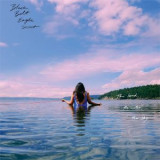
Nothing is explained in the mysteries around us, but some art touches their soul: last year, Justin Tripp, one half of the US-American impro electronic duo Georgia and London-based electronic artist Zaheer Gulamhusein man behind projects like Waswaas and XVARR -joined forces as STRING. Together they went on a virtual vacation and never came back. As the virtual is fully real due to its virtuality, they created a truly authentic aural hardware journey, hauntingly adventurous, calm, and surprising.
Without defining the scope, STRING tumbled through a dark musical zone that stretched to the horizon, letting the sound shape itself while falling discreet into an appealing abstract space. Hovering clockwise shortly above the ground, they formed impossible geometric musical figures - weightless, fluid clouds, made up of relations between asymmetrical elements. Like in nature, their collaborative work avoids identical characteristics. In an expression of respectful admiration, they softly celebrate the irregularities between their specific genetic musical fingerprints, creating eight light binding clouds of dawn. A meditative musical voyage that transports cosmic particles of idealistic Berlin school ambient right into the heart of their electronic machines. All tunes swing calm but constitutive, dancing around synthesized surfaces that form obsessed flaming orbs of fear and hope, of matter and antimatter.
A shared love for hardware and the ethos of improvisation guided STRING into an experimentation, in which each party aligns closely to the core ideas of co-operative, in-the-moment electronic music, tied across the eight tracks in a sequence.
Finding a home with the highly esteemed Hamburg based label V I S, STRING’s debut “Last Index Of…“ will enter the earth in double vinyl and cassette format, plus tripping on at the digital platforms.
(Text written by Michael Leuffen) the sound shape itself while falling discreet into an appealing abstract space. Hovering clockwise shortly above the ground, they formed impossible geometric musical figures - weightless, fluid clouds, made up of relations between asymmetrical elements. Like in nature, their collaborative work avoids identical characteristics. In an expression of respectful admiration, they softly celebrate the irregularities between their specific genetic musical
fingerprints, creating eight light binding clouds of dawn. A meditative musical voyage that transports cosmic particles of idealistic Berlin school ambient right into the heart of their electronic machines. All tunes swing calm but constitutive, dancing around synthesized surfaces that form obsessed flaming orbs of fear and hope, of
matter and antimatter.
A shared love for hardware and the ethos of improvisation guided STRING into an experimentation, in which each party aligns closely to the core ideas of co-operative, in-the-moment electronic music, tied across the eight tracks in a sequence.
Finding a home with the highly esteemed Hamburg based label V I S, STRING’s debut “Last Index Of…“ will enter the earth in double vinyl and cassette format, plus tripping on at the digital platforms.
(Text written by Michael Leuffen)
Search:hove
Anita Clark’s new Motte album, »Cold + Liquid«, builds glacial atmospheres, frozen moods and isolated impressions. Portraying New Zealand through socio-geological sound, breathing in Christchurch cultures and locales, the album embodies an artistic simulation of the Kiwi environment. Motte borrows from an array of sound sources to create an immense entity, with each piece situated precisely along the path. »Cold + Liquid« offers this rich sensory experience, transporting the listener into a world of Clark’s imagination.
As a master violinist, Clark is a favorite of the NZ music scene. She’s been employed by Nadia Reid, Marlon Williams, Lawrence Arabia and Maryrose Crook of The Renderers for her skills. Currently, she plays with The Phoenix Foundation, Luke Buda and Don McGlashan and The Others. Her skillful reach across genres fuels her popularity both with the rock under and overground, and she has also built a rich CV of film soundtracks and contemporary dance compositions.
With such a powerful musical force behind it, Cold + Liquid germinated as a result of a prolonged silence. Clark was suffering from vocal cord paralysis, leaving her with a culminating sense of frustration which could only be released through songwriting . The album’s early life was purely instrumental. But as she prepared for the studio and was searching old voice memos hoping to find vocal tracks, her voice returned. A fervent week followed, where she reimagined the entire album, now with singing. She aimed to make something colossal, and set about finding the right textures to add. A friend who works at Oamaru Freezing Works gave her field recordings of the temperature control room, a vast cold space of isolated machinery, where ice grows and dissolves in ever-evolving sculptures. Getting her hands on shortwave/longwave radios, she incorporated frequency sweeps. Another friend provided her with the mechanical drones underneath the deck of a cement cargo ship, as it lay docked in Lyttelton Harbor. Still more sources came from Sign of the Bellbird, an historic environmental site in South Christchurch, where Clark and Thomas Lambert recorded bellbirds, rolling boulders, snapping sticks, thrown dirt and the papery sound of the native harakeke plant.
While violin dominates the first Motte album, Clark sought to expand instrumentation. She was gifted a handmade Pūrerehua puoro, a traditional Māori instrument that sounds similar to the whirling and hovering of a moth (which is “motte” in German). A reacquaintance to the guitar occurred after developing an alter ego project entitled 'Sex Den,' with sleazy noir-esque guitar riffs in response to a failed rumour from a local drug-addled dive bar. Guitar and synth allowed for a broader songwriting palette along with a sometimes Dadaist approach to lyric writing. These new tools accent the extreme ambiences of »Cold + Liquid«, while additional work was provided by Ben Woods on synth and bowed guitar.
- 1: L'anomalie
- 2: Assault
- 3: Steinmeck
- 4: Histoire D'un Conflit
- 5: Hémizygote
- 6: Critique De L'effacement
- 7: Le Bouffon Moderne
- 8: Tonalités Cosmiques Pour Anorexie Mentale
- 9: White Horse Against Ufo's
- 10: Eine Andere Magische Stadt
- 11: Loop
- 12: Loop
- 13: Loop
- 14: Loop
- 15: Loop
- 16: Loop
- 17: Loop
- 18: Loop
- 19: Loop
- 20: Loop
- 21: Loop
- 22: Loop
The music on this long-awaited solo vinyl album by legendary tape artist Jérôme Noetinger was recorded live in the studio with no overdubs. Signals were sent through tube broadcast monitors and picked up with room microphones. Produced by Tobias Levin. Cover by Meeuw.
Long-time touchstone of international experimental music presents his monolithic (and first) solo vinyl »Sur Quelques Mondes Étranges« on Felix Kubin’s Gagarin Records. Jérôme Noetinger is known to most for the audio-visual trio Cellule d’Intervention Metamkine, alongside his countless recorded & live collaborations, compositions for radio & stage, and breathtaking multi-channel diffusions in the acousmatic tradition.
Discovering the ReVox B77 tape machine as his tool for live electro-acoustic music in 1987, Noetinger has doggedly investigated his instrument over 35 years, establishing him as a vital contemporary composer/performer of the medium. His work is radical and interrogatory, using a pan-historical array of analogue devices to construct soundworlds which sidestep digital monochrome, landing in a galaxy of simmering malfunction, dynamic physicality & rhythmic debris. Programming Le 102 in Grenoble for over a decade, as well as directing Metamkine distribution for over three, his encyclopaedic knowledge of manifold sonic traditions is on display here; unified by a staunch discipline, impressive dedication and flat rejection of empty trends.
The results synthesise his tireless timbral research into 11 striking sonic investigations which combine modern studio possibilities with years of performance experience worldwide. An ominous malaise hovers over proceedings; yet it never feels nihilistic, presenting solutions which electrify the listener with ecstatic discovery. The perceptual orchestration therein - from throwing our ears right against the body of the tape machine to flinging them into cavernous space alive with the aurally strange - is both delirious & calming. Noetinger is all too aware things are bad, but his drive for discovery and joyous belief in music somehow coruscates brilliantly through contemporary gloom.
Meticulously recorded & produced with Tobias Levin in Hamburg, Sur quelques mondes étranges presents a detailed & rich vocabulary both real & unreal: gesture & repetition, structure & collapse, familiar & uncanny all dance with each in the most pumping discothèque concrète in this universe. This is a powerful and exacting statement from an elegant composer & extraordinary musician who has humbly dedicated his life to his practice.
– Anthony Pateras
Rose City Band is celebrated guitarist Ripley Johnson. A prolific songwriter, Johnson started Rose City Band to have an outlet to explore songwriting styles apart from Wooden Shjips and Moon Duo, where he is often not the lead songwriter. Rose City Band allowed him to follow his musical muses as they greet him and not be bound by the schedule of bandmates and demands of a touring group. Stepping out from behind the psychedelic haze that envelops his other output, Rose City Band"s lean yet richly textured arrangements lay bare the beauty of his songcraft. On Earth Trip, Johnson reveals more of himself than ever before, coloring the project"s country-rock twang with a melancholic, wistful undertone. It charts a journey of personal growth and introspection with surprising honesty, from pining for summers spent with friends to meditations on space, stillness and the splendor of the natural world. It continues Rose City Band"s celebration of summer warmth and the great outdoors, seen from a new vantage point, and with newfound appreciation for the freedom and joy that nature provides. Earth Trip was written during a period of sudden shocks and drastic lifestyle changes for Johnson. Forced to cancel extensive touring plans for 2020, the guitarist found himself home for an extended period for the first time in years. No longer in constant motion, he was able to experience and enjoy the simple pleasures of home life, of being in one place: hikes in nature, bathing outside, and waking with the dawn. Forming new connections to his surroundings, from tending to a garden to sleeping out under the stars, Johnson found hope and healing in a more mindful relationship with the natural world. Themes of recalibration and finding personal space are equally mirrored in Earth Trip"s lean production. Recorded at his home studio in Portland and mixed by Cooper Crain (Bitchin" Bajas, Cave), Johnson makes deft use of space while experimenting with new sonics. Shimmering pedal steel, woozy harmonica melodies, and stately piano enhance the album"s introspective tone without ever clouding arrangements. Psychedelic elements that nod to Johnson"s other projects and influences still appear throughout, but hover at the edge of perception, a subtle halo adding colour and texture to Johnson"s songwriting rather than taking centrer-stage. He elaborates: "I told Cooper I was trying to capture that feeling when you take psychedelics and they just start coming on - maybe objects start buzzing in the edges of your vision, you start seeing slight trails, maybe the characteristics of sound change subtly. But you"re not fully tripping yet. He got the idea right away and his mix really captures that feeling." Johnson"s lithe guitar playing throughout treads a fine line between country and cosmic, taut melodies spiralling out into long reverb trails or free-form solos buoyed by a breeze, radiating summer warmth. Through its daring honesty and masteful arrangements, Earth Trip cements Johnson"s place as a singular songwriter of inimitable skill. It"s message of mindfulness and our interconnectedness to the environment expands on a long country and blues music tradition that draws a symbiotic relationship between storyteller and the land, capturing the beauty of the natural world while also emphasising our responsibility in preserving it for future generations
Nightlands is the solo project of The War on Drugs’ bassist and multi-instrumentalist Dave Hartley. Amid massive global paradigm shifts Dave Hartley (aka Nightlands) became a father twice over and left his native Philadelphia for Asheville, where the pace of daily life is slower and it's easier to maintain a zoomed-out perspective on modern life. From the newfound refuge of a studio he built using the bones of a barn attached to his hundred-something-year-old house in the mountains, Hartley has tailored a collection of well-crafted pop rock, pointedly titled Moonshine. Guided by some of the harmonic sensibilities that have helped make The War on Drugs a force in modern music, Moonshine combines immaculate-yet-dense vocal stacks and billowy clouds of effected keyboards with classic songcraft, revealing previously unseen acreage in the unfurling dreamscape that is Nightlands. The surrealistic album art by Austin-based illustrator Jaime Zuverza depicts an archway opening to the stars over the surface of an idyllic sea flanked by both moon and sun. Similarly, Moonshine reveals portals within portals leading to ever deeper places in Hartley's vocal-centered labyrinth. Throughout the album, there are plenty of buoyant high moods where the pitter-patter of drum machine and humming digital organ hints at Hartley's low-key tropicalia streak, but the lyrics anchor the dreaminess in real-world sorrow and resignation. Nowhere are these sentiments more apparent than on the title track, a nearly acapella recitation of "America the Beautiful" that poignantly hovers over a mirage of soft keyboards before dovetailing into Hartley's own words about the hypocrisy of the American dream. "This was never intended to be an overtly political record" he admits. "I have so many friends who are able to process the frustration of current events gracefully or with wisdom or in a nuanced way, but I often find myself just consumed with anger about it all. I decided to just let that come out, and it manifested itself lyrically." Moonshine's wide-eyed, utopian instrumental backdrops provide sharp contrast to Hartley's lyrics, which sting even harder within the sweetness. Even in light of the album's vocal emphasis, Hartley's history as a bassist brilliantly beams through Moonshine, giving effortless and sprightly movement to songs like "Down Here," which also features an extended section of saxophone lent by his Western Vinyl labelmate, Joseph Shabason. In addition to Shabason, the album hosts a short list of remote collaborators including four of Hartley's bandmates from The War on Drugs, Robbie Bennet, Anthony Lamarca, Eliza Hardy Jones, and Charlie Hall, as well as exotica virtuoso Frank Locrasto (Cass McCombs, Fruit Bats), and producer Adam McDaniel (Avey Tare, Angel Olsen). Hartley was forced to keep the guest list small out of the necessity of pandemic isolation, coupled with his move to a smaller city, all of which challenged him to do most of the album's heavy lifting right down to the mixing duties, resulting in the most independent effort of his career. By that measure, Moonshine is also the clearest image yet of Dave Hartley as a person and creator.
Hailing from Adelaide, Australia's CHARNEL ALTAR formed in late 2018. Not long after, the band's self-titled debut demo followed in January 2019. Originally self-released digitally, a cassette version was soon released by Desert Wastelands Productions and a 12" vinyl version by Seed of Doom Records and Impure Sounds; a tape re-release then came in mid-2020 via Blood Moon Productions. With this underground momentum building, CHARNEL ALTAR released a split EP with fellow Aussies CARCINOID, which was released on tape by Headsplit Records and on 10" vinyl once again by Seed of Doom. During all this, CHARNEL ALTAR became a prolific force on the live front. Their first show was supporting Uada, and they went on to play with the likes of Incantation, Krisiun, Integrity, Primitive Man, Faceless Burial, Gutless, Ignivomous, and Vile Apparition. A tour with CARCINOID was planned for 2020, but was unfortunately cancelled due to the Coronavirus pandemic. Nevertheless, CHARNEL ALTAR make their full-length debut with the slimy 'n' stultifying Abatement of the Sun. Horrific and harrowing, churning and gestating with utter dread and doom, CHARNEL ALTAR's death metal is like a slo-mo melting of mind and matter. One could arguably qualify it as death-doom, but the band's version of such evades easy categorization and aims more for hovering tension and paradoxically spacious density - indeed, like old(er)-school death metal dragged through tar but trudging forward like a tank. That all three members previously played together in the cult Tombsealer - who toured nationally in support of Mournful Congregation and played with such acts as Dead Congregation, Portal, Fetid, Windhand, Cough, Inverloch, and Nocturnal Graves to name a few - shows in their seemingly effortless execution, that these dreadful 'n' doomed-out ruminations have been simmering in their hearts for time eternal. Or, put another way, Abatement of the Sun is all-too-perfectly titled: the end is not just nigh; it's NULL.
white vinyl repress
jamesjamesjames hovers somewhere between Y2K house and super-sugary PC music, creating a unique and sexy sound that just feels expensive. The Melbourne-based artist has built a large following with poppy earworms and pounding house, and now joins Shall Not Fade's Classic Cuts series for a full EP of hits.
james2007EP starts with the anthemic "It's Not You, It's Me"; pairing the rumble of jungle breaks with melancholic, airbrushed vocals that show their SOPHIE influence, it's an eye catching opener. "My Purple iPod Nano" has a sound palette which will transport you straight back to a 00s club night, teasing a climax that stays just out of reach with pumping synth stabs and a kick drum that packs a punch.
On the B-side, "Orange Tesla" is a high-pressure roller that centers a pacey melody - sure to be a 3am dancefloor energiser. The record closer, "I Dunno Her", brings back the emotive edge with spaced out pads and glittery little ear candy moments overarching the still-racing beat. Ballad-like vocals that are barely perceptible add depth. This EP showcases jjj's talent for catchy and clever hybrid music, which is sure to make him one to watch.
12 years after their self-title debut this is the "lost" second album from Coconuts (the NYC duo of Tim Evans and Jordan Redaelli). "Coconuts, as I have known them, cracking bunk PAs in NYC hovels, is simply inertia; steam-propelled on the hot guts of rock's past. They mainline into a legacy of pop obfuscation, in which sheer sonics and the sensuality of the guitar-as-tractor-beam blinds any sort of lyrical message or rock narrative. The sound is dire and low and vaguely menacing, like the pulse of an opiated Ritchie Valens slow dancing with the Dead C or the saucer-eyed paens of Japanese mopers The Jacks. And though the 'Nuts are lauded for their no-mind electric antic, their craft reveals a collective instinct honed over countless late nights of bleary deep listenings." - Daniel Lopatin / Oneohtrix Point Never // Also Available From Coconuts:
On their first official collaboration, Japanese noise pioneer Masami Akita aka Merzbow and Australian sound sculptor Lawrence English present a harrowing, surrealist portrait of nocturnal industrial activity, spawned by field recordings made in a sprawling factory complex seven hours north of English's home in Brisbane. He characterizes the area as "uneasy and unsettling," awash in the sickly glow of smelters and refinement machinery, somehow not of this world - a liminal quality vividly captured in Andrei Tarkovsky's sprawling purgatorial opus, Stalker, to which the title alludes. Akita, too, described early drafts of Eternal Stalker as feeling "like the soundtrack to a dystopian science fiction opera." A mood of mechanical dread and ruined futures permeates each of the album's seven potent compositions. Opener "The Long Dream" sets the stage with steady rain on sheet metal, punctured by thunder and metallic echoes, reverberating to the rafters in a collapsing warehouse. Quickly the tempest rises. "A Gate Of Light" and "Magnetic Traps" both convulse in churning furies of electric demolition and rattling chains, roaring and relentless. "The Visit" and "Black Thicket" operate more at a distance, surveying the topography of steam, rust, and liquid metal from above, their flickers of violence swallowed by blankets of darkness. This is noise at its most elemental and unknowable: brooding, bristling, and opaque, stalking forbidden peripheries of chaos and creation. Discussing Akita's music, English refers to its "intense substrata that is purely psychedelic; it consumes and confounds." The seasick swells of friction and fracture subsume the listener, forcing an auditory surrender: "this saturation of the senses can be a euphoria." Proof comes halfway through "The Golden Sphere," when the howling mayhem subtly recedes, revealing an eerie siren drone hovering in the void, like the resonance of a dead star galaxies away. Slowly a seething, venomous wall of volume returns, shredding the signal until its frequencies fray, whipping away into the eye of the storm. The combined effect merges obliteration and liberation, rapture and ravagement; it's the sound of dissolution as resolution, uprooted and unmoored, finally freed from form.
Featuring Squirrel Flower and Liam O’Neill (SUUNS). Recommended If You Like: Mount Eerie, Low, Richard Swift, the Weather Station, Lomelda, Fleet Foxes, Squirrel Flower, L’Rain. Cedric Noel is a songwriter, bassist, collaborator and producer currently based in Montréal, Québec. The newest longplayer from Tio'tiá:ke/Montreal staple Cedric Noel lands with a stunning sense of surety and self. Hang Time stands as a high water mark for a songwriter who's spent the past decade quietly expanding the borders of his music. Longtime fans will recognize the fluid elements of the album’s open-ended rock formations: reflective strumming, soaring choruses, searing guitar lines, subtle bass grooves; all occasionally dissolving into pools of pure ambience. New listeners will find surprises throughout: threads of folk pop, ambient and sound collage fasten the foundations of this expressive whole. However, what’s most striking on Hang Time is Noel’s newfound sense of voice, both literal and metaphorical. Written primarily in 2017-18 during an intense period of self-reflection, this collection of songs finds Noel wrestling profoundly with his sense of identity, self and place. The album’s material was captured faithfully at The Pines, a beloved downtown Montreal studio whose doors shuttered shortly after amidst the strain of the pandemic. Noel worked closely and patiently with friend and engineer Steve Newton, ensuring the songs had the time and space needed to come fully to fruition. Hang Time features subtle rhythm work from drummer Liam O’Neill (SUUNS) and guest spots from Brigitte Naggar (Common Holly) and Tim Crabtree (Paper Beat Scissors) among others. The album opens in mid-air with ‘Comuu’, a song that implores a becoming-more while hovering triumphantly. Then follows a suite of songs (‘Headspace’, ‘Keep’, ‘Stilling’) that recall the heart-rending power of y2k-era Low, albeit with a more vigorous beat. On ‘Bass Song’, an intimate duet with musician Ella Williams (Squirrel Flower) that explores the depths of interpersonal constriction. At the crux of the album sits ‘Born’, a deceptively pleasant-sounding song that explores the confounding emotionality of adoption before fading into a distended soundfield. Throughout the back half of the album, Noel double’s down on this commitment to his genuine, proud, Black self. The most confrontational track, ‘Allies’ finds him refraining “Are you on my side?” as a trailing guitar solo interweaves a Malcolm X soundbite, eventually engulfing the composition. Glorious lead single ‘Nighttime (Skin)’ traces the artist’s sense of ancestral dissociation through to a triumphant moment of pride in self-acceptance. Throughout Hang Time, Noel finds a way to ask hard questions (both of the listener and himself) in ways that are compassionate, open and honest. The ebb and flow of tension and tenderness that moves within these tracks helps to grow the heart and redefine what Black music can be in 2021.
Jon Porras draws a staggering array of atmospheres out of even the simplest instrumentation. Across his work as one-half of psych-drone duo Barn Owl and his solo releases, Porras welds monoliths and ether into propulsive music that is deeply felt. Arroyo, named for the Spanish word for "stream" in a nod to Porras' heritage as a first generation Colombian?Japanese American, drifts gently from one tributary to the next in unhurried contemplation and euphoria. The portentous weight and abrasive textures of Porras' previous work give way to the trickle of richly detailed acoustic instruments slipping in and out of the fold. On Arroyo, Jon Porras evokes a distinct sense of resplendent anticipation and calm with a fathomless flow and softly gorgeous colors. For Porras, Arroyo became a rumination on simplicity and simple truths, a work of complete immersion and continuous motion where separate elements coalesce into an ever-changing whole. Porras spent the year leading up to 2020 living nomadically across Europe where he was able to soak in a deep appreciation for the effortless beauty of overgrown gardens, the basic principles of classical architecture and a more transient sensibility. The album was written and recorded in a time of even more change for Porras: after the birth of his daughter. Like a stream's steady glide across bedrock that waxes and wanes with each gradual turn, the music of Arroyo exhibits a transportive stillness. The compositions take on a light, gaseous buoyancy as discreet drones swell with measured fluctuations and ripples of piano rest atop the surface. Arroyo borrows harmonic concepts from modal jazz to create a unique sense of ease and endlessness. Each of the four pieces on the album centers around a single suspended chord, a chord most commonly associated with devotional music which embodies a space between harmonic tension and resolution. Porras embellishes that liminality with arrangements that feel less like distinguishable layers of instruments and more like one undulating nebula of sound. In the past decade of Porras' solo work, his music has grown increasingly engaged with elaborate synth textures and detailed processing. With Arroyo, Porras consciously takes a step back from those more intricate compositions and focuses on more organic, unadorned textures and places each sound with the same precision. Stark piano and guitar patiently hover over modest currents of Hammond organ and Yamaha DX7 with the sustain of each chord and phrase acting as a natural guide to the album's subtle rhythm. The four pieces that comprise Arroyo each encompass their own idyllic channel, slowly weaving their way in and out of the album's elegant stir. Porras' reflections on simplified elements take shape in gorgeous arrangements that impart clarity amidst a tranquil mist. Arroyo is an album that unearths splendor in a unified feeling of space, serenity in perpetual renewal
Working with producer Paul Butler (The Bees, Micheal Kiwanuka, Caroline Rose, Hurray for the Riff Raff), Seratones have taken the invitation to knock at the door of the cosmos. A.J. Haynes's voice dances with soul-stirring devotion at the altar of Black Feminisms: weaving the words Toni Cade Bambara, Octavia Butler's Xenogenesis multiverse, echoes of bell hooks, and Audre Lorde's Power of the Erotic. With drummer Jesse Gabriel's machine- like precision and the
transcendental touches from guitarist Travis Stewart, the album oscillates between Alice Coltrane-inspired bliss & Giorgio Moroder's ecstatic release. Each song hovers and pulsates in the wide, dark matter'constellations guiding a journey through the subtle body, the vast fullness of the human experience and the irresistible potential of liberation.Packaging: CD Digipack
One of the more idiosyncratic U.S. independent labels must be the Hep’ Me imprint from New Orleans run by veteran Soulman Senator Jones. Very few of Hep’ Me's numerous releases made it out of New Orleans and the ones that did, tended to go into collections and nowhere else. Las Vegas Connection's ‘Running Back To You’ surfaced some time in the mid 1970s but there were never enough copies for it to take off. Hopefully that will change with this re-release on the original label.
Also, a lovely piece of mid-tempo soul on the flip with the stunning ‘Can't Nobody Love Me Like You Do’. Original copies are few and far between and the current price benchmark for this superior slab of New Orleans vinyl is hovering around the £250 mark. As with most of our reissues this will appeal to across-the-board scenes.
Nothing is explained in the mysteries around us, but some art touches their soul: last year, Justin Tripp, one half of the US-American impro electronic duo Georgia and London-based electronic artist Zaheer Gulamhusein man behind projects like Waswaas and XVARR -joined forces as STRING. Together they went on a virtual vacation and never came back. As the virtual is fully real due to its virtuality, they created a truly authentic aural hardware journey, hauntingly adventurous, calm, and surprising.
Without defining the scope, STRING tumbled through a dark musical zone that stretched to the horizon, letting the sound shape itself while falling discreet into an appealing abstract space. Hovering clockwise shortly above the ground, they formed impossible geometric musical figures - weightless, fluid clouds, made up of relations between asymmetrical elements. Like in nature, their collaborative work avoids identical characteristics. In an expression of respectful admiration, they softly celebrate the irregularities between their specific genetic musical fingerprints, creating eight light binding clouds of dawn. A meditative musical voyage that transports cosmic particles of idealistic Berlin school ambient right into the heart of their electronic machines. All tunes swing calm but constitutive, dancing around synthesized surfaces that form obsessed flaming orbs of fear and hope, of matter and antimatter.
A shared love for hardware and the ethos of improvisation guided STRING into an experimentation, in which each party aligns closely to the core ideas of co-operative, in-the-moment electronic music, tied across the eight tracks in a sequence.
Finding a home with the highly esteemed Hamburg based label V I S, STRING’s debut “Last Index Of...“ will enter the earth in double vinyl and cassette format, plus tripping on at the digital platforms.
- 01: Through The Timehole
- 02: Distant Reflections
- 03: Tribal Call
- 04: The Turning Point
- 05: Mutated Perception
- 06: Untrodden Pesonance
- 07: Elemental Waveshore
- 08: Glittering Embalming
- 09: Squirlich Stroll
- 10: Return Of The Mystic Channeler
- 11: Chosen Ones
- 12: The Field Of Draflinis
- 13: Forgotten Valley
- 14: Cavern Of Morphing Stones
- 15: Hovering Over The Magnetic Ground
- 16: New Dawn - Return
Following the release of Collision and Coalescence, Slovakian label mappa commits to the duo Grykë Pyje, releasing their third LP "Squirlich Stroll". Maintaining the fabled tone of their debut on the label, Jani Hirvonen (Uton) and Johannes Schebler (Baldruin) dig deeper into the sonic vein of myth and fabric of yonder. The music in "Squirlich Stroll" unravels as a yarn brought back from a wild voyage.
On uncharted areas of medieval maps where potential dangers were thought to exist, the inscription "Here be dragons" was used to warn as much as to tempt explorers willing to cross limits. Myth awaited them as a blank page of dormant territory, yet also to be proved unlike and reinvented. In such pliable borders, wonder had the favorable conditions to blend experience and imagination, crafting creatures with an eye instead of a bellybutton, arms instead of ears and ears instead of fingers, hypnotizing spirals where a mouth should have been. These chimeras, though fictitious, allowed explorers to express their delusions along with their fears. "Here be dreams", we hear nightmares. Here be mushrooms the size of pyramids that sing lullabies for mountains. Here be talking roads that lead to volcanoes throats and spit you back to flight. Here be art of bending trees into braided bridges like in Meghalaya, and the time gap between seed and living ruins.
Let that be the compass, the astrolabe. Yet, the music in Squirlich Stroll comes with these journeys already embraced, unraveling as a story told by wanderers visiting town, nourishing fantasy. The sonic language and diction employed here are crystal clear. Sounds are sharp and pure. Growls, howls, shrieks, tingles, rattles, moans, excretions and even hymns sung by landscape and creatures alike do not run over each other. There is no chaos, but ambience, cohabitation. The duo masters dramaturgy, providing every voice with focused turns and character, guarding their parley with caution and care, convoking them mainly through soothing synth melodies that enable an analgesic, sedative mood. Clusters of sounds gathered are articulated through the album with the inherent luminosity and required stability to accomplish what peaks in, as the title of the final track reads, a new dawn.
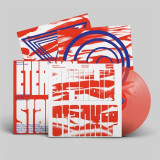
This record is a new era. The desire to create something larger than yourself, that will infiltrate people’s hearts like well oiled machines, to paint pictures that will shake them and create a resounding push forward towards something more. In our pandemic isolation, what we wanted was to play a loud collage of music, unconfined by preconceived notions of what it should be, and to transcend ourselves in a room full of breathing, screaming, vibrating human beings - to let the darkness out in a cathartic squeal of noise, eclipsing it with light. We wanted to feel it all at once with you and to escape this fucked up world and find our way into a better one together.
- A1: Amazonas / Ivre De La Jungle
- A2: L'été Indien (Feat Omar)
- A3: Les Pyramides Cosmiques (Feat Youka Manuka)
- A4: Le Pain De Sucre (Feat Youka Manuka)
- B1: Le Pain De Sucre (Paul Cut Remix)
- B2: Amazonas / Ivre De La Jungle (Max Graef Remix)
- B3: Amazonas / Ivre De La Jungle (Fouk's Black River Odyssey)
- B4: L'été Indien (Souleance "Braziu-Funk" Remix)
For the second chapter of his odyssey, we find again Le Commandant Couche Tôt in the middle of the Amazon River, escaping from drones and wildfires in a hovercraft.
Une Histoire d’Amour Brésilienne (A brazilian love story) shares a dystopian vision widely inspired by the environmental issues of 2020 and 2021, which illustrates a form of anxiety toward the future.
Its soundtrack however is purposely the antithesis of the story: a very optimistic tribute to space-disco and brazilian funk. A “good vibe” pill to give hope for a new beginning.
Here’s a split vinyl of quarantine protest jams from two Seattle heavy-hitters: AJ Suede & Specswizard. Both artists were inspired by 2020’s Black Lives Matter protests, mask-wearing, and stay-at-home orders to produce boom-bap tunes that could only exist in the 21st Century. Insomniac magazine praises the pair’s “next level lyricism.” The Seattle Times picked AJ Suede’s brilliant “Long May We Rain” as one of the best albums of 2020. On the flip side of this cross-generational split LP, you’ll find the vinyl-only “Lost Gems” project from Specswizard. He’s a veteran of Seattle’s scene, releasing dozens of self-produced cassettes and EPs since his start way back in 1988. Here, the familiar sound of buzzing amps and tape hiss makes way for major-key soul turned into pensive bangers. Each artist’s low, late-night-in-the-living-room baritone conjures the feeling of recording in a cramped apartment while the neighbors are sleeping. Still, the beats knock like side doors and narratives hover like heavy rain from cumulus clouds of weed smoke. Together, these two records provide a powerhouse portrait of Black life in the American Northwest today. Only 500 individually numbered copies have been pressed.
These three offerings from Michael James might fit into the minimal/tech bracket comfortably but there's a free flowing, shuffling sense of funkiness that undeniably runs through them all that defies all the usual 'shoulder twitch' stereotypes about the genre. 'Signal Issues' employs a panther-like bass hovering under the radar, with the briefest of breakbeat snippets adding the growing syncopation. 'Still Waiting' continues the technofunk mission, a sea of underplayed bleepery augmenting the groove, while 'Rush Hour' has a breezier and more open vibe and perhaps a more classic techno feel, proper graceful like.
Carl Finlow keeps on keeping on. As the world changes around him, the veteran producer continues to do what he does best - craft top-quality electro tunes which invoke the sound's Drexciyan heyday, yet carry themselves with an assurance that is all of Finlow's own.
Finlow remains a prolific producer more than a quarter of a century on from his emergence. Still averaging several records a year across a variety of aliases, recent times have seen Finlow forge particularly strong links with the Central Processing Unit label. Now, after a run of EPs for the Sheffield imprint which began with 2018's 'Projections', Finlow's Silicon Scally project offers up CPU's first drop of 2022 in the form of the 'Field Lines' LP.
Silicon Scally productions have long been marked out by how they combine piston-precise beat programming with more textured synth play. 'Field Lines' runs with this formula to deliver some of Finlow's most atmospheric material to date. At once shadowy and expansive, listening to 'Field Lines' is the aural equivalent of taking a night-time drive around some futuristic metropolis.
The beats cruise sleekly here. Many of these burbling machine-funk numbers hover at mid-tempo, the crisp clip of their drum programming given shape and depth by all sorts of percussive tones fizzing around at the fringes of the mix. Even when 'Field Lines' seems to set its sights on the club - the Bunker Records-aping 'Amino', for instance, or the dystopian whizz-bang of 'Static Fire' - the tracks here strut sturdily rather than giving in to full-on freakouts.
However, from this sturdy base, Finlow moves outwards. Working with tones which range from rapid-fire machine-gun bass to keening, dawn chorus keyboard pads, Finlow leads us through the futurescape with the expertise of a seasoned guide. Cuts like 'Submerged' and 'Yield' are brilliantly cinematic, blooming from those reliable drum pulses into miniature masterpieces of nocturnal electronics. Elsewhere on 'Field Lines' there is a mechanical majesty to 'Inhibitor' and 'Altered Domain' which invokes the brave new worlds that Kraftwerk repeatedly conjured in their heyday.
Central Processing Unit's first release of 2022 is 'Field Lines', an LP of electro-funk explorations from Carl Finlow's Silicon Scally project which will thrill regardless of whether it's experienced through headphones or out on the dancefloor.
RIYL: Drexciya, Kraftwerk, Cygnus, Annie Hall
- A1: Roberto Musci - Kami Shintai (Lion's Drums Edit)
- A2: Vasilisk - Awakening (Lion's Drums Edit)
- B1: Budi Und Gumbls - Tanz Der Korperlinge (Lion's Drums Edit)
- B2: Freddy Spins - Journey To Middle Earth (Lion's Drums Edit)
- C1: Roberto Musci & Lion's Drums - Alap On Benares
- C2: Manos Tsangaris & Lion's Drums - Crying Tafel
- D1: Tullio De Piscopo - Fastness (Lion's Drums Edit)
- D2: Suzanne Ciani - Paris 1971 (Lion's Drums With Roberto Musci Lost Tapes Remix)
Lion's Drums full length exists as en exploration in multiple dimensions. First by challenging the notion of the album format by presenting a body of work that lies snuggly between remixes, edits and original works and secondly as a means to delve into the transcendent potential of the drum. The album sets the tone by putting these two concepts fully on display with its hypnotic chant, swaying one into ease over the first two songs. In orderly cue folding and unfolding, meditatively through, melodies as muddied pastelle whispers cast over the measured language of the drum. Breaking away from the musing themes of the opening songs we find an ecstatic ritual in "Tanz der Korperlinge" and "Journey to Middle Earth", two distinct varieties but both of the same perennial species. Inky ether seeps back in through the second half of the album with a peak of frenzied tumbling toms and incongruous textures hovering above in the Manos Tsangaris' collaboration "Crying Tafel" and his re-imagining of Tullio De Piscopo's unhinged drum excursion "Fastness". The closing exemplifies the edit/remix/original ethos proposed for this work with Lions Drums drawing from tapes and original material of electronic pioneers Suzanne Ciani and Roberto Musci. Drawing from unreleased music and song sketches by the original artists as well as field recordings from travels & studio sessions made by Roberto Musci & Manos Tsangaris in the 80's and early 90's he constructs a side winding journey through playful textures and ethereal moods.
- A1: Gary Moore - Sea Lapping (Harbour & Estuary)
- D5: Gary Moore - Swifts & Swallows
- D6: Ame - Doldrums
- A2: Natural Calamity - Have You Seen The Sun Today
- A3: Gary Moore - Ships Horn
- A4: Paqua - Escondidio (Instrumental)
- A5: Gary Moore - Avocets
- A6: Coyote - The Fade
- A7: Gary Moore - Cormorants
- A8: Greymatter & Goldslang - Black Turns To Blue
- B1: Gary Moore - Nightjar (Heathland & Moorland)
- B2: Crack'd Man - Between The Midst & The Sun
- B3: Gary Moore - Wood Ants
- B4: Kirk Degiorgio Presents As One - Orwell Rising
- B5: Gary Moore - Stonechat
- B6: Turtle - Heathland Haze
- B7: Gary Moore - Natterjack Toads
- B8: Brainchild - Beyond Because
- C1: Gary Moore - Woodland Canopy (Woodland & Forest)
- C2: Richard Norris - Warm Hunger
- C3: Gary Moore - Great Spotted Woodpecker
- C4: Fug - From Little Seeds We Grow
- C5: Gary Moore - Tawny Owls
- C6: Bobby Lee & Mia Doi Todd - Walking With Trees
- D1: Gary Moore - Cliff Top (Beach & Cliffs)
- D2: World Of Apples - Bluemill Sound
- D3: Gary Moore - Puffins
- D4: Pablo Color & Hove - Licht
Warm presents a brand new compilation called 'Home'; a soundtrack for when we pause, take a breath, and use our senses to explore the magic of the world on our doorsteps. Morning to evening, dawn to dusk, our lives continue moving but sometimes the need to step back and reset is essential to create a balance in our lives. As we open our eyes and ears to our surroundings, our senses become stimulated by small details. Whether it be the sound of the sea lapping on the sand, the wind blowing through the canopy of trees or a robin heralding a new day; nothing is the same but all are unique.
'Home' has been pieced together over the last year by Warm’s Ali Tillett. With the majority of Warm - booking agents for Colleen ‘Cosmo’ Murphy, Gerd Janson, Horse Meat Disco, Hot Chip DJs, Lou Hayter, Luke Una - on pause, Ali took the chance to immerse himself in bringing together his passion for music, nature and art.
The 14 tracks, the majority exclusive and specially made for the compilation, includes contributions by Âme, Bobby Lee & Mia Doi Todd, Coyote, Crack’d Man (aka Crooked Man who produced Roisin Murphy's last album), Fug (with their first material for over ten years), Kirk Degiorgio presents As One, Turtle, and Ewan Pearson's World of Apples project (with their first material for nearly 20 years!). The tracks align with specific habitats in the local Dorset area, where Ali is situated, such as Harbour/Estuary, Heathland/Moorland, Woodland/Forest, and Beach/Cliffs.
To immerse the listener even further into the soundscape, critically acclaimed sound and field recording artist Gary Moore, of Springwatch/Autumnwatch fame, has been involved to help bring nature even further to the ears. Intertwined between the music are field recordings specific to area and habitat; whether it be the sound of a ship's horn in Poole harbour, avocets on the scrape, the tawny owl in the woodland or Puffins on the ledges of cliffs.
Gareth Fuller, a fabulous artist who previously lived in Dorset, has kindly allowed one of his artworks to become the centrepiece for the compilation. Titled 'Purbeck', it's a truly wonderful piece of art that encapsulates everything about the area and enables an added dimension to the immersive experience for the listener.
Black Truffle is pleased to announce For McCoy, a new work by Eiko Ishibashi dedicated to the widely loved character of Jack McCoy, portrayed by Sam Waterston in Law & Order. Following on from Hyakki Yagyō (BT064), For McCoy finds Ishibashi further exploring the unique space she has carved out in recent years, bringing together musique concrète techniques, ECM-inspired jazz, lush layers of synths and hints of pop into immersive and affecting structures crafted in her home studio, aided by a group of close collaborators.
Beginning with overlapping layers of descending flute lines, the expansive ‘I Can Feel Guilty About Anything’ (whose two parts stretch out over more than thirty minutes) unfolds with a free-associative logic, embracing dreamlike transitions and unexpected cinematic cuts. As a hovering cloud of synthetic tones and multi-tracked voices fans out from the spare opening moments, Joe Talia’s skittering cymbals settle into a gently propulsive groove, soon joined by melodic fragments performed by Daisuke Fujiwara on multi-tracked saxophone. As the drums cede to field recordings and ominous synth figures, the uncommon meeting of saxophone and electroacoustic techniques call to mind the more spacious moments of Michel Redolfi and André Jaume’s Synclavier-propelled oddity Hardscore or the early work of Gilbert Artman’s Urban Sax. As the piece continues on the LP’s second side, distant dialogue rumbles beneath a surface of processed flutes, blurring into a cavernously reverberant backdrop for stark ascending lines performed by MIO.O on violin. Eventually, the piece settles into a gorgeous passage of abstracted dream pop, where Ishibashi’s multitracked vocal harmonies glide atop synth chords, errant pings and snatches of outdoor sound.
Fragments of melodic material reappear throughout the spacious opening piece, finally stepping to the forefront on the closing track, ‘Ask Me How I Sleep at Night’. Here, over a shuffling groove supplied by Jim O’Rourke on double bass and Tatsuhisa Yamamoto on drums, layers of flutes, saxophones and guitars sound out melodies whose combination of twisting irregularity and soulful immediacy calls up prime Keith Jarrett, while their closely voiced harmonies suggest Kenny Wheeler or even Wayne Shorter’s Atlantis. In a classical gesture of closure, the web of melodic lines eventually leads back to the descending flute figures with which the record began. Presented in an immersive, impeccably detailed mix by Jim O’Rourke and arriving in a sleeve featuring Ishibashi’s beautiful drawings of Jack McCoy, For McCoy is an essential release for anyone following the enchanted and unique path being forged by Eiko Ishibashi.
»Infuso Giallo aka Philipp Carbotta originally hails from rural Western Germany, first cut his teeth in the music scene of nearby Cologne and conducts a host of activities in Berlin for a couple of years now – co-running the label Kame House, designing graphics and producing and playing leftfield electronic music. His debut LP Ocular Soda presents an intersection of these activities – self-released, self-designed and of course self-produced. Even before the first synth chords and reverse atmospheres of the two-part opener 'Every Waking Hour' tickle the ear, it is the eye that is drawn to the bright, cut-out style cover art – itself made up of two eyes on the front and what seem to be their rough shapes or discarded counterparts on the back.
To stay within that metaphor, Infuso Giallo's music is indeed of a reflective and calm nature, taking cues from Berlin School, library and New Age musics from roughly the 1970s to the 1990s – steadily repeating and slowly evolving ostinatos, lush digital pads, quirky filtered toplines and electronic percussion that mostly eschews four-four monotony in favor of much more subtle syncopations. Balearic bomb 'The Big Rip' with its big drums and acid bass turns the energy level up a notch while retaining the somnambulistic, lingering quality that makes Ocular Soda such a coherent listening experience – music on the sheath of waking and dreaming, both worlds and their inherent logics freely bleeding into each other. There are moments of great expanse, such as in 'Mole Gaze' – I couldn't help but see myself hovering somewhere in mid-air while the music unfolds as if on a great deserted plane below me. Maybe this is what it sounds like once the mole leaves his tunnels and takes in the sound of the world overground. 'Hello World', indeed, in its multitude of information to eye and ear, in its gently overwhelming quality. The title track 'Ocular Soda' closes the proceedings with a whimsical nod to 1970s botany-centered library music, its brooding chord sequence and sweet lead lines gradually fading in the distance. A fitting ending to an impressive LP of highly evocative, at times sombre and at times blissfully naive pieces that leave me yearning for more.«
Written, recorded & produced by Infuso Giallo in 2020 & 2021 in Berlin. Mixed by Philipp Janzen & Sebastian Blume at Dumbo Studios, Cologne. Mastered by Sam Irl in Vienna. Design by Infuso Giallo.
Dodging Dues is a startlingly expansive record “startling” in part because it’s relatively short (seven songs, all but one hovering around the four minute mark), but also because it traverses so many moods and styles: languid and dreamy one moment, surging and intense the next. Garcia Peoples (these days a six-person band) “hit their stride” a long time ago, but here they seem to be hitting a dierent one, working themselves loose of in‑uences (though this tree has roots: traces of Thin Lizzy, of more arcane bits of U.K. folk-prog, of vintage Meat Puppets in some of the softer passages) while at the same time opening themselves up to their own individual strangeness, becoming ever more singular and ever more free.
Originally released in 2005 on Cooper's Hipshot Cd-r label, and reissued here for the first time on vinyl, Spirit Songs deserves to be regarded as a true rediscovered gem, remixed and remastered by Mike Copper himself!
Spirit Songs comes as a highly organic form of Ambient-Folk-Blues with Cooper reordering material to create an immersive listening experience. A stream of cut-up lyrics inspired by Thomas Pynchon's writing slide across multiple electronic layers and masterfully fingerpicked acoustic guitars combining into a moving tide. This is deeply inspired music from a unique artist: Mike Cooper the so called "icon of post-everything music” a true sound explorer constantly pushing the boundaries of genres and styles, Folk, Blues, Free Improv, Exotica, Ambient, Electronica...
"Spirit Songs.. a glorious marriage of all three of Cooper's previous musical strategies; creating a stunning hybrid. The album contains 10 songs performed on finger-picked acoustic and electric lap steel guitar,
often looped and treated in real time, with Cooper singing lyrics in a quietly meandering, semi-improvisatory manner that recalls a more polished Jandek. The style of songwriting is immediately recognizable as blues, but an intuitive, idiosyncratic form of folk-blues, with Cooper narrating laments over matters personal and global, gentle universalisms that double as political messages. All of this occurs over a loose rhythmic framework provided by various noisy loops, with cracks, scratches and pops, echoes and distortions skipping out from every refrain. It's a gentle cacophony with subtle undercurrents of beauty and sadness, effortlessly nostalgic but still very rooted in the now. I think that Mike Cooper can genuinely call this style his own; I've never heard anything remotely like it, and it works beautifully, highlighting both song and singer, as well as the happy accidents resulting from the intersection of structure and chaos."- Pitchfork Review.
repressed !
Biogen's a different kind of musician, always travelling the road less trodden. All law's broken - no chords, no build-ups and no traditional drum patterns. Instead Biogen offers listener's fragmented shredding's, constant irritations, glitches, imbalance—and enough creative ideas to supply a whole battalion of electronic musicians. His works are full of contrast. Occasionally soft and mellow - like a cloud in trousers - Biogen would call that 'sofa-trance'. Other times the music's harsh and uncompromising with uncomfortable, irrational beats and glitches - 'Weird-core' - a vast uncharted territory. Some might be tempted to connect the contrast and contradictions in his music to his long battle with manic-depressive disorder. But the disparity in his music is its strength, confounding and delighting the listener.
It's five years since Biogen passed away, but his influence is keenly felt among Icelandic electronic musicians. In the early '90s, Sigurbjörn 'Bjössi' .orgrímsson was a pioneer of the modern electronic scene as a member of the old skool hardcore band Ajax, who for a short time counted Goldie as vocalist, and cemented his reputation for pushing the limits under his Biogen pseudonym. His musical creations weren't made to serve the past or the present, but the future.
Each release and concert offered something different. Concerts were supposed to be challenging and engaging. His releases were not easy to come by and often he'd sell his music on Laugavegur - to unsuspecting tourists intrigued by his Viking-like appearance or mesmerised by his big blue eyes. He was a friend and a mentor to many; in 1995 he was a founding member of Thule Records, and in 2007 one of the leading forces in the Weird-core movement, a group of artists focusing on the unconventional. He'd encourage young artists to release their music into the cosmos - to make mistakes and learn from them - and that wouldn't be done while sitting in a basement. Many have memories of their first gig, watching a tall and comforting figure hovering above everyone else in the crowd. That was him, and it happened rarely that he wasn't there.
A fair amount of tracks on 'Halogen Continues' are previously unreleased, or self-released in very small amounts. The music moves from 'Irrelevant Information' where Biogen illuminates on 'Stabastab" a mysterious international institute he dreamt up, originally on the 'Mutilyn' LP that he handmade and sold himself. It was an anti-LP, a non-linear album of drones, crackles and weirdness. 'Bliss' is from the 1996 double CD compilation entitled "Icelandic Dance Sampler' that he helped compile. '303 Ambient' one of the recent works of the "Weird-core" era - also a regular event showcasing abstract electronica. He was the front man of the movement; regularly performing in Reykjavik with shows included lots of break-beats and 303's.
His creativity and freedom from tradition have seen Biogen gathering appreciation as an artist with the passing of time, and are hand in hand with the concept of . The artwork by Tombo is inspired by the idea of eternity and reverence after death. Nina compiled the tracks much like other album journeys on - 'I was in the car driving in the middle of nowhere in Iceland when I heard Biogen's music for the first time. Dramatic weather conditions outside probably influenced that instant emotional connection that I had with his music. Later navigating through a large archive of his recordings it took me some time until the album took form. I picked the most idiosyncratic cuts that show his creative approach most brightly. Some of them are short cuts ending obnoxiously with a lot of temper and others gorgeous atmospheric narratives - so deep and haunting that it feels like they are not familiar with a notion of time and dissolve slowly into the eternity. It's been an honour and felt exciting to have complied his work, a responsibility I feel keenly, and I hope he would like his music together in this album.'
Biogen's friend the Icelandic musician Ruxpin (Jonas Gudmundsson) who has worked to collect together Biogen's musical legacy through his DAT recordings and hard drives, and kindly granted Nina access to the files, provided much of the text for the press release. Following the album release of 'Halogen Continues', a further album of Biogen's ambient and experimental works will be released on GALAXIID later this year.
Endless Boogie re-joins with its fifth proper studio album. It contains and is called ADMONITIONS. Seven tracks of unrefined wisdom, mostly put to tape in improvised fashion with little to no warning. Recorded over two years and two sessions - at the pastoral tranquility of the Stockholm inland archipelago in 2018, and in the dank, cramped basement of a Fort Greene, Brooklyn studio in February 2020. Eklow on crude direction, Sweeney on stealth glamour, the obscurantist clarity of Paul Major is, as always, as ever, on full display, the fierce reality of Mike Bones is crucial, and the stoic solidity of The Harry Druzd lays beneath it all. Old pal Kurt Vile hovers over COUNTERFEITER. Full grease, delivered with ease. It is the band’s humble wish that you immerse yourself and this offering. Endless Boogie emerge from fugue state with a new double LP. Admonitions was conceived a recorded via timewarp between NYC, TX & the Stockholm archipelago. Major growls, Eklow riffs, Sweeney flavors. Mystery players appear as specters in the mirror. 100% guaranteed to drown out paranoid inner dialogue. Onward and inward. . This one goes down swinging.
Featuring Squirrel Flower and Liam O’Neill (SUUNS). Recommended If You Like: Mount Eerie, Low, Richard Swift, the Weather Station, Lomelda, Fleet Foxes, Squirrel Flower, L’Rain. Cedric Noel is a songwriter, bassist, collaborator and producer currently based in Montréal, Québec. The newest longplayer from Tio'tiá:ke/Montreal staple Cedric Noel lands with a stunning sense of surety and self. Hang Time stands as a high water mark for a songwriter who's spent the past decade quietly expanding the borders of his music. Longtime fans will recognize the fluid elements of the album’s open-ended rock formations: reflective strumming, soaring choruses, searing guitar lines, subtle bass grooves; all occasionally dissolving into pools of pure ambience. New listeners will find surprises throughout: threads of folk pop, ambient and sound collage fasten the foundations of this expressive whole. However, what’s most striking on Hang Time is Noel’s newfound sense of voice, both literal and metaphorical. Written primarily in 2017-18 during an intense period of self-reflection, this collection of songs finds Noel wrestling profoundly with his sense of identity, self and place. The album’s material was captured faithfully at The Pines, a beloved downtown Montreal studio whose doors shuttered shortly after amidst the strain of the pandemic. Noel worked closely and patiently with friend and engineer Steve Newton, ensuring the songs had the time and space needed to come fully to fruition. Hang Time features subtle rhythm work from drummer Liam O’Neill (SUUNS) and guest spots from Brigitte Naggar (Common Holly) and Tim Crabtree (Paper Beat Scissors) among others. The album opens in mid-air with ‘Comuu’, a song that implores a becoming-more while hovering triumphantly. Then follows a suite of songs (‘Headspace’, ‘Keep’, ‘Stilling’) that recall the heart-rending power of y2k-era Low, albeit with a more vigorous beat. On ‘Bass Song’, an intimate duet with musician Ella Williams (Squirrel Flower) that explores the depths of interpersonal constriction. At the crux of the album sits ‘Born’, a deceptively pleasant-sounding song that explores the confounding emotionality of adoption before fading into a distended soundfield. Throughout the back half of the album, Noel double’s down on this commitment to his genuine, proud, Black self. The most confrontational track, ‘Allies’ finds him refraining “Are you on my side?” as a trailing guitar solo interweaves a Malcolm X soundbite, eventually engulfing the composition. Glorious lead single ‘Nighttime (Skin)’ traces the artist’s sense of ancestral dissociation through to a triumphant moment of pride in self-acceptance. Throughout Hang Time, Noel finds a way to ask hard questions (both of the listener and himself) in ways that are compassionate, open and honest. The ebb and flow of tension and tenderness that moves within these tracks helps to grow the heart and redefine what Black music can be in 2021.
- A1: Noriko Miyamoto - Arrows & Eyes
- A2: Mishio Ogawa - Hikari No Ito Kin No Ito
- A3: Yoshio Ojima - Days Man
- B1: Mkwaju Ensemble - Tira-Rin
- B2: Rna Organism - Weimar 22
- B3: Naoki Asai - Yakan Hikou
- B4: Takami Hasegawa - Koneko To Watashi
- C1: Mammy - Mizu No Naka No Himitsu
- C2: Dip In The Pool - Hasu No Enishi
- C3: Wha Ha Ha - Akatere
- D1: D Day - Sweet Sultan
- D2: Perfect Mother - Dark Disco-Da Da Da Da Run
- D3: Neo Museum - Area
- D4: Sonoko - Wedding With God (A Nijinski) (A Nijinski)
LTD. COLORED VINYL
Somewhere Between: Mutant Pop, Electronic Minimalism & Shadow Sounds of Japan 1980–1988 hovers vibe–wise between two distinct poles within Light In The Attic’s acclaimed Japan Archival Series—Kankyō Ongaku: Japanese Ambient, Environmental & New Age Music 1980–1990 and Pacific Breeze: Japanese City Pop, AOR & Boogie 1976–1986. All three albums showcase recordings produced during Japan’s soaring bubble economy of the 1980s, an era in which aesthetic visions and consumerism merged. Music echoed the nation’s prosperity and with financial abundance came the luxury to dream.
Sonically, Somewhere Between mines the midpoint between Kankyō Ongaku’s sparkling atmospherics and Pacific Breeze’s metropolitan boogie. The compilation encompasses ambient pop, underground electronics, liminal minimalism and shadow sounds—all descriptors emphasizing the hazy nature of the nebula. Out–of–focus rhythms wear ethereal accoutrements, ballads are shrouded in static, and angular drums snake skyward on transcendent tones. From the Avant–minimalism of Mkwaju Ensemble and Yoshio Ojima, to the leftfield techno-pop of Mishio Ogawa and Noriko Miyamoto (featuring members of YMO), and highlights from the groundbreaking Osaka underground label Vanity Records, these are blurry constellations defying collective categorization.
These tracks also exist in a space of transition when the major label grip on the Japanese recording market began to give way to the escalation of independents. Thanks to the idyllic economic climate and innovations in domestically–manufactured music gear, creators on the edges were empowered to focus on satisfying their artistic visions in the open headspace of home studios. While labels like Warner Music and Nippon Columbia explored new sounds through traditional channels, it was possible for Vanity, Balcony and other indie labels, not to mention self–released artists like Ojima and Naoki Asai, to publish their work via affordable media such as cassettes, 7" vinyl, and flexi–discs.
Expertly curated by Yosuke Kitazawa and Mark “Frosty” McNeill (dublab), Somewhere Between is a collection of music, much of it released for the first time outside Japan, that is bound more by energetic vibration than shared history, genre or scene. They are the sounds of transition and searching—a celebration of the freedom found in floating.
Note: The track “Days Man” by Yoshio Ojima is only available on the LP and Cassette versions.
- KF61: Cru-L-T - Baby / Oh Yeah / Baby Breaks
- KF62: Kingsize & Vibena - Got To Have It / Hot Temptation / Now My Selecta
- KF63: Luna-C - I Got This / I Need You / The Light
- KF64: Luna-C, Jimmy J & Cru-L-T, Dj Ham - Piano Progression (Scott Brown Remix) / Ool Lortnoc (Ant To Be Remix) / It Would Be (Luna-C Remix)
- KF65: Dj Force & The Evolution, Future Primitive, The Trip - Fall Down On Me (Bunter & Sanxion Remix) / Ban This (Nicky Allen Remix) / The ‘Erb (Scartat Remix)
- KF66: Alex Jungle - The Need In Me / 5Th Season / I Cant Explain / Elevated
- KF67: Luna-C, Scartat, Gothika Shade - Ammo Bag (Luna-C Remix), Grave Of Fireflies (Luna-C Remix), Piano Possession, Technical Shmecnical
- KF68: 2 Croozin, Dj Poosie, Alk-E-D, Dj Force & The Evolution - Code Red (Fat Controller Remix) / Its Gonna Be (Justin Time Remix) / Shining Bright (Dj Jeph Remix) / High On Life (Saiyan & Cru-L-T Remix)
- KF69: Luna-C, Cru-L-T, Richie Whizz - Free As The Sky (Hyper-On Experience Remix) / Snow In Summer (Alex Jungle Remix) / Song Of Angels (Shadowplay Remix)
- KF70: Sanxion, Nicky Allen, Tno Project, Mannik - Waiting On My Feelings / All The Time / The Orphanage / Sounds From Hell
- KF71: Luna-C - Into Insanity / Back To Cause Mayhem / Black Static / Alice
- KF72: Idealz - Run The Tune / Icebreaker / War On Jungle
- KF73: Mannik - I Need A Man / Dream Logic / Computers Are Taking Over The World / Everything Is Getting Dark
- KF74: Alex Jungle - Dance & Hover / Believe In It / Mutant Effect / What Are You Made Of
- KF75: Future Primitive - Right Now / Double Axle / Safety Catch (Alex Jungle Remix) / Yellow Twinkie No 6 (Luna-C Remix)
- KF76: Shadowplay - Calling Me / I Need Time / Born Again / Angel
- KF77: Sanxion - Gettin It / The Science Of The Clams / Always Waiting / Scopin For Love
- KF78: Dj Ham - Most Impressive / The Chicken Tune
- KF79: Shadowplay, Ant To Be, Luna-C & Saiyan, Paul Bradley - 1234 / Demomorgon / My Kinda Rush / Fat Hands
- KF80: Luna-C & Saiyan - I Need You / No Errors / Old Skool Heaven
The Kniteforce Complete Collection Volume 4 does exactly what it says on the box, giving you the full Kniteforce Vinyl releases of the tracks from KF61-KF80, fully remastered, in both Wav and MP3 format. These tracks have NEVER been released on the digital stores, and until now have never been avaialbel in any digital format. All the tracks here are from the beginning of the new vinyl era, and as such feature some of the names that have made themselves in recent years, such as Mannik, Nicky Allen and Shadowplay, not to mention tracks from old skool masters such as Hyper-On Experience, Billy Bunter and The Fat Controller, right beside Kniteforce’s legendary roster of Dj Ham, Dj Force & The Evolution, Luna-C, Alk-e-d and many more…
Club / DJ Support
Jay Cunning, Ray Keith, Nookie, El Hornet, Billy Bunter, the Fat Controller, Liquid, Hyper On Experience, Glowkid, Slipmatt, Dj Jedi, Dj Luna-C, Dj Brisk, Jimni Cricket, Bustin, Sc@r, Doughboy, Saiyan, Dave Skywalker, Ponder and many others
Work, eat, meet, repeat. A record of its own kind, hovering between dystopian reflections and confessional lullabies. Driven by strong lyrics and disrupted by rough heavy distortions and gentle sweeps, Afar dismantles every idea of genre and style. Always present, never in doubt, completed by two fantastic remixes from Caleesi and Michael Mayer. »Rational Ecstasy« is an exceptional journey of unforeseen turning points.
- A1: Quiet Force - Listen To The Music
- A2: Barry Coates - Hovercraft
- A3: Andrew Gordon - Walking The Lonely Streets
- A4: Steve Bach - Rain Dance
- B1: Angelo Vanotti - Sketches Of Anderland
- B2: Slap & Powell - Sex Drive
- B3: Jordan De La Sierra - Nimbu-Pani The Lemon-Water Song
- B4: Jessie Allen Cooper - In My Heart
As escapism from corporate banality turned the corner in the `90s, a new generation of vibrant, software generated soundscapes emerged. Communal access to the internet propagated the new hive mind of ideas online, giving way to smoother, stress-free textures. The PC revolution opened the gateway to ray-traced playgrounds of color and light, allowing for visions of utopic proportions to manifest themselves on screensavers far and wide. Boot up your machine, load the software on this floppy diskette, and drop out of a reality bounded by the physical laws of the universe. Numero 95 is the soundtrack to the screen saver fever dream we're all trying to climb back into. Eight droplets of proto-vaporwave, synthesized in vinyl (or digital) form, fresh from Numero's archive of forgotten sounds. Are you looking for that half way point between smooth jazz and new age? Mac and PC? Quantum Leap and the X-Files? This software is for you. Housed in a replica floppy diskette, Numero 95 explores an early computer music unbound by scene or region. Eight solo pioneers vibing out at home in their headphones, traveling as far as the sound card would allow. This is music that barely escaped the hard drive and yet percolates at the edges of the algorithm 30 years later. Welcome to Numero 95.
On the fringe of the indie Rust Belt scene since the 1990s,
Moviola has quietly forged a low-key career of high-quality
recorded output over twenty-five years, issuing ten (!) records
and countless 7-inch singles (including splits with Cobra Verde,
Hiss Golden Messenger, Handsome Family and many others).
In this artistic continuum, the band has evolved from everything
from 4-track fuzz to hi-fi country soul. Today, the band steps
forward with Broken Rainbows, its strongest collection of songs
to date, written, recorded, and mixed inside the group’s HQ in
Columbus.
Jake Housh started Moviola in 1993 as a student at “The”
Ohio State University as a noisy, fuzzed out lo-fi noisemakers.
Over the years, the band has morphed into a unique DIY
music and art-making collective with five distinct singers and
songwriters, recalling the creatively democratic lineage of The
Mekons, The Band, Pink Floyd, many others. Moviola is Jake
Housh, Ted Hattemer (Thomas Jefferson Slave Apartments),
Scotty Tabachnick, Greg Bonnell, and Jerry Dannemiller.
Broken Rainbows is a milestone release, showcasing a band
newly energized and assured in its artistry, and supportive of its
members’ songcraft. The eleven-song album hovers over a plot
of ground that’s optimistic in its despair. Album topics range
from the personal to the political, showcasing each member’s
unique songwriting within an overall cohesive band aesthetic.
“Moviola was one of those groups I met early on back in the day
that showed me how to do it. Broken Rainbows is a highlight—
pastoral thumpers, fuzzy indie radness, hooks to spare, pretty
much all the good stuff. Feels like a glorious drive from one
disparate end of Ohio to another. I love this band.”
—Eric Johnson (Fruit Bats)
Dark Star Safari is a musical entity comprised of Jan Bang, Erik Honoré, Eivind Aarset, Samuel Rohrer and John Derek Bishop. Their second fulllength offering Walk Through Lightly is the first to feature all five musicians together in the studio from the outset, making for a more organic refinement upon their already established methodology: gradually sculpting distinct songs out of collective improvisations, or using the raw material from initial recordings as the basis for more carefully articulated compositions. The final mix is one that invites few stylistic comparisons to other musical peers, and in fact few comparisons to existing genres. Though this second offering from the project is frosted over with a Scandinavian sense of spatiality and
melancholy, it’s best listened to without considering any origin points, geographic or otherwise: from the opening moments of “Walk Through Lightly,” listeners will feel as if teleported directly into the middle of an enigmatic film-in-progress.
The album opener immediately and successfully sets the table for what is to follow. The electronic and acoustic instrumentation is pensive, but not passive, with restrained scrapes and stridulations in the background combining with backwards-looped passages and perlescent or granulated sound effects to better emphasize the carefully arranged latticework of guitar, percussion, strings, and bass. In some places, such as on “Father’s Day” and “Measured Response,” the silences or breaths between passages are pronounced enough to be an instrument in their own right (and an elegant confirmation of the fact that silence is also a conveyor of information). This nuanced production, which wisely opts for intimacy instead of relying on overdone "instant atmosphere generators" like lengthy reverb, provides just enough tension to contrast with the sense of elevation provided by Bang’s vocal contributions: smoky, evanescent, and impressionistic recitations offering not snapshots of specific events, but rather complete emotional environments for the listener to hover through and explore.
Within these environments, the lyrical imagery focuses upon coming to grips with sudden transformations on both micro and macro levels (the opening “this was a perfect place / till we lost our way” from “Patria” or the foreboding “Poems that explore / Their silence / Crush their violence / Now their time ends” from “Measured Response.”) It focuses as well upon coming to thresholds or crossings, be they physical crossroads or internal states of mind, or both (see especially the striking turns of phrase from “Murmuration.”) With such things in mind, it’s only natural that there would be consideration of dreaming as well, and indeed four different titles on the LP make different reference to a dream or dream state, seemingly valuing dreams as part of the continuum of consciousness rather than something totally cut off from waking experience.
Given the sense of foreboding, anticipation, and even unease that these kinds of subjects often bring with them, the spare and un-hurried music is all the more intriguing, especially when the eponymous finale arrives and the percolating sound bed seems to hint at a coming resolution, but then leaves the listener with more questions than answers. By competently fusing a mature, economical approach to sincerely romantic lyrical themes, Walk Through Lightly is a rare accomplishment.
Interdimensional Extinction - EP The debut studio EP from this twisted Colorado death metal legion. Mixed and mastered by Damian Herring (Subterranean Watchtower). Eighteen minutes of Sci-Fi death metal for fans of Timeghoul, Demilich and other oddities. Re-released via Century Media Records the EP will be available as Ltd. CD Digipak and 180-gram black LP & poster + etching on side B. Starspawn After releasing the Interdimensional Extinction EP, BLOOD INCANTATION returned with a 30-minute cerebral whirlwind of powerful atmospheric death metal. The intense and otherworldly technical/ambient/funeral death metal of Starspawn leaves the listener feeling transcendentally disembodied at the end of an unknown dimension. Produced entirely in analog, the energy and magnetism of live BLOOD INCANTATION is tangibly melting through the speakers, and the songwriting, production and performance constellations have all fully aligned. Re-released via Century Media Records the album will be available as Ltd. CD Digipak and Gatefold 180-gram black LP & poster.
Arthur Satan from French garage psych rock band J.C. Satan’s debut solo album on Born Bad.
The distinctive backing choirs on “Free” are reminiscent of an encounter between the Pole Krzysztof Komeda (“Fearless Vampire Killers”, the soundtrack of
“Rosemary’s Baby”) and the American collective Elephant 6 (the Apples in Stereo, Elf Power, Neutral Milk Hotel, of Montreal, The Olivia Tremor Control etc.)
“The Nap” is teatime: Arthur’s the host, John Fahey the guest.
“Summer” starts off like a lullaby on the metallophone and evolves into something of a Donovan song, minus the unexpected crankshaft solo.
“Love bleeds from you neck” is somewhere between acid folk song and medieval lament.
“Time Is Mine” might be the track most evocative of J.C. Satàn… Though actually all the tracks on ‘So Far So Good’ hover between tradition and modernity,
obscure sunshine pop, good old classics and weird experiments.
“She’s Long Gone” evokes Brian Wilson’s Beach Boys roaming through the English countryside looking for the perfect cottage
Not Waving renders his pop soul on a definitive album opus ‘How To Leave Your Body’, starcrossed with guest appearances by Jim O’Rourke, Jonnine Standish, Marie Davidson, Spivak and Mark
Lanegan
An escapist parable for the times, Alessio Natalizia marks a career high with his most sensitive production and songwriting illuminated by a coterie of notable collaborators. Its 11 songs deal with the necessity of friendship, the fragility of loss and spiritual transcendence via a spectrum of strategies that ultimately arrive at a mutual conclusion: love is the message. It packs sample amounts of nostalgia into a fantasy sequence of elegiac pop, skewed rave and midnight lullabies that fine-tune over 20 years of devotion to his craft, perfectly matching experimental restlessness with enduring pop appeal.
Perhaps unavoidably, circumstances had a hand in the creation of ‘How To Leave Your Body’, forcing Natalizia to work with collaborators remotely. Yet the strength of his bonds bleeds through in the album’s handful of poignant vocal pieces, none more so than the hushed intimacy of Marie Davidson on the bewitching downbeat trance hymn ‘Hold On’, but also in the bruised blush of ‘My Sway’ featuring Jonnine’s spine-tracing lilt over hovering organ and dembow bumps, while the hook-up with Mark Lanegan once again yields bittersweet fruit on ‘Last Time Leaving Home Part 2’, with gravelly blues vox diffused into detuned, miasmic cello that really tugs.
Effortless and made for rinsing, the whole album is testament to the humility and pathos of Natalizia’s oeuvre, which has gotten better with age. It plays out like a lovingly crafted mixtape, decanting all original material with a classic cadence and fleeting play of styles, from aerial jazz notes in ‘You Are Always Younger Than The Future’, to the gnawing club grind of ‘Define Normal’, a noisily gurning ‘Self-Portrait’, and the lushly resolved admittance of ‘My Best Is Good Enough.’
Comparisons don’t really work with this one, it’s just Not Waving.
Push For Night is the New York City based duo of Oliver Chapoy and James Elliott. Trafficking in dark, liminal electronics, the duo's sound is an ever shifting morass of psychoacoustic textures and spectral utterances. Evoking eerie, unnatural, and hidden spaces, this is music that exists in the threshold – locked in a constant push and pull of thwarted expectations and sublime release, hovering in a trance state of the always in-between. These seven tracks reference dark ambient, post-industrial, electroacoustic, 90s IDM, even fourth world explorations, but the music never truly slides into any definable style. The uncertain and illusory rule this sonic soil. Recorded by PFN in NYC and CDMX, 2017-2020 using various synthesizers, drum machines, heavily processed field recordings and guitars.