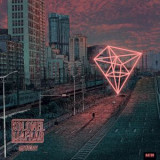
In Rumi's poem A Great Wagon he writes of a place of total acceptance. "Out beyond ideas of wrongdoing and rightdoing, there is a field. I'll meet you there," It is a boundless, liminal space where we can release the judgments we make and carry of ourselves, and the comparisons to others. When we think of this field, there is a sense of tranquility that only comes when we are undisturbed by the shadow self and see existence as neither bright nor dim, white nor black. But as lead singer Greg Bertens explains, arriving there is a whole different story. "This is a poem I've returned to over the years, and I love the idea of this place, but getting there is life's journey." Bertens adds "I think the longing for and elusiveness of this field is a recurring theme in our music." Field is enveloped by themes of regret, disconnection and frustration but with the space to understand that these feelings are a natural part of the struggle between reconciling the inner and outer self. The Los Angeles/San Francisco-based group have been indie shoegaze stalwarts since their formation in 2001. After two decades and a handful of line-up changes, their extensive discography presents a dynamically textural, lush psychedelic rock that has featured guest appearances by members of Pavement, My Bloody Valentine, and Snow Patrol, among others. 2021's LP We Weren't Here was hailed for its dense instrumental blanket, where unrelenting hi-hats and heavy kicks exist alongside dreamy drone guitar. This propulsive nature permeates Field, as members Bertens, Noël Brydebell (vocals), Nyles Lannon (guitar), Jason Ruck (synths), Justin LaBo (bass), and Adam Wade (drums) produce a kaleidoscopic sonic landscape. Patient, sprawling instrumentation builds a foundation in which Bertens' themes of endurance, perseverance and clarity can bloom with a considered poise. As a lyricist who writes in response to the instrumental arrangements, rather than a focus on a specific theme or person, Field is a testament to Film School's ability to create in the moment, and to showcase the magic that stems from when we are truly present. Album opener "Tape Rewind" is a swirling rush of color, as sustained guitars, darkened bass lines and urgent, percussive swells dance alongside each other. "This is the newest of all the songs on the record and feels like a new level of heaviness for the band," Bertens explains, noting that its lyrical context of struggling to move past trauma adds to its cathartic essence. Field is bookended by heavier themes, with closer "All I'll Ever Be" taking on the perspective of those we hurt when we embrace our own toxic behaviors. Originally written to be a simple acoustic guitar and vocals song soon turned into an ethereal, effects-laden composition, with Noël's hazy lead vocals ushering in a new-found acceptance. "It's all I want / To be released / And all I can be," she laments, cementing Field's message of accepting ourselves in whatever form we find ourselves in. "Defending Ruins" is a murky relentless underworld, inspired by the freewheeling tones of Texas-based band Holy Wave. "Defending the ruins, defending remains," Bertens spits, among a richly-layered outro. "Don't You Ever" confirms Film School's ability to merge both delicate and growling instrumentation throughout the album, with the song's softly spoken section hovering above sparkling guitar. "Is This A Hotel" bends towards the electronic aspects of the band, with wailing synths accompanying a story of bitter desire. With over two decades in the industry, Field cements Film School as a distinct, dominant force in the shoegaze scene. Soaked in an emotionally open, imaginative atmosphere, the album is both singular and expansive, and leaves the door open for a constantly evolving interpretation. Film School have never confined themselves to the rigidity of specifics, and it's on Field that they urge us to look beyond the binary of certainty, and to take a second look
Search:hove
The Tallest Man On Earth - the project of Swedish musician Kristian Matsson - presents Too Late For Edelweiss, an album of new covers out ANTI. With Too Late For Edelweiss, Matsson weaves together a sparse collection of home recordings made in Sweden and North Carolina, captured fresh off a 39-date run with the adrenaline of tour rattling through his veins. The songs on Too Late For Edelweiss have been with Matsson since he started playing music as The Tallest Man on Earth in 2006. In those early years, Matsson used to perform "Lost Highway" by Hank Williams before he had enough songs to flesh out a full set. In July 2022, Matsson released a cover of Swedish super star Håkan Hellström"s "För sent för Edelweiss," a precious song that has been The Tallest Man"s walk-on music before every performance for over a decade and what inspired the title of this covers album. Since then, in the lead-up to this announcement, he has quietly released other selections, including Lucinda Williams" "Metal Firecracker," Yo La Tengo"s "Tears Are In Your Eyes" and now "Lost Highway." Mattson explains, "When I was a teenager I borrowed a Hank Williams album at the local library, and "Lost Highway" has been haunting me ever since. Many vocal sound checks throughout my career have heard Hank"s advice." As much as Too Late For Edelweiss feels like a scrapbook, an intimate memento with the ghosts of The Tallest Man"s earlier, sparser sound hovering at the edges, it"s also just the artifact of a moment - a flash of joy, of feeling recharged, of feeling good. These are the songs that happened to be in Matsson"s head at the time he sat down to record It came together so simply and easily - and in that way, it"s the purest distillation of making music - and being a fan of it, charting the connective tissue of a songwriter"s life.
Men at Work already had an album in the Top Ten when the Australian ensemble released Cargo, which continued the momentum gained by its record-setting debut. As ambitious and even more diversified than its initial salvo, the 1983 effort firmly established the band as new-wave pioneers – a group whose goofy playfulness, sharp hooks, brass accents, and memorable choruses helped define the decade's landscape. Any doubts about Men at Work's quirky sensibility were promptly answered by the iconic cover art gracing this multi-platinum set.
Mastered on our world-renowned mastering system and pressed at RTI, this LP not only brings the artwork back into full-scale glory but also takes the enjoyably melodic pop-rock to new sonic heights courtesy of improved imaging, separation, and balance. Previously obscured details jump to the surface, and leader Colin Hay's unique voice takes on life-like dimensions that hover between the speakers.
While remaining true to the approach that garnered them a Grammy Award for Best New Artist, Men at Work expands the creative palette on Cargo by giving guitars a more prominent role and increasing the rhythmic textures. With the sweeping ballad "Overkill" and politically savvy cynicism of "It's a Mistake," the band furthered their radio domination and extended their run of Top 10 singles. A third hit, "Dr. Heckyll and Mr. Jive," cracked the Top 30. Well-tailored melodies and whimsical imagination definitely had a place in the public's consciousness, and no group understood this more.
As the final album captured by the original lineup, Cargo remains an indelible piece of the 1980s audio terrain and a reminder of the era's endless fun. Bolstered by lively saxophone solos, self-effacing humor, and instantly catchy refrains, the album is as good as excuse as any to turn on the stereo, sit down, forget your worries, and dance to leisurely pursuits so perfectly captured by this beloved group.
I could smell the curves of the river beyond the dusk and I saw the last light supine and tranquil upon tide-flats like pieces of broken mirror, then beyond them lights began in the pale clear air, trembling a little like butterflies hovering a long way off. -The Sound and the Fury, William Faulkner
This is the third and final instalment of Jeremiah M. Carter’s album triptych, »Vessels«. Following »Rejoice« and »Speak You Also«, all three album’s where conceived within a 6 month period during ferociously exalting creative sessions.
The Emotional turmoil of the early pandemic is as present on »Vessels« as it is in the other two albums, yet the final instalment showcases as more distinctive sense of focus, where the earlier albums saw Jeremiah expel a state of uncertainty and trepidation into an intense, almost spiritual form of musical cleansing, Vessels still bears those same hallmarks, yet comes across with an air of refinement and finality.
Spanning six pieces, each work feels like an integral part of the albums overarching narrative, fervently nestled amid divinity and humility. By its final piece, which also clocks in as the longest in the entire triptych, we are treated to one of Jeremiah’s finest moments, and for a few seconds, it all comes together for one last swansong, forming a sonic distillation of elation and grief, desire and passion. – It’s all here.
- 1: This Is Mongol
- 2: Yut Hövende
- 3: Triangle
- 4: Teach Me
- 5: Upright Destined Mongol
- 6: Sell The World
- 7: Black Thunder
- 8: Mother Nature
- 9: Bii Biyelgee
- 10: Segee
- 11: Shihi Hutu
- 12: Tatar Warrior
- 13: This Is Mongol (Warrior Souls) (Feat. William Duvall Of Alice In Chains)
- 14: Black Thunder (Feat. Serge Tankian And Dl From Bad Wolves)
- 15: Mother Nature (Feat. Lp)
Solid White Vinyl[34,03 €]
Following the success of the initial standard version of this album, which connects the world to Mongolian culture and its unique core values of natural preservation and spiritual connection with the earth, The HU return with a deluxe version anchored by features from William DuVall of Alice in Chains, DL of Bad Wolves & Serj Tankian of System of A Down, plus LP. This 2xLP set includes vinyl exclusive acoustic audio tracks and has five colour variants in addition to a matte finish border with UV gloss patterns and a high gloss centre anchored by red foil stamp imagery. This new version will also see an accompanying coloured cassette and CD with poster insert and exclusive trading card for all eight band members. The HU continue to carry their core values throughout with the same deeply meaningful lyrics that are uplifting, while the band wishes for prosperity and peace among all.
- 1: This Is Mongol
- 2: Yut Hövende
- 3: Triangle
- 4: Teach Me
- 5: Upright Destined Mongol
- 6: Sell The World
- 7: Black Thunder
- 8: Mother Nature
- 9: Bii Biyelgee
- 10: Segee
- 11: Shihi Hutu
- 12: Tatar Warrior
- 13: This Is Mongol (Warrior Souls) (Feat. William Duvall Of Alice In Chains)
- 14: Black Thunder (Feat. Serge Tankian And Dl From Bad Wolves)
- 15: Mother Nature (Feat. Lp)
Black Vinyl[34,03 €]
Following the success of the initial standard version of this album, which connects the world to Mongolian culture and its unique core values of natural preservation and spiritual connection with the earth, The HU return with a deluxe version anchored by features from William DuVall of Alice in Chains, DL of Bad Wolves & Serj Tankian of System of A Down, plus LP. This 2xLP set includes vinyl exclusive acoustic audio tracks and has five colour variants in addition to a matte finish border with UV gloss patterns and a high gloss centre anchored by red foil stamp imagery. This new version will also see an accompanying coloured cassette and CD with poster insert and exclusive trading card for all eight band members. The HU continue to carry their core values throughout with the same deeply meaningful lyrics that are uplifting, while the band wishes for prosperity and peace among all.
- A1: Psychonautic Escapism (Cold Alienation) (Cold Alienation)
- A2: Acetoxyhexorchid I (Cluster Phase) (Cluster Phase)
- B1: Lattice Dysmorphism Of Lysothymic Oneiroid
- B2: Ultraviolet Circumzenithal Arc
- C1: Trench Through Pink Death
- C2: Acetoxyhexorchid Ii (Dispersed Phase) (Dispersed Phase)
- D1: Sirencipher Eidolon In Chimeric Photisms (Cascade Xenofluora Entwining) (Cascade Xenofluora Entwining)
- D2: Sun Shimmer Repeater
Born from the fractal innerworld of Vymethoxy Redspiders,
better known as Urocerus Gigas from Leeds-based xenofeminist
crisis energy rock duo Guttersnipe, The Ephemeron Loop's
debut is a synaesthetic acid bath that cracks open the doors of
perception to reveal a sonic landscape of ineffable beauty,
divine femininity and continual transformation.
"PsychonauticEscapism" sublimes Guttersnipe's teeth-gnashing spacegrindaesthetic leaving washes of dream pop ambience, dilated
speedcore fusillades and shapeshifting psychedelic dub effects.
It's an album that lodges itself creatively between Cocteau
Twins, Arca, Basic Channel and Napalm Death, lysergically
fluxing imperceptibly between seemingly contradictory sonics
and philosophies. Miss VR took 14 long, difficult years to write
the album, which developed cautiously as she broke through
the misery of her pre-transition life with shoegaze music, rave
and psychedelic drugs in Leeds' queer underground. An
existence languishing in negativity, soundtracked by extreme
music was replaced with the opportunity to experience
euphoria, elation and ecstatic freedom, emotions that coalesce
sensually on "Psychonautic Escapism".
These formativeexperiences are the album's initial building blocks, assembled between 2007 and 2018 as Miss VR came to grips with her
reality as an autistic/ADHD trans woman and the multidimensional psychotropic experiences that assisted that realization. And as V's worldview expanded and shifted as she lived a fresh life, the music itself developed spiritually. In 2018,after being impressed with producer Ross Halden's work with Guttersnipe, Miss VR asked him to assist her with developing The Ephemeron Loop's fragmented songs and visions. "I learned a lot about why people don't usually combine various kinds of sounds or styles in music," she admits. "It is very difficult to get it to all work together!" But after two-and-a-half years of the duo navigating a "labyrinth of fragmented Reason 5 and Logic
projects," re-recording and processing, and working tirelessly on
complex arrangements and compositions, they eventually found
a light at the end of the tunnel. The finished album is towering
and ambitious, Escher-like in its illusory reconstruction of
familiar elements into brain-altering forms. The album begins
with 'Psychonautic Escapism (Cold Alienation)', decorating Miss
VR's disembodied moans with throbbing dub techno synths,
insectoid digital percussion and disorientating high-BPM
electronics.
Her vocals hover weightlessly between My Bloody Valentine's Bilinda Butcher and Cocteau Twins' Elizabeth Fraser, and on 'Lattice Dysmorphism of Lysothymic Oneiroid Cytoterrain' drift against grinding industrial hardcore kicks, serrated bass and Lorenzo Senni-esque trance pointillism. On 'Trench Through Pink Death', Miss VR's voice mutates into a shrill scream as she directs the music from splattered freeflowing doom into harsh hyper-speed death metal and
breakcore. Woven together with both precision and delicacy, "Psychonautic Escapism" turns a rough patchwork of ideas,
experiences, feelings and vivid emotions into a glorious neon
tapestry. In living and exploring the realities of autism, ADHD
and trans identity, Vymethoxy Redspiders has masterminded a
sonic language that feels fresh, urgent and shockingly honest.
Psychedelic is a term that gets thrown around far too loosely at
the moment - in this case there's just no better way of
describing the album's scope.
Robin Saville - one half of the influential duo ISAN - returns to Morr Music with »Lore«, his fourth solo album to date. After 2020’s »Build A Diorama«, the British musician takes his love for field recordings, whirring pads, hovering bells and subtle electronics further, adding extra depth to both his sonic palette and his storytelling, focussing on biological diversity and its implications for human life.
For many years now, ›look and listen‹ has been Robin Saville's motto on his regular environmental explorations. The avid ambler does not just enjoy being out and about in nature; it is an important inspiration for his creative work as well. Sounds, smells, colours and even soil properties add to the experience. Equipped with a microphone and a recording device, Saville documents his strolls, using these recordings as a base for his compositions. »The field recordings on the album were made very locally this time, for obvious reasons,« he says. Welcome to the sonic landscape of the UK's East Anglia.
»Judith Avenue«, the opening track, is a great example of how Saville evolved his perspective on the sounds of nature: »It is a residential street, fading into a scrubby, wild landscape. There, I made a recording of nightingales at dusk. Such romantic birds! The males fly here from Africa a couple of weeks ahead of the females. They find a good territory, and at dusk, when all the other birds are going quiet, they start to sing to tempt the females down from their migratory flight paths. This has happened for thousands of years. However, the patch of ground where I made the recordings is earmarked for development and I don't suppose it'll happen there again. The recordings therefore become part of the history of that place, the lore.«
Recording the sounds of nature and enriching them with electronic sorcery, Saville is not only a documenting preservationist; he also translates these recordings into meaningful musical miniatures. Building on the soundscapes that marked his previous LP »Build A Diorama«, »Lore« is dominated by both open-hearted melancholy and more upbeat rhythms. But even when the music sounds quirky and loose, there is always deeper meaning. The album is characterised by an ever present melancholy about the threatening loss of living spaces, and a celebration of their beauty. This simultaneity turns the tracks into existential meditations about our human habitat. Saville enriches our lives musically by addressing the very issues we often ignore. At the same time, he becomes an agent of hope and change. Moving between light and dark, »Lore« is a musical allegory of where we stand today.
»The album is a document of places and times and while it is certainly a celebration of those things, it is also a record of things we are losing. That's how interaction with nature feels to me nowadays: something precious and amazing, but with an underlying sadness about the destructive relationship that humanity seems inevitably to have with the world around it.«
Let's not lose any more things.
Simoncino is back again on SKYLAX with the volume 2 of the Resurrection series ! The made in Perugia prodigy delivers us once again 3 titles paying homage to the sound of chicago, the fabulous triplet lost tape 1, 2 & 3. On A1, the aptly named Lost tape 1 us leads into the meanders of the jungle house in direct tribute to the great marshall Jefferson all sprinkled with some "detroit" sauce, this peaktime track will delight the most humid and demanding dancefloors. Lost tape 2 is more airy with these sparkling bells and its bass that lifts your guts, mental we tell you ! A bit as if paris gray was remixed in a hovering dub version. On lost tape 3, it is clearly the quintessence of the spirit of simoncino, his genius. This way of creating a universe that is both a tribute to the original chicago house and the italian dream house straight from the 90s. Completely trippy. And cherry on the cake on B2, we have a remix of the now classic "on the dancefloor", a title created in collaboration with Merwyn Sanders from Virgo Four (Chicago), from Detroit legend : Marcellus Pittmann ! 9 mn of pure madness. The Detroit - Chicago axis has never been so obvious. A must. Comes out on clear vinyl. Note that on the label's bandcamp, with the purchase of the vinyl, you can get 1 exclusive bonus track (& what a track !) : Simoncino & Merwyn Sanders of Virgo Four "On The Dance Floor" (Marcellus Pittman smooth remix).
The second album in a planned trilogy for Students of Decay, Theodore Cale Schafer’s “Trust” follows 2019’s “Patience,” building upon its motifs and compositional strategies to arrive at a potent document of artistic and personal growth. Recorded between 2020 and 2022, a period in which Schafer relocated to New York City, these arrangements feel like they bear the mark of a change in scale, not abandoning the private, diaristic sensibility of his earlier work so much as imbuing it with a charged atmosphere of vivid, slow-blooming intensity. These songs find the artist tightrope-walking between drama and austerity, narrative and abstraction. Such is the case on both “Luck,” in which a captivating wash of baroque strings slowly recedes into a bed of inky, flickering ambience, and “Best Friend,” wherein snatches of conversation are halted by entrancing piano motifs and hovering drones. This is an album that develops aspects of Schafer’s previous output– the patiently meted out, barely-there piano melodies, the unexpected resonance of off-the-cuff location recordings– working them like raw materials into robust, lyrical compositions. At times almost drifting into the romantic realm of the orchestral, “Trust” is the most generous and expansive offering we’ve heard from Schafer in his young career.
Theodore Cale Schafer (b. 1994) is a musician based in New York City. Informed by his occupation as an audio engineer, his work combines digitally sourced audio and manipulated self-recordings to create music that is equally influenced by Playstation OSTs, modern classical composition, confessional narrative, and spoken word. Recently, he has collaborated with Natalia Panzer, Angelo Harmsworth, Claire Rousay, Sydney Spann, and picnic, participated in the Neo-Pastiche: Changes in American Music Festival at the Black Mountain College Museum, and curated the “Casualism” mix series with Retreat Radio in Malmö, Sweden.
Pacific Northwestern doom metal monolith BELL WITCH will see the
release of their new album "Future's Shadow Part 1: The Clandestine
Gate" on 2LP/2CD, June 9th.For their new album, bassist/vocalist Dylan
Desmond and drummer/vocalist Jesse Shreibman exploded Bell Witch's
bounds
Like 2017's lauded "Mirror Reaper", "The Clandestine Gate" is a single 83-minute
track -- a composition that pulses and breathes on a filmic timeframe. It
constitutes the first chapter in a planned triptych of longform albums, collectively
called "Future's Shadow." While traces of organ and synthesizer hovered over
"Mirror Reaper" and Bell Witch's 2020 collaboration with Aerial Ruin, "Stygian
Bough Volume 1", "The Clandestine Gate" drew those instruments closer to the
center of its compositions.The band reunited with their longtime producer Billy
Anderson as they began negotiating these new compositional weights. On "The
Clandestine Gate", Bell Witch's twinned voices build off of the chantlike textures
of previous records while steering toward more developed melodic lines,
structured harmonies, and rhythmic death metal growls.
The immense gravity of a work like "The Clandestine Gate", which features
exclusive stunning cover art by Jordi Diaz Alama, allows ideas to simmer in a way
that feels profoundly and somatically intuitive -- not just a philosophical exercise,
but an embodied truth. By slowing down both their creative process and the
tempo of the music itself, Bell Witch digs even deeper into their long standing
focus: the way life spills on inside its minuscule container, both eternal and
fleeting, a chord that echoes without resolution.
Miles in the Sky reflects the intriguing curiosities and rainbow possibilities suggested by the album cover. Miles Davis' fifth and final album with his classic second quintet is kaleidoscopic in sound, forward-looking in structure, and contextually grounded in approach. As the legendary leader's first venture into what would become fusion, it's historical for containing the premier appearances of electric piano, bass, and guitar on a Davis effort.
The album's wide-open soundscapes soar. As do the fluid contributions of Davis' mates. Tony Williams' percussion, central to every composition here, transpires before your eyes. Herbie Hancock's piano hovers and fades with sublime purity. And George Benson, who sits on "Paraphernalia," blows the equivalent of smoke rings with his bluesy guitar, which here takes on brilliant tonality and definition. The acoustic material that occupies the second half of the record is equally transparent and full-bodied.
Granted enhanced production and a greater field of audible information, Miles in the Sky can finally be perceived as belonging to the same upper echelon as Davis' ubiquitously acclaimed Nefertiti and Filles de Kilimanjaro – the albums that precede and follow, respectively, this watershed title. Commonly branded a "transitional" work, Miles in the Sky showcases Davis already at ease with electric instruments and eager to venture into uncharted territories. Doubling as organized jams and bridges between jazz and rock, both the rhythmically challenging "Stuff" and frisky "Paraphernalia" glancing toward the future while keeping solid footing in the past.
Similarly, so do "Country Son" and "Black Comedy." In his original review for jazz authority Down-Beat, Larry Kart observes: "Davis takes material from his earlier days and darkens its emotional tone. His opening phrase on 'Country Son' recalls a fragment from his 'Summertime' solo on the Porgy and Bess album, but here it is delivered with a vehemence that rejects the poignancy of the earlier performance. Even on 'Black Comedy,' his most straight-ahead solo here, the orderly pattern of the past is displaced and fragmented."
Flavoured with humuor, bossa nova, country, and even ballroom phrases, the compositions on Miles in the Sky explode with creativity, purpose, and color.
ugne&maria is the duo project of Ugne Vyliaudaite and Marija Rasa Kudabaite, both based in Brussels. Their music is made from a mosaic of samples and carefully triggered field recordings, in dialogue with Vyliaudaite's violin. Intricate and calming but far from ambient, in that where ambient music recedes ugne&maria's music sounds always close to the skin. The compositions are subtle and precise, setting up a logic and then gently manipulating it or letting it hover for several minutes. Elements move seamlessly from background to foreground and then return. Snatches of text or recognisable samples serve as textures rather than as location markers or figures to which one could reliably ascribe meaning. (Henry Andersen)
Brussels-based producer Sagat’s highly anticipated debut album ‘Silver Lining’ lands on Vlek Records. Sagat takes us on a deep dive into a dense sonic universe: It’s bass music viewed from multiple vantage points, an explorative zoom onto contemporary dance music’s broad ranging cadences, paradoxically viewed from a distance. Silver lining bathes in cluttering rhythms that hover over corroded thumping grooves. Poly chrome synths emerge dramatically, interlocking with oddly timed techno syncopations. Yet all tracks are held together by firm, dubbed out beat repetitions and slabs of sub bass, not without a melodic sense of drama. Sagat’s disintegrated sound-design stands in between musical dichotomies, at once spaced-out, disorienting and emotive, but also explorative, colourful and full of tension. Moving, yet statuesquely standing idle. Silver Lining is an album longing for the dancefloor, but also about disconnection from it: A highly personal presentation of this producers’ singular take on bass oriented club music. From our standing point we love to see how Sagat’s music keeps evolving, toying with contemporary club music’s specific tropes, unbound by its normativeness. Silver lining is an album rich in contrast that works for personal listening experience as well as for the adventurous DJ with one foot firmly on the dancefloor, the other somewhere way out there.
The Croatian production powerhouse and disco boogie impresario steps up to International Feel, and takes a left turn into deep space with a new six track LP Pulsar Diaries.
Ilija’s discography stretches back to 2003, and over those 20 years he’s packed it full with albums, versions, remixes and singles. His releases are often perfectly-penned love letters to ‘80s boogie, electro and disco, and like postcards from an old flame, they’ve landed in an array of record label catalogs, from Bear Funk, Rong, and Electric Minds, to Is It Balearic? as well as his own Red Music and Imogen Recordings. He’s long-been an active voice on the underground club scene, and if you’ve been out dancing in Zagreb, Berlin or even Tisno beach, chances are you’ve gotten down to one of his beautifully blended sets of cosmic-tinged electro funk and disco dubs.
On Pulsar Diaries, Ilija delivers a panoramic collection of spaced-out synths and drum machine grooves, dedicated to the planet and our place in the universe. The A side opens up with the blissful, weightless pads of the title track, before it breaks out into filtered stabs over a minimal b-boy bounce. Delphic Expanse ebbs and flows like a lunar eclipse, sounding like a futuristic version of Key-Matic’s Breaking In Space, all uprock rhythms and syrupy synth horns as it spins off beyond the asteroid belt. Side A closes out with Blackburn Tales, a suspenseful and spacious electro rhythm packed with strings and 303 squelch, which you might call anti-gravity acid, if you were so inclined.
Side B picks up the tempo with Fourth Amendment, perfect for the space station discotheque with its sweeping bass filters and ice-cold synth melodies hovering in orbit. Farewell Theme takes an introspective moment, slowing the pace to a cosmic 90 bpm and inviting a certain cinematic feel to proceedings. This feeling applies not just to the vivid landscapes we travel through, but also wider thoughts about humankind: as we pause for a breath and look around, we find ourselves in Ilija’s space, considering human motivations, like the pursuit of happiness, or the eternal struggle with the self.
Every journey begins with a goodbye, and so the last track of the album feels like the arrival at a new destination: Ursa Major is ablaze with cascading drum fills, bubble-wrapped bass riffs and bright synth chords that sparkle like city lights underneath a re-orbiting satellite.
With Pulsar Diaries, Ilija Rudman has created a rare artifact: an album that straddles several worlds at once. Part soundtrack to space travel, part meditation on the human condition, part deep-burning dancefloor dynamo - whether in the club surrounded by friends or at home by yourself, this is a record that expands the mind and lets the imagination soar.
Essential UK experimental composer Richard Skelton returns to Phantom Limb for new album selenodesy, interweaving his newfound love of electronics and synthesis with mastery of gritty organic texture.
Skelton’s music has always been rooted in landscape, in the loam and grit of the earth: from his 2009 Pennine Moors-inspired modern classic Landings to his more recent Moraine Sequence of geological excavations, his work has been bound inexorably with the stark and untended wilderness of northern landscapes. With this new album, however, Skelton shifts his gaze skyward — in part the result of a move in 2017 to the countryside near the Kielder Observatory, and to a so-called ‘dark sky’ region of the UK. In this remote landscape, light pollution is minimal, allowing the austere majesty of the night sky to be seen with greater clarity.
The resulting album, selenodesy, reveals a new, reverberant spaciousness to Skelton’s use of electronics. It marries the twin worlds of his previous Phantom Limb release - 2020’s These Charms May Be Sung Over A Wound, and its abandoned-factory threnody - with the landscape-revering arcana of his earlier work, which saw him bury instruments in the soil to return months later to recover and record with them, newly imbued with the land they occupied. selenodesy was prefigured by a period of insomnia and the relief found
in stargazing, during which Skelton tried to transcribe his hypnagogic visions: “much of this music came to me in the early hours, in that nowhere state between dreaming and waking. I’d look out the window and the night sky would be swirling with stars. Mars or Venus would be hovering in the corner of the room. I’d lie there and watch the Aurora Borealis dance across the ceiling.”
In selenodesy, we find the lingering, distorted sine waves of album opener “Albedo” that thrum and fizz with an icy, foreboding moonlight, rays of subtle movement that illuminate and darken alternately. Next follows lead single “The Plot of Lunar Phases”, whose passive shrieks echo about a cold, yawning space, reaching an ecstatic crescendo of hissing sonics and swirling celestial drone. Its dynamic range acts like the light of a lunar passage, from utmost darkness to radiant luminosity. Elsewhere, the pulsing, precessional bass of “Faint Ray Systems” gradually opens to reveal mournful, elegiac synthesis that reaches high into the night sky with an unearthly beauty. It is as if, during those long months of lockdown in the Scottish countryside, Skelton tapped into a series of sidereal electromagnetic transmissions, and transposed them into musical form.
Recital presents »As Above, So Below, a new album from French multi-instrumentalist Delphine Dora. Over the past decade, from poetry reading, chansons, organ performances, tape compositions and so on, each album in Dora’s lush discography feels like a feather from a different bird. A keen ability to defy any singular “sound,” always diving to different depths.
»As Above, So Below« centers around mystic piano and voice recordings. In a distinct gothic landscape, each of the nine tracks float into one another. From verdant piano works that revolve like beautifully stretched out miniatures, expanding and bending like shadows across the floor, to foggy vocal arrangements hovering above beds of rural field recordings. Quiet synthesizers crawl in the backdrops, never disturbing the spirit of the piano motions.
On the track »Cantique spirituel,« Dora, from a cloud of her phantasmal caroling, recites a poem by German author Novalis (1772-1801). »Blindly we strayed in night’s confusion…« This poetic essence is found throughout the album… »gladness and grief alike consume.«
»As Above, So Below« was produced and mixed by the brilliant British musician Andrew Chalk, whose presence tints the air throughout Dora’s album. Chalk ornaments the pieces with additional instrumentation, along with Jean Noël Rebilly playing clarinet.
Over the course of a nearly 50 year romantic and creative partnership sound artist Annea Lockwood and the late pioneering electronic composer Ruth Anderson have shared space on a number of significant releases of early electronic and tape music, including Charles Amirkhanian’s trailblazing 1977 anthology of women electronic composers New Music for Electronic and Recorded Media, a 1981 split LP on Opus One, a 1997 CD for Phill Niblock’s XI imprint, and 1998’s Lesbian American Composers compilation on CRI. The couple additionally taught a course on the history of women’s music-making, at Hunter College, called Living Women, Living Music. Throughout their time together, they co-authored a number of Hearing Studies designed for people with no formal musical training, which were collected for a 2021 book publication by Open Space Music. They spent most of their private life between Crompond, NY and the house they built themselves at Flathead Lake, Montana. Although Ruth passed away in 2019, the composers’ dialogue continues today with Tête-à-tête, a collection of unreleased archival and new material spread across an LP and a single-sided 10” record.
It all began with a telephone call. In 1973, Ruth Anderson was seeking a substitute to cover a yearlong sabbatical from her position as the director of the Electronic Music Studio she had founded at Hunter College in New York City. Her friend Pauline Oliveros too was on sabbatical, but recommended Ruth call Annea Lockwood—then living in London—about the post. Already drawn to America by the work of the visionary composers with whom she would soon be labelmates on Lovely Music, Annea jumped at the opportunity and within days of meeting in person the pair were, in her words, “joyously entangled.”
Over the next nine months, while Ruth was living in Hancock, New Hampshire, the couple would speak daily by phone in between visits. Ruth recorded these phone calls and, in 1974, surprised Annea with a cassette containing “Conversations,” a private piece she composed by dexterously collaging fragments of their conversations alongside slowed and throwed snatches of old popular songs: “Yes Sir, That’s My Baby”; “Oh, You Beautiful Doll”; and “Bill Bailey.” The centerpiece of Tête-à-tête, this side of intimate musique concrète extends to its listeners a rare invitation to eavesdrop on the halcyon phenomenon of two people falling in love. Tender and playful throughout, “Conversations” comes to its zenith with a cut-up of relentless laughter of a contagious beauty that is, for once, properly convulsive.
“For Ruth” is Annea’s elegy to her life partner. In 2020, Annea returned to Hancock as well as to Ruth’s resting place at Flathead Lake to make field recordings, which she wove together with further excerpts of the couple’s 1974 conversations for a commission presented as part of the 2021 Counterflows Festival in Glasgow. A consummate field recordist, Annea imbues the simple sounds of church bells, birds, wind, and the bodies of water that permeated her time alongside Ruth with an otherworldly depth and sense of narrative akin to that of her celebrated sound maps of the Hudson, Danube, and Housatonic rivers. An oneiric, subtly tonal evocation of a meeting at the shores of existence.
The collection opens with “Resolutions,” Ruth’s last completed electronic work, from 1984. A meditation for the individual listener composed as the result of her study of Zen, it’s a rigorous, process-driven piece that charts the very slow, smooth descent of a 5th from the octave above middle C down to sub-bass frequencies. Minimalist in execution, yet powerful in effect, it glides by almost imperceptibly, with new tones arriving and hovering or levitating upwards, seemingly out of nowhere. A healing piece, it harnesses the highly focused energy of pure tones as a means to, in Ruth’s words, “further wholeness of self and unity with others.”
Tape transfers by Maggi Payne, master by Giuseppe Ielasi and lacquers cut at Dubplates & Mastering, with domestic photos and liner notes provided by Annea Lockwood.
For Anyone That Knows You, an album of mostly piano solos by Josiah Steinbrick, was recorded riot for smoothness or posterity but to emphasize the piano as object, the person playing it, and the moment it sounds. On three of the pieces, the saxophone of Sam Gendel hovers ok or the piano like a faint change in the light, adding resonance and gentle reinforcement rather than counterpoint. Three others are delicate renditions: "Green Glass" interprets an untitled recording by Quechuan folk musicians Leandro Apaza Roams and Benjamin Clara Quispe; *Tyne Road" abbreviates one of Malian kora master Toumani Diabatels most tender compositions: and "Lullaby" is an arrangement of a traditional Creole song, originally recorded in 1954 by the Haitian-American guitarist Frantz Casseus.
On Giver Taker, the gorgeous debut album by Anjimile, death and life are always entwined, wrapping around each other in a dance of reverence, reciprocity, and, ultimately, rebirth. Giver Taker is confident, intentional and introspective. Anjimile Chithambo (they/them, he/him) wrote much of the album while in treatment for drug and alcohol abuse, as well as while in the process of living more fully as a nonbinary trans person. Loss hovers over the album, whose songs grieve for lost friends ("Giver Taker") and family members ("1978") along with lost selves ("Maker," "Baby No More," "In Your Eyes.") But here, grief yields an opening: a chance for new growth. Each song on the album is its own micro-journey, adding up to a transformative epic cycle created in collaboration with bandmate Justine Bowe of Photocomfort and New-York based artist/producer Gabe Goodman. "1978" and "Maker" both begin as Sufjan Stevens-esque pastoral ballads with Chithambo's mesmerizing voice foregrounded against minimal instrumentation and swell into the realm of the majestic through the addition of warm, steady instrumentation (informed by the mix of 80's pop and African music Chithambo's Malawi-born parents played around the house) and harmonies by Bowe. "In Your Eyes" starts out hushed and builds to a crescendo via a mighty chorus inspired by none other than the Lion King. The allusion is fitting: each song encapsulates a heroic voyage, walked alone until accompanied by kindred souls. The choirs present throughout are equally deliberate. Chithambo grew up as a choir boy himself, and several songs (notably "Maker") grasp not only towards reconciliation between his trans identity and his parents' strong religious beliefs, but towards reclaiming his trans identity as an essential part of his own spirituality.
Circassian-Turkish Producer Sine Buyuka debuts new solo project Sinemis with lush, graceful album ‘Dua’, gently combining the ancestral Sufi music of her homeland with sophisticated techno-inflected ambient. Dua’s life began with a life-threatening illness. “I started feeling unwell last year and no one could figure out the reason,” Sine writes. “It was a scary time, not knowing and trying to manage symptoms while they slowly worsened. In late 2021, while I was visiting my family in Turkey during the Christmas break, I was taken into A&E. After more tests, I had a diagnosis and had surgery in January.” Following this, within the healing process - highly emotional as well as physical - Sine was drawn to the traditional Sufi music of Turkey and the Middle East. Ritualistic music to accompany ancient sema ceremonies, in which whirling dervishes enter a transcendental consciousness through ecstatic movement and repetition. With this influence at heart, Sine began work on ‘Dua’, with a newly-formed artist name to signify new, unfamiliar music from a celebrated electronic producer. For her, the album marks a significant step in her recovery. But it is also a potent marriage of contemporary and ancestral trancestates, interweaving sci-fi synthesis and floor shaking bass tones with mystic imagery, textures and timbres. A meditative, spiritual balm that melds field recordings, found sounds, ambient soundscapes, electronics and acoustic instrumentation to celebrate life and survival in challenging circumstances. The breathy, cinematic tones of album opener ‘Dua’ hover and shiver in preparatory stasis as broken-machine punctuation begins to dot rhythmically through the space. A yearning, repeated vocal sample - a living, beating heart inside the machine - characterises a crucial theme for the album: the marriage of digital instrumentation with the analogue, the human and the organic. Later, ‘Elegy’ reflects its title with heartbreaking chordal shifts and glitching birdsong, conjuring a sound world somewhere between KMRU and Max Richter. Key track ‘Gazel’ moves in glacial slo-mo, like whirling dervishes frozen in time at the peak of their trance. Euphoric ceremony made haunting and poignant without losing a mote of power…Across the album, the timbres of Sufi ritual are often captured by the otherworldly presence of the historic ney flute, said to be as old as the Holy Books. “Sufi music can be created using several different instruments but the ney flute is at the heart of it. The sounds emanating from this fascinating instrument kept capturing my imagination,” Sine tells us. Working both with samples and with Turkish musician Omar Faruk Tekbilek, Sine achieves a rare balance of reverence and recontextualisation for such a time-honoured instrument, here performed by a lifelong student of its intricacies and mysteries. In Sinemis’ hands, the processing and sonic treatment of the ney even sometimes renders it indistinguishable from Dua’s synthesis and sound-design
For the last 12 years audiences have scrambled to get seats at
venues whenever celebrated American tenor saxophonist Mark Turner toured with Danish guitarist Mikkel Ploug's quartet.
The bond between the musicians becomes especially evident when
they explore their shared musical language, which seamlessly blends composed and improvised material.
On Nocturnes Ploug presents new original compositions and fresh
interpretations of inspiring source material by Danish composers
Bent Sorensen and Carl Nielsen.
Mikkel Ploug - guitar;
Mark Turner - tenor sax; Jeppe
Skovbakke - double bass;
Sean Carpio - drums.
A limited edition 180g vinyl release.
- A1: The Mod 4 - A Puppet
- A2: The Yardleys - Just Remember
- A3: Decompressed Impossibility - You Can't Ride Away
- A4: The Living End - Brigitta
- B1: The Newports - Feelin' Low
- B2: The Landlords - I'm Through With You
- B3: The Prisners Dream - Autumn Days
- B4: The Fortels - She
- B5: The Bohemians - Say It
- C1: Tresa Leigh - Until Then
- C2: Wm. Penn & The Quakers - Ghost Of The Monks
- C3: The Tempters - I Will Go
- C4: Jerry Mcgee - Twilight Zone
- D1: Carroll - The Boy Called Billy Joe
- D2: The Common People - Here, There & Everywhere
- D3: Dennis Harte - Summer's Over
- D4: Toe Head - Goodnight Jackie
2023 REpress
A North American road trip of coming of age garage soul mapped by Ivan Liechti, Ghost Riders is Efficient Space’s latest narrative compilation, hovering in a liminal emotional ravine between moonlight melancholy, teenage heartache and unchecked, unrealised ambition. Across seventeen open hearted ballads recorded 1965-1974, the 2LP collects and connects dots between British Invasion fanatics, child prodigies, the loners and the luckless, in a kind of trans-continental survey of those swept up in rock’n’roll mania and buoyed by local newspaper ads promising fame and gold records.
From the tangerine dreams of 8th grade all-girl combo The Mod 4 to the tri-state jukebox aspiring echoes of The Tempters, The Yardley’s poetic Farfisa vamp and lilting folk pop, and The Landlords’ weepy break up b-side blues, these are mostly one shots by dreamers whose experience was brief before being checked back to the reality of suburban normality and realistic career options. Hailing from the regional backwaters of Illnois, Arkansas, Nevada, Massachussets, Ohio, Idaho, Texas and beyond, the licensed artists were scouted by way of local fire departments, spiritualist fellowships and animal welfare centres, often barely a stones throw from where their contributions were originally laid.
A barely teenage Dennis Harte's ‘Summer’s Over’ perhaps best taps the collection’s essence. A gut-wrenching lament of the passing of the season as if it was the last on earth. Flanked by players from The Left Banke, Harte, a now-piano tuner to the stars, is from the minor segment that found longevity in showbiz. Likewise with Michigan icon Lyn Nowicki who cast her ghostly voice over Beatles cover song chameleons The Common People and Jerry McGee, The Ventures member and conduit of Dr. John’s ‘Twilight Zone’.
Ghost Riders simmers with the scent of youthful summers, the pang of schoolyard romance, and the excitement (and disenchantment) of teenage naïveté, delivered via a deceptively simple and frequently wonky garage band set up. The vision of record collector and graphic designer Ivan Liechti, these eternal psych-folk howlers are further crystallised by Colin Young’s fastidious audio restoration, the original artwork of Elise Ganebin-de Bons and an aptly penned forward from Sonic Boom.
Braindance is the second, highly anticipated, collaborative EP from Irish producer DJ Mudak 2000 and French producer FTL, landing on their new label as the debut release.
Produced in Dublin & Paris, the two prolific junglists have encapsulated the intricacies of modern jungle while still highlighting the emotive elements of yesteryear.
The first track "I Wanna" begins as a fantastically light, classic jungle track with piercing soul vocals that unpacks into a soaring brawl of amens and intense 808s. A great representation of the duality of light and dark elements which make this whole EP a standout.
A2 "Barriers" is a driving, high tempo club ready cut. There is absolutely no messing about with this one, in your face reese business for the peak timers. On the flipside, title track "Braindance" is a complex yet ethereal roller carried along by hovering staccato vocals that are contrasted with a deep cutting sub that will hit you in all of the right spots.
The final track "Chasing A Dream" lives up to its name as its emotive synth lines and Sad Boys-esque cowbells will fill you with the tangible feelings of want and passion.
In a blizzard of delirious sonics and twis’ up samples extracted from the annals of dancehall and ragga, Seekersinternational return to Sneaker Social Club to double down on the manifesto they laid out with the original RaggaPreservationSociety EP way back in 2016.
As ever, the SKRS magic lies in their ability to convey a deep affection and serious dedication for the source material while simultaneously getting shamelessly weird with it, taking the mutant tendencies of dancehall’s wildest instrumentals and injecting some added cosmic sauce into the mix. On this new record, they’re also embracing the volatile potential of junglist breaks - always intrinsically linked to Jamaican music at the point of inception, especially in the rough and ready daze of ragga jungle.
‘No Parasites (Lickshot)’ is a fierce mission statement, raining down mayhem without ever slipping into familiar modes - the emphasis is on the ragga, the jungle is there as a piquant flavour in the stew, but as ever the SKRS sound remains entirely out on its own. In contrast, ‘CaughtUp (HeartBreaks)’ almost edges closer to hardcore structures, but something keeps slipping in to run the interference, hovering just beyond perception for that all important woozy feeling.
‘2GoldChain (DriveUCrazy)’ is cut up enough to be another interstellar voyage, but here SKRS keep the music back in the mix and let a tapestry of chat lead out front as though capturing a casual street level chaos - bewildering and familiar in equal measure. ‘OriginaloftheOriginal’ completes the set with an earth-shattering script flip once more, coming on like square wave grime and half-speed breakbeat set to emotional stun. If it takes a minute to make sense, that’s because you’re hearing something entirely new.
This land runs through Katherine Paul’s blood. And it called to her. In dreams she saw the river, her ancestors, and her home. When the land calls, you listen. And KP found herself far from her ancestral lands during a time of collective trauma, when the world was wounded and in need of healing. In 2020 she made the journey from Portland back to the Skagit River, back to the cedar
trees that stand tall and shrouded in fog, back to the tide flats and the mountains, back to Swinomish.
It is a powerful thing to return to our ancestral lands and often times the journey is not easy. Like the salmon through the currents, like the tide as it crawls to shore this is a story of return. It is the call and response. It is the outstretched arms of the people who came before, welcoming her home. The Land, The Water, The Sky is a celebration of lineage and strength. Even in its deepest moments of loneliness and grief, of frustration over a world wrought with colonial violence and pain, the songs remind us that if we slow down, if we listen to the waves and the wind through the trees, we will remember to breathe.
There is a throughline of story in every song, a remembrance of knowledge and teachings, a gratitude of wisdom passed down and carried. There is a reimagining of Sedna who was offered to the sea, and a beautiful rumination on sacrifice and humanity, and what it means to hold the stories that work to teach us something.
Chord progressions born out of moments of sadness and solitude transform into the islands that sit blue along the horizon. The Salish Sea curves along her homelands, and when the singer is close to this water she is reminded of her grandmother, how she looked out at these same islands, and she’s held by spirit and memory.
The Land, The Water, The Sky rises and falls, in darkness and in light, but even in its most melancholy moments it is never despairing. That is the beauty of returning home. When you stand on ancestral lands it is impossible to be alone. You feel the arms and hands that hold you up, unwilling to let you fall into sorrow or abandonment. In her songs Katherine Paul has channeled that feeling of being held. In every note she has written a love letter to indigenous strength and healing.
There is a joy present here, a fierce blissfulness that comes with walking the trails along the river, feeling the sand and th stones beneath her feet. It is the pride and the certainty that comes with knowing her ancestors walked along the same land, dipped their hands into the water, and ran their fingertips along the same bark of cedar trees.
This is a story of hope, as it details the joy of returning. Katherine Paul’s journey home wasn’t made alone, and the songs are crowded with loved ones and relatives, like a really good party. And as the songs walk us through the land it is important we hover over the images and the beauty, the moments that mark this album as site specific. The power of this land is woven throughout, telling the story of narrow waterways, brush strokes, salmon stinta, and above all healing.
Let it take you. Move through the story and see the land through her eyes, because it is a gift, a welcomed sʔabadəb.*
*The word “gift” in Lushootseed, the language of the Coast Salish people“
Remixes by Moodymann, Potatohead People, Moodorama.
Kenny Dixon Jr. acuminates it deep and groovy, well, it’s his holy trademark sound. Potatohead People from Vancouver have been championed by Soulection, Nightmares on Wax, Questlove, Big Boi a.o. and have releases on Jellyfish Recordings, or NY label Bastard Jazz. The duo has worked with artists such as Moka Only, Kaytranada, Pomo, Phife Dawg a.o.
On top Moodorama’s remixes are trippy dubby jams. Moodorama have a long recording history, starting in the 90s on Stereo Deluxe, but even before that Martin Sennebogen was the DJ and co-producer of Knowtoryus, the legendary first hip hop outfit on Compost.
Inkswel & Colonel Red started out writing together more than decade ago & over the time have developed quite a unique sound when recording together,..a chemistry that blends music melody & lyric into every verse chorus & hook. So when Inkswel approached Colonel Red to create the 'Holders of the Sun' album, Redz response was to move his hectic schedule around & start immediately. Inkswel dropped the beats Colonel Red dropped the vocals & some fine musical tuning & 'Holders Of The Sun' Vol1 was born….while they promise a Vol. 2.
The fantastic artwork comes from Our Machine, Netherlands, who designed a lot of sleeves for Kindred Spirit, Tom Trago, Versatile, Build An Arc and m.o.
Colonel Red is a groundbreaking soul singer, musician, producer and performer, often referred to as one of the most powerful voices in the UK soul music community, a champion in equal parts of the original Broken Beat scene, as well as the UK soul scene. Working with and writing for the likes of Teddy Pendergrass, Amp Fiddler, Maurice White, Bugz In The Attic, Tony Allen and countless others. His track 'Belive In Me' was awarded the WORLDWIDE award from Gilles Peterson in 2014.
Colonel Red’s foray into the music industry began when Epic Record company giant Sylvia Rhone signed the then lead singer, Nikki Romillie, of Pride n’ Politix, to Atlantic Records. An accompanying publishing deal with Warner Bros. established the artiste, now known as Colonel Red, as one of the UK’s top cutting edge singer/songwriters.
Inkswel has been heralded as one of the busiest and most prolific beat based producers from Australia, a true master of his craft he has worked with the likes of Talib Kweli, Lee Scratch Perry, Andrew Ashong, Dwight Trible, Amp Fiddler and countless others as well as putting out timeless musical projects on labels such as BBE, Sonar Kollekiv, Rush Hour, Warner Music, Boogie Angst and others. He hovers evenly between Hip Hop and Club sensibilities, blending new age approaches with nostalgic leans. 'Holders of The Sun' is the audio melting pot of two musical aliens, future directive soul music drenched in the nostalgia of what once was.
Continuing his journey, the former member of Egypt 80 and last trumpeter of the Black President Fela Kuti releases his second album: APP (Accumulation of Profit & Power). Muyiwa Kunnuji and his band Osemako, which has been extensively recasted since Moju Ba O - which had already laid the foundations of his afroclassicbeat - have had quite an evolution, and are eager to share a recipe that has been
patiently elaborated and stewed, both on stage and in the studio.
A complex mix of deep musical and cultural heritages as well as a claimed and combative Pan-African culture, APP sets the bar still one step higher in the message, but also and especially in terms of composition and polyrhythms. Inspired by Western African highlife as well as the purest afrobeat of the Afrika 70 era, and even incorporating elements of South African marabi or Central African soukous, the whole does not sound less perfectly personal, tailored, with a natural and disconcerting ease.
But this easiness is only an apparent as Muyiwa devoted himself body and soul to the composition and harmony during the gestation of these tunes so widely inspired and yet intensely personal.
APP will thus delight fans of African music in the broad sense as well as connoisseurs, and just as much fans of funk grooves or jazzy solos; it is a deeply plural album. Multi-influenced, multicultural, multilingual, a slice of life as much as an initiatory journey, on which hovers the spectre of Covid, which has also largely inspired this second ‘effort’. Standing against absurd sanitary rules or the accumulation of profits by the powerful of this world and other
pseudo-philanthropists, APP, again, reminds us of the great Fela, as much by the use of an acronym to entitle the album as by the themes addressed or the mixing of genres. A warrior album, filled and full of revendications, but also of calls for open-mindedness. An intensely human, sincere, combative album, and however radically enthusiastic and optimistic.
After two years as a band, the up-and-coming folk-rock band, Gangar
finally releases their first EP! Gangar combines folk music with jazz,
metal, and rock in the most natural way
They find old traditional tunes in folk music archives and arrange them with
inspiration from bands such as Hoven Droven, AC/ DC and Meshuggah.
"Norwegian folk rock has been down and out ever since Gate was cool. Finally,
someone has done something about it! Nice, cool and fun, Gangar has
everything. If they don't make you happy, you are an angry person" – Tuva
Syvertsen
"Tre Danser" refers to the three tunes on the EP and to Gangar's signature dance,
"The Tree Dance", where you lock your legs, lift your arms, and sway like a tree
with the wind.
The three tunes show the broad musical spectrum in Gangar's repertoire, from
the heavily arranged heavy metal composition "Fjellets melodi", after Ola Loseth
(Rindal, More og Romsdal, 1897-1978), to a tune rocking like a merciless freight
train, "Reinlender fra Aseral", after Gunnar Austegard (Aseral, Vest- Agder,
1884-1973). "Gammel vals fra Rindalen" consists of a beautiful and sweet melody
in contrast to a hard and mean riff, meaning that you have to listen very carefully
to realize that it is a waltz.
Front person and fiddle player Mattias Thedens grew up in a folk music family,
having played Norwegian and American folk music since he was 9 years old.
Saxophonist Oskar Lindberget is firmly planted in jazz tradition, despite his young
age he has contributed to no less than 18 recordings. Guitarist Richard Max has a
background as a drummer and hardcore fan of prog metal, he's the cause of the
syncopated rhythms and guitar riffs with heavy distortion. Drummer Henrik
Dullum grew up with rock music, first time exposed to folk music when he moved
to the big city Oslo from Trondheim. Bassist Jonas Thrana Jensen has a basis in
popular music and rock, finding Gangar to peek his interest to explore the folk
music traditions.
"To headbang to three different traditional tunes, is something I never thought I
would do" – bassist Jonas Thrana Jensen
Mattias Thedens: fiddle, Hardanger fiddle; Oskar Lindberget: saxophone; Richard
Max: electric guitar; Henrik Dullum: drums; Jonas Thrana Jensen: electric bass
Produced by folk rock legend and fiddle player in Hoven Droven: Kjell- Erik
Eriksson
Following the long-awaited Paradise Of Delusion LP from 2021, An’archives announces Lunatic Pearl, a 10” EP by Japanese psych-pop legends Shizuka. As with the material on Paradise, 狂気の真珠 Lunatic Pearl draws from the deep well of music the quartet recorded in 2001, this time from two studio sessions. Here, though, the group’s classic line-up of Shizuka, Maki Miura, Jun Kosugi and Seven is augmented – on the a-side, they’re joined by Yasushi Nagata on guitar; flip the record, and Kazuhide Yamaji chimes in on acoustic guitar and bass.
Both Nagata and Yamaji were members of long-running Tokyo psych-out gang Dip (also known as dip the flag); Yamaji eventually joined Shizuka for a time, appearing with them on the 2010 DVD, Owari No Nai Yume, released by PSF. Part of Lunatic Pearl finds Shizuka in Paisley Underground mode, the spaced-out acoustic mantras of “Shiroi Inochi” and the instrumental “The Street The Fairy Goes” surprisingly reminiscent of the smeared, slow-motion psychedelics of Opal’s early EPs. The latter, a weightless blur, hovers in the air on dreamy drifts of DX-7, drifting melodies landing on the track like an astral traveller, lost and delirious.
“Lunatic Pearl” itself is a monster, one of Shizuka’s most rock-reverent moments, its bold riff soaring over a rhythm section that thuds menacingly, as though they’re the kings of the rumbling spires. “Signs”, another track from the Studio EUN session, features some gloriously unhinged playing from Miura, as though he’s tearing the song’s seams apart, as the group push Shizuka’s simple, perfect song into the stratosphere. Brief yet perfectly formed, Lunatic Pearl is another gorgeous entry in the Shizuka discography.
Wau Wau Collectif's second album, Mariage, is instilled with a newfound sense of purpose. Expanding upon the inspirational themes of their acclaimed 2021 debut, Yaral Sa Doom (Educate The Young), this long distance collaboration from musicians in Senegal and Sweden's Karl Jonas Winqvist is an even more stylistically expansive affair. Joyful children's songs collide with fuzzy guitar solos and thumping hip-hop beats. Shimmering synths lift off from the plunky percussion of the balafon and versatile sounds of the 22-string kora. Familiar voices from the first album return with more explicitly political lyrics, while the music feels both rhythmically dense and sonically weightless, flowing from one spellbinding moment to the next. For Mariage, band members from each country were inspired to include a wider array of instrumental flourishes unique to their cross-continental collaboration. "Yay Balma" revolves around the cycling riffs of Jango Diabaté's xalam guitar, as this song's fuzzy tones and soaring sax solos open side two with a bang. "Pitchi Goubidi" provides a stark contrast, with the kora played like a harp and Gilbert Badji's gravelly lyrics about "the bird of the night" disappearing into dubbed-out chamber pop. Winqvist's omnichord hovers back into focus on "Yonou Natangue," a free-floating jam that maintains the messages of Wau Wau Collectif's debut, promoting youth education to address the social issues facing contemporary Senegal: "Peace is the better wealth / The way to wander."
Cassette[10,71 €]
Recommended If You Like: Trentemøeller, Nine Inch Nails, Zola Jesus, Tropic of Cancer, Chelsea Wolfe, William Basinski, oOoOO, The Focus Group/Ghost Box -- hauntology in general. LP on Blood Red Vinyl, LP & CD packaged in a gatefold jacket. First new music since 2018’s Lingering Pt. II. Featuring k Hover (Sound of Ceres) on “Moldering Fragments”. Sleep Party People’s Brian Batz dives into the darker edges of orchestral pop on new album Heap of Ashes. Influenced by primarily Bulgarian choral music, old-school metal, and 21st century experimental composition, the music of Sleep Party People exposes every facet, every moment, and every wound, finding beauty even when the last glow of hope looks like it’s ready to fade into the ashes. Heap of Ashes includes contributions from Halvcirkle, GNOM, and Sound of Ceres’ K Hover. Track Listing 1 It Won't Be Cinematic 2 Tide 3 Spider Cracks 4 Moldering Fragments 5 No. 3147 6 Labyrinth 7 Parched Bodies 8 Pagan Flames 9 Needle
Blood Red Vinyl LP[26,01 €]
Recommended If You Like: Trentemøeller, Nine Inch Nails, Zola Jesus, Tropic of Cancer, Chelsea Wolfe, William Basinski, oOoOO, The Focus Group/Ghost Box -- hauntology in general. LP on Blood Red Vinyl, LP & CD packaged in a gatefold jacket. First new music since 2018’s Lingering Pt. II. Featuring k Hover (Sound of Ceres) on “Moldering Fragments”. Sleep Party People’s Brian Batz dives into the darker edges of orchestral pop on new album Heap of Ashes. Influenced by primarily Bulgarian choral music, old-school metal, and 21st century experimental composition, the music of Sleep Party People exposes every facet, every moment, and every wound, finding beauty even when the last glow of hope looks like it’s ready to fade into the ashes. Heap of Ashes includes contributions from Halvcirkle, GNOM, and Sound of Ceres’ K Hover. Track Listing 1 It Won't Be Cinematic 2 Tide 3 Spider Cracks 4 Moldering Fragments 5 No. 3147 6 Labyrinth 7 Parched Bodies 8 Pagan Flames 9 Needle
Beatservice Records are thrilled to present the hotly-anticipated third album from Oslo-based production maestro, Third Attempt. 'The Novel Sound' follows on from the widely acclaimed 'Beats From The Quarantine' album released in April 2021, and further compliments the young artist's deserved reputation as one of the dance underground's most exciting talents to emerge in recent years.
Third Attempt (aka Torje Fagertun Spilde) has been dazzling us with his far-reaching music since arriving in the Beatservice fold with 'Shoreline' back in 2018, and since then his ever-evolving repertoire has continued to serve up immaculate sonic surprises. The fast-rising 23-year old artist has wasted no time making his indelible mark, displaying a frenetic work rate alongside an impeccable ear for constructing compelling leftfield grooves.
'The Novel Sound' opens with the rolling deviance of 'Freak Out', where a dusty string sample makes way for vocal samples, scratches, and searing sirens permeating a bass-heavy groove, setting the tone magnificently for the music that's primed to unfold. Next, we arrive in the mid-tempo chug of 'Age Of Steam'. Evolving over a crisp, club-ready rhythm, heavy funk guitars, dancing keys and distant vocal stabs cascade over driving bass before soaring strings herald the arrival of a slick breakdown section. The icing on the cake arrives as bubbling acid joins sensational horn motifs, breaking down once again for a starry-eyed beatless passage that leaves us yearning for a reprise.
'My Girl' features amorous vocal samples hovering over an irresistible disco beat, with alluring rhythm guitars and dreamy e-piano chords setting the scene for rousing horns to blast off into blissful summer skies. Before we've found time to catch our breath, 'Nu Funk' arrives with snappy hip hop samples scratched over tight beats and a delectable bass guitar hook. The groove pauses for dubbed-out space delays to echo into the night before a singing lead guitar joins the rhythm elements to burst back into life, with flute motifs, elegant strings, and otherworldly sweeps elegantly meandering across the panorama.
Set over a groove that arrives like a cool summer breeze, 'Sunbeam Symphony' drifts over soul-soothing chords, weighted bass and slick, rolling beats. Hypnotic keys guide us into position as the drums build energy and the bass notes power us forward. Third Attempt's dextrous keyboard solo dazzles momentarily before subsiding for a dub-infused break, with spaced-out vocal chops and rising sweeps building tension before the groove resumes and the virtuoso solo once again majestically soars. Maintaining the sun-kissed meditations, 'Definite' effortlessly floats through waves of thick bass, funk guitar chops and elegantly fused samples, with seductive chords, hypnotic horns and laser-tight drums combining to create a near overpowering dream state.
The heavy trip-hop rhythms of 'Nightfall' enrapture the listener as rich chords discreetly beckon, with cascading congas, mysterious melodies and exotic refrains building before the glorious lead vocal appears like a hyper-luminous flash of light. The chords disappear into the nothingness, before the carefully selected sample of 'Working Man' drifts in to fill the empty space. Smokey drums soon arrive, joined by weighted bass, foggy chords and an enigmatic whistle lead, fusing to conjure a half-lit world lifted from the pages of an evocative film noir novel.
The enlivening tablas, glitchy effects and saucer-eyed sweeps of 'Greed' hide subliminal messages casting a knowing eye over the consumer-driven society and self-help culture that pervade our society, before we arrive at the album's charmed finale. 'Last Winter Of My Childhood' yet again manages to transport the listener into a gently hallucinatory realm, with drowsy bass notes, tripped out pads and emotive strings building to a profound and rush-inducing crescendo.
'The Novel Sound' once again sees Third Attempt dextrously merging expansive musical aesthetics that fuse trip-hop, funk, soul and disco to deliver a sound that – although endowed with vintage sensibilities – feels proudly up to date. Continuing his breathtaking development in dazzling style, the album feels destined to echo over blissed-out sunsets, back-room excursions and twilight skies for many years to come.
On his debut album producer and Squama co-founder Martin Brugger hovers through Ambient, (upbeat) Downbeat and unfulfilled build-ups.
Conceptualized as a blank soundtrack, the music was sent to fellow artists who shared their visual and verbal associations which became the source for the artwork and tracktitles, effectively making the album a collective effort.
Evident in all of his recent projects is Brugger's passion for working and thriving within closely set limits.
The only audio sources in the process of making the album were his record player and a Dave Smith Prophet 08 synthesizer. In an antithesis to most sample-based music, Brugger takes the more ephemeral moments of recorded music and uses pitching tools as a magnifying glass to dive deeper into the sound and bare layers that normally remain unheard.
First ever vinyl release of this tribal ambient gem. A plethora of exotic rhythms and sonic meteorological phenomena. Loops, leftfield beats, and all kinds of textures from the 4th world and beyond. Originally released in 1994 on CD, it is a true beauty of electronic hypnotism and sonic exoticism. Through a highly developed process of layering, Jeff composes and performs music rich in texture, depth, mood, and subtle detail. His blend of electronic and acoustic instruments and textures produces haunting yet inviting soundscapes with a strong sense of place that hover somewhere between the exotic and the familiar. Moreover, you will find here collabs from other great artists: Dennis Rea (Savant) on guitar and Rob Angus with drum programming.
Jeff Greinke began composing and performing music in 1980 while studying meteorology at Pennsylvania State University. After moving to Seattle in 1982, Jeff formed the production company and recording label, INTREPID, through which he produced his first LP, Cities in Fog. He has since released twenty other recordings on various U.S. and European labels. He has composed music for film, video, dance, theatre, radio, and art installations. Jeff has toured throughout the United States and Europe and has performed in China, Canada, and Mexico. He has also been a member of numerous ensembles and is founder of the group LAND.
We are proud to present "I'm Always Right" by Imagination, an unreleased jazz rock LP from 1977. Comprised of five tracks with a playtime of roughly 30 minutes, you will hear one of the finest German late-70s rock-tinged electric jazz albums of the era. The recording is a delightful stand-out with unique compositions, aspiring solo work, and a soulful spirit throughout. Additionally, the album veritably glows with exceptional sound quality, as it has been remastered from original tapes that were cut more than four decades ago at the WDR Funkhaus, Cologne.
Here is the story of how label founder John Raincoatman became aware of these lost tapes:
"I first got in touch with members of Imagination from Düsseldorf (not to be confused with the UK disco band under the same name) in 2017 for licensing the track "Strawberry Wine" from their collectible "Shake It" album from 1980. A couple of months later, when I was speaking with Willi Hövelmann, the guitarist for Imagination, he told me about some recordings the band had made a couple of years before, when they had been invited to to the studio of the WDR, a major German broadcaster. A couple of weeks later, when Hövelmann finally sent me the files that he had requested from the WDR, I could not believe what I heard - not only that the songs were totally different from what I expected, but that they were also very very good! The music wasn't comparable to any other kind of fusion release that I knew of. These five songs were straight forward, tight and soulful electric jazz rock, a combination rarely heard from Germany from that time period."
How come Imagination - at that time a young newcomer band consisting of musicians between 19 and 22 years of age - was able to record at the well-equipped Funkhaus studio of German radio and television? Hövelmann explains: "The WDR got to know us from a newcomer band competition called "Pop am Rhein" (Pop at the Rhine) which was set up to support local bands and was promoted by several bigger newspapers. Imagination was one of the 5 contestants which were picked from 59 bands by a jury of music journalists and our band was invited to play a concert at the Philipshalle in front of about 3500 guests. Although a band called "Accept" won the contest (yes, the heavy metal band that gained international success in the following years!) and Imagination only made 3rd place, we were invited by music host and journalist Wolfgang Neumann to record in a professional studio."
Neumann's broadcasting show at the WDR was called "Rock Studio", and one of his special goals was to help push newcomer bands by giving them airplay. As a side note, Neumann actually compiled a series of three LPs on the Harvest label from 1979-1982, each of them featuring four bands. However, the earlier recordings of Imagination had only been used for broadcasting reasons, they were aired a couple of times but never made it to a vinyl or CD release.
So, on October 10th, 1977, it was time for the band to show up and prove themselves in the studio. The tracks were all recorded in one afternoon, mainly as one takes. In some cases flute, saxophone were overdubbed, as well as the vocals on "Love is Genesis", as Hövelmann remembers.
The first song, "Jazzgang" can probably be seen as Imagination's most characteristic composition out of their early period: heavy bass, saxophone leads and speedy solos by the band members. A genuine, rough, yet funky uptempo jazz rock tune. But it's "I'm Always Right", the second track on the album, that raises the bar as the key track of the release with its 10-minute length. The song starts with a great piano solo by Mario F. Demonte. In fact, "Demonte" was a pseudonym of Ratko Delorko, a classically trained piano virtuoso who is still active today as conductor, composer and performer. At that time, it was simply impossible for him to officially be part in a band like Imagination and hence the alias was invented. Anyway, the speedy intro leads to a very soulful mid-tempo jazz funk groove that offers space and time for the band members to perform a solo. First off is Uwe Ziss with sax and flute combined. The second solo belongs to Willi "Sultan" Hövelmann on electric guitar. For the furious ending the pace is set back to high speed. Delorko serves us with one of the most brilliant uptempo piano solos you may have heard in a while on a jazz record.
The next song stylistically stands out from the rest. "Biting My Time" incorporates a rhythm and blues feel with a 60s soul jazz attitude. The track was composed by Uwe Ziss who leads through the track with aspiring flute solos which feel like an easy summer breeze after the first two rock tinged tunes.
"Himalaya" sees Imagination move away from jazz quite a bit, rather approaching the psychedelic rock genre with a vibe reminiscent of the sound of the early 70s. Again starting with a piano solo by Ratko Delorko the pace is quickly at 150 bpm with the full band laying down an energetic jazz rock sound. Just after a little over one-and-a-half minutes there is a breakdown to a slower tempo with overdubbed mysterious vocals and psyche-y screams which may remind more of the legendary krautrock band Can than what is typically known as "jazz". The mood continues with tense saxophone and guitar solos, just to speed up again towards the end with furious drumming by Andreas Oelschläger.
"Love Is Genesis" concludes the release. It was composed and sung by former bassist Robert Schlickmann. Though most of the band members didn't really like the song at that time it still is a one-of-a-kind soft rock pop ballad which partly reminds of some of the vocal song tracks later to be found on the "Shake It" LP from 1980. The track manifested that Imagination were never really supposed to be solely an instrumental band.
We are now happy to have cleared the exclusive rights for this recording from the WDR and are proud to re-present this amazing collection of songs. It should appeal to fusion, jazz rock and jazz funk aficionados but also to late krautrock collectors. We are also certain that it will also please fans of the "Shake It" album, simply in terms of being such a bright and soulful debut with great music overall.
- A1: Strawberry Wine 6 25
- A2: Good Advice 3 09
- A3: California 5 48
- B1: Mornin' Lights 5 10
- B2: Can't Stand Without You 9 59
- C1: Waitin' For Your Call 2 19
- C2: Clouds Flee Before The Wind 4 12
- C3: On The Way Out 4 46
- D1: Can't Stand Without You (Demo Version) 6 33
- D2: Clouds Flee Before The Wind (Demo Version) 4 53
- D3: I Want You To Stay (Demo Version) 7 12
We are proud to present the official 40-year anniversary issue of Imagination's debut album Shake It. Remastered from original tapes, this deluxe edition is a double vinyl LP with gatefold sleeve, featuring a newly available lyric insert.
Shake It covers a diverse spectrum of styles and sounds, all combining to a unique soulful amalgam that ranges from sunshine AOR funk ("Mornin' Lights") and leftfield disco ("Strawberry Wine") to psychy, epic, downtempo, vocoder grooves ("Can't Stand Without You") and more. Originally released in 1980, it fast became one of Germany's most collectible privately-pressed LPs.
Shake It was the creation of young thoroughbreds working hard on becoming professional musicians, trying to take their next big step in the music business. Starting out as a pure jazz-rock combo in the mid '70s (as we hear on the recently released lost studio tapes, I'm Always Right (The WDR Tapes 1977)) Imagination left behind their instrumental roots, incorporating new musical trends and styles.
Uwe Ziss, their saxophonist and flutist, became one of two lead singers in Imagination. He would be joined by the younger Roger Mork, a student of original guitarist Willi Hövelmann, around 1979. Roger's voice would best be heard on the aforementioned "Mornin' Lights", one of the various standout tracks on Shake It. However, there is much more that this album offers.
There are brilliant soulful soft rock ballads like "Clouds Flee Before The Wind" and "Waitin for your Call" or the catchy "California" song that switches from a dreamy Westcoast sound (as the title implies) to danceable rhythm & blues with equal ease. Last but not least, we have unearthed three unissued bonus cuts. On one, the demo take of "Clouds Flee Before The Wind", we hear, for the first time ever, the original refrain of this song, which, for some strange reason, was taken out from the final mix on Shake It.
When all eight original songs were recorded and mastered in June, at the well-equipped West Aix-La-Chapelle studio, the stage was set for Imagination's long-desired career push. They'd initially press about 2500 copies of Shake It selling it mainly, locally, directly to their hometown fanbase in Düsseldorf. Meanwhile, their manager would attempt to arrange a record deal with a music label. Unfortunately, this became more difficult than expected. Negotiations with a smaller publishing company were made by Imagination, and Shake It was repressed on Nash Records in 1981 without their consent, under the false promises of a nationwide promotional tour which would never come to fruition. At the same time, the group would face a UK band under the same name achieving mainstream success, making it difficult (not to say entirely impossible) to perform as "Imagination". Though the band would remain active after Shake It, they'd split shortly after Nash's duplicitous reissue hit store shelves.
Luckily, through time, Shake It itself has remained worthwhile, creatively, for those who stumbled upon it and financially, too, becoming quite the sought after gem in record collecting circles. This deluxe anniversary double vinyl issue makes the LP available once again at a far more reasonable price, featuring the original, illustrious, eye-catching, Roy Lichtenstein-influenced banana art, as well as previously unavailable press pictures and more.
- A1: Wide Open Space Motion (2:19)
- A2: Incessant Efforts (2:28)
- A3: Pink Sails (2:09)
- A4: Relaxed Mood (4:18)
- A5: Transiency (1:14)
- A6: Driving Sequences (3:26)
- A7: Action And Suspense (2:06)
- B1: Southern Mentality (2:43)
- B2: Hovering (2:13)
- B3: Bows (4:30)
- B4: Outset (1:39)
- B5: Constellation (1:38)
- B6: Changing Directions (2:39)
- B7: Neutral Position (1:49)
- B8: Departure For Universe (2:10)Or Universe (2:10)
They say: "Contemporary synthesizer sounds illustrating wide open space activities, environment and research."
We say: Panoramic proto-techno underwater-electro library dynamite.
One of the hardest pulls on the seminal Coloursound, Open Space Motion (Underscores) isn't just regarded as one of the best releases from library-funk overlord Klaus Weiss. It's one of the very best library records ever.
As cult as it gets when it comes to library music, the Klaus Weiss sound was built on top of sometimes funky, sometimes frenetic, but always hard-hitting drums. AND YET! Open Space Motion departs from his drum-heavy approach by being completely...BEATLESS! That's right, the virtuoso beat smith, Mr "drumcrazy of Deutschland", a man known for snapping necks at will, crafted one of the most horizontally sumptuous, elegantly sweeping electronic masterpieces, sans-drums, a good decade before chill-out rooms became a thing. It features organic instruments married to pulsing synth bass atop brilliantly subdued yet irresistibly funky percussion. Possessing a very special vibe, that's at once futuristic yet cinematic, it overflows with atmosphere.
The highlights - unsurprisingly - are many. The very first track - the unstoppable "Wide Open Space Motion" - is a sinister, string-fried electro bomb that rides an unrelenting bass loop. "Incessant Efforts" is more reflective, with pastoral yet probing flutes atop strutting synth chords and head-nod percussion that really swings. The heavenly, uber-kosmiche "Pink Sails" hovers over swirling neon-synthy-strings and yet more unobtrusive percussion. The beautiful "Transiency" is a dramatic piano-led underscore, its creeping unease created by patient strings, unhurried percussion and some wonderfully strident keys. "Driving Sequences" is perhaps the key tune here, and if the Detroit crew weren't listening to this staggering piece then, well, imagine if they *were*.
The bubbling rhythms of "Southern Mentality", at first ominous, give way to a more optimistic vibe as the movement progresses. The lush, gorgeous "Bows" is deep-sea slow-motion magic whilst the bright-eyed "Outset" feels as fresh as the dawn, and no less beautiful. How these tracks haven't been gobbled up by sample-driven producers is beyond us. Equally calming is the sweeping majesty of "Constellation", again conjuring images of being at one with and fully beguiled by the wonders of nature, of space, of underwater worlds. "Changing Directions" is another fidgety, propulsive non-Detroit beatless bomb.
As with all our library music re-issues, the audio for Open Space Motion comes from the original analogue tapes and has been remastered for vinyl by Be With regular Simon Francis. Richard Robinson has brought the original Coloursound sleeve back to life in all its metallic silver glory.