Singer-songwriter Amos Lee draws inspiration from soul music, contemporary jazz and 1970s folk artists such as James Taylor. The Philadelphia native honed his song writing skills while waiting tables and bartending after graduating from the University of South Carolina with a degree in English. He eventually landed some high-profile gigs as an opening act, including an extended tour with pianist/vocalist Norah Jones, whose bassist, Lee Alexander, agreed to produce Lee's first album.
With Alexander's help, Amos Lee released his self-titled debut on Blue Note in 2005. The album won Lee a small following for his blend of acoustic funk, folk, and light jazz. Norah Jones herself plays the piano on two tracks; "Keep It Loose, Keep It Tight" and "Colors."
A notable debut like Amos Lee deserves the Analogue Productions reissue treatment. This beauty was cut by Bernie Grundman in Los Angeles from the master tape, and is now pressed at 45 RPM on two glorious sides of 180-gram vinyl by Quality Record Pressings, makers of the world's finest-sounding LPs. QRP is noted for deep-black backgrounds and pristine clarity. If you're already familiar with Amos Lee, get ready — you've never experienced it with such lifelike sonics and premium richness. This is how all vinyl should sound.
The songs on the album incorporate themes of folk, soul, gospel and jazz. Amos's style is a mix of Bill Withers, Arthur Lee, and James Taylor. Amos has recently toured with Bob Dylan, Paul Simon, Elvis Costello, Van Morrison, Adele, Dave Matthews and many others.
The old adage about Elvis Presley is that his soundtrack work never held a candle next to his studio albums. Though true for a majority of his film-related outings, the traditional notion is forever disproved by his Blue Hawaii set. Originally released in 1961 in support of the film in which he starred, the triple-platinum LP spent nearly five months at the top of the Billboard album charts; outsold his two prior studio efforts; and ultimately, remains the second-best-selling soundtrack of the musical-dominant 1960s. And now, it has received sonic treatment befitting rock royalty.
Recorded before the King started to burn out on soundtracks and go into a creative tailspin, Blue Hawaii presents him in tremendous voice. The newly uncovered layers of detail, body, emotionalism, and tonality on this SACD bring that treasured element – as well as the brilliance of the arrangements and accompaniment – to light like never before. Presley's warm crooning alone warrants unmitigated attention. It's not for nothing that this record – replete with panache, whimsy, romance, and seriousness – forever altered the course of his career.
Much like the film itself, the music on Blue Hawaii subscribes to a feel-good aesthetic. Presley plunges into a stylistic deep end with equal parts fearlessness and fun. He delves into early rock ‘n' roll ("Rock-A-Hula Baby"); touching balladry ("Hawaiian Wedding Song"); playful rumba ("Beach Boy Blues"); relaxing luaus ("Hawaiian Sunset"); and naturally, island-inspired fare ("Ku-U-I-Po"). It becomes immediately evident that the King is enjoying himself and committed to the mission. Is Blue Hawaii all serious art? No, but it was never intended to be. Rather, it serves as a showcase of Presley's outgoing personality and chameleon-like ability – like that of Frank Sinatra – to inhabit different roles and entertain.
Of course, Blue Hawaii remains timeless for another reason: The inclusion of the timeless, gorgeous, and still-untouchable staple "Can't Help Falling in Love." Penned by Hugo Peretti, Luigi Creatore, and George David Weiss, the love song quickly transformed into an international standard – with Presley's definitive version hitting No. 2 on the charts and ultimately becoming the closing song to his concerts. Ranked among the 500 Greatest Songs of All Time by Rolling Stone, its conviction, sentiment, and depth testify on behalf of why Presley still reigns as the King.
However subtly, the staple also underscores another reason Blue Hawaii should never be overlooked in Presley's canon: the ace musicians involved in its creation. Guitarists Scotty Moore and Hank Garland; drummer D.J. Fontana; percussionist Hal Blaine; pianist Floyd Cramer; bassist Bob Moore; and iconic gospel backing vocalists the Jordanaires all contribute masterful performances. Hearing them with such expressiveness, openness, and realism on this 2LP 45RPM & SACD should forever alter how Presley's 1961 soundtrack – the finest of his career – is viewed. As he sings in the title track, dreams come true, indeed.
Pharoah Sanders' "Shukuru" is noteworthy as being the album that reunited Sanders with vocalist Leon Thomas, who sang on some of Sanders' most endearing and powerful compositions-- among them the legendary "The Creator Has a Masterplan".
Thomas only joins the band on two tracks-- "Mas in Brooklyn (Highlife)" and "Sun Song". The former gets a full calypso reading complete with steel drum sounds and chanted vocals traded between Sanders and Thomas. It's a lot of fun, but by and large, throwaway. The latter is one of the true gems on the album-- a pretty ballad that serves as both a launching point for Sanders' best balladry and Thomas' vocal, with the latter soaring in his upper register wordlessly between verses intoned in his trademark baritone. It's by and large simply stunning.
The rest of the record has got its issues however, and by and large this comes in the part of Henderson's synthesizer-- while his piano tone is virtually indistinguishable from an acoustic piano, several tracks receive irritating synth vocals or strings (it's really hard to tell which, it's fairly indistinct and obnoxious), mangling otherwise fine performances of traditional tenor feature "Body and Soul", Sanders-penned "Jitu" (although admittedly the leader manages such a powerful solo it gets past it) and an absolutely breathtaking reading of "Too Young to Go Steady". At least opener "Shukuru" and closing funereal piece "For Big George" are spared this as the use of synths of them are far more tasteful (although one questions Sanders' choice to intone his wife's name over the former's smokey lines, but that's another story). by Vine Voice
The four-piece known as Man…or Astro-Man? have been using the pandemic to conduct more research at Astro Labs and a by-product is a new vinyl single! The B-side features a cover by Solid Space. Space 1991. The year the future finally begins! You now indeed live in the future. The past is so outdated and we all know how fleeting the present is, so seriously... why not live in the future? In fact, the first ever computer “website” was created this very year. Soon enough, everyone will have their own personal “website” or “webspace” that will reside in its own virtual “domain.” Think of it: everyone in the whole world will be now be digitally connected and able to interact in just a matter of a few minutes. Dear citizens of the past and present: we want to welcome you all. Enjoy the future. The future is now.
The trashed hotel room and communal living depicted on the cover of the J. Geils Band's sophomore album tell you all you need know about the music, spirit, and energy spilling from within The Morning After. Shot through with raw, lean rock n' roll sparked by juke-joint blues and loose rhythms, the 1971 set comes on like the most fun, party-still-raging hangover any group in the 70s enjoyed. And now it rolls with an abandon that takes you inside the sweaty, smoky roadhouses and wall-to-wall-packed clubs the group dominated in its heyday.
Mastered from the original master tapes, pressed at RTI, and limited to 3,000 numbered copies, Mobile Fidelity's 180g vinyl LP achieves a sonic acumen that brings you face-to-face with the sextet's white-hot instrumental prowess and magnetic personalities. It's always been difficult to single out just one member of the band given the cohesive bluster the ensemble achieves as a whole, but this collectible audiophile edition allows you to do just that if you so choose, by way of superb imaging and separation. As for the band's trademark dynamics? Here, they feel like they're on the verge of exploding.
So go ahead. Twist the volume knob to the right as much as you want. You'll lose none of the focus, detail, placement, or presence no matter how high the decibels climb. The Morning After spills forth with previously unheard tonalities, ranging from the distinctive swells of Seth Justman's slow-burn organ to the live-wire spark of Geils' own downed-power-line-jumpy guitar work to the mooring hi-hat/cymbal/snare combinations of arrangement-steadying drummer Steven Bladd. Friends, this is raw rhythm n' blues, this is how it should feel, and, man, this is how it should sound.
Not for nothing did the Massachusetts-based collective name the album The Morning After. The music within doesn't abide by rules, ignores speed limits, flips the bird at curfews, and digs deep down into America's blues roots to yield organic material at once fresh, exciting, traditional, and original. The back-porch punch provided by the combination of "Magic Dick" Salwitz's searing, melodic, snake-like harmonica and vocalist Peter Wolf's animated, barely controlled deliveries is alone enough to make anyone with a faint pulse to stomp their feet, climb atop a kitchen table, and kick their boot heels until the neighbors call the cops.
Just witness the deceptive smoothness of the snake-like "So Sharp" or Maxwell Street zest of the aptly titled Magic Dick showcase "Whammer Jammer," which will leave you gasping for breath before it even ends. J. Geils Band also knew its way around deep-cut soul. The ensemble's Top 40, howling, adrenaline-to-the-heart rendition of the Valentinos' "Looking for a Love" and swirling, romantic take on Don Covay's "The Usual Place" seamlessly balance drive and emotion. Coupled with rafter-shaking originals such as "Floyd's Hotel" and the riff-propelled "I Don't Need You No More," sent up with typical Wolf vocal flair, and the record parks the band's all-night festivities and go-for-broke attitudes right on your front lawn.
One last word of warning to the uninitiated: The Morning After is not the slick-pop J. Geils Band of "Centerfold." And that is a very good thing.
With its name indicative of the music's boundary-testing diversity and Southwestern inspiration, On the Border finds the Eagles leaving everything on the table and embracing a harder edge that takes the band out of more relaxed territory and establishes it as a group that knows how – and wants – to rock. Glenn Frey, Don Henley, new member Don Felder, and company immediately announce their intent on the defiant album-opening hit "Already Gone" and never look back, crafting a gem of a record that from start to finish is arguably their most consistent and balanced effort.
Limited to 10,000 numbered copies, pressed on dead-quiet MoFi SuperVinyl at RTI, and mastered from the original analogue master tapes, Mobile Fidelity's ultra-hi-fi UltraDisc One-Step 180g 45RPM 2LP collector's edition pays tribute to the record's significance and enhances the experience for generations to come. Playing with reference sonics that elevate an effort revered by audiophiles, it provides a lively, dynamic, transparent, and intimate view of a release whose contemporary importance continues to grow. The opportunity to zero in on the particulars of the Eagles' golden harmonies, distinct vocal timbres, and cohesive interplay has never been better.
Visually, the premium packaging and gorgeous presentation of the UD1S On the Border pressing befit its select status. Housed in a deluxe box, it features special foil-stamped jackets and faithful-to-the-original graphics that illuminate the splendor of the recording. No expense has been spared. From every angle, this UD1S reissue exists as a curatorial artefact meant to be preserved, touched, and examined. It is made for discerning listeners that prize sound quality and production, and who desire to fully immerse themselves in the art – and everything involved with the album, from the iconic Navajo cover painting to the meticulous finishes.
And with On the Border, there's plenty to take in and soak up. Declared by famed critic Robert Christgau as "the Eagles' best album," the 1974 set claims a rich backstory. Initially recorded amid tumultuous sessions with producer Glyn Johns in London shortly after the release of the group's sophomore Desperado set, On the Border took a new turn after the band elected to scrap most of the prior work, return to its native California, and team with producer Bill Szymczyk to give the material less of a smooth, polished sheen and more toughness. Szymczyk also afforded the Eagles more input and freedom in the arrangements, and suggested adding another guitarist to play on "Good Day in Hell." Felder got the call, and so won over the Eagles with his skills, he quickly became the fifth member of the band.
While the late-arriving Felder only plays on one other album cut, "Already Gone," his mates more than prove their muster on the remainder of a double-platinum affair that established the Eagles as a force whose range transcended the calmer country-leaning style it perfected on their first two LPs. Primarily written by Jackson Browne and shelved during the Desperado sessions due to its higher-energy nature, the throttle-twisting "James Dean" ricochets with barbed riffs and rebellious swagger. Listen without limits to how Szymczyk's raw production stamps the song with a leather-and-jeans cool befitting its protagonist. Similarly rugged, the slide-guitar-fueled "Good Day in Hell" boasts its own mean streak. And the funk-laced, boot-stomping title track cautions "don't you tell me 'bout your law and order." Throughout On the Border, the Eagles are in no mood to mess around.
Not that the band skirts sentimental territory. On one of the era's finest covers, the Eagles nail the bittersweet feelings and bring high-definition detail to the vivid scenery of Tom Waits' "Ol' '55," a song the group makes its own. The rustic ballad "My Man" serves as a tribute to the recently deceased Gram Parsons, with singer-guitarist Bernie Leadon taking the lead on the microphone as he pours his heart out to his former Flying Burrito Brothers mate. And when it comes to romance, is it possible to top "Best of My Love"? Graced with Henley's honey-dipped vocals, refined wordless group harmonies, brushed drums, and the gentle strum of acoustic guitars, the Johns-produced cut soared to Number One and set the stage for what would soon be the Eagles' reality: global dominance.
More About Mobile Fidelity UltraDisc One-Step and Why It Is Superior
Instead of utilizing the industry-standard three-step lacquer process, Mobile Fidelity Sound Lab's new UltraDisc One-Step (UD1S) uses only one step, bypassing two processes of generational loss. While three-step processing is designed for optimum yield and efficiency, UD1S is created for the ultimate in sound quality. Just as Mobile Fidelity pioneered the UHQR (Ultra High-Quality Record) with JVC in the 1980s, UD1S again represents another state-of-the-art advance in the record-manufacturing process. MFSL engineers begin with the original master recordings, painstakingly transfer them to DSD 256, and meticulously cut a set of lacquers. These lacquers are used to create a very fragile, pristine UD1S stamper called a "convert." Delicate "converts" are then formed into the actual record stampers, producing a final product that literally and figuratively brings you closer to the music. By skipping the additional steps of pulling another positive and an additional negative, as done in the three-step process used in standard pressings, UD1S produces a final LP with the lowest noise floor possible today. The removal of the additional two steps of generational loss in the plating process reveals tremendous amounts of extra musical detail and dynamics, which are otherwise lost due to the standard copying process. The exclusive nature of these very limited pressings guarantees that every UD1S pressing serves as an immaculate replica of the lacquer sourced directly from the original master recording. Every conceivable aspect of vinyl production is optimized to produce the most perfect record album available today.
A double treat for those who love timeless Southern Soul flavoured with some of those good ol’ down home blues. Memphis born, and Minneapolis based, Willie Walker can comfortably be included in the pantheon of grittiest soul singers along with Wilson Pickett, Syl Johnson, Lou Rawls, James Carr, Eddie Floyd, Tyrone Davis and L.V. Johnson, to name but a few, but there has always been speculation about other Willie Walkers. The recordings on Eutor and Hi in the 70’s are not by the same Willie as those on Goldwax and Checker in the 60’s. He did, however, also record as Wee Willie Walker.
He was a member of The Rhythm Harmonizers, The Val-Dons, The Exciters, The Bound Band, Willie & The Bumblebees (although that Willie is actually Willie Murphy of The Val-Dons), and Canoise, spanning a long and varied career before hooking up with the Minneapolis based band The Butanes in 2004, with whom he made the next three albums. The first of these was mainly cover versions, but "Right Where I Belong" (2004) and "Memphisapolis" (2006) are notable for each providing the tracks that make up this latest Jai Alai release, a label that differs from sister label Soul4Real by featuring 21st century tracks previously CD only but now released on 7” vinyl for the first time. It also has to be noted that all the tracks on both these albums were written and produced by Curtis Obeda, who managed to track down Willie after so many years.
“I Feel It” will have been missed by most as it was on the CD "Right Where I Belong" which was released in 2004 on the most unlikely of UK imprints, the Wirral based One On One Records run by Colin Dilnot. The album is a lavish display of real instruments from a band that once backed John Lee Hooker and Little Johnny Taylor and the perfect setting for Willie’s powerful vocals.
Just tipping five glorious minutes, "Cry, Cry, Cry" is a perfect example of why soul music is inextricably linked to the blues, and when the gospel styled chorus joins in towards the end, you realise that this could, maybe should, have carried on for just a little bit longer. Perhaps a fuller length version exists? Sadly, Willie died peacefully in his sleep in November 2019, but to complete his story check out the two albums on Blue Dot as Wee Willie Walker & The Anthony Paule Soul Orchestra. To quote the great Quinton Claunch…”Willie was one of the best to come out of Memphis in the 60’s”.
If it's really a post-genre world, why does everything sound the same? The two halves of Tampa rap duo They Hate Change_Dre (he/him) and Vonne (they/them)_first came together in front of the apartment complex where they both lived as teens. Dre had just moved down from Rochester, NY; Vonne was trying to sell him bad weed. It was clear from the start that the two listen to music differently from most people_they're sonic omnivores, obsessive deep-divers, lovers of rare and radical sounds. Starting as kids trawling the internet for tracks, they've been collecting music from around the world and across the decades, amassing a shared sonic knowledge so deep that "encyclopedic" barely begins to cover it _ not just the East Coast hip-hop that Dre grew up on, or the hyperlocal bass-music variants like jook (the Gulf Coast's twerkably raunchy answer to house) and crank (think "Miami bass meets NOLA bounce"), but also drum `n' bass, Chicago footwork, post-punk, prog (they're, like, seriously into prog), grime, krautrock, emo, and basically any genre on the map. Once they graduated to DJs on the Tampa DIY scene _ which includes everything from punk rock house parties to the black "teen nights" that pop up in rec centers and ballrooms _ they figured out how to pull all these disparate sounds together into a cohesive style. More importantly, they figured out how to make it something people will actually move to. When they made the transition to rapping and making beats, they brought that pleasure-seeking approach to sonic experimentation with them. "With this album, Vonne says, "it's really like, okay, you know how you talk about the internet breaking down borders? Here's what that actually sounds like. It's not just a hip-hop record with a couple more weird sounds. You want homegrown DIY? This is a record that was written, produced, and recorded in a 150-squarefoot bedroom from the least cool city you could think of." Finally, New is what a truly post-genre musical landscape is supposed to be: building deep connections that transcend outdated distinctions between them, spilling over with the joy of exploration and possibility, and daring other artists to think broader, go deeper, take bigger risks. Let the rest of them keep playing by the old rules_They Hate Change will keep changing the game.
out of Stock
Last delivered 3 years ago available to reorder, subject to availability
Coalmine Records, in partnership with Duck Down Music, is excited to announce the upcoming release of the deluxe edition of Sean Price & Small Professor’s collaborative classic, 86 Witness.
Released as a limited edition gatefold 2XLP with both the main and instrumental versions, the album boasts several packaging accoutrements that involve an artwork overhaul designed with metallic inks.
For those unfamiliar with 86 Witness, the album is a testament to both Hip-Hop's Golden Era and the unbelievable talents of Sean Price, one of the genre's biggest and best voices who was taken from us far, far too soon. His hilarious, tack-sharp rhymes are complemented by the imaginative and dusty production of Small Pro, who may just be rap's best kept secret.
Like his previous projects, 86 Witness is brimming with classic lines and lyrical barbs from P. What's different here, however, is the depth of his references in addition to his incredible chemistry with Small Pro. From the verses to the beats, they have provided so many musical Easter eggs that each listen tips off something you've yet to discover. And that's not even mentioning the ambitious lineup of guests featuring Your Old Droog, Guilty Simpson, Rockness Monsta, Elucid, Castel, Reef the Lost Cauze, Curly Castro, Zilla Rocca, and more.
a 1 Bear Witness (Intro) feat. DJ Revolution
i 9 John Gotti (feat. Reef the Lost Cauze, Curly Castro & Zilla Rocca) Philly Blunt Remix
j 10 Refrigerator P (feat. Rob Kelly) Peaky Blinders Remix
out of Stock
Last delivered 3 years ago available to reorder, subject to availability
Continuing his journey, the former member of Egypt 80 and last trumpeter of the Black President Fela Kuti releases his second album: APP (Accumulation of Profit & Power). Muyiwa Kunnuji and his band Osemako, which has been extensively recasted since Moju Ba O - which had already laid the foundations of his afroclassicbeat - have had quite an evolution, and are eager to share a recipe that has been
patiently elaborated and stewed, both on stage and in the studio.
A complex mix of deep musical and cultural heritages as well as a claimed and combative Pan-African culture, APP sets the bar still one step higher in the message, but also and especially in terms of composition and polyrhythms. Inspired by Western African highlife as well as the purest afrobeat of the Afrika 70 era, and even incorporating elements of South African marabi or Central African soukous, the whole does not sound less perfectly personal, tailored, with a natural and disconcerting ease.
But this easiness is only an apparent as Muyiwa devoted himself body and soul to the composition and harmony during the gestation of these tunes so widely inspired and yet intensely personal.
APP will thus delight fans of African music in the broad sense as well as connoisseurs, and just as much fans of funk grooves or jazzy solos; it is a deeply plural album. Multi-influenced, multicultural, multilingual, a slice of life as much as an initiatory journey, on which hovers the spectre of Covid, which has also largely inspired this second ‘effort’. Standing against absurd sanitary rules or the accumulation of profits by the powerful of this world and other
pseudo-philanthropists, APP, again, reminds us of the great Fela, as much by the use of an acronym to entitle the album as by the themes addressed or the mixing of genres. A warrior album, filled and full of revendications, but also of calls for open-mindedness. An intensely human, sincere, combative album, and however radically enthusiastic and optimistic.
out of Stock
Last delivered 3 years ago available to reorder, subject to availability
World-renowned Irish American group The Gloaming return with their highly anticipated third studio album.
The Gloaming is four master musicians and one singer, seemingly suspended in time as their music unfurls around them, its tendrils reaching out into every nook and cranny of the room.
It's undoubtedly Irish music - with violinists Martin Hayes and Caoimhín Ó Raghallaigh, guitarist Dennis Cahill and Iarla Ó Lionáird, one of the greatest contemporary Sean-nós singers. However, it's also more than that: pianist and producer Thomas Bartlett steers the music towards a place where modernity and the old world become one. The heart of The Gloaming remains but there are touches throughout that signal its points of difference.
out of Stock
Last delivered 3 years ago available to reorder, subject to availability
Shake Chain will also be performing at Marina Abramovic’s private view at Modern Art Oxford on September 23rd.
Shake Chain have been busy demolishing audiences and expectations for the best part of three years. Vocalist Kate Mahony sets that standard by starting each live performance by crawling from the back of the room through a disbelieving crowd’s legs in a shiny yellow raincoat. The resulting questions that frantically arise of ‘what’s going on?’, ‘am I hallucinating?’ and ‘is this part of the show?’ are hallmarks of how Shake Chain approach making their unruly, lyric-bespattered rock music.
The four-piece from London are completed by Robert Syres (guitar, synth), Chris Hopkins (bass, synth) and Joe Fergey (drums), all artists hailing from Goldsmiths College, Nottingham Trent and Wimbledon, University of the Arts. A mutual love of thought-provoking performance art and a yearning for disruption have helped Shake Chain lock into their wayward sound. Twitchy guitar lines jolt and jerk, synths burble noisily and tack-sharp drums pin things down for Kate’s reeling vocal to vault and slur. Kate’s singing has drawn comparisons with Yoko Ono, Su Tissue and even a seance with it’s unique embrace of flights of atonal fancy, head-first repetition and ecstatic frenzy. Opinion-dividing arguably, but singular in making Shake Chain dauntingly brilliant.
Shake Chain’s debut album ‘Snake Chain’ was recorded in the New Forest’s Chuckalumba Studios early in 2022. The tranquil setting only slightly skewed by the intense extratropical cyclone occuring outside. When asked to sum up the album the group collectively settled on it sounding like “crying in a Catholic sex dungeon with Eastenders on”, perhaps only half tongue in cheek given the soapy dramatics of opening track ‘Stace’. ‘RU’ is a stompy triumph of ad lib monotony, heavy and wonky, its vocal slowly unwinding into residual sense. Shake Chain’s songs are populated with cowboys, cherry-pickers, content-addicts, private investments, a careless driver called Mike, architects and by much lamentation at the state of our confusing existencies. This last point underlined in luminous marker pen with slow-building vortex ‘Highly Conpeptual’ and whispered closer ‘Duck’.
‘Copy Me’ races along with radiant headbangs of dynamic abandon, one part tumble, two parts pummel, “hold your breath til something changes” commands Kate whilst everything of course is in hammering flux. ‘Second Home’ is similarly coruscating yet bouyant, whilst ‘Arthur’ feels like it could tear inside in two amid sobbing wails and the twining of its disparate parts. Throughout all the unhinged freakouts, found sounds and blasting rhythms though is Kate’s questioning, resilient presence, anchoring everything. On bruising creeper ‘Birthday’ she asks most tellingly “Do we speak language or does language speak us? Is there a mouth in the middle of the desert? Do you ask how cups are designed? Would you say yes when you really mean I don’t know”? Shake Chain are cathartic and absurd, humorous and deadly serious yet always inspired. Its this tightrope walk which makes their album such a thrilling, vital listen.
Portland's premiere purveyors of kraut-inflected party rock return with an
album's worth of tunes crammed into an extended playing set
The eponymous lead track bursts out of the gate with ebullience. Lee Ritter's
rhythms and Cord Amato's riffs fit comfortably in the space where Kraftwerk left
off and DEVO began. "Artificial Head" may be about a Fleshlight, or it could be a
paperback sci-fi-derived weed fantasy. You could listen to Møtrik while sober, but
why would you do that? Next up is the measured and groovy "Castle Electric"
which features a dialog between bassist/vocalist Erik Golts and a sexy computer.
His German is easily as good as her English and one wonders how the night
ended after she switched the lights "auf." Side one completes with "Unifox" built
up from a Dave Fulton synth composition into a full- fledged Møtrik track, this
being the first time the band has bucked its contrarian vision of a band that jams
in its own professional recording studio yet refuses to produce itself. "Outer
Reaches" is the patiently awaited sidelong epic. The contemplative and
exploratory scene begins with chirrups from an analog swamp, then slowly rises
through the hazy pastel atmosphere on a crystalline bubble before blasting off
into full- fledged Floydian outer space psych. As always, Møtrik colors between
the lines, applying its overall aesthetic to rock music, which is to say it's the
FORTRAN approach to basement partying. Artificial Head is just what your body
needs to feel complete. Pressed on Light Green Color vinyl.
The crown jewel of Finnish Death Metal, reissued in a band-approved new 30th anniversary edition. Features a new vinyl master from the original source by Noise for Fiction, plus a booklet with a lengthy feature by Hippo Taatila and some visual memorabilia. As an added vinyl bonus there's a large poster by the original cover artist Rob Smits creating a new vision of the album cover for the new millennium. Together with bands like Demilich, Abhorrence, Disgrace, Xysma and Sentenced, Demigod from the wastelands of Loimaa, southern Finland, put Finland on the map in the global death metal scene in the late 80's and early 90's. Having risen to underground fame with their demo Unholy Domain, Slumber of Sullen Eyes was a hugely expected debut album. When it was finally released in 1992 after a complicated creation process at Tico-Tico Studios in northern Finland, it was received with open arms and drooling excitement by the then very active underground death metal scene. That scene was, however, short lived,and by 1994 pretty much every band had switched from death metal to something else entirely. What was left after the bands had left the building was a number of classic albums that constitute the legacy of Finnish Death Metal. Among them, Slumber of Sullen Eyes is one of the most original and ferocious. There was nobody like Demigod.
The crown jewel of Finnish Death Metal, reissued in a band-approved new 30th anniversary edition. Features a new vinyl master from the original source by Noise for Fiction, plus a booklet with a lengthy feature by Hippo Taatila and some visual memorabilia. As an added vinyl bonus there's a large poster by the original cover artist Rob Smits creating a new vision of the album cover for the new millennium. Together with bands like Demilich, Abhorrence, Disgrace, Xysma and Sentenced, Demigod from the wastelands of Loimaa, southern Finland, put Finland on the map in the global death metal scene in the late 80's and early 90's. Having risen to underground fame with their demo Unholy Domain, Slumber of Sullen Eyes was a hugely expected debut album. When it was finally released in 1992 after a complicated creation process at Tico-Tico Studios in northern Finland, it was received with open arms and drooling excitement by the then very active underground death metal scene. That scene was, however, short lived,and by 1994 pretty much every band had switched from death metal to something else entirely. What was left after the bands had left the building was a number of classic albums that constitute the legacy of Finnish Death Metal. Among them, Slumber of Sullen Eyes is one of the most original and ferocious. There was nobody like Demigod.
Limited Clear Vinyl Edition, 500 copies! Twistin’ the Night Away is Sam Cooke’s eighth studio album. Released in April 1962 by RCA Victor, the album shows how the one and only Sam Cooke approached the twist dance phenomenon and as a result became one of Cooke’s most
successful releases. In fact Twistin’ the Night Away peaked while the single of the same name charted high at number nine on the Billboard Hot 100. Twistin’ the Night Away stands as one of the great dance albums of its period,”and “a brilliant soul album as well.
Pianist, drummer, composer and producer Hamish Balfour presents jazz funk, soul and electronic music, bridging the gap from classic Blue Note to Warp via Sonar Kollektiv on Running Colours, his electrifying debut album for London's Shapes of Rhythm Records.
Praised by Jazzwise for hissolo flourishes and sidestepping harmonies, Hamish Balfour should be a recognisable face to jazz addicts. The go-to keys player has performed and recorded alongside American jazz drumming legend Harvey Mason, Tenderlonious, The Temptations, Odyssey, Faze Action, Yolanda Charles' Project PH, Bassically, Nim Quartet and Yam Who. Popping up not only in the credits of many sought-after albums, but also Channel 4, ITV and BBCprogrammes for his compositions on various shows.
Over the course of eleven tracks, Balfour folds in and explores his influences, with a wide yet highly cohesive and strong palette of sounds, whilst interacting with high caliber guest vocalists such as spoken word artist and broken beat icon, Lyric L(Seiji,Nathan Haines), London Elektricity and Hospital Records' star vocalist Elsa Esmeralda, award-winning and chart-storming singer-songwriter Belle Humble (Freestylers, Paloma Faith) and soul and house mainstay Andre Espeut (Afriquoi,Simbad,Faze Action).
Responsible for all piano, synths, percussion and production on the album, Balfour's musicality shines through, a reminder of how overdue this debut album as leader is. However, in addition to the incredible vocalists, he's joined by some of the UK's finest jazz musicians: James Copus (trumpet), Pete Matin (bass), Laurie Lowe and Saleem Raman (drums) and Rob Updegraff (guitar).
Elsa Esmeralda implores us 'not to be afraid' on lead single and title track Running Colours. A perfect invitation to get stuck into this many layered album. Balfour compliments Esmeralda's soothing vocals with delicate piano intro before Lowe's bruk-easque drums and lead an irresistible groove bedded in warm synths and guitar licks.
Yes or No showcases Loose Lips legend Lyric L contemplating the uncertainty of love over a swinging mid-tempo jazz funk boogie groove propelled by tight drums and Hammond chords, closing with a flying trumpet solo from Copus, weaving around Balfour's nimble keys.
Wealth, featuring singer/songwriter Belle Humble, displays incredible depth and restraint. Humble delivers the enticing vocal with ease, as it slides over the intricate webs of jazz fusion and electronics.
Mogul is arguably Running Colours' curveball. An eastern-inspired whirlwind of all manner of synths and twisting drums which constantly morph throughout. Guitars and trumpets take turns to solo on a track that feels like a series of questions that we never quite get answers to.
Balfour's ability to merge free wheeling jazz and fusion with timeless electronic production and soulful compositions is also apparent on instrumental pieces such as Reflector 28. Here, we find the musicians upbeat, uplifting, progressive and playful, showcasing the keys whilst the bass underpins the groove.
South Of The Sun is Running Colours' laid-back moment with Roy Ayers-type vibrations as bass and drums sit in the pocket (at least to begin with), whilst a Rhodes weaves its magic. Like many of the album's tracks we take a few twists and turns before returning to our main feel-good motif.
Hamish's long awaited debut is sure to exceed the expectations of those who know him already, whilst introducing a whole new audience to his wealth of talent and originality.
out of Stock
Last delivered 3 years ago available to reorder, subject to availability
IDLES return with their new album, ‘CRAWLER’, an album of reflection and healing
amid a worldwide pandemic that stretched the planet’s collective mental and physical
health to the breaking point.
Frontman Joe Talbot says: “We want people who’ve gone through trauma,
heartbreak, and loss to feel like they’re not alone, and also how it is possible to
reclaim joy from those experiences.” IDLES albums have always been anchored by
these overarching themes, but the ability of the band to juxtapose beauty and rage
with humour and drama has never felt more satisfying than on ‘CRAWLER’.
These stories are vividly brought to life through IDLES’ most soul-stirring music to
date, recorded with co-producers Kenny Beats (Vince Staples, Freddie Gibbs) and
IDLES guitarist Mark Bowen.
Previous album ‘Ultra Mono’ was Number 1 album in the UK, with over 35k sales
week one.
Huge 2022 January UK tour including five Brixton Academy dates, three at Glasgow
Barrowlands, two at Manchester Warehouse and more. Over 20k UK tickets sold in
the first hour of release.
Three high budget music videos, written and directed by LOOSE (Lucy Hickling,
Stink Films).
CD in digipak packaging.
Deluxe LP mastered at half-speed (45rpm), pressed on deluxe heavyweight 180g
black double vinyl and housed in a gatefold jacket with printed inner sleeves.
Eco-Mix coloured vinyl LP housed in a single-sleeve jacket and printed inner sleeve.
Eco-Mix vinyl production uses leftover wax that’s already in the factory, meaning
each record is different and the colour is completely random and unique.
Standard black vinyl LP housed in a single-sleeve jacket and printed inner sleeve.
out of Stock
Last delivered 3 years ago available to reorder, subject to availability
Detroit based 3-piece combining a blend of industrial, deathrock, drum machines, gothic elements, soundtrack scapes, spaghetti western guitars and a thick, rumbling bass tone. Features new mixes by Adam Stilson, mastering by Rafael Anton Irisarri and a re-imagining of the original artwork by Chris Samuels. The vinyl & CD packaging includes a 12-page booklet of photos, lyrics and images from the original release date, (2012/2013). The story of Ritual Howls begins in a southwest Detroit basement in the early winter of 2012. Singer/guitarist Paul Bancell had been writing and performing solo as well as in several bands and was looking for collaborators for a new project. Ben Saginaw (bass) and Chris Samuels (synths, drums, drum machines) were acquatances that became natural fits. With the help of a friend (Jeff Navarre), they recorded their first full-length in Ben's art studio using a laptop. Paul tracked vocals at home in his bedroom and, not wanting to relinquish control, mixed and mastered the album himself. A formidable introduction to the band's haunting, cinematic blend of twangy industrial rock, their self-titled album established the band as a unique force in the landscape of dark music, both past and present. Separated by a decade, four LPs, two EPs later, Ritual Howls is an impressively cohesive first effort and testament to the band's vision that, even in its infancy, forged a distinct sound that has only matured with perfection over time. Past support from outlets like Stereogum, FACT, Tiny Mix Tapes, Self-Titled, Paste, Post-Punk, CVLT Nation + more. Track listing: 01. The Year Of Fear 02. Cemetery Guards 03. Keep Those Stones Up 04. L’Atalante 05. Rosabelle Believe 06. Anchorites 07. Hell Fuck 08. The Mark 09. Sacred Awe
Japanese street music icon, Yasushi Ide released new album featuring Don Letts, Josh Milan, Jeff Mills, DJ Krush and more.
"This is a sound track for rude, underground adults! Amazing mixture of reggae, dub, funk, jazz, rock, afro, house. Masterpiece that goes beyond genres of music created by great producer, Yasushi Ide who has relentless motivation and global network of talents." - Shuya Okino (Kyoto Jazz Massive / Kyoto Jazz Sextet)
"Great album! It is amazing to finish such a big project involved many collaborators at this high quality only in a year and 4 months. The magic of Cosmic Suite is there are variety of styles, and it makes you feel deep and spiritual at one point, but at the same time you can feel relaxed. Also, I have to say that the sound quality is great. It sounds very clear and it can only be done with top level recording and mixing professionals." - Ken Ishii
Yasushi Ide is the Japanese street icon. In the 90's he was called "the Guru of Shibuya-kei" which was the movement of Shibuya style of eclectic pop by the artists such as Cornelius, Pizzcato Five, or Original Love who is once again recognized in City Pop revival of recent years. (Yasushi Ide was a manager of Original Love, and also Kenji Ozawa)
Through his works, he has been creating the global network of musicians such as Josh Milan of the Blaze, house music icon, Don Letts, the pioneer of connecting punk rock with reggae, and Jeff Mills, Detroit techno legend, and released a great amount of hi-quality music on his label, Grand Gallery.
The Cosmic Suite project started in 2020, during the pandemic. It started as a project to reconstruct the parts of music Jeff Mills created for Chieko Kinbara, a violinist which Mills produced. However, it turned out to be 36min of spaced themed original track = Cosmic Suite.
(There are few phrases of Jeff Mills music left in the final version) This masterpiece created a buzz in the music scene in Japan and overseas, and became Yasushi Ide's new beginning.
In June, 2022, Ide released "Cosmic Suite 2". Originally, Cosmic Suite was an instrumental. "Cosmic Suite" is the reconstruction of "Cosmic Suite 2" with the element of vocals. In this project, Don Letts, Josh Milan, DJ Krush are featured as guest musicians. Moreover, drums of Tony Allen, the legendary Afrobeat drummer, and Style Scott, a drummer known for his works in early days of ON-U label, and Gota Yashiki, a Japanese drummer known for his works with Soul II Soul are featured in this album. Also, Japanese brightest talents such as Kan Takagi of Major Force, Kaoru Inoue aka Chari Chari, Tomoyuki Tanaka aka Fantastic Plastic Machine and Calm are featured as artists and engineers. This is the true dream team of the Japanese underground music scene.
The artwork is done by Josue Thomas, the founder of popular fashion brand, Gallery Dept. He is also featured as poetry reading artist in track 1 of "Cosmic Suite 2." Ide and him collaborates in various projects under the concept of "Universal Music Connection."
Yasushi Ide's also well received as a dub artist. (beside his wide range of musical styles)
His dub cover of Bill Withers' "Ain't No Sunshine (Space Dub Mix)" is selected for "Late Night Tales mixed by Don Letts" in 2021.
Highlight of "Cosmic 2" is the unique dub sound in tracks such as "Lava" feat. UA, the Japanese singer often described as "Japanese Bjork", and "Sumimasen Suite" feat. Rebel Dread (= Don Letts).
Tokyo is the melting pot of street music from all around the World such as Dub, Jazz, House, Hip Hop, Afrobeat, Punk rock, Techno,,, You can see the influence of all spectrums of rebel music in this album. This unique avant-garde music can only be created by Yasushi Ide, who has been heavily involved in this truly unique music scene for a long time.
out of Stock
Last delivered 3 years ago available to reorder, subject to availability
Tape
Hailu Mergia & Dahlak Band's Wede Harer Guzo is the third release on Awesome Tapes From Africa for Ethiopian keyboard and accordion maestro. In the years since Shemonmuanaye, Mergia has revamped his touring career, playing festivals and clubs worldwide, including a recent tour supporting Beirut. By 1978, Addis Ababa's nightlife was facing challenges. The ruling Derg regime imposed curfews, banning citizens from the streets after midnight until 6:00 am. But that didn't stop some people from dancing and partying through the night. Bands would play from evening until daybreak and people would stay at the clubs until curfew was lifted in the morning. One key denizen of Addis' musical golden age, Hailu Mergia, was preparing a follow-up to his seminal Tche Belew LP with the famed Walias Band. It was the band's only full-length record and it had been a success. But his Hilton house band colleagues were a bit tied up recording cassettes with different vocalists. Still Mergia, amidst recording and gigs with the Walias, was also eager to make another recording of his instrumental-focused arrangements. So he went to the nearby Ghion Hotel, another upmarket outpost with a popular nightclub. Dahlak Band was the house band at Ghion at the time. Together they made this tape Wede Harer Guzo right there in the club during the band's afternoon rehearsal meetings, with sessions lasting three days. Dahlak Band catered to a slightly more youthful, local audience, while Mergia's main gig with the Walias at Addis' swankiest hotel had a mixed audience that included wealthy Ethiopians, foreign diplomats and older folks from abroad. Therefore, their sets featured lighter fare during dinnertime and a less rollicking selection of jazz and r&b. Meanwhile, Dahlak was known more for the mainly soul and Amharic jams they served up for hours two nights a week to a younger crowd. Mergia released Wede Harer Guzo ("Journey to Harer," a city in eastern Ethiopia) with Sheba Music Shop, which was located in the Piazza district but has long since shut down. His cassette copy is the only known source we could find. Jessica Thompson at Coast Mastering managed to restore the recording to clean up layers of hiss, flutter and distorted frequencies, made worse by years of storage. Although there are some remaining sonic artifacts of the era's recording and cassette duplicating quality, this reissue captures the band's inimitable vibe. Recalling the audience's positive reaction to Wede Harer Guzo's novel arrangements, he says it sold well and found many fans. However, as no trace of the tape can be found online, there's no indication as to why the cassette appears largely forgotten until now
With help from Jerry Seinfeld himself, one of the classics from the mixtape era, Wale’s More About Nothing sees its first official release on CD & Vinyl. Originally released in 2008, the album is nothing short of a masterpiece in his celebrated catalog, and features appearances from then-budding artists Wiz Khalifa & Fat Trel, among others. True fans of the musician will undoubtedly know how crucial this project is to the culture; a Jerry Seinfeld collaboration with Wale finally available for all.
Teil 38 ist hier! 39 Tracks mit Cuts und Tracks des einflussreichsten Rappers aller Zeiten: DR DER, der den Stars des Hip Hops wie 50 CENT, SNOOP DOG oder EMINEM auf den Weg geholfen hat. Dies ist eine ganz besondere Waffe für alle Hip Hop Mixer und DJs.
out of Stock
Last delivered 20 months ago available to reorder, subject to availability
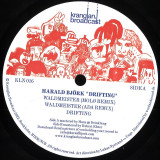
In May 2020 Cocoon Recordings released the third album of Harald Björk. With the club scene on Covid-hold , tours canceled and all of our favorite DJ’s locked up at home… not the optimal conditions to release an album on a nr.1 world wide club empire as Cocoon. How ever we decided not to let a virus kill our beloved culture, as Mr. Sven Väth put it „I would like to share with you the album of Harald Björk… which has soothed me and I hope will also give you a soundtrack for these uneasy days“. It felt right to release it.
The release was shrinked from a thought of vinyl box to a digital release with future plans on vinyl. However covid decided to stay and time went. The queue at the vinyl factories didn’t make the process easier… But at one point the dream factory of Kranglan Broadcast decided, enough! , the world has to keep on dreaming. And what is a better way to embrace dreams then to release a vinyl full of of dreamers, groundbreaking in their corners of the electronic umberella. Dreamers doing their thing not even looking at the norm or what’s the recent hype.
Aditional info:
Houndtooth finest Throwing Snow who Harald met in New York 2013 during their term at RBMA brings a bassdriven rollercoaster with the arpeggios from Spektrum bouncing like rubberballs through an impressive broken drum work. The remix came delivered with a text saying „I like my drums slamming“ and so do we.
Ada takes the eteric pads of Waldmeister and place them in a auditive dreamstate, an emotional hybrid of space and vacuum. Large feelings, yet so close. It builds, stretches and builds until we are shown the enlighted truth in the end of the tunnel. Harald is a long time fan and colector of Adas music which he got to know through the lovely label of Areal and has continued to love through the Pampa era. First remix from Ada on Kranglan was the epic remake of Sabor Latino, Sabor de Ada! We are delighted to have her art on the label once again.
The pandemic 2020 took away the most fun of beeing in the club scene, sharing stages with brilliant interesting dreamers showing and exchanging visions performing music. Under these strange conditions Molø and Harald ended up sharing a physical stage at the stream festival United We Stream. One thing led to the other and Harald took a deep dive in to Molø‘s great melodic techno universe. Some times you find gold in your own hometown. Molø’s take on Waldmeister build on the mellow arpeggio from the original track and brings them to a perfect chilled out afterhours. Imagine watching the sunrise to this beauty.
Swedes are a people of high integracy but as loyal citizens we allways attend formal events by the state. Skudge and Harald met at the Swedish National Radio price anouncement, both nominated for „electronic act of the year 2011“. It was an akward event with radio interviews and canapés, not very techno, the signum of Skudge. How ever Skudge won it all leaving both Avicii and Swedish House Mafia empty handed. Landberg, the swing king of Skudge is the kind of person that will tell you why the TR-909 has to be master clock to get the right groove in a techno performance, if you ask… which you do ??! If you’re looking for techno with groove look no further, Skudge is king! In his take on Walking Path he display the power of minimalistic dirty grooves, a 909 and a 303 what else do we need?
The 12“ vinyl comes with a fresh re-master of album single Medan Du Sov and an unreleased bonus track, Drifting, a balearic sundazed love story.
out of Stock
Last delivered 16 months ago available to reorder, subject to availability
The Outer Edge is very proud to release another quite sensational release. Here are the official reworks of Hans Hass' proto-AOR / cloud rock hymn "Welche Farbe hat der Wind" (which translates to "What color is the wind").
The main producer for this release was Marian Tone (of Key Elements), who reworked the track almost from scratch. He re-recorded the drums, the bassline, and some chords while keeping Hass's original vocal layer. The distinctive guitar playing by co-composer Gabor Kristof sparkles throughout. The result is exactly what we had hoped and asked for: a DJ-friendly version of this überclassic track.
The idea for this rework project came to mind when label owner DJ Scientist got word from Tobias Kirmayer of Tramp Records that "Welche Farbe hat der Wind" would be officially re-released for the first time on his compilation series "Praise Poems" as well as on a single reissue. Scientist immediately asked if he could make an edit with louder drums to make the track more playable in a DJ set. However, as the masters of the Tramp reissues had already been submitted to the pressing plant, he was granted permission to re-license the track and rework it for his own label instead.
Hence, the reworks feature Scientist's "vintage drums" mix, which has the drums mixed louder, plus drums added at the quite psychedelic and experimental last third, with a few other sound adjustments made.
But it was up to Berlin-based DJ and music producer Marian Tone to put the icing on the cake and rework and enhance the song further with his own version. With fellow Key Elements bandmember Steffen Kieslich, he completely re-recorded the drums. Then it was up to Doron Segal to replay the bass and the keys. What we get is the classic sound of "Welche Farbe hat der Wind" - just updated and fresher.
For the first time ever, the track is also available as an instrumental version. Here, the great original guitar playing keeps the song going and going, and makes it perfectly clear that this tune, which originally came out on the schlager album "Reise in eine glückliche Zukunft" in 1974, is pretty damn funky!
It has been difficult to put "Welche Farbe hat der Wind" into a genre box, But it has been described as "rare groove","psychedelic schlager", and even "proto-AOR". For facility, Scientist has coined the new term "cloud rock" to describe this particular style of soft but groovy music. The name cloud rock bears a conspicuous reference to the krautrock genre as well. More tracks in a similar vein will be heard soon in a DJ mix under the same name.
Marian Tone's rework, as well as the corresponding instrumental version, will be released on a limited 7" single with a full-color picture sleeve. The digital release will feature the DJ Scientist re-mix plus an alternative version that puts more focus on the re-recorded bassline. In any case, this is an essential item for any music lover as well as the ideal contribution to your ultimate "cloud rock" DJ set!
out of Stock
Last delivered 3 years ago available to reorder, subject to availability
Der lang vergriffene Longplayer als Vinyl-Wiederveröffentlichung im Original Cover von 1981! Ein Klassiker im DeeJay Genre - Toyan liefert hier sein bestes Album ab mit exzellentem Toasting über Riddims wie "Gunman", "Ice Cream Love", "Jacqueline", "Another One Bites The Dust". Die LP wurde im Channel One Studio mit den Roots Radics aufgenommen und bei King Tubby's von Scientist abgemischt!
Vinyl re-issue in the original LP artwork! - Classic DeeJay set from 1981 with the ranking Toyan riding a crucial selection of 'Junjo' rhythms including "Gunman", "Ice Cream Love", "Jacqueline", "Another One Bites The Dust". Housed in it's original cinematic Tony McDermott illustrated cover this crucial album showcases the Roots Radics at Channel One in full effect and was expertly mixed at King Tubby's by Scientist. Here are the ultimate DeeJay cuts to tunes by Clint Eastwood & General Saint, Michael Prophet, Johnny Osbourne, Hugh Mundell, a.o. and this recordings are the perfect addition to the much missed Scientist Dub albums series from 1980 to 1982.
Classic DeeJay set from 1981 with the ranking Toyan riding a crucial selection of 'Junjo' rhythms including "Gunman", "Ice Cream Love", "Jacqueline", "Another One Bites The Dust". Housed in it's original cinematic Tony McDermott illustrated cover this crucial album showcases the Roots Radics at Channel One in full effect and was expertly mixed at King Tubby's by Scientist.
out of Stock
Last delivered 3 years ago available to reorder, subject to availability
Boggiedown Base has been a producer and remixer since debuting as part of Die Reimbanditen in 1993. His CV includes productions for Die Coolen Säue/DCS, Albino, Chaoze One, and Die Deutsche Reimachse. In 2005 he met the Backspin-Magazine-DJ DJ 12 Finger Dan and the two formed a production duo. As Soulbrotha, the two produced mainly for and with American artists such as Sadat X from Brand Nubian, DJ Premier from Gangstarr, Large Professor, Big Shug, Blaq Poet, Masta Ace, Beneficience, Cella Dwellas, El Da Sensei, Kev Brown, Edo G and much more. The two came into contact with the producer Roccwell from Munich by chance. Through the common love for soul samples, hard drums, the clanking of the E-MU SP-1200, dope raps and spectacular cuts, the idea of a collabo-album came up.
"In Good Company" is a celebration of the classic boom bap sound and comes up with top-class feature guests. Among others, the New York cult rapper J-Live was won for the song "Real Reconize Real". Q Ball & Curt Cazal aka QnC from the legendary D&D Studios in New York show on "Classic Position" why they are still relevant after more than 20 years in the game and the Boston MC M-Dot proves on "Toil" why there is a hype around his person. But there are also other top artists on the guest list, such as DJ Eclipse, DJ Riz or KORE. "In Good Company" is to be understood as a homage to the many rap classics of the last three decades and sees itself in their tradition, but always remains modern thanks to the contributions of many young and talented artists such as Wildelux, Duo Pesci, Resolute or Empulse.
out of Stock
Last delivered 3 years ago available to reorder, subject to availability
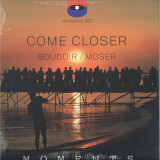
Moments is a music company organizing remarkable events, releasing groundbreaking productions, and daring to push innovations in underground dance music. The number seven symbolizes a quest for knowledge, and the seventh edition of Moments represents another step towards new horizons. Come Closer is a relatively new project on the global music scene. However, its mature artistic expression demonstrates the highest level of skills. The two- track material consists of over thirteen minutes of sounds that transcends genre divisions. Come Closer's music does not hesitate to include ethnic elements, funk, and even rock influences in the electronic dance structure. Both in its harmonious and production statements, Come Closer leaves nothing indisputable.
out of Stock
Last delivered 4 months ago available to reorder, subject to availability
First-time reissue of Aroma Di Amore's 3rd album, originally released in 1987.
Aroma Di Amore is/was Belgian’s premier cult band. Since the early eighties ADA innovatively combined electronics with rock. With a mix of razor-sharp Flemish lyrics and unconventional song structures the group earned a cult status in Belgium and abroad. 40 years later they conclude their career with a few last concerts and a vinyl box set spanning the years 1983-1987.
At the notorious Rock Rally of 1982 Aroma Di Amore stands out with their wonderful handling of the Flemish language, a deep bass, typical cold new wave drums, biting guitar riffs with the occasional flavor of absolute madness. Frontman Jos Verlooy adopts the stage name Elvis Peeters. The explanation for this remarkable pseudonym choice: in 1977 – the period of the singer's musical awakening – one of the two famous rocking Elvises (not Costello, but Presley) succumbs to his pill addiction. So, dixit Verlooy, there is an Elvis vacant. A banal surname belongs next to that exotic first name. A combination that breathes rock 'n' roll, according to the singer.
His companion Gerry Vergult – who very much determines the sound with his metallic riffs, somewhat indebted to Jean-Marie Aerts – adopts the stage name Fred Angst. Completely in line with the depressing zeitgeist of the 1980s. Gerry eats and breathes music. Besides composing most of ADA’s songs, he records & self-produces a few fantastic dark en loner solo minimal wave tracks as Fred Angst. He is still musically active, more towards the electronic leftfield nowadays under the moniker Zool.
It is clear from an early age that companion Elvis Peeters possesses the gift of the word. As an adolescent he published the punkzine “Dus”. The punk spirit stimulates Peeters. He begins to transform the poetry that he has been entrusting to paper for some time into song lyrics. It is on a whim and without any stage experience that punk friends Peeters and Angst register for the Rock Rally as Aroma di Amore. On a bed of post-punk and cold wave (Joy Division, Wire and Sisters of Mercy are the main influences), they initially let out playful, minimalist and nonsensical slogans such as "Doe De Mafia" (1982) and "Gorilla Dans De Samba" (1983). Later on, the tone becomes more serious, although Peeters' choice of words continues to show a penchant for absurdism and sarcasm. No one in Dutch songwriting imitates this verbal elasticity, certainly at that time.
The numerous songs about war are downright horrifying. In the 1980s, an arms race is underway. When the Belgian government decides to install nuclear missiles in 1981, Aroma di Amore asks for one minute of silence in the hall during performances. In "Lauwe Oorlog" (1983), Peeters exposes the core of his unrest: “paraat voor de parade / de vrede wordt begraven / met militaire eer”. To this day, the frontman of AdA still proudly wears his at least 30 year old 'atomic energy, no thanks!' button.
In 1984 Aroma releases Koude Oorlog on the new and independent Brussels label Play It Again Sam. The traditional press and radio ignore the record, but in the alternative circuits the mini-album does not go unnoticed, and the group starts to build a solid fan base, resulting in more and more offers for gigs. There's also interest in the Netherlands, and due to the international contacts of PIAS, the record also ends up in France, Switzerland, Spain and Canada.
Encouraged by this modest success, the group returns to the studio for a 12" single. With new group member Frits De Cauter on sax, they record "Voor De Dood". To this day, Voor De Dood remains the most popular AdA song, as evidenced by the countless compilations on which the song has appeared.
AdA goes to the Netherlands to record their next album “De Sfeer Van Grote Dagen”. The people from Nasmak have built a new studio in Eindhoven and one of the members, Theo Van Eenbergen (later Henry Rollins), will be the producer. “De Sfeer Van Grote Dagen” is the group's most adventurous album, and the reviews are again unanimously favorable. However, sales are disappointing and PIAS proposes to recruit Chris Reed of Red Lorry Yellow Lorry and record a new single with him. "Zonder Omzien" is recorded at the prestigious Pyramid Studio. However, PIAS is waiting to release the album and in the meantime AdA is recording a number of extra tracks with producer Ludo Camberlin, including "Koekoek In De Stad". Towards the end of the year, Lo and Elvis travel to Africa for a few months and as a result the group comes to a standstill. In this period, Zonder Omzien is released.
At the beginning of 1986, Peeters and Meulen return, and Andrea Smits leaves the group. Luc Pillards is hired as a replacement, and when Ludo Camberlin presents himself as a new label boss and producer (Anything But Records), they start recording their first full album for the label. “Harde Feiten" kicks in immediately, and the group is back up to cruising speed. In the first week of release, the record even appears in the bestseller list of the record stores.
At the beginning of 1987 the recordings for the second album start, this time in a production by Peeters and Angst themselves. Shortly after the shooting, AdA goes to Switzerland for a short but successful tour, with Men 2nd and Cas & Organized Crime as support act. "Koudvuur" is published in the autumn and considered to be their strongest record so far by the group, the reactions are rather low. Both the reviews in the press and the sales are disappointing and put a damper on the joy. Nevertheless, the group is invited to perform in Valencia, Spain, where they have an unexpected success.
MUTANT SOUNDS BLOG
Aroma Di Amore have always been outsiders, even within the confinement of the alternative rock circuit. Their peculiar blend of raw guitars, electronics, Dutch lyrics and unconventional song structures was too hybrid for many. Those howewer who, without prejudice, would lend an ear to the band's music, discovered an energetic, authentic and uncompromising collective that stood above all trends. While so many Belgian "connaisseurs" had their doubts about the possibilities of international recognition for a band singing in Dutch, Aroma Di Amore toured France, Switzerland and Spain; their records figured in alternative charts from Poland to Canada.
From beginning to end the nucleus of Aroma Di Amore consisted of Elvis PEETERS, who in a inimitable, possessed way delivered his highly original lyrics, and Fred ANGST, guitarist mastering the heaviest riffs as well as refined tapestries of sound. Furthermore, the line-up varied throughout the band's carreer with:- H.K. (Guitarist from 1982 until 1983)- Andrea SMITS (Organ from 1982 until 1985)- Luc PILLARDS (Synthsizer in 1986)- Jan WANDELAAR (Guitar and synthesizer in 1986)- Pulcherie (Saxophone in 1983)- Wout DOCKX (Bass from 1987 until 1988)and especially- Lo MEULEN (Bass from 1983 until 1987)and the late Frits DE CAUTER (Saxophone from 1984 until 1986)contributing to the music.
First-time reissue of Aroma Di Amore's debut album, originally released in 1984.
Aroma Di Amore is/was Belgian’s premier cult band. Since the early eighties ADA innovatively combined electronics with rock. With a mix of razor-sharp Flemish lyrics and unconventional song structures the group earned a cult status in Belgium and abroad. 40 years later they conclude their career with a few last concerts and a vinyl box set spanning the years 1983-1987.
At the notorious Rock Rally of 1982 Aroma Di Amore stands out with their wonderful handling of the Flemish language, a deep bass, typical cold new wave drums, biting guitar riffs with the occasional flavor of absolute madness. Frontman Jos Verlooy adopts the stage name Elvis Peeters. The explanation for this remarkable pseudonym choice: in 1977 – the period of the singer's musical awakening – one of the two famous rocking Elvises (not Costello, but Presley) succumbs to his pill addiction. So, dixit Verlooy, there is an Elvis vacant. A banal surname belongs next to that exotic first name. A combination that breathes rock 'n' roll, according to the singer.
His companion Gerry Vergult – who very much determines the sound with his metallic riffs, somewhat indebted to Jean-Marie Aerts – adopts the stage name Fred Angst. Completely in line with the depressing zeitgeist of the 1980s. Gerry eats and breathes music. Besides composing most of ADA’s songs, he records & self-produces a few fantastic dark en loner solo minimal wave tracks as Fred Angst. He is still musically active, more towards the electronic leftfield nowadays under the moniker Zool.
It is clear from an early age that companion Elvis Peeters possesses the gift of the word. As an adolescent he published the punkzine “Dus”. The punk spirit stimulates Peeters. He begins to transform the poetry that he has been entrusting to paper for some time into song lyrics. It is on a whim and without any stage experience that punk friends Peeters and Angst register for the Rock Rally as Aroma di Amore. On a bed of post-punk and cold wave (Joy Division, Wire and Sisters of Mercy are the main influences), they initially let out playful, minimalist and nonsensical slogans such as "Doe De Mafia" (1982) and "Gorilla Dans De Samba" (1983). Later on, the tone becomes more serious, although Peeters' choice of words continues to show a penchant for absurdism and sarcasm. No one in Dutch songwriting imitates this verbal elasticity, certainly at that time.
The numerous songs about war are downright horrifying. In the 1980s, an arms race is underway. When the Belgian government decides to install nuclear missiles in 1981, Aroma di Amore asks for one minute of silence in the hall during performances. In "Lauwe Oorlog" (1983), Peeters exposes the core of his unrest: “paraat voor de parade / de vrede wordt begraven / met militaire eer”. To this day, the frontman of AdA still proudly wears his at least 30 year old 'atomic energy, no thanks!' button.
In 1984 Aroma releases Koude Oorlog on the new and independent Brussels label Play It Again Sam. The traditional press and radio ignore the record, but in the alternative circuits the mini-album does not go unnoticed, and the group starts to build a solid fan base, resulting in more and more offers for gigs. There's also interest in the Netherlands, and due to the international contacts of PIAS, the record also ends up in France, Switzerland, Spain and Canada.
Encouraged by this modest success, the group returns to the studio for a 12" single. With new group member Frits De Cauter on sax, they record "Voor De Dood". To this day, Voor De Dood remains the most popular AdA song, as evidenced by the countless compilations on which the song has appeared.
AdA goes to the Netherlands to record their next album “De Sfeer Van Grote Dagen”. The people from Nasmak have built a new studio in Eindhoven and one of the members, Theo Van Eenbergen (later Henry Rollins), will be the producer. “De Sfeer Van Grote Dagen” is the group's most adventurous album, and the reviews are again unanimously favorable. However, sales are disappointing and PIAS proposes to recruit Chris Reed of Red Lorry Yellow Lorry and record a new single with him. "Zonder Omzien" is recorded at the prestigious Pyramid Studio. However, PIAS is waiting to release the album and in the meantime AdA is recording a number of extra tracks with producer Ludo Camberlin, including "Koekoek In De Stad". Towards the end of the year, Lo and Elvis travel to Africa for a few months and as a result the group comes to a standstill. In this period, Zonder Omzien is released.
At the beginning of 1986, Peeters and Meulen return, and Andrea Smits leaves the group. Luc Pillards is hired as a replacement, and when Ludo Camberlin presents himself as a new label boss and producer (Anything But Records), they start recording their first full album for the label. “Harde Feiten" kicks in immediately, and the group is back up to cruising speed. In the first week of release, the record even appears in the bestseller list of the record stores.
At the beginning of 1987 the recordings for the second album start, this time in a production by Peeters and Angst themselves. Shortly after the shooting, AdA goes to Switzerland for a short but successful tour, with Men 2nd and Cas & Organized Crime as support act. "Koudvuur" is published in the autumn and considered to be their strongest record so far by the group, the reactions are rather low. Both the reviews in the press and the sales are disappointing and put a damper on the joy. Nevertheless, the group is invited to perform in Valencia, Spain, where they have an unexpected success.
MUTANT SOUNDS BLOG
Aroma Di Amore have always been outsiders, even within the confinement of the alternative rock circuit. Their peculiar blend of raw guitars, electronics, Dutch lyrics and unconventional song structures was too hybrid for many. Those howewer who, without prejudice, would lend an ear to the band's music, discovered an energetic, authentic and uncompromising collective that stood above all trends. While so many Belgian "connaisseurs" had their doubts about the possibilities of international recognition for a band singing in Dutch, Aroma Di Amore toured France, Switzerland and Spain; their records figured in alternative charts from Poland to Canada.
From beginning to end the nucleus of Aroma Di Amore consisted of Elvis PEETERS, who in a inimitable, possessed way delivered his highly original lyrics, and Fred ANGST, guitarist mastering the heaviest riffs as well as refined tapestries of sound. Furthermore, the line-up varied throughout the band's carreer with:- H.K. (Guitarist from 1982 until 1983)- Andrea SMITS (Organ from 1982 until 1985)- Luc PILLARDS (Synthsizer in 1986)- Jan WANDELAAR (Guitar and synthesizer in 1986)- Pulcherie (Saxophone in 1983)- Wout DOCKX (Bass from 1987 until 1988)and especially- Lo MEULEN (Bass from 1983 until 1987)and the late Frits DE CAUTER (Saxophone from 1984 until 1986)contributing to the music.
First-time reissue of Aroma Di Amore's 2nd album, originally released in 1986.
Aroma Di Amore is/was Belgian’s premier cult band. Since the early eighties ADA innovatively combined electronics with rock. With a mix of razor-sharp Flemish lyrics and unconventional song structures the group earned a cult status in Belgium and abroad. 40 years later they conclude their career with a few last concerts and a vinyl box set spanning the years 1983-1987.
At the notorious Rock Rally of 1982 Aroma Di Amore stands out with their wonderful handling of the Flemish language, a deep bass, typical cold new wave drums, biting guitar riffs with the occasional flavor of absolute madness. Frontman Jos Verlooy adopts the stage name Elvis Peeters. The explanation for this remarkable pseudonym choice: in 1977 – the period of the singer's musical awakening – one of the two famous rocking Elvises (not Costello, but Presley) succumbs to his pill addiction. So, dixit Verlooy, there is an Elvis vacant. A banal surname belongs next to that exotic first name. A combination that breathes rock 'n' roll, according to the singer.
His companion Gerry Vergult – who very much determines the sound with his metallic riffs, somewhat indebted to Jean-Marie Aerts – adopts the stage name Fred Angst. Completely in line with the depressing zeitgeist of the 1980s. Gerry eats and breathes music. Besides composing most of ADA’s songs, he records & self-produces a few fantastic dark en loner solo minimal wave tracks as Fred Angst. He is still musically active, more towards the electronic leftfield nowadays under the moniker Zool.
It is clear from an early age that companion Elvis Peeters possesses the gift of the word. As an adolescent he published the punkzine “Dus”. The punk spirit stimulates Peeters. He begins to transform the poetry that he has been entrusting to paper for some time into song lyrics. It is on a whim and without any stage experience that punk friends Peeters and Angst register for the Rock Rally as Aroma di Amore. On a bed of post-punk and cold wave (Joy Division, Wire and Sisters of Mercy are the main influences), they initially let out playful, minimalist and nonsensical slogans such as "Doe De Mafia" (1982) and "Gorilla Dans De Samba" (1983). Later on, the tone becomes more serious, although Peeters' choice of words continues to show a penchant for absurdism and sarcasm. No one in Dutch songwriting imitates this verbal elasticity, certainly at that time.
The numerous songs about war are downright horrifying. In the 1980s, an arms race is underway. When the Belgian government decides to install nuclear missiles in 1981, Aroma di Amore asks for one minute of silence in the hall during performances. In "Lauwe Oorlog" (1983), Peeters exposes the core of his unrest: “paraat voor de parade / de vrede wordt begraven / met militaire eer”. To this day, the frontman of AdA still proudly wears his at least 30 year old 'atomic energy, no thanks!' button.
In 1984 Aroma releases Koude Oorlog on the new and independent Brussels label Play It Again Sam. The traditional press and radio ignore the record, but in the alternative circuits the mini-album does not go unnoticed, and the group starts to build a solid fan base, resulting in more and more offers for gigs. There's also interest in the Netherlands, and due to the international contacts of PIAS, the record also ends up in France, Switzerland, Spain and Canada.
Encouraged by this modest success, the group returns to the studio for a 12" single. With new group member Frits De Cauter on sax, they record "Voor De Dood". To this day, Voor De Dood remains the most popular AdA song, as evidenced by the countless compilations on which the song has appeared.
AdA goes to the Netherlands to record their next album “De Sfeer Van Grote Dagen”. The people from Nasmak have built a new studio in Eindhoven and one of the members, Theo Van Eenbergen (later Henry Rollins), will be the producer. “De Sfeer Van Grote Dagen” is the group's most adventurous album, and the reviews are again unanimously favorable. However, sales are disappointing and PIAS proposes to recruit Chris Reed of Red Lorry Yellow Lorry and record a new single with him. "Zonder Omzien" is recorded at the prestigious Pyramid Studio. However, PIAS is waiting to release the album and in the meantime AdA is recording a number of extra tracks with producer Ludo Camberlin, including "Koekoek In De Stad". Towards the end of the year, Lo and Elvis travel to Africa for a few months and as a result the group comes to a standstill. In this period, Zonder Omzien is released.
At the beginning of 1986, Peeters and Meulen return, and Andrea Smits leaves the group. Luc Pillards is hired as a replacement, and when Ludo Camberlin presents himself as a new label boss and producer (Anything But Records), they start recording their first full album for the label. “Harde Feiten" kicks in immediately, and the group is back up to cruising speed. In the first week of release, the record even appears in the bestseller list of the record stores.
At the beginning of 1987 the recordings for the second album start, this time in a production by Peeters and Angst themselves. Shortly after the shooting, AdA goes to Switzerland for a short but successful tour, with Men 2nd and Cas & Organized Crime as support act. "Koudvuur" is published in the autumn and considered to be their strongest record so far by the group, the reactions are rather low. Both the reviews in the press and the sales are disappointing and put a damper on the joy. Nevertheless, the group is invited to perform in Valencia, Spain, where they have an unexpected success.
MUTANT SOUNDS BLOG
Aroma Di Amore have always been outsiders, even within the confinement of the alternative rock circuit. Their peculiar blend of raw guitars, electronics, Dutch lyrics and unconventional song structures was too hybrid for many. Those howewer who, without prejudice, would lend an ear to the band's music, discovered an energetic, authentic and uncompromising collective that stood above all trends. While so many Belgian "connaisseurs" had their doubts about the possibilities of international recognition for a band singing in Dutch, Aroma Di Amore toured France, Switzerland and Spain; their records figured in alternative charts from Poland to Canada.
From beginning to end the nucleus of Aroma Di Amore consisted of Elvis PEETERS, who in a inimitable, possessed way delivered his highly original lyrics, and Fred ANGST, guitarist mastering the heaviest riffs as well as refined tapestries of sound. Furthermore, the line-up varied throughout the band's carreer with:- H.K. (Guitarist from 1982 until 1983)- Andrea SMITS (Organ from 1982 until 1985)- Luc PILLARDS (Synthsizer in 1986)- Jan WANDELAAR (Guitar and synthesizer in 1986)- Pulcherie (Saxophone in 1983)- Wout DOCKX (Bass from 1987 until 1988)and especially- Lo MEULEN (Bass from 1983 until 1987)and the late Frits DE CAUTER (Saxophone from 1984 until 1986)contributing to the music.
First-time reissue of Aroma Di Amore's 4th EP, originally released in 1986.
Aroma Di Amore is/was Belgian’s premier cult band. Since the early eighties ADA innovatively combined electronics with rock. With a mix of razor-sharp Flemish lyrics and unconventional song structures the group earned a cult status in Belgium and abroad. 40 years later they conclude their career with a few last concerts and a vinyl box set spanning the years 1983-1987.
At the notorious Rock Rally of 1982 Aroma Di Amore stands out with their wonderful handling of the Flemish language, a deep bass, typical cold new wave drums, biting guitar riffs with the occasional flavor of absolute madness. Frontman Jos Verlooy adopts the stage name Elvis Peeters. The explanation for this remarkable pseudonym choice: in 1977 – the period of the singer's musical awakening – one of the two famous rocking Elvises (not Costello, but Presley) succumbs to his pill addiction. So, dixit Verlooy, there is an Elvis vacant. A banal surname belongs next to that exotic first name. A combination that breathes rock 'n' roll, according to the singer.
His companion Gerry Vergult – who very much determines the sound with his metallic riffs, somewhat indebted to Jean-Marie Aerts – adopts the stage name Fred Angst. Completely in line with the depressing zeitgeist of the 1980s. Gerry eats and breathes music. Besides composing most of ADA’s songs, he records & self-produces a few fantastic dark en loner solo minimal wave tracks as Fred Angst. He is still musically active, more towards the electronic leftfield nowadays under the moniker Zool.
It is clear from an early age that companion Elvis Peeters possesses the gift of the word. As an adolescent he published the punkzine “Dus”. The punk spirit stimulates Peeters. He begins to transform the poetry that he has been entrusting to paper for some time into song lyrics. It is on a whim and without any stage experience that punk friends Peeters and Angst register for the Rock Rally as Aroma di Amore. On a bed of post-punk and cold wave (Joy Division, Wire and Sisters of Mercy are the main influences), they initially let out playful, minimalist and nonsensical slogans such as "Doe De Mafia" (1982) and "Gorilla Dans De Samba" (1983). Later on, the tone becomes more serious, although Peeters' choice of words continues to show a penchant for absurdism and sarcasm. No one in Dutch songwriting imitates this verbal elasticity, certainly at that time.
The numerous songs about war are downright horrifying. In the 1980s, an arms race is underway. When the Belgian government decides to install nuclear missiles in 1981, Aroma di Amore asks for one minute of silence in the hall during performances. In "Lauwe Oorlog" (1983), Peeters exposes the core of his unrest: “paraat voor de parade / de vrede wordt begraven / met militaire eer”. To this day, the frontman of AdA still proudly wears his at least 30 year old 'atomic energy, no thanks!' button.
In 1984 Aroma releases Koude Oorlog on the new and independent Brussels label Play It Again Sam. The traditional press and radio ignore the record, but in the alternative circuits the mini-album does not go unnoticed, and the group starts to build a solid fan base, resulting in more and more offers for gigs. There's also interest in the Netherlands, and due to the international contacts of PIAS, the record also ends up in France, Switzerland, Spain and Canada.
Encouraged by this modest success, the group returns to the studio for a 12" single. With new group member Frits De Cauter on sax, they record "Voor De Dood". To this day, Voor De Dood remains the most popular AdA song, as evidenced by the countless compilations on which the song has appeared.
AdA goes to the Netherlands to record their next album “De Sfeer Van Grote Dagen”. The people from Nasmak have built a new studio in Eindhoven and one of the members, Theo Van Eenbergen (later Henry Rollins), will be the producer. “De Sfeer Van Grote Dagen” is the group's most adventurous album, and the reviews are again unanimously favorable. However, sales are disappointing and PIAS proposes to recruit Chris Reed of Red Lorry Yellow Lorry and record a new single with him. "Zonder Omzien" is recorded at the prestigious Pyramid Studio. However, PIAS is waiting to release the album and in the meantime AdA is recording a number of extra tracks with producer Ludo Camberlin, including "Koekoek In De Stad". Towards the end of the year, Lo and Elvis travel to Africa for a few months and as a result the group comes to a standstill. In this period, Zonder Omzien is released.
At the beginning of 1986, Peeters and Meulen return, and Andrea Smits leaves the group. Luc Pillards is hired as a replacement, and when Ludo Camberlin presents himself as a new label boss and producer (Anything But Records), they start recording their first full album for the label. “Harde Feiten" kicks in immediately, and the group is back up to cruising speed. In the first week of release, the record even appears in the bestseller list of the record stores.
At the beginning of 1987 the recordings for the second album start, this time in a production by Peeters and Angst themselves. Shortly after the shooting, AdA goes to Switzerland for a short but successful tour, with Men 2nd and Cas & Organized Crime as support act. "Koudvuur" is published in the autumn and considered to be their strongest record so far by the group, the reactions are rather low. Both the reviews in the press and the sales are disappointing and put a damper on the joy. Nevertheless, the group is invited to perform in Valencia, Spain, where they have an unexpected success.
MUTANT SOUNDS BLOG
Aroma Di Amore have always been outsiders, even within the confinement of the alternative rock circuit. Their peculiar blend of raw guitars, electronics, Dutch lyrics and unconventional song structures was too hybrid for many. Those howewer who, without prejudice, would lend an ear to the band's music, discovered an energetic, authentic and uncompromising collective that stood above all trends. While so many Belgian "connaisseurs" had their doubts about the possibilities of international recognition for a band singing in Dutch, Aroma Di Amore toured France, Switzerland and Spain; their records figured in alternative charts from Poland to Canada.
From beginning to end the nucleus of Aroma Di Amore consisted of Elvis PEETERS, who in a inimitable, possessed way delivered his highly original lyrics, and Fred ANGST, guitarist mastering the heaviest riffs as well as refined tapestries of sound. Furthermore, the line-up varied throughout the band's carreer with:- H.K. (Guitarist from 1982 until 1983)- Andrea SMITS (Organ from 1982 until 1985)- Luc PILLARDS (Synthsizer in 1986)- Jan WANDELAAR (Guitar and synthesizer in 1986)- Pulcherie (Saxophone in 1983)- Wout DOCKX (Bass from 1987 until 1988)and especially- Lo MEULEN (Bass from 1983 until 1987)and the late Frits DE CAUTER (Saxophone from 1984 until 1986)contributing to the music.
Comprehensive box of 6 LPs / EPs and the band's first rare 7inch.
Aroma Di Amore is/was Belgian’s premier cult band. Since the early eighties ADA innovatively combined electronics with rock. With a mix of razor-sharp Flemish lyrics and unconventional song structures the group earned a cult status in Belgium and abroad. 40 years later they conclude their career with a few last concerts and a vinyl box set spanning the years 1983-1987.
At the notorious Rock Rally of 1982 Aroma Di Amore stands out with their wonderful handling of the Flemish language, a deep bass, typical cold new wave drums, biting guitar riffs with the occasional flavor of absolute madness. Frontman Jos Verlooy adopts the stage name Elvis Peeters. The explanation for this remarkable pseudonym choice: in 1977 – the period of the singer's musical awakening – one of the two famous rocking Elvises (not Costello, but Presley) succumbs to his pill addiction. So, dixit Verlooy, there is an Elvis vacant. A banal surname belongs next to that exotic first name. A combination that breathes rock 'n' roll, according to the singer.
His companion Gerry Vergult – who very much determines the sound with his metallic riffs, somewhat indebted to Jean-Marie Aerts – adopts the stage name Fred Angst. Completely in line with the depressing zeitgeist of the 1980s. Gerry eats and breathes music. Besides composing most of ADA’s songs, he records & self-produces a few fantastic dark en loner solo minimal wave tracks as Fred Angst. He is still musically active, more towards the electronic leftfield nowadays under the moniker Zool.
It is clear from an early age that companion Elvis Peeters possesses the gift of the word. As an adolescent he published the punkzine “Dus”. The punk spirit stimulates Peeters. He begins to transform the poetry that he has been entrusting to paper for some time into song lyrics. It is on a whim and without any stage experience that punk friends Peeters and Angst register for the Rock Rally as Aroma di Amore. On a bed of post-punk and cold wave (Joy Division, Wire and Sisters of Mercy are the main influences), they initially let out playful, minimalist and nonsensical slogans such as "Doe De Mafia" (1982) and "Gorilla Dans De Samba" (1983). Later on, the tone becomes more serious, although Peeters' choice of words continues to show a penchant for absurdism and sarcasm. No one in Dutch songwriting imitates this verbal elasticity, certainly at that time.
The numerous songs about war are downright horrifying. In the 1980s, an arms race is underway. When the Belgian government decides to install nuclear missiles in 1981, Aroma di Amore asks for one minute of silence in the hall during performances. In "Lauwe Oorlog" (1983), Peeters exposes the core of his unrest: “paraat voor de parade / de vrede wordt begraven / met militaire eer”. To this day, the frontman of AdA still proudly wears his at least 30 year old 'atomic energy, no thanks!' button.
In 1984 Aroma releases Koude Oorlog on the new and independent Brussels label Play It Again Sam. The traditional press and radio ignore the record, but in the alternative circuits the mini-album does not go unnoticed, and the group starts to build a solid fan base, resulting in more and more offers for gigs. There's also interest in the Netherlands, and due to the international contacts of PIAS, the record also ends up in France, Switzerland, Spain and Canada.
Encouraged by this modest success, the group returns to the studio for a 12" single. With new group member Frits De Cauter on sax, they record "Voor De Dood". To this day, Voor De Dood remains the most popular AdA song, as evidenced by the countless compilations on which the song has appeared.
AdA goes to the Netherlands to record their next album “De Sfeer Van Grote Dagen”. The people from Nasmak have built a new studio in Eindhoven and one of the members, Theo Van Eenbergen (later Henry Rollins), will be the producer. “De Sfeer Van Grote Dagen” is the group's most adventurous album, and the reviews are again unanimously favorable. However, sales are disappointing and PIAS proposes to recruit Chris Reed of Red Lorry Yellow Lorry and record a new single with him. "Zonder Omzien" is recorded at the prestigious Pyramid Studio. However, PIAS is waiting to release the album and in the meantime AdA is recording a number of extra tracks with producer Ludo Camberlin, including "Koekoek In De Stad". Towards the end of the year, Lo and Elvis travel to Africa for a few months and as a result the group comes to a standstill. In this period, Zonder Omzien is released.
At the beginning of 1986, Peeters and Meulen return, and Andrea Smits leaves the group. Luc Pillards is hired as a replacement, and when Ludo Camberlin presents himself as a new label boss and producer (Anything But Records), they start recording their first full album for the label. “Harde Feiten" kicks in immediately, and the group is back up to cruising speed. In the first week of release, the record even appears in the bestseller list of the record stores.
At the beginning of 1987 the recordings for the second album start, this time in a production by Peeters and Angst themselves. Shortly after the shooting, AdA goes to Switzerland for a short but successful tour, with Men 2nd and Cas & Organized Crime as support act. "Koudvuur" is published in the autumn and considered to be their strongest record so far by the group, the reactions are rather low. Both the reviews in the press and the sales are disappointing and put a damper on the joy. Nevertheless, the group is invited to perform in Valencia, Spain, where they have an unexpected success.
MUTANT SOUNDS BLOG
Aroma Di Amore have always been outsiders, even within the confinement of the alternative rock circuit. Their peculiar blend of raw guitars, electronics, Dutch lyrics and unconventional song structures was too hybrid for many. Those howewer who, without prejudice, would lend an ear to the band's music, discovered an energetic, authentic and uncompromising collective that stood above all trends. While so many Belgian "connaisseurs" had their doubts about the possibilities of international recognition for a band singing in Dutch, Aroma Di Amore toured France, Switzerland and Spain; their records figured in alternative charts from Poland to Canada.
From beginning to end the nucleus of Aroma Di Amore consisted of Elvis PEETERS, who in a inimitable, possessed way delivered his highly original lyrics, and Fred ANGST, guitarist mastering the heaviest riffs as well as refined tapestries of sound. Furthermore, the line-up varied throughout the band's carreer with:- H.K. (Guitarist from 1982 until 1983)- Andrea SMITS (Organ from 1982 until 1985)- Luc PILLARDS (Synthsizer in 1986)- Jan WANDELAAR (Guitar and synthesizer in 1986)- Pulcherie (Saxophone in 1983)- Wout DOCKX (Bass from 1987 until 1988)and especially- Lo MEULEN (Bass from 1983 until 1987)and the late Frits DE CAUTER (Saxophone from 1984 until 1986) contributing to the music.
Box Set includes: Gorilla Dans De Samba 7" (1983), Voor De Dood 12" (1984), Koude Oorlog LP (1984), De Sfeer Van Grote Dagen 12" (1985), Zonder Omzien 12" (1986), Harde Feiten LP (1986), Koudvuur LP (1987)
First-time reissue of Aroma Di Amore's 3rd EP, originally released in 1985.
Aroma Di Amore is/was Belgian’s premier cult band. Since the early eighties ADA innovatively combined electronics with rock. With a mix of razor-sharp Flemish lyrics and unconventional song structures the group earned a cult status in Belgium and abroad. 40 years later they conclude their career with a few last concerts and a vinyl box set spanning the years 1983-1987.
At the notorious Rock Rally of 1982 Aroma Di Amore stands out with their wonderful handling of the Flemish language, a deep bass, typical cold new wave drums, biting guitar riffs with the occasional flavor of absolute madness. Frontman Jos Verlooy adopts the stage name Elvis Peeters. The explanation for this remarkable pseudonym choice: in 1977 – the period of the singer's musical awakening – one of the two famous rocking Elvises (not Costello, but Presley) succumbs to his pill addiction. So, dixit Verlooy, there is an Elvis vacant. A banal surname belongs next to that exotic first name. A combination that breathes rock 'n' roll, according to the singer.
His companion Gerry Vergult – who very much determines the sound with his metallic riffs, somewhat indebted to Jean-Marie Aerts – adopts the stage name Fred Angst. Completely in line with the depressing zeitgeist of the 1980s. Gerry eats and breathes music. Besides composing most of ADA’s songs, he records & self-produces a few fantastic dark en loner solo minimal wave tracks as Fred Angst. He is still musically active, more towards the electronic leftfield nowadays under the moniker Zool.
It is clear from an early age that companion Elvis Peeters possesses the gift of the word. As an adolescent he published the punkzine “Dus”. The punk spirit stimulates Peeters. He begins to transform the poetry that he has been entrusting to paper for some time into song lyrics. It is on a whim and without any stage experience that punk friends Peeters and Angst register for the Rock Rally as Aroma di Amore. On a bed of post-punk and cold wave (Joy Division, Wire and Sisters of Mercy are the main influences), they initially let out playful, minimalist and nonsensical slogans such as "Doe De Mafia" (1982) and "Gorilla Dans De Samba" (1983). Later on, the tone becomes more serious, although Peeters' choice of words continues to show a penchant for absurdism and sarcasm. No one in Dutch songwriting imitates this verbal elasticity, certainly at that time.
The numerous songs about war are downright horrifying. In the 1980s, an arms race is underway. When the Belgian government decides to install nuclear missiles in 1981, Aroma di Amore asks for one minute of silence in the hall during performances. In "Lauwe Oorlog" (1983), Peeters exposes the core of his unrest: “paraat voor de parade / de vrede wordt begraven / met militaire eer”. To this day, the frontman of AdA still proudly wears his at least 30 year old 'atomic energy, no thanks!' button.
In 1984 Aroma releases Koude Oorlog on the new and independent Brussels label Play It Again Sam. The traditional press and radio ignore the record, but in the alternative circuits the mini-album does not go unnoticed, and the group starts to build a solid fan base, resulting in more and more offers for gigs. There's also interest in the Netherlands, and due to the international contacts of PIAS, the record also ends up in France, Switzerland, Spain and Canada.
Encouraged by this modest success, the group returns to the studio for a 12" single. With new group member Frits De Cauter on sax, they record "Voor De Dood". To this day, Voor De Dood remains the most popular AdA song, as evidenced by the countless compilations on which the song has appeared.
AdA goes to the Netherlands to record their next album “De Sfeer Van Grote Dagen”. The people from Nasmak have built a new studio in Eindhoven and one of the members, Theo Van Eenbergen (later Henry Rollins), will be the producer. “De Sfeer Van Grote Dagen” is the group's most adventurous album, and the reviews are again unanimously favorable. However, sales are disappointing and PIAS proposes to recruit Chris Reed of Red Lorry Yellow Lorry and record a new single with him. "Zonder Omzien" is recorded at the prestigious Pyramid Studio. However, PIAS is waiting to release the album and in the meantime AdA is recording a number of extra tracks with producer Ludo Camberlin, including "Koekoek In De Stad". Towards the end of the year, Lo and Elvis travel to Africa for a few months and as a result the group comes to a standstill. In this period, Zonder Omzien is released.
At the beginning of 1986, Peeters and Meulen return, and Andrea Smits leaves the group. Luc Pillards is hired as a replacement, and when Ludo Camberlin presents himself as a new label boss and producer (Anything But Records), they start recording their first full album for the label. “Harde Feiten" kicks in immediately, and the group is back up to cruising speed. In the first week of release, the record even appears in the bestseller list of the record stores.
At the beginning of 1987 the recordings for the second album start, this time in a production by Peeters and Angst themselves. Shortly after the shooting, AdA goes to Switzerland for a short but successful tour, with Men 2nd and Cas & Organized Crime as support act. "Koudvuur" is published in the autumn and considered to be their strongest record so far by the group, the reactions are rather low. Both the reviews in the press and the sales are disappointing and put a damper on the joy. Nevertheless, the group is invited to perform in Valencia, Spain, where they have an unexpected success.
MUTANT SOUNDS BLOG
Aroma Di Amore have always been outsiders, even within the confinement of the alternative rock circuit. Their peculiar blend of raw guitars, electronics, Dutch lyrics and unconventional song structures was too hybrid for many. Those howewer who, without prejudice, would lend an ear to the band's music, discovered an energetic, authentic and uncompromising collective that stood above all trends. While so many Belgian "connaisseurs" had their doubts about the possibilities of international recognition for a band singing in Dutch, Aroma Di Amore toured France, Switzerland and Spain; their records figured in alternative charts from Poland to Canada.
From beginning to end the nucleus of Aroma Di Amore consisted of Elvis PEETERS, who in a inimitable, possessed way delivered his highly original lyrics, and Fred ANGST, guitarist mastering the heaviest riffs as well as refined tapestries of sound. Furthermore, the line-up varied throughout the band's carreer with:- H.K. (Guitarist from 1982 until 1983)- Andrea SMITS (Organ from 1982 until 1985)- Luc PILLARDS (Synthsizer in 1986)- Jan WANDELAAR (Guitar and synthesizer in 1986)- Pulcherie (Saxophone in 1983)- Wout DOCKX (Bass from 1987 until 1988)and especially- Lo MEULEN (Bass from 1983 until 1987)and the late Frits DE CAUTER (Saxophone from 1984 until 1986)contributing to the music
Originally released in 2014, “Instruction Booklet N. 1232” marks the first cassette release on Dauw for Tatersall under his The Humble Bee moniker. Taking advantage of the format, each side on “Instruction Booklet N. 1232” is reserved for a single piece nearing the 20-minute mark.
“Exploding View” (aka Side A) swells into existence with a very grand sounding synth-driven melody. Of course the other thing that’s present is the decaying sound of the tape loop that’s working to bring that music to life. At first, the melody grows and grows, fairly undisturbed, but eventually the sound of so-much tape warble threatens the rising nature of the piece until it sounds as though it is one loop away from total decay and simply fluttering out of existence.
But of course that’s the point. There’s a tension between that grand melody that opens these moments and that warble. It’s a lesson in opposites: the mechanics of a tape loop, guaranteed to break down, placed in contrast with those signature Tatersall melodies, which somehow seem eternal. And just as that tension seems too much to bear — the melody dies to be replaced by something altogether new. What comes next is something much quieter, driven by a sub-aquatic bassline, some rhythmic tape hiss and some gentle piano.
It’s a very dramatic and sudden break. The technical elements of that could be attributed to Tattersall’s understanding of how far a melody can be pushed before it succumbs to the abuse of being processed out of existence — perhaps the tape had been looped and processed to its breaking point. Regardless of whether it was a technical or artistic choice, that hard break serves an important narrative function. Frequently in instrumental music, musicians play with opposites (quiet-loud, clean-distorted) to create a narrative to their work since they don’t have words/lyrics as a tool. In the case of The Humble Bee’s use of tape loops, one set of opposites in tension is always driven by the fragility of the melodies and the limitations of a machine guaranteed to inevitably decay the media it is designed to support. And where one thrives, the other takes a backseat. As side A winds down, the melodies are much more sparse — appropriate for en ending, yes; but it also gives more space for those hisses and crackles to claim their moment.
Side B is filled out by “Manual with Foot Pedal” and it begins as gently as its predecessor ended. Slowly eking outing it existence – it’s as if watching Tatersall set the board, showing his players on opposite sides of the table before really setting them in motion to do their thing. By the piece’s midpoint, melody has taken centre stage as a glitchy, piano-led rhythm marches its way forward, clearly carving out its space and claiming its territory. And almost immediately following that: the decay takes over again and those tape loops seem processed to near death — the melody almost barely decipherable as it flutters under the weight of the history of being looped/played ad nauseum. And in the very final moments, the melodies are sparse again, giving the tape hiss room to play its part — it’s as if Tatersall is giving both players enough space to take their final bows.
In hugo, there’s a central question that Loyle Carner keeps coming back to: “I’m young, Black, successful and have a platform - but where do I go next?” The answer is explored in this epic scream of a third album. With urgent delivery and gloriously widescreen production, Carner confronts both the deeply personal (“You can’t hate the roots of a tree, and not hate the tree. So how can I hate my father without hating me?) and the highly political (“I told the black man he didn’t understand I reached the white man he wouldn’t take my hand”). Cinematic in scale and scope, hugo is both a rallying war cry for a generation forged in fire and a study of the personal internal conflict that drives the rest of the album - as a mixed-race Black man, as an artist, as a father and as a son. With Mercury and Brits nominations, NME Awards and appearances in global brand campaigns (Nike, YSL, Timberland), Carner has undoubtedly had a meteoric rise to the top, culminating with his second album Not Waving, But Drowning charting at number 3 in the UK albums chart in 2019. However, hugo sees Carner taking a sharp detour from his previous work, putting it down to lockdown and the “hedonistic side of career being stripped away. There were no shows, no backstage, no festivals, no photoshoots”. By continuing to write in these tumultuous times with a renewed clarity and sense of artistic freedom, Carner reached deeper beneath the surface than he ever had before. The result is his most cathartic and ambitious record yet, a coruscating journey into the heart of what it means to be alive in these tumultuous times, and one which looks set to neatly cement his position as one of the most potent and vital young talents around today. Working alongside renowned producer kwes. (Solange, Kelela, Nao), Carner leaves no stone unturned on this album, in both its sound and its stories. In a 10-track album that moves from gorgeous neo-soul moments to thundering hip hop, with immediate, infectious bangers and sampled interludes from non musicians (mixed-race Guyanese poet John Agard and youth activist and politician Athian Akec) Carner shifts seamlessly from micro to macro, confronting everything from strained relationships with family to the societal tears caused by class stratification. It also lays bare bruises in his personal life that he has never revealed before – often in painful, deeply uncomfortable ways, focusing on Carner's experience of becoming a father in the context of growing up without contact with his biological father. With the song “Polyfilla”, against the backdrop of a warm melodic beat, Carner explores his desire to “break the chains in the cycle” of dysfunctional Black fatherhood, commenting on the narrative of fatherhood in the genre, and saying a key part of the process was realising that his father “grew up in a world where nobody showed him how to love or nurture”. The follow up track “A Lasting Place” is an exploration of the MC’s failure and inability to be perfect in this mission. The album closer is a powerful statement of love and forgiveness; with his signature lyrical dexterity, Carner declares his relentless commitment to his son and sees forgiving his father as a key part of this. The song closes with an emotional ending of Carner telling his dad “still I’m lucky yo that we talk”. There’s a striking duality of hugo’s bold, multilayered tracks and its often starkly intimate and tender lyricism, and that dichotomy is deliberate - it is a message for young Black men, but really, anyone, who is listening. Cognizant of the immense pain and fear and confusion that we are faced with everyday, Carner has thrown down the gauntlet, defying us not to rise above the fray, wake up each day and be ambitious. Ambitious in building strong personal relationships. Ambitious in our pursuit of our goals. Ambitious in never refusing to back down against injustice. Rejecting the title of leader, Loyle Carner sees himself “as holding up a mirror”, and that clearly translates into the album's universal messages.
out of Stock
Last delivered 3 years ago available to reorder, subject to availability
LIMITED EDITION PICTURE DISC EDITION OF PAUL DRAPER'S NEW
ALBUM CULT LEADER TACTICS .Meaty art-rock, austere orchestral
interludes & driving future pop - Classic Rock 8/10 Cult Leader Tactics is
sleek & smart, full of melody, humour and flair - Record Collector 4*
Former Mansun frontman, Paul Draper, returned in early 2022 with a
collection of his finest songwriting since the bands' imperial phase
Cult Leader Tactics', is a self-help manual on how to become a complete cult in
the music industry & is his first solo album since 2017's much- lauded Spooky
Action'. Cult Leader Tactics' offers a satirical analysis of the self- help manual
genre. A guide on how you can get to the top of your chosen profession, or ahead
in life & in affairs of the heart, by acting in a Machiavellian manner, employing
dirty tricks or Cult Leader Tactics' to achieve your life goals. After experiencing
these types of human behaviours & themes, the album arrives at the conclusion
that the only true answer in life is love. Paul plays most of the instruments on the
album, including lead vocals, guitar & various Moogs & synthesisers. An album
produced with long-time collaborator & acclaimed producer Paul P-Dub' Walton
(Massive Attack, The Cure, Bjork) at Loft Studios, it also includes guest
appearances from Porcupine Tree's Steven Wilson & Gam of the band Sweat' as
well as featuring a 288-person C.L.T. Lockdown Choir. Cult Leader Tactics' offers
a selection of Paul's most focused & ambitious work so far, a brilliantly dark
commentary on an industry he is all too aware of. Kscope are proud to present a
limited Picture Disc edition of Cult Leader Tactics'.
Jazzrausch Bigband has more or less invented a new art form,
techno jazz, and has become well-known for performances of it. But
the band also has another, different story to tell. It has invented its
own tradition of hitting the road and touring at the end of each year
with a programme consisting of Christmas music, and has been doing
this ever since the band first emerged eight years ago. Bandleader
and founder Roman Sladek explains: “Whereas our regular projects -
the most recent album, ‘Emergenz’, is a good example - are all about
working through a specific theme and finding new ways to reinvent
ourselves, our Christmas thing is something we do for one reason
alone: to have fun. It was our very first programme, we still love it, and
we’re still nurturing, developing and growing it. Being able to devote
one month a year entirely to the big band tradition is something we’re
all really passionate about.”
Some bands might have been tempted just to throw together an
album of Christmas chestnuts any old how, but the Jazzrausch way of
doing things is not like that at all. Unlike any other album by the band,
for the first time we hear purely instrumental music. Furthermore,
Kuhn has taken ten classic Christmas songs - each one of them
rarely heard in jazz, and tunes which can often come across as a bit
staid in their original settings - from ‘Tochter Zion, freue dich# to
‘Adeste fideles’ or ‘Ihr Kinderlein, kommet’. The title track, ‘Alle Jahre
wieder!’ (based on the 1830s carol to music by Silcher which is very
familiar to children and adults in the German-speaking world) appears
here in completely new orchestral garb.
Sometimes the listener will recognise the kind of swing typical of
Glenn Miller. At other moments it is the incomparable big band
elegance of, say, Artie Shaw. ‘Es wird scho glei dumpa’ (an Austrian
carol) is given the full extra high pressure Tijuana brass treatment.
‘Maria durch ein’ Dornwald ging’ gets the touch of the Thad Jones /
Mel Lewis Orchestra after a Henry Mancini-like intro, and ‘Ich steh’ an
deiner Krippe hier’ recalls more of the great swing heritage.
Once again Jazzrausch Bigband has succeeded in a way that only
very few in the jazz field can, notwithstanding the openness of the
genre: they have brought young and old together, tradition and
revolution, the familiar and the new. Which is why it feels so
completely natural and right that they should continue to do this
‘again every year’, as the album title tells them: ‘Alle Jahre wieder’.
“A rather gorgeous and engrossing collection, that borrows stealthily from a rich history of sound effect and soundtrack to build a tender poem to the night time.” - CLASH
“The plan was to make twenty 90-second tracks designed as TV themes,” says Arab Strap’s Aidan Moffat, of the initial thought behind his new instrumental album as Nyx Nótt “But it wasn't a satisfying listen, it was too gimmicky and silly.”
So instead, Moffat decided to stretch the idea out, plunge deeper, and expand the music into full tracks, “making some of them quite long and dramatic, with the odd swift turn here and there.” In fleshing these tracks out into more fully realised songs he began sourcing samples from professional TV and film music libraries. “The focus then turned to making a proper album out of these modern library sounds,” he says. “I decided to stick with the Themes From title and named the tracks after the sorts of shows they made me think of when I listened back.”
The result is a record that explores genre themes such as: ‘Thriller, ‘Porno’, ‘Caper’ and Swashbuckler’, and acts as an audio equivalent of channel hopping through a unique TV station programmed by Moffat. “I still wasn't sure about all this until I did the album cover, which brought it all together,” he says, of the artwork that places an old smashed TV unit front and centre with a woman perched on top. “It has echoes of old TV compilations but is pretty cheeky and slightly sexy in that old 70s compilation style. I wanted this one to look a bit more fun than the last one, as well as hopefully sound a bit more fun too.”
Aside from being a fun experience, it is also a stirring and immersive listen, one that allows the listener to imagine their own accompanying visual scenarios to each musical theme. The opening ‘Docudrama’ marries a gently creeping beat with strings that glide from tense to sweeping, while ‘Porno’ is all seedy smoky jazz that feels plucked right out of Travis Bickle’s late night trips to porn cinemas in Taxi Driver.
Touches of jazz pop up in other places too, on ‘Hardboiled’ this merges with subtle pulses and gargles of electronics that build to a rousing crescendo of horns and bleeps, and on ‘Caper’ there’s a vivacious full jazz band skip to the lively swinging rhythms. “There's a few more jazzy elements here,” Moffat says. “Although I'm not quite sure where that came from. Although, like everyone else, I've had plenty of time to be introspective recently, so I decided the next Nyx Nótt album should be more upbeat and encourage some occasional foot-tapping.”
However, what becomes apparent, the longer you spend in the world of Themes From, is how singular and unique the tone of each composition is. “Each track has its own individual feel,” says Moffat. “The idea was to sound like a different composer and band throughout.” It’s a stylistic leap that continues Nyx Nótt’s trajectory as one that shares no direct link to Moffat’s other projects. “I approach them in completely different ways and with a different purpose in mind,” says Moffat. “I don't think Nyx has ever heard of Arab Strap, and certainly doesn't own any of their albums.” It’s also a notable shift from the debut album under this moniker, and suitably given the theme, Moffat has created a visual comparison between these two sonic worlds. “If the first Nyx Nótt album was like looking out on dark prairies before dawn, this is more like a walk through a neon Soho after a few cocktails.”
Six Nine Records Ltd. UK proudly presents the fifth release for Howard Johnson on the label! “You’re My Star” is another winner from the man who, together with Kashif, brought boogie-funk to the forefront of popular soul music in the UK (and probably the rest of the world as well). The track is written by no one less than Leon Sylvers III and on the flip we find the laid back and smooth Yardley Mix. Definitely not to be missed as it is a limited UK press with full colour printed picture cover!
out of Stock
Last delivered 3 years ago available to reorder, subject to availability