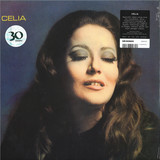
Beautiful debut album from the incredible, Ce´lia. Conducted & arranged by Arthur Verocai and Roge´rio Duprat; featuring songs by Lo Borges, Antonio Adolfo and Joyce amongst others.
Ce´lia recorded four self-titled albums for Continental between 1971 and 1977, 'Amor' in 1982 plus several more before she sadly passed away late in 2017, aged 70. This is her debut album from 1970.
Ce´lia was a Brazilian vocalist who worked frequently with master arranger-composer Arthur Verocai in her early years and many other heavyweights over the course of her extensive career. Joyce was particularly supportive in the making of this album, writing the beautiful 'Abrace Paul McCartney' and her husband at the time, Nelson A^ngelo, recorded some of the songs.
Features an exclusive insert of a translated interview with Celia, completed in 2011 in her hometown of Sa~o Paulo. Focusing, in particular on her recording work with Arthur Verocai, it showcases her wonderful sense of humour and how she was embracing her new legion of fans, particularly in the world of hip hop.
Official Mr Bongo reissue. Licensed from Warner Music.
White Shadows In The South Seas is the title of a book written in 1919 by Frederick O'Brien as part of a trilogy he wrote based on his experiences living in the Pacific islands in the early part of the 20th century. His book was taken as the starting point for a film to be directed, initially, by Robert Flaherty (famous at the time for his groundbreaking documentary / fiction film Nanook Of The North) with W.S.Van Dyke as his support. The film, ultimately, apart from the title, had little to do with O'Brien's book and Flaherty left the film after a few months leaving Van Dyke to finish it.
I purchased O'Brien's book, along with many others, from Basement Books, a secondhand bookstore in Melbourne/Australia. Part of my 'Islomania' and on going fascination with all things Pacific. When I discovered there was a 1929 silent film based on the book I sought it out and started to present it as part of my 'Live Music/Silent films' repertoire. Tabu by Frederick Murnau, which coincidently also had Flaherty as co-director originally, was the first film I ever wrote / improvised a score for and presented as a live film/music performance. My repertoire extends to over 23 films now.
My eclectic and diverse musical and artistic interests extend into 'Hawaiian', 'Exotica', 'Ambient' and 'Electronic' Music. I have produced several volumes of so called 'Electronic, Ambient, Exotica' on CD and Vinyl, including Kiribati, Globe Notes, Rayon Hula ( on Vinyl, CD and digital format ) and most recently, New Globe Note on Vinyl and White Shadows In The South Seas on CD.
White Shadows In The South Seas features some of the music presented in my live screenings of the 1929 silent film.
The film is the story of Dr. Matthew Lloyd, an alcoholic doctor who is disgusted by the exploitation by white people of the natives on a Polynesian island. The natives dive for pearls, however, numerous accidents occur and one diver dies. In anger, Dr. Lloyd punches Sebastian, the employer. As revenge and to prevent further interruption of his activities, he tricks Dr. Lloyd onto a ship with a diseased crew (thinking they are ill) and his men rough him up and send the ship off into a storm. Dr. Lloyd survives and is washed ashore on an island where none of the natives have ever seen a white man before. Lloyd is rescued and ultimately falls in love with the chief's daughter, who is Taboo, hence Lloyd is prevented from pursuing his love for her. An incident occurs and a young boy is thought to have drowned but Lloyd is able to revive him, earning him points and permission with the chief's daughter. Lloyd begins to realise that the local islanders have no sense of the value of the black pearls which grow in abundance around their island and he starts to dive for them and collect them. One morning the white man Sebastian unexpectedly turns up on a scooner and starts to offer the islanders trade for their pearls. Llloyd tries to interrupt the encounter and is shot and dies. His wife and the islanders morn for his dead body and, symbolically, the passing of a way of life.
Mike Cooper plays - Electric and acoustic lap steel guitars / electronics / Zoom Sampletrack / Kaos Pad / Casio SK1 / Korg Drum Machine / Self Made Instruments.
It also features field recordings made on Pulau Ubin by Mike Cooper during a month as Artist In Residence for The Artist Village / Singapore.
I would like to acknowledge and thank Lawrence English (Room40 Records) for his assistance and encouragement with the original recordings and the CD version of White Shadows In The South Seas.
All music written and played by Mike Cooper PRS/MCPS - except Po Mahina (trad. Arr. Cooper) and Hilo Hanakahi (trad. Arr. Cooper)
Recorded and Mixed at the Steelworks in Rome 2012/2013.
A White Shadow In The South Seas
In February 2014 'A White Shadow In The South Seas' was the title of an audio-visual installation I made at the Teatro In Scatola in Rome, Italy, presented as part of a series of sound installations titled 'Visitazioni' produced by Proposte Sonore.
The essay below, as well as our collection of Hawaiian shirts, Exotica and Hawaiian vinyl records, was an inspiration for this installation.
'..the transformation and reconstitution of the souvenir commodity as an indigenous ethnic art form and a scarce relic of Hawai'i's romanticized past...' from - Clothing and Textile Reasearch Journal - From Kitsch to Chic by Marcia A. Morgado.
And....
Michael Thompson's Rubbish Theory (1979)
' ...a critical aspect of Western culture is the pre-disposition to see objects in terms of two overt categories: the transient and the durable. Objects identified as transient have finite life spans and lose value over time, whereas those identified as durable have infinite lives and over time increae in value....category assignments are arbitrary, but once assigned a category membership determines relative value. Fashion apparel-by defenition-is assigned to the transient category; paintings commonly are designated durables....how is it that transient objects.. ( e.g. Hawaiian shirts and vinyl records ) ..sometimes become durables.
Objects assigned to the rubbish category are largely invisible, have no value and, ideally, no life span. Fashion for example, no longer worn and relegated to the back of the wardrobe has fallen into the covert rubbish category. But rubbish can be rescued and transformed. Thompson says ' What I believe happens is a transient object gradually declining in value and in expected life span may slide across into rubbish. Here it exists in a timeless and valueless limbo where it has a chance to be re-discovered and be successfully transformed to a durable. Such transferes are radical: objects gradually slide from transcience to rubbish, but the transformation from rubbish to durable involves an all-or-nothing leap across two boundaries, that separating the worthless from the valuable and that between the covert and the overt. Things drift into obscurity but they leap into prominence.
The delightful consequence of this hypothesis is that in order to study the social control of value we must study rubbish.
The rubbish-to-durable transformation is accompanied by the development of highly specialized knowledge derived from the discovery of subtle variations and complex details that went unnoticed in the objects transient stage. The discoveries initiate renewed interest in the object and its market value begins to climb. As prices soar beyond the reach of ordinary people, the object becomes available only in high priced collectors' markets. Furthermore, as market values rise, the aesthetic value of the object undergoes a reassessment as well, and it becomes increasingly apparent that the objects intrinsic beauty has been overlooked. Ultimately the object is re -assigned as a durable and becomes recognized as a timeless classic.
Exotica, Ambience and Pacificism - A dialogue with Mike Cooper & Professor Philip Hayward Deputy Pro Vice Chancellor of Research Southern Cross University, Lismore, Australia.
'Sometimes it's hard to say how you feel,' says songwriter-vocalist
Jade Vincent. 'These songs are vulnerable stories for me to tell -
they're things I couldn't say out loud. But I found that I could sing
them. And then I closed my eyes when they would listen.'
Listening to Vincent's songs were her partner - producer/composer
Keefus Ciancia - and DJ and producer/composer David Holmes.
Together, Vincent, Ciancia and Holmes make up Unloved, the musical
project that evolved out of a late-night Hollywood bar in 2015,
releasing a stunning debut album the following spring and this year
crafting the soundtrack to Phoebe Waller-Bridge's acclaimed new
series 'Killing Eve'.
Introduced to Ciancia through soundtrack work, Holmes found
himself invited to DJ one night and to curate other nights at the
Rotary Room. To invite Holmes to DJ is to unleash a kind of whirling
dervish of musical enthusiasm but through those nights the trio
discovered a shared love for 60s girl groups and French pop and film
noir soundtracks, Brigitte Fontaine, Shuggie Otis, George 'Shadow'
Morton, Bruno Nicolai, Lee Hazlewood and Jack Nitzsche, along with
a tremendous desire to work together.
Their debut EP - 'Guilty Of Love' - and the full-length, self-titled
album that followed in the spring of 2016, offered a quite remarkable
thing: a sound at once hauled out of the silty depths of the past and
simultaneously wholly modern. There was the soft hiss of a lo-fidelity
recording - the murky crackle of sample, beats and half-remembered,
long-lost favourite tunes. However, much of the songs' success
belonged to Vincent's sublime voice and lyrics, both possessed of an
aching, rich-smoked tone of loss and love.
Unloved's second album, 'Heartbreak', is about love. The album plays
out each song like a vignette of nothing but love. The songs that rose
up were in some ways surprising, but also felt insistent. 'They're real
feelings and real experiences that I had the guts to finally say, but
always ambiguous, this is very important to me,' she explains, 'and
always about love, one way or another.'
LP pressed on red coloured vinyl with digital download code.
The story of Seattle's rise to global rock supremacy in the late 80s and early 90s begins with Green River. Made up of Jeff Ament (bass), Mark Arm (guitar/vocals), Bruce Fairweather (guitar), Stone Gossard (guitar) and Alex Shumway (drums), the
quintet put out three 12's and a 7' single during its brief existence.
Green River's influence on Seattle's music scene spread far and wide thanks to the members' dispersion into bands including Pearl Jam, Mudhoney and Love Battery, as well as the punk glam sludge rock songs they left behind. 'By '83, '84, there was
definitely a movement that was happening within hardcore, like Black Flag slowing down for My War,' says Arm. 'The Replacements and Butthole Surfers were rearing
their heads, and they're very different bands, but they're not hardcore - the Replacements are pretty much straight-up rock, and Butthole Surfers were God knows what. Sonic Youth's Bad Moon Rising was around, and a lot of really
interesting post-hardcore things were happening.'
Green River, formed in 1984, were part of that evolution, with a sound that straddled a lot of different genres - blues, punk, bloozy straight-ahead rock. The mini-LP 'Dry As A Bone' - which came out in 1987 - and the band's lone full-length
'Rehab Doll' - which came out in 1988 - were released as a single CD with a few bonus cuts, including their sneering cover of David Bowie's 'Queen Bitch' and their marauding version of Dead Boys' 'Ain't Nothin' to Do', in 1990 - but they've been
unavailable on vinyl for years.
Now, these slices of Seattle music history are not only back in print, they're accompanied by items from the vaults that had been forgotten about for decades.
'Dry As A Bone' was recorded at Jack Endino's Reciprocal Recording in 1986 and it shows the band in furious form, with Arm's yowl battling Fairweather and Gossard's
ferocious guitar playing on 'This Town' and 'Unwind' opening as a slow bluesy grind then jump-starting itself into a hyperactive chase. The deluxe edition includes Green
River's cuts from the crucial Seattle-scene compilation 'Deep Six', as well as long-lost songs that were recorded to the now-archaic format Betamax.
'Rehab Doll', recorded largely at Seattle's Steve Lawson Studios., bridges the gap between the taut, punky energy of 'Dry As A Bone' and the bigger drums and thicker
riffs that were coming to dominate rock in the late 80s. This new edition of 'Rehab Doll' includes a version of 'Swallow My Pride' recorded to 8-track at Endino's Reciprocal Recording, which features a more accurate depiction of how the band
sounded when they played live. 'When I listen to these mixes, I think, 'This is how we actually sounded - this is the kind of energy we had,'' says Shumway.
Green River's place in American music history is without question but these recordings paint a more complete picture of the band - and of rock in the mid to late 80s, when punk's faster-and-louder ideals had begun shape-shifting into other ideas.
CDs in digipack with 12-page booklet. 2LP formats in gatefold jacket with custom dust sleeve and digital download code.
Ken Oath slip on their moon shoes for a joint venture with Freda & Jackson, pressing up four cuts that will have you slipping the surly bonds of earth and dancing in the skies. Loaded with basslines heavier than a neutron star and well-chopped breaks, produced with a dubwise ear for space, this is some of the duo's finest material yet 'Kendama' is the heaviest cut here, a deep psychedelic outing that's swathed in an foggy haze. Abstracted digi-flutes and koto plucks are paired with a skull-boring bassline and exacting breakbeat dissection, adding some levity to the leaden heaviness of the track's bass-weight. 'Cubone' slows but retains the hallucinatory haze that coils around all these trackers. Thudding bass anchors the floating drones and glitches, while percussion snakes through the track, building, like smoke slowly filling a room. The steady build is transportive, to the point where you hear the final echo tail trailing out into silence, and wonder how that all time dissipated Flipping over the record, 'Platform 22' is where you'll find the two of them at their loosest. Submerged vibraphone melodies and swirling voices play over a bassline that sounds like its descending the stairs, boisterous and half-drunk, to culminate in an orgiastic percussion frenzy at the end. Spacious and dubwise, 'Noggin' is a tellingly heady closer. Samples are set adrift across the track as they are dubbed-out and dissolved into smears of sound. There's a buoyancy to the whole piece, a pleasant weightlessness that keeps you floating after the final notes fade out. One time for ya mind.
2018 played host to a bumper crop of sounds from some of Philly's grittiest, including Great Circles mainstays M//R and Chaperone. To close out the year that was, we are pleased to present Heckadecimal's 'Murder Tape.'
A Minneapolis-based producer and acid auteur, Heckadecimal has been a fixture within the vibrant Midwestern electronic music community for nearly 20 years. Founder of the legendary 'Anti-human' events and co-curator of the ever-prolific Always Human Tapes imprint - alongside Ryan Wurst and Peter Lansky - Heckadecimal's reputation is one of unrelenting creativity and tireless advocacy for sonic experimentation. His work has found its way to light via a slew of pseudonyms and stage monikers, including The Worm, noface and Wonder Sirens.
In short - Heckadecimal lives and breathes the sonic matter that he leaves pouring out of studio monitors, busted bar systems and finely tuned rave stacks, wherever his travels take him.
Live performance lies at the core of Heckadecimal's practice. When he stormed through Inciting HQ in Philly earlier this summer, he took command over an arsenal of hardware that reminded us of how Octave One or Shawn Rudiman might show up. These were machines that he had lived with; touched with custom modifications, hand-drawn stickers and pockmarks incurred in battle, one got the sense that the gear was a personal extension of the artist.
Perhaps it's a bit maudlin, but we feel a certain kinship with this project. Indeed, these tracks at times feel very much of a piece with the gnarled tonalities in which our stable typically traffics; all low-slung riddims that reach at equal lengths towards mutated IDM aesthetics and post-Packard Plant techno extrusions. These are future perfect grooves that glide along under the vast Midwestern sky, providing a fertile communication conduit with the City of Brotherly Love.
Give thanks for acid. Great Circles will see you in the New Year..
THROUGH GODS OWN EYES
MusicForSunrises&SunsetsDarkCornersOfTheDanceFloorDarkCornersOfTheMind.
FastDeepSlowRaveInspiringInspirtational&CosmicUpliftingWildPitchedHeartMelting&HeartPoundingSexMusic
Conceived in Bali as a club event to allow Phil Cooper and Indonesian DJ, Dea Barandana a chance to flex their rave potential and dig out those obscure, heavy dance floor cuts it has been hosting sporadic parties for the last 3 years, with no specific musical boundaries, it is about the late night, early morning dance floor experiences, heads down and lost in music!
A label was also planned, but when that would happen was always unclear, however a chance meeting in Croatia at Love International Festival 2018 between Phil and Carlo Bragagnini AKA La Mano has led to the inaugural release, TGOE001 La Mano 'Tana del Lupo' EP
Side A - Sirena, inspired by the classic Italo stable, a deep and driving intro that builds with a rolling, solid bass line, shimmering effects, gun fire handclaps and siren sounds before the piano line eases in to take it to a euphoric crescendo of soaring synths for maximum hands in the air vibes...
To add weight to the release, remixer options were discussed and both agreed on Man Power, and his rework has taken it to a much different place, adding a solid breakbeat to it, dirtying up the piano and extending the mix to 9+ minutes, this is HEAVY for the floor...
Side B - La Mano, the ying to the yang of Sirena, this is a much more progressive track, subtle in the arpeggio build up and layered to create a big sound culminating in a swirling series of dreamy chords and synth lines.
The Ambiente mix takes away the kick and percussion to allow the full dream like state to take effect, one for sunrises and sunsets across the globe...
Jac Berrocal, David Fenech and Vincent Epplay return with Ice Exposure, their second album for Blackest Ever Black. A sequel and companion piece of sorts to 2015's Antigravity, its title couldn't be more apt: sonically it is both colder, and more exposed - in the sense of rawer, more volatile, more vulnerable - than its predecessor, capturing the combustible energy and barely suppressed violence of the trio's celebrated live performances with aspects of noir jazz, musique concrète, no wave art-rock, sound poetry and spectral electronics all interpenetrating in unpredictable and exhilarating ways. While there are moments of great sensitivity and even a cautious romanticism, the prevailing mood is one of anxiety, paranoia, and mounting psychodrama: close your eyes and Ice Exposure feels like a dissociative Hörspiel broadcasting from the seedy backstreets of your own troubled mind. Before he picks up an instrument or opens his mouth, Berrocal's unique and compelling presence can be felt: a combination of studied, glacial cool and anarchic, in-the-moment intensity that has served him well over a long and storied career. It was honed during his time as a theatre and film actor, and in the 70s Paris improv scene, it powered his influential Catalogue group in the 1970s, numerous seminal, sui generis solo sides, and far-sighted collaborations with the likes of Nurse With Wound, Lol Coxhill, Pascal Comelade and James Chance which have seen him come to be valorised by two generations of avant-garde agitators and eccentrics. Now in his eighth decade, it comes with an added gravitas, perhaps, but no less energy or vitality. On Ice Exposure, his lyrical, instantly recognisable trumpet playing is a key feature - see especially the ghostly, dubwise take on Ornette's 'Lonely Woman', the dissolute exotica of 'Salta Girls', and the sublime echo-chamber soliloquy 'Opportunity'. But more often it's his voice that commands centre-stage, whether casually discharging surreal poetic monologues or moaning in animal despair - a vocal tour de force that transcends language and culminates in the Dionysian frenzy of 'Why', Berrocal's half-spoken, half-howled exclamations jostling with David Fenech's slashes of dissonant guitar, over Badalamenti-ish, panther-stalk drums. Fenech's origins are in the mail-art scene of the early '90s, when he led the Peu Importe collective in Grenoble, and since then, in addition to his own recordings he has worked as a software developer at IRCAM and played with Jad Fair, Rhys Chatham and many others. Together with Vincent Epplay he is responsible for Ice Exposure's inspired arrangements and vivid, vertiginous sound design. Epplay is a visual artist and composer with particular interest in aleatory composition, concrete, and the reappropriation of vintage sound and film material. He and Fenech fashion a remarkable mise-en-scene for Berrocal to inhabit, one that embraces cutting-edge electronics while also paying homage to the best traditions of outlaw jazz and libidinous rock'n'roll ('Soundcheck' invokes the brutish spirit of Berrocal's hero Vince 'Rock N Roll Station' Taylor). On 'Blanche de Blanc', Berrocal's voice is framed by a groaning, ghoulish orchestra of industrial drones, while 'Equivoque' evokes the most humid and hostile Fourth World landscapes and 'Panic In Surabaya' lives up to its name, a hectic, pulse-quickening concrète collage that leaves you gasping for air. This is a searching and singular trio operating at the absolute peak of their powers, with an interplay that transcends studio and stage and occurs at an almost telepathic level. Ice Exposure is a triumph of that group mind, an underworld dérive as life-affirming as it is unnerving and psychologically precarious.
2019 will kick off in style at Blumoog music. Catalogue N.009 District Omega ep is a classy blend of electronic house and techno beauty. One of the key players in the development of electronic music scene Dan Curtin, joins Blumoog for another fine project. With over 70 singles and 9 LP's to his name Dan brings all his valuable experience into this number by chipping in 3 tracks out of 4.
A1 Pay to win, is an intricate, driving and bass heavy techno floater with a refreshing feel to it and with a couple of suspenseful breaks. M.R.E.U.X loved Pay to win and did a superb job remixing it on A2, a darker and more sequential approach redefine this tune but maintaining the heavy bass line. B1 District Omega is a percussive and uplifting 6 minute of upbeat house with crafty voice inserts. B2 ends this ep with a lovely jacking and jazzy house bomb with some virtuoso solos that will make you go wow!
Dan certainly knows how to tweak those knobs.
All the hard work is paying off for M.R.E.U.X with his Blumoog concept by releasing material that defines the musical evolution and contribution of techno veterans. Excellent work Dan and M.R.E.U.X! More to come in 2019 from Blumoog Music.
It's easy to eye collaborative records between two established artists with either a weary sigh or a degree of cynicism. In an age where a track or record seems to perform better directly in relation to how many artist names are on the digital byline, it can often feel like engineered circumstance or a desire to exponentially boost appeal comes before any natural create endeavour. In the case of 'On Reflection' however - the new record by Derwin Dicker AKA Gold Panda and Jas Shaw, one half of Simian Mobile Disco, the venture, under the moniker Selling is rooted in a long-standing friendship and prior creative history.
'Chris Carter's Chemistry Lessons Volume One.1: Coursework' was created using a newly-formed piece called 'Bongo Glow' and reworkings of three tracks from the original album.
'Bongo Glow', a work in progress at the time, was finished using the same processes as 'CCCLV1' so that it could appear on the Japanese release of the album.
The additional three reworkings were created without direct instruction as an experiment to see how they changed with input from external sources.
Daniel Avery's remix of 'Usyring' is a slow building majestic tome that comes full circle.
The Radiophonic Workshop took 'Blissters' and created a more experimental reworking in their unique style.
Chris Liebing gave 'Tones Map' a brooding anthemic feel, adding his Slow Burn remix technique
Following up on their debut full length release, 79.5 drops a new and revamped version of their dance floor classic "Terrorize My Heart (Disco Dub)". A tune that leaves no room for gray and finds the ladies of 79.5 walking the line between vulnerability and forthrightness. Setting out with admonishments of love and infatuation that are quickly checked by the bluntness of women who've lived in the Big Apple for years, 'is it her or is it me, that's how it's gotta be'. Remixed and remastered with a new intro for the DJs, producer Leon Michels and engineer Jens Jungkurth managed to take an already smash of a tune to a higher level. For the B side we enlisted one of underground hip hop's brightest stars, Tall Black Guy. His 'Bounce Remix' of 'Terrorize My Heart' is just that. The Detroit producer takes the tune to a different level and turns it into a monster of a head-nodder. Loose drums and chord stabs provide backing track while vocal samples through out keep the track super hype. An easy dancefloor killer for the Hip Hop / R&B jocks.
'The ancient nightmare is come again!'
This latest visitation of The Hitchhiker's Guide to the Galaxy:
Tertiary Phase comes on heavyweight coloured vinyl,
sumptuously packaged in the style of the galactically
successful Primary Phase and Secondary Phase LP
releases.
For the first time ever on vinyl, here are Episodes 13 to 18
of the BBC radio series. First broadcast in 2004, the Tertiary
Phase is based upon the Douglas Adams's third novel Life,
the Universe and Everything. This is also the first ever
publication of the original radio edits of the Tertiary Phase,
as heard on their original broadcast.
When Arthur Dent and Ford Prefect hitch a lift away from
Prehistory on a Chesterfield sofa, it's the beginning of a
galactic quest that takes in Lord's Cricket Ground, deadly
cricket bat-wielding robots, a spaceship that looks like an
Italian bistro, a planet of sentient mattresses, a wretched
soul who keeps being murdered, a giant spaceborne
computer, and much, much, more. Reunited with Marvin,
Zaphod, Trillian and Slartibartfast, they must prevent the
Krikkitmen from retrieving the Wikkit Key and unleashing
terror upon the Universe.
Starring Peter Jones and William Franklyn as The Book,
with Simon Jones as Arthur Dent, Geoffrey McGivern as
Ford Prefect, Mark Wing-Davey as Zaphod Beeblebrox,
Susan Sheridan as Trillian and Stephen Moore as Marvin
the Paranoid Android, with a guest cast including Richard
Griffiths, Leslie Phillips, Joanna Lumley, Toby Longworth,
Michael Fenton Stevens, Henry Blofeld, Fred Trueman and
the voice of Douglas Adams himself, with music by Philip
Pope and Paul 'Wix' Wickens. Adapted, Directed and Co
Produced by Dirk Maggs
Three 180g heavyweight yellow vinyl discs are presented in
illustrated wallets inside a rigid, bound 20 page book, with
exclusive sleeve notes written by producer Dirk Maggs and
Jem Roberts, Douglas Adams's official biographer.
'Howzat!'
The Lemonheads' first record in 10 years!
Covers album - Includes versions of Nick Cave, Yo La Tengo, The Bevis Frond, Eagles and more.
Extensive world tour over the 12 months, including Europe, USA and Asia. Banana scented scratch & sniff vinyl sleeve!
'The Lemonheads are no strangers to a cover, the grunge-pop heroes perfect the art.' NME
The Lemonheads follow up the critically acclaimed 'Varshons' from nearly ten years ago with another eclectic collection of covers.
Produced by director Matthew Cullen and mastered by Howie Weinberg (Beastie Boys, Nirvana, The Ramones), their tenth studio album brims with the slowly-matured vocal of Evan Dando as he lures a host of personal faves to his melodic lair. He really has become one of the great expressive singers of our time.
What they said about Varshons:
'Gram Parsons, Wire, and GG Allin: You'd be hard pressed to find three more disparate rock acts, yet on 'Varshons' they all sound like the Lemonheads - boppy, overcast alt-rock delivered at a fast clip and sung in a whiskey tenor.' Pitchfork
'Varshons 2' is a hokey jukebox filled with unique versions of Yo La Tengo, Nick Cave, The Bevis Frond, NRBQ, The Eagles, Paul Westerberg, The Jayhawks, Lucinda Williams and John Prine.
Like Hank Williams slumped in his car between gigs, strumming and hollering, reasoning and weeping, humming it on over, Evan and his Lemonheads make every tune their own.
Invoking imagery of condensed, interstellar warfare - Dayzero takes command of the controls for Sentry Records' eighth release. Based in Japan, the acclaimed producer follows up on his substantial outings for Wheel & Deal and Hatched Music among others - having continuously refined his highly effective compound of Dubstep with vocal support from the scene's vital tastemakers. Now joining the Sentry roster with two monumental armaments, the newest signee shows us how it's done. Enrichening the sound system music scene with a no-nonsense production style as well as his innovative, experimental approach - all killer, no filler.
Taking off to another dimension in 'Sunday on Spaceship', listeners are met with feigned lo-fi soundscapes, carved out of analogue noise and detuned echoes. A state of overt tension dissolves into Dayzero firing up the heavy weaponry with stripped down sub bass tremors and meticulously crafted off-kilter groove. Amongst granular, apocalyptic percussion reverberating voices of days past flicker. Diverse drum instrumentation and supple distortion keep it lively, a no-questions-asked onslaught and guaranteed way to light up any dance.
Flipping over to the B-Side, we're placed on the receiving end of another ton of musical napalm. Finding ourselves being churned through bare concrete, laced with psychedelics. 'Down By Law' oozes of sonic variance, as industrial plucks shine through the cracks - furthering the aberration alongside narcotic staccato arpeggios. Subtle use of eerie harmonies and surging feedback wails is firmly kept in check by brute-force kicks and snares - ceremonious pressure underneath. Venting high-pressure 808's amidst supremely crafted breaks, leaving us yearning for more. A pair of mean-spirited sound-bwoy murder tracks on a twelve-inch platter - enough said!
Don't Bite Records are happy to announce the release of producer/rapper Tom Dice's solo LP. The witty title has been more than prophetic. These are not just rhythms of Dice but rhythms of life. Reflection, auto biography and idiosyncricity are abundant, as shown on the final track, 'Irrepressible'. 'Put on a uniform, conform, consume, dance to another man's tune that's off key. That never was and never will be the essence of a man like T.o.m D".
From 'The Death of Me''s dark refrain 'How ironic I died from a shock electronic.....clutching at the MPC, finally..... music got the better of me, the energy', we know that Dice is fearless in pushing the envelope and the boundaries of what can be lyrically possible. However Dice acknowledges his influences and the importance of their recognition on 'Authentic'.
On 'Tears Run Dry' Tom touches on feelings of alienation: 'I'm not a loser cos I can't win, I'm just an outsider still looking in' whereas on 'Feelings' he examines the connection between emotion and physical feeling. 'Feelings- computers don't have it, they try to emulate that basic human magic'
On the LP Rhythms of Dice and particularly the track 'Rhythms of Dice' he is rhyming from a producers point of view. 'All you guys who do like 6 tracks a day...how good are they You need to focus your mind or really just stay...wondering....You heard my beat in a studio and just wandered in'
Tom is ably assisted by long time collaborators/ label mates The Phantom and Jumpsteady. While he explores the exploitation of the thug genre on 'Thug killer', he also comes with a new style on 'Interchange' where he and Jumpsteady rap the first 4 bars of each others rhymes causing 1, seamless, verse. We hope you enjoy this tenth release from Don't Bite Records which continues to strive for individual style and originality and embrace our motto that "Only pirates take that which is not yet theirs!"
Soundwalk Collective is a multi-disciplinary audio-visual collective founded by Stephan Crasneanscki, including members Simone Merli and Kamran Sadeghi.
The Collective's approach to composition combines anthropology, ethnography, non- linear narrative, psycho-geography, the observation of nature, and explorations in recording and synthesis. The source material of their works is always linked to specific locations, natural or artificial, and requires long periods of investigative travel and field work.
Their recent projects include a collaboration with Patti Smith and reworking the archive of recordings on Jean-Luc Godard's film set.
For the 8th Marionette publication, Soundwalk Collective present 'Death Must Die'. A sound piece that began in 2004 and ended up as a composition for the PS1 radio in NY. For this New release the Collective has revisited the piece in a more musical way.
'Death Must Die' is based on Stephan Crasneanscki's multiple visits to the sacred Indian city of Varanasi, originally known as Kashi and Banares. Sacred texts maintain that Varanasi isn't even a city, but rather a lingam of celestial light, the subtle and cosmic form of Lord Shiva which manifested itself as a city for the sake of seekers of liberation. To bathe in the holy Ganga is to be purified of your sins. To die in Varanasi, is to attain liberation and to bring an end to the cycle of rebirth known as transmigration. Determined to capture the elusive reality of this ancient city, Stephan has day by day recorded and re-imagined his understanding of how to perceive the continuously moving stream of the holy Ganga; performing a simple form of sadhana, which request is to be very alert but also to allow your mind to be quiet, making it easier to slip into the streams, and into the current that both the city and the river are offering.
'Death Must Die' begins before the rising of the sun and reproduces the cycle of a day in Varanasi, going down the river that is believed to be the divinity descended to this Earth in the form of water. She grants us happiness and salvation. The composition attempts to emulate the vibration of Kashi that encourages the kind of interiority that enables a person to get a better perspective on reality than one might have, while constantly being in the current of human life. A vibration dedicated to eliminating the distinction between human and non-human, between alive and dead, between light and dark.
London based Grime MC and Producer Jammz continues to build upon his I Am Grime Imprint, and once again caters to his instrumental fan base, with the instrumental release of Warrior 2 (on Vinyl only). Written and produced in 2017, this release stands to be the most well rounded body of work Jammz has released yet, and shows Jammz's growth and development as one of Grime's most promising mainstay producers. In recent years Jammz has managed established himself as a very sought after producer, with previous releases such as Keep it Simple & the world being underground favourites (of both fans and DJ's) which have managed to remain in rotation even today. Once a part of 2014's 'pirate radio renaissance', Jammz has also managed to infiltrate his way into the playlists of DJ's such as Sir Spyro & Logan Sama (amongst others) who always have a Jammz instrumental to hand. Yes - I Am Grime is the label, however Jammz takes this opportunity to explore the boundaries of Grime, playing with a range tempos and influences on this EP, with music ranging from 130BPM to 150BPM. Songs like 'Everything Dead' nod to Jammz's Jamaican and British influences, with minimal weighty baselines and vocal stabs, whilst songs like the 'Intro' and 'Interlude' see Jammz experiment with the idea of Grime without drums or percussion. B side tracks like "Set You Free' and 'Play That' nod back to an earlier era of Grime and Garage; with simplistic brass-backed riffs and vocal chops. Additional production credits come from the likes of Sebastian Sartor, Bristol favourites Joker and New York Transit Authority, USA's Collapsing Scenery and Jack Dat who also has his production hat on for the occasion. Over the last 3 Years Jammz has spent his time building his I Am Grime Imprint, which is fast building a reputation for releasing sought after releases. With a newly announced Rinse FM residency and a brand new line of merchandise - it's safe to say Jammz isn't going anywhere anytime soon.
'String Figures Remixes' is a series of remixes released on December 14th 2018 following the previous-ly highly acclaimed LP String Figures by Zoe Mc Pherson. (Watch her Boiler Room live show)
Remixers for this EP include Ben Vince (Hessle Audio co release w/ Joy Orbison & Where To Now solo album where collaborators include Mica Levi & Rupert Clervaux), N1L (Opal Tapes & UIQ), Hester-1, Bartellow (ESP Institute, Public Possession) & Sukitoa o Namau (First Terrace Recordings).
The EP is pressed on transparent vinyl & comes along with transparent sleeve.
When asked why Zoe chose each artist for her remix album she writes:
Ben Vince is my mate since he opened for my release in London last April and he was really excited about making a remix. Which I think is even nicer is that he only remixed and did not play saxophone. He actually properly very much remixed all the elements, all recognisable, which is a delight to listen to when you know all the parts seperately. The only thing he did is making it a UK club banger track !!!! :)
N1L is a friend whom I admire totally for his capacities of producing incredibly wicked tracks in no time. He's got 10 000 collabs going on ( abit like Ben). I don't know how he does it, but damn his remix is also one of these that are a delight to listen to when the samples are re organised in a very cool way which is his own.
Hester -1 is also a friend, violinist and producer from Antwerp. She is a nerd, her style and projects are developing, we jammed together, and I wanted her to be on the original album, so now she is in the remixes and made a very dark piece and now I'm thinking she should meet N1L :)
Bartellow is also a friend, behind SVS, and he was the first one to make a remix in 1 hour on a flight I think actually even before the album came out!!!! He had already made a proper groovy banger, as he always does, with his style.
Sukitoa O Namau I've been chatting with since a while, she's an incredibly inspiring artist, releasing on First Terrace records, she used to be a dancer and is an explorer of sound and of many things. She basically fucked up my track, by changing the rythms into no rythms and purifying it very much which reveals other things. Only keeping rough elements of it and I think it's absolutely brilliant.
[A] A1 | Sabotage Story (Ben Vince's Perculator Mix) 2) The Gate
Lost Futures is a new label that explores experimental and often radical approaches to dance music from the past. In a musical landscape that increasingly claims to seek and reward new forms and ideas, Lost Futures delves into the recent past to revisit forward-thinking, optimistic projects that, owing to the social, musical or outright political climate, perhaps struggled to find an audience. Allowing only time to re-contextualise these leftfield, sometimes misunderstood and ultimately human bodies of work, Lost Futures taps into the inherent idealism of rave.
LF001 trips back until the early nineties to revisit the alternative scene emerging from the Dutch city of Utrecht. Here, three young men - DJ Zero One (Sander Friedeman), TJ Tape TV (Arno Peeters) and DJ White Delight (Richard van der Giessen) - joined forces to form 'The Awax Foundation'. Inspired by the transcendent and revolutionary electronic music arriving on their shores imported from Chicago and Detroit, combining their knowledge, gear and ever-expanding vinyl collection allowed additional freedom in paying sincere tribute to these intoxicating sounds, while also developing their tastes in a more personal, eclectic direction.
The musical flavours of Awax initially leaned toward acid house and the roots of techno. However, with three different mindsets in the mix, their tastes were rarely fixed. One thing each shared in common was a devotion to collecting rare sounds, specifically more adventurous and international samples than those emanating from the increasingly-hard, masculine dance music emerging from the Netherlands during the period. Inspired by the cross-over global sound of bands like Suns of Arqa, or 'World Music', as it was perhaps patronisingly termed at the time, the trio became interested in the idea of making techno with 'ethnic instruments'.
Of course, this being 1992, none of The Awax Foundation had access to such instruments, instead, they had a vast, collective library of samples from all over the world. There were no collaborations and no clear plan. Instead, they set to work using a Yamaha TX16W sampler, the legendary Atari 1040ST computer, a cheap mixing desk and a couple of low-end synths and FX machines. When Richard mentioned the project to his friend, Akin Fernandez, the London DJ and owner of cult label Irdial Discs, Fernandez was intrigued enough to invite the trio to record a one-hour show for his 'Monster Music Radio' series on London's then-burgeoning Kiss FM.
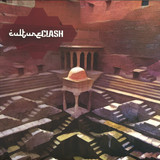
Forced to come up with a name, 'CultureClash' seemed like the obvious choice, even if the members of Awax were only creatively sparring among themselves. Along with the term 'ethno-techno', slightly dubious to a hopefully more conscious Western audience in 2017, these were the only guiding principles to the quietly ambitious project that soon combined cutting-edge machine rhythms with samples sourced from everywhere from Bolivia to Togo, and inspired by everything from Ravi Shankar's epic soundtrack to the Oscar-winning movie Ghandi, to the technical limits of their own setup requiring a dazzling degree of cut-and-paste work. Some tracks even emerged out of academic studies within the ethnomusicology department at The University of Amsterdam.
The show aired on October 2nd, 1992, recorded in one blistering take and without any rehearsals, traversing a huge variety of tempos and styles. If the performance wasn't seamless, it was undeniably thrilling, fresh and ambitious. As such, several labels, including Fernandez's aforementioned Irdial Discs expressed an interesting in commercially releasing CultureClash, while another imprint proposed a series of twelve-inches and an album. But the sheer complexity of the project meant that it never saw the light of day, while the trio embarked on different journeys ahead, both creative and personal.
Twenty five years later, and the original CultureClash lineup and founding members of The Awax Foundation provide the sound of the first release from Lost Futures. An otherworldly, ambitious and optimistic compilation, accompanied by extensive sleeve notes from the trio, CultureClash is a timeless ode to experimentation in dance music's ever-overlapping culture.
Jonny Rock is somewhat of a sorcerer, an omnipresent eye that gathers secret ingredients from far and wide—old school House oddities, hypnotic melodies of the Orient, the furthest reaches of Disco, the easy pace of Turkish psychedelic funk—fusing it all into his own shrouded code, a string of immaterial messages, both subliminal and lucid, that highlight his eccentric sense of storytelling and nuance. He imbues a sense of familiarity in his music, implying history that might not be studied but still feels learned, a quality inherent to productions born from a vast catalog of influence (and the inseparable sample material). Jonny conjures euphoric acid flashbacks, herds of crowds through Istanbul alleys, the misty morning residue from raves of yore, orchestral winds blown across the Aegean riviera, and he manages to concentrate their essence into singular details such as a snare drum. Both sides of his eternally-awaited ESP debut lean toward his dark arts—'Tye Die Techno' drives a relentless hard-edged drum kit that could throw an otherwise self-respecting Goth into a heated breakdance battle, while the title track and theme, 'Ode To A Happening On Earth,' plays with the imagery of ritual, fantasy and role-playing—but throughout this malevolent stew, there is a sustained hint of the artist's playful nature. No matter how murky the trip becomes, Jonny is always there, a light at the end of the tunnel, with a big hug to reassure that everyone will be OK. He is one clever bastard—if you know, you know.
Anders Trentemøller's career is a travel-heavy one, with his touring schedule taking him pretty much all over the world. But it's his home port that's inspired his latest project, the sprawling, stunning compilation mix 'Harbour Boat Trips Vol. 02: Copenhagen'. Clocking in at just over an hour long, the compilation sees Trentemøller curate and craft sixteen songs into a heavy, hazy mix that ranges from shoegaze to electronica, featuring both familiar and celebrated artists like A Place to Bury Strangers (with a new Trentemøller remix) and Slowdive to more obscure finds, as well as Trentemøller's own tracks and remixes, most notably a brand new Trentemøller cover of Neil Young's classic 'Transformer Man'. The mix sees him pick up a thread he left off earlier in his career. In 2009 he put together 'Harbour Boat Trips - 01: Copenhagen', a compilation mix comprised of his favourite music, both Danish and international, from across four decades, loosely inspired by the motion and movement of Copenhagen's busy harbour. Closing in on a decade later, we're getting the second edition, with 'Harbour Boat Trips - 02' arriving this November.
German electronic originator Gudrun Gut's latest solo collection distills a lifetime of persuasions and obsessions into a compelling 14-track statement: "Moment." Stark, somber, sultry, and clever, the sides slide between ballad and lament, synth-pop and spoken word, anthemic and abstract.
Gut's background as a key figure in Berlin's first-wave industrial uprising still casts an aura in the music's mechanized rhythms and frozen emotional palette but decades of improvisation and collaboration have deepened her sense of composition and melody beyond any easy genre categorization.
If anything "Moment" finds Gut's muse at its most enigmatic, threading shades of motorik hypnosis, technoid laboratory, coldwave pop, glitchy gauze, and even a gender-bent Bowie cover ('Boys Keep Swinging') into its eclectic web. It also showcases the depth and detail of her voice, reserved but suggestive, intoning blunt truths and opaque poetry in both German and English.
This is music of history and heartache, modernity and desire, alienation and expression, by a singular creative committed to the complexities of sound. - Britt Brown
Gudrun Gut's story spans many years, scenes, and sounds, from the 'ingenious dilettantes' subculture of early 1980's Berlin as part of Mania D, Einstürzende Neubauten, and Malaria! to her twilit industrial pop trio Matador into an expansive solo catalog of later work scoring films, videos, and radio plays. Her talents extend beyond musician, however, to include founding record labels (the influential imprints Moabit Musik and Monika Enterprise), club nights (progressive electronic pop collective Oceanclub), and experimental feminist collaborations (Monika Werkstatt).
Gut also works extensively in the technical sector of the recording industry, as a producer. Recent projects have included collaborations with Antye Greie (AGF) and Hans-Joachim Irmler of Faust, participating on the advisory committee for Musicboard Berlin, and performing at The Royal Albert Hall with Âme as part of an Innervisions label night.
The godfather of acid house, DJ Pierre, is back - bringing four heavyweight Chicago cuts to the fore, two of which, 'Pinball Machine' & 'The Spirit' are unreleased, exclusives.
'Sexy Aquarian' showcases Pierre's unique style putting his trademark spin on this classic vocal, combining it with a bumping bass and dizzying acid lines, to trigger old memories whilst giving you something new for your mind, your body and your soul.
Next up 'Pinball Machine' goes in heavy on the percussion - filling those speakers with a barrage of weighty toms, crisp hats and crunched up snares. The frenzied synth line bounces around relentlessly, pinging off the sides of your brain like a sonic arcade.
Take to the flip for a lesson in how to take jackin' house to another level. 'Whats Mine is Mine' delves beyond the beat, mixing sassy vocals and spiritual organ stabs, with a touch of swing reminiscent of an era long gone.
Closing out the EP, 'The Spirit' utilises another treasured vocal layering it behind punchy drum programming, a rumbling bass and atmospheric touches that add an ethereal tinge to the track.
DJ Feedback:
The Black Madonna - We Still Believe / Liaison Artists - Excellent!
Eli Escobar - OH yes.
PBR Streetgang - 20/20 Vision - classic
Andy Caldwell - Nettraxx / Cr2 Records - Ooh so so sublime. Good shit here!
Tony Humphries - The Zanzibar / New York - Nice peak time banger.
Danny Howard - BBC Radio 1 / Nothing Else Matters - Aceeeee. Wicked vocal!!! Love the vibe
It is with great honour that Emotional Rescue comes back to the music of Jaki Whitren & John Cartwright for a special 7" of two previously unreleased songs on to vinyl for the first time in That Will Be That and This Time. Originally part of the International Times reissue project (ERC004) in 2013, the songs have previously only been available on CD and digital formats as 'out-takes'. However, all that time the plan was to release the songs as a stand-alone vinyl release at some point.
Discussion with John continued over the years and the plan was for a release as part of the label's fifth anniversary, until sadly the project was put on hold due to the untimely loss of both Jaki and John in late 2016. The recent repress of their masterpiece that is their privately pressed album, International Times, led to these songs being revisited for the first time since and so here at last are both available together, as much in homage to these two wonderful musicians. More than studio-plus recordings, That Will Be That actually appeared in rerecorded form on the couple's Rhythm Hymn album of 1983. Here though is the original (and superior) version, with all the hallmarks of classic Whitren and Cartwright song writing craft, musicianship and production skill. Again remastered by their son (and at the time, teenage drummer) Joby Baker, the song drips with a confidence of masters of their instruments, full heartfelt, righteous and as relevant today as then lyrics, all backed with some deep white funk and enough soul to move mountains. This is accompanied by one of their greatest compositions in the spine-tingling This Time. Only ever known on this live recording from Glastonbury Hall, Jaki's vocals and light accompaniment from John's keys let the song shine. If the sheer power of her voice and words don't move you, then something is missing in life. A pure, sad, joyous way to thank and remember this wonderful music and people.
Neville Watson returns to DBA with The Midnight Orchard, his first full-length in five years. Watson is a key figure on the electronic music scene at large and has made regular appearances on Don't Be Afraid, as well as on celebrated imprints such as Crème Organization, Clone and Rush Hour, where he released some of his best-known work alongside Kink.
In a crowded landscape of factory-line jack trax and synthesis for the sake-of-it, it's little surprise that Watson's physical, arresting takes on house and techno have been such a staple in the record bags of the world's leading DJs for the past twenty years. Throughout The Midnight Orchard, Watson seamlessly bridges his futurist leanings gleaned from a lifelong commitment to electronic music with the anarchic spirit of his acid-house heritage.
The record still finds catharsis in the relentless pulse that has defined Watson's life since his early residencies where he peddled ecstatic escapism to towns on the commuter belts of London, notably via his involvement in seminal Reading party Checkpoint Charlie. However, there's a more somber, arguably introspective and perhaps even somewhat wistful tone at play throughout. This might surprise those who've invested their feet and hearts in tracks with titles like Night Of The Inflatable Muscleheads and Everything I Know About House (I Learned on Facebook).
In a move away from his previous musical leanings, The Midnight Orchard embraces a distinctly more UK sound, unapologetically chronicling the paranoia that can be found skirting the euphoria of rave. And while Watson has avoided the eyebrow-arching pitfalls of the self-serious DJ full-length, it must be noted that the rhythms here are more skittering, the atmosphere less jubilant and the signature lo-fi hiss, fully popularised and bastardised since Watson's last album, has taken on a more fore-boding tone.
Meanwhile, the atmosphere elsewhere harks to a more idealistic world, particularly on the cascading and subdued Eine Kleine Emusik, and the euphoric We Own The Night. Twin Tub and Reet Dux provide dubby, sensual moments of escapism. There's uncompromising, hard-nosed rhythms on Dee Sides, and cosmic electro throughout 4am in the Trees. The album then concludes in a bold fashion with Displays of Brotherly Love and the resolutely hopeful atmosphere of Phosphorescent.
Reflecting decades of immersion in club culture and taking inspiration from wider-found sounds, The Midnight Orchard is loaded with thrilling parallels and a sense of genuine unpredictability. Tracks like Come On In and Anarcho Midnight are layered with unease, utilising pitch dark arpeggios and skittish, growling electronics to devastating effect.
Having dedicated the last eighteen months of his life to the studio, Watson has rec-orded what is undeniably the most unexpected music of his career. Amid the dark-ness, The Midnight Orchard has borne fruit.
On her deeply moving debut album At Weddings, Sarah Beth Tomberlin writes with the clarity and wisdom of an artist well beyond her years. Immeasurable space circulates within the album's ten songs, which set Tomberlin's searching voice against lush backdrops of piano and guitar. Like Julien Baker and Sufjan Stevens, she has a knack for transforming the personal into parable. Like Grouper, she has a feel for the transcendent within the ordinary.
Born in Jacksonville, Florida, and now based in Louisville, Kentucky, Tomberlin wrote most of At Weddings while living with her family in southern Illinois during her late teens and early twenties. At 16, she finished her homeschooling curriculum and went to college at a private Christian school she describes, only half-jokingly, as a "cult." By 17, she had dropped out of school, returned home, and begun to face a period of difficult transition in her life. The daughter of a Baptist pastor, Tomberlin found herself questioning not only her faith, but her identity, her purpose, and her place in the world.
"I was working, going to school, and experiencing heavy isolation," Tomberlin says of the time when she first began writing the songs on At Weddings. "It felt monotonous, like endless nothingness. It was a means to get through to the next step of life." In songwriting, Tomberlin found relief and lucidity she had trouble articulating otherwise. When she was 19, she wrote "Tornado" on her parents' piano, and began to develop confidence in her music. A year later, she had written enough songs to fill an album.
Throughout At Weddings, Tomberlin's lyrics yearn for stability and belonging, a near-universal desire among young people learning to define themselves on their own terms for the first time. "I am a tornado with big green eyes and a heartbeat," she sings on "Tornado," her voice stretching to the top of her range. Rich, idiosyncratic imagery — a fly killed with a self-help book, brown paper bags slashed violently open, clouds that weep over a lost love — sidle up to profound realizations about learning to be alive in this world. "To be a woman is to be in pain," Tomberlin notes on "I'm Not Scared." On "A Video Game," she muses, "I wish I was a hero with something beautiful to say."
Tomberlin cites the hymns she grew up singing in church as her greatest musical influence, and while At Weddings in many ways documents the unlearning of her childhood faith, it's easy to hear the reverential quality of sacred music in her songs. "A lot of hymns talk about really crazy stuff — being saved from the depths and the mire, judgment. When you actually realize what you're singing, it becomes really overwhelming," Tomberlin says. "I grew up singing in church. I was still helping to lead worship when I started coming to terms with the realization that I didn't know if I believed. I felt nauseous and shaky reading these words I was singing and feeling their intensity. If I did believe this, how could I sing these words without being scared out of my mind That's what's influenced how I write."
At Weddings is laden with reverence for music itself, for the power it has to heal others and help people navigate their lives. It is a record about learning to love oneself and others without reservation, from a place of deep sincerity — a lifelong challenge whose tribulations Tomberlin articulates beautifully. "My number one goal with my music is for honesty and transparency that helps other people find ways to exist," she says. With At Weddings, this remarkable young songwriter offers up comfort and wonder in equal measure.
a1 | Any Other Way
a2 | Untitled 1
a3 | Tornado
a4 | You Are Here
a5 | A Video Game
b1 | I'm Not Scared
b2 | Seventeen
b3 | Self Help
b4 | Untitled 2
b5 | February
2018 played host to a bumper crop of sounds from some of Philly's grittiest, including Great Circles mainstays M//R and Chaperone. To close out the year that was, we are pleased to present Heckadecimal's 'Murder Tape.'
A Minneapolis-based producer and acid auteur, Heckadecimal has been a fixture within the vibrant Midwestern electronic music community for nearly 20 years. Founder of the legendary 'Anti-human' events and co-curator of the ever-prolific Always Human Tapes imprint - alongside Ryan Wurst and Peter Lansky - Heckadecimal's reputation is one of unrelenting creativity and tireless advocacy for sonic experimentation. His work has found its way to light via a slew of pseudonyms and stage monikers, including The Worm, noface and Wonder Sirens.
In short - Heckadecimal lives and breathes the sonic matter that he leaves pouring out of studio monitors, busted bar systems and finely tuned rave stacks, wherever his travels take him.
Live performance lies at the core of Heckadecimal's practice. When he stormed through Inciting HQ in Philly earlier this summer, he took command over an arsenal of hardware that reminded us of how Octave One or Shawn Rudiman might show up. These were machines that he had lived with; touched with custom modifications, hand-drawn stickers and pockmarks incurred in battle, one got the sense that the gear was a personal extension of the artist.
Perhaps it's a bit maudlin, but we feel a certain kinship with this project. Indeed, these tracks at times feel very much of a piece with the gnarled tonalities in which our stable typically traffics; all low-slung riddims that reach at equal lengths towards mutated IDM aesthetics and post-Packard Plant techno extrusions. These are future perfect grooves that glide along under the vast Midwestern sky, providing a fertile communication conduit with the City of Brotherly Love.
Give thanks for acid. Great Circles will see you in the New Year..
Ever since Onom Agemo & The Disco Jumpers broke the dreaded curse of the difficult second album by releasing "Liquid Love", a cocktail so spicy and delectable that it could warm the cockles of the grumpiest man alive's heart, even in the most Arctic conditions, everybody wondered how the Onom crew could top that one. But now you have an opportunity to whip out your "Magic Polaroid" as proof that this wasn't an impossible Project. Never before has the band so successfully captured their full-on live sound as they do here, thanks to three days of recording frenzy at Daniel Nentwig and Sebastian Maschat's Butterama studio, a haven of analog hardware hidden in a remote part of Berlin's Neukölln district. The exploding kaleidoscope of styles that make up this album, perfectly reflected by the stunning cover artwork from Nick Henderson and photography by Christoph Rothmeier, means that they can no longer be confined to their early description as an "Afro-Funk Quintet" or merely described as a lively tribute to the artists which have influenced them: their sound is 100 per cent pure uncut Onom Agemo, even though every track feels like a new beginning. The presence of a charismatic in-house vocalist who brought her own lyrics along has also boosted their confidence considerably and provided a further knock-out punch to their onstage performances.
And no one will be disappointed as soon as the first bars of "The Trumpets Of Denmark" stomp on stage like a boisterous fanfare, with Johannes Schleiermacher's impressive wall of sound production making the musicians sound like a much bigger band than what their line-up suggests (with Maria Schneider from Andromeda Mega Express Orchestra adding some extra percussive clout) and just the right amount of dizzying cross-rhythms to steer it away from potential bombast. When Onom Agemo's powerhouse vocalist Natalie Greffel starts chanting what at first sounds like a string of Onomatopoeia, it soon becomes clear that she's laying down her manifesto for a nostalgic Space-Age yet to come, with a few key words serving as Mantra (Focus, patience, tears and creation): an invitation to drive off the Information Superhighway and its endless litany of polite noises, to redirect our gaze inside ourselves and learn to understand and sometimes question how others perceive us.
"In 1978, Nova performed for Obama. Well, kind of: Nova was the band for the Punahou School prom in Honolulu, Hawaii, and a young student named Barack (known then as 'Barry') was in attendance.
Backtrack to 1976, and Nova was the opening band for Donald Byrd at the nearby Blaisdell Arena. The day was Sunday, June 27. The following day, Isaac Hayes would perform on island for the admission price of $1.
Nova, led by singer Checo Tohomaso, was one of several go-to party bands during the golden era of Hawaii funk and soul music in the mid-1970s through early 1980s.
The band's infectious gospel-funk-disco can be heard on their sole release, a self-titled 1980 LP that feels like one big party recorded live in the studio. (Check out the Marvin Gaye-inspired 'I Feel Like Getting Down' on the 2016 'Aloha Got Soul' compilation on Strut Records).
The story is all too familiar, however: funk band releases LP, the music goes dormant in years to follow, and today original copies sell for hundreds online.
Not long after the album's 1980 release, Checo met Marvin Gaye, who was living on Maui (where George Benson also resided). Shortly after, Marvin invited Checo and his counterparts to join his multi-city tour across Europe. Videos of Checo rocking keyboards, percussion and singing background vocals for Marvin Gaye's last European tour can be found online.
Checo, born in Florida yet raised in lush Manoa Valley as well as Okinawa, Japan, now resides in Vancouver, Canada, where he leads the VOC Sweet Soul Gospel Choir and continues to deliver his signature sound: high energy, positive, 'sweet soul' music.
AGS-7010 features two non-stop groovers with a 7' edit by Roger Bong on the A-side. LP reissue in the works!"
Cómeme delivers to you one of the freshest rhythms of 2018, recorded in Johannesburg, the new residency for the renegades of the beat. This is 'Rain' - starring Matias Aguayo and the actress, dj and singer Ayanda Seoka aka Mujaji The Rain. She's resident at the legendary Bar Kitchener's all femme 'Pussy Party', a space for feminist / queer action and dancefloor joy, right in the centre of Joburg.
Cómeme has been since some time in a serious and passionate relationship with that city. Radio Cómeme transmitted shows from there with electronica legend Felix Laband, Mpumelelo Mkatha from BLK JKS, the queer performance duo Faka, Gqom pioneers RudeBoyz and also Kwaito's legacy keeper Spleef McZaul. Matias Aguayo ventured into a beautiful collaboration with DJ Spoko, released two years ago on this label.
'Rain' is a deeply rhythmical track, inspired by the grooves that converged when Cómeme swing crossed the paths with the syncopations people in Joburg were dancing to. It has become quite clear in the recent years that elegantly shuffled triplets are marking a way to the future in dance music, especially in the southern hemisphere, no matter if you're in Durban, Rio or Santiago.
On top of this modern groove we can hear Mujaji the Rain enjoying how she gets wet under a dark and tropical sky. Laughter, joy and ecstasy is what she emanates while hypnotically involving you into this atmosphere of dense drumming and trance. (side note: Cómeme has been consequently evading the description hypnotical in press releases but this time it was unavoidable).
For further jacking fun we generously included a 'Club Mix', including more drum frenzy towards the second half of the track, and a 'Just Drums Mix' for the skilful DJ.
Side B features the jam 'Serious', which comes along with another killer beat, reminiscent of Michael Jackson or Cheri. A late-night track in which Mujaji The Rain turns into a sensual but slightly annoying creature that doesn't want to leave the dancefloor. and for sure doesn't want to go home.
We added an instrumental version to this complexly arranged tracks, which feature pianos, strings, and heavy synth bass stabs.
All tracks on this 12' are written in a 6/8 signature, which some normative DJs might shy away from, but be safe: both tracks are in 120 bpm and carry the seal of official Cómeme dancefloor approval by the label's highly respected DJs.
LP,180g, 2018 REISSUE - REMASTERED FROM ORIGINAL TAPES, CAREFULLY REPRODUCED ORIGINAL ART
James Clarke's Mystery Movie was released in 1974 as modern, small group compositions in various moods. Ideally suited to the new Americanised style of T.V. and cinema flm where music is used to create the mood and carry the action'.
So this collection covers a lot of bases, but it does so brilliantly and has absolutely no right to be such a fantastic listen from start to fnish.Mystery Movie is best known for the slick drum breaks underpinning the top-notch jazz-funk chase theme Car Patrol', the fuzz rifng and ARP soloing of The Heavies' and the slow-mo strut of Mystery Moll'. Study In Fear' and Empty Streets' are horror soundtrack fodder of the fnest sort.
However, it's the understated, plaintive pieces that we fnd the most rewarding.
Ambient feels and strung-out fried-folk treats, full of cyclical naïve melodies.
Music that evokes the 'downlifting' Ronnie Lane and Ron Wood instrumentals from their great Mahoney's Last Stand LP, as well as the beautiful soundtrack work of Jack Nitzsche and Ry Cooder. You might also recognise Waiting Game' from being sampled by melodic downbeat masters Express Rising.
Check Relaxed Theme', Quiet Girl', Routine Procedure' and Quietness Sustained' for a melodic, melancholic set, with the last three performed on just acoustic guitar and harp. Gorgeous work.
As with all ten re-issues, the audio for Mystery Movie comes from the original analogue tapes and has been remastered for vinyl by Be With regular Simon Francis. We've taken the same care with the sleeves, handing the reproduction duties over to Richard Robinson, the current custodian of KPM's brand identity.
Re-mastering by: Ray Staff at Air Mastering, Lyndhurst Hall, London
John Gordon, a trombone master, brings us another gem from that most renowned of 70's record labels, Strata-East. The trombone is a difficult instrument. In the hands of an artist like John Gordon, however, it can create vivid images and conjure up beautiful music. And when the cohort of other players includes the likes of Charles Tolliver & Stanley Cowell, you know you're in for an extra treat.
UK Techno heavyweight Mark Broom and Berlin's Discrete Circuit have teamed up before - but this is their first fully-fledged collaboration aimed squarely at conveying just how well this combination works. A heavy hitting merger from both sides of the channel, boldly stating that form follows function. This collaboration is to the point.
MBDC The A side opens with a superbly engineered kick and counterpoint texture that allows for an otherworldly synth to slowly worm it's way out of the abyss. Frequencies open and shut to allow for the exact exchange of energy welcome in the mix. With no trickery, and at just the right moment, a pulsating binary hook reveals itself in the track and guarantees the desired effect. The A2 tilts the hat toward a stripped back motor city influence. Groovy, tooly, slightly dissonant. Blips, claps, punctuation where it works. Just the right shade of reverb and modulation, push and pull in the arrangement, reveal the versatility of the track and round out the opening side with punch. The flip side, and third track from the collab is also direct, firing up with the ubiquitous clap on the one. Looping acid and a purist minor stab alongside sizzling hats and rides force the energy ever upward. The break is needed as the expertly air drenched acid line opens up the whole space before driving back down into the intensity for the remainder of the cut. The final track of the EP features a remix of the B1 by Astray's other in-house producer, H4L. Back with a frenetic, broken, idm influenced belter of a remix with scattered and distorted 808's - all reigned in cohesively with some stellar beat science and gnarly touches. These 4 numbers are built for impact.
A collection of Jamaican doo wop & R&B records taken from the late 50s and early 60s. These records represent a period in which soundsystems were just starting to dominate the island, with Duke Reid and Sir Coxsone stepping up their rivalry by beginning to make and release their own records rather than rely on US imports for use in their dances. Many of these records are definitely more-or-less imitations of the American records, as the uniquely Jamaican ska sound was yet to take hold - however many of the future stars of ska, rocksteady and reggae were beginning to cut their teeth in the industry on these records, incl. Jimmy Cliff, Derrick Harriott, Alton Ellis and more, and they provide a unique view into the fledgling independent record industry culture in Jamaica that would prove to be unbelievably proflific and unparalleled for an island of it's size.
out of Stock
Last delivered 6 years ago available to reorder, subject to availability
For the third chapter of Refined Productions Aleksandra Grünholz aka We Will Fail delivers her third full length album entitled Dancing on her recently launched label with Jakub Mikolajczyk, head of MonotypeRec label and MonotypePressings. Here she tells the story:
'Taking a break from rationality, my first thoughts about the theme of this album were about the night, when our sight is limited and thoughts are corrupted by fatigue. I don't dance anymore, I don't party, I don't let myself go. Some time ago that part of life slipped away from me. This album is like silently entering into a place you shouldn't be in. A lot of rave inspired sounds were used on the album, dreamy pads, arpeggios, simple melodic structures; but this album is not easy and simple.
As head of a graphic design studio in Warsaw, last year was very hard for me, the amount of work started to overwhelm me; I started to feel stupid and possessed by the work, this is how the tracks 'Very Urgent' and 'Economic Maladies' were born. While the track 'Reason' is about losing rationality and how easy it is to do.
'Put Your Hands Up in the Air' encompasses the rave. It's also a kind of question, can music itself tell a story Very often in EDM or trance music there is a story and I like to call it catharsis. A moment, when the beat slows down and melody/pads become solo. I tried to extract this moment, without adding drops and aggressive rhythms.
'So Who's the Man' is about regaining the power, slowly but consequently. This album is a about feeling bold, monstrous and strong. Like looking insolently into someones eyes. You have to be patient with this one, because it builds up slowly. If you listen only for a fragment you miss the whole idea.
'Beasts from the East' was inspired by the thought of being a small peace loving person in a chaotic world that is dominated by stupidity.
The track '2018' epitomises the rave, but more complicated. Each of the layers are a but simplistic and could construct a dance track, but as there are so many sounds simultaneously, it can become disturbing in the perfect way.
'Diving in Plastic' was fit for the last track, I didn't want the album to have a perfect conclusion, I wanted to leave the listener hanging and ready for more.'
With MEL013, Melodies International are extremely proud to bring you at last, a disco anthem from Detroit that was originally recorded in 1980 and dedicated to the 'King Of The Champion Fighters': Le Stim - A Tribute to Muhammad Ali (We Crown The King).
Le Stim was a band formed by lead vocalist Donald Jennings in the late 70s. Now an ordained deacon back in Detroit, Jennings was brought up in a gospel environment and was said to be born to sing. Growing up picking up songs from the likes of Nat King Cole, Ella Fitzgerald or Sam Cooke, Jennings frequently performed for family and friends and went on to sing for audiences in New York, St. Louis and all around Detroit.
We Crown The King is a song written in the mid 70s by the late Herbert Andrei Duncan, also from Detroit. Duncan approached Jennings with the song who was initially reluctant to sing it because it took him out of his usual vocal range. However, Duncan finally (thankfully!) managed to persuade Jennings after five years to record a tune that would prove to become a party anthem decades later.
Remembering Duncan, Jennings says: 'Andrei was positive..inquisitive.... and determined. I was only 18 or 19 years old at the time and remember Andrei coming over to my house.... He had a cellphone in his car!.. I remember going to Andrei's house, and he said he wanted to do the track. Andrei did not take no for an answer! The answer had to be yes! However Andrei didn't have any money to record the song with. So we made a deal. In exchange for the use of his P.A., Loc (the drummer) provided the seventeen musicians for Le Stim to record 'We Crown The King'. The session itself was recorded at a studio in Southfield, Michigan.
According to Jennings, Muhammad Ali did hear the track back then and liked it! Le Stim were in touch with Ali's management and were about to meet him on a number of occasions which unfortunately didn't work out.
Licensing this record has proven to be Melodies' biggest research effort as of yet and has involved visiting it's author, Duncan's former house in Detroit only to discover it had burned down and that his family had moved years ago. It wouldn't have been possible without the invaluable help of Jeremy from Rain&Shine records (NZ) who then managed to track down the family back in Texas!
Officially licensed, remastered and cut to half-speed lacquers at 45rpm (instead of it's original 33rpm format) to bring the shine out of the top end - MEL013 comes forth in it's original 12' vinyl format with exclusive Melodies stickers and digitally too.
After two visionary LPs for his own tiny Nodlew label, Weldon Irvine signed to RCA for Cosmic Vortex (Justice Divine), exploring the deeply spiritual and political terrain of his previous efforts on the kind of grand musical scale that major-label funding accommodates.
This is a big, bold record by any measure, with a startlingly pronounced focus on lyrics and vocals. At the same time, however, the melodies spread out like tentacles, informed by the improvisational sensibilities of jazz and the deep-groove spirit of funk. Jason Ankeny/AMG
North East duo Forriner are back with their third and final instalment in the samurai trilogy on their eponymous 'Forriner Music' imprint. Following a couple of impressive showings with previous EP's 'Condor' and 'In the B' they return for their hattrick with '17:17 Neon'. A four tracker of experimental club music for powerful dance floor experiences that offers two originals as well as a banger from Bird Of Paradise and a mouthful of mathematics from Legget and Suade for the remixes.
First up, 'The Jungle Is Deep' which immediately sets off at a rate of knots! Its sharp pace is tempered by the sound of the drums: dull kick, wooly clap, rattling hi-hats while its bassline bleeds in slowly as a dark repeating tone and subtle chord swell and a haunting, cautious vocal reminds you that 'The jungle is dark and deep'. The second half of the track balances its steamrolling kick with an intricate, hypnotic lead as a growling synth line shuffles and recombines over its rumpled techno groove. It's feeling is transportive, the kind of music that makes you close your eyes on the dance floor.
Fellow Northeast alumni take up the remix for 'The Jungle Is Deep'. Steve 'Four Hands' Legget and Suade Adapted hammer a hefty slice of future dub techno from the skeletal remains of the original! Its chunking, discordant drums and manic echo chamber combine with a lilting bassline making sure you know that this is tough music but that it also has a tender heart. Clipped vocals squelch and flutter throughout but these are more textural than melodic, adding extra depth to the track. This trip is all about striking, psychoactive grooves, pushing the swing settings to extremes. Equal parts sinister as it is are playful. Fitting the typical tradition of winsome, weird dance music.
Over on the flip is the title track '17:17 Neon' featuring vocalist Louis Adams and violinist Late Girl (Laura Stutter Garcia) Breathy melancholic vocals and pitched down, endorphin flooded electronica. This is techno in a state of dewey eyed delirium. The neon of the title is very much instructive here, with the vocal being the scattered, shining light that the track playfully hangs itself from.
Jo Howard aka Bird of Paradise takes the reins for the final remix delivering a charging peak-time club tool with relentless batteries of percussion setting the stage for a trippy soundscape. Other than their Northern roots, what these producers have in common is a distinctive approach to rhythm. The restlessness of the sharp stabs of static perfectly guiding the darkly pulsing mood.
Milton Bradley debuts on AVION's Crossing with three ferocious techno cuts under his Doomsday Device moniker this November.
Since its launch in 2013, Crossing has mainly acted as a platform for its founder, Index Marcel Fengler and Stress Research producer AVION, however the imprint has also hosted techno artists like Thomas Hessler, Pfirter, Doka, The Automatic Message and Stefan Rein. The label now presents a full release from Milton Bradley, appearing under his Doomsday Device guise. Founder of Do Not Resist The Beat!, the German producer has also appeared on labels like Prologue, MDR, Ann Aimee, and many more.
First up, The X-Planet' uses relentless drums, arcane vocal murmurs and bursts of white noise to
set the tone for a truly militant release. Device 4' is then a twisted journey from start to finish, with its pitter- patter sequences and oscillating sci-fi inspired atmospherics, making way for The Yesterday Machine' with its menacing aesthetic complete with ebbing synths, crashing hats and off-beat snares.