After two big EP's, DJ/producer powerhouses Steffi and Martyn team up once again for their debut LP on 3024! Punchy, straight forward house and techno with a broken twist and beautiful layers of melodies and sound, dedicated to those who feel..
"When two of the best team up! Melodic techno at its best!"
Jonas Lion / Hello Play
"Wow! Very atmospheric sound! Great album!!! 5/5"
Mixmag
"Brilliance from two masters of the game."
XLR8R
"Has a rough-n-tumbling '90s romanticism that is really hard to capture in a lot of tracks nowadays - that's already an achievement but the tracks are also heartfelt bangers. Terrific LP!"
Mitch Strasnov / URB
"Coming out around my birthday, what a feast. It's You I See makes me wanna play all those old 808 State and Gerald singles again."
Rene Passet / DJBroadcast
"Very soulful and even spiritual, at a time music needs it most."
Matrixxman
"Legendary from the first listen. Five thumbs up. LOVE IT!!!"
Ambivalent / LA4A
"Very VERY VERY Cool release indeed. Quality music as always on 3024"
Laurent Garnier
"Its exactly how I imagined FSOL now, if they took a less arty route"
Kink
First time on 45 additionally containing world exclusive unreleased instrumental version
File under Hip Hop/ Breaks/ Funk/ Nu Soul
The latest single from Mukatsuku is from Australian DJ/Producer Katalyst who was one of the winners at Australian Dance Music Awards in 2002. 'How Bout Us' originally came out on Australian label Invada as part of an album ''What's Happening ' in 2007 before receiving a global release for BBE a year later in 2008 but up till now has never been out as a single in it's own right. The track 'How Bout Us' features vocalist Steve Spacek with an exclusive unreleased instrumental version on the flipside. Killer production with massive string lines and charismatic vocals to ignite your dancefloor.
A thrilling 9-song set, Murmurations is as perfectly pitched for headphones as it is for clubs, named after giant cloud formations of starlings and themed around the stunning emergent behaviors that appear within them. To mirror these movements in the sonic landscape and visuals of Murmurations, SMD's James Ford and Jas Shaw collaborated with the celebrated Hackney-based vocal collective The Deep Throat Choir, as well as creative directors Kazim Rashid of ENDLESSLOVESHOW (Aphex Twin, Flying Lotus, Hudson Mohawk) and Carri Munden.
Finding time in between Ford's work as a producer and Jas' club gigging last year, the duo arranged a session in Shaw's countryside studio. Via an introduction from a friend of Ford's wife, The Deep Throat Choir's director Luisa Gerstein and SMD began swapping some production and melodic ideas. They decided to bring the whole East London-based choir into the studio to experiment, and the results were intense. Jas says, 'Listening to them moving their voices around a tone, altering the timbre, making chords, was like working with an incredible new synthesiser.' Rashid and Munden explore related ideas centered on kinetic energy and communal movement throughout the visuals of Murmurations. Rashid says of the collaboration, 'We were both having discussions around the purity of collective human experience and how transcendental this can be. Techno and the dance-floor is one of the last true expressions of this euphoria.'
From the beat-less introduction 'Boids' onwards you can hear uncanny patterns and sounds rising up from the sea of voices -- not traditional chords or harmonies, but complex interference patterns that play tricks on the mind and merge perfectly with SMD's distinctive synth tonalities and instinctive dancefloor nous. At times you might hear hints of Bulgarian choral music, or Cocteau Twins, or avant-garde composers like Iannis Xenakis or Pauline Oliveiros - but really, thanks to the creative freedom of SMD's working methods, it is a sound completely of its own, something all too rare in an age of retro and reference.
Ford and Shaw still have the same love of pure sound, human harmonies and electronic possibilities that they did when they first met at university, and it's clear that their career path has allowed them to nurture this love and express it as vividly as ever before.
originally released in 1993 - with Ric Ocasek & Liz Lamere-Never released on vinyl-
Born in Brooklyn, Alan Vega was reared on the rock 'n' roll sound of Elvis Presley and Roy Orbison, but originally struck out on a career as a visual artist and light sculptor, making pieces out of electronic debris. But on the occasion of seeing Iggy Pop fronting the Stooges at The Stooges at the New York State Pavilion in 1969 was an epiphany for Vega. It showed me you didn't have to do static artworks, you could create situations,' he said. That show was the first time in my life the audience and the stage merged into one." It was that eradication of barriers between the two that Vega took to heart.
Their first two albums, 1977's Suicide and their 1980 follow-up, remain two of the era's greatest touchstones, beacons for others seeking to transform their worlds with sound. And even during the group's hiatus through the 1980s, Vega continued to pursue his singular vision across an individualistic solo output. From his 1980 self-titled debut and rockabilly-infused albums like Saturn Strip, through bracing albums like Power On to Zero Hour and IT, Vega forged his own singular path.
For all the darkness and despair that encompasses this moment in our world - and despite his work being depicted as bleak and nihilistic - for Vega there was always a sense of hope and a place for dreams to become reality. People have always told me that my music is angry,' he said. To me, it was always just an energy. It was the way I perceived the world. The key Suicide song was 'Dream Baby Dream,' which was about the need to keep our dreams alive. I knew back then that something poisonous was encroaching on our lives, on all our freedoms.' He fought to his very last breath for that freedom.
Red hot drum lead track backed by boiling point late night to early morning long haul truck driving or dancing music. Shazam!
Vital Sales Points:
(Drum track playing loudly)
The saws and sines have aligned! It's HOW007 time.
The release in front of your face is called The 417. It is three songs by Daniel Savio released on 12" vinyl strictly limited to 200 copies + an everlasting (we'll see how that works out) digital version of those same songs.
This recording was conjured up on machinery people are known to touch and sell. MK1 menu diving desktop stuff. Stuff that is ten years old, stuff that may be older. Stuff that purrs, rocks, bounces and skates. Machine prototypes on trade show floors will not be able to make songs like these. Unless you would hand them to Daniel which would lead to all sorts of inconsistencies in time.
Last year Daniel Savio's "Race To The Bottom" and his "Plejjern från Plejaderna" album took Swedish house music by storm. It is now with great delight that we hand you this 12", acclaimed by well-informed DJs. Music centred around feelings for what is in front of our faces at the moment. HOW007, get in while you can.
Truly nuts and really kind of essential... the Starship Commander had his whole approach to the Synthesiser Voice technique. B-Boys/Girls delight. Check the instrumental cut, Mastership - a head nod synth voyage of the highest order. Limited copies. TIP!
.
'How are you doing, Earthling' That's how Omer Coleman, Jr. addressed his public in the 80s, driving around Kansas City, Missouri in the electric space-car built especially for his alter ego Starship Commander Wooooo Wooooo.
Left Ear Records went back to Coleman's original master tapes for their vinyl reissue of the Commander's 1981 private press album Mastership, a lost electronic funk classic. Coleman performs in an alien voice that comes not from electronic filtering but from his own natural vocal distortions. This visitor from Mars wants people to be happy and, like his song goes, 'Laugh and Dance.' It's an endearing and very personal space-age funk that blends George Clinton and Kraftwerk in a vision of a better and happier world.
Born and raised in Kansas City, Coleman was musically inclined from an early age. His parents couldn't afford to buy him a real drum for orchestra, so he took up electrical wiring and wood shop instead, which fed his muse in a different direction. Omer built enormous speaker cabinets. In the late '70s he was a DJ, and ran a Mobile Disco business that took him across the country, hosting parties. After a trip to California, he came back to Kansas City inspired to dress up as Commander Wooooo Wooooo.
The future commander began working at the Armco Steel Mill in Kansas City when he was 18. He was inspired by older machinists who demanded perfection in their work and in their character. It was while he was working at the steel mill that Coleman came up with Starship Commander Wooooo Wooooo. One day coworker John Manley came up to Coleman with a vision of an electric car, and built it. His coworkers built all of his equipment, from lighting and fog machines to big steel eyeglasses. Coleman's sister, a seamstress, created his outfits.
Coleman started his own label in 1985 but took some time off from music to raise his children, and when they came of age his son recorded with Coleman as a gospel vocalist. When his son was killed in an auto accident in 2004, it took something out of him, and he stopped making music. But he's starting to get the feeling again.
Now 62, he's currently enjoying his retirement from a long stint with the IRS. The former Commander is in the middle of a house project where he's using metal ceiling tiles to line his walls. It's starting to look like a spaceship. Coleman promises, 'There is a real good possibility that we have not seen the last of Starship Commander Wooooo Wooooo!
Pat Padua'
The Works of John B. McLemore, the star of one of last years biggest podcasts, S-Town, which is coming out on Dais. The story behind this release is truly fascinating.. the music itself is ambient remixes of Tor Lundvall's best works, but with John's idiosyncratic slant on them, with some having been woven together using the horde of clocks he use to keep in his basement. This story is really worth a read if you get a chance."In September 2012, I received an e-mail from someone named John B. who said he had assembled a lengthy remix of my music, which also incorporated some of his own material. John asked if I'd mind if he posted this recording on YouTube, to which I agreed. He also mentioned that there was a second part to his mix that was "roughed out", but never completed. I was curious to hear both parts, so shortly afterwards, John mailed me two CDrs which I enjoyed very much. The recordings were hypnotic and haunting, evoking images of vast fields at twilight. I was especially fond of the second disc which had a darker atmosphere and featured more of John's original material, beginning with ghostly clock chimes and ending with a mysterious piece using dried seed pods and other cryptic sounds that slowly built-up into an intense, almost claustrophobic environment.
My correspondence with John lasted about two months. In one of his final e-mails, John said "I have to observe that your paintings seem to have a great deal of loneliness involved in them... even multiple characters seem to be together alone, so to speak... I really appreciate looking at your paintings as well as your music, I think I have connected with the spirit of them both as much as anyone can." He went on to discuss his struggles with depression, caring for his aging mom and his concerns about the future. I tried to encourage his music as a possible outlet, perhaps as a means to help transform his feelings of loneliness into a more content solitude. Always easy to say, but as I well know, not always easy to do.
In his last e-mail in late October 2012, John sent me a beautiful slideshow of his Fall flower beds and his dogs. I was touched and I told him how much watching his video had brightened my day. That was the last time I heard from him.
Last year, I visited John's YouTube channel to see if Part One of his mix was still posted, which it was, and still remains. I was shocked and saddened to read in the comments section that he had passed away. The comments also suggested that John had received some sort of national attention recently. This quickly led me to the S-Town podcast. Although I had mixed reactions after listening, I was thankful that S-Town shed more light on John and his remarkable life... but somehow, I just couldn't place the person in the podcast with the person I had corresponded with. Had I not listened to S-Town, I would have remembered John as a very private, somewhat dark and lonely person. He may have been these things, but there was obviously far more to him than that.
After finishing the final episode, I decided to play the second, unreleased CDr of John's recordings for the first time in years. Listening to his clock chimes ringing in the dark was an eerie and chilling moment. I was reminded of a line from my song "29" which says "I live with dreams and a lonely mind, my clock is set to a different time". I wondered what those lyrics might have meant to him.
John had mentioned that he wasn't satisfied with his final mix, but I felt his work was too special not to be heard. I hope that these recordings offer another glimpse into the creative mind of a unique, complex and gifted individual who tragically left this world all too early."
Tor Lundvall
January 17th, 2018
JOHN B.'s NOTES:
This is what was intended to be the second part of my Tor Lundvall Remix series. Unfortunately I am dissatisfied with it due to a few defects, and it is highly unlikely that I will ever be able to complete it. Still it serves as a testament to my interest in the work of Tor Lundvall that I made it this far. Defects are as follows: The first movement is too 'fussy', and the first section of the fifth movement seems a bit long and may bore the listener, but since it consisted of so many slow moving textures, I don't know how I could redo it and still achieve what I was wanting to accomplish. Additionally, this recording was done just days before my Father died, and there are many feelings of guilt associated with the time spent on it. If you are receiving this recording, either you are one of my better friends, or you are a great admirer of Tor Lundvall, and requested that I send it to you.
1st Part: Basically a track of me fiddling around with old clock bells, and air turbulence mixed with Tor Lundvall and Field Recordings of rain, birds, cicadas, frogs and such.
2nd Part: My interpretation of Lundvall's Dark Spring. This track was inspired by the music of Carl Michael von Hausswolff.
3rd Part: Very ambient Field Recordings inspired by the work of Francisco Lopez.
4th Part: A Very Quiet passage consisting of delicate Field Recordings.
5th Part: Music performed entirely by me inspired by the Darker paintings of Tor Lundvall. Most of the instruments on this piece consisted of dried seed pods from the plant; Showy Rattlebox (Crotolaria Spectabilis), that I had collected and dried the previous Fall. There are other sounds from my own environment as well.
This mix was assembled in the Late Fall of 2003. There are some very Quiet passages in this piece, so it requires a nearly Isolated listening environment... It should be heard After Midnight, in the Late Fall of the year, and, not surprisingly, a Very Long Attention span is a Prerequisite.
Black To Comm's Marc Richter returns under his Jemh Circs guise for a 2nd album of sonic abstractions. In contrast to Black To Comm's analogue tape and vinyl based sound, in Jemh Circs he works with digital sources by primarily sampling modern Pop Music (and various other oddities) on YouTube (et al.) and sending chunks of it through a variety of arcane transformations and mutations.Using similar esoteric methods as on his 2016 debut album but with very different results the record deconstructs the hypermodern sound of Pop Music with a Post Punk attitude, energy and primitivism. Richter's combining disparate elements that shouldn't really work together but somehow all the chaos is making strange sense creating a collection of oddly diverging sonic vignettes with a surreal and anarchic spirit. This is music deeply rooted in the present but still difficult to pinpoint to a certain year or style."(untitled) Kingdom" converts a seemingly one-dimensional concept into a complex puzzle of ideas, sounds and narratives, completely assimilating the original sources and transforming them into novel entities with an unexpected melodic and rhythmic quality.Some press clips for previous releases:The overall effect is quite remarkable. Each track is like a hologram of pop music itself, a tiny part that reflects the whole. You almost feel that you could open them out and re-create entire popular music cultures. We'll be grateful for that when the next solar storm fries all of our hard drives. (Ian Sherred / The Sound Projector) In that way Jemh Circs is a record about process - not just how Richter loops and distorts and mutates his samples, but how the sounds of pop music create a particular sonic signature, one that gets more interesting the farther they're pulled from their original context. (Marc Masters / The Out Door) Recycling random audio off YouTube, Jemh Circs' process couldn't be less sentimental, but the results turn out to be sneakily emotive. (Philip Sherburne / Pitchfork)
Faitiche releases the album Improvisations And Edits, Tokyo 26.09.2001 on vinyl for the first time. For the original 2002 CD on Soup-Disk and Sub Rosa (Audiosphere), Jan Jelinek and the Japanese trio Computer Soup (Satoru Hori - trumpet, Osamu Okubo - toys & electronics, Kei Ikeda - toys & electronics) presented eight tracks all recorded one afternoon in the trio's living room in Tokyo. They are excerpts from a joint group improvisation that subsequently underwent rudimentary editing, on which Jelinek and Computer Soup worked separately.
Jelinek met the three musicians at his first concert in Japan in 2001, at Tokyo's Yellow club, where Computer Soup performed as the support act. Delighted by their free improvisation on pocket-sized electronic toys, trumpet and oscillators, he arranged to meet Hori, Okubo and Ikeda a few days later for a session at their apartment. The resulting three-hour recording, made on their living room floor, formed the basis for Improvisations and Edits. A few days later, Jelinek returned to Berlin. Over the following months, they separately chose passages from the recording that were then edited and assembled into an album.
Formed in Tokyo in 1996 as a quintet (including Shusaku Hariya and Daisuke Oishi), Computer Soup began by performing with acoustic instruments on the streets of Shibuya. Ikeda und Okubo soon switched instruments, and from then on the group's minimalistic but densely woven sound was defined by electronic toys, oscillators and Satoru Hori's trumpet. Their first album was released in 1997 on the Japanese label Soup Disk. Eight further releases followed.
From the reviews of Improvisations and Edits, Tokyo 26.09.2001 in 2003:
"The mind-blowing first track Straight Life is perhaps the best example of what the album has to offer. Jelinek's trademark smears and washes occupy the midrange, like ghosted images of Joe Zawinul's electric piano floating quietly in the wind. DSP jazz modes are set against a walking bassline (possibly computer generated) and a gently tooted trumpet complete with Harmon mute, a dead ringer for Miles Davis' Prestige-era ballads. The effect is something like a three-dimensional film, with different realities on each layer, images of what jazz was manage to interact with a real-time demonstration of all it could be."
pitchfork, 2003
"Improvisations and Edits is a warm and mellow Ambient release with beautiful glitch fragments, static noise bursts and real trumpet intersections. However, there are times where it is the exact opposite, mainly effect-laden, overdriven and bouncy with a lack of melodies and focus, so be aware of these specific tracks."
ambientexotica, 2003
"Often deliciously dreamy and hazy, Improvisations and Edits is like listening to an exceptional instrumental jazz performance while half-conscious or under some sort of chemical influence. Computerised blips and bleeps, loops and treatments and murky sonic skips curl up around desolate horn notes and scattered instrumental noises that culminate in elegant music."
exclaim.ca, 2003
Welsh producer Odeko first appeared on Mr. Mitch's forward-looking Gobstopper imprint with the A.I. influenced EP "A History With Samus" in 2016 immediately snagging a "producer to watch" tag from Fact magazine and a premiere at SPIN. In early 2017, his second EP "Digital Botanics / Construct Conduct" arrived confirming his sound and setting the stage for him to start working on this - his debut album "Rose Tinted Vision Implant" that is set in a post-Ballard, post-Gibson, post-Miéville, alternate reality. "Rose Tinted Vision Implant" sees the Bath-based producer creating a cutting edge sonic world inspired by "speculative fiction, time/reality shifting stories and dystopian shit." The entire record is structured around, and expands upon his passion for the "future," underpinning the music via a underlining narrative. "Rose Tinted Vision Implant" starts with "The User" (aka the listener/ protagonist depending on your perspective) of the 'Optic.Rose' going through the process of getting an implant is made by a mega corporation, (think "whatever Elon Musk's legacy will be 200 years from now" says Odeko "not necessarily evil or good, just a world owning superpower."). And then we follow "The User" who has unfortunately received a bad egg through stages of that devices degradation. Sonically we're there to observe. We open ("Anomaly Detection") with a precursory scan and move onto installation ("OpticRose_0_1_Installation")
through to a battery change and a recalibration. From this point, the 'presence' begins to take over the implant and the tracks verge into a more cerebral range. Odeko notes "its a bit of a satire on corporate brands pushing these great products that everyone is obsessed but that are detrimental to both the world, and how we perceive reality. Our relationship with social media and tech could go down a dangerous path if we loose sight of things. I'm going quite far here for the sake of the concept, but things like VR, AR, the want for body tech, mixed with our desire to be connected, emotionally, digitally, physically, wirelessly could lead us to a world where everyone has implants, or some kind of tech built into them." Sonically its a record that explores a post-IDM, post-Grime, post-Ambient, post-Glitch, post-Retro-House, post-Instrumental Grime, take on electronic music, like Gobstopper's Mr. Mitch himself and his label mates Orlando, Lloyd SB, Tarquin, Clu, rAHHH and Loom, Odeko is making a kind of post-genre music. Yes it's a cerebral concept under the music but as popular shows like Black Mirror have shown - critiquing our new future can be fun, unusual and highly rewarding. Welcome to the world of Odeko.
Hello, I am Qnete and these are my Play-Doh Stories. Some of them are already three years old and it feels like I've become somewhat of a different person since then. Still, I like to listen to them from time to time, thinking of how I was back then, reminding me of what helped shape me, what helped me become who I am now. Sometimes, I also get the feeling that it is not me who wrote the stories. They seem to seem unknown to me, just like they seem to you, because you are not me. Then I listen, and I know again.
Following the completely sold out 'Imagine - A - Nation' and 'Le Fusion' reissues, Anotherday brings you a very special release from the vault of the enigma that is Spencer Kincy, AKA Gemini - we are very proud, and extremely excited to present Gemini's first 4 releases, lovingly re-mastered and packaged together in a very limited box set!
Originally released on Relief Records; the Chicago techno label headed up by Cajmere, these releases were Gemini's introduction into the worlds of house and techno, and contain some of his most vital works.
As one of Chicago's most mysterious and revered characters, the story of Gemini, aka Spencer Kincy has become something of a myth in recent years - blazing a trail throughout the 90's, prolifically releasing over 200 tracks from 1994 to 1999, Spencer's music had shades innovation and soul few of his peers could match. Then, suddenly, at the peak of his career, he disappeared.
As before, this album has been licensed directly from the man himself, and the money made from its exploitation will go directly to him.
This box set is limited to 500 UNITS ONLY - the last Gemini reissues sold out 4 x that amount in weeks, so put in your pre orders before they're gone forever.
The optimum effect of Music of the Five Elements will be achieved if each side of this recording is played through, from beginning to end without interruption. Music of the Five Elements, when used as a meditational or body work tool, rather than entertainment, will increase in effect over time. Overplaying or improper use, however, may eventually diminish its designed effect'
.
Music is the healing force of the universe. It's an ancient idea bandied about by Pythagoras and Plato. In the last century, music as medication has been explored by musicians as diverse as Albert Ayler, Spacemen 3 and Pauline Oliveros. Nowhere did this concept gain more traction than in the so-called realm of New Age Music, an entire movement of synth droners and echoey flautists recording home-baked healing mantras on 4-track. In recent years, thanks to cassette collecting devotees and open-minded music journalists, New Age has shed its flowing robes and is being mined for the truly incredible music that swells under its pastel surface. Musician/acupressurist Sam McClellan's 1982 Music of the Five Elements is one of those revelatory discoveries, an unrivalled work of intense research and focus, simultaneously a near perfect work of art and a scientifically sound elixir for body and mind.
After studying electronic composition at Hampshire College with Randall McClellan (no relation), Sam McClellan became intrigued with the possibilities of healing through music. He explored this idea by applying the ancient Chinese philosophy of medicine to the principles of musical composition. Using the pentatonic scale (the traditional scale of Chinese music), McClellan related each of the notes to one of the five elements (Wood, Fire, Earth, Metal Water), and created five variations for each. He experimented with tempo, beat, pitch, duration, and sound quality, studying the effect on people's energy levels. Using the results of his tests he developed a comprehensive theory of sonic healing and spent the next year composing an album designed to help people achieve inner balance, reducing anxiety and energy depletion.
Music of the Five Elements is not only the acoustic massage' that McClellan set out to make, but is a fully realized and peerless piece of music. Taking cues from Minimalism, American Primitive guitar (Fahey & Basho) and even psychedelia, the album is a continuous sound voyage for voice, synthesizer, guitar, bowed bass, piano, effects and ciao (Chinese flute) all played by McClellan himself. Although divided into sections, the journey is best undertaken as a whole, without distraction.
Slow Motion's 38th (!!) Release Comes Courtesy Of Berlin-based Gallo Who You May Know As Part Of Balearic Gabba Soundsystem. Joining The Family For His Debut Solo Release Gallo Drops The Tempo For Three Deep-cuts Of Blissful Balearica. Backed Up With An Acidic, Chugging Re-rub Of 'faron' From Fabrizio Mammarella Which Is Perfect When The Sun Goes Down, Orange Stripe Arrives Just In Time For Summer. How To Get The Most Of This Track: Combine It With Blissful And Dreamy Beach-excursions Or With A Sunset Aperitivo. This 38th Release Has 'future Classic' Written All Over It.
"The kind of melancholia I'm talking about, by contrast, consists not in giving up on desire, but in refusing to yield. It consists, that is to say, in a refusal to adjust to what current conditions call 'reality' - even if the cost of that refusal is that you feel like an outcast in your own time." (Mark Fisher, Ghosts Of My Life, Zero Books 2014, p. 24) In Ghosts of My Life: Writings on Depression, Hauntology and Lost Futures', the author Mark Fisher outlines - to put it in a big way - a resistant melancholy. This stands in contrast to leftist melancholy resignation', as well as something which Fisher does not talk about: its common masculine counterpart, habitual post-left cynicism - as in seen it all before'. Fisher calls this hauntological melancholy. Haunting, spooks, ghosts and apparitions are an almost constant presence on I Started Wearing Black', the second album by the Cologne-based artist Sonae (pronounced so-nah'). The term hauntology shares a fate with retro-futurism when it comes to inflationary overuse and abuse. It's a conceptual container that looks good and can hold a lot, indeed, too much. Furthermore, hauntology has its peak season behind it, a term on the threshold of its expiration date. Nevertheless, I would like to rehabilitate hauntology and use it properly to characterize I Started Wearing Black', because the term is rarely as compelling to describe music as is the case here. The most recent other example could be Asiatisch' by Fatma Al Qadiri, but with a completely different frame of reference. What are the ghosts of this music It rustles, crackles, ruffles, crunches, rattles, scrapes, sometimes a beat emerges from the constant noise, sometimes an obscure voice mumbles incomprehensibly, sometimes a melancholy piano figure is prevented by this noise from coming too much to the foreground. It definitely is eerie - to bring into play another term used by Fisher in the title of his latest book, The Weird and the Eerie'. In British pop-jargon, eerie first occurred to me more often when referring to particularly leftfield, spooky and... well... ghostly dub, a bass-heavy, echoing noise, from Augustus Pablo to Creation Rebel to Burial. Unlike the Wald & Wagner records by Wolfgang Voigt, Sonae is not a kind of neo-romantic veiling with a tendency for escapist nebula. It is more a noise of latency. The noise signals a latent - not necessarily acute - threat, a latent uneasiness about... yes... about what About a System Immanent Value Defect' That's the name of a track on I Started Wearing Black' where something that sounds like a French Horn (or a foghorn) battles for attention through or against the background noise. An email from Sonae: The piece 'System Immanent Value Defect' should actually be called 'I See Turkey'. I wrote it for my fellow student Elif - she is a pianist and Gezi Park activist from Istanbul. Through her I witnessed the inner conflict and agitation that political circumstances can create: her feelings of guilt when there was an attack, with her safe in Germany as a student, watching the events from afar. It was horrible. When her mother begged her not to come home because she feared for her safety, I felt a cold shiver run down my spine. I started with the piece from this mood, beginning with the piano, then the noise (modulated sinusoidal curves), which reminded me of waves and the then heatedly discussed Mediterranean sea: atmospheric, melancholy motifs. In contrast is the anger, the pressure, represented in corresponding sounds - hopefully audible! - During this time I started to think about world views as they can be found around the globe, in how far they held by societies and their political representation. I realized that I know of no political system that is actually about the people and what would do them good. It's always about positions, power, money. I thought that was a lot more frightening on a global scale than merely viewing Turkey in isolation. That's why the piece is called "System Immanent Value Defect", because our world suffers from precisely that. Everywhere, it's all about the wrong things.' Between the wrong things there are happy moments. In the title track, after 184 seconds of rattling and hissing, a beat is unleashed, like an arrow released from a spanned bow, a beatific relief, if there is such a thing. White Trash Rouge Noir' first meanders along spookily, then after 144 seconds it transforms itself into a distant cousin of Einstu¨rzende Neubauten's Yu¨ Gung', but there is no Big Male Ego to be fed here, and the black in the album title is a completely different type of black from that of the Neubauten. Furthermore, I Started Wearing Black' was finished long before the black dresses were worn at the Golden Globes as a sign of protest against sexual violence. Sonae writes that she herself started wearing black some time ago. Her reasons are so-called personal ones: ... resulting from an individual situation (lovesickness), I started to wear black (gaining weight and feeling ugly).' The political dimension of gaining weight, feeling ugly and therefore dressing in black in I Started Wearing Black' lurks within the noise and never becomes explicit and only rarely manifest - or a manifesto. Sonae writes about the track We Are Here': A piece for minorities... in this case, considering the current pop-feminist discourse, explicitly for women. Female artists have long been saying loud and clear that 'we are here' and 'electronic music is not a boys club!' But this pop-feminist moment should only be seen as one part of the dedication of the piece. It is for minorities, for the oppressed, who didn't belong enough.'
Do you like Love songs After spending a lifetime spent avoiding this subject in song, Joel Sarakula finally admits that he does. On his new album "Love Club" Sarakula relives the golden age of Soulful and Romantic Pop music and connects it with a modern aesthetic. While a deeper message of love and peace flows through the record, Joel Sarakula is no old fashioned hippie: ",Love Club' is about connecting to reality and re-framing the idea of romantic love and loss in the present, loveless age ". Featuring eleven songs touching all genres from disco to blues, from soul to soft-rock, Joel Sarakula's "Love Club" is a profound pop statement.
Joel Sarakula has travelled the world in search of his muse, experiencing everything from being a victim of Caribbean carjackings to performing in the remote fishing villages of Norway, via the dive bars of Europe and the US. It was the hodge-podge musical tapestry of England's capital that finally drew him to a settling point, in the wake of seemingly never ending run of shows. With personal tastes that span from the more avant-garde to soul and pop greats like Sly Stone, Todd Rundgren and Hall & Oates, there are clear nods to contemporaries like Unkown Mortal Orchestra, Erlend Oye and Toro Y Moi in terms of ambition and style.
With his last two albums "The Golden Age" and "The Imposter" collecting strong radio plays at BBC Radio 2, BBC 6, BBC London, XFM Joel Sarakula has been play-listed nationally in Europe including Flux FM, WDR 5, Radioeins, Bayern 2, Deutschlandfunk and Deutschland Kultur Radio in Germany as well as in Benelux and Italy and Spain. He is a regular fixture on the live festival and club circuit in the UK, Europe and internationally including appearances at SXSW, Primavera Sound, Glastonbury, The Great Escape, Liverpool Sound City, Scala London, Tallinn Music Week, V-ROX (Vladivostok) and Reeperbahnfestival Hamburg.
"Love Club" is Sarakula's bold and unashamedly emotional next step. In essence the album is a homage to the soulful singer & songwriter artistry of the Seventies filtered through a darker contemporary lens - fitting for these uncertain times. "I always shied away from generic love songs," the Sydney, Australia born songwriter admits, "but on this record I embraced the subject wholeheartedly... and intellectually, looking at themes of love, lust, loneliness and everything in-between." Take the first single "In Trouble", co-written with Michele Stodart of The Magic Numbers, as the best example for Joel Sarakula's unique, and honest approach to making music. "We Used To Connect" questions the changing nature of relationships in our social-media addicted world: 'We used to connect in the real world too, now the touch of your hand is a digital cue'.
"Coldharbour Man", on the other hand, examines the identity of the song's narrator and the artist vs. fan dynamic all wrapped up in a disco love song: "There's a lot going on in this particular track. I feel my writing has grown emotionally...", explains Joel Sarakula. "Just best to listen yourself and make up your own interpretation!: 'We met in a song come to life like some fantasy cliché, though I'm known for my moves in the dark you flooded sunshine on my day'. Then there's "Baltic Jam", capturing romantic love and loss in authentic 70s confessional singer & songwriter style and of course "Dead Heat", a song about how there is struggle in the most perfect relationship pairings as the match is so even: "I recall an ex-girlfriend of mine... when we first met, we thought we hated each other but we eventually flipped that emotion and realised we had a deep passion and love for each other, there just was a lot of underlying sexual tension!" : 'It's a battle we could only win, if we lose. We'd be stronger if these lonely ones became two'.
More than a year in the making, Joel Sarakula recorded "Love Club" in various studios around London and Berlin capturing soulful performances from his many musical comrades on vintage analogue equipment. "This record has truly been a labour of love. Recording and privately sharing these performances amongst my collaborators started to feel like a bit like a club - I guess that lead to the album title! I was surprised how much I actually enjoyed the 'love-making process' and I look so much forward to playing these new songs on stage with my band." We can't wait, Joel Sarakula.
A wonderful companion piece to the totemic Fed, we proudly announce the first ever vinyl edition of Korp Sole Roller by Plush. Liam Hayes' magical fourth full-length LP was previously only available on a rare Japanese import CD. Produced and arranged in 2010 by Pat Sansone (Wilco / The Autumn Defense), it finally arrives in a limited edition of 500 copies.
The common impression of Plush is that of an underground rock myth, lent greater poignancy by the lofty vision that galvanised his music. Yet while he has long been a cult concern, clued-up celebrity fans periodically declare their profound love for Hayes' maverick genius. Indeed, after Jason Schwartzman introduced Plush to Roman Coppola, several stunning songs from Korp Sole Roller soundtracked Coppola's A Glimpse Inside The Mind Of Charles Swan III.
As ever with Plush, it's easy to imagine you are listening to a privately pressed rarity from the mid-late 1970s. Or one of the criminally neglected jewels from the discography of Jimmy Webb or Burt Bacharach. The sound on Korp Sole Roller does differ crucially from Fed, however. It is more streamlined. These 10 gorgeously seductive creations careen around ornate string and wind instrument arrangements and producer Sansone's deft work is likely the reason for this. Yet, brilliantly, it still possesses that sun-warped take on classic pop-rock, that Plush specialises in. That peculiar "down-lifting" phenomenon of performing upbeat songs in an enigmatically mournful way.
Upon completion, Korp Sole Roller barely received anything resembling a release. Press coverage was zero because none of the major magazines or blogs knew of its existence. His management at the time essentially buried the album in order to concentrate on other releases. Looking back on this decision, it really made little sense. Everyone involved in its creation of these near-perfect gems is extremely proud of it. Liam himself has described it as the favourite of his albums. Pat's delicate work is astounding. Remastered especially for this special limited edition, it is presented in a sumptuous gatefold jacket with high-end art photography throughout, including full colour inner sleeves. Finally, here's your chance to own a slice of kaleidoscopic pop history.
Ultra tight & rare Soul / Funk stylings from Mississippi's Natural High outfit. Originally released in 1979 on the Chimneyville label, an obscure soul imprint operating as part of the Miami Malaco label family tree. This one has it all - lush strings and orchestration, tight as rhythm section, amazing songwriting and everything else in-between.
Amazing that this group only cut one LP and a handful of singles. The talent on display here is truly of another level and one wonders how such an album came to be.
Either way, this is an amazing set of rarest of rare grooves and the LP has been a heavily coveted item by the rare record cognoscenti in the past. This is a 100% legit repress, made in conjunction with the rights holders and remastered to the highest possible standard, a truly essential record for fans of quality underground soul & funk. Now's your chance to bag a copy for a decent price! Quality all around
Musique Pour La Danse takes a short break from reissuing rare and essential music to bring you a selection of four new and exclusive tracks from the French underground entitled Equipe de Danse. Curated by label co-manager Ed Isar, a DJ and promoter active in the Paris underground since more than a decade, this EP brings together different producers and styles, highlighting the diversity and the creativity currently flowing through the French scene and providing DJs and ravers with quality tunes to work with and dance to.
Automat - Disco Trax
Everyone has a story about how one electronic music experience changed their lives forever, for Ed it was seeing Automat live in Paris in 2006 when he was 18. Automat's Electrospectif LP is still one of the best and most underrated French electro albums of the 21st century. Hearing Disco Trax many years later and realizing this fast-paced banger never got pressed on vinyl was the spark that encouraged Ed to work on this EP. This is irresistible jakbeat with electro and italo influences, timeless and compelling.
Cuften - bgt55ujp0
Cuften is a unique artist from Normandy who prefers being called a musician rather than a producer: he creates and records all his music live on a 100% hardware setup with absolutely no computers involved. With IDM and acid influences as well as a passion for hardcore, his music bridges the gaps between Aphex Twin, Marc Acardipane and Legowelt. This track is a perfect introduction to his world where hard hitting kicks get bodies moving while acid madness gets minds melting and it's actually his first tune ever released on vinyl. Keep an eye out for Purusu, Cuften's own record label which he runs with the help of Ed, a strictly underground affair that is already gathering support from established DJs around the world.
Sina - Faith
This is the very first track by Sina pressed on vinyl and what a belter it is! He is part of the new wave of electronic music activists in Paris with his Subtyl parties that were among the first to encourage today's ravers to side-step the clubs and go party in warehouses half a decade ago. We immediately signed Faith upon hearing it for the first time, spellbound by pounding and dreamy atmosphere, full of dramatic and ecstatic moments. This track exists in a techno universe of its own, as gritty as it is melodic. It never fails to get a reaction from the crowds and has been a staple of Ed's peak time sets lately.
Raymond D Barre - I Don't Know Dave
He's an up and coming producer and live performer from Paris who released a great EP on Nocta Numerica in 2016 and has several projects in the works. Clocking at 108 BPM, this tune is the downtempo cut on the EP. Driven by an 808, structured by FM bass and embellished with some lovely acid touches, this track could be described as 21st century orientalist New Beat or perhaps Egyptian Lover on codeine. Either way, this nod to Belgian vibes and BPM did not go unnoticed by both label managers and this fun and quirky track is often the highlight of downtempo sets.
Points of interest
- Four essential and totally exclusive tracks outside the beaten path and the usual formulas, a great snapshot of the French underground in 2018
- Various Artists, different vibes, something for everyone
- A Musique Pour La Danse release (Frankie Bones, Orlando Voorn, Cron aka Todd Sines, Break The Limits aka Bay B Kane, ..), a label founded and curated by Olivier Ducret of Mental Groove (Miss Kittin, Orbe, Donato Dozzy, Brodinksi...) and Ed Isar (33RPM +8% and Radio Belleville in Paris), releasing forgotten and unforgettable dance music of yesterday and tomorrow.
out of Stock
Last delivered 2 years ago available to reorder, subject to availability
Munich based producer Cap Kendricks joins the MPM fam with his new album "Keepsakes". It is his third instrumental project and will be released on April 20th. Cap Kendricks is a well-known producer who has worked with some of Germanys finest MCs. His instrumental works are a rich mix of analouge sounds mixed with synths. Cap knows how to create deep atmopsheres , sometimes melancholic, sometimes bouncy, with great care to detail. His sound is influenced by Dilla, Easy Mo Bee, Flylo, Madlib, James Blake and Betty Ford Boys. But he also digs Curtis Mayfield and Fela Kuti. Cap Kendricks has recently remixed upcoming UK rap group Summers Sons and has released beats via KO-OP and Chillhop in March 2018.
pulsewidthmod,creates tracks that are very epic and driving in nature; all of which are recorded as live techno jams using Elektron's Dark Trinity and an MS20 mini. Her influences from Techno to Industrial, EBM, and Belgium New Beat leaves the listener with some menacing drums and a juxtaposition of both pleasing and disorienting melodies.
Serpentine Servitude explores the idea that perhaps the serpent in the garden of eden was really being humanities servant. Who was this creator character to dictate which fruit was ok for us to eat Who was he or they to say that if we ate the fruit we would be tainted and forever separate from divine love All this did was create the idea in our consciousness that we were tainted. It is of my personal belief that the idea that we are sinful is the original sin. This God character who created beings in his own image and then dictated how they were to live their life kind of sounds like an over controlling father. Where is mother in all this The album started with the track 'Original Sin' which was originally titled 'acid'. Seems somewhat appropriate since the concept of original sin seems to be a violation on humanities consciousness
Having grown up with and on the internet, Martin Steer (1986) has transformed its pull into a concept album that is just as immediate and intangible as the digital world. Bad Stream is guitars and machines vanishing in the spaces between Radiohead and Nine Inch Nails only to reemerge amidst Ambient, Noise, and Drone. Bad Stream, then, is his modus operandi - a hybrid soundtrack to the feelings of resignation, isolation, and cynicism within neoliberal cyberspace and to that strangely numbing comfort of bodies transmuting into zeros and ones in real time.
'I look at my phone even when I play guitar,' says Martin Steer, 'and that isn't even entirely voluntary. The 2010s really changed my perception of how digital technologies and social media affect me as a musician. Through Bad Stream I want to make sense of this particular kind of anxiety, and to use sensory overstimulation as a way to develop an independent and progressive musical language.'
The past seven years took Martin and his laptop and guitar from Berlin to Mexico and Nepal and, as a founding member of Frittenbude, into the German charts and to various festival stages. And yet, Bad Stream is a true 'Berlin album,' out of Friedrichshain, Neukölln, and Kreuzberg and will be released on Martin Steers own label ANTIME. It was recorded with real drums and programmed beats, with shoegaze guitars, acid baselines, piano, smartphone synths, violins, field recordings from the darknet and his voice, whose hopeless timbre conveys reflections on systems, the future, drugs, people, and his own place. In his ever expanding A/V live shows and in the music videos, this is supplemented by complex visuals.
Mannik has already blown peoples minds with his debut track on Death To Digital (KF70). And his first full EP delivers on that promise. Pure, original hardcore, as it was meant to be. Unusual in concept, sonically devastating, and showing a rare confidence and power for a relatively new artist. This EP sounds like it is 1992 again. It fits somewhere between Sublove, Automation, Hyper On Experience and all NRG without sounding like any of them. Along side Idealz's 'Run The Tune' EP (KF72) they are showing how this renaissance of old skool hardcore can grow and develop without being a simple copy of what came before. This is forward thinking yet rooted in the ethics of the past. This is what Kniteforce is about.
Club / DJ Support
Billy Bunter, the Fat Controller, Glowkid, Slipmatt, Dj Jedi, Dj Luna-C, Dj Brisk, Clayfighter, Jimni Cricket, Bustin, Sc@r, Doughboy, Saiyan, Dave Skywalker, Ponder and many others
Rotate's fourth release brings back, once again, a collaborative project between two in-house artists that share a strong vision about music, how it should be created and ultimately, experienced: French artist Leiris, and Italian talent Lapucci.
In a connection that seemed instantaneous, Patrice and Mattia joined forces in 2017 over two long and very efficient studio sessions that culminated in a collection of musical treats that speak on behalf of their own personal vision of contemporary dance music. Shadows Talk' is Lapucci & Leiris's debut on Rotate, and it comprises four micro-housey cuts heavy on detailed percussion, mind-bending bass and cosmic synths.
out of Stock
Last delivered 20 months ago available to reorder, subject to availability
Amsterdam based label Anagram readies label co-founder Sinfol's first solo release in three years entitled 'Pull Back'. The release, which features four passionate tracks, sees the light of day in the beginning of April. Since the launch of Anagram three years ago the label has put out a steady flow of releases from artists such as Anetha, Octual, Stefan Vincent, Elad Magdasi and Haze. However, the imprint has also acted as the main platform for Sinfol's own productions. Blurring the line between various subgenres, the Dutch artist is an eclectic one and meanders between acid, house, techno and more. The chords and arpeggios set the mood in 'Life Off Measure' where robotic elements rise to meet them, carving the way for 'Result' with its oscillating tones, clap fueled percussion and three-o-three licks. 'Pull Back' is packed with a thunderous energy that's intertwined with Sinfol's soulful vocals and ethereal synths, before swaying into deep house territory with 'Exhale'. The track's rolling bass, broken drums and twinkling melodies round off the latest instalment on the rising Amsterdam label off in a graceful manner.
Includes 12' Vinyl and Deluxe CD album, 30 page hard back book
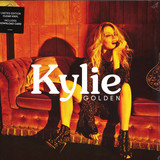
Now that I've been to Nashville,' Kylie Minogue says with audible affection, I understand. It's like some sort of musical ley-line...'
Golden, Kylie's fourteenth studio album, is the result of an intensive working trip to the home of Country music, a city whose influence lingered on long after the pop legend and her team returned to London to finish the record: We definitely brought a bit of Nashville back with us,' she states. The album is a vibrant hybrid, blending Kylie's familiar pop-dance sound with an unmistakeable Tennessee twang. It was Jamie Nelson, Kylie's long-serving A&R man, who first came up with the concept of incorporating a Country element' into Kylie's tried-and-trusted style. That idea sat there for a little while, with Minogue and her team initially unsure about how to bring it to life. Then, when Grammy-winning songwriter Amy Wadge's publisher suggested Kylie should come over to collaborate in Nashville, a city Kylie had previously never visited, something clicked. You know when you're so excited about something,' she recalls, that you repeat it an octave higher and double the decibels I was like that. 'Nashville! Yes! Of course I would!'. I hoped it would help the album to reveal itself. I thought 'If I don't get it in Nashville, I'm not going to get it anywhere.''
Kylie's Nashville trip involved working alongside two key writers, both with homes in the city. One was British-born songwriter Steve McEwan (whose credits include huge Country hits for Keith Urban, Kenny Chesney and Carrie Underwood), and the other was the aforementioned Amy Wadge, another Brit (best known for her mega-selling work with Ed Sheeran). It was then a truly international project: Golden was mainly created with African-German producer Sky Adams and a list of contributors including Jesse Frasure, Eg White, Jon Green, Biff Stannard, Samuel Dixon, Danny Shah and Lindsay Rimes, and there's a duet with English singer Jack Savoretti.
However, the album's agenda-setting lead single Dancing was, significantly, first demoed with Nathan Chapman, the man who guided Taylor Swift's transition from Country starlet to Pop megastar. If anyone knows how to mix those two genres, Chapman does. Nathan was the only actual Nashvillean I worked with. He's got a huge studio in his house, which is probably due to his success with Taylor... there's plenty of platinum discs of her, and others on his walls.' There's something of the spirit of Peggy Lee's Is That All There Is, of Dylan Thomas' Do Not Go Gentle Into That Good Night, even of Liza Minnelli's Cabaret about Dancing, a song which not only opens the album but sets out its stall, providing a microcosm of what is to come. You've got the lyrical edge, that Country feel, mixed with some sampling of the voice and electronic elements, so it does what it says on the label. And I love that it's called 'Dancing', it's immediately accessible and seemingly so obvious, but there's depth within the song.'
The experience of simply being in Nashville was an overwhelming one, before Kylie had even arrived. Once I knew I was going to Nashville, people talked about the place with such enthusiasm. They said without doubt I would love it and, I would come back with songs. They were sending lists of restaurants, coffee shops and bars. It really was a beautiful and genuine response and it felt like I was about to have a life changing experience and in a way, I did.' The reality came as something of a surprise, when she found a far more modern metropolis than the vintage one she'd envisaged. I thought it would be like New Orleans: little houses and bars, with music spilling out onto the street. It reminded me more of Melbourne: apartment blocks going up everywhere! The main strip, Broadway, where the honky tonk bars are, that's where the street was filled with music and it was just amazing.' Mainly, Minogue remembers the heat and humidity. It was 100 degrees. It was like it was raining with no rain.' She also relished the chance to wander around unrecognised, visit a few venerable music bars and soak in the atmosphere. I didn't get to the Grand Ole Opry or the music museums but I managed to go to a couple of the institutions there like The Bluebird Cafe and The Listening Room, and just by being there, through some kind of osmosis, you get this rejuvenated respect for The Song, and the writing of The Song. There's no hoo-hah around it. There's a singer-songwriter there, talking about the song and singing the song, to an audience who are there to listen. Although, I have to confess I was guilty of starting to clap too soon during a long pause at the end of one of the songs. The guy made a bit of a joke out of it and got a laugh from it, but I thought 'Of all people in the audience, no...''
It's probably no coincidence, therefore, that every track on Golden is a Kylie co-write, making it arguably her most personal album to date. The end of 2016 was not a good time for me,' she says, referring to well-documented personal upheavals, so when I started working on the album in 2017, it was, in many ways, a great escape. Making this album was a kind of saviour. I'd been through some turmoil and was quite fragile when I started work on it, but being able to express myself in the studio made quick work of regaining my sense of self. Writing about various aspects of my life, the highs and lows, with a real sense of knowing and of truth. And irony. And joy!'
The songwriting process allowed Kylie to get a few things out of her system. Initially, she admits, it was cathartic, but it also wasn't very good. I think I was writing too literally. But I reached a point where I was writing about the bigger-picture, and that was a breakthrough. It made way for songs like Stop Me From Falling and One Last Kiss. It also meant I had enough distance to write an autobiographical song, like A Lifetime To Repair, with a certain amount of humour. The countdown in that song: 'Six-five-four-three, too many times...'. I don't know if that will be a single, but I can just imagine a girl with framed pictures of past boyfriends, and kind of going 'Oh god, when am I going to get this right'' When she listens back to Golden, Kylie can vividly hear the Nashville in it. It is, she'll agree, probably the first time that a Kylie album has sounded like the place it was made. You wouldn't normally relate my songs to the cities. Can't Get You Out Of My Head sounds more like Outer Space than London. But Shelby '68, for example, was written in London but it was done with Nashville in mind. It's about my Dad's car, and my brother recorded Dad driving it! I don't think I'd have written a number of the songs, including Shelby '68 and Radio On without having had that Nashville experience.'
The latter, she says, is about music being the one to save you.' Throwing herself into the making of the record, she says, crystallised that idea. If there's one love that will always be there for you, it's music. Well, it is for me, anyway.' That song, in particular, carries nostalgic echoes of the golden age of Country, as heard through Medium Wave transistors and tinny home stereos in the distant past. Like any child of the Seventies, Kylie had a basic grounding in Country music, mainly absorbed from older family members. My Step-Grandfather was born in Kentucky and though he lived most of his adult life in Australia, he never stopped listening to his beloved Country artists.' If there's any classic Country singer whose imprint can be heard on Golden, it's Dolly Parton.
Kylie saw Dolly live for the first time at the end of 2016, at the Hollywood Bowl. It was like seeing the light,' she beams. It was incredible. Everyone, whether they know it or not, is a Dolly Parton fan. When I was in Nashville, I did pick up a T-shirt that said 'What Would Dolly Do' Maybe that should be my mantra.' And, whether consciously or otherwise, there's a timbre and trill to Kylie's vocals on Radio On that is distinctly Parton-esque. My delivery is quite different on this album,' she says. A lot of things are 'sung' less. The first time I did that was with Where The Wild Roses Grow. On the day I met Nick Cave, when I recorded my vocals, he said 'Just sing it less. Talk it through, tell the story.' This album wasn't quite to that extreme, but a lot of the songs were done in fewer takes, to just capture the moment and keep imperfections that add to the song. I remember on my last album, a lot of producers were trying to take out literally every vibrato they heard. And that's not natural to my voice. I mean, I can make myself sound like a robot, but it's nice to sound like a human!' Working within the Country genre also gave Kylie permission to write in the Nashville vernacular. Because we were going there, I wasn't afraid to have lines like 'When he's fallen off the wagon we'd still dance to our favourite slow song', 'Ten sheets to the wind, I was all confused', 'I'll take the ride if it's your rodeo'. The challenge of bringing a Country element to the album made the process feel very fresh to me, kind of like starting over. I started to look at writing a different way, singing a different way.'
If ever Kylie lost confidence in the Country-Pop concept, and found herself pondering This is great, but back in the real world - my real world - how will this work', Jamie Nelson was there to badger her into sticking to the path. We found a way to make it a hybrid with what we'll call my 'usual' sound. It had to stay 'pop' enough to stay authentic to me, but country enough to be a new sound for this album. The closer we zoomed in, and the more we honed it, I knew Jamie was right. We sacrificed good songs that weren't right for this album, because we wanted it to be as cohesive as possible. The songs that were hitting the mark were these ones, so we decided to be strong, and that's how we wrapped up the album. What he said, that stuck with me, was that 'I'd hate to get to the end of this and really wish we'd gone for it.'' Having worked with Kylie for so long, Nelson was able to put this latest shift of direction into perspective. He said 'You've traditionally done it throughout your career. You had your PWL time, then you did a complete turn when you went to deConstruction, then another complete turn with Spinning Around, and R&B dance-pop, and then another turn with Can't Get You Out Of My Head, icy synth-pop, and this is another one.' He was right. It felt like the right time to have a change sonically. New label, new stories to tell, and a new decade almost upon me.'
Kylie Minogue will, it's scarcely believable, turn 50 this year. This looming milestone is partly behind the album's title, and title track. I had this line that I wanted to use: 'We're not young, we're not old, we're golden' because I'm asked so often about being my age in this industry. This year, I'll be 50. And I get it, I get the interest, but I don't know how to answer it. And that line, for my personal satisfaction, says it as succinctly as possible. We can't be anyone else, we can't be younger or older than we are, we can only be ourselves. We're golden. And the album title, Golden, reflects all of this. I liked the idea of everyone being golden, shining in their own way. The sun shines in daylight, the moon shines in darkness. Wherever we are in life, we are still golden.' One of the album's shiniest moments is Raining Glitter, an exuberant banger which ventures closest to Kylie's traditional dance-pop comfort zone. Eg White, who is one of the producers and writers and a great character, was talking about disco one day. I said 'I love disco, but you know the brief.' We needed to be going down the Country lane, so to speak. But we managed to bring them both together. When I wrote it, I was thinking about the Jacksons video for Can You Feel It where they're sprinkling glitter over everyone. And I think there's a Donna Summer record that's got that feel to it. I think that's my job: I basically leave a trail of glitter after every show I do anyway.'
Kylie is looking forward to the challenge of incorporating the Golden material into her live shows. Mixing these songs in with my existing catalogue is going to be fun. And it could be fun to do some of those songs with just a guitar. It'll make my acoustic set interesting...'Her incredibly loyal fans - to whom one Golden song, Sincerely Yours, is intended as a love letter' - will, she believes, have no problem with her latest stylistic shift. My audience have been with me on the journey, so I shouldn't be afraid that they won't come with me on this part. I've had fun with it, and I'm sure they will too.'
The time spent making Golden has, Kylie says, been a time of creative and personal renewal. I've met some amazing people, truly inspiring writers and musicians. My passion for music has never gone away, but it's got bigger and stronger.' And if there's an overriding theme to the record, it is one of acceptance. We're all human and it's OK to make mistakes, get it wrong, to want to run, to want to belong, to love, to dream. To be ourselves.'
I was able to both lose and find myself whilst making this album.'
Spread across two 180g discs, spanning 24 cuts and served in a gatefold sleeve designed by members and affiliates, the Young Echo LP is a capsule intended for cementation through time.
It's been almost five years since their last album. As a group, extended radio submissions, prolonged studio sessions and notorious club nights make up the cogs of time. Over the course of these years, the network has grown continually, both as one, and with singular, multi-directional paths from each of the 11 artists that make up the Young Echo collective, counting Jabu, Vessel, Kahn, Neek, Ishan Sound, Ossia, Manonmars, Bogues, Rider Shafique, chester giles and Jasmine towards the crew, with projects such as Bandulu, FuckPunk, O$VMV$M, Gorgon Sound and ASDA adding to the table in their individual ways.However, this record aims not to be judged on any single producer or vocalist. It is most effective as a whole, simply titled Young Echo. Of course each of the artists has an important part to play, but it is very much about the act of balance, accepting individualism to form a greater whole.A good example is the welcome addition of new energy coming from Jasmine (1/3 of Jabu) who injects endless space with her vocals, perfectly answered by the cool-killin' wordplay of Manonmars - who makes his long awaited debut here - sharing stage with the immediate poetry of ASDA's very own chester giles, along the mighty sound of Rider Shafique, and Bogues' versatile style that can flit between rap & song within seconds. Five very different vocalists that could've tried to find a compromise, but instead choose to connect in different ways, finding their niche in the equal range of rhythms and sounds that sprawl in this shared space, the juxtaposition.
Detuned soundsystem stylings, love songs swaying in hacked up ambience, skeletal dancehall, microphone technique, dread electronics, outsider pop, this record manifests the outcome of the shapeshifting anarchy which rears it's head when no one idea can rule, embracing the diversities when one path must be made up of many.
First new LP in over 15 years. Builds on 3 successful ATFA reissues of Mergia's music. Legendary artist still active after decades of historic work. Modern Ethiopian jazz built on ancient scales and standards. Capping several successful years traveling the world performing to audiences big and small, Hailu Mergia's Lala Belu has been a long time coming. It builds on Mergia's remarkable career resurgence over the past few years. Beginning in 2013 with the reissue of his dreamy Hailu Mergia and His Classical Instrument followed by the enormous success of his seminal Ethio-jazz masterpiece Tche Belew and continuing with last year's widely acclaimed Wede Harer Guzo, Mergia has received considerable accolades from listeners and press globally, including The New York Times, Pitchfork and The Wire. His old recordings are cherished revelations for Ethiopian music fans; however, Mergia's return to the stage has been just as inspiring and electrifying. Mergia's vintage recordings are known for an inherently mysterious and worn-in quality, while his new recordings echo his band's 21st century live show with modern instrumental interpretations of crucial Ethiopian standards and Mergia's own original compositions. Tony Buck (drums) and Mike Majkowski (bass), who have backed Mergia on tour throughout Europe and Australia, form the bass-drums trio on the recording. Having played venues from Radio City Music Hall and the Kennedy Center to jazz festivals, rock clubs and DIY spaces all over North America, Europe and Australia, Mergia and Awesome Tapes From Africa want to document this moment in his landmark career with a snapshot of Mergia's current sound. Since he emigrated from Ethiopia and built a life in Washington, D.C. around 1981—where he remains working as an airport taxi driver when he is not on tour—Mergia's career has followed a humble trajectory. He made a few recordings in America but they didn't easily reach fans back home. He kept making music on his own and with friends but after the early 80's his gigs in the U.S. mostly dried up. It wasn't until he began working with Awesome Tapes From Africa and putting together bands with the help of booking agents and musicians in Europe and the U.S., that he was able to chart a new path. With a broad audience of young listeners in diverse venues and distant locales, at age 71, Mergia is enjoying his comeback and is not slowing down.
There are some records that manage to sound both of a time and utterly timeless and Bon Voyage Organisation's Jungle Quelle Jungle (a nod to Supertramp's Crisis What Crisis) is one of those albums. Its silken-smooth production, irresistible grooves, funk-tinged guitars, lush soundscapes and general glowing presence could easily lead one to believe that have dug up a lost disco gem from the 1970s. However, behind the disco-pop gleam lies eerie dystopian sci-fi ruminations of a futuristic bent and tones that can often feel as French as they do Asian or African.
This sort of cross-continental exploration is an expansion on BVO's previous two EPs, the man behind the Organisation, Adrien Durand, says. 'I tried to continue the musical expedition between dystopian Science-Fiction Haunted Africa - plus Haitian Vaudou on 'Soleil Dieu' - and futuristic Asia. Addressing, in a double entendre manner, some of the political issues that I am sensitive to.' In fact the jungle in question in the album's title is a metaphorical one and one that creates a vast series of environments for Durand to explore such subjects as world trade, utopian ideals and themes of idols, as well as of time and communication. However, one will need to speak French to decipher such explorations, as well as shake off the natural impulse to move with every glorious beat on its 13 tracks, of which are moved along by Maud Nadal and Agathe Bonitzer's golden vocals.
Durand is a full-time producer based in Paris, working with the likes of Amadou & Mariam, so it makes sense that this record would absolutely sparkle in this department. Durand feeds off the variety of musicians coming and going during recording sessions as well as the rotating members and numbers of people involved with the band but fundamentally he writes all songs on piano first before bringing them to record live. 'We recorded a rhythm section of five - drums, percussion, guitar and myself on bass/synth bass and keyboards - at La Frette which is a studio located in a mansion outside of Paris and fitted with a beautiful 1973 NEVE desk. We only used analogue gear, by taste really, and found it a pretty reliable way of doing things. This simply consists of putting good players together in a room and waiting for the right take to happen.' Two four-day sessions and a 'cooling off' period (to let the recordings settle) soon followed before Durand picked the material back up to give it a final polish.
The resulting album is one loaded with intricacies and idiosyncrasies, something that Durand puts down to his own unique approach. 'I don't consider myself much of a songwriter but I love arranging rhythm sections and I'm pretty proud of the ones on this record.' This applies when it comes to working with such musicians as Inor Sotolongo Zapata, who with Durand used traditional Cuban percussive instruments and explored Haitian rhythms. When Durand expands on some of the ideas and influences that were funnelled into the record, you begin to get a sense of the vastness of the sounds that fill his world, from Trevor Horn's production work on ABC's Lexicon of Love, to the literary work of JG Ballard to the visual flair of the original Blade Runner and even the Tuareg sounds of Tinariwen, due to the fact that his studio neighbours their manager's and he would hear their rhythms bleeding through the walls. You therefore end up with an album that offers tracks such as 'GOMA' that fuses Chinese and African rhythms as well as 'SI D'Adventure' a piece of pop music that is dazzlingly hook-laden.
As a result of this cooking pot of sounds, influences, thoughts and creations, Durand has more of a gumbo approach to making this music than a set-out scientific formula. 'There is no definite recipe for me to like the production of a record,' he says. 'Of course it really sticks out that my work is really influenced by the 1978-1983 period, the golden age and last stand of analogue studios and session musicians.' Whilst Durand adores the traditional and conventional music, he really views this as something bigger and wider. 'I have a taste for the otherworldly vibe from records coming from less sought-after musical scenes, particularly Poland, Haiti, Ethiopia, Somalia, Congo and early Cantonese pop. Languages and the rapport of the people involved in the making of those records really inspires me. I particularly hate the use of the word 'World Music' as a potpourri for everything that doesn't sound quite western enough.'
It was chance that brought about the release of One/Three, Dabrye's debut album. Early demos were tucked on the B side of a cassette Tadd Mullinix passed to Sam Valenti in 2000 while working at the Dubplate Pressure record shop in Ann Arbor. Mullinix had spent the late '90s producing jungle, techno, house, hip-hop and more using the All Sound Tracker software as a primary instrument. Each style pulled from a similar sound palette as Mullinix used limitations to define the contours of di-erent musical personalities. Dabrye was his hip-hop wildstyle, a captivating collage of sparse instrumentals inspired by the laid back vibes of midwestern hip-hop and east coast boom bap, the futuristic funk of Umma-era Jay Dee, and the calculated subtlety of Detroit dance music. Released in 2001 as the first in an intended trilogy, One/Three announced Dabrye's arrival with an unavoidable contribution to Detroit hip-hop. Ghostly International is reissuing the album in 2017 for the first time, including a long overdue vinyl edition.
On its release One/Three was the rare album that appealed to both fans of Slum Village's smooth yet rugged hip-hop and enthusiasts of the distinct American IDM released by labels like Schematic. Over the following decade, the inadvertent demo submission turned into a body of work that placed Dabrye alongside innovators such as Prefuse 73 amid the cannon of a new generation of producers. Today, One/Three remains a concise and intriguing study in instrumental hip-hop that helps join the dots between J Dilla and Flying Lotus.
One/Three is a record that says much with little. There are no obvious hip-hop tropes. Instead Mullinix captures the ingenious minimalism of '90s hip-hop instrumentals to build tracks both supple and hard, joyous and melancholy, full of sharply angled rhythms and warm rubbery basslines: 'The Lish' throws a sickly sweet saxophone against digitally fragmented melodies, 'How Many Times (with this)' draws you in with an irresistible, clipped guitar groove, the rhythmic stutter of 'Smoking The Edge' makes your head spin with pleasure. Playing with his inspirations, Mullinix injects omitted downbeats for imagined rhymes and repurposes the intricacy of ragga jungle for breakdowns.
But what really defines One/Three is the rhythmic sensibility and metric modulation of Detroit's school of hip-hop production, which Mullinix was a fervent student of. The beats feel like they're constantly escaping a rigid tempo grid even though they are, in fact, pretty tight. A lot of it is nuance,' Mullinix explains. I've been known to say that I'm not impressed by spectacle. I think that nuance is what really captivates people.'
If you like your beats with a dash of class, do not miss this. An essential purchase of the highest order.' -BBC
- First time all tracks from the original 2001 release appear on vinyl.
- Remastered by Daddy Kev
- Standard weight black vinyl is inserted in to 3.5mm matte finish vinyl jacket.
- Download card includes free download of the Payback EP
Tim (aka Jean Marie Tiam)and the sadly departed Maurice Foty who died in 2011. The musical cousins hails from Bafoussam in Cameroon. Their signature vocal harmony sound may be the first thing you hear, however they also have produced a host of funkiest African funk around. They sing in their native language Ngomâlah, as well as Duala and English.
We start the album off slowly with the scene-setting and largely instrumental "Douala By Night". Tight guitar and choppy clavi drive this song along. The groove is so deep even Missy Elliot couldn't resist a cheeky sample. "Funky Bafoussam" carries on the theme and expands it to include a kick-ass horn section. "More And More" is next and here the vocals burst forth over this up tempo punchy pop-funk track. With "Love Is Light" the pair show their versatility with a smooth English-sung soul ballad.
The hopelessly upbeat "Aie" is next with its earworm keyboard riff, slice guitar and catchy falsetto vocal. "Not So Bad" brings on the boogie. "I Love Yaounde" is a smooth swinging boogie-ballad with a killer chorus hook. "Eda" is a hit from early in their career. We close of the comp with the disco funk of "Funky Boogie Love" and synth grooves of "Eya Mba".
The songs on the comp represent only a 2 year period but some of the finest from the duo. These days Tim keeps the Tim and Foty flame alive. He currently lives between France and Cameroon. A musical flame that most definitely is burning bright.
In the vapor trail of How Does It Make You Feel,' the first track on this self-titled full length, one can smell the burnt ozone of a seventies-full-orchestra-nebula-pop-odyssey, the flakes floating down and landing like snow, giving grave-chills ... the ash of a masterpiece pop song. Once And Future Band: this incredibly accomplished cabal of total prog wizards has circled the earth, but then, these are the accomplished gentlemen of many former pursuits (the formidable Drunk Horse among them) and all of them comets themselves.
The very mid-'70s vibe at work here surpasses pastiche, and crests that lovely anachronistic conceptual peak: a fully realized and meticulously arranged psych record, meant to be listened to from top to bottom, with the lights down low and in a comfy chair perhaps, or while gazing out the window of your life pod. The Dark Side of the Moon feel, with shades of early Yes's technicality, a dash of Steely Dan's vocal prowess and effortless sheen, and some seriously outsized hooks that call to mind the mighty ELO, Le Orme and, yes, even the unsinkable Queen powered on Brian May's tape echo jet fuel and sequined power cells.
This is a head record in the classic sense but utter fealty to The Dark One insures both being trapped and infected by the pop-parasite. That it is largely self-produced (with tracking / engineering on three of the songs by Phil Manley at El Studio) makes it all the more jaw dropping. Making prog cool again, again, and then slightly more complicatedly, again.
In an interview with Jazz Magazine in the early 1970s, Dharma, as a collective voice, outlined their method: 'we try to reach, within free jazz, the same sort of rhythmic cohesion as in Bop, a cohesion based not exactly on tempo, but something which feels like tempo. A kind of underlying pulse'. Evidence of these ideas can be heard immediately on listening to Mr Robinson, the first album by the Dharma Quintet, for whom community living seemed obvious, in order to add to the aforementioned cohesion. Through this, the group members played together on a daily basis, trying out things which were worked on day in, day out. They were also listening to a lot of records, with of course a preference for free jazz, but not forgetting Miles Davis in his electric period, notably for the keyboards of Keith Jarrett and Chick Corea. To which should be added esthetical-political concerns based on a refusal of hierarchy, and a desire to escape from a restrictive academic approach... It was within this framework that Jef Sicard and Gérard Coppéré (saxophones, flute, bass clarinet), Patricio Villarroel (electric and acoustic piano), Michel Gladieux (bass) and Jacques Mahieux (drums) formed the first version of a collective united by structured intentions. Because, within Dharma, individual improvisation cannot be envisaged outside of a clearly designated framework, even non-tempo. The result is a beneficial cohesion, and moments of great beauty born of a collective excitement and giving rise to ambiances which seemed almost possessed. The use of modes could seem to link Mr Robinson to the spiritual jazz of the past but that is without taking into account the fact that the benevolent spirit of Eric Dolphy seems to watch over this album. In France, a similar desire for cohesion could be found in the Cohelmec Ensemble, who had parallel preoccupations, to the point where their bassist, François Méchali, ended up by joining Dharma: there is unfortunately no recorded trace of this, just the memories. As a quintet, with however some personnel changes, Dharma recorded three albums (there is also one as a trio, under the name of Dharma Trio), which are all of fundamental importance (Dharma would also accompany, and to great effect, the songs of Jean-Marie Vivier and Colette Magny). Individually, the members would record with musicians passing through (notably Anthony Ortega, Dave Burrell) and participated in other key groups including Machi Oul and Full Moon Ensemble.
Alien Ensemble's trombone man Mathias Goetz caused quite a splash when he released his eponymous debut LP under his Le Millipede moniker back in 2015: The multi-instrumentalist's initial offering was clearly something else, impossible to grasp, a musical vessel beyond genre, beyond style or era, seemingly beyond space and time even, a vessel that carried an almost cosmic kind of song-craft - music with no fixed stamp of origin, though it did somehow feel like an Alien Transistor release. Followed by remix album Mirror Mirror, which comprised reworks by 1115, Protein, LeRoy, Olaf Opal, and Saroos, to name a few, it's now time for album #2: The Sun Has No Money.Let's face it: There's nothing as majestic as the sun. At least not in our world. If it runs out of juice one day, it's game over: The End. Light's out. For everyone. At that point, it wouldn't even matter if you're rich or poor. We're all equal under the sun. Same level. And yeah, this might not be major news, but then again... we're talking about the sun. The sun! Guess it's about time to acknowledge its power and superiority, right In fact, you can feel it on your bicycle: pedaling at night, when it's on duty in other hemispheres, and you're working hard at the dynamo, sweating, you can actually feel how powerful it is. In the end you get off the bike all recharged, a tune on your lips - and somehow feeling like a miniature version of the sun yourself. And whenever you feel like that, that's exactly the right moment to grab a melodica and get to work.Following an initial warm-up round sans electricity, this new album soon begins to glow: Mathias Goetz aka Le Millipede doesn't need pedals, he boosts circulation by single-handedly* playing tons and tons of different instruments - it actually feels like thousands, easily. And thus begins a show that has countless levels to it: There are various sonic illusions... and yet Le Millipede doesn't hide anything: He's also willing to show the inner workings, the actual recording process and everything else. In short: he goes meta. Makes songs about making songs. That's right: why not use all these beautiful means to address the issue of money It's not the sun that casts shadows, all it does is recharge, fuel: growth & thriving, that's the sun's area of responsibility. And yet there came a man whose plan was simple: steal the fruit from your garden, only to sell it right back to you, for money. We can hear the sea gulls crying in the distance, as somebody is throwing breadcrumbs up into the wind that carries their voices...It's not the sun that casts shadows - all it does is radiate light. And yet there came a time when someone blocked those rays of light. Now if you're some kind of Diogenes, you'll simply say, Move at least a little out of the sun.' But if you're a teacher, you'll maybe light up your pipe and use that to lighten up. What matters is that the percussion parts, in this case, resemble some serious musique concréte. The sun doesn't know shadows - all it knows, is itself. And yet somebody entered the picture and built an entire city. A city full of streets, so that houses can cast shadows into these avenues. Plus, there's music in the streets, music originally written inside the walls of said houses.One of those streets is known as the Tin Pan Alley: a place that got its name from a music writer who compared the sound of so many pianos to the banging of tin pans. That sound: that's one side of the road that is this album. Some of these melodies appear to be shadows of earlier tunes, dating back to, say, 1898 or even before that, melodies that were first registered in the Tin Pan Alley publishers' offices back in 1912 or 1917. We actually get to see this Alley at that point in time. We see the ropes, the workings. How things come together, the actual act of creation. Suddenly, we can hear the shadows!
Okay, so one side of this street is America. The US of A. The opposite side: Russia. And smack dab in the middle: Europe. A pothole in the center. All the back-and-forth that occurs between these two poles ultimately depends on the movement of the sun. Night and day, taking turns, commuting in and out of sight. We get to meet Prokofiew's and Scriabin's ghost, among other spirits, reframed and published by Le Millipede's own imaginary label imprint on the historic Tin Pan Alley. Indeed there are moments on this album when Le Millipede seems to be playing Scriabin's clavier a` lumie`res (tastiera per luce), when his performance seems to be based on synesthesia, a wild cross-pollination of colors and sounds. In case you didn't know this: In the States, Prokofiew goes by the name Brian Wilson, and Scriabin's also known as Sun Ra - yet another guy who's usually broke, but gets to spend a lot of time out in the sun. Together, these assorted protagonists ask the people of the Antilles for Mutabor dance-tokens and send postcards to Moondog in Germany, right back into the darkness. On the postcards you can see people dancing the Biguine...Firing foreign fossil fuels from all pipes (Brennelementsteuer!), Le Millipede controls the very center of this hustle and bustle: going as far as to employ some southern Chopped & Screwed styles, he's 100% current and zeitgeisty! Houston, we've got a problem: there's some kind of myriapod, centi- or millipede on the loose! Well, give me another sip of lean, sizzurp, dirty Sprite, and on goes the journey in the Pullman coach. Let's follow the sun! Keep on moving, keep things motorik! Here comes the Trans-Eureka-Express. Cherish the backpacking days! A piercing rhapsody of sound (bohrende Rhapsodie), we'll remember them fondly! And thus things move on, the sun, the days, the earth: rise, set, action, round and round... onwards eternally. The sun: the biggest loop known to mankind. As if it was some kind of sonic Rube Goldberg contraption, time seems to be stretching out while listening to that hmmm. After all: time is a lot (a lot!) more than just money. And yeah, the sun is the real big shot on (or rather: above) Planet Earth. Le Millipede's live line-up also includes Markus & Micha Acher (The Notwist etc.), Nico Sierig (Joasihno), and Manuela Rzytki (G. Rag & die Landlergschwister, Kamerakino etc.).
*sole exception: Evi Keglmaier (Zwirbeldirn, Hochzeitskapelle) plays the viola. Words/sun worship: Pico Be
more talking all that jazz, more high aiming music by fumio itabashi: mule musiq is ready to release another record by the legendary japanese jazz pianist, born in ashikaga, tochigi in the year 1949.
this time his first solo record ever: the heavy jazzing 'nature', which has never been reissued on vinyl since its birth in 1979. it has been recorded at nippon columbia 1st studio, tokyo from march 13 to 15 in the year of its release.
it features itabashi making feverish love with the piano and sharing the studio with the great bass players hideaki mochizuki and koichi yamazaki, drummers kenichi kameyama and ryojiro furusawa, soprano saxophonist yoshio otomo and vibraphone wizard hiroshi hatsuyama.
they all joined him to perform his very own songs, composed by itabashi himself and produced by ryonosuke honmura, who also produced japanese jazz heroes like saxophonist keizo inoue during his career.
but enough background information. what counts is sound. it is fresh, propulsive, twitchy and melodi-ous from the first to the last tone. sometimes the instrumentalists play a classic solo in an overall deep modal jazz atmosphere that seems to be made for cats that love the good old stars and inventors - from john coltrane to mile davis, from thelonious monk to art blakey.
'nature' also shows how deep itabashi studied the history of the genre, while keeping his very own vision of jazz alive. the man that made his professional debut as a member of the sadao watanabe quintet in 1971 and that also was a member of the elvin jones jazz machine world tour from 1985 to 1987, plays the piano in all tempos: nervous high-flying quick, deeply blue blues style slow.
besides the traditional jazz flavours, you get a feeling of mind-expanding spiritual jazz, that grand mas-ters like pharaoh sanders or gary bartz turned into a sacred music genre. a master-class record in ravishing big city jazz music, adventurous, sometimes meditative, sometimes faster than the speed of light, always grooving with a bright, pure-toned sensibility and deeply soulful melodic imaginations.
it extends the jazz history with a fine balance between tradition and innovation. and it stays infectious all the time while sounding surprisingly fresh due to a lot of thrilling musical spontaneity that touches profoundly even though all notes have been written down by fumio itabashi before he and his combat-ants entered the studio.
and maybe that's the mystery of these timeless five at times epic recordings: all notes been written on paper but each musician had the freedom to dance with them in his very own unique way. so, turn the volume loud and get ready to be steamrolled by fumio itabashi's 'nature', an inebriant album that is talking all that jazz deeply!
Brookland Suite' is inspired by Micha Acher travels to New Orleans and Johannes Enders' admiration for Gil Evans soundscapes. The unique instrumentation and the rough sound make Brookland a very special Suite for lovers of deep sounds.. Enders and Acher grew up together in Weilheim, a small town near Munich. Already back in 1992 they played together in the electro/free jazz band Tied & Tickled Trio (with Billy Hart). Now they decided it's time for another collaboration. For 'Brookland Suite' they invited New Orleans based sax player Dan Oestereicher and drummer Howard Curtis from Washington to join them
Out of nowhere, here comes Villee with his debut EP chock full of dancefloor gems. From the very first listen we knew we had something special that we needed to release on Pressed For Time. It's a difficult thing to reference classic tracks and artists without sounding like a carbon copy - however Villee manages this with aplomb. Referencing Larry Heard (check the chords on 'The Inventor'), Cajual records, french house and the DIY free party sound - we think this EP is fantastic! Think warm, analogue, looped up, MPC house with swing and you're on the right track
The human connection is the key to personal and career success. 3KZ is the perfect example of how two great minds can connect and relate to the world with sounds that have no description. The beauty of it comes once you put down the needle and immerse yourself to listen deeply to the brilliant music that this project represents
When we started The Bunker New York label in 2014 there was a short list of artists whose music we knew that we wanted to get out into the world. Lori Napoleon, aka Antenes, was high up on that list, although at the time the Brooklyn-based Chicago native had yet to release her recorded music at all. Five years on, after acclaimed records on L.I.E.S. and Silent Season, residencies at Issue Project Room and Bell Labs plus a busy global touring schedule as both a DJ and live performer, we are proud and excited to present Lori's Ante Meridiem EP under her Antemeridian production moniker. She tells us that the Antemeridian project is a special outlet for her more melodic synthesizer compositions and the name Antemeridian refers to morning light and the meridian lines of the planet, the view you would have from above if you were already in the sky/space/seeing the atmosphere also from a great distance.'
.
With this EP, Antemeridian has created nothing less than a masterwork of synthesis comprising unique soundscapes unbelievably detailed and crisp. We asked Lori to tell us a bit about her production techniques, which include home-built machines from unorthodox source materials including vintage switchboards and telecommunications equipment. She actually built her first synthesizer out of an antique telephone switchboard we donated to her from The Bunker HQ! I use a combination of synths and controllers/sequencers that I've made along with commercially available/ bought or modded analog synths and field recordings that have gone through a number of effects chains. There may be a crackling sound that emerged from the modular which made me think about a flame sparking and burning out, recalling a very organic process in nature - but in a composition it's a drum element. Perhaps the sense of detail comes from how I work on finding sounds before arranging them in a track so when I find one with little nuances and textures, then I'll be inspired to compose with it. Visceral sounds are very important to me, and sounds that you may not instantly identify with this or that synth model - which is why I like the idea of designing my own palette for portions of tracks.'
It is Melodies International's greatest pleasure to bring forth its latest reissue comprising two stripped-back, reflective pieces of US folk soul.
Largely forgotten for the past forty-odd years, Bobby Wright (now Abu Talib)'s "Blood Of An American" and "Everyone Should Have His Day" resurface as politically-infused works that shine bright and still hold meaning to this day.
The 60s and 70s constituted an exceptional era for its unique blend of popular culture and political radicalism. Household names such as Sly Stone, Marvin Gaye and Gil Scott-Heron used art to express their discontent with the current state of affairs, namely the US government's involvement in warfare and their inability to deal with critical social issues of the time. Though not a musician, Muhammad Ali (born Cassius Clay Jr) was advocating a similar anti-government stance in the boxing ring, and his objection to serving in the Vietnam War sealed his status as an icon for the wider counterculture generation.
Meanwhile in Queens, New York City, Abu used to work several jobs as a construction worker and cab driver - but still found time to play with his band in clubs for $100 a night to support his family. Against the backdrop of international conflict and violence, most of his surroundings failed to listen to how he felt. However, he considered music to be the greatest form of communication with the world and it was his belief that a positive message should be spread to future generations.
After one band member was killed in Vietnam and another went into the service, Abu resolved to pick up his guitar and record these songs as a duet in 1974 with his bassist - the only other remaining band member. Combining guitar, bass and a voice that quavers with emotion he self-released the record in 1974, one which holds its own alongside the all-time greats.
These songs of introspection remind us of the beauty there is in simplicity and how moving art can be when the feelings expressed come from the heart. MEL009 will be released in its original 7" format alongside a 16-page Melozine, featuring words from Abu Talib, social studies professor Paul Rekret and much more.