Some time back just after then and before now, i was approached to work up a rough working script for a Punk Rock film, based on a boys entre into the whole Punk Arena and how it would affect his life. A loosely updated tale somewhere along the lines of a ‘Punk Quadrophenia’.
After many stop / starts and we are waiting for funding… etc, etc... and changing of ideas. I thought I better just get on with it. I worked up twelve tracks and put an opening script together for approval. Like some of the best made plans, as time moved on, so did the theme and the initial rush of enthusiasm rolled on to somewhere else.
A shame but lurking in the back of Punk Art studios the tapes were found and a bent up copy of the working introduction script. So here it is in all its rough and ready glory. Who knows what might have been but here is some of what could have been… hope you enjoy the idea.
Mal-One
Daniel Higgs vocals , Asa Osborne guitar, Sean Meadows bass, Mitchell Feldstein drums.
The Lungfish band from Baltimore, Maryland performed and released albums on the Dischord Records label for more than 20 years. The group's consciousness alternately/simultaneously coalesced and dispersed creating a continuous quasi-musical pulse, which reached climax at semi-monthly public performances.
Lungfish is now, as it often has been, quasi, if not entirely, defunct. However, after the release of Feral Hymns in 2005, singer Daniel Higgs (who is also an accomplished visual artist) embarked on a solo career, releasing albums on Northern Liberties, Thrill Jockey, and Holy Mountain and showing his artwork both in the States and the United Kingdom. Asa Osborne is currently recording and performing solo material under the name, The Zomes.
Cult musician Paddy Hanna announces his forthcoming album Oylegate with the release of his new song ‘Oylegate Station’, out Wednesday, 29th January via Strange Brew Records.
In celebration of Oylegate, which arrives on Friday, 11th April, Hanna plays Whelans on Thursday, 17th April. Tickets are €21.95 + fees and can be purchased here.
After his fourth album, Imagine I’m Hoping, arrived to critical acclaim but not the mainstream success needed for him to continue on as a musician, Hanna found himself at a personal and artistic low point. However, thanks to support from the Arts Council and the encouragement of his family, ‘Oylegate Station’ sees Hanna returning as the intrepid captain of his own ship; he may not know the destination, but he’ll see us along the journey with his graceful pop sensibilities.
Speaking about the new track, Hanna’s cryptic explanation could be confused for a missive from a lonely cosmonaut: “Low rent fuel, caffeine of all shapes, the midpoint of hope and despair, engine still running at Oylegate Station.”
Elation and exhaustion. Love and terror. The weight of responsibility and the strange, disorienting beauty of watching life unfold before your eyes. OLYEGATE, the latest album from Paddy Hanna, is a journey through the euphoric highs and crushing lows of parenthood, delivered with his signature blend of melancholic wit and lush, off-kilter charm.
Determined to sidestep the usual sentimental trappings of writing about having a child, Hanna found an unlikely creative companion in grim Soviet-era cinema. As he wrote, films like Solaris flickered in the background—bleak, meditative landscapes that mirrored the depths of sleep deprivation and the existential wonder of bringing a new life into the world. This contrast of warmth and detachment, of intimate revelation and surreal detour, courses through the album’s DNA.
Despite its moments of cold introspection, OLYEGATE is sonically rich and enveloping—an effect captured in a single request to producer Daniel Fox: "sweet, sweet caramel." Hanna wanted the music to feel like satin lining the listener’s ears, wrapping them in warmth even when the themes tilt towards darkness.
True to form, OLYEGATE marks yet another creative leap for an artist who refuses to be boxed in. "One advantage of being an ‘artist’s artist’ is that you never have to worry about being creatively different between albums. There's real freedom in doing whatever you want and not being judged for it. And even if you are judged, who gives a shit?"
That spirit of fearless exploration—of finding joy in the unknown, the absurd, and the deeply personal—defines OLYEGATE. An odyssey of tenderness and turbulence, it’s the sound of an artist embracing life’s messiest, most beautiful contradictions.
Cold Specks kehrt mit ihrem vierten Album 'Light for the Midnight' zurück.
Nach den Erfolgen ihrer ersten drei Alben 'I Predict a Graceful Expulsion' (2012), 'Neuroplasticity' (2014) und 'Fool's Paradise' (2017) hat Cold Specks (Al Spx) ihren Ruf als einzigartige Stimme der modernen Musik gefestigt. Von ihrer fesselnden Acapella-Performance bei Later... with Jools Holland bis hin zu Kollaborationen mit Moby, Massive Attack und Michael Gira von Swans hat Cold Specks immer wieder Kunstwerke geschaffen, die nachhallen.
Mit 'Light for the Midnight' begibt sie sich auf ihre bisher persönlichste Reise. In seinem Kern ist das Album eine rohe und zutiefst emotionale Reflexion über Ausdauer, Überleben und Transformation. Es ist eine Sammlung von inbrünstigen Balladen und atmosphärischen Popsongs, die Spx' gefühlvolle Stimme in weitläufige Klangwelten kanalisiert.
Das Album entstand in einer herausfordernden Phase in Spx' Leben. Die Arbeit begann 2019 inmitten von Kämpfen mit der psychischen Gesundheit, Erfahrungen, die tief in die Musik eingebettet sind. Doch trotz seiner persönlichen Ursprünge betont Spx seine Universalität: „Ich wollte auf jeden Fall über die letzten Jahre reflektieren, weil sie mich so sehr beeinflusst haben, aber ich wollte auch, dass das Publikum mit diesem Album weggeht. Die Songs gehören ihnen, sobald ich sie veröffentlicht habe.“
Das Album wurde in Toronto und Bristol aufgenommen, wobei Spx zusammen mit Adrian Utley von Portishead und Ali Chant (bekannt für seine Arbeit mit Perfume Genius, Dry Cleaning und Aldous Harding) als Co-Produzent fungierte. Es enthält Streicherarrangements von Owen Pallett (Taylor Swift, Lana Del Rey, Sampha) und zusätzliche Beiträge von Graham Walsh von Holy Fuck. Spx arbeitete auch mit einer Reihe von hervorragenden Kollaborateuren zusammen, darunter Chantal Kreviazuk (Drake, Kendrick Lamar), Malcolm Middleton von Arab Strap, Ben Christophers, Ed Harcourt und Jonathan Quarmby.
'Light for the Midnight' zeigt Cold Specks von ihrer verletzlichsten und kraftvollsten Seite, indem sie die Geschichten ihres Kampfes in atemberaubende Kompositionen verwebt, die einen tiefen Eindruck hinterlassen. Es ist ein Album der Hoffnung und der Transformation.
The first re-pressing of the Dead Milkmen's classic "Bucky Fellini" since its original release on Enigma Records in 1987. This album is a fan favorite and contains the Billboard charting "Instant Club Hit (You'll Dance to Anything)". Remastered by Phil Nicolo for contemporary vinyl, pressed in DUCKY YELLOW VINYL. The newly designed gatefold includes the original front and back covers on a beautifully produced tip-on jacket. The interior is filled with news clippings, previously unseen photographs, show posters, and QR Code WAV and MP3 downloads--all collaged together by the one and only Dean Clean. Also included, for the first time, is an inner-sleeve with lyrics and all new song-inspired art from Joe Jack Talcum. Additional bonus materials include a reproduction of a beat up, original Bucky Fellini poster and a link to download the elusive "Boner Beat" remixes. Hear what The Toronto Star deemed "a sarcastic masterpiece that takes the mickey out of a dozen cherished American icons" like never before. The Dead Milkmen aren't as stupid as they'd like to be ... Now they sound as if they might know how to play their guitars, and they produce some on-target commentary such as 'Instant Club Hit (You'll Dance to Anything)'. - eople Magazine As with all Giving Groove releases all label profits are directly donated to a 501(c)3 music-related charity-the recipient being the wonderful Philadelphia based organization Rock to the Future.
Bryan Beller's (Joe Satriani, Aristocrats, Dethklok) epic progressive double concept 2019 album feat. 26 all-star musicians now on Blue Swirl 2LP in gatefold jacket available! Bassist/composer Bryan Beller (The Aristocrats, Joe Satriani, Dethklok, Steve Vai) presents a sweeping, epic-scale modern progressive double concept album that asks the question: When the storm comes for us, the big one after which things will not be the same, who are we and what do we become in those defining moments? What do we keep, and what do we let go? "Scenes From The Flood" employs an all-star cast of 26 musicians to explore themes of ambition and loss, intentionality and reality, hope and disillusionment. It uses every second of its 18-song, 88-minute running order to tell an emotionally consuming and unforgettable musical story. Produced and composed by Bryan Beller (except "Angles & Exits," composed by Janet Feder), mixed and mastered by Forrester Savell. "Scenes From The Flood" is performed by: Christopher Allis, Bryan Beller, Nili Brosh, Paul Cartwright, Darran Charles, Julian Coryell, Mike Dawes, Janet Feder, Guthrie Govan, Ray Hearne, Gene Hoglan, Mike Keneally, Jamie Kime, Fred Kron, Teddy Kumpel, Jake Howsam Lowe, Evan Mazunik, Nate Morton, Rick Musallam, Mike Olekshy, Griff Peters, John Petrucci, Matt Rohde, Joe Satriani, Rishabh Seen, Joe Travers, Leah Zeger.
The new live album from Enemy, marking their fourth release, captures a decade of fearless exploration and deep musicalconnection between pianist Kit Downes, bassist Petter Eldh, and drummer James Maddren. Reuniting with Edition Records after three albums that spanned Edition, ECM, and We Jazz, this album was recorded over a two-day residency at Bird’s Eye in Basel.
It’s an ambitious retrospective and forward-looking statement, covering pieces from each record while presenting new material that reflects how Enemy’s sound has evolved—balancing intensity with a striking, refined subtlety. Known for their masterful use of poly rhythms, Enemy’s live performance pushes their collective improvisation to new heights, with the trio freely transitioning between themes and compositions without a set list. Signature tracks like “Faster than Light” showcase an evolving interplay, where intensity meets lightness and bursts of colour emerge from unexpected places.
This album also nods to the spirit of 90s studio jazz, with layered tunes and a playful yet sophisticated approach that challenges the boundaries of thepiano trio.
Kit Downes’ remarkable profile growth has only enriched the trio’s dynamic, bringing an ever-expanding lyricism to Enemy’s sound. Petter Eldh and James Maddren, both with deep ties to Edition through Eldh’s Project Drums and Maddren’s many Edition collaborations, add their own layers of innovation and depth to this release.
Together, they create an electrifying conversation thatis both intricate and instinctive—this is Enemy at their most potent, capturing a decade of artistic synergy and setting the stage for the next chapter.
Lascelles Perkins was one of the first stars of the Jamaican music scene. Studio One's leading balladeer and one of the most underrated singers from that time. Lascelles Perkins sang sentimental ballads and he scored massive local hits for Coxsone Dodd's Studio One label. Songs like 'Lonely Moments' and 'Together Forever' other big hits followed 'The Mighty Organ' song as a duet with Hortense Ellis, Alton Ellis' sister, 'Destiny' and a whole catalogue of standards or foreign songs as they were called. Lascelles could sing any song, make it seem effortless and at the same time address it in his own unique style.
Lascelles Perkins was present at the birth of Studio One, at the initial sessions carried out in 1959 alongside the other big singers of the day, Alton Ellis and Basil Gabbidone. The session took place at Federal Studios and as was the method of recording at the time, the studio would have one mic hanging down in the middle of the room. The singer would be nearest to the mic and the musicians, depending on how loud their instrument was, would place themselves accordingly in the room. Everything was one take or you would have to record the whole song again. The singers and the musicians would have to be at the top of their game and would be paid for each side they cut. Doing things over would mean less songs finished, time and money was tight but this discipline made the great records we know today.
We have captured Mr Perkins on some lost tapes from producer Bunny Lee's archive that capture Lascelles singing some of the big Studio One hits of the day.
'Rain from the Skies', 'Stick By Me', 2Love me Forever' and 'No Man is an Island'. Alongside other great tunes from the time like 'Dancing Mood', 'Pledging My Love', 'Take My Hand', 'Never Never' and 'Dinner For One'. Let's hope this set gets Lascelles Perkins back on the musical map and listened to by a whole new audience. Top tunes performed in a style that seems effortless yet is only possible if one has the taken tot pull it off and Mr Perkins has it in bundles. Hope you enjoy the set.......
out of Stock
Last delivered 18 months ago available to reorder, subject to availability
On its 40-year anniversary, this crossover dancefloor gem gets a re-issue AND a brand-new remix from Scandinavian superstar OPOLOPO courtesy of the musical melittologists over at A's & Bee's. His remix drops a bassline of all basslines over the Philadelphia quartets rare 1985 mid-tempo groover, giving it a fresh lease of life for the dancefloors of 2025. This is a charity release, and the label will, as ever, donate proceeds to BBKA, who will use the funds to help educate people about the importance of our flying friends, and how to help in their well-being. Limited edition press in a Dylan Kendle designed A's & Bee's sleeve.
out of Stock
Last delivered 12 months ago available to reorder, subject to availability
They say nothing good happens after midnight, but in the case of creativity, that’s just not so. The night fosters a different kind of creativity: something urgent, spontaneous, carved out of necessity. Tracking the past, present and future of this complex dynamic, Selling The Night explores what happens when after-dark creativity influences wider culture and converges with everything from media, advertising, design and to gaming, fashion, hospitality, alcohol, beauty, tourism and far beyond. Also, as importantly, the implications of brands taking space within dance music as sponsors and supporters.
Author Andy Crysell speaks to DJs, promoters, marketers, academics, activists, archivists, policymakers, photographers, writers and designers. He samples KFC through to Fiorucci, Absolut and Red Bull, and moves from New York disco to the modern global underground.
Selling The Night witnesses how ideas migrate from subculture to influence the creative industries. It searches for lessons in improving the value exchange between dance music and brands, seeking something more symbiotic and less parasitic. All the while, it celebrates what makes after-dark ideas so special – the unique and democratising role they play.
“So much has changed in dance music over the decades. Selling The Night offers a very timely look at the role that brands and culture marketing have played in the past and will play in the future.” Kazim Rashid (Resident Advisor)
“The friction created when youth subcultures meet corporate cultures is long overdue a deconstruction, Selling The Night is necessary reading on how and why there is a transfer of time and money between consumer brands and cultural ecosystems; and what both sectors have to gain and lose through these relationships.” Finlay Johnson (Association For Electronic Music)
Scowl is a band that sounds exactly like their name implies. Venomous, fierce, antagonistic. A sneer not to be crossed. Over the last five years, the Santa Cruz, California, band has firmly planted their flag in the hardcore scene with their vicious sound and ripping live show, sharing stages around the world with Circle Jerks, Touché Amoré, and Limp Bizkit, and filling slots at prominent festivals like Coachella, Sick New World, and Reading and Leeds. But with their new album, Are We All Angels (Dead Oceans), Scowl is aiming to funnel all that aggression through a more expansive version of themselves. Much of Are We All Angels grapples with Scowl’s newfound place in the hardcore scene, a community which has both embraced the band and made them something of a lightning rod over the past few years. Standout single “Not Hell, Not Heaven” outright rejects the narratives cast onto them by outsiders. “It’s about feeling victimized and being a victim, but not wanting to identify with being a victim,” explains vocalist Kat Moss. “It’s trying to find grace in the fact that I have my power. I live in my reality. You have to deal with whatever you're dealing with, and it ain’t working for me.” The band breaks from a sense of disassociation to seek deeper connections on “Fantasy.” “It’s incredibly challenging to try to balance my love for the scene while also feeling, in some spaces, extremely alienated and hated,” Moss says. “‘Fantasy’ is about feeling like I don't know how to connect with these people anymore, because I have shelled myself away so hard.” The album ends in a philosophical place on the closing, titular track, “Are We All Angels,” asking questions like, “Is this all there is?” and ultimately putting it on the listener to decide. “It’s about the personal struggle between good and evil. It doesn’t matter how ‘good’ or ‘bad’ you are, there are systems that will try to rewrite your narrative no matter what you actually do,” explains Moss, noting that punctuation on “Are We All Angels” has been deliberately omitted in an attempt to leave the statement open-ended. Are We All Angels is the highly anticipated follow-up to Scowl’s debut, 2021’s How Flowers Grow, a 16-minute primal scream over punishing riffs. But amidst the pounding chaos, it was the record’s sonic outlier, a cleaner interlude called “Seeds to Sow,” that, true to its name, planted the seed for what was to come for the band. “It kind of laid out this destiny for us, and I feel like now we’re fulfilling that,” says drummer Cole Gilbert. The band continued to expand their sound on 2023’s widely acclaimed Psychic Dance Routine EP, incorporating more pop hooks and favoring gentler singing over heavy screaming, paving the way for what would come next. Scowl’s growth got a huge boost from producer Will Yip (Turnstile, Title Fight, Code Orange, Balance and Composure), who broadened the band’s scope. “Will would say, ‘Everything you have here is correct, but it’s in the wrong place,’” says Gilbert. Moss adds: “Will really helped restructure a lot of the material. Some songs he tore apart to make more space for the really good hooks and choruses.” But even through this more eclectic approach, Scowl loses none of their edge, and still manages to convey the anger and frustration that lies underneath. They are deeply committed to carrying the ethos of punk and its sense of community. “Hardcore and punk have sculpted how we operate, what we want to do as a band, and how we participate,” says guitarist Malachi Greene. “At our core, we are a punk and a hardcore band, regardless of how the song shifts and changes.
Scowl is a band that sounds exactly like their name implies. Venomous, fierce, antagonistic. A sneer not to be crossed. Over the last five years, the Santa Cruz, California, band has firmly planted their flag in the hardcore scene with their vicious sound and ripping live show, sharing stages around the world with Circle Jerks, Touché Amoré, and Limp Bizkit, and filling slots at prominent festivals like Coachella, Sick New World, and Reading and Leeds. But with their new album, Are We All Angels (Dead Oceans), Scowl is aiming to funnel all that aggression through a more expansive version of themselves. Much of Are We All Angels grapples with Scowl’s newfound place in the hardcore scene, a community which has both embraced the band and made them something of a lightning rod over the past few years. Standout single “Not Hell, Not Heaven” outright rejects the narratives cast onto them by outsiders. “It’s about feeling victimized and being a victim, but not wanting to identify with being a victim,” explains vocalist Kat Moss. “It’s trying to find grace in the fact that I have my power. I live in my reality. You have to deal with whatever you're dealing with, and it ain’t working for me.” The band breaks from a sense of disassociation to seek deeper connections on “Fantasy.” “It’s incredibly challenging to try to balance my love for the scene while also feeling, in some spaces, extremely alienated and hated,” Moss says. “‘Fantasy’ is about feeling like I don't know how to connect with these people anymore, because I have shelled myself away so hard.” The album ends in a philosophical place on the closing, titular track, “Are We All Angels,” asking questions like, “Is this all there is?” and ultimately putting it on the listener to decide. “It’s about the personal struggle between good and evil. It doesn’t matter how ‘good’ or ‘bad’ you are, there are systems that will try to rewrite your narrative no matter what you actually do,” explains Moss, noting that punctuation on “Are We All Angels” has been deliberately omitted in an attempt to leave the statement open-ended. Are We All Angels is the highly anticipated follow-up to Scowl’s debut, 2021’s How Flowers Grow, a 16-minute primal scream over punishing riffs. But amidst the pounding chaos, it was the record’s sonic outlier, a cleaner interlude called “Seeds to Sow,” that, true to its name, planted the seed for what was to come for the band. “It kind of laid out this destiny for us, and I feel like now we’re fulfilling that,” says drummer Cole Gilbert. The band continued to expand their sound on 2023’s widely acclaimed Psychic Dance Routine EP, incorporating more pop hooks and favoring gentler singing over heavy screaming, paving the way for what would come next. Scowl’s growth got a huge boost from producer Will Yip (Turnstile, Title Fight, Code Orange, Balance and Composure), who broadened the band’s scope. “Will would say, ‘Everything you have here is correct, but it’s in the wrong place,’” says Gilbert. Moss adds: “Will really helped restructure a lot of the material. Some songs he tore apart to make more space for the really good hooks and choruses.” But even through this more eclectic approach, Scowl loses none of their edge, and still manages to convey the anger and frustration that lies underneath. They are deeply committed to carrying the ethos of punk and its sense of community. “Hardcore and punk have sculpted how we operate, what we want to do as a band, and how we participate,” says guitarist Malachi Greene. “At our core, we are a punk and a hardcore band, regardless of how the song shifts and changes.
Kneading dough is tricky – you should know how it’s supposed to feel. If you try too hard you could make it worse. It’s a beautiful practice – creation with a gentle touch, to work at something so it can be left alone. “If it’s too drawn out it’s awful. It’s easy to give too much.” Dance in the mirror. Contemplate your veiny hands. Who do they remind you of?
You begin by mixing flour and water. “What happens when your people die? Why’d they move the rock to the other side of Ulster Park?” Eliza Niemi asks two seemingly unrelated questions in a rising melody with guitar accompaniment, like fingers playing spider up to the nape of your neck. Gentle pressure. Strands of gluten form to bind the mix. A new question lingers in the binding. When she admits “but I don’t know how to tell if I’m feeling it or not,” that question surfaces through the text. It is reiterated throughout the album. When I’m working with dough I think the same thing to myself.
On Progress Bakery, her second album as a solo artist, Eliza knows to leave some questions alone – to let juxtaposition and tension be the proof. It doesn’t have to be hard. The feelings and revelations they provoke rise in the heat. The smell is sweet. Crispy on the outside and soft all the way through. She playfully slip-slides through words and sounds and images, delighting in surprise, skimming ideas like stones cast across clear water, touching down briefly with uncommon grace.
The question provoked between those opening lines resurfaces in the strands between songs – “Do U FM” is fully formed and beautifully layered, while “Novelist Sad Face” is a short, acapella rendering of gentle curiosity. What is holding these ideas together? Some songs demand more, seem to carry a whole load – eventually the skipping stone will halt to sink and resume its idle duty – while others drift in and out of focus, the way thoughts and dreams become interwoven before the mind is sunk into true sleep.
Music and words don’t always have to interact. Where she decides to keep them apart gives a new contour to where and how she puts them together. The kind of thing you’re supposed to take for granted with songs and their singers comes alive in Eliza’s hands – the little miracle of mixing, kneading, stretching, and stopping.
So often on Progress Bakery, Eliza teases out truth and meaning by asking questions. “Do I wanna be crying?” “Do you want me good or do you want me bad?” “Do I need an eye test?” “I’m writing songs in my head while you’re going over stuff with me — is that cruel??” In “Pocky” Eliza ends with a question that feels to me like the actual biography, succinct and revealing:
I don’t wanna be made to see
I just wanna ask “what’s that?”
Grace that ought to be rare, but in its care and precision is offered humbly, with great generosity, and without announcing itself. Eliza’s simple, miraculous music is given further form and shape by a group of collaborators – invaluable guest musicians Jeremy Ray, Evan Cartwright, Steven McPhail, Kenny Boothby, Ed Squires, Carolina Chauffe, Dorothea Paas, Louie Short, and Avalon Tassonyi. Together with Louie Short, who recorded, mixed, and produced the album along with Jeremy Ray and Lukas Cheung, Eliza has cultivated a richness in sound and texture that prods and provokes the ticklish ear. Barely audible guitar tinkering, a brief lo-fi field recording of trumpets, the harmonic clicking of a looped synthesizer, a flourish of reeds, a child’s conversation, each uncanny sound perfectly placed, rippling out under a soft breeze.
Lay in bed alone at night and ask aloud to the stillness,
“What were you doing at the Albuquerque Airport?
What were you doing there??”
And hear your question answered by a dream of swelling, undulating cellos. Try to grasp at the melody and structure. It’s not an answer (if there could be one), but it moves deeper, closer to the weird layer of fleeting moments and disconnected images, barely perceptible at its core. Wait for the dream reel to click into place.
Eliza took me for a ride in Nicole (her beloved Dodge Grand Caravan) and told me she’d been thinking of the album as an embodiment of transition – and I think every transition, known or unknown, carries the weight of new meaning, skittering off the surface tension of life as you know it, creating ripples, sometimes bouncing off and sometimes breaking through. There is a trick you can use to tell if a dough is glutinous enough. You’re supposed to stretch it out as thin as you can without breaking it and hold it up to the light. If you can see through, even if it renders the world murky and uncertain, you should leave it alone. I love this trick. It’s one that Eliza seems to know intuitively: work gently and ask questions and don’t always expect answers, and when you can, take a glimpse at something new, and then leave.
Kneading dough is tricky – you should know how it’s supposed to feel. If you try too hard you could make it worse. It’s a beautiful practice – creation with a gentle touch, to work at something so it can be left alone. “If it’s too drawn out it’s awful. It’s easy to give too much.” Dance in the mirror. Contemplate your veiny hands. Who do they remind you of?
You begin by mixing flour and water. “What happens when your people die? Why’d they move the rock to the other side of Ulster Park?” Eliza Niemi asks two seemingly unrelated questions in a rising melody with guitar accompaniment, like fingers playing spider up to the nape of your neck. Gentle pressure. Strands of gluten form to bind the mix. A new question lingers in the binding. When she admits “but I don’t know how to tell if I’m feeling it or not,” that question surfaces through the text. It is reiterated throughout the album. When I’m working with dough I think the same thing to myself.
On Progress Bakery, her second album as a solo artist, Eliza knows to leave some questions alone – to let juxtaposition and tension be the proof. It doesn’t have to be hard. The feelings and revelations they provoke rise in the heat. The smell is sweet. Crispy on the outside and soft all the way through. She playfully slip-slides through words and sounds and images, delighting in surprise, skimming ideas like stones cast across clear water, touching down briefly with uncommon grace.
The question provoked between those opening lines resurfaces in the strands between songs – “Do U FM” is fully formed and beautifully layered, while “Novelist Sad Face” is a short, acapella rendering of gentle curiosity. What is holding these ideas together? Some songs demand more, seem to carry a whole load – eventually the skipping stone will halt to sink and resume its idle duty – while others drift in and out of focus, the way thoughts and dreams become interwoven before the mind is sunk into true sleep.
Music and words don’t always have to interact. Where she decides to keep them apart gives a new contour to where and how she puts them together. The kind of thing you’re supposed to take for granted with songs and their singers comes alive in Eliza’s hands – the little miracle of mixing, kneading, stretching, and stopping.
So often on Progress Bakery, Eliza teases out truth and meaning by asking questions. “Do I wanna be crying?” “Do you want me good or do you want me bad?” “Do I need an eye test?” “I’m writing songs in my head while you’re going over stuff with me — is that cruel??” In “Pocky” Eliza ends with a question that feels to me like the actual biography, succinct and revealing:
I don’t wanna be made to see
I just wanna ask “what’s that?”
Grace that ought to be rare, but in its care and precision is offered humbly, with great generosity, and without announcing itself. Eliza’s simple, miraculous music is given further form and shape by a group of collaborators – invaluable guest musicians Jeremy Ray, Evan Cartwright, Steven McPhail, Kenny Boothby, Ed Squires, Carolina Chauffe, Dorothea Paas, Louie Short, and Avalon Tassonyi. Together with Louie Short, who recorded, mixed, and produced the album along with Jeremy Ray and Lukas Cheung, Eliza has cultivated a richness in sound and texture that prods and provokes the ticklish ear. Barely audible guitar tinkering, a brief lo-fi field recording of trumpets, the harmonic clicking of a looped synthesizer, a flourish of reeds, a child’s conversation, each uncanny sound perfectly placed, rippling out under a soft breeze.
Lay in bed alone at night and ask aloud to the stillness,
“What were you doing at the Albuquerque Airport?
What were you doing there??”
And hear your question answered by a dream of swelling, undulating cellos. Try to grasp at the melody and structure. It’s not an answer (if there could be one), but it moves deeper, closer to the weird layer of fleeting moments and disconnected images, barely perceptible at its core. Wait for the dream reel to click into place.
Eliza took me for a ride in Nicole (her beloved Dodge Grand Caravan) and told me she’d been thinking of the album as an embodiment of transition – and I think every transition, known or unknown, carries the weight of new meaning, skittering off the surface tension of life as you know it, creating ripples, sometimes bouncing off and sometimes breaking through. There is a trick you can use to tell if a dough is glutinous enough. You’re supposed to stretch it out as thin as you can without breaking it and hold it up to the light. If you can see through, even if it renders the world murky and uncertain, you should leave it alone. I love this trick. It’s one that Eliza seems to know intuitively: work gently and ask questions and don’t always expect answers, and when you can, take a glimpse at something new, and then leave.
'Wherever You Are' is a new solo piano album, played and composed by John Foxx. Most of the recordings were made at home and in the early hours of morning in the weeks following his rare live performance at Kings Place, London in October 2023, as part of the BBC Radio 3 'Night Tracks' event. 'Around dawn is the best time to play piano,' says Foxx. 'Self-critical mechanisms mostly dormant, so I'm free to invent and enjoy for a while. The piano faces a window overlooking a valley surrounded by hills, where the sun comes up. There's often an early mist in the valley - and quite often, it rains. Some notes and sounds resonate with remembered experiences and you get glimpses of times and people. It's valuable. Quiet. Free association, myriad moments orbiting - and off you go.' He adds: 'Lately I'm realising how we get formed by other people. Everyone we know or knew, who affects the way we think and the way we see things - even in a small way, has a voice, and all those voices remain in a sort of lifelong conversation. I hear them all the time. It's not at all frantic, it's more oceanic - calm and pleasant and it eventually makes us the way we are. Luckily, I seem to have met - and meet - mostly good, generous, bright people and I'm still learning a great deal from all of them. They give you the touchstones, the maps, the weather. It's how we find our way. So - simply, thanks. Wherever you are.'
SYML is the solo venture of artist Brian Fennell. Welsh for “simple”—he makes music that taps into the instincts that drive us to places of sanctuary, whether that be a place or a person. Born and raised in Seattle, Fennell studied piano and became a self-taught producer, programmer, and guitarist. Says Fennell about his album Nobody Lives Here, "We change, the world changes, and there is so much unknown. About a year ago I started writing songs that represent the change that is happening in front of my face, a group that have emerged to become the third SYML album. Many of these songs are about getting older, and the intimate, and sometimes frightening, passing of time. Some are about how getting older revolves around looking forward to things happening, and when they don’t happen, or they feel different than anticipated, we can be left with surprise and sadness. I’m actually reminded of this watching my 2 year old! We learn to live with disappointment. I recorded some of these songs with kids and dogs making noise in the background, and others in silent studios with musicians I’ve listened to and admired for many years. These songs are meant to be pieces of clothing to wear as you need (or I need). Some are bright and bold and others are gentle, but they were all made with a sense of comfort in mind, even when things feel bleak. My wife jokes that when our friends hear some of these songs, they might think we are not “ok”. Thankfully, putting myself inside a sad song is still a good place to feel happy. There's this generally unspoken feeling that musicians don’t listen to their own music. That isn’t true for me. I love living with my songs because their meaning changes as I change. There is as much fear and beauty in the big questions as there is wonder and possibility in the simple, everyday shit we live through.”
»Even The Horizon Knows Its Bounds« explores sound’s relationship with architecture, inspired by the Naala Badu building at the Art Gallery of NSW. Created from sound prompts responded to by artists like Jim O’Rourke and claire rousay, the work reflects on space, collaboration, and the fluid nature of sonic environments.
I like to think that sound haunts architecture.
It’s one of the truly magical interactions afforded by sound’s immateriality. It’s also something that has captivated us from the earliest times. It’s not difficult to imagine the exhilaration of our early ancestors calling to one another in the dark cathedral like caves which held wonder, and security, for them.
Today the ways in which sound occupies space, the so-called liquid architecture, holds just as much wonder, albeit one that is often dominated by functionality and form. Beyond those constraints however, how sound operates in the material world is something that exists at the fundament of our understanding of music, and moreover within the broad church we know as the canon of sound arts.
Even The Horizon Knows Its Bounds is a record born out of these relations. In a direct sense, the record is the product of an invitation by curator Jonathan Wilson to create a sound environment, reflecting on the Naala Badu building at the Art Gallery Of NSW. The building’s name, which translates from the Gadigal language to ‘seeing water’, was opened in 2022 and this piece was offered as an atmospheric tint to visitors walking through the building throughout the year following its opening.
It’s also a record born out of a recognition for the porousness sound affords, especially as a device for collaborative endeavour. This composition is one born out of generosity and acoustic solidarity. Even The Horizon Knows Its Bounds is comprised not just of my sounds, but also that of an incredible array of artists who have also operated in the orbit of the Art Gallery Of NSW. The players include Amby Downs, Chris Abrahams, Chuck Johnson, Claire Rousay, Dean Hurley, Jim O’Rourke, JW Paton, Madeleine Cocolas, Norman Westberg, Stephen Vitiello and Vanessa Tomlinson.
The piece was constructed around two long form sound prompts that each musician responded and contributed to. These materials there when digested into the final piece you hear. The work could not exist without the substantial offerings these artists made, and I am immensely grateful to each of them.
I’ll finish with a little note that appears on the LP itself.
Place is an evolving, subjective experience of space. Spaces hold the opportunity for place, which we create moment to moment, shaped by our ways of sense-making.
Whilst the architectural and material features of space might remain somewhat constant, the people, objects, atmospheres, and encounters that fill them are forever collapsing into memory.
Lawrence English
Performed by Amby Downs, Chris Abrahams, Chuck Johnson, Claire Rousay, Dean Hurley, Jim O’Rourke, JW Paton, Madeleine Cocolas, Norman Westberg, Stephen Vitiello, Vanessa Tomlinson
Fraufraulein, the San Francisco duo of Billy Gomberg and Andy Guthrie, are master world builders. Their work is immersive — it wraps around you like a warm coat, guiding you deep into a trance-like state. Time moves in slow circles, folds in on itself, and unspools like caught fishing line. It’s tempting to say Guthrie and Gomberg construct a new reality with their work, but I think they’re revealing the contours of familiar territory, gluing together a complicated mirror more than constructing a quotidian diorama. Their music reflects a truth that we all share in some way. It’s the pauses between thoughts, the little observations that color a day, the beauty of how others’ lives imbricate for brief moments before pulling apart completely. Fraufraulein’s music feels beamed from inner space, the soft parts of our consciousness that glow like a flashlight beneath fingertips.
It’s also tempting to call Greater Honeyguide, the duo’s new record — and first in four years — a tool for fostering presence. Each composition can serve as a meditative space, and observing the quietly unfurling layers of sound — a footfall and a quiet breath, scraps of overlapping melodies sung like notes to self, synthesizers droning lightly in the distance — can be a very calming, grounding experience. But I also love to let these pieces guide me through the sulci of my brain like a slot canyon, emerging at some long-forgotten memory or idea. Think of it as a passively-active experience, like looking out of a train window, watching the scenery blur together. At the end of the album’s 37 minutes, I feel transformed. Not necessarily different, just in tune with something else. Something beyond. Something within.
If the jazz of François Tusques is “free”, his spirit is even more so: having recorded Free Jazz with other like-minded Frenchmen (Michel Portal, François Jeanneau, Bernard Vitet, Beb Guérin and Charles Saudrais), the pianist had covered a lot of ground, with Barney Wilen (Le Nouveau Jazz) or even solo (Piano Dazibao and Dazibao N°2), so as not to repeat himself…
In 1971 he founded the Inter Communal Free Dance Music Orchestra which, as the notes the this album stated, “is an interpretation of a music which synthesizes the different communities living and working in France.” In 1976, on the first album (L’Inter Communal) we can already hear Tusques playing without borders in the company of Carlos Andreu (vocals), Michel Marre (trumpet and saxophone), Jo Maka (saxophone) and Ramadolf (trombone). It is a meeting between jazz and music from Catalonia, Occitanie and Africa. So far so good, but what about Brittany, that, Tusques knows “by heart”? Having lived for a long time in Nantes, he would expand his ‘brittanitude’ on the canal linking the city to Brest by playing with, for example the Diaouled-Ar-Menez. With these “devils from the mountain” who, under the baton of Yann Goasdoué, worked throughout the 1970s on the renewal of music from Brittany, Tusques met, notably, Tanguy Ledoré and invited him one day, with trois bombards and some bagpipes (Jean-Louis Le Vallegant, Gaby Kerdoncuff and Philippe Lestrat), to join the ranks of the Intercommunal. And so they set of towards a new music from Brittany, as the title states; Vers une Musique bretonne nouvelle!
With percussion from Samuel Ateba and Kilikus, the association launches the ‘bombardier’: the repetitions and dissonance of the different members all serve a common cause however: the dance, which is always the reason for the party. This sets a whole universe spinning, which can bring to mind Chris McGregor’s Brotherhood of Breath (“La rencontre”) when not taking on board waltz, swing, blues and gavotta or even revealing mysteries like those of Gurdjieff (“Les racines de la montagne” or “Le cheval” sung by Andreu). Only one thing to say to this Brotherhood Of Breizh: Mersi!
“On course towards future raucous, beer-soaked headline festival
sets.” - NME
“Screw-you power, relentless motorik rhythms and impressively large
choruses.” - The Guardian
“Unrelenting, gritty energy” - Daily Star
Sprints unearth their frenzied new EP, ‘Manifesto’, out via Nice Swan
Records.
Produced by Daniel Fox of Girl Band - Dublin’s answer to Steve Albini
- the four tracks make for a hard-hitting gloom-punk journey you
can’t miss. Like the Irish guitar acts who have paved the way for
them - Fontaines D.C., Silverbacks and Girl Band - Sprints sound
urgent and vital at every turn.
‘Swimming’ is a confluence of rabble-rousing stadium rock, sleazy
garage rock and Sonic Youth experimentation. Lyrically, there’s a lot
to hang on to too, which is unsurprising given how topical the band
are: ‘Drones’ took on imposter syndrome; ‘Manifesto’ tackled
homophobia.
‘Swimming’ scorns on the increasing lack of opportunity after
following prescribed paths to become society’s idea of a ‘success’.
Sprints singer Karla Chubb explains: “While the homeless crisis
worsens, the city is sinking in debt and everyone can barely keep
their heads above water, you see an article stating that a new €25
million white water rafting centre is being developed after approval
by Dublin City Council. Sometimes you’d just rather drown.”
Sprints have hit a nerve. The velocity of this argument comes from
personal anguish but will chime with a generation. And with such
honesty running through their core it’s no wonder The Guardian,
NME and BBC Radio 1 and 6Music have tipped them for big things.
Tourdates - October 7 Roisin Dubh Galway, 8 Kasbah Limerick, 9 The
Grand Social Dublin, 21 The Waiting Room London, 23 Heartbreakers
Southampton, 26 Sneaky Pete’s Edinburgh, 27 The Attic Glasgow, 28 The
Castle Manchester, 30 The Sunflower Lounge Birmingham, 31 Bootleg Social
Blackpool, November 2 Surf Cafe Newcastle, 3 Sidney & Matilda Sheffield, 6
Mutations Festival Brighton, 7 Festival of Voice Cardiff, 9 The Shipping
Forecast Liverpool, 10 Oporto Leeds.
Following the success of their 2023 release "Stockholm Kobenhavn", two of Denmark"s most celebrated musicians in multi-instrumentalist Gustaf Ljunggren and drummer Emil de Waal present their fourth collaborative album. Expanding on their growing reputation for crafting songs and sounds with masterful senses of subtlety, narrative and capacity to form meaningful connections with their collaborators and audiences alike, "Mikroklima" is set to release on February 7th on April Records. Emil de Waal has been one of Denmark"s leading drummers for three decades, best known for his work leading the band Kalaha and his collaborations with Elith "Nulle" Nykjær, as well as performing alongside most of the finest names in modern Scandinavian jazz. Gustaf Ljunggren initially studied the saxophone at the Rhythmic Conservatory of Copenhagen, where whispers spread throughout the school that he was the best saxophone player in town and yet never practiced. His career has seen him prove that he can bring grace, musicality and heart to any instrument he touches, from the pedal steel guitar, to the bass, piano, and more. "Mikroklima" is a testament to and celebration of musical growth, community, and the joy of musical gathering. One element that truly sets this album apart, is the bold move of inviting a group of 12 year old school children from a music class into the studio to record alongside Gustaf and Emil. Drawing from years of experience leading music workshops with young musicians, on Mikroklima Ljunggren and de Waal wanted to capture the sound of musicians from different generations and experiences coming together to contribute their ideas to their compositions. Showcasing Ljunggren"s colorful, comforting, folk-influenced approach to harmony and songwriting alongside de Waal"s distinctive touch on the drums, crafting simplistic yet creative grooves that feel as pleasing and refreshing as they do restrained and purposeful. As each piece unfolds, it becomes more and more apparent how present and communicative the duo are, playing only what the music needs and placing more weight on texture and feeling than soloistic flair. "Mikroklima" is an organic, generous offering that shows Gustaf Ljunggren and Emil de Waal doing what they do best: connecting with music.
Legendary producer Ant, best known for his work with Atmosphere, proves once again how irreplaceable he is with Collection of Sounds: Vol. 4. This latest release showcases the lifetime of dedication behind his craft, blending his unparalleled skills with a fresh, expanded vision. With previous volumes in the Collection of Sounds series, Ant has traced his musical evolution, spanning hip-hop, funk, reggae and more, all influenced and inspired by extensive travel dating back to his youth. Vol. 4 deepens this exploration, introducing rock-inspired elements—guitars that wail, gnaw, and groove—while maintaining his signature sound.
Despite these genre experiments, Vol. 4 is firmly grounded in hip-hop. The opening track, “Hearing In Dark Colors,” sets the tone, evoking long drives up desolate highways in the dead of night. Tracks like “Created With a Heavy Brush” and “Just Another Three A.M.” reveal a mastery of diverse soundscapes, while the triumphant “Day After 2010" takes listeners on an unexpected journey. As the album circles back to hip-hop on tracks like “A Pinch Brighter” and “Prelude Revisited,” it leaves listeners transformed, further solidifying Ant’s status as a visionary artist.
Inspiriert vom Leben und Mythos des Schauspielers Dennis Hopper haben Mike Scott und The Waterboys - die schottische Rockband bekannt für ihre Hits 'The Whole Of The Moon' und 'The Big Music' - dieses umfangreiche Album als Hommage an eine der faszinierendsten Persönlichkeiten der amerikanischen Popkultur geschaffen. Das Album mit ausschließlich eigenen Songs ist sehr konzeptionell angelegt und bringt hochkarätige Künstler wie Bruce Springsteen, Fiona Apple und Steve Earle zusammen, um Hoppers Leben musikalisch zu durchdringen, einschließlich eines Songs für jede seiner Ehefrauen.
- Die Verpackung enthält Fotos aus dem Archiv von Dennis Hopper
- Col. 2LP: (Burnt Colored Vinyl in Gatefold-Hülle mit bedruckten Innentaschen)
Inspiriert vom Leben und Mythos des Schauspielers Dennis Hopper haben Mike Scott und The Waterboys - die schottische Rockband bekannt für ihre Hits 'The Whole Of The Moon' und 'The Big Music' - dieses umfangreiche Album als Hommage an eine der faszinierendsten Persönlichkeiten der amerikanischen Popkultur geschaffen. Das Album mit ausschließlich eigenen Songs ist sehr konzeptionell angelegt und bringt hochkarätige Künstler wie Bruce Springsteen, Fiona Apple und Steve Earle zusammen, um Hoppers Leben musikalisch zu durchdringen, einschließlich eines Songs für jede seiner Ehefrauen.
- Die Verpackung enthält Fotos aus dem Archiv von Dennis Hopper
- Ltd. Col. 2LP: (Psychedelic Waves Colored Vinyl in Gatefold-Hülle mit bedruckten Innentaschen)
Legendary postmodern, post punk, post human, past caring collective Mekons return with a brand-new album for 2025. Their first release on Fire Records, ‘Horror’ a collection of songs written in late 2022 but providing a horribly prescient reflection of the world in its current miasma and how we got here. ‘Horror’ looks at history and the legacies of British imperialism with mashed up lyrics set against a typically eclectic sound that amalgamates everything from dub, country, noise, rock & roll, electronica, punk, music hall, polka and you can even take your partner for a nice waltz on ‘Sad And Sad And Sad’. The roots of their global sound reflect their nomadic journey through time and space from Leeds to California in the West and Siberia in the East and is woven into the fabric and intricacies of their song creation… Sounding like The Chills and R.E.M circa the I.R.S Records years, ‘Mudcrawlers’ sees just about the whole band joining Jon Langford on vocals speaking of Irish famine and refugees journeying to Wales. ‘War Economy’ shivers in the cold of such Boroughs spiked one-liners: “Clinical coercion will not achieve dominance!” Sounding like its straight off a Jenny Holzer neon sign (she of Abuse Of Power Comes As No Surprise), it’s held together by a disgruntled swaggering riff that underpins an explosion of disquiet. Meanwhile, Rico takes the lead on the maliciously luscious ‘Fallen Leaves’ an appalled and appalling Hammer Horror take on climate breakdown reminiscent of Rolling Thunder Dylan, that recalls The Pogues at their most introspective, its Celtic twilightism augmented by Susie Honeyman’s keening violin as the dying sun sinks down and the river Styx flows on in the pitch black night. Almost 50 years in the making, these Mekons continue to astound, their sound, sentiment and method of delivery blended to perfection by bass player and studio wizard, Dave Trumfio. The Mekons are Jon Langford, Sally Timms, Tom Greenhalgh, Dave Trumfio, Susie Honeyman, Rico Bell, Steve Goulding, and Lu Edmonds. "Effortlessly eloquent post-punks" Pitchfork // “The Mekons are still vital” Rolling Stone // “The most revolutionary group in the history of rock ‘n’ roll,” Lester Bangs // UK Tour 8-15 May 2025 (including London, Manchester, Glasgow, and more).
Hüma Utku returns to Editions Mego with her new album. The title Dracones makes reference to the mediaeval latin term "Hic sunt dracones" (Here be dragons), marking the unexplored, dangerous places on world maps, expressing the fear of chaos, the unexpected and the unknown.
This new work by the Istanbul sound artist is a sonic journal of an expedition into uncharted territory, one which occupies self and domesticity. Inspired by Utku’s experience of matrescence, Dracones explores the themes of familial demonology, metamorphosis and homecoming as well as human relationship to the experience of love woven layers of euphoria, alienation and consumption.
Musically, Dracones traverses a wide array of sonic tools whereby industrial sounds are imbedded with certain psychological angles, this is an album where, all matter meshes into a sly snapshot of the human experience with a tension and release exposure occurring frequently with dark corners opening up to bright layers of electronic experimentation.
The haunting opening track ‘A World Between Worlds’ tackles pregnancy, of which Utku was experiencing when making this record. The emotional, physical, spiritual and mental experience of this journey is all documented here.. This track features the ‘Lyraei’, an electromagnetic string instrument and modern interpretation of the ancient lyre, that was built and played by Mihalis Shammas. ‘Comfort of The Shadows’ moves from within to without, what was once hidden is now exposed. Utku’s ability to conjure the visual in the sonic is at the forefront as howling electronics give a distinct impression of movement. ‘A Familial Curse’ presents a desire to break the cycle of generational trauma with a creeping sense of dread that rolls into an industrial rhythm prior to landing in a beautiful place represented with shimmering guitar tones. ‘Here be Dragons’ is a rich and dark evocation, a spooked surrender to the themes of the record whereby Utku’s wildly distorted voice beckons all manner of phantasmagoria over cello and recordings of her ultrasound. ‘Care in Consume’ engages in further sonic exploration as a means of conjuring ‘matriphagy’, with its unique psychic energy coursing through electronic veins. ‘A House within a House’ could also be read as a body within a body as the pulse of ultrasound audio rattle amongst a cage of thudding rhythms and swirling electronics, one also ending in optimism as an exquisite melody is born from the prior fire. The striking journey ends with the more soothing ‘Ayaz’a’, a track embracing love and all the hardships that a period of fundamental metamorphosis brings, this is a heartfelt dedication to her son and concludes an album draped in life, experience, joy and pain.
Dracones is a deeply visual journey through inner and outer worlds, a space where symbolic evocation is supreme and passive listening is not an option.
All tracks composed,performed and recorded by Hüma Utku
Buchla 100, vocals, cello, electric guitar performed by Hüma Utku
‘’A World Between Worlds’’ features the ‘Lyraei’ built, played and recorded by Mihalis Shammas
Buchla 100 recorded in EMS Stockholm 2022-2023
Mixed by Enyang Urbiks
Mastered by Heba Kadry, NYC
Cover Artwork by Marco Ciceri
Design by Tina Frank
out of Stock
Last delivered 18 months ago available to reorder, subject to availability
dreamcastmoe is the recording project of singer, songwriter, producer, and DJ Davon Bryant, a lifelong resident of Washington, DC. His music moves freely between moods and modes, hypnotic, romantic, traversing electronic, R&B, funk, soul, and hip-hop... Resident Advisor dubs it "soulful, cross-genre dance music." This ability to adapt and finesse, to twist in different directions while staying true and coherent in vision, can be traced to his home city and its complex cultural history. "Most Black kids in DC don't ever get to this point," he says. "This is what I am making this music for, in the DC tradition of soul and empathy and love that is rooted in this city. My music is for real people dealing with shit every day." A versatile, modern artist and collaborator, dreamcastmoe has thrived in the underground since his first uploads to Soundcloud and Bandcamp in 2017 and subsequent releases with labels like People's Potential Unlimited, Trading Places, and In Real Life Music. Bryant's laid-back personality, emotional honesty, and infectious energy shine through his work and how he talks about it, as Crack Magazine notes in their 2021 Rising feature: "a steady combination of confidence, creativity, and calmness." He grew up playing drums in church; he's worked dead-end jobs, had ups and downs, even sold off all his gear one time, but never stopped reinvesting in himself. He is quick to praise his co-producers, rattle off influences _ the visual feel of NBA 2K, the comedic timing of Bernie Mac, the savvy legacy of Duke Ellington, for starters _ and credit resourceful DC breakouts like Ankhlejohn that showed him the roadmap. His voice, a steady instrument, seemingly connects it all, capable of slow falsetto flow, swaggering talk-rap, and outright croon. His storytelling style is choppy yet fluid, like a mixtape, which is how Bryant sees Sound Is Like Water, his debut on Ghostly's International's freeform label, Spectral Sound. The two-part project culminates as a full-length LP release in November 2022. The first side, released as Part I, opens on the blurred beats of "El Dorado," which dreamcastmoe dedicates to his journey. It's a head-nodder, an off-kilter earworm co-produced by Max D (Future Times, RVNG Intl, etc.), with Bryant harmonizing hooks with synth jabs and a pitched-down presence. "Complicated" is the slow jam, delivered smoothly from a Saturday night crossroads. dreamcastmoe is contemplative and committed... gliding and locking ad-libs into skittering rhythms courtesy of co-producer Zackary Dawson _ but also willing to let something go, "acknowledging that everything in life IS NOT easy." "RU Ready" takes off from the jump as a tribute, challenge, and promise to his partner and his city ("The times you sat with me when I needed you the most / Told me the things that I needed to see / Young black man, really trying to be what I can be / And I'm really from DC). In its potent two-plus minutes, the sonics (co-produced by ZDBT) press the message, all cymbal crashes, breakbeats, and serrated synth lines. "Cloudy Weather, Wear Boots" is a blitzing dance-punk track made in collaboration with Jordan GCZ on Bryant's first trip to Amsterdam. The album's flipside opens on "Much More," the first of two synth-and-beat ballads co-produced by ZDBT. Later on "Long Songz," he claims, "I'm not writing love songs no more," prioritizing the vibe with "all my day ones." He calls it "a cry for more normal moments. Everything doesn't have to be a fantasy love story, more time spent getting to the money, growing, and making a way." He saves two of his most propulsive cuts for the finale, co-produced by Sami, co-founder of DC dance label 1432 R. As their titles suggest, "Take A Moment" and "Make Ya Mind" operate as anthems for movement, with Bryant free-flowing commands above wildly-styled percussion. Per Bryant, the latter is both "wake & bake jam" and a "dance floor bomb." His parting line: "Action / You got to show me action / Reaction." The world of dreamcastmoe straddles virtual reality and the realness of DC, images both imagined and lived-in. Bryant has a knack for unexpected melodies but what makes his music so exciting is his capacity to defy the expectations of genre and image. A fluid ingenuity and vulnerability bottled by Sound Is Like Water, and this is just the beginning.
out of Stock
Last delivered 18 months ago available to reorder, subject to availability
Bugge Wesseltoft has long been a shaper of his own jazz idioms, through his diverse solo albums, his group projects such as New Conception of Jazz, OKWorld! and RYMDEN, and collaborations with artists such as Sidsel Endresen, Henning Kraggerud or Henrik Schwarz.
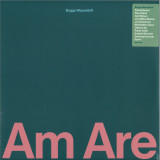
"Am Are" features special constellations of superb musicians that spans both generations and styles, and is an exploration of sonic textures, dynamic contrasts of mood and style, and ranges from sparse arrangements through to complex layers of dubs and loops and improvisational interplay.
The album begins with Bugge alone on "How?" with layers of undulating atmospheric synth, brought into focus by Bugge's piano at the forefront, creating a minimalist miniature that is both emotive and serene. For "Villrein" Bugge is joined by Elias Tafjord on drums, beginning with a santur-like synth figure, floating over ominous formant sci-fi bass synths bubbling and pulsing, and overlaid by phrenetic piano that only stops to lock into the santur figure before relaunching on its own journeys, all underpinned by Elias Tafjord's expressive drumming. "Is Anyone Listening?" demonstrate's Bugge's songcraft, layering muted percussive piano behind Rohey's distinctive and beautiful vocals punctuated by Martin Myhre Olsen's tenor saxophone, creating a soulful mood tinged with desperation.
"BAG" presents the first classic piano trio of the album - Bugge on piano and synths, Arild Andersen on bass, and Gard Nilssen on drums - announcing itself with an insistent riff, chattering drums, breaking into a progressive rock-style passage of bass and piano in unison. "Reel", the second track from this trio, is a mellow soundscape that evolves to become hazy urban downbeat jazz.
The second piano trio of Bugge (Rhodes and Korg MS20 synth), Sveinung Hovensjø (Electric Bass), and Jon Christensen (Drums and Bells) offers a completely different perspective. The first track "Render" features Bugge's Zawinul-esque Rhodes and monosynth leads, Sveinung's fuzz bass in something of a leading role, all carried with chattering gusto by Jon Christensen's dynamic drumming that brings texture and space as well as rhythm to the piece. "Vender" begins as an atmospheric piece, with reed organ-like synth washes, and octave-processed bass with a somewhat sitar-like tone, meandering until the track breaks down into drums and bass weaving around an insistent drum machine loop, dripping with synth pads and monosynth lead.
"JazzBasill" introduces the third piano trio - featuring Bugge (Piano), Jens Mikkel Madsen (Acoustic Bass) and Øyunn (Drums) - and offers a classic piano trio style with urban sophistication, that is lyrical, and interspersed with staccato cadences, giving a feeling of broken swing, slightly staggered yet driving forwards. The title track "AM ARE" is late night jazz, with baroque whispers, and distinctly melodic.
The final track, "Think Ahead" features the non-standard trio of Bugge (Piano/Organ), Oddrun Lilja (Guitar) and Sanskriti Shrestha (Tablas/Harp). Beginning with a minimalist piano figure, table, and sustained guitar, the track breaks down to a noise surge and ambient windscape, with guitar birds and abstract grinding, before returning to minimalist melodicism.
The shifting personnel across the album, as well as the three different studios in which it was recorded - Village Recording in Copenhagen, Rainbow Studios in Oslo, and his own Buggesroom Studio - creates a feeling of dynamic change and musical variety that is unified by Bugge's piano and keyboards. His playing moves between foreground, where he allows the music to elevate him, and background, where he move gently like a beneficent presence, tending to the demands of the spirit of the musical moments he has captured. It is an album powered by restless exploration and shaped by distinctive musical personalities; it is a journey through different moods, illuminated and brought into focus by Bugge's measured approach and guiding hand.
out of Stock
Last delivered 15 months ago available to reorder, subject to availability
‘The Return of Pachyman’ is a supernatural force
from a brave new world that’s a little bit San Juan,
a little LA, and a whole lot of Channel One in
Kingston, Jamaica. Designed to be a resurrection
of sound systems from the past through which we
can celebrate a post-Trump future, the record
shows that blasting off into reggae’s deep space
has never gone out of style.
Pachy García (aka Pachyman) is perhaps best
known as the drummer / vocalist for the LA-based
band Prettiest Eyes, a unique pop-noise project
that reflects his other formative interest, synth
punk. He thinks of ‘The Return of Pachyman’ the
same way King Tubby might - an ‘X-ray’ of reggae
music, breaking it down to its bare bones.
Originally a guitarist, he moved to Los Angeles in
the early 2010s and developed his passion for
dub. From there, he started recording bass, drums
and piano and collecting recording equipment in
his basement studio, which he calls 333 House.
With ‘The Return of Pachyman’, García wants to
show how the Caribbean flow is transnational, a
vibe that resounds from Jamaica to San Juan to
Southern California. “With this project, I was
looking to make positive music and radiate good
energy; something to kinda disconnect from the
negative things that were happening at the
moment,” Garcia explains. “I am trying to make this
project a service for humanity in the sense that I
just wanted to shine a positive light.”
out of Stock
Last delivered 18 months ago available to reorder, subject to availability
Patrick Conway crossed the threshold to find a new hope. This is his third offering for the ESP Institute. On side A, 'Loss' sets an overall melancholic tone for the record. A single repeating high note on the piano establishes a guiding element, which is eventually supported by a tear-jerking yet resolving chord progression, a trailing choir of angelic voices, and a filter-modulating synth that pads the widest zones of the mix with the occasional counter-melody. Robust in and of itself, Patrick’s melodic arrangement floats gracefully over an otherwise antagonistic rhythm section built from his signature corroded dancehall arsenal. This hornets nest of boxed live kick drums, piccolo snares, and high-pitched toms is held together by a dry veneer of saturation, sitting at safe distance from but in natural harmony with the bulbous low-frequency atmospherics. On the flip, 'Silencio' employs a similar statement at the top of each measure, this time an anthemic polyphonic synth stab as opposed to the singular piano note, however, unlike the layered melodies throughout 'Lost', here Patrick explores the narrative possibility of negative space—call and response, rhythmic dialogue, and the implied notes that leave the listener’s or dancer’s intuition to complete a phrase. In the game “musical chairs,” children run around manically until signaled to find a chair, at which point their diverse personalties must urgently synchronize, until set free to run again and repeat the process. Patrick's approach for 'Silencio' conjures said metaphor—his melody and rhythm are unleashed to meander and spasm within the confines of each respective bar, until that anticipated synth stab unifies everything “on the one”—controlling the chaos, calling on muscle memory and affirming logic. These two songs will be with you always as they always have been.
out of Stock
Last delivered 18 months ago available to reorder, subject to availability
Googling “paradise house”, the first results to pop up are an endless list of European b&b’s with whitewashed lime façades, all of them promising “…an unmatched travel experience a few steps from the sea”. Next, a little further down, are the institutional websites of a few select semi-luxury retirement homes (no photos shown, but lots of stock images of smiling nurses with reassuring looks). To find the “paradise house” we’re after, we have to scroll even further down. Much further down.
It feels like yesterday, and at the same time it seems like a million years ago. The Eighties had just ended, and it was still unclear what to expect from the Nineties. Mobile phones that were not the size of a briefcase and did not cost as much as a car? A frightening economic crisis? The guitar-rock revival?! Certainly, the best place to observe that moment of transition was the dancefloor. Truly epochal transformations were happening there. From America, within a short distance one from the other, two revolutionary new musical styles had arrived: the first one sounded a bit like an “on a budget” version of the best Seventies disco-music – Philly sound made with a set of piano-bar keyboards! – the other was even more sparse, futuristic and extraterrestrial. It was a music with a quite distinct “physical” component, which at the same time, to be fully grasped, seemed to call for the knotty theories of certain French post-modern philosophers: Gilles Deleuze, Félix Guattari, Paul Virilio... Both those genres – we would learn shortly after – were born in the black communities of Chicago and Detroit, although listening to those vinyl 12” (often wrapped in generic white covers, and with little indication in the label) you could not easily guess whether behind them there was a black boy from somewhere in the Usa, or a girl from Berlin, or a pale kid from a Cornish coastal town.
Quickly, similar sounds began to show up from all corners of Europe. A thousand variations of the same intuition: leaner, less lean, happier, slightly less intoxicated, more broken, slower, faster, much faster... Boom! From the dancefloors – the London ones at least, whose chronicles we eagerly read every month in the pages of The Face and i-D – came tales of a new generation of clubbers who had completely stopped “dressing up” to go dancing; of hot tempered hooligans bursting into tears and hugging everyone under the strobe lights as the notes of Strings of Life rose up through the fumes of dry ice (certain “smiling” pills were also involved, sure). At this point, however, we must move on to Switzerland.
In Switzerland, in the quiet and diligent town of Lugano, between the 1980s and 1990s there was a club called “Morandi”. Its hot night was on Wednesdays, when the audience also came from Milan, Como, Varese and Zurich. Legend goes that, one night, none less than Prince and Sheila E were spotted hiding among the sofas, on a day-off of the Italian dates of the Nude Tour… The Wednesday resident and superstar was an Italian dj with an exotic name: Don Carlos. The soundtrack he devised was a mixture of Chicago, Detroit, the most progressive R&B and certain forgotten classics of old disco music: practically, what the Paradise Garage in New York might have sounded like had it not closed in 1987. In between, Don Carlos also managed to squeeze in some tracks he had worked on in his studio on Lago Maggiore. One in particular: a track that was rather slow compared to the BPM in fashion at the time, but which was a perfect bridge between house and R&B. The title was Alone: Don Carlos would explain years later that it had to be intended both in the English meaning of “by itself” and like the Italian word meaning “halo”. That wasn’t the only double entendre about the song, anyway. Its own very deep nature was, indeed, double. On the one hand, Alone was built around an angelic keyboard pattern and a romantic piano riff that took you straight to heaven; on the other, it showcased enough electronic squelches (plus a sax part that sounded like it had been dissolved by acid rain) to pigeonhole the tune into the “junk modernity” section, aka the hallmark of all the most innovative sounds of the time: music that sounded like it was hand-crafted from the scraps of glittering overground pop.
No one knows who was the first to call it “paradise house”, nor when it happened. Alternative definitions on the same topic one happened to hear included “ambient house”, “dream house”, “Mediterranean progressive”… but of course none were as good (and alluring) as “paradise house”. What is certain is that such inclination for sounds that were in equal measure angelic and neurotic, romantic and unaffective, quickly became the trademark of the second generation of Italian house. Music that seemed shyly equidistant from all the rhythmic and electronic revolutions that had happened up to that moment (“Music perfectly adept at going nowhere slowly” as noted by English journalist Craig McLean in a legendary field report for Blah Blah Blah magazine). Music that to a inattentive ear might have sounded as anonymous as a snapshot of a random group of passers-by at 10AM in the centre of any major city, but perfectly described the (slow) awakening in the real world after the universal love binge of the so-called Second Summer of Love.
For a brief but unforgettable season, in Italy “paradise house” was the official soundtrack of interminable weekends spent inside the car, darting from one club to another, cutting the peninsula from North to centre, from East to West coast in pursuit of the latest after-hours disco, trading kilometres per hour with beats per minute: practically, a new New Year’s Eve every Friday and Saturday night. This too was no small transformation, as well as a shock for an adult Italy that was encountering for the first time – thanks to its sons and daughters – the wild side of industrial modernity. The clubbers of the so-called “fuoriorario” scene were the balls gone mad in the pinball machine most feared by newspapers, magazines and TV pundits. What they did each and every weekend, apart from going crazy to the sound of the current white labels, was linking distant geographical points and non-places (thank you Marc Augé!) – old dance halls, farmhouses and business centres – transformed for one night into house music heaven. As Marco D’Eramo wrote in his 1995 essay on Chicago, Il maiale e il grattacielo: “Four-wheeled capitalism distorts our age-old image of the city, it allows the suburbs to be connected to each other, whereas before they were connected only by the centre (…) It makes possible a metropolitan area without a metropolis, without a city centre, without downtown. The periphery is no longer a periphery of any centre, but is self-centred”.
“Paradise house” perfectly understood all of this and turned it into a sort of cyber-blues that didn’t even need words, and unexpectedly brought back a drop of melancholic (post?)-humanity within a world that by then – as we would wholly realise in the decades to come – was fully inhuman and heartless. A world where we were all alone, and surrounded by a sinister yellowish halo, like a neon at the end of its life cycle. But, for one night at least, happy."
out of Stock
Last delivered 3 months ago available to reorder, subject to availability
If every significant artist has an underrated gem in its catalog, then Mirage is that album for Fleetwood Mac. An obvious return to relative simplicity after the dramatic tension of Rumours and experimental ambitions of Tusk, the 1982 album finds the band re-grouping after a brief hiatus and again climbing to the top of the charts. Extremely well-crafted, well-produced, and well-performed, the double-platinum effort distills the group’s hallmark strengths into a filler-free set that never runs short of addictive pop hooks or daft accents.
Sourced from the original analog master tapes, pressed at Fidelity Record Pressing in California, and housed in a Stoughton jacket, Mobile Fidelity’s numbered-edition 180g 45RPM 2LP set presents Mirage in reference sound for the first time. The efforts co-producers/engineers Ken Caillat and Richard Dashut went to capture the splintered albeit formidable band can be heard with stunning accuracy, range, depth, and detail.
Though Rumours understandably gets a permanent spot in the audiophile hall of fame, the smooth, clear, and dynamic sonics on Mirage confirm that the record that stood as Fleetwood Mac’s last effort for five years deserves a place in the same vaunted arena. The presence and imaging of Mick Fleetwood’s percussion alone on this reissue might have you wondering how this slice of soft-rock bliss has gone under-noticed for decades. Other prized aural aspects — separation, definition, impact, tonal balance — are also here in spades.
Like much surrounding Fleetwood Mac in the 1980s, arriving at Mirage was not easy. Caillat searched for studios located outside of Los Angeles on a mission to change up the vibe of the band’s prior recording sessions. Everyone settled on Le Chateau in France, where relations between some members remained icy — and cooperation with the producers strained. Battles with exhaustion, bitterness, and addiction further informed the proceedings at the 18th century complex in the French countryside, where even communal meals were allegedly eaten in silence.
Inevitably, the feelings that co-producer Lindsey Buckingham, Stevie Nicks, Christine McVie, and company harbored — as well as the situations in which they found themselves — drifted into the songwriting. In its rapid ascent to rock-star royalty status, Fleetwood Mac drifted apart, embarked on solo pursuits, and found it was lonely at the top. Emptiness, the illusion of dreams, the longing for love, the want to escape to bygone times of innocence and happiness: Such themes inform a majority of the narratives. Even if the lyrics regularly take a back seat to easygoing arrangements that allow Mirage to come on like a refreshing breeze on a sunny summer afternoon.
Home to three Top 25 singles in the U.S. and having occupied the pole position of the Top 200 album charts for five weeks, Mirage rightfully resonated with the mainstream and attracted listeners on both sides of the pond. And how, via a smart blend of sugary melodies, warm harmonies, interlaced notes, nimble rhythms, taut structures, and passionate vocals. Not to mention the presence of what arguably remains Nicks’ signature song, the biographical “Gypsy,” a meditation on the loss of her close friend Robin Anderson that teems with majesty, mystery, and mysticism — and which gets an assist from Buckingham’s shaded tack piano and richly strummed guitar chords.
Its ranking as an all-time classic aside, that No. 12 hit has plenty of company when it comes to brilliant pop turns on Mirage. On the subject of Nicks, the raspy singer gets a little bit country on “That’s Alright.” Its clip-clopping pace and two-stepping progression complement subtle vocal swells that emerge during the final verse of a tune that is ostensibly about leaving but still conveys forgiveness and grace. And what would a Fleetwood Mac record be without Nicks drawing on the tools of the supernatural — cards, dreams, wolves, and the like — on the twirling “Straight Back.”
Despite the potency of Nicks’ primary contributions, Mirage seemingly unfolds as a tight competition between Buckingham and McVie — and one that ultimately ends in a draw. Buckingham’s salvos include the contagious “Can’t Go Back,” a yearning to time-travel back to the past that’s complete with hall-of-mirrors backing vocals; “Oh Diane,” out-of- left-field ear candy sweetened with hiccupped vocals and salt-and-pepper-shaken grooves; the chiming “Eyes of the World”; and “Empire State,” a delightfully fluttering track whose high-range vocals, lap harp notes, and ringing xylophones hint at the galaxies of sound that would erupt on Tango in the Night.
Then there’s McVie. As elegant, understated, and coolheaded as she’s ever been on record, she pours her heart out on cuts that revolve around her inevitable split with Beach Boy Dennis Wilson. In the process, she punctuates Mirage with a characteristic not always associated with catchy pop music: emotional weight, and the sense of dreaded acceptance in the face of dreams deferred.
“I wish you were here/Holding me tight,” McVie sings over a delicate melody on the album-closing piano ballad “Wish You Were Here.” Though they hoped otherwise, for the members Fleetwood Mac, distance and separation were always close at hand. Believing otherwise, inviting nostalgia, and pretending everything was fine only amounts to a mirage.
“… it was dance music, it had lyrics, it had songs, it wasn’t all instrumental, it was basically uptempo soul music, to be exact.”*
This quote from Timmy Regisford already sums up everything you need to know about his remix of Basic Black’s “Don’t Make Me Fall In Love.” Signed to Motown during Regisford’s reign as vice president and A&R, their self-titled debut album from 1990 is a testament to the massive popularity of new jack swing at the time. In his remix, the co-founder, resident DJ, and key figure of Club Shelter reconfigures the song’s structure with the signature sounds of New York’s prime dance floor scene, while preserving the heartfelt storytelling of the lyrics and the group’s voices on top of an irresistible groove and a bassline to die for.
At the time, it was only available in the record crates of the Big Apple’s DJ elite and later on as a white label in specialist shops. This soulful, yet driving piece, however, never saw an official single release—until now. Lifted from a DAT tape in Tony Humphries’ archive and carefully and faithfully restored, it now even features a condensed, never-before-released instrumental version of the remix, as well as a bass-and-beats-only edit for mixing purposes by yours truly. New jack swing transformed into New York club music by a king. This remix is a testament to Timmy Regisford’s prowess in the studio, but also honors the roots of the music he loves and grew up on—serving as a perpetual piece of the city’s vast history in underground dance music.
Gerd Janson
out of Stock
Last delivered 13 months ago available to reorder, subject to availability
In the spring of 1983, members of Genesis reconvened at their studio, named The Farm in Chiddingfold, Surrey, to start work on a new studio album, their first since Abacab (1981). Genesis became their first album written, recorded, and mixed in its entirety at the studio room; previously they had to write in an adjoining space. Having the group work in their own space without the additional pressure of booking studio time and fees resulted in a more relaxed environment. They were joined by engineer Hugh Padgham, who had also worked on Abacab,
AllMusic writes: "Moments of Genesis are as spooky and arty as those on Abacab — in particular, there's the tortured howl of "Mama," uncannily reminiscent of Phil Collins' Face Value, and the two-part 'Second Home by the Sea' — but this eponymous 1983 album is indeed a rebirth, as so many self-titled albums delivered in the thick of a band's career often are. ... Anybody who paid attention to 'Misunderstanding' and 'No Reply at All' could tell that this was a good pop band, primarily thanks to the rapidly escalating confidence of Phil Collins, but Genesis illustrates just how good they could be, by balancing such sleek, pulsating pop tunes as 'That's All' with a newfound touch for aching ballads, as on 'Taking It All Too Hard.'" AllMusic reviewer Stephen Thomas Erlewine gives the album 4.5 Stars.
For fans who appreciate the evolution of the band's music over the years, owning this album is important as it represents a distinctive phase in their career.
This is the definitive deluxe 45 RPM 2LP Analogue Productions (Atlantic 75 Series) reissue of the classic Genesis. A classic for all true Genesis fans!
Summertime Whiteout is a debut Bleach Cult album - the quirky ambient pop record that
fantasizes about 1960s surf culture and romanticizes the neverending dilemmas of teen
life. It is all about raw imperfections and beautiful spontaneity, captured live on a
modular synthesizer, often relying on single takes and instinctive executions of tracks
that leave little to no room for extensive tweaking and post-processing. Recorded in the
living room at night it shies away from sophistication and complexity instead employing
rough, rock and roll inspired ideas. Raw drifting analog sequences, pulsating textures
and polychromatic vocals. No guitars or drum machines, however.
A once shocking 1962 LP of love songs…by men, for men. A long lost treasure featuring the cool & sophisticated vocals of Gene Howard and a cast of prime studio jazz musicians, performing a set of standards sung to a male suitor. Ahead of its time in every way. Decades ago, JD Doyle, renowned LGBT music historian and archivist, happened upon a copy of Love Is A Drag. Doyle would often play cuts from it on his radio show, Queer Music Heritage. He remained intrigued by the lack of either artist or producer credited on the album. A vague line of jacket text ambiguously announced, “For Adult Listeners Only - Sultry Stylings by a Most Unusual Vocalist.” And, the facts behind the album would have most likely remained unclear if it were not for one Murray Garrett Out of the blue, Murray Garrett contacted JD Doyle and wanted to talk about the album. According to Garrett, through his photography career, he had forged a friendship and partnership with prolific big band vocalist, Gene Howard. The two worked together on projects, eventually teaming with Jack Ames, founder of Edison International Records. When queried for ideas for a potential Edison International release, Garrett recalled a performance he had once seen in Greenwich Village - a performance of a man singing love songs to another man, in serious fashion, i.e., not at all campy or overly-dramatic. Gene Howard (straight and happily married!) agreed to sing on the record, accompanied by a who’s-who of Los Angeles A-list session men. Upon release, the record sold well in Hollywood, with Frank Sinatra, Liberace, and Bob Hope among its biggest advocates.
Driving is Sam Wilkes’ Indie Rock record. Iit is the first release on Wilkes Records, an imprint borne of the artist’s emergent need to self-release. The songs presented here exist comfortably within the ever-expanding Wilkesian cosmos, characterized as they are by virtuosity, torqued experimentalism, and collaboration with a range of talented musicians. But Driving’s influences, its sincerity, and its allegiance to a certain pop sensibility reflects a departure for an artist who has primarily staked his claim within the experimental jazz idiom.
Take the first track, “Folk Home,” which inaugurates the album’s fecundity—a bright, green, humid, summer feel. A swirling, freakout coda of reversed vocals gives way, in no short order, to a caterwaul of flute work that conjures Van Morrison’s (in)famous Astral Weeks sessions. Standing beside Morrison, the usual suspects are all present, if somewhat abstractedly. Dylan, The Dead, Joni, the Fab Four. Wilkes has developed a reputation as an experimental jazz luminary, but his deep affinity for the pop/rock/folk idiom of the latter twentieth century rings clear throughout Driving. More so than any Wilkes release to date, Driving is a collection guided by and dedicated to the man’s attention to songcraft.
Written and recorded during a period of rain-damage induced renter’s itinerance (and the attendant desire to produce a kind of therapeutic, self-soothing, home-feeling music), Driving loosely charts the trajectory/experience of “a protagonist,” both Wilkes and not, “who has figured out how to live an enlightened and fulfilled life, but is unable to do so because he thinks about it too much.” This friction is surely relatable — a symptom of our compulsively self-aware present. But Wilkes avoids the obvious pitfalls of public hand-wringing. Rather, Driving’s nine tracks evince a genuine, and mature searching-ness, both sonically and lyrically. The ending refrain of “Own” serves like something close to a thesis— “Letting go // isn’t a concept // it’s an action.” In an attempt to beat back ego, hyper-cogitation, language itself, Wilkes arrives at an axiom that feels so true and familiar, you’d swear you’d heard it one hundred times before.
Driving’s final third is, fittingly, its most emotive and cathartic. Tracks seven and eight, “Again, Again” and “And Again,” form a diptych, joined most obviously by the jangling, recursive grooves of guitarist Daryl Johns. Wilkes is said to have encouraged Johns to go “full Lindsey Buckingham” (clearly a welcome and resonant prompt), but one also catches stray Knopfler vibes, some intermittent Fripp, and (perhaps more-so in tone than technique) the spirit of DIY prophet and jangling man himself, Martin Newell (the Cleaners from Venus). Wilkes has stated that he finds joy in creating musical environments suitable to the contribution and flourishing of his favorite musicians. Throughout Driving, and in these two tracks especially, he has more than succeeded.
The record closes with the titular track: a story-song that, according to Wilkes, poured out of him (melody, composition, and lyrics) in a single sitting. The tale is told plainly, bravely, starkly; a mistake was made, regrets have been had, and all is wrapped up in the recollection of a deeply felt adolescent heartsickness—a time when the narrator was first afire with music and automotive freedom. The song captures the moment when meaning inexplicably falls into place, when a long-nagging memory suddenly assumes narrative form, and the subsequent sense of lightness and unburdening. It is fitting that Driving, a record conceived as a form of self-therapy, should culminate with a sense of humble revelation. That Wilkes is plainly eager to share the vulnerable fruits of this labor constitutes Driving’s joyful offering.
180g black vinyl - limited to 200 numbered copies.
"What is my heart now"is the debut solo album by Ziemowit Klimek, known so far from bands such as Immortal Onion, Hania Rani, and Magda Kuraś Quintet. It is a cycle of five improvised compositions – "What," "Is," "My," "Heart," and "Now" – unified by a unique artistic concept, with each piece created in collaboration with a different musician.
The creative process for each of the five duets began with a conversation between Ziemowit, the guest artist, and the video team. Deconstructing the title word into its fundamental elements through questions like "What does 'What' mean? What emotions and associations does this word evoke in us? How can we capture its essence in sound and image?" became the starting point for artistic exploration.
To preserve the authenticity of the material as much as possible, both sound and image were recorded live, with no cuts or post-production editing. Equally important was the choice of spaces that corresponded to the meaning of each title word. Instead of sterile studios, the recordings took place in a variety of unique locations – "Heart" was captured in Ziemowit's most personal space, his bedroom, while "Now" was recorded inside a car during a dynamic drive, where the physical forces acting on the musicians significantly influenced their decisions while playing.
The album resonates with dialogue – not only musical but also emotional and intellectual. It is a meeting of individualities who, for Ziemowit, are not only inspirations as artists but also significant people in his life."What is my heart now"is an album about defining one's identity and capturing the moment, created in an atmosphere of honesty and trust. Ultimately, the question arises: is it even possible to definitively answer the question posed in the album's title?
• Earliest known full concert recording of Buck and his Buckaroos!
• Mastered from the original tape by Grammy®-winning engineer Michael Graves.
• Extensive liner note from co-producer Scott B. Bomar.
• First pressing on Strawberry Jam-colored vinyl.
Buck Owens and his Buckaroos were a phenomenon when they burst onto the scene in the early 1960s. in 1963–1964, they had five #1 Country hits including “Act Naturally,” “Love’s Gonna Live Here,” “I Don’t Care (Just As Long As You Love Me),” and “My Heart Skips A Beat.”
Their live Carnegie Hall Concert release hit #1 in 1966, but how exciting they were onstage before that was largely unheard. Unless you were there. Until now. The Exciting Sounds Of Buck Owens And His Buckaroos Live From Richmond, Virginia, 1964 is the recently discovered, earliest full-concert recording of The Buckaroos onstage. The band, performing the aforementioned #1 hits and more, shows how their presence and performance in front of a live audience cemented their status as one of the greatest acts of all time—in person and on record.
Painstakingly restored and mastered by multiple Grammy-winning engineer Michael Graves, The Exciting Sounds Of Buck Owens And His Buckaroos Live From Richmond, Virginia, 1964 shows a band ready to take over the world. (Even showing appreciation to their new labelmates, The Beatles, with a cover of “Twist And Shout.”) With a first pressing on strawberry jam colored vinyl, The Exciting Sounds Of Buck Owens And His Buckaroos Live From Richmond, Virginia, 1964 looks and sounds like it could and should have appeared in 1964, but with 21st century style and technology.
So, head to Richmond and hear Buck Owens And His Buckaroos firing on all cylinders. It may have happened over six decades ago, but it sounds as vital and important to music history now as ever.