If youʼre a fan of Daptone Records, chances are youʼve read or heard the name Victor Axelrod, and even if you havenʼt, youʼve heard music from his hand. As a producer, arranger, recording and mixing engineer, and keyboardist, his creativity has extended across more than two decades of the labelʼs releases, even dating to its prehistory with Desco Records.
If You Ask Me To..., the first LP under his name for the label, is a collection of singles released between 2007-2023 as well as unreleased tracks from Sugar Minott and Binky Griptite. The genesis of which came via an 11th hour request from Daptone for a Sharon Jones remix (2007) that resulted in the reggae version of “How Long Do I Have To Wait For You?” found here.
This opened the door to additional explorations of reggae/soul synergies within the catalog, affirming the musical and cultural link between Daptoneʼs core soul sound and Axelrodʼs passion for Jamaican music. While previous projects like Ticklah Vs. Axelrod and Roots Combination (produced under the alias Ticklah) were inspired by the Jamaica of the 1970s and 80s, this set specifically channels an earlier period in the 1960s when Jamaica was both strikingly original in its continuum of genres but also closely and empathetically attuned to Black American music.
Through Axelrodʼs exceptional taste and the notable contributions of guitarist To
A cautiously redemptive portrait, any happy ending reflects the possibilities of fulfillment and stability, not the things themselves. In May 2021, months before the film's release, Courtney Barnett and collaborator Stella Mozgawa rendezvoused with Cohen in Melbourne to shape a score that fit that premise-- nothing too obvious or instructive, to tell the audience how they should feel. Barnett found she liked listening to what the duo had made, existing within its reflective gaze. She began sorting through those little instrumentals like amoebic puzzle pieces, figuring out how they fit into a full picture.
The result is a seamless series of 17 instrumental improvisations called End of the Day: Music from the Film 'Anonymous Club', soundtrack reimagined as impressionistic sound- art collage. Like Barnett's rock songs, they wordlessly ask hard questions of our
softest parts, wondering what it is we really find there.
Amy Dabbs might be one of the hardest working artists in the game right now. Making it in the current electronic music landscape is not an easy thing, which might be why this talented artist is so heavily invested in her musical output. With releases on Aus Music, Shall not Fade and her own Dabbs traxx, a monthly residency on Rinse FM and a tour schedule that seems to get busier by the minute, we’re happy to see her hard work is paying off. Add to that some support by artists such as Special Request, The Blessed Madonna, Jaguar and Cinthie and you know this Berlin-based artist is right where she belongs: in the spotlight.
With a love for all things high energy – including, but not limited to house music and breaks – Amy knows how to set fire to a dancefloor (or record for that matter). Her music has been described by Resident Advisor as “Elegant and soulful drum & bass, that’ll still catch the ears of house heads.” So here you go, house heads: Amy Dabbs on Heist. The ‘Only breaks can love your heart’ EP is packed with feelgood energy and comes with a Dam Swindle remix that has the duo laying down some pleasantly unexpected breakbeats on an altogether rush-inducing record.
Right from the start, you know you’ve got an anthem on your hands with ‘Everything alright’. The gorgeous vocals by Aika Mal give you that right amount of emotive, ravey energy and come wrapped in a package of solid breaks and mesmerizing chords. With a hint of acid and a couple of meticulously crafted breakdowns you’ll be singing along with this track before you know it.
The Dam Swindle remix drops the tempo a little bit, but with its 140 bpm, warm broken beat and UK bass, the duo delivers a curveball of a track with a lot of crossover appeal. They went for a more stripped back approach that combines introverted percussion with bouncy keys that complement the vocals perfectly for an altogether irresistible remix.
‘Crush’ is a signature Amy Dabbs tracks, with driving 909 percussion, female vocal chops, ethereal pads and classic strings. It’s a warmhearted affair laced with Amy’s feelgood DNA. On the flip you’ll find ‘Eleven eleven twenty two’; a classic deep house track with subtle hints of UKG in its sampling and bass. The pads and leads are moody and the skippy percussion gives this track the kind of energy you’d welcome when pulling an all-nighter.
Rounding off the EP, we’ve got the ep title track ‘Only breaks can love your heart’; another showcase of Amy’s knack to make house aficionados dance to drum and bass. There’s a certain contrast in pace – raging drums versus dreamy chords that makes you feel at ease listening to a fast-paced track like this. The vocals are equally hazy with a subtle 90’s and 00’s RnB feel. Bassface guaranteed on this one!
out of Stock
Last delivered 2 years ago available to reorder, subject to availability
He has curated an intimate, thoughtful collection of songs that deal with cherished loved ones, love denied, the power of faith, and a simpler, less encumbered way of life.The album features a healthy mix of country classics and contemporary bluegrass songs: Sparks revives warhorses from the repertoires of Lefty Frizzell, George Jones, and Hank Williams, complementing them with material from present-day writers including Wyatt McCubbin and Daniel Crabtree.
An evocative, heart-felt singer with few peers, younger bluegrass musicians are inspired by and study the subtle nuances of Sparks' vocal style. But Sparks, however, is a double threat, being equally revered for his innovative guitar playing.
Countless guitarists have tried to emulate his singular flatpicking style, but few - if any - have truly mastered it.
For some years, fans of the Bluegrass icon have requested that he do a project of this nature. At long last, that wait is over. Listeners get pure Larry Sparks.
Recorded at his newly built home studio, it's just him, his signature 1954 D-28 and his son Larry "D" Sparks providing subtle backing rhythm on bass. The warmth and intimacy of this album affords his admirers the opportunity to pull up a chair, relax, and listen to a true bluegrass master do what he does best - playing and singing from his heart to theirs.
Lost in time yet always in season, here’s a blast of that old perennial, the punk rock, representative of the swiftly changing times around Bailey’s Crossroads, just outside Washington DC, in the early 80s. Skam recorded this stuff in 1982-1983, then broke up, leaving these songs to be released… maybe never? Or more preferably, now, to race into the bloodstream of jaded, faded today with all the vigour and rigour of Skam’s eternal youth.
Though they didn’t release any records during their three years of existence, it’d be wrong to call Skam ‘never-was’ - in addition to these recordings, there’s a trail of flyers for shows with Scream, No Trend, United Mutations and Media Disease, as well as the memories of the student alumni from Bishop O’Connell High, class of ‘83 or so.
The conglomeration of scenes around the greater DC area at that time produced a variety of bands, but the prevailing recollection of the era is of the incendiary hardcore punk and subsequent straight edge values of the Dischord bands. The band that became Skam was a world apart; they were posited for the first time by 8th graders Vince Forcier and Jack Anderson at a Jackson Browne concert, and their initial rehearsals in their parents’ basement were highlighted by covers of Beatles, Stones, Who and Led Zeppelin songs. Bad covers.
It wasn’t until they’d been playing a bit that they discovered The Ramones, and it was then that the die was cast and pedal pressed to the metal for another frantic couple of years.
The Skam recordings from 1982 have an undeniably Clash-like countenance that sets them definitively apart from the ‘First Four’ of Dischord - in some ways, prefiguring the pop-punk sound of Green Day at the dawn of the 1990s instead - but subsequent recordings found them quickly evolving - or devolving - into a personal mastery of savage riffs and tempos, as well as post-punk conceptions.
But even as they were verging into this new territory, their three years together had frayed their alliance and they soon broke up. Jack joined No Trend, Vince played in Racer X and then Second Wind. And life went on. However, the rediscovered Skam tapes make for an incredible addendum to the more well-known music of that incredible time and place
Tilman teaches us how to fly. His Atmospheric Mix of Marc Brauners „The Feeling“ is a 90s shaker and takes you straight to the stars - What a feeling, what a rocket!
The A-Side ends with a solid groover. Soela teams up with her partner in crime Module One. They deliver a classy interpretation of Max Taelers „Running“. You like it deep? - this one is for you!?
On the flip side waits for you Eddie C. He maximized the Funkyness of „Heads Up High“ without losing sight of its origins. King Eddie does royal things!
Last but not least Denyl Brooks interpretation of Shakas „Overminded“ is a peak time dance floor shaper. This belter goes in the ears, stays in the legs - for sure!
out of Stock
Last delivered 17 months ago available to reorder, subject to availability
FINAL GASP unleash their debut album Mourning Moon! A harrowing journey through all things Hardcore, Metal, and Goth, Mourning Moon drags the listener through the dark in 12 thrilling tracks, and drives a stake right into the heart of 2023's most compelling releases. Opener "Climax Infinity" sets the tone for what's to come: the undeniable hardcore swagger of the Boston-based band is immediate as drums and guitars stomp and riff against one another, while FINAL GASP vocalist Jake Murphy howls - "watch as the way it falls, your loss of control, from whispered incantations, burnt down for your invocation!" Mourning Moon showcases expert songwriting and lyrical crafting, snarling and barking through the harsher, heavier punked out moments in "Blood and Sulfur" and "Frozen Glare" while flexing arena chops on the tremendous "Temptation" and utterly despairing "The Vanishing". Elsewhere, the hook-laden title track explodes out of the underground and aims straight for the moon. Lead single "Mourning Moon'' is downright catchy and showcases FINAL GASP's knack for excellent songwriting. A song professing eternal love through a lens clad in black and morbid as ever, "Mourning Moon" proves to be one of the most inventive journeys this side of the genre in recent times, recalling a prime period for luminaries Killing Joke and Danzig. With Mourning Moon, FINAL GASP emerge from the shadows, and step into the forefront of extreme music's new guard.
Cassy returns with ‘E.T.Ascension’, a mini journey through the sounds of house and techno which she adores. With this release she revisits the simplistic methods she used when making music in previous years when living in Berlin with her then husband, where he helped build her home-studio in the living room. With him being an established sound engineer she learned a lot from him through the process and by using predominantly just an 808 and a PC, the pair produced the main parts of these tracks together, with Cassy finishing them off herself last summer. It reminded her of the weirdness that makes her productions so great, which is what she has pinned on this release, enjoying the feelings of freedom by using the machine again, and revisiting the feelings she had when using the machine for the first time, how fresh, new and particular the sounds were.
out of Stock
Last delivered 2 years ago available to reorder, subject to availability
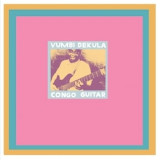
Hive Mind and Sing A Song Fighter are delighted to present to you their first collaborative release, the amazing solo guitar album from legendary Congolese guitarist Kahanga Dekula aka ”Vumbi”.
Swedish producer Karl-Jonas Winqvist (founder of Sing-A-Song Fighter and member of Senegalese/Swedish act Wau Wau Collectif) has been a longtime fan of Vumbi Dekula’s artistry which led to him releasing The Dekula Band's debut album ”Opika” in 2019 with the Dekula Band.
While watching the band perform was always a blast, says Karl Jonas, his desire to hear Vumbi play on his own, without the thunderous drums, wailing saxophones and chanting vocals grew in his mind, “Because, in a way, Vumbi’s guitar playing is like an orchestra on its own. And the idea of just concentrating on all the amazing riffs and beautiful, uplifting melodies was just so appealing”. Karl-Jonas proposed the idea of producing a solo album to Vumbi, and within a week the production process began
Recorded in two days during lockdown at the Helter Skelter Studios in Stockholm, Karl and Vumbi allowed the music to guide them. Vumbi was inspired to play 2nd guitar adding some harmonies and melodies here and there, and on the final track (”UN Forces Get Out of the DR of Congo”) he introduced a banjo into the world of ”Congo guitar”. Karl Jonas started up his old rhythm box machine to some of the songs to see how Vumbi and his playing would react to it. Elsewhere, wordless backing vocals from Karl-Jonas and Emma Nordenstam were added to Maamajacy, bass melodica by Karl-Jonas appears on Weekend, and a little piano tinkering from Emma adds some sparkle to Zuku. But clearly, Vumbi's virtuoso playing remains the star of Congo Guitar.'
The Keplar label presents the next instalment in a series of reissues from the catalogue of Sasu Ripatti’s seminal Vladislav Delay project. Originally released on Mille Plateaux, the vinyl edition of »Entain« from 2000 omitted two shorter tracks and included all others in an abridged form. With this reissue, the full album as it was pressed on CD is finally made available on vinyl. Besides a new remaster by Kassian Troyer, it was also given new cover artwork by Marc Hohmann that picks up on that of the »Whistleblower« reissue, released in early 2023 by Keplar. This serial visual approach highlights the conceptual continuity between those masterful explorations of the interplay between dub techniques, noise, and repetition.
Ripatti himself had reworked material from 1999’s »Ele« album for the release of »Entain,« which means that it can be considered the debut album proper of his Vladislav Delay project. It saw the Finnish artist aim more vigorously for abstraction than in his earlier releases as Vladislav Delay for labels such as Chain Reaction, which were collected on the iconic »Multila« compilation in 2000; another milestone from his back catalogue that has been reissued by Keplar in recent times. To mark this special occasion, »Multila« will be repressed by Keplar with a new artwork that matches the new design of »Whisteblower« and »Entain«.
»Multila« and »Entain« correspond with each other conceptually as much as they seem to differ on a musical level. The material on »Multila« was clearly indebted to the Berlin dub techno sound, marked by its grainy and at times abrasive sonic aesthetics. From the very first moments of the 22-minute long opener »Kohde« however, it becomes clear that »Entain« takes things further away from the dancefloor, aiming less for physical impact than for intellectual stimulation. A sort of electronic minimal music, it was primarily interested in letting discrete elements freely come into play with one another.
Much like »Multila,« however, »Entain« highlighted the subtle differences embedded in what only feels like repetitive music. Of course the massive bassline and ghostly dub riddims that permeate »Notke« as well as the deconstructed beat at the core of »Ele« still hint at Ripatti’s roots in beat-driven music. However, they also make his artistic transformation audible by turning their sources of inspirations into something entirely unheard of. »Entain« took the dub techno formula further than any other record before it—onwards into the realms of pure abstraction.
out of Stock
Last delivered 3 months ago available to reorder, subject to availability
The story of the invention of the term, 'deepfunk' is probably only known among fans and practitioners of this niche-genre. In short, it all started in the 1990s when DJs like Keb Darge, Mark 'Snowboy' Cotgrove and others began spinning obscure and feral Funk 45 RPM singles from local American bands, ostensibly generating another sub-category branch off of the mighty Northern Soul tree. The dance-club phenomenon inevitably spilled over to contemporary groups on the funk scene which immediately tried to record their music the way their idols did. The 'rare groove' and 'acid jazz' movements had run their course and there was a concerted effort to reinstate primitive idiomatic styles and techniques into the music, most notably by 90s funk collective The Poets of Rhythm. As more years passed by the number of bands steadily increased (although in tiny numbers, compared to the mainstream market). Almost every country had a representative with the majority of them coming from the United Kingdom. The deepfunk sound was still a niche, however a very few bands made it onto the mainstream charts, most notably Sharon Jones & the Dap Kings.
At the height of the retro-soul movement a questionable development took place. As more bands arrived on the scene, the production became more and more polished and pop-ish. Some of that squeaky-clean tidiness began to creep into the recordings, encouraged in part by the signature sounds of the digital recording technology available at that time. Some bands even tried to jump onto the possibility of promoting their music as 'deepfunk' although they were actually playing slick, funky pop music. This way some people who thought they were listening to raw, energetic funk actually felt quite ambushed when hit with real deepfunk. In fact, a certain percentage of funk music produced within the past 20 years does not deserve to be described as 'deepfunk' at all. Fortunately there were (and are) some pleasant exceptions which did not just imitate but actually rendered amazing funk music just like some of the finest funk combos of the 1960s and 70s.
One of those creative minds is without a doubt Joel Ricci aka Lucky Brown. Originally from Seattle, Washington, USA, he has enriched the deepfunk community since the mid-2000s with his stellar abilities. He is not only an amazing musician playing multiple instruments, but also a brilliant composer, arranger, and producer too. But for us here at Tramp he is much more, a close friend and remarkable human being. Whenever we were struggling, whether with the label or in private life, Joel and his musical work helped us to overcome everything and to keep going our path.
So here we are in 2023. The songs you are listening to right now are the complete Space Dream collection, split into two parts, representing the two living-room recording sessions from which his 2011 Tramp Records debut was compiled. Each fully remastered album contains unreleased material and comes with brand new, beautifully reimagined artwork by Ricci himself, housed in an authentic 1960s tip-on cover. A first class product from a first class musician for the discerning funk enthusiast.
out of Stock
Last delivered 3 years ago available to reorder, subject to availability
The story of the invention of the term, 'deepfunk' is probably only known among fans and practitioners of this niche-genre. In short, it all started in the 1990s when DJs like Keb Darge, Mark 'Snowboy' Cotgrove and others began spinning obscure and feral Funk 45 RPM singles from local American bands, ostensibly generating another sub-category branch off of the mighty Northern Soul tree. The dance-club phenomenon inevitably spilled over to contemporary groups on the funk scene which immediately tried to record their music the way their idols did. The 'rare groove' and 'acid jazz' movements had run their course and there was a concerted effort to reinstate primitive idiomatic styles and techniques into the music, most notably by 90s funk collective The Poets of Rhythm. As more years passed by the number of bands steadily increased (although in tiny numbers, compared to the mainstream market). Almost every country had a representative with the majority of them coming from the United Kingdom. The deepfunk sound was still a niche, however a very few bands made it onto the mainstream charts, most notably Sharon Jones & the Dap Kings.
At the height of the retro-soul movement a questionable development took place. As more bands arrived on the scene, the production became more and more polished and pop-ish. Some of that squeaky-clean tidiness began to creep into the recordings, encouraged in part by the signature sounds of the digital recording technology available at that time. Some bands even tried to jump onto the possibility of promoting their music as 'deepfunk' although they were actually playing slick, funky pop music. This way some people who thought they were listening to raw, energetic funk actually felt quite ambushed when hit with real deepfunk. In fact, a certain percentage of funk music produced within the past 20 years does not deserve to be described as 'deepfunk' at all. Fortunately there were (and are) some pleasant exceptions which did not just imitate but actually rendered amazing funk music just like some of the finest funk combos of the 1960s and 70s.
One of those creative minds is without a doubt Joel Ricci aka Lucky Brown. Originally from Seattle, Washington, USA, he has enriched the deepfunk community since the mid-2000s with his stellar abilities. He is not only an amazing musician playing multiple instruments, but also a brilliant composer, arranger, and producer too. But for us here at Tramp he is much more, a close friend and remarkable human being. Whenever we were struggling, whether with the label or in private life, Joel and his musical work helped us to overcome everything and to keep going our path.
So here we are in 2023. The songs you are listening to right now are the complete Space Dream collection, split into two parts, representing the two living-room recording sessions from which his 2011 Tramp Records debut was compiled. Each fully remastered album contains unreleased material and comes with brand new, beautifully reimagined artwork by Ricci himself, housed in an authentic 1960s tip-on cover. A first class product from a first class musician for the discerning funk enthusiast.
out of Stock
Last delivered 3 years ago available to reorder, subject to availability
Nonesuch releases Sorry I Haven’t Called, the new album by Vagabon, the moniker of Lætitia Tamko. Co-produced by Tamko and Rostam (Vampire Weekend, Haim, Clairo), it finds Tamko reinventing herself once again and features the most playful and adventurous music of her career, as evidenced by its lead track and opening song ‘Can I Talk My Shit?’. Vagabon has also announced an autumn tour that includes a headline run in the US, as well as European dates with Weyes Blood.
“I didn’t feel like being introspective,” says Tamko of her new album. “I just wanted to have fun.” Following her intimate 2017 debut Infinite Worlds, the New York artist favoured expansive and evocative electronic textures in her breakthrough 2019 self-titled follow-up. But her latest album feels like a wholly new era for Tamko, one that’s transformational and uncompromising. Across 12 vibrant tracks she wrote and produced primarily in Germany, she channels dance music and effervescent pop through her own confident sensibilities. These conversational songs are alive and unselfconscious, a document of an artist fully embracing her vision and reclaiming her joy.
The first words she sings on the album are, “Can I talk my shit? / I got way too high for this.” It’s a statement of purpose for the rest of the album that this is an unapologetic artist. “This whole record is how I talk to my friends and how to talk to my lovers,” says Tamko. “I think honesty and conversational songwriting can become poetry. There’s beauty in plainly speaking without metaphors and without flowery imagery.”
The story of Sorry I Haven’t Called started in grief after Tamko’s best friend died in 2021. This devastating and unexpected loss unmoored Tamko but also gave her a newfound clarity. “The things that I thought I cared about, I no longer cared about,” she says. “I had a realization that I need to make sure to feel everything that comes my way.” She decided to sell her things and move to a small lakeside village a few hours north of Hamburg in northern Germany to process everything. “There's no linear path to grief, and everyone handles it differently, but uprooting my life just felt like exactly what I had to do,” says Tamko. “I needed a place to think and go through my discomfort privately but to also explore the newness and urgency I was feeling in my life.” In the village, her phone didn’t work and there were no close grocery stores or restaurants, so she spent her time alone working on music.
Despite the palpable absence in her life, her new songs were her most disarming and ebullient yet. The first one she wrote was ‘Carpenter’, a mesmerizing track anchored by a tangible bass groove, where she sings, “I wasn’t ready to move on out / but I'm more ready now.” It’s a fully-realised track and feels like the culmination of her catalogue so far. “A lot of the music that I was making there had nothing to do with my grief at all,” says Tamko. “Once I gave myself permission to make a record that's full of life and energy, I realized that’s the point of this album. In the midst of going through all of these tough things, it became a record because of the vitality that these songs had.” For Tamko, there’s power in pursuing happiness.
While writing in Germany, Tamko nurtured her love for dance music and let it seep into her new songs. “The only things that were giving me access to a feeling were dance music and going to a rave in an extremely dark club where if I wanted to cry, I could do it and be around other people,” she says.
After a few months in Germany that included marathon writing sessions and a whirlwind romance, Tamko decided to stay with friends in Los Angeles and finish her record. She enlisted co-producer Rostam to help her unify her vision.
Sorry I Haven’t Called is a warm and resilient album about embracing the ecstatic moments wherever you can by knowing how you love and how you mourn. It’s an album born of both communal dancefloor revelations and the clarifying peace from solitude, an emotional rebirth as well as an artistic one. “This record feels like what I've been working towards,” says Tamko. “When I think of this album, I think of playfulness. It's completely euphoric. It's because things were dark that this record is so full of life and energy. It’s a reaction to what I was experiencing at the time, not a document of it.”
Memory is malleable. The day you met the person you love, what color shirt was she wearing? At precisely what angle did the sunlight strike his face? How exactly did they glow? These little details are precious, but the strange thing is, the more you cherish them, the more they change. Each recollection is another potential touch point where stories can shift—each replay degrades the truth. Reality's rough edges smooth, with time. Objectivity is a myth: cameras and recording devices all contort image and sound. There's no way to know exactly how things were. And yet we still tell the stories, to try to capture how things felt, even though the truth is always slipping through our fingers.
Lemon Quartet's second albumArts Festseems to unconsciously circle this thematic territory. Full of loose, yet lush repetition, it seems to function like memory—each dizzy melody recalling and rewriting what came before, subtly shaping each piece as time passes. Not that they seem especially concerned with the passage of time anyway. They space out, they work in the realm of feelings, scribbling melodious abstractions that feel familiar. Rich with compassion, harmony, and gestures toward ecstatic—if not objective—truth, it's full of the sort of pieces that demand you return to them, but sound a bit different each time, new details overtaking familiar comforts. Are you hearing them for the first time? Or just for the first time in a long time? Either way, drift away, and try to remember…
It’s been nearly eight years since the last Mondo Drag album came out. In that time, the Bay Area psych-prog band toured the US and Europe, performed at major festivals and—once again—reformed their rhythm section. But in the context of the band’s nearly two-decade existence, this period may have been the most fraught. Vocalist and keyboardist John Gamiño lost friends and family members. Meanwhile, humanity suffered the throes of a global pandemic. “It was a dark chapter,” he recalls. “I was going through a lot of stuff personally—there’s been a lot of death, loss of family members, and grief. Plus, the band was inactive. It felt like time was slipping away from me. I felt like I was wasting my opportunities. I felt like I wasn’t participating in my story as much as I could have.” This feeling of time slipping away is the prevailing theme on Mondo Drag’s new album, Through the Hourglass. “For me, Through the Hourglass really encompasses the quarantine/pandemic years,” Gamiño says. “But in a way that includes a couple of years before that for us, because the band was stagnant during that time. Living with that was really impactful on our daily lives. So, the album is reflective. It’s looking at time—past, present, future.” Luckily, Mondo Drag emerged from this dour period reborn. Freshly energized by bassist Conor Riley (formerly of San Diego psych squad Astra, currently of Birth), who joined in 2018, and drummer Jimmy Perez, who joined in 2022, Gamiño and guitarists Jake Sheley and Nolan Girard have triumphed over the seemingly inexorable pull of time’s passage. “Astra was the one contemporary band that we felt was on the same tip as us,” Gamiño says. “We saw the similarities and felt the same vibe. Conor moved to San Francisco in 2018 and heard we were looking for a bassist, so we got in touch. For us, it was like, ‘The synth player from Astra wants to play bass for us?’ We couldn’t think of anybody more perfect.” Perez, meanwhile, brings deep psych-prog knowledge and impeccable skill. “He’s an amazing drummer, and he allowed us to do what we’ve been trying to do,” Gamiño says. “Before he came along, it was like, ‘Where are the drummers who like psych and prog and can play dynamically?’ We ended up trying out metal drummers, but they couldn’t swing. Jimmy was the final piece of the puzzle.” The result is a dazzling and often plaintive rumination on the hours, days, and years—not to mention experiences—that comprise a lifetime. Two-part opener “Burning Daylight” smolders with melancholy, offering a whirl of multi-colored and hallucinatory imagery. “It’s about the California wildfires and a feeling of helplessness,” Gamiño explains. “There’s a juxtaposition between the dark lyricism and upbeat music which is meant to imply a sort of delusional state—and choosing our own delusion to overcome the crushing despair of reality.” Eleven-minute centerpiece “Passages” is a sprawling prog-rock adventure, festooned with lofty guitar melodies, sweeping organ flourishes and a delicately finger-picked outro. But the heaviest song, thematically speaking, might be the mournful and hypnotic “Death in Spring,” which borrows its title from the like-named Catalan novel. “In the novel, people are placed inside opened trees and their mouths filled with cement before they die to prevent their souls from escaping,” Gamiño explains. “The song is about three people I knew who lost their lives to gun violence, addiction, and mental health. It’s my way of cementing their souls in song form.” Mondo Drag fans might be surprised by this blend of hard reality with literary surrealism, but it’s a perfect example of how the last several years have impacted Mondo Drag—and Gamiño in particular. “On all of our previous albums, the lyrical content is more psychedelic and out there,” he acknowledges. “This is the most personal stuff I’ve ever done, so I’m definitely feeling vulnerable on this one.” The title Through the Hourglass comes from the opening of the long-running soap opera Days of Our Lives. It’s less inspired by a predilection for daytime TV than Gamiño’s connection with his late mother, who passed during the time since the last album. “I used to watch Days of Our Lives with her everyday growing up,” he explains. “The song is kind of a reinterpretation of the theme song, although it’s different enough that probably no one will catch it. Now that I’m getting older, I like to put these little Easter eggs in the songs for myself and for archival purposes—for memories.” Through the Hourglass was tracked at El Studio in San Francisco, with an additional ten days of recording at the band’s rehearsal space, which doubles as a hybrid analog-digital recording studio. The album was engineered and mixed by Phil Becker, drummer of space-punk mainstays Pins Of Light. “We’re still here,” Gamiño says. “We’ve been in the studio working on our craft and honing our skills. Now we’re re-emerging for the next stage of our life cycle.”
ORKA is a duo comprising Francine Perry from London and Jens L. Thomsen from the Faroe Islands. They crossed paths in the vibrant club scene of London, an immersive world that had a profound impact on their creative journey. ORKA's music draws inspiration from the Hardcore Continuum and UK sound system culture, blending it with elements of minimal techno, progressive electro, and ambient music, resulting in a diverse range of stylistic influences. Now ORKA emerges with their long-awaited new album. Once again, they greet us with their distinct blend of earthy tones and a bold, adventurous spirit, taking us to a realm bursting with neon-lit hues, pulsating club beats, and an abundance of sensory stimulation. Aptly named "All At Once," the album title provides a clue to the auditory and sensory experience that awaits the listener in this immersive record. ORKA has continuously evolved as a project over many years and iterations, embracing fluidity and a relentless quest for fresh sonic amalgamations. Their journey has been marked by a gradual refinement, stripping away layers to reach the core essentials. This transformative process has unfolded over the years, reaching from their site-specific, cowshed sampling and band-based expedition in "Livandi oyða" (2007) to the bold, innovative exploration of minimalist techno in "Vað" (2016). However, their latest release, "All At Once," signifies yet another remarkable leap forward in their artistic evolution. The seeds of this artistic progression were already planted in previous releases like the <13 EP (2017) and the hard-hitting techno single "Juno" (2018). However, it is with the arrival of the album "All At Once" that ORKA's vision fully blossoms, unveiling a vivid and expansive sonic landscape. This latest offering presents a glorious and vibrant tapestry, showcasing a maximalist approach to techno that pulsates with energy coupled with their signature meticulous attention to sound design, reflecting a deep awareness and intentionality in their creative process. If this album was to be thought of as a place, it would be a shimmering, futuristic, buzzing kind of city with vibrating night-time drizzle from above and endless glowing lights in the distance. Several of the tracks are built around cut-up vocal samples that are divided from their semiotic meanings and reconfigured as loops, and thus mined for their timbral and percussive qualities. Recurring collaborators South London duo LV (Hyperdub, Keysound, Brownswood) are featured on a handful of these tracks, mixing in their complex cocktail of grime and bliss. The result is a sort of queer erotic dance-floor mysticism, and the closest to a full-blown dance record that ORKA have ever made. There must be a club in that shimmering futurist city of the night.. and it is a collective, inclusive and alluring place. There is no need to fear any dancefloor exhaustion by listening to this album though, as there are also moments of floating cyber beauty and pure enveloping warmth to be found among its tracks. As always, following the artistic journey of ORKA is a joyous experience, filled with unexpected twists and turns that keep us captivated.
The album features 15 tracks, showcasing Bastien’s truly cinematic sound while exploring new sonic territories. The album touches on the melancholic funk drifting between voiceovers of longing and hurt, through surreal, hallucinogenic folk ballads. It’s the juxtaposition of these genres sewn together with ambient synth skits that really makes the album a musical journey. Playful and serious, as the album title suggests, Bastien manages to induce a rye smile with a tear in the eye.
In Seb’s words, “The album tells the story of a failed relationship, as the man narrators missing his other. Whilst he imagines her comforting him, before accepting the end of the relationship, and feeling that the love he feels, she never did.”
Sharing common ground with luminaries such as David Axlerod, Kate Bush, Roy Orbison, Madlib and The Delfonics; Keb plays guitar, trumpet, bass, drums, piano, flute and more Keb’s writing and recording approach is slightly unique. He explains a little about how his records sound the way they do...
“I have a lo-fi approach to recording, for me it’s about the moment, all my records are time capsules of a certain time in my life, so the sound of the recording is secondary. It’s all about heart, that’s all I’m interested in. If I get a melody I have to record it asap, if the mic isn’t plugged in I use the macbook mic, if I’m not by the computer I’ll record into my phone.
For me personally using/sampling other peoples music isn’t making your own music, using your own soul, showing your own heart, it's just my personal opinion. It’s not right for me. No slur on those that do. If there are any samples on my records, it’s me sampling me. For me, this means the music is mine. It’s ‘of me’. That’s really important for me, because I feel that’s where the honesty is. If my music sounds ‘dusty’, that’s why”.
This approach provides us with a wonderfully inclusive record. The album feels almost ‘performed’ to us, live, on each listen. Coupled with Bastien’s capacity to write music which is almost visual, the album is quite enveloping.
Bastien returns to Def Pressé with this new album after the brilliant, Holy Mountain. Released under the name Grandamme, with friend and collaborator Claudia Kane.
BOTANICA is the newly established Japanese label created by DJ/ Producer, Iori Wakasa. It was formed for him to utilize it as a foundation for the realization of his own unique, artistic expression.
And now, he has the pleasure to announce his label’s inaugural title with the release of his own BOTANICA EP.
Born in 1988 in a rural Japanese city surrounded by mountains and the sea with a mild climate, Iori grew up playing RPGs with a father who was a devoted game aficionado. And he was introduced to electronic music through game music from an early age and formed his musical sensibilities through playing the classical piano around the same time.
Influenced by the spirituality and idiosyncrasies of punk rock and ethnic and indigenous music in his youth, also gradually influenced by the Tokyo club scene and the music, it didn't take him long before
he made the choice to start DJing at the age of 17 and soon afterwards, started exploring the path of music production as a form of self-expression.
Iori set up Botanica to convey 2 main concepts of 'presenting music that provides each listener with their own viewpoint' and ‘to construct a fusion between 'nature' and 'man-made objects and human
activity’. Through the experience of traveling around Japan, Europe and Asia and connecting with people of different languages and cultures, he became to appreciate that music transcends all languages and grooves, and the framework in which he would like to shape his perspective and embody it as his way of life is what he envisions as the vital expression for BOTANICA, The two tracks and the artwork included in this first EP are the first steps towards hopefully chronicling the story of the vortex that he resides in now and the new forest that he plans to weave in the future with his label.
'The Pure Land' means in Japanese 'Gokuraku-Jodo (= a space where you can live in bliss)', but in English it is closer to 'utopia' or 'paradise'. However, 'The Pure Land' is a musical work that evokes a
hypnotic and pleasant euphoria through the gradual layering of multiple rhythms and soft particles of spatial sound design. It is also shaped with the aim of liberating the listener and guiding them towards their primal self.
In contrast, 'Lunar Down' expresses the changes that occur in the human state of mind during the extended period from moonrise to moonset especially when the moon sets from its zenith and is completed with a focus on maximum dance floor impact via an inner voice that resonates in the brain that echoes throughout a well-textured bass line and rhythm track.
The artwork for the front cover of this EP was created by SHINOZAKI HILOSHI, an illustrator who has been traveling and painting to express his true way of life that he learnt in the 10+ years of commuting between Tokyo (the end) and the Hawaii Islands (the beginning), and the graphic designer hiro, who stands by Iori`s side as his life partner and as the person who understands him the best. Iori`s first steps are complemented by the label design and art direction by graphic designer hiro, who stands by his side as his life partner and most understanding partner, and the proof is the physical cut, which is presented as the foundation for the future.
out of Stock
Last delivered 20 months ago available to reorder, subject to availability
Sometimes, Mitski says, it feels like life would be easier without hope, or a soul, or love. But when she closes her eyes and thinks about what's truly hers, what can't be repossessed or demolished, she sees love. "The best thing I ever did in my life was to love people," Mitski says. "I wish I could leave behind all the love I have, after I die, so that I can shine all this goodness, all this good love that I've created onto other people." She hopes her newest album, The Land Is Inhospitable and So Are We, will continue to shine that love long after she's gone. Listening to it, that's precisely how it feels: like a love that's haunting the land. "This is my most American album," Mitski says about her seventh record, and the music feels like a profound act of witnessing this country, in all of its private sorrows and painful contradictions. In this album, which is sonically Mitski's most expansive, epic, and wise, the songs seem to be introducing wounds and then actively healing them. Here, love is time- traveling to bless our tender days, like the light from a distant star. The album is full of the ache of the grown- up, seemingly mundane heartbreaks and joys that are often unsung but feel enormous. It's a tiny epic. From the bottom of a glass, to a driveway slushy with memory and snow, to a freight train barreling through the Midwest, and all the way to the moon, it feels like everything, and everyone, is crying out, screaming in pain, arching towards love. Love is that inhospitable land, beckoning us and then rejecting us. To love this place _ this earth, this America, this body _ takes active work. It might be impossible. The best things are.
Sometimes, Mitski says, it feels like life would be easier without hope, or a soul, or love. But when she closes her eyes and thinks about what's truly hers, what can't be repossessed or demolished, she sees love. "The best thing I ever did in my life was to love people," Mitski says. "I wish I could leave behind all the love I have, after I die, so that I can shine all this goodness, all this good love that I've created onto other people." She hopes her newest album, The Land Is Inhospitable and So Are We, will continue to shine that love long after she's gone. Listening to it, that's precisely how it feels: like a love that's haunting the land. "This is my most American album," Mitski says about her seventh record, and the music feels like a profound act of witnessing this country, in all of its private sorrows and painful contradictions. In this album, which is sonically Mitski's most expansive, epic, and wise, the songs seem to be introducing wounds and then actively healing them. Here, love is time- traveling to bless our tender days, like the light from a distant star. The album is full of the ache of the grown- up, seemingly mundane heartbreaks and joys that are often unsung but feel enormous. It's a tiny epic. From the bottom of a glass, to a driveway slushy with memory and snow, to a freight train barreling through the Midwest, and all the way to the moon, it feels like everything, and everyone, is crying out, screaming in pain, arching towards love. Love is that inhospitable land, beckoning us and then rejecting us. To love this place _ this earth, this America, this body _ takes active work. It might be impossible. The best things are.
Sometimes, Mitski says, it feels like life would be easier without hope, or a soul, or love. But when she closes her eyes and thinks about what's truly hers, what can't be repossessed or demolished, she sees love. "The best thing I ever did in my life was to love people," Mitski says. "I wish I could leave behind all the love I have, after I die, so that I can shine all this goodness, all this good love that I've created onto other people." She hopes her newest album, The Land Is Inhospitable and So Are We, will continue to shine that love long after she's gone. Listening to it, that's precisely how it feels: like a love that's haunting the land. "This is my most American album," Mitski says about her seventh record, and the music feels like a profound act of witnessing this country, in all of its private sorrows and painful contradictions. In this album, which is sonically Mitski's most expansive, epic, and wise, the songs seem to be introducing wounds and then actively healing them. Here, love is time- traveling to bless our tender days, like the light from a distant star. The album is full of the ache of the grown- up, seemingly mundane heartbreaks and joys that are often unsung but feel enormous. It's a tiny epic. From the bottom of a glass, to a driveway slushy with memory and snow, to a freight train barreling through the Midwest, and all the way to the moon, it feels like everything, and everyone, is crying out, screaming in pain, arching towards love. Love is that inhospitable land, beckoning us and then rejecting us. To love this place _ this earth, this America, this body _ takes active work. It might be impossible. The best things are.
Every once in a while, a library record's absurd level of perfection will be enough to throw up your hands and pack it all in. "How will I ever find this record in the wild?!", you may despair. And, yes, up until now, Michel Gonet's Phasing News Volume 2 was such a work of this ridiculous standard. Not just hyper-rare, but hyper-brilliant. Its high points transcend the "library" genre. This is a record that has always been so so hot on secondary markets. And it's easy to hear why! It's a big big French library classic with mad crazy demand.
Opening with "Mondial Scoop (Number III)", it continues on from where the dramatic tracks of Phasing News Volume 1 left off. The group of "Phasing Percussions" get under your skin, sample material for days here. "Phasing Leitmotive A" and "Phasing Leitmotive B" hypnotise with their analogue synth loops. Yet it's "Phasing March", closing out the side, that is absolutely sensational. Timpani drums merge with open breaks making for an irresistible neck-snapping tour de force.
Side B starts with "Devil Dance A", an unbelievably infectious bass instrumental whilst "Devil Dance B" adds more percussion and bass flourishes and is all the more funky for it.
And now for the main event. "Flower Dance A". What can we even say? An instantly captivating, sparkling keys loop and glittering percussion neatly arranged atop a very strong bassline and drums, all lean and potent. The melody was lifted wholesale by The Soulsavers for "Rumblefish" back in 2002 and you can't really blame them. "Flower Dance B" removes the bassline for a lighter feel but that loop still burrows inside your brain. It's perfect.
"Happy Smith (Number II)" was used by Madlib for Erykah's "My People" (!!!) whilst the set closes out with a group of tense, phased workouts.
The audio for Phasing News Volume 2 has been remastered by Be With regular Simon Francis, ensuring this release sounds better than ever. Cicely Balston's expert skills have made sure nothing is lost in the cut whilst the original, iconic Tele Music house sleeve has been restored here at Be With HQ as the finishing touch to this long overdue re-issue.
out of Stock
Last delivered 3 years ago available to reorder, subject to availability
CELESTE have been breaking the outer boundaries of heavy music for over fifteen years. When they first evolved from the Lyon hardcore punk scene, they were absolutely brutal and entirely unique, delivering extremity on their own terms that they pushed further and further with each successive album. “We just wanted to get darker and more violent,” says drummer Antoine Royer, until 2017’s Infidèle(s) saw the incorporation of a more melodic streak. Their most focussed record yet, it was tremendously received, critically adored, and backed with the band’s biggest shows to date.
Its follow-up was always going to be something radical. Even by their own inordinately high standards, however, new record Assassine(s) is one hell of a step forward. Even if this album still contains cyclonic walls of guitar, of battering rhythm, and passages of blissful, rushing release. it’s unlike anything the band have ever released; embracing a modern and forward-thinking production, they're just as complex but more direct, diverse and accessible than before. “Our leitmotif here was to open our minds,” says guitarist Sébastien Ducotté. “We made a real effort to think outside of our box.”
During lockdown CELESTE’s members were forced to each write individually. “We each went further into our personal, inner views of what the songs were,” says bassist and vocalist Johan Girardeau. When eventually they began sessions under producer Chris Edrich, it was gruelling. “We ended up exhausted, physically and mentally” says Johan. “There was no break in two weeks. We didn’t see the sun at all during that time. Every night we were so tired that we didn’t enjoy being together as much as we’re used to.” Nevertheless, in the same way the hardships of isolation led to richer and more complex songwriting, it’s that relentlessness that led to the record’s razor-sharp edges.
Above all else, CELESTE are innovators. Whether by pioneering French avant-garde metal when they formed at the turn of the millennium, by making their boldest leaps despite being seven albums deep into their career, or using two years away from live shows to tightly finetune their stagecraft, they refuse at all costs to rest on their laurels. There can be consequences to this instinct – fans of the band’s older work might be thrown off by their constant shifts of pace – but they’re throwing caution to the wind. A bit of backlash “would be a good thing, because it would mean that we’ve really changed,” says Guillaume . “It's not disrespectful, it's just that we never made music to please people, but just to enjoy what we're doing.” In the end, CELESTE are a band so forward-thinking that they can only be judged on the strength of their latest work. And when it comes to a record as bold as Assassine(s), they’ve hit a whole new peak entirely.
Fake Yourself is an act of revolt as much as it is a celebration of life and an expression of human alienation. As usual in most of his work, soFa here reflects contrasts and contradictions as our existence so often does. It’s about sadness and joy, ups and downs and the fine line which connects them to tell a story. Fake Yourself comes as a spontaneous output of an artist escaping a scene of which the constant superficiality is unavoidable. Mistakes and wrong production with a strong DIY flavor are a conscious choice to not lose the spontaneous feeling which defines these recordings. A pure and direct self, exploring a realm of sound with sharp curiosity, emotion and humour. Where simplicity and complexity marry. This album is a good example on how some of the most authentic musical explorations are the most personal ones. soFa leaves all boundaries behind and let many of his influences confluence. Unconsciously or not, traces of IDM, Disco, New Beat, Dub and mostly Krautrock cross heavenly paths, followed by ironic and confronted vocals and his hypnotic signature basslines. Everything seems to make sense, to fill the chapters of an adventurous short novel. What makes Fake Yourself remarkable is not the deep blend of genres, but the definition of one man shaping and finding his authentic sound. Killing boundaries to create this journey in his very own "style-no-style". All tunes were improvised, recorded and arranged within 10 days in a wooden cabin, isolated in the middle of the nature in Alentejo/Portugal in 2022. This album was not meant to happen and one can strongly feel its spontaneous soul. No overdubs.
out of Stock
Last delivered 3 years ago available to reorder, subject to availability
Shuji Katayama is a composer and an arranger who is part of the Team-MAX group. He composed all the music for the series (4 seasons). He also participated in the musical compositions of Boruto and the film Naruto The Last. Synopsis of the series : We are in the year 2138.
Yggdrasil, the famous hit MMORPG is about to close. Momonga, the founder of the guild whose fame is no longer to be done, waits alone for the end of the game. However, the closing time has passed, Momonga does not disconnect and the non-playable characters find themselves gradually of a consciousness… A new world is about to make its appearance.
p B7 Clattanoia TV Size
[q] B8 L.L.L. [TV Size]
[r] B9 GO CRY GO [TV Size]
[TV Size]
Read any article or comment thread about the Seattle noise-rock outfit GREAT FALLS and you're likely to see descriptors like cathartic, heavy, crushing, and unhinged. Maybe even psychotic. And sure, those are all apt: For over a decade, vocalist/guitarist Demian Johnston and bassist Shane Mehling (who also played together in the early-2000s noisecore band PLAYING ENEMY and the experimental duo HEMINGWAY) have honed their sludgy, overwhelmingly intense brand of heaviness, punctuated by delectably discordant riffs, terrifyingly low, thwacking bass lines, and mesmerizingly tight percussion. In the live setting, too, they’re notorious for a stage presence that is so aggressively confrontational and menacing that Mehling once broke his own arm mid-set.
But the most striking aspect of GREAT FALLS, setting them apart from the murky sea of sludge metal and AmRep-inspired noise-rock bands, is their ability to paint a deeply, utterly human story through an all-out assault on the senses: an art the band has perfected on their fourth full-length album OBJECTS WITHOUT PAIN, out September 15 via NEUROT RECORDINGS.
The album is not only their NEUROT debut, but also the first LP featuring drummer Nickolis Parks (GAYTHEIST, BASTARD FEAST), who joined the band prior to the release of their exhilarating, cacophonous 2023 EP,FUNNY WHAT SURVIVES.
OBJECTS WITHOUT PAIN takes us on a bleak, purgative journey through a separation–a snapshot of the turmoil and indecision that occurs after the initial realization of someone's misery, and before the ultimate decision to end a decades-long partnership. From the foreboding intro riffs of “DRAGGED HOME ALIVE” to the end of the 13-minute closer “THROWN AGAINST THE WAVES,” its eight tracks explore the thoughts that come up when a person is staring down the barrel of blowing up their life: How did this happen? Is it too late for a new life? Will the kid be OK? What will make me happier: familiar torment or unknown freedom?
From the intricate fictional details packed into the cover art (cocreated by Palomo and designer Robert Beatty), to the lyrical collage
of pop culture and political references, to the music’s early-digital
sheen, the album evokes the 80s golden age of rock stars like Bryan
Ferry and Sting leaving their own breakthrough projects to strike out
as jazzy solo musicians. It’s parody, sure - of rock star ego trips, the
mall-ification of America, and our own self-obsession, even on the
brink of apocalypse - but it’s also dead serious, the sound of history
repeating itself as the Doomsday Clock clicks past its Reagan-era
maximum and nuclear anxiety comes back into style along with digital
synthesizers and sax solos. The deeper it pulls you into its own
uncanny reality, the clearer it becomes how thin the borders are
between Alan Palomo’s ‘World of Hassle’ and our own.
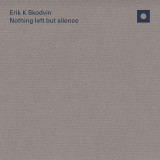
'Nothing left but silence' is Erik K Skodvin’s third solo album for Sonic Pieces and his most quiet to date. Subtitled as "Musical improvisations and quiet collages from the subconscious”, Skodvin reduces his instruments to guitar, reverb and amp - and creates a skeleton of eight hypnotic ragas that meanders in an eternal loop between ephemeral and singular.
Only on the horizon it’s possible to sense that Skodvin has also touched the neoclassical terrain in earlier productions - on Nothing left but silence, however, he acts as a twilight player who is not afraid of the coldness of endless space and who knows how to subjugate the shadowiness of the visible world. Carried by the noise of the amp and the occasional click of the effects pedals, a monolithic, reduced blues emerges, whose mediumistic quality nevertheless reveals that Skodvin's music always comes from the body - and as such is always searching for space. A space that - in this case - blends the vastness of the Norwegian steppe with the brittleness of American wasteland (as if Deathprod and Loren Connors were one and the same person), creating a persistent state between deceleration and absence of presence - that leads Skodvin ever closer to the inner essence of sound.
Initially recorded at Saal 3, Funkhaus, Berlin by Nils Frahm in 2015, the album has itself been subjected to silence as a forgotten relic, re-found and now released in a time where it might connect more with the contemporary state of mind. Welcome to the entrance to the periphery.
'‘Begin Again’ is the first single to be taken from The Mysterines’ forthcoming LP, and sees the four piece build on their signature introspective lyricism, stripping instrumentation back for an incredibly powerful set up and delivery. It’s the sound of a band truly refining and maturing their craft, and speaking further about the single Lia Metcalfe says: “Written during a full moon in a barn in the West Country, ‘Begin Again’ felt like finding a key to the spirit realm the evening it arrived. It felt like I was embarking on a surreal journey of self dissolution; think of the first verse as a set of instructions, and see how far reality stretches.”
Riding high on the success of their critically acclaimed, UK Top 10 debut album ‘Reeling’ released March 2022, The Mysterines have been achieving remarkable success since the release, including two tours of the UK, two of North America and one in the EU, and now a tour with their personal heroes Arctic Monkeys across UK stadiums this summer.
Thanks to dedicated fan Tom Huissen who took his one channel reel-to-reel tape recorder into various London clubs in 1967, these historical performances were captured for all time. Unheard for almost fifty years, John recently obtained these tapes and began restoring them with the technical assistance of Eric Corne of Forty Below Records. Corne adds, "While the source recording was very rough and the final result is certainly not hi- fidelity, it does succeed in allowing us to hear how spectacular these performances are." It's truly an exciting glimpse into music history
Wegene is now available in a limited edition metallic grey pressing. Ayalew Mesfin stands aside the likes of Mulatu Astake, Mahmoud Ahmed, Hailu Mergia and Alemayehu Eshete as a legend of 1970s Ethiopia. Mesfin’s music is some of the funkiest to arise from this unconquerable East African nation. Mesfin’s recording career, captured in nearly two dozen 7” singles and numerous reel-to-reel tapes, shows the strata of the most fertile decade in Ethiopia’s 20th century recording industry, when records were pressed constantly by both independent upstarts and corporate behemoths, even if they were only distributed within the confines of this East African nation. Though Mesfin was forced underground by the Derg regime that took control of Ethiopia in 1974, he has returned almost 50 years later with this triumphant set albums – the first time that his music has been presented in this form. These albums give us a chance to discover a rare and beautiful moment in music history, in anthologies built from Mesfin’s uber-rare 7” single releases and from previously unreleased recordings taken from master tapes. Wegene gives us a chance to discover a rare & beautiful moment in music history, in an anthology built from his uber-rare 7” single releases. Contains an oversized 11” x 11” 16 page book that tells the story of modern Ethiopian music and Mesfin’s role within it.
Detroit-based duo Ataxia and Mister Joshooa come together on Life and Death with their new EP 'Mastermind'. The record marks a new installation of Ataxia's punk forward house vibe; however, this time the group has their blinders on - this mini album is 100% dance floor oriented, all suited up to scratch the insatiable itch of the worldwide dance
Starting off strong with 'Mastermind', the collaboration delivers from the second we hit play. The A-side maintains similar elements such as a resonant kick and skipping percussive beats masterfully intertwined with vocals that echo and stutter. Record scratches, cowbell, and classic vocal hits can all be found on the B-side, bringing old-school sounds to the forefront with dynamic, rhythmic grooves.
out of Stock
Last delivered 2 years ago available to reorder, subject to availability
From the mountains of Utah to the trenches of Vimy Ridge, Elliott Brood's songs have travelled the gore and glory of history in equal measure for nearly a decade. With the stomp and thrash of their early albums, Elliott Brood carved their niche drawing from history and memory. As heavy and harrowing the past can be, for Elliott Brood, it is also a generous companion, giving the gift of appreciation for times of peace and grace. With Keeper, Elliott Brood's seventh album, the trio deals with the past in more personal terms. The title, which speaks to loyalty and longevity, sets the tone for an album that explores the strength of conviction, and how that strength is tested, again and again, over time. Thoughts of worthiness and dedication, and their emotional flip sides, inform a collection that sees the band exploring those battlefields much closer to home.
During their original run, Stornoway achieved immense critical acclaim, fan adoration and two Top 20 albums, one of which (their debut ‘Beachcomber’s Windowsill’) was certified Silver. But in 2016 they announced that they were ending on a high (2015’s ‘Bonxie’ being “their best album yet” according to The Guardian) with the following year’s farewell tour, although their rapturously received WOMAD set (“a magnificent farewell”, The Spectator) was delayed until 2022. They still earned new fans, however, when their version of ‘The Only Way Is Up’ exceeded 2 million streams after being used in an advert and in various TV shows.
Vocalist/guitarist Brian Briggs stopped songwriting altogether and instead pursued a new career passion managing a wetland for water voles and lapwings. Nonetheless, Brian and bandmates Jon Ouin (keyboard) and Oli Steadman (bass) stayed in torch, and step-by-step they reconnected with the love of creating music that had first inspired them to start a band.
Ariel Posen's music occupies the space between genres. It's a rootsy sound that nods to his influences — heartland rock & roll, electrified Americana, blue-eyed soul, R&B, Beatles-inspired pop — while still moving forward, pushing Posen into territory that's uniquely his own. Posen seeks answers with new album, Reasons Why. The internationally known Canadian rocker wrote this new reflective album coming out of half a year of lockdown and was extremely inspired creatively, 30 songs turned into a batch of 10 tracks for the new album and were recorded in Winnipeg, Manitoba and Montreal, Quebec. Reasons Why shows once again that "best" is a high standard for Posen. The new songs represent another step forward in every aspect – lyricism, musicality, playing, sonics. The songs are nuanced but impactful, deeply resonant but universally accessible. Posen blends craftsman's care with the daring do of a seasoned live player, resulting in an immersive adventure that reveals fresh merits on every listen. On Reasons Why Posen determinedly defies any easy genre identification and refuses to be sealed in any sonic cubbyhole.
A.R. Kive collates the three most astonishing works from that most miraculous of duos - A.R. Kane - comprising the ‘Up Home’ EP from 1988 that signified the band’s dawning realisation of their own powers and possibilities, their legendary debut LP ‘sixty nine’ (1988) and its kaleidoscopic, prophetic double-LP follow up ‘i’ (1989).
In founder-member Rudy Tambala’s new remastering, the music on these pivotal transmissions from the birth of dream pop, have been reinvigorated and re-infused with a new power, a new depth and intimacy, a new height and immensity. Vivid, timeless and yet always timely whenever they’re recalled, these records still force any listener to realise that despite the habits of retrospective myth-making and the
safe neutering effects of ‘genre’, thirty years have in no way dimmed how resistant and dissident to critical habits of categorisation A.R. Kane always were. Never quite ‘avant-pop’ or ‘shoegaze’ or ‘post-rock’ or any of those sobriquets designed to file and categorise, A.R. Kive is a reminder that those genres had to be coined, had to be invented precisely to contain the astonishing sound of A.R. Kane, because
previous formulations couldn’t come close to their sui generis sound and suggestiveness. This is music that pointed towards futures which a whole generation of artists and sonic explorers would map out. Now beautifully repackaged, remastered and fleshed out with extensive sleeve notes and accompanying materials, ‘A.R. Kive’ reveals that 35 years on it’s still a struggle to defuse the revolutionary and inspirational possibility of A.R. Kane’s music.
A.R. Kane were formed in 1986 by Rudy Tambala and Alex Ayuli, two second-generation immigrants who grew up together in Stratford, East London. From the off the pair were outsiders in the culturally mixed (cockney/Irish/West Indian/Asian) milieu of the East End, with Alex and Rudy’s folks first generation immigrants from Nigeria and Malawi, respectively. The two of them quickly developed and fostered an innate and near-telepathic mutual understanding forged in musical, literary and artistic exploration. Like a lot of second-generation immigrants, they were ferocious autodidacts in all kinds of areas, especially around music and literature. Diving deep into the music of afro-futurist luminaries such as Sun Ra, Miles Davis, Lee Perry and
Hendrix, as well as devouring the explorations of lysergic noise and feedback from contemporaries like Sonic Youth and Butthole Surfers, they also thoroughly immersed themselves in the alternate literary realities of sci-fi and ancient history (the fascination with the arcane that gave the band their name), all to feed their voracious cultural thirsts and intellectual curiosity.
It was seeing the Cocteau Twins performing on Channel 4 show the Tube that spurred A.R. Kane into being - “They had no drummer. They used tapes and technology and Liz Fraser looked completely otherworldly with those big eyes. And the noise coming out of Robin’s guitar! That was the ‘Fuck! We could do that! We could express ourselves like that!’ moment”, recalls Tambala - and through a mix of
confidence, chutzpah, ad hoc almost-mythical live shows and sheer innocent will the duo debuted with the astonishing ‘When You’re Sad’ single for One Little Indian in 1986. Immediately dubbed a ‘black Jesus & Mary Chain’ by a press unsure of WHERE to put a black band clearly immersed in feedback and noise, what was immediately apparent for listeners was just how much more was going on here - a
tapping of dub’s stealth and guile, a resonant umbilicus back to fusion and jazz, the music less a conjuration of past highs than a re-summoning of lost spirits.
The run of singles and EPs that followed picked up increasingly rapt reviews in the press, but it was the ‘Up Home EP’ released in 1988 on their new home, Rough Trade that really suggested something immense was about to break. Simon Reynolds noted the EP was: Their most concentrated slab of iridescent awesomeness and a true pinnacle of an era that abounded with astounding landmarks of guitar-reinvention, A.R. Kane at their most elixir-like.
If anything, the remastered ‘Up Home’ that forms the first part of ‘A.R. Kive’ is even more dazzling, even more startling than it was when it first emerged, and listening now you again wonder not just about how many bands christened ‘shoegaze’ tried to emulate it, but how all of them fell so far short of its lambent, pellucid wonder. This remains intrinsically experimental music but with none of the frowning orthodoxy those words imply. A.R. Kane, thanks to that second generation auto-didacticism were always supremely aware about the interstices of music and magic, but at the same time gloriously free in the way they explored that connection within their own sound, fascinated always with the creation of ‘perfect mistakes’ and the possibilities inherent in informed play.
‘sixty nine’ the group’s debut LP that emerged in 1988 had
critics and listeners struggling to fit language around A.R. Kane’s sound. As a title it was telling - the year of ‘Bitches Brew’, the year of ‘In A Silent Way’, the erotic möbius between two lovers - and as originally coined by the band themselves, ‘dream pop’ (before it became a free-floating signifier of vague import) was entirely apposite for the music A.R. Kane were making. Crafted in a dark small basement studio in which Tambala recalls the duo had “complete freedom - We wanted to go as far out as we could, and in doing so we discovered the point where it stops being music”. There was an irresistibly dreamy, somnambulant, sensual and almost surreal flow to ‘sixty nine’s sound, but also real darkness/dankness, the ruptures of the primordial and the reverberations of the subconscious, within the grooves of remarkable songs like ‘Dizzy’ and ‘Crazy Blue’. Alex’s plangent vocals floated and surged amidst exquisite peals of refracted feedback but crucially there was BASS here, lugubrious and funky and full of dread, sonic pleasure and sonic disturbance crushed together to make music with a center so deep it felt subcutaneous, music constructed from both the accidental and the deliberate, generous enough to dance with both serendipity and chaos. ‘sixty nine’ remains - especially in this remastered iteration - ravishing, revolutionary.
The final part of this ‘A.R. Kive’ contains 1989’s astonishing double-LP ‘i’ which followed up on ‘sixty nine’s promise and saw the duo fully unleash their experimental pop sensibilities over 26 tracks, plunging the A.R. Kane sound into a dazzlingly kaleidoscopic vision of pop experiment and play. Suffused with new digital technologies and combining searingly sweet and danceable pop with perhaps the duo’s strangest and boundary-pushing compositions, the album did exactly what a great double-set should do - indulge the artists sprawling pursuit of their own imaginations but always with a concision and an ear for those moments where pop both transcends and toys with the listeners expectations. Jason Ankeny has noted that “In retrospect, ‘i’ now seems like a crystal ball prophesying virtually every major musical development of the 1990s; from the shimmering techno of ‘A Love from Outer Space’ to the liquid dub of ‘What’s All This Then?’, from the alien drone-pop of ‘Conundrum’ to the sinister shoegazer miasma of ‘Supervixens’ — it’s all here, an underground road map for countless bands to follow.” Perhaps the most overwhelmingly all-encompassing transmission from A.R. Kane, ‘i’ bookended a three year period in which the duo had made some of the most prophetic and revelatory music of the entire decade.
After ‘i’ the duo’s output became more sporadic with Tambala and Ayuli moving in different directions both geographically and musically, with only 1994’s ‘New Clear Child’ a crystalline re-fraction of future and past echoes of jazz, folk and soul, before the duo went their separate ways. Since then, A.R. Kane’s music has endured, not thanks to the usual sepia’d false memories that seem to maintain interest in so much of the musical past, but because those who hear A.R. Kane music and are changed irrevocably, have to share that universe which A.R. Kane opened up, with anyone else who will listen. Far more than other lauded documents of the late 80s it still sounds astonishingly fresh, astonishingly livid and vivid and necessary and NOW.
Working with Bat For Lashes producer David Kosten (aka Faultline), the recording of Man Alive was completed mainly in a chapel in North Wales. The album sounded unique. Nothing dates like the future, yet Man Alive sounds dateless, placeless, and as a result, stands up perfectly many years later.
Man Alive was only the beginning of the group's adventures in – to use their words – 'Mismatched styles of music mashed together.' The result is often exhilarating; there are Brazilian drums and a prog guitar breakdown in Schoolin', classical influences, as well. Its subject matter is often way outside the realms of conventional songwriting; MY KZ, UR BF explored the different Americas: the cosy self-centred domesticity of programmes such as Friends versus a foreign policy
based on killing; Qwerty Finger examines imperialism. Anglo Saxon guilt is also present.
The album's artwork was striking – a photograph of a fox by Swiss photographer, Laurent Geslin, reflecting the track Tin (The Manhole) which deals with the theme of depression, through, as the band said in 2010, "the story of an urban fox that ingests all our pollution and grows massively in a sort of dream sequence. We chose photos of an urban fox for this reason, but we partly attacked the code of the digital image to create a glitch distortion . . . a reference to digital manipulation and chaos as well as our modern lives online".
Released in August 2010, Man Alive made the UK Top 20 and was well reviewed.
For example, BBC Music commented that the group "know more than most how to craft a song, how to make an album. They know how to give it depth, light and dark, and they - crucially - know when to stop." Man Alive was shortlisted for the 20th Mercury Music Prize in 2011.
The original LP edition of the album is super- scarce, released before the 'vinyl revival' kicked in, hence the original pressing now selling in the high three figures.
This re-issue is presented with scrupulous attention to the detail of the original UK first pressing, complete with gatefold sleeve, poster and 8 page booklet. It is pressed on 140gm vinyl.
Reissue of Veik's `From Madness To Nomadness' EP out now. Limited to 300 copies on 10" black in clear vinyl. Originally released on cassette in 2016, `From Madness to Nomadness' is the debut EP from Caen, France-based group Veik and is now being reissued on vinyl for the first time, with a limited 10" release courtesy of Fuzz Club Records. Introducing listeners to the trio's motorik, synthesised post-punk, the EP is a compilation of four tracks taken from a two-day recording session in the summer of 2016, recorded and mixed by Hugo Lamy of fellow Caen experimental duo Glass. The cover and the title of the EP are openly inspired by the `Telepathic Music' works by the French conceptual artist Robert Filiou, outlining the band's multi-disciplinary approach to music from the off. At the time drummer/vocalist Boris Collet told a local media outlet that "we wish to assume links with other artistic disciplines like photography". Concerning the reference to Robert Filiou, he added: "It is not so much the visual aspect that is important as the philosophy and the vision of the economy that he develops. The result should not be pompous or falsely intellectualizing. It is just that it seems relevant to build bridges between different fields (artistic or not). Bringing a bit of philosophy, architecture, images, sociology or geography into music can't hurt. It's not pretending to be anything else than what it is, it's still music, but I think there is a gesture and an intention to assume, no matter how you qualify it (creative, political, reflective). You have to allow yourself to do it."
RIYL: PJ Harvey, Sonic Youth, Dead Can Dance, Black Sabbath, Depeche Mode. In Blood is the group’s 14th album and the follow-up to 2020’s critically acclaimed Dances/Curses (Album Of The Year – The Quietus, Top 10 International Albums – Irish Times). It was typical of a band so well-known for stellar live performances to release their most successful album at a time when they were unable to back it up on the road. As was the case for many, lockdown changed the band’s lives in unexpected ways. Some felt a form of cabin fever at not being able to continue to make music (diverting their energies elsewhere - founding Wrong Speed Records for starters) whereas others relished the peace and quiet, perhaps questioning whether they wanted to return to the life they had before. Gigs (so long the lifeblood of the band) were booked, postponed, and cancelled. Things began to unravel and perhaps for the first time since the band formed in 2003 it was hard to see how it could continue. A plan was hatched to attempt to re-energise and reassemble the band: they would begin work on a new album. They would approach this as though a Somerset version of The Desert Sessions – members old and new and guests would contribute as and when time and restrictions allowed. Lyrically, British folk and ghost mythology provided the starting position for the song themes ranging from mutated stories of grief and loss written in the 14th Century (Perle), spiritual reawakening by ancient apparitions (Avalon) to the growth of nature after devastation (Can’t Feel Around Us, Over Cedar Limb), a metaphor also for spirit and body renewal and rebirth after trauma. The results sound free of any genre shackles and it suits Hey Colossus. They have taken the expansive anything-goes approach that made Dances/Curses so successful and fine-tuned and shaped it into an 8-song single album that never treads water or fills time. The prominent vocals steer the listener through the music, defining it as opposed to punctuating it (or being buried by it). The album is a calling card for the band in their 20th anniversary year. As odd and challenging as long-term fans would expect or hope for, but somehow more accessible and to the point than ever before. It is the closest the group have ever come to a pop record, radiating positivity through the murk like a small ray of light in some very dark and very weird times. Music can never entirely negate these feelings but, like the natural world referenced in the lyrics and sleeve, it invisibly bonds people together, lifting us up if we choose to let it.
Described as a musician's musician, Allen's sound is built on a foundation of pop, rock, Americana, Roots and Blues influences. Jon Allen has a soulful, whiskeysoaked voice and a striking gift for melody. He has never been content to be pigeonholed, as demonstrated by the eclecticism of his albums to date.Of the album Jon writes ''The last few years have felt like a pressure cooker slowly increasing to boiling point. There is sense of threat and a feeling of impending doom. Living in a large urban centre during a global pandemic brought out a sense of paranoia. We became more aware of our need for space, our need for silence and to be close to nature to get above the noise of a city. I'm absorbing all the time and everything from the famous Will Smith slap to missing people inspired the songs. How close are we all to the tipping point? What are we likely to do in heat of the moment? What will stress do to us when pushed? But light
follows dark, and there are the moments of simplicity and you can count your blessings for the simple things life has to offer".