Search:hs


expected to be published on 30.10.2026

expected to be published on 30.10.2026

Second volume from the Mem Pamal Anthology project.
Mem Pamal used to play a very Electro Tribe, melting influences from Tribe-tekno, Drum & Bass, Bassline Tekno... A very open minded range of music influences always carrying his unique style.
Dancefloor and soulfull !
Unrealesed tunes and some repress tunes (Fantomatik 01, 02, 03 ,04, 05, HS01...)
Triple LP triple-fold sleeve.
Mastered by Stefan ZMK with Love !
expected to be published on 30.10.2026
Black Vinyl[18,07 €]
expected to be published on 30.10.2026
Marbled Vinyl[22,90 €]
expected to be published on 30.10.2026

DJ Support: Marco Carola, Funk D'Void, Fish Go Deep, Quentin Harris, Carl Craig, Horse Meat Disco, moodymanc and many more
Me Me Me is back after 2 years on ice, with a new focus and new priorities, built around the regional music community being driven by Man Power and friends in North East England.
Written, recorded, performed and pressed in the North East, Newcastle live artist Mac Seldom's Twenty Twenty-Three EP see's the artist find his stride after early outings on Skream's "Of Unsound Mind" label and Scuba's "Hotflush Recordings" and leans into a more house-not-house rhythmic palette to further cement his status as being one of the most exciting and adept sound designers to recently emerge in club music.
On Stock and ready to ship
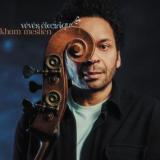
- KåR
- NEGRAS ft David Neerman & Roger Raspail
- BÂTONS CISEAUX ft Laurent Bardainne & Roger Raspail
- VAISSEAUX FANTÔMES ft Roger Raspail & David Neerman
- AMNÉSIES
- MARBENDIL ft Naïssam Jalal & Roger Raspail
- WATA ft Rocé
- GUÉRILLONS ft Roger Raspail
- ØLÌ
- COLÈRE CRÉOLE ft David Neerman & Roger Raspail
- BWA FLÔ ft Naïssam Jalal & Roger Raspail
- NeÜ
Following the critically acclaimed Fantômes… Futurs, praised by FIP, France Inter, Radio Nova, ARTE and International jazz press, double bassist and composer Kham Meslien returns with Vévés électriques, a deeply immersive second album where memory, landscape and improvisation merge into a singular sonic journey. Joined by Laurent Bardainne, Roger Raspail, Naïssam Jalal and David Neerman, Meslien expands the intimate language of his double bass with subtle loops and organic textures, weaving together echoes of Iceland, the Caribbean and imagined territories. Blending spiritual jazz, contemporary classical influences and ambient soundscapes, Vévés électriques is an invitation to drift beyond geography and into a profoundly personal exploration of emotion, identity and freedom.
Set upon an oil-smooth sea, an immense range of directions opens up before Kham Meslien for “Vévés Électriques”, his second album after “Fantômes… Futurs.”
With only his double bass and bow as vessel and sextant, a distant journey nevertheless begins to take shape. Vibrations and the striking of strings against wood quickly trace lines and winding paths across the surface of the water—so many routes to follow before leaving them behind, allowing the outward journey to become an inward voyage as well.
After an improvisation intended to shed light on the course ahead, isolated lands came into view: the shores of Iceland, the lands of the far north, places cut off from the rest of the world by vast expanses of water. Islands battered by a harsh climate that can only be endured by drawing warmth from deep within oneself.
Then the Caribbean arc appeared. The archipelago, a setting for joyful and unsettling experiences, takes Kham back to a childhood from which the passing years have carried him away. Rather than following the conventional channel of the music of these places, the West Indies emerge through memories whose colors are still vivid.
Through the morning mist, Roger Raspail’s percussion locks into the same frequencies of the groove. Double bass and struck skins then become companions on a road that intersects with Laurent Bardainne’s saxophone. Carrying a dreamlike message, David Neerman’s vibraphone also joins the narrative to write a few chapters of its own, while others are enchanted by the flute and voice of Naïssam Jalal, or struck by the metaphorical rhymes of rapper Rocé.
On the surface, through the themes along which the pieces navigate, landscapes slowly reveal themselves and change shape as the shore draws nearer or recedes. Straying from the marked course and allowing oneself to drift, breaking free from pure acoustic sound by adding loops first played live and then sampled, allows Kham to explore the depths. The depths of the ocean, as well as those of his soul. To enter a world of improvisation that reveals itself even as he explores it. Examined up close, feelings become shells to pick up and hold to one’s ear, so that they can be felt intensely until they take material form.
This sea, which had appeared peaceful, became the stage for a succession of stories and images, which then accumulated to give birth to a larger narrative.
expected to be published on 13.11.2026

Whose These Records presents WTR003, a limited 300-copy Various Artists release pressed on 180g vinyl. WTR brings together emerging sounds from Córdoba, Argentina alongside two anonymous artists on the flip side, staying true to the Whose These Records vision: underground dancefloor music with no compromises.
The item is already on it's way to us and is expected to be shipped from 20.11.2026.

With his distinctive touch for melody and texture, "Thunder EP" opens a portal to a new world, both vibrant and underground. Split into two parts, the A-side burns with a groovy house and breakbeat energy, while the B-side shines with deep, progressive and electronic soundscapes.
With its powerful vocals reminiscent of Bicep and a melody that brings a breath of fresh air, the opening track of the EP "Thunder" has all the makings of a future anthem. It perfectly sets the tone with its raw breakbeat energy and rolling textures
Right after, the A2 "You've Got The Feeling" offers a subtle blend of softness and groove. True to Houseum’s deep and sunny DNA, the track revolves around an effective classic piano house hook and a captivating soul vocal that instantly sticks in your head.
Closing the A-side, "Space Jam" shifts into more atmospheric territories with floating vocals and airy synth pads, moving the dancefloor toward a deeper, more mental vibe.
On the flip side, the hypnotic bassline of the B1 "Bullet Train" sets the pace immediately. The track nods to 90s progressive house through its structure while offering distinctive deep tech and dub techno sounds.
Finally, "Haag" wraps up the record with a subtle blend of IDM, ambient, and dub techno, a sound aesthetic that might remind a certain In Limbo EP released on Houseum's sub-label, Ellipse Records. It acts as the perfect closing track, inviting the listener to wind down and float away after the intensity of the previous tracks.
On Stock and ready to ship

- A1: The Dark Horror – So W’Happy (Official Anthem 2025)
- A2: Chicago Zone – Banging
- A3: Binum – I Feel The Night
- A4: K-Style & Jumpkiller – Remember
- A5: DJ HS – Booty Shake
- A6: DJ Adolphe – La Boulette (Invictus Remix)
- B1: Age Of Love – The Age Of Love (Hysta Remix)
- B2: DJ Greg C & Chicago Zone – Flight Ding Dong
- B3: Pat B – How Bizarre
- B4: G Sayz – Café Del Mar
- B5: The Dark Horror, Dj Furax, Eccentric Things – Status Quo
Following the success of its debut vinyl release, So W'Happy Festival returns with the So W'Happy – Vinyl Sampler 2026, once again in collaboration with Babaorum Records.
Bringing together an explosive selection of artists from across the harder styles spectrum, this new edition perfectly captures the intensity and diversity that define the festival. Featuring tracks by The Dark Horror, Chicago Zone, Binum, K-Style, Jumpkiller, DJ HS, DJ Adolphe, DJ Furax, Pat B, G Sayz and many more, the sampler delivers everything from hardstyle and jump to hardcore and uptempo.
The release also includes The Dark Horror's Official So W'Happy Festival Anthem 2025, alongside exclusive reinterpretations and festival favourites, including Hysta's explosive remix of the timeless classic The Age Of Love.
Powerful kicks, unforgettable melodies and uncompromising energy make this vinyl a true reflection of the So W'Happy experience. Whether you're reliving unforgettable moments from the festival or discovering its unique atmosphere for the first time, the So W'Happy – Vinyl Sampler 2026 brings the spirit of the harder styles straight to your turntable.
French
Après le succès de son premier vinyle, le So W'Happy Festival poursuit l'aventure avec le So W'Happy – Vinyl Sampler 2026, une nouvelle fois réalisé en partenariat avec Babaorum Records.
Cette nouvelle édition rassemble une sélection explosive d'artistes emblématiques des harder styles et reflète toute la richesse musicale du festival. Avec des titres de The Dark Horror, Chicago Zone, Binum, K-Style, Jumpkiller, DJ HS, DJ Adolphe, DJ Furax, Pat B, G Sayz et bien d'autres, cette compilation navigue entre hardstyle, jump, hardcore et uptempo avec la même énergie qui anime les scènes du So W'Happy.
Le vinyle comprend notamment l'Official So W'Happy Festival Anthem signé The Dark Horror, ainsi que plusieurs morceaux incontournables et des relectures marquantes, dont le puissant remix de The Age Of Love par Hysta, véritable rencontre entre un classique intemporel et la nouvelle génération des harder styles.
Entre kicks ravageurs, mélodies fédératrices et énergie sans compromis, ce nouveau sampler retranscrit toute la puissance et l'atmosphère du So W'Happy Festival. Une sortie incontournable pour prolonger l'expérience du festival et retrouver chez soi l'esprit unique du So W'Happy.
On Stock and ready to ship

- A1: le style nouveau - jnd
- A2: mwen inmin - metal sound
- A3: le jeu des cinq - francky vincent
- A4: brooklyn - shango gang
- B1: moune paradis - claudy siar
- B2: invitation a la danse - van leve
- B3: debouley heritage - claude vamur
- B4: could u satisfy my desire - otaim
- C1: rozalie rozalie - zshea
- C2: la guyanaise - sylviane cedia
- C3: dialogue - edith lefel
- D1: enme - dominique bernier
- D2: tour - x-taz
- D3: mefiez-vous - monique seka
- D4: lese la vi roule - kamplis
Back to the golden nights of zouk clubs, where hip-hop, kompa, zouk and Caribbean grooves ruled the dance- floor. This selection documents a pivotal moment : a time when zouk was still not a fixed genre, but more a place, an atmosphere, somewhere people went to dance. It captures the spirit of an era: its creative effervescence, musical freedom, and the diversity of artists who shaped it. The very concept of “Kaz A Zouk” perfectly encapsulates this idea: a space where all styles could meet.
On Stock and ready to ship

On Stock and ready to ship

On Stock and ready to ship
On Stock and ready to ship
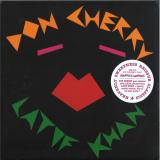
Don Cherry, armed with a voracious musical appetite and boundless imagination, first made a name for himself - though not always fully understood - alongside Ornette Coleman, playing trumpet or cornet. In Los Angeles and then New York, he stood at the heart of a revolutionary approach to improvisation based on melody rather than harmony, later baptized "Free Jazz," the final structural development of American jazz. Over time, he became a champion of improbable fusions - gradually integrating into his style a whole array of "exotic" instruments, and more importantly, the cultures from which they originated. Among them: India, Brazil, Africa, Indonesia, and even China. The time had come for the emergence of "world music": in hindsight, a patchwork rich in imagination and seduction, but once the novelty wore off, often lacking in substance.
In Don Cherry's case, however, the commitment ran deep - tied to his personal engagement with a global vision of art and the human condition. Ustad Ahmed Latif Khan, from the Delhi gharana (a musical lineage), was part of a new generation of accompanists - percussionists, sarangi players, flutists, etc. - who had extended both the technical and conceptual possibilities of their predecessors to gain recognition as soloists and soon to venture onto the international scene. Among them, Latif stood out for his taste for irregular, highly syncopated rhythmic patterns - rich in variety and originality. Don and Latif had never met before the recording session, but the two quickly recognised one another as kindred spirits - calm, focused... and full of laughter. Don clearly knew what he wanted to create, and nothing seemed to pose a challenge for Latif, who grasped the American's intentions immediately, warmed up his fingers at astonishing speed, and with his perfect pitch, naturally took on the role of tuning Don's diverse instrument collection to match whatever was found in the studio - from concert piano and Hammond B3 organ to chromatic orchestral timpani.
On Stock and ready to ship

The Éthiopiques series returns! Essential archive recordings from an extremely fruitful period in Ethiopian music.
Before “Swinging Addis” took over the world, there was Moussié Nerses Nalbandian — the Armenian-born composer who shaped modern Ethiopian music. Mentor, arranger, and pioneer, he laid the foundations of Ethio-jazz.
This Éthiopiques volume revives his forgotten legacy, recorded live by Either/ Orchestra First issue ever with new exclusive photos and in depth liner 8-page insert.
“Ethiopian jazzmen are the best musicians that we have seen so far in Africa.
They really are promising handlers of jazz instruments.”
Wilbur De Paris
(1959, after a concert in Addis Ababa)
አዲስ፡ዘመን። *Addis zèmèn* **A new era.**
The time is the mid-1950s and early 1960s, just before "Swinging Addis" bloomed – or rather boomed – onto the scene. Brass instruments are still dominant, but the advent of the electric guitar, and the very first electronic organs, are just around the corner. Rock’n'Roll, R’n’B, Soul and the Twist have not yet barged their way in. Addis Ababa is steeped in the big band atmosphere of the post-war era, with Glenn Miller's *In the* *Mood* as its world-wide theme song, neck and neck with the Latin craze that was in vogue at the same period. Life has become enjoyable once again, with the return of peace after the terrible Italian Fascist invasion of Ethiopia (1935-1941). The redeployment of modern music is part and parcel of the postwar reconstruction. *Addis zèmèn* – a new era – is the watchword of the postwar period, just as it was all across war-torn Europe.
The generation who were the young parents of baby boomers** were the first to enjoy this musical renaissance, before the baby boomers themselves took over and forever super-charged the soundtrack of the final days of imperial reign. Music is Ethiopia's most popular art form, and very often serves as the best barometer for the upsurge of energy that is critical for reconstruction. Whether it be jazz in Saint-Germain-des-Prés or the *zazous* who revolutionised both jazz and French *chanson* after the *Libération*, be it Madrid's post-Franco Movida, or Dada, the Surrealists and *les années folles* that followed World War I, the periods just after mourning and hardship always give rise to brighter and more tuneful tomorrows. Addis Ababa, as the country's capital, and the epicentre of change, was no exception to this vital rule.
**Two generations of Nalbandian musicians**
Nersès Nalbandian belonged to a family of Armenian exiles, who had moved to Ethiopia in the mid-1920s. The uncle Kevork arrived along with the fabled "*Arba Lidjotch*", the** "*40 Kids*", young Armenian orphans and musicians that the Ras Tafari had recruited when he visited Jerusalem in 1924, intending to turn their brass band into the official imperial band. If Kevork Nalbandian was the one who first opened the way of modernism, pushing innovation so far as to invent musical theatre, it was his nephew Nersès who would go on to become, from the 1940s and until his death in 1977, a pivotal figure of modern Ethiopian music and of the heights it. Going all the way back to the 1950s. Nothing less. And it is Nersès who is largely to thank for the brassy colours that so greatly contributed to the international renown of Ethiopian groove. While the younger generations today venture timidly into the genealogy of their country's modern music, often losing their way amidst a distinctly xenophobic historiographical complacency, many survivors of the imperial period are still around to bear witness and pay tribute to the essential role that "Moussié Nersès" played in the rise of Abyssinia's musical modernity.
Given the year of his birth (15 March 1915), no one knows for sure if Nersès Nalbandian was born in Aintab, today Gaziantep (Turkiye/former Ottoman Empire) or on the other side of the border in Alep, Syria... What is certain is that his family, like the entire Armenian community, was amongst the victims of the genocide perpetrated by the Turks. Alep, the place of safety – today in ruins.
Before Nersès then, there was uncle Kevork (1887-1963). For a quarter of a century, he was a whirlwind of activity in music teaching and theatrical innovation. *Guèbrè Mariam le Gondaré* (የጎንደሬ ገብረ ማርያም አጥቶ ማግኘት, 1926 EC=1934) is his most famous creation. This play included "ten Ethiopian songs" — a totally innovative approach. According to his autobiographical notes, preserved by the Nalbandian family, Kevork indicates that he composed some 50 such pieces over the course of his career. This shows just how much he understood, very early on, the critical importance of song as Ethiopia's crowning artistic form. Indeed, for Ethiopian listeners, the most important thing is the lyrics, with all their multifarious mischief, far more than a strong melody, sophisticated arrangements or even an exceptional voice. (This is also why Ethiopians by and large, and beginning with the artists and producers themselves, believed for a long time — and wrongly — that their music could not possibly be exported, and could never win over audiences abroad, who did not speak the country's languages).
Last but not least, one of Kevork's major contributions remains composing Ethiopia's first national anthem – with lyrics by Yoftahé Negussié.
Nersès Nalbandian moved to Ethiopia at the end of the 1930s, at the behest of his ground-breaking uncle. Proficient in many instruments (pretty much everything but the drums), conductor, choir director, composer, arranger, adapter, creator, piano tuner, purveyor of rented pianos,... he was above all an energetic and influential teacher. From 1946 onwards, thanks to Kevork's connexion, Nersès was appointed musical director of the Addis Ababa Municipality Band. In just a few years, Nersès transformed it into the first truly modern ensemble, thanks to the quality of his teaching, his choice of repertoire, and the sophistication of his arrangements. It was this group that would go on to become the orchestra of the Haile Selassie Theatre shortly after its inauguration in 1955, which was a major celebration of the Emperor's jubilee, marking the 25th anniversary of his on-again-off-again reign.
At some point or other in his long career, Nersès Nalbandian had a hand in the creation of just about every institutional band (Municipality Band, Police Orchestra, Imperial Bodyguard Band, Army Band, Yared Music School…), but it was with the Haile Selassie Theatre – today the National Theatre – that his abilities were most on display, up until his death in 1977. To this must be added the development of choral singing in Ethiopia, hitherto unknown, and a sort of secret garden dedicated to the memory of Armenian sacred music, and brought together in two thick, unpublished volumes. Shortly before his death (November 13, 1977), he was appointed to lead the impressive Ethiopian delegation at Festac in Lagos, Nigeria (January-February 1977).
His status as a stateless foreigner regularly excluded him from the most senior positions, in spite of the respect he commanded (and commands to this day) from the musicians of his era. Naturally gifted and largely self-taught, Nerses was tirelessly curious about new musical developments, drawing inspiration from the very first imported records, and especially from listening intensely to the musical programmes broadcast over short-wave radio – BBC *First*. A prolific composer and arranger, he was constantly mindful of formalising and integrating Ethiopian parameters (specific “musical modes”, pentatonic scale, and the dominance of ternary rhythms) into his “modernisation” of the musical culture, rather than trying to over-westernise it. It even seems very probable that *Moussié* Nerses made a decisive contribution to the development of tighter music-teaching methods, in order to revitalise musical education during this period of prodigious cultural ferment. Flying in the face of all the historiographical and musicological evidence, it is taken as sacrosanct dogma that the four musical modes or chords officially recognised today, the *qǝñǝt* or *qiñit* (ቅኝት), are every bit as millennial as Ethiopia itself. It would appear however that some streamlining of these chords actually took place in around 1960. It was only from this time onward that music teaching was structured around these four fundamental musical modes and chords: *Ambassel*, *Bati*, *Tezeta* and *Antchi Hoyé*. A historical and musical “details” that is, apparently, difficult to swallow, especially if that should honour a *foreigner*. Modern Ethiopian music has Nersès to thank for many of its standards and, to this day, it is not unusual for the National Radio to broadcast thunderous oldies that bear unmistakable traces of his outrageously groovy touch.
On Stock and ready to ship

After the resounding success of its first edition, the legendary Lagoa club, temple of techno and hard techno in Menin, strikes back with LAGOA TRAX Vol. 2, a second vinyl release that promises to shake dancefloors with four explosive tracks crafted by the club’s emblematic resident DJs: DJ HS, Manu Kenton, Jamie Dill, and Max Walder.
Faithful to the spirit of Lagoa, these four pillars of the club deliver a new collection of powerful productions, raw, energetic, and forged for peak-time moments. Each track embodies the unmistakable sound that has made Lagoa’s nights legendary: relentless rhythms, hypnotic synths, and an intensity that ignites the crowd from the first beat.
Already tested and approved on Lagoa’s iconic dancefloor, these tracks have quickly become essential weapons in the sets of the club’s residents. LAGOA TRAX Vol. 2 is much more than a collector’s item, it’s a pure concentrate of the club’s energy, a sonic tribute to its unique atmosphere, and a must-have for all lovers of techno.
Français
Après le succès retentissant du premier volume, le légendaire club Lagoa, temple de la techno et hard techno à Menin, revient en force avec LAGOA TRAX Vol. 2, un second vinyle explosif qui réunit quatre morceaux inédits signés par les résidents emblématiques du club : DJ HS, Manu Kenton, Jamie Dill et Max Walder.
Fidèles à l’esprit Lagoa, ces quatre figures incontournables livrent ici une série de productions puissantes, taillées pour le dancefloor. Des rythmiques percutantes, des montées hypnotiques et une intensité sans concession : chaque titre capture l’énergie brute et la signature sonore unique qui font la réputation des nuits Lagoa depuis plus de trois décennies.
Déjà testés et approuvés sur le système légendaire du club, ces quatre tracks sont de véritables bombes, prêtes à retourner n’importe quel dancefloor. LAGOA TRAX Vol. 2 s’impose ainsi comme bien plus qu’un simple vinyle : c’est une immersion totale dans l’âme du club, une déclaration d’amour à la techno, et un objet de collection pour tous les passionnés.
On Stock and ready to ship

Stepping out of the shadows with refined precision, Saktu returns to Heisenberg with the Fucha EP – a sharp, hypnotic exploration of minimal groove. Sleek rhythms, tactile textures, and playful low-end pressure define this trio of deep, late-night rollers.
Balancing raw functionality with subtle artistry, the Fucha EP captures the essence of what makes Heisenberg a beacon in the modern minimal scene. Crafted for the floor, tested in the booth
On Stock and ready to ship

On Stock and ready to ship

Straight from Copenhagen, Danish DJ/producer B From E delivers an EP that sits halfway between Trance and House. With deep melodies and infectious rhythms, Blue Lava opens a portal to a new world — both icy and fiery. Split into two parts, the A-side burns with energy, while the B-side shines with luminous melodies.
With its powerful vocals and a melody that brings a breath of fresh air, the opening track of the EP We Are Gods truly lives up to its name. Representative of the EP, it beautifully embodies the deep and captivating melodies of Blue Lava.
Ocean Drive offers a subtle blend of softness and groove. Like a dream, light percussions gently land on a track filled with ethereal melodies.
Hypnotic, the arpeggio of Arp Dream never leaves the track and opens the B-side of the vinyl. The drums evoke the energy of an erupting volcano where the melody of the track would represent the blue lava flowing poetically.
With Blue Lava, B From E closes his EP on a nostalgic note. Blue Lava recalls an early morning sunrise, in the atmosphere of a night you never want to end.
On Stock and ready to ship

This is in fact a cover of "You'll Lose A Good Thing" a slow 1962 R&B hit written, played and sung by Barbara Lynn. In our humble opinion this cracking 60’s reggae cover is vastly superior to the original with its frantic electric guitar introduction, the cool harmonica solo in the middle and Audrey’s gorgeous vocals set against the up-tempo riddim. "You'll Lose A Good Thing" is a rare early Reggae track that does rock.
An absolute must!
An original Dandy Livingstone composition, “Love Me Tonight” showcases Audrey’s tender, soulful side. Layered horns and bubbling keys back her sensual but restrained vocals. The song sits at the crossroads of lovers rock and early reggae offering a romantic storm of yearning and groove.
Very popular with the Skinhead crowd back then, it is yet another rare great track from Audrey and it complements perfectly You’ ll Lose A Good Thing on the A side!
On Stock and ready to ship

Available in an exclusive red vinyl edition, the "Red Shiva" EP invites listeners to dive into a captivating sonic universe, blending enchanting melodies and punchy rhythms. Early support from Mha iri (Drumcode), M.I.K.E. Push (Bonzai), Dave Davis (Laark), DJ Fire (Bonzai), Tom Leclercq (Exreme), DJ HS (Lagoa)…
On Stock and ready to ship

180 G. BLACK VINYL WITH LINER NOTES IN CREOLE, FRENCH, ENGLISH
Originally released in 1979, "Spiritual Sound" lives up to its name, a soaring, triumphant album, six tracks of spirit magic from Guadeloupe.
Telluric, intense, terribly alive, the gwoka drums of Guadeloupe carry the identity of a painful and fervent island. Marked forever by the crime of slavery, Guadeloupe's créolité cherishes the ka drums and their natural environment: the low-pitched boula drum with male goatskin, the high-pitched soloist makè drum with female goatskin, the chacha, ti bwa, triangle, calabash and other percussion instruments that surround them, and the voices - the fiery, proud, timbred, urgent voices of the gwoka.
This album is also a legend for its voices: in his then dazzling youth, singer Lukuber Séjor was one of the first gwoka artists to largely feminize the chorus of répondè, who converse with his text delivered in a straight and powerful voice.
And everything here sets new standards. In 1979, Mizik Filamonik - Spiritual Sound proclaimed a spiritual patriotism of ferocious intensity. The album by Lukuber Séjor - whose spelling alone is a battle - sets out to give Guadeloupe the intangible weapons of self-respect and self-knowledge, through a singular practice of traditional music.
The genesis of gwoka music is less straightforward than one might imagine... The drums performed the servile task of accompanying the work of slaves in the fields and during the “corvées” imposed by the administration, before being freely practiced by the common people after the abolition of 1848. At the heart of the conviviality of the Guadeloupeans furthest from the cities - geographically and socially - the gwoka drums come out for carnival, funeral wakes and neighborhood celebrations, but also during strikes, fits of anger and armed vigils of the riots and revolts that have punctuated the island's history. For generations, governors of the colony and then the prefects of the overseas department of Guadeloupe have been viewing the gwoka as a potential for turbulence and a threat to public order.
But as the Beatlesmania, “chanson engagée” and rock revolutions unfolded in Europe, young people turned to the drums of mizik a vié nèg (“bad negro music”, in Creole), which Guadeloupeans had learned to despise by following the “assimilation” process advocated by the school system and most of the political class. At the end of the sixties, in a Guadeloupe mourning the deadly repression of the May 1967 social movement, they played traditional music, refusing to wrap it up in tourist prettiness and madras folk costumes. Instinctively, they played a rough and contemporary gwoka, led by the incendiary Guy Konkèt. This was the era of decisive 45 rpm records such as Robert Loyson's Kann a la richès, which brought to light the fieriest words of union rallies.
At his home in Sainte-Anne, Lukuber Séjor played with flautist Olivier Vamur and his brother Claude Vamur, who cobbled together a drum kit from tin crockery and became, a few years later, the most influential drummer in Kassav'.
These were the years of the Bumidom program, when young Guadeloupeans were encouraged to emigrate to mainland France. At the age of twenty, Lukuber Séjor embarked on the liner Irpinia, disembarking at Le Havre and taking the train to the Gare Saint-Lazare - the route taken by thousands of young West Indians who went on to study or looked for work, all the while trying to maintain a link with their homeland. In this case, it's at the Antony university residence, where Lukuber played the drum and participated in a thousand gwoka updates and aggiornamentos, while exile reinforced the need for a spiritual link with the native land.
In 1978, Guy Konkèt played at the Salle Wagram, a historic event for West Indian music. After serving as répondè - i.e. backing vocalist - on one of his home-recorded albums, Lukuber joined his live band. Little by little, he became one of the key artists on a circuit parallel to French show business. At a student party in Caen, he met a young woman from Martinique who, at the time, was more motivated by her ambitions as a visual artist than by her vocation as a musician. Her name was Jocelyne Béroard and, a few years before she plunged into the Kassav' adventure and became the greatest West Indian singer of her generation, she designed the cover of Lukuber Séjor's LP.
This ambition was obvious and imposed its will. A more or less regular band was formed, with Roger Raspail, Rudy Mompière and Éric Danquin on ka drums, Claude Vamur on ti bwa, Olivier Vamur and Françoise Lancréot on flutes and Annick Noël on keyboards. Lukuber Séjor is set on wanting to extend the gwoka palette to other instruments, as the jazz-rock revolution opens a thousand new doors. Annick Noël will play a wide range of timbres and textures on electric piano and synthesizer. Another novelty: the répondè are two men and two women, Roger Raspail, Olivier Vamur, Françoise Lancréot and Maryann Mathéus ...
Mizik Filamonik - Spiritual Sound is a self-production in which the singer and leader sank all his savings, allowing him no more than a single day in the studio. The first side is more of a musical manifesto, with the first two tracks, Éritage and Penn é plézi, being instrumentals. The third, Son, forcefully celebrates the need for Guadeloupeans to connect with the gwoka. In fact, Jocelyne Béroard's cover shows a tambouyé in the shadow of a cloudy sky, against which a radiant sun is rising and whose light will soon flood the entire landscape. The silhouette and face of this man strongly evoke the immense Vélo, master of the ka, rejected at the time on the fringes of society.
The second side of the LP is surprising. Formally, three tracks are explicitly linked like the three parts of a triptych. Primyé voyaj evokes the appalling tribulation of Africans deported as slaves to Guadeloupe; dézyèm voyaj speaks of the Bumidom program and the economic, political and social forces driving young Guadeloupeans towards the mirage of prosperity in France; twazyèm voyaj closes the cycle with the emigrants' return from Europe after years away from their island...
This gwoka, obsessed with the need to save Guadeloupe spiritually, appeals far beyond the politicized audience. Mizik Filamonik - Spiritual Sound instantly became a classic, although Lukuber Séjor never really made a career for himself as a musician.
After all, the album was released in 1980, with no promotional resources in France or Guadeloupe - and therefore no concerts. The thirty-two-year-old author, composer and performer made his own third trip back to Guadeloupe. He set up a small woodworking business, which he lost in Hurricane Hugo in 1989. His other activity, teaching in a medical-educational institute, became the core of his professional life. He continued to be an active campaigner - a campaigner for the Creole language, a campaigner for the reawakening of identity, a campaigner for special education, a campaigner for a thousand causes that he ignited with his generous and perceptive enthusiasm, such as the defense of breadfruit fries...
The echoes of his 1979 album have not died down. Of course, the use of Penn é plézi as the theme tune for Radio Guadeloupe's funeral notices from 1980 to 1992 kept him in the collective memory, but he continues to sing and compose sporadically, as with his all-female
vocal group Vwapoulouéka... Still convinced that music is a means of liberating the spirit, he continues the journey of a young man eager to deploy the power of Creole music and language.
Bertrand Dicale
On Stock and ready to ship

On Stock and ready to ship

- A1: Bo Harwood & John Cassavetes - No One Around To Hear It
- A2: Chen Ming Chang - Rainwater
- A3: Bhairavi Raman & Nanthesh Sivarajah - Bittersweet Reflections
- B1: The King Of Luxembourg - Poptones
- B2: Slapp Happy - Is It You
- B3: O.G. Jigg - Jesus Is My Jam
- B4: Klang - As It Is
- C1: Scala - Fuser
- C2: Soft Location - Let The Moon Get Into It
- C3: Gyeongsu - YZOBEL (feat. CROCHE)
- C4: Omertà - Moments In Love
- D1: Kasumi Trio - Cabbage Butterfly
- D2: Un - Fast Money Blues
- D3: Delphine Dora - V
- D4: Harry Plunket-Greene - The Hurdy-Gurdy Man
2025 Repress
Searchlight Moonbeam is the new narrative compilation from Time Is Away (Jack Rollo and Elaine Tierney) whose eponymous monthly NTS Radio shows, tinctured fusions of fugitive sounds and reverie-inducing archival speech, have won them an ardent following. It follows from the London-based duo’s Ballads, a remarkable driftwerk released on A Colourful Storm in 2022.
Searchlight Moonbeam is an autumnal dreamscape, intimate and vespertine, pensive and irresolute. An imagined community where differences drop off and resonances emerge – between Maher Shalal Hash Baz affiliates Kasumi Trio, Taiwanese score composer Chen Ming Chang whose ‘Rainwater’ (written for Hou Hsiao-Hsien’s 1986 film Dust In The Wind) is exquisitely heartbroken, and the plangent improvisations of self-taught French pianist Delphine Dora.
Revelations are frequent: the bedsit isolationism of Bo Harwood and John Cassavetes’ ‘No One Around to Hear It’ (from The Killing of a Chinese Bookie); the narked minimalism of Klang (an early 2000s band formed by ex-Elastica guitarist and featuring prize-winning experimental novelist Isabel Waidner on bass); the etude-grooves and echoic wobble of below-the-radar French avant-gardists Omertà ; the beautiful, plaintively dubby ‘Is It You?’ by Slapp Happy; a psych-tinged reimagining of PiL’s ‘Poptones’ by Simon Fisher Turner (one half of Deux Filles, and here, recording for él as The King of Luxembourg) that's as perverse as the cover of Throbbing Gristle’s 20 Jazz Funk Greats.
Searchlight Moonbeam is the musical analog of an Italo Calvino novel or a medieval fable. Associative, intuitive, borderless. Emotional and mysterious. Endowed with the tactility of Braille. A private language that is both unknowable and understood. It is a record of the seasons, for the seasons.
2023 marks the tenth anniversary of Time Is Away’s first broadcast. Featuring an evocative essay by writer Jeremy Atherton Lin and disarming cover art by Penny Davenport, Searchlight Moonbeam showcases Rollo and Tierney’s still-unrivalled talent for gloaming melodies, disques du crépuscule, ensorcelled storytelling.
On Stock and ready to ship

- A1: The Soul Leaders & Carib Beats - Pour On The Sauce 2 45
- A2: Lynn Taitt & The Jets - I spy 2 50
- A3: The Kilowatts - Real Cool Operator 2 20
- A4: Sir Collins & The Black Diamonds - Black Diamonds 2 43
- A5: Clive’s All Stars & George Murphy - San Sebastian 2 05
- A6: Eric Monty Morris - Cinderella 2 2
- A7: Dell Williams - Searching For Your Love 2 52
- B1: Derrick Morgan - I Who Have Nothing 3 45
- B2: Chenley Duffus - To Be A Lover 3 10
- B3: Lloyd Charmers - President version 2 49
- B4: Tony Bins - Musical Shower 3 49
- B5: Annette Clarke - Just One Look 2 20
- B6: The Jay Boys - Del Gago 2 45
- B7: Desmond Riley - Tear Them 2 58
Here is our Hot Sauce Volume 5 showcasing some seriously groovy and rare Rocksteady,
Boss and Reggay tracks mixed expertly for yet another thrilling early Reggae experience on vinyl.
Here is the much anticipated volume 5 of the HOT SAUCE compilation LPs dedicated to the Trojan related labels between 1965 and 1975.
HOT SAUCE volume 5 features outstanding original Rocksteady, Boss Reggae and early Reggae (“Reggay”) tracks including rare songs, overlooked gems, hidden treasures and a couple of hits. The record labels showcased on this fourth volume are Amalgamated, Bread, Downtown, Duke, Explosion, Grape, Harry J Records , JJ Records, Rio, Splash, Upsetter and Techniques.
The tracks here have been selected according to their musical interest firstly, their rarity, and their complementarity.
These tracks are all outstanding tracks, “killer tracks”, there is no “filler” whatsoever.
Particular attention has been paid to the way the songs are sequenced (or “mixed”) so that the album builds up nicely and gradually, generally starting
with the Rocksteady songs on the A side and the 70s songs on the B side.
The HOT SAUCE series is a musical journey across Trojan and its labels showcasing early Jamaican Reggae’s diverse musical genres and outstanding artists.
Since the early 70s’ “Tighten Up” and “Club Reggae” series, no compilations have really explored these labels in depth on vinyl.
It might be the last volume of the series as we know it so we wanted to make a splash for volume 5.
It is a nod to self-censored lewd Reggae covers from Trojan and Pama in early 70s. So don't fret,
a collectible yellow sticker has been strategically applied on the shrink-wrap to cover Miss Rocksteady's bottom!!
With its striking cover and its thrilling Reggay selection, volume 5 is bound to become another successful album in the Hot Sauce series...
On Stock and ready to ship

Poet, novelist, musician and academic, Anthony Joseph teams up with legendary UK producer Dave Okumu for forthcoming album, ‘Rowing Up River To Get Our Names Back’
Dave Okumu, known perhaps best as frontman for The Invisible, though digging deeper into his production credits, huge names emerge such as; Grace Jones, Amy Winehouse, Jesse Ware, Rosie Lowe and Eska. On this album, the magic and alchemy of Dave’s production style showcase subtle sonics and deep layering resulting in a contemporary sound to carry Anthony’s afrofuturistic metrical meanings.
Anthony and Dave first came across each other when working with Shabaka Hutchings during Covid broadcasts, and then after Anthony performed some poems on Dave’s 2023 album ‘I Came From Love’, the seeds of collaboration were sown.
With a little more psychedelia, a little more experimentation, Dave’s eclectic vision focuses on the actual sounds on these pieces. Anthony stated that “The best producers guide you, not push you” now add to that the fact that both these humans were born on the same day, a concoction of laid back attitudes in people with strong purpose, some real magic can happen, naturally.
Early writing sessions for this record took place in 2022, around Mount Blanc in France. Anthony was away touring with long-time collaborator, Jason Yarde. Ideas were a little thin and they found themselves somewhat repeating previous work resulting in Anthony rethinking things a little, and so entered Dave Okumu.
LP opener ‘Satellite’ is a fine example of how this new partnership pans out. New musicians have been enlisted; Dan See (Drums), Aviram Barath (Synths), Nick Ramm on Fender Rhodes and Byron Wallen (Trumpet). Add to that the mighty vocal power house of Eska and we have a whole new dimension of soul and depth, to carry Anthony’s statements. “You build a wall, we go under, you build it higher, we go higher, like a satellite” .
On the album's second single, ‘Tony’ - there’s a nod to all drummers and creators of African rhythms, from the point of view of Afrobeat legend Tony Allen. Highlighting this is drummer’s drummer Richard Spaven as Dave’s choice of skin beater. He successfully reminds us that Tony was someone who understood the real power of rhythm and how it is used to unite people.
As well as the new musicians on this LP, Dave Okumu played all the guitars and used the studio as his tool. On ‘A Juba for Janet’ - a poem to Joseph’s mother, and a track so bass heavy that it feels as though it could sit in a deep dubstep set in Plastic People days, - Anthony’s voice reaches straight down your ear canals next to dark drums, huge synths and delayed saxophone stabs from Colin Webster. Slightly more introspective verses on ‘An Afrofuturist Poem’ see Dave’s beats show off the real future sound of this record, kalimba, moog bass and guitars all played by the man himself.
Mellower and deeper moments are also present, Anthony’s cryptic yet informative storytelling is at its absolute best on ‘Churches Of Sound (The Benetiz-Rojo)’ - Caribbean and Windrush history reeled off alongside a linear musical timeline of Black music in the diaspora.
A reminder that this body of work is first of 2 volumes, ‘Rowing Up River To Get Our Names Back’ is not a follow up to Anthony’s previous album, but more a development of his 2006 novel, ‘The African Origins of UFOs’ a book where experimental elements of afro-futurism, metafiction, science fiction, surrealism, mythology are rewritten in Anthony’s innovative language. Look out for Volume 2 also coming in 2025.
Anthony Joseph releases, ‘Rowing Up River To Get Our Names Back’ (Vol. 1) via Heavenly Sweetness 7th February 2025 and he will play live at Ronnie Scotts in London on 14th March 2025, with Dave Okumu as a special guest.
CREDITS:
Vocals - Anthony Joseph
Additional vocals, vocal arrangements - Eska Mtungwazi
Producer - Guitars, Bass, Moog, Synthesisers, Programming, Percussion - Dave Okumu
Drums - Dan See
Drums on ‘Tony’ - Richard Spaven
Synthesiser - Aviram Barath
Fender Rhodes, Synthesisers, Nick Ramm
Trumpet - Byron Wallen
Saxophones - Colin Webster
Trombones - James Wade Sired
On Stock and ready to ship

- A1: Girma Bèyènè - Ené Nègn Bay Manesh Mètch Ené Terf Fèlèghu
- A2: Seyoum Gèbrèyès And Wallias Band - Fèlèghu
- A3: Hirut Bèqèlé - Ewnètègna Feqer
- A4: Samuel Bèlay - Qèrèsh Endèwaza
- A5: Girma Bèyènè - Yebèqagnal
- B1: Mahmoud Ahmed - Lomiwen Tèqèbèlètch
- B2: Muluqèn Mèllèssè - Djémérégne
- B3: Kebrèt - Mètché Nèw
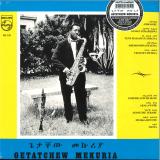
- B4: Gétatchèw Mèkurya - Gèdamay
Compilation selected from the etiopiques CD series.
"A few years ago the world discovered a unique sound coming from the distant Ethiopian capital Addis Abeba. The emotional blow was only matched by the brightness of this original and magnificent discovery. The Ethiopiques series directed by Francis Falcetto and edited by Buda Musique provides a comprehensive landscape of this subtle musical universe where local and western cultures do magnify each other. This new Ethiopian Urban Modern Music release follows the first Soul & Groove installment and keeps revealing some essential parts of the modern Ethiopian puzzle. An unequalled soul funk signature until today."

180G BLACK VINYL
Since Outlaws in 2020, Ludivine Issambourg's flute has not cooled down. How could it have, when with that album of Hubert Laws covers, it had reached incandescence? Still panting, burning despite the lid of its case left wide open, it awaited the opportunity to continue the adventures that Master Laws himself had praised.
A continuation? Above The Laws isn't quite that.
Although his name still appears, Hubert L. is no longer the sole guide in exploring the vast galaxies of jazz-funk. Through covers but especially as an enhancer of her own compositions, Ludivine has invoked the spirit and intangible presence of Jeremy Steig, Ronald Sneijder, and Bobby Humphrey—the legends of the flute.
Guided by an unescapable groove, with a musical dial set to the late 70s and early 80s, Ludivine has enlisted the help of a brass section this time, a true propulsion engine for funk that can also shift to a soulful breath if the moment calls for it. Supporting the keyboards, there's a Moog laying down its rich layers or twisting tones.
The flutes are used like levers to stabilize the flight or, conversely, to make it soar even faster through the measures. The alto version, which Ludivine had previously used sparingly, adds the necessary velvety note when it’s time to embark on smoother destinations. Speeding up the tempo to make passengers rise from their seats as if danger were imminent; calming the atmosphere to put them in a reassuring cocoon where they can let their thoughts and spirits wander, the improvisations find their place in the compositions observed from the porthole. Detached from gravity, yet still very much in tune with the vibe of cities marked as hot spots on the current jazz scene radar, it's the scent of these streets that permeates some tracks of Above The Laws.
Directed from the control tower by Eric Legnini, Chassol, Alex Finkin, and Michaël Lecoq, Above The Laws benefits from a few stops along the way where precious connections are established. Nils Landgren and his trombone in the colors of the Swedish flag, Laurent De Wilde for a chase between flute and Fender Rhodes, Céline Bonacina’s saxophone for an Afrobeat detour.
But it's at the edge of a journey where organic intensity has continued to assert itself without losing power that Ludivine connected with Brian Jackson for a cover of "Angel Dust," a track from the era when he and his partner Gil Scott-Heron were creating soul masterpieces. One of them featured a flutist by the name of Hubert Laws.
The starting point of Ludivine's latest jazz-funk explorations also becomes the endpoint. Elevated by the ten tracks of Above The Laws, Ludivine Issambourg closes a loop where she has placed her flute and its flourishes in an undeniably leading role. Opening the doors to ambitious orchestrations, unexplored horizons, she weaves into her compositions the experiences, places, and encounters that have shaped her.
On Stock and ready to ship

After their electrifying collaboration on "Parribean Disco", Dimitri From Paris is back in the driver’s seat with Cotonete’s "O Céu E Preto" featuring Gystere. This time partnering with French deep house pioneer DJ Deep for a sizzling remix from Cotonete lauded album "Victoire de la Musique”.
The remix is a house music masterpiece, featuring an infuriatingly catchy bassline, playful percussions, swirling keyboards, and tantalizing guitar licks that elevate Gystere’s mesmerizing vocal loops. The buildup peaks with irresistible horn riffs, delivering a straight-up house banger.
On Side B, the refined deep house and techno duo of DJ Deep and Romain Poncet present a streamlined, dubbier, and club-ready version that’s perfect for late-night sessions. Finally Voilaaa world-groove master gives a laidback airy and light disco take, always with a stomping beat (vocal and instrumental versions)
Don't miss out on this French Brazilian disco summer gem!
On Stock and ready to ship
DJ support: Tim Sweeney, Make A Dance, Parris, Pleasure Voyage, Camillo Miranda
Back yard - Back yard is the first single from the new Teen Daze album, Elegant rhythms, and features singer-songwriter Andy Shauf on drums, and LA jazz staple, Sam Wilkes, on bass. This is a stark change in sound for Teen Daze, who’s last album Interior was an exploration of neon-lit House music. Back yard is a mellow groover, conjuring up images of Laurel Canyon in the 70s, yet still with its flourishes of contemporary sounds.
We’re out of phase again - We’re out of phase again is another vulnerable glimpse into the inner world of Teen Daze, and marks the release of his most personal album to date, Elegant rhythms. In contrast to the synthesized, digital world of his prior album, Interior, here we’ve been brought into a lush, organic arrangement, brought to you in large part to the stunning bass playing by Sam Wilkes. While the verses pulse forward, the chorus slows things down, and evokes the sophisti-pop sounds of The Blue Nile. This track is a stunning showcase of the world of Elegant rhythms.
Nothing’s gonna change my love - Teen Daze returns with his second single of the year, Nothing’s gonna change my love. The stark change in sound, as heard on previous single Back yard, is on display here again: a smouldering, 2 and a half minutes of slow jazz-pop, indebted to the great Sade, or perhaps the feeling of leaving downtown LA at 2 AM. Lyrically, we hear a story of a love, challenged by the unpredictable nature of our lives. This may be Teen Daze’s smoothest song to date.
Neighbourhood - Neighbourhood is the third single from the recently announced LP from Teen Daze, Elegant Rhythms. Along with Andy Shauf on the drums, and Sam Wilkes on the bass, Teen Daze gives us a languid tour of his quiet neighbourhood. The sun has set on the pleasant, tree-lined streets, and a stranger, more surreal environment presents itself. The song plods forward at an extremely comfortable pace, held down by the paradoxically loose-yet-tight rhythm section. Lyrically, we walk around the Neighbourhood at night, and while the chorus reveals a type of sobriety, the vibe of the song makes it easy to feel a little…effected.
Fade away - Fade away sets the tone for Elegant Rhythm’s side B: a deeply personal, though somewhat veiled, confession of loss. How does it feel to grieve something that was never really here? A smouldering, slowly progressing first half erupts in synthetic noise, and then fades into the ether with it’s repeating refrain, “I can feel you / feel you fade away / when there’s nothing / nothing left to say”.
Fall ahead - A sweet piano tune which serves as a quiet break in the record, intended to help the listener reflect and take a moment of pause before we reach the final two songs on the album.
HST underwater - The penultimate track on the record tells a story where the narrator finds themself in an alien, yet oddly familiar place. Arpeggios soaked in crystal blue water flow through the stereo field, while the narrator, vocoded and drenched in autotune, searches for meaning and purpose in a confusing world. This is one of Teen Daze’s most cinematic, emotional songs yet.
In the rain - It’s never really made explicitly clear on this record, but a lot of these songs find Teen Daze wrestling with life as a new father, and this song, the final on the album, expresses the fears of generational trauma. A touching, tender ode to his children, we hear Teen Daze at his most personal and vulnerable. The falling rain surrounds some absolutely breathtaking bass playing from Sam Wilkes, and Teen Daze’s signature ambient keyboard sounds.
Radio Support: Ruf Dug (Soup To Nuts on NTS)
On Stock and ready to ship

- A1: Coco / Fabert - Ban di fwan
- A2: Wach'Da Star De La Rue - Confrontation (instrumental)
- A3: Michel Alibo - Fou, jaloux
- B1: Osmose - Melodi
- B2: Juliane - Blanc e noir (instrumental)
- B3: Champagn' Cocktail Lavaxn - L anmou aw
- C1: Jo Star - Demare moin
- C2: Alex Rosa - Sistem
- C3: Patrick Nuissier - Pou qui a
- D1: Vik in - Tension la ka monte
- D2: Joyeux de Cocotier - Pina Colada Coco Loco
- D3: Djeminay - Sun Plash
Repress.
The follow up of the acclaimed first volume of this compilation, a real discovery for many DJs and music lovers worldwide who didn't know that much about Zouk or DIY electronic music of the french west indies.
.
The selectors Julien Achard and Nicolas Skliris continue the excavation of French Antillas vinyl from the 80's and the 90's and for this second volume, they found some really exciting new references which should be soon « classics » on the dancefloors.
On Stock and ready to ship

Musician, composer, bandleader and musical rubik’s cube, Laurent Bardainne is a saxophonist who trained at The Paris Conservatory.
He’s collaborated with Pharrell Williams, Cassius and Philippe Katerine to name just a few and presents here his latest project, ‘Tigre d’eau Douce’ Also co-founder of electro rock band Poni Hoax (Tigersushi Records), Limousine, a duet with Camelia Jordana and more recently Sabrina & Samantha for Ed Banger. This album, sees a return to his first love of jazz, The Tigre d’eau Douce, represents a species doomed to disappear. So using melodies, chants and solos as an escape guide, his tenor saxophone takes us to a higher place,
one where John Coltrane and the great figures of jazz reside. These LP tracks bounce between the grooves and soul of the 1970’s, where
percussion and saxophone pave the way. ‘Marvin’ allows the fluffy keys of the Hammond organ to open out into a pensive melody that feels familiar. Carrying on the journey, the tough asphalt of hip hop is visited on tracks like ‘Bachibouzouk’ and ‘Felin M chant’, whereas more tropical themes are explored on tracks like ‘Kinshasa’.
On Stock and ready to ship

On Stock and ready to ship

When all you want to do is be the fire part of fire… say it to yourself and then say it again. Repeat it like a mantra. It’s what UTO did.
Anyone familiar with the UTO’s lauded 2022 debut Touch The Lock, which Pitchfork praised for its “prismatic synth pop”, will be aware of the variegated nature of what they do. This album is just as colourful, with Neysa’s vocalwork sparking similarities to Kim Gordon’s off-kilter vocals, which they both ceremoniously jets through a post-electronica blender mixing stylized indie sleaze productions with 90s breakbeats.
While they might appear as a singular entity to others, UTO wrote large sections of this album apart, converging by the fireside to discuss the day’s work before coming together to hone and finish the songs. 2023 was, by their own admission, a difficult year, and that’s reflected in the Dantean themes expressed in songs such as the lead single ‘Zombie’, which arrived at the end of November as a taster for the new record; the latter’s dark heart is belied by the skittering beats, glitchy electronics and pummeling sequencers that elevate it from the void.
From fire, early man’s discovery, to AI, humanity’s next great adventure - with all of the wonders and complexities of human relationships in between - When all you want to do is be the fire part of fire really is about life, the universe and everything. Just remember, be the flame, not the moth.
On Stock and ready to ship

When all you want to do is be the fire part of fire… say it to yourself and then say it again. Repeat it like a mantra. It’s what UTO did.
Anyone familiar with the UTO’s lauded 2022 debut Touch The Lock, which Pitchfork praised for its “prismatic synth pop”, will be aware of the variegated nature of what they do. This album is just as colourful, with Neysa’s vocalwork sparking similarities to Kim Gordon’s off-kilter vocals, which they both ceremoniously jets through a post-electronica blender mixing stylized indie sleaze productions with 90s breakbeats.
While they might appear as a singular entity to others, UTO wrote large sections of this album apart, converging by the fireside to discuss the day’s work before coming together to hone and finish the songs. 2023 was, by their own admission, a difficult year, and that’s reflected in the Dantean themes expressed in songs such as the lead single ‘Zombie’, which arrived at the end of November as a taster for the new record; the latter’s dark heart is belied by the skittering beats, glitchy electronics and pummeling sequencers that elevate it from the void.
From fire, early man’s discovery, to AI, humanity’s next great adventure - with all of the wonders and complexities of human relationships in between - When all you want to do is be the fire part of fire really is about life, the universe and everything. Just remember, be the flame, not the moth.
On Stock and ready to ship

On Stock and ready to ship

On Stock and ready to ship

“Tea House From Emperor Roscoe” by Dice The boss aka Pama Dice was first released as a B side of the early Reggae classic “She Caught The Train” by Ray Martell released in 1970 on the Trojan sublabel Joe (which we will also release separately on the 22nd of March 2024) whilst “Brixton Cat” was released in 1969 on the Duke Label under a Joe logo.
Both titles are skinhead reggae classics that have never been reissued and are very much demand.
About Dice The Boss/ Pama Dice:
Not much is known about Dice The Boss. His real name was Hopeton Reid and he was alternatively known as “Pama Dice”. But we know more about Pama Dice thanks to Gaz Mayall!
"Pama Dice was one of Prince Busters ‘no-shoes’ ‘Sunday school gang in west Kingston Jamaica. According to the Prince there wasn’t a car that Pama couldn’t nick. He used to nick the cars uptown with no shoes on & take them to the ghetto to teach the youth to drive. They were called the Sunday school or no-shoes gang as they were so poor that they only had one pair of shoes each & only wore them to church on Sundays. Pama Dice rose in the ranks to become one of Prince Busters main sound system DJs before emigrating to London in the late sixties where he MC’d for Duke Vin & recorded many great records for the UK/Jamaican booming new Reggae market in its infancy on the shoulders of the Bluebeat & Ska & Rock Steady music scene."
On Stock and ready to ship