Golf Trip is the new solo project of Gautier de Bosredon, former member of the Camel Power Club that he co-founded in 2013. The tracks he co-produced and co-wrote have now accumulated over 50 million listens on streaming platforms and the project is now touring all over Europe to present them.
Resulting from a writing that was done since his departure from the group, the music of Golf Trip is goovy and solar. The will to make a record which is soft and positive was the thread of all its realization. Long sessions allow the elaboration of a musical framework based on straight rhythmics, funky guitars and soft synthesizers.
A quiet fleet on board which the listener embarks for 6 tracks whose arrangements and mixing were realized by the Norwegian Olefonken (aka Hubbabubbaklubb).
out of Stock
Last delivered 19 months ago available to reorder, subject to availability
Alto saxophonist Jackie McLean had the blues on his mind when he went into Van Gelder Studio in 1961 to record his hard bop masterpiece Bluesnik with a blazing quintet featuring Freddie Hubbard on trumpet, Kenny Drew on piano, Doug Watkins on bass, and Pete La Roca on drums. The six-song set of bluesy originals brims with immediacy and vibrancy.
This Blue Note Classic Vinyl Edition is stereo, all-analog, mastered by Kevin Gray from the original master tapes, and pressed on 180g vinyl at Optimal.
Should 'The Great Encyclopaedia of Musical Genres' be at a loss for a word to describe the music of Ghent-based Ramkot, they wouldn't have to look far. 'Ramrock'; done. It's how the solidly carefree rocking Ghent triumvirate themselves describe the music with which they have been selling clubs, concert halls and festivals spicy maws since 2018. With two EPs to their credit, 'Ramkot' (2019) and 'What Exactly Are You Looking For' (2021), and a giglist that you can only be in awe of, the laureates of De Nieuwe Lichting 2021 thought it was high time to stamp their awe-inspiring sound on a first album.
Le nouveau Ramkot est arrivé: with 'In Between Borderlines', Ramkot delivers a debut full of particularly solid, yet danceable, 'ram rock' and bangs its way through the wall of sound to a - no doubt - very exciting future.
'In Between Borderlines' is the apotheosis of two years of rock hard work. Idea. Elaborating. Polishing. And there's the diamond. Ramkot is not the band to sit still and wait for the time to put their music on tape. The time is always ripe.
For 'In Between Borderlines', Ramkot dove into the studio for a year - at different times - where they canned eight songs, all with the familiar Ramkot signature: hard and cutting, melodic and danceable and now and then gleefully deviating from the usual path.
The two advance singles 'Exactly What You Wanted' and 'I Can't Slow Down' already beautifully indicated the tenor of 'In Between Borderlines': the back straight and firmly in line, ready to continue on the successful and - above all - very eager momentum. And did the music hit its mark? Absolutely. Studio Brussels, Willy and KINK were immediately on board. With a spot in De Afrekening, Catch Of The Day (Studio Brussel) and Daily Drop (KINK) as a result.
It is sometimes said that three is a magic number. It is. A three-piece band reduces music to its essence and cuts harder live than a Japanese chef's knife. Whereas during the recording process Ramkot was tempted to also get to work with synths, live they invariably opt for the more pared-down versions of their songs that - just like on the album - grab the audience by the neck and show them every corner of the room. And it is this playing live that has certainly not hurt the band in recent years. On the contrary, it made Ramkot more natural, tightened the reins and gave the band an even more distinctive look. 'In Between Borderlines' is brimming with the pleasure of playing, the desire and eagerness to go flat out until 'everything is broken'.
Ramkot never gets stuck. On 'In Between Borderlines' this manifests itself in multi-layered songs with tentacles in solid riffs, occasionally borrowing from other genres. Does a song have a ragtime feel to it? Or is there a hint of 'despacito'? The band is not afraid to blend some exotic influences with abrasive guitars and sulky drums. Extra flavour makes the dish more interesting. And as for 'In Between Borderlines', the starter, main course and dessert are immediately on the table. It may be finished in one sitting.
Should 'The Great Encyclopaedia of Musical Genres' be at a loss for a word to describe the music of Ghent-based Ramkot, they wouldn't have to look far. 'Ramrock'; done. It's how the solidly carefree rocking Ghent triumvirate themselves describe the music with which they have been selling clubs, concert halls and festivals spicy maws since 2018. With two EPs to their credit, 'Ramkot' (2019) and 'What Exactly Are You Looking For' (2021), and a giglist that you can only be in awe of, the laureates of De Nieuwe Lichting 2021 thought it was high time to stamp their awe-inspiring sound on a first album.
Le nouveau Ramkot est arrivé: with 'In Between Borderlines', Ramkot delivers a debut full of particularly solid, yet danceable, 'ram rock' and bangs its way through the wall of sound to a - no doubt - very exciting future.
'In Between Borderlines' is the apotheosis of two years of rock hard work. Idea. Elaborating. Polishing. And there's the diamond. Ramkot is not the band to sit still and wait for the time to put their music on tape. The time is always ripe.
For 'In Between Borderlines', Ramkot dove into the studio for a year - at different times - where they canned eight songs, all with the familiar Ramkot signature: hard and cutting, melodic and danceable and now and then gleefully deviating from the usual path.
The two advance singles 'Exactly What You Wanted' and 'I Can't Slow Down' already beautifully indicated the tenor of 'In Between Borderlines': the back straight and firmly in line, ready to continue on the successful and - above all - very eager momentum. And did the music hit its mark? Absolutely. Studio Brussels, Willy and KINK were immediately on board. With a spot in De Afrekening, Catch Of The Day (Studio Brussel) and Daily Drop (KINK) as a result.
It is sometimes said that three is a magic number. It is. A three-piece band reduces music to its essence and cuts harder live than a Japanese chef's knife. Whereas during the recording process Ramkot was tempted to also get to work with synths, live they invariably opt for the more pared-down versions of their songs that - just like on the album - grab the audience by the neck and show them every corner of the room. And it is this playing live that has certainly not hurt the band in recent years. On the contrary, it made Ramkot more natural, tightened the reins and gave the band an even more distinctive look. 'In Between Borderlines' is brimming with the pleasure of playing, the desire and eagerness to go flat out until 'everything is broken'.
Ramkot never gets stuck. On 'In Between Borderlines' this manifests itself in multi-layered songs with tentacles in solid riffs, occasionally borrowing from other genres. Does a song have a ragtime feel to it? Or is there a hint of 'despacito'? The band is not afraid to blend some exotic influences with abrasive guitars and sulky drums. Extra flavour makes the dish more interesting. And as for 'In Between Borderlines', the starter, main course and dessert are immediately on the table. It may be finished in one sitting.
Should 'The Great Encyclopaedia of Musical Genres' be at a loss for a word to describe the music of Ghent-based Ramkot, they wouldn't have to look far. 'Ramrock'; done. It's how the solidly carefree rocking Ghent triumvirate themselves describe the music with which they have been selling clubs, concert halls and festivals spicy maws since 2018. With two EPs to their credit, 'Ramkot' (2019) and 'What Exactly Are You Looking For' (2021), and a giglist that you can only be in awe of, the laureates of De Nieuwe Lichting 2021 thought it was high time to stamp their awe-inspiring sound on a first album.
Le nouveau Ramkot est arrivé: with 'In Between Borderlines', Ramkot delivers a debut full of particularly solid, yet danceable, 'ram rock' and bangs its way through the wall of sound to a - no doubt - very exciting future.
'In Between Borderlines' is the apotheosis of two years of rock hard work. Idea. Elaborating. Polishing. And there's the diamond. Ramkot is not the band to sit still and wait for the time to put their music on tape. The time is always ripe.
For 'In Between Borderlines', Ramkot dove into the studio for a year - at different times - where they canned eight songs, all with the familiar Ramkot signature: hard and cutting, melodic and danceable and now and then gleefully deviating from the usual path.
The two advance singles 'Exactly What You Wanted' and 'I Can't Slow Down' already beautifully indicated the tenor of 'In Between Borderlines': the back straight and firmly in line, ready to continue on the successful and - above all - very eager momentum. And did the music hit its mark? Absolutely. Studio Brussels, Willy and KINK were immediately on board. With a spot in De Afrekening, Catch Of The Day (Studio Brussel) and Daily Drop (KINK) as a result.
It is sometimes said that three is a magic number. It is. A three-piece band reduces music to its essence and cuts harder live than a Japanese chef's knife. Whereas during the recording process Ramkot was tempted to also get to work with synths, live they invariably opt for the more pared-down versions of their songs that - just like on the album - grab the audience by the neck and show them every corner of the room. And it is this playing live that has certainly not hurt the band in recent years. On the contrary, it made Ramkot more natural, tightened the reins and gave the band an even more distinctive look. 'In Between Borderlines' is brimming with the pleasure of playing, the desire and eagerness to go flat out until 'everything is broken'.
Ramkot never gets stuck. On 'In Between Borderlines' this manifests itself in multi-layered songs with tentacles in solid riffs, occasionally borrowing from other genres. Does a song have a ragtime feel to it? Or is there a hint of 'despacito'? The band is not afraid to blend some exotic influences with abrasive guitars and sulky drums. Extra flavour makes the dish more interesting. And as for 'In Between Borderlines', the starter, main course and dessert are immediately on the table. It may be finished in one sitting.
Welcome to another fine episode of SIRS aka »Sounds in real Stereo«! After last years' arrival on LARJ with his »Arrived EP«, Berlin based versatile DJ & producer Daniel Klein is back with »Travel To HDF.Y3D« - an utopian (or more likely dystopian) ode to space travel:
The last few remaining humans are traveling with 140bpm to the most distant galaxy in the universe on a mission to seek out a new space for mankind to live after many years of exploiting good old Mother Earth. What sounds like a horror scenario if you start thinking about it, SIRS manages to wrap up in quite a positive musical message. Thus »Travel To HDF.Y3D« becomes that hopeful uplifting slightly dreamy tune we all need these days - not unlike Christian Bruhn's theme of a certain Captain called Future back in 1980 …
It's also nice to have two more versions of such a strong tune at hand: The first one is a true first one for »Cocktail D'Amore« DJ BUDINO as she comes up with her first remix and production work ever. Budino's approach is a slightly darker, maybe indeed more dystopian one. The synthesizer bass lines dominate her remix and by getting rid of the original's playful melody she creates a very special melancholic feel.
Leipzig based PANTHERA KRAUSE's take isn't quite that different from Budino's as he too focuses on the darker vibes of this journey in space. It's his added extra dose of punch that surely will keep dancers on the floor for sure.
The former »Space Ibiza« resident SIRS now takes over the controls again with »Summer Desire« which too is destined to rule dancefloors not only in Ibiza but all over the world with its lovely airy vibe.
»Travel To HDF.Y3D« returns for one last time in form of the spoken word prolog - a nice extra tool to play with.
out of Stock
Last delivered 5 months ago available to reorder, subject to availability
Cryptically-named duo JOHN - comprised of John Newton (drums, lead vocals) and Johnny Healey (guitar, backing vocals) - return with their first new music since the release of their acclaimed third album Nocturnal Manoeuvres . It comes in the guise of the blistering 'Theme New Bond Junior', the A-side of a new 7" single, b/w 'Hopper on the Dial'.
Set to undulating guitar riffs and a greater sense of dynamics than ever before, 'Theme New Bond Junior' finds JOHN tackling the questioning feelings that arose as the band returned to the live circuit once venues began to open their doors as they embarked on a rapturous 30-date UK tour in autumn 2021, as well as recent festival slots at Green Man, End of the Road, Latitude, a main stage appearance at Bearded Theory’s Spring Gathering and a memorable return to the mainland at Belgium’s historic ROCK HERK.
“The arts function as a mirror of our wider culture, and it’s been interesting to see how the acceleration of the present affects most aspects of our lives - including the production of art and music," says Newton. "The track was a gestation on the speed of consumption: this includes both the constant update/obsolescence of physical products and their resulting affect on the human attention span.”
Anna B Savage has always asked questions in her music, but on new album in|FLUX answers are no longer her quest. Vulnerability and curiosity have consistently been operative words to describe her work and on her second album she ruminates on the complexities and variables of humanity, the pain or pleasure of love, loss and earthly connection, capturing it all in devasta- ting, elating and powerful ways. The key difference between this and previous releases: she’s not anxious about what’s on the other side. She’s come to appreciate staying afloat - basking even - in the open ended, uncertainty of the grey area.
Anna B Savage‘s new album features the singles „The Ghost“ & in|FLUX“ and will be released on 17th February on City Slang.
One amp. One mic. One person. Countless hooks. That’s the Dazy formula. Since first releasing the single Bright Lights b/w Accelerate in August 2020, Dazy mastermind James Goodson has been writing, recording, and releasing new music like a man on the hunt to find the best pop hook, and he won’t stop until he’s put all of them into his songs. Show- casing a unique set of influences, Dazy’s sound marries thumping drum machine beats, blasts of feeding back guitar, and sugar-sweet hooks into something that sounds like God- flesh covering Oasis—or maybe the other way around. With lean songwriting that recalls Teenage Fanclub but a home-re- corded production style better suited for Big Black, Goodson builds a constant churn of abrasive, consuming noise and then makes it catchier than anyone else would ever dare to.
For the last five years, Los Angeles-based musician Noah Weinman has been Runnner, and for much of those five years, Runnner has been working. Working on his 2021 collection album, Always Repeating; working as a producer on the Skullcrusher records; and, of course, working towards his debut full-length, Like Dying Stars, We're Reaching Out. From LA to Ohio and the Northeast and back, he's been deep in the craft of sound. This is music made at home, using anything and everything: cell phones and handheld tape recorders, the hum of an a/c unit, voicemails from friends. Rubbing cardboard together, stretching acoustic sounds out to near liquid, or stacking delay pedals at random to scramble the smoothness of a song can make something known into something unknown –
something ordinary into something cosmic. These are songs where the edges have been left deliberately rough because perfection invites predictability, and imperfection imbalances, and those imbalances ask the listener to listen again, and again.
Seit ihrer Gründung im Jahr 1987 haben sich die
schwedischen Klangarchitekten MESHUGGAH zu einer
der technisch komplexesten und virtuosesten Gruppen
entwickelt, die die Metal?Welt je gesehen hat. Mit ihrem
unverwechselbaren, progressiven, von Grooves geprägten
Death Metal haben sie ungewollt ein völlig neues
Subgenre begründet!
Wir blicken ein Jahrzehnt zurück:
Nachdem sie mit "obZen" (2008) die Metal?Gemeinde
auf den Kopf gestellt hatten und ununterbrochen rund um
den Globus tourten, kehrte die kultige Band Anfang 2011
in ihr eigenes Studiogewölbe zurück, um ein gigantisches
Monster von einem Album aufzunehmen. Der
schwedische Fünfer hat seiner Musik immer die nötige
Zeit und den größten Aufwand gewidmet, und man weiß,
dass sich das Warten mehr als gelohnt hat,
wenn man das Wunder einer neuen
MESHUGGAH?Platte zum ersten Mal hört.
Mit "Koloss" haben MESHUGGAH einmal mehr
bewiesen, dass sie an der Spitze des Spiels stehen, an
das andere im Bereich des Mathe?, Jazz?, Djent? oder
wie auch immer man es nennen mag ? Metal zwar
herankommen, aber niemals herankommen werden.
Im Jahr 2022 wird dieses Meisterwerk in
atemberaubenden neuen Vinyl?Farben wiederveröffentlicht
(weltweit auf 500 Stück pro Farbe limitiert), um den
Traum eines jeden Sammlers zu erfüllen.
Canadian producer Dylan Khotin-Foote has kept his Khotin alias going for the better part of a decade; the impressionistic electronic project shifts with the movements in his life. Sometimes it leads, like when the club-friendly grooves of 2014's Hello World immersed him in the heart of Vancouver's underground dance scene, and sometimes it follows, like 2018's Beautiful You, a downtempo salve for DJ fatigue. His melodic sensibility and playful ear for atmosphere remain the rippling core of the project's fingerprint; whether beat-driven or ambient, a foggy smear or a dusted and pristine print, a Khotin track has a distinct and instantly recognizable swirl. During and after the 2020 release of Finds You Well, his second LP on Ghostly International, Khotin-Foote settled back into a slower vibe in his hometown of Ed- monton. Even before the pandemic, his pivots to softer production, and away from DJing, left him with fewer opportunities in Vancouver and club bookings overall, and as a self-identifying introvert, he was fine with that. But the change of pace did open space for Khotin-Foote to grapple with concepts of adulthood and career. At his lowest, he almost walked off this musical path altogether; instead, he doubled down on the craft _ the tone, pacing, and dynamism of new material _ arriving at a definitive full-length. With Release Spirit, Khotin releases himself from the pressure of expectation, fusing and refining everything we know about his music. The warmth and familiarity of Khotin's dreamy, dulcet style meet new ideas and frameworks, a natural progression, a modest revelation; Khotin confirms it is okay to move slowly and he's never sounded better doing it. The album title borrows from the "release spirit" mechanic in the video game World of Warcraft. When players die, they are prompted to release their spirit and return as ghosts to find their corpses and come back to life. Khotin sees it as a worthy metaphor for the impending change his return home presented and the resulting process of purging artistic expectations to find his creative self again. On this go- around, he is freer, more playful, and more intentional within his palette of warped synth, breakbeats, and piano sounds _ including the classic Casio SK-1 presets he's used since the start _ mingling with wistful samples, field recordings, and other abstract snippets. For the first time, he enlisted Nik Kozub to do the mix and assist with sequencing. Khotin-Foote has long worked with the Edmonton-based musician and engineer in the mastering phase, as well as their days co-running the label Normals Welcome, and this time was able to involve his ears earlier given their newfound proximity. "I think it's my best sounding record to date." We begin on "HV Road" or Happy Valley Road, where Khotin-Foote spent time during a family vacation in British Columbia's Okanagan Lake. His plans to record crickets at night are quickly foiled by his younger siblings; the cute exchange orients the listener to a core memory of sorts, setting the tone of universally understood warmth and wonder that has defined some of Khotin's most transportive tracks. Hazy percussion takes hold, and we are swept further into the wisp of "Lovely," a grooving, melodic standout built on the interplay between the beat and human voice-like hums. Khotin knows this zone well; equally suited for a reverie or a club warm-up. The bubbling atmosphere and absurdity of "3 pz" offer a cosmic/comic interlude and also speak to reflections on his family's move to Canada two generations ago, and the audio tutorials they used to learn English. "I can only imagine my grandpar- ents repeating some of the bizarre phrases." "Fountain, Growth" finds Khotin in collaboration with Montreal's Tess Roby (Dawn to Dawn) for the project's first-ever vocal track. Roby's soft cadence echoes atop spiraling air pockets of rhythmic production, lending a breezy, almost shoegaze pop feel. Throughout the single and the album, wind gusts between the compositional layers, akin to the roaming spirits of its namesake, curving around the birdsong of "Life Mask" and seamlessly reaching "Unlimited <3." The latter bumps in slow motion; disembodied whirrs from his Casio collide with 808 drums and sub-bass for a vibe that teeters on trap and instrumental hip-hop. Release Spirit rests in a dream sequence. Oscillating synth lines dance around the heartbeat of "Techno Creep," a hyperactive REM state before the digitized ambient sprawl of "My Same Size." In the final pass, Khotin imagines transcontinental travel from the glow of his screen. He recorded "Sound Gathering Trip" to soundtrack a genre of YouTube videos he's taken to that follows train routes through Europe and Japan. The scene is serene and moving; piano keys warble as static-filled sound design shimmers off the rails, from cityscapes to the countryside, an introspective ride through a world beyond his bedroom. It doubles as an apt parting image for Khotin's project as a whole: dreaming big but happiest when riffing on the details, shaping environments from the inside out. Over the last decade, he has stretched from his core in Edmonton, leaving a trace in Vancouver and beyond; but when all signs point home, he loops back to see it all from a different vantage, revitalized, refined, and free.
out of Stock
Last delivered 62 days ago available to reorder, subject to availability
160-gram heavyweight Vinyl LP with gatefold jacket displaying the painting series that inspired the music, and the story of Newtok. Newtok is a remote Alaska Native village situated on the Ningliq River, near the west coast of Alaska. Although a very remote and quiet place, Newtok has come face-to-face with climate change. Due to a combination of thawing permafrost, low levels of sea ice, and strong storms, the coastal land of Newtok is eroding dramatically. In 2016, Chicago visual artist Jennifer Cronin embarked on a trip to Newtok to document this changing environment. Upon returning, she spent the next several years developing a series of paintings and screen prints titled Seen and Unseen that captured this eroding landscape. In 2019, Cronin and musical Artist Patrick Mitchell (a/k/a Dusty Patches) began discussing the project after Cronin asked him to perform at the Gallery opening for the series. As a result, Mitchell created this album, Newtok - inspired by Cronin's Seen and Unseen series and the story of Newtok, Alaska. Mitchell is a multi-instrumentalist songwriter and producer from Chicago who has led numerous past projects in the Chicago DIY community including De Triomphe, New Color, and Whiskey Wise. He dove headfirst into synths in 2017 and adopted the electronic alias Dusty Patches. Dusty Patches released his debut project Filthy Four Track Machine: Volumes I & II (2018, Sooper Records), largely made with the Teenage Engineering Pocket Operators and OP-1. In 2020, he released Nocturnal Emissions from the Dablatory, his first project fully realized with modular synthesis. In approaching Newtok, Mitchell composed all of the constituent musical elements of the work and then recorded and live mixed the album during a single live performance on modular synthesizer. The album draws heavily on sprawling ambient synths, electric and acoustic post-punk guitar motifs, cryptic vocal sampling, vintage drum machines, and modular patches that often sound like birds or the sea. The subject matter of the album, the complexity of its arrangement, and its execution as a single live recorded performance makes Newtok a unique musical experience. About Newtok, Mitchell says: This record was an exploration of themes. When faced with the immense canvases Jen Cronin produced upon her return from the village of Newtok, one can't help but feel awe. With the sheer size of the works towering above you, you are compelled. There is overwhelming beauty, desolation, a sense of urgency, and a sense that it is, in fact, far too late. These visual themes, and the emotions they evoke, were connected to the sounds and compositions of this record. There is a coldness to the digital soundscape, but organic sounds of nature and humans tether and steer the album through a journey of musical storytelling. Newtok is a journey of musical storytelling about the tragedy of the Anthropocene in the age of climate change. FOR FANS OF: Mother Earth's Plantasia, Black Moth Super Rainbow, Boards of Canada, Bibio
In the midst of a wave of hybridizing ambient, drone, folklore and experimental electroacoustic music, Roxane Métayer has gained a cult following with only a couple of releases to date. Following her debut album (Éclipse Des Ocelles) for Morc with a split EP and a limited cassette for Wabi-Sabi, Roxane now turns to Marionette with her intimate narrative based multi-instrumental recordings, a match made in the heavens if you ask us. With her violin, woodwind, voice and various effect pedals, Métayer takes the listener on a newfound journey into the ancient, medieval, and primordial.
Perlée de sève is Métayer’s second full length, a sophomore to the critically acclaimed Éclipse Des Ocelles, where Métayer continues to sonically realize the map of the fictional habitats that inhabit her mind. Coming from a background of studying narration and different animation mediums, it’s no surprise that her recordings evoke vivid imagery and carry a trace of the environment they were conceived in. The instruments morph as extensions of her body and ultimately become new organs, a means of communicating these bio-memetic stories and creating a dialogue between herself and her surroundings. Meandering melodies intertwine with accompanying drones, mantra-like fragments and a handfeel percussion lend themselves as living and breathing elements in Roxane’s beguiling and spellbinding anecdotes.
Roxane is an observer of the world, her projects conceived from elements that inform her reality, such as the organic imagery and sounds of nature, then transforming that into a strangely familiar parallel universe that would not exist otherwise. Whether it's active research or taking her instruments to the forest, Métayer opens up her imagination by taking this mental journey to discover locations, creatures, and time periods then channeling that into her own fairy tales. The album and track titles act as a portal into those worlds, like chapters in a book where the protagonists are animalia, plantae, and fungi. As Métayer wrote in an interview: “Stories are a privileged way to create an awareness of a specific subject.”
'Guerrilla Girls!', die mit Spannung erwartete Veröffentlichung von Ace Records in 2023, beschreibt eine aufregende Reise von den Ursprüngen des Punk Mitte der 70er Jahre über Post-Punk, schrille Frauen-Combos, Grunge-Bands und Riot Grrrls der 80er und 90er bis hin zu den She-Punk-Bands der letzten Jahre - sozusagen eine über fünf Jahrzehnte alte Alternative zur Macho-Hegemonie des Rock.
Die Sammlung hebt Songs hervor, die aus einer dynamischen Unterkultur weiblichen kreativen Ausdrucks hervorgegangen sind. Was die vorgestellten Künstlerinnen eint, ist eine gesunde Missachtung der Art und Weise, wie die Musikindustrie ihre weiblichen Darsteller in hübsche, neoliberale Pakete schnürte. Von Patti Smith, der universellen Mutter der Punkbewegung, bis hin zu den Bags, Bikini Kill und Skinny Girl Diet - diese Musik ist Anti-A&R.
Das Digipak enthält ein 40-seitiges Booklet mit einem ausführlichen Einführungs-Essay von Lucy O'Brien (Autorin von She Bop: The Definitive History Of Women In Popular Music) und einem Track-By-Track-Kommentar von Compiler Mick Patrick (dem langjährigen Verfechter für alle Stilrichtungen weiblicher Musik bei Ace). Wer das Ganze lieber auf LP hätte, greift zur Doppel-Vinyl!
The past few years have found Sean McBride, the artist behind Martial Canterel, in a state of flux, ebbing back and forth between material displacement and musical aestheticism. His expert pedigree in electronic sound and arrangement bridges the gap created by an undecidability between life at home and abroad His new album, Lost At Sea, is an attempt for the artist to locate this elusive common ground.The album's introductory track, Giving Up, has all of the hallmarks that Martial Canterel has utilized in the past_melodic chorus, upbeat rhythm and classic sequential dynamism. Where the song diverges is in its core theme of nature: nature's return to a period of restoration after the failures and recklessness of humankind.The slower pace of songs like Scampia and Puszta yearn for McBride's complex love affair with far flung destinations. Re-evaluating the political strife and social unrest in these historical locations, McBride delves deeper into political and geological reference points creating symbolic representations using mechanized percussion, white noise and various sine waves.The conceptual nature of Lost at Sea reaches even deeper depths within the waveforms of Astralize, a track based upon academic Donna Haraway's pre-civilized theories of human neglect after the `azstralization'.
In the two years since their last full length outing, Let There Be Nothing, JUDICATOR have returned from collective and personal turmoil brought on by both the Covid-19 pandemic and foundational lineup changes. The US power metal group are now primed and proud to release their triumphant sixth studio album, The Majesty of Decay, via Prosthetic Records. Refreshed and revitalized, JUDICATOR are eager to let this beastly album out of the gate and into your stereos. Whilst the album’s story remains somewhat shrouded in mystery, JUDICATOR utilizes compelling plot devices as a means to encourage fans to piece together the album’s meta-contextual threads. What we do know, however, is that The Majesty of Decay explores the subjects of love, family, and the transformation of suffering into something meaningful. JUDICATOR invites you to step into this world and contemplate how the story might relate to you. The album is a carefully constructed puzzle of mirrors and metaphor that cries out for Judicator fans everywhere to solve it. What began as a humble homage to their favorite band quickly grew into something that hads fans begging for more, and JUDICATOR is happy to oblige. The band has produced a catalog of music that spans multiple sub-genres and breaks conceptual boundaries. With this latest offering, The Majesty of Decay, JUDICATOR have delivered yet another thought provoking album that fits nicely into their discography.
Funkadelic have created an enduring legacy, and the power of their impact is visceral in Detroit. Their records not only played with genre, but possessed a diabolical sense of humour that led to music domination by the late 70s with Parliament, Funkadelic, Parlet, Bootsy's Rubber Band and the Brides Of Funkenstein all releasing albums the same year for two years in a row.
The music itself is beyond stereotype, but equally huge is that they were a black band not allowing themselves to be limited by anyone else's notions of who they could be, having a massive impact on the next generation of Detroit music, Detroit Techno.
But more than just Techno, it is a freedom of thinking that extends beyond boxes, so we included all sorts of today's generation of Detroit musicians and producers to show the wide range of music that was Funkadelic and how these ideas are still contemporary, they endure and inspire.
out of Stock
Last delivered 21 months ago available to reorder, subject to availability
Runnin' Out of Fools is the sixth studio album by the American “Queen of Soul” Aretha Franklin, originally released in 1964 and arranged and conducted by Belford C. Hendricks. The album features cover versions of Dionne Warwick “Walk On By”, Betty Everett “The Shoop Shoop Song (It's In His Kiss)” and Mary Wells “My Guy” amongst others.
Runnin' Out of Fools is available as a limited edition of 2000 individually numbered copies on red coloured vinyl. It is housed in a deluxe, sturdy sleeve finished with a gloss laminate finish.
out of Stock
Last delivered 3 years ago available to reorder, subject to availability
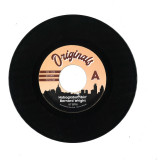
Originals are back with the heat – Bernard Wright’s hard to find on 45 Haboglabotribin' flipped with the perpetrator Snoop Dogg’s Gz & Hustlas – very apt – don’t sleep – doubles are a minimum requirement!
out of Stock
Last delivered 2 years ago available to reorder, subject to availability
Dublin-based producer Moving Still further blends both his Saudi Arabian and Irish heritage on 'Kalam Hub', a triumphant new EP that marks the fifth release on CWPT/Cooking With Palms Trax. Following a series of 12” edits and original productions that have put his sounds in the record bags of DJs including Hunee, Nabihah Iqbal and Esa Williams, 'Kalam Hub' presents an ambitious expansion of the Moving Still sound, delving into his identity and background to open up imaginative, universal new corners for club culture.
This potent musicality is immediately evident from the first notes of 'Kunafa King'. Taking its title from a traditional Arabic dessert, analogue midi sounds deliver a skewed take on the traditional Saudi rhythms of the artist's youth, before expanding into a wistful diversion for any self-respecting dance floor. It's a trick Moving Still pulls off again on the pulsing 'Hayati 89', which transforms from a traditional aesthetic into a blistering, neon-tinted Italo banger, the kind of track designed to compliment an accelerated spin in the car gracing the eye-catching cover of ‘Kalam Hub’, a collaboration with the artist alongside Manchester-based graphic design studio, Dr. Me.
Concluding the record's A-side, the rhythms take a trippier turn for the duration of 'La Titasil Feeya'. Translating to “don't call me!” and making sonic reference to teenage years immersed in rock, metal and general angst, it unfolds as something akin to Middle East-tinted techno with a formidable kick drum, before exploding in colourful, organic breakbeats. Immediately on the flip, the sense of wonder returns in a sonic mirage for 'My Bosa Is For You', weightless rhythms blending with an electric organ and charming, lightly psychedelic breakdowns.
Further sonic tricks fall from Moving Still's delicately-tailored sleeves on 'Haram Odyssey', where an almost impossibly tight bass line provides the function for contrasting synthesis and unpredictable percussion, drawing parallels between the sometimes confusing aspects of the artist's dual-cultural life as a child, through to the music he makes as an adult. Fittingly, the record concludes with ‘Kalam Hub', a triumph of minimalist percussion and traditional instrumentation that pays tender tribute to the Moving Still's grandmother, translating simply to “Love Talk”.
out of Stock
Last delivered 8 months ago available to reorder, subject to availability
The long-awaited reissue of the best ever album of rare Eastern and psychedelic Jazz music by this famous Hungarian guitarist
Gabor Szabo, originally released in 1968. For the first time as extended edition with 2 bonus tracks: radio versions of Fire Dance
/ Ferris Wheel from the 1969 7” single 7”. Deluxe 8-sided Digipak CD and Gatefold Vinyl come with long, exclusively written
inner notes by the famous researcher and biographer Douglas Payne. Remastered by Martin Bowes at Cage Studios (UK).
Gabor Szabo was one of the most original guitarists to emerge in the 1960s, mixing his Hungarian folk music heritage with a deep
love of jazz and crafting a distinctive, largely self-taught sound. Born in Budapest, on March 8, 1936, Szabo was inspired by a Roy
Rogers cowboy movie to begin playing guitar when he was 14 and often played in dinner clubs and covert jam sessions while still
living in his hometown. He escaped from his country at age 20 on the eve of the Communist uprising and eventually made his way
to America, settling with his family in California.
He attended Berklee College (1958-1960) and in 1961 joined Chico Hamilton's innovative quintet featuring Charles Lloyd. Urged
by Hamilton, Szabo crafted a most distinctive sound; as agile on intricate, nearly-free runs as he was able to sound inspired during
melodic passages. Szabo left the Hamilton group in 1965 to leave his mark on the pop-jazz of the Gary McFarland quintet and the
energy music of Charles Lloyd's fiery and underrated quartet featuring Ron Carter and Tony Williams.
Szabo initiated a solo career in 1966, recording the exceptional album, Spellbinder, which yielded many inspired moments and
"Gypsy Queen," the song Santana turned into a huge hit in 1970. Szabo formed an innovative quintet (1967-1969) featuring the
brilliant, classically trained guitarist Jimmy Stewart and recorded many notable albums during the late '60s. The emergence of
rock music (especially George Harrison, Eric Clapton, and Jimi Hendrix) found Szabo experimenting with feedback and more
commercially oriented forms of jazz.
During the '70s, Szabo regularly performed along the West Coast, hypnotizing audiences with his enchanting, spellbinding style.
From 1970, he locked into a commercial groove, even though records like Mizrab occasionally revealed his seamless jazz, pop,
Gypsy, Indian, and Asian fusions. Szabo had revisited his homeland several times during the '70s, finding opportunities to perform
brilliantly with native talents. He was hospitalized during his final visit and died in 1982, just short of his 46th birthday.
out of Stock
Last delivered 3 years ago available to reorder, subject to availability
Infinite Machine is proving again it's a label that refuses to sonically sit still. Having released everything from code-based compositions to bass-heavy techno in 2022, the imprint is readying the release of the black metal-tinged Ehkta by BOLT RUIN later this month. A musician whose work has been described as 'apocalyptic' more than once, on this new mini-album, the Belgian producer blends field recordings, twisted samples and rave signifiers with an eerie tonality born out of his nocturnal production sessions and time spent absorbing the silence of his studio garden.
Bridging the gap from his previous record to this one, 'Sktone' is a cinematic opener that unfolds like a bad dream in slow motion. Warped samples of Bulgarian choirs glide over synths wired in closed-circuit loops which feed back on themselves, degrading for infinity. Texture and space is added via field recordings of waves crashing over the ruins of Brighton West Pier. This track exemplifies the unexpected influence BOLT RUIN took from the wildlife he witnessed in the garden of his urban studio when working on Ehkta. Adapting to the material at their disposal, weasels and blackbirds create nests from organic waste and human trash - an astute metaphor for the Belgian producer's compositional approach.
Next up, BOLT RUIN drives up the tempo with the rave-ready 'Nehng', where a frenzy of trance arpeggios and frantic drum programming builds and intensifies over its 5-minute duration. Inspired by Yves Klein's 'Leap Into a Void', 'Nehng' definitely evokes that bodily rush of freefalling into the unknown. 'Nehng''s driving rhythm is switched out for the brooding 'Tzarhk' - an ode to the soundtracks of B-movies composed on a vintage Roland SH-2 (a prominent character of the Stranger Things soundtrack). BOLT RUIN runs thick, syrupy synth slabs and punishing drum patterns through a rain-soaked limiter the producer found lying on the street by chance.
Another master-class in self-destructive arrangements comes in the form of 'Rfohmdrá' as delicate pianos and synth tones atrophy through daisy chained pedals which erode the signal. Valgeir Sigurðsson's mastering skills shines through here, taking BOLT RUIN's sci-fi-meets-metal sonics and amping them up to a scale on par with the Björk or Ben Frost records he's previously worked on.
Conceived of as the mirror reflection of the LP's opener, 'Maevr' pushes the approach of 'Sktone' to an even more nightmarish extreme. Embracing chance, the clattering layers of beats are sampled of a knocked mic on a window as BOLT RUIN attempted to capture a recording of rain from his studio. A happy and very effective accident for the foreboding mood of the track!
BOLT RUIN rounds off Ehkta with 'Ekztamnh'; an ode to that specific sensation of entering through a corridor to a rave and hearing the rumble of a soundsystem from afar. Snarling melodies are run through a reverse granular delay effect which fragments the signal, reverses it and plays them back in irregular order; much like the shattered memories of a late night in a warehouse.
A musical magpie who finds inspiration in the most unlikely of sources, Ehkta is a restless exploration of salvage-punk aesthetics where doom-laden black metal melodies, amen breaks and an experimental approach to sound design sit in an irregular and uneven musical apocalypse. For fans of Blanck Mass or Caterina Barbieri - this is a must-listen material from a fresh producer establishing himself with a singular musical voice.
out of Stock
Last delivered 3 years ago available to reorder, subject to availability
Following a hugely successful inaugural release, Sangiuliano’s forthcoming “Sound Of Space” EP was quickly circulated across the festival scene, with the title track becoming one of the most hotly-tipped Track IDs of the summer. Continuing the label’s strong undercurrent of evanescence, Sangiuliano’s second chapter explores the effects of space and physical surroundings on our experience of music. Space is a concept we continuously interact with in music, whether we live it subconsciously or not. It’s a vital component in our perception; altering the expression of the music to the listener’s surroundings and functioning as an interactive field. Before the development of recording equipment & technology, music’s environmental characteristics were defined by the space in which it was performed, and as such, Enrico’s latest offering aims to revive this practice in music. To wholly pervade the senses and demonstrating this concept first hand, the 2-tracker will be also available in spatial audio, giving listeners a 360-degree infiltration of sound
out of Stock
Last delivered 22 days ago available to reorder, subject to availability
Originally released in May 2006 through the German label Karaoke Kalk, »Osaka Bridge« was an album that captured the joyful amateurism of Tori Kudo's free-spirited Japanese collective Maher Shalal Hash Baz and Bill Wells’ rich, wistful and easy sense of melody. Approaching brass band and jazz music with a knack for making playing imperfectly feel perfectly right, »Osaka Bridge« became nothing short of groundbreaking when it was released to critical acclaim, becoming an instant classic among musicians and fans alike. Coinciding with the release of the second LP of Wells’ on-going collaboration with Danielle Price on tuba, »The Sensory Illusions«, Karaoke Kalk makes this highly sought-after record available again on vinyl for the first time in 16 years.
The pairing of the prolific Scottish pianist and composer and the fluctuating collective active since the mid-1980s was an easy, natural one—a union particularly apt and complementary. But this is not to say that the 15 recordings which made up »Osaka Bridge« were in any way seamless. The horns played by these self-taught musicians strain and struggle with Wells’ luscious arrangements; each note is given all the stiff emphasis that you’d expect of a high school brass band at its first rehearsal. Songs fall in and out of rhythm, and a track like »Poxy« misses its intended swing feel by a country mile. Of course, this is all part of the magic. Maher Shalal Hash Baz take Wells’ melodies and strip them back to their emotional core, disallowing all artifice and revealing a stark, serene beauty.
Particularly affecting are »On The Beach Boys Bus«—described by colleague Jens Lekman as the »the most beautiful melody I’ve ever heard«—and »Time Takes Me So Back«, the two tracks sung by Kudo’s wife Reiko. Inspiration for both pieces came to Wells in dreams. The former was sung by a group of tanned Californians on the way to a Beach Boys convention, the latter by his grandmother shortly before she passed away. Reiko’s voice gives each song a haunting fragility that enhances their phantasmagoric character. »Cowtail Calypso«, on the other hand, was born when Wells asked Tori Kudo to sing Roger Miller’s »King Of The Road« over a syncopated, propulsive melody. Kudo’s ambiguous response (»maybe,« which according to Wells usually translated to »forget it«) resulted in a brief, idiosyncratic track that nevertheless exceeded all of Wells’ expectations.
Of the instrumental tracks, »Liquorice Tics« stands out for its rolling rhythms and circular melody, while »Family Sighs« creates a brooding atmosphere which perfectly encapsulates the conflicting feelings many people have for their immediate family. For the most part, the instrumentals are concise—a melody stated once and then dispensed with—but their brevity only heightens the impact. Even (or especially) 16 years later, »Osaka Bridge« continues to be an almost accidentally timeless document that captured fleeting moments and personal revelations at their most spontaneous and unaffected. As someone put it so aptly in a Discogs comment a few years back, »this is the album which is able to make aliens understand what humankind is about.« You better turn up the volume so that everyone can hear it everywhere.
out of Stock
Last delivered 3 years ago available to reorder, subject to availability
Not much is really known about the production process behind the sprawling works of Japanese composer Yosuke Tokunaga, nor about the artist himself.
Whatever the process may be, its outcome yields unique soundscapes that lunge and retreat in near mechanical movement, while warm volleys of low flung claps and thumps disperse over a bed of textural hums and lingering chords.
At times, Yosuke’s work manages to somehow form an atmosphere that can both feel airy and yet dense simultaneously; it is this juxtaposed mélange of sonic fabric that is at the core of his unique creations, and once again it is beautifully displayed on Yosuke’s latest outing, »8 Quadrants«, where he continues his unique practice of figuratively interpreting language through a sequence of delicate sonic sculptures.
»8 Quadrants« follows 2021’s »9 Mezzotints« and will be available digitally, as well as on vinyl, via the Berlin based Vaagner label, and its offshoot Vaknar.
out of Stock
Last delivered 3 years ago available to reorder, subject to availability
“Before becoming a producer, I grew up with labels such as Cenobite, K.N.O.R., Cold Rush and Ruffneck Records; this emblematic 1990s hardcore sound has influenced me heavily, even though it has never explicitly featured in my music. But I feel it’s time to return from exile, and so I have started to dig up the relics and present my interpretation of that great style: The energetic kicks, the sweeping sounds, the samples. Enjoy my piece of modern arkaeology!”
out of Stock
Last delivered 2 years ago available to reorder, subject to availability
Everyone's favourite Italian duo Micky More & Andy Tee joined in full force with house music icons Cevin Fisher and Roland Clark. The Logo side sees ‘All About The Culture’ feat. Cevin Fisher, a track doused in live bass, fiery grooving Rhodes chords and spoken word lines that shines a light on the freedom of expression and liberation found through the culture of house music. Already tested on the dancefloors of New York, London And Ibiza this track is ready to become a future classic!
Flip it to find ‘The Rhythm’ feat. Roland Clark; a groove heavy concoction of live instruments from strings and guitar, to keys and bass that come together tp create a warm, uplifting, funk-disco-house heater topped off with those spine tingling spoken word vocals. A timeless original production.
Repressed on Black Vinyl.
DJ Support:
The Shapeshifters, Hector Romero, Terry Hunter, Seamus Haji, Quentin Harris, CJ Mackintosh, Quibiko, Northy Cotto, Double Dee, Roog, Dr. Packer, Angelo Ferreri, Kenny Carpenter, Benji Candelario, Dj Disciple, Dj Pope, Luis Radio, Richard Earnshaw, Lenny Fontana, Dj Pippi, Marco Fullone
out of Stock
Last delivered 7 months ago available to reorder, subject to availability
The long-awaited reissue of the best ever album of rare Eastern and psychedelic Jazz music by this famous Hungarian guitarist
Gabor Szabo, originally released in 1968. For the first time as extended edition with 2 bonus tracks: radio versions of Fire Dance
/ Ferris Wheel from the 1969 7” single 7”. Deluxe 8-sided Digipak CD and Gatefold Vinyl come with long, exclusively written
inner notes by the famous researcher and biographer Douglas Payne. Remastered by Martin Bowes at Cage Studios (UK).
Gabor Szabo was one of the most original guitarists to emerge in the 1960s, mixing his Hungarian folk music heritage with a deep
love of jazz and crafting a distinctive, largely self-taught sound. Born in Budapest, on March 8, 1936, Szabo was inspired by a Roy
Rogers cowboy movie to begin playing guitar when he was 14 and often played in dinner clubs and covert jam sessions while still
living in his hometown. He escaped from his country at age 20 on the eve of the Communist uprising and eventually made his way
to America, settling with his family in California.
He attended Berklee College (1958-1960) and in 1961 joined Chico Hamilton's innovative quintet featuring Charles Lloyd. Urged
by Hamilton, Szabo crafted a most distinctive sound; as agile on intricate, nearly-free runs as he was able to sound inspired during
melodic passages. Szabo left the Hamilton group in 1965 to leave his mark on the pop-jazz of the Gary McFarland quintet and the
energy music of Charles Lloyd's fiery and underrated quartet featuring Ron Carter and Tony Williams.
Szabo initiated a solo career in 1966, recording the exceptional album, Spellbinder, which yielded many inspired moments and
"Gypsy Queen," the song Santana turned into a huge hit in 1970. Szabo formed an innovative quintet (1967-1969) featuring the
brilliant, classically trained guitarist Jimmy Stewart and recorded many notable albums during the late '60s. The emergence of
rock music (especially George Harrison, Eric Clapton, and Jimi Hendrix) found Szabo experimenting with feedback and more
commercially oriented forms of jazz.
During the '70s, Szabo regularly performed along the West Coast, hypnotizing audiences with his enchanting, spellbinding style.
From 1970, he locked into a commercial groove, even though records like Mizrab occasionally revealed his seamless jazz, pop,
Gypsy, Indian, and Asian fusions. Szabo had revisited his homeland several times during the '70s, finding opportunities to perform
brilliantly with native talents. He was hospitalized during his final visit and died in 1982, just short of his 46th birthday.
out of Stock
Last delivered 3 years ago available to reorder, subject to availability
An extended 12” ‘Club Mix’ of the 1980’s classic covered in true lovers rock style by the late Melody Beecher. Produced by husband Paul and remastered from the original two track session tape. Jura Soundsystem delivers a ‘Lovers Version’ combining snippets of vocal from the original with the Dub mix, going heavy on the reverb to create a more dubbed out excursion.
The 12” is housed in a black and yellow IOJ Island Disco sleeve with sticker designed by Bradley Pinkerton.
out of Stock
Last delivered 4 months ago available to reorder, subject to availability
Erstpressung auf pinkem Vinyl. "Breaking The Balls Of History" ist das insgesamt zehnte Album von QUASI, das am zehnten Februar, zehn Jahre nach ihrer letzten Platte, erscheint. Drei Zehner, was sich mit den dreißig Jahren deckt, die sie zusammenspielen. Sam Coomes und Janet Weiss sind zu Ikonen des pazifischen Nordwestens geworden, und QUASI hat sich immer so beständig angefühlt - ihre dauerhafte Freundschaft so generativ, ihre Energie unendlich, jedes Album rauer und eingängiger und wilder und lustiger als das letzte. Aber wir haben uns geirrt, QUASI jemals für selbstverständlich zu halten. Eine Zeit lang dachten sie, dass das komplizierte "Mole City" von 2013 ihr letztes Album sein könnte. Sie würden mit einem großartigen Album abtreten und weiterziehen. Dann, im August 2019, krachte ein Auto in Janets Haus und brach ihr beide Beine und das Schlüsselbein. Dann kam ein tödlicher Virus über uns, und niemand wusste, wann oder ob Live-Musik, wie wir sie kannten, jemals wieder würde stattfinden können. "There's no investing in the future anymore", erkannte Janet. "The future is now. Do it now if you want to do it. Don't put it off. All those things you only realize when it's almost too late. It could be gone in a second." Während des Lockdowns standen die Straßen von Portland still, Flugzeuge verschwanden, wilde Tiere tauchten auf. Und mit der ausgelöschten Normalität kam ein unerwartetes Geschenk: ununterbrochene Zeit, Stunden am Tag, um Kunst zu machen. QUASI konnten nicht auf Tournee gehen, also hatten sie eine Idee: Sie taten so, als wären sie auf Tournee und spielten jeden Tag zusammen. Jeden Nachmittag verschanzten sich Sam und Janet in ihrem winzigen Übungsraum und kanalisierten die Verwirrung und Absurdität dieser fremden neuen Welt in Songs. Sie beschlossen, dass sie die Songs live und gemeinsam aufnehmen würden, um einen Moment einzufangen. Das unglaubliche Ergebnis dieser Sessions ist "Breaking The Balls Of History", aufgenommen in fünf Tagen und produziert von John Goodmanson. Hier sind zwei Künstler*innen in ihrer Blütezeit, jede*r ein menschlicher Fundus an musikalischem Wissen und Erfahrung, völlig unverwechselbar in ihrem Songwriting und Sound. In der QUASI-Form wird die Band alchemistisch noch größer als die Summe ihrer Teile. Mitten in einem katastrophalen sozialen und politischen Moment haben sie exquisite, melodische Songs geschaffen, die vor Wut, wildem Humor und Intelligenz nur so sprühen, angetrieben von einem großen, zerschundenen, pochenden Herzen. "A last long laugh at the edge of death", singt Sam zu Beginn des Albums, und dieser fröhliche Trotz - der genauso gut der Logbuch-Eintrag unserer Gegenwart sein könnte - gibt den Ton für die kommenden Songs an. Es klingt düster, und das ist es auch, weil es sich dem Moment stellt. Aber es ist auch eine Platte, die vor Energie, Vergnügen und Freude nur so strotzt.
Studio One was founded by Clement "Coxsone" Dodd1 in 1954, and the first recordings were cut in 1963 on Brentford Road in Kingston.[1][2] Amongst its earliest records were "Easy Snappin" by Theophilus Beckford, backed by Clue J & His Blues Blasters, and "This Man is Back" by trombonist Don Drummond. Dodd had previously issued music on a series of other labels, including World Disc, and had run Sir Coxsone the Downbeat, one
of the largest and most reputable sound systems in the Kingston ghettos.
In the early 1960s, the house band providing backing for the vocalists were the Skatalites[3] (1964–65), whose members (including Roland Alphonso, Don Drummond, Tommy McCook, Jackie Mittoo, Lester Sterling and Lloyd Brevett) were recruited from the Kingston jazz scene by Dodd. The Skatalites split up in 1965 after Drummond was jailed for murder, and Dodd formed new house band the Soul Brothers (1965–66), later named the Soul Vendors (1967) and Sound Dimension (1967-). From 1965 to 1968 they played 9 a.m. to 5 p.m., 5 days a week, 12 rhythms a day (about 60 rhythms a week) with Jackie Mittoo as music director, Brian Atkinson (1965–1968) on bass, Hux Brown on guitar, Harry Haughton (guitar), Joe Isaacs on drums (1966–1968), Denzel Laing on percussion, and on horns (some initially and some throughout): Roland Alphonso, Dennis 'Ska' Campbell, Bobby Ellis, Lester Sterling, among others on horns during the era of Rock Steady. Headley Bennett, Ernest Ranglin, Vin Gordon and Leroy Sibbles were included among a fluid line-up, to record tracks directed by Jackie Mittoo at Studio One from 1966-1968.
During the night hours at Studio One from 1965-1968, singers like Bob Marley, Burning Spear, The Heptones, The Ethiopians, Ken Boothe, Rita Marley, Marcia Griffiths, Judy Mowatt, Alton Ellis, Delroy Wilson, Bunny Wailer[4] and Johnny Nash, among others, would put on headphones to sing lyrics to original tracks recorded by the Soul Brothers earlier each day. These seminal recordings included "Real Rock" (by Sound Dimension), "Heavy Rock", "Jamaica Underground", "Wakie Wakie", "Lemon Tree", "Hot Shot", "I'm Still In Love With You", "Dancing Mood", and "Creation Rebel".
Jackie Mittoo, Joe Isaacs, and Brian Atkinson left Studio One in 1968, recorded drums and bass for Desmond Dekker's and Toots' biggest hits at other Kingston studios, then moved to Canada. Hux Brown stayed in Jamaica to record on the soundtrack The Harder They Come, The Harder They Fall, and toured in Nigeria with Toots and the Maytals and Fela Kuti. The Soul Brothers (a.k.a. Sound Dimension) formed the basis of reggae music in the late 1960s, being versioned and re-versioned time after time over decades by musicians like Shaggy, Sean Paul, Snoop Lion, The Clash, String Cheese Incident, UB40, Sublime, and countless other Billboard originals and remakes trying to emulate their original Rock Steady sound at Coxsone's Studio One.
Swedish outsider anti-folk: Embedded in the ever exciting Swedish underground scene Enhet För Fri Musik continues the quest for innovation numerous legendary Swedish bands started during the 70s, Pärson Sound, Trad Gras Och Stenar, Arbete Och Fritid. Taking the ideas of communal music craft and experimentation, on this album the group comes to a unique combination of Jandek-like atonal guitar, organ, tape effects, field recordings, saxophone and Sofie Herner's amazing loner voice running over it.
PRESSED ON CRYSTAL CLEAR VINYL HOUSED IN A GATEFOLD JACKET WITH JAPANESE STYLIZED INSERT AND DELUXE OBI STRIP
Remastered From The Original Analog Tapes
A partner album to the previous Miles release Decoy this album is also produced by Miles and loaded with the synths of Robert Irving. You’re Under Arrest has some surprising new looks at pop tunes by Micheal Jackson and Cyndi Lauper and also features the return of John McLaughlin on guitar, and a guest performance from Sting. This is the nal installment of the prolic and brilliant collaboration between Miles and Columbia Records. Also featured on this album are Al Foster, Kenny Garret, and Daryl Jones.
Demon Records presents all four TV series on vinyl LP for the very first time - with an exclusive frameable print signed
by Tony Robinson
“History, here I come!”
Rescued from a dusty shelf in a long-forgotten archive, Blackadder’s Historical Record brings the bawdy, brutal and
blithering bits of history to life via 24 full-cast TV soundtrack episodes. Housed in a leather-look rigid box with lift-off
lid are a 12” frameable print portrait of Baldrick (each copy individually signed by Tony Robinson), a colour illustrated
booklet detailing cast, transmission and production credits (with sleeve notes from Tony Robinson), and 12 opulent,
gold colour 140g vinyl discs housed inside a dozen splendidly era-inspired inner sleeves.
From The Black Adder and Blackadder II to Blackadder the Third and Blackadder Goes Forth, this is one of British TV’s
best-loved sitcoms, which propelled its stars and writers on to become household names. Written by Richard Curtis &
Rowan Atkinson (Series 1) and Richard Curtis & Ben Elton (Series 2-4) the episodes star Rowan Atkinson as the
eponymous anti-hero, with Tony Robinson as his hapless manservant Baldrick. A star-studded supporting cast includes
Tim McInnerny, Miranda Richardson, Stephen Fry and Hugh Laurie, with guest appearances by Rik Mayall, Miriam
Margolyes, Brian Blessed, Tom Baker and many, many more. (Cunning plan not included.)
Hollie Kenniff's second LP for Western Vinyl, We All Have Places That We Miss, is a gallery of cloudlike synths, seraphic strings, and humming guitars, all coaxed into cohesion by Hollie's own wordless singing. The album's 2021 precursor, The Quiet Drift, landed on Bandcamp's Best Ambient list alongside the description "Drawing on the deep tones of drone, dream pop harmonies, and new age's bright tranquility, Kenniff evokes the forests, lakes and rivers of her past and present surroundings with a zen patience." Here on Places_ she strides even further into reminiscence, seeking and commemorating the fondly tragic ache of half-remembered locales lost to time: A grandparent's dim living room from an ambiguous decade; a lonely clearing beside a trail we can't remember if we walked or just dreamt; the calming light of a movie that aired years before we were born though our feelings insist we were there with the characters. We All Have Places That We Miss transmutes such glimmers into a palpable sonic kingdom that can be revisited at will, recalling the pedal-board ambience of Windy & Carl, Adam Wiltzie, and Liz Harris.
out of Stock
Last delivered 3 years ago available to reorder, subject to availability
It seems fitting that a trilogy of albums celebrating nature should conclude some eight years after its second chapter. Manchester-via-Todmorden based instrumental trio Plank’s first two LPs – 2012’s kosmiche-inspired Animalism and 2014’s more expansive and structurally disruptive follow-up Hivemind – enjoyed relatively quick gestation periods. However, Plank are firm believers in letting nature run its course, and so it is that their third LP Future of the Sea arrives early in 2023. “I always knew I wanted to make three albums inspired by nature” says Plank main-man David Rowe (synths / guitar). “Future of the Sea is another exploration into odd time signatures and traditional rock instruments alongside synths and electronics.”
“Future of the Sea is a celebration of the power and majesty of our oceans and how humankind has been destroying them through industrial scale fishing and global warming” says Rowe. “Rachel Carson put it more eloquently in her book The Sea Around Us: ‘It is a curious situation that the sea, from which life first arose should now be threatened by the activities of one form of that life. But the sea, though changed in a sinister way, will continue to exist; the threat is rather to life itself.’” A post apocalyptic underwater city scape adorns the cover in an illustration by Jake Blanchard, whose work you'll also see on Richard Dawson's latest album 'The Ruby Cord'.
The synthetic nature of Plank’s sprawling rock odysseys feel at their most pronounced on Future of the Sea which leans to the band’s love of Pink Floyd era Meddle, Camel, film score composers like John Carpenter and Vangelis, 70s experimentalists Harmonia, 1980s King Crimson and 90s post-rock adjacent group Tortoise. In polyrhythmic dexterity if not heaviness, Plank also take some influence from Meshuggah, and it’s in their movement between the 16 minute final album track’s sections that it feels most prominent. They swerve from crunching stoner rock jams to more ambient spatial explorations, crescendoing progressive peaks, 80s synth pop and finally a crushing riff-laden finale.