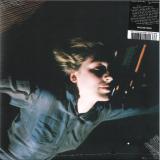
Though Toronto rockers Hot Garbage’s signature tinge of moody, heavy psychedelia remains present on Precious Dream, their forthcoming sophomore album careens at high speeds into a darker world of searing post-punk riffs, grappling with themes of dread, loss, the resilience of the human spirit and the highs and lows of solitude. From the onset, elegant yet brutalist sonic architectures provide the scenery for an escape route, while cryptic poetic spurts act as surreal signage. By the end of the journey, we are left with a strangely pleasant void, but also with an uncontrollable urge to backtrack into the outfit’s beautiful 36-minute musical trap. True to form, prolific producer Graham Walsh (Holy Fuck, No Joy, !!!, etc.) – with whom, Hot Garbage recorded their critically-acclaimed debut full-length, RIDE – does right by the band, masterfully harnessing the four-piece’s unique brand of rock & roll, setting in motion a parallel universe where phones are not what they seem, lobotomy has its merits, lower is actually better, and tunnels stretch the very fabric of spacetime. Fans of Sonic Youth, Frankie and the Witch Fingers or Joy Division should welcome a confused stroll down this romantic if dystopian opus, for a cathartic and tender sense of resolution awaits.
'it’s his loosest, dreamiest dispatch yet, an enveloping and atmospheric collection that constantly comes together and breaks apart.'
Maxo releases his new album Mars Is Electric. Earlier this week, Maxo released a third haunting video, directed by Vincent Haycock, from the visual world of ‘Mars’ for the title track. Maxo previewed the album with the release of singles “Human?” and “Donahoo’s Chicken” this spring, which arrived with equally raw, inventive, and unnerving music videos.
Mars Is Electric is Maxo’s first official release since he dropped two critically acclaimed albums in 2023 with Even God Has A Sense of Humor and Debbie’s Son. His fifth full-length album finds the Southern Californian artist self-aware and mature. Having lived the last decade of his musical life intentionally creating specific bodies of work rooted in imagery, observation, and capturing moments, Maxo spent this previous year freely creating without a specific plan, relieved from all obligations and restrictions.
“This is the first time that I really didn’t care, I didn’t approach things so seriously,” the artist shrugs off, meaning that without expectations or specific goals, his creativity flourished. This opening finds the artist having conversations he’s been avoiding, having lived silently in the pain of those topics for the past few years. Exploring uncomfortable themes about personal life, relationships, and family fractures, life before and after the loss of innocence, and an abundance of existential spirals.
The exploration was not only thematic but also musical in nature. During the creation process, Maxo was immersed in a wide array of music from past to present - France Joli, $amaad, Steve Spacek, Cherelle, DJ Quik, Lisha G - influences that seeped their way into these songs. The album opens in a loose, dreamlike state—experimental and searching, mirroring the emotional fog of someone looking for something real to hold onto. But as it progresses, so does Maxo’s energy as he fiercely rides and weaves on songs with a contagious confidence, producing some of his most kinetic and lyrically impressive music to date.
As the work and vision coalesced into a body of work, Maxo found that he was unlocking a creative language with his collaborators that felt wholly new - a new understanding of why and how he was making art for this world. What emerged from this year-long process was a new musical journey and a future where Maxo refuses to be another bad example of what could be, refusing to mind the blueprint set down. Maxo is the sole voice on the album featuring production by lastnamedavid, Quelle Chris, Baird, Groove, and more.
Listen to Mars Is Electric above, see full album details below, and stay tuned for more from Maxo very soon.
Der schwüle Ton von Eliana Glass ist nicht zu überhören - sie wechselt zwischen einer unkonventionellen, suchenden Qualität und ihrer ergreifenden, ehrfurchtgebietenden Bandbreite. Auch ihr Klavierspiel besitzt dieses mitreißende Hin und Her zwischen dem Jenseitigen und dem schmerzlich Menschlichen - jede Melodie ist ihr eigenes, einzigartiges, schmerzhaftes Reich. Glass' spärliche, meditative Musik fängt oft, wie sie sagt, die ,Verdichtung des Alltags" ein, ein Bild, das zu der bittersüßen, flüchtigen und abstrakten Natur ihrer Arbeit passt. Glass' Debütalbum E erscheint bei Shelter Press und ist nicht nur ein zärtliches Porträt ihrer lebenslangen Beziehung zum Klavier, sondern auch eine Destillation ganzer Lebenszeiten. Vier Jahre lang arbeitete Glass mit dem Mitbegründer und Produzenten von Public Records, Francis Harris (Frank & Tony, Adultnapper), und dem Tontechniker Bill Skibbe (Shellac, Jack White) zusammen, um das Album E in verschiedenen Studios in Nashville, Brooklyn, Memphis und Benton Harbor, Michigan, aufzunehmen. Glass' experimentelle, improvisatorische Werke erinnern an den sinnlichen Minimalismus von Annette Peacock, die freudige Rätselhaftigkeit von Carla Bley und die wehmütige Intimität von Sibylle Baier. Ihre Verehrung für die Größen des Leftfield Jazz und der freien Improvisation ist unüberhörbar, aber immer gefiltert durch ihren unverwechselbaren, naturalistischen Sound. ,Dreams" ist eine majestätische Interpretation von Peacocks gleichnamigem Stück aus dem Jahr 1971, ,Sing Me Softly the Blues` ist eine minimale, fesselnde Neuinterpretation von Baiers Jazzstandard mit einem von der norwegischen Sängerin Karin Krog adaptierten Text, und ,Emahoy` ist eine schmachtende Hommage an die äthiopische Pianistin, Komponistin und Nonne Emahoy Tsegué-Maryam Guèbrou und ihre 2006 erschienene Kompilation Éthiopiques. Glass' Musik basiert auf einem taktilen, sprunghaften Klang und ihrer stimmlichen Kraft und Vielseitigkeit. E's glatte Stöße von Kontrabass und Schlagzeug kitzeln den Gehörgang und betonen die Schlagfertigkeit ihrer unverwechselbaren tiefen Stimme, die sonore, androgyne Gelassenheit mit flatterhafter Zartheit verbindet. E hat auch eine rätselhafte elektronische Note, die die verschwommenen Emotionen von Glass' Songwriting noch verstärkt. Von Hintergrundrauschen und windigem Gesang bis hin zu kaleidoskopischen Synthesizern stammen diese subtilen, geschmackvollen Verzierungen oft von speziellem analogem Equipment: einer unterirdischen Echokammer aus den 1960er Jahren, einem Cooper Time Cube (im Grunde das Hardware-Äquivalent der Audioverarbeitung durch einen Gartenschlauch) und einem AEA-Bandmikrofon aus den 1940er Jahren. Aber das bedeutet nicht, dass E veraltet klingt - Glass' Songs sind von einem zukunftsweisenden Geist durchdrungen und fungieren letztlich als Vehikel für ihre berauschenden Emotionen und fragmentierten Erinnerungen und Träume. Glass' eigentümliche stimmliche Alchemie und ihre lebhaften Klavierausflüge sind meisterhaft und ganz und gar ihre Sache, und ihr Debütalbum ist ein Geschenk von klangvoller Schönheit und lohnender Mehrdeutigkeit. Als Musikerin und Improvisatorin ist Glass von der Suche nach Bedeutung, nach Klängen, nach Neuem, nach Verbindung begeistert und beherrscht diese. Und wie Krog 1975 in ,Sing Me Softly the Blues" sang: ,Life's so thrilling / if you search."
out of Stock
Last delivered 5 months ago available to reorder, subject to availability
Originally released in 1998, ‘Electro-Shock Blues’is the emotional centrepiece of EELS’ catalogue -a stark, beautiful exploration of grief, survival andultimately, hope.
Written in the wake of tragic personal losses, itblends fragile melodies with raw, often darklyhumorous lyrics.
From the haunting opener ‘Elizabeth On TheBathroom Floor’ to the defiant closer ‘P.S. YouRock My World’, it’s a deeply human record thatdoesn’t flinch from life’s hardest moments.
This special two-disc edition is pressed on solidblue 140gram double vinyl at 45 RPM, offeringupgraded sound from the original 10” 33 RPMedition and bringing new depth to its layeredproduction.
A landmark album of the late 1990s, ‘ElectroShock Blues’ remains a poignant, cathartic listen -as vital today as it was upon release.
"After the success of his album Le Bal des Crocodiles in 2023, the Parisian label Teenage Kicks Production has announced the imminent release of the new album by the artist Homme Bleu, titled Dark Matter. Recorded at Garage Studio in Montpellier, this album will feature 12 tracks in English. The mixing was done in New York by Alex Conroy, except for the track The Life in Me, which was mixed by Steve Lyon (Depeche Mode, The Cure, etc.). A resolutely rock album that highlights guitars with modern arrangements. Introspection, existential questions, human relationships, and the passage of time are the artist's favorite themes, with a distinctly pop-rock influence infused with an electro whirlwind. Three singles have already been released from the album: The Life in Me, a high-energy rock track dominated by guitars; I Ride: a groovy mid-tempo ballad reminiscent of Radiohead's universe, an ode to inner freedom and resilience; titletrack Dark Matter, an eponymous track, a piano-vocal ballad. The album cover was designed by Frank Loriou (Manu Chao, Miossec, etc.), with whom Homme Bleu has collaborated since the beginning of his career." Double-LP in gatefold sleeve, blue vinyl.
Mobile Fidelity's UltraDisc One-Step 180g 45RPM 2LP Set Plays with Authoritative Tonality, Airiness, and Clarity:
Pressed on MoFi SuperVinyl and Strictly Limited to
3,000 Numbered Copies
1/4” / 15 IPS Dolby A analogue master to DSD 256 to analogue console to lathe
Joni Mitchell is the only artist who could’ve made Hejira. The legendary singer-songwriter said as much when discussing the album decades after its release. Yet that fact seemed obvious from the moment the gold-certified effort streeted in fall 1976. An adventurous travelogue, probing narrative, and offbeat homage to freedom, Hejira remains an inimitable entry in the catalog of recorded music — a spare, gorgeous, meditative series of sonic vignettes comprised of floating harmonic pop, cool jazz, soft rock, and sensitive vocal elements that beckon feelings of motion, discovery, and self-examination.
Sourced from the original analog master tapes, pressed at Fidelity Record Pressing on MoFi SuperVinyl, and strictly limited to 3,000 numbered copies, Mobile Fidelity's UltraDisc One-Step 180g 45RPM 2LP set presents the record ranked the 133rd Greatest of All Time by Rolling Stone with definitive detail, richness, accuracy, and directness. Marking the first time the revered LP has received audiophile treatment, it's one of six iconic 1970s Mitchell records Mobile Fidelity is reissuing on vinyl and SACD.
Playing with a virtually nonexistent noise floor, dead-quiet surfaces, and superior groove definition, this collectible reissue reproduces in enveloping fashion the tones, textures, and craftsmanship that help Hejira function as the equivalent of a liberating trip down an open road with nothing but blue sky, natural landscape, and fresh air in the immediate vicinity. Passages bloom, carry, decay as they do amid an acoustically optimized environment. Soundstages extend far, wide, and deep, with black backgrounds and pinpoint images adding to the realism.
The reference-grade immediacy, airiness, and presence put in transparent perspective Mitchell’s dense strings of words, stream-of-conscious-like phrasing, and unhurried albeit forward momentum. Likewise, the instrumental contributions of her A-list support musicians — a cast that includes L.A. Express members John Guerin, Max Bennett and Tom Scott, plus Neil Young, Victor Feldman, and Abe Most — emerges with breathtaking clarity and dimensionality.
While Mitchell, whose intimate vocals and abstract guitar parts center everything, Mobile Fidelity's restoration of Hejira further reveals the visionary breadth of guitarist Larry Carlton and bassist Jaco Pastorius. Though heard on only four tracks, Pastorius' fretless bass epitomizes the fluid, subtle, flexible, roomy, and shape-shifting characteristics of songs that often appear to transpire out of nowhere akin to the formation of a puffy cumulus cloud overhead. In sync with Mitchell’s voice, Pastorius’ fusion hovers and floats, suspended in a fog you want to deeply inhale. The "grace notes" Mitchell desired on Hejira can now be heard in full. Ditto the luxurious tapestries of alinear lines, fills, and supplements unreeled on Carlton’s six-string.
Visually, the packaging of this UD1S set complements its identity as the copy to own. Housed in a deluxe slipcase, the LPs come in foil-stamped jackets with faithful-to-the-original graphics. This version is for listeners who desire to become immersed in everything about Hejira, including the unforgettable album cover — a pastiche of 14 different photos Mitchell used a Camera Lucida to assemble into one image that’s anchored by a portrait of her in a stoic pose — and the interior shots of Mitchell skating on a frozen Wisconsin lake wearing a pair of black skates, black shirt, and fur cape.
The notion of skating, feeling an awakening wind whipping against your face, and losing yourself to the surroundings are extremely apt for Hejira, which Mitchell wrote after a sequence of trips and relationships prompted her to reflect on the complicated conflicts between independence and marriage, success and satisfaction, duty and desire — and, more specifically, “the cost of being a woman.” The Canadian native delved into such themes before. But never as she does on Hejira, whose liberating, running-away aura doubles as another of Mitchell’s rejections of tradition as well as a suggestion of a better alternative.
At once observational and personal, expansive and insular, cheerful and poignant, Hejira spans a sea of human conditions, emotions, and circumstances. It addresses drifting, isolation, pleasure, place, time, and surroundings with strikingly poetic discourse matched with music that, save for the crooned ballad “Blue Motel Room,” forgoes conventional structures and choruses.
The jazz-based arrangements, marked by scaled-down percussion and all manner of bent, rounded, and unsettled notes, hint that Mitchell has no exact destination in mind. Excursions such as the moody “Furry Sings the Blues,” funky “Coyote” and edgy “Black Crow” throw open previously locked doors to possibility and journey. They signal it’s time for a welcome departure from norms and the past, one that leads to a heightened sense of clarity and perspective. Or, as Mitchell said upon choosing the album title, it’s time for “leaving the dream, no blame.”
In the mid-1970s, a force of nature swept across the continental United States, cutting across all strata of race and class, rooting in our minds, our homes, our culture. It wasn’t The Exorcist, Goodbye Yellow Brick Road, or even bell-bottoms, but instead a book called The Secret Life of Plants. The work of occultist/former OSS agent Peter Tompkins and former CIA agent/dowsing enthusiast Christopher Bird, the books shot up the bestseller charts and spread like kudzu across the landscape, becoming a phenomenon. Seemingly overnight, the indoor plant business was in full bloom and photosynthetic eukaryotes of every genus were hanging off walls, lording over bookshelves, and basking on sunny window ledges. The science behind Secret Life was specious: plants can hear our prayers, they’re lie detectors, they’re telepathic, able to predict natural disasters and receive signals from distant galaxies. But that didn’t stop millions from buying and nurturing their new plants.
Perhaps the craziest claim of the book was that plants also dug music. And whether you purchased a snake plant, asparagus fern, peace lily, or what have you from Mother Earth on Melrose Avenue in Los Angeles (or bought a Simmons mattress from Sears), you also took home Plantasia, an album recorded especially for them. Subtitled “warm earth music for plants…and the people that love them,” it was full of bucolic, charming, stoner-friendly, decidedly unscientific tunes enacted on the new-fangled device called the Moog. Plants date back from the dawn of time, but apparently they loved the Moog, never mind that the synthesizer had been on the market for just a few years. Most of all, the plants loved the ditties made by composer Mort Garson.
Few characters in early electronic music can be both fearless pioneers and cheesy trend-chasers, but Garson embraced both extremes, and has been unheralded as a result. When one writer rhetorically asked: “How was Garson’s music so ubiquitous while the man remained so under the radar?” the answer was simple. Well before Brian Eno did it, Garson was making discreet music, both the man and his music as inconspicuous as a Chlorophytumcomosum. Julliard-educated and active as a session player in the post-war era, Garson wrote lounge hits, scored plush arrangements for Doris Day, and garlanded weeping countrypolitan strings around Glen Campbell’s “By the Time I Get to Phoenix.” He could render the Beatles and Simon & Garfunkel alike into easy listening and also dreamed up his own ditties. “An idear” as Garson himself would drawl it out. “I live with it, I walk it, I sing it.”
But as his daughter Day Darmet recalls: “When my dad found the synthesizer, he realized he didn’t want to do pop music anymore.” Garson encountered Robert Moog and his new device at the Audio Engineering Society’s West Coast convention in 1967 and immediately began tinkering with the device. With the Moog, those idears could be transformed. “He constantly had a song he was humming,” Darmet says. “At the table he was constantly tapping.” Which is to say that Mort pulled his melodies out of thin air, just like any household plant would.
The Plantae kingdom grew to its height by 1976, from DC Comics’ mossy superhero Swamp Thing to Stevie Wonder’s own herbal meditation, Journey Through the Secret Life of Plants. Nefarious manifestations of human-plant interaction also abounded, be it the grotesque pods in Invasion of the Body Snatchers or the pothead paranoia of the US Government spraying Mexican marijuana fields with the herbicide paraquat (which led to the rise in homegrown pot by the 1980s). And then there’s the warm, leafy embrace of Plantasia itself.
“My mom had a lot of plants,” Darmet says. “She didn’t believe in organized religion, she believed the earth was the best thing in the whole world. Whatever created us was incredible.” And she also knew when her husband had a good song, shouting from another room when she heard him humming a good idear. Novel as it might seem, Plantasia is simply full of good tunes.
Garson may have given the album away to new plant and bed owners, but a decade later a new generation could hear his music in another surreptitious way. Millions of kids bought The Legend of Zelda for their Nintendo Entertainment System back in 1986 and one distinct 8-bit tune bears more than a passing resemblance to album highlight “Concerto for Philodendron and Pothos.” Garson was never properly credited for it, but he nevertheless subliminally slipped into a new generations’ head, helping kids and plants alike grow.
Hearing Plantasia in the 21st century, it seems less an ode to our photosynthesizing friends by Garson and more an homage to his wife, the one with the green thumb that made everything flower around him. “My dad would be totally pleased to know that people are really interested in this music that had no popularity at the time,” Darmet says of Plantasia’snew renaissance. “He would be fascinated by the fact that people are finally understanding and appreciating this part of his musical career that he got no admiration for back then.” Garson seems to be everywhere again, even if he’s not really noticed, just like a houseplant.
out of Stock
Last delivered 10 months ago available to reorder, subject to availability
It's the quiet ones we should watch, they always say. Which is particularly astute advice right now, when loud, constant self-declaration and saturated 'brand' visibility have become the norm. But above the babble and brightness, some voices will always speak quiet volumes - with calm eloquence and the kind of certitude that comes from valuing the playing out, not just the prize.
Sweden's José González is just such a voice. He first charmed his way into the UK's earshot via the murmurous and elegant, classically finger-picked folk pop of his 2005 album, Veneer, which has since sold over a staggering 430, 000 copies in UK alone. Two years later came In Our Nature, a further exploration of José's influences (Argentinian Folklore, the '60s US folk tradition and the British pastoral folk-pop style of the same era), on which he resisted the temptation to beef up his alluringly introvert aesthetic. The albums made the UK Top 10 and Top 20 respectively.
Conceived as the natural third part in an acoustic trilogy, Vestiges & Claws is a(nother) hushed and delicate solo set that forefronts the artist and guitarist's compellingly intimate vocal style and intricate playing technique, but it's often strikingly rhythmic in nature and cohere's perfectly, with hand claps and taps on the body of his instrument underlining the songs' mantric rise-and-fall pattern, while elsewhere, over-dubbed guitar parts and multi-tracked vocal harmonies entwine to sweetly immersive effect.
The title refers to both cultural practices and biological features that survive despite having lost their original function, and to currently useful tools, ie the 'claws' of modern life.
Vestiges & Claws was recorded almost entirely by José and self-produced, mostly in his Gothenburg home, using computer plug-ins to achieve a warm, analogue sound. He prefers working alone, mainly for artistic reasons. 'There were a couple of things that enabled me to complete this record: one was curiosity, to be able to play percussion and do a lot of harmonies and also to produce and mix the album; the other was aesthetics. I love to listen to Arthur Russell and Shuggie Otis, to music that has been done mostly by one person in their solitary state.'
As José sees it, the record is his personal, 'zoomed-out eye on humanity on a small, pale blue dot in a cold, sparse and unfriendly space. The amazing fact that we are all here, an attempt at encouraging us to understand ourselves and to make the best of the one life we know we have - after birth and before death.
(Limited, black vinyl) Another great selection of 2 Flying Stones classics on a high-quality 12" record, featuring a stylish glossy sleeve and a white inner sleeve.
out of Stock
Last delivered 11 months ago available to reorder, subject to availability
Tobias Bernstrup is a contemporary musician and video artist born 1970 in Gothenburg, Sweden. He received an MFA from Royal College University of Fine Arts Stockholm in 1998. Using the visual language of pop culture, video games, sci-fi, classicism and gothic noir, he has created a stage persona with notorious live performances. Dressed in elaborate costumes of skin-tight rubber suits and fetish gear, Tobias' external appearance is androgynous. He raises questions about representation of identity, the body and physical space in both virtual and non-virtual realities. Between 1997 and 1998 he self-released two limited CD-R EPs. In 2002 his debut album 'Re-Animate Me' was released by Tonight Records followed by two limited 12' singles for the song 27' and the Italian version Ventisette'.
.
27' is a 5-song EP collecting 4 different mixes of the title track plus one unreleased song from the 'Re-Animate Me' recording sessions. The material on this EP is closely connected with the world of computer games which Bernstrup also inhabits. Bernstrup's music is influenced by 1980s Italo disco and synth pop, reminiscent of Kraftwerk, Depeche Mode and Ken Lazlo. On the A-side is the original mix at 115 bpm followed by the Lazer Mix set to an faster beat and additional arpeggiations and heavier bass drum beats. Lyrically the song tells the story of a good looking 27-year old boy from a small town searching for love with any man who can spoil him. On the B-side are both the vocal and instrumental of Ventisette', the Italian translation of the song 27.' Both versions of Ventisette' are stripped back compared to the A-side but keep the melodies in tact. Also released for the first time ever is the demo Dirty Money' a Pet Shop Boys influenced song about male prostitutes ready for a night out working the streets.
All songs have been remastered for vinyl by George Horn at Fantasy Studios. For the jacket Eloise Leigh transformed the original portrait of Tobias into a Warhol-like painted polaroid with a striking likeness to Liza Minelli with blue eye shadow and red lipstick. Each copy includes a photo postcard with lyrics and notes. I would rather create alternative routes to experiencing and understanding the world, understanding what it means to be human today,' says Bernstrup. We are more artificial than we want to admit.'
out of Stock
Last delivered 17 days ago available to reorder, subject to availability
Far above the skylark sings And beats the air with joyful wings Till all the sky with music rings At high noon of the day With 2022's critically acclaimed album Ghosts, enigmatic Shropshire group HARESS markedout their own place in a growing landscape of artists navigating the world of the traditional and the rural in new ways. Ghosts led to the normally reclusive Haress venturing out from their base in the Shropshire Hills for live performances with the likes of Godspeed You! Black Emperor, Shovel Dance Collective, Big Brave, Steve Von Till and appearances at Supersonic and Krankenhaus Festivals - not to mention making fans of everyone from Kevin Martin to James Holden in the process. Skylarks is perhaps the natural conclusion of these past few years for the group. Whereas previous Haress recordings have embraced something of the unknown in the process of their making, Skylarks sees a well-travelled group of musicians carefully craft long and expressive pieces of music in a powerful and instinctual way. The music here might be long, but it never sprawls out of control. The telepathy present in live performance has been harnessed and used to carefully compose and arrange these four pieces, narrating a journey through landscape and time that is as powerful as it is beautiful. Inspired by found folk songs, the power of nature and the power of community and Ben Myers' brutal tale of resistance The Gallows Pole, Haress have created a genuinely epic soundtrack to a world both past and future, real and imagined. The ambience and atmosphere of the recording (expertly captured by Phil Booth of JT Soar Studio on location in the group's hometown of Bishop's Castle) is entirely natural, the sound of an ensemble playing live in the room around you. The only vocal interjection this time comes from a choir of voices, replicating the communal singing that has been the centrepiece of Haress live performances. When the voices emerge, it feels truly euphoric and heavy. Not heavy as in metal, but heavy as in the Earth itself - a primal, joyful gut punch to the system. "This blissed-out psychedelia is not quite pastoral – there’s nothing twee about these unwinding grooves – yet evokes water and wood, light and shadow, a place of forgotten labour and the absent human form with a beguiling grace" - Luke Turner on Ghosts, The Quietus Albums Of The Year 2022 "That timelessness of the old sounds but with an added tripped out modernity and dissonance hooked into the past by the power of drone is magical and exhilarating stuff – they are truly spellbinding – ancient and modern like British ragas or a damp searching for the soul of England take on the desert blues of a Tinariwen" - Jon Robb reviews Krankenhaus Festival 2023, Louder Than War
Lower Slaughter, die Krawallmacher aus Sussex, haben mehrere Jahre lang hinter verschlossenen Türen gebrodelt und sich neu formiert. Auf ihrem brandneuen Album "Deep Living", aufgenommen/gemischt von Wayne Adams (Petbrick/Big Lad) und gemastert von Sam Grant (Pigsx7/Rubber Oh), läuft die Band auf Hochtouren. Der bisherige "taumelnde Noise-Rock" (The Quietus) steht im Kontrast zu einer selbstbewussteren und raumgreifenderen Dynamik. 10% der gesamten Verkaufserlöse der limitierten "Deluxe Deep Blue EcoMix Vinyl" Auflage gehen an die Wohltätigkeitsorganisation The PANDAs Foundation, einer vertrauenswürdigen Einrichtung zur Unterstützung von Familien mit perinatalen psychischen Erkrankungen.
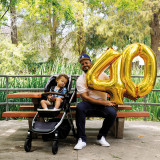
In the turbulent world of hip-hop, few artists are able to make the transition from hot young star to acclaimed rap luminary. Los Angeles emcee Blu has followed this rare path, graduating from a spot on the 2009 XXL Freshman list to an expansive catalog with more than 25 celebrated releases. Now, the talented lyricist is celebrating his remarkable journey with Forty, a new album entirely produced by influential beatsmith August Fanon, who has crafted tracks for Westside Gunn, Mach-Hommy, Tha God Fahim, billy woods, Navy Blue, and more. “This album is a celebration of me reaching 40 years of age,” Blu explains. “All the content is a reflection of where I am mentally at the age of 40.” With intricate verses packed with wisdom and maturity, the collection finds Blu and a host of guests reflecting on happiness, religion, love, knowledge, humanity, and more.
Fanon brings these tracks to life with a unique production approach, taking it back to basics with soul heavy soundscapes Blu describes as “straight loops, no drum programming or layers, just really soulful loops.” With appearances by Kota The Friend, Asher Roth, R.A.P. Ferreira, Mickey Factz, Homeboy Sandman, Chester Watson, Fashawn, and more, Forty is a timless experience from an artist who remains a vital presence in any decade of life.
Mia Zapata was the greatest rock singer of her time. She may have likely been the greatest blues singer in punk rock history, the woman who married the 78 and the '78. Tragedy did not make this true. Mia Zapata made this true, and the ferocious, spring-loaded shrapnel frame that was built around her by Andy Kessler (guitar: metronomic and furious), Matt Dresdner (bass: fluid, punching, beat-addicted and melodic), and Steve Moriarty (drums: martial and explosive) - who, with Mia, combined to form The Gits - made it true. The Gits were formed at Antioch College in Yellow Springs, Ohio in mid-1986, grabbing and swapping pieces of art, thrash, noise, punk rock, classic rock, and all the sorts of magical silly and bookish jingle bells that an old-school liberal arts education handed you; for the next few years they worked on turning it all into something tough, sensitive, both brutal and kind. Andy, Matt, Mia, and Steve moved to Seattle in middish 1989, landing in a house on Capitol Hill where they (and fellow travelers) wood-shedded and rehearsed for the next few years. The Gits put out three EPs in 1990 and '91 before signing with C/Z Records and releasing their first full-length album, Frenching the Bully. Seattle quickly claimed the quartet as their own and embraced the Gits blend of ferocious fangs and soft heart, the slug/slap of the guitars, and the gorgeous, soft underbelly of the poetic emotions. These qualities not only fit in with the doe-eyed/sharp-clawed grunge ethos but earned the Gits the respect of their peers, including Nirvana, who tapped them to open a major local show in 1990. Then other stuff happened, and their frantic, confessional barbed-heart snowball began rolling up hill very, very fast; the Gits "quickly" (hah! After half a decade learning to implode and explode hearts and stomping their boots on manifold beer-softened, Marlboro-weeded wood stages!) inspired rapture, awe, and the levitation that happened when peak emotion meets peak grindage in front of amps spitting out something that sounded like the mad marriage of Bolan swagger and Dischord tension_ all fronted by a genuinely incomparable woman who held her heart in her mouth and shared it, in all its celebration and fear, without hesitation. The Gits were an angry, inflamed slinky fully in tune with and tuned by the Bessie Patti Smith of her time, truly the only singer who could summon Joplin, Poly Styrene, Sam Cooke, Iggy Pop and Ian MacKaye all in the same goddamn song. In 1993, less than four weeks after accepting an offer from Atlantic Records, Mia died. I leave it at that, because this is not about death; it's about an extraordinary life. I do not say, "You should have been there," I say, "We are lucky so many of us were, and I am so glad we have this extraordinary evidence of the power and gifts of Mia and the Gits that you now can hold in your hands." And I note that Frenching the Bully, this extraordinary testament to the soul, shock, fury and feeling of the Gits, has been long out of print on vinyl and CD, and this new edition - remastered by legendary Seattle engineer Jack Endino - joyfully rectifies that. -Tim Sommer
Following ‘No Closer To Heaven’, The Wonder Years released ‘Sister Cities’, their most transformative work to date.
Recorded at Sunset Sound with Joe Chiccarelli (Manchester Orchestra, The Shins, Spoon) and Carlos de la Garza (Jimmy Eat World, Paramore), ‘Sister Cities’ is an album about distance, connectivity and the way humanity towers above boundaries.
What The Wonder Years do so effortlessly on ‘Sister Cities’ is no small feat; through poetic lyricism, ambient guitar swells and Jimmy Eat World-levels of crashing momentum. On ‘Sister Cities’, they take a massive, unexpected leap forward both sonically and thematically, now speaking confidently to the world at large.
Vocalist Dan Campbell on the inspiration behind ‘Sister Cities’: “It started with journals and photos. We started by documenting. We didn’t know where it would go or if it would go anywhere at all, but we wrote it all down. We took photos of everything. And
then when it came to put it altogether, we had this catalog of how we felt and what it looked like and sounded like and we built from there. Figuring out what the moments were that stayed with me the most. When did I feel most connected to the people around me and why? What did being in this place during this moment teach me? It was a difficult year personally and globally and we experienced that through this lens of being everywhere but home, kind of floating through places and seeing how being there altered our perspective.”
The album is housed in a 200-page, 13”x13”, full-colour book that includes photos, artwork, journal entries and lyrics. LP pressed onto Shinjuku Street Splatter coloured vinyl.
An overpowering sense of earnestness and vulnerability.” - Pitchfork
There is a lifetime yelled in every punk song, captured in the desperate and catchy ‘Sister Cities’.” - NPR MusicFrom the first notes, it’s already clear that The Wonder Years are stepping into uncharted territory.” - UPROXX
Three LPs packed in a trifold jacket. Pressed on Deep Ocean Pearl, Gold & Dark Green Vinyl. Take up your sword, channel your magic or board your Mech. Chained Echoes is a 16-bit style RPG set in a fantasy world where dragons are as common as piloted mechanical suits. The game is set on the continent of Valandis during the time of a multi-generational war between three kingdoms, Taryn, Gravos and Escanya. After a great catastrophe caused by Grand Grimoire shakes the continent, the kingdoms agree to sign a peace treaty. One year later, an unknown force strives to begin a new war. A group of unlikely heroes joins forces and eventually becomes the clan of Crimson Wings in order to stop it. The outstanding soundtrack for Chained Echoes was passionately composed, arranged and recorded over four years by Eddie Marianukroh as well as many other musicians who worked under his direction. It includes 50 tracks at two hours in length. Even the game has been out for a while, Marianukroh's admiration and enthusiasm for the game and his addition to it remain undiminished: "It has been over two years now since the release of Chained Echoes, which is rather difficult for me to believe. Time really flies, and it's honestly a bit frightening when I think about it. But, despite that, when I listen to the music I've written for this game, I still very much remain proud of what I composed. I really did give my all for this soundtrack. I will forever be grateful to Matthias for trusting me with the music for his game. I can vividly remember how I felt when I first came across his project, and how I nervously reached out to him about the composer position. I truly, truly cannot thank him enough for giving me this memorable experience that I will always hold dear. Thank you, my friend."
The Great Dismal, NOTHING’s new full-length album explores existentialist themes of isolation, extinction, and human behavior in the face of 2020’s vast wasteland. Closing in on the band’s ten-year mark, frontman Domenic Palermo finds himself stringing together songs of misanthropic tales of Philadelphia with a refined and refreshed take on NOTHING's classic sound. “The Great Dismal refers to a swamp, a brilliant natural trap where survival is custom fit to its inhabitants,” Palermo states. “The nature of its beautiful, but taxing environment and harsh conditions can’t ever really be shaken or forgotten too easily.” The ever progressive NOTHING keep true to their chaotic outlook on life, keeping a keen eye to avoid repetition. With a radical cast of talented contributors such as harpist Mary Lattimore, classical musician Shelley Weiss, and singer/songwriter/producer Alex G., The Great Dismal showcases yet another essential side of the band’s trademark American Post-Shoegaze.
Luke Titus is a Chicago-born drummer, songwriter, producer, and multi-instrumentalist known for his remarkable versatility and genre-spanning artistry. With deep roots in jazz and a knack for blending it seamlessly with experimental music, drum & bass, and beyond, Titus has earned a reputation as a world-class drummer and a dynamic force across the national musical landscape. Growing up in Chicago's vibrant music scene, Titus flourished alongside fellow young artists in the early 2010s. His work quickly positioned him as a key figure in the city's jazz, hip-hop, and R&B communities, leading to collaborations that propelled him to national recognition. Continue to follow the thread of Luke Titus' many contributions to jazz and alternative scenes across America, and what emerges is a singular weave between his roots in Chicago, LA and New York communities. From What Was Will Grow A Flower is the second LP from the prolific young songwriter and producer, codifying his many musical leanings into an emergent, nearly clairvoyant statement of musical intent. Blooming and innovative songwriting, effervescent vocal hooks, virtuosic instrumental passages, and meticulously studied production techniques abound. About the album, Titus says "This album is about spirituality and connectivity, both with the universe and the self, as told through my personal journey. It questions reality as a way to deepen one's connection to it. I dedicate this album not only to anyone who has been through hard times, but to anyone who relates to the cyclical nature of the human experience. And more than that, I dedicate this album to my mom." As a producer and songwriter, Titus' fingerprints can be found on numerous acclaimed projects, including Noname's Room 25, Luke Titus & Cisco Swank's Some Things Take Time, Orion Sun's Orion, and Ravyn Lenae's Hypnos. His co-production credits span across a roster of innovative talents like Steve Lacy, Monte Booker, Brian Sanborn, Teo Halm, Phoelix, Cisco Swank, Saba, Kiefer, Elijah Fox, and Itai Shapira. Titus has taken his talents to the global stage, performing at high-profile festivals and venues such as Lollapalooza, Coachella, Pitchfork, Blue Note NYC, North Sea Jazz Fest, Smoking Grooves, Fuji Rock Festival, Blue Note Tokyo, and NYC Winter Jazz Fest, amongst many others.
Luke Titus is a Chicago-born drummer, songwriter, producer, and multi-instrumentalist known for his remarkable versatility and genre-spanning artistry. With deep roots in jazz and a knack for blending it seamlessly with experimental music, drum & bass, and beyond, Titus has earned a reputation as a world-class drummer and a dynamic force across the national musical landscape. Growing up in Chicago's vibrant music scene, Titus flourished alongside fellow young artists in the early 2010s. His work quickly positioned him as a key figure in the city's jazz, hip-hop, and R&B communities, leading to collaborations that propelled him to national recognition. Continue to follow the thread of Luke Titus' many contributions to jazz and alternative scenes across America, and what emerges is a singular weave between his roots in Chicago, LA and New York communities. From What Was Will Grow A Flower is the second LP from the prolific young songwriter and producer, codifying his many musical leanings into an emergent, nearly clairvoyant statement of musical intent. Blooming and innovative songwriting, effervescent vocal hooks, virtuosic instrumental passages, and meticulously studied production techniques abound. About the album, Titus says "This album is about spirituality and connectivity, both with the universe and the self, as told through my personal journey. It questions reality as a way to deepen one's connection to it. I dedicate this album not only to anyone who has been through hard times, but to anyone who relates to the cyclical nature of the human experience. And more than that, I dedicate this album to my mom." As a producer and songwriter, Titus' fingerprints can be found on numerous acclaimed projects, including Noname's Room 25, Luke Titus & Cisco Swank's Some Things Take Time, Orion Sun's Orion, and Ravyn Lenae's Hypnos. His co-production credits span across a roster of innovative talents like Steve Lacy, Monte Booker, Brian Sanborn, Teo Halm, Phoelix, Cisco Swank, Saba, Kiefer, Elijah Fox, and Itai Shapira. Titus has taken his talents to the global stage, performing at high-profile festivals and venues such as Lollapalooza, Coachella, Pitchfork, Blue Note NYC, North Sea Jazz Fest, Smoking Grooves, Fuji Rock Festival, Blue Note Tokyo, and NYC Winter Jazz Fest, amongst many others.
Luke Titus is a Chicago-born drummer, songwriter, producer, and multi-instrumentalist known for his remarkable versatility and genre-spanning artistry. With deep roots in jazz and a knack for blending it seamlessly with experimental music, drum & bass, and beyond, Titus has earned a reputation as a world-class drummer and a dynamic force across the national musical landscape. Growing up in Chicago's vibrant music scene, Titus flourished alongside fellow young artists in the early 2010s. His work quickly positioned him as a key figure in the city's jazz, hip-hop, and R&B communities, leading to collaborations that propelled him to national recognition. Continue to follow the thread of Luke Titus' many contributions to jazz and alternative scenes across America, and what emerges is a singular weave between his roots in Chicago, LA and New York communities. From What Was Will Grow A Flower is the second LP from the prolific young songwriter and producer, codifying his many musical leanings into an emergent, nearly clairvoyant statement of musical intent. Blooming and innovative songwriting, effervescent vocal hooks, virtuosic instrumental passages, and meticulously studied production techniques abound. About the album, Titus says "This album is about spirituality and connectivity, both with the universe and the self, as told through my personal journey. It questions reality as a way to deepen one's connection to it. I dedicate this album not only to anyone who has been through hard times, but to anyone who relates to the cyclical nature of the human experience. And more than that, I dedicate this album to my mom." As a producer and songwriter, Titus' fingerprints can be found on numerous acclaimed projects, including Noname's Room 25, Luke Titus & Cisco Swank's Some Things Take Time, Orion Sun's Orion, and Ravyn Lenae's Hypnos. His co-production credits span across a roster of innovative talents like Steve Lacy, Monte Booker, Brian Sanborn, Teo Halm, Phoelix, Cisco Swank, Saba, Kiefer, Elijah Fox, and Itai Shapira. Titus has taken his talents to the global stage, performing at high-profile festivals and venues such as Lollapalooza, Coachella, Pitchfork, Blue Note NYC, North Sea Jazz Fest, Smoking Grooves, Fuji Rock Festival, Blue Note Tokyo, and NYC Winter Jazz Fest, amongst many others.
The 20th installment of Saddle Creek’s Document series features Dean Johnson, the Seattle-based singer/songwriter whose heartfelt storytelling and undeniable charm have been quietly building a devoted fanbase across the globe.
For years regulars at Al’s Tavern might murmur to each other about Dean Johnson behind the bar. There were nudges and whispers that he might just be the best songwriter in town. They spoke of his talent like a family secret –Seattle folklore. How many times, and for how many years, did Dean elusively reply to some variation of the question, “When will there be a record?”
In May of 2023, there finally was. Nothing For Me, Please, Dean Johnson’s debut album, was released on his 50th birthday.
Calling him a “hidden gem” doesn’t quite fit, because there’s nothing hidden about him—he shines in plain sight. It was only a matter of time before people stopped to take notice.
Dean’s music feels like a conversation with an old friend—warm, honest, and deeply human. His songs bridge the past and present, weaving modern sensibilities with a timeless appeal. With razor-sharp wit and an uncanny ability to make you laugh and cry in the same breath, Dean’s songwriting reminds us why music matters, offering proof that a song can be more than the sum of it’s parts. Hear just a phrase of his melody, catch even a moment of the sobering depth in his voice, and you’ll feel it—like a letter written, signed, sealed, and delivered just for you.
Go see him live, and you’ll understand. That’s how he won us over—one song, one story, one unforgettable moment at a time.
Blurring the lines between the mundane and the mystical, ESKA’s latest album, ‘The Ordinary Life of a Magic Woman’, is a profound exploration of motherhood, artistry, and the delicate dance between daily rhythms and creative transcendence. For ESKA, these aren’t opposing forces—they’re inseparable threads in a richly woven life.
“It’s the sound of a first-generation, middle-aged African British woman living in post-everything Southeast London,” ESKA reflects.
After two decades of trailblazing collaborations with world-renowned artists – Moses Sumney, Grace Jones, Radiohead and Baxter Dury, to name a few - along with various accolades - including a Mercury Prize Nomination, ESKA’s new album stands as her most personal and compelling work yet. A self-directed journey, it sees her embracing her ultimate creative partner: herself.
Rooted in her eclectic musical upbringing, ESKA pulls inspiration from the sounds and influences that have defined her journey, breaking free of conventional boundaries. The result is a body of work that defies easy categorisation—bold, dynamic, and unmistakably hers.
Blurring the lines between the mundane and the mystical, ESKA’s latest album, ‘The Ordinary Life of a Magic Woman’, is a profound exploration of motherhood, artistry, and the delicate dance between daily rhythms and creative transcendence. For ESKA, these aren’t opposing forces—they’re inseparable threads in a richly woven life.
“It’s the sound of a first-generation, middle-aged African British woman living in post-everything Southeast London,” ESKA reflects.
After two decades of trailblazing collaborations with world-renowned artists – Moses Sumney, Grace Jones, Radiohead and Baxter Dury, to name a few - along with various accolades - including a Mercury Prize Nomination, ESKA’s new album stands as her most personal and compelling work yet. A self-directed journey, it sees her embracing her ultimate creative partner: herself.
Rooted in her eclectic musical upbringing, ESKA pulls inspiration from the sounds and influences that have defined her journey, breaking free of conventional boundaries. The result is a body of work that defies easy categorisation—bold, dynamic, and unmistakably hers.
Now and again, an album project with no home comes along out of the blue, demanding to be licensed and shared with the world.
It was unearthed on one of Paper's digging trips. BOM's album sounded like nothing else out there, only the future. Shrouded in mystery and country-of-origin unknown, Africa runs through its DNA, but sometimes mysteries are best left...
Ase - a Yoruba philosophy signifying the power that makes things happen and produces change; given to Gods, ancestors, spirits, humans, animals, plants, rocks, rivers, songs and prayers.
BOM takes influence from all corners of Africa and its diaspora, blending them with 25 years of Western electronic music into a melange of forward facing, leftfield afro futurism.
The album features one of Africa's brightest rising stars, Luka Productions (from Mali), cosmic poet Sirius Rush (UK) and master drummer & vocalist Felix Ngindu (DRC/Liverpool) for a journey into kaleidoscopic Afro-tech funk. Gqom, Shangaan electro and township funk rub shoulders with hip-hop, bass, deep house and dub for a psychedelic celebration of collaboration and possibility.
As geographical and musical barriers are broken down, BOM's 'Ase' album is leading the charge; London to Lagos, Lisbon to Sao Paulo, Bamako to Berlin, BOM captures the sound of the underground.
out of Stock
Last delivered 18 months ago available to reorder, subject to availability
Googling “paradise house”, the first results to pop up are an endless list of European b&b’s with whitewashed lime façades, all of them promising “…an unmatched travel experience a few steps from the sea”. Next, a little further down, are the institutional websites of a few select semi-luxury retirement homes (no photos shown, but lots of stock images of smiling nurses with reassuring looks). To find the “paradise house” we’re after, we have to scroll even further down. Much further down.
It feels like yesterday, and at the same time it seems like a million years ago. The Eighties had just ended, and it was still unclear what to expect from the Nineties. Mobile phones that were not the size of a briefcase and did not cost as much as a car? A frightening economic crisis? The guitar-rock revival?! Certainly, the best place to observe that moment of transition was the dancefloor. Truly epochal transformations were happening there. From America, within a short distance one from the other, two revolutionary new musical styles had arrived: the first one sounded a bit like an “on a budget” version of the best Seventies disco-music – Philly sound made with a set of piano-bar keyboards! – the other was even more sparse, futuristic and extraterrestrial. It was a music with a quite distinct “physical” component, which at the same time, to be fully grasped, seemed to call for the knotty theories of certain French post-modern philosophers: Gilles Deleuze, Félix Guattari, Paul Virilio... Both those genres – we would learn shortly after – were born in the black communities of Chicago and Detroit, although listening to those vinyl 12” (often wrapped in generic white covers, and with little indication in the label) you could not easily guess whether behind them there was a black boy from somewhere in the Usa, or a girl from Berlin, or a pale kid from a Cornish coastal town.
Quickly, similar sounds began to show up from all corners of Europe. A thousand variations of the same intuition: leaner, less lean, happier, slightly less intoxicated, more broken, slower, faster, much faster... Boom! From the dancefloors – the London ones at least, whose chronicles we eagerly read every month in the pages of The Face and i-D – came tales of a new generation of clubbers who had completely stopped “dressing up” to go dancing; of hot tempered hooligans bursting into tears and hugging everyone under the strobe lights as the notes of Strings of Life rose up through the fumes of dry ice (certain “smiling” pills were also involved, sure). At this point, however, we must move on to Switzerland.
In Switzerland, in the quiet and diligent town of Lugano, between the 1980s and 1990s there was a club called “Morandi”. Its hot night was on Wednesdays, when the audience also came from Milan, Como, Varese and Zurich. Legend goes that, one night, none less than Prince and Sheila E were spotted hiding among the sofas, on a day-off of the Italian dates of the Nude Tour… The Wednesday resident and superstar was an Italian dj with an exotic name: Don Carlos. The soundtrack he devised was a mixture of Chicago, Detroit, the most progressive R&B and certain forgotten classics of old disco music: practically, what the Paradise Garage in New York might have sounded like had it not closed in 1987. In between, Don Carlos also managed to squeeze in some tracks he had worked on in his studio on Lago Maggiore. One in particular: a track that was rather slow compared to the BPM in fashion at the time, but which was a perfect bridge between house and R&B. The title was Alone: Don Carlos would explain years later that it had to be intended both in the English meaning of “by itself” and like the Italian word meaning “halo”. That wasn’t the only double entendre about the song, anyway. Its own very deep nature was, indeed, double. On the one hand, Alone was built around an angelic keyboard pattern and a romantic piano riff that took you straight to heaven; on the other, it showcased enough electronic squelches (plus a sax part that sounded like it had been dissolved by acid rain) to pigeonhole the tune into the “junk modernity” section, aka the hallmark of all the most innovative sounds of the time: music that sounded like it was hand-crafted from the scraps of glittering overground pop.
No one knows who was the first to call it “paradise house”, nor when it happened. Alternative definitions on the same topic one happened to hear included “ambient house”, “dream house”, “Mediterranean progressive”… but of course none were as good (and alluring) as “paradise house”. What is certain is that such inclination for sounds that were in equal measure angelic and neurotic, romantic and unaffective, quickly became the trademark of the second generation of Italian house. Music that seemed shyly equidistant from all the rhythmic and electronic revolutions that had happened up to that moment (“Music perfectly adept at going nowhere slowly” as noted by English journalist Craig McLean in a legendary field report for Blah Blah Blah magazine). Music that to a inattentive ear might have sounded as anonymous as a snapshot of a random group of passers-by at 10AM in the centre of any major city, but perfectly described the (slow) awakening in the real world after the universal love binge of the so-called Second Summer of Love.
For a brief but unforgettable season, in Italy “paradise house” was the official soundtrack of interminable weekends spent inside the car, darting from one club to another, cutting the peninsula from North to centre, from East to West coast in pursuit of the latest after-hours disco, trading kilometres per hour with beats per minute: practically, a new New Year’s Eve every Friday and Saturday night. This too was no small transformation, as well as a shock for an adult Italy that was encountering for the first time – thanks to its sons and daughters – the wild side of industrial modernity. The clubbers of the so-called “fuoriorario” scene were the balls gone mad in the pinball machine most feared by newspapers, magazines and TV pundits. What they did each and every weekend, apart from going crazy to the sound of the current white labels, was linking distant geographical points and non-places (thank you Marc Augé!) – old dance halls, farmhouses and business centres – transformed for one night into house music heaven. As Marco D’Eramo wrote in his 1995 essay on Chicago, Il maiale e il grattacielo: “Four-wheeled capitalism distorts our age-old image of the city, it allows the suburbs to be connected to each other, whereas before they were connected only by the centre (…) It makes possible a metropolitan area without a metropolis, without a city centre, without downtown. The periphery is no longer a periphery of any centre, but is self-centred”.
“Paradise house” perfectly understood all of this and turned it into a sort of cyber-blues that didn’t even need words, and unexpectedly brought back a drop of melancholic (post?)-humanity within a world that by then – as we would wholly realise in the decades to come – was fully inhuman and heartless. A world where we were all alone, and surrounded by a sinister yellowish halo, like a neon at the end of its life cycle. But, for one night at least, happy."
out of Stock
Last delivered 3 months ago available to reorder, subject to availability
With their debut album Channels on !K7 Records, Kassian (Joe Danvers-McCabe and Warren Cummings) have come full circle, focusing on the warmer, sample-based, and house-inspired sonics that brought them together. Kassian periodically revisited these initial pieces throughout the last five years until they felt able to journey deeper, using their rapidly developing craft and refined production techniques to build a debut album that momentarily steps away from some of their more club-focused excursions. “As we were writing, we realized that all the tracks had the unique potential to tell a story,” reflects Cummings, with Channels leading the listener through a series of different atmospheres and emotional terrains.
Essential to Channels is Kassian’s focus on time’s ability to reorient human perspective. Kassian worked on the album over an extended period, with instrumentation, field recordings, and percussion first constructed and then subsequently stripped away and refined.
Channels contains their early love of tube warm, sample based sounds and live instrumentation as the foundation for this album. The working process for these rippling pieces used both sequenced workflow and improvisational arrangement, live instrumentation inspired by an array of deeper emotional content. Both members of Kassian experienced great personal loss during the period of making this album, and a tenderness is felt throughout the record.
This record is an earthy thing, its naturalistic track names evoking recognisable and cyclically familiar moments, Kassian have provided a map for the listener at the forefronts of their minds. Channels features Ezra Collective’s Joe Armon-Jones on keys, and Timothy Kraemer on cello distilling this body of work into a deep stream between the organic and improvised, and the sequenced and planned.
out of Stock
Last delivered 16 months ago available to reorder, subject to availability
The Austin, TX-based singer-songwriter—whose decades-long career has seen six full-length studio albums, three EPs, countless collaborations, and an illustrious supergroup project in Glorietta—spent a season of rest away from his focus on writing songs. In the wake of the end of a long relationship, he wanted to prioritize processing his grief as a human, not as an artist bleeding on the page. “I love all the records I’ve made in the past. But in making them, there was always the thought in the back of my mind of where and what it could get me. I made both creative and business decisions with a goal in mind... a goal that often never came. This time it was all about just the joy of making it, about having fun with it.”
“We all grew up playing heavy music. For me personally, listening to artists like Swans, Godflesh, Neurosis and Kiss It Goodbye in my 20s was cathartic in a lot of ways. Identifying with people that have a similar world perspective, who are channeling their angst and frustration into the creative outlet of art and music — that was important.”
Josh Graham isn’t just talking about his decades-long career in heavy music, which has included A Storm of Light, Battle of Mice, and many years as the one-man visual department for Neurosis. He’s also talking about the formation of Guiltless, his new band with bassist Sacha Dunable (Intronaut), drummer Billy Graves (Generation of Vipers) and guitarist Dan Hawkins (A Storm of Light).
Guiltless released their debut EP, Thorns, via Neurot Recordings in early 2024. Crushing and cheerless, it seemed to welcome the apocalypse looming on our collective horizon. “The EP had a pretty narrow focus starting from my ideas,” Graham explains. “With this record, my main goal was to really collaborate with Sacha and Dan and Billy because those guys are great songwriters. The new album is meant to open up the sonic palette and explore more territory.”
That new album is Teeth to Sky, the band’s first full-length. Even more pulverizing and focused than its predecessor, the album’s collaborative songwriting approach was paired with an adjustment to the lyrical content.
You can hear it on “One Is Two,” which channels a tightly controlled Meshuggah churn through the more visceral lo-fi approach of Kiss It Goodbye or Swedish noise rock legends Breach. On “In Starless Reign,” Guiltless blend dissonant black metal and thundering doom while Graham invokes humanity’s inability to see the forest through the trees. Then there’s the bruising title track, which combines the gnarled sensibilities of The Jesus Lizard, Cherubs and Barn Owl into a rumination on Mother Nature’s revenge.
Teeth To Sky was recorded remotely by the members of Guiltless—except for the drums, which were recorded by Travis Kammeyer (Generation of Vipers) at Fahrenheit Studios in Johnson City, Tennessee. The album was mixed by Kurt Ballou at God City in Salem, Massachusetts, and mastered by Brad Boatright at Audiosiege in Portland, Oregon.
After a near-total silence of twenty years, Edith Frost is back again, and in full bloom with In Space. Her first new record since 2005"s It"s a Game is just in time - the world needs Edith"s voice back in the conversation. And her ineffable way with a tune . . . It seems Edith needed something, too: from the notebooks of her long hiatus, a line like "I say too much/I wait too long/I wait forever/And notice that it"s gone" speaks volumes about feelings of lack. Overwhelmed by the demands of day-to-day living and the details and anxieties that always come, Edith squirreled herself away for as long as she could - only to find herself isolated, spun even farther into the doldrums. In Space isn"t simply a song-cum-album title so much as a very real exploration of the remote place she"d found herself, with her songs registering this recognition and measuring the vast distances between herself, the life that is and the life that was. It was the only way back in! Over the years away, Edith was immersed in music everyday, and spent lots of time learning - in addition to new lyric perspectives, her reinvention of herself as a keyboard player is one of the waves lifting the album In Space. The keys suggested different places within Edith"s harmonic palette; for us listening, this attenuation seems to create a deep focus on emotional life within the songs and a breathtakingly visceral presence in the performances. Her voice as well, in all its iterations, sounds quite fine and vital. The songs, as ever, are low-key brilliance elevated by the vitality of Edith"s voice. Mark Greenberg, alongside longtime Frost A&R man Rian Murphy, brought fresh arrangement ideas to complement the strange-new-world vibe of Edith"s songs. Recorded at The Loft in Chicago, with invaluable contributions from Jim Becker (Califone, Air Blue Gowns), Sima Cunningham (Finom, formerly OHMME), Bill MacKay and Jeff Ragsdale, In Space feels like the most Edith Frost record yet made, pulled from deep inside with great feeling, awash in harmonized voices and - more often than ever before - featuring her own playing. Alternatively approaching and avowing connection, Edith"s crafty songwriting orbits the human exchange with an increasing sense of possibility. It"s what the world needs the most of today.
out of Stock
Last delivered 19 months ago available to reorder, subject to availability
2023 was a whirlwind year for Oracle Sisters. The trio—Julia Johansen, Chris Willatt, and Lewis Lazar—followed the release of their debut album Hydranism with a globe-spanning tour that captivated fans and critics alike. From the highways between Knoxville and Nashville to sold-out clubs in rain-soaked Seattle, and festival stages across the UK, they logged countless hours on the road. Their journey was a tapestry of exhaustion and exhilaration, falling apart, brawls and disputes, love and acceptance. By the year’s end, just two days before Christmas, they found themselves in Tokyo, reflecting on the fleeting nature of time and the fragments of inspiration gathered along the way. It was there the seeds for their next album, Divinations, began to sprout. Composing as a true trio for the first time, Oracle Sisters pieced together sketches formed during stolen moments on tour. These fragments coalesced into Divinations, an album shaped by the band’s nomadic existence. The recording sessions spanned cozy Parisian studios, a barn in northern France, and the storied Valentine Studios in Los Angeles. Their creative process embraced experimentation—swapping primary instruments, playing with toy drum machines, and crafting melodies on quirky tools like the OP-1 and a baby Casio keyboard. This spirit of discovery lent the album a sense of spontaneity and wonder. At its core, Divinations channels mysticism and timeless storytelling. The band’s songwriting draws on diverse influences, from the surrealist poetry of Baudelaire and Rimbaud to the introspective philosophies of Carl Jung. Musically, echoes of Talking Heads, Air, and Leonard Cohen resonate throughout the album and tracks like “Riverside” delve into existential questions— “How far are you going? Is it more than money can buy?” Elsewhere on the album “Marseille,” born in the city that gave the song its name, kicks off as a trance with lyrics that play between the sincere and desperate self-help affirmations, we give ourselves while trying to find a bridge between our individual lives and a universal feeling. Lead-single “Alouette” is Oracle Sisters at their most direct; propelled by a driving bassline and exuberant strings, the track summons the sound of 80’s, 90’s, and early 2000’s rock n roll as they sing about “getting out of dodge, finding a pirate ship and sailing home.” Inspired by the book Caliban and the Witch, “Blue Left Hand” is a lyrical tapestry weaving together history, philosophy, and cultural critique. The lyrics, “It’s in the harbor of every page / It’s in the corner of the playwright’s stage / And every player and every fake / And every witch that we burned at the stake,” reflect on the forces that shaped the capitalist society we know today. Across Divinations’ 11 tracks it’s not only geographic boundaries that were crossed but also the boundaries of time and circumstance. While their work may not consciously reflect specific worldly events, they seek to embrace the universal and offer a space for healing. “Good music would make sense to a farmer in 17th century France as it would to a pastry chef in Slovenia in the 21st century,” shares Lazar. “It’s not written for any temporal powers that be. It’s about expressing our common humanity and taking it from there.” This intuitive approach fuels Oracle Sisters creative process - whether composing in a frozen French farmhouse or performing live with an ever-expanding lineup of collaborators, the band remains committed to exploring the unknown. Through Divinations, they hope to leave listeners feeling transcendent, levitating on waves of intuition and discovery.
Dogman is the fifth studio album by American rock band King’s X, released in 1994. The album was produced by Brendan O’Brien (who had recently worked with Pearl Jam, Stone Temple Pilots and The Black Crowes). Dogman was considerably heavier than previous albums and marked a transition in the band’s sound. In 1999, Doug Pinnick reflected, “For me personally, the Dogman record is what King’s X really sounds like. The self-titled record was a step and an eye-opener and after that we could just make our music.”
In Mallrat’s (aka Grace Shaw’s) vision of the world, light is more than photons and electromagnetic radiation hitting the eye — it’s a moment of divine intervention. A bold swerve into the metaphysical, this is the premise of the prized Brisbane-born, LA-based pop songwriter and producer’s 2025 sophomore album: Light hit my face like a straight right. Set against a newly informed backdrop of expressive breakbeats and dance music, its 12 songs explore the intangible and mysterious allure of human connection, held together by curious investigations into light — “the closest thing to a concept this album has,” Mallrat says. She reunited with Butterfly Blue producers Styalz Fuego (Troye Sivan, Tate McRae) and Alice Ivy, while bringing into the mix indie electronic producers Chrome Sparks and Casey MQ. Mallrat serves up highs like “Hideaway,” a song where heart-racing garage clashes with her trademark candor: “I’ll be your lucky charm just let me hang around your neck,” she sings. Sleek and early standout “Pavement” gets a gritty underlayer with chopped up vocals from DJ Zirk’s “Born 2 Lose” and mid-album standout “Hocus Pocus” finds Mallrat singing about being pulled “under the spell” of someone new, borrowing a different part of the same DJ Zirk sample to build its shimmering, dancefloor-ready facade. It’s an endeavor that perhaps reaches a peak on “Horses,” the record’s gentle and organic closer which Shaw herself calls “objectively the best song.” Written after returning home to Brisbane and “feeling like an alien,” it gained new meaning in the wake of her late sister’s passing. For Shaw, it’s the convergence of the song’s minimalism, lyrics, space, and the way her voice cracks on the recording as she sings, “Hey, I’m right here, I look different now.” After years of solidifying herself as a master of well-crafted, timeless pop — fielding recognition from New York Times, NYLON, Teen Vogue, Billboard, The FADER, NPR, and more — Light hit my face like a straight right is a step into the art of world-building, bolstered by her intuitive songwriting and clever, studied production.
Generally regarded as the first true 'new age' record, Steve Halpern's 1975 private press LP has long been in demand by collectors. In particular, the very first pressing of the album included an extraordinary long-form jazz funk track called 'Something for Every Body Suite' that was removed from subsequent versions. Eating Standing is proud to reissue Halpern's classic long-lost original version of the album, officially licensed from Halpern himself that includes this heavy groove-laden masterpiece. This is the very first ever full reissue of the first press album with full reproduction of the artwork. Original copies cost over $700 (assuming you can even find one) but now this incredible landmark album is available once more to enjoy. "Reissued for the very first time since 1975 in its original format and track listing, a legendary album that is considered a game-changer in music. Steve Halpern's landmark album 'Christening For Listening (A Soundtrack For Every Body)' is considered by many to be a crucial and defining album that pointed the way ahead. Predating the ambient/experimental work of Brian Eno, Steve Hillage and even Mort Garson's 'Plantasia', Steve Halpern's 'Christening For Listening' was the first album to explore what became known as 'new age' or ambient music, exploring the effect of tones and rhythms on the human body and mind as well as plants and other organisms. Originally issued as a private pressing in 1975, the very first issue of this album had an extraordinary extended jazz funk track on the B side, a DJ/Samplers delight – DJ Gaslamp Killer is a huge fan. This track, 'Something For Every Body Suite', was never included on any of the subsequent represses making the very first pressing incredibly rare and almost impossible to find. It's reissued here for the very first time, with full repro of the original artwork plus a Q&A by Tony Higgins with Steven Halpern himself.
Volume 1 of this expertly curated project of 90s Italian House - put together by Don Carlos.
If Paradise was half as nice… by Fabio De Luca.
Googling “paradise house”, the first results to pop up are an endless list of European b&b’s with whitewashed lime façades, all of them promising “…an unmatched travel experience a few steps from the sea”. Next, a little further down, are the institutional websites of a few select semi-luxury retirement homes (no photos shown, but lots of stock images of smiling nurses with reassuring looks). To find the “paradise house” we’re after, we have to scroll even further down. Much further down.
It feels like yesterday, and at the same time it seems like a million years ago. The Eighties had just ended, and it was still unclear what to expect from the Nineties. Mobile phones that were not the size of a briefcase and did not cost as much as a car? A frightening economic crisis? The guitar-rock revival?! Certainly, the best place to observe that moment of transition was the dancefloor. Truly epochal transformations were happening there. From America, within a short distance one from the other, two revolutionary new musical styles had arrived: the first one sounded a bit like an “on a budget” version of the best Seventies disco-music – Philly sound made with a set of piano-bar keyboards! – the other was even more sparse, futuristic and extraterrestrial. It was a music with a quite distinct “physical” component, which at the same time, to be fully grasped, seemed to call for the knotty theories of certain French post-modern philosophers: Gilles Deleuze, Félix Guattari, Paul Virilio... Both those genres – we would learn shortly after – were born in the black communities of Chicago and Detroit, although listening to those vinyl 12” (often wrapped in generic white covers, and with little indication in the label) you could not easily guess whether behind them there was a black boy from somewhere in the Usa, or a girl from Berlin, or a pale kid from a Cornish coastal town.
Quickly, similar sounds began to show up from all corners of Europe. A thousand variations of the same intuition: leaner, less lean, happier, slightly less intoxicated, more broken, slower, faster, much faster... Boom! From the dancefloors – the London ones at least, whose chronicles we eagerly read every month in the pages of The Face and i-D – came tales of a new generation of clubbers who had completely stopped “dressing up” to go dancing; of hot tempered hooligans bursting into tears and hugging everyone under the strobe lights as the notes of Strings of Life rose up through the fumes of dry ice (certain “smiling” pills were also involved, sure). At this point, however, we must move on to Switzerland.
In Switzerland, in the quiet and diligent town of Lugano, between the 1980s and 1990s there was a club called “Morandi”. Its hot night was on Wednesdays, when the audience also came from Milan, Como, Varese and Zurich. Legend goes that, one night, none less than Prince and Sheila E were spotted hiding among the sofas, on a day-off of the Italian dates of the Nude Tour… The Wednesday resident and superstar was an Italian dj with an exotic name: Don Carlos. The soundtrack he devised was a mixture of Chicago, Detroit, the most progressive R&B and certain forgotten classics of old disco music: practically, what the Paradise Garage in New York might have sounded like had it not closed in 1987. In between, Don Carlos also managed to squeeze in some tracks he had worked on in his studio on Lago Maggiore. One in particular: a track that was rather slow compared to the BPM in fashion at the time, but which was a perfect bridge between house and R&B. The title was Alone: Don Carlos would explain years later that it had to be intended both in the English meaning of “by itself” and like the Italian word meaning “halo”. That wasn’t the only double entendre about the song, anyway. Its own very deep nature was, indeed, double. On the one hand, Alone was built around an angelic keyboard pattern and a romantic piano riff that took you straight to heaven; on the other, it showcased enough electronic squelches (plus a sax part that sounded like it had been dissolved by acid rain) to pigeonhole the tune into the “junk modernity” section, aka the hallmark of all the most innovative sounds of the time: music that sounded like it was hand-crafted from the scraps of glittering overground pop.
No one knows who was the first to call it “paradise house”, nor when it happened. Alternative definitions on the same topic one happened to hear included “ambient house”, “dream house”, “Mediterranean progressive”… but of course none were as good (and alluring) as “paradise house”. What is certain is that such inclination for sounds that were in equal measure angelic and neurotic, romantic and unaffective, quickly became the trademark of the second generation of Italian house. Music that seemed shyly equidistant from all the rhythmic and electronic revolutions that had happened up to that moment (“Music perfectly adept at going nowhere slowly” as noted by English journalist Craig McLean in a legendary field report for Blah Blah Blah magazine). Music that to a inattentive ear might have sounded as anonymous as a snapshot of a random group of passers-by at 10AM in the centre of any major city, but perfectly described the (slow) awakening in the real world after the universal love binge of the so-called Second Summer of Love.
For a brief but unforgettable season, in Italy “paradise house” was the official soundtrack of interminable weekends spent inside the car, darting from one club to another, cutting the peninsula from North to centre, from East to West coast in pursuit of the latest after-hours disco, trading kilometres per hour with beats per minute: practically, a new New Year’s Eve every Friday and Saturday night. This too was no small transformation, as well as a shock for an adult Italy that was encountering for the first time – thanks to its sons and daughters – the wild side of industrial modernity. The clubbers of the so-called “fuoriorario” scene were the balls gone mad in the pinball machine most feared by newspapers, magazines and TV pundits. What they did each and every weekend, apart from going crazy to the sound of the current white labels, was linking distant geographical points and non-places (thank you Marc Augé!) – old dance halls, farmhouses and business centres – transformed for one night into house music heaven. As Marco D’Eramo wrote in his 1995 essay on Chicago, Il maiale e il grattacielo: “Four-wheeled capitalism distorts our age-old image of the city, it allows the suburbs to be connected to each other, whereas before they were connected only by the centre (…) It makes possible a metropolitan area without a metropolis, without a city centre, without downtown. The periphery is no longer a periphery of any centre, but is self-centred”.
“Paradise house” perfectly understood all of this and turned it into a sort of cyber-blues that didn’t even need words, and unexpectedly brought back a drop of melancholic (post?)-humanity within a world that by then – as we would wholly realise in the decades to come – was fully inhuman and heartless. A world where we were all alone, and surrounded by a sinister yellowish halo, like a neon at the end of its life cycle. But, for one night at least, happy.
out of Stock
Last delivered 83 days ago available to reorder, subject to availability
First Word Records is extremely proud to welcome aboard Takuya Kuroda.
A highly-respected trumpeter born in Kobe, Japan, Takuya is a forward-thinking musician that has developed a unique hybrid sound, blending soulful jazz, funk, post-bop, fusion and hip hop music.
After following the footsteps of his trombonist brother playing in big bands, he relocated to New York to study jazz & contemporary music at The New School in Union Square; a course he graduated from in the mid-noughties. It was here that Takuya met vocalist José James, with whom he worked on the 'Blackmagic' and 'No Beginning No End' projects.
Following graduation, Takuya established himself further in the NYC jazz scene, performing with the likes of Akoya Afrobeat and in recent years with DJ Premier's BADDER band (also including acclaimed bass player, Brady Watt). Premier said "The BADDER Band project was put together by my manager, and an agent I've known since the beginning of my Gang Starr career. He said, 'What if you put a band together that revolved around a trumpet player from Japan named Takuya Kuroda? He's got a hip-hop perspective and respect in the jazz field…"
Takuya Kuroda is already incredibly prolific, releasing five albums in the past decade and fortifying a solid reputation in the global jazz scene. 2011 saw the release of Takuya's independently-produced debut album, 'Edge', followed by 'Bitter and High' the following year and 'Six Aces' on P-Vine in 2013. Takuya was signed to the legendary Blue Note Records in 2014 for his album 'Rising Son', as well as appearing on their 2019 cover versions project, 'Blue Note Voyage'. He released his 5th album 'Zigzagger' on Concord in 2016, which also featured Antibalas on a reimagining of the Donald Byrd classic 'Think Twice'.
Late Summer 2020, Takuya Kuroda returns with his sixth album 'Fly Moon Die Soon'.
In his words, "this album is about the irony between the greatness of nature and the beautiful obsceneness of humanity. Melodies and grooves fly back and forth from being spiritual to being vulgar."
It took two years to make this album. In 2018, I decided I just couldn't make albums the same way I had been in the past anymore. As a birthday treat to myself, I booked a studio in Brooklyn for two days, with only myself and an engineer, Todd Carder. I brought along some tracks I'd been building at home to see if we could complete them within that time. We began replacing sounds and adding texture, sampling noises from all over the studio; me sipping coffee, hitting a 26" kick drum, speeding up snares. At the end of the two days we were like "wow, I didn't know we could make tracks this good in this way". This is how the process of the full album started. Everything was based on my beats I made at home, inviting musicians in one by one, adding or replacing parts. I was very careful when developing these tracks; just note by note, part by part. I wanted to make the music effectively from a blend of two different recording methods; one very slickly produced part and one very organic part played by live musicians. I remember mixtapes from when I was kid, and wanted to make an album that wasn't just a bunch of flashy singles, trying to catch people's attention in the first 30 seconds, or full of guest features. Instead, I'm essentially just trying to let the grooves breath."
The album consists of nine tracks of excellence. The uptempo jazz-funk of 'ABC' and 'Moody' sit alongside soulful jazz cuts like 'Fade' and 'CHANGE', also featuring Corey King on vocals. The title track is a downtempo groove lead by a heavy Moog bassline, whilst 'Do No Why' contains an infectious piano riff throughout. Aside from Takuya's original compositions, he revisits two classics from Ohio Players ('Sweet Sticky Thing' featuring Alina Engibaryan on vocals) and Herbie Hancock ('Tell Me A Bedtime Story') whilst the album closes with the epic 'TKBK'.
Takuya adds "this special cover was inspired by the Golden Moon I saw during a photoshoot in Death Valley with my homie Hiroyuki Seo".
Takuya Kuroda is a truly unique talent, and this album is a realisation of the evolution of his sound.
'Fly Moon Die Soon' is released on Worldwide Award-winning UK label First Word Records on vinyl & digital in September 2020.
out of Stock
Last delivered 18 months ago available to reorder, subject to availability
GC'mon Tigre announces their new instrumental project, Instrumental Ensemble - Soundtrack for Imaginary Movie Vol 1. This album offers an alternate view of cinematic music: a soundtrack composed for a fictional film using a challenging and inventive method. This project investigates an alternative approach in which music shapes and guides visual storytelling. It's the first in a series of albums dedicated to as-yet-unmade films, enabling listeners to explore music as a key component in cinematic narrative. The original story that inspired this music was created in partnership with a large language model, which was taught and instructed in substance and style to best fit the project's artistic concept. C'mon Tigre works with AI to achieve collaborative harmony while contemplating on the unavoidable future ahead. Each track on the album depicts a scene, delivering stories about humans juggling personal issues and contacts with advanced technology. The end result is a story told by sound and text, designed to immerse listeners in a multisensory universe.
LP + 7". Portland indie rock band charts novel sonic territory, exploring resilience of the human spirit in the aftermath of tragedy and trauma, over 5 years in the making. Conceived in the wake of a worldwide quarantine, the entire West Coast being on fire, and the horrific murder of one of the band's own - then recorded, finished, and now released in defiance of it all. Harnessing all that of chaotic change and catastrophe, the band took it all as an opportunity to boldly blaze some new trails for themselves, carving out new sonic territory by exploring everything from spacey Fusion-Funk bass Moogs and Hip-Hop drum machines, to New Wave-ish synths and flourishes of Samba, Blues, Soul, and Sunshine Pop - all while still delivering the goods that Aan fans have come to know them for: to-die-for melodies, inebriating primal belt-along therapy, and face-melting guitar solos. For Fans of Unknown Mortal Orchestra, STRFKR, Pixies, Dungen, Grizzly Bear, TV On The Radio, Stereolab and Modest Mouse.