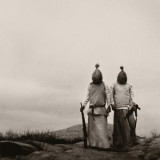
Originally released in 2010, "The Body"s All The Waters Of The Earth Turn To Blood" is a watershed album that changed the landscape of heavy music. Buoyed by the eclectic cast of musicians, from the undeniably potent collaboration with The Assembly of Light Choir as led by now longtime The Body collaborator Chrissy Wolpert, to guest contributors that include members of Dead Times, Fang Island, Lichens (aka Robert Aiki Aubrey Lowe), Human Beast, and many more. The album"s singularly bleak, yet beautiful atmosphere not only set the tone for The Body"s career in breaking the mold, but set a new standard for what extreme music could do.
Named after the old district where Jesse lived during one of the most vibrant years of his life, La Pavonia EP captures the warmth, unpredictability, and deep musical curiosity that define him. Drawing from memories of joy, love, and discovery—and echoing the floral name linked to Runas' Spanish roots—the EP unfolds across four distinctive cuts.
“Crystal Swamp” opens the journey with eerie pads, buzzing synths, and a groove shaped by introspective winter days. “Body Blaster” follows with a raw, body-moving rhythm, born from a shift between Electro and Progressive moods and anchored by a punchy TX-81Z bassline. On the flip, “Warp” plays with imperfection and transformation, turning a single synth and stretched percussion sample into something strangely human. The EP closes with a remix of “Warp” by Belgian-Peruvian producer DC Salas who transforms Warp into a slow-burning, groove-heavy trip, layering thick basslines, subtle percussive shifts, and a progressive pulse. It's a hypnotic rework that keeps the original’s raw textures while opening it up for late-night floors and deeper moments.
out of Stock
Last delivered 10 months ago available to reorder, subject to availability
Bebedera takes the style of Tarraxo to a heightened awareness of its sexual nature. Tight, wicked layers of percussion, a suggestive ID ("Drinking is his life"), a slow pace that's not only perceptively slow, it sounds charged with intent, even malice, dissolution. Letting go of morality may be the big attraction in the music, permission to get down, this time in a heavy, conspicuous manner instead of a spiritual, breezy floatation. One has to recognize the impulse in ourselves. Once at peace with this rough nature, there are sublime grooves to follow, mind-boggling arrangements, a freedom from judgement in connecting with what may seem to be at first a very masculine take on dancefloor sensuality but which is in fact only human. Just with less filters.
In other ways, an aural combination of metal and flesh produces this notion of a cyborg, a very expressive physical body making its weight known to everybody around, a sort of walking fortress as in the "Moderan" group of sci-fi short stories. A glorious rattle of lata percussion, scraps from the junkyard. A sense of unease, even slight danger starts a flow of adrenalin. According to DJ Marfox, it's not the only thing flowing, there's also a strong desire for intercourse when a Bebedera tarraxo is playing. His very distinctive style has been a cult favourite for years. Accordingly, it took years to make contact, to reach an agreement, and the result is a set of classics that stretch as far back as 2014. Still the same punch, still the feeling no one has really stepped into this territory with such force.
Flipping the construct on its head, there's two Bebedera house tracks, we'd say almost an oddity, an abrupt change from the previous density of atmosphere, though they retain all the percussive bounce. Sensual, sure, a different tempo also letting through a romantic disposition other than the sheer physical attraction. One of the titles sums up the aesthetical power at play: "I Will Beat The Top High". As in reaching further out, further up. Wanting to. Time freezes - 2014 and 2016 (production years of these two tracks), fold up and melt into the Present. Where it matters.
out of Stock
Last delivered 14 months ago available to reorder, subject to availability
Black Vinyl LP. The world has changed, we shouldn't try and pretend otherwise. While we were shut away in isolation our routines shifted, social patterns evolved, and our hopes and dreams were twisted into cobwebs we're still trying to wipe from our fingers. Ziúr tentatively approached this on her last album Antifate, an ambitious and complex hybrid pop fever dream that looked back to a Medieval escapist fantasy as the scent of revolution seemed to hum in the air. But when restrictions were eased, she found herself staring down a discombobulated society that had trapped itself in a spiral of microwaved nostalgia and detached, narcotic repetition. Eyeroll then is Ziúr's musical panacea, a tincture to wake us from our creative slumber and prompt external connection and reflection. It's a polyphonous hex that demands human interaction, and Ziúr's hand-picked alliance of collaborators - Elvin Brandhi, Abdullah Miniawy, Iceboy Violet, Juliana Huxtable, Ledef, and James Ginzburg - each provide distinct voices that together herald a bewildering sonic epoch. Ziúr's palette had to evolve to match the scope of the project, but it was pure necessity that informed the album's defining tone. Recording mostly at night, Ziúr was conscious of the noise she was making so developed a unique way to record organic percussion. Using a set of rototoms - low profile tunable drums - she scratched, scraped and gently tapped the skins to build up the undulating and unstable rhythmic backdrop for each track. It's the first sound we hear on the opener 'Eyeroll', rattling like lost marbles against Elvin Brandhi's primal croaks and screams. And when Brandhi's twisted articulations form words, Ziúr matches the energy with chaotic thuds and serrated blasts of saturated electronics. "I roll the shittiest cigarette," she squeals like she's about to start a mosh pit at Paris's GRM Studios. Without pause, Abdullah Miniawy takes over on 'Malikan', building on the promise of material with Simo Cell, Carl Gari and HVAD with corrosive trumpet blasts and charged, politically incendiary Arabic vocals. Inspired by pre-Islamic poetry and the Qu'ranic chanters he heard growing up in Saudi Arabia and Egypt, he spins labyrinthine stories that cross between the worlds, breaking down physical and spiritual borders simultaneously. Miniawy's scope is expanded even further on his second collaboration, 'If The City Burns I Will Not Run'. "If it rains and the city drowns," he utters over gaseous electronics, "I will not run away, but I will be anxious for the heart of one close to me." After a supple vocal turn from Manchester's Iceboy Violet on 'Move On' and a surreal interlude from poet- DJ-artist-theorist Juliana Huxtable on '99 Favor Taste', Brandhi returns with two more hyperactive collaborations: ,'Nontrivial Differential' and 'Cut Cut Quote'. On the former she slices into Ziúr's skeletal jazz eruptions, screaming and crooning interchangeably, fluxing between the rap battle and the cabaret. The latter is completely different meanwhile, with Brandhi settling into her role as front-woman and groaning dizzying improvised passages that sound like grunge crossed with psychedelic no-wave. Brandhi's spiky musical history has prepared her well for this collaboration; she's a prolific producer and has been using her voice spontaneously since debuting with father-daughter improv duo Yeah You in the mid 2020s. She's found an ideal foil in Ziúr, a producer who matches her restless energy and willingness to bend formality, and leaves an indelible mark on Eyeroll. But the album's most tender moments are from Ziúr herself, who winds the album down on 'Hasty Revisionism', growling over collapsible beats and cascading strings, and comes to an unexpected conclusion with country coda 'Lacrymaturity'. Its feverish amalgamation of country music and euphoric, experimental electronics might seem incongruous at first, but in context with the rest of the album is the only possible conclusion. With Eyeroll Ziúr is making a firm statement about togetherness, humanity, and the renewal of hope when all seems lost. By bringing together such a wide but philosophically harmonic team of collaborators, she's conducted a body of work that speaks to the creative fringe in no uncertain terms. Now's the time to throw away what you think you know, and build bridges you didn't think you need. Now's the time for action. She may have spent her entire career avoiding the solipsistic trappings of "queer art", but by assembling a communal statement that questions so many normative assumptions about music, politics, and beyond, Ziúr has chanced upon her queerest album yet. Cringe? Eyeroll.
out of Stock
Last delivered 15 months ago available to reorder, subject to availability
SHDW's Mutual Rytm imprint is back with its third release of 2024, marking a full label debut from Sonic Propaganda with their 'Native' EP.
Sonic Propaganda comes from the collaborative minds of Earwax and Rosati, a pair who favour dark and intense techno sounds and take inspiration from Jeff Mills and Robert Hood. In the studio, they blend analog and digital technologies into smoky warehouse atmospheres and immersive journeys that connect with listeners on an emotive level, and this full EP lands following their contribution to the third instalment of the Mutual Rytm's Federation Of Rytm compilation series in February.
The powerful 'Native' opens up at high speed with tightly coiled drum loops that never let up. Sleek metal percussive sounds peel off the grooves and lock listeners into a perfect state of hypnosis. 'Soul Pressure' is just as absorbing, with a tense bassline keeping you on edge as the train-like drums march under incendiary hi-hat ringlets. There is plenty of perfect machine funk to 'Terminal', which has more rusty synth textures and chopped-up vocal fragments humanising the turbulent grooves. 'Basic Path' brings an extra skip to the kicks as they enter, scuffed up and flowing just above the groove, while vocal pulses and twitchy synth modulations bring the detail. 'Body Empire' closes the vinyl package with a deeper vibe and pensive synths that add warmth and soul to the brilliantly mechanical grooves, while digital bonus 'Acid Riot' closes with squelching acid lines amongst a swell of analog crunch and laser-sharp percussion.
out of Stock
Last delivered 6 months ago available to reorder, subject to availability
In the mid-1970s, a force of nature swept across the continental United States, cutting across all strata of race and class, rooting in our minds, our homes, our culture. It wasn’t The Exorcist, Goodbye Yellow Brick Road, or even bell-bottoms, but instead a book called The Secret Life of Plants. The work of occultist/former OSS agent Peter Tompkins and former CIA agent/dowsing enthusiast Christopher Bird, the books shot up the bestseller charts and spread like kudzu across the landscape, becoming a phenomenon. Seemingly overnight, the indoor plant business was in full bloom and photosynthetic eukaryotes of every genus were hanging off walls, lording over bookshelves, and basking on sunny window ledges. The science behind Secret Life was specious: plants can hear our prayers, they’re lie detectors, they’re telepathic, able to predict natural disasters and receive signals from distant galaxies. But that didn’t stop millions from buying and nurturing their new plants.
Perhaps the craziest claim of the book was that plants also dug music. And whether you purchased a snake plant, asparagus fern, peace lily, or what have you from Mother Earth on Melrose Avenue in Los Angeles (or bought a Simmons mattress from Sears), you also took home Plantasia, an album recorded especially for them. Subtitled “warm earth music for plants…and the people that love them,” it was full of bucolic, charming, stoner-friendly, decidedly unscientific tunes enacted on the new-fangled device called the Moog. Plants date back from the dawn of time, but apparently they loved the Moog, never mind that the synthesizer had been on the market for just a few years. Most of all, the plants loved the ditties made by composer Mort Garson.
Few characters in early electronic music can be both fearless pioneers and cheesy trend-chasers, but Garson embraced both extremes, and has been unheralded as a result. When one writer rhetorically asked: “How was Garson’s music so ubiquitous while the man remained so under the radar?” the answer was simple. Well before Brian Eno did it, Garson was making discreet music, both the man and his music as inconspicuous as a Chlorophytumcomosum. Julliard-educated and active as a session player in the post-war era, Garson wrote lounge hits, scored plush arrangements for Doris Day, and garlanded weeping countrypolitan strings around Glen Campbell’s “By the Time I Get to Phoenix.” He could render the Beatles and Simon & Garfunkel alike into easy listening and also dreamed up his own ditties. “An idear” as Garson himself would drawl it out. “I live with it, I walk it, I sing it.”
But as his daughter Day Darmet recalls: “When my dad found the synthesizer, he realized he didn’t want to do pop music anymore.” Garson encountered Robert Moog and his new device at the Audio Engineering Society’s West Coast convention in 1967 and immediately began tinkering with the device. With the Moog, those idears could be transformed. “He constantly had a song he was humming,” Darmet says. “At the table he was constantly tapping.” Which is to say that Mort pulled his melodies out of thin air, just like any household plant would.
The Plantae kingdom grew to its height by 1976, from DC Comics’ mossy superhero Swamp Thing to Stevie Wonder’s own herbal meditation, Journey Through the Secret Life of Plants. Nefarious manifestations of human-plant interaction also abounded, be it the grotesque pods in Invasion of the Body Snatchers or the pothead paranoia of the US Government spraying Mexican marijuana fields with the herbicide paraquat (which led to the rise in homegrown pot by the 1980s). And then there’s the warm, leafy embrace of Plantasia itself.
“My mom had a lot of plants,” Darmet says. “She didn’t believe in organized religion, she believed the earth was the best thing in the whole world. Whatever created us was incredible.” And she also knew when her husband had a good song, shouting from another room when she heard him humming a good idear. Novel as it might seem, Plantasia is simply full of good tunes.
Garson may have given the album away to new plant and bed owners, but a decade later a new generation could hear his music in another surreptitious way. Millions of kids bought The Legend of Zelda for their Nintendo Entertainment System back in 1986 and one distinct 8-bit tune bears more than a passing resemblance to album highlight “Concerto for Philodendron and Pothos.” Garson was never properly credited for it, but he nevertheless subliminally slipped into a new generations’ head, helping kids and plants alike grow.
Hearing Plantasia in the 21st century, it seems less an ode to our photosynthesizing friends by Garson and more an homage to his wife, the one with the green thumb that made everything flower around him. “My dad would be totally pleased to know that people are really interested in this music that had no popularity at the time,” Darmet says of Plantasia’snew renaissance. “He would be fascinated by the fact that people are finally understanding and appreciating this part of his musical career that he got no admiration for back then.” Garson seems to be everywhere again, even if he’s not really noticed, just like a houseplant.
out of Stock
Last delivered 10 months ago available to reorder, subject to availability
Highlighting a decade of working together as ‘Fronte Violeta’, Brazilian transdisciplinary artist Anelena Toku and musician and sound artist Carla Boregas are set to release the album ‘Fronte Violeta’, a captivating blend of aural compositions, scents and experiences.
Switching the moniker name to the album title serves as a way to showcase the culmination of their multidisciplinary project’s journey, developed from compiling fragments, sounds and intentions from their previous body of work comprising electroacoustic and electronic music composition, moving image, scent, installation and live performances.
‘Fronte Violeta’ is a sonic amalgam where synthesized sounds, percussion, voice, feathers, branches and other non-human sonorities coalesce. Toku and Boregas have skillfully woven together those elements creating a rich tapestry of interconnected sounds that tension our perception as something always in motion, never fully settling into an established form.
out of Stock
Last delivered 11 months ago available to reorder, subject to availability
It's the quiet ones we should watch, they always say. Which is particularly astute advice right now, when loud, constant self-declaration and saturated 'brand' visibility have become the norm. But above the babble and brightness, some voices will always speak quiet volumes - with calm eloquence and the kind of certitude that comes from valuing the playing out, not just the prize.
Sweden's José González is just such a voice. He first charmed his way into the UK's earshot via the murmurous and elegant, classically finger-picked folk pop of his 2005 album, Veneer, which has since sold over a staggering 430, 000 copies in UK alone. Two years later came In Our Nature, a further exploration of José's influences (Argentinian Folklore, the '60s US folk tradition and the British pastoral folk-pop style of the same era), on which he resisted the temptation to beef up his alluringly introvert aesthetic. The albums made the UK Top 10 and Top 20 respectively.
Conceived as the natural third part in an acoustic trilogy, Vestiges & Claws is a(nother) hushed and delicate solo set that forefronts the artist and guitarist's compellingly intimate vocal style and intricate playing technique, but it's often strikingly rhythmic in nature and cohere's perfectly, with hand claps and taps on the body of his instrument underlining the songs' mantric rise-and-fall pattern, while elsewhere, over-dubbed guitar parts and multi-tracked vocal harmonies entwine to sweetly immersive effect.
The title refers to both cultural practices and biological features that survive despite having lost their original function, and to currently useful tools, ie the 'claws' of modern life.
Vestiges & Claws was recorded almost entirely by José and self-produced, mostly in his Gothenburg home, using computer plug-ins to achieve a warm, analogue sound. He prefers working alone, mainly for artistic reasons. 'There were a couple of things that enabled me to complete this record: one was curiosity, to be able to play percussion and do a lot of harmonies and also to produce and mix the album; the other was aesthetics. I love to listen to Arthur Russell and Shuggie Otis, to music that has been done mostly by one person in their solitary state.'
As José sees it, the record is his personal, 'zoomed-out eye on humanity on a small, pale blue dot in a cold, sparse and unfriendly space. The amazing fact that we are all here, an attempt at encouraging us to understand ourselves and to make the best of the one life we know we have - after birth and before death.
Tobias Bernstrup is a contemporary musician and video artist born 1970 in Gothenburg, Sweden. He received an MFA from Royal College University of Fine Arts Stockholm in 1998. Using the visual language of pop culture, video games, sci-fi, classicism and gothic noir, he has created a stage persona with notorious live performances. Dressed in elaborate costumes of skin-tight rubber suits and fetish gear, Tobias' external appearance is androgynous. He raises questions about representation of identity, the body and physical space in both virtual and non-virtual realities. Between 1997 and 1998 he self-released two limited CD-R EPs. In 2002 his debut album 'Re-Animate Me' was released by Tonight Records followed by two limited 12' singles for the song 27' and the Italian version Ventisette'.
.
27' is a 5-song EP collecting 4 different mixes of the title track plus one unreleased song from the 'Re-Animate Me' recording sessions. The material on this EP is closely connected with the world of computer games which Bernstrup also inhabits. Bernstrup's music is influenced by 1980s Italo disco and synth pop, reminiscent of Kraftwerk, Depeche Mode and Ken Lazlo. On the A-side is the original mix at 115 bpm followed by the Lazer Mix set to an faster beat and additional arpeggiations and heavier bass drum beats. Lyrically the song tells the story of a good looking 27-year old boy from a small town searching for love with any man who can spoil him. On the B-side are both the vocal and instrumental of Ventisette', the Italian translation of the song 27.' Both versions of Ventisette' are stripped back compared to the A-side but keep the melodies in tact. Also released for the first time ever is the demo Dirty Money' a Pet Shop Boys influenced song about male prostitutes ready for a night out working the streets.
All songs have been remastered for vinyl by George Horn at Fantasy Studios. For the jacket Eloise Leigh transformed the original portrait of Tobias into a Warhol-like painted polaroid with a striking likeness to Liza Minelli with blue eye shadow and red lipstick. Each copy includes a photo postcard with lyrics and notes. I would rather create alternative routes to experiencing and understanding the world, understanding what it means to be human today,' says Bernstrup. We are more artificial than we want to admit.'
out of Stock
Last delivered 17 days ago available to reorder, subject to availability
Depth.Request proudly announces the debut full-length album from French electronic artist Pierre Berge-Cia - a culmination of two years of dedicated experimentation and creative exploration. This inaugural LP represents a significant milestone in Pierre Berge-Cia's musical journey, showcasing his innovative approach to electronic music.
Crafted through experimental processes and delving into themes of tension, control, and movement, "If You Do, Then When?" unfolds as a visceral journey through the complexities of bodily and sensory experience. Each track is designed to reflect the human body in all its shapes and forms, using innovative sounds and structures to evoke physicality and movement, and aiming to resonate with listeners on a deeply corporeal level.
The album was produced using a combination of the Elektron Digitone synth, a Mackie CR1604 mixer, a Shure SM57 microphone, and a limited selection of digital plugins to maintain sonic consistency. Mastering was handled by Pierre's close friend, Stefan Brown - also known as "Lesser Of". His expertise as a top-tier sound engineer at Abbey Road Studios helped shape the LP's pristine and powerful sound identity. Additionally, the tracks were tested and refined using some of the electronic scene's most beloved sound systems, ensuring an impactful club experience.
The album's artwork, created by Pierre Berge-Cia himself, is a reinterpretation of one of his favorite art performances: "Rest Energy" by Marina Abramovic and Ulay. The tension of the drawn bow and the close-up framing of the subject evoke a palpable sense of danger and emotional intensity, mirroring the physical and psychological strains within human connection. Pierre used his own hands as the model, infusing the artwork with a deeply personal and intimate touch that amplifies the psychic gravity and thematic cohesion of the album.
Pierre Berge-Cia's debut LP is a multi-sensory experience that challenges listeners to feel sound in its most physical and affective form.
out of Stock
Last delivered 14 months ago available to reorder, subject to availability
First ever release of pioneering radiophonic / experimental / electronic / soundtrack composer you may never have heard of but really should have by now. 26 tracks in all.
As we began the mammoth task of whittling down material for this album Elizabeth recalled the time she met Delia Derbyshire. It was during a party for existing and former Radiophonic Workshop composers at BBC Maida Vale in the early 1980s. Delia introduced herself with typical energy and exuberance proclaiming "It's up to you now - I'm passing the baton. Show these men how we get things done". That must have been quite an honour and responsibility for a young, female composer establishing herself within the male-dominated environs at Delaware Road.
Looking back over a musical career spanning almost five decades, it's clear Elizabeth rose to the challenge and made her mark. She was consistently in demand with television and radio producers, composing for an array of ground-breaking, critically acclaimed and popular BBC projects. Whilst Delia's legacy has achieved mythical status with her position as an innovator and feminist icon secured, the majority of Elizabeth's recorded work remains unavailable so her contribution to the output of the Workshop and evolution of British electronic music is somewhat under-appreciated.
Perhaps this record will help start to remedy the situation. Included are early tape experiments, home demos and non-BBC commissions from the early 1970's to the late 2000s. Having listened to 260+ digital audio tapes from Elizabeth's personal archive we have barely scratched the surface but hope to provide an indication of the breadth of her compositional and sound design skills.
Classically trained in cello and piano, Elizabeth graduated from the University of East Anglia with a degree in Music in 1973. She was mentored by Tristram Cary who helped her to become UEA's first recipient of a Masters in Electronic Music and later awarded an Honorary Doctorate by Staffordshire University. Joining the BBC as a studio manager in 1975, Elizabeth transferred to the Radiophonic Workshop in 1978. One of her first tasks was to create special sound effects for Blake's 7 using tape loops, the EMS 100 and trusted VCS3.
Her celebrated score for The Living Planet in 1982 featured early use of the PPG synthesizer and earned an Emmy nomination. Over the following years studio technology evolved rapidly, but Elizabeth transitioned from analogue recording techniques to newer digital platforms with relative ease, using samplers, midi sequencing and computer controlled workstations.
With an incredible 1,400 commissions to her name, she created special sound for The Day Of The Triffids, Lord Of The Rings, countless radio dramas including Iris Murdoch's The Sea, The Sea, Harold Pinter's Moonlight, all of Howard Barker's plays, productions of King Lear, Wordsworth's Prelude and The Pallisers. The success of The Living Planet led to further work for the BBC Natural History Unit followed by numerous commissions for The Natural World. At one point in the late 1980's at least five of her signature tunes were being broadcast every week including Points Of View, Horizon, Doctors To Be and Everyman.
After the closure of the Workshop in 1996 Elizabeth became freelance, arranging Faure's Pavane for the BBC World Cup '98 coverage (reaching no. 9 in the UK singles chart). She wrote additional music for Monty Python's Holy Grail DVD, scored Michael Palin's Full Circle and Sahara TV series, The Lost Gardens Of Heligan and The Human Body with Robert Winston.
Retiring from the music industry in the late 2000's, Elizabeth recently returned to her East Anglian roots and now lives near the coast. She walks daily, listening to all kinds of music, new and old, on her beloved air-pods.
out of Stock
Last delivered 16 months ago available to reorder, subject to availability
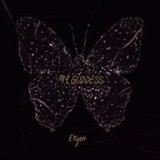
A deeply intimate and cinematic body of work, My Goddess unfolds as a self-contained emotional universe; an album about grief, depression, healing, and the enduring human urge to find beauty in a world that often feels unrelenting.
Composed against the backdrop of Lebanon’s ongoing political and economic collapse, My Goddess captures what it means to process personal heartbreak and collective trauma simultaneously. Across nine emotionally charged tracks, Etyen draws from profound loss, existential reflection, and the tragic death of his beloved cat Lucy to craft a record that is as fragile as it is resilient; both a personal reckoning and a universal portrait of survival through art. “This album is a conversation with myself. It’s about loss and grief, about finding beauty and trying to hold on to it,” says Etyen. “It’s about confronting the painful parts of life while still believing there’s something gentle and divine to hold onto.”
Blending cinematic textures, Etyen's unique and inspired electronics, and minimally sculpted yet immersive melodies, My Goddess pushes further into the raw introspection first glimpsed on Etyen’s 2022 debut album Untitled. But this time, the sonic architecture is more distilled, the emotional stakes more immediate. The result is a record that gently lingers in the spaces between memory, absence, and hope.
The album’s first single, the title track “My Goddess,” drops May 5 with a self-directed music video, one of three cinematic visuals accompanying the album. The trilogy further expands the emotional world of the record and affirms Etyen’s role not only as a musical artist, but as a multidimensional storyteller.
With over a decade of work that spans Netflix scores (Jinn), international festivals (Sonar Barcelona, Mutek), and critical acclaim and editorial support from Bandcamp Daily, BBC Radio and much more, Etyen has carved out a singular voice in electronic music—bridging personal, cultural and political resonance through sound. As the founder of Thawra Records, he also continues to champion independent artists from the region, building a vital platform for forward-thinking music in and beyond the Arab world.
'Heartstrings' is the fourth album from London-based Snowpoet, led by the creative partnership of Lauren Kinsella and Chris Hyson Since their debut EP in 2014, the band has built a devoted audience drawn to their emotionally rich songwriting, intricate production, and distinct sonic identity. With 'Heartstrings', they take a bold step forward, writing and recording in the studio as a collective for the first time, capturing the raw immediacy of live performance while expanding their sound with lush textures, layered harmonies, and deeply personal storytelling. "We wanted to capture the moment to create something that feels real, unfiltered, and alive," says Chris Hyson.
This album marks an evolution in Snowpoet's approach. Instead of the fragmented process of previous records, 'Heartstrings' was born in the moment, with the full band improvising, shaping, and refining ideas together in real time. The result is an album that feels alive - organic, immersive, and deeply human. Sonically, the group leans into rich, analogue synth tones, intricate drum textures, and a dynamic push- and- pull between electronic and acoustic elements. Lyrically, it is their most personal work to date, weaving themes of life, loss, and renewal with poetic honesty. "The sound of this record is richer, bigger, more expansive, representative of the culmination of everything we've done so far," reflects Lauren Kinsella. At the heart of 'Heartstrings' is a powerful contrast - moments of deep emotional weight balanced with luminous joy. Songs like "Host" dive into themes of grief and the body as a vessel for experience, while tracks like "New Tree" radiate warmth and rebirth. The band's signature harmonies and layered production give the album a three- dimensional quality, pulling the listener into a space where vulnerability and beauty coexist. With 'Heartstrings', Snowpoet solidifies their position as one of the most innovative and emotionally resonant bands in the UK's jazz- adjacent and electronic-acoustic crossover scene. This is an album for listeners who crave depth, sonic richness, and lyrical honesty.
"1980 was a huge year in pop music with every genre competing for hits. We have already included many tracks on the records of the 1980 Yearbook, the 80-84 Final Chapter, and their extras so far in our appreciation of the year…
Those tracks were generally the bigger hits of the year, with their chart achievement a factor in their inclusion – however – that’s not the whole singles story of the year, and our celebration of 1980 wouldn’t be complete without shining a light on some of the years’ singles that have been compiled much less frequently over the years.
Welcome to THE VAULT for 1980… Some of the tracks included were Top 40 hits, some missed the chart completely. Some were representative of massive selling albums, and some were big hits in the U.S. and not in the U.K… but all are part of the wonderful pop story of 1980. "
out of Stock
Last delivered 11 months ago available to reorder, subject to availability
Following the hyperactive “Blood Karaoke” (2022, Reading Group), “Performing Belief” builds rhythmic thickets from gathered sounds interwoven with synths, drum machines and other samples. Having built these rhythmic nests, Krivchenia then called on two contemporary mages of the low end: electric bassist and fellow Angeleno Sam Wilkes (Wilkes/Gendel) and double bassist/multi-instrumentalist from Krivchenia’s native Chicago, Joshua Abrams (Natural Information Society). Wilkes and Abrams bring the presence of a grounding human witness to the rhythmic undergrowth, providing a centering and even at times melodic voice to the gathering. This alchemy carries a profoundly fresh sense of time, blurring the edges of the quantized grid and the generic boundaries of electronic music.
The core of the album is a lush, opulent matrix of percussion ranging from the familiar—hand claps and drum machines—to the mysteriously verdant, sampled largely from Krivchenia’s own performed field recorded collection. For years, he would record any and all of his musical encounters with natural objects: performing on a particularly resonant log on a hike, throwing rocks into a pristine pond, tap dancing in the mud. This archive of “natural” sounds became the fertile soil out of which the tracks on “Performing Belief” grew. What is gained in the process is not just a novel set of sounds, but a new rhythmic language. The particular give, the anticipatory rustle, the extra breath of a hollow log when functioning as a kickdrum provides a greenness that overtakes the rhythmic grid, giving this music a peculiar kind of stickiness. This rhythmic language, set in Krivchenia’s long-fermenting electronic musical palate, feels like a revelation, even while it calls back not only to his wonderfully elastic timekeeping behind the kit with his beloved band Big Thief, but also to his prior work in computer music as well as his deep study and love of the vast human archive of drumming. “Performing Belief” is in good company in the rank and file of the legendary Planet Mu label. From the foundational early releases of the likes of Jega and Venetian Snares, to the contemporary envelope-warping work of Jlin and hundreds of brilliant releases in between, Planet Mu has been a beacon of forward-thinking rhythmic music for decades, informing Krivchenia’s own sense of the weird metaphysics of musical time since he was a kid. Krivchenia’s contribution to this history calls to mind the principle of organic danceability that subtends Mu’s whole catalogue, while bending our sense of rhythm in new and gracious dimensions. Krivchenia brings out the loamy complexity of natural rhythms, a clearing as generous as it is inviting. Let the drummer give you some.
Blurring the lines between the mundane and the mystical, ESKA’s latest album, ‘The Ordinary Life of a Magic Woman’, is a profound exploration of motherhood, artistry, and the delicate dance between daily rhythms and creative transcendence. For ESKA, these aren’t opposing forces—they’re inseparable threads in a richly woven life.
“It’s the sound of a first-generation, middle-aged African British woman living in post-everything Southeast London,” ESKA reflects.
After two decades of trailblazing collaborations with world-renowned artists – Moses Sumney, Grace Jones, Radiohead and Baxter Dury, to name a few - along with various accolades - including a Mercury Prize Nomination, ESKA’s new album stands as her most personal and compelling work yet. A self-directed journey, it sees her embracing her ultimate creative partner: herself.
Rooted in her eclectic musical upbringing, ESKA pulls inspiration from the sounds and influences that have defined her journey, breaking free of conventional boundaries. The result is a body of work that defies easy categorisation—bold, dynamic, and unmistakably hers.
Blurring the lines between the mundane and the mystical, ESKA’s latest album, ‘The Ordinary Life of a Magic Woman’, is a profound exploration of motherhood, artistry, and the delicate dance between daily rhythms and creative transcendence. For ESKA, these aren’t opposing forces—they’re inseparable threads in a richly woven life.
“It’s the sound of a first-generation, middle-aged African British woman living in post-everything Southeast London,” ESKA reflects.
After two decades of trailblazing collaborations with world-renowned artists – Moses Sumney, Grace Jones, Radiohead and Baxter Dury, to name a few - along with various accolades - including a Mercury Prize Nomination, ESKA’s new album stands as her most personal and compelling work yet. A self-directed journey, it sees her embracing her ultimate creative partner: herself.
Rooted in her eclectic musical upbringing, ESKA pulls inspiration from the sounds and influences that have defined her journey, breaking free of conventional boundaries. The result is a body of work that defies easy categorisation—bold, dynamic, and unmistakably hers.
Since scoring a worldwide smash with her debut album Eye To The Telescope in 2004, which went on to sell over 5 million copies, KT Tunstall has remained at the forefront of UK singer-songwriter talent. After a period of healing, soul-searching, and a change of scenery, 2016 hailed the arrival of the first of a trilogy of albums, the critically acclaimed UK Top 10 album - KIN. The trilogy evokes, separately and in sequence, spirit, body and mind. With KIN being her Phoenix-from-the-ashes 'spirit' album, 2018 marks the second offering of that trilogy - WAX, her sixth studio album, her 'body' album.
Oulu-based label Elektorni returns with a 12” by Swedish mastermind Daniel Savio.
The EP starts off with Noel Skum, a downtempo scorcher that creeps and crawls into your earhole and activates the body rock. Dubbed out ominous chords haunt the skies as the track squelches on. Next up Savio conjures the force of Mighty Thor to smack some sense into humanity. A classic electro banger infused with funky licks. B-side opens with No A.I, the definitive man-machine manifesto. Crunched out and ominous, an end-of-times underground resistance activator. Last track Reverse Cowgirl is a time-travelling digi-dub transmission carrying a reverberated message of caution from the Great Filter.
out of Stock
Last delivered 16 months ago available to reorder, subject to availability
Hüma Utku returns to Editions Mego with her new album. The title Dracones makes reference to the mediaeval latin term "Hic sunt dracones" (Here be dragons), marking the unexplored, dangerous places on world maps, expressing the fear of chaos, the unexpected and the unknown.
This new work by the Istanbul sound artist is a sonic journal of an expedition into uncharted territory, one which occupies self and domesticity. Inspired by Utku’s experience of matrescence, Dracones explores the themes of familial demonology, metamorphosis and homecoming as well as human relationship to the experience of love woven layers of euphoria, alienation and consumption.
Musically, Dracones traverses a wide array of sonic tools whereby industrial sounds are imbedded with certain psychological angles, this is an album where, all matter meshes into a sly snapshot of the human experience with a tension and release exposure occurring frequently with dark corners opening up to bright layers of electronic experimentation.
The haunting opening track ‘A World Between Worlds’ tackles pregnancy, of which Utku was experiencing when making this record. The emotional, physical, spiritual and mental experience of this journey is all documented here.. This track features the ‘Lyraei’, an electromagnetic string instrument and modern interpretation of the ancient lyre, that was built and played by Mihalis Shammas. ‘Comfort of The Shadows’ moves from within to without, what was once hidden is now exposed. Utku’s ability to conjure the visual in the sonic is at the forefront as howling electronics give a distinct impression of movement. ‘A Familial Curse’ presents a desire to break the cycle of generational trauma with a creeping sense of dread that rolls into an industrial rhythm prior to landing in a beautiful place represented with shimmering guitar tones. ‘Here be Dragons’ is a rich and dark evocation, a spooked surrender to the themes of the record whereby Utku’s wildly distorted voice beckons all manner of phantasmagoria over cello and recordings of her ultrasound. ‘Care in Consume’ engages in further sonic exploration as a means of conjuring ‘matriphagy’, with its unique psychic energy coursing through electronic veins. ‘A House within a House’ could also be read as a body within a body as the pulse of ultrasound audio rattle amongst a cage of thudding rhythms and swirling electronics, one also ending in optimism as an exquisite melody is born from the prior fire. The striking journey ends with the more soothing ‘Ayaz’a’, a track embracing love and all the hardships that a period of fundamental metamorphosis brings, this is a heartfelt dedication to her son and concludes an album draped in life, experience, joy and pain.
Dracones is a deeply visual journey through inner and outer worlds, a space where symbolic evocation is supreme and passive listening is not an option.
All tracks composed,performed and recorded by Hüma Utku
Buchla 100, vocals, cello, electric guitar performed by Hüma Utku
‘’A World Between Worlds’’ features the ‘Lyraei’ built, played and recorded by Mihalis Shammas
Buchla 100 recorded in EMS Stockholm 2022-2023
Mixed by Enyang Urbiks
Mastered by Heba Kadry, NYC
Cover Artwork by Marco Ciceri
Design by Tina Frank
out of Stock
Last delivered 18 months ago available to reorder, subject to availability
"Body Jumper" is the first studio album from American band Provoker, who are paving the way for a new generation of post-punk. Produced by the band themselves, this breakout record sold over 1000 units sold via D2C previously and will now be available for the first time ever to purchase through retail. Packed with hits including "Bugs & Humans", this is a record that continues to grow along with the band.
With their debut album Channels on !K7 Records, Kassian (Joe Danvers-McCabe and Warren Cummings) have come full circle, focusing on the warmer, sample-based, and house-inspired sonics that brought them together. Kassian periodically revisited these initial pieces throughout the last five years until they felt able to journey deeper, using their rapidly developing craft and refined production techniques to build a debut album that momentarily steps away from some of their more club-focused excursions. “As we were writing, we realized that all the tracks had the unique potential to tell a story,” reflects Cummings, with Channels leading the listener through a series of different atmospheres and emotional terrains.
Essential to Channels is Kassian’s focus on time’s ability to reorient human perspective. Kassian worked on the album over an extended period, with instrumentation, field recordings, and percussion first constructed and then subsequently stripped away and refined.
Channels contains their early love of tube warm, sample based sounds and live instrumentation as the foundation for this album. The working process for these rippling pieces used both sequenced workflow and improvisational arrangement, live instrumentation inspired by an array of deeper emotional content. Both members of Kassian experienced great personal loss during the period of making this album, and a tenderness is felt throughout the record.
This record is an earthy thing, its naturalistic track names evoking recognisable and cyclically familiar moments, Kassian have provided a map for the listener at the forefronts of their minds. Channels features Ezra Collective’s Joe Armon-Jones on keys, and Timothy Kraemer on cello distilling this body of work into a deep stream between the organic and improvised, and the sequenced and planned.
out of Stock
Last delivered 16 months ago available to reorder, subject to availability
Aufbauend auf der Dynamik seiner "Stolid State" EP, die eine kraftvolle Kollabo mit à;GRUMH…-Sänger J3 sEUQCAJ und Remixe der britischen Industrial-Pioniere Test Dept und der französischen Innovatoren Maman Küsters enthielt, verspricht das neue Album des Stockholmer Underground-Elektro-Pioniers Majestoluxe Grenzen weiter zu verschieben. "Wretched Conditions" bietet 13 unerschrockene Industrial-Pop-Tracks, die die raue Essenz des 80er EBM/Industrial beschwören. Mit dabei sind einige der besten Alternative-Talente Stockholms wie Bodypop-Queen EMMON, Horror-Gothic-Sirene Aux Animaux, Post Kontrôl (von den Minimal Wave-Helden Hidden Lines) und der himmlische LIVMØDR. Das Album wurde von Jimmy Monell aka Mr Monell gemischt und gemastert.
Demonstrating the poignant power of experience + human connection + innate musicality + operating in the present moment, Jeff Mills' Spiral Deluxe collective unveil their second album - The Love Pretender. Driven by the free expression and creativity of improvised performance, Spiral Deluxe is an electronic jazz fusion project comprised electronic music visionary Jeff, along with legendary keyboardist Gerald Mitchell (Underground Resistance/ Los Hermanos), Japanese rocker Yumiko Ohno (Buffalo Daughter/Cornelius) on Moog synthesizer and the Japanese bassist, adopted New Yorker, Kenji "Jino" Hino - son of Terumasa Hino, the world famous jazz trumpeter. Together, the four key players formed a band centred around completely improvised journeys through sound.
During their unrestrained performances, what Jeff describes as sonic "conversations" arose between the musicians, as they each contributed to full-length live shows, and studio sessions. Within the boundless parameters of freeform spontaneity, they developed an unspoken understanding of one another, finding balance and poise within the unplanned performances. The resulting recordings have been used for three releases so far: Two EPs, Kobe Session (2016) and Tathata (2017), and their debut album Voodoo Magic in 2018. With The Love Pretender, we're presented with another stunning collection of "tracks" extracted from one long improv session.
With each musician proficient in their specialism and, of course, an all-out music lover, the communication between the group members became almost telepathic. Very little preparation was needed, and their performances flowed naturally and organically. This can be heard, and felt, throughout The Love Pretender. Tracks like 'The Soloist' evolve effortlessly, each new shift subtly influenced by one of the musicians nudging the conversation into a different phase, and the rest responding accordingly, or vice versa. It's music that embodies the true nature of mindfulness and letting go of fear. In their unstructured, liberated cocoon the artists thrive and create musical moments that have, fortunately, been captured for us all to immerse ourselves in. Jazzy notes fill the air, combined with electronic bass, synthesised beats, sparkling keys and an all-round warm and welcoming atmosphere, with the slight edge you can only get from improvised performance.
Sylvain Luc's posthumous appearance on the album is of significance too. The French guitarist died in March 2024 at the age of 59. His natural flair adds another dimension to the album, bringing a touch of that laid back 1980s American California Coast feeling to tracks such as 'Society's Man'. These contributions to the LP, recorded separately, add character - a final sprinkling of humanity to complement the aliveness and presence of this body of work. Three other musicians also added their creative energy to the project. They were; TOKU, a Japanese jazz musician who specialises in wind instruments, especially the cornet, trumpet and flugel horn. And there's Masa Shimizu, who also has wide-ranging with the guitar, as well as being a producer.
Themes on the album include the optimism one can have by simply trusting the process and trusting that everything will work out in the end. By playing together in the way they do, Spiral Deluxe place their trust in the mystery of what will happen next. Getting comfortable with not knowing is key to a sense of peace with regard to the future and this energy is vital to their collective musical output. By embracing the notion of the unknown, you become an eternal optimist, living in the moment, rather than projecting into the future. This cultivates excitement, an antidote to anxiety.
Meanwhile, the title alludes to the shifts and changes that have occurred in today's society, whereby it's possible to achieve success through pretending. The superficiality, and falsehood, that can often be presented via social media, can lead to questions about what's real and what's not. From AI to the fake personas that populate the dominant platforms, The Love Pretender speaks to a process that is symbolic of the time we're living in. Behaviour that has become acceptable in today's world, which may not have been as welcomed a few decades ago. But this is part of the cycle of life...
Jeff's intention with this music is to present it in high-fidelity, to be listened to over and over and over again. In post-recording he worked for hours to ensure the audio quality was as high as it could be. The goal is to create music that people can live with their entire lives, from his solo work to these masterful improvisations. Music that comes to life, music that has a voice we can replicate with our own vocals. Expressive, unstructured, and alive...
With The Love Pretender Jeff Mills continues his mission to experiment with music outside the bounds of what is typically expected. It's freeing, enlivening, vibrant and uniquely human. As ever, Jeff's visionary outlook and bold approach to musical performance and recording has produced a body of work that epitomises his often revolutionary capabilities. There's no pretending here, just pure unadulterated sonic transmissions from a wonderfully daring, inspiring and optimistic ensemble...
out of Stock
Last delivered 9 months ago available to reorder, subject to availability
LIMBOY RETURNS WITH EXPLOSIVE SOPHOMORE ALBUM 'II' French Noise-Punk Quartet's New Album Arrives via Stolen Body Records Stolen Body Records announces their newest signing LIMBOY and the release of their sophomore album 'II'. Following their spontaneous and raw 2022 debut (delayed due to the global pandemic), the French quartet has channeled their infamous live energy into ten uncompromising tracks that showcase their evolution and musical prowess. The album will be released worldwide on vinyl, digital platforms, and all major streaming services. Emerging from Angers' vibrant rock scene, LIMBOY has built their reputation through incendiary live performances and notable support slots for acts like Metz. The band, comprising members known for their work with Tinny Voices, Eagles Gift, Bermud, San Carol, and Sheraf, brings a wealth of experience and musical diversity to their distinctive sound. 'II' sees LIMBOY diving deeper into their hardcore punk roots while embracing the sonic textures of '90s noise rock. The album's ten tracks are a testament to the band's growth, addressing themes of personal struggle, introspection, and the persistent doubts that shape human experience. Their commitment to raw energy and authentic expression remains unwavering, resulting in their most focused and powerful release to date.
"I imagine that one of the first things I heard in the world was the
explosion of a Russian ammunitions factory on the outskirts of my
hometown. It blew up the night I was born a new GDR-citizen. I´m not
sure I heard a noise when the Wall came down, but it still echoes in my
body. The echo contains many frequencies. Some of them sound like Gabber
playing in my childhood room over the speakers my grandfather once stole
from a Leipzig radio station. Some of them sound like me and my friends
running through the streets. They sound like my mother laughing and
consoling women in the women´s shelter where she worked in 1992. They
sound like birds: my father swears after the Reunification the great
crested grebes on the town lakes lost all fear of humans. Some of them
sound like these recordings."
out of Stock
Last delivered 19 months ago available to reorder, subject to availability
Italian composer and saxophonist Laura Agnusdei returns with “Flowers Are Blooming In Antarctica” a career defining record that sees the artist diving into uncharted waters, a profound timeless meditation on our relationship with planet Earth, the eco-conflicts arising and the fascination with non human forms of life, backdropped to a vivid soundtrack of coral exotica, spiritual Jazz, fourth-world minimalism, tropical electronics, tribal futurism and contemporary elegance.
Every step of Laura Agnusdei’s path, from electroacoustic experimentation to her constant research based upon the acoustic dimension of wind instruments and their interaction with polymorphic electronic sounds, seems to have pivoted into a new sense of awareness, as if the mind and intellectual practice has finally caught up with the body, the heart and the soul, resulting in her most organic and transcendent work yet. “Flowers Are Blooming In Antarctica” is loosely inspired around a trifecta of pioneering ideas that explore unconventional reality: James Bridle’s ‘Ways Of Being’ with his radical story that mixes ecology, tech and intelligence; Luigi Serafini’s late-70s fantastical ‘Codex Seraphinianus’, an unparalleled collection of flora, fauna, anatomies metamorphosed into new fragile beings; J.G. Ballard’s climate-fiction foreshadowing sci-fi ruminations. These influences shift Agnusdei’s musical trajectory injecting doses of terrestrial malaise, the earthy sub-saharan ‘Ittiolalia’ with its wah-wah filtered sax and trance inducing groove; the rubbery playfulness of ‘Oasi Bar’; the gentle eco-system of ‘P.P.R.N’ reminiscent of Herbie Hancock’s innovative synthesis of funk, space and synthesizers; the kaleidoscopic northern lights of ‘Emperor Penguin Lullaby’, where south-east Asian echoes reach icy shores; the Jon Hassell hyper-ambience of ‘Cuttlefish REM Phase’; the post-apocalyptic march of ‘The Drowned World, a jazz standard for an artificial civilization on the brink of self-destruction. Nothing feels out of place and it’s no coincidence that one of the most powerful messages on the record is delivered on centerpiece ‘Are We Dinos?’ via an interview conducted with two preschoolers. Radical optimism or sonic liberation?
Laura Agnusdei’s tenor sax cuts deep all across “Flowers Are Blooming In Antarctica”, a laser baton raised up to the clouds, a conductor orchestrating devotional soundscapes for a three-eyed dolphin, guiding us through prismatic pastures and acidic oceans. Her tropicalized realm is pin-pointed with Miles-like sheer clarity, a bristling nakedness on the verge of exploding at any time, creating an album where ascension becomes the unifying code.
Generally regarded as the first true 'new age' record, Steve Halpern's 1975 private press LP has long been in demand by collectors. In particular, the very first pressing of the album included an extraordinary long-form jazz funk track called 'Something for Every Body Suite' that was removed from subsequent versions. Eating Standing is proud to reissue Halpern's classic long-lost original version of the album, officially licensed from Halpern himself that includes this heavy groove-laden masterpiece. This is the very first ever full reissue of the first press album with full reproduction of the artwork. Original copies cost over $700 (assuming you can even find one) but now this incredible landmark album is available once more to enjoy. "Reissued for the very first time since 1975 in its original format and track listing, a legendary album that is considered a game-changer in music. Steve Halpern's landmark album 'Christening For Listening (A Soundtrack For Every Body)' is considered by many to be a crucial and defining album that pointed the way ahead. Predating the ambient/experimental work of Brian Eno, Steve Hillage and even Mort Garson's 'Plantasia', Steve Halpern's 'Christening For Listening' was the first album to explore what became known as 'new age' or ambient music, exploring the effect of tones and rhythms on the human body and mind as well as plants and other organisms. Originally issued as a private pressing in 1975, the very first issue of this album had an extraordinary extended jazz funk track on the B side, a DJ/Samplers delight – DJ Gaslamp Killer is a huge fan. This track, 'Something For Every Body Suite', was never included on any of the subsequent represses making the very first pressing incredibly rare and almost impossible to find. It's reissued here for the very first time, with full repro of the original artwork plus a Q&A by Tony Higgins with Steven Halpern himself.
A maelstrom of music and metaphysics, a crushing conduit for connection, contemplation and catharsis; ritualistic sludge-metal juggernauts Pothamus return to this plane of existence with new album `Abur', the highly anticipated spiritual successor to their colossal debut, `Raya'. The search for meaning stands central as a pillar of belief in the enigmatic world of Pothamus. Whilst blending eastern philosophy and western esotericism into a unique ontology, the band stay true to the fundamentals of music: sounds, instruments and bodies coming together just as they too drift away. To experience Pothamus is to open yourself to an immersive, out-of-body experience that transcends the ordinary and delves deep into the profound. `Abur', Pothamus' sophomore full-length is an odyssey of truly epic proportions. As well as honing their already formidable live sound in the intervening years, the band have widened their musical palette in order to explore a truly original take on heavy music that steers them ever further away from well-trodden post-metal paths. On `Abur' the Pothamus' signature ritualistic sound is elevated by the glacial sounds of the Surpeti, an drone instrument originating from the Indian subcontinent traditionally used for mantra singing, whilst drummer Van Hulle adds his voice in harmony with guitarist Coussens' to create an astounding richness and depth. Capturing Pothamus at their creative zenith was musical contemporary and close friend Chiaran Verheyden (Psychonaut, Hippotraktor) who recorded, mixed and mastered `Abur'. A 44-minute pilgrimage through nature, animism and the depths of the human soul, `Abur' is Pothamus' answer to the big, existential questions that keep us all awake at night. Titanic, all-consuming heaviness is met with ethereal, airy beauty as the band contemplates the interconnectedness of all things, creating a singular sonic universe balanced perfectly between cosmic creation and absolute destruction. FOR FANS OF: Amenra, Heilung, Om, Wardruna, Briqueville, The Black Heart Rebellion 3-panel gatefold CD + 28 pages booklet, gatefold LP + 28 pages booklet
Ivory coloured vinyl! A maelstrom of music and metaphysics, a crushing conduit for connection, contemplation and catharsis; ritualistic sludge-metal juggernauts Pothamus return to this plane of existence with new album `Abur', the highly anticipated spiritual successor to their colossal debut, `Raya'. The search for meaning stands central as a pillar of belief in the enigmatic world of Pothamus. Whilst blending eastern philosophy and western esotericism into a unique ontology, the band stay true to the fundamentals of music: sounds, instruments and bodies coming together just as they too drift away. To experience Pothamus is to open yourself to an immersive, out-of-body experience that transcends the ordinary and delves deep into the profound. `Abur', Pothamus' sophomore full-length is an odyssey of truly epic proportions. As well as honing their already formidable live sound in the intervening years, the band have widened their musical palette in order to explore a truly original take on heavy music that steers them ever further away from well-trodden post-metal paths. On `Abur' the Pothamus' signature ritualistic sound is elevated by the glacial sounds of the Surpeti, an drone instrument originating from the Indian subcontinent traditionally used for mantra singing, whilst drummer Van Hulle adds his voice in harmony with guitarist Coussens' to create an astounding richness and depth. Capturing Pothamus at their creative zenith was musical contemporary and close friend Chiaran Verheyden (Psychonaut, Hippotraktor) who recorded, mixed and mastered `Abur'. A 44-minute pilgrimage through nature, animism and the depths of the human soul, `Abur' is Pothamus' answer to the big, existential questions that keep us all awake at night. Titanic, all-consuming heaviness is met with ethereal, airy beauty as the band contemplates the interconnectedness of all things, creating a singular sonic universe balanced perfectly between cosmic creation and absolute destruction. FOR FANS OF: Amenra, Heilung, Om, Wardruna, Briqueville, The Black Heart Rebellion 3-panel gatefold CD + 28 pages booklet, gatefold LP + 28 pages booklet
LP + 7". Portland indie rock band charts novel sonic territory, exploring resilience of the human spirit in the aftermath of tragedy and trauma, over 5 years in the making. Conceived in the wake of a worldwide quarantine, the entire West Coast being on fire, and the horrific murder of one of the band's own - then recorded, finished, and now released in defiance of it all. Harnessing all that of chaotic change and catastrophe, the band took it all as an opportunity to boldly blaze some new trails for themselves, carving out new sonic territory by exploring everything from spacey Fusion-Funk bass Moogs and Hip-Hop drum machines, to New Wave-ish synths and flourishes of Samba, Blues, Soul, and Sunshine Pop - all while still delivering the goods that Aan fans have come to know them for: to-die-for melodies, inebriating primal belt-along therapy, and face-melting guitar solos. For Fans of Unknown Mortal Orchestra, STRFKR, Pixies, Dungen, Grizzly Bear, TV On The Radio, Stereolab and Modest Mouse.
Canadian DJ and producer Marie Davidson releases her latest single “Contrarian,” made in collaboration with Pierre Guerineau and Soulwax via their DEEWEE label. An all-out onslaught of raw circuitry and electronics, “Contrarian” might just be one of Davidson’s finest club cuts to date.
Earlier in the year, Davidson debuted on the legendary DEEWEE imprint with her single Y.A.A.M. (Your Asses Are Mine), reuniting the Belgium powerhouse Soulwax, who previously reworked Davidson’s acclaimed “Work It” anthem
her wittiest and most biting" - DJ Magazine
“raving under surveillance capitalism” - Pitchfork (8.1)
"funny and wonderfully weird." - Bandcamp (Album of the day)
"reaches new heights" - CLASH 8/10
“packed with party-ready bangers” - The Quietus (Album of the week)
“takes on the big room to take down big tech.” - Resident Advisor (RA Recommends)
“a rallying call for a more humane digital future.” - The Skinny ****
Marie Davidson’s album City Of Clowns, effortlessly weaves through crunching techno straight out of 90s Detroit, fired-up circuitboard breakbeats, and skewed club cuts - a body of work which continues the use of her music as a tool to navigate her place in the world, as an artist, as a woman, and as an entertainer. As high concept as it is open-hearted, she pushes the boundaries of electronic music to digest the most urgent questions of our time – and the result is disarmingly human.
“Contrarian" is an all-out onslaught of raw circuitry and electronics and might just be one of Davidson’s finest club cuts to date.
Limited to 500 copies
out of Stock
Last delivered 19 months ago available to reorder, subject to availability
When Greg Freeman quietly released his debut album I Looked Out in 2022, it was immediately clear to the small community who heard it that the Vermont songwriter captured something intangibly exciting and distinctly American. Across 10 explosive songs that meld knotty indie rock with pastoral twang, he sings with a zealous urgency of shipwrecks, biblical visions, doomed drifters, dams breaking, and lives left in rearview mirrors. His evocative writing paints a world where revelation or ruin is behind every corner but it always leaves room for hope and human connection. A resoundingly confident LP, it’s a testament to Burlington’s vibrant music community and the pure magic of opening yourself up to creative risks and collaboration.
Now, for the first time, I Looked Out has been pressed to vinyl. Out digitally on Nov. 20 and on vinyl Jan. 17 via Canvasback/Transgressive, two bonus tracks are also available. On the digital release, there’s an acoustic duet version of “Long Distance Driver” with Merce Lemon, and on the vinyl, there’s the noisy sound collage “Sound Tests, Scraps, Lists.” Greg Freeman will release new music and this album’s full-length follow-up in 2025."
Scions are a new innovative experimental ensemble. The group features members from the award-winning minimalist chamber-jazz quartet New Hermitage, the Polaris-nominated drone-hymn duo Joyful Joyful, and the acclaimed producer and composer Michael Cloud Duguay. Their collaboration began at the Sappyfest music festival in Sackville, New Brunswick, in August 2022. During this event, New Hermitage and Joyful Joyful connected for the first time and teamed up with Duguay for a spontaneous improvisational performance based on his song writing. The enthusiastic response, capped by a standing ovation, solidified the ensemble's decision to pursue the project further, with Duguay deftly shifting from front-person to producer and musical director. After being awarded a Canada Council project grant in early 2023 the group took residence in Hotel Wolfe Island on Wolfe Island. Over a week the seven core members lived and worked together, culling material from sunrise improv sessions and collaboratively shaping it into a unique body of work that would later become To Cry Out In The Wilderness. In June 2023, the ensemble, now joined by double bassist Gabriella Ciurcovich, recorded their debut album in Halifax’s north end. Led by Duguay’s distinctive approach to site-specific production, the recording took place in the sanctuary of St. George’s Round Church, with engineering by Jake Nicoll, known for his sustainable recording methods using a solar-powered, mobile control room. The resulting album, To Cry Out In The Wilderness, finds the ensemble expertly exploring and powerfully combining their skills in jazz, devotional, classical, drone, folk, ambient, metal, improvisational, minimalist and avant-garde music. The project culminated in a week of production, with contributions from numerous artists from Halifax’s creative music community. Scions then presented their work live, performing on the opening night of Halifax’s Everyseeker festival of experimental music, where they shared the spotlight with the renowned Sun Ra Arkestra. Speaking on the narrative of To Cry Out In The Wilderness vocalist and lyricist Cormac Culkeen said: "When we came together to make this body of work, we started from a narrative seed; a post-apocalyptic humanity relearning and recreating itself, after a total ecological collapse." Speaking on "Fight Song" they add, "“Fight Song” became the song we thought the last of us might need. It is sung for an imagined last stand. It is a rallying cry to wholeheartedly fight a losing battle. So it is for us now, in this time of great dismay and unease. The axe must be disobeyed.
To give you an idea of what the New Jersey, USA band Cowardice sound like, “Atavist” exists somewhere on the spectrum between the sombre strains of Bell Witch and the tormented tones of Body Void, with the first half of the album (“Suzerain”) erring more towards the bleakly melodic style of the former, while part two (“Sentinel”) shifts the focus towards a darker, dirgier approach; somewhere on the edges between melancholic doom and experimental sludge metal. Perhaps inevitably, it’s not quite that cut and dry - the gut-churning grind of “Unforgeable Key” for example, is just as nasty and gnarly as anything found on “Sentinel”, while the desolate disharmonies of “The Diminutive Principle” channel a similarly angst-ridden aura as much of “Suzerain” - but this distinction between the two halves, subtle as it may be, plays a big role in giving the whole album its sense of direction and progression.
And while it is always recommended to listen to the totality of “Atavist” so as to get the most out of it - especially if you’re a fan of the likes of Cavernlight and/or Chained To The Bottom Of The Ocean, both of whom also serve as useful touchstones for any prospective listener - also pay extra attention to the gorgeously gloomy slow-burn of opener “To The Hilt Of Humanity”, the haunting melodies and heaving grooves of the sludge-soaked “Clairvoyance Anxiety” and the morbid majesty of “Hall Of Mages”, as some of the record’s major highlights. Indeed, it’s this last track which will both test your resolve and prove, once and for all, that “Atavist” is more than worth every second you’ve invested into listening to it so far, with every crushing, cathartic chord and ringing, harmonic note… every tortured, suffering snarl and trembling, melancholy melody… coming together over the course of seventeen absolutely massive minutes to demonstrate that, despite its imposing size and intense sound, “Atavist” is nothing to be afraid of. Green and red coloured double vinyl edition.
"‘One of the most exciting composers alive.’ – Daily Telegraph
Nonesuch will release the original score for Ken Burns’s new two-part documentary, LEONARDO da VINCI, with new compositions by Caroline Shaw; the documentary airs on November 18 and 19 on PBS. The album features performances by the composer’s longtime collaborators Attacca Quartet, Sō Percussion, and Roomful of Teeth as well as John Patitucci. Shaw wrote and recorded new music for LEONARDO da VINCI, marking the first time a Ken Burns film has featured an entirely original score.
In celebration of LEONARDO da VINCI, New York City’s historic venue The Town Hall presents an evening of performances from Shaw’s score by Attacca Quartet, Sō Percussion, and Roomful of Teeth on October 29. The filmmakers will also preview excerpts from the four-hour film..
LEONARDO da VINCI is directed by Ken Burns, Sarah Burns, and David McMahon. The film, which explores the life and work of the fifteenth century polymath Leonardo da Vinci, is Burns’s first non-American subject. It also marks a significant change in the team’s filmmaking style, which includes using split screens with images, video, and sound from different periods to further contextualize Leonardo’s art and scientific explorations. LEONARDO da VINCI looks at how the artist influenced and inspired future generations, and it finds in his soaring imagination and profound intellect the foundation for a conversation we are still having today: what is our relationship with nature and what does it mean to be human?
“No single person can speak to our collective effort to understand the world and ourselves,” said Ken Burns. “But Leonardo had a unique genius for inquiry, aided by his extraordinary skills as an artist and scientist, that helps us better understand the natural world that we are part of and to appreciate more fully what it means to be alive and human.”
“To help give depth and dimension to Leonardo’s inner life, and to carry our viewers on his personal journey, we enlisted the composer Caroline Shaw,” McMahon says in the album’s liner note. “Caroline’s existing body of music—joyful, daring, at times transcendent, and wholly unique—seemed to speak directly to Leonardo, a seeking soul who, 500 years after his death, can come across as strikingly modern. A fully original score, we believed, would add crucial connective tissue to areas where the record of Leonardo’s life is thin and it’s possible to briefly lose his trail. The music Caroline created is dynamic, enthralling and filled with wonder.
“This soundtrack is a testament to the inspired efforts of Jennifer Dunnington, who marshaled it into being, the brilliant musicians and vocalists who, with the help of Alex Venguer, Neal Shaw, Colton Dodd and Tim Marchiafava, made it soar, and most of all Caroline Shaw, who might be Leonardo’s soulmate from across time,” he continues. “With her help, the Leonardo who emerges is no wizard shrouded in mystery, but a prideful, obsessive, at times lonely or flustered, occasionally ecstatic, and, in the end, content man who is in ways both modern and thoroughly of his time.”
“As we set out to explore Leonardo’s life, we realized that while he was very much a man of his time, he was also interested in something more universal,” said Sarah Burns. “Leonardo was uniquely focused on finding connections throughout nature, something that strikes us as very modern today, but which of course has a long history.”
Caroline Shaw is a musician who moves among roles, genres, and mediums, trying to imagine a world of sound that has never been heard before but has always existed. She is the recipient of the 2013 Pulitzer Prize in Music, several Grammy awards, an honorary doctorate from Yale, and a Thomas J. Watson Fellowship. She has worked with a range of artists including Rosalía, Renée Fleming, and Yo-Yo Ma, and she has contributed music to films and TV series including Fleishman Is in Trouble, Bombshell, Yellowjackets, Maid, Dark, and Beyoncé’s Homecoming. In addition to three albums with Sō Percussion, Narrow Sea, Let the Soil Play Its Simple Part, and Rectangles and Circumstance, Nonesuch has released her two Grammy-winning albums Orange and Evergreen, both of which feature Attacca Quartet. “Two-Step” and “Ghost,” Shaw’s songs with Ringdown, her duo with Danni Lee Parpan, are available now on Nonesuch. Caroline Shaw is Wigmore Hall’s 2024-25 Composer in Residence."
Dischi Fantom’s Sussurra Luce series, blurring the boundaries between text, music and voice, returns with their fifth instalment, an expanded version of Hanne Lippard’s “Talk Shop”. Sculpting a fascinating bridge between radically experimental sound practice, conceptual art, and sound poetry, across its two sides the Berlin based multidisciplinary artist taps an almost dada sensibility, delivering a suite of poems and texts where singular words and sentences are looped and repeated creating a sensory experience of the efficiency and stress found in our private as well as public life.
Roughly a year ago, we had the pleasure of exploring the first two releases from Dischi Fantom’s emerging Sussurra Luce series, Ginevra Bompiani, Caterina Barbieri, and Tomoko Sauvage’s “Il Calore Animale” and Francesco Cavaliere’s “Zoomachia Disc 1”. An extension of the Milan based cultural platform Fantom’s broad and diverse activities (exhibitions, installations, performances, etc.) across numerous artistic disciplines, the series, curated by Francesco Cavaliere and Massimo Torrigiani, delves into the “science of imagination”, working with contemporary authors to explore and blur the boundaries between text, music and voice. Now the brilliant series returns with its latest entry, the Berlin based multidisciplinary artist Hanne Lippard’s “Talk Shop”. Released in a limited edition of 200 copies and coming with an LP-sized booklet, it combines orality and textuality with the idea of loop and repetition to explore the notion of time, and it’s a stunning gesture of performative poetics that plums a startling range of subjects through its sonorous forms.
Working across the fields of text, vocal performance, sound installation, printed objects and sculpture, for more than a decade Hanne Lippard has deployed language as the raw material for her work. Working within a practice that rests at the juncture of the spoken and written word, drawing upon content appropriated from the public sphere (found text) intertwined with her own words, Lippard’s work investigates how the rise in digital communication and mediation reprograms our relationship to language, presenting the subsequent fragility of language - its flaws, oddities, and potential for misinterpretation - and its attempts to convey meaning and sense.
“Talk Shop”, the fifth instalment of Dischi Fantom’s Sussurra Luce series and Lippard’s third recorded release - building upon the ground of 2020's “Work”, issued by Collapsing Market, and 2021's “PigeonPostParis”, released by Boomkat Editions - began as a live performance. Combining orality and textuality with the idea of loop and repetition to explore the notion of time, its relationship with the world of work today, and its personification through the experience of the human body - anonymity as the spearhead of the digital economy - the conceptual underpinnings of the piece depart from the notion that the human voice has become commodified by the ubiquitous nature of contemporary productivity, and intertwined with the mechanics of capital - the voices of satnavs, smart speakers and voicemail systems - while the written word has become increasingly anonymous online.
Addressing vocal anonymity as a spearhead of the digital economy, Lippard’s “Talk Shop” - regarded by the artist as “a compilation of poems and texts where singular words and sentences are looped and repeated creating a sensory experience of the efficiency and stress found in our private as well as public life” - taps an almost dada sensibility through its unexpected layers of meanings drawn from a maximalized approach to the potential of the human voice, creating an engrossing and challenging listen from the first sounding to the last, that continues to reveal itself and unfold with every return.
Sculpting a fascinating bridge between radically experimental sound practice, conceptual art, and sound poetry, it culminates as one of the most strikingly singular creative gestures we’re likely to encounter this year. Highly recommended and not to be missed.
Hanne Lippard (Milton Keynes, 1984) explores the social forms that govern discourse. Her artistic practice, which mainly takes the form of reading and sound installations, investigates the voice as an instrument of emancipation and alienation in times of hyper-connectivity. By mixing personal thoughts and appropriating texts from advertising, slogans and newspaper articles, the text becomes a mix of private and public that regains inventiveness and authorship through the use of the voice, becoming a body of its own. Her recent artistic research has focused on the use of the female body as a container of sounds, on the conscious and unconscious automation of speech and language.
The debut album on RCA, from 'Everyone You Know', is a document of a big night out; from the anticipation that drags you through the working week up to the euphoria found under nightclub lights and straight through until the bittersweet comedown the morning after. It's a heart on sleeve collection of boundary-pushing songs that burst with emotion, establishing siblings Rhys and Harvey as songwriters with a unique ability to distil the chaos and adventure of a Saturday night into a body of work built to last the test of time. With references that range from Moby to Kendrick Lamar's classic Good Kid Maad City via the '90s cult movie 'Human Traffic', 'Ain't Smiled In Ages' is an uncompromising vision of inner-city hedonism and the beating hearts of those living for the weekend. Clear LP Vinyl & x11 trk standard CD. Marketing.
Born Xavier Amin Dphrepaulezz, by now much has been made of Fantastic Negrito's own unique story--his early years growing up in an orthodox Muslim household, the doomed major label deal that turned him off of the music industry altogether, the near-fatal car crash that permanently damaged his guitar playing hand--as well as the remarkable redemption arc that began in 2015, when he won the first ever NPR Tiny Desk Contest. In the years that followed, Negrito would go on to take home three consecutive GRAMMY Awards for Best Contemporary Blues Album, tour with everyone from Sturgill Simpson to Chris Cornell to Bruce Springsteen, collaborate in the studio with the likes of Sting and E-40, launch his own Storefront Records label, perform at Lollapalooza, WOMAD, Glastonbury, Newport Folk, Byron Bay Blues, and nearly every other major festival on the map, and found the Revolution Plantation, an urban farm aimed at youth education and empowerment. Son of a Broken Man sees Fantastic Negrito encapsulating the inimitable elements of his celebrated body of work to date, from hard-hitting distorted guitar riffs to melodic and expressive ballads, all fueled by the unexpected twists that have become his trademark. The album stands as perhaps Fantastic Negrito's most personal thus far, exploring family, deception, and the human desire to hide the true self as he dives deep into one of the oldest conflicts in human history, the struggle between father and son. Beginning at a young age, Negrito was served untruths by his father. A made-up last name, a fabricated ancestry, and a fake Somali accent. Why lie? Why create this false narrative? Those are the questions Negrito had to ask himself and the questions that lie at the heart of Son of a Broken Man.
Where would a painter paint if it were not on a white canvas? Where would a composer compose if it were not on the stave and the spaces in between the lines? How would a musician play his instrument if there were no melodies composed, written down, painted for him to follow?
The magic of art needs a frame, a somewhat solid container to hold the freedom that can only be found once we integrate some form of structure. And that also holds in every other area of life. We all need a frame, a structure, a rhythm, or else, we fall apart. This human form needs the body, and yet it transcends the limitations of the body - through art.
Consistency being one of them seems oftentimes less tangible, for it resides more in the act of doing, and showing up for the practice, for devoting energy and presence. Strangely, if we consistently show up for our practice, regardless of its form, the solid frame of the hour we devote to playing the instrument, learning a language, doing the sport, sitting silently for that meditation: It feels different every single time. It feels new every single time.
The repetitive consistency in being present again and again allows for nothing short of magic to happen. Magic feeds consistency. Consistency feeds magic. Consistency sets a foundation that strengthens over time. It allows us to slowly but surely develop any kind of skill, to find and hence to embody expertise. On the fertile grounds of such a solid foundation, creativity fosters, and innovation blossoms.
Establishing consistent rituals and routines can bring a sense of comfort and safety into every-day-life. For routine beholds repetition and its frame enables our experience within to change. In the familiar, we dare to explore, maybe even experiment, merely because a part of us remembers we depart from, and always return to, a safe space. We do not get lost. We do not fall apart. As we practice, again and again, we build resilience in overcoming obstacles or literally persevering through challenging situations and stretches of time.
While consistency gifts steadiness and stability, its overdose risks to result in what may appear as uniformity. It feels like constantly - consistently - dancing on the fine line of freedom within a structure. Life is filled with unexpected twists and turns, adjustments need to be made to accommodate change and avoid rigidity. By striking a balance between consistency and flexibility, we can create harmony in our lives, just like a beautiful melody that flows smoothly from one note to the next.
Within the magical waves of music, skills are needed, too. Consistency is key to show up and do the work. It frames the freedom of magic that resides beyond and only beyond effort. Learning to play an instrument, learning to sing, does never happen within the blink of the eye. It takes time. Time to show up for the practice, to do precisely that: practice. Again and again, every single time, again and again. Precision feeds perfection that falls apart inside the structure of a song, a line, a rhythm, dissolving into magic.
Consistency in practicing, in composing and sharing music with the world regardless of the form allows any musician to refine his style, to carve out his uniqueness. For any artistic expression is, after all: Unique. And this uniqueness is born inside the vessel of any structure, over and over again. Sharing music in the form of new releases and public performances nourishes the bond between artist and audience. And for that to unfold, both parties need to show up - while the underlying beat of this never-ending practice is presence fuelled by consistency.