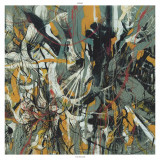
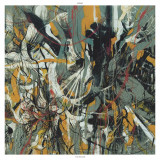
LIMBOY RETURNS WITH EXPLOSIVE SOPHOMORE ALBUM 'II' French Noise-Punk Quartet's New Album Arrives via Stolen Body Records Stolen Body Records announces their newest signing LIMBOY and the release of their sophomore album 'II'. Following their spontaneous and raw 2022 debut (delayed due to the global pandemic), the French quartet has channeled their infamous live energy into ten uncompromising tracks that showcase their evolution and musical prowess. The album will be released worldwide on vinyl, digital platforms, and all major streaming services. Emerging from Angers' vibrant rock scene, LIMBOY has built their reputation through incendiary live performances and notable support slots for acts like Metz. The band, comprising members known for their work with Tinny Voices, Eagles Gift, Bermud, San Carol, and Sheraf, brings a wealth of experience and musical diversity to their distinctive sound. 'II' sees LIMBOY diving deeper into their hardcore punk roots while embracing the sonic textures of '90s noise rock. The album's ten tracks are a testament to the band's growth, addressing themes of personal struggle, introspection, and the persistent doubts that shape human experience. Their commitment to raw energy and authentic expression remains unwavering, resulting in their most focused and powerful release to date.
First Word Records is extremely proud to welcome aboard Takuya Kuroda.
A highly-respected trumpeter born in Kobe, Japan, Takuya is a forward-thinking musician that has developed a unique hybrid sound, blending soulful jazz, funk, post-bop, fusion and hip hop music.
After following the footsteps of his trombonist brother playing in big bands, he relocated to New York to study jazz & contemporary music at The New School in Union Square; a course he graduated from in the mid-noughties. It was here that Takuya met vocalist José James, with whom he worked on the 'Blackmagic' and 'No Beginning No End' projects.
Following graduation, Takuya established himself further in the NYC jazz scene, performing with the likes of Akoya Afrobeat and in recent years with DJ Premier's BADDER band (also including acclaimed bass player, Brady Watt). Premier said "The BADDER Band project was put together by my manager, and an agent I've known since the beginning of my Gang Starr career. He said, 'What if you put a band together that revolved around a trumpet player from Japan named Takuya Kuroda? He's got a hip-hop perspective and respect in the jazz field…"
Takuya Kuroda is already incredibly prolific, releasing five albums in the past decade and fortifying a solid reputation in the global jazz scene. 2011 saw the release of Takuya's independently-produced debut album, 'Edge', followed by 'Bitter and High' the following year and 'Six Aces' on P-Vine in 2013. Takuya was signed to the legendary Blue Note Records in 2014 for his album 'Rising Son', as well as appearing on their 2019 cover versions project, 'Blue Note Voyage'. He released his 5th album 'Zigzagger' on Concord in 2016, which also featured Antibalas on a reimagining of the Donald Byrd classic 'Think Twice'.
Late Summer 2020, Takuya Kuroda returns with his sixth album 'Fly Moon Die Soon'.
In his words, "this album is about the irony between the greatness of nature and the beautiful obsceneness of humanity. Melodies and grooves fly back and forth from being spiritual to being vulgar."
It took two years to make this album. In 2018, I decided I just couldn't make albums the same way I had been in the past anymore. As a birthday treat to myself, I booked a studio in Brooklyn for two days, with only myself and an engineer, Todd Carder. I brought along some tracks I'd been building at home to see if we could complete them within that time. We began replacing sounds and adding texture, sampling noises from all over the studio; me sipping coffee, hitting a 26" kick drum, speeding up snares. At the end of the two days we were like "wow, I didn't know we could make tracks this good in this way". This is how the process of the full album started. Everything was based on my beats I made at home, inviting musicians in one by one, adding or replacing parts. I was very careful when developing these tracks; just note by note, part by part. I wanted to make the music effectively from a blend of two different recording methods; one very slickly produced part and one very organic part played by live musicians. I remember mixtapes from when I was kid, and wanted to make an album that wasn't just a bunch of flashy singles, trying to catch people's attention in the first 30 seconds, or full of guest features. Instead, I'm essentially just trying to let the grooves breath."
The album consists of nine tracks of excellence. The uptempo jazz-funk of 'ABC' and 'Moody' sit alongside soulful jazz cuts like 'Fade' and 'CHANGE', also featuring Corey King on vocals. The title track is a downtempo groove lead by a heavy Moog bassline, whilst 'Do No Why' contains an infectious piano riff throughout. Aside from Takuya's original compositions, he revisits two classics from Ohio Players ('Sweet Sticky Thing' featuring Alina Engibaryan on vocals) and Herbie Hancock ('Tell Me A Bedtime Story') whilst the album closes with the epic 'TKBK'.
Takuya adds "this special cover was inspired by the Golden Moon I saw during a photoshoot in Death Valley with my homie Hiroyuki Seo".
Takuya Kuroda is a truly unique talent, and this album is a realisation of the evolution of his sound.
'Fly Moon Die Soon' is released on Worldwide Award-winning UK label First Word Records on vinyl & digital in September 2020.
out of Stock
Last delivered 18 months ago available to reorder, subject to availability
Cascading through kaleidoscopic stardust and forming in the outer reaches of the music universe, transcending time and distance, cosmonaut musicians Mo Morris & Zeben Jameson reconnect to write & record songs from opposite sides of their planet (Bali and London) written over the internet during the pandemic. Landing the much anticipated and eagerly awaited new A Mountain of One album "Stars planets dust me".
Welcome to the formative British psych electronic heroes A Mountain Of Ones 3rd studio album.
Mastered and reimagined and a full forthcoming album rework by electronic wizard, master selector & global superstar Ricardo Villalobos, featuring additional collaborations from 80s/90s Balearic legends "The Woodentops`s" front man "Rolo McGinty,”, Japan’s cult heroes ``Dip in the Pool" and "Unkle" and "Toy Drum`s" Pablo Clements.
UK Dub master "Dennis Bovell MBE" also makes an incredible appearance on the "Custards Last Stands" dub versions. Now available on a ltd Japanese 10". A beautiful artwork series generously loaded in by photography legend Dick Sweeney, and co-mixed by Dea Barandana in Indonesia. With its cosmic pop sound, soulful soaring, balearic sensibilities and feel good choruses it carries all the weight of a much needed revo- lution in psychedelic, conceptual ever popular music and sounds & feels like the infamous crossover album that promised to come from the heady days of the bands ascend last time round.
So here’s some back story, garnered from the hearsay, folk law, the myths and the legends, of 10 years ago, in case, like Mo & Zeb, if they'd remembered any of it, they probably weren’t there, after 2 much acclaimed albums and sellout shows vanishing in a cosmic cloud of dust the yin and yang brothers Mo Morris (ZSOU/Electric Stew) & Zeb Jameson (Oasis/Tricky/Pretenders) uncoupled and each em- barked on a pathfinder mission to equip themselves for their inevitable return... they just didn’t know it at the time... and as the global community ground to a halt 2 years ago they sought refuge from opposite sides of the planet in each other's company again.
The solace and rejuvenation it gave had them re-emerging as invigorated, inspired and wiser music creators, this has given rise to the evolution of their 3rd all important album‘s sound.
Zeb "our capacity as human beings is more phenomenal and limitless and way beyond the conventional thinking of society constructs but also in complete harmony with the intelligence and brilliance of advancing technologies".
Experiencing this energy together, as dedicated and devoted music pioneers, these great collaborative universal truths were revealed, imbed and steeped in their writing and recording experience as the music touched and resonated with all involved to create the fresh and fully formed A Mountain Of One 2.0.
out of Stock
Last delivered 4 years ago available to reorder, subject to availability
Esoteric Warfare is the fifth full-length studio album by Norwegian black metal band Mayhem. It was released by Season of Mist on 6 June 2014 in Europe and Asia, and on 10 June 2014 in North America. It is the band's first album with Teloch on guitar since Blasphemer's departure from the band in 2008. As with the previous album, the lyrics focus less on the classically Satanic themes of the band's early work, instead referring to occult and conspiracy theory concepts such as psychic powers, mind control and alien tampering with human evolution. (For instance, the song "Corpse of Care" appears to be a direct allusion to Bohemian Grove and the Cremation of Care ceremony performed there.)
based songwriter Henrik Appel returns with third album Shadows. Ranging from freewheeling garage rock to intimate moments, and adding touches of jazz, Shadows is inspired by the likes of Bob Dylan’s Blond on Blonde and The Fall’s Hex Enduction Hour and another step of his continued evolution as a songwriter and artist.
For as long as he’s been a solo artist, Henrik Appel has been in a constant state of evolution. His first album, 2018’s Burning Bodies, was a meticulous construction project, one that came togeth-er over a five-year period and that saw him chronicle, with searing honesty, the slow death of a relationship, with its nine songs written according to a stringent set of self-imposed rules, intend-ed to keep the songwriting minimalist and bare-bones in nature.
His 2021 follow-up, Humanity, represented a remarkable progression of its own. It was born out of a break-up of a different kind, this time with his former bandmates in Stockholm outfit Lion’s Den; piecing together aspects of the vision he’d had in mind for the band’s never-realised second al-bum, he built from them his own sophomore LP, one that took the classic feel of Burning Bodies and imbued it with adventurous new influences, as he began to carve out a genuinely singular sound.
Now, three years on from Humanity, Appel has made another ambitious left turn. Neither of his first two albums were made in complete isolation; on both, he enlisted the production services of Stockholm underground legend Martin ‘Konie’ Ehrencrona, and also collaborated on his lyrics with his partner, Emma Lind. Now, on this thrilling reinvention of a third record, Appel has turned away from perfectionism, placing chief importance instead on making a raw, human record.
On Still + Bright, her highly-anticipated follow up to, Wary + Strange, Amythyst Kiah shares a dozen songs that mark an evolution in her sound. Kiah says, “With this album, I’ve always been incredibly interested in stories and philosophy. Lots of the songs are inspired by the cosmos, space, meditation, and mindfulness. It’s a way to piece out what it means to be a human being in the modern world. It’s the general idea that we should all have the freedom to decide what path we want to choose.” Still + Bright is produced by Butch Walker (Fall Out Boy, Green Day, Weezer) and features special guests including SG Goodman, Avi Kaplan, and Billy Strings. All of the songs were brought to life by Kiah and co-writers, including Sean McConnell, Avi Kaplan, Sadler Vaden, and Tim Armstrong, among others. Still + Bright is set for release on October 25, 2024. “Years in the making, Still + Bright explores what it means to be a human being in the modern world. Songwriting is my way to marry big, overarching philosophical ideas and questions into a musical, more organized arrangement. Inspired by the cosmos, space, meditation, and mindfulness – this record directly challenges religious and political dogma, stating that we should all have the freedom to decide what path we want to choose.” Recently Kiah featured in Salon talking about her love of country and bluegrass music and was included in a New York Times T Magazine spotlight and documentary: The Next Generation of Black Folk Singers. Her episode of PBS’ The Express Way with Dulé Hill aired nationally on April 30, Kiah is featured in Episode 2: “Appalachia”. She recently appeared on a panel at the Television Critics Association Press Conference which was attended by over 200 television critics around the globe. This June she will be on the road opening for Iron & Wine.
In collaboration with musicians and parody artists Auralnauts, Stumpy Frog Records has pressed the soundtrack to their ongoing series of ‘As Seen on TV’ parodies known as the ‘Infomercial Wars’. During an unspecified point in time, a faceless dystopian company pushes out products under the guise of improving the quality of life for humanity. The commercials have a sexy presentation to them, designed to lull the viewer into a hypnotic state and gloss over what is really being sold to them: enslavement to an evil entity. The true purpose of these products is clear to anyone with an iron will: to imprison your mind, strip away your humanity and weaponize what remains. Humanity’s only hope is a scrappy group of freedom fighters whose key to success is convincing you to buy their products instead of the enemy’s. May the best infomercial win. Beyond humanity. Beyond Copper. The parody series is made up of real life infomercials with complete audio makeovers. The products themselves vary from one commercial to the next, but a popular trend in these ads is the seemingly unlimited uses for copper, which is taken even further by the parody versions. The bubbly pitchman from the source material has been replaced by a soothing, yet vaguely threatening alien presence. This mysterious voice paints a picture of a world that would make David Cronenberg and James Cameron blush, and all of it is held together by a dystopian soundtrack that is perfect for ushering humanity into the next step of this forced evolution. Side A of the album contains six full length studio versions of the music featured in each ad. 1) 300% More Human 2) Techromancer 3) Full Body Copper System 4) Master of Reality 5) Final Boss (Sock Defense Grid) 6) Beyond Copper Side B features the ads themselves, presented faithfully as they appear on the Auralnauts Youtube channel.
Austrian electronic music producer Peter Kalcic, better known as B.Visible, is set to release his third studio album titled "Life is my Hobby" on October 10th through his own imprint, Data Snacks.
This new album sees B.Visible continuing to blend genres, drawing inspiration from the trip-hop sounds of the 90s, the R&B of the 80s, and mellow house music. True to his signature style, he maintains a balanced mix of acoustic drum sounds, electric pianos, and shimmering synths.
Unlike his previous works, the creation process for "Life is my Hobby" extended beyond the traditional studio setting. Much of the album was crafted in his newly moved apartment and various cafes in Vienna's 5th district. His collaboration partners were close to home, literally-Anda Reverie and Silvia Ponce Marti, his upstairs and downstairs neighbors, respectively, feature as vocalists on the album.
Silvia Ponce Marti's contribution for instance is featured on the track "Ella," which addresses the sensitive issue of the hyper-sexualization of the female body in today's society. She also created a stunning mixed media video for the song, which can be viewed here.
Anda Reverie appears on the track "Bad Karma," portraying an alien questioning the moral implications of humanity's destruction. The music video for this song brings the scenario to life with dreamy environments and unsettling projections.
B.Visible describes the album's creation as guided by causality, resulting in a less experimental and more accessible sound-his closest encounter with pop music to date. Asked about the title he keeps quite. The listener is encouraged to form their own opinion from the impressions.
BIO (EN)
Viennese producer B.Visible is always pushing his craft forward, with each concept being an evolution. His music is mutating organically as each project brings novelty, but always while blending sharp electronic components with dusty acoustic layers. That duality exists in every aspect of his creative journey, with DJ sets revolving around second-hand records and modern-day productions, but also his live project offering a whole new dimension and generosity to the audience. B.Visible melts the barrier between analog and digital in a such distinctive and elegant way that it feels natural.
out of Stock
Last delivered 20 months ago available to reorder, subject to availability
Formed in 2007, The Boxmasters have recorded an impressive and diverse catalogue of music that touches on their love of a wide array of influences, but most importantly, the rock and roll of the 1960’s. Love & Hate In Desperate Places is their 17th album and the ten songs evince a wry perspective on human nature and love. The lively melodic rock cloaks the wry wit of the lyrics. The album was produced by The Boxmasters, Billy Bob Thornton and J.D. Andrew, who also wrote every song. Listening to The Boxmasters, one can hear obvious odes to the Beatles, Byrds and Beach Boys, but also important to The Boxmasters are The Mothers of Invention, Kris Kristofferson, John Prine and Big Star. Since forming The Boxmasters, several long-time friends have contributed to the sound of the band, but the core of The Boxmasters has always been Andrew and Thornton. As primary songwriters, the sound of the Boxmasters has been an evolution as the duo constantly strive to find new inspiration, new sounds and new ways of expressing what is in their hearts and on their minds. But at the core, there is a backbeat, a lyric with meaning and music played with emotion. As a touring band, The Boxmasters have cultivated a rabid cult fanbase across the United States and Canada. Opening for the likes of ZZ Top, Steve Miller, George Thorogood and Kid Rock The Boxmasters have proven to win over large audiences. As a headliner, frequent stops in Kansas City at “Knuckleheads”, Springfield, Illinois at “Boondocks” and “Merrimack Hall” in Huntsville, Alabama have shown dedicated yet still growing audiences. Two appearances at Levon Helm’s “Midnight Ramble” in Woodstock, New York were highlight performances for the band, as well as the “Ramble at The Ryman” that Levon hosted in 2008. The Boxmasters performed on “The Grand Ole Opry” in 2015, another in a growing resume of must-play venues.
"Even God Has A Sense Of Humor" is the long-awaited follow up album to Maxo's critically acclaimed 2019 release Lil Big Man. Across the 14-tracks, Even God Has A Sense Of Humor pays tribute to the mercurial nature of life and includes features from Liv.e, keiyaA, LastNameDavid, and Melanie Charles along with the previously released singles "Free!," produced by Dev Morrison and "48," produced by Madlib and featuring Pink Siifu. The FADER recently sat down with Maxo to discuss the album, which they described as having "a defiant glow, like a bronze statue still standing after an intense tornado."
Born Maxamillian Allen, Even God Has A Sense Of Humor finds Maxo earnest, full-hearted, and lyrically agile. His delivery punches as he poetically unpacks the trials and blessings that have marked the last three years since Lil Big Man, his stirring and meditative debut album. “Life is always gonna be life-ing,” Maxo says, speaking to the spiritual lessons that inspired this new project and an album process that has revealed to him the many ways in which he’s divinely protected.
The album’s striking cover features three casted sculptures of Maxo by legendary NYC-based artist artist John Ahearn, photographed by the rapper’s friend Steven Traylor. The image both preceded the music and set the tone for the record’s overall aura. Experiencing the casting process—which required long periods of stillness for form, and breathwork to avoid claustrophobia—became a metaphor about ego death for Maxo. “I had to go to a space where I was just not there,” he says. As the molding was poured over his body and the voices of those in the room became distant, Maxo’s inner world came into focus. “By the time it hardened, it seemed like the sculpture had risen to be 20 feet above where it was first— almost like it grew tall,” he explains. EGHASOH, in its aural ebbs and flows, honest questioning, profound revelations, and elegant verse, is Maxo standing spiritually tall following a period of challenges with family and friends.
Maxo’s writing process has always been rooted in imagery, observation, and capturing moments. Growing up in Southern California, Maxo spent a lot of time combing through old family photo albums, some of whose contents have become the artwork for prior releases. But his fascination with visual memento is less about nostalgia or remembering, and more about exploring concepts of growth, healing, and cycles. His artistry is intentional and deeply sensitive: “If I’m not feeling it, I’m not gonna record.” While his past records openly grappled with emotional turbulence, anger and depression, EGHASOH is Maxo’s acceptance stage: “I can't really judge nothing. I can't sit up and be mad at shit because everything is, everything is kind of coexisting,” he says.
Musically, EGHASOH is an impressive evolution from Maxo’s earlier, unornamented lo-fi projects. With an emphasis on jazzy instrumentalism and soothing, intricate vocals from both the artist and featured chanteueses Liv.e, Melanie Charles, and keiyaA, EGHASOH is a welcome and beautifully complex sonic effort. Its contributors include a range of musicians: Pink Siifu, LastNameDavid, Madlib, GrayMatter, Karriem Riggins, Beat Butcha, Lance Skiiiwalker, and more. The album was executive produced by Mount Kimbie’s Dom Maker.
“Nobody talks about the fact that we’re changing as we get older... Everybody just acts like you supposed to know,” Maxo says on album standout, “Face of Stone”. It's moody bassline meets a cinematic accordion melody that paradoxically both broods and uplifts—a fitting production choice that mirrors the song’s story. “I’m seeing how this world is chipping you and withering your bones,” Maxo says. “I’m talking about myself, talking about my bro. But it’s never nothing you gonna do that’s a one stop shop in this life. You gotta keep staying diligent and consistent.” For Maxo, Even God Has a Sense of Humor is nothing more than another moment on the timeline of his offerings of self-expression as an artist—one whose sole intention is to, in his words, develop as a human being and heal.
The genesis of "Nosthaigia" is as fascinating as the music itself. Onra spent several years living in Thailand, immersing himself in the vibrant culture and scouring local record shops for rare gems. The result is a collection of Thai songs from various genres, all sourced on 7 inches. These short instrumentals serve as time capsules, transporting listeners to a bygone era filled with nostalgia and longing.
Produced entirely on the MPC1000 in 2017 and revisited in 2020, "Nosthaigia" is a testament to the power of serendipity and artistic evolution. What began as a casual exploration of unfamiliar musical territory blossomed into a deeply personal and meaningful project for Onra. Amidst a series of unfortunate life events, he found solace and inspiration in the beats he had crafted years prior.
Each track on "Nosthaigia" is a reflection of his journey, a sonic expression of longing and introspection. Onra describes the process of creating the album as a cathartic release, a way of letting go of old memories and embracing the present.
Despite the somber undertones, there is a quiet beauty to "Nosthaigia" that is impossible to ignore. Onra's vintage production skills breathe life into each track, infusing them with warmth and depth. From the haunting melodies of "Until The End" to the hypnotic rhythms of "Close Your Eyes And Remember" every moment feels poignant.
Onra's decision to "remove all the bangers" from the album speaks volumes about his artistic integrity and dedication to authenticity. "Nosthaigia" is not about flashy beats or catchy hooks; it's about raw emotion and genuine expression. It's a reminder that music has the power to heal, to uplift, and to connect us to something greater than ourselves.
In the end, "Nosthaigia" is more than just an album; it's a testament to the human experience. It's a reminder that even in our darkest moments, there is beauty to be found, if only we're willing to listen.
On The Healer, the new full length from the Northwest-based trio of guitarist and vocalist Aaron Turner (ISIS, Old Man Gloom) bassist Brian Cook (Russian Circles, Botch) and drummer Nick Yacyshyn (Baptists) the group deepens its multi-faceted exploration into the parallel experiences of creation and destruction. Over the course of 4 tracks in 76 minutes, SUMAC present a sequence of shifting movements which undergo a constant process of expansion, contraction, corruption and regrowth. This musical methodology reflects the thematic nature of the record - narratives of experiential wounding as gateways to empowerment and evolution, both individual and collective. The group"s interpolation of melody, drone, improvisation, and complex riffing becomes a transmogrifying act embodying the depth of human experience. In its highest aspiration it mirrors our ability to endure mortal and spiritual challenges, through which we may emerge with an increased capacity for understanding, empathy, love of self and others. Dismal though the subterranean pits of The Healer may at first appear, from them can be felt the unwavering determination to embrace life, acknowledge interdependence, and honor the gift of existence.
On The Healer, the new full length from the Northwest-based trio of guitarist and vocalist Aaron Turner (ISIS, Old Man Gloom) bassist Brian Cook (Russian Circles, Botch) and drummer Nick Yacyshyn (Baptists) the group deepens its multi-faceted exploration into the parallel experiences of creation and destruction. Over the course of 4 tracks in 76 minutes, SUMAC present a sequence of shifting movements which undergo a constant process of expansion, contraction, corruption and regrowth. This musical methodology reflects the thematic nature of the record - narratives of experiential wounding as gateways to empowerment and evolution, both individual and collective. The group"s interpolation of melody, drone, improvisation, and complex riffing becomes a transmogrifying act embodying the depth of human experience. In its highest aspiration it mirrors our ability to endure mortal and spiritual challenges, through which we may emerge with an increased capacity for understanding, empathy, love of self and others. Dismal though the subterranean pits of The Healer may at first appear, from them can be felt the unwavering determination to embrace life, acknowledge interdependence, and honor the gift of existence.
Jacken Elswyth is a London-based folk musician, banjo player, and instrument builder. At Fargrounds is her third solo album, her first for the Wrong Speed label and the latest in a rich catalogue that repositions the spectral, vulnerable sound of the banjo away from its familiar role as signifier of the past and onto lands brave, new and unexplored. “The living wood is imbued with qualities that require engagement and understanding. Working with cherry, oak or walnut involves naming it an equal partner. The parallel, synchronous transformations of wood into instrument, of growing tree into resonating sound, musical tradition into musical flourishing, lie at the heart of Jacken Elswyth’s practices both as an instrument builder and as a creative musician. One might consider her primarily as a worker in wood, but whose craft and fields of expression are absorbed by those transitional and interim processes that manifest change. The traditional tunes included here have been cultivated and maintained by generations of players and collectors, pruned, grafted, and shaped over time. However, in this setting, their long-established forms seem to morph and shift. They audibly accrue unique qualities, blossoming and swelling into new modes of being, bright-stepping arrangements unfolding with a liveliness hinting at practices of ritual and community. Meanwhile, other pieces, creative cornerstones of this collection, appear fluid, partially formed. They suggest not the cultivation of new growth from established stock, but instead the actions of something on the verge of taking form. Working with raw elements of melodic and tonal abstraction, they illuminate the process of emergence and evolution. In this context, the title At Fargrounds is telling. It suggests a point set at some distance from any centre of human concerns, a liminal space in which the cultivated world encounters the world of other living things in their living state. Here, the innate strangeness of the maintained environment–vast lawns, sculpted hedges, vacant playing fields–encounters sprawling vistas of driftwood, dense thickets of brambles, stony hillsides. Across a full century-and-a-quarter, long-standing rural and pastoral musical traditions, at some distance from their origins, have been preserved, nurtured and re-shaped under the folk revival. Placed here, these artefacts now sit in alignment with unvarnished documents featuring the raw elements of sound-making. Their working-together is achieved through a universally-applied interest in musical growth and development. The juxtaposition and combination of these elements gives evidence of new, emerging approaches to community and social music: familiar, known, yet charged with an alien vitality”–CWK Joynes. “...she knows how to knit atmospheres, and does so to especially powerful effect during Scene 4b’s three minutes of stunning bowed banjo, yearning with longing and dread, while showing off her talent, curiosity and range”–Jude Rogers review of Six Static Scenes (Guardian Folk Album Of The Month July 2022) "Jacken is an emotive player with high technical ability. Further, she builds banjos and other instruments, and that intimate knowledge of the bones and fibres holding everything together means that her playing has very few cracks" - Foxy Digitalis
London-based four-piece Adult Jazz announce their first full-length album in a decade, So Sorry So Slow, out 26 April 2024 via Spare Thought. Alongside the announcement comes lovesick new single ‘Suffer One’ featuring Owen Pallett, a cautious excavation of self and sexuality, clambering across a gorgeously shapeshifting, filmic five-minutes.
Containing some of the band’s most abrasive but gentle, beautiful and melismatic work to date, So Sorry So Slow has many defining characteristics: romance, panic, devotion and remorse, threaded together by an intentionally laser-focused love. It’s deeply personal, bruised and candid in its expressions of tenderness, and deeply pained in its concurrent reflections of ecological regret. Across its hour-long runtime, a delicate, frenetic energy and glacial heaviness coexist, the band pitting those paces against one another. In their richly experimental timbre, dancing strings and fluttering falsettos prang against a bed of brass drones like a wounded bird.
“We started writing in 2017 and began recording in 2018,” says vocalist Harry Burgess. “We genuinely thought it might be finished in 2018! But things kept developing and, having resolutely not struck while the iron was hot, there was no real external push to rush things after that, so we just kept letting things shift and unfold until it felt right. Listening back to my voice notes it’s nice to notice that there are fragments of ideas from the whole period 2017-2023 which have shaped the record.”
Recorded in bursts at studios across London and in the band members’ flats, at Konk, on the Isle of Wight and in Sussex, So Sorry is unambiguous in its evolution. Sonically, there are sparks of the arrhythmic brightness that afforded the band’s critically acclaimed debut album Gist Is its cult adoration, for fans of Arthur Russell and Meredith Monk, but with a blossoming, melancholic darkness often overhead. Piano sprees and luscious string sections appear like low-hanging stars on a night-time drive, whilst plunging vocal distortions and humming brass loops resurrect heavy limbs in a bad dream.
“I usually have objects as kind of totems for ideas,” explains Burgess. “The album initially started out to do with performance… the totem was a head mic, one of the subtle skin-tone ones, discreet on the forehead of a West End star. A number of the first songs in their original forms were almost musical theatre piano ballads. I think that was really a device to write about my life as the ‘main character’ (pre internet-speak reframing): regrets about romance, relationships - unsustainable relationships with the self and others.”
“However, once we started writing, the ideas about unsustainable personal relationships, loving unevenly and heartbreak conflated with a more expressly ecological regret. Like contending with big feelings of loss, endings, beauty, desolation, and with how much joy the earth contains in it. Feeling so much gratitude bound up in waves of sadness. Maybe witnessing a slow-motion goodbye to all that, or its last gasps. I love the earth and the life it supports so much. I love how ecosystems fit together - even the brutal stuff. It may be basic to say, but now is the time to be laser focused on that love. I was thinking about human centrality on earth, us as the ‘main character’, the way that is served by faith and romanticism, and the subsequent disingenuous understandings of our position in the ecosystem, as only stewards somehow, rather than subjects. The totems at this point: a herald’s horn, lorry inner tubes, archaeological tools. I guess from doom, industry, history respectively.”
“Now I would say the record is about gripping. Totems being: crampons, rope, drips, desalination equipment, accruing various survival tech. I think gripping sums up both of the threads. There’s the emotionally correct clinging to the earth that is the substrate of everything we value, or the delusional clinging to our imagined dominant position. But also the practical, technological aspects of creating a sustainable relationship, of remaining here. Then I think of romance again.”
So Sorry So Slow comes out 26th April 2024 on Spare Thought, mixed by Fabian Prynn at 4AD Studios and mastered by Alex Wharton at Abbey Road.
Adult Jazz is Harry Burgess, Tim Slater, Steven Wells and Tom Howe.
out of Stock
Last delivered 2 years ago available to reorder, subject to availability
This release follows Chantal's earlier musical odysseys, including Let Your Hands be My Guide (2013), The Sparkle In Our Flaws (2015), Bounce Back (2017), Puwawau (2019) and Saturday Moon (2021). Each album, a testament to her artistic evolution, has resonated with audiences worldwide.
Silently Held comes to life with the collaborative brilliance of accomplished musicians. Bill Frisell with his beautiful understanding of Chantal’s flow of melody, Eric Thielemans who brings his percussive mastery to the mix. Jozef Dumoulin playing the piano with immense calmth. Thomas Morgan's who seems to be picking magic out of the skies with his bass and Shahzad Ismaily's golden touch as a multi-instrumentalist contribute to the album's rich texture. Colin Stetson, renowned for his avant-garde saxophone work but also his work for Bon Iver, lends his unique voice, creating moments of emotive intensity.
And Joachim Badenhorst, Niels Van Heertum and Kurt Van Herck finishing the album with their beautiful brass. Guided by the skilled production of Philip Weinrobe (known from his work for Dirty Projectors and Adrienne Lenker) the album's sonic landscape is carefully crafted. Most of the songs recorded in one take. One breath to keep close to the realness and rawness Chantal was looking for. Meanwhile, the experienced touch of mixing engineer Phill Brown (Talk Talk, Mark Hollis,..) who has been very present on Chantal’s journey for years.
In the quiet embrace of the music, Chantal unveils a raw and authentic portrayal of vulnerability, where every flaw and feeling is held close. The album becomes a sanctuary, inviting listeners to join in this silent communion with the intricacies of the human experience. Through each note and lyric, Chantal Acda crafts a space where imperfections are not only acknowledged but celebrated, creating a profound and intimate connection between the artist and the audience. "Silently Held" stands as a testament to the beauty found in the closeness of our flaws and feelings, inviting us to embrace them with grace and authenticity.
Silently Held by Chantal Acda & The Atlantic Drifters, released 3 May 2024, includes the following tracks: "Above ", "The Friends Parade ", "Taking Part ", "The Barn " and more.
In the ever-evolving landscape of the underground music scene, few bands have made an impact quite like Selofan, an immensely talented duo of Joanna Pavlidou and Dimitris Pavlidis, has carved a niche for themselves within the international pantheon of darkwave, post-punk, and '80s synthpop, blending these influences to create a sound uniquely their own. Their journey, marked by a commitment to artistic integrity and evolution, has taken them from the cozy confines of local venues to the grand stages of international festivals, earning them a dedicated following and critical acclaim along the way. Their sixth album, Partners in Hell, released in October 2020, navigated the band through unprecedented times, testing their adaptability and resilience. Despite the hurdles to performing live and the global pandemic's challenges, Selofan emerged stronger, embarking on international tours with a newfound appreciation and connection with their global audience, during this period of introspection and isolation, Joanna Pavlidou embarked on a new venture, GIOVANNA, released under Selofan’s house label, Fabrika Records. GIOVANNA, which places Pavlidou at the helm of vocal and lyrical composition, represents a full on foray into synth-pop. showcasing a different facet of her artistic identity, with lyrics entirely in Greek. In 2023, Selofan hit the circuit hard, lighting up revered festivals with their presence. They stood shoulder to shoulder with heavy hitters like Molchat Doma and Lebanon Hanover at Grey Scale and performed with with the likes of The Sisters of Mercy, VNV Nation, and She Past Away at the Death Disco fest in their hometown of Athens. With each album they have released Selofan made significant strides in their evolution, deepening their engagement with their art. And their forthcoming seventh full length studio release, Animal Mentality, is poised to be their most compelling work yet. Animal Mentality unfolds as a labyrinthine journey through the elemental aspects of human emotion and experience, set against the backdrop of Selofan's signature darkwave sound. Each track on the album delves into different facets of the human condition, from the depths of desire to the pangs of isolation, encapsulating the duo's profound understanding of the intricate spectrum of human emotion and subjective experiences. The album kicks off with "Sticky Fingers," a track that melds cinematic scope with a haunting storyline, reminiscent of Jean-Michel Jarre's icy synths and a lyrical nod to Joy Division. This opening salvo revisits the tragic allure of classic car accident songs, weaving a tale of joy turned to sorrow amidst the snowy Alps. "Love's Secret Game" delves into the depths of forbidden desire, with vocals that echo the melancholy timbre of Xmal Deutschland, Lebanon Hanover, and Nico. It's a tale of passion and ephemeral connection, promising an enduring presence despite the inevitable fracture of time and distance. In "Lucille," sung by Dimitris Pavlidis, the plot is ensnared in the machinations of a tempestuous affair, with gothic undertones evoking the dramatic soundscapes of Ultravox and Clan of Xymox. The lyrics are steeped in danger and desire - a dance with the shadows. "Sacrifice Me" plunges into the abyss of despair, driven by a Bauhaus-esque bassline. It's a plea for release from the chains of alienation, a yearning for a final gesture of solace in the face of overwhelming darkness. "Bluebirds" offers a poignant reflection on solitude, with the fleeting imagery of bluebirds symbolizing the elusive quest for happiness. The song serves as a meditation on the internal struggle to maintain hope in a world shaded by sorrow. The narrative shifts with "Glassplitter," where German lyrics paint a portrait of deceptive allure and toxic entanglement. We are confronted with irresistible danger, masked by a veneer of beauty. "Ignoranz" continues the exploration in German, pondering the universality of misunderstanding. It's a reflection on the subjective nature of truth and the shared human experience of ignorance. "Behind My Eyelids" closes the odyssey, a contemplation on melancholy and metamorphosis. The phoenix rises from the ashes of betrayal to the brighter realm of renewal - a beautiful homage to the resilience of the human spirit amidst the often harrowing cycles of life. More than just an album, Animal Mentality is a milestone in Selofan's career, marking a decade of musical innovation and growth. It's a testament to their enduring spirit and a bold step into new realms of artistic expression. As Selofan continues to evolve, they remain at the forefront of their genre, pushing boundaries and exploring the depths of the human psyche through their haunting melodies and poignant lyrics.
With time, we come to understand the way the joy of connection is mirrored by the void of loss, how the constancy of love is matched only by the impermanence of life, the simple idea that we could not create light if we did not risk the dark - we'd never need to. So it is with METZ, a band once known for blowing out eardrums with songs of joyous rage who have, over their past few records, begun exploring ways to turn abrasiveness into atmospherics, the evolution of their sound not only a reflection of the maturing of the band themselves but also of a changed world that demands nuance and compassion to comprehend and to survive. It was a journey already underway on 2020's Atlas Vending, but one that reaches new heights on Up On Gravity Hill, where the Canadian trio creates a kaleidoscopic sonic world as tender as it is dark, aided once again by engineer Seth Manchester (Mdou Moctar, Lingua Ignota, Battles, The Body). Deep, detailed, and unyieldingly personal, it is not only METZ's most powerful record to date but also their most beautiful. Still three punks from Ontario at heart, guitarist and vocalist Alex Edkins, drummer Hayden Menzies, and bassist Chris Slorach waste no time as opener "No Reservation/Love Comes Crashing" sweeps in like a wave, sonically and thematically setting the scene for the record to come. A dynamic song about feeling suspended in stasis, layers of dissonance melt into a restlessly heady outro marked by escalating crescendos of shimmering noise that reach for the stars - and is that a violin quivering brightly beneath those elegant swells of guitar, those charging drum fills, those intricate bass lines? It is indeed, courtesy of composer Owen Pallett; his presence an immediate indicator that METZ are thinking more cinematically than ever before. The change is partially inspired by Edkins' work as a scorer for film and television and his pop-leaning solo project, Weird Nightmare, where, he says, he learned to write more intuitively, letting his emotions lead the way. But make no mistake: Up On Gravity Hill is a total band effort, the work of three musicians who have been playing together for over a decade, with all the trust that entails. For those who believe in the power of the rock band to exemplify the highest resonance of human connection, there is much on Up On Gravity Hill to lift the spirit, a puzzle worth repeated listening to unlock or just to get lost in again and again. Rather than the music being flattened into a single plane, the band explores "the space above the cymbals," resulting in some of the most spacious, sympathetic, and accessible songs - could we call them pop? - of their career. If this seems contradictory, well, METZ has always been something of a contradiction. "We've never been heavy enough for metal or hardcore purists, but we're way too heavy for indie rock. We just don't have a lane - and that's okay. We exist outside the lines of delineation. I think this record is even more like that," says Edkins.
Introducing the forthcoming vinyl single from FJAAK's highly anticipated album, "FJAAK THE SYSTEM." Featuring three electrifying stompers and an exclusive acapella track tailored for DJ tool usage, this release promises to captivate techno enthusiasts and vinyl aficionados alike. First up, "A1 - Redemption" unleashes an ancient acid-techno anthem, pulsating with acidic elements and an unmistakable old-school vibe. Its hard-hitting beats and minimalist structure reflect the chaotic state of our world's system, while sporadic vocal shots weave a narrative of societal disarray, urging listeners to delve into the madness. Next, "A2 - Hustle" encapsulates the relentless journey of artists striving to leave their mark in the world of music. With pulsating futuristic breakbeats and driving rhythms, the track embodies the dedication and passion fueling their creative pursuits, amidst the challenges of the road and the vibrant energy of the techno scene. Then, "B1 - Mechanic Love" delves into the intricate dynamics of relationships in a technologically infused world. Exploring the blurred boundaries between humans, machines, and cyborgs, the track navigates themes of love, intimacy, and companionship within a futuristic realm where humanity's evolution converges with technological innovation. It's a symphony of emotion and machinery, inviting listeners to ponder the complexities of existence. Lastly "B2 - Unity" featuring US artist Red Eye, the vinyl single includes an exclusive acapella version of a track featured on the upcoming album, providing DJs with a versatile tool for creative mixing and experimentation.
out of Stock
Last delivered 20 months ago available to reorder, subject to availability
Straddling the elusive boundary between the corporeal and the transcendent, Montreal-based psych-pop band Elephant Stone has cemented its reputation as a band deeply invested in probing the contours of dreams and consciousness. Over a 14-year odyssey, their sonic tapestry has evolved into a rich and intricate form of art, capable of capturing the boundless terrain of human emotion and cognition. Set for release on February 23rd 2024, their upcoming album, ‘Back Into the Dream’, serves as the ultimate culmination of this musical evolution, offering listeners an entrancing passage through realms of introspection and wonder. The band's driving force, Rishi Dhir, has an innate ability to bare his soul through music, plumbing the depths of his vulnerabilities and musings. "I'm often caught in the web of intense, recurring dreams, which I think reflect my ongoing quest for identity and a sense of belonging," Rishi divulges. Centred on the enigma of dreams—whether they're subconscious murmurings or portals to parallel universes—’Back Into the Dream’ encapsulates the eternal cycle of waking and dreaming. “We're perpetually oscillating between two realms, trying to comprehend each," says Rishi. "If our music can serve as a bridge between these worlds, then we've accomplished our mission
From out of nowhere - if nowhere is the febrile, warped and twilit imagination of Julia McFarlane - comes Whoopee, the second album by J.McFarlane’s Reality Guest. Whoopee is an esoteric, kaleidoscopic movie in music form directed by Julia McFarlane and co-conspirator Thomas Kernot. Full of life, breakbeats and smokey vignettes on the fragile nature of interpersonal relationships, Whoopee is a stylistic evolution from everything McFarlane has done before. Surreal, beautiful in parts and replete with the aching wisdom McFarlane’s songwriting has always promised, this Reality Guest pulls back the curtain on a whole scene of naked truth. Recorded in Melbourne in bursts since the release of 2019’s Ta Da, Whoopee features a new sound palette and band member in Kernot. The duo dive deep into electronic pop tropes, mining digital synths, samples, breakbeats and deep bass grooves, largely dispensing with live instrumentation. If Ta Da took twists and turns with your expectations, offering a Dada-ist, monochromatic take on pop music, Whoopee is McFarlane’s subterranean love-sick pinks, reds, greens, purples and blues. Becoming something of a tradition, the album starts with an instrumental intro pilfered from a 90s’ spy film or cinema intro music, puffing up the listener for the heart-squeezing bathos of Full Stops. Over a bleary backdrop of walking bass lines, jazz- inflected keys and smoked-out atmosphere, McFarlane’s poetry narrates the fragile state of a relationship: “You put a full stop where I thought there’d be a comma, I want the story to continue even with all the drama.” Over a palpable pain, the narrator is revelling in the drama of a relationship, addicted to tumult and heightened emotion. On Sensory, a space age bachelor lounge pad ballad, the converse state of the previous song is explored, here the narrator is battling the numbness of being out of the drama, stuck in a sensory-deprivation tank, anaesthesized and battling to emerge from the fog. Wrong Planet explores an otherworldly pop music, hewing a bright hook out of a sense of confusion. A bona-fide, sing-along chorus bursts out of the narrator musing on the absurdity of existing in this reality. It speaks of one of Julia McFarlane’s main talents, her knack of inspecting human relationships and states with a clear perspective, like an alien visiting Earth and realising everything we are is really, really strange. Whoopee is both more accessible than previous Reality Guest work and somehow more obfuscated. Where the production on Ta Da was dry, sharp and strange, this Reality Guest is blurred, almost smeared with the effluvium of 90s+00s culture and existence. Through it all, it’s hard to deny the undeniable pull of the songs. Precious Boy carries on the lounge theme with a whole sampler of cut up sounds fading in and out of the haze as McFarlane’s voice is right up to the speaker cooing and free- associating, maybe in love or maybe in confusion... maybe they’re the same thing? Sometimes the listener is invited to just bathe in the tone of the vocal, as on Apocalypse, where the texture and timbre of the vocal is luxurious, bathing in piano tinkles and double bass throb. On lead single Slinky, a cut up beat reminiscent of Washingtonian Go-Go drum patterns leads, the song slipping through your fingers, elusive and presenting sound as pure pleasure. Closer Caviar jumps back into the broken breakbeats of a surreal funk, fuelled by the sensory pleasure of the music, a hedonistic whirl in rapture, the narrator now living life to the fullest in all its giddy heights and deep troughs. This is the album’s main character fully-actualised and in the terrible, beautiful moment.
out of Stock
Last delivered 2 years ago available to reorder, subject to availability
The second album by F.K. Raeithel, just after the operetta DIE WURLITZERORGEL DES GEISTES, explores the realms of interlocked rhythm sample and hold music. On 16 tracks different setups of self generating modular synthesizer patches are gathered on this release.
The concept of Dance With Uncertainty is deeply rooted in philosophical, artistic, and cultural traditions. The notion of embracing uncertainty and change has been explored in various forms throughout history, often symbolizing the human experience and the impermanence of life. In the context of music and sound, Dance With Uncertainty could be seen as a reflection of the constant ebb and flow of life‘s uncertainties, captured and conveyed through sonic textures and evolving compositions.
Interlocked Rhythm Sample & Hold Music, this approach to sound creation weaves a mesmerizing tapestry of rhythm, texture, and sonic exploration, captivating listeners and defying traditional musical boundaries. At its core, Interlocked Rhythm Sample & Hold Music is a synthesis of technology, creativity, and a deep understanding of rhythmic intricacies. The foundation lies in the Sample & Hold circuit, a device that captures and freezes incoming voltages, creating distinct musical snapshots that evolve over time or an Linear Feedback Shift Register (eg. Rungler), a circuit used in electronic music synthesis and sound manipulation to create unique and evolving musical textures. The Rungler was created by Rob Hordijk. A more sophisticated use of a 8 bit shift register and by combining this with a typical sequencer design is the Klee Sequencer developed by Scott Stites. A cheap version of this design is the Turing Machine. Another tool is the Analog Shift Register. In the context of creating arabesque melodies, an analog shift register (invented by Fukushi Kawakami and later adapted by Serge Tcherepnin) can be a fascinating tool to generate intricate and ornamented musical patterns. Yet, it‘s the interlocking of these snapshots that sets this genre apart, infusing the compositions with an intricate dance of patterns and pulses. A fourth device is a pendulum or random addressed sequencer, that in the first case moves in a drunken unpredictable manner. Each of these devices for uncertainty becomes a rhythmic sculptor, freezing the dynamic interplay of melodies, beats, and textures. These frozen moments are then interwoven, each snapshot forming a unique thread in a sound tableau that stretches and contracts, pulses and breathes. The result is an auditory experience that challenges preconceptions of rhythm and structure. The interlocked rhythms give rise to complex grooves that ebb and flow in unpredictable ways, evoking a sense of perpetual motion and transformation. The music becomes a living organism, its heartbeats synchronized yet untamed, its evolution both deliberate and free-spirited. The juxtaposition of staccato bursts and fluid flows, of machine-like precision and organic unpredictability. As listeners delve into the world of Interlocked Rhythmic Sample & Hold Music, they embark on a sonic odyssey. The music becomes a companion, guiding them through a labyrinth of rhythmic landscapes that simultaneously challenge and invite them to the dance with uncertainty.
Michal Vaľko, aka Line Gate makes a return to mappa with his third cassette for the label. Once again the material is deeply minimalist, but shows marked evolutions in the Slovak, Prague-based artist’s unique trajectory. This time comprising two relatively short pieces (compared to the 40- and 60-minute works previously published on mappa), 'Trap' is perhaps Line Gate’s darkest yet.
Whereas previously his works focused on psychoacoustic phenomena, or highlighted the sacredness and timelessness of “the drone”, ‘Trap’ is a personal reflection of the artist’s innermost feelings, and perhaps a mirror that is held up to each listener: disillusionment, hopelessness and apathy have become an ever-present features of the society around us. ‘Trap’ very directly expresses the feelings of being lost, of despair, of wandering and not seeing the end. Vaľko utilises drones and repetitive vocal/instrumental phrases to express the endlessness of these feelings, and his own captivity within them.
The pieces draw once again on the hurdy-gurdy, but also on Vaľko’s processed, sometimes transposed voice. On “Maze I” layers of humming voices and meandering sung melodies form an impenetrable wall of sound, as the voices’ timbres intertwine and overlap, giving rise to fascinating overtones and singular resonances. On “Maze II” Vaľko returns to the earthy sound of the hurdy-gurdy alongside some deep, crooning voices (transposed an octave lower) and embellishes its drones with a performance on glass cups. More than ever, Line Gate's music resonates not just in sonic terms, but also in its deep humanity and social relevance.
out of Stock
Last delivered 7 months ago available to reorder, subject to availability
ESP Institute artist Bartellow, one third of the project Tambien and otherwise known in the Contemporary Classical sphere as Beni Brachtel, returns to the label with his second full-length release, Noosphere. While currently heading the SVS label and residency series out of Munich, Beni’s resume expands well beyond electronic music to include immersive sound installations such as The Adven- ture Of The Empty House (solo live performance across seven floors of Walter Henn’s Deckelbau building), a slew of compositions for the Bavarian State Opera (for which he doubled as conductor), and a prolific career of over twenty-five theater scores for institutions such as the Münchner Kammerspiele, Schauspiel Basel, Maxim Gorki Theater Berlin, Berliner Ensemble, Schauspiel Köln, Schaus- piel Graz and with directors Ersan Mondtag, Alexander Eisenach, Jessica Glause and Tobias Staab among others.
Noosphere is a compendium excerpting from theatrical scores WUT (Elfriede Jelinek, at Schauspielhaus Köln, directed by Ersan Mondtag, 2020), Ödipus and Antigone (Maxim Gorki Theatre Berlin, directed by Ersan Mondtag, 2017), Der Zauberberg (Thomas Mann, Schauspiel Graz, directed by Alexander Eisenach, 2017), Hass Tryptichon (Sybille Berg, Wiener Festwochen / Maxim Gorki Theatre, directed by Ersan Mondtag, 2019), Wonderland Ave. (Sibylle Berg, Schauspielhaus Köln, directed by Ersan Mondtag, 2018), Die Verdammten (after Visconti ́s film, Schauspielhaus Köln, directed by Ersan Mondtag, 2019) and Roi Ubu (Alfred Jarry, Theater Neumarkt, Zurich, directed by Alexander Eisenach, 2018).
The work traverses homages, infusing everything from Baroque to Impressionism, and while these types of references are certainly built into the canon of Theatre as a discipline, here we gather histor- ic layers in an even wider net. Under the self-referential thumb of Contemporary Classical music, this sort of "hindsight" approach has been largely avoided, however, in today’s all-access arena, the constant stream of historic causal-chained events has opened a delta where anything is possible. This defines Bartellow’s stance among his colleagues as well as his cultural position as a composer.
Beni considers beauty a fleeting objective in the arts, that expression is often expected to follow notions of Destructivism or the unfulfilled. Art will pore over wounds, collective angst, mourn- ing a loss of natural habitat or a fear of technological invasion, yet there is a bitter irreverence for the friction or salvation in beauty itself. Acknowledging this subjectivity — what one audience considers superficial pleasure may be deeply profound to another — he leans into musical instinct as if composing via divine conduit.
Noosphere conjures a array of suspense, ecstasy, melancholy, and dread, but in isolating the work from its theatrical component, Brachtel directs our focus toward formal qualities, clearing unim- peded space to conceive fresh narratives and examine dynamism and interconnectivity. In sympathy with often difficult theatre pieces, the passages can be dark and transgressive, but more importantly they remain relative to Brachtel’s circumstances at their time of creation. The title Noosphere speaks to the evolution of human thought and knowledge, opening a door to subjective points-of-view. For example, Nexus II On The Beach refers to both Roberto Musci’s Water Messages On Desert Sand as well as the film Bladerunner, invoking the image of an android enjoying the sunset, but whether or not this abstraction may be considered beautiful depends the listener’s cumulative life experience and perspective.
This is hybrid chamber music, augmented by electro-acoustic layers, juxtaposing various periods and successively processing their residual themes into a trans-generational rendering of “now.”
out of Stock
Last delivered 8 months ago available to reorder, subject to availability
Experimental rock quintet from Los Angeles for fans of Unwound, Duster, Slint, and Lowercase. Mixed and engineered by Tim Green at Louder Studios (Unwound, Melvins, Jawbreaker). Live appearances with Flenser labelmates, Have a Nice Life, Chat Pile, Midwife, and tour dates planned throughout 2023. Since its formation in 2018 by like-minded Calarts students Alex Kent (guitar, vocals), April Gerloff (bass), and Sylvie Simmons (guitar), as well as the recent addition of Clint Dodson (percussionist), Los Angeles-based quartet Sprain has honed its signature flavor of experimentalism to a razor-fine point. Gradually moving from twisting conventions in its early works of minimalist slowcore to now transcending the confines of genre altogether, Sprain's evolution over the past several years has encouraged the band to embrace a sound true to its muse. With its latest record, The Lamb As Effigy or Three Hundred And Fifty XOXOXOS For A Spark Union With My Darling Divine, the band has translated this intent into an ambitious work that pairs its resplendent scale with uncompromising honesty towards the band's artistic and conceptual essences. The most extraordinary of art isn't created without its fair share of trials, of which Sprain faced numerous during the recording process of The Lamb As Effigy, with the sum and circumstances of them nearly sealing the album's fate in limbo. With obstacles including session reschedulings as a result of a line-up change and a major studio electrical failure at the last possible moment, a mixing process that demanded the organization of several years of material across four separate studios, and the recording of the actual songs pushing the members of Sprain to their own physical limits, there were several times where the band considered scrapping the whole thing altogether. But Sprain persevered, applying the knowledge and willpower derived from those struggles to get The Lamb As Effigy across the finish line. Clocking in at nearly two hours, The Lamb As Effigy resembles an aural parallel to the human experience itself, with all the glorious beauty, crushing brutality, and unexplainable chaos that comes with it intact. Explosions of earth-sundering guitars, angelic keys, swirling strings, and bursts of improvised electronic noise coalesce to weave a visceral yet unique sonic tapestry bearing hints of no-wave, sound collage, 20th-century avant-garde, and free jazz. Spanning bellowing howls, emphatic spoken word, and nuanced croons, Alex Kent's dynamic vocal delivery adds texture to these eight meditations on otherwise immaterial topics and the meaning or the lack thereof they embody.
A quietly funky collection that repays repeated play by creating a mesmeric, almost
hypnotic, cocoon to lose yourself in" Echoes
Examining our relationship with the cosmos as well as more intimate liaisons closer
to home; new transatlantic future soul duo Cosmic Link are set to release their
eponymous debut album on 24th November.
The duo consists of Florida based Jay Myztroh and Bristol based producer Ben
Dubuisson, best known for the Hundred Strong project. Citing influences of Erykah
Badu, Prince, Alice Coltrane, Stevie Wonder and Esperanza Spalding; the album
crosses cosmic soul/RnB, low-end weighted hip hop, and conscious jazz. While the
musical vibrations lay down a groove on a sensory level, the lyrics prompt deeper
subconscious thought.
Under a “Cosmic” header, side one of the album starts with ‘Let It Go’, a song about
releasing the things that no longer serve you in your life, before exploring
meditation (‘Quiet Time’), karma, and responsibility in the way you live your life
(‘Metaphysical’).
Side two of the album is grouped with the theme “Link” and as narrative, explores
the evolution of a relationship: ‘Cellphone’ expresses the desire to be close to
someone, ‘Shoot’ is the introduction to the courting stage, and ‘Show U Love’ is a
request to take a step into a committed relationship.
“All of these songs are personal,” says Jay. “They explore either my experiences or are
written to me as understandings to help me navigate this plane of existence. The
personal nature of the music is what makes it universal to all humans”.
The overall theme of the album is summed up in the lyrics of the closing title track,
“Our motion is perpetual/together we move/at the speed of life/ intertwined by our
timelines/which coincide”.
Jay explains, “There is no separating the all from the source. With all living things
being products of the Cosmos, we are forever linked to it. We all share a source, atimeline, a planet, air, a sun etc. We are linked by simply being and doing the things
beings do”.
Introduced by mutual artist friends, the catalyst for their collaboration was the 2017
album 'Black Diamonds' by Jay's previous project Stono Echo, produced by the late,
great Paten Locke. Over the course of a few years they began remotely exchanging
music and lyrics, building a catalogue of finished tracks. During this time, Myztroh
was also completing his Masters degree in choral conducting that focused on
discovering and promoting compositions from the African Diaspora. Run by Ben
Dubuisson, High Noon Music has been based in Bristol since the early 2000s,
releasing records by artists including Ben’s own Hundred Strong, plus Boca 45,
Joseph Malik, Kali Phoenix, One Cut, Mr Fantastic, and Numskullz.
Orbiting Human Circus' new album is called Quartet Plus Two. What is Orbiting Human Circus? It is the continuing evolution of Julian Koster (Neutral Milk Hotel, The Music Tapes), whose music and storytelling under this moniker have encompassed immersive theater and a Night Vale Presents podcast, as well as more traditional albums. Central to the album are the "two" referenced in the title: North and Romika, the singing saws, whom Koster doesn't "play" so much as encourage. "I think saws sing like angels," says Koster. "I always have. Since I was a little boy. When you encourage them to sing, they do so earnestly and beautifully. It's an honest and real sound." The origins of Quartet Plus Two are as magical and seemingly unlikely as everything else in Koster's career. While walking through New York's Central Park, he stumbled upon Gauvain Gamon and Kolja Gjoni_a standup bass player and drummer, respectively_playing Gershwin and Mingus, and a musical partnership was born. Pianist Benji Miller rounds out the titular quartet, with Koster's longtime collaborators Robbie Cucchiaro (horns) and Thomas Hughes (orchestral arranging and chimes) of The Music Tapes also contributing to the record. The music they make together is at once familiar and unrecognizable, as Koster and Orbiting Human Circus interpret jazz compositions by Irving Berlin, Duke Jordan, George and Ira Gershwin, and others, alongside Koster's three originals. The use of the term "composition" is intentional and speaks to Koster's relationship with the music of Quartet Plus Two in far more evocative terms than "cover" or "standard." "To me it was always magical that there were these people called `composers' who created symphonies and popular songs for other people to breathe into life and existence all over the world and throughout time," he explains. "They traveled into our homes as sheet music, endless recorded interpretations, or were passed from hand to hand, village to village, like folk tales, changed by every hand that touched them. That music was something that came to life in our own living rooms and lives, songs that our grandmothers might have sung in a choir that we might sing just as earnestly. I just think it's nice, and I would love to share that feeling in any way we can."
Orbiting Human Circus' new album is called Quartet Plus Two. What is Orbiting Human Circus? It is the continuing evolution of Julian Koster (Neutral Milk Hotel, The Music Tapes), whose music and storytelling under this moniker have encompassed immersive theater and a Night Vale Presents podcast, as well as more traditional albums. Central to the album are the "two" referenced in the title: North and Romika, the singing saws, whom Koster doesn't "play" so much as encourage. "I think saws sing like angels," says Koster. "I always have. Since I was a little boy. When you encourage them to sing, they do so earnestly and beautifully. It's an honest and real sound." The origins of Quartet Plus Two are as magical and seemingly unlikely as everything else in Koster's career. While walking through New York's Central Park, he stumbled upon Gauvain Gamon and Kolja Gjoni_a standup bass player and drummer, respectively_playing Gershwin and Mingus, and a musical partnership was born. Pianist Benji Miller rounds out the titular quartet, with Koster's longtime collaborators Robbie Cucchiaro (horns) and Thomas Hughes (orchestral arranging and chimes) of The Music Tapes also contributing to the record. The music they make together is at once familiar and unrecognizable, as Koster and Orbiting Human Circus interpret jazz compositions by Irving Berlin, Duke Jordan, George and Ira Gershwin, and others, alongside Koster's three originals. The use of the term "composition" is intentional and speaks to Koster's relationship with the music of Quartet Plus Two in far more evocative terms than "cover" or "standard." "To me it was always magical that there were these people called `composers' who created symphonies and popular songs for other people to breathe into life and existence all over the world and throughout time," he explains. "They traveled into our homes as sheet music, endless recorded interpretations, or were passed from hand to hand, village to village, like folk tales, changed by every hand that touched them. That music was something that came to life in our own living rooms and lives, songs that our grandmothers might have sung in a choir that we might sing just as earnestly. I just think it's nice, and I would love to share that feeling in any way we can."
Channeling the speed of youth and the heaviness of a fleshy, lived life in equal proportion, Upchuck’s second LP, Bite the Hand That Feeds, is a Trojan Horse par excellence, craftily smuggling in waves of sentimental emotion and clever pop songwriting under a veil of pulsing rhythms and scorching riffs. What binds Upchuck together is a purity of intention, an organic loyalty to a thick knot of uncalculated friendships, struggles, and desires. These are songs about the joy of continuing to live, songs that find each other in the rush of a crushing reality, propelling the listener onward towards a collective release, however brief it may last. Themes of surviving through the night, youth-blinded love, cheap champagne soaked back-alley parties, and chaotic street protests are subsumed under a single unifying thread: the needs we have for one another, our shared hunger for connection. In a world saturated with arbitrary rules and paper-thin moralism, Upchuck offer free¬dom through sensation, a type of unserious transcendence found through the swirl of bodies melting into one another in the passion of dance. With Bite the Hand That Feeds, Upchuck isn’t trying to tell anyone how to live. Rather, they are simply trying to find a way to make life more worth living for both themselves and their friends—if the music compels you to move, you might as well consider yourself their friend too. Shortly after the release of their debut album Sense Yourself, Upchuck absconded to Southern California to record Bite the Hand That Feeds, enlisting the production talents of Ty Segall and the airy reprieve of his secluded Topanga Canyon home studio. Upchuck credits Segall, who recorded the entire record live to tape over the span of five days, with helping to elevate the arrangements of their second record to bold new heights—fans of Segall’s extensive catalog will undoubtedly recognize the shadow of his creative touch in Bite the Hand That Feeds’ commanding, layered drum polyrhythms, tasteful use of oddball effects, and fuzzed out, every-guitar-pushed-into-the-red ethos. All the same, final credit for Upchuck’s evolution from Sense Yourself to Bite the Hand That Feeds must be paid to the band itself. Following the release of their debut LP, Upchuck embarked upon a break-neck string of live shows, touring alongside the likes of Segall’s Fuzz, Amyl and the Sniffers, Negative Approach, OFF!, and Sub¬humans. The razor tight focus of Bite the Hand That Feeds was forged in the fire of these live shows, speaking directly to the power of their in-person presence—these are songs meant to be heard pressed up against a barricade, blasted through dimed guitar amps placed so close to your ears that you can practically reach out and touch them. In its totality, Bite the Hand That Feeds offers a sonic portrait of what it feels like to be young and caught up in the thrill of it all, coursing between ripping dance grooves and thundering dirges, anti-self-serious crowd anthems and charming pop hooks.
out of Stock
Last delivered 2 years ago available to reorder, subject to availability
Atrocity Machine is the latest full-length album from the Vermont-based doom metal band, Body Void. The album, which was released on October 13, 2023, features six tracks of heavy, crushing, and atmospheric soundscapes that delve into themes of environmental collapse, societal decay, and the darker aspects of the human psyche. Atrocity Machine marks a further evolution of Body Void's sound, incorporating more complex song structures and a greater emphasis on dynamics. The album's lyrics are also particularly poignant, tackling issues such as climate change, social inequality, and the devastating consequences of industrialization.
Alan Abrahams aka Portable returns to the label in fine form with his latest full-length LP, Augmented Dreams. The title refers to the use of everyday technological advancements to achieve what were once
only dreams or visions of past generations, making this an explorative concept album that is equal parts not-too-distant science fiction, and about as topical as it gets.
From the gorgeous opening string layers of “The Pull of Time” to the classy 4/4 grooves of “Begin Again” or lead single “Guiding Me”, into the apropos and angular sci-fi broken beat feels of “Parallax” and “The Color of Static”, fitting Detroit-influenced love taps like “Beacon” and “The Mycorrhizal Network”, the politically-inspired “Are We Not Above It?” referencing the lingering effects of colonization featuring NiQ E from South Africa on vocals and L_cio from Brazil on flute, through to the futurist pop elegance of the dreamy duet recorded with Alexey Kochetkov “I Need You” and the conclusive titular track, it is clear that both the in-depth concept and immaculately-crafted musical content in Portable’s inimitable style are balanced in significance and expressive effect. This also functions as a timely statement in itself, as today’s iceberg-tip evolution of AI technology is currently impending over the arts and many of our existing realities.
This ten-song album serves as an imaginative yet hyperrealist narrative on how humanity’s fascination with and reliance on ever-advancing technology defines the times we find ourselves in, while the skillful sonic displays and present-era production techniques along with Abraham’s knack for timeless emotive songwriting offer up this solid soundtrack for the ages.
out of Stock
Last delivered 2 years ago available to reorder, subject to availability
Rarely could a project be called such a culmination point of a career as what Kris Defoort presents with Pieces of Peace. Just about all the backgrounds, influences and acquaintances the iconic Belgian composer and improvising pianist collected throughout his long career come together in this distinct and original musical adventure.
Together with vocal artist Veronika Harcsa and three fellow musicians, he forms a chamber orchestra in the strict sense of the word, although they are by no means restricted to that one idiom. As an experienced opera and classical composer, Kris Defoort dribbles the timbres, harmonies, dynamics and, if you like, drama of a complete (opera) orchestra through these compositions, supplemented by an inescapable layer of jazz, obviously the other form of music that remains continuously prominent in Kris' life and DNA.
As always in his work, also improvisation is added as a core element, not least thanks to the voice and inventive personality of Hungarian vocalist Veronika Harcsa, a true European reference in this field. This duo has worked together regularly over the past decade, including for Diving Poet Society (2017, W.E.R.F.148) and in DUET: pure vocal and piano improvisations, on poems by Theodor Roethke, Peter Verhelst and William Blake.
Those musical ideas formed the framework when composing the final new song cycle Pieces of Peace. The duet was then quickly expanded into a quintet, with Lode Vercampt on cello, Jean-Philippe Poncin on clarinets and Benjamin Sauzereau on electric guitar. These three musicians are as well compagnons de route of Kris has since many years, allowing him to incorporate each one's own playing style in a special way throughout these compositions: therefore, the entire orchestral spectrum (woodwinds, strings, percussion) is thus prominently represented through these five instruments.
Intimate and joyful, playful and complex, lyrical and rhythmic, ... and layered and full of detail, each track on the eponymous record unfolds like a story in itself. They are all states of emotions, impressions from real life - another reference to opera. They are also an ode to the voice, the human instrument par excellence. As improvised compositions (or composed improvisations?), Pieces of Peace represents a constant evolution that offers hope, softness and inspiration in times when all this sometimes dares to be lacking.
The 5th release comes from the hands of ecuadorian mastermind Fauna Extinta aka Nicola Cruz. The First EP under this alias which Nicola uses to explore biology that once was, and now is left as a memory or a myth. Drawing these ideas of creation, biogeography, evolution and extinction, serve as an inspiration for programming and conceptualizing new material of analogue realms, always challenging the mind and spirit.
out of Stock
Last delivered 19 months ago available to reorder, subject to availability
You have said too much to a stranger in a bar bathroom; your back is killing you because of everything you haven’t said; you’ve overwatered your houseplants again. Small Million is here for you. Flowing from the collaboration of longtime creative partners Ryan Linder and Malachi Graham, the Portland-based indie pop outfit welds deeply affecting sonic production to smart lyrics about intuition and inhibition, losing control and ending up in unexpected places, being willing to fuck up, bodies hurt and bodies joyful.
The effect is both intimate and epic, delicate and fierce. Listen to it to ache, dance to it to heal. In the time since Small Million's last release, years of chronic pain have led lead vocalist and lyricist Malachi Graham to deep explorations of embodiment that have changed everything from her singing voice to her dance moves to her observation of human frailty. “There’s one side of chronic pain that leads you towards intuition, self-discovery, and listening closely to yourself. But it also means you end up sitting on the side of the room a lot, watching people and paying attention. Also you’re pissed,” notes Graham. Producer and instrumentalist Ryan Linder’s background as a filmmaker informs the textured richness and intelligent restraint of his song building. He approaches production with obsessive technical rigor that’s always in service of centering intense emotion.
Graham’s clear, unadulterated vocals breathe at the heart of Linder’s rich sonic terrain, drawing comparisons to The Cranberries and Florence + the Machine. Linder and Graham have been writing as a duo for a decade, but for their newest chapter they've expanded the band, enlisting Ben Tyler (Small Skies) on drums and Kale Chesney (Lo Pony) on bass and harmonies.
Small Million's evolution into a four-piece has expanded the band’s sound from their synth pop origins to encompass more organic, raw indie rock energy. Small Million has played with artists like Fakear, IDER, Hatchie, HÆLOS, Lo Moon, and Loch Lomond, and their tracks have been featured on compilations by Tender Loving Empire, PDX Pop Now!, and Vortex Music Magazine. They released their debut EP Before the Fall in June 2016, their follow-up, Young Fools, in Fall 2018, and singles “Saintly” and “Tarot” in 2019. Their newest music is dropping throughout 2022.
As time moves forward, it becomes increasingly clear that the need for emotional expression through artistry is more important than ever, especially in the wake of emerging AI technology that threatens to replace human creativity. Minus & MRDolly's new album, "Giant Stops," is a testament to the enduring power of art to connect with audiences on a deep emotional level.
Named in direct reference to arguably one of the greatest albums ever created, "Giant Steps" by John Coltrane, "Giant Stops" pays homage to the rich legacy of jazz while pushing the boundaries of the genre with a contemporary twist. The album seamlessly blends jazz, hip-hop, and electronic elements to create a unique sonic landscape that is both nostalgic and modern.
For Minus & MRDolly, "Giant Stops" represents a new chapter in his evolution as a musician, showcasing his growth and commitment to pushing boundaries in his genre-bending style. Taking inspiration from the creative process of Makaya McCraven, the album features dynamic instrumentals backed by a live band, with Minus & MRDolly's signature lyricism and storytelling shining through both the instrumentals and the lended work of guest musician such as Meta_ or Luca Argel. By using this production method the album takes a bold stand for the importance of sampling as an art form hoping to encourage listeners to appreciate the rich history and evolution of hip hop and to recognize the essential role that sampling has played in shaping the genre.
As a nod to his Portuguese roots, "Giant Stops" represents a deeper exploration of the artist's identity and a commitment to looking inward to find creative inspiration. With this album, Minus & MRDolly hopes to inspire others to embrace their own unique perspectives and use them to create art that connects with audiences on a deeply emotional level.
In a world where technology threatens to replace human creativity, "Giant Stops" is a reminder that the power of art to connect with people on a fundamental level is enduring and will continue to shape our world for generations to come.
out of Stock
Last delivered 2 years ago available to reorder, subject to availability
'In Thy Domain' is a concept album and audio-visual work by British artist Fred Mann. The 12-track, double-vinyl album is a cinematic voyage tracking the evolution of mankind, key themes of human advancement, technology, life after AI, and beyond.
The album traverses multiple genres - including ambient, electronica, broken-beat techno, and experimental drone - to create an immersive musical experience that mirrors the dynamism of human evolution.
The work aligns with the latest scientific knowledge, drawing inspiration from the tipping points of human civilization and the defining timelines that have shaped our species. The music is complemented by a series of artworks and scrapbook images, visible in the vinyl gatefold, which symbolize each track and its corresponding era.
Many of the tracks feature additional production, synthesizers, flute and clarinet by Chris Taylor (Grizzly Bear / Warp), and additional production and drum programming by Inland (Ed Davenport / Counterchange).
Fred Mann premiered ‘In Thy Domain’ live in Prague, October 2019, alongside Alessandro Cortini for Dietl Archive x Polygon.
The album version comes presented on heavyweight double vinyl in a gatefold sleeve designed by the artist himself.
out of Stock
Last delivered 11 months ago available to reorder, subject to availability
Foyer Red’s debut LP, Yarn the Hours Away, plays out as a collection of short stories, each with its environment and protagonist(s) meticulously crafted by the band, with lead singer, vocalist, and clarinetist Elana Riordan at the helm. Foyer Red’s debut EP, Zigzag Wombat, showcased their playfully chaotic arrangements, which bridge art-punk, math rock, and sweetly sung indie with a dash of the zoomies.
The band synthesizes their homespun take on magical realist indie rock that was centered on their EP with their varied musical influences; taking cues from the otherworldly melodies of Cate Le Bon, Yucky Duster’s jangle-filled crayon rock, and the organized chaos of Deerhoof’s iconic polyrhythms. The songs that makeup Yarn the Hours Away are fantastical, surrealist stories that hinge on contemporary, post-digital life.
The lead single “Etc” captures this dynamic perfectly. Anchored by Eric Jaso’s hypnotizing bass line, the song unfolds with off-kilter call-and-response vocals between Riordan and Kristina Moore, their stilted deliveries bouncing around the mix. The track is searching but discontent with the algorithmic and claustrophobic realities of daily life: singer/guitarist Mitch Myers throws the song for a loop singing, “gathering information / will set you free once you’ve reached / 37 percent / of the database.” While there’s paranoia and cynicism undergirding the lyrics, the song itself is a thrilling and playful listen.
The songs on Yarn the Hours Away are uniformly exciting and compelling; each track feels distinct and sometimes even in direct conflict. The peppy opener “Plumbers Unite!” belies its themes of gamification of our daily lives and delves into the science fiction and fantasy songwriting of Foyer Red’s debut EP. Centered around a relentless rhythm section, their dueling vocals never abate; Moore and Riordan’s honey-sweet but getting more frantic as the song progresses, while Myers’ erratic talk-singing culminates in one final frustrated scream. Juxtapose this with “Gorgeous,” a lovely song about Riordan and drummer Marco Ocampo’s relationship that sees the band slowing their pace into a blissful sway. Riordan coos and sighs over the track while recalling “Marco-isms”; botched colloquialisms that Ocampo uses.
“Gorgeous” shares little in common with “Pocket,” a loose lamentation on late capitalism that touches on time travel and human evolution. Moore and Riordan’s exclamations are chopped up and used as rhythm instruments, layered over the intricately frenetic guitars of Myers and Moore. Foyer Red thrives on these extremes and contradictions. Where their first release was self-recorded, this LP found them in Figure8 Studios with a deadline. “It was really liberating,” says Jaso. “We're all just kind of throwing in our own voices and challenging each other to make the songs better.”
Yarn the Hours Away comes from a lyric on the closer “Toy Wagon.” The song that first marked the time Moore and the rest of the band worked together, a promising spark of a thrilling collaboration to come. “It harkens back to all of us coming together and spending the hours together in music,” says Moore. “There are few moments where you get to relax and exhale,” adds Riordan. “It's what happened when the five of us got together and started writing. We just wrote all of these out there songs and we didn't see a reason to dial that back. Its natural form is in its chaos and layered craziness.”
The electronic music producer and DJ whose catalogue of collaborations namechecks acts as diverse as Agoria, Green Velvet, Roman Flugel to Nitzer Ebb, Depeche Mode and David Holmes is set to release his 6th studio album The Strand Cinema on the 24th March on his own label PKR.
The last five years have seen an evolutionary shift for the electronic musician, undertaking more soundtrack work, including for film (Nightride on Netflix, Rough), radio (The Northern Bank Job BBC R4) and theatre (East Belfast Boy).
The Strand Cinema album is a tribute to the art deco cinema building , The Strand, where Phil’s recording studio is. A stirring and beautiful record, it seamlessly traverses the worlds of contemporary classical to beautifully elevated dance music with a recognisably cinematic influence. Managing to sound both grand and expansive, as well as minimal and introspective – it’s a record that explores the macro and the micro.
The opening track “Strand Cinema”, begins with a steady, gentle, looping pulse, almost recalling the kosmische ripples of Cluster, before sweeping and enveloping strings enter, resulting in a track that manages to sound both grandiose and tender in one fell swoop.
Lead single “Atlantic” perhaps most perfectly encapsulates the various sonic worlds that Kieran is operating in, merging a bordering on euphoric dance beat layered with infectious melodies, while remaining anchored to organic sounds, as strings and percussion collide with the driving and hypnotic groove of the track.
“Strike the Match” showcases Kieran’s talents for detail, in a track that feels almost palpably textural and rich in complexity but without feeling overly busy or superfluous; while “Elephant in Castle” utilises intense, almost gargling electronics, that drone with a foreboding and ominous tone, but also produces fractured moments of light, beauty and poignancy.
Created during Covid Kieran’s method was “To literally be like a tuning fork and ask: What's in my chest? If I were to describe what's inside me, and what's going on in the outside world, If I had to score that in a film, what would it sound like right now? I guess I sort of soundtracked my own life”
“One positive side of lockdowns was that we spent more time in natural surroundings where I’d make field recordings. I’d also record acoustic sounds: cello, violin, percussion, guitar etc and then create my own sample bank from all these single one-note sounds. So, creating your own loops and drones. The album was created from organic sounds manipulated by machines; melted, mangled and hacked with computers but machines only sound as good as the human spirit put into them.
The idea of nature and humans versus technology is the concept behind the album’s A/V show which debuts in Belfast in March before touring. Featuring works by 11 artists from across the worlds of film, animation, advertising, architecture, computer science and dance such as Scottish BAFTA nominated Simone Smith, LA based director Frederico Marzio Vitetta who is famous for skateboarding films like ‘Wet Dream’ with Spike Jonze, to futuristic CGI from BAFTA nominated Kris Kelly and a video from contemporary dancer Oona Doherty. onscreen visualisations that explores The visuals explore nature and technology along a timeline from past, present to future with cinema as a loose reference point with varying degrees of utopian versus dystopian moods.
out of Stock
Last delivered 3 years ago available to reorder, subject to availability
“This is me at my most imaginative, freakiest, and yet still most grounded and introspective,” says Japanese American rapper/actor Lyrics Born not only about his new album Vision Board, but also his “self” and his existence. “I feel like a new man! I’m healthier physically, spiritually, mentally, and emotionally.” The lead single and video “Diamond Door” is a pop/rap banger that lands you with an infectious barb and keeps you hooked for days, and is a thinly-veiled tribute to a particular style of female appreciation, but it can also be taken as a welcome mat to the new era of Lyrics Born. The accompanying video which shows Lyrics Born in his current physical form - svelte, stylish and with a confident swagger - reinforces this next chapter in his life. 60 pounds lighter, he lost the weight during the pandemic when he knew he needed to make a change. “Touring was becoming harder, and I was having all these weird health problems, but nothing that anybody could put their finger on,” he explains “My anxiety was high. I was not sleeping well. I was on the verge of really bad health.” And this improvement brought more confidence which shows in his new album. Vision Board is a focused affair that found him stretching his creativity farther and challenging himself to write in a way he’s never written before. Recorded primarily in New Orleans and produced by Rob Mercurio of Galactic (who also produced 2015’s Real People and 2018’s Quite a Life), it posited him in a new environment that helped his creative juices flow even more fluidly. “There’s nothing like recording in the Crescent City. It just gets in your blood, and the results are always funky and wild.” “This is about as psychedelic as I’ve ever been,” LB says. “I’m so proud of this album. I’m in a different space. The world is in a different space, and I wanted to celebrate that, loosen up and really create some imagery and share some emotion that I never have. I was listening to a lot of Shuggie Otis; a lot of obscure psychedelic soul and later Temptations,” he explained. “This is like if Alice in Wonderland was Japanese.” Vision Board was also inspired by another Bay Area rap luminary, although one who’s no longer with us - Gift of Gab. The dexterous Blackalicious MC and fellow Quannum Projects alum had a profound effect on Lyrics Born’s life, both creatively and philosophically. “I asked myself on some of these songs: ‘How would Gab approach them?’” he said. “I’d play with certain cadences, certain styles; I tried to stretch stylistically, lyrically and vocally on every single song. None of the patterns are the same.” Lyrics Born’s vulnerability shines through on the nine-track effort, something he’s not ashamed to admit (nor should he be). At one point during the pandemic, he was losing one friend, peer or family member every other week - from Zumbi of Zion I to Gift of Gab to Digital Underground’s Shock G. While many of the songs are deeply introspective, he had to “write some fun shit,” too. Celebratory horns, uptempo rhythms and fiery bars pepper the project from start to finish, and truly encapsulate Lyrics Born’s evolution of not just a groundbreaking Asian-American MC but also a human being. As the only Asian-American MC to release 10 studio albums, the first Asian-American to play major music festivals like Coachella and Lollapalooza and the first Asian-American to release a greatest hits compilation, Lyrics Born has been breaking barriers his entire life - and he’s not going to stop anytime soon. From the bombastic and tribal “I’m the Best Rapper in the World” with its self-winking boastfulness to the playful scat of “Bang Bang Bang” that slinks like an outtake from West Side Story, to the smooth and seductive “Who's The Best? (Dear Young LB)," to the psychedelic and swoony ”Alligator Boots” with it dreamy “Walk on the Wildside”-esque reverby sway, Vision Board sees Lyrics Born tackling different tones, textures and genres without fear and making them completely his own. It's an eclectic body of work that boasts more synths, more psychedelia and is generally more abstract.
The stunning orchestral soundtrack is written by three-time academy award winning composer and conductor Howard Shore. Shore’s score credits span over 90 films, most notably for The Lord of the Rings and The Hobbit film trilogies. A long-term collaborator with writer and director David Cronenberg, Crimes of the Future marks Shore’s 16th feature film collaboration with him since 1979.
Set in a not-so-distant future, Crimes of the Future depicts humankind learning to adapt to its synthetic surroundings and, as humans alter their biological makeup - some naturally, some surgically - the body itself becomes art. With his partner Caprice (Léa Seydoux, No Time to Die, The French Dispatch), celebrity performance artist Saul Tenser (Viggo Mortensen, A History of Violence, Eastern Promises), publicly showcases the metamorphosis of his organs in avant-garde performances. Timlin (Kristen Stewart, Spencer, Twilight), an investigator from the National Organ Registry, obsessively tracks their movements, which is when a mysterious group is revealed… Their mission – to use Saul’s notoriety to shed light on the next phase of human evolution.