`Oh Me Oh My' is both elegant and ferocious. It is stirring in one moment and a balm the next. It details histories both global and personal. Lonnie Holley's harrowing youth and young manhood in the Jim Crow South are well-told at this point _ his sale into a different home as a child for just a bottle of whiskey; his abuse at the infamous Mount Meigs correctional facility for boys; the destruction of his art environment by the Birmingham airport expansion. But Holley's music is less a performance of pain endured and more a display of perseverance, of relentless hope. Intricately and lovingly produced by LA's Jacknife Lee (The Cure, REM, Modest Mouse), there is both kinetic, shortwave funk that call to mind Brian Eno's `My Life in the Bush of Ghosts' and the deep space satellite sounds of Eno's ambient works. But it's a tremendous achievement in sonics all its own. It's also an achievement in the refinement of Holley's impressionistic, stream-of-consciousness lyrics. On the title track which deals with mutual human understanding", Holley is able to make a profound point as ever in far fewer phrases: "The deeper we go, the more chances there are, for us to understand the oh-me's and understand the oh-my's." Illustrious collaborators like Michael Stipe, Sharon Van Etten, Moor Mother and Justin Vernon of Bon Iver serve as not only as choirs of angels and co-pilots to give Lonnie's message flight but as proof of Lonnie Holley as a galvanizing, iconoclastic force across the music community.
out of Stock
Last delivered 3 years ago available to reorder, subject to availability
'In Thy Domain' is a concept album and audio-visual work by British artist Fred Mann. The 12-track, double-vinyl album is a cinematic voyage tracking the evolution of mankind, key themes of human advancement, technology, life after AI, and beyond.
The album traverses multiple genres - including ambient, electronica, broken-beat techno, and experimental drone - to create an immersive musical experience that mirrors the dynamism of human evolution.
The work aligns with the latest scientific knowledge, drawing inspiration from the tipping points of human civilization and the defining timelines that have shaped our species. The music is complemented by a series of artworks and scrapbook images, visible in the vinyl gatefold, which symbolize each track and its corresponding era.
Many of the tracks feature additional production, synthesizers, flute and clarinet by Chris Taylor (Grizzly Bear / Warp), and additional production and drum programming by Inland (Ed Davenport / Counterchange).
Fred Mann premiered ‘In Thy Domain’ live in Prague, October 2019, alongside Alessandro Cortini for Dietl Archive x Polygon.
The album version comes presented on heavyweight double vinyl in a gatefold sleeve designed by the artist himself.
out of Stock
Last delivered 11 months ago available to reorder, subject to availability
Such Ferocious Beauty is vintage Cowboy Junkies and another dimension from the lo-fi Canadian band comprised of, well, family. A tangle of sonic textures, Beauty is a rumination on aging, losing parents, facing mortality and creating space for one"s life in the midst of the ruin that comes from merely living. "Mike has never shied away from the darker, harder and sometimes uglier realities of our human condition," Margo Timmins explains of the band"s singular focus, "nor has he shied from its beauty. Thankfully, with one comes the other." Cowboy Junkies are an alternative country and folk rock band formed in Toronto, Ontario, Canada in 1985 by Alan Anton (bassist), Michael Timmins (songwriter, guitarist), Peter Timmins (drummer) and Margo Timmins (vocalist). The band gained wide recognition with their second studio album, The Trinity Session (1988), recorded in 1987 at Toronto"s Church of the Holy Trinity. Their sound, again using the ambisonic microphone, and their mix of blues, country, folk, rock and jazz earned them both critical attention and a strong fan base. Cowboy Junkies have gone on to record 16 studio albums and five live albums.
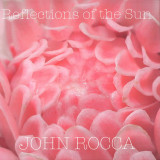
Reflections of the Sun is a collection of new music that see JOHN ROCCA experiment with a more laid back side to his musical personality. John is best know in Jazz Funk circles for his 1980s self funded, self produced and self released Brit Funk classic 'Southern Freeez', and as the band Freeez's founder.
"The melancholic suburban soul of ‘Southern Freeez’ never gets tired for me....an album that has remained at the top of my Brit Funk pile!" - GILLES PETERSON
Much of the album is also somewhat reflective. A personal and emotional reflection on John's life - the tracks a nod to John's varied musical pasts. Sounds, a pondering upon his collection of global influences and his life experiences over the years; Genre, the pulse of today, societal, musical or otherwise - but not easy to place as is John's character; Lyrics, the present dilemmas we face as humanity, whilst reflecting on our own private and deepest human feelings, of life and, of love in all its wonderous forms.
Musically, the 'Reflections of the Sun' album casts a glimpse back to Rocca's Brit Funk roots growing up amongst 1970s classic Jazz Funk and Soul, while also blending inspiration from his 1980-90s electronic influences topped off with everything else he has seen and heard on his life travels since then.
Giving a nod to John's own past while bringing Reflections of the Sun up to date was completed by adding elements of London's re-surgent and vibrant jazz scene. Not so different from John’s own early days jamming with Freeez, he is accompanied on all the album's tracks by his two young nephews and highly respected jazz musicians, Benjamin Rocca on keyboards and Joel Rocca on Saxophone. The two youngsters are known on the current London Jazz scene as the "Rocca Brothers".
The album's title track, "Reflections of the Sun" refers to how humanity, gorging on the sunshine that brings life to everything, also has a tendency to reflect the hellishness of the sun itself. Comparing our self-destructive nature with our planet's volumes of un-ending beauty.
Initial support for various tracks has come via radio plays on UK stations such as JazzFM, Jazz Funk & Soul Radio (JFSR), Soul Groove Radio and Solar (amongst others).
out of Stock
Last delivered 13 months ago available to reorder, subject to availability
Foyer Red’s debut LP, Yarn the Hours Away, plays out as a collection of short stories, each with its environment and protagonist(s) meticulously crafted by the band, with lead singer, vocalist, and clarinetist Elana Riordan at the helm. Foyer Red’s debut EP, Zigzag Wombat, showcased their playfully chaotic arrangements, which bridge art-punk, math rock, and sweetly sung indie with a dash of the zoomies.
The band synthesizes their homespun take on magical realist indie rock that was centered on their EP with their varied musical influences; taking cues from the otherworldly melodies of Cate Le Bon, Yucky Duster’s jangle-filled crayon rock, and the organized chaos of Deerhoof’s iconic polyrhythms. The songs that makeup Yarn the Hours Away are fantastical, surrealist stories that hinge on contemporary, post-digital life.
The lead single “Etc” captures this dynamic perfectly. Anchored by Eric Jaso’s hypnotizing bass line, the song unfolds with off-kilter call-and-response vocals between Riordan and Kristina Moore, their stilted deliveries bouncing around the mix. The track is searching but discontent with the algorithmic and claustrophobic realities of daily life: singer/guitarist Mitch Myers throws the song for a loop singing, “gathering information / will set you free once you’ve reached / 37 percent / of the database.” While there’s paranoia and cynicism undergirding the lyrics, the song itself is a thrilling and playful listen.
The songs on Yarn the Hours Away are uniformly exciting and compelling; each track feels distinct and sometimes even in direct conflict. The peppy opener “Plumbers Unite!” belies its themes of gamification of our daily lives and delves into the science fiction and fantasy songwriting of Foyer Red’s debut EP. Centered around a relentless rhythm section, their dueling vocals never abate; Moore and Riordan’s honey-sweet but getting more frantic as the song progresses, while Myers’ erratic talk-singing culminates in one final frustrated scream. Juxtapose this with “Gorgeous,” a lovely song about Riordan and drummer Marco Ocampo’s relationship that sees the band slowing their pace into a blissful sway. Riordan coos and sighs over the track while recalling “Marco-isms”; botched colloquialisms that Ocampo uses.
“Gorgeous” shares little in common with “Pocket,” a loose lamentation on late capitalism that touches on time travel and human evolution. Moore and Riordan’s exclamations are chopped up and used as rhythm instruments, layered over the intricately frenetic guitars of Myers and Moore. Foyer Red thrives on these extremes and contradictions. Where their first release was self-recorded, this LP found them in Figure8 Studios with a deadline. “It was really liberating,” says Jaso. “We're all just kind of throwing in our own voices and challenging each other to make the songs better.”
Yarn the Hours Away comes from a lyric on the closer “Toy Wagon.” The song that first marked the time Moore and the rest of the band worked together, a promising spark of a thrilling collaboration to come. “It harkens back to all of us coming together and spending the hours together in music,” says Moore. “There are few moments where you get to relax and exhale,” adds Riordan. “It's what happened when the five of us got together and started writing. We just wrote all of these out there songs and we didn't see a reason to dial that back. Its natural form is in its chaos and layered craziness.”
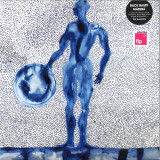
African Singer-songwriter Blick Bassy is back with a fifth album, again sung in the Baasa language of Cameroon. Madíbá brings together twelve songs in the form of fables, dedicated to the theme of water, in which his high and angelic voice dominates, carried by delicate guitar, synthesizer melodies, and sober brass arrangements. The cuts are diaphanous and nevertheless modernist songs, which testify to a contemporary and poetic Africanity at the crossroads of soul, folk, and electro.
Blick Bassy’s albums have a humanist and universal dimension. His fifth and new solo album, titled Madíbá, which means water in the Douala language of Cameroon, comes in the form of songs close to the fable, in which Bassy explores "a theme shared by all” of water, the source of life.
The fables of the album, all born in the imagination of Blick, explore in a more concrete way different themes related to water, its rarity, its necessity, its energy or its vital power. The twelve songs all bring together a series of figures, animals, or various characters, embodied in turn by Blick Bassy. "I have fun stepping into the shoes of a bird, a cat conversing with an elephant, a flower worrying about its declining beauty, a monkey looking for a spring or a storyteller with his grandchildren. In these texts, water can even take on a human appearance.”
Beyond the tale, the texts of the album also refer to our climate crisis, or to the problems of access to water, a way for the artist to approach serious subjects through a poetic form which avoids didactic or moralizing speeches.
out of Stock
Last delivered 3 years ago available to reorder, subject to availability
"Home Again: Carole King Live In Central Park" dokumentiert Carole Kings außergewöhnliches Talent bei einem der wichtigsten Konzerte ihrer Karriere, das am 26. Mai 1973 im Central Park in ihrer Heimatstadt New York aufgezeichnet wurde
Like a winding system of trails and paths cutting through a digital forest-scape, M. Sage's Paradise Crick is shaped by time. Full of wonder and charm, designed patiently and from a rich, curious mulch of synthesized and acoustic sound, the versatile American artist and magic realist's new suite of music is an imaginary destination and a pastoral fantasy that envisions the natural and fabricated worlds as one. Matthew Sage is a musician, intermedia artist, recording engineer and producer, publisher, teacher, partner, and parent. Assembling a sprawling and idiosyncratic catalog of experimental studio music between Colorado and Chicago since the early 2010s, recent highlights include The Wind of Things (Geographic North, 2021), an ensemble-recorded expression of bow-splashed nostalgia, and the four seasonal albums of Fuubutsushi, the improvisatory ambient jazz quartet he formed with friends from afar in 2020. Sage renders projects with nuanced velocity and a completist sensibility _ when it's finished, it's done _ which is what makes Paradise Crick, his debut for RVNG Intl., a compelling outlier. Sage first staked his tent in Crick's conceptual campground five years ago from his home studio in Chicago (he's since returned to Colorado, home to the mountains and prairies often personified in his work). He had just read Richard Brautigan's Trout Fishing in America, a kaleidoscopic reflection of pastoral America's shifting identity by way of magical fishing sojourns. Inspired by that feeling, of getting lost but finding oneself in through the outdoors, he amassed over seventy demos documenting a fictional soundtrack for camping. Pull up to this park, and the sign might read, "Welcome to Paradise Crick. Fire Danger Is Low." The sequence, pruned down to thirteen tracks, courses the dewy mornings, afternoon hikes, and firelit nights of a weekend expedition. While Sage is not a filmmaker, he views the method of making this album as a similar form of world-building via structure, narrative, formal elements, and editorial refinement. Contrasted with his collaborative craft, here he is a sole auteur reclined in total autonomy, able to improvise scenes and implement special effects at will. A parallel precedent for such unchecked imagination in the M. Sage canon is A Singular Continent, his 2014 album that tilted its compass to a faraway land. Where Continent built its world layering samples as composition, Paradise Crick deploys a balance of accessible song structures with experimental instrumentation and sound design. Speckled with harmonica, autoharp, chimes, penny whistle, voice, hand percussion, and other mysteries, Crick's texture is treated as a sensorial adventure; the swamps gurgle, the lakes glisten, and the valleys breathe in robust HD. The rhythms are loose and buoyant, bursting with a few `kick and snare' moments shaped by Sage's lifelong love for drumming and headphone prone electronic music. Crick bumps more than most anything he's done before; crackling static pulses and lush vibrations reveal an intrinsic groove, a hidden beat map. In the landscapes of Paradise Crick, science and magic co-exist, 5k boulders and midi frogs share the frame with real-life memories of Midwest camping trips and the desire to feel extra human in a digitized space. Sage strived for "nature in the holodeck" but couldn't help leaving fingerprints in the simulation, and it's these traces of spirit and character that give Paradise Crick its strange allure. The album's bubbling sense of play, melody, and timbre takes cues from left-field electronic lineage; synth pioneers like Tomita and Raymond Scott up through the more expressive pop tendencies of Woo, Stereolab and the Cocteau Twins, and into contemporary composers like Sam Prekop. The album's vocabulary is uncomplicated; the gestures are sweet and inviting, intended to lull the listener. As much as Sage continues to be an experimentalist by nature in his work, with Paradise Crick, he spins a narrative. Not necessarily a concept album, but rather an invitation to take off for a weekend. That's the modus operandi down here in the Crick, we stretch out. M. Sage's Paradise Crick will be released May 26, 2023 in LP, CD, and digital editions. A portion of the proceeds from this release will benefit Earthjustice, the premier nonprofit public interest environmental law organization.
This is Parand Haghi’s debut project for Specimen, and here we indulge the concept of events based around Area 51. This has always created controversy and conspiracy as a covert space for experimenting on extraterrestrial aliens. We can only imagine the horrors of human endeavour to probe the inner bodies as a means of developing advanced interstellar technology. Albeit, driven by fear and paranoia as a means of conquering outer space the alien species remain a puzzle, but they are here among us have no doubt.
An alien organism reaches planet earth it is sent in the form of a superior female whose dark, passionate embrace allures us to the magical and mystical bewilderment of sonic worlds. Parand is the future of Specimen with PATIENT-X. This is a taste of things to come, after probing into the future with a dark remix of Arsonist Recorder’s "Vaxxer", she is proving to be a formidable force in the realms of electro.
PARAND is Berlin-based producer
At an early age, she developed her passion and taste for music. While her musical roots are grounded in classical piano training, her broad influences and obsession with electronic beats led her to experimenting with DJing and producing what could be considered a unique style of electro with experimental sound shapes, infused with dark bass-lines and beats.
out of Stock
Last delivered 3 years ago available to reorder, subject to availability
Hania Rani announces "On Giacometti" a tender meditation on the life and art of Alberto Giacometti and family. "On Giacometti" is a collection of beautiful recordings inspired by the renowned artist and family and features some of Rani's most profoundly delicate compositions to date. Invited by film director Susanna Fanzun, to score her forthcoming documentary on the legendary artist Alberto Giacometti, Hania Rani took herself to the Swiss mountains to compose in blissful isolation. As Rani explains eloquently below the compositions are based on improvised melodies, simple harmonies and structures and inspired by the silence of the mountains as Rani returns to her main instrument, the piano. The results are beguilingly reminiscent of her beloved debut album Esja, but with subtle extra layers of synthesiser, and on two tracks cello from friend and long-running collaborator Dobrawa Czocher.
'On Giacometti' is presented as a limited edition LP with bespoke packaging featuring Les Naturals - Chocolat (Gmund) sustainable recycled paperboard made from 100 % recovered paper with Foil Artwork by Łukasz Pałczyński. Plus Double sided printed insert and download code inside.
Hania Rani "On Giacometti":
‘When I was asked to compose a soundtrack for a movie about the family of Giacometti I didn't think twice.
Alberto Giacometti, a Swiss artist, who worked mainly as painter and sculptor has been one of my favourite artists for a long time. His individual style, aesthetics and the character of his creative process is still fascinating to me on many levels, so being able to dive even deeper into his universe, getting to know not only him but also his family was an opportunity that I couldn't miss. Little did I know how far this "yes" will take me - not only mentally and on a creative level but also physically. Thanks to the director of the documentary - Susanna Fanzun and by a stroke of luck and a couple of extra questions I decided to move for a couple of months to the Swiss mountains, not far away from the place where Giacometti was born and where the place he called home was, although he didn't live there. Susanna showed me a place close to her hometown where I could rent a studio and work on the soundtrack but also for my other projects. It was the middle of a winter, the area was full of ice and snow, just like only it can happen still in the mountains. The residency house was located in a valley surrounded by high mountains and the sun in the winter season was not coming up for too long during the day. I remember she told me about it and added "that not everyone is feeling well there, but I hope you will". I did.
Being almost separated from reality, the city and its entertainments, people rushing and everything that usually takes my attention I could fully concentrate on the music and soundtrack, spending most of the day with my own thoughts and having enough space to experiment and be free in a creative process. This soundtrack would probably be a very different thing if composed in a place that I am usually living in. I took this a chance to explore something new about myself as a composer and human being, taking the opposite direction that I would usually choose for myself.
The album "On Giacometti" includes the excerpts from the soundtrack, the most representative tracks and those which became a strong voice itself. Based a lot on improvised melodies, simple harmonies, structures and silence it reminds me of my debut album "Esja" which was partly composed and recorded in another chilly place - Iceland. All these components, both mental and physical, guided me back to my main instrument - piano, which I tried to redefine again with a language of the space that I was working in. The space is usually the key element that gives me the answer about the arrangement or character of the project. Space seems to be the first to appear and music is the invisible power which is changing its angels.’ Living surrounded by mountains makes you change the perspective and understanding of scale as Alberto Giacometti once famously wrote in a letter: It gives an impression that things that are actually far away, like mountains, are close and the other ones that are not so far away, like people, seem small, watched from a distance. You feel like touching the mountain top with your finger could be as easy as touching the tip of your nose. The snow additionally protects the whole area from the noise, each sound lands softly on the ground accompanied by echoes of immeasurable space. Each scratch or whisper is becoming an autonomic entity, opening the gate to the world of ghosts and lost spirits. It's easy to think that time stands still there, while nothing is moving and changing at the first sight. But the ubiquitous ice and snow reveal the passage of time, transforming frozen paysage into the wild stream of water - each day, hour and second. Melting and vanishing, clearing the space from white powder and noise consuming surface. Invisible process for a one night traveller, becomes painfully real for longer time settlers. Time flows with each new wave of sound coming through the river, reminding us that we are part of the cycle, which endlessly repeats itself.
out of Stock
Last delivered 2 years ago available to reorder, subject to availability
Birds chirp through a tape-hiss breeze atop a bed of airy pads, and a cleareyed, forlorn guitar springs forth: this is the beginning of the debut album from Sans Merit, a new rock project from Griffin James, otherwise known as Francis Inferno Orchestra.
For over a decade, the Melbourne-raised—and now L.A.-based—producer has been indulging his indie and alt interests, and this fuzzed-out bedroom janglepop and shoegaze LP, Early Grave, is his first extensive deliverance.
The album represents a gestalt of sorts: years of approaching different genres and songwriting styles, and producing not “in the box,” with soft synths and
samples, but with live instruments (and sometimes a band), has led to this focused and succinct thirteen-track musical journey.
In pursuit of a pure and low-key aesthetic, James recorded demos on phones and chose to rely heavily on budget instruments, clapped-out synths, and
crappy amps, and would often cut tapes live in bedrooms, lay down vocal takes in closets and put microphones to broken speakers, all in part of the quest of using limited resources to create a truthful body of work. The finishing touch is a thick coating of nostalgia ooze; soundbites from internet clips flitter throughout the record, and goofy sound effects flicker above like dying incandescent bulbs.
A dream-pop album for our times: its lyrics are off-kilter romantic musings, sarcastic self-loathing mumbles, reflections on the unrealness of real life.
out of Stock
Last delivered 3 years ago available to reorder, subject to availability
Old style, Tip-On Jacket, and 8pp heavy insert featuring a treasure trove of newly discovered photos, and a 6,000 word essay by Kris Needs.
In 1962, Karen summoned Richard Tucker to join her in Colorado, extolling the healthier lifestyle, and plentiful gigs at Boulder folk club The Attic. Upon his arrival, the pair solidified their personal and professional relationship, riding horses in the mountains, and performing as a duo at parties and venues throughout Denver and Boulder. Stories of the spell they conjured - and rumours of tapes! - have circulated among friends and musicians who witnessed them, but until now, no recorded evidence had turned up.
Shuckin' Sugar is the glorious result of three reel to reel tapes that miraculously found their way to us in November, 2018; which featured two complete shows from The Attic in January '63, and a benefit concert for The Congress of Racial Equality (CORE) recorded the following February. Their gigs would often include brief solo sets from Karen and Richard, in addition to the duets, and all seven solo songs of Karen's found on the three reels are included here, as well as five duets, sequenced as close to how it all went down as humanly possible. To describe the record would take a poet, but all I can say is that unveiling a missing chapter in the Karen Dalton story - with six songs we've never heard her sing before - is cause for celebration in Delmore's world.
"From her opening, jaw-dropping lift-off with early blues standard "Trouble In Mind," the unique
otherworld Karen conjured springs into vivid life. Playing to audiences inevitably bound to the era's formalities and traditions, Karen instinctively pushed the envelope, straying into uncharted territory beyond the established borders. She must have bewildered many who came to see her in those winsome Peter, Paul and Mary times." From the liner notes by Kris Needs
Power, Pain, Privilege is Specimens fourth album & most personal work to date, it follows up on his collaboration album ‘Intersections’ with Peter Broderick, Benoît Pioulard, Midori Hirano & Emilie Levienaise-Farrouch.
Power, Pain, Privilege is a commissioned piece by London’s Southbank Centre and is an abstract sonic exploration of biracial identity, in its historicity as well as through the lens of Ives’ own personal experience of being British-Jamaican. The album is a departure from his largely ambient work and explores haunted and twisted dancehall rhythms, industrial drones, and spoken word pieces that track a course through painful incidents of imposter syndrome, shame, privilege & racism.
The album opens with a computerised robotic voice reading excerpts of the 1930s Fletcher Report: “an Investigation into the Colour Problem in Liverpool and other ports” a report which heavily stigmatises children and mixed heritage families of African and European origin. It could be deemed the official outset in defining Liverpool's ‘half castes’ as a problem and blight to the “British way of life”. Ives’ states “this track sets the tone to the album, the cold analytical and dehumanising approach to reports like this, whilst over 80 years old set the standard for viewing biracial families and to have used a Human voice to recite these pieces of text would have been to give it too much life”
The album is accompanied by a film directed by the photographer & director Lucie Rox which was live scored at The Southbank Centre in London and in Paris at 3537.
One day, you wake up with a cloud in your head. You feel out of place and uninspired, and juggle so many worries the balance is skewed. That was Armin van Buuren three years ago. He put so much love and passion into his work and found it hard to cope with the fact that not everyone can be pleased. Something needed to change. So, he reformed his life routines, took up meditation to calm the storm and did everything he could to negate the numbness. And what he ended up with was a newfound love for music and an incredible three-part album: Feel Again.
From "No Fun" and "Computers Take Over The World" to "One More Time", "Come Around Again" and "Roll The Dice", the Feel Again album sonically represents the journey of an artist extraordinaire radically looking for harmony within himself. Its 34 tracks may be different in terms of sound, but together, they reflect an equilibrium that could only come from a man in balance.
From reconnecting to friends, family, and fans to finding inner peace, Feel Again means acknowledging harsh truths, finding out what really matters and letting that power a new step forward. Because in the evergreen words of Armin van Buuren himself, “we're still learning and will never stop learning till the day we die”.
Feel Again is available as a deluxe limited edition box set, including 3 LP's, which are housed in printed innersleeves. The set also includes 5 exclusive Armin van Buuren lithos. This deluxe boxset is limited to 3000 individually numbered copies on turquoise marbled (LP1), white marbled (LP2), and orange marbled (LP3) vinyl.
New album from Jason Isbell and the 400 Unit, tackling issues such as gun violence, the opioid crisis, and women's rights all through Isbell's signature songwriting lens. Weathervanes is a collection of grown-up songs: Songs about adult love, about change, about the danger of nostalgia and the interrogation of myths, about cruelty and regret and redemption. Life and death songs played for and by grown ass people. Some will make you cry alone in your car and others will make you sing along with thousands of strangers in a big summer pavilion, united in the great miracle of being alive. A Jason Isbell record always lands like a decoder ring in the ears and hearts of his audience, a soundtrack to his world and magically to theirs, too. Weathervanes carries the same revelatory power. This is a storyteller at the peak of his craft, observing his fellow wanderers, looking inside and trying to understand, reducing a universe to four minutes. He shrinks life small enough to name the fear and then strip it away, helping his listeners make sense of how two plus two stops equalling four once you reach a certain age - and carry a certain amount of scars. Jason Isbell has established himself as one of the most respected and celebrated songwriters of his generation. The North Alabama native possesses an incredible penchant for identifying and articulating some of the deepest, yet simplest, human emotions, and turning them into beautiful poetry through song. Isbell sings of the everyday human condition with thoughtful, heartfelt, and sometimes brutal honesty. The record features the rolling thunder of Isbell’s fearsome 400 Unit, who’ve earned a place in the rock ‘n’ roll cosmos alongside the greatest backing ensembles, as powerful and essential to the storytelling as The E Street Band or the Wailers.
Male Tears is the dark electro group consisting of vocalist, James Edward and synthesist, Frank Shark. Hailing from Los Angeles, what began as a solo project re-established itself as a duo in 2021, simultaneously moving from the breezy sounds of the first self-titled album to darker realms with their sophomore Trauma Club.
Krypt is their third full-length recording and it shows a fully grown ensemble capable of pushing everything over the top; blending elements of darkwave, goth rock, EBM and futurepop into a sound they call Dark Rave.
Naturally drawing inspiration from the Californian goth tradition (45 Grave, Christian Death) and the Canadian post-industrial brood (Skinny Puppy, FLA), as well as the best UK synthpop (Depeche Mode, The Human League), Male Tears emphasizes the most glamourous, and at once, gruesome aspects of the whole gothic subculture, bringing everything to the next level, resulting in a contemporary and cutting edge album.
Eight new cuts that alternate rarefied synthwave (Krypt), dark eurodance (Slay) with goth techno-pop (Sleep 4Ever) and pounding electro-industrial (I Expire) to create something we may call New Romantic Body Music. It’s no wonder we wanted the scene’s top studio, La Distilleria, run by Maurizio Baggio, to master this for the most bombastic outcome.
And yet Krypt is not just about the music, it’s about one up with the times attitude that can review aggressive EBM in the light of an extravagant pop sensibility and a theatrical grandeur worthy of the Blitz Kids from London circa 1979-80.
You may think it takes quite a bit of nonchalance to do so but the L.A. duo easily succeeds at this. Akin to their aesthetics, they may seem spooky from the outside but their approach is nothing stuffy. Quite the contrary, everything regarding Male Tears is a celebration of life’s most bizzare shades, driven by some of the best dark humor you’ll find around.
So Dance with me, my dear, on a dancefloor of bones and skulls / The music is our master The devil controls our souls.
out of Stock
Last delivered 2 years ago available to reorder, subject to availability
New album by Los Angeles MC Kid Abstrakt produced by Leo Low
Pass from Amsterdam inspired by the golden era greats like A Tribe
Called Quest, De La Soul or The Pharcyde!
Now here's a funky introduction of how nice Kid Abstrakt is!
The young MC from Los Angeles, CA represents the jazzy 90s rap sound like no one else in 2023. Not only on the Westcoast but internationally. Kid Abstrakt is keeping the legacy of A Tribe Called Quest, De La Soul & The Pharcyde alive and relevant by using it as a source of inspiration to tell his own story.
Kid Abstrakt started out as part of local trio Revolutionary Rhythm before releasing his first album “Daydreaming” in 2017, produced by The Deli from Austin, Texas. With a growing fanbase overseas Kid Abstrakt started working with producers and bands like Cap Kendricks (Germany), Emapea (Poland) and Jazzbois (Hungary).
“Still Dreaming” - his new album for Melting Pot Music - is entirely
produced by Leo Low Pass from Amsterdam. Leo's signature sound of jazzy boom-bap and Lofi beats provides the perfect backdrop for Abs positive and skillful rhymes. One could easily dismiss “Still Dreaming” as a throwback album with a sound that is somehow stuck in the past. Kid Abstrakt’s love for that jazzy boom-bap is all over the place. He even raps about it - with the same passion and humbleness that he raps about his life, his family and the world we are living in today.
That's why we rather call “Still Dreaming” feelgood music that doesn't suck. Feature artists include Vsteeze, Tab One, Kamau, Awon, Rain Bisou and Hvmble. Artwork by Gizem Winter.
Introducing ‘Duality’, the new double album from Andrew Bayer. Two musical threads weave through the collected works of Andrew Bayer. One thread gave us the downtempo masterclass of 2013’s ‘If It Were You We’d Never Leave’ and the brilliant 'In My Last Life' LP. The other thread produced arena-sized anthems like 2014’s ‘Once Lydian’, his epic 'Super Human' with Asbjørn and the club remix project 'In My Next Life'. From the introspective to the explosive, these records are our community’s shared soundtrack: we’ve all got a favourite Andrew Bayer record. But they have come in so many forms and styles. It leaves us asking the question, who exactly is Andrew Bayer? It’s a question he’s asked himself. “Since day one, I have always struggled with how to present myself. I love making these experimental home listening albums of electronica and indie sounds, but I also love DJing and making trance bangers. On my last album I had to remix the album in full after it was released to make the worlds fit. This time around I wanted to capture all the breadth, depth and tension within that duality under one single project” - Andrew Bayer ‘Duality’ brings these two creative threads together under one album for the first time since his debut album 'It's Artificial'. Crafted over three years, Bayer is joined by an eclectic cast of collaborators old and new. ‘Duality’ pt. 1 explores Bayer’s passion for downtempo and indie-pop, while ‘Duality’ pt. 2 takes on his forward-thinking trance and progressive sond. Both are tied by Bayer's unique vision, a shared sensibility and same group of collaborators. Today, you can hear a sample from each side: ‘Equal’ (with Asbjørn), and ‘Midnight’ (with Alison May). ‘Duality’ is the true follow up to my first album ‘It’s Artificial’. It is by far my most raw and honest work, and I can’t wait to celebrate the album around the world with you all on tour” - Andrew Bayer
'Rushing, constructing, experiencing, humanizing, celestial, exploration, excitement, and expansion.' PLUR is the new record label from Ryan James Ford. The inaugural release 'Ripping EP' begins a new path of club focused tracks from himself and other like minded contemporaries. PLUR will act as a tool to discover new energy on modern dance floors. Written & Produced by Ryan James Ford Mastered by Alden Tyrell Artwork by Delphine Lejeune Distributed by Clone NL
out of Stock
Last delivered 2 years ago available to reorder, subject to availability
Over a decade since its inception, Wave Temples continues to refine and refract the project’s visionary mythopoetic exotica. Panama Shift presents a 20-track kaleidoscopic star map inspired by “the euphoric cults, both then and now, that come and go in the vast ritual of night.” Bleached keys, devotional synth, and driftwood percussion align in minimalist vignettes shaded by tape hiss and field recordings of streams, waves, wind, and birds.
Dedicated to the late Japanese-born American anthropologist Yosihiko H. Sinoto (whose portrait graces the cover), famed for his excavations throughout the Pacific and French Polynesia, the album embodies a similarly voyaging spirit: “chasing ancient mysteries… and rekindling with the esoteric journey of the human spirit.” This is music of forgotten shores, sea air, and saltwater shrines, echoing in shells scattered across the altars of Atlantis.
Never one to pull inventive punches, Left Coast electronic music producer Dave Aju reassembled this notorious cast of characters for a remarkably fitting album package made during one of the most strange times our world has ever faced in the throes of the COVID-19 pandemic. While things were essentially shutdown, reopened, cycle-repeat worldwide, and every other species in mother nature's kingdom temporarily rejoiced while humans remained still in their caves, Aju and The Invisible Art Trio, his formidable if not-seen-in-a-minute musical team behind such underground anthems as "Be Like the Sun", went to work in the final days of the glorious G-Son studios in Atwater Village LA to record this LP.
Indeed, the same four/five walls and vocal booth that saw the Beastie's iconic Check Your Head and Hello Nasty come to life, became the birthplace of Glossolalia, Aju's fifth studio album and appropriately impressive seven-song set. As always, myriad musical styles and influences are strung together and boldly combined here, to the degree that drawing comparisons or attempting genre references feels futile. There are, however, clear visceral expressions of political provocation, hope and anger, fear and joy laid over twisted yet dedicated grooves in a lockdown era where Aju's imaginary collective dance floor feels in the temporary absence thereof and bizarro sixth-world unification strategy of recording every song's lyrics in complete non-languages aka total gibberish, feels right at home. Even the vocal guests join in the literal chant here, granting us diverse spell-casting and sensual nonsensical lyrical lines over tech-funk mother lodes, before closing the otherworldly proceedings with a powerful grand finale tribute to the US of A's proud boys-in-blue in the wake of George Floyd's very public assassination.
Equal parts timely anti-establishment and uplifting call-to-action, Glossolalia serves as a decidedly coarse yet crucial reminder of the possibilities in collaborative and devoted noise-making, booty-shaking, and alternative world-building during greater global disarray - beyond stylistic, nationalistic, and linguistic dividing lines. An overtly universal and unifying message liberating us from any fixed cultural identities and thus differences, to instead just focus on how the music delivers and we physically respond, together, as the foundation. Perhaps also an inspired response to the talking heads in every corner of the world's media, spewing useless and politically-tainted mouth data at us amidst these turbulent times.
out of Stock
Last delivered 3 years ago available to reorder, subject to availability
Sergeant's debut lp is a 9 track trial & error effort. A collection of failed protest songs, dreamy and naive. Playfull & self relativating pop music trying to blow up itself.
Full Tracklisting:
A1 Seduced by Each and Every Shiny Object I
Became an Infant in a Sea of Glance
A2 To What Human Product Precisely Are You
Devoting So Much Ingenuity?
A3 This Song Emanates From the Common Man
Claiming His Right to Poetry
A4 Not Sensing the World, I Should Forget it’s
Existence and Be Forgotten by Those Who Live in it
The duo WILDES from the south of Germany, consisting of Jana Pantha and Jenny Tulipa, presents a musical mix of electro-synth-pop, post-punk and dark disco influences. After the release of their first EP “RAWWR” in 2021, their debut album entitled “KLISCHEE” will be released on 3 February 2023. Released via the Kommando 84 label, the album features 11 songs and a musical re-interpretation of German-language Neue Deutsche Welle sounds. The songs combine spoken word passages in which the singers combine a certain irony with word-playful rhymes. In addition to world-political, social issues, the songs revolve around the complexity of the new romance in love - between cosmos and stereo. The strong and experimentally avant-garde lyrics accompany the danceable pulse of the drum computer, melodic synth waves and the shimmering solos of the lead guitar.
The album “Klischee” begins with an electro-pop track that combines consistent grooves with atmo- spheric sound arrangements and a lead guitar that accompanies our journey to the moon. With the chorus’ high-pitched words, „Konsum - leg mich auf den Moon“ (“Consumption - put me on the Moon”), WILDES dryly yet humorously allude to a society that couldn’t fly “higher”.
The following cheeky song Leger in Schwarz combines impeccable post punk with influences from the NNDW scene. A short love story led by the electronic beat of the synthesizer makes the hearts of the night beat faster. With casual reduction, a guitar riff leads through the song. The guitar solo finally rounds off the plea about the longing for a good flirt.
Italo disco shimmers and pulsates on the driving song Capri. With lyrics like “Pack the boats - Vai a bordo”, Capri is a homage to the tried and tested Italo feeling with a cappucino on the terrazza, or indeed on the yacht with a view of the rocky walls of the island. An electric charge of sequencers and synth tracks acts here as a lightness of being in contrast to the porosity of the rock.
An electrifying electric guitar solo kicks off the fourth track with a mysterious invitation to Steig ein translated, get in. Hypnotised by the lights of the road, dazzled in the side mirror, a clearly repeating rhythm leads into the chorus and through the coming verses. English spoken-word lyrics add to the stoicism of the German language. The song’s great power ends with the line Lost in the dark, holding open the finale of the “Night Drive” encounter.
Digital and stereo on all channels, the distinctly tight and robust rhythm sounds in the song Apparat. A clear and simple synth melody is heard as a contrast and the electric bass gives the balance of the machine at points. Hiddenly, WILDES points here to the superior power that can control human action beyond all limits. A piece as a laudation to all the science fiction novels that play with the switching of the individual parts.
Side One of the vinyl is finalised by a song called La Grande Bellezza that motivates to dance and sing along. The punky pop craft lives through the recurring beat of the rhythm guitar. Here the focus is on the woman in all her facets. The great beauty, una donna, who can do everything as well as wanting everything and nothing...a strong woman who, however, also staggers and wants to jump off the cliff. Clearly and distinctly, the musical accompaniment of the drum machine and the accompanying synth melody reflect hidden parallel worlds and the ambiguity of character - of life? We get a desire for more and turn the round record.
The B side starts with a powerful guitar riff, complemented by a catchy and strong bassline that runs through the song. In this work, WILDES provocatively describes the West’s lust for the much-cov- eted Schwarzes Gold black gold. The song is reminiscent of the works of the band D.A.F. and thus ties in with the electronic punk sound spate.
The driving guitar riff joins in with the reduced synth bass sequence - the electro-pop song with the title Hitze (Heat) came onto the digital music market as the first single from the LP in the summer of 2022. Pulsatingly, the drum computer lets the beats vibrate to the rhythm of heated air. The duo po- etically describes heat with supercooled voices, a clarity in the sky that makes everything flow, that makes the breath dry. The work ends with a melodic synth solo.
Ich lad dich ein, I invite you - we have all said or heard this sentence before. A chance meeting of two people later leads to the altar in love. A far-reaching question that more or less arises in many love relationships at some point “Do you dare?” positions itself in lyrical contrast to the simple ques- tion in the refrain “Do you need sugar?”. WILDES plays with laconic poetry and, full of irony, makes the listeners think about living together. Krautrock contours are skilfully used in this piece. Reduced to the essentials, the chorus immediately sticks in the ear. A cheerful mix of steel drums and infec- tious solo.
Toccami - touch me! We sit on padded leather chairs - “you’re a rocket! Peng Puff Peng” - this song by the band WILDES joins experimental art-punk-pop, electronically with flowing synth waves we take off immediately. Melodically sung, lyrical layers of lyrics dance loosely light and gracefully in the ears of the viewer. The rhythmic beat visualises the feeling of floating in a spaceship. It’s love in the universe - “I love you, my darling” sounds tipsy in the beat-heavy disco refrain.
Hypnotically, WILDES launches into the final song of the entire LP. The title Zone takes us on a journey through time. Inspired by the film Stalker, we find ourselves in a science fiction setting that couldn’t be more present in today’s European events. The musicality of the electric guitar riffs ac- companied by simple new wave drums drives the listener into unknown realms.
Repetition and electronic synth sounds play a compositional role alongside rocking guitar riffs like their forerunners in the NDW scene. Lyrically, each song varies between pop-romantic and politically critical passages. Listeners start pondering about hedonistic life and its consequences. Sometimes it feels like listening to a Tarantino soundtrack in German, other times it feels like listening to an 80s track by a James Bond. Science fiction fantasies and reality add up in dadaistic theatricality to spir- ited synthpunk of the New German Wave from the South. Discoid beats and driving drums in digital are included.
Formed in the bygone barren period for British rock music that were the nascent
2010s, The St Pierre Snake Invasion have consistently shown themselves to be
an unapologetically creative force.
The long gap between debut album, A Hundred Years A Day (October 31st 2015)
and the release of underground sophomore smash Caprice Enchanté (June 21st
2019) was something the five- piece were reticent to repeat, but circumstance
beyond the Bristolians' control dictates that third LP, Galore, comes to us in a
markedly different world than the one in which St Pierre were building their
reputation and acclaim.
Sayell himself has been adamant that this latest offering would not be a COVID
album. He did not want it to address the ubiquitous isolation of global lockdown.
It immediately would date the record to a fixed point in time and not allow its
ideas to flourish and find a receptive audience for a continued period. Instead, the
changes represented in Galore are so fundamentally powerful and relatable to the
human condition. It is an album centered around universally resonant themes of
growth.
The summer of 2021 saw the birth of Sayell's first child. The concurrent writing of
the band's third LP has, naturally, been greatly informed by the experience of
impending fatherhood. Wondering about one's own impact on a life that you have
been a part in creating, the anxieties of what will be passed down to another
generation, and reflections on garnered wisdom with age; these are the key
themes that bring us to the band's magnum opus to date.
Alongside these introspective lyrics, the band's sound has taken on new life.
Where Carprice Enchanté was primarily informed by the musicality of Every Time
I Die, The Chariot, Refused and Mclusky, Galore builds on this framework by
incorporating influences as disparate as LCD Soundsystem, Soulwax and
Meshuggah into a coherent and daring whole. A song like That There's Fighting
Talk sees seething aggression taken to a mathcore nightclub, while the title track
and Apex Prey see the band exploring looser, quieter melodicism alongside Sang
Froid's Aisling Whiting, who brings a stake dynamic counterpart to Sayell in a
beautiful and captivating performance.
There are still tracks reminiscent of the band's previous work, such as
Submechano and Sleep Well - the latter featuring a sterling guest appearance
from Sugar Horse's Ashley Tubb - in which we hear the brash punk attitude St
Pierre's ever-growing fanbase adore. But ultimately, from the opening syncopated
notes of Pete Reisner's percussion and Sayell's distinctive vocals on Kracked
Velvet, it's impossible not to hear the palpable shift to another echelon of artis
Loosely inspired by the book "The Road" by Cormac McCarthy, ILUITEQ's fourth album, "Reflections From The Road," expands the novel's theme, where human beings are overwhelmed by an ordeal that completely changes the course of their lives.
Events that suddenly interrupt the "ordinary movements" of life in a new, unpredictable, and often dangerous way. A strong sense of motion permeates Reflections From The Road's ten tracks in a new and unexpected way compared to previous works by the Italian ambient duo.
With "Reflections From The Road," ILUITEQ explores new music territories, strongly contrasting pristine textures and glitchy sounds.
out of Stock
Last delivered 2 years ago available to reorder, subject to availability
"Kennedy returns to another musical dream state bringing nocturnal visions to life through the power of machines. Including three tracks of borderless Hi Tech Soul music, on this third 12" in the series he widens his sonic scope via elements of Jazz and African rhythms next to his own distinctive take on the original sounds of Detroit.
It's another musical offering that comes from deep within mind, body and soul. Side a sounds like a warm fusion of loose rhythms and glowing synths determined by machines, whereas the b-side is more explicitly human-made with flute recorded live by Amsterdam Jazz man Han Litz, bringing a lightness of touch that imbues the music with hope and optimism. Beneath that, a battery of drums is set free calling up acoustic sounds driving from deep inside in a dense forest.
This third translation of thoughts, sensations and sounds is another emotive coming together of man and machine that will find yourself invited to gaze off into an infinite sonic cosmos."
out of Stock
Last delivered 3 years ago available to reorder, subject to availability
Following up his score for the japanese Netflix Anime series “Carole & Tuesday”, Mocky returns to album mode with his new orchestral opus “Overtones For The Omniverse”. Just days before the first Covid lockdowns, Mocky brought a 16 person orchestra comprising of his usual who’s who of underground talent into LA’s Barefoot Studios (and into the same room where Stevie Wonder recorded “Songs in the Key of Life”) to record a pile of scores he had come up with during his previous year’s sabbatical in Portugal. The result is a stunning orchestral album recorded in 36 hours in one or two takes straight off the written page. Shunning the “possible perfection” of today's recording techniques, Mocky looked back as a way to find an alternate future.
According to Mocky:
“We had to do it quick with no rehearsal to capture that big open sound of people working together in a room - in all its imperfect glory. In the imperfections you find the humanity. And in today’s tech driven spaces you have to fight to preserve a space for humanity. I felt a deep desire to create a sonic trajectory path for us to follow as we ascend and evolve our understanding of love and what it means to be human. This is the inspiration for „Overtones for the Omniverse“”.
The album runs the gamut from Steve Reich infused minimalism overlaid with Dorothy Ashby style harp runs (“Overtures”) to atonal analogue synth sounds over Martin Denny style percussion (“Bora!”). There's a classic Mocky crooning number that gives a Jim Henson-esque take on the state of “Humans” and the album as a whole captures Mocky's skill of bringing together the joyful energy of a unique cast of LA collaborators.
Featuring:
Randal Fisher / Flute, Vicky Farewell / Piano, Vocals, Harry Foster / Bass, Vibraphone, Tubular Bells, Vocals Joey Dosik / Organ and Glockenspiel, Vocals, Guilermo E. Brown aka Pw / Percussion, Vocals, Jhan Lee Aponte (TossTones) / Percussion, Vocals, Timpani, Paul Cartwright / Violin, Molly Rogers / Viola, Gabe Noel / Cello, Contrabass, Liza Wallace / Harp, Coco O. / Vocals, Mocky / Compositions, Drums, Vocals, Roland Sh-1000
O for the O Choir :
Nia Andrews, Leslie Feist, Moses Sumney, Durand Bernarr, Eddie Chacon
Recorded at Barefoot Studios, Los Angeles March 6 + 7, 2020.
All songs written by Dominic “Mocky” Salole and published by Heavy Sheet Music/Warner Chappell except "Wishful Thinking" written by Dominic “Mocky” Salole and Matt Corby and "Bora!" written by Dominic “Mocky” Salole, Guillermo Brown, Aponte Poro.
Produced by Mocky, Justin Stanley and Renaud Letang. Mixed by Renaud Letang at Ferber Studios Paris
Mastered by Emilie Daelemans. Cover artwork by Rand Sevilla. Photo by Vice Cooler.
ABOUT MOCKY
Performer, producer, songwriter, composer and multi-instrumentalist, Dominic "Mocky" Salole came to prominence in the Berlin electronic scene of the mid 2000s, releasing three acclaimed solo albums, co-writing and producing classics like Jamie Lidell's "Multiply" and Feist's "The Reminder" and making waves on stage with close collaborators (and fellow Canadians) Peaches, Feist and Chilly Gonzales.
In 2009, his music took a jazz-inflected turn to the acoustic with the release of "Saskamodie" and in 2011, after work in Big Sur on Feist's "Metals", Mocky relocated to Los Angeles, where he quickly established himself as a co-writer with uncommon credentials and eccentric working methods collaborating with L.A.’s brightest breakthrough artists like Kelela, Joey Dosik, Vulfpeck or Moses Sumney.
Whilst in L.A. songs he has written have been sung by Mary J. Blige, Jill Scott and many more and he has collaborated with artists as diverse as Mali’s Bassekou Kouyate and the GZA. His monthly rooftops gigs at the ACE Hotel breathed new life into the LA live scene and Mocky channeled those new creative energies into his fifth full length album "Key Change" and four digital mixtapes/EPs "The Moxtapes" Vol. I-IV.
After co-producing and co-writing Feist's "Pleasure", Kelela's "Take Me Apart" and Joey Dosik's "Inside Voice", in 2018 Mocky released two albums: "Music Save Me (One More Time)" - a collection of the best of Japan-only/unreleased gems and favorites from his so far digital only "Moxtapes" series and "A Day At United", an instrumental jazz album, recorded in a single day in the legendary LA recording studio United Recording.
In 2019 Mocky delved into soundtrack work by collaborating with legendary Anime director Shinichiro Watanabe (Cowboy Bebop) on the first two seasons of the breakthrough show “Carole and Tuesday” (Netflix) for which he won Best Score at the Anime Awards 2020.
out of Stock
Last delivered 3 years ago available to reorder, subject to availability
Angelo is an EP, named after a car, featuring nine songs Brijean have crafted and carried with them through a period of profound change, loss, and relocation. It finds percussionist and singer Brijean Murphy and multi-instrumentalist/producer Doug Stuart processing the impossible the only way they know how: through rhythm and movement. The months surrounding the acclaimed release of Feelings, their full-length Ghostly International debut in 2021 which celebrated tender self-reflection and new possibilities, rang bittersweet with the absence of touring and the sudden passing of Murphy's father and both of Stuart's parents. In a haze of heartache, the duo left the Bay Area to be near family, resetting in four cities in under two years. Their to-go rig became their traveling studio and these tracks, along with Angelo, became their few constants. Whereas Feelings formed over collaborative jams with friends, Angelo's sessions presented Murphy and Stuart a chance to record at their most intimate, "to get us out of our grief and into our bodies," says Murphy. They explored new moods and styles, reaching for effervescent dance tempos and technicolor backdrops, vibrant hues in contrast to their more somber human experiences. Angelo beams with positivity and creative renewal _ a resourceful, collective answer to "what happens now?". Angelo the car is a 1981 Toyota Celica they got off Craigslist during their first stint in Los Angeles, where Murphy and Stuart have since settled. "Such a bro-y, `80s dude car, it's been super fun to drive around in a new town," Murphy says. "He's older than us, he's a classic, he's got a story." It is a spiritual vehicle with a cinematic appeal, first dropping them off in an alleyway for the scene-setting intro, "Which Way To The Club." The question is quickly resolved by "Take A Trip" as a cruising bassline mingles with crowd sounds, hand-claps, cuíca hiccups, whip-cracks, even a horse neigh. Brijean have found some club on this cross-dimensional trip - the kind of imagined space or chamber within one's self capable of "shifting a fraction of who you are," says Murphy. They wrote the track with the simple intention to be "as free as we could be," adds Stuart, likening the flip on the B section to a realm unlocked: "What if the world changed completely? You open the door to a new room." Next is "Shy Guy," a motivational anthem for the wallflowers among us. Murphy sets up the daydream: "We are in junior high, we're on the dance floor, what's going down, who is dancing, who is not, how are we gonna make them dance?" The narrator, the MC, hypes up the room as conga-driven rhythms bounce between languid synth and guitar lines. "Show me how to move...I feel something...I know you feel it too," Murphy sings sweetly, calling back to the opening lines of Feelings, and this time the audience chants it back. It is easy to picture Brijean performing this one - something they only got to do a handful of times until more recently, opening shows for Khruangbin and Washed Out, an experience they found informative. Murphy explains, "It was inspiring to be out there and let loose more. To see how people can expand their expression on stage gave me more liberty with how I viewed my musicianship. My role for so long was to be a backup percussionist, so why would I ever leave the drums, you know? But then after playing all these runs, you see these artists and realize you can, you have permission." "Angelo" and "Ooo La La" deliver the danciest stretch in Brijean's catalog to date. The title track adopts a deep house pulse replete with strings, hi-hats, and kicks. The latter opts for a funkier groove that foregoes verses in favor of warbled hums and extended breakdowns. What follows is perhaps the duo's dreamiest run, a comedown initiated with the honey-hued interlude "Colors" drifting into "Where Do We Go?", a tropicália reverie where Murphy contemplates the passage of time and space. It all culminates in "Caldwell's Way," a fond farewell to their Bay Area community - "a part of my life that I knew couldn't come back," says Murphy. Above shimmering organ sounds, lush strings, and the birdcall of their former neighborhood, she wistfully articulates the uncertainty of moving on by remembering the characters dear to them. There's the wisdom of their neighbor, Santos, who refused payment when helping them move out: "I'd rather have 100 friends than 100 dollars." And the song's namesake, Benjamin Caldwell Brown, a friend and club night cohort for many years. "I'm only miles away, maybe I'm just feeling lonely," the line resigns to warm nostalgia, and "Nostalgia" runs the closing credits to this healing and transportive collection.
out of Stock
Last delivered 3 years ago available to reorder, subject to availability
On Labyrinth, Heather Woods Broderick serves as our reflective host, subverting expectations of conventional songcraft with impressionistic language and quietly relentless explorations of the human experience that's at once light and dark, more circular and less linear. "Many of us yearn for stillness and peace, as an escape from the movement all around us," she explains when asked about the themes of the album. "Yet movement is perpetual, happening all the time on some level. It's as wild as the wind, yet eternally predictable in its inevitability. It is linear in part, but infinite in its circuitry. Our lives just punctuate it." Broderick began crafting Labyrinth in March 2020, when most forms of move- ment were brought to a screeching halt. The Maine-born, Los Angeles-based songwriter _ who, in addition to her work as a solo musician, built a life playing and touring with acts such as Sharon Van Etten, Beth Orton, Damien Jurado, and Efterklang _ was suddenly forced off the road for the first time in her career. She used this disruption as an opportunity to pare down her creation process and construct the scaffolding for Labyrinth in her apartment. Employing only the most crucial tools at her disposal, Broderick found herself opening different artistic doors as she focused on sharpening her recording skills, capturing the majority of the album on her own before finishing the remainder with co-producer D. James Goodwin. For all of Broderick's sage lyricism and vocal authority, Labyrinth never provides the listener with any easy answers. If the image of the labyrinth represents the enormity of modern life and the difficulty of navigating it, Heather Woods Broder- ick provides a guide to its endless kinetic wonders _ of being present, aware, and connected despite its disconnects. She describes the texture of its walls, its indifferent rhythms, and the inherent poeticism of feeling lost amid the dead-ends and unexpected turns. At this point in our history, perhaps that's all we need to keep moving.
On Labyrinth, Heather Woods Broderick serves as our reflective host, subverting expectations of conventional songcraft with impressionistic language and quietly relentless explorations of the human experience that's at once light and dark, more circular and less linear. "Many of us yearn for stillness and peace, as an escape from the movement all around us," she explains when asked about the themes of the album. "Yet movement is perpetual, happening all the time on some level. It's as wild as the wind, yet eternally predictable in its inevitability. It is linear in part, but infinite in its circuitry. Our lives just punctuate it." Broderick began crafting Labyrinth in March 2020, when most forms of move- ment were brought to a screeching halt. The Maine-born, Los Angeles-based songwriter _ who, in addition to her work as a solo musician, built a life playing and touring with acts such as Sharon Van Etten, Beth Orton, Damien Jurado, and Efterklang _ was suddenly forced off the road for the first time in her career. She used this disruption as an opportunity to pare down her creation process and construct the scaffolding for Labyrinth in her apartment. Employing only the most crucial tools at her disposal, Broderick found herself opening different artistic doors as she focused on sharpening her recording skills, capturing the majority of the album on her own before finishing the remainder with co-producer D. James Goodwin. For all of Broderick's sage lyricism and vocal authority, Labyrinth never provides the listener with any easy answers. If the image of the labyrinth represents the enormity of modern life and the difficulty of navigating it, Heather Woods Broder- ick provides a guide to its endless kinetic wonders _ of being present, aware, and connected despite its disconnects. She describes the texture of its walls, its indifferent rhythms, and the inherent poeticism of feeling lost amid the dead-ends and unexpected turns. At this point in our history, perhaps that's all we need to keep moving.
ASSASSINS did what many bands do: they grabbed a moment out of the air and slammed it onto tape machines and hard drives with relentlessness, cunning, and an attitude.
It was in Chicago, mid 2000’s, and though there was energy in the music scene, it wasn’t coalescing into anything you could use as a heading in the musical encyclopedia. Drag City, Thrill Jockey, Bloodshot, Tortoise, Andrew Bird, 90 Day Men – amazing labels and bands, but discrete and siloed and separated by boundaries that weren’t very real.
In the midst of that complicated morass, ASSASSINS generated a collection of songs that became the album YOU WILL CHANGED US. And it did.
There was confidence built into the fabric of the project: 5 members, 2 singers, massive synced video walls and samples streaming from laptops swirling in three dimensions around the stage. They could go from subtle atmospheric moments to a gargantuan wall of sound instantly. It was hard to do- months in cold practice rooms troubleshooting sections of songs or reworking synthesizer patches put the band through a self-imposed boot camp. And it brought them together as a sort of hive-mind focused on one thing: that these songs could connect. They could cut through the noise and share a state of mind with other human beings.
And it worked. Those early shows were mind bending. It was fun, loud, drunken, and rewarding- that time together, before the record deal, before the tragic let down of being traded and gobbled up by the major label system. The years after that got more difficult, more complicated, more human.
Leading us here: the musical journey of the Assassins has ended. With the up-coming release of their second and final album THE YEAR THAT NEVER CAME, we finally get to hear, and feel, the final statements of their inspiring chemistry.
In July of 2021, founding member, songwriter and singer Joe Cassidy unexpectedly passed away. THE YEAR THAT NEVER CAME is the culmination and end point of a collaboration that started in the early 2000’s with a chance meeting and excited conversation with Aaron Miller at a gig in Chicago. Quickly joined by David Golitko on keyboards, Merritt Lear on vocals and guitar, and Alex Kemp on bass.
It was Miller who saw Joe Cassidy’s song writing in a new context. Cassidy had been known for his beautiful, post- pop inflected BUTTERFLY CHILD, a thoughtful, regal project where Joe’s emotions could soar. Miller saw a different context for that voice- not dreamy, but immediate, not just hopeful, but demanding. He took Joe’s open hand and suggested that it could be a fist, raised in the air, with a crowd of other people doing the same.
At the time of his death legendary composer and songwriter Jimmy Webb (who wrote such hits as ‘Wichita Lineman and MacArthur Park) said Joe ‘was a creative and generous producer but, more importantly, he was a creative and generous friend.’
With the release of THE YEAR THAT NEVER CAME, this band, this relentless creative force, has to finally relent. No one in the band could see a future ASSASSINS that doesn’t include Cassidy. So in one last act of will, for the love of their friend, they did the rigorous work of finishing the songs that they had started together for the second album.
Assassin’s obsession with the notion of time, from YOU WILL CHANGED US to THE YEAR THAT NEVER CAME, flows from the most natural question we all have to ask ourselves: what do I do now? Because: how we react today to life’s unpredictability - that is the tomorrow we build for ourselves.
Circassian-Turkish Producer Sine Buyuka debuts new solo project Sinemis with lush, graceful album ‘Dua’, gently combining the ancestral Sufi music of her homeland with sophisticated techno-inflected ambient. Dua’s life began with a life-threatening illness. “I started feeling unwell last year and no one could figure out the reason,” Sine writes. “It was a scary time, not knowing and trying to manage symptoms while they slowly worsened. In late 2021, while I was visiting my family in Turkey during the Christmas break, I was taken into A&E. After more tests, I had a diagnosis and had surgery in January.” Following this, within the healing process - highly emotional as well as physical - Sine was drawn to the traditional Sufi music of Turkey and the Middle East. Ritualistic music to accompany ancient sema ceremonies, in which whirling dervishes enter a transcendental consciousness through ecstatic movement and repetition. With this influence at heart, Sine began work on ‘Dua’, with a newly-formed artist name to signify new, unfamiliar music from a celebrated electronic producer. For her, the album marks a significant step in her recovery. But it is also a potent marriage of contemporary and ancestral trancestates, interweaving sci-fi synthesis and floor shaking bass tones with mystic imagery, textures and timbres. A meditative, spiritual balm that melds field recordings, found sounds, ambient soundscapes, electronics and acoustic instrumentation to celebrate life and survival in challenging circumstances. The breathy, cinematic tones of album opener ‘Dua’ hover and shiver in preparatory stasis as broken-machine punctuation begins to dot rhythmically through the space. A yearning, repeated vocal sample - a living, beating heart inside the machine - characterises a crucial theme for the album: the marriage of digital instrumentation with the analogue, the human and the organic. Later, ‘Elegy’ reflects its title with heartbreaking chordal shifts and glitching birdsong, conjuring a sound world somewhere between KMRU and Max Richter. Key track ‘Gazel’ moves in glacial slo-mo, like whirling dervishes frozen in time at the peak of their trance. Euphoric ceremony made haunting and poignant without losing a mote of power…Across the album, the timbres of Sufi ritual are often captured by the otherworldly presence of the historic ney flute, said to be as old as the Holy Books. “Sufi music can be created using several different instruments but the ney flute is at the heart of it. The sounds emanating from this fascinating instrument kept capturing my imagination,” Sine tells us. Working both with samples and with Turkish musician Omar Faruk Tekbilek, Sine achieves a rare balance of reverence and recontextualisation for such a time-honoured instrument, here performed by a lifelong student of its intricacies and mysteries. In Sinemis’ hands, the processing and sonic treatment of the ney even sometimes renders it indistinguishable from Dua’s synthesis and sound-design
Steve Gunn and David Moore's Let the Moon be a Planet is a volume of improvisatory exchanges between classical guitar and piano, and a meeting place where two artists become acquainted through instrumental dialogue without a single expectation distracting them from the joy and open field possibility of collaboration. A project enveloped by an aura of reciprocity, Let the Moon Be a Planet unfolded from an invitation to connect between two New York-based musicians who admired each other's work but had never intersected: guitarist and songwriter Steve Gunn, whose solo, duo, and ensemble recordings represent milestones of contemporary guitar-guided material, and pianist and composer David Moore, acclaimed for his minimalist ensemble music as the leader of Bing & Ruth. The exchange began remotely as Gunn and Moore responded to one another's solo improvisations, embarking on a synergistic progression of deep listening and connection through musical conversation. "We were both fans of each other's music and this was a chance to try a different process which was much more open," says Moore. "It felt like something I needed personally as an artist, to not be so controlling over the final output, and to truly collaborate with somebody else." Similarly for Gunn, who was exploring new pastures and passages in classical guitar when the dialogue began, the project was an invitation for pure conversation and exchange, creating space for him to revisit foundational forms with his playing: "I was trying to break out of what I was doing, to have something that just pulled away all the elements of usual structured things." Let the Moon Be a Planet intertwines the trajectories of two musicians acclaimed for pushing the boundaries of their instruments, unified by a shift away from what they recall as more "detail-oriented" approaches to composition. Fueled by the magnetism of their call and response exercise, Gunn and Moore set out on a nomadic songwriting venture without an intended destination. "We didn't know it was going to be an album," Gunn explains. "There was never pressure on us to complete or make something. It was interesting to start realizing that this could be an album and to take a step back_ to arrive at a project after the fact." Calibrating their focus to connect with a spectrum of inner and external emotional realities, the duo found their way into a world where the most subtle of gestures can eternally flow. Let the Moon be a Planet is an ode to experimentation over outcome; it holds a candle light to the corners of introspection and captures the patterns that flicker within. Cast across the compositions of the album is a gritty, filmic grain _ a quality that emerged partially from recording "without the greatest microphones" or their usual studio environments. For both artists, this lo-fi sensitivity felt integral to the record and its production, and they worked closely with engineer Nick Principe to preserve its otherworldly haze in the final mixes. Across the record's eight compositions, the rippling impulses of Gunn and Moore's inner worlds converge in the spirit of two strangers wandering the same path, engaged in a daydream state of natural back and forth. Melodic tableaux arise, drift and disperse across serene open spaces, painted in earthy hues of nylon string and balmy, undulating keys _ side by side, the duo converse in tessellating motifs and gestures of lucid introspection, cultivated by a shared desire for intuitive play. "This project was such a simple idea," says Gunn. "It got down to the very core of where I am or where I was, and where I'm trying to be as a musician. Making this record became a very beneficial ritual for me, almost a meditative process." As Moore recalls, "Our only motivation for making these tracks was that it felt good to make them and there was nothing else behind it_ I don't know that I've ever made a record that came about so naturally." While Let the Moon Be a Planet was envisioned through a deeply collaborative process, it uncovered a path for Gunn and Moore to respectively return home as musicians. Imbued with the forces of interconnection and balance, the record is an exploration of creative synergy while following the currents of inner experience _ of looking outwards to arrive at one's natural self. Steve Gunn and David Moore's Let the Moon Be a Planet will be released March 31, 2023 in LP, CD, and digital editions. The album represents the first volume of Reflections, a new series of contemporary collaborations orchestrated by RVNG Intl. A portion of the proceeds from this release will benefit St. John's Bread and Life, whose mission is to respect the dignity and rights of all persons by ensuring access to healthy, nutritious food and comprehensive human services resulting in self-sufficiency and stability.
The electronic music producer and DJ whose catalogue of collaborations namechecks acts as diverse as Agoria, Green Velvet, Roman Flugel to Nitzer Ebb, Depeche Mode and David Holmes is set to release his 6th studio album The Strand Cinema on the 24th March on his own label PKR.
The last five years have seen an evolutionary shift for the electronic musician, undertaking more soundtrack work, including for film (Nightride on Netflix, Rough), radio (The Northern Bank Job BBC R4) and theatre (East Belfast Boy).
The Strand Cinema album is a tribute to the art deco cinema building , The Strand, where Phil’s recording studio is. A stirring and beautiful record, it seamlessly traverses the worlds of contemporary classical to beautifully elevated dance music with a recognisably cinematic influence. Managing to sound both grand and expansive, as well as minimal and introspective – it’s a record that explores the macro and the micro.
The opening track “Strand Cinema”, begins with a steady, gentle, looping pulse, almost recalling the kosmische ripples of Cluster, before sweeping and enveloping strings enter, resulting in a track that manages to sound both grandiose and tender in one fell swoop.
Lead single “Atlantic” perhaps most perfectly encapsulates the various sonic worlds that Kieran is operating in, merging a bordering on euphoric dance beat layered with infectious melodies, while remaining anchored to organic sounds, as strings and percussion collide with the driving and hypnotic groove of the track.
“Strike the Match” showcases Kieran’s talents for detail, in a track that feels almost palpably textural and rich in complexity but without feeling overly busy or superfluous; while “Elephant in Castle” utilises intense, almost gargling electronics, that drone with a foreboding and ominous tone, but also produces fractured moments of light, beauty and poignancy.
Created during Covid Kieran’s method was “To literally be like a tuning fork and ask: What's in my chest? If I were to describe what's inside me, and what's going on in the outside world, If I had to score that in a film, what would it sound like right now? I guess I sort of soundtracked my own life”
“One positive side of lockdowns was that we spent more time in natural surroundings where I’d make field recordings. I’d also record acoustic sounds: cello, violin, percussion, guitar etc and then create my own sample bank from all these single one-note sounds. So, creating your own loops and drones. The album was created from organic sounds manipulated by machines; melted, mangled and hacked with computers but machines only sound as good as the human spirit put into them.
The idea of nature and humans versus technology is the concept behind the album’s A/V show which debuts in Belfast in March before touring. Featuring works by 11 artists from across the worlds of film, animation, advertising, architecture, computer science and dance such as Scottish BAFTA nominated Simone Smith, LA based director Frederico Marzio Vitetta who is famous for skateboarding films like ‘Wet Dream’ with Spike Jonze, to futuristic CGI from BAFTA nominated Kris Kelly and a video from contemporary dancer Oona Doherty. onscreen visualisations that explores The visuals explore nature and technology along a timeline from past, present to future with cinema as a loose reference point with varying degrees of utopian versus dystopian moods.
out of Stock
Last delivered 3 years ago available to reorder, subject to availability
“This is me at my most imaginative, freakiest, and yet still most grounded and introspective,” says Japanese American rapper/actor Lyrics Born not only about his new album Vision Board, but also his “self” and his existence. “I feel like a new man! I’m healthier physically, spiritually, mentally, and emotionally.” The lead single and video “Diamond Door” is a pop/rap banger that lands you with an infectious barb and keeps you hooked for days, and is a thinly-veiled tribute to a particular style of female appreciation, but it can also be taken as a welcome mat to the new era of Lyrics Born. The accompanying video which shows Lyrics Born in his current physical form - svelte, stylish and with a confident swagger - reinforces this next chapter in his life. 60 pounds lighter, he lost the weight during the pandemic when he knew he needed to make a change. “Touring was becoming harder, and I was having all these weird health problems, but nothing that anybody could put their finger on,” he explains “My anxiety was high. I was not sleeping well. I was on the verge of really bad health.” And this improvement brought more confidence which shows in his new album. Vision Board is a focused affair that found him stretching his creativity farther and challenging himself to write in a way he’s never written before. Recorded primarily in New Orleans and produced by Rob Mercurio of Galactic (who also produced 2015’s Real People and 2018’s Quite a Life), it posited him in a new environment that helped his creative juices flow even more fluidly. “There’s nothing like recording in the Crescent City. It just gets in your blood, and the results are always funky and wild.” “This is about as psychedelic as I’ve ever been,” LB says. “I’m so proud of this album. I’m in a different space. The world is in a different space, and I wanted to celebrate that, loosen up and really create some imagery and share some emotion that I never have. I was listening to a lot of Shuggie Otis; a lot of obscure psychedelic soul and later Temptations,” he explained. “This is like if Alice in Wonderland was Japanese.” Vision Board was also inspired by another Bay Area rap luminary, although one who’s no longer with us - Gift of Gab. The dexterous Blackalicious MC and fellow Quannum Projects alum had a profound effect on Lyrics Born’s life, both creatively and philosophically. “I asked myself on some of these songs: ‘How would Gab approach them?’” he said. “I’d play with certain cadences, certain styles; I tried to stretch stylistically, lyrically and vocally on every single song. None of the patterns are the same.” Lyrics Born’s vulnerability shines through on the nine-track effort, something he’s not ashamed to admit (nor should he be). At one point during the pandemic, he was losing one friend, peer or family member every other week - from Zumbi of Zion I to Gift of Gab to Digital Underground’s Shock G. While many of the songs are deeply introspective, he had to “write some fun shit,” too. Celebratory horns, uptempo rhythms and fiery bars pepper the project from start to finish, and truly encapsulate Lyrics Born’s evolution of not just a groundbreaking Asian-American MC but also a human being. As the only Asian-American MC to release 10 studio albums, the first Asian-American to play major music festivals like Coachella and Lollapalooza and the first Asian-American to release a greatest hits compilation, Lyrics Born has been breaking barriers his entire life - and he’s not going to stop anytime soon. From the bombastic and tribal “I’m the Best Rapper in the World” with its self-winking boastfulness to the playful scat of “Bang Bang Bang” that slinks like an outtake from West Side Story, to the smooth and seductive “Who's The Best? (Dear Young LB)," to the psychedelic and swoony ”Alligator Boots” with it dreamy “Walk on the Wildside”-esque reverby sway, Vision Board sees Lyrics Born tackling different tones, textures and genres without fear and making them completely his own. It's an eclectic body of work that boasts more synths, more psychedelia and is generally more abstract.
Tartelet Records is thrilled to present the debut album from Doc Sleep – 10 tracks of exquisitely rendered melodies and rhythms shaped with grit and beauty in equal measure. Birds (in my mind anyway) is a widescreen vision of electronica as a medium to express your personal situation and respond to your environment – a rave adjacent art form free from the perceived rules of the dancefloor. To date, Melissa Maristuen known as Doc Sleep has established herself in the context of the club – first engaging with the culture in San Francisco before moving to Berlin. She helps run the Room 4 Resistance party, DJs on Refuge Worldwide, co- owns the Jacktone label and has released on Detour, Dark Entries and her own label. But in making Birds (in my mind anyway) she set herself an ultimatum.
“At the time of recording this album, my life, all my routines and priorities had to change – music was no exception. I decided if I couldn't be happy making an album free of the dancefloor, I was finally going to be done with music. Instead, I found a musical voice free of tempo and textural restriction. Eventually, I had a sound, and once I had the sound, the album came pretty quickly. It was a very different process writing music for no one...except myself.”
If the impression given is one of a consistent style across the album, think again. Doc Sleep moves freely between tempos and themes, even if there are some recurring qualities binding the music together. She weaves fluttering arps with poise, lending them an almost choral quality which gives the album a very human touch. But they’re equally emotionally ambiguous or pockmarked with sonic interference – reflections of the collisions and conflicts
that typify the human experience.
Every inch of the album is a personal touch – the title was pulled from Doc Sleep’s mother’s response to hearing the album, while her friend Kiernan Laveaux offered a beautiful text which appears on the back. Those closest to her all fed into the artwork process, which captures the curious dichotomy between urban brutalism and botanical finery often found in the parks of Berlin – a vital place of respite when she was making the album.
out of Stock
Last delivered 3 years ago available to reorder, subject to availability
"Denial” and "Anger" are the first and second movements in Michael Leonhart’s, The Normyn Suite #1: (Soundtrack to the Five Stages of Grieving), which is both a requiem and celebration, inspired by the life and death of Leonhart’s 15-year-old dog, a female mini dachshund named Normyn.
Suite #1 first appeared on the Michael Leonhart Orchestra 2022 album "The Normyn Suites" (Sunnyside Records) and was inspired by “The Kübler-Ross Grief Cycle,” a model introduced by Elisabeth Kubler-Ross in her 1969 book, On Death and Dying. “The Five Stages of Grief” is a critically acclaimed study on how humans handle loss.
For Leonhart's suite in five parts, he expands the MLO’s live performance palette of brass, woodwinds and strings to include choir and found percussion over gritty breakbeat drums from Nick Movshon. Leonhart shares, “I wanted ‘Denial’ and ‘Anger’ to have an emotional tension and raw quality, almost a whiplash effect..."
The Normyn Suites is an elegy; to listen is to spend time in that space of loss, reckoning, questioning, and mourning. At the same time, though, with each note, each phrase, we are propelled back into life,” reflects author Alexandra Horowitz in the stirring liner notes.
`Oh Me Oh My' is both elegant and ferocious. It is stirring in one moment and a balm the next. It details histories both global and personal. Lonnie Holley's harrowing youth and young manhood in the Jim Crow South are well-told at this point _ his sale into a different home as a child for just a bottle of whiskey; his abuse at the infamous Mount Meigs correctional facility for boys; the destruction of his art environment by the Birmingham airport expansion. But Holley's music is less a performance of pain endured and more a display of perseverance, of relentless hope. Intricately and lovingly produced by LA's Jacknife Lee (The Cure, REM, Modest Mouse), there is both kinetic, shortwave funk that call to mind Brian Eno's `My Life in the Bush of Ghosts' and the deep space satellite sounds of Eno's ambient works. But it's a tremendous achievement in sonics all its own. It's also an achievement in the refinement of Holley's impressionistic, stream-of-consciousness lyrics. On the title track which deals with mutual human understanding", Holley is able to make a profound point as ever in far fewer phrases: "The deeper we go, the more chances there are, for us to understand the oh-me's and understand the oh-my's." Illustrious collaborators like Michael Stipe, Sharon Van Etten, Moor Mother and Justin Vernon of Bon Iver serve as not only as choirs of angels and co-pilots to give Lonnie's message flight but as proof of Lonnie Holley as a galvanizing, iconoclastic force across the music community.
Nat Birchall continues apace with his “one-semble” recording projects, this album being the fourth one to feature only Nat himself playing all the instruments.
The Infinite presents seven original compositions loosely based around various mystical aspects of the universe.
The recording demonstrates Nat’s belief in the music having its own life outside of any human input, and also that it has its own laws and innate sense of balance and form, as does the universe itself. As the ancient saying goes - as above, so below.
The track Kalaparusha Arha Difda is named for the late, great tenor saxophonist who Nat considers to be one of the deepest and most Spiritual musicians that have had an influence on him.
out of Stock
Last delivered 3 years ago available to reorder, subject to availability
“Mt. Hadamard National Park” is the Hallow Ground debut by composer, programmer, and instrument designer Matthias Puech. Informed by mathematical and artistic approaches that aim to both contemplate on and control complexity, the eponymous five-part composition explores natural and mystical forces through what he calls “audio-naturalist noise”. The composition is complemented by two further pieces that follow similar concepts: “Suspension” emulates the chemical phenomenon of the same name, while “Imperceptible Life” hinges on the musical possibilities of stridulation. Over the course of the entire album, Puech’s singular take on electro-acoustic and electronic music creates unique sonic spaces as much as it pays its dues to the unpredictability of the world that we inhabit. Jacques Hadamard was a pioneer among physicists and mathematicians who, in the early 20th century, were puzzled by processes that are deterministic but hard to predict. The sounds, arranged in sweeping and tense dynamics, serve as multiple agents within a complex system. The synthetic flora and fauna created through the use of the composer-performer’s instruments feels uncannily familiar or even disturbingly hostile at times... This process is mirrored in aquatic yet tangible sounds as well as dynamics that slowly converge towards density before the composition ends on a quiet note. The 14-minute-long “Imperceptible Life” is based on a 2019 live performance first conceived as a full-scale test drive of some new electronic equipment Puech was designing at that time. It explores the musical potential of stridulation, the act of creating sounds by rubbing together certain body parts—in the insect world, a common means of communication. Again, Puech’s approach is neither purely naturalistic nor only mimetic. Rather, “Imperceptible Life” offers yet another artistic reflection on the theme of chaos and order, and how human perception and emotion relate to it.As a whole, “Mt. Hadamard National Park” thus not merely mirrors natural phenomena but transforms them in ways that are emotionally evocative: the complexity and apparent arbitrariness of Puech’s compositions reveal an underlying beauty that is equal parts haunting and comforting.