One of the most prolific electro artists of his generation, Boris Bunnik aka Versalife, returns to TRUST with an exceptional soundtrack for the algorithmic hellscape we live in. As neofeudalist power structures solidify around us, Versalife's tracks remain in constant flux. Subtle tonal shifts and undulating synth currents create tension and beauty while crisp machine beats provide the clockwork rhythm for humanity's march into the singularity.
Buscar:human machine
"Deep Dancefloor Jams of African Disco, Funk, Boogie, Reggae & Proto Electro Music 1977-1986reggWhen a passionate DJ and crate digger intuitively selects music for a DJ compilation, without artistic compromise and without the burden of trends, AfroMagic vol.1 emerges from the depths of his soul. Herewith we present the new favorite phonomancer’s tool for all the DJs who experience the dance floor as a sanctuary and a source of freedom and love.
The most fundamental thing that defines African music is that it was created for dancing. In African dance, there is often no clear distinction between ritual celebration and social recreational entertainment – one can seemlessly merge with the other. Because dance and rhythm have more power than gesture and more richness than words, and because they express the deepest experiences of human beings, dance is in itself a complete and self-sufficient language. It is truly an expression of life with all of its emotions – joy, love, sadness and hope – without which there is no African music and dance. For the African people, dance and music are integral parts of the body and soul, thus depicting the expression of life, current emotional states, visions or dreams. Through hypnotic repetitive music and dance, people communicate with each other and with the souls of the dead, the animals, the plants, the stars, the Gods… They free the body and the spirit through ecstatic states, reaching a healing sense of freedom, happiness, and satisfaction.
Throughout history, this transcendental perception of rhythm and dance originating from Africa, influenced popular music worldwide, thus creating new living and breathing forms of musical genres – freeing them from their industrial mold. Funk, disco, soul, boogie, reggae, dancefloor jazz etc., developed in parallel all over the world. It is foolish to perpetually discuss where they originated from and who were the creators of all these fiery dance floor genres – being obvious that they directly or indirectly originate from the African continent and its people who were as well, over the centuries, influenced by disturbing socio-cultural factors of colonialism. However, no one can enslave the soul. The seeds of free and uninhibited dance and rhythm, true to their original form, initially first sprouted onto the USA’s fertile fields of clubbing and popular music while later evolving in other parts of the world.
The disco funk club culture manifested itself as a phenomenal explosion of artists and grooves in the second half of the 70s in the USA. Shortly it spread around the world continually reigning over charts in its various forms – to this day. Clubs emerged where the DJ is an almighty shaman and the dancers are a tribe united under one roof. This urban ritual had and still has a single goal: togetherness, freedom, and love. Clubs have evolved into temples where we free ourselves from the burden of a consumerist lifestyle and suppressed emotions – a place where we receive love and give love – to be who we really are.
Disco funk clubbing was such an influential global phenomenon that its influence can be observed in various other genres from the disco funk era i.e. progressive rock, which mutated by layering complex rock arrangements with a disco funk groove resulting in hybrids, highly sought by today’s diggers, producers and collectors. The profit-hungry music industry of the 80s very quickly commercialized the original disco funk sound by amputating of its original Afro groove to be able to easily ‘sell’ it globally. So, the original disco funk groove became underground again, and it has remained so until this day. Today, for a DJ to unearth that ravishing groove that will lead the dancers to the stars, he must dig passionately like a true musical archaeologist in search of that groove that picks you up after just a few initial beats. That groove which forces the atoms in your body to vibrate, that groove which unites the body and releases the burden.
The AfroMagic compilation series is created as a tool for real DJs who stick to the aesthetics and essence of clubbing.
This continuation of the Afromagic compilation by DJ Borovich was created in a private jam session which served as an escape route from intense and complex love problems.
Unconsciously driven by intuition and emotion and following a live mix tape framework where many tunes are arranged instantaneously, Borovich narrates his story with a strong rhythm that cuts loose even the most blocked off energy nodes and restores happiness to the spirit and the body.
The musical experience of the groove is completed by the lyrics of the songs, which symbolically give DJ Borovich universal answers to his questions arising from questioning the boundaries, nuances and other forms of love.
When considering that Borovich’s selection was created to facilitate an escape from the burdens of reality through rhythm and dance, we can be sure that Afromagic Vol. 2 will have a 100% uplifting, energized and spaced-out effect on the listeners.
The intro to A1, “Feeling Happy” by the Apostles, introduces us to an experienced and slow, cool and irregularly tight groove containing a confidently sung chorus that instantly gives a sense of freedom and hints at the remainder of Afromagic Vol. 2: “I’m gonna feel happy, ´cause I know I’m gonna be myself.” After the anthemic song mantra of the Apostles, Aigbe Lebarty uncompromisingly continues with a dirty disco rhythm. Acidified by accented synths that elevate it to shamanic levels and held together by a female tribal choir, we embark on an uncompromising ritual disco journey. Without a moment to take a breather the prog funk band Mighty Flames and their Road Man launch a highly vicious and raw, thick funk groove spiced with acid synths and dirty RnR breaks, raising the bar for the A side. Jimi Hendrix himself would surely praise it given the ultimate freedom and virtuosity in the solo sections. With the last tune on A side DJ Borovich decides to burn the floor with Geraldo Pino’s psychedelic, acid furious groove and lyrics which describe this HEAVY part of love problems: “The way she walk, the way she talk, the way she does a funky dances, she is really really heavy – that woman”.
While the A side represents a compact intoxicating afro groove machine that separates us from reality and lifts us up to the stars in over 23 minutes, the B side is a treasure trove of proto sub-genres gems. This selection represents the mission of the Afromagic: to find singular events in African recorded discography of popular music from the 70s and 80s that give evidence to the birth of new modern genres on the Dark Continent even before they emerged in the U.S.A. or Europe. The beginnings of electronic music influenced genres are represented back to back with 80s synth jazzy pop, all painted in African colours.
The B side opens big with Jake Sollo and a huge reggae blues number singing about the humiliation of a man – goosebumps guaranteed! “You think I’m nobody that’s why, you don’t know the way for me, I’m somebody I know, I found myself at last”. Adolf Ahanotu then enters the scene with a hard sliding tackle at B2 and an exotic rare disco funk dancefloor napalm. A ‘Sensation’ that would ignite even the coldest of introverts. While we approach the end of the compilation the narrative revolves again and takes a different turn. No less and no more than to the proto-electro that Baad John Cross serves us in “Give Me Some Lovin´”. The fat and repetitive broken electro synth groove, championing many early 90s electro tracks, is presented here without hesitation and with constant tension accompanied by a mantric chorus “Gimme some, gimme some, gimme some looooovin’, EVERBODY!!!”. Finally, we’re guided to the end of Afromagic Vol. 2 by Eji Oyevole’s 80s synth pop style presented in an authentic afro manner, giving us a glimpse at yet another released Afromagic edition, as well as giving an answer to DJ Borovich’s love problems. A smoothly broken electronic rhythm resembling electrified highlife sounds, carried on the wings of a virtuoso dreamy saxophone on top of which Eji presents the most intimate parts of himself. Finalizing the track with a symbolic chorus, on the surface referring to the dancefloor and simply having fun, but in actuality referring to the skill and happiness of living: “I´m a dancer, I can dance”. So, get up and dance among the stars with DJ Borovich and Afromagic.
(comes with a poster) The Klein blue horizon, gliding seagulls, a ferry purring between two languid islands, dotted with ultra-white villages and ancient ruins... These idyllic visions run through Glika, the ultimate musical project of Les Cyclades. An exciting electronic odyssey from West to East, from Belgian effervescence to Greek mysticism.
In 2020, confined to the neighborhoods of Yser and Mystère in Brussels, Alex and Ludo dream of Greek islands, of scorching sun on their skin, of salty baths, chilled ouzo and braised octopus. But everywhere, time stands still. Must one necessarily move to travel? To levitate? In the absence of Elsewhere, the Franco-Canadian duo will compose the imaginary soundtrack to their escape.
Glika (which means "sweet" in Greek) perfectly synthesizes the musical influences of Les Cyclades: a cosmic saxophone inherited from Alex’s dub and free jazz past, an architect-pastry chef-botanist from Normandy, and Ludo’s "Balearic" tracks, a musician-performer-wine lover who frequented his first raves in 1995 in Houston, Texas.
From a hedonistic encounter on a friendly terrace in the 19th arrondissement of Paris to their chosen exile in Brussels, these hypersensitive jacks-of-all-trades first danced and mixed records. Before creating their own phantasmagorical sonic territories, where cinema and poetry meet more or less human voices, brass instruments, synthesizers and analogue drum machines.
A searing fragment of Greek filmmaker Theo Angelopoulos's "Eternity and a Day" preludes Glika. Then, on Yser Mystère - the names of the two stations on tram 51 that physically linked Alex and Ludo's psyches during the lockdown - Alex's astral sax balances out the industrial mechanics of a locomotive, against a backdrop of urban soundscapes.
And then a rising bpm dominates Alocasia, with its deep and sensual light foot. So sunny. From one track to another, there are interludes influenced by Xenakis, Vangelis and Jean-Michel Jarre. Seminal heroes of the Cyclades... But soon, the duo unleash hostilities at the helm of Epigone, their meta-techno anthem. "I know", "You know", echoes Alex.
Laughs of friends, "mouth noises," and "bizarre rhythms" still dominate Parc Fou, while DRAM eyes the minimalist techno of Detroit. So dear to Ludo's heart... And what about PAME, that post-modern Greek epic.Or Glossa, a timeless track that finishes with a fascinating - because diffracted - elegance, this multi-sensory journey through Les Cyclades. Let's close our eyes. Silencio! Hay Banda!
By Eléonore Colin, journalist (and friend!!)
Aerials live, dials tuned, Transmission Towers broadcasting. On either side of the river Mersey, transcendental communications are traded back and forth. Two late-night revellers, one firing messages filled with music, the other returning them laced with lyrics. The result, a dopamine hit of oddball machine soul, melded with a highlife, Afrofuturist touch. Wonky and murky yet deeply emotional, Transmission One, is a debut album that also marks the first release on Luke Una’s É Soul Cultura label, encompassing expertly the off-kilter atmosphere the label sets to orbit.
A synthesised landscape with a Northern charm, Transmission Towers marry the musical worlds of two artists that last collaborated over a decade ago. 10 years have passed, lives have been led, but a gravitational pull has placed Mark Kyriacou and Eleanor Mante back in each other’s spheres on opposite sides of the city of Liverpool. Energised with a newfound desire to strip it all back to the sounds that influenced their formative years in the late ‘80s and ‘90s - astral travelling, intoxicated on Motor City techno, Black Dog IDM and mystical Sun Ra.
Mark half Irish, half Greek Cypriot, Eleanor half Nigerian, half Ghanian, the music contained within is an alchemy of those roots and the pivotal acts that buried deep into their minds. A cosmic contrast, part machine-made, part distinctly human. Take the opener ‘UP’, an ESG-channelling, sci-fi punk beatdown or the polychromatic hyperspace anthem ‘Roller Skater 23’.
Transportive throughout, you ride the solar waves, pace and emotion ebbing and flowing. Tracks like ‘Go Slow Heart’ and ‘Cosmic Trigger’ step to a slower beat but hit with a punch. The former, a slo-mo blast of celestial tenderness, the latter an otherworldly, chugged-out lunar excursion, micro-dosing on whacked-out Wah Wah and Eleanor’s ethereal vocals. Beaming love letters to space and back, ‘Sparse’ marries the organic with the artificial, pianos and percussion circling around synth pads and broadcasting bleeps.
Elsewhere, vibrations move faster. ‘Mega’ strikes, fusing sonic tribalism with psychedelic swirls, as ‘Everything’ sweeps you up in its extra-terrestrial new wave grip. Synth stabs and basslines fizzing from every angle.
Demos of Transmission Towers music surfaced on Luke Una’s radar, making him stop in his tracks. Something magical was emerging, perfectly aligned with the E Soul guardian’s tastes. Guidance followed, quickly turning into conversations about Transmission One becoming the first release on Luke’s own label.
Escapist and futurist yet grounded and relatable. Transmission One is synthesis meets sentiment with a deep, spine-tingling soul at its core.
Fierce and forlorn, Swarm Intelligence’s “The Shattered Self” delves into the complexities of human existence in an era dominated by technological advancements. In this thought-provoking exploration, the artist challenges listeners to confront the consequences of a near future where physical and mental augmentation are commonplace. In a world where limbs can be upgraded, where consciousness can be uploaded, where memories can be digitally archived and shared on social media, where our AI clones can liberate us from menial tasks… What remains of our selves? Who is our self?
Swarm Intelligence draws influences from black metal, industrial-tinged dub and post rock, splicing these with his distinctive take on techno to devastating effect. "Dejected," the inaugural track, unleashes grinding walls of feedback against a relentless broken beat, its foreboding atmosphere heightened by a menacing low growl of distorted bass that permeates the unease. It's a disquieting overture that sets the stage for the tumultuous journey ahead.
The second track, “Eros” envelops the listener in a visceral soundscape, where haunting atmospheres intertwine with grinding feedback and pounding percussion. Initially tense, the track evolves into an unexpected and almost euphoric climax, adding an unforeseen emotional depth to the sonic narrative. Yet, beneath the surface, an undercurrent of tension remains—an ever-present reminder of the fragility of our self.
On the flip side, "Inciter" channels inner fury through a guttural chant punctuating a Birmingham-styled broken beat, marching forth with unyielding force.
Finally, "Portal" offers a moment of quiet introspection, as haunting pads echo a mournful refrain while micro recordings of whirring machinery are assembled into the percussion section. It serves as a poignant curtain-closer.
Through "The Shattered Self," Swarm Intelligence challenges listeners to reconsider their perceptions of identity, consciousness, and agency in an age where the machine and the human converge. It's a haunting and profound journey—one that invites introspection and contemplation long after the final reverb tails fade into silence.
The Surface Label based in the south of France offers you a catalog of new references limited to a few copies.
A kind of rebirth is being launched this year.
The versions are specially long and adapted to enthusiasts but also to collectors.
We hope that our selection gives you an emotion such as we have tried to convey to you since the beginning, more than 25 years ago.
The vinyl will be transmitted to the future generation who will be able to attest that the human being was still in the creativity despite the technology.
We want to be human markers unlike machine man. Don’t listen to the machine. Listen to the human emotions.
A new page opens ….. the story continues …
WandalHouz
Seoul duo Salamanda arrive on Wisdom Teeth with their latest and most focused LP yet: 'In Parallel' - a vividly textural and immersive record that brings a new level of clarity to their typically psychedelic, expansive approach. Since arriving in 2019, the pair - comprised of friends Uman Therma (aka Sala) and Yetsuby (aka Manda) - have been fast at work mapping out their elaborate, dream-state sonic world - prolifically honing their sound across four albums and over a dozen singles to date. Across their already-extensive discography the pair have established a few key calling cards. Mallet instruments and tuned drums play out playful music-box melodies. Thick washes of gaseous ambience invoke otherworldly or ancient soundscapes. And buried fragments of found sound and manipulated vocal give their otherwise synthetic compositions a warm sense of first-person narrative. Ambient and Reich-school minimalism are the music’s most obvious sonic touchstones - yet the pulse of contemporary club and pop music have never been totally out of earshot. All of these themes come in to play here - but 'In Parallel' signals a step well beyond Salamanda’s work to date. Since 2022’s 'ashbalkum' (released on Wisdom Teeth alumni Tristan Arp’s label, Human Pitch), the duo have toured extensively: at classical institutions like London’s Kings Place as well as DIY club dens like Manchester’s White Hotel, all via a series of globally renowned festivals like Mutek, Nachti and Dekmantel. Their creative set-up has grown steadily alongside to incorporate a whole suite of new machines, processes and perspectives, taking their music in bold new directions in the process. The clearest development here is in the duo’s use of vocals - a shift that has been slowly taking place over their last few records, but that comes to a head on In Parallel. The album’s lead single 'Homemade Jam' is the closest the duo have come to writing an all-out pop track: its buoyant beat and autotuned vocals sounding like something SOPHIE and Charli XCX could have written after a particularly potent batch of mushroom tea. It’s a razor-sharp slice of alt-pop that offers a mouthwatering first look at what happens when Salamanda’s sprawling, unbridled creative energy is distilled right down into something concentrated and polished. At other points their sonic explorations lead them to embrace a more upfront approach to rhythm, skirting closer than ever before to the dancefloor in the process. The meandering drums and vocal chops on 'Paper Labyrinth' are underpinned by a firm 4x4 pulse, while the dembow groove of 'Tonal, Fluid' would feel right at home in a Nick León or DJ Plead set. 'In Parallel' is a record about connection, and the warmth and nostalgic simplicity of friendship is felt vividly throughout. Its title refers to the harmony the duo have found between them as friends and collaborators - and sonic parallels are traced throughout the record as testament to this. Motifs come and go before reappearing at later points: take, for example, the melody underpinning ‘Sun Tickles’, which returns in a different key and tempo on album closer ‘Mysterious Wedding’. Parallel lines are traced between each artist and through their music, linking back to their past and pointing ahead to the future. Only Salamanda know where these will take us next.
L+P-2 is Rivet's second album following his acclaimed debut, On Feather and Wire, released on Editions Mego in 2020. The wheels were already in motion for a subsequent album on the same label, but tragedy struck. Peter "Pita" Rehberg, the legendary owner of Editions Mego, suddenly passed away at only 53 years old, leaving the experimental electronic music community in a state of pitch-black grief. Rivet was among the many deeply affected by this loss. The inspiration and support from Rehberg had propelled Rivet to create at a level he himself was uncertain he had mastered. For Rivet, Rehberg's death felt like the death of music.
However, that brooding sentiment was abruptly shattered when Rivet's beloved dog and companion, Lilo, was diagnosed with incurable cancer just a couple of months later. They were inseparable, and now they would be separated nonetheless. The only way Rivet could cope with this double blow was to compose—for Lilo, for Pita, for his own sanity. L+P-2 is the result.
While the album naturally emerges from a place of despair, it's remarkably comforting. Partly, this stems from Rivet's singular ability to make machines not only sound human but also act human—sincere and warm, yet flawed. In more than one track on L+P-2, you'll encounter a distinctive melody and a gnarly bassline dancing hand in hand with Rivet's eccentric and captivating drum patterns. Then, seemingly on a whim, the melody takes off on its own, leaving the faithful bassline behind—much like a dear friend that suddenly vanishes from your life without warning. Yet life goes on, and so does the music. But never unchanged. Never.
L+P-2 is an album of lamentation, yet also of resolve—a dedication to those who go through life losing more than their share because they always carry too much.
- A1: The Mechanical Man - The Magic Number 5 32
- A2: Minimono - Grit Wave 5 14
- A3: Lucretio - Gradius 4 14
- B1: Queen Of Coins - Genesis 5 43
- B2: Miguel Herrnandez - Bad Renaissance 5 29
- B3: Twovi - Galassia Cosmica 4 57
- C1: Data Memory Access - Controller 6 14
- C2: Passarani - Bungy Bungy Bungy 4 52
- C3: Dj Rou - Milky Way 4 43
- D1: Lapucci - One 1St 5 18
- D2: Alexander Robotnick - It's So Easy 5 00
- D3: Feel Fly - Peach 5 36
The Stallions compilations have become a benchmark of Bosconi's position as one of the leading house and techno labels operating out of Italy. This third instalment marks a shift in sound which also comes full circle to the music that first inspired founder Fabio Della Torre as a DJ and producer around the turn of the millennium, when punchy electro production was driving European house and techno into new zones.
All the artists featured on Vol. III are Italian, holding true to Bosconi's commitment to supporting local talent from Florence and across the country. Amongst the familiar faces is Della Torre's own Minimono collaboration with Ennio Colaci, which indulges a proudly manic palette of tweaked bleeps and dirty low-end. Elsewhere, recent additions to the Bosconi fold include veritable legends Alexander Robotnick and Marco Passarani, who infuse their unpredictable approaches to electro-techno and italo disco with ear-snagging synth-pop and driving analogue box jams respectively to create vibrant, impassioned dancefloor monsters.
The Mechanical Man is an alias from Nicola Altieri, who leans in on a classic Italo arpeggio to create a seductive club sound which builds on his recent Bosconi EXV EP, while Cixxx J switches from the mood of his own Bosconi appearance for a new alias Queen Of Coins and a pivot towards heads-down electro-techno-trance with a whiff of International Deejay Gigolos. Lapucci builds on the promise of his 2021 Bosconi 12" with a sentimental fusion track which lands somewhere between old school Italo house, the snappy pulse of EBM and crisp 00s-era electro house. Meanwhile modern day Italian techno legend Lucretio of The Analogue Cops makes his first appearance on Bosconi with the playful video game stylings of 'Gradius'.
A great deal of space on Vol. III is given over to emergent talent, ranging from Miguel Herr's twitchy detroitian synth-pop braindance and Twovi's vocoder-charged electro funk to DJ Rou's jacking ghetto house flavour. Giammarco Orsini and Jacopo Latini appear as Data Memory Access and deliver an emotive, punchy strain of machine soul. Feel Fly rounds the compilation off in bombastic style with an epic, cinematic workout which draws on Moroder-inspired drama without losing the forthright peak-time focus which binds the whole collection together.
Even the artwork on Vol. III serves as an opportunity to celebrate Italian creativity, as pioneering crypto artist Niro Perrone builds on his accomplished work in the field of NFTs and a background in music production to respond intuitively to the vibrant, synthetic sound of the compilation. For all the futurism in the music though, there remains a strong sense of human feeling which has marked Bosconi out since the beginning. The label remains as inspired and inspiring as ever, celebrating the fertile crossover when people manipulate technology to express themselves in an honest, playful way. Independent of wider trends or fashions, Bosconi remains true to its own idiosyncratic passions, and so Bosconi Stallions Vol. III stands proud as a compilation like no other.
At times where technology inexorably infuses into humankind, Ammar808’s next adventures lays within the realms of Stambeli’s invisible creatures, an old genuine Tunisian tradition that has roots spreading out within the depths of the African continent.
Stambeli is a Tunisian musical therapeutic ritual that was implanted by afro-descendant communities. During the ceremonies, music, dance and chants are blended so as for some participants to reach the alternate state of trance while they are possessed by super natural entities. It is a syncretism between Islam and animist Yorisha religion’s voodoo beliefs, that has been disseminated during slave trade by Yoruba populations originating from current Benin’s gulf. Stambeli is a precious legacy the symbolizes the outstanding diversity and complexity of the North-African identity.
Using drum machines and analog synthesizers, he summons super natural creatures to visit our material world and taste human incarnations, form the audience’s collective experience. The album features vocals and gumbri from Bellassan Mihoub, who inherited his father’s knowledge and mastery, and currently embodies the avant-guarde of Stambeli’s revival. Two additional choristers round off the stage band, also playing the krekebs: these are pairs of large castagnet-like instruments oscillating in the limbo between binary and ternary rhythmic patterns. They breathe life and motion into this pagan communion, blessed by VJ Sia original visuals synchronized to the thundering music.
Super Stambeli is a contemporary interpretation of the Stambeli traditional repertoire, processed through a time-travel washing-machine, a parallel-dimension earthquake portal, that aims to echoes ancestral ceremonies through sub-harmonic speakers. It’s a dialogue between the wailing of the gombri, known to call for the spirits to descend into the bodies of the participants, but this time AMMAR808 directs them straight into the digital circuits of his clockwork-crafted machineries.
- A1: Here Lies Love Feat. Florence Welch (Florence & The Machine)
- A2: Every Drop Of Rain Feat. Candie Payne & St. Vincent
- A3: You'll Be Taken Care Of Feat. Tori Amos
- A4: The Rose Of Tacloban Eat. Martha Wainwright
- A5: A Perfect Hand Feat. Steve Earle
- B1: Eleven Days Feat Cyndi Lauper
- B2: When She Passed By Feat. Allison Moorer
- B3: Walk Like A Woman Feat. Charmaine Clamor
- B4: Don't You Agree? Feat. Róisín Murphy
- B5: Pretty Face Feat. Camille
- B6: Ladies In Blue Feat. Theresa Andersson
- C1: Dancing Together Feat Sharon Jones
- C2: How Are You? Feat. Nellie Mckay
- C3: Men Will Do Anything Feat. Alice Russell
- C4: The Whole Man Feat. Kate Pierson
- C5: Never So Big Feat. Sia
- C6: Please Don't Feat. Santi White
- D1: American Troglodyte
- D2: Solano Avenue Feat. Nicole Atkins
- D3: Order 1081 Feat. Natalie Merchant
- D4: Seven Years Feat. Shara Worden (My Brightest Diamond)
- D5: Why Don't You Love Me? Feat. Tori Amos & Cyndi Lauper
David Byrne & Fatboy Slim’s acclaimed 2010 album Here Lies Love receives its first-ever vinyl release to coincide with a new production opening on Broadway this summer. Here Lies Love is a double-disc song cycle – improbably poignant, decidedly surreal, surprisingly thought provoking – about the rise and fall of the Philippines' notorious Imelda Marcos. It was conceived by David Byrne; composed by Byrne and DJ/recording artist Fatboy Slim, AKA Norman Cook; and performed by a dream cast drawn from the worlds of indie rock, alt country, R&B and pop. Byrne's taste in collaborators is as imaginative as it is impeccable, including Cyndi Lauper (who recounts, to lighthearted disco beats, Imelda's courtship with Ferdinand Marcos), Steve Earle (as the power-hungry Ferdinand), Dap-Kings vocalist Sharon Jones (recalling Imelda's introduction into New York society) and Natalie Merchant (as spurned Imelda confidante Estrella, anticipating the onset of martial law). Along with vocals turns from such stars as Tori Amos and the B-52's Kate Pierson, Byrne works with rising indie rockers St. Vincent and My Brightest Diamond; New York chanteuses Nellie McKay and Martha Wainwright; and dance-music divas Róisín Murphy and Santigold. Byrne himself appears as the voice of imperialistic America on ‘American Troglodyte’, a send-up that wouldn't have seemed out of places in Talking Heads' True Stories.
Byrne originally envisioned this as a musical theatre piece, to be mounted in disco and nightclub settings, reflecting the globe-trotting Marcos' taste for such velvet-roped spots as Studio 54 and Regine's. In 2006, he performed work-in-progress versions to enthusiastic audiences at New York City's Carnegie Hall and the Adelaide Festival in Australia. While plans for a US theatrical production continued to evolve, he delivered this unique recording. The award-winning theatrical production eventually premiered at The Public Theater in New York in 2013, travelled to London’s National Theater for a sold-out run (2014–15), and was remounted at the Seattle Repertory Theater (2017).
Here Lies Love has an effervescent disco feel, redolent of Fatboy Slim's own dance-floor anthems, with warm undercurrents of the Latin rhythms that have percolated through Byrne's recent solo work. The sunny arrangements act in counterpoint to the reality of the Marcos' increasingly repressive regime, reflecting the imagined inner life of the glamour-obsessed Imelda. Explains Byrne, "For me, the darker side of the excesses are, for the most part, a matter of record. A lot of the audience is going to come with that knowledge already. What's more of a challenge is to get inside the head of the person who was behind all of that, and understand what made them tick." Byrne offers no judgment and avoids the obvious – there is no mention of Imelda's infamous shoe collection.
Many of Byrne's lyrics are, astonishingly enough, constructed from actual Imelda quotes, including the project's title, the words that Imelda, now returned to the Philippines from US-assisted exile in Hawaii, would like to have inscribed on her gravestone. In addition to his new liner note, Byrne illustrates the story with archival photos. In a detailed preface, he reveals what drew him to this subject and the bumpy route he took to launch the project and, ultimately, record this album. The booklet is indeed a page-turner, just as Here Lies Love is a wonderfully old-school album that rewards start-to-finish listening. Once again, Byrne – beloved as musician, thinker and bicyclist-about-town – reveals the breadth and singularity of his vision.
The new production of Here Lies Love will premiere at the Broadway Theatre in New York City. Performances begin June 17, ahead of an official opening night on July 20. Tony Award winner Alex Timbers (direction) and Olivier Award nominee Annie-B Parson (choreography) reunite with Byrne (concept, music, and lyrics) and Fatboy Slim (music) to bring Here Lies Love to Broadway, continuing a ten-plus year collaboration on the project. Tom Gandey and J Pardo contribute additional music. Here Lies Love is produced on Broadway by Hal Luftig, Patrick Catullo, Diana DiMenna for Plate Spinner Productions, Clint Ramos, and Jose Antonio Vargas. The staging at the Broadway Theatre will transform the venue’s traditional proscenium floor space into a dance club environment, where audiences will stand and move with the actors. A wide variety of standing and seating options will be available throughout the theatre’s reconstructed space. The producers of Here Lies Love said, “As a team of binational American producers – Filipinos among us – we are thrilled to bring Here Lies Love to Broadway! We welcome everyone to experience this singularly exuberant piece of theatre. The history of the Philippines is inseparable from the history of the United States, and as both evolve, we cannot think of a more appropriate time to stage this show. See you on the dance floor!”
David Byrne’s recent works include the launch of Reasons to be Cheerful, an online magazine focused on solutions-oriented stories about problems being solved all over the world (2019); Joan of Arc: Into the Fire, a theatrical exploration of the historical heroine that premiered at the Public Theater in New York (2017); The Institute Presents: NEUROSOCIETY, a series of interactive environments created in conjunction with PACE Arts + Technology that question human perception and bias (2016); Contemporary Color, an event inspired by the American folk tradition of color guard and performed at Brooklyn’s Barclays Center and Toronto’s Air Canada Centre (2015); Here Lies Love; Love This Giant, a studio album and worldwide tour created with St. Vincent (2012); and How Music Works, a book about the history, experience, and social aspects of music (2012).
Byrne curated Southbank Centre’s annual Meltdown festival in London in 2015. A co-founder of the group Talking Heads (1976–88), he has released eight studio albums as a solo artist and worked on multiple other projects, including collaborations with Brian Eno, Twyla Tharp, Robert Wilson, and Jonathan Demme, among others. He also founded the highly respected record label Luaka Bop. Recognition of Byrne’s various works include Obies, Drama Desk, Lortel, and Evening Standard awards for Here Lies Love; an Oscar, Grammy, and Golden Globe for the soundtrack to Bernardo Bertolucci’s The Last Emperor; and induction into the Rock and Roll Hall of Fame with Talking Heads. Byrne’s work as a visual artist has been published and exhibited since his college days, including photography, filmmaking, and writing. He lives in New York City. In addition to 2019’s cast album for American Utopia on Broadway, Nonesuch has released eight other David Byrne records since 2003, including 2018’s American Utopia studio album and two versions of his musical Here Lies Love.
q C6. Please Don't feat. Santi White Santigold
Repress!
One of the gems on the smash hit album 'Soulmatic', Purple Disco Machine & Boris D'Lugosch's, 'Love For Days' gets the remix treatment three ways.
First up the master Kenny Dope - crisping up that shuffling rhythm with some added percussion and synthesiser arps to turn what was already a peak time soulful anthem, into a close to 8 minute extended journey drawing you in more and more with each build up and breakdown. Next up the PDM offers up an extended mix of the original, a welcome sight for those DJs on the club scene who have been rinsing this since the album dropped last year.
Finally, Motez takes you into raunchy, r&b tinged, garage territory, really honing in on Karen Harding's incredible vocals whilst incorporating brooding pads and sweeping fx's to create a special twist on the original.
DJ Support:
Aeroplane (Aeropop / Eskimo Recordings), Klingande / Kungs / Michael Calfan c/o (Unity Group Promo Sorter), Autograf (Counter Records), Treasure Fingers (Psycho Disco! / Fool's Gold), Malente (Southern Fried Records), Satin Jackets c/o (Eskimo Recordings / N.E.W.S.), Eric Sharp (9G Records), Gregor Salto c/o (Spinnin' Records), DJ Blake Jarrell (Armada Music), Jerome Price (Throne Room Records), DJ Licious (Spinnin' Records), Travis Emmons (Weapons Music), Electronic Youth (KMS), Solidisco (Fool's Gold / Ultra) :: Mark Knight c/o (Toolroom Knights), Mike Mago (Boemklatsch), Muzzaik (Spinnin' / Toolroom), The Disco Boys (We Play Music), Trevor Mac (Jalapeno Sound System), Ferdinand Weber (Spinnin' Deep), LCAW (Ultra), Plastic Plates (Sweat it Out), Mark Lower (Nurvous), Don Diablo c/o (Axtone / Spinnin' Records), Eton Messy, Après (Love & Other Records), Spada (Ego Music / Hysterical), Eelke Kleijn (Spinnin' / Suara), Horsemeat Disco (Strut Records / K7! Records), Horsemeat Disco (Strut Records / K7! Records), Adriana Lucia (Get Physical), Broc Roc (Dj B-Roc of The Knocks), Chordashian (Mullet Records), Hector Romero (Saw Recordings), Just Kiddin (Nervous Records)
Idris Elba c/o (Connaisseur Records / 7Wallace), Klingande / Kungs / Michael Calfan c/o (Unity Group Promo Sorter), Shiba San c/o (Suara / CUFF), Malente (Southern Fried Records), Rudimental (Asylum / Big Beat), Sirus Hood (Under No Illusion / Dirtybird), Marc Spence (This Ain't Bristol / Skint), Martin Solveig c/o (Spinnin' Records), Horsemeat Disco (Strut Records / K7! Records), Riva Starr c/o (Hot Creations), Mike Mago (Boemklatsch), Kokiri (Love & Other), Fred Falke (Work It Baby Records), Claptone c/o (Exploited), Roger Sanchez (Stealth Records / Astrx), Don Diablo c/o (Axtone / Spinnin' Records), Icarus (FFRR / SubSoul), Pezzner (Dirtybird), Jourdan Bordes (Phonetic Recordings), Mahalo (Toolroom / Bunny Tiger), AC Slater (Night Bass), Chordashian / Felix Feygin (Mullet Records), Fei-Fei Wang, Kristina Sky (Ultra / Armada), Thee Cool Cats (Toolroom / Bunny Tiger), Solidisco (Fool's Gold / Ultra), Infected Mushroom c/o (HOMmega Productions), DJ Blake Jarrell (Armada Music),Travis Emmons (Weapons Music), Human Life (LIFEX / Exploited), Treasure Fingers (Psycho Disco! / Fool's Gold), Hector Romero (Saw Recordings), and Danny Howard (BBC Radio 1 / Nothing Else Matters)
Potatoheadz Records come back, out of nowhere, with JCow’s ‘in my elem3nt7’. Often spotted cycling about town, it’s no secret that JCow is diligently & quietly (and not so quietly) crafting big tunes. This release is the sound of that inevitable 2020’s shut-in inspiration. Written during those periods, they are finally seeing the light of day. With focused time in the studio, some serious imagined musical landscapes are the result. Tracks designed for dance-floor breakouts and closed-eye catharsis. We’ve heard these tracks come a long way from inception. Cerebral and kinetic, each track has a unique character, functional yet bound to stand out in any set. Tracks like ‘a complex range of human emojis’ pay-no-mind in referencing the past with a sly smirk and an updated twist. Are we hacking? While the title track ‘in my elem3nt7’ conjures a certain mystical atmos - the tracks bold narrative shift midway is one hell of a notable payoff. Swerving boldly into new territory, the beats fade and return from new angles, sounds cutting and slicing through the speaker like angelic machine gun fire. The drum programming is truly used like a weapon in this one, with those majestic horn samples like calls from the ether. Exaels ‘swampbuggy’ reworking of title track on the B2 provides the perfect alternate universe, working its way from a sparse ambience into an inspired IDM-leaning breakbeat epilogue.
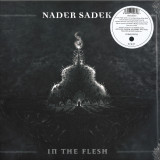
“In the Flesh” is the brainchild of Egyptian-born, New York-based conceptual artist Nader Sadek. Known for his impressively twisted sculptures, masks, and installations used for example by bands such as MAYHEM and SUNN O))), Sadek is now venturing into the realm of recorded music- including songwriting credits on this album! The band NADER SADEK emerges out of a collaboration between Sadek and some of extreme music’s most talented artists with its core made up out of songwriter/vocalist Steve Tucker (ex-MORBID ANGEL), CRYPTOPSY drummer Flo Mounier and Norwegian composer/guitarist Rune Eriksen (AVA INFERI, ex-MAYHEM). A host of guest-appearances lends additional weight to the musical impact of “In the Flesh” by leading artists such as Attila Csihar (MAYHEM), Travis Ryan (CATTLE DECAPITATION), Tony Norman (MONSTROSITY), Descructhor (MORBID ANGEL), and Nick McMaster (KRALLICE). “In the Flesh” is firmly based on a technically masterfully executed unique style of Death Metal with a pitch black twist that creates a multi-cultural symphonic abyss where melody and corrosion meet. As a work conceptual art “In the Flesh” is best explained like this: NADER SADEK invite you on a journey to the depths of the earth, where substances of a repulsive nature dwell. Beneath the earth’s crust, over millions of years creatures have disintegrated and decayed until taking on ghastly new life as petroleum. Like a return of the undead, petroleum and its derivates have wrought cross-cultural conflict, environmental pollution, and economic distress. With a visual and aural assault, Sadek’s new work “In The Flesh” re-interprets petroleum’s sinister insinuation into our everyday lives. Nine songs and a series of original drawings video works explore several aspects of the commodified resource we find ourselves fatally dependent on. “In the Flesh” exploits the sonic links between death metal and gasoline-dependent heavy machinery such as automobile and airplane engines. These links shaped the process of musical composition itself: The album opener, “Petrophilia”, kicks in with a sound evoking an engine starting up. Another song, “Of This Flesh (novus deus)”, follows the sonic structure of a car shifting gears. While continuing to link musical composition to mechanical transformations, other songs depart from engine-based references. The outro to the album, “Nigredo in Necromance” which is already accompanied by a video, dwells on an individual’s recognition that he must die in order to reunite with his deceased lover. The song riffs on the life-in-death of an oil-drenched society, as the lovers’ reunite in their decomposition and rebirth as petroleum. This theme also drives the track “Mechanic Idolatry”, which channels the uncanny thrust of Sadek’s recent artistic output, as live human beings provide the fuel for machines transforming themselves into flesh.
“Preparing Singularity” is the debut album by Berlin-based EBM act Transhuman Rebirth, currently a one-man side project of renowned German synth-punk artist Ben Bloodygrave.
Already instantly recognizable on the European synth/wave scene and touring circuit with his high octane aggressive minimal synth, Bloodygrave started this new project over the past few years focusing more on classic, first-wave EBM, moulding the nine tracks on “Preparing Singularity” into a sound that’s recognizable to fans of the starting foundations of the genre. While retaining a sound that’s unique and solely its own, elements of minimal wave and synth-punk are fused in these propulsive tracks, with nods to old idols such as Deutsch Amerikanische Freundschaft, Front 242 and Absolute Body Control.
Transhuman Rebirth is subjectually futuristic to dystopian, interspersed with political statements. The lyrics focus on topics that are current and modern, including science, technology, surveillance and artificial intelligence — all delivered through Bloodygrave’s well-known vocal style with a sound that is much rougher and with compositions and sound designs that are more complex than his main Ben Bloodygrave persona.
Following their iconic remix of ‘Space Date’ in 2019, the classic collaborative work of Adam Beyer, Layton Giordani and Green Velvet, we are thrilled to have Pleasurekraft back on Drumcode for their debut solo release on the label.
Not keen to colour within the lines, the production duo caught Adam Beyer’s ear as they carved out their self-dubbed ‘cosmic techno’ niche within the techno genre. Conceived as a musical vision that attempts to go beyond mere hands-in-the-air moments, Pleasurekraft incorporate a cinematic soundscape as a canvas for philosophical themes regarding humanity's place within the cosmos. Their 2020 album, ‘Love in the Age of Machines’ explored the myriad and often dystopian relationships we have with the ubiquitous technologies that pervade our every interaction.
The new two-tracker ‘Sex and the Machine’, continues this thematic trajectory in considering the role machines will increasingly play in satisfying the more carnal desires of our species. The title track considers questions such as, will machines of the future have the capacity for thoughts and feelings? Will our answers to such questions be forever tainted by our singular perspective, unable and unwilling to grant future silicon entities such capabilities? The EP’s second track, ‘Body Horror’, with its repeating refrain, “You are changing”, considers the manner in which future technologies will continue to merge with biological entities giving rise to all manner of unimagined consequences. Both tracks showcase the tough, yet still melody-driven cosmic techno sound Pleasurekraft has become synonymous with. However, despite the cerebral content that inspired the music – the form is still pure dance floor muscle.
The moons of Saturn are the inspiration for this brooding, often soaring and searching odyssey of dark electronica.
The second largest planet in the solar system after Jupiter, and the sixth planet from the sun, Saturn is orbited by 53 confirmed moons, with another 29 that are unnamed and still being studied.
Saturnian is a suite of thirteen choral tracks taking their names from some of Saturn's known moons; Dione, Daphnis, Phoebe, Prometheus, Rhea, Janus, Titan, Enceladus, Tethys, Telesto, Mimas, Hyperion and Iapetus, all named after figures from Greek and Roman mythology, each loaded with their own turbulent back stories. It is the debut release by Holmes + atten Ash, written, recorded and produced remotely in Edinburgh and Bristol by the duo Simon Holmes and Paul Nash.
Their project began during the 2020 lockdown. For Simon, time was spent exploring the Pentland Hills south of Edinburgh. For Paul, the Mendip Hills, south of Bristol. Both would experience the darker side of our human impact on the environment. Simon observed the wilderness as a wasteland, finding discarded, rusting metal littering the Pentland Hills while Paul witnessed the decimation of the ancient woodland of the Mendips' King's Wood due to the destructive tree fungus ash dieback.
These field trips fuelled a desire to navigate not just the landscape, but the duo's emotional place within it. Their collaboration led to a concept album that explores the outer reaches of the solar system, while simultaneously grounding them in a specific place. Looking inwards as much as outwards, theycreated soundscapes based on deeply imagined and felt connections to their surroundings.
After Simon had created a choral piece to accompany Luke Jerram's enormous, world touring artwork Museum of the Moon, Saturnian was a natural progression. When Simon was sent an initial score for the ethereal track Enceladus, composed by Paul in Bristol, he added choral arrangements recorded in Edinburgh. Their shimmering, tense opus continued to evolve from there. Just as the discarded bed springs and abandoned car parts that Simon stumbled upon in the Pentland Hills seemed to him at once "horrible but also oddly beautiful", Saturnian melds together melancholy and levity, fusing moments of dark angst with a celestial calm.
Opening with the glistening, hopeful brightness of Dione, increasingly urgent rhythms give way to digital, otherworldly calls from what might be rainforest creatures chirping into life with robotic squawks and delicate keyboard lines on Phoebe, followed by slowed down, monastic song on Rhea. Tethys is a hypnotic blur of synthesiser and soft chanting, while Rhea is a mysterious, echoing chasm, lifted by melodic, gentle male vocals. Janus has a glowing, effervescent energy, swiftly followed by a sense of tension on Titan, which throbs with driving percussive unease.
The album artwork is a pencil drawing created by Edinburgh artist Simon Kirby. It was made by a robot drawing machine, using custom algorithms that bring to life recordings of the sound of magnetic waves near Saturn's icy moon, Enceladus. The lines in the centre of the drawing are distorted by sound captured by the Cassini spacecraft which studied Saturn for over a decade.
Much like Saturn and its frozen, rocky moons, this debut album from Holmes + atten Ash is mysterious and beguiling, with a hint of foreboding in the depths of its powerful beauty and epic scale.
BART & THE BEDAZZLED: PEOPLE PERSON + CARBOARD MAN (7")
Bart & The Bedazzled return with a sensational AA-side 45 with the highlife-vibed-plaintive pop of 'People Person' and the layered 'Cardboard Man', featuring the gorgeous guest vocals of Earth Girl Helen Brown. "World dance pop meets '80s indie" LA's northeast side is home to a dizzying number of independent artists and bands. One of the scene's most distinctive sounds emanates from Bart & The Bedazzled, a collaborative group led by talented songwriter Bart Davenport. After debuting in 2018 with the Blue Motel album Bart reconnects with the stellar musicians that make up the Bedazzled for two exclusive new songs of, what he terms, "world dance pop meets 80s indie". Consisting of Los Angeles' highly respected players, the collective are undoubtedly a "musicians' band" playing for joy, performing for and with other artists that inhabit underground haunts such as Zebulon or Permanent Records Roadhouse. This is their sound!
With these new tracks The Bedazzled usher in a new phase, adding a small dose of drum machinery to the mix, resulting in an uplifting, danceable endeavour. On top of this, hand played congas and shakers blend with ultra clean guitars to form a rich context for Bart Davenport's patented, smooth vocal. Newcomer band member and producer Nic Hessler (Catwalk, Captured Tracks) fits these pieces together in seamless mixes.
People Person celebrates the collective human experience, while subtly acknowledging that people often are "the worst". It's an upbeat ode to a beautiful world that sadly may never be saved. Meanwhile, the semi-fictional Cardboard Man critiques a society desperate for truth and a way out of dark times only to find omnipresent, puppet-like heroes offering nothing real. Featuring guest singer Heidi Alexander aka Earth Girl Helen Brown her distinctive tone and phrasing add a much needed weirdo energy to a decidedly consonant pop track.
It comes as no surprise the group have gravitated towards world-dance-ish sounds. Andrés Renteria is an accomplished crate-digger and DJ, as is bassist Jessica Espeleta. She kicks off People Person with a dubby bass line, setting the stage for Wayne Faler's African highlife inspired guitars. It's still Bart & The Bedazzled, but this time they come with a sound somewhat reminiscent of '80s bands that also incorporated international flavors, such as the post Young Marble Giants project Weekend or French electro-obscuros Antena. Like those bands, Bart & The Bedazzled have a wide range of influences and the artistic intention to make something contemporary with them.
Above all, they're a group of friends who enjoy the creative process together. For them the journey is as important as the finished work.
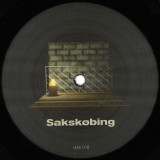
The light is at the end of the tunnel. The light is shining bright because of love. The love is the answer to the darkness + the remedy for the experience which might bring unclearness and letting drown in the metaphorical swamp which every single human has felt during the journey they are on. The EP by the Switzerland based mastermind Dan Piu is dedicated to the love and to the love only. The tracks that were produced from the artist’s creative inflow are from the year 1995 to our present days and are telling the story of hope and compassion. Starting from A side we have a demonstrative rollercoaster which is ‘Selfish War Machine’ gracing before the ‘Made in Japan’ which is inspired by the early arcade machines and the ethos they were bringing with them. Side B starts with seductive house number straight up from the year 1995, followed by Robotic tool ‘Robota’ and finishing off on the perfect and soul caressing track going by the name ‘Equinox of Ceres’. This precise body of work which has found its home with Sakskøbing is pure and direct message of love, in a way when things are seem bleak the light can be sparked again. The answer how this spark gets obtained is the four-letter word which is mentioned frequently in this text
- A1: Unreality
- A2: Don't Look Down (Feat Natalie Shay)
- A3: Faded Memory (Feat Sarah Appel)
- A4: Taking Over Me (Feat Natalie Shay)
- B1: Only A Dream
- B2: Come Alive (Feat Sarah Appel)
- B3: Be The Horizon (Feat Dom Youdan)
- B4: Last Light
- C1: Virtual Companion (Feat Dom Youdan)
- C2: Closer Apart (Feat Natalie Shay)
- C3: Disconnected (Feat Sealine)
- D1: Pattern Recognition
- D2: Look To The Light
- D3: Our Cosmic Insignificance
This is about remembering our humanity, which perhaps we lost a little bit over the last couple of years - maybe we can get a bit of it back in the dark, under some strobe lights." There's a considered and conscientious edge to every record that comes from the studio of Graeme Shepherd, a.k.a. Grum. Strip away the club exterior and you will find a nuanced, sometimes provocative, message that asks us to challenge our outlook on the world. 'Unreality', Grum's fourth studio album, is his most reflective work to date, putting human connection in the digital age under the microscope. "Based near Glasgow, Scotland where I had to spend a lot of time by myself. I watched, alone, as world events unfolded and I think that has funnelled itself into the music somewhat." The visceral nature of Graeme's work has been present since his debut LP 'Heartbeats'. A feel good, get up and dance record championed by Annie Mac and Pete Tong in the early 2010s, Grum was a product of the blog era, riding the heights of Hype Machine with his synth heavy sound.