Red Vinyl. Soul of Anubis is a power duo formed in 2010 from the North of Portugal. Their music is a blast on stage with a ferocity of sound that goes from thrash to sludge, capturing doom and post-metal at same time, performing energetic and contagious live acts. "Ritual" represents the passage from life to death and rebirth into a new cycle. During these last years, we have lost beloved ones, we have lost the freedom to breathe, we have lost some companionship and we had to fight to lift our souls back on trial. In Egyptian mythology, Ra, God of the Sun, goes down to the underworld every night to help the dead cross to the other world and ensure that a new dawn would happen. So, "Ritual" is a memorial to our beloved ones who passed away, speaks for the mental struggle that everyone has to face to overcome their demons and glorifies the victory of rebirth. As we have our demons, this is our ritual to cross our pathway.n. So, "Ritual" is a memorial to our beloved ones who passed away, speaks for the mental struggle that everyone has to face to overcome their demons and glorifies the victory of rebirth. As we have our demons, this is our ritual to cross our pathway.
How do we listen when we know the human is absent? Neue Deutsche Kunst present a collection of music created for their own films, from Bubblegum Pop (literally - the first track is about Kaugummi), Dada Chanson, sugary Psychedelia, Cartoon Prog, Fake Jazz - documenting a period of Unheimlichkeit in the technological development of humankind. The music was neither composed nor recorded, no soundwaves were moved, no microphones abused. Absurd lyrics speak of non-reality, LSD, violence and revolution in a flowery almost-German non-poetry. Three songs are sung in a non-existing speculative language. It literally is Keine Nichtmusik - or is it?
Born in Casablanca, Oum is a talented songwriter and melodist, whose songs are deeply rooted in the complex rhythms that can be found in Moroccan traditional music. Over the years, she has crafted a unique signature, with songs infused with sensual themes, carried by a voice that is both powerful and warm. While she sometimes borrows from jazz, soul or trance music, Oum defies categorization. Her music is that of a singular, free and universal artist.
A dedicated artist, Oum champions freedom, the rights of women and minorities, as well as an ecological and humanist vision of the world. As a UNAIDS Goodwill Ambassador, she makes her art a space of resistance and sharing, where spirituality and poetry rise as a life force. With Dialddar ("homemade"), Oum takes on a radical approach: composing an album without strings or wind instruments, relying solely on voice and percussion. A choice that constitutes both a technical challenge and an artistic manifesto. The percussions used are mostly handcrafted in Marrakech. Their tuning, sensitive to variations in temperature and humidity, make each recording fragile, vibrant, and unpredictable. It is precisely this organic dimension that Oum wanted to preserve: music that breathes, escapes control, and finds its true expression in the moment. With Dialddar, Oum continues her quest for a universal, rooted, and visionary music that invites a sensitive listening to the world. TER004 - CD comes with a 44 page book.
Back on vinyl for the first time since 2015! New remastered version with alternative cover art. Unlike all DJ Yoda’s artist albums, ‘Breakfast Of Champions’ features the same collaborators on every track effectively putting together a band. The genesis of the project was in Manchester, where the legendary Band On The Wall venue asked him to host an artistic residency. He put a call out for local musicians, did auditions, and selected three rappers. Two were local to Manchester - Truthos Mufasa and Sparkz. They were local legends making up parts of The Mouse Outfit and LVLZ. And the third was Rex Domino from down south, who was a British MC who Yoda thought would gel well with the other guys. They wrote, rehearsed and recorded intensively in Manchester - performed a memorable series of live shows (including an epic Glastonbury show), and Yoda put the finishing touches to the album back in London after the fact. “It was such an enjoyable experience” says Yoda. “Lifelong friendships were made, and most excitingly two of the band members got together (James Breen, drummer, and Claire Northey, violinist) and had two kids! So there are Breakfast of Champions humans out there too!”
This new pressing features alternative artwork that was never used at the time of the album’s original release.
White Elephant announce their debut album "World Elephant Day", the sound of time, trust and total freedom. A project forged over ten years in Crazy P"s Nottingham studio, blending dancefloor DNA with intimate musicianship. White Elephant began as a no-agenda weekend in Crazy P"s Nottingham studio, where Chris "Hot Toddy" Todd, Jim "Ron Basejam" Baron and Ben "BJ" Smith discovered an effortless musical union. Over the next decade, their collaboration slowly evolved into a debut album shaped by warmth, trust and lived experience rather than deadlines. Blending Crazy P"s dancefloor DNA with tender musicianship, the record moves between glowing disco grooves, 80s-bright sparkling pulses and intimate acoustic moments. It"s reflective without being nostalgic, playful yet deeply human. White Elephant is three friends rediscovering the joy of making music simply because it feels good.
out of Stock
Last delivered 8 months ago available to reorder, subject to availability
Un-easy listening from »anti-singer« and improviser Sofia Jernberg, a celebration of the voice in its rawest, most malleable form. Jernberg was born in Ethiopia and grew up in Vietnam and Sweden, so one can only imagine these diverse languages opened up a wealth of phonetic possibilities before she entered academia to study jazz and composition. If you dive into her catalogue you’ll clock her startling range – working as a jazz soprano and as an improviser, collaborating with everyone from Stefan Schneider to Mats Gustafsson, as well as appearances on the stage and screen, most notably in Matthew Barney, Erna Ómarsdóttir, and Valdimar Jóhannsson’s »Union of the North«.
On »Voice«, Jernberg provides a ground-level entry point to her work, meticulously running through a litany of unconventional techniques (non-verbal vocalisation, split tones, toneless singing, and distortion) without any effects, just pure batshit sonics designed to show off the voice’s scope as an experimental instrument. On »Mouth Synthesizer« she purses her lips to make ratcheting pops like some analog oscillator, hoarsely mimicking the sort of blustery, Merzbow-coded distortions you might get if you patched a RAT pedal into a broken guitar amp. It isn’t an act of caricature, it’s Jernberg’s way of demonstrating that expensive modular rigs aren’t an essential tool for experimental music, before throwing a side-eye to the field recording industrial complex on »Birds«, transforming her vocal chords into a nightmare aviary. But it’s Jernberg’s startling »multiphonic« experiments that hit hardest. The album opens on »Multiphonic I«, and it’s difficult to tell that you’re listening to a human voice at first – you could just as well be on Colin Stetson’s overblown sax airstreams. Jernberg creates a captivating spiral of crooked, phased tones and hoarse, guttural croaks that she develops over three movements. On »Multiphonic II«, her voice is turned into a storm of pained shrieks, and on the third and final segment, it almost resembles Arve Henriksen or Jon Hassell’s muted brass curlicues. Each track pulls a different musical muscle, whether it’s »One Pitch« with its unsettling yodel-like quivering drones or »Gurgle«, sounding like a close mic-ed recording of a small pot gently simmering.
At the start of this summer, following a three-year hiatus for Daphni (punctuated only by his first ever collaborative Daphni track ‘Unidos’ alongside Sofia Kourtesis), he dropped ‘Sad Piano House’. The track represented something of a continuation in the Daphni catalogue, its roots growing from Cherry’s ‘Cloudy’ and its subsequent Kelbin remix, something in that song’s makeup having a profound effect when played on dancefloors by Snaith and countless others. ‘Sad Piano House’ deployed more intangibly irresistible bendy piano to equally satisfying effect and continues to achieve similarly rhapsodic dancefloor saturation.
Though a sizeable gap for Daphni releases, between Cherry and Butterfly however of course sits Honey, the latest Caribou album and one that saw the more instantaneous and dancefloor leaning traits of Daphni peaking through the cracks more than ever before. This blurring of the lines leads to an intriguing collaboration in Butterfly’s lead single ‘Waiting So Long (feat. Caribou)’. An unlikely duo - in that both artists are the same man, Dan Snaith - ‘Waiting So Long’ is not so much an identity crisis, ego trip, or the result of a chemical spill in the Snaith laboratory. It’s simply a track that Snaith felt for the first time belongs to both aliases, and might appeal to fans of both. He has never sung on a Daphni track before, and did not set out with the intention to do so this time, and yet this strange billing was born.
Daphni music has always been Snaith’s way of hitting directly to the core of the dancefloors he spends so much of his time playing to, and those dancefloors have been steadily expanding as his name grows, with the music following suit. This album however also draws from further back with a definite kinship to the very first Daphni album, the invigorating bag of ideas that was Jiaolong.
Butterfly is a showcase of the wonderful variety and surprising twists and turns that made that album such an exciting new prospect and that still to this day make Snaith such an intriguing DJ. There are more heavy hitters here, tracks that fill those dancefloors better than anyone, like ‘Clap Your Hands’ which picks up the energy of ‘Sad Piano House’ and flips it, exposing the gritty and intoxicating underbelly of Snaith’s hitmaking side, while retaining the playful urgency that runs through all of his work of late. Meanwhile ‘Hang’’s comic-strip horns are unpinned by gleeful force, unrelenting and thrillingly unshakeable. Elsewhere though comes a clutch of other tunes that might creep out somewhere more off the beaten path, a path Snaith has never stopped seeking in amongst his larger billings. ‘Lucky’ is squirmy and elusively intoxicating, ‘Invention’ skitters down meandering, inviting corridors, ‘Talk To Me’ grumbles and broods in the murk, and ‘Miles Smiles’ could roll on endlessly, so confident in its groove. There are no obvious peaks in these tracks or unifying moments, in fact many of them really have no business being on the dancefloor at all, and yet in the right setting, they could be the most fun to be had all night.
One such club is a good microcosm for the ethos of Butterfly as a whole. “Around the time I was finishing up this album I played a long set in a club called Open Ground in Wuppertal, Germany.” Snaith recalls, “It’s kind of, in one sense, the platonic ideal of the kind of club I’d want to play in. Every single decision has been taken, at great expense, with the aim of making the perfect sounding medium sized club room. But on top of it being the perfect acoustic environment it also is run by an amazing collection of people in a way that gives it a sense of community that dance music at its best provides. It is an absolute pleasure to play in that room to a crowd of people who come from all over. Playing in there you feel like you can play anything, and I played works in progress of pretty much every track on this album in my set there. Don’t get me wrong, I love playing a short set at a festival or in a more raw warehouse kind of club where you bang it out and only really functional music works but on record I guess the point of these Daphni records is to keep in mind a more expansive idea of dance music where the parameters are broad and the church is broad. I think that actually, putting really functional stuff next to weirder tracks (both on an album and in a dj set) might be the thing that’s still most interesting to me.”
This is the feeling that’s most palpable on Butterfly, and in every single time you see Snaith DJ. Right from the inception of the Daphni alias - and even before that – the thrill of trying stuff out, pushing at the boundaries has always been there and on Butterfly is present in all its twists and turns. It leaps all over the place and yet it hangs together, never feeling like a grab bag of dancefloor utilities but rather a distillation of all the strings to Snaith’s bow, exhilaratingly human and unified by one singular concept – simple and joyful exploration.
out of Stock
Last delivered 3 months ago available to reorder, subject to availability
When you listen to birds, they usually talk about food, sex/family, or anxiety. If they knew about the true nature of humanity's cruel and exploitative relationship with birds, they would be discussing rebellion. Humanity's current trajectory about birds is to cause the extinction of one-third of all bird species by the end of this century.
This record crystallises the borders between memory, beauty, and anxiety. At the core is an amalgam of all the birds we have met and heard, their sounds synthesised from a blend of memories. Esthetically it simulates the qualities of bird sounds, hitting similar frequential sweet spots. There is a great variety of birds captured here, from high to low frequencies, from solo voices to groups, from birds standing on their own to complex world-building, where the bird voices are part of an ecosystem, becoming one of the instruments.
You could stop there, enjoying this record on a musical level, but it invites us to do one step further, to consider reconfiguring our relationship with the Earth and its inhabitants. To question our impact, and to ask why we need synthetic bird music. Is it just a visionary endeavour or is it because we are failing at fostering a world in which organic birds and other creatures can thrive?
32 artists from the whole world, including our favourite artists from Eastern Europe, have contributed to this compilation both with new and previously released music. Their music is ordered from dawn to dusk and into the night. For many of the artists it's their first time on mappa, but some have previously released an album with us.
out of Stock
Last delivered 8 months ago available to reorder, subject to availability
A chance meeting in Mexico City set Points of Inaccessibility into motion. When Ibero-American composer Rafael Anton Irisarri crossed paths with Dutch media artist Jaco Schilp at MUTEK in 2024, a conversation about how technology shapes perception revealed an unexpected common ground. Schilp invited Irisarri to a spring 2025 residency at Uncloud, the Utrecht-based collective he co-founded, where Irisarri's sound began to take form amid an environment shaped by Schilp’s visual research.
The Uncloud studio was located inside the former Pieter Baan Centre, a forensic psychiatric prison where suspects of violent crimes were once confined. Its long history of silence and containment shaped the atmosphere in which the project developed. Within this setting, Irisarri coaxed long bowed-guitar tones through a network of pedals and looping systems. The raw gestures thickened into a vaporous and architectural field of sound. Schilp processed the material through a custom point-cloud software patch that produced images in continuous flux. The visuals flickered, dissolved and reformed like memories that resist coherence, functioning as a digital Rorschach that reflected the observer’s own perception.
Amid these spectral echoes, the project evolved into an examination of how the past persists within present signals. Memory endures as residue and interference, continually shaping perception even when its source has faded.
Schilp’s visual process required a continuous stream of sound in real time. Irisarri improvised throughout the residency, generating material that allowed the visuals to develop in parallel. Once back in his New York studio, he began shaping the recordings by carving pathways through the improvisations and mapping selected passages into MIDI. This process allowed him to build outward from the bowed-guitar material with minimal overdubs, adding Prophet 5 textures, Moog bass and strings that expanded the harmonic field while keeping the original performances at the center. To refine the structure, Abul Mogard provided editorial input, working with Irisarri’s stems to guide transitions and strengthen the overall pacing. The material, originally created under conditions of immediacy and constraint, evolved into a fully realized work through careful revision, patience and sustained reworking.
The title engages the geographic concept of the Poles of Inaccessibility, locations defined solely by their distance from all surrounding points. Irisarri adapts this idea to the conditions of digital life, where new forms of inaccessibility arise through the informational enclosures that structure perception. What appears to be a fully connected network often produces a deeper kind of separation, one shaped by the filtering logic of the systems that mediate experience. In this sense, the digital sphere mirrors its geographic counterpart. We inhabit spaces saturated with signals, yet the possibility of genuine contact becomes increasingly remote.
At its core, Points of Inaccessibility considers what can be understood as the new rituals of capitalist realism. Irisarri uses the term digital shamanism to describe the forms of simulated connection that organize contemporary life. These systems promise comfort through algorithms, influencers and AI interlocutors, yet they often reproduce the same conditions that generate loneliness in the first place. What appears as connection becomes the echo of connection, a sequence of gestures that imitate solidarity while withholding it. Like the geographic poles, these rituals are defined by distance. They pull us into environments where everything is illuminated, yet meaningful proximity becomes increasingly rare. In this sense, the work approaches a hauntology of the present, a reflection on futures that have stalled and intimacies that have been thinned by the algorithmic infrastructures that surround us.
This thematic tension unfolds across the album’s four movements. Faded Ghosts of Clouds introduces the work with textures that rise and dissipate in slow cycles, creating an atmosphere that resists clear definition. Breaking the Unison occupies a pivotal position in the sequence and focuses on the moment when the individual and the system fall out of alignment. Its shifting patterns trace the scattering of signals that once suggested connection, revealing the instability at the heart of contemporary perception. Signals from a Distant Afterglow forms the center of the album and features vocals by Karen Vogt, whose presence enters the sound field like a fragile transmission shaped by distance and delay. The closing piece, Memory Strands, follows motifs that appear, recede and briefly intersect before returning to quiet. Across these movements, the album outlines a landscape in which emergence and disappearance continually inform one another.
Listening to Points of Inaccessibility is an encounter with a sound field that is constantly in flux. Elements surface briefly, shift position and recede, creating a sense of motion that resists stable interpretation. The music moves between closeness and vastness, carrying traces of memory while withholding a clear point of resolution.
The album’s visual identity completes the project’s conceptual arc. In Mexico City, where Irisarri and Schilp first met, Daniel Castrejón transformed stills from Schilp’s point-cloud visuals into the cover image. The final artwork captures a single suspended frame of the digital material, a moment extracted from a field that is normally in constant motion. Its surface recalls the texture and abstraction found in the work of Catalan artist Antoni Tàpies, where material presence and erasure coexist within the same plane.
What emerges is a work that examines the tension between technological systems and human presence. Points of Inaccessibility asks whether connection is still possible within environments shaped by mediation and delay, or whether we have become isolated points within the very networks that promise proximity. What possibilities for relation persist within environments organized by algorithms and interruption? And how are we meant to understand presence when so much of it is constructed at a distance?
Points of Inaccessibility will be released on BioVinyl on February 6, 2026, with audiovisual performances planned throughout 2026.
Mastered by Stephan Mathieu
Artwork by Jaco Schilp
Design and layout by Daniel Castrejón
Artist photo by Iulia Alexandra Magheru.
out of Stock
Last delivered 7 months ago available to reorder, subject to availability
Water can retain or wash away memory; flowing or freezing. It gives life and shapes earth, while frozen imprints of an ancient past are waiting to melt – back into sound or fluid motion, or simply to dissipate and disappear. For their split release, Yoichi Kamimura and Olli Aarni offer two distinct reinterpretations of a performance recorded live at the Temppeliaukio Kirkko – a church in Helsinki built directly into solid rock and bathed in natural light – meditating on glacial landscapes and water cycles, using shared field recordings that bifurcate into two sonic visions of “ice journey”.
Yoichi Kamimura’s extensive recordings formed the bedrock of the original performance, notably from time spent on Suomenlinna Island just outside Helsinki in 2021, aiming to capture the remnants of the glacial movements that formed the area’s geology. Elsewhere, the voices of ringed seals, underground waterways of Kyoto, and icy rivers in Lapland from Kamimura’s library float in as well. “The small, charming, and gentle islands floating in the Baltic Sea—some with little cottages and restaurants—reminded me of the drifting ice in the Sea of Okhotsk between Japan and Russia,” describes Kamimura. Fragments of a Christmas choir creep in too, recorded at the church on Suomenlinna Island. Titled Kōri no ryokō , Kaimimura’s reinterpretation of the performance emphasises a shared future across all icy sea regions of the world: thawing ancient memories and the threat of disappearing entirely.
On Jäämatkailu, Olli Aarni presents his own expansive reworking of the same source material, heavily processed alongside his own field recordings from Vantaanjoki river and Suontee lake in Finland. “I was thinking about the processes of erosion, water carving rock, the prehistoric glaciers over the landscape in my own environment,” explains Aarni. The soundscape hums with both intimate details and macrocosmic flow, and a submersible bass rumble hinting at an iceberg far below the tip, morphing at time scales beyond human comprehension.
Side A is composed by Yoichi Kamimura using field recordings of drift ice (Shiretoko, Hokkaido, 2019–2022), the Lake Biwa Canal (Kyoto, 2020), the Therme Vals baths (Vals, 2017), spring water (a fountain next to Saint Benedict Chapel, 2017), a Christmas choir (Suomenlinna Church, Helsinki, 2021), ice in the Juutuanjoki River (Inari, 2021), and recordings from Yoichi’s and Olli’s concert (Temppeliaukion kirkko, Helsinki, 2021), KORG iPolysix, and KORG minilogue xd.
Side B is composed by Olli Aarni using the aforementioned sounds + field recordings of the river Vantaanjoki and the lake Suontee, sampled sounds, and a computer.
out of Stock
Last delivered 8 months ago available to reorder, subject to availability
Mutable Ground is an album created through an exchange of recordings between Anna and Yannis. The project is rooted in the idea of sudden shifts in current events and the ever-growing emotions tied to loss, change, and tension. Each track title is inspired by unstable phenomena and objects, reflecting the potential for unexpected movement and the transitions of both nature and humanity. Repetitive, chaotic drum patterns, vocals that echo sounds of wounded or lost animals, hollow soundscapes reveal a sonic world where creation and destruction coexist—where people dance around fires, caught between fragility and resilience.
RENO, the debut album from Red Leather, is a scorched-earth confession wrapped in the swagger of classic rock and the soul of Americana. Written in the aftermath of addiction, heartbreak, and self-reckoning, it’s an unflinching look at what it means to burn your life down and start over. Across its 14 tracks, Red Leather howls through desert nights and neon cityscapes, blending grit and grace in equal measure. Songs like “Deathwish,” “Burn in Hell,” and “The Only Time It Rains in Hollywood” are raw, cinematic, and deeply human—each one a snapshot of pain, defiance, and redemption. Equal parts road trip and resurrection, RENO cements Red Leather as one of the most compelling new voices in modern rock. 1xLP, Single Pocket Jacket, Pressed on Translucent Red Vinyl
APORIAMOR noun 1. The death of love’s contradiction.
| “Embody APORIAMOR”
Etymology
aporia-: an irresolvable internal contradiction or logical disjunction in a text, argument, or theory. from Greek aporos ‘impassable’, from a- ‘without’ + poros ‘passage’
-amor: love. Sentimiento intenso del ser humano que, partiendo de su propia insuficiencia, necesita y busca el encuentro y unión con otro ser. Del latín amor.
-mor: latin for death.
APORIAMOR explores the affective ontological and organic processes of love and lust in the turmoil of an urban existence, through the female lens. It expresses the process of strengthening through heartbreak in its various forms.
With her debut EP The Art of the Concrete, elsas knew that by giving that name to a record which was ironically expansive and experimental, she would be calling for a distilled and clearer path further down the line. This is what she’s been incorporating into the sonic world of this new EP, APORIAMOR, signifying the birth of a more matured and distilled version of herself as an artist.
With APORIAMOR (“the death of love’s contradiction”) elsas conveys a personal process of healing in the romantic space. Through different experiences of heartbreak, elsas builds a language - a coping mechanism attached to its subsequent artistic expression – that isn’t founded on hardness or a closing-off, but instead, on a playful but profound reckoning, and learning of self-worth.
APORIAMOR embraces the complexities of being a lover-girl: of moving through life with an open heart. It celebrates the clarity, sweet hindsight, and detachment that come from processing emotion. APORIAMOR is both an affirmation and a release.
elsas makes canonical blends with a forward boundary-bending vision. Her sound in this record is naturally referential of both her Mediterranean heritage and UK alternative music — intrinsic parts of her lived experience. She has had the opportunity to collaborate with artists she deeply admires, each exchange enriching her creative world.
The experience of working hand-in-hand with Sampha for the last 3 years and ongoingly has been a core of her evolution as an artist. She has also collaborated in many forms with artists like Florence + the Machine, Little Simz, Jordan Rakei, Jockstrap, Obongjayar, Black Country New Road, Genevieve Artadi (KNOWER) and Duval Timothy. Additionally, her ongoing work with the Idrîsî Ensemble, of which she is a core member, continues to inform her artistic depth.
The making of this largely self-produced record unfolded over four years — “it’s a well-kneaded dough,” she says. These songs evolved through exposure to multiple environments: from early writing sessions in her childhood home in the Spanish countryside, to stages across the U.S. while on tour supporting Sampha.
Experimentation and modulation are an intrinsic part of elsas’ method, conceiving songs as organisms that respond to their surroundings. Collaborators on this collection of songs include Shrink, Will Lister, Gabriel Gifford, Ethan P. Flynn and more. The record was mixed by David Wrench (a long-time supporter of elsas’) and Nathan Boddy, and mastered by Matt Colton.
With APORIAMOR, elsas creates a visual world from the fabulation of the past, as an act of playful historical revisionism in which she embeds herself as both subject and storyteller. The songs function like an archive of her experiences across various years, each one unearthed and presented as some sort of archaeological artifact. Through this body of work, elsas begins to conceptualize herself as a legacy artist: one who honors the archive of her own becoming while emerging as a distinct and resonant voice in today’s musical landscape.
With their upcoming sixth studio album, “What A Time To Be Alive” , The Lone Bellow embarks on a bold new chapter while honoring the deep bonds that have defined their journey. Written collaboratively for the first time with their full touring band—founding members Zach Williams, Brian Elmquist, and Kanene Pipkin joined by drummer Julian Dorio and multi-instrumentalist Tyler Geertsma—the album channels the raw, ecstatic energy of the band’s live show into a dynamic collection of songs that pulse with warmth, honesty, and human connection. Recorded live in Muscle Shoals, AL, after a writing retreat in a converted Kentucky firehouse, the album is both a celebration and a reckoning: of friendship, loss, love, and resilience. From the gritty, Stones-tinged opener “After The Rain” to the soul-stirring closer “What A Time To Be Alive,” the record captures the joy and vulnerability that have long defined The Lone Bellow’s sound—lush harmonies, heartfelt lyrics, and genre-blurring arrangements steeped in folk, rock, and gospel. The album’s creation was marked by setbacks, including the theft of early recordings, but the outpouring of support from their fanbase reaffirmed what the band has always known: their music is a shared experience. That spirit echoes throughout the album, whether in anthems like “Common Folk” and “I’m Here For You,” or in intimate reflections like “You Were Leaving” and “Night Goes Black.” Since their acclaimed 2013 debut, The Lone Bellow has appeared on The Tonight Show, Austin City Limits, and The Late Show, topped Americana charts, and headlined storied venues from Carnegie Hall to the Ryman Auditorium. But with their next album, they reaffirm their commitment not just to making music, but to building community—on stage, in song, and around the table.
Wigwam's previously unreleased rare live recording from 1976 out in February via Svart Records In the summer of 1976, Wigwam performed not only in Finland but also in Sweden, Denmark, the Netherlands, and Germany. However, the pace slowed down afterward. The early autumn tours planned for European countries were cancelled, and even the replacement shows in Finland had to be postponed due to bassist Måns “Måsse” Groundstroem's sick leave. In October 1976 an opening appeared in the schedule for a studio session, during which Jim Pembroke’s third solo album, Corporal Cauliflower’s Mental Function, was recorded. After that, Wigwam played five gigs in Denmark at the end of November, followed by an equal number in Sweden. No exact information has survived about the concert setlists, but the band was in a stable phase, and certain songs had become staples in their live repertoire. Albums from Wigwam's deep-pop era, which began in autumn 1974, as well as Pembroke’s first solo records had already been released, and rehearsals were underway for what would become the Dark Album, released in 1977. It can be said that this concert, recorded for Danish Radio, is a strong representation of the band’s era at the time. The recording took place in northern Denmark, in a district called Lundtofte in Lyngby. Before this, Wigwam had performed in Køge and Århus, and after Lundtofte, gigs in Ballerup and Copenhagen awaited. Lundtofte was home to the Danish Technical University (DTU), where a student venue called “Studenterhuset” (Building 101) hosted a one- to two-day music events known as Polyjoint during the 1970’s. The events typically featured Danish bands, but also visiting acts like Wigwam. Most importantly, Danish Radio was sometimes present at these events. Wigwam had performed a studio concert for Danish Radio the previous year, but this particular recording is considered the more energetic of the two. Details have faded with time — for example, the identity of the second act at the concert is unknown. In any case, both guitarist Pekka “Rekku” Rechardt and keyboardist Pedro Hietanen remember the band being in high spirits, in top form, and highly motivated.
Wigwam's previously unreleased rare live recording from 1976 out in February via Svart Records In the summer of 1976, Wigwam performed not only in Finland but also in Sweden, Denmark, the Netherlands, and Germany. However, the pace slowed down afterward. The early autumn tours planned for European countries were cancelled, and even the replacement shows in Finland had to be postponed due to bassist Måns “Måsse” Groundstroem's sick leave. In October 1976 an opening appeared in the schedule for a studio session, during which Jim Pembroke’s third solo album, Corporal Cauliflower’s Mental Function, was recorded. After that, Wigwam played five gigs in Denmark at the end of November, followed by an equal number in Sweden. No exact information has survived about the concert setlists, but the band was in a stable phase, and certain songs had become staples in their live repertoire. Albums from Wigwam's deep-pop era, which began in autumn 1974, as well as Pembroke’s first solo records had already been released, and rehearsals were underway for what would become the Dark Album, released in 1977. It can be said that this concert, recorded for Danish Radio, is a strong representation of the band’s era at the time. The recording took place in northern Denmark, in a district called Lundtofte in Lyngby. Before this, Wigwam had performed in Køge and Århus, and after Lundtofte, gigs in Ballerup and Copenhagen awaited. Lundtofte was home to the Danish Technical University (DTU), where a student venue called “Studenterhuset” (Building 101) hosted a one- to two-day music events known as Polyjoint during the 1970’s. The events typically featured Danish bands, but also visiting acts like Wigwam. Most importantly, Danish Radio was sometimes present at these events. Wigwam had performed a studio concert for Danish Radio the previous year, but this particular recording is considered the more energetic of the two. Details have faded with time — for example, the identity of the second act at the concert is unknown. In any case, both guitarist Pekka “Rekku” Rechardt and keyboardist Pedro Hietanen remember the band being in high spirits, in top form, and highly motivated.
RENO, the debut album from Red Leather, is a scorched-earth confession wrapped in the swagger of classic rock and the soul of Americana. Written in the aftermath of addiction, heartbreak, and self-reckoning, it’s an unflinching look at what it means to burn your life down and start over. Across its 14 tracks, Red Leather howls through desert nights and neon cityscapes, blending grit and grace in equal measure. Songs like “Deathwish,” “Burn in Hell,” and “The Only Time It Rains in Hollywood” are raw, cinematic, and deeply human—each one a snapshot of pain, defiance, and redemption. Equal parts road trip and resurrection, RENO cements Red Leather as one of the most compelling new voices in modern rock. 1xLP, Single Pocket Jacket, Pressed on Translucent Red Vinyl
Subconscio left the smallest town in Gargano to begin a new life in uncharted Bologna.
Leaving mother earth, he still retains a strong sense of that distant world, expressed through the senses of his inner child. The Subconscio
project finds its expression in music, where it blends Neo Soul, Hip Hop, and Electronica into a sound deeply influenced by individual experiences. Soft vibrations and relaxed lyrics are the means through which he expresses his devotion to creative freedom, moving with the urgency of someone who has finally found his voice. The word dáimōn originates from Ancient Greek and means divine messenger, a guiding
spirit that hovers in a middle ground, called metaxu, the same place where the soul resides, and acts as a link between God and humanity.*
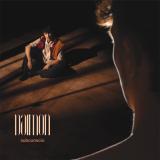
"Daimon" is Subconscio's debut album, produced by Luzee. It's the intimate vision of a person suspended in his imagination, questioning
the identity of his own memory and how the places that led him to his NOW are actually his future. The present doesn't exist in the narrative.
It exists only in the connection between childhood memories and the adult perspective.
Giulio is his son and also his parent: the Subconscious; the "daimon" is the musical journey that connects these two ways of observing the
same memory. Nostalgic turmoil meets the desire to recognize oneself and fuel the obsession with music, because only this—albeit the least
apparent art—is the only one that can be the voice and bearer of the dimensions of consciousness.
Featuring on the album: Madbuddy and Claver Gold
From the opening notes – arriving as if in mid-air – to its final, cheerful burblings, Sean Mac Erlaine and Caoimhín Ó Raghallaigh’s Old Segotia is an album about friendship: both musical and human, the product of two distinctive musicians visiting each other’s worlds with a sense of veneration, and a sense of joyful wonder.
Here, Mac Erlaine (This is How We Fly, Quiet Music Ensemble) and Ó Raghallaigh (The Gloaming, This is How We Fly) meet on common ground developed over 20 years of playing together, with Mac Erlaine’s musical language rooted in jazz and sonic experimentation, and Ó Raghallaigh emerging from an Irish traditional music that he has shaped and reshaped in a deeply personal way.
In this place, Mac Erlaine and Ó Raghallaigh’s music is profoundly integrated and emotionally textured: at times bursting with explosive energy, at times almost sighing into life, but always searching. Here are the touching unison duets of ‘Cantandor’, the lyrical wanderings of ‘Swallow Dive’, or the flirtations with finding a groove in ‘Reverse Burst’.
The palette of instruments speaks to the album’s feeling of abundance, with Mac Erlaine performing on clarinets, chalumeau d’amore, three different flutes, car hooter, percussion, live electronics, Wurlitzer, synthesiser, vocals and alto saxophone; and with Ó Raghallaigh bringing his signature hardanger d’amore sound plus a turn on the flute and live electronics, too.
With the title echoing a well-worn Dublinese expression for “friend”, Old Segotia plays out with ‘Oiche Crua Sna Sleibhte’ (A Hard Night in the Mountains), with ornithologist Seán Ronayne’s field recordings of birdsong rising out of the musicians’ playful explorations, offering a taste of life echoing music, echoing life.
The story follows a protagonist through an alternate-history space race, imagining a future where humanity settles on the moon and leaves a dying Earth behind. Musically, the record delivers the tight, energetic, hook-driven sound that appeals to fans of Delta Sleep and Snooze. This special edition includes the 10" record in a proper 10" outer sleeve and a custom 12" slip mat in its own 12" outer sleeve. The artwork of the 10" aligns with the slip mat design to create the appearance of an ink or blood stain when displayed together. Only 50 copies were produced.
Threewave is the complete synth trilogy from 36 and it unites three releases into a single, evolving statement shaped over five years. Spanning the Wave Variations, Symmetry Systems and Reality Engine releases, the project is rooted in self-imposed limitations and a carefully refined melodic palette that gave rise to a suite of interconnected transmissions. Minimalist sketches give way to warm, AI-era-inspired nostalgia, but always grounded by a distinctly human sensibility. Melancholic keys and glowing atmospheres balance precision with emotion before expanding into themes of perception, artificial intelligence and imagined realities. Together, these works make for a defining chapter in 36's partnership with the legendary Past Inside the Present.
out of Stock
Last delivered 8 months ago available to reorder, subject to availability
Im Gegensatz zu den früheren Alben der Lost Boys, die innerhalb eines bestimmten Zeitraums produziert wurden, entstand „Pale Bloom“ langsam und versuchte, einen Schöpfungsmythos in seinem Bernstein einzufrieren – eine Ursprungsgeschichte, die uralt und komplex ist, voller Geheimnisse und Metaphern, die weder einer Klärung noch eines Endes bedarf. Jede Veröffentlichung der Lost Boys wagt sich in neues musikalisches und lyrisches Terrain vor. Von allen greift „Pale Bloom“ am weitesten zurück in die Kindheit und findet unbewusst die Rhythmen und Erzählstile, die in den Zwängen einer religiösen Erziehung verwurzelt sind. Beim Durchforsten der vergessenen Akkorde, Refrains und Melodien aus alten Kinderreimen und Volksliedern entdeckten sie den Wunsch, diese überlieferten Klänge in Richtung persönlicherer Wahrheiten zu verändern. Dieser Impuls ist auf dem gesamten Album präsent und in Krugers ebenso klangvoller wie euphorischer Stimme zu hören, wenn sie die verschiedenen lyrischen Formen um ihre eigene Sehnsucht, Trauer und Begierde herumlegt und sie darauf vorbereitet, in der üppigen und großzügigen Subversion der erinnerten Rhythmen der Band zu landen. Im Gegensatz zu ihrem Auftritt auf „Heaving“ und „A Human Home“ sind die Streicher hier weniger affektiert und haben einen eher düsteren und ernsten Charakter angenommen. Sie streben nach einer komplexen Art von Himmel, der durch das Gewicht und die Bodenständigkeit der Grooves ermöglicht wird, die sowohl stoisch als auch ausdrucksstark sind. Die Gitarren bewegen sich frei zwischen weitläufigen, voluminösen Räumen und sind ebenso knirschend wie sanft. Kruger nahm das Album mit ihren Bandkollegen und ihrem engen Mitarbeiter André Leo über einen Zeitraum von sechs Monaten in verschiedenen Studios in Berlin auf. Das Album wurde von Simon Ratcliffe gemischt.
ULURU is a large sandstone rock formation in Australia. It's sacred to the Anangu, the local Indigenous of the area. For many years it had been deprived of its spiritual significance, due to mass tourism, capitalism, as well as greedy and selfishness of people who just want to make money out of it. However, as a result of the Anangu’s resilience, care and staunchness, huge changes took place in the national park around Uluru as well as in the broader public's consciousness, giving again to the Uluru the sacred identity that had been lost.
You might be reading and thinking now: so what's the point? Actually, there's no real point. I would rather say, there’s hope. The hope of seeing humans all around the world following the example of the Anangu. The hope of seeing humans finally stopping to treat the earth and all what’s part of it, what’s on and what’s in it, as a slave without soul. The hope of changing today, and if not today at latest by tomorrow. This system is failing. It's no longer sustainable, and there's no much time left.
So everybody, don't sleep, be critical.
out of Stock
Last delivered 4 months ago available to reorder, subject to availability
Rhiza Semar presents its fourth chapter with Yildizlara, a four-track odyssey shaped from shadow, rhythm, and elemental texture. Crafted as both visceral tools and introspective journeys, the record navigates between ominous density and luminous release, guided by a deep awareness of space, myth, and matter. As an artist, Hitam paves the way for a new sound emerging from his burrows to build bridges between electronic subgenres while shaping a landscape unmistakably his own. Orb Weaver opens the cycle with jagged IDM rhythms that coil and release like threads of a web pulled taut. Originally composed for the graduation project of fashion designer Tim van der Plas, who's collection was inspired on climbing out of depression, its atmosphere is dark and ceremonial, with textures scraping against silence until catharsis emerges from the tension. A confrontation between inner turmoil and release. On Vanishing of the Anasazi, cavernous reverbs carry traces of lost structures, percussion echoing as if across ruins. A relentless drive holds the ghost of ritual processions, summoning a spectral energy that feels at once monumental and hollowed-out. The track suspends itself between presence and absence, architecture and collapse, leaving the listener in a space where echoes become the only surviving form of memory. Mesh Grip plunges downward into subterranean force. A thundering groove rumbles like minerals being unearthed, goblin-like figures at work in hidden shafts, chiseling away at stone in endless rhythm. From this pressure, a sudden swell of melancholy pads rises, reframing the heaviness with emotional resonance as if the whispers of angelic guardians seep into the caverns, transforming extraction into elegy. What begins as pure drive of endurance evolves into an introspective meditation. Closing the release, Yildizlara unfolds as an epic ascent. Layered rhythms rush forward with urgency, intricate yet propulsive, while chopped vocals bring back a sensual human element, scattering like signals across the night sky. Animalistic atmospheres dart through the mix as spectral cries and furtive movements, adding a primal dimension to the drive. What begins as erratic and untamed slowly converges into warmth and ultimate catharsis: a cosmic tale inscribed in sound, both intimate and monumental, familiar yet born of hidden memory. Yildizlara is both innovative and ancestral; a release where turbulence becomes ritual, and where rhythmic complexity unearths fragments of hidden memory. Beneath its dark and erratic surfaces lies a strange familiarity, like echoes of a primal past resurfacing through sound, reminding us of worlds once known but long concealed. Words by A. Veyra
out of Stock
Last delivered 6 months ago available to reorder, subject to availability
Finnish dub-techno craftsman TM Shuffle, head of Vuo Records, resurfaces with a deep and distilled EP that goes straight for the late-night heart of the dancefloor. Rooted in Tampere’s raw, analog dub sound, his productions have long balanced weight and warmth, smoked-out chords, rolling low-end and subtle shuffle that keeps the groove in constant motion.
The lead track “Kellari” dives into basement mode: pressure-cooker drums, slow-burning stabs and a humid, lived-in atmosphere that feels equally at home on a huge system or in headphones at 4 a.m. On the second original cut, TM Shuffle links up once again with long-time collaborator Monoder, the alias of Jussi-Pekka Parikka, known for his dubbed-out explorations on labels like Statik Entertainment and Pakkas-Levyt since the early 2000s. Their joint track stretches time, letting echo, tape hiss and distant melodic fragments float around a rock-solid groove, channelling years of shared studio language into one focused, hypnotic flow.
On the flip, Anton Kubikov (SCSI-9) steps in with a lush reinterpretation of Kellari. A true Russian techno veteran with a catalog that spans Kompakt, Force Tracks, Mayak and beyond, Kubikov melts the original into a widescreen, dream-state trip, soft-focus pads, gentle yet insistent percussion and that unmistakable rolling pulse that made his work so enduring. The remix doesn’t just extend the track; it opens a new dimension, turning the basement pressure into a slow-rising, celestial drift.
Pressed on limited coloured vinyl, this EP is built for selectors who like their dub techno deep, human and timeless, a record that will quietly live in bags for years and keep resurfacing whenever the room calls for true late-night elevation.
out of Stock
Last delivered 43 days ago available to reorder, subject to availability
Islaja presents her new album ”Angel Tape”, her debut release on the new Helsinki-based label Other Power. Drawing inspiration from childhood epiphanies while listening to an alleged recording of angels singing, Islaja has crafted an album that stands out as a major work in her expansive and celebrated catalogue, which includes previous releases on labels such as Ecstatic Peace!, Fonal and Svart.
Islaja, aka Finnish artist Merja Kokkonen, describes her new album as a “counterwork” to her most recent albums, where the mode of composing was more song-based. This time around, she goes more in the direction of vast fields of sound where the human voice is a key ingredient of music that breaks free of strict stylistic guidelines and traditional song forms. Rough around the edges, atonal and otherworldly, "Angel Tape” is the result of a lifetime of inspiration from something beyond the immediate realm of our experience, an attempt to catch the elusive essence of musical otherness.
”As a child, I listened to the ’angel tape’ my mother played, and I never thought that the human voices I heard on it were angels singing. Instead, all the aural debris lying just beneath the surface caught my attention as I thought it was mysterious and something from a different world than ours, and so that was probably what was referred to as the ’angels’ so miraculously caught on tape”, Kokkonen explains. ”I think this was one thing that led me on this lifelong quest to find new sounds and forms in music.”
The tape she is referring to, a mid-80s church recording, was passed around in religious circles. Each time the tape was copied, it became slightly more distorted. It was believed that this recording of religious music had accidentally captured for the first time the voices of actual angels singing. The tape was rumoured to have originated in Kansas City and to have made its way to Finland.
Whereas Islaja has often thought of albums as being collections of recent songs presented together, ”Angel Tape” has a strong sense of conceptual coherence. The music comes from a place. That doesn’t mean that one must take a single path from one place to the next, as close listenings of the album reveal layers upon layers of not only sound but also of mood and meaning. From the human voice in its barest form, to the rising dense walls of sound moving and reshaping, ”Angel Tape” is a captivating album that unveils new contours with each repeated listening.
Auf seinem neuen Album "Chopin Orbit" eröffnet Piano-Shootingstar Hayato Sumino einen ganz eigenen musikalisch Kosmos rund um den berühmten Komponisten Auf dem konzeptionell vielfältigen und emotional bewegenden Album, stellt der weltweit gefeierte japanische Pianist und Komponist Hayato Sumino (alias "Cateen") die Musik von Frédéric Chopin in den Mittelpunkt und baut seinen ganzen eigenen musikalischen Kosmos darum auf. Frédéric Chopin, der zu Hayato Suminos Lieblingskomponisten gehört, ist seit Langem eine treibende Kraft in dessen künstlerischen Leben. Diese Verbindung wurde erstmals während seiner vielbeachteten Auftritte beim Internationalen Chopin-Wettbewerb 2021 deutlich und kommt nun in "Chopin Orbit" voll zur Geltung. Zum Programm gehören Chopins Polonaise-Fantasie op. 61, Nocturne Nr. 20 in cis-Moll, Berceuse Des-Dur op. 57 und das "Regentropfen"-Prélude op. 28 Nr. 15. Daneben stellt Hayato Sumino eigene Werke wie "White Keys" und "Post Rain", als auch Stücke von so unterschiedlichen Komponisten wie Thomas Adès, Leopold Godowsky und Leoš Janáček, die Chopins Einfluss über Generationen hinweg unterstreichen. Hayato Sumino erklärt dazu: "Für mich war Chopin schon immer wie ein Idol, und seine Musik liegt mir seit meiner Kindheit sehr am Herzen. Als ich mich als Musiker weiterentwickelte, wurde mir bewusst, wie natürlich sein Einfluss in meine eigenen Kompositionen einfloss. Irgendwann dachte ich mir: Warum nicht ein Album mit Chopin als Mittelpunkt aufnehmen? Dieser Moment war der Ausgangspunkt für dieses Projekt. Meine Stücke entstanden aus der Inspiration durch Chopins Werke. Manchmal zitiere ich ein Motiv oder verwende eine Melodie, aber ich habe nie einfach versucht, 'im Stil von Chopin' zu komponieren. Ich wollte vielmehr seinen Geist mit meiner eigenen modernen Sensibilität und Kreativität verbinden."Und weiter: "Der Titel 'Chopin Orbit' spiegelt diese Idee wider. Ich habe Chopins Musik in den Mittelpunkt gestellt, und von dort aus nehmen verschiedene Reaktionen und Ableger Gestalt an - als würden sie von seiner Schwerkraft angezogen und bildeten ihre eigenen neuen Umlaufbahnen. Aus Respekt vor Chopin ist jedes meiner Stücke mit dem Original gepaart, das es inspiriert hat, sodass das Album abwechselnd seine Werke und meine Reaktionen darauf präsentiert.""Chopin Orbit" folgt auf das gefeierte Sony-Debütalbum "Human Universe" dieses außergewöhnlichen jungen Musikers, das im November 2024 bei Sony Classical erschien und auf dem Sumino mühelos ein vielfältiges Repertoire von Bach bis Zimmer sowie einige seiner eigenen Kompositionen präsentierte. Für das Album und seine herausragenden Leistungen als Pianist erhielt Hayato Sumino als erster Künstler überhaupt gleich drei Preise bei der Opus Klassik Preisverleihung 2025. Wie schon auf "Human Universe" kombiniert Hayato Sumino auch auf "Chopin Orbit" unterschiedliche Klaviere und Flügelklänge bei der Aufnahme.Das Album "Chopin Orbit" erscheint als CD und Doppel-Vinyl.
Emerging from the Ukrainian darkness in 2011, Kaosophia blend the raw energy of black metal with dissonant tones and emotionally resonant melodics. Their music is a sonic tapestry woven with intricate guitar riffs, powerful vocals, and haunting arrangements.
The band recorded their first demo “Towards The End” which was self-released by them in 2012 on a limited edition cassette.
2013 saw their first album “The Origins of Extinction” released on CD and cassette and the band followed up with many shows across Europe. 2017 saw Kaosophia expand and deepen their abyssal sounds even further with the monumental “Serpenti Vortex”, with lavish cover art produced by occult master artist Dávid Glomba, it rose Kaosophia to the upper echelons and forged their name as one the best and most formidable black metal acts in the scene at the time.
After a long period of silence, bloodletting and transformation, Kaosophia return with their darkest, most mature and powerful work to date. 2025 sees the return of Kaosophia with their new album “Beyond The Black Horizon”.
A dark and malevolent opus that explores themes of darkness, existentialism and the human condition. Delving deep into the complexities of the mind, the fragility of existence and Death itself.
Kaosophia preach orthodox ideas of Satanism in the most straightforward and ruthless form - total unconditional worship. Self-destruction as the overcoming of human essence and the cognition of pain to gain access to another level of reality's perception.
It is time to enter the end of days and venture beyond the Black Horizon…
Music from the soundtrack to a horror-comedy podcast that Wood was commissioned to compose for in 2020. "At the height of the pandemic, podcasters Mayfield & Belov approached Will Wood to commission him to compose for an upcoming show entitled ""Camp Here & There."" The podcast had not been recorded yet, and as if that weren't enough, Wood couldn't read sheet music. However, Wood accepted the challenge and began to teach himself new methods of writing that would allow him to compose music note-for-note in ways that his days as a bandleader had not yet prepared him for. M&B provided notes and concept art they had developed so Wood could learn about the stories and characters, and he dug into his own life and used that and what he learned about the show as inspiration for what started as simple background music and eventually became a collection of both score and original songs. This album contains both instrumental music and four original songs, including "Yes, to Err is Human, So Don't Be One." and "Your Body, My Temple."
Dieses Album, mit dem 20 Jahre unermüdlicher Heavy Metal gefeiert werden, ist mehr als nur ein Konzert, es ist ein Meilenstein in der Geschichte der Band. Mit hochfliegenden Vocals, messerscharfen Riffs und donnernden Rhythmen beweist Manimal, warum sie seit zwei Jahrzehnten bestehen und erfolgreich sind. Fans von melodischem und dennoch kraftvollem Metal werden in eine Performance eintauchen, die sowohl episch als auch intim ist, eine echte Feier des Erbes und des Geistes von Manimal.
Bluegrass band Big Richard makes music for the 21st century’s twisted cultural unease. Their Signature Sounds debut Pet, is a fierce, provocative, rejoinder to what troubles them and the world right now, and was recorded live to tape in order to capture the fervor of their live shows.
“Big Richard is so much about our energetic delivery, and so I think it's been really important for us as a group to figure out how to do that for a record,” says mandolin and guitar player Bonnie Sims. And figure it out they did. Pet delivers, successfully translating the supergroup’s live kinetic harmonies and string virtuosity. Unapologetically outrageous and provocative, the band’s name is a wink to the ‘big dick’ energy Big Richard is reclaiming from male bluegrass bands. Since exploding onto the Colorado scene in 2021, the four women have been on a wild ride, slapping as hard as possible on the festival circuit, working up their stamina on nationwide headlining tours, and leaving a wake of die-hard Big Richard Heads across the country swooning for their honest songwriting, chilling vocals, and fiddle-driven barn-burners.
“Our live performances are so raw and so gritty, and I think that our sound never really flourished in that digital landscape.” GRAMMY and Emmy Award-winning cellist Joy Adams says. “Recording live to tape we were all in the same room together, very close together, with a lot of mic bleed, etc. And the energy was insane. It felt so good to record this way. Even on the first day, we were like ‘wow, this sounds like our band.’ And to do something that's very real and gritty and has little mistakes in it just feels alive and human.”
Bless the Maker: the Great Houses of Laced Records and Funcom have forged a temporary trade agreement to bring you the expansive soundtrack for ‘Dune: Awakening’ on vinyl. The hit survival game has garnered critical praise for its incredibly faithful and detailed realisation of the Dune universe - from its sprawling vistas to deep lore and political intrigue. The music is integral in recreating the atmosphere of Arrakis, conjuring not only its striking landscapes but the human experience of life on the planet. Recorded live at Air Studios in London with The Chamber Orchestra of London, Knut Avenstroup Haugen’s soundtrack conjures a planetary sense of scale.
Arcing strings shimmer and twist weightless in the air like heat rising from the desert floor, while resonant brass evokes dawn stretching out across the sands. The luscious acoustic instrumentation is enhanced and elevated by rippling electronics, capturing Dune's singular blend of science fiction and spiritual tradition. Soaring vocal performances from Clara Sorace, Eurielle and Emília Rovira Alegre centre this sense of the sacred, pushing the soundtrack to ecstatic emotional peaks. Black heavyweight double vinyl. 24 tracks from the acclaimed 2025 survival game. Widespined outer sleeve Printed, spined inner sleeves. Bespoke sleeve artwork by Funcom.
out of Stock
Last delivered 8 months ago available to reorder, subject to availability
Formerly one third of the much-loved trio Black Box Recorder, alongside The Auteurs’ Luke Haines and Jesus and Mary Chain guitarist John Moore, the British singer-songwriter Sarah Nixey has steadily gained acclaim as a solo artist who makes savvy, sophisticated and poised pop.
Delivering vocals with a detached elegance over opulent tracks, any perceived nonchalance in Nixey’s luxe, cut glass voice belies her empathy, where social commentary serves as protest, both explicit and implied. Like Billy Bragg deepfaked as prime Julie Andrews, this strange but effective juxtaposition radiates soft power. ‘Lies of the Land’ depicts a corrupt post-Brexit and Covid-19 world where inequality and division flourish. ‘England's On Fire’ delves into the nuanced concepts of patriotism and nationalism, and ‘Pleasure Bay’ narrates the story of a love affair with a deprived yet beautiful English seaside town, written after Nixey left London, drawn back to the Dorset coast.
More than just a political record though, Nixey was drawn to the poetic elements of living too, telling stories of life and death, love and loss, conflicts and symmetry, in an intimate and close-up way, as if whispering secrets to her listeners.
“Sea Fever explores the bittersweet beauty of human life amid a volatile world of changing seasons and brutal elements,” says Nixey. “These are songs of deep sorrow, remembrance, birth, and change, set against a backdrop of the sensuous natural world.”
‘Rolling Waves’ explores profound grief following her beloved grandmother's death, while ‘Spring Equinox’ celebrates the joy and awe of life after welcoming her first grandchild. ‘At the Edge of the Forest’ is a poignant story of someone losing their memory, and ‘On This Wide Night’ recounts the early hours return home of a teenage runaway.
With her sophomore album JAWBREAKER, Sam Quealy cements her status as one of pop’s most daring new voices. Like the cult candy it’s named after, JAWBREAKER is bold, addictive, and dangerously fun — a sugar-coated explosion of chaos, glamour, and emotion.
Produced alongside longtime collaborator Marlon Magnée (La Femme) between their Paris home studio and the legendary Studio Ferber, the album marks a striking evolution from Blonde Venus (2023). Here, Quealy trades the sharp edges of techno-pop for a lush, disco-infused sound, blending live instrumentation and cinematic sheen with her trademark anarchic energy. The result is a record that feels liberating, hedonistic, and deeply human — a vibrant antidote to modern gloom.
From the euphoric escape of “LONDONTOWN” to the dark romance of “LOVE LASSO”, and the shimmering pop fantasy of “GIRLS NIGHT”, Quealy channels a thousand versions of herself — club queen, rock diva, dreamer, and provocateur. The ethereal duet “BY MY SIDE” with Magnée closes the album in a haze of tenderness and light.
A multidisciplinary artist — singer, dancer, performer, and visual visionary — Quealy extends her universe through spectacular music videos and high-energy live shows that merge fashion, choreography, and raw emotion. On stage, she’s magnetic: a whirlwind of hyper-femininity and power, commanding every room with unfiltered authenticity.
With JAWBREAKER, Sam Quealy delivers a fearless pop statement — an exhilarating fusion of sensitivity, chaos, and self-expression that confirms her as a genre-defying visionary ready to take over the world.
out of Stock
Last delivered 8 months ago available to reorder, subject to availability
Dubcore 27 features DJ Badshape from Leipzig’s vibrant breaks and bass scene with her full vinyl debut. She already made her solo debut with Hurrican Kick on Defrostatica Records and dropped some tunes on some compilations like Bassmæssage Second Drop as well as on cassette on human togetherness. While producing tunes she dj and regularly uploads her Temper mixes on SoundCloud.
The first two tracks, “Facebreaker” and “Entitled,” were produced shortly after Bangface. Hours of waiting at Humberside Airport turned into long talks about music — the festival's energy and conversations inspired this creation. The tune “Spring Bird Symphony” is the first track I produced with the KO2 media sampler from Teenage Engineering. It was the best birthday present my boyfriend could have given me! You hear the spring fever in it? ;) Finally, “Der Fallende Bach” is an ode to the flora and fauna of the Austrian Alps, imagining the joy a drop of water must feel as it rushes down a waterfall, riding nature’s own rollercoaster.
out of Stock
Last delivered 8 months ago available to reorder, subject to availability
Marie Davidson Returns with Club-Ready 12” ‘City Of Clowns (MDJ Tools)’ — Featuring Soulwax Dubs on DEEWEE
Utilising their inimitable remixing style, Soulwax pump up and strip back Davidson’s ‘Push Me Fuckhead’ and ‘Sexy Clown’ for maximum dancefloor effect. The release also includes an electrifying contemporary version of 'Sexy Clown,' co-produced in the studio with Pierre Guerineau and tailored for Davidson’s acclaimed 2025 live performances.
This latest release follows Davidson’s 2025 album, a record that saw her expand her artistic language through a fusion of 90s Detroit techno grit, fired-up circuitboard breakbeats and skewed club minimalism. As with much of her work, the album used music as a means to navigate her place in the world — as an artist, as a woman, and as an entertainer. Conceptual yet emotionally raw, Davidson continues to push the boundaries of electronic music, creating work that is both deeply cerebral and disarmingly human.
With both Soulwax and Marie, sharing a commitment to bold, physical sound and restless reinvention, ‘City Of Clowns (MDJ Tools)’ stands as a natural meeting point — a late-night dialogue between two of modern electronic music’s most distinctive voices.
‘City Of Clowns (MDJ Tools)’ will be released digitally on October 31, with vinyl following early December.
out of Stock
Last delivered 7 months ago available to reorder, subject to availability
The strongest Japanese covers of Grover Washington Jr. and Kool & the Gang's representative songs are now available on 7-inch vinyl for the first time!
Side A, "Ja Ashita Ni Sureba?" is a cover of Grover Washington Jr.'s famous soul/R&B song "Just the Two of Us," released in 1980. The song depicts the human weakness of putting off troublesome tasks, with lyrics that play on the ears, and an arrangement that retains the atmosphere of the original song while still being danceable, making it a superb track. Side B features a cover of the legendary funk band Kool & the Gang's 1981 hit "Get Down On It," titled "Netanone." This powerful double-sided single will have you intoxicated by the gap between the cool, danceable sound and the humorous lyrics!
out of Stock
Last delivered 8 months ago available to reorder, subject to availability
Kasablanca deliver their long awaited debut album ‘Higher Resolution’. Hitting milestone after milestone over the past five years, Kasablanca has quickly risen through the ranks of dance music must-see acts. Launching into the scene with their first singles in 2020 they struck gold early on with their hit collaboration ‘Run’ alongside Lane 8. With over 40M streams on the track since, the duo hasn’t looked back since. Hailing from Toronto, Canada the band has been explosive over the years since their first ‘Human Learning EP’ in 2020. Most widely known for their enthralling live performances, Kasablanca has played some of the world’s most well-known venues and festivals, like Printworks, Coachella, Red Rocks, Carnival in Brazil and The Gorge to name just a few. Their songs have also been heard worldwide across radio airwaves including features on BBC Radio 1 and Sirius XM (which brought in their #1 hit with ‘Run’) as well as thousands of spins from stations across North and South America, Europe and Asia.
out of Stock
Last delivered 7 months ago available to reorder, subject to availability
The Ruins Of Beverast narrate fables of the darkest secrets in human history and present. ‘Tempelschlaf’ is The Ruins Of Beverast’s seventh full-length output and sees the band continue with their sonic morbidity, noises and melodies of a human habitat in its sunset era, while maintaining and refining the widescreen low end that has been sustaining their sound from the beginning. On the instrumental side, ‘Tempelschlaf’ is stripped of some fat, forging the songs with a reduction in length and layers, cautiously leaning towards the stage part of things. While synths and samples have always played an adamant role in The Ruins Of Beverast’s sound, they reach yet another level of psychedelia and insanity on ‘Tempelschlaf’. The Ruins Of Beverast were formed in early 2003 and named after the most bloodcurdling occasion of the collapse of the giant bridge Bifröst. This incident bears analogy to the musical aura of The Ruins Of Beverast, which builds a sonic landscape of massive, surreal, barren mountain formations. Seven full-length albums and several EPs, splits and compilation releases have been published through Ván Records so far. As a live act, The Ruins Of Beverast became a strong force after Roadburn 2013, a festival the band have played again since with exclusive shows. The Ruins Of Beverast have embarked on several European tours with acts like 1349, Grave Miasma and King Dude, as well as a highly acclaimed US tour that eventually concluded with an iconic show at Fire In The Mountains festival. The band have played such well-established club shows and festivals as Hellfest, Inferno, Incubate, Party.San Open Air and Beyond The Gates, to name just a few.
British singer-songwriter Lucy Kitt unveils her highly anticipated second album, Telling Me, a deeply personal collection that shifts focus from introspection to storytelling, capturing the lives and struggles of those closest to her. Drawing from her love of 70’s Laurel Canyon folk, 90’s indie rock, and country music, Kitt crafts narratives that blend her own experiences with compassionate observations of loved ones. Based on a raw acoustic “three chords and the truth” style of songwriting that ripples throughout, the album expands with full-band arrangements that give a huge range and richness to the sound.
Though influenced by American musical traditions, the Essex-native maintains her distinctive voice and authenticity, ensuring the music remains unmistakably her own. Following her 2018 debut Stand By, this new record represents a more mature approach to songwriting, written during her early 30s and completed in the 2021 lockdown – a storybook of songs capturing that moment in time.
Musically, Telling Me showcases Kitt's stripped-down acoustic foundations, while incorporating fuller arrangements that blend her love of Nick Drake, Bob Dylan, Gram Parsons, Joni Mitchell and Joan Baez, with music she loved as a teenager such as The Lemonheads and Veruca Salt. The album features collaborations with an impressive roster of musicians, including Jay Starkey on drums, Nashville-based pedal steel virtuoso Spencer Cullum, Treetop Flyer’s Sam Beer and longtime collaborator Pat Kenneally on drums and piano.
Recorded between 2021-2023 at London's Lightship 95 studio at Trinity Buoy Wharf, the album was co-produced and engineered by Dave Holmes, with some musicians contributing remotely from Nashville and London.
Kitt's commitment to authenticity extends to every aspect of the album, from the down-to-earth, home-based album artwork which represents her life right now as a musician and a working mum, with all the wonderful chaos that comes along with it. Also her decision to maintain her natural accent throughout her vocals. "I have always retained my authentic self in my songs," she explains. "Always singing with my own accent, despite the influences of all the bands and artists over the years."
Kitt has been songwriting and performing for over 20 years, starting in a riot grrl band in her teens in her hometown of Romford, Essex, before evolving into the thoughtful folk storyteller she is today. A semi-finalist at the BBC Young Folk Awards in the early 2000s, she has performed at major festivals including Glastonbury and Cambridge Folk Festival, building a reputation for intimate, lyrically-focused performances.
Telling Me is a resplendent collection of songs, capturing the human experience with great empathy, honesty and musical sophistication that has become Lucy Kitt's signature.