White Vinyl 10"
A new release this winter marks a landmark moment in an important musical story. Way back in little 2009, the label hfn music was born in Hamburg, and made its introduction to the world with the release of the Trentemøller compilation Harbour Boat Trips: 01 Copenhagen.
Founder Tobias Lampe wanted to start a label that was more broad in scope than his previous, more electronic-focused projects, and the compilation provided the perfect opportunity to launch one. In the 10 years since then, the label has survived the whirlpool waters of the early 21st century’s constantly changing music industry, and released everything from pop to art-punk, with artists ranging from New York to the Faroe Islands.
Now, they’re about to put out their 100th release. Fittingly, given the label’s focus on new and innovative music, and the historic aspect of the release, hfn100 sees one of hfn’s best songs of 2019 put into the hands of the man it all started with, Anders Trentemøller. His Danish compatriots Blaue Blume’s new album Bell Of Wool is one of hfn’s standout releases this year, and so hfn100 sees Trentemøller remix one of that record’s standout tracks, the fragile, but soaring “Lovable”.
In Blaue Blume’s original, “Lovable” is an airy, tormented song, a gossamer-delicate composition that carefully stitches together layers and layers of shining synths that gradually build up and up into a peak, before crashing into a subtle beat, a musical journey that mirrors vocalist Jonas Smith’s trip from anguish to numbness. Whereas the original’s music sounds woven together from light, Trentemøller takes it into darker territory. He hooks the song to a harsh, sparse beat leaving Smith’s vocals bare and isolated in the burnt-out, dystopic musical landscape he creates.
Trentemøller mirrors the original’s careful building up, adding new elements to fill in the song’s sound, before it collapses into a tough, noir disco groove. It’s a perfectly realised remix – Trentemøller keeps the original song’s skeleton and soul, but fills in the space with sonic touches that could be no one else’s but his.Ultimately, it’s a fitting song for hfn’s hundredth release. For a label that’s always been a platform for its boundary-pushing artists, a collaboration between two of them, that sees an already innovative song pushed into a bold new shape is the perfect way for hfn to step into the next 100 releases..
Search:hundred song
smokey vinyl / label sleeve / incl. dl code
Next on the label that only releases tracks at One Hundred and Seventy Five beats per minute, come two tracks that are quite different from one another.
"The Opposites" strongly relies on the contrast between melody and extremely energetic percussion, tied together by the voice of a girl who wonders how close two people can get without triggering "their crazy". The track's friendly atmosphere almost makes it a Crossbreed love song of sorts.
The much harsher flip side of this release entitled "More Primitive" deals with a different kind of issue: what happens when people get pushed hard, forced to act on instinct... the moment their true, often damaged, selves are revealed.
The seventeenth release on One Seven Five is proof that The Outside Agency still has a lot more tricks up its sleeve, showing the world what Crossbreed is all about.
- A1: Pinta Manta - António Sanches
- A2: Dia Ja Manche - Dionisio Maio
- A3: Morti Sta Bidjàcu - José Casimiro
- A4: Pontin & Pontin - Bana
- B1: That Day - Fany Havest
- B2: Odio Sem Valor - Pedrinho
- B3: Mino Di Mama - Quirino Do Canto
- B4: Mundo D'margura - Tchiss Lopes
- C1: Po D'terra - Joao Cirilo
- C2: Corre Riba, Corre Baxo - Abel Lima
- C3: Ilyne - Os Apolos
- C4: Sintado Na Pracinha - Americo Brito
- D1: Capchona - Elisio Vieira
- D2: Djal Bai Si Camin - Antonio Dos Santos
- D3: Stebo Cu Anabela - Abel Lima
repress
2LP 140G VINYL + 12 PAGE BOOKLET.
"Space Echo - The mystery behind the "Cosmic Sound" of Cabo Verde finally revealed!" is the 20th release by the fabulous Analog Africa Label.
In the spring of 1968 a cargo ship was preparing to leave the port of Baltimore with an important shipment of musical instruments. Its final destination was Rio De Janeiro, where the EMSE Exhibition (Exposição Mundial Do Son Eletrônico) was going to be held.
It was the first expo of its kind to take place in the Southern Hemisphere and many of the leading companies in were all eager to present their newest synthesisers and other gadgets to a growing and promising South American market, spearheaded by Brazil and Colombia.
The ship with the goods set sail on the 20th of March on a calm morning and mysteriously disappeared from the radar on the very same day.
One can only imagine the surprise of the villagers of Cachaço, on the Sao Nicolau island of Cabo Verde, when a few months later they woke up and found a ship stranded in their fields, in the middle of nowhere, 8 km from any coastline.
After consulting with the village elders, the locals had decided to open the containers to see what was inside - however gossip as scintillating as this travels fast and colonial police had already arrived and secured the area.
Portuguese scientists and physicians were ordered to the scene and after weeks of thorough studies and research, it was concluded that the ship had fallen from the sky. One of the less plausible theories was that it might have fallen from a Russian military air carrier. The locals joked that again the government had wasted their tax money on a useless exercise, as a simple look at the crater generated by the impact could explain the phenomena. "No need for Portuguese rocket scientists to explain this!" they laughed.
What the villagers didn't know, was that traces of cosmic particles were discovered on the boat. The bow of the ship showed traces of extreme heat, very similar to traces found on meteors, suggesting that the ship had penetrated the hemisphere at high speed. That theory also didn't make sense as such an impact would have reduced the ship to dust. Mystery permeated the event.
Finally, a team of welders arrived to open the containers and the whole village waited impatiently.
The atmosphere, which had been filled with joy and excitement, quickly gave way to astonishment. Hundreds of boxes conjured, all containing keyboards and other instruments which they had never seen before: and all useless in an area devoid of electricity. Disappointment was palpable. The goods were temporarily stored in the local church and the women of the village had insisted a solution be found before Sunday mass.
It is said that charismatic anti-colonial leader Amílcar Cabral had ordered for the instruments to be distributed equally in places that had access to electricity, which placed them mainly in schools.
This distribution was best thing that could have happened - keyboards found fertile grounds in the hands of curious children, born with an innate sense of rhythm who picked up the ready-to-use instruments. This in turn facilitated the modernisation of local rhythms such as Mornas, Coladeras and the highly danceable music style called Funaná, which had been banned by the Portuguese colonial rulers until 1975 due to its sensuality!
The observation was made that the children who came into contact with the instruments found on the ship inherited prodigious capabilities to understand music and learn instruments. One of them was the musical genius Paulino Vieira, who by the end of the 70s would become the country´s most important music arranger. 8 out of the 15 songs presented in this compilation had been recorded with the backing of the band Voz de Cabo Verde, lead by Paulino Vieira, the mastermind behind the creation and promulgation of what is known today as "The Cosmic Sound of Cabo Verde".
The field of electronic music were involved. Rhodes, Moog, Farfisa, Hammond and Korg, just to name a few.
‘Wild Slide’ is the debut album from techno supergroup, Better Lost Than Stupid, aka 3 of the world’s finest producers and DJs - Martin Buttrich, Davide Squillace, and Matthias Tanzmann.
Released on 13 September by Skint/BMG, the 11 track album follows a slew of singles - ‘Back From The Desert’, ‘The Sky Is Too Low’, and ‘Inside’ – which have won praise from the likes of Mixmag, Dancing Astronaut, RA, Radio 1 (Pete Tong and Danny Howard), Marco Carola, Dubfire, Nicole Moudaber, Kolsch, Joris Voorn, Claptone, Eats Everything, Adam Beyer, and many more.
Electronic music underpins ‘Wild Slide’, but Better Lost’ look beyond it with a varied collection of song ‘Wild Slide’ is the debut album from techno supergroup, Better Lost Than Stupid, aka 3 of the world’s finest producers and DJs - Martin Buttrich, Davide Squillace, and Matthias Tanzmann.
Released on 13 September by Skint/BMG, the 11 track album follows a slew of singles - ‘Back From The Desert’, ‘The Sky Is Too Low’, and ‘Inside’ – which have won praise from the likes of Mixmag, Dancing Astronaut, RA, Radio 1 (Pete Tong and Danny Howard), Marco Carola, Dubfire, Nicole Moudaber, Kolsch, Joris Voorn, Claptone, Eats Everything, Adam Beyer, and many more.
Electronic music underpins ‘Wild Slide’, but Better Lost’ look beyond it with a varied collection of songs that combine synth-pop (‘Inside’, ‘Wild Slide’), electronica (‘Boys & Girls’, ‘Harder Than Gold’), indie rock (‘Back From The Desert’), and downtempo (‘Without The Feeling’, ‘Bender’), with the kind of euphoric techno moments they’re individually known for (‘Inside’, ‘Right Now’).
‘Wild Slide’ shows that the comparisons made between Better Lost’ and stadium techno acts like The Chemical Brothers, and Underworld, stand up. The production quality is every bit as good as you’d expect from Buttrich and co, and the songs have been crafted and written by three people who’ve spent their lives making music and then playing it to hundreds of thousands of people.
Nuovo Testamento is a new half-American half-Italian trio featuring members from Horror Vacui, Sheer Mag, Tørsö, Terremoto and Crimson Scarlet. With such references you wouldn’t expect this to be any less good than it actually is. Exposure is their very first recording and its six songs perfectly blend colwave bass lines, minimal electro beats, synthpop melodies, ethereal female vocals. That’s why we decided to give this its well-deserved vinyl run after the first band-released tape limited edition. Expect more from this cult in the future but for now we only have a couple hundred copies here so don’t snooze on this.
- A1: Catherine Brénot – Et Tout Est Yin Et Tout Est Yang (Club Mix)
- A2: 1 Plus 1 – Coming Up For Air (Instrumental)
- A3: Fragile - We've Got Tonight, Boy
- B1: Jarmaz – Night City Life (Disco Remix)
- B2: Friend Of Mine – Just Your Pride
- B3: Mac & Monica – You’re So Good To Me
- B4: Sala & H – Feel The Love
- C1: Alexandra – Fantasia (Fantasy)
- C2: Gioia – No Secrets (Instrumental)
- C3: Janelle – Don’t Be Shy (Dub)
- D1: Alessandro Scellino – Dinner In The Jungle (Erotic Mix)
- D2: Brian Tatcher – Hot Love (Instrumental Dub Version)
- D3: Preludio – Mysterious Nights
Should you find yourself taking a Thames-side stroll in the shadow of the City of London, keep an eye out for the headphone-clad figure of Ilan Pdahtzur. While be-suited bankers and frustrated office workers scurry home to their families, Ilan can frequently be found casting admiring glances towards the blinking lights of towering skyscrapers while filling his ears with the synthesizer-driven sounds of lesser-known 1980s dance music.
Ilan, an avid but little-known record collector best known for sharing the artwork of obscure and under-appreciated early-to-mid ’80s club cuts on his popular Instagram feed, has been digging for vibrant, kaleidoscopic records since his teens. Now, thanks to Spacetalk, he’s been given a chance to offer a glimpse into his neon-lit nocturnal musical world.
The result is Night City Life, a killer collection of 1980s synthesizer songs inspired by Ilan’s admiration for the glow of London’s late night skyline. Over the course of 13 essential tunes, Ilan escorts us on a vibrant sprint through rare Italo-disco, steamy South African synth-boogie, fizzing American freestyle, oddball Austrian electrofunk and so much more.
There are naturally a fair few sought-after cuts present, but also a fine selection of under-appreciated gems that for one reason or other have been all but ignored since they were released three and a half decades ago. In fact, some selections are so obscure that barely any information exists about them online.
Check for example Preludio’s “Mysterious Nights”, an evocative fusion of slow electronic grooves, dreamy chords and twinkling piano motifs previously buried on a lesser-known album of unremarkable German synth-pop, or the dollar-bin brilliance of Fragile’s sweet synth-pop gem “We’ve Got Tonight, Boy”, a cut that Ilan says is capable of “wrapping itself like tendrils around your soul”. He’s not wrong.
At the other end of the scale you’ll find the ultra-rare Italo-disco breeziness of Friend of Mine’s incredible “Just Your Pride” and Mac & Monica’s soulful 1986 South African synth-boogie cut “You’re So Good To Me”, copies of which regularly change hands for hundreds of pounds online. Ilan originally reached out to the men behind the record last year to tell them how one of their other forgotten gems had been played on a Boiler Room session; naturally, they were thrilled.
There’s plenty to admire elsewhere on the compilation, too, from the waves of analogue synths, bubbly melodies and bobbing beats of the instrumental dub version of Brian Tatcher’s “Hot Love” – a cold-war era cut inspired by the idea of love blossoming in the midst of a nuclear meltdown – to the Bobby Orlando-esque freestyle bustle of Janelle’s “Don’t Be Shy (Dub)” and the sparkling post-boogie brilliance of Jarmaz’s “Night City Life (Disco Remix)”, a track Ilan has listened to countless times while admiring the midnight skyline of his home city.
It had taken him almost three years to record, but in 1985 Jake Hottell finally finished his debut solo album, Break The Chains. Inspired by his opposition to fracking, anger at government corruption and a series of profound spiritual experiences, a hundred copies of the album were pressed and given away to radio stations, friends and local business interests in Hottell’s home state of New Mexico.
The album would have remained an obscure footnote in musical history had it not been for the efforts of DJs Danny McLewin and Jeremy Spellacey. Between them, they tracked down Hottell to hear his story, offering the former electronics engineer and Nashville-based music producer the chance to get his music to a whole new audience. Now, some 34 years after the private press edition was produced, Spacetalk is giving Break The Chains a full release for the very first time. Hottell began recording the album in 1982 after reading Your Body’s Many Cries For Water, a best-selling book by Dr Fereydoon Batmanghelidj about the health benefits of clean, purified water. Remembering the poisonous, methane-laden water that came out of his mother’s taps in the 1970s – a by-product of extensive fracking activity in the area around the family farm – Hottell wanted to create a set of tracks that registered his concerns, reflected his recent spiritual experiences (many of which he still finds it difficult to discuss today) and offered a meditative listening experience.
The resultant set is suitably cosmic and emotive, with Hottell cannily fusing gentle drum machine rhythms and dreamy synthesizer motifs – influenced, he says, by a love of the contemporaneous new age output of former jazz label Windham Hill Records – with his own glistening guitar passages, which sit somewhere between the homespun riffs of country music and the classical guitar solos that have long been a sonic staple of Spanish styles such as Flamenco. Many of the tracks have stories attached. “Horizon” features a profound spoken word vocal from local man Darald McCabe – whose homemade purified water helped Hottell recover from serious illness – while “El Rio dos les Delores” was composed after discovering that fracking was taking place on a local Native American reservation. “The Truth Is All I Want”, meanwhile, reflects Hottell’s growing exasperation at the extent of corporate greed and government corruption in the United States.
This new edition of Break The Chains has been painstakingly re-mastered from the original master tapes, while extensive new liner notes shed light on the remarkable musical and personal experiences that inspired Hottell to create an obscure, overlooked classic.
Southern Lord have are releasing a deluxe reissue of the quartet’s 2013 album Forever Becoming, featuring vastly improved mix and mastering of the original songs replete with a revised version of the previously Japan-only bonus track “Bardo.”
Initially recorded by Chris Common under optimal conditions at Chicago’s Electrical Audio, Forever Becoming was mixed in less-than-ideal circumstances at a makeshift studio in Los Angeles, yielding mixes that varnished the incredible tones generated during tracking. When the subject of a vinyl repress came up, Common, now helming his own proper studio, asked for another crack at mixing the album. The result brings a new level of low end depth, atmospheric clarity, and tight, punchy heaviness to the album.
Across almost 20 years, five full lengths, seven EPs, and hundreds of live shows Pelican have cultivated a chemistry that borders on telepathy, catapulting the band from basement shows in their native Chicago to outlier appearances at international music festivals including Primavera, Roskilde, Pitchfork, Bonnaroo, Roadburn, and Maryland Death Fest, and headlining tours across four continents.
Born in 1949 in Recife (Brazil), Roberto De Melo Santos, despite a very light discography, is among
the true icons of the Brazilian Soul music under his artist alias, Di Melo. He’s indeed only needed an
eponymous album, released in 1975 on Odeon, to assert himself as a star in his native country, but
also as a legend for all collectors and connoisseurs of the world. More than 40 years after its release,
this famous album sells for several hundred euros in its original version, and even for the few
reissues that were offered. Not very active since then, Di Melo however returned in 2016 with the
album O Imorrível, released on the Brazilian label Casona Produções.
It is then that a year later, came a meeting with the French group Cotonete, that Florian Pellissier,
founding member and keyboard within the band tells us about: “On tour in Brazil with Cotonete, we
had a few days off in Sao Paulo and I really hoped to make a collaboration with an important artist or
band from the Brazilian funk scene. We had thought of Marcos Valle, Meta Meta or Ed Motta... but
Rafaela Prestes our Brazilian "sound ingineer/genious" told me she’d worked with Di Melo for his
recent comeback and gave me his number. No sooner said than done, as I'm a huge fan of Di Melo.
The next day he arrived at our house with Jo, his wife, and Gabi, his daughter. He takes the guitar in
front of us and gives us a private show of 3 hours… we cried the tears of joy. He had 400 original
songs never recorded, a gold mine. On the same night, we started working the arrangements for 2
days, followed by a rehearsal and two small gigs in Sao Paulo. Immediately after, we recorded in the
magical Epsilon B studio. This album is the summary of this moment, of these 5 days of madness
spent together between “the best band in the world” and the legend Roberto Di Melo… Simple,
beautiful, Brazilian-French, human music…”
Today, Atemporal found its final version in collaboration with Favorite Recordings and is proudly
presented as what we believe will become the genuine long-awaited follow-up to the classic Di
Melo’s LP.
- One 140 gram RED Vinyl Disc in plain white paper inner sleeve
- 4/color Single-pocket jacket - shared with 093624903444
- 4/c over 4/c Lyric Insert - shared with 093624903444
- 2/c (PMS 186 + Black) 2.0' x 4.0' FYE Exclusive Marketing Sticker
- 1/c (Black) UPC sticker and affix directly on jacket over existing barcode.
Global superstar Michael Bublé is scheduled to release(pronounced love) as his first studio album in two years on November 16th following a two year break from public life to spend time with his family.
The Canadian singer-songwriter returned to the studio with a new perspective on life and a renewed commitment to honouring the music he has always loved.
I didn't anticipate returning to recording or performing and I was fine with that. My entire world view has changed completely these last few years. I wanted to spend all my time with my wife and kids. That was my focus. During that time, I also learned how much love and humanity is out in the world from the prayers and good wishes we received. But slowly, along with understanding what my priorities in life are, I began to feel a new commitment to express the emotions and lessons I've embraced. Whether I am the narrator, the observer, the main character, the dreamer, the broken hearted guy at a bar or having the night of a lifetime, I have stories to tell on this record. It's all there in the songs. I have had so many blessings in life and one of them is that I hold the torch to keep these songs alive for generations to come. I take the responsibility very seriously. My end game for the new record was to create a series of short cinematic stories for each song I chose and have it stand on its own. I'm so proud of what we accomplished,' commented Bublé.
Bublé co-produced his new album and brings new love to several rich classics from the American Songbook. The album opens with the idealistic and dreamy 'When I Fall In Love.' It also includes a haunting take on another Rogers & Hart standard, 'My Funny Valentine.' Other standouts are an ebullient 'When You're Smiling,' a swinging 'Such A Night' as well as Bublé's hand-picked favorites including 'Unforgettable,' 'Help Me Make It Through The Night,' and 'I Only Have Eyes For You.' Two standout tracks are Charlie Puth's swinging 'Love You Anymore' and an achingly poignant 'La Vie En Rose' -a Bublé duet featuring singer Cecile McLorin Salvant. A touching Bublépenned original 'Forever Now' demonstrates his songwriting skills, which were previously shown in such Bubléwritten hits like 'Home,' 'Haven't Met You Yet' and 'Everything.' The album closes with a show-stopping version of 'Where or When.'
was produced by David Foster, longtime collaborator Jochem van der Saag and Michael Bublé. The trio brought Bublé's visions to life with luscious arrangements surrounding his rich vocals. Michael Bublé has sold over 60 million records worldwide, performed hundreds of sold-out shows around the globe, and won four Grammys and multiple Juno Awards during the course of his extraordinary career.
Following their hotly tipped 2018 debut album 'On' - Altin Gün returns with an exhilarating second album. 'Gece' firmly establishes the band as essential interpreters of the Anatolian rock and folk legacy and as a leading voice in the emergent global psych-rock scene. Explosive, funky and transcendent.
Some words from the label:
The world is rarely what it seems. A quick glance doesn't always reveal the full truth. To find that, you need to burrow deeper. Listen to Altin Gün, for example: they sound utterly Turkish, but only one of the Netherlands based band's six members was actually born there. And while their new album, Gece, is absolutely electric, filled with funk-like grooves and explosive psychedelic textures, what they play - by their own estimation - is folk music.
'It really is,' insists band founder and bass player Jasper Verhulst. 'The songs come out of a long tradition. This is music that tries to be a voice for a lot of other people.'
While most of the material here has been a familiar part of Turkish life for many years - some of it associated with the late national icon Neset Ertas - it's definitely never been heard like this before. This music is electric Turkish history, shot through with a heady buzz of 21st century intensity.
Pumping, flowing, a new and leading voice in the emergent global psych scene.
'We do have a weak spot for the music of the late '60s and '70s,' Verhulst admits. 'With all the instruments and effects that arrived then, it was an exciting time. Everything was new, and it still feels fresh. We're not trying to copy it, but these are the sounds we like and we're trying to make them our own.'
And what they create really is theirs. Altin Gün radically reimagine an entire tradition. The electric saz (a three-string Turkish lute) and voice of Erdinç Ecevit (who has Turkish roots) is urgent and immediately distinctive, while keyboards, guitar, bass, drums, and percussion power the surging rhythms and Merve Dasdemir (born and raised in Istanbul) sings with the mesmerizing power of a young Grace Slick. This isn't music that seduces the listener: it demands attention.
Altin Gün - the name translates as 'golden day' - are focused, relentless and absolutely assured in what they do. What is remarkable is the band has only existed for two years and didn't play in public until November 2017; now they have almost 200 shows under their belt. It all grew from Verhulst's obsession with Turkish music. He'd been aware of it for some time but a trip to Istanbul while playing in another band gave him the chance to discover so much more. But Verhulst wasn't content to just listen, he had a vision for what the music could be. And Altin Gün was born.
'For me, finding out about this music is crate digging,' he admits. 'None of it is widely available in the Netherlands. Of course, since our singers are Turkish, they know many of these pieces. All this is part of the country's musical past, their heritage, like 'House of The Rising Sun' is in America.'
As Verhulst delves deeper and deeper into old Turkish music, he's constantly seeking out things that grab his ear.
'I'm listening for something we can change and make into our own. You have to understand that most of these songs have had hundreds of different interpretations over the years. We need something that will make people stop and listen, as if it's the first time they've heard it.'
It's a testament to Altin Gün's work and vision that everything on Gece sounds so cohesive. They bring together music from many different Anatolian sources (the only original is the improvised piece 'Soför Bey') so that it bristles with the power and tightness of a rock band; echoing new textures and radiating a spectrum of vibrant color (ironic, as gece means 'night' in Turkish). It's the sound of a band both committed to its sources and excitedly transforming them. It's the sound of Altin Gün. Incandescent and sweltering.
Creating the band's sound is very much a collaborative process, Verhulst explains.
'Sometimes me or the singer will come in with a demo of our ideas. Sometimes an idea will just come up and we'll work on it together at rehearsals. However we start, it's always finished by the whole band. We can feel very quickly if it's going to work, if this is really our song.'
Just how Altin Gün can collectively spark and burn is evident in the YouTube concert video they made for the legendary Seattle radio station KEXP. In just under 20 minutes they set out their irresistible manifesto for an electrified, contemporary Turkish folk rock. It's utterly compelling. And with around 800,000 views, it has helped make them known around the world.
'It certainly got us a lot of attention,' Verhulst agrees. 'I think a lot of that interest originally came from Turkey, plenty of people there shared it.'
That might be how it began, but it's not the whole tale. The waves have spread far beyond the Bosphorus. What started out as a deep passion for Turkish folk and psychedelia has taken on a resonance that now travels widely. The band has played all over Europe, has ventured to Turkey and Australia and will soon bring their music to North America for the first time.
'Not a lot of other bands are doing what we do,' he says, 'playing songs in that style and seeing folk music in the same way.'
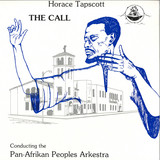
Available on vinyl for the first time in 40 years, Outernational Sounds is proud to present a masterpiece from the Los Angeles jazz underground - Horace Tapscott's burning, spiritualised 1978 set, The Call.
One of the unsung giants of jazz music, the composer, bandleader, arranger, pianist and community activist Horace Tapscott was the undisputed keystone in the grassroots Los Angeles jazz scene. Throughout the 1960s and 1970s, his radical community arts and music formations the UGMA (Underground Musicians Association, later changed to UGMAA - Union of God's Musicians and Artists Ascension), and his protean big band, the Pan Afrikan Peoples Arkestra, were at the epicentre of music, culture and politics in the Los Angeles area.
From their 1960s base at the Watt's Happening Coffee House on 103rd St, to their decade-plus- long 1970s residency at the Immanuel United Church of Christ on 85thE St and Holmes Ave, Tapscott's groups were the beating heart of underground music in LA. Hundreds of musicians passed through and played their part. Major figures in LA jazz such as Arthur Blythe, Azar Lawrence, Jimmy Woods, John Carter, Bobby Bradford, Sonny Criss, Ndugu Chancler and dozens of others all paid dues or just got down with Tapscott, not to mention the core Arkestra regulars who have since become celebrated names - Nate Morgan, Jesse Sharps, Adele Sebastian, Dadisi Komolafe, Gary Bias, to mention only a few.
Tapscott and the Arkestra were down on the ground - playing fundraisers in park and street, organising teach-ins and workshops for young and old, mixing it with radical theatre groups, firebrand poets, political radicals, Black separatists, community groups and churches. They lived communally, and built an ark for the Black arts in the heart of the city. But as a result of this grassroots community focus and Tapscott's antipathy to the music industry, the Arkestra didn't record for nearly two decades. That only changed when long-time jazz fan Tom Albach started Nimbus Records. The label was initiated specifically in order to document Tapscott and his circle, and the first three records showcased Horace and the Arkestra.
The Call was put together from two studio sessions in April 1978, one at Hollywood Sage and Sound, one at United Western - the latter session had the addition of a string section, who can be heard on the moody Cal Massey composition 'Nakatini Suite' and Jesse Sharps' swinging modal trip, 'Peyote Song No. III', with its swirling soprano solo. In keeping with the communal nature of the Arkestra, the other two compositions, 'The Call' and 'Quagmire Manor at Five A.M.' are also by Arkestra members. But at the centre of the music is the builder of the Ark, the visionary whose original call to action started a movement whose legacy continues to this day - Horace Tapscott.
Heed The Call!
"The bird songs which I had recorded in the West Indies in 1969 made me inclined to find out more about those of the nearby South American continent, and convinced me, moreover, that musically speaking, they possessed an unquestionable originality in comparison with those of Africa and Europa. I therefore decided to carry out a series of orthonological trips on this continent, starting with the North: Venezuela, and so, with this in mind, i disembarked at Caracas on 27th May 1972.
The unusual musical volume of this tropical country made its impact on my arrival in town, where the unbearably shrill chirping of the cicadas overwhelmed me each time I passed under a tree. At night fall, around even the meanest of ditches filled by the daily rain, myriads of toads and frogs struck up a concert, which, through its sheer intensity, muffled all other surrounding noises. When I penetrated the forest, I could hear bird species literally by the dozen and individuals by the hundred, all calling and singing together at dawn and at dusk..."
- Jean C. Roché
"Among many of his amazing records I came across Jean C. Roché's Birds of Venezuela, beautifully produced LPs of birdsong. I began to plan a trip to Amazonas, to record the unearthly song of potoos and Yanomami shamanism."
- David Toop
Jean-Claude Roché (May 11, 1931) is an French ornithologist and wild life field recordist. Roché recorded bird songs worldwide for over 30 years and released over 130 records out of his recordings.
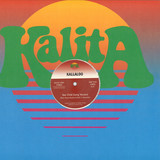
Kalita Records are proud and honoured to announce the first
ever and official reissue of Kallaloo's sought-after 1982
disco single 'Star Child', accompanied by interview-based
liner notes. Originally released on Jeffrey Turpin's
Trinidadian record label IDA, 'Star Child' has since become
highly sought-after by both DJs and collectors alike as an
invisible, yet astonishing piece of Caribbean disco. Unable
at the time to gain the traction and success that it deserved,
we hope that this re-release provides an opportunity to bring
such a great record to a much wider audience.
Kallaloo consisted of various Trinidadian musicians including
Keith Alexander and Peter Wayne Barkley. Keith had been
well-respected as a member of the Trinidadian group Impact, and
was later to become an in-demand producer and composer under
the name of Keith Diamond, responsible for various hits by Billy
Ocean, Donna Summer, Starpoint and Melba Moore. In contrast,
Peter was a well-known recording session drummer, but after
'Star Child's' release he moved to North Carolina to pursue other
interests and 'was never heard from again'.
'Star Child' was recorded at Right Track Recording, in mid-town
Manhattan, New York. As Jeffrey recalls, the atmosphere in the
studio was 'great', with 'everyone upbeat, the cream of the crop
just looking for that break... everyone was talented and just
wanted the chance to express their own ideas'. Five hundred
copies of the record were released on IDA with a white label
design, and they were sold both in Brooklyn, New York and Port
of Spain, Trinidad. It was also released on a red label, however
this was not to Jeffrey's knowledge at the time.
Jeffrey explains that the reason why the record didn't fare well at
the time was because of the difficulty in getting the song played
on the radio. As he recalls, radio stations were much more likely
to play 'radio versions' of songs which lasted for a couple of
minutes, rather than five or seven minute 'extended' versions
such as 'Star Child', which were more suitable to a club
environment. In addition, as Jeffrey explains, radio airplay is a
'political business', and also within a short while band members
such as Keith got their own breaks, and the Kallaloo era was over
as quickly as it had started.
Hosono's solo career would take many twists and turns from this point forward, with forays into exotica, electronic, ambient, and techno, culminating in the massive success of techno pop group Yellow Magic Orchestra (YMO), who made their debut in 1978. Admired by artists ranging from Van Dyke Parks to Mac DeMarco, Hosono continues to forge ahead as he heads into his fifth decade as a musician. With the re-release of his key albums for the first time outside of Japan, his genius will be discovered by a whole new generation of fans around the world.
.
The unbelievably prolific Haruomi Hosono is one of the major architects of modern Japanese pop music. With his encyclopedic knowledge of music and boundless curiosity for new sounds, Hosono is the auteur of his own idiosyncratic musical world, putting his unmistakable stamp on hundreds of recordings as an artist, session player, songwriter and producer.
Born and raised in central Tokyo, his adolescent obsession with American pop culture informed his early forays into country music, which he would revisit later in his career. Hosono made his professional debut in 1969 as a member of Apryl Fool, whose heavy psychedelia was somewhat at odds with his influences, which leaned towards the rootsy sounds of Moby Grape and Buffalo Springfield. The latter was one of the main inspirations for his next group, Happy End, whose unique blend of West Coast sounds with Japanese lyrics proved to be highly influential over the course of three albums. After the band’s amicable break up in 1973, Hosono began his solo career with Hosono House, an intimate slice of Japanese Americana recorded inside a rented house with recording gear squeezed into its tiny bedroom.
- A1: Horace Andy - Illiteracy
- A2: The Heptones - Be A Man
- A3: The Manchesters - Natty Gone
- A4: The Gladiators - Down Town Rebel
- A5: Willie Williams - Calling
- B1: Roland Alphonso & Brentford All Stars - Sir D Special
- B2: Keith Wilson - God I God I Say
- B3: Alton Ellis - Almost Anything
- C1: Bobby Kalphat & The New Establishment - Adis A Wa Wa
- C2: Peter Broggs - Sing A New Song
- C3: Mystic Revelations Of Rastafari - Let Freedom Reign
- C4: Larry & Alvin - Free I Lord
- C5: Ernest Wilson & The Sound Dimension - Freedom Fighter
- D1: Jackie Mittoo - Happy People
- D2: Prince Lincoln - Daughters Of Zion
- D3: High Charles - Zion
- D4: Winston Jarrett - Love Jah Jah
This Is The Second Installment Of Deep Roots Rastafarian Reggae At Studio One And Features Classic Music From Some Of The Most Important Figures In Reggae Music - Alton Ellis, The Heptones, Jackie Mittoo, The Gladiators - Alongside A Host Of Rarities And Little-known Recordings, Such As A Truly Rare Mystic Revelation Of Rastafari Seven-inch Single, Willie William's First Ever Recording 'calling' And Horace Andy's Righteous (and Equally Rare) Masterpiece 'illiteracy. Black Man's Pride 2 Extends The Legacy Of Studio One's Ground-breaking Path In Roots Reggae Which Began At The End Of The 1960s And Continued Throughout The 1970s. The Album Tells The Story Of How The Rise Of Studio One Records And The Rastafari Movement Were Interconnected, Through The Adoption Of The Rastafari Faith By Key Reggae Artists - Everyone From The Skatalites And Wailers In The 1960s, Major Singers Such As Alton Ellis And Horace Andy At The End Of The Decade, Through To Major Roots Artists Such As The Gladiators In The 1970s - And How Clement Dodd Consistently Recorded This Heavyweight Roots Music Throughout Studio One's History.
The Sleeve-notes To This Album Also Discuss The Links Between Rastafari And Studio One In Time And Place, Noting How Both The Religion And Clement Dodd's Musical Empire Had Their Roots In The Intense Period Of Pre-independence Jamaica In Kingston, Expanded In The 1960s Following The Visit Of Haile Selassie In 1966, And How Roots Music Then Came To Dominate Reggae Music In The Early 1970s. Also Discussed Is How The Outsider Stance Of Both Reggae Music And The Rastafari Movement Relate Back Many Hundreds Of Years To The Original Rebel Stance Of The Maroons, Escaped Slaves Who Set Up Self-sufficient Enclaves In The Hills Of The Jamaican Countryside.
- A1: Heron Dance
- A2: Twilight Song
- A3: Yes—Singing
- A4: Dragonfly Song
- A5: A Homesick Song
- A6: The Willows
- A7: Lullaby—Lahel
- B1: Long Singing
- B2: The Quail Song
- B3: A Teaching Poem
- B4: A River Song
- B5: Sun Dance Poem
- B6: A Music Of The Eighth House
Music and Poetry of the Kesh is the documentation of an invented Pacific Coast peoples from a far distant time, and the soundtrack of famed science fiction author, Ursula K. Le Guin's Always Coming Home In the novel, the story of Stone Telling, a young woman of the Kesh, is woven within a larger anthropological folklore and fantasy. The ways of the Kesh were originally presented in 1985 as a five hundred plus page book accompanied with illustrations of instruments and tools, maps, a glossary of terms, recipes, poems, an alphabet (Le Guin's conlang, so she could write non-English lyrics), and with early editions, a cassette of field recordings' and indigenous song. Le Guin wanted to hear the people she'd imagined, she embarked on an elaborate process with her friend Todd Barton to invoke their spirit and tradition.
For Music and Poetry of the Kesh, the words and lyrics are attributed to Le Guin as composed by Barton, an Oregon-based musician, composer and Buchla synthesist (the two worked together previously on public radio projects). But the cassette notes credit the sounds and voices to the world of the Kesh, making origins ambiguous. For instance, The River Song' description reads, The prominent rhythm instrument is the doubure binga, a set of nine brass bowls struck with cloth-covered wooden mallets, here played by Ready.' According to writer and long-time friend of LeGuin, Moe Bowstern (who pens the liners for the Freedom To Spend edition of Kesh), Barton built and then taught himself to play several instruments of Le Guin's design, among them the seven-foot horn known to the Kesh as the Houmbúta and the Wéosai Medoud Teyahi bone flute.' Barton's crafting of original instruments lends an other-worldly texture to the recordings of the Kesh, not unlike fellow builders Bobby Brown and Lonnie Holley. Bowstern notes, Other musician / makers have crafted their own Kesh instruments after encountering the earlier cassette recordings that accompanied some editions of the book.' Both Barton and Le Guin are sensitive to the sovereignty of indigenous Californians and were careful not to trample the traditions of the Tolowa people who lived in the valley long before the Kesh. You research deeply, and then you bring your own voice to the table,' said Barton. Within the Kesh culture, the numbers four and five shape the lives, society and rituals. Barton composed loosely around these numbers, patiently listening to the land of Napa Valley for signs and audio signals from the natural elements. Todd incorporated ambient sounds of the creek by Le Guin's house and a campfire they built together. The songs of Kesh are joyful, soothing and meditative, while the instrumental works drift far past the imaginary lands. Heron Dance' is an uplifting first track, featuring a Wéosai Medoud Teyahi (made from a deer or lamb thigh bone with a cattail reed) and the great Houmbúta (used for theatre and ceremony). A Music of the Eighth House' sends gossamer waves of the faintest sounds to float on the wind.' Like the languages invented in the vocal work of Anna Homler, Meredith Monk, and Elizabeth Fraser, the Kesh songs and poems play with the shape of voice.
The Music and Poetry of the Kesh cassette was meant to accompany and enhance the experience of reading Always Coming Home. Presented in this edition as a long-playing album, where only traces of the book linger (the jacket offers some of Le Guin's illustration, and a letterpressed bookmark featuring the the narrative modes of western civilization and the Kesh valley is included), the music alone breaking the silence of what might be. It can transport—offering a landscape for imagining a future homecoming. One in which we are balanced, peaceful, and tend to the earth and its creatures. A line from the Sun Dance poem reminds us, We are nothing much without one another.' Freedom To Spend gives new life to the recordings of the Kesh people in the first ever vinyl edition of Music and Poetry of the Kesh, out on LP, and digital formats on March 23, 2018. The LP will include a deluxe spot printed jacket with illustrations from Always Coming Home, a facsimile of the original lyric sheet, liner notes by Moe Bowstern, multi-format digital download code and a limited edition bookmark letter pressed by Stumptown Printers in Portland, OR.
This past Monday, January 22, Ursula passed from this realm to another leaving a life spent building and exploring other worlds while challenging social concepts of the real word she inhabited.
Freedom To Spend had been working under Ursula's enthusiastic endorsement and with Todd Barton, her musical collaborator on Kesh, to give the music that accompanied her 1985 epoch a new life. With the Le Guin family's encouragement to move forward with our planned release, we are humbled to play this small role in sharing Ursula's work.
As Pete Swanson, one third of Freedom To Spend, stated, Ursula's legacy is her work which transformed the world, and this is another piece of the universe that her imagination birthed becoming real.' Listen to A Teaching Poem / Heron Dance' below.
Double Vinyl edition of 300 copies w/ download code and etched d-side.
Breaching is the debut album from Leeds-based, 6-piece, post-metallers Hundred Year Old Man. Hot on the heels of recent EP Rei, Breaching emitsthe same heaving intensity and unforgiving, wall of sound approach. Dense and billowing riffs are intertwined with field recordings and spoken word passages to form an unyielding, sprawling piece of work that delivers the bands artistic vision perfectly. The more ambient, drone sections of the record compliment and allow the real songs to take flight. Debut single Black Fire is reworked to give the track a new lease of life, whilst the other heavy hitters here; The Forest, Long Wall, Disconnect and Ascension are a continuation of the excellent work found on the Rei EP. Breaching contains masses of atmosphere and is a ferocious and immersive listening experience. An epic, monolithic voyage full of texture, depth, aggression and emotion. This is an album that should be approached as a whole, with patience and attention. The rewards will deliver a unique, crushing and quite simply superb record.
- A1: Gee Gee Shinn & Boogie Kings - Fever
- A2: Connie Kaye Trio - I'm A Woman
- A3: Bus Brown - Mr. L.b.j
- A4: Earl Demus Band - Her Spare
- A5: Chuck Finney Combo - I Want A Man Like You
- B1: Chick Willis - Sometimes Soon
- B2: Australia - Wide Awake
- B3: J.r. - Any Time Now
- B4: Joe Akens - Nice
- C1: Hummingbird 4 - Cho Cho San
- C2: Evangeline Made - Burnt Flesh
- C3: Dario & The Inferno - Brother, Where Are You
- C4: Swoop - Upside Down
- D1: You - You Got It
- D2: Hot Cakes - Harlem Shuffle Theme
- D3: Reunion - When The Well Runs Dry
- D4: The Counts - Get Up, Get Dancin
2x LP + 7"[22,65 €]
IT'S TIME TO PAAAARTY! Why The Universe knows that Tramp is celebrating their 40th trip around the sun in 2018. And what about planet Earth Well... it is as blind as it is in so many other situations. Therefore, it is time to shine the light on Tramp for all of its unremitting efforts. As musical diversity is vanishing, especially in the field of African American music from the 1960s/70s, it is our duty to stop the extinction of threatened species of music in the same way an animal welfare activist would do anything to save a gorilla's life. Tramp Records keeps this beautiful heritage alive, every single day, again and again and again. So we are here wondering why Earth people and especially to those from our beloved home country, why why are you just sitting there, going about your life unaware of this historic event What a pity!
The announcement is especially striking when it comes to the prestigious "Movements" series. Like all its predecessors, this ninth volume contains Rare Groove nuggets recorded between the early 1960s and the late 1970s. The fact that only one of the songs appear anywhere else is a jaw-dropping phenomenon! The chronological track listing starts with two amazing cover versions: "Fever" by Gee Gee Shinn & the Boogie Kings and "I'm A Woman" by Connie Kaye Trio. Bus Brown, Earl Demus and Chuck Finney remain in the same direction although their contributions are slightly jazzier. Chick Willis' gut-wrenching "Sometime Soon" easily rivals James Brown's "It's A Man's World" and the recordings by Australia, J.R. and Joe Akens are beautiful examples of privately produced soul from the 1970s. The latin-soul of "Cho Cho San" by Hummingbird 4 heads the sound in another direction for the next three tunes, highlighted by one more stunning cover version, Oscar Brown Jr.'s "Brother, Where Are You". The album closes with some pre-disco tracks from The Counts, Reunion and Hot Cakes' dance floor bomb cover of "Harlem Shuffle".
Over a hundred great unknown songs have been re-released on the first eight volumes in the "Movements" series, the majority of which can not be found elsewhere, and Vol. 9 is no exception. The work of Germany's tiniest but grooviest record label is still incomprehensibly underestimated. We know you diggers, collectors, mavens, aficionados, fanatics, completists, enthusiasts, and just plain record geeks know what's up and we heartily salute you! Without your support there would be no Tramp Records. But now it's time for a broader cultural shift for good music and a sweeping move to uphold the legacy of the unsung heroes of funk and soul. Therefore, we humbly petition you: in 2018, Don't keep all this glory to yourself! Turn your friends and neighbors on! Thank you!
- the double vinyl LP comes with a full album download code
- deluxe double-gatefold LP with detailed liner notes, label scans & unseen photographs
- all but one song appear on vinyl-LP for the very first-time
Don't wanna move to Southern California / I wasn't really meant for LA...' So sang Dent May once upon a time, now he's eating those words with a side of avocado toast in his new Los Angeles bungalow. What made the lifelong Mississippi boy pull up stakes and head west No one looks at you funny if you wear a tuxedo to the supermarket.' What he means is he moved there to shake up his surroundings, clear his head, and write the most accomplished record of his young career, the magical mystery tour de force Across the Multiverse.
Following the lead of musical-polymaths-with-LA-ties before him like Brian Wilson, Van Dyke Parks, and Harry Nilsson, Dent's style on Across the Multiverse will be familiar to fans of his previous work. Yet there's something more refined about this collection... Stately strings mingle with boogie piano like old friends. Synths weave a celestial backdrop throughout. Every verse, bridge and chorus in its right place, giving it the unmistakable feel of a true songwriting craftsman at work. Lyrically Dent has never been sharper, musing on themes like modern romance ( Picture on a Screen', Face Down in the Gutter of Your Love'), existential dread ( Dream 4 Me', I'm Gonna Live Forever Until I'm Dead'), and the distance to the moon ( Distance to the Moon') as he searches for meaning among the infinite scrolling feeds of our 21st century augmented reality. The title track, a duet with Frankie Cosmos, is a deep space love song about finding love beyond impossible boundaries.
Across the Multiverse was written and recorded in a sunny bedroom in LA's Highland Park neighborhood, with Dent producing and playing nearly every instrument himself. The tracks were selected from dozens of songs written after the LA move, a gold rush of productivity inspired by late nights DJing rare disco funk cuts at local watering holes. It's his first record for new label Carpark and will be released August 18th.
Dent May is a self-described hotel bar lounge singer and aspiring daytime TV talk show host - has been charming his way into the hearts of music fans since the release of his debut album The Good Feeling Music of Dent May & His Magnificent Ukulele on Animal Collective's Paw Tracks label in 2009. The Mississippi-born, Los Angeles-based songwriter, performer, and Dolly Parton enthusiast has since released two more acclaimed records, Do Things (2012) and Warm Blanket (2013), dropped the holiday smash I'll Be Stoned For Christmas', and played hundreds of shows from Shanghai to Chicago. His latest album, Across the Multiverse, is an interstellar voyage of mythic proportions.