Green Vinyl
For its fifth release, french label The Bass Academy goes back into time!!! Originally written by legendary Man Parrish, "Boogie Down Bronx", a cult classic from 1984, sees a mighty resurrection with a "fresh mix" rework from UK Electro veteran Bass Junkie. Not the first time Phil Klein (Battle Trax, Breakin' Records) remixes Man Parrish as he committed in 2002 the heavy “Bass Junkie's Boogie Down Bass Mix” of “Hip Hop Re Bop”. Today, he serves up an uncompromising electro funk mayhem made of old schoolish samples, vintage synth melodies, retro congas, relentless scratches and pounding 808 beats. This brand new Sci-Fi anthem, enhanced with the legitimate legacy from the past, will invite you for some irresistible B-Boy breakdancing movements on the linoleum!!! Tuuuuuunnne! On the flipside, Phil teams up once again with long time partner in crime Simon “The Dexorcist” Brown. Together, as Gods Of Technology, (Battle Trax), they revisit another untouchable song, “Future Computer”, an exclusive to TBA track written by Jamie Jupitor and published in 2017 (TBA02). Metallic sororities melt with nasty vocoder sequences and imparable whispers turn the cut into an ode to the dancefloor thanks to harsh and hammering beats. What a timeless monster in pure West Coast tradition! With abrasive outings to appear on the forthcoming months including an incredible album with Matt Whitehead on Dominance Electricity, Phil Klein definitively returns to studios stronger than ever, putting a end to a short blackout. Rush in this hypnotizing collector 12”, limited as usual to 150 copies as it marks one of Phil Klein’s best releases to date!
Suche:hypno
- A1: Psychedelic Hypnotist Daydream (Demo)
- B1: Duck Dodgers Theme (Duck Dodgers Demo: With Wayne Scratch Vocal)
- B2: I Know I’ve Got To Make That Dream The Real Thing (Demo)
- B3: Do You Realize?? (Instrumental)
The Flaming Lips will unveil a new limited-edition vinyl EP entitled Hypnotist on June 16, 2023. It notably collects four fan favourite tracks previously only available on the 6-CD Yoshimi Battles the Pink Robots 20th Anniversary Box Set. Now, they grace the 32-minute Psychedelic Hypnotist Daydream, giving the songs a vinyl release for the very first time. The track listing notably boasts the immersive 24-minute sonic head-trip “Psychedelic Hypnotist Day Dream (demo),” which unfurls as one of the group’s most epic gems to date. Additionally, it includes the “Duck Dodgers Theme (Duck Dodgers Demo: With Wayne Scratch Vocal),” “I Know I’ve Got To Make That Dream The Real Thing (Demo),” and, finally, “Do You Realize?? (Instrumental).”
Brazilian soul, psych, bossa and jazz, reimagined from Berlin, via the Dead Sea, on Moriah Plaza’s dreamy first album for Batov Records.
Moriah Plaza co-founders Tamir Chen and Moosh Lahav first encountered and fell in love with the beautiful and hypnotic sounds of Brazilian bossa nova and samba as children in Tel Aviv in the nineties, via the many local bands and tribute groups that had sprung up since the first wave of bossa had hit swept across the world. Likewise
they developed a fascination with elevator muzak, film soundtracks, and even the hotel pianist performing day-by-day in the lobby of the Sheraton Moriah where Tamir’s mother worked, overlooking the Dead Sea.
Relocating years later to the vastly different environment of Berlin, capital of a country that enjoyed its own Brazilian moment, Tamir and Moosh’s shared passion for Brazilian music would encourage them to create their own songs inspired by the warm pulse of Brazil, albeit a world apart, through a vastly different lens.
Whilst the initial inspiration for Moriah Plaza can be traced back to Tel Aviv and the Dead Sea, the band itself was conceived by Tamir and Moosh in Solarium Studio, Berlin, from the broken fragments of their former shoegaze band, Soda Fabric, who had the honour of backing outsider legend Daniel Johnston. They would go on to write and record their debut album in close collaboration with two Brazilians and fellow Berlin residents,, poet and singer Cecília Erisman, and singer, songwriter, synth operator and Tropical Disco Club founder Flavia Annechini.
The album opens with “Desendereçada”. Dirty drum machine beats thud away under flutes and extraneous noises and a spoken word commentary. The oddness and allure of the intro is a perfect introduction to the world of Moriah Plaza.
The pace picks up on “Mais Amor”. A beautiful Brazilian soul jazz number with a sublime vocal from Flavia Annechini that will surely appeal to the global dancefloor jazz scene. “Te Peço” daws us in deeper with sweetest jazz vocal over an irresistible bassline and bossa drums that transforms halfway through into a modern soul rhythm crowned by flute and horns. A flute solo from Moosh Lahav leads us into the final uplifting refrain.
The Pharoah Sanders meets Ravi Shankar in Rio grooves of “Estelar”
have that fresh feeling that will certainly appeal to fans of modern favourites Rebecca Vasment and Ruby Rushton. Next up, the mysterious “Lagoon de Merim” is practically two songs in one, the first half an atmospheric string-topped number somewhere between Arthur Verocai and Cinematic Orchestra, before snappy drums beats and playful organ chords introduce a slow brassy samba that fills the whole sonic room.
“Teu Porto” is a must for all DJs, mixing calypso, highlife and house, lilting guitars and smooth vocals by Cecilia Erismann.. The deep samba house grooves of “Samba Moosh” close us out. The rich blend of sweet vocals, soaring flute and gritty synths carry us off into the sunset.
Moriah Plaza’s self-titled debut album is a major addition to the global soul and jazz scene. providing the perfect summer soundtrack for music lovers around the world.
How about you forget for a moment all the things you thought you knew about Saroos, okay? First of all, let’s forget about all the other projects these guys are part of. Why? Because thinking of The Notwist, Driftmachine, Lali Puna, Tvii Son, to name “only” half a dozen things, might be misleading in this case. What’s more, please make sure to forget the fact that they’re mostly filed under “instrumental,” “post-rock dub,” or “kraut-flavored indie-tronica,” you know, all that. And most importantly, let’s forget that they’re a closed, three-minded system: a fixed and fully committed entity of three. No more!
Known to reinvent themselves in less drastic ways, Christoph Brandner, Max Punktezahl and Florian Zimmer, have opened the floodgates to COLLABORATION – making things open, porous, different, new, in many ways, on their quietly explosive latest album “Turtle Roll”.
Announced by 2021 singles “Tin & Glass” feat. Ronald Lippok and aptly titled “Frequency Change” feat. Leila Gharib aka Sequoyah Tiger, the sixth full-length sees the Berlin threesome add another handful of vocal guests along the way – thus turning into shape-shifting full bands and/or temp quartets, perfectly at home in about as many genres as there are tracks on the LP.
Kicked off by the motoric B-funk (Berlin represent) of the Lippok-assisted “Tin & Glass,” complete with retro-futuristic effects, spoken declarations, and non-terrestrial vibes, it might not be Daft Punk playing at their house, but a byobv (vibe) house party of musical minds isn’t too far off, actually! Once again as much a mixtape as an album, the mood, vibe, and color changes with every new collaborative tune: From ethereally soothing and dreamy (“The Mind Knows” feat. Solent from Canada) to clap-driven and wildly hypnotic (that pounding “Mutazione,” featuring vocals and rhymes courtesy of Eva Geist from Italy) and almost radio-ready (“current, bass-heavy alternative indie hits only!”), when that stadium-sized oomph of “Frequency Change” feat. Sequoyah Tiger arrives around halfway in.
Elsewhere, Japanese guest Kiki Hitomi (WaqWaq Kingdom) adds exotic ecstasy to the hypothermic beatscapes of “The Sign,” while Ukrainian vocalist Lucy Zoria pushes poetic layers over “Southern Blue”’s wonky foundation that hardens and finds more direction with each round the beat clock takes – until it’s impossible to escape that undertow. “My baby makes it better,” sings Caleb Dailey on the faithful and still-loving “Being with You,” a sepia, softly churning look back by the US songsmith, a sweetly shimmering ode to a relationship.
Speaking of foursomes, there’s four instrumental tracks scattered throughout the new LP – ranging from a painting in crystal clear colors of night (“Organ of Recall”) to the highly dramatic sonic tapestry of “Thicket” (actually feat. vocals as well). Before the perfect goodbye of slow-moving album closer “Here Before,” “Passed Out” sounds like Odd Nosdam finding his feet after blacking out on a German carnival.
Titled after a surf maneuver that allows you to break through the crests on the way out, Saroos have skipped the obvious waves with “Turtle Roll” – creating their own kind of sonic “Hang Ten” by adding 7 new voices to the mix.
Hannah Aldridge wuchs an den schlammigen Ufern Alabamas auf, ihre Songs halten ein empfindliches Gleichgewicht zwischen Rebellion und Selbstfindung. Wer den Bible Belt kennt, hört die vertraute Stimme eines alten Freundes, alle anderen lernen die dunkle Seite des Südens kennen, den Kampf, der Vergangenheit zu entkommen und eine Zukunft zu schmieden. 'Dream Of America' bewegt sich auf einem schmalen Grat zwischen freundlichem Americana-Charme und dem rohen, hypnotischen und gelegentlich elektronischen Stil dessen, was man Noir-Indie-Pop nennt. Es ist Musik für diejenigen, die sich ihren Dämonen stellen, ohne an sie gebunden zu bleiben.
Blue Marbled Vinyl
Opening the EP we have a serious sensory treat from Aural Imbalance, as he ditches his own rulebook unleashing a myriad of rapidly combining elements synergising over glorious echoed intro-beats, before an uncharacteristically heavy slice of breaks punches its way into the track, electrifying the atmosphere while the trademark melodies dance above like fireflies in the night.
A2 - Luminosity
An airy intro slowly welcomes in snappy snares, staunch forthright bass tones and those delicious airy pads we know Aural
Imbalance so well for, gradually enveloping the listener in a luscious web of glorious serenity. Layers of intricate textures and rhythms build upon one another, creating a mesmerizing and hypnotic sonic journey inviting repeated listens.
AA1 - Moonscape
Aural Imbalance crafts a true gem here as Moonscape opens with a serene hit of soothing pads before the wonderfully analogue breakbeats join the party, laden with hi hats and subtle poise. The backdrop exudes whimsical birdsong until halfway we are treated to a true earworm melody carrying us through to the clean ritualistic outro.
AA2 - Sunlight Through Clouds
Simon closes the EP with Sunlight Through Clouds, opening with wistful muffled grooves before the bubbly apache break reveals itself and whisks us on a synthful audio feast, built on the immersive, meditative soundscapes he is so well known for. The track has a soothing, reflective vibe and fits perfectly as a curtain call for his latest extended player.
Words by Chris Hayes (Spatial / Red Mist)
The next chapter of the Natural Information Society is here. Since Time Is Gravity, credited to Natural Information Society Community Ensemble with Ari Brown, presents a newly expanded manifestation of acclaimed composer & multi-instrumentalist Joshua Abrams nearly 15 year, 7 albums &-counting flagship ensemble. Joining the core NIS of Abrams (guimbri & bass), Lisa Alvarado (harmonium) Mikel Patrick Avery (drums) & Jason Stein (bass clarinet) are Hamid Drake (percussion), Josh Berman & Ben Lamar Gay (cornets), Nick Mazzarella & Mai Sugimoto (alto saxophones & flute), Kara Bershad (harp) & Chicago living legend of the tenor saxophone Ari Brown. Recorded live to tape at Electrical Audio & The Graham Foundation, cover painting Vibratory Cartography: Nepantla, by Lisa Alvarado. 2xLP on Eremite USA, 2xLP & CD on Aguirre/Eremite Europe. Out 14-04.
Since first developing Natural Information Society in 2010, Joshua Abrams has been gradually expanding the group’s conceptual underpinnings, its musical references & the sheer number of the group’s members. Its music is, in a sense, an expansive form of minimalism, based in repeated & overlaid rhythmic patterns, ostinatos & modality. Its roots, its scale & its meaning become clearer in time. If time is gravity, it also allows us to carry more. Having begun as fundamentally a rhythm section with Abrams’ guimbri at its core, the version here can stretch to a tentet, including six horns.
Abrams has been expanding his minimalism gradually, but he has long understood a key to minimalism’s potential: the breadth of its roots in the late 1950s & early 1960s, ranging from the dissatisfaction of young European-stream composers with the limitations of serialism to the simultaneous dissatisfaction of jazz musicians with the dense harmonic vocabulary of bop & hard bop. The former began exploring rhythmic complexity & narrow tonal palates in place of harmonic abstraction (Steve Reich’s Drumming, Philip Glass’ Music with Changing Parts; perhaps above all Terry Riley’s In C & his late ‘60s all-night organ & loop concerts); the later reduced dense chord changes to scales (signally with Miles Davis' Kind of Blue, but rapidly expanding with John Coltrane’s vast project). In the 1950s the LP record opened the world with documentation of Asian & African musics, key influences on both minimalists & jazz musicians. If John Coltrane’s soprano saxophone suggested the keening shehnai of Bismillah Khan, the instrument was rapidly taken up by two key minimalists, LaMonte Young & Riley, similarly appreciative of its flexible intonation, the same thing that kept it out of big bands.
If the guimbri, the North African hide-covered lute that Abrams plays with NIS, involves a rich tradition of hypnotic healing music associated with the Gnawa people, Abrams’ music also touches on other musics as well — other depths, memories & healings, different drones, rhythms & modes. As the group expands on Since Time Is Gravity, he has made certain jazz traditions in the same stream more explicit as well. If there is a mystical & elastic quality involved in the experience of time, both in direction & duration, you will catch it here. The parts for the choir of winds expand on the roles of Abrams’ guimbri, Mikel Patrick Avery & Hamid Drake’s percussion & Lisa Alvarado’s harmonium: at times, the winds are almost looping in the tentet version, each hitting a repeating note in turn, at once drone & distinct inflection on temporal sequence. The brilliance of the work resides in Abrams’ compositions, the NIS’ intuitive execution & in Ari Brown’s singular embodiment of the great tenor saxophone tradition, including the oracular genius of Eddie “Lockjaw” Davis, & Yusef Lateef. The three pieces by the expanded NIS featuring Brown —the opening “Moontide Chorus” & “Is” & the ultimate “Gravity”— have an immediate impact, & togther might be considered a kind of concerto for tenor saxophone. Here Brown presses almost indistinguishably from composed melody to improvised speech, getting so close to language that he might have a text. Everything here is a sign. Note the tap of the Rhythm Ace that links “Moontide Chorus” to “Is”, the attentive heart always present, even when signed by a machine. There’s a link here to the methodologies & meanings of dub music & the linear & vertical collage of beats, textures & tongues: treated with reverence, a sample of a beat-box can be as soulful, as hypnotic, as a mbira or a tamboura. If those pieces with Brown are heard as a suspended concerto, the three embrace & enfold the other works, like the sepals of a flower. That placement will also touch on the mysteries of our perception of time.
Particularly in “Is”, but elsewhere as well, a phenomenon of transcendence arises in which time appears to be tripartite, at once moving backwards & forwards & standing still. This is an act of technical brilliance certainly, but also an illumination of music’s ability to represent temporal consciousness through polymetrics. This particular listener has only heard it before in a few places, including the horn shouts & bowed basses of Coltrane’s Africa, in moments of Charles Mingus’ The Black Saint & the Sinner Lady, in certain pieces where tapes were literally running backwards, & earlier still in Dizzy Gillespie’s Cubana Be, Cubana Bop, in which the composer George Russell & conguero Chano Pozo found a music that spoke at once in the voices of Stravinsky’s Rite of Spring & the vestigial rites, rhythms & songs of the Yoruba language & Santeria religion of inland Cuba.
In Joshua Abrams’ compositions & the realization of them by the NIS, in the time of one’s close listening & memory thereof, distinctions between the “natural” & the “social”, the “quotidian” & the “transcendent” are erased, suspended or perhaps irrelevant. Consider two of the ensemble pieces, one named for nature, the other social science. In “Murmuration” the repeated wind figures of flute & alto saxophone combine with the interlocking patterns of harp, guimbri & frame drum (tar) to create a perfect moving stillness, not an imitation but a witness to the miracle of the starlings’ astonishing collective art, a surfeit of beauty that might be the ultimate defense tactic.
“Stigmergy” takes its name & concept from the Occupy movement’s Heather Marsh, who proposes a social system based on a cooperative rather than competitive models, one in which ideas are freely contributed & developed as ideas rather than an individual’s property. In its form, Abrams’ “Stigmergy” is the closes thing to traditional jazz, a series of accompanied solos by each of the wind players. However, the composed accompaniment is a radically collectivist notion: a repeated rhythmic figure, call it ostinato or riff, in which the different winds each play only a note or two of the figure, a concept both more collectivist & individualistic in its conception than any typical unison figure. It suggests another of the underlying recognitions that propel the Natural Information Society, the group as social organism, the teleology of hypnotic anarchy, all parts in place, functioning systematically, evolving & expressing itself, its nature & society, as a transformative organism.
George Lewis has described music as “a space for reflection on the human condition”. This suggests that, rather than a “distraction”, at least some music might serve as a distraction from distraction. It’s a focus, a clarity, a awareness, an external invitation to interiority, as if music itself is a model for form & contemplation, an organism contemplating for us or as us. If that is a possibility, & I am sure I have heard such musics, than this music is among them. How many of our rhythms, melodies & harmonies (cultural, historical, biological, psychic) might such music carry, translate & transform in the particulate ecstasy of our own murmuration? (Stuart Broomer, April 2022)
Intrinsic Rhythm is proud to present a new EP by John Heckle entitled "Return To Titan" and the first on the the label from a different artist other than label owner Tr One.
This will be John's first release under his own name for a number of years and also includes a remix by Michigan techno visionary John Beltran.
The EP kicks off with "A" where energetic skillful production combines with Chicago and Detroit influences to concoct a brilliant mix of styles very much focused on the floor.
Next up is 7C where melodic bass and chords merge together to offer a brilliant whimsical approach towards analogue music that only John has mastered over previous releases.
Following this is the brief and one of the most beautiful tracks on the EP entitled "DSI" where building strings engage with soft percussion and kickdrum interplay to pull the listener in to the musicality on show.
On the B side we kick off with the beatless and ambient driven "CII" where 8 minutes of melodic density and synth interplay swirl between crescendo and musical culmination.
Finally John Beltran steps up and delivers a beautifully hypnotic club ready version of "A" where the Michigan artist teases between Detroit techno elegance and organic flair to show why he is one of electronic music's all time great producers.
Andrius Arutiunian’s debut album »Seven Common Ways of Disappearing« was first conceived as an installation for the Armenia Pavilion at the Venice Biennale in 2022. The Armenian/Lithuanian artist and composer uses hybrid forms of music, focusing on sonic vernaculars, hypnotic musical forms, and aural cosmologies. Arutiunian is known to work with installations, sound objects, and time-based collaborations with ensembles and performers. The piece on this record was written for two musicians, a retuned piano and analogue electronics, and it borrows an enneagram as its score—the world-ordering model introduced by the controversial Armenian-Greek mystic and composer G.I. Gurdjieff. The result is an album that is both aesthetically and spiritually intoxicating music of the spheres, at once reminiscent of the masterpieces of minimal music and improvised, if not stochastic music. G.I. Gurdjieff was one of the first thinkers and (quite possibly charlatans) to introduce a syncretic idea of Eastern philosophy into the West. His unique way of teaching was based on an esoteric blend of Middle Eastern, Buddhist, and Dervish philosophies, and oscillated between a genuine search for enlightenment and a complex form of trickery. Borrowing from Gurdjieff’s writing on the world ordering and musical tuning, Arutiunian used the enneagram to organise the musical and structural matter of the piece that was originally conceived as a live performance.»Seven Common Ways of Disappearing« is written for a grand piano—the epitome of Western composition and musical production—and follows a simple set of rules: the two musicians have to navigate the topography of the score, rendering the piece in a different configuration each time. In a sense, this gripping recording is thus only one of the potentially infinite versions of how it could be played, but also seems to take on different shapes and forms with each new listen. It documents a truly mystical composition that follows its own logic
Jay - Jay Johanson 's 14th album is one of the most refreshing of his discography. After an introspective and intimate trilogy (“Bury the hatchet” (2017), “Kings Cross” (2019) “Rorschach Test” (2021), FETISH open a new era for the iconic Swedish artist. With this new album Jay - Jay Johanson explore the melancholic, aerial atmosphere that makes the DNA of his music with a cinematographic view. On the other side he offers songs made for the most elegant dancefloors with "Stars Aligns" and "Jeopardize" with their electronic hypnotic melodies. The new Album will drive you from intimate and lounge atmosphere to the dancefloor. An epic journey on the line of the most popular album of the artist. The opening track "Seine" is inspired by the one who disappeared in the water of the Seine in Paris in the 19th Century. It opens with all the romantism of Jay - Jay. "Finally“ sounds like a new classic, sampling the famous 3rd Symphony by Brahms, it reminds all the movies of the 50's calling the phantom of Chet Baker, one of his inspirations. The First part of the album is based on quartet of modern Jazz mixed with Jay - jay's Touch like in Puppet on a String. With the Uptempos "Jeopardize", "The Stars Align", "Summer Night of Love", he brings us from the NY voguing scene to the decadent Berlin clubs. Flesh For Frankenstein offers a rendition of the piano melody by Andy Wharol. One of the icon of the artist. The Album close on Happy Birthday, a smooth and shiny song, with his crooner and lovely voice that will ravish all the lovers. After 27 years of career, the prolific artist continue to deliver an ambitious and marvellous album that would be appreciate by the fans of the first area and the new ones who discovers him this last decade and with his live performances
Stimela were a popular and successful South African Afro-fusion outfit led by guitarist, vocalist, songwriter, producer and arranger Ray Phiri. The band was formed under the name ‘The Cannibals’ during the 1970s when Phiri got together with drummer Isaac Mtshali, keyboard player Thabo Lloyd Lelosa and bass player Jabu Sibumbe. They initially started out as instrumentalists, but later evolved to Afro-fusion when they joined forces with vocalist Jacob “Mparanyana” Radebe in 1975. The story of ‘The Cannibals’ ends when Radebe died in 1978 but the ‘Stimela’ story was only just beginning.
In 1979, after a life-changing experience in Mozambique (where they were stranded for three months) the band members had to sell all their belongings to take a train home. This trip was a watershed moment as it was here where they conceived the new name for the band: The Zulu word for “locomotive-train” STIMELA.
Stimela would soon become little short of an institution in their home country of South Africa. With soulful tunes and gripping lyrics, the band has recorded platinum-winning albums such as Fire, Passion and Ecstasy, Shadows, Fear and Pain & Look Listen and Decide. In addition to recording their own material, the group supplied instrumental accompaniment on albums by a lengthy list of legendary artists. Stimela would go on to gain global fame after being featured on Paul Simon’s iconic 1986 ‘Graceland’ album and the mega tour that followed.
Ray Phiri would enter into many successful collaborations with major acts and artists such as Harari, Joan Baez, Willie Nelson and Manu Dibango. In 2017 he was diagnosed with lung cancer and died at the age of 70. Phiri has received many awards in recognition for his contribution in the music industry, one of these is the Order of Ikhamanga awarded to him by the South African president. This was to honor his sterling contribution to the South African music industry and the successful use of arts as an instrument of social transformation.
Stimela is the tale of a South African band who have battled their way through dark days to take their rightful place in the forefront of the South African apartheid-era music invasion. One of their most memorable tracks “Whispers in the Deep” was even restricted from being broadcasted by the old South African Broadcasting Corporation.
On the album we are presenting you today (Fire, Passion and Ecstasy from 1984) the unique sounds of Ray Phiri’s Stimela are fully showcased. Expect infectious hypnotic build-up grooves, cinematic lowdown jazz-funk, Afro-soul, delightful reggae, gospel influences and funky synth-boogie sounds…all with a touch of early eighties new wave and hints of Island disco mixed with sensual bubblegum pop. It comes as no surprise that the album has now become a sought-after item due to its addictive and original-sounding nature, a must-have for any self-respecting record digger!
These recordings completely encapsulate Stimela’s fusion style. They managed to craft a modern South African sound that continues to influence SA musicians to this day. Never in a rush, yet always with a sense of purpose and direction – like the steam train after which they took their name.
Tidal Waves Music now proudly presents the first reissue of this fantastic Afro-fusion classic since 1990 (originally released in 1984 on Gallo Records) & this is also the first time the album is getting a release outside of the African continent. This rare record (original copies tend to go for large amounts on the secondary market) is now finally back available as a limited 180g vinyl edition (limited to 500 copies) complete with the original artwork. Also included is a double-sided insert containing rare pictures of the band.
Audio Soul Project is back with their latest vinyl-only EP, Simurgh. With a title inspired by the mythical Persian bird, these four tracks fuse elements of house, R&B, dub, and drum & bass to create an ecstatic and hypnotic experience.
The EP kicks off with "Deliver Me," a dreamy house track with warm filtered chords and bouncing synth bass. R&B female vocal ad libs pepper the groove and the refrain "Deliver Me" adds a sense of yearning. The percussion, including morphing 4x4 and breakbeat drums, piano and synth stabs, nod to the cerebral Detroit and Chicago house compositions of the mid 90s.
"Azizam Dub" takes a more stripped-down approach with a subsonic bass line bump and Juno 106 stabs. Frantic percussion and deftly cut vocal samples accent the ebbs and flows of the arrangement, making for a dynamic and engaging dance.
The B-side of the record starts with "Internal Vybrations," a bass-heavy drum & bass track that winds and jumps with multiple layers of deep, fluttering bass and ambient pads and strings. Percussion layers like hi-hats, shakers, and maracas lift and relax the rhythm in parallel to the rest of the composition, making for a hypnotic and trance-inducing vibe.
The B2 track on the EP, "Celebration Dub," is a bass-heavy swinging house track with ecstatic diva "Whooo" samples that punctuate the ups and downs of the groove's energy. Classic reggae and dub-influenced vocal samples and heavy tape delay on certain key instruments add to the joyful and uplifting vibe of the track. The keyboard
and string section can transport a dancer to other realms of consciousness if they let themselves go to the groove.
Simurgh is a masterful fusion of various genres that showcases Audio Soul Project's production prowess and ability to create an entrancing sonic journey.
TL;DR: Audio Soul Project's Simurgh EP features 4 tracks of dub-infused house music. Deliver Me has dreamy chords and female R&B adlibs, Azizam Dub is stripped down with subsonic bass and vocal samples, Internal Vybrations is a bass-heavy drum & bass track, and Celebration Dub is a swinging house track with reggae and dub vocal samples.
Damian Lazarus’ Secret Teachings imprint welcomes a unique project from Malian and French pairing Siraba, unveiling their debut single ‘Ngana Fôlly’ alongside remixes from Philou Louzolo and Peaking Lights. Meaning ‘The Great Path’ in Bambara, Siraba - the duo consisting of Malian hunter Boubacar Samake and Damien Vandesande, one half of French electronic band dOP - are on a path of bringing the traditional sound of the Wassoulou to the world. They met in 2003 when Damien visited Mali to work with local artists and met Boubacar’s father - the legendary Sibiri Samake. Working together on multiple occasions, the two promised to work with one another and Boubacar on a project one day, and 17 years later, the two connected to begin to develop their unique sound and showcase their shared universe.
Inspired by the music of the master hunters from across Mali, the ‘Dozo’, the project transmits values based on justice and righteousness, love and respect for others, moral and spiritual rectitude and protection for everyone. Debuting on Damian Lazarus’ Secret Teachings imprint, an outlet for the Crosstown Rebels boss to delve deeper into musical realms outside of the norm and away from the dance floor, the pair will release their debut album in September, with a series of live performances set to be announced. Their first single arrives in early June with ‘Ngana Fôlly’
A spiritual and hypnotic production rooted within Dozo musical tradition, featuring Boubacar playing the Ngoni while singing in Bambara, ‘Ngana Fôlly’ is a resonant and rich production combining organic textures with warping synths, rich bass and sweeping electronics, capturing the magical essence of Mali across a fascinating journey. Providing the first remix on the package, Dutch DJ/producer and DJ Mag ‘Artist To Watch for 2023’ Philou Louzolo harnesses Boubacar’s vocal and places it at the heart of his soaring remix as stripped-back percussion and a commanding low-ends guide sweeping synths, before handing over to San Francisco husband-and-wife pairing and Dekmantel signees Peaking Lights who tip things down a bright and blissful rabbit hole of soundscapes as vibrant guitar riffs and twisting leads work amongst off-kilter melodies and acid flecked tones for an eight-minute trip.
Carla Durisch unveils her debut EP ‘I Just Wanna Dance’ on Crosstown Rebels, with long-standing label favourite and close friend Seth Troxler on remix duties.
An exciting name who looks set for a breakout year in 2023, DJ/producer Carla Durisch is an artist whose passion and deep- rooted understanding of electronic music led to her being marked as a talent to keep an eye on. An integral part of the Swiss electronic and club landscape through residencies at the likes of Nordstern (Basel), plus both Hive and Zukunft (Zurich), her recent explorations within the studio have seen her deep and groove-led style translate into her own productions. These explorations are on display for the very first time as she debuts on Damian Lazarus’ renowned Crosstown Rebels imprint, following appearances at Get Lost in Miami and Watergate Berlin, plus forthcoming Ibiza sets alongside the label boss this summer at Hï.
Led by the captivating words of Nanghiti and Carla’s own vocals ‘I Just Wanna Dance’ is a warping and colourful ride through rich synths, refined drums and bright stabs as it builds and descends across an engrossing near-seven-minute journey. Next, ‘Be The Thing is a stripped-back, hypnotic house effort as snaking percussion merges with sharp lead melodies and further vocal interjections.
Needing little introduction, Seth Troxler’s remix of the title cut is an example of the American at his best, fusing bubbling acid-dipped bass patterns with skittering percussion and surging synth lines for a trippy, late-night take. To close, ‘4AM’ picks up those early hours sonics as crisp claps, echoed vox snippets and dubby grooves take a hold.
The label returns with a brand new Various Artists vinyl release, this time tapping two of the scene's staples and a couple of uprising talents, plus a collab between Room's very own Angioma and BLANKA.
Finely distorted kicks on "ANOTHER STAIN", by P.E.A.R.L., kick off the VA. With a constant yet evolving synth line, playful percussions that come and go and filter effects, the Spanish artists brings the dynamism to this piece. Maestro Jonas Kopp debuts on the imprint, delivering the acidic "Reversing The Poles". Jonas's shifting atmospheres and depth make this one a perfect tension builder for dancefloors.
On "Spare Matrix", Egotot and Franz Jager (who are no strangers to each other) team up again to present a track with elements from both artists. A rumbling low end, siren-like sounds and a constant uprising energy make this one an essential driving weapon. The deeper cut on the Various Artists, "Innapropiate content", is brought by Room founders Angioma and BLANKA, characterised by the pair's very own rolling rhythms and hypnotism that put an end to this superb 4-track compilation.
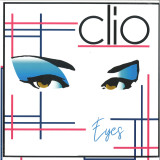
The decade of the 80s is revived through recordings like "Eyes" that allow you to travel through the music and trigger those old emotions of innocence, joy and adventure. It's possible you don't understand a word of what they're singing in the chorus, but the song is very catchy! Maybe not even Maria Chiara Perugini knows what she sings about, but she makes you hang on to every word of her like a nursery rhyme of synths, beach and bubblegum. "Eyes" is so amazing, so mesmerizing and more and more people are discovering this italo-disco masterpiece that usually satisfies and makes fun of you at the same time. If you try playing it at 75% speed gives a hypnotic vapor wave vibe! And even more, the song would have fit well in the dance club scenes from Scarface. Beyond the words - difficult to find a text that makes sense, sometimes out of context, unundestandable even for a French listener - the piece is so surprisingly likeable for the unique tone of Clio's voice, a strange cross between teenager and adult, and the part where she spoke another language, with some really cool synthesizers, are people's favorite parts. 0:31 "Je suis bien heureuse" , 0:47 "La nuit a ses merveilles", 0:57 "Il y a de quoi y perdre la tete, pour toi, sha, pour toi", 1:36 "Je n'ai plus de bulles", 1:52 "Je vous prie applaudissement". "Eyes" by Clio contains all the emotions that a dance-pop song should contain plus the essential element of mystery, a kind of magic that takes place between the chorus and the bass line, a shot in the dark drizzly night of the Italo-Disco. made by Roberto Ferrante, a guarantee for the perfect productions of the 80s, when he was only 20 years old.
Lande Hekt continues her poignant musical introspection with two singles ‘Pottery Class’ and ‘Axis’. Bittersweet ‘Pottery Class’ captures the feeling of yearning for someone and longing for a space to share with that person. In the song, Lande reflects: “we could move to the city, go to shows and join a pottery class / But you’d always be overwhelmed by everything that moves too fast / I don’t care where we live, I just want you back.”
Second single, ‘Axis’, conveys wistful and fleeting thoughts of loneliness and the desire for freedom, transforming elusive feelings into concrete experiences: “Late nights keep me down but it’s different from how it used to be / Birds fly past the window and Lola wishes she was free.” After spinning in a hazy stream-of-consciousness amongst hypnotic guitar-driven instrumentals, Lande resigns “It’s always the bad days that keep me from pushing forward.”
Angel Deradoorian and Kate NV are Decisive Pink - Ticket To Fame is their highly anticipated debut. After teasing the single 'Haffmilch Holiday' the duo amassed a rapturous response, with The Guardian calling it "a space-age-dancefloor swoon that brings to mind Kate Bush's Waking the Witch" and the New York Times highlighting the single as "substantive and thoroughly hypnotic". On their first LP they do not disappoint, calling on Kate NV's experimental pop leanings and Angel Deradoorian's taste for atmosphere and otherworldliness, Decisive Pink have created a playful and abstract album designed for escape and enchantment. Electronic pop at it's finest, the debut points to the fact that life is a puzzle, but you can still get a lot from living it. 'Destiny' is a smart take on the nature of belief, built on a question-and-answer format, where Angel plays a role as the seer, and Kate the enquirer. The poppy beat is reminiscent of Talking Heads' 'The Great Curve', from Remain in Light. There again, it could be a sinister take on Will Powers' 'Kissing with Confidence'. The synth squeaks, squelches and toots sound like the timid affirmation of the initiate. Ticket to Fame is also unashamedly romantic in atmosphere and tone. Romance is to be found in the simple pleasures, such as listening to a blackbird on the instrumental 'Rodeo', where warm synths, a melancholic guitar pattern and hissing rhythm combine with some vocal snippets to form a soothing contemplation. Then there is 'Ode to Boy'; a perfect pop track. The walking into the room of "more than just an ordinary boy" (doubtless "drunk with fire") allows a set of initially different, and shortened synth patterns to build to a glorious affirmation of the power of love. "Perfect pop music" Marc Riley, BBC6 Music And guess what? The vinyl comes in pink!